Flashback : Dallas

A Miscellany: History, Ads, Pop Culture

Category: Postcards

Junius Heights … Adjacent!
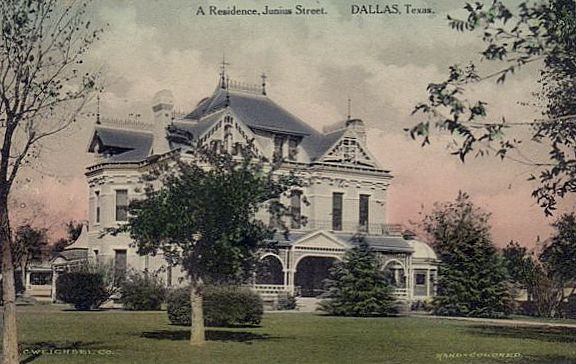
junius-stNot actually Junius Heights, but nearby! (see explanation below)

by Paula Bosse

One of the most popular neighborhoods in Old East Dallas is Junius Heights, which I’m a little surprised to learn is the largest historic district in Dallas. It came into being when streetcar service was extended into the eastern boondocks of the city, opening up tantalizing possibilities of new development. According to Preservation Dallas, when lots went on sale in the neighborhood-to-be in September of 1906, there was a buying frenzy:

“Prospective buyers were encouraged to take the streetcar to a newly platted neighborhood of the same name that afternoon to view the lots. Because it was Sunday, no lots were sold that day. But interested buyers remained in the neighborhood until midnight, when a pistol was fired to indicate the start of the sale. Within an hour, two hundred lots in Junius Heights had been sold and by Wednesday, every lot in the neighborhood had been sold.”
junius-housesUm, apparently not Junius Heights either….

And East Dallas has never looked back.

*

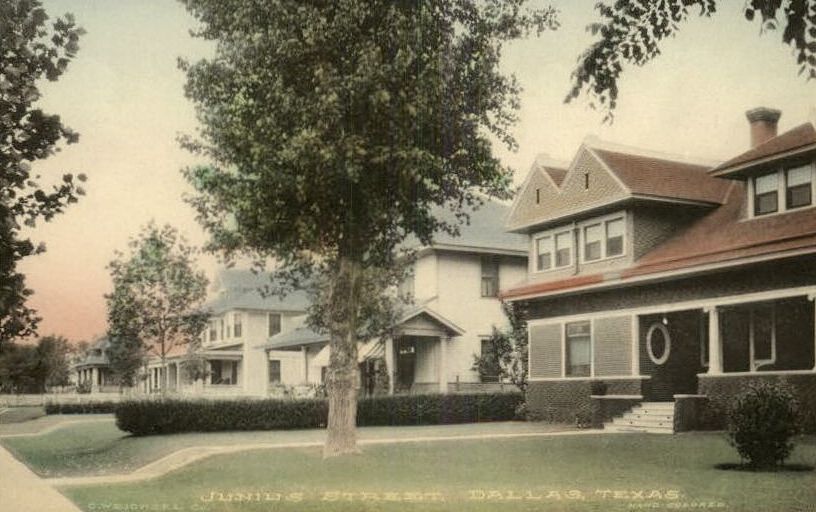
UPDATE: Having determined where the houses in these postcards were actually located — on Junius between Peak & Carroll — I now see this ISN’T Junius Heights! It’s a few blocks west of the Henderson Avenue boundary. So, not Junius Heights, but Junius Heights-adjacent!

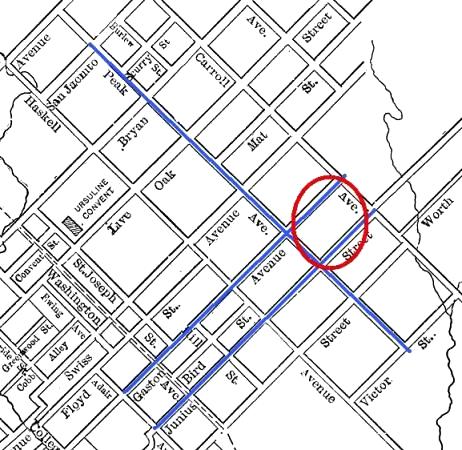
The postcard at top shows the Thomas Field house (built in 1884 and sold to John B. Wilson — of Wilson Building fame — in 1894); it was situated in a full city block bounded by Junius, Carroll, Gaston, and Peak. Before addresses changed throughout the city in 1911, the residence seems to have had no official address; in 1911 it was assigned the address of 4305 Junius. According to William L. McDonald’s book Dallas Rediscovered, the house was demolished in 1922 in order to subdivide and redevelop the property, Below is a map of the area from about 1898, showing the general location of the property.
field_wilson_house_ca-1898-map

The second postcard reproduces a photo seen in a real estate ad from 1906 which shows “portions of Junius Street between Peak and Carroll” — so, in the same block as the Field/Wilson house. Just not actually in Junius Heights!

junius-st_betw-peak-carroll_dmn_090206Dallas Morning News, Sept. 2, 1906 (click for larger image)

***

Quote is from a history of the Junius Heights neighborhood on the Preservation Dallas site, here.

Wikipedia entry is here.

Click pictures for larger images.

*

Copyright © 2014 Paula Bosse. All Rights Reserved.
Night Life Along the Centennial Midway — 1936

tx-centennial_night-midwayThe magical midway at night (click for larger image)

by Paula Bosse

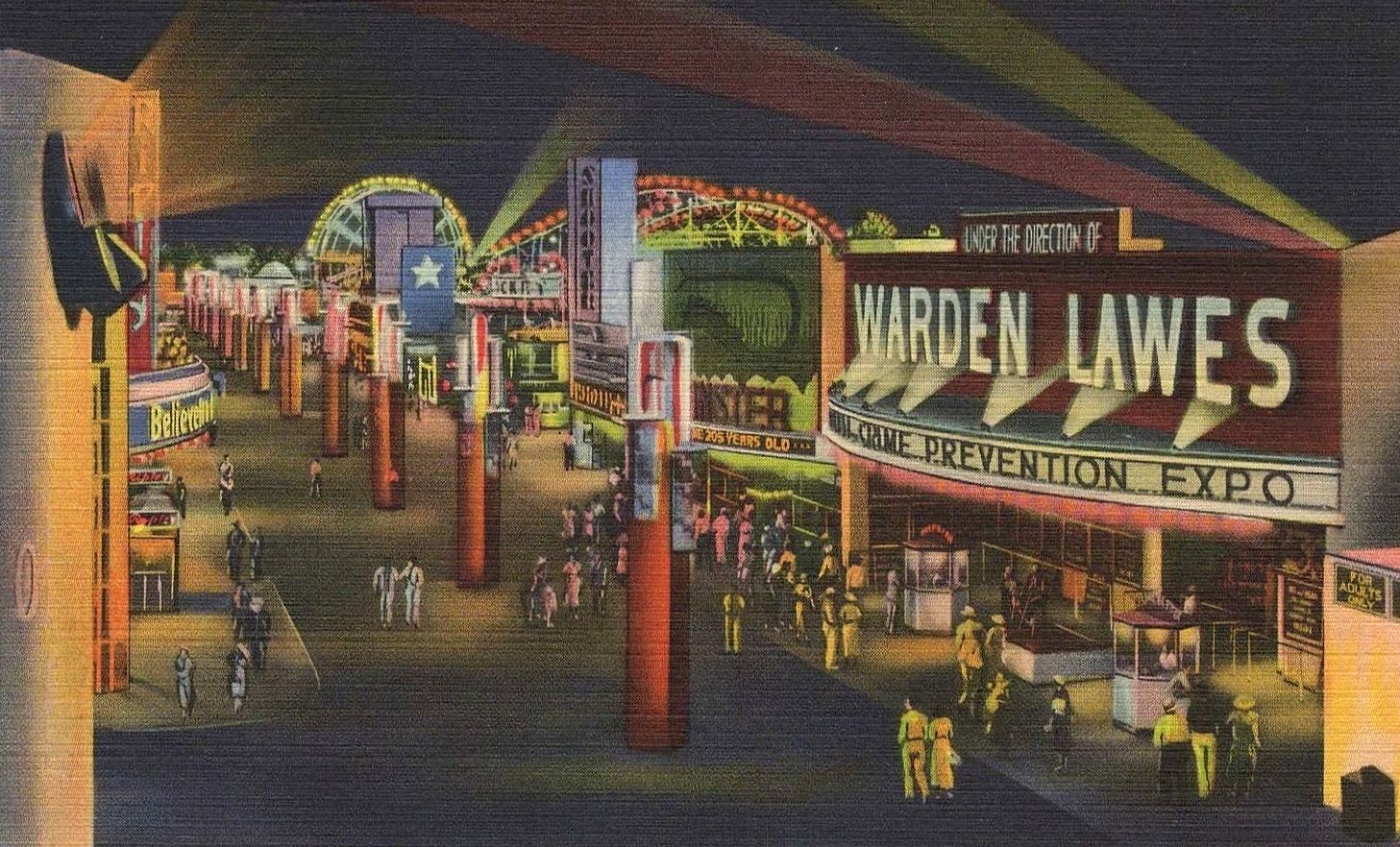
Glamorous night shots as seen in not-quite-real-looking postcards from the 1930s and ’40s are among my favorites. And this shot, of the Texas Centennial Exposition Midway at night-time is so, so GREAT!

The text on the back of the card:

Night life in all its glory and glamour. Oddities, Animal Shows and Girl Shows to charm the most fastidious, along the Midway.

***

Compare to the shots of this stretch of the Midway from the other direction, in my previous post here.

Click picture for MUCH larger image!

*

Copyright © 2014 Paula Bosse. All Rights Reserved.
Forget the Ferris Wheel, Take a Ride in a Centennial Rickshaw — 1936

tx-centennial-midway_1936_ucrYour rickshaw awaits…

by Paula Bosse

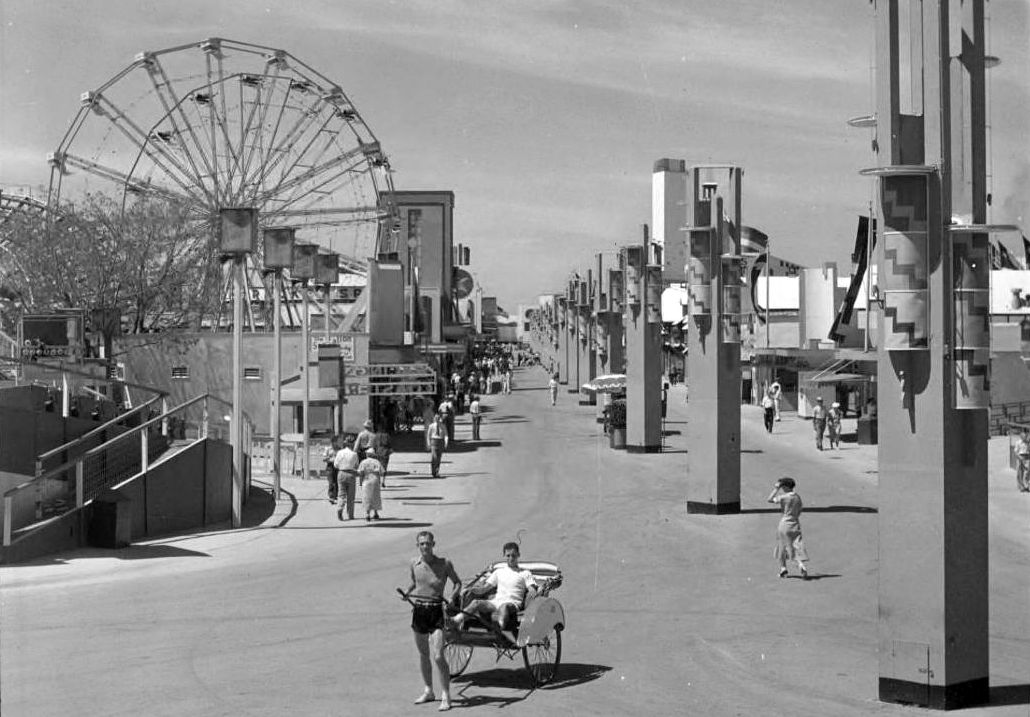
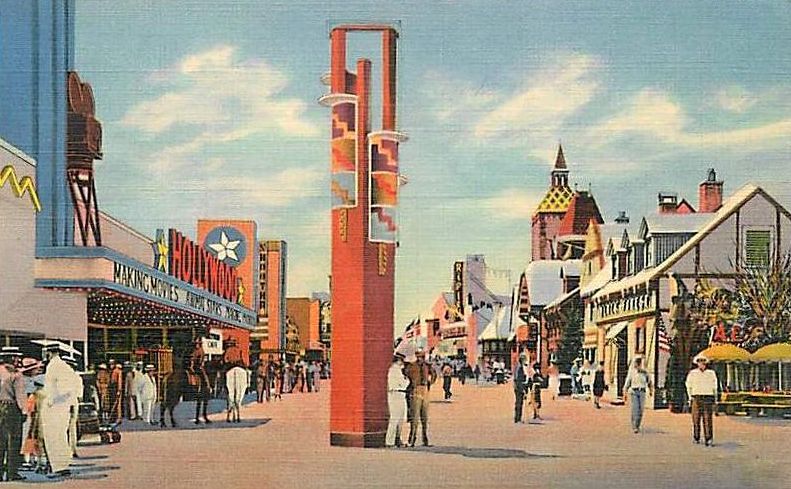
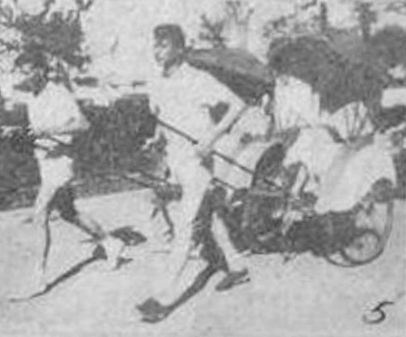
Here’s an odd photo of the Midway at Fair Park, taken in 1936. The whole thing feels a little weird. It’s just so … bright. And empty. It’s kind of bleak-looking for the glamorous Texas Centennial Exposition. And then there’s that rickshaw (?). What this scene needs is a little postcard-colorizing magic. Below, a similar scene, sans rickshaw.

fair-park_hollywood_centennial_midway

Better … but still kind of odd.

But back to that rickshaw. According to the the Treasury of Texas Trivia, Vol. II:

The Texas Centennial in Dallas had one feature that, considering its uncountable sights and sounds that one had to take in, may very well have been forgotten. College boys, as a means of earning tuition as well as keeping in shape, pulled foot-weary fairgoers from street to street and plaza to plaza in rickshaws during the 1936 celebration of our state’s one hundredth birthday.

rickshaw_tx-centennial-1936

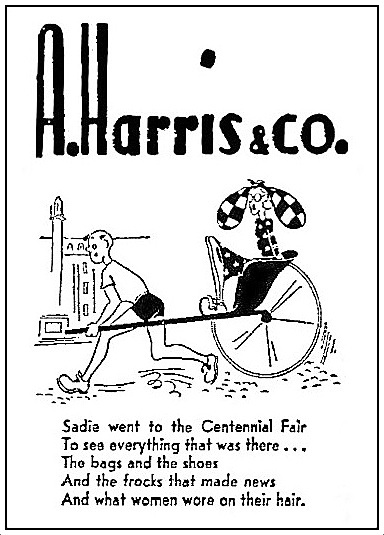
This exotic mode of transportation was even appearing in local advertisements — like this one, from an ad placed by the A. Harris department store:

ad-a-harris_centennial_rickshaw_dmn_052536_detA. Harris ad (det) , 1936

One of the most notable rickshaw-riders of the Dallas Centennial was none other than celebrated fan-dancer, Sally Rand, whose “Nude Ranch” show (check Google for risque film footage) at the competing Frontier Centennial Exposition in Fort Worth was packing them in in Cowtown. Even Sally had to come over and check out the Centennial. The photo below shows her autographing the shorts of one of the “ricksha-toters,” a lucky young man named Guy Johnsen. The caption of the July, 1936 news photo reads:

Sally Rand, who says she never knew success until she thought of taking her pants off, autographs those of Guy Johnson [sic], her ricksha toter, on a visit to the Texas Centennial Exposition at Dallas. With her is Mrs. Voln Taylor, Chairman of the Centennial Advisory Board.

centennial_rickshaw_sally-rand_cook-coll_smuCook Collection/DeGolyer Library/SMU

And now I know.

***

Sources & Notes

Top photo — titled “The Gay Midway of the Texas Centennial Exposition, Dallas” — from the Keystone-Mast Collection, UCR/California Museum of Photography, University of California at Riverside; see here.

Quote from Treasury of Texas Trivia, Vol. II by Bill Cannon (Plano: Republic of Texas Press, 2000).

Sally Rand photo (“Sally Rand Gives an Autograph”) from the George W. Cook Dallas/Texas Image Collection, DeGolyer Library, Central University Libraries, Southern Methodist University; more info on this photo is here. (Arne Miller “Guy” Johnsen — known later as “Swede” Johnsen — was a native South Dakotan who had left home and arrived in Dallas just in time for the Centennial, where he got a job pulling visitors around Fair Park in a rickshaw. This paragraph is from his 2005 obituary: “Raised on a farm in Volin, South Dakota, ‘Guy’ (as he was nicknamed by his mother), left home on a quest for better opportunities. In 1936, his travels found him pulling a rickshaw at the Dallas Centennial Fair. His claim to fame was pulling the famous and beautiful fan-dancer Sally Rand throughout the centennial fair grounds.” I guess a moment like that really stays with a person!)

To see this stretch of the Midway from the other direction — and AT NIGHT (!) — see my companion post here.

I find that — by complete coincidence — I’ve posted this on June 6th, the anniversary of the opening day of the Texas Centennial Exposition.

*

Copyright © 2014 Paula Bosse. All Rights Reserved.
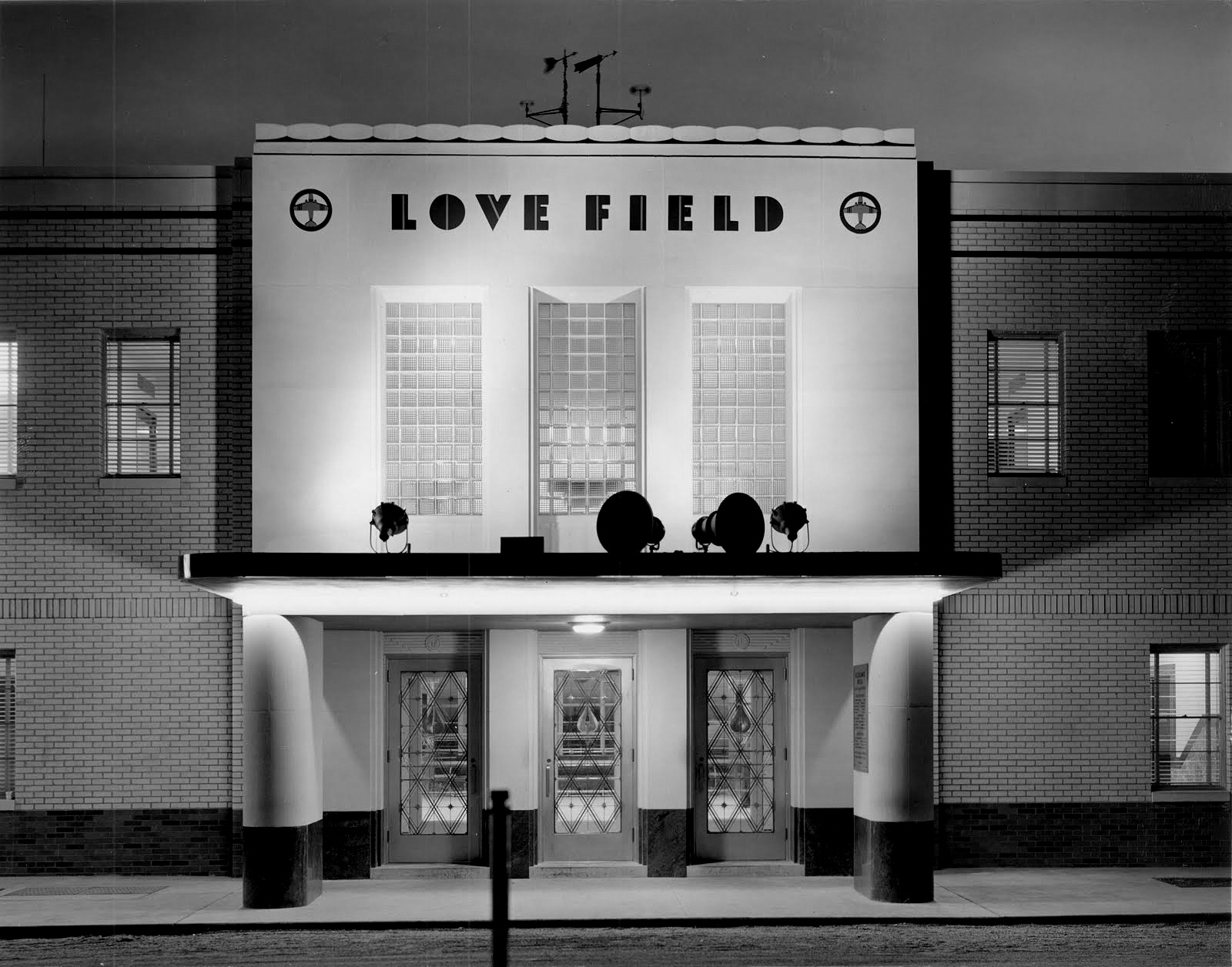
Swooning Over Love Field — 1940

love-field_1940Art Deco Love Field!

by Paula Bosse

I’m a huge-fan of the modern 1950s-era Love Field (the one with the Mockingbird Lane entrance), but even that can’t trump this fantastic building! Designed by architect Thomas D. Broad, the new Love Field administration building and terminal — which faced Lemmon Avenue — was unveiled on October 6, 1940, to rapturous acclaim. The night view above is pretty breathtaking. Forget the airfield. For me, it’s all about this entrance. Those windows. And those doors. And that font! And those little airplane pictographs!

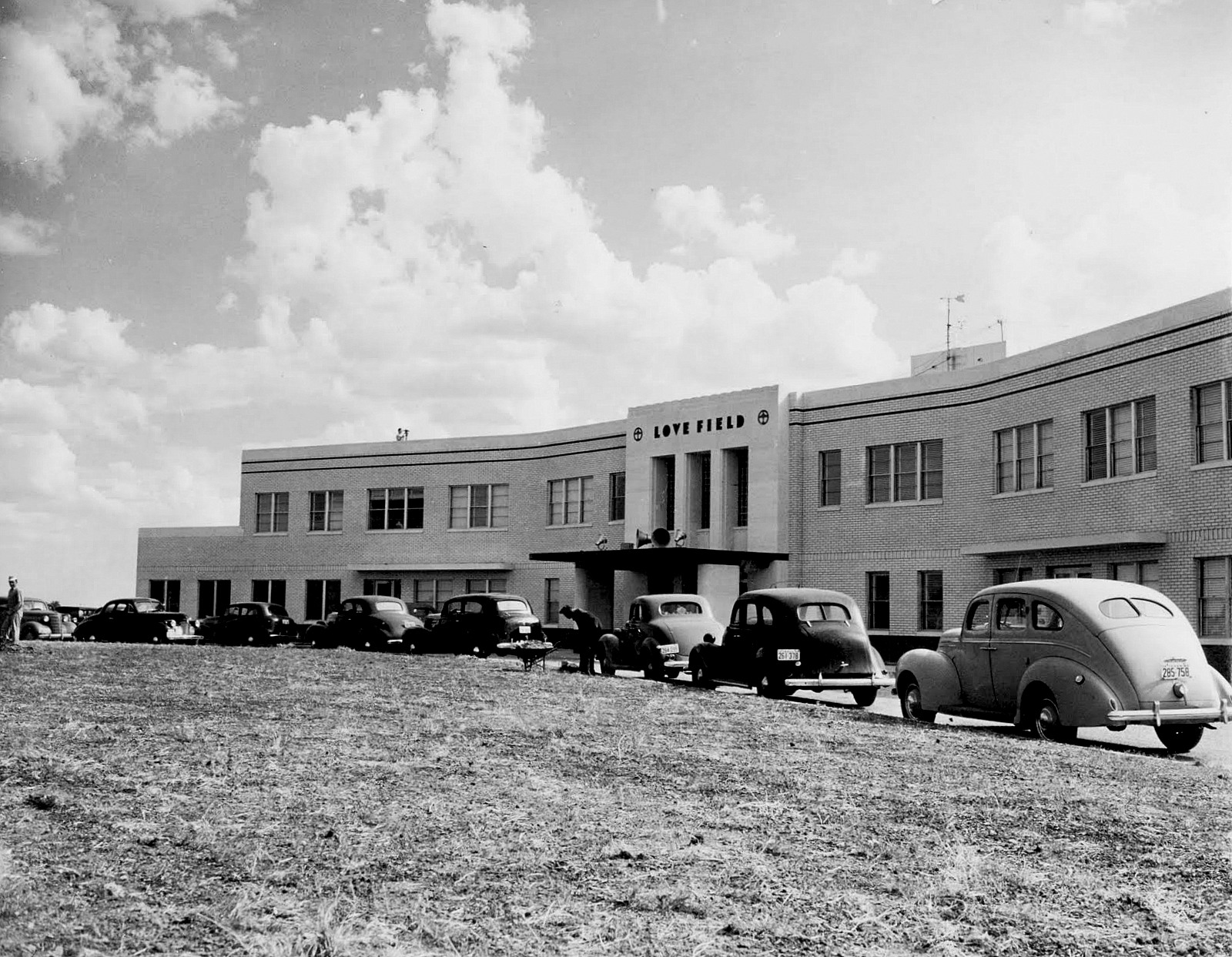
love-field_terminal_1940It wasn’t bad in the daytime, either — just nowhere near as dramatic. And in dire need of landscaping.

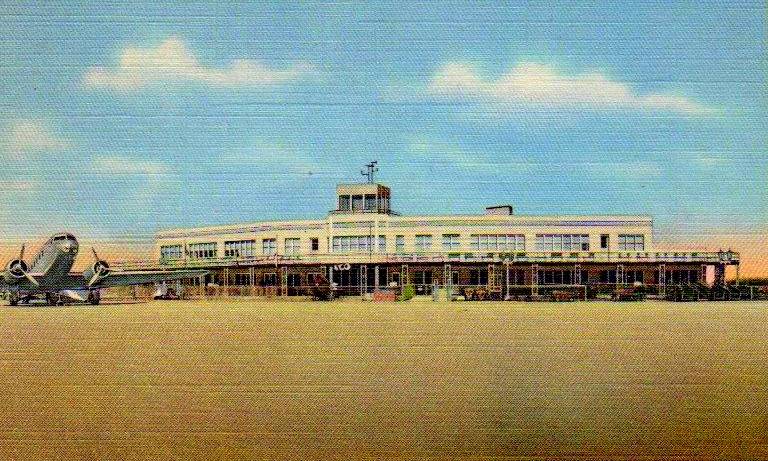
love-field_ca1940_frontAnd here it is from the field side. Still swoon-worthy. The back of this postcard reads:

LOVE FIELD — NEW $225,000 ADMINISTRATION BUILDING
One of America’s finest air terminals which takes care of more airline passengers, more air mail and more air express in ratio to population than any other airport in the country.

**

What happened to this beautiful building? I searched through the Dallas Morning News archives until I felt I had to throw in the towel, never finding a definitive answer. But here’s what I did find. When the brand-spanking-new terminal (the one we know today) opened in 1958, the 1940 terminal was vacated. A better word might be “abandoned.” Most assumed the building would be razed very soon after. But I got as far as September of 1964, and the old terminal was still standing. And it wasn’t pretty. This excerpt from a Dallas Morning News article is painful to read:

…The old terminal building cowers in desolation…. Virtually every window has been smashed, carpeting the deserted terminal with a dangerous floor of broken glass. Loose wires stick out here and there, and blinds hang in twisted postures from broken cords. The building’s big sign DALLLAS is missing its D. (DMN, July 2, 1961)

(And even more thoroughly painful is the article in the Dallas News archives by Kent Biffle, “Ghosts Wait by Runway” — DMN, Feb. 2, 1961.)

Apparently, the old building had to remain standing until a “much-debated” new multi-million-dollar runway was agreed upon.

The point at which I threw in the towel in my quest to discover when the old terminal building had been demolished was a DMN photo from September 25, 1964, with the caption “$4,000,000-Plus Runway Progress. The 8,800-foot parallel runway at Dallas Love Field, left center, is two-thirds completed and should be ready for use next spring.” I am assured the photo has a hard-to-see old terminal still decaying in it. I assume they razed that sucker pretty soon afterward. …Possibly.

***

Sources & Notes

Top two photos are from the Love Field Collection, Dallas History and Archives, Dallas Public Library; accession numbers are PA83-13-8 for the swoony one at the top, and PA83-13-4 for the daylight exterior photo. I originally found these in the post “The New Love Field” by Jacob Haynes, here.

Click pictures for larger images — the first two are HUGE!

*

Copyright © 2014 Paula Bosse. All Rights Reserved.
Elm Street — 1909

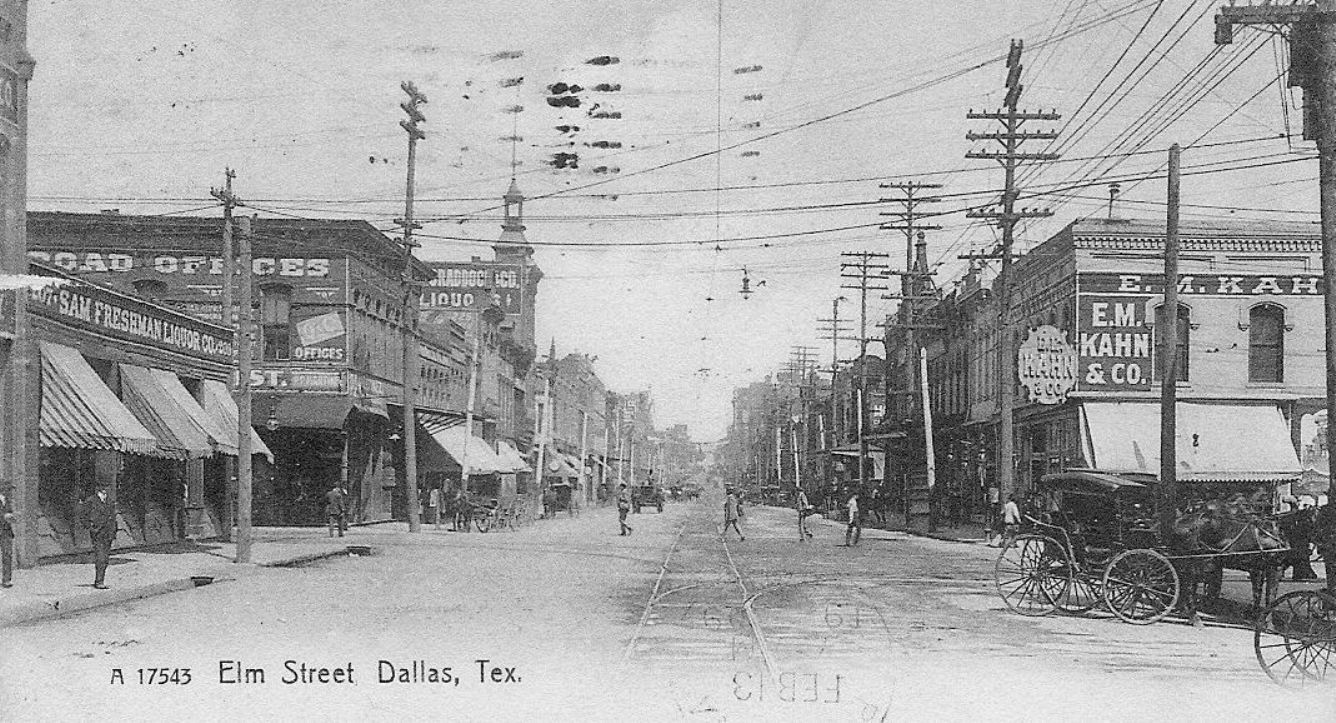
elm-street_postcard-1909-lgElm St. at N. Lamar, looking east (click for much larger image)

by Paula Bosse

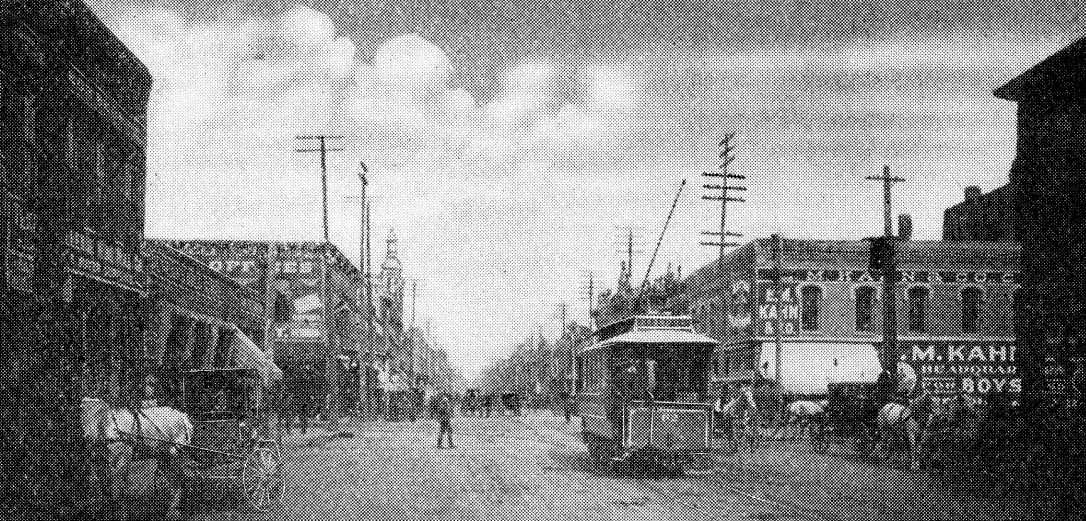
In a sort of unfocused wandering around the internet yesterday, I happened across two photos of Elm Street in 1909 that were virtually the same shot, and I came across them on completely unrelated websites. Just a weird coincidence. And they’re pretty cool.

(Ever since I wrote about L. Craddock & Co. Liquors a few months ago, I swear I see that building everywhere now! It’s become a kind of landmark I use to get my bearings. It’s the building on the left with the little cupola on top — it was at Elm and Poydras, between N. Lamar and Griffin.)

elm-street_1909

***

The first photo is a postcard, from Ebay.

Second photo is from Texas: A Southwest Empire (Chicago/St. Louis: Passenger Traffic Dept. Rock Island-Frisco Lines and Chicago & Eastern Illinois Railroad, 1909).

To check out the businesses along this stretch of Elm, see the Worley’s 1909 city directory here. This page shows all the businesses in this photo, moving west to east. It will start with Sam Freshman Liquors right before you cross N. Lamar. On the east side of Lamar, on the right, E.M. Kahn’s. L. Craddock, on the left, is at the corner of Elm and Poydras.

The Worley’s and other criss-cross directories are invaluable in determining locations, especially at the time of this photo, because Dallas street numbers changed in 1911 and do not correspond to today’s street numbers (a surprisingly interesting topic, which I researched here). Besides, those directories are a lot of fun to play around with! (Then again, I was one of those kids who enjoyed reading the dictionary.)

Click photos for larger images.

*

Copyright © 2014 Paula Bosse. All Rights Reserved.
Deco Idealized: Fair Park Before the Centennial Exposition — 1936

tx-centennial_dmfa_bandshell

by Paula Bosse

The first rendering is so sleek and sharp and perfect that I want to cry. But the artist’s second conception? Well, now I know what the Fair Park band shell would look like plopped down in the middle of the manicured grounds of an English estate or an Italian villa (or maybe in the Clampetts’ backyard, out past the cement pond). …And it still looks damn good.

Text from the back of this postcard:

The center of musical activity will be the open air band shell and amphitheater, a permanent feature of the Civic Center — seating capacity, 5,000 — the band shell accommodates 150-piece band. The most imposing structure in the Civic Center is the Hall of Fine Arts, constructed of Texas stone, cost $500,000, housing a $5,000,000 art collection assembled from all parts of the world.

***

Click picture for much larger image.

*

Copyright © 2014 Paula Bosse. All Rights Reserved.

The Marsalis House: One of Oak Cliff’s “Most Conspicuous Architectural Landmarks”

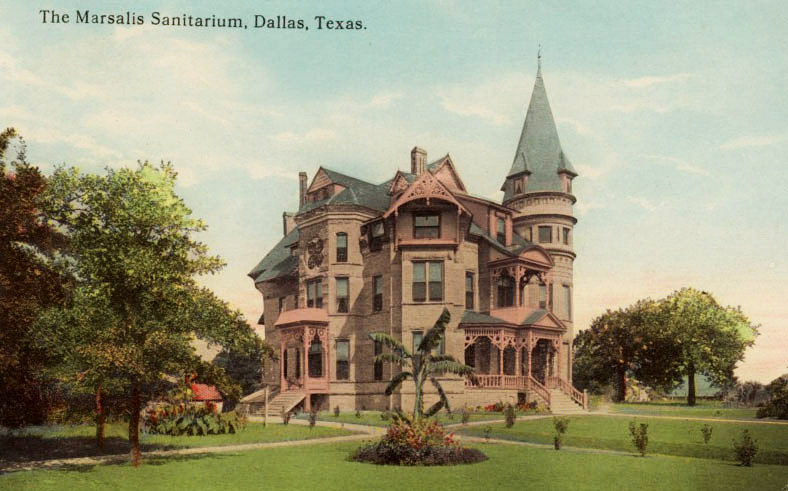
marsalis_sanitarium_oak-cliffThe fabulous Marsalis house in Oak Cliff (click for larger image)

by Paula Bosse

The Marsalis Sanitarium was a 15-bed private surgical and convalescent hospital in Oak Cliff, established in 1905 by Dr. J. H. Reuss and his partner, Dr. James H. Smart. Whether or not that building was actually pink (and I certainly hope that it was!), it was most definitely a show-stopper — one of those stunning structures that one doesn’t expect to see in and around Dallas because almost none of them still stand.

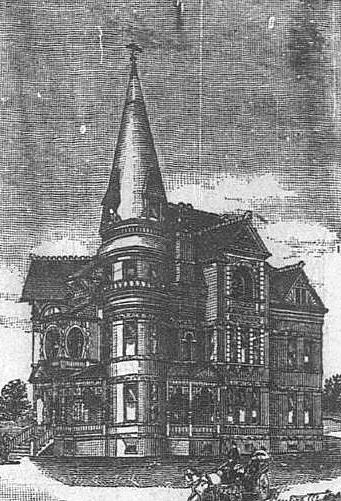
This grand home was built by Oak Cliff promoter and developer Thomas L. Marsalis in about 1889 as his personal residence at a reported cost of $65,000 (the equivalent of more than $1,750,000 in today’s money). It was located at what is now the southwest corner of Marsalis Avenue and Colorado Boulevard. The house was apparently never occupied. Supposedly, Marsalis’ wife did not want to live there because it was “too far from town” (!), but Marsalis’ financial distress throughout this time was probably more to blame.

marsalis-house_drawing
Dallas Morning News

Marsalis’ insolvency resulted in the foreclosure of the house in the early 1890s and its ultimate sale at public auction in 1903. The winning bidder at that auction was Dr. Reuss, and the house became the Marsalis Sanitarium soon after.

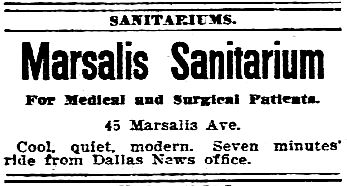
marsalis-sanitarium_tx-state-journal-medical-advertiser_dec-1905_portal
1905 ad (click for larger image)

marsalis_sanitarium_dmn_010109DMN, Jan. 1, 1909

marsalis-sanitarium_worleys-1909
Worley’s City Directory, 1909

Sometime after 1909 it became a girls’ seminary, and then in 1913 it fell into private hands. On August 10, 1914 the poor house burned to the ground. The headlines the next day read:

“Oil Starts Oak Cliff Early Morning Fire; Fisher Asserts Some One Set Old Building Ablaze; Firemen Find Structure Completely Enveloped in Flames and Interior Roaring Furnace.”

marsalis-house-fire_dmn_081114DMN, Aug. 11, 1914

Such a sad ending for such a beautiful house!

marsalis-home

***

Sources & Notes

1905 ad for the Marsalis Sanitarium from the December 1905 issue of the Texas State Journal of Medicine, found on the Portal to Texas History, here.

Black and white photograph of the Marsalis home in 1895 from the article in Legacies magazine, “Where Did Thomas L. Marsalis Go?” by James Barnes and Sharon Marsalis (which can be read here); photo from the collection of the Dallas Public Library.

For a biography of the family of Dr. Joseph H. Reuss, proprietor of the Marsalis Sanitarium, see here.

Click pictures for larger images.

*

Copyright © 2014 Paula Bosse. All Rights Reserved.


The Rolling Hills of Highland Park — 1911

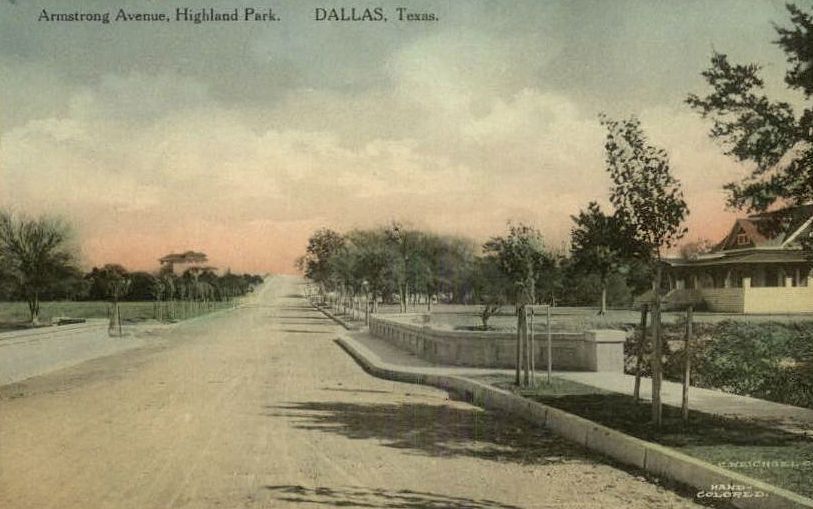
highland-park_armstrong-1911Armstrong Avenue (click for larger image)

by Paula Bosse

Highland Park in its early days of development. The postcards above and below show Armstrong Avenue, looking east, from about Preston Road.

highland-park_armstrong_house

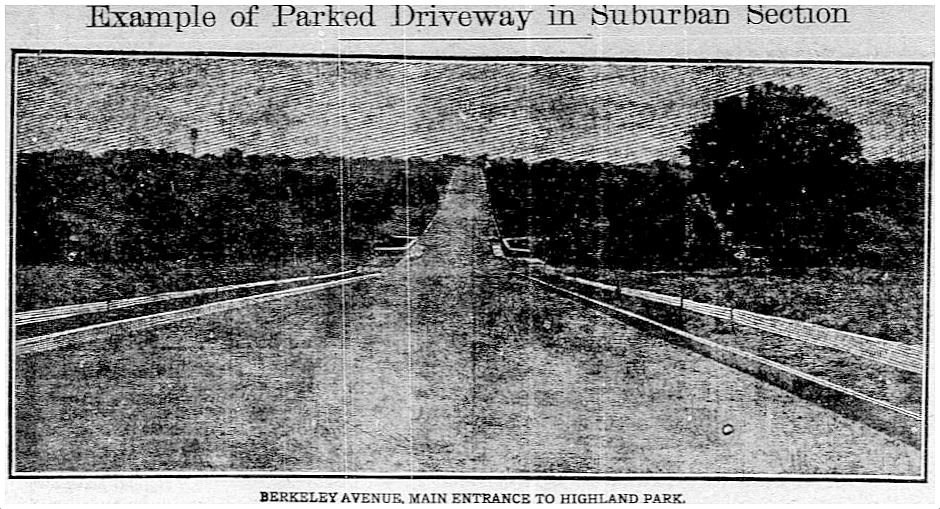
An even earlier view can be seen in the postcard below (ca. 1908), which shows “Berkeley Avenue,” the original name of Armstrong (see newspaper clippings at the bottom of this post for more on Berkeley Ave.).

armstrong_berkeley-avenue_flickr_coltera

All of these postcards show what looks to be the bridge over a stretch of Turtle Creek then called Lake Neoma.

neoma-bridge_over-armstrong

I’m not sure when the name “Lake Neoma” ceased to be used (I believe it’s now Wycliff Ave. Lake), but here is a nifty little drawing of it from a 1915 map from the Flippen-Prather Realty Co., the developers of Highland Park.

neoma-highland-park-map_1915

*

Berkeley Avenue was renamed Armstrong Avenue around 1908 or 1909 in honor of John S. Armstrong, who developed the land that later became Highland Park (East). Below is a photo and paragraph of an article from the Sept. 13, 1908 edition of The Dallas Morning News (the Argyle Avenue mentioned was later renamed as an extension of Oak Lawn Ave.)

armstrong_berkeley_dmn_091308

armstrong_dmn_091308_berkeley
Dallas Morning News, Sept. 13, 1908 (photo and excerpt)

***

Postcards from Flickr. “Berkeley Avenue” from Flickr, here (it is suggested that this shows Berkley Ave. in Oak Cliff, but this is incorrect — it is definitely Highland Park).

Map is a detail from the Flippen-Prather map of 1915, which can be viewed here.

Click pictures for larger images (top image and map are HUGE).

*

Copyright © 2014 Paula Bosse. All Rights Reserved.

Angus Wynne, Jr.’s “Texas Disneyland” — 1961

six-flags_stagecoach

by Paula Bosse

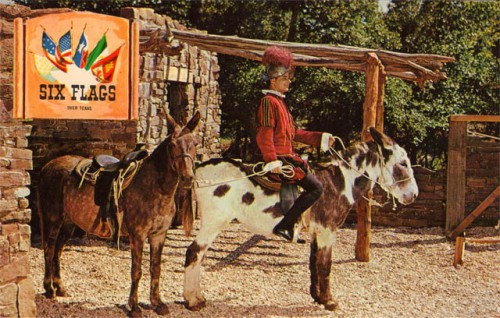
If you’re reading this, you’ve probably been to Six Flags Over Texas in Arlington. Depending on your age, you may pine for those glorious days of yesteryear when Six Flags was a truly unique theme park. Today it is not. Back then, there was only one Six Flags, and it was a great, weird place. A theme park based on Texas history! Who would come up with such a far-fetched idea? Angus Wynne, Jr. did. Some of it must have sunk in, because, to this day, the way I can remember the “six flags” that have flown over Texas is by remembering rides and attractions at Six Flags Over Texas.

I wasn’t going regularly to Six Flags until the ’70s, when it was still definitely all about Texas, but looking at old postcards that were issued to celebrate the opening of the park in 1961, I was shocked by some of the great stuff that was retired before my annual visits. Like … helicopter rides! Actual helicopter rides that took off from an area near (in?) the parking lot: five minutes for five dollars (this was back when admission was $2.25 for kids and $2.75 for adults — those days are long-gone…).

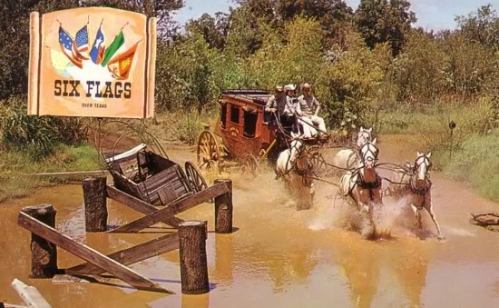
And … a stagecoach ride! I would have LOVED that! Looks kind of dangerous, though — which might be why it didn’t last. The description on the back of the postcard:

Bridge Out — Confederate Section: Butterfield Overland Stagecoach pulled by a team of four matched white horses cuts past washed out bridge on its way to deliver passengers and the U.S. mail back to the safety of the depot — always plenty of exciting action taking place at the multi-million dollar Six Flags Over Texas entertainment park.

*

six-flags_confederate

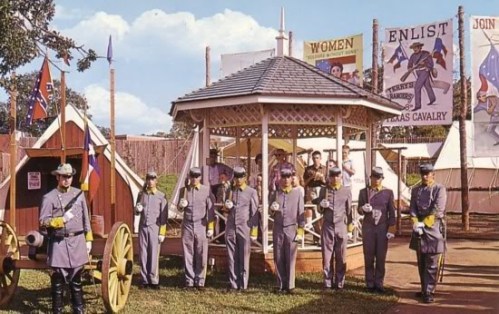
And, yes, the problematic “Confederate” section. The description on the back of this postcard reads:

Call To Arms — Confederate Section: Confederate Drill Team at Six Flags Over Texas. To these men in gray, the South is still ‘a-fightin’ them Yankees.’ Frequent enlistment rallies are held where youngsters join up and receive papers proving their military status in Terry’s Texas Rangers, 8th Texas Cavalry.

Don’t remember seeing that. It probably started to lose its luster somewhere back around the Vietnam War.

*

six-flags_spanish_mule

Jack Maguire, in his great Alcalde article (link below) describes this … um … “ride” thusly:

The Spanish section is next. Here guests board pack mules to venture forth with Francisco Vasquez de Coronado, greatest of the conquistadores, as he descends into Palo Duro Canyon searching for the Seven Cities of Cibola.

With the mules and the stagecoach team, Six Flags must have had a busy corral somewhere in the park.

*

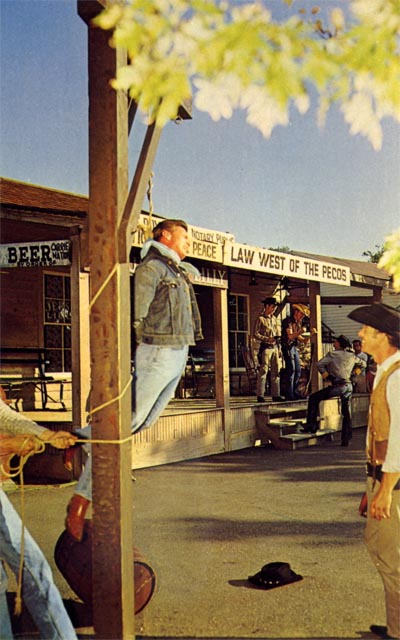
six-flags_hanging

And, well, this is my favorite: a hanging. …At an amusement park. Maybe they’re just a-funnin’. This took place in the “Texas Section,” where the bank was robbed every hour on the hour and there was the show-stopping gunfight in the middle of the street. I remember that. I don’t remember some guy getting strung up, though. I like the fact that this photo was used to promote an amusement park.

*

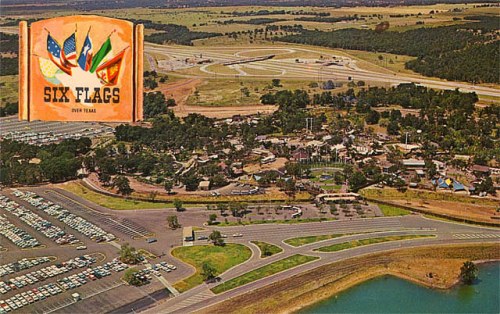
six-flags

And here’s the whole of it, in 1961. I guess there must have been other things in Arlington back then. But it looks pretty empty once you’ve ventured past Skull Island and left the park.

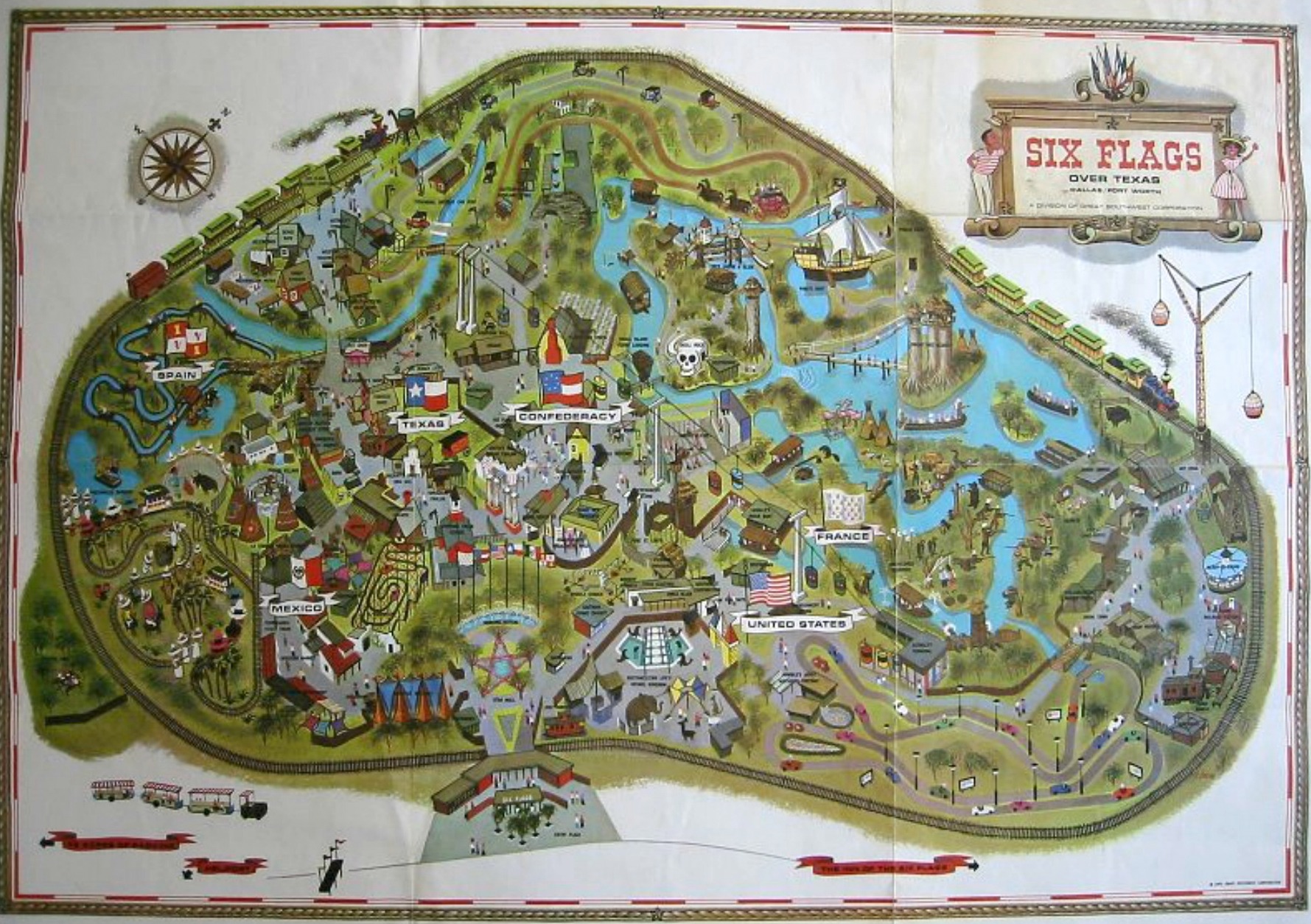
six-flags_map_mid-1960s(Click for much larger image!)

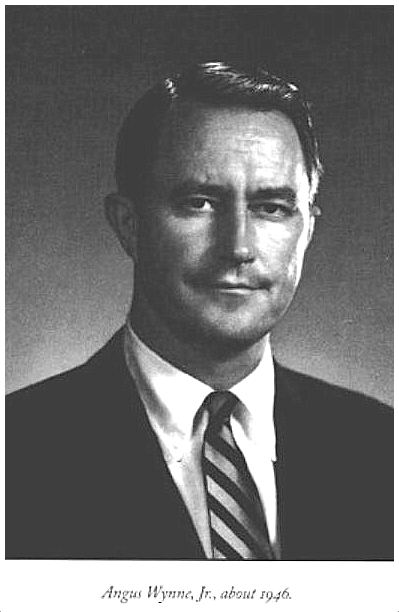
Thank you, Angus Wynne, Jr. — I had so much fun in your park — I wish I had seen it when it opened!

wynne_angus-jr_legacies_fall-2002

***

Sources & Notes

Top two postcards from the jumble of stuff I own.

All other postcards from the INCREDIBLE Six Flags Over Texas postcard collection of Ken Collier, which you can see — page after page after page — here.

I’m not sure where I found the map, but it gets pretty big when clicked.

Photo of Angus Wynne, Jr. from the Fall, 2002 issue of Legacies.

Memories of the helicopter ride by a former park employee (who says it lasted only until 1962 when it was discontinued due to a “hard landing” incident) can be read here.

And for a truly enjoyable look at the then-new theme park, I HIGHLY recommend Jack Maguire’s “The Wynne Who Waves Six Flags” in the November, 1961 issue of The Alcalde, the University of Texas alumni magazine — read it and look at the photos of a Six Flags *I* certainly never knew (but wish I had), here.

For my follow-up post on The Six Flags Over Texas Cookbook (1966) — with a link to the entire booklet and all the Six Flags-inspired recipes — see here.

*

Copyright © 2014 Paula Bosse. All Rights Reserved.

The Texas Fire Extinguisher Co. and Hitler — 1942

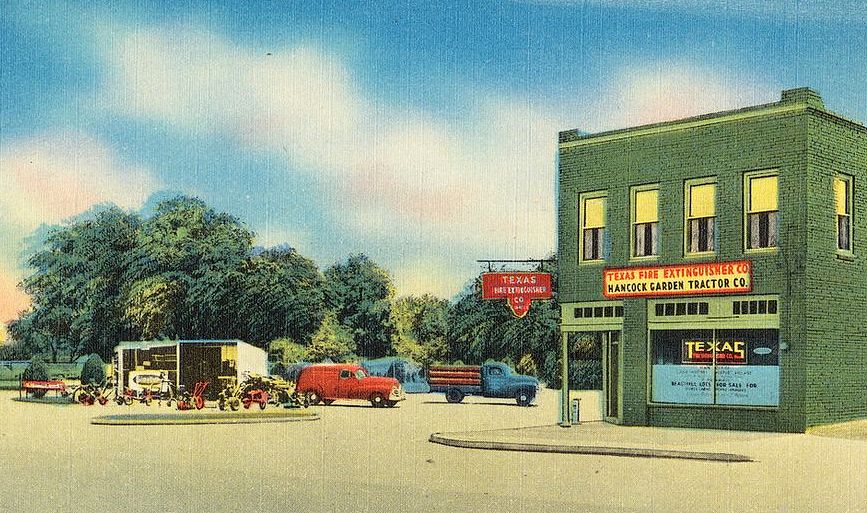
tx-fire-extinguisher-coTexas Fire Extinguisher Co., across from Fair Park

by Paula Bosse

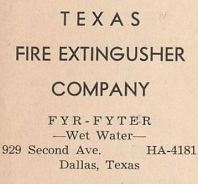
For a place that sells fire extinguishers and tractor equipment, this is a wonderfully comforting image. Hardly even looks like Dallas. The Texas Fire Extinguisher Company — operated for several decades by the Hancock family — was located at the corner of Parry and Second Avenue, across from Fair Park. While checking to see the exact address of this business (which, by the way, was 929 Second Ave.), I came across a 1942 article mentioning it and Hitler.

According to a Dallas Morning News blurblet, the Hancock company owner had placed a want-ad for a painter and paperhanger and received an odd response on a postcard:

Gentlemen: I wish to apply for the job as a paperhanger. Am hunting bears at present, but am about out of ammunition. Anyway, I am a better paperhanger than I am a bear hunter. –Adolph Hitler, Berlin, Germany. (P.S. Please rush answer as this job is playing out and may have to move soon.)

Humor doesn’t always translate successfully across the generations. But, hey, that was weird.

texas-fire-extinguisher-co_texas-fireman_june-1951_portal1951 ad, “Fyr-Fyter, Wet Water”

***

Sources & Notes

Postcard (cropped) from the Boston Public Library Tichnor Brothers Postcard Collection on Flickr, here.

Quote from Dallas Morning News article “Reply to Want Ad Indicates Hitler Wants a New Job” (DMN, Nov. 6, 1942).

Ad from Texas Fireman magazine, June 1951, via Portal to Texas History.

*

Copyright © 2014 Paula Bosse. All Rights Reserved.