Flashback : Dallas

A Miscellany: History, Ads, Pop Culture

Category: Retail

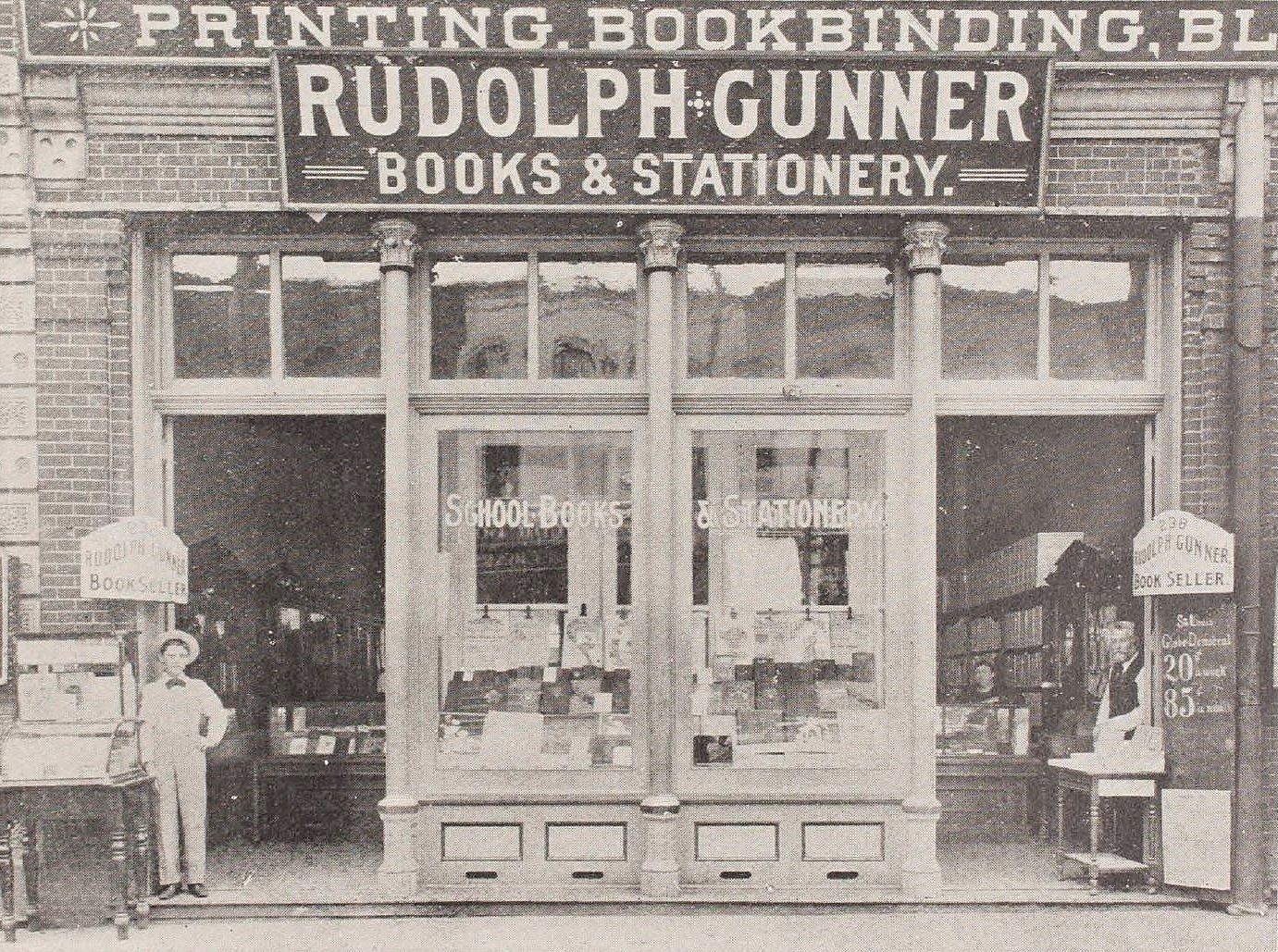
Rudolph Gunner: Dallas Bookseller and Emperor Maximilian’s “Best Friend”

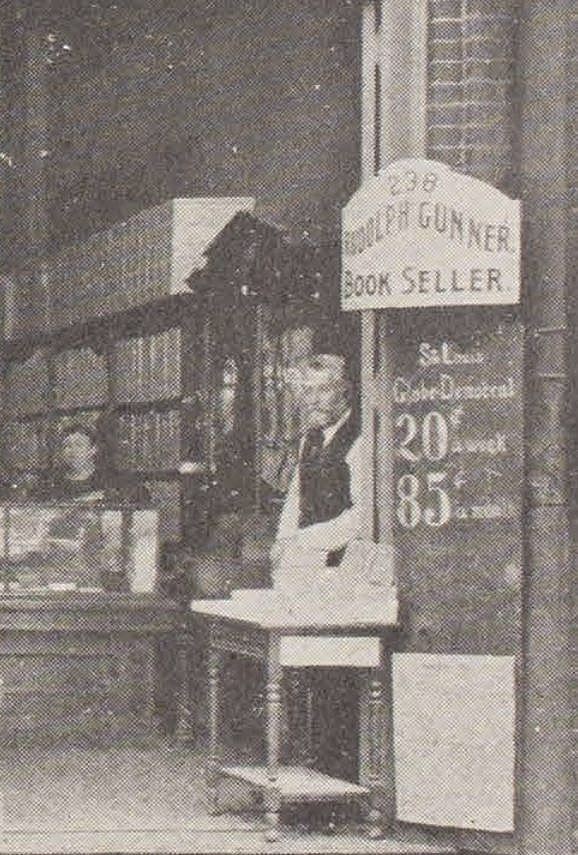
books_rudolph-gunner_dallas-through-a-camera_1894_degolyer-lib_SMU238 Main, circa 1894

by Paula Bosse

For the past several years, I’ve been posting bookstore-related posts on the birthday of my late father, Dick Bosse, an antiquarian bookseller who began his career straight out of SMU at The Aldredge Book Store, a literary landmark to many, which he eventually ended up owning. This year’s offering goes back to 19th-century Dallas.

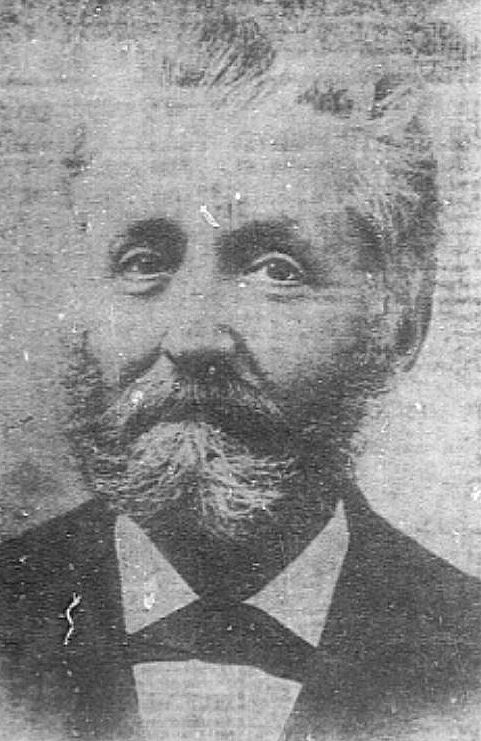
Above is a photo of the bookstore owned by Austrian immigrant Rudolph Gunner, located at 238 Main (later 1006 Main), between Poydras and Martin. Gunner (1833-1911) had, perhaps, one of the most impressive and colorful historical pedigrees of any Dallas resident. He served in the Austrian navy all over the world, but his most important service was as confidante and aide-de-camp to Emperor Maximilian and Empress Carlota of Mexico in the 1860s. That story is too big to tell here (Wikipedia is here to help), but it’s interesting that a man who was often referred to as “Maximilian’s best friend” eventually wound up in Dallas in 1885 and opened a bookstore, first on Elm Street, later on Main.

My father had a fascination with Mexico and used to talk about Maximilian quite a bit. I wonder if he knew Maximilian’s right-hand man lived out his days in Dallas, having spent several years as a bookseller?

books_rudolph-gunner_dallas-through-a-camera_1894_degolyer-lib_SMU_det_gunner

gunner-rudolph_photo

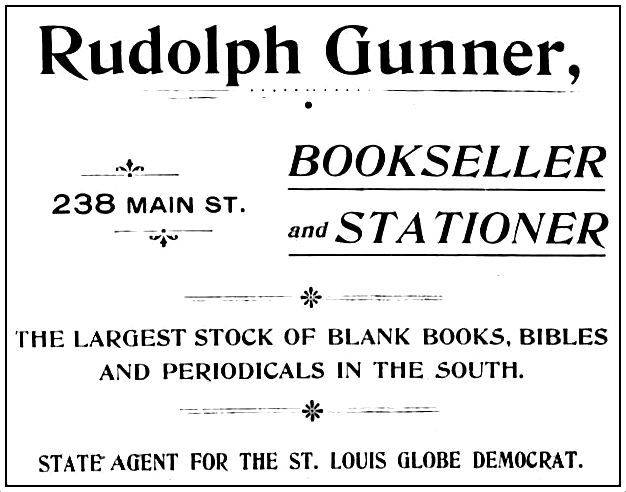
rudolph-gunner_1896-directory_adDallas city directory, 1896

*

In a sidenote, Gunner mentioned in several interviews that he had a LOT of historical documents and souvenirs from his military career serving in the Crimea, Egypt, Africa, and, especially, Mexico. I winced when I read this passage from an article by A. C. Greene in The Dallas Morning News (“Bookstore Owner Once Was Colorful General — He Headed Maximilian’s Mexico Palace Guard.” DMN, Apr. 18, 1993):

[A]t the time of his death in 1911 [his] home was at 1506 Fitzhugh. [His wife] was still living there, with a considerable collection of historic memorabilia, books, medals and military items, when the home burned, destroying everything but Gen. Gunner’s sword with the emperor’s crest.

Wow. All of that, gone. (And to answer my question above, I’m pretty sure my father would have known this, if only because he read A. C. Greene’s columns and probably even discussed this with him on a visit to the store.)

***

Sources & Notes

Top photo by Clifton Church, from his book Dallas, Texas, through a camera: a collection of half-tone engravings from original photographs (1894) — from the DeGolyer Library, SMU, here.

Read a first-hand account of Gunner’s time in Mexico in a Dallas Morning News article from Jan. 14, 1886 here; his DMN obituary (Aug. 25, 1911) is here.

Read previous Flashback Dallas articles on Dallas bookstores here.

I would love you to join me over on Patreon, where I upload Dallas history posts daily for subscribing members (as little as $5 a month!). If you would like to support what I do, check out Flashback Dallas on Patreon.

books_rudolph-gunner_dallas-through-a-camera_1894_degolyer-lib_SMU

*

Copyright © 2024 Paula Bosse. All Rights Reserved.

Oak Lawn Ave. — Keep on Truckin’ (1971)

iconoclast_oak-lawn-avenue_iconoclast_aug-1971

by Paula Bosse

This is a great little ad, which includes a bunch of notable Oak Lawn landmarks in the neighborhood’s hippie-fabulous days. I love this artwork — it’s almost as good as a photograph!

The 3500 block of Oak Lawn — between Lemmon and Bowser — is depicted in super-groovy, early-’70s, patchouli-scented artwork (inspired by R. Crumb). Starting at the left, here’s what we see:

  • A tiny portion of the sorely missed diner mainstay, LUCAS B & B, 3520 Oak Lawn
  • Next, NAME BRAND SHOES (men’s shoes), 3516 Oak Lawn
  • Next, R.F.D. No. 1 COUNTRY STORE (clothing), 3514 Oak Lawn, subject of the ad (formerly El Chico, which you can see in the second and third photos here)
  • Next, THE FOG (rock club), 3508 Oak Lawn
  • Next, SUPERIOR BAKERY, 3502 Oak Lawn
  • Next, NATIONAL AUTO SOUND OF DALLAS (car stereos), 3500 Oak Lawn (at Lemmon)

iconoclast_oak-lawn-avenue_aug-1971_1972-directory1972 city directory

*

Watch silent home movie footage shot in this block around this same time at the Portal to Texas History, here (unfortunately, there are only glancing images of The Fog, which I would have liked to have seen more of). The Oak Lawn footage begins at 10:34 and continues until the end, with scenes shot at Lee Park. (There’s a guy who looks like he should be someone important — he looks a bit like Harry Nilsson — at 10:59.)

*

The illustration is by Steve Brooks, a 1967 graduate of Sunset High School who has had quite the career in illustration, commercial art, and rock posters. He’s worked extensively with Willie Nelson and Buddy magazine, and… yes, if you saw that drawing above and thought “head shop,” he’s the guy (THE guy) behind all the artwork connected to The Gas Pipe (which deserves a post of its own as a truly iconic Dallas success story!). Read an interesting biography about Brooks here. See some of his work in the collection of his alma mater, UNT, here.

***

Sources & Notes

Ad from the August 1971 issue of the underground newspaper, The Iconoclast.

iconoclast_oak-lawn-avenue_iconoclast_aug-1971

*

Copyright © 2024 Paula Bosse. All Rights Reserved.

Elm Street Store: Whiskey, Brooms, Cigars

elm-street-store_whiskey-broomsEverything one needs…

by Paula Bosse

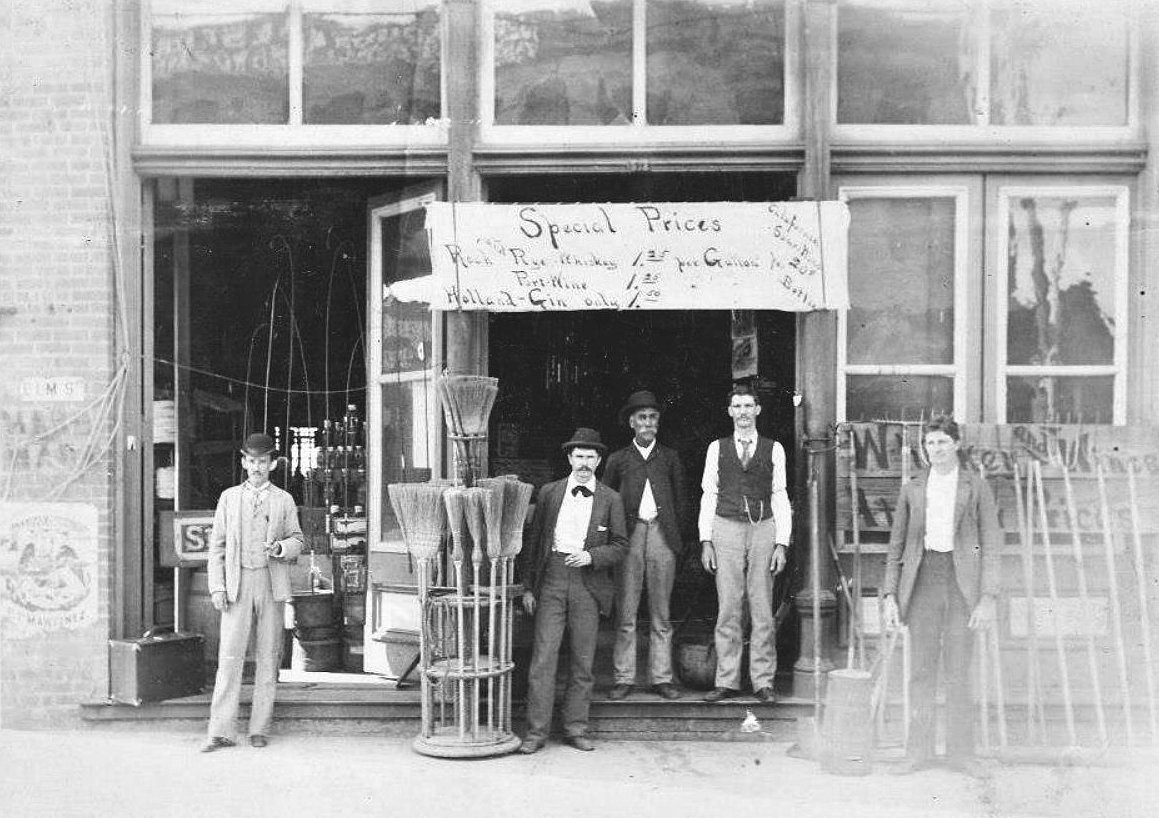
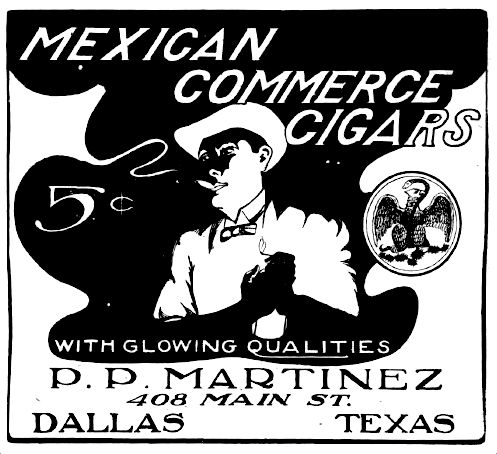
What more do you need in life than a gallon of whiskey, wine, or gin? And maybe some brooms. And a butter churn. The essentials. I don’t know anything about this photo, except that it does appear to be Dallas — you can see “Elm St.” on the brick wall at the left, just above an ad for Dallas cigar king P. P. Martinez. Not sure when the photo was taken — 1890s-ish? Below is a P. P. Martinez ad from 1908.

ad-martinez-cigars_dmn_050308

It’s hard to make out the “Special Prices” sign above the doorway, but some of the items you could purchase were rock and rye whiskey ($1.25 a gallon), port wine ($1.25 a gallon), and Holland gin (“only $1.50 per gallon”).

I had never heard of “rock and rye” whiskey until a few minutes ago. It was a whiskey cordial made with rock candy (!) and some sort of citrus or other flavor. So I’m guessing it was pretty sweet and powerful. It was often sold as a “tonic” because taxes were substantially less on medicines than on spirits. So goodbye, saloon staple, hello cough medicine! “Rock and rye” has made a recent comeback among whiskey-quaffing hipsters.

***

Sources & Notes

I have no idea where I found this photo back in 2014, but it’s great!

This post appeared in a slightly different form on my Patreon page a few months ago. If you’d like to receive daily Dallas-history postlets, check it out!

elm-street-store_whiskey-brooms_sm

*

Copyright © 2023 Paula Bosse. All Rights Reserved.

1500 Block of Elm — 1920s

fields-millinery_1512-elm_frank-rogers-ebay1500 block of Elm Street, south side…

by Paula Bosse

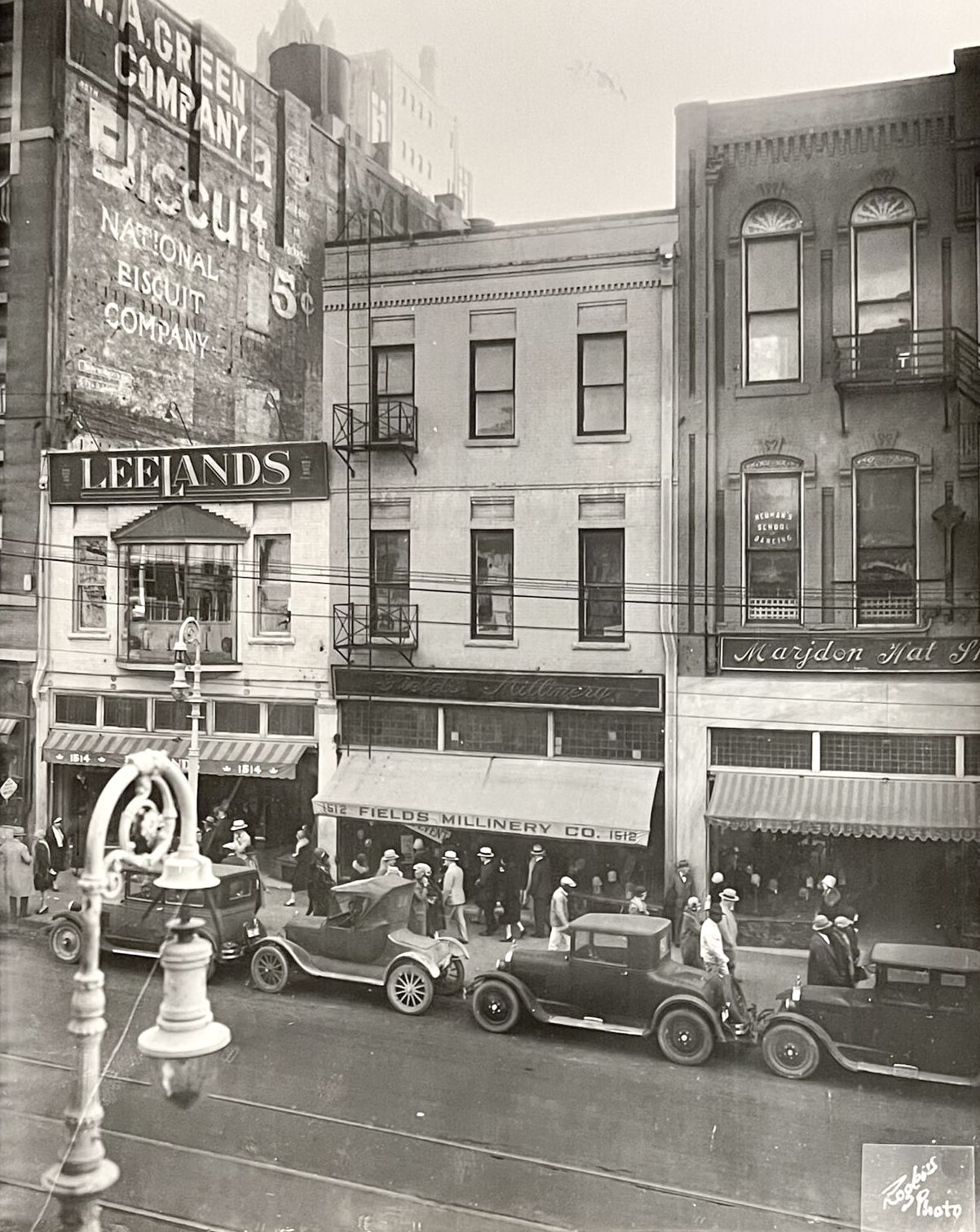
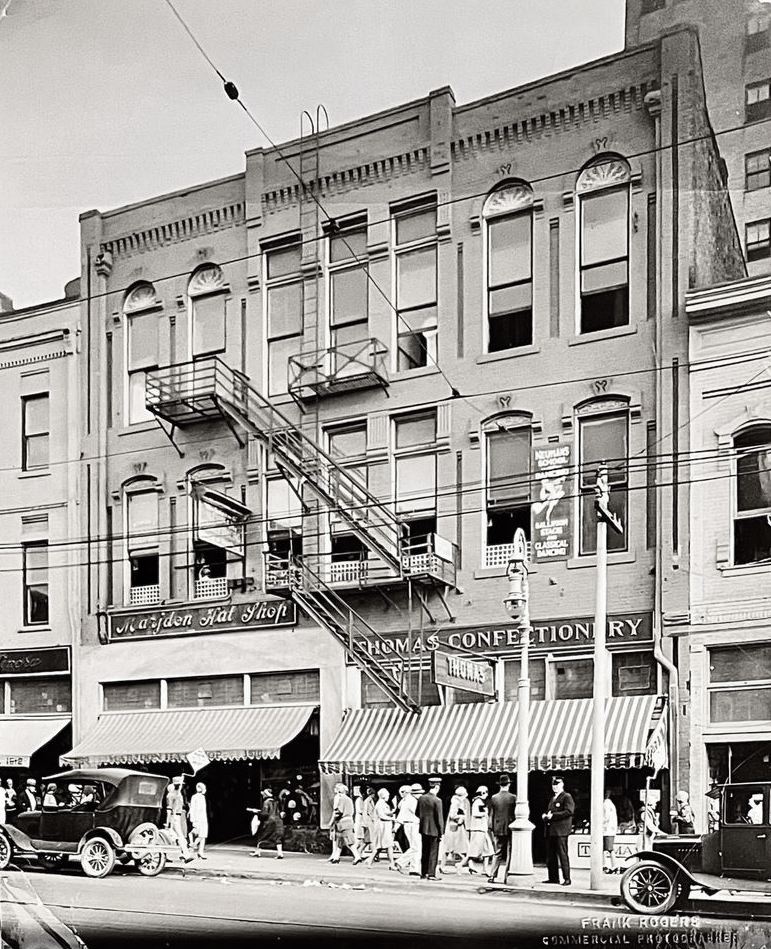
This is a great photo by Frank Rogers showing businesses on the south side of the 1500 block of Elm Street, between Stone and Akard (see it today on Google Street View here — some of these buildings are still standing). Mid-1920s? Back when Elm ran two ways, and you could park your rumble-seated roadster at the curb.

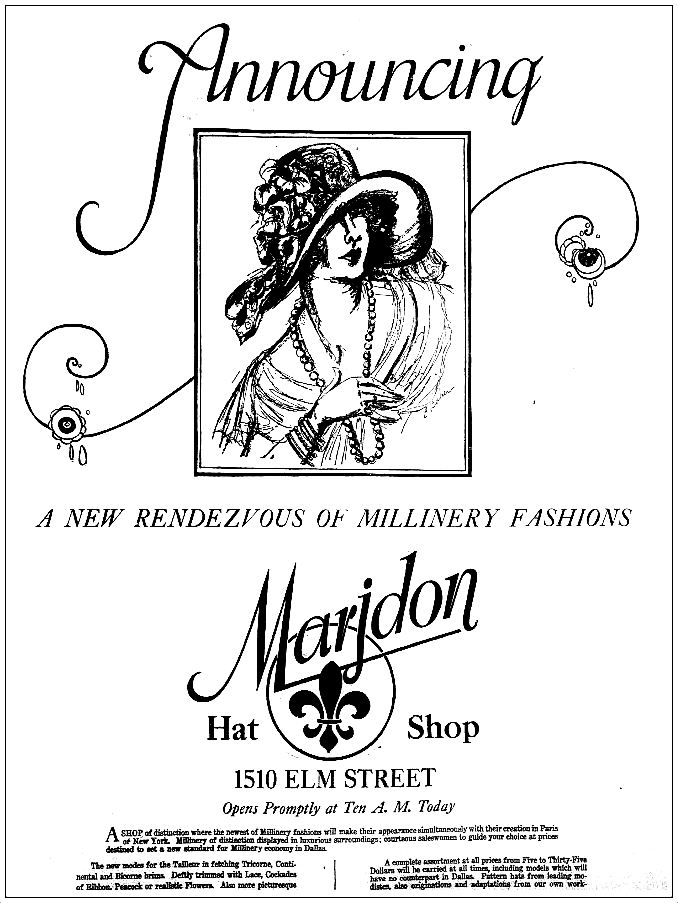
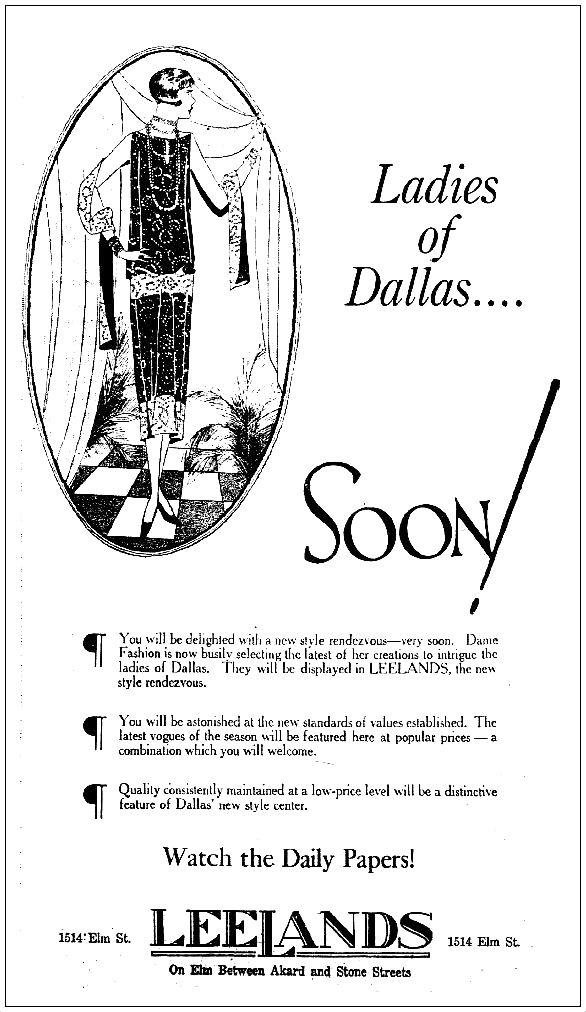
Mostly out of frame at the left is the W. A. Green department store (1516-18 Elm), then, moving east to west, Leelands women’s fashions (1514 Elm), Fields Millinery Co. (1512 Elm), part of the Marjdon Hat Shop (1510 Elm), and, above the hat shop, Neuman’s School of Dancing. (“Marjdon” must be one of the most annoying and hard-to-say business names I’ve come across.)

The block continues in the photo below, in another photo by Rogers (this building has been replaced and is now a parking garage).

thomas-confectionary_1508-10-elm-st_frank-rogers-ebay

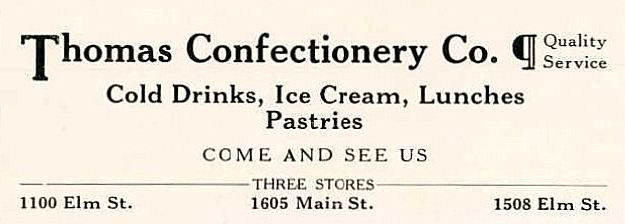
We see a full shot of Marjdon (that name…). Previously (1916-1924), that street-level space was occupied by the Rex Theater. Next door is Thomas Confectionery (1508 Elm, one of the company’s several downtown locations), which, according to the promotional postcard below was the “largest confectionery in the state.”

thomas-confectionary_postcard_1911_sam-rayburn-house-museum-via-portalvia Portal to Texas History

*

thomas-confectionary_main-high-school-yrbk_1916Dallas High School yearbook, 1916

*

marjdon_1510_opening_030124March 1, 1924

*

fields-millinery_1512-elm_dmn_opening_042122_adApril 21, 1922

*

leelands_030125March 1, 1925

*

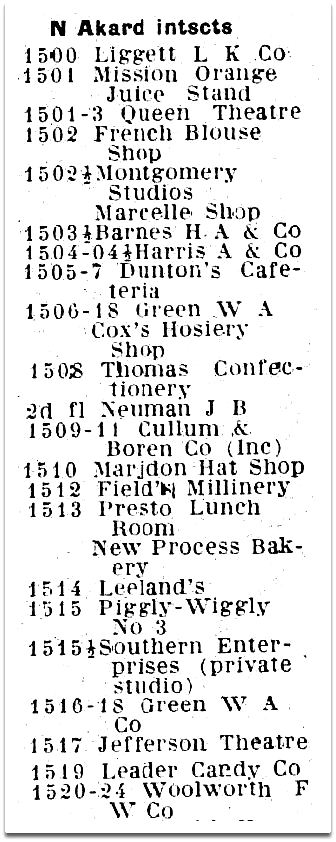
elm-street_dallas-directory-1925_1500-blockElm Street, 1925 Dallas street directory

*

Check out this block in the 1921 Sanborn map here.

***

Sources & Notes

The two photographs were taken by Dallas photographer Frank Rogers for real estate developers McNeny & McNeny; they were found on eBay.

fields-millinery_1512-elm_frank-rogers-ebay_sm

*

Copyright © 2023 Paula Bosse. All Rights Reserved.

Schulte Cigars, Elm & Akard — ca. 1923

schulte-cigars_elm-akard_frank-rogers_ebay_frank-rogers_bw
Life at Elm & Akard…

by Paula Bosse

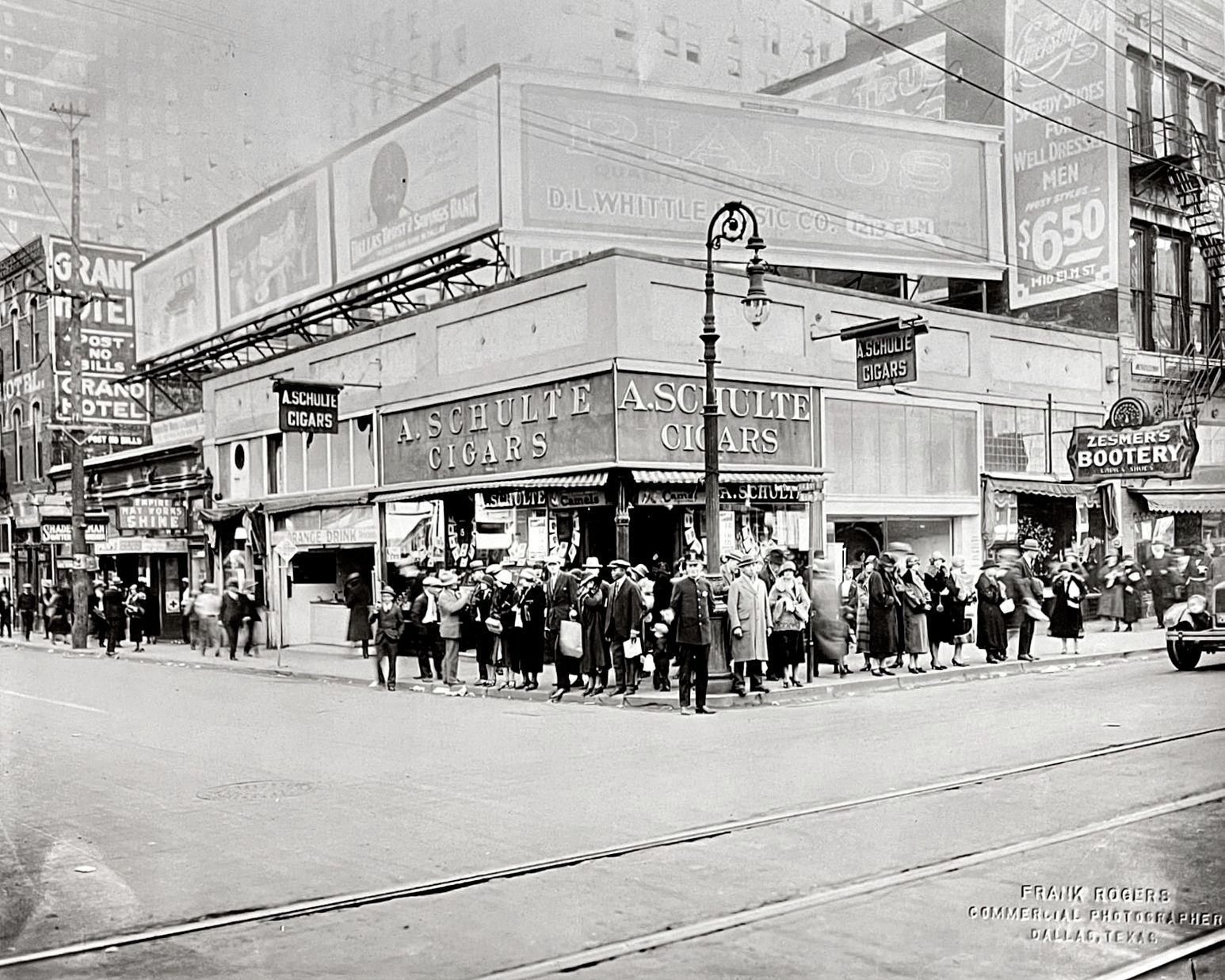
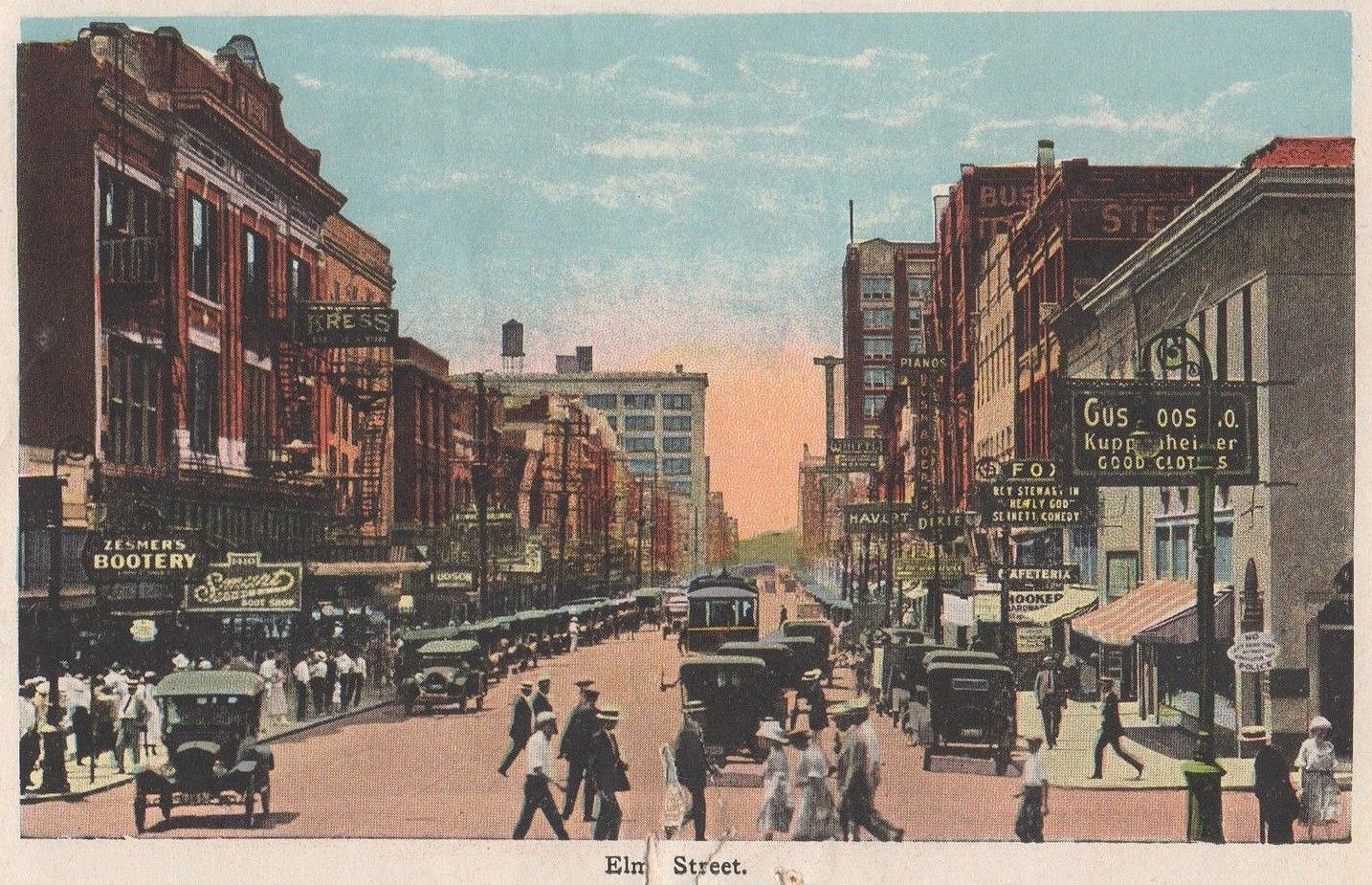
A. Schulte Cigars — at 1416 Elm — held down the southwest corner of Elm and Akard streets (Elm is in the foreground, with the streetcar tracks). The winsomely named Zesmer’s Bootery was at 1412 Elm. Around the corner on Akard was an orange-drink stand. Above the building was a surprising array of billboards. (There is a lot of advertising in this photo.) Here’s another view of the same block, looking west:

elm-st-color_1920s

Every time I see those curlicue lamp posts, they seem to be in photos of Elm Street.

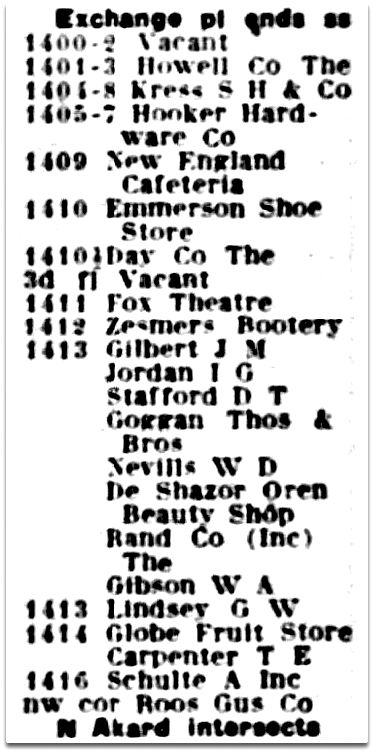
zesmer_schulte_1400-block-elm_1923-directory1400 block of Elm, 1923 city directory

***

Sources & Notes

Top photo by Frank Rogers; found on eBay.

Color postcard from the Flashback Dallas post “Views of Elm Street, With Cameo Appearances by the Fox Theater — 1920s-1960s.”

A previous Schulte location was at 201 S. Ervay, which you can see in the amazing photo in the post “‘There Are Eight Million Stories in the Naked City…’ — ca. 1920.”

Please consider supporting me on Patreon for as little as $5 a month. I post exclusive content there daily!

schulte-cigars_elm-akard_frank-rogers_ebay_frank-rogers_sm

*

Copyright © 2023 Paula Bosse. All Rights Reserved.

Kimball High School, Off Campus — Ads, 1959-1961

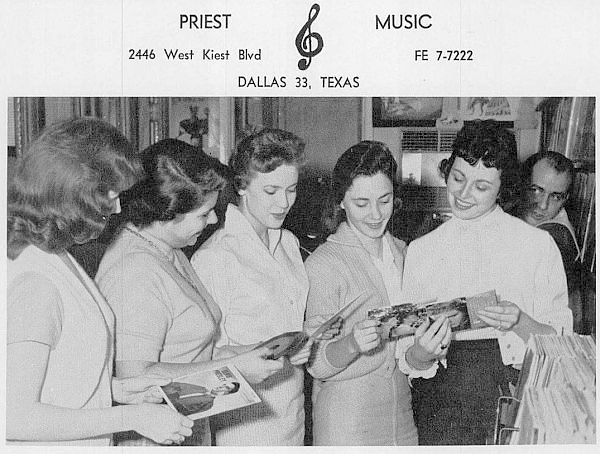
priest-music_kimball-high-school_1959-yrbk
Browsing the Elvis releases, 1959

by Paula Bosse

A few years ago I posted several Oak Cliff-centric ads found in the 1963 and 1967 Kimball High School yearbooks (see those ads here). I’m back for another installment.

**

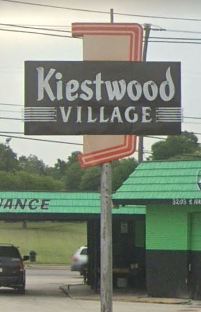
Above, a photo I really love, showing five Kimball girls checking out Elvis records at Priest Music (2447 W. Kiest Blvd). No, they don’t look like high school girls, and, yes, they are. The man at the right is, apparently, the owner, Frank M. Anderson (whom, I think, changed the name of the store to Music Hall the following year?). I posted this ad on my Facebook page last week, and one man wrote, about the owner: “Frank, the owner. His shop was known for its collection of Jazz and Classical albums. We became friends as I got into Jazz thanks to the Great Pete Fountain!” And because, why not, here’s a recent Google Street View of the Kiestwood Village sign which was probably there at that little shopping strip when Frank and the girls were photographed for this ad. 

kiestwood-village_2022

*

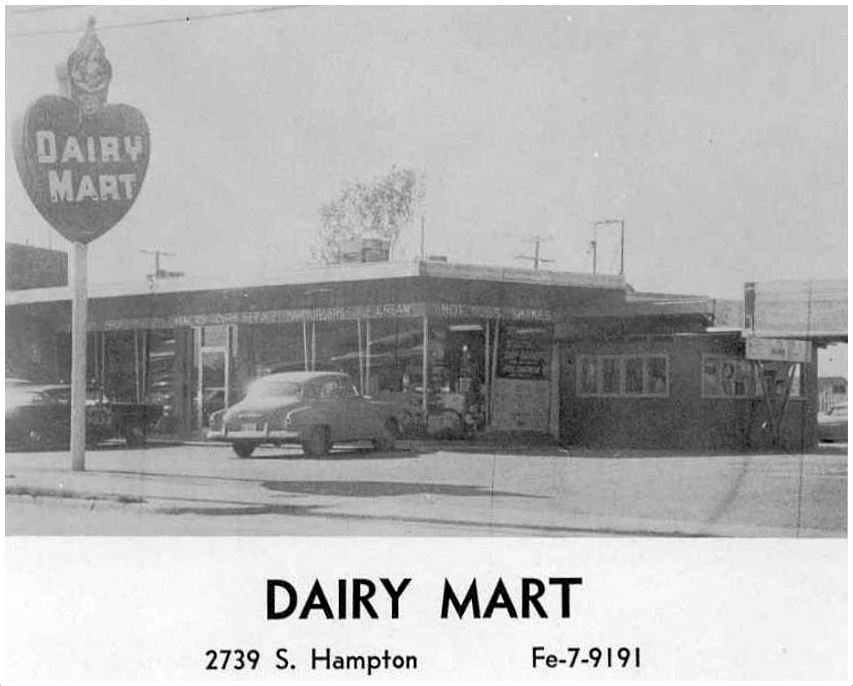
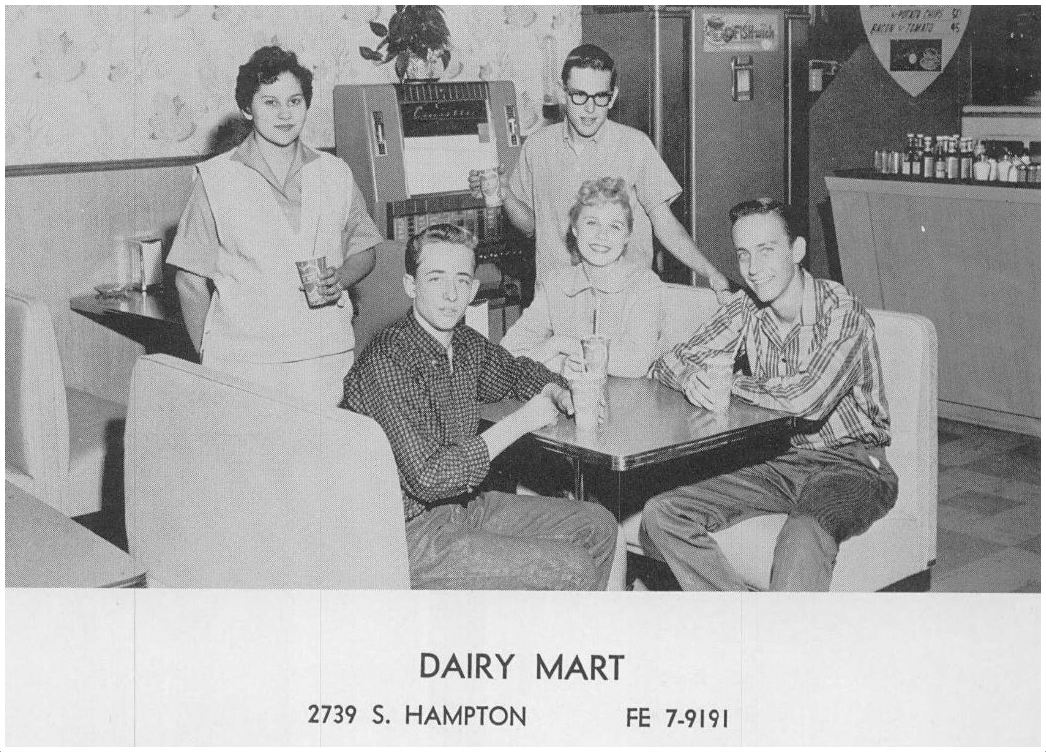
Dairy Mart (2739 S. Hampton):

kimball-high-school_1960-yrbk_dairy-mart1960

kimball-high-school_1959-yrbk_dairy-mart1959

*

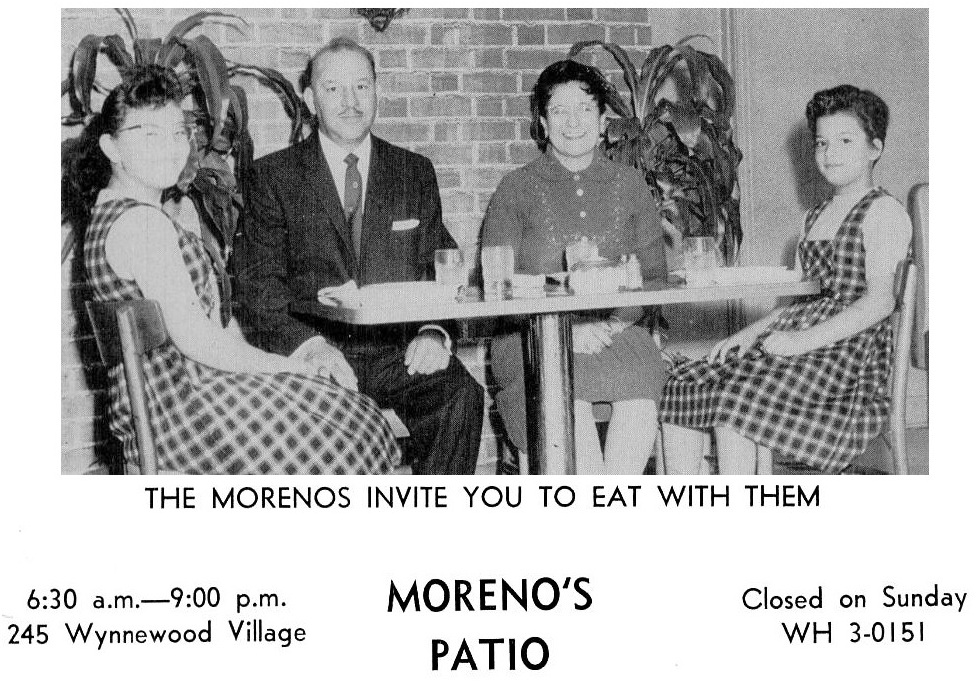
Moreno’s Patio (245 Wynnewood Village):

kimball-high-school_1961-yrbk_morenos-patio_restaurant1961

*

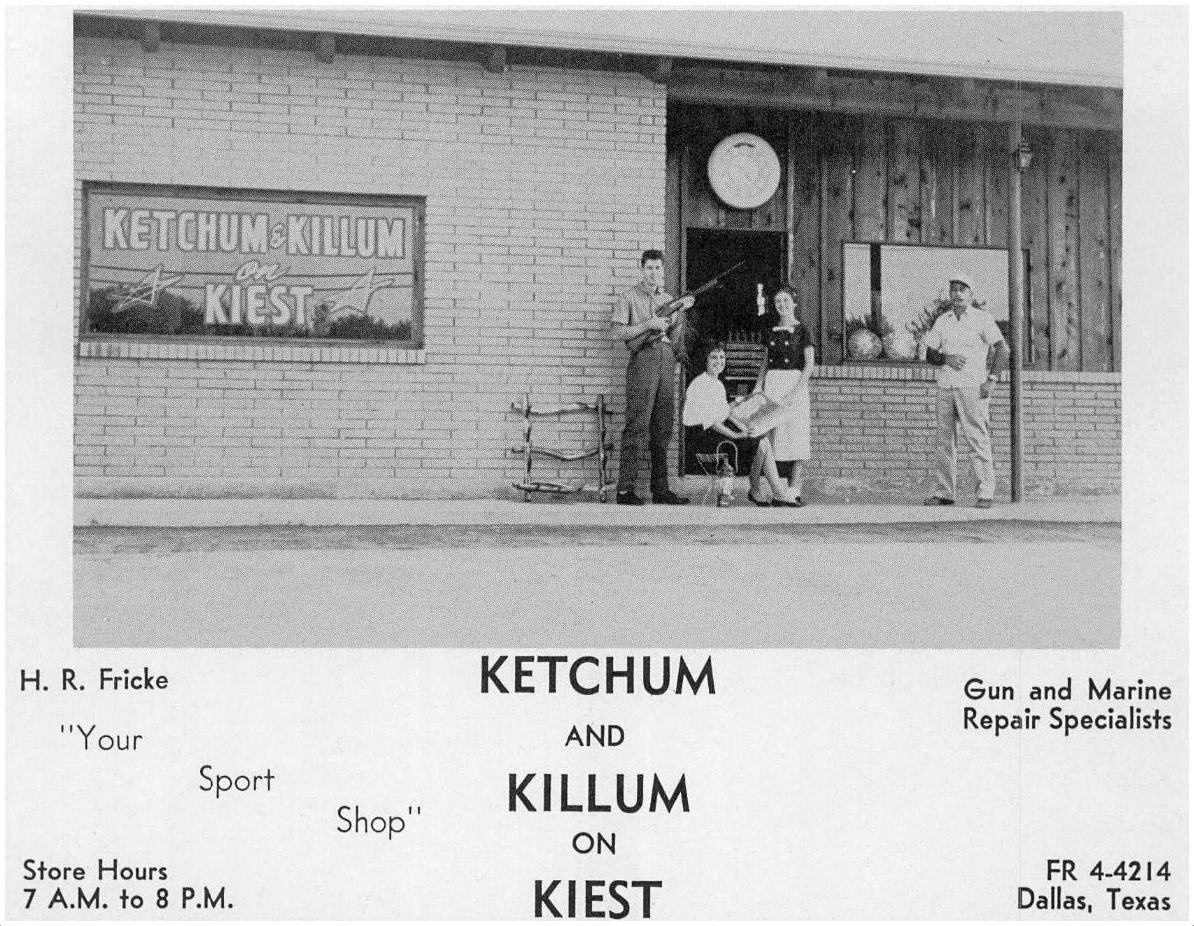
Ketchum & Killum (334 W. Kiest) — a sporting goods store with perhaps the best name ever (UPDATE: or not — see the comments below):

kimball-high-school_1961-yrbk_ketchum-and-killum1961

*

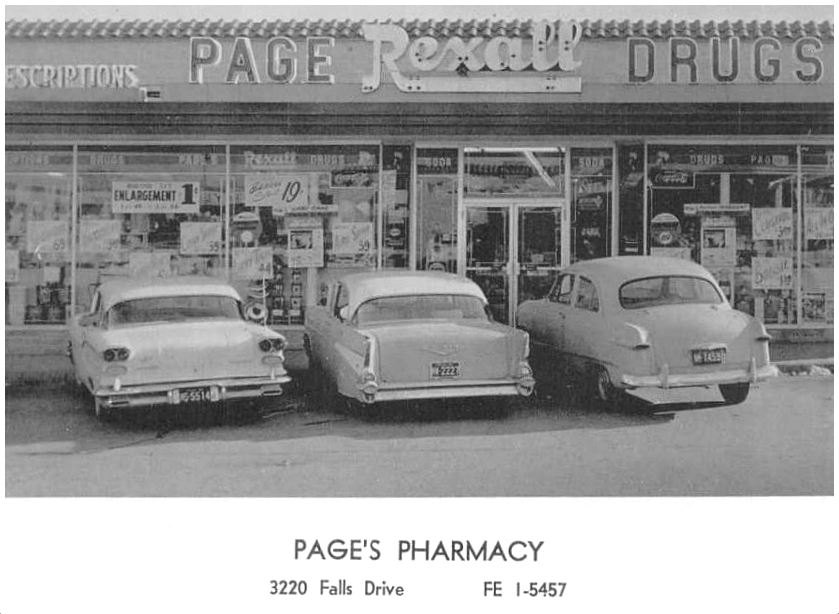
If you’re in need of some bandages or Mercurochrome after being a little too curious at Ketchum & Killum, head over to Page’s Pharmacy (3220 Falls Dr.):

kimball-high-school_1959-yrbk_page-drugs1959

*

For all things “fun,” Playland (3900 W. Illinois):

kimball-high-school_1959-yrbk_playland1959

***

Sources & Notes

All ads from the 1959, 1960, and 1961 yearbooks of Justin Kimball High School in Oak Cliff.

More Kimball yearbook ads can be found in the Flashback Dallas postA Few Ads From the Pages of the 1963 and 1967 Kimball High School Yearbooks.”

priest-music_kimball-high-school_1959-yrbk_sm

*

Copyright © 2023 Paula Bosse. All Rights Reserved.

El Chico Foods/Cuellar Foods

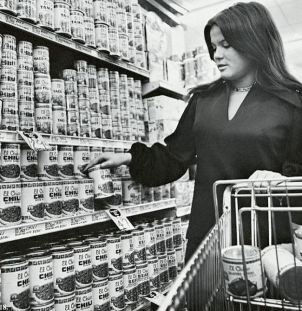
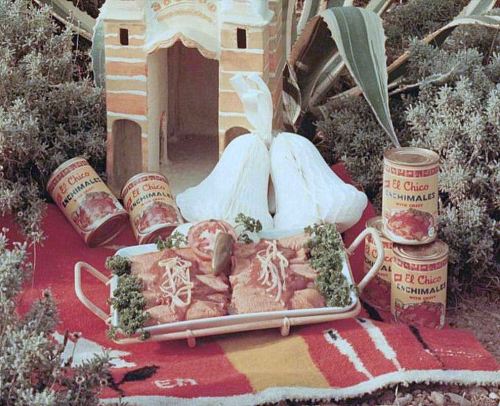
enchimales_canned_introduced-1968_portal_detEl Chico’s Enchimales with Gravy, ca. 1968

by Paula Bosse

I give you the “Enchimale,” a product introduced under the El Chico label in 1968. A news release described the delicacy thusly: “Wedding bells are ringing at El Chico for the marriage of the enchilada and the tamale, and the new product is called the Enchimale. […] This food is in the shape of a tamale, filled with fresh meat, with a mild enchilada sauce over it” (Dallas Morning News, Oct. 31, 1968). (So… a tamale?) I gather this was a short-lived product. (See the “Sources & Notes” section at the bottom of this page for an unusual and unrelated — I hope — recipe for enchimales which appeared in a newspaper in Spokane, Washington in 1950.)

This photo caught my eye while I was looking into the history of El Chico’s manufactured foods. Especially their canned foods, which I was unaware of. I’m not surprised they existed — I remember their frozen food line — I just have no memories of canned foods from El Chico.

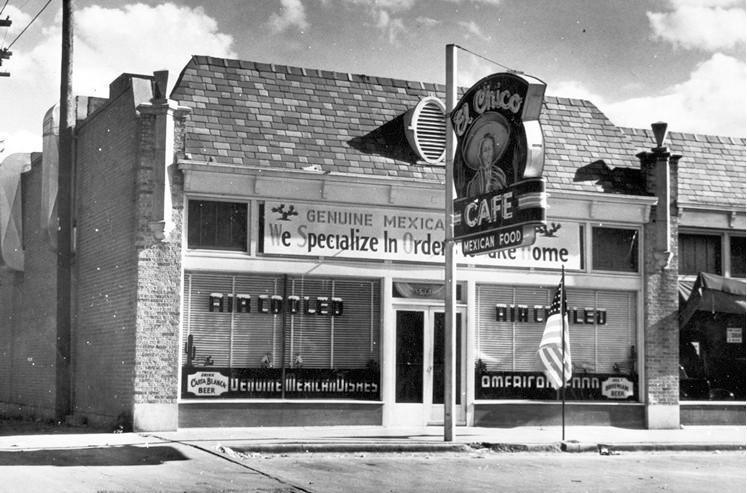
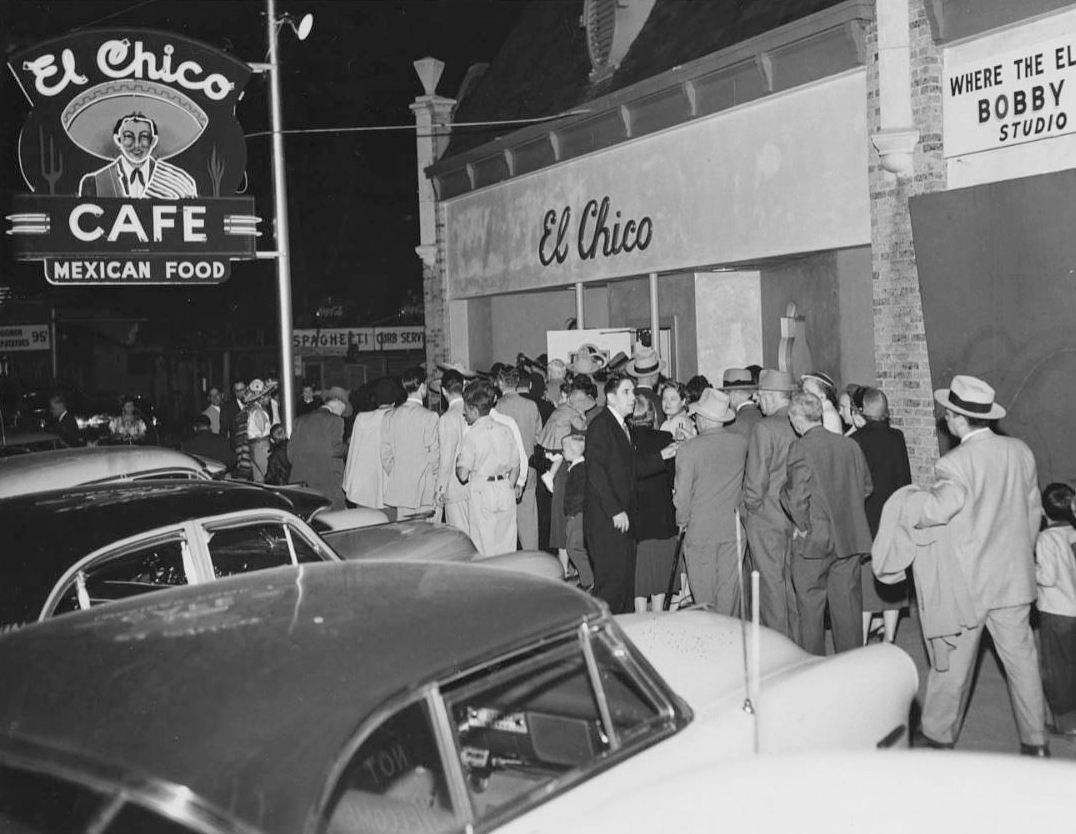
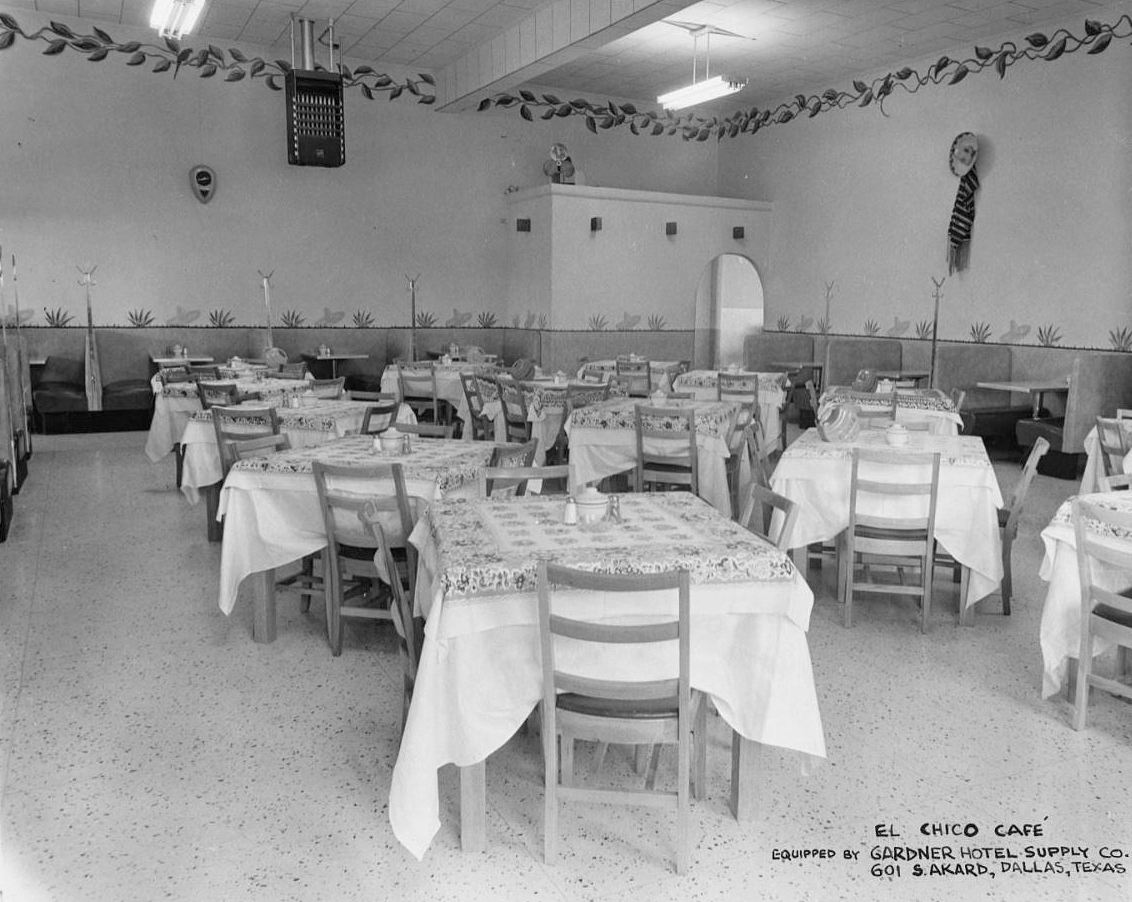
But I’m getting ahead of myself. You’ve probably heard the story of Mama Cuellar and the Cuellar brothers and their El Chico empire (if not, a good article is here). As far as their Dallas restaurants, the Cuellar brothers opened their first El Chico restaurant in 1940 at 3514 Oak Lawn (next door-ish to Lucas B & B, which opened in Oak Lawn in 1953). This location closed in either 1954 or 1955.
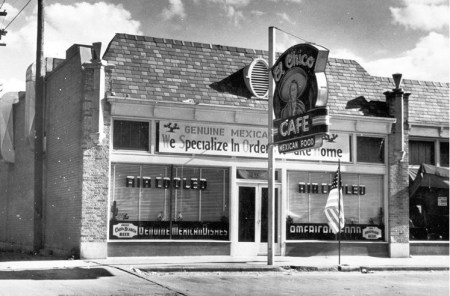
el-chico_oak-lawn_d-mag_nov-2013El Chico No. 1, Oak Lawn, via D Magazine
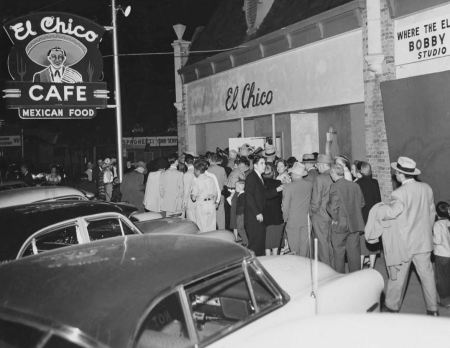
el-chico_oak-lawn_no-1_portalEl Chico No. 1, Oak Lawn, via Portal to Texas History

Six years later, they opened their second location in Lakewood at 2031 Abrams.
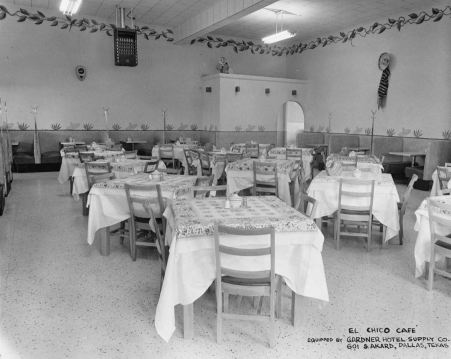
photo_el-chico-no-2_lakewood_portalEl Chico No. 2, Lakewood, via Portal to Texas History

Their third Dallas location opened near the Inwood Theater in 1949 at 5526 Lovers Lane.
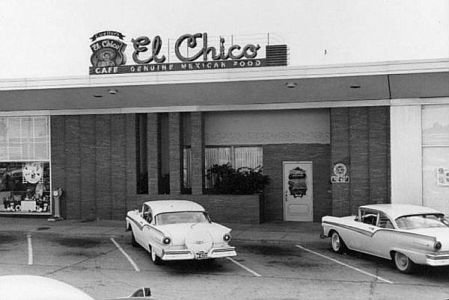
el-chico_inwood-village_1953_inwood-village-websiteEl Chico No. 5, via Inwood Village website

When that location opened, the family was operating 11 restaurants in Texas, Oklahoma, Louisiana, and Kansas. Things were good in Cuellar-land.

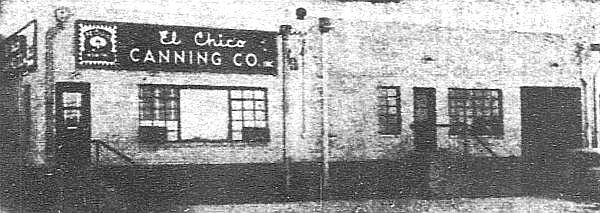
At the end of 1949, the Cuellars decided to begin manufacturing canned food products, with the aim to sell Tex-Mex staples nationally under the label “El Chico Foods.” The new factory was located at 162 Leslie St., in the then-pretty-new Trinity Industrial District. (They later moved waaaaaaaaaaay up north, to 1925 Valley View Lane.)
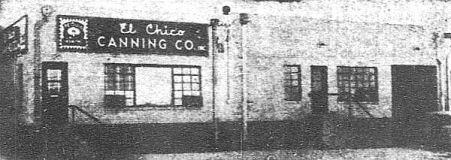
el-chico-canning-coEl Chico Canning Co., 162 Leslie St., Dallas

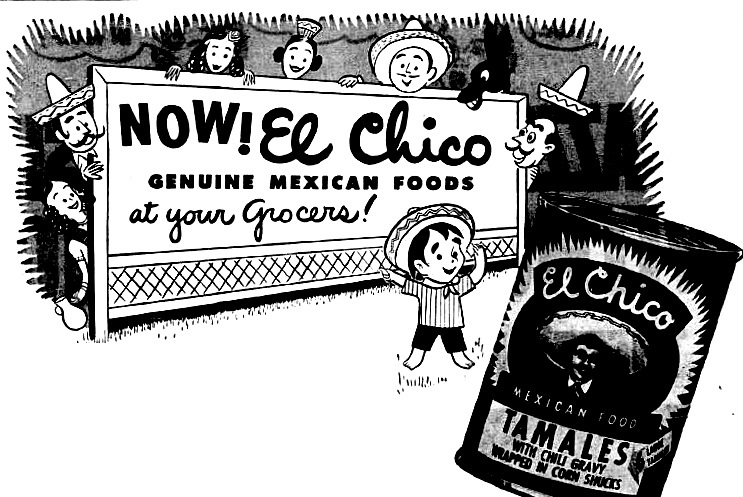
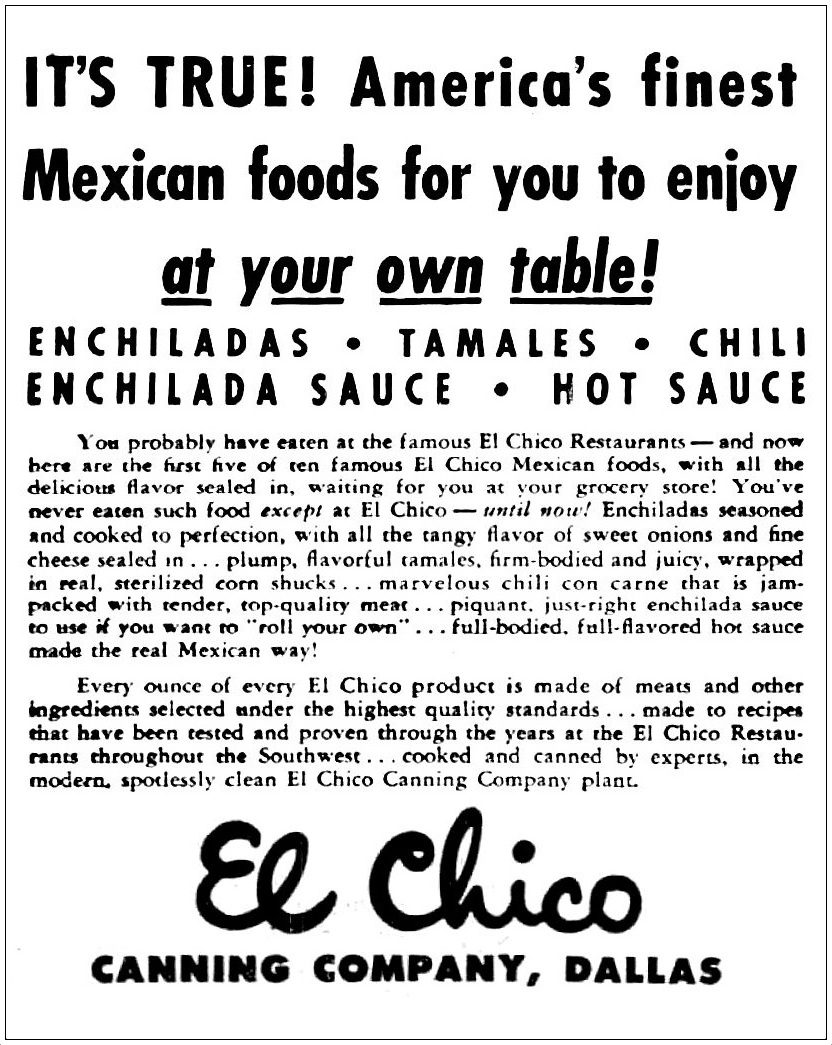
El Chico canned foods began to show up in DFW grocery stores in March 1950. Make way for canned chili, enchiladas, tamales (in corn husks), enchilada sauce, and hot sauce.
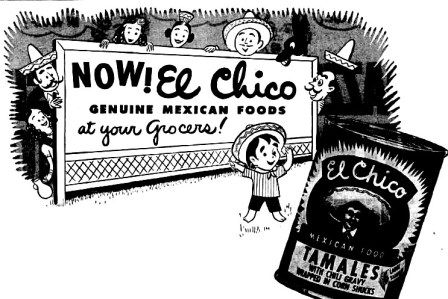
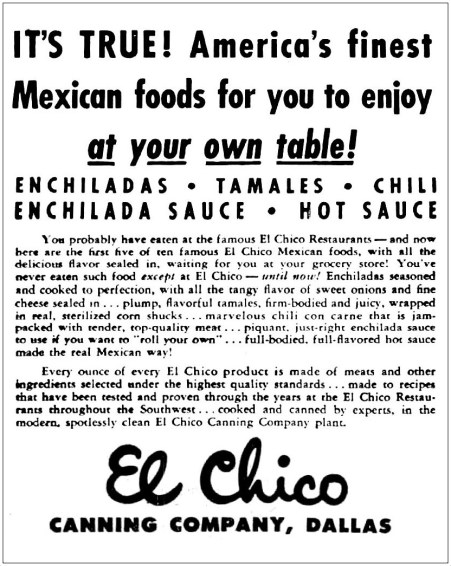
1950_canning-co_FWST_031750_det-1

1950_canning-co_FWST_031750-det-2Fort Worth Star-Telegram, Mar. 17, 1950

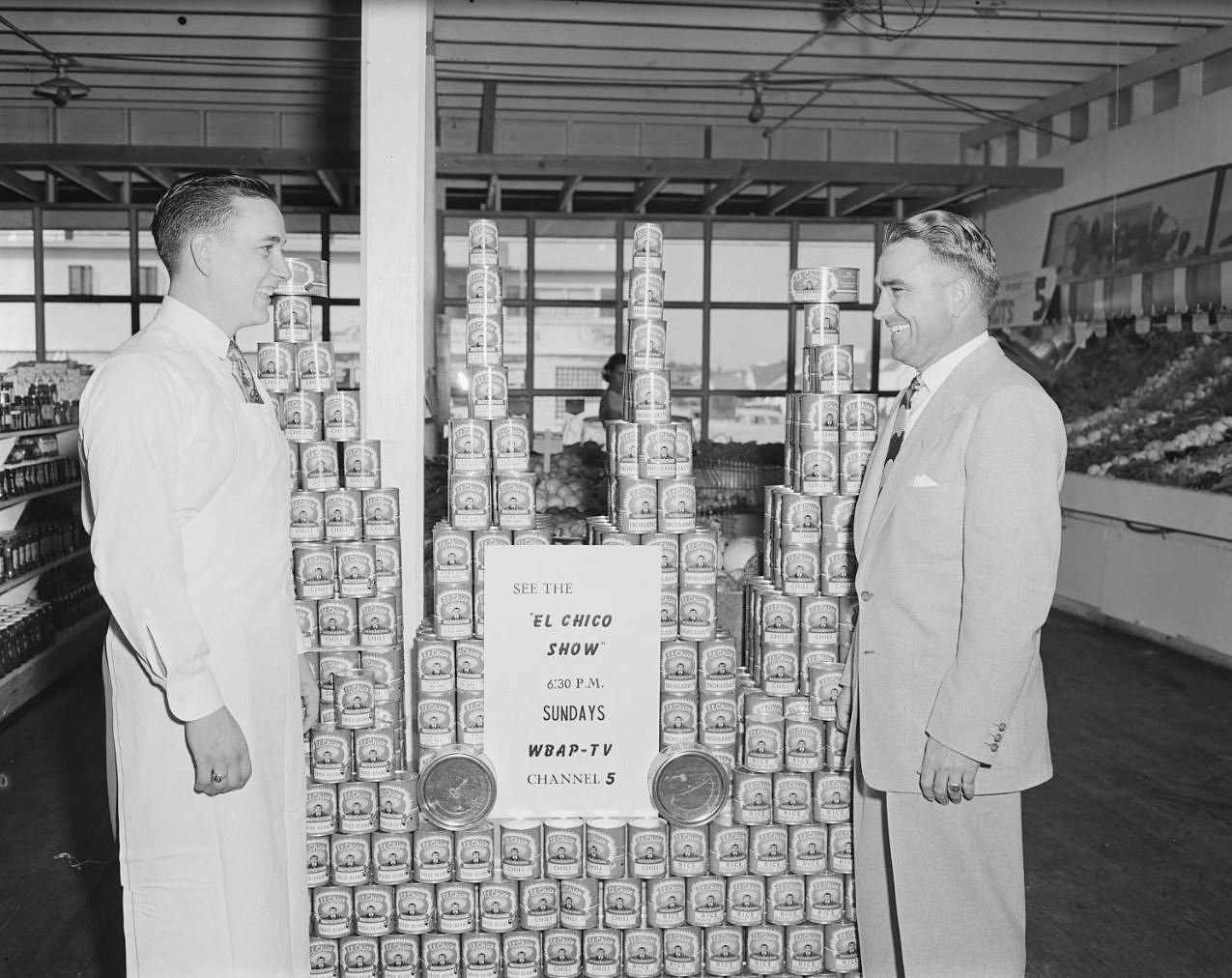
Soon to follow were other foods, including the mystifying canned tortillas — thanks to the photo below, I now know that it was possible to buy tortillas in a can, which was opened with a key. Just like Spam, or a canned ham. (Not sure what the “El Chico Show” was, but apparently it was broadcast on Channel 5 — at least in October 1950.)
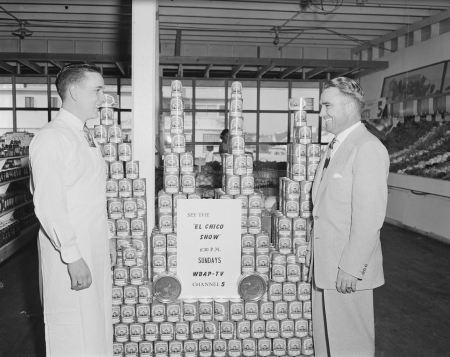
el-chico_canned-products_KXAS-NBC-5-collection_102450_portalOctober 1950, via Portal to Texas History

Business boomed! After only 9 months, production tripled. After 2 years El Chico canned foods were in more than 30 states.

But in March 1953, the Cuellar family was sued in federal court for copyright infringement by a man named Benito Collada who owned a well-known nightclub in Greenwich Village called “El Chico,” a name he copyrighted in 1931. He demanded that the Cuellars change the name of their restaurants and their canned foods. The judge handed down an unusual verdict in which both sides were able to claim partial victory (or partial loss): the Cuellars were allowed to keep “El Chico” as the name of their restaurants, but they had to bid adios to the name on their canned foods.

The company regrouped and rebranded. The name of their Tex-Mex products became “Cuellar’s,” and the label even came with a pronunciation guide: “QUAY-YAR.”
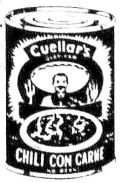
cuellar-chili

Apparently, sales dropped. Steeply. The Cuellars fought their way through the appeals process, determined to retain the “El Chico” name on their manufactured foods, and, in September 1954 they won the right to once again sell canned foods under the El Chico brand.
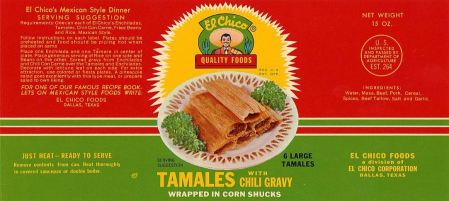
el-chico_canned-tamales_label_smithsonian

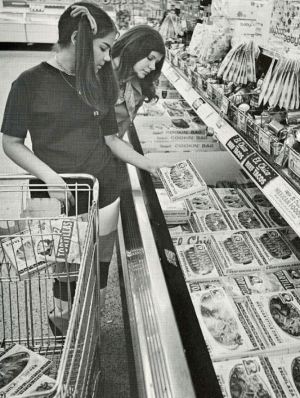
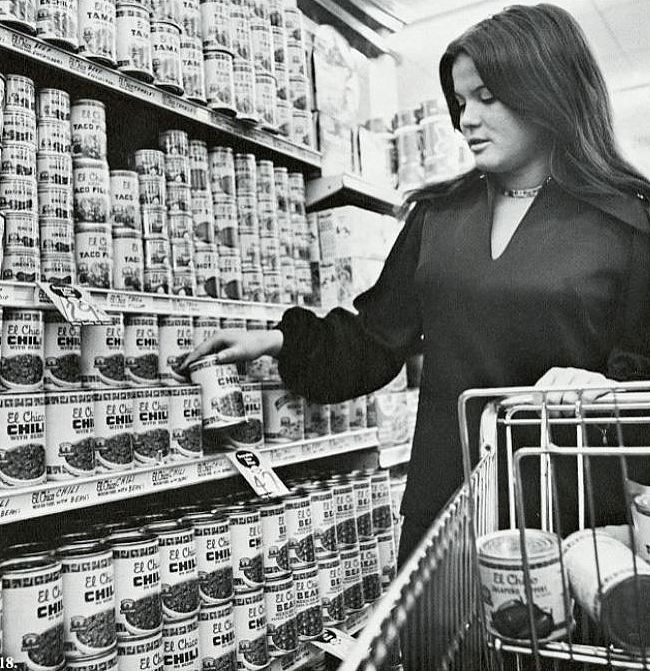
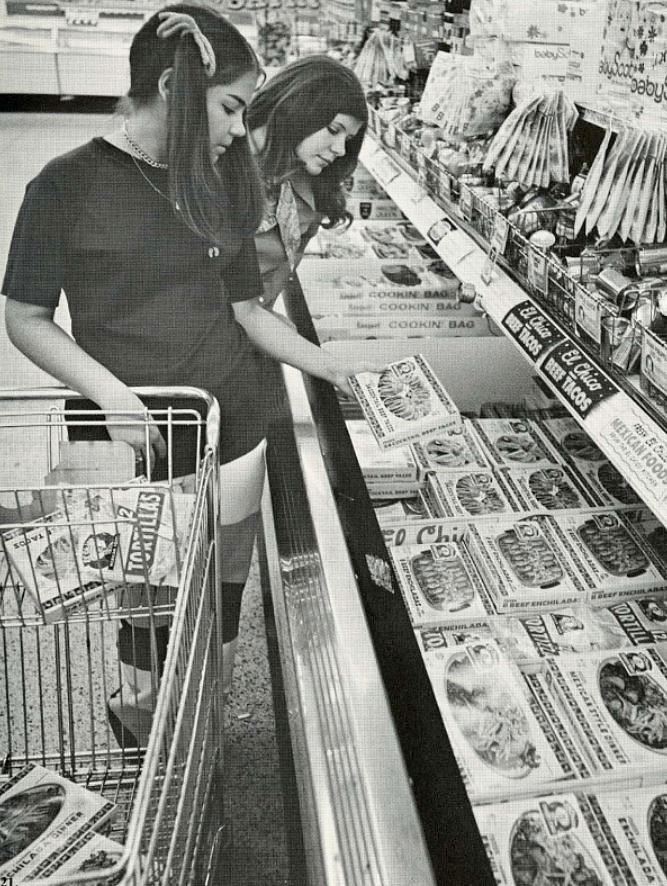
Sales really increased when they added frozen dinners to their line — their factory on Leslie Street installed a huge freezing system — they were able to freeze 6,000 frozen dinners at a time in 90 minutes.
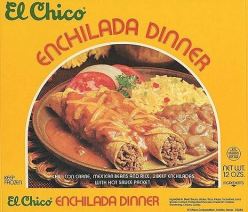
el-chico_frozen_smithsonianvia Smithsonian Institution

el-chico_shopper_shelves_smithsonianvia Smithsonian Institution

el-chico_shoppers_frozen_smithsonianvia Smithsonian Institution

Along with the typical frozen dinners you’d expect, El Chico also sold frozen tortillas. In the photo above, there is a box of frozen tortillas in the shopping cart and in the freezer case. As I recall, I think I liked the frozen Mexican dinners as a kid, but frozen tortillas and tortillas in a can sound equally unappealing.

The frozen dinners ultimately took over the manufacturing side of Cuellar foods, and at some point, the canned products eventually faded away. As I said, I remember the frozen dinners, but I don’t remember the canned foods at all. But I find them so interesting that that they are going to get their very own post — check out that post here.

***

Sources & Notes

Top (cropped) image is from the Frank Cuellar Sr. Collection, University of North Texas Special Libraries Collection, Portal of Texas History, and can be found here (the full collection may be browsed here).

Several images in this post are from the Smithsonian Institution’s “Guide to the El Chico Restaurants Collection.”

Read a good history of the Cuellar empire in “The Family Who Sold Tex-Mex to America” by Nancy Nichols, D Magazine (Nov. 2013).

So. “enchimales.” I did a quick search on the word and found mentions back to 1934 for a cafe selling something with this name in Shreveport. For all I know, this is a traditional Mexican dish which I’ve just never heard of. BUT, I wonder whether any actual Mexican-related dish would bear any resemblance to the enchimales recipe devised by Mrs. Vincent Katzenberger of Garfield, Washington which appeared in Spokane’s Spokesman-Review newspaper? It was the 14th-place (!) winner in the “Meltin’ Pot” international cooking competition. Here’s a short synopsis of Mrs. Katzenberger’s dish, which is made like enchiladas: in a tortilla, place a filling of onions, cheddar cheese, and a can of olives (all of which has been passed through a meat grinder) — on top of that filling, plop one canned tamale; roll up this filled tortilla and place it in a baking dish; repeat a dozen or so times; cover everything with tamale sauce; bake; when done, serve on a lettuce leaf and top with sprinkles of Parmesan cheese. The recipe is here. If you make this, please let me know how it came out.

enchimales_canned_introduced-1968_portal_det_sm

*

Copyright © 2023 Paula Bosse. All Rights Reserved.

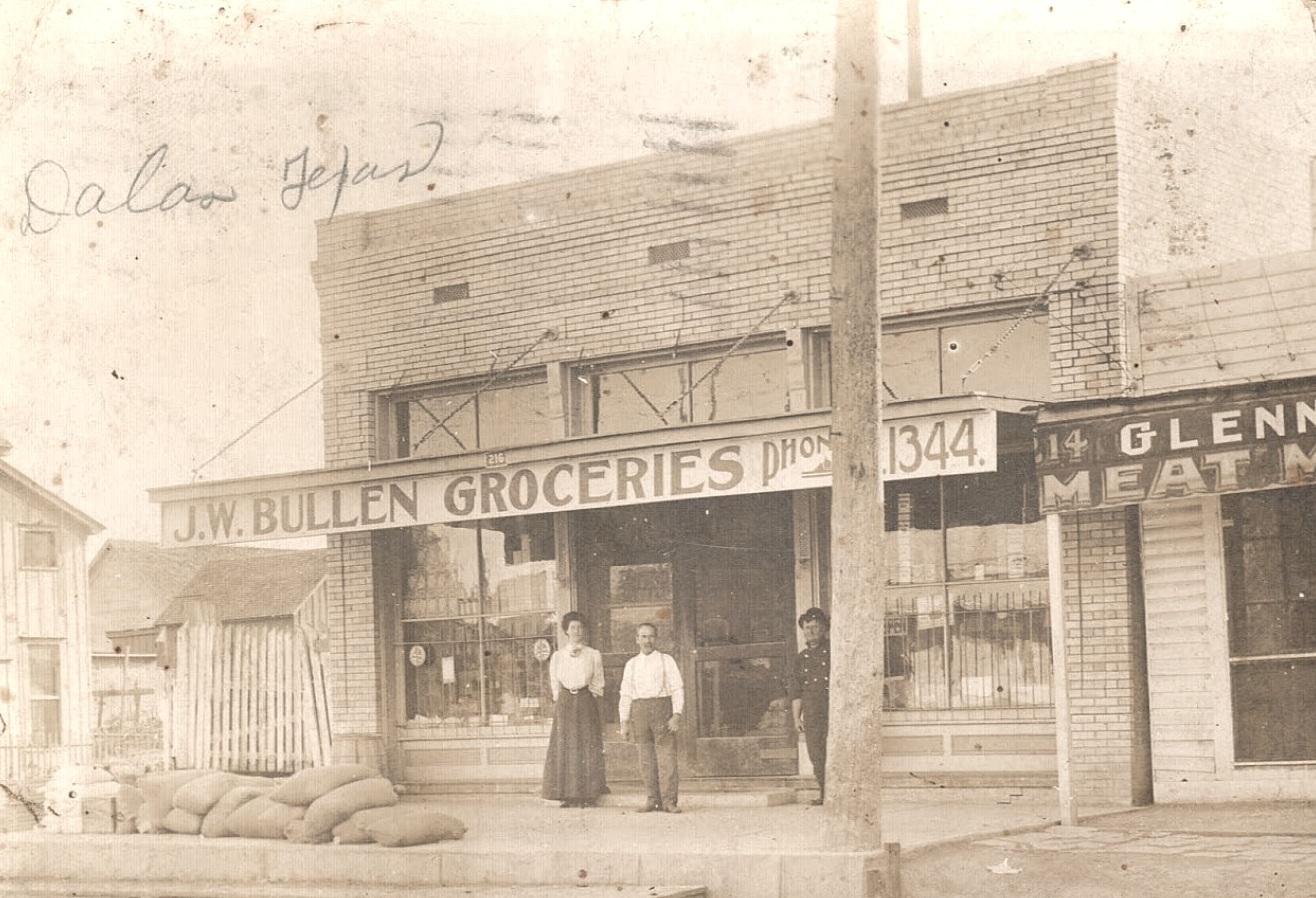
The Bullen Store, Exposition Avenue — 1896-1936

bullen-store_exposition-avenue_ca-1905Exposition Ave., ca. 1905 (photo: Bullen family, used with permission)

by Paula Bosse

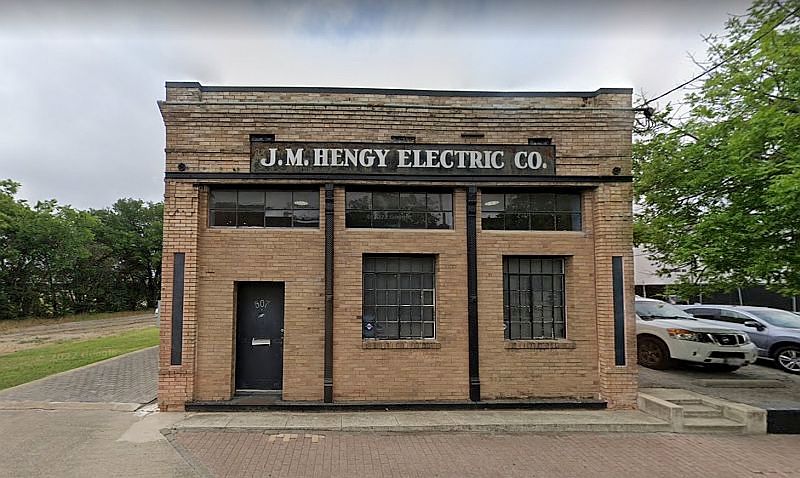
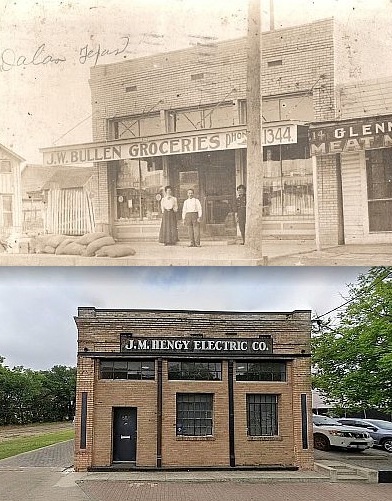
If you’re reading this, you probably have a fascination with old buildings. When was it built? What had it been? How has it not been torn down? One such building — which, though interesting, doesn’t really strike one as particularly old — is the small building at 507 Exposition Avenue, a few blocks from Fair Park. Actually, the thing that jumped out at me was the sign on the building reading “J. M. Hengy Electric Co.” — back in 2015 I wrote a long post about the exceedingly litigious Hengy family (“F. J. Hengy: Junk Merchant, Litigant”) (J. M. was the grandson of F. J.). The Hengy Electric Co. was in business at that location from at least the 1930s until at least the 1960s. I’m not sure why the current owners kept this sign, but I’m glad they did, because it’s why I noticed it.

This building was most likely built in the 1890s, and it was home to a grocery store owned by J. W. Bullen (John Wesley Bullen Sr.), a Tennesse native who came to Texas in the late 1870s and, after a few years of farming in the area, settled in Dallas. He worked for the Santa Fe railroad for a while before opening this grocery on Exposition Avenue in the 1890s — easy to give directions to because the Gulf, Colorado and Santa Fe (GC&SF) Railway tracks ran right alongside the store. Bullen’s grocery was a neighborhood mainstay for at least 40 years. He retired in 1936, and he and his wife, Mary, eventually moved to California to live with their daughter. J. W. Bullen died in California in 1948, at the age of 89 — his life spanned the Civil War to the advent of television.

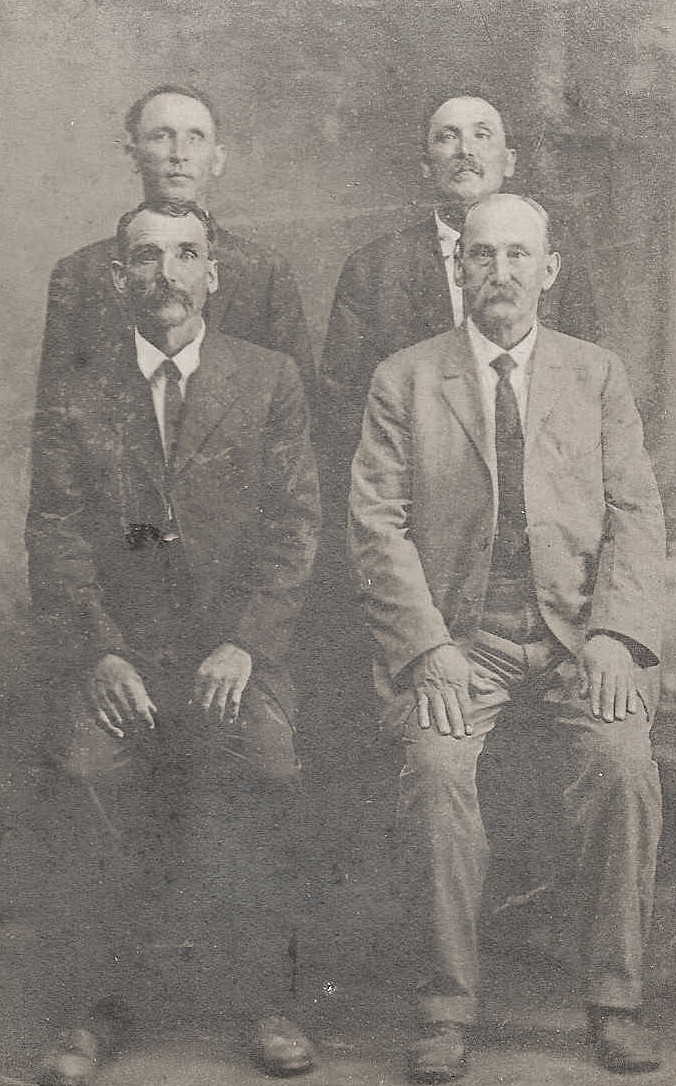
Below, J. W. Bullen is shown with his brothers, Thomas, James, and Joseph — he is at the bottom right.

bullen-j-w_sitting-right_ancestryvia Ancestry.com

I came across the photo at the top of this post on the Dallas Historical Society discussion forum (“The Phorum”) back in 2017 (it’s taken 5½ years for me to finally write this!) — the thread is here. A Bullen relative posted this photo, and I was ecstatic to see it! It’s such a great image — I have never seen a photo of Exposition Park from this period. (I asked Mr. Bullen — the man who posted this photo — if I could reproduce it, and he very nicely gave me permission.)

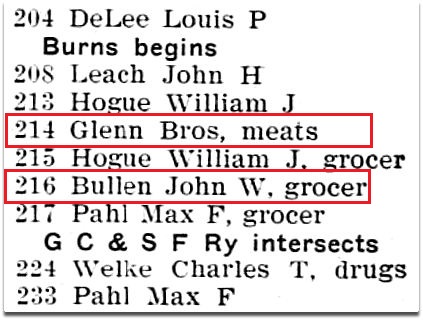
I would guess that the photo dates from sometime around 1904-1906, when the Glenn Brothers meat market occupied the space next door (originally 214 Exposition and later 505 Exposition).

1905-directory_bullen-glenn-bros1905 Dallas city directory

The Hengy business originally occupied the Glenn Bros. space for several years, from at least 1930. After Bullen’s retirement, Hengy moved into the larger space at 507 Exposition. Today it is occupied by Big Sky Construction.

507-exposition_google-street-view_may-2022
Google Street View, May 2022

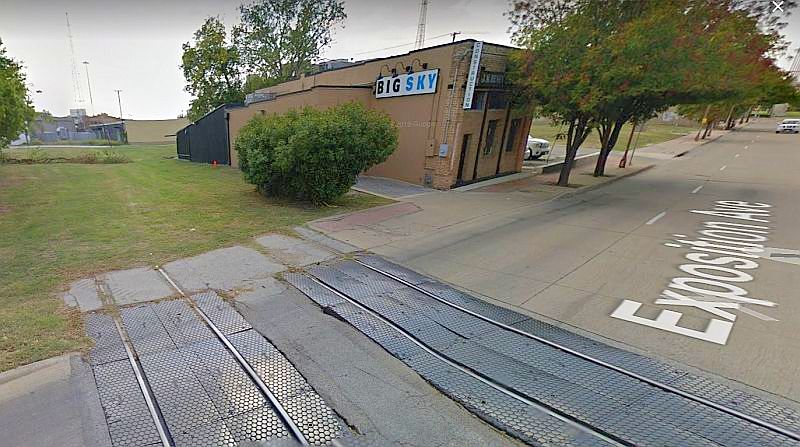
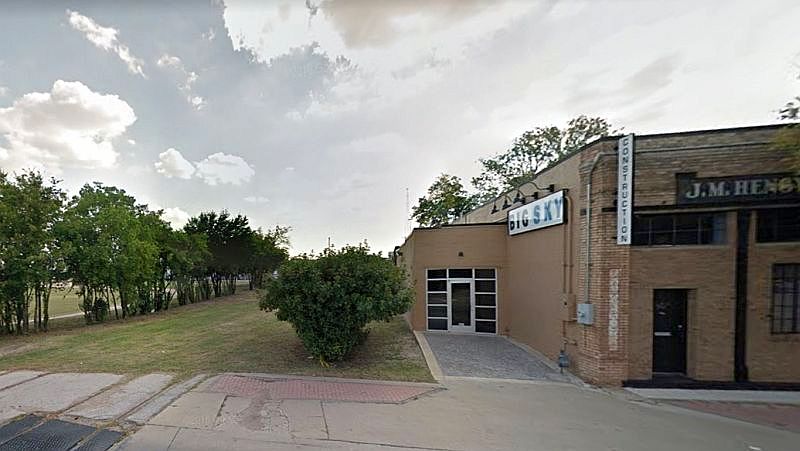
The railroad tracks have been pulled up, but below are two Google Street Views from 2012 showing where they once were — they couldn’t have been much closer to Bullen’s store! That’s got to have rattled the merchandise (and the store’s occupants) several times a day.

507-exposition_google-street-view_sept-2012Google Street View, Sept. 2012

507-exposition_google-street-view_sept-2012_bGoogle Street View, Sept. 2012

*

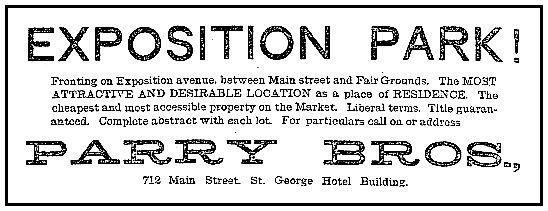
The address of Bullen’s store was originally 216 Exposition Avenue. After the citywide address change in 1911, it became 507 Exposition Avenue. The store was in business by at least 1896, but a newspaper article on the 62nd wedding anniversary of Mr. and Mrs. Bullen says that the business began in 1893. At this time, development of Exposition Park was exploding (see the 1889 ad I posted yesterday, here).

expo-park_ad_dmn_1012891889

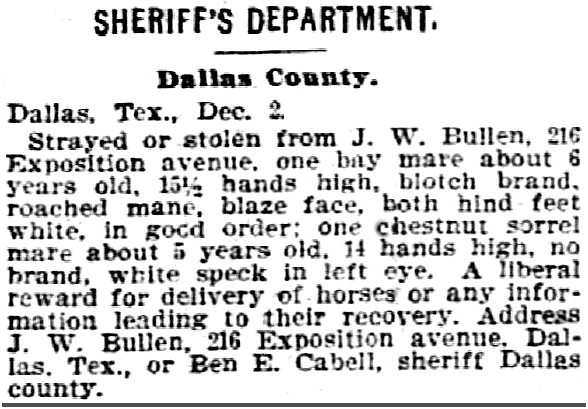
If you look at Sanborn maps of this area (the 1899 map is here, the 1905 map is here, and the 1921 map is here) you see that almost all of the buildings in the area are houses (designated by the letter “D,” for “dwelling”). Having only ever known the area in recent times, it’s hard to imagine this ever having been an almost entirely residential neighborhood. And, back in the 1890s, it was also full of livestock.

bullen_dmn_120397_stolen-horsesDallas Morning News, Dec. 3, 1897

*

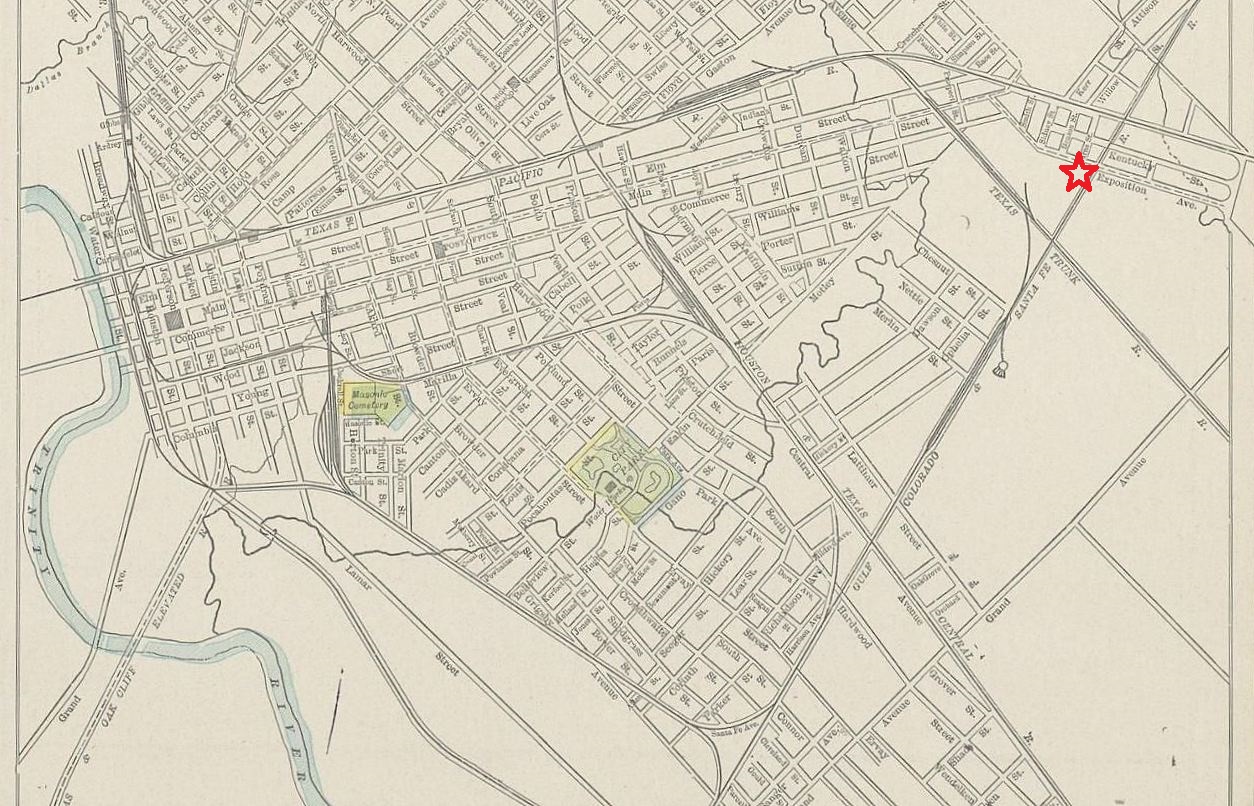
Here’s a map of Dallas from 1898, with Bullen’s store way on the edge of the world, under the star.

1898-map_bullen-store_expositionvia Portal to Texas History

*

507-exposition_then-now_ca-1905-2022

***

Sources & Notes

Photo is from the family collection of Joseph Bullen II, used with permission.

I would LOVE to see historical photos of the Expo Park area — from any time, really, but especially from the time it was primarily residential. If you have any photographs, please let me know!

See this building today on Google Street View, here.

Biographical information on J.W. Bullen from “J. W. Bullens Observe Their Anniversary” (Dallas Morning News, Nov. 22, 1942).

More Flashback Dallas posts on Exposition Park can be found here.

bullen-store_exposition-avenue_ca-1905_sm

*

Copyright © 2023 Paula Bosse. All Rights Reserved.
The Sunny Side Grocery — 1915

williamson-store_4207-w-clarendon_1915_ebay_rppc_c“Uncle John’s store”

by Paula Bosse

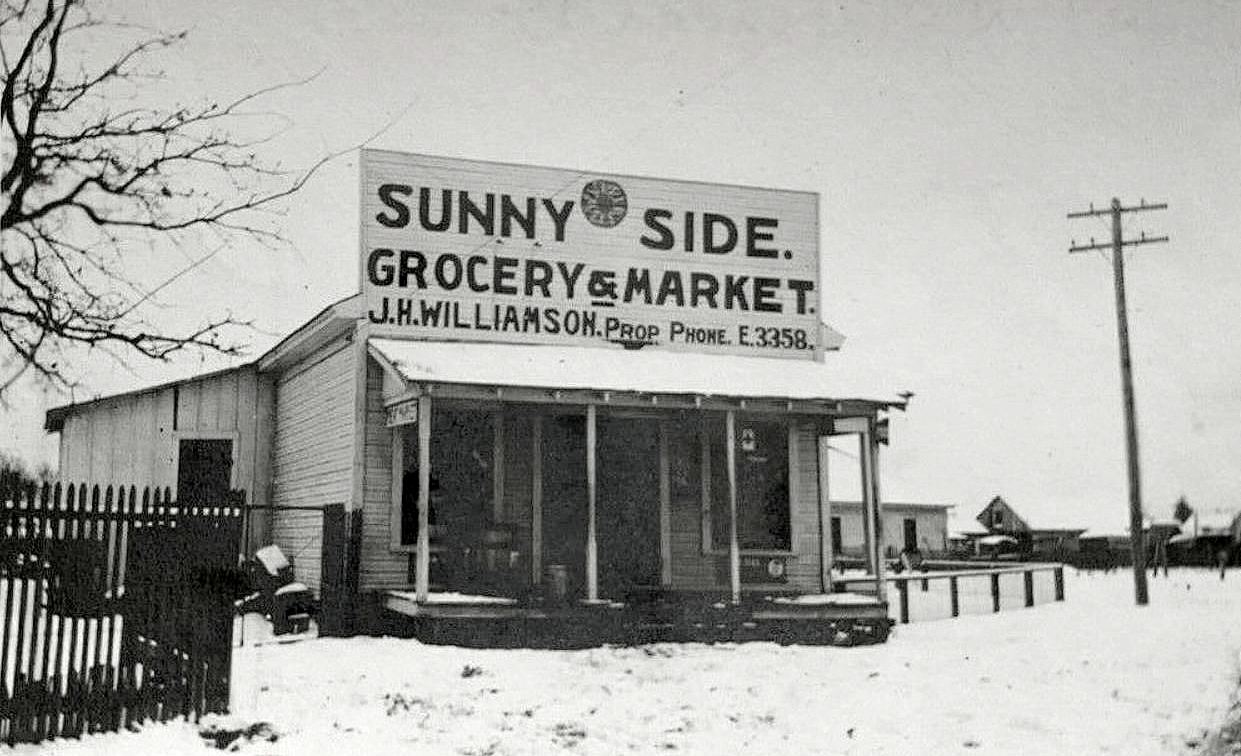
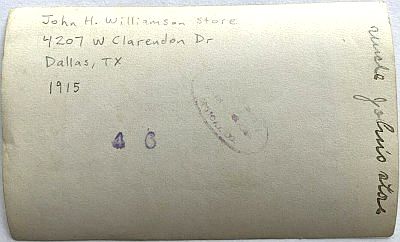
Above, the Sunny Side Grocery & Market, J. H. Williamson, prop. According to the notation on the back of this photo, the store — owned by John Williamson — was located at 4207 W. Clarendon (a few steps from Sunny Side Avenue in, I believe, Cockrell Hill (which I’m ashamed to say I didn’t realize was a separate city from Dallas — as Wikipedia says, it is a city “completely surrounded by the city of Dallas” — sorry, Cockrell Hill!).

williamson-store_4207-w-clarendon_1915_ebay_notation

Mr. Williamson appears to have owned another store — or this store, with an incorrect modern-day notation by a descendant. The other store (also called the Sunny Side Grocery…) was listed in the 1915 Dallas city directory (as well as in a 1915 ad in The Dallas Morning News) as being at 3600 Copeland (where S. Trunk and Copeland meet in South Dallas — as seen in the bottom right corner of this 1922 Sanborn map).

The only other thing to go on is the telephone number: “E 3358,” which might be “Edgewood” 3358. The Edgewood exchange went into service in 1911 and served “all telephones south of the Santa Fe tracks and west of the Fair Grounds” (Dallas Morning News, May 2, 1911). So that’s not terribly helpful in this instance, since both locations would be in that exchange (I think…). My guess is that the photo shows the W. Clarendon location (which was still in business as late as 1936).

So I’m going with Cockrell Hill, which, again, is a CITY COMPLETELY SURROUNDED BY ANOTHER CITY

***

Sources & Notes

Photo found on eBay.

williamson-store_4207-w-clarendon_1915_ebay_rppc_sm

*

Copyright © 2022 Paula Bosse. All Rights Reserved.

The Gaston-Carroll Pharmacy — ca. 1929

gaston-carroll-pharmacy_1929_joe-windrow_dallasFB_2
Curb service at Gaston and Carroll…

by Paula Bosse

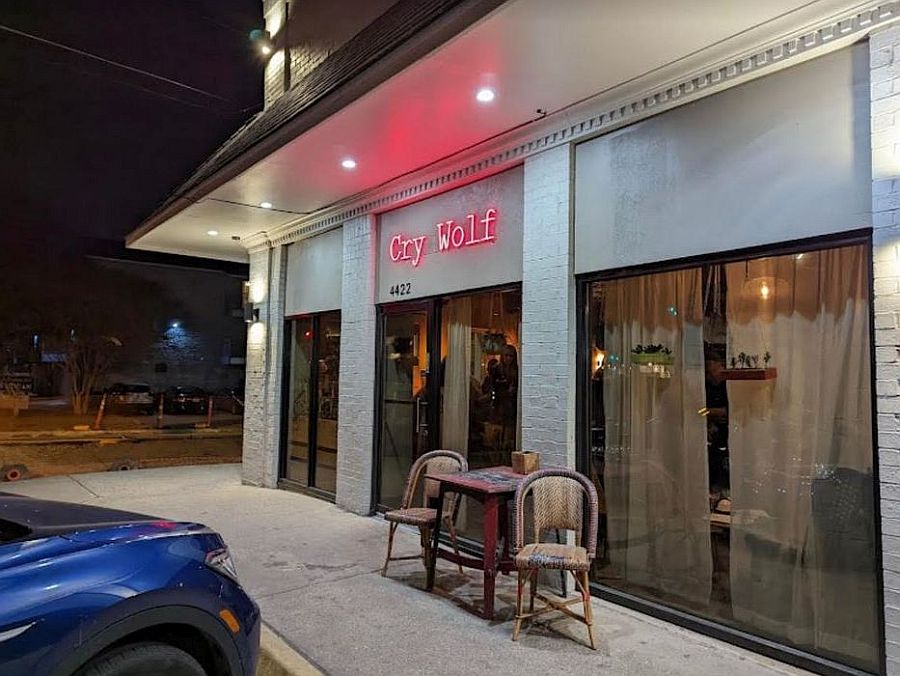
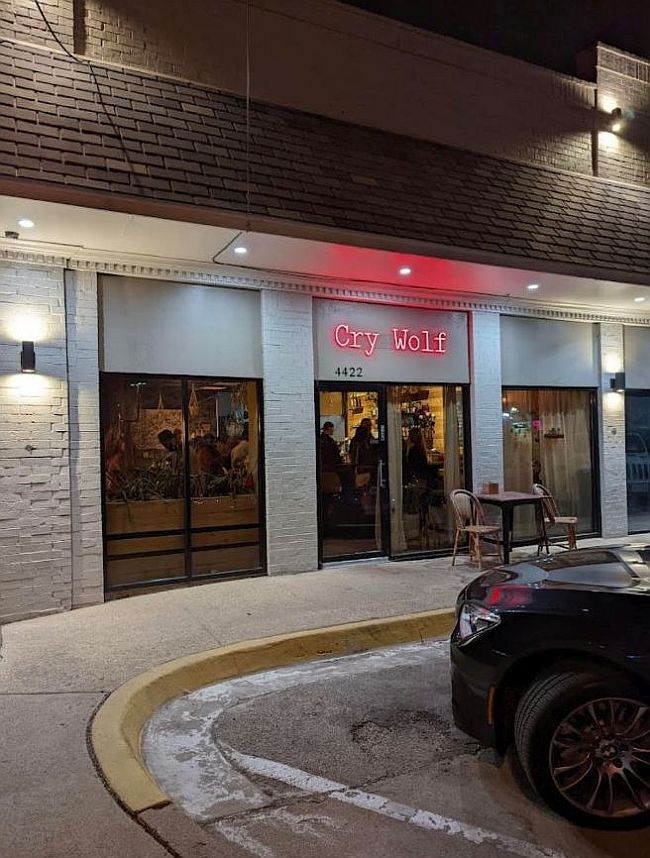
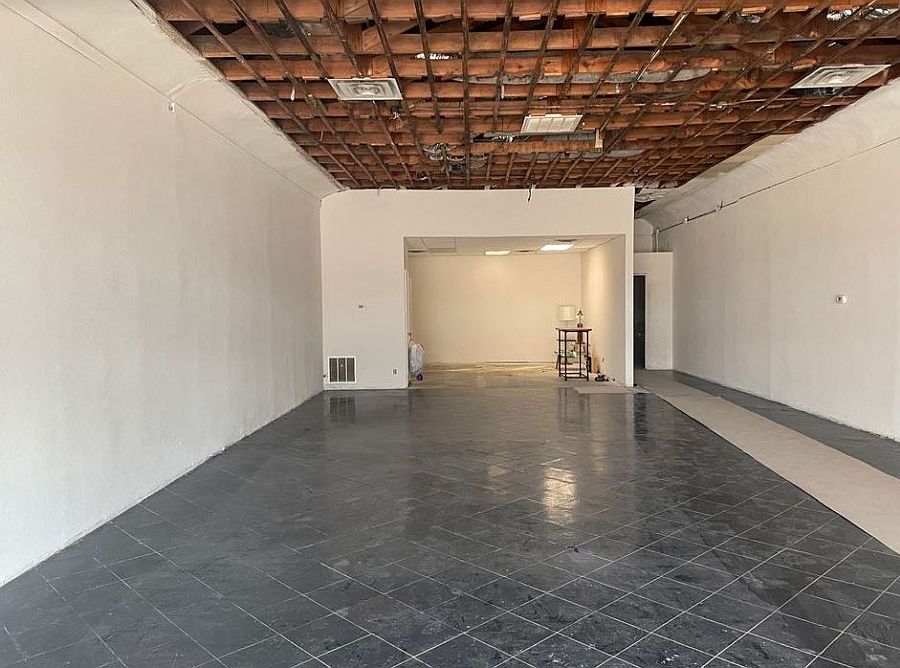
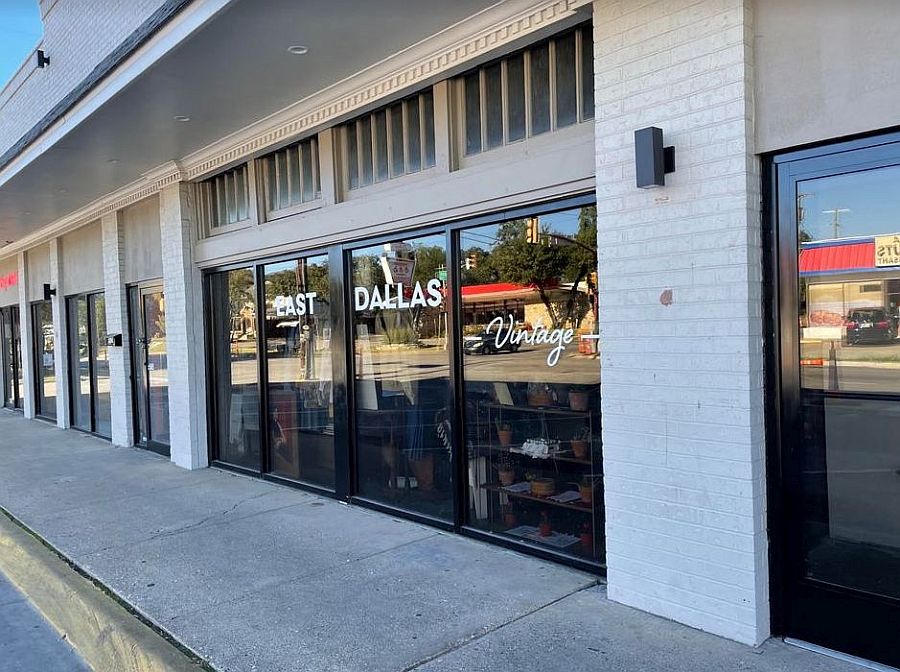
I received an email the other day from Melissa Maher asking about the building which houses the new shop she owns with her business partner, Chelsea Callahan-Haag: East Dallas Vintage, at 4418 Gaston Avenue. Next door, on the corner, is Ross Demers’ new restaurant, Cry Wolf (4422 Gaston). Surprisingly, I had two photos of the building from the 1920s!

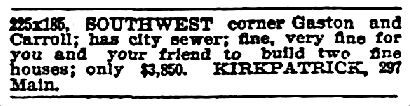
The building is on the southwest corner of Gaston and N. Carroll in Old East Dallas and was built in 1925. The first mention I found was from a classified ad in The Dallas Morning News in February, 1902 — a “for sale” ad for the lot boasted that it had “city sewer” and that it was “fine, very fine for you and your friend to build two fine houses” (which is an unusual sales tactic). The price was $3,850 — if you believe the accuracy of inflation calculators, that would be the equivalent of about $125,000 in today’s money.

1902_gaston-carroll_dmn_081802Dallas Morning News, Aug. 18, 1902

In 1907 it was reported that attorney N. Lawrence Lindsley was building a house on the large lot, for the equivalent of about $250,000 (add that amount to the cost of the land…). Before 1911, the address was 668 Gaston Avenue — after 1911 the address became 4418 Gaston. Over the years, the house passed through several owners until the large, stately 3-story home had been broken up into apartments in the 1920s (see the house on a 1922 Sanborn map here). In 1925, the house went on the market.
A CORNER ON GASTON WITH A FUTURE
Southwest corner of Gaston and Carroll. Has three-story well-built house bringing $100 monthly rental or 8.5 per cent on price of $14,000. Lot 90x125x160. When Gaston is opened through to Pacific this will be one of the best corners in East Dallas for stores. Call H. K. Dunham, exclusive agent. […] Do not bother tenant. No trade. Seay-Cranfill Co. Realtors. (Feb. 8, 1925)
It was snapped up fast. A mere ten days later, a Texas charter notice appeared in newspapers for Gaston Avenue Investment Company, owners of the property. The 18-year-old house was promptly razed, and a building containing space for four shops opened in June. 

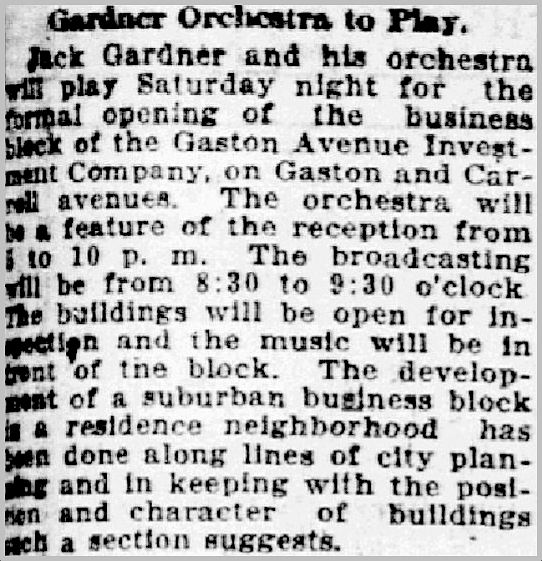
The grand opening was broadcast live on WFAA radio on June 27, 1925, with music performed by Jack Gardner and his orchestra. Quite a do.

1925_gaston-carroll_dmn_062725DMN, June 27, 1925

The original businesses were:

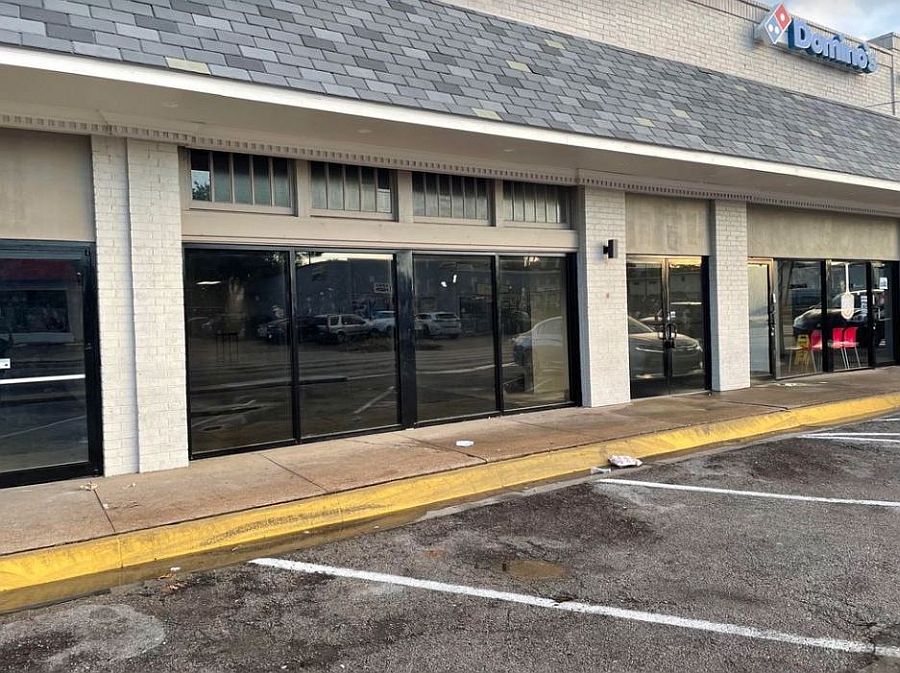
4414: Piggly Wiggly grocery store (now a Domino’s Pizza)
4418: Long’s Helpy-Selfy (a “serve-yourself” no-frills grocery)
4420: Johnson’s Superior Market, Otto S. Johnson, prop. (um, another grocery)
4422: Gaston-Carroll Pharmacy, C. L. Watts, prop. (with a soda fountain)

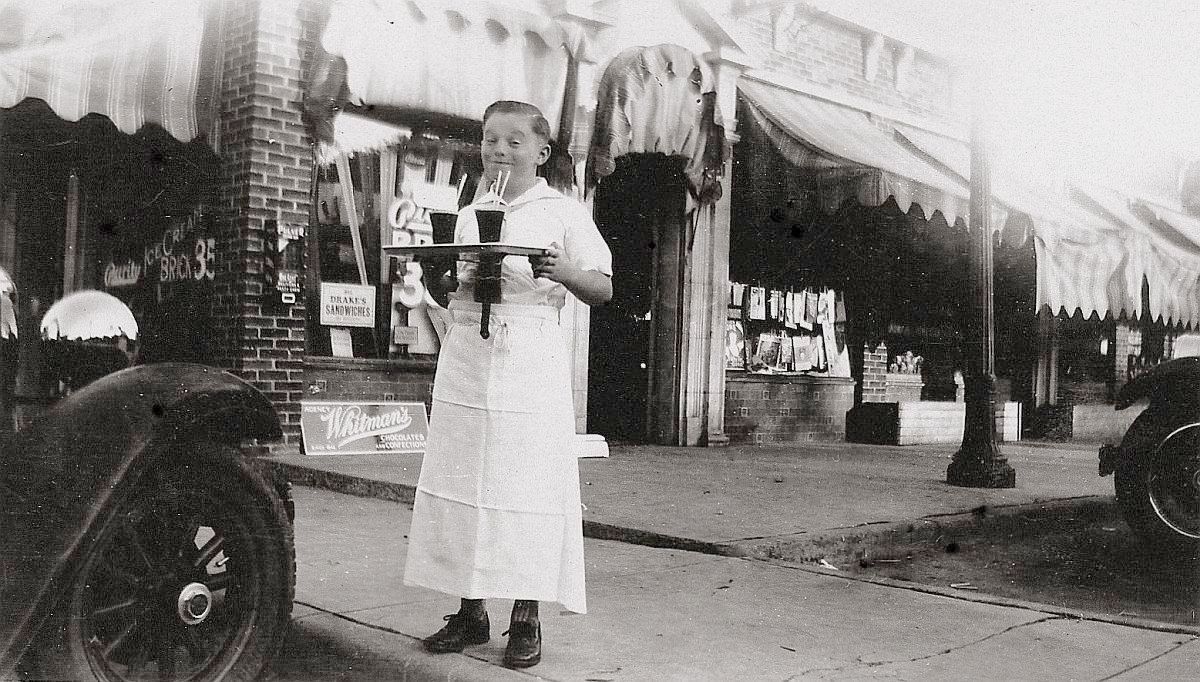
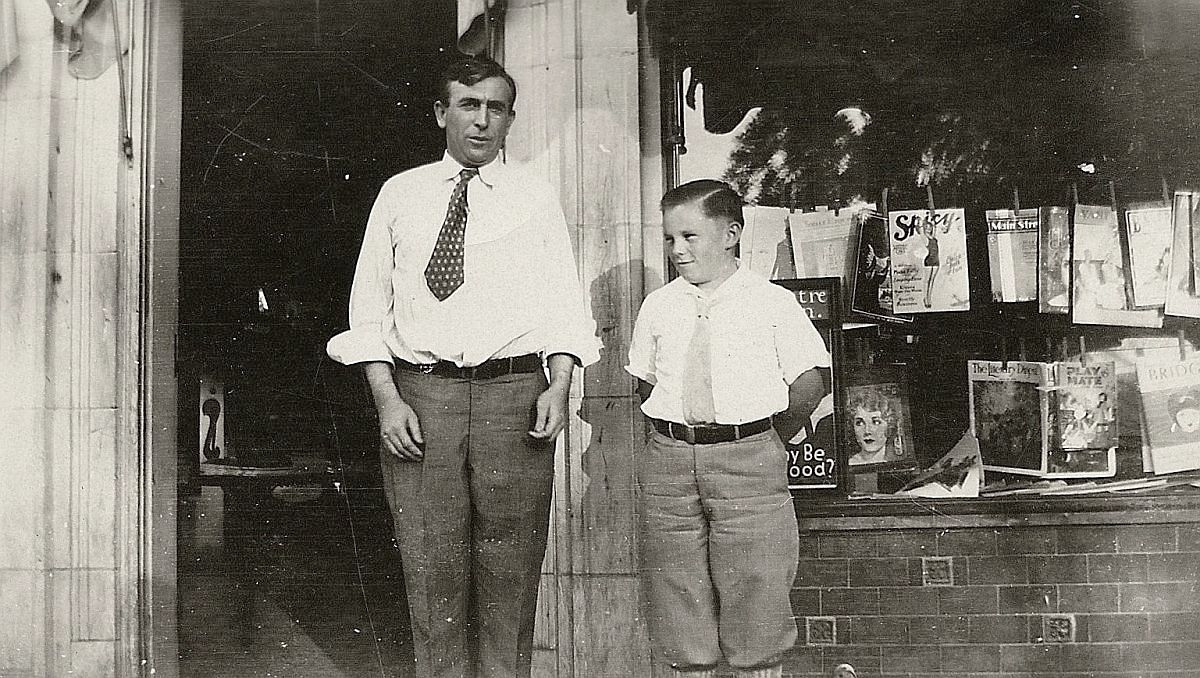
The Gaston-Carroll Pharmacy was on the corner, and that’s what we see in the photos above and below, taken about 1929 when Bill Windrow had taken over as president, manager, and druggist. An 11-year-old relative, Rollen Joseph “Joe” Windrow, worked as a carhop. Above, we see Joe “hopping”; below, Bill and Joe, stand on the sidewalk in front of the pharmacy.

gaston-carroll-pharmacy_dallasFB_bill-and-joe-windrow_str

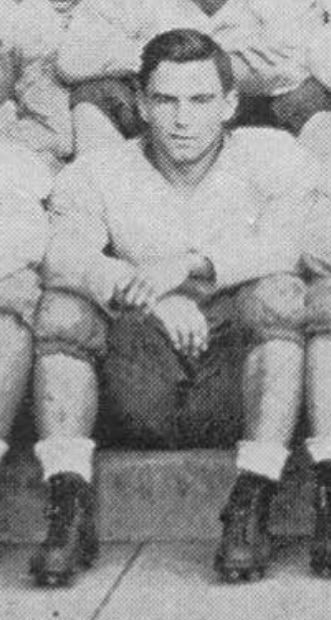
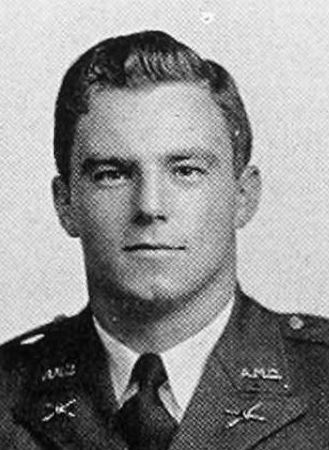
Joe lived nearby on Swiss Avenue and later went to Woodrow Wilson High School. He grew up to be a handsome young man.

windrow-joe_woodrow_football_1936Joe Windrow, Woodrow Wilson High School, 1936

windrow-joe_tx-a-and-m_1941Joe Windrow, Texas A&M, 1941

*

Over the years, the space on the right (4414 Gaston) was most often a grocery store (Piggly Wiggly, Safeway, Tom Thumb), and the space on the corner was a pharmacy for at least 60 years (Gaston-Carroll, Marvin’s, Walgreens, Taylor’s, and Felty’s). The middle shops were a variety of businesses, with one of the spaces apparently being absorbed into another.

*

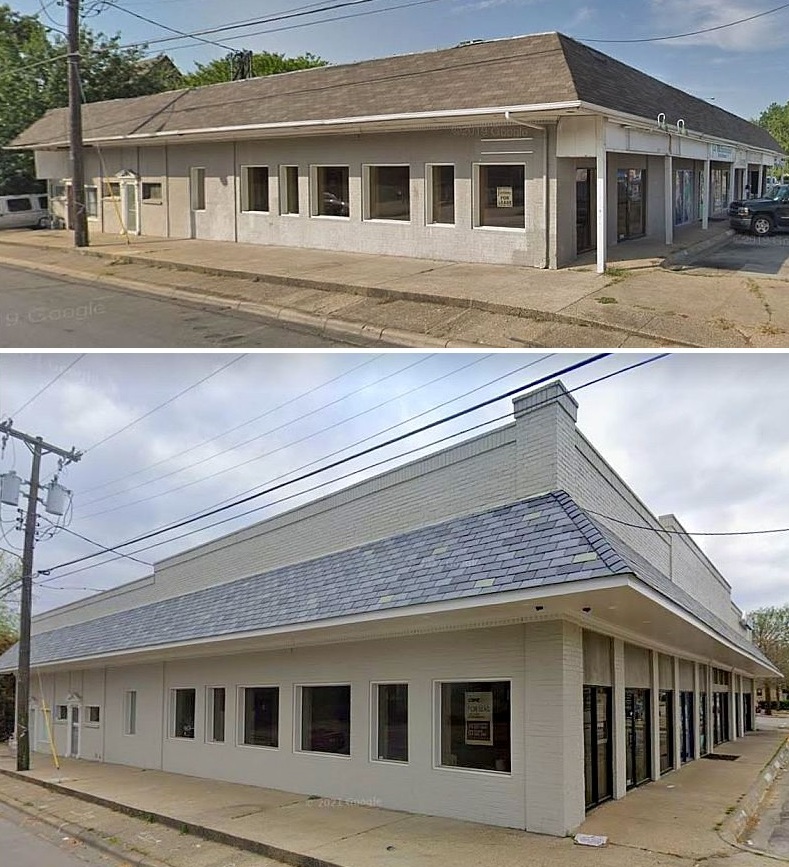
The building received a nice makeover recently. The Google Street Views below show July 2018 (before), and March 2019 (after).

gaston-carroll_google-street-view_july-2018._march-2019Google Street View: 2018, 2019

Melissa Maher, one of the proprietors of East Dallas Vintage (now occupying 4418 Gaston) sent me the following photos (from the end of 2021, I believe), showing her space and the space next door (Cry Wolf, 4422, in the old pharmacy location on the corner). She was wondering if there had been a basement in the building. It seems unlikely, but if anyone has any info, I’m sures she’d love to know.

2021_gaston-carroll_melissa-maher_1photo: Melissa Maher

2021_gaston-carroll_melissa-maher_2photo: Melissa Maher

2021_gaston-carroll_melissa-maher_3photo: Melissa Maher

2021_gaston-carroll_melissa-maher_4photo: Melissa Maher

2021_gaston-carroll_melissa-maher_5photo: Melissa Maher

*

Thanks for asking about this, Melissa! I had always meant to write something about the Gaston-Carroll Pharmacy and post these 1929 photos — and this was a great opportunity to use them. I hope to visit your shop sometime!

***

Sources & Notes

The top two photos were found on a Dallas history Facebook group, but I’m not sure which one. They were posted in 2015, and I’m unable to find them now. I believe they were found by the original poster on Ancestry.com. Luckily, I had noted the names “Windrow,” “Joe,” and “Bill,” because I now know more about the Windrows than a non-Wiindrow needs to know — I can definitely verify that the circa-1920 photos are of the Gaston-Carroll Pharmacy. I’m still not sure of the relationship between Bill and Joe (there were a lot of Windrows…) — possibly uncle and nephew, or maybe cousins.

Thanks again to Melissa Maher for her photos. Go see her and Chelsea Callahan-Haag at East Dallas Vintage.

I couldn’t find any photos of the home of N. Lawrence Lindsley — I know they’re out there somewhere! I’d love to see one. If you know of any, please let me know!

Of related interest, the other half of that block in which this building is located was once home to a truly palatial home, built by Thomas Field. See it on a 1905 Sanborn map here. See the house in the Flashback Dallas post “Junius Heights … Adjacent!”

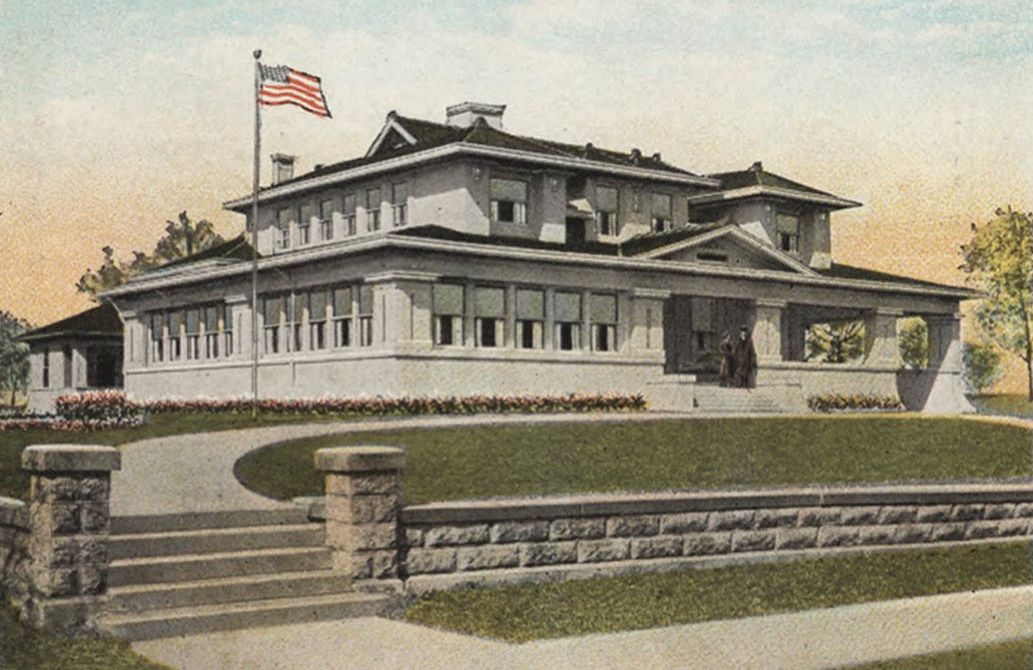
Also, catty-corner from this building is the former Brink’s restaurant. Way back, though, it was once the site of another grand residence — a home which became the Spann Sanitarium about the same time that the little strip of shops was built (I keep meaning to write about this sanitarium…):

spann-sanitarium_postcard

gaston-carroll-pharmacy_1929_dallasFB_det_sm

*

Copyright © 2022 Paula Bosse. All Rights Reserved.