Flashback : Dallas

A Miscellany: History, Ads, Pop Culture

Category: State Fair of Texas

The Roller Coaster on the Prairie — 1894

state-fair-grounds_souv-dallas_1894Texas State Fair & Dallas Exposition Fair Grounds, circa 1888

by Paula Bosse

Above, a wonderful view of the “State Fair Grounds and Dallas Exposition” from an 1894 advertisement. The Little Roller Coaster on the Prairie!

If you want to see this very large (and, trust me, you DO), click here (and then click again). It’s like wandering through those old phone book covers, but without the jokes and the dinosaurs.

*

UPDATE: The artwork was used in a previous ad that appeared in The Dallas Morning News in 1888, with the following text:

The coming Fair and Exposition will, beyond a doubt, excel in point of attractiveness, numbers and variety of exhibits any heretofore held.

The County Exhibit Department promises to be the most attractive feature, one never before attempted by any State. Over forty counties up to date have secured space, and more still to enter. The exhibits these counties will present will be something that will astonish visitors.

Every variety of attractions has been provided for, and the musical treat we have in store for visitors will be presided over by the world renowned Cornetist , Prof. A. Liberati.

The purses offered in the Race Department cover $20,000, and will be competed for by the best racers in the land. The management of this department propose to give during the Fair and Exposition the finest races ever given in the South.

We desire to call the attention of counties to the fact that now is the time to get up their exhibits, when grain, fruits, etc. are ripening, and not wait until it is too late.

Space in the County Exhibit Department is free, and no county of our State can afford to be not represented. There will be more people here than ever before, and we want them all to see the varied resources of our great State.

To exhibitors in general we can promise them the finest opportunity ever offered to make displays from which will return good results, and to visitors we can assure them of the grandest entertainment ever given in the Southwest.

dallas-fair_dmn_090588

*

The scene above looks idyllic (to me, anyway), but here is a description of what the land was like before anything was built on it, from a Dallas Morning News history of the SFOT (Oct. 2, 1960):

An 80-acre tract approximately in the center of the present-day State Fair Park was chosen as the site for the Fair. The location was termed by some to be “the worst kind of hog wallow,” and the question most frequently asked was “How are you going to hold a fair in all that mud?”

*

The Dallas State Fair and Exposition (which became the State Fair of Texas) was chartered in 1886, and unless that artist’s rendering is highly romanticized (which it probably is), it looks like the hog wallow was but a faint memory by the time that roller coaster was plopped down on top it.

***

Sources & Notes

Artwork by the Dallas Engraving and Manufacturing Company. Top ad appeared in the Souvenir Guide of Dallas (1894); bottom ad appeared in The Dallas Morning News, Sept. 5, 1888.

*

Copyright © 2014 Paula Bosse. All Rights Reserved.

The First Texas-OU Game in Dallas — 1912

tx-players_dmn_101912bWatch out, Oklahoma: giant Texas linemen await…

 by Paula Bosse

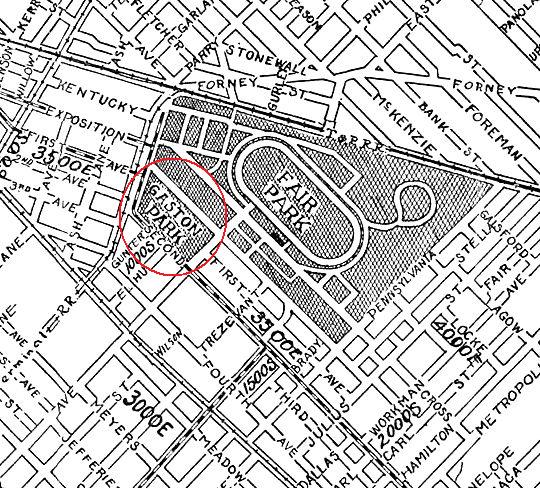
The Texas-OU game is a football tradition, held annually in the Cotton Bowl during the State Fair of Texas. The first game of the so-called “Red River Rivalry/Showdown/Shootout” was held in Dallas (aka “neutral ground”) in 1912. As the Cotton Bowl hadn’t been built yet, the game was held at Gaston Park, a sporting field with a large grandstand where Dallas teams played baseball, football, and, yes, even soccer. It was located at Parry & Exposition, in the spot where the State Fair Auditorium (now known as the Music Hall) was built in the 1920s.

Since my grasp of sports is tentative, I’m not going to go into any particulars of the actual game (which — spoiler! — Oklahoma won, 21-6); instead, I thought I’d mention a few of the incidental things leading up to the game that I found interesting. (For those who are interested in the particulars of the game, fret not — there is a link at the bottom of the post.)

So here are a few of the things that I found amusing or entertaining:

  • The 1912 football season began with new rules: downs were increased from 3 to 4; touchdowns were now 6 points instead of 5; the playing field was reduced from 110 yards to 100; the onside kick was abolished; a touchdown was permitted when caught over the goal line; the ball was kicked off from the 40-yard line instead of midfield; the intermission between quarters was reduced from 2 minutes to 1.
  • Fort Worth felt slighted that they had missed out on hosting the game (“it might just as well have been played in Fort Worth,” the Fort Worth Star-Telegram groused). Local Fort Worth-friendly UT alumni swore to try “strenuously” to get the game for Cowtown the following year, because, damn it, “next year is Fort Worth’s turn” (FWST, Oct. 15, 1912). (Sorry ’bout that, FW….)
  • The Sooners’ coach, 37-year old Bennie Owen (whom I gather is something of an OU legend), had only one arm, the result of a hunting accident. The Dallas Morning News wrote that Owen was “one of the most able [coaches] in the country. He is disabled to some extent by having but one arm, but evidenced by his success during the past season, this does not trouble him to any great extent” (DMN, Oct. 6, 1912).
  • The Longhorns’ coach, Dave Allerdice, was only 25 years old. He had been hired to fill the spot left vacant in the wake of the death of UT’s previous coach who had died rather exotically as the result of “a fall out of the window of his bedroom” (DMN, Oct. 10, 1912).
  • Both Allerdice and Owen had been coached as students by the same man, Coach Yost, at Michigan.
  • The Gaston Park crowd was estimated at over 6,000. The crowds going to the game and to the fair were so great that the streetcars and Interurbans were jam-packed. In fact, both teams had difficulty making it to the game on time because they couldn’t find transportation to get there, and the game had to be started late to allow for the players to arrive and warm up.
  • Oklahoma dominated the game, and the Sooners won, 21-6.

And so began the annual Texas-OU tradition in Dallas.

*

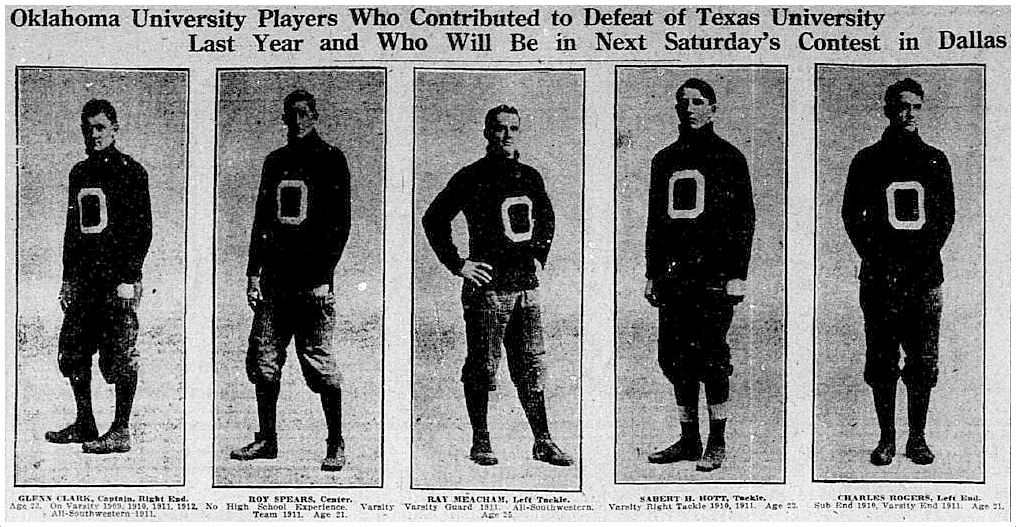
Below, Sooner boys: 0-0-0-0-0.

sooners_1912_dmn_101812DMN, Oct. 18, 1912

*

Grainy, off-kilter image of the crowd-frilled grandstand at Gaston Park.

tx-ou_crowd_dmn_102012DMN, Oct. 20, 1912

*

It’s a bit hard to see anything in these 100-plus-year-old photos, but here are a couple of “action photographs” of the game.

tx-ou_game-photos_dmn-102012DMN, Oct. 20, 1912

*

Gaston Park? Here’s where it was (a lot of street-renaming has gone on since this map was drawn in 1919).

gaston-park_fair-park_ca-1919

***

Sources & Notes

All photos from The Dallas Morning News.

1919 map (detail) from the Portal to Texas History, here.

For slightly better photos of Gaston Park (in 1908), see a previous post, here.

Wikipedia roundup:

  • Gaston Park, here.
  • Bennie Owen, here.
  • Dave Allerdice, here.
  • “Red River Showdown” (which I’ve never actually heard anyone other than TV commentators and promoters say to describe what everyone I know calls the “Texas-OU game”), here.
  • Defenestration, here.

The Dallas Morning News and The Fort Worth Star-Telegram are filled with numerous contemporaneous articles about this game. If you have a handy-dandy Dallas Public Library card (free!), you can pore over these articles to your heart’s content. To read what was printed the day of the game (Oct. 19, 1912), click  here. To read about the results and the game coverage, click here.

Click pictures for larger images. They will still be muddy and grainy, but, by God, they’ll be bigger.

*

Copyright © 2014 Paula Bosse. All Rights Reserved.
Snapshots of the Fair, 1936-1940

tx-centennial_strolling_fwplCentennial Exposition, 1936 — photo by Lewis D. Fox (click for larger image)

by Paula Bosse

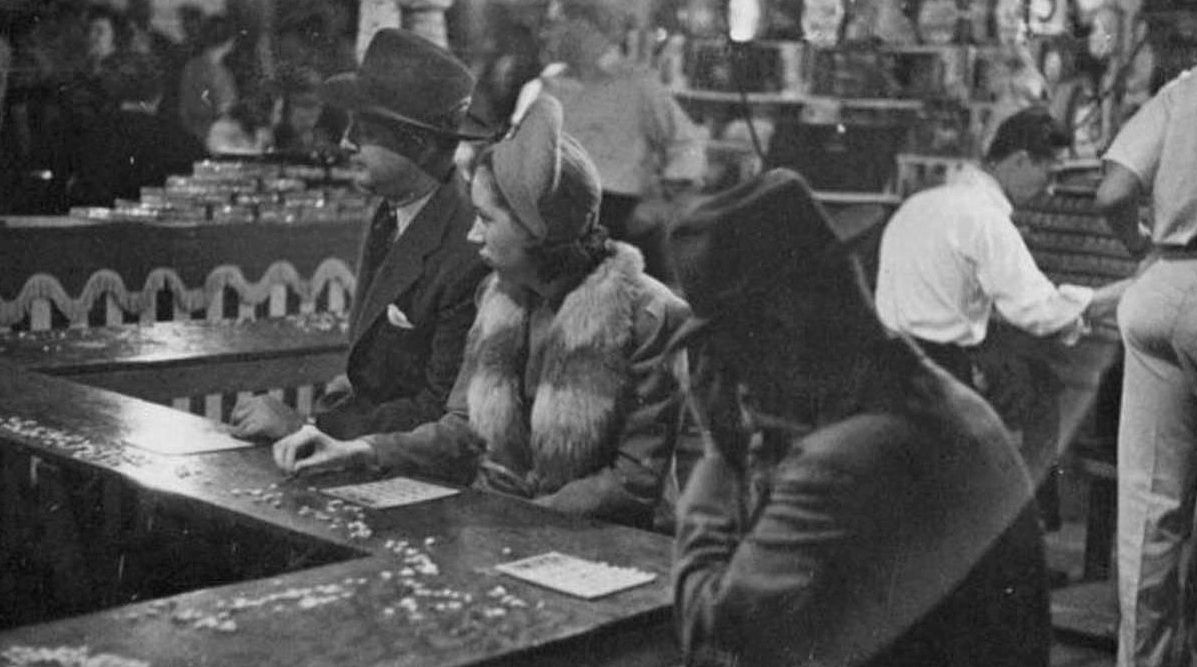
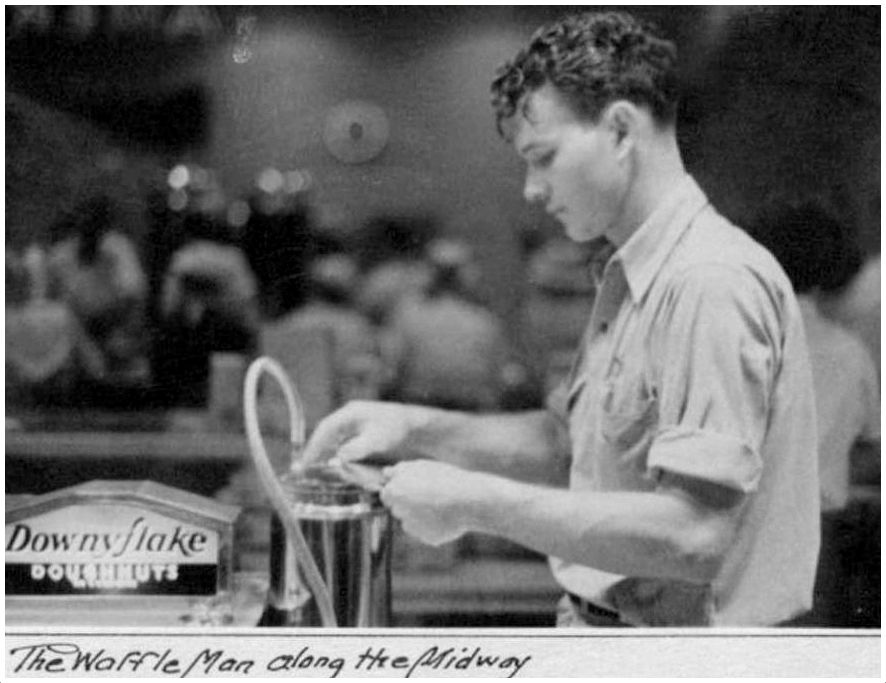
An amateur photographer named Lewis D. Fox took a lot of photos at the State Fair of Texas — from the Texas Centennial in 1936 through 1940. The Centennial photos are particularly interesting, because they show what the “Exposition” was like to the average visitor — there was more going on than just the spectacular extravaganza we usually see — there are also shots of people doing un-spectacular things like just walking around or enjoying a quiet, late-afternoon cup of coffee. There are also photos of the people who do the heavy-lifting at a state fair — the men and women who work the Midway shows and the concession stands (a link to a larger collection of Mr. Fox’s State Fair photos — almost a hundred snapshots — is below).

Enjoy this look at a time when going to the fair meant dressing up and, apparently, often leaving the children at home! (Click photos to see larger images.)

tx-centennial_spirit-of-centennial_fwpl

state-fair_texas-state-bldg_fwpl

state-fair_circus_c1939_fwpl

state-fair_grandstand_fwpl

tx-centennial_swing-revue_fwpl

state-fair_beanery_fwpl

state-fair-midway_fwpl

tx-centennial_cashier_fwpl

tx-centennial_side-view_fwpl

tx-centennial-midway_waffle-man_fwpl

***

Sources & Notes

All photos taken by Lewis D. Fox, from the Fox Photograph Collection in the Fort Worth Public Library Archives, courtesy of the Genealogy, History and Archives Unit, Fort Worth Public Library. Mr. Fox took a lot of snapshots at the fair — see  more here.

On a personal note, I’m mesmerized by “The Waffle Man.” He looks just like a young Lefty Frizzell! Lefty was from nearby Corsicana and he spent a lot of time in Dallas, but he wasn’t born until 1928, so it can’t be him — but check out this photo of Lefty as a teenager and see the remarkable resemblance! Not only did the (no doubt syrup-scented) young man above look like one of my favorite singers, but he also had ready access to waffles. What’s not to love? Oh, Waffle Man….

All images larger when clicked.

*

Copyright © 2014 Paula Bosse. All Rights Reserved.


“Life” at the State Fair of Texas — 1951

fair-park-midway_life_1951On top of the world, 1951

by Paula Bosse

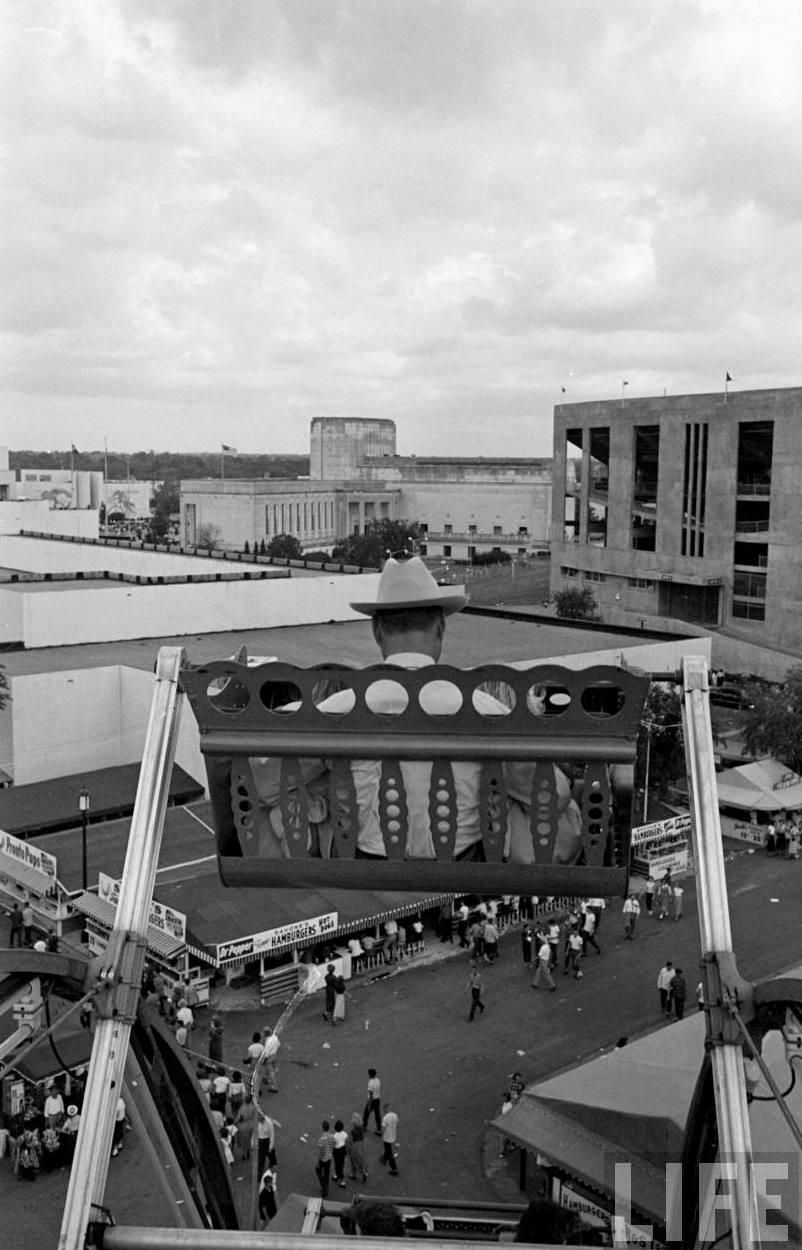
A Life magazine photographer moseyed down to Dallas in 1951 and captured a couple of cool shots of the State Fair. The photo above (so sweet, and one of my favorite Midway shots ever) was captioned:

In Dallas a rancher takes the kids for a ride in a 92-foot-high double Ferris wheel.

The photo below shows a tractor-pulled tram (fare: 15 cents) as it wheels past the Hall of State, full of well-dressed men and women. (That kid in the boots, cowboy hat, and letterman jacket … had I been around in 1951, I would have had a big ol’ crush on him.)

Click both of these wonderful photos to see larger images. You can practically smell the Brylcreem and cotton candy.

fair-park_tour_life_1951Life magazine, 1951

***

Sources & Notes

Both photos taken at the 1951 State Fair of Texas for Life magazine by an uncredited photographer. The top photo (cropped differently) ran in the Oct. 22, 1951 issue of Life as part of a feature titled “It’s a Bumper Year For Fairs” — it was the only photo that appeared in the magazine shot at the Texas fair. The bottom photo did not run in the magazine.

*

Copyright © 2014 Paula Bosse. All Rights Reserved.

Panoramic View of the Entrance to the State Fair of Texas — 1908

state-fair_clogenson_1908_LOC“Texas State Fair, Main Entrance” by Clogenson, 1908 (click for larger image)

by Paula Bosse

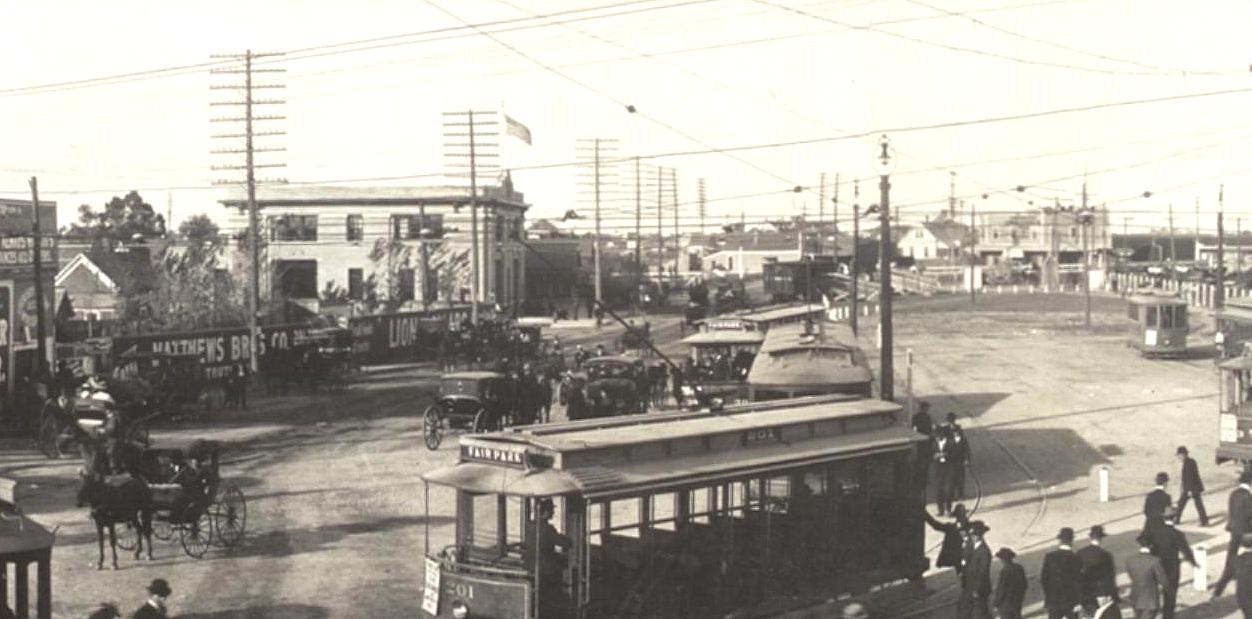
Today is opening day of the State Fair of Texas. Always an anticipated annual event, this is what the crowded entrance to Fair Park looked like over a century ago — still pretty recognizable, especially the firehouse at the top left. Below is a detail of the first third or so of this amazing panoramic photo. For a gigantic image of the top photo, click here (and then keep clicking until it’s gotten as big as it’s going to get — and don’t forget to use that horizontal scroll bar!).

Below is the detail I’ve cropped from the larger photo, showing the Parry Avenue portion, with the still-standing firehouse at the top left.

Have fun at the fair, y’all!

state-fair_1908-detDetail showing Parry Avenue, looking north (click for larger image)

***

Sources & Notes

Original image titled “Texas State Fair, Main Entrance” by Clogenson, 1908, from the Library of Congress. Photo and details can be viewed at the LOC website here.

In case you missed the link above — and because it’s so fantastic and filled with such incredible detail — you really must see the really big image of that really big panoramic photo, HERE.

For other Flashback Dallas posts on the State Fair of Texas, click here.

For Flashback Dallas posts on the Texas Centennial, click here.

*

Copyright © 2014 Paula Bosse. All Rights Reserved.
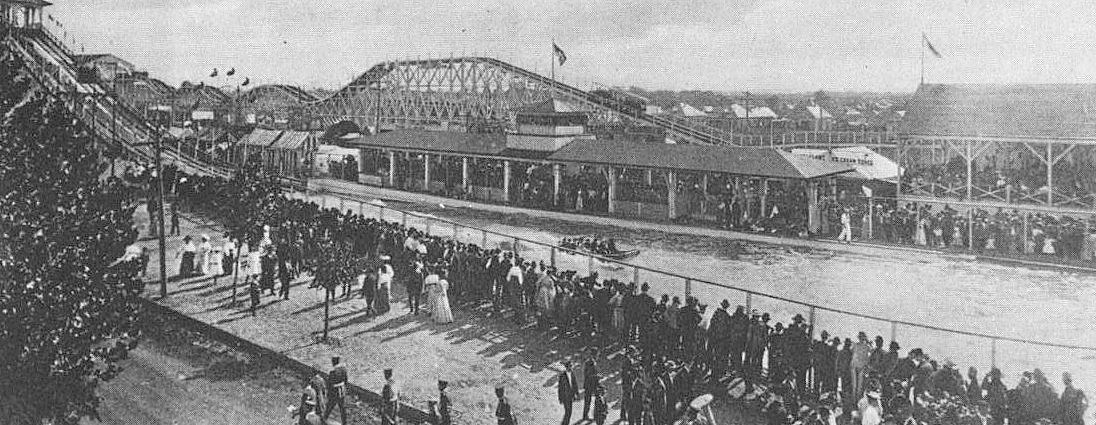
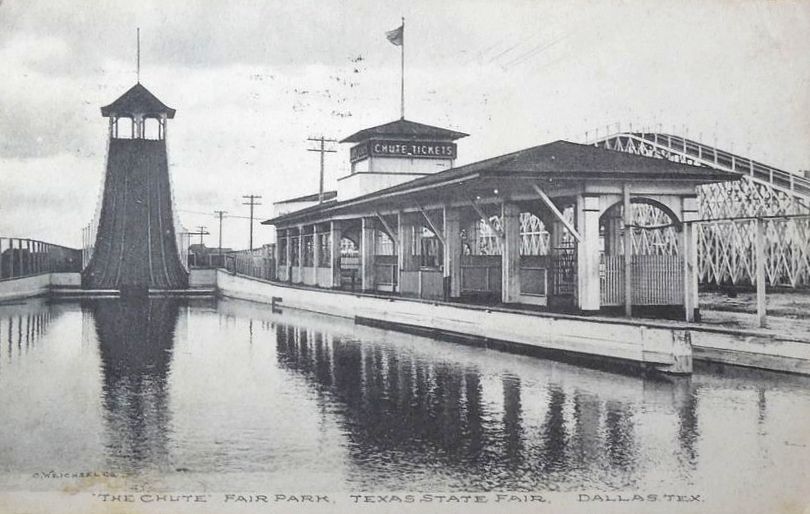
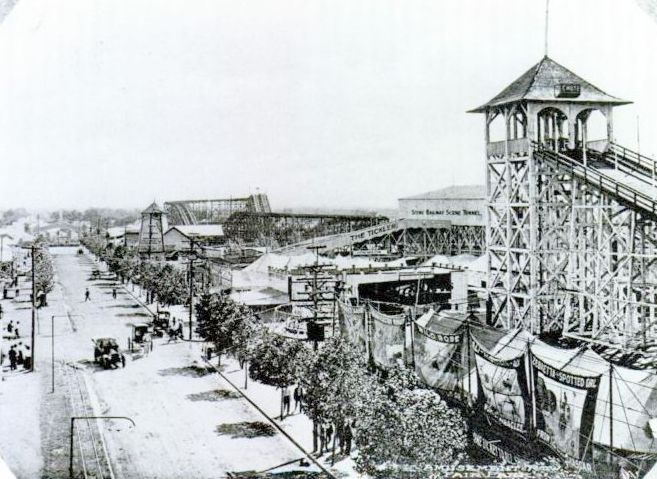
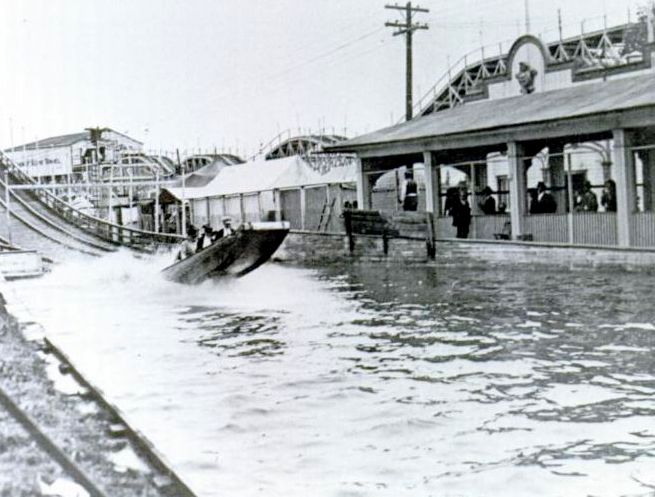
“The Chute”

chute-roller-coaster_c1908_tsha_2The Chute and The Tickler, Texas State Fair, 1908

by Paula Bosse

Construction began in 1906 on a new entertainment area at Fair Park called The Pike.

“What is known as ‘Smokey Row’ has been set back against the fence on the south side of the grounds, and the space between it and the race track, all the way to the grandstand, will be occupied by exhibits. Two streets through this part of the grounds lead to the grandstand and the Pike. The Pike will be located beyond the grandstand, occupying a space 250×1125 feet. Here are being constructed the scenic railway and the shoot the chute, which will represent an investment of $75,000. The State Fair has agents in the East booking the remaining attractions for this department. These agents have instructions to pay the money and get the newest and best things to be had.” (Dallas Times Herald, June 24, 1906)

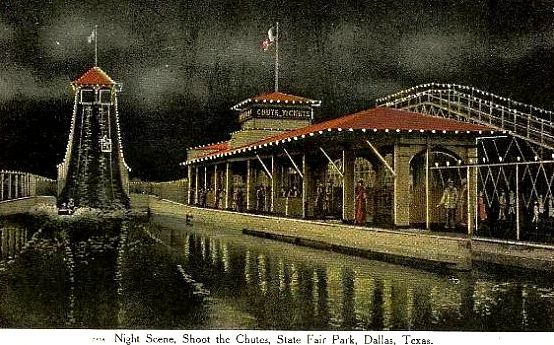
The new Pike meant that visitors to the State Fair of Texas would be able to ride “The Chute,” an amusement park attraction that had been popular in other parts of the country (and which automatically brings to mind the log ride at Six Flags Over Texas). In 1908, a roller coaster with the delightful name of “The Tickler” joined the rides in the area that was referred to as the “Pleasure Plaza” in at least one newspaper account. The Chute/Shoot the Chute/Chute the Chutes lasted a relatively short time — only until 1914 when it was torn down to “make room for the new shows known as the ‘World at Home,’ to be open to the public at the State Fair next fall” (DTH, Aug. 18, 1914).

Rides such as The Chute and The Tickler were enormously popular, and one wonders how all those hats managed to stay on all those heads of all those pleasure-seekers.

*

The Chute, head-on:

chute_postcard_1908

A view of The Pike, with The Chute to the right, above the sideshow banners.

chute_willis_dpl

In action:

chute_willis_sfot

At “night” (the second photo above, glamorized, with postcard magic applied):

chute-night_observer

***

Sources & Notes

Top photo from the collection of the Texas State Historical Association.

Second photo, a 1908 postcard, from eBay.

Third and fourth photos from the book Fair Park by Willis Cecil Winters (Charleston: Arcadia Publishing, 2010). Photo of The Pike from the Dallas Public Library; photo of the boat from the State Fair of Texas Archives.

Night scene from a story by Robert Wilonsky on Winters’ book in the Dallas Observer, here.

Dallas Times Herald quotes from the indispensable Dallas County Archives pages compiled by Jim Wheat; these two articles can be found here.

Yes, Wikipedia does have an entry on the history of Shoot the Chute rides, here.

 As always, most pictures are larger when clicked.

*

Copyright © 2014 Paula Bosse. All Rights Reserved.

“Howdy, Y’all!”

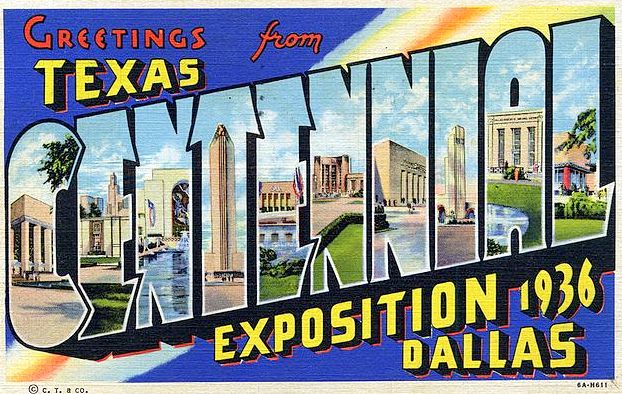
tx-centennial_postcard_1936

by Paula Bosse

Thanks so much to the fine folks at The State Fair of Texas for the Throwback Thursday social media love today! They graciously shared our Texas Centennial posts. Welcome, new visitors!

And don’t forget, Big Tex is counting down those days….

***

State Fair of Texas website is here. Get ready, y’all!

*

Copyright © 2014 Paula Bosse. All Rights Reserved.

Big Tex and His Dressers

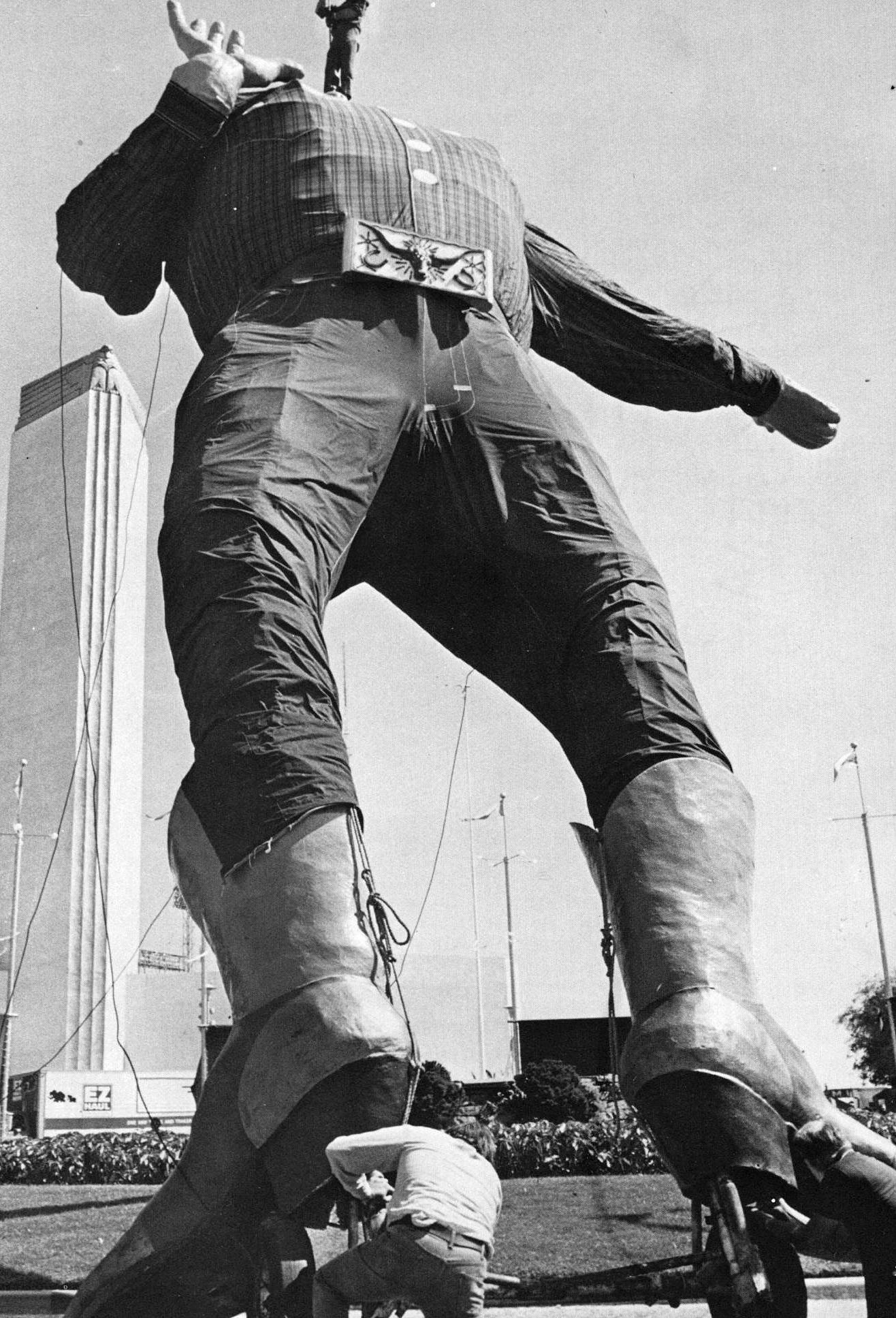
big-tex_headless_1970s
Headlessness and wardrobe malfunctions being attended to…

by Paula Bosse

It’ll probably all get straightened out in the end.

When I worked in a bookstore that had frequent visits by costumed characters for children’s events, we were told to make sure children never saw the characters without their costume heads because it might freak the kids out. If true, that photo above has the potential to scar some impressionable youngsters for life.

Above, Big Tex in dishabille.

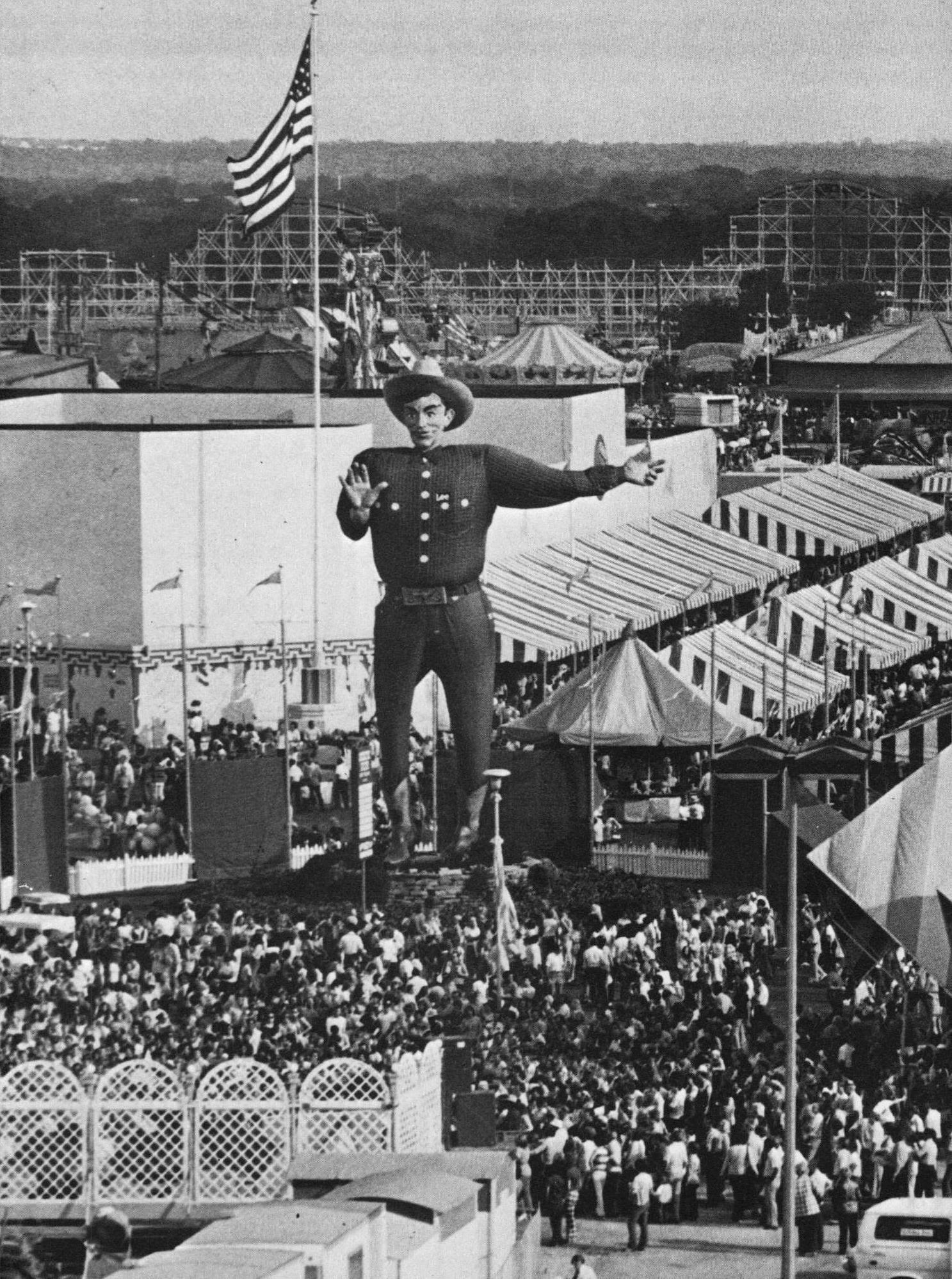
Below, all pulled together.

big-tex_tx-historian_sept1976-sm

***

Sources & Notes

Top photo of a headless Big Tex is from the Sept. 1976 issue of Texas Historian, a Texas State Historical Association publication of the Junior Historians of Texas.

Second photo, of a put-together Big Tex is a State Fair of Texas photo from the same issue of Texas Historian.

Click images to make Bit Tex REALLY big!

*

Copyright © 2014 Paula Bosse. All Rights Reserved.

Big Tex, Old Tex, Big Ol’ Tex — Whatever You Call Him, Otis Dozier Wins (1954)

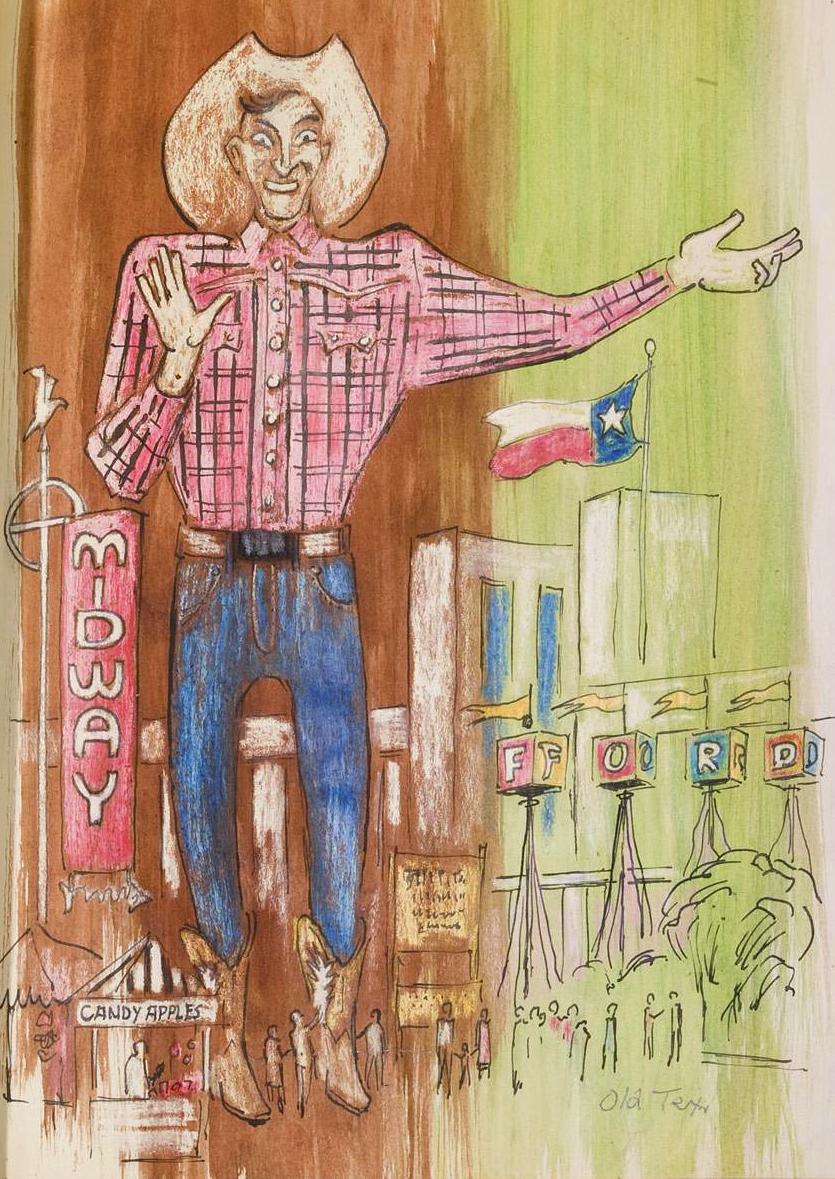
dozier_big-tex_sketchbook_1954_dma“Old Tex” sketch by Otis Dozier, 1954 — Dallas Museum of Art

© Marie Scott Miegel and Denni Davis Washburn

by Paula Bosse

Hey, y’all, guess what’s just around the corner. Whenever you start seeing pictures of Big Tex, you know that the State Fair of Texas can’t be too far away.

There have been a lot of artistic depictions of Big Tex over the years, but I think this sketch by Dallas artist Otis Dozier (1904-1987) may be my all-time favorite. And I’ve only just discovered it! (Thank you, DMA!)

***

This wonderful ink, watercolor, and crayon sketch of “Old Tex” is contained in one of Otis Dozier’s sketchbooks, now in the collection of the Dallas Museum of Art, a gift of the Dozier Foundation (© Marie Scott Miegel and Denni Davis Washburn). To see details on this work, see the page on the DMA’s website, here.

The Otis Dozier sketchbooks have been digitized in a joint project between the Dallas Museum of Art, SMU’s Bywaters Special Collections at the Hamon Arts Library, and SMU’s Norwick Center for Digital Services. To read about this fantastic collection, see the SMU Central University Libraries page, here.

*

This week, the Dallas Museum of Art launched a new digital database in which its entire collection is now accessible online! This is great news for many reasons, not least being that it allows the public to see works that are rarely — if ever — displayed in the museum. Such as this one. To read more about assembling this incredible database, read the DMA’s announcement, here.

To look up your favorite artist, check to see what the DMA has, here.

For the biography of the Forney-born Dozier (who was one of the members of the famed Dallas Nine group), see the Handbook of Texas entry here.

Click picture for larger image.

*

Copyright © 2014 Paula Bosse. All Rights Reserved.


William Lescaze’s Ultramodern Magnolia Lounge — 1936

magnolia-lounge_tx-centennial

by Paula Bosse

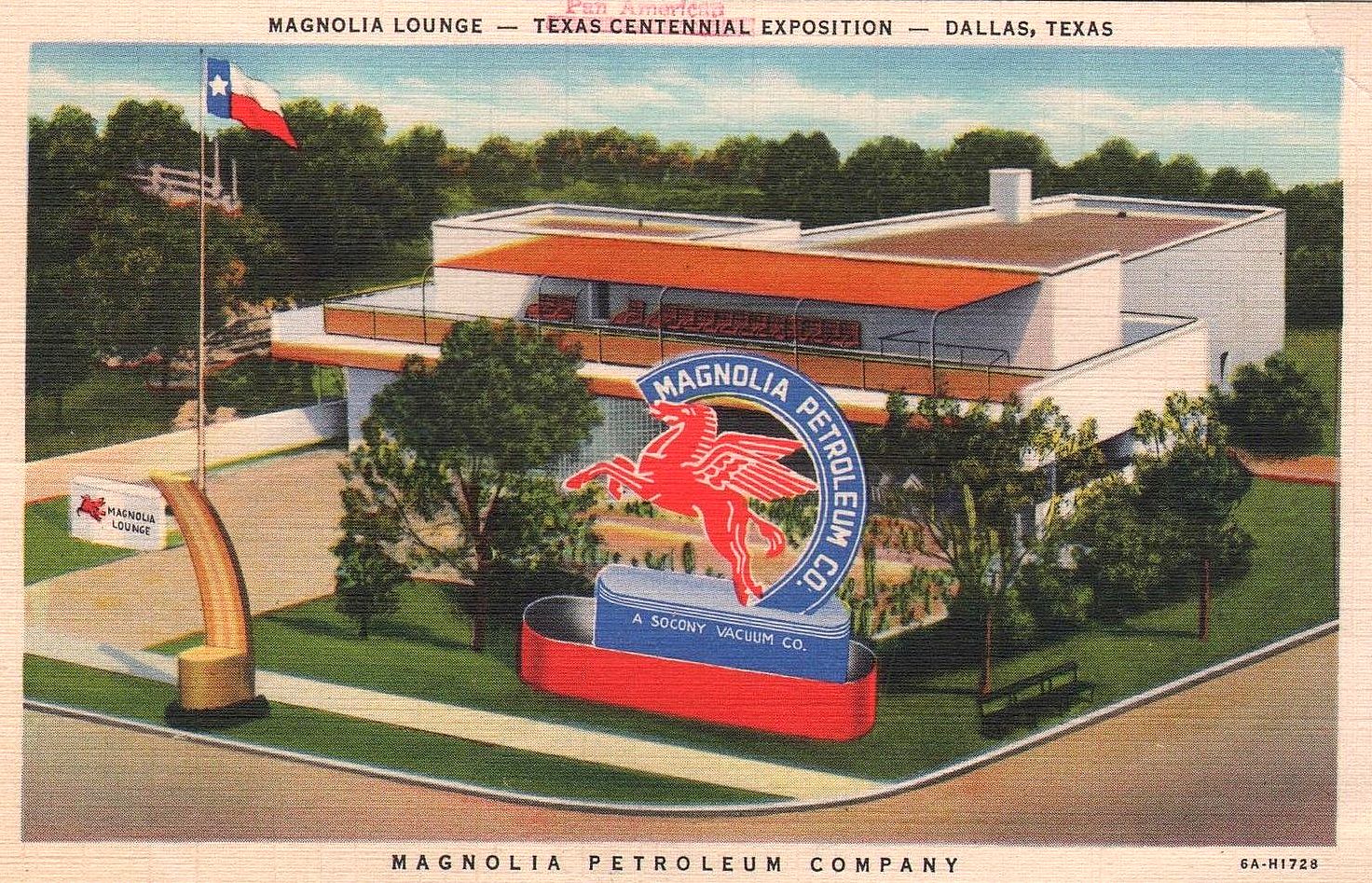
The sleekly cool Magnolia Lounge, designed by Swiss-born American architect William Lescaze for the Texas Centennial, is considered the first International-style building built in Texas, and though it feels perfectly at home in Art Deco Fair Park, it looks completely different and much more modern that the buildings around it. It was built by the Magnolia Petroleum Company as a place for visitors to the Centennial Exposition to relax and cool off (it boasted a 20-ton refrigeration plant). The Magnolia Company’s slogan for their building was “Be Our Guest and Rest at the Magnolia Lounge.” In other words, this was the most insistently fabulous rest stop ever built!

How did we GET this cool building? Two words: Stanley Marcus.

“Young retailer Stanley Marcus was dispatched to New York City by Dallas-based Magnolia Petroleum to find the most up-to-date architect of the United States for their Centennial pavilion. Marcus chose William Lescaze, who had just designed the first International-style skyscraper in the United States [the PSFS Building in Philadelphia, which opened in 1932].” (– Virginia Savage McAlester)

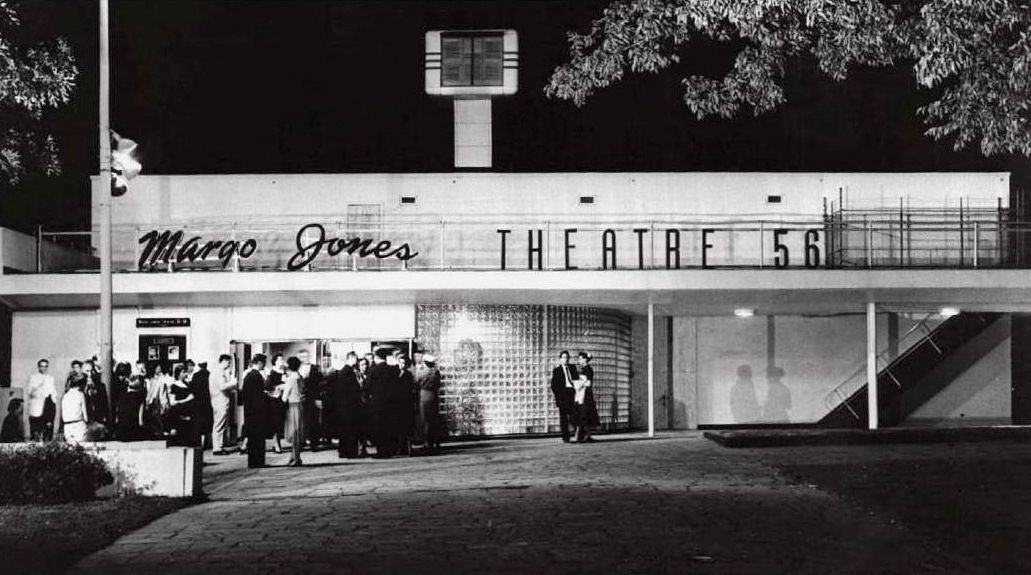
It was a popular oil company-branded “comfort station” for fair visitors until 1942 when the Magnolia Petroleum Co. (who had owned the building), gave title of the Magnolia Lounge to the State Fair, which used it for many years to house its general offices. In 1947, the space became Theatre ’47, Margo Jones’ legendary regional theater where, among other achievements, she produced plays of a young Tennessee Williams and introduced the innovation of theater-in-the-round. After Jones’ death in 1955, the theater carried on for a few years but eventually closed in 1959. After some difficult lean years for the building (during which demolition was considered!), it has been home to organizations such as the Friends of Fair Park, and it is now an active performance space again. And all is well with the world.

margo-jones_theatre-56_dpl

***

Sources & Notes

Postcard of the Magnolia Lounge from the vast wilds of the internet. Click it. It’s huge.

The Virginia McAlester quote is from a Friends of Fair Park advertising section in the Oct. 1989 issue of Texas Monthly.

Photograph of Theatre ’56 from Historic Dallas Theatres by D. Troy Sherrod, from the collection of the Dallas Public Library. (The theater struggled to continue after the sudden death of Margo Jones in 1955, which I wrote about here.)

For more on the history of the Magnolia Lounge, see the official Fair Park home page here; also, check out the the City of Dallas page devoted to this building, here.

And for more on this cool building, particularly in connection with Margo Jones, see the page on the always informative Watermelon Kid site, here.

A lengthy description of the building can be found in the article “Daylight Movies of Texas Scenes To Reward Visitors to Magnolia’s Cool Lounge” (The Dallas Morning News, April 26, 1936).

The Wikipedia page on architect William Lescaze is here.

*

Copyright © 2014 Paula Bosse. All Rights Reserved.