Flashback : Dallas

A Miscellany: History, Ads, Pop Culture

Category: Theaters

The Forest Theater You’ve Never Heard Of — ca. 1912-1914

forest-avenue-theater_1638-forest_mike-cochranForest & Colonial in 1914 (courtesy Mike Cochran)

by Paula Bosse

There are so many posts I’ve begun but, for whatever reason, never finished. This is one of them. I started this one in 2015! I was sidetracked by a family member’s lengthy health setback, and I just never got back to it. But I’ve thought about it every time I’ve written about something in South Dallas.

This great photo — from about 1914 — was sent to me by Mike Cochran (he has a site on Denton history here). It shows a theater with a tie to his great-grandfather, Oscar F. Gould, who became something of a legend in the running of Interstate theaters in Dallas and Fort Worth (most notably the Majestic Theatres in both cities).

I think the reason I never finished the post was because it was hard to research. The theater lasted only a couple of years, and its name was incredibly confusing!

The Forest Avenue Theatre/Theater was in operation in, for sure, 1913 and 1914 — and possibly part of 1912 and part of 1915. It was located at 1638 Forest Avenue (now MLK Blvd.), at Colonial. The owner appears to have been Mike’s great-grandfather, O. F. Gould — as he was busy with the Dallas Majestic at the time, the Forest was managed by his son, Harry Gould.

Family lore suggests that the Forest was the first suburban theater in Dallas. There might have been a couple that pre-dated it in South Dallas and Oak Cliff, but it definitely is a very early moving-picture house outside of the downtown area.

The main Forest Avenue theater confusion has to do with its name. Oscar Gould’s theater was at 1638 Forest Avenue from… let’s just say 1913-1914. It was on the southwest corner of Forest and Colonial, in the heart of the lively South Dallas business district. About the time the Forest closed, the Colonial Theater popped up across the street, at 1702 Forest Avenue, on the southeast corner of Forest and Colonial. (I don’t think there was any relation, but there had been a previous Colonial Theater downtown about 6 years earlier — it can be seen in the foreground of the right side of this photo, at what would now be 1520 Main.) At some point, the Colonial changed its name to… guess what? The Forest Theater! THEN… in 1949, decades later, it changed its name back to “Colonial.” Why? Because there was a NEW Forest Theater (my head…), several blocks away, at 1914 Forest Avenue (which is still standing and is perpetually being re-envisioned). I don’t know how much arm-twisting was done, but in order to, I guess, prevent confusion between the modest neighborhood theater and the much larger and more sophisticated showplace down the street, the (second) Forest reverted back to “Colonial.” And that didn’t last long, because, in the blink of an eye, the “Colonial” at 1702 Forest disappeared and was replaced in 1949 by the Theater Lounge, which started out (I think) as a club presenting Black entertainment, before it eventually became Barney Weinstein’s famed South Dallas stripper mecca. So, there were (at the very least) three different Forest theaters, two (or, really, three) Colonial theaters, and two Theater Lounges.

That paragraph is why it’s taken me 9 years to write this post.

These buildings are still standing. Below is what the original Forest Avenue Theater looked like in 2019, before renovation work began on the block. (The numbering is different these days. See a 1922 Sanborn map here. The theater would have been in the “MainView” building.)

forest-ave-theater-block_google-street-view_may-2019_detGoogle Street View, May 2019

See the most recent Street View, here (the “original” Forest Avenue Theater building is on the right, the Colonial/Forest/Colonial/Theater Lounge is on the left).

**

Oscar F. Gould was an interesting person, and I hope his great-grandson Mike Cochran has written about him (and will direct me to a link I can add here). He protested the state law that made it illegal for theaters to open on Sundays, going so far as to be fined multiple times and to sue the state.

gould-oscar_FW-record_010122Fort Worth Record, Jan. 1, 1922

gould-oscar_exhibitors-herald_010926O. F. Gould, Exhibitors’ Herald, Jan. 9, 1926

*

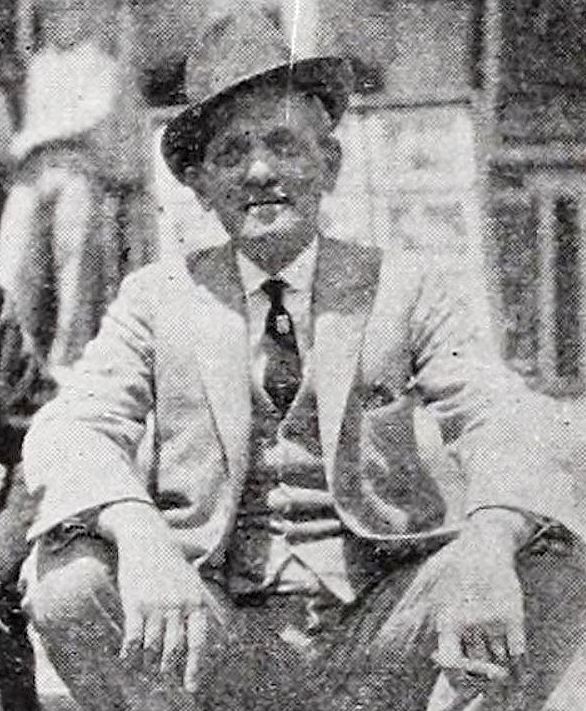
I like this related tidbit. The man who ran the Forest Avenue Theater was Oscar Gould’s son, Harry Gould, who, like his father, had a long and respected career running theaters. When the Forest closed, he operated theaters in Waco, Houston, and eventually Fort Worth. After several years, he ended up at the Palace in Fort Worth. This is a photo from his days at the Palace — the 1936 photo ran with this caption in the Fort Worth Star-Telegram:

Harry Gould, manager of the Palace Theater, points out the electric light which has burned continuously for the last 28 years, except when the current was shut off at the electric company’s power plant. Gould and other showmen who have been connected with the palace are superstitious about the light, believing it will bring good luck as long as it remains lighted.
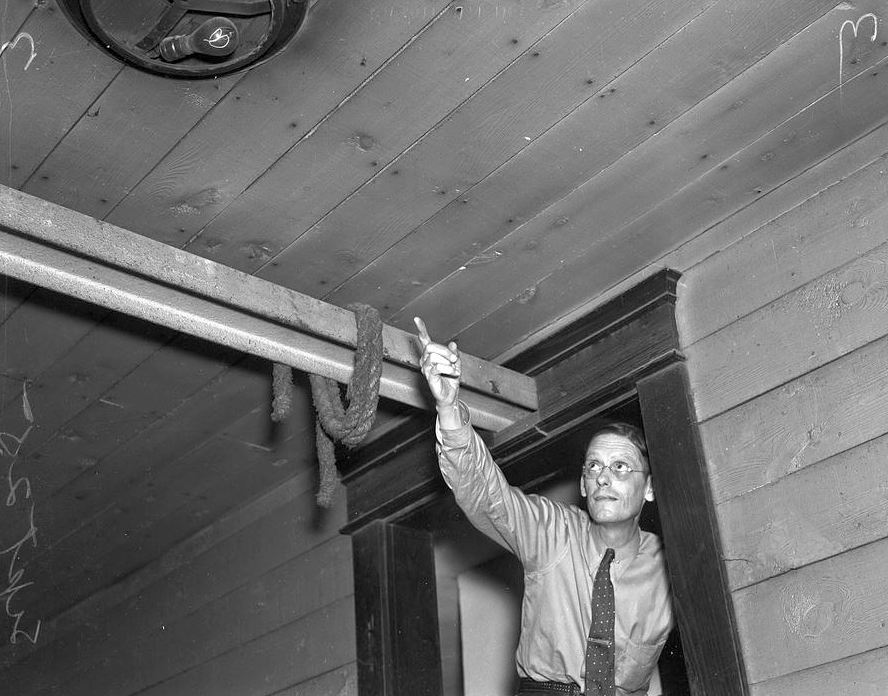
gould-harry_palace-theatre-fort-worth_UTA_090536_FWST_longest-burning-bulb

I think the bulb is still burning, into what must be its 116th year. That’s a pretty good bulb. It was moved — still burning — when the theater was demolished and, last I saw, was in the Stockyards Museum in Fort Worth. (The lightbulb was profiled by Channel 8 in 1973, in a short, filmed report here.)

**

Thank you, MIke Cochran, for sharing your family photo! I’m sorry it took me NINE YEARS to write this!

***

Sources & Notes

The top photo is from the collection of Mike Cochran, used with permission. (Thank you, Mike!) On the left of the photo was Chapman’s Pharmacy, and at the right was Leader Grocery,

The movie showing is “A Man’s Faith,” produced by Siegmund Lubin and released in 1914.

Photo of Harry Gould and the lightbulb (Sept. 25, 1936) is from the Fort Worth Star-Telegram Collection, University of Texas at Arlington Libraries, here.

Need a daily dose of Dallas history? Please consider supporting me on Patreon!

forest-avenue-theater_1638-forest_mike-cochran_detail

*

Copyright © 2024 Paula Bosse. All Rights Reserved.
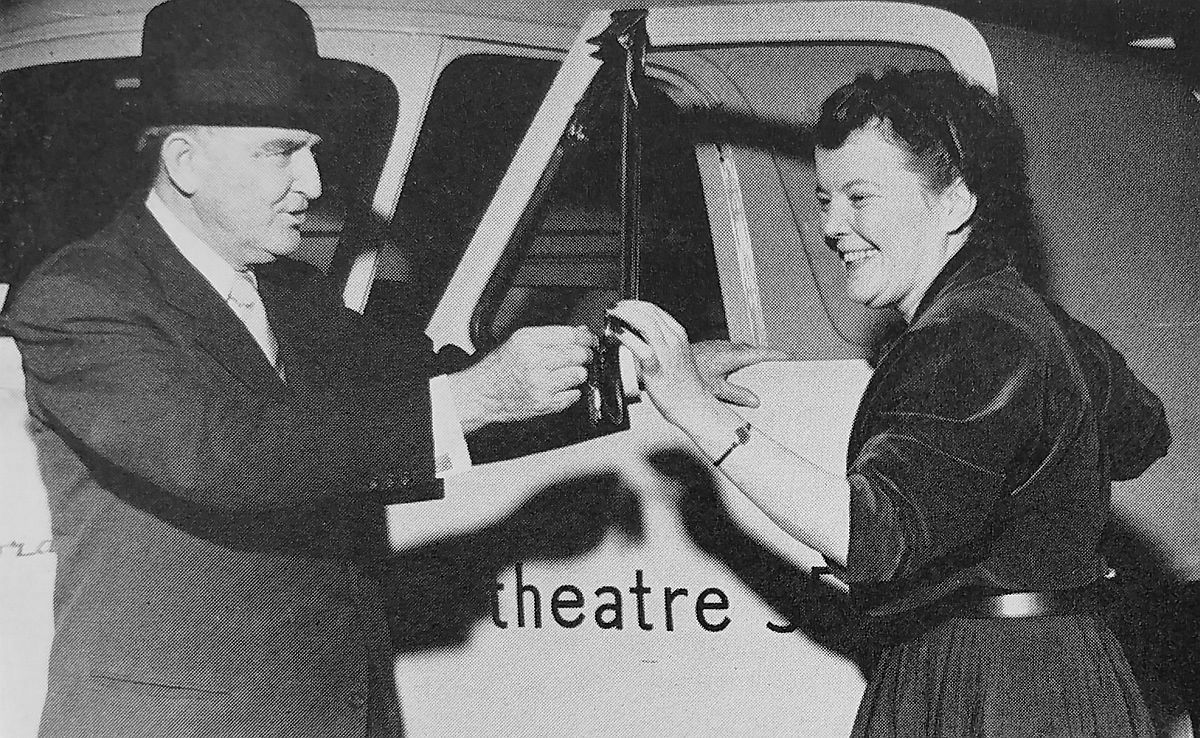
New Wheels for Margo Jones — 1955

jones-margo_theatre-55_dallas-magazine_apr-1955DeWitt Ray and Margo Jones

by Paula Bosse

The photo above shows Dallas theater legend Margo Jones accepting the keys to a new Ford truck in March 1955. Below, the caption that appeared in the April 1955 issue of Dallas magazine:

GIFT FOR THEATRE ’55: Margo Jones, director of Theatre ’55, is shown as she accepts the keys to a new 1955 panel truck from DeWitt T. Ray, Dallas banker and member of Dallas Theatre ’55 board of trustees. The truck, gift of a group of 18 Dallas businessmen and civic leaders, will be used for transporting set furniture, props and other necessities for the theatre’s productions.

She looks very, very happy!

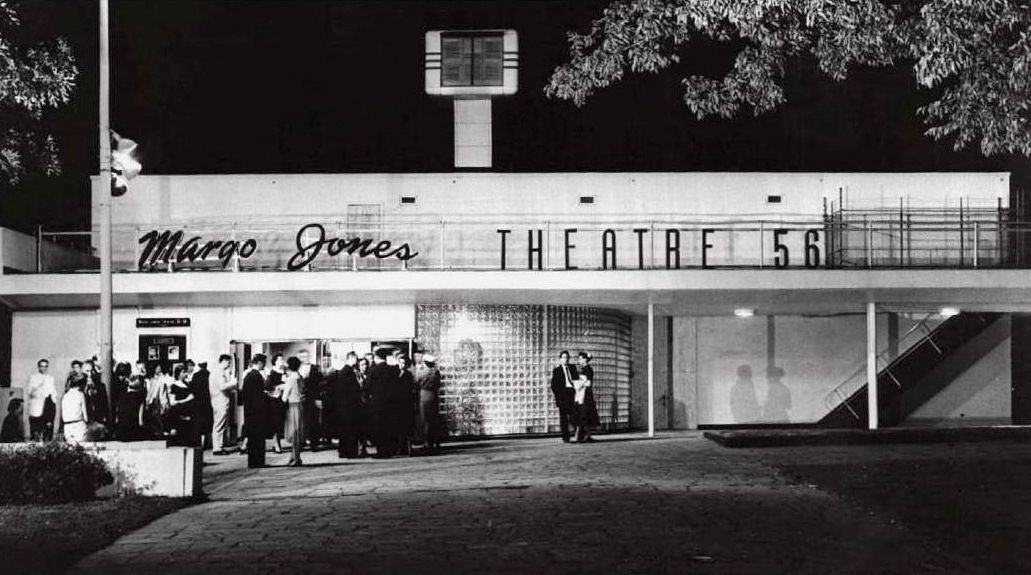
margo-jones_theatre-56_dpl

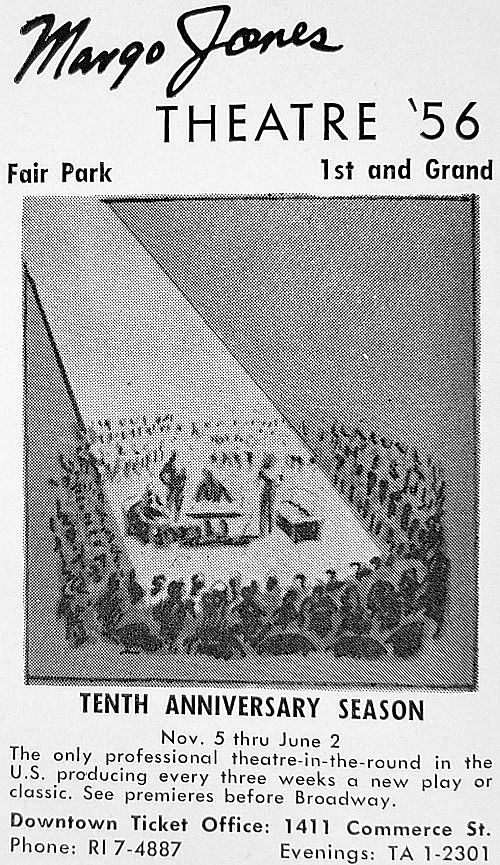
jones-margo_theatre-56_this-month-in-dallas_dec-1956_ad

***

Sources & Notes

Photo is from the April 1955 issue of Dallas, a periodical published by the Dallas Chamber of Commerce.

Photo of the exterior of the theater from the collection of the Dallas Public Library.

Ad from the Dec. 1956 issue of This Month in Dallas.

More on Margo Jones can be found in the following Flashback Dallas posts:

Watch “Sweet Tornado: Margo Jones and the American Theater,” the full documentary on Margo Jones produced by KERA-Channel 13, here.

jones-margo_theatre-55_dallas-magazine_apr-1955_sm

*

Copyright © 2022 Paula Bosse. All Rights Reserved.

Snider Plaza & The Varsity Theater — 1920s

varsity-theater_1929_galloway_1600The Varsity Theater, Snider Plaza, 1929

by Paula Bosse

Snider Plaza, the University Park shopping center near the SMU campus, was formally opened on June 2, 1927 when its centerpiece fountain was switched on as a crowd of thousands watched. The buildings weren’t completed yet, but it was a sure sign to everyone that a large project was underway in an area of town which was not yet fully developed.

It was announced in December 1926 that a 30-acre tract at the northwest corner of Hillcrest and Daniel had been purchased by Wichita Falls businessman Charles W. Snider (he had recently funded Snider Hall, the women’s dormitory at SMU) and University Park mayor J. Fred Smith from Miss Fannie B. Daniel, whose family had owned the land since 1851. The purchase price was $82,500 (which would be the equivalent of about $1.25 million in today’s money) (…let that sink in for a moment…). Snider Plaza, along with SMU, was both the heart of University Park and an impetus for real estate development around it.

Here’s an ad from October 1927 from the University Park Development Co. (click to see larger images) — lots were going for $1,890 ($30.000 today):

university-park-develpment-co_ad_100927_a

university-park-develpment-co_ad_100927_bOct. 1929 — Hurry!

*

Below are a couple of VERY early photos of Snider Plaza.

First off, the fountain. It was illuminated at night with rotating colored lights. The view is to the northwest.

snider-plaza-fountain_1927_galloway_dpl_1200

And that was about it. A fountain, paved streets and sidewalks, and lots of streetlights. In the photo below you can see the fountain in the distance. And the office of Ralph Porter, the man who was the driving force behind Snider Plaza (see his photo in the ad above). There is still a Ralph Porter Co. real estate business — and, appropriately, it’s still located in Snider Plaza.

snider-plaza_galloway_dpl_1200

*

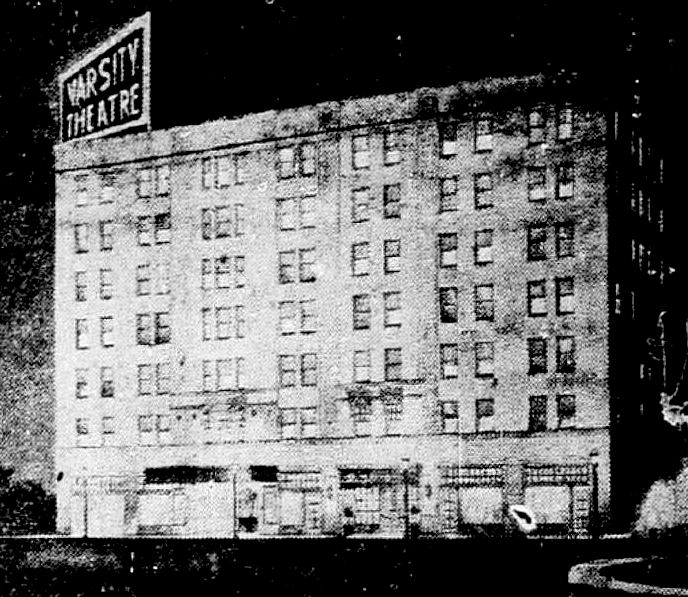
The Varsity Theater wasn’t built until 1929, even though a movie theater was always in the plans. I’m not sure what happened, but in 1928 it was announced that a new theater was going to be built as part of a 7-story building. The theater and retail shops were to occupy the first floor, offices would occupy the second floor, and furnished apartments would fill the top five floors (there would also be a parking garage in the basement). That’s all so weird to imagine. First off, apartments?! Secondly, that would have been the tallest building in the Park Cities! Buildings weren’t that tall in most of “suburban” Dallas in the 1920s. Also, the architecture is pretty bland, and very unlike the rest of the shopping area.

snider-plaza_varsity-apartments_1928Architect’s conception, 1928

The stripped-down plans ended up doing away with the basement and everything but the ground floor for the theater and retail shops. And I’m so glad! I love the photo at the top, from 1929. What a beautiful, beautiful building! The architect of the building was Wyatt C. Hedrick of Fort Worth. The buildings of Snider Plaza were meant to be of uniform design. Like this. (If only they all still looked like that!) (Another photo I posted recently showing that uniform style is here.)

*

A photo from 1940 showing a partial image of the marquee:

snider-plaza_brown-bks_university-park_varsity-theater_19401940, University Park Brown Books

*

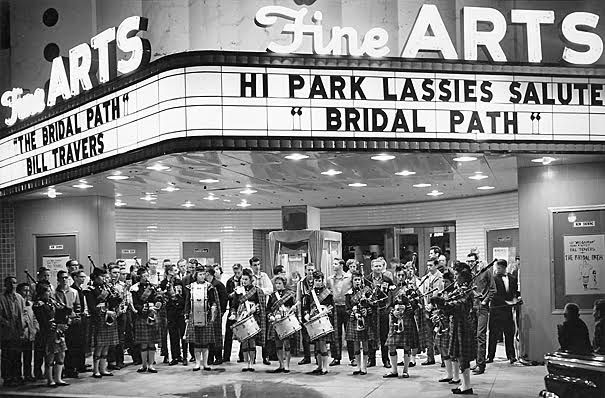
The Varsity opened on Oct. 3, 1929 with “In Old Arizona” (the first talkie to be filmed outdoors). It became the Fine Arts in January 1957. A reader, Malcom Thomson — who was a very youthful theater manager during the early days of the Fine Arts (I think he was an SMU student at the time) — sent me the great photo below from February 1960.

fine-arts-theater_snider-plaza_malcolm-thomson_feb-3-1960Feb. 3, 1960 (courtesy Malcolm Thomson)

At some point — it’s so incredibly hard to believe that it seems like an urban legend — the Fine Arts Theater became an “adult” theater. Yes, Virginia, X-rated movies were screened regularly in the Park Cities. Oh dear.

*

The theater is long-gone, as is almost all of Snider Plaza’s original “look.” But it’s still a cool, quirky place, and it’s always interesting to explore (never quite as interesting as M. E. Moses was to me as a child, but so few places are). And as long as Kuby’s is still around to fulfill my Reuben and warm-potato-salad needs, I’m pretty happy.

**

A couple of quirky tidbits about the very early years:

  • SMU students were responsible in large part for operating the theater, because, of course, it offered them the opportunity to “obtain practical experience in show business.”
  • Also, the streets of the plaza were cleaned by “an automatic street-washing machine.” I’m not sure what that would have entailed, but I would guess that SMU students were glad to be let off the street-cleaning life-experience hook on that one.

And, on a personal note, several decades later, my father owned the very short-lived Plaza Book Store, which was located in the retail space just to the right of the theater (where, just a few short years earlier, he had worked as an usher — i.e. “obtained practical experience in show business” — while attending SMU).

***

Sources & Notes

The two photos of Snider Plaza from 1927 and the top photo of the Varsity Theater from 1929 were found in the absolutely fantastic book The Park Cities: A Photohistory by Diane Galloway. The first two are from the collection of the Dallas Public Library. Ms. Galloway’s credit for the photo of the theater reads, “Photo by Frank Rogers/Courtesy of Jerrry Washam/Ralph Porter Company.” I believe all three photos are by Frank Rogers.

1960 photo of the Fine Arts Theater is used courtesy of Malcolm J. Thomson (thanks, Malcolm!).

varsity-theater_1929_galloway_sm

*

Copyright © 2021 Paula Bosse. All Rights Reserved.

Miscellaneous Dallas #2

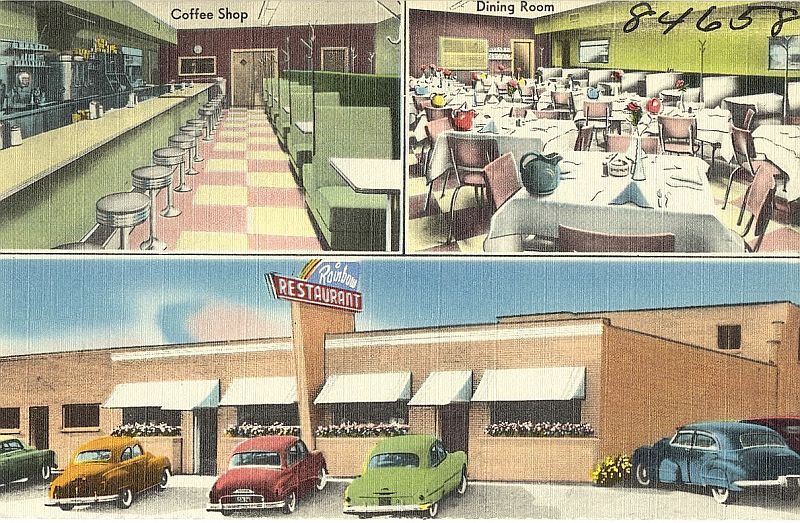
rainbow-restaurant_tichnor-bros-collection_boston-public-libraryOpen 24 hours, plenty of free parking…

by Paula Bosse

And now, a bunch of homeless, random images (all are larger when clicked).

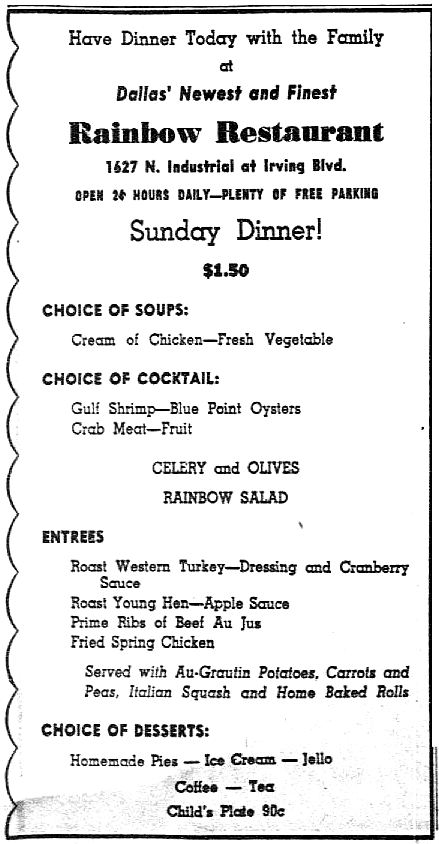
Above, the 24-hour Rainbow Restaurant, 1627 N. Industrial at Irving Blvd. Below, its menu.

rainbow-restaurant_ad_dec-19511951

*

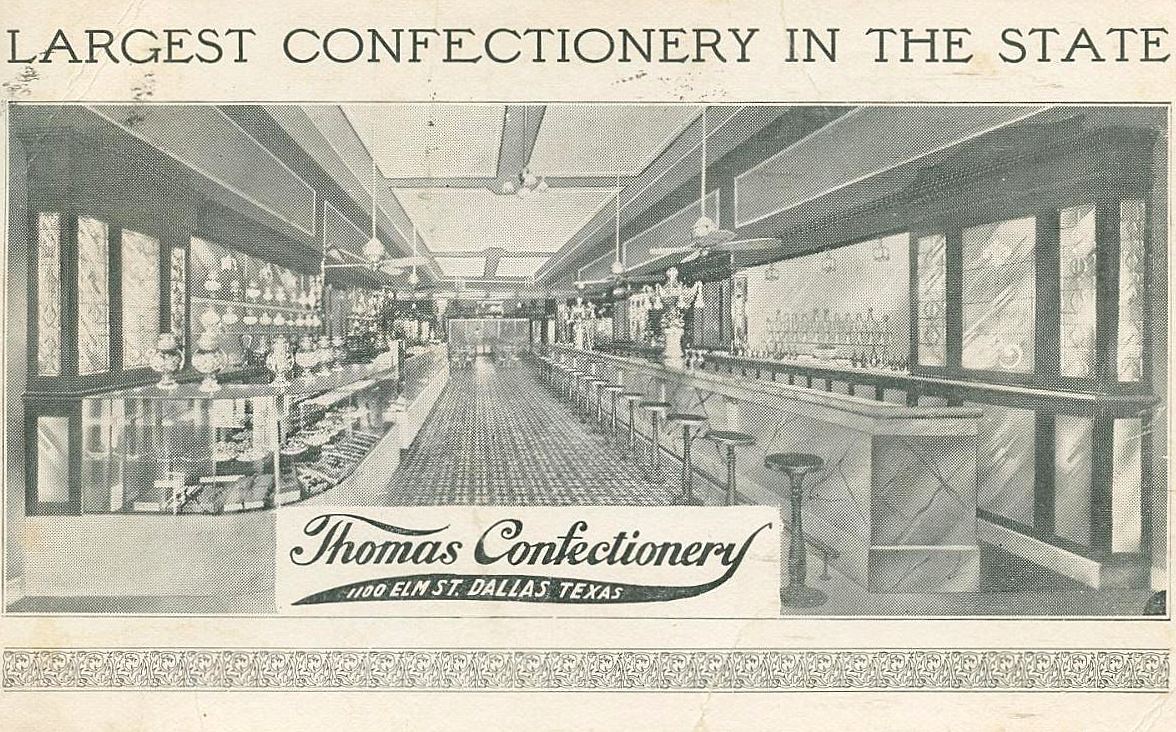
Thomas Confectionery, 1100 Elm Street. “Largest Confectionery In the State.” Popular date spot with the pre-flapper generation.

thomas-confectionary_postcard_1911_sam-rayburn-house-museum-via-portal1911 (via Portal to Texas History)

thomas-confectionery_0915121912. Dallas Morning News want-ad

*

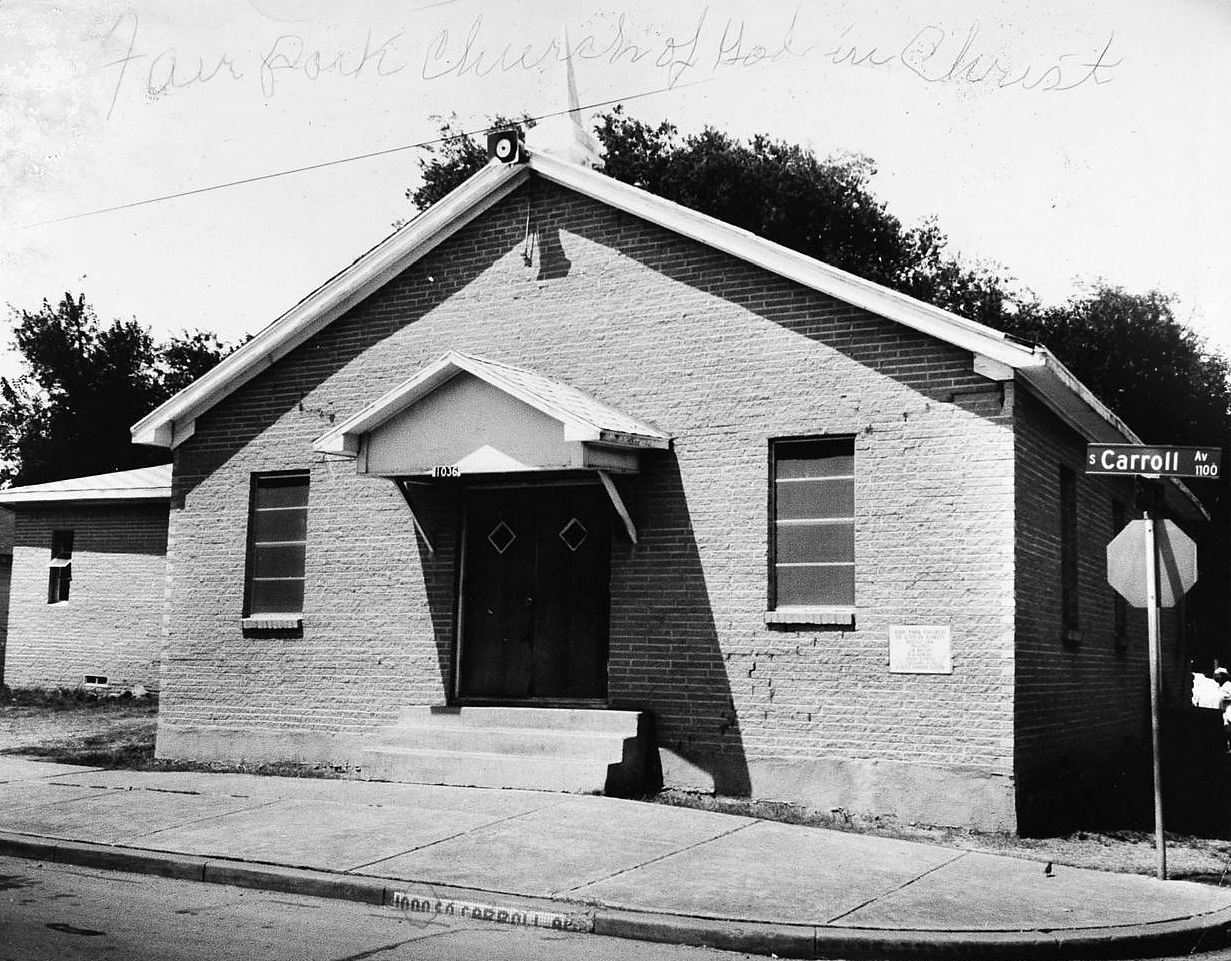
Fair Park Church of God in Christ, 1036 S. Carroll Ave.

fair-park-church-of-god-in-christ_1974_USC-libraries 1974 (via USC Libraries)

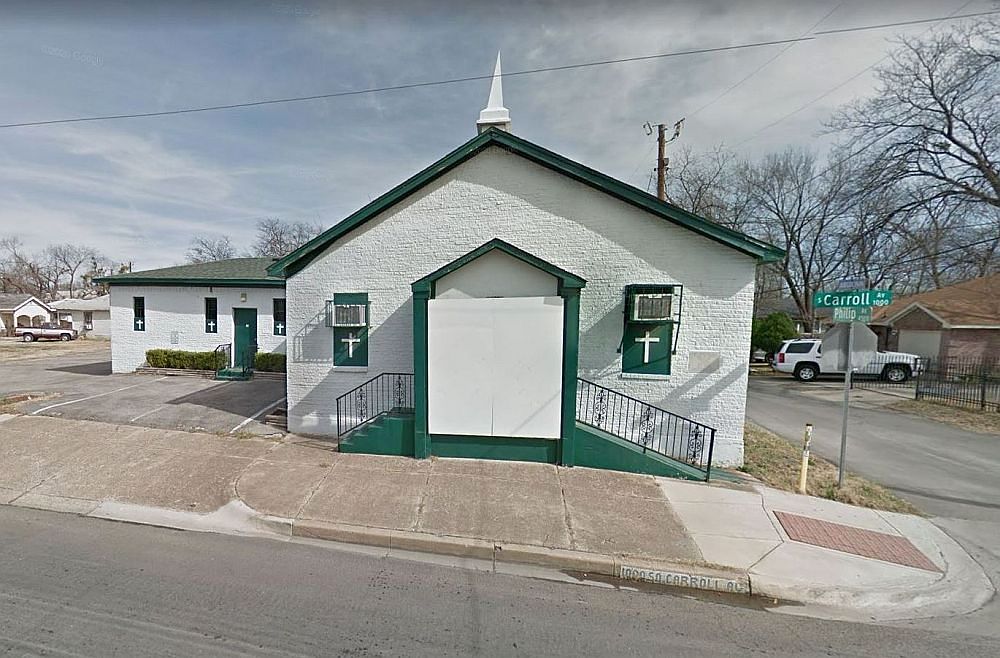
And it’s still standing! (I love that the curb tiles are still there.)

fair-park-church-of-god-in-christ_google-street-view-20172017 (via Google Street View)

*

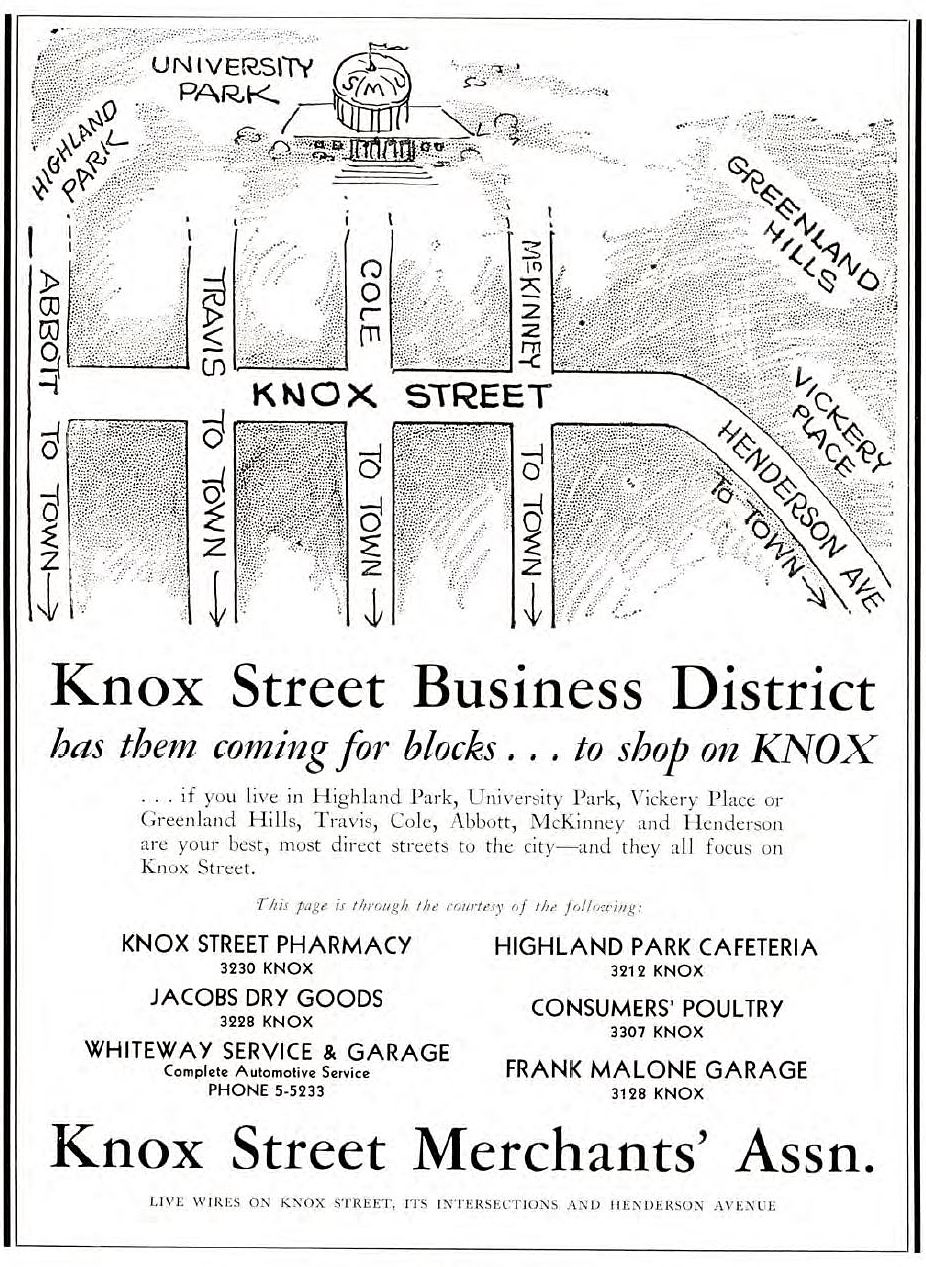
The Knox Street Business District, pre-Central Expressway. …Way pre.

knox-street-business-district_1932-smu-rotunda1932 (via SMU Rotunda)

*

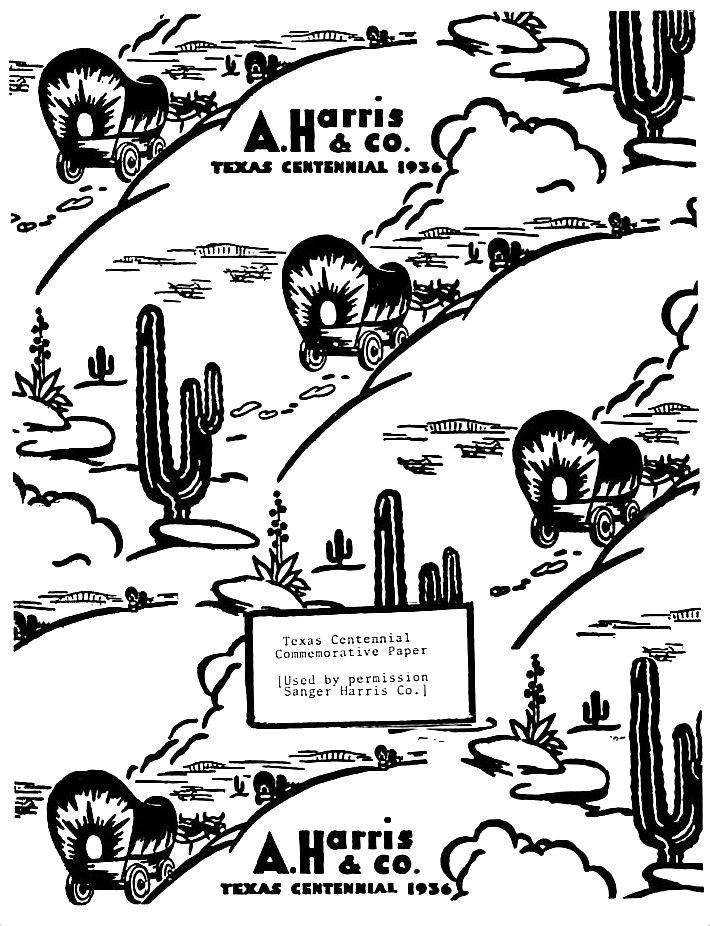
A. Harris & Co. — Texas Centennial Commemorative Paper (gift wrap?).

tx-centennial_a-harris_gift-paper_elm-fork-echoes_april-1986_portal-tx-hist1936 (via Portal to Texas History)

*

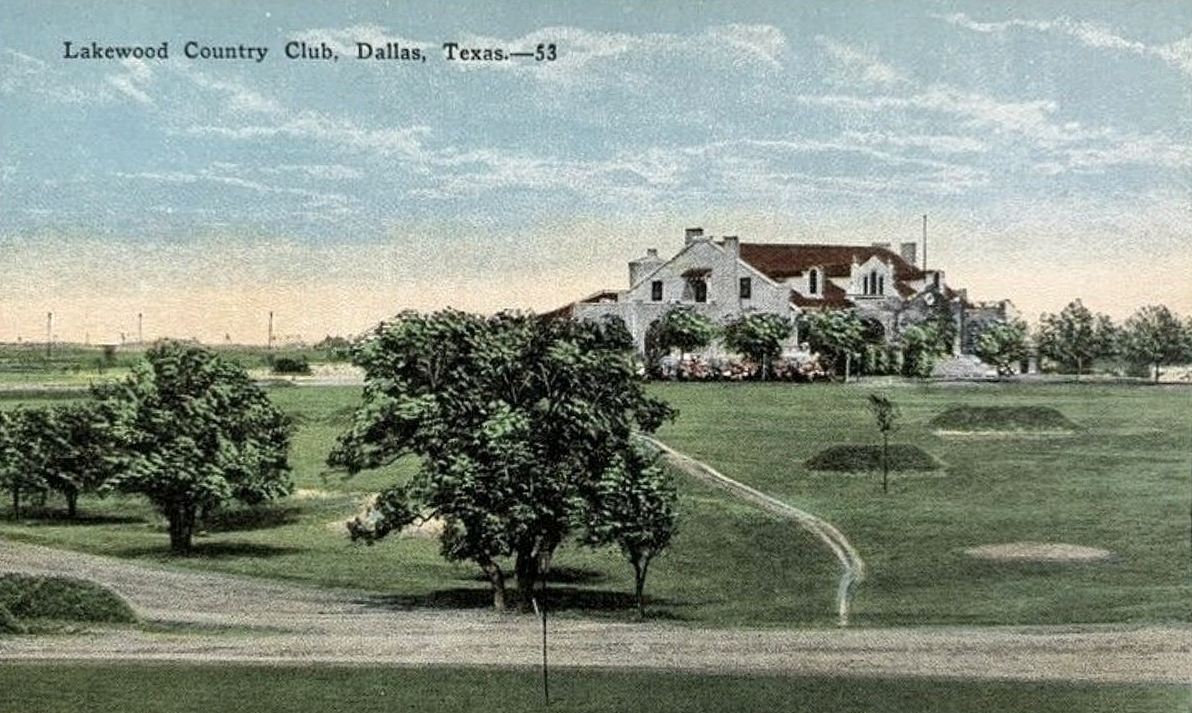
The Lakewood Country Club (see it before the landscaping in this photo from this post).

lakewood-country-club_postcard_ebay(via eBay)

*

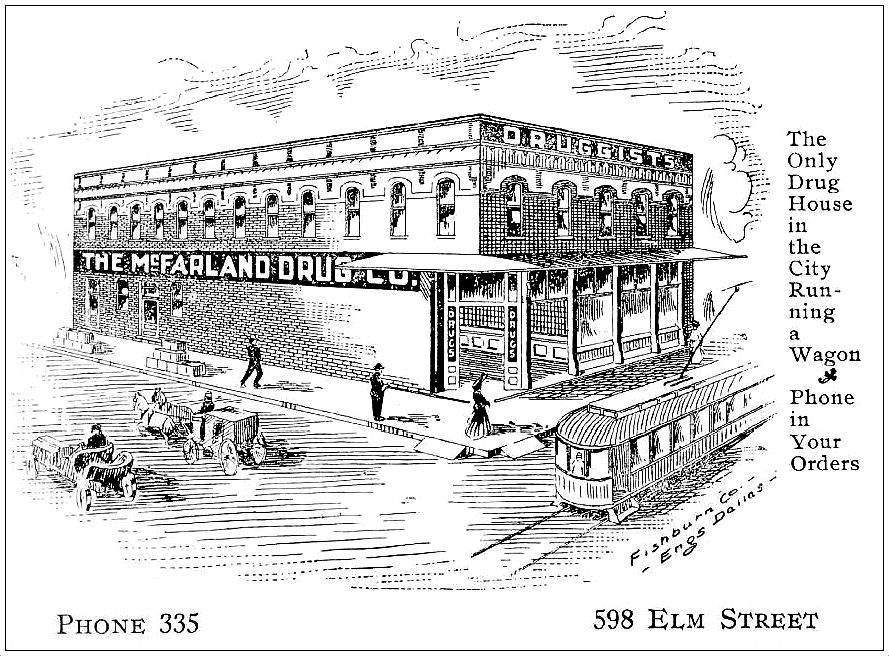
The McFarland Drug Co., 598 Elm, at Hawkins, in Deep Ellum (later became 2424 Elm).

mcfarland-drug-co_hints-to-housekeepers_degolyer_SMU_19051905 (via DeGolyer Library, SMU)

*

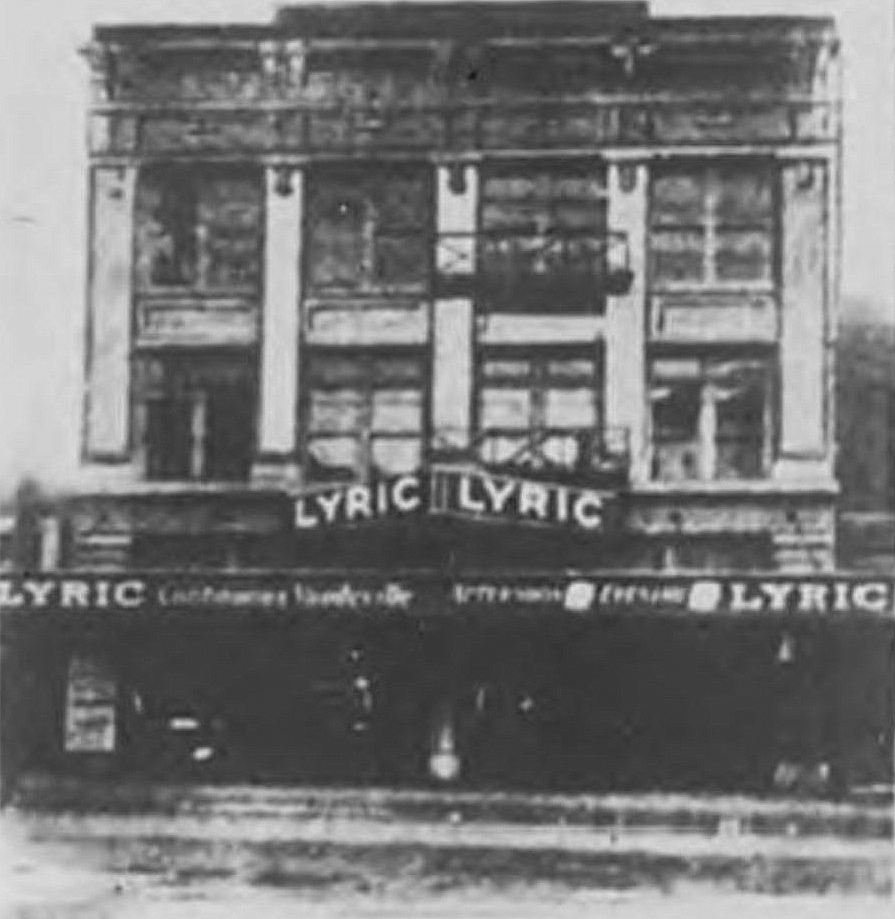
The Lyric Theatre, 364 Elm, near Stone (later 1602 Elm).

lyric-theater_degolyer-lib_SMU_dallas-theaters_nd1907-ish (via DeGolyer Library, SMU)

*

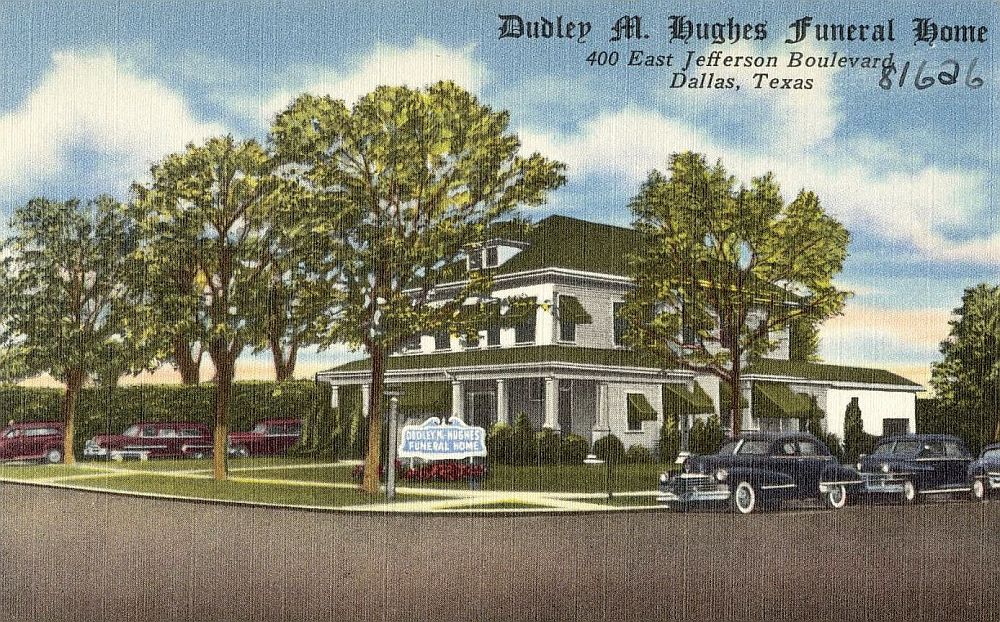
Dudley M. Hughes Funeral Home, 400 E. Jefferson Blvd, Oak Cliff.

dudley-hughes-funeral-home_tichnor-bros_boston-public-library(via Tichnor Bros. Collection, Boston Public Library)

*

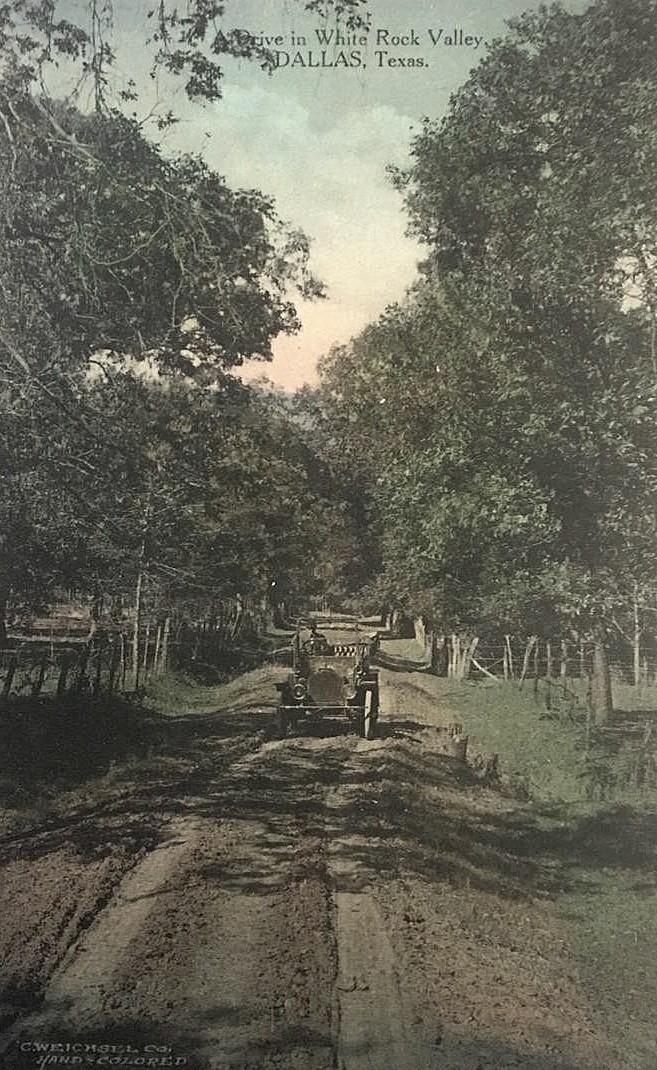
“A Drive in White Rock Valley.” Before the lake.

white-rock-valley_postcard_1912_ebay(via eBay)

***

Sources & Notes

Rainbow Restaurant postcard is from the Tichnor Bros. Postcard Collection, Boston Public Library.

See the first installment of “Miscellaneous Dallas” here.

rainbow-restaurant_tichnor-bros-collection_boston-public-library_sm

*

Copyright © 2021 Paula Bosse. All Rights Reserved.

Showtime on Elm Street

theater-row_night_majestic-melba-tower-palace_portalLit up like Broadway…

by Paula Bosse

Who doesn’t love nighttime photos of Dallas’ Theater Row, generating enough electricity to be seen from space. The Majestic, the Melba, the Palace. And a buck a night at the Majestic Hotel across the street, the window shades of which could not possibly have been enough to block out the blinding, strobing neon. This is a similar view to the fabulous photo from 1942 by Arthur Rothstein seen here. This is absolutely the period of Dallas’ history I wish I could have experienced first-hand.

***

Sources & Notes

Photo titled “[Businesses on theatre row at night]” is from the Spotlight on North Texas Collection, UNT Media Library, UNT Libraries — more information can be found on the Portal to Texas History site here.

theater-row_night_majestic-melba-tower-palace_portal_sm

*

Copyright © 2021 Paula Bosse. All Rights Reserved.

The Majestic Theatre’s Centenary

majestic-theatre_tsha_1920sThe Majestic Theatre, 1925 Elm Street

by Paula Bosse

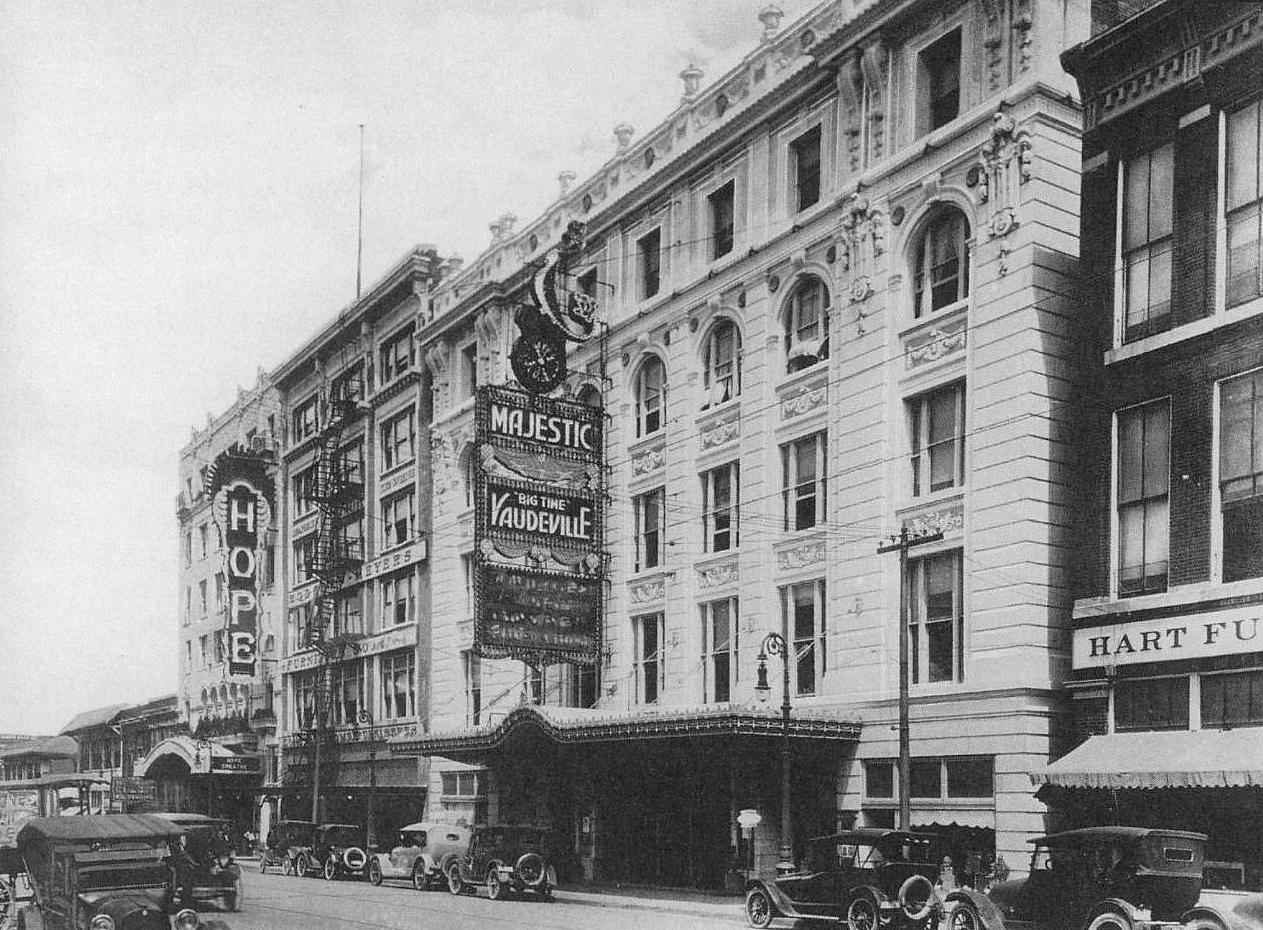
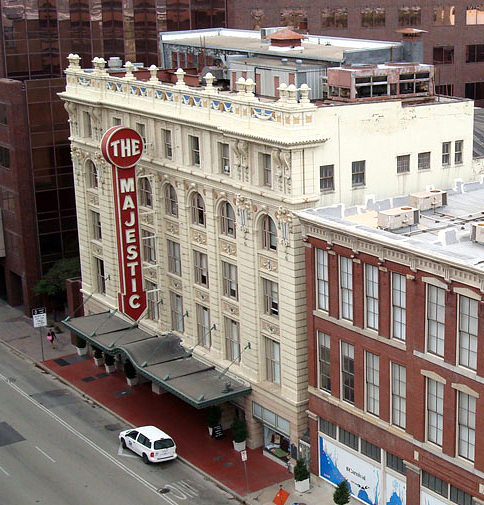
The Majestic Theatre opened on Elm Street 100 years ago this week. We’re lucky to still have such a beautiful building, one which we came close to losing in the late ’60s/early ’70s when so many other “old” buildings were being demolished in downtown Dallas.

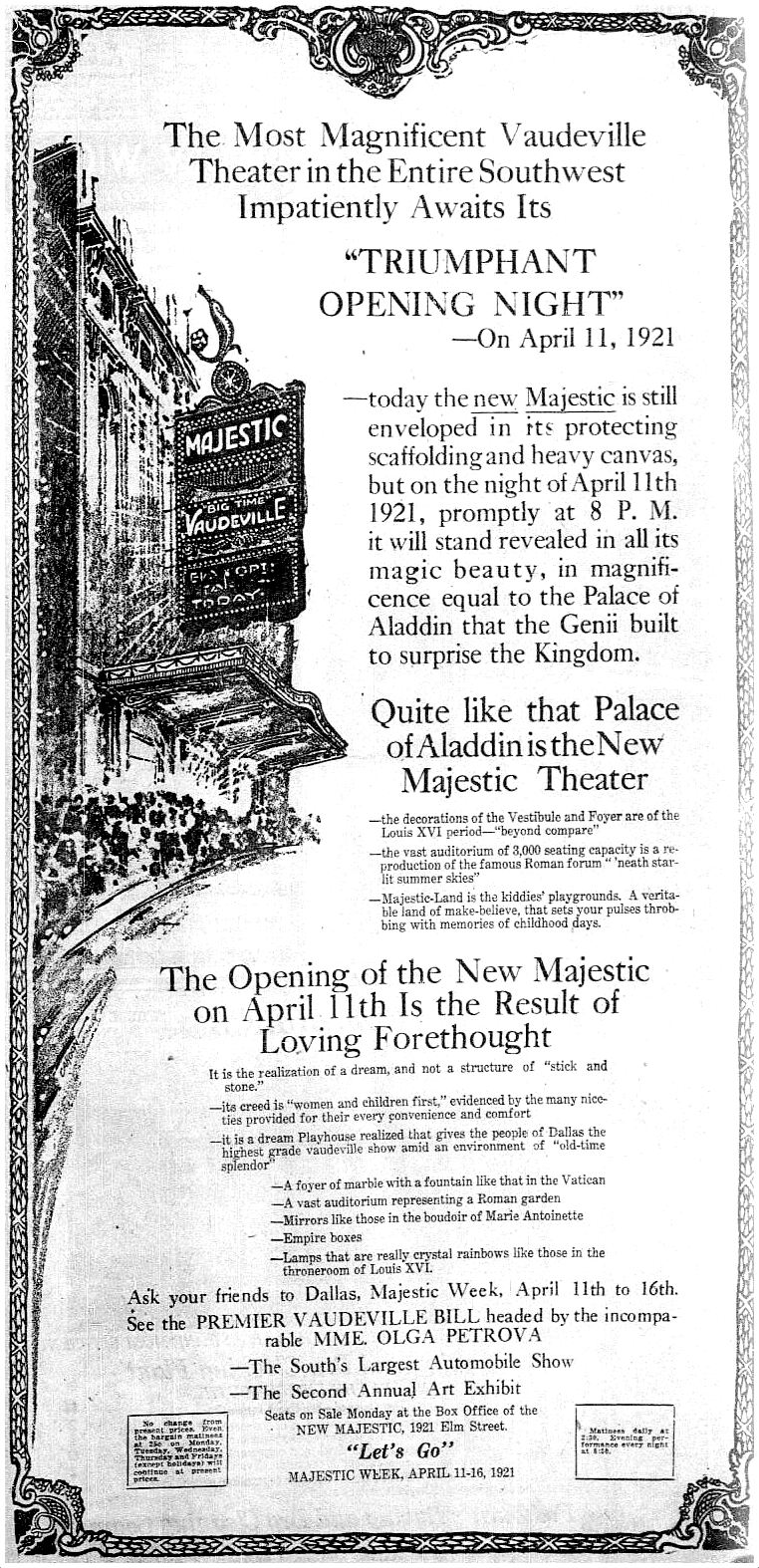
The Majestic opened at 1925 Elm on April 11, 1921. The promotional blitz was pretty intense: for months the local papers were full of every little tidbit about the building and the grand opening. A pilot was even hired to drop leaflets and float balloons over 25 North Texas towns in order to reach those farther afield who might be outside the Big City theater loop. 

There was a lot of bragging that the showplace theater cost over $2 million, a huge amount of money at the time. That would be about $30 million in today’s money, and there is no way that beautiful, beautiful theater and its luxurious decor could be built today for a mere $30 million.

Like I said, we’re lucky to have it. Happy 100th, Majestic!

*

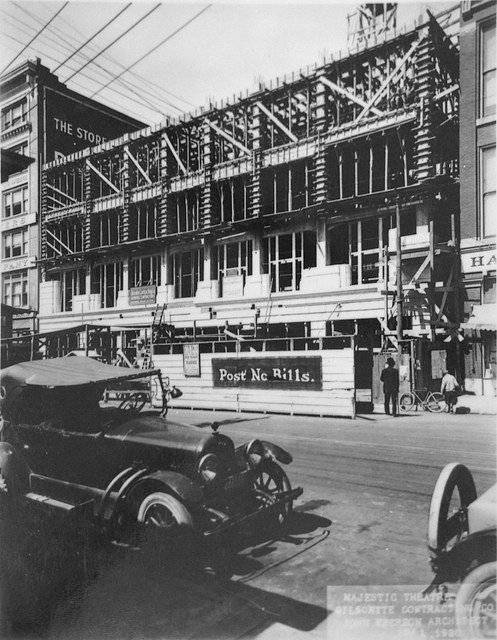
Here it is under construction in 1920:

majestic_under-constructioin_100120_cinema-treasuresvia Cinema Treasures

*

Just read this (click to see a larger image):

majestic-theatre_dmn_040321_grand-openingDallas Morning News, April 3, 1921

*

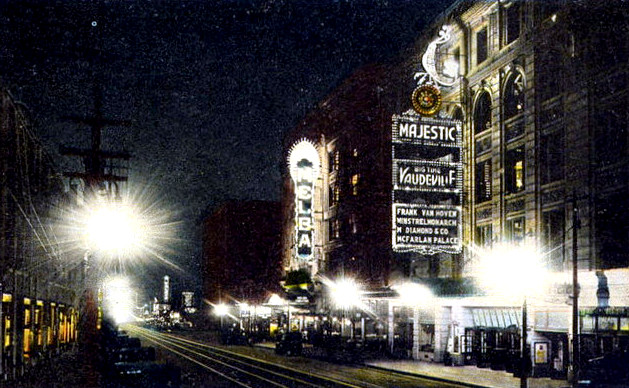
At night, just down from the Melba (originally the Hope):

majestic-theatre_night_cinema-treasuresvia Cinema Treasures

*

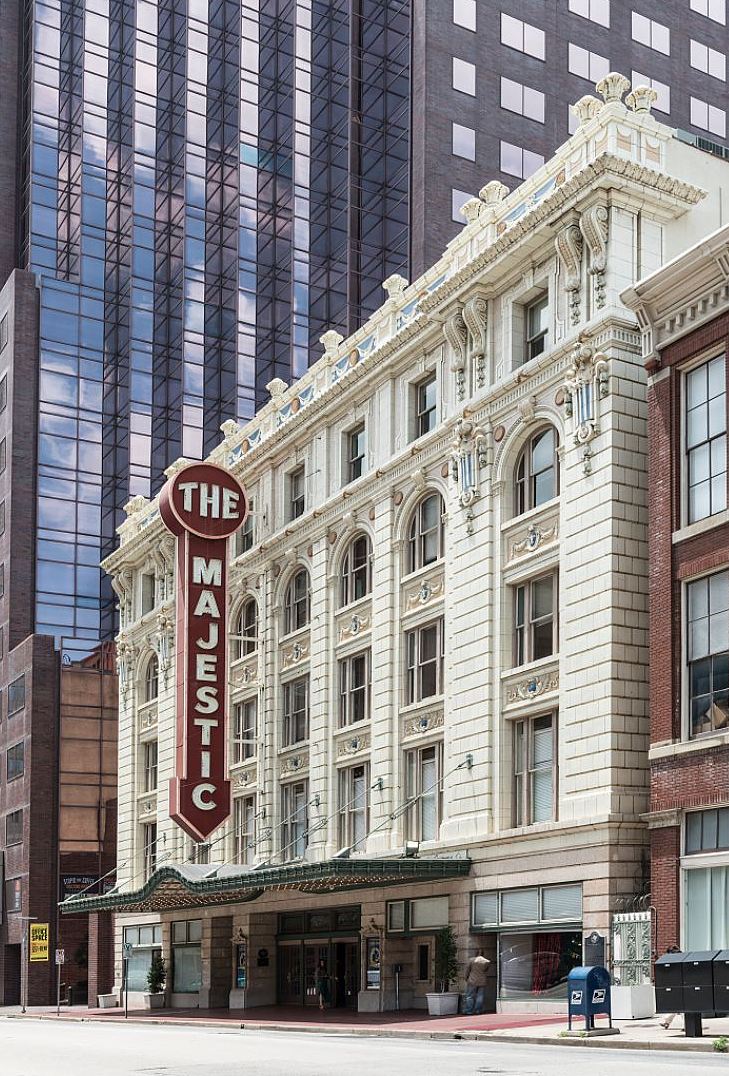
And it still looks beautiful in the 21st century:

majestic-theatre_LOC_carol-highsmith_20142014, photo by Carol M. Highsmith, Library of Congress

*

majestic-theatre_2009_wikipedia2009, via Wikipedia

*

theater_majestic_052522_where-its-cool“Where it’s really cool” (1922)

***

Sources & Notes

More about the history of the Majestic Theatre can be found at Cinema Treasures.

The official theater website is here — check out the upcoming shows!

majestic-theatre_tsha_1920s_sm

*

Copyright © 2021 Paula Bosse. All Rights Reserved.
Aerial View: Movie Row from the Rear

aerial_south-from-pacific_color

by Paula Bosse

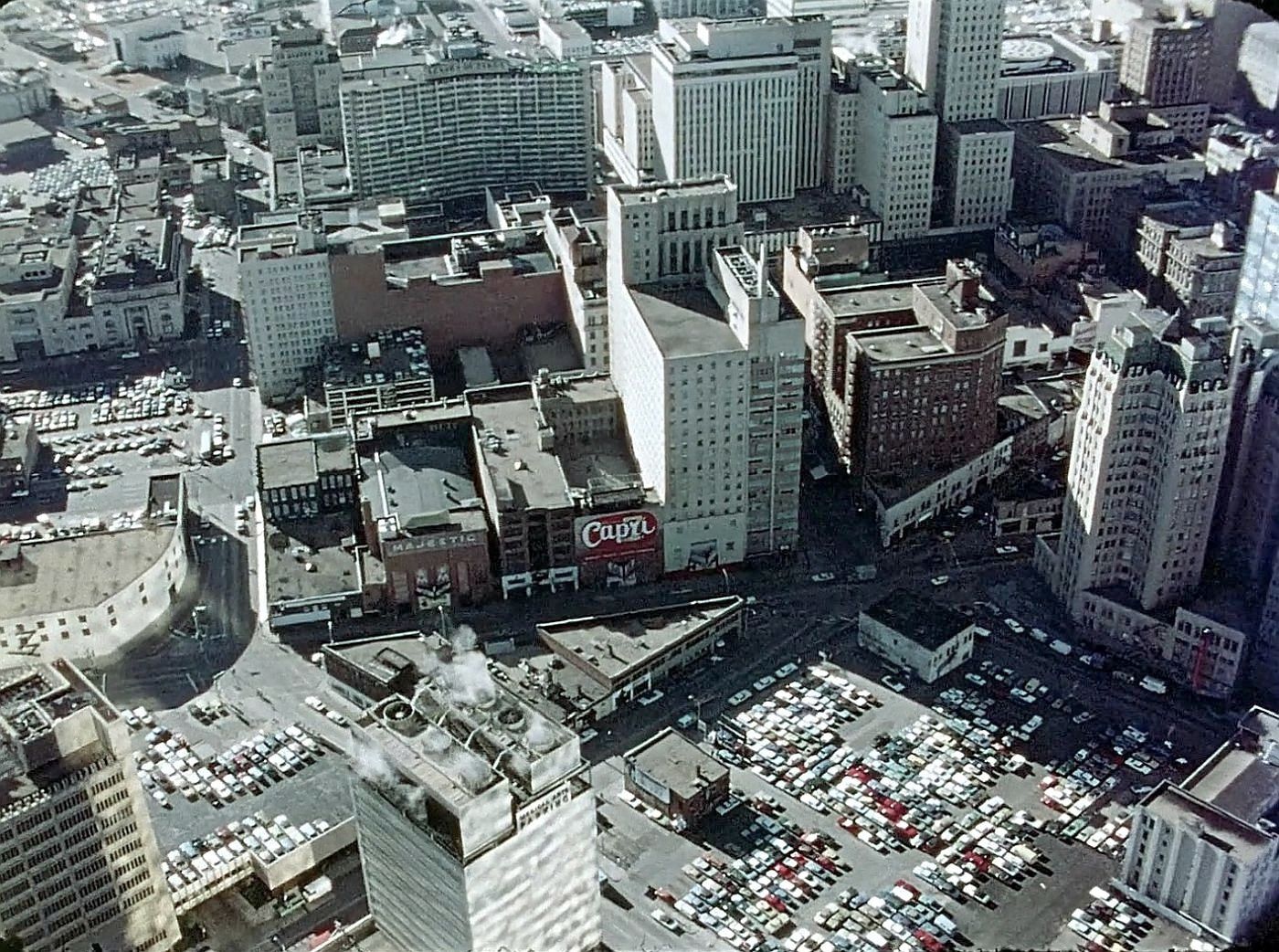
This is a cool aerial shot of downtown, looking toward the south, with a nice look at the back side of the waning Movie Row, with the Pacific Avenue rear entrances of the Majestic and Capri theaters visible.  I’m not sure of the date, but the Melba Theater was renamed the Capri on Dec. 25, 1959 and was ultimately demolished in 1980 or 1981, and the Medical Arts Building (seen in the middle at the far right) was demolished in 1977. I’m guessing the ’70s, if only because of the vast expanse of parking lots.

***

Sources & Notes

Another instance of muddled/incomplete notes on my end. This is a screenshot from… something. I don’t remember if the image seen here is a photo or is from moving footage shot over Dallas.

majestic from behind aerial screenshot_sm

*

Copyright © 2021 Paula Bosse. All Rights Reserved.
Art Landry Is At The Palace — 1927

palace-theatre_u-s-coffee_frank-rogers_1927_DPLMarquees, schmarquees… (Dallas Public Library)

by Paula Bosse

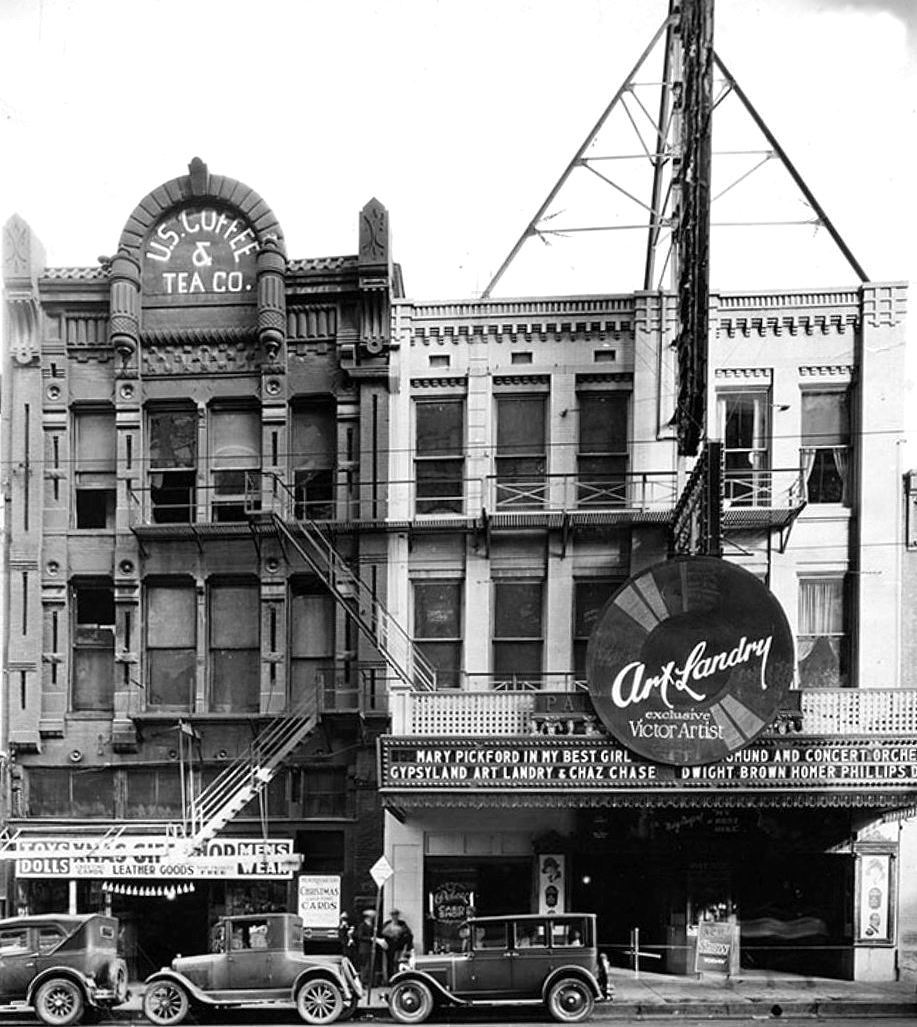
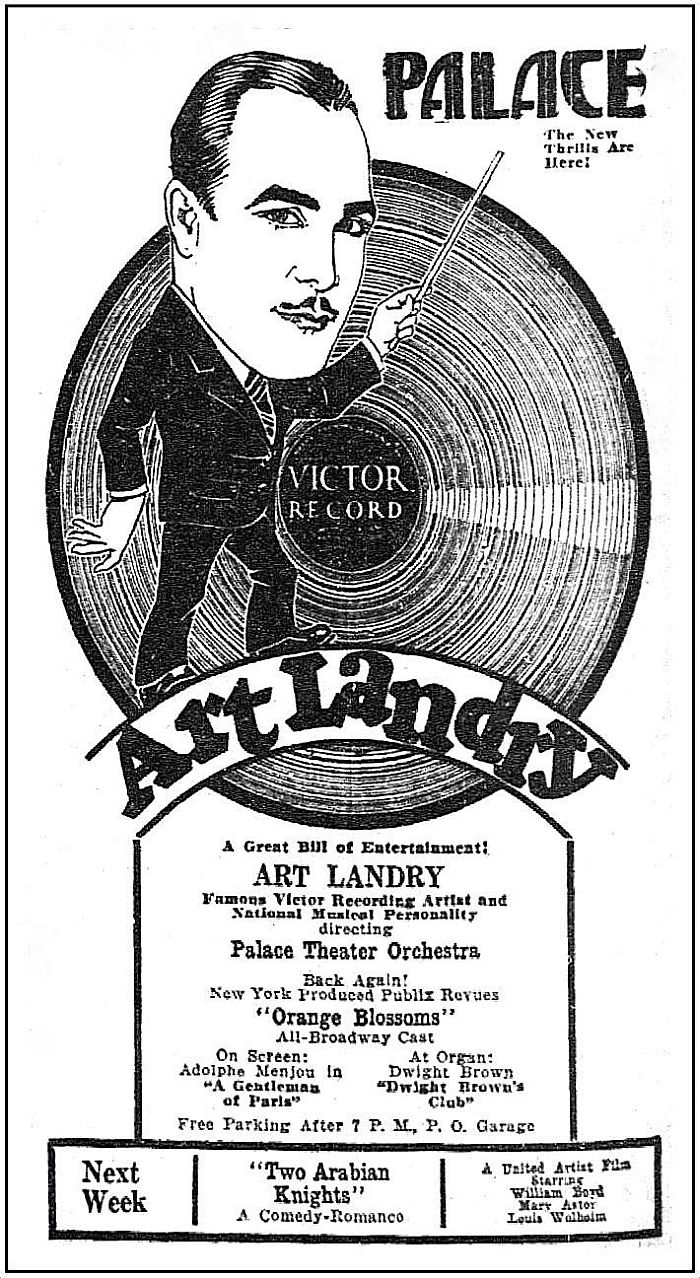
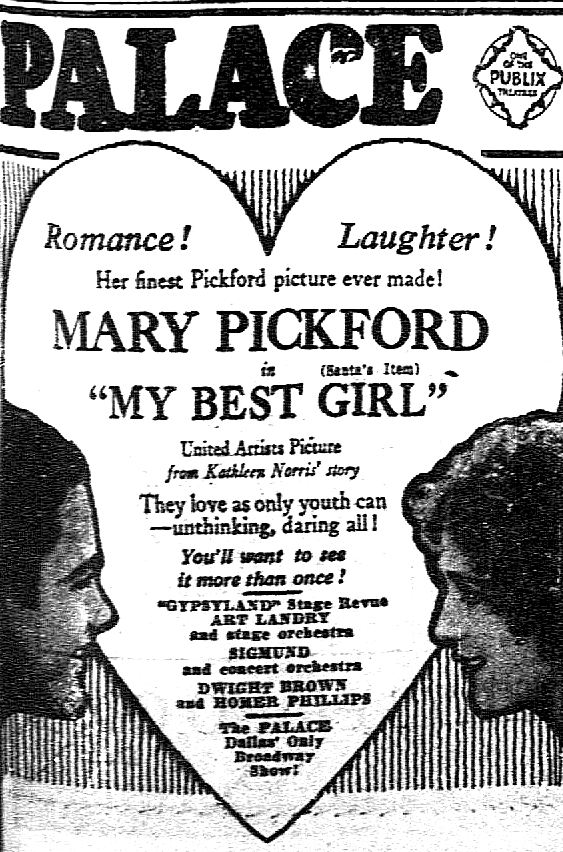
Great photo of the Palace Theatre on Elm and Ervay in November or December of 1927 (“My Best Girl” starring Mary Pickford opened at the end of November and ran for a week or two into the middle of December). The movie seems like a bit of an afterthought, though — I mean… ART LANDRY IS IN TOWN, and his giant 78 disc replica promotional sign is crowding out others on the marquee. The touring jazz-band leader (who insisted he did NOT play jazz music — “I became a bandmaster when jazz was jax. In those days noise was the objective. […] The day of jazz is gone….” ) was nestled here in Big D for the holiday season and was apparently well-received. (See another photo of the Palace from about this same time here.)

palace_art-landry_111327Nov. 13, 1927

palace_pickford_my-bes-girl_112727Nov. 27, 1927

You know how when you get a new car you suddenly start seeing that same model everywhere? I’m like that with the U.S. Coffee & Tea Co. — seen right next door to the theater. (See it here, peeping around the Wilson Building in a squattier incarnation.)

***

Sources & Notes

Photo titled “[Palace Theatre, Art Landry exclusive Victor Artist]” — by Frank Rogers — is from the Ted C. Steinberg Collection, Dallas History and Archives Division, Dallas Public Library, call number PA2018-03-14 (the library has the date this photo was taken as Dec. 27, 1927, but “My Best Girl” was long-gone by then — it was probably taken on Nov. 27, the day after “My Best Girl” opened).

Quote from Art Landry about not being a jazz-band leader is from an interview with him in The Dallas Morning News (“Jazz Is Thing of the Past Says Palace’s New ‘Jazz Band’ Leader Who Specializes in Modern Music” — DMN, Nov. 12, 1927). I can’t find any other instances of early jazz music referred to as “jax” music. Can anyone point me to another reference?

palace-theatre_u-s-coffee_frank-rogers_1927_DPL_sm

*

Copyright © 2021 Paula Bosse. All Rights Reserved.
Oak Cliff’s Star Theatre — 1945-1959

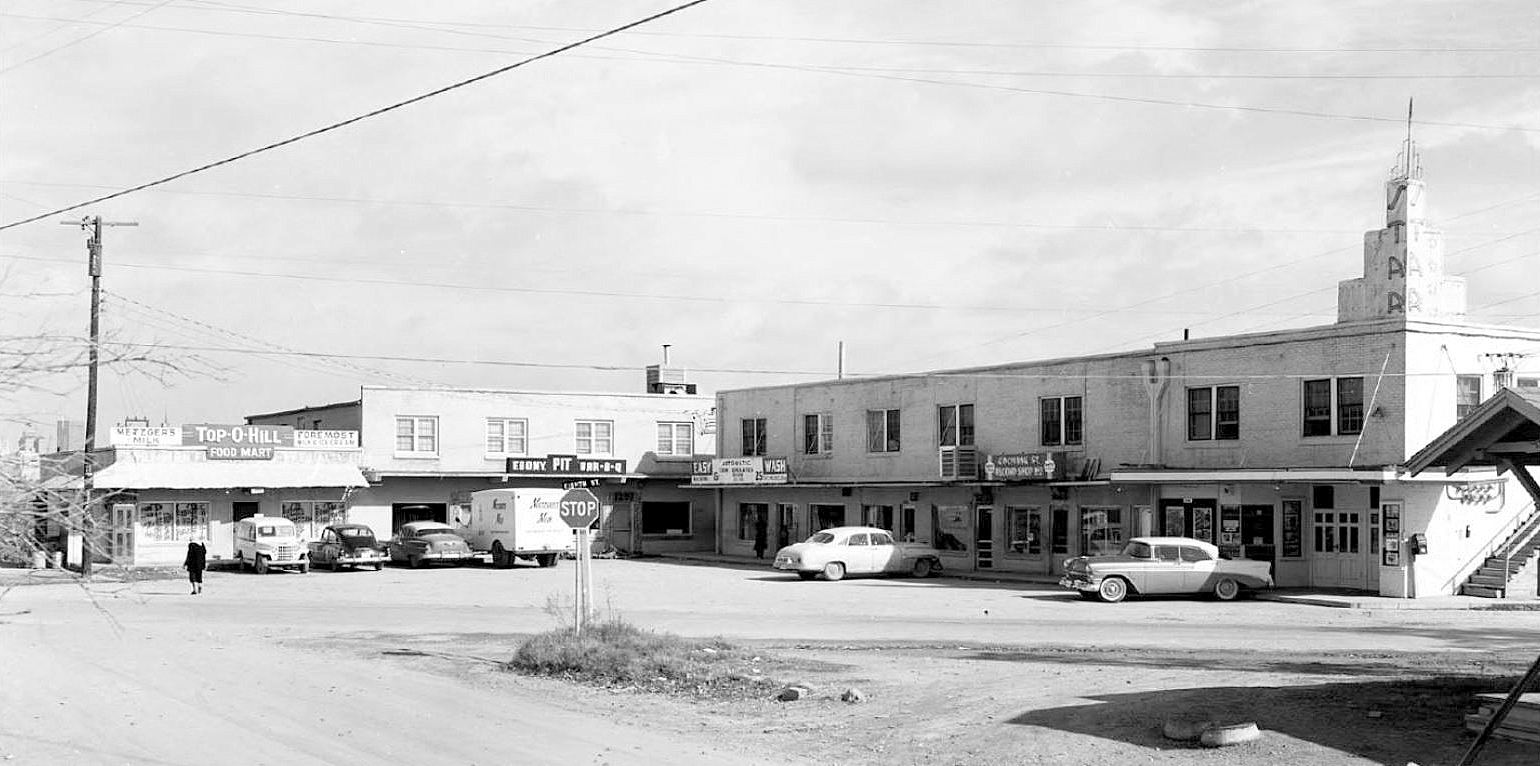
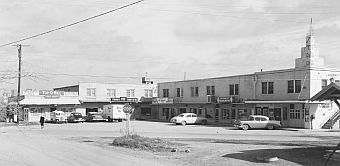
star-theatre_troy-sherrod-hist-dallas-theatres_DPLShow Hill, with the Star Theatre at right

by Paula Bosse

This is one of those photographs I could stare at all day long. It shows a shopping area in East Oak Cliff at the intersection of E. Eighth Street and N. Moore Street — this part of Oak Cliff was originally settled as a freedman’s town, and this photo shows an area between the Tenth Street Historic District and The Bottoms (or The Bottom) neighborhood (see a great map, here).

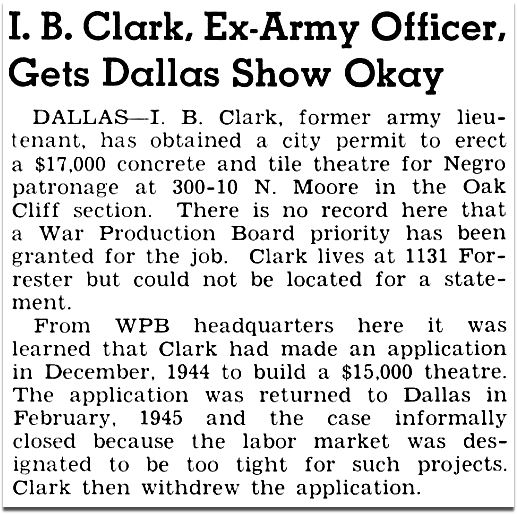
When these buildings were built in 1945 by I. B. Clark, it was an exclusively African-American part of Dallas. The anchor of this strip (which occupied what was described as both the 300 block of N. Moore and the 1400 block of E. Eighth) was the Star Theatre, which was, according to Mr. Clark, the only movie house for black customers in Oak Cliff.

star-theatre_boxoffice_042845
Boxoffice, April 28, 1945

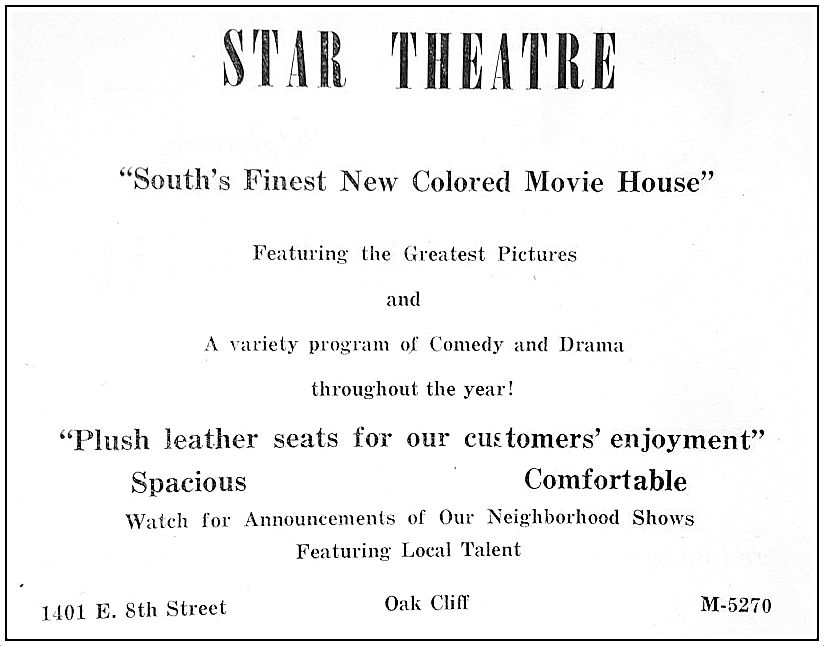
star-theatre_oak-cliff_negro-directory-1947-48_adDallas Negro Directory, 1947-48

I. B. Clark was a white businessman who lived on a ranch in Cedar Hill; he had owned the Southern Fireworks Company before the war and had frequently battled with Dallas lawmakers about the constitutionality of banning the selling and shooting of fireworks within the city limits.

In the undated photo above, businesses in the retail strip are the Top-O-Hill Food Mart, the Ebony Cafe (Pit Bar-B-Q), the Easy-Wash laundromat, the second location of the Cochran Street Record Shop, the Star Theatre, and hotel apartments.

This hub of businesses was popular with neighborhood residents, who referred to this area as “Show Hill” (for the picture show). I stumbled across a really wonderful 2018 oral history of Margaret Benson, who, in 1944, moved with her family to Dallas and attended N. W. Harllee Elementary School and both Lincoln High School and Madison High School. She describes these shops and says that whenever black entertainers such as Dinah Washington or Sister Rosetta Tharpe came to town, they frequently stayed in the apartments above these businesses, as hotel accommodations for African Americans were few and far between. (I loved the entire recording of Mrs. Benson reminiscing about living for most of her life in this area of Oak Cliff — the part where she specifically talks about “Show Hill” is at the 8:25 mark in the recording at the link above.)

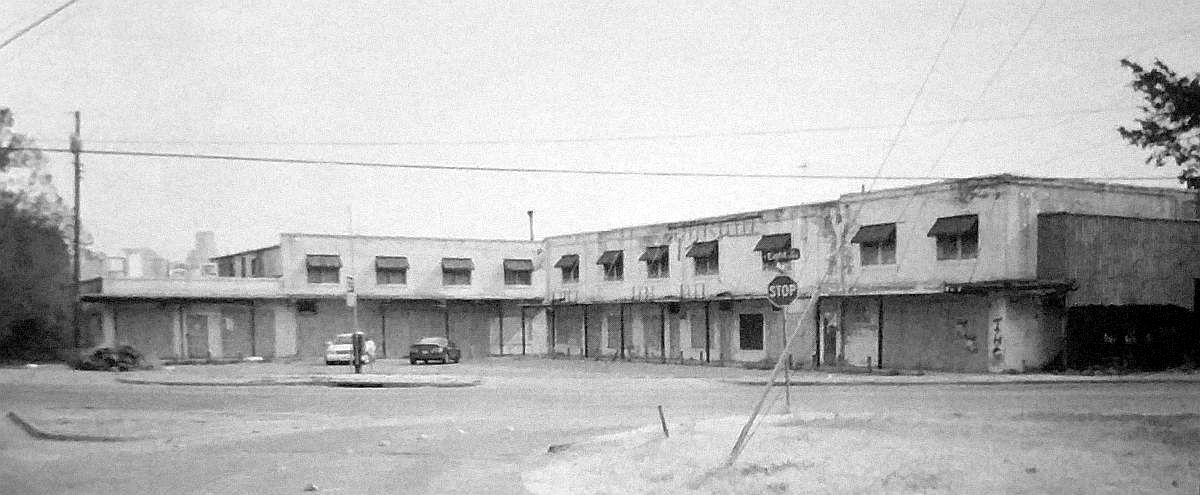
According to Dallas movie theater historian Troy Sherrod, the Star closed in 1959. Over time the area eventually declined and the remaining businesses closed. The strip, which was looking pretty down-at-its-heels in the 1990s, was demolished around 2000. The photo below shows the once-vibrant strip in its later days. (Three more photos, from 1999, can be found here — the addition of more apartments (the “Ebony Hotel Annex”) can be seen in the third one.)

star-theatre_mark-doty_lost-dallas
via Lost Dallas by Mark Doty

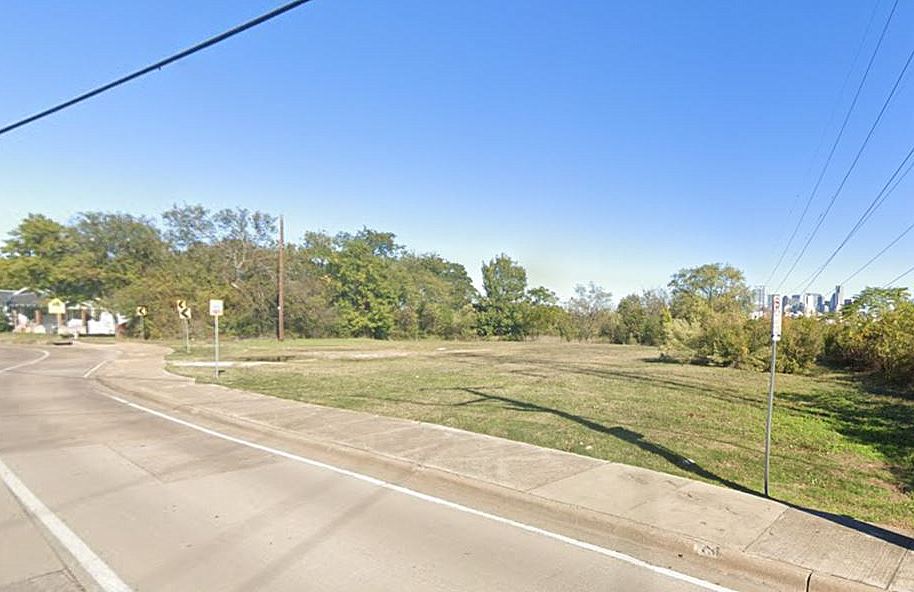
Here is what “Show Hill” vacant lot looks like today on Google Street View:

star-theatre_google-street-view-nov-2019Google Street View, 2019

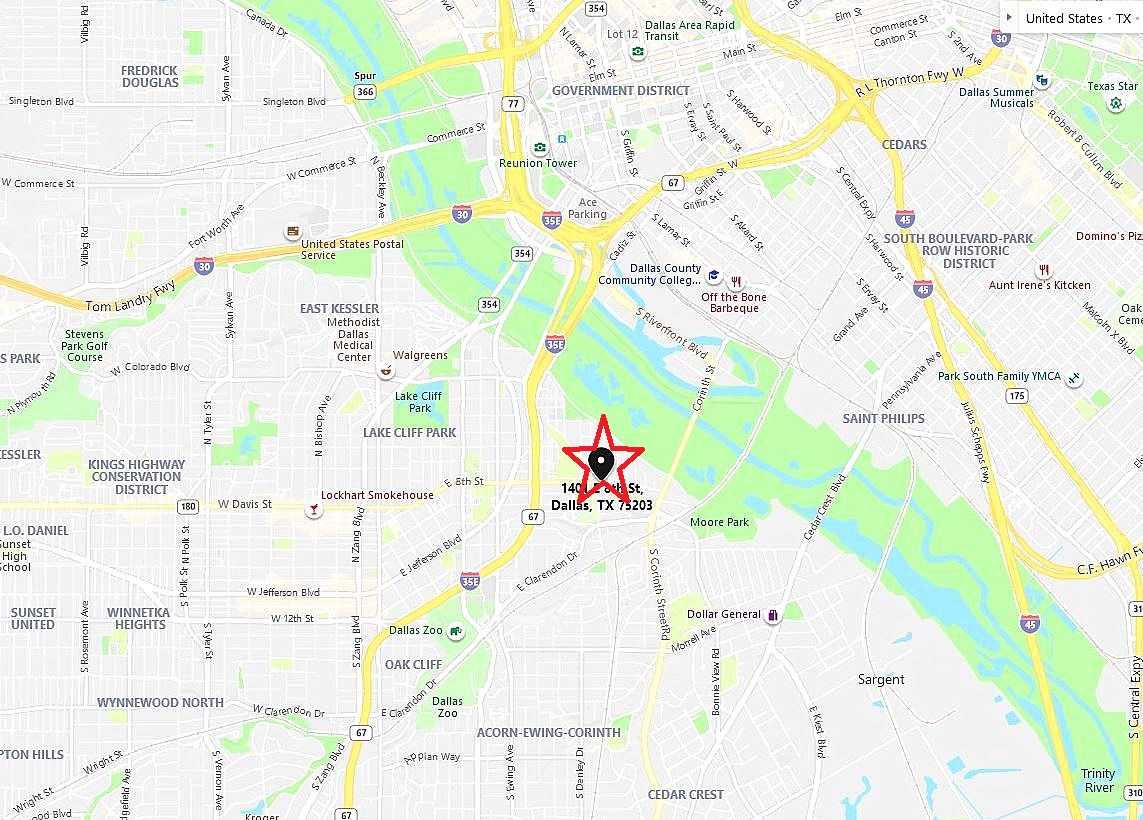
star-theatre_bing-mapsBing Maps

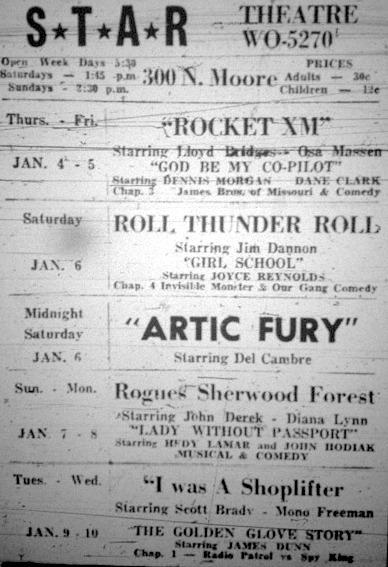
star-theatre_cinematreasures_advia Cinema Treasures

***

Sources & Notes

Top photo showing the Star Theatre is from the excellent book by D. Troy Sherrod, Historic Dallas Theatres (Arcadia Publishing, 2014); the photo is from the collection of the Dallas Public Library.

Second photo showing the dilapidated buildings is from another excellent book, Lost Dallas by Mark Doty (Arcadia Publishing, 2012).

The ad for the Star Theatre appeared in the Dallas, Texas Negro City Directory, 1947-1948 (many thanks to Pat Lawrence). The address for the theater was listed in various places as both 300 N. Moore and as 1401 E. Eighth.

If you have access to the archives of the Dallas Morning News, I encourage you to read “Inner-City Secret — The Bottoms Residents Say They Are Forgotten” by Bill Minutaglio (DMN, Aug. 28, 1994).

Also worth a read is Texas Tribune article “Dallas Neighborhood Established by Freed Slaves Fights to Keep Its History Alive” by Miguel Perez of KERA News.

More on the Tenth Street Historic District can be found on the City of Dallas website here.

Check out photos of a pop-up market on Show Hill in 2014 here.

Also, of related interest is the Flashback Dallas post “Movie Houses Serving Black Dallas — 1919-1922.”

Thank you to reader Jerry Richburg for contacting me with a question about this old strip shopping area — he remembered attending church services in one of the buildings and asked if I knew more about what had been there and if I might have a photo. Thanks, Jerry! You led me down the path to discovering a little pocket of Dallas history I was completely unaware of!

star-theatre_troy-sherrod-hist-dallas-theatres_DPL_sm

*

Copyright © 2020 Paula Bosse. All Rights Reserved.

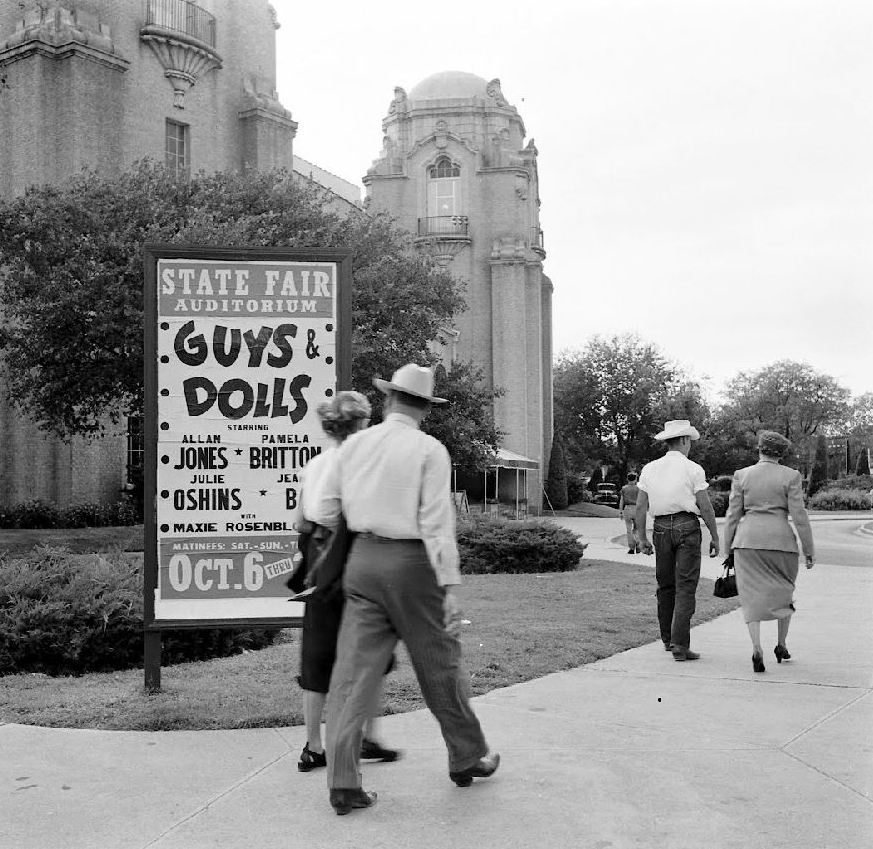
“Guys and Dolls” at the State Fair Music Hall — 1951

sfot_guys-and-dolls_music-hall_1951_john-dominis_life-mag
Wearing the *dress* boots… (photo: John Dominis, © Time, Inc.)

by Paula Bosse

This is the most Texans-going-to-the-theater photo I’ve ever seen.

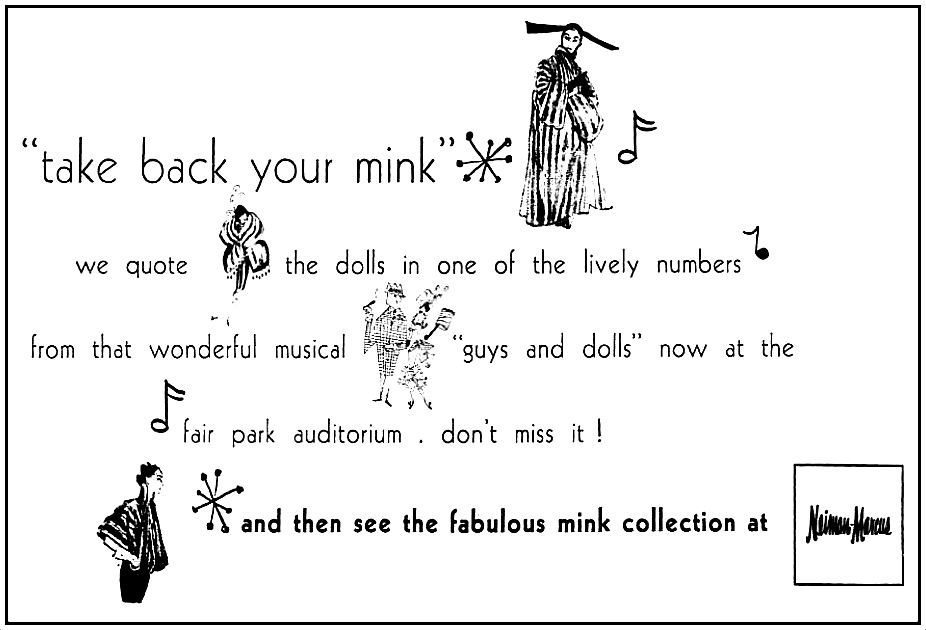
And this is the most Texans-selling-minks ad I’ve ever seen:

neiman-marcus_ad_guys-and-dolls_oct-1951

***

Sources and Notes

Photo by John Dominis, taken in October, 1951 on assignment for Life magazine, ©Time, Inc.; more info is here.

Neiman-Marcus ad is also from October, 1951.

“Take Back Your Mink” is a song from “Guys and Dolls” (hear it here), the musical that played during the 1951 State Fair of Texas, starring Pamela Britton, Allan Jones, Jeanne Ball, and Slapsie  Maxie Rosenbloom.

sfot_guys-and-dolls_music-hall_1951_john-dominis_life-mag_sm

*

Copyright © 2020 Paula Bosse. All Rights Reserved.