Flashback : Dallas

A Miscellany: History, Ads, Pop Culture

Category: Theaters

Tennessee Williams in Dallas

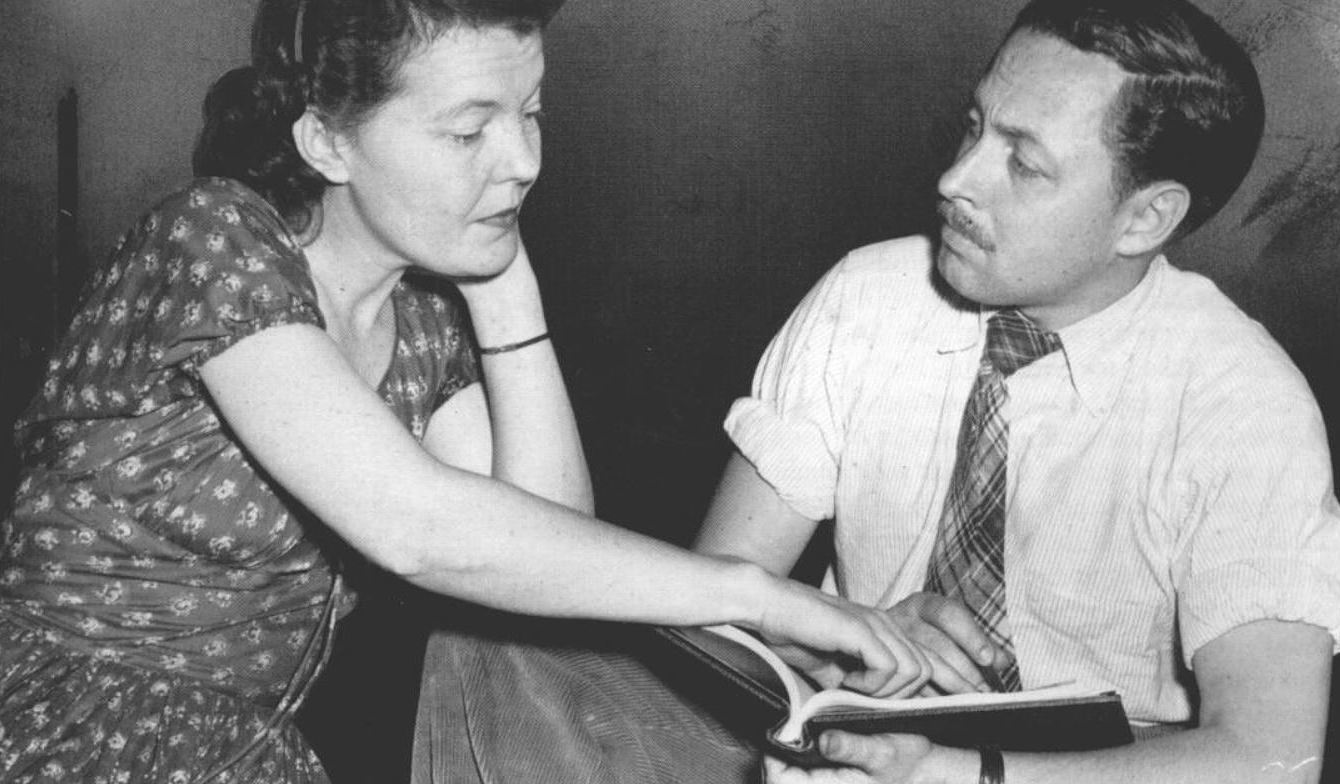
tennessee-williams_margo-jones_legacies_spring-2007Tennessee Williams with Margo Jones, 1948

by Paula Bosse

Today is Tennessee Williams’ birthday — he was born March 26, 1911. Thanks to his personal friendship and professional relationship with energetic Dallas theater pioneer Margo Jones (to whom he gave the nickname “The Texas Tornado”), playwright Tennessee Williams was a fairly frequent visitor to Dallas in the 1940s in the early years of his celebrity. Margo was a very early supporter of Williams, and their friendship led to her co-directing The Glass Menagerie on Broadway and her directing and producing the world premiere of his play Summer and Smoke at her Theater ’47 in Fair Park (a production which she took to Broadway the following year).

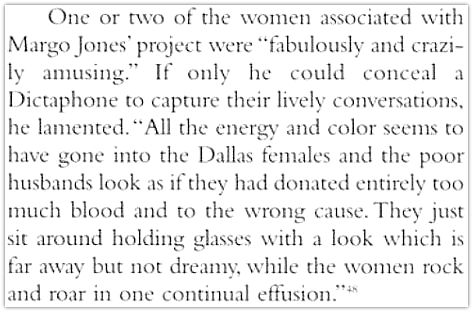
Dallas historian Darwin Payne wrote an interesting profile of Williams’ time in Dallas in the Spring 2007 issue of Legacies (read it here — it  begins at the bottom of the page). My favorite quote in the article is about Dallas women, from a letter Tennessee wrote to New York theater director and producer Guthrie McClintic on June 1, 1945:

tennessee-williams_legacies_spring-2007_darwin-payne_1945-quote

***

Sources & Notes

A comprehensive chronology of the friendship and professional partnership of Tennessee Williams and Margo Jones can be found in the article “An Alignment of Stars: Tennessee Williams, William Inge, and Margo Jones’s ‘Theatre ’47′” by Ralph F. Voss, here.

My previous post concerning Margo Jones’ early demise — “Margo Jones & Jim Beck: Both Legends in Their Fields, Both Victims of Carbon Tetrachloride” — is here.

*

Copyright © 2016 Paula Bosse. All Rights Reserved.


Dallas Theater Center

dtc-downtown_dallas-park-dept_portalFLW’s DTC

by Paula Bosse

Frank Lloyd Wright’s Dallas Theater Center is seen here nestled amongst the woody landscape of Turtle Creek. There’s a lot of varied architecture going on in this photo!

***

Sources & Notes

Photograph is from the Dallas Park and Recreation Department Collection, Dallas Municipal Archives; it is accessible via the Portal to Texas History, here.

The text on the back:

Opened in 1959, this Center provides pleasure for thousands of Dallasites and visitors yearly through a repertory of plays presented in its Kalita Humphreys Theater. This $1,000,000 Center, the last completed building and only theater designed by Frank Lloyd Wright, also incorporates a children’s and teen theater and a private school of drama.

*

Copyright © 2016 Paula Bosse. All Rights Reserved.

Life in The Grove: Pleasant Grove — 1954-1956

pghs_1956-dairy-queenDairy Queen, 1238 S. Buckner — 1956 (click for larger image)

by Paula Bosse

The community of Pleasant Grove was first settled in the 1840s but didn’t officially become part of Dallas until it was annexed in 1954 after a huge postwar surge in population. Upon annexation, the schools that made up the Pleasant Grove Independent School District became part of the DISD, including Pleasant Grove High School, which was located on Lake June Road, between Conner and Pleasant Drive. PGHS closed when the brand new W. W. Samuell High School opened on January 28, 1957, halfway through the 1956-1957 school year. The photos here are from the yearbooks of the last three years that Pleasant Grove High School was open — most of the ads feature students inside or in front of the business establishments. And they’re great! (Click photos for larger images.)

*

Photos of overcrowded Pleasant Grove High School and its numerous out-buildings, 1955.

pghs_1955a

pghs_1955b

Pleasant Grove Pharmacy, Grady’s Clover Farm Grocery, and Grove Shoe Store:

pghs_1954-yrbk_a1954

Worthington Service Station:

pghs_1954-yrbk-worthington1954

Schepps Dairy:

pghs_1954-yrbk-schepps1954

The Eatmore Hamburger System (greatest name EVER!!):

pghs_1954-yrbk-eatmore1954

Dasch Cleaners:

pghs_1955-yrbk-dasch1955

Harvey Hayes, “The Insurance Man”:

pghs_1955-yrbk_a1955

Cassidy’s Conoco Station, Tee-Pee Drive-In Grocery, and Gay and Jones Motor Co.:

pghs_1956-yrbk_b1956

Worthington’s Magnolia Service Station (again) and Barrett’s Used Cars:

pghs_1956-yrbk_a1956

W. W. Hughes Magnolia Service Station, E & L Service Shop (bicycle and lawnmower service), and, again, Pleasant Grove Pharmacy:

pghs_1956-yrbk_d1956

Billie Price Real Estate and Maridell’s:

pghs_1956-yrbk_c1956

Martin’s Sinclair Service Station (with a DQ photobomb):

pghs_1956-martins1956

The Kaufman Pike Drive-In, “The Theater With a Heart”:

pghs_1956-yrbk-kaufman-pike-drive-in1956

And lastly, a very dark photo of Pleasant Grove High School from the 1948 yearbook:

pleasant-grove-high-school_1948-yrbk1948

***

Sources & Notes

All photos and ads are from the 1954, 1955, and 1956 editions of The Bobcat, the Pleasant Grove High School yearbook.

More on the history of Pleasant Grove in southeast Dallas, here. More on the history of Pleasant Grove High School here and here. The confusing school changes revolving around the the PGISD/DISD switchover were a bit like musical chairs and affected attendance of numerous high schools (including Forest High School, Crozier Tech, and Woodrow Wilson), junior high schools, and elementary schools. Read about the details in the Dallas Morning News article “Mid-Term Switch Set for Students” (DMN, Jan. 6, 1957).

Google map showing Pleasant Grove and approximate location of PGHS, here.

As always, click pictures for larger images.

*

Copyright © 2016 Paula Bosse. All Rights Reserved.

Meet Me In Front of The Rialto — 1945

rialto_MPH_072845“A great big howl of a hit!” (click for larger image)

by Paula Bosse

This photo shows the front of the Rialto theater, once located at Elm and Stone. I love the unavoidable promotion for the Jack Benny movie “The Horn Blows at Midnight,” but I love all that street life even more. And by the way, “Help Keep Dallas Clean”!

***

Photo from the July 28, 1945 issue of Motion Picture Herald.

My favorite young movie-crazy Dallas diarist, Muriel Windham, would absolutely have walked past this (she probably didn’t see it, though, because she wasn’t a big fan of Jack Benny). (For the record, I LOVE Jack Benny!)

Click photo for gigantic image.

*

Copyright © 2016 Paula Bosse. All Rights Reserved.

The Lakewood Theater — 1944

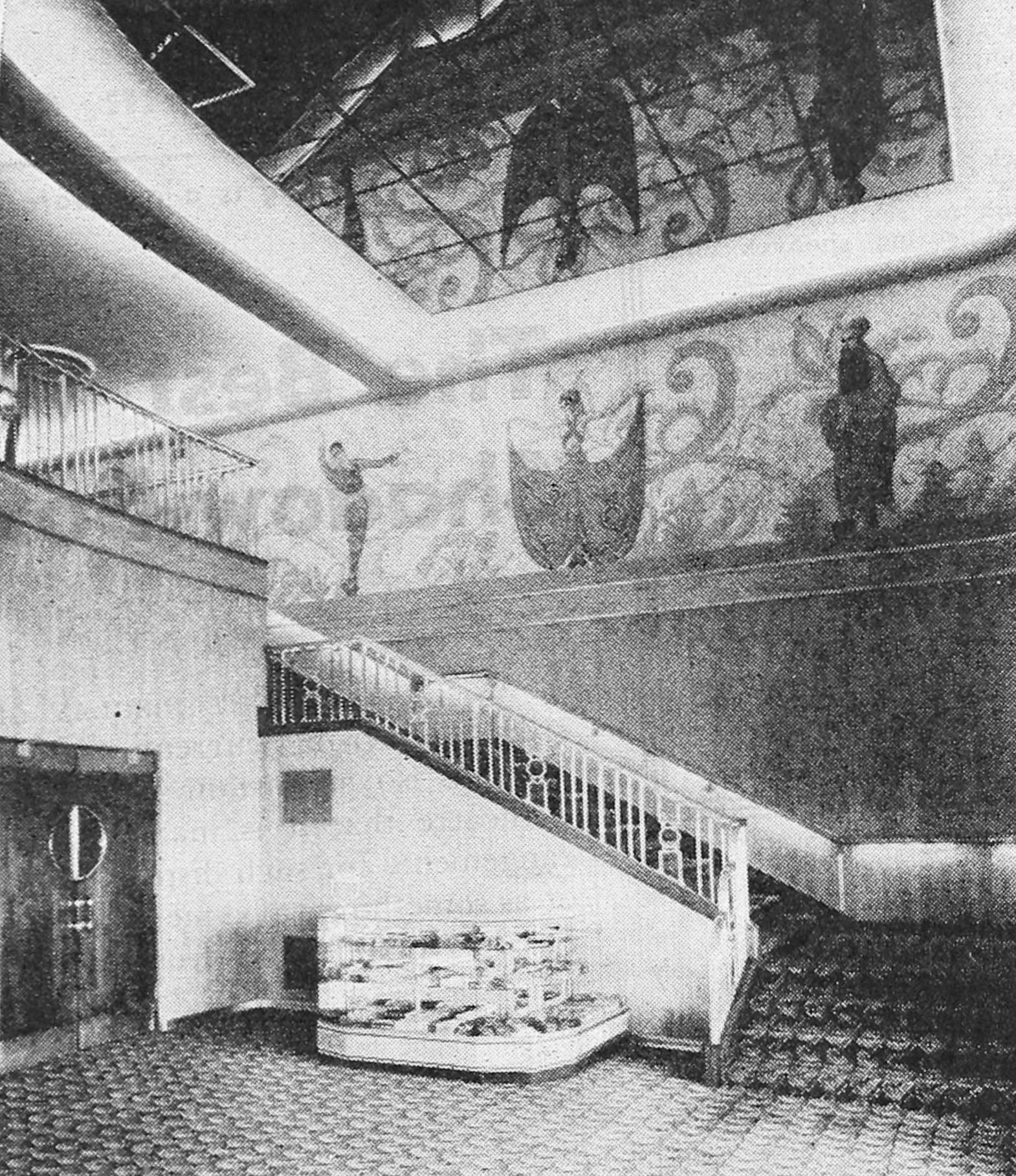
lakewood-theater_ad_inset_1944A well-lit staircase to the balcony (click for giant image)

by Paula Bosse

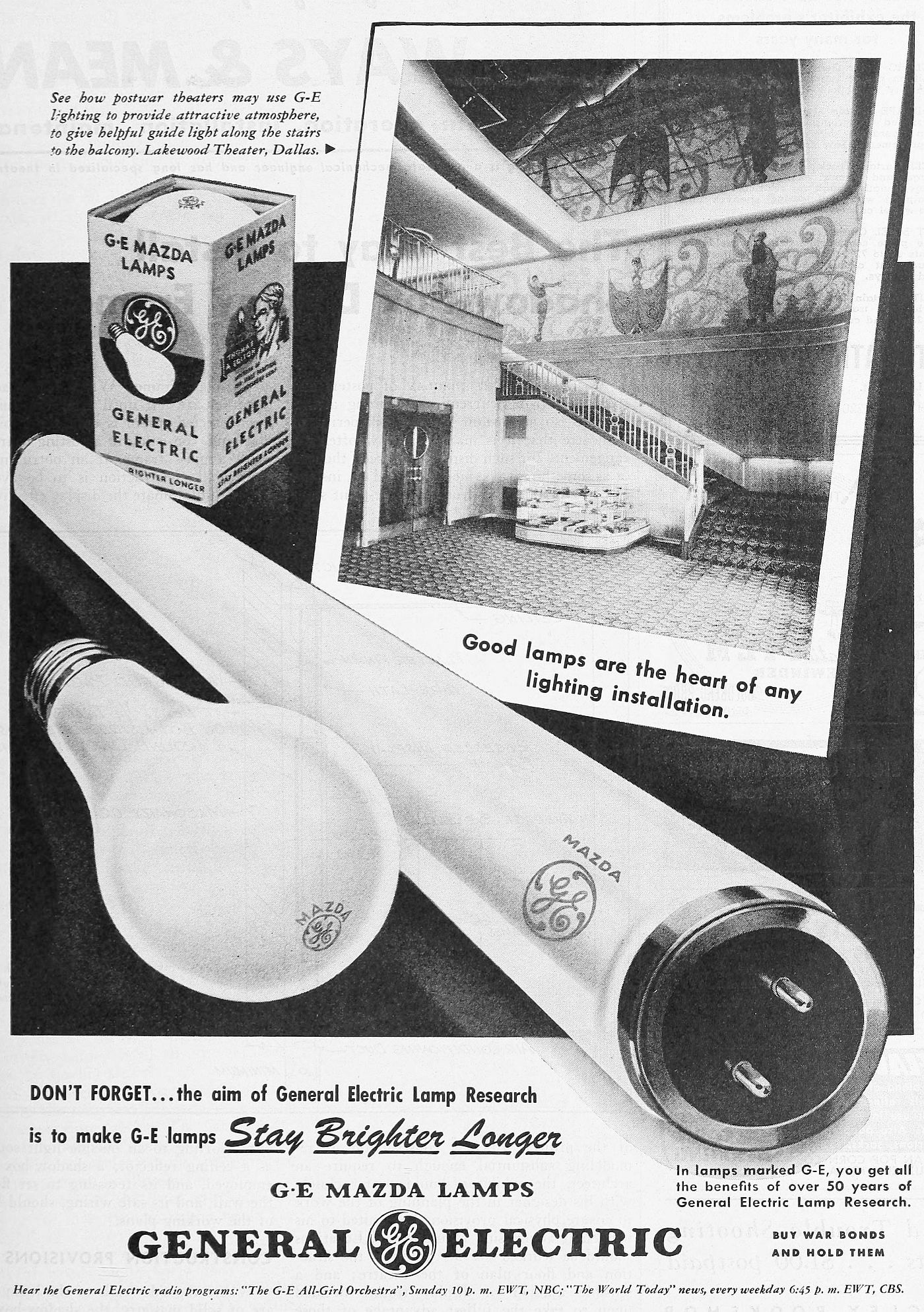
Occasionally one stumbles across a national advertisement featuring someone or something familiar to local audiences which elicits an involuntary exclamation like, “Hey! I know that guy!” I had a response kind of like that when I saw this General Electric light bulb ad featuring a photograph of the interior of the Lakewood Theater (showing a few figures from the mural by Woodrow boy Perry Nichols).

“See how postwar theaters may use G-E lighting to provide attractive atmosphere, to give helpful guide light along the stairs to the balcony.”

lakewood-theater_ad_MPH_072244_med

Yes, the Lakewood certainly did have an “attractive atmosphere.”

***

Sources & Notes

Ad for G-E Mazda lamps appeared in the July 22, 1944 issue of Motion Picture Herald. Click the above ad to see it much larger. To see it REALLY big, click here. (Apologies for the bleed-through of the ad on the other side of the page. If you’re a Photoshop wizard who can remove the offending ghost letters plastered across Nichols’ whimsical mural, I’d love a cleaned-up version.)

I have no idea what’s going on with the beleaguered Lakewood Theater these days, but if you’d like to see those murals in color, see the photos in the Lakewood Advocate, here.

*

Copyright © 2016 Paula Bosse. All Rights Reserved.

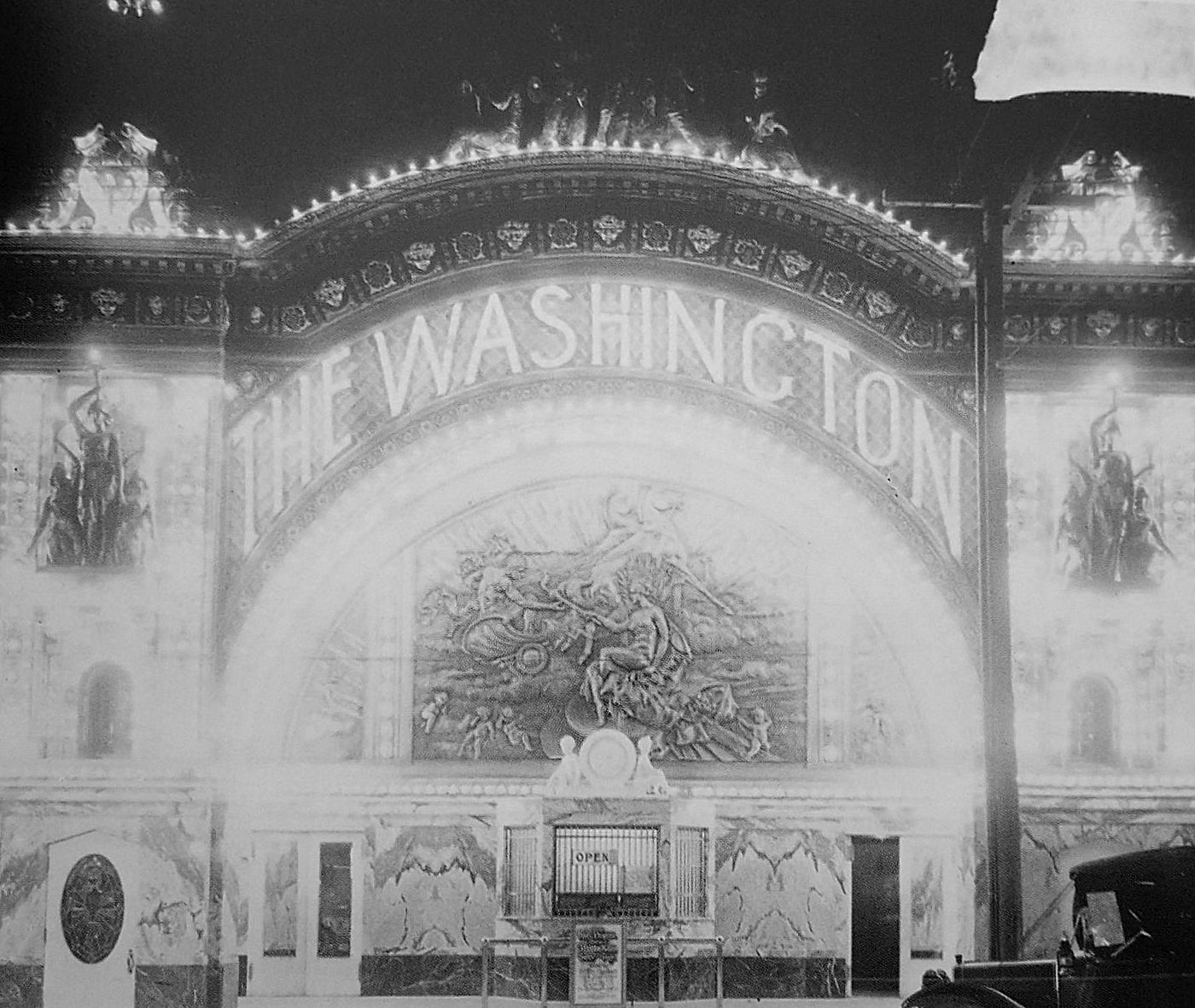
The Washington Theater — Dallas’ First Movie Palace

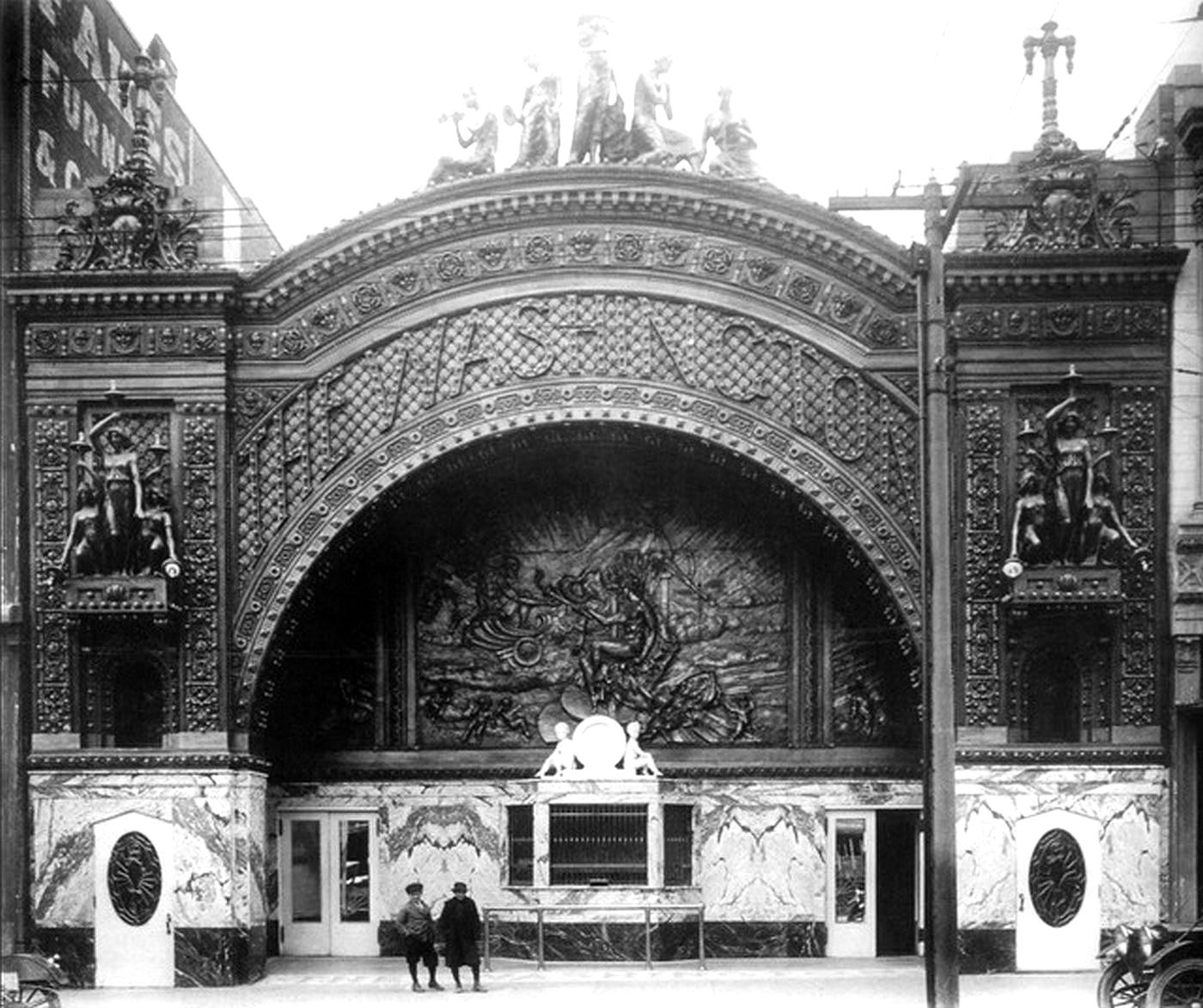
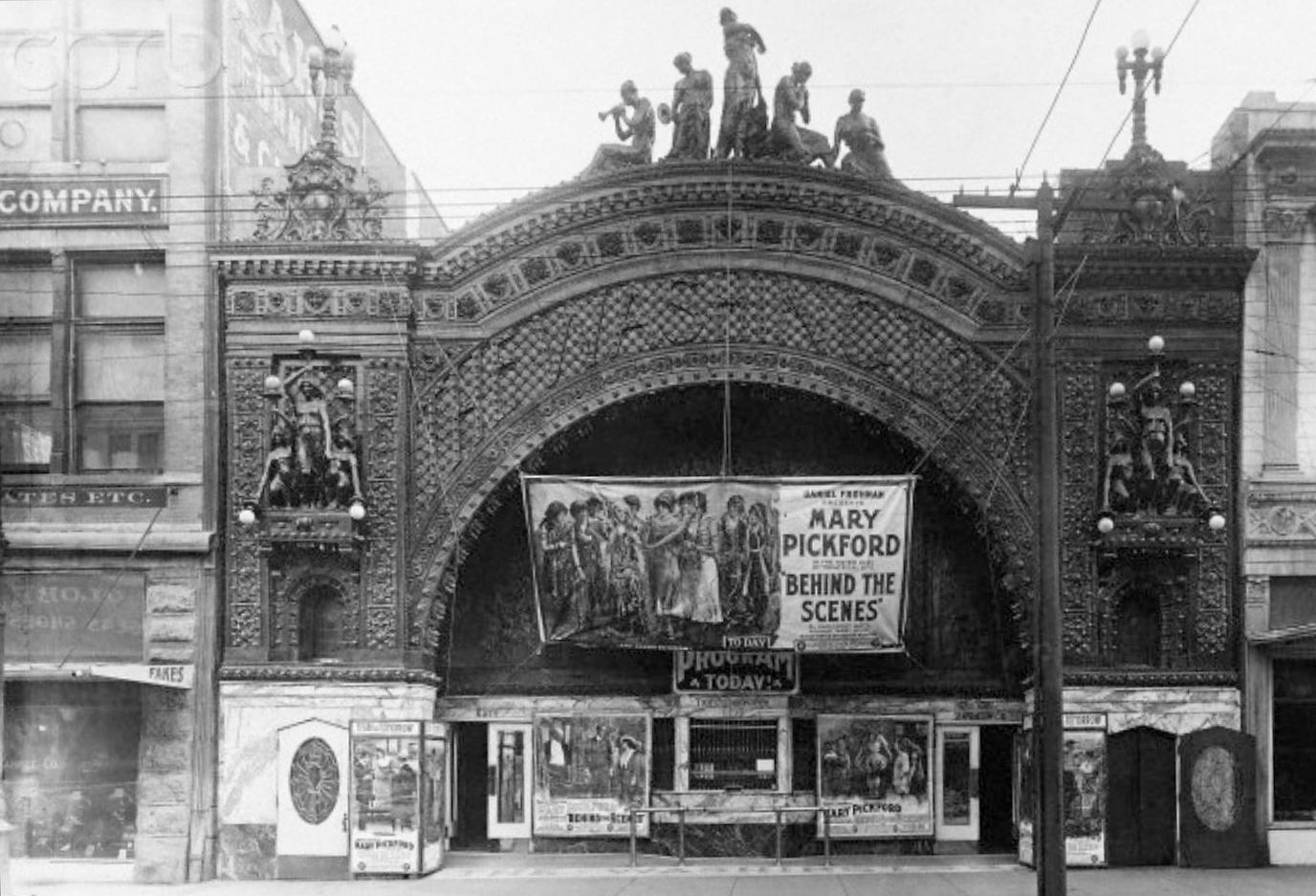
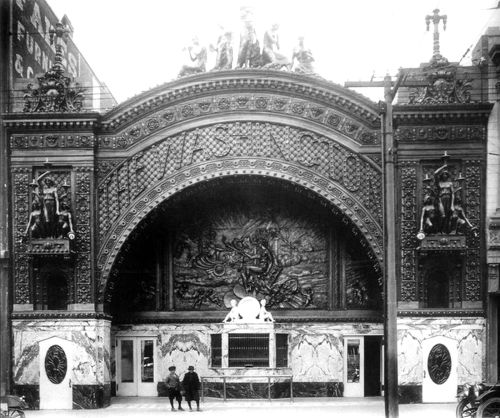
washington-theatre_cinema-treasures_lgThe Washington, 1615 Elm

by Paula Bosse

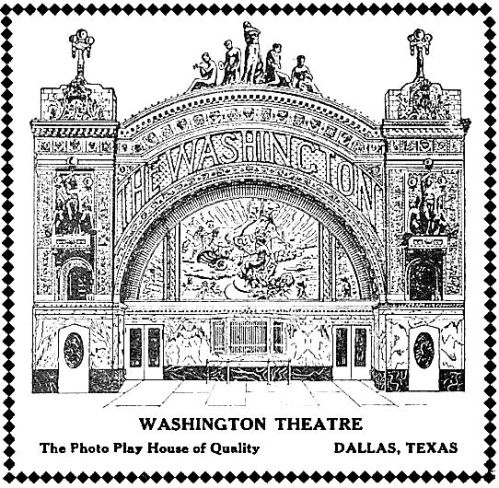
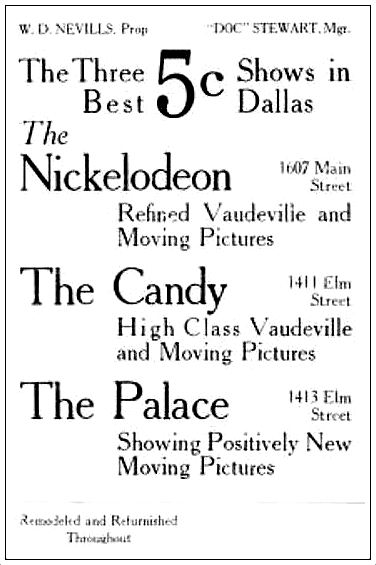
The outrageously ornate Washington Theater was built in 1912 by W. D. Nevills (1872-1945), a man who had been running cheap little store-front nickelodeons in Dallas for several years. Three of his most popular were The Nickelodeon, The Candy, and The Palace (not to be confused with any later theaters in Dallas called the “Palace”).
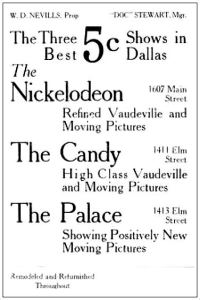
nevills_standard-blue-book-of-tx_1912-14Standard Blue Book of Texas, 1912-1914

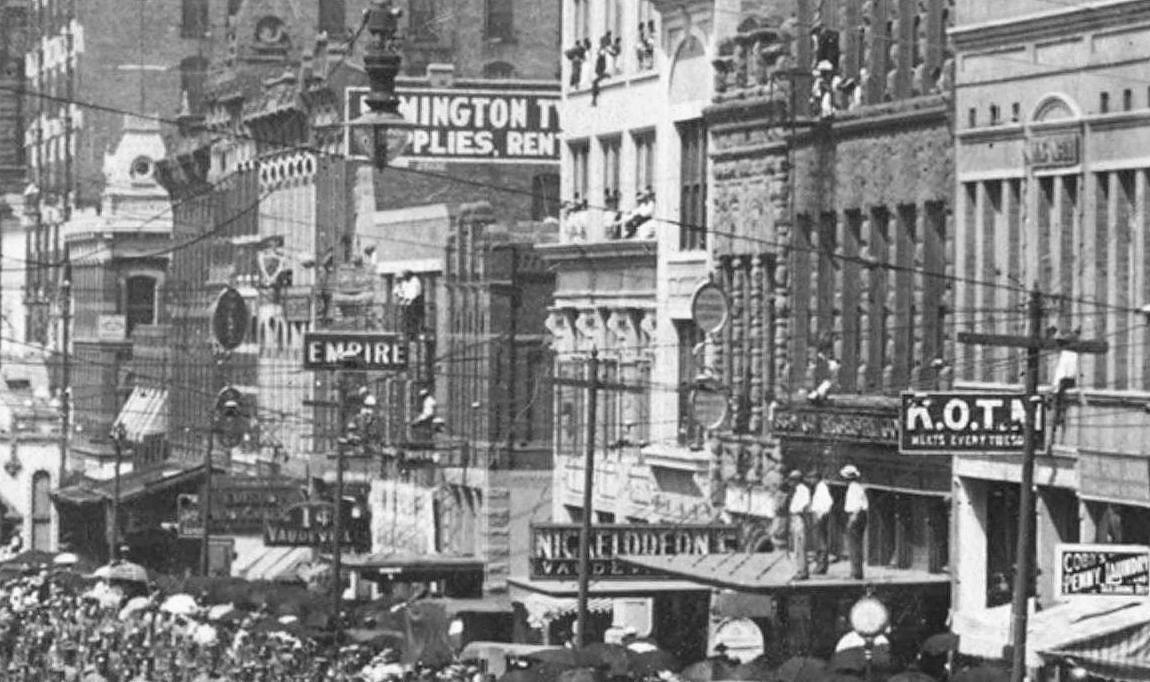
His Nickelodeon on Main Street can be seen in the lower center of this detail from a larger 1909 parade photo.
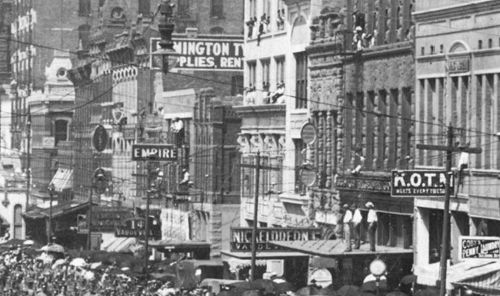
parade-day_1909_det41

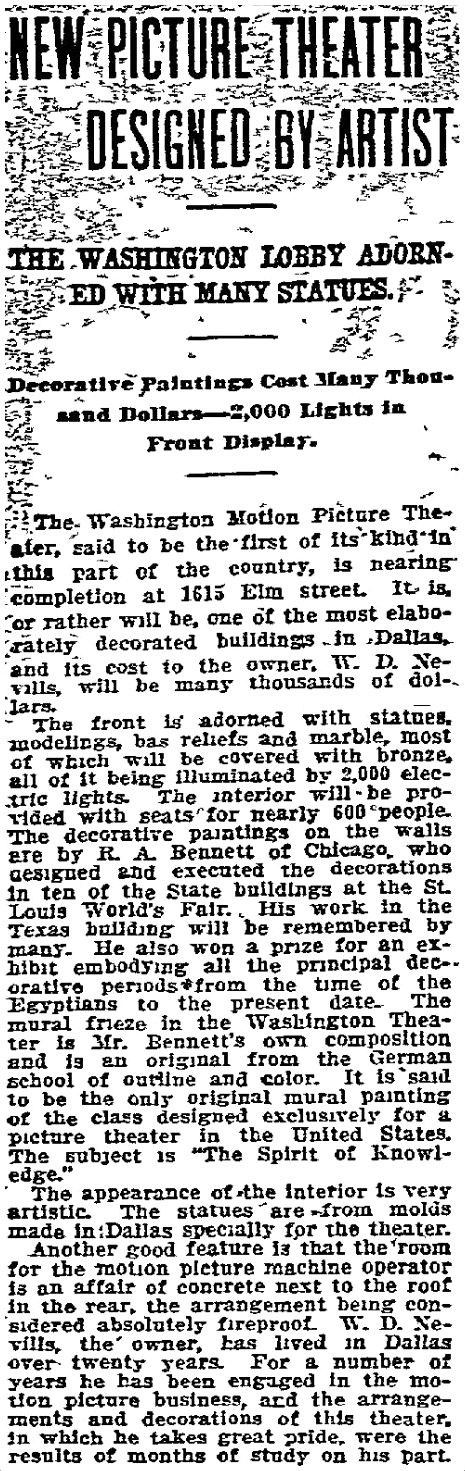
Nevills must have raked in a lot of nickels, because when his Washington Theater opened at 1615 Elm Street, it was the most spectacular motion picture “photoplay house” in Dallas. Nevills spared no expense for the theater’s furnishings and facade.
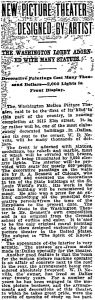
washington-theater_dmn_111712Dallas Morning News, Nov. 17, 1912 (click to read)

What might seem a little gaudy now, was probably still gaudy back then, but it was a fresh, NEW gaudy! And 600 Dallasites could all watch a movie at the same time. 600! Unheard of!

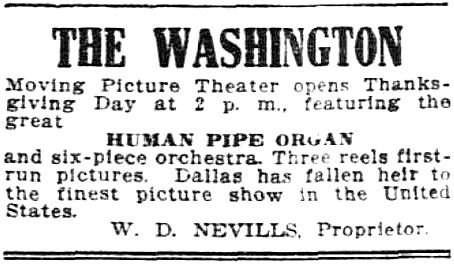
The Washington opened on Thanksgiving Day, 1912. Complete with “Human Pipe Organ.”
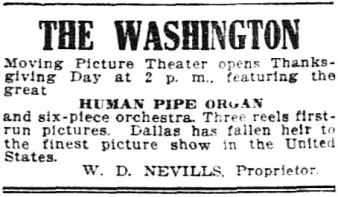
washington-theater_dmn_112712DMN, Nov. 27, 1912

The Washington was the king of the roost for only a short while, though — until young whippersnappers like the Queen began to steal its thunder. 600 seats? Pfft! It was a thousand or nothing now. The theater began to lose its luster and look more old and hulking than young and exciting, and after riding out its very long lease, the Washington Theater closed on July 1, 1927.

This little classified showed up a couple of weeks later, and it must have been a melancholy Nevills who had to write it up.
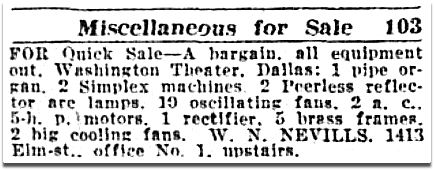
washington-theater_dmn_071327DMN, July 13, 1927

The theater continued to be used for a while — mostly for evangelical meetings or events. I’m not sure exactly when the building was demolished, but a report of the building’s being sold and plans for its razing appeared in The Dallas Morning News in October, 1927.

*

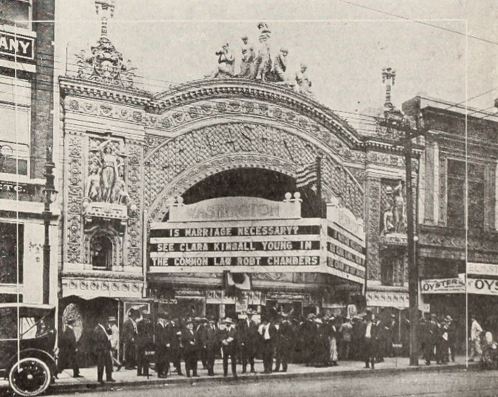
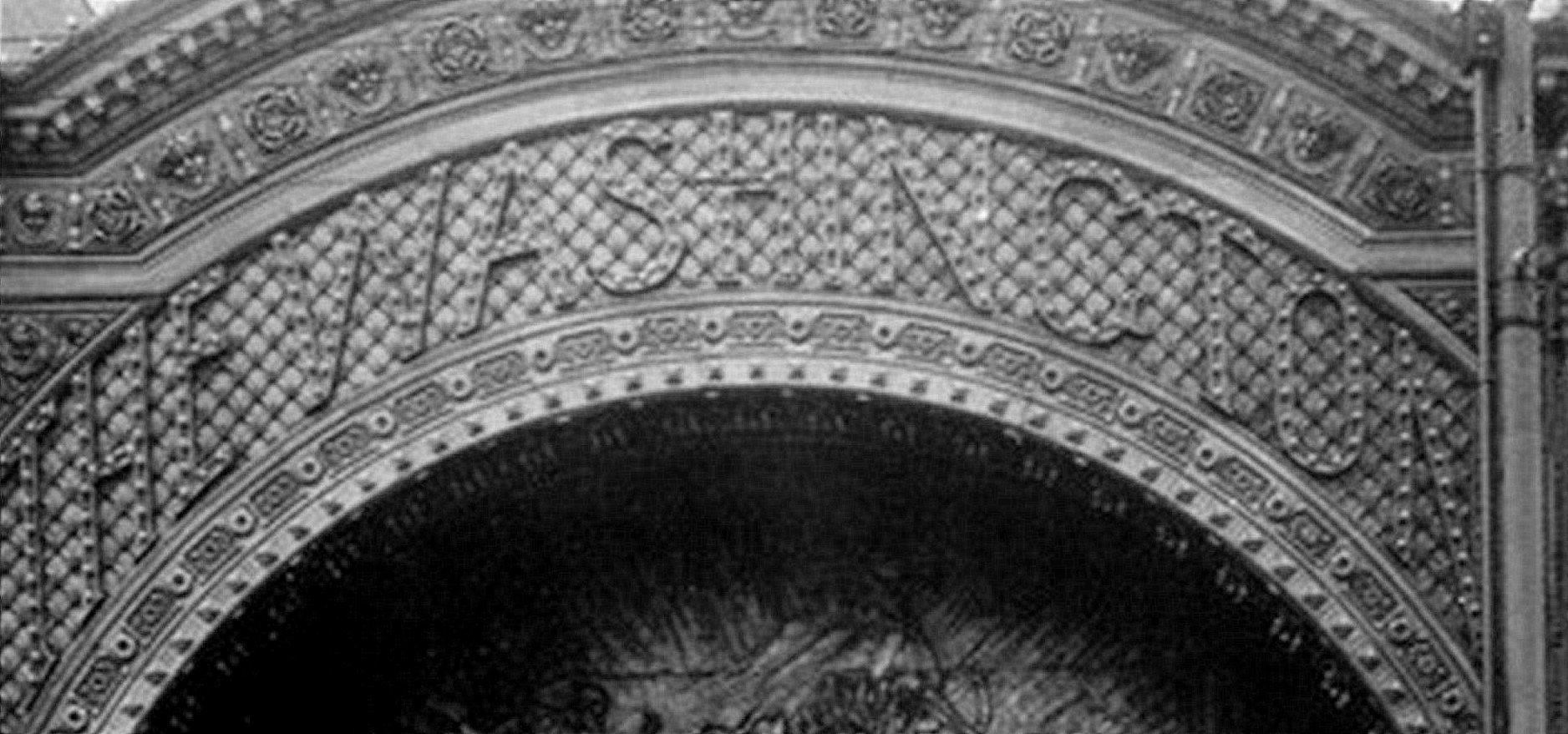
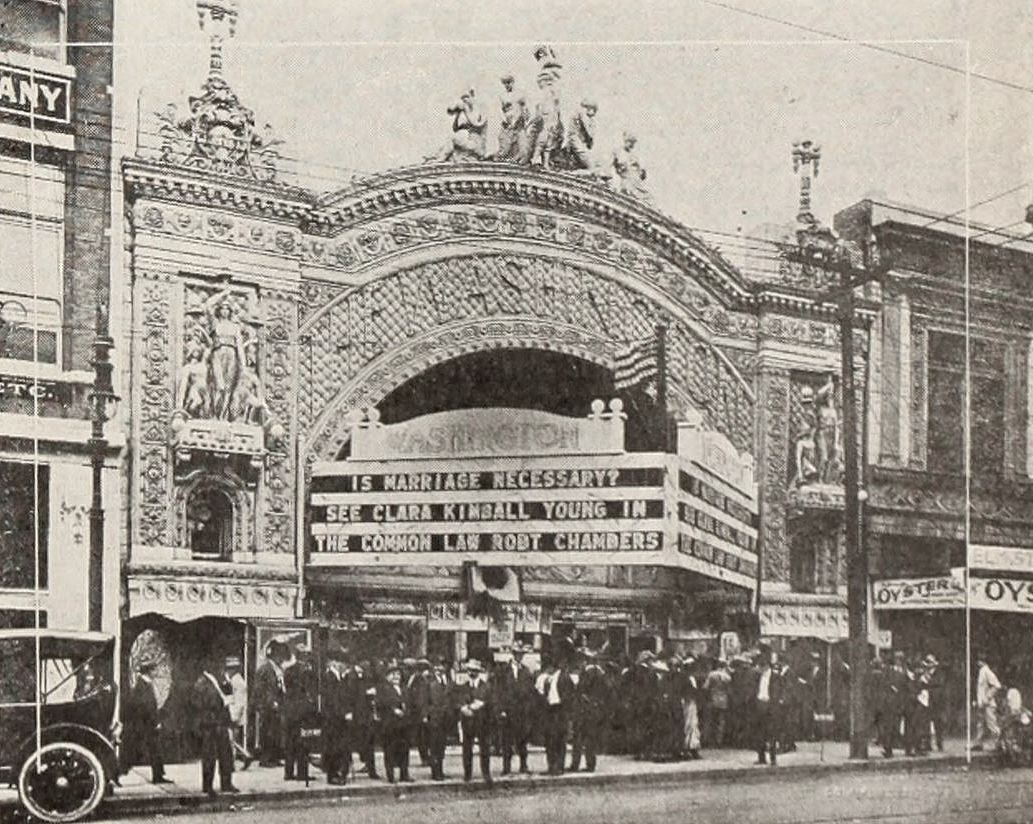
Let’s look at a couple of details from that top photo. The Washington was built without a marquee, but the outside of the building was studded with an eyeball-popping TWO THOUSAND LIGHTS! Imagine what that must have looked like — in 1912! Here’s an extreme close-up of the theater’s facade — look at all those bulbs!
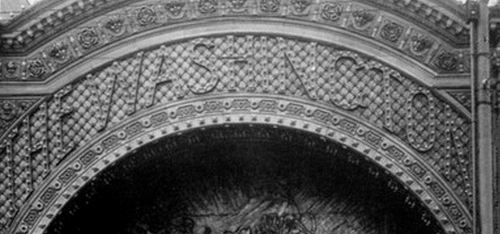
washington-theatre_cinema-treasures_det1

And, below (was one of these men W. D. Nevills?):
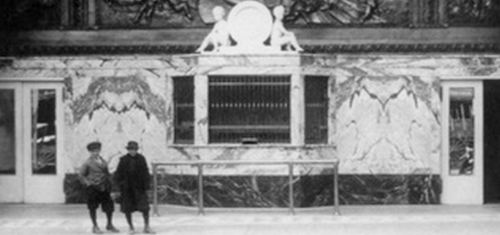
washington-theatre_cinema-treasures_det2

Another shot, this one showing how one worked without a typical illuminated marquee — you just string a banner up (the needle is hitting a solid “8.5” on the visual clutter scale here):
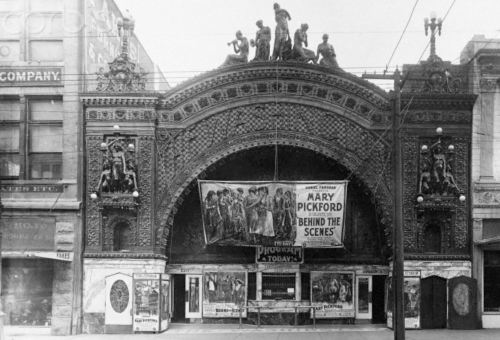
washington-theatre_corbis_19141914 via CorbisImages

Here it is, ablaze at night:
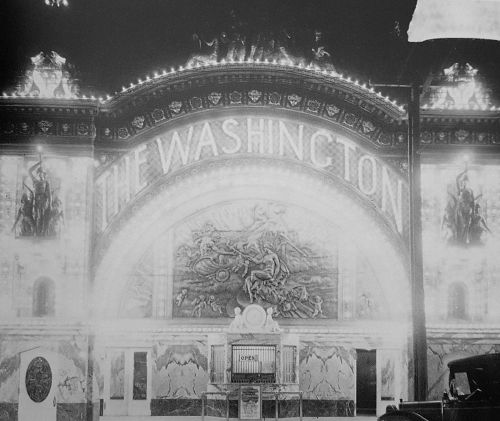
washington-theater_night_dallas-rediscovered_DHS

In an ad from 1914:

theater_washington_bldg-code_1914

Photo from October 1916:

theaters_washington-theatre_exhibitors-herald-and-motography_june-1919_photo-from-oct-1916

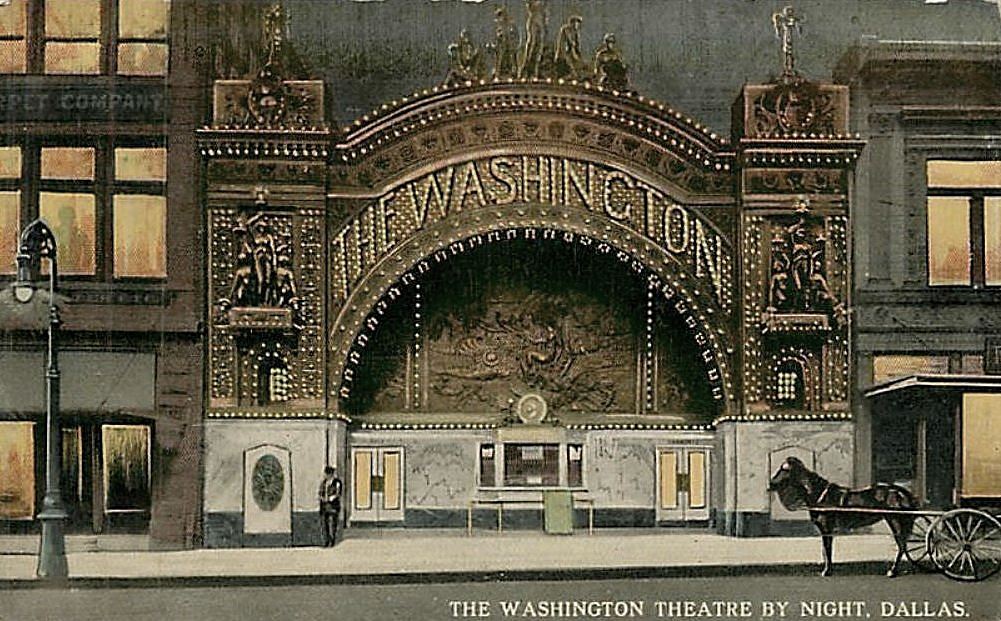
And in “color” from a picture postcard:
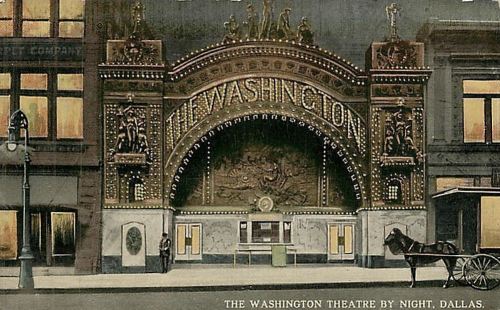
washington-theatre_ebay

***

Sources & Notes

Top photo from Cinema Treasures; to read a history of the Washington Theater from Cinema Treasures (and to see another photo), see here. (Photo’s original source appears to be the Dallas Historical Society.)

The photo of the theater with the Mary Pickford banner is ©Schenectady Museum; Hall of Electrical History Foundation/CORBIS; more info is here. (The movie “Behind the Scenes” was released in 1914.)

Photo of the theater at night is from Dallas Rediscovered by William L. McDonald — source: Dallas Historical Society archives.

The ad is from the 1914 Dallas Building Code.

Photo with the marquee showing “The Common Law” is from Oct. 1916, but the photo didn’t appear in the trade magazine Theatre Exhibitors Herald and Motography until June 1919.

The color postcard is from eBay.

Read about the closing of the Washington in an article available in the Dallas Morning News archives: “Washington Theater, Earliest Dallas ‘Movie Palace,’ Shows Last Close-Up After 15 Years” (DMN, July 4, 1927).

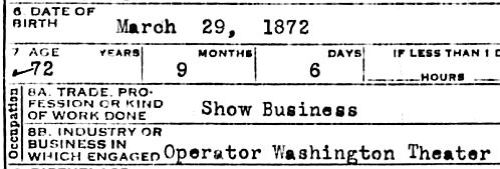
The Washington Theater must have been W. D. Nevills greatest achievement. It’s interesting to note that “Operator Washington Theater” appears on his death certificate. Nevills died in 1945, eighteen years after the theater closed.
nevills_death-certificate_010545_det

For other Flashback Dallas posts on this era of movie theaters, see the following:

  • “Three of Dallas’ Earliest ‘Photoplay Houses’ — 1906-1913,” here
  • “Movie Houses Serving Black Dallas — 1919-1922,” here

*

Copyright © 2016 Paula Bosse. All Rights Reserved.

A Bird’s-Eye View Over the Washington Theater

washington-theater_aerial_dmn_lost-dallas_dotyAs the crow flies…

by Paula Bosse

This wonderful photo shows an aerial view looking northeasterly over the top of the Washington Theater, Dallas’ first ornate movie palace. It was located between N. Akard and N. Ervay, at 1615 Elm Street — now the site of Thanksgiving Tower. I think the street at the top right edge of the photo is Live Oak, which used to come all the way through to Elm. I love this photo.

***

Sources & Notes

Photo from Lost Dallas by Mark Doty (Charleston: Arcadia Publishing, 2012).

Bird’s-eye view today-ish (with 1615 Elm marked):

1615-elm-street_bingBing Maps

The Washington Theater was in business at 1615 Elm from 1912 to 1927. More on the Washington in the Flashback Dallas post “The Washington Theater — Dallas’ First Movie Palace,” here.

*

Copyright © 2016 Paula Bosse. All Rights Reserved.
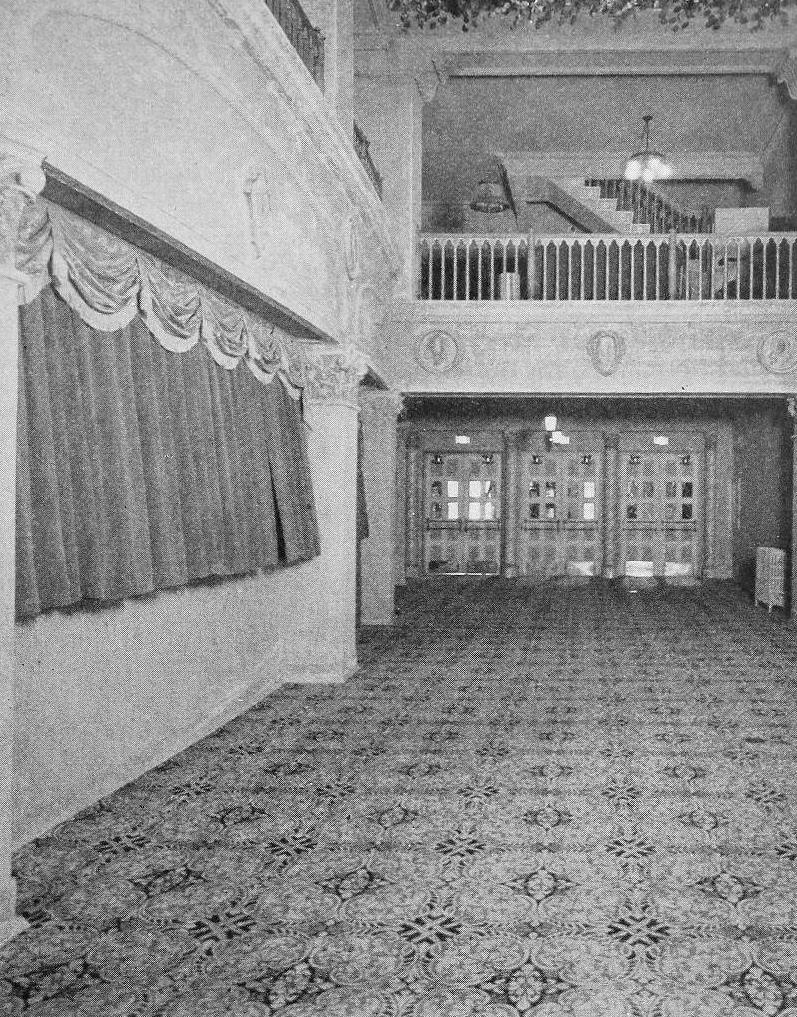
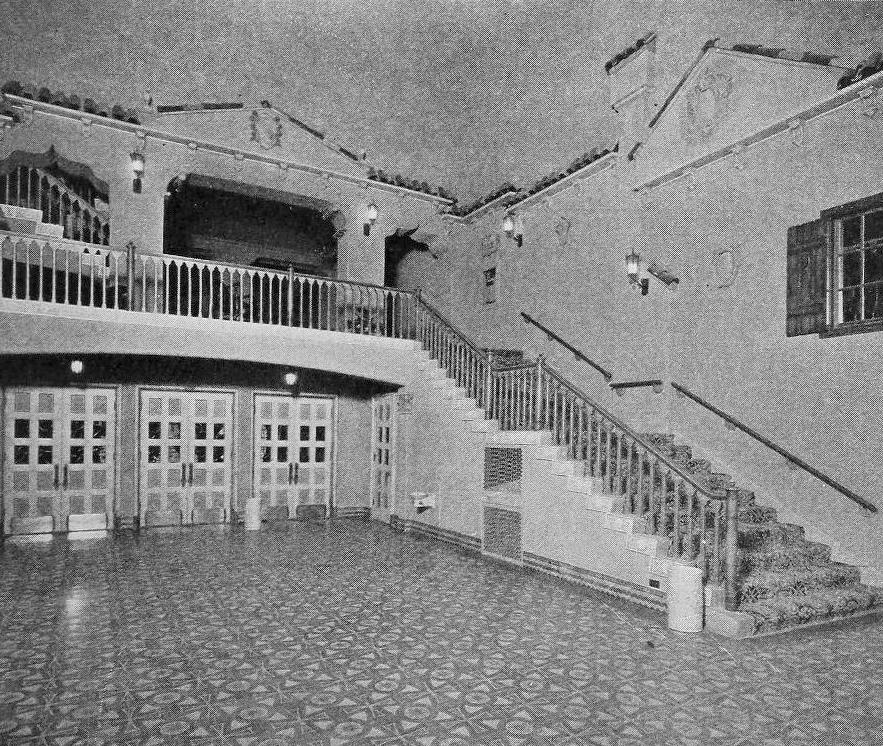
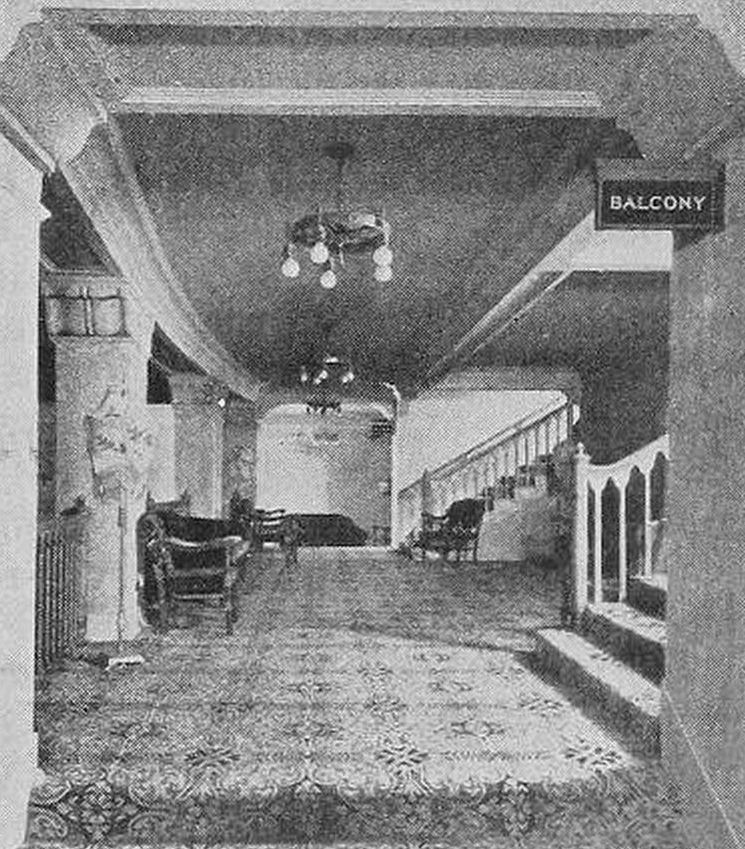
The Texas Theatre and Its Venetian-Inspired Decor

texas-theatre_motion-picture-herald_070232_det1A little bit of Venice in the O.C. (note organ at edge of stage)

by Paula Bosse

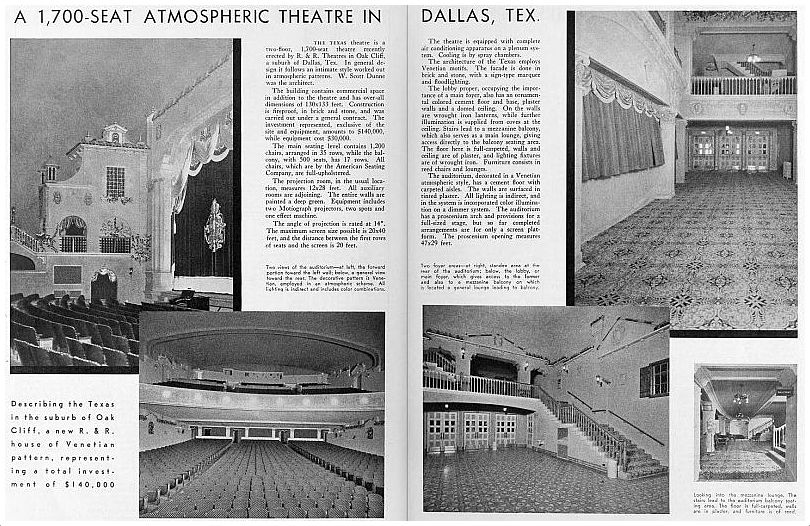
The Texas Theatre in Oak Cliff  — which opened in April, 1931 — was the first movie theater in Dallas built expressly to show movies with sound. It was also the largest “suburban” theater in the Dallas area — only downtown’s first-run Majestic and Palace theaters were larger. Below are photos of the theater’s “Venetian-style” interior, from the trade journal Motion Picture Herald.

texas-theatre_motion-picture-herald_070232_det2

texas-theatre_motion-picture-herald_070232_det3

texas-theatre_motion-picture-herald_070232_det4

texas-theatre_motion-picture-herald_070232_det5

***

Sources & Notes

Photos from Motion Picture Herald, July 2, 1932. For the full article, see the very large scan of page 1 here, and page 2 here.

texas-theatre_motion-picture-herald_070232

The Texas Theatre is still alive — its website’s history page is here.

My previous post, “The Texas Theatre — 1932” (which shows the theater’s exterior at the time this article was published), is here.

*

Copyright © 2016 Paula Bosse. All Rights Reserved.

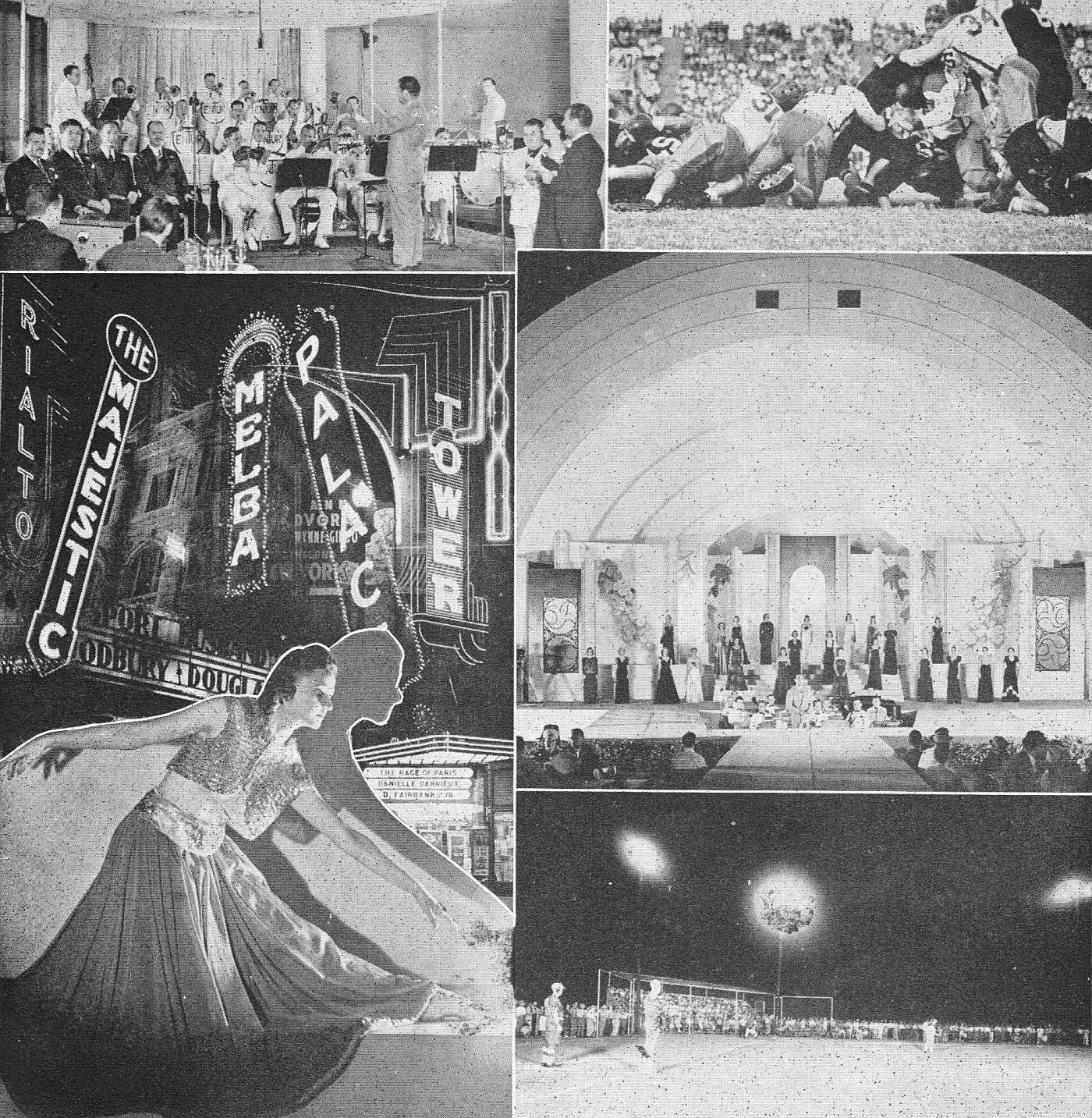
Dallas: “Amusement Capital of the Southwest” — 1946

entertainment_so-this-is-dallas_ca-1946-photos_smSomething for everybody! (click for larger image)

by Paula Bosse

Post-war Dallas had it all, man: our unparalleled night life included swanky hotel nightclubs where the beautiful people sipped champagne and danced to the music of tuxedoed big bands, “quieter but none-the-less entertaining taverns on the outskirts of the city” where the less beautiful people drank beer and danced to the non-stop music coming from jukeboxes, “unusual” restaurants (“where there is no music to dull the solid enjoyment of well-seasoned viands served with sparkling wines of appropriate vintage”), theatrical presentations, movies, movies, movies, and outdoor sports and recreation, including baseball at Rebel Stadium. Something for everybody!

entertainment_so-this-is-dallas_ca-1946-text(click for larger image)

***

Photo collage and text from “So This Is Dallas,” edited by Mrs. E. F. Anderson (Dallas: The Welcome Wagon, ca. 1946); photographs by Parker-Griffith.

*

Copyright © 2016 Paula Bosse. All Rights Reserved.

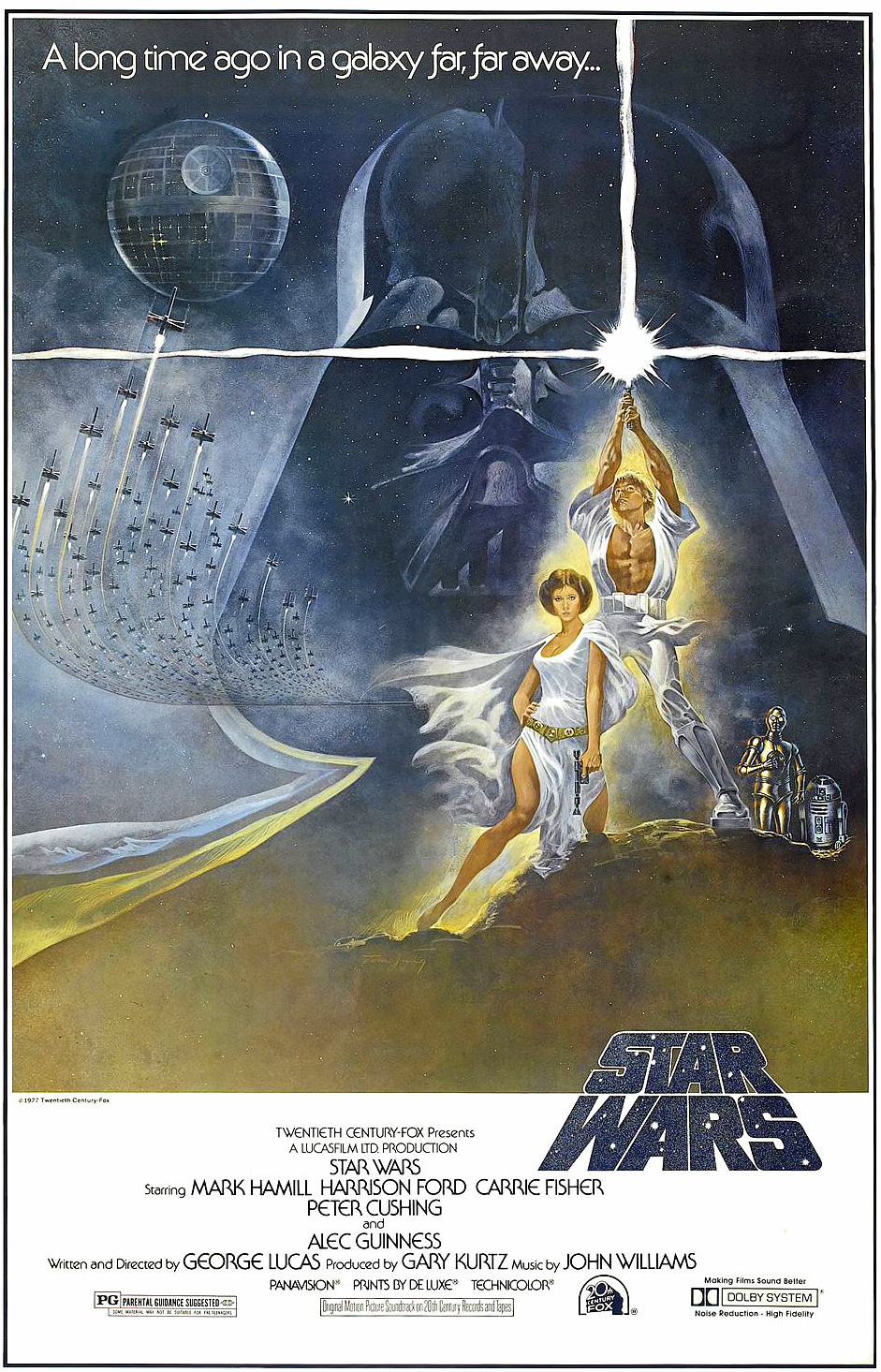
The Obligatory “Star Wars” Post

star-wars_jung_sm“A long time ago, in 1977…”

by Paula Bosse

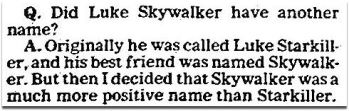
The relentless Star Wars promotional onslaught has been upon us for a while now. I have no idea what episode we’re up to at this point, but let’s look back to overlooked tidbits about that first movie. My favorite is this wire-service blurblet which appeared newspapers in April, 1976 — a full year before the movie was released.

star-wars_dmn_042076_starkiller

“Luke Starkiller” is a great name. Too bad Lucas changed it. Gene Siskel asked him about it in 1983.

star-wars_siskel_FWST_052283

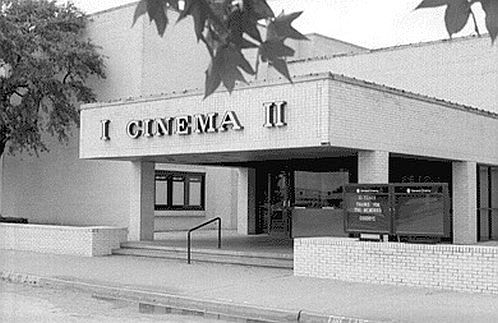
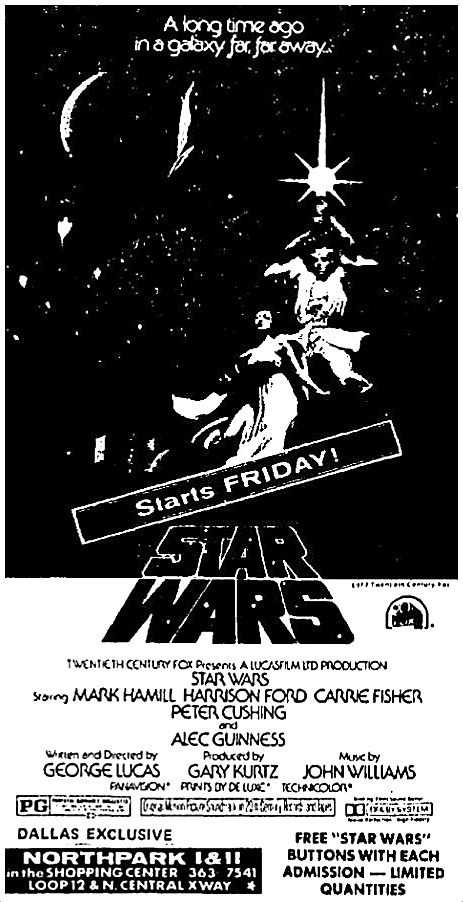
The movie played exclusively at the late, lamented NorthPark I & II; it opened on Friday, May 27, 1977. Lines were around the block. For weeks.

northpark-cinema

star-wars_dmn_052677May 26, 1977 (click for larger image)

(Did you keep your “free Star Wars buttons”?)

Moviegoers were stunned that the ticket price had been boosted to a then-unheard-of $3.75 (the equivalent of about $14.50 today). As one article explained, “Twentieth-Century Fox takes 90 percent of the gross receipts after deduction of expenses” in exchange for allowing theaters to show the movie. (I wonder how much popcorn was!)

Lastly, a fairly enthusiastic social commentary piece about the movie can be found in an article written by Dallas Morning News editor and editorial-page mainstay William Murchison (in fact, the article appeared on the editorial page of the DMN). The moneyed Mr. Murchison likens the exhilaration felt in finally getting into a showing that hadn’t been sold out to “crashing the Astor Ball” and is shocked at the “ungodly” ticket price — “a price that would buy a good Cabernet Sauvignon.”  Even so, he and Lovey apparently were quite taken with the exploits of Mr. Starkiller Skywalker, et al.) (Check the Dallas Morning News archives for the article “Movies to Make You Feel Good” by William Murchison, DMN, Aug. 30, 1977.)

***

Sources & Notes

“Star Wars” poster by Tom Jung found here.

*

Copyright © 2015 Paula Bosse. All Rights Reserved.