Flashback : Dallas

A Miscellany: History, Ads, Pop Culture

Category: Theaters

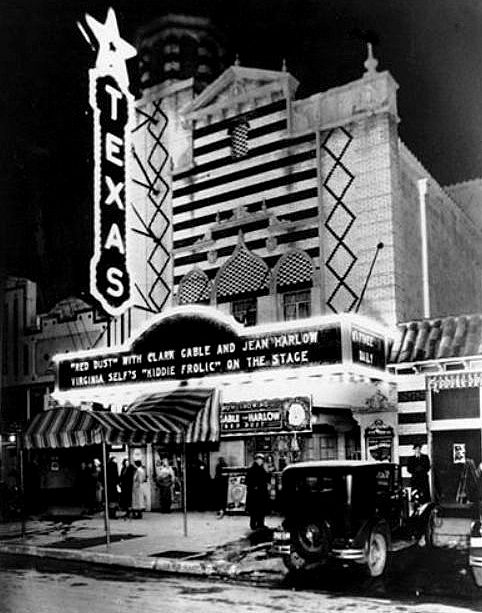
The Texas Theatre — 1932

texas-theater_1932The “Texas”

by Paula Bosse

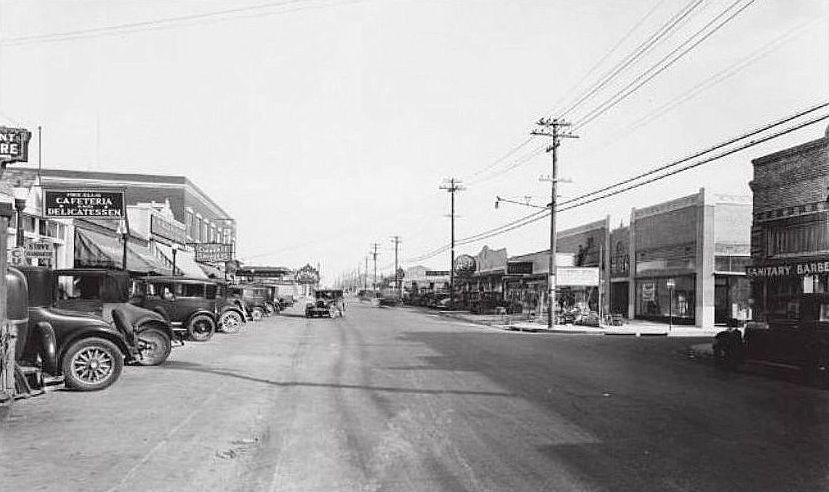
West Jefferson Blvd, 1932. All that’s missing from this photo is Edward G. Robinson and an arsenal of tommy-guns. This is the only theater in the world whose marquee showing the 1963 double feature of “Cry of Battle”/”War Is Hell” has become a part of history (the Texas Theatre, is of course, where Lee Harvey Oswald was captured on the afternoon of November 22,  1963). When the movie theater opened in 1931 — in the time of Prohibition and running boards —  it was a much more elegant-looking picture palace. Had he not been in the Big House at the time, John Dillinger might have seen this very same Gable and Harlow movie at the Biograph (or what I call “Chicago’s Texas Theatre”). He probably wouldn’t have been sitting through something called “Kiddie Frolics,” featuring Oak Cliff’s own Virginia Self, a teenage dancer … frolicking.

***

After several changes in ownership and a few awkward renovations, the Texas Theatre seems to be back on track these days. The history page of their website is here (with interesting factoids such as: it opened on San Jacinto Day, it was the first theater in Dallas with air-conditioning, and it was briefly owned by Howard Hughes).

For photos of the theater’s interior, published in 1932 in the trade journal Motion Picture Herald, see my post “The Texas Theatre and Its Venetian-Inspired Decor,” here.

*

Copyright © 2014 Paula Bosse. All Rights Reserved.


Speaking of the Arcadia and Its “Rustic Simplicity”…

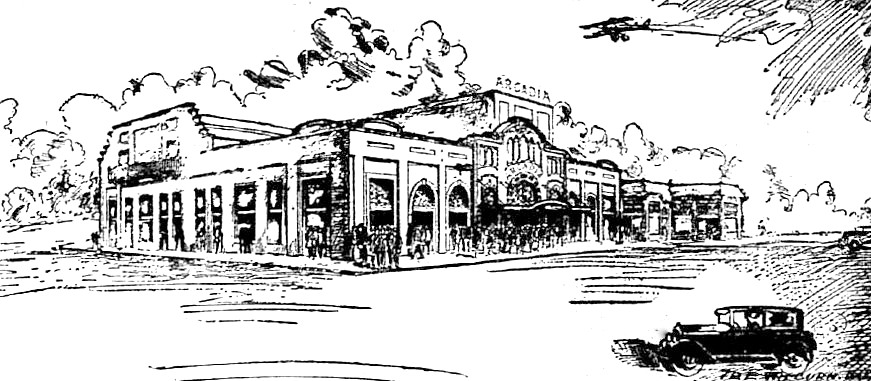
arcadia_architectural-renderingArcadia Theater, 1927…

by Paula Bosse

Above is a rendering of architect W. Scott  Dunne’s design for the Arcadia Theater on Greenville Avenue, at Sears Street, between Ross Avenue and Belmont. (The low-flying bi-plane is a nice touch.) Among the many Dallas theaters designed by Dunne were the Esquire in Oak Lawn and the Texas Theatre in Oak Cliff (as well as another entertainment mecca, the Fair Park Band Shell).

The Dallas Morning News had this to say about Dunne’s concept for the new “suburban theater” in 1927:

W. Scott Dunne, architect of Arcadia, is working out an interior design that should prove in harmony with the theater’s name — an atmospheric design of as near rustic simplicity as is possible in a theater.

“Rustic”!

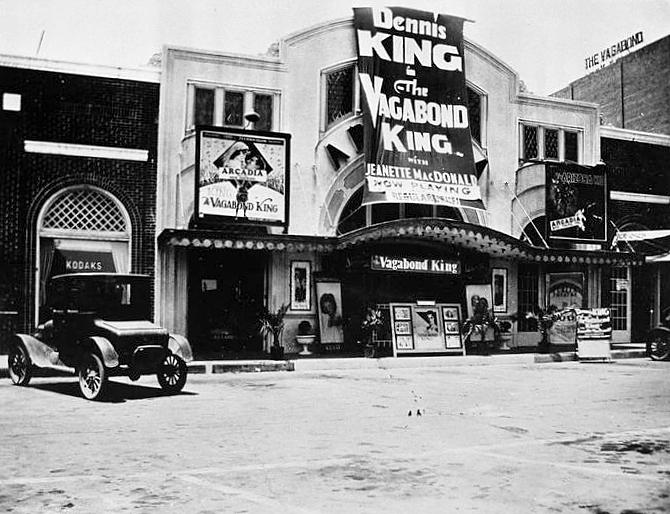
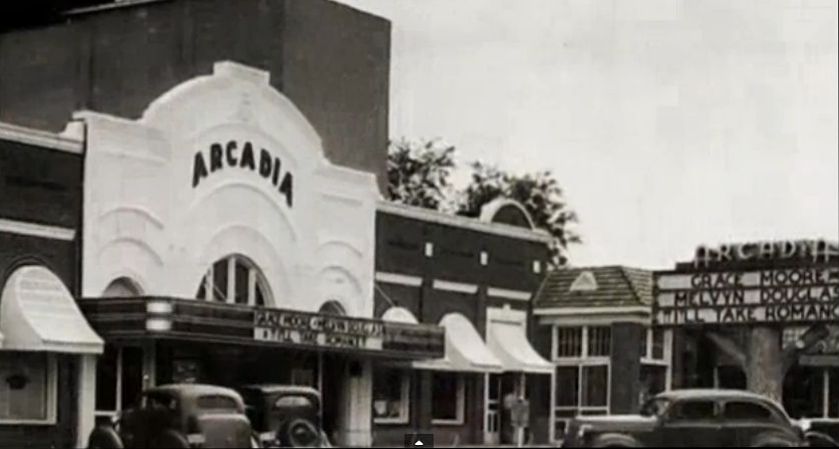
A photo of the not-particularly-rustic exterior in 1930:

arcadia-theater_1930_portal1930

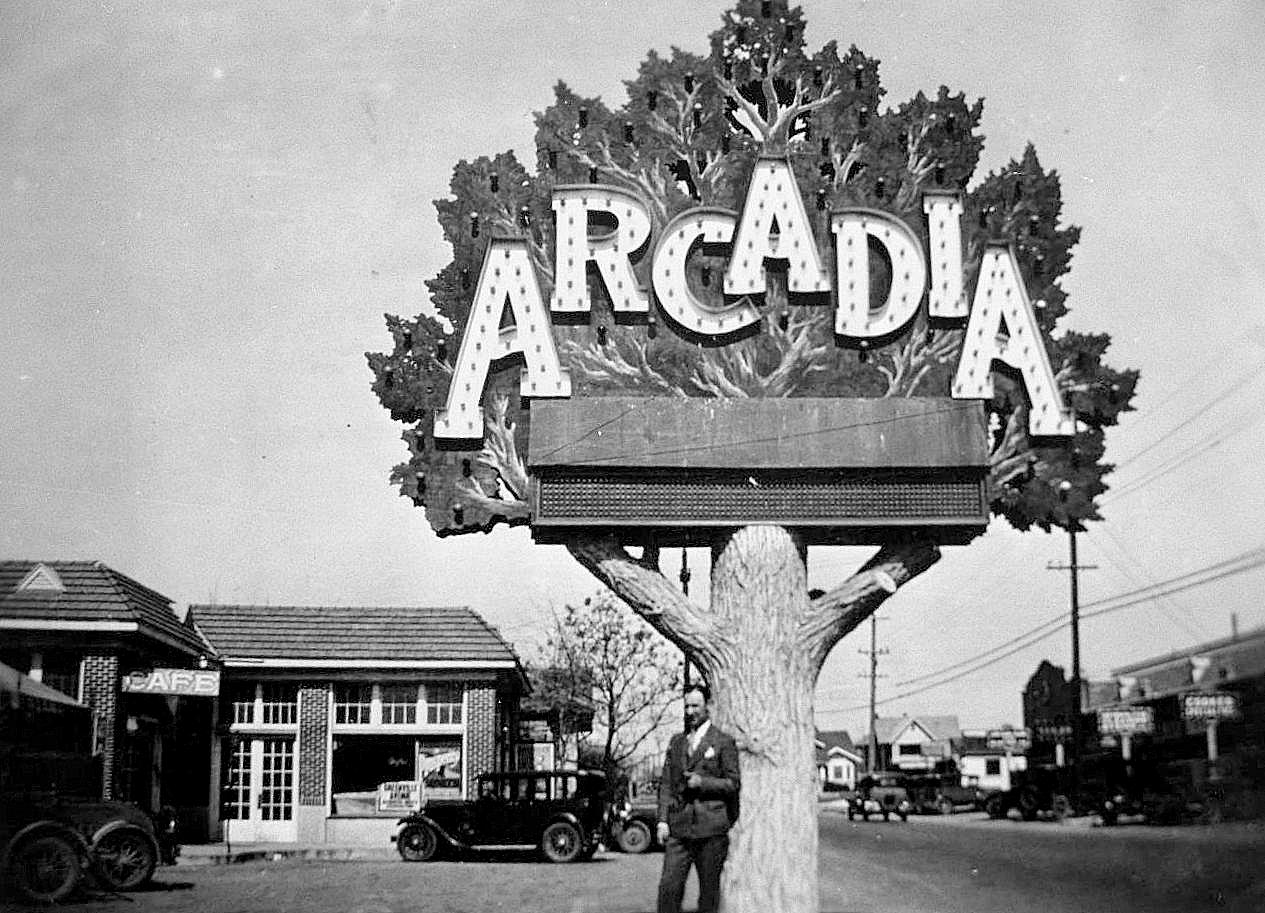
The fabulous giant tree marquee, posted previously (link to post below), from about this time can be seen here.

All went well for many years until 1940 or ’41 when the original 1927 building was badly damaged in a fire; it had to be gutted and completely overhauled by architects Pettigrew & Worley. John A. Worley wrote an article for Box Office magazine about the rebuilding process (link below), including the hard-to-believe tidbit that the firm had been “vigorously instructed to studiously avoid any pretense of ‘super-colossal’ — or, more thoroughly defined, we were told to steer clear of that ‘regal’ air, which had been known to impel theater patrons to take off their shoes before daring to walk across the foyer.

The article even has a photo of the lopped-off, now-sadly diminished tree sign. (The author — in something of a reach — explains that the “stump” was there as a symbol of the “Arcadian” nature of the theater.) (You just know that both Pettigrew and Worley were praying for the go-ahead to just get rid of it already.)

1941

There was another bad fire in 1958, which led to further renovation. By then, that tree was loooooong gone and but a dim memory.

There sure were a lot of fires at the ol’ Arcadia. Including the final, fatal one, in 2006. R.I.P. And from the ashes sprang the present-day Trader Joe’s.

***

Sources & Notes

Photo showing “The Vagabond King” (1930), from the Hardin-Simmons University Library via the Portal to Texas History, here.

Photo showing “stump” is from the June 21, 1941 issue of Boxoffice.

An interesting article on the Arcadia — and life along Lowest Greenville — can be found in a Lakewood Advocate article “The Rise and Fall of the Arcadia,” here.

The original post that spurred a further look into the early days of the Arcadia — and the one with the crazy huge electric tree marquee — can be found in the Flashback Dallas post “The Arcadia Theater Sign You’ve Never Seen,” here.

*

Copyright © 2014 Paula Bosse. All Rights Reserved.


The Arcadia Theater Sign You’ve Never Seen

Best theater marquee EVER! Lower Greenville, late ’20s (click for larger image)

by Paula Bosse

I LOVE this photo! Forget the sign for a moment (difficult though that may be…) — take a look at Greenville Avenue in the late-1920s! That building at the top right, across the street from the (late, lamented) Arcadia, is still there. The car heading north is just about to pass where the 7-Eleven is now (at Richmond). As for that tree-shaped sign … wow. I’ve never seen anything like that. The photo was used in a promotional campaign for a new sort of electric marquee technology.


Here’s what Arcadia manager Wally Akin (pictured above) had to say about this new-fangled Vendope Changeable ‘Lectric Letter thing:


I’m not sure the Vendope Service System took off, but, damn, that sign is cool. Here’s a another view, from 1930, looking up Greenville from about Alta — you can see how close to the curb the sign was. Imagine driving up the street and seeing that lit up in front of you.

greenville-avenue_1930

It was a little less cool, though, by 1937 when the “tree” had been pruned and tampered with almost beyond recognition, but, still, that is one weird eye-catcher of a marquee.

*

UPDATE: The following information comes from a comment to me from the estimable Angus Wynne, who took over the Arcadia in the 1980s (and 1990s?) and booked some great live shows there (several of which I paid to see): “The tree sign evolved from a lesser marquee that was installed in a real tree which grew in the original parkway formerly located adjacent to the street. A very unusual attraction, it remained there for many years until the tree died, upon which the owner had it concreted over and had the electric branches added, pictured here. It was torn down when the theater’s facade and interior were renovated during the 1940’s.”

What a shame that something so wonderful didn’t survive. All those lights! I’d have loved to have seen it lit up at night, back when this lowest stretch of Greenville Avenue was called a “northern” and “remote” part of the city.

***

Sources & Notes

First three images, including top photo, from the Hardin-Simmons University Library, via the Portal to Texas History — these and other Arcadia Theatre images from this collection can be viewed here. The main photo (MUCH larger when clicked) is undated, but it’s sometime between the Arcadia’s opening in 1927 and the Publix theater chain’s plummet into receivership around 1931. UPDATE: When I posted this photo back in February, 2014, I was excited to think I had stumbled across something that had been unseen for years. At almost the exact time I posted this, Troy Sherrod’s great book Historic Dallas Theatres was published … and this photo was in it. Troy beat me to it!

If you’re into patent-perusing, just google “Vendope” and you’ll see oodles — an example of one them is here. I’m not sure if this is part of the same system described above, but this patent is dated 1931. The inventor (apparently of Fort Worth) had the unlikely name of Vendope L. Pistocco. Or maybe Van Lawrence Vendope. …There’s a Vendope in there somewhere.

1930 view of Lowest Greenville, looking north from Alta, is from the archives of the Dallas Public Library.

For further exploration of the Arcadia (and another photo of the barely recognizable tree), see my follow-up post here.

*

Copyright © 2014 Paula Bosse. All Rights Reserved.


L. Craddock & Co. — Pioneer Whiskey Purveyors

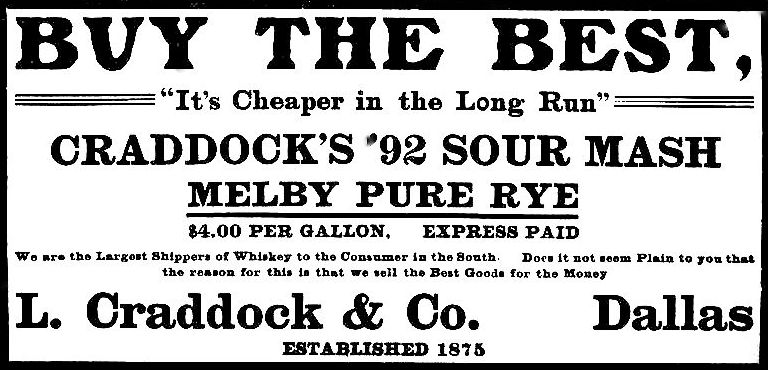
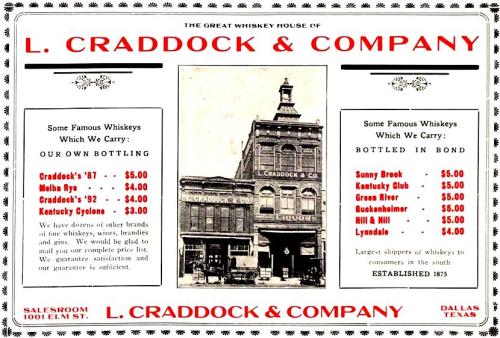
L. Craddock ad, 1912

by Paula Bosse

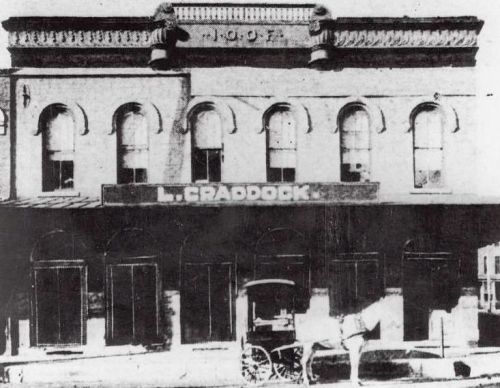
L. Craddock, an Alabama native born in 1847, arrived in Dallas in 1875 and opened a liquor business at Main and Austin streets in a building built by the Odd Fellows. It was a success, becoming one of the largest such businesses in a young, thirsty city.

Feeling a flush of civic pride, Mr. Craddock branched out beyond the retail world of alcohol sales, and in the late 1870s he opened the city’s second theatrical “opera house,” conveniently housed on the second floor of his liquor emporium, above his saloon and retail business. The theater was immensely popular and hosted the important performers and lecturers of the day, until the much larger Dallas Opera House arrived on the scene and siphoned off Craddock’s audiences. He closed the second-floor theater in the mid-1880s (a space which, presumably, continued to be used as an IOOF meeting hall) but kept the business on the ground floor.
The first location, at Main & Austin, with theater on second floor (1880s)The first location, at Main & Austin, with theater on second floor (1880s)

In 1887 Craddock decided to change careers. He sold his company to Messrs. Swope and Mangold (more on them later) and retired from the liquor trade — if only temporarily. I’m not sure what prompted this somewhat unexpected decision (I’d like to think there was some juicy, illicit reason), but, for whatever reason, he decided to give real estate a whirl. Craddock was certainly a savvy wheeler-dealer and he probably did well buying and selling properties in booming Dallas, but (again, for whatever reason) he seems to have tired of real estate, and, by at least 1894 (if not sooner), he had returned to the whiskey trade and had built up an even more massive wholesale liquor business than before.
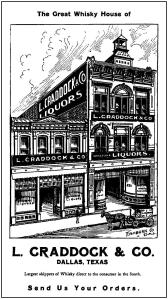
ad_craddock-liquors-19061907 (click for much larger image)

He had a new, larger building, this time on Elm, between N. Lamar and Griffin. In the company’s incessant barrage of advertising, he touted the company’s unequaled, unstoppable success as purveyors of the finest alcohol available. One ad even took on something of a hectoring, lecturing tone as it admonished the reader with this snappy tagline:

“We are the Largest Shippers of Whiskey to the Consumer in the South. Does it not seem Plain to you that the reason for this is that we sell the Best Goods for the Money.”
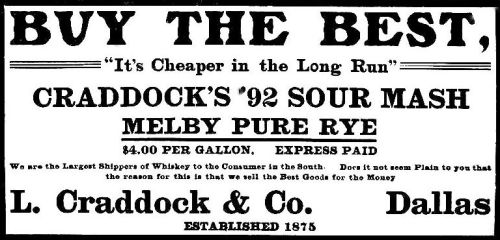
1906

Arrogant or just supremely confident, Craddock was rolling in the dough for many, many years. Until … disaster struck. Prohibition. With the inevitable apocalypse about to hit the alcoholic beverage industry, L. Craddock threw in the towel and retired. For good this time. I’m sure many a faithful L. Craddock & Co. customer stocked up on as much as they could hoard in the final weeks of the prices-way-WAY-higher-than-normal going-out-of-business sale.

Craddock retired to Colorado, but in 1922, he returned to present to the city a valuable ten-acre tract of land in the old Cedar Springs area — land he asked be used as a park. Craddock Park remains a part of the Dallas Parks system today.
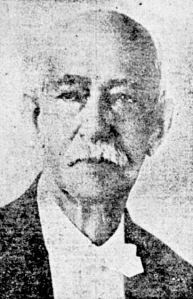
craddock_dmn_120322Dallas Morning News, Dec. 3, 1922

It’s interesting to note that in every article about Mr. Craddock that appeared during and after Prohibition — such as the articles reporting his generous gift to the city — there was never any mention of what kind of business he had been in or how he had made his great fortune. Even in his obituary. He was always vaguely described as a “pioneer businessman.”

Speaking of his obituary (which, by the way, was the place I actually saw his first name finally revealed — it was Lemuel), L. Craddock — Dallas’ great retailer of beer, wine, and spirits — died on December 2, 1933. Three days before the repeal of Prohibition. THREE DAYS. O, cruel fate.

**

ADDED: Interesting tidbit about a legal matter brought by Federal prosecutors. In 1914, Craddock was found guilty of “illicit liquor dealing” — shipping barrels of whiskey (labeled “floor sweep”) into the former Indian Territory of Oklahoma. Craddock wrote a check for the fine of $5,000 right there in the courtroom. The three men who actually did the deed were sentenced to a year and a day at Leavenworth. (I’m never sure how much faith to put in the Inflation Calculator, but according to said calculator, $5,000 in today’s money would be approaching $115,000. I think ol’ Lemuel was doing all right, money-wise. I’m guessing this “floor sweep” thing was not an isolated incident.)
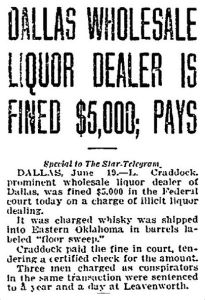
craddock_FWST_061914Fort Worth Star-Telegram, June 19, 1914

***

Sources & Notes

Top L. Craddock & Co. ad from 1912.

Photograph of first location, with theater, from Historic Dallas Theaters by Troy Sherrod (Charleston: Arcadia Publishing, 2014).

Ad featuring rendering of second Craddock location at Elm & Poydras, signed Fishburn Co. Dallas, from 1906.

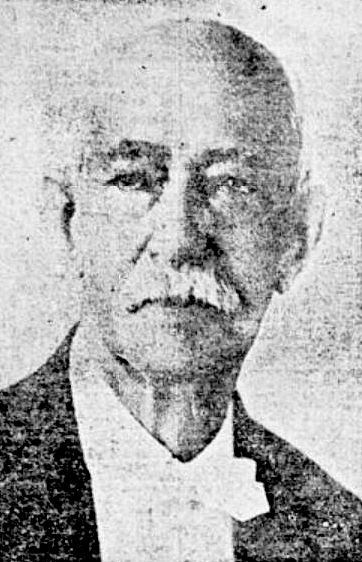
Photograph of L. Craddock from a Dallas Morning News interview in which he reminisces about the Craddock Opera House, published December 3, 1925. It’s an informative interview about early Dallas (like REALLY early Dallas) — the article can be read here.

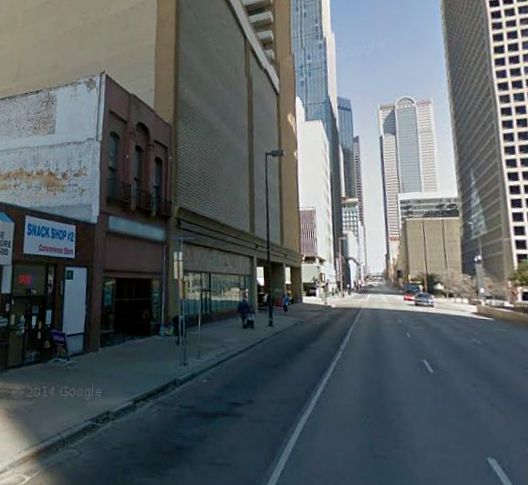
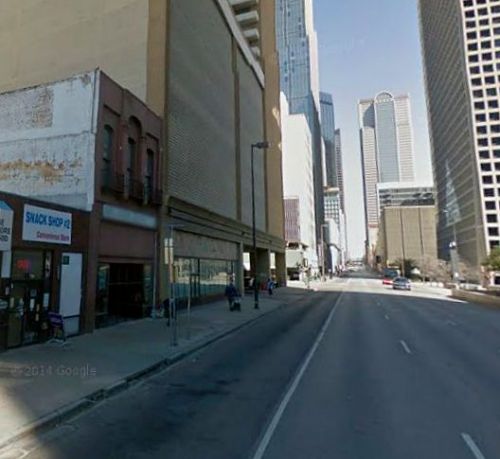
Update: I’ve wondered if this building downtown is the Craddock building, cut down and uglified. The current address is 911 Elm (I assume that the addresses for that stretch of Elm changed when the cross-street configuration changed). The Dallas Central Appraisal District gives the construction date of that building as 1937, but the DCAD dates are frequently not accurate. I don’t know. It’s very similar (missing the third floor…) and in about the exact same spot. Looks like it to me. That poor 100-plus-year-old building needs some loving attention. Here is a Google street view from early 2014:
craddock_google_feb-2014

Most images in this post are larger when clicked.

*

Copyright © 2014 Paula Bosse. All Rights Reserved.

Dallas’ Film Row — 1918

dallas_movie-palaces_1918Looking east from Elm and Akard… (click for larger image)

by Paula Bosse

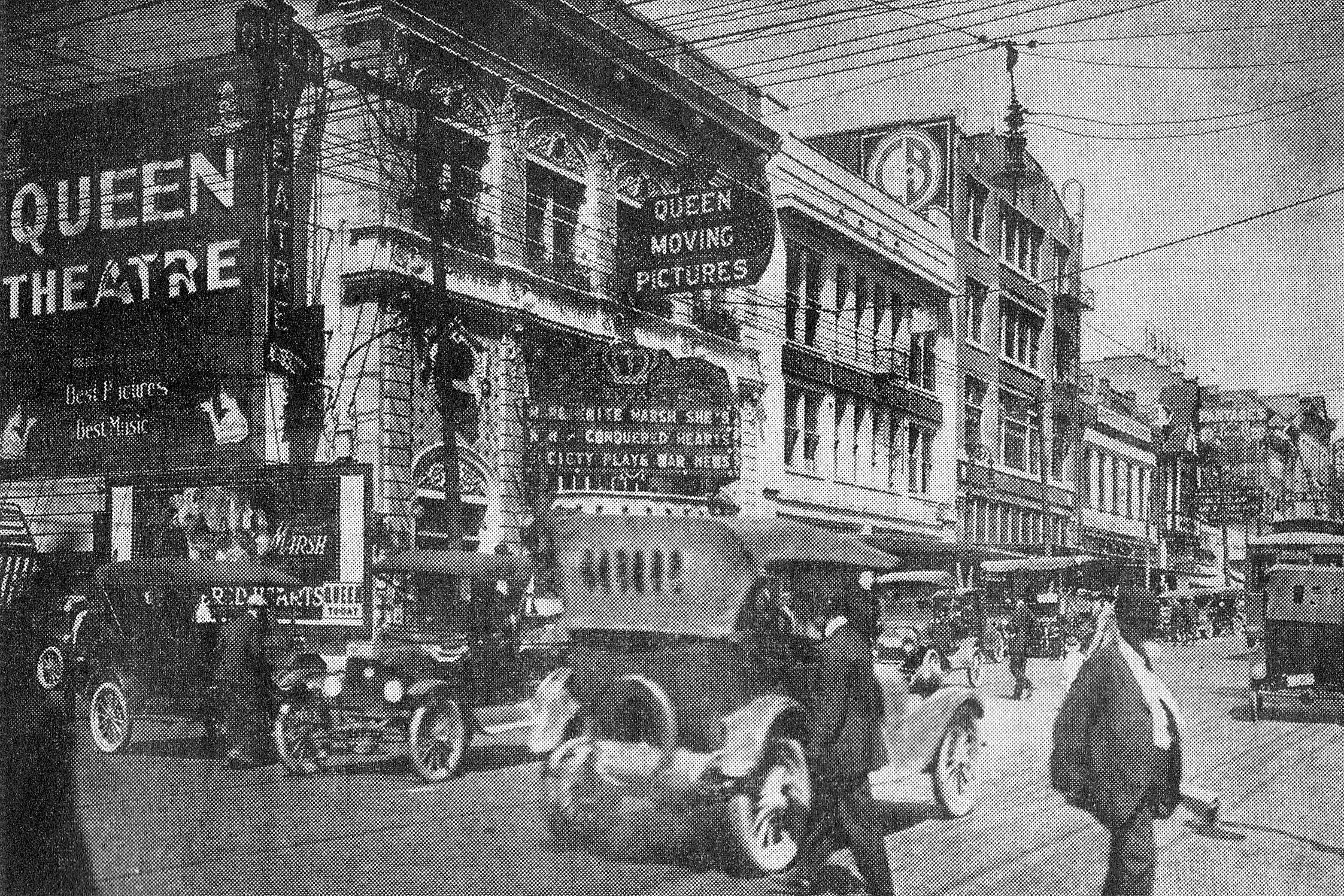
A 1918 photograph of Elm Street taken at the corner of Akard, looking east, showing the old Queen Theater (later the Leo; torn down to build the Dallas Federal Savings and Loan Building), the Jefferson Theater, and the Old Mill Theater.

*

Copyright © 2014 Paula Bosse. All Rights Reserved.