Flashback : Dallas

A Miscellany: History, Ads, Pop Culture

Category: Vault

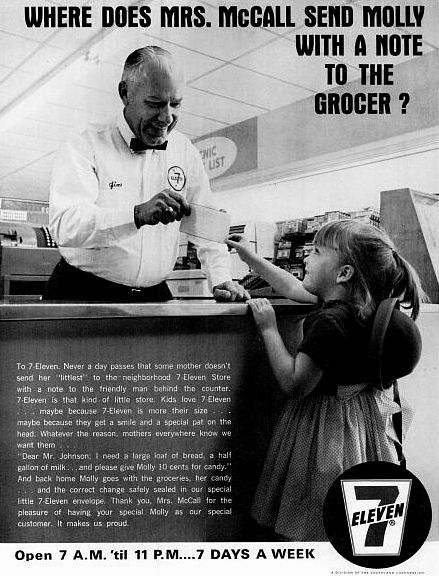
Summer Rerun: 7-Eleven Day!

7-eleven_1966

by Paula Bosse

Today — July 11 — is “7-Eleven Day,” the day when the Dallas company that revolutionized the world of retail convenience offers free Slurpees to a hot and sweaty public. The 1966 ad above is one of the first things I ever posted on this blog. It’s sweet and quaint. The world has changed quite a bit since that folksy advertisement appeared 50 years ago. Read the ad copy in the original post, here.

*

Copyright © 2016 Paula Bosse. All Rights Reserved.

Bowling In the Sky — 1964

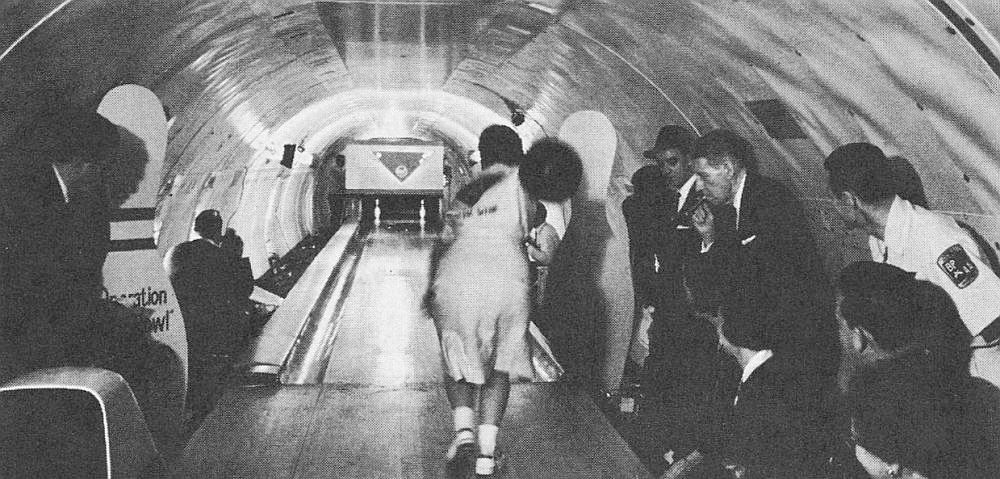
bowling_american-airlines_encylopedia-britannica-yrbk_jan-1964Sylvia Wene battles Dick Weber and turbulence…

by Paula Bosse

It’s a bowling alley. …In an airplane.

As publicity stunts go, this one was pretty good. It even had a cutesy name: Operation AstroBowl. American Airlines wanted to promote their great big Boeing 707 cargo planes, so someone came up with the idea of putting a bowling alley in one of them. Happily, a company that manufactured bowling alley equipment — American Machine and Foundry (AMF) — was keen to jump on the promotion bandwagon. They installed the regulation 79-foot lane — complete with automatic pin-setting equipment and gutters — in one of the American Airlines jet freighters. It took 4 days. Looking at the photos, it resembled a very large MRI tube.

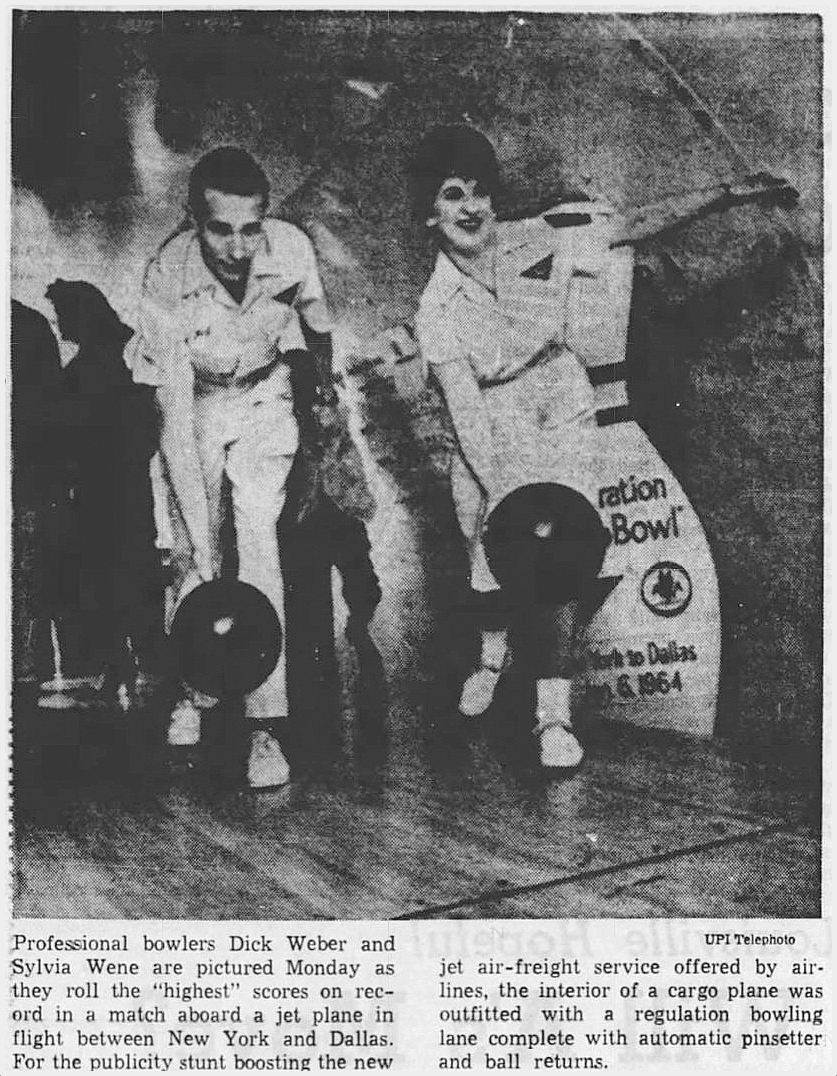
Since they had the lane and the equipment in there, they pretty much had to get a couple of champion players on board to bowl a few mid-air frames. As luck would have it, the National All-Star Tournament (aka “The World Series of Bowling”) was — hey! — to be held in Dallas at Fair Park Coliseum a week after the stunt. Serendipity! Champions Dick Weber and Sylvia Wene were roped in to play a 5-mile-high game in the sky.

So much to promote!

Operation AstroBowl took place on January 6, 1964 at cruising altitude between New York’s Kennedy International Airport and Love Field. Sylvia won. Barely. But this story made it into countless newspapers across the country the following day, so, really, it was the publicists who won. Drinks, I’m sure, were on them.

bowling_american-airlines_AP-story_010764-photo_dick-weberDick Weber bowling at 500 miles an hour


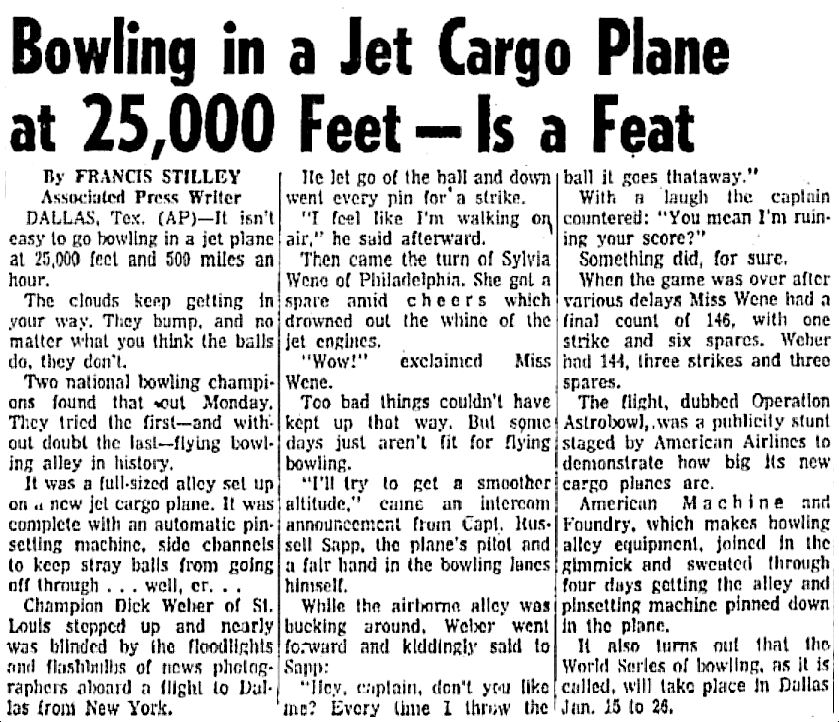
bowling_american-airlines_AP-story_010764
AP story which appeared all over the country, Jan. 7, 1964

bowling_american-airlines_weber_wene_ap-wire_010764

***

Sources & Notes

Top photo appeared in the Encyclopedia Britannica Yearbook and was brought to my attention by Steve Dirkx (thanks, Steve!).

Story and photos by the Associated Press.

If you’re on Facebook, a tiny bit of film footage can we watched here.

Hold the presses! I’ve been translated! Check out this bowling post in Portuguese (!), on a Brazilian bowling site, here.

*

Copyright © 2016 Paula Bosse. All Rights Reserved.

“Melons on Ice” — 1890s

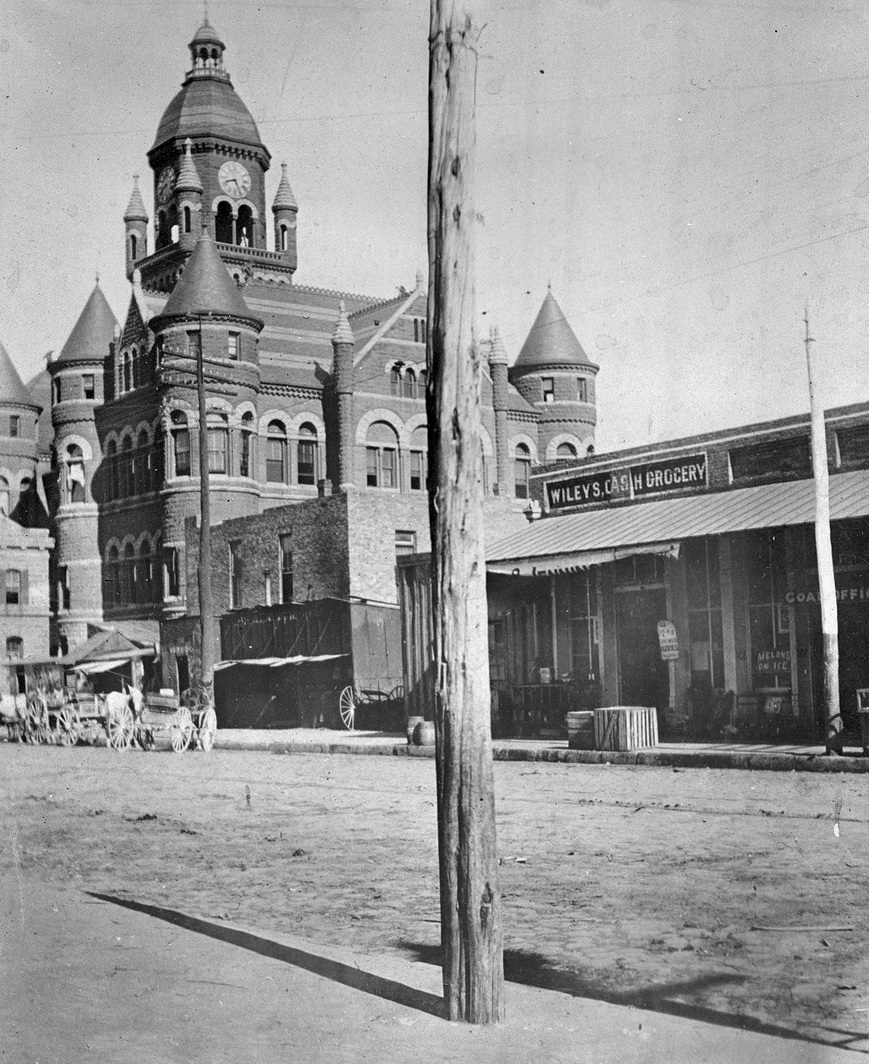
wiley-grocery_1890s_haskins-coll_utaA sleepy little town…

by Paula Bosse

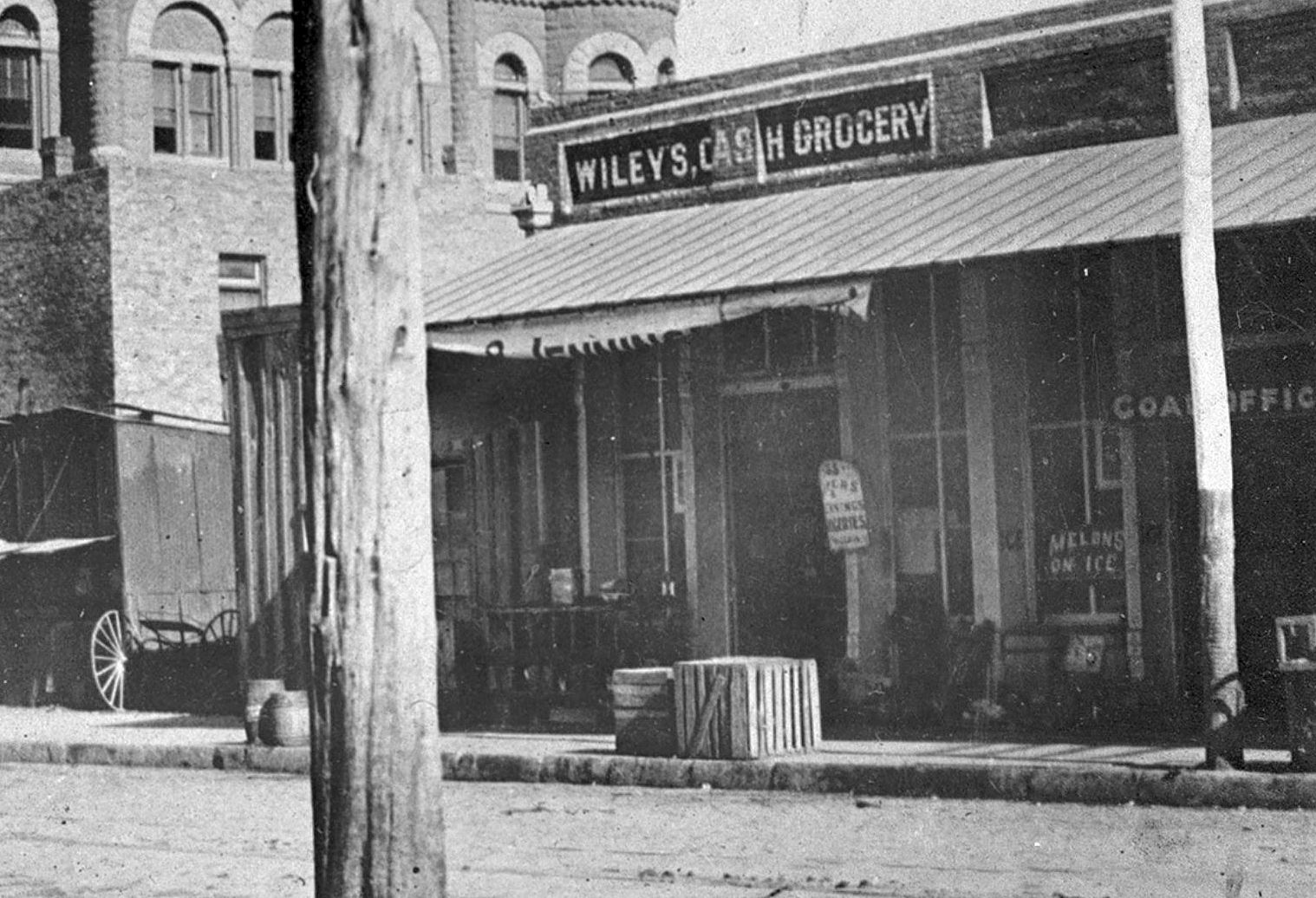
It looks hot in this photo from the 1890s. I bet those “Melons On Ice” in front of Wiley’s grocery store really hit the spot.

wiley-grocery_melons_det-1

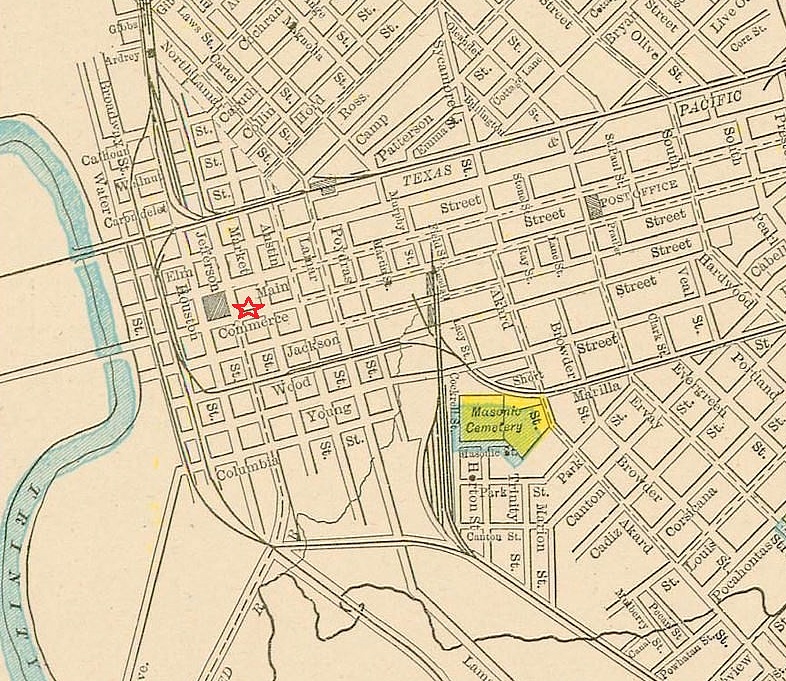
I love this photo. The Wiley Cash Grocery was in business for only a few years — from about 1892 to 1896. It was located at 153 Commerce, one block east of the brand-new county courthouse.

wiley-grocery_1893-directory1893 Dallas directory

wiley-grocery-1893-map
1893 map of Dallas, det.

The business was owned by Anna E. Wiley (~1862-1930) and her husband Jesse P. Wiley (~1863-1942). When they arrived in Dallas around 1887 their address in the city directory was simply “¾ mile w of river.”

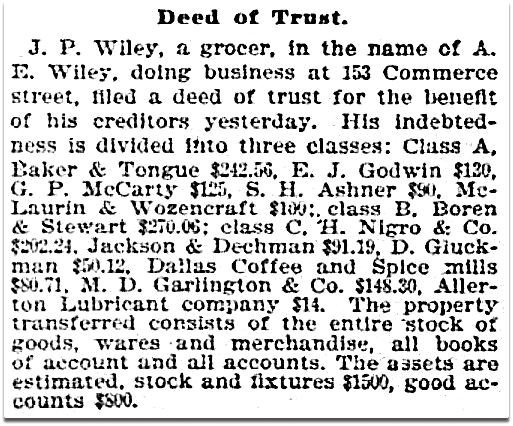
Even though the store seems to have been in Anna’s name, Jesse was forced to file a deed of trust in 1896 when the store was faced with crippling debt. The Wileys owed approximately $1,545 to creditors (about $45,000 in today’s money), but their assets were only about $1,500, plus $800 of “good accounts.” Unsurprisingly, the store was gone by 1897. (Click article below to see a larger image.)

1896-wiley-grocery_dmn_021596
Dallas Morning News, Feb. 15, 1896

This photo captures such an odd view of downtown Dallas — it’s hard to believe that the site once occupied by the Wiley store is now the site of the John F. Kennedy Memorial. A present-day view can be seen here.

***

Sources & Notes

This photo is from the Squire Haskins Photography, Inc. Collection, University of Texas at Arlington Libraries; additional info is here. See this great photo REALLY big here.

The map is a detail from an 1893 map of Dallas from the collection of the Texas State Library and Archives Commission.

*

Copyright © 2016 Paula Bosse. All Rights Reserved.

From the Vault: Sweating at the Switchboard — 1951

summer_telephone-operators_1951Blocks of ice at the ready…

by Paula Bosse

Warning: heat advisory! Talk about your low-tech A/C!

Read more about this photo in my 2014 post “Telephone Operators Sweating at the Switchboard — 1951,” here.

Stay cool!

*

Copyright © 2016 Paula Bosse. All Rights Reserved.

From the Vault: Home on the Range with YSL — 1958

YSL_dfw_longhorn_1958French cuffs and longhorns, Carrollton, Texas, 1958

by Paula Bosse

For some reason, my 2015 post on Yves Saint Laurent’s visit to Dallas is getting a lot of hits today. That’s a good excuse for a summer rerun of one of my all-time favorite Dallas-related photos. Read the story behind this photograph of YSL posing with a Texas longhorn in a Carrollton pasture in my post “Back at the Ranch with Yves Saint Laurent — 1958,” here.

*

Copyright © 2016 Paula Bosse. All Rights Reserved.

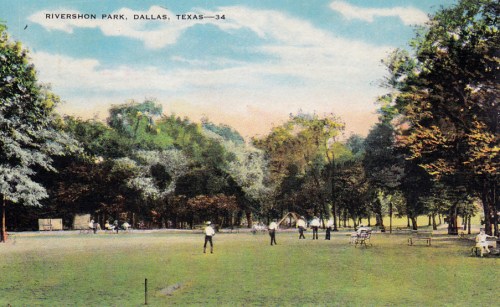
From the Vault: From a Miserable “Squatter-Town” to Beautiful Reverchon Park

reverchon_park_baseball“After…”

by Paula Bosse

Read about the open-air slum that once occupied the land of one of Dallas’ prettiest parks in my previous post “Reverchon Park, Site of a Hovel Town Once Known as ‘Woodchuck Hill,'” here.

*

Copyright © 2016 Paula Bosse. All Rights Reserved.

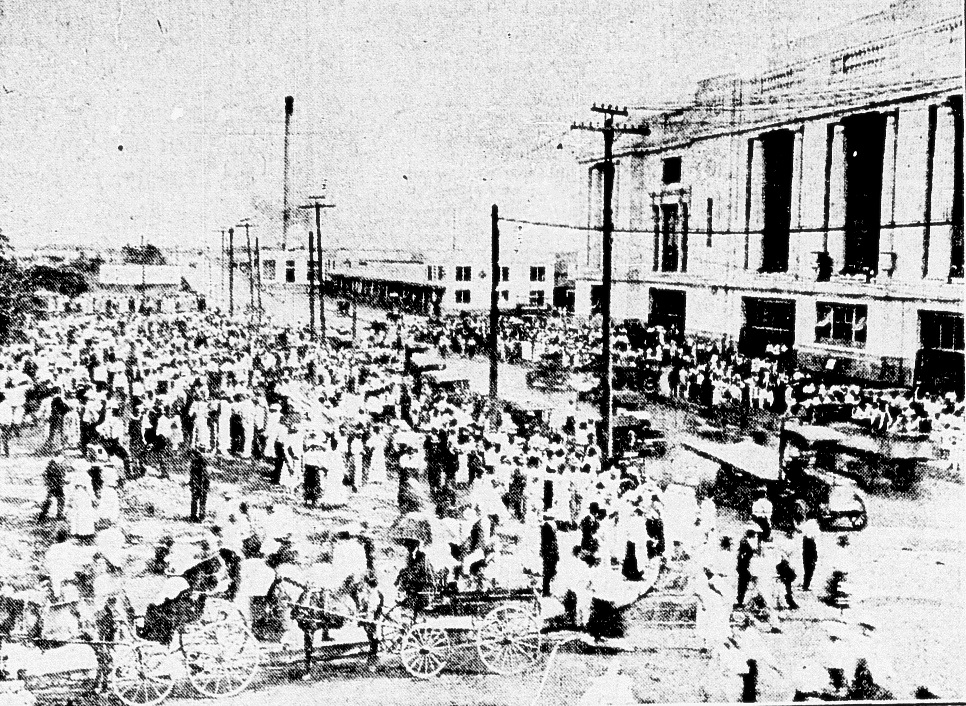
From the Vault: Memorial Day and the Contribution of Black Soldiers in WWI

black-recruits_dmn_073118-photoFriends & families of black draftees gather outside Union Station, July, 1918

by Paula Bosse

I’ve just added the above photo to my Memorial Day post from 2014, “Black Troops From Dallas, Off to the Great War.” The U.S. military was segregated until 1948, and the participation of black soldiers in World War I has been sadly underreported. 

***

Photo by John J. Johnson; it appeared in The Dallas Morning News on July 31, 1918, the morning after 500 black draftees had left Union Station for training camp.

*

Copyright © 2016 Paula Bosse. All Rights Reserved.

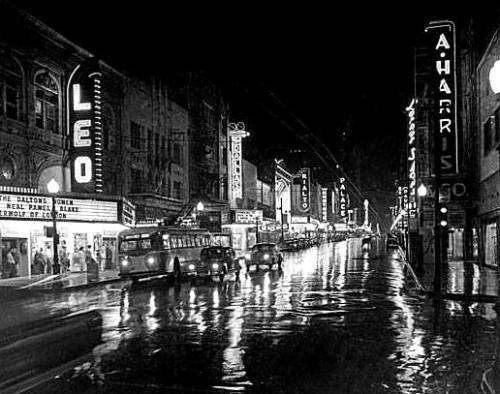
From the Vault: Exploitation Flicks on Elm Street

leo-theater

by Paula Bosse

Not all of the theaters on “Film Row” were first-run Majestic-caliber. Check out the double-bill at the Leo, in a post from 2014, here.

*

Copyright © 2016 Paula Bosse. All Rights Reserved.

Police Blotter — Drunks, Vagrants, Adulterers

jail-cell

by Paula Bosse

Today, a few snippets from the police and court reports about Dallas people doing things they shouldn’t have been doing. (All clippings are larger when clicked.)

*

Drunkenness seems to have been the most common reason for arrest in the 1870s and 1880s (and probably still is today). The city “popped it to” a lot of people back in the 1880s.

drunk_dal-herald_021483Dallas Herald, Feb. 14, 1883

A “crazy boy” from Collin County eluded lawmen by running off into the Cedars (back when the area we still call “The Cedars” was actually full of cedar trees).

cedars_dallas-herald_042178Dallas Herald, April 21, 1878

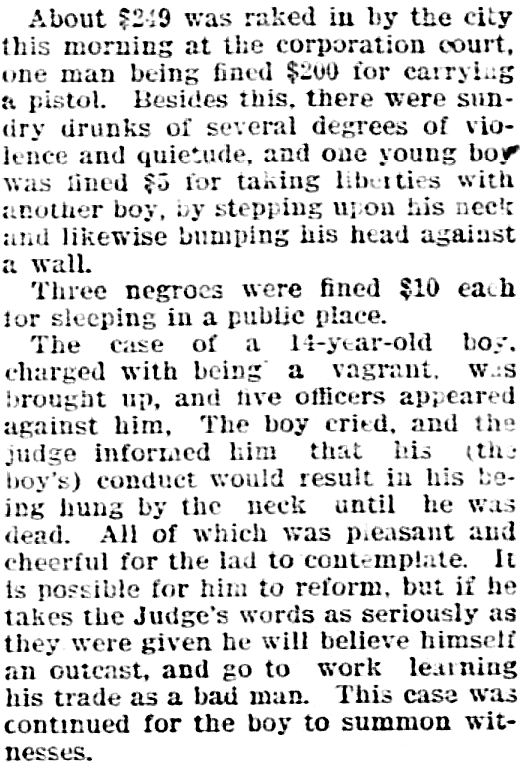
A 14-year-old vagrant was given the scared-straight treatment. (Click for larger image.)

blotter_dallas-notes_FW-morning-register_021601“Dallas Notes” section in The Fort Worth Register, Feb. 16, 1901

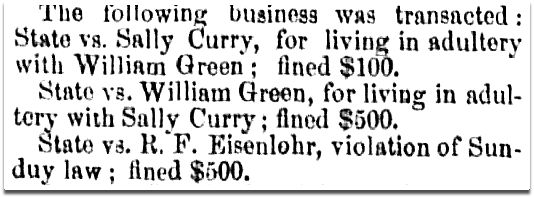
But the real jackpot for the city looks like it might have been in ferreting out adulterers and violators of the Sunday Law (which in the 1880s usually meant selling alcohol on a Sunday, although it was a violation to operate any business or place of amusement on a Sunday).

In the adultery case below — in which the cheating couple was actually living together outside the bounds of legally-sanctioned wedlock — both parties were fined: the woman’s fine was a surprisingly high $100 (in today’s money about $2,500!), but the man’s fine was — let me find a chair — an unbelievably exorbitant $500 (equivalent today to over $12,000!!). And those who pooh-poohed the Sunday Law took an equally incredible hit. Sunday Law scofflaws such as Mr. R. F. Eisenlohr (who ran a respected market and pharmacy) (and who was the father of noted artist E. G. Eisenlohr) were punished with more than slaps on the wrists — in 1880, they were getting “popped” to the tune of five hundred bucks. (These fines seem excessive. Perhaps because they’re cases brought by the state rather than the city or county? I know that at this time the state was hell-bent on enforcing the Sunday Law because, basically, it was being flagrantly disregarded everywhere, so I’m wondering if a fine this steep was meant to send a message to others. But the adultery fine still seems outrageously high.)

courts_dallas-herald_022580Dallas Herald, Feb. 25, 1880

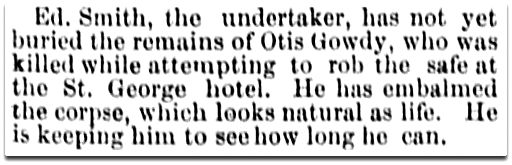
And sometimes crime beat reporters (and enterprising undertakers) have something of a slow day and can just kick back and ponder.

corpse_dal-herald_020982Dallas Herald, Feb. 9, 1882

***

Sources & Notes

Top photo is from Flickr — as I recall, it is not a Texas jail — it might be one in Missouri. As I understand it, the 19th-century Dallas cell most drunks and vagrants would have been thrown into was nowhere near as luxurious as the one seen in this photo. More on that to come.

Interested in what those court fines of yesteryear would be equivalent to in today’s money? Check out the handy-dandy Inflation Calculator, here.

See the previous police blotter round-up — “Police Blotter — 1880s” — here.

*

Copyright © 2016 Paula Bosse. All Rights Reserved.


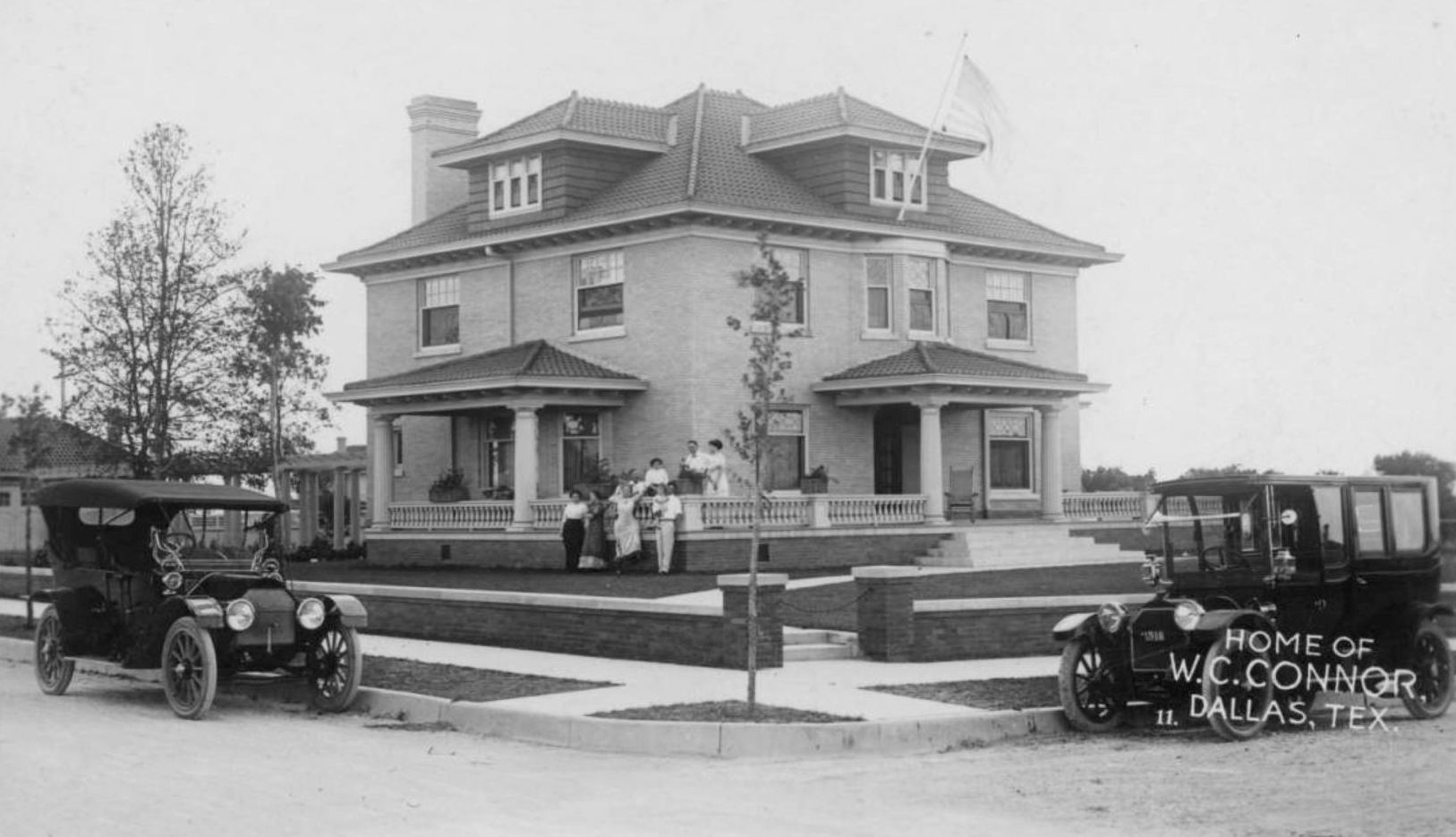
The House at Crescent & Byron, Highland Park

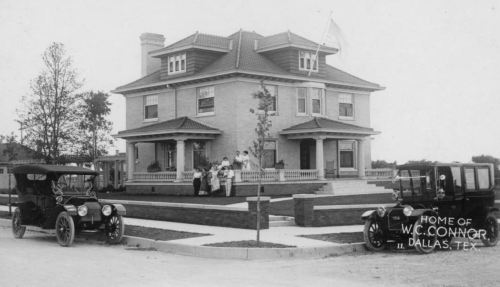
connor-home_cook-colln_degolyerWelcome…

by Paula Bosse

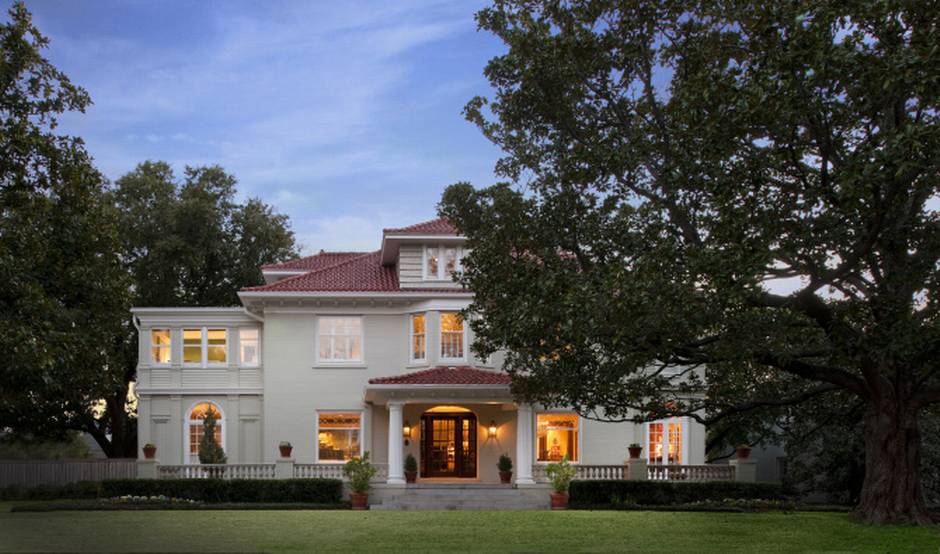
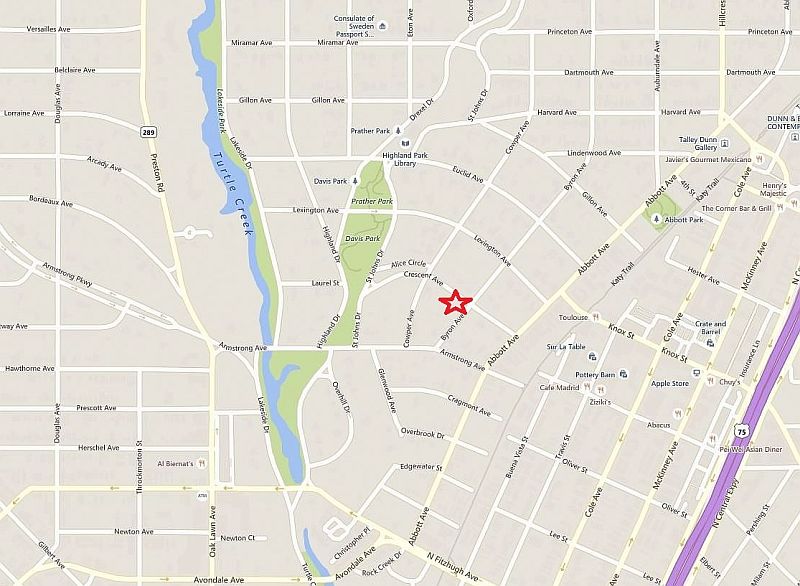
The photo of the house above caught my attention the other day. It’s exactly the sort of house I love, but I couldn’t get a good feel for the part of town it had been in. It took a while to track down, but when I did, I found that it was in Highland Park, at the southwest corner of Crescent and Byron, built about 1910. I had actually been leaning more in the direction of Old East Dallas, because when I think of Highland Park, I tend to imagine that it sprang fully landscaped and jam-packed with trees, even in its earliest days. But more surprising than learning that the house in this photograph was in Highland Park was discovering that it is STILL in Highland Park! It is still standing, and, more exciting, it is still recognizable and largely un-tampered-with! Take a look at it today, here.

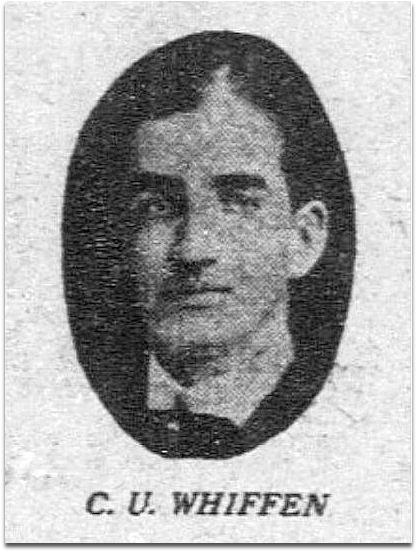
After rummaging around various online databases, I determined that this lovely house was built sometime in 1910 for its first occupants, the C. U. Whiffen family, whose name appeared under a picture of their photogenic house in ads placed by Hann & Kendall, the real estate agents in charge of selling lots for the developers of Highland Park. A photo of the house first showed up in an ad from September, 1910 and was used again in May, 1911. (See the full ads here.)

whiffen_dmn_051411-ad-det

The Whiffen family moved into the house in 1910 from their previous home on McKinney Avenue.

whiffen_dmn_010811-NCR-ad-detCalvin U. Whiffen, seen in an NCR ad, DMN, Jan. 8, 1911

whiffen_1911-directory1911 city directory

Whiffen had interests in a couple of different businesses but was primarily associated with NCR, the National Cash Register company. When Whiffen was transferred to Los Angeles by NCR, he sold the house to former Dallas mayor W. C. Connor for $18,000 (a little under $500,000 in today’s  money).
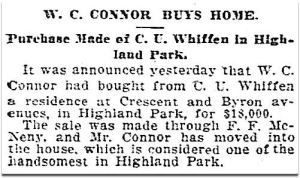
connor_whiffen_dmn_122211DMN, Dec. 21, 1911

connor_1912-directory
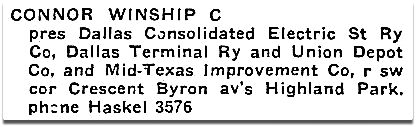
1912 city directory

Winship C. Connor (also widely known as “Bud” Connor) was an interesting man whose contributions to the city were extremely important in its becoming a major metropolitan area. Not only did he serve multiple terms as mayor of Dallas (from 1887 to 1894), but, among other accomplishments, he also built the first waterworks system, the first streetcar line, and the first electric light plant. In later years, he presided over several companies, including the Consolidated Electric Street Railway Co.
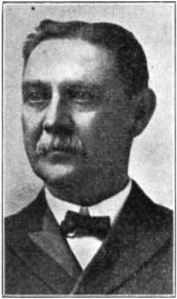
connor_fuel-oil-journal_oct-1915Connor, pictured in the Fuel Oil journal, Oct. 1915

Connor moved from the house on Crescent Avenue to a house on Miramar in 1918 or 1919, and, in 1921, he died, at the age of 73. The top photo of the house was taken sometime between 1912 and 1919. He can be seen with his family, sitting on the porch, in this detail.

connor-home_cook-colln_degolyer-det1

The house has had very few owners throughout its 106 years. In one of those odd, happy coincidences, I’ve just discovered that one of those owners was Edward L. Wilson, Jr. (1920-2011). Ed Wilson was an engineer who had his office in a small building (now razed) on Maple Avenue, next door to the Stoneleigh Hotel. He leased out the ground floor to my father who ran The Aldredge Book Store there for over 20 years. Mr. Wilson was a man of few words, but very, very nice and an understanding landlord. I’m happy to learn that he and his family lived in this beautiful house for several years.

Here it is today.
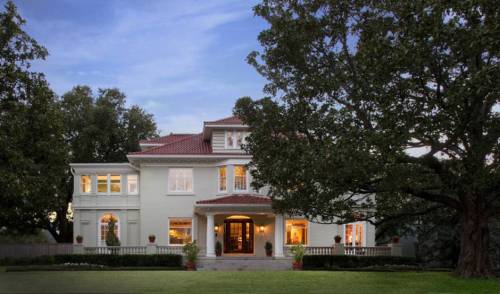
crescent_dmn_032913DMN, Mar. 29, 2013

***

Sources & Notes

Top photo, titled “Home of W. C. Connor, Dallas, Tex.,” is from the George W. Cook Dallas/Texas Image Collection, DeGolyer Library, Central University Libraries, Southern Methodist University; it can be viewed here.

See inside this house in a Dallas Morning News video, here (for some reason, I am unable to view this video on my computer, but I can watch it on my phone). The house was a featured stop on a Highland Park Centennial celebration tour of homes in 2013. More photos of the house today can be seen on Douglas Newby’s Architecturally Significant Homes page, here.

Where is it?

crescent-byron_bing
Bing Maps

W. C. Connor was a man of great accomplishment — his Dallas Morning News obituary (Aug. 6, 1921) is here; his citation in A History of Greater Dallas and Vicinity is here; his Wikipedia page, here.

*

Copyright © 2016 Paula Bosse. All Rights Reserved.