Flashback : Dallas

A Miscellany: History, Ads, Pop Culture

“The Walls Are Rising” (1967): Watch It Online!
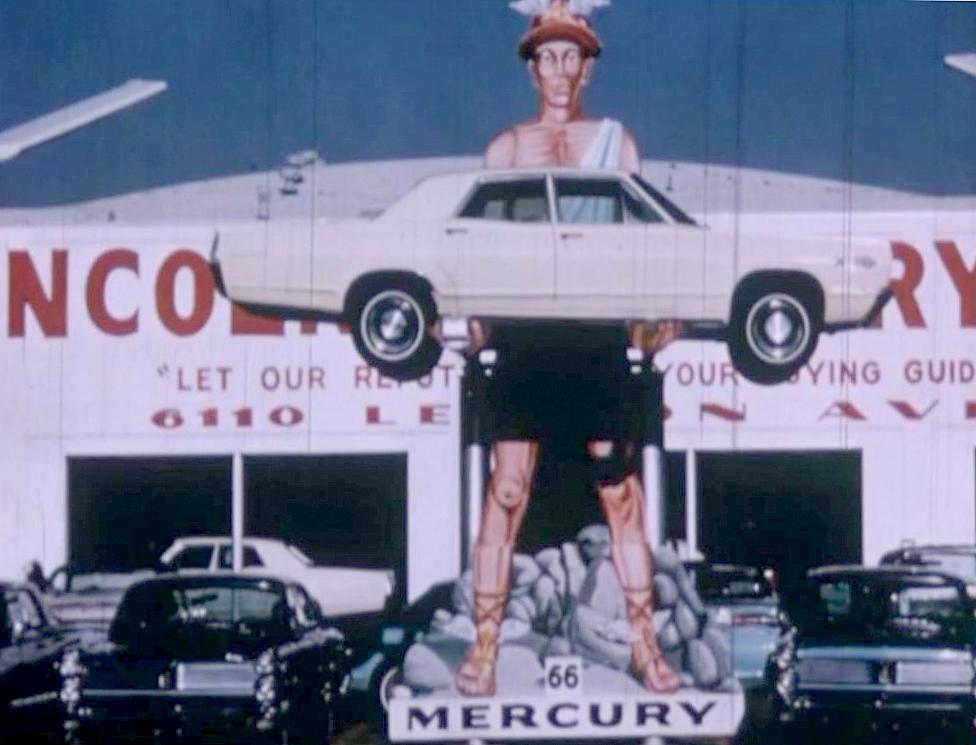
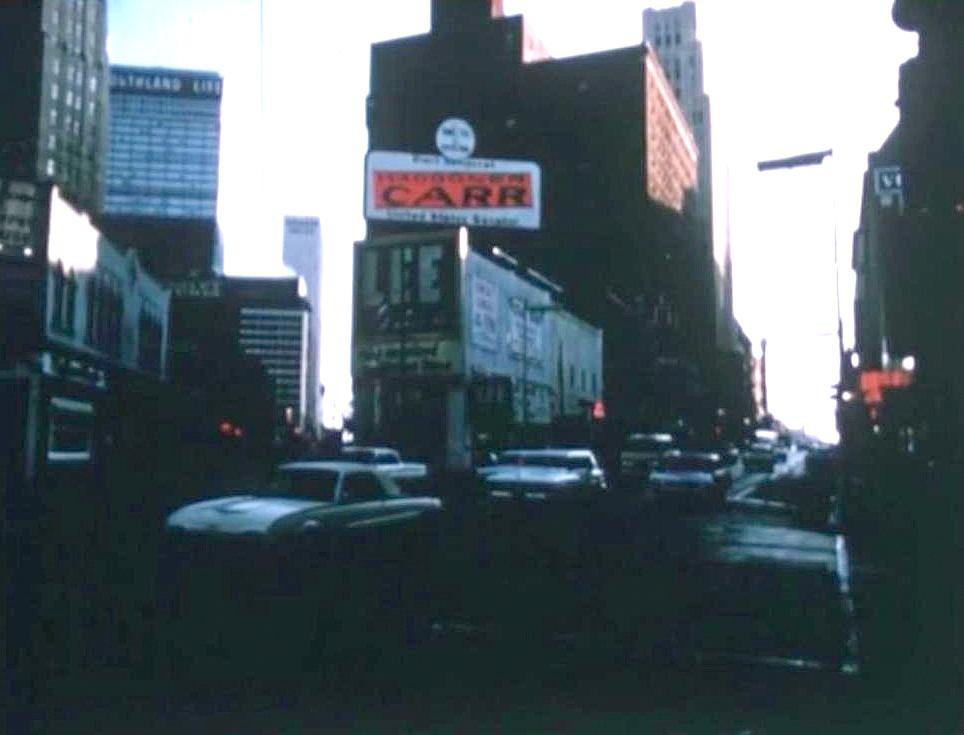
mercury-dealership-6110-lemmon_wallsDallasites love their cars…. (photo from “The Walls Are Rising”/AIA Dallas)

by Paula Bosse

Late last year I stumbled across mention of a 1967 film about Dallas called “The Walls Are Rising.” It was made by the American Institute of Architects, Dallas Chapter, and was sponsored by the Greater Dallas Planning Council as a sort of warning to the people of Dallas about the dangers of auto-centric sprawl and uncontrolled urban planning. I searched and searched for the whereabouts of the film, but it seemed to have disappeared without a trace. I contacted AIA Dallas, and after much searching, they found the film, still on an old reel. They digitized the film and screened it before a large and enthusiastic crowd in January, and after viewing the film and listening to a panel discussion, audience members launched into a lively and concerned discussion about the state of Dallas today. It turns out that most of the topics of grave concern in 1967 continue to be topics of grave concern today, almost 50 years later.

AIA Dallas has uploaded the 27-minute film to Vimeo, and it is now available for all to watch online. Made to emphasize the dangers of out-of-control urban blight brought on by an over-reliance on automobiles, a lack of green spaces, and depressing expanses of visual clutter, the film is a sardonic look at a claustrophobically “modern” Dallas. It’s a hip documentary — absolutely a product of its era — made by a filmmaker with avant-garde tendencies; imagine what an industrial film would have been like had it been made by “with-it” ad men who were given free-rein to get their message across (and who may have indulged in illicit substances during the editing phase). Not as weird as the film itself (though still plenty weird) are some of the proposals from architects and planners on ways to improve the city’s “livability.”

Best of all, though, are all the photos of the city. It’s great being able to hit “pause” and take a look at each and every 1967 photo of Dallas, from a jam-packed downtown, to a cluttered Oak Lawn, to a serene Turtle Creek.

Thanks again to AIA Dallas for finding the film and uploading this weird little slice of Dallas history!

The Walls are Rising from AIA Dallas on Vimeo.

*

A few screengrabs (click for larger images):

oak-lawn_jays_esquire_walls

lee-optical_walls

sterling_walls-are-rising_1967

night_parking

state-fair-2_walls

turtle_turtle-creek_walls

***

Sources & Notes

The video can be found on Vimeo here.

All photos by Ronald Perryman, from his film “The Walls Are Rising” (1967), “produced by Greater Dallas Planning Council in collaboration with Dallas Chapter of American Institute of Architects.”

The AIA Dallas website is here.

Robert Wilonsky’s Dallas Morning News blog post (May 21, 2015) on the uploading of this film is here.

My previous posts on “The Walls Are Rising” can be found here.

*

Copyright © 2015 Paula Bosse. All Rights Reserved.

Harley-Davidson Sales Co. Ad — 1929

ad-harley-davidson_directory_1929-smBeyond sidecars…

by Paula Bosse

I have to say, I love this delivery vehicle!

***

Advertisement from the 1929 city directory. Harley-Davidson — 2700 Commerce Street, at Henry — was in Deep Ellum, in the same block currently occupied by Angry Dog.

Click picture for larger image.

*

Copyright © 2015 Paula Bosse. All Rights Reserved.

(Obscure) Country Music Radio Stations — 1969

KYAL-1600“Home of the Tall Texans” (click for larger image)

by Paula Bosse

Okay, maybe they’re not obscure to people who listened to country stations in Dallas in the 1960s, but to someone who grew up in the ’70s in a household in which country stalwarts KBOX and WBAP were always on, these three stations are unknown to me.

Of these, my favorite call letters are KYAL, as seen in the ad above — that’s right, “K-y’all.” Disc jockey “Johnny Dallas” was none other than local rockabilly fave, Groovey Joe Poovey.

KYAL_johnny-dallas_groovey-joe-poovey_ca1969

KBUY was out of Fort Worth and had quite the daytime signal.

KBUY-1540

There was also KCWM (for “Country & Western Music”). This one was an FM station. Legendary DJ Bill Mack was hired by the station to get its country format going, and he even suggested the call letters.

KCWM-99.5

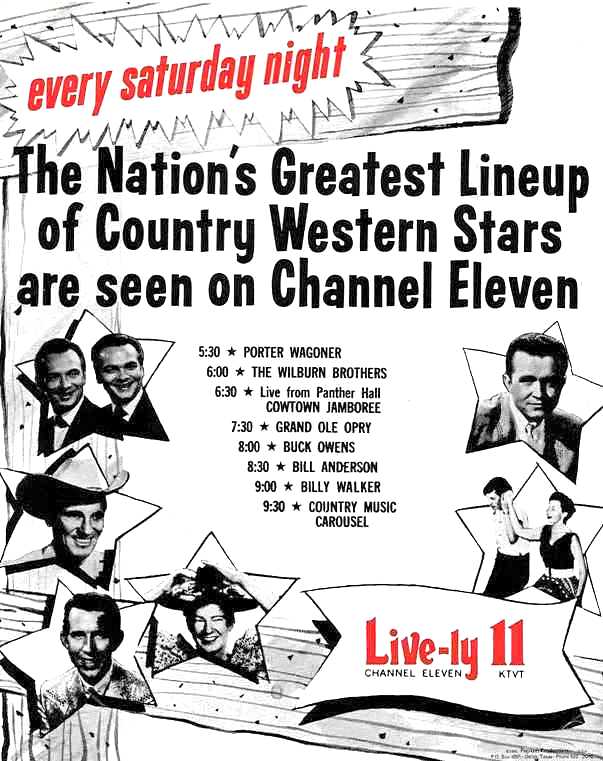
I came across these ads in some sort of local country music publication called “Country and Western — The Sound That Goes Around the World” (1969). Sprinkled amongst bios and photos of country stars are lots of local ads. One of the (non-radio) ads that caught my attention was one for the Saturday night lineup of country music television shows on KTVT Channel 11. Some of these shows were still on in the ’70s when I used to watch them with my father. (I’m not sure I knew there was ever a live television broadcast from Panther Hall in Fort Worth — “Cowtown Jamboree” — that would have been cool to see.)

country-music-saturday-night_ch-11-1969(click for larger image)

***

The best source for the history of Dallas-Fort Worth radio is, without question, Mike Shannon’s DFWRetroplex.com site.

KBOX was the station that really started it all for country music radio in Dallas; read about its history here.

Info on KYAL 1600 AM is on this page.

Info on KBUY 1540 AM and KCWM 99.5 FM is on this page.

Read about Groovey Joe Poovey here and here and here. See a slideshow of photos of him while listening to his GREAT version of “Deep Ellum Blues,” here.

Click pictures for larger images.

*

Copyright © 2015 Paula Bosse. All Rights Reserved.


Cole Park Storm Water Detention Vault

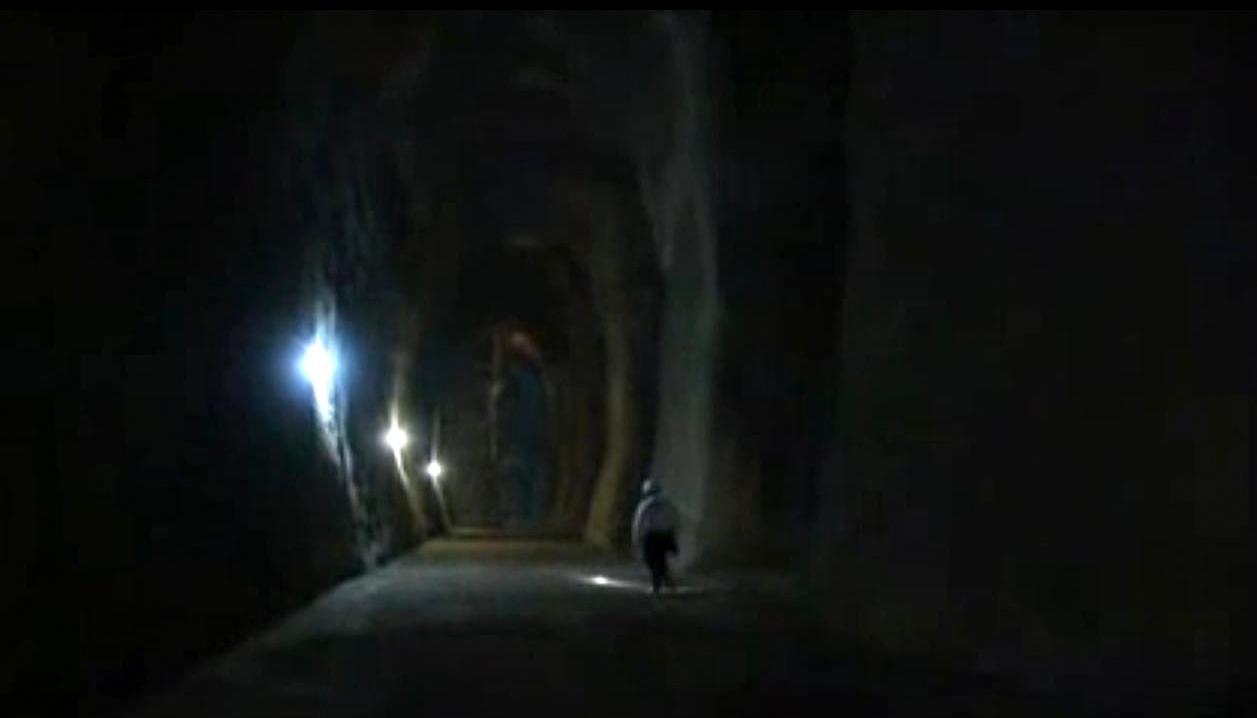
water-detention-vaultWhy, yes, this IS in Uptown…

by Paula Bosse

Underneath Cole Park (which is behind North Dallas High School and between Cole and McKinney), is a “storm water detention vault” — a cavernous space where storm water runoff goes when the capacity of the Mill Creek storm sewer system has been exceeded. It can hold 71 million gallons of storm water. …71 million gallons!

From a 2014 Facebook post from the Turtle Creek Association:

Completed in 1993, the vault’s 13 chambers, each of which rises five stories tall and runs the length of more than two football fields, are designed to fill with water during extreme rainfall. These massive vaults capture the storm water from Central Expressway and slowly release it into Turtle Creek via the Mill Creek Outfall by the footbridge in William B. Dean Park (next to the Kalita Humphrey Theater).

I had no idea that Dallas had anything like this until I saw the short film, below, in which Gilbert Aguilar, Assistant Director of the City of Dallas’ Department of Street Services, takes us on a tour of the “detention vault.” This is an absolutely mind-blowing look at something very, very few Dallasites know about. The City of Dallas probably wouldn’t be willing to grant access to moviemakers, but, seriously, this would make an INCREDIBLE movie set — perhaps less aesthetically appealing than the sewers of Vienna featured in The Third Man, but what it lacks in character it makes up for in sheer gigantic-ness.

***

Sources & Notes

The video, “Living With the Trinity: Cole Park Vault,” is on YouTube, here. Though not credited in the video itself, it is, presumably, a production of local filmmaker Mark Birnbaum, whose website is here.

Top image is a screengrab from the video.

*

Copyright © 2015 Paula Bosse. All Rights Reserved.

“Experimental” Bus Trip to White Rock Lake — 1925

white-rock-bus_dmn_071625Next stop: White Rock Lake

by Paula Bosse

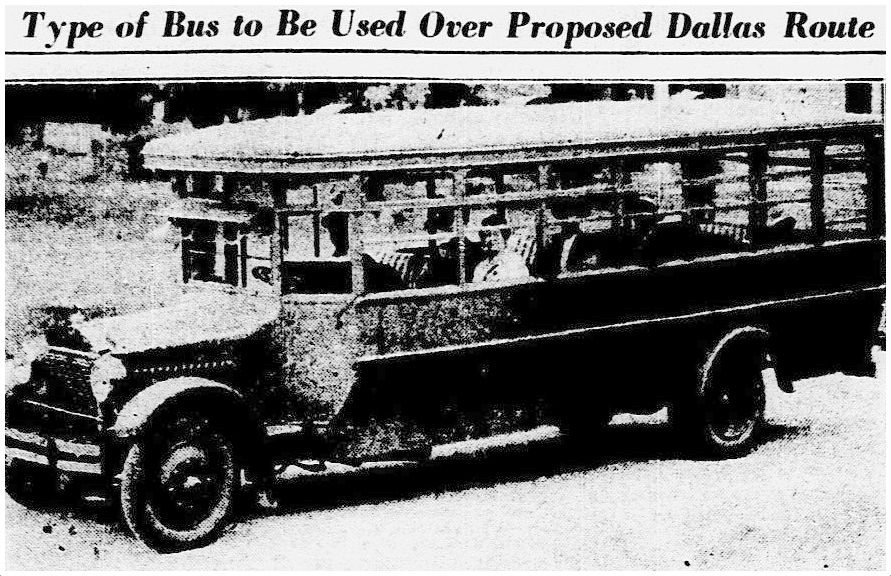
In the 1920s, White Rock Lake was becoming a popular nearby recreation area and beauty spot. It was a bit of a drive to get out there, though. Bus operators were wangling to get the contract to transport tired and pale Dallasites to a nice day out at the lake. The caption accompanying the above photo:

“This city type bus will make an experimental trip to White Rock with city officials, applicants for bus franchise and newspaper men to test adaptability of various routes to bus line operation. Busses [sic] of this type, said C. D. Cain, who has been voted the White Rock franchise informally by the City Commission, will be run on the line when the franchise is formally granted.”

***

Sources & Notes

Photo and caption from The Dallas Morning News, July 16, 1925.

*

Copyright © 2015 Paula Bosse. All Rights Reserved.

Streetcar #728, Main Street — 1954

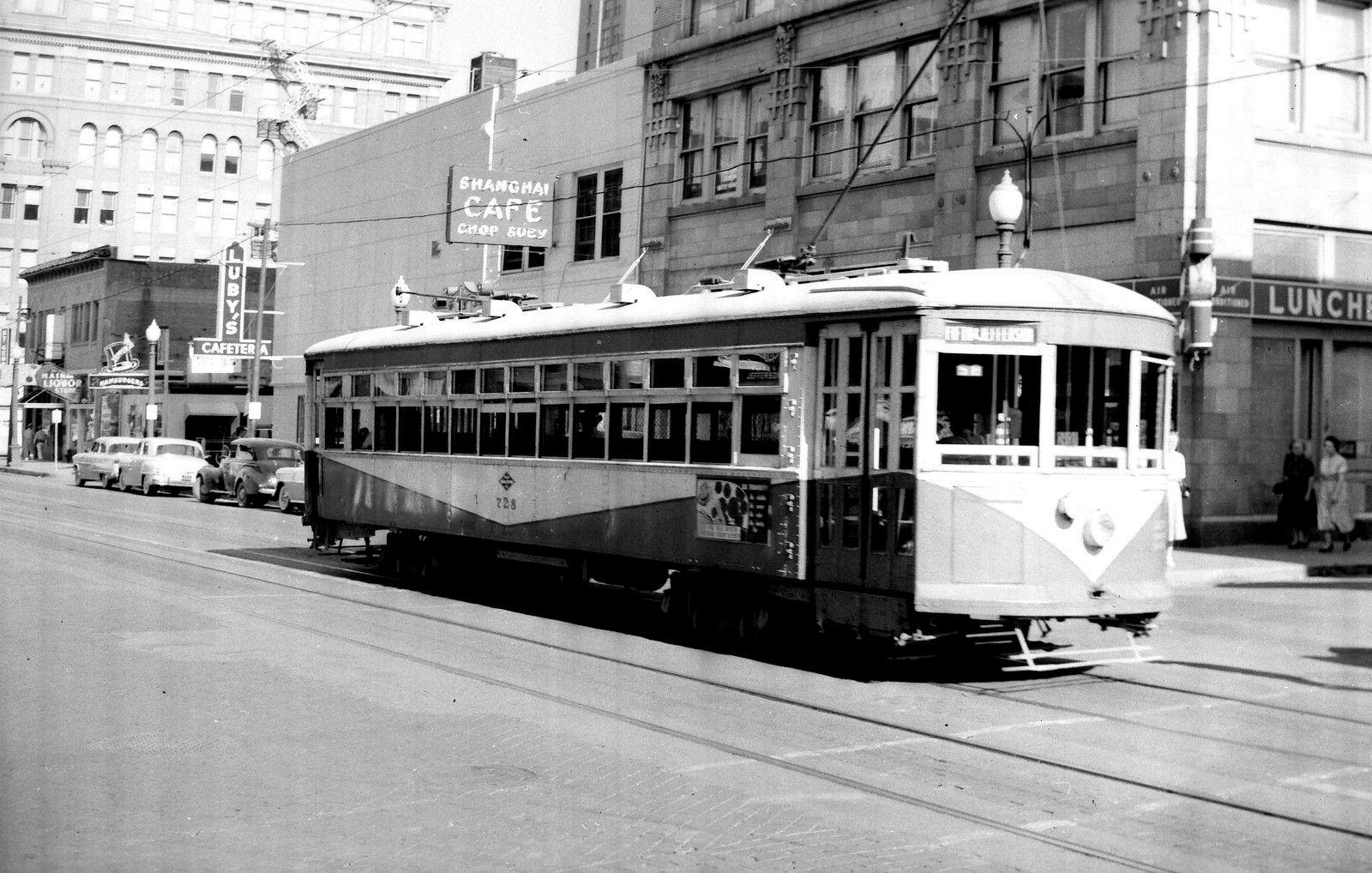
streetcar_1000-block-main_090254_ebay1000 block of Main Street, Sept. 2, 1954

By Paula Bosse

Oh, streetcars. In the photo above, we see car #728 heading east on Main Street on September 2, 1954, having come from, I believe, Oak Cliff (the placard reads “Jefferson”). This photo shows Main Street looking east from, I think, Poydras.

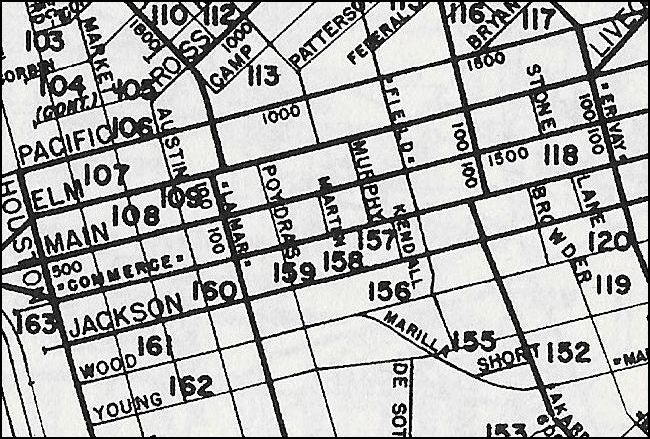
The Shanghai Cafe was at 1004 Main, Luby’s Cafeteria (the second one in Dallas) was at 1006 Main, the Topper restaurant was at 1012 Main, the Main & Martin Liquor Store was at 1016 Main (at Martin Street), and the St. George Hotel was at 1018 Main, all of which can be seen in this photo.

main-st_mapsco-1952-det1952 Mapsco

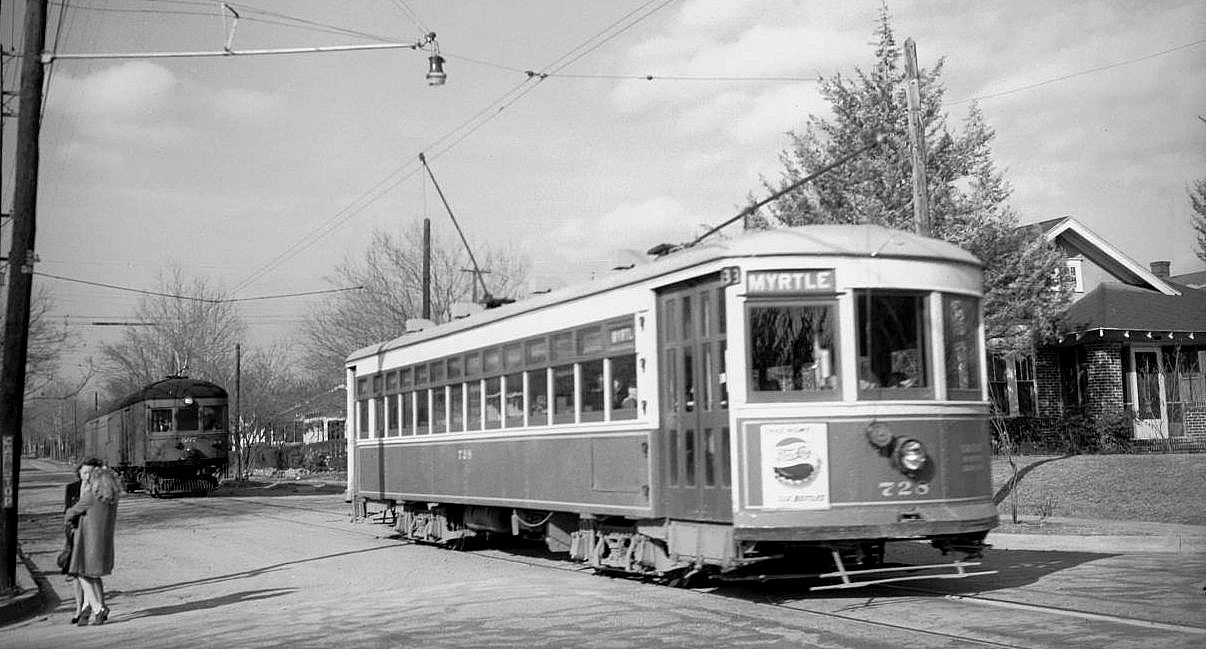
Car 728 wasn’t always “Jefferson,” whiling away its days crossing back and forth across the Trinity. Back in 1945 it was “Myrtle” and was spending a large part of its time in South Dallas.

myrtle_728_1945_denver-pub-lib

I’m not sure where Myrtle/Jefferson ended up, but, sadly, the Golden Age of streetcars ended in Dallas in 1956.

***

Sources & Notes

Top photo from an old eBay listing.

Bottom photo by Robert W. Richardson; from the Western History/Genealogy Dept., Denver Public Library.

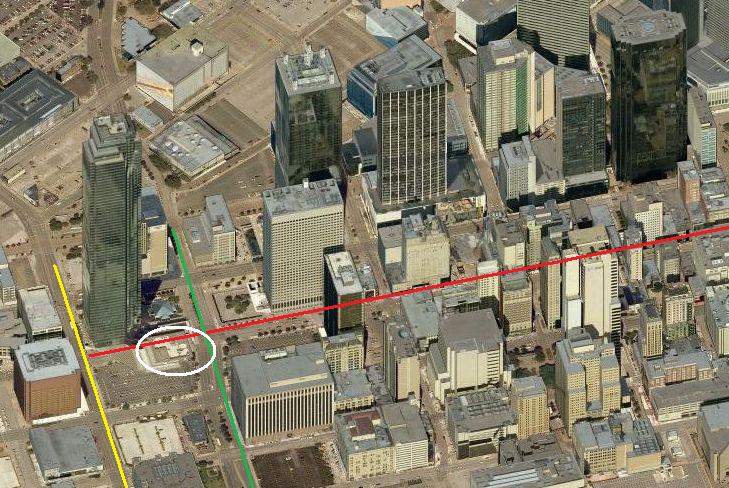
Today, the block seen in the top photo looks completely different. Across the street is where the Bank of America Plaza is now. In the map below, the red line is Main, the yellow is Lamar, and the green is Griffin. The 1000 block of Main Street is circled in white. (Click for larger image.)

1000-block-main_bingBing Maps

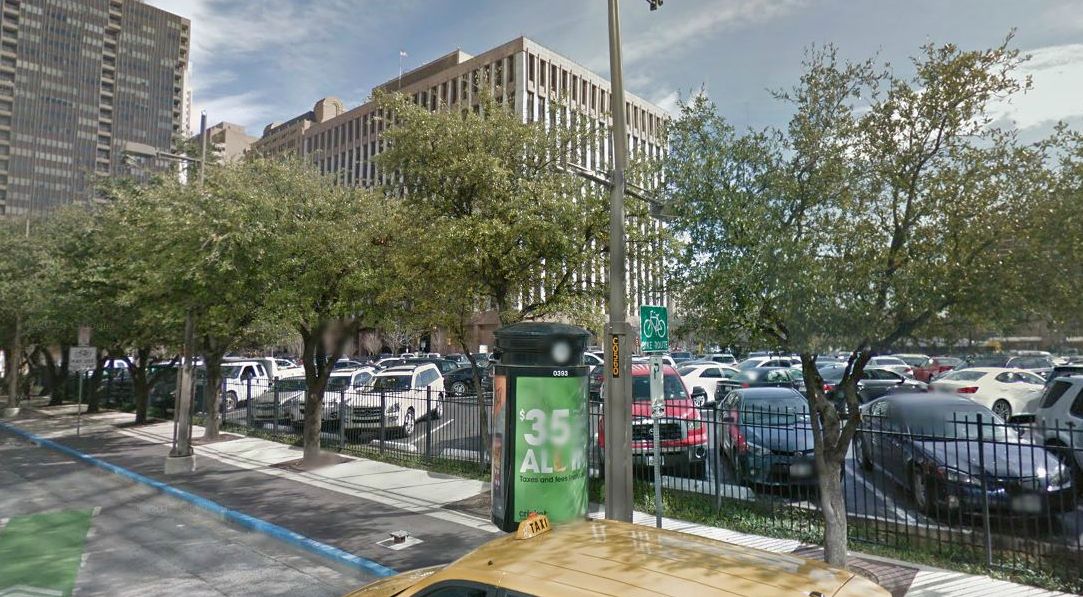
So what’s there now? A parking lot!

1000-block-main_googleGoogle Street View

To read “The Last Day the Streetcars Ran in Oak Cliff” by Ron Cawthon, click here.

*

Copyright © 2015 Paula Bosse. All Rights Reserved.
Elm Street, Looking West from Griffin

elm-west-from-griffin_UTA-special-collThe 1000 block of Elm Street: small-business central

by Paula Bosse

A really incredible view of Elm Street, probably from the late-teens to the early-20s. (Almost all of the businesses seen in this photo were listed in the 1922 city directory.) The landmark businesses seen here — all founded in the 19th century — would be Huey & Philp Hardware, Charles Ott (gunsmith) (the sign can be seen just above the Huey & Philp sign at the right), and down the street on the corner of Lamar, the beautiful 8-story Sanger Bros. department store (now part of El Centro). I know it’s a like hearing a broken record, but I really wish downtown Dallas still had some of this old, quirky flavor. (Click picture for larger image.)

And here’s a shot of the same view, but street-level:

elm-street_UTA

***

Sources & Notes

Photos from the Fort Worth Star-Telegram Collection, Special Collections, University of Texas at Arlington.

If you want to see what the same view looks like today, click here. Personally, I prefer the “before” to the “after.” I’m generally a fan of tall buildings, but all those skyscrapers absolutely decimated street-level businesses, which, sadly, seem to be gone for good. You can’t undo a skyscraper.

*

Copyright © 2015 Paula Bosse. All Rights Reserved.
One of the Victims of the Great Trinity Flood: The T & P Railroad Trestle — 1908

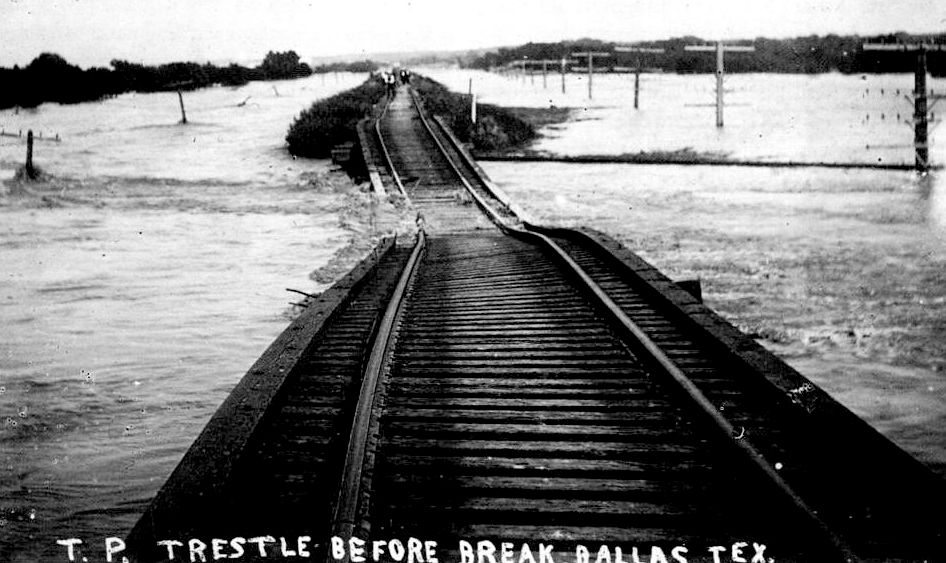
flood_t-p-trestle_1908_legacies“T. P. Trestle Before Break, Dallas, Tex.” (click for larger image)

by Paula Bosse

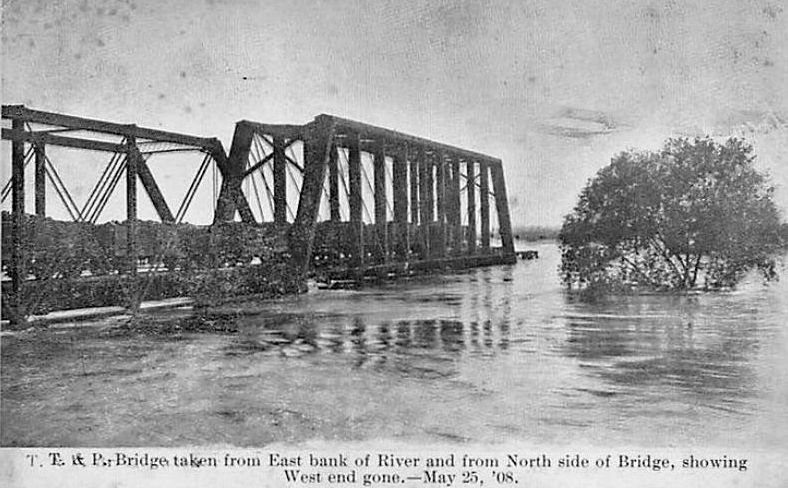
Above and below, photos of the Texas & Pacific railroad trestle spanning the Trinity River, destroyed during the great flood of May, 1908. Five people died in the flooding — in which the Trinity crested at an incredible 52.6 feet — and damage to property was unbelievable. The railroad trestle was just one of numerous victims of the worst flood Dallas has ever known.

flood_t-p-trestle_1908-postcard

***

Photo from the article “After the Deluge: The Impact of the Trinity River Flood of 1908” by Jackie McElhaney (Legacies, Fall, 1999), which you can read here.

Postcard from Flickr, here.

The May 25, 1908 Trinity River flood on Wikipedia, here.

Click pictures for larger images.

*

Copyright © 2015 Paula Bosse. All Rights Reserved.
Dallas: “Interesting To Visit, But No San Antonio” — 1950

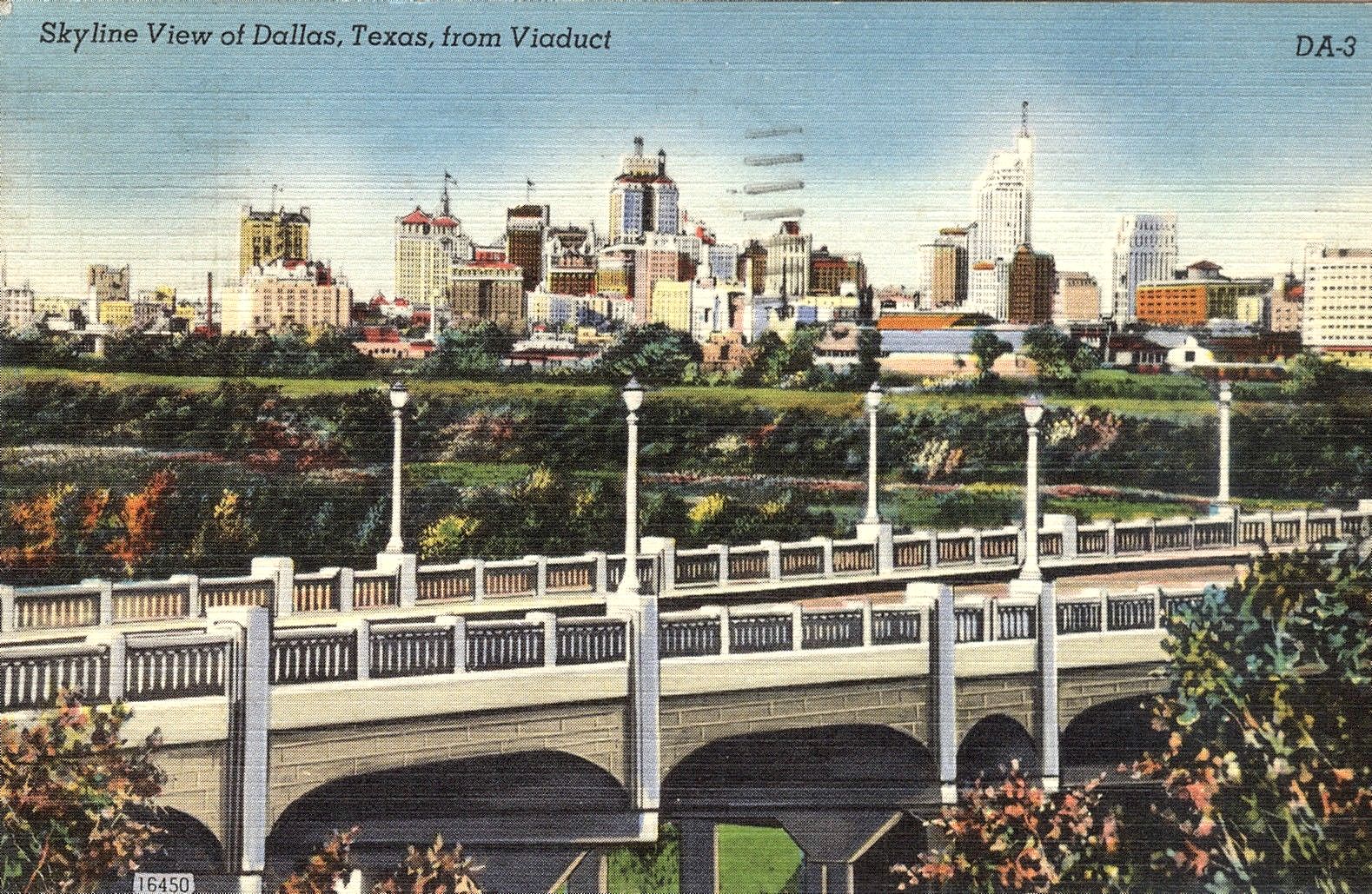
skyline_no-san-antonio_ebayDallas: one of many Alamo-free Texas cities…

by Paula Bosse

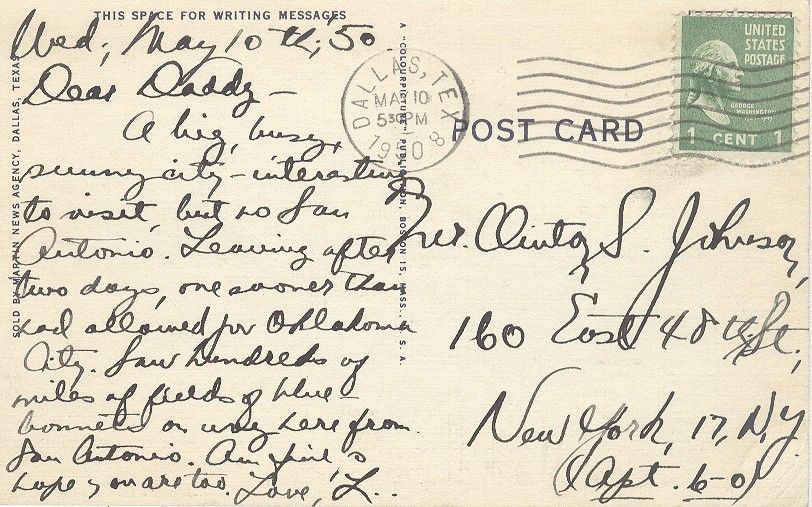
In May of 1950, Clinton S. Johnson of New York City received a postcard from his child who was traveling across Texas. The postcard, showing a “Skyline View of Dallas, Texas, from Viaduct,” said:

Wed. May 10, ’50

Dear Daddy —
A big, busy, sunny city — interesting to visit, but no San Antonio. Leaving after two days, one sooner than had allowed for Oklahoma City. Saw hundreds of miles of fields of bluebonnets on way here from San Antonio. Am fine, hope you are too.
Love, L.

skyline_no-san-antonio_ebay-verso

“Big, busy, sunny, and interesting” — “but no San Antonio.” …I accept that. Who doesn’t love San Antonio? But San Antonio never had a skyline view like that.

***

Sources & Notes

Postcard from eBay.

*

Copyright © 2015 Paula Bosse. All Rights Reserved.
When In Doubt, Get Mom a Hat — 1951

mothers-day_dmn_050351

by Paula Bosse

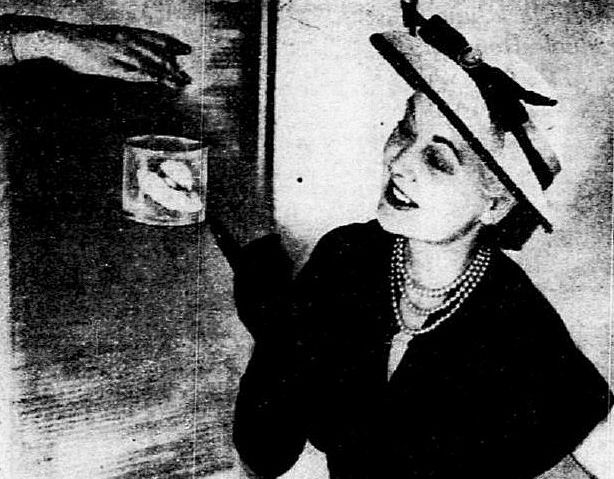
Give Mom a teeny-tiny hat!

Mother’s Day Sure to please everybody’s mother is this attractively packaged Mother’s Day hat certificate that she can use to purchase the hat that is most becoming. The certificate is enclosed with a miniature straw hat in a crystal-clear plastic hat box. W. A. Green Company.

Happy Mother’s Day!

***

Sources & Notes

From an advertorial appearing in The Dallas Morning News on May 3, 1951.

*

Copyright © 2015 Paula Bosse. All Rights Reserved.