Flashback : Dallas

A Miscellany: History, Ads, Pop Culture

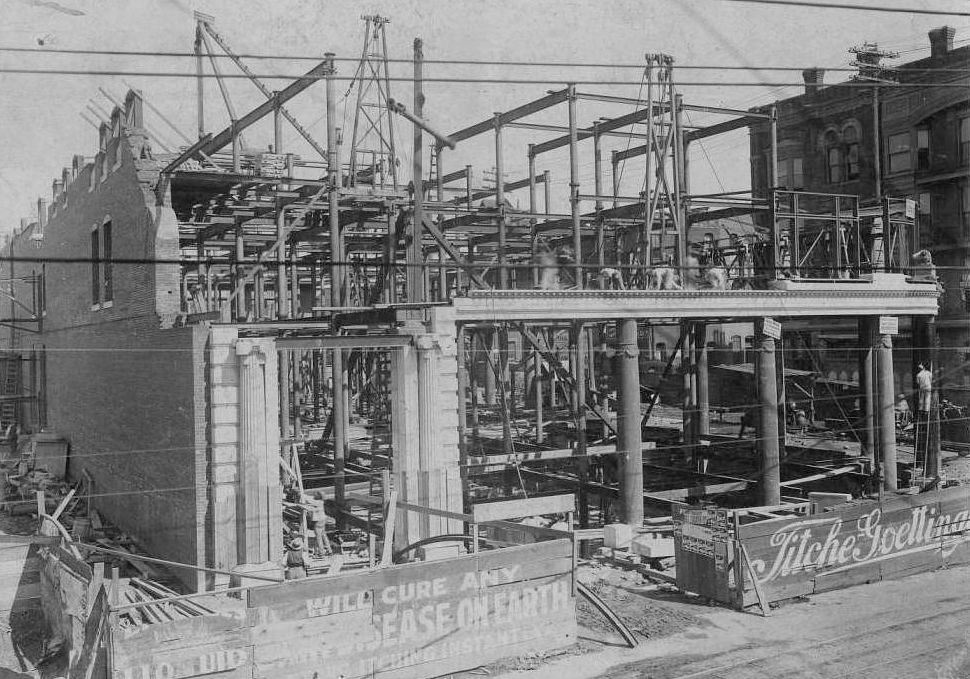
The Wilson Building Under Construction — 1902

wilson-bldg-construction_cook_degolyer_smu_1902_bwSlowly but surely…. (DeGolyer Library/SMU)

by Paula Bosse

The Wilson Building is one of Dallas’ most beautiful buildings. Designed by the immensely influential Fort Worth firm of Sanguinet & Staats, the building opened in 1904, with its most notable tenant being the Titche-Goettinger department store, which occupied the basement and first two floors.

From the Dallas Public Library’s website:

“J. B, Wilson, a wealthy Dallas cattleman, built this French Renaissance/Second Empire (Beaux Arts) style building, modeled after the Paris Grand Opera House. Craftsman from all over the country came to contribute to the building finish, exterior and interior, with a mahogany and marble interior finish. It was the first eight-story building in Texas. The building originally housed the Titche-Goettinger department store on the bottom floor, with the upper floors used as office space. In 1911, Sanguinet & Staats built a twelve-story annex to the building, which was raised five floors in 1957.”

It was listed in the National Register of Historic Places in 1979.

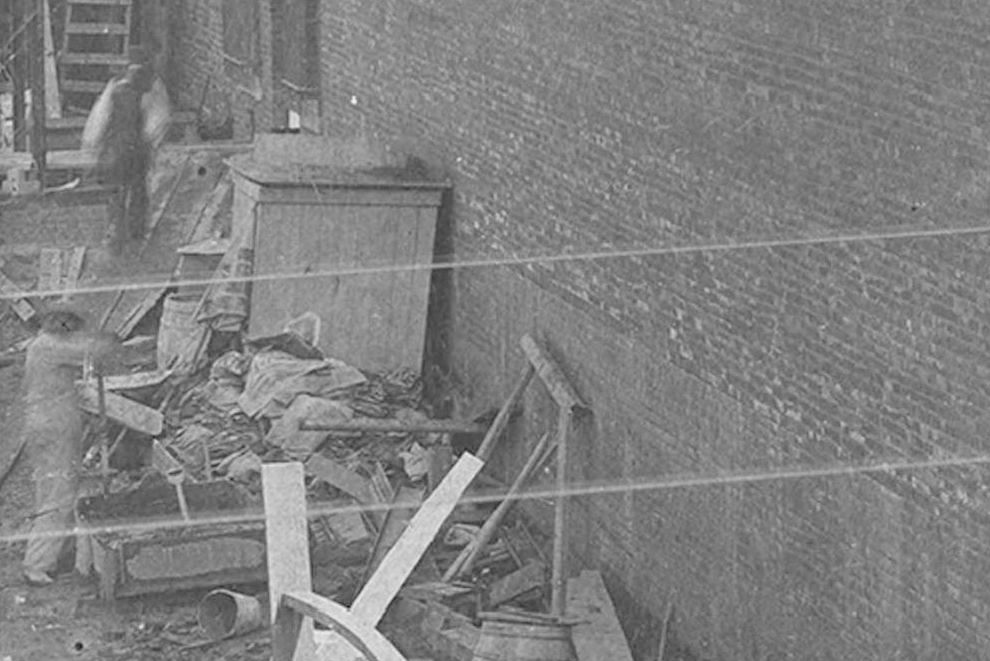
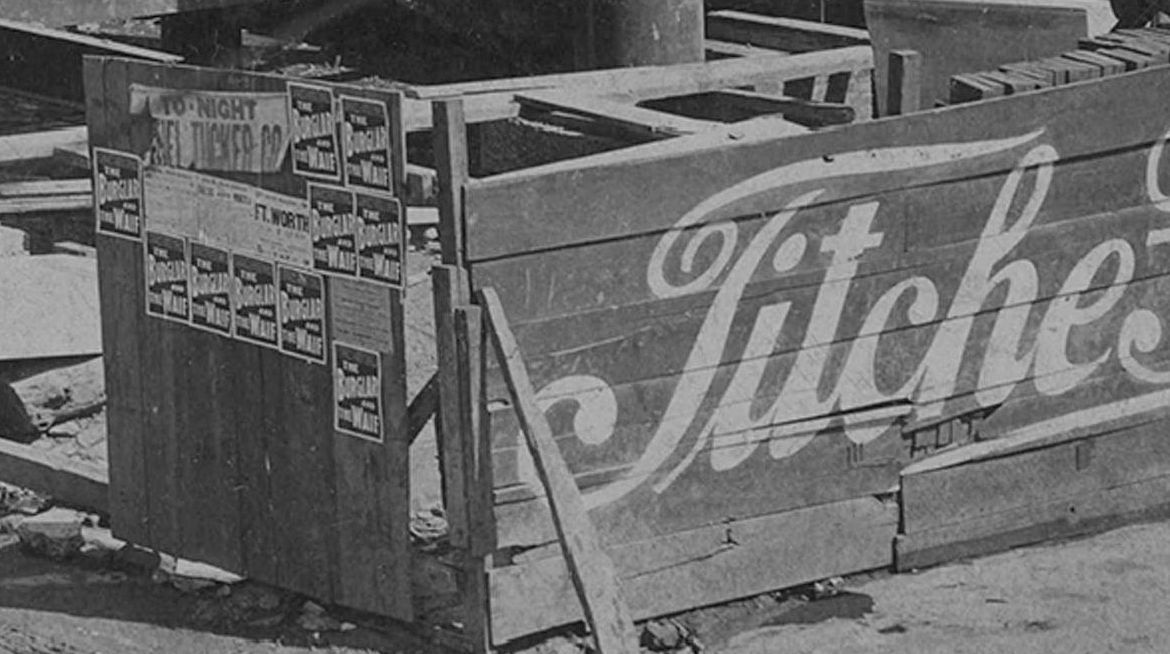
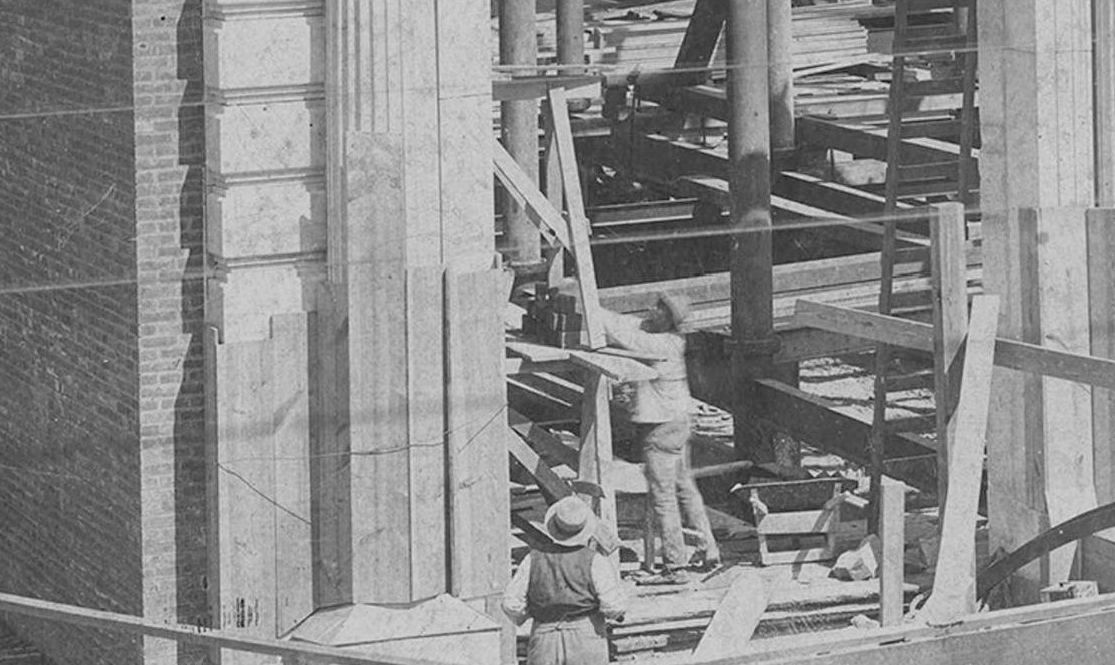
The photo above is part of the incredible George W. Cook Dallas/Texas Image Collection at SMU’s wonderful DeGolyer Library (see note below). Below are a few enlargements of parts of the original photo to see more details. (Click for larger images.)

wilson-bldg-constuction_cook_degolyer_smu_1902-det7_bw

wilson-bldg-construction_cook_degolyer_smu_1902-det4_bw

wilson-bldg-construction_cook_degolyer_smu_1902-det5_bw

wilson-bldg-construction_cook_degolyer_smu_1902-det3_bw

wilson-bldg-constuction_cook_degolyer_smu_1902-det6_bw

wilson-bldg-construction_cook_degolyer_smu_1902-det2_bw

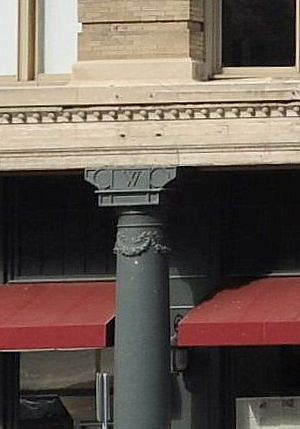
wilsonbldg-det

wilsonbldgHere it is today. Beautiful. Click photo for an image so colossally large that you can easily check out all the fabulous intricate architectural details. (Photo by Joe Mabel.)

***

Sources & Notes

This photo (titled “Building Construction at the Intersection of North Ervay and Elm Street”) is from the incredible George W. Cook Dallas/Texas Image Collection, housed at the DeGolyer Library, Central University Libraries, Southern Methodist University; it can be viewed here. It is not currently identified as being the Wilson Building. (UPDATE: The photo is now titled “Wilson Building Construction, Intersection of North Ervay and Elm Street.” And this post is actually cited in the description! Thank you, DeGolyer Library!) (I have altered the color of these images as they were appearing harshly yellow in my photo editor — please see DeGolyer page for correct color of the original gelatin silver photograph.)

The DeGolyer Library is one of Dallas’ very best repositories of important historical images and papers, and just knowing that they are scanning this fantastic collection of Dallas ephemera is making me a little dizzy. So many incredible images!! An exhibit of selected items from the collection opens TOMORROW (Jan. 30, 2015) — details are here.

Credit and photo info for the gigantic present-day photo by Joe Mabel is here.

Read about Sanguinet & Staats here.

More on the Wilson Building from the Dallas Public Library, here. Check out the photo of the excavation of the site before construction began at the top of the page.

And what does Wikipedia say? See here.

*

Copyright © 2015 Paula Bosse. All Rights Reserved.

The Dallas Aquarium: The Building Emblazoned With Seahorses — 1936

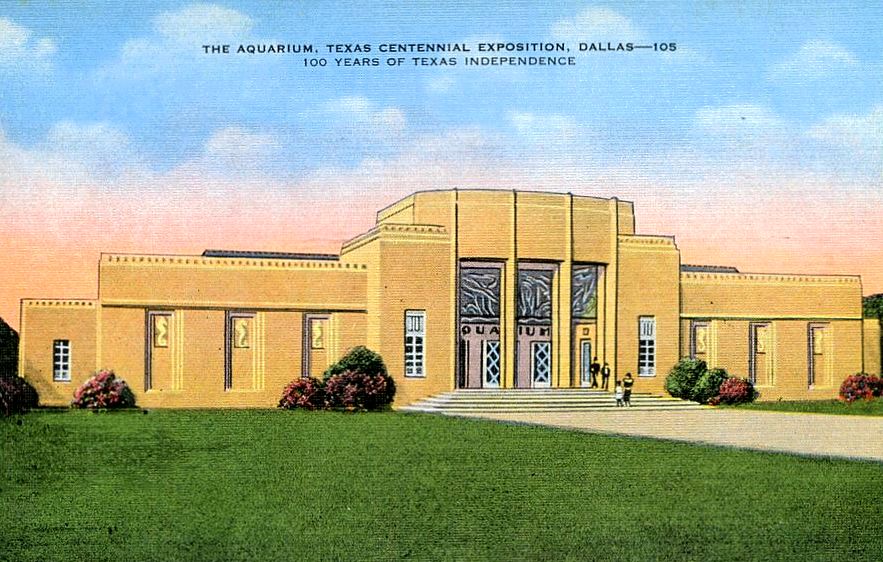
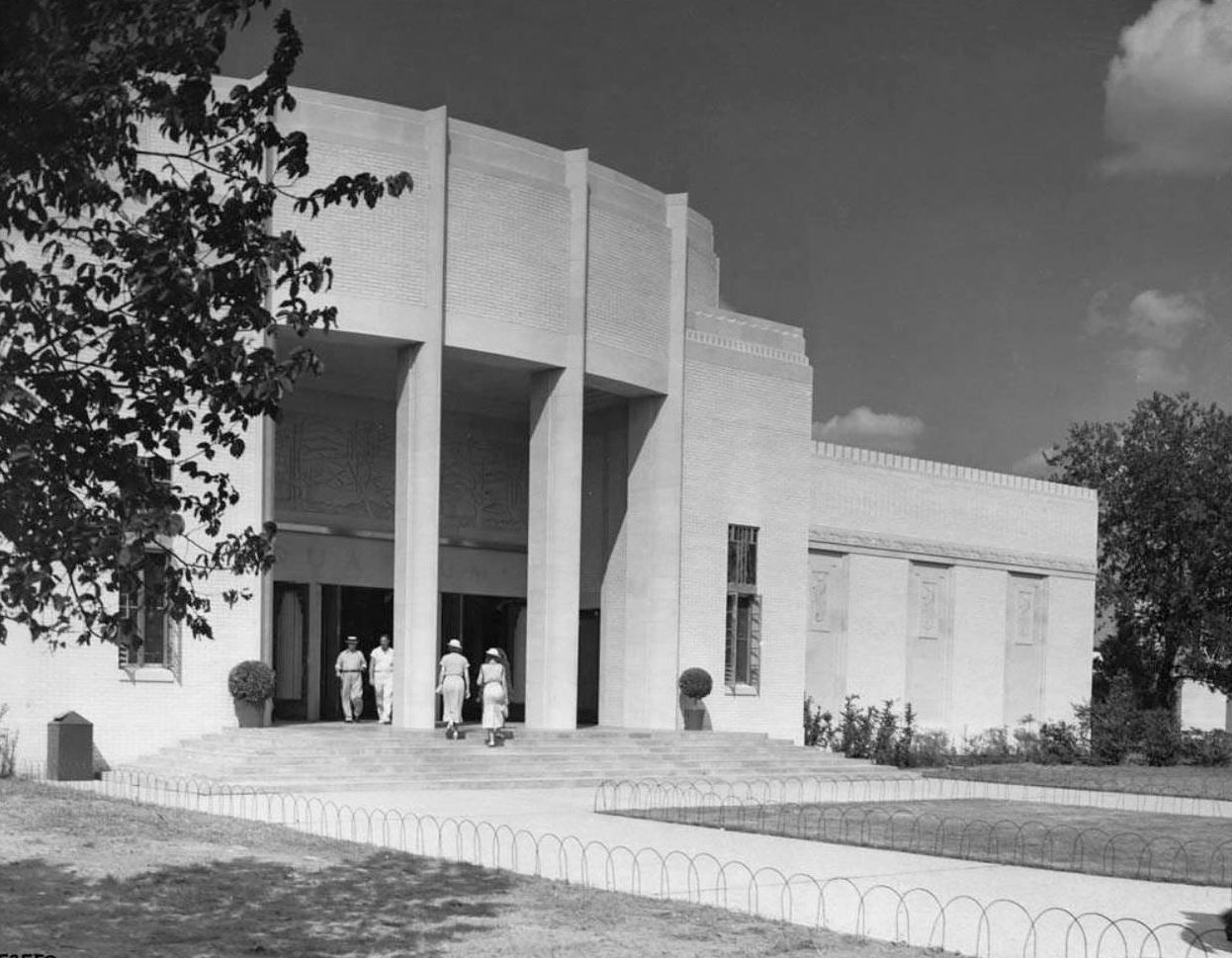
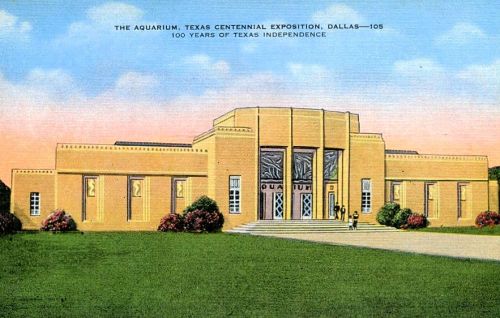
tx-centennial_aquariumThe Dallas Aquarium at Fair Park, 1936… (click for larger image)

by Paula Bosse

Out of all the buildings at Fair Park, the one I have the fondest memories of is the Dallas Aquarium, one of the buildings built in 1936 for the Texas Centennial Exposition which was specifically intended to be a permanent structure which would be available year-round to the citizens of Dallas, well after the Centennial had ended (some of these other “civic buildings” included the Museum of Fine Arts, the Museum of Natural History, the Hall of State, the bandshell, etc.). The Centennial buildings were designed by different architects, usually working in teams — the aquarium was designed by Fooshee & Cheek (best known for their previous triumph, Highland Park Village), Hal B. Thomson, and Flint & Broad. It ended up costing the city about $200,000 ($50,000 over the initial budget), and tussles with the Park Department and the City Council over its budget and space requirements meant that at various times it was suggested that the aquarium find a home at the Marsalis Park Zoo in Oak Cliff rather than at Fair Park, or that it just be shelved altogether.

fair-park-aquarium_1936

But everything worked itself out in the end, and its popularity at the Centennial was huge. HUGE. Most people in our part of the country had never been to an aquarium and had never seen fish outside of a lake or river or hatchery. According to reports in the newspapers during its construction in early 1936, not only was the Dallas Aquarium the first aquarium in Texas, it was also only the 12th aquarium in the entire United States — and it was the only one in the country in a “strictly inland city.” So unless visitors to the Centennial that year had traveled extensively, chances were slim that they’d ever seen anything like this.
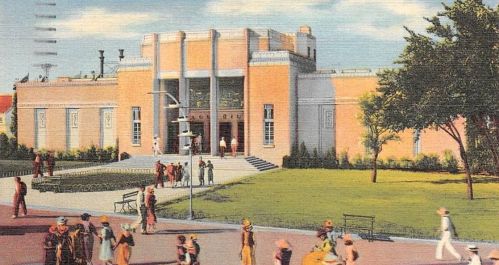
fair-park_aquarium_postcard

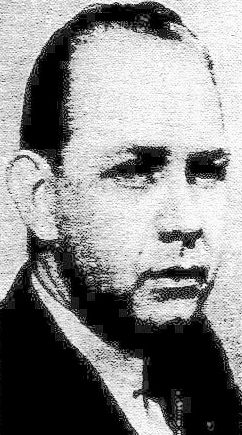
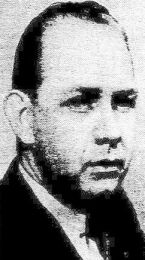
At the time that plans were being discussed for the Fair Park facility, there was something of a tropical fish fad going on around the country. The Dallas Aquarium Society — a small group of “tropical fish fanciers” — was organized in June, 1935, and in September of that year, they had enough pull to put on an exhibition of their personal collections in small tanks on an upper floor of the Dallas Gas Company. People who had never before seen anything but a goldfish in a fish bowl were fascinated, and there were several “gee-whiz” articles in the papers describing the fishy wonders that could be found that fall at the gas company. The president of the Dallas Aquarium Society was Pierre Fontaine — an advertising man and “authority on marine life” — and he must have made quite an impression with the Centennial board, because in February of 1936, he was chosen to be the head of the already-under-construction Dallas Aquarium. (Though apparently a hobbyist when appointed, Fontaine served for decades as the respected director of the Dallas Aquarium — and later the Dallas Zoo.)
aquarium_fontaine_1936
Pierre Fontaine, 1936

The fish on display during the Centennial were almost exclusively freshwater fish. Not only would it have been prohibitively expensive to ship the thousands and thousands of gallons of salt water that would have been needed, it would also have been extremely costly to purchase and maintain the special non-corroding equipment necessary to equip such tanks. But Fontaine must have pushed, because the city gave the go-ahead for a paltry 500 gallons of salt water from the Gulf to be shipped up for the opening of the Exposition, so at least a few exotic saltwater-dwelling creatures and plants were able to share their DeMille-moment in the Centennial spotlight with their freshwater brethren. (At the time, “artificial” salt water was not yet an option as it now is, and only natural salt water could be used.)
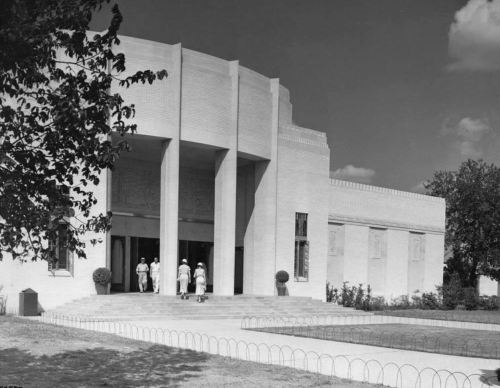
aquarium_art-institute-of-chicago_1936Art Institute of Chicago Collection

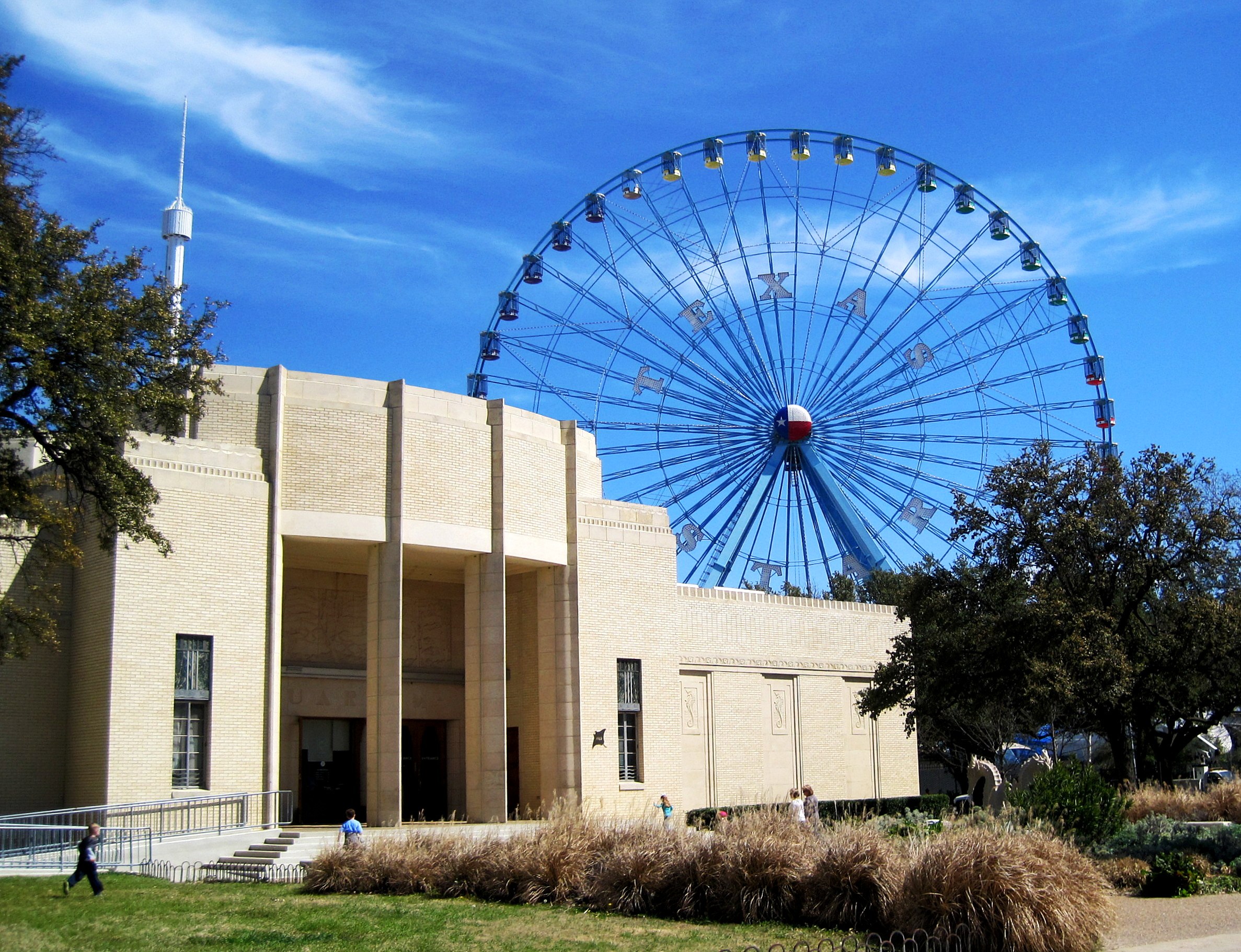
The 1936 Centennial aquarium building still stands. After extensive renovation, it now houses the “Children’s Aquarium,” which I haven’t visited, but which I’m confident is entertaining and educational. I’m pretty sure, though, that it is a completely different aquarium from the one of my childhood memories (when museums were basically designed for adults and were rarely “interactive”). I loved going to the aquarium. I remember it being dark and cool and kind of dreamy inside. Mysterious and exotic. I loved the little neon fish that playfully (or nervously) darted all around the tanks, the big, slow-moving fish that looked back at me like nonchalant cud-chewing cows in a field, the tiny skittering crabs, the turtles, the undulating plants … I loved all of it.

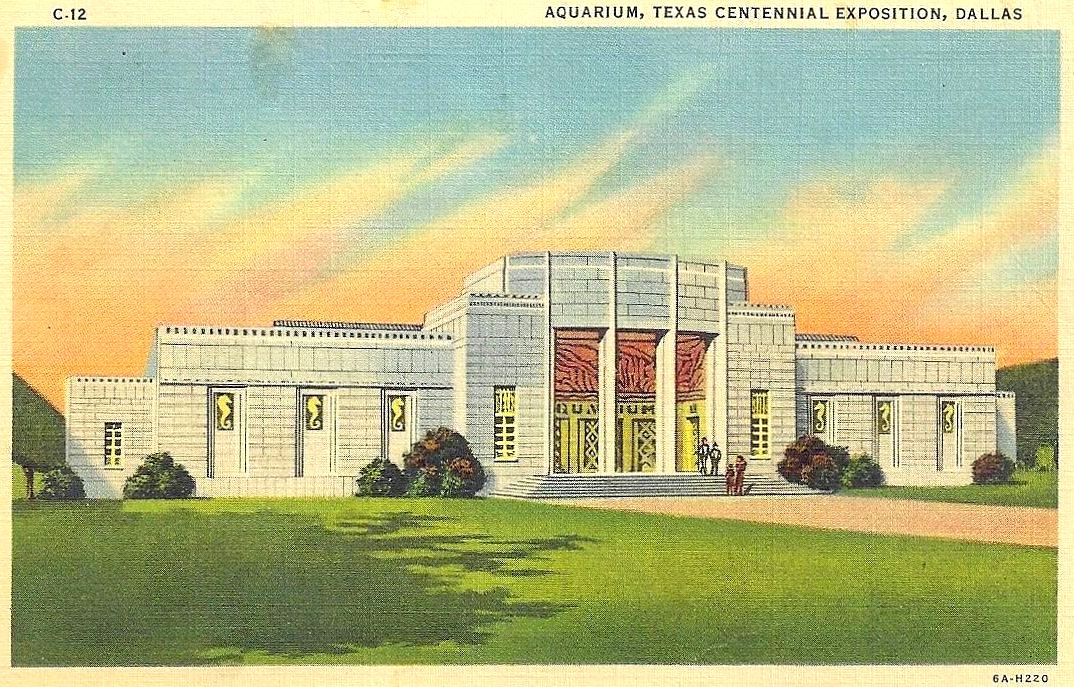
But what I really remember are the seahorses on the side of the building — whichever architect came up with that perfect little detail deserves a special place in heaven. I loved them as a child, and I love them now. The acres and acres of art deco fabulousness created for the Texas Centennial are absolutely thrilling, but those solemn and quietly elegant seahorses all in a row on the side of the Dallas Aquarium will always be my personal favorite little nostalgic detail in the whole of beautiful, beautiful Fair Park.
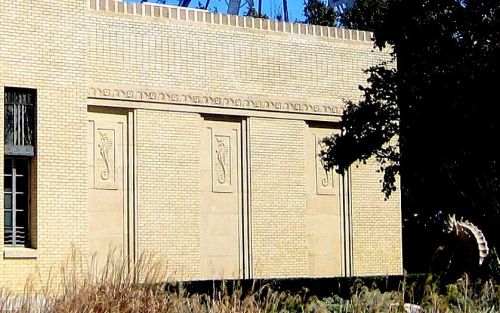
seahorses_pb-det

The Aquarium today (click to enlarge) / photo: Paula Bosse

*

UPDATE — Oct. 2020: It has been announced that the Children’s Aquarium will be closing permanently. This news is almost as upsetting as seeing Big Tex in flames.

UPDATE — Sept. 2021: Good news! It looks like the aquarium will be reopening in time for the 2021 State Fair of Texas. Read about it here.

***

Sources & Notes

Top two images are postcards based on the original architectural drawings, issued before the aquarium was built, found somewhere on the internet.

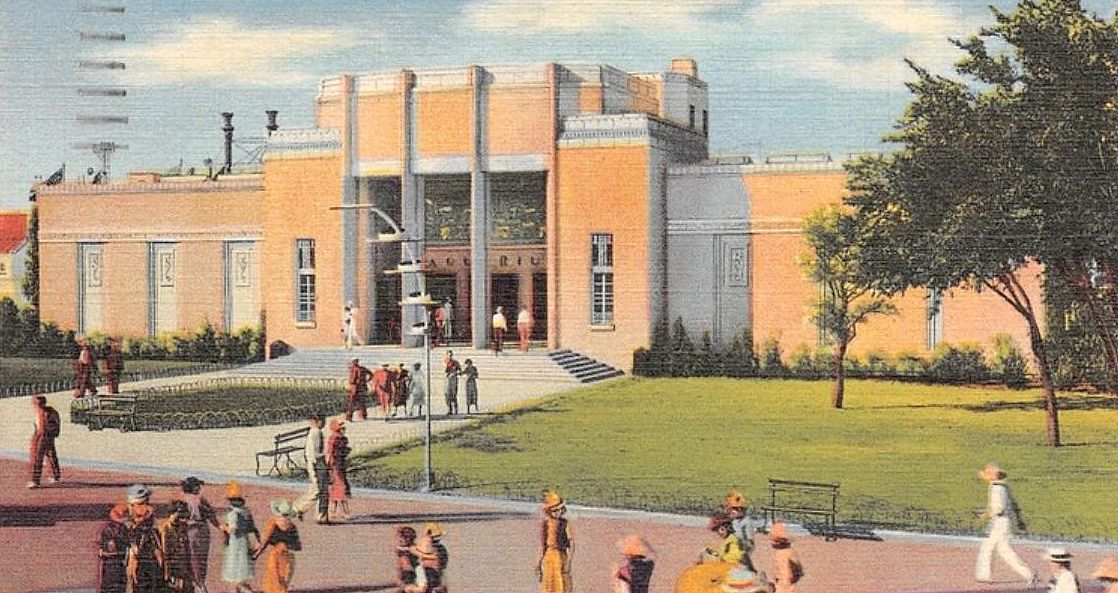
The third color image is a postcard from a photograph taken after the Centennial was underway.

Photo of the exterior of the present-day aquarium was taken by me in 2013.

The website for the Children’s Aquarium at Fair Park is here.

For an absolutely FANTASTIC well-illustrated article titled “The Metamorphosis of the Dallas Aquarium at Fair Park Into the Children’s Aquarium at Fair Park, With Historical Annotations” by Barrett L. Christie, Aquarium Supervisor, see p. 5 of the “Drum & Croaker” PDF, here. I really loved this article — especially the “Annotations of Historical Interest” at the end (p. 14). Seriously — this is a great read. I’m as layman as you’re gonna get regarding this topic, and I was fascinated by all of this. I’m going to have to write about that mysterious severed human leg found on the roof in 1954!

*

Copyright © 2015 Paula Bosse. All Rights Reserved.

Love Field, The Super-Cool 1950s Era

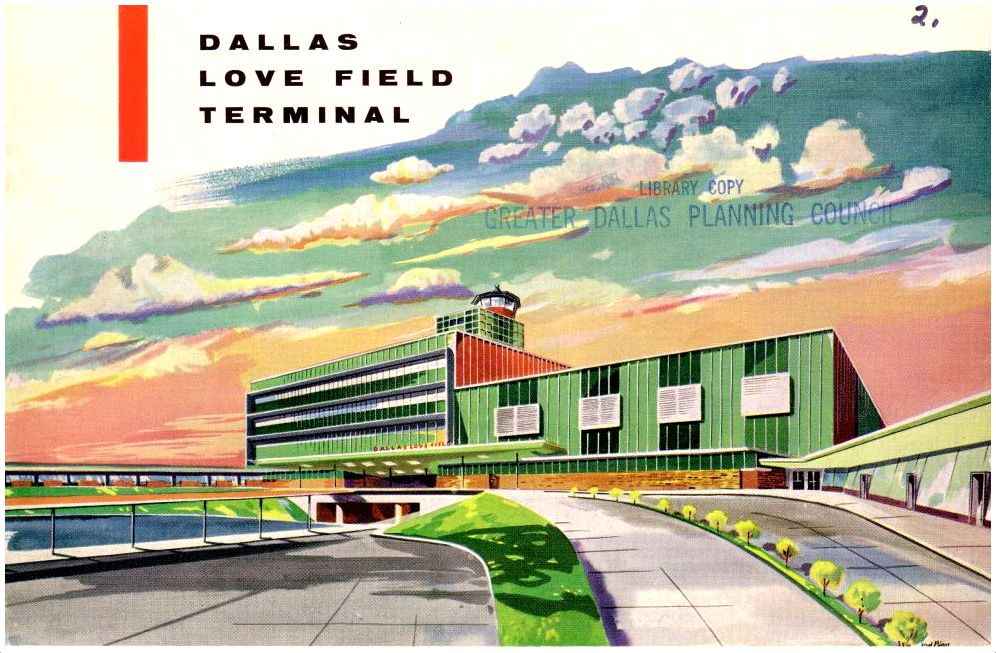
love-field_1957Welcome to Dallas Love Field!

by Paula Bosse

Above, fantastic drawing, 1957.

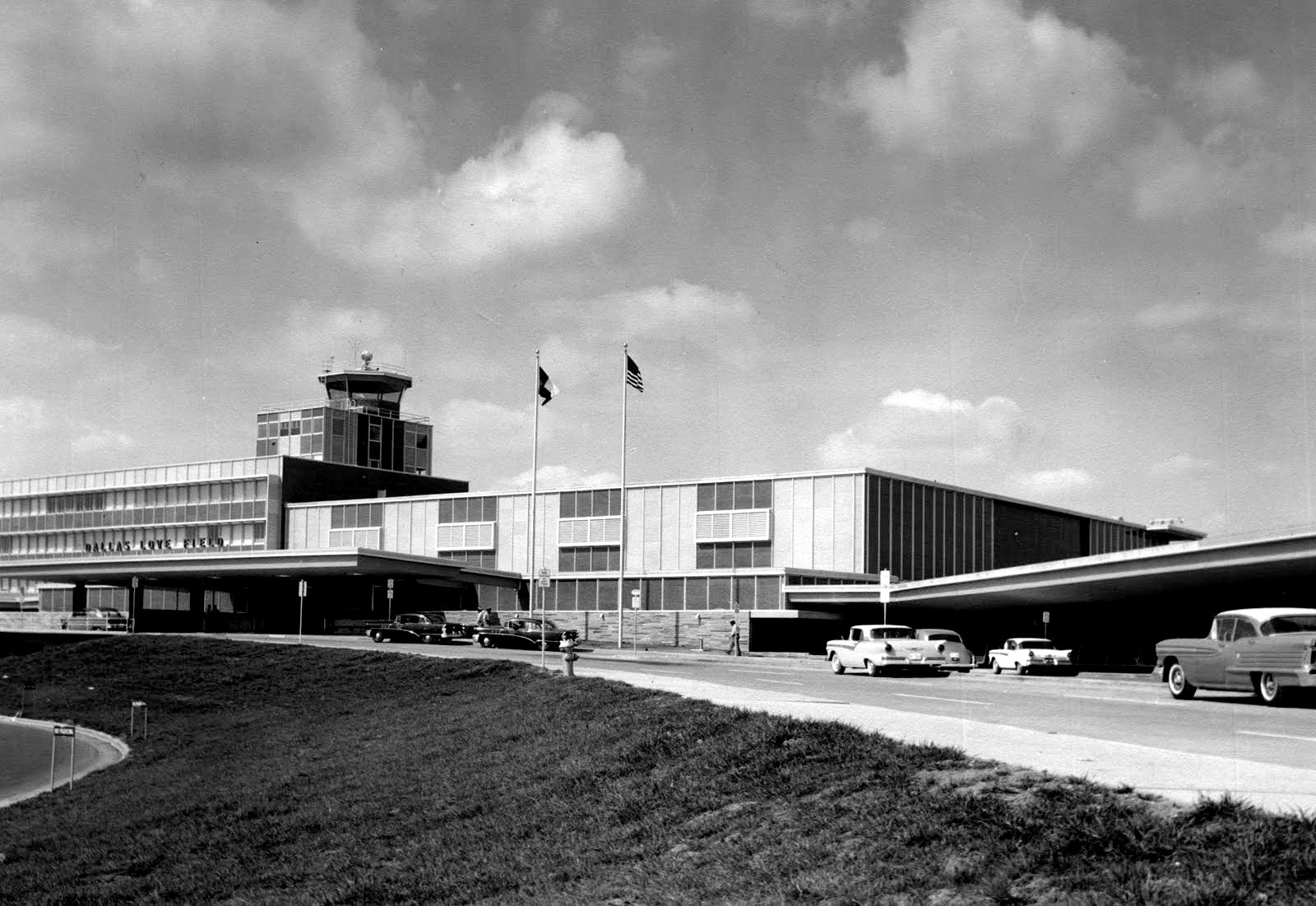
Below, fantastic photo, 1957.

love-field_terminal_1957

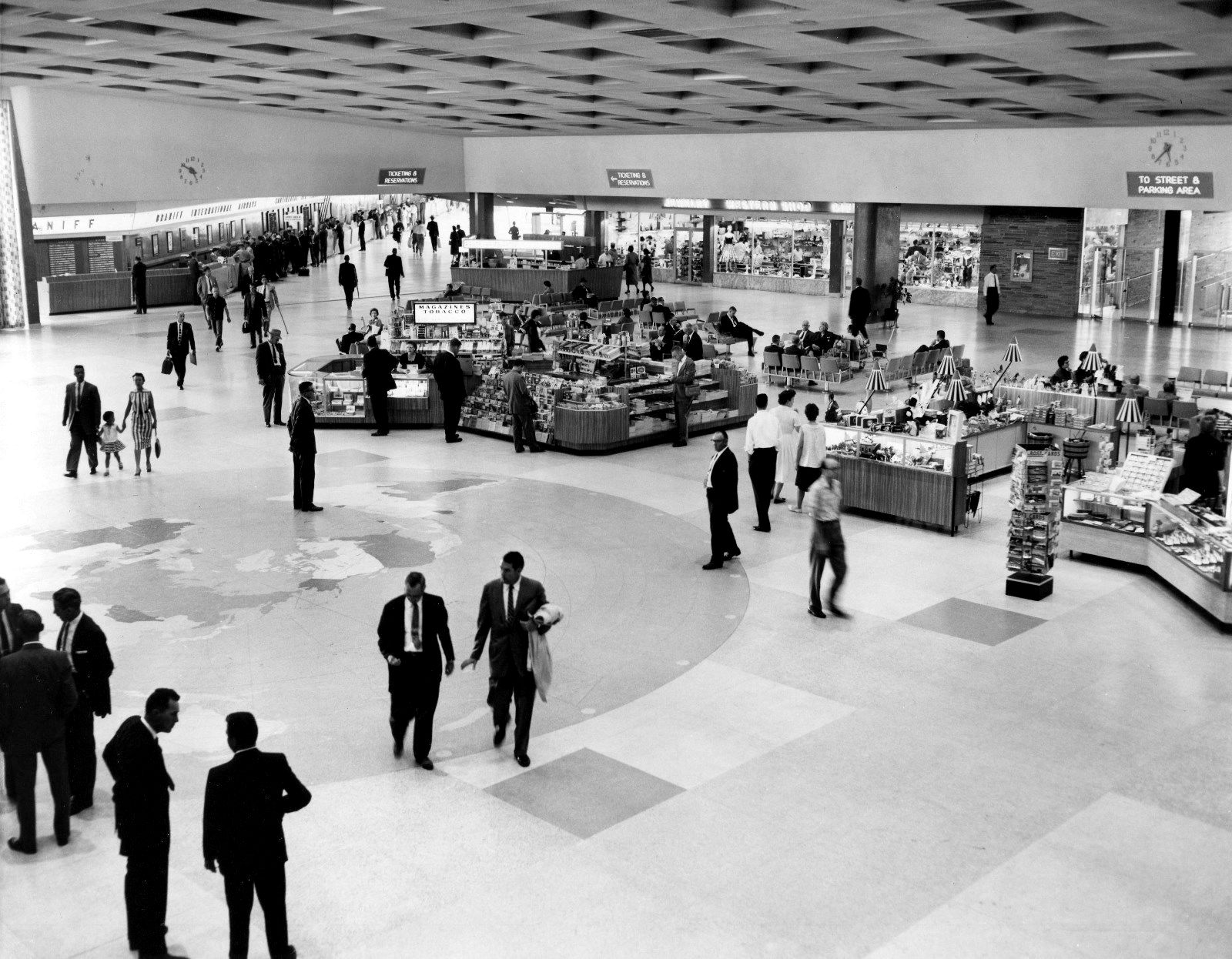
And, below, fantastic-er photo. 1959. Just too cool.

love-field_1959_LARGE

***

Sources & Notes

Top two images completely lifted from a blog post by architect Jacob Haynes, here.

Bottom image from … somewhere else, long forgotten.

*

Copyright © 2015 Paula Bosse. All Rights Reserved.
A Post Office on the Fairgrounds?

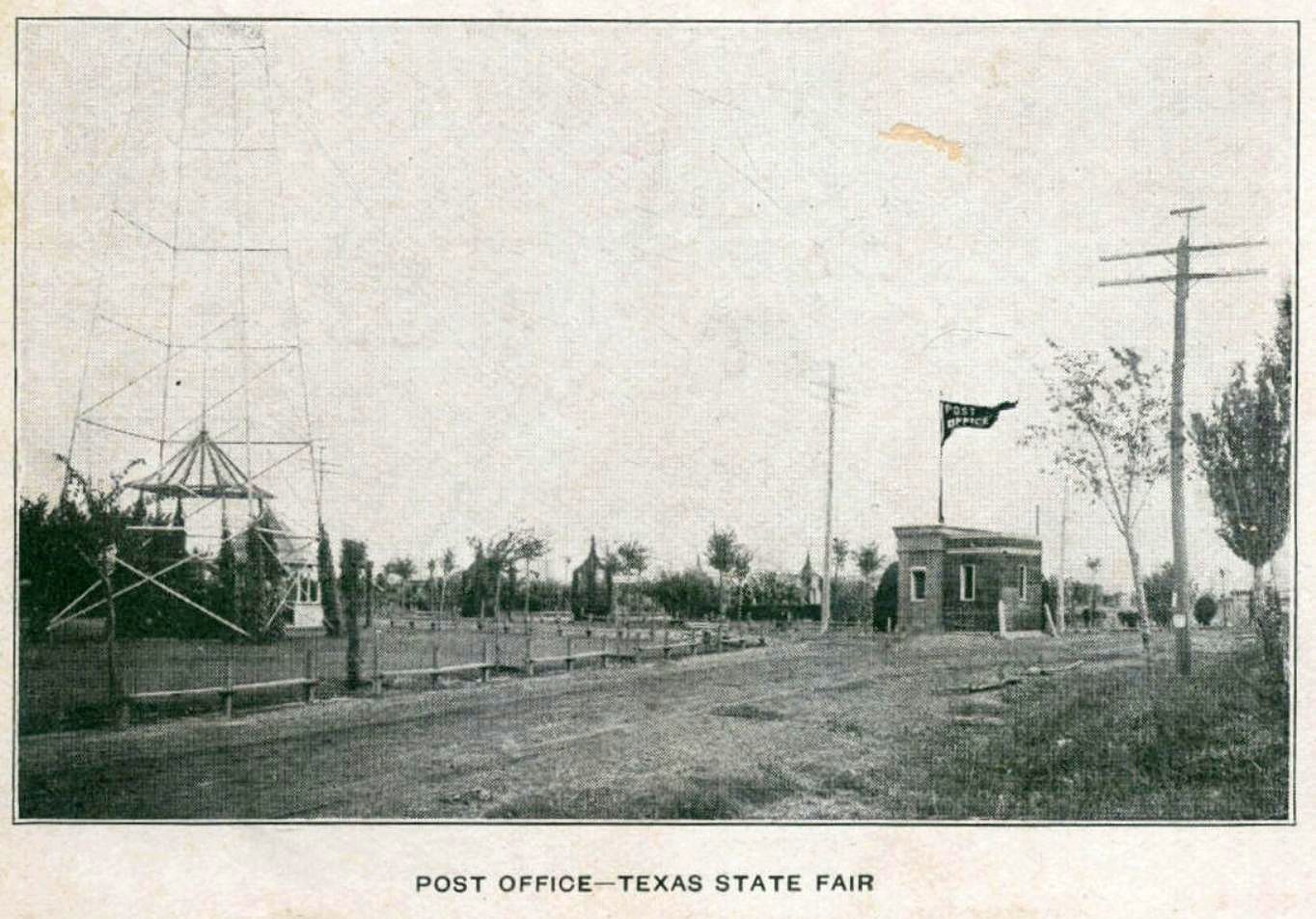
tx-state-fair_post-office_postcardTeeny-tiny post office at Fair Park… (click for larger image)

by Paula Bosse

I’m not really sure about this. It’s a postcard with a photograph captioned “Post Office — Texas State Fair” on the front, and “Missouri, Kansas & Texas Ry. Co.” printed on the back.

mkt_post-office-back

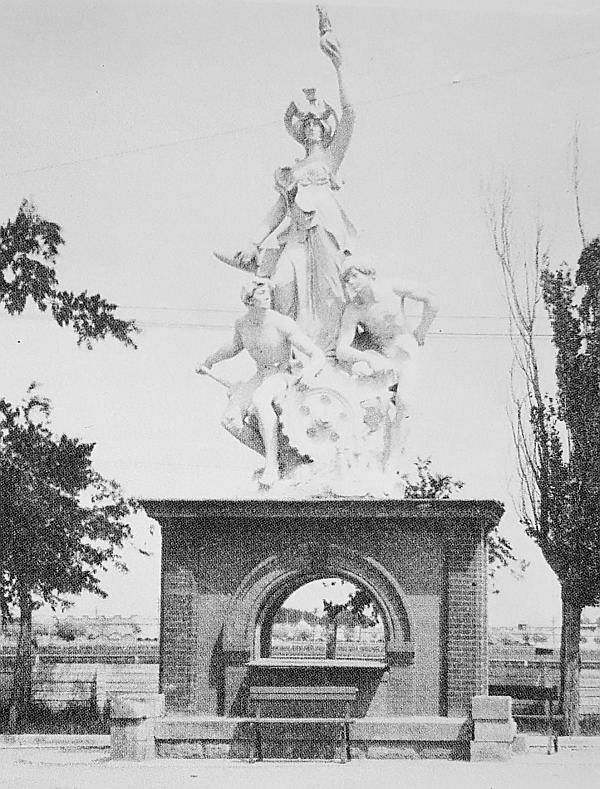
Was there a post office on the fairgrounds? After much googling, I came across a photo of a huge statue atop an arch in the book Fair Park by Willis Cecil Winters. Winters writes that this masonry arch […] served the fairgrounds as a post office.” I’m not sure how that worked, but it’s interesting.

fair-park_arch_statuary_post-office_dallas-rediscovered

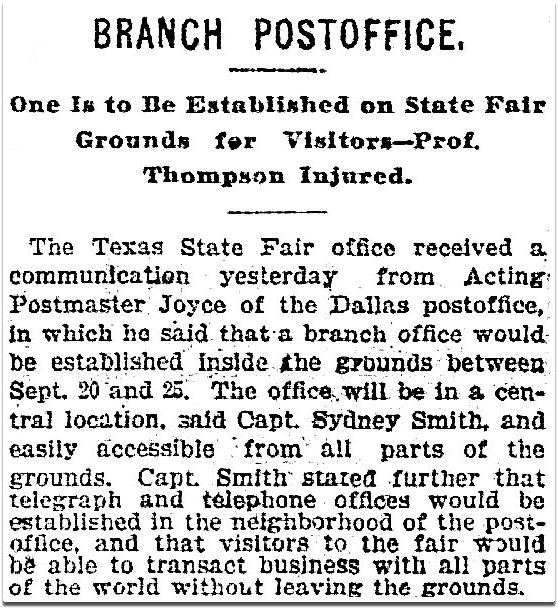
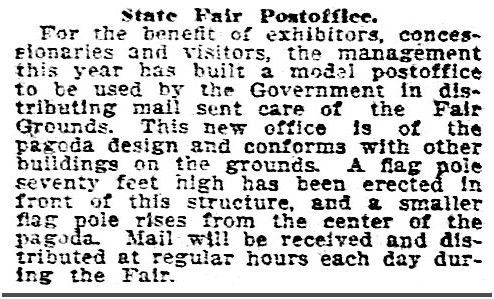
I did find a few mentions of a post office on the grounds of the state fair. Seems that it was a fairly standard temporary fixture on the fairgrounds — not only was it a post office branch that served those who worked the fair, it was also a one of the many features (along with huge steam-powered engines, restaurants, and telegraph and telephone service) that made the fairgrounds a self-contained mini city of sorts:

[I]t is no longer necessary for those doing business at the fair grounds to come down town, as the grounds constitute a completely appointed modern city, with all connection with the outside world. (Dallas Morning News, Sept. 25, 1901)

(Click clippings to see larger images.)

post-office_fairgrounds_dmn_091799
DMN, Sept. 17, 1899

post-office_fairgrounds_dmn_092501
DMN, Sept. 29, 1901

post-office_fairgrounds_dmn_091103
DMN, Sept. 11, 1903

state-fair_post-office_dmn_100408
DMN, Oct. 4, 1908

And now I know.

***

Top photo is from eBay (where this postcard is currently waiting for bids, here).

Photo of the Fair Park sculpture was taken in 1910. The Dallas Historical Society photo is captioned thusly by William L. McDonald in his book Dallas Rediscovered: “‘Progress,’ a sculptural monument to the promise of the age of technology which disappeared mysteriously just before the 1936 Centennial.” (THAT sounds like an interesting story!)

About the only mention I could find of the “colossal statuary that spans the driveway near the grand stand of the race track” (DMN, Oct. 15, 1905) was this short mention in a News article:

fair-park_arch_statuary_dmn_091505
DMN, Sept. 15, 1905

Want to know what the “Act of Congress” mentioned on the back of this “privately printed” postcard means? See here. Kind of interesting. And the info seems to indicate that the postcard above was printed between 1898 and 1901.

Click pictures and clippings to see larger images.

*

Copyright © 2015 Paula Bosse. All Rights Reserved.

Munger Place — 1908

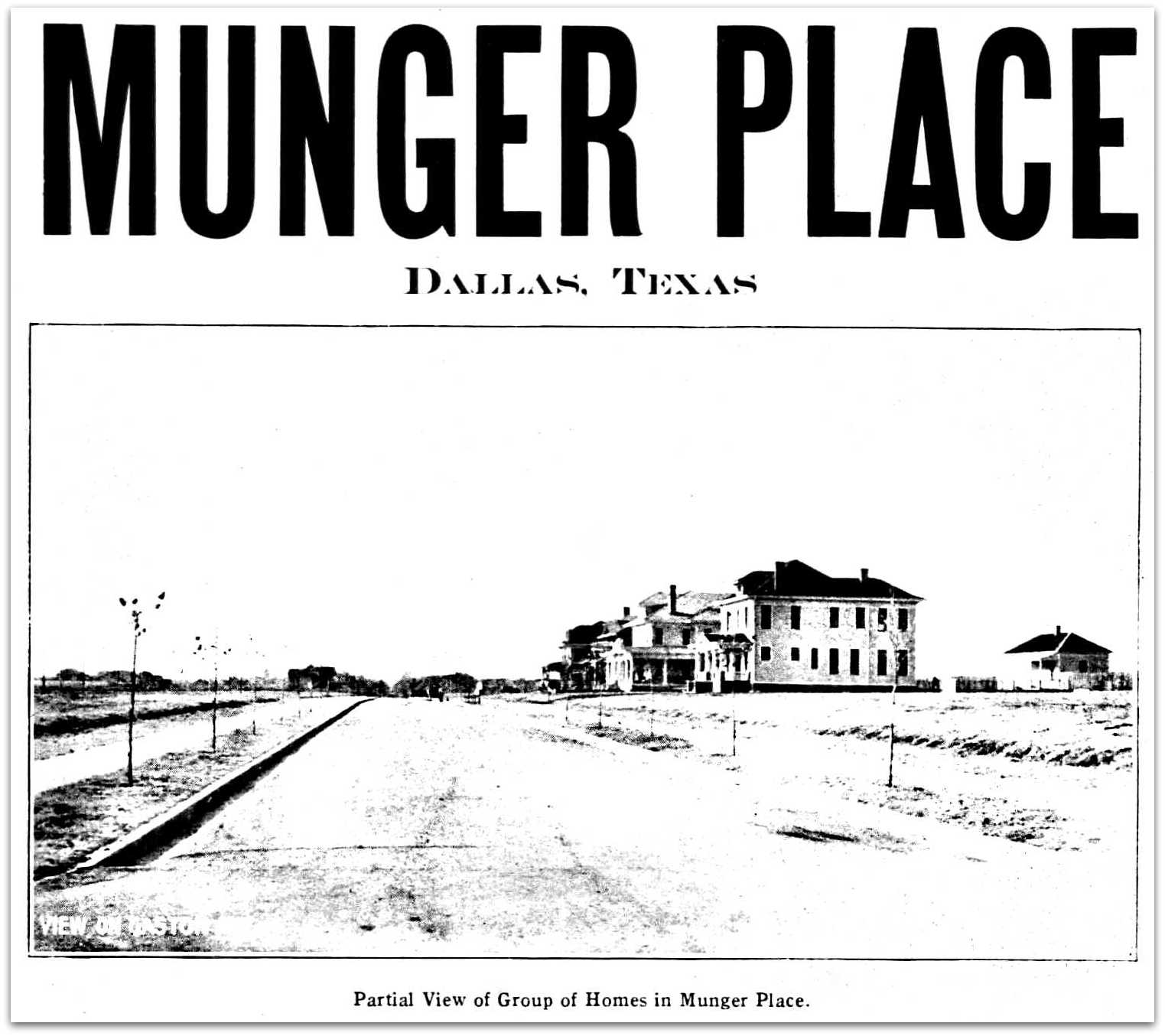
munger-place_city-directory_1908-detGaston Avenue in its salad days… (click for much larger image)

by Paula Bosse

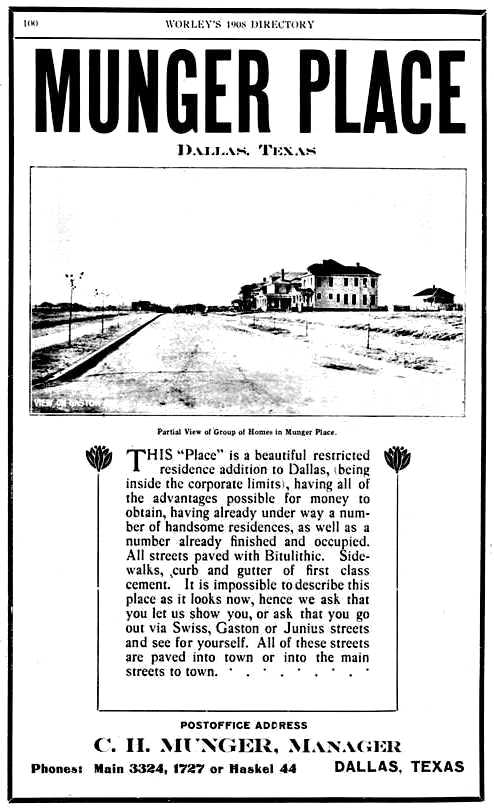
This ‘Place’ is a beautiful restricted residence addition to Dallas (being inside the corporate limits), having all of the advantages possible for money to obtain, having already under way a number of handsome residences, as well as a number already finished and occupied. All streets paved with Bitulithic. Sidewalks, curb and gutter of first class cement. It is impossible to describe this place as it looks now, hence we ask that you let us show you, or ask that you go out via Swiss, Gaston or Junius streets and see for yourself. All of these streets are paved into town or into the main streets to town.

It would have taken a great deal of creative vision to imagine what a beautiful neighborhood the one shown in that bleak photo would one day become. (Does anyone know where on Gaston this photo was taken? Are any of these houses still standing?)

munger-place_city-directory-1908

***

Ad from the 1908 city directory.

Info on the Munger Place Historic District on Wikipedia, here, and at MungerPlace.com, here.

Click top image for a much larger image.

*

Copyright © 2015 Paula Bosse. All Rights Reserved.


Reverchon Park Flyover

reverchon_aerial_squire-haskins_portalReverchon Park — photo by Squire Haskins (click for VERY large image)

by Paula Bosse

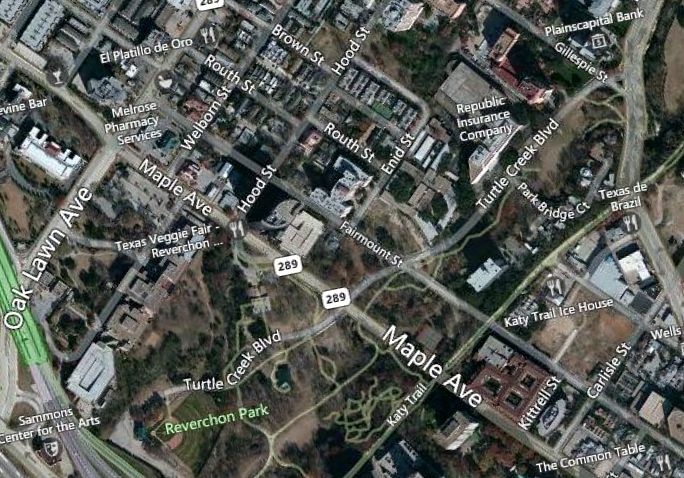
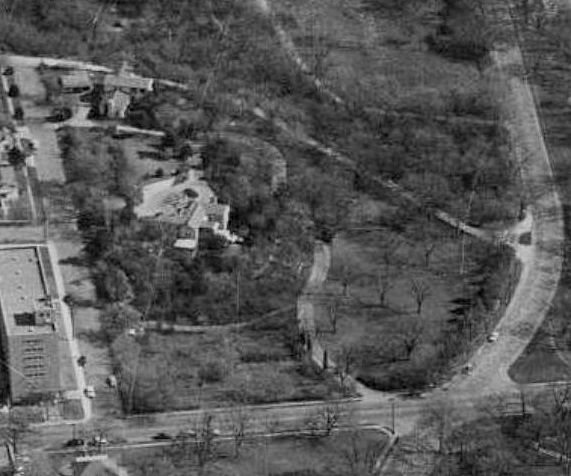
Another of photographer Squire Haskins’ fantastic aerial shots, this one taken over Reverchon Park, looking northeasterly: the Katy tracks are running up and down on the right side, what is present-day Harry Hines is at the bottom, squiggly Turtle Creek Blvd. runs up the middle from the park, Fairmount and Maple run across the photo near the top, and Hood St. runs along the very far left edge. What looks like a date of “6-13-56” is on the back of the photo.

A present-day map of the area, looking north (to zoom out or in, click here):

bing_reverchon*

A couple of questions. What are the two large buildings in the crops below?

The first one is the large white building on property bounded by Fairmount, Enid, Turtle Creek and a street that no longer seems to exist (an extension of Brown?):

reverchon_det2*

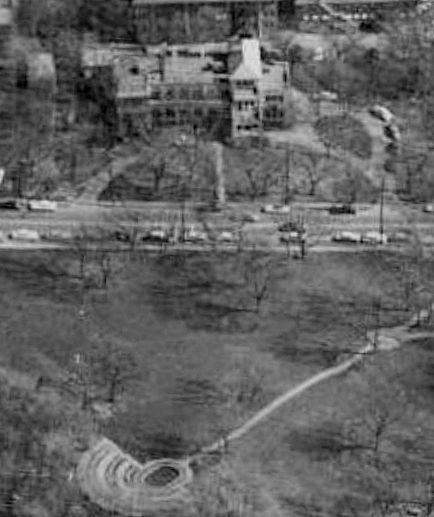
The second is on Maple, near Hood — across from the amphitheater in the park, where the Heritage Auctions building is now:

reverchon_det1

The top one appears to be a (large!) home (I’d love to know who owned it), but I’m not sure what the one at the bottom is. Anyone know? (UPDATE: Thanks to my mother for informing me that the building immediately above is the Bradford Memorial Hospital for Babies.)

***

Sources & Notes

Photo by Squire Haskins, via the Portal to Texas History, here. (Back of photo is here.)

Map from Bing.

*

Copyright © 2015 Paula Bosse. All Rights Reserved.

George Cacas, The Terrill School’s Greek Ice Cream Man — 1916

terrill_ice-cream_yrbk_1916-cacasPrep-school boys & the ice cream man, 1916

by Paula Bosse

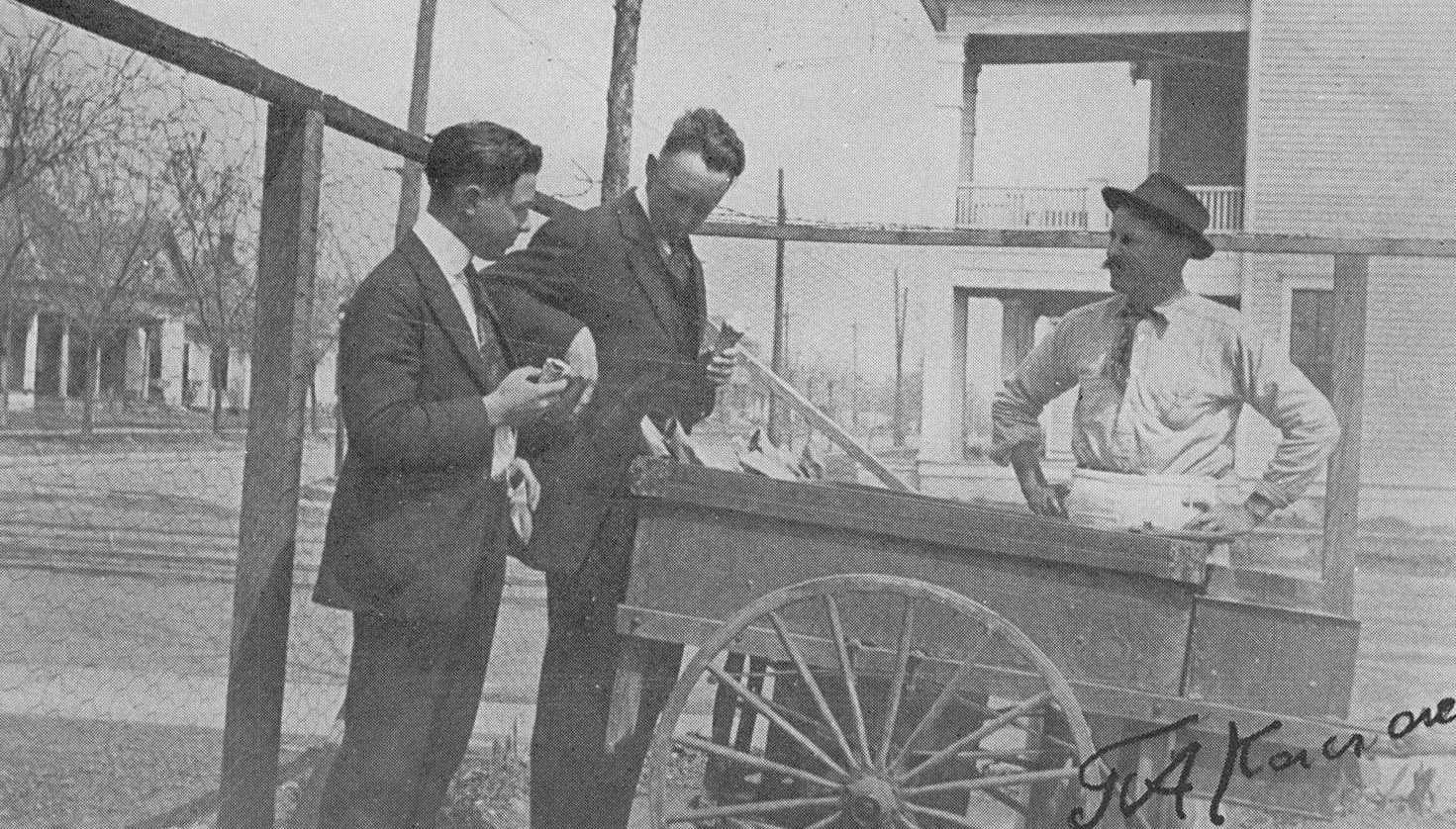
I love this photo. It shows two students from the Terrill School for Boys, buying ice cream from George Cacas, a Greek immigrant. I’m not sure of the exact location of the photo, but I would assume it is either in front of, next to, or very nearby the Terrill School, which was located at Swiss and Peak. It appeared in the school’s 1916 yearbook accompanying an “interview” with Mr. Cacas, whom the boys apparently (and one hopes affectionately) called “Spaghetti” (click for larger image):

terrill_ice-cream_cacas_1916-yrbk_text

Another photo of Mr. Cacas, from the previous year’s yearbook (click for larger image):

spaghetti_terrillian_1915

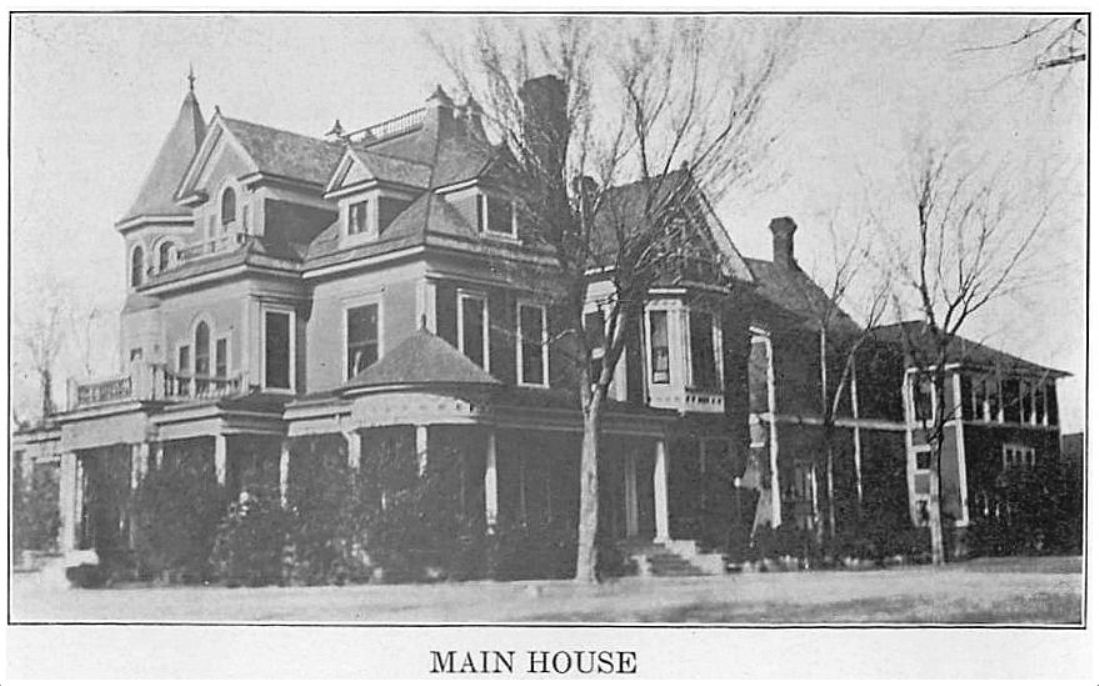
The Terrill School was established in 1906 and was one of the city’s early important prep schools for boys. (Incidentally, the Terrill School shared a fenceline with the prestigious Miss Hockaday’s School for Girls for many years — I’ll be writing more on this convenient arrangement in the future!) Below, two photos showing three of the campus’ many buildings, from about the same time as the one featuring Mr. Cacas.

terrill-school_main-house_yrbk_1919_lg

terrill-school_recitation-hall_phelps-hall_yrbk_1919Recitation Hall on the left; Phelps Hall, right — 1919

terrill-yrbk_19281928

***

Sources & Notes

Top photo and interview from the 1915-1916 Terrillian, the Terrill School yearbook; photos of the “Main House” and two campus buildings from the 1918-1919 Terrillian.

The Terrill School for Boys was located in Old East Dallas at 4217 Swiss Avenue, from 1906 to about 1930. It then moved to Ross Avenue for a few years and was eventually merged with a couple of other schools to form St. Mark’s School of Texas — more on that from the St. Mark’s website, here.

terrrill_school_bingLocation on present-day map (Bing)

The name “Cacas” didn’t seem right for a Greek surname — and the signature at the bottom of the photo looks like it might have been George’s, with his last name beginning with a “K.” But George’s family’s name was, in fact, spelled “Cacas,” as seen here in the city directory from 1915. I wonder if they spelled it “Cacas” back in Sparta?

cacas_directory_1915

*

Copyright © 2015 Paula Bosse. All Rights Reserved.

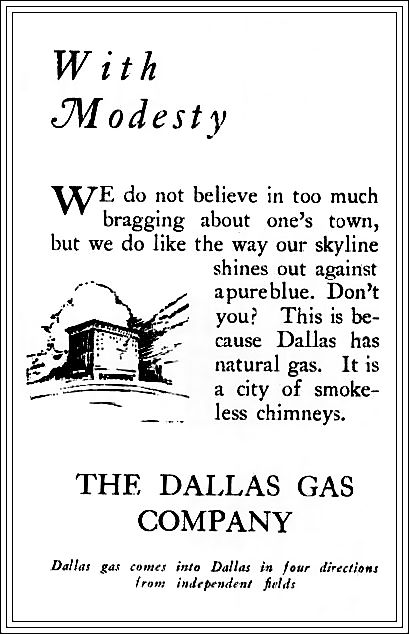
“With Modesty” — The Dallas Gas Company, 1927

ad-dallas-gas_terrill-yrbk_1927

by Paula Bosse

Speaking of Dallas and natural gas….

With Modesty

We do not believe in too much bragging about one’s own town, but we do like the way our skyline shines out against a pure blue. Don’t you? This is because Dallas has natural gas. It is a city of smokeless chimneys.

THE DALLAS GAS COMPANY

Dallas gas comes into Dallas in four directions from independent fields.

…At least four directions.

***

Ad appeared in the 1927 Terrill School for Boys yearbook.

*

Copyright © 2015 Paula Bosse. All Rights Reserved.


“The Walls Are Rising” — SEEN!

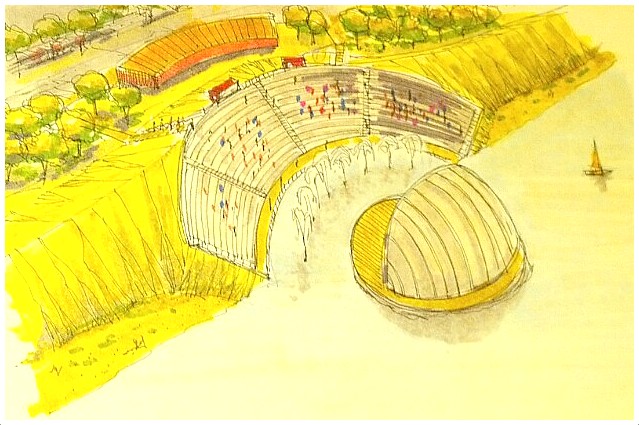
trinity-amphitheater-bandshell_aia-dallas_1960sA 1960s vision for development of the Trinity (AIA Dallas)

by Paula Bosse

The AIA Dallas screening last night of “The Walls Are Rising,” a 1967 film made by the AIA about Dallas’ somewhat chaotic urban planning, was a huge success! Not only were there upwards of 250 people in attendance at the Sixth Floor Museum to view the film and listen to a panel discussion afterwards, but, for me, it was something of a surreal experience to have a large group of people discussing a film I had researched and researched but had been unable to find any trace of after 1972. I contacted the Dallas Chapter of the American Institute of Architects with my “re-discovery,” and they enthusiastically set out to find it.

Thanks to AIA Dallas’ Anna Procter, the film was found and digitized. Other related archival materials were also found, including a wonderful series of drawings, one of which (above) shows one of the many grand and occasionally outrageous visions for a new Trinity River Town Lake: an amphitheater facing a bandshell set IN the water, replete with the ubiquitous sailboat that always seems to accompany renderings of just about every view of Trinity development I’ve ever seen. I would love to see this series of drawings collected in a book. I would buy it.

It was a great event, and it was so nice (and, again … surreal) to meet so many people who told me they enjoyed the blog. Thank you! (And, guy-who-told-me-about-losing-an-hour-of-time-at-work-reading-the-blog … thanks — but get back to work!)

I loved the film. It was weird and kooky and definitely of its time. It’s interesting to see how the city has improved in the past 40-something years, but it’s also frustrating to see how LITTLE it’s changed.

The film will be available in the near future for online viewing, which is great, because not only will more people be able to see it, but also because we’ll all be able to pause it to look more closely at some of the many, many photos used in the film. UPDATE: Watch the film online, here.

Thanks to AIA Dallas/Dallas Center for Architecture, panelists Howard Parker, Larry Good, and Jack Gosnell, moderator Robert Wilonsky, and the Sixth Floor Museum for an entertaining night. And thanks to everyone who attended!

***

Sources & Notes

A few of the reviews/recaps of last night’s film and discussion:

Previously:

*

Copyright © 2015 Paula Bosse. All Rights Reserved.


MLK in DFW — 1959

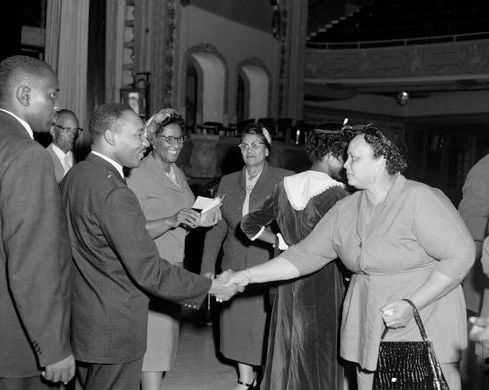
mlk-DFW-102259_calvin-littlejohn_briscoeDr. Martin Luther King, Jr. in DFW (photo © Calvin Littlejohn Estate)

by Paula Bosse

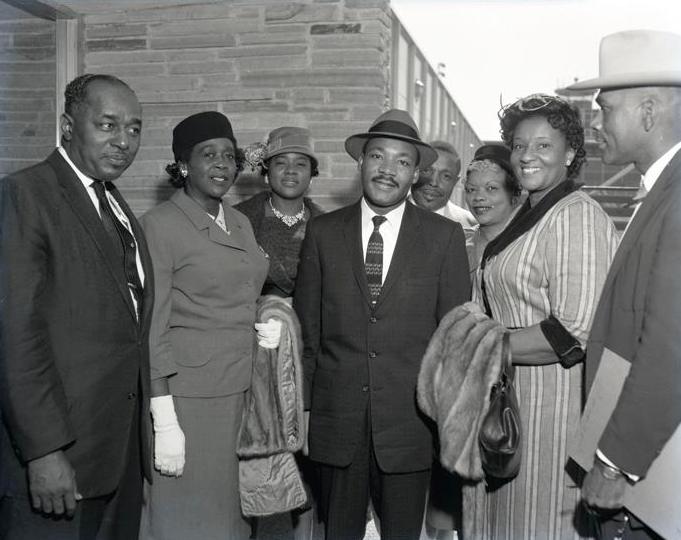
A couple of photos of Dr. Martin Luther King, Jr. on a quick trip to Dallas and Fort Worth in late October, 1959, taken by the wonderful Fort Worth photographer Calvin Littlejohn. The above photo is from Oct. 22, 1959 and was, I believe, taken after his speech at the Majestic Theatre in Fort Worth. Below, a photo of Dr. King taken at Love Field.

mlk_love-field_calvin-littlejohn_1959

***

Sources & Notes

Top photo by Calvin Littlejohn, from the Littlejohn Photographic Archive, Dolph Briscoe Center for American History. Mr. Littlejohn took several photos of Dr. King that visit, the locations of which are listed here — giving a good indication of the itinerary of the visit. I saw no mention or coverage of this visit in either The Dallas Morning News or The Fort Worth Star-Telegram.

Second photo from the TCU Press Facebook page.

A nice overview of Calvin Littlejohn’s career and a few of his photographs can be found here.

*

Copyright © 2015 Paula Bosse. All Rights Reserved.