Flashback : Dallas

A Miscellany: History, Ads, Pop Culture

Dallas Football Through the Decades

football_tom-landry_cowboys_texas-stadium-under-construction_UTA_051671Tom Landry, Texas Stadium, 1971…

by Paula Bosse

Here are a few football-centric Dallas images to enjoy on this football-centric day.

Above, Dallas Cowboys’ coach Tom Landry in 1971, surveying with wonderment the then-under-construction Texas Stadium (via UTA Special Collections).

1905: Early days of local football. In 1905 there were hopes of getting up a “heavyweight team.” Prospects were iffy. (All images are larger when clicked.)
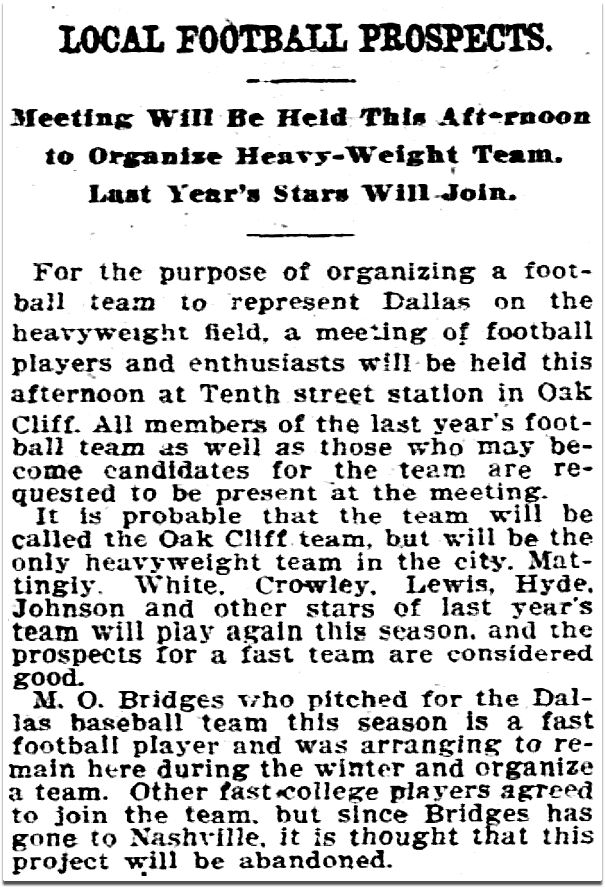
football_local-prospects_dmn_090305
Dallas Morning News, Sept. 3, 1905

This was at a time when football injuries — and DEATH — were not uncommon.
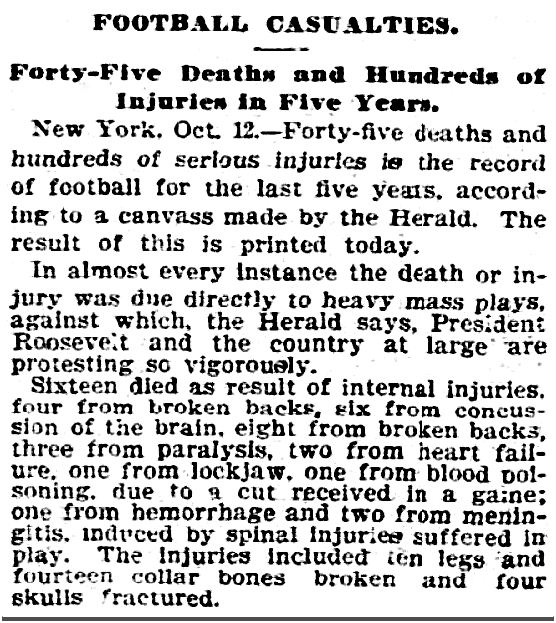
football-casualties_dmn_101305
DMN, Oct. 13, 1905

1911: The Dallas High School team at Gaston Park (a popular sporting field which is now the site of the Dallas Music Hall at Fair Park). This photo was taken on December 16, 1911 — that day they defeated Fort Worth High, 15-5.

football_dallas-high-school_gaston-park_1911_cook-collection_degolyer-library_SMUGeorge W. Cook Collection, DeGolyer Library, SMU

1918: The Love Field eleven was made up of military personnel based at the airfield during World War I. They played other military teams in the area, venturing as far as at least Waco.

football_love-field_camp-team_wwi_cook-collection_degolyer_SMU_1918
George W. Cook Collection, DeGolyer Library, SMU

1920s: The “State Fair of Texas” stadium predated the Cotton Bowl. This aerial photo shows what was probably the University of Texas vs. Vanderbilt game, which took place on Oct. 13, 1928 during the State Fair of Texas. (Vanderbilt won, 13-12.)

football_state-fair-of-texas-stadium_UT-vs-vanderbilt_1920s
From “Dallas As a City In Which To Live” booklet, SMU

1920s: The SMU Mustangs took on the University of Missouri Tigers at Ownby Stadium.

football_ownby-oval-smu_SMU-vs-missouri-university_1920s
From “Dallas As a City In Which To Live” booklet, SMU

1932: Speaking of the SMU Mustangs, then-local sports superstar (and Olympics medalist) Babe Didrikson — who was proficient in every single sport she tried — was given the opportunity by SMU coach Ray Morrison to give football the old college try: he coached her in passing and receiving and even allowed her to suit up in an official uniform. She tried out her football moves for the public during a scrimmage in Ownby Stadium on September 18, 1932.

One of the most interesting features of the program from a football fan’s standpoint was demonstration of several of the Ponies’ famous scoring plays, in fast and slow motion. Babe Didrikson, Dallas’ famous feminine athlete, took part in the slow motion exercises and proved herself somewhat of a polished gridder — adding more fame to her long list of athletic achievements. (DMN, Sept. 18, 1932)
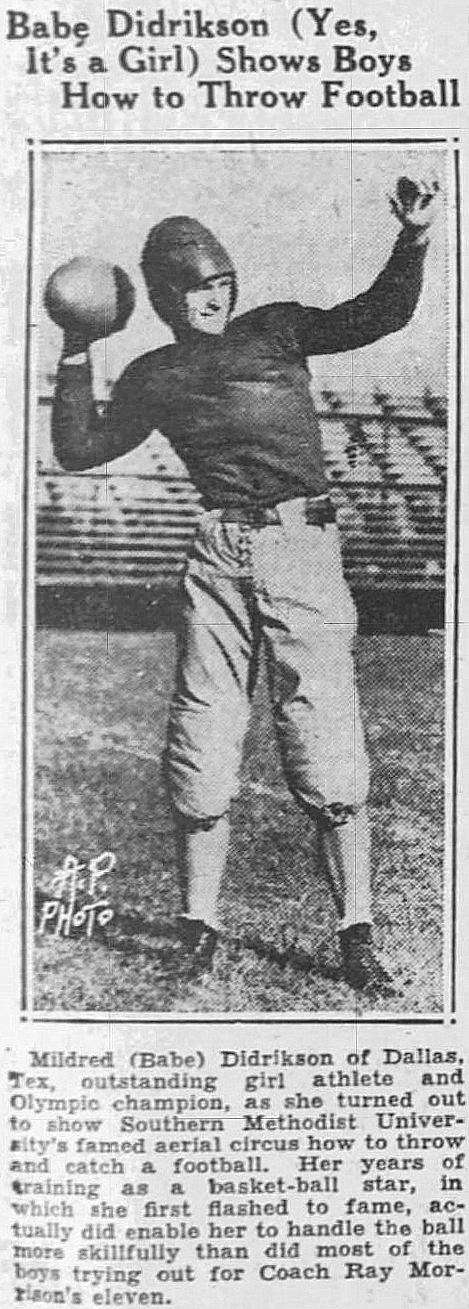
didrikson-babe_football-SMU_boston-globe_092332        didrikson-babe_football-SMU_pottsville-PA-republican-and-herald_092832
Boston Globe, 9/23/32; Pottsville [PA] Republican, 9/28/32

1933: The stadium which would eventually be named the Cotton Bowl looks a little otherworldly in this Lloyd M. Long aerial photo.
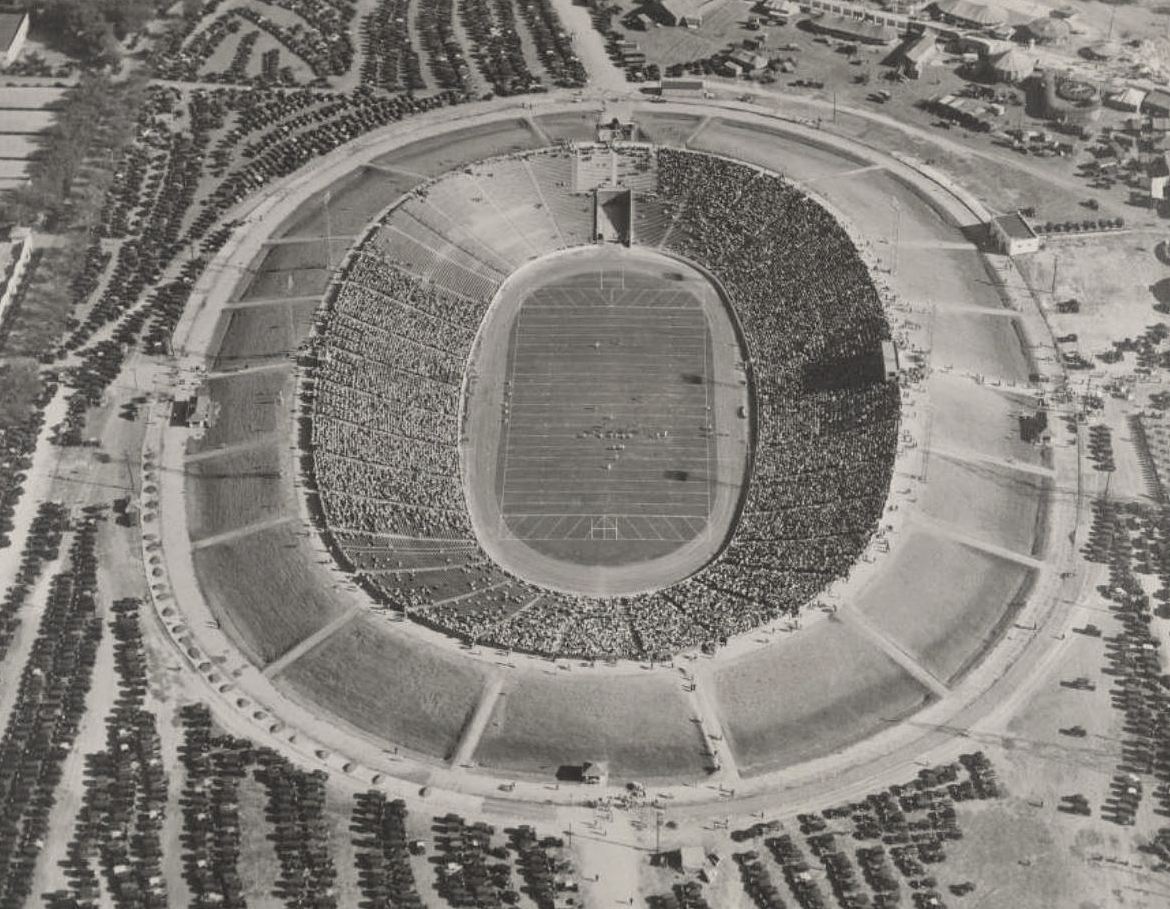
cotton-bowl_fair-park-stadium_lloyd-long_foscue-library_SMU_1933
Edwin J. Foscue Map Library, SMU

1940s: Dal-Hi Stadium (later P. C. Cobb Stadium) was the home field for six Dallas high schools.

dal-hi-stadium_cobb-stadium_postcard

dal-hi-stadium_cobb-stadium_postcard_caption

In December, 1949, Dal-Hi served as the practice field for the University of North Carolina team while in Dallas for the January 2, 1950 Cotton Bowl match against Rice University (which Rice won, 27-13). I like this snapshot — downtown looms like a ghost in the background.

dal-hi-stadium_cobb-stadium_uc-practice-for-cotton-bowl_dec-1949via “Dismal Day in Dallas”

1950s: Dallas had a pro team before the Cowboys — the Dallas Texans. Here’s their ticket office, at 1721 McKinney Avenue. (From the article “Gone and Forgotten, The Dallas Texans of 1952” by Thomas H. Smith, from the Spring, 2005 issue of Legacies.)

football_dallas-texans_ticket-office_legacies_spring-2005
via Legacies

1950s/1960s: Dallas high school football coaches who were all connected at one point (either as players or coaches) with Booker T. Washington High School: the legendary Raymond Hollie (head coach at both Booker T. and Roosevelt), Marion “Jap” Jones, and Sam Briscoe.
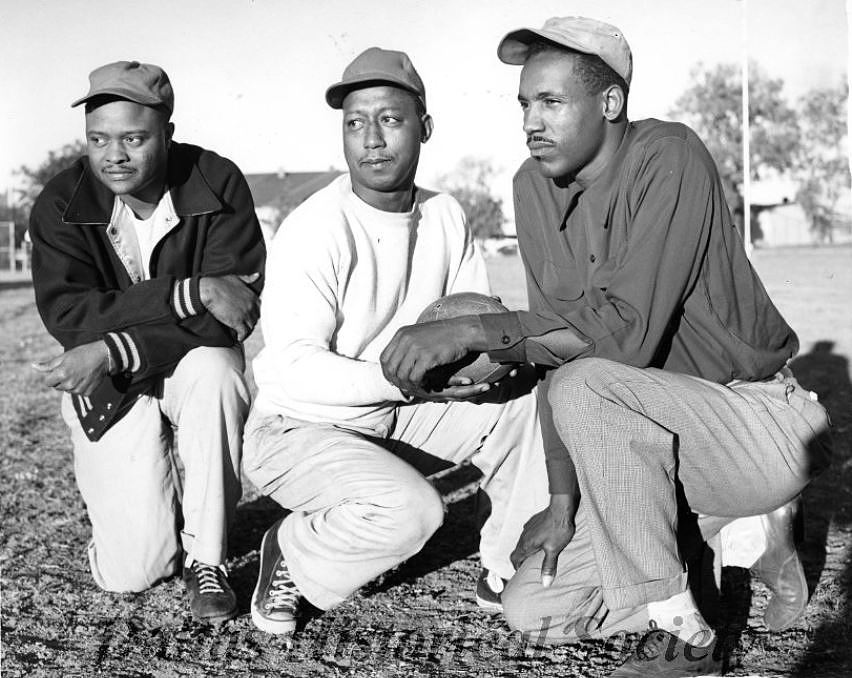
football_booker-t-washington_coaches_patton-papers_DHS
John Leslie Patton Papers, Dallas Historical Society

1960s: A quaint Dallas Cowboys locker room.
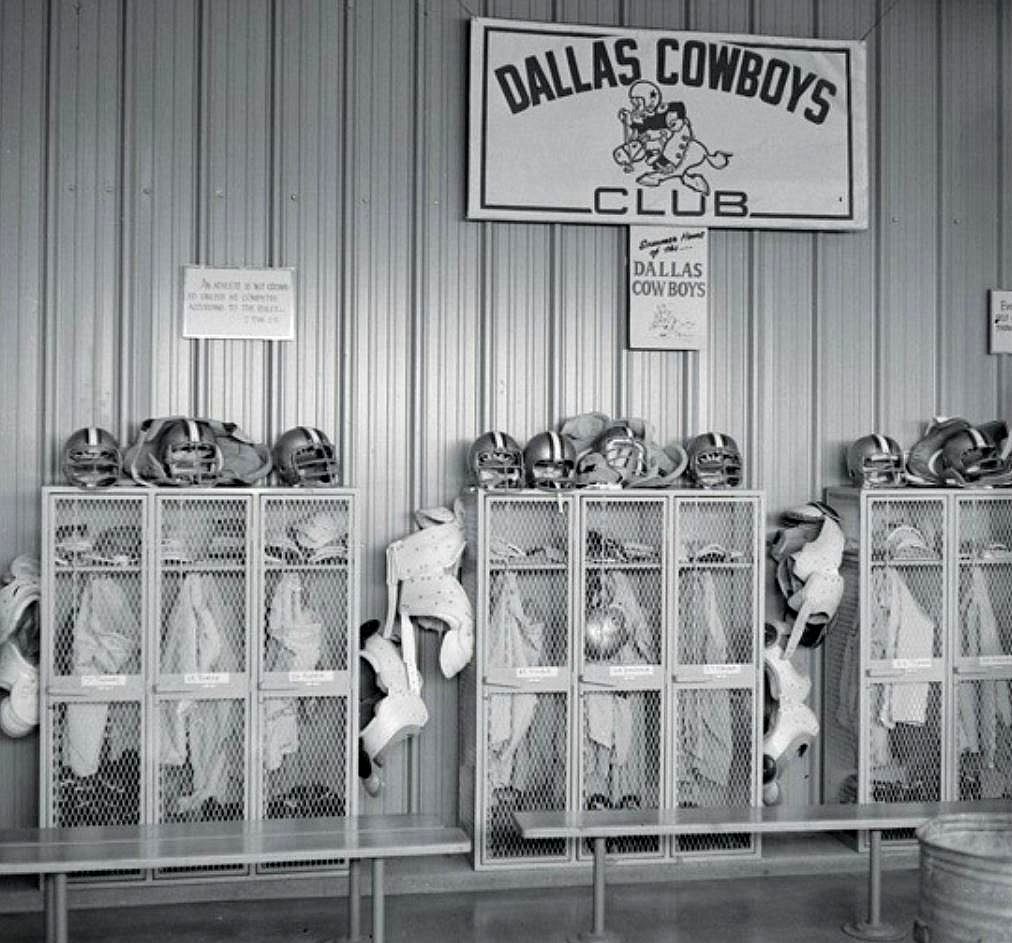
dallas-cowboys-locker-room_pinterest
via Pinterest

1981: In the tradition of other comic-book heroes appearing in Dallas to save whatever needed saving (here and here), Spider-Man and the Hulk stopped by to help with some football-related issue. The Dallas Cowboys Cheerleaders appear to have been involved.
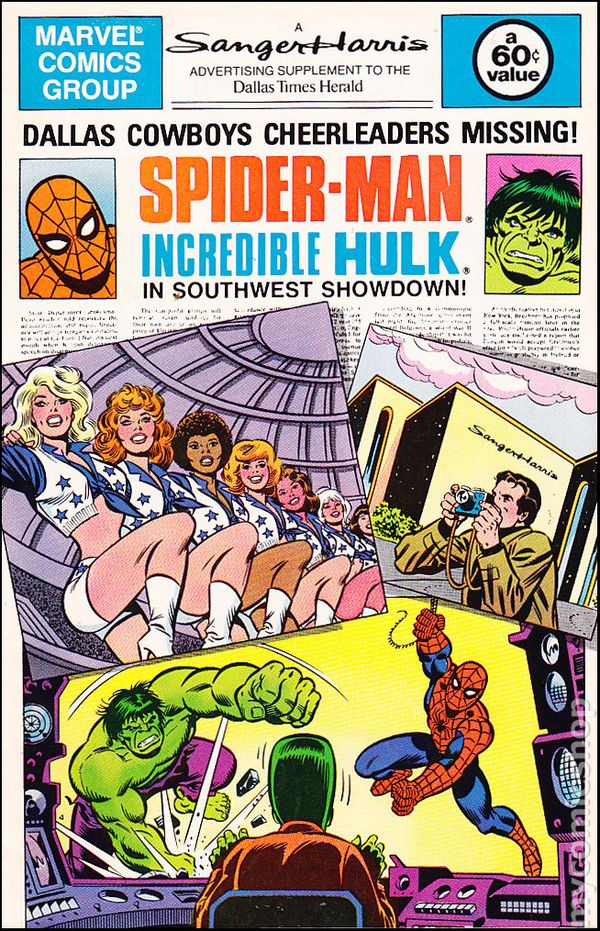
football_cowboys_comic_spider-man_hulk_cheerleaders_1981

*

Copyright © 2019 Paula Bosse. All Rights Reserved.

From the Vault: #1 in Junk

ad-hengy-junk_city-directory_1890

by Paula Bosse

Who was the top man in junk in turn-of-the-century Dallas? It was F. J. Hengy, who, when not practicing his junk business, seems to have spent all of his free time in court suing and being sued. Read about this interesting early Dallasite in the Flashback Dallas post from 2015, “F. J. Hengy: Junk Merchant, Litigant.”

*

Copyright © 2019 Paula Bosse. All Rights Reserved.
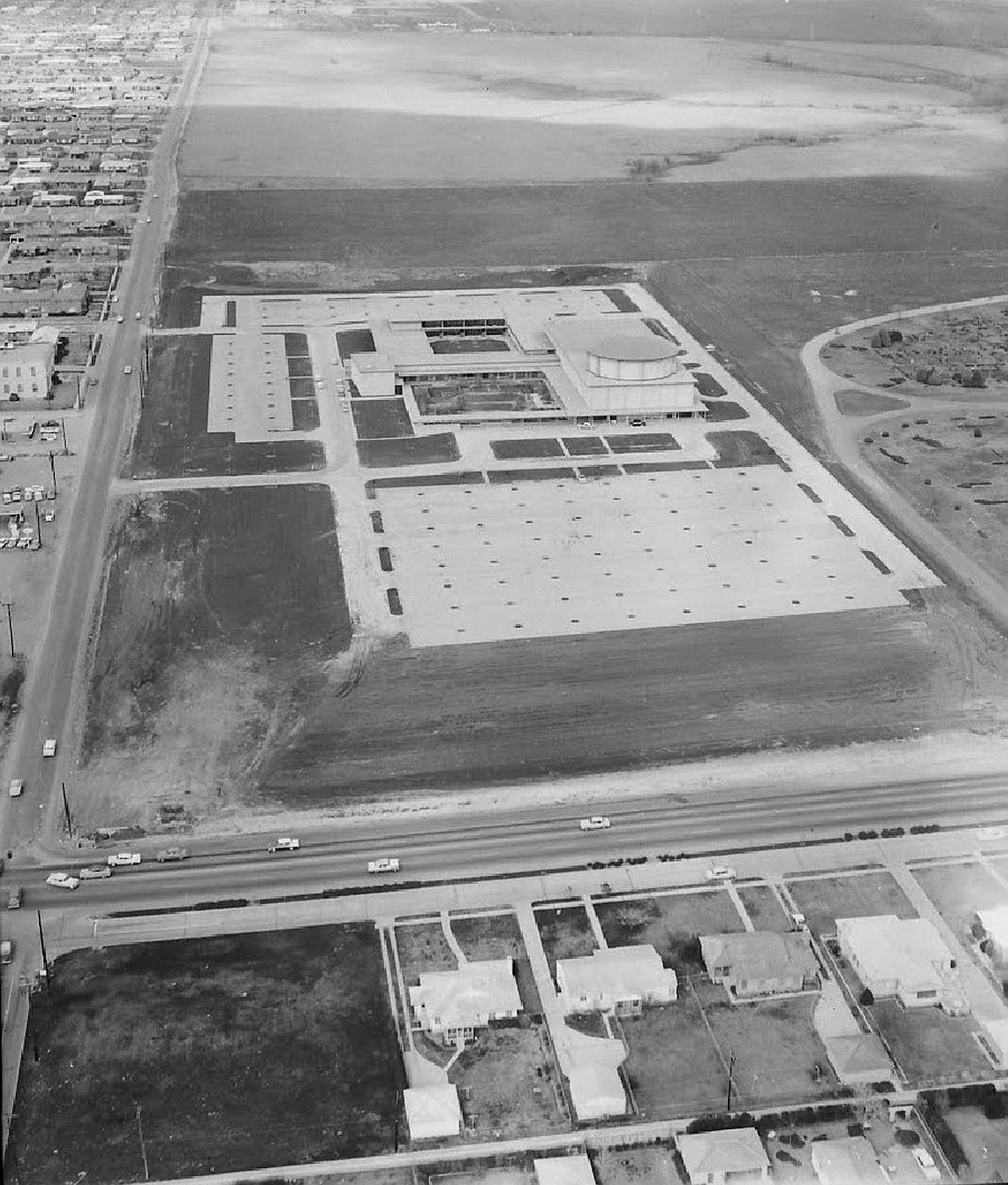
Temple Emanu-El, At the “Northern Limits of Dallas” — 1957

temple-emanu-el_life-mag_1957-aerial_crop
Temple Emanu-El, 1957… (click for larger image)

by Paula Bosse

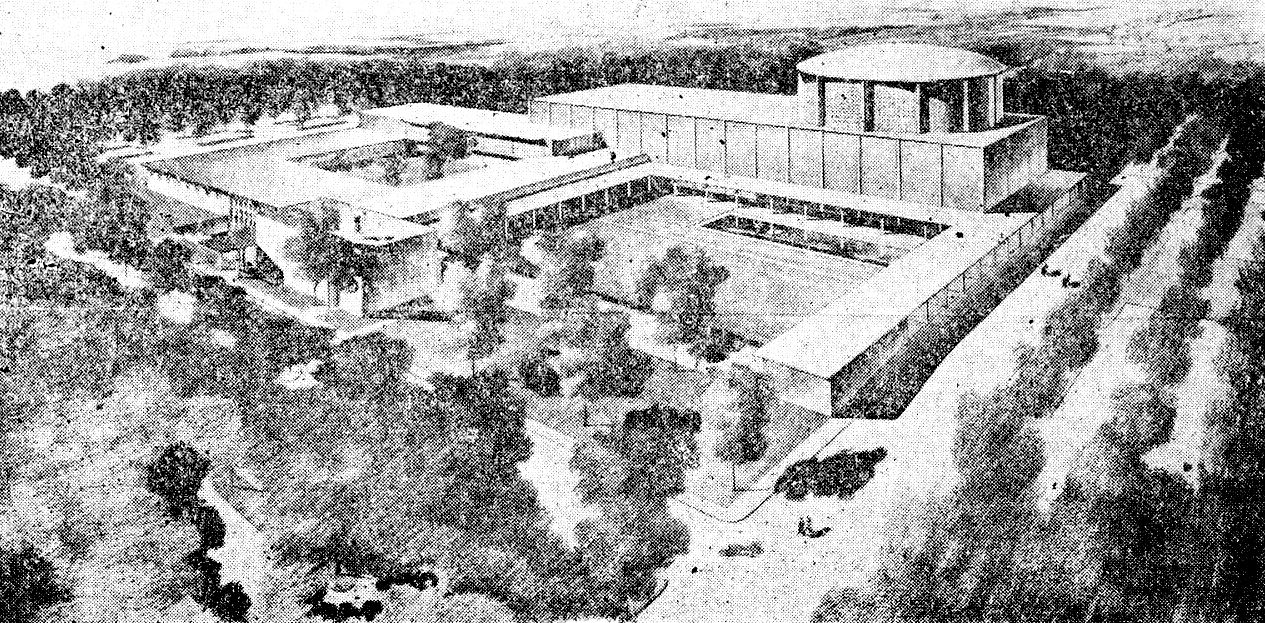
Above, the new, not-yet-landscaped Temple Emanu-El in 1957, at the northeast corner of Hillcrest and Northwest Highway; this aerial view is looking north from Northwest Highway. (The view today, via Google Earth, is here.)

In 1952 Temple Emanu-El’s congregation purchased eighteen rolling acres of Caruth farmland from Earle Clark Caruth, at what was then described as “the northern limits of Dallas.” This was after a lengthy period of consideration by leaders of the congregation over whether they should accept the gift of developer and artist Sylvan T. Baer of eleven “wooded and rolling” acres in Oak Lawn along Turtle Creek which he had offered as the site of a new temple. Even though Baer’s attractive site was more centrally located than their long-time South Dallas location (a definite bonus, as the congregation wished to move closer to the North Dallas area where most of their members now lived), the Turtle Creek site was ultimately deemed to be too small, too far from the North Dallas area they preferred, and too restrictive as far as the ability to finance construction. (Though rejected as a religious site, Baer’s very pretty land eventually became the home of the Dallas Theater Center.)

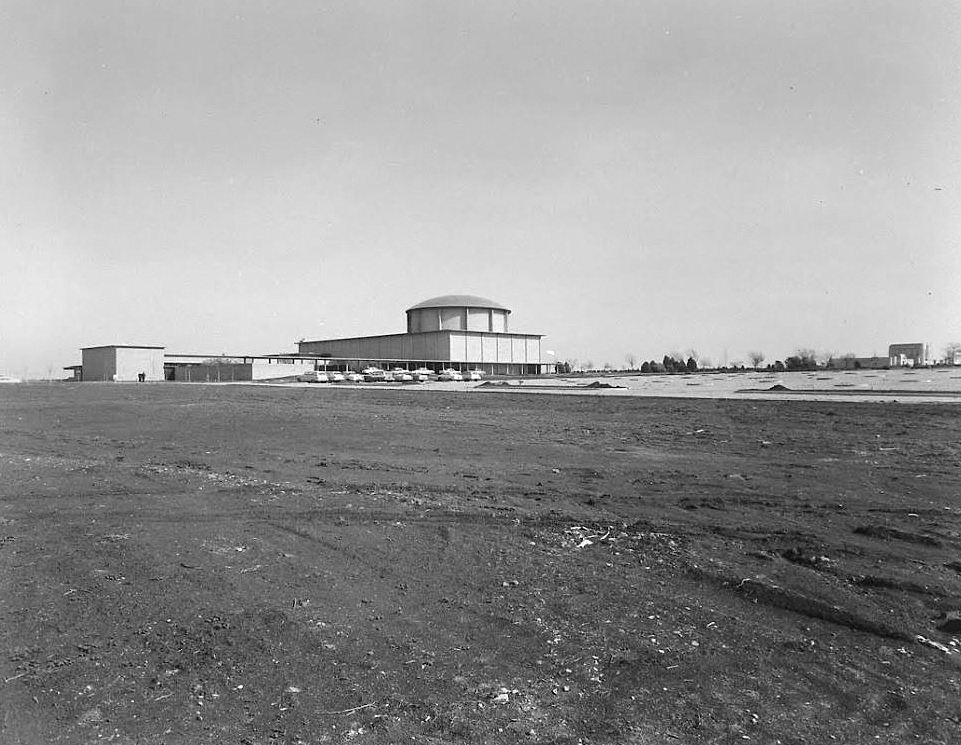
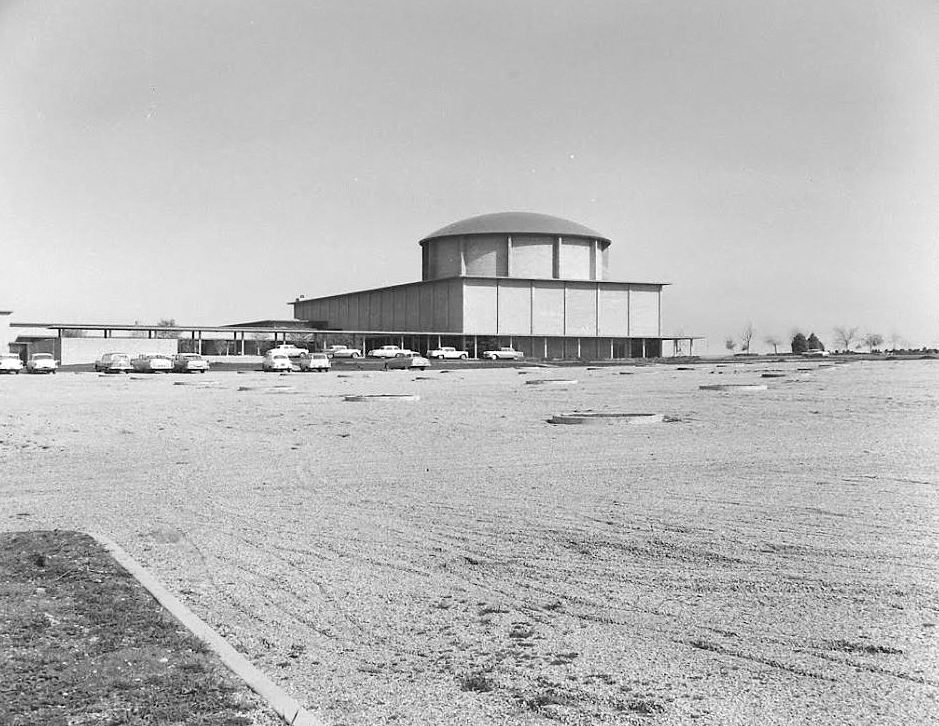
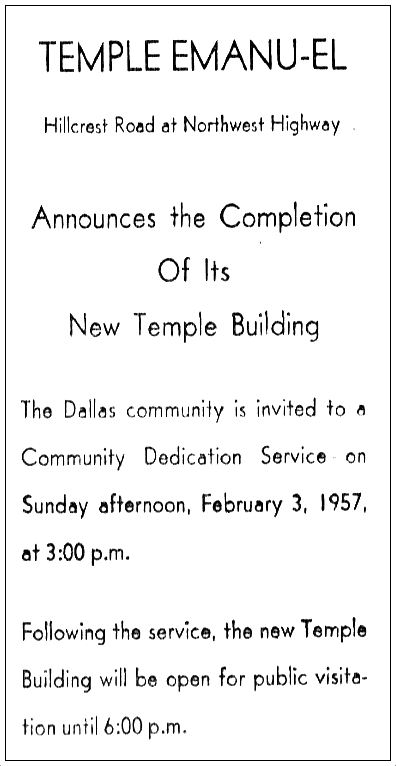
Temple Emanu-El — home to the largest reform Jewish congregation in the South — hired Dallas architects Howard R. Meyer and Max M. Sandfield to design their new home (with William W. Wurster of the University of California serving as consultant); the project was announced in 1954, and dedication ceremonies of the finished building(s) took place in February, 1957, probably around the time the photos below and above were taken.

temple-emanu-el_life-mag_1957

temple-emanu-el_life-mag_1957_b

temple-emanu-el_020257
Feb. 2, 1957

*

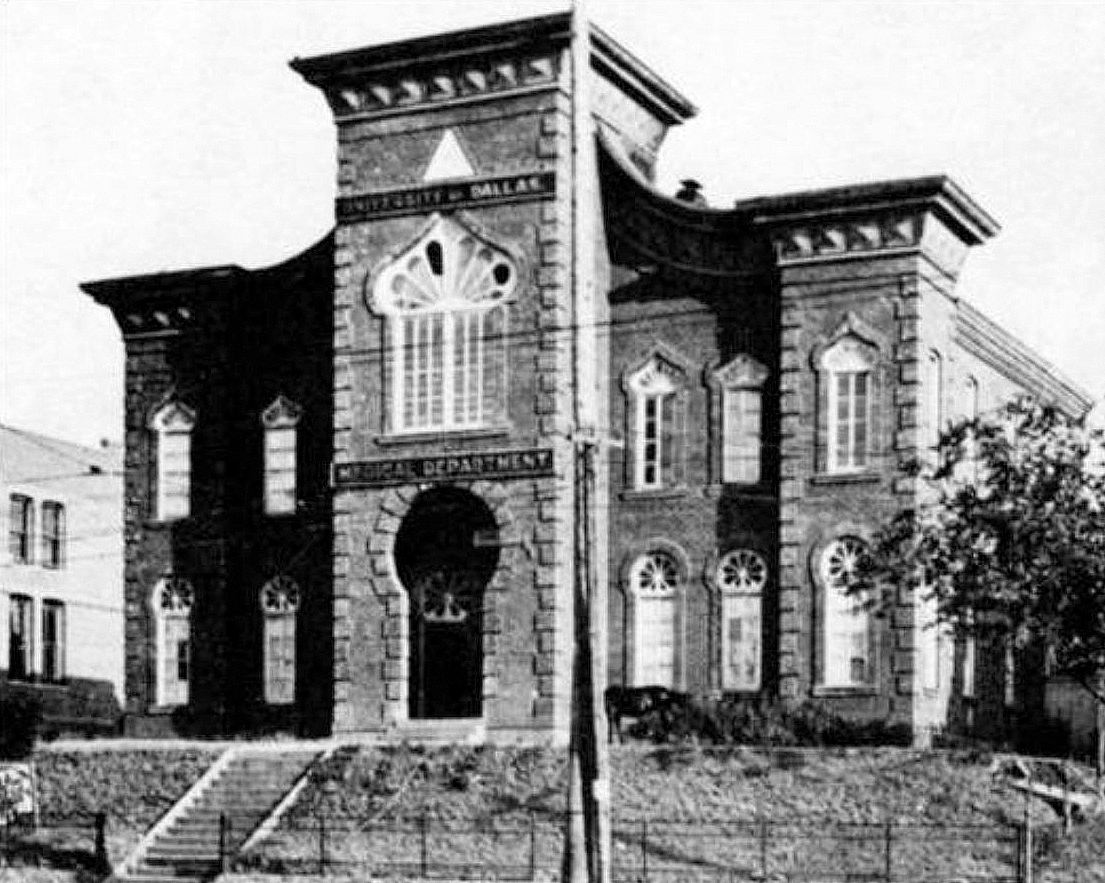
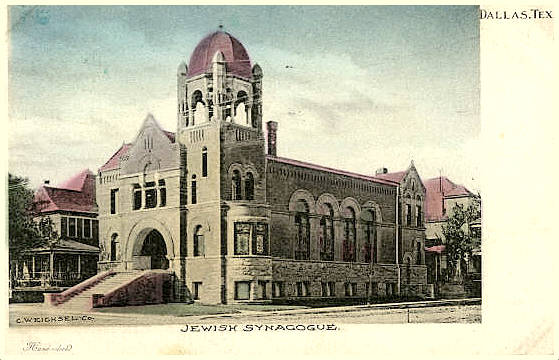
Below, the first Temple Emanu-El, built in 1876 at Commerce and Field, designed by architect Carl G. DeGrote. It was dedicated May 28, 1876 (read the extensive coverage of the ceremonies as printed in the Dallas Herald here — click “zoom” to read). After a move to their next location, the old temple became the University of Dallas Medical Department in 1900; it was demolished around 1906.

temple-emanue-el_first-synogogue
Temple Emanu-El, first location

temple-emanu-el_univ-dallas-med-dept_dhs-via-nih
Later, as a medical school (DHS photo via NIH)

The second site was at the corner of S. Ervay and St. Louis, in The Cedars, built around 1898, designed by architects J. Reilly Gordon, H. A. Overbeck, and Roy Overbeck. Following another move in the ‘teens, the building was converted into a Unitarian Church; it was demolished in 1961 to make room for R. L. Thornton Freeway.

temple-emanu-el_second-location

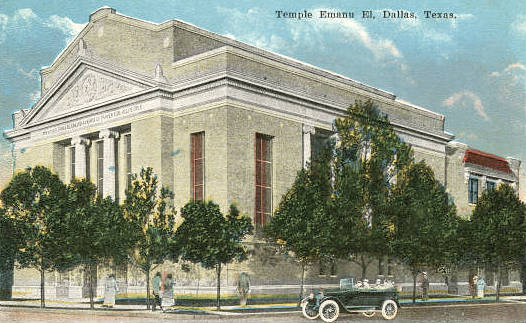
The congregation moved into its third location about 1917: a new Hubbell & Greene-designed building at South Boulevard and S. Harwood, where they remained until the move to the new Hillcrest location. This building was demolished in 1972.

temple-emanu-el_third-location_south-blvd-harwood

The congregation officially moved to their fourth (and current) location, in North Dallas, at the beginning of 1957, led by Rabbi Levi A. Olan.

temple-emanu-el_tx-jewish-post_093054_drawing_sm

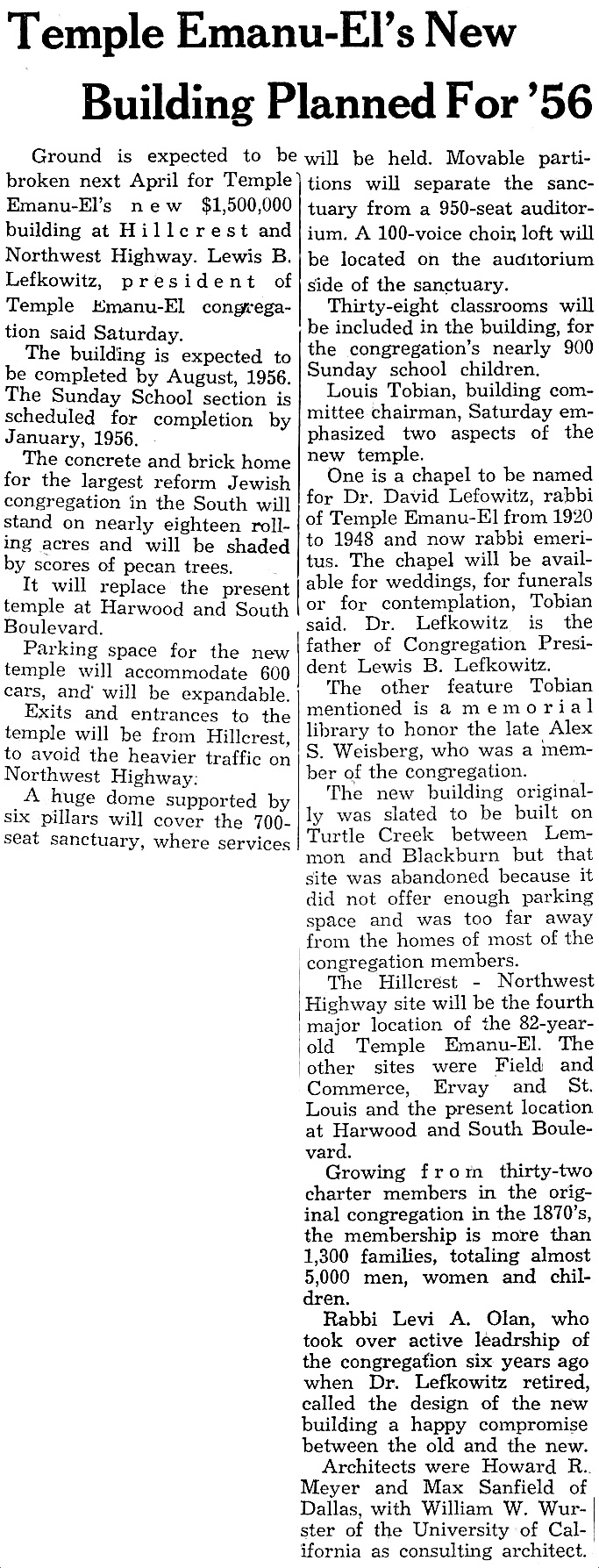
temple-emanu-el_tx-jewish-post_093054_announcement
Texas Jewish Post, Sept. 30, 1954 (click to read)

***

Sources & Notes

First three photos by Life magazine photographer Joe Scherschel, © Time Inc. More than 150 photos from this assignment can be found here. Supposedly there was a cover-story on the new building, but all I’ve found is this one-page photo-with-caption from the Feb. 25, 1957 issue. If anyone has info on a lengthier Life story, please let me know.

Drawing and article announcing the new Temple Emanu-El are from the Texas Jewish Post (Sept. 30, 1954), here. (UNT’s Portal to Texas History has fully-scanned issues of the DFW-centric Texas Jewish Post — 1950-2011 — accessible here. All issues are searchable, and all have articles, photos, and ads — it is a fantastic resource.)

Read a description of the just-completed first Dallas synagogue from the Dallas Herald (May 28, 1876), here (column 4); read the surprisingly lengthy coverage of the official opening ceremonies, which includes a history of the events which led to the building’s construction, in the May 30, 1876 Herald, here (columns 1-4). (To read the articles, click the “zoom” tab above the scanned page.)

Read the Temple Emanu-El entry in the Handbook of Texas here.

The history page of the Temple Emanu–El website is here.

Head to the Dallas Morning News archives to read about the art and architecture of Temple Emanu-El in the article “A Temple of Art, Architecture — The Forms Merge In Well-Designed Emanu-El” by architecture critic David Dillon (DMN, Dec. 24, 1984).

A comprehensive history of Temple Emanu-El and Jewish life in Dallas (well-illustrated with photographs) can be found in the book A Light in the Prairie, Temple Emanu-El of Dallas, 1872-1997 by Gerry Cristol (Fort Worth: TCU Press, 1998).

All images are larger when clicked.

*

Copyright © 2019 Paula Bosse. All Rights Reserved.
 

“Enjoy That Dallas, Texas Hospitality”

dallas-hospitality_matchbook-cover_ebay_b

by Paula Bosse

…Or else!

dallas-hospitality_matchbook-cover_ebay_a1

“Easy to reach … hard to leave.”

dallas-hospitality_matchbook-cover_ebay_c

***

Sources & Notes

Images from a great 1950s matchbook, found on eBay — like these.

*

Copyright © 2019 Paula Bosse. All Rights Reserved.
Allen & Cochran: Allen Street Drugs, St. Peter’s Academy, St. John Baptist Church — ca. 1946

allen-street-drugs_1920-allen_ca-1946_dpl
Allen Street Drugs at Allen & Cochran… (photo: Dallas Public Library)

by Paula Bosse

Above, a group of men and boys gathered outside Allen St. Drugs — 1920 Allen Street, at the corner of Cochran — posing for famed Dallas photographer Marion Butts. Behind the group is St. Peter’s Church and St. Peter’s Academy, a Catholic church and affiliated school for black children (at 2018 Allen); facing St. Peter’s (but out of frame) is St. John Baptist Church (2019 Allen). This was a busy and well-traveled intersection for the African American neighborhood of “North Dallas.”

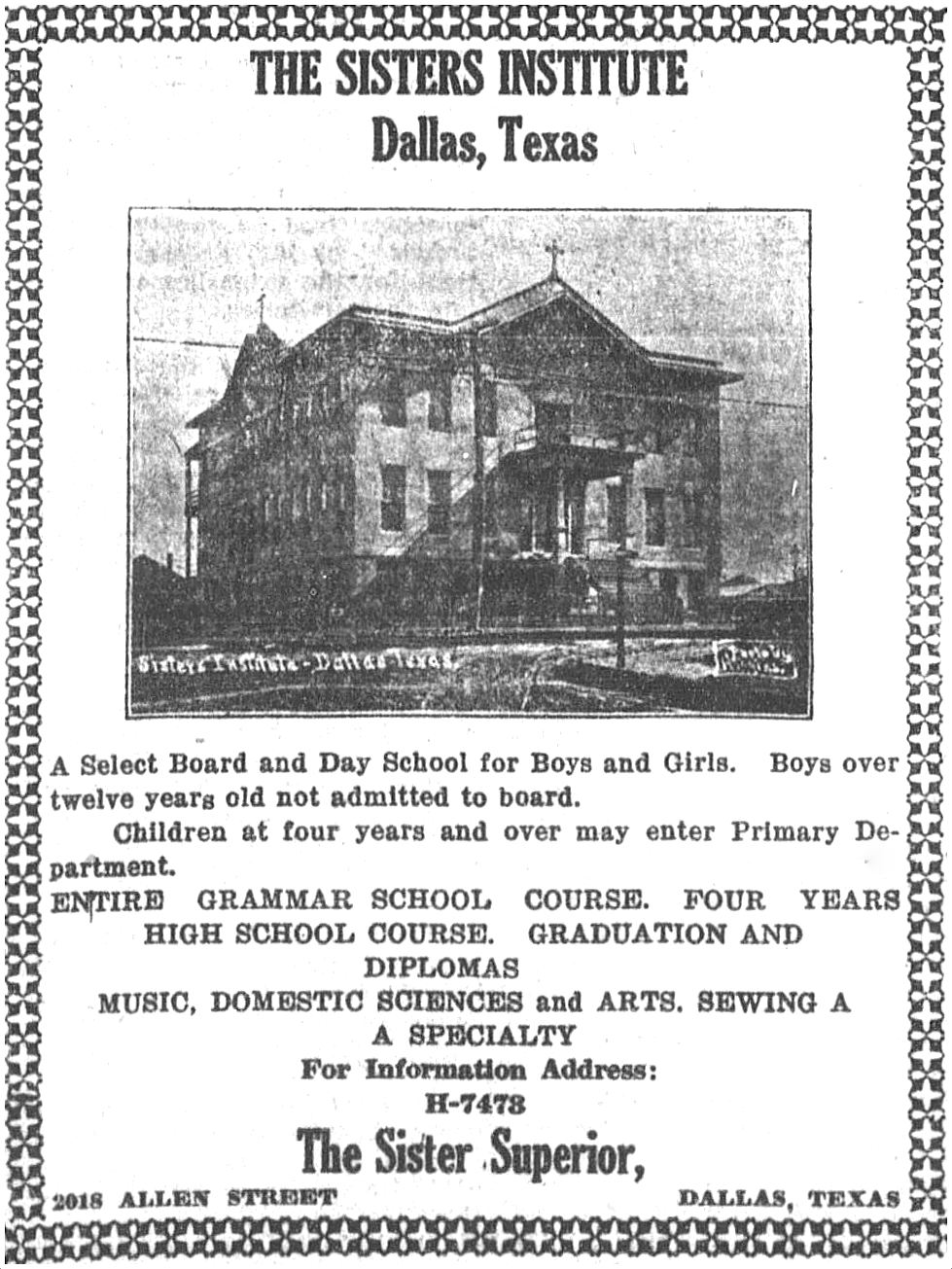
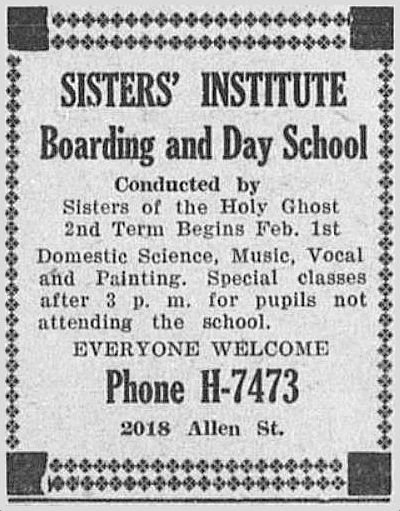
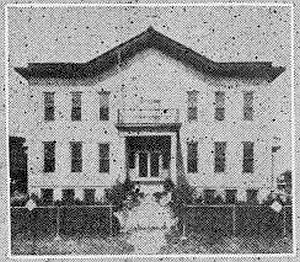
St. Peter’s Academy — which was still around into the late 1980s — was built in 1908, largely due to the urging of black entrepreneur Valentine Jordan and his wife Mary Jordan who were impressed with the education provided to the (white) students attending the Catholic Ursuline Academy; they requested that Bishop E. J. Dunne open a similar school for black children, and Bishop Dunne obliged. Before it was named “St. Peter’s Academy,” it was known as The Sisters’ Institute (named for the Sisters of the Holy Ghost). Elementary and high school classes were taught, and boarding options were offered to girls. In the mid 1960s the school had 600 (predominantly Protestant) students.

sisters-institure_dallas-express_090624
Dallas Express, Sept. 6, 1924

sisters-institure_dallas-express_082721
Dallas Express, Aug. 27, 1921

st-peters-church_dallas-express_010623
Dallas Express, Jan. 6, 1923

st-peters-church_dallas-express_011323
Dallas Express, Jan. 13, 1923

st-peters-acad_negro-in-tx_1935_lg
St. Peter’s Academy, circa 1935

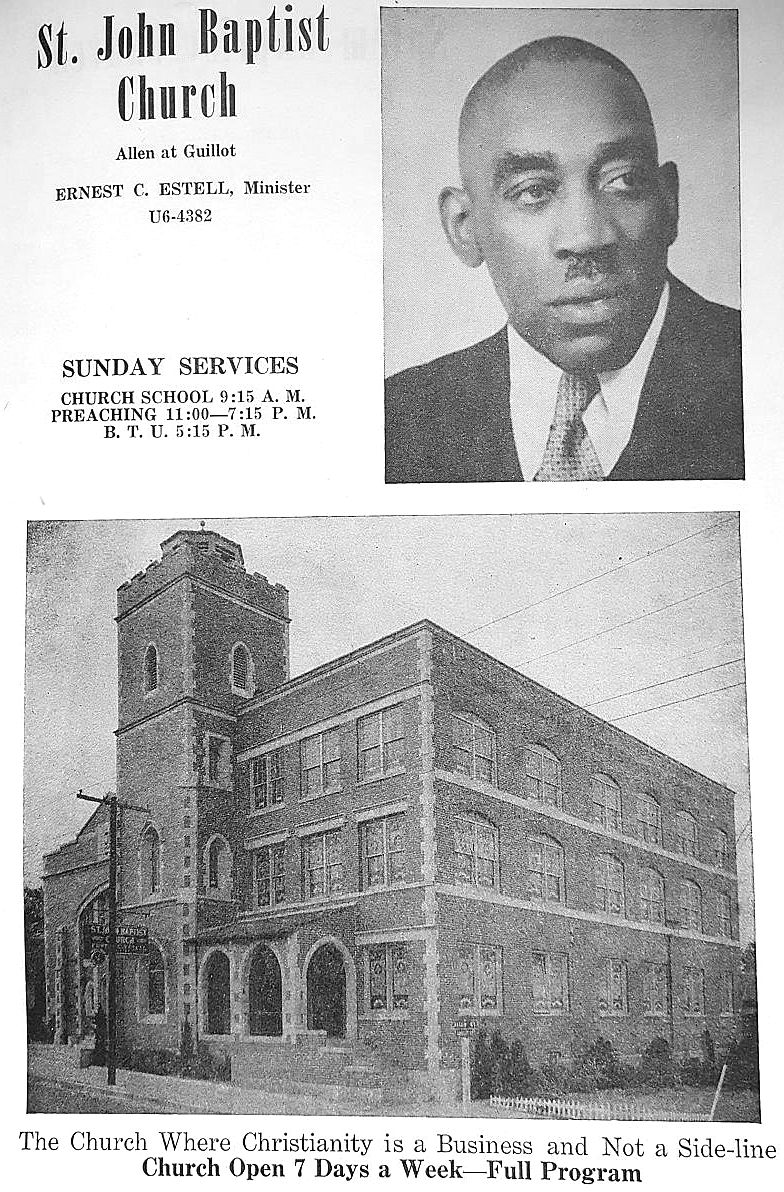
The large St. John Baptist Church was a fixture of the community, led for many years by its pastor Ernest C. Estell.

church_st-john-baptist-church_negro-directory_1947-48
Dallas, Texas Negro City Directory, 1946-47

Sadly, these buildings are no longer standing. St. Peter the Apostle is located in a new building at Allen and what is now Woodall Rodgers Freeway, and much of their congregation is of Polish ancestry, with services conducted in both Polish and English. The drugstore seen at the top sat on land razed for construction of Woodall Rodgers. The view today can be seen here.

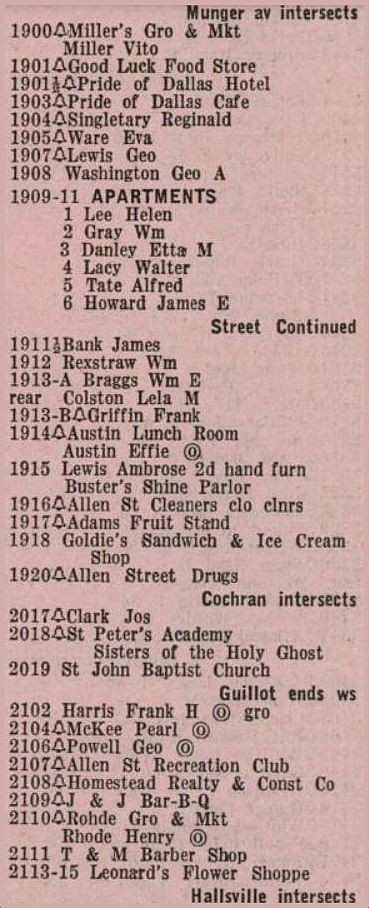
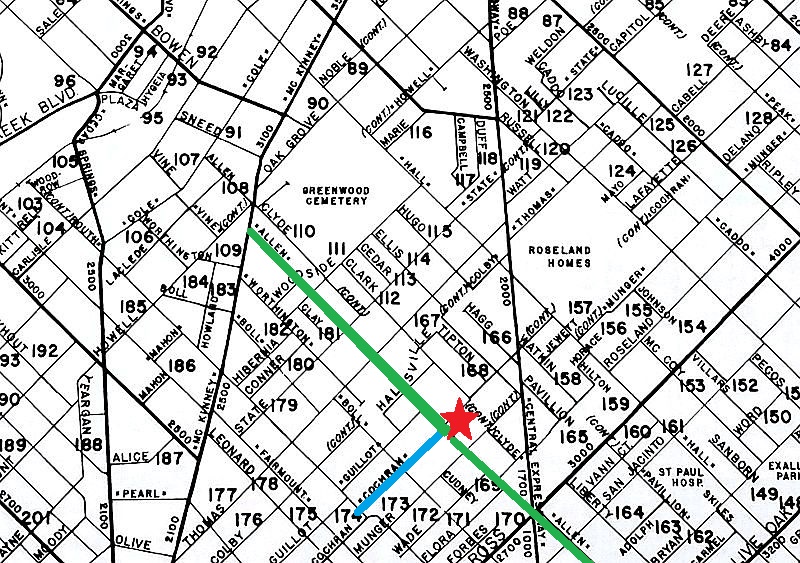
allen-cochran_1944-45-directory
Allen St., between Munger & Hallsville — 1944-45 Dallas directory

allen-cochran_1952-mapsco
1952 Mapsco (star indicates location of Allen St. Drugs)

***

Sources & Notes

Top photo by Marion Butts, from the Marion Butts: Lens on Dallas Collection, Dallas Public Library. More information on the work of Mr. Butts may be found here.

Most images are larger when clicked.

*

Copyright © 2019 Paula Bosse. All Rights Reserved.
From the Vault: Dali Does Dallas — 1952

dali_union-station_feb-1952_dpl
“A Dali-an door!”

by Paula Bosse

Salvador Dali visited Dallas in February, 1952 on a lecture tour. Not only was he delighted to find this oddly slanted doorway at Union Station, he also said that while in Texas he had been astonished to find himself dreaming in vivid technicolor. Read the original Flashback Dallas post “Salvador Dali Brings ‘Nuclear Mysticism’ to Dallas — 1952,” here.

*

Copyright © 2019 Paula Bosse. All Rights Reserved.

Caterpillars On the Job at Ross and Market — 1922

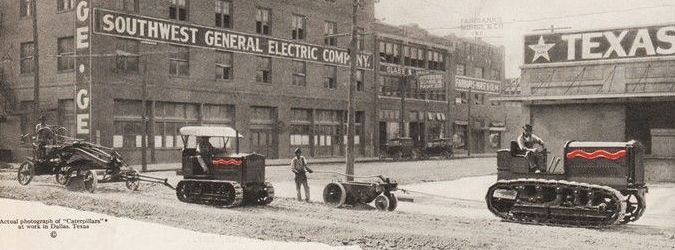
caterpillar-ad_1922_photo
Roadwork in the warehouse district…

by Paula Bosse

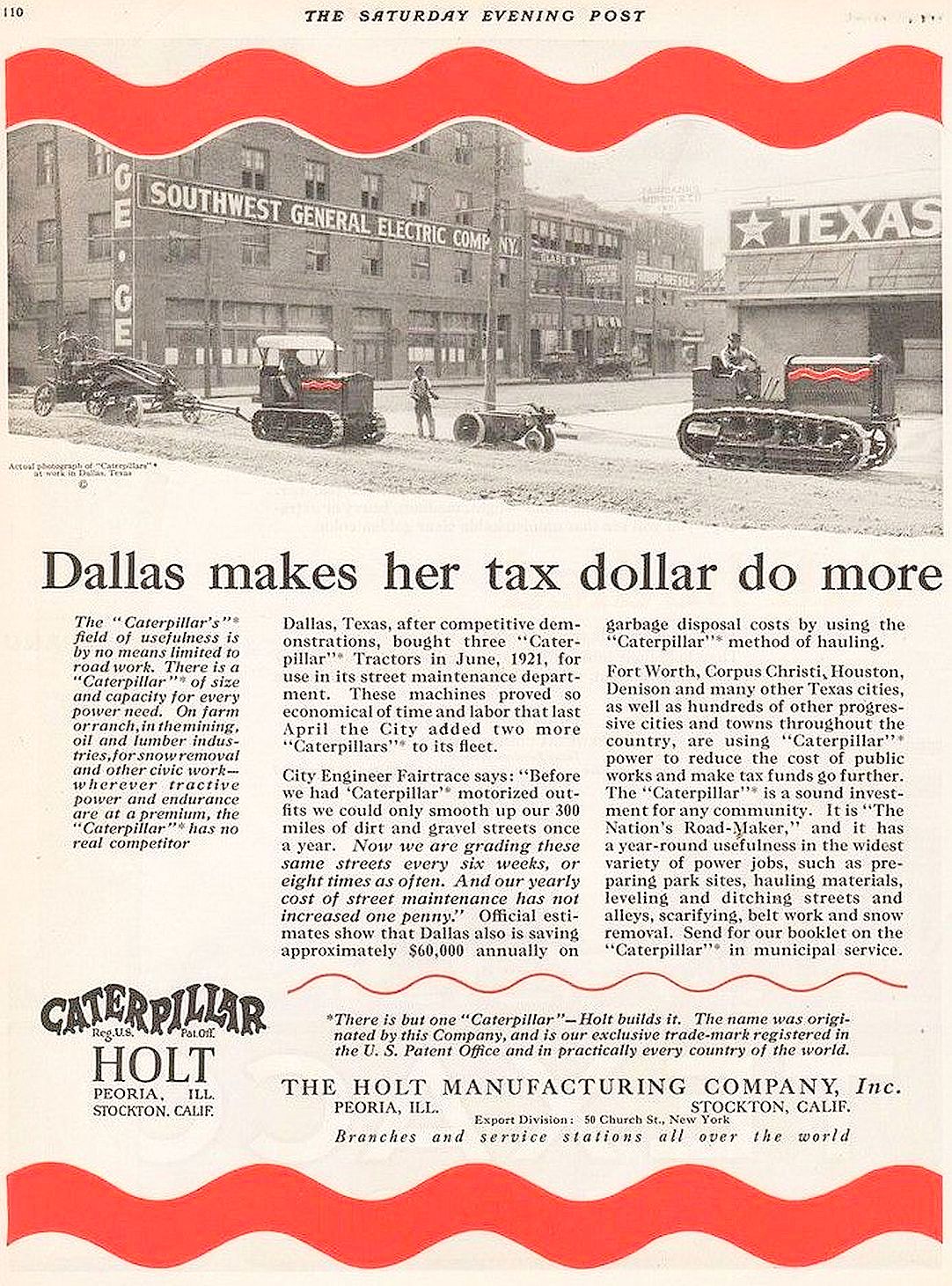
I’ve loved vintage and historical advertisements since I was a child. Since becoming more focused on Dallas history, I’m always excited to find old ads with photos of recognizable Dallas locations, like the one below for Caterpillar tractors, which was printed in the Saturday Evening Post in 1922. (Click to see a larger image and read the rousing tribute given to these “motorized outfits” by City Engineer George D. Fairtrace.)

caterpillar-ad_1922

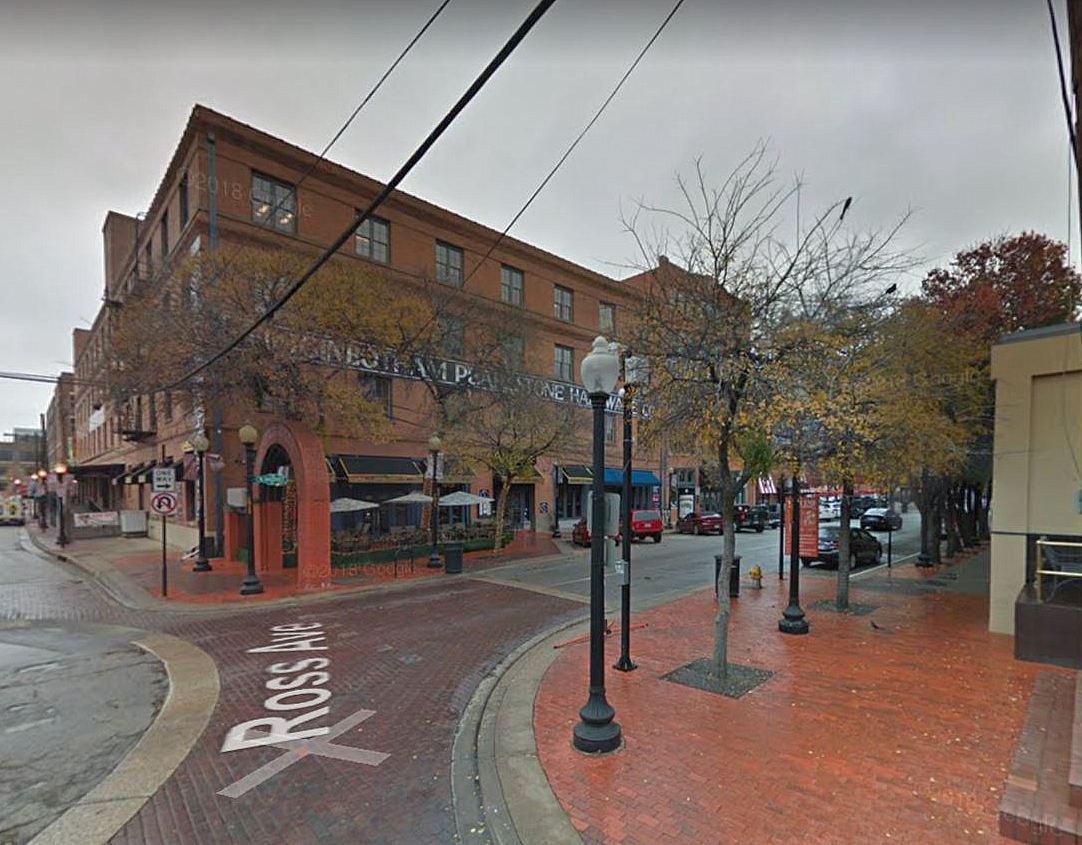
The photo shows a Dallas street maintenance crew grading Ross Avenue at the intersection of N. Market in 1922 (see this location on a 1921 Sanborn map here, and see the current Google Street View here). Every building seen in the photo is still standing in the Historic West End:

  • Southwest General Electric Co., 1701 N. Market (it was later occupied by the Higginbotham-Pearlstone Hardware Co.)
  • Federal Glass & Paint Co., 1709 N. Market
  • Fairbanks, Morse & Co., 1713 N. Market
  • Texas Ice & Cold Storage (partially visible at the right), 701 Ross (until recent years the long-time home of The Palm restaurant; in 1922 it was, I believe, a brand-new building)

dec-2016_googleGoogle Street View, 2016

ross-and-market_bing-streetside-view_2015Bing Streetside, 2015

Thank you, Caterpillar ad!

**

UPDATE (2/12/2024): I wrote about the history of the building seen in these photos in “The Higginbotham-Pearlstone Building.”

***

Sources & Notes

1922 Caterpillar ad found on eBay.

*

Copyright © 2019 Paula Bosse. All Rights Reserved.
Republic Bank Branding — 1955

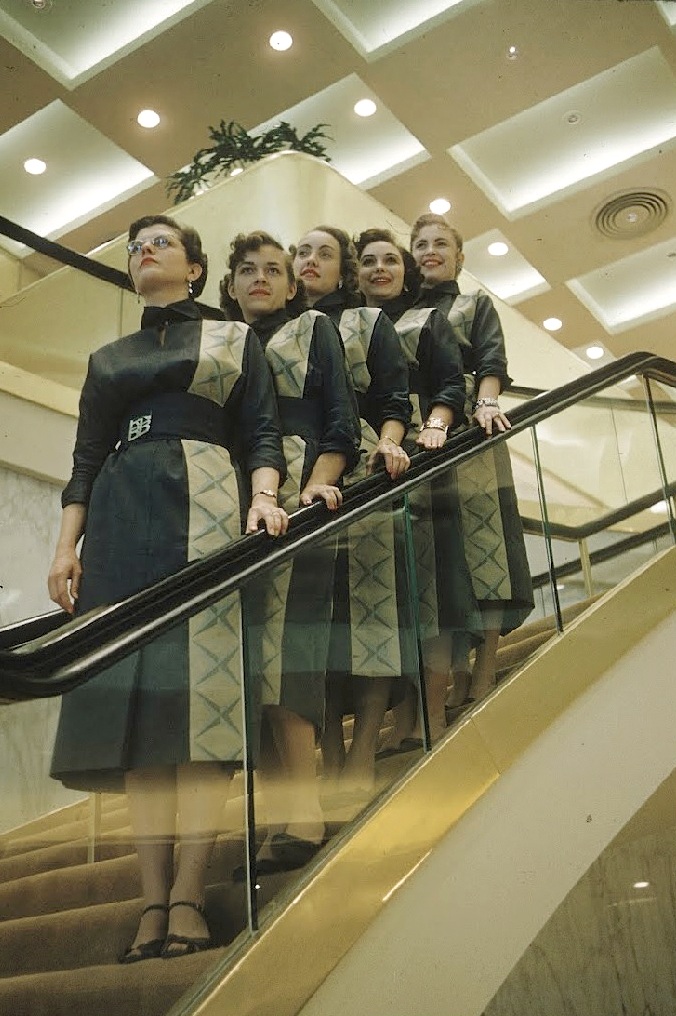
republic-national-bank_employees-dresses_life-mag
When the uniforms match the exterior of the building…

by Paula Bosse

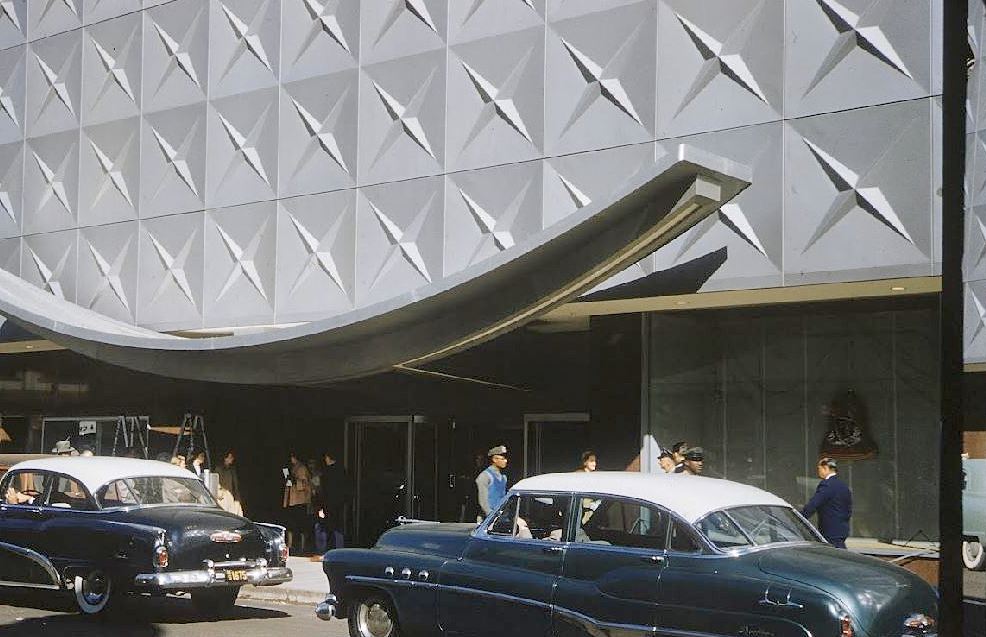
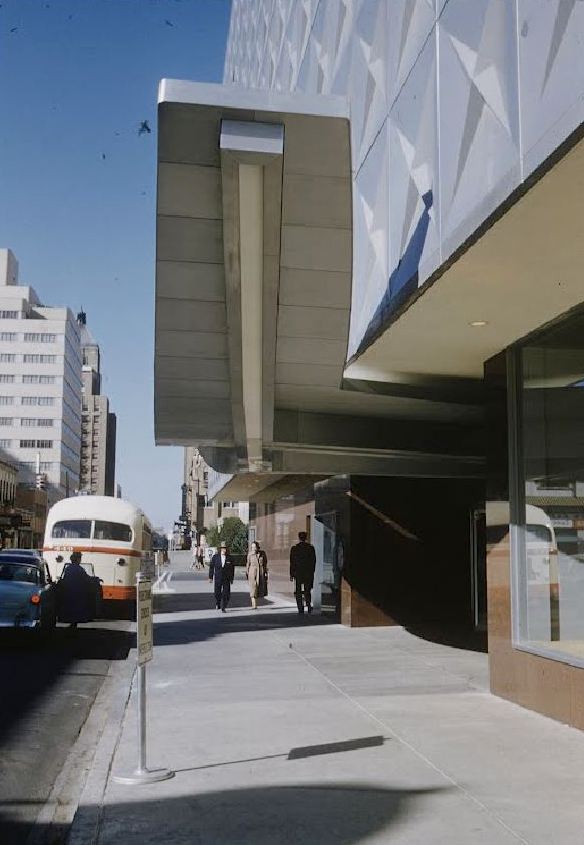
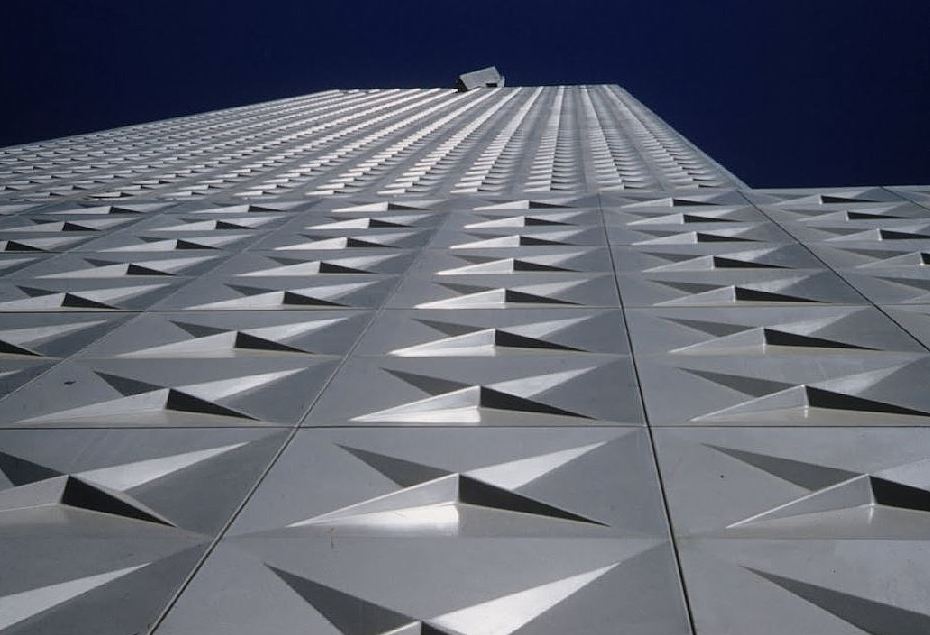
Republic National Bank opened its dazzling new building on N. Ervay in December, 1954. It was the tallest building in the city, the interior boasted gold leaf everywhere, and the exterior was covered with thousands of aluminum panels embossed with a distinctive four-pointed “star” shape.

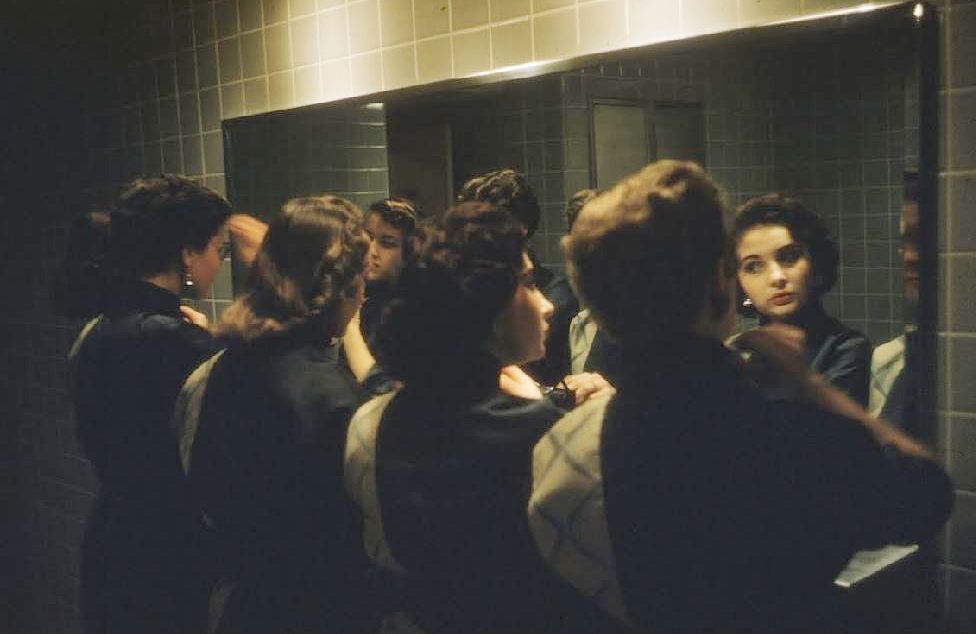
The building’s opening was quite the PR extravaganza — so much so that Life magazine sent photographer Joe Scherschel to take photos for the Feb. 28, 1955 article “Dazzler For Dallas.” Scherschel took a ton of photos, but only a handful made it into the article — one that didn’t make it is the one above which shows five young women on a staircase, all of whom are wearing dresses with those Republic Bank “stars” on them! I have to admit, I was a little more excited than I should have been to have noticed what I assume must have been a (fairly stylish) uniform (hostesses? elevator girls?). Kudos to whomever came up with that clever way to celebrate the bank’s home by incorporating one of the most distinctive elements of one of the city’s most distinctive buildings into something as easily overlooked as an employee’s uniform. That is attention to detail!

republic-national-bank_employees-uniforms_mirror_life-mag

republic-national-bank_entrance_life-mag_1955

republic-national-bank_sidewalk_1954_color_life-mag

republic-national-bank_aluminum-panels_life-mag

***

Sources & Notes

All photos were taken by Joe Scherschel for Life magazine, ©Time, Inc. A large collection of the photos Scherschel took while on assignment in Dallas for this article can be viewed here.

I wrote about those fantastic embossed aluminum panels in the Flashback Dallas post “The Republic Bank Building and Spain’s ‘Casa de Los Picos,'” here.

All photos are larger when clicked.

*

Copyright © 2019 Paula Bosse. All Rights Reserved.
The Henry Russells Take Possession of Their Rolls Royce Silver Wraith — 1948

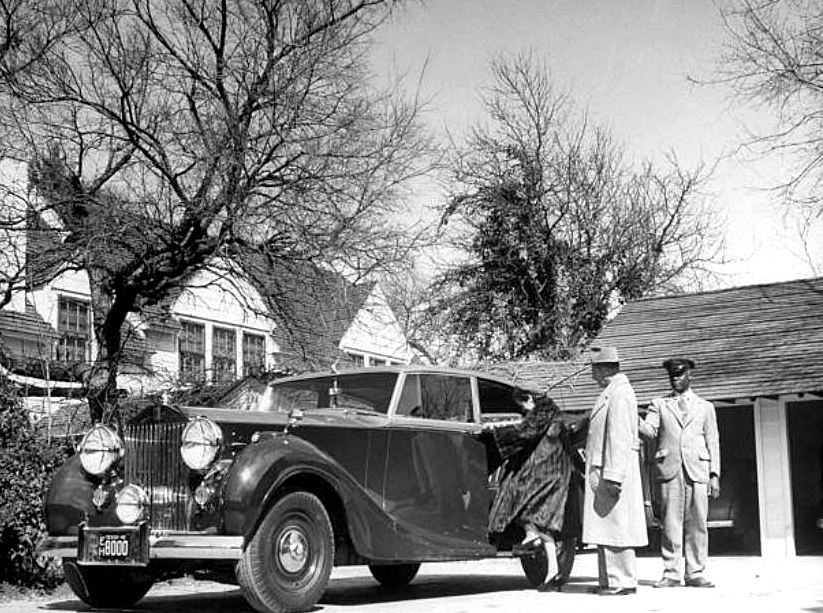
russell-henry_life-mag_alternate
The car, the couple, the driver … Preston Hollow, 1948

by Paula Bosse

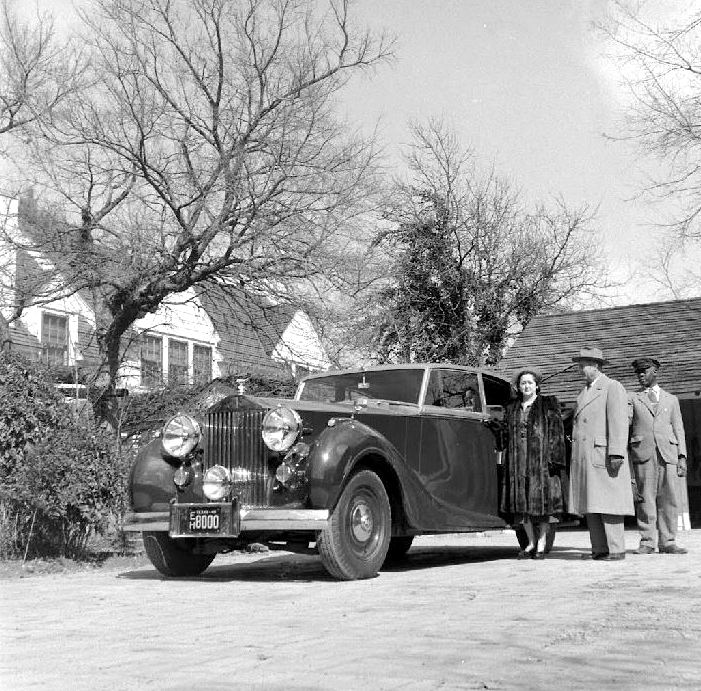
People seem to expect stories about painfully wealthy Texans to have larger-than-life outrageous elements. The April 5, 1948 issue of Life magazine devoted several pages to the Southwest’s “New Crop of Super Rich.” The photo showing Col. and Mrs. H. E. Russell at their Preston Hollow home appeared with the following caption:

New Rolls-Royce (price $19,500) was bought by Colonel Henry Russell of Dallas as a birthday present for his wife. She liked it because “it goes with my blue hat.” The Russells claim they are just “camping out” in their house, plan to turn it over to the servants and build a bigger one for themselves as soon as they get around to it.

One can only hope this was just gross exaggeration. Or a misinterpreted joke. Or just amusing fiction. Because if not … yikes. 

russell_rolls-royce_1948

Henry and Alla Russell had not been in Dallas very long when they took possession of their fabulous Rolls Royce — a Silver Wraith. When production of this model was announced in 1946, it was described as “the world’s most expensive automobile.” The Russell’s purchase made local news, with this blurb appearing in The Dallas Morning News on Feb. 12, 1948:

Col. and Mrs. H. E. Russell, 4606 Park Lane, have taken delivery on their new Rolls-Royce. Known as the Silver Wraith model, the silver and blue car features a bar, vanity and other luxuries. The price? $19,274. Dealers S. H. Lynch & Co. said the car was the first Rolls-Royce sold in the Southwest.

That postwar price would be the equivalent in today’s money of about $200,000. In a 1956 Dallas Morning News article, Frank X. Tolbert wrote that Col. Russell “is still driving his ’48 model, and it’s the only one we ever see around town although there may be one or two more” (DMN, “Rolls-Royce Hard To Find in State,” Nov. 15, 1956).

There had been Rolls Royces in Dallas before 1948, but according to S. H. Lynch — the Dallas dealer of imported British vehicles including Jaguars, Bentleys, MGs, Morris Minors, and James motorcycles (as well as other high-ticket British items such as English china) — he had sold only five or six of the prestigious automobiles while he had the dealership, and that only that first one bought by the Russells had stayed in Dallas.

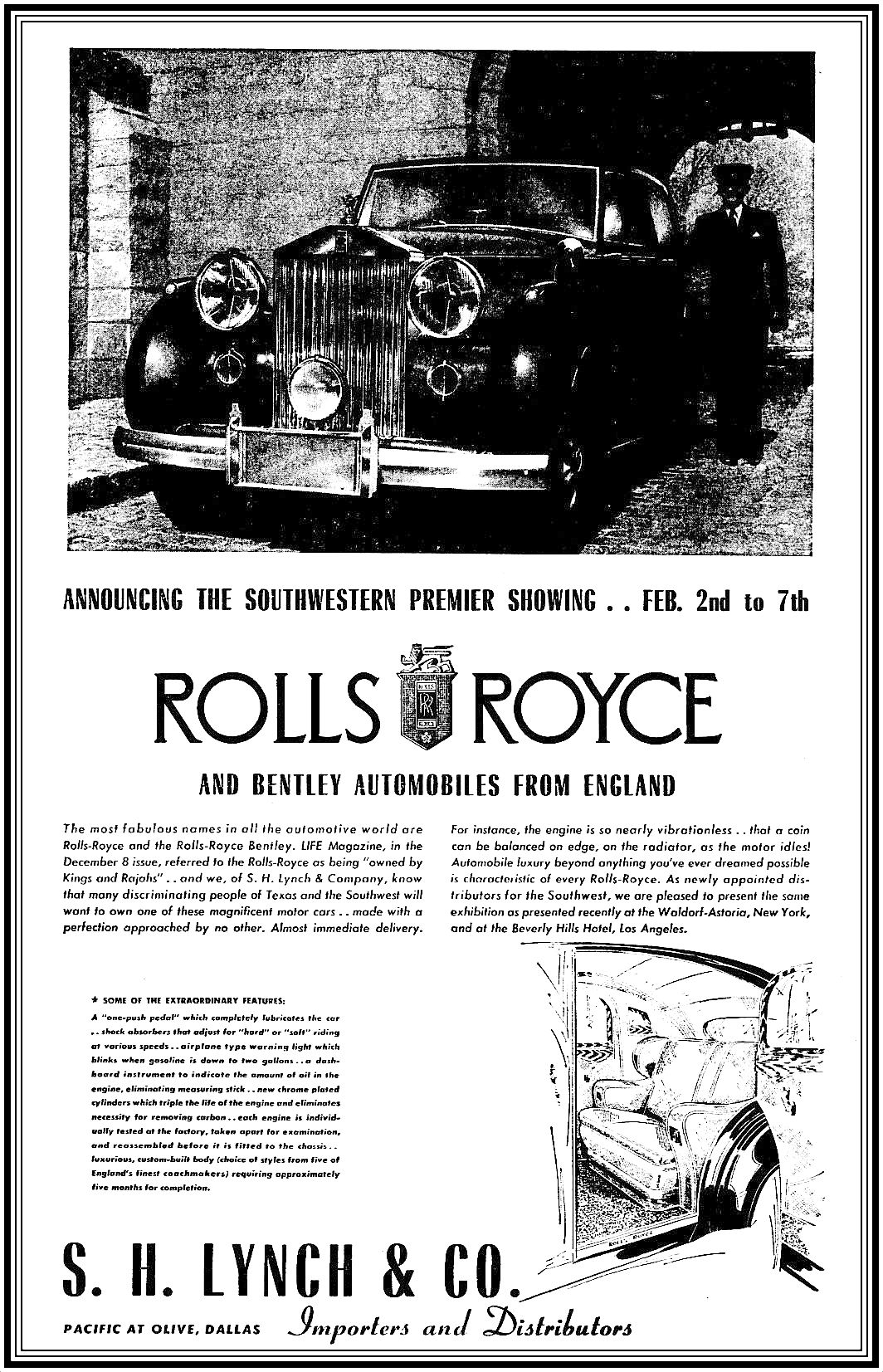
rolls-royce_s-h-lynch_020148
S. H. Lynch & Co. ad, Feb. 1, 1948 (click for larger image)

rolls-royce_s-h-lynch_030748
March, 1948

In 1948, S. H. Lynch (located at 2106 Pacific, at Olive) was one of only three Rolls dealerships in the county, the others being in New York and Los Angeles. In postwar Britain, American dollars were in such demand that a Rolls spokesman said that at least 75% of his company’s production was earmarked for the U.S. — American orders would take priority over their U.K. counterparts.

s-h-lynch_postcard

Even though a Roller’s always going to wow the hoi polloi, it wasn’t always easy to find a trained mechanic, as Roy Lee discovered:

rolls-royce_abilene-reporter-news_072046
Abilene, TX Reporter News, July 20, 1946

We all have our bad days, I suppose.

***

Sources & Notes

The two photos of the Russells are from the Life magazine article “Southwest Has a New Crop of Super Rich” (the top photo was not published).

Col. Russell, an Army veteran of both world wars, appears to have been retired by the time he got to Dallas. The only clue to the source of what must have been fabulous wealth was the final line in the obituary of Mrs. Russell, which noted that he was the son (or possibly the grandson) of the founder of the Russwin Lock Co. Mrs. Russell died in a massive fire which destroyed the large Park Lane house in January, 1976; the colonel died about 15 years earlier, in New York.

*

Copyright © 2019 Paula Bosse. All Rights Reserved.
Jane Asher in Dallas — 1967

jane-asher_dallas_1967

by Paula Bosse

English actress Jane Asher — who has acted since the age of 5 — will probably forever be referred to somewhere (like here) as “Paul McCartney’s former girlfriend.” They dated from 1963 to 1968, and Jane always asserted that her acting career was what was important to her, not being a celebrity (or the girlfriend of a celebrity). But if you were dating a Beatle, that was probably an impossible thing to escape.

In 1967, Jane toured the United States for several months as part of the Bristol Old Vic company. One of their longest stays was in Dallas (April 10-15, at the State Fair Music Hall), where the company performed Shakespeare’s Measure For Measure, Hamlet, and Romeo and Juliet (in which Jane appeared as Juliet). The Dallas performances (“The theatrical event of the season!” “Only Southwestern engagement…”) were co-sponsored by Neiman-Marcus.

bristol-old-vic_022667_det

It appears that Jane popped into Dallas early — on April 4 and April 5 — in order to do some publicity, catch a Dallas Theater Center production of Julius Caesar (as the guest of Richard Marcus who, afterwards, hosted a small dinner party), and, the next day, celebrate her 21st birthday at a noon luncheon in Neiman’s Zodiac Room.

Her arrival at Love Field was captured by Channel 8 news cameras (sadly, without sound).

*

asher-jane_wfaa_jones-collection_smu_april-1967_a


asher-jane_wfaa_jones-collection_smu_april-1967

asher-jane_ap-wire-photo_040567_dtcAP wire photo, taken in Dallas on April 4, 1967

asher-jane_zodiac-room_040567
AP wire photo, taken in Dallas at Neiman-Marcus on April 5, 1967

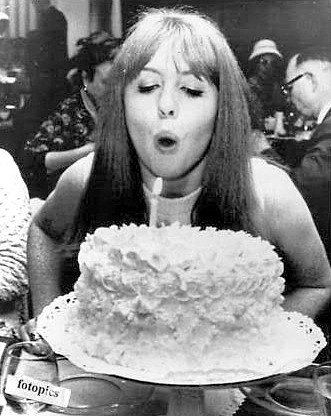
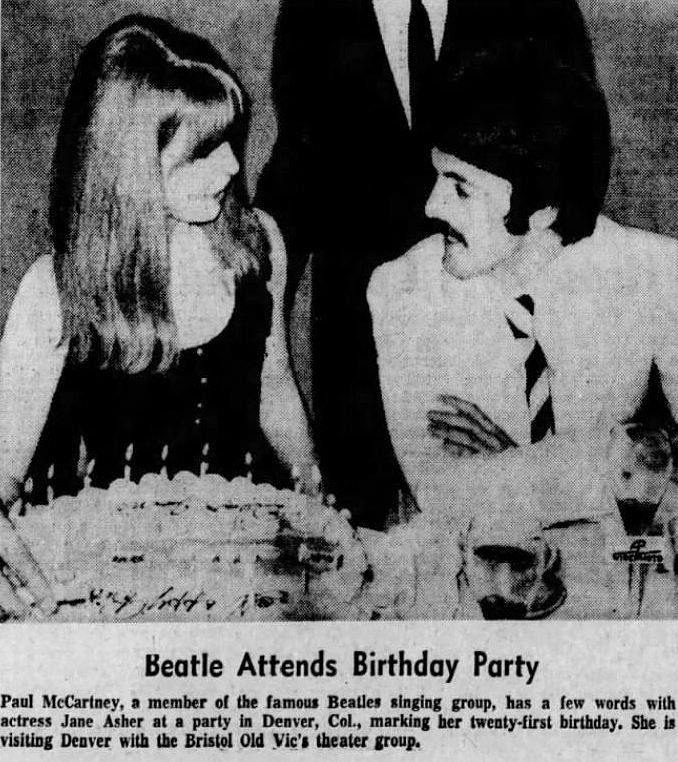
After cake at the Zodiac Room on her birthday — April 5, 1967 — she left for Denver, the next stop on the tour. That night her famous boyfriend joined her there for even more cake.

jane-paul_denver_ap-wire-photo_040667
Denver, April 5, 1967

After the run in Denver, the Bristol Old Vic company came to Dallas for six days (and seven performances). A reviewer complained about the Music Hall’s poor acoustics and thought that the productions of the three plays were a bit “mod” for his taste (“considerable stage movement and fast-paced dialogue caused many of the lines to be lost”), but he thought Jane acquitted herself well as Juliet in a good, if somewhat undistinguished production.

In an interview with Maryln Schwartz of The Dallas Morning News, Jane — probably for the thousandth time — had to steer the conversation back to her acting and away from her famous boyfriend. When Schwartz asked who her favorite “singing group” was she told her it was the Grateful Dead.

**

old-vic_dallas_austin-american-statesman_011567
Austin American-Statesman, Jan. 15, 1967 (click to see larger image)

***

Sources & Notes

Top photo by Harry Benson, Daily Express, Hulton Archive, Getty Images. The Getty caption has the date as April 25, 1967, which is incorrect — the photo was most likely taken on April 5, 1967 (Jane is wearing the same outfit seen in the Zodiac Room photo, and on April 25th, the theatrical company had been in Illinois for over a week). I have to admit, I love seeing celebrities awkwardly wearing Texas cowboy hats. But Jane looks pretty cute.

The WFAA-Ch. 8 news footage is from the G. William Jones Film Collection at SMU. The short, 49-second clip shows her arriving on a Delta flight at Love Field, met by a no doubt Stanley Marcus-approved be-costumed young man with a trumpet and a woman bearing some sort of official proclamation of “welcome.” The two color photos are my screen captures.

The birthday cake photo is from a blog post teeming with fantastic photos of Jane Asher and her stunning red hair, here.

More on Jane Asher’s career at Wikipedia, here.

More on the Beatles and Dallas can be found in the Flashback Dallas post “The Fab Four in Big D — 1964,” here. (It’s interesting to note that two important people in the orbit of the Beatles celebrated milestone birthdays in Dallas: Jane Asher turned 21 here, and manager Brian Epstein turned 30 while here with “the boys” in 1964.)

*

Copyright © 2019 Paula Bosse. All Rights Reserved.