Flashback : Dallas

A Miscellany: History, Ads, Pop Culture

Dallas Fire Fighter Magazine — 1960s

dallas-fire-fighter-magazine_jan-1965_ebay

by Paula Bosse

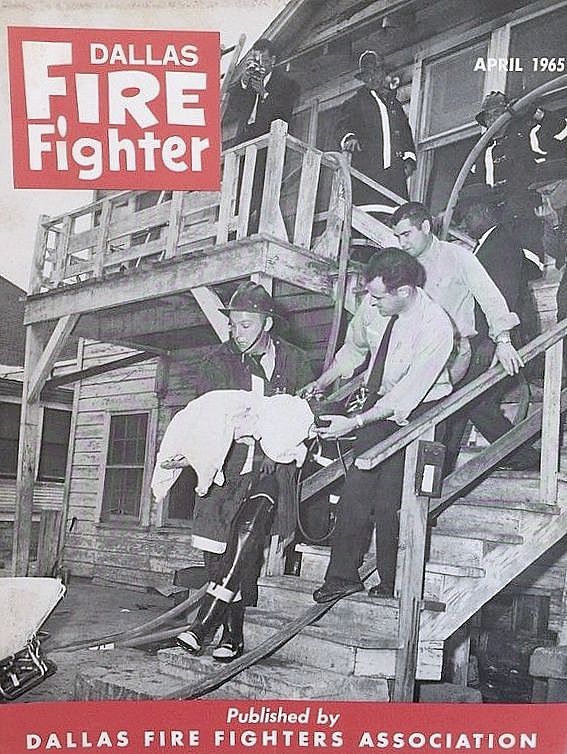
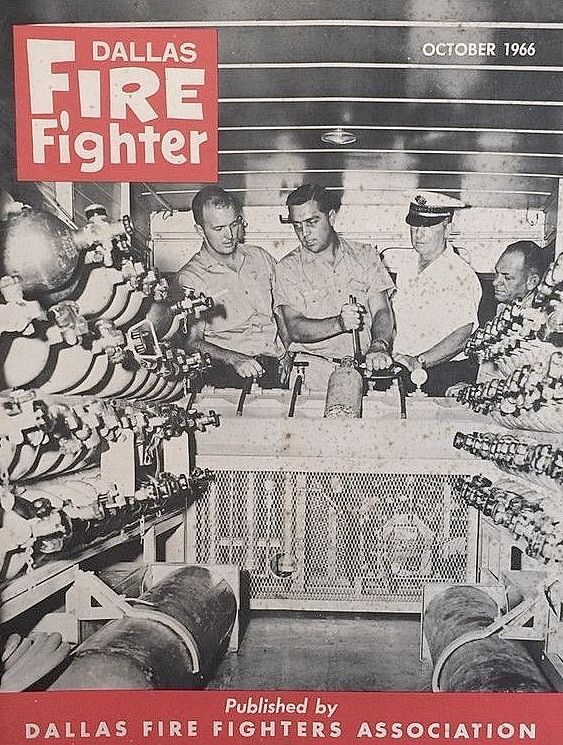
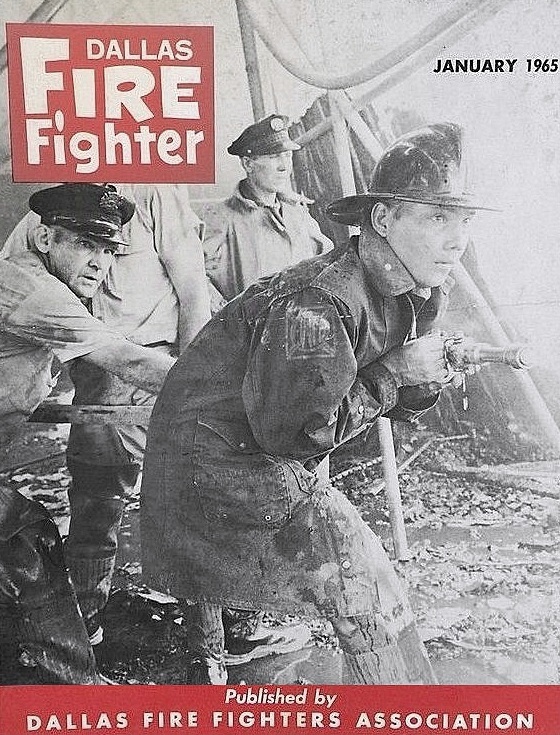
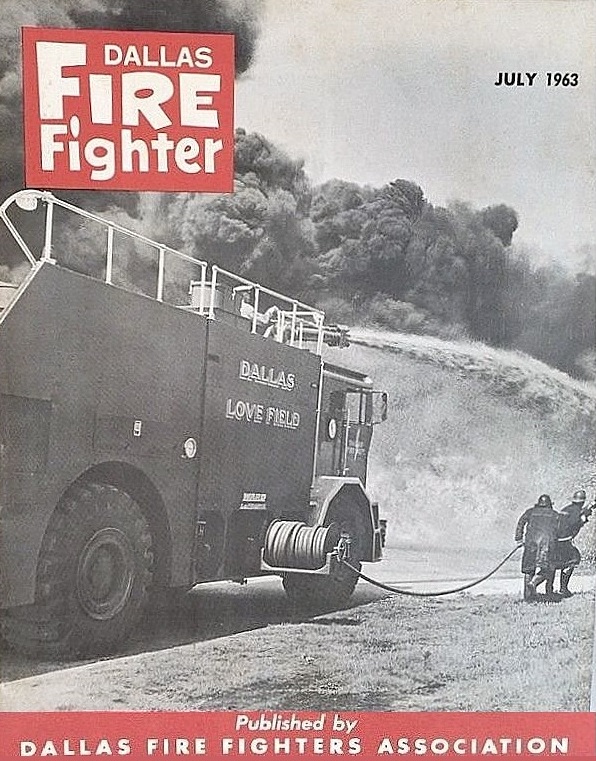
I saw these covers of Dallas Fire Fighter magazine on eBay and thought they looked really interesting. I can’t find anything about this publication other than a one-sentence glancing mention in a Dallas Morning News article on fire prevention in January, 1962 — so it had been around at least since the early ’60s. Here are four covers — one from 1963, two from 1965, and one from 1966.

dallas-fire-fighter_magazine_july-1963_ebay_love-fieldLove Field engine, July 1963

dallas-fire-fighter_magazine_1965-ebay
Rescue of a toddler, April, 1965

dallas-fire-fighter_magazine_oct-1966_ebay
Aero-Unit inspection, No. 1 Station, October, 1966

The person listing these magazines on eBay included a few (very low-resolution!) photos of some of the pages inside. Below are a few interesting tidbits from the October, 1966 issue.

dallas-fire-fighter-magazine_oct-1966_ebay_fire-house-rhythm-kings_photo

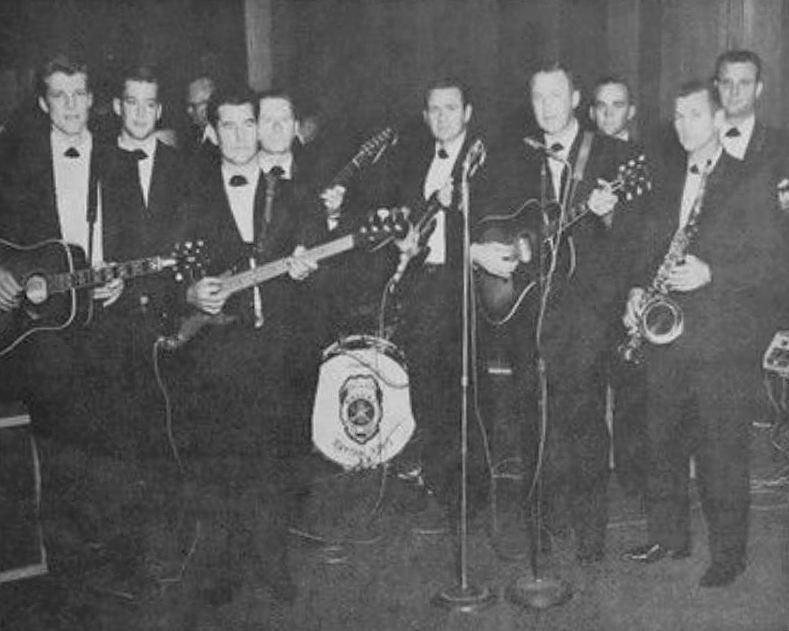
The Fire House Rhythm Kings was a country band made up of Dallas firefighters, formed in 1956. They played well over 300 gigs a year (one article noted they sometimes performed at four venues in one DAY!), combining entertainment with education on fire prevention. The caption: “Fire House Rhythm Kings – left to right, Jack Mewbourne, Doug May, Les Wilson, Spurgeon Harris, Don Smith, ‘Big Ed’ Hunt, J. W. Hadaway, Don Spruell, and Leland Loggins. Members not present in the photo include Harvey Lanier, Troy England, W. T. Babb and Wendel Jenkins. Newest additions to the band include Larry Gotchel and Earl Rowe who have also joined since the photo was made.”

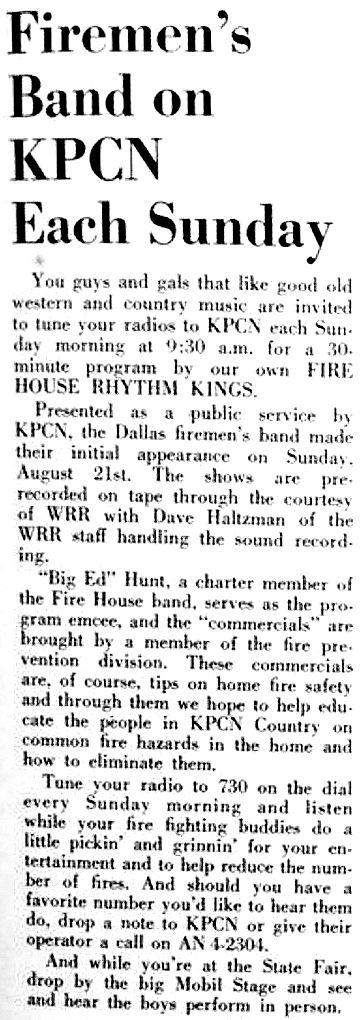
They also had a regular show on radio station KPCN (click to see larger image):

dallas-fire-fighter-magazine_oct-1966_ebay_fire-house-rhythm-kings
Dallas Fire Fighter, October, 1966

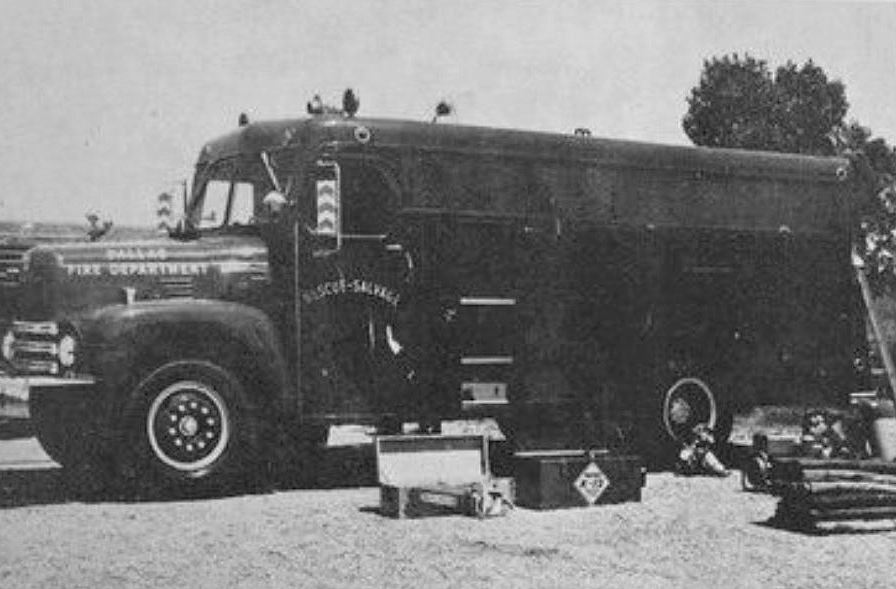
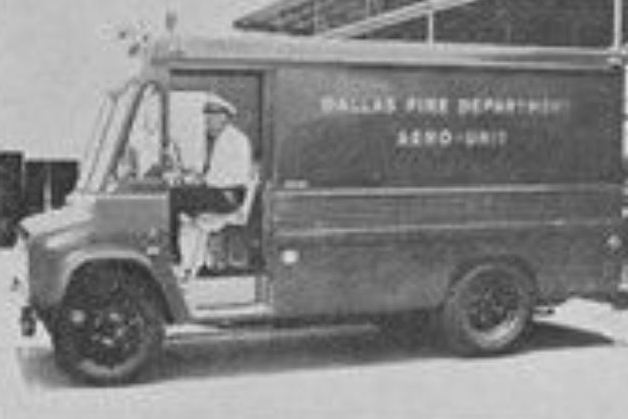
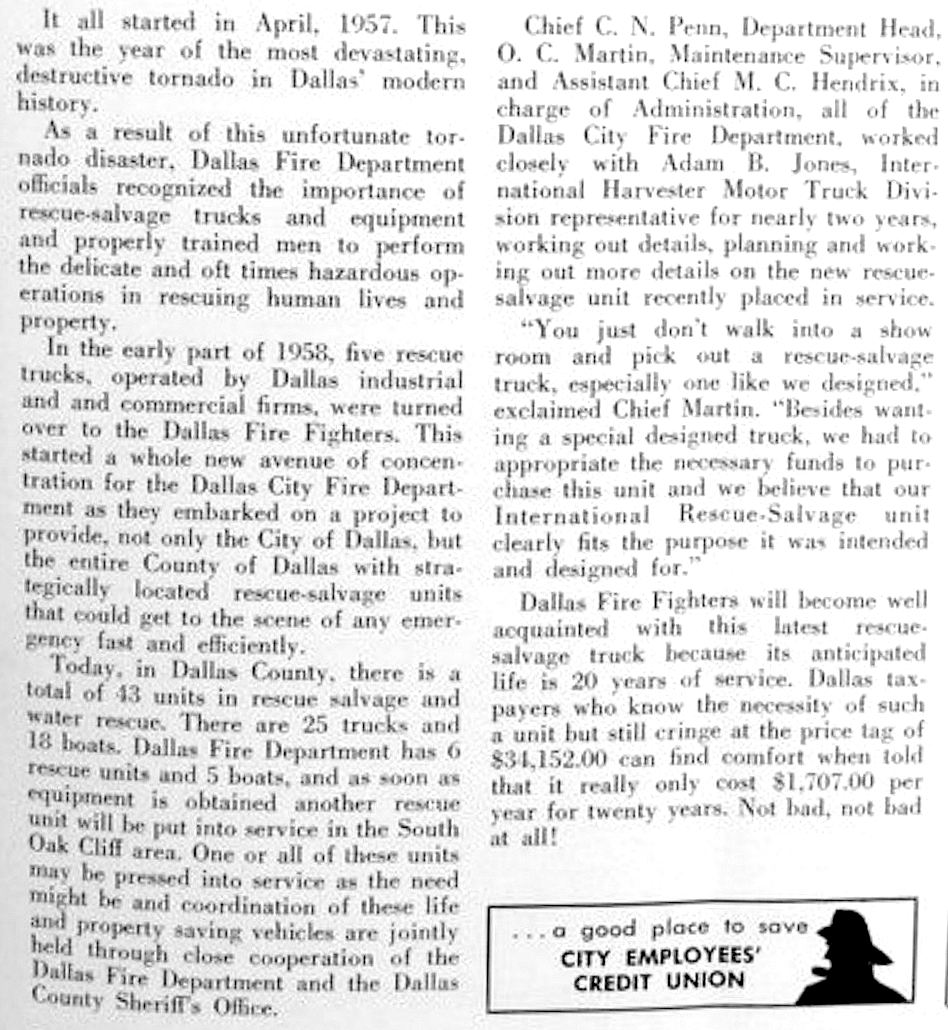
The department had recently acquired new equipment, including a heavy-duty rescue-salvage unit and an aero-unit (apologies for image quality!):

dallas-fire-fighter-magazine_oct-1966_ebay_heavy-duty-rescue-salvage-unit“New heavy duty rescue-salvage unit now in service at No. 3 Station”

dallas-fire-fighter_magazine_oct-1966_ebay_aero-unit
Aero-Unit

dallas-fire-fighter_magazine_oct-1966_ebay_new-equipment

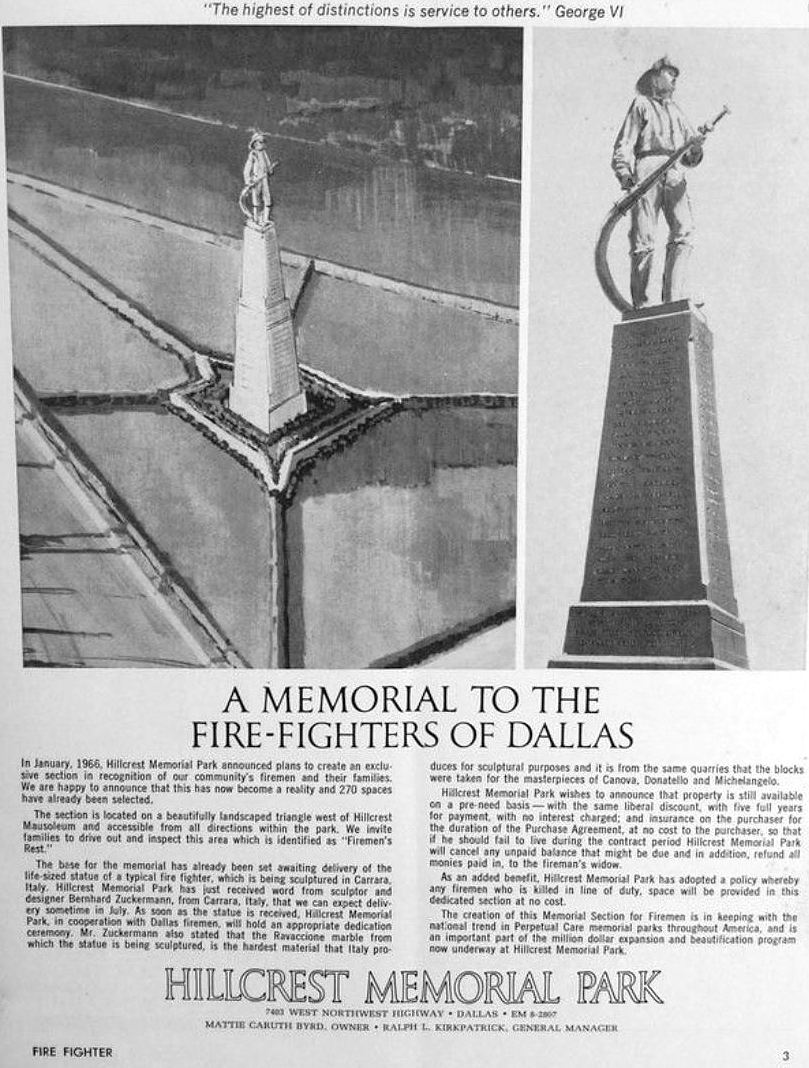
And, lastly, an ad announcing a new section of Hillcrest Memorial Park created exclusively for fire-fighters and their families: “Firemen’s Rest.” This section of the cemetery featured a large marble statue by memorial sculptor Bernhard Zuckermann, which appears to be a copy of the bronze Firemen’s Monument dedicated in City Park in 1903 (the original bronze statue has been relocated to the Dallas Fire-Rescue Training Center on Dolphin Rd.). (See a transcription of the ad’s hard-to-read text here.)

dallas-fire-fighter_magazine_oct-1966_ebay_hillcrest-memorial-park_ad

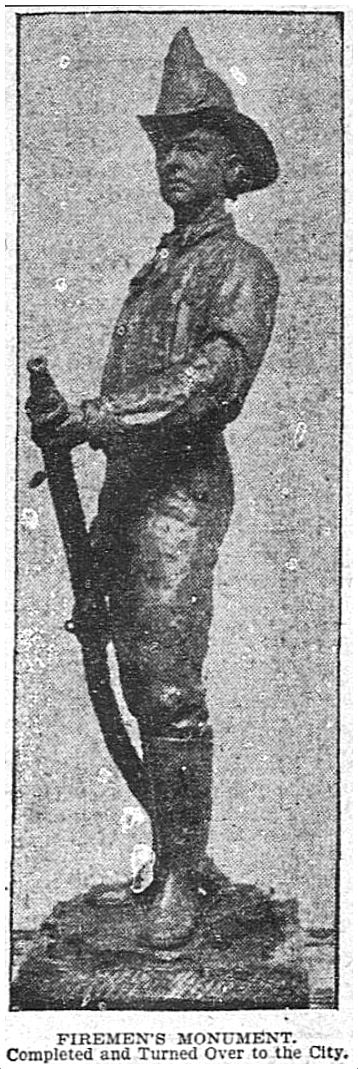
Below, the original monument topped with the bronze likeness of Dallas fireman John Clark (who died fighting a huge East Dallas fire in 1902) honors Dallas firefighters who have died in the line of duty; it was dedicated on Nov. 26, 1903.

firemans-monument_dmn_112703_photoDallas Morning News, Nov. 27, 1903

***

Sources & Notes

Dallas Fire Fighter magazine (published by the Dallas Fire Fighters Association) found on eBay.

An interesting article on the Fire House Rhythm Kings band can be found in the Dallas Morning News archives in the article “Firehouse Band Goes Like Blazes” by the always entertaining Kent Biffle (DMN, Dec. 13, 1965)

*

Copyright © 2019 Paula Bosse. All Rights Reserved.

Make Dallas the City of Mercy — 1919

city-of-mercy_dmn_102019_ad_welfare-week_charity

by Paula Bosse

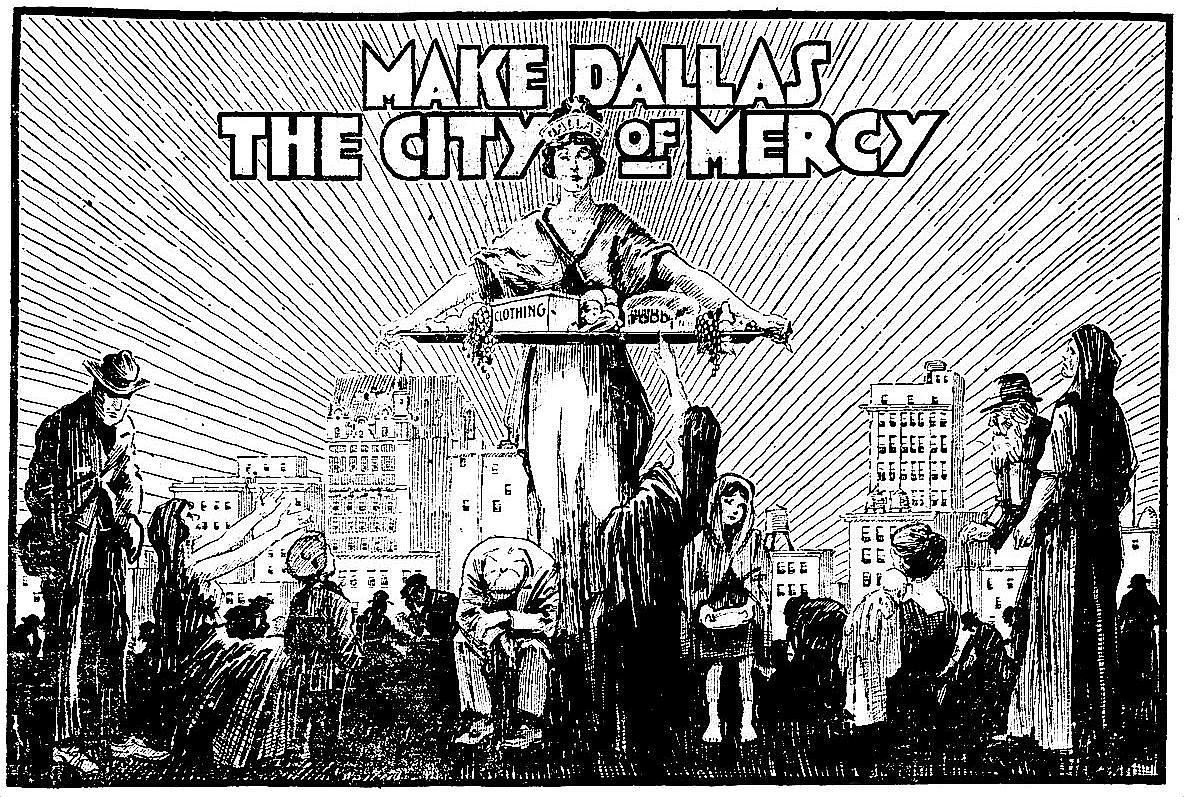
This seems to be a nice way to start the new year — by featuring a charitable appeal from a group called The Welfare Council of Dallas, which helped to raise funds annually for organizations in need of monetary assistance from the public.

Many are the appeals to our generosity today. Here, however, is our closest and deepest obligation. These represent the charity that begins at home. These are the forces that are driving misery and want from our city — building always a brighter and better future for Dallas.

**

The following nine groups — all of which aided needy children and families — were the ones chosen in 1919 as organizations which would be part of the city-wide “Welfare Week” appeal (the illustration above and the text below are from a large ad that appeared in Dallas newspapers in October, 1919):

THE UNITED CHARITIES during the last year have ministered to 12,226 individuals; 4,452 visits were made to homes to which their attention had been called; 734 cases for continued relief were opened; 152 such cases from the preceding year were given further aid; 562 destitute wanderers were furnished with homes, food and clothing, and suitable employment found for as many of them as possible; 834 cases of sickness or accident or taking care of, some for periods as long as six months; 116 persons were furnished transportation to their home or to places where their health could be restored ; 85 were aided in gaining admission to State institutions; 55 cases of tuberculosis were given extended relief; 82 wives, deserted by their husbands, and 37 widows with children were given food and shelter until proper arrangements for their care could be made by their relatives.

THE DALLAS GRADUATE NURSES’ BABY CAMP cared for and gave necessary medical and surgical attention to 178 babies during the last year. The mortality was 25, certainly a low figure, considering the uniformly serious nature of the cases treated. The Camp is under the direct charge of three doctors and seven nurses, and no baby is permitted to leave the Camp until permanently cured. The average stay of the little patients is five weeks. Besides the cases treated at the Camp over 100 formulae were furnished to outside cases. The Baby Camp is open to ALL Dallas babies who are in bad health. [Read a history of the Baby Camp here.]

THE DALLAS COUNTY HUMANE SOCIETY is the founder and conductor of “Hope Cottage,” a home for illegitimate and deserted babies, where an efficient staff of nurses devote their time to providing these little ones with an opportunity to begin honorable lives. Hope Cottage averages from ten to twenty inmates all the time, as they are kept only until suitable homes for adoption can be found. The placing of orphaned children in private homes is another branch of the work. This agency also investigated 1,390 cases of reported abuses of children; 389 of these investigations were followed by prompt action: 299 homes were visited; 16 children were sent to the Detention Home, and 18 cases of delinquents received attention; 3,246 cases of abuse to dumb animals were investigated. [A similar “shelter for unfortunate women and children” was the Salvation Army’s Neighborhood Home on McKinney Avenue.]

THE DALLAS KINDERGARTEN AND NURSERY ASSOCIATION has conducted four stations during the year – the Clara Chaison Kindergarten at the Neighborhood House on Cedar Springs Road, the South Dallas Kindergarten near Trinity Play Park, the Cora Street Nursery, formerly under the supervision of the City Federation of Women’s Clubs, and the Alamo Nursery at Hickory and Alamo streets. The average enrollment at all stations was 205. In connection with each station a day nursery is maintained where mothers with employment may leave their young children from 7 a.m. to 6 p.m. An average of fifty mothers take advantage of these nurseries each day, and a bath, wholesome dinner, nap and play constitute the day’s program. [A similar nursery, specifically for the black community, was the Dallas Day Nursery.]

THE INFANTS’ WELFARE AND MILK ASSOCIATION, striving for better health and cleaner living conditions for children, distributed 81,828 pints of milk; visited 7,885 homes; treated 3,489 children in medical and 469 in dental clinics. The nurses at the stations gave treatment to 1,160 cases. In addition to these, 202 prenatal cases were given attention, 31 obstetrical cases disposed of and 80 bacteriological examinations were made. Twenty babies were sent by the Association to the Baby Camp and 14 to the City Hospital, while co-operation was given to other organizations in 724 cases. [From another ad: “Sick babies of many races and creeds, but all future Dallasites, find new health in [these] clinics.” More on milk stations here.]

THE DALLAS STREET AND NEWSBOYS’ CLUB, “Big Brother Work” Headquarters, is the one bright spot in many a young Dallas urchin’s life. The club rooms, at 1907 Jackson street, half inexpensive, though adequate, equipment for sports and games, reading and like activities. There are dormitory rooms for boys temporarily “on their own,” which accommodations can be paid for according to the boy’s ability to pay. A few steps from the building is the back door at the Y.M.C.A., and three times each week the Club descends upon the swimming pool en masse. The directors of the Club do not confine their work to headquarters, however, but look to the welfare of its members at work, play, school and even in their homes. [The life of a newsboy — often an orphan under the age of 10 — was not an easy one.]

ST. MATTHEW’S HOME FOR CHILDREN, by placing its finances for the coming year in the hands of the Welfare Council, adds a valuable and deserving institution to the list of member agencies. Although the property is owned by the Episcopal Church, the managing board is non-sectarian, the Home is absolutely non–sectarian in its activities and no child is excluded on account of its faith or that of its parents. At present the capacity is limited to forty little ones, and any child between the ages of 4 and 12 years may be admitted.

THE DALLAS COUNCIL OF BOY SCOUTS is the other new member agency. The work done by this organization and developing manhood in boys of all classes of society entitles it to our fullest support. Its influence extends into every home, school, factory and business office in the city. Its nominal dues for membership permit any boy, no matter how poor, to join and take a full share in the activities and benefits of the organization.

THE EMPTY STOCKING CRUSADE is an organization whose year’s activities culminate in providing Christmas cheer – warm clothing, fruit, toys and other tokens of happiness for little ones. It carries cheer into homes of the city to whose children the season of universal good will would otherwise bring nothing, and into the orphanages. Last Christmas 6,902 children were provided for.

city-of-mercy_dmn_101719_ad_welfare-week_charity_det

***

Sources & Notes

More on Dallas’ early charitable movements can be found in the article “The Forgotten Frontier: Dallas Women and Social Caring, 1895-1920” by Elizabeth York Enstam (Legacies, Spring, 1989), here.

*

Copyright © 2019 Paula Bosse. All Rights Reserved.

Year-End List: Most Popular Posts of 2018

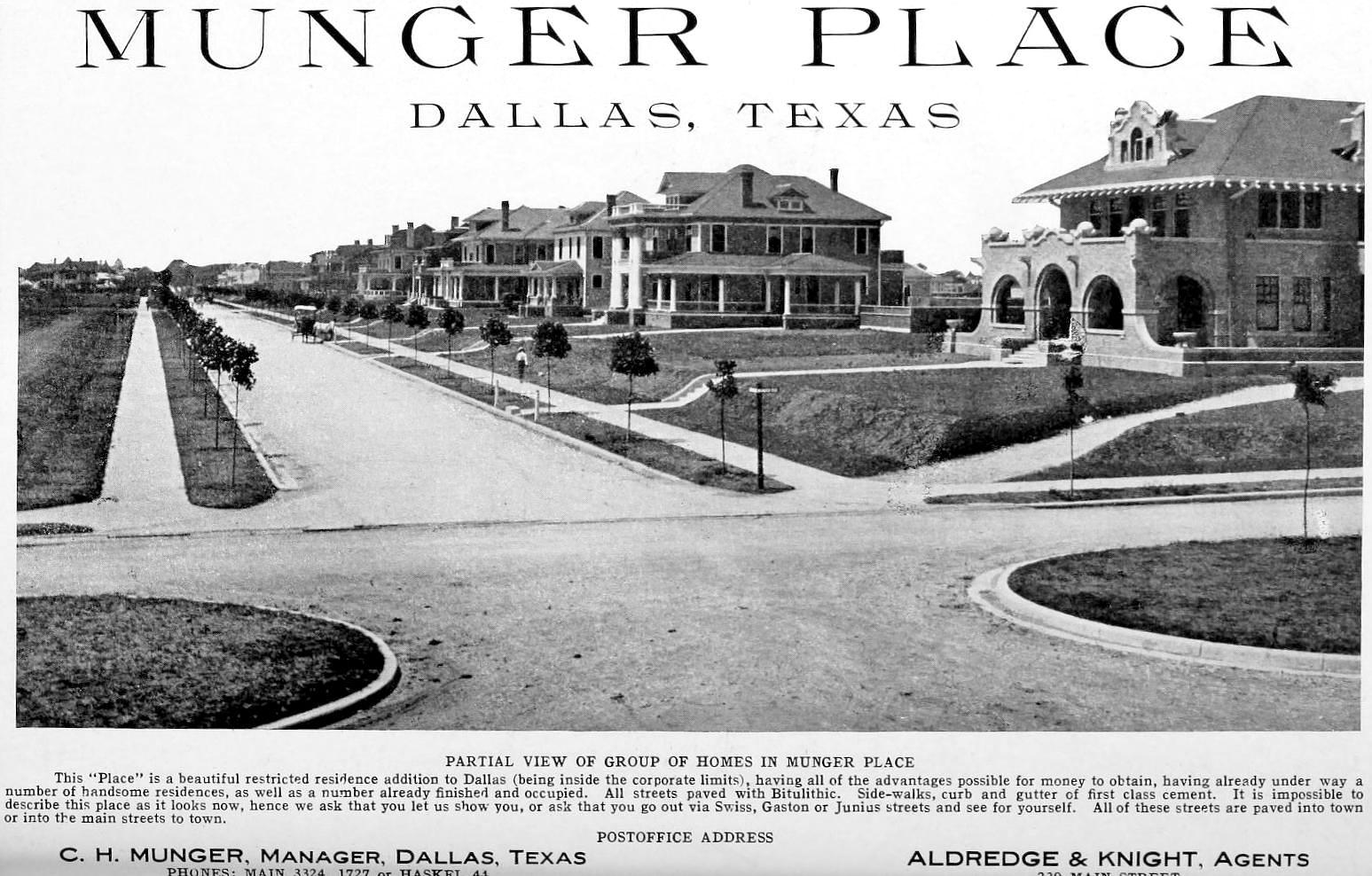
munger-place-bk_ca-1905_degolyer-lib_SMU_construction_1a
Coming soon: Munger Place… (photo circa 1905)

by Paula Bosse

Another “best of” list. Today is the final post of 2018 and time to compile the most popular (new) posts of the year, according to readers who have clicked over to read them. And to all you readers who have clicked over to check out the latest look into the history of Dallas: thank you! There is more ahead in 2019!

Here are the most popular Flashback Dallas posts of 2018, starting with the most popular. (To see each full post, click on the title; to see larger images, click on the picture.)

**

munger-place_worleys-1909-directory1. “MUNGER PLACE, THE EARLY DAYS: 1905-1909”  (March)

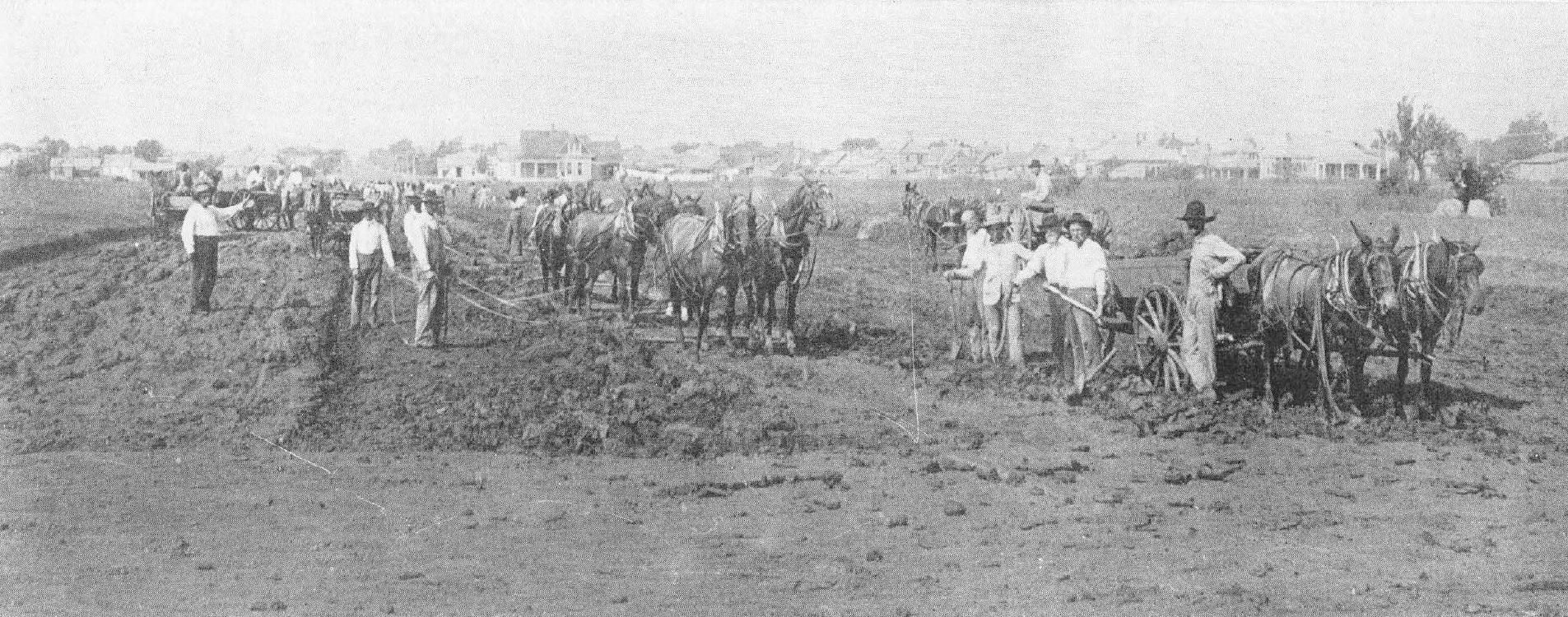
This was far and away the most popular post of the year, thanks primarily to a nice shout-out from the hugely popular Facebook page Traces of Texas. Check out all the photos of a very, very early Munger Place, with several showing construction workers alongside their horses and wagons.

*

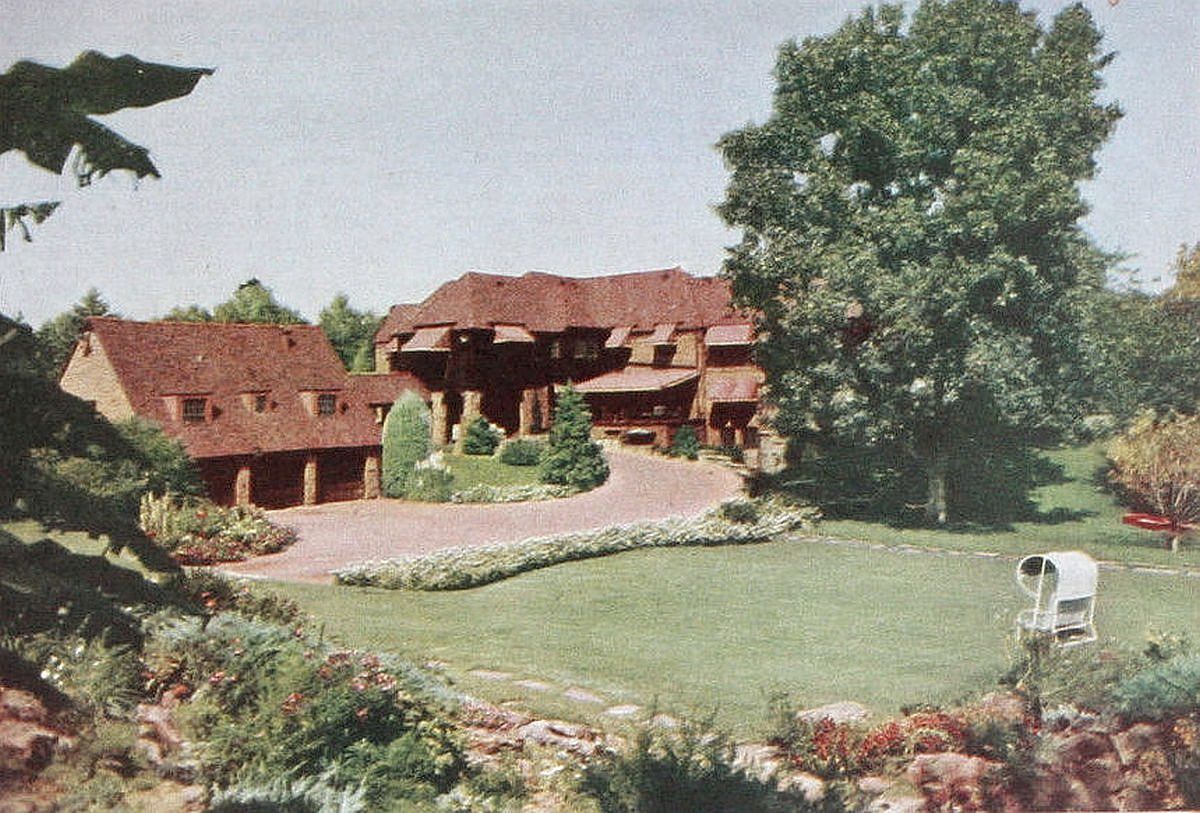
ad-evervess_mrs-ray-hubbard_1948_det

2. “THE RAY HUBBARD ESTATE, LAKEWOOD”  (March)

This Lakewood Boulevard estate appeared in a 1948 ad for Evervess Sparkling Water. I’m still not sure why it was in the ad, but it was, and because I happened to see that ad, I now know who Ray Hubbard was, what his beautiful house looked like, and what the connection is to Lake Ray Hubbard.

*

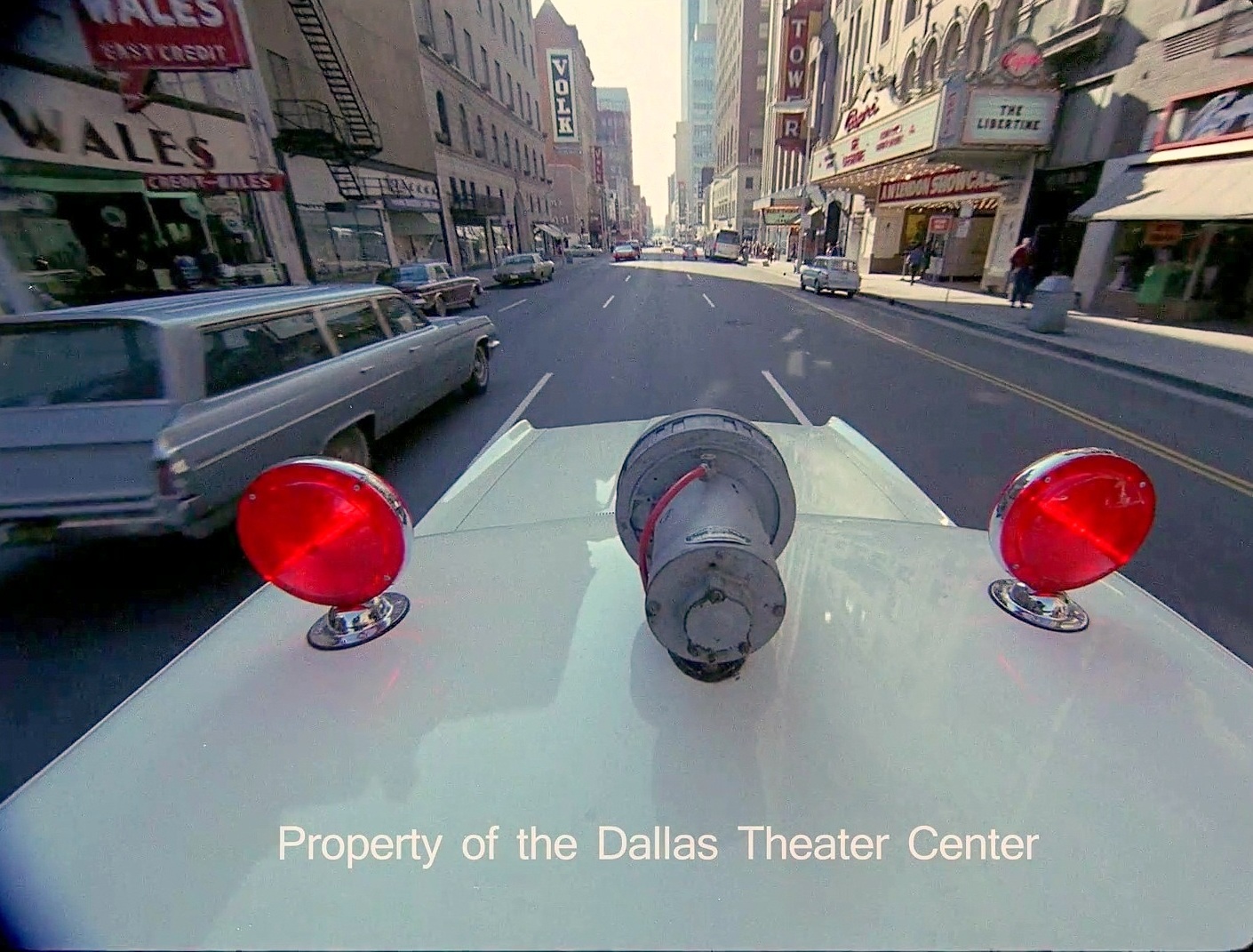
DTC_elm-capri-tower_SMU

3. “A DRIVE THROUGH DOWNTOWN — 1970”  (September)

This was basically just my piggy-backing on the work of Jeremy Spracklen at SMU’s Jones Film Collection. He alerted me to the wonderful newly-digitized 35mm color film footage in the Dallas Theater Center collection, and I contributed some screen-captures. Click over to watch the footage of everyday life in downtown Dallas in 1970.

*

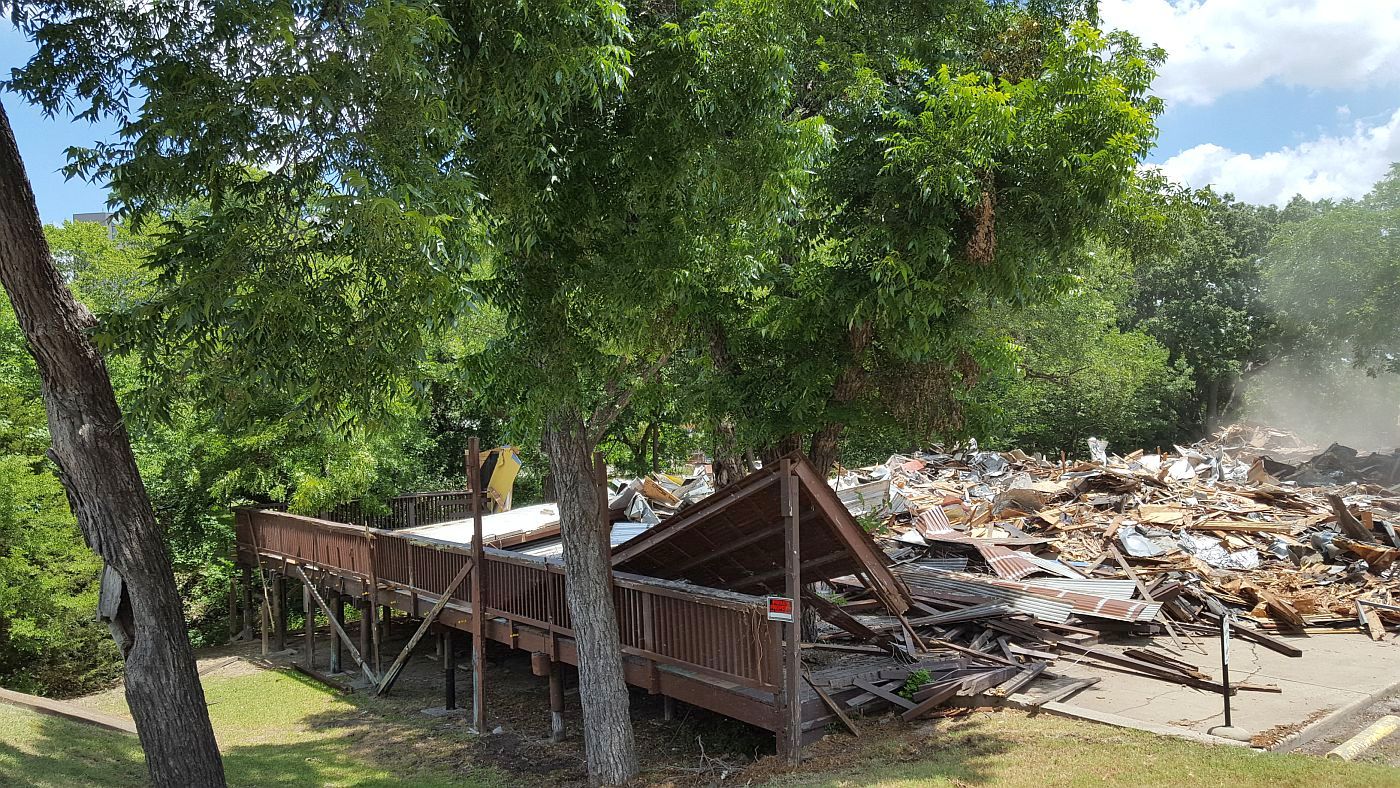
vickery-park_demo_062118_d_PEB

4. “THE LAST TRACES OF VICKERY PARK ARE NOW DEFINITELY GONE”  (June)

One day I was driving up Greenville when I noticed that what had been the rickety remnants of what had once been one of Dallas’ most popular amusement areas and swimming pools was lying in fresh piles of rubble. I stopped and took photos, feeling a little sad for what I had never actually seen photos of when it was in its prime. When I got home, I found photos and even some film footage and felt a twinge of nostalgia for a place I had never known but missed nonetheless.

*

edwards-h-l_estate_western-architect_july-1914_highland-park

5. “DALLAS IN ‘THE WESTERN ARCHITECT,’ 1914: PARK CITIES RESIDENCES”  (August)

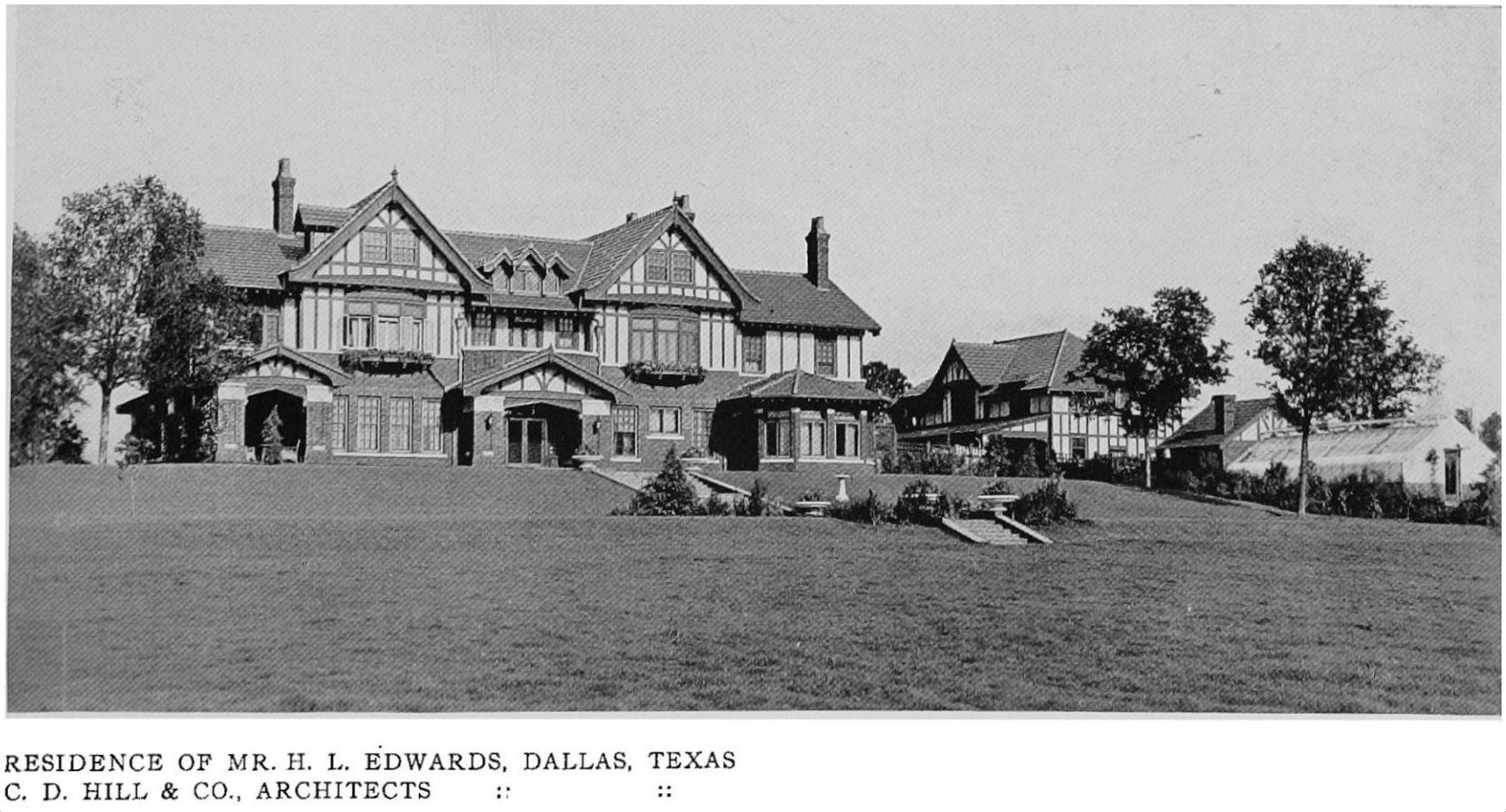
This post features eight Park Cities houses built before 1914, representing various levels of grandiosity — almost all have been replaced by new, larger homes. My favorite is the very odd concrete house which once stood at Preston and University, a fortress made from local pit-run gravel and cement. At the other end of Preston was the unbelievable H. L. Edwards estate (seen in the thumbnail), which was unnecessarily bulldozed in 2017.

*

6. “THE ‘BLUE HOUSE’ LIVES”  (April) blue-house_google_july-2016

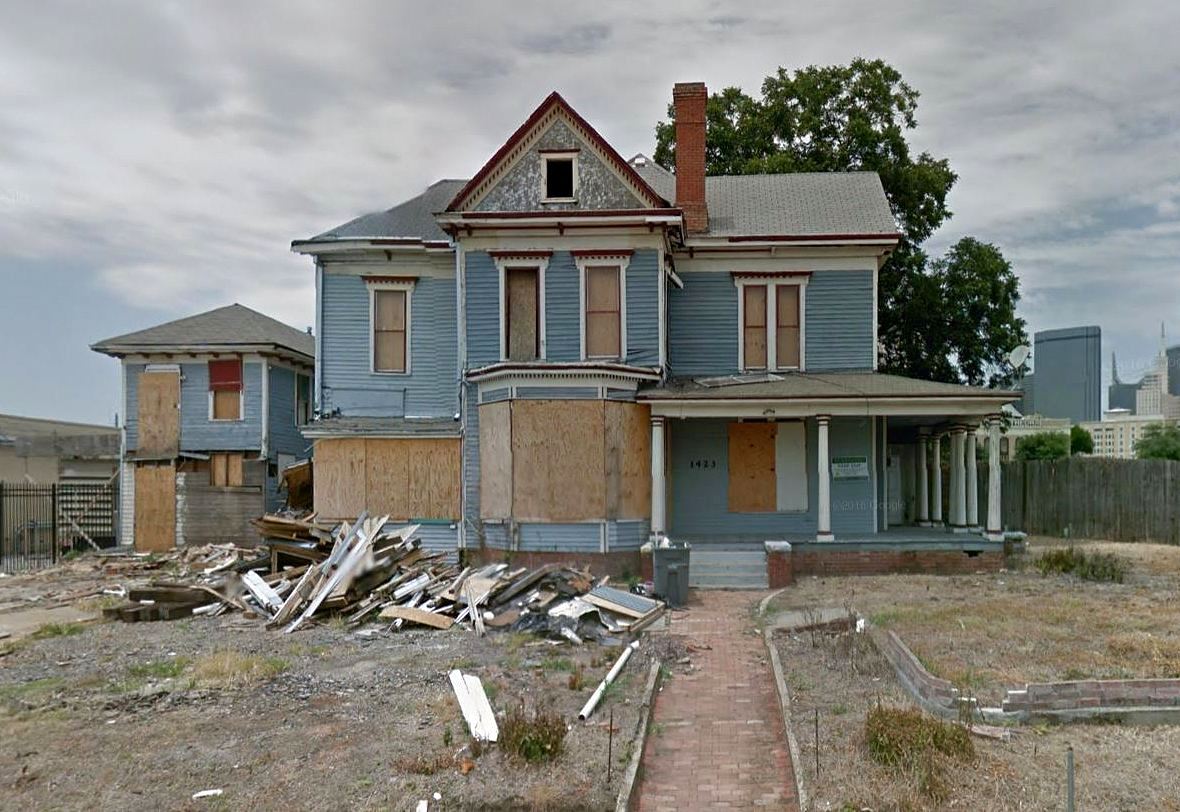
The continuing saga of one of the last remaining 19th-century houses in The Cedars appears to have ended happily (at least so far): the house was disassembled and moved a few blocks away to its new home. I haven’t seen any photos of the house at its new location — either still in pieces or wholly or partially reassembled — but last I heard, the project seemed to be in good hands. This was a follow-up to my original Jan., 2016 post.

*

7. “CASA MAGNETICA”  (April) six-flags_casa-magnetica_postcard_flickr

People love posts on Six Flags Over Texas, but people really love posts on Casa Magnetica — the childhood attraction that blew our minds! This one was a lot of fun to write.

*

brosius_wikimedia-commons_1872_sm

8. “THE BIRD’S-EYE VIEW OF DALLAS BY HERMAN BROSIUS — 1872”  (January)

This wonderful map — with each building apparently rendered accurately — is just fantastic.

*

cabana-motor-hotel_portal_postmarked-19679. “THE CABANA MOTOR HOTEL OF DALLAS”  (January)

This once-hip hotel was co-owned by Doris Day’s husband and was, most famously, where the Beatles stayed when they came to town in 1964. The place never quite lived up to its investors’ hopes and has been sold and resold several times. Currently there are plans to revive the faded structure and breathe new life into it.

*

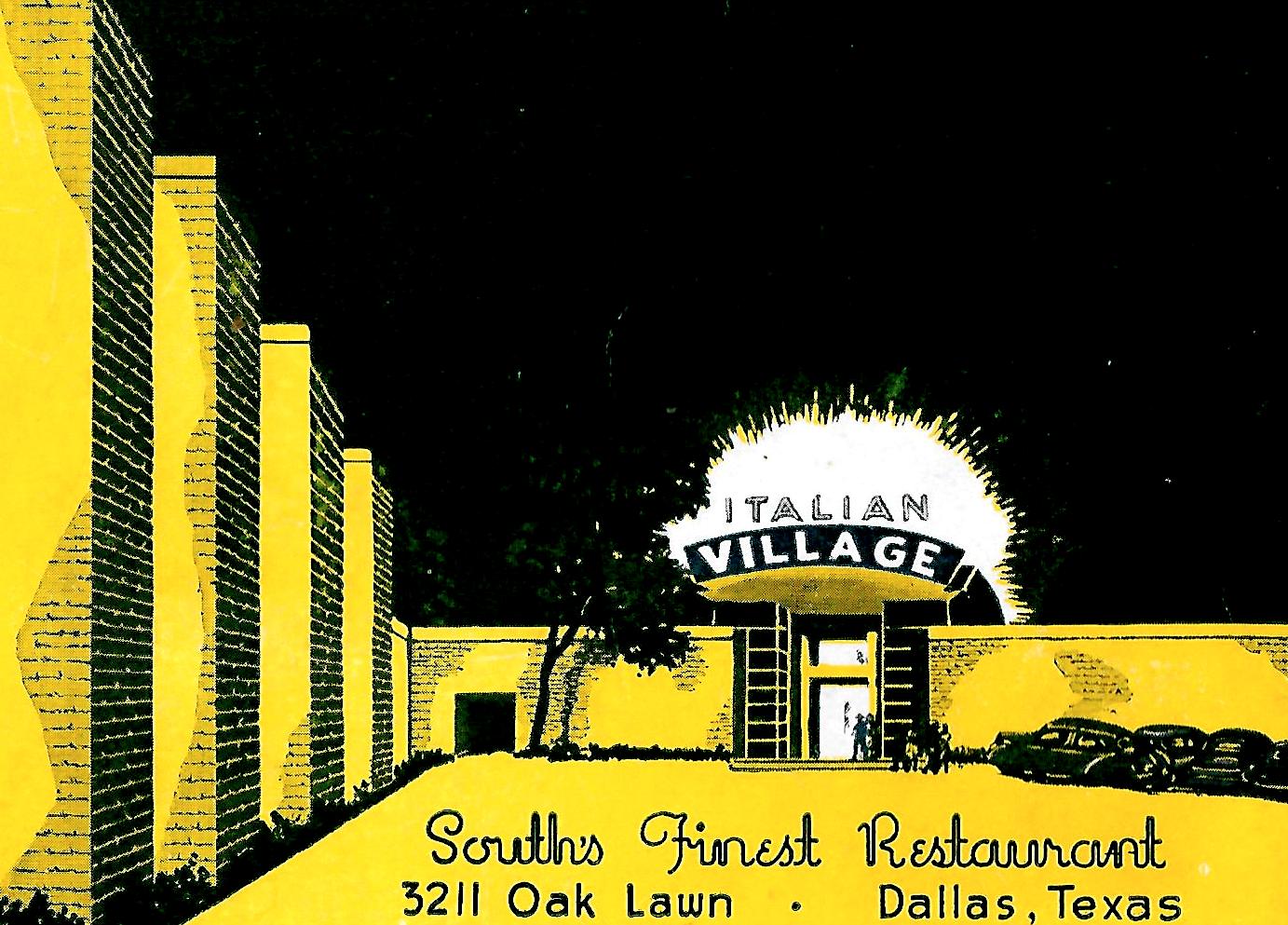
italian-village_postcard_yellow_ebay

10. “SAM VENTURA’S ITALIAN VILLAGE, OAK LAWN”  (July)

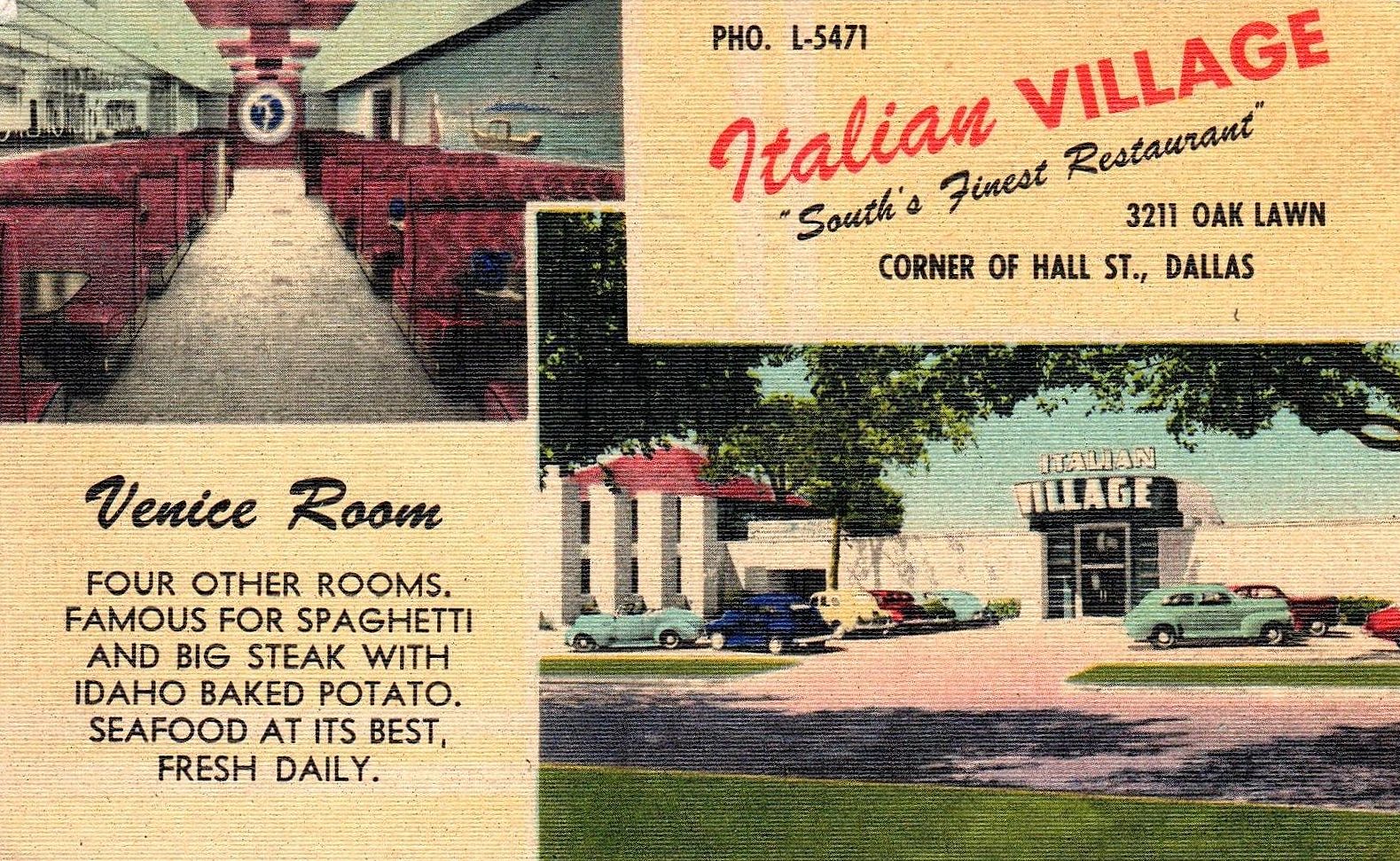
This place was an Oak Lawn fixture for over 45 years. It reinvented itself several times over the years, and was variously (and sometimes simultaneously) an Italian restaurant (which operated as a private club in order to sell alcohol), a cocktail lounge, a piano bar, a disco and live rock-music venue, a nightclub, a steakhouse, a seafood restaurant, and a Christian dinner-theater — all owned by the Ventura family.

**

Below are the top 3 all-time most popular Flashback Dallas posts:

  1. “HOW TO ACCESS THE HISTORICAL DALLAS MORNING NEWS ARCHIVE” (July, 2015) In addition to its being the all-time most popular Flashback Dallas post, it was actually also the second most popular post of 2018.
  2. “THE WORLD’S LARGEST SANTA & THE CHRISTMAS TRAGEDY — 1953” (Dec. 2014)
  3. “CARHOPS AS SEX SYMBOLS — 1940” (Feb. 2015)

***

Sources & Notes

See all three 2018 “Best Of Flashback Dallas” lists here.

See all Flashback Dallas Year-End lists — past and present — here.

Thanks again for reading, and let’s all have a happy 2019!

*

Copyright © 2018 Paula Bosse. All Rights Reserved.

Year-End List: My Favorite Posts of 2018

dante_wfaa_SMU_2“Dr. Dante” — do not look directly into his eyes…

by Paula Bosse

Another year has zipped by, which means it’s time to foist “best of” lists upon the public. Today, in the second of three “Best of Flashback Dallas, 2018” posts, I choose my personal favorite posts of the year — the things I most enjoyed researching, writing about, and, yes, even reading! I’ve listed them in chronological order, except for the first two, which are my favorite favorites. (Click titles to see original post.)

**

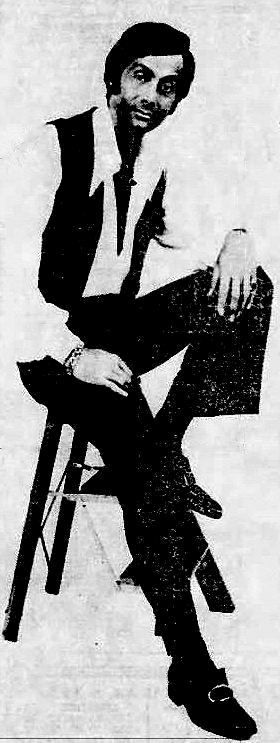
1.  “‘DR. DANTE’ DODGES BULLETS IN DALLAS — 1970”  (May)

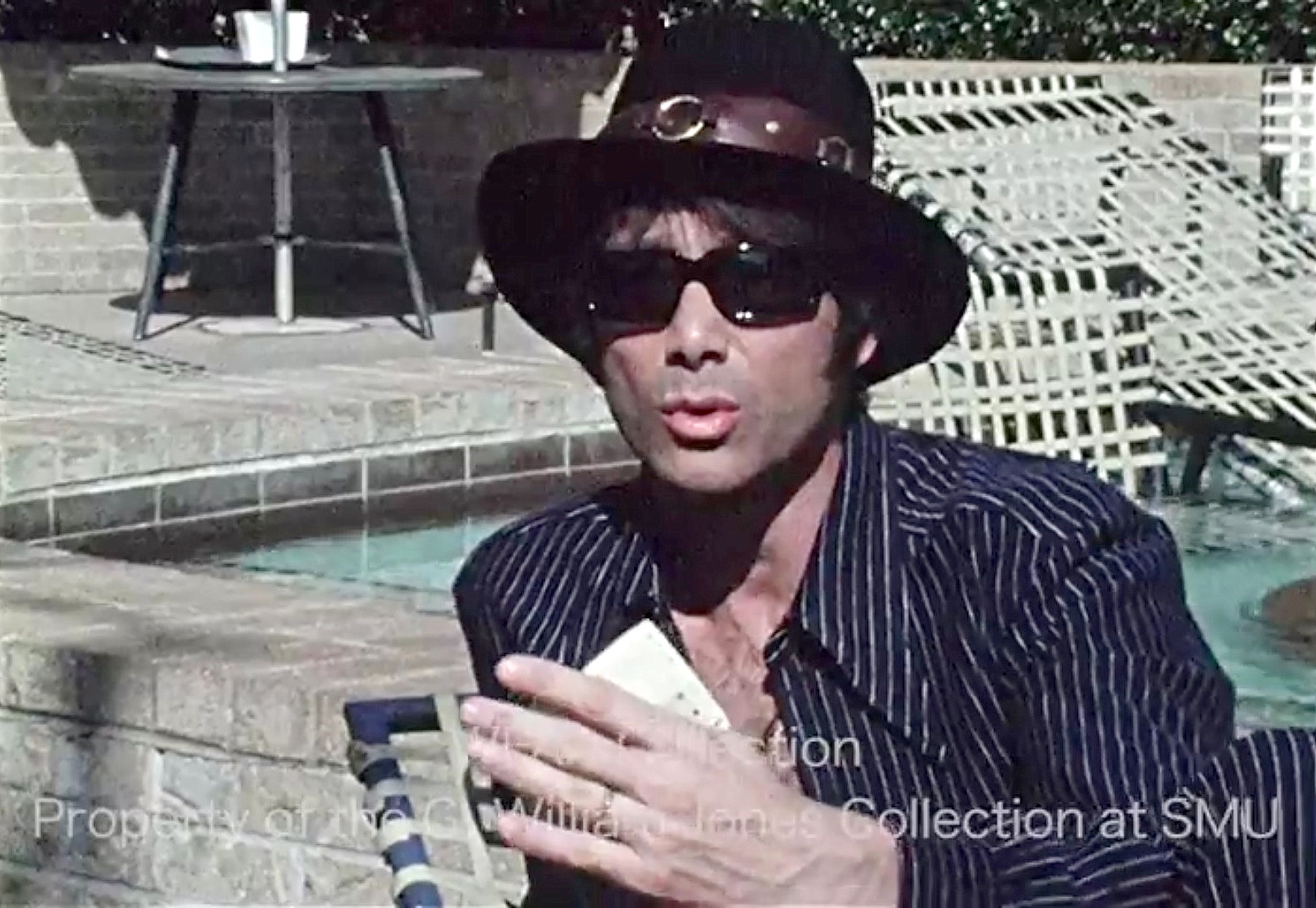
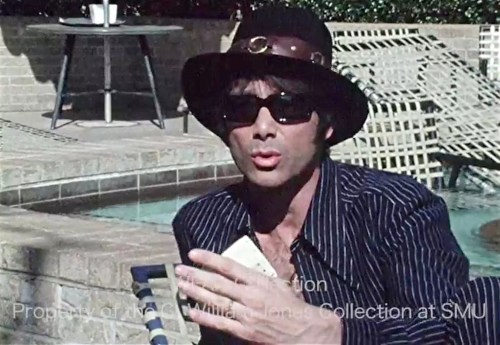
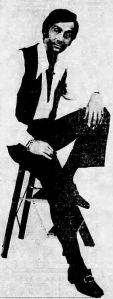
I think this was destined to be my favorite post of the year from the instant I began  watching the old Ch. 8 news footage, part of the ongoing digitization work being done by the G. William Jones Film & Video Collection at Southern Methodist University (the Dallas-history gift that keeps on giving). The only thing SMU knew about the clip was the date it was filmed. Who WAS this strange man telling an outrageous story of being shot at near the Mrs. Baird’s plant in the wee small hours of the night (on orders from Frank Sinatra)? It took some digging, but it was worth it — learning about the notorious hypnotist-slash-fraudster-slash-seventh-husband-of-Lana-Turner was one of the high points of 2018 for me. I absolutely LOVED writing this one.
dante_reno-gazette-journal_080770_groovy-hypnotist

*

2.  “GHOST RAILS OF THE BELMONT STREETCAR LINE”  (April)

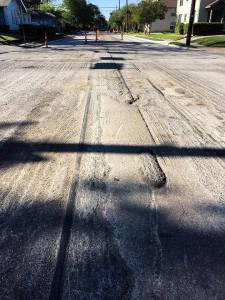
I wrote about the old interurban and streetcar rails which once ran up and down Matilda in the Lower Greenville neighborhood I grew up in. I feel like I read about this rail line for days and days and days, and I enjoyed all of it. I wish I had known what the interurban was as a child so I could have appreciated how close I lived to an important historical thoroughfare. This post resulted in the arrival of photos sent in by a family friend, showing city crews working on the paving of Matilda; I loved those photos and put them in what I consider the “part 2” of the post linked above: “PAVING MATILDA — 1971.”
matilda-richmond_dan-parr-photo_FB-dallas-history-guild_april-2018

*

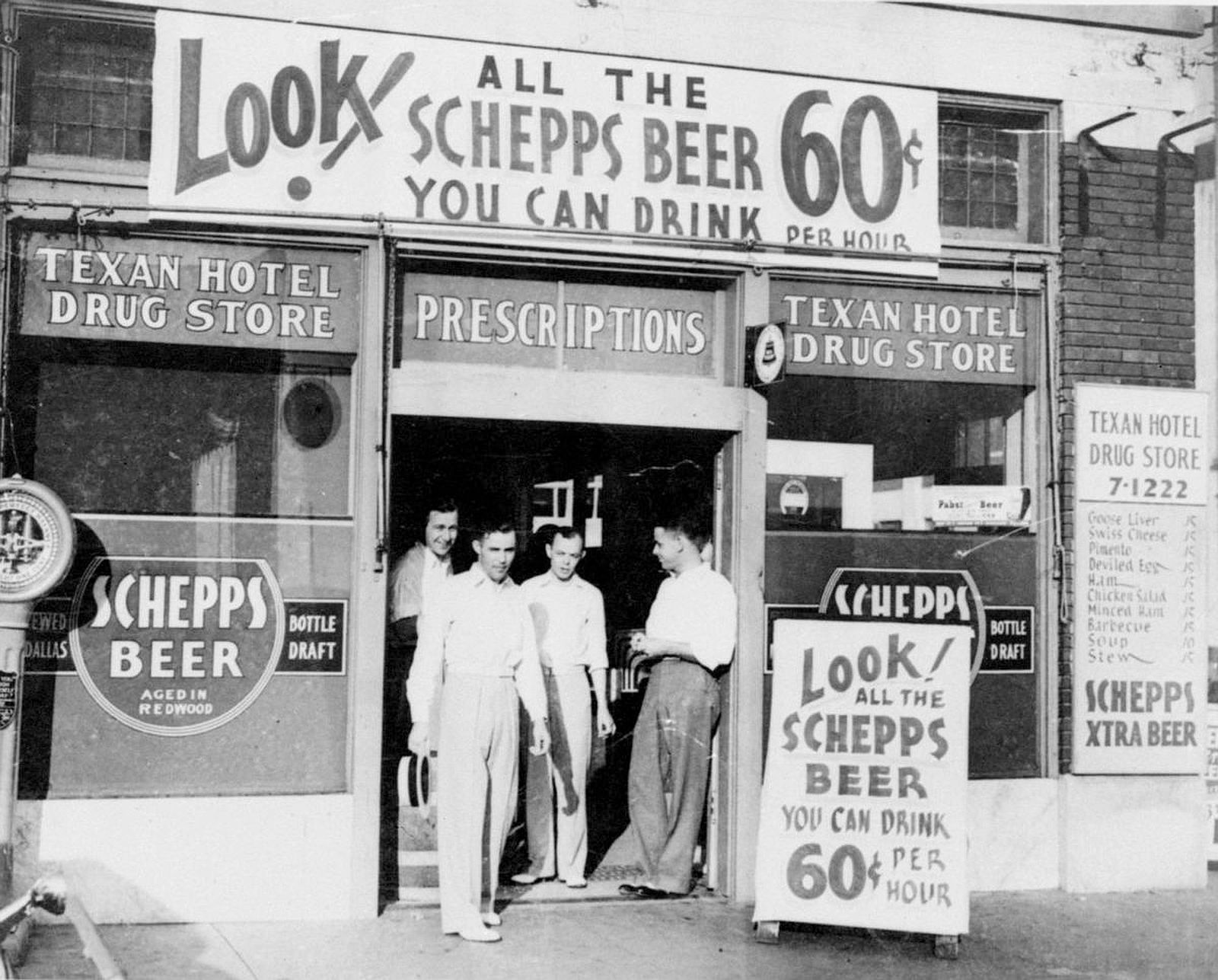
3.  “‘ALL THE BEER YOU CAN DRINK IN AN HOUR FOR 60 CENTS’ — 1935”  (January)

I can’t remember if I saw the newsreel footage first or the photograph, but both are great, and it’s always kind of thrilling to see Dallas pop up in old newsreels. I don’t want to say Dallas drinkers in 1935 were lightweights, but only one imbiber came out ahead on the challenge — and he was in Fort Worth.
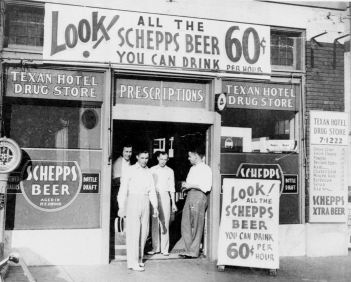
beer_60-cents_AP_1935

*

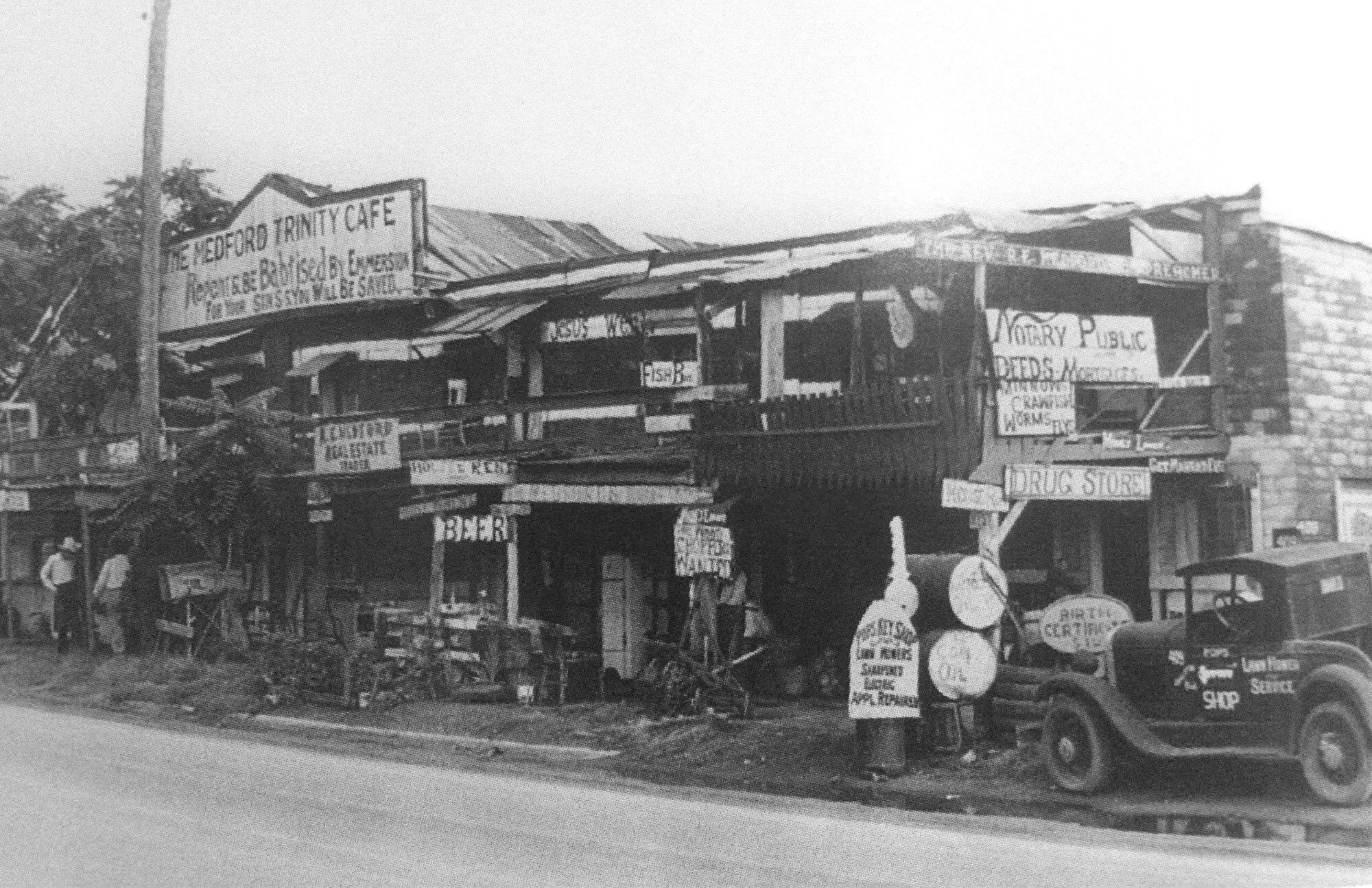
4.  “THE ECCENTRIC MEDFORD COMPOUND ON THE OLD EAGLE FORD ROAD: 1945-1950”  (March)

This photo sent me off on a wild research path: the person who was responsible for this ramshackle collection of buildings (in what is now hipster-haven Trinity Groves) is just the sort of unconventional person you’d hope he’d be.
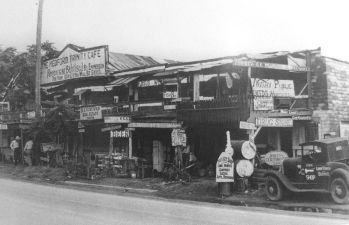
medford_trinity-cafe_west-dallas_FB_dallas-history

*

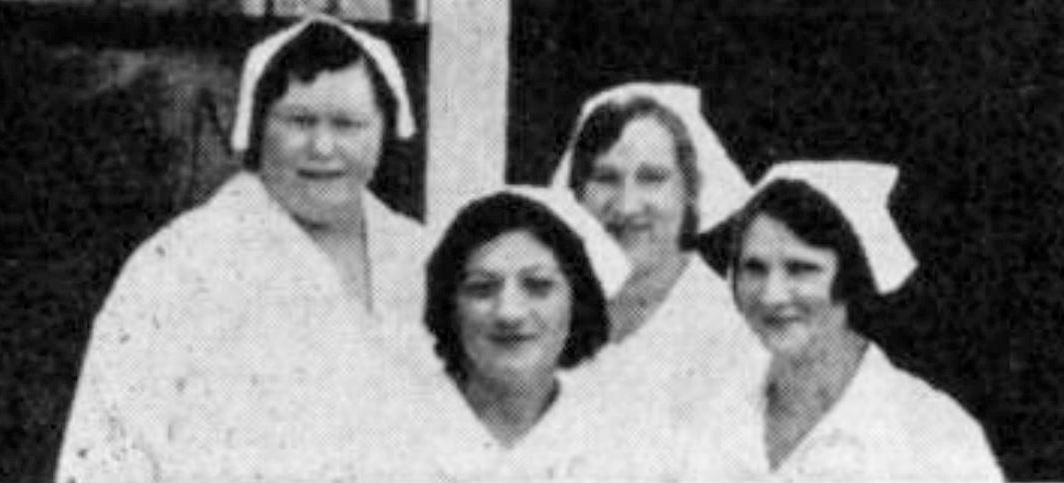
5.  “‘THE CEDARS’ MATERNITY SANITARIUM, OAK CLIFF — ca. 1923-1944”  (April)

This Oak Cliff home for unwed mothers/”unfortunate women” was just one of the many private hospitals in residential settings where women could live in comfortable seclusion while awaiting the birth of a child. Following the birth, the child would probably be put up for adoption by mothers who felt they had no other socially acceptable option.
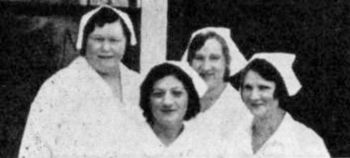
cedars-maternity-sanitarium_tx-state-journal-of-medicine_oct-1933_portal_nurses

*

6.  “NO NECKING ALONG COUNTRY ROADS UNTIL BONNIE & CLYDE ARE KILLED OR CAPTURED — 1934”  (June)

Dallas school superintendent Norman Crozier issued a warning to high school students to refrain from pursuing amorous activities in cars parked along deserted country roads — at least while the Barrow Gang was at large — for fear they might run the risk of being caught in deadly crossfire. The “teen angle” on the well-worn Bonnie and Clyde saga.
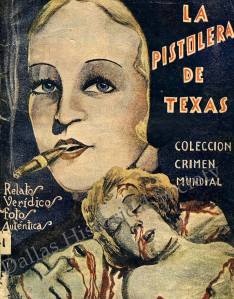
la-pistolera-de-texas_DHS-instagram

*

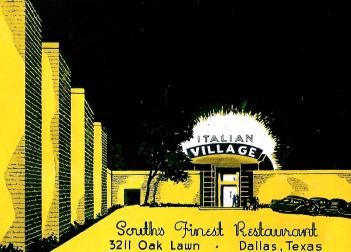
7.  “SAM VENTURA’S ITALIAN VILLAGE, OAK LAWN”  (July)

I spent a crazy amount of time researching this place — which I had never heard of until I came across the piece of ephemera seen below, which was collecting dust, packed away in a relative’s belongings. In fact, I spent so much time reading about the Italian Village (and its later incarnations) that I now feel as if the extended Ventura family and I should be spending holidays together.
italian-village_photo-holder_PEB

*

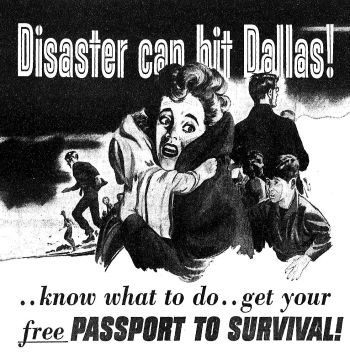
8.  “‘DALLAS IS A MAJOR TARGET AREA!’ — KNOW WHERE YOUR NEAREST FALLOUT SHELTER IS”  (July)

I’m glad I missed this panicky era, but I have to say, it was pretty interesting to learn about … from a distance.
passport-to-survival_nov-1958_art

*

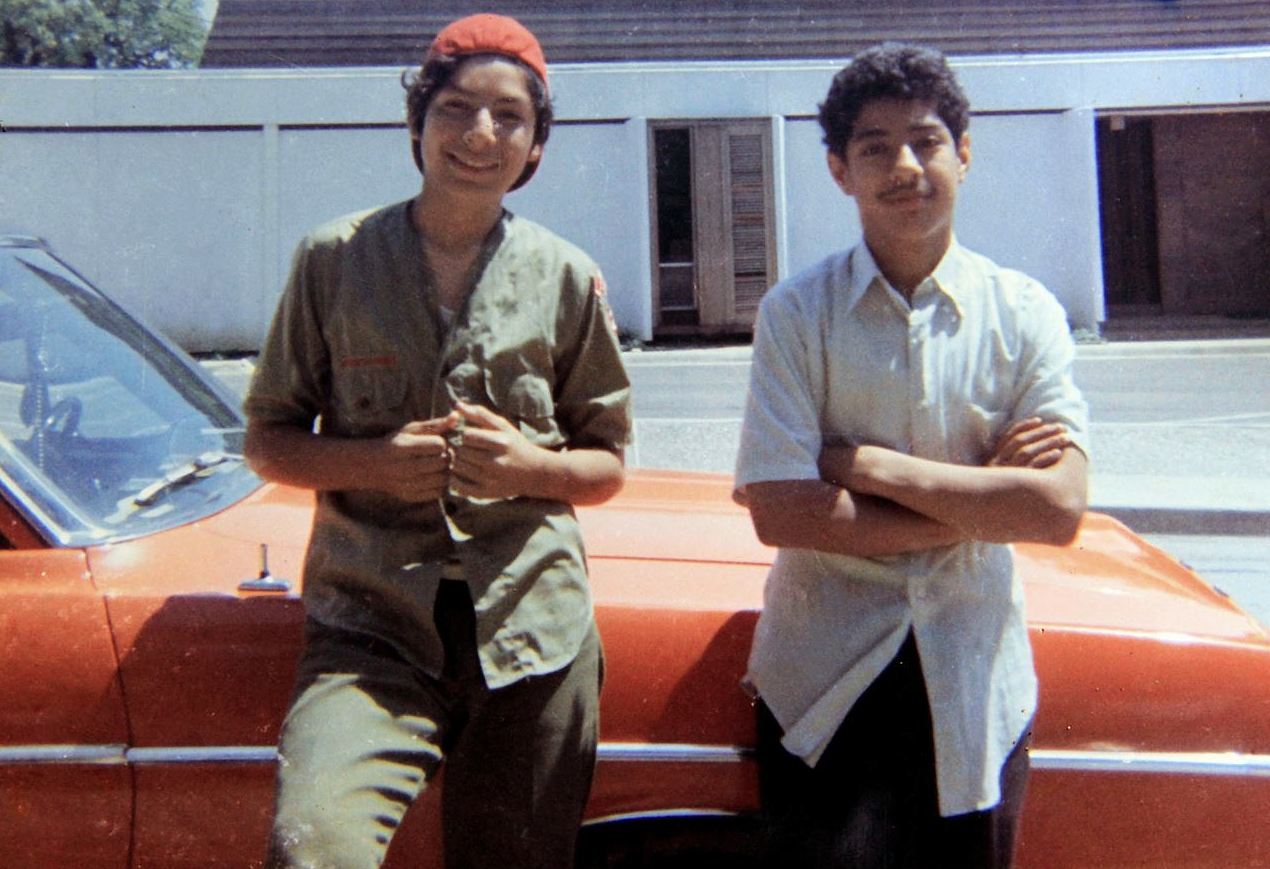
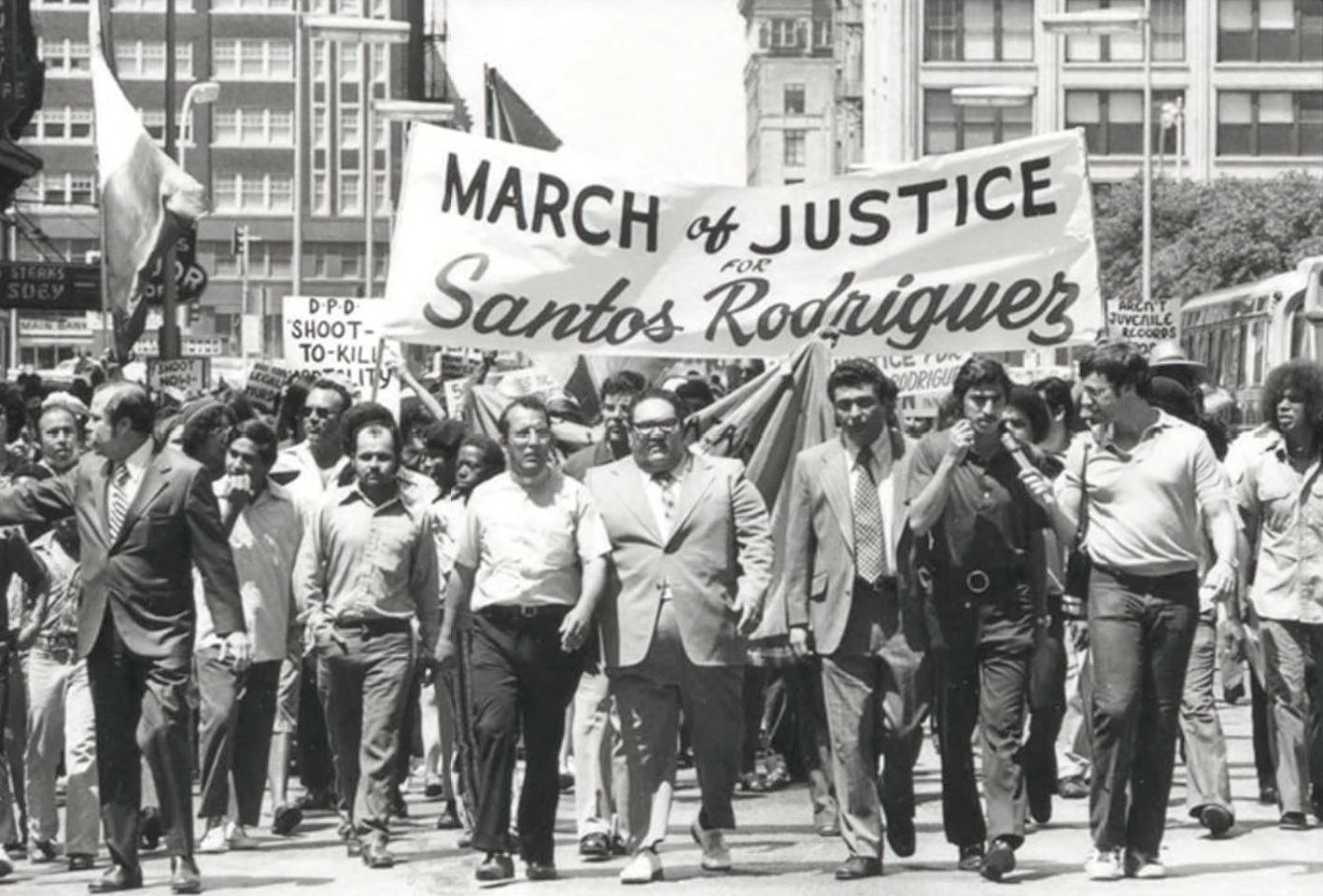
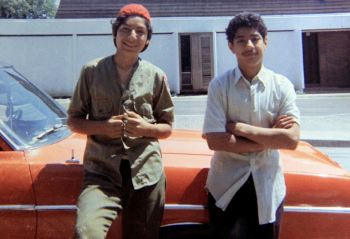
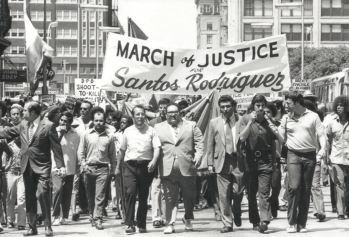
9.  “SANTOS RODRIGUEZ, 1960-1973”  and  “SANTOS RODRIGUEZ: THE MARCH OF JUSTICE — 1973”  (July)

It was only in recent years that I heard the name “Santos Rodriguez,” and even then I wasn’t entirely sure what had happened. The story of a handcuffed 12-year-old boy shot in the head by a Russian-roulette-playing police officer in Dallas’ Little Mexico neighborhood is both tragic and infuriating; it was also the impetus that spurred political activism and a demand for social justice within the Hispanic community. Everyone should know this story. I spread my telling of it over two posts, both of which contain as-the-aftermath-was-unfolding news footage, which helps to make the 45-year-old event feel immediate and “real,” especially to those of us who did not experience it first-hand. I owe a lot to Jeremy Spracklen of SMU’s Jones Film Collection for providing me with amazing film footage of this shocking moment in Dallas’ history.
david-and-santos-rodriguez_austin-american-statesman

santos-rodriguez_march_contact-sheet-12_andy-hanson_degolyer_SMU

*

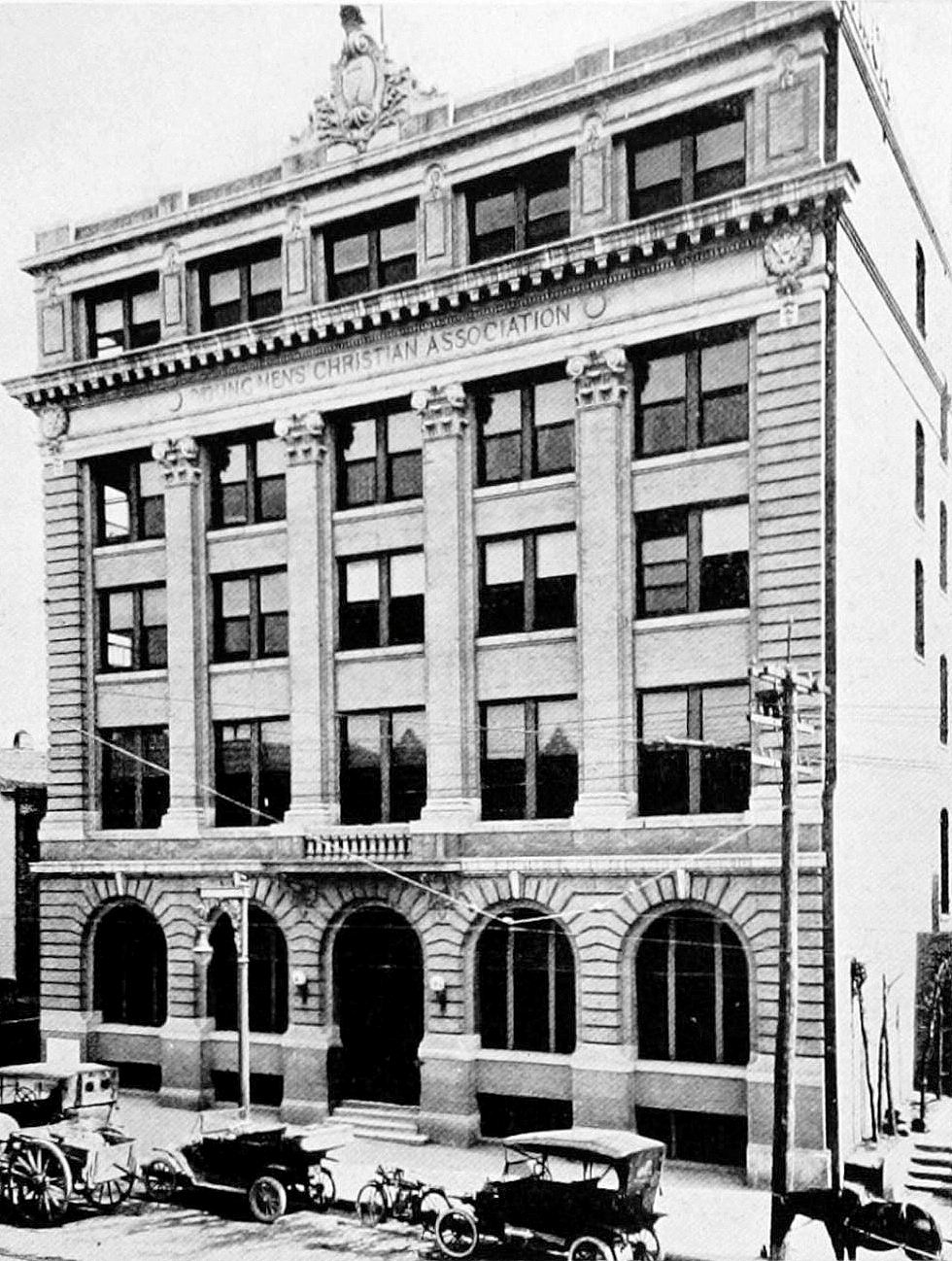
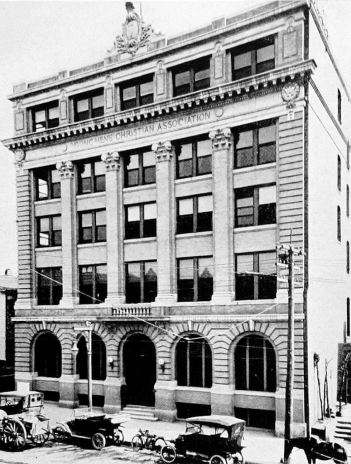
10.  “DALLAS IN ‘THE WESTERN ARCHITECT,’ 1914” (7 separate posts) (August)

This series of posts just about killed me. I had no idea when I started that I would end up writing mini-histories of over 50 buildings and houses, and that what I originally thought might be three posts (which would have been a lot) ended up spreading over seven. *I* was getting tired of the whole thing, and I worried that readers themselves would, quite reasonably, grow weary of it as well — but people seemed to like it. The photos were really great, and once I started, I couldn’t stop until I got through the whole thing. Even though it was fairly exhausting, I probably learned more about Dallas’ important early-20th-century buildings and houses by dragging myself through this slog than by approaching the subject in a more easily-digestible manner. Immersion learning! The two greatest take-away words I have from this laborious experience which capture this period of Dallas’ astronomical growth more than any others: “Lang” and “Witchell.”
ymca-bldg_western-architect_july-1914

*

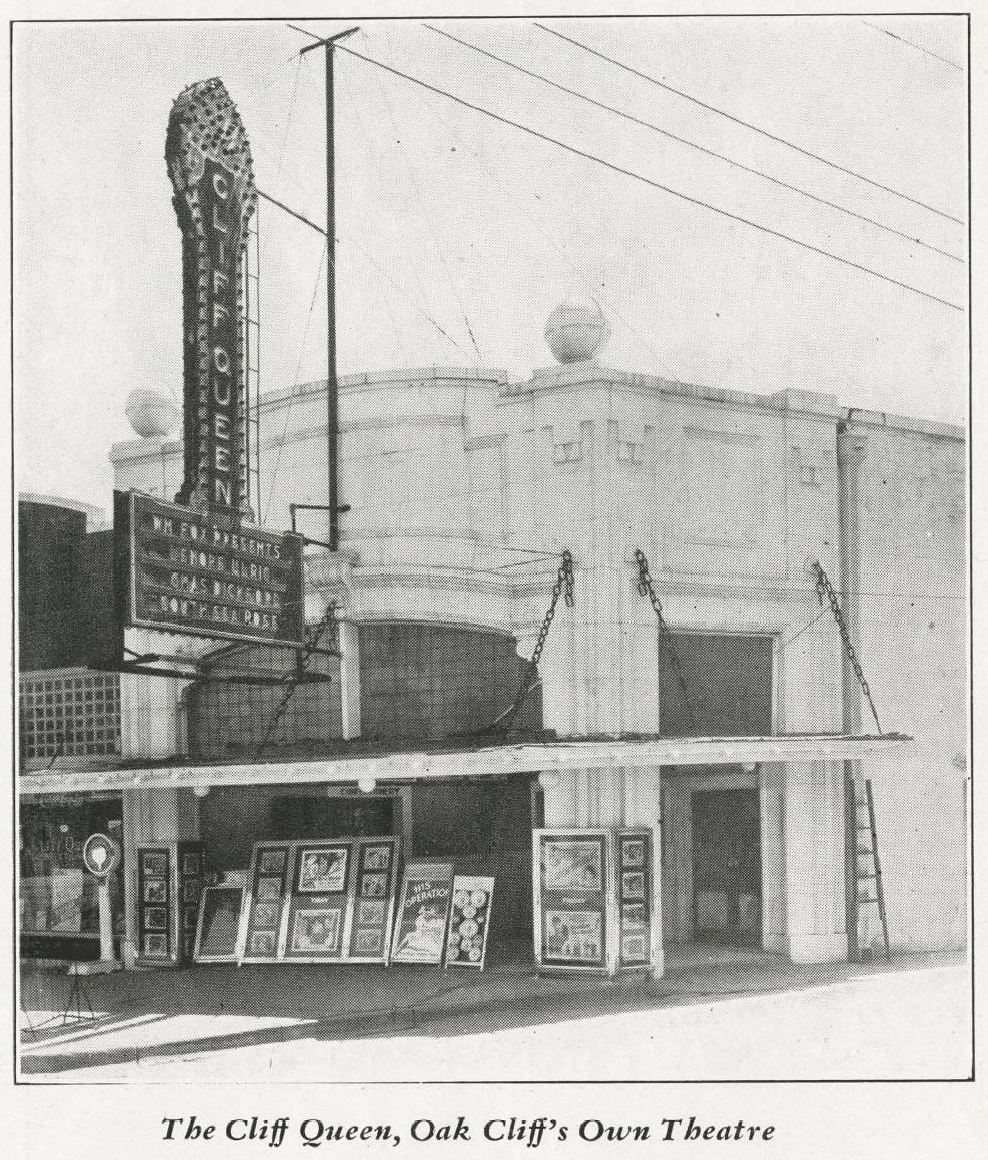
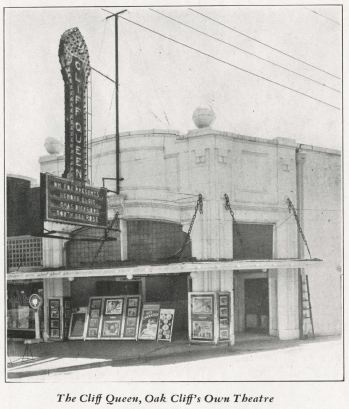
11.  “OAK CLIFF: ‘A CITY WITHIN A CITY’ — 1929”  (September)

This look at a gem of a little promotional booklet touting the wonders of Oak Cliff’s business climate was packed with really, really great photos I’d never seen.
cliff-queen-theater_OC-city-within-a-city_ca-1929_SMU

*

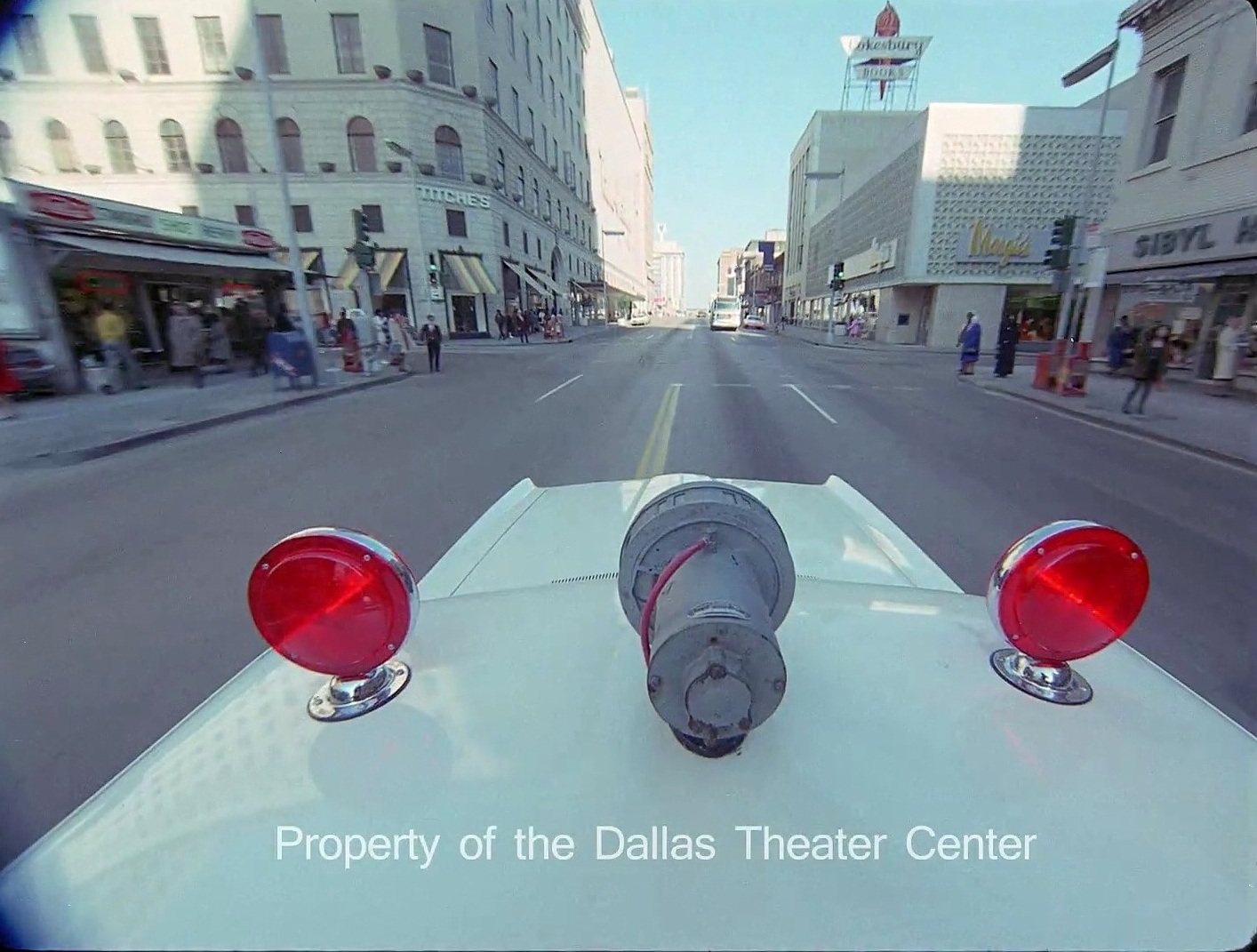
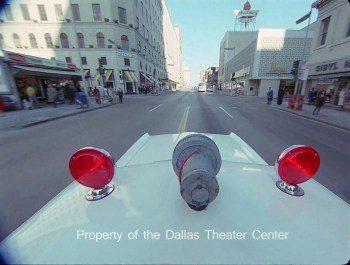
12.  “A DRIVE THROUGH DOWNTOWN — 1970”  (September)

Basically all this post consists of are screen-captures from spectacularly clean 35mm color film footage shot around downtown Dallas under the auspices of the Dallas Theater Center in 1970 and recently digitized by SMU. (I keep meaning to get around to writing about this DTC project but 1.) I’m a huge procrastinator, and 2.) I keep hoping the ever-fabulous Jeremy Spracklen will continue to find more and more footage. I will write about this one day, though!) But really, it’s all about the film, which captures downtown in a delightful little color time-capsule — and that film is embedded in this very popular post.
DTC_main-st-paul_SMU

*

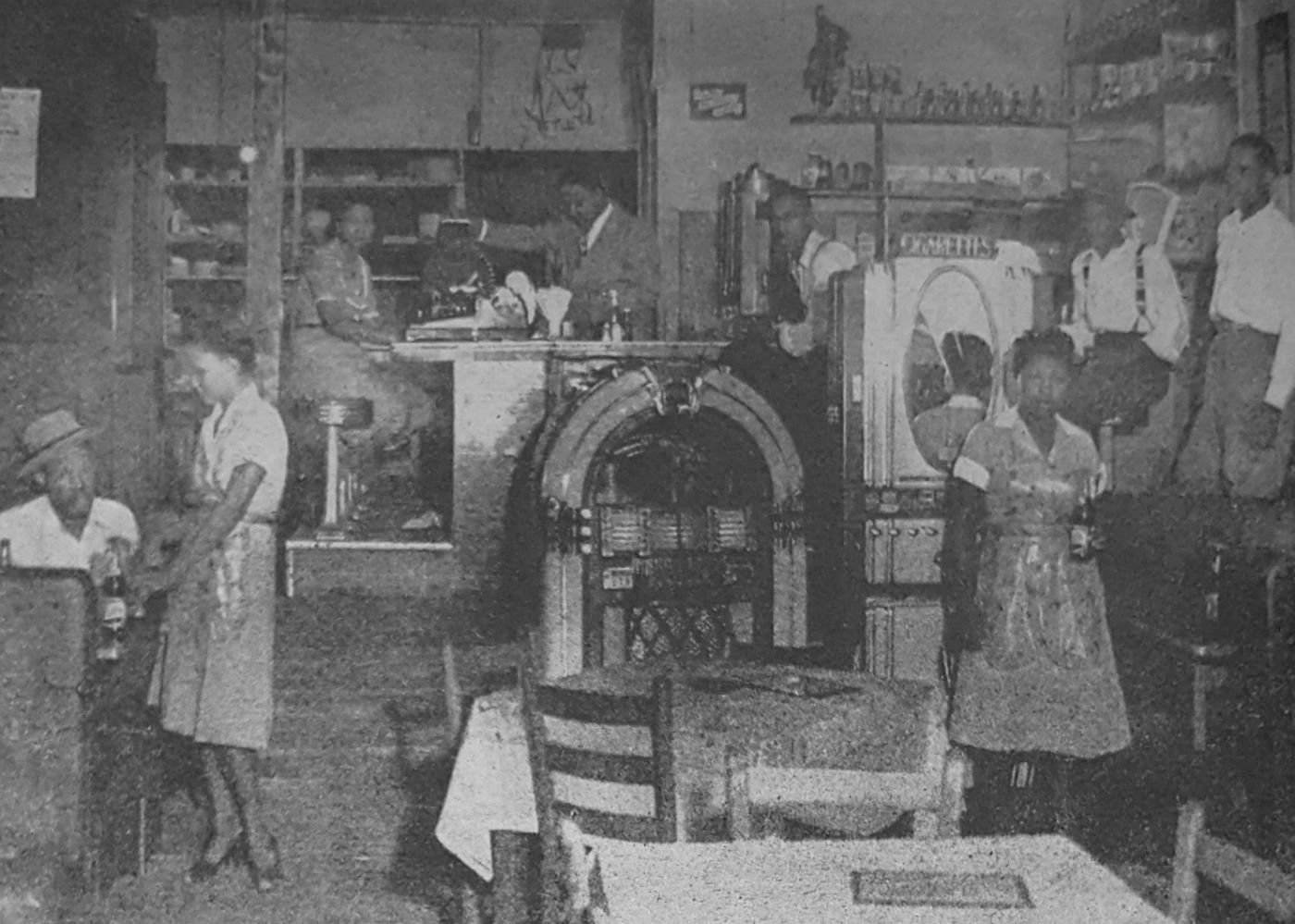
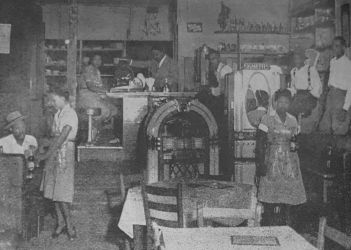
13.  “LIFE ON HALL STREET — 1947”  (October)

One of the things that frustrates me most in writing this blog is the difficulty in finding historical photos of everyday life in Dallas’ black and Hispanic neighborhoods. (If anyone reading this has access to great photos of these neighborhoods, please contact me!) I’ve always loved vintage advertisements, because not only do they feature styles and fashions and products of the past which are inherently interesting, they also often allow us a window into social and cultural history. When I come across old ads targeted specifically to, say, Dallas’ African-American community — especially those with photographs — I get pretty excited. Several such ads are in this post, and they’re great.
adolphus-bar-b-q_dallas-negro-directory_1947-48_dining-room

*

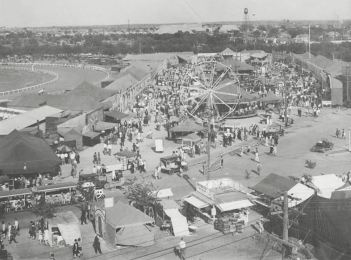
14.  “THE STATE FAIR OF TEXAS OVER THE DECADES”  (October)

The task: find an image from each decade of the SFOT’s history from the 1880s to the 1980s. Not a problem! That well will never run dry.
fair-park_mcafee_degolyer_SMU_ca-1920s

*

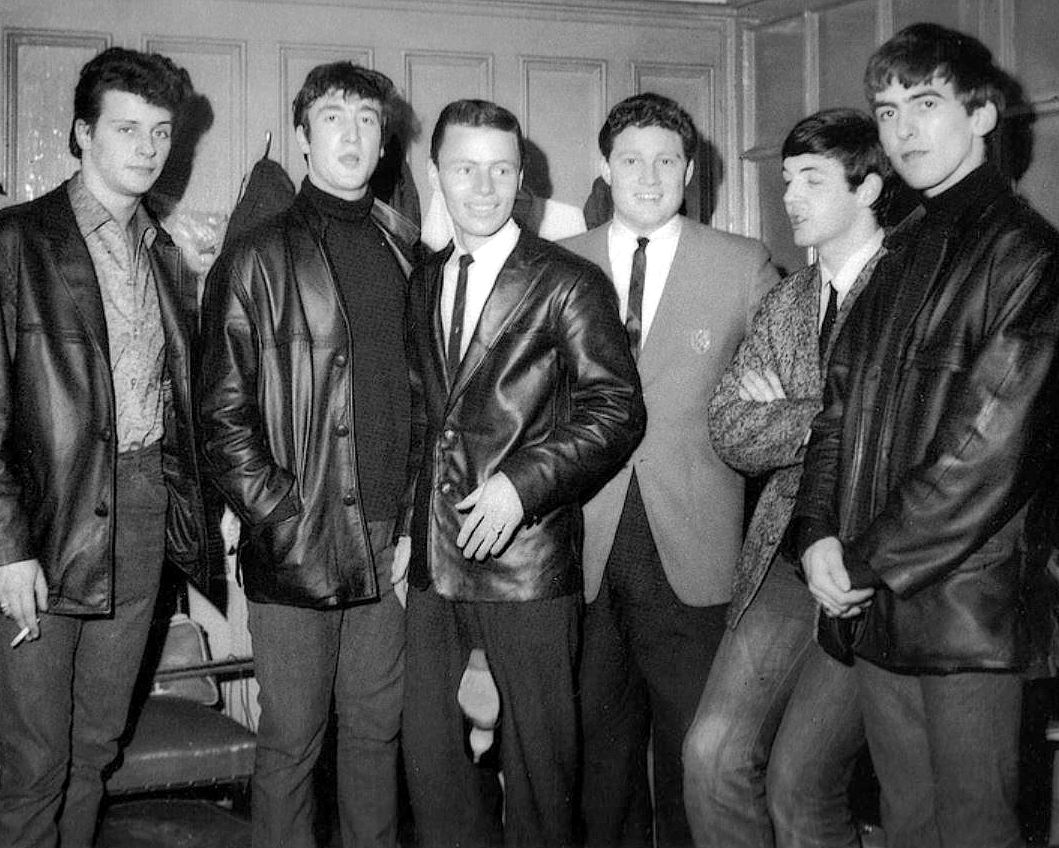
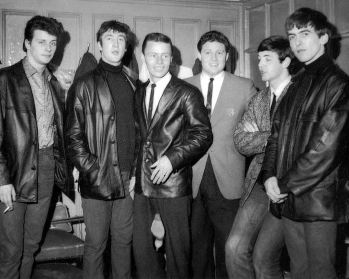
15.  “BRUCE CHANNEL, DELBERT McCLINTON, AND THE BEATLES — 1962”  (November)

I really loved writing this.
beatles_delbert_bruce_062162_mike-mccartney

*

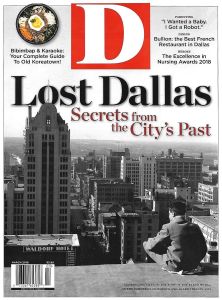
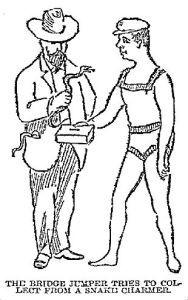
BONUS FAVE:  “FLASHBACK DALLAS IN D MAGAZINE: ‘THE TRINITY BRIDGE-JUMPERS'”  (February)

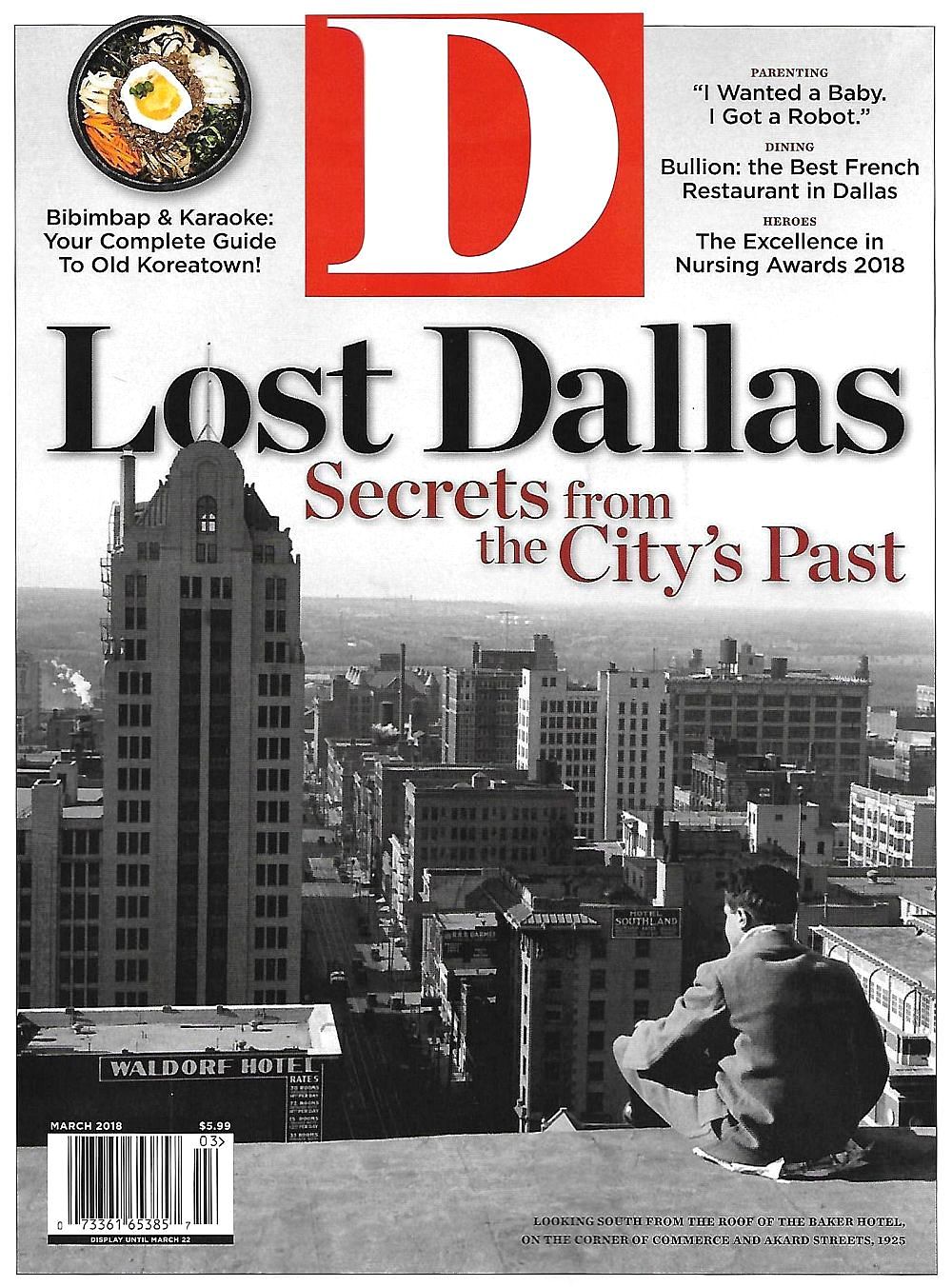
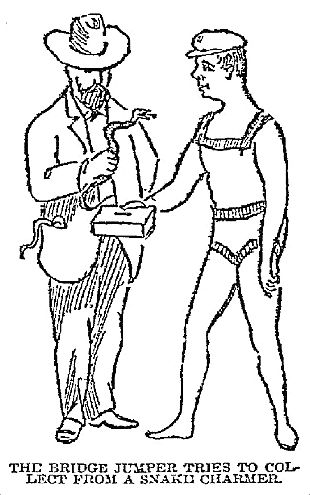
I was pretty thrilled to be invited to write a Dallas-history article for D Magazine’s “Lost Dallas” issue this past February (I wrote a short piece for the print-edition of the magazine, and a longer version which appeared on the magazine’s website). I wrote about a competition involving diving/jumping from a bridge into the Trinity River in 1897. It was a pretty big deal at the time, attracting thousands of spectators. The very idea for the event was unusual — especially if you’ve seen what the Trinity looks like unless it’s at flood-stage — but what drew me to the story was the wonderful, very funny color-commentary written by an un-bylined reporter for The Dallas Morning News. I loved writing about this and trying to imagine what such an odd event must have been like back in 1897, when one’s entertainment options were somewhat limited. The piece I wrote for D Magazine is here, and an accompanying post I wrote with additional historical background (including the original line drawings of the participants which appeared in The News, as well as photos and a map) is in the post linked above.
d-mag_lost-dallas-cover_mar-2018

trinity-bridge-jumper_wilson_drawing

**

I never get tired of researching and writing about all aspects of Dallas’ history — both well-known and forgotten, important and trivial, serious and ridiculous. I hope you’ve enjoyed reading these posts as much as I’ve enjoyed writing them.

***

Sources & Notes

See all three 2018 “Best of Flashback Dallas” lists here.

See all Flashback Dallas Year-End lists — past and present — here.

*

Copyright © 2018 Paula Bosse. All Rights Reserved.

Year-End List: My Favorite Images Posted in 2018

tx-centennial_armstrong-linoleum-ad_1936_detWelcome to the Centennial…

by Paula Bosse

Time for the inevitable year-end lists, and this is the first of three. Below are some of my favorite photos, postcards, and artworks posted on Flashback Dallas in 2018. They’re in no particular order, although the one above may be my overall favorite of the year. (All images are larger when clicked.)

*

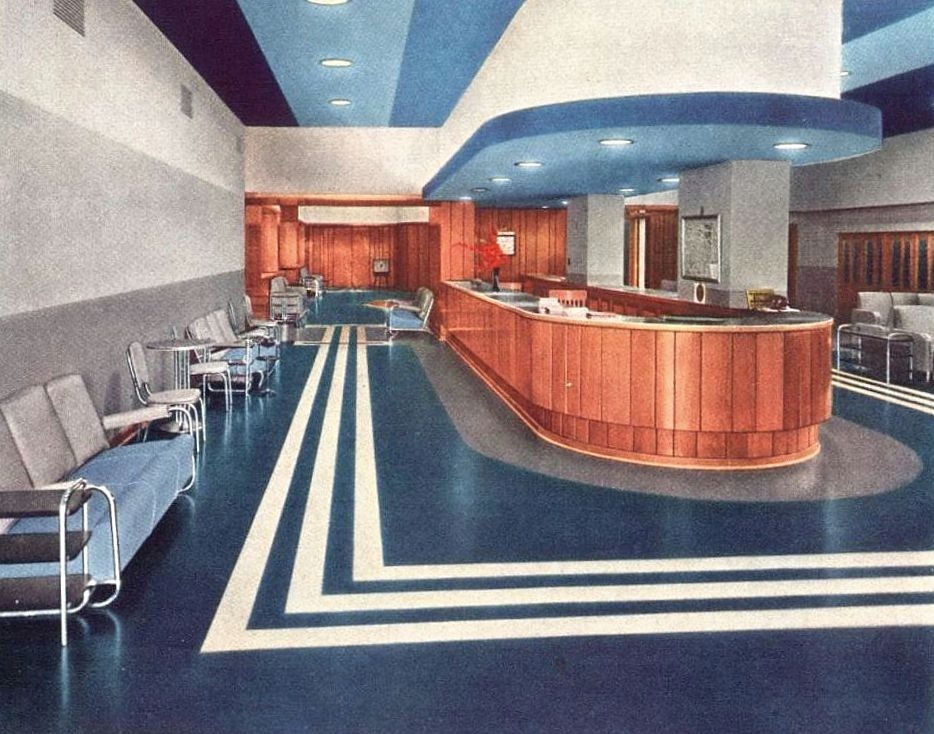
The image above is from — of all things — a linoleum ad. While flipping through an old magazine from 1936, I came across an Armstrong Linoleum Floors ad which featured a color photograph of the reception area in the Administration Building at Fair Park (the old Coliseum, redesigned and redecorated for the Texas Centennial). True color photographs from the Texas Centennial celebration in 1936 are fairly uncommon. I love everything about this photo. See the full ad — as well as a history of the Fair Park Coliseum (now the Women’s Building) — in the post “State Fair Coliseum / Centennial Administration Building / Women’s Museum / Women’s Building.”

*

brosius_1872-det

The very first image I posted in 2018 — on New Year’s Day — is the one above, a detail from the 1872 hand-drawn map of the city of Dallas, by 21-year-old Herman Brosius (click it and you’ll see the full, gigantic map). The Dallas Herald wrote that “every house in the corporation limits, together with every street, [is] so accurately drawn that any one acquainted at all with the city can recognize any building.” More on this map can be found in the post “The Bird’s-Eye View of Dallas by Herman Brosius — 1872.” (Image source: Dallas Historical Society, via Wikimedia Commons)

*

smu_1951-yrbk_athletics_caropresi

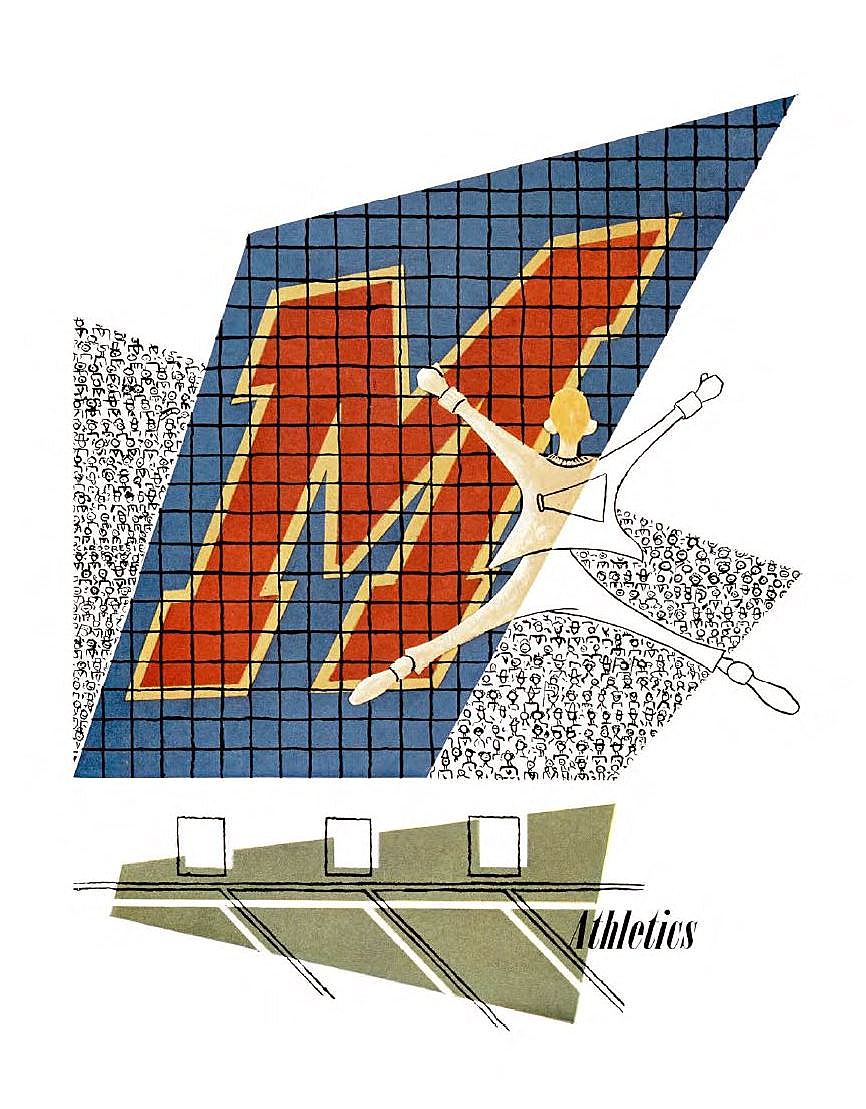
This energetic illustration from the 1951 Rotunda is one of dozens that appeared in various editions of SMU’s yearbooks by SMU-alum Fred Caropresi. At the time, Caropresi was working as both a commercial artist and a fine artist; he ultimately settled in Pennsylvania and established his own advertising agency. I love his mid-century style, and over 20 examples of his work from the 1951 yearbook can be found in the post “Fred Caropresi’s Mid-Century-Modern Illustrations for SMU’s 1951 Yearbook.” (Source: DeGolyer Library, Southern Methodist University)

*

palace-theatre_1969_color_portal

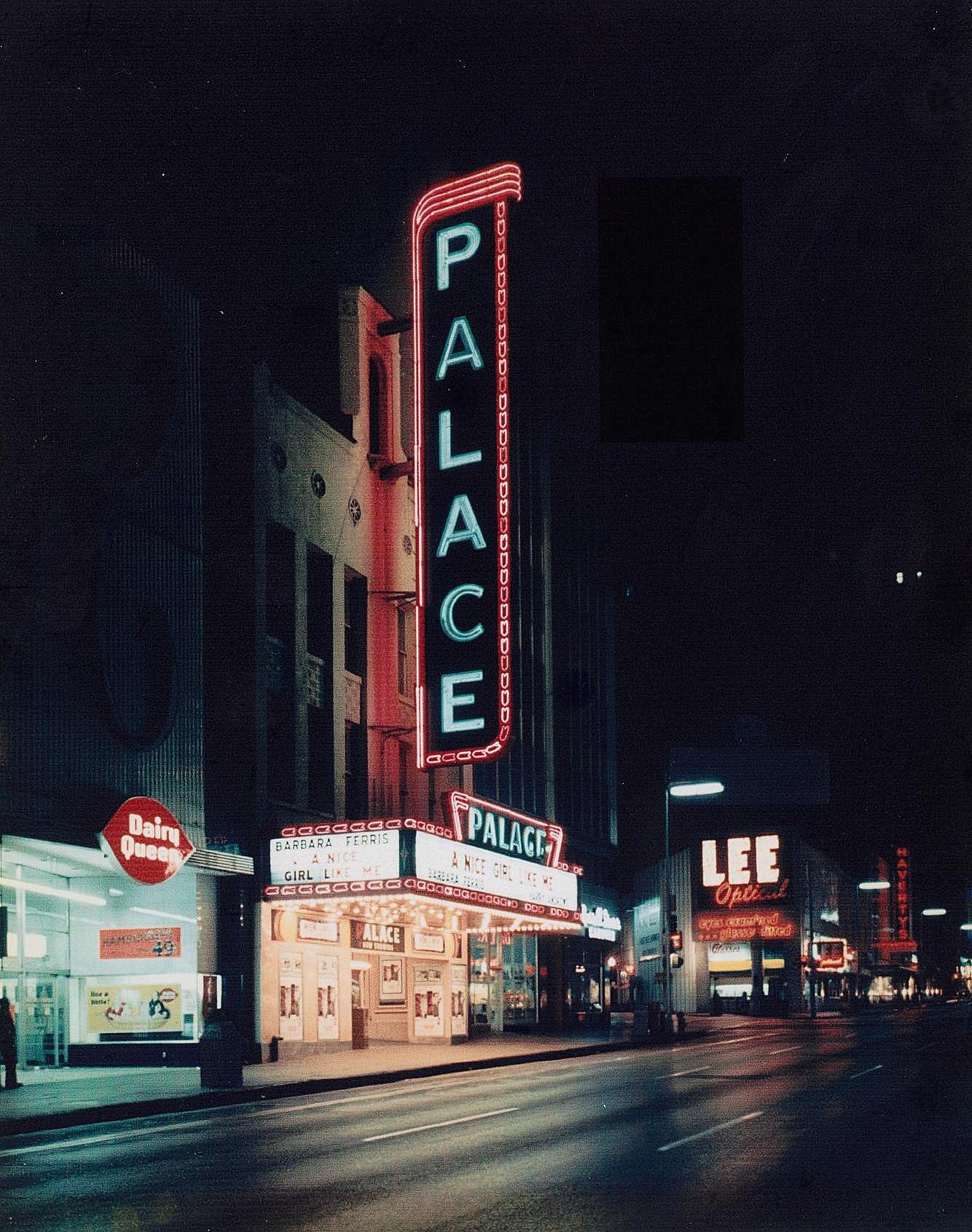
When I first saw this photo of Elm Street’s Palace Theatre, I was so struck by the neon sign that I completely missed the next-door Dairy Queen. A downtown Dairy Queen! More on this exciting discovery can be found in the post “The Palace — 1969.” (Source: Lovita Irby Collection via the Spotlight on North Texas project, UNT Media Library, University of North Texas)

*

flooding-levee-district-from-forest-ave_lloyd-long_052035_ebay

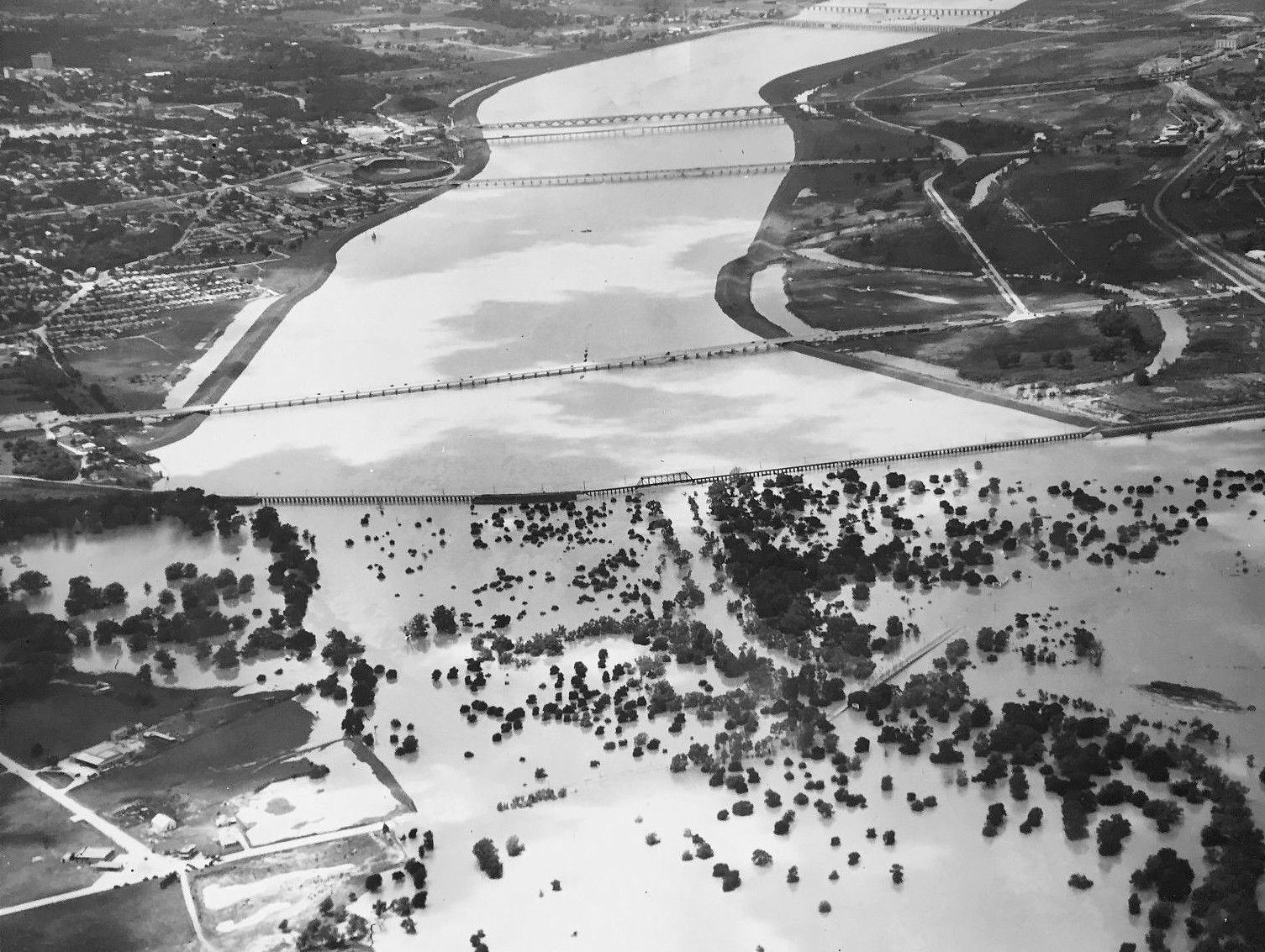
This great photo from 1935 shows a swollen Trinity River and what things looked like in South Dallas where the levees ended (just south of both the Corinth Street viaduct and the old railroad trestle). Above the magic line: tidy levees, water contained. Below the levees: a whole mess of water, water everywhere. From the post “Forest Avenue-Area Flooding, South Dallas — 1935.” (Source: Lloyd M. Long photo, found on eBay.)

*

webers_root-beer_traces-of-texas

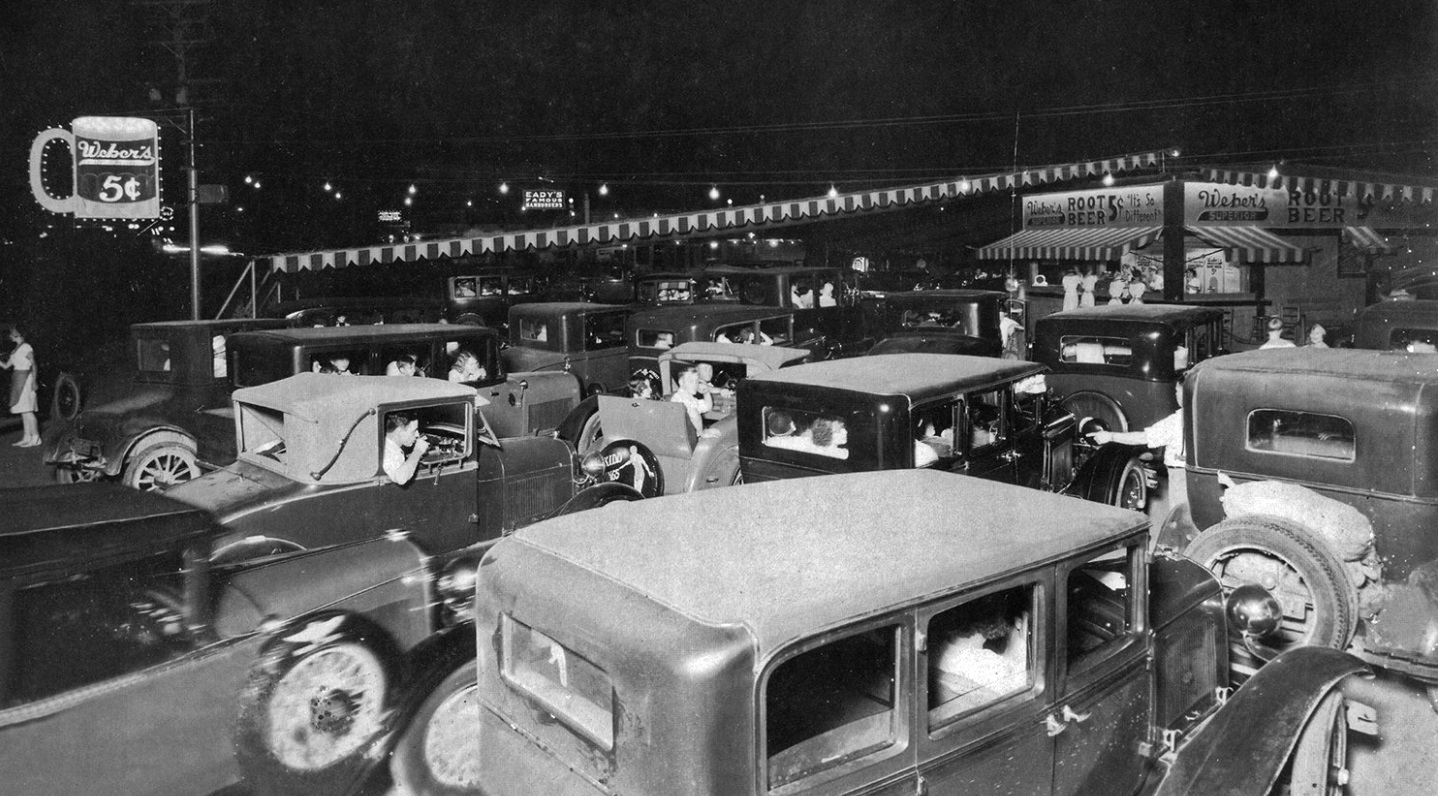
I love this photo of a Weber’s Root Beer drive-in (which I think was either in Oak Cliff or Lower Greenville). The post this appears in was originally posted in 2017, but I didn’t come across this photo until this year, when I added it to “Weber’s Root Beer Stands: ‘Good Service with a Smile.'” (Source: Traces of Texas Twitter feed)

*

titches_unvisited-dallas_jeppson

The beautiful old Titche’s building is still standing at Main and St. Paul, but it’s no longer quite as elegant. From the post “Titche-Goettinger, Fashions for the Chic Dallas Woman — 1940s.” (Source: Noah Jeppson’s “Unvisited Dallas” website)

*

civil-defense_NM-austrian-fortnight_1965_degolyer_SMU_crop

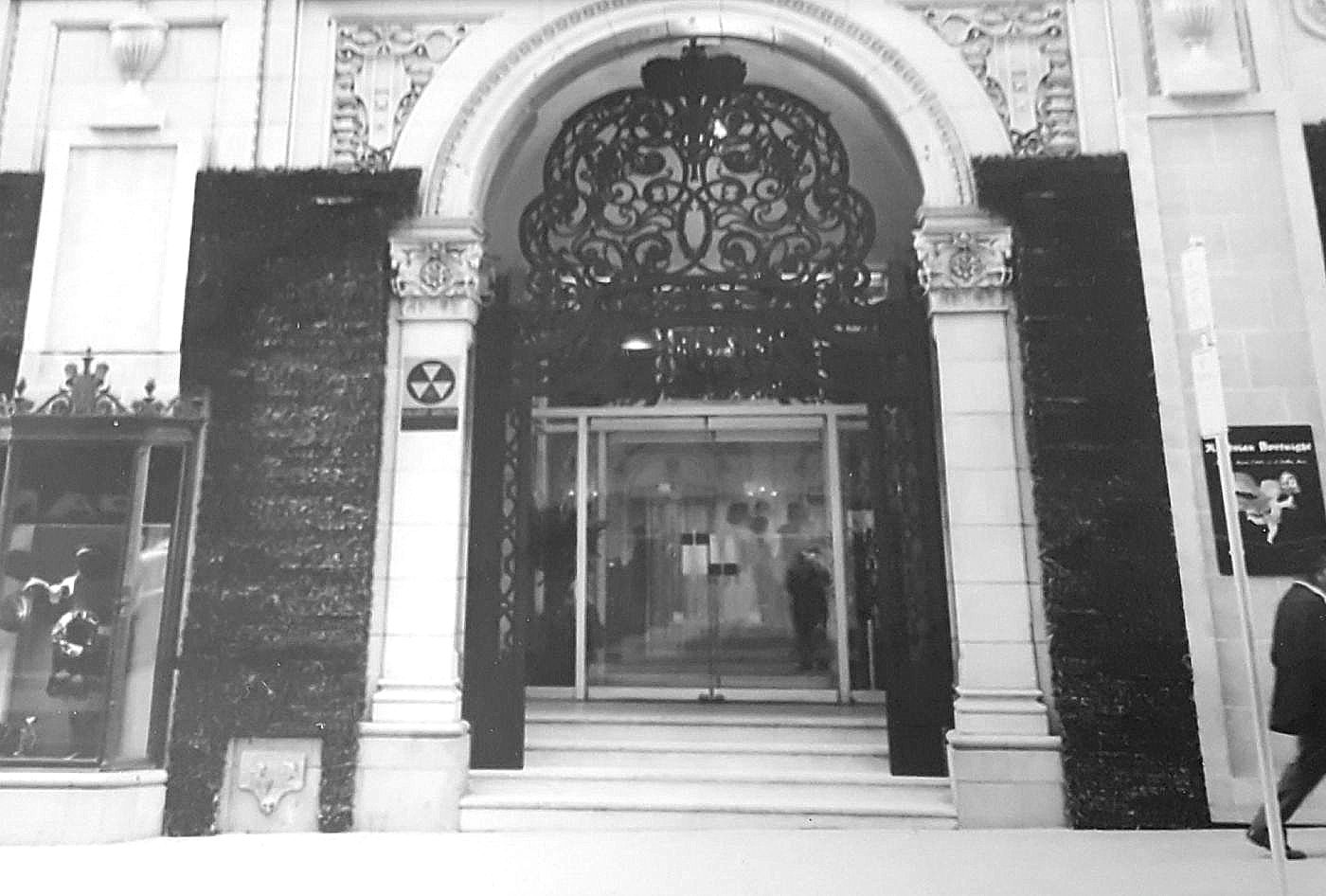
Speaking of department stores (or rather THE department store): Neiman-Marcus (I will forever hold onto that hyphen!). This slightly warped and blurry photo (completely my fault, and explained in the original post) is included in my favorites because of that unexpected fallout-shelter sign plastered onto the Neiman’s building in 1965 — this was surely the most sophisticated location for a bomb shelter in the entire Southwest. I was surprised how much I enjoyed learning about Dallas bomb shelters, and this photo became one of my favorite parts of the resulting post, “‘Dallas Is a Major Target Area!’ — Know Where Your Nearest Fallout Shelter Is.” (Source: DeGolyer Library, SMU — the original photo is of much higher quality than my not-intended-to-be-used quick photo-of-a-photo)

*

elm-and-akard_george-mcafee_degolyer_SMU

I absolutely LOVE this crazy building. Never in a million years would I have guessed that this building was in downtown Dallas. But it was, at the southeast corner of Elm and Akard. I traced this building through the years in the post “Elm & Akard, Photographer J. C. Deane, and The Crash at Crush.” (Source: photo by George A. McAfee, DeGolyer Library, SMU)

*

elm-stone_woolworths_mcafee_degolyer_SMU_ca-1920_cropped

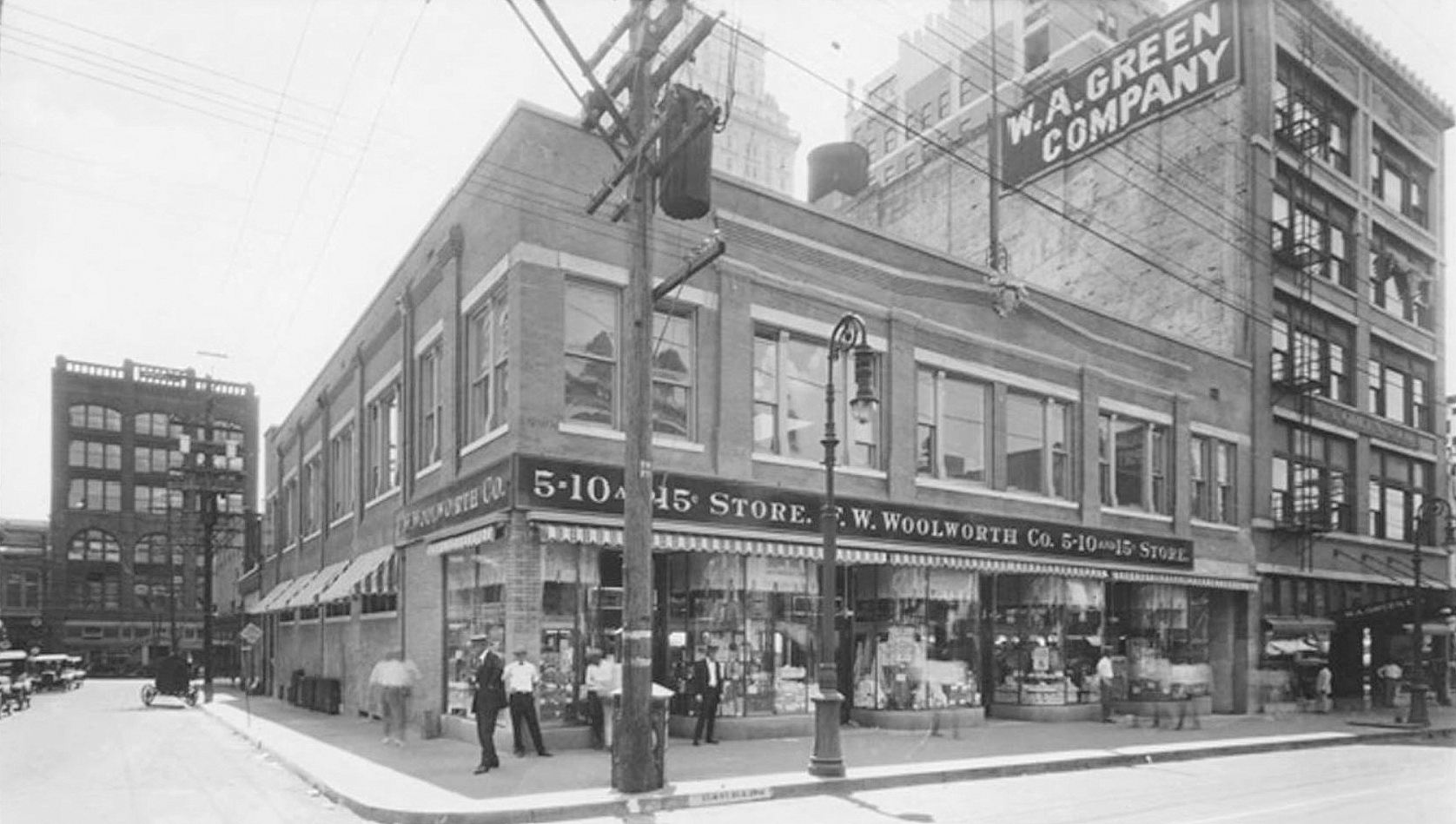
That crazy art deco-ish building was just steps away from the view seen above, which was taken at Elm and Stone. I really wish I could walk through that Woolworth’s store. From the post “The Five & Dime at Elm & Stone.” (Source: photo by George McAfee, DeGolyer Library, SMU)

*

oak-cliff-viaduct_night_postcard

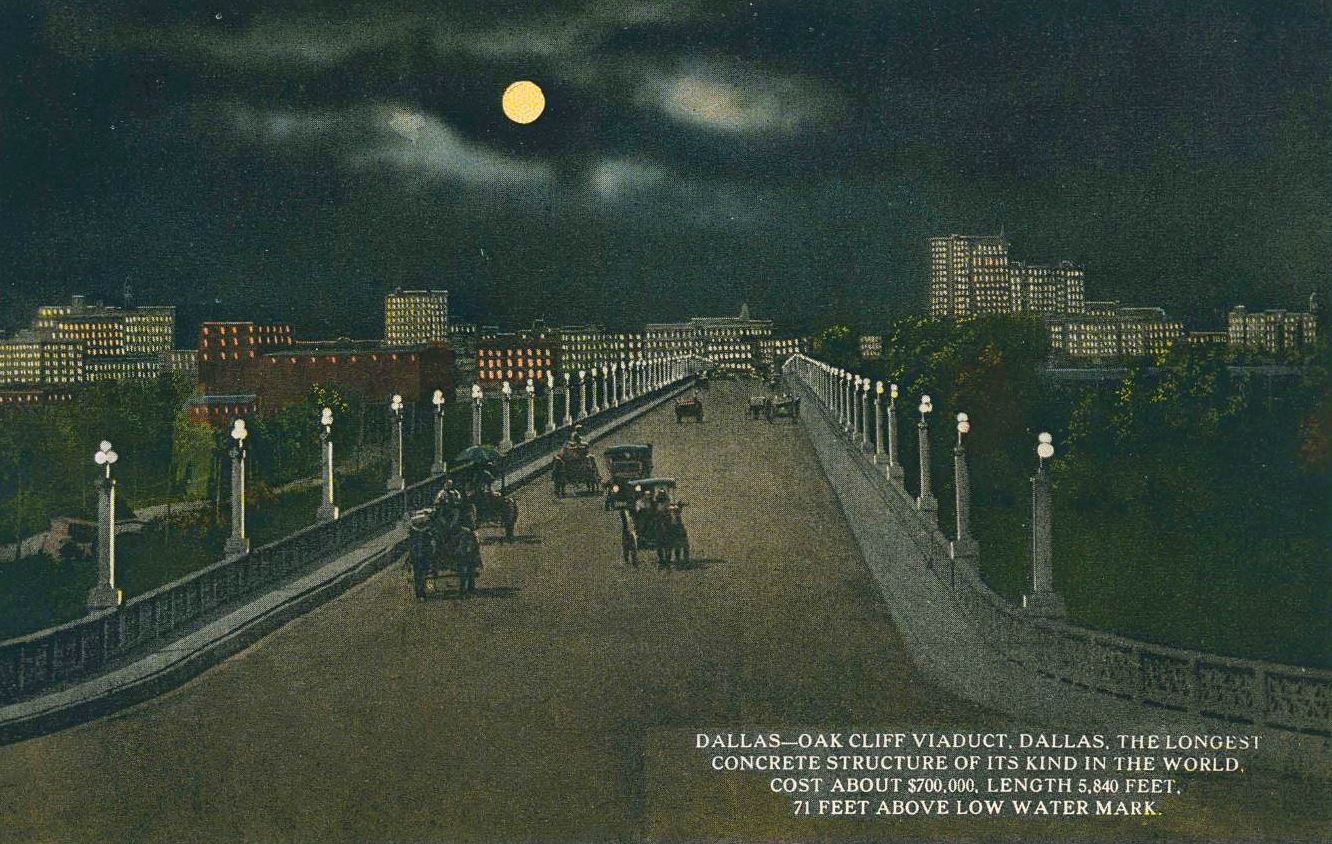
The Oak Cliff viaduct, at night. When it was brand new in 1912, Dallasites were positively giddy over the fact that their very own “longest concrete bridge in the world” was illuminated with LIGHTS — people were so thrilled by this that they flocked to the viaduct to see the spectacle for themselves, either to marvel at the lights or to shoot the globes out. More can be found in the post “Dallas in ‘The Western Architect,’ 1914: Skyscrapers and Other Sources of Civic Pride.” (Source: “the internet”)

*

stemmons-tower_night_squire-haskins_041963_UTA

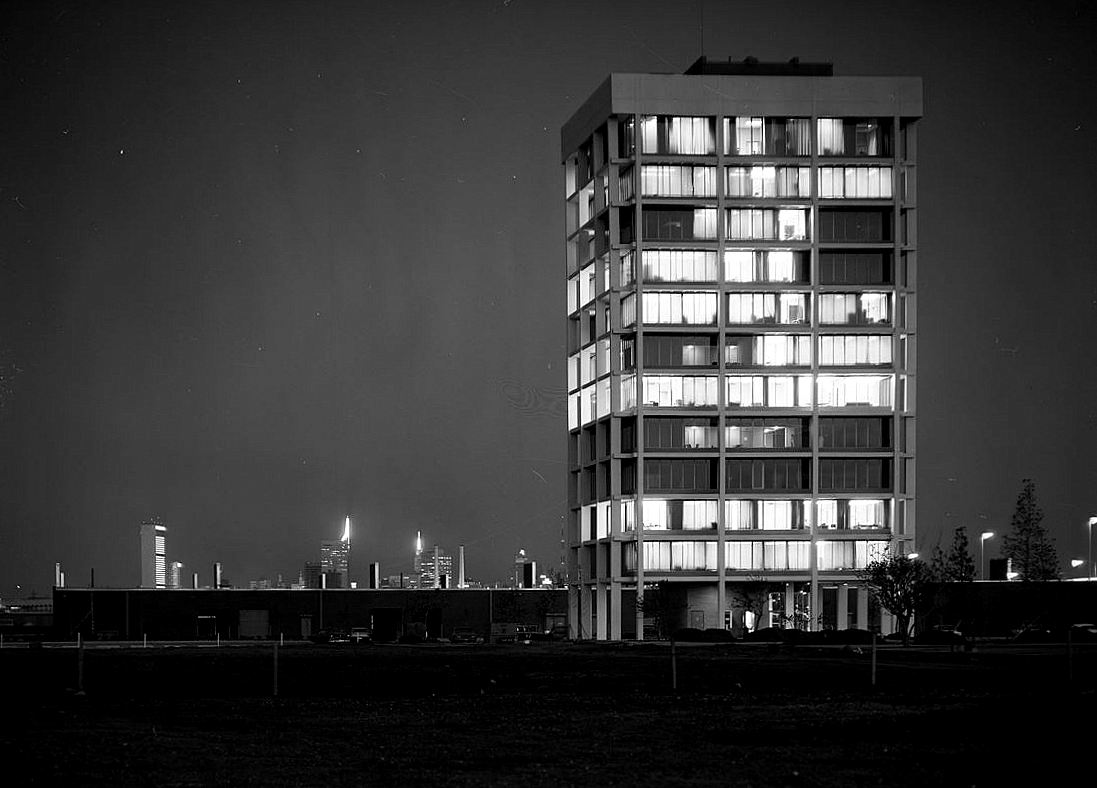
I love photos of the city at night. Here is the new Stemmons Tower in 1963, standing all alone, with the Dallas skyline in the background — like the wistful child told he’s too little to play with the big kids. “Stemmons Tower, Downtown Skyline — 1963.” (Source: photo by Squire Haskins, Special Collections, University of Texas at Arlington)

*

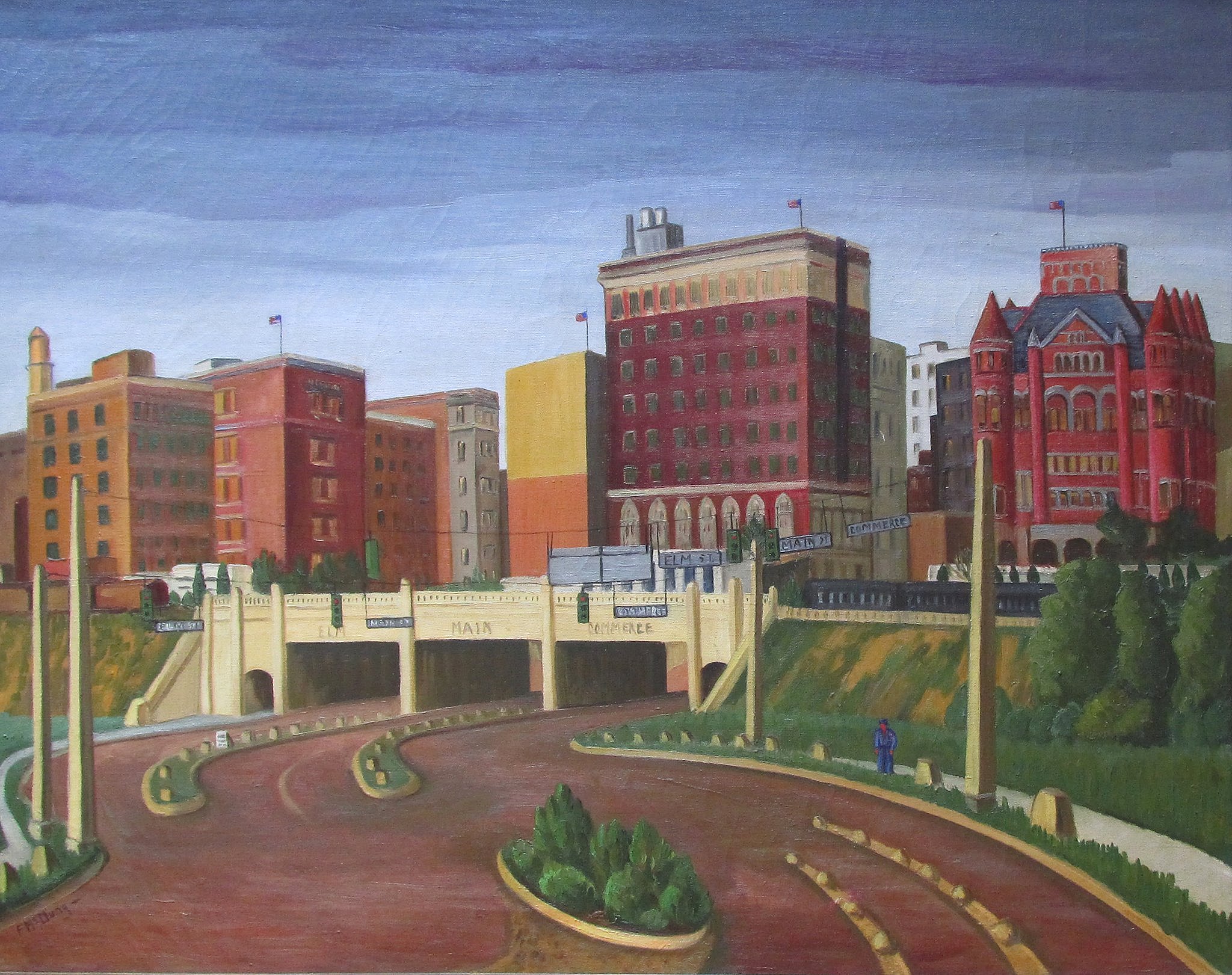
mcclung_triple-underpass_1945_david-dike-fine-art

I love Texas Regionalist art from the first half of the 20th century, and this painting of the Triple Underpass by Dallas artist Florence McClung is fantastic. Her original price for the painting was $300; it recently sold at auction for $252,000. More on this at “‘Triple Underpass’ by Florence McClung — 1945.” (Source: David Dike Fine Art)

*

And now a whole bunch of State Fair of Texas pictures.

state-fair-of-tx_midway_kodachrome_1961_ebay

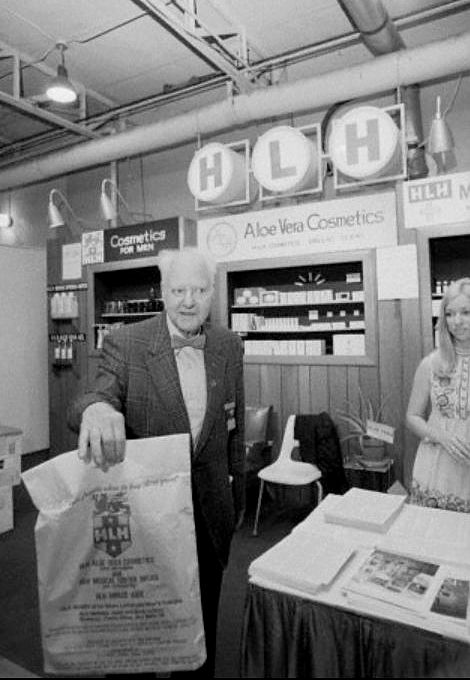
Above, a Kodachrome photo of the midway and Cotton Bowl (and the tops of people’s heads) from 1961 (source: eBay); below, a supremely odd photo of oil tycoon (and often-rumored “richest man in the world”) H. L. Hunt, personally hawking his line of Aloe vera cosmetics at the 1971 SFOT (source: unknown). Both photos are from the post “The State Fair of Texas Over the Decades.”

h-l-hunt_state-fair_1971

*

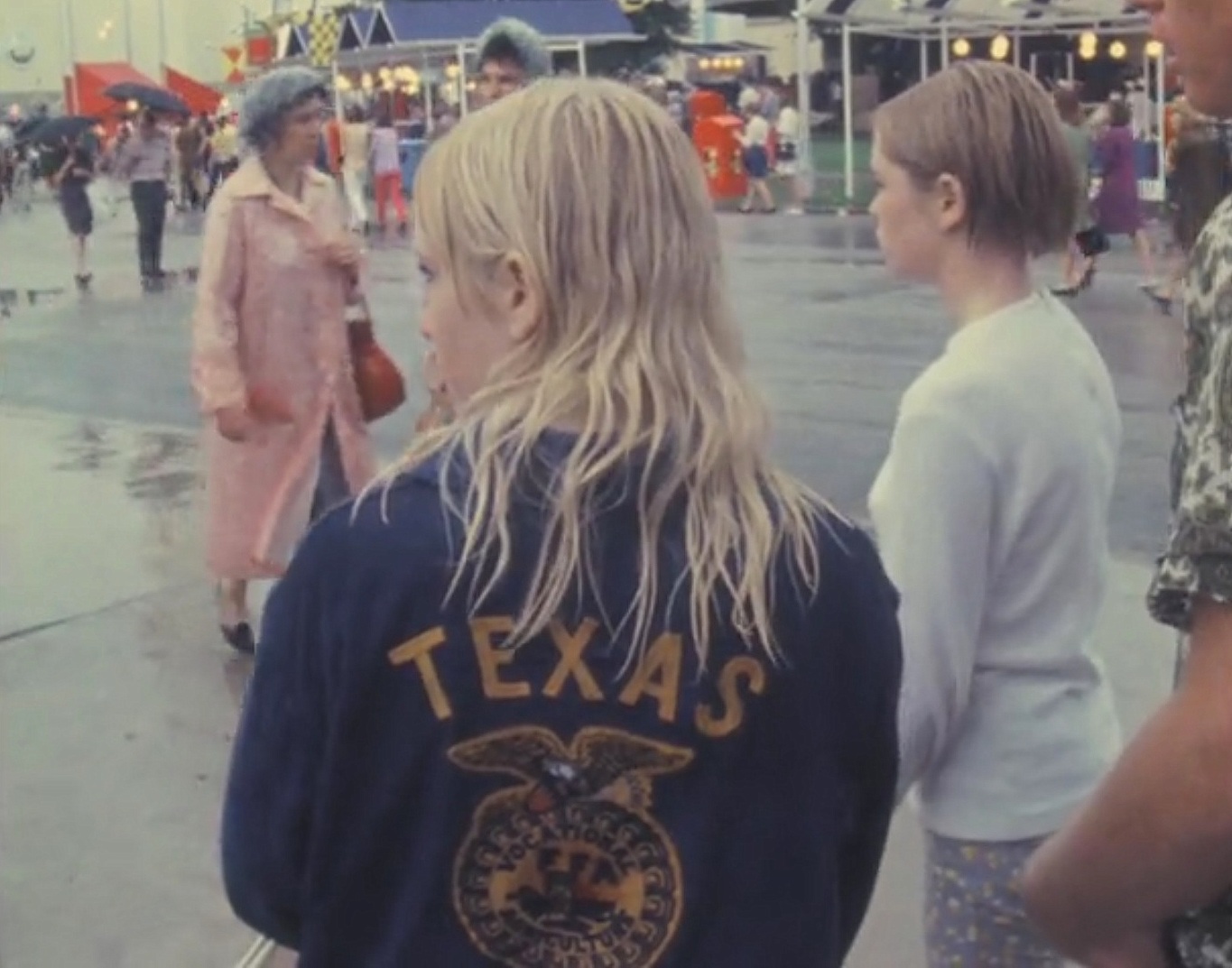
sfot_rain_1967_wbap_unt_fair-park_texas-carthage

I love this screen-capture of a Channel 5 news report about the rainy opening day of the fair in 1967. Watch the filmed report and see other damp screenshots at “A Rainy Opening Day of the State Fair of Texas — 1967.” (Source: KXAS-NBC 5 News Collection, UNT)

*

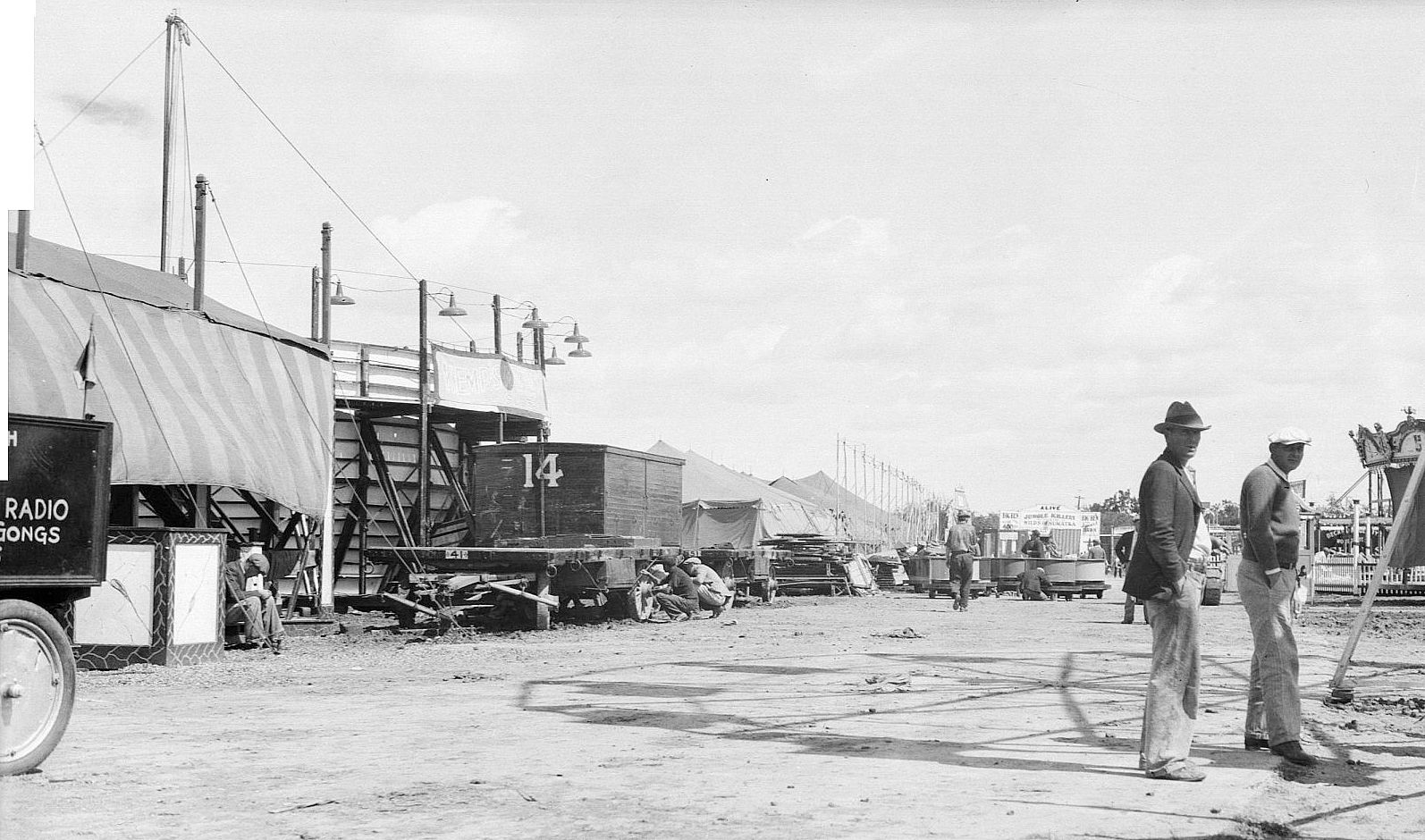
state-fair-of-texas_1932_gimarc

I’m not exactly sure why I like this behind-the-scenes photo so much, but I do. There are lots of things to zoom in on. The post this appeared in is “Prepping for the 1932 State Fair of Texas Midway.” (Source: collection of George Gimarc)

*

sfot_big-tex_serape_1965_dallas-heritage-village_portal

This postcard features what may well be my favorite photo of Big Tex. Not only does he look like a standing-upright, cowboy-hatted Gulliver surrounded by tuckered-out Lilliputians, but HE’S WEARING A SERAPE! After years and years of looking at Dallas photos and seeing the same ones over and over, this was one I’d never seen. Better yet, it showed me something I didn’t even know about — that Big Tex had once added a little south-of-the-border sartorial flair to his much-beloved outfit. Find out why he was making this bold fashion statement in the post “‘Hola, Folks!’ — Big Tex at the State Fair’s ‘Exposition of the Americas’ — 1965.” (Source: Dallas Heritage Village, via UNT’s Portal to Texas History)

*

ABS_charlie-drum_dick-bosse_andy-hanson_degolyer-library_SMU

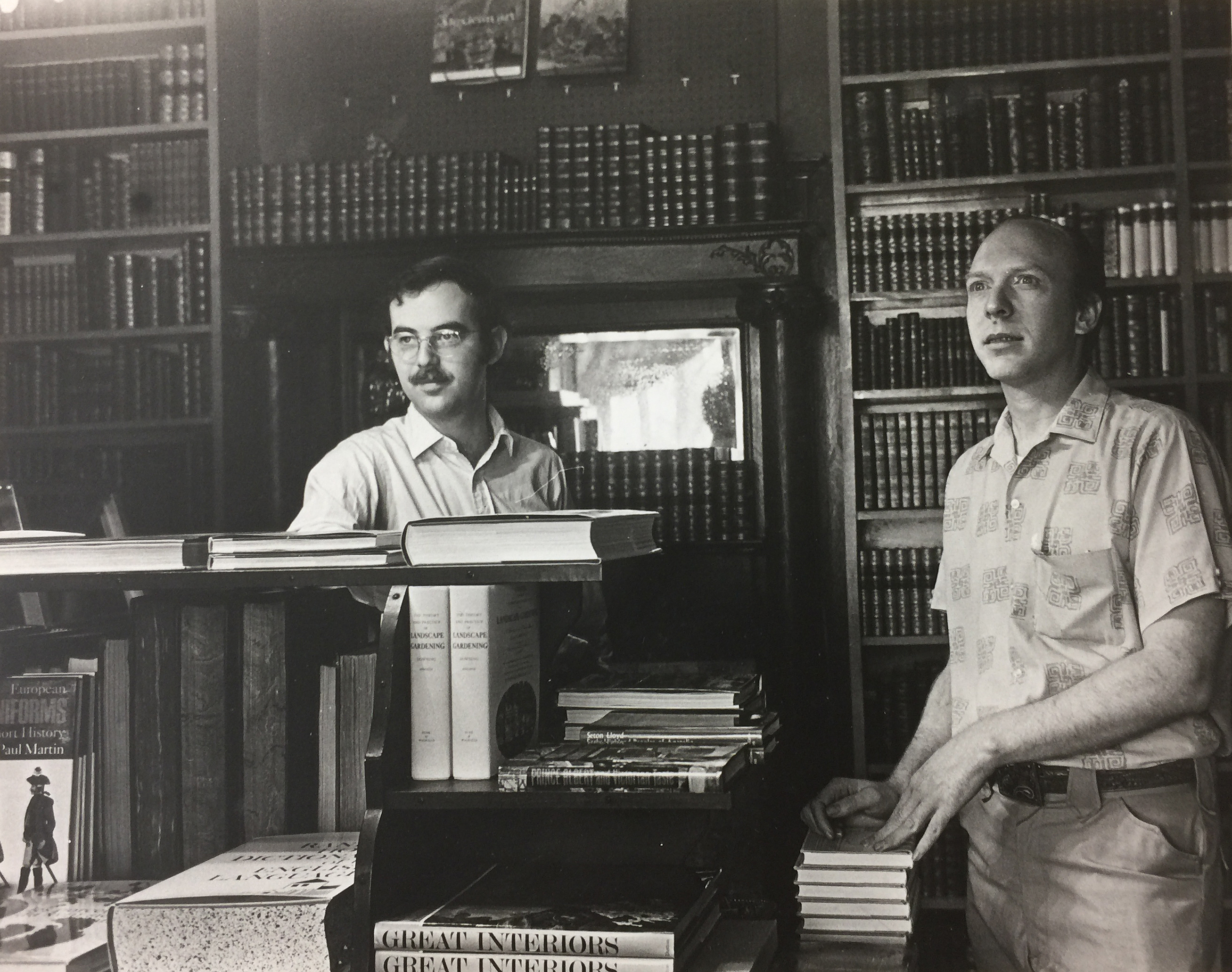
This is a photo of my late father, Dick Bosse (on the right), taken in 1968 when he was the manager (later the owner) of The Aldredge Book Store. I’d never seen this 50-year-old photo until a very nice person at SMU sent it to me (thank you, very nice person at SMU!). (My father’s co-worker Charlie Drum is on the left.) From the post “The Aldredge Book Store — 1968.” (Source: photo by Andy Hanson, DeGolyer Library, SMU)

*

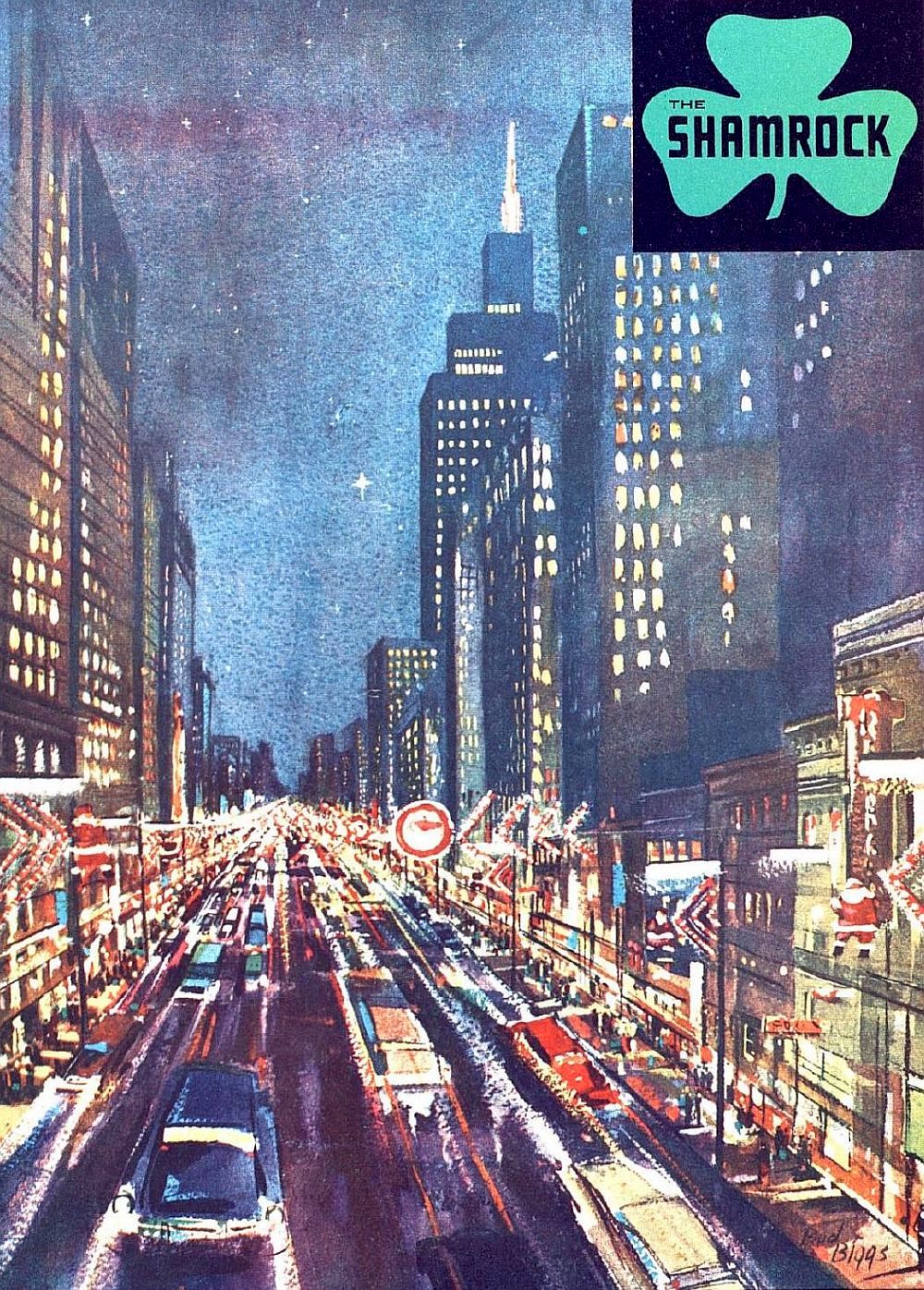
xmas_bud-biggs_shamrock-mag_1959_texas-tech

I posted this watercolor depiction of downtown Dallas at Christmastime only a few days ago, but I really love it — so here it is again! From “Merry Christmas from Dallas Artist Bud Biggs.” (Source: Texas Tech University)

*

The image below is a self-indulgent bonus, because it’s not a photo, and the quality is pretty poor. It’s a blurry screen-capture from a color home-movie from 1953/1954, showing Matilda looking south from Mockingbird. The house I grew up in was about two blocks from here, and when I saw the video I recognized the location immediately. Streetcars stopped running along Matilda in 1955, but it took forever for the street to be paved — I distinctly remember exposed rails from my childhood in the ’70s. I never saw streetcars in Dallas, but this image makes me very nostalgic for my old neighborhood (my school, Stonewall Jackson Elementary, is just out of frame to the left). The video of the last days of Dallas’ streetcars and a whole lot of information on the Belmont line can be found in the post “Ghost Rails of the Belmont Streetcar Line.” (Source: home-movie shot by Gene Schmidt, YouTube)

belmont-line_matilda-from-mockingbird_youtube-cap_ca1954

*

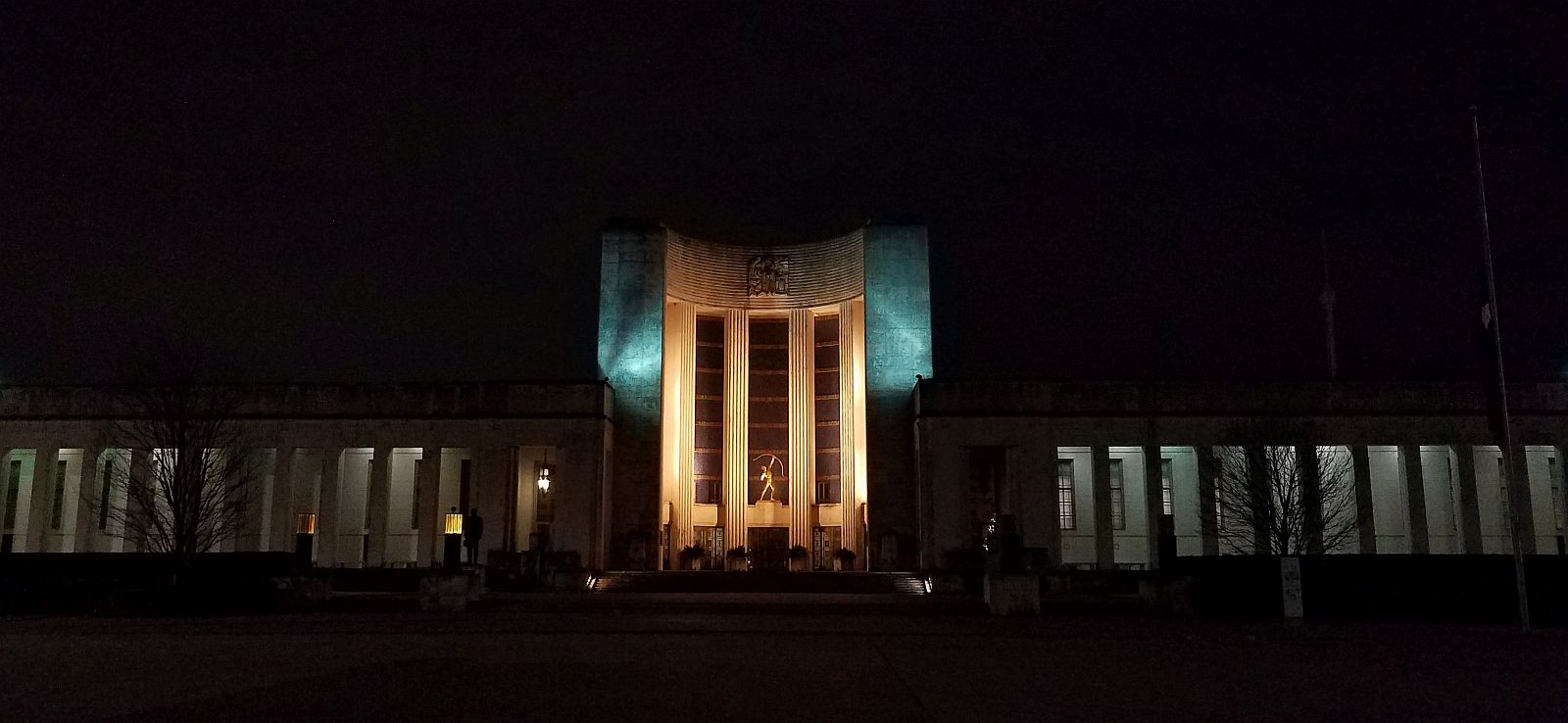
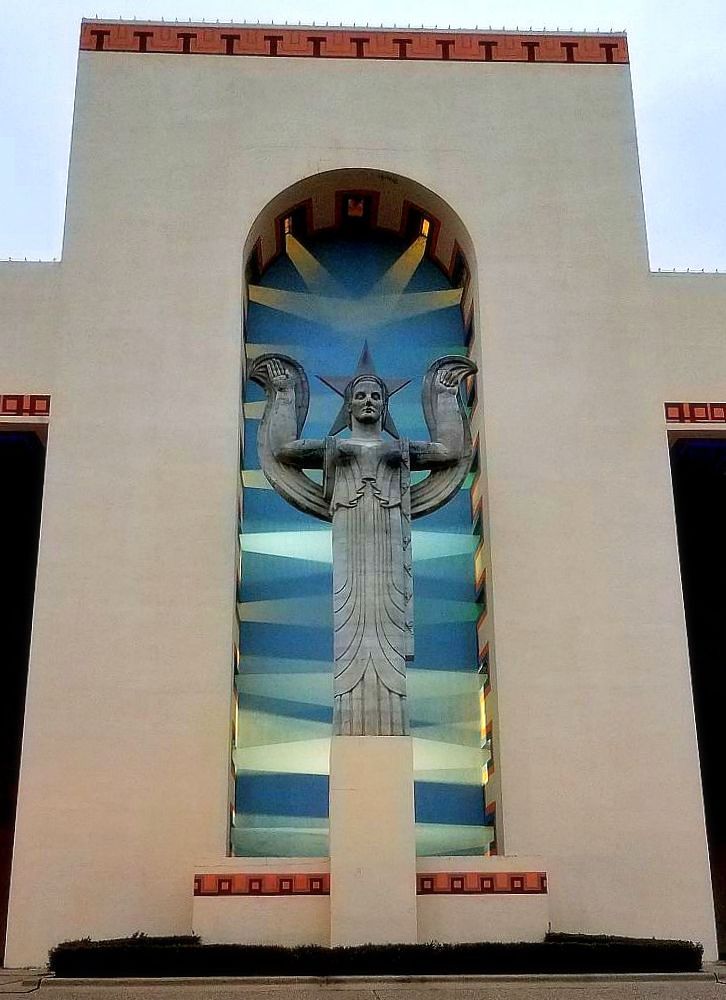
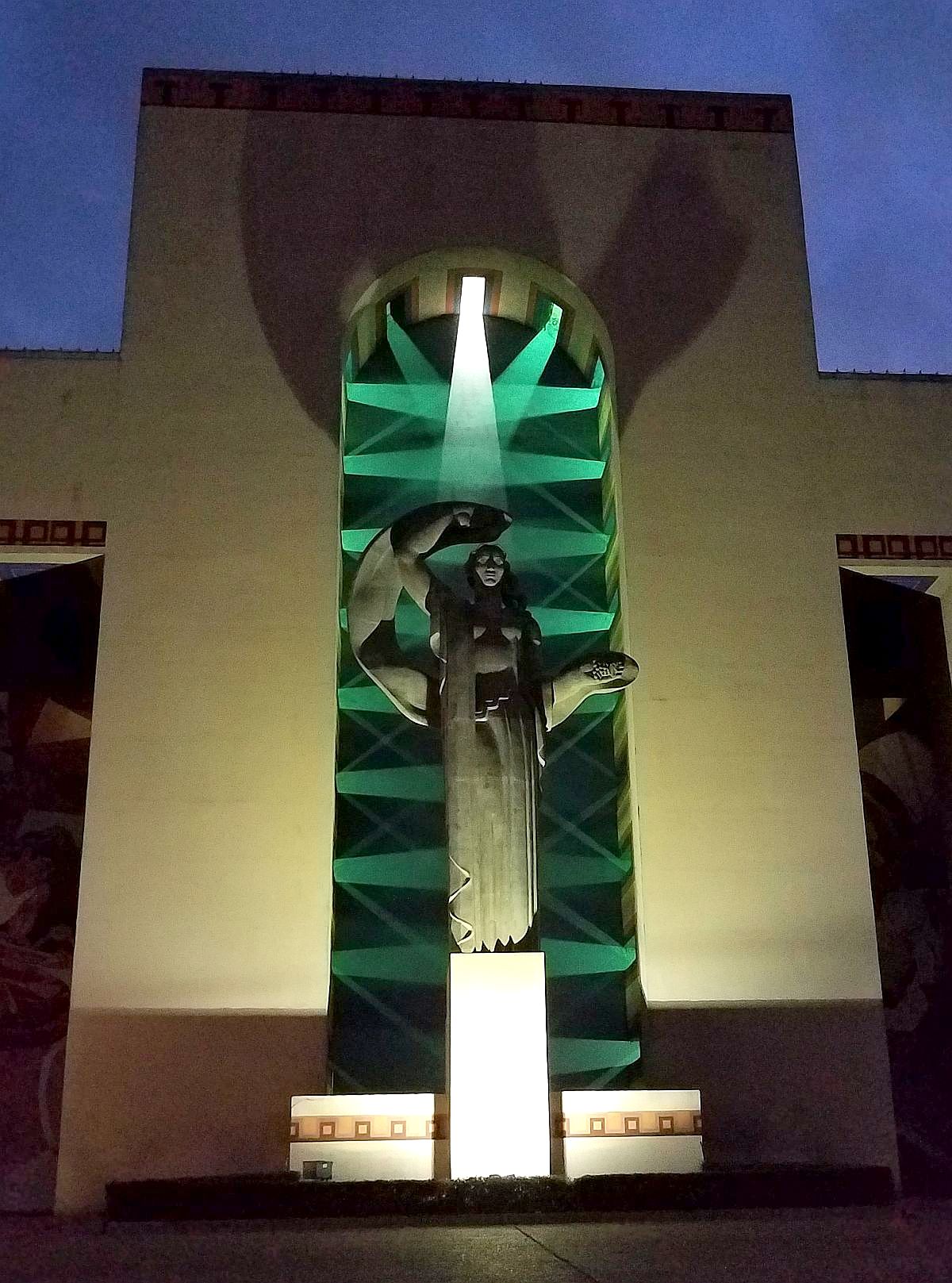
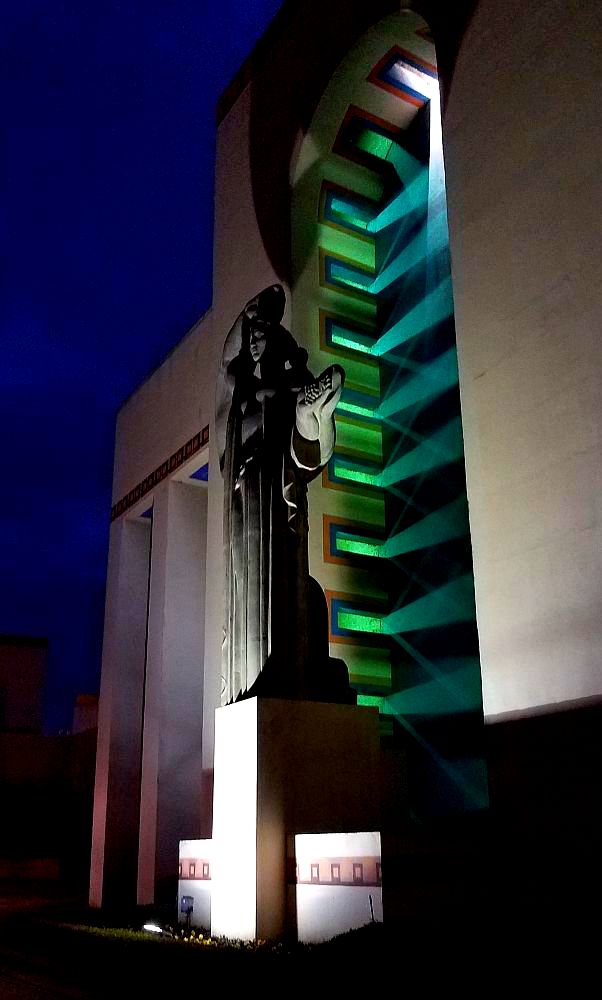
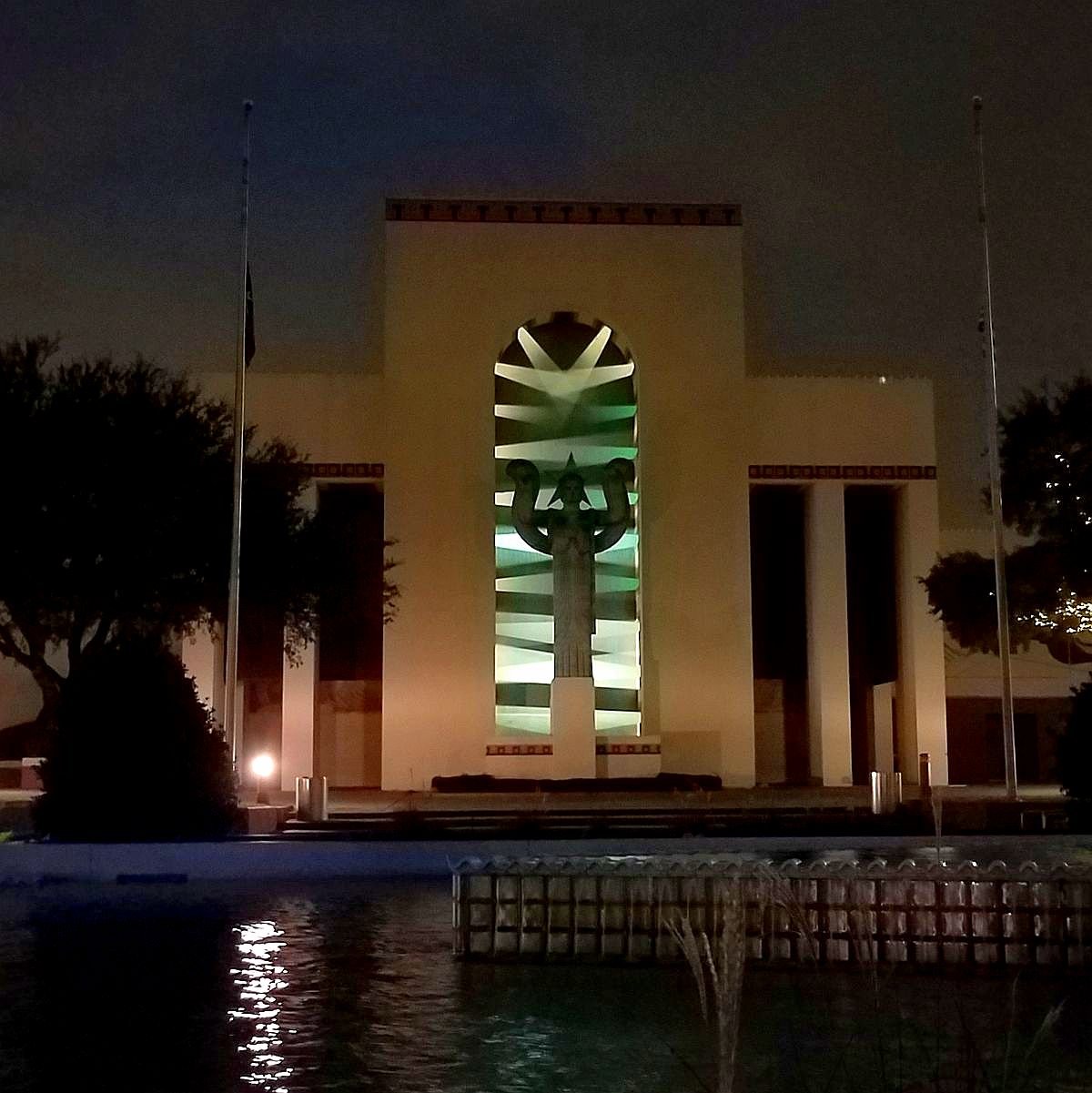
And the last photo is another self-indulgent bonus, because it’s one I took myself — just last week: the Hall of State at Fair Park, from the post “Christmas Along the Esplanade.”

hall-of-state_night_121918_paula-bosse

*

I look forward to discovering more great photos in 2019!

***

Sources & Notes

See all three 2018 “Best of Flashback Dallas” lists here.

See all Flashback Dallas Year-End lists — past and present — here.

*

Copyright © 2018 Paula Bosse. All Rights Reserved.
 

Orphaned Factoids: Year-End Grab Bag, 2018

primrose-petroleum-company

by Paula Bosse

Time for another end-of-the-year collection of odd Dallas-related bits and pieces that don’t really go anywhere, but which should go somewhere. So here they are. (Most images are larger when clicked.)

*

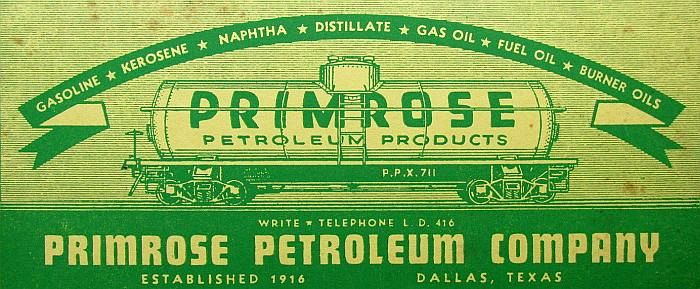
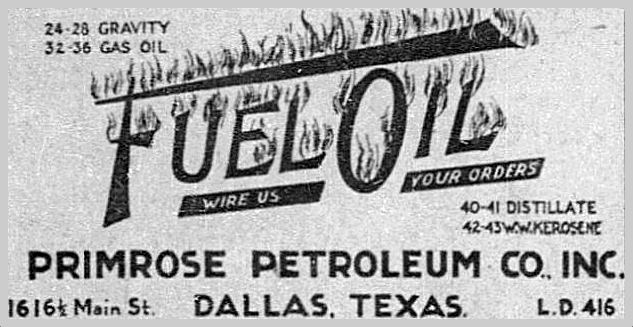
Above, the Primrose Petroleum Company (later the Primrose Oil Company), founded in Dallas in 1916, led by brothers Herbert and Jesse Brin. I just checked, and the company is alive and well today, in business in Dallas for over a century!

primrose-petroleum_aug-1921
Aug., 1921

*

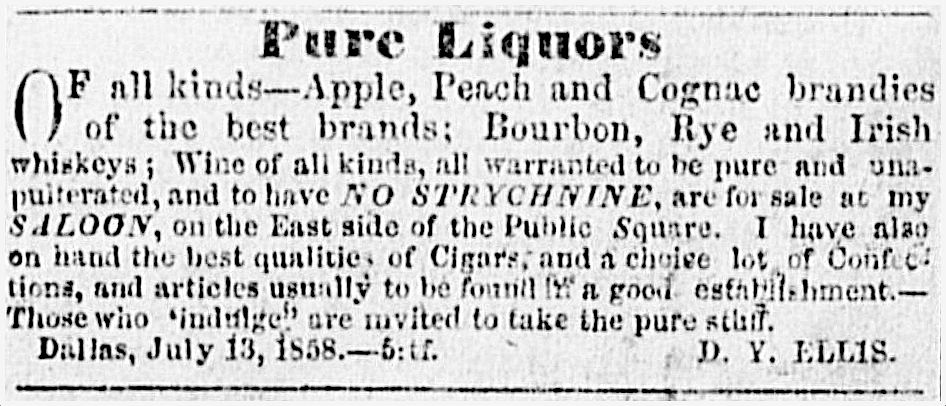
pure-liquors_no-strychnine_dallas-herald_1858
Dallas Herald, 1858

PURE LIQUORS of all kinds — Apple, Peach and Cognac brandies of the best brands; Bourbon, Rye and Irish whiskeys; Wine of all kinds, all warranted to be pure and unadulterated, and to have NO STRYCHNINE, are for sale at my SALOON, on the East side of the Public Square. I have also on hand the best qualities of Cigars, and a choice lot of Confections, and articles usually to be found in a good establishment. — Those who ‘indulge’ are invited to take the pure stuff. — D. Y. Ellis, Dallas, July 13, 1858.

There used to be a time when foods and beverages were not always “pure.” Mr. Ellis assures his patrons that there is absolutely NO STRYCHNINE in his products. Or at least very little. …Hardly any. …Probably not enough to notice. …Some.

*

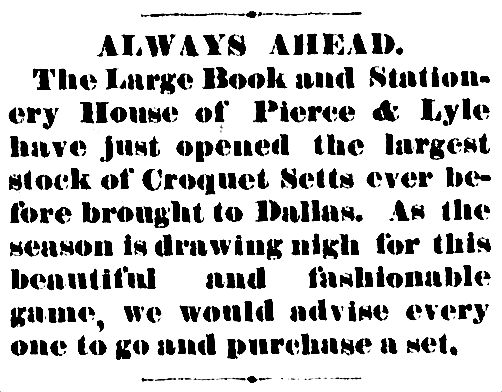
croquet_dal-her_040874
Dallas Herald, April 8, 1874

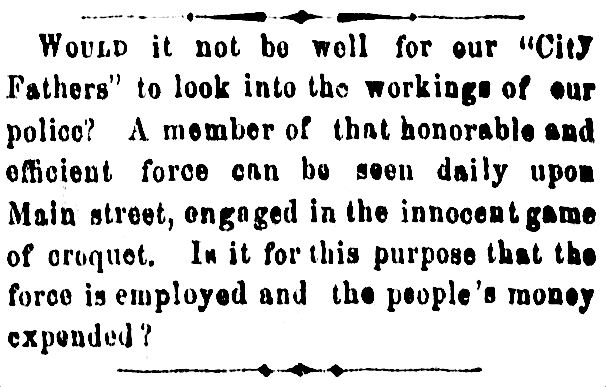
Pierce & Lyle was a book store on Main Street, on the north side of the block just east of Austin (the block now occupied by the El Centro campus). I’ve never thought of croquet as being an activity indulged in by early Dallas settlers, but apparently it was. The earliest mention I found of croquet being played in Dallas was one year before the appearance of the above ad: in 1873 “an innocent game of croquet” was seriously irritating a snarky, unnamed Dallas Herald scribe:

croquet_dallas-herald_042673
Dallas Herald, April 26, 1873

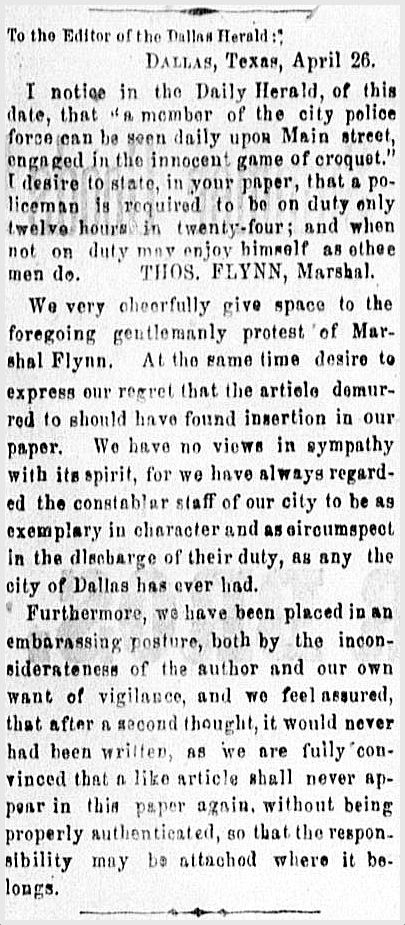
A Letter to the Editor rolled in the next day, from the town marshal (which might explain the floridly apologetic editor’s response):

croquet_dallas-herald_042773
Dallas Herald, April 27, 1873

Do not besmirch the reputation of a member of the constabulary enjoying a genteel activity when he’s off the clock.

And even though it’s not a Dallas photo, the one below seems like a nice photo companion: a weekly meet-up for a Sunday afternoon game of croquet in Shannon, Texas (near Henrietta).

croquet_shannon-tx_degolyer-library_SMU_ndvia DeGolyer Library, SMU

*

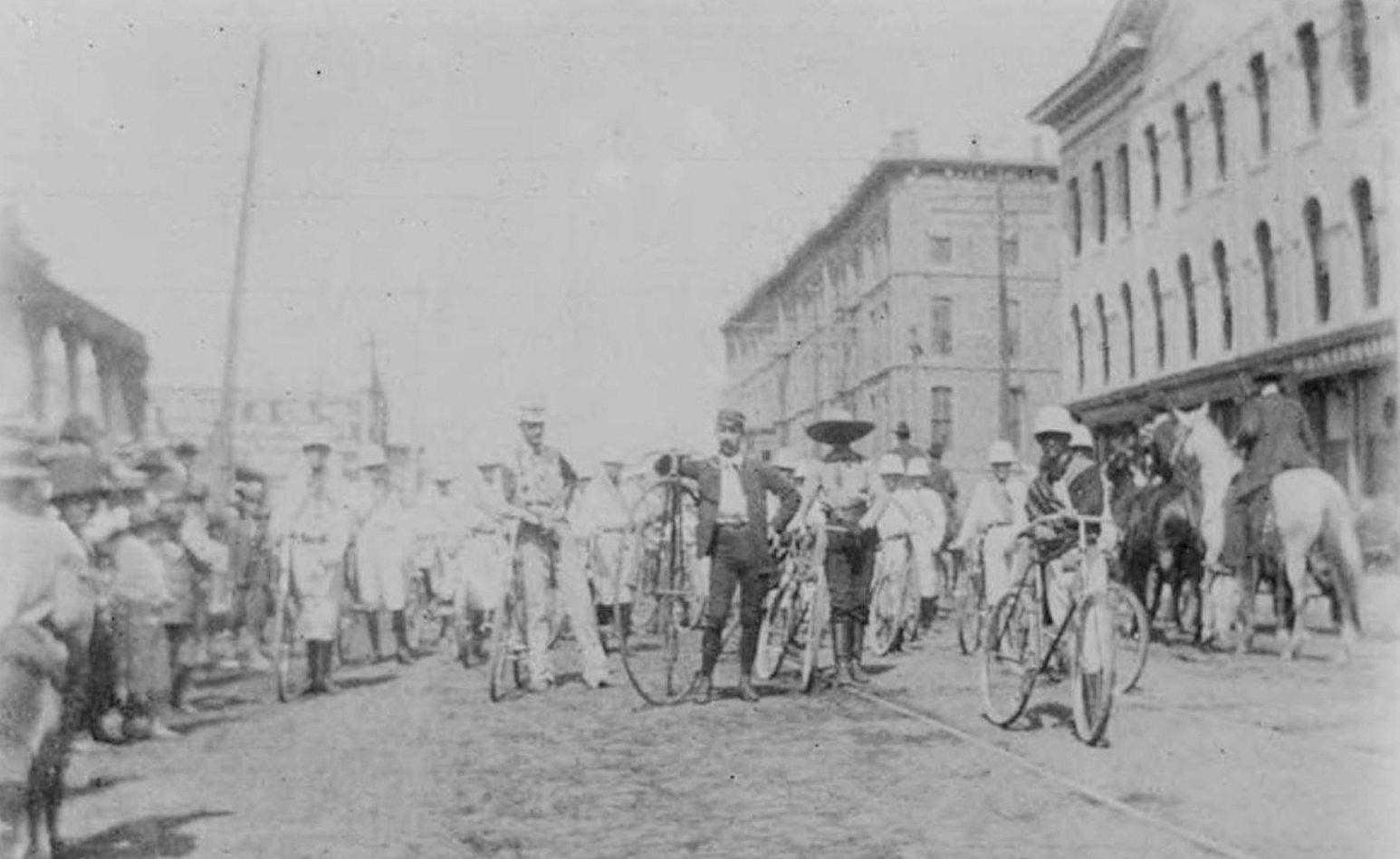
bicycles_dallas_windsor-hotel_cook-collection_degolyerGeorge W. Cook Collection, DeGolyer Library, SMU

The photo above shows a bunch of cyclists standing by their “wheels” in the dusty streets of Dallas (the Windsor Hotel can be seen at the right). This may have been a photo of the Dallas Wheel Club or the Dallas Bicycle Club (these might have been the same organization?) — the Wheel Club was organized in 1886 and was the first of its kind in the state; Hugh Blakeney was the captain of the Bicycle Club and T. L. Monagan was the lieutenant. In 1888 a one-way cycling ride to Fort Worth took 4 hours (the participants returned by train). Imagine that for a second: biking anywhere, much less all the way to Fort Worth (!), before the days of paved streets. Wagon-wheel-rut accidents could have ended a man’s cycling days!

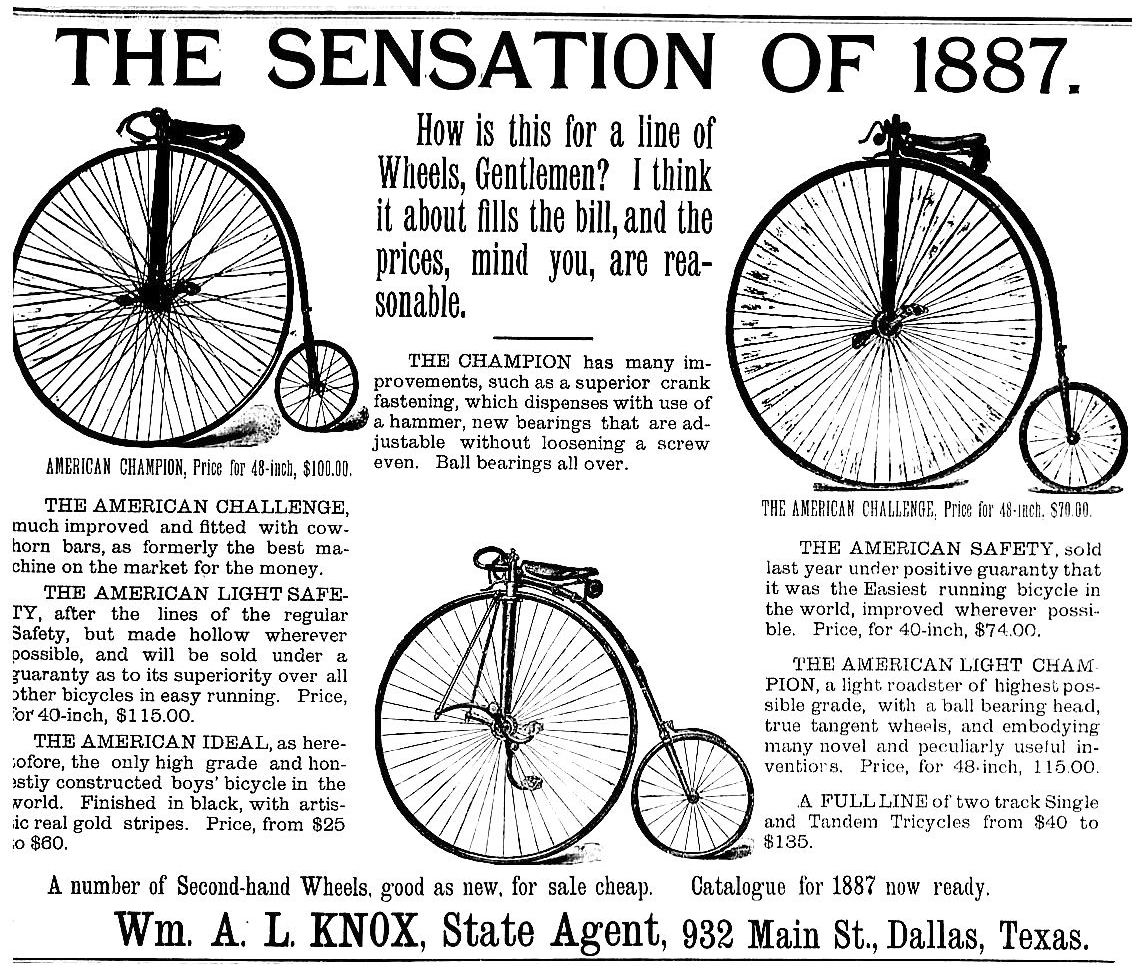
Below is an ad for the ridiculous-looking “penny farthings,” sold by W. A. L. Knox. If the Inflation Calculator is to be believed, the first bicycle, which cost $100 in 1887, would cost almost $2,800 today. Also: “tandem tricycles”!!

penny-farthings_dallas-herald_041287
Dallas Herald, April 12, 1887

*

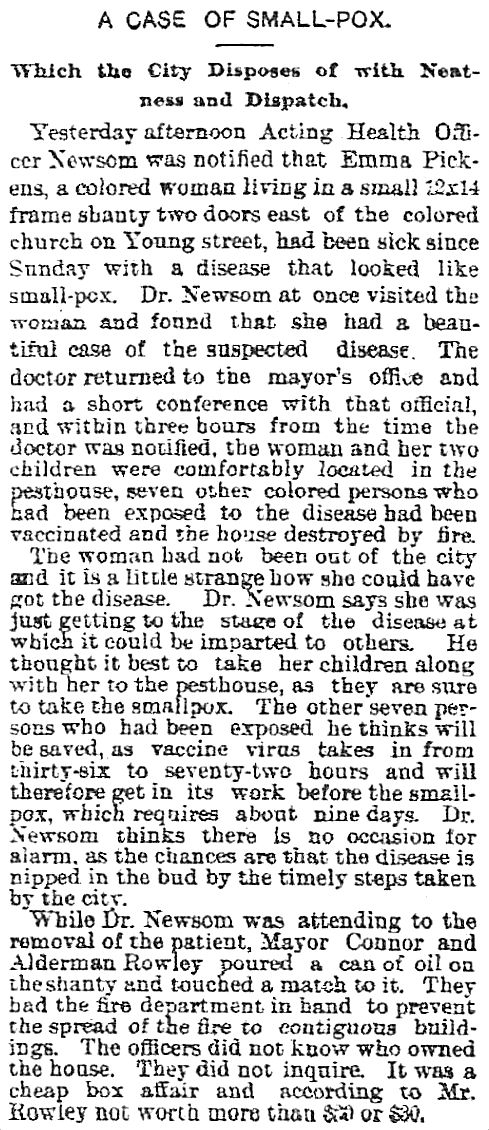
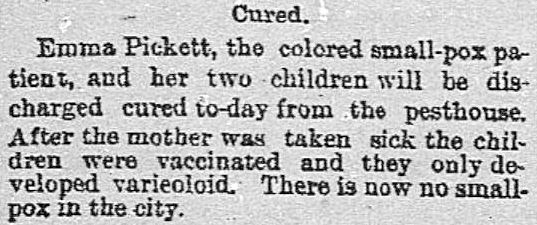
Smallpox was a scary, scary, highly contagious virus. If you were unfortunate enough to come down with it, you’d probably be sent to the pest house. And your house might even be torched by the mayor.

smallpox_dmn_021489
DMN, Feb. 14, 1889

smallpox_dmn_031489
DMN, March 14, 1889

*

Here’s an interest-piquing classified ad from 1894 — the details of which I’ll sadly never know: “Wanted — Lady who plays the guitar to travel with gentleman. Address Box X. News office.”

lady-who-plays-guitar_dmn_090294
DMN, Sept. 2, 1894

*

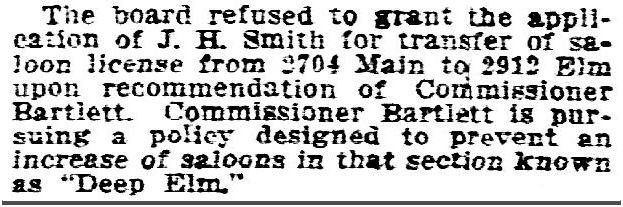
1912: “Commissioner Bartlett is pursuing a policy designed to prevent an increase in saloons in that section known as ‘Deep Elm.'” …That worked out pretty well.

deep-ellum_dmn_013012
DMN, Jan. 30, 1912

*

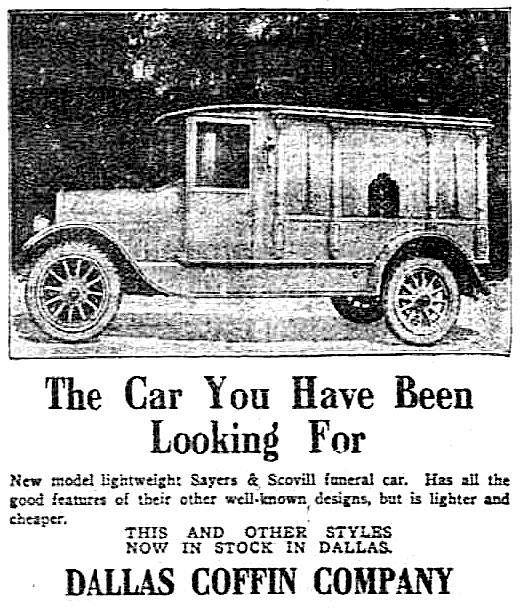
“The car you have been looking for.” …If the car you’ve been looking for is a hearse.

hearse_dmn_061017
DMN, June 10, 1917

*

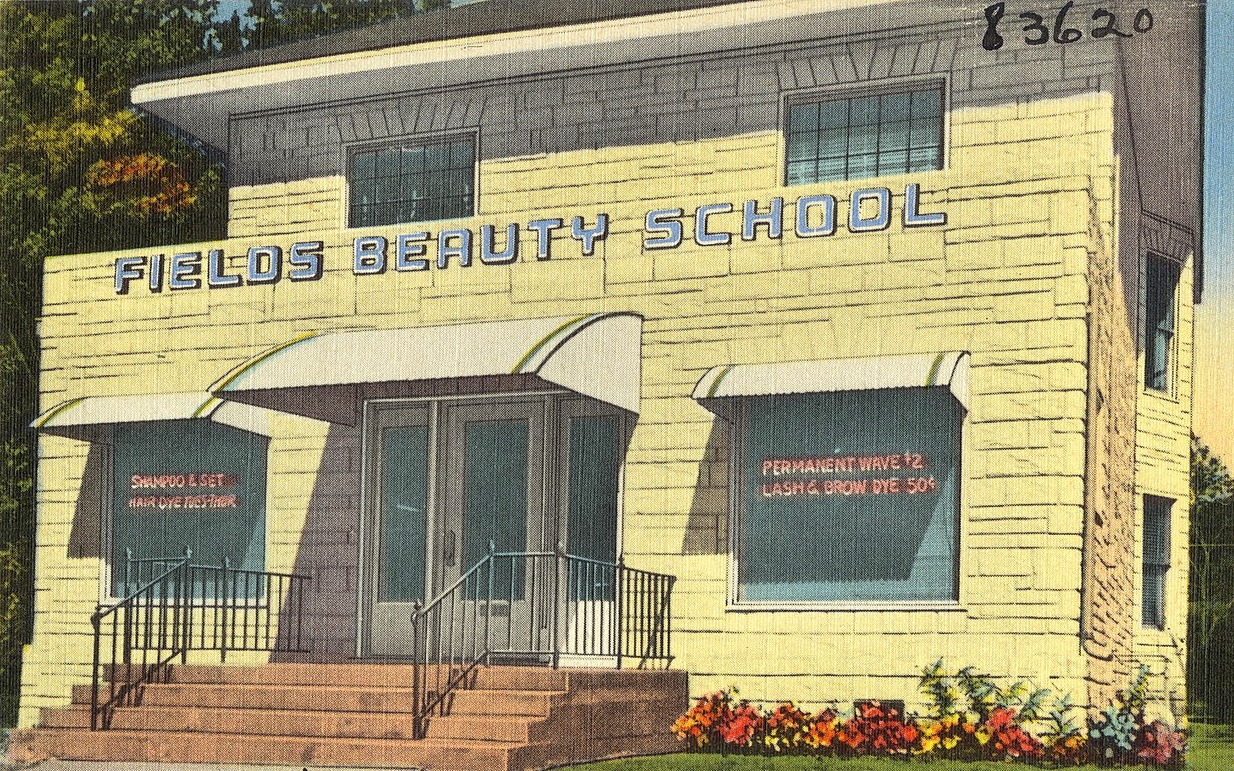
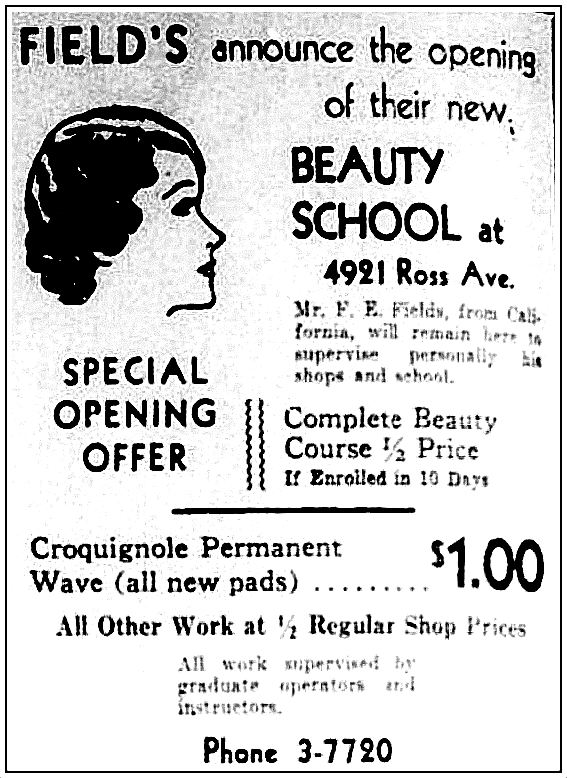
Need a croquignole perm? Then hie yourself to F. E. Field’s Beauty School on Ross Avenue.

fields-beauty-school_tichnorBoston Public Library

fields-beauty-school_4921-ross_opening-ad_sept-1934
Sept., 1934

*

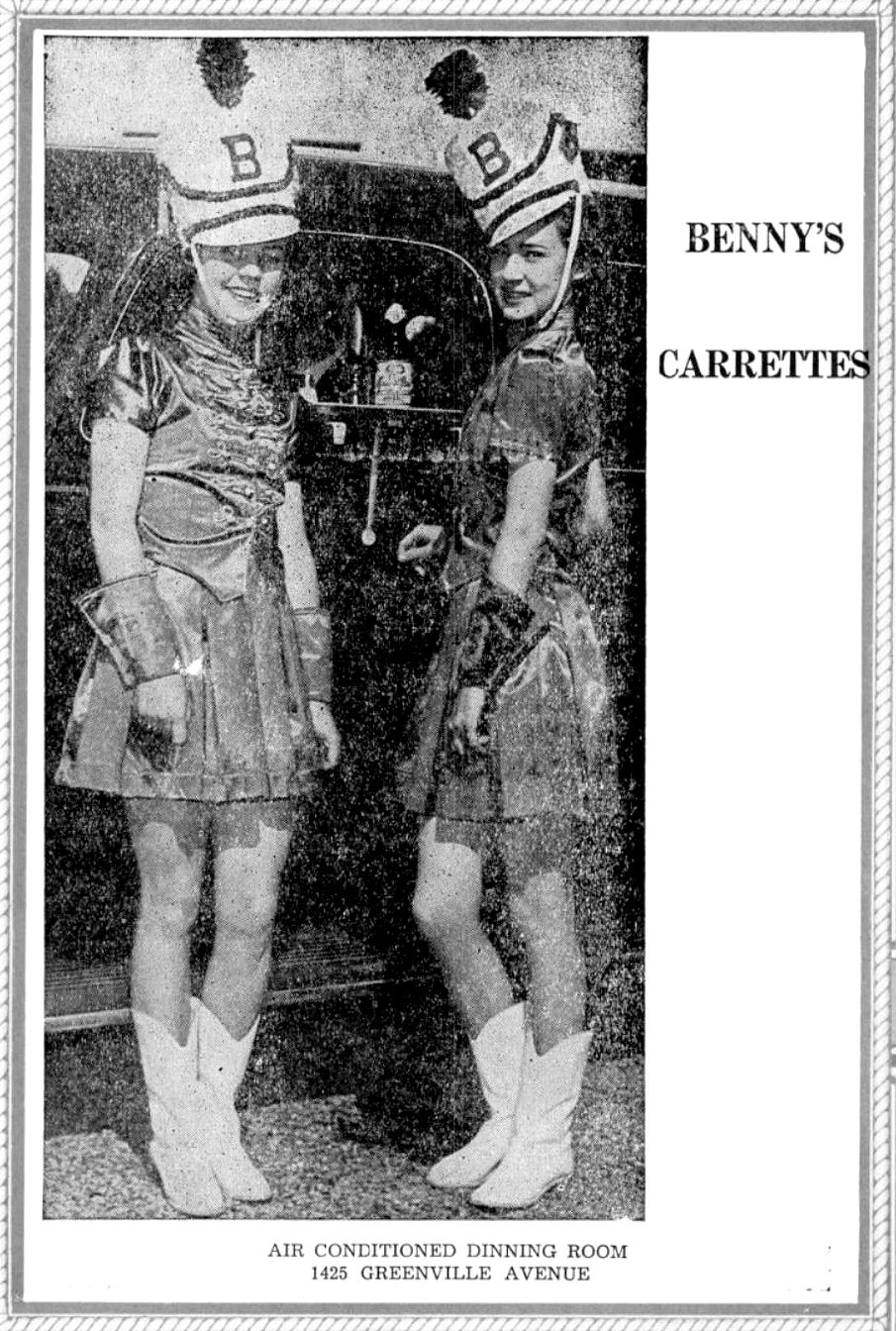
Benny’s Drive-In had “carrettes” at 1425 Greenville (between Bryan Parkway and Lindell).

hillcrest-high-school-yrbk_1940_bennys-carrettes
1940 Hillcrest High School yearbook

*

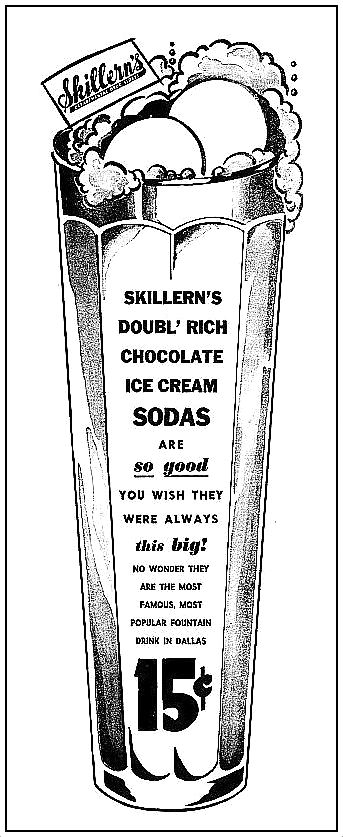
The Skillern’s Doubl’ Rich chocolate ice cream soda was “the most famous, most popular fountain drink in Dallas.”

skillerns_july-1949
July, 1949

*

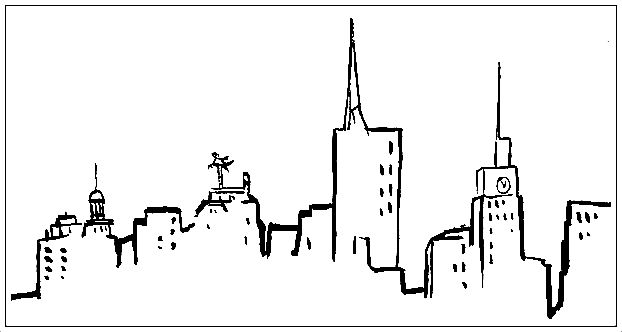
I’m a sucker for line drawings of the Dallas skyline. I think this one came from a Reynolds-Penland ad.

skyline_ad_1956_det
1956

*

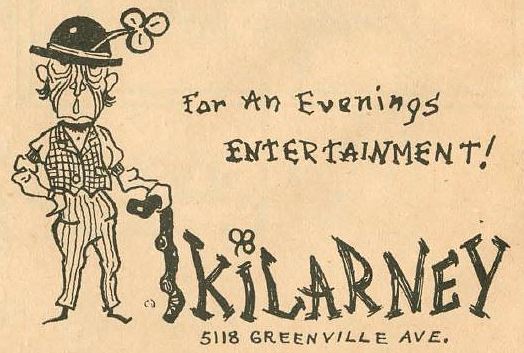
My father went to SMU in the ’50s, and while he was a student (and maybe a little while after he graduated) he worked as a bartender at a Greenville Avenue bar called The Kilarney Lounge at 5118 Greenville Avenue. He always talked fondly about the Kilarney, and I think that short time as a bartender was one of the highlights of his life. I’ve never heard anyone else mention the place (which was around into the ’70s), but I gather it was something of an SMU hangout for a time. This ad is from the March, 1953 issue of an SMU student humor magazine called The Hoofprint.

kilarney_hoofprint_march-1953_degolyer_smu
DeGolyer Library, SMU

*

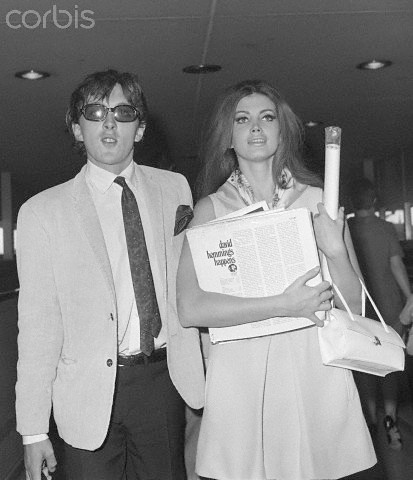
Fab British actor and Swinging Sixties “it-boy” David Hemmings and his model/actress girlfriend, Fort Worth-born Gayle Hunnicutt, were a favorite subject of international media attention. The two beautiful people were photographed at Love Field in Oct., 1967 as Gayle was taking David home to meet her parents. (Gayle is holding Hemmings super-weird album David Hemmings Happens.)

David Hemmings And New Mate
Oct., 1967

*

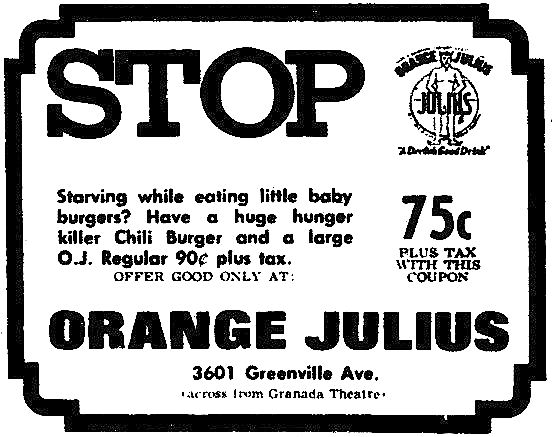
I grew up in the Lower Greenville area, and this Orange Julius was just a couple of blocks from my house. It was across the street from the Granada Theater — the building still stands and has been the home of Aw Shucks since about 1983. I loved that place. And I loved those Orange Juliuses!

orange-julius_smu-campus_092068
SMU Daily Campus, Sept., 1968

*

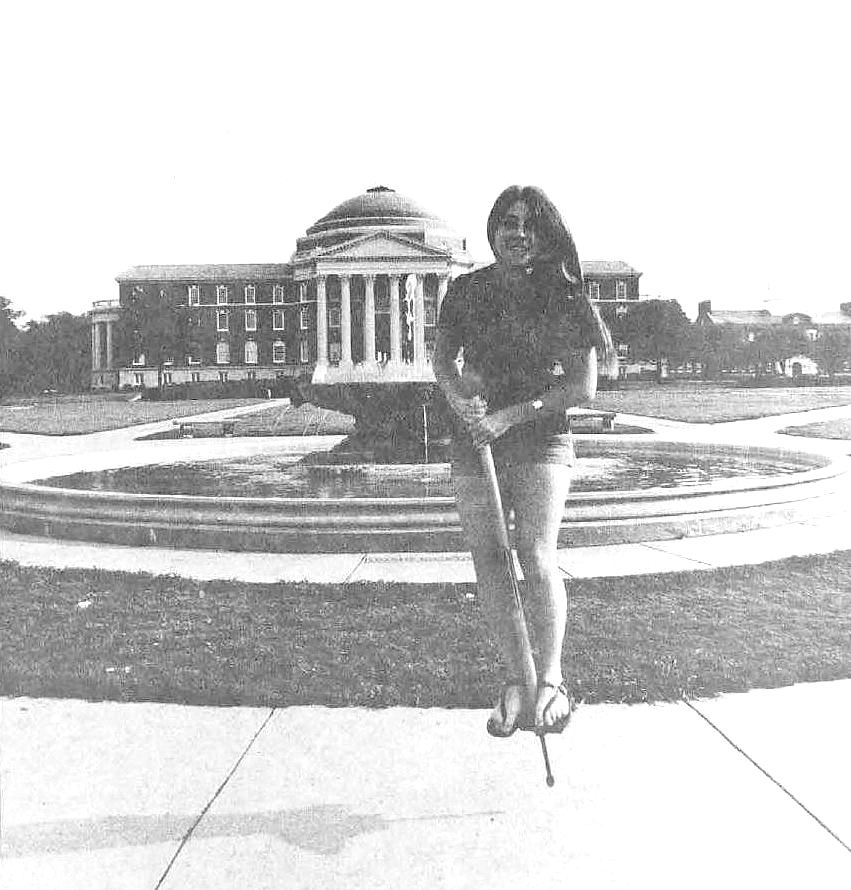
And, lastly, an SMU student on a pogo stick, from a 1974 student handbook called “doing it.”


smu_pogo-stick_doing-it_student-handbk_1974
SMU Archives, DeGolyer Library

***

Sources & Notes

Sources noted, if known.

For other installments of Flashback Dallas’ “Orphaned Factoids,” click here.

*

Copyright © 2018 Paula Bosse. All Rights Reserved.
Merry Christmas from Dallas Artist Bud Biggs

xmas_bud-biggs_shamrock-mag_1959_texas-tech
The bright lights of Christmas in downtown Dallas…

by Paula Bosse

An evening in downtown Dallas at Christmastime — alive with traffic and lights and energy — by Dallas artist Bud Biggs.

The painting appeared on the cover of the Christmas, 1959 issue of The Shamrock, a magazine published by the Shamrock Oil and Gas Corporation. The magazine’s description:

On the sidewalks, shoppers dart to and fro. On the street, autos dash by, leaving streaks of light in their haste. Gay lights and laughing Santas swing gayly overhead, festooning the area in a holiday glow. Above all this man-made madness, stars twinkle in contrast, reflecting a serenity reminiscent of a night nineteen hundred years ago. This is what The Shamrock staff sees in this vivid water color of Downtown Dallas at Christmastime by Artist Bud Biggs.

Merry Christmas and Happy Holidays to all!

***

Sources & Notes

This work by artist Bud Biggs appeared on the cover of the Christmas, 1959 edition of The Shamrock; this magazine is part of the Southwest Collection, Special Collections Library, Texas Tech University — the entire issue has been scanned and may be viewed as a PDF here.

My guess is that the title of the original painting is “Main Street, Christmas Night” and that it was one of the 12 paintings produced by Biggs in the mid 1950s as cover art for Dallas Magazine, a Dallas Chamber of Commerce publication. These paintings of Dallas scenes appeared as cover art for the monthly issues of 1956, in honor of the city’s centennial. The series won the “Best Covers of 1956” award from the American Association of Commerce Publications, and in 1958 all 12 of the original watercolors were purchased by Southwest Airmotive Company to be displayed in their new Love Field terminal. The 12 covers featured Biggs’ depictions of the following Dallas scenes and landmarks:

  • “Aerial View of Downtown Dallas”
  • “Ervay Street”
  • “Ground-breaking, Dallas University”
  • “Midway, State Fair of Texas”
  • “Trinity Industrial District”
  • “Central Expressway”
  • “Commerce Street”
  • “City Auditorium”
  • “Looking Up Pacific”
  • “Main Street, Christmas Night”
  • “SMU Legal Center”
  • “The Katy Round House”

UPDATE: I’ve found the other 11 paintings. See them in the Flashback Dallas post “Bud Biggs: 12 Watercolors of Dallas — ca. 1955.”

More on this series of paintings can be found in the Dallas Morning News article “Art & Artists: Biggs Series Bought by Firm” by Rual Askew, Feb. 20, 1958.

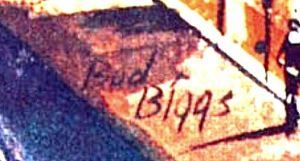
Dallas native Bancroft Putnam “Bud” Biggs (1906-1985) attended Forest Ave. High School, SMU, and the St. Louis School of Fine Arts. He was primarily a commercial artist, working first for Dallas artist Guy Cahoon before opening his own advertising studio. He produced fine art as well, specializing in watercolors, and was a respected art instructor.

xmas_bud-biggs_shamrock-mag_1959_texas-tech_sig-det

*

Copyright © 2018 Paula Bosse. All Rights Reserved.

Christmas Window Shopping — 1950

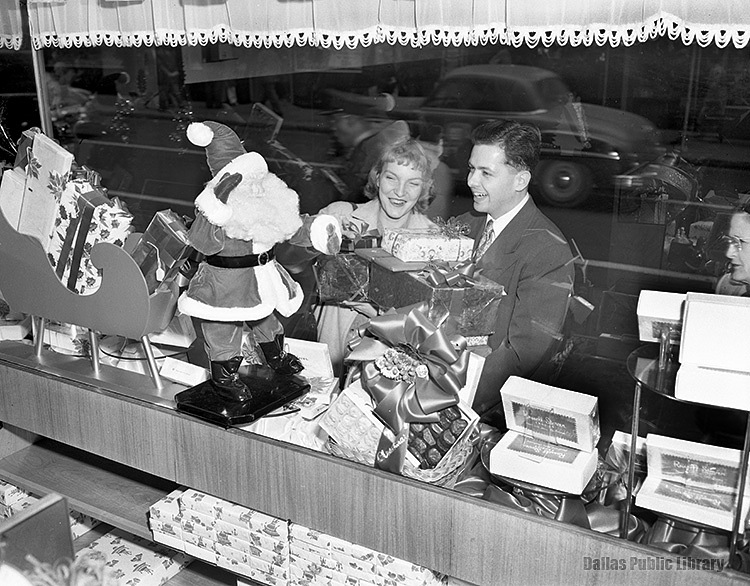
xmas-shoppers_121650_hayes-collection_DPLHappy Santa fans…

by Paula Bosse

Here are a couple enjoying a Christmas display. Haven’t finished your shopping? There’s still time!

***

Sources & Notes

Taken on Dec. 16, 1950, this photo is from the Hayes Collection, Dallas Public Library Dallas History & Archives Division, Dallas Public Library (“[Christmas storefront shoppers],” PA76-1/43.3).

More Flashback Dallas posts on Christmas can be found here.

*

Copyright © 2018 Paula Bosse. All Rights Reserved.

Christmas Along the Esplanade

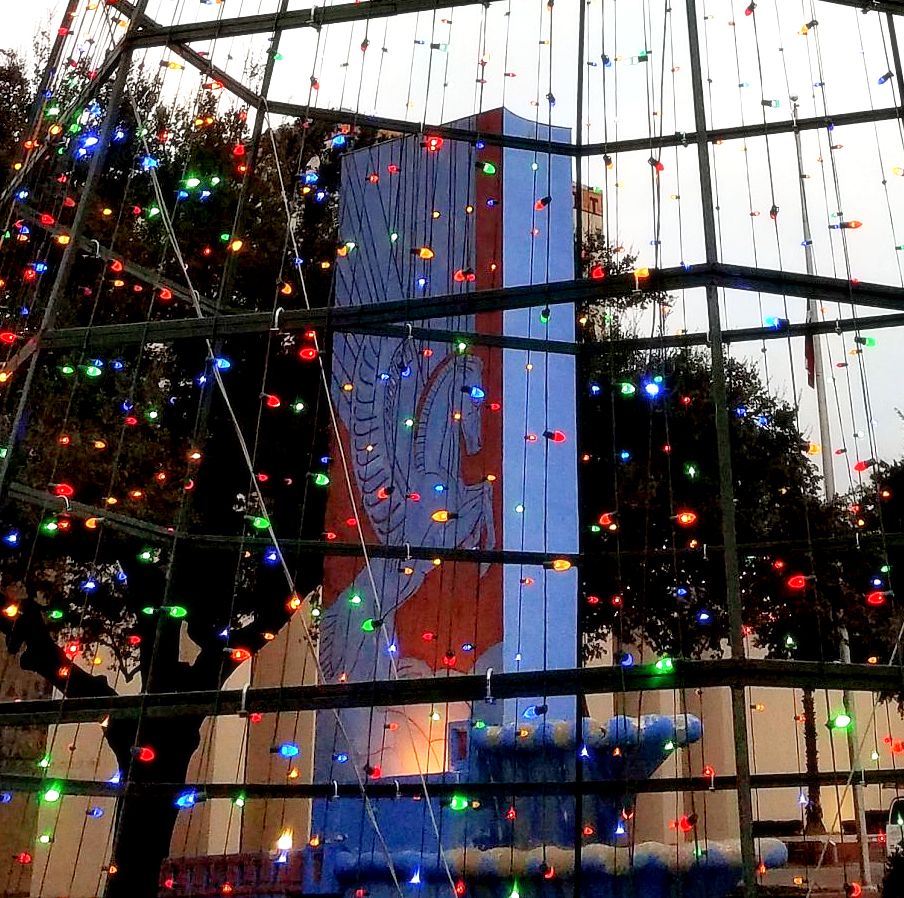
xmas_esplanade_dusk_pegasus_121918_paula-bosseA festive Pegasus…

by Paula Bosse

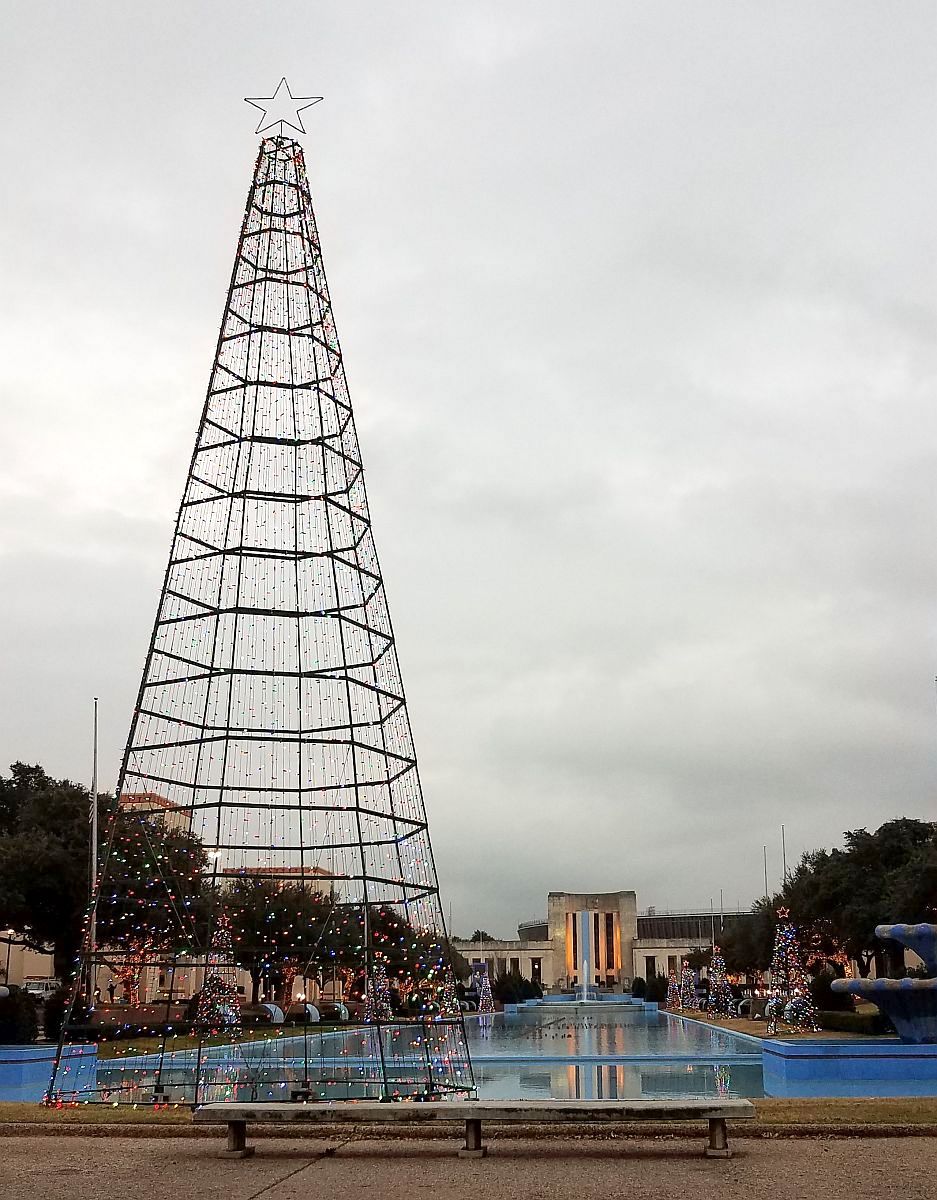
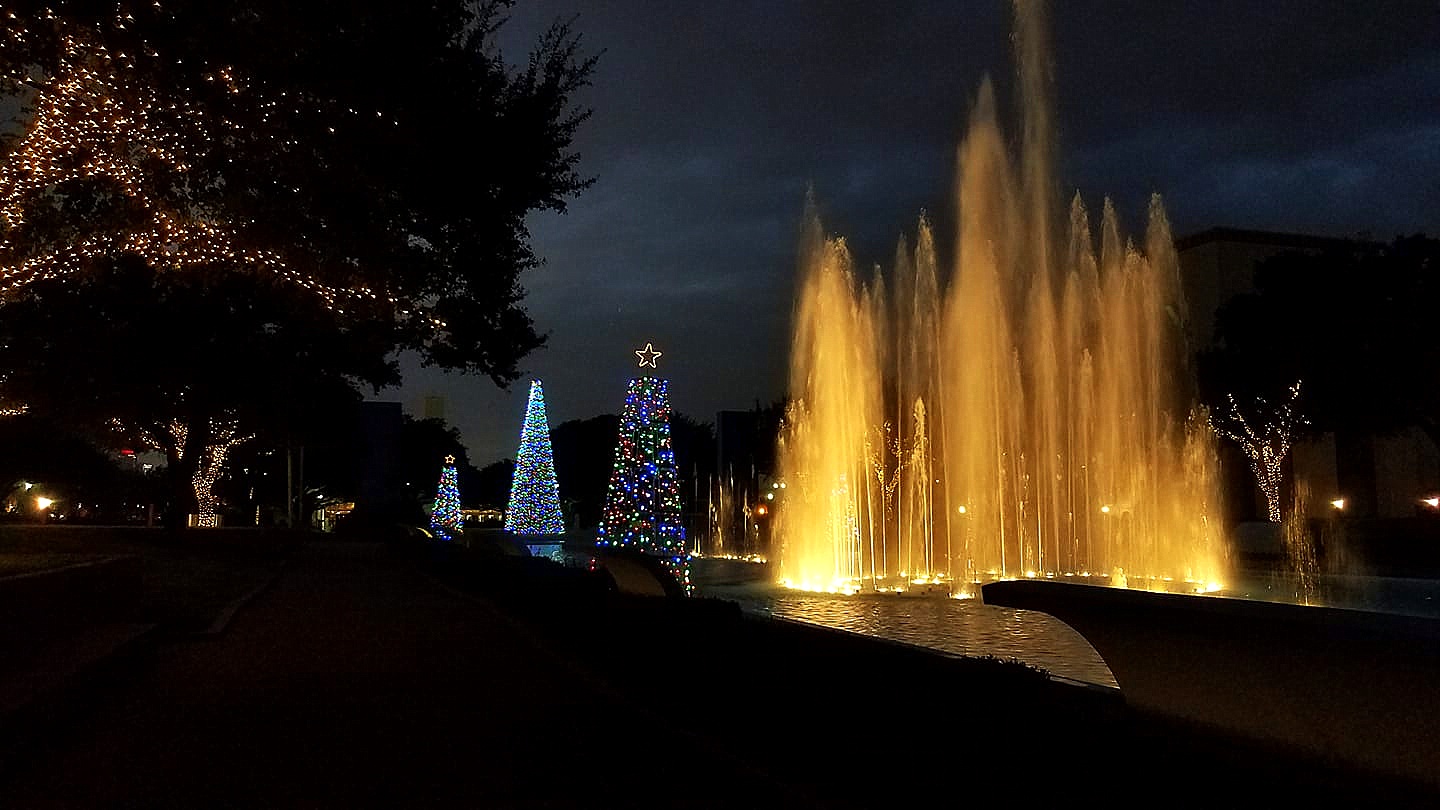
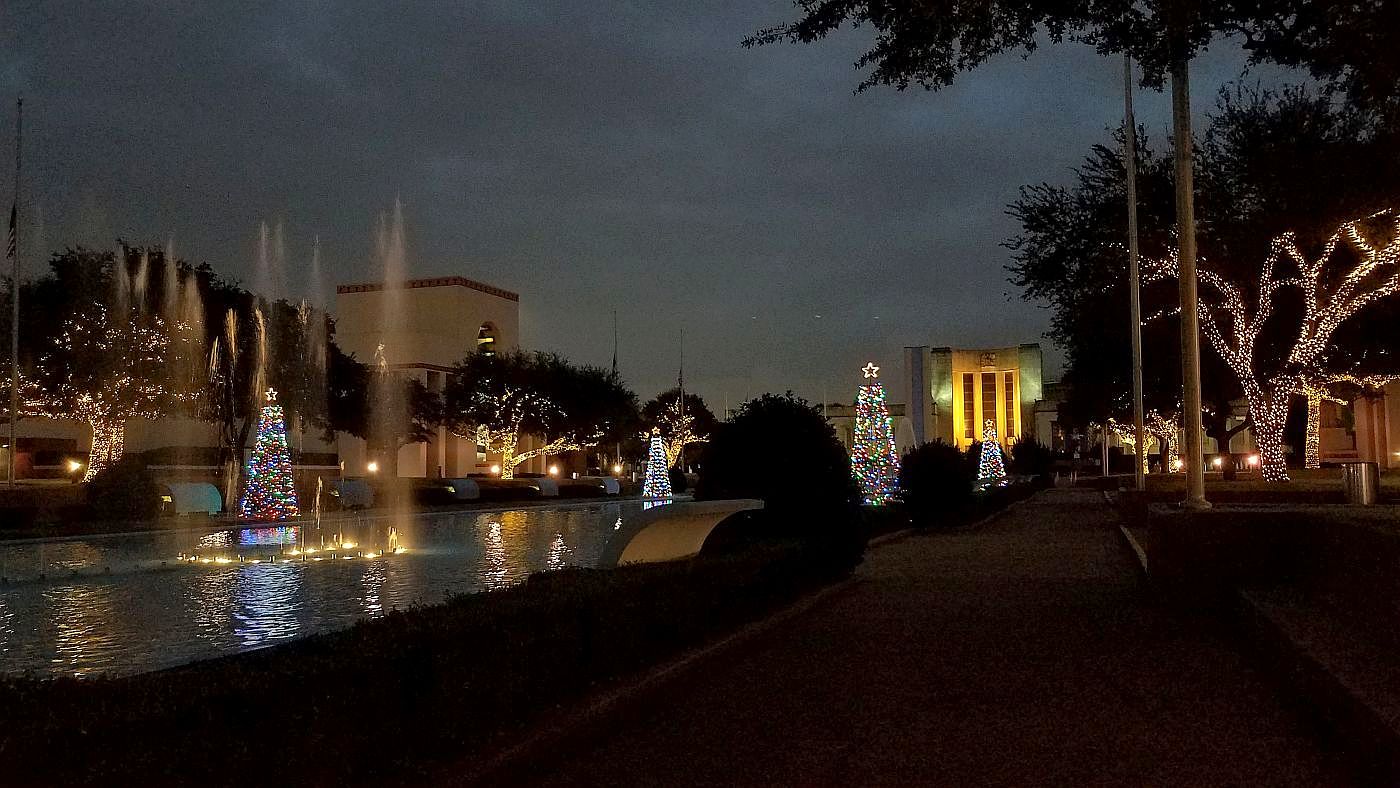
The holiday lights and “dancing waters” of the Esplanade in Fair Park are always worth a visit. I took these photos the other day after doing some volunteer research at the Dallas Historical Society, based in the beautiful Hall of State. I’m particularly fond of dusk, but nighttime is the really the time to see the lights and fountains at their best.

Above, the Pegasus pylon, by French artist Pierre Bourdelle, one of the many artists who worked on the Centennial Exposition in 1936, the year the Esplanade and many of the buildings in Fair Park were built. (All photos are larger when clicked.)

Below, a look toward the Hall of State from the end of the Esplanade.

xmas_esplanade_121918_dusk_toward-hos

One of the six sculptures along the Esplanade, this one represents Texas, by artist Lawrence Tenney Stevens:

xmas_explanade_dusk_texas-statue_121918_paula-bosse

The Automobile Building with the statue representing France, by French sculptor Raoul Josset:

xmas_esplanade_dusk_france_121918_paula-bosse

A closer look, after the sun has gone down, showing the impressive lighting design:

xmas_esplanade_121918_statue-2

Impressive even from the side:

xmas-esplanade_121918_france_night_side_paula-bosse

“Texas” again, lit up and in silhouette:

xmas_explanade_121918_statue-1

The illuminated “dancing waters”:

xmas_esplanade_121918_fountains-night

Another view toward the Hall of State:

xmas_esplanade_121918_toward-hos_night

The jewel of Fair Park, the Hall of State:

hall-of-state_night_121918_paula-bosse

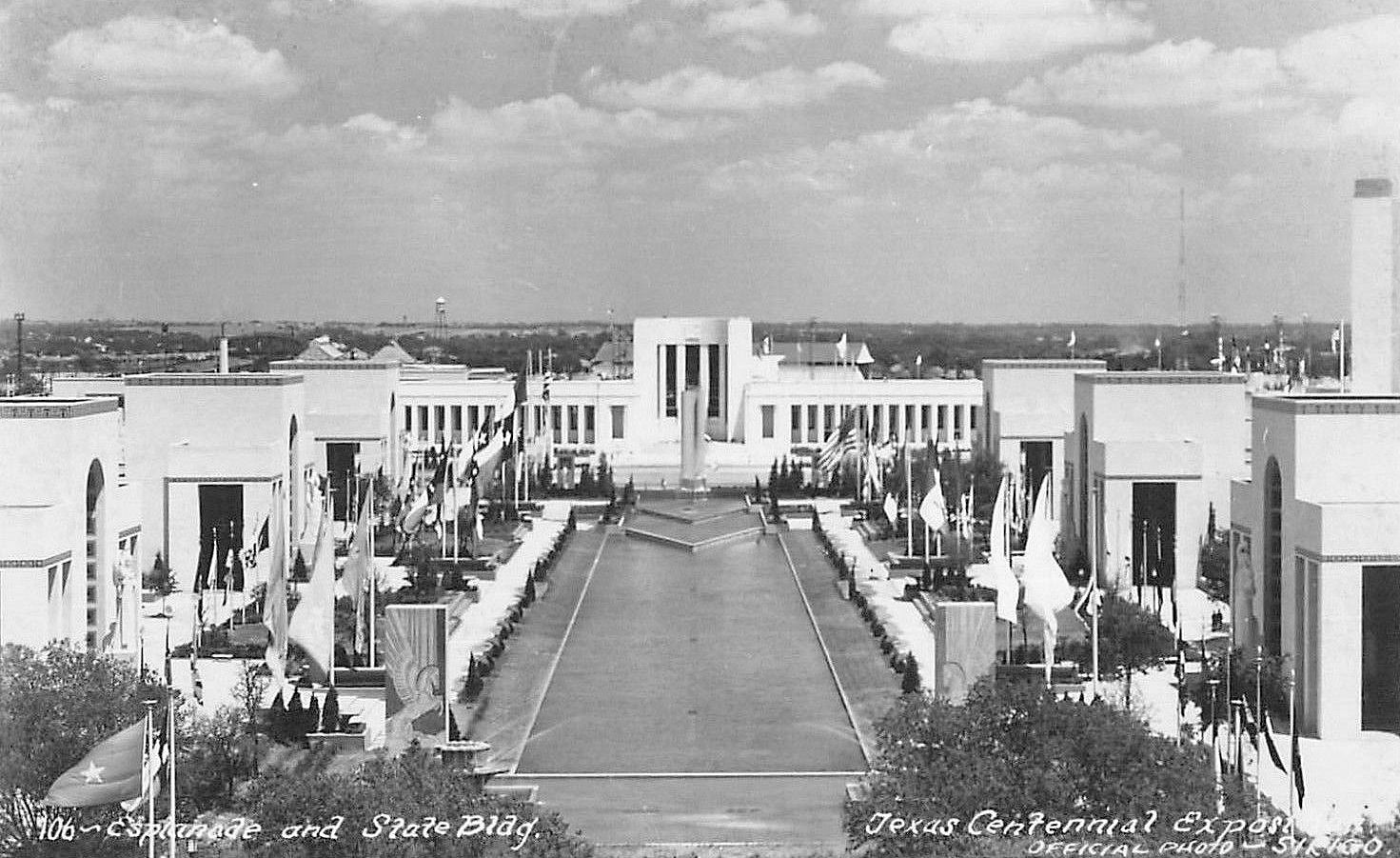
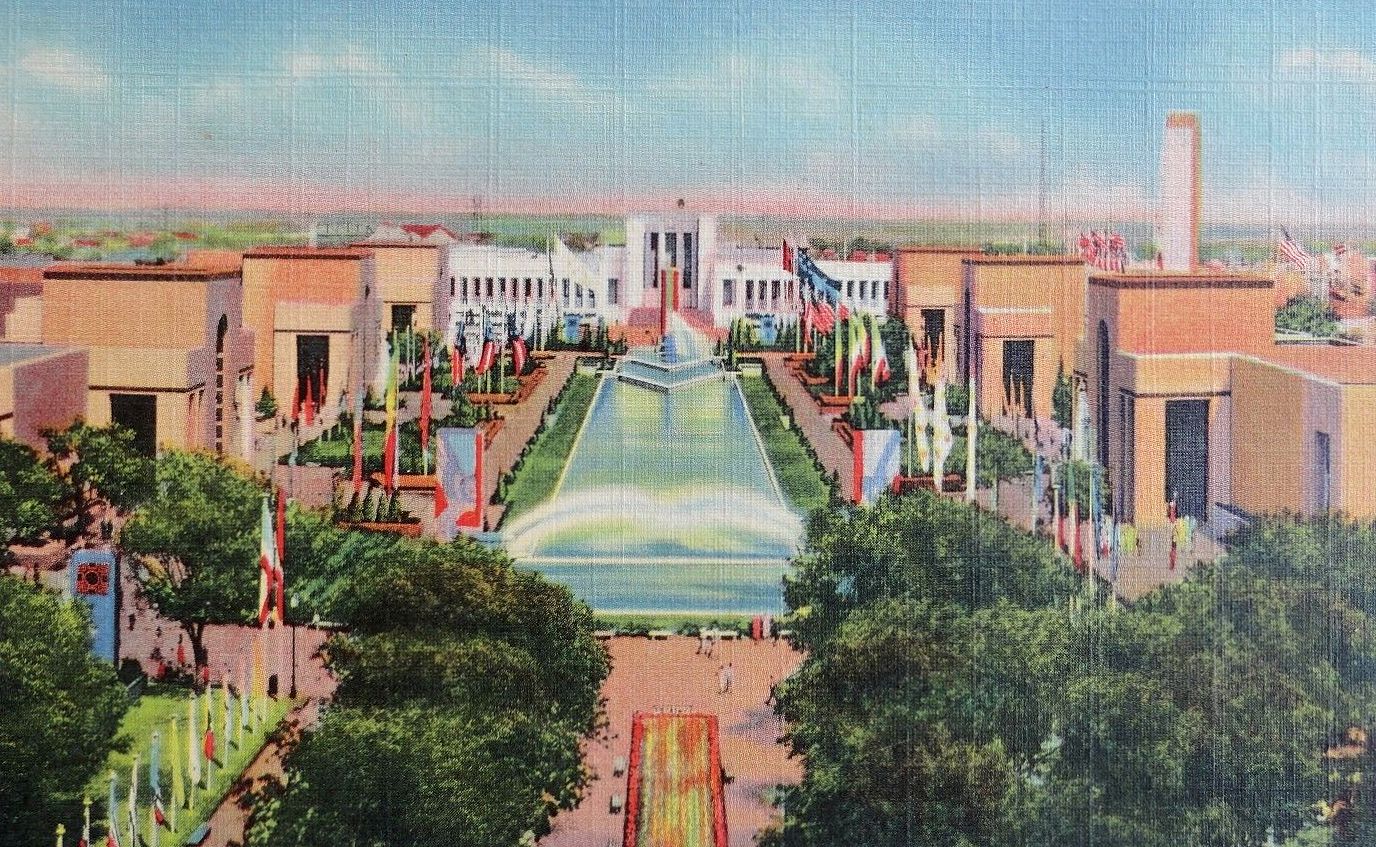
Below are two images of the Esplanade from 1936, when all of this was brand new:

tx-centennial_esplanade_hall-of-state_ebay

fair-park_esplanade_postcard_tx-centennial_1936_ebay

***

Sources & Notes

All photos by Paula Bosse.

More information on the statues along the Esplanade can be found at the French Sculpture Census page highlighting “Fair Park, 1936” here, and “The Six Ladies of Fair Park” page from the Texas Escapes site, here.

A very large aerial photo of Fair Park from 1936 can be seen here. Zoom in on the Esplanade.

More Flashback Dallas posts about Christmas can be found here.

*

Copyright © 2018 Paula Bosse. All Rights Reserved.

Pat Boone, Host of Channel 5’s “Teen Times” — 1954

boone-pat_portal_poss-teen-times
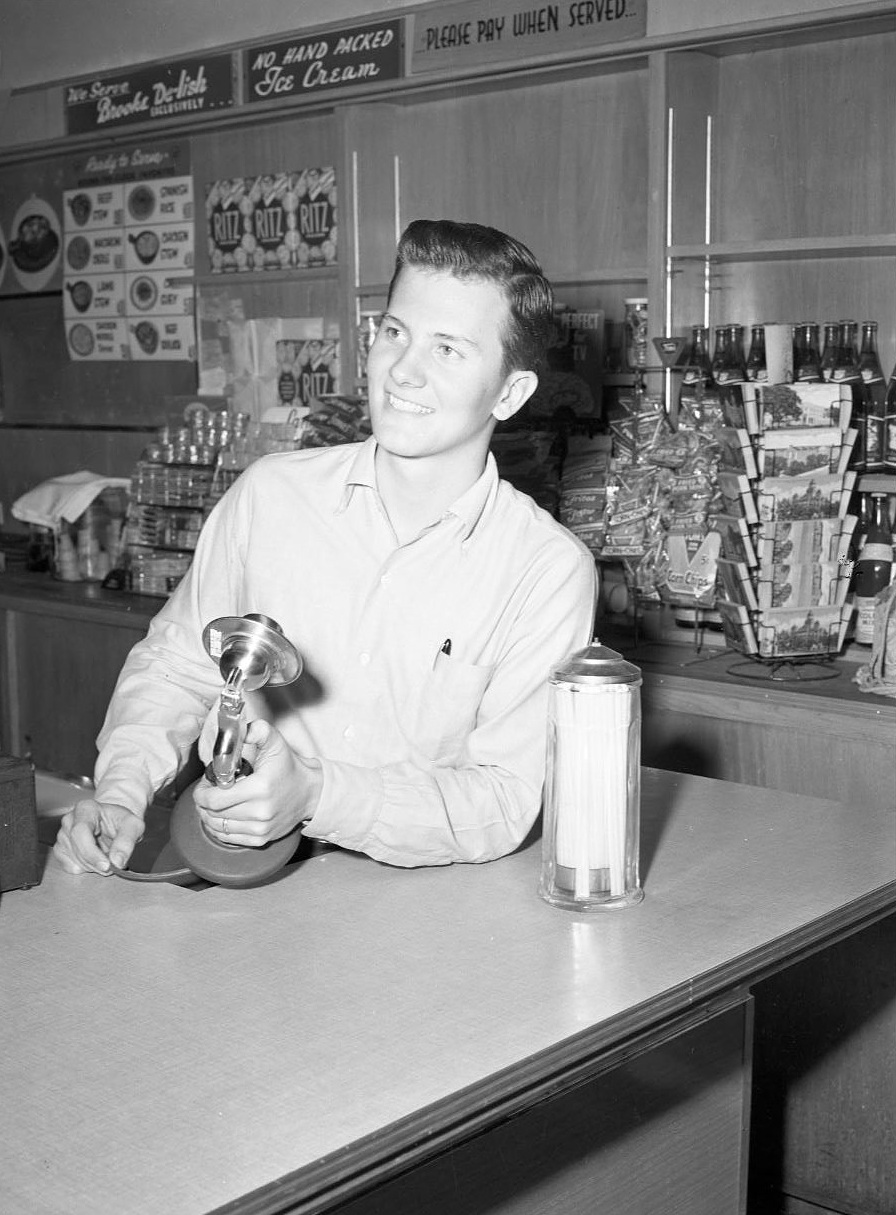
“Handsome teen-ager” Pat Boone, host of WBAP’s “Teen Times”

by Paula Bosse

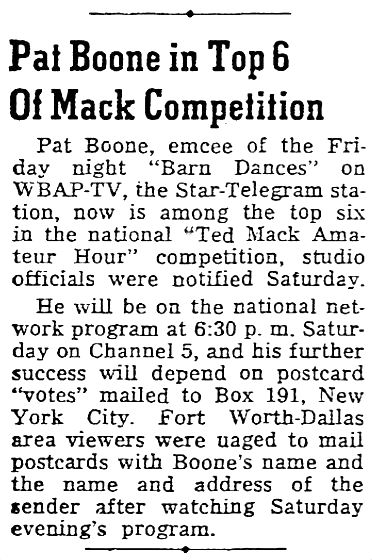
In January, 1954, soon-to-be pop-star Pat Boone transferred from a college in Nashville to North Texas State College (now the University of North Texas) in Denton — he was 19 years old and recently married with a baby on the way. An entertainer since childhood, he had recently appeared on (and won) Ted Mack’s nationally televised “Amateur Hour” and had a few minor recordings under his  belt. He entered the Denton college in the middle of the school year, majoring in speech and minoring in music.

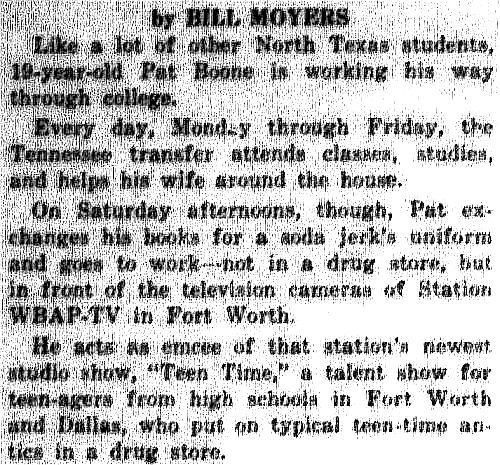
In an interview with the college newspaper, The Campus Chat, student reporter Bill Moyers (yes, that Bill Moyers) asked the scrupulously clean-cut Boone what career he saw for himself. His answer: “I want to preach on Sundays at churches that can’t afford pastors, and perhaps I’ll even become a full-time pastor.” He said that even though he had devoted years to being an entertainer and his father-in-law was a bona fide star, he did not envision a career as a professional singer because, for one reason, he did not approve of night clubs, on moral grounds: “I don’t want to sing at night clubs, and that’s where most of the singers do much of their work” (Campus Chat, Feb. 24, 1954).

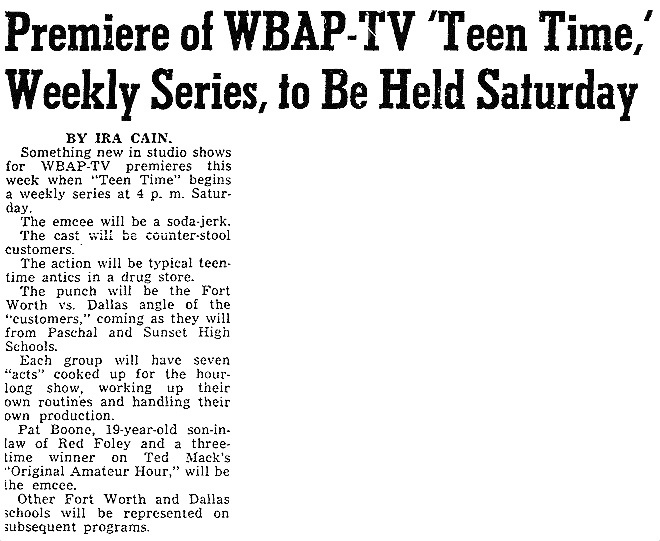
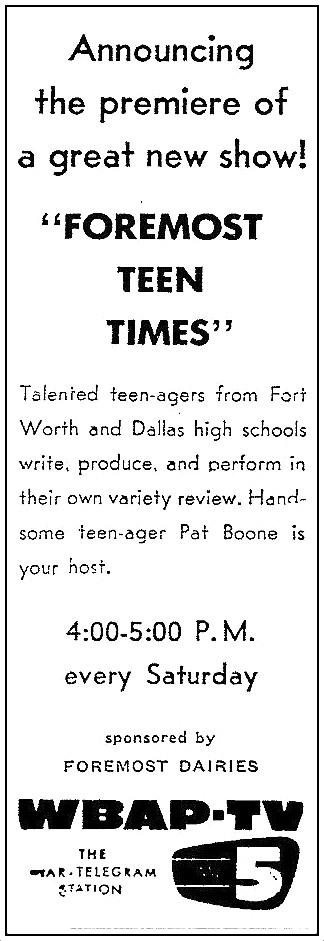
The reason he was being interviewed in the first place — after only a couple of months in town — was because he had been named as the host of a Dallas-Fort Worth television show called “Teen Times,” sponsored by Foremost Dairies and broadcast on Saturday afternoons on WBAP-Ch. 5; the show premiered in February, 1954. Boone acted as host, dressed as a soda jerk behind a drugstore soda fountain, with teenaged guests who represented one Dallas school and one Fort Worth school (the schools changed each week), competing in a sort of talent show. Boone kept things moving, performed a few songs, and, in between, sang the praises of Foremost milk and ice cream.

Boone hosted the show through the spring of 1955. During the run of this local show, his popularity grew quickly on a national level, the result of several national TV appearances and ever-increasing record sales. After his year-and-a-half time in Denton, he moved to New York in the summer of 1955 and enrolled at Columbia University; before the end of the year, Pat Boone’s fame exploded: he had a huge hit with a cover of Fats Domino’s “Ain’t That a Shame” and was appearing regularly on national TV. By the late ’50s his record sales were reportedly second only to Elvis Presley’s, even though Boone’s squeaky-clean and sincere wholesomeness was the polar opposite of the suggestive, hep-cat abandon of Elvis’ earthier style.

Even though Pat Boone was a North Texas student for only a short time, whenever he has returned to Denton over the years he has always received something of a hero’s welcome. With formative years spent here, and with his star-turn in the 1962 filmed-at-Fair-Park movie State Fair, Pat Boone has every right to be considered an honorary Texan.

*

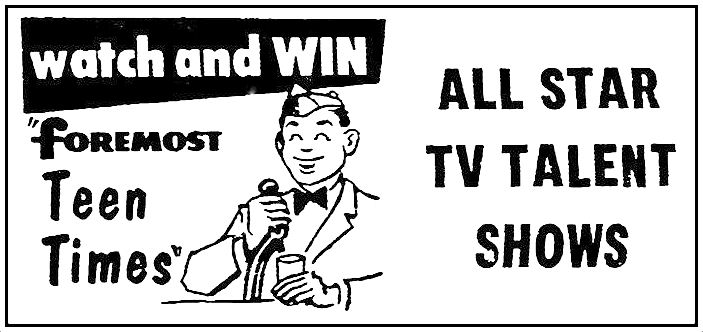
During his time in Denton, Pat Boone hosted two television shows for WBAP-Channel 5: the Foremost Dairies-sponsored “Teen Times” (often referred to as “Teen Time”) on Saturday afternoons, and the Bewley Mills-sponsored “Barn Dance” on Friday nights. (It looks like “Teen Times” was revamped a few years later and returned to Channel 5 in a somewhat similar format as “Teen-Age Downbeat” in January, 1958.)

teen-times_1954_logo
1954

teen-times_pat-boone_wbap_FWST_020754
Fort Worth Star-Telegram, Feb. 7, 1954 (click to read)

teen-times_pat-boone_wbap_FWST_021354
Feb. 13, 1954

boone-pat_bewley-barn-dance_FWST_021254
FWST, Feb. 12, 1954

Below, a super-blurry excerpt from Bill Moyers’ article in The Campus Chat (read the full interview here):

boone-pat_unt_campus-chat_022454_teen-times-host_bill-moyers
Campus Chat (North Texas State College newspaper), Feb. 24, 1954

pat-boone_barn-dance_FWST_062054
FWST, June 20, 1954

In June, 1955, Les Handy — a voice teacher at Texas Wesleyan College — took over as emcee at “Teen Times.” 

teen-times_june-1955_new-host
1955

And in September, 1955, Pat and Shirley and their new baby moved from Denton to New York City.

pat-boone_denton-record-chronicle_091155
Denton Record-Chronicle, Sept. 11, 1955

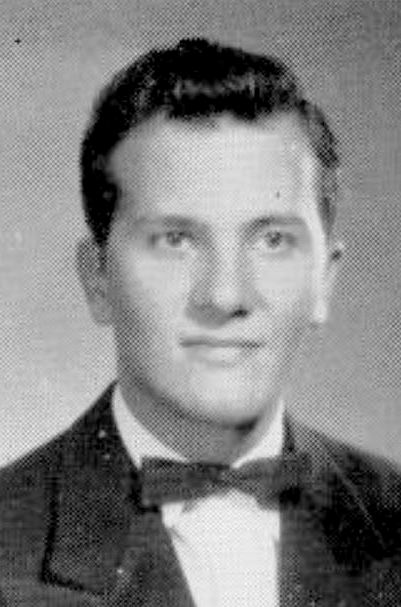
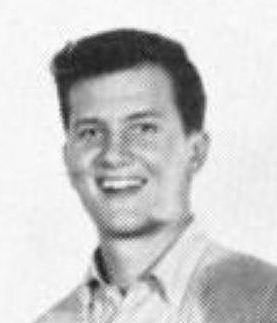
Pat Boone photos from the 1955 NTSC yearbook, The Yucca:

pat-boone_yucca_1955
Junior class photo, 1955

boone-pat_unt_1955-yucca_KA-frat
Kappa Alpha fraternity photo

pat-boone_yucca_1955_student-religious-council
Student Religious Council (detail from group photo)

***

Sources & Notes

Top photo of Pat Boone behind a soda fountain holding a microphone appeared in the Feb. 24, 1954 edition of Campus Chat, the college paper of what was then North Texas State College; it is from the UNT Libraries Special Collections, and may be accessed on UNT’s Portal to Texas History, here.

Pat Boone’s wife, Shirley, was the daughter of the legendary Nashville “hillbilly” singer, Red Foley. Here’s a video of a nervous Boone and his father-in-law on Foley’s “Ozark Jubilee” TV show, two weeks after Pat and Shirley had left Denton for New York. They are singing “Tennessee Saturday Night,” Red Foley’s big hit from 1949 (hear his great original hillbilly boogie version here).

Because it involves Pat Boone and UNT, check out the 20-minute informational film all about the college, made for students by students in 1963, available to watch on the Portal to Texas History, here — Pat Boone offers a few enthusiastic bits of narration.

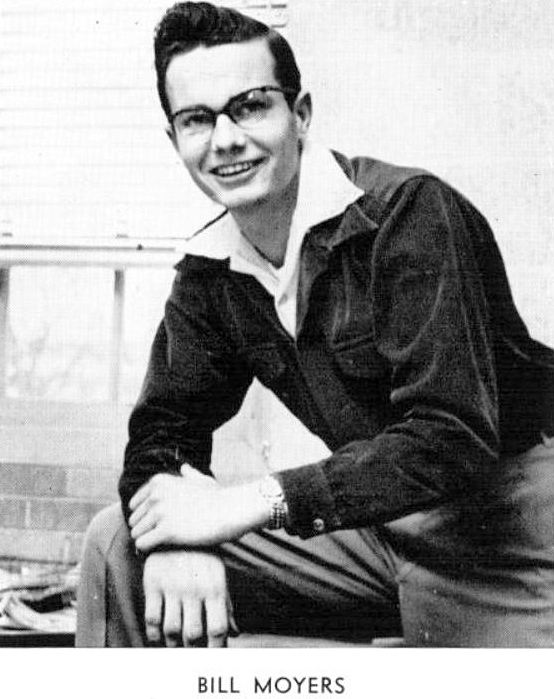
And, why not, here’s a photo of journalist Bill Moyers from the 1953 North Texas yearbook.

moyers-bill_UNT_1953-yucca_yearbook

*

Copyright © 2018 Paula Bosse. All Rights Reserved.