Flashback : Dallas

A Miscellany: History, Ads, Pop Culture

The Dallas Express — A Look Inside the Offices of the City’s Most Important Black Newspaper — 1924
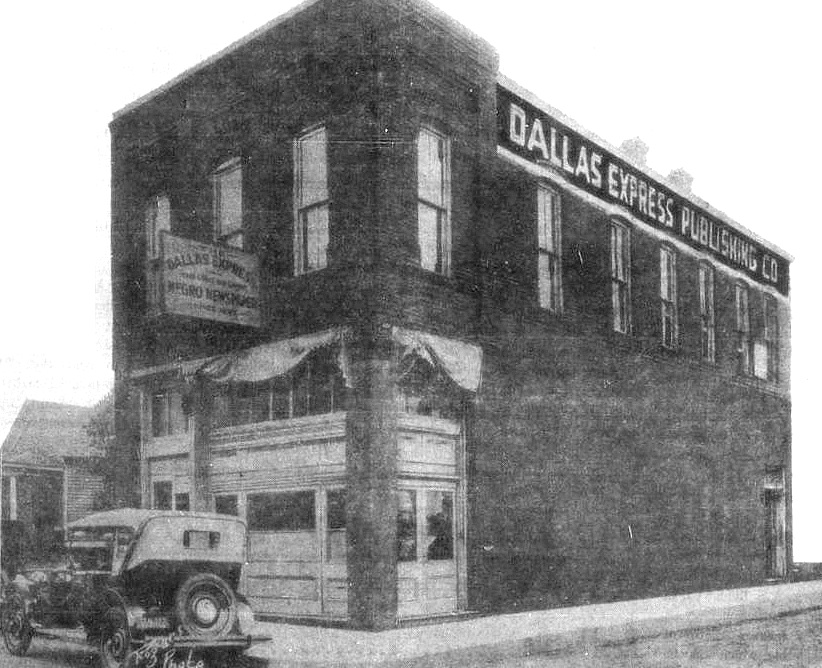
dallas-express-bldg_dallas-express_0607242600 Swiss, home of The Dallas Express (click for larger image)

by Paula Bosse

Without question, The Dallas Express (1892/3-1970) was the most important and most widely-read black-owned newspaper published for Dallas’ African-American community. In addition to stories of particular interest to its Dallas and Texas readership, it also covered national and international news, and in the Jim Crow era, when black Dallasites were rarely mentioned in white-owned newspapers except in crime reports, The Express reported on the people, the businesses, the churches, and the achievements of their large community. They also wrote about politics and issues of race and discrimination. One of the paper’s slogans was “A Champion of Justice, A Messenger of Hope.”

I’ve been interested in newspapers, journalism, and the actual physical process of printing newspapers for as long as I can remember, but until a couple of years ago, I was not aware of The Dallas Express, founded in 1892 by publisher/editor W. E. King. Discovering this paper and its stories about my hometown has been eye-opening. The Dallas Express is an important — and often overlooked — source of Dallas history. I love reading through issues of The Express because unlike white-owned papers of this period, it presents a realistic and human chronicle of the everyday lives of Dallas’ black men and women, something which was almost completely ignored by The Dallas Morning News and The Dallas Times Herald.

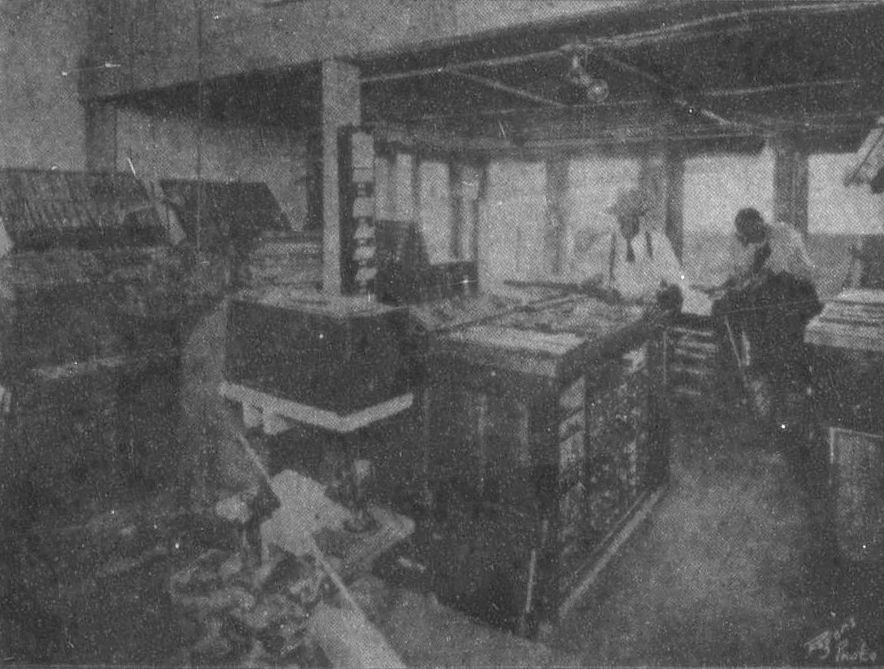
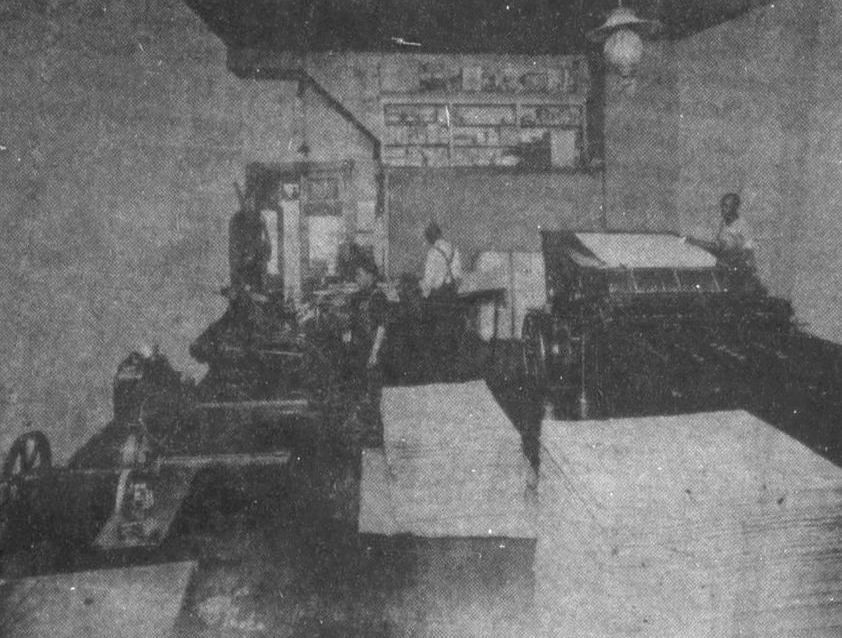
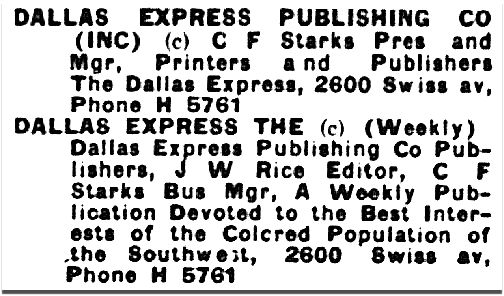
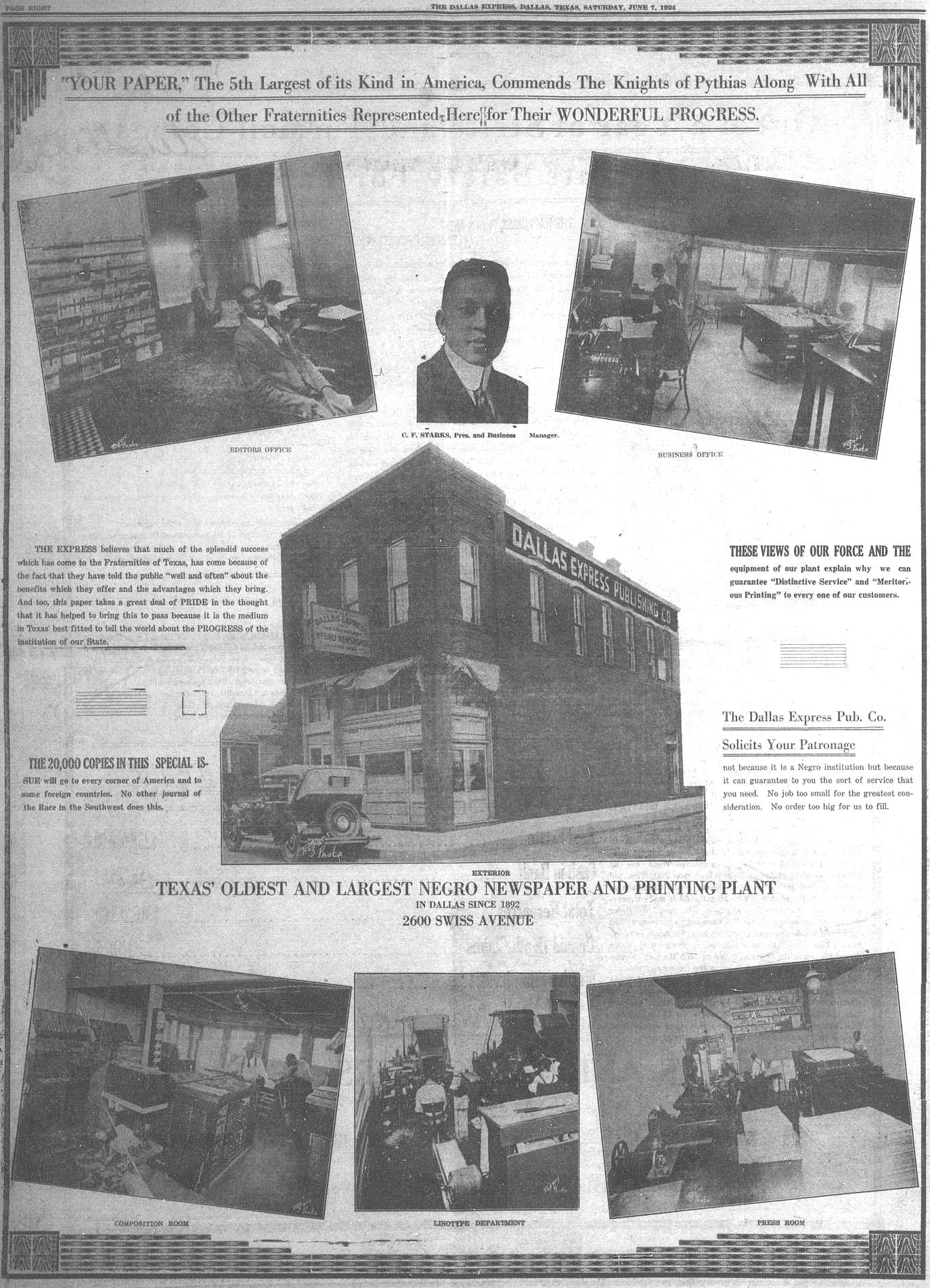
For many years, the offices of the Express were just north of Deep Ellum, at 2600 Swiss — at the corner of Good Street, about where Brad Oldham’s Traveling Man sculpture stands today. (I have a feeling the actual location was in the middle of what is now Good-Latimer. See the location on a 1921 Sanborn map here.) Happily, the Express printed a full-page ad for itself in the June 7, 1924 edition, so we can see what the Swiss Avenue building, its offices, and its production rooms looked like. These photos were taken by noted Dallas photographer Frank Rogers. (Apologies for the muddy quality of these photos — I’d love to see the crisp originals!)

*

These photos show the Dallas Express offices as they looked in 1924, when the newspaper had already been in business for 32 years. The exterior of the two-story building can be seen in the photo at the top — standing next to a private residence. (Click photos to see larger images.)

Below, president and business manger (and, later, owner), C. F. Starks:
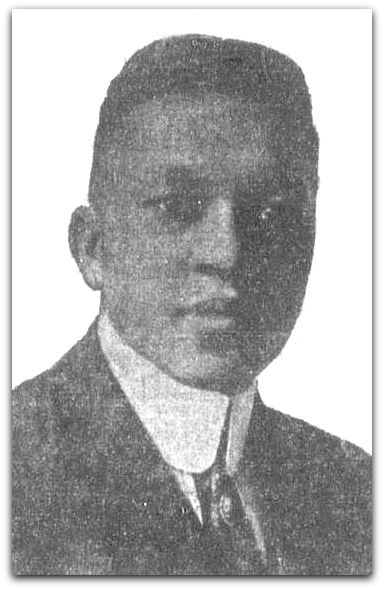
dallas-express_c-f-starks_pres-business-mgr_060724

The editor’s office (John W. Rice was the editor at this time and is, presumably, the man in the foreground):

dallas-express_editors-office_060724

The business office:

dallas-express_business-office_060724

The composition room:

dallas-express_composition-room_060724

The linotype department (I have written about my fascination with linotype machines here):
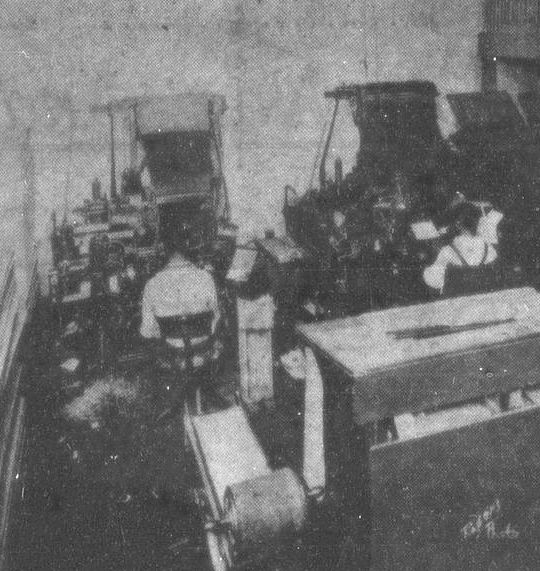
dallas-express_linotype_060724

And the press room:

dallas-express_press-room_060724

The text from the ad (this special “Pythian Edition”of the paper was printed to coincide with the 40th annual meeting of the Knights of Pythias):

“YOUR Paper,” The 5th Largest of its Kind in America, Commends The Knights of Pythias Along With All of the Other Fraternities Represented Here for Their WONDERFUL PROGRESS.

THE EXPRESS believes that much of the splendid success which has come to the Fraternities of Texas, has come because of the fact that they have told the public “well and often” about the benefits which they offer and the advantages which they bring. And too, this paper takes a great deal of PRIDE in the thought that it has helped to bring this to pass because it is the medium in Texas best fitted to tell the world about the PROGRESS of the institution of our State.

These views of our force and the equipment at our plant explain why we can guarantee “Distinctive Service” and “Meritorious Printing” to every one of our customers.

The 20,000 copies in this special issue will go to every corner of America and to some foreign countries. No other journal of the Race in the Southwest does this.

The Dallas Express Pub. Co. Solicits Your Patronage not because it is a Negro institution but because it can guarantee to you the sort of service that you need. No job too small for the greatest consideration. No order too big for us to fill.

TEXAS’ OLDEST AND LARGEST NEGRO NEWSPAPER AND PRINTING PLANT
In Dallas Since 1892
2600 Swiss Avenue

*

The full-page ad:
dallas-express_060724_p8_full-page
Dallas Express, June 7, 1924

Another photo of the printing room appeared in an Express ad which ran in the paper the following week:
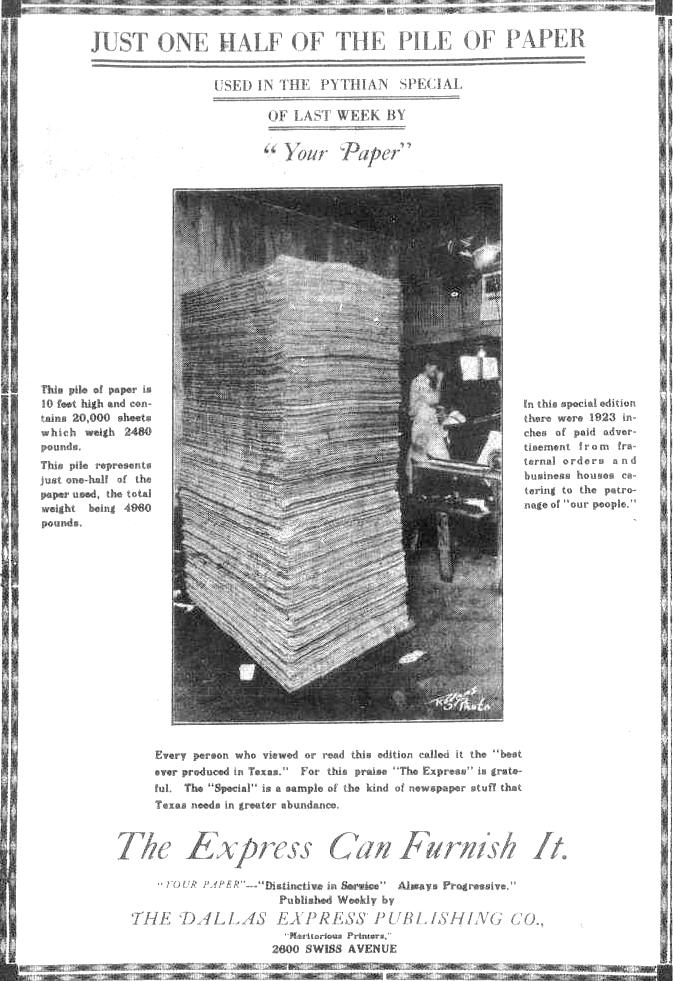
dallas-express_061424_ad
Dallas Express, June 14, 1924

dallas-express_1923-directory
1923 Dallas directory

***

Sources & Notes

Photos by Frank Rogers. Original prints might be in the Frank Rogers Collection at the Dallas Public Library, but nothing showed up when I searched the DPL database. Original crisp prints would be wonderful to see!

Photos appeared in the June 7, 1924 edition of The Dallas Express. The full newspaper can be found here. Only a few years’ worth of scanned issues of The Express are available on UNT’s Portal to Texas History site — mostly 1919-1924 — they can be accessed here.

Read about The Dallas Express at the Portal to Texas History, here; the Wikipedia entry is here.

*

Copyright © 2016 Paula Bosse. All Rights Reserved.
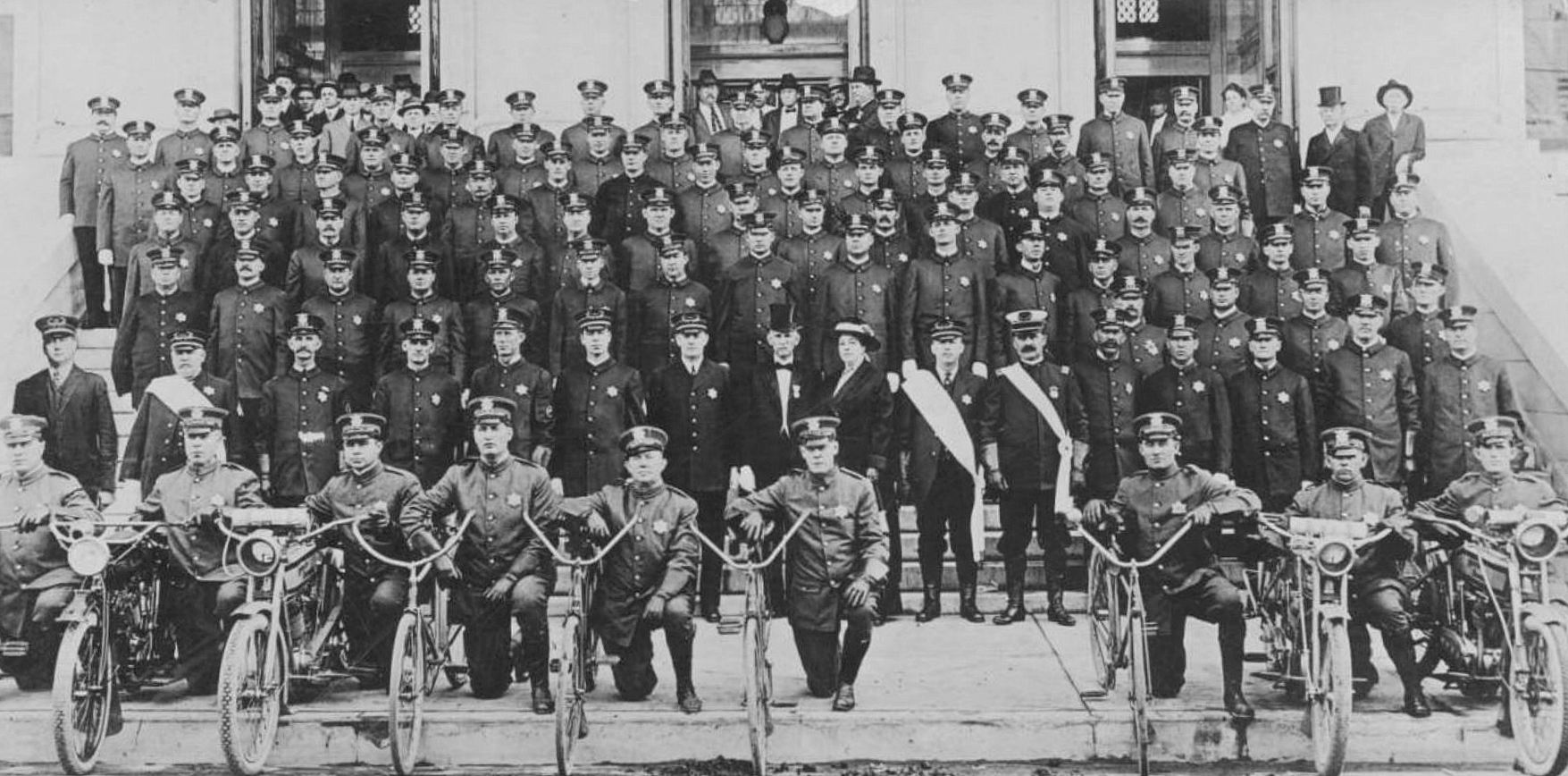
 

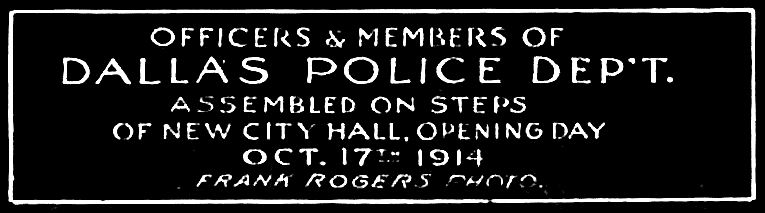
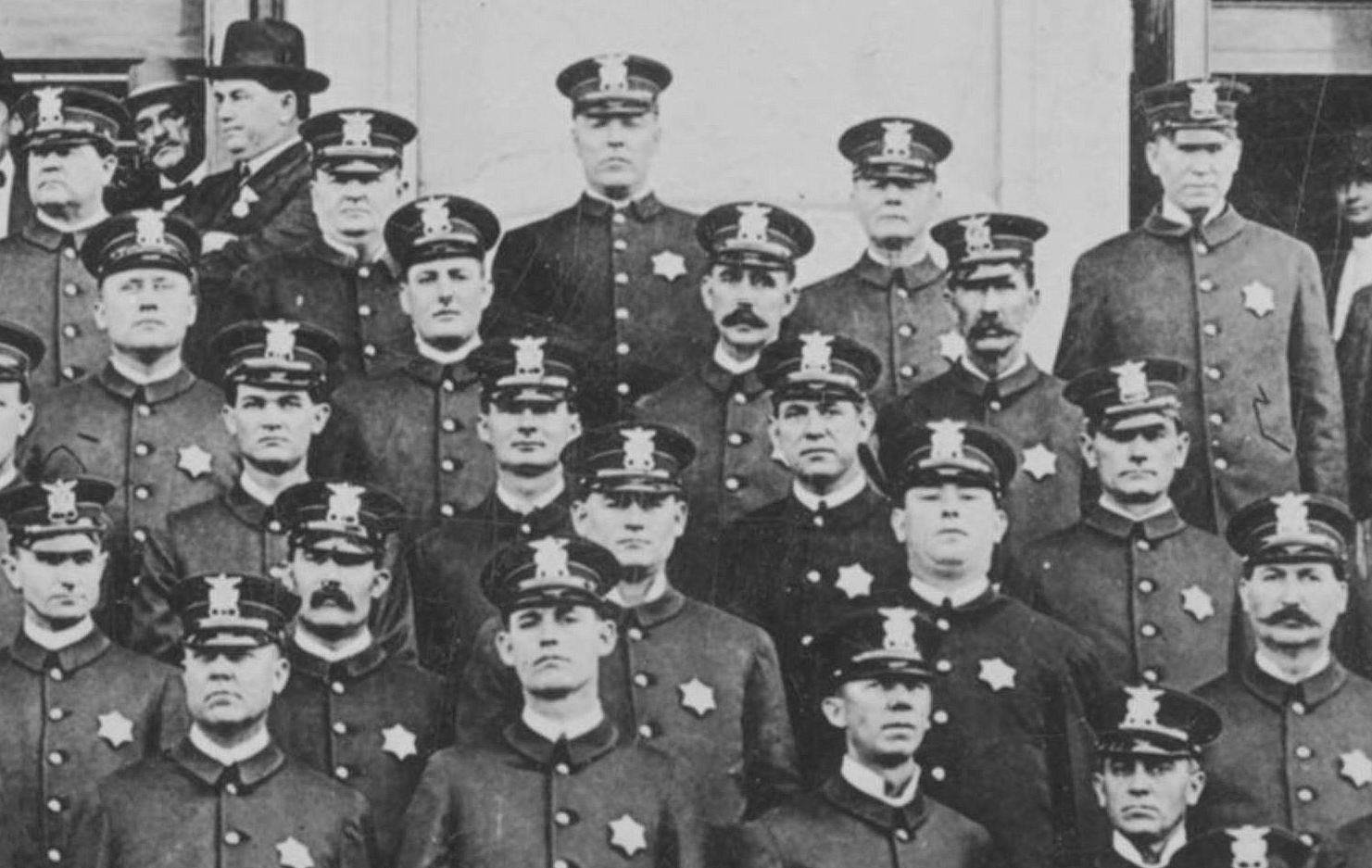
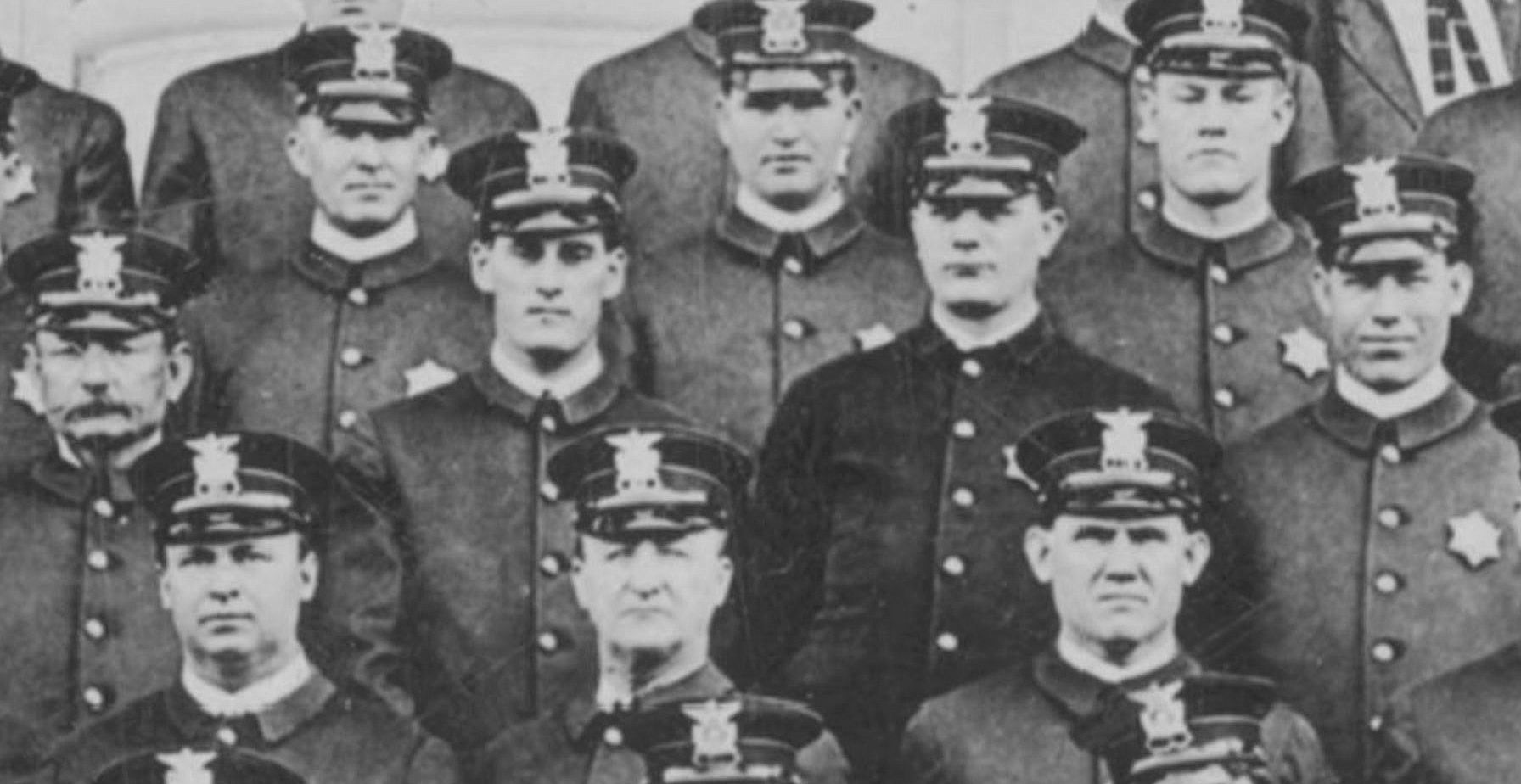
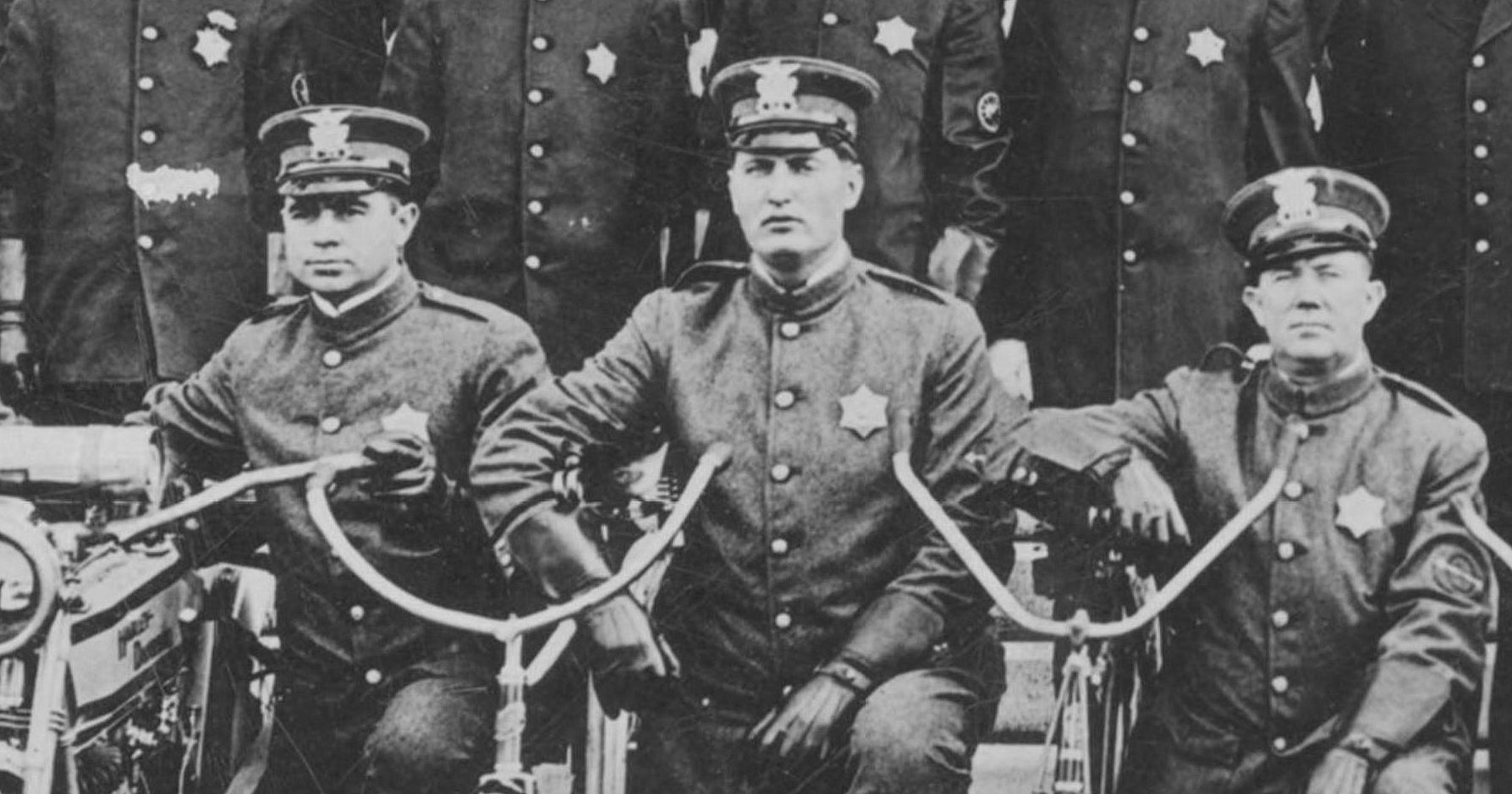
Dallas Police Department — 1914

dallas-police-dept_opening-of-city-hall_101714_cook-colln_degolyer_smuOn the steps of the Municipal Building (click for much larger image)

by Paula Bosse

dallas-police-dept_frank-rogers_101714_cook-colln_degolyer_smu

police_1914_det3

police_1914_det4

police_1914_det5

***

“Officers & Members of Dallas Police Dept. Assembled on Steps of New City Hall, Opening Day, Oct. 17th 1914,” photo by Frank Rogers, from the George Cook Collection, DeGolyer Library, Central University Libraries, Southern Methodist University; more information here. I have edited the image.

All images very large when clicked.

*

Copyright © 2016 Paula Bosse. All Rights Reserved.
Mrs. Hartgraves’ Cafe, and Bonnie & Clyde Earning Paychecks on Swiss Avenue

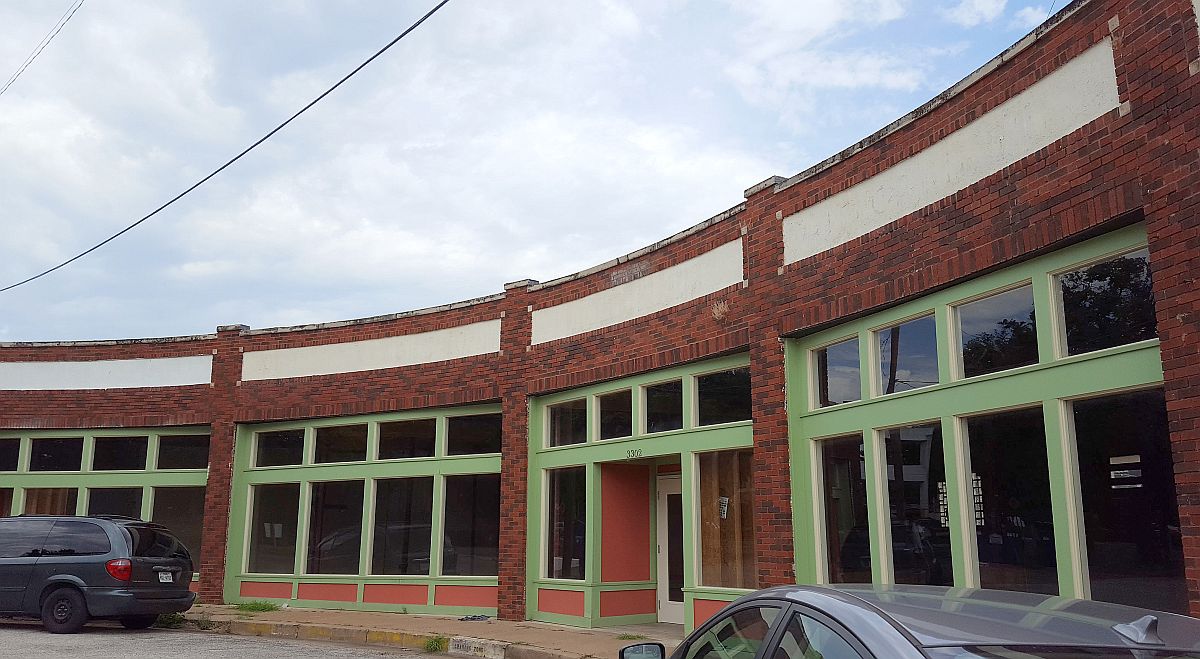
swiss-circle-front_070516The Swiss Circle building, 2016 (click for larger image) / Photo: Paula Bosse

by Paula Bosse

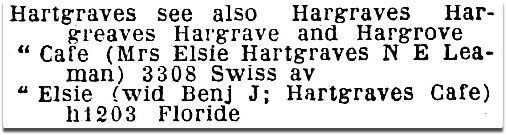
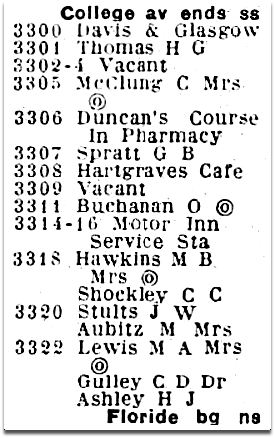
Bonne and Clyde were famous for being from West Dallas, but each actually spent a good amount of time in East Dallas. Working. Earning an honest living. Bonnie worked as a waitress, and Clyde worked in a mirror and glass company. Both worked in establishments on Swiss Avenue, though probably at different times. They hadn’t met yet, but it’s interesting to know they worked at businesses only a few blocks apart: Hartgraves Cafe was at 3308 Swiss, and United Mirror and Glass was at 2614 Swiss. Both buildings are still standing.

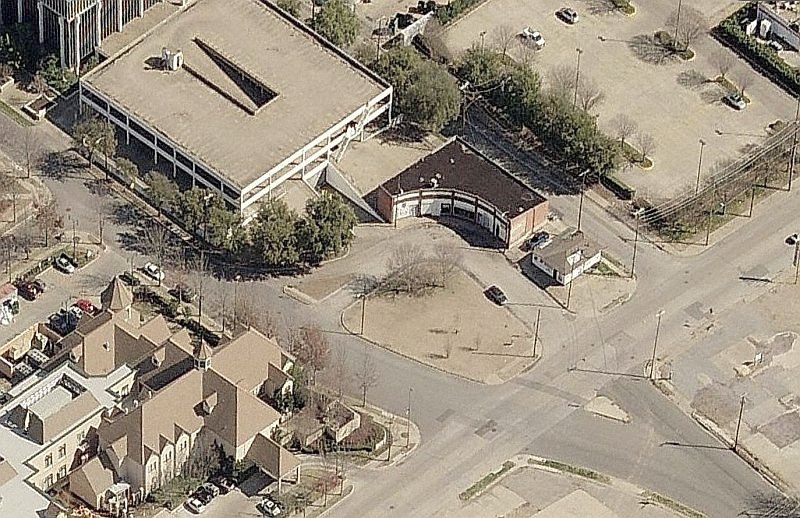
The Hartgraves Cafe (the name of which is always misspelled in historical accounts as Hargrave’s Cafe — even by Bonnie and Clyde enthusiasts) was in a curved building at the corner of Swiss and College (it is now at the corner of Swiss and Hall). 50-something-year-old Mrs. Alcie Hartgraves (her first name usually appeared in directories as “Elsie,” sometimes as “Alice”) opened the restaurant a few months after her husband, Ben, had died in 1923. It lasted until late 1930 or early 1931. (All clippings and photos are larger when clicked.)

1928-directory_hartgraves1928 Dallas directory

1929-directorySwiss Avenue between College Avenue and Floride, 1928 directory

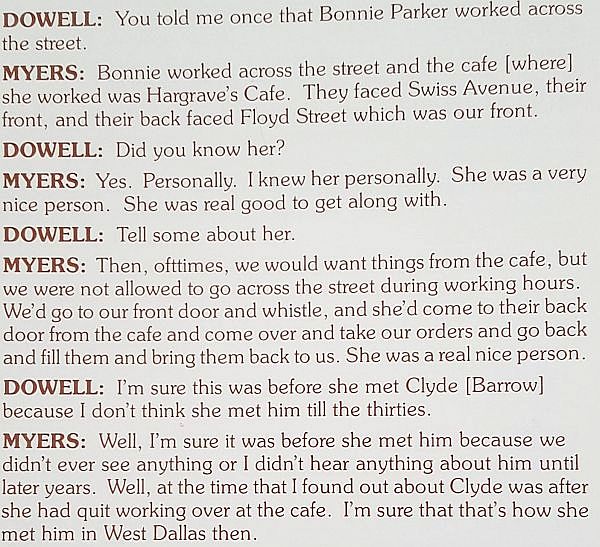
According to Bonnie and Clyde histories, Bonnie worked there as a teenaged waitress with an absent husband, from 1928 to early 1929. According to one woman who worked at the Yates Laundry, just across from the cafe’s back door, Bonnie was a very nice person. Here, in a 1972 oral history, Rose Myers — who worked at the Yates Laundry for 25 years — remembers Bonnie from those days at Mrs. Hartgraves’ cafe:

hartgraves-yates_reminiscences
From the book Reminiscences

The laundry is long gone, but here’s what the back side of the building Bonnie worked in looks like today.

swiss-circle_back_070516Photo: Paula Bosse

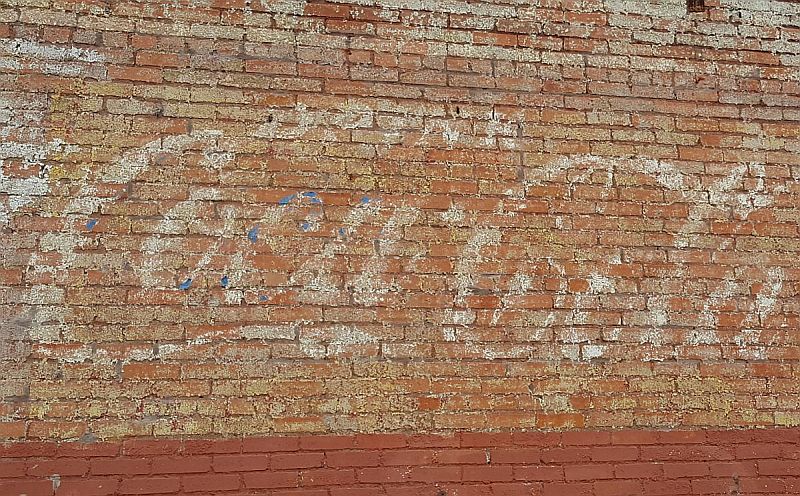
And here’s a Coca-Cola ghost sign, painted on the end of the building that faces Hall.

swiss-circle_coke-ghost-sign_070516Photo: Paula Bosse

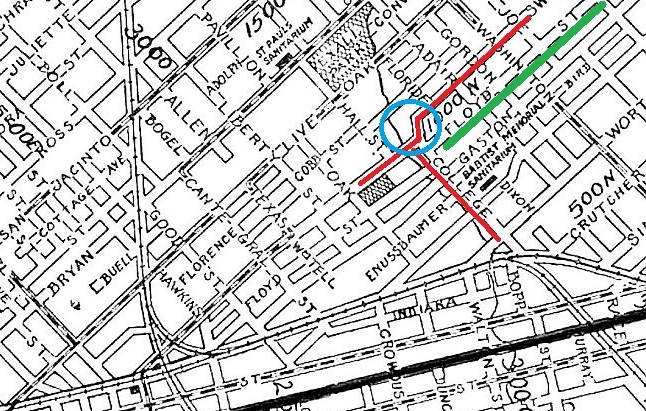
The Bonnie Parker connection is about the only reason people know about this odd little building in Old East Dallas. From looking through Dallas street directories, it appears that this building was built in 1915 or 1916 as a retail strip which, until Mrs. Hartgraves left, usually contained three or four businesses. The question is: why was it shaped like that? Many people think it was a streetcar stop, the cars using the circle as a place to turn around, but old maps showing streetcar routes from this period don’t show cars going down this part of Swiss. Below, a detail from a 1919 map, with Swiss and College streets in red. Streetcar tracks on Swiss turn left at Texas and then right on Live Oak, completely bypassing the circle area. (Another handy map of old streetcar routes laid over a present-day Google map can be found here.)

swiss-circle_1919-map
1919 map detail, via UNT

There’s a great view of the area in the 1921 Sanborn map here (with a different angle here). It may just be that the building was built to take advantage of/conform to the odd jog that Swiss Avenue takes in front of it. Here’s an aerial view from the recent past.

swiss-circle_bing-birdseye
Bing Maps

Our own teensy and unspectacular Royal Crescent! (You know what they say — “Everything’s bigger in Bath….”)

**

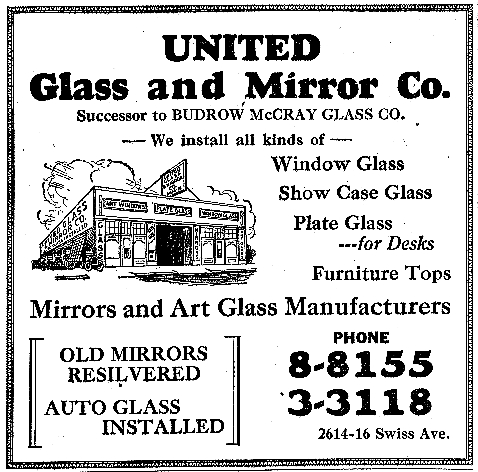
But what about Clyde? Clyde worked at a mirror and glass company four-tenths of a mile west. Here’s an ad from 1928 (the same year Bonnie was working at Hartgraves).

united-mirror-glass_1928-diectory-ad_texashideout
via Bonnie & Clyde’s Hideout

Charles “Chili” Blatney worked with Clyde at United Glass and Mirror. In the Dallas Morning News article “He Helps Dallas to See Itself” by David Hawkins (DMN, March 17, 1970), Hawkins wrote: “Blatney remembers him as the friend he was: The little guy who always wore a hat and who would jerk it off and beat the floor with it in merriment when a good joke was told. […] ‘I guess I was surprised to see him turn real bad,’ [said Blatney].”

The building still stands, almost unrecognizable.

So, yeah, East Dallas was the stomping grounds of Bonnie and Clyde, back when they were living paycheck-to-paycheck and before they had begun their short-lived life of crime.

***

Sources & Notes

Photos of the Swiss Circle building taken by me when I stumbled across it yesterday. I knew what it was when I saw it, but I didn’t really know much about it, other than the Bonnie connection. The building is currently vacant, currently for lease, and currently a weird shade of green. It’s a great space and a cool building. The back side is FANTASTIC!

The surname of the property owner (or property manager) is rather unbelievably … Dunaway.

The passage quoting Rose Myers, who worked at the Yates Laundry, is from the book Reminiscences: A Glimpse of Old East Dallas.

A discussion of this building can be found on the Phorum discussion board, here.

Other Flashback Dallas  posts on Bonnie and Clyde can be found here.

Click everything. See bigger images!

*

Copyright © 2016 Paula Bosse. All Rights Reserved.
 

4th of July at White Rock Lake — 1946

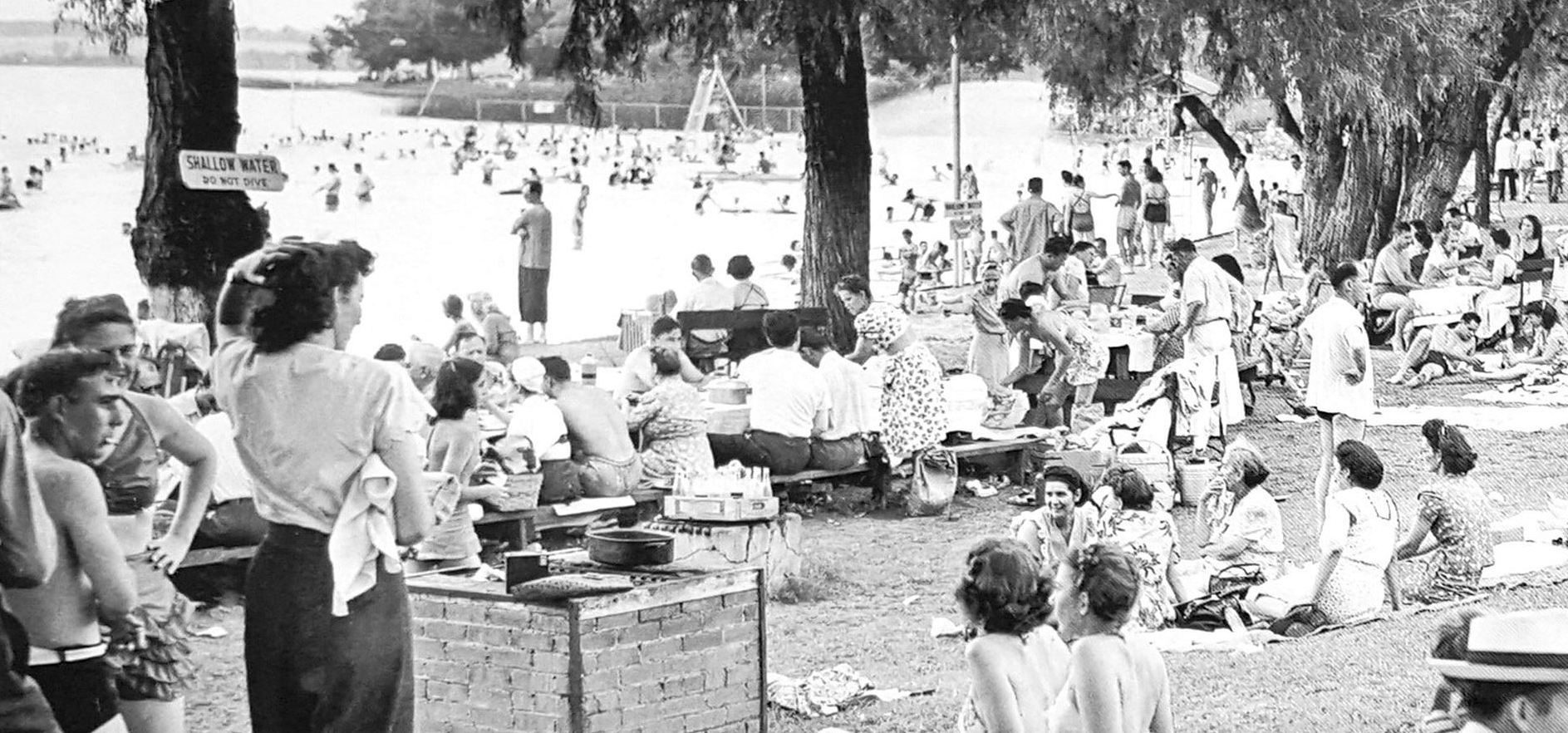
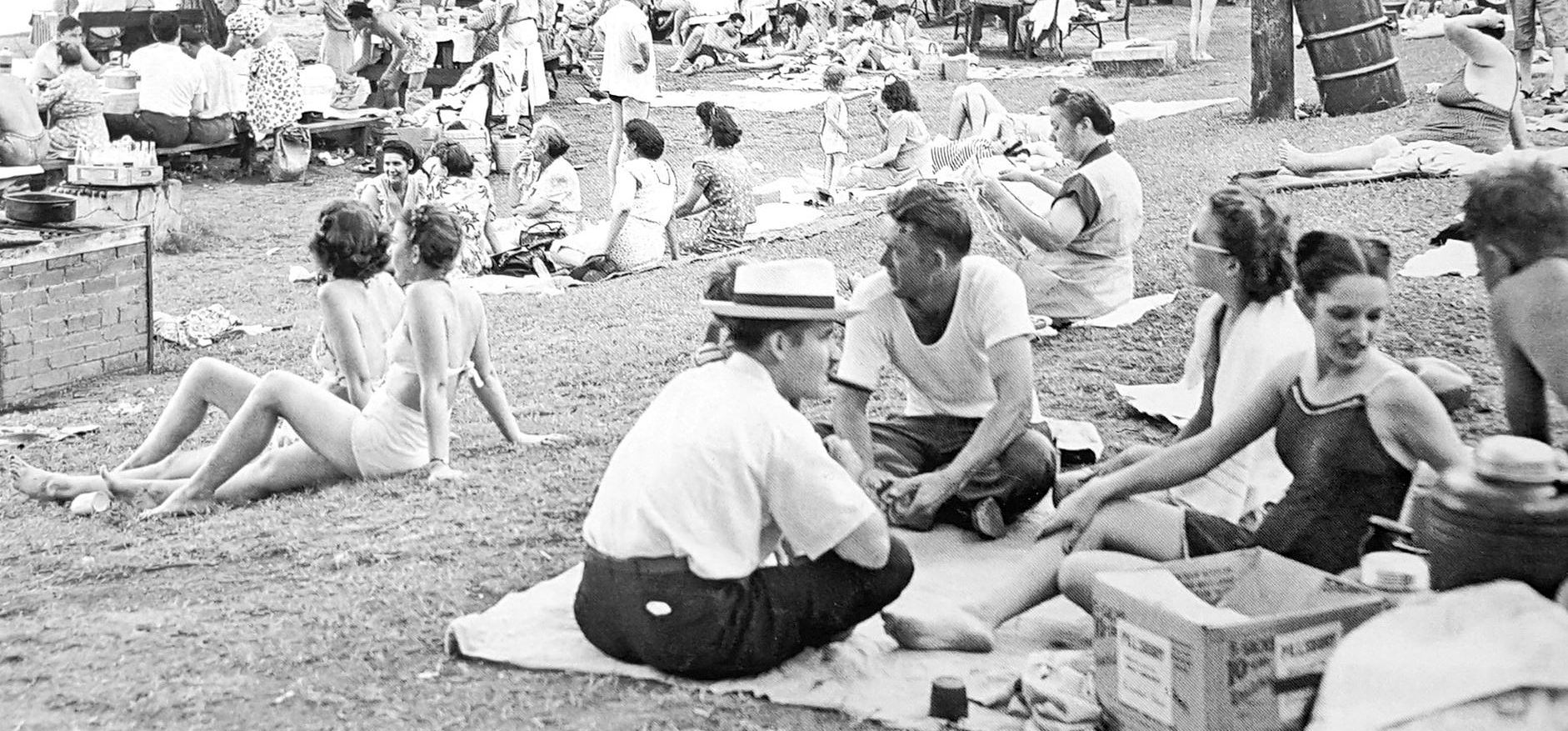
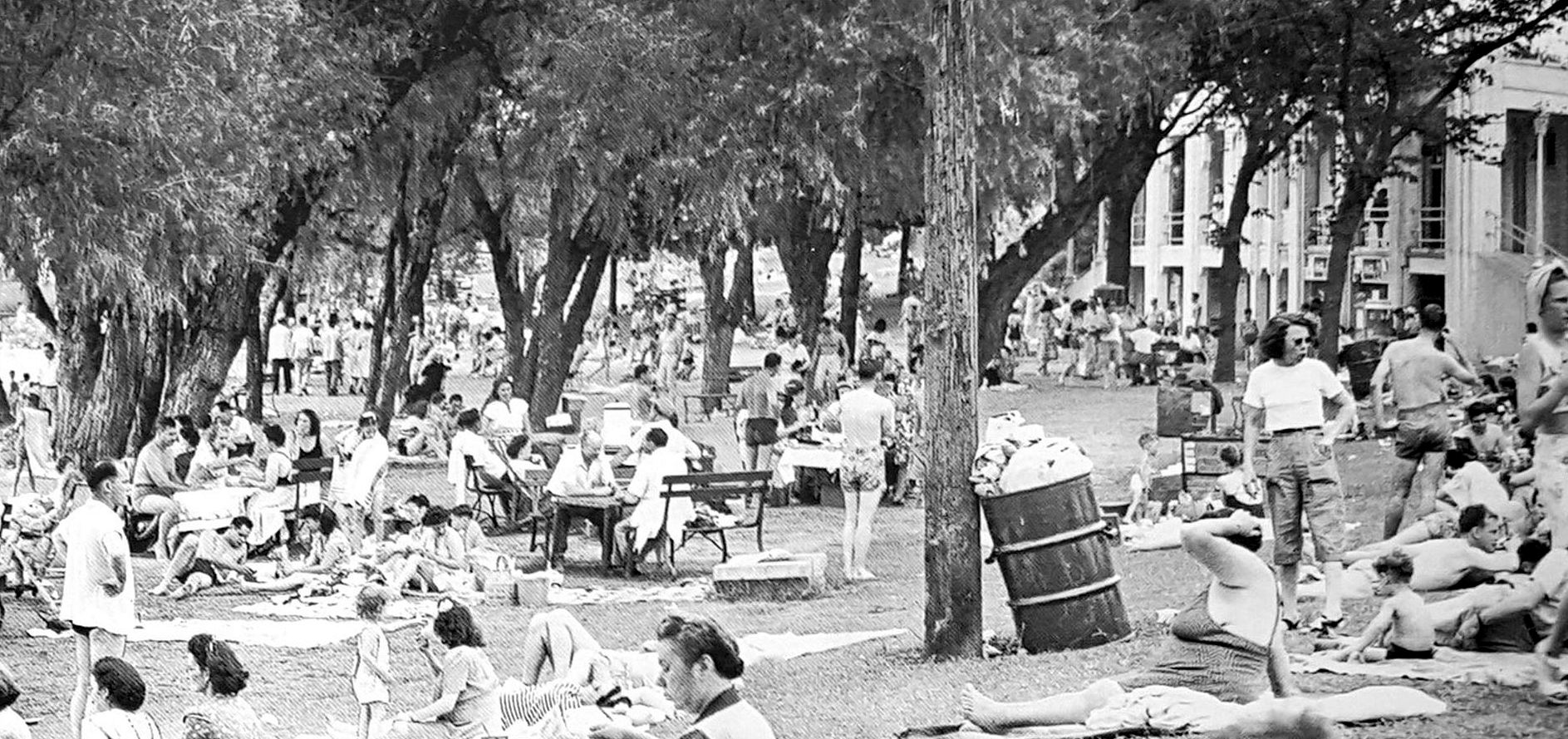
july-4th_1946_white-rock-lakeSo much going on here! (Click for super-gigantic image!)

by Paula Bosse

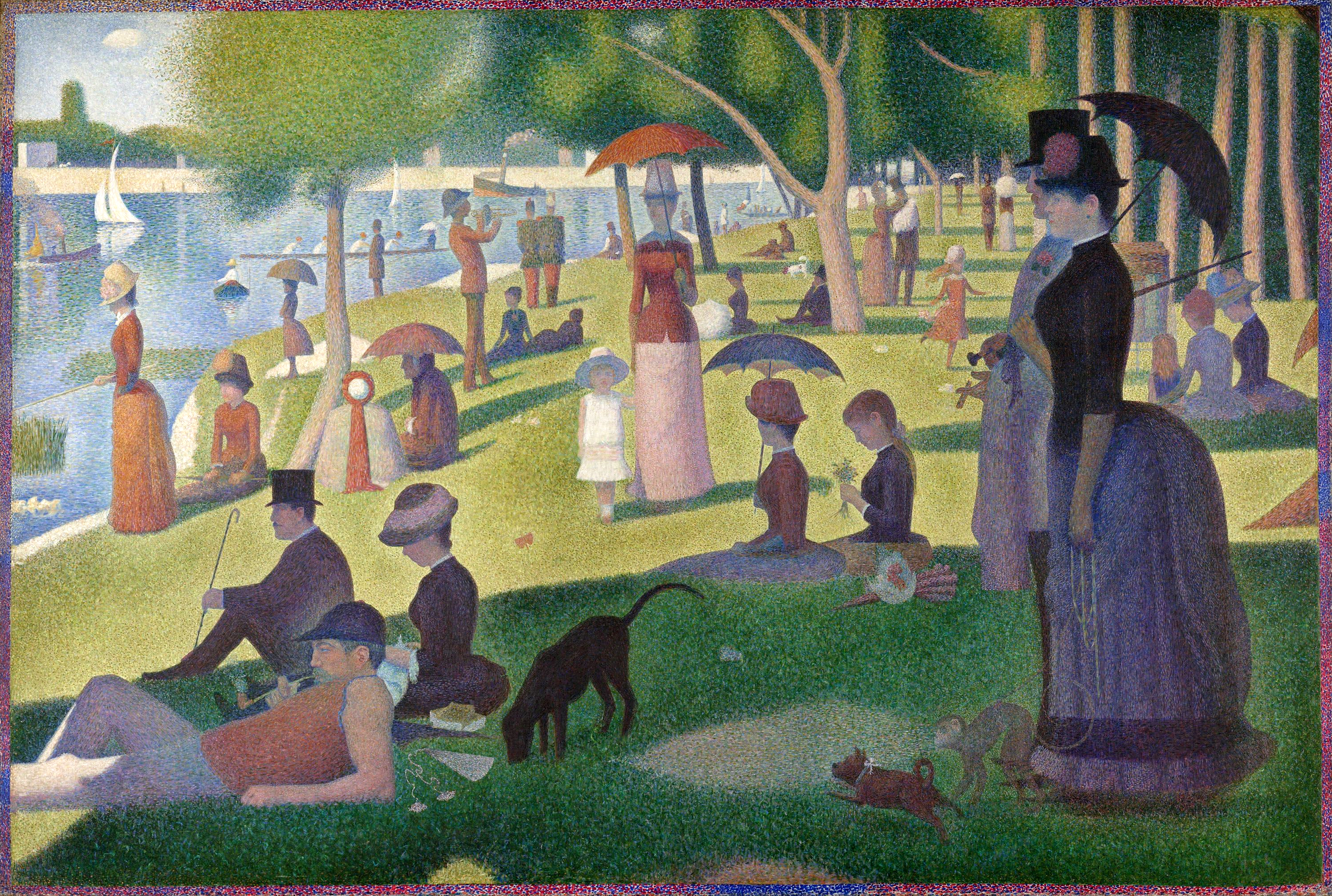
I love absolutely everything about this photo of July 4th celebrants relaxing at White Rock Lake near the Bath House (back when people actually swam in the lake!). All that’s needed is a pet monkey on a leash and a few parasols, and you’d have an updated Tex-ified version of Seurat’s La Grande Jatte painting.

seurat_le-grande-jatte_wiki

This is a photo definitely worth zooming in on. All images here are really big — click ’em! You can practically smell the wienies roasting/croissants baking. Have a happy and safe 4th of July!

4th-july_det1

4th-july_det2

4th-july_det3

*

Copyright © 2016 Paula Bosse. All Rights Reserved.
 

Bowling In the Sky — 1964

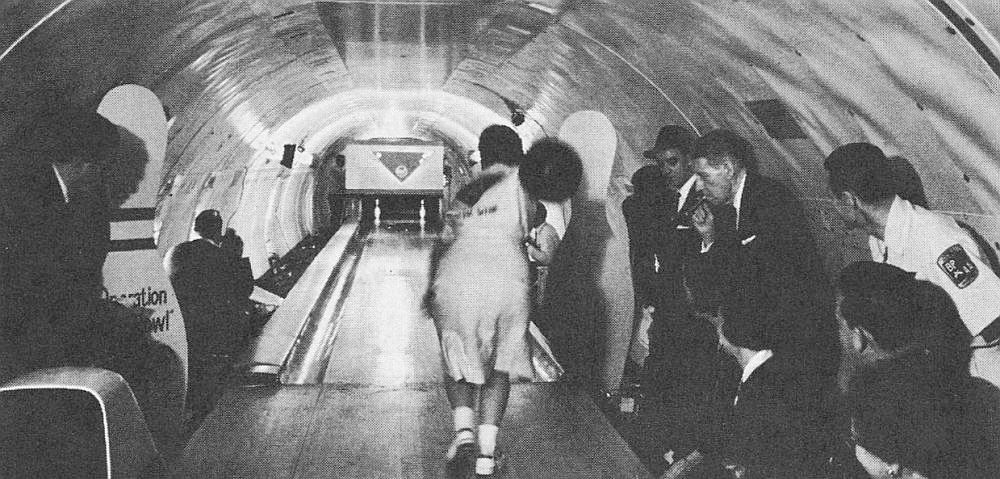
bowling_american-airlines_encylopedia-britannica-yrbk_jan-1964Sylvia Wene battles Dick Weber and turbulence…

by Paula Bosse

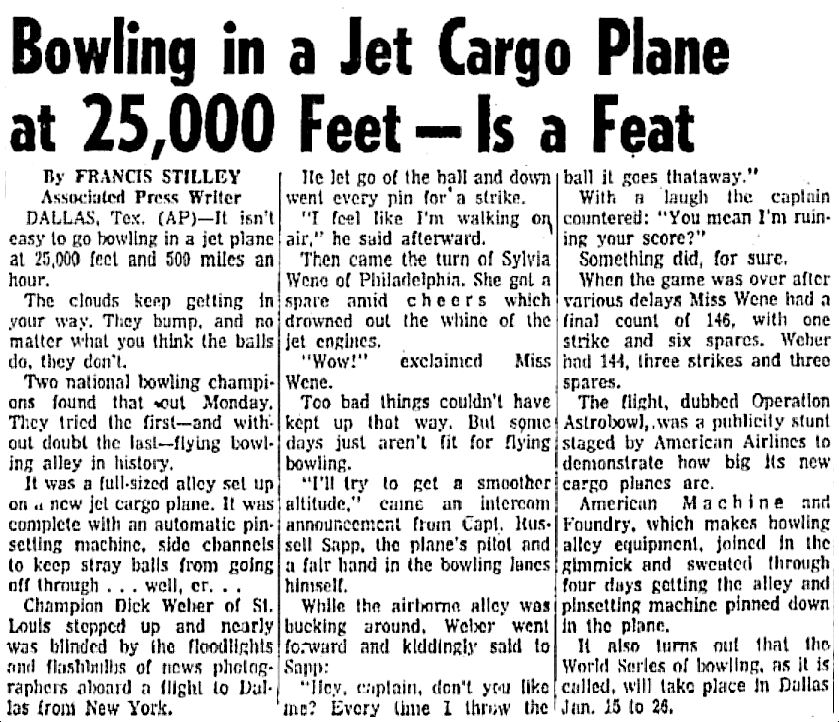
It’s a bowling alley. …In an airplane.

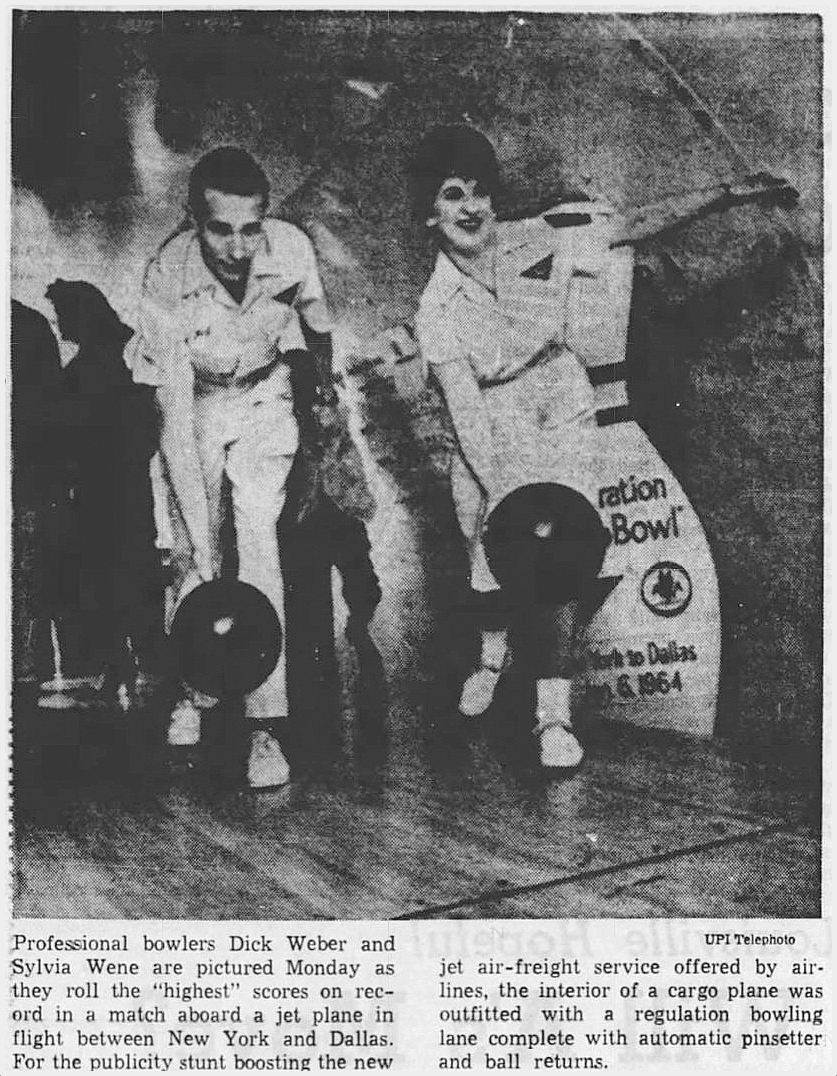
As publicity stunts go, this one was pretty good. It even had a cutesy name: Operation AstroBowl. American Airlines wanted to promote their great big Boeing 707 cargo planes, so someone came up with the idea of putting a bowling alley in one of them. Happily, a company that manufactured bowling alley equipment — American Machine and Foundry (AMF) — was keen to jump on the promotion bandwagon. They installed the regulation 79-foot lane — complete with automatic pin-setting equipment and gutters — in one of the American Airlines jet freighters. It took 4 days. Looking at the photos, it resembled a very large MRI tube.

Since they had the lane and the equipment in there, they pretty much had to get a couple of champion players on board to bowl a few mid-air frames. As luck would have it, the National All-Star Tournament (aka “The World Series of Bowling”) was — hey! — to be held in Dallas at Fair Park Coliseum a week after the stunt. Serendipity! Champions Dick Weber and Sylvia Wene were roped in to play a 5-mile-high game in the sky.

So much to promote!

Operation AstroBowl took place on January 6, 1964 at cruising altitude between New York’s Kennedy International Airport and Love Field. Sylvia won. Barely. But this story made it into countless newspapers across the country the following day, so, really, it was the publicists who won. Drinks, I’m sure, were on them.

bowling_american-airlines_AP-story_010764-photo_dick-weberDick Weber bowling at 500 miles an hour


bowling_american-airlines_AP-story_010764
AP story which appeared all over the country, Jan. 7, 1964

bowling_american-airlines_weber_wene_ap-wire_010764

***

Sources & Notes

Top photo appeared in the Encyclopedia Britannica Yearbook and was brought to my attention by Steve Dirkx (thanks, Steve!).

Story and photos by the Associated Press.

If you’re on Facebook, a tiny bit of film footage can we watched here.

Hold the presses! I’ve been translated! Check out this bowling post in Portuguese (!), on a Brazilian bowling site, here.

*

Copyright © 2016 Paula Bosse. All Rights Reserved.
The Inwood Theatre

theater_inwood_oct_1954_d-mag_dplSeven years after opening, in 1954… (click for larger image)

by Paula Bosse

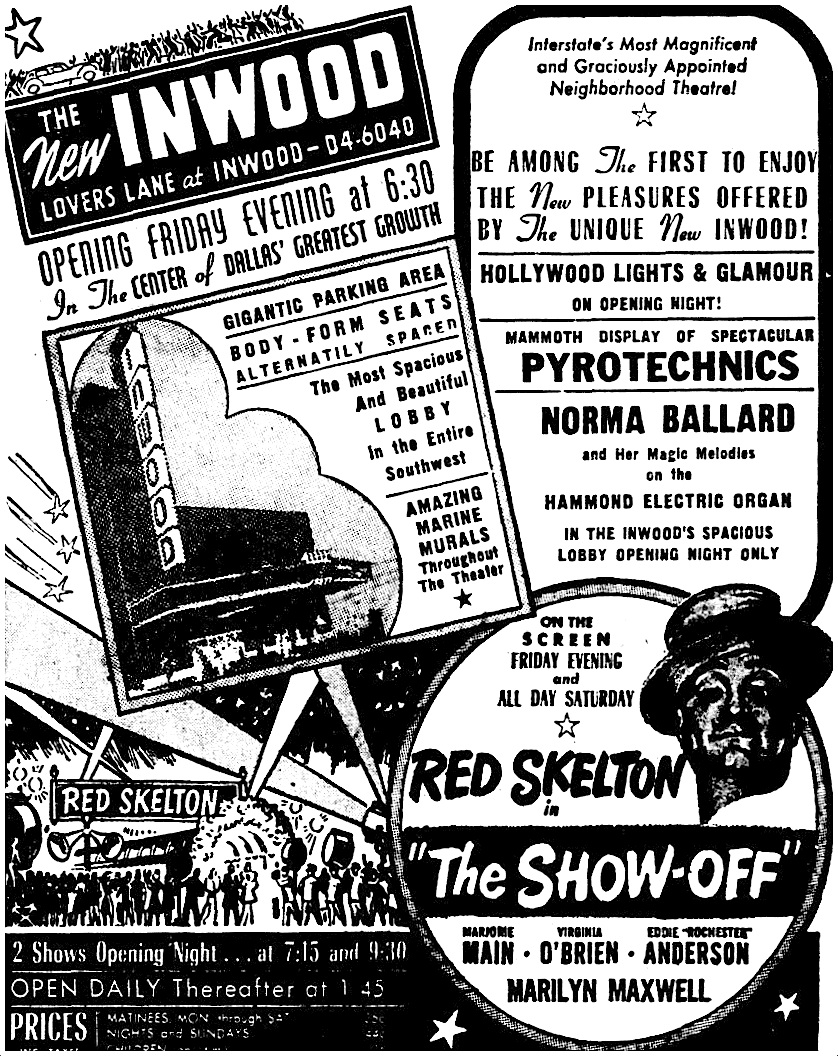
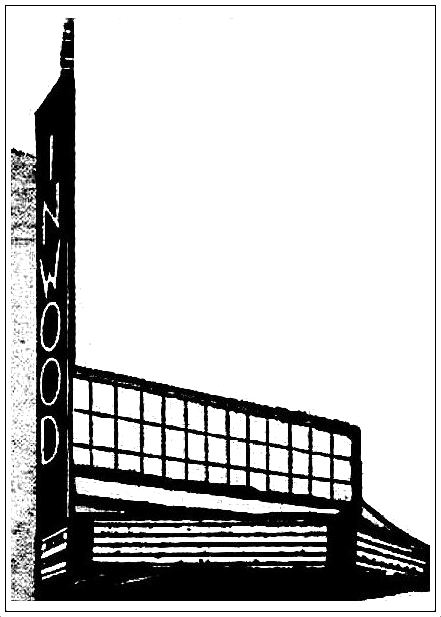
The Inwood Theatre opened at Lovers Lane and Inwood Road on May 16, 1947. Even though the surrounding neighborhood has changed pretty dramatically over the years, the exterior of the H. F. Pettigrew-designed building looks pretty much the same today. Happily, the 69-year old movie theater is still in business.

inwood_dmn_051647_grand-opening
The Grand OpeningMay 16, 1947 (click to see larger image)

theater_inwood_cinema-treasures via Cinema Treasures

inwood_1947_d-mag_dplvia D Magazine

theater_inwood_instagram_architexasvia Architexas on Instagram

inwood_el-chico_dmn-website

inwood_dmn_051947_ad-det
Ad detail, May, 1947

inwood_dmn_051147_ad-det
Ad detail, May, 1947

***

Sources & Notes

Top photo from D Magazine, here; from the Texas/Dallas History and Archives Division, Dallas Public Library. If you zoom in, there seems to be some drama going on inside one of those parked cars:

inwood_1954-zoom

Images are larger when clicked.

*

Copyright © 2016 Paula Bosse. All Rights Reserved.
 

“Melons on Ice” — 1890s

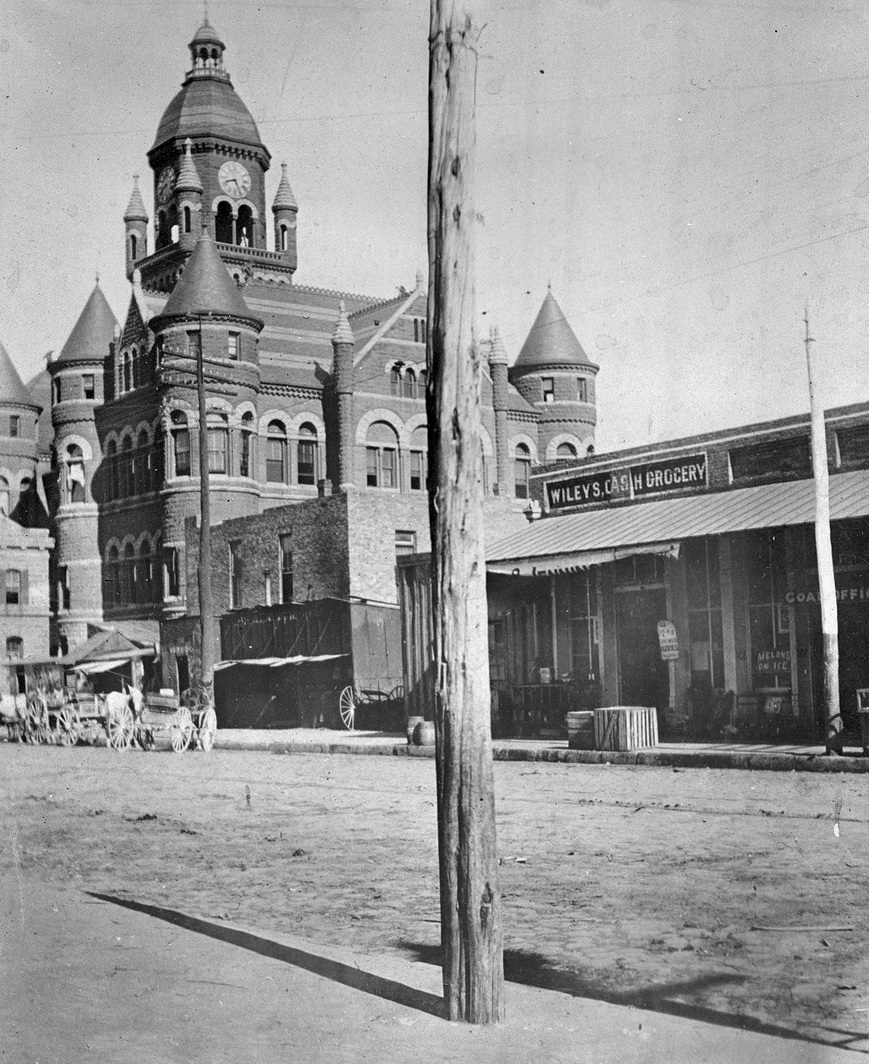
wiley-grocery_1890s_haskins-coll_utaA sleepy little town…

by Paula Bosse

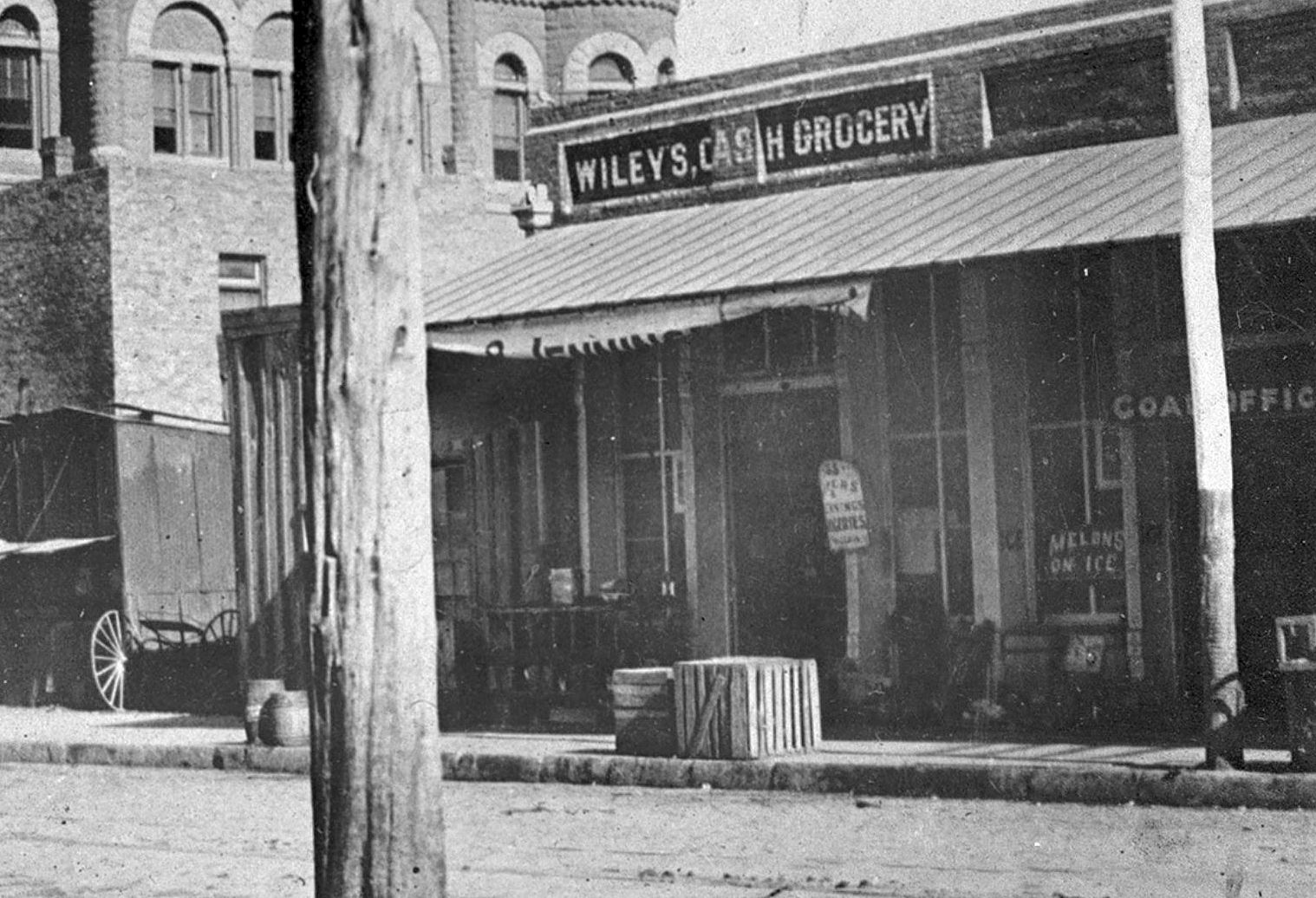
It looks hot in this photo from the 1890s. I bet those “Melons On Ice” in front of Wiley’s grocery store really hit the spot.

wiley-grocery_melons_det-1

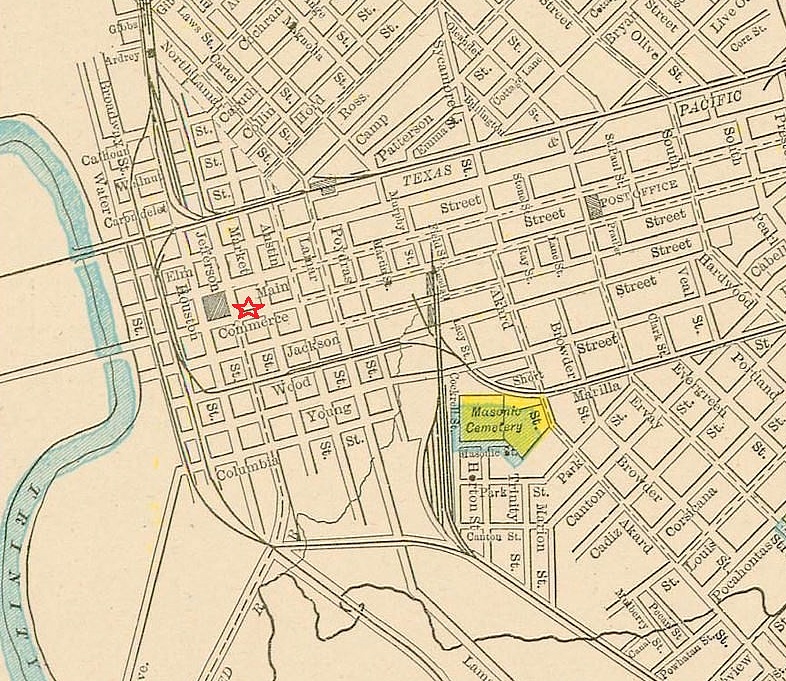
I love this photo. The Wiley Cash Grocery was in business for only a few years — from about 1892 to 1896. It was located at 153 Commerce, one block east of the brand-new county courthouse.

wiley-grocery_1893-directory1893 Dallas directory

wiley-grocery-1893-map
1893 map of Dallas, det.

The business was owned by Anna E. Wiley (~1862-1930) and her husband Jesse P. Wiley (~1863-1942). When they arrived in Dallas around 1887 their address in the city directory was simply “¾ mile w of river.”

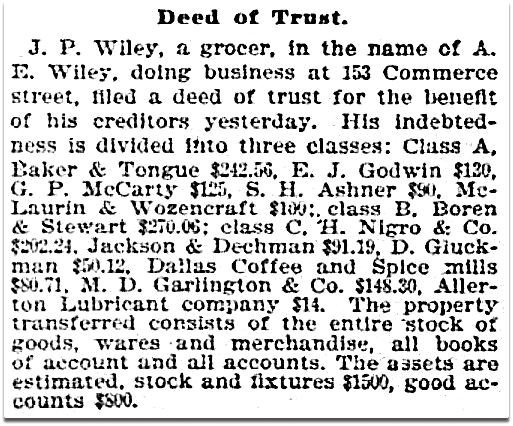
Even though the store seems to have been in Anna’s name, Jesse was forced to file a deed of trust in 1896 when the store was faced with crippling debt. The Wileys owed approximately $1,545 to creditors (about $45,000 in today’s money), but their assets were only about $1,500, plus $800 of “good accounts.” Unsurprisingly, the store was gone by 1897. (Click article below to see a larger image.)

1896-wiley-grocery_dmn_021596
Dallas Morning News, Feb. 15, 1896

This photo captures such an odd view of downtown Dallas — it’s hard to believe that the site once occupied by the Wiley store is now the site of the John F. Kennedy Memorial. A present-day view can be seen here.

***

Sources & Notes

This photo is from the Squire Haskins Photography, Inc. Collection, University of Texas at Arlington Libraries; additional info is here. See this great photo REALLY big here.

The map is a detail from an 1893 map of Dallas from the collection of the Texas State Library and Archives Commission.

*

Copyright © 2016 Paula Bosse. All Rights Reserved.
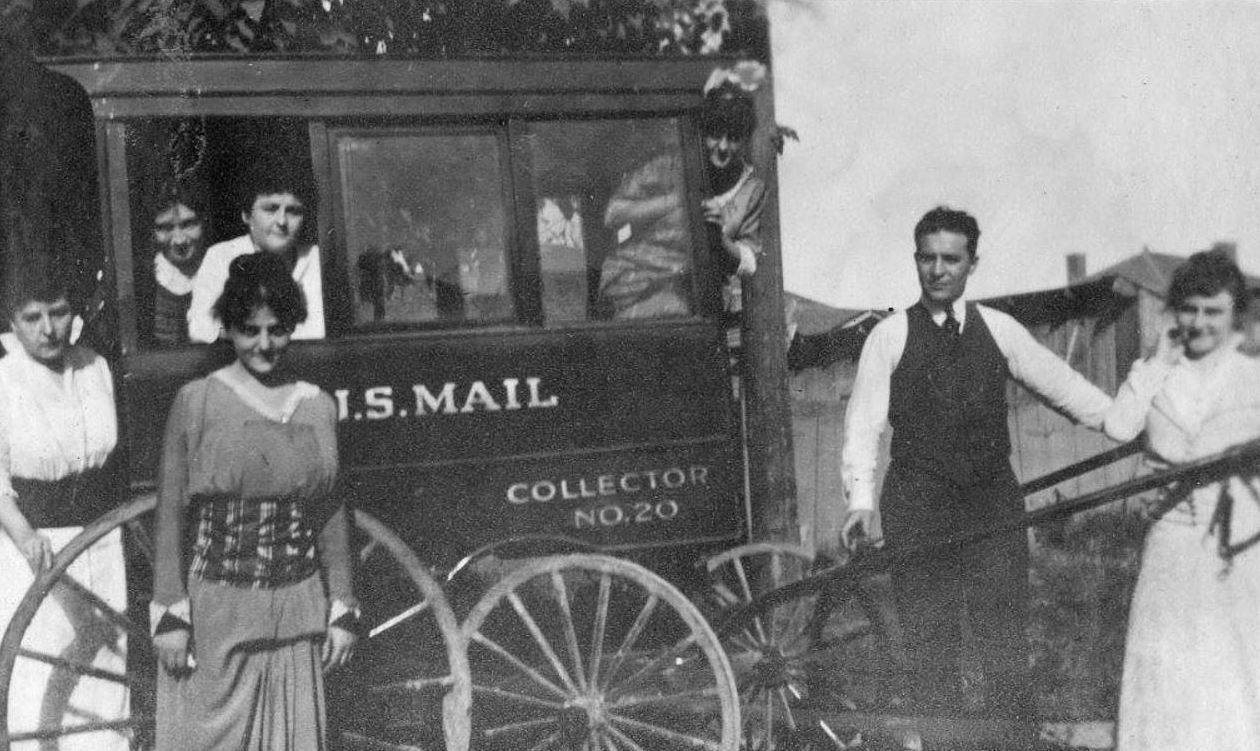
The Mail Wagon

mail-wagon_dallas-jewish-historical-societyPhoto: Dallas Jewish Historical Society

by Paula Bosse

My mailman-hating duck post of yesterday reminded me of this photo I’ve had tucked away in a digital file for months but have never used because I have no information about it. It shows several people — possibly a family? — gathered in and around a U.S. Mail wagon — “Collector No. 20.” The horse team is probably close by. As this photograph was found on the Dallas Jewish Historical Society website, one must presume that the people seen here are Jewish. Why they’re posing with an unhitched mail wagon is unknown, but it’s a cool photo.

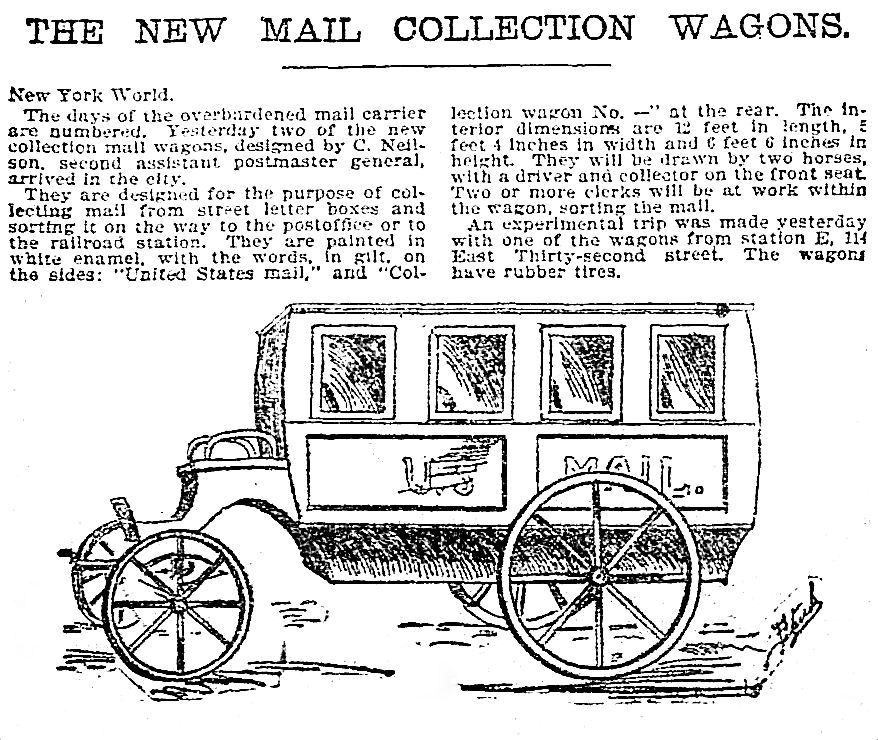
I read a bit about these wagons, which were used to collect mail from boxes around the area and from train depots. The larger ones had a driver for the team of horses, a collector, and two clerks in the back who sorted mail as they headed back to the main post office. (Click for larger image.)

mail-wagon_dmn_100296Dallas Morning News, Oct. 2, 1896

Rural mail delivery began in Dallas in 1901, and wagons like this were eventually used to reach far-flung areas beyond the city. Some of them were set up to be mini mobile post offices, out of which the mail carrier could sell things like stamps and money orders while they were on their appointed rounds of delivering and collecting mail (these mobile post offices actually caused several rural post offices to close).

mail-wagon_FWST_032301
Fort Worth Star-Telegram, March 23, 1901

There were two main problems with these horse-drawn wagons which showed up time and time again in newspaper reports:

  1. They were constantly involved in collisions, mostly with electric streetcars slamming into them. I’m not sure why this happened so much — perhaps the trolleys were too fast and too quiet — but it was a constant problem.
  2. Also, these wagons, stuffed with letters and packages (and whatever goodies might have been contained therein), were often hijacked at gunpoint or stolen when left unattended. Kind of a holdover from frontier days of holding up stagecoaches.

The life of a turn-of-the-century mailman was fraught with danger.

***

Sources & Notes

Top photo from the Dallas Jewish Historical Society; I’d love to know some — any! — information about who these people were and why they were posing with a mail wagon.

Read the 1925 memories of mail carrier James H. Jackson, who began his career with the Dallas post office in 1884, in the Dallas Morning News article “Dallas Postoffice Grew As City Grew” by W. S. Adair (DMN, Feb. 1, 1925).

Another Dallas-mailman-related story I found interesting can be found in my post “Jim Conner, Not-So-Mild-Mannered RFD Mail Carrier,” here.

Images larger when clicked.

*

Copyright © 2016 Paula Bosse. All Rights Reserved.
 

University Park’s Belligerent Duck, Enemy of Mailmen — 1946

duck-mailman_texas-week-mag-082446
“Neither snow nor rain nor duck…”

by Paula Bosse

The past few weeks have been hot and exasperating, so here’s a nice little human-interest story about a duck attacking a mailman. Whilst on his appointed rounds through University Park, United States postal carrier L. F. Wilson was attacked and bitten by a confrontational duck which regularly hung out on the porch of a Turtle Creek-adjacent University Boulevard home. According to another mailman (who had also been attacked), the hostile waterfowl probably chose this house to zealously patrol because the lady of the house fed the duck and “the duck likes the lady.”

 On August 13, 1946, a reporter at The Dallas Morning News who had heard about this “belligerent duck” decided to accompany Wilson to see the dangerous guard-duck in person. Not only did the duck bite Wilson for a second time, he also chased the reporter out of the yard. The second mailman said that he, too, had been chased by the duck and told the reporter that the duck would even charge at the owner of the house and force him back inside if he dared venture onto his own porch to read his newspaper. That was one angry, territorial duck.

It must have been a slow news day, because the following day this story — and a photograph — appeared on the FRONT PAGE of The Dallas Morning News. Not only that, but the photo and story were picked up by newspapers across the U.S. and Canada. North Americans love good duck reportage.

duck-mailman_FWST_081546
Fort Worth Star-Telegram, Aug. 15, 1946

The residents of the house at 3806 University were not identified, but they were Lucy Clemmons Davis and J. Oscar Davis. I present this photo of Mrs. Davis only because she looks exactly like a kind-hearted person who would feed and befriend ducks.

duck-mailman_lucy-clemmons-davis_1950s

***

Sources & Notes

Top photo from Texas Week magazine (Aug. 24, 1946), via the Portal to Texas History, here.

Read the original Dallas Morning News story in the DMN archives: “Duck With Dander Up Interferes With Mails” (DMN, Aug. 14, 1946).

The house on University Blvd. is across the creek from Goar Park and the University Park Fire Department, and across University Blvd. from Williams Park. It you’d like an aerial view of the duck’s old stomping paddling grounds (and the site of one-too-many duck attacks), take a look here (the view is to the west).

Because it’s one of those totally random things people feel they should bring to one’s attention simply because it’s totally random, I feel I should mention that the photo of the duck attack was taken the same day that British author H. G. Wells was drawing his last breath (his obit received only one-fourth the amount of space in the Morning News as the UP/USPS duck situation). H. G. Wells was in Dallas at least once — he gave a lecture at SMU on Nov. 1, 1940.

*

Copyright © 2016 Paula Bosse. All Rights Reserved.
 

Peak Season at the Farmers Market — 1951

farmers-market_1951_DPLCute tomatoes…

by Paula Bosse

Some of my favorite summertime memories are wandering around the Farmers Market as a child with my family — back when it was still gritty and still had real farmers and real farm families selling produce actually grown nearby. I loved moving from shed to shed and marveling at everything: the endless baskets of fruits and vegetables, the weather-worn farmers, and a vibrant marketplace comprised of the most diverse crowds I can remember seeing in one place as a child.
This photo — showing Peggy Mayne of Grand Saline selling tomatoes out of the back of her family’s pickup — was taken in 1951, during a summer of fruit and vegetable plenitude. July inventories and sales were breaking records — right before the effects of what would turn into one of the longest and worst-ever droughts in Texas history began to be felt by farmers and consumers.
I miss you, Dallas Farmers Market of yesteryear.

***

Sources & Notes

Photo from the Texas/Dallas History and Archives Division, Dallas Public Library.

More Flashback Dallas posts on the Farmers Market area — which I realize more and more was one the city’s most interesting parts of town — can be found here.

More on the devastating 1950-1957 drought and its impact on everyday life in Dallas can be found in my previous post, “Whither Water? — 1956.”

*

Copyright © 2016 Paula Bosse. All Rights Reserved.