Land cleared, May 1966 (click for gigantic image) (UTA Libraries)
by Paula Bosse
The photo above shows land partially cleared for the construction of Woodall Rodgers Freeway. The view is to the east, with Central Expressway at the top left and Stemmons Freeway at the bottom left. The land cleared was once part of what used to be called “North Dallas,” and before it was bulldozed away, it was a predominantly black residential neighborhood served by several African-American- and Hispanic-owned businesses. The photo above was taken on May 24, 1966. The photo below was taken on December 8, 1966. The freeway was already years behind schedule when these photos were taken, but nobody would ever have believed it would take until 1983 (!!) for Woodall Rodgers Freeway — a “cute” little highway, less than two miles long — to be completed. Oh, but it did.
Dec. 8, 1966 (photo by Squire Haskins; UTA Libraries)
In a Dallas Morning News article published on the May 27, 1983 opening of the freeway, Henry Tatum wrote the following:
Dwight Eisenhower was starting his second term as president of the United States. Elvis Presley had passed his physical examination and was headed for a stint in the Army. And Doris Day was singing up a storm on the screen in “Pajama Game.” The year was 1957 and Dallas city fathers decided it was time to build a downtown connection between Central Expressway and Stemmons Freeway. (“Freeway From the Past” by Henry Tatum, DMN, May 27, 1983)
1957!
When it was completed 26 years later — in 1983 — Ronald Reagan was president, Sally Ride was about to become the first woman to go into space, and Madonna was singing up a storm as her first album was being readied for release. That’s a looong time.
***
Sources & Notes
Both aerial photos by Squire Haskins, from the Squire Haskins Photography, Inc. Collection, UTA Libraries, University of Texas at Arlington. The photo from May can be accessed here, the one from December, here.
“Woodall Rodgers”? James Woodall Rodgers was mayor of Dallas from 1939 to 1947. It was announced that what would become a never-ending headache-of-a-highway-project bedeviled by funding squabbles and right-of-way issues would be named in his honor in 1960.
Those two photos are really, really big when you click them. …REALLY big.
I love this photo, taken from the southern edge of downtown, at S. Akard (running from left to right in the photo) and Royal, a street which once ran one block north of Canton (map below). Today, the convention center would be behind the photographer, and the I. M. Pei-designed City Hall would be pretty much straight ahead. I’m always going to prefer the grittier-looking downtown Dallas of days gone by to today’s shinier, glitzier version. I couldn’t get the exact angle, but today’s view from more or less the same vantage point looks like this, and it just isn’t as interesting. (I’ve never actually heard anyone broach the topic, but am I the only one who thinks that Pei’s City Hall now looks weirdly and hopelessly dated? Kind of tired and stuck in the ’70s? If nothing else, those yucky white flagpoles out front need to go!)
When this photo was taken, you could actually still see all those famous buildings — before they were dwarfed and engulfed by all those over-eager underclassmen!
***
Sources & Notes
Photo from a site managed by Andrew K. Dart, full of photos from negatives he rescued when they were thrown out by KDFW-TV, many from the archives of KRLD. This photo is from a page of Dallas skyline photos, here.
Here’s a map that shows S. Akard and Royal streets, which Mr. Dart identified as being the intersection seen in this photo by zooming in on the street sign (click for larger image):
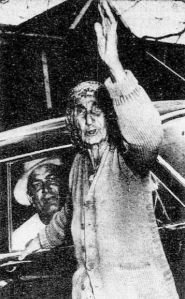
In 2014 I wrote about warring Gypsy factions that had gathered in Dallas in 1951, embroiled in a bitter feud centered around a seriously injured boy at Baylor Hospital. Dallas police were worried there would be bloodshed in the streets. I really loved writing this post: “‘Every Gypsy in the Nation Knows About This’ — 1951.”
Sonny James, center, with fiddle (photo: SonnyJames.com)
by Paula Bosse
Sonny James — the much-loved Country Music Hall of Fame singer — died yesterday (Feb. 22, 2016). When I was a child, his version of “Runnin’ Bear” was my favorite song, and it was played endlessly throughout the ’70s on Dallas’ classic country stations like KBOX and WBAP. I was surprised to learn a few years ago, that the Alabama-born Sonny James lived in Dallas for several years, and that Dallas was where he was performing regularly when he exploded into the national consciousness with his first #1 hit, “Young Love.”
1952
Before he made his way to Dallas, Sonny James had been making a name for himself as a performer on Shreveport’s Louisiana Hayride. One of his first appearances in Dallas was during his Hayride Days: he was a guest on the Big D Jamboree in the summer of 1952.
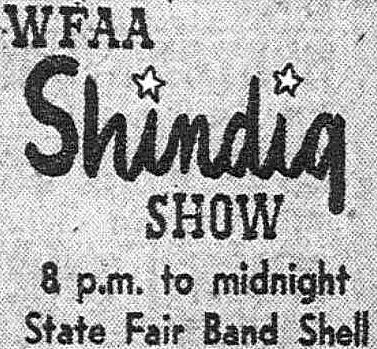
He must have made quite a splash, because only a month later, he had left the Hayride, moved to Dallas, and was signed to appear on the show “Saturday Nite Shindig,” the WFAA-sponsored answer to the Big D Jamboree, which debuted on October 11, 1952. (As “Saturday Night Shindig,” the radio show had been a WFAA staple since it began in 1944; Sonny James was hired to be part of a new “Shindig,” which was revamped from a folksy half-hour show to a 4-hour live music show and was broadcast from Fair Park.)
“Yeoow! More Zip than a Singed Cat!” (Click for larger image.)
Oct. 8, 1952
Oct. 10, 1952
It was an immediate hit, and Sonny became the main draw and something of a teen heart-throb. Less than a month after the announcement of his permanent gig as a “Shindigger,” he also got his own radio show on WFAA, Tuesday and Thursday mornings from 11:00 to 11:15.
Pretty soon, the Shindig revue was being simulcast on TV and radio, live from Fair Park (from the bandshell when it was warm, and from various other buildings during cold and inclement weather).
April 11, 1953
The Shindig show seems to have died away in 1954 or 1955. Sonny James headed back to the Sportatorium and the Big D Jamboree (which was run by his manager, Ed McLemore). One show of note was this one in 1955, with his old Louisiana Hayride pal Elvis Presley. (McLemore made sure that even though Elvis was the headliner, Sonny’s name was actually bigger!)
April 15, 1955
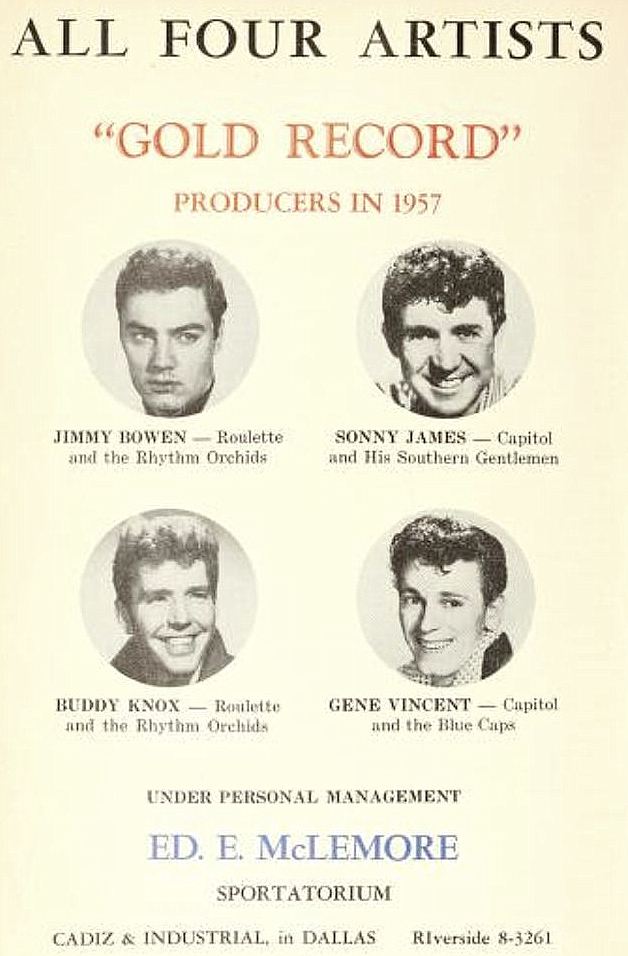
Sonny James had been recording for Capitol for several years, with some success, but it wasn’t until the end of 1956 that he had his mammoth #1 crossover hit, “Young Love,” which made him a national star. Apparently, he kept a residence in Dallas for a while (the last address I see for him in Dallas was in 1955 at 4718 Capitol, between N. Carroll and Fitzhugh). While living in Dallas, he was a steadfast member of the Church of Christ at East Side and Peak, and he frequently participated in area fishing contests (in fact, there might have been more mentions of his extracurricular fishing exploits in the local papers than there were mentions of his show-biz exploits — his fishing activities were often covered using his real name, Jimmie Loden). One person who lived in the same neighborhood Sonny did recalled on a Dallas-history message board that Sonny worked on Saturday mornings bagging groceries at a store on the corner of Capitol and Fitzhugh.
Sonny James went on to be a much-loved country performer who racked up a number of hits and was, apparently, one of the nicest guys around. He was most definitely a Southern Gentleman. Thanks, Sonny.
*
Nov. 8, 1952
1953
Sept. 12, 1953
Billboard, Oct. 3, 1953
Aug. 21, 1954
Radio Annual and Television Yearbook, 1957
Radio Annual and Television Yearbook, 1958
***
Sources & Notes
Sonny James’ obituary form the Hollywood Reporter is here. His Wikipedia page is here.
To get an idea of the absolutely HOT hillbilly and rockabilly music that was being performed in Dallas in the years that Sonny James was here, check out this fantastic sampling of recordings from the Big D Jamboree:
*
See a few photos of Sonny James in Dallas at SonnyJames.com here (click thumbnails for larger images — the photo of Sonny sitting in the wings watching Elvis on stage at the Big D Jamboree is pretty great!).
A couple of good articles about Sonny James’ time in Dallas (written while he still considered himself a resident of the city) can be found in the Dallas Morning News archives:
“Success Won’t Spoil Mr. James” by Tony Zoppi in his “Dallas After Dark” column (DMN, Feb. 10, 1957)
“Sonny Snubs That Las Vegas ‘Loot'” by, of all people, Frank X. Tolbert in his “Tolbert’s Texas” column (May 13, 1957), in which Sonny — fresh off his 2.5-million-selling “Young Love” hit — talked about having a clause in contracts saying he would not perform in places with drinking, “clinch dancing,” and gambling, mostly because he did not want to exclude his teenage fans from being able to see him perform.
A good interview with Sonny James — packed with photos — appeared in the January, 1958 issue of TV Radio Mirror, a full scan of which you can find here. Even after he had hit the mega-big-time, Sonny said he continued to keep an apartment in Dallas. In the story there is a photo of his Dallas girlfriend, Doris Farmer (née Shrode) — she and Sonny took out a marriage license in July, 1957 (seen here) — I’m not sure when they married, but Sonny and Doris were happily married until Sonny’s death, almost 60 years.
Another performer who lived in the DFW area at the same time as Sonny James and who was also on the cusp of national stardom was Pat Boone, who had his own show on WBAP while attending college in Denton. Sonny and Pat were friends and even appeared on a few bills together. They were both also members of the Church of Christ, which both no doubt felt was an important bond. I wrote about Pat Boone’s time in DFW in the Flashback Dallas post “Pat Boone, Host of Channel 5’s ‘Teen Times’ — 1954,” here.
Six Flags Over Texas is about to open up again. In 1962 — the theme park’s second year — the admission price for one adult was $2.75 (approximately $22.00 in today’s money), and the price for children under 12 was $2.25 (approximately $18.00 in today’s money). A family of two adults and two children would pay $10.00 for admission — that would be a little under $80.00 in 2016 money, which was still a lot back then, until you compare it to today’s Six Flags ticket prices: $250 for a family of four (as long as both of those children are under 48″ tall). (Pink Things not included.) And you probably won’t even see a dad wearing a suit and tie and a porkpie hat. And you certainly won’t get to see ANY of this! I think you got a lot more bang for your buck 50 years ago.
I’m often surprised to discover things about the part of Dallas I grew up in which I somehow never knew — in this case: Lakewood’s first post office, which was apparently in operation when I was a living, breathing, sentient human being but which I’d never known about until today. (I actually grew up in the nearby Lower Greenville neighborhood, but even though I went to Long and Woodrow, I don’t remember being all that aware of Lakewood proper until I was able to drive myself around it as a teenager.) Somehow I had never known that there was a post office in Lakewood before the one at Swiss and La Vista. Or, rather, I’d never even thought about it. Until I saw this ad earlier today:
1947
“The Lighthouse — Unusual Sea Foods, Steak and Chicken — Opposite Lakewood Post Office.”
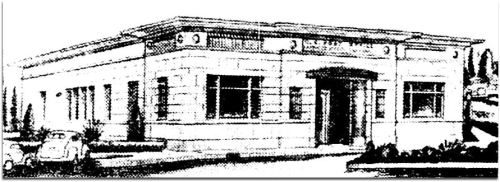
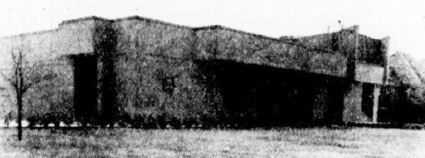
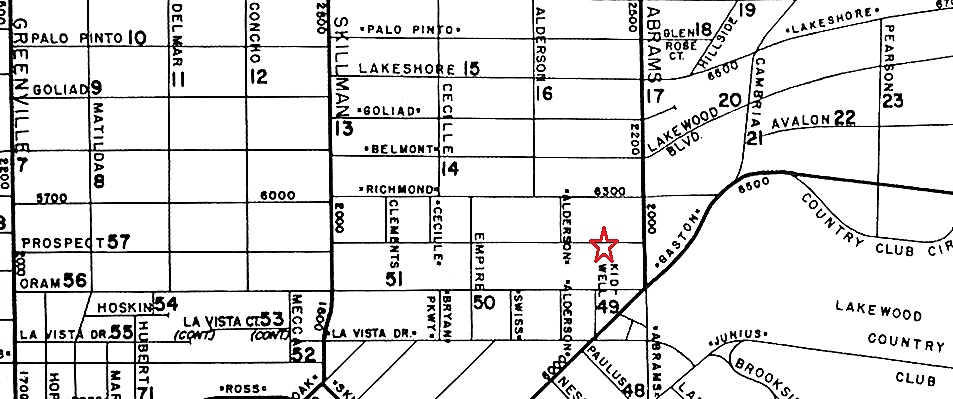
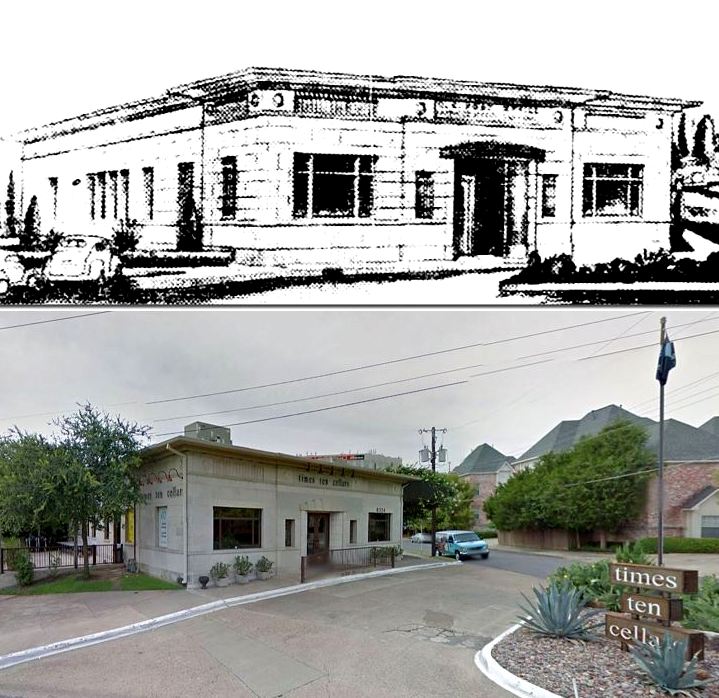
Post office? New to me. I looked it up. It was just west of Abrams, on Prospect at Kidwell, positioned diagonally across the lot. It was the 13th post office substation in Dallas, and it opened on December 2, 1946, over two years after its approval had been announced, during the war, in August, 1944.
A 1945 Dallas Morning News article had this interesting bit of information:
The contractor is Bascomb E. McClesky [sic]. The building will have 4,000 square feet of floor space. Parking space will be provided on the lot. [McCleskey] will retain title to the property and will lease it to the government, Payne said. (“Lakewood To Get Branch Post Office,” DMN, Nov. 18, 1945)
(I’m not sure I was aware developers leased property to the federal government. B. E. McCleskey lived in the Pasadena area of Lakewood and seems to have spent his 30-year career as a general contractor who also bought, sold, and developed both commercial and residential properties in and around this part of East Dallas. When he began his career, he had an office on Gaston in the new Lakewood Shopping Center; at the time of his death in 1956, his office was right next door to the post office on land which, presumably, he still owned.)
This post office lasted for 30 years until the newer, hulkier, and far less aesthetically appealing station opened at Swiss and La Vista on May 10, 1976.
1976
Some factoids which will come in handy should you ever find yourself in a U.S. Post Office Trivial Pursuit (Lakewood Edition) competition:
When the first Lakewood post office opened in 1946, it employed 3 clerks, 1 supervisor, and 16 carriers.
When the second post office opened 30 years later, it employed 13 clerks, 2 supervisors, and 47 carriers.
*
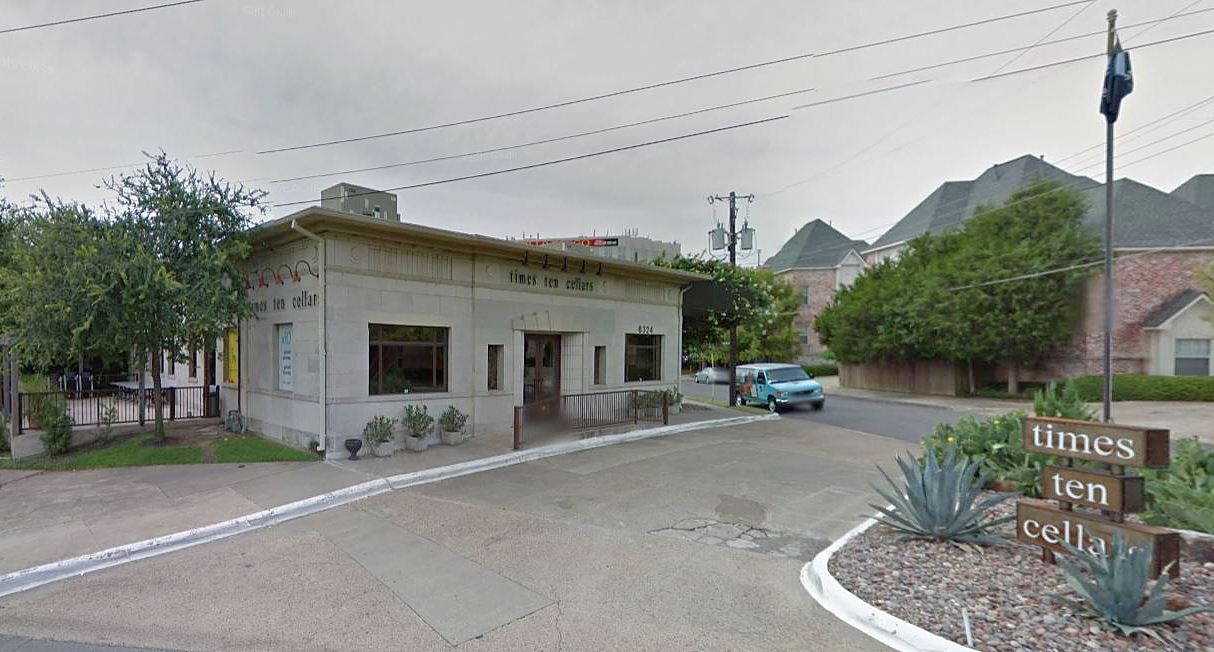
But back to the first post office — the building is still standing and houses the Times Ten Cellars wine bar! I’ve passed that building a lot over the years, but I guess I never paid much attention to it. I don’t know why, because it’s a great little building. It would never occur to me that it might ever have been a post office. I wish more businesses in Dallas would consider repurposing older buildings rather than building characterless boxes that look like every other characterless box. Thank you, Times Ten Cellars!
Google Street View (2015)
*
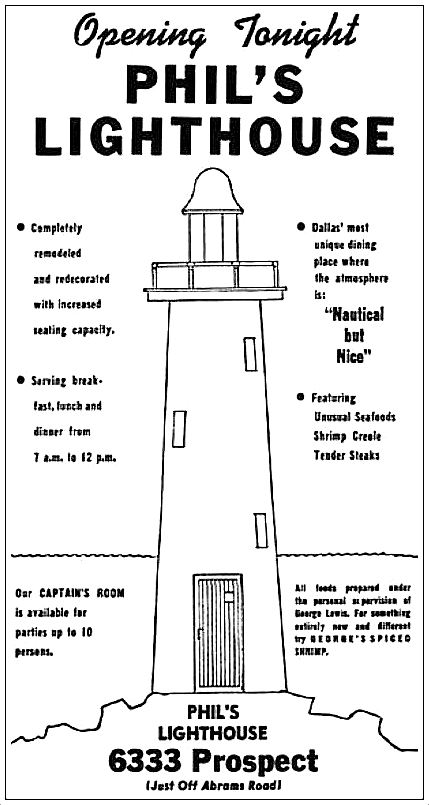
That Lighthouse “unusual sea foods” restaurant? It doesn’t seem to have lasted very long. It changed hands a few times before closing as the Lighthouse Cafe at the end of 1950. At one point it was known as Phil’s Lighthouse — “Dallas’ most unique dining place where the atmosphere is: ‘Nautical But Nice.'”
DMN, Dec. 16, 1949
That’s right … “NAUTICAL BUT NICE”!
***
Sources & Notes
If anyone remembers the Lighthouse restaurant: was it actually shaped like a lighthouse?
Detail of a page from the 1952 Mapsco showing the location of the old post office (click for larger image):
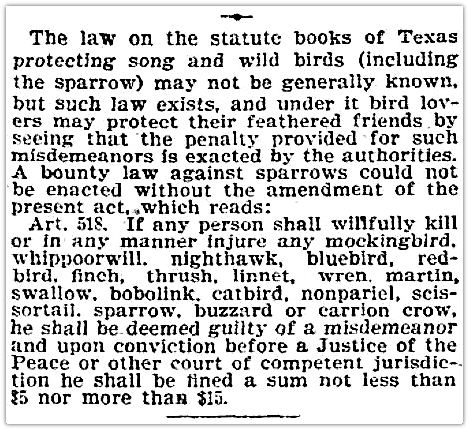
“…Remember, it’s a sin to kill a mockingbird.” That was the only time I ever heard Atticus say it was a sin to do something, and I asked Miss Maudie about it.
“Your father’s right,” she said. “Mockingbirds don’t do one thing but make music for us to enjoy. They don’t eat up people’s gardens, don’t nest in corncribs, they don’t do one thing but sing their hearts out for us. That’s why it’s a sin to kill a mockingbird.”
Dairy Queen, 1238 S. Buckner — 1956 (click for larger image)
by Paula Bosse
The community of Pleasant Grove was first settled in the 1840s but didn’t officially become part of Dallas until it was annexed in 1954 after a huge postwar surge in population. Upon annexation, the schools that made up the Pleasant Grove Independent School District became part of the DISD, including Pleasant Grove High School, which was located on Lake June Road, between Conner and Pleasant Drive. PGHS closed when the brand new W. W. Samuell High School opened on January 28, 1957, halfway through the 1956-1957 school year. The photos here are from the yearbooks of the last three years that Pleasant Grove High School was open — most of the ads feature students inside or in front of the business establishments. And they’re great! (Click photos for larger images.)
*
Photos of overcrowded Pleasant Grove High School and its numerous out-buildings, 1955.
Pleasant Grove Pharmacy, Grady’s Clover Farm Grocery, and Grove Shoe Store:
1954
Worthington Service Station:
1954
Schepps Dairy:
1954
The Eatmore Hamburger System (greatest name EVER!!):
1954
Dasch Cleaners:
1955
Harvey Hayes, “The Insurance Man”:
1955
Cassidy’s Conoco Station, Tee-Pee Drive-In Grocery, and Gay and Jones Motor Co.:
1956
Worthington’s Magnolia Service Station (again) and Barrett’s Used Cars:
1956
W. W. Hughes Magnolia Service Station, E & L Service Shop (bicycle and lawnmower service), and, again, Pleasant Grove Pharmacy:
1956
Billie Price Real Estate and Maridell’s:
1956
Martin’s Sinclair Service Station (with a DQ photobomb):
1956
The Kaufman Pike Drive-In, “The Theater With a Heart”:
1956
And lastly, a very dark photo of Pleasant Grove High School from the 1948 yearbook:
1948
***
Sources & Notes
All photos and ads are from the 1954, 1955, and 1956 editions of The Bobcat, the Pleasant Grove High School yearbook.
More on the history of Pleasant Grove in southeast Dallas, here. More on the history of Pleasant Grove High School here and here. The confusing school changes revolving around the the PGISD/DISD switchover were a bit like musical chairs and affected attendance of numerous high schools (including Forest High School, Crozier Tech, and Woodrow Wilson), junior high schools, and elementary schools. Read about the details in the Dallas Morning News article “Mid-Term Switch Set for Students” (DMN, Jan. 6, 1957).
Google map showing Pleasant Grove and approximate location of PGHS, here.
“A great big howl of a hit!” (click for larger image)
by Paula Bosse
This photo shows the front of the Rialto theater, once located at Elm and Stone. I love the unavoidable promotion for the Jack Benny movie “The Horn Blows at Midnight,” but I love all that street life even more. And by the way, “Help Keep Dallas Clean”!
***
Photo from the July 28, 1945 issue of Motion Picture Herald.
My favorite young movie-crazy Dallas diarist, Muriel Windham, would absolutely have walked past this (she probably didn’t see it, though, because she wasn’t a big fan of Jack Benny). (For the record, I LOVE Jack Benny!)
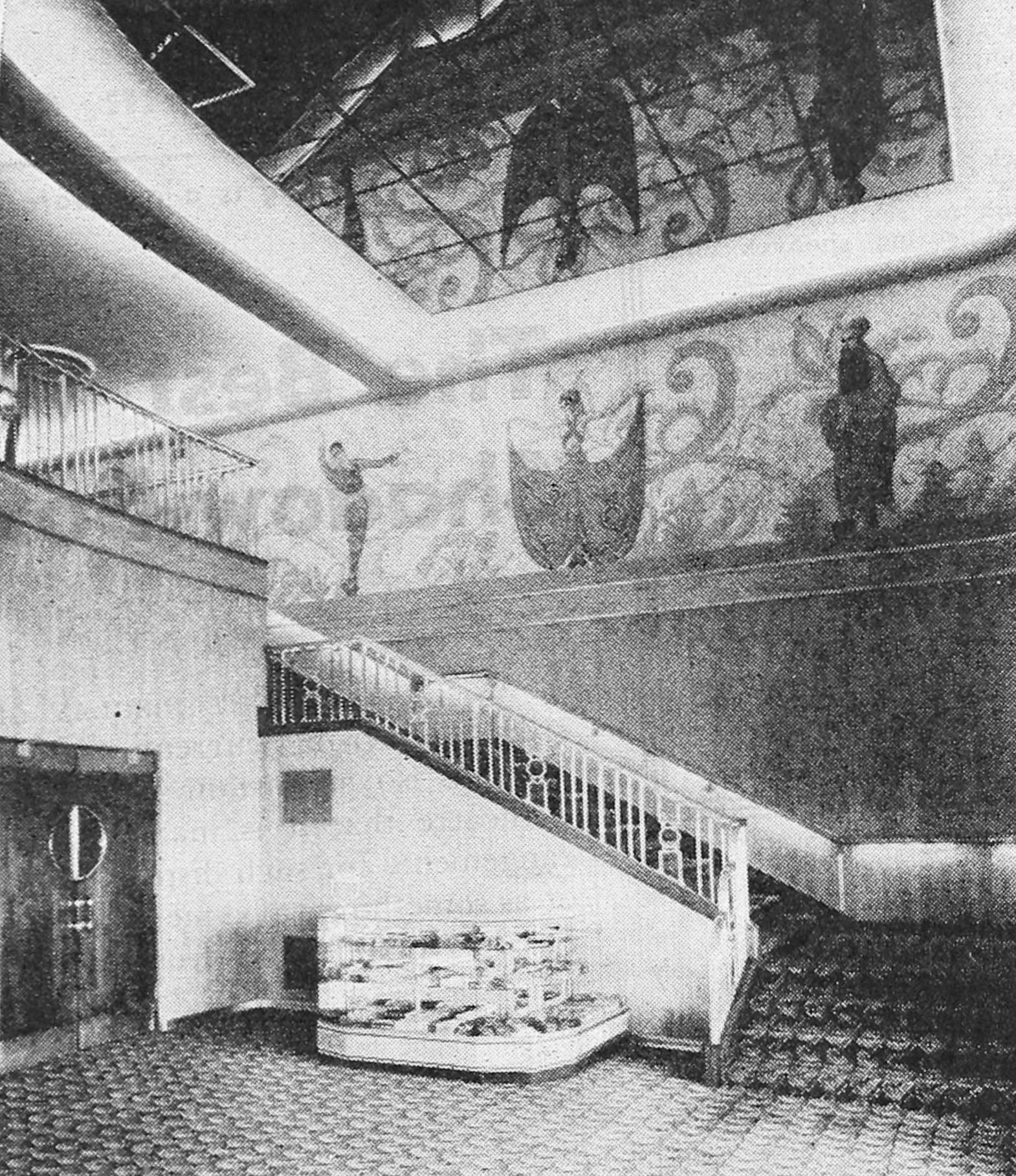
A well-lit staircase to the balcony (click for giant image)
by Paula Bosse
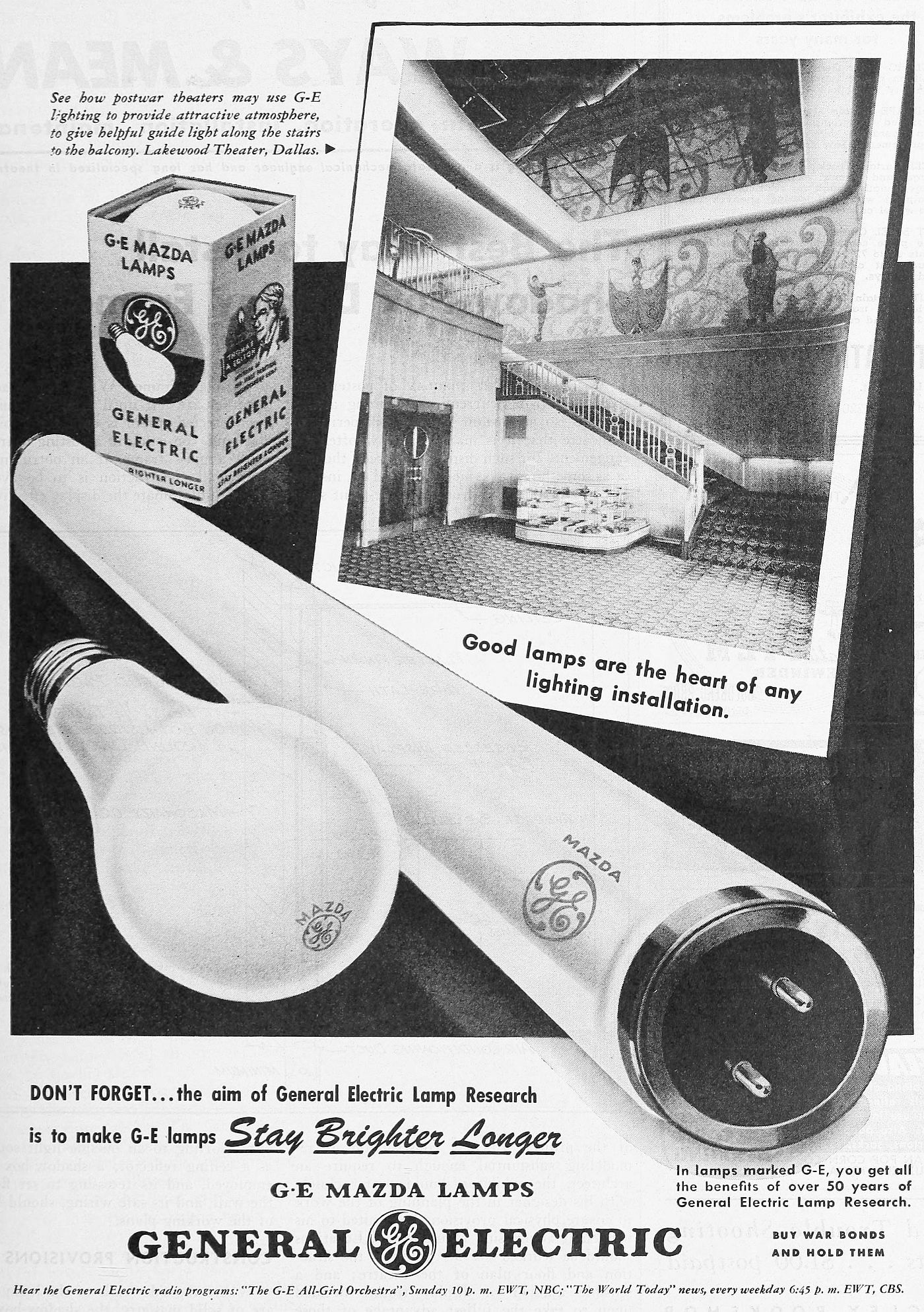
Occasionally one stumbles across a national advertisement featuring someone or something familiar to local audiences which elicits an involuntary exclamation like, “Hey! I know that guy!” I had a response kind of like that when I saw this General Electric light bulb ad featuring a photograph of the interior of the Lakewood Theater (showing a few figures from the mural by Woodrow boy Perry Nichols).
“See how postwar theaters may use G-E lighting to provide attractive atmosphere, to give helpful guide light along the stairs to the balcony.”
Yes, the Lakewood certainly did have an “attractive atmosphere.”
***
Sources & Notes
Ad for G-E Mazda lamps appeared in the July 22, 1944 issue of Motion Picture Herald. Click the above ad to see it much larger. To see it REALLY big, click here. (Apologies for the bleed-through of the ad on the other side of the page. If you’re a Photoshop wizard who can remove the offending ghost letters plastered across Nichols’ whimsical mural, I’d love a cleaned-up version.)
I have no idea what’s going on with the beleaguered Lakewood Theater these days, but if you’d like to see those murals in color, see the photos in the Lakewood Advocate, here.


 Dec. 8, 1966 (photo by Squire Haskins; UTA Libraries)






 Lakewood Post Office, 6324 Prospect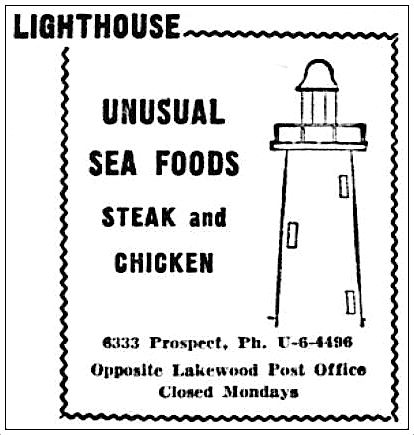
 DMN, Nov. 29, 1905


 Flashback : Dallas