Flashback : Dallas

A Miscellany: History, Ads, Pop Culture

Tag: Dallas TX

Walking on the Wild Side at Commerce & Akard (Crowdsourcing)

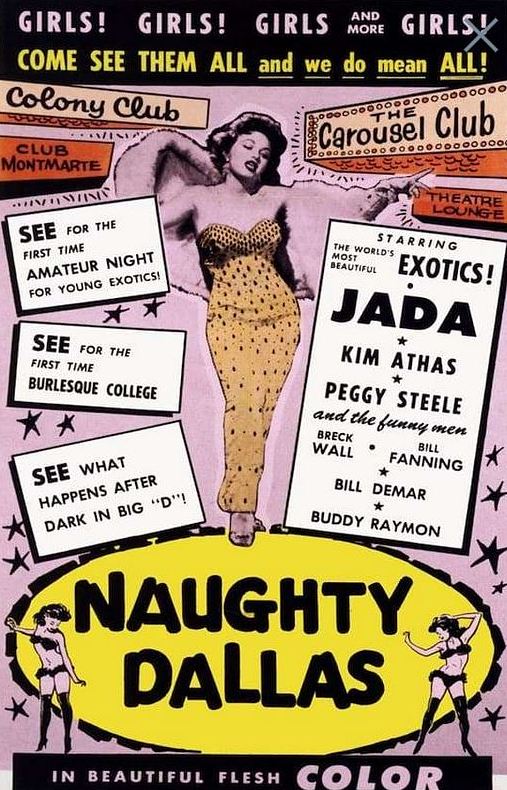
naughty-dallas_poster

by Paula Bosse

Occasionally on the Flashback Dallas Facebook page I ask questions, hoping to crowdsource answers — and people on that page know a lot of obscure stuff! I attempted to post the question(s) below on F*cebook, but I apparently crossed some sort of line. I think I used too many “forbidden” words. When I tried to post, the screen froze and ultimately ate my (lengthy) question. *Poof*! So I shall bypass F*cebook and just post it here.

I am looking for anyone who might have first-hand knowledge about the illicit side of downtown Dallas nightlife in the early 1960s. I am particularly interested in the seedier activities which might have been going on in the Baker Hotel. Namely, gambling and prostitution. Please contact me if you worked at the Baker (or the Adolphus) between, say, 1960 and 1964.

I know these activities were going on all around Dallas, but was it common to find illegal card games and prostitution going on inside the swanky hotels? If so, managers – and cops – must have known. Would they have turned a blind eye? Would they have been aware and on the take? Would they have just accepted it as part of the hotel business? I mean, Dallas was/is a huge convention city – this sort of thing must have been everywhere!

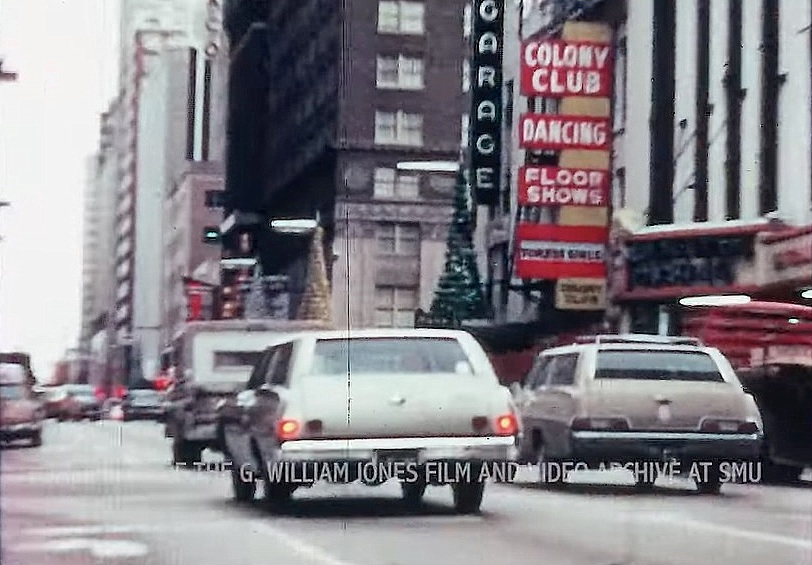
Would dancers who performed at the Colony Club have stayed at the Baker or Adolphus? They seem kind of ritzy for people in that line of work. Would management have cared if strippers stayed in their hotels? Would there have been a higher tolerance for more discreet “call girls” than your average run-of-the-mill prostitute? (I don’t mean to suggest that dancers were prostitutes, but, since I’m typing this, was it known that prostitution connected with the Colony Club or Carousel Club was going on?)

There is an amusing Dallas Morning News article titled “Officer Says Syndicated Crime Doubtful in Dallas” (DMN, Oct. 8, 1963) in which a vice cop proudly proclaims organized crime just doesn’t really exist in Big D. That seems highly unlikely, but I’m not even talking about big-time crime – more like high-stakes poker games with local high-rollers and pimping done by small-time operators. How common would it have been for this sort of thing to be going on in Dallas’ two most upscale hotels?

If you worked at the Baker Hotel in the early ’60s — or if you were employed by the Dallas Police Department at that time – or if you, yourself, were a participant in the seedier side of Dallas nightlife and spent significant time hanging around Commerce & Akard doing naughty things! – please comment below or send me an email at FlashbackDallas214@gmail.com.

This has nothing to do with the assassination, even though it’s the same time-period and there is undoubtedly a lot of overlap. But, seriously: NOTHING TO DO WITH YOU-KNOW-WHAT.

Thanks!

–Paula

***

Sources & Notes

Poster of “Naughty Dallas” (directed by cult Dallas director Larry Buchanan) found somewhere on the internet.

naughty-dallas_poster_sm

*

Copyright © 2023 Paula Bosse. All Rights Reserved.
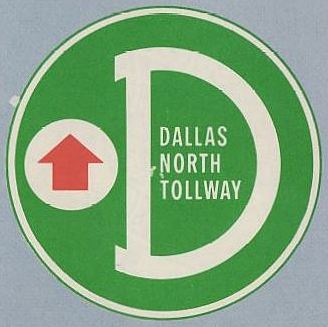
The Dallas North Tollway — 1968

tollway_dallas-north-tollway_brochure_1972_tx-tech_detHead north, young man…

by Paula Bosse

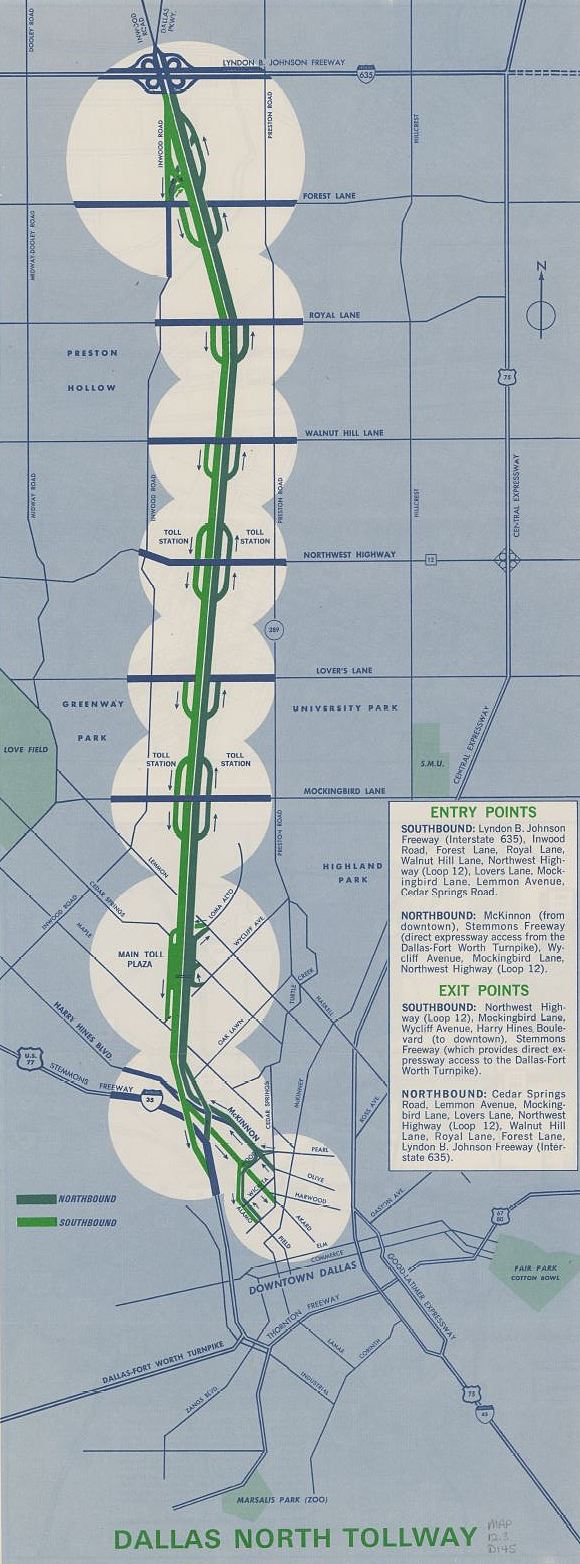
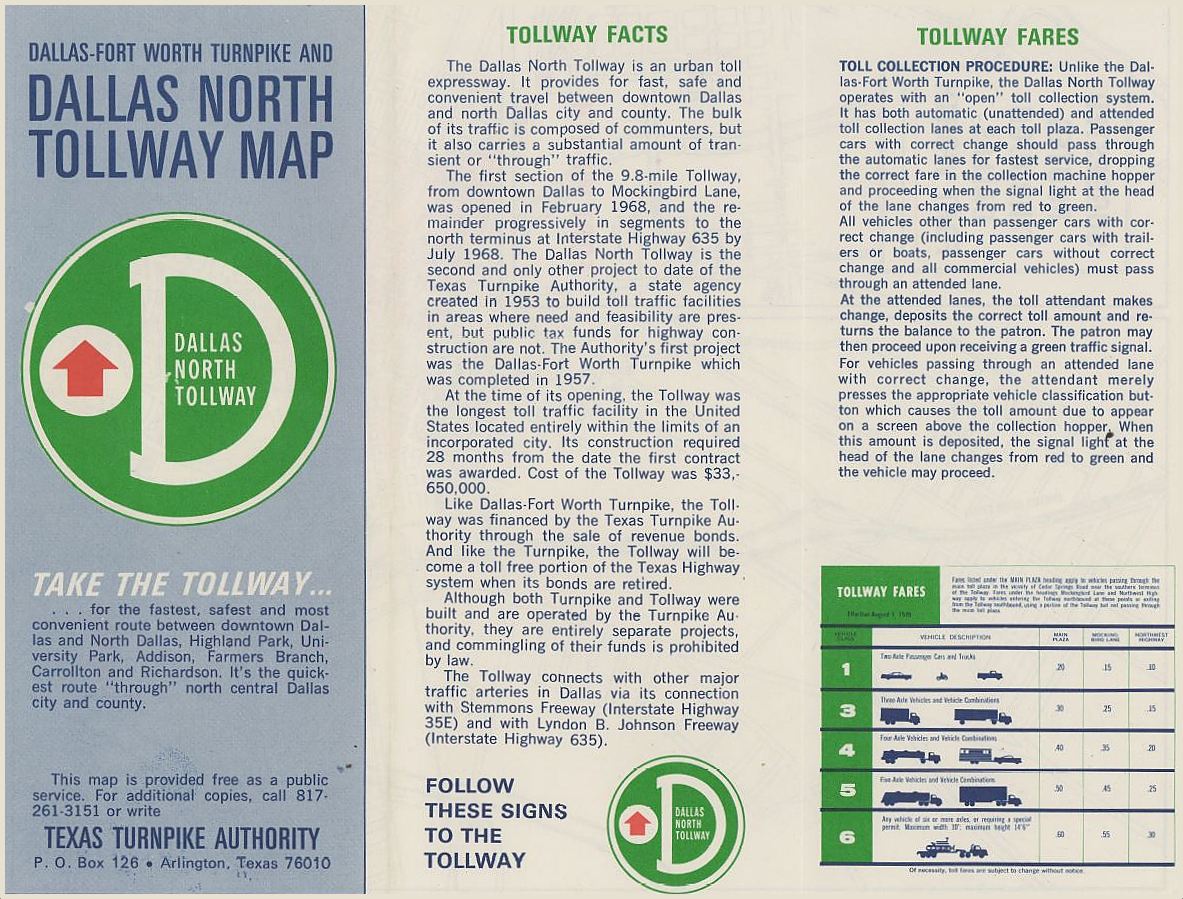
The Dallas North Tollway opened in stages, as stretches were completed. The first bit of its 9.8 miles opened in February 1968, and it was fully open by June 1968. From downtown to LBJ. Am I crazy, or does that seem incredibly fast?

On its opening day, an ecstatic Texas Turnpike Authority official told reporters, “People love it to death.” Which is something you don’t hear said everyday about a toll road.

When one speaks of the tollway, one often muses to oneself, “Shouldn’t this thing be paid off by now?”

Here’s what the Texas Turnpike Authority assured taxpayers back then in that Summer of Love:

Like Dallas-Fort Worth Turnpike, the Tollway was financed by the Texas Turnpike Authority through the sale of revenue bonds. And like the Turnpike, the Tollway will become a toll-free portion of the Texas Highway System when its bonds are retired.

Unbelievably, the DFW Turnpike DID become a “free” highway, but I think we all know that will never happen again. But, just for an amusing tidbit to toss around at your next smart cocktail party, here’s when that was supposed to happen (from the final paragraph of a very comprehensive Dallas Morning News overview of the history of the tollway):

If the traffic keeps going up and coincides with projections, the tollway may become part yours — as a Texas citizen — on Jan. 1, 2005. That’s when the last bond payment is due. (DMN, June 2, 1968)

I guess the important word there was “may.”

tollway_dallas-north-tollway_1972_tx-tech

tollway_dallas-north-tollway_brochure_1972_tx-tech

I don’t really have any nostalgia connected with the tollway, but I do kind of miss hurling a fistful of change at that basket.

***

Sources & Notes

Dallas North Tollway brochure (1972) is from the Southwest Collection Maps, Special Collections Library, Texas Tech University — it can be downloaded here.

The very informative article referenced above is “Dallas North Tollway: A Long Road is Ending” by Jimmie Payne (Dallas Morning News, June 2, 1968).

tollway_dallas-north-tollway_brochure_1972_tx-tech_det

*

Copyright © 2023 Paula Bosse. All Rights Reserved.

Dallas Hall, The Early Days

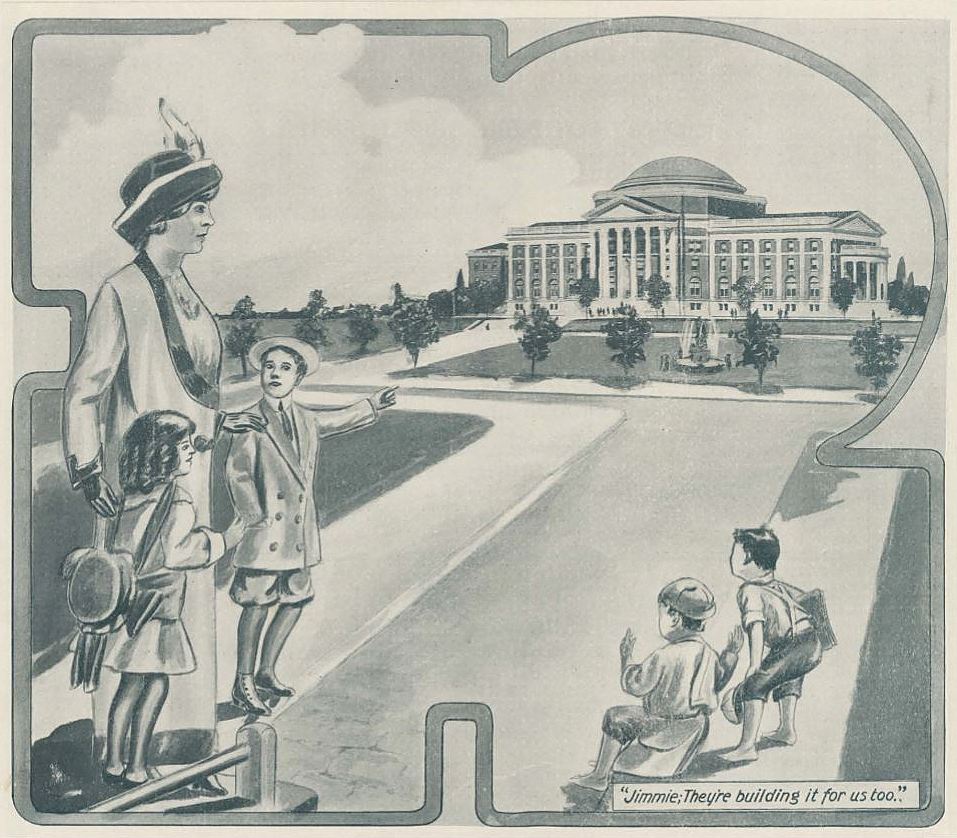
SMU_building_the-campus-mag_july-1912_coverBuild it and they will come, Jimmie…

by Paula Bosse

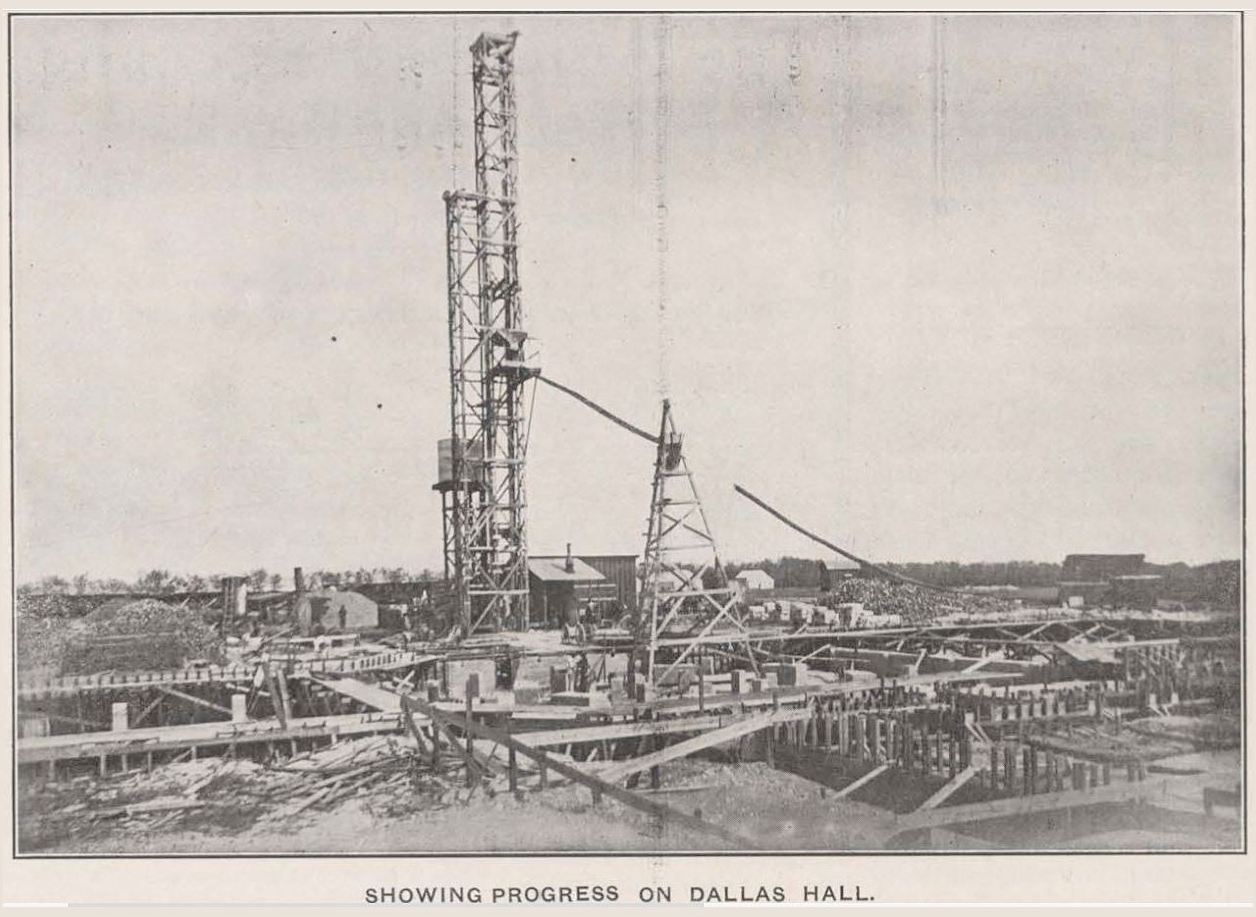
I can’t even remember what I was looking for in the SMU Libraries database when I stumbled across a collection of magazines/newsletters called The Campus, from 1912-1914. It’s pretty dry reading, but they appear to be updates sent out to moneyed Methodists who were actively working on raising funds for construction of the new Southern Methodist University in Dallas. There are the occasional interesting ads (especially for the Methodist-owned real estate which surrounded the campus and would soon generate substantial moolah) and progress reports on the construction of the first building, the magnificent Dallas Hall. Here are a few of the photos.

“Showing progress on Dallas Hall” (1912) — this is great:

SMU_dallas-hall_construction_the-campus-mag_oct-1912

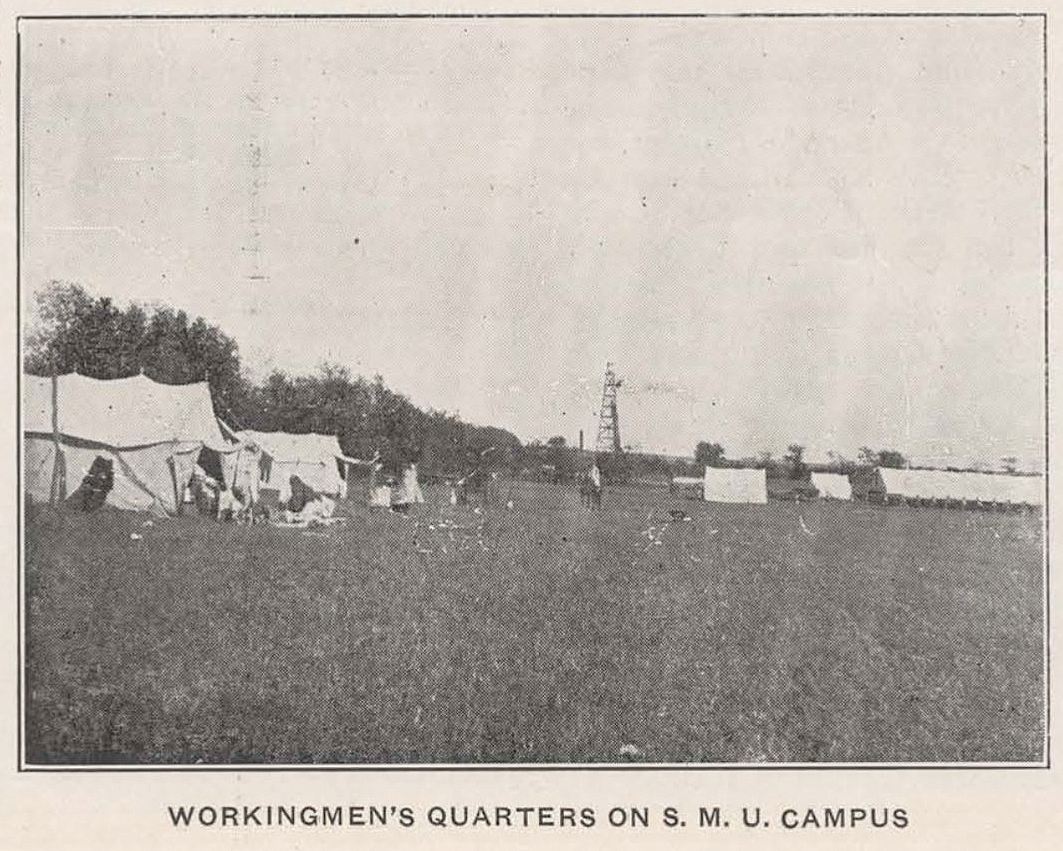
“Workingmen’s quarters on S.M.U. campus” (1912) — this is greater (tents! — is that a horse in there?):

SMU_dallas-hall_construction_the-campus-mag_oct-1912_workers-tents

“Dallas Hall — as it appears today” (1913):

SMU_dallas-hall_construction_the-campus-mag_march-1913

And finally, all shiny and ready to open for business (1915):

SMU_dallas-hall_the-campus-mag_ca-1914_cover

Lastly, an architectural drawing, which I’d like to think construction workers might have glanced at occasionally to make sure everything was going in the right place — like dissectologists using the lid of a jigsaw puzzle box. (Incidentally, $300,000 in 1912 was equivalent to about $9.5 million in today’s dollars. I think it might have ended up costing more by the time it was finished.)

SMU-dallas-hall-drawing_the-campus-mag_july-1912

***

Sources & Notes

All images are from various issues of The Campus, all of which may be accessed on the SMU Libraries site here; (DeGolyer Library, SMU Libraries, SMU Archives, Southern Methodist University).

See a couple of great photos of Dallas Hall under construction: domeless, and mid-dome (DeGolyer Library).

Other Flashback Dallas posts on the very early years of SMU:

This post originated in a post I made last week on my Patreon page, which I update daily. If you would like to subscribe to that page for as little as $5 a month, please hie yourself over there!

*

Copyright © 2023 Paula Bosse. All Rights Reserved.
Tornado Snapshots — 1957

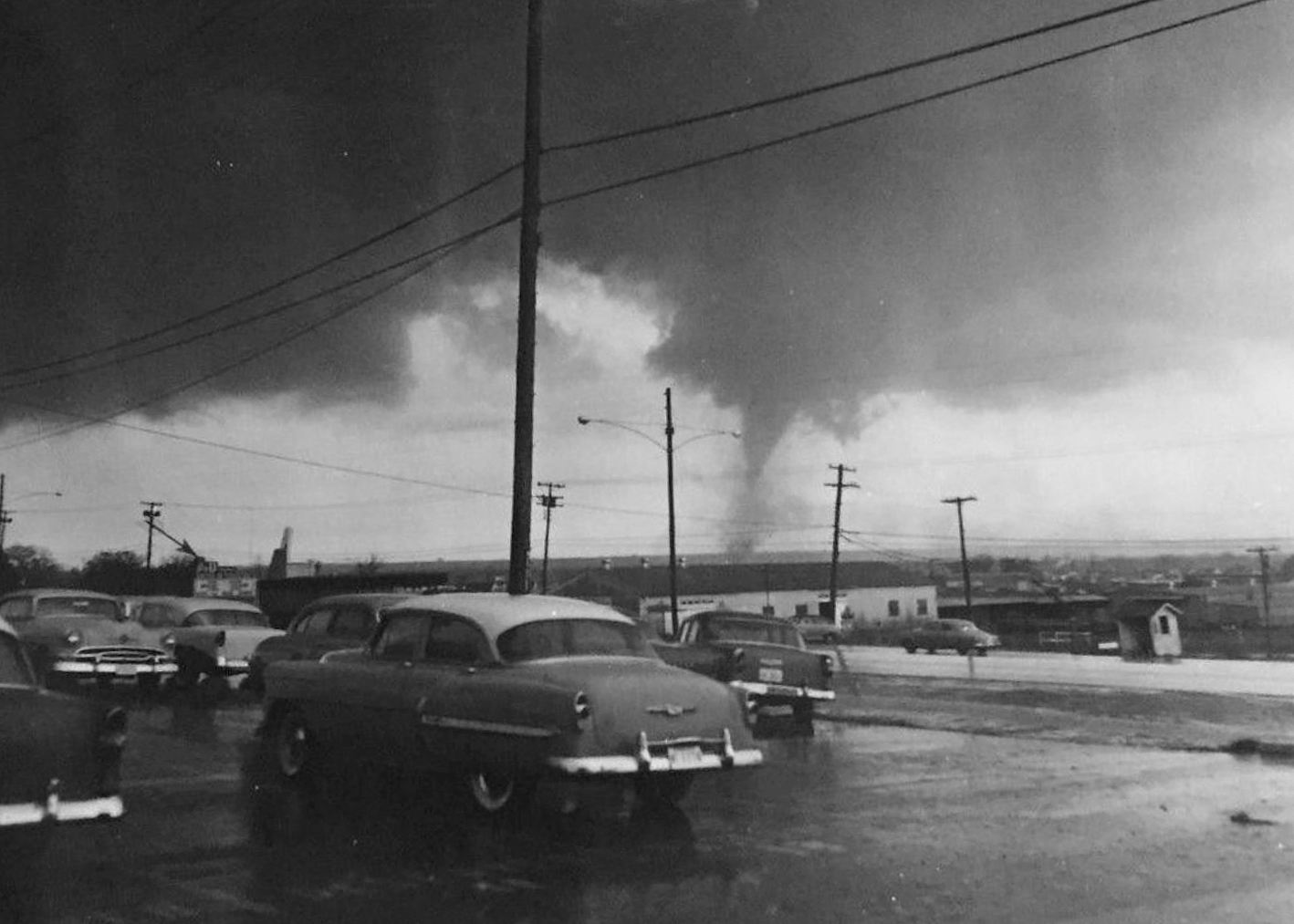
tornado_1957_ebay_3April 2, 1957, Oak Cliffwards…
by Paula Bosse

A few photos of the infamous April 2, 1957 tornado which hit Dallas and was, at the time, the most photographed tornado in history. See more photos (and film footage) in the 2014 Flashback Dallas post “Tornado as Learning Tool — 1957.”

tornado_1957_ebay_1

tornado_1957_ebay_2

tornado_1957_ebay_4

***

Sources & Notes

All four photos were sold as one lot on eBay several years ago.

In addition to the post linked above, here are a few other tornado-related posts:

tornado_1957_ebay_3_sm

*

Copyright © 2023 Paula Bosse. All Rights Reserved.

Ex-Slaves in Dallas — 1937

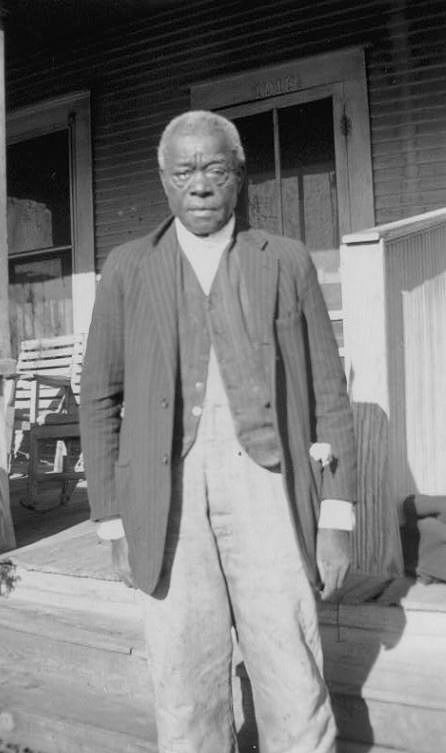
ex-slave_william-moore_WPA_LOC_122137William Moore

by Paula Bosse

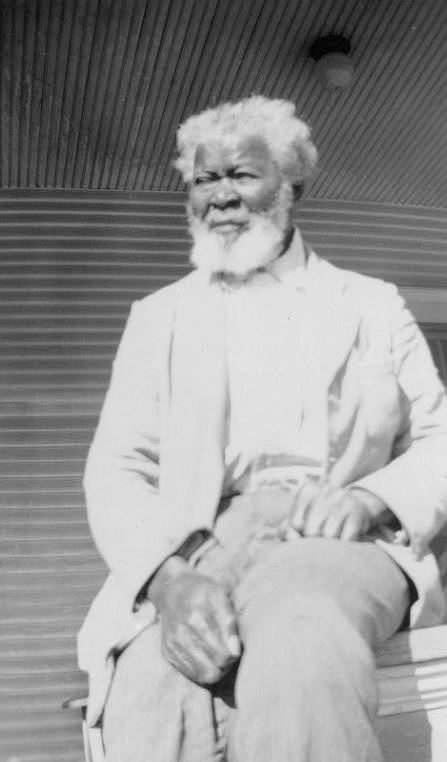
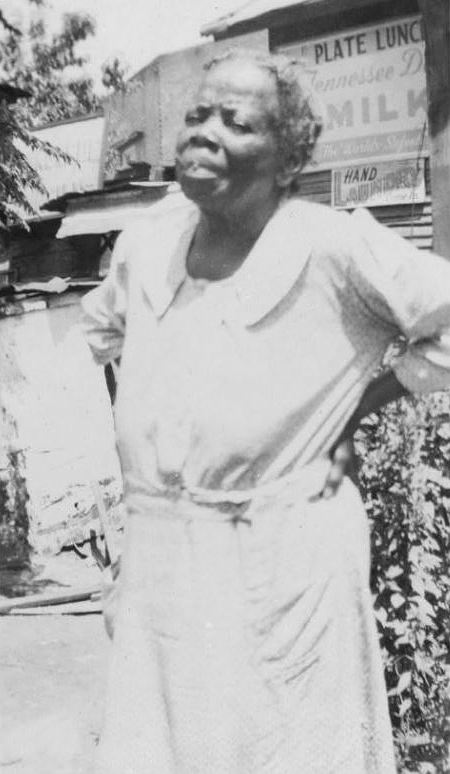
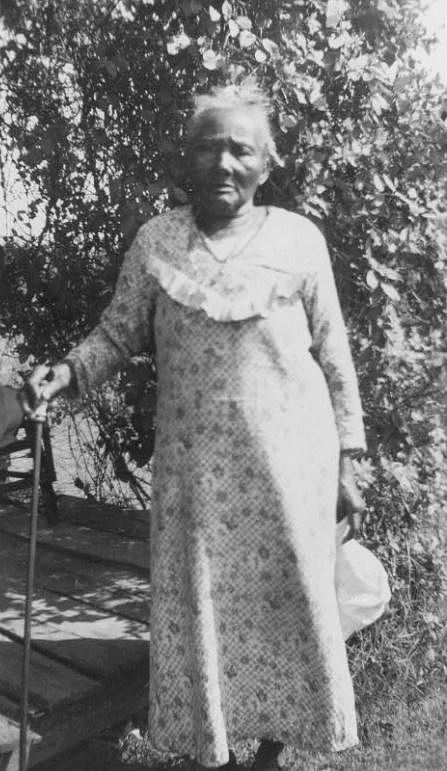
These six portraits of ex-slaves who were living in Dallas in 1937 were included in Born in Slavery: Slave Narratives from the Federal Writers’ Project (Works Progress Administration/Work Projects Administration — WPA). See all of the Dallas portraits here.

UPDATED: Thanks to a comment from a reader, I’ve linked to the oral histories of those photographed. Click the links below the photos to read about their lives.

**

Above, William Moore was born in Selma, Alabama about 1855; in 1937 he was living at 1016 ½ Good Street in Dallas.

*

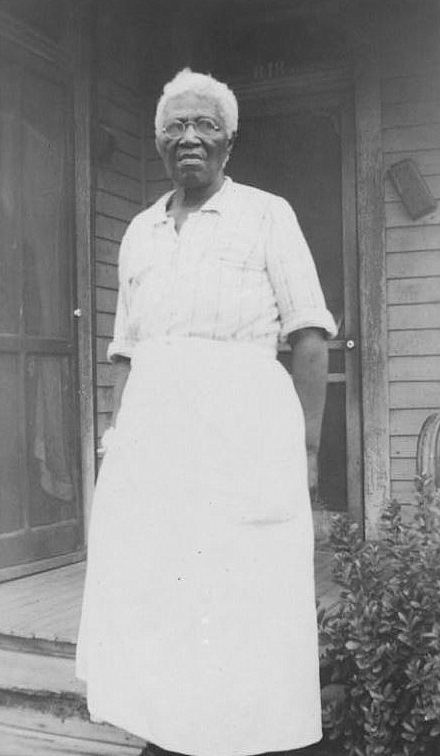
Below, Emma Watson was born in Ellis County about 1852; in 1937 she lived at 318 Allen Street.

ex-slave_emma-watson_WPA_LOC_090537Emma Watson

*

Mose/Moses Hursey was born in Louisiana about 1855; in 1937 he lived at 1120 Tenth Street.

ex-slave_mose-hursey_WPA_LOC_120137Mose Hursey/Moses Hursey

*

Mary Ellen Johnson was born near San Marcos about 1860; in 1937 she owned a cafe at 1301 Marilla.

ex-slave_mary-ellen-johnson_WPA_LOC_ca-1937Mary Ellen Johnson

*

Callie Shepard/Shepherd was born near Gilmer in 1852; in 1937 she lived at 4701 Spring Avenue.

ex-slave_callie-shepard_WPA_LOC_ca-1937Callie Shepard/Callie Shepherd

*

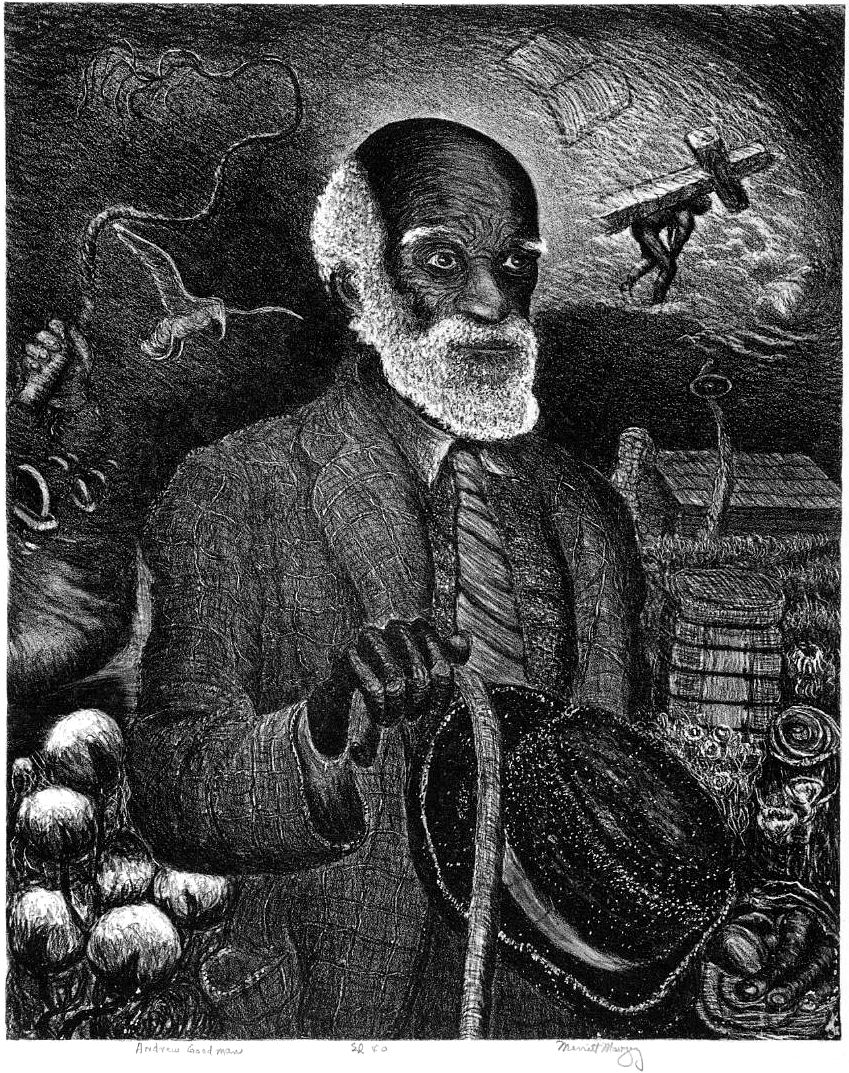
Andrew Goodman was born near Birmingham, Alabama about 1840; in 1937 he lived at 2607 Canton.

ex-slave_andrew-goodman_WPA_LOC_120137Andrew Goodman

Update, Jan. 2024: I came across this portrait of Andrew Goodman by Dallas-trained artist Merritt Mauzey (1946, Smithsonian American Art Museum):

mauzey-merritt_andrew-goodman_portrait_smithsonian-art-museum_1946

*

From the Library of Congress site devoted to this project:

“Born in Slavery: Slave Narratives from the Federal Writers’ Project, 1936-1938” contains more than 2,300 first-person accounts of slavery and 500 black-and-white photographs of former slaves. These narratives were collected in the 1930s as part of the Federal Writers’ Project of the Works Progress Administration (WPA) and assembled and microfilmed in 1941 as the seventeen-volume “Slave Narratives: A Folk History of Slavery in the United States from Interviews with Former Slaves.”

***

Sources & Notes

As noted, all portraits from the WPA “Born in Slavery” project, hosted on the Library of Congress website.

Related posts from Flashback Dallas:

ex-slave_william-moore_WPA_LOC_122137_sm

*

Copyright © 2023 Paula Bosse. All Rights Reserved.

Dads’ Day at Hockaday — 1947

hockaday_dads-day_life-mag_cornell-capa_1947_cokesMid-day snack in Lower Greenville

by Paula Bosse

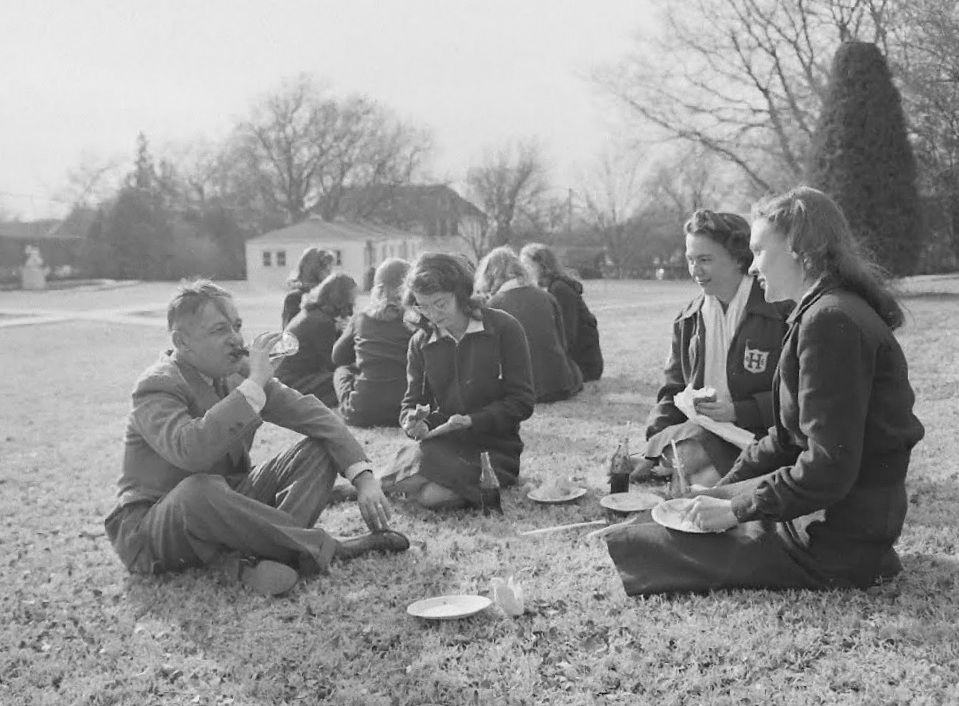
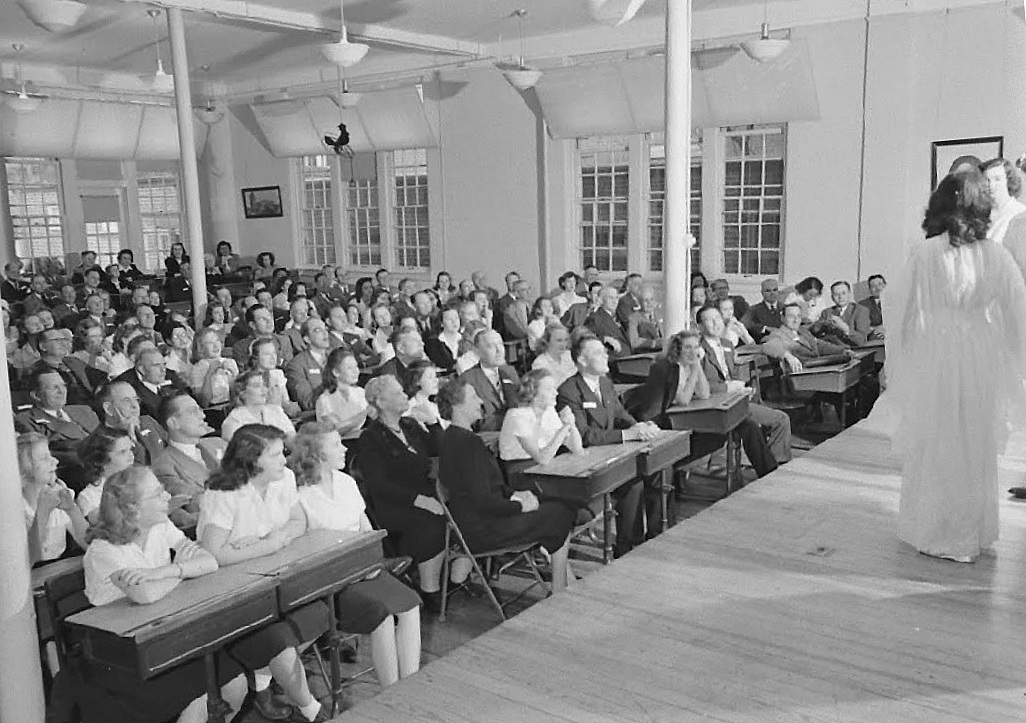
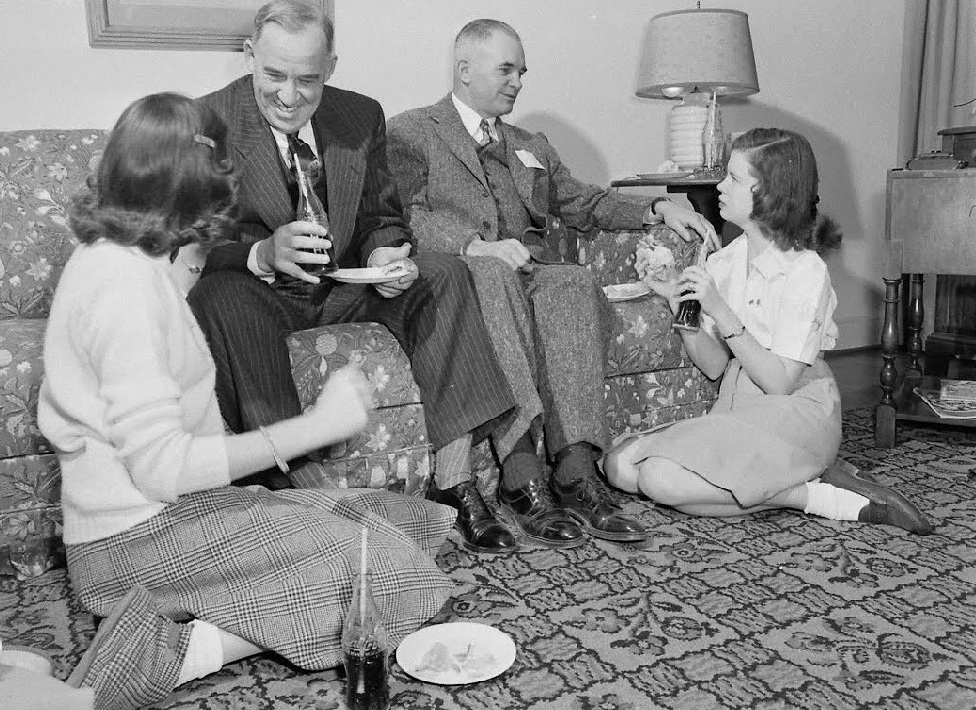
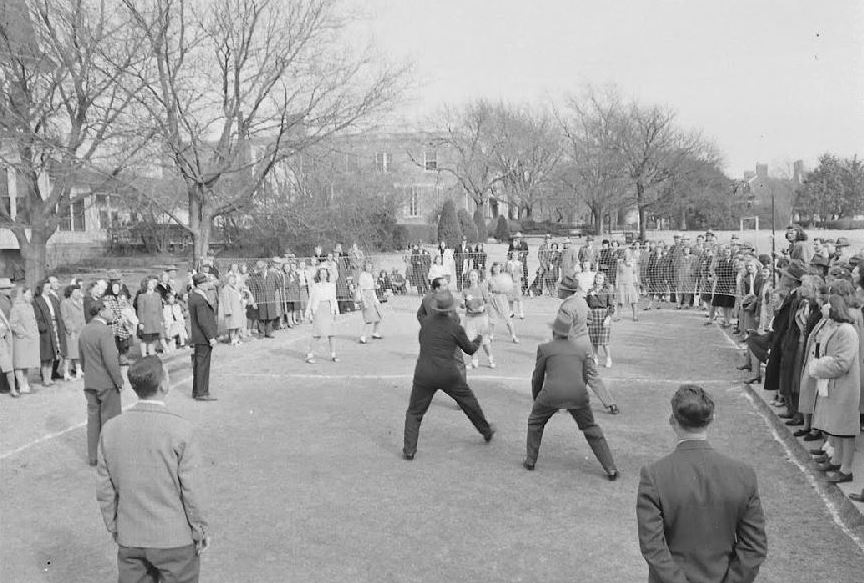
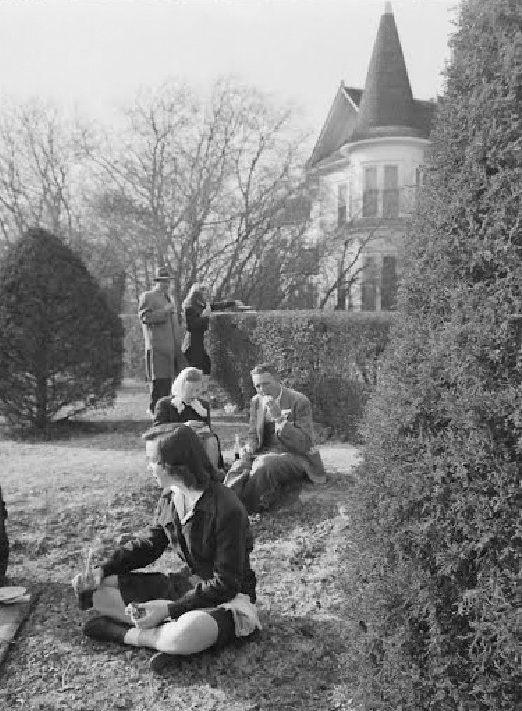
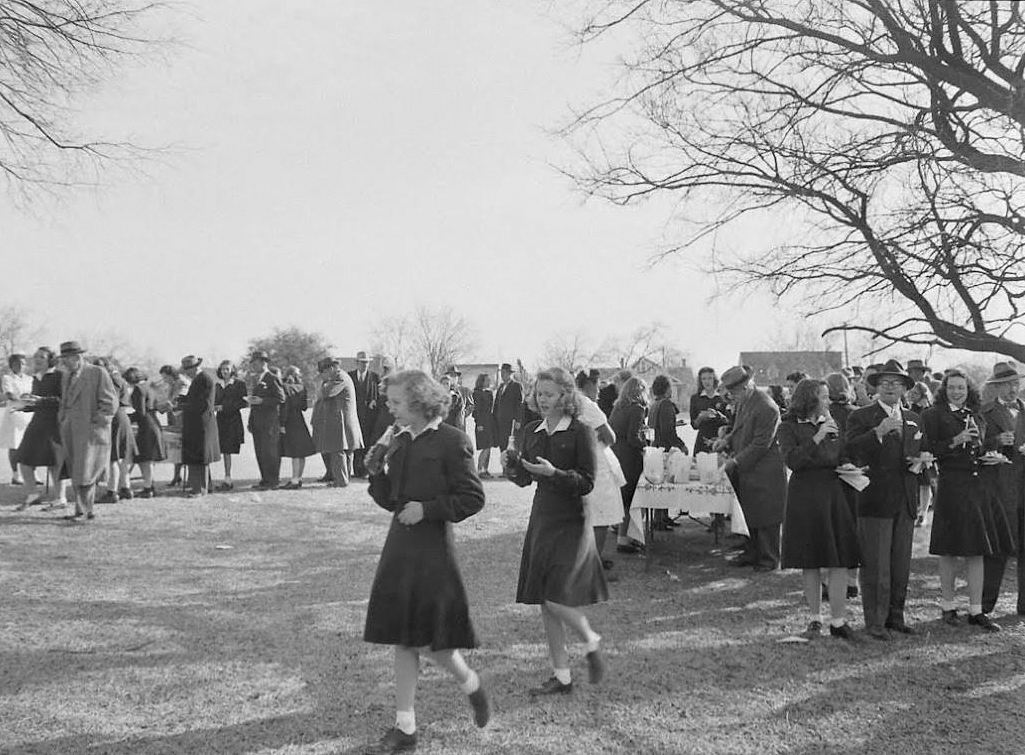
“Dads’ Day” at the Hockaday School for Girls, was a big thing. In this annual celebration, fathers (many of whom traveled from other states) would spend a few hours on the campus with their daughters, attend special programs and performances, visit classrooms, engage in friendly sporting matches against their daughters (volleyball, softball, kickball), and enjoy refreshments. In 1947, there was an al fresco Coke and hamburger lunch. But the big event was that night: a formal dinner in the Crystal Ballroom of the Baker Hotel. And, luckily for us, the Dads’ Day festivities of February 1947 were captured by Life magazine photographer Cornell Capa. A few of the photos appeared in the March 10, 1947 issue, in the story “Dad Has His Day; Texas Schoolgirls Invite Fathers to Come and Be Dates for a Day.” This Dads’ Day story even got the cover. Below are photos by Capa which weren’t used in the story.

*

Dads watching one of several presentations in their honor:

hockaday_dads-day_life-mag_cornell-capa_1947_performance

*

Sitting in a classroom. I don’t know who this girl is, but I love this photo of her. (If readers recognize any of the people in these photographs, please comment below.)

hockaday_dads-day_life-mag_cornell-capa_1947_desk

*

Hangin’ with the girls, enjoying refreshments:

hockaday_dads-day_life-mag_cornell-capa_1947_indoors_cokes

*

Volleyballing with hats on (I love this photo!):

hockaday_dads-day_life-mag_cornell-capa_1947_game

*

Enjoying more refreshments (lotta Coke at Hockaday…). (Note Bosque Bonita in the background, the property’s original house, Greenville and Belmont. Read more here.)

hockaday_dads-day_life-mag_cornell-capa_1947_bosque-bonita

*

More refreshments on a chilly February day:

hockaday_dads-day_life-mag_cornell-capa_1947_lunch

*

Girls who attended Hockaday as a boarding school, in a dorm, making the paper crowns which fathers will wear at the formal dinner at the Baker Hotel:

hockaday_dads-day_life-mag_cornell-capa_1947_dorm

*

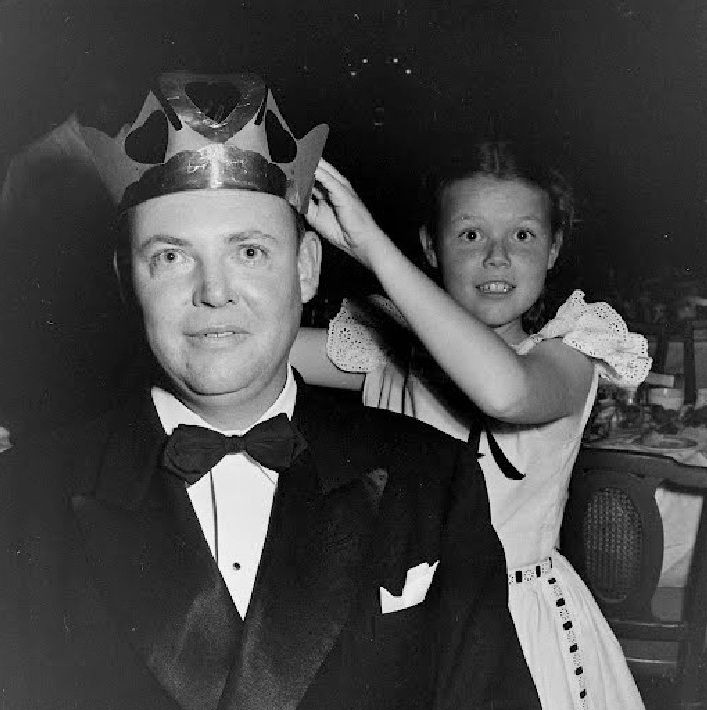
Below, Ann Seidenglanz (whose preparations for this big dinner were captured in the pages of Life — she even made the cover!) places a crown on her father’s head (Charles B. Seidenglanz):

hockaday_dads-day_life-mag_cornell-capa_1947_crown

*

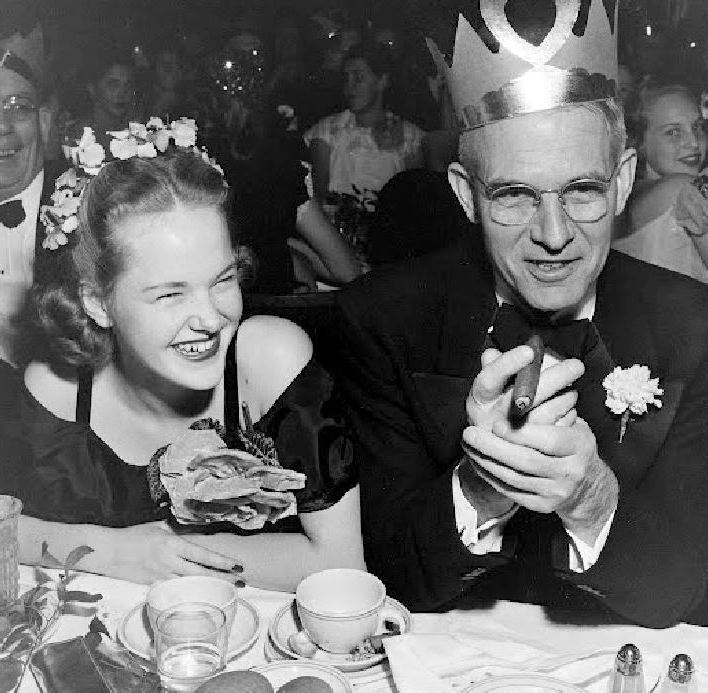
I don’t know who these people are, but I love this photo:

hockaday_dads-day_life-mag_cornell-capa_1947_baker-hotel

*

Jerrie Marcus was accompanied by her father, Stanley Marcus. (Jerrie Marcus Smith died in March of this year. Please check out the book she wrote about her great aunt Carrie Marcus — A Girl Named Carrie: The Visionary Who Created Neiman Marcus and Set the Standard for Fashion.)

hockaday_dads-day_life-mag_cornell-capa_1947_stanley-marcus_daughter - Copy

*

Miss Ela Hockaday, founder of the legendary school and, at the time of this photo, its president emeritus.

hockaday_dads-day_life-mag_cornell-capa_1947_miss-hockaday

***

Sources & Notes

Photos are by Cornell Capa, taken on assignment for Life magazine — none of the photos above appeared in the published article (March 10, 1947). See the published story here; see the photos Capa shot (almost all of which were never published) here. All photos Copyright: ©Time Inc.

hockaday_dads-day_life-mag_cornell-capa_cover_031047

None of the people in the photos above are identified, other than covergirl Ann Seidenglanz. And Stanley Marcus is obviously instantly recognizable to any Dallasite. If you can identify any of the others seen above, I’d be happy to add their names to this post.

Also, check out the lengthy Dallas Morning News story which preceded this Dads’ Day event (with studio photos of several fathers and daughters), in the DMN archives: “News of Women.” DMN, Feb. 9, 1947, Section III, p. 1, 2, 13.

More about the Greenville Avenue-era Hockaday campus can be found in the Flashback Dallas post “Belmont & Greenville: From Caruth Farmland to Hub of Lower Greenville.”

And you are always welcome to follow me on Patreon, where it’s Flashback Dallas every day, for as little as $5 a month.

hockaday_dads-day_life-mag_cornell-capa_1947_cokes_sm

*

Copyright © 2023 Paula Bosse. All Rights Reserved.

The Texettes, The Elite Corps of Texas Stadium Usherettes — 1971

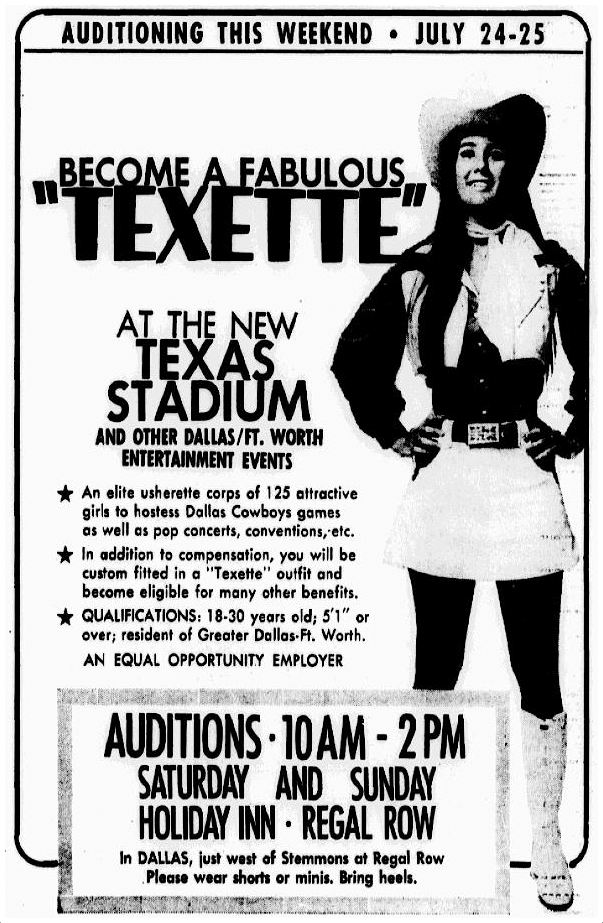
1971_texettes_ad_072171Become a fabulous Texette… (July 1971)

by Paula Bosse

I will never be accused of knowing anything about sports — or even about things that are sports-adjacent — but I’m fairly literate in pop culture, and I am genuinely surprised that, until yesterday, I had never heard of the “Texettes.” I have no idea how long they lasted (for all I know, they’re still around!), but it was from 1971 until at least 1984 (I say 1984 only because there was a classified ad in the The Dallas Morning News announcing Texette auditions in June of that year — but Blackie Sherrod mentions them in what I think is the present tense in a 1989 column, so they might have been around into the ’90s). Seriously, how have I never heard of them? There’s almost nothing about them online, which is weird, because they were around for a significant amount of time.

The ad above, announcing the first-ever Texette auditions, appeared in the Dallas and Fort Worth newspapers on July 21, 1971. The opening of the brand-new Texas Stadium was on the horizon (the first Dallas Cowboys game to be played there was on Oct. 24, 1971), and the huge stadium was going to be 100% unfamiliar to Cowboys fans — they were going to need people to help them find stuff. Here’s where the Texettes came in. They were described as “hostesses” and “usherettes” who wore mini-skirts and go-go boots. Open auditions were held to find 125 Texettes. Hopefuls were advised to wear hotpants or mini-skirts and heels. The only qualifications appear to have been that the “girls” be between the ages of 18 and 30, at least 5’1″, DFW residents, and attractive.

*

BECOME A FABULOUS ‘TEXETTE’ AT THE NEW TEXAS STADIUM
and other Dallas/Ft. Worth entertainment events.

  • An elite usherette corps of 125 attractive girls to hostess Dallas Cowboys games as well as pop concerts, conventions, etc.
  • In addition to compensation, you will be custom fitted in a “Texette” outfit and become eligible for many other benefits.

**

Texettes were “hostesses” who smiled and welcomed people to the stadium, helped fans find their seats, and gave tours. (They also seem to have functioned as something not far removed from cocktail waitresses in the press box.) The first year (1971) they were paid $8 a game (equivalent in today’s money of about $60). They also appeared at various DFW events as sort of all-purpose Chamber-of-Commerce-like greeters with toothy smiles and toned thighs.

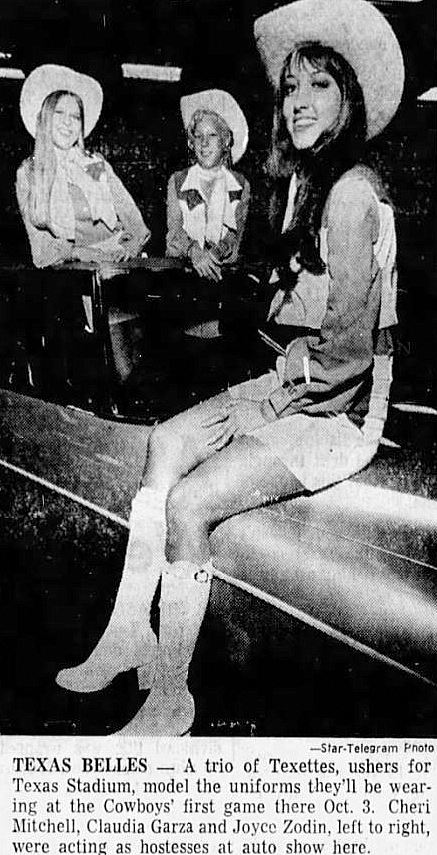
Their outfits consisted of white knee-high go-go boots, blue mini-skirts, white blouses, vests, yellow neckerchiefs, and white cowboy hats. They pre-dated the “sexy”-era of Dallas Cowboys Cheerleaders (before the famous cheerleaders we know today, high school students cheered the team on at the Cotton Bowl), but the Texettes’ Western-inspired, drill-team-inspired costumes might have served as a kernel of the inspiration for those of the Dallas Cowboys Cheerleaders. It’s interesting (to me, anyway) that the Texettes and the Cheerleaders existed at the same time for a few years — for quite a while, in fact. Seems like they might cancel each other out. But I guess the Texettes were more cute-girl-next-door cowgirls in the stands, and the cheerleaders were sexy-girl-you’ll-never-be-able-to-talk-to-in-real-life cowgirls on the field.

As I said, I’d never heard of this “elite usherette corps” before yesterday. If anyone knows how long they were a thing, please comment below.

**

I’ve found two bits of film of Texette auditions (both are in the indispensable WFAA archives held by the Jones Film Collection at SMU). The first is from July 1971 (the same audition advertised in the top ad) — it can be seen in Channel 8 footage below (there are two separate clips — at the 19:44 mark and at the 24:26 mark). The report is delivered by a frightened man giving off “Tim Calhoun” vibes.

*

A later report — from 1975 — shows another try-out. The reporter notes that the job has unique perks, like maybe finding a football-player husband or catching the eye of a talent scout. By then, the pay had jumped to $10 an appearance, and there were a lot more applicants.

*

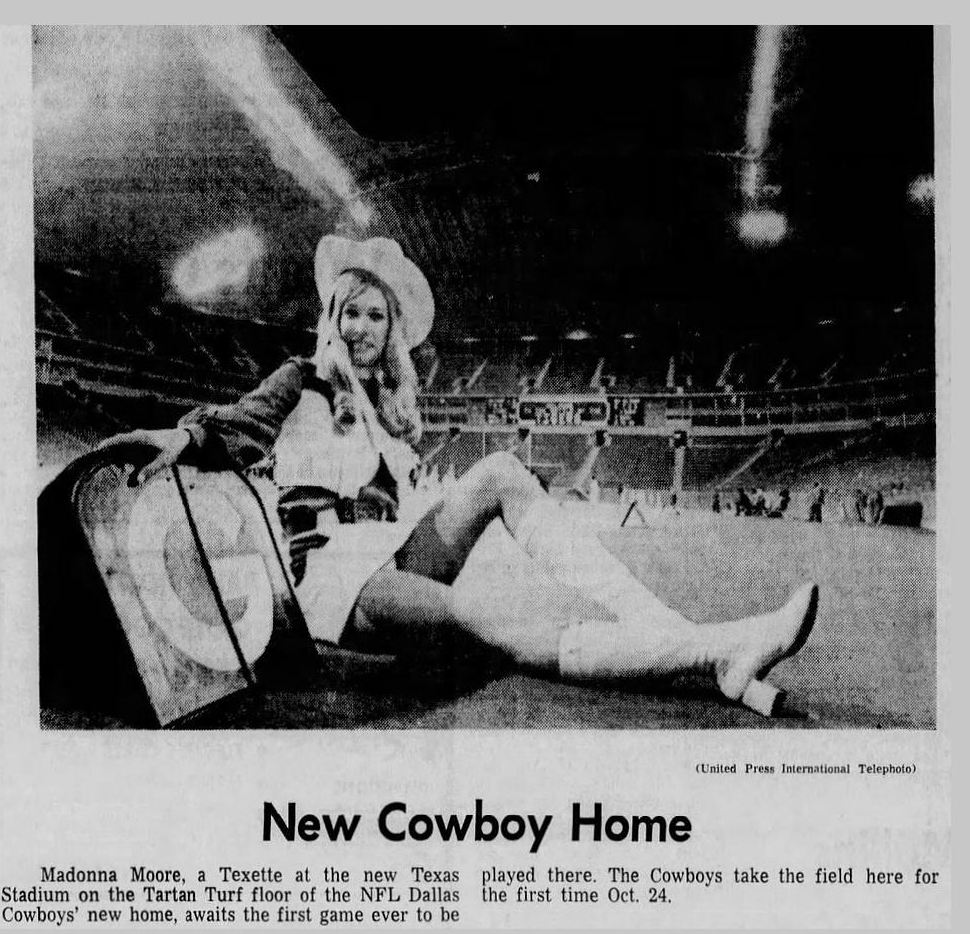
Below, a new Texette (Madonna Moore) on the field at Texas Stadium. This might have been taken on Oct. 15, 1971, the day the very first football game was played there (local team Bishop College lost to Texas Southern University, 34-21).

1971_texettes_bradenton-FL-herald_101671Bradenton (FL) Herald, Oct. 16, 1971

*

Showing off their new outfits are Texettes Cheri Mitchell, Claudia Garza, and Joyce Zodin. (The caption was incorrect about the date the Cowboys would take the field — that wasn’t until Oct. 24, 1971, in a game against the New England Patriots, which they won 44-21.)

1971_texettes_FWST_091671Fort Worth Star-Telegram, Sept. 16, 1971

*

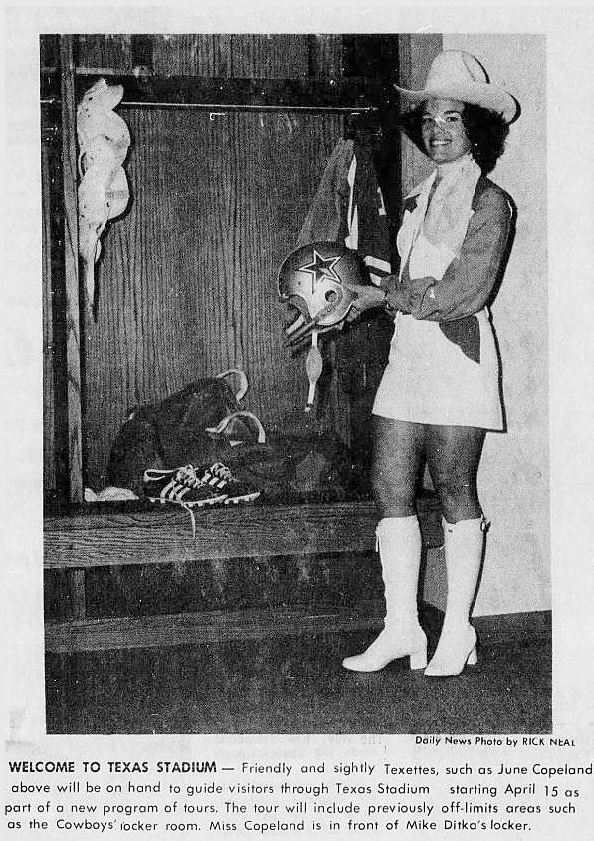
Texette June Copeland stands in front of Mike Ditka’s locker, which appears to have been rifled through.

1972_texettes_irving-daily-news_040572Irving Daily News, Apr. 5, 1972

*

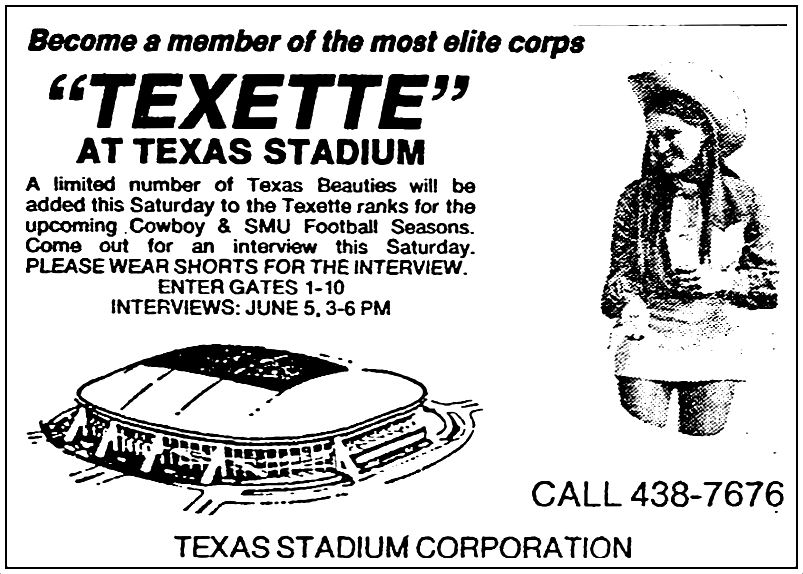
The Texettes were still going strong in 1982 as they entered their 11th year. I think the skirt has gotten shorter.

1982_texettes_ad_060382June 1982

*

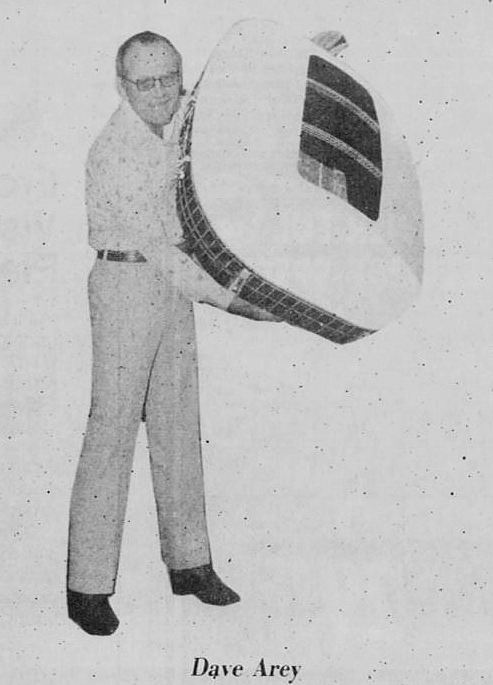
This has nothing to do with the Texettes, but I love this photo of Dave Arey, director of operations at Texas Stadium. He’s seen here holding a replica of the stadium, which seems like it would have been perfect as a doggie bed.

texas-stadium_dave-arey_irving-daily-news_082276Irving Daily News, Aug. 22, 1976

*

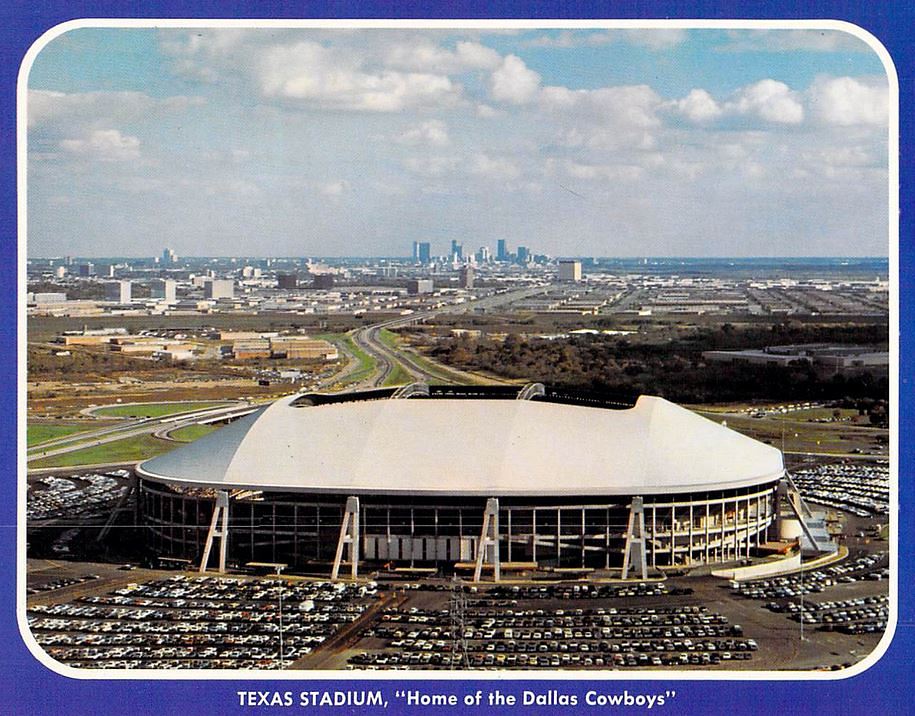
texas-stadium_postcard_ebay

***

Sources & Notes

This originally appeared in a slightly different form this morning as a post on my Patreon page (where I post daily Dallas-history tidbits for subscribers who are generously supporting me for as little as $5 a month).

1971_texettes_ad_072171_sm

*

Copyright © 2023 Paula Bosse. All Rights Reserved.

A Few Photo Additions to Past Posts — #20

peruna_smu-rotunda_1939
Cute little Peruna…

by Paula Bosse

Time to organize creeping clutter — here are a few things I’ve added to old posts.

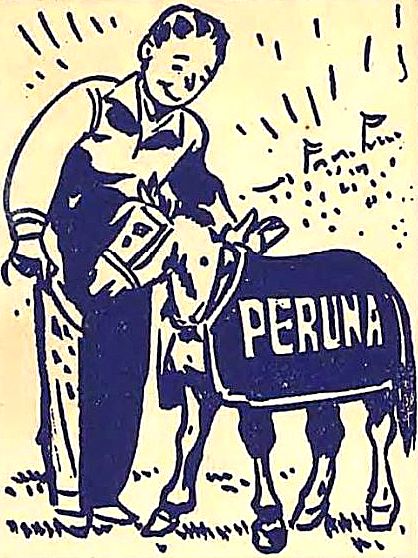
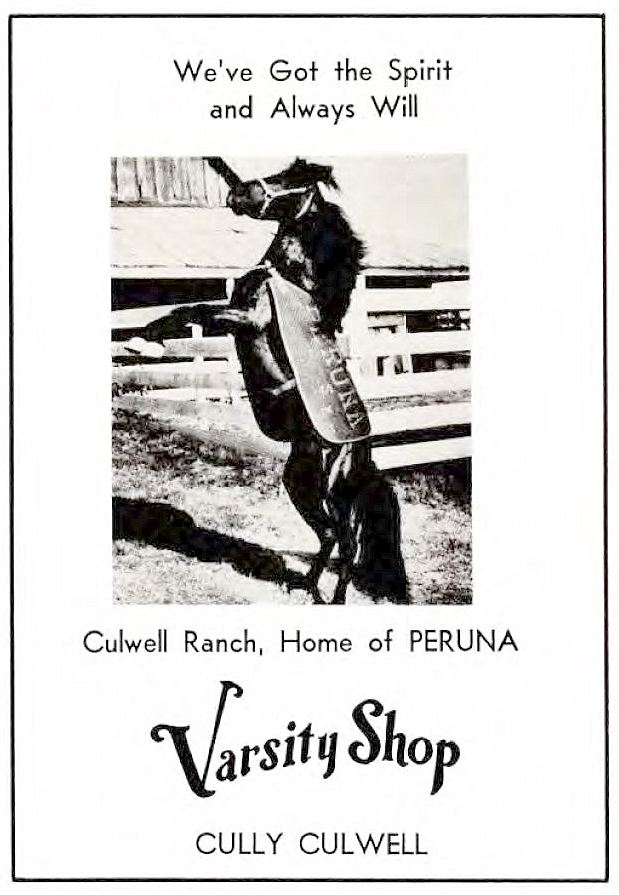
The first few are related to Peruna, the diminutive SMU mascot. The drawing above and the ad below have been added to the post “Little Peruna: He Died With His Mustang Bridle On — 1934” (bit of a tearjerker…). (Sources: the drawing is from the 1939 SMU yearbook, The Rotunda; the Varsity Shop ad is from the 1960 Rotunda)

peruna_varsity-shop_cully-culwell_culwell-ranch_1960-SMU-rotunda

*

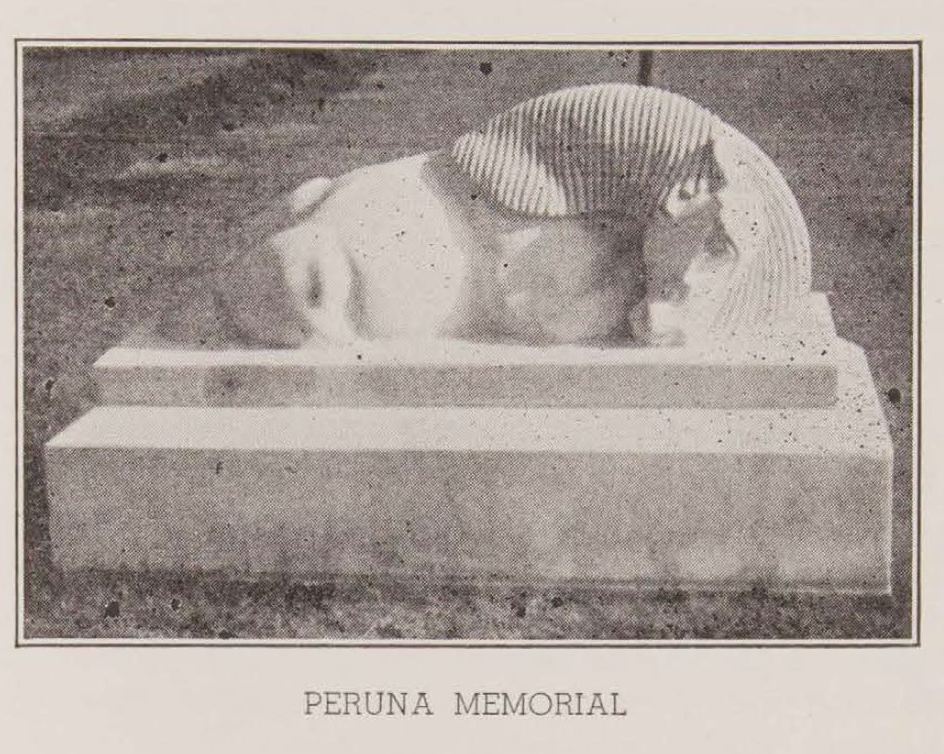
This photo of the wonderful memorial to Peruna I — by noted Dallas artist Michael Owen — has been added to the post “The Peruna Monument — 1937.” (Source: SMU Archives)

peruna-memorial_mike-owen_m-book_1937_SMU-archives

*

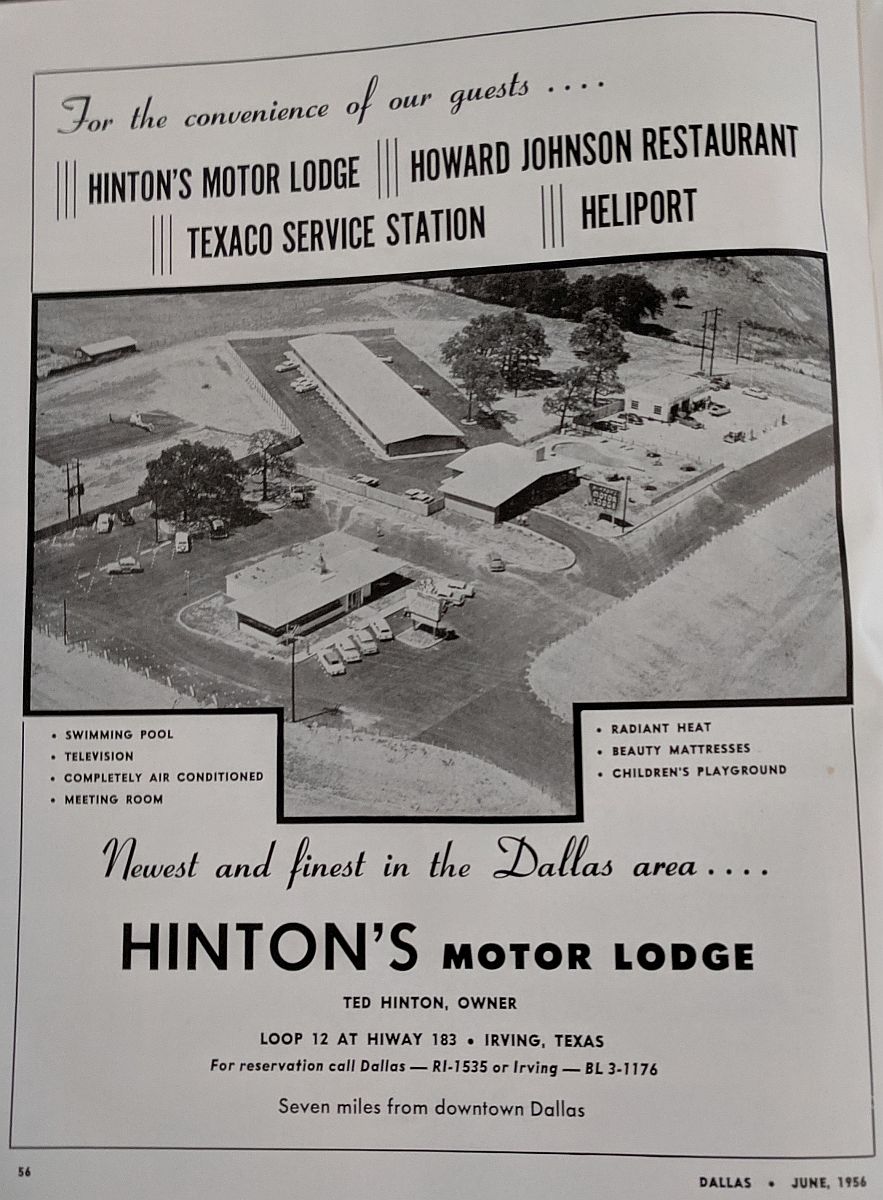
This 1956 ad for Ted Hinton’s Motor Lodge has been added to “Ted Hinton’s Motor Lodge — From Bonnie & Clyde to Motel Heliport.” (Source: Reddit)

ad-hinton-motor-lodge_dallas-mag-june-1956_reddit

*

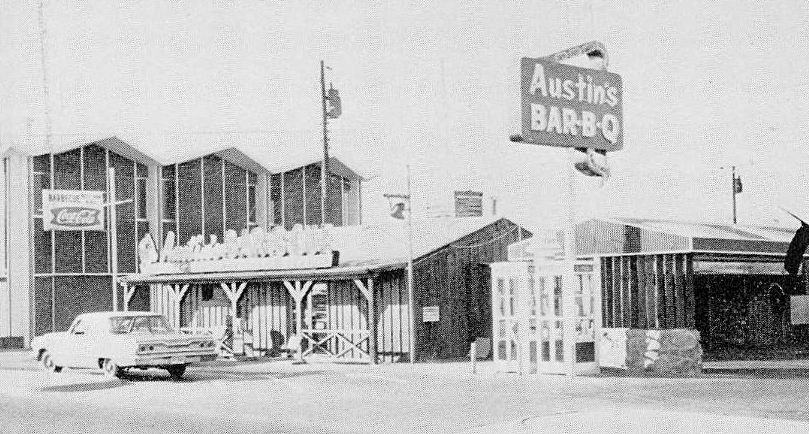
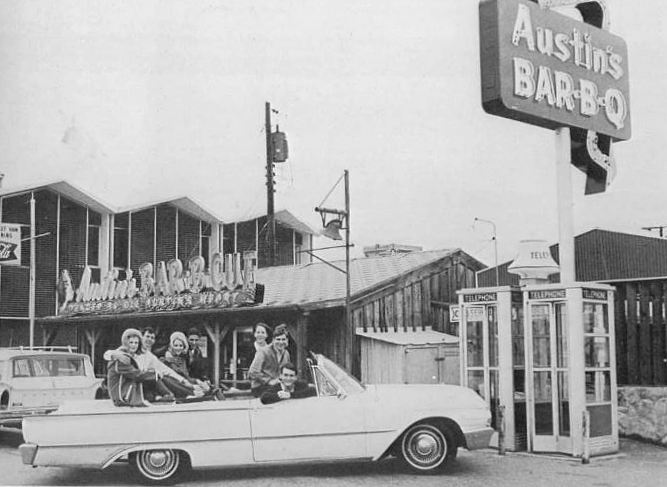
I know that Austin’s BBQ was a big favorite of people, and here are a couple of photos I’ve added to “Bull Pen Barbecue/Austin’s Barbecue — 1949-2000.” (Sources: ads are from the 1964 and 1965 Sunset High School yearbooks)

austins-bar-b-q_sunset-high-school_1964-yrbk.det

austins-bar-b-q_sunset-high-school_1967-yrbk

*

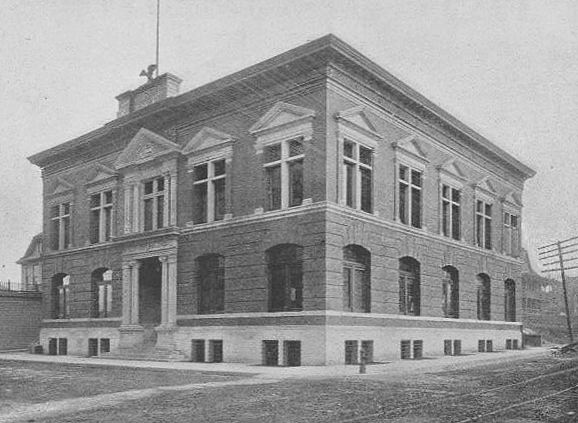
These two images have been added to “The New Southwestern Bell Telephone Co. Building — 1928.”  (Sources: photo is from a SWB ad in an 1899 Dallas Fire Department publication, via the Portal to Texas History; the postcard is from “the internet”)

sw-bell-telegraph-and-telephne_dallas-fire-dept_1899_portal_det

swb-telephone-bldg_postcard

*

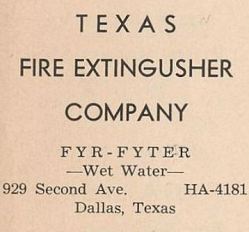
This little ad has been added to my sole post mentioning Hitler (and not in a way one might expect…), “The Texas Fire Extinguisher Co. and Hitler — 1942.” (Source: Texas Fireman magazine, June 1951, via the Portal to Texas History)

texas-fire-extinguisher-co_texas-fireman_june-1951_portal

*

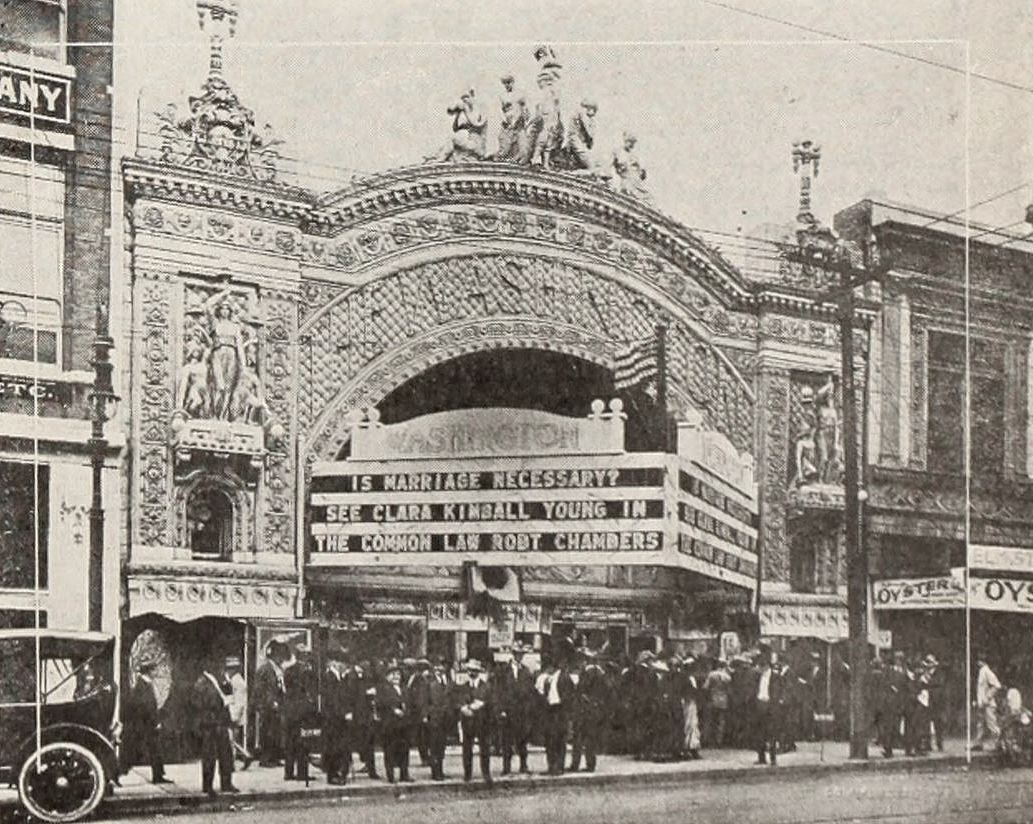
A photo of the Washington Theatre/Theater from Oct. 1916 has been added to “The Washington Theater — Dallas’ First Movie Palace.” (Source: Theatre Exhibitors Herald and Motography, June 1919)

theaters_washington-theatre_exhibitors-herald-and-motography_june-1919_photo-from-oct-1916

*

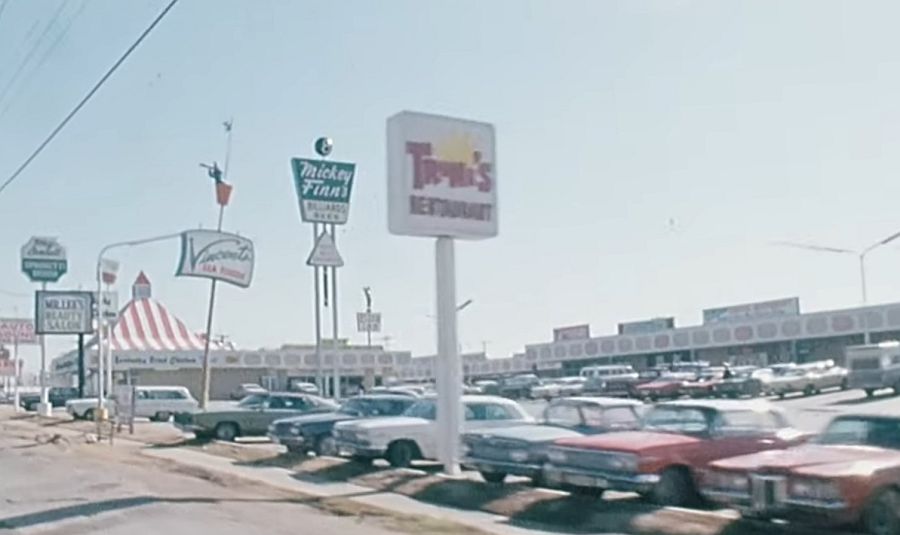
This blurry 1970 screenshot of the strip shopping center on Mockingbird, just east of Central (once home to Trini’s Restaurant), has been added to “Trini Lopez: Little Mexico’s Greatest Export.” (Source: KERA Collection, Jones Film Collection, SMU)

trinis_sightseeing-film_KERA_1970_jones-film_SMU - cropped

*

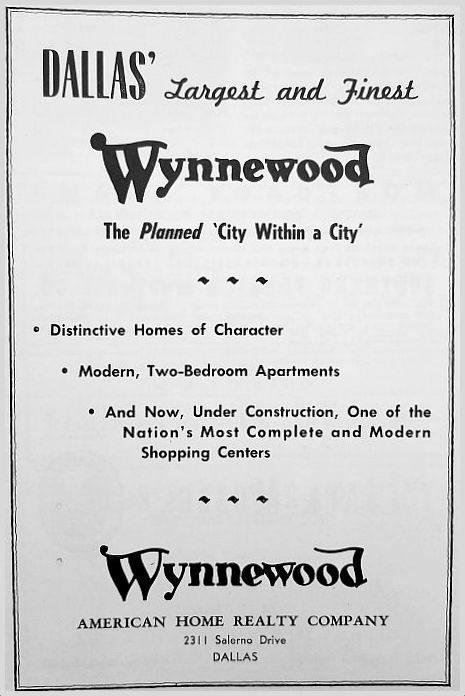
This 1949 ad for Wynnewood (“The Planned ‘City Within a City'”) has been added to the post “Wynnewood.” (Source: Dallas magazine, Feb. 1949)

wynnewood_dallas-mag_feb-1949

*

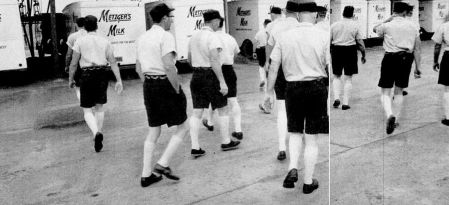
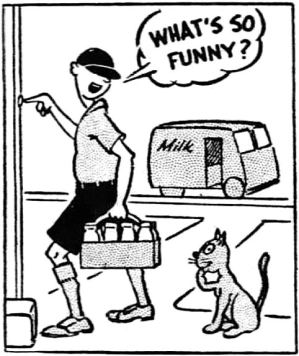
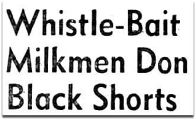
The last additions have been made to the post “Metzger’s Milkmen in Bermuda Shorts — 1955.” It’s a long story, but this post has been “hidden” for several years, and I’ve just gotten around to basically rewriting the whole thing. I’ve added a bunch of photos, articles, and assorted other stuff, and I’ve also removed a bunch of stuff. Below are a few of the things added: a photo, a cartoon, and a sampling of headlines from newspapers around the country — see the post to learn about the to-do about BERMUDA SHORTS! (Sources: the photo is from Life magazine, the cartoon is from the Philadelphia Inquirer, and the headlines are from Boston, Detroit, and Murfreesboro, Tennessee)

metzgers_bermuda_life_052355-full

metzger_bermuda-shorts_philadelphia-inquirer_051255_cartoon

metzger_bermuda-shorts_boston

metzger_bermuda-shorts_detroit

metzger_bermuda-shorts_murfreesboro-TN

***

Sources & Notes

A “note”: why, yes, you can support me on Patreon! Click here for more info.

peruna_smu-rotunda_1939_sm

*

Copyright © 2023 Paula Bosse. All Rights Reserved.

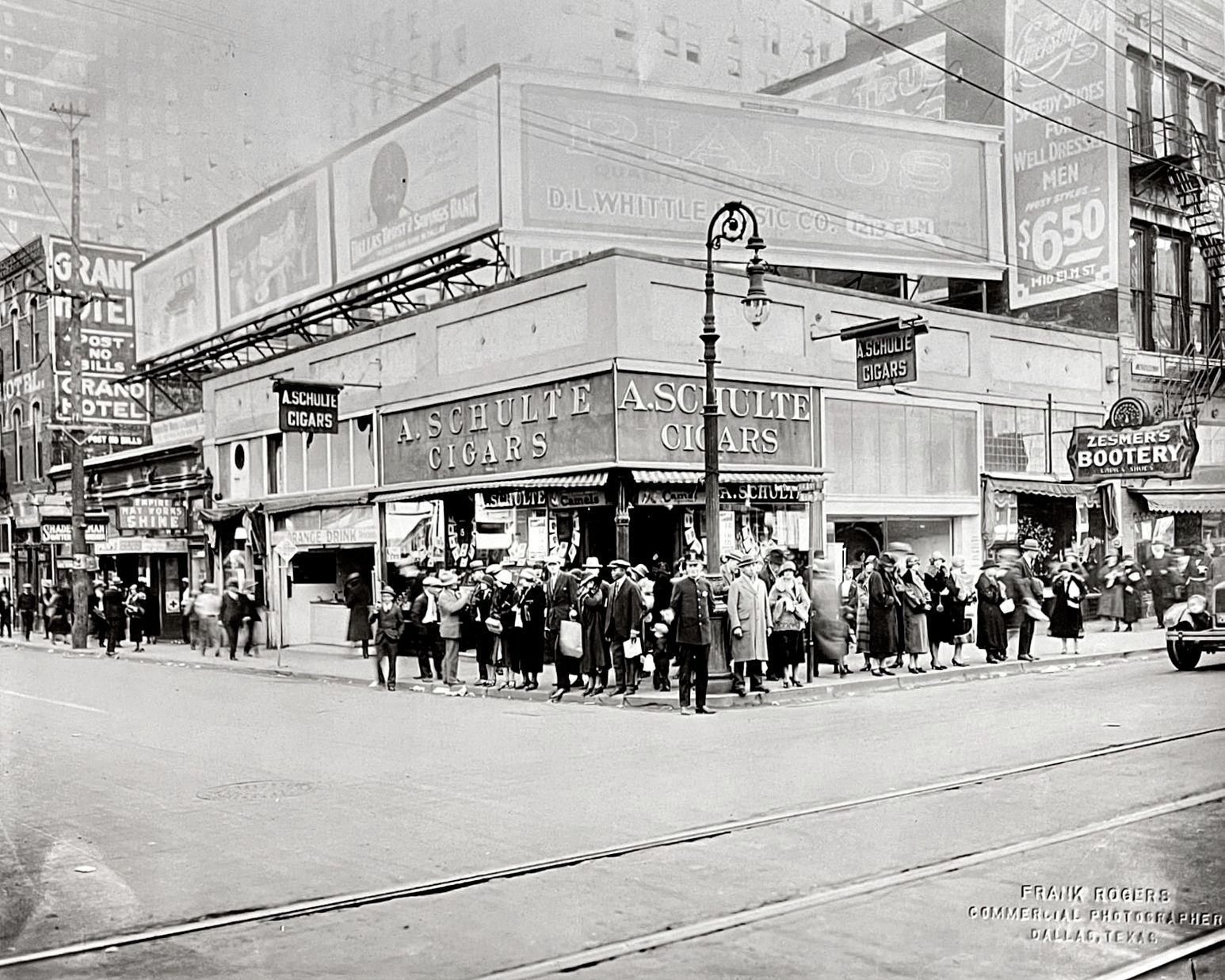
Schulte Cigars, Elm & Akard — ca. 1923

schulte-cigars_elm-akard_frank-rogers_ebay_frank-rogers_bw
Life at Elm & Akard…

by Paula Bosse

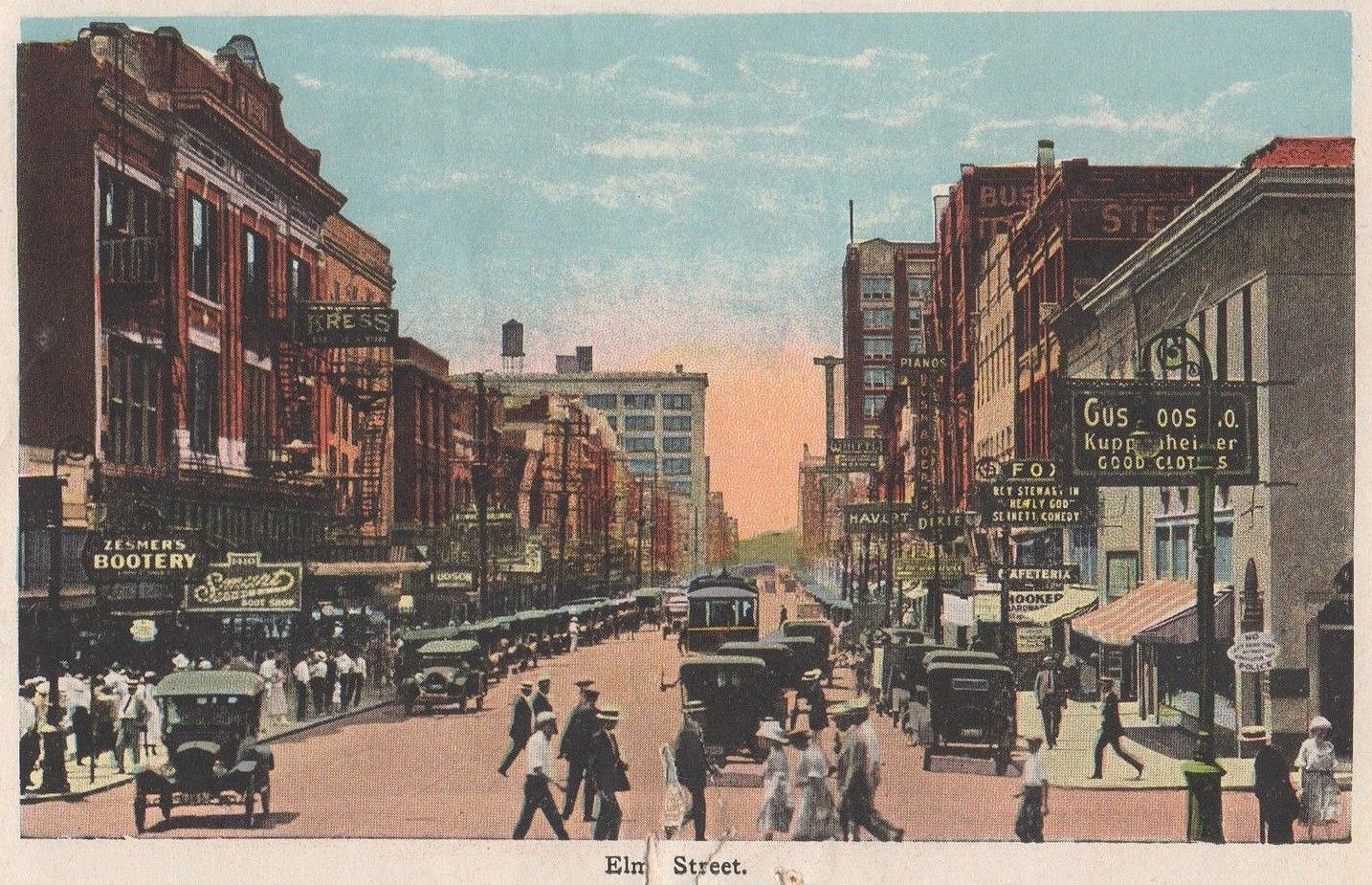
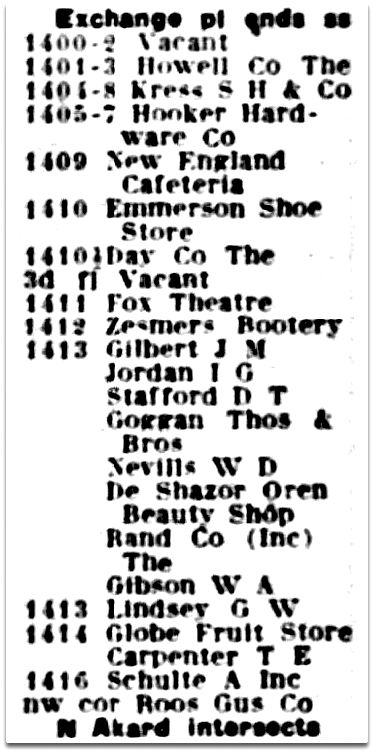
A. Schulte Cigars — at 1416 Elm — held down the southwest corner of Elm and Akard streets (Elm is in the foreground, with the streetcar tracks). The winsomely named Zesmer’s Bootery was at 1412 Elm. Around the corner on Akard was an orange-drink stand. Above the building was a surprising array of billboards. (There is a lot of advertising in this photo.) Here’s another view of the same block, looking west:

elm-st-color_1920s

Every time I see those curlicue lamp posts, they seem to be in photos of Elm Street.

zesmer_schulte_1400-block-elm_1923-directory1400 block of Elm, 1923 city directory

***

Sources & Notes

Top photo by Frank Rogers; found on eBay.

Color postcard from the Flashback Dallas post “Views of Elm Street, With Cameo Appearances by the Fox Theater — 1920s-1960s.”

A previous Schulte location was at 201 S. Ervay, which you can see in the amazing photo in the post “‘There Are Eight Million Stories in the Naked City…’ — ca. 1920.”

Please consider supporting me on Patreon for as little as $5 a month. I post exclusive content there daily!

schulte-cigars_elm-akard_frank-rogers_ebay_frank-rogers_sm

*

Copyright © 2023 Paula Bosse. All Rights Reserved.

Love Field Aviation Camp, World War I

WWI_love-field_water-tower_ca-1918_degolyer-library_SMULove Field, with water tower, 1918

by Paula Bosse

On Memorial Day, a few photos of Love Field, which began as an aviation training camp during World War One. Read more on its history in an article by the City of Dallas Office of Historic Preservation, here.

WWI_love-field_marching-drills_ca-1918_degolyer-library_SMUvia DeGolyer Library, SMU

WWI_love-field_pilots_nov-1918_degolyer-library_SMUvia DeGolyer Library, SMU

WWI_love-field-aviation-camp_1918_LOCvia Library of Congress

WWI_love-field_flying-officers_1918_LOCvia Library of Congress

***

Sources & Notes

Top photo is from the collection “Love Field Air Corps Training Depot and Dallas Aviation School, Texas” at the DeGolyer Library, SMU; more information on this photo can be found here. The second and third photos are from this same collection and are linked directly below the images. (The entire collection can be viewed here.)

More on WWI-era Love Field can be found in the 2014 Flashback Dallas (Valentine’s Day) post “From Deep in the Heart of Texas, I Give You Love Field — 1919.”

If you would like to support my work, please consider following me on Patreon for as little as $5 a month — I post exclusive content there daily.

WWI_love-field_water-tower_ca-1918_degolyer-library_SMU_sm

*

Copyright © 2023 Paula Bosse. All Rights Reserved.