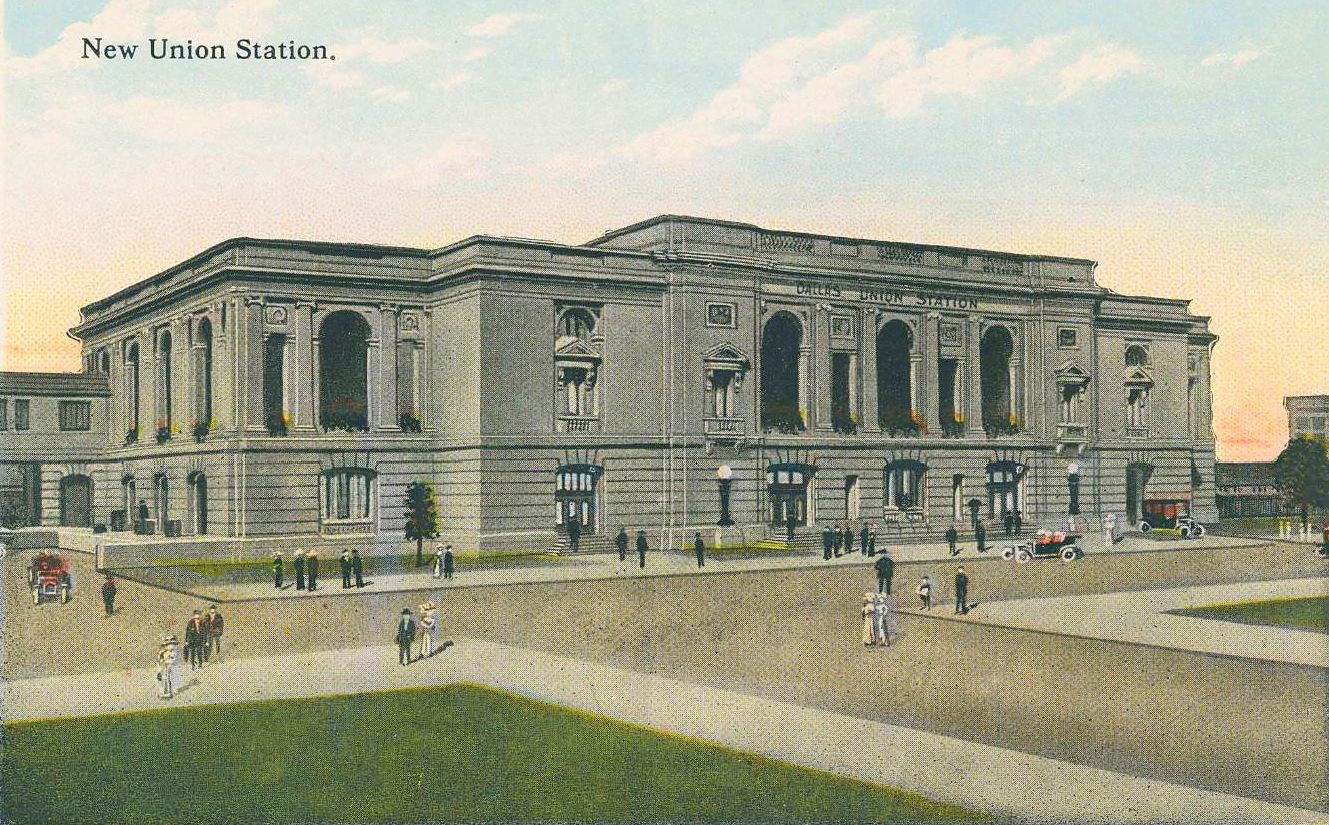
Flashback : Dallas

A Miscellany: History, Ads, Pop Culture

Tag: Dallas TX

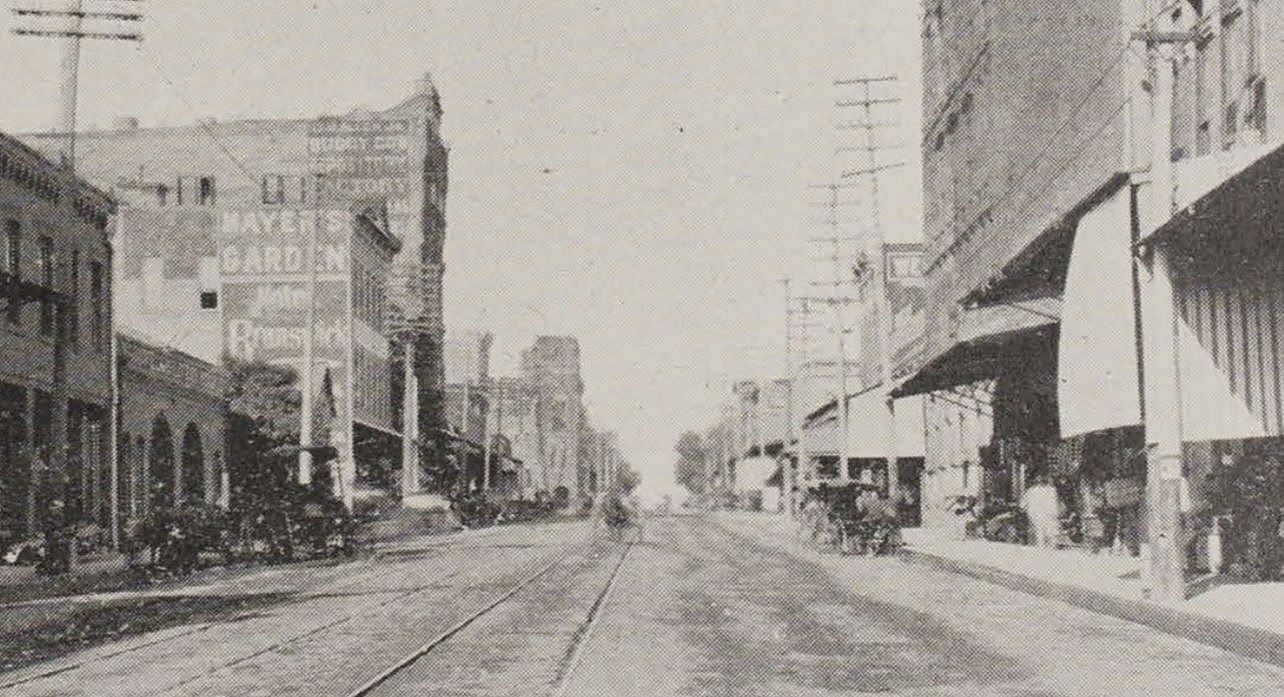
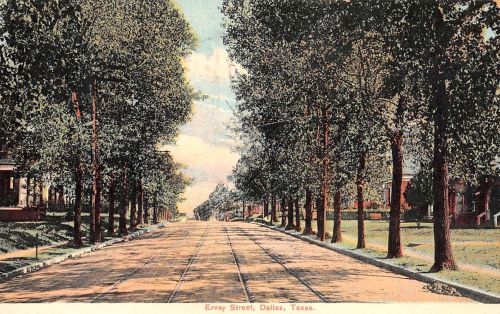
Summer Rerun: Once-Beautiful South Ervay Street

ervay_postcard_clogenson_postmark-1908

by Paula Bosse

No new post this week, I’m afraid. But here’s a nice old one, plucked from the archives: “Beautiful South Ervay Street — ca. 1910.”

*

Copyright © 2022 Paula Bosse. All Rights Reserved.
Claes Oldenburg in Dallas — 1962

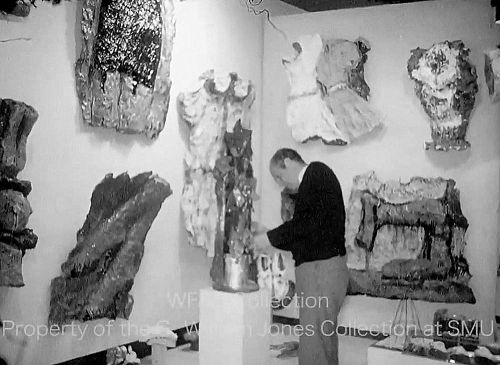
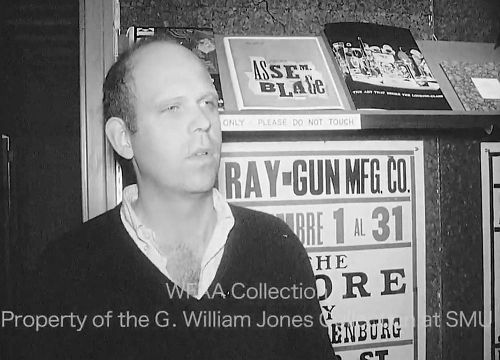
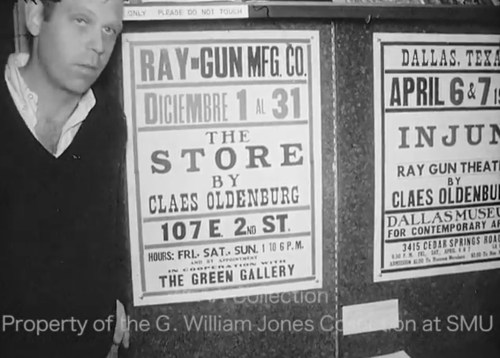
oldenburg-claes_dallas-museum-for-conteporary-arts_april-1962_WFAA_jones-film_SMU_postersClaes Oldenburg at the DMCA, April, 1962 (WFAA Collection, SMU)

by Paula Bosse

Claes Oldenburg, the Swedish-born American sculptor, died this week at the age of 93. Among his connections to Texas are two of my favorite Oldenburg pieces: the fabulous “Monument to the Last Horse,” a permanent fixture of Donald Judd’s Chinati Foundation in Marfa, which he created with his wife Coosje van Bruggen, and the much-missed “Stake Hitch,” a site-specific work commissioned by the Dallas Museum of Art (installed in the brand-new DMA in 1984, and, sadly, de-installed in 2002 after a nasty contretemps between Oldenburg and the museum).

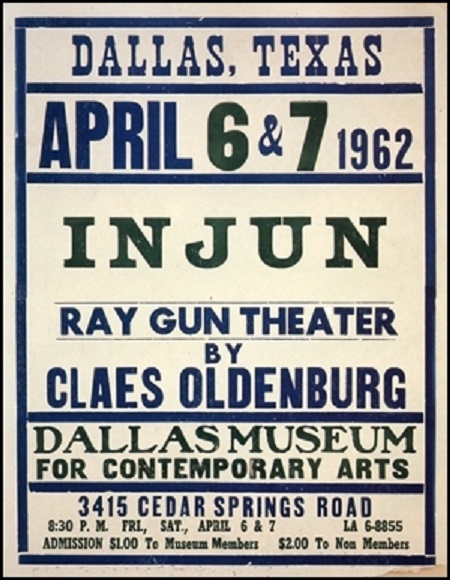
Oldenburg’s first visit to Dallas was in April, 1962, at a time when he was known mainly to NYC art-world hipsters — well before he had achieved anything approaching his later international acclaim. He came to Dallas to present “The Store,” a pop art installation which was part of the group show “1961” at the Dallas Museum for Contemporary Arts (the DMCA was merged with/absorbed by what is now the Dallas Museum of Art in 1963). While Oldenburg was in Dallas exhibiting “The Store” (comprised of 45 individual works, the placement of which he re-created from the original December, 1961 show in Manhattan), he also presented “Injun,” the first-ever “happening” held outside New York or Los Angeles and the first such interactive event commissioned by a museum (Oldenburg’s Ray Gun Theater performance-art “happenings” were much talked about and had gained a cult following in New York, and having him in Dallas to present a “happening” was a definite “get” for the DMCA).

“The Store” and “Injun” — and Claes Oldenburg himself — were very un-Dallas. The reception Oldenburg received from Dallas’ followers of edgier contemporary art appears to have been positive, but his work was handily dismissed by Dallas Morning News art critic Rual Askew, who, invoking the “royal we,” wrote this rather laborious sentence:

Claes Oldenburg’s ‘The Store,’ a painted-plaster waste of time in our view, has interest as assembled pattern with carnival colors at a considerable distance perhaps, but displaces space out of all proportion to aesthetic experience. (DMN, April 15, 1962)

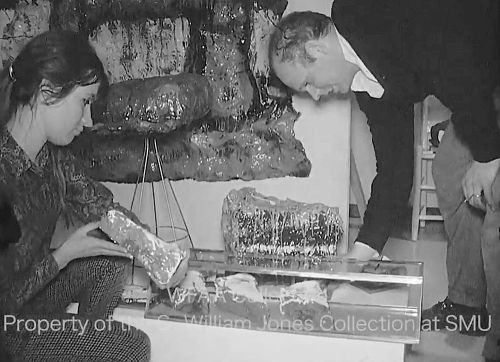
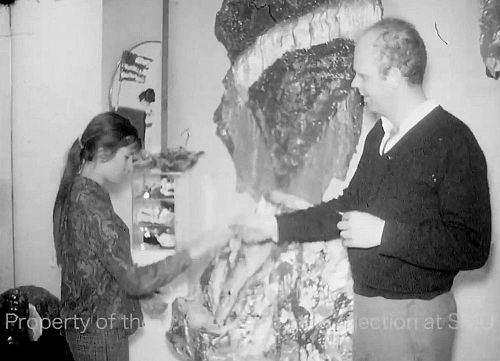
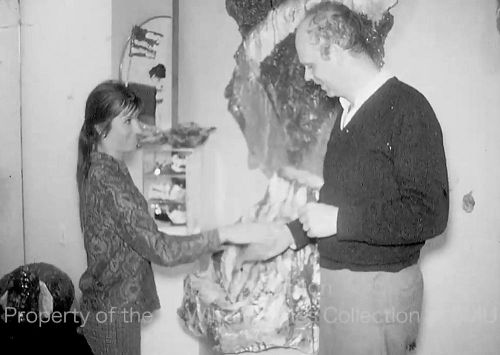
As I work with the WFAA Collection (held by the G. William Jones Collection at SMU’s Hamon Arts Library), I was pretty excited when film footage popped up showing Oldenburg and his first wife (and his collaborator), Patty Mucha, at the DMCA. I knew that the DMCA was somewhere in Oak Lawn (it was at 3415 Cedar Springs), but I had never seen an image of it until this footage. The Oldenburgs are seen walking into the DMCA, tinkering with the installation before the show opened, inspecting the store’s “foods” and other “merchandise,” and playfully “playing store” and exchanging imaginary cash at his “cash register.” Sadly, there is no sound for the one-minute-45-second film, but — being an art history major (that always sounds pretentious…) — I really, really love this. A young, happy Claes Oldenburg in a moth-eaten sweater, here in Dallas, in the early years of what would become an artistically important career is pretty cool to see.

I have been meaning to write this post since I first saw the WFAA footage two years ago. I’m sorry that it’s taken the death of the artist to finally get me to do it. RIP, Claes.

*

UPDATE: Morgan Gieringer, Head of UNT Special Collections, alerted me to a WBAP-Channel 5 news script they have in their collection which describes much the same sort of thing that is going on in the WFAA-Channel 8 film above. In the script, Oldenburg discusses some of the pieces — read the two pages here. (The Ch. 5 report was filmed on March 29, 1962, which could be the same date as the Ch. 8 footage.)

*

“The Store” at the Dallas Museum for Contemporary Arts, 1962 — in vivid color:

oldenburg-claes_the-store_DMCA_1962_DMAvia Dallas Museum of Art

via Dallas Museum of Art

1961_claes-oldenburg_catalog_DMCA_1962_injun“1961” catalogue, via DMA/Portal to Texas History

Screenshots from the WFAA footage, showing Oldenburg and his wife, Patty (who worked alongside her husband and was a frequent participant in the “happenings”) preparing “The Store” for its opening at the DMCA.

oldenburg-claes_dallas-museum-for-conteporary-arts_april-1962_WFAA_jones-film_SMU_ext

oldenburg-claes_dallas-museum-for-conteporary-arts_april-1962_WFAA_jones-film_SMU_1

oldenburg-claes_dallas-museum-for-conteporary-arts_april-1962_WFAA_jones-film_SMU_2

oldenburg-claes_dallas-museum-for-conteporary-arts_april-1962_WFAA_jones-film_SMU_3

oldenburg-claes_dallas-museum-for-conteporary-arts_april-1962_WFAA_jones-film_SMU_4

oldenburg-claes_dallas-museum-for-conteporary-arts_april-1962_WFAA_jones-film_SMU_5

oldenburg-claes_dallas-museum-for-conteporary-arts_april-1962_WFAA_jones-film_SMU_7

***

Sources & Notes

Top image (and all other black-and-white images) are screenshots from the WFAA Newsfilm Collection, G. William Jones Film and Video Collection, Hamon Arts Library, Southern Methodist University; the footage was filmed in early April 1962 (or possibly late March 1962); the clip may be viewed on YouTube, here.

The color photograph of “The Store” and the poster for “Injun” are both from a publication of the Dallas Museum of Art, here.

Other Oldenburg-related sources:

  • The “1961” exhibition catalogue — this group-show featured heavy-hitting up-and-comers such as Robert Rauschenberg, Roy Lichtenstein, Robert Motherwell, James Rosenquist, Joseph Albers, Morris Louis, Jasper Johns, Jim Dine, and Richard Diebenkorn — can be viewed in a fully scanned Dallas Museum for Contemporary Arts catalogue here, via the Dallas Museum of Art Exhibition Records, Portal to Texas History
  • Candid photos from the “Injun” performance can be seen here
  • See several great photos of Oldenburg taken during the installation of “Stake Hitch” in 1984, in a DMA Bulletin here, here, here, and here
  • Watch a short video about “The Store” when it was restaged at the Museum of Modern Art in 2013, with comments on the pieces by Oldenburg; see what the pieces shown in the 1962 black-and-white film made in Dallas looked like 51 years later, in color, in the MoMA video, here

On my blog High Shrink (non-Dallas stuff), you can read more about Oldenburg in a post I really enjoyed writing, “Claes Oldenburg’s ‘Slice of Bread; Tombstone for Ed Kienholz — 1974.”

oldenburg-claes_dallas-museum-for-conteporary-arts_april-1962_WFAA_jones-film_SMU_posters_sm

*

Copyright © 2022 Paula Bosse. All Rights Reserved.
Summer Rerun: ICE! — 1890s

dallas-ice-factory_dallas-observer_ebayIce…

by Paula Bosse

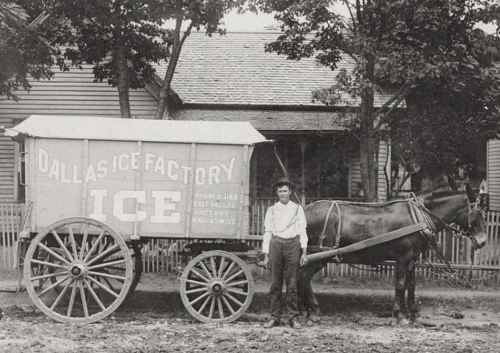
It wasn’t quite as hot today as it was when I wrote “Dallas Ice Factory” in 2018. But it was close. Stay cool, y’all. Close the blinds, draw the curtains. Wish for the quick arrival of September October November.

dallas-ice-factory_dallas-observer_ebay_sm

*

Copyright © 2022 Paula Bosse. All Rights Reserved.

S. Mayer’s Summer Garden, Est. 1881

mayers-garden_DPL_1885Roll out the barrel… (collection Dallas Public Library)

by Paula Bosse

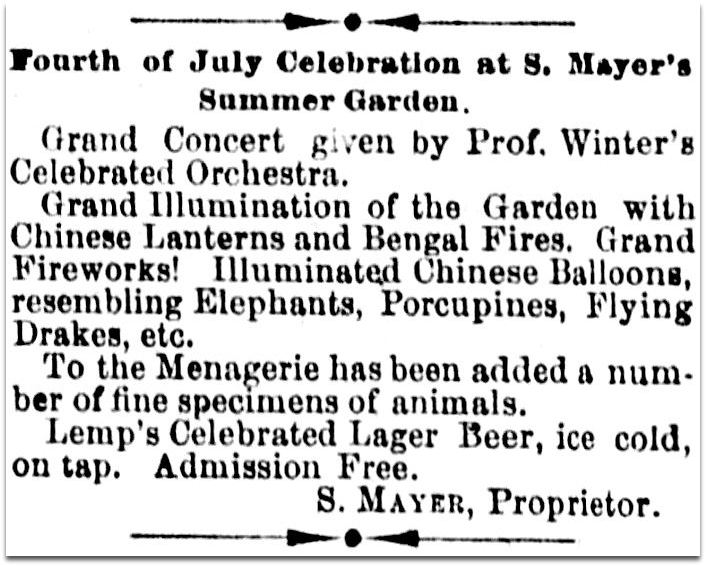
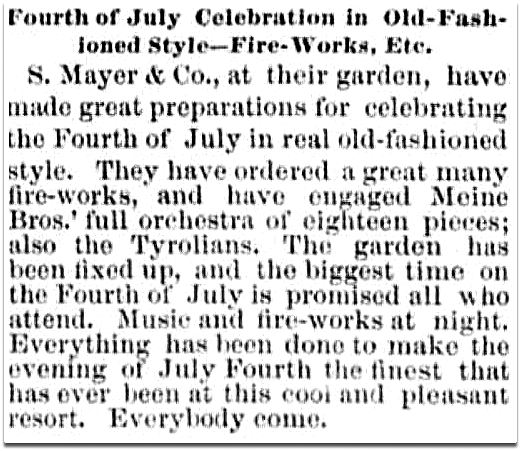
Today is the 4th of July. I had these two articles stuffed into bulging digital files:

4th-july_mayers_dallas-herald_070482
Dallas Herald, July 4, 1882

4th-of-july_dallas-herald_070384_mayer-gardensDallas Herald, July 3, 1884

I had seen the photo of Mayer’s beer garden posted above, but I didn’t really know anything about it.

Simon Mayer (1843-1924) was born in Germany/Prussia and came to the United States in 1866, first settling in Milwaukee. He came to Texas in 1869 where, as his obituary in The Dallas Morning News says, “he owned and operated the first brewery established in Fort Worth.” He moved to Dallas in 1871 and entered into business with pioneer Dallas brewer Charles Meisterhans. 

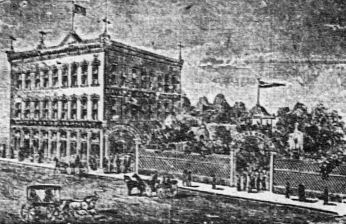
In December, 1881 he opened what would become one of Dallas’ foremost gathering places, Mayer’s Summer Garden. He built a 3-story-plus-basement building (at what would later be 1601-1603 Elm Street) and added a charming outdoor beer garden. It stood on the north side of Elm and looked directly down Stone Street (now Stone Plaza) toward Main. You can see it on an 1885 Sanborn map here.

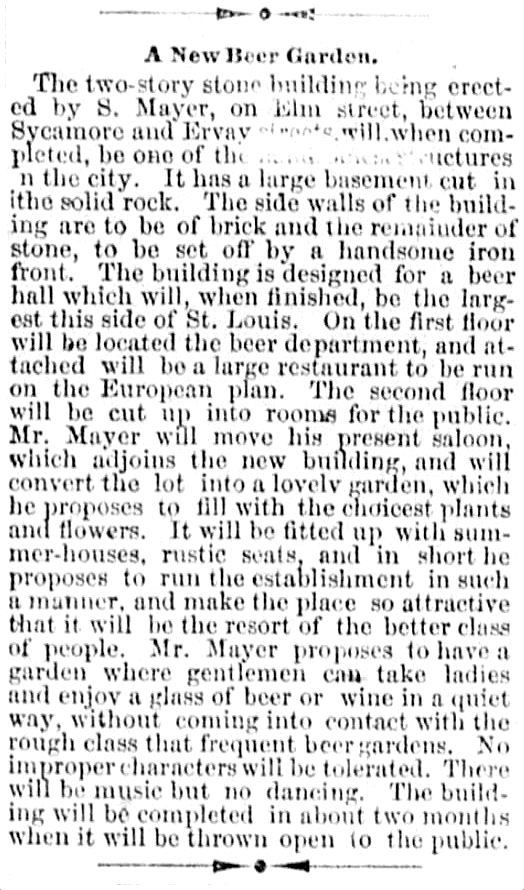
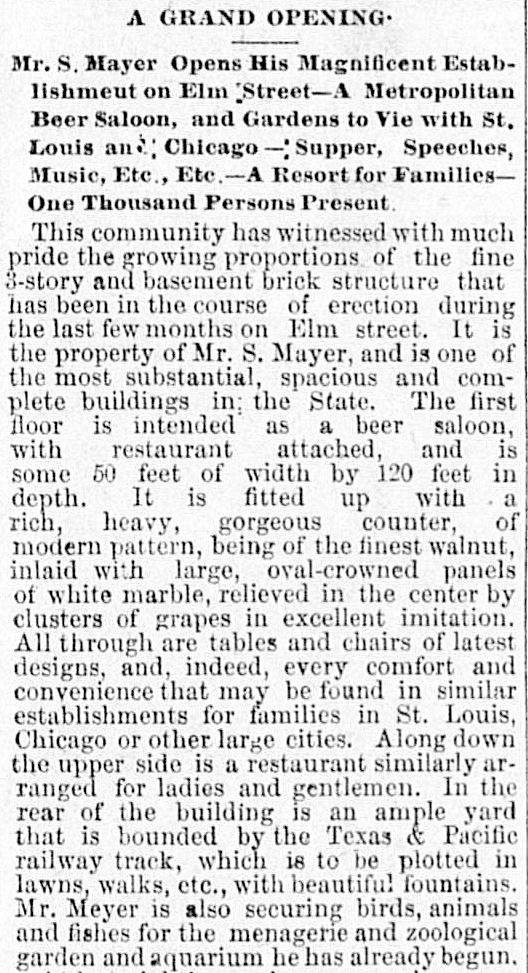
A 3-story building in Dallas in 1881 was nothing to sneeze at. He was putting a lot of money into it, and people were interested in its progress. The opening was touted in the paper for several months (click articles to see larger images):

mayers_dallas-herald_090181_constructionDallas Herald, Sept. 1, 1881

From the above article: “Mr. Mayer proposes to have a garden where gentlemen can take ladies and enjoy a glass of beer or wine in a quiet way, without coming into contact with the rough class that frequent beer gardens. No improper characters will be tolerated. There will be music but no dancing.”

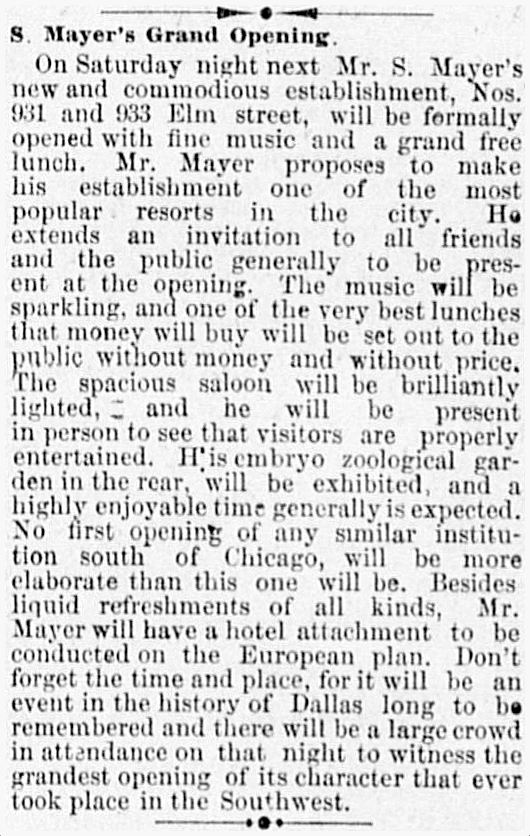
mayers_dallas-herald_120981_to-openDallas Herald, Dec. 1, 1881

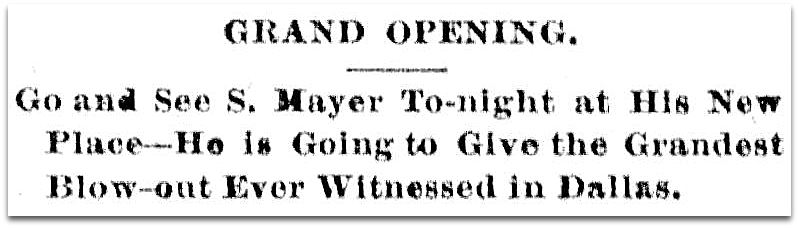
Finally. the opening was about to happen: “the grandest blow-out ever witnessed in Dallas” was promised (who knew “blow-out” was a term used in 1881?):

mayers_dallas-herald_121081_to-open_blow-outDallas Herald, Dec. 10, 1881

Over a thousand curious and thirsty Dallasites turned out.

mayers_dallas-herald_121181_grand-openingDallas Herald, Dec. 11, 1881

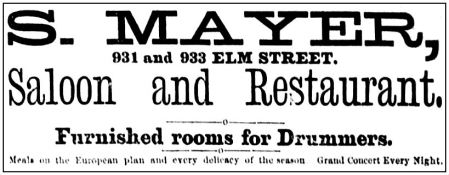
mayer_dallas-herald_121381_adDallas Herald, Dec. 13, 1881

(Don’t know what “drummers” are? Check it out.)

You might have noticed mention of zoological specimens. Yes, not only did this establishment offer a beer garden, a meeting hall, a hotel, a restaurant, a saloon, a performance space, and a lecture hall, it also had lots of animals in (and out of) cages — Dallas’ first zoo. He had alligators, birds, lions, eagles, prairie dogs, a Gila monster, a bear, and a pet crow. And a lot more. The bear escaped at least once — it wandered down the street and bit a guy who was making a commotion about a bear wandering down the street. But the bear was fairly easily recaptured and was waltzed back home along Elm Street without further incident. (Apparently, Mayer was a taxidermist by trade. One wonders how many of these creatures ended up stuffed and mounted and displayed in Herr Mayer’s home.)

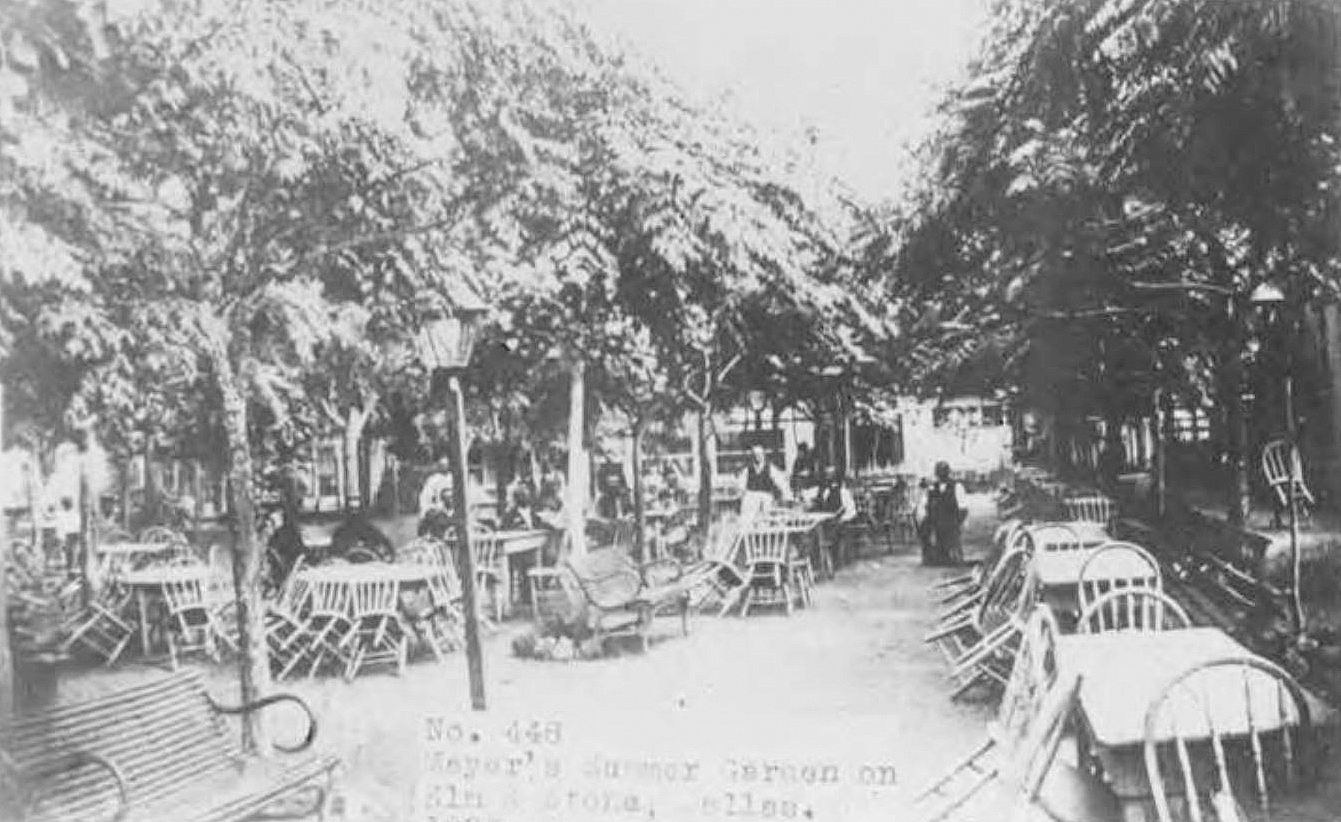
People flocked to the Summer Garden. They loved the outdoor beer garden with its trees and fountains and performing bands. …And alligators. Below is a, sadly, washed-out circa-1885 image of Mayer’s garden. It actually seems fairly cosmopolitan for a Texas city in the 19th century. (Although, on the other side of the trees at the right was a livery stable and a wagon yard, so I would assume the jovial tippling, socializing, and oom-pah music was accompanied by unpleasant smells that were hard to ignore.)

mayers-summer-garden_1885_degolyer-library_SMUMayer’s Garden, circa 1885 (via DeGolyer Library, SMU)

Mayer’s was one of the first businesses in Dallas (or, according to lore, THE first) to have electric lights — lights were switched on to great fanfare in August of 1882. Before that, Mayer utilized an interesting lighting technique I had never heard about: “Mr. Mayer had the latest thing in kerosene lamps. An attachment to the lamp sprayed kerosene on the blaze, making it much brighter” (Dallas Morning News, Sept. 14, 1924). (Perhaps the bear had escaped in fear for his life!)

mayers-garden_clifton-church_1894_degolyer-library_SMU_detca. 1894 (via DeGolyer Library, SMU)

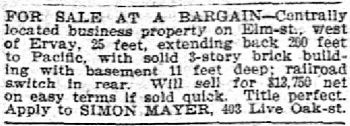
Mayer eventually closed his very popular business sometime in the 1890s after being unable to fight the “Sunday-closing” laws which forced him to close on his most profitable day of the week. By 1901, he placed the ad below and was selling the building.

mayers_dmn_112401_property-for-saleNov. 24, 1901

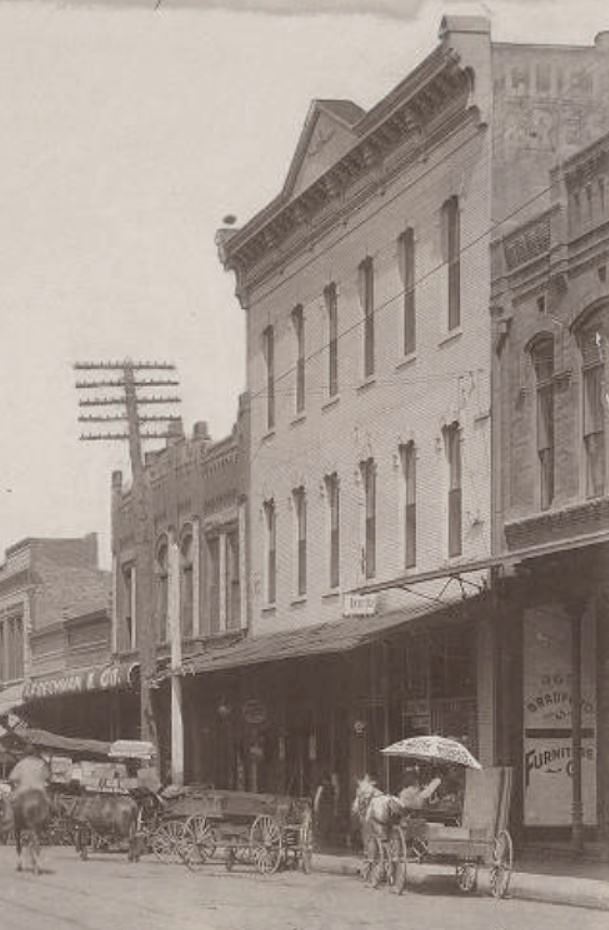
I’m not sure when the building was demolished — probably in the ’20s or ’30s. I just found a photo of the building as it looked about the time Mayer sold it (it was the Clifton Hotel for a while).

mayers_clifton-hotel_ca-1900_cook-coll_degolyer-library_SMU_cropped
No more garden, ca. 1900 (via DeGolyer Library, SMU)

The beer-garden era had ended. There were several in Dallas in the 1880s and 1890s, but Simon Mayer’s was perhaps the creme-de-la-creme. I mean, he had an eagle!

mayers-garden_icollector-comvia iCollector

mayers-garden_token_ebayvia eBay

mayers-garden_dmn_091424

***

Sources & Notes

Top photo — “[Mayer’s Beer Garden, Dallas, Texas”] — is from the Dallas Public Library (Call Number PA87-1/19-27-1).

The photo of the “garden” is titled “Mayer’s Summer Garden on Elm and Stone, 1885,” and it is from the Collection of Dallas Morning News negatives and copy photographs, DeGolyer Library, Southern Methodist University — more info can be found here. (There is another photo of the garden in this collection — it’s really hard to make out clearly, but I swear I see an alligator int he foreground. And maybe some other zoological specimens out of their cages. …Or not. It’s here.)

The photo showing Mayer’s around 1894 has been cropped from the original Clifton Church photograph, which appeared in his book Dallas, Texas Through a Camera (DeGolyer Library, SMU) — the full photo can be seen in the fully scanned book here.

The photo showing Mayer’s building in about 1900 has been cropped from “[Elm Street between Stone and Ervay Streets].” which is from the George W. Cook Dallas/Texas Image Collection, DeGolyer Library, Southern Methodist University — see the full photo here.

All articles and ads are from The Dallas Herald, editions of which are scanned in their entirety and can be found at the Portal to Texas History, here — thank you, University of North Texas!

A lot of colorful info can be found in Mayer’s obituary in the Dallas Morning News archives: “Simon Mayer, Early Dallas Entertainer — Death of Pioneer Brewer Recalls Pleasure Garden He Founded” (DMN, Sept. 14, 1924).

mayers-garden_DPL_1885_sm

*

Copyright © 2022 Paula Bosse. All Rights Reserved.

Summer Rerun: “Melons On Ice”

wiley-grocery_1890s_haskins-coll_utaIce-cold watermelon beckons….

by Paula Bosse

It’s hot. An ice-cold slice of watermelon sounds great. The above photo is one of my all-time favorites, from the 2016 Flashback Dallas post “‘Melons On Ice’ — 1890s.” Enjoy the flashback Flashback!

***

Sources & Notes

This photo is from the Squire Haskins Photography, Inc. Collection, University of Texas at Arlington Libraries, here.

wiley-grocery_1890s_haskins-coll_uta_sm

*

Copyright © 2022 Paula Bosse. All Rights Reserved.

The DALLASOUND — 1971

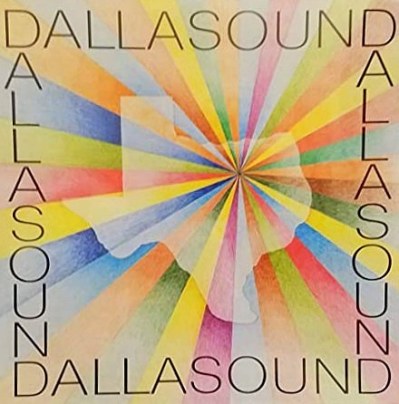
dallasound_1971_amazon
Staight outta Big D…

by Paula Bosse

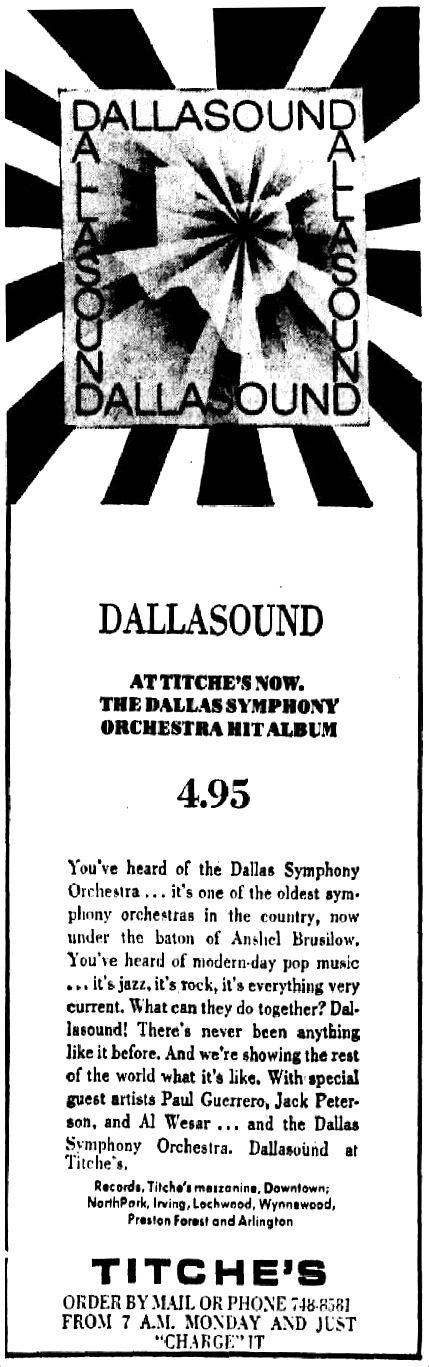
The Boston Symphony Orchestra had Arthur Fiedler and its popular-music offshoot, The Boston Pops. The Dallas Symphony Orchestra had Anshel Brusilow and The Dallasound. 

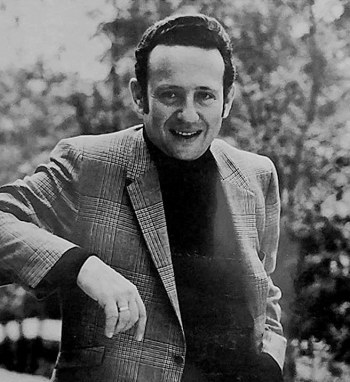
Brusilow, a Philadelphia native, came to Dallas in 1970 as the resident conductor of the Dallas Symphony Orchestra. The DSO was in financial straits at the time, so in a bid to increase the orchestra’s demographic reach, Brusilow borrowed Fiedler’s idea and formed his own “pops” orchestra, which played jazzy arrangements of pop songs and light classical music. He named this sideline project “The Dallasound.” It was very popular, but it didn’t improve the financial problems of the DSO, and Brusilow was gone after only 3 years. He then went on to accept a teaching a position at North Texas State University (now the University of North Texas). After 9 years at UNT, he began teaching at SMU’s Meadow School of the Arts in 1983. Brusilow died in 2018 — he spent the last 48 years of his life in Dallas.

*

Here are the liner notes for the Dallasound album (1971):

THE DALLAS SYMPHONY ORCHESTRA

One of America’s oldest orchestras, the Dallas Symphony Orchestra was founded in 1900. Through the years, it has served its community and the entire North Texas area with the finest in music from the greatest composers the world has known. From a modest beginning — with 35 members giving a handful of concerts a season — the Dallas Symphony Orchestra currently has 85 members and performs more than 160 concerts each season. Its membership would comprise a “Who’s Who” of some of the finest artists in the world.

With its reputation for the classics well-established, the Dallas Symphony Orchestra now adds another brilliant facet to its already illustrious history — the DALLASOUND — a new sound and a new concept in music making. A big band sound incorporating the latest and most exciting modern-day pop sounds – special arrangements of tunes by the Beatles, Simon and Garfunkel, Jim Webb and many others.

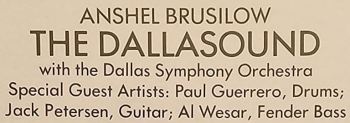
Featured as special guest artists on the first recording on the DALLASOUND Label are three outstanding jazz musicians from the Dallas area — Paul Guerrero on drums, Jack Petersen on guitar and Al “Little Al” Wesar on Fender bass. Arrangements are by one of the most gifted arrangers in the business — Wilfred Holcombe of Trenton, New Jersey. Not just stock orchestral arrangements, but the swingingest, rockingest big band arrangements around! Settle back and listen to some of the most exciting music you will ever hear made by a symphony orchestra!

ANSHEL BRUSILOW

Like many of the world’s great violinist/conductors, Anshel Brusilow laid aside his Stradivarius several years ago and took baton in hand in earnest. His extensive performing and conducting experience with three of the world’s greatest conductors — Eugene Ormandy, George Szell and Pierre Monteux — placed him in good stead on the podium. He came to Dallas after two extremely busy years and more than 300 concerts with the Chamber Symphony of Philadelphia, including five recordings with RCA Victor.

With him he brought the DALLASOUND and a new era for Dallas’s symphony orchestra. Completely at home with the standard symphonic fare, he is equally proficient when ” swinging” with the DALLASOUND. Thousands of Dallasites have been converted to the new sound a symphony orchestra can make, a fact which substantiates Anshel Brusilow’s theory that the Dallas Symphony Orchestra belongs to all the people of a community and must therefore serve them in as many ways as it can. Thanks to Anshel Brusilow, the Dallas Symphony embarks on a new direction in music — the DALLASOUND!

The album’s musical offerings included arrangements of George Harrison’s “Something” and “My Sweet Lord,” The Carpenters’ “We’ve Only Just Begun,” The Doors’ “Light My Fire,” Tom Jones’ “It’s Not Unusual” and “Delilah,” and everyone’s favorite ubiquitous weird song from the late ’60s, “MacArthur Park.”

dallasound_back-cover_amazon_brusilowAnshel Brusilow

dallasound_back-cover_amazon_det

dallasound_back-cover_amazon_logo

dallasound_030771_adTitche’s ad, March, 1971

***

Sources & Notes

Images from the front and back cover of the DALLASOUND album were found on Amazon, here.

A really good interview with Anshel Brusilow can be found in the “High Profile” article by Marty Primeau (Dallas Morning News, July 17, 1983).

dallasound_1971_amazon_sm

*

Copyright © 2022 Paula Bosse. All Rights Reserved.

Autos, Autos Everywhere, and Not a Place to Park — 1971

cabell-fed-bldg_flickr_wayne-hsieh
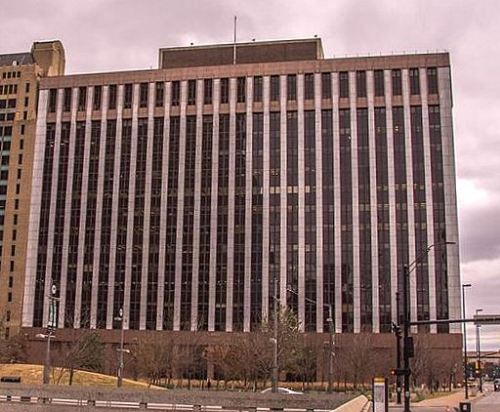
Earle Cabell Federal Bldg. / Wayne Hsieh, Flickr

by Paula Bosse

The other day I was looking for some information on the 1971 opening of the new 16-story Federal Center at 1100 Commerce Street (the name was changed to the Earle Cabell Federal Building in late 1973 to honor the former Dallas mayor and U.S. congressman). I came across the Dallas Morning News article “Center Augments Parking Woes” by Earl Golz (DMN, Jan. 12, 1971) which had a couple of surprising tidbits. The new federal building — which was expected to be occupied by more than 5,000 workers — had a grand total of 59 underground parking spaces. …Fifty-nine. FIVE-NINE. Let that sink in. This was a brand-new building. It’s not like they squeezed those pitifully few parking spaces under an existing building. This was in the plans. That’s a lot of car-pooling.

Three years earlier, in 1968, One Main Place opened at 1201 Main — it was more than twice as big as the Federal Building. When it opened, it was noted that there were 800 underground spaces (with a planned-but-never-realized massive underground parking garage for 4,000 cars, to go along with the never-realized Two Main Place and Three Main Place complex). But, somehow, by 1971, One Main Place’s parking had decreased to a mere 400 spaces, all of which were completely filled daily. I have images of panicky office workers constantly circling blocks in search of a place to park. Stories were rampant that parking-lot attendants were reserving weekly and monthly spaces in pay lots for exorbitant under-the-table cash transactions. 

How did this happen? Who would design such large modern buildings with such woefully inadequate parking? Were “interested parties” strong-arming architects or city planners to skimp on the parking? Is there such a thing as a big “parking-lot lobby”? (What am I saying? I’m sure there is.) Ever wonder why Dallas kept tearing buildings down in the early ’70s and replacing them with pay parking lots? I’m sure there were many reasons, but I saw more than one newspaper mention that parking lots (not garages, mind you — just lots) could be more profitable than aging buildings. It’s always seemed odd to me that there were (are) so many surface parking lots downtown, rather than multi-story garages. Imagine how much more money parking lot operators would be making with garages. Not that multi-story garages are in any way more desirable, aesthetically, but why didn’t land developers build garages which could accommodate so many more paying customers than these puny little lots? Some lot operators insisted that it benefitted everyone to have these lots — insisting that the buildings which once stood on the land were old and ugly eyesores which needed to be torn down, and that these lots were basically just placeholders until a fat-cat developer forked over multi-millions to build something tall and beautiful on it.

Was the lack of underground spaces in these two new buildings intentional? This would have been a weird way to force people to use public transportation. It might even have been a bit of strain on public transportation — the Dallas Transit System was already losing the fight against car-culture and downtown workers who lived in suburbia.

In the early ’70s, Dallas and Fort Worth were both experiencing a severe lack of downtown parking. In 1970 there had been a major excavation to build underground parking below the Old Red Courthouse — it was probably helpful, but it was just a band-aid on a much bigger problem.

A few of the city’s proposals to deal with these parking woes:

  • Dissuade people from bringing their cars downtown by significantly raising fees for parking lots and parking meters and to cut the time limit for parking (quickly approved by the City Council)
  • Build satellite lots outside the Central Business District where people could park and then bus into town (“Park and Ride” stations began, shakily, in 1973)
  • Investigate the use of “people-movers” in varying degrees of sci-fi futurism

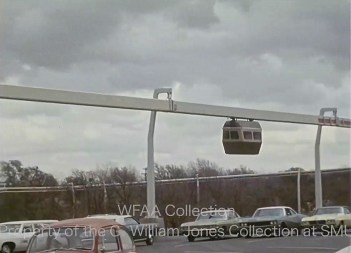
As far as “people-movers,” there were several automated transportation systems on drawing boards around the country at the time, a couple of which were being developed in the Dallas-Fort Worth area. There was the electrically powered monorail-like AirTrans — a joint project of Vought Aeronautics of Dallas and Varo Inc. of Garland — and there was the similar but less well-known Sky-Kar of Fort Worth. AirTrans was very successful and was first adopted by DFW Airport, but Sky-Kar seems to have fizzled out after the death of the company’s president in the early ’70s. 

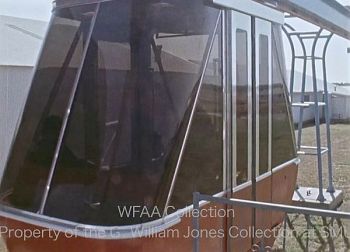
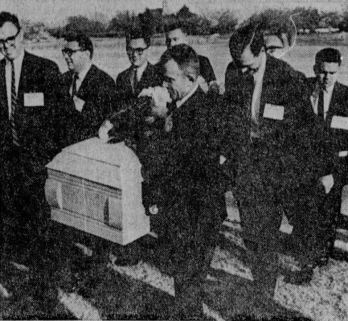
One of Sky-Kar’s salesmen was Paul Groody (he can be seen being interviewed in one of the kars in a WFAA clip from October 1970 here, with additional kar-footage here). Groody (who, in this interview, is a couple of months from full Asimov muttonchops) had, in the previous decade, gained some national notoriety as the funeral director who had been given the task of driving from Fort Worth to Dallas to pick up the body of Lee Harvey Oswald and “prepare” him for burial — because there were no pallbearers, he had to scrounge for volunteers among the reporters covering the interment. Because I may have no other opportunity to post this, below is the cute and compact Sky-Kar Transivator prototype from 1970. …Sky-Kar, we hardly knew ye.

sky-kar_wfaa_SMU_oct-1970WFAA Collection, Jones Collection, SMU

Below, Paul Groody, Sky-Kar rep (1970), and Paul Groody, funeral director for Lee Harvey Oswald’s burial (1963) (he is seen partially obscured, all the way at the back right, wearing glasses).

sky-kar_paul-groody_wfaa_SMU_oct-1970WFAA Collection, Jones Collection, SMU

oswald-funeral_FWST_1963
Fort Worth Star-Telegram

Equal time: see the Vought/Varo AirTrans prototype running on its test track in Garland in December 1970 here, along with interviews from company reps here.

airtrans-prototype_garland_wfaa_SMU_dec-1970WFAA Collection, Jones Collection, SMU

Hopes were that these people-mover systems would be used not only in airports but throughout the Central Business District and on sprawling college campuses, etc. Forget the flying cars. I’m waiting for my monorail. (And it’s probably still best to leave your automobile at home if you’re heading downtown.)

***

Sources & Notes

Top photo, “Earle Cabell Federal Building and Courthouse” (2019) by Wayne Hsieh — found on Flickr, here. (I have cropped it.)

Screenshots from Channel 8 news film posted on YouTube, from the WFAA Collection, G. William Jones Film and Video Collection, Hamon Arts Library, Southern Methodist University.

cabell-fed-bldg_flickr_wayne-hsieh_sm

*

Copyright © 2022 Paula Bosse. All Rights Reserved.

Elm & Ervay — Early ’60s

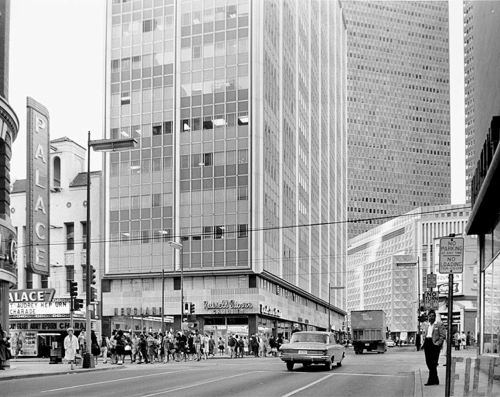
elm-and-ervay_looking-north_squire-haskins_DPLAn impressive collection of architectural styles

by Paula Bosse

Three shots of N. Ervay. Above, looking north from Elm (Charade is playing at The Palace, dating this photo to late 1963 or early 1964).

A little closer in on the Mayflower Coffee Shop:

elm-and-ervay_looking-north_mayflower-coffee-shop_squire-haskins_1960_DPL

More Mayflower:

elm-ervay-live-oak_looking-north_mayflower-coffee-shop_squire-haskins_1960_DPL

***

Sources & Notes

All photos from the Dallas Public Library Dallas History and Archives Division.

First photo is “[View of Downtown Dallas looking north on North Ervay Street]” by Squire Haskins — Call Number PA2000-3/1404. Second photo is “[View of Downtown Dallas looking north]” by Squire Haskins — Call Number PA2000-3/1401. Third photo is “[View of Downtown Dallas looking north on Ervay Street]” — Call Number PA2000-3/115.

elm-and-ervay_looking-north_squire-haskins_DPL_sm

*

Copyright © 2022 Paula Bosse. All Rights Reserved.

Union Station Interiors — 1916

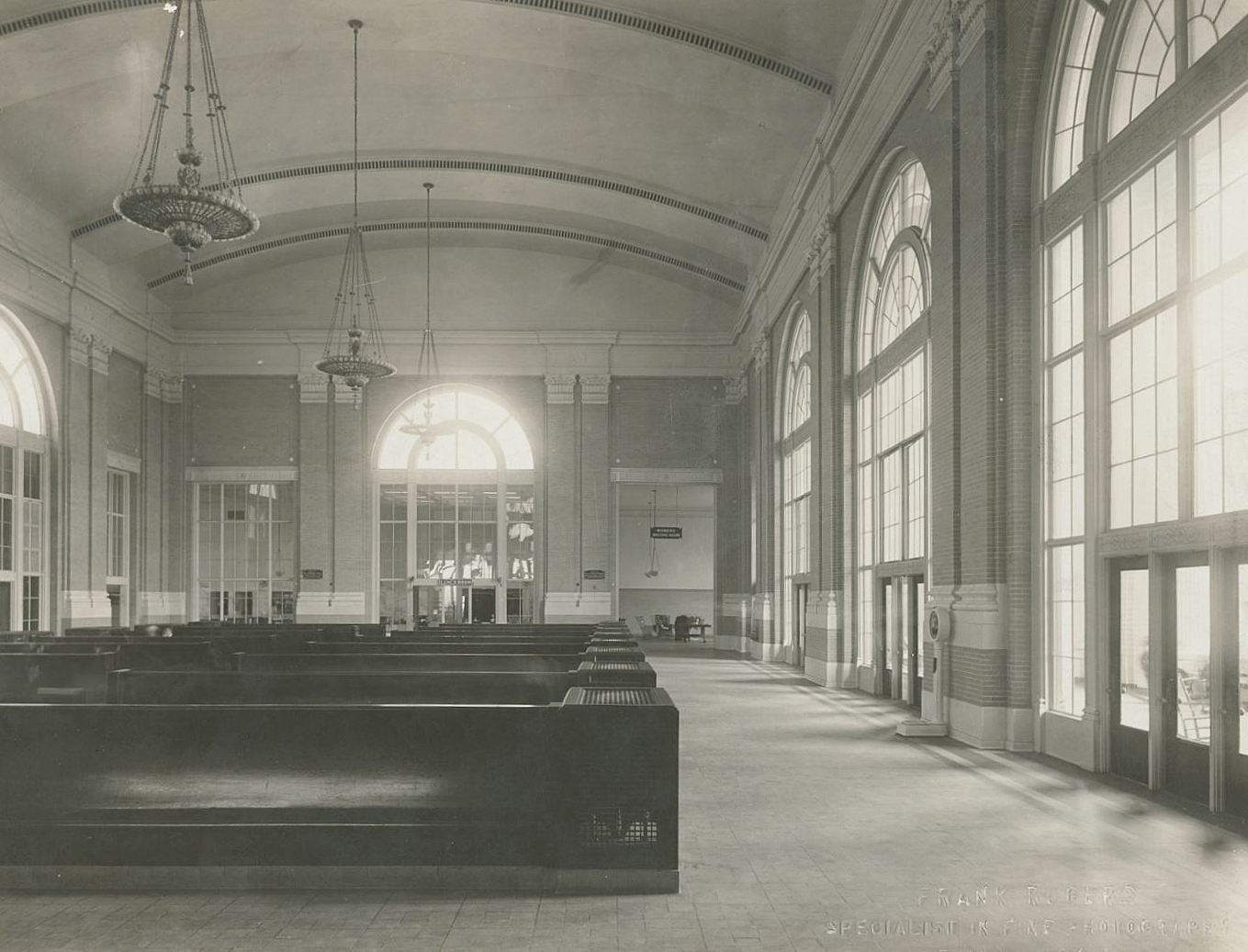
union-station_interior_atlantic-terra-cotta-co-coll_UT_frank-rogersA beautiful place to wait…

by Paula Bosse

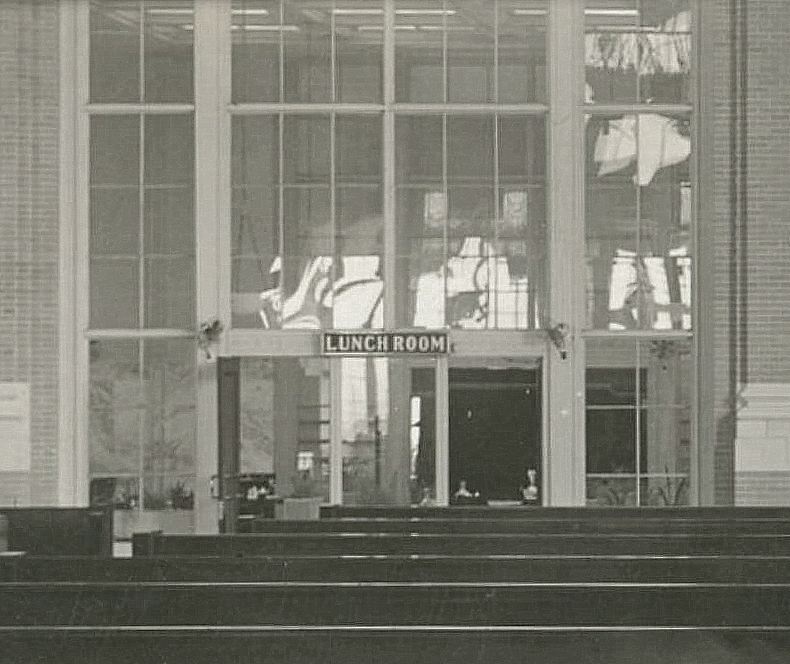
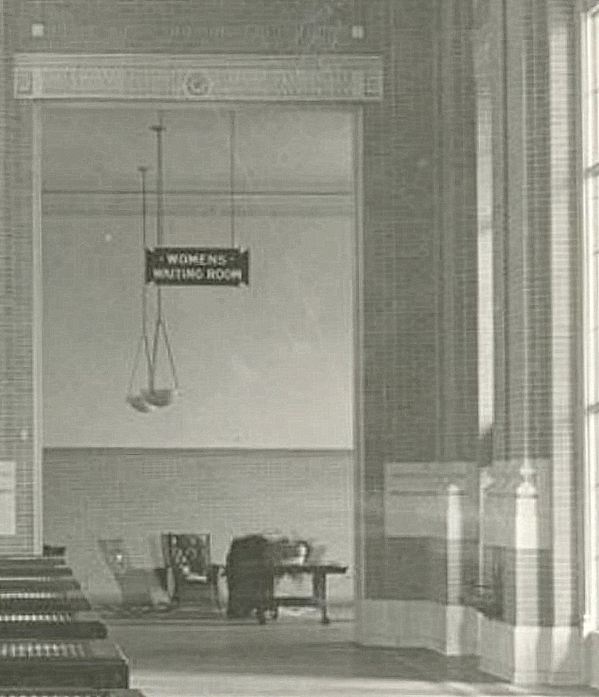
Above, a photo of the new “Union Depot,” completed in 1916 and, thankfully, still standing more than a century later. Below, a couple of details of the Lunch Room and the Women’s Waiting Room.

union-station_interior_atlantic-terra-cotta-co-coll_UT_frank-rogers_lunch-rm

union-station_interior_atlantic-terra-cotta-co-coll_UT_frank-rogers_womens-wtg-rm

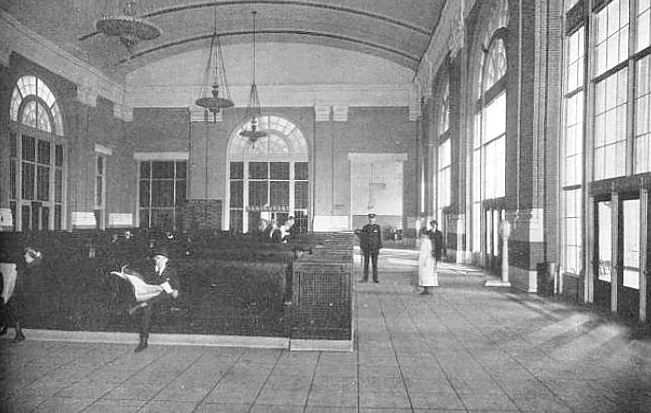
The same view as the top photo, but from 1922:

union-station-interior_1922

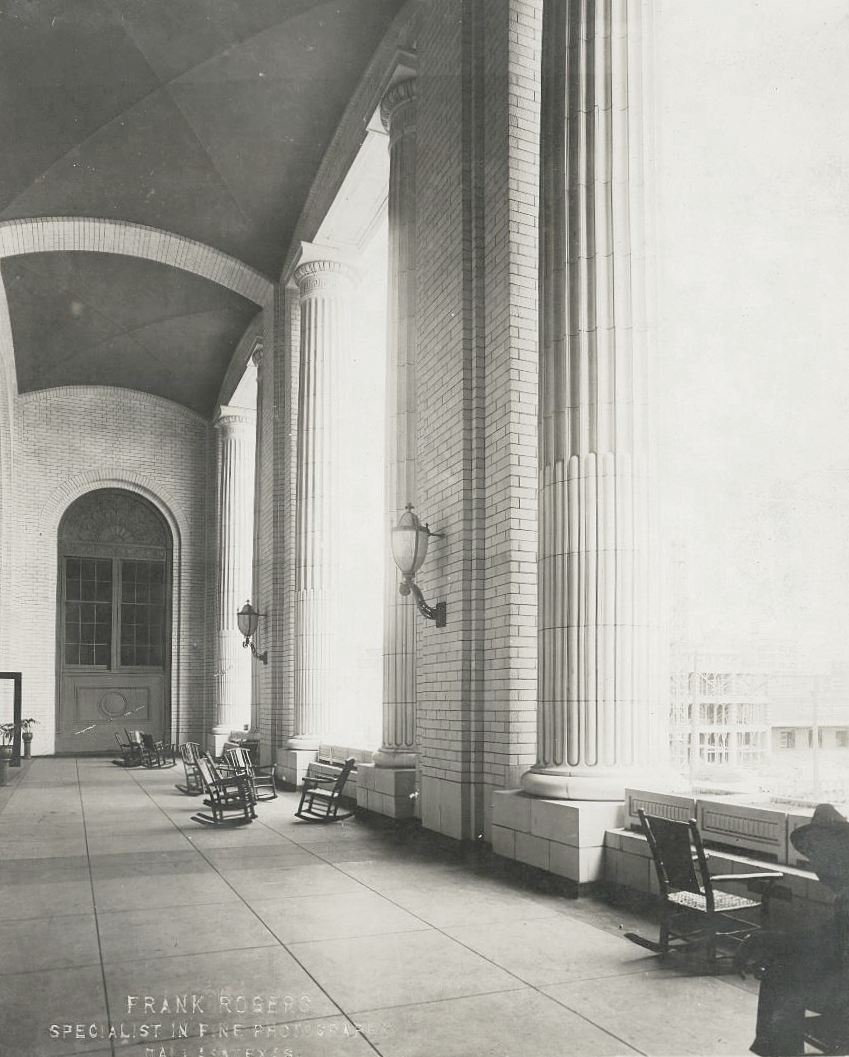
Back to 1916, in what I gather is a sort of interior/exterior shot showing another place to pass the time. What better, quaint way to wait for a train and take in a great, slightly elevated view, than in a rocking chair.

union-station_rocking-chairs_atlantic-terra-cotta-co-coll_UT_frank-rogers

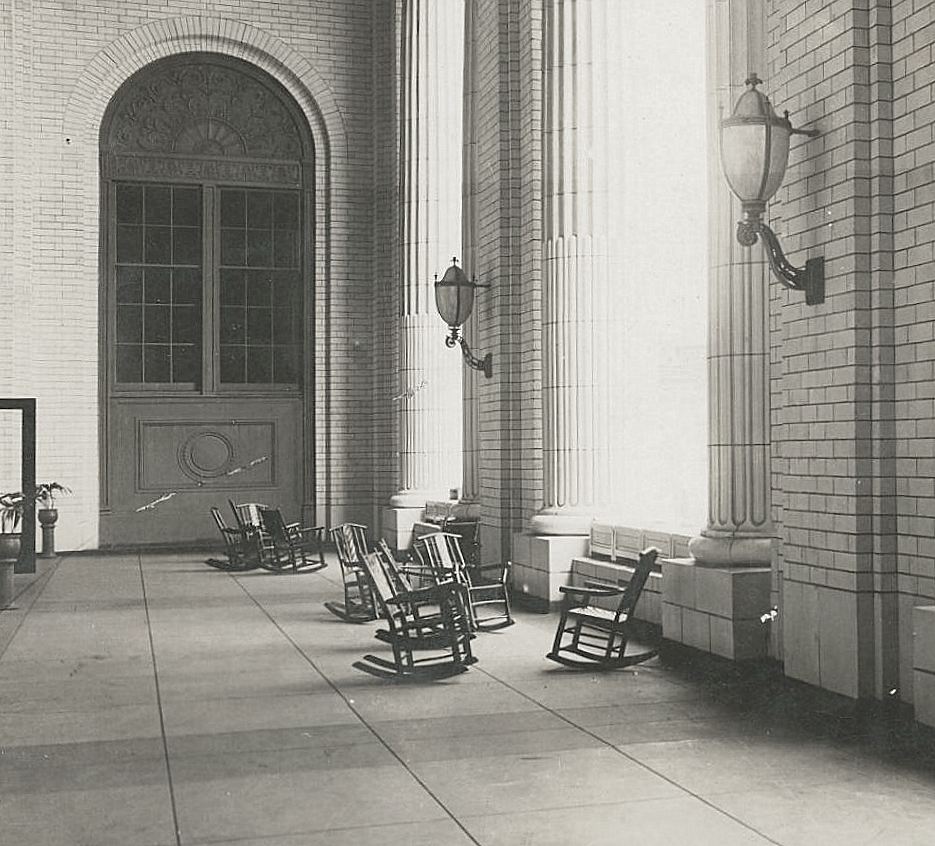
And a slight zoom-in:

union-station_rocking-chairs_atlantic-terra-cotta-co-coll_UT_frank-rogers_det-1

Imagine those rocking chairs up there in those archways, between the columns.

union-station_dallas-city-of-the-hour_ca-1916_SMU

***

Sources & Notes

The two photos from 1916 (by Frank Rogers) are from the Atlantic Terra Cotta Company Architectural records and photographs, 1914-1941, Architectural Terra Cotta, Alexander Architectural Archives, University of Texas Libraries, The University of Texas at Austin — more info on these photos is here and here

A couple of other images of the new Union Station can be seen in these Flashback Dallas posts:

union-station_interior_atlantic-terra-cotta-co-coll_UT_frank-rogers_sm

*

Copyright © 2022 Paula Bosse. All Rights Reserved.

19th-Century Sign-Painting and Real-Estating

smithson-harris_amer-petroleum-inst_smithsonian
Need signs and/or land?

by Paula Bosse

Above, a photo of Smithson & Harris, makers and painters of signs in the 1890s. The business — owned by Harry M. Smithson and W. H. Harris — was apparently at 209 S. Akard, which has been described as having been on the northeast corner of Akard and Commerce, later the site of the Magnolia Building. That address does not comport with 209 S. Akard as we know it today — that would be in the southwest block of S. Akard — south of Commerce and on the other side of the street. This is a sentence from Smithson’s obituary: 

Mr. Smithson operated a sign-painting and furniture repair shop in a one-story frame building where the Magnolia Building now stands at the northeast corner of Akard and Commerce. — Dallas Morning News, May 1, 1936

Another source repeats the same info. Below is an excerpt from the small booklet Dallas’ First Hundred Years, 1856-1956 by George H. Santerre. I’m guessing Santerre got his info from the very same obit (and perhaps embellished the importance of the two businesses pictured).

In 1895 Dallas’ merchants obtained their large store signs from Smithson & Harris, whose one-story frame establishment […] facing on Akard was located on the northeast corner of Commerce and Akard streets, the present site of Dallas’ Magnolia Building. The real estate offices of Palmer & McKay, through which many of Dallas’ real estate transfers were handled, adjoined the sign-painters location.

As far as that last little nod to Palmer & McKay (John R. Palmer and James C. McKay), I could find their real estate partnership in only one Dallas directory — 1891, when their office was located at 296 Main. I have no 1890 directory to check, but Palmer left a previous place of employment in 1889. “Palmer & McKay” had disappeared from Dallas directories by 1892, so my guess is that the photo is from about 1890.

As far as the address being 209 S. Akard — Dallas has renumbered and renamed so many streets over the years that it’s hard to keep track of everything. 

Dallas’ most prosperous and well-known sign-maker of this period was P. S. Borich. His shop was at 209 Sycamore (the street was later renamed N. Akard). But around 1890, “209 Sycamore” became, weirdly, 108 South Akard — right where the Magnolia Building was built. Borich was at 209 Sycamore/108 S. Akard until about 1900, when most of the individuals mentioned above had moved on to other professions. (You can see the confusing address numbering in the 1885 and 1892 Sanborn maps.)

borich_1889-dallas-directory1889 Dallas directory

So I’m not sure what’s going on in this photo of a building with the address “209.” 19th-century sublet?

(Incidentally, the Borich company eventually morphed into Texlite, the company that made Pegasus, the city’s symbol who lives atop, yes, the Magnolia Building. I wrote about Borich and Texlite in the post “Texlite, Borich, Pegasus.”

“Smithson & Harris” and “Palmer & McKay” were both very short-lived partnerships, lasting only a year or two. Wherever these businesses were located, it’s a cool photo.

***

Sources & Notes

Photo from the American Petroleum Institute Photograph and Film Collection, National Museum of American History, Archives Center; it is accessible via the Smithsonian Institution Online Virtual Archives, here. The back of the photo contains the notations “Magnolia Corner, 1896” and “Credit: Magnolia Petroleum Co.” …So much conflicting information. My head hurts.

Another copy of this photo is in the George A. McAfee photographs collection, DeGolyer Library, SMU Libraries, Southern Methodist University — more information on that copy is here (note: there is even more conflicting info in the description, but it also carries the “circa 1896” date).

I first saw the (cropped) photo in the 1931 Rotunda, the yearbook of SMU, from the collection at the DeGolyer Library, SMU Libraries, Southern Methodist University, here.

smithson-and-harris-signs_mcafee_degolyer_SMU_ca. 1890_sm

*

Copyright © 2022 Paula Bosse. All Rights Reserved.