Flashback : Dallas

A Miscellany: History, Ads, Pop Culture

Tag: Historic Dallas

Need Bonnie & Clyde and Smoot Schmid Memorabilia?
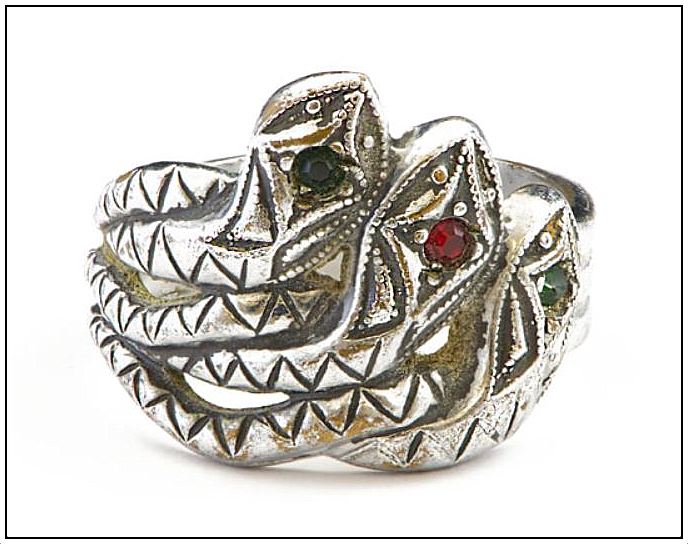
bonnie-and-clyde_ring_rr-auction_june-2017Nothing says “I love you”…

by Paula Bosse

Thank you, Robin McLauren, for making me aware of the upcoming “Gangsters, Outlaws, & Lawmen” auction presented by RR Auction (the sale is June 24, 2017, with the lots available to be previewed here and bidding to begin next week). Of particular interest to those of us in Dallas are the lots concerning Bonnie & Clyde and the lots concerning Dallas County Sheriff Smoot Schmid (known for, among other things, his involvement in the Bonnie & Clyde case) — these Dallas-specific lots can be viewed separately, here (there are three pages, see the page numbers at the bottom of the page).

There is everything from photos of B&C’s bullet-ridden car, photos of the two West Dallas outlaws lying on morgue slabs, Bonnie’s blood-stained glasses, Schmid’s gun, and even his Shriners fez. Here are a few of the items I found interesting.

The first one is pictured at the top: a 3-headed serpent “promise ring” Clyde made for Bonnie while in prison (information on the lot can be found here). It’s kind of cool. (Most images on this page are larger when clicked.)

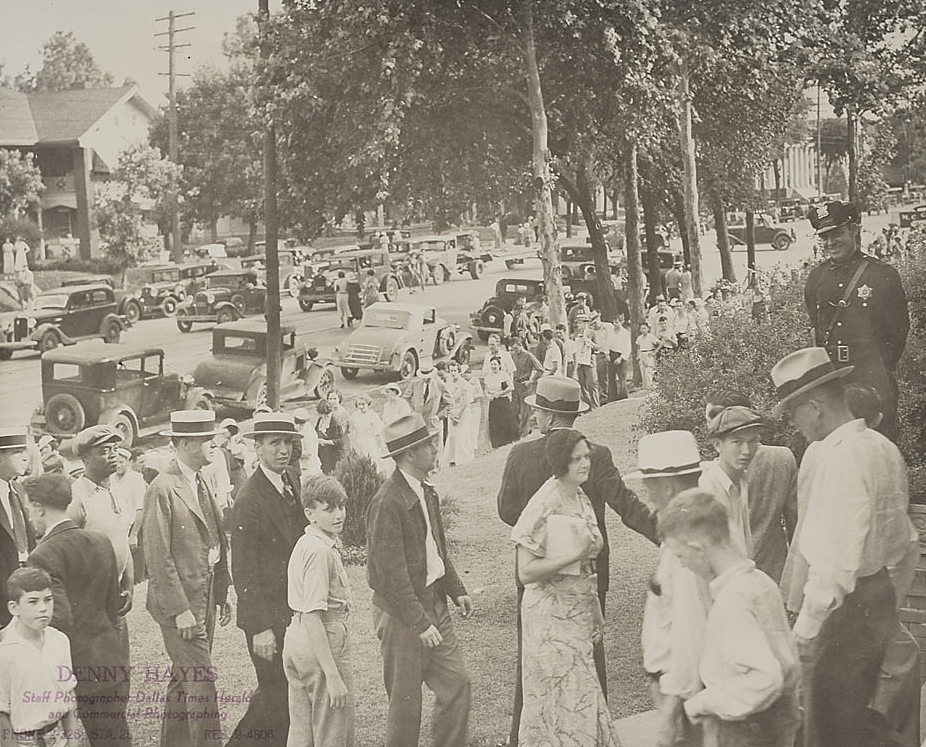
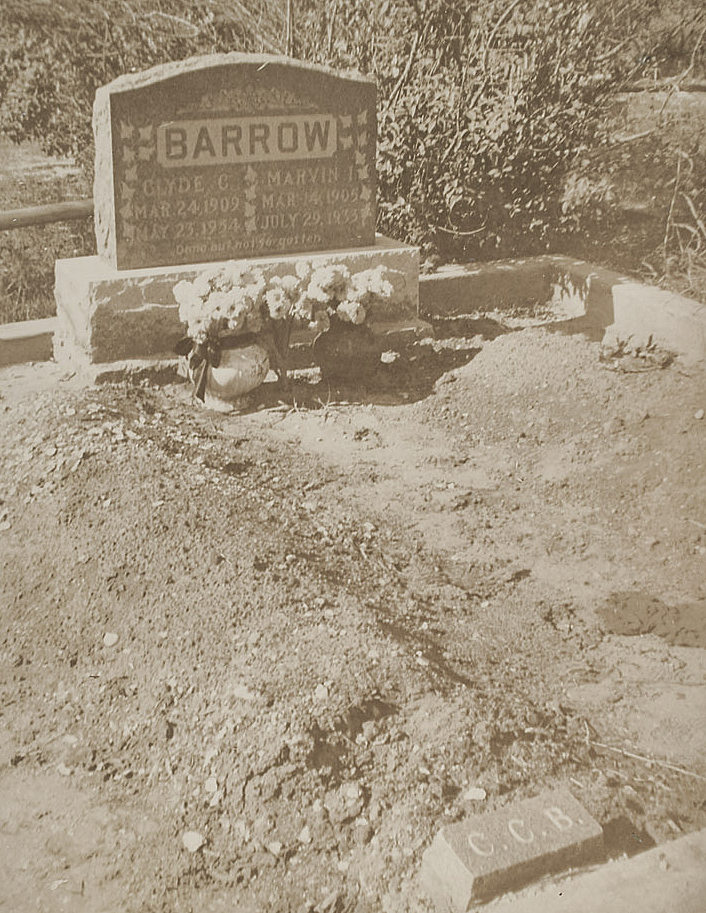
Another lot (here) contains four photos: two show the crowds attending Bonnie Parker’s viewing at the McKamy-Campbell Funeral Home on Forest Avenue, taken by Dallas Times Herald photographer Denny Hayes, and two show the gravesites of Bonnie Parker and Clyde Barrow.
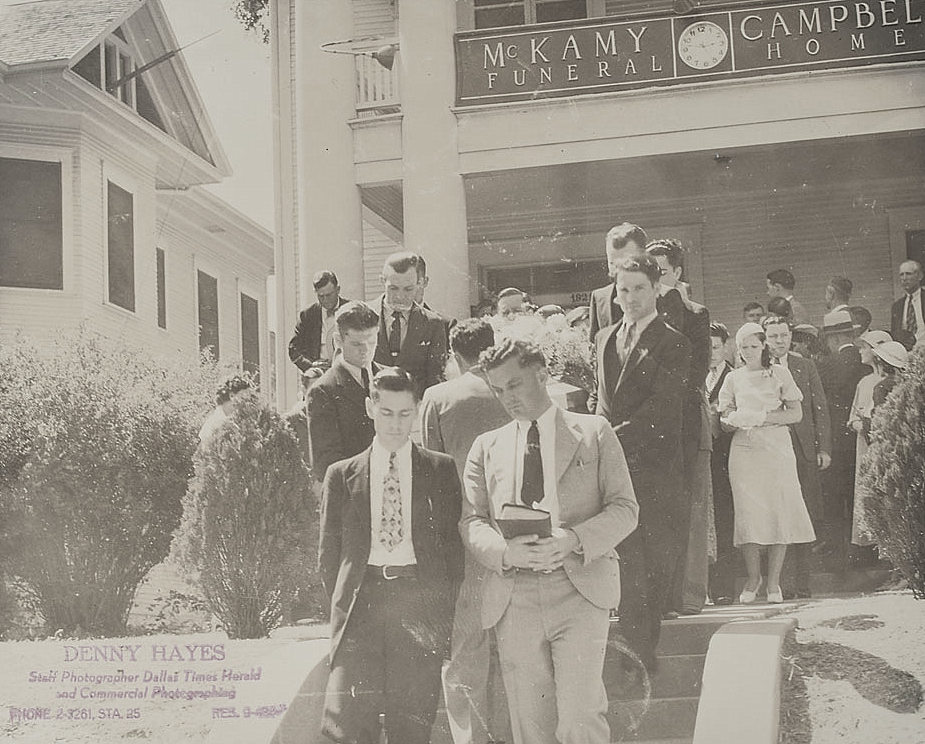
bonnie-parker_mckamy-funeral-home_rr-auction_june-2017

bonnie-and-clyde_funeral-home_rr-auction_june-2017

bonnie-parker_grave-marker_rr-auction_june-2017

clyde-barrow_grave-marker_rr-auction_june-2017

Another lot (here) has 36 photos concerning Blanche Barrow, wife of Clyde’s brother Buck Barrow. Here she is marcelled and striking a pose.
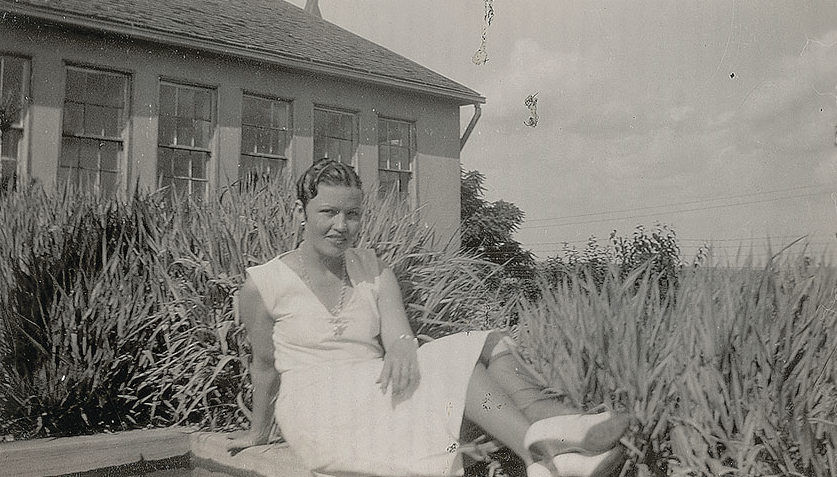
blanche-barrow_rr-auction_june-2017

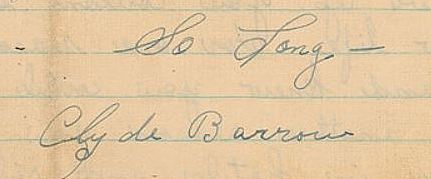
By far the best item is the bitter and angry letter of April, 1934 sent by Clyde Barrow to ex-Barrow Gang member Raymond Hamilton who was incarcerated in the Dallas County jail. Clyde dictated the letter to Bonnie, who must have had better penmanship (he signed it). A month later, Bonnie & Clyde were dead. The content of the 4-page letter is fantastic — read it here.
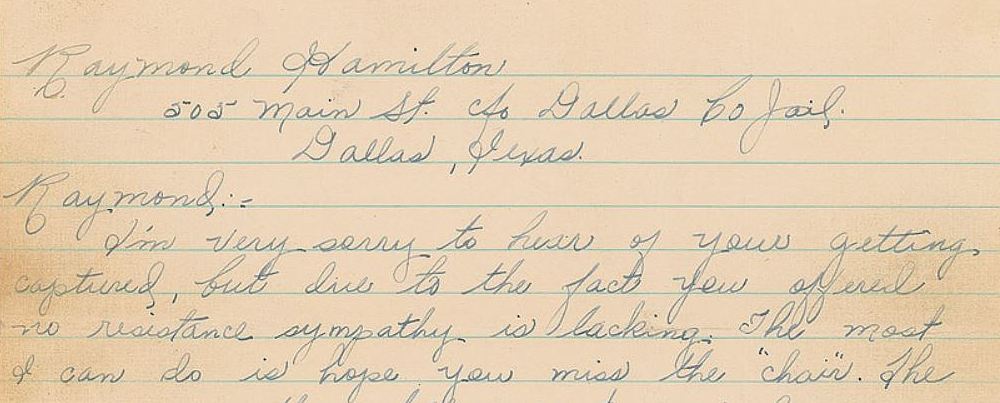
barrow_letter-to-raymond-hamilton-april-1934_rr-auction_june-2017

barrow_letter-to-raymond-hanilton_april-1934_signature_rr-auction_june-2017

There are several items that once belonged to Sheriff Richard A. “Smoot” Schmid, including this 14K gold diamond-studded badge presented to “Smoots” Schmid by his detectives in 1933.
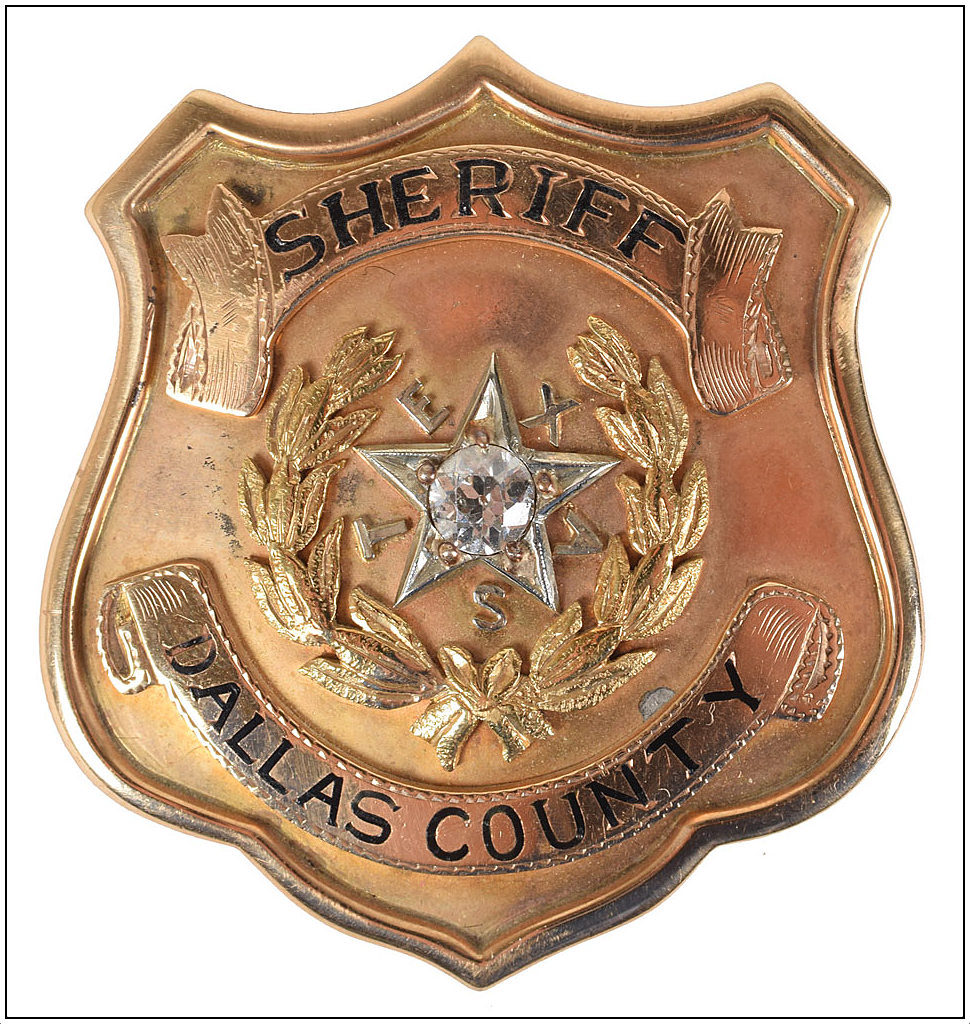
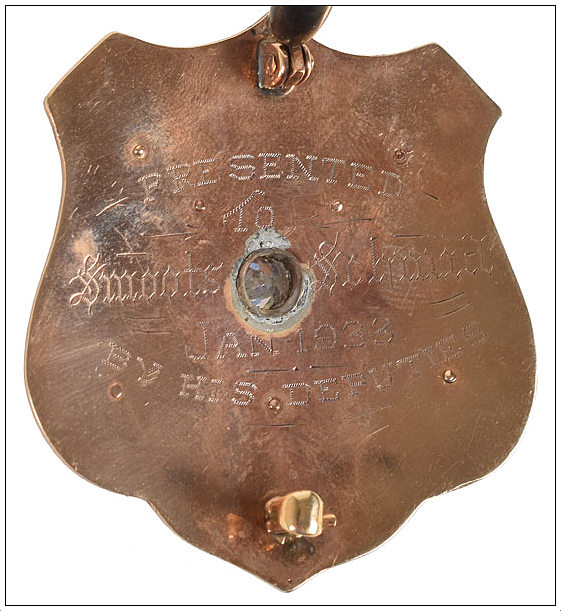
smoot-schmid_badge_front_rr-auction_june-2017

smoot-schmid_badge_back_rr-auction_june-2017

And, his boots, with his “SS” initials on each.
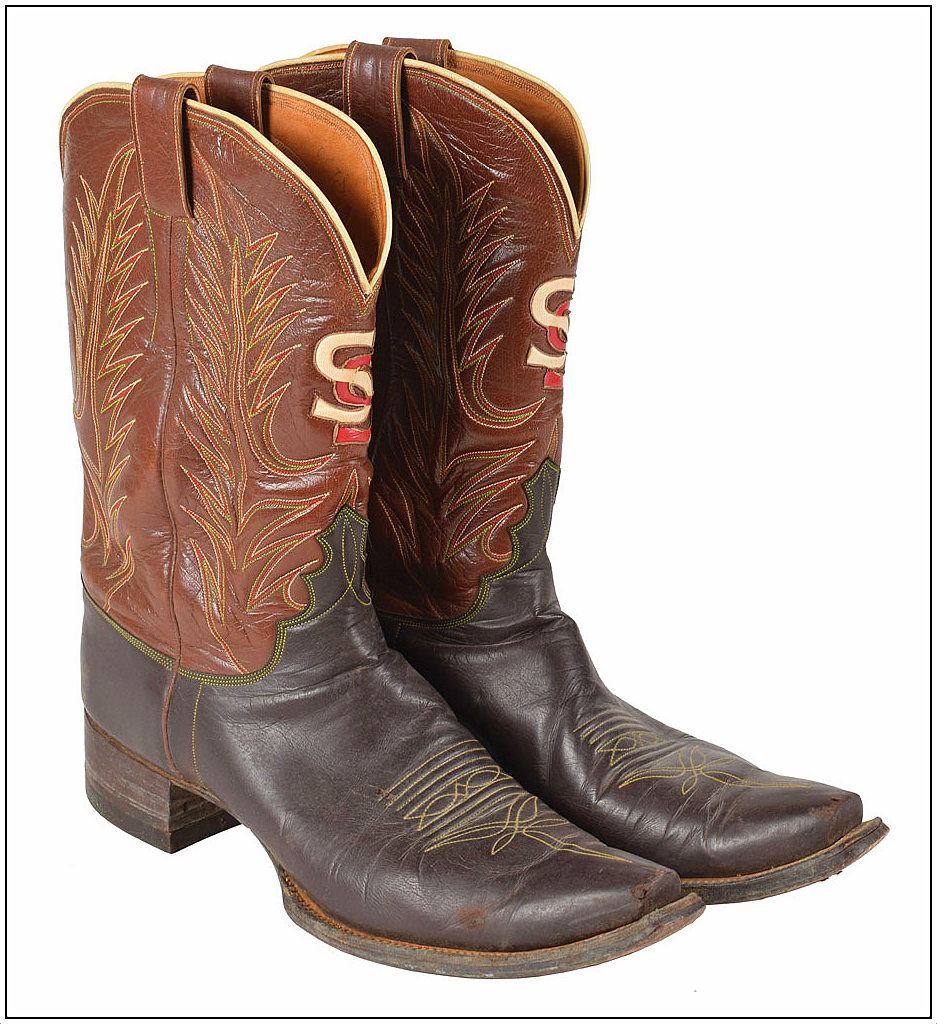
smoot-schmid_boots_rr-auction_june-2017

And just because it’s odd, I have to admit I’m quite taken with this photo tucked into a lot containing several photographs which shows Schmid slapping cuffs on a robot.
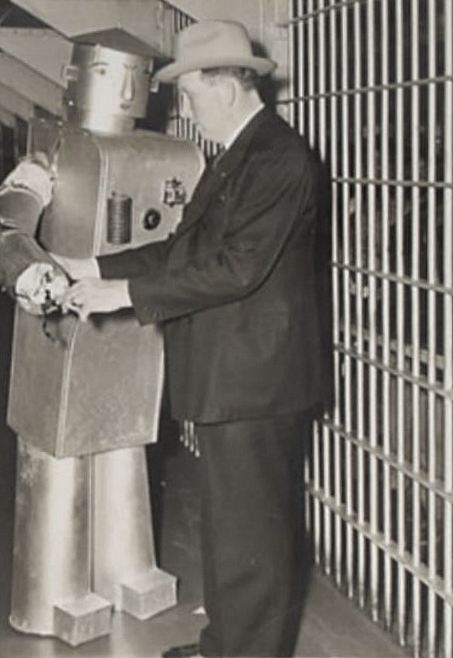
smoot-schmid_robot_jail_rr-auction_june-2017

Bidding begins June 15!

***

Sources & Notes

The RR Auction website is here.

More Flashback Dallas posts on Bonnie and Clyde are here.

Most photos are larger when clicked.

*

Copyright © 2017 Paula Bosse. All Rights Reserved.
 

San Antonio Extra: The Texas Transportation Co. and the Pearl Brewery Electric Freight Trolley

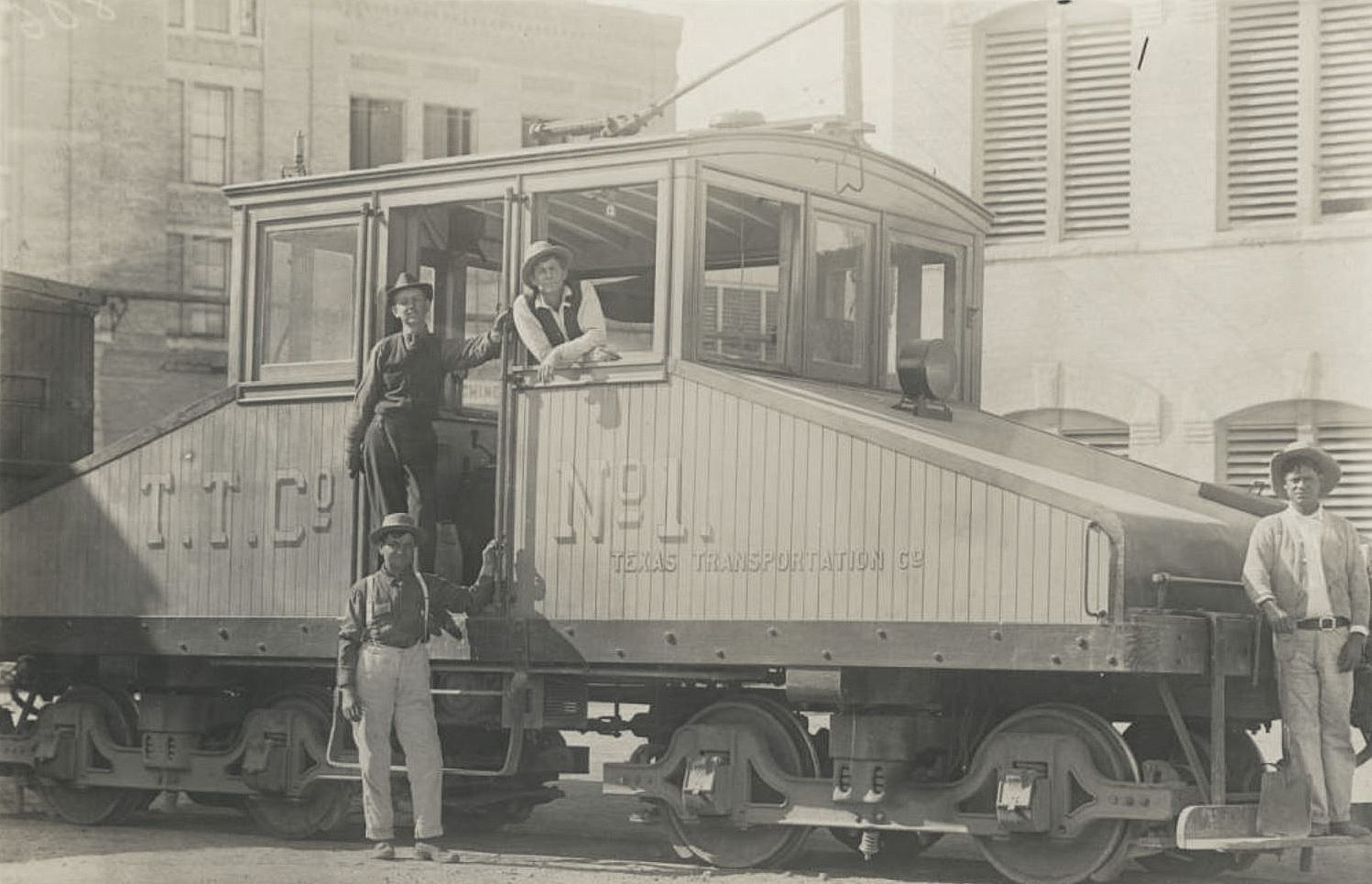
texas-transportation-co_cook-coll_degolyer_smu_san-antonioT. T. Co. No. 1, at your service… (click for larger image)

by Paula Bosse

I come across a lot of interesting Texas photos that have nothing to do with Dallas, so I think I might, on occasion, post them here, knowing that someone else is also likely to find them interesting. Like the one above.

This photo is from the incredible gift that just keeps giving, the George W. Cook Dallas/Texas Image Collection, held by the DeGolyer Library at SMU. Most of the items in the collection have a Dallas connection, but there are several others of general Texas interest.

When I saw this photo I wasn’t sure what it was. It looked like an electric trolley, but I’d never seen a shape like that before. It turns out it was, indeed, an electric freight locomotive. It was one of two locomotives that belonged to the Texas Transportation Co.’s tiny fleet of two — this was engine No. 1. The T.T.C. operated a freight service on their very short 1.3-mile track for 113 years (1887-2000), serving primarily the Pearl and Lone Star breweries of San Antonio, running freight to and from the breweries and the Southern Pacific rail yard. (More at Wikipedia, here.)

Here’s a later photo of the locomotive (October, 1928), now emblazoned with the Pearl Beer logo.

texas-transportation-co_1928_denver-public-library

As hard as it is to believe, this electric freight trolley ran along the streets of San Antonio until the year 2000, when it became a victim of the Pabst Brewing Company’s acquisition and shuttering of the Pearl Brewery. Without the brewery, there was no need for the trolley to continue to run. A month before it stopped running, a man shot video footage of the locomotive(s) trundling through San Antonio. I particularly liked seeing the locos push freight cars as well as pull them (seen at about the 12:50 mark). (Read the notes of the man who shot the video on the YouTube page under “Show More.”)

*

***

Sources & Notes

Top photo — titled “T. T. Co. No. 1. Texas Transportation Co.” — is from the George W. Cook Dallas/Texas Image Collection, DeGolyer Library, Central University Libraries, Southern Methodist Unviersity; more information about this photo can be found here.

Second photo — titled “Texas Transportation Co. locomotive, engine number 1, engine type Electric” — is from the Otto C. Perry Memorial Collection of Railroad Photographs, Western History Department, Denver Public Library; more information on this photo can be found here.

A great short, illustrated history of the Texas Transportation Co. and the various locomotives that ran on its rails can be found at the Don Ross Group website, here (be sure to read the reminiscences of a man who worked at the Pearl Brewery as a college student in 1960 at the bottom of the page).

I wrote about electric interurban freight-hauling locomotives in the Flashback Dallas post “Interurbans: Freight Movers?”

Click photos to see larger images.

*

Copyright © 2017 Paula Bosse. All Rights Reserved.


Zang and Beckley

oak-cliff_zang-and-beckley_dfw-freewaysGulf’s “No-Nox” gas just 18¢/gallon…

by Paula Bosse

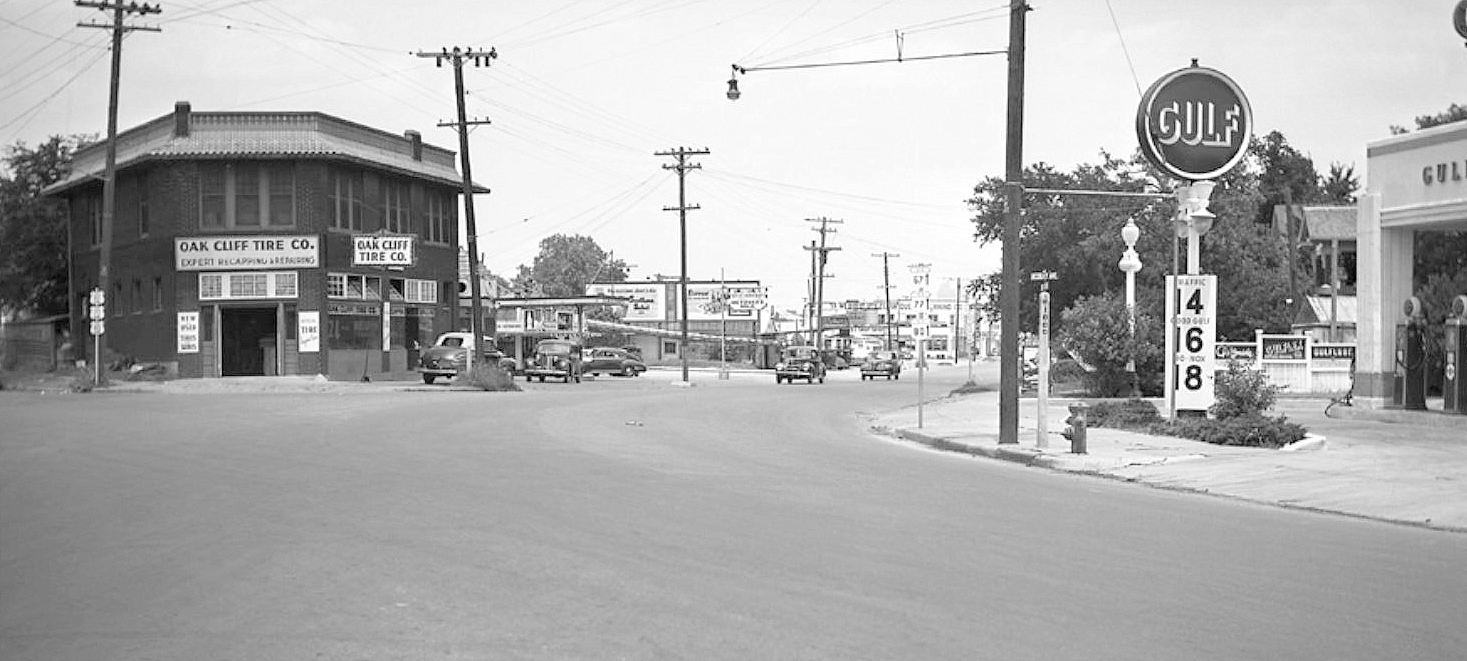
This photo shows the Oak Cliff intersection of N. Zang Blvd. and N. Beckley Ave. The 1953 Dallas directory shows L. B. Poche’s Oak Cliff Tire Co. at 1101 N. Zangs and K. R. Hollis’ Gulf service station at 1102 N. Zangs (this was before that “s” in the street name was eliminated).

The photo comes from the exhaustive tome Dallas-Fort Worth Highways, Texas-Sized Ambition by Oscar Slotboom. His caption for this photo (found on page 98 of the PDF here):

This undated view shows the predecessor of IH 35, US 67, aligned on Zang Boulevard through Oak Cliff just south of downtown at the intersection with Beckley Avenue. The three highway shields show that this alignment also served US 77 and US 80. The narrow streets leading into downtown were unable to handle increasing traffic after World War II, making freeway construction a top priority.

Zang Boulevard was originally called “Zang’s Boulevard” (later just “Zangs Boulevard”) after J. F. Zang. When it opened in 1900, it was the only direct road between Dallas and Oak Cliff. 

zangs-blvd_dmn_102600
Dallas Morning News, Oct. 26, 1900

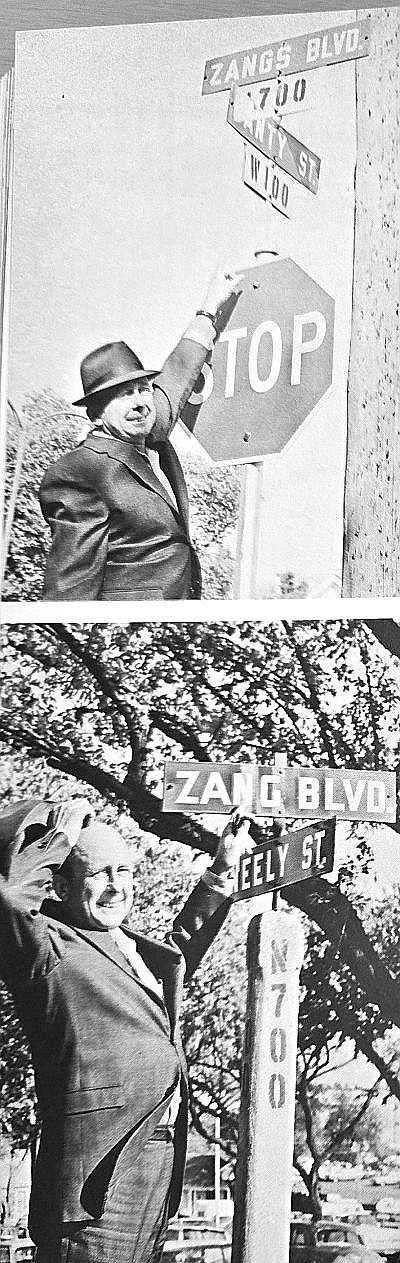
In 1967, it was beginning to be a problem, with mixed messages from the city on what the street was actually called, illustrated by the photos below, which ran with this caption: “Harry Gaston, Oak Cliff real estate and insurance man, points out the ZANGS street sign in the north 700 block of the boulevard at Canty Street. A look of bewilderment adorns his face, however, when he discovers the ZANG (no S) sign on the opposite end and other side of the same north 700 block. City records show ZANG as the correct spelling… a reorientation program for the public and some great big headaches for map makers.” (Oak Cliff magazine, Nov. 1967). In June 1968, the city officially dropped the “s,” and it became, simply, “Zang Boulevard.” (The full article about this is linked below in the Sources & Notes section.)

zang-zangs_oak-cliff-mag_nov-1967-a_DPL-photosNov. 1967

***

Sources & Notes

Top photo is from Oscar Slotboom’s Dallas-Fort Worth Freeways website, which is pretty amazing. If you’re interested in the evolution of Dallas’ highway system, you will be glued to this site which is full of incredibly detailed information.

Photos of the beleaguered Mr. Gaston wondering what the street was actually called is from Oak Cliff magazine, Nov. 1967, Periodicals Collection, Dallas History and Archives, Dallas Public Library. The article that ran with these photos — “Zang(s) Problem(s) Confuse(s) Chamber(s)” by Phyllis Dischman — is here.

*

Copyright © 2017 Paula Bosse. All Rights Reserved

Downtown Dallas, Last Week

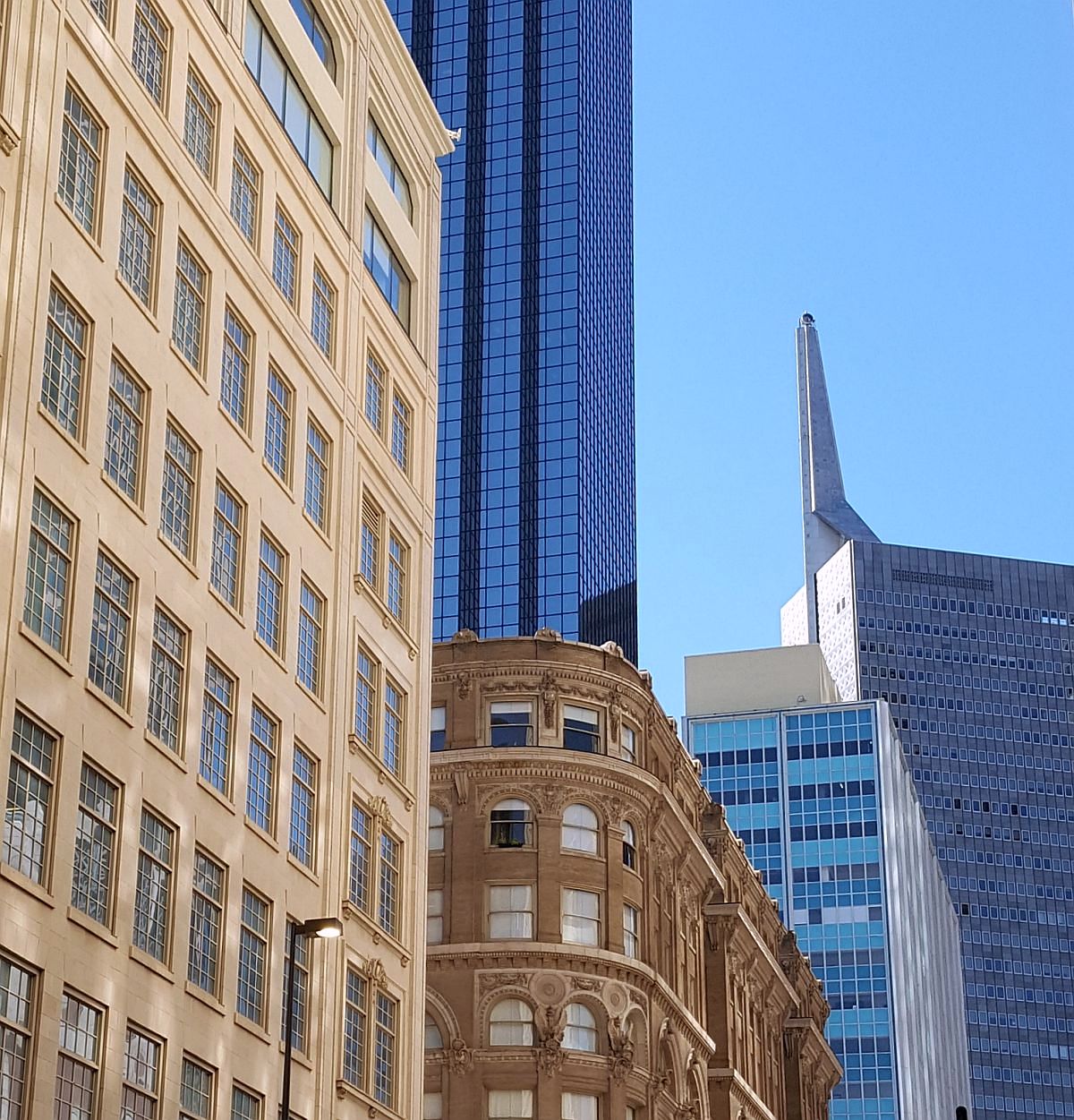
ervay-north-from-commerce_det_052417_bosseSo many architectural styles! (click for larger image)

by Paula Bosse

Last week I went downtown to check on the restoration of the St. Jude Chapel mosaic (I’ll write about that soon…). Sadly, I’m hardly ever downtown, so I took the opportunity to walk around a bit and was struck by how much construction and beautifying is going on. Parts of it are verging on the overly hipsterized, but, generally, downtown is looking better these days than I’ve ever seen it.

I parked at an incredibly affordable parking garage behind Neiman’s — Dal-Park on Commerce just west of Ervay (you do not have to be a Neiman’s customer to park there). Three bucks! (Just drive slowly on your way out — it’s kind of cool, but it’s like going down a spiral staircase … in a car.)

One of the first things you see when you emerge from the parking garage is the Mercantile Building. I never tire of seeing this building. (All photos in this post are much larger when clicked.)

mercantile-from-commerce_052417_bosse

*

Head north on Ervay from Commerce and you see that great view seen in the top photo — it’s kind of crazy to see so many wildly different styles of architecture, from so many eras all clustered together: the Neiman Marcus building (opened in 1914) on the left, the Wilson Building (1904), 211 N. Ervay (1958), the Republic Bank Building (1954), Thanksgiving Tower (1982), and just out of frame to the right, the Mercantile Bank Building (1943). Too bad the Old Red Courthouse (1891) is in the other direction! 

Heading up Ervay from Commerce, Neiman’s takes up the whole block to your left. The display windows on this side might not get the glory of the Main Street side, but the display seen in the photo below is great. I chuckled to myself when I realized that the star of a Neiman Marcus window was corrugated cardboard. But those dogs are fantastic! The name of the Dallas artist who made them is Loran Thrasher and you can see other examples of similar works at his website — click on “Installations.”

neiman-marcus-window_loran-thrasher_dogs_052417_bosse

*

As you approach Main Street you see this elegant sign (Neiman-Marcus, for me, will always have that hyphen in it!). (See what this block looked like around 1920, looking south from Main, here.)

neiman-marcus-sign_ervay_052417_bosse

*

Turn left on Main, and you’ll see this wonderful building across the street, just west of Stone Place — it’s one of the oldest buildings downtown, built sometime between 1892 and 1899. (I wrote about this building — and its two immediate neighbors — here.) I love this building which was very nicely restored by the fine folks at Architexas about 15 years ago.

sol-irlandes_052417_bosse

*

After admiring the Sol Irlandes building I turned around to see this surreal sight several stories above street-level.

joule-pool_052417_bosse

It’s an infinity pool — part of the Joule hotel (see what the pool looks like from up there here). It was pretty odd. If I felt a twinge of vertigo looking at this from the ground, I can’t even imagine how I would handle looking down. If the view isn’t obstructed, those brave swimmers can get a pretty good look at Pegasus (who is probably also a little concerned). This must be quite a sight at night.

joule-pool_pegasus_052417_bosse

*

Just to the right of the Magnolia Building, you can see the Adolphus peeking through.

adolphus_052417_bosse

*

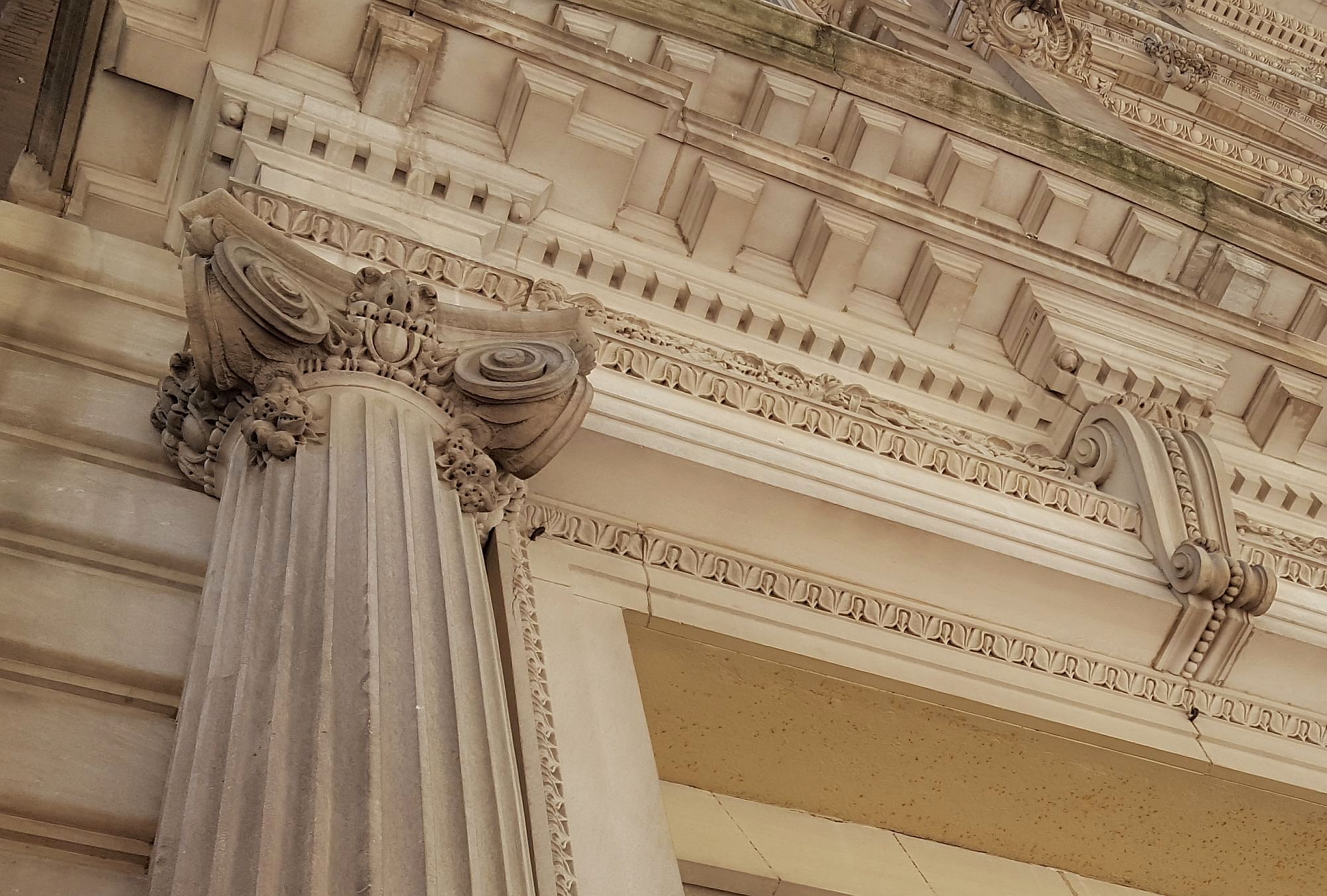
One of the most impressive buildings in Dallas is the Wilson Building, at Main and Ervay (…and Elm and Ervay). It’s even more impressive when you see it up-close. I love seeing all these intricate decorative details on a building so unlike anything else in Dallas. (See what it looked like under construction in 1902 here.) Thank you, Sanguinet & Staats, for building us such a lovely architectural landmark.

wilson-bldg_detail_052417_bosse

*

I decided to walk over to see how work on the Statler was coming, so I headed to Main Street Garden Park. This photo isn’t the best, but I wanted to get the Municipal Building (which is currently being restored to its original 1914 grandeur) in the same shot. The Statler is coming along nicely and should be open soon. I’ve always wanted to see inside that building. (Even if it no longer has its original heliport!)

municipal-bldg_statler_052417_bosse

*

Speaking of the Statler Hilton Hotel (opened by Conrad Hilton in 1956), it’s nice to see that someone has repainted the “Hilt” on the side of what was the first hotel Conrad Hilton built anywhere, The Hilton Hotel, built at Main and Harwood in 1925 (it is now Hotel Indigo). (See the original “Hilton” sign in about 1925 here; it was repainted when it became the White Plaza a few years later.)

hilton-hotel_ghost-sign_052417_bosse

*

I took the photos above from St. Paul, looking east. I turned around and saw this great view of the Merc! It looks good from every angle. (Here it is around 1942, looking west from Harwood.)

mercantile-from-st-paul_052417_bosse

*

It’s nice to see that so many of Dallas’ landmark buildings are still looking good — and it’s also a little strange seeing the places I read about and write about every day standing right in front of me. I need to get back downtown again soon — there’s so much more to see.

***

Sources & Notes

All photos by Paula Bosse; they were taken on May 24, 2017.

All are much larger when clicked.

*

Copyright © 2017 Paula Bosse. All Rights Reserved.
 

The Dallas Clippers: Early Dallas Baseball

baseball_dallas-clippers_cook-coll_degolyer_smu

by Paula Bosse

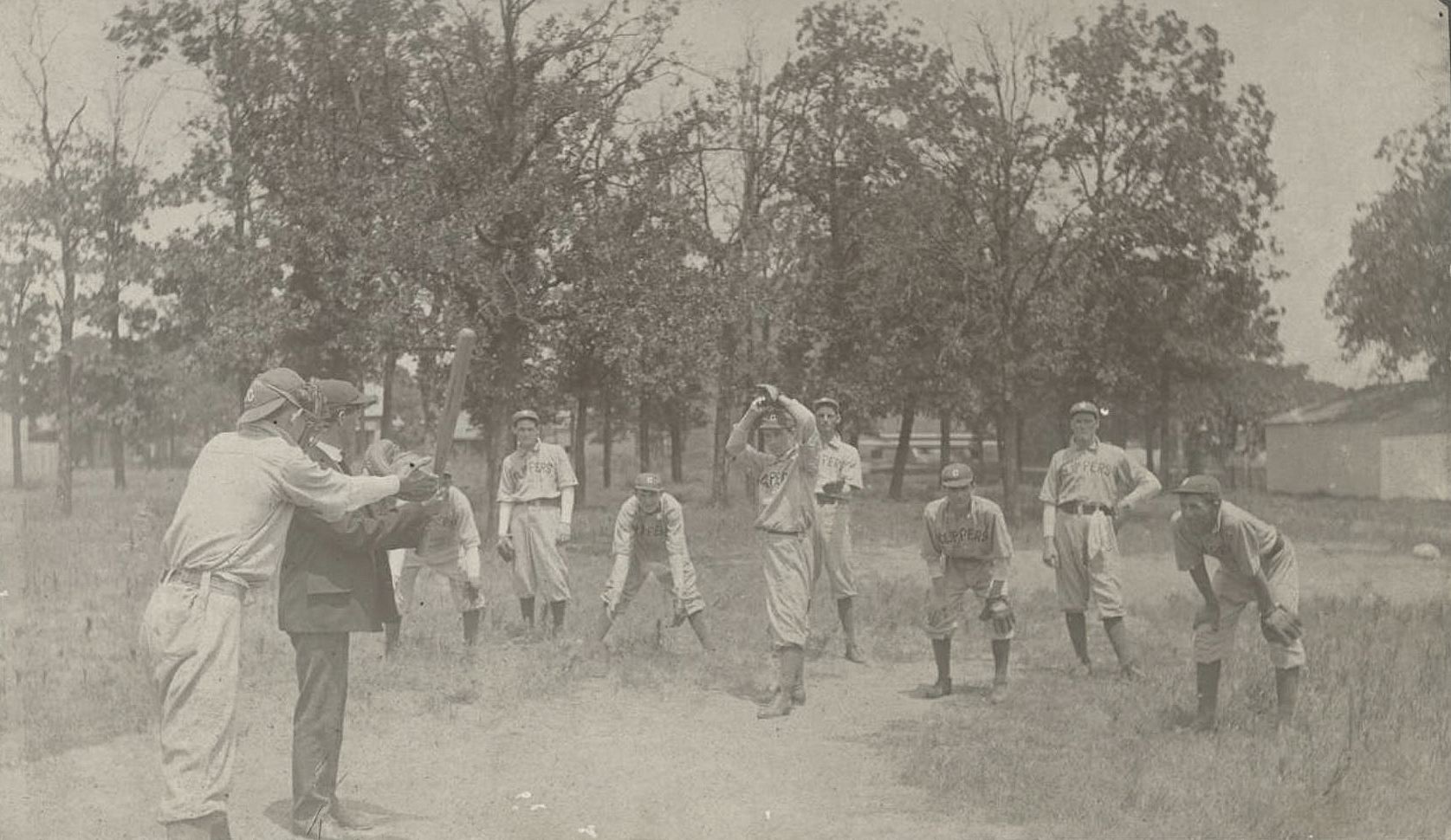
The Dallas Clippers were one of the city’s earliest baseball teams — their games were covered in local papers as early as 1888, and they appear to have played through at least 1905.

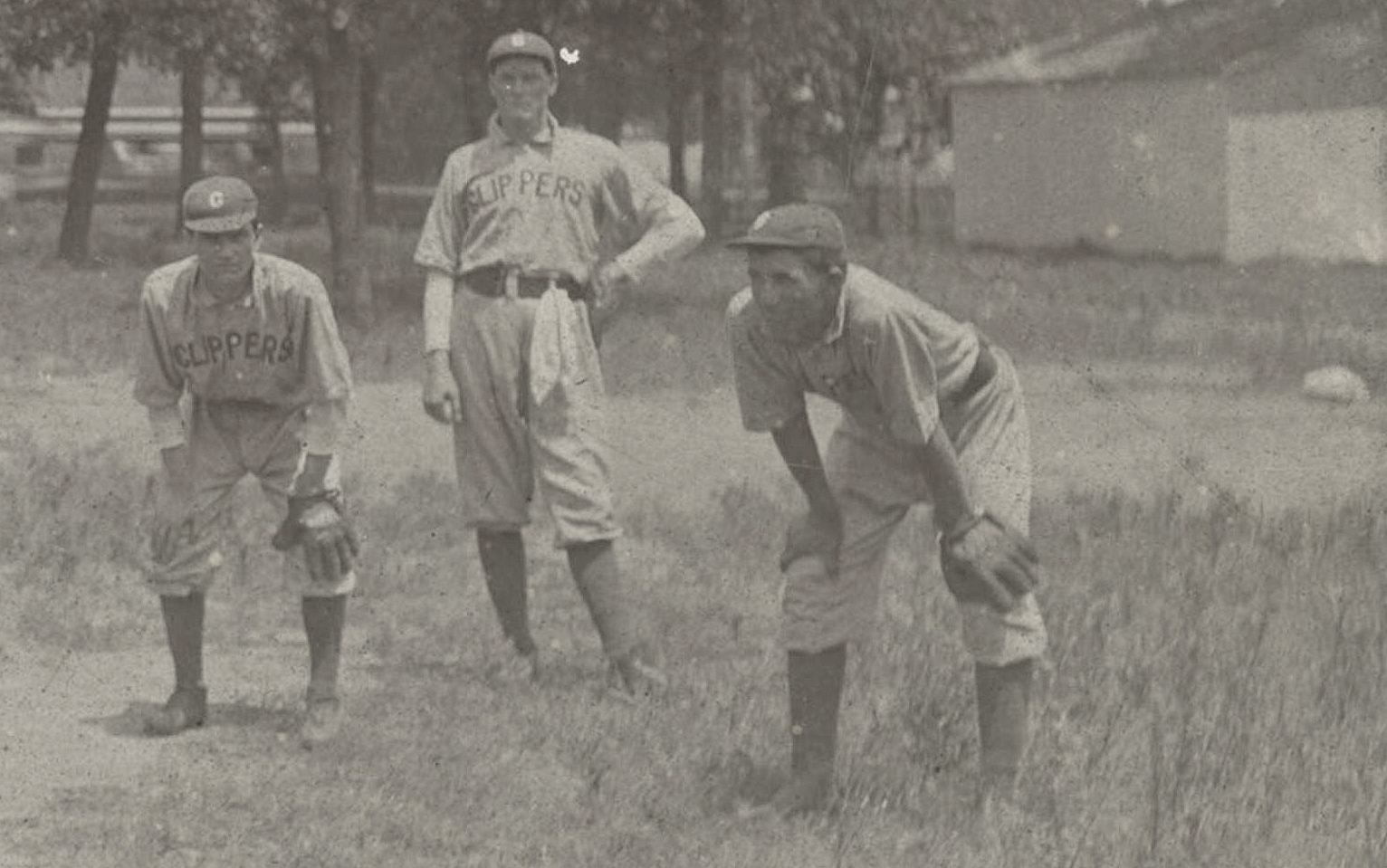
I’m not sure what’s going on in this photo. Tryouts? Practice? The stances are interesting — the way they’re holding their gloves (especially the catcher) — the gloves themselves. Cool photo. Here are a few details, a little closer up.

clippers_1

clippers_2

clippers_3

Those gloves are interesting — similar styles can be seen in the Wikipedia entry, here.

clippers_3a

*

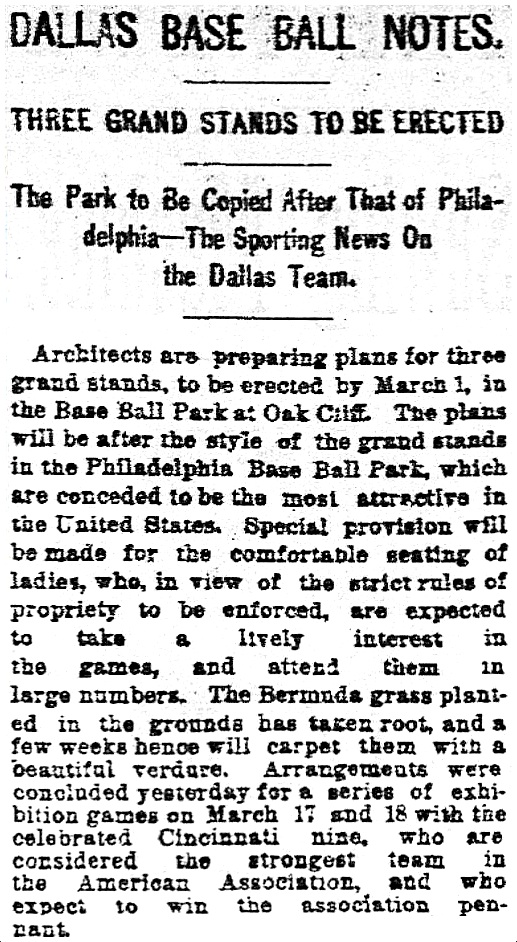
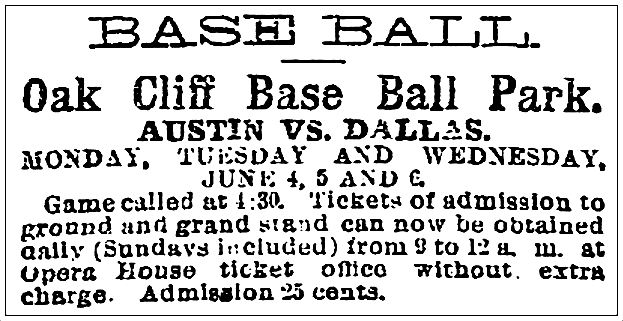
Many early baseball games in Dallas were played at the “base ball park” located in Oak Cliff Park (the park now known as Marsalis Park). A fantastic article on early sports in Dallas (“Gradual Development of the Scope and Popularity of Sports in Texas” — no byline — Dallas Morning News, Oct. 1, 1910) can be read here.)

baseball_oak-cliff-ball-park_dmn_012888
Dallas Morning News, Jan. 28, 1888

baseball_oak-cliff-ball-park_dmn_020388
DMN, Feb. 3, 1888

baseball_oak-cliff-ball-park_dmn_060688
June, 1888

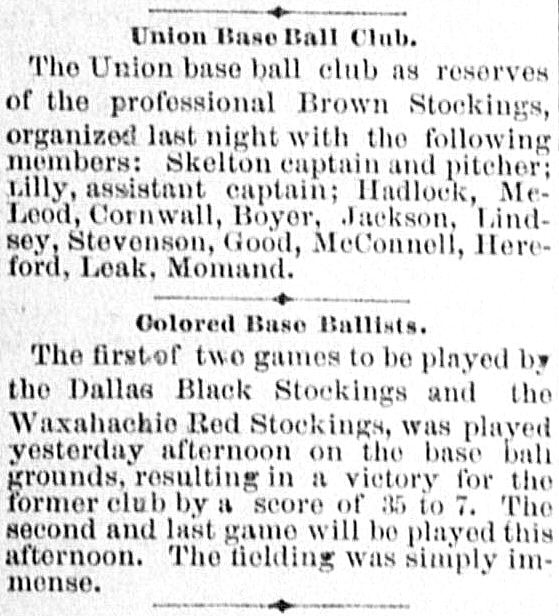
And this interesting little bit of early sports reportage appeared in the pages of the Dallas Herald in 1884, covering both black and white teams:

baseball_dallas-herald_082684
Dallas Herald, Aug. 26, 1884

***

Sources & Notes

Photo “Dallas Clippers Baseball Team” from the George W. Cook Dallas/Texas Image Collection, DeGolyer Library, Central University Libraries, Southern Methodist University; more information on this photo is here.

*

Copyright © 2017 Paula Bosse. All Rights Reserved

The Neiman-Marcus Corporate Flag, Designed by Emilio Pucci — 1966

neiman-marcus-corporate-flag_emilio-pucci_1966_dallas-public-library“Emilio Pucci was our Betsy Ross…”

by Paula Bosse

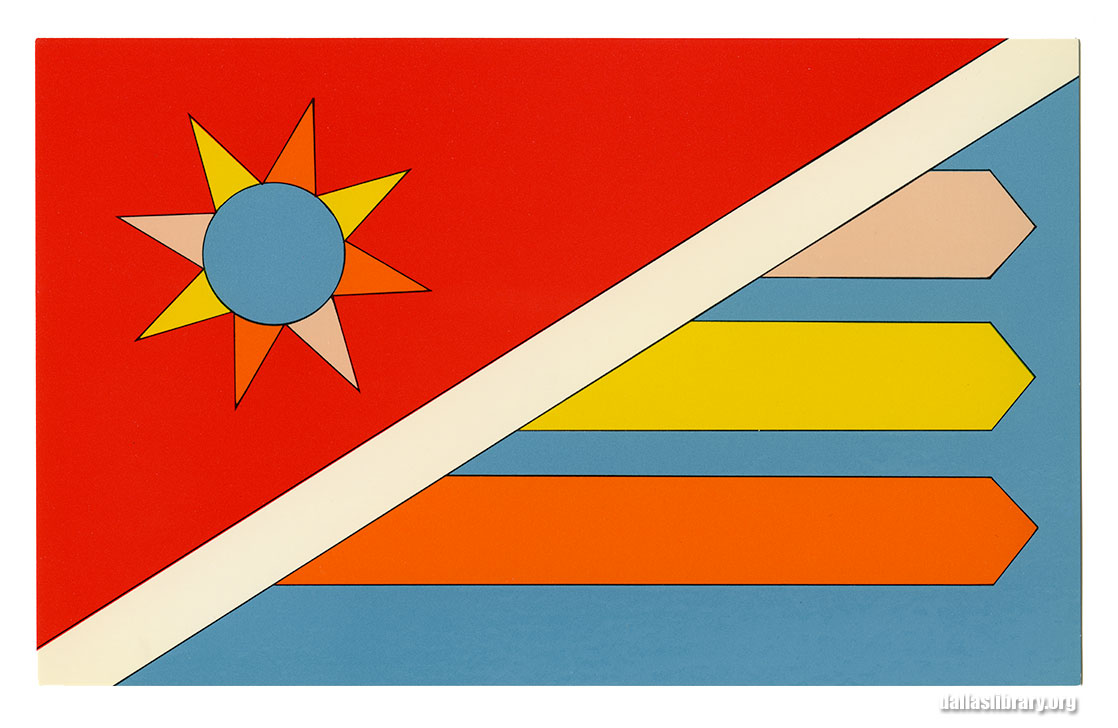
While looking through the Neiman Marcus Collection at the downtown Dallas Public Library, I stumbled across this perhaps long-forgotten part of Neiman-Marcus history: the “corporate flag” designed by Italian fashion legend Emilio Pucci. The image was featured on a Neiman’s postcard; the text on the back of the card reads:

Flying high over the fashion land of Neiman-Marcus: our new corporate flag, the Lone-Star-and-Stripes. Emilio Pucci was our Betsy Ross.

Betsy Ross and Emilio Pucci mentioned in the same breath! An 18th-century American seamstress who became a patriotic icon, and an Italian fashion designer whose vividly colorful, boldly patterned designs came to symbolize the youth and energy of the 1960s… talk about your strange bedfellows!

The only thing I could find about this unusually colorful flag was a brief mention in a Dallas Morning News fashion article about Neiman’s 28th Neiman-Marcus Exposition Award in early February of 1966. Gay Simpson wrote in The News that the luncheon centerpieces “carried the colors of the new Neiman-Marcus house flag. The flag, designed by Emilio Pucci, Italian couturier, has the colors of a Texas sunset dramatized with the Lone Star and stripes” (DMN, Feb. 9, 1966).

Stanley Marcus wrote in his 1974 memoir Minding the Store that his business relationship with Pucci (“the most copied designer of our time, aside from Chanel”) began in Italy in 1948 when Marcus met with the struggling young designer and placed an order for several of his scarves. Though Neiman-Marcus had not yet expanded beyond their single department store in Dallas, the store’s reputation and influence were certainly known in fashionable circles around the world, and this N-M “stamp of approval” must have been immensely important to Pucci, whose name was not yet known. This friendship and business relationship blossomed into a mutually beneficial and very profitable partnership, and it seems perfectly reasonable that Pucci would design a flag for his friend and early supporter, Stanley Marcus. (Read more of Marcus’ thoughts on Pucci here.)

There you have it. Who knew?

**

As a postscript, any Dallas blog worth its salt cannot let a mention of Emilio Pucci go by without noting his main connection to the city: Pucci will forever be remembered as the man who brought outrageously colorful and super groovy mod designs to the stewardess uniforms of Dallas-based Braniff International Airways (designs so retinally exciting that they make that little Neiman’s flag look a little dowdy in comparison!).

***

Sources & Notes

The image of the corporate flag is from a Neiman’s postcard, which can be found in the extensive (!) Neiman Marcus Collection of the Dallas Public Library (the back of the card can be seen here); it is used with permission. Thanks to the incredibly helpful staff of the Dallas History & Archives division of the downtown Dallas Public Library. (Much thanks, particularly, to Digital Archivist Misty Maberry!)

*

Copyright © 2017 Paula Bosse. All Rights Reserved.


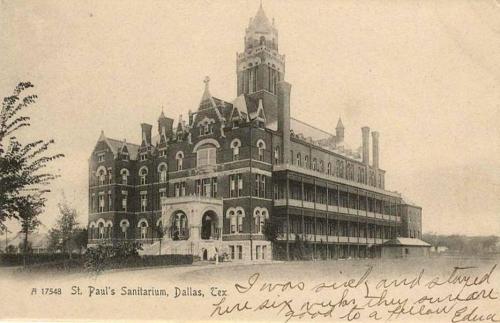
From the Vault: A Tour of St. Paul’s Sanitarium — 1910

st-pauls_flickr_coltera“They sure are good to a fellow…”

by Paula Bosse

A couple of years ago I posted several great photos taken inside St. Paul’s Sanitarium (later St. Paul’s Hospital) by noted Dallas photographer Charles Erwin Arnold. The photos are great. See them in the post “St. Paul’s Sanitarium — 1910,” here.

*

Copyright © 2017 Paula Bosse. All Rights Reserved.
Ewing Avenue, Oak Cliff

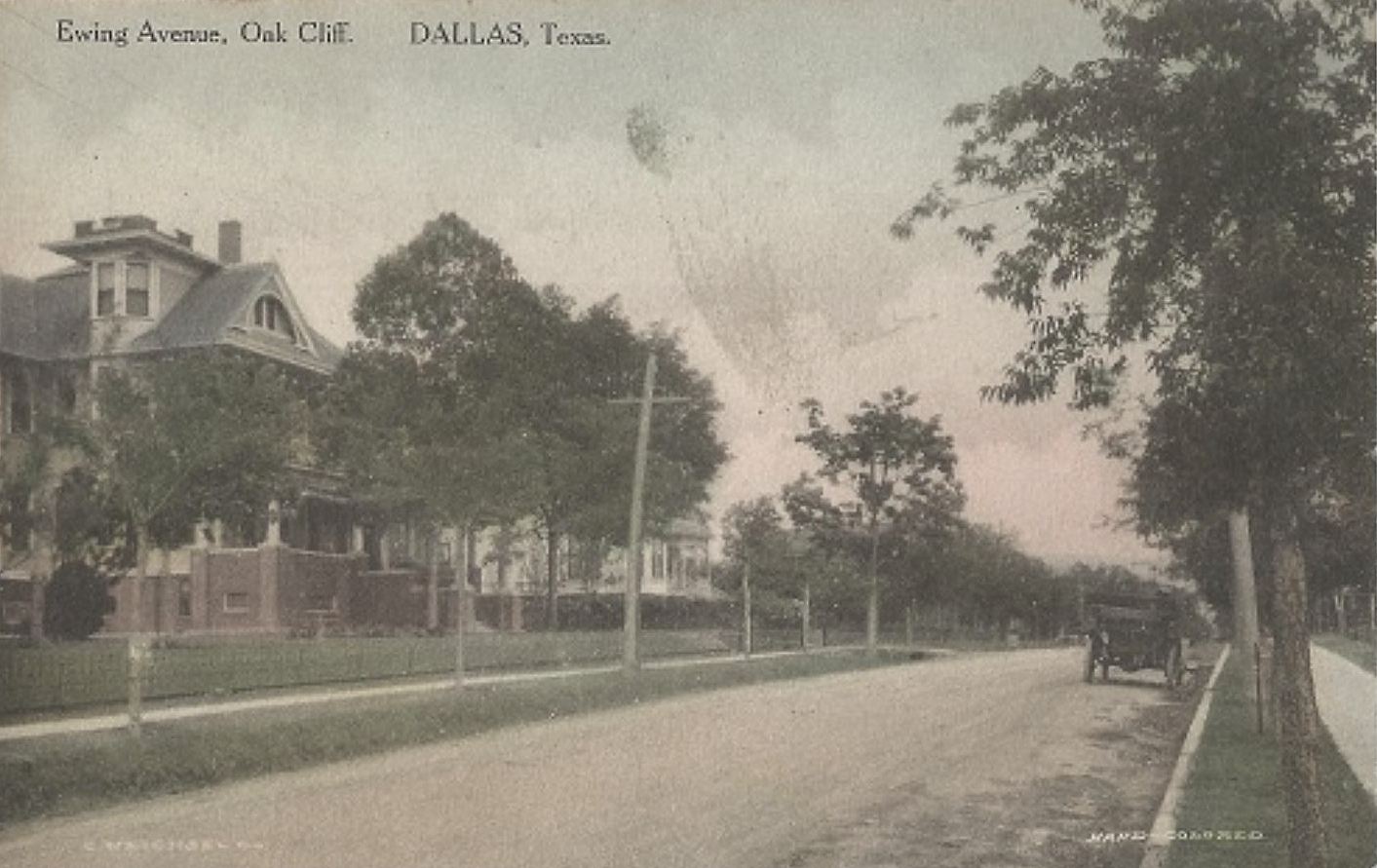
oak-cliff_ewing-avenue_flickr_colteraStately and serene Oak Cliff… (click for larger image)

by Paula Bosse

Another lovely hand-colored postcard from the C. Weichsel Co. — this one shows a sleepy, gauzy-looking Ewing Avenue in Oak Cliff, probably around 1910. According to the 1910 Dallas directory, Ewing Avenue stretched from S. Jefferson (now E. Jefferson) to 18th Street (it may have extended beyond that, but 18th Street was, apparently, the city limits).

If anyone knows the location of this view or the owner of this house, please let me know. I don’t think any part of Ewing — North or South — looks like this anymore!

***

Postcard found on Flickr, posted by Coltera (sorry, did not note the link).

*

Copyright © 2017 Paula Bosse. All Rights Reserved.
The Wide Open Spaces Northeast of Central and Lovers — 1957

central_north-from-mockingbird_060657_squire-haskins_UTASquire Haskins, UTA Special Collections

by Paula Bosse

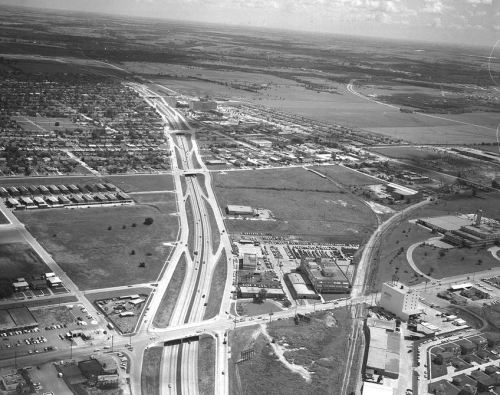
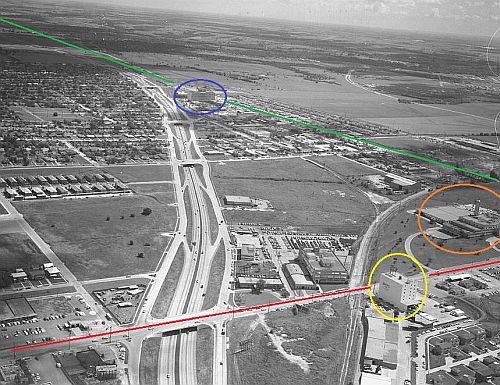
Here’s another great aerial photo by Squire Haskins, taken on June 6, 1957 — sixty years ago. The view is to the north, from a little south of Mockingbird. Mockingbird runs from left to right at the bottom of the photo; at the far right you can see the still much-missed Dr Pepper plant, which stood at the northwest corner of Mockingbird and Greenville Avenue. The only “tall” structure north of Mockingbird is the Meadows Building, at Greenville and Milton, just south of Lovers Lane. North and east of Lovers and Greenville is … pretty much nothing. The old Vickery community was north on Greenville, around what is now Park Lane. To the east? I don’t know … lots of open land and then … Garland? (See a huge image of this photo on the UTA website, here.)

If you need your bearings, here are a few of the landmarks (red, Mockingbird Lane; green, Greenville Ave.; yellow, Bekins Storage, orange, Dr Pepper plant; blue, Meadows Building):

meadows-bldg-from-mockingbird_squire-haskins-june-1957_UTA_annotated

Let’s turn it around and look south, toward downtown, from just north of Lovers Lane, with the Meadows Building in the foreground. Greenville is at the left, Central Expressway at the right. This photo, also by Squire Haskins, was taken on June 20, 1956. (See it on the UTA website, here.)

central_south-from-lovers_062056_squire-haskins_UTA_meadows

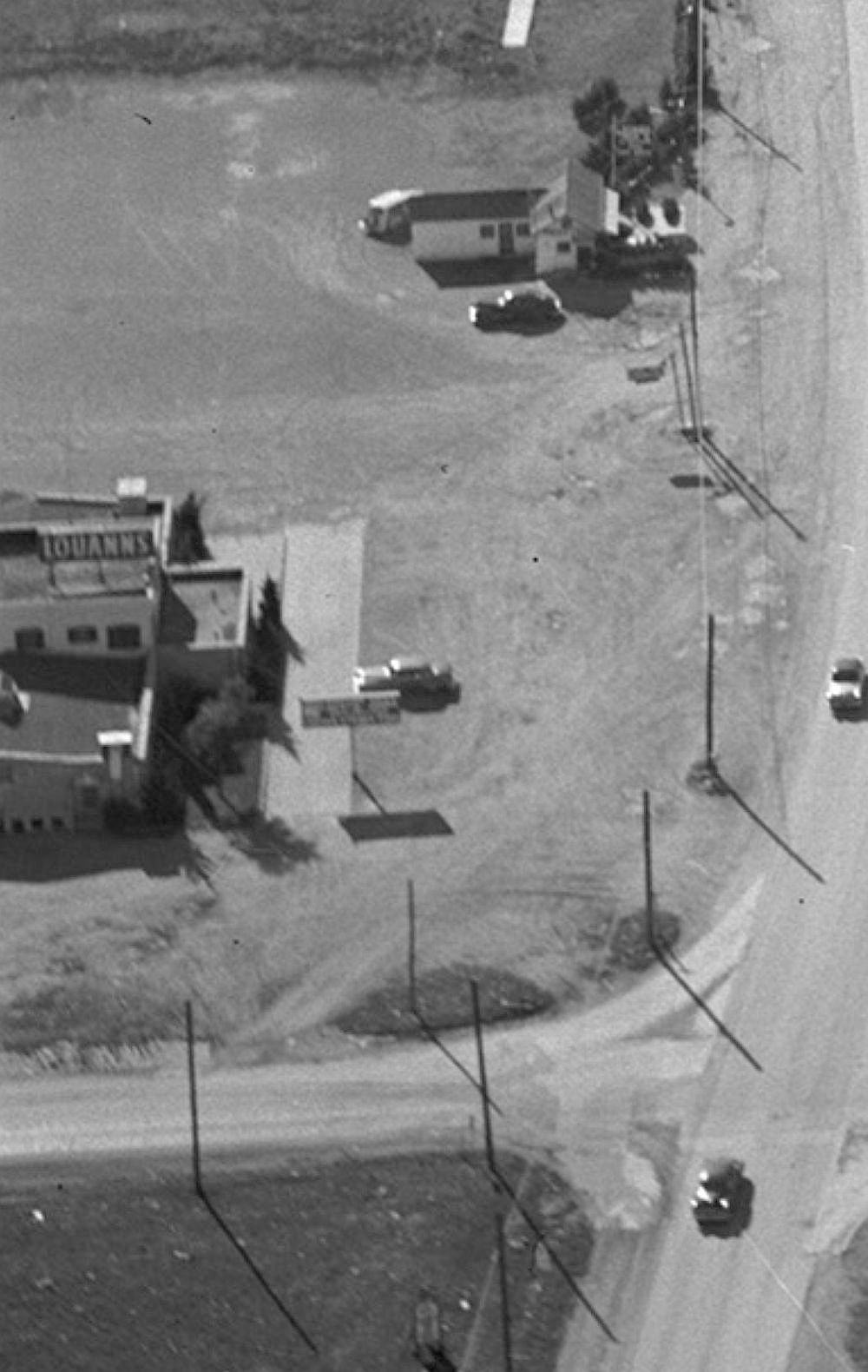
If, like me, you’ve always wondered where the legendary Louanns nightclub was, it was just out of frame at the bottom left of the photo above — at the southeast corner of Lovers and Greenville, where Central Market sits these days. You can see it below, in a detail of another great Squire Haskins photo (click on the thumbnail of the photo on this page to see the full photo — Louanns is at the bottom left) — it was taken on Dec. 4, 1953 and shows the Meadows Building under construction. In this detail you can see a slightly blurry Louanns, with what looks like an unpaved Lovers Lane at the bottom and Greenville Avenue at the right. I’d always  heard that Louanns was way out in the sticks in its heyday in the ’40s and ’50s. And looking at the top photo, I can see how true that was — especially before the arrival of the Meadows Building, which was, I believe, the largest “suburban” office building in Dallas beyond the downtown Central Business District. And for those who went out “parking” along the isolated Lovers Lane back then, you can see how the street got its name.

louanns_squire-haskins_UTA_det

louanns-postcard

Here is a clipping from the 1957 Dallas city directory showing the businesses along East Mockingbird — between Airline, west of Central, and Greenville Avenue.

mockingbird_central-to-greenville_1957-directory
1957 Dallas directory

See the Greenville Avenue businesses from the same 1957 directory here (the directory is scanned in its entirety on the Portal to Texas website here).

Here’s a map showing what this same area looked like a few years earlier, in 1952, when Mustang Airport was still out there (between Lovers and Northwest Highway, and between about where Skillman would later extend to and Abrams). (On the map below, Central Expressway is red, Greenville Avenue is blue, East Mockingbird Lane is purple, and Lovers Lane is green.)

map_north-from-mockingbird_1952-mapsco
1952 Mapsco

***

Sources & Notes

Top two photos by Squire Haskins, from the Squire Haskins Photography, Inc. Collection, UTA Libraries, Special Collections. Additional information on the first one (ID No. 10002957), looking north, is here; additional info on the second one (ID No. 10000568), looking south, is here. (To see HUGE images of both photos, click the thumbnails on these linked pages.)

*

Copyright © 2017 Paula Bosse. All Rights Reserved.

From the Vault: KRLD’s Beautiful Art Deco-Style Transmitter Building — 1939

krld_transmitter_1939

by Paula Bosse

When even industrial buildings were aesthetically pleasing. See the original post — “KRLD’s Beautiful New Transmitter — 1939” — here.

*

Copyright © 2017 Paula Bosse. All Rights Reserved.