Flashback : Dallas

A Miscellany: History, Ads, Pop Culture

Month: July, 2014

Building Collapse on Elm Street — 1955
elm-st-collapse_1955
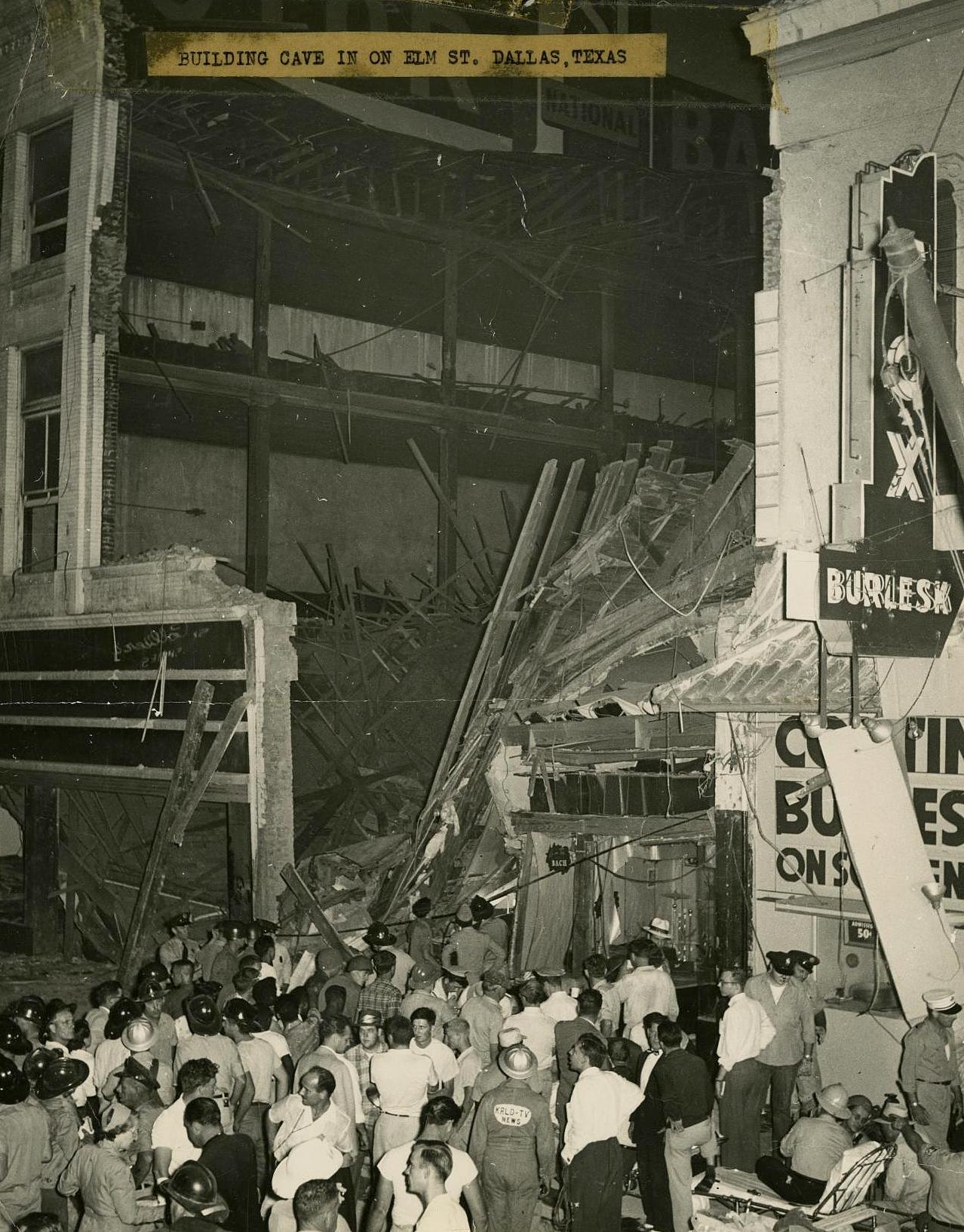
Aftermath… June 1, 1955 (photo by Gene Gauss)

by Paula Bosse

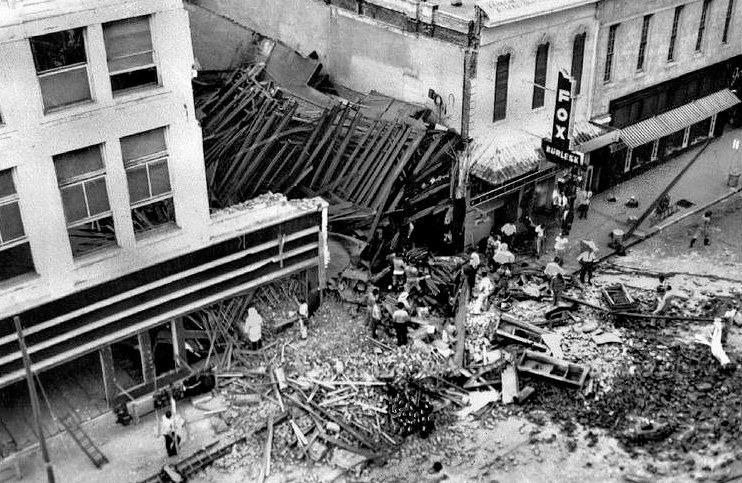
At 6:40 p.m. on June 1, 1955, a 3-story building in the process of being razed collapsed onto the smaller building next door at 1409 Elm St. The “story-and-a-half” building contained the Cline Music Company and Harry’s Fine Food, a bar and cafe. Four people were killed, and several people sustained major injuries; many were trapped for hours in the rubble.

The rousing report in The Dallas Morning News the next day described the scene as pandemonium. As emergency personnel arrived and rescue operations began, the street was roped off — there were fears a partially standing wall would topple at any moment. The Fox Burlesk house next door was quickly emptied of its 50-or-so patrons for safety concerns.

Witnesses said the building fell with a gigantic whoosh and spewed rubble about four feet deep across the sidewalk and into the street. Trolley wires were snapped and lay crackling sparks in the street for a while before the power was cut. A late-model station wagon parked at the curb was flattened under the rubble to a height of only about three feet. It belonged to [the owner of the music store]. (DMN, June 2, 1955)

Nine companies of firemen and several doctors — one of whom just happened to be passing by the scene — worked to rescue and treat the victims. A passing clergyman administered conditional last rites for those still trapped. A troop of Boy Scouts who had been nearby practicing civil defense drills, ran to help in the real-life emergency. And most cinematic of all, a Houston truck driver named Larry Ford — who just happened to be visiting Dallas and was standing in the crowd of spectators — was called in to help when someone noticed that he was wearing a truck drivers’ union insignia — authorities had obtained a winch truck to clear the heavy rubble but had been unable to find anyone to operate it. Ford sprang to action and worked through the night for 16 grueling hours. He was later hailed as a hero. Just like in the movies.

So what caused the collapse? The city manager was quick to say that the city was not to blame and, basically, had no responsibility to determine who WAS to blame.

City Mgr. Elgin Crull told The News an investigation by Chief Building Engineer Cecil A. Farrell has not been completed. “There won’t be anything on it for a long, long time — if ever at all,” Crull declared. “It’s not our responsibility to say why it fell or who was at fault. We’ll just seek to determine whether or not all the proper safety precautions were followed.” (DMN, June 3, 1955)

Well, all right, then.

As several people noted, had the collapse happened an hour earlier — in the midst of rush hour — many, many more people would have been killed and injured. I’m not sure if the cause was ever determined. The block (between Field and Akard) now contains the old First National Bank Building, built a decade later.

elm-st-collapse_060155

UPDATE: Just stumbled across this UPI photo, posted a few years ago by Robert Wilonsky on the Dallas Observer’s Unfair Park blog:
building-collapse_observer-090511

And below, a photo showing the 1400 block of Elm in the 1920s (looking west from Akard), with the “cafeteria” sign in front of the doomed building, to the left of the Fox Theater. The wall with what looks like the beginning of the word “Steinway” is the one that crushed its neighbor. (From Troy Sherrod’s Historic Dallas Theatres; photo from the Dallas Public Library.)

fox-theater_sherrod_dpl

***

Sources & Notes

The first two photos are from the collection of the Dallas Firefighters Museum, via the Portal to Texas History; they can be seen here and here.

The reports of the collapse that appeared in The Dallas Morning News are pretty exciting to read. You can find them in the newspaper’s archives.

  • “Three Killed, 10 Injured As Elm St. Building Falls” (DMN, June 2, 1955)
  • “Building Ruins Termed Clear Of All Victims” (DMN, June 3, 1955)
  • “Debris Yields Another Body” (DMN, June 4, 1955)

Click pictures for larger images (especially the first two, which are HUGE).

*

Copyright © 2014 Paula Bosse. All Rights Reserved.

A Decade of Spectacular Growth for the Dallas Skyline: 1929-1939

downtown_night_lloyd-long_smu_foscueA stunning view of the city at night… (click for larger image)

by Paula Bosse

Two photographs showing the same view: the top from about 1939, the bottom from 1928. This city has always been a show-stopper at night, but Dallas went from looking like a typical big, prosperous city to a glamorous and elegant, fantastically illuminated metropolis in the span of only ten years. The 1930s was a good time to be an architect in Dallas.

rotarian-magazine_jan-1929

***

Sources & Notes

Top photo by Lloyd M. Long, from the Edwin J. Foscue Map Library, Central University Libraries, Southern Methodist University; it is accessible here. To see this photo with major buildings identified, the labeled version is here. The view is from the Medical Arts Building. Elm and Ervay is the intersection at the lower left, and Pacific runs along the right.

Bottom photo from the January, 1929 issue of The Rotarian, showing its readers what was in store for them at their annual convention to be held in Dallas in May. The night-time skywriting is a nice touch. (It’s weird seeing the Magnolia Building before Pegasus was installed on top of it in 1934.)

Click photos for larger images.

*

Copyright © 2014 Paula Bosse. All Rights Reserved.


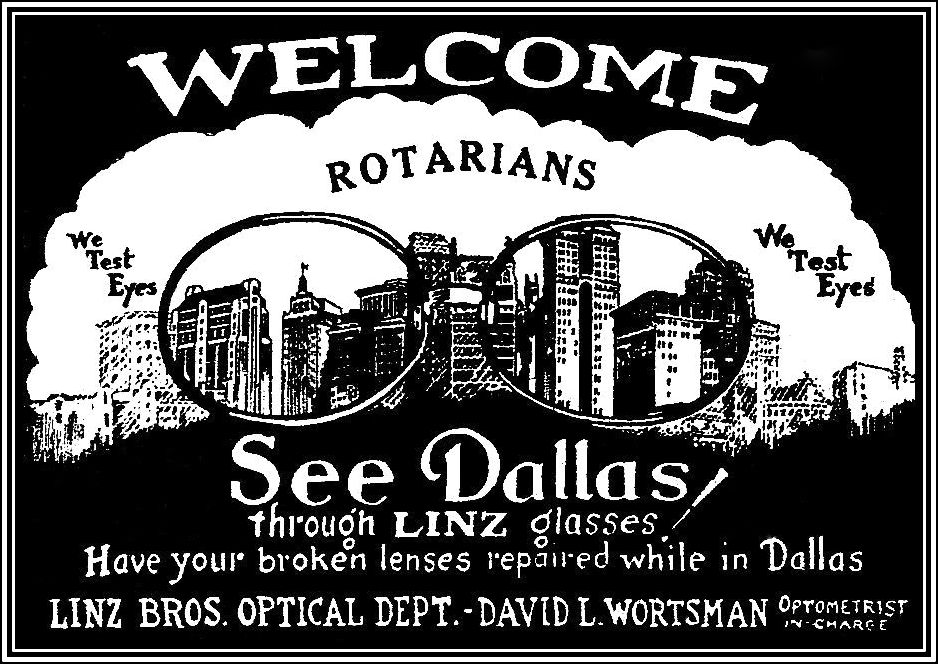
“See Dallas Through Linz Glasses!” — 1929

ad-linz_rotarians_dmn_052629

by Paula Bosse

What a great ad from 1929!

The huge annual convention of the Rotarians was underway in Dallas at this time — 10,000 people were flooding the city from around the world, and all the larger businesses had specially-branded advertisements aimed at the pool of potential new customers.

*

Copyright © 2014 Paula Bosse. All Rights Reserved

From Blacksmithing to Auto Body Repair: A Guy Who Knew How to Change With the Times

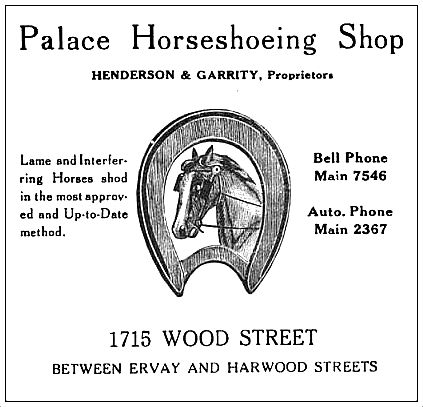
palace-shop_1920sThe Palace Shop — 2814 Main St., Deep Ellum…

by Paula Bosse

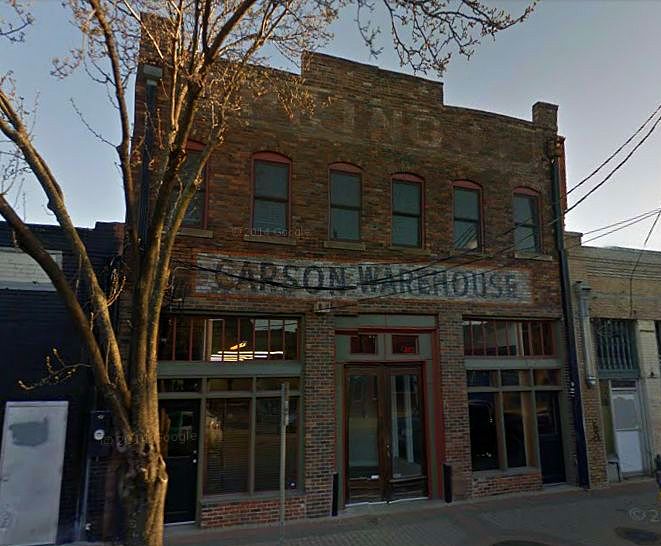
The building seen above in a photo from the 1920s is still standing on Main Street in Deep Ellum — and it still looks very much the same. It goes back to at least the 1910’s and has most recently been an art gallery/production studio; when I went to see a gallery show there several months ago, I was almost more interested in the building than in the art. It’s pretty cool.

The building has housed a lot of automotive-related endeavors over the years, including, the Palace Shop, a business which originally started out as a blacksmith shop in 1889 (in a different location — at what is now Commerce and Lane).

palace-horseshoeing_bldg-code_19141914 ad

As the horse-shoeing business began to slack off, the owner — an early automobile enthusiast named Gus Henderson, Sr. — shrewdly made the transition from blacksmith to auto body repair guy. His business expanded and he made the move to Main Street.

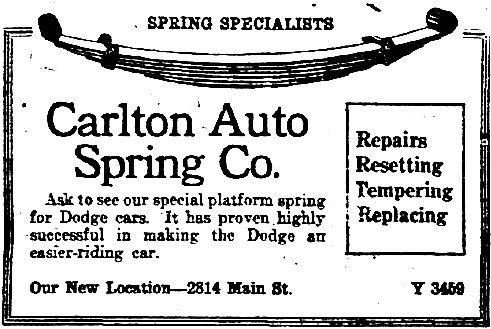
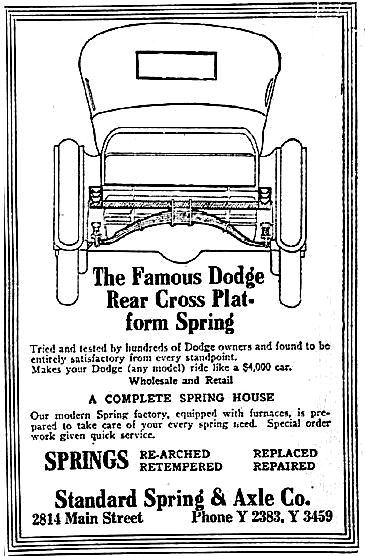
Below is what the building looks like today, still pretty much the same. The word at the top is “springs” which can be explained by there having been a “spring specialist” at that address for several years (the Carlton Auto Spring Co., later bought out by the Standard Spring & Axle Co.), but I’m not sure what the “Carson” refers to — anyone know? (Should it be “Carlton”?)

palace-shop_now_googleGoogle Street View

carlton-auto-spring_dmn_0219221922

standard-spring_dmn_1008221922

I’m always happy to see these old buildings still in use a hundred years after they were built — a sad rarity for Dallas. Thank you, Deep Ellum!

***

Sources & Notes

The often-unreliable Dallas Central Appraisal District info has the construction date of the building as 1913. The earliest business I can find at that address is something called Star Manufacturing Co. — in business there in 1915. (The city’s street numbers were changed in 1911, so it’s difficult to pinpoint what was in that location previously — the street numbers in that block of Main Street would have been between 744 and 774, per the 1909 Worley’s directory.)

*

Copyright © 2014 Paula Bosse. All Rights Reserved.
 

The Smith Brothers Can Set You Up With a Hearse … Or a Cab — 1888

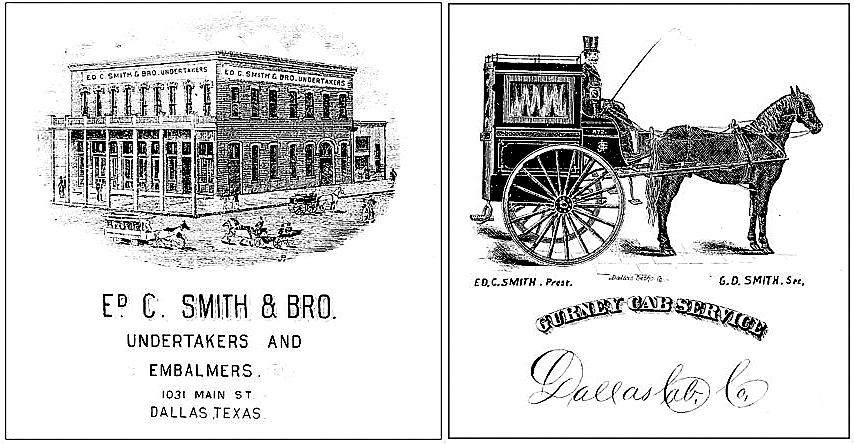
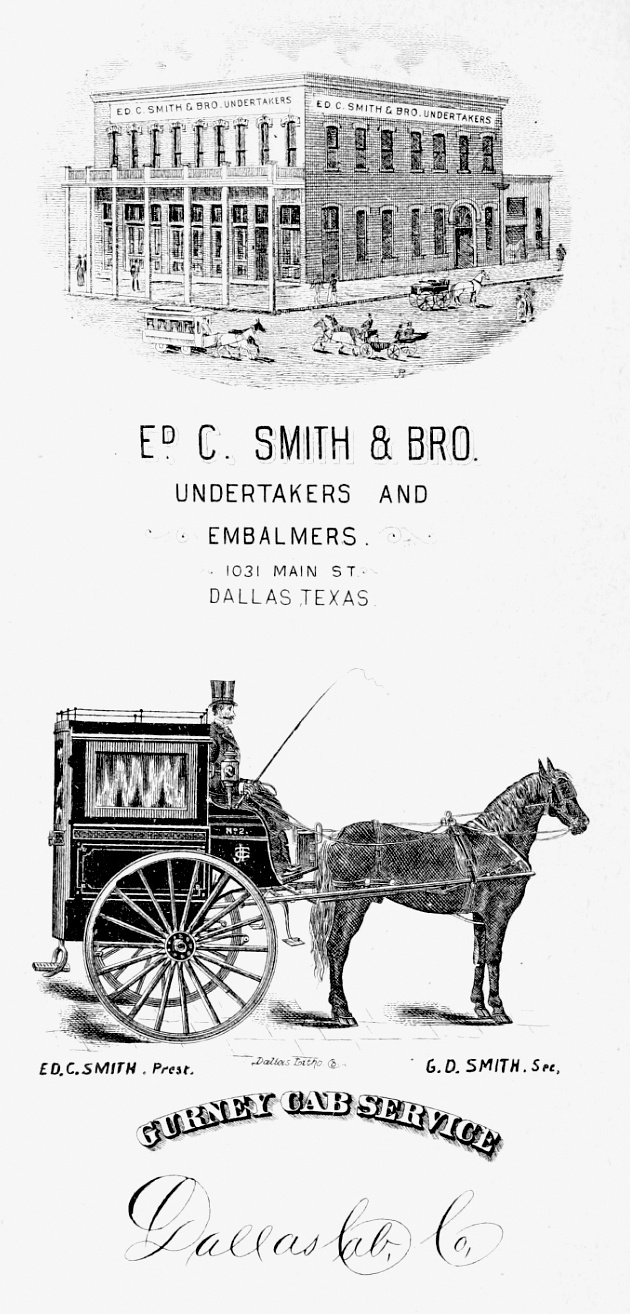
ad-dallas-cab-undertaker_imm-gd-1889Need a ride? (click for larger image)

by Paula Bosse

Need a hearse? No? Then how ’bout a cab?

Diversification is the key to success! Ed. C. and G. D. Smith — of the Ed. C. & Bro. Undertakers and Embalmers — branched out from the hum-drum world of mortuary science and entered the exciting world of transportation-for-hire (it really IS only a short jump from hearse to cab). Their Dallas Cab Co. provided the city with something brand new: Gurney cab service.

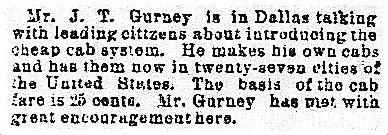
The “Gurney cab” was the invention of Bostonian J. Theodore Gurney — it was a two-wheeled, horse-drawn cab into which passengers entered through the back and, for a quarter, rode in sleek, well-appointed comfort. This new form of conveyance was an alternative to the larger, clunkier, slower “hacks.” Gurney patented his cab in 1883 and traveled around the country promoting his vehicle to large cities. He visited Dallas in March, 1888:

gurney_dmn_031888Dallas Morning News, March 18, 1888

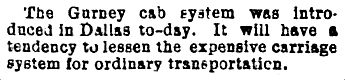
He must have been pretty persuasive, because the “Gurney cabs” went on the streets less than three weeks later:

gurney_fwdailygazette_040588Fort Worth Daily Gazette, April 5, 1888

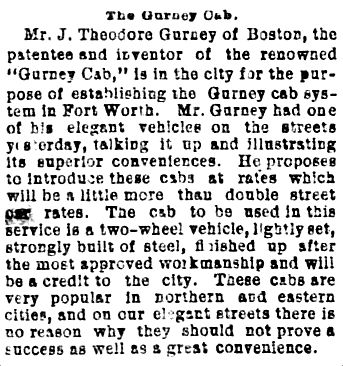
Gurney worked his way around Texas. Next stop was Fort Worth:

gurney_fwdailygazette_041488FWDG, April 14, 1888

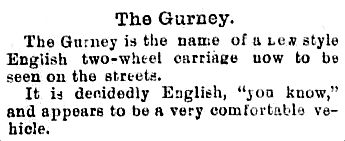
Then Austin:

gurney_austin-weekly-statesman_042688Austin Weekly Statesman, April 26, 1888

As to whether the more familiar hospital “gurney” (a wheeled stretcher) has any connections, some say yes and some say no (both arguments can be read here). Wouldn’t it be great if those Smith boys went into stretcher manufacturing a few years later? Cabs — stretchers — hearses: they’ve got you covered … coming and going.

***

Ads from The Immigrant’s Guide to Texas — City of Dallas, 1888. They did, in fact, appear on the same page.

ad-dallas-cab-undertaker_imm-gd_1889

An interesting article — “The Short, Contentious, History of the Gurney Cab Company in San Francisco” by Donald Anderson — can be read here.

The fare for hiring a Gurney cab was 25 cents, which according to the Inflation Calculator, was about $6.00 in today’s money.

Click top ad for larger image.

*

Copyright © 2014 Paula Bosse. All Rights Reserved.

4th of July Parade — Sweating in Formation

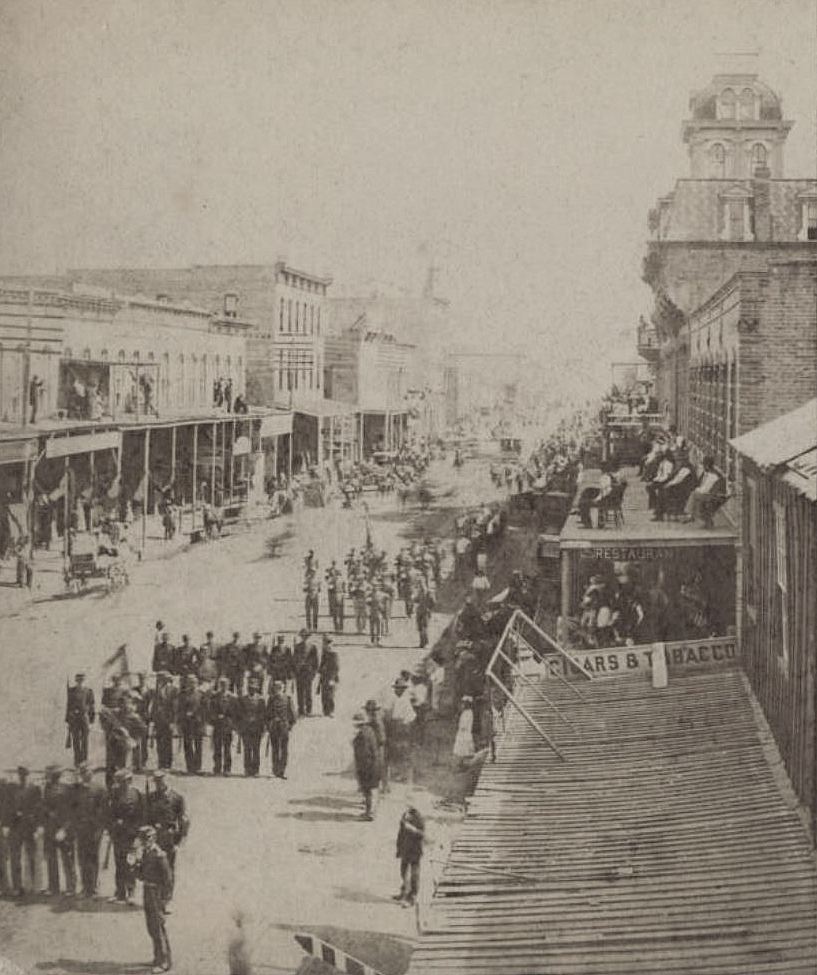
july-4_degolyerI’m parched just looking at this…

by Paula Bosse

Fourth of July parade in Dallas, 1870s or 1880s. Bet it was hot in those uniforms.

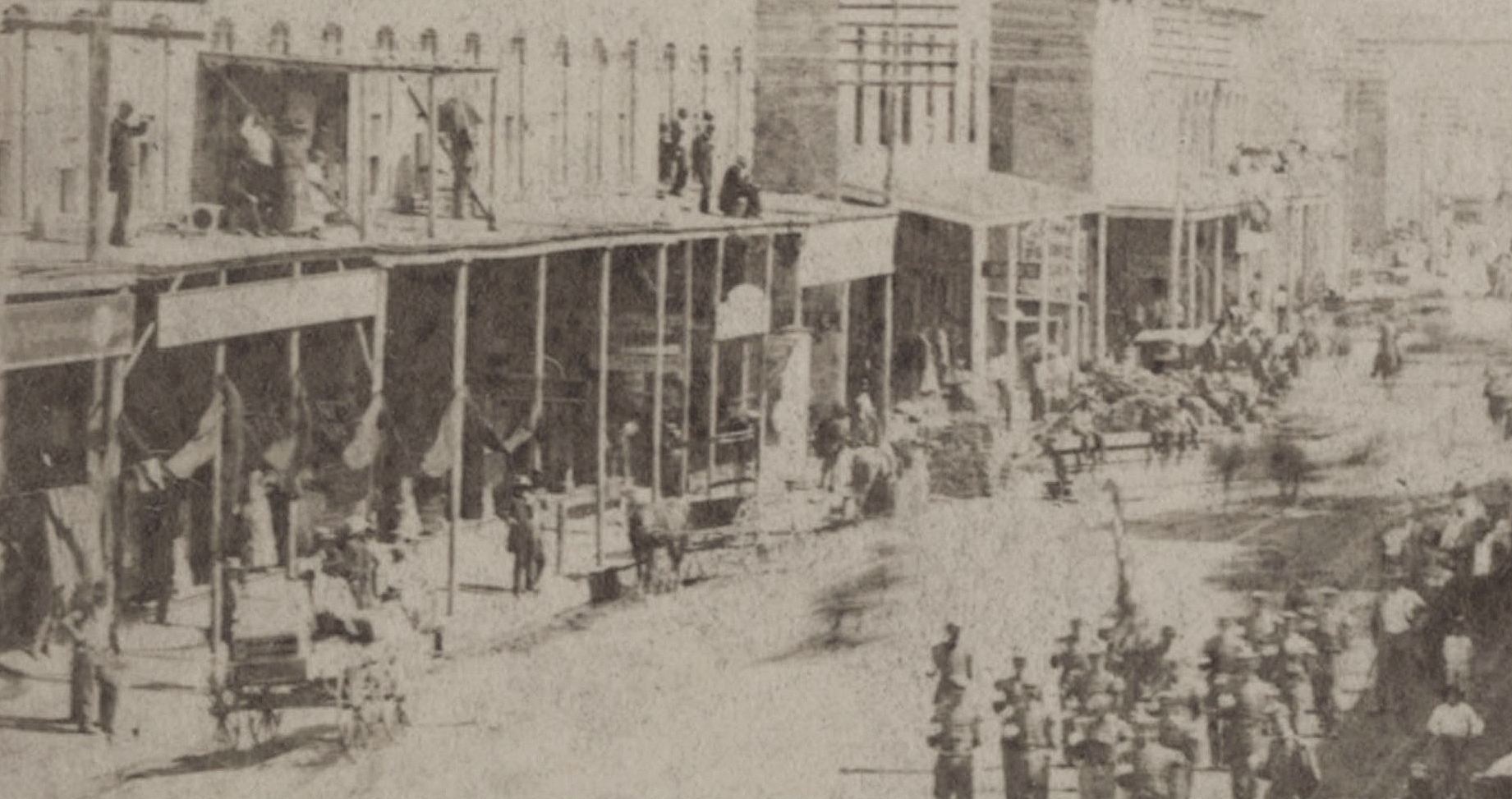
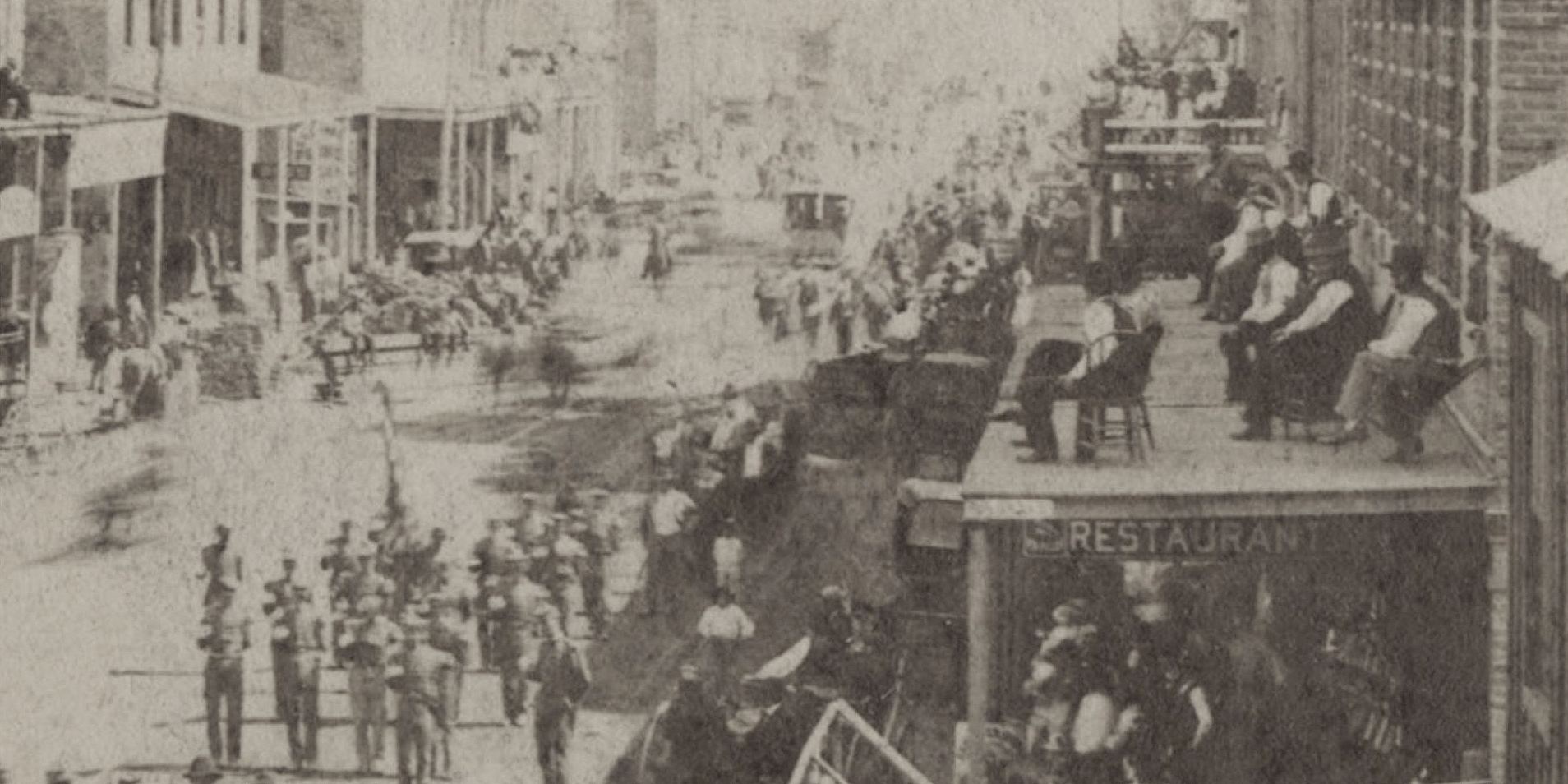
Picture quality leaves a bit to be desired, but here are a few details (click for larger images).

july-4_degolyer_a

july-4_degolyer_b

july-4_degolyer_c

***

Sources & Notes

Stereograph photo by Alfred Freeman, from the Lawrence T. Jones III Collection, DeGolyer Library, SMU Libraries, Southern Methodist University; the uncropped original can be seen here.

*

Copyright © 2014 Paula Bosse. All Rights Reserved.
Summers and Lagoons — 1940s

dmfa_color

by Paula Bosse

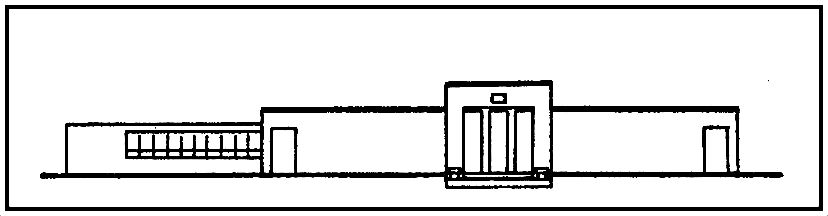
The old Dallas Museum of Fine Arts at Fair Park. Just across the lagoon.

And a streamlined rendering which could be found on DMFA letterhead and publications for many years:

dmfa_logo_1944

*

Copyright © 2014 Paula Bosse. All Rights Reserved.

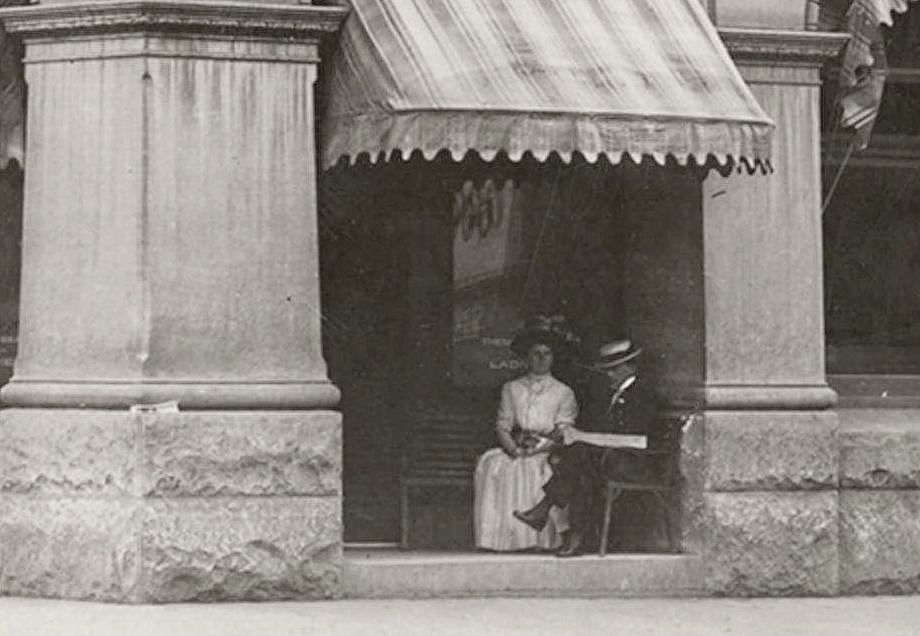
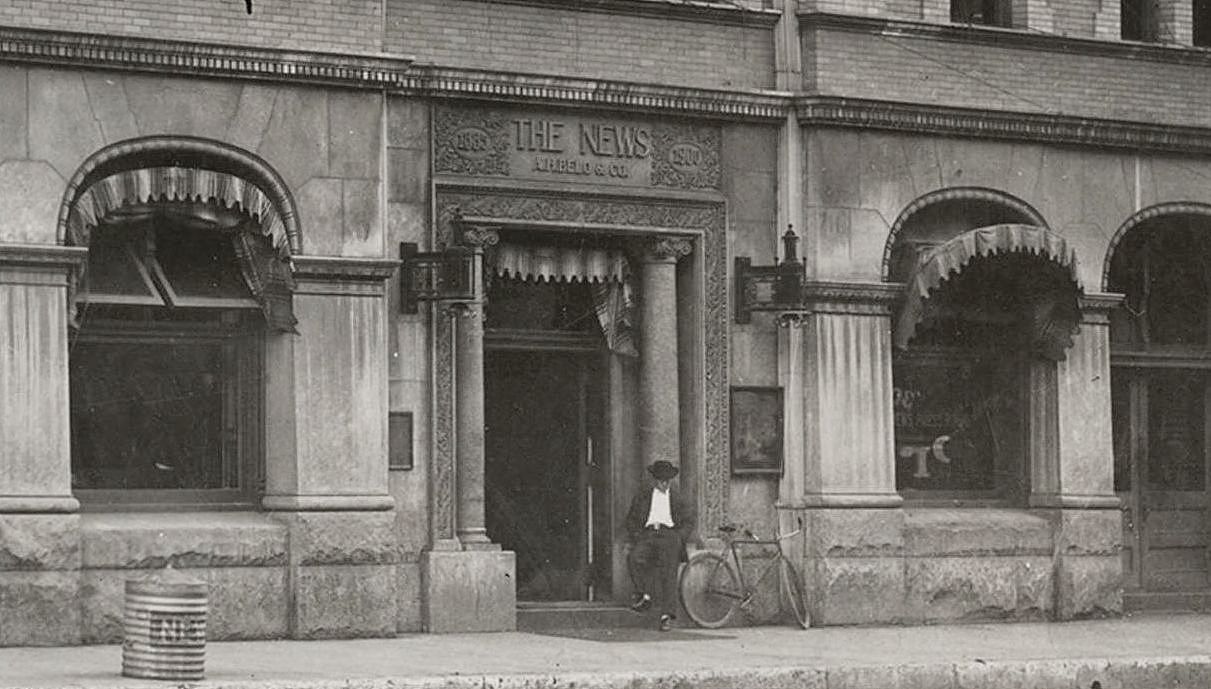
Loitering In Front of The Dallas Morning News Building — ca. 1900

dmn-bldg_c1900_degolyer_smuCommerce & Lamar

by Paula Bosse

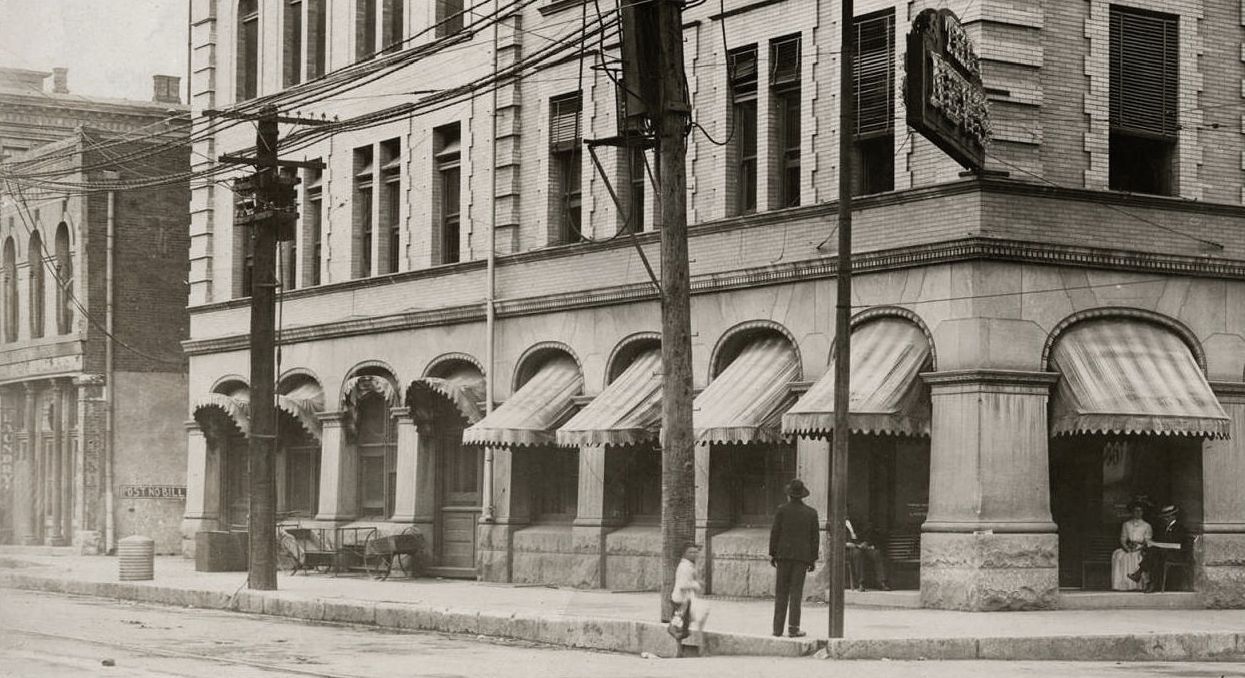
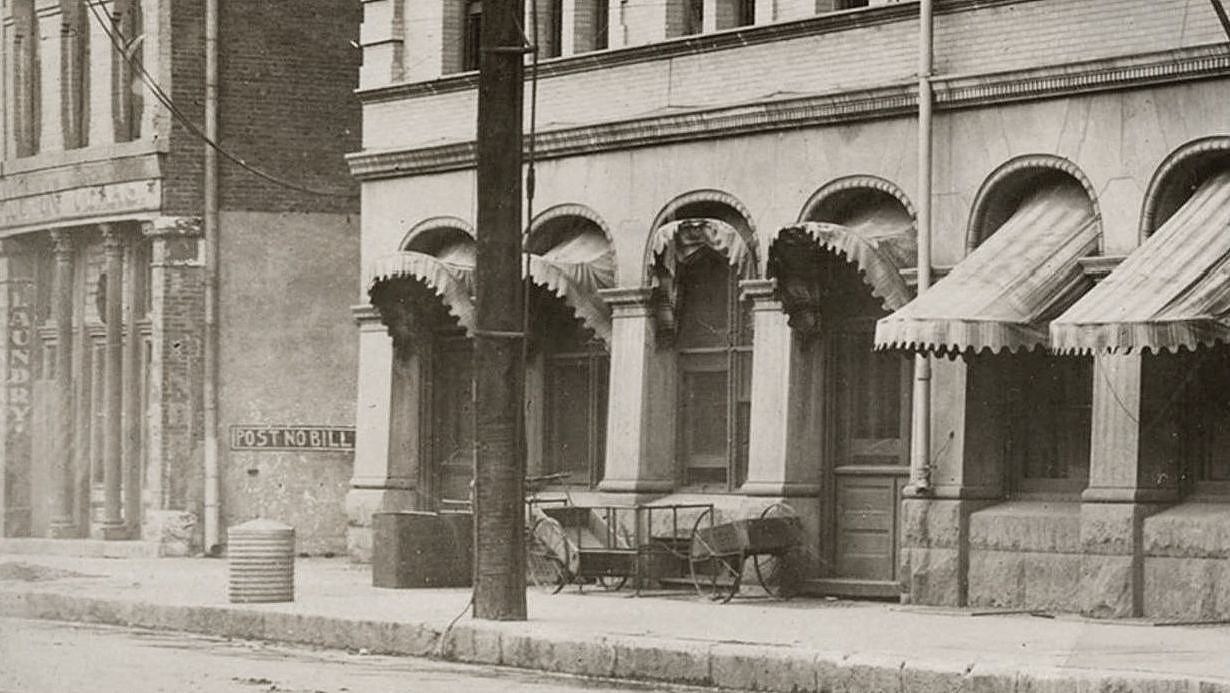
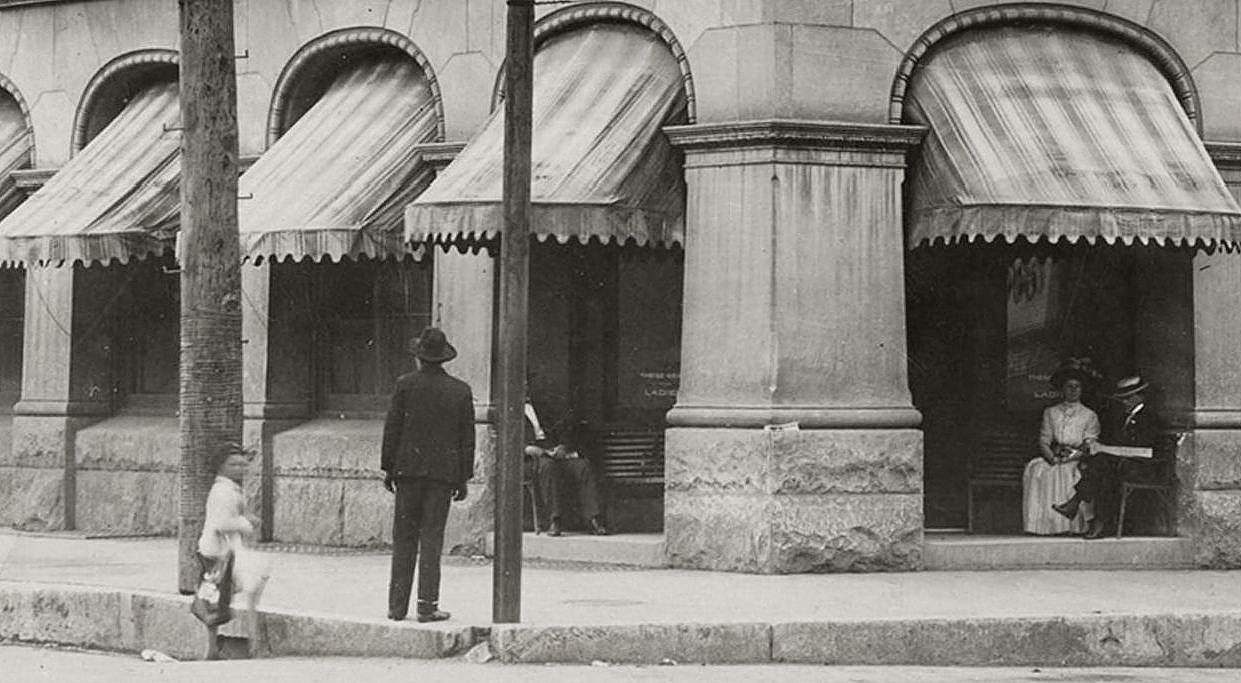
Here is another great photo from the DeGolyer Library at SMU, this one showing the then-new Dallas Morning News building anchoring the northwest corner of Commerce and Lamar. For me, it’s another case of the individual quiet vignettes that comprise the photograph being more interesting than the larger picture taken as a whole. (All pictures are much larger when clicked.)

dmn-bldg_c1900_degolyer-1

dmn-bldg_c1900_degolyer-2

dmn-bldg_c1900_degolyer-3

dmn-bldg_c1900_degolyer-4

dmn-bldg_c1900_degolyer-5

***

Sources & Notes

Photograph from the Belo Records collection at the DeGolyer Library, Central University Libraries, Southern Methodist University, seen here.

For another view of the same building, see these posts:

  • “The Dallas Morning News Building, Inside and Out — ca. 1900,” here
  • “Lively Street Life Outside the Dallas Morning News Building — 1900,” here

For other photographs I’ve zoomed in on, see here.

*

Copyright © 2014 Paula Bosse. All Rights Reserved.