Flashback : Dallas

A Miscellany: History, Ads, Pop Culture

Month: September, 2018

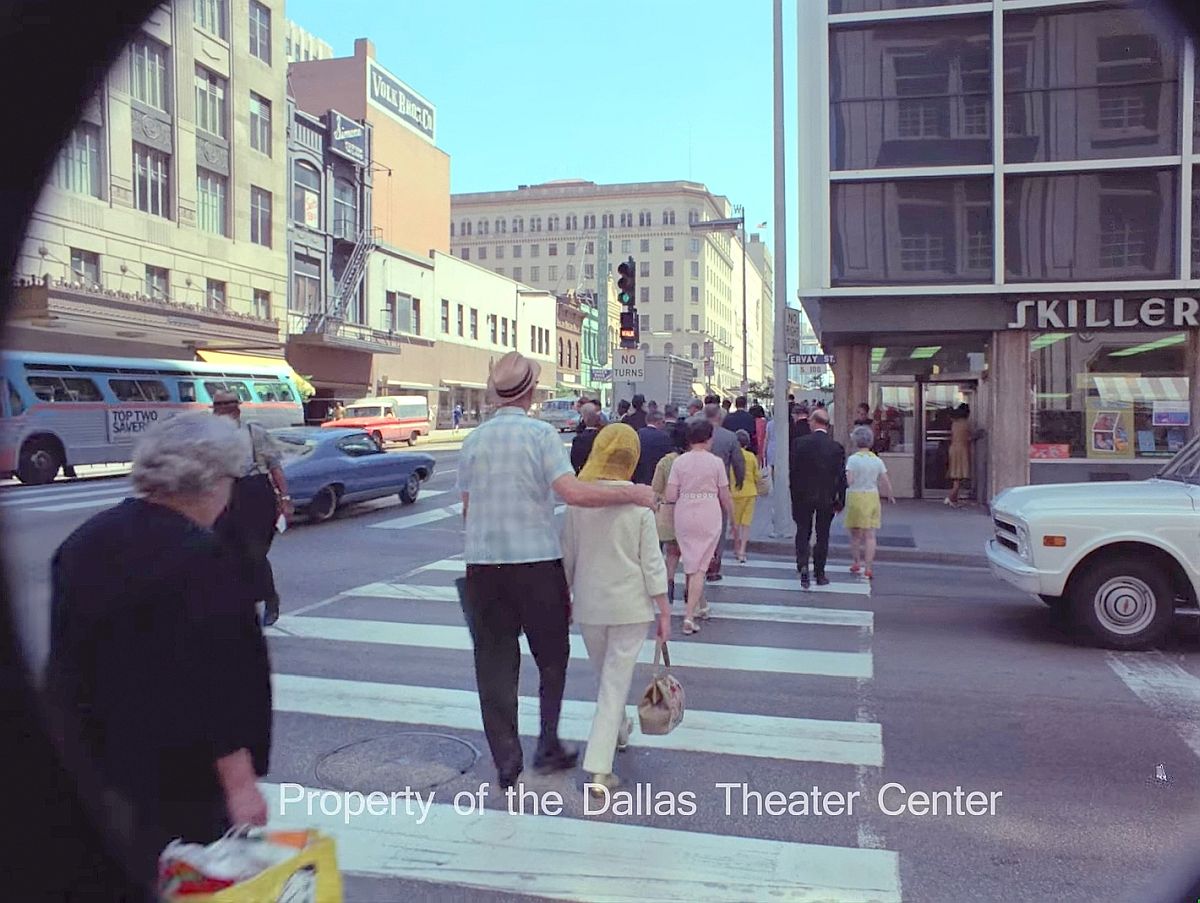
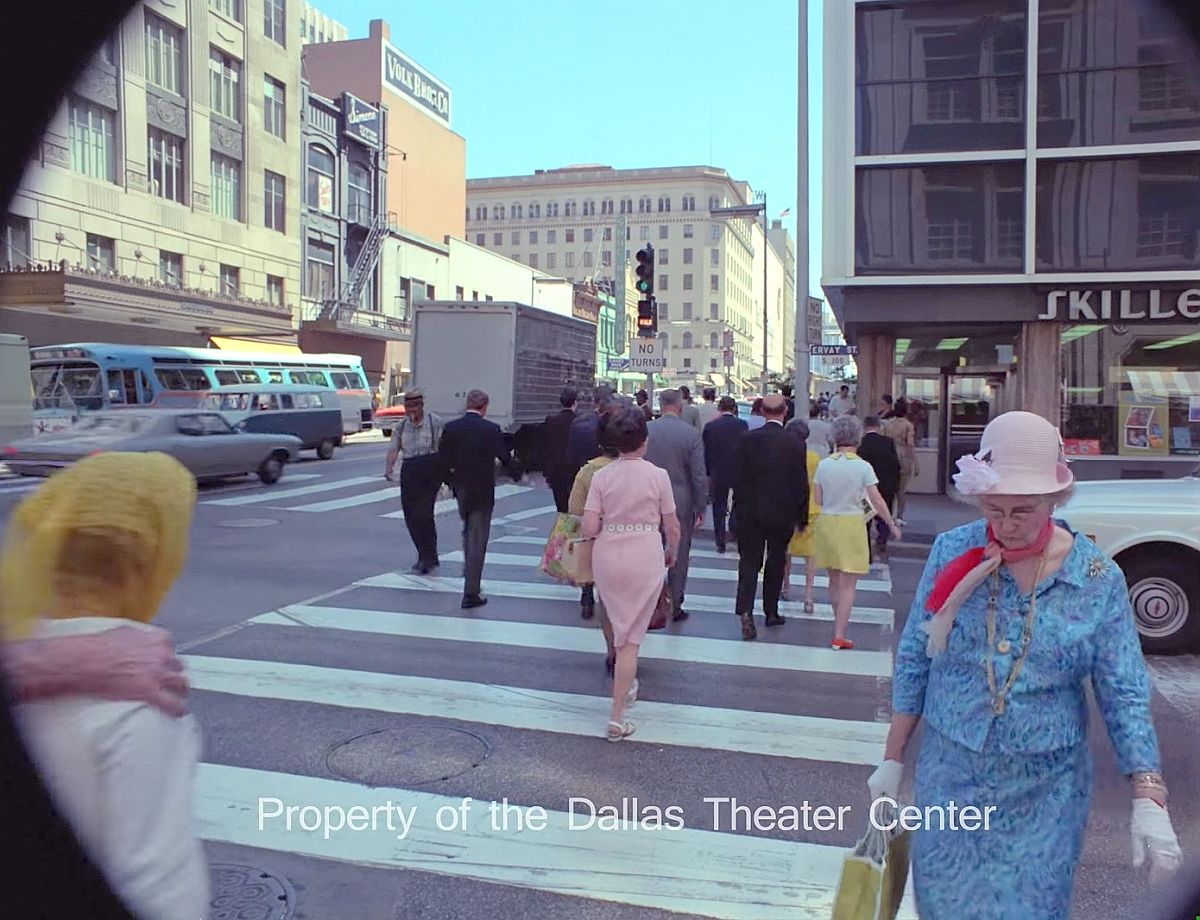
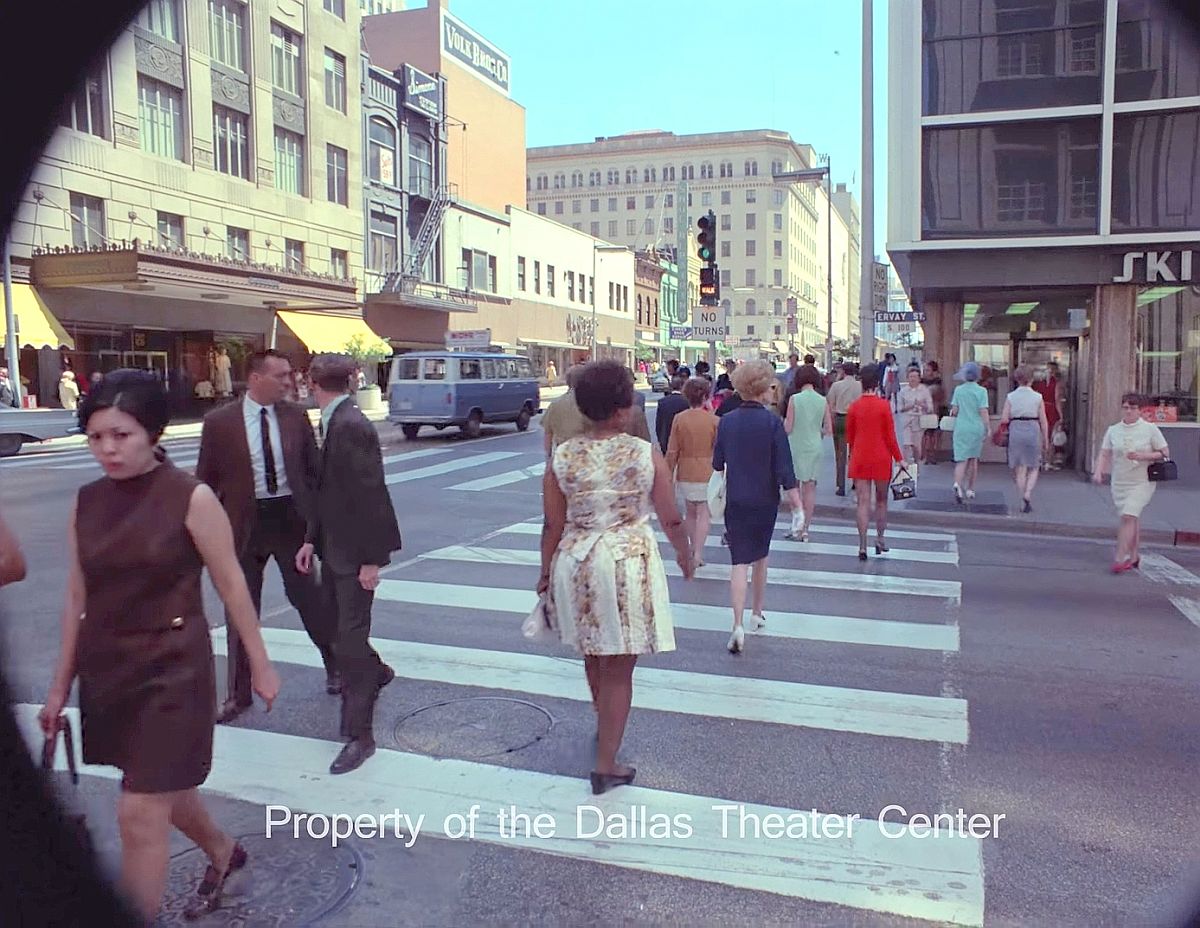
Main & Ervay, Pedestrians — 1970

DTC_pedestrians-2_main-ervay_1970_SMU

by Paula Bosse

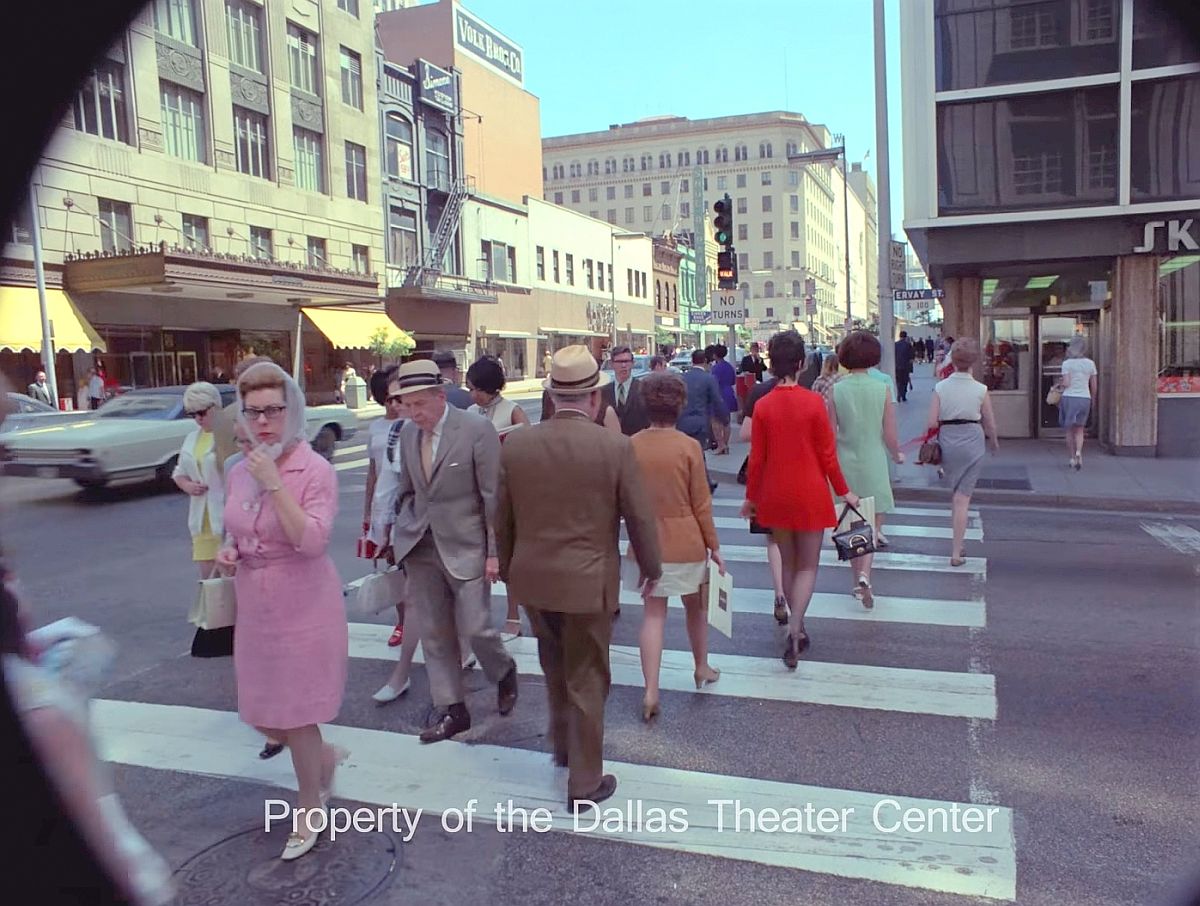
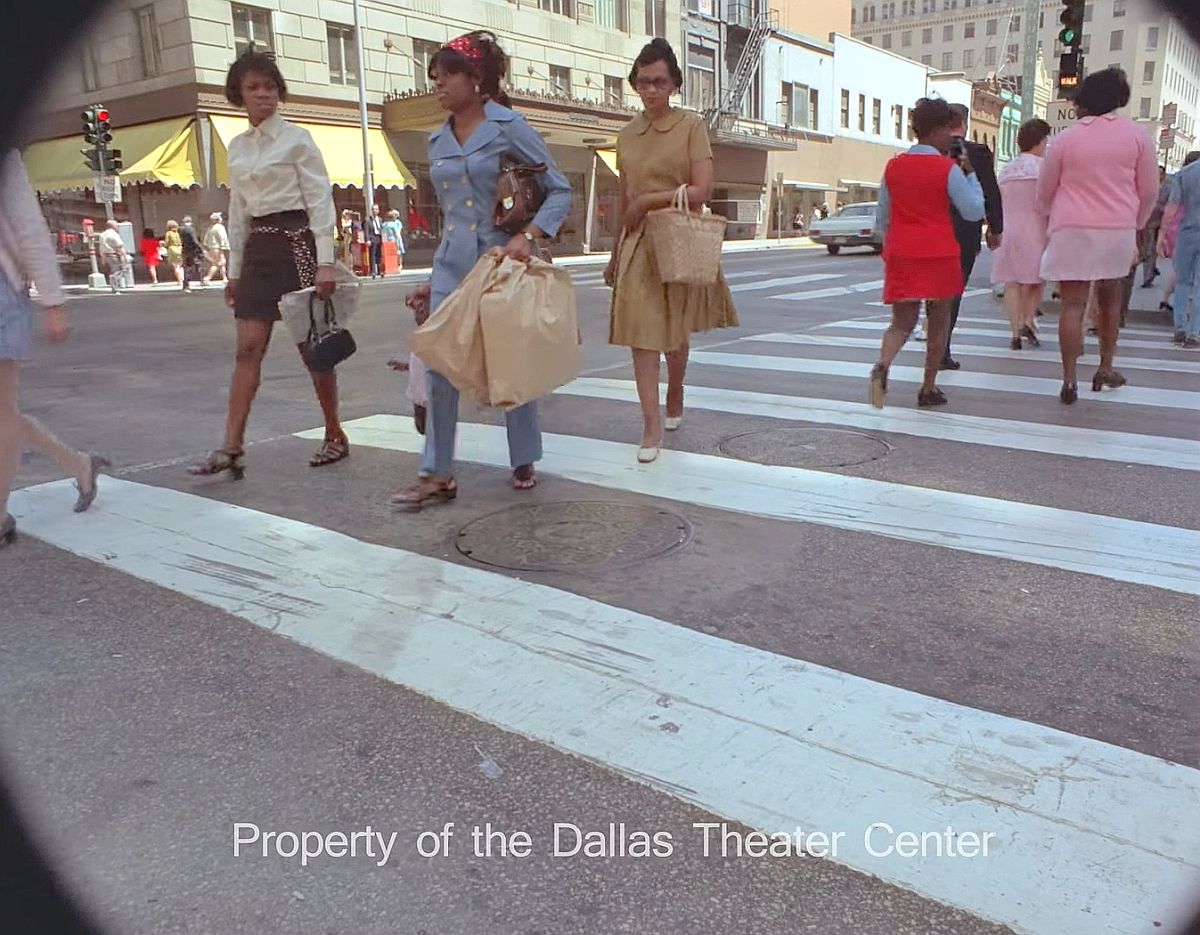
The other day SMU released fantastic 35mm color film footage captured from a camera mounted atop a car cruising downtown streets in 1970. Today they released a little more, this time a short clip showing pedestrians walking across the intersection of Main and Ervay (be sure to watch this silent footage in full-screen mode).


*
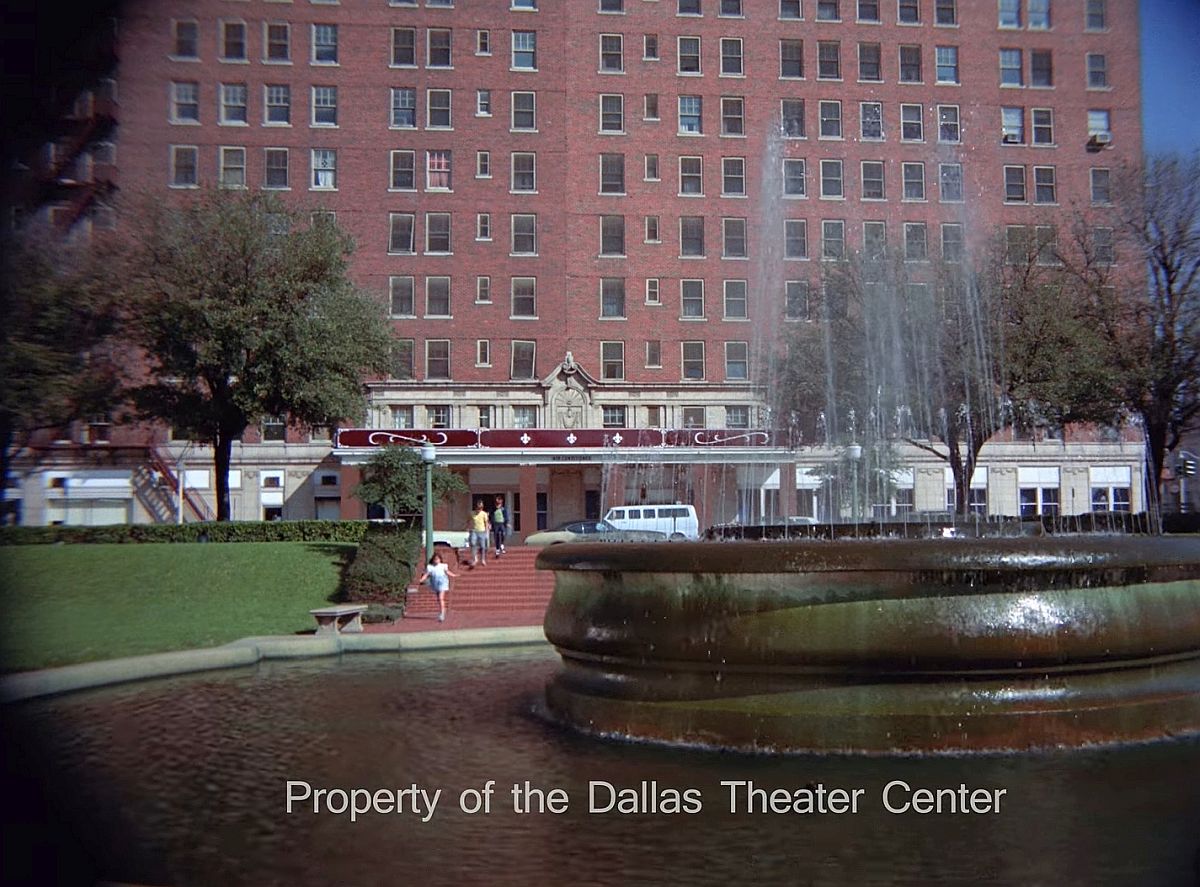
The Skillern’s drug store in this footage was at 1700 Main, on the southeast corner of Main and Ervay, in the Mercantile Bank Building complex; the building across Main on the northeast corner was Dreyfuss & Son Men’s Clothing, and the large building in the distance (at St. Paul) is the Titche’s department store. The end of the clip has shots of the (surprisingly red) (and no longer standing) Jefferson Hotel; sharing the frame is the fountain in Ferris Plaza (Union Station would be to the left of the camera operator, across Houston Street). This footage was shot for Dallas Theater Center productions, which I hope to write about soon.

Cool footage, SMU. Keep it coming!

*

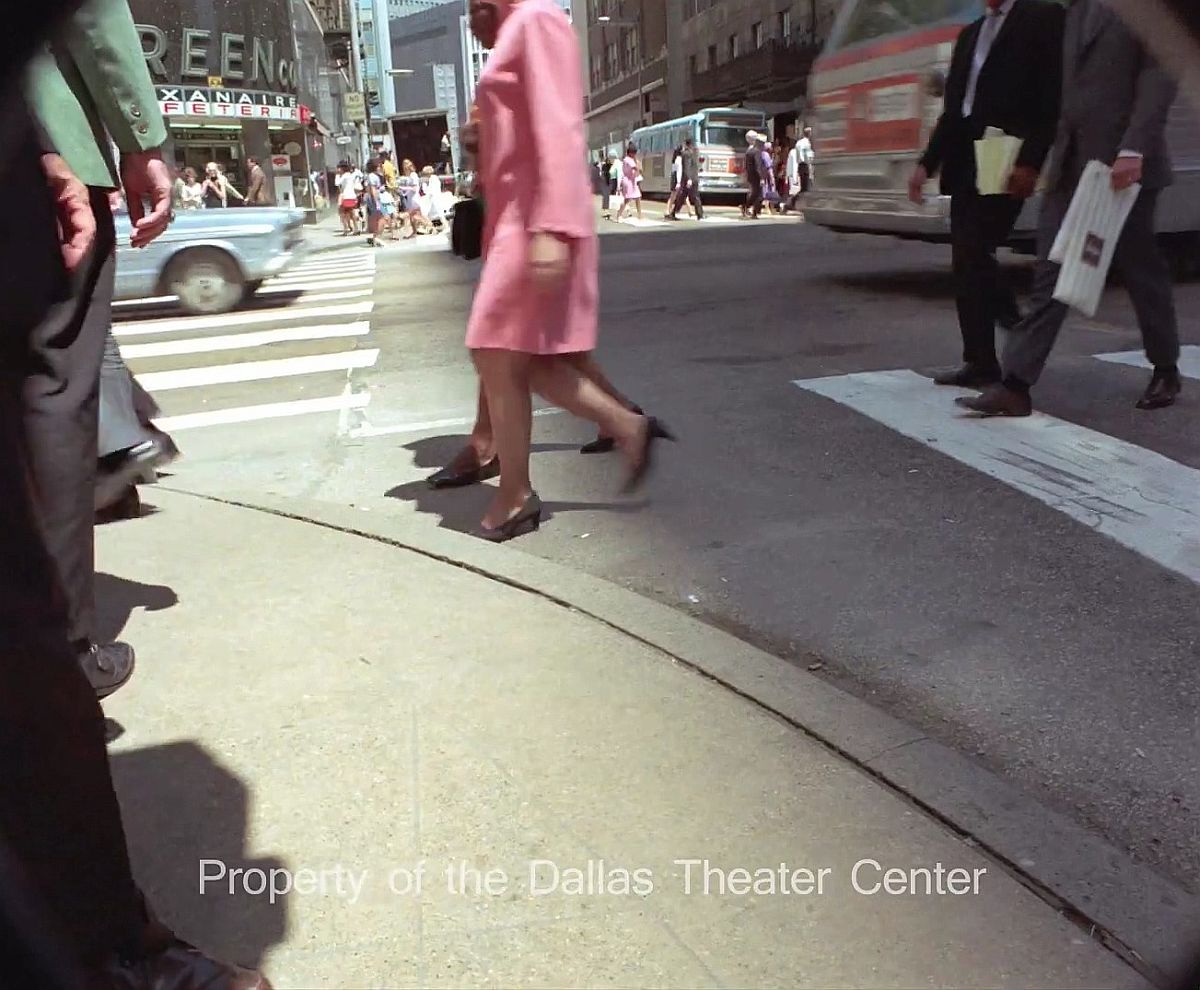
Here are a few screenshots. There were a lot of vivid colors being worn by downtown workers and shoppers in 1970. I’m so accustomed to seeing black-and-white images of Dallas, that all this color is a little startling!

DTC_pedestrians-1_main-ervay_1970_SMU


DTC_pedestrians-4_main-ervay_1970_SMU


DTC_pedestrians-3_main-ervay_1970_SMU


DTC_pedestrians-5_main-ervay_1970_SMU

Below, a brief glimpse of the H. L. Green store, in the Wilson Building on the northwest corner of Main and Ervay. (And evidence that, yes, men also shop on their lunch hour.)

DTC_pedestrians-6_main-ervay_1970_SMU_sm


DTC_jefferson-hotel_1970_SMU

***

Sources & Notes

These screenshots are from 35mm color film footage owned by the Dallas Theater Center, held at Southern Methodist University (the direct link to the YouTube video is here). Again, thanks to SMU curator Jeremy Spracklen.

See more of this fantastic color footage of downtown in the Flashback Dallas post “A Drive Through Downtown — 1970.”

*

Copyright © 2018 Paula Bosse. All Rights Reserved.


David Bates — “Corny Dog” (1986)

bates-david_corny-dog_litho_tyler-museum-of-art_1986“Corny Dog” by David Bates, 1986

by Paula Bosse

First day, y’all. Here’s how David Bates, one of my favorite contemporary Texas artists, sees it. Click it to see that corny dog real big.

***

Sources & Notes

“Corny Dog” by David Bates (lithograph, 1986), shown at the Tyler Museum of Art this summer in the show “David Bates: Selected Works From Texas Collections.” More on that exhibition is here.

*

Copyright © 2018 Paula Bosse. All Rights Reserved.

A Drive Through Downtown — 1970

DTC_main-harwood_SMUDowntown Dallas, in living color… (click for larger image)

by Paula Bosse

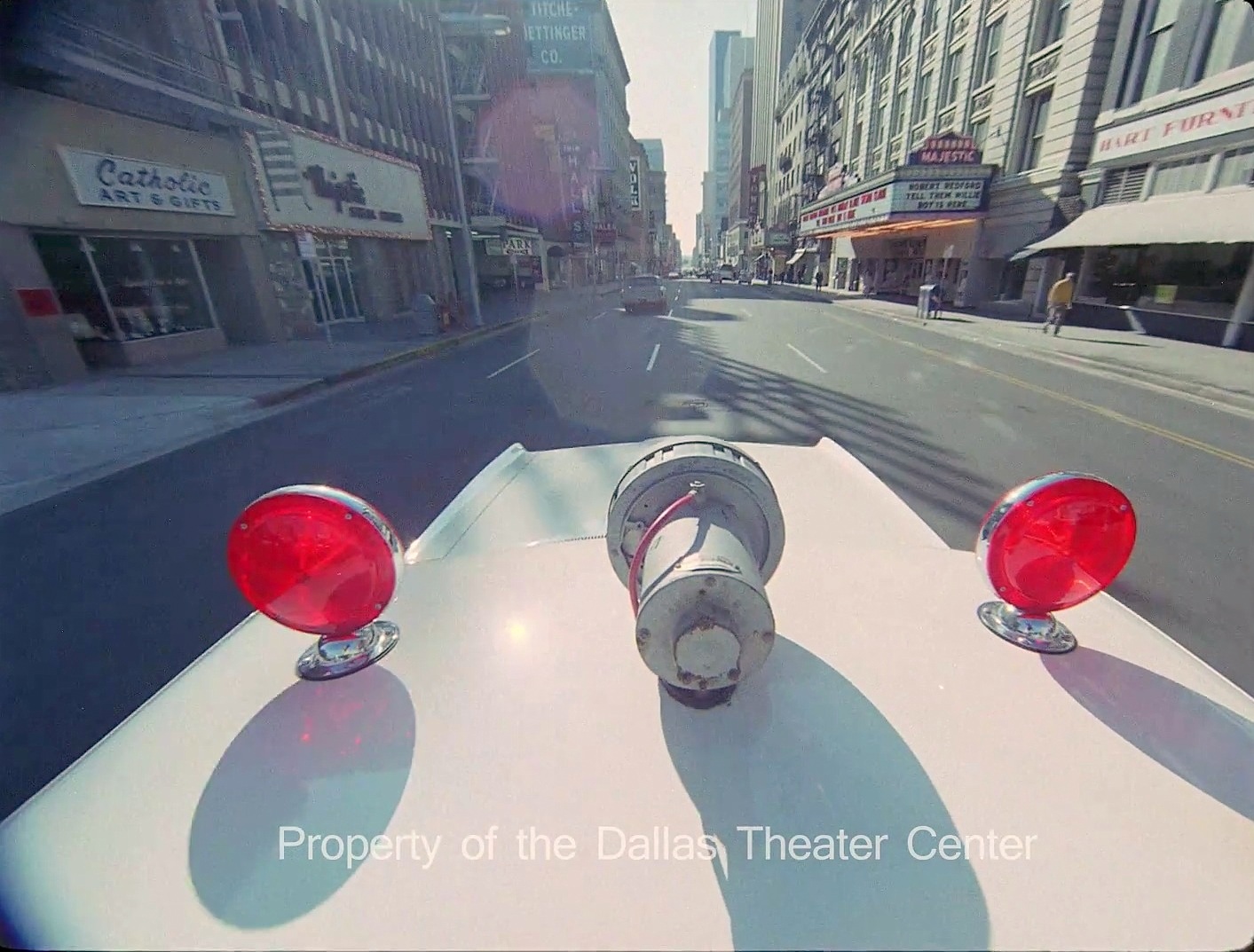
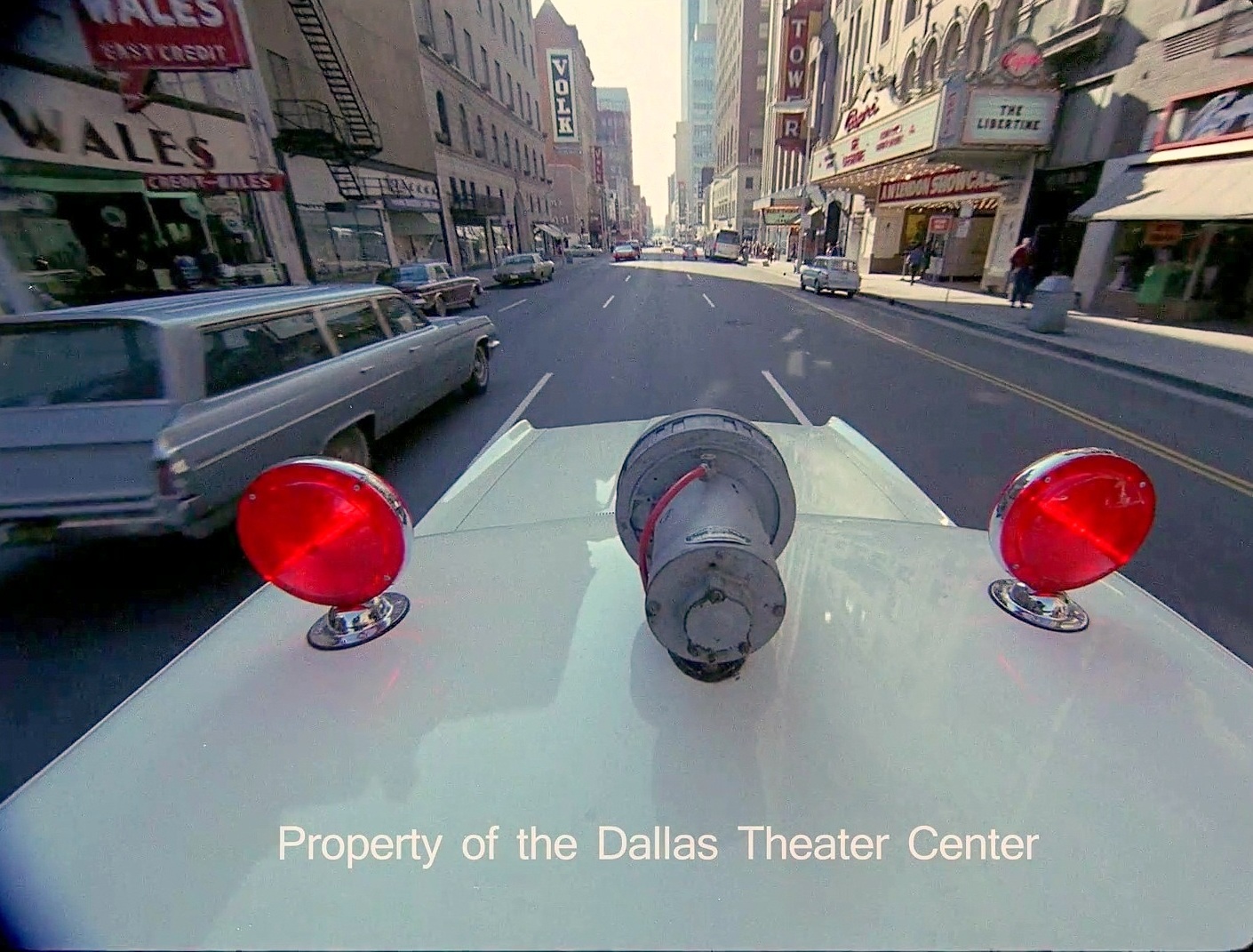
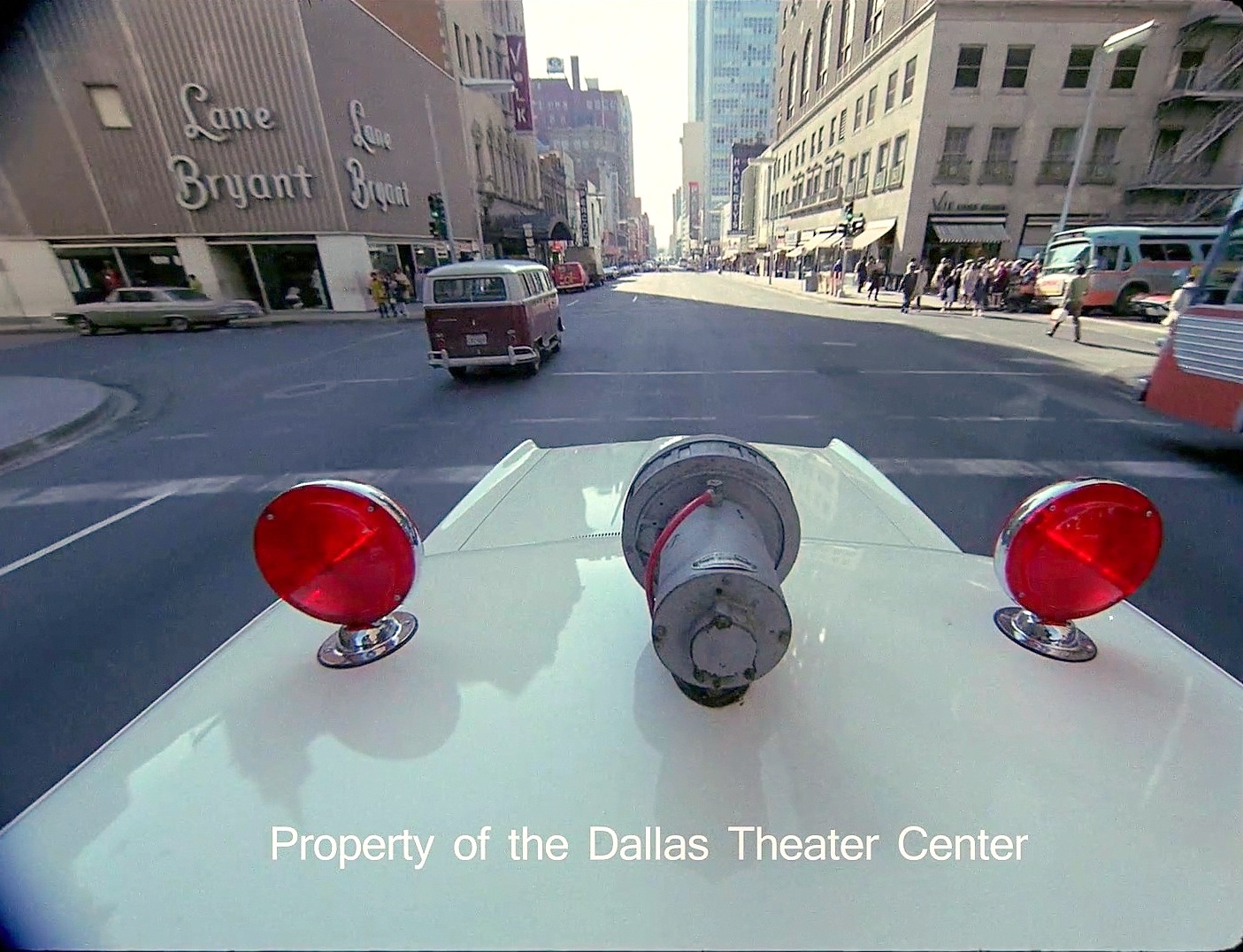
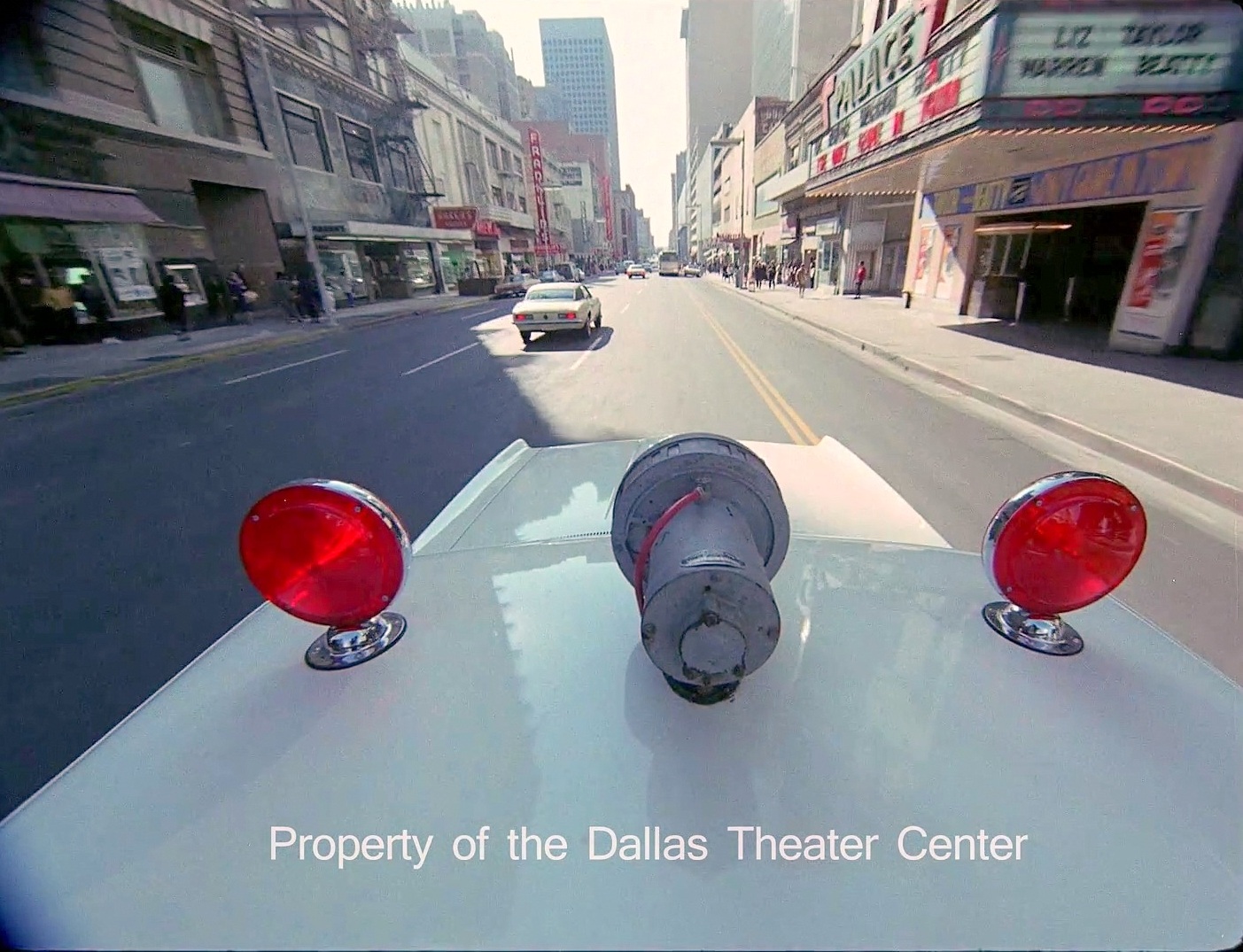
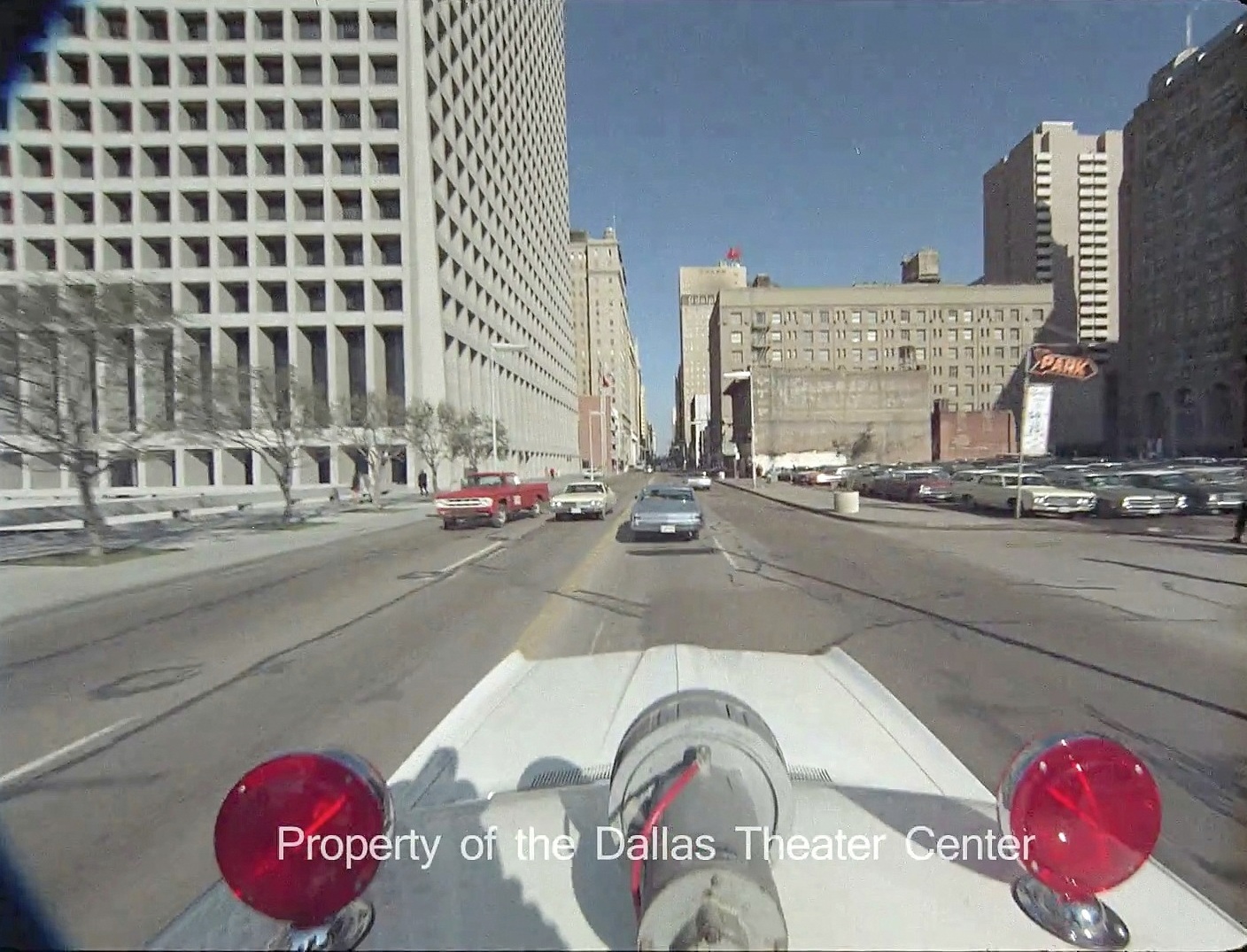
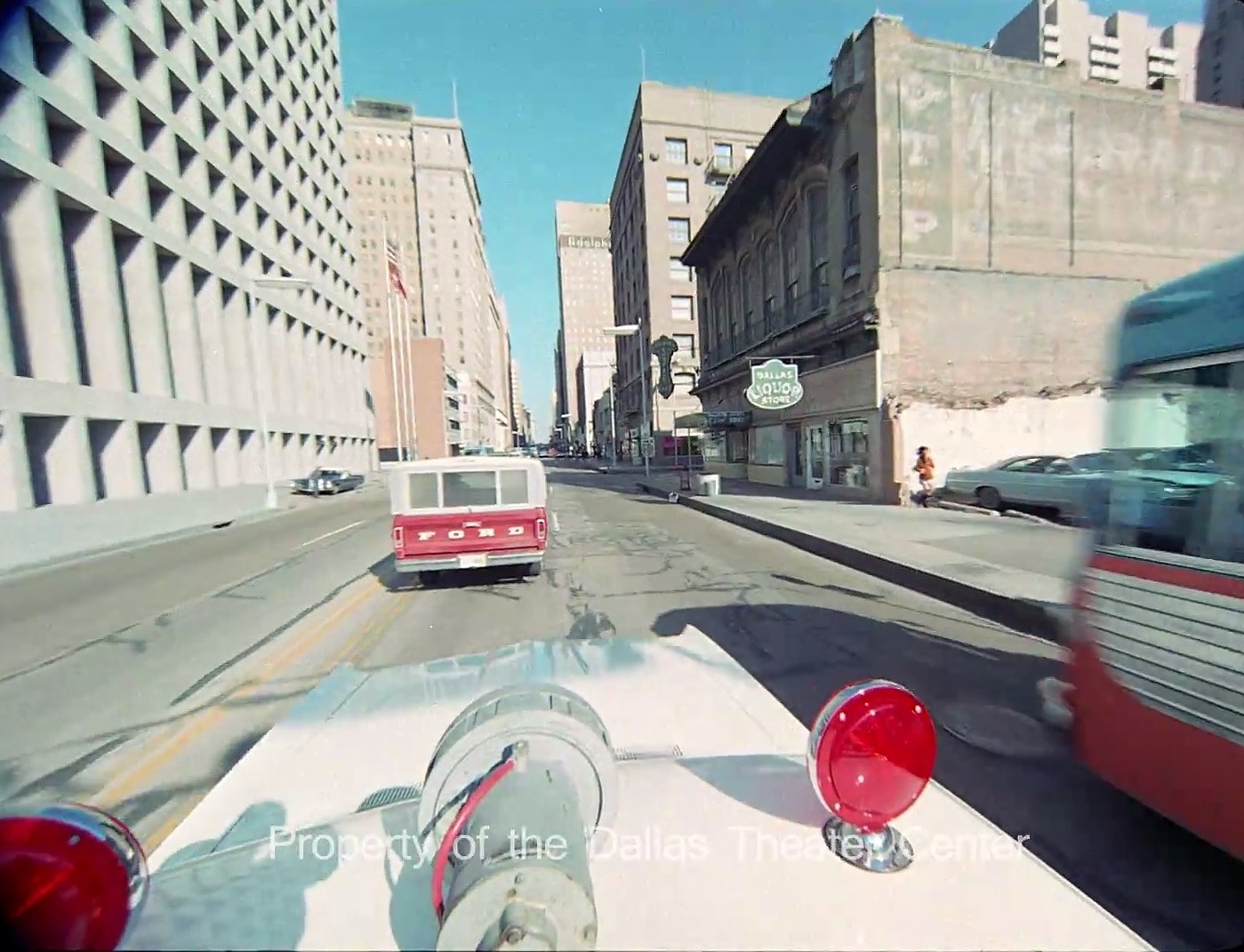
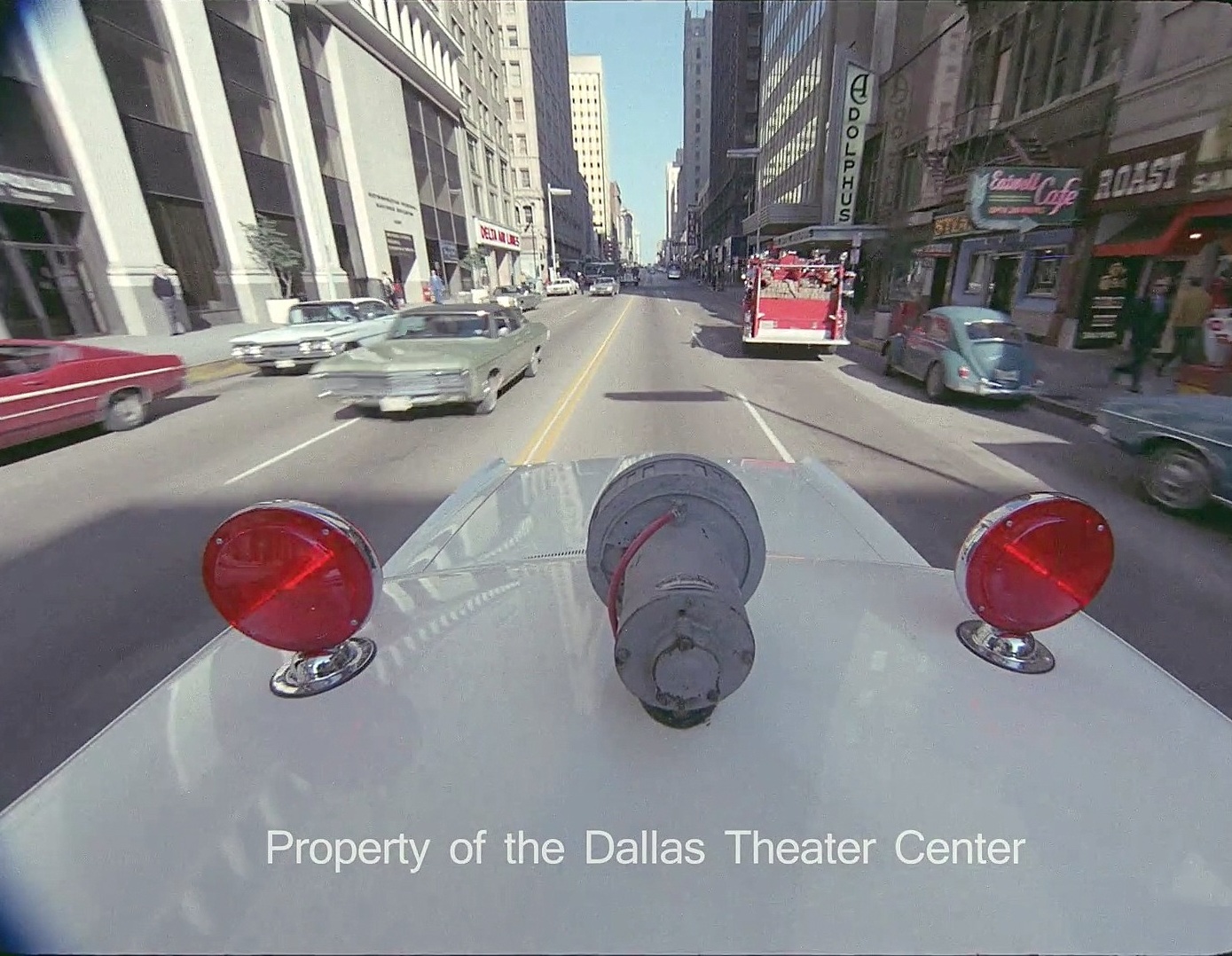
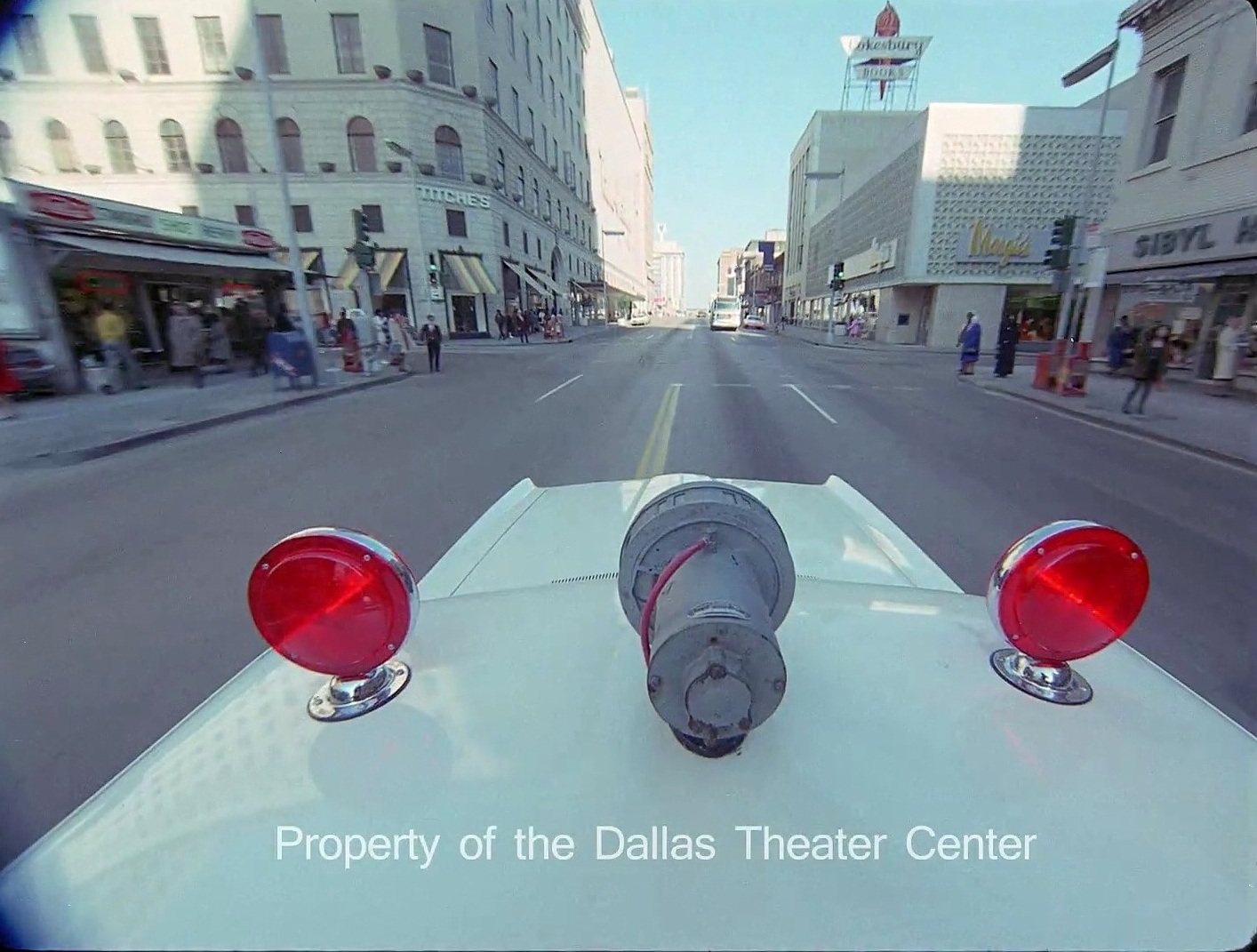
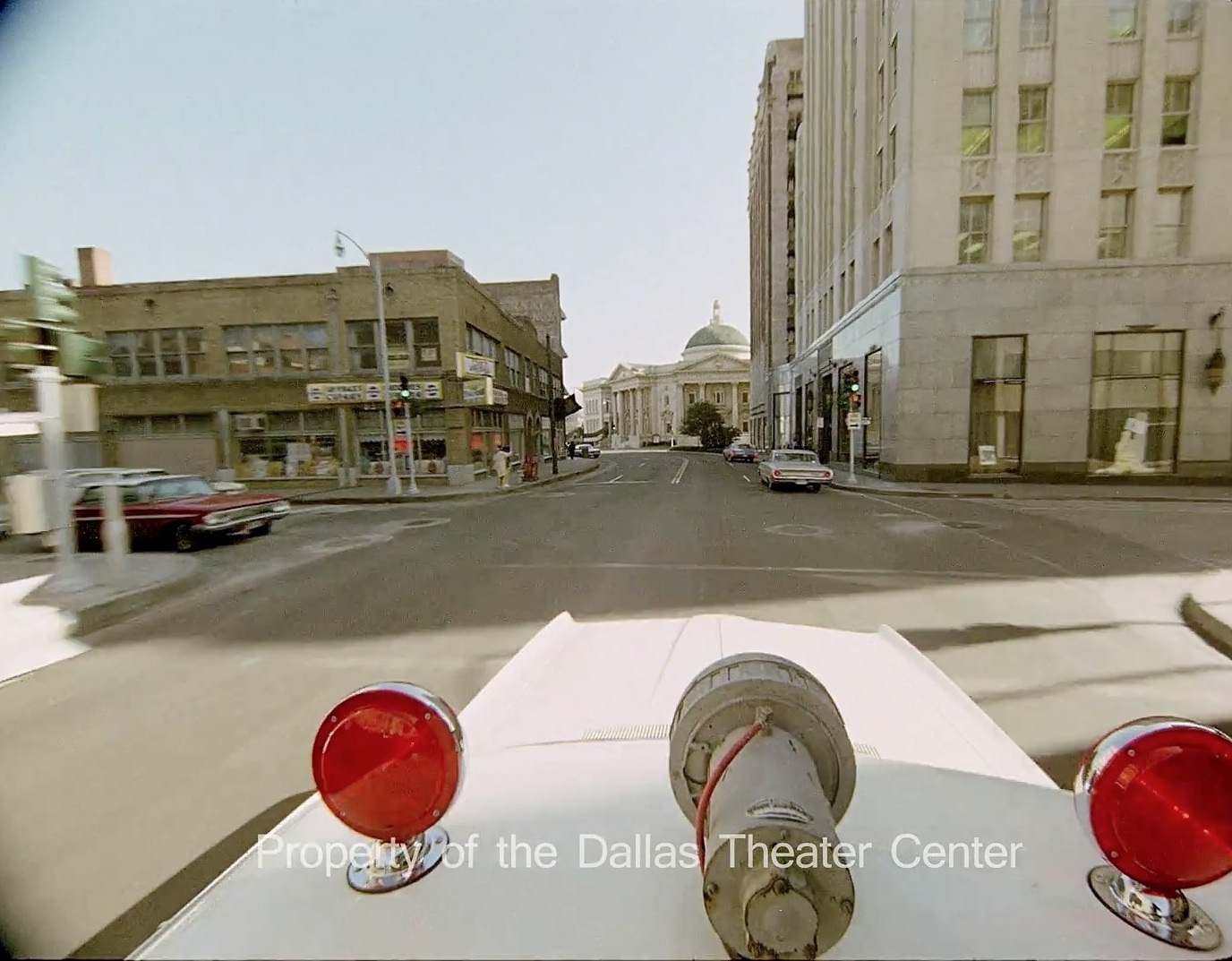
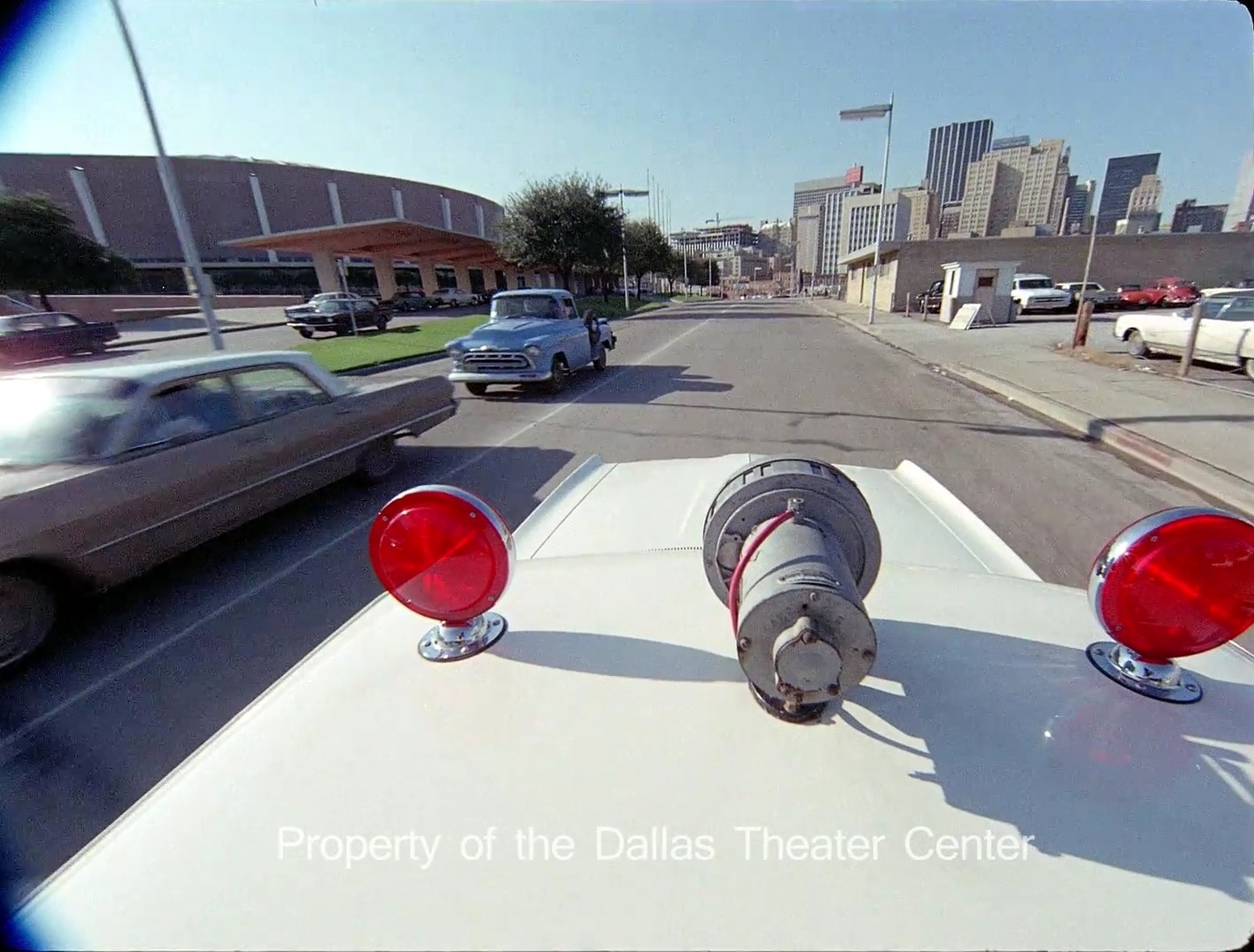
The curators of the G. William Jones Film & Video Collection at SMU have released a short film from the Dallas Theater Center Collection. This wonderful 35mm color footage shows downtown Dallas in about March of 1970 (the four movies shown on the marquees of the Majestic, the Capri, the Tower, and the Palace were all playing that month). The camera has been mounted on top of an (off-duty) emergency vehicle, and it’s a leisurely (silent) drive around downtown — it’s kind of thrilling when the slo-mo kicks in. A few screen captures are below, but you really must watch the film — and be sure to expand it to a full-screen view. (There is more to come from this source, and I will write about this Dallas Theater Center project when SMU unveils further footage.)

*

A few screenshots (apologies for the graininess — the video is much crisper):

1. Main and Harwood, heading east (seen at the top of this post) — the White Plaza hotel (now the Indigo) is on the left, the Municipal Building is on the right. Same view today is here. [EDIT: the Google Street View links appear to work only on a desktop computer. When I try clicking the links on my phone I get views which show only the general vicinity. So … argh.]

2. Elm Street, heading west (below) — the Majestic Theatre is at the right (now playing: Tell Them Willie Boy Is Here with Robert Redford). Same view today is here. (All images are larger when clicked.)

DTC_elm_majestic_SMU

3. Elm Street — the Capri (showing the X-rated Italian film The Libertine) and the Tower (showing Jenny, with Marlo Thomas and Alan Alda). Same view today is here.

DTC_elm-capri-tower_SMU

4. Elm and St. Paul. Same view today is here.

DTC_elm-st-paul_SMU

5. Elm Street, just past Ervay — the Palace (showing The Only Game in Town with “Liz” Taylor and Warren Beatty). Same view today is here.

DTC_elm-palace_SMU

6. Main Street, heading east toward Griffin — One Main Place on the left, a blobby Pegasus straight ahead. Same view today is here.

DTC_one-main-place_main-and-griffin_SMU

7. Main Street, a little further east — that fantastic old building with the T & P ghost sign and home of the wonderfully seedy-looking Dallas Liquor Store (1112 Main) is now the pretty little Belo Garden. Same view today is here.

DTC_one-main-place_1100 block-main_SMU

8. Main, approaching Akard. (The Eatwell Cafe was at 1404 Main.) Same view today is here.

DTC_1400-block-main_SMU

9. Main and St. Paul — Titche’s department store on the left, Margie’s Dress Shop and Cokesbury Books (great sign!) on the right. Same view today is here. (Big change!)

DTC_main-st-paul_SMU

10. Main and Harwood, turning right onto Harwood. Same view today is here.

DTC_main-harwood_turn_SMU

11. South Harwood and Jackson, heading south — First Presbyterian Church is straight ahead. Same view today is here.

DTC_harwood_SMU

12. South Akard heading north — Dallas Convention Center is on the left. Same view today is here.


DTC_convention-center_s-akard_SMU

***

Sources & Notes

Screenshots from the video “DTC Downtown Dallas” on YouTube, here; from the Dallas Theater Center Collection, held at Southern Methodist University. Many thanks, as always, to curator Jeremy Spracklen.

More 35mm color footage from this Dallas Theater Center project will be released in the near future. Keep up to date on these films as well as other fantastic archival DFW footage held by SMU by following @SMUJonesFilm on Twitter or SMUJonesFilm on Facebook.

UPDATE: Watch a short clip from the DTC Collection showing a colorful parade of pedestrians at Main and Ervay, as well as a nice shot of the old Jefferson Hotel — all captured on 35mm color film in 1970 — here.

*

Copyright © 2018 Paula Bosse. All Rights Reserved.


Dallas Is For Lovers

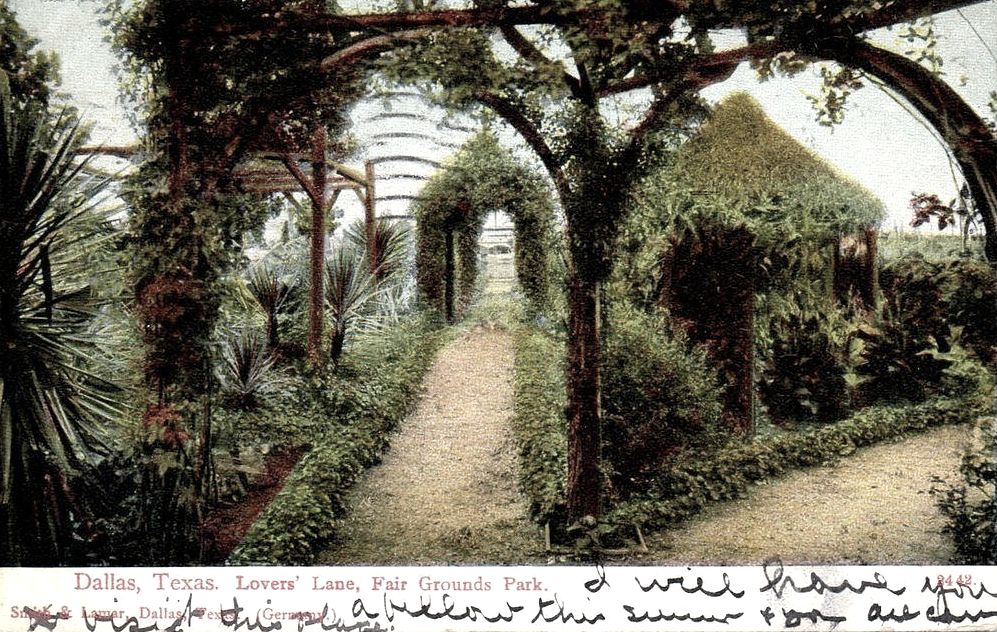
fair-park_lovers-lane_postcard

by Paula Bosse

The postcard above shows “Lovers’ Lane, Fair Grounds Park,” and contains the following message to the card’s recipient:

I will have you a fellow this summer & you all can visit this place.

Aw. That’s a true friend.

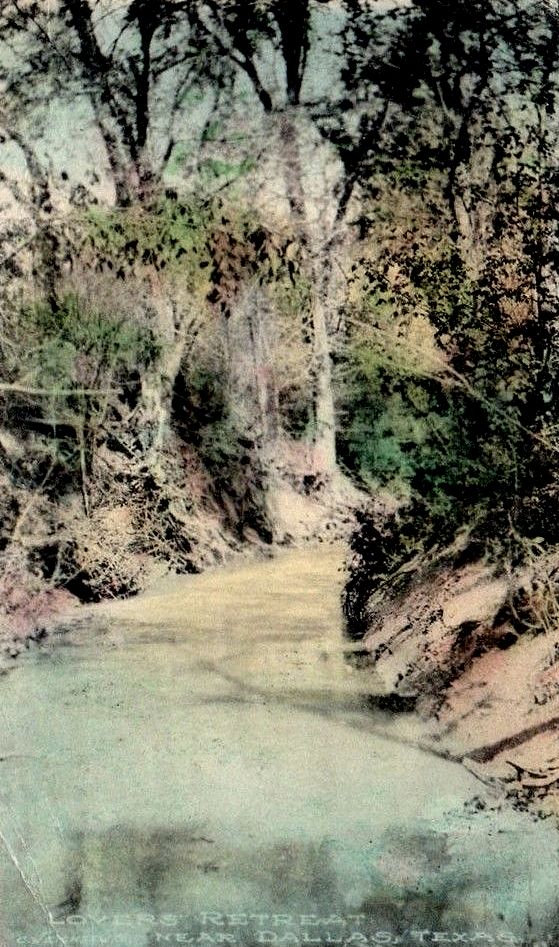
Below, another postcard from about the same time (around 1910), this one showing “Lovers’ Retreat, Near Dallas, Texas.”

lovers-retreat_postcard_ebay

This might be any old “romantic” place called “Lovers’ Retreat,” but at the time of this card’s publication, Lovers’ Retreat in Palo Pinto County, near Mineral Wells, was a well-known destination for Sunday drives, picnics, camping, church retreats, and family reunions. At 100 miles from Dallas, it would be stretching things to say this view is “near Dallas,” but postcards are sometimes not completely truthful.

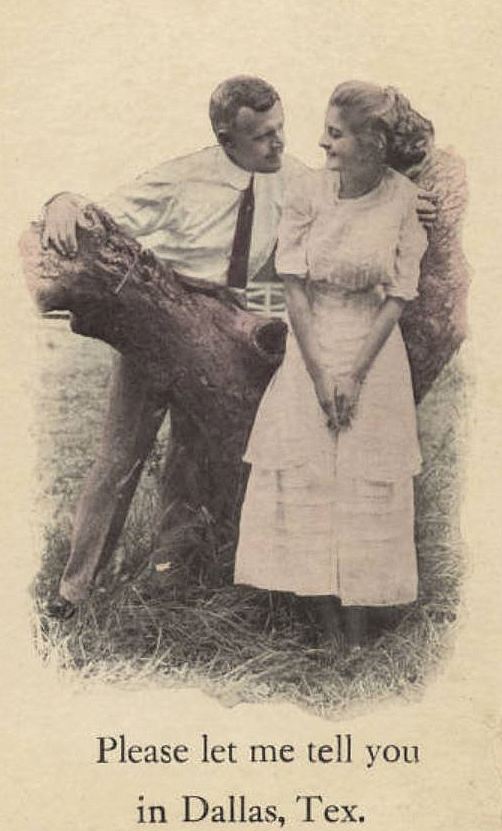
And for postcards that just strip away any confusion about local flora and fauna, let’s just cut to the chase. “Please let me tell you in Dallas, Tex.”

lovers-two_cook-collection_degolyer_smu

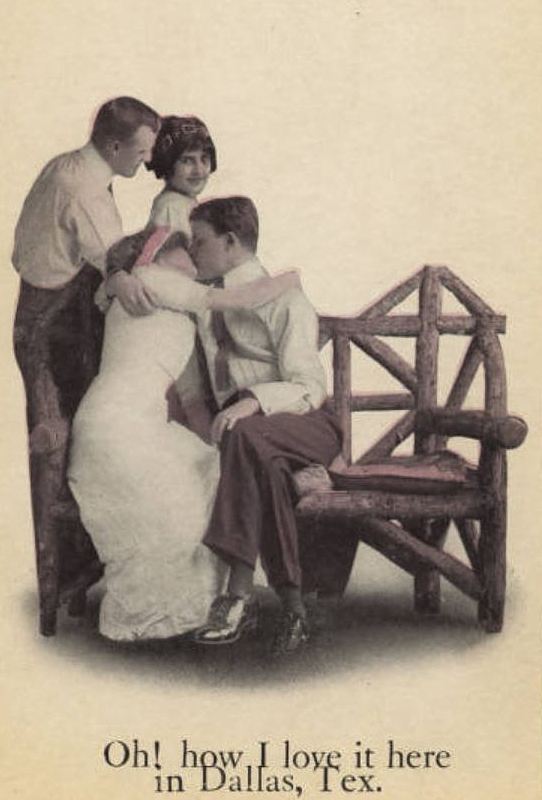
“Oh! How I love it here in Dallas, Tex.”

lovers-four_cook-collection_degolyer_smu

Speaking of lovers’ lanes, I’m not sure where that one at Fair Park (in the top postcard) was, but there were several “lovers’ lanes” around the city. The thoroughfare we know today as Lovers Lane was apparently known for years as a secluded place popular with couples looking for places in which to “spoon.” In a Dallas Morning News article, writer Kenneth Foree reminisced about the days when “it was nothing but a narrow black dirt road winding between two rows of bois d’arc trees.” He commented that “at times you could find lovers under nearly ever tree in Lovers Lane. They would park there in buggies in the early days, later in cars.” In the same article, Margaret L. Pratt, head of the Dallas Public Library’s Texas history department, remembered that “when Southern Methodist University was young and virtually treeless, students would often walk to nearby Lovers Lane for a shady hand-in-hand stroll” (“Walk a Miracle Mile” by Helen Bullock, DMN, Sept. 10, 1961).

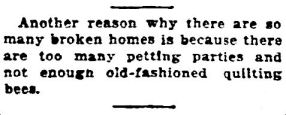
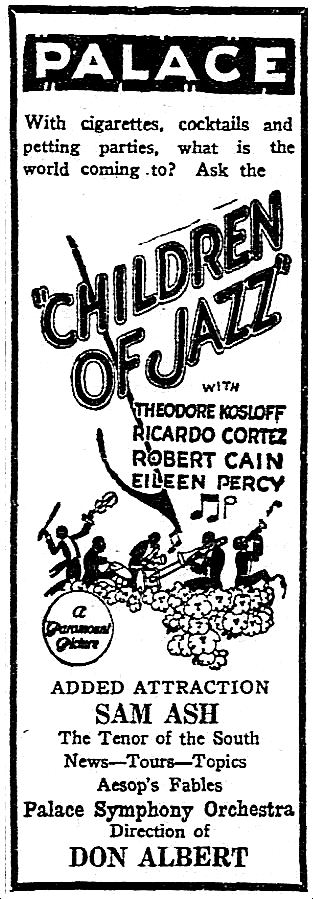
When the 1920s hit, “lovers lanes” around the country became hot topics of conversation. This was the “Jazz Age” and the era of the outrageous flappers — a time which an older, disapproving generation saw as scandalous and lacking in respect for propriety or morals. They felt that young women, in particular, were not acting at all “ladylike.” Suddenly the term “petting parties” was all over the newspapers. Young people (…and older people) were making out at parties, in movie theaters, and, especially, in cars parked at night along out-of-the-way country roads. Things were heading to hell in a handbasket.

petting-parties_dmn_022222DMN, 1922

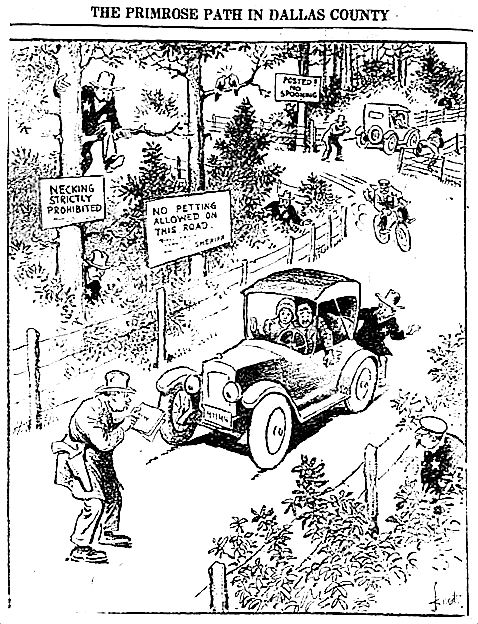
When a Dallas deputy sheriff commented to the local newspapers in 1924 that these open-air necking sessions were out of control, the mayor, Louis Blaylock, said, “It’s getting so a man can not take his sweetheart out on the country road to court her or to propose to her…. Most of the folks celebrating their silver and golden anniversaries in Dallas can look back upon the time when the Lemmon avenue road and Mocking Bird Lane were the causes of all the trouble…. Things aren’t so much worse now than when I was a boy” (DMN, May 23, 1924). Mayor Blaylock — who was born in 1849 — was 74 years old at the time. The deputy sheriff was Not Amused (read his response, reprinted in the Sulphur Springs Daily News-Telegram, here). The mayor laughed off the deputy’s concerns, saying, “I believe that most of [this] talk is purely political and if my memory serves me right we experience this epidemic about every two years, just about election time,” (DMN, May 30, 1924).

primrose-path-lovers-lane_may-1924(click to see larger image)

Despite the mayor’s pooh-poohing of the situation, petting-party outrage remained in the headlines throughout the ’20s … until the public’s attention turned to the next thing to be outraged about. Good for those scandalous pre-Code movies, though!

children-of-jazz_dmn_july-1923“Children of Jazz” at the Palace, 1923

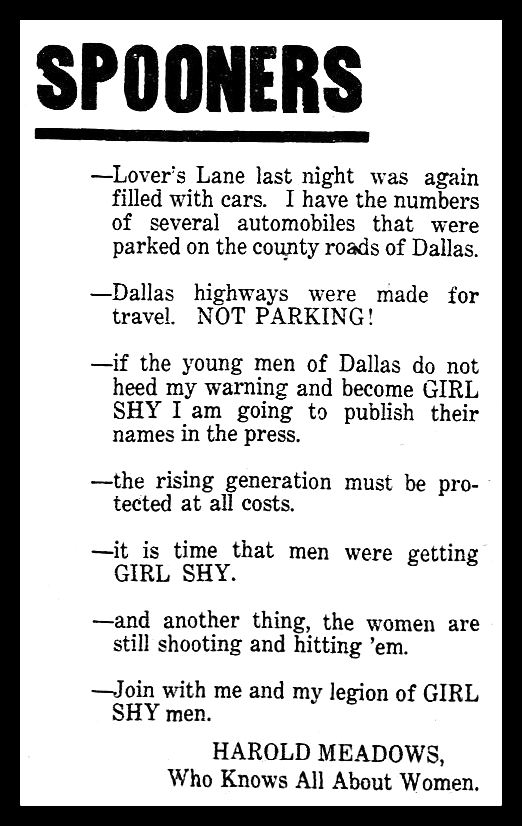
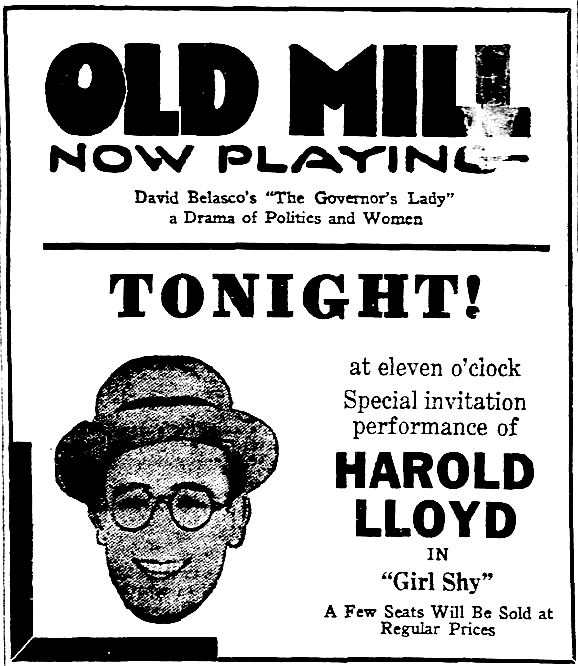
Below is a clever promotion for a movie called “Girl Shy” in which Harold Lloyd played a character named Harold Meadows (“who knows all about women”). It is addressed to the “spooners” of Dallas and is not identified as being an ad for movie.

lovers-lane_dmn_052024May 20, 1924

lovers-lane_dmn_052324
“Girl Shy” at the Old Mill, May 23, 1924

***

Sources & Notes

Top two postcards are currently for sale here and here.

The two postcards featuring amorous couples are from the George W. Cook Dallas/Texas Image Collection, DeGolyer Library, SMU Libraries, Southern Methodist University; more information on these postcards can be found here and here.

A photo of young frolickers frolicking at Lovers’ Retreat in Palo Pinto County can be found on the Portal to Texas History website here.

Read about petting parties in an article from NPR, here.

Speaking of amorous activities in automobiles, check out my previous Flashback Dallas post, “No Necking Along Country Roads Until Bonnie & Clyde Are Killed or Captured — 1934.

*

Copyright © 2018 Paula Bosse. All Rights Reserved.


Skyline — 1926

dallas_goodwill-tour_1926_SMU

by Paula Bosse

This impressive view of the Dallas skyline appeared in a 1926 promotional booklet touting the city’s progressive spirit and intense growth. Click it.

***

Sources & Notes

Image is from the 1926 booklet “Dallas, Good Will Tour,” which is held by the DeGolyer Library, SMU Libraries, Southern Methodist University; information on this downloadable publication may be found here.

*

Copyright © 2018 Paula Bosse. All Rights Reserved.

1971 Yellow Pages Cover: SMU Gets the Karl Hoefle Treatment

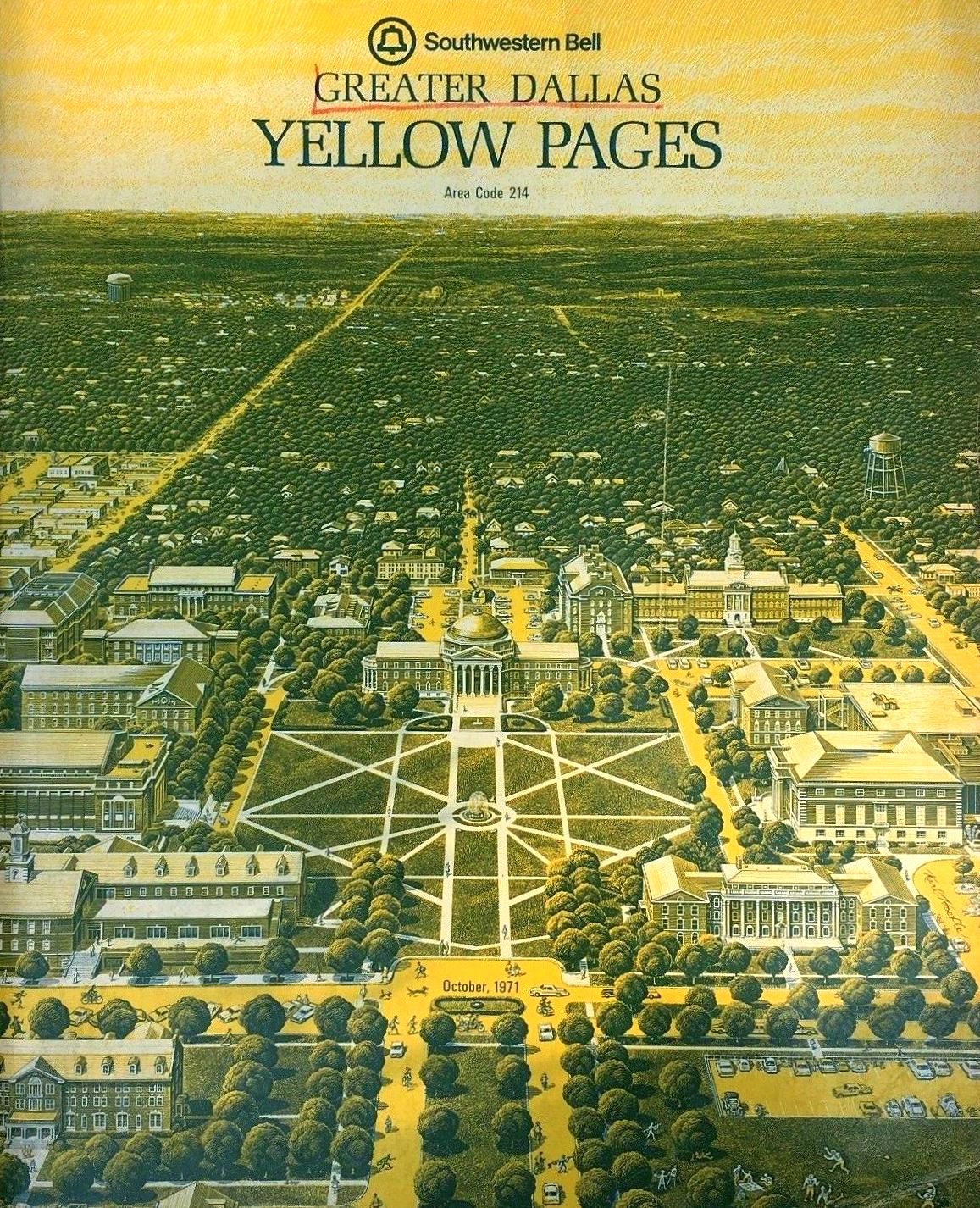
hoefle_yellow-pages_1971_smuUniversity Park gets Hoefle-ized… (click for larger image)

by Paula Bosse

Karl Hoefle’s wonderfully detailed (and painstakingly rendered) Yellow Pages illustrations were pretty much loved by everyone who saw them. As a kid, I loved searching for the hidden jokes — the dinosaurs, the cowboys, the rocket ships. I’ll try to write something in-depth about Karl someday. But, in the meantime, here is one of his covers from 1971, showing the SMU campus, Hillcrest, Snider Plaza, that water tower on Northwest Highway, and, heck, even an observatory. And possibly an elephant (although it might just be an elephant-ish-looking mustang…). (Click the image!)

*

Copyright © 2018 Paula Bosse. All Rights Reserved.

Flooding Along Gaston

flood_flooding_gaston-avenue_ebayI do believe some of these vehicles have drifted out of their lanes…

by Paula Bosse

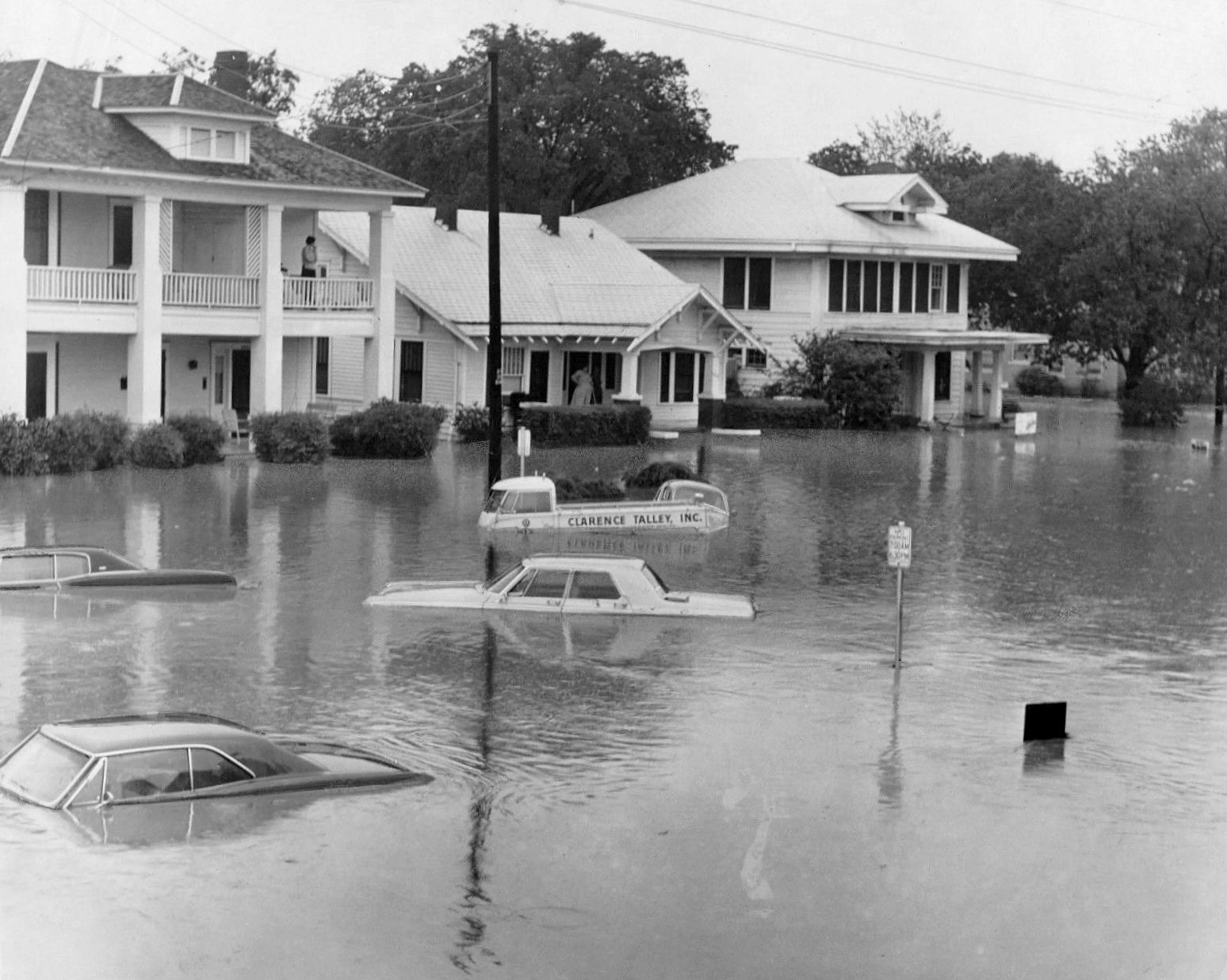
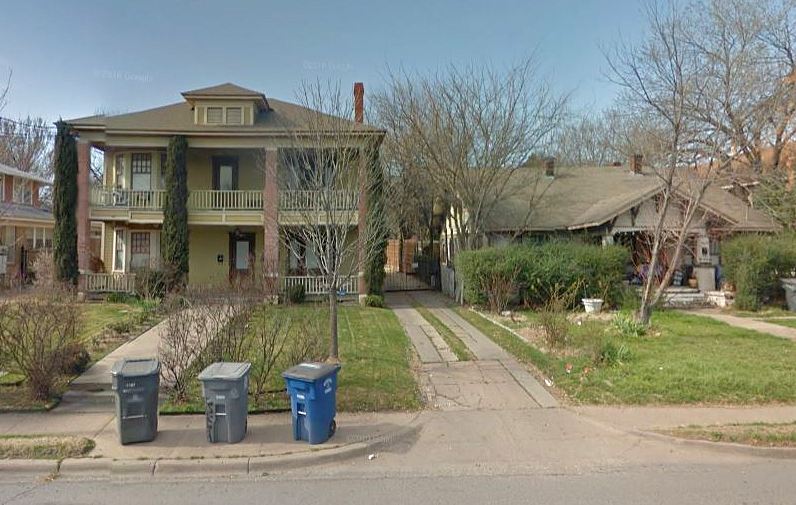
It’s been a rainy, flood-y day — why not post a picture of part of Big D underwater? The photo above appeared on eBay several months ago, minimally described as capturing a scene of a flooded Gaston Avenue in Old East Dallas (Peak’s Suburban Addition). I took a virtual drive down Gaston via Google Street View to see if I could find the exact location of the photo, and it looks like it was taken in the 4600 block of Gaston at Annex (Gaston, between Carroll and Fitzhugh). The two houses on the left in the photo above are still standing, the house on the right has been replaced by an apartment building. Below is a Google view from 2014. (The most recent Google Street View capture is here.)

gaston-annex_google-feb-2014Google Street View, Feb., 2014

Stay dry!

***

Sources & Notes

Top photo from eBay.

Color image from Google Street View.

A 1961 Clarence Talley ad featuring the same (or very similar) dropside VW pickup is here. Speaking of Volkswagens and flooding, might as well watch a 1967 TV commercial showing that, yes, a VW Beetle does float, here.

Click pictures to see larger images.

*

Copyright © 2018 Paula Bosse. All Rights Reserved.

Oak Cliff: “A City Within a City” — 1929

oak-cliff-city-within-a-city_cover_ca-1929_SMU

by Paula Bosse

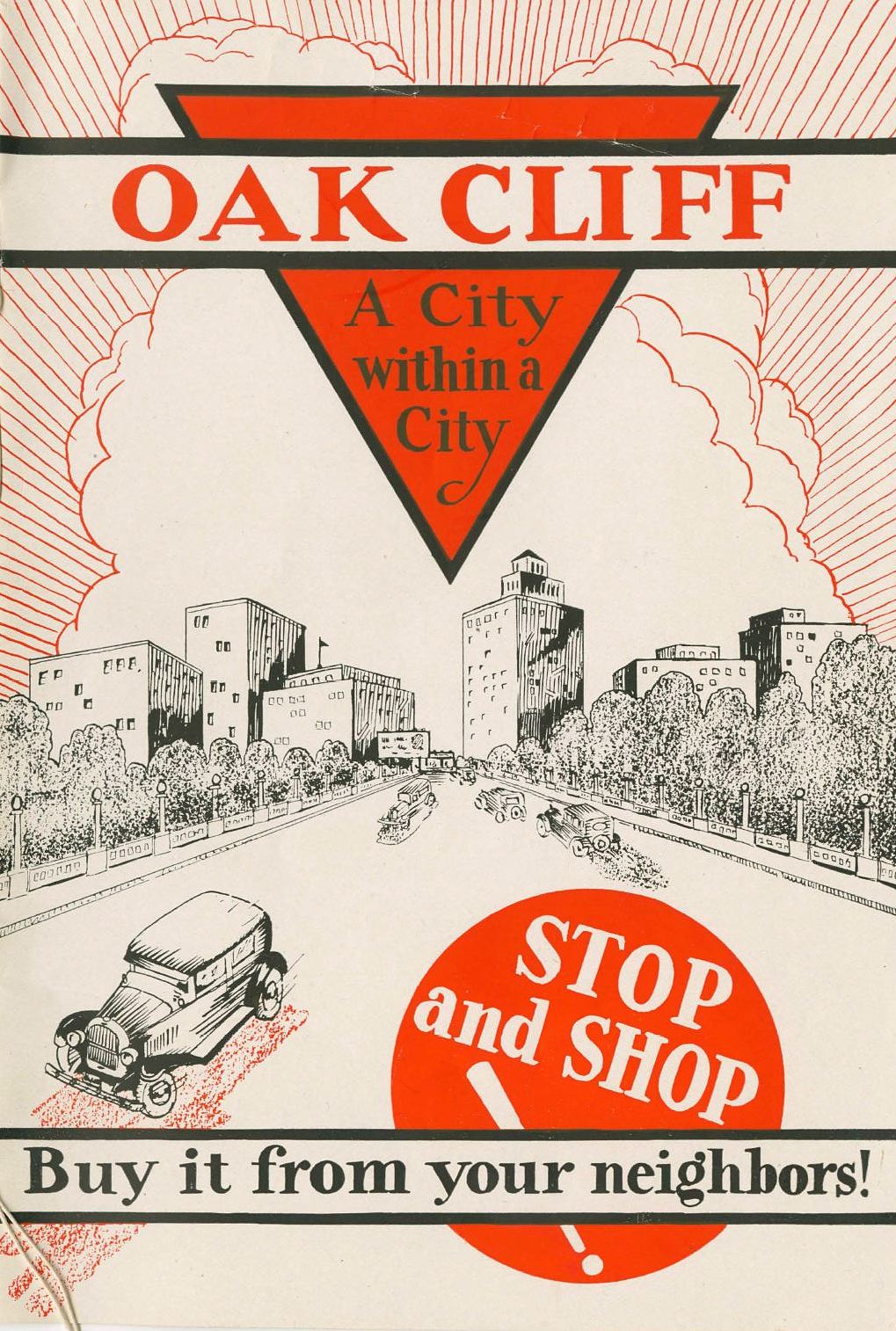
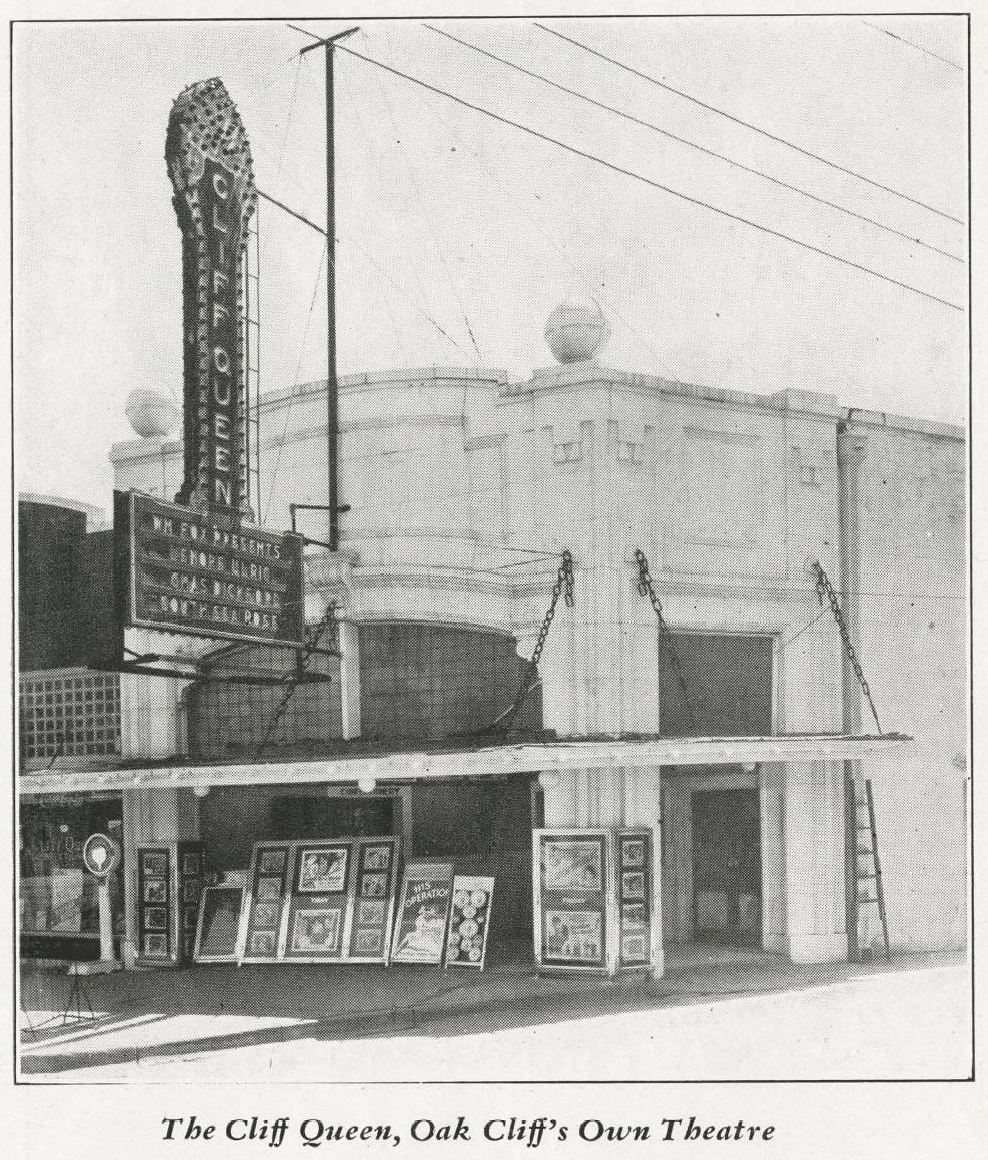
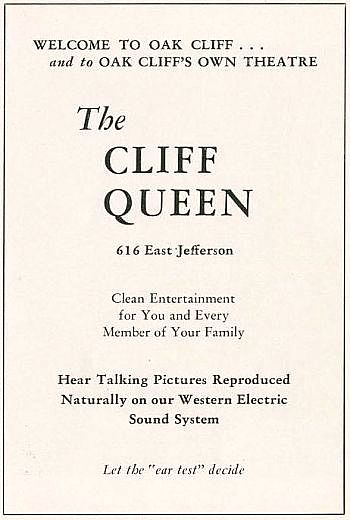
Publications like Oak Cliff, A City Within a City (“Stop and Shop — Buy it from your neighbors!”) are wonderful glimpses into a city’s proud self-promotion. This little booklet is for the newcomer to Oak Cliff — to show that it is its own self-contained community, full of friendly, neighborhood businesses; even better, each ad is accompanied by a photograph. Though undated, the photo of the famed Cliff Queen movie theater features movies released in 1929. (All photos are larger when clicked.)

*

CLIFF QUEEN THEATRE (L. L. Dunbar, proprietor), 616 E. Jefferson. On the marquee: “South Sea Rose,” starring Charles Bickford and Lenore Ulric (1929). Talking pictures — “clean entertainment” for the whole family.

cliff-queen-theater_OC-city-within-a-city_ca-1929_SMU

cliff-queen-theater_ad_OC-city-within-a-city_ca-1929_SMU

*

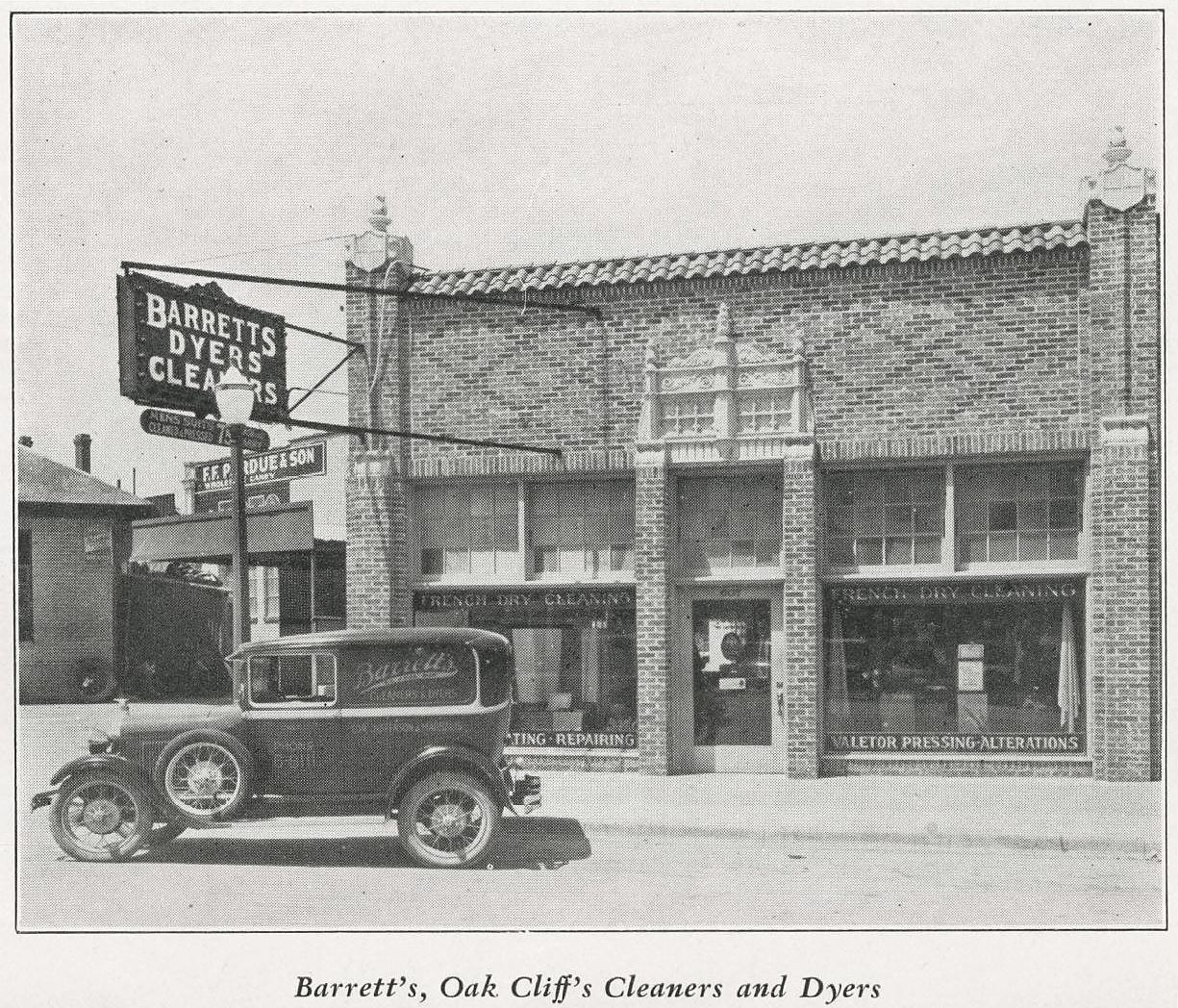
BARRETT’S CLEANERS (E. B. Tipton, prop.), 607 E. Jefferson (building still stands, here). “We clean everything but a guilty conscience.”

barretts-cleaners_OC-city-within-a-city_ca-1929_SMU

barretts-cleaners_ad_OC-city-within-a-city_ca-1929_SMU

*

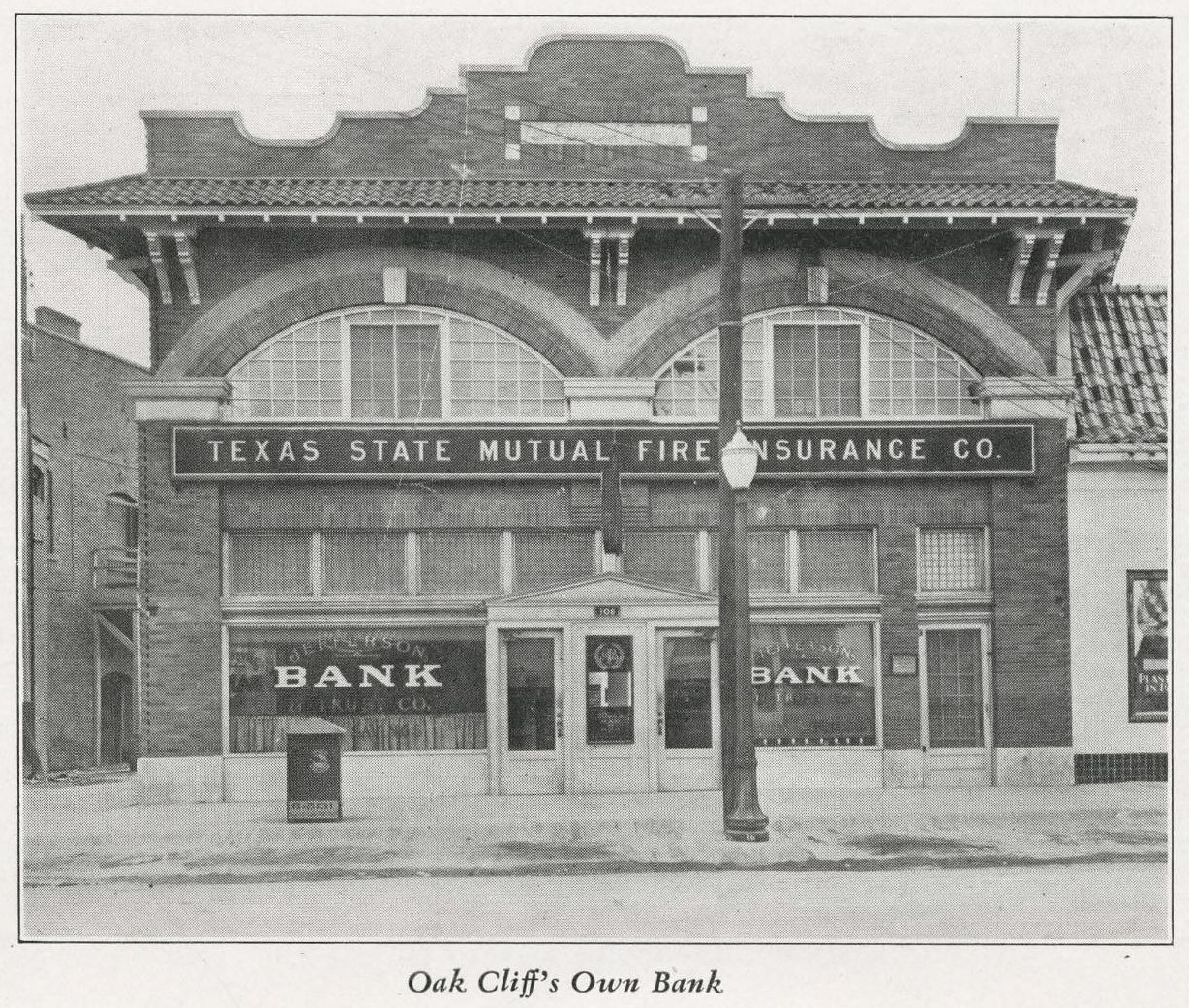
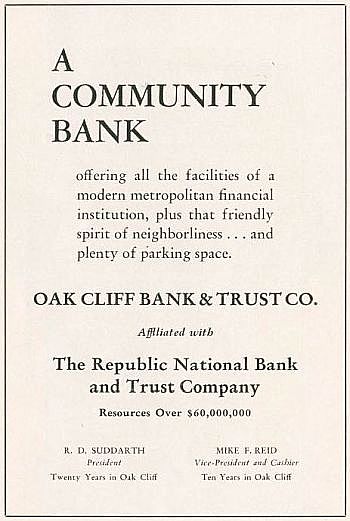
OAK CLIFF BANK & TRUST (aka Jefferson Bank & Trust), 106-108 W. Jefferson (with the Texas State Mutual Life Insurance Co. upstairs). “Plenty of parking space.”

oak-cliff-bank-and-trust_OC-city-within-a-city_ca-1929_SMU

oak-cliff-bank-and-trust_ad_OC-city-within-a-city_ca-1929_SMU

*

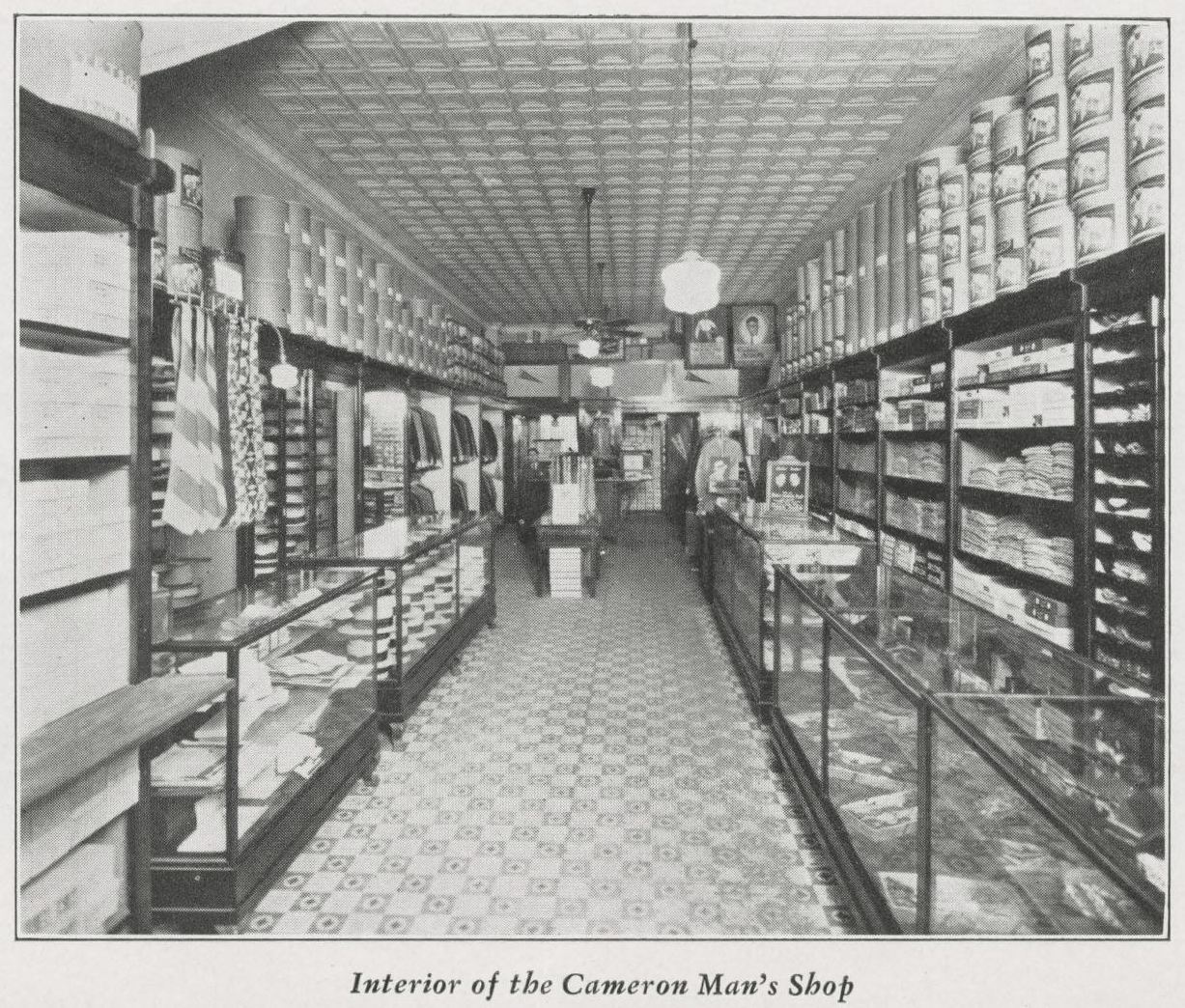
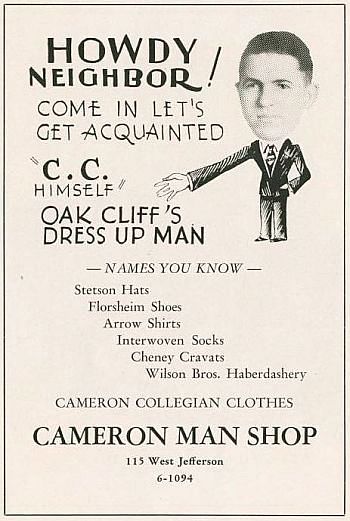
CAMERON MAN SHOP (prop. C. C. Cameron), 115 W. Jefferson. Stop in and say howdy to “Oak Cliff’s dress-up man.”

camerons-mans-shop_OC-city-within-a-city_ca-1929_SMU

camerons-mans-shop_ad_OC-city-within-a-city_ca_1929_SMU

*

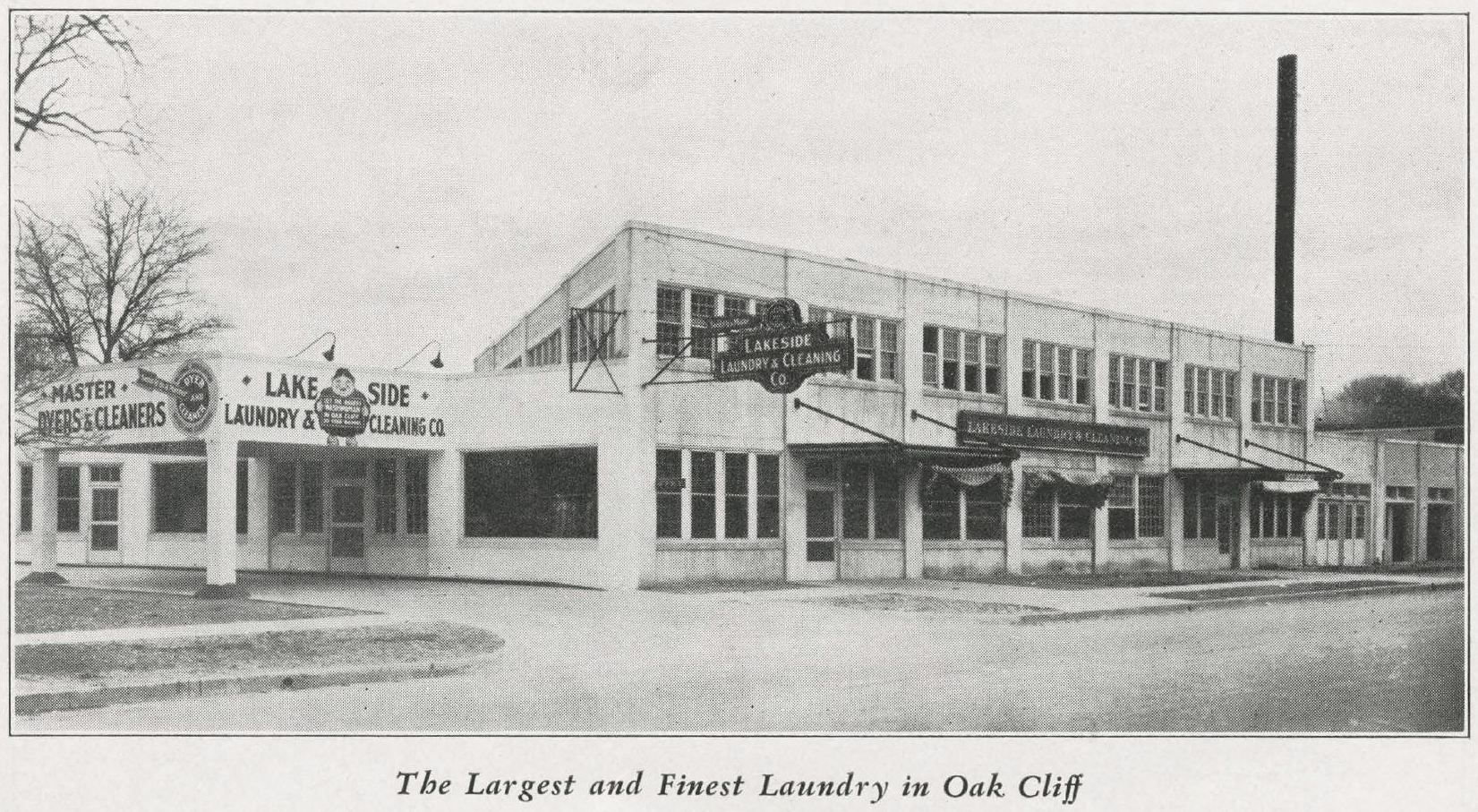
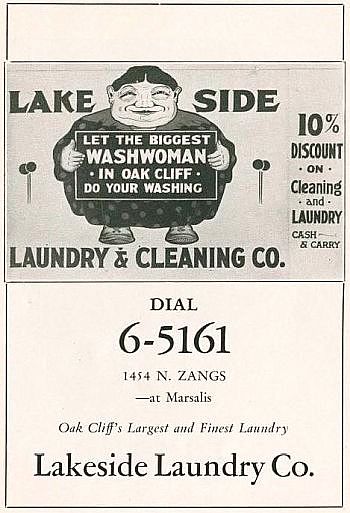
LAKESIDE LAUNDRY & CLEANING CO., 1454 N. Zang (at Marsalis). “Let the biggest washwoman in Oak Cliff do your laundry.”

lakeside-laundry_OC-city-within-a-city_ca-1929_SMU

lakeside-laundry_ad_OC-city-within-a-city_ca-1929_SMU

*

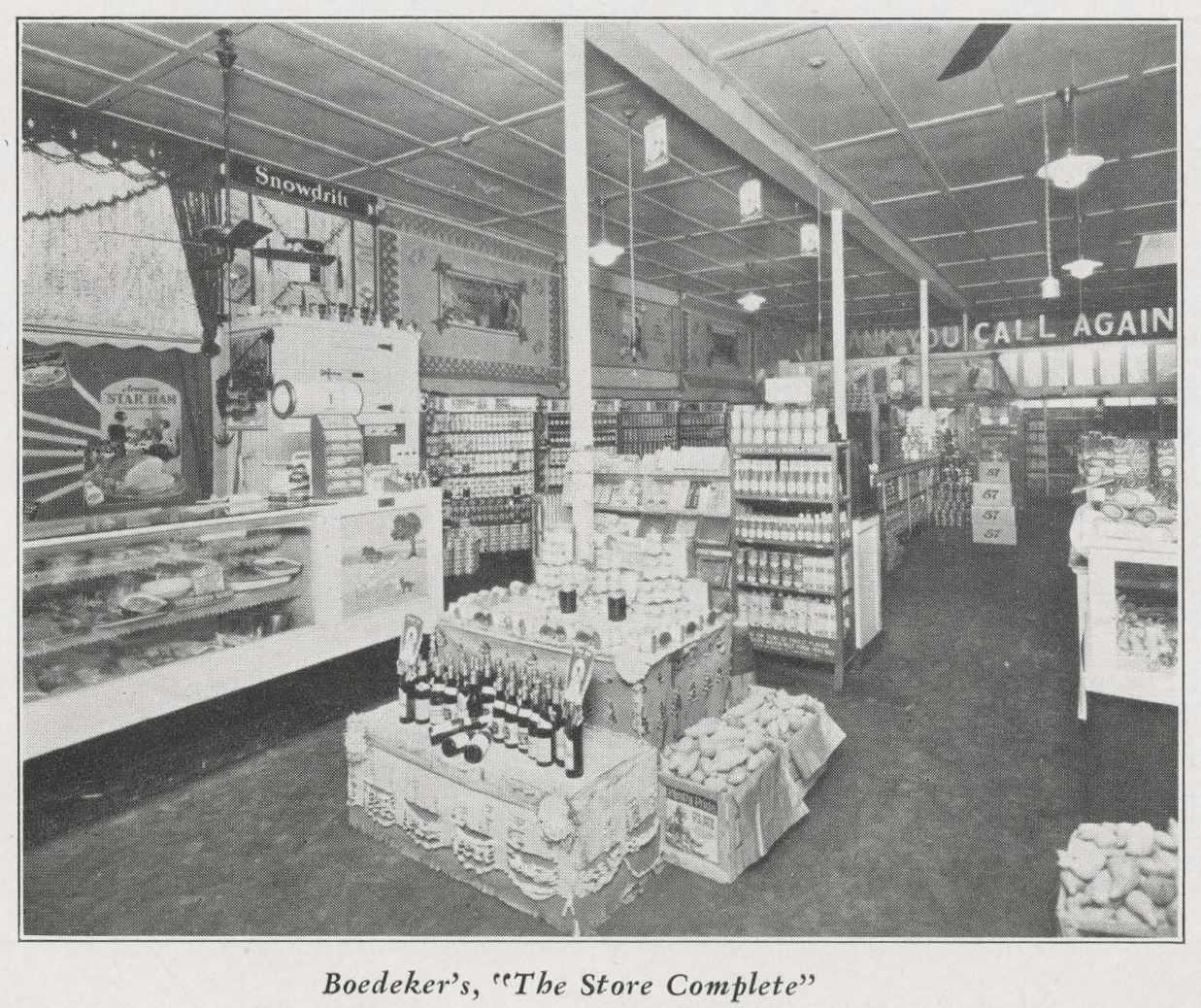
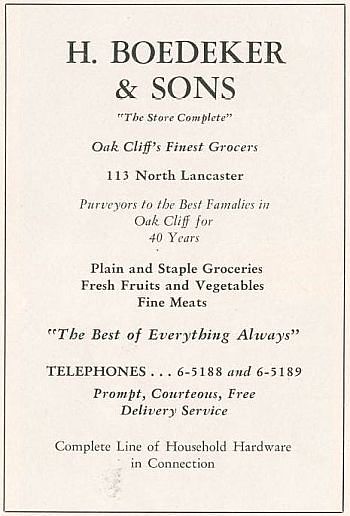
H. BOEDEKER & SONS, Grocery and Hardware (Huber Boedeker, Oscar Boedeker, and W. C. Boedeker), 113 N. Lancaster. “The store complete.”

boedeker_OC-city-within-a-city_ca-1929_SMU

boedeker_ad_OC-city-within-a-city_ca-1929_SMU

*

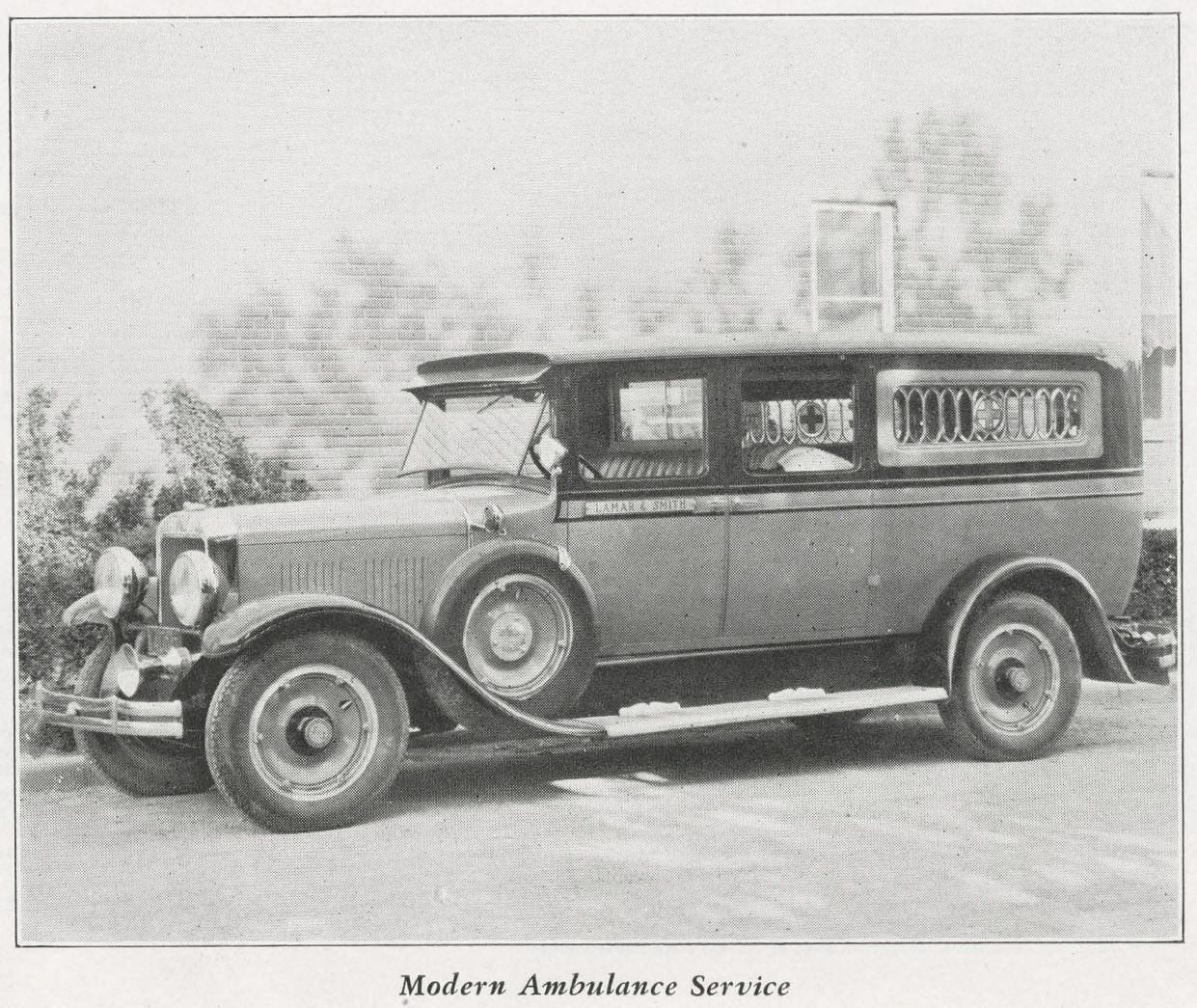
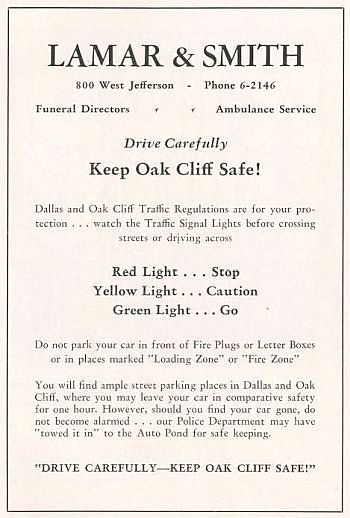
LAMAR & SMITH, Funeral Directors and Ambulance Service, 800 W. Jefferson. “Keep Oak Cliff safe!” (…or there will be unfortunate consequences you will be calling us to deal with).

lamar-and-smith_ambulance_funeral-directors_OC-city-within-a-city_ca-1929_SMU

lamar-and-smith_ambulance_funeral-directors_ad_OC-city-within-a-city_ca-1929_SMU

*

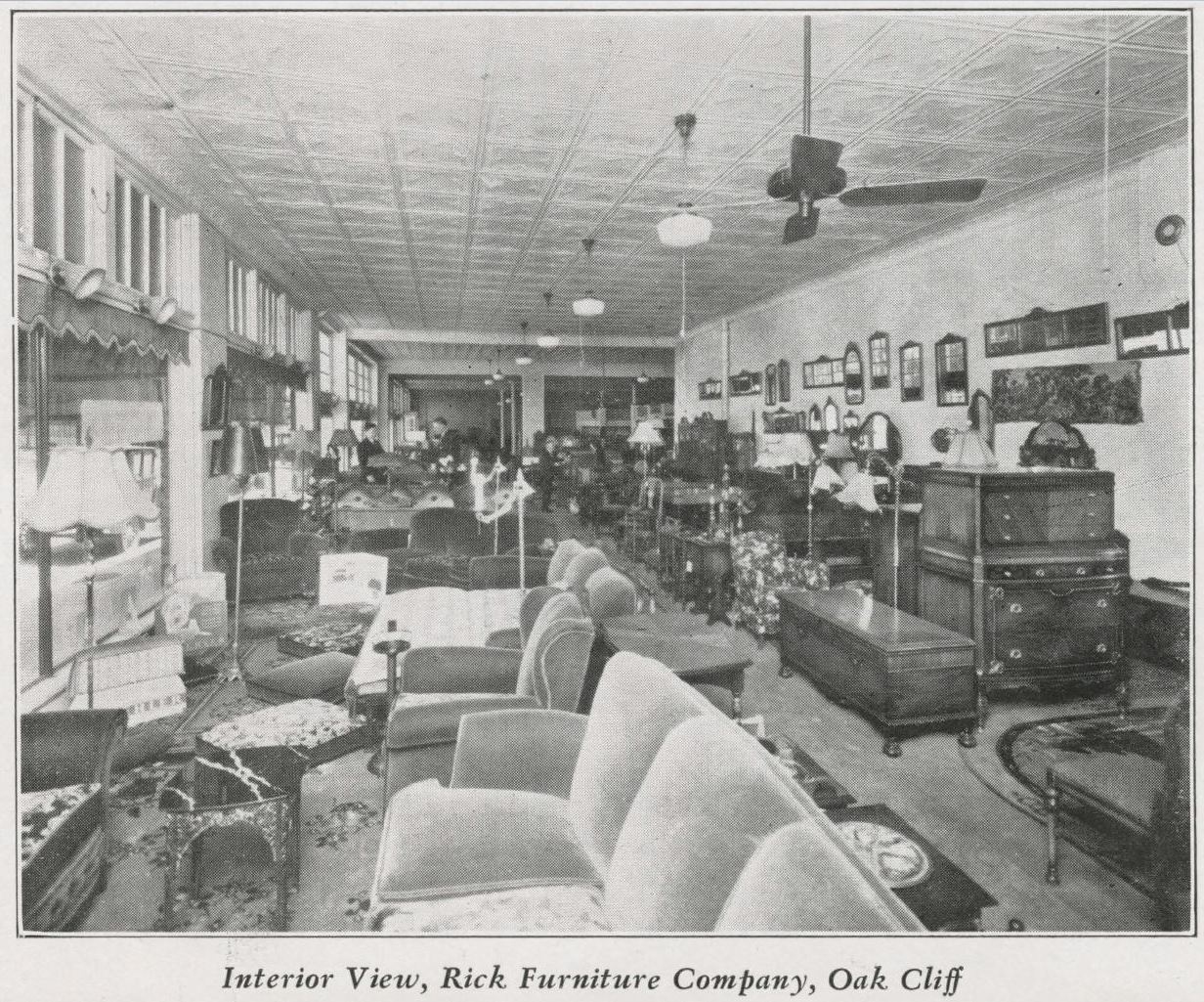
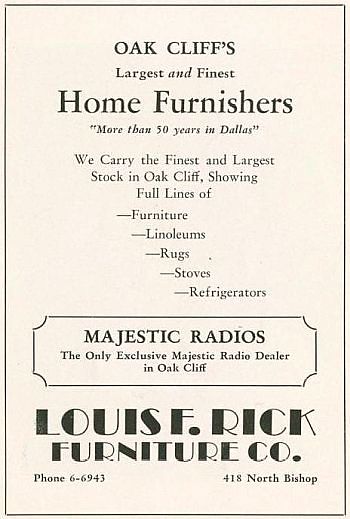
RICK FURNITURE CO. (Louis F. Rick, prop.), 418 N. Bishop. “More than 50 years in Dallas.”

rick-furniture_OC-city-within-a-city_ca-1929_SMU

rick-furniture_ad_OC-city-within-a-city_ca-1929_SMU

*

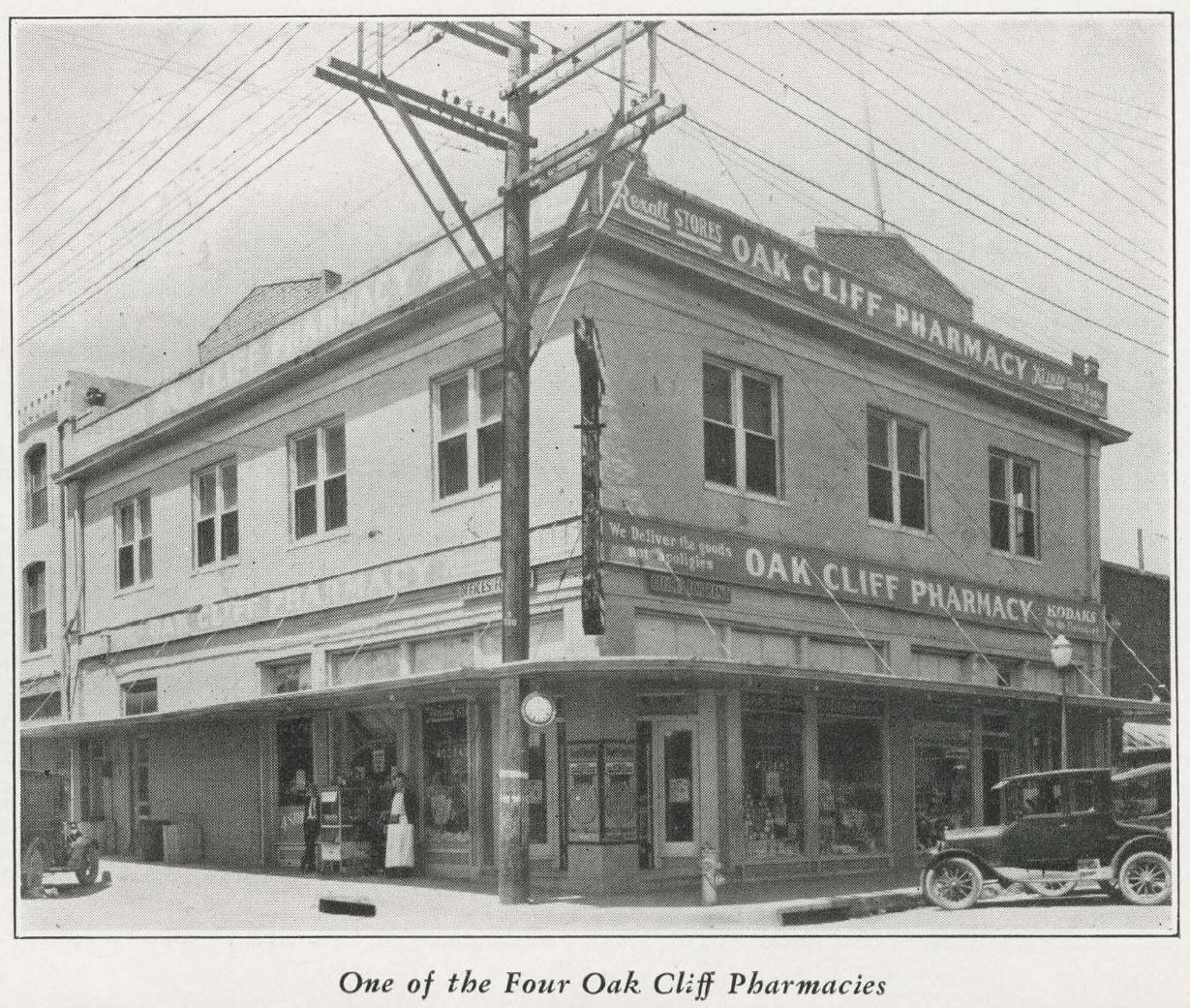
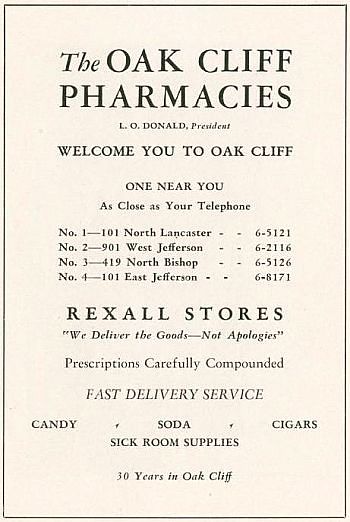
OAK CLIFF PHARMACY, various locations. “Candy, soda, cigars, sick-room supplies.”

oak-cliff-pharmacy_OC-city-within-a-city_ca-1929_SMU

oak-cliff-pharmacy_ad_OC-city-within-a-city__ca-1929_SMU

*

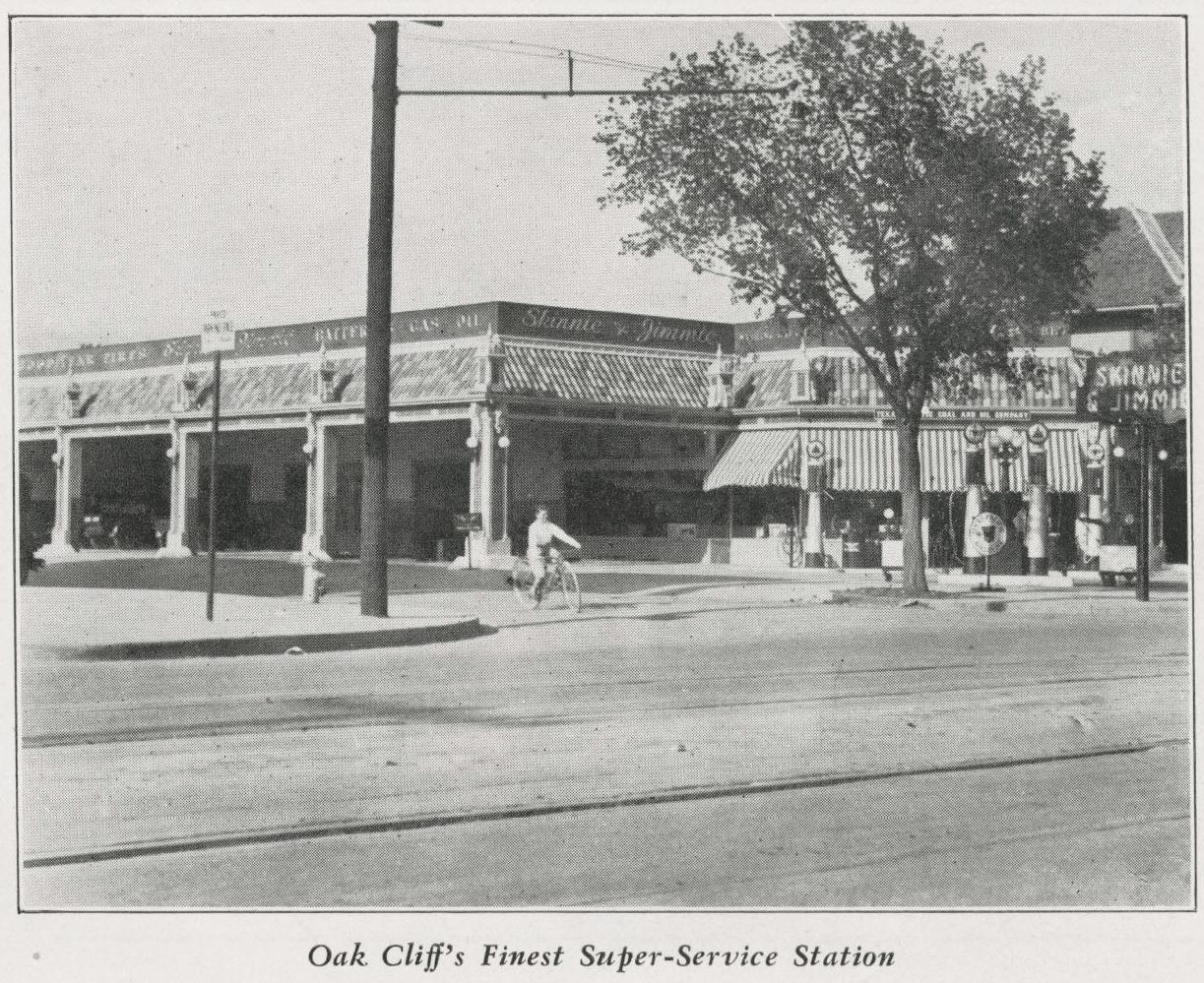
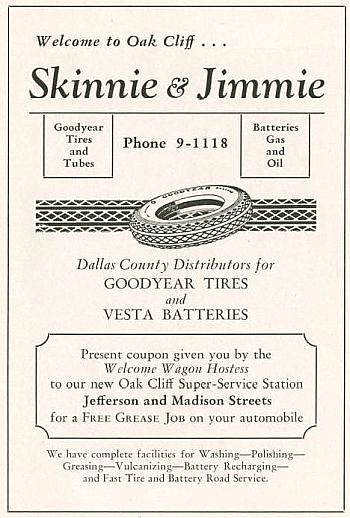
SKINNIE & JIMMIE SERVICE STATION, W. Jefferson and Madison (northeast corner). A free grease job awaits the coupon-bearing newcomer.

skinnie-and-jimmie_OC-city-within-a-city_ca-1929_SMU

skinnie-and-jimmie_ad_OC-city-within-a-city_ca-1929_SMU

*

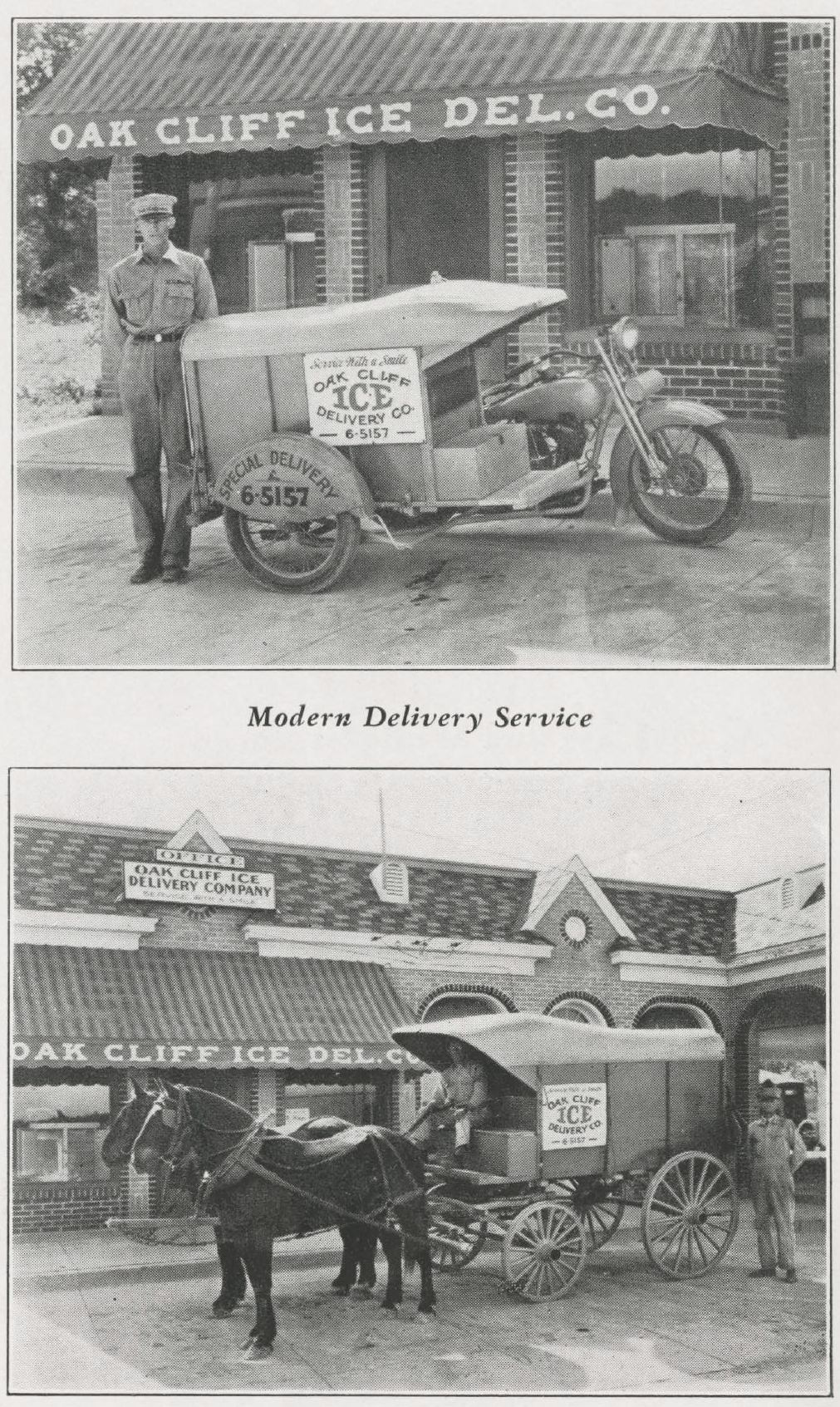
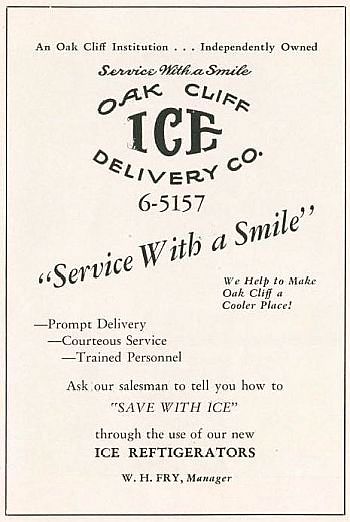
OAK CLIFF ICE DELIVERY CO., 1027 S. Beckley (building may still be standing, here). “We help to make Oak Cliff a cooler place.”

oak-cliff-ice_OC-city-within-a-city_ca-1929_SMU

oak-cliff-ice_ad_OC-city-within-a-city_ca-1929_SMU

*

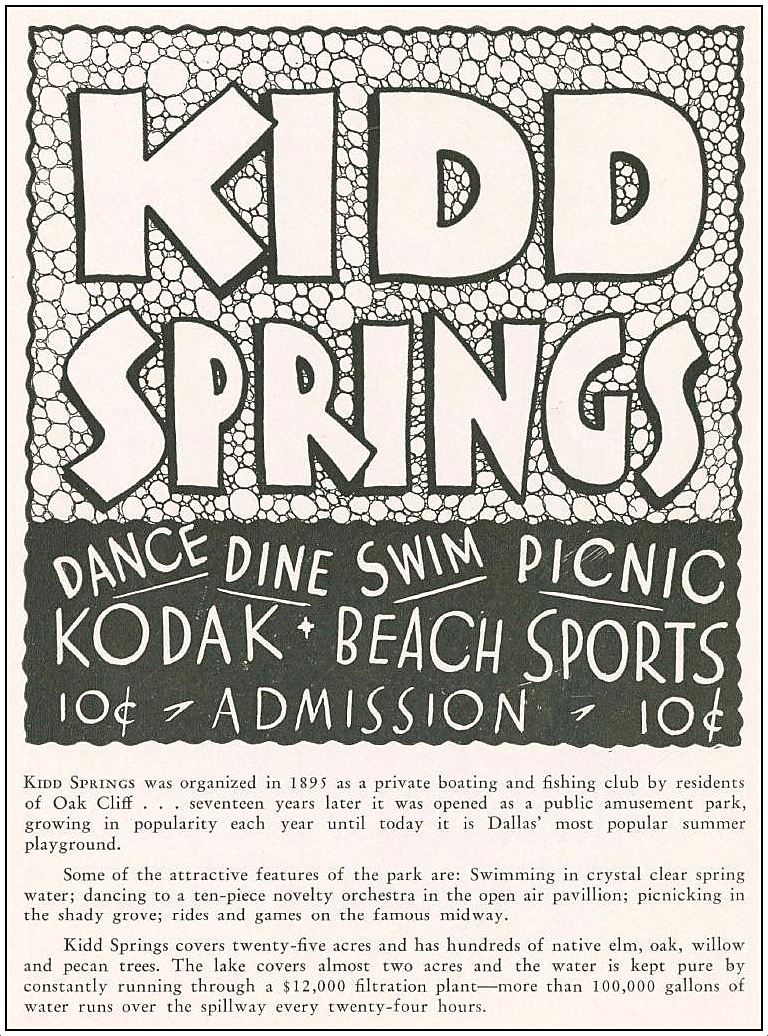
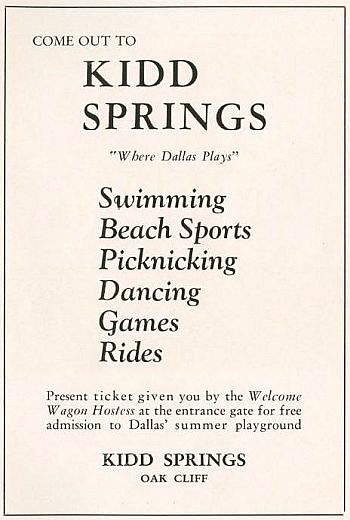
KIDD SPRINGS, 715 W. Canty (see the amusement area on a 1922 Sanborn map, here). “Where Dallas plays.”

kidd-springs_OC-city-within-a-city_ca-1929_SMU

kidd-springs_ad_OC-city-within-a-city_ca-1929_SMU

***

Sources & Notes

“Oak Cliff, A City Within a City,” published by The Welcome Wagon, Dallas, ca. 1929, is from the collection of the DeGolyer Library, SMU Libraries, Southern Methodist University; more information may be accessed here.

*

Copyright © 2018 Paula Bosse. All Rights Reserved.

Dallas in “The Western Architect,” 1914: City Buildings and Churches

parkland-hospital_western-architect_july-1914

by Paula Bosse

The 7-part Flashback Dallas series of buildings and houses featured in the Dallas issue of The Western Architect finally comes to an end! What I thought would be a quick and painless way to share tons of cool Dallas photos I’d never seen has turned into a seemingly endless dive into the research of a whole slew of buildings, most of which I knew very little (if anything) about. I feel like I’ve been through an immersive, three-week course in “Lang & Witchell”!

This final installment features buildings built by the city (mostly fire stations) and a few churches — six of these eight buildings are still standing. Today’s star architects are Hubbell & Greene.

*

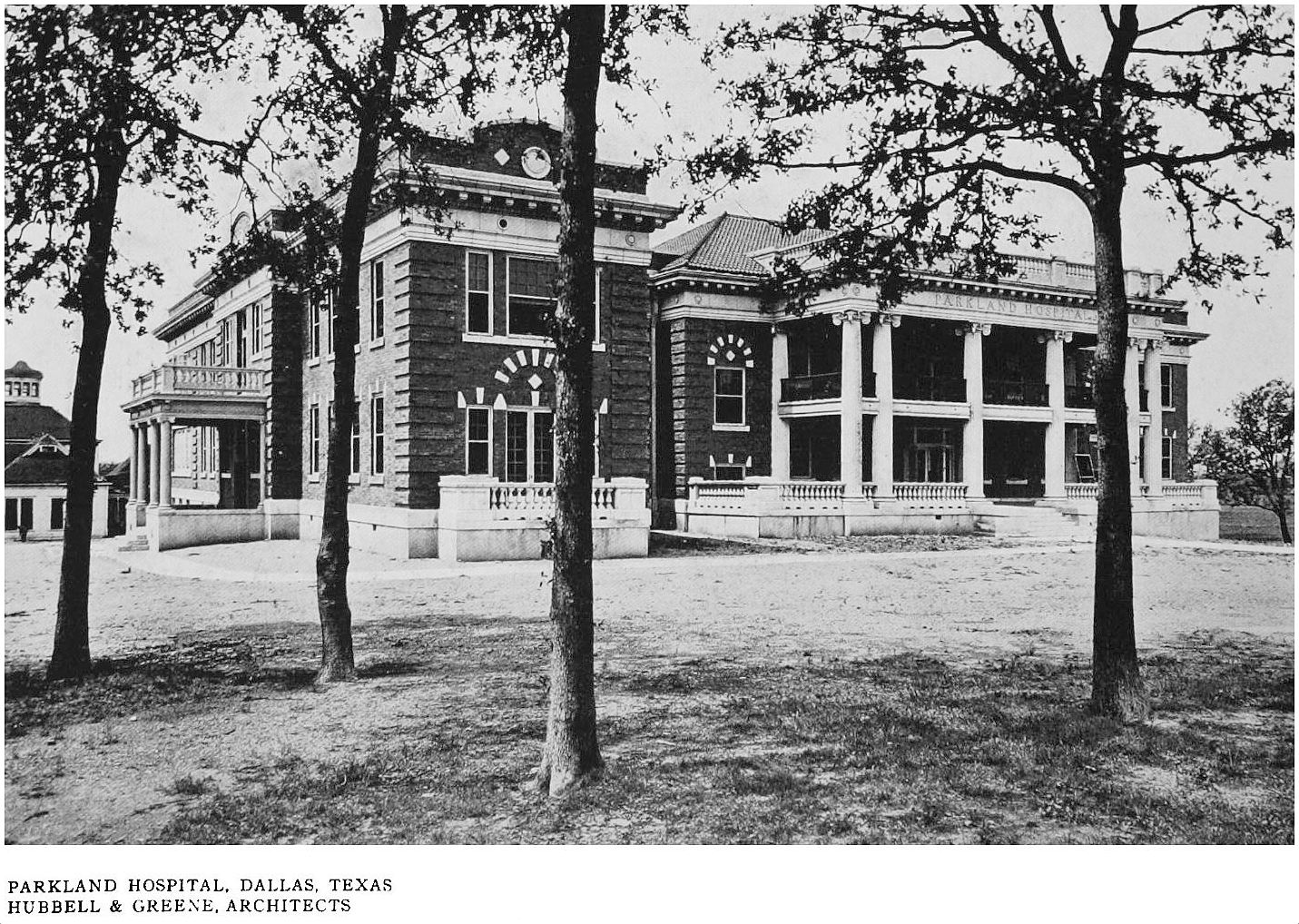
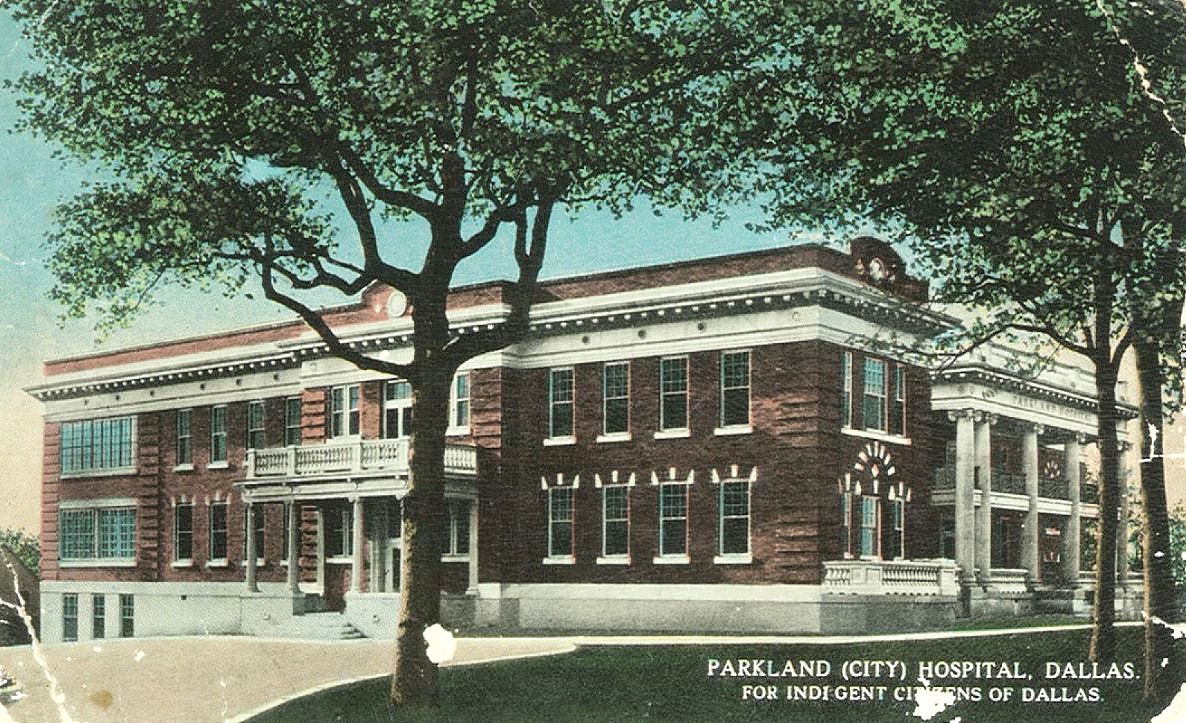
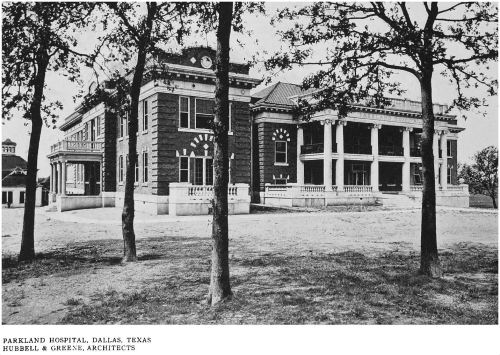
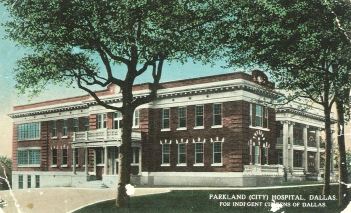
1.  PARKLAND HOSPITAL (above), Oak Lawn & Maple avenues, designed by Hubbell & Greene. This new, sturdy, brick “city hospital” was built in 1913 on the beautiful park-like 20-acre-site of the previous city hospital (the old wood frame building — built in 1894 — was cut in pieces and moved farther back on the property, “across a ravine” — it was reassembled and for a time housed patients with chronic and contagious diseases and was the only institution in Dallas at the time that served black and Hispanic patients — part of this old building can be seen at the left in the background of the photo above). The new hospital was “entirely fireproof” and was built with very little wood  — other than the doors, trim, and banister railings, it was all steel, cement, reinforced concrete, plaster, and brick. The original plans called for two wings, but the city had to put construction of the second wing on the backburner until funds became available. As it was, this one-wing hospital (with beds for 100 patients) cost in excess of $100,000 ($2.5 million in today’s money). The building still stands but is barely visible these days behind a wall, trees, and dense shrubbery — it is surrounded by a huge, recently-built complex of similarly-styled buildings. (See it on a 1921 Sanborn map, here.) (All images are larger when clicked.)
parkland_psotcard_1914_pinterest
postcard dated 1914, via Pinterest

*

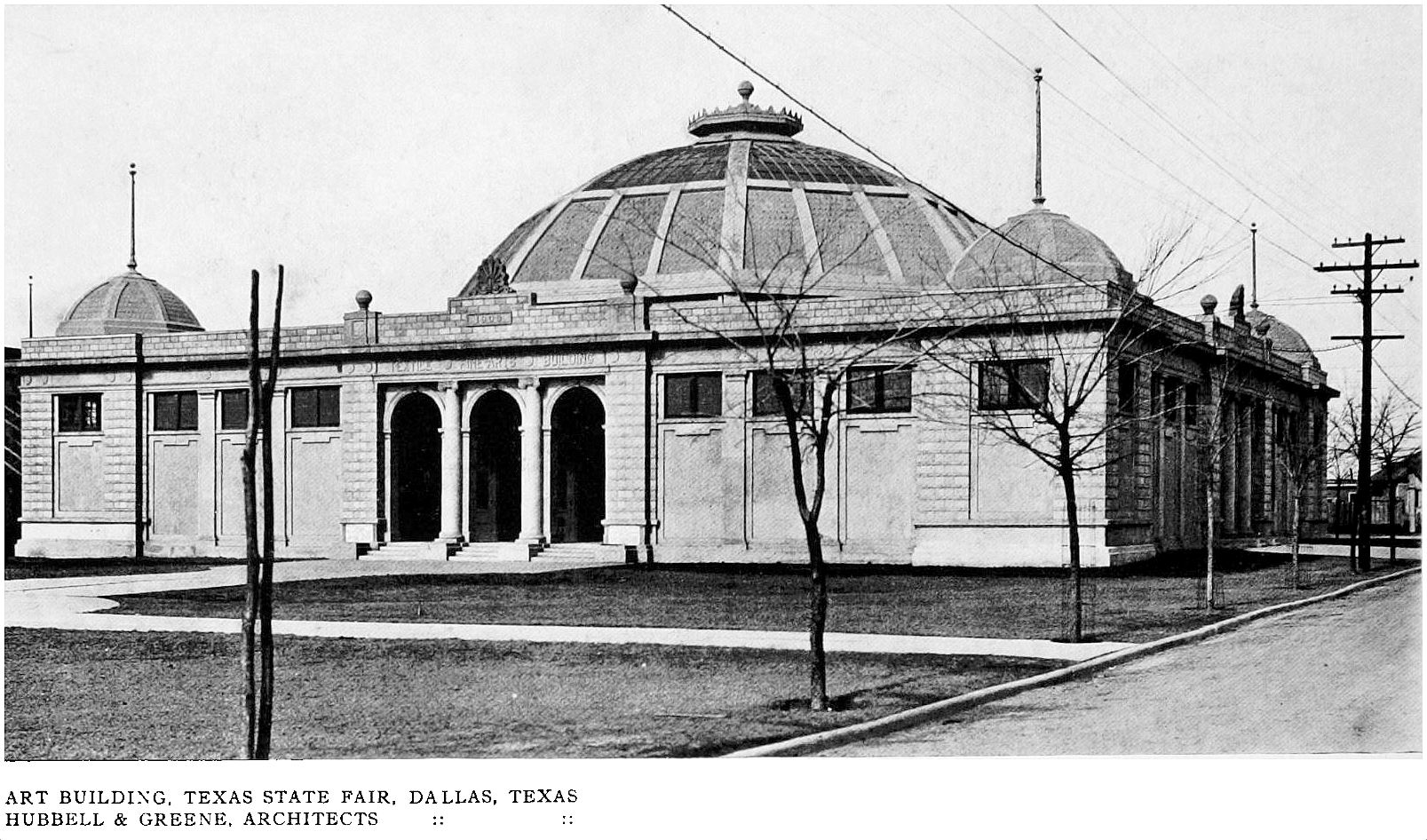
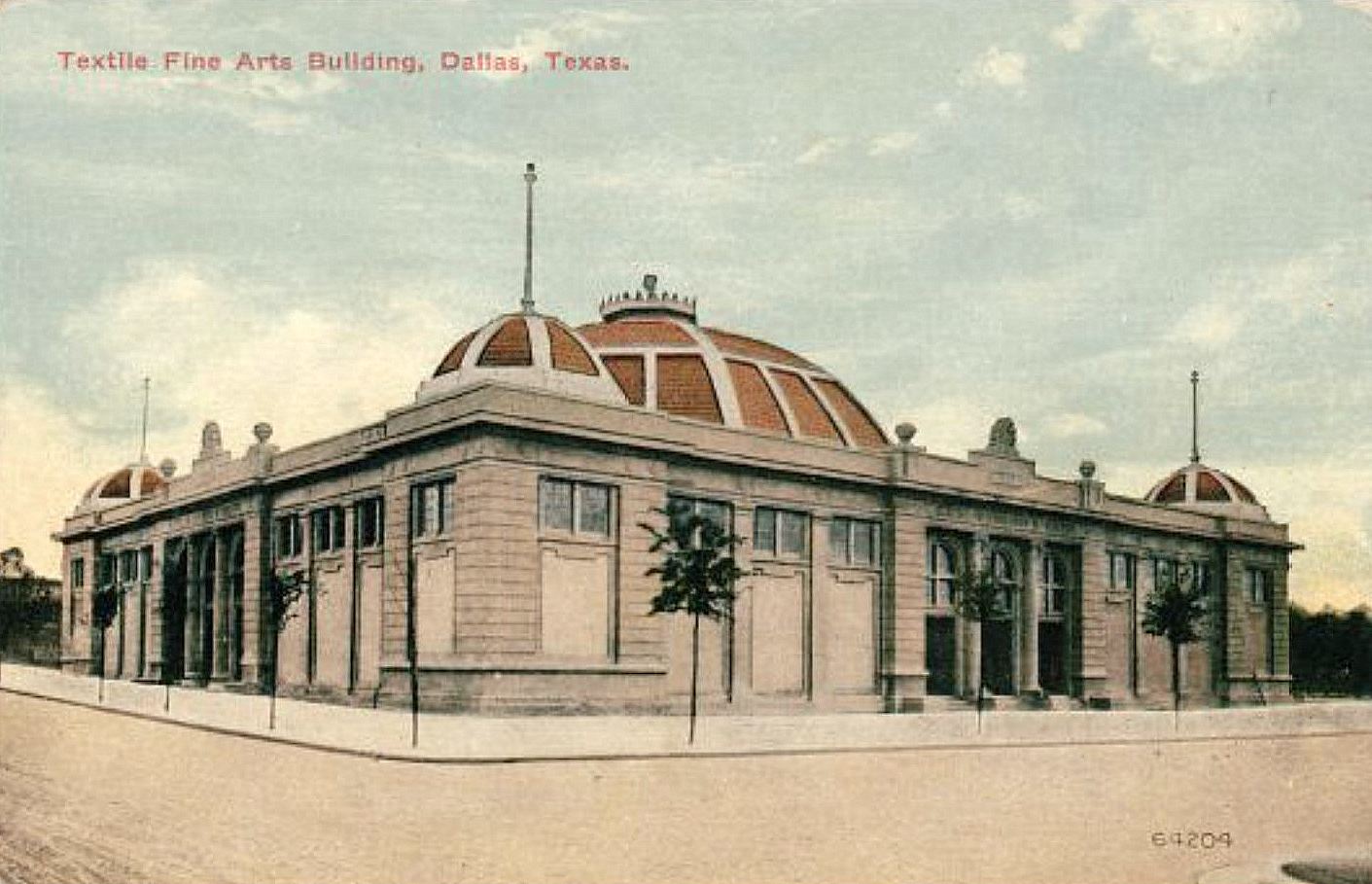
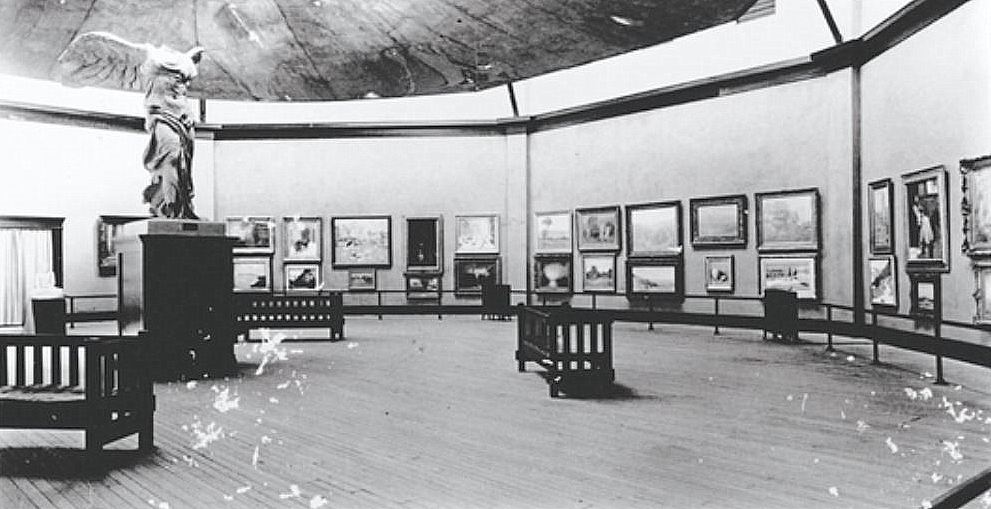
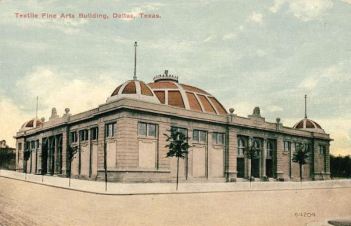
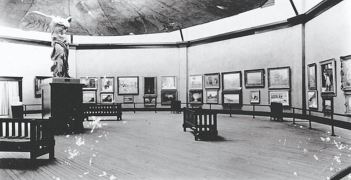
2.  ART BUILDING, Fair Park, designed by Hubbell & Greene. Known as the Art & Ladies’ Textile Building when it was erected in 1908, this domed building gave Dallas its first public art museum. No longer would the 14 paintings owned by the Dallas Art Association (including works by Childe Hassam and Robert Henri) be relegated to being displayed (when staff was available) in a room in the public library. The building was initially built as a nod to “ladies” and was the place where textile crafts and artworks were displayed during the State Fair (Texas artist Julian Onderdonk was given the task of beating the bushes in New York City for works to be loaned for display in this building during the fair). The art gallery was set in the rotunda — a sort of gallery within a gallery — while textiles and other exhibits were shown in the outer area of the octagonal building. One interesting bit of trivia about the construction of this building is that it was built largely of cement blocks — 70,000, according to newspaper reports. In order to facilitate construction, a “cement block plant” was set up on the grounds in Fair Park, turning out hundreds of blocks a day, which were then laid out to “season” in the sun. (Incidentally, this building was under construction during the historic flood of 1908 — which the newspaper refers to as “the recent high water,” and the bad weather was slowing the construction process.) The building is no longer standing, but it seems to have lasted at least through the end of 1956. It stood just inside the Parry Avenue entrance, to the left, next to the Coliseum (now the Women’s Building) — the site is now occupied by a parking lot directly behind the D.A.R. house. (See it on a 1921 Sanborn map, here.)
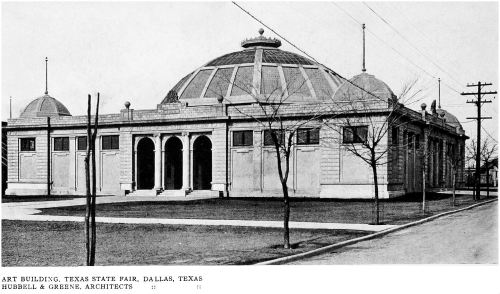
fair-park_art-bldg_western-architect_july-1914

fair-park_textile_fine-arts-bldg_postcard

art-and-textile-bldg_dma_uncrated_interior
via Dallas Museum of Art blog “Uncrated”

*

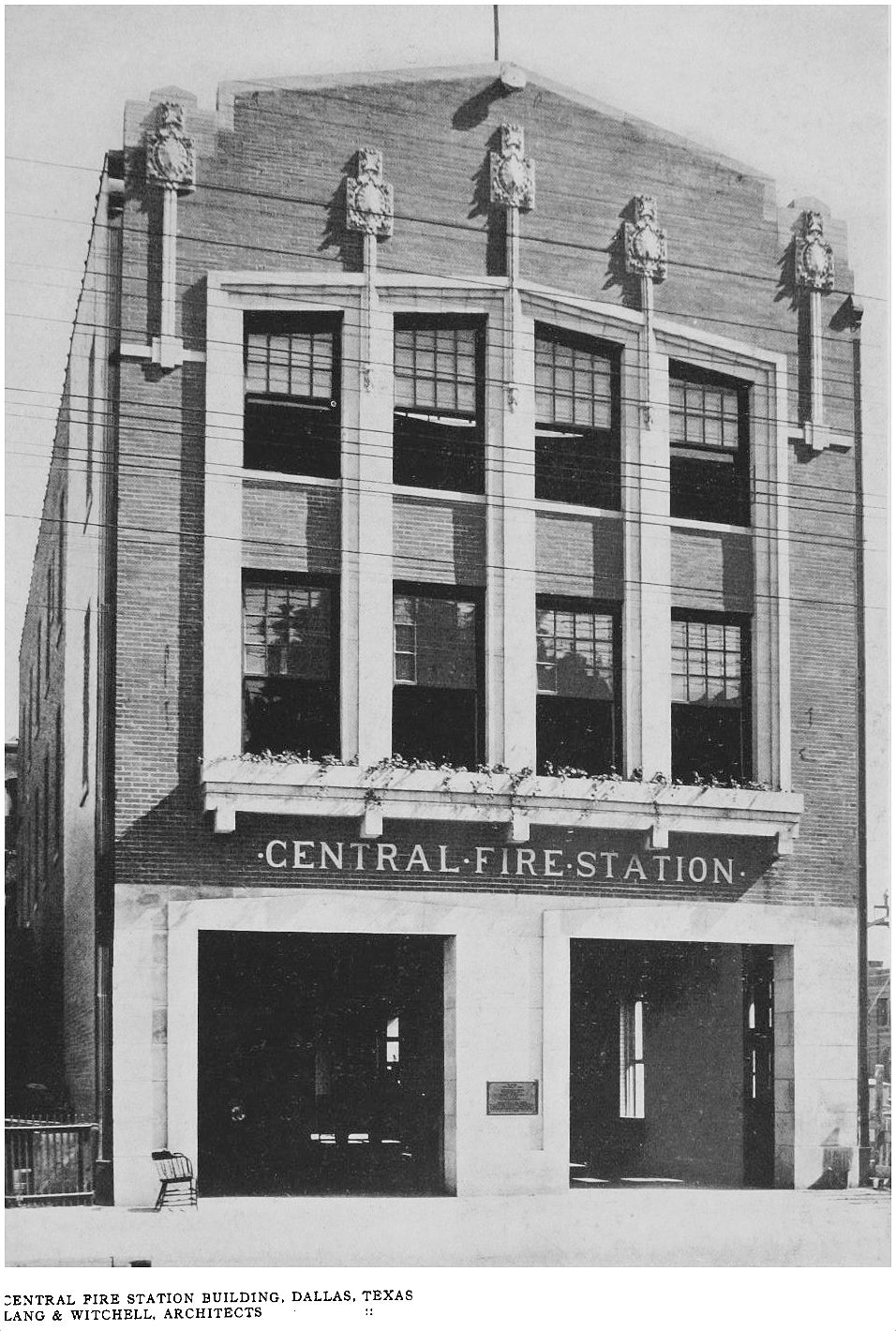
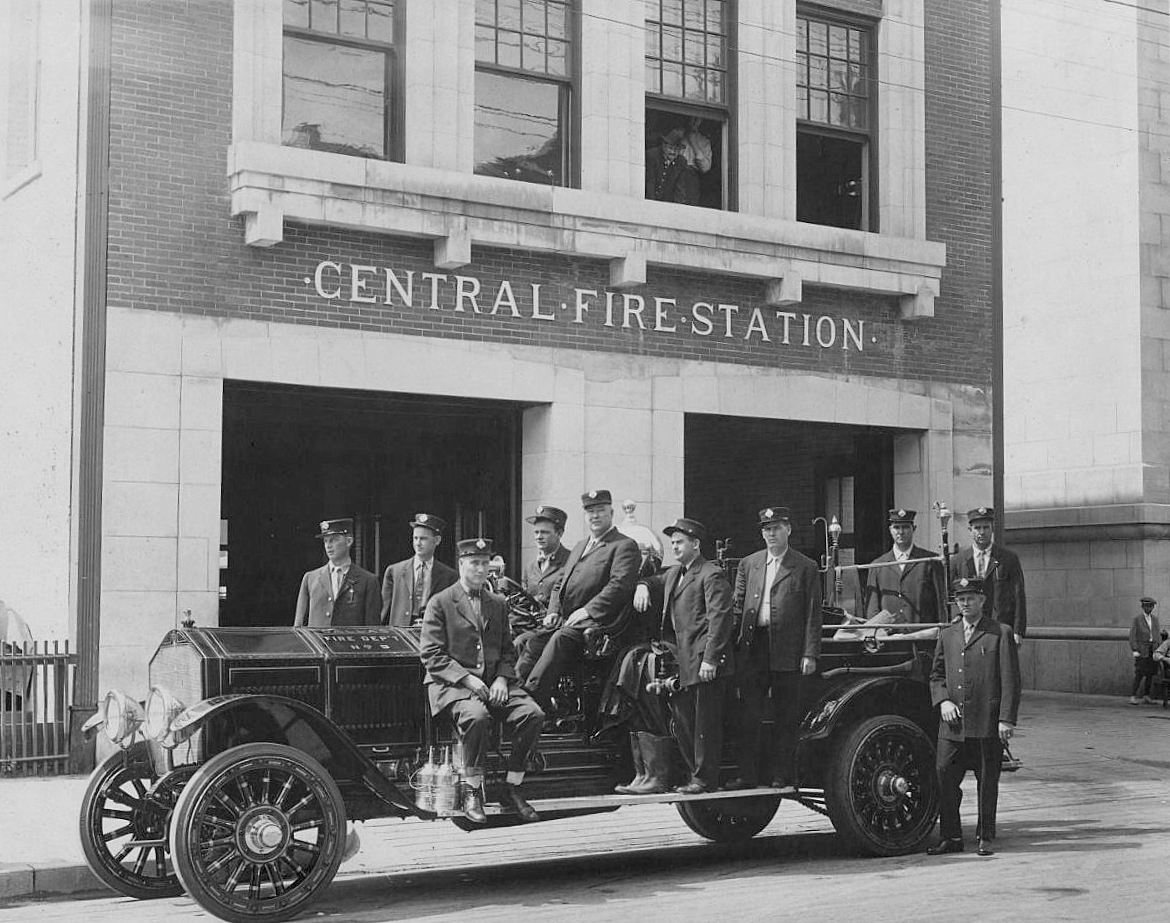
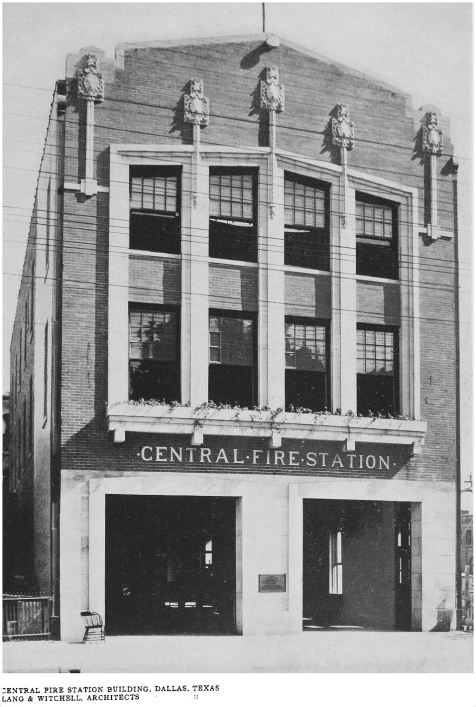
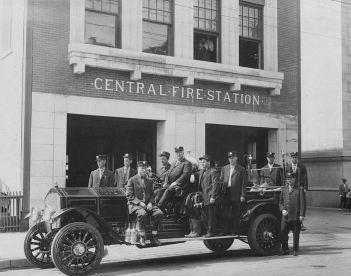
3.  CENTRAL FIRE STATION, 2012 Main Street (adjoining the Municipal Building), designed by Lang & Witchell. When Adolphus Busch acquired the land Dallas’ City Hall and central fire station sat on (in order to build his Adolphus Hotel), there was a sudden springing to action to build new homes for both displaced entities. The new location for the firehouse was in an already-standing building facing Main, adjacent to the new Municipal Building — it became the new headquarters for the Dallas Fire Department in 1913. It was, I believe, the first Dallas firehouse built without horse stalls, as it housed only motorized firefighting vehicles. The building’s use as a fire station ended in the 1920s; it was thereafter used by other municipal offices: for a while in the 1930s its third floor was used as a women’s jail, and for many years it was the site of Dallas’ corporation court. It looks like the building is still there, but I’m unsure of its current use. (See it on a 1921 Sanborn map, here.)
firehouse_central-fire-station_western-architect_july-1914

central-fire-station_dallas-firefighters-museum_portalDallas Firefighters Museum, via Portal to Texas History

*

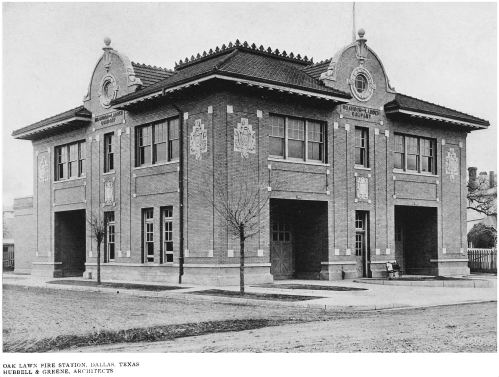
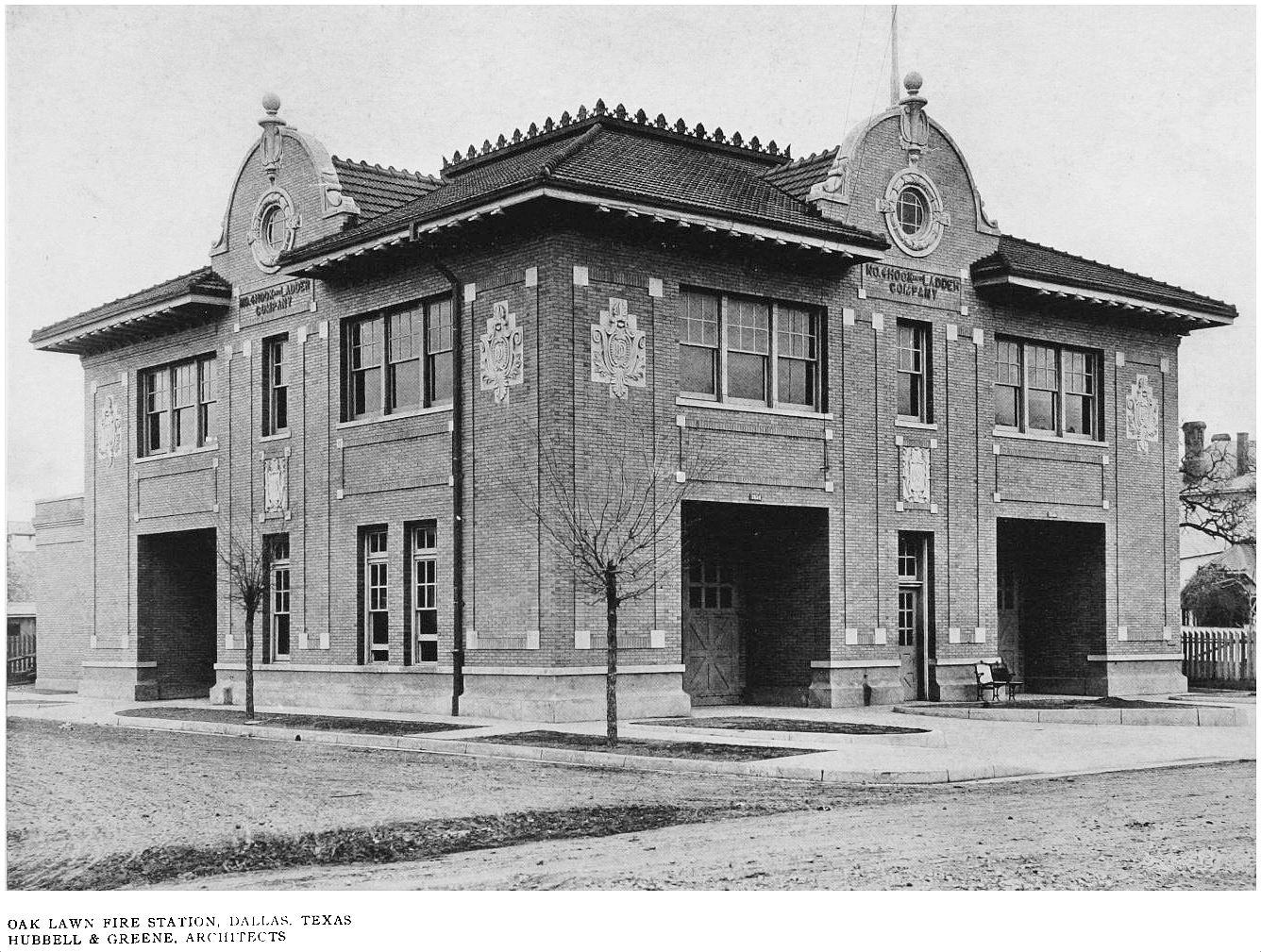
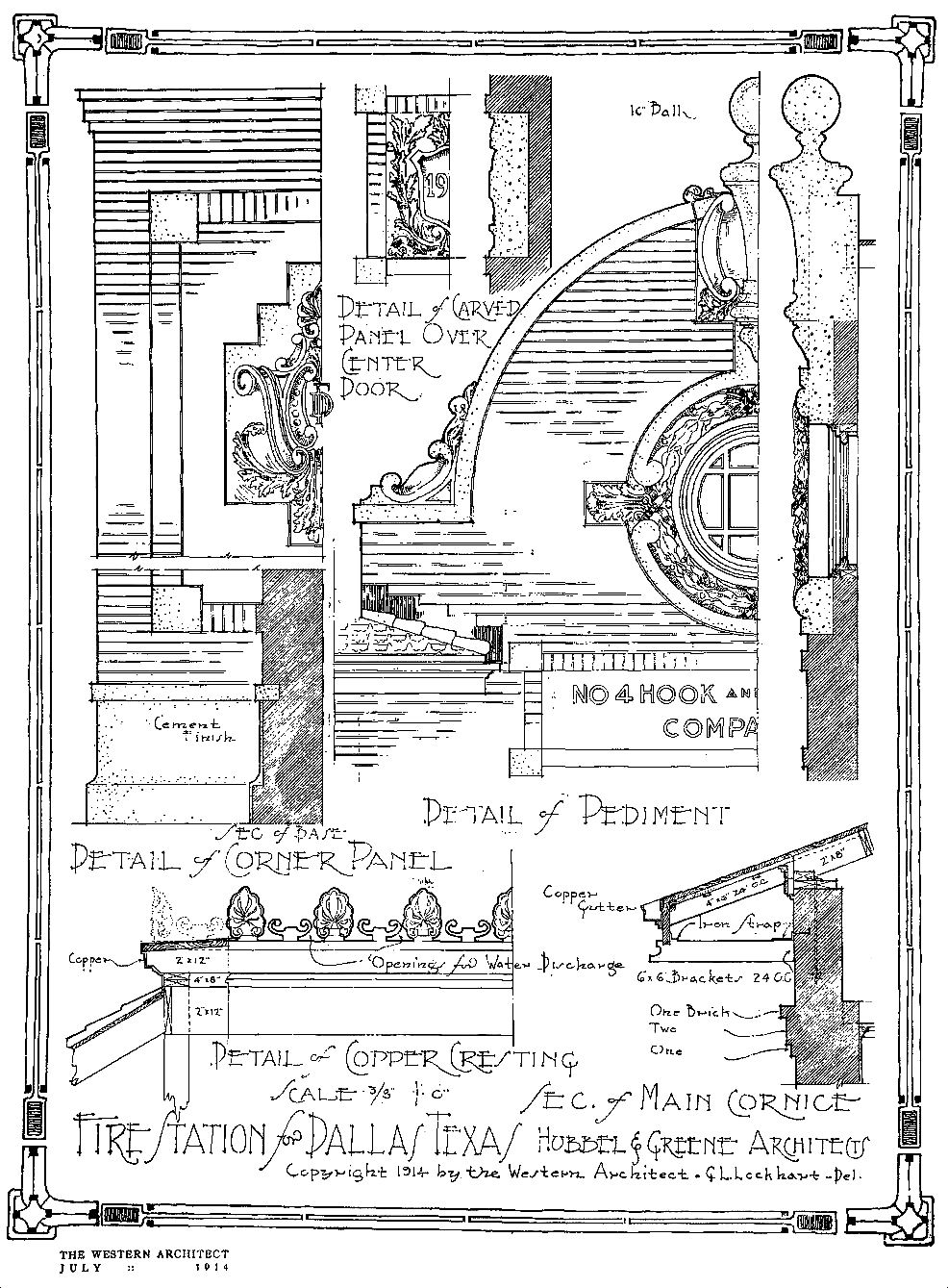
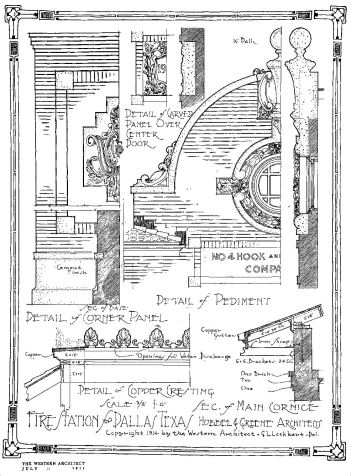
4.  OAK LAWN FIRE STATION, Cedar Springs & Reagan, designed by Hubbell & Greene. This still-active firehouse (!) — Dallas’ first “suburban” fire station — was built in 1909 as the home of No. 4 Hook and Ladder Company. When construction of the building was announced, it was described as being a gray brick structure topped by a roof of “cherry red Spanish tiling.” It was — and still is — a beautiful building. (I’ve written about this firehouse previously, here.) (See it on a 1921 Sanborn map, here.)

firehouse_oak-lawn_western-architect_july-1914

firehouse_oak-lawn_western-architect_july-1914_architectural-details_2

*

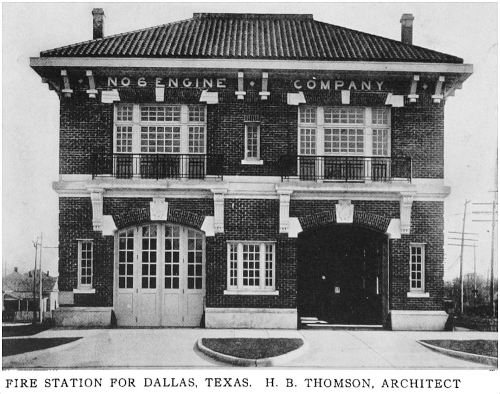
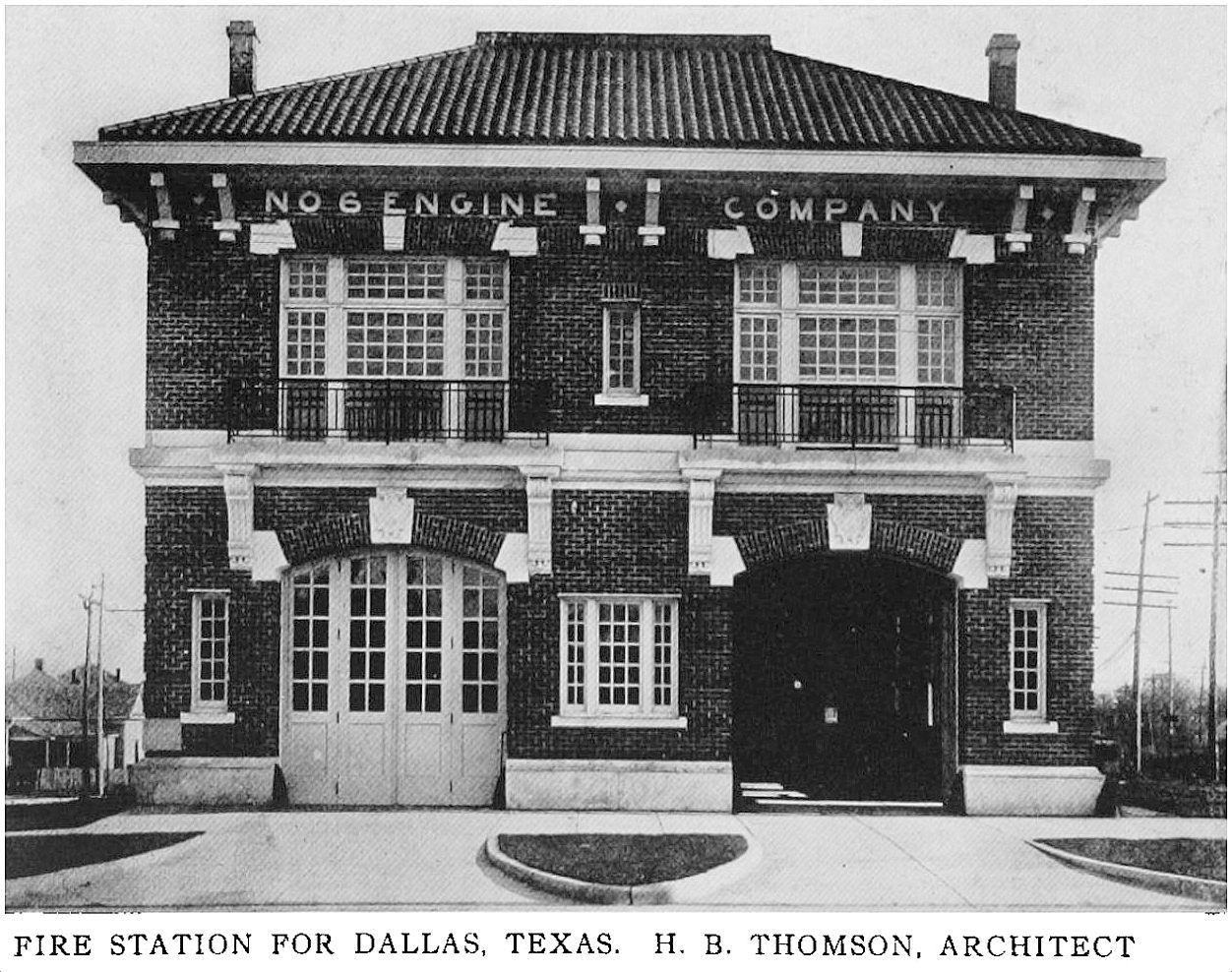
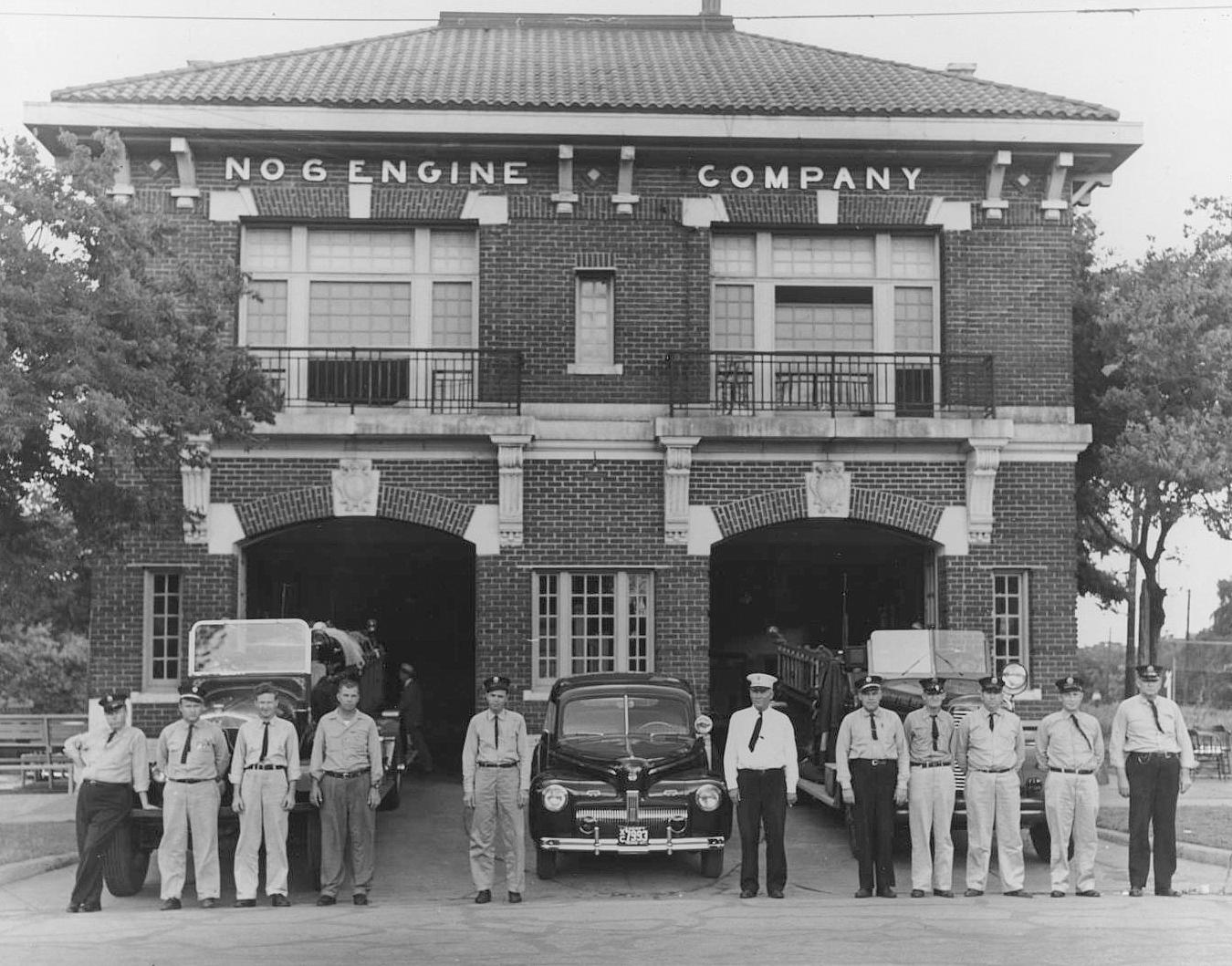
5.  NO. 6 ENGINE COMPANY, Forest Avenue (now MLK Blvd.) & Kimble, South Dallas, designed by H. B. Thomson. This South Dallas fire station was built in 1913 and was in service until 1955 when it was demolished to make way for the “South Central Expressway” (see more photos in a previous post on this, here). (See it on a 1922 Sanborn map, here.)

firehouse_no-6-engine_western-architect_july-1914

fire-department_no. 6_forest-ave-mlk
Dallas Firefighters Museum, via Portal to Texas History

*

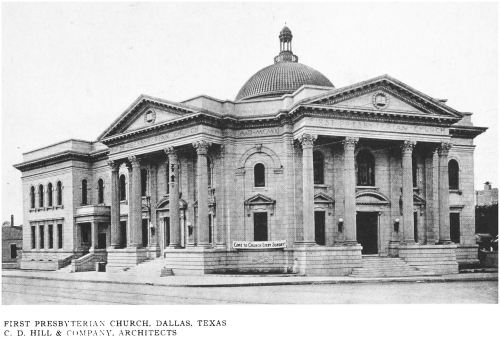
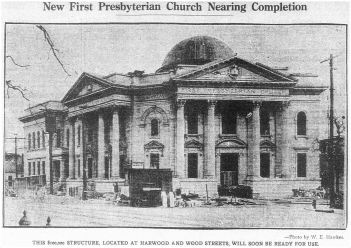
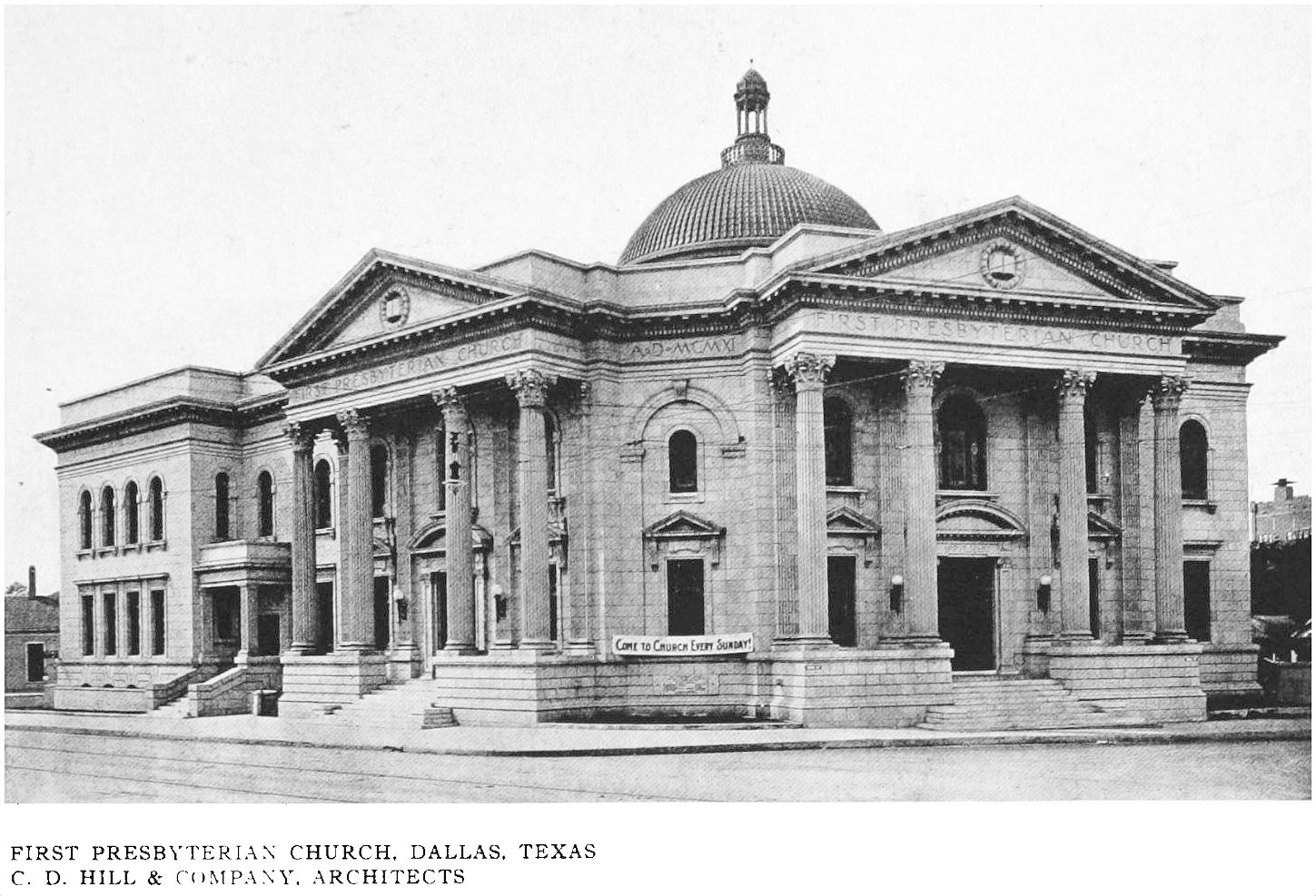
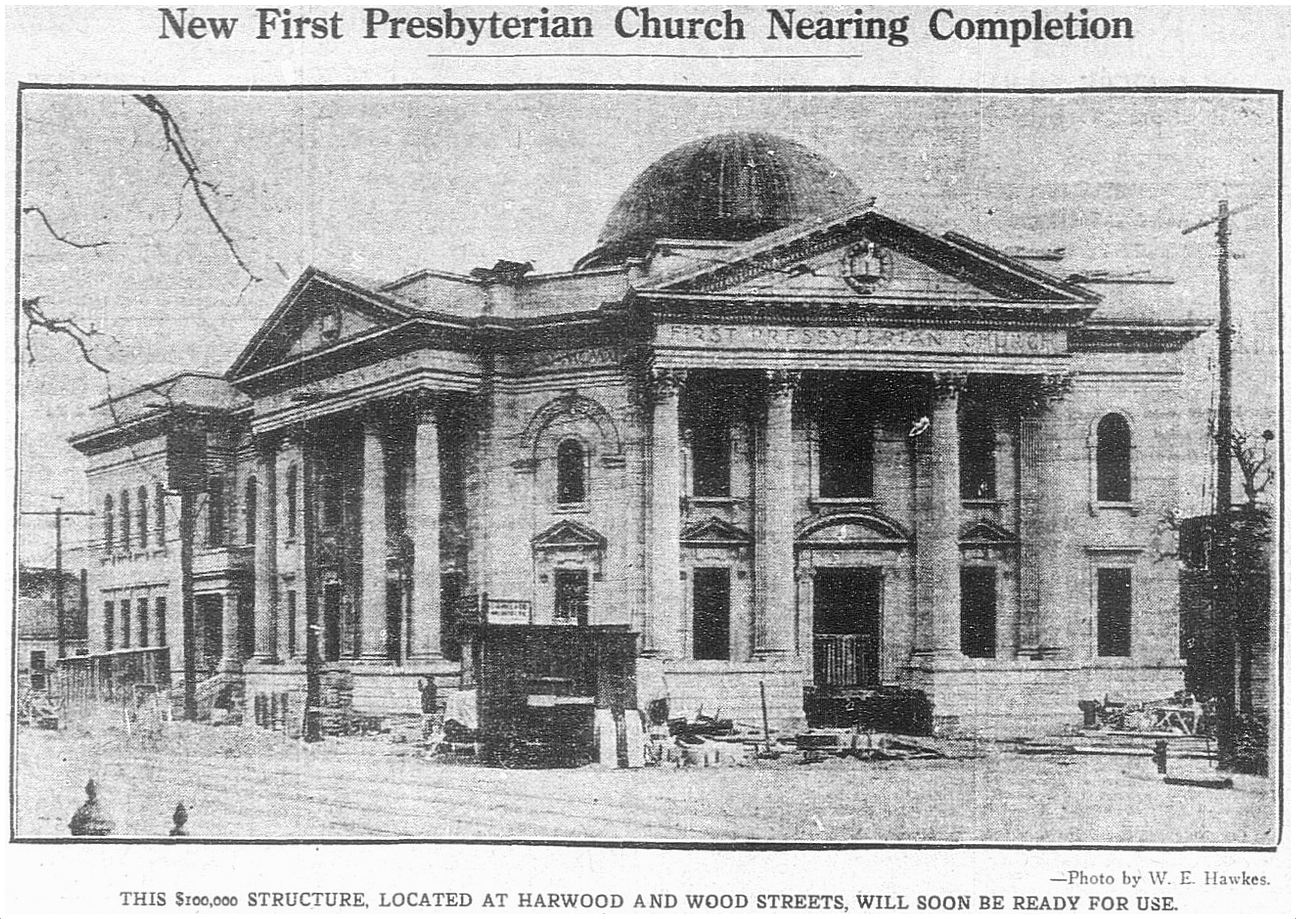
6.  FIRST PRESBYTERIAN CHURCH, S. Harwood & Wood, designed by C. D. Hill. Built in 1911-12, this impressive building boasted “the largest monolith columns in the city” (a claim which might have been surpassed by architect Hill’s be-columned Municipal Building built soon after this church, two blocks away — and rivaled by Hubbell & Greene’s Scottish Rite temple, one block away). Still standing and much expanded, the church is still looking great. (See it on a 1921 Sanborn map, here.)
first-presbyterian-church_western-architect_july-1914

first-presbyterian-church_dmn_032412Dallas Morning News, March 24, 1912

*

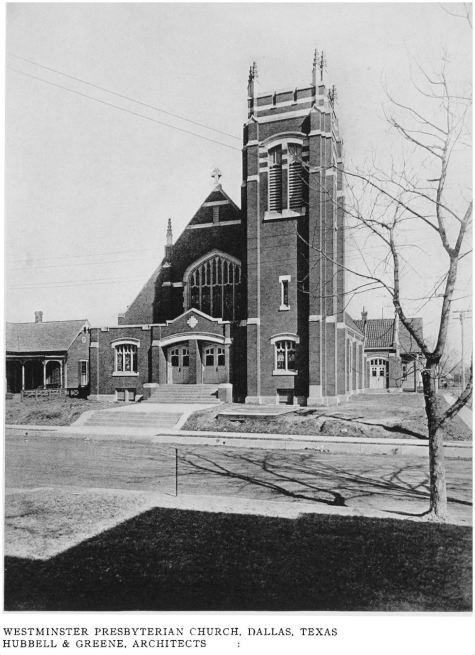
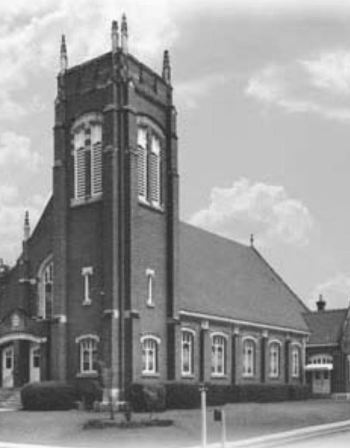
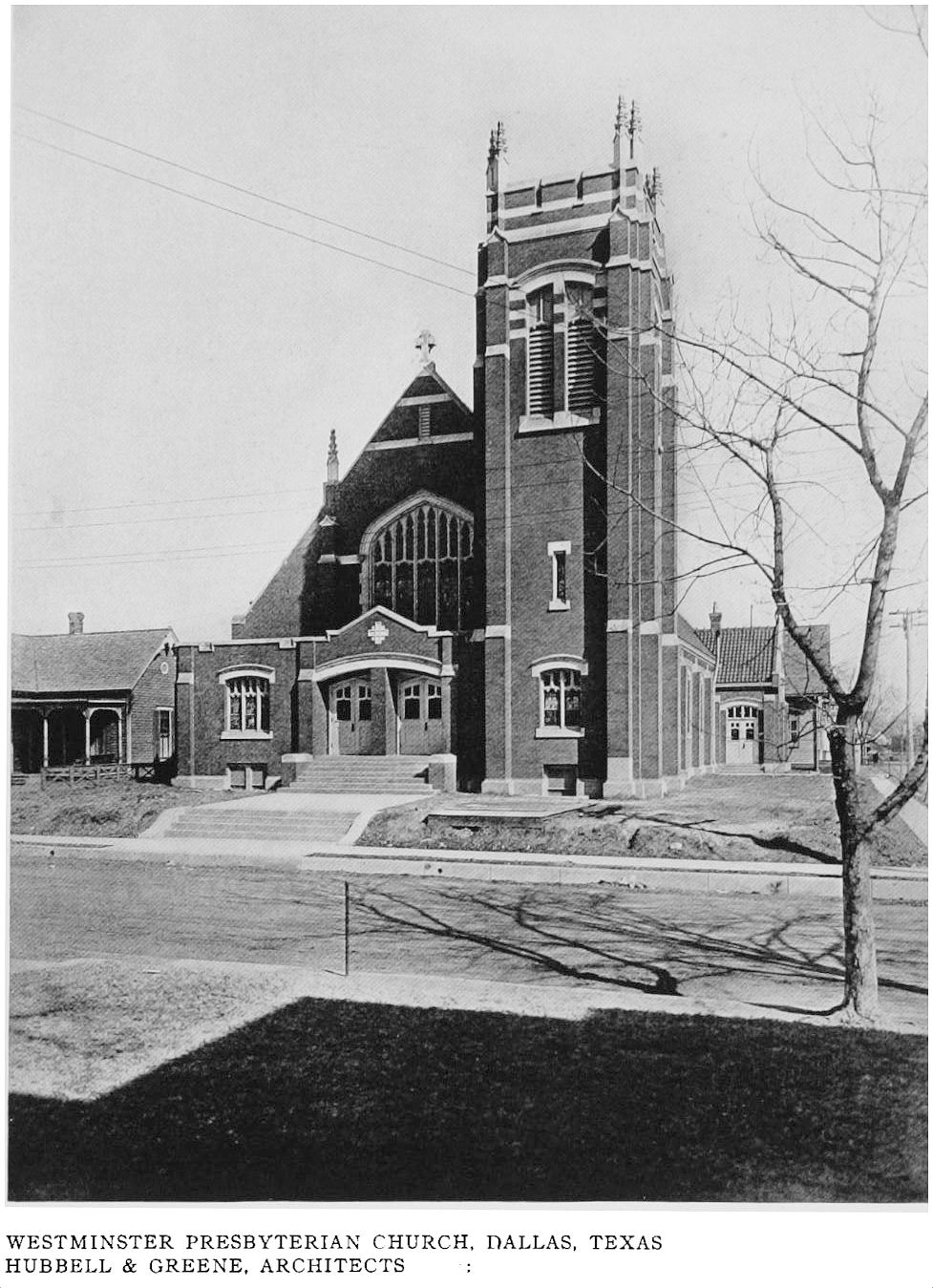
7.  WESTMINSTER PRESBYTERIAN CHURCH, 2700 Fairmount (at Mahon), designed by Hubbell & Greene. Before looking this one up, I had no idea what part of town this church was in — I was surprised to see it was in the area now known as “Uptown” … and it’s still standing. This congregation (organized in 1892) had occupied churches in the McKinney Avenue/State-Thomas area for several years before this church was built in 1910-11. When the congregation moved to their current location on Devonshire in the 1940s, the building was taken over by Memorial Baptist Church. When that congregation was dissolved, the church was given — for free! — to the First Mexican Baptist Church (Primera Iglesia Bautista Mexicana). After several decades, they, too, eventually moved to a new location, and the old church has had a variety of occupants come and go. (Read about its recent past — and see tons of photos — at Candy’s Dirt, here.) (See it on a 1921 Sanborn map, here.)
westminster-presbyterian-church_western-architect_july-1914

westminster-presbyterian-church_websitevia Westminster Presbyterian Church website

*

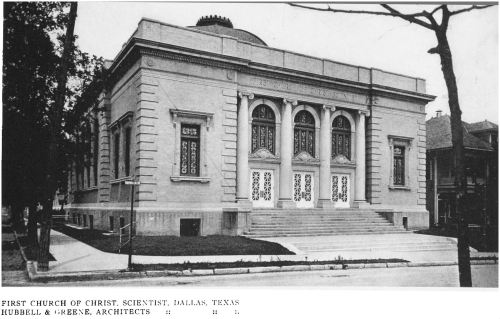
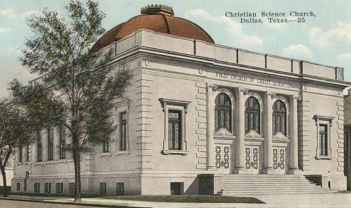
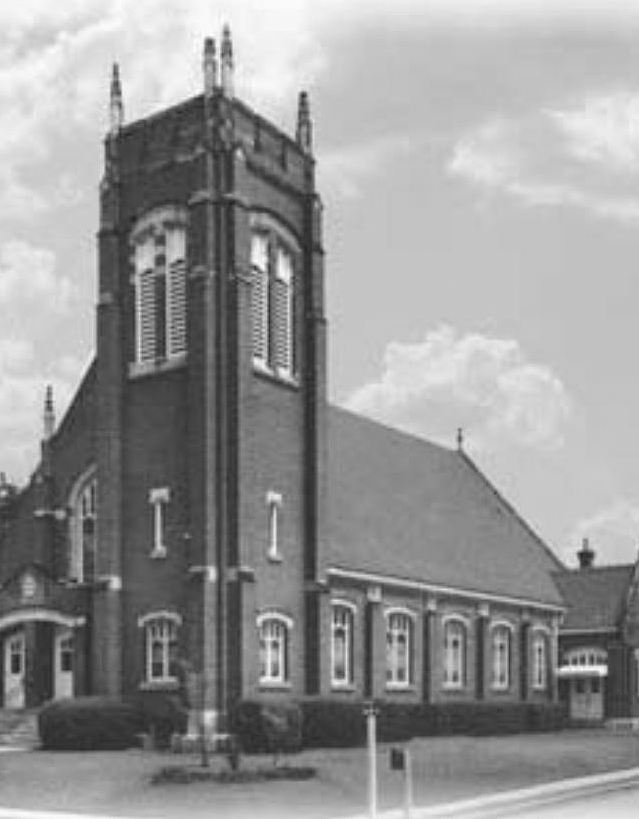
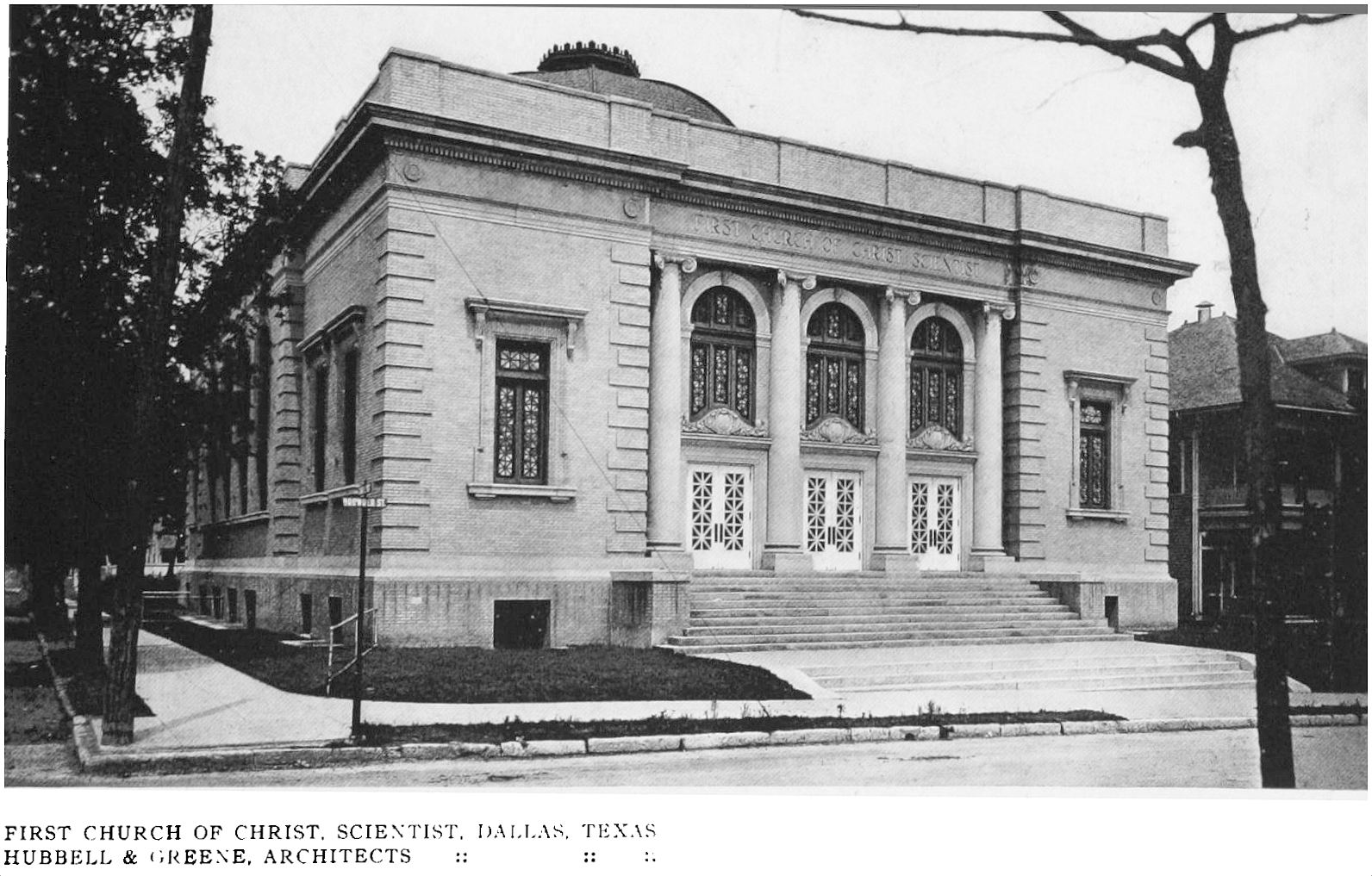
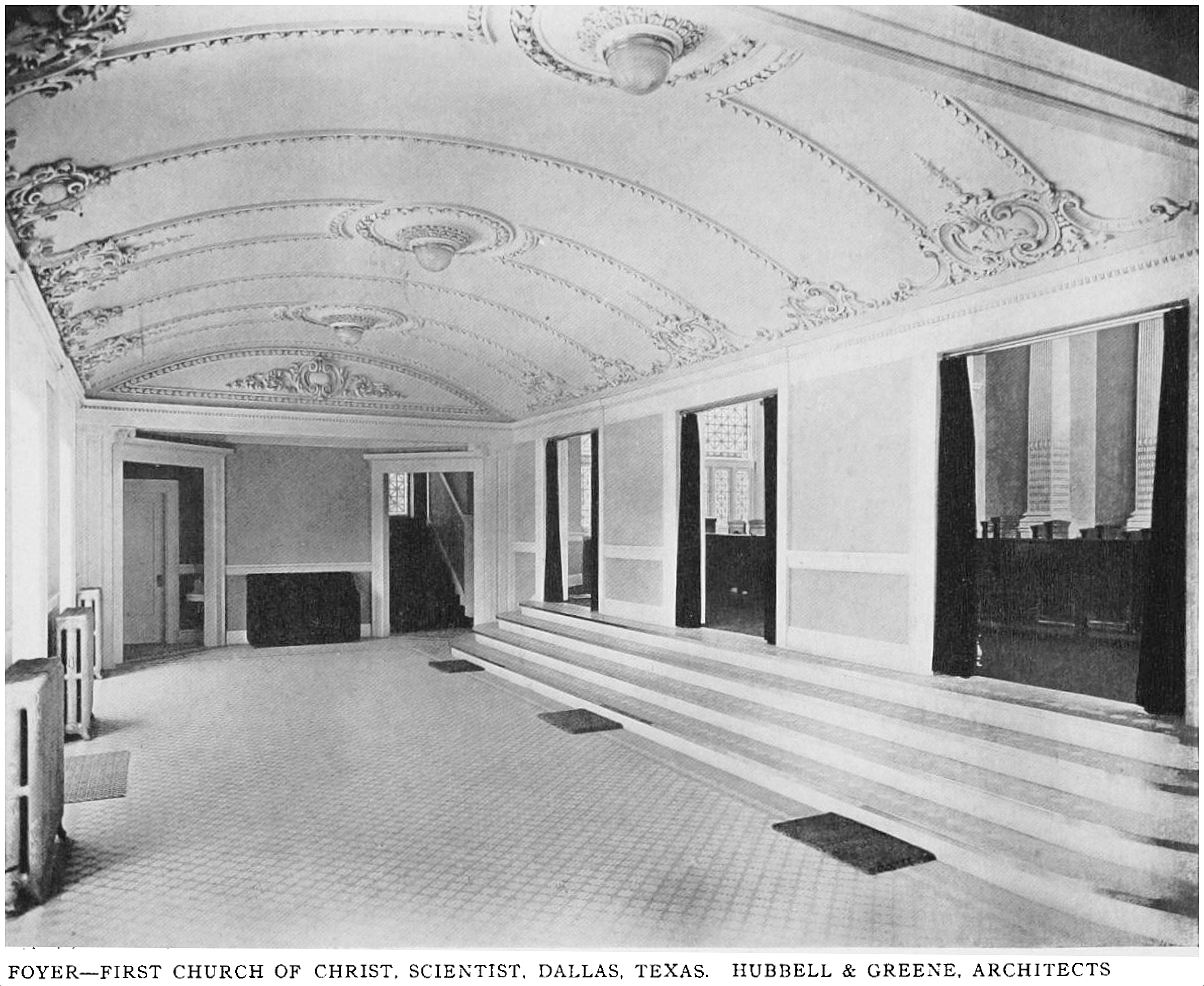
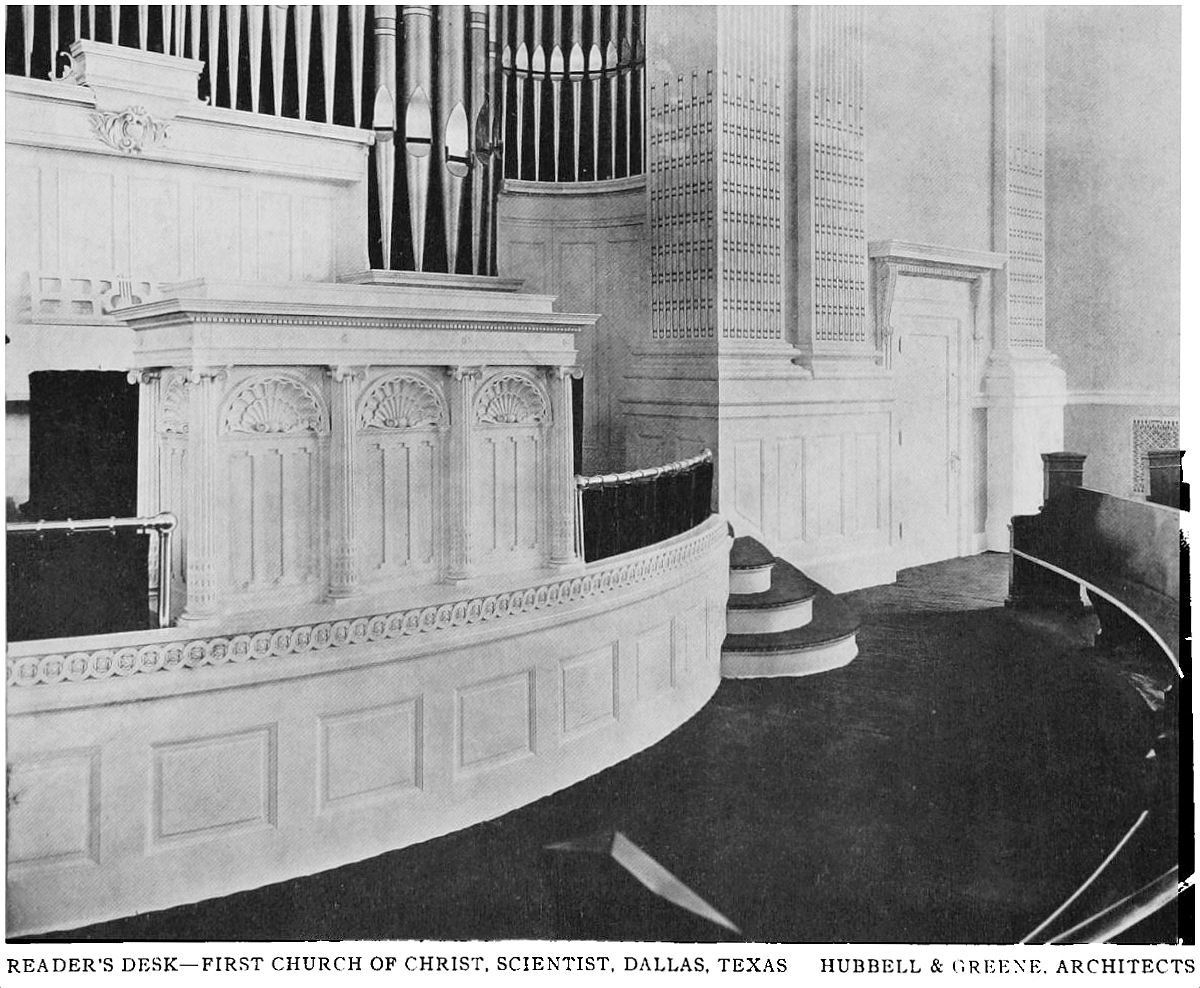
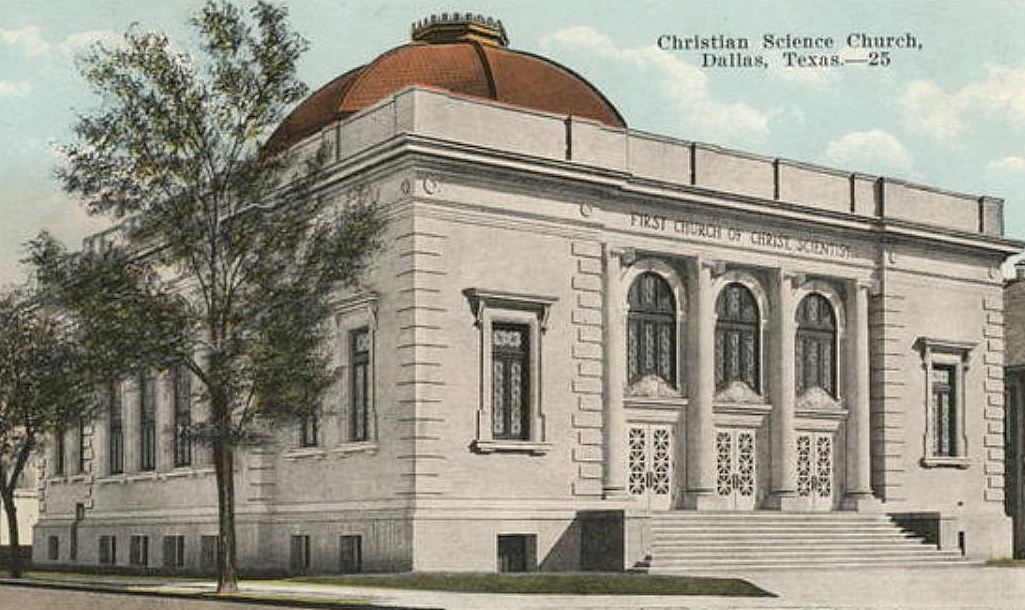
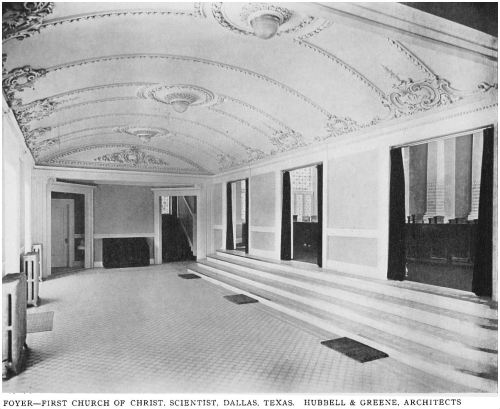
8.  FIRST CHURCH OF CHRIST, SCIENTIST, corner of Cadiz & Browder, designed by Hubbell & Greene. This Christian Science church was built in 1910 on the southern edge of downtown for $100,000 (over 2.5 million dollars in today’s money). Following its days as a Christian Science church, it has had secular and non-secular occupants. It still stands (as a lonely building in what is mostly a sea of parking lots), and it is currently a house of worship once again. (See it on a 1921 Sanborn map, here.)
first-church-of-christ-scientist_western-architect_july-1914_exterior

first-church-of-christ-scientist_western-architect_july-1914_foyer

first-church-of-christ-scientist_western-architect_july-1914_readers-desk

christian-science-church-postcard

**

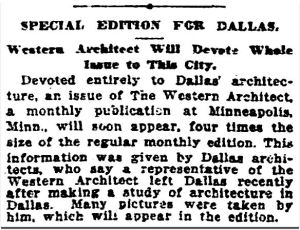
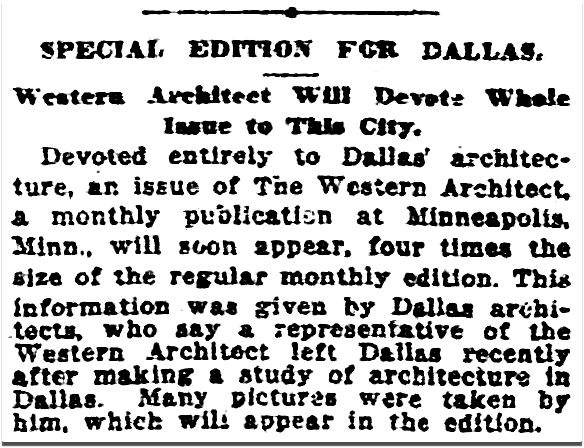
And that concludes this 7-part series featuring photos from the 1914 all-Dallas issue of the trade publication The Western Architect, which can be viewed in its entirety (with additional text), here (jump to p. 195 of the PDF for the July, 1914 scanned issue).

***

Sources & Notes

The Western Architect, A National Journal of Architecture and Allied Arts, Published Monthly, July, 1914. This issue, with text and critical analysis in addition to the large number of photographs, has been scanned in it entirety by the University of Illinois at Urbana-Champaign as part of its Brittle Books Program — it can be accessed in a PDF, here (the Dallas issue begins on page 195 of the PDF). Thank you, UIUC!

In this 7-part series:

western-architect-in-dallas_dmn_060414
Dallas Morning News, June 4, 1914

*

Copyright © 2018 Paula Bosse. All Rights Reserved.