Flashback : Dallas

A Miscellany: History, Ads, Pop Culture

Category: 1870s

Mardi Gras: “Our First Attempt at a Carnival Fete” — 1876
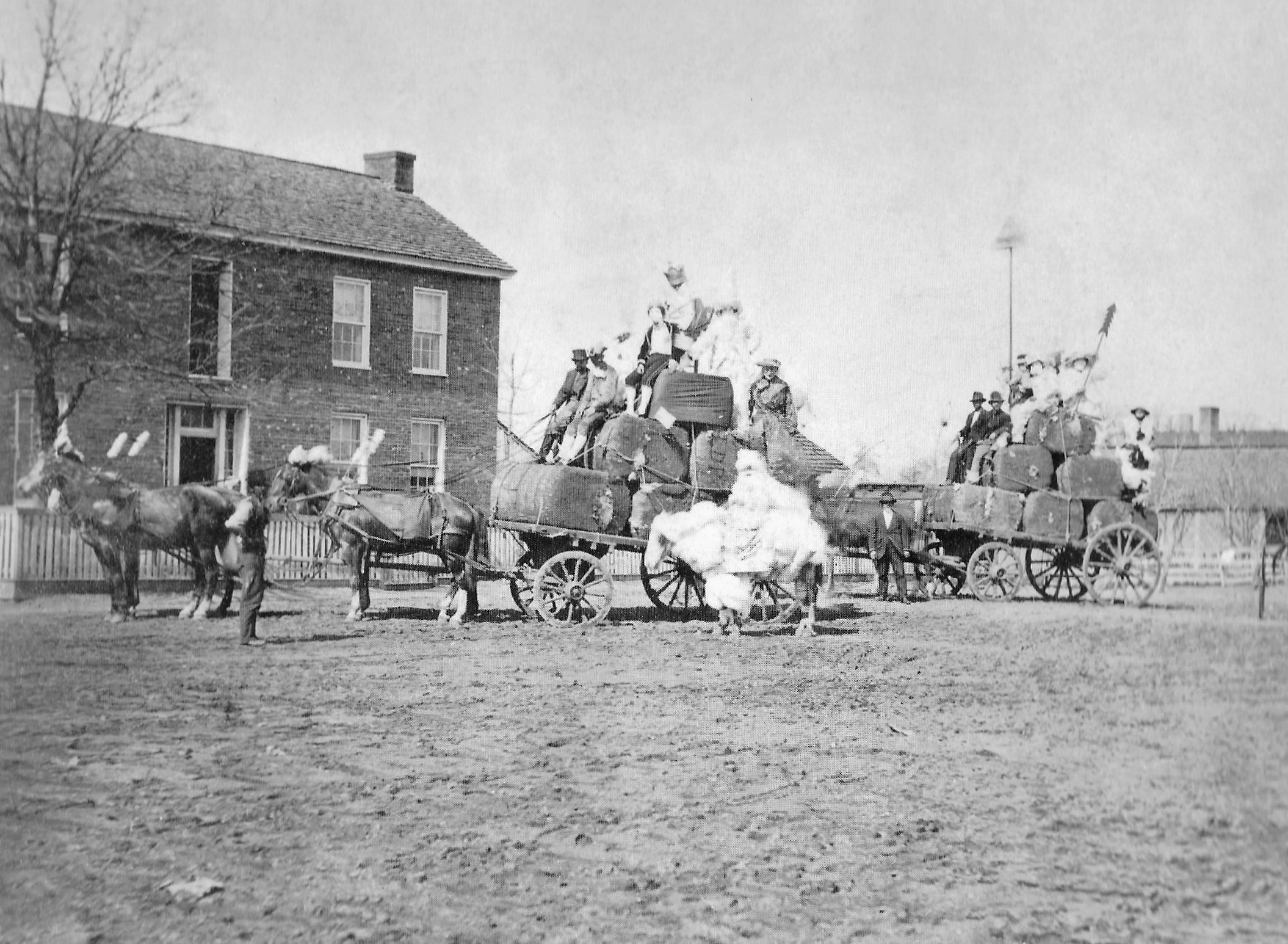
mardi-gras_dhs_1876When cotton was Rex (click for much larger image)

by Paula Bosse

In the 1870s, if a Dallas resident wanted to celebrate the glitzy revelry of Mardi Gras with a parade and balls and didn’t want to travel all the way to New Orleans, the place to go was Galveston. Galveston had a lock on Texas Mardi Gras galas. But Dallas being Dallas, there were soon plans to stage a massive Carnival right here. The day-long celebration debuted on February 24, 1876, which, oddly, was on a Thursday. (Mardi Gras that year was actually on Tuesday, Feb. 29, and it was probably celebrated early in Dallas so as not to interfere with the hey-we-got-here-first celebrations in New Orleans and Galveston.)

It was estimated that the festivities cost the city more than $20,000 (which, if the Inflation Calculator is to be believed, would be the equivalent of almost $450,000 in today’s money). The city was cleaned up in preparation for the anticipated onslaught of visitors and was decorated with flags and bunting along the lengthy parade route of Main, Elm, and Commerce streets. Revelers had elaborate costumes made for the processions and the grand masked balls, some with fabric imported for the occasion from France
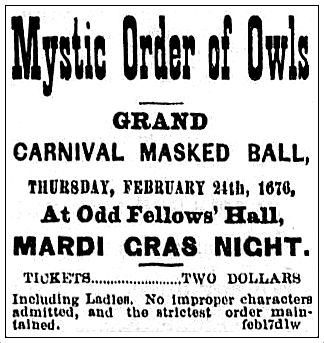
mardi-gras_dal-herald_021876Dallas Herald, Feb. 18, 1876 (not 1676!)

The Dallas Herald and The Dallas Commercial were incessant in their whipping up of excitement for the big day. And it worked. People streamed into town from all over Texas. Hotels were packed, and it was estimated that over 20,000 spectators watched one or both of the day’s parades.

The following day, The Dallas Herald apparently devoted their entire front page to coverage of the event, under this wordy headline:

A Day in Dallas, Our First Attempt at a Carnival Fete. The City Aglow with Enthusiasm and Wild with Rollicking Revelry. Visit of King Momus — His Cordial Reception by the People — The Procession in His Honor. The Season of Merry-Making Brought to a Happy Close with Balls and Bouts — Well Done, Dallas!

(Sadly, this issue is not available online, perhaps because there were none found to scan as it sold out more than five editions and was probably the paper’s best-selling edition to-date.)

Dallas’ first Mardi Gras had been an unqualified triumph, and newspaper editors and city leaders were beside themselves with joy. The parade — and the city — had been covered enthusiastically and favorably by newspapers around the country, and the success of the huge celebration was seen as having been better advertising for the exuberant and growing city than could ever have been hoped.

Galveston? Pffft!

**

A few tidbits from that first Mardi Gras.

There were very few “incidents” reported surrounding the festivities. That’s not to say there weren’t a lot of incidents that occurred that day, just that not a lot of them found their way into the newspapers (apparently whiskey was free-flowing all day long, and one suspects there were “incidents” aplenty connected with that). Among the very few non-“jolly” things that happened on Carnival Day and the day following included the following:

  • A small boy had been run over by a carriage (“but not dangerously hurt”)
  • A child and a horse had been burned severely when a can of gasoline was thrown into a bonfire “to increase the flame”
  • A member of the Stonewall Greys who had participated in the noontime parade had fallen whilst “foolishly scuffling” and had “received a slight but painful wound from a bayonet”

Also, there was some sort of “fireball discharged from a rocket” which caused some consternation:
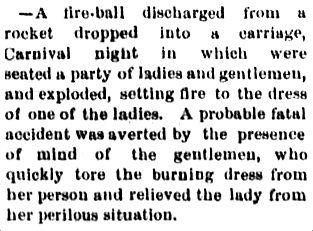
fireball_dal-herald_022676Dallas Herald, Feb. 26, 1876

*

All residences and businesses along the parade route during the evening procession were “commanded” to be illuminated. Even if gasoline-fueled bonfires were raging along the parade route, the elaborate procession was probably poorly lit.

*

My favorite “float” was the huge wagon of lumber meant to draw attention to East Texas timber and the thriving lumber industry in Dallas. One report said “the immense moving forest of pine” was drawn by “32 yoke of oxen” — another said “nearly 100 Texan steers.” Whatever it was, that must have been spectacular to see.
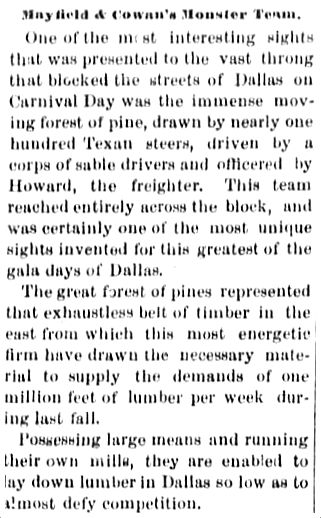
oxen-team_dal-herald_022676Dallas Herald, Feb. 26, 1876

*

The massive amount of publicity and praise that Dallas received quite clearly irked other cities. Austin seemed especially perturbed. There had been a small outbreak of smallpox in McKinney preceding the big day, and several digs at Dallas (like the one below) appeared in newspapers around Texas, accusing the city’s leaders of knowingly endangering the welfare of the entire state just so they could put on their little parade. The exaggerated furor passed fairly quickly, and the het-up schadenfreude expressed by rival cities was amusing.
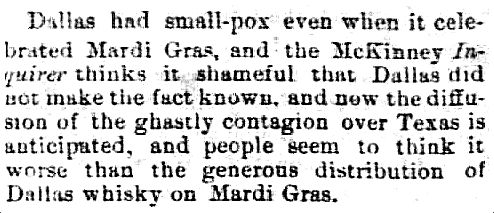
small-pox_austin-weekly-standard_031676Austin Weekly Standard, Mar. 16, 1876

*

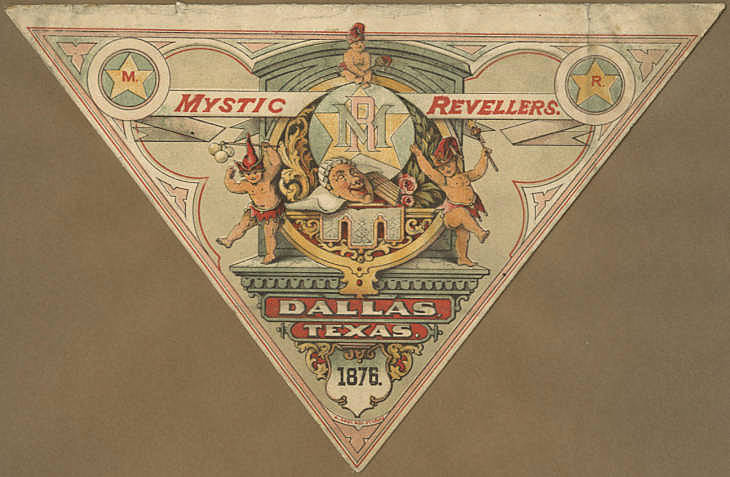
An invitation issued by the Mystic Revellers:
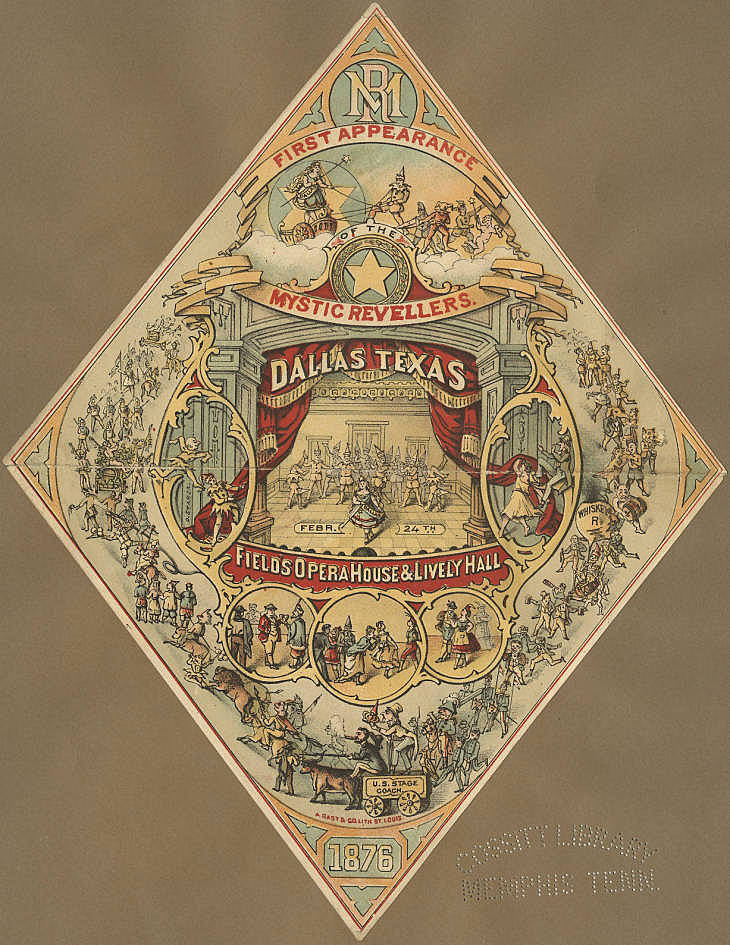
mardi-gras_mystic-revellers_invitation_1876_memphis-public-library

mardi-gras_mystic-revellers_1876_envelope_memphis-public-libraryColton Greene Collection, Memphis Public Libraries

*

The photo at the top shows the parade wagons representing the brand new Dallas Cotton Exchange (which seems to have been organized the previous month). As described in The Galveston Daily News, the Cotton Exchange’s offering “represent[ed] King Cotton enthroned on six bales of cotton, with numerous subjects appropriately costumed, and occupying two cars” (Feb. 25, 1876). Below are a couple of magnified details of the photo. I’m not sure, but it looks as if the horse and rider in the foreground are covered with cotton. Like tarring and feathering … but fun … and with cotton. The King of Cotton is surrounded by what look like henchmen. The masked man on the right in the elaborate costume is both cool and kind of creepy. (Click both photos for larger images.)
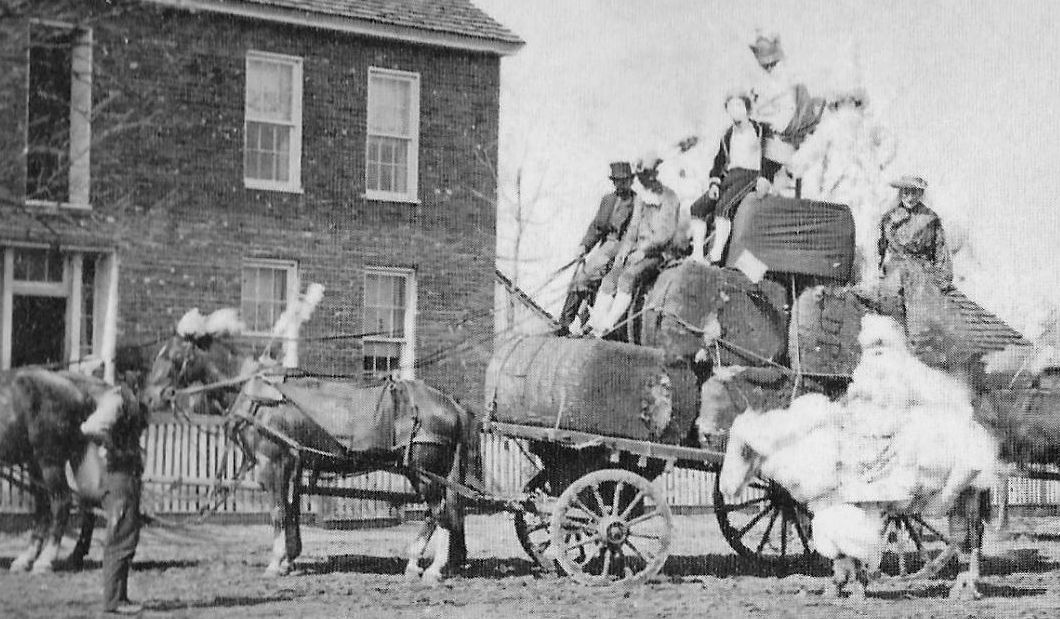
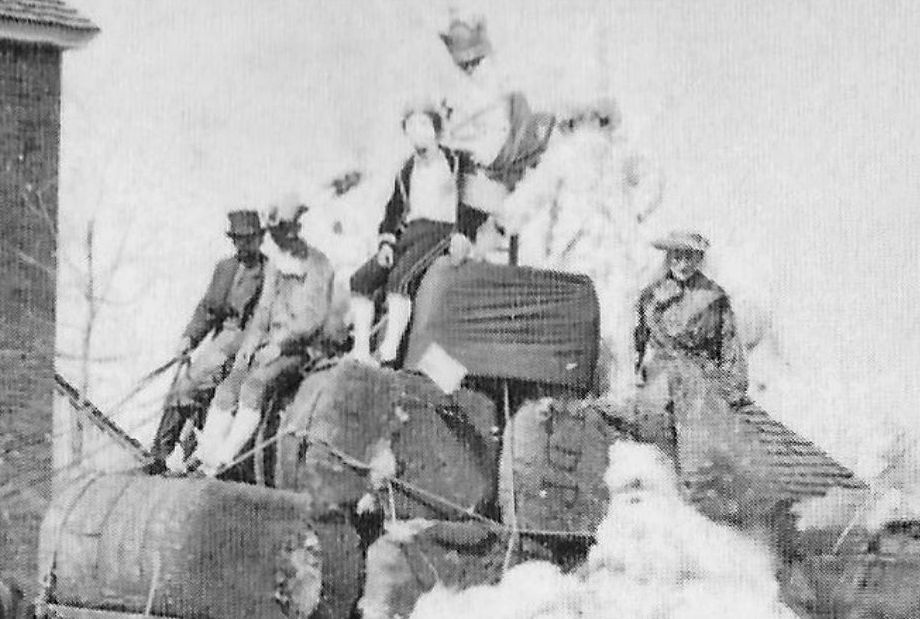
mardi-gras_1876-det1

mardi-gras_1876-det2

***

Sources & Notes

Top photo appeared in the book Historic Photos of Dallas by Michael V. Hazel (Nashville: Turner Publishing Co., 2006); photo from the Dallas Historical Society.

Newspaper clippings as noted.

To read the coverage of Dallas’ Mardi Gras parades and balls —  “a grand pageant and general jollification” — see the front page of The Galveston Daily News (Feb. 25, 1876), here (third column, top of page — zoom controls are on the left side of page).

I wrote a previous post called “Mardi  Gras Parade in Dallas — ca. 1876” which features a photograph which might be from this first Mardi Gras. That post and photo can be seen here.

Happy Mardi Gras!
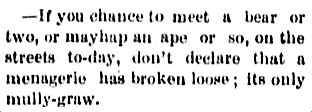
mully-graw_dal-herald_022476Dallas Herald, Feb. 24, 1876

Photos larger when clicked.

*

Copyright © 2015 Paula Bosse. All Rights Reserved.

You Know What They Say: Big Feet, Big Cigars — 1877

ad-ben-loeb-cigars_dallas-herald_070777“Go to Ben Loeb’s” — 1877 advertisement

by Paula Bosse

Not your typical advertising cut. Wonder if ol’ Ben paid a local artist a handful of cigars in exchange for this great eye-catching art?

An early subliminal ad?

***

Ad from The Dallas Herald, July 7, 1877.

*

Copyright © 2015 Paula Bosse. All Rights Reserved.

New Year, New Teeth — 1877

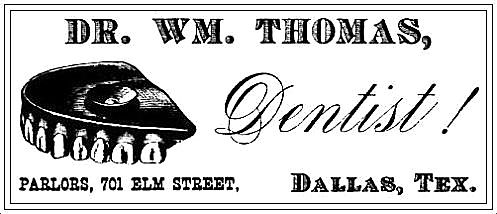
ad-dentist_1878-directoryThe exclamation mark is a nice touch — 1878
by Paula Bosse

It’s a new year. Time again to check if the women-folk in your household need a new set of false teeth!

ad-dentist_new-year-gift_dal-herald-123077Dallas Herald, Dec. 30, 1877

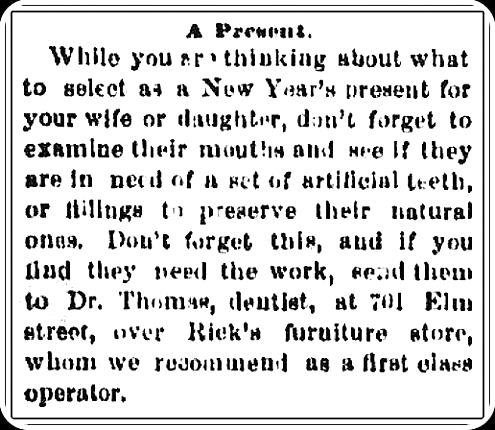
A Present. While you are thinking about what to select as a New Year’s present for your wife or daughter, don’t forget to examine their mouths and see if they are in need of a set of artificial teeth, or fillings to preserve their natural ones. Don’t forget this, and if you find they need the work, send them to Dr. Thomas, dentist, at 701 Elm street, over Rick’s furniture store, whom we recommend as a first class operator.

(While you’re waiting for your wife’s new choppers to be installed in the doctor’s office upstairs, you can browse for a nice new stool for the spinet downstairs at Rick’s.)

*

But wait, there’s more. Dig a little deeper and you find this:

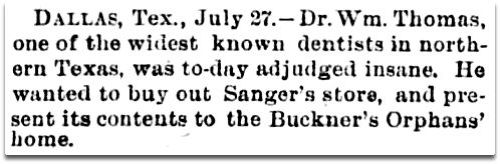
thomas-dentist_galveston-daily-news_072889Galveston Daily News, July 28, 1889

Whoa!

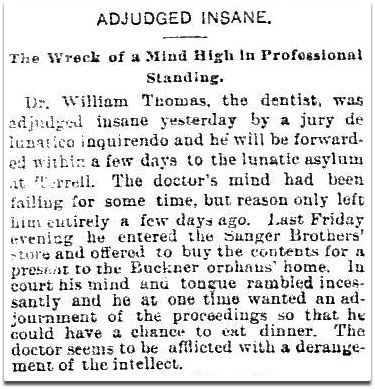
thomas-dentist_dmn_072889Dallas Morning News, July 28, 1889

ADJUDGED INSANE: The Wreck of a Mind High in Professional Standing.

Dr. William Thomas, the dentist, was adjudged insane yesterday by a jury de lunatico inquirendo and he will be forwarded within days to the lunatic asylum at Terrell. The doctor’s mind had been failing for some time, but reason only left him entirely a few days ago. Last Friday evening he entered the Sanger Brothers’ store and offered to buy the contents for a present to the Buckner orphans’ home. In court his mind and tongue rambled incessantly and he at one time wanted an adjournment of the proceedings so that he could have a chance to eat dinner. The doctor seems to be affected with a derangement of the intellect.

I’m not quite sure what all that was about, how much time he spent in the Terrell “lunatic asylum,” or how “insane” the good doctor really was (I suspect he was using a lot of cocaine — see below). The only other mention of Dr. Thomas I found was a mention in the Buckner orphanage’s annual report of 1898 in which his name appeared in a group of doctors who were thanked for their services rendered to the children free of cost.

***

Sources & Notes

Top ad from the 1878 Dallas city directory.

Dr. Thomas probably wasn’t actually “insane.” I wonder if perhaps he hadn’t been dipping into his own medicine chest and availing himself of the cocaine that most dentists of the time used as a painkiller during dental procedures? An interesting article on doctors of the period self-medicating is here.

Happy New Year! And don’t forget to floss!

*

Copyright © 2015 Paula Bosse. All Rights Reserved.

Encouraging Dallasites to Observe Thanksgiving — 1874

thanksgiving

by Paula Bosse

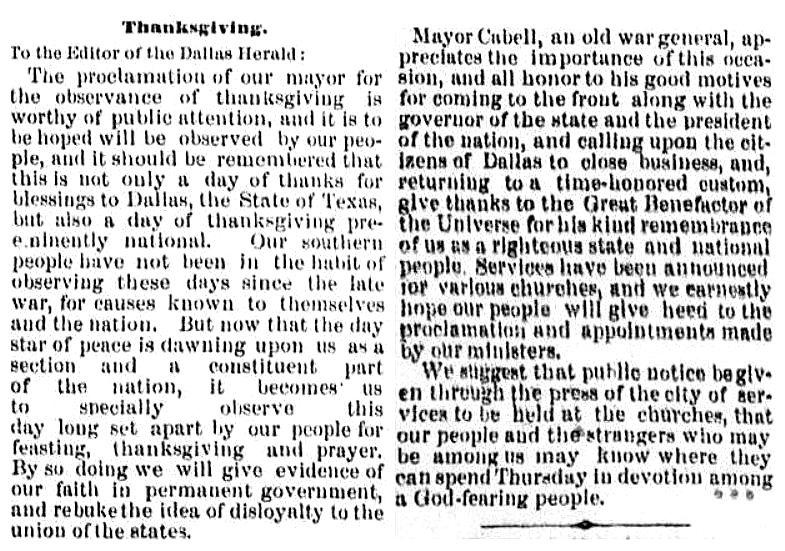
After the Civil War (and even before) many (if not all) Southern states refused to celebrate Thanksgiving, as many felt it was nothing more than a politicized “Yankee abolitionist holiday.” But by 1874, Southerners — and Texans — were finally willing to give it a go.

A letter to the editor of the Dallas Daily Herald that year encouraged the people of Dallas to observe the holiday — suggesting that it was a patriotic (rather than a political) thing to do:

Our southern people have not been in the habit of observing [Thanksgiving] since the late war, for causes known to themselves and the nation. But now […] it becomes us to specially observe this day long set apart by our people for feasting, thanksgiving and prayer. By so doing we will give evidence of our faith in permanent government, and rebuke the idea of disloyalty to the union of the states.

thanksgiving_dallas-herald_112674Dallas Daily Herald, Nov. 26, 1874 (click for larger image)

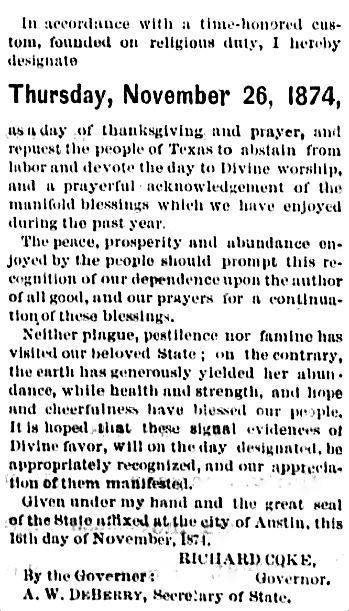
Richard Coke, the governor of Texas, proclaimed Thursday, November 26, 1874 as a day of thanksgiving, noting that “Neither plague, pestilence nor famine has visited our beloved State,” and that, hey, things were actually going pretty well:

thanksgiving_dallas-herald_112174a

thanksgiving_dallas-herald_112174bDallas Daily Herald, Nov. 21, 1874

Happy Thanksgiving!

*

Copyright © 2014 Paula Bosse. All Rights Reserved.

W. W. Orr: Buggies, Phaetons, Carriages — “Everything on Wheels!”

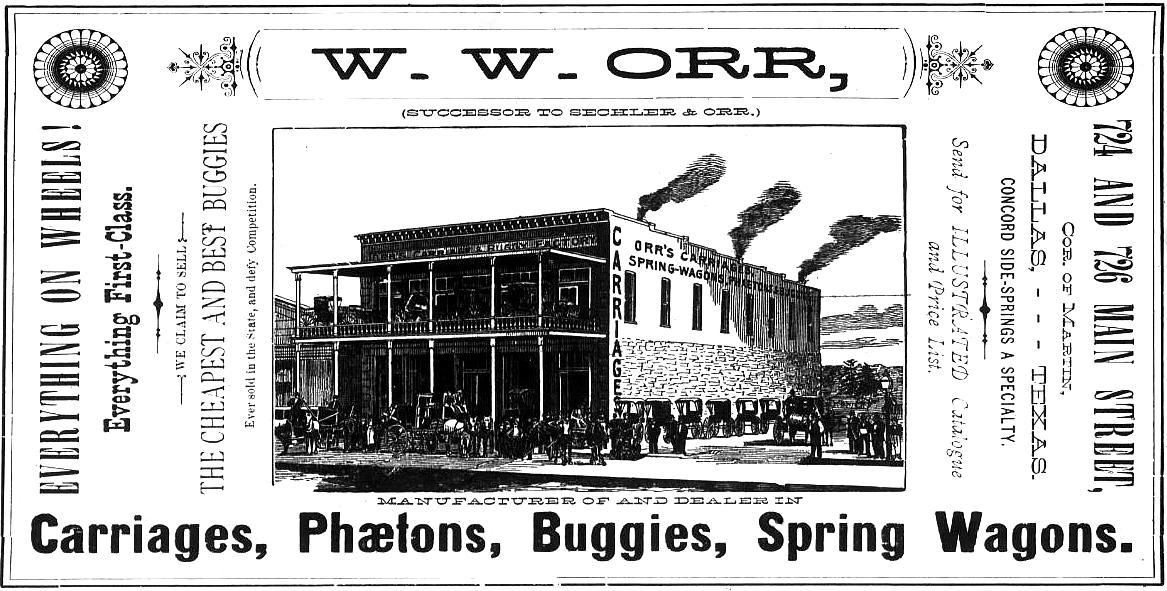
ad-orr-carriages_directory_1878-detW.W. Orr’s carriage business on Main St., 1878 (click for larger image)

by Paula Bosse

I came across the image above in the 1878 Dallas city directory, and my eye was immediately drawn to the novel open-air display of  buggies on the second floor of the building. I’ve never seen this before — the frontier version of the auto showroom!

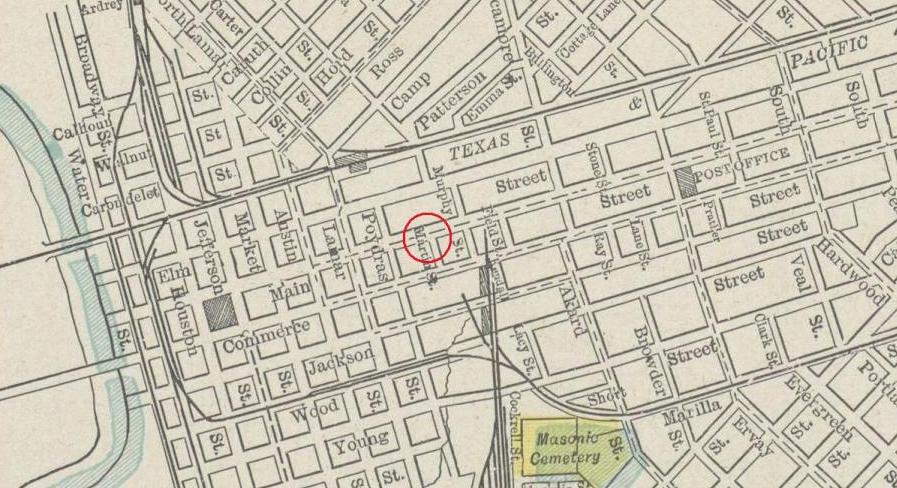
I hope this is a depiction of the actual shop owned by W. W. Orr at 724-726 Main Street (corner of Main and Martin — see map below) and not some sort of early augmented clip art. Orr ran a successful business selling buggies, phætons, and carriages, and he probably did have an imposing shop.

William Wallace Orr was born in Ohio, and after the Civil War he made his way to Texas, where he served for a short time as an East Texas postmaster before coming to Dallas where he and his wife, Amanda, operated a livery stable.

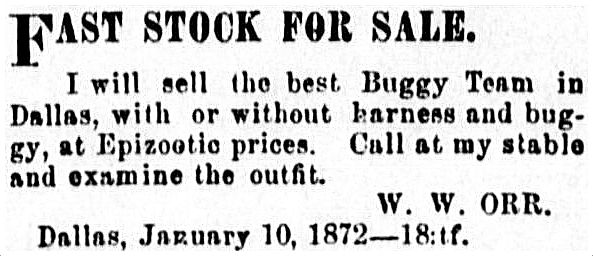
orr_dallas-herald_041973Dallas Herald, April 19, 1873

I’m not sure whether “epizootic” is used here as some sort of 19th-century tongue-in-cheek hard-sell advertising term (“His prices are INSANE!“) … or whether it means the horses have some sort of disease. I tend to think it’s the former.

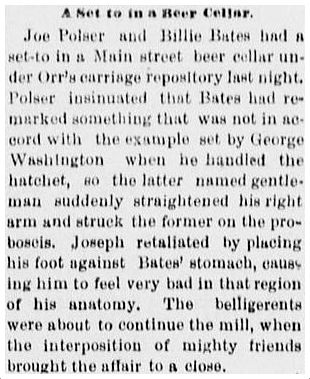
The carriage business, which had started by 1878, is notable (to me, anyway) because it was housed in a building with a basement — I wasn’t aware that basements really existed in Dallas at the time. Orr rented out the basement beneath his “carriage repository” as a beer cellar. If TV westerns are anything to go on, drunken brawls in most drinking establishments of the time were to be expected. What might not be expected is an account of a bar fight to be reported like this:

orr_cellar_dal-her_060278Dallas Herald, June 2, 1878

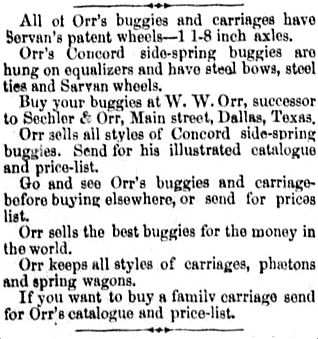
Regardless of what disreputable activities were going on in the cellar, it seems that Orr’s business of manufacturing and selling “everything on wheels” was a booming one.

orr_dal-her_060380Dallas Herald, June 3, 1880

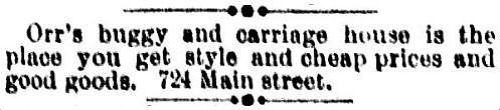
He had stylish conveyances, cheap prices, and good goods:

orr_dal-herald_081283Dallas Herald, Aug. 12, 1883

After the death of his wife in 1886 (she died of consumption at the early age of 42), Orr passed the business to his son. In poor health, he left Dallas for Mississippi, where he met a woman who nursed him back to health and whom he later married. After a few years of an apparently happy second marriage, W. W. Orr died in 1894. Cash savings, investments, and real estate holdings back in Dallas had left him a wealthy man, and, as might be expected, his family in Dallas was dismayed to learn that he had left his estate to his infant daughter in Mississippi. His three grown children from his first marriage were not happy, and they contested the will. (The case is covered exhaustively here. I think the baby daughter emerged victorious, but I’m not absolutely sure.)

It’s interesting that Orr and his first wife are buried side by side in Greenwood Cemetery. Amanda Melvine McQueen Orr has a large, ornate monument and headstone; W. W. has his name — and nothing else — carved into an unadorned marker. It would have been nice to have had a little a buggy in the corner. …Something.

orr-map_c1900

The location of Orr’s buggy and carriage house was at the corner of Main and Martin, shown above in a map from around 1900. (Click for larger image.)

And, below, is the full ad, with that incredible artwork! (Click it!)

ad-orr-carriages_directory_18781878

***

Sources & Notes

Illustrated ad from the 1878 Dallas city directory.

All other ads from The Dallas Herald, as noted.

Map is a detail from a map of Dallas, circa 1900, from the Portal to Texas History, here.

Amanda Orr’s headstone and memorial statuary can be seen in several photos here; W. W.’s sad unadorned slab can be seen here.

Phætons? They sound dangerous!

*

Copyright © 2014 Paula Bosse. All Rights Reserved.


4th of July Parade — Sweating in Formation

july-4_degolyerI’m parched just looking at this…

by Paula Bosse

Fourth of July parade in Dallas, 1870s or 1880s. Bet it was hot in those uniforms.

Picture quality leaves a bit to be desired, but here are a few details (click for larger images).

july-4_degolyer_a

july-4_degolyer_b

july-4_degolyer_c

***

Sources & Notes

Stereograph photo by Alfred Freeman, from the Lawrence T. Jones III Collection, DeGolyer Library, SMU Libraries, Southern Methodist University; the uncropped original can be seen here.

*

Copyright © 2014 Paula Bosse. All Rights Reserved.

Dallas in 1879 — Not a Good Time to Be Mayor

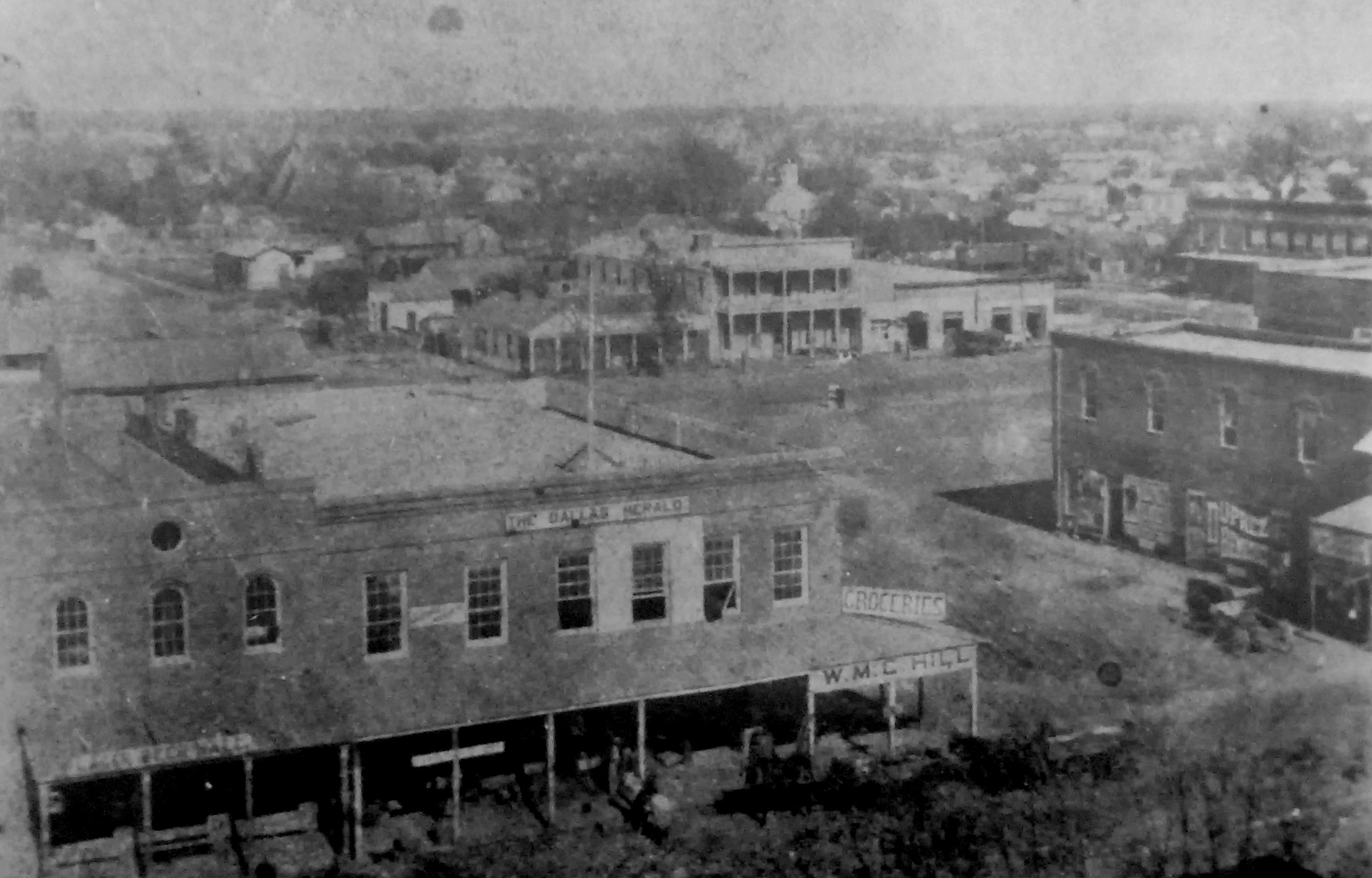
main-jefferson_1879_greeneA view from the courthouse, looking north (click for larger image)

by Paula Bosse

Above, a view of Dallas in 1879, looking north from the courthouse (one of many in the city’s past that eventually burned down); the intersection in the right foreground is Main and Jefferson (now Record Street).

This is such a cool photo that, on a whim, I checked to see what exciting things might have happened in Dallas in 1879. I found that the city’s voters had just elected a new mayor, James M. Thurmond, who had run on an “independent reform and morality ticket.” Yawn. On the surface, that hardly seemed very interesting — a  historical fact, yes, but not all that exciting. But, wait, there’s more to the story.

Thurmond’s post-election honeymoon was short-lived because, even though he had won a second (one-year) term, he had made some serious enemies in his first term. He was removed from office in 1880 by the city council in a lack-of-confidence vote, the result of a nasty trial and probably slanderous accusations by lawyer Robert E. Cowart.

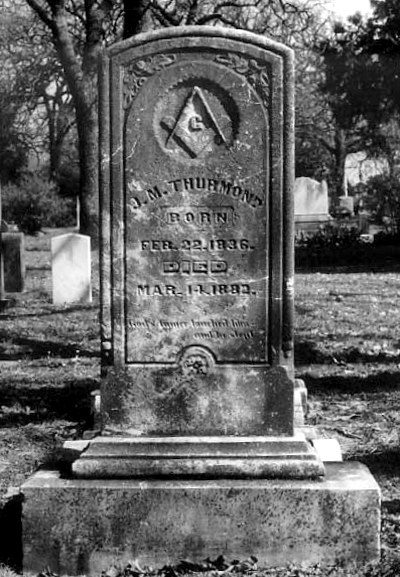
The feud between Thurmond and Cowart grew more and more bitter as time passed, and on March 14, 1882 — moments after the two men had exchanged angry words in Judge Thurmond’s courtroom — Cowart shot and killed Thurmond. Witnesses described the shooting as an act of self-defense. They said that Cowart shot when the judge reached for his pistol. (For an incredibly gruesome account of this incident, the contemporary newspaper report is linked below.)

The photograph above was taken from the courthouse where this shooting took place. When the photograph was taken in 1879, the animosity between the new mayor and an unhappy lawyer had already begun to percolate. I suppose men with “Esq.” after their names in the 1880s were predisposed to shoot-outs indoors in well-appointed courtrooms rather than out in the dusty streets at high noon. It’s classier.

thurmond_headstone_greenwood-cemetery_findagraveGreenwood Cemetery, Dallas (photo: David N. Lotz)
***

Top photo is from Dallas, The Deciding Years — A Historical Portrait by A. C. Greene. (Austin: The Encino Press for Sanger-Harris, 1973); photo is from the collection of the Dallas Public Library.

Photo of J. M. Thurmond’s headstone in Greenwood Cemetery is from Find A Grave, here. Cowart — who died in 1924 — is buried in a nearby plot in the same cemetery. (Incidentally, Cowart’s claim to fame — other than shooting a judge in his own courtroom — appears to be that he was the person who inadvertently came up with Fort Worth’s nickname, “Panther City” when he wrote a tongue-in-cheek newspaper article about Fort Worth in 1875. Read a great history of this amusing kerfuffle in Hometown by Handlebar’s post, here — scroll to the second story.)

For an interesting contemporary report of the shooting — including gruesome eyewitness accounts — check out the article from the March 15, 1882 edition of The Dallas Herald (under the headline “The Deadly Pistol”), here, via the Portal to Texas History.

A short background on the Thurmond-Cowart feud, from the WPA Dallas Guide and History (which includes the verdicts of Cowart’s two trials for murder), can be read here.

Click top photograph for HUGE image.

*

Copyright © 2014 Paula Bosse. All Rights Reserved.

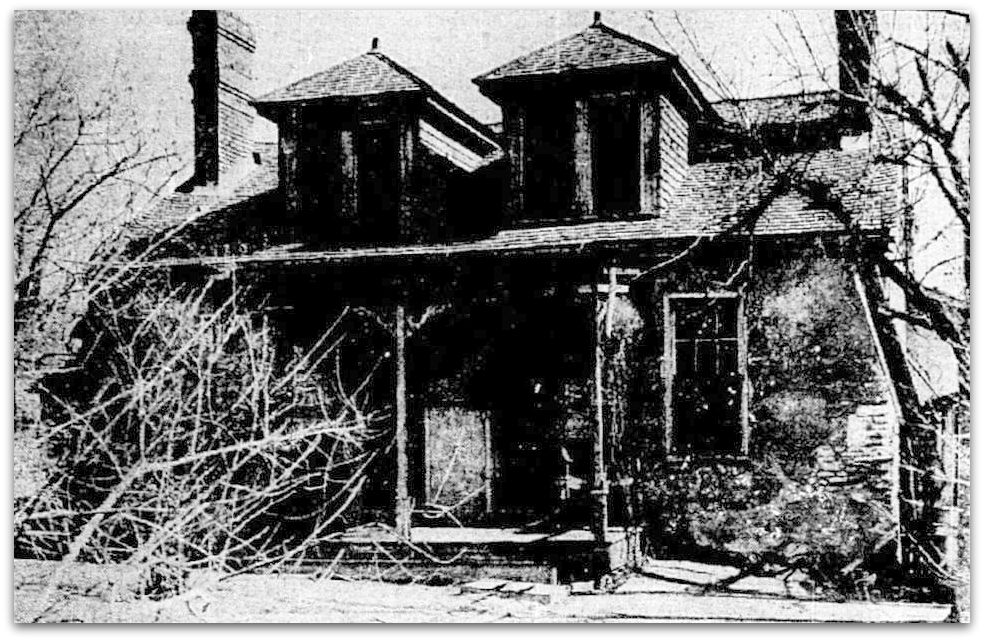
One of the Earliest Homes Belonging to Original La Reunion Settlers Is Razed — 1925

frichon_house-dmn_030525aBryan & Harwood

by Paula Bosse

ONE OF EARLIEST DALLAS HOMES WILL BE RAZED TO MAKE WAY FOR NEW HOME OF KNIGHTS OF PYTHIAS
(Dallas Morning News, March 5, 1925)

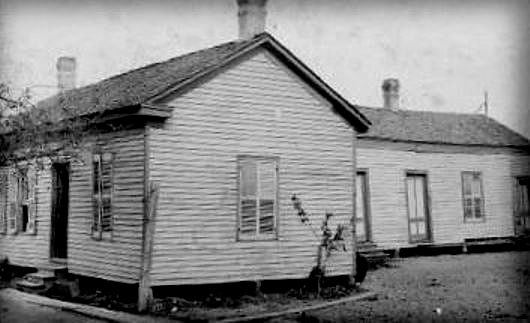
An ancient Dallas landmark that obviously is entitled to the name, a modest little plaster cottage that serves as the sole surviving relic of the old French colony that figured in the early history of Dallas, is to be torn away in a few weeks to make room for a new home of the Knights of Pythias. The house now is numbered 2012 on Bryan street, near the corner of Harwood, but when it was built in 1874 by A. Frichot there was no need of street numbers to distinguish it from its neighbors. “About a mile and a half east of the courthouse” was the official designation of the house in those post-bellum days.

John Priot on May 4, 1874, sold the lot for $200 to A. Frichot and described it in the deed as beginning at “the west corner of a piece of land sold on Dec. 8, 1860, by P. P. Frichot to Mrs. Barbar[a] Frick, being a part of the original John Grigsby League.” This deed was recorded by A. Harwood, then County Clerk. There is a legend that the two Frichot brothers built homes near each other of the same type, one of which was torn down years ago to make room for a brick building on the southwest corner of Harwood and Bryan streets. The other is the modest dwelling that is to be razed to make room for the new Pythian building.

In 1876, after the house was built, A. Frichot deeded it to Mary L Frichot, his daughter, in consideration of the sum of $1,000, the records show. The next change made in the ownership of the place, according to the records, was in 1908 when deeds were signed conveying the property from “Mary L. J. Prine and J. A. Prine” to Colonel John M. McCoy for the sum of $4,600.

The Knights of Pythias bought the property from the estate of Colonel McCoy recently. This deal was made for the estate by Judge Wendel Spence, executor for the McCoy estate. For the last seventeen years the house has been occupied by Mrs. Pearl Miller as a residence.

A week or two ago a Dallas woman approached the agent of the Knights of Pythias with an offer to lease the place and transform it into an antique tea room. The offer was refused, as the building must come down shortly to make way for the new structure.

**

THE STORY OF OLD FRENCHTOWN (excerpt)
(Dallas Morning News, Nov. 23, 1919)

Jean Priot was a tailor. He was born in Nevers, Oct. 26, 1832, came to La Reunion in 1855, died in Dallas in 1908. He came to New Orleans with a tailor who held out false inducements, and from New Orleans joined this colony. M. Priot married Leontine Frichot, who came with her father, Philip Pierre Frichot, and his brother, Christophe Desire Frichot. From this union were born three daughters – now Mesdames, Beilharz and Petermann.

Philip Frichot was a contractor, and, upon disintegration of the colony, established a brickyard, from which he, with his son Achilles and M. Emil Remond built all the brick houses and concrete structures of that day in Dallas.

***

Sources & Notes

As cited in the articles above, the Frichot family was one of the original settlers of the French La Reunion utopian colony of Dallas in 1855, and the land — and later the house — stayed in the family from before 1860 until 1908, when the property was sold to John M. McCoy (who was, perhaps, appropriately, the son of one of the very first settlers of Dallas who arrived in the 1840s). Info about La Reunion is here and here.

The Knights of Pythias building referenced above is not to be confused with the substantially more “famous” one — the then-already standing and now-historic structure in Deep Ellum at 2551 Elm Street — less than a half a mile away. The building going in at Bryan and Harwood was, for want of more delicate language, the “white” one, and the one on Elm Street was the “black” one. Both were fraternal organizations dedicated to philanthropy and civic involvement, but apparently “fraternity” went only so far as race was concerned.

More Flashback Dallas posts on La Reunion can be found here.

Click photo for larger image.

*

Copyright © 2014 Paula Bosse. All Rights Reserved.

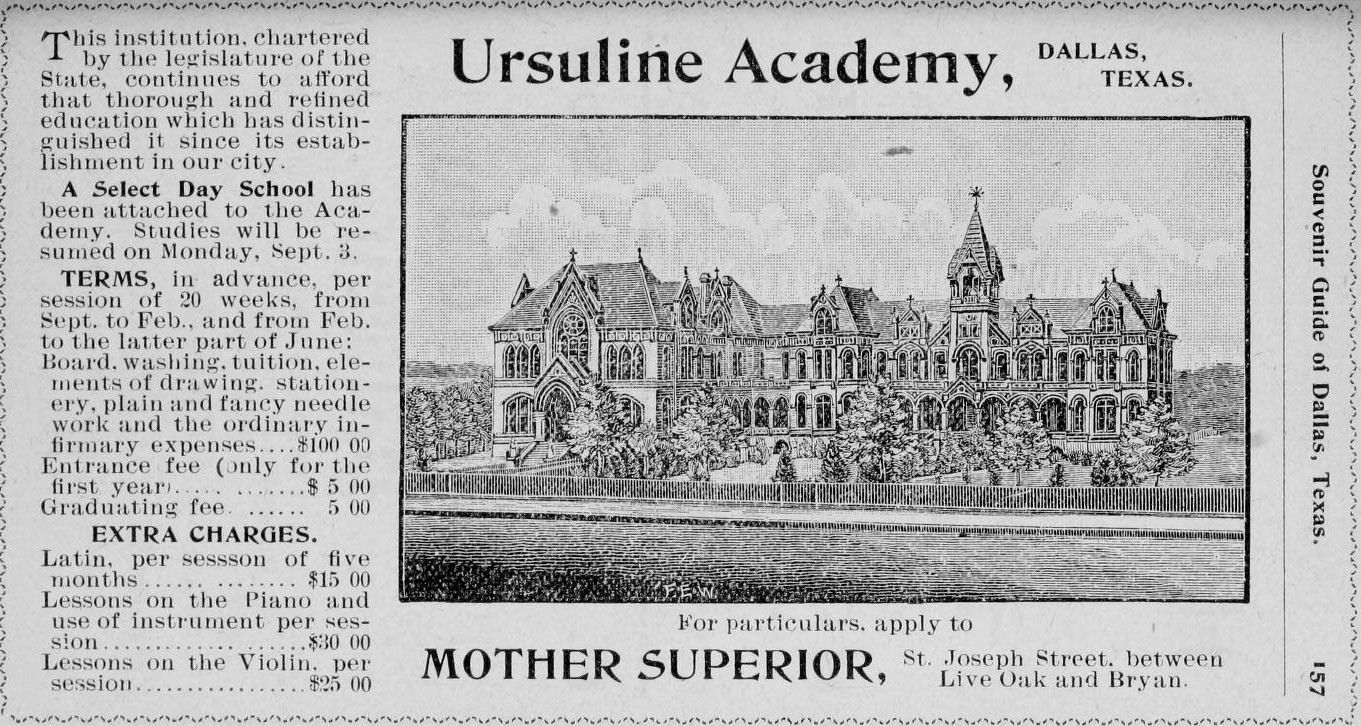
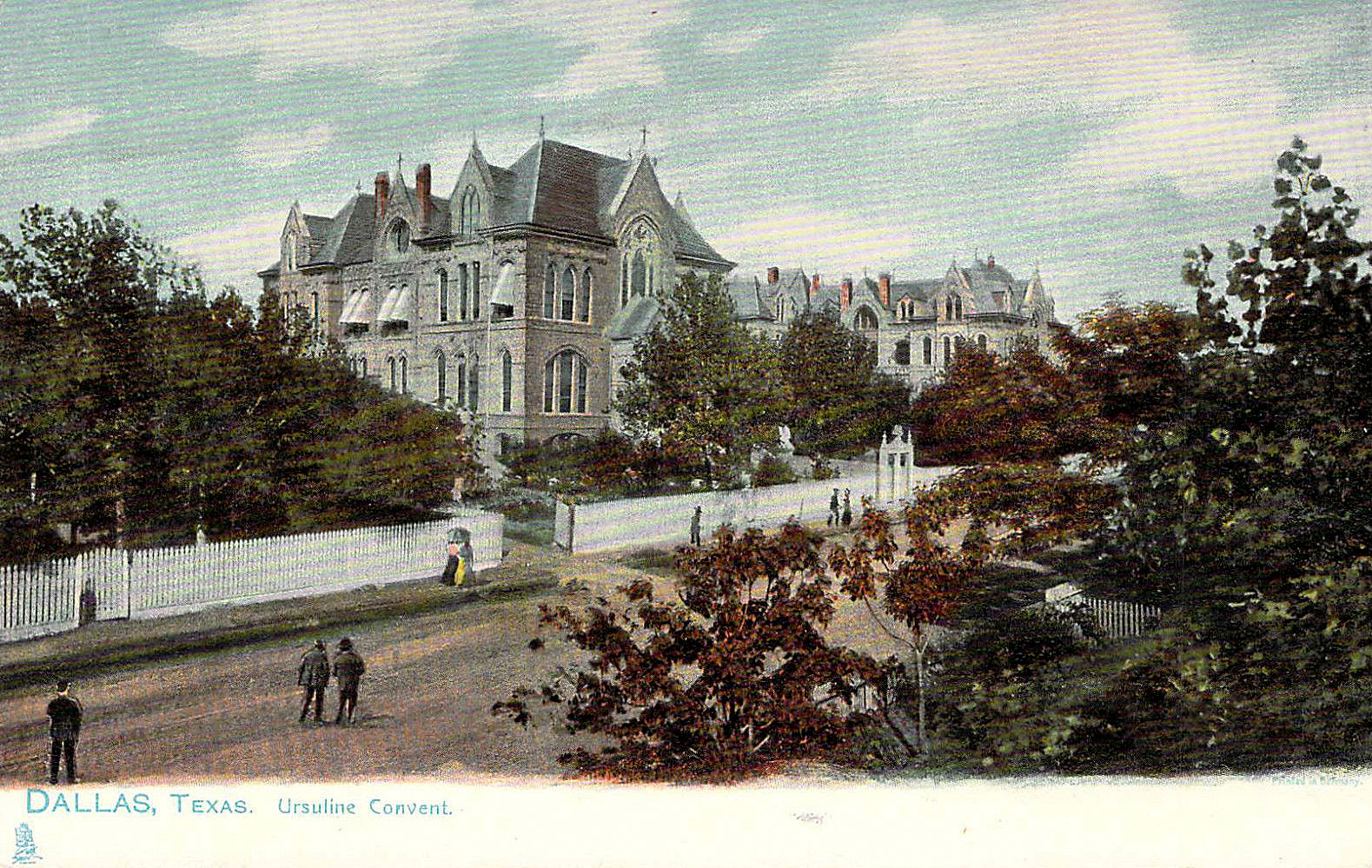
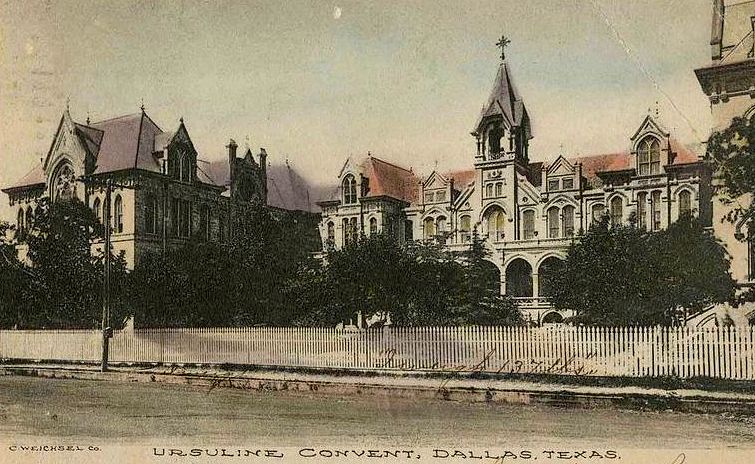
Nicholas J. Clayton’s Neo-Gothic Ursuline Academy

ursuline_postcard-color

by Paula Bosse

Over the years, Dallas has been the site of dozens and dozens of beautiful educational campuses, almost none of which still stand — such as the long-gone Victorian-era Ursuline Academy, at St. Joseph and Live Oak streets (near the current site of the Dallas Theological Seminary). The buildings, which began construction in 1882, were designed by the Catholic church’s favorite architect in Texas, Nicholas J. Clayton of Galveston. Such a beautiful building in Dallas? It must be demolished!

ursuline_first_bldg
Six Ursuline Sisters, sent to Dallas from Galveston, established their academy in 1874 in this poorly insulated four-room building (which remained on the Ursuline grounds until its demolition in 1949). When they opened the school, under tremendous hardship, they had only seven students. But the school grew in size and reputation, and they were an academic fixture in East Dallas for 76 years. In 1950 the Sisters moved to their sprawling North Dallas location in Preston Hollow where it continues to be one of the state’s top girls’ prep schools. After 140 years of educating young women, Ursuline Academy is the oldest continuously operating school in the city of Dallas.

clifton-church_ursuline_1894Construction took a long time. (ca. 1894)

ad-ursuline_souv-gd_1894When Latin cost extra. (1894) (Click for larger image.)

ursuline_1906_largeIt even had a white picket fence. (ca. 1906)

ursuline-flickr1908-ish

ursuline_worleys_1909_det_LARGE1909 city directory

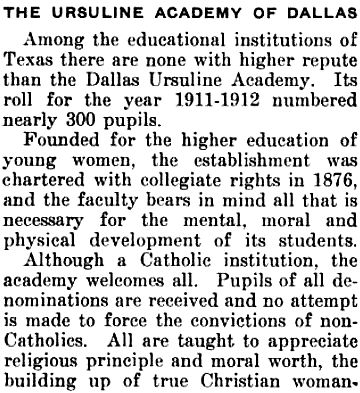
ursuline-academy_tx-mag_1912b1912 (click for large image)

After a year and a half on the market, the land was sold in 1949 for approximately $500,000 to Beard & Stone Electric Company (a company that sold and serviced automotive electric equipment). The property was bounded by Live Oak, Haskell, Bryan, and St. Joseph — acreage that would certainly go for a lot more these days (according to the handy Inflation Calculator, half a million dollars in 1949 would be the equivalent in today’s money of about five million dollars). A small cemetery was on the grounds, in which the academy’s first chaplain and “more than 40 members of the Ursuline order” had been buried. I’m not sure how these things are done, but the cemetery was moved.

ursuline_aerial_cook-colln_degolyer_smu

From a November, 1949 Dallas Morning News article on the vacated buildings’ demolition:

A workman applied a crowbar to a high window casing of the old convent and remarked: “I sure hate to wreck this one. It’s like disposing of an old friend. My father was just a kid when this building was built in 1883.” (DMN, Nov. 13, 1949)

And one of East Dallas’ oldest and most spectacular landmarks was gone forever. Looking at these photographs, it’s hard to believe it ever existed at all.

ursuline_cook-colln_degolyer_smu

*

Where was it? In Old East Dallas, bounded by Live Oak, Haskell, Bryan, and St. Joseph. See the scale of the property in the 1922 Sanborn map, here (once there, click for full-size map). Want to know what the same view as above looks like today? If you must, click here.

ursuline_today_bing-map
Bing Maps

***

Sources & Notes

Photo of the school’s first building is from the Ursuline Academy of Dallas website here. A short description of the early days of hardship faced by the Sisters upon their arrival in Dallas is here.

The photograph, mid-construction, is by Clifton Church, from his book Dallas, Texas Through a Camera (Dallas, 1894).

1894 ad is from The Souvenir Guide of Dallas (Dallas, 1894).

1912 text is from an article by Lewis N. Hale on Texas schools which appeared in Texas Magazine (Houston, 1912).

Aerial photograph from the George W. Cook Dallas/Texas Image Collection, DeGolyer Library, Southern Methodist University, here. Bottom image also from the Cook Collection, here.

Examples of buildings designed by Nicholas J. Clayton can be seen here (be still my heart!).

DMN quote from the article “Crews Begin Wrecking Old Ursuline Academy” by William H. Smith (DMN, Nov. 13, 1949).

Another great photo of the building is in another Flashback Dallas post — “On the Grounds of the Ursuline Academy and Convent” — here.

Many of the images are larger when clicked.

*

Copyright © 2014 Paula Bosse. All Rights Reserved.

Mardi Gras Parade in Dallas — ca. 1876/1877

mardi-gras_c1870s_degolyerMain St. looking east from Austin (click for larger image)

by Paula Bosse

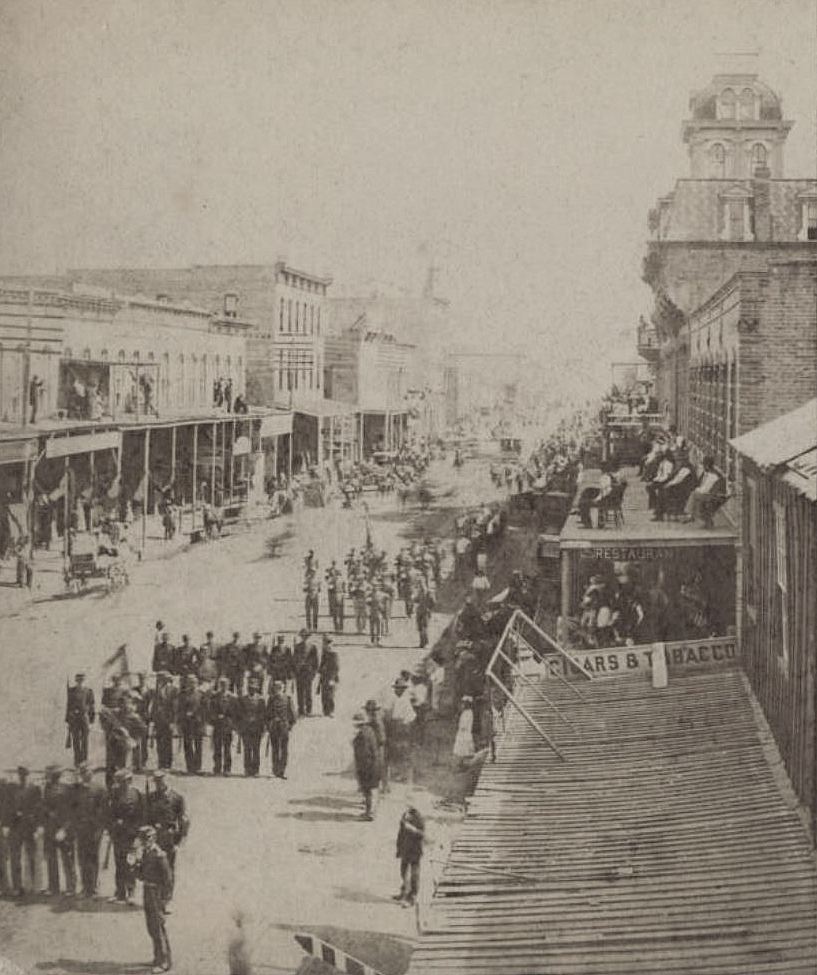
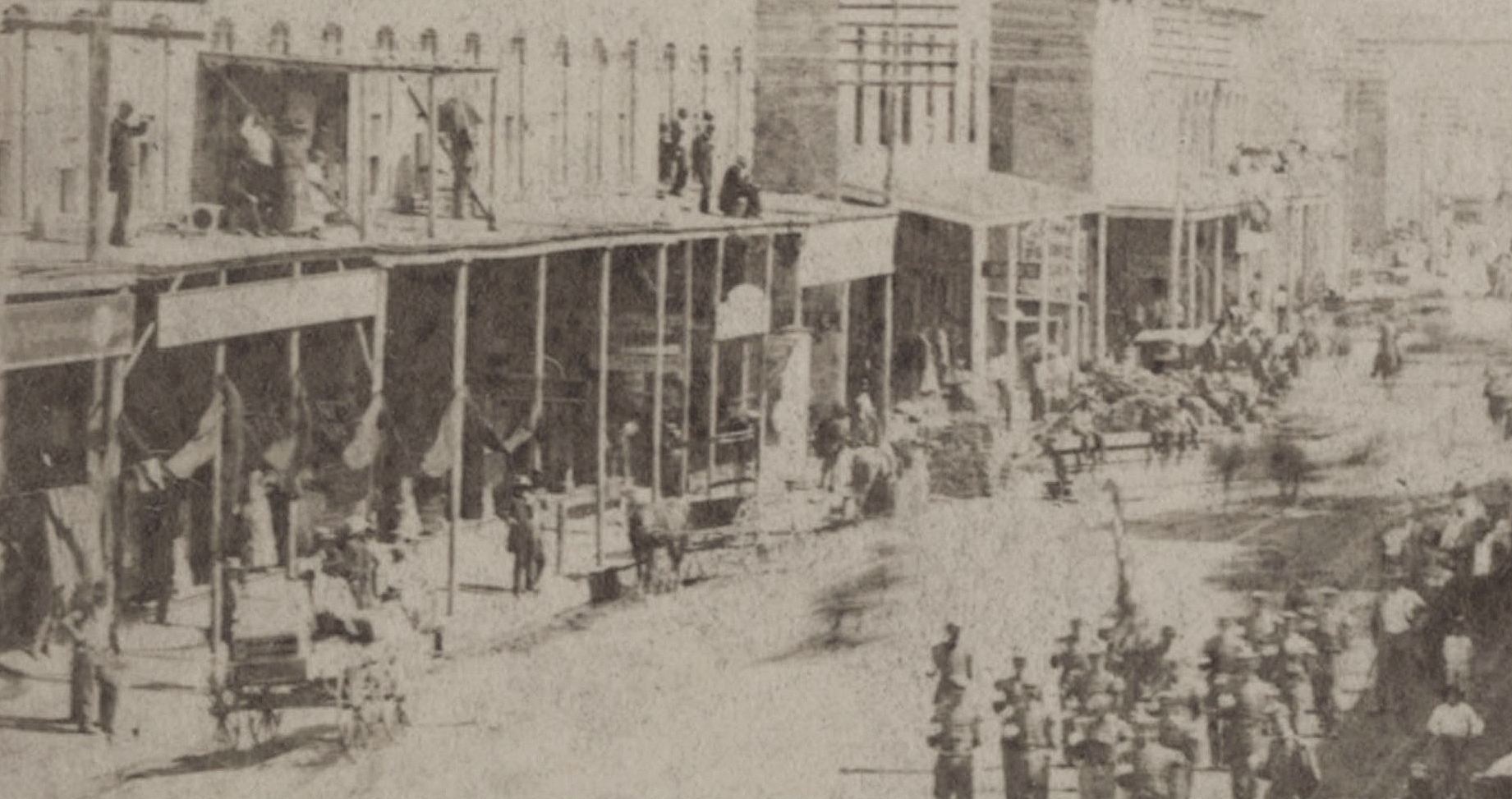
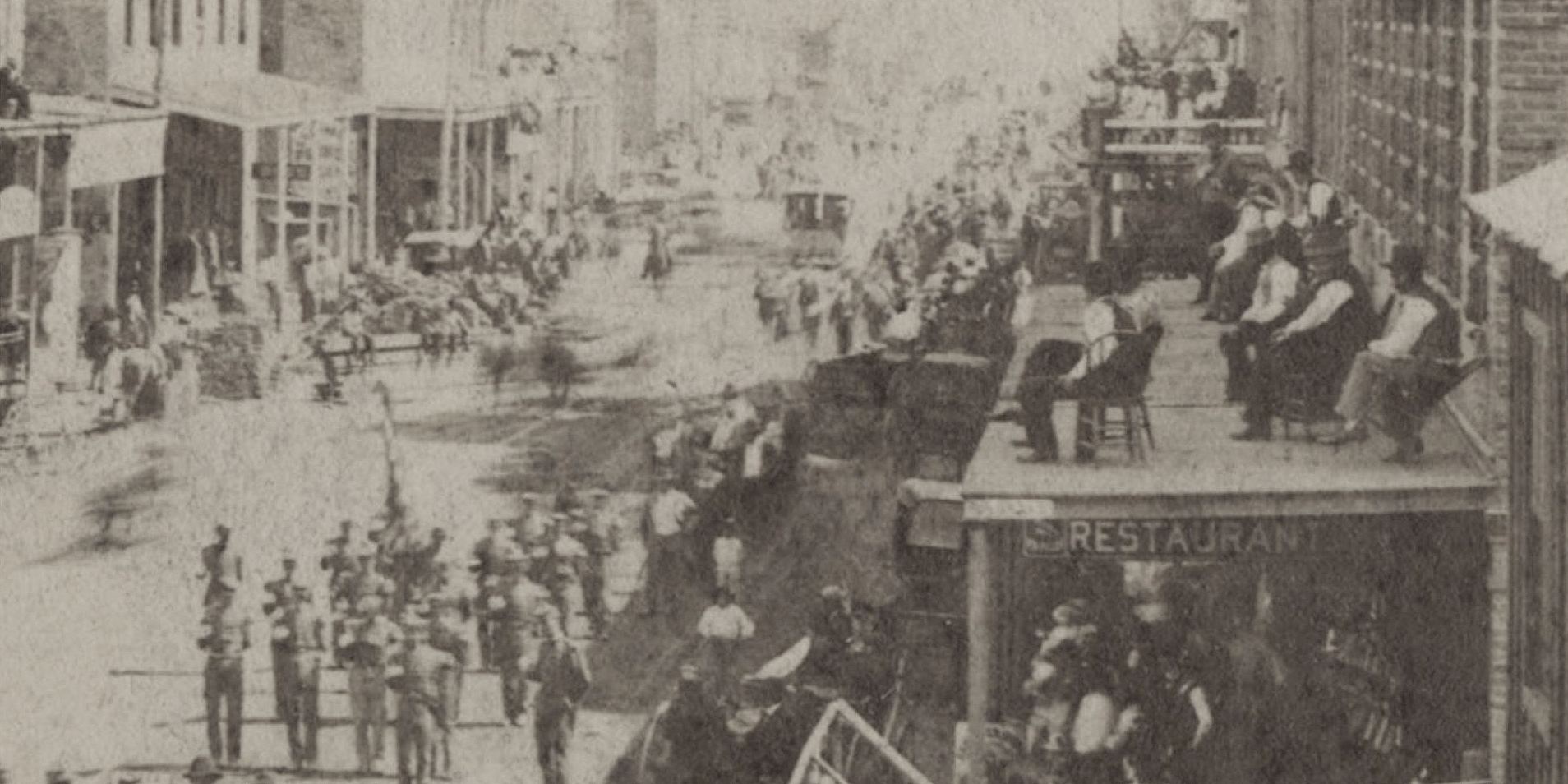
What was happening downtown on this day, about 140 years ago? Mardi Gras, Dallas-style! Let’s wander around this parade photo, taken by Alfred Freeman. (Click photos to see larger images.)

mardi-gras_c1870s-det1This kid has a great, unobstructed second-story view of the parade below.

mardi-gras_c1870s-det2No glitz, no beads, no flashing.

mardi-gras_c1870s-det5Every time I look at the original photograph, my eye always goes to this woman.

mardi-gras_c1870s-det3Okay, that kid’s view is nothing compared to these guys who’ve scaled the Dallas Herald building.

mardi-gras_c1870s-det4In information about the 1876 parade, the Feb. 24, 1876 edition of The Dallas Herald advised: “To prevent accidents, owners of buildings having varandas [sic] will permit no one to stand on them, unless the same have been sufficiently strengthened.” I don’t know … some of those “varandas” look pretty shaky.

And down Main Street they go.

***

This is a stereograph photo by Alfred Freeman, from the Lawrence T. Jones III Texas Photographs Collection, DeGolyer Library, Central University Libraries, Southern Methodist University; it can be viewed here. (I have manipulated the color.) SMU has the photo as being “ca. 1870,” but the first Mardi Gras parade in Dallas wasn’t held until 1876. The view shows Main Street looking east, apparently taken from the roof of the Reed & Lathrop building on the northeast corner of Main and Austin.

UPDATE: This might be a photograph of the Mardi Gras celebration held in Dallas on February 24 (a Thursday…), in 1876. This was the first such celebration held in the city, and it was a massive undertaking, attracting more than 20,000 spectators. For weeks after the event, Alfred Freeman was advertising his Mardi Gras photographs with the following text: “Freeman, the artist, has nine different views of the Mardi Gras procession, for sale.”

mardi-gras_c1870s_freeman

Read about the first Mardi Gras parade in Dallas in the Flashback Dallas post “Mardi Gras: ‘Our First Attempt at a Carnival Fete’ — 1897,” here.

Click pictures for larger images.

*

Copyright © 2014 Paula Bosse. All Rights Reserved.