Flashback : Dallas

A Miscellany: History, Ads, Pop Culture

Category: 1910s

The Rolling Hills of Highland Park — 1911

highland-park_armstrong-1911Armstrong Avenue (click for larger image)

by Paula Bosse

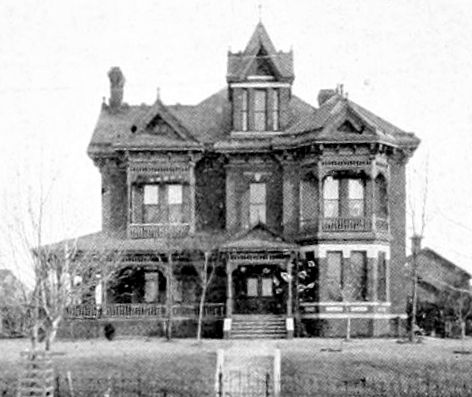
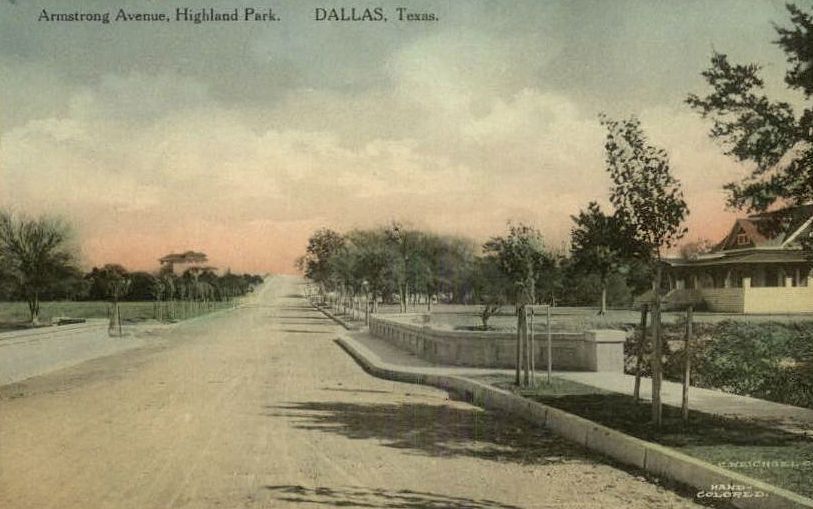
Highland Park in its early days of development. The postcards above and below show Armstrong Avenue, looking east, from about Preston Road.

highland-park_armstrong_house

An even earlier view can be seen in the postcard below (ca. 1908), which shows “Berkeley Avenue,” the original name of Armstrong (see newspaper clippings at the bottom of this post for more on Berkeley Ave.).

armstrong_berkeley-avenue_flickr_coltera

All of these postcards show what looks to be the bridge over a stretch of Turtle Creek then called Lake Neoma.

neoma-bridge_over-armstrong

I’m not sure when the name “Lake Neoma” ceased to be used (I believe it’s now Wycliff Ave. Lake), but here is a nifty little drawing of it from a 1915 map from the Flippen-Prather Realty Co., the developers of Highland Park.

neoma-highland-park-map_1915

*

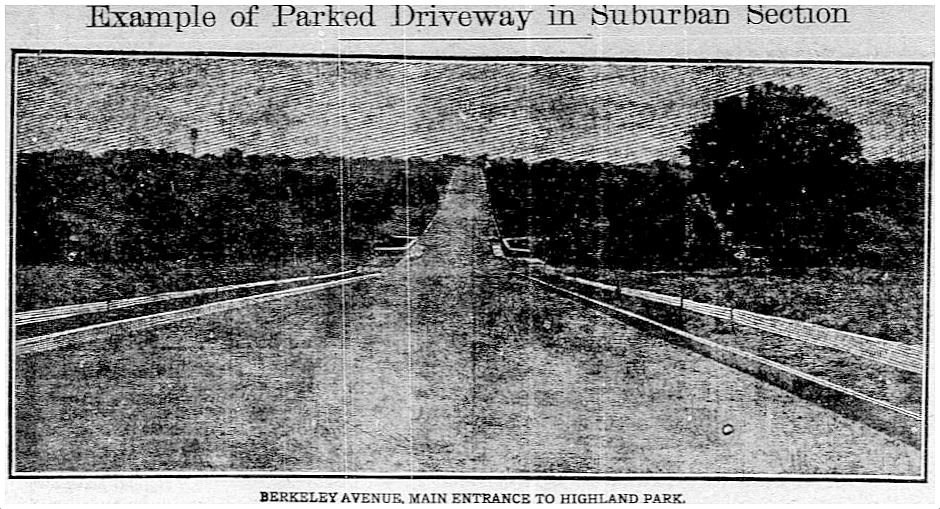
Berkeley Avenue was renamed Armstrong Avenue around 1908 or 1909 in honor of John S. Armstrong, who developed the land that later became Highland Park (East). Below is a photo and paragraph of an article from the Sept. 13, 1908 edition of The Dallas Morning News (the Argyle Avenue mentioned was later renamed as an extension of Oak Lawn Ave.)

armstrong_berkeley_dmn_091308

armstrong_dmn_091308_berkeley
Dallas Morning News, Sept. 13, 1908 (photo and excerpt)

***

Postcards from Flickr. “Berkeley Avenue” from Flickr, here (it is suggested that this shows Berkley Ave. in Oak Cliff, but this is incorrect — it is definitely Highland Park).

Map is a detail from the Flippen-Prather map of 1915, which can be viewed here.

Click pictures for larger images (top image and map are HUGE).

*

Copyright © 2014 Paula Bosse. All Rights Reserved.

Black Troops from Dallas, Off to the Great War

WWI_black-soldiers_dallasRecruits in Dallas

by Paula Bosse

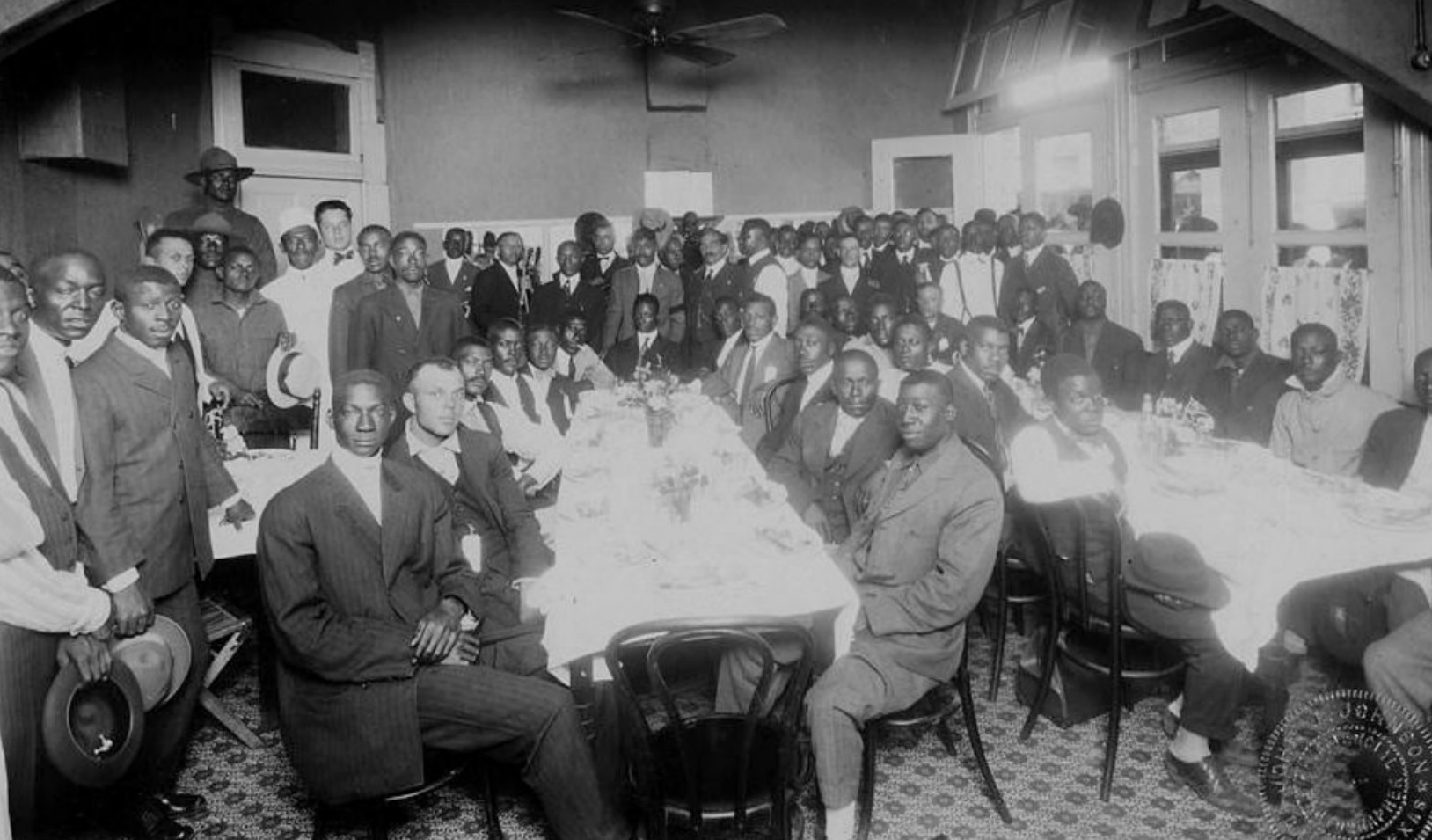
Above is a photo from the National Archives, described only as “Negro recruits having a turkey dinner just before leaving for a training camp. Dallas, Texas.” At the bottom right is the seal of Dallas photographer John J. Johnson who had worked for The Dallas Morning News as a photographer before World War I but was apparently working in a commissioned or freelance capacity here. The photo was taken on June 11, 1918, but the location is not known.

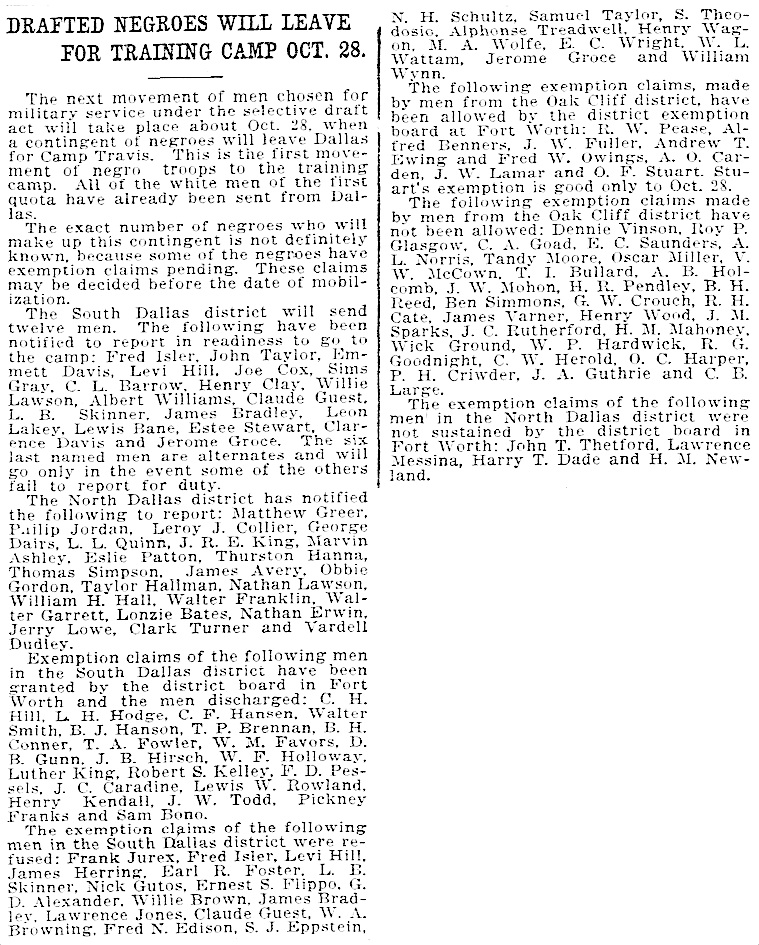
Eight months earlier, Black draftees left Dallas for the first time — they were headed to Camp Travis in San Antonio. (Click articles for larger images.)

WWI_black-draftees_dmn_101817Dallas Morning News, Oct. 18, 1917

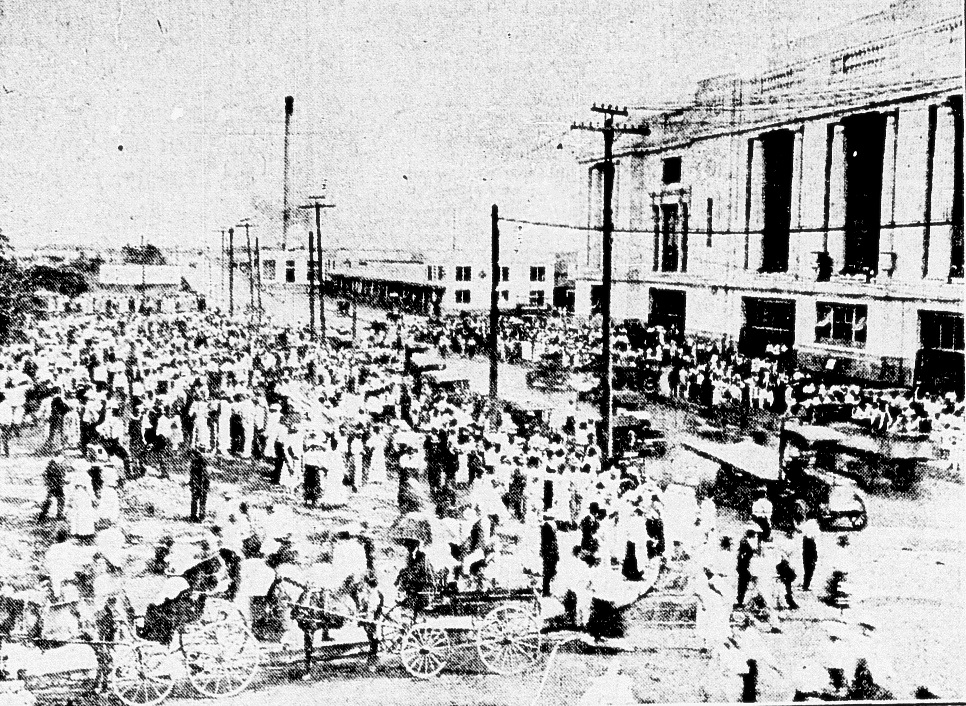
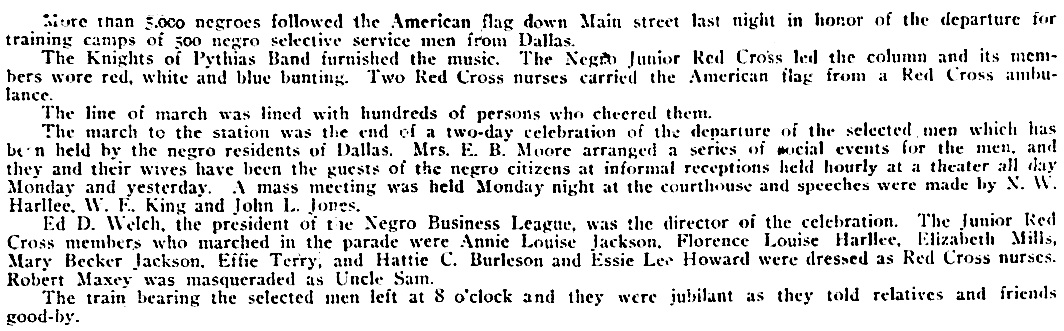
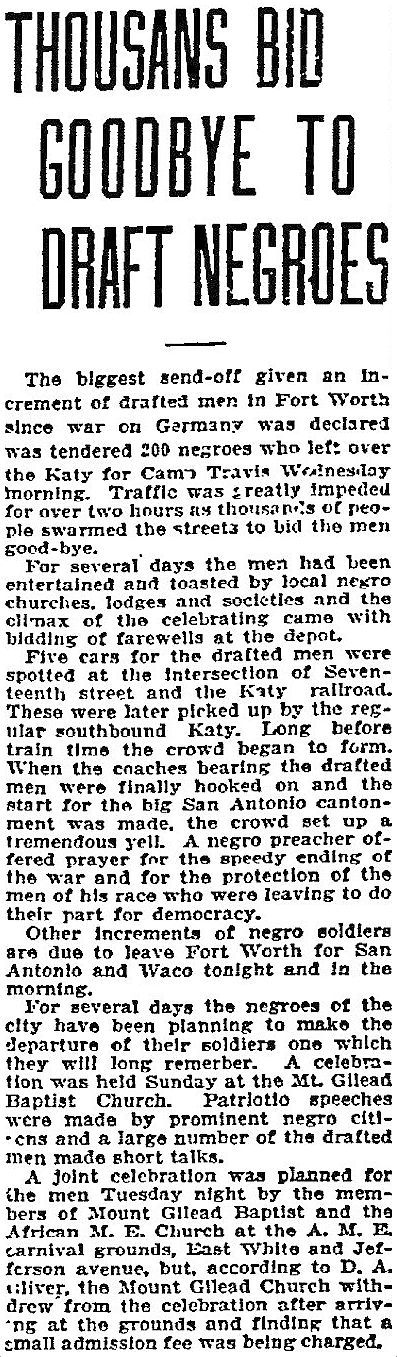
Much larger contingents of Black men left for training camp in the summer of 1918: more than 500 men left from Dallas and more than 200 from Fort Worth at the end of July. The photo below appeared in The Dallas Morning News under the headline “Scene at Union Station Last Night, When 500 Negroes Left for Camp.” (This photo was taken by John J. Johnson, the same photographer who took the photo at the top of this post.)

black-recruits_dmn_073118-photo

black-recruits_dmn_073118_captionPhoto and caption from the DMN, July 31, 1918

black-draftees_FWST_073118
Fort Worth Star-Telegram, July 31, 1918

There was a sizable number of Black soldiers at Camp Bowie in Fort Worth, and many of the reports from Fort Worth on the training of the “negro troops” are hard to read. I don’t think of myself as naive, but the blatant racism that was absolutely everywhere in the mainstream press at the time is stunning. Even when attempting to be complimentary, you see things like this:

If you imagine that the fact that these recruits are negroes made any difference to the white soldiers in camp you are mistaken, for the white soldiers cheered and threw up their hats as truck after truck of negroes passed by, and the darkies shouted back lustily. […]

“I’se glad I got heah at last,” said a big negro as he lined up for classification. “I won’t have to pick no mo’ cotton, no sah; all I’se have to do is to parade in a nice new uniform an’ get three meals an’ a nice new gun….” (Fort Worth Star-Telegram, Sept. 25, 1918)

I’m sure the white soldiers were happy to see fellow recruits showing up, but the journalists — in story after story — treated the “negroes” (they were rarely called “men”) as bumbling caricatures, inevitably quoted in dialect. The United States armed forces were not integrated until 1948, and Black troops were segregated from white troops, both in camp and on the battlefield (when they were allowed to fight — they were largely kept in service positions such as stevedores).

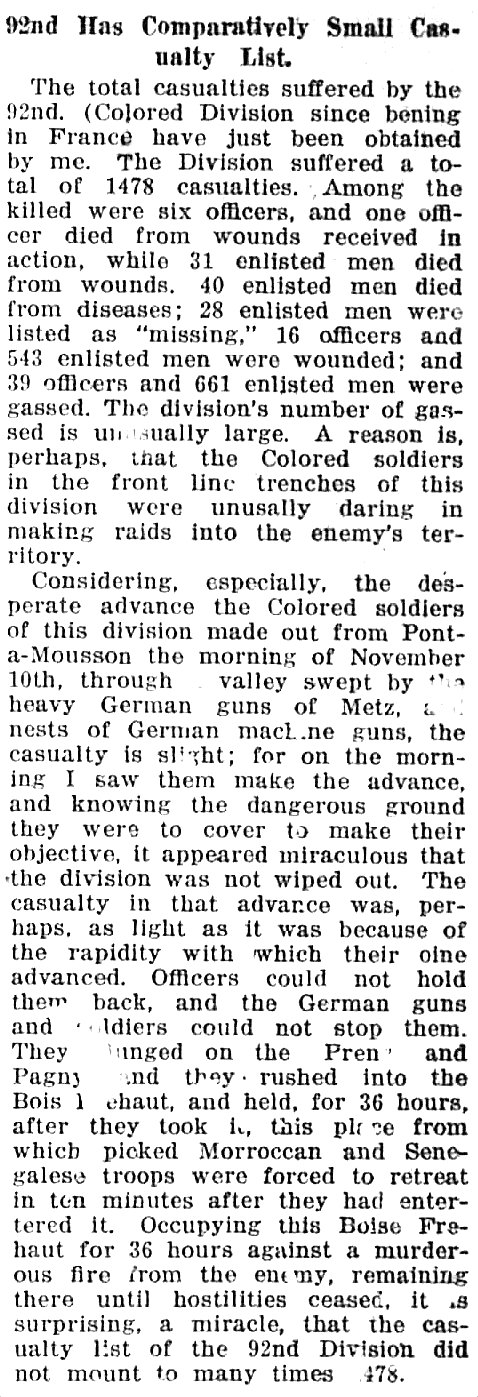
On this Memorial Day, I share a report from Ralph W. Tyler, a Black journalist who had reported throughout the war from the front lines, on the casualties of African American soldiers who died during World War I in the service of the U.S. Army:

casualties_black-troops_dallas-express_011119Dallas Express, Jan. 11, 1919

***

Sources & Notes

Top photo by John J. Johnson, from the National Archives is titled “Negro recuits [sic] having a turkey dinner just before leaving for a training camp. Dallas, Texas”; it can be accessed on the National Archives site here. An annotated version of this same photo appears under the title “Colored Troops — Negro recruits having a turkey dinner just before leaving for a training camp. Dallas, Texas” is here. (If anyone has additional info on the details of this photo, I’d love to know.)

“92nd Has Comparatively Small Casualty List” is an excerpt from Ralph W. Tyler’s article “General Order Commends Colored Officers” which appeared in The Dallas Express, Jan. 11, 1919. The full article can be read here.

For more info on the history of Black American soldiers, see the Wikipedia entry here; for info on the all-Black 92nd Infantry Division, see here.

Also, check out the blurb for the book Unjustly Dishonored: An African American Division in World War I by Robert H. Ferrell, here.

I’ve put a few articles on African American soldiers in WWI (including those cited above) in a PDF. A few of the articles appeared in the major Dallas and Fort Worth newspapers, and a couple appeared in The Dallas Express, the city’s newspaper published for a Black readership (including a rousing article by N. W. Harllee on the parade and celebration thrown by the city to honor the returning Black troops — WELL worth reading). Also included are a couple of unbelievable articles from the national press (including a lengthy one by a noted Stars and Bars reporter titled “Negro Soldiers Stationed at French Ports Sing and Dance While Unloading Ships”). The PDF can be accessed here (with articles in varying degrees of legibility).

The stirring and exhortative article “Dallas Gives Soldiers Befitting Celebration” by N. W. Harllee is in the PDF just mentioned, but it can also be found in a scan of The Dallas Express, here. UPDATE: Every scan of this article is hard to read, so I’ve tweaked the contrast to make it easier to read. You’ll have to magnify this sucker to read it, but it’s in a PDF here.

*

Copyright © 2014 Paula Bosse. All Rights Reserved.

The Oak Cliff Viaduct & The Weird Composite Photo — 1912

oak-cliff-viaduct-panorama_c1912_LOC

First you take a photo of the beautiful new Oak Cliff Viaduct, above.

Then you take a photo of the Dallas skyline, below.

dallas-panorama-skyline_1912_LOC

Then you put them together and get this bizarro Franken-photo!

oak-cliff-viaduct-panorama_skyline_c1912_LOC

It doesn’t look like any view of Dallas you’ve ever seen, but it still looks pretty damn cool.

***

Sources & Notes

All these panoramic photos are in the collection of the Library of Congress, all from the studio of Johnson & Rogers. The top photo has a copyright date of March, 1912, and the bottom two have copyright dates of August, 1912. See these panoramic photos (as well as one of the Buckner Orphan’s Home in 1911) on the Library of Congress site here.

Would this unusual composite have been done for a fanciful postcard or some other kind of promotional material (for the city or for the photographers)? Was it just done for fun? Tellingly, it’s the only one of the three without the studio’s imprint. If anyone has further info on this, please let me know!

These photos are HUGE. Click to see larger images — and use that horizontal scrollbar!

*

Copyright © 2014 Paula Bosse. All Rights Reserved.

Reverchon Park, Site of a Hovel Town Once Known as “Woodchuck Hill”

reverchon_park_baseballAnyone for a little sport? Or a spell-checker?

by Paula Bosse

Before it became one of Dallas’ nicest parks, Reverchon (named for the French botanist Julien Reverchon who arrived in Dallas to join the La Réunion settlement) began life as a 36-acre plot of land called “Turtle Creek Park.” But before that, it was an open-air slum known as “Woodchuck Hill” — an eyesore of an area filled with tents and hovels where families lived in deplorable conditions. It was a pretty dangerous place — the only thing the violent “Squattertown” had going for it was that it was practically next door to Parkland Hospital at Maple and Oak Lawn. The injured and dying didn’t have far to go for medical attention. Or to breathe their last breaths. News reports such as the one below — from 1911 — were, sadly, fairly common (click for larger image):

woodchuck-hill_dmn_081711
Dallas Morning News, Aug. 17, 1911

In October, 1914 it was announced that the city had purchased this tract of land from the heirs of the pioneer Cole family in order to establish what would become Reverchon Park.

reverchon-park_dmn_101914
DMN, Oct. 19, 1914

A few months after the purchase of the land, the squatters were told to vacate the city’s new park property, and what had been a miserable slum was cleared away and transformed into one of the city’s prettiest “pleasure grounds.”

woodchuck-hill_dmn_031215
DMN, March 12, 1915

*

The following is from the Dallas Park Board’s 1915 report:

Pending suggestions for a more suitable one, Turtle Creek Park has been temporarily adopted as the name for this property. At the time of its purchase it corresponded in a measure to the slum districts of the great cities. It was known as “Woodchuck Hill,” and its inhabitants constituted a novel settlement for the city. They resided in make-shift houses and hovels built by the occupants who paid a small stipend each month in the shape of ground rent. The moral conditions of these people was bad, and they caused much concern to the Social Welfare Workers in particular.

In addition to an athletic field, this park is adaptable for an elaborate botanical garden. Being situated at the western base of the Turtle Creek Boulevard, which extends the entire length of the property, it will one day constitute one of the chief attractions of the city for visitors. It adjoins the water works property, comprising a total of 103 acres of city property, a large portion of which has already been beautified. The grounds surrounding the pumping station and the water purification plant have been laid out in lawns and flower beds. Near the center of this park and at the base of the hills on its northern boundaries is located Raccoon Springs. The springs flow a large volume of water to year round, and provide shady nooks with delightful surroundings.

*

Hovels below, in the “before” picture.

reverchon-park_before-1915

reverchon-park-1915

Turtle Creek Park
Located on Maple Avenue.
Area, 36 acres.
Acquired, 1915.
Cost of land, $40,000.

reverchon-plat_kessler_1915

***

Sources & Notes

Top postcard (with “Reverchon” misspelled — understandably so…), from somewhere in the wilds of the internet.

Quoted text and other images from Report for the Year 1914-1915 of the Park Board of the City of Dallas, With a Sketch of the Park System (Dallas: Park Board, 1915), which can be accessed as part of the Dallas Municipal Archives, here.

For more on the Dallas Parks System, the definitive source may well be Historic Dallas Parks by John Slate (Charleston: Arcadia Publishing, 2010); more info here.

Friends of Reverchon Park website here.

*

Copyright © 2014 Paula Bosse. All Rights Reserved.

“It’s 10 Degrees Cooler in Highland Park” — 1916

highland-park-ad_smu-rotunda-1916

And don’t you forget it!

***

Flippen and Prather developed Highland Park, and this great ad may well have swayed more than a few people to consider HP as their future home. From the 1915-16 edition of SMU’s “Rotunda” yearbook.

*

Copyright © 2014 Paula Bosse. All Rights Reserved.

SMU’s First Year: The Dinkey, Campus Hijinx, and the Basket Ball — 1915-16

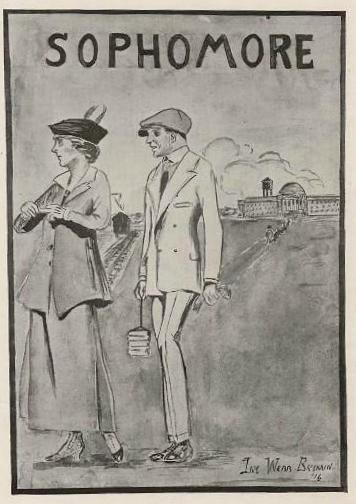
1smu-rotunda-1916_soph-drawing

by Paula Bosse

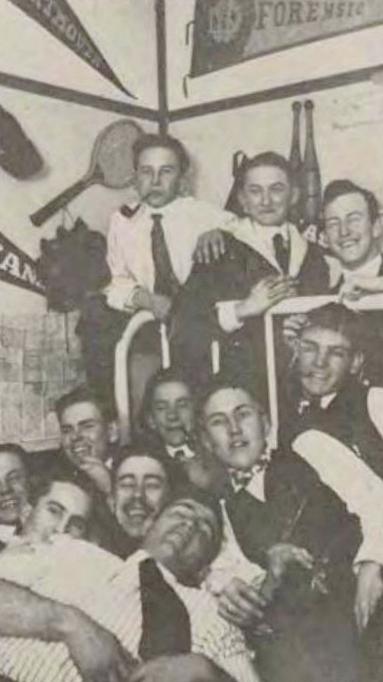
As a companion to my previous post on the first year of classes at SMU, here are a few more photos from the yearbook, these documenting the less studious side of campus life.

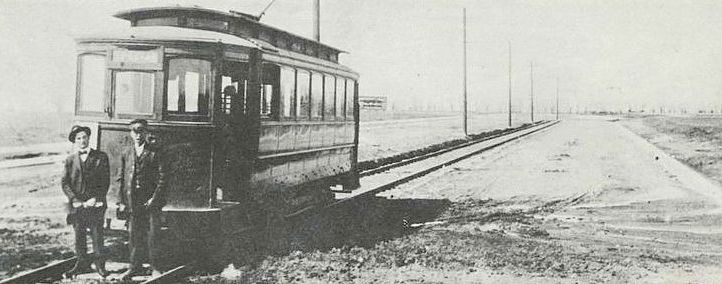
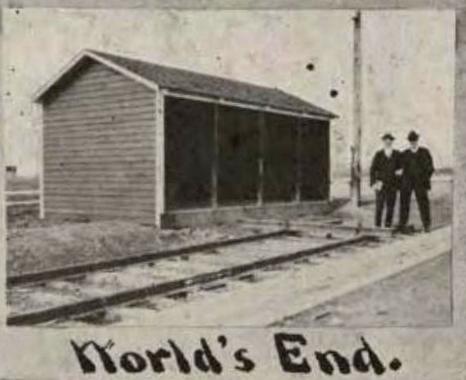
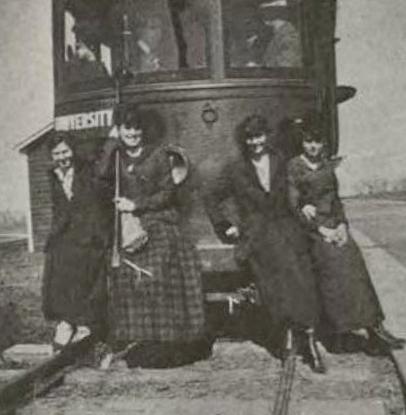
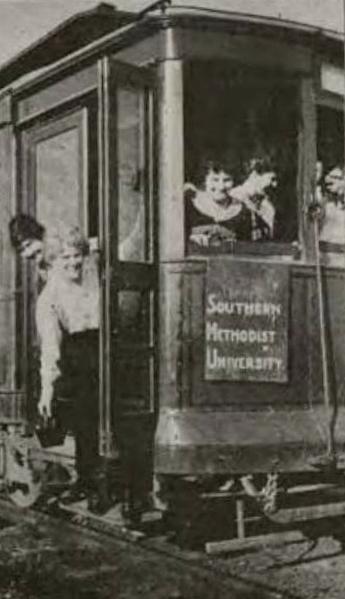
The most interesting thing about these photos, for me, is the SMU trolley, nick-named “The Dinkey” (or “The Dinky”). When SMU opened in 1915, it was waaaaaaaaaay outside the city limits, and the rail line extended only as far north as Knox. In order to get to and from downtown (and points beyond), one had to board the Dinkey near Hillcrest and McFarlin and ride to Knox, then change to an official city streetcar and head into civilization.

This reminiscence appeared in a 1984 issue of Park Cities People:

The first time Manning saw the campus was from the wooden seat of the Dinkey, an electric streetcar built for SMU in 1915.

“I told Dad Johnson, the conductor, as I boarded in Highland Park, I wanted to get off at SMU,” Manning said. “He said, ‘That’s as far as it goes.'”

“‘When we got there, I said, ‘Where’s the campus?’ He said, ‘There’s only two buildings. Dallas Hall is the one with the columns.'”

Manning couldn’t see the building from the Dinkey for the four-foot-tall Johnson grass and had to follow a travel-worn path to Dallas Hall.

2dinkey-hpcentennial“The Dinkey ran from Dallas Hall to Knox Street on tracks in the middle of Hillcrest. This photo taken at McFarlin.”

3smu-rotunda-1916_dinkey-stopThe “depot” where the Dinkey picked up and dropped off SMU students, faculty, and visitors.

4smu-rotunda-1916_dinkeyThe Dinkey, garnished with co-eds.

5smu-rotunda-1916_dinkey

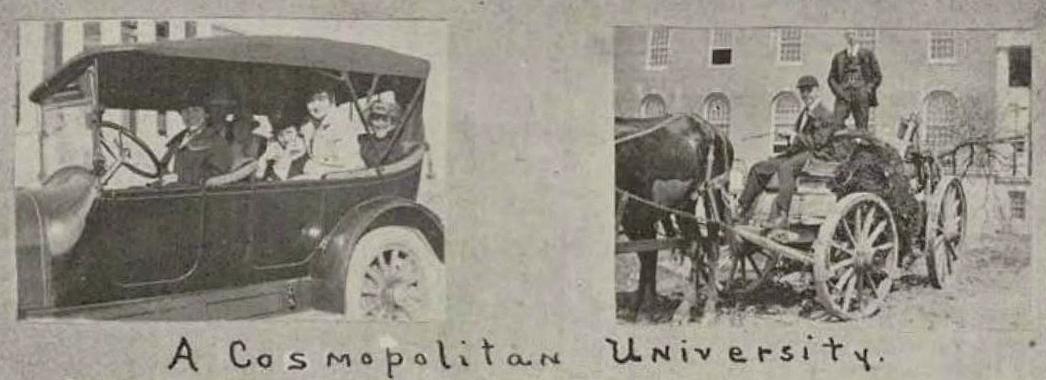
6smu-rotunda-1916_cosmopolitan-univ“Cosmopolitan University” horsepower.

7smu-rotunda-1916_frat

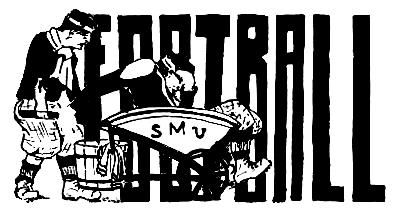
8smu-rotunda-1916_footballBad season?

The inaugural football season started tentatively. The 1915 schedule:

  • Oct. 9th: SMU vs. TCU at Fort Worth
  • Oct. 14th: SMU vs. Hendrick College at Dallas
  • Oct. 27th: SMU vs. Austin College at Dallas Fair
  • Nov. 4th: SMU vs. Dallas University
  • Nov. 12th: SMU vs. Daniel Baker at Brownwood
  • Nov. 19th: SMU vs. Southwestern University at Dallas
  • Nov. 25th: SMU vs. Trinity University at Waxahachie

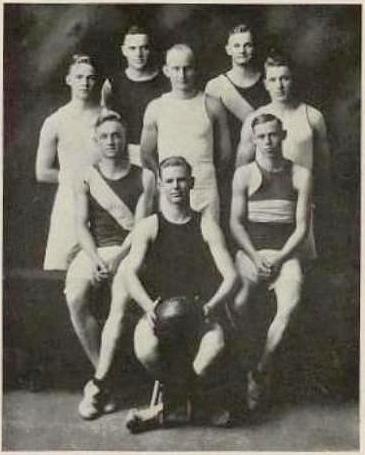
9smu-rotunda-1916_basketballThe men’s “Basket Ball” team.

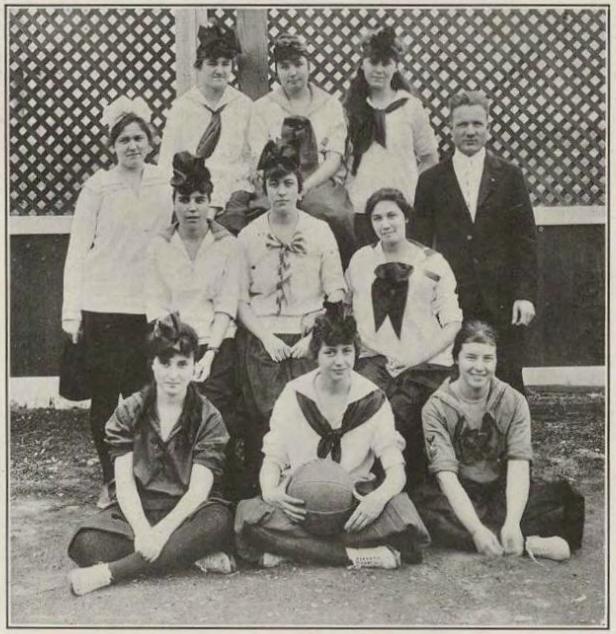
10smu-rotunda-1916_girls-basketballThe girl’s “Basket Ball” team.

16smu-rotunda-1916_cover

***

Sources & Notes

All images (except the second) from the 1915-1916 edition of SMU’s “Rotunda” yearbook.

Photo (and caption) of the “Dinkey” trolley at Hillcrest and McFarlin from Highland Park Centennial Celebration site, here.

Quote about traveling to the campus from Park Cities People (March 15, 1984).

“Dallas Hall and the Hilltop” by Tom Peeler, an entertaining  1998 D Magazine article on the first days of SMU, is here.

My previous post containing more photos from this first yearbook, is here.

*

Copyright © 2014 Paula Bosse. All Rights Reserved.

SMU, “The School of the Future” — 1915-16

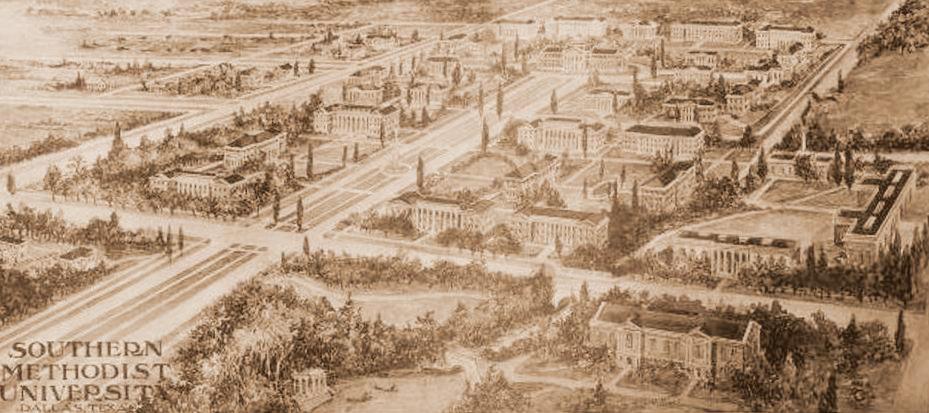
1smu-rotunda-frontis_1916-lgProposed buildings — upper half of the campus

by Paula Bosse

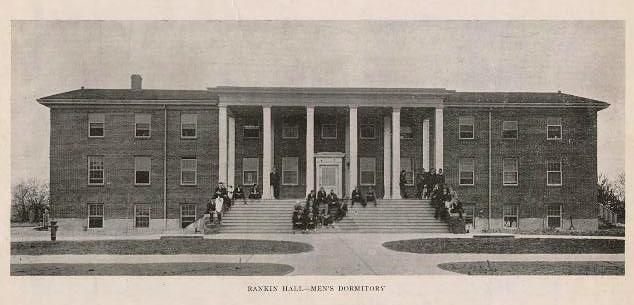
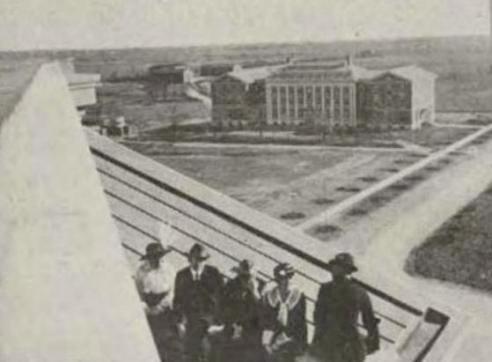
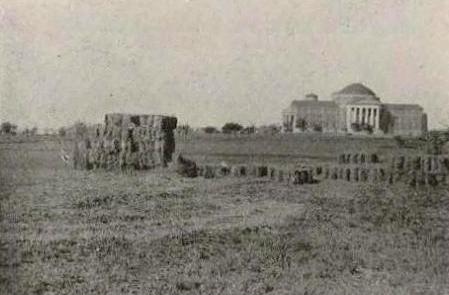
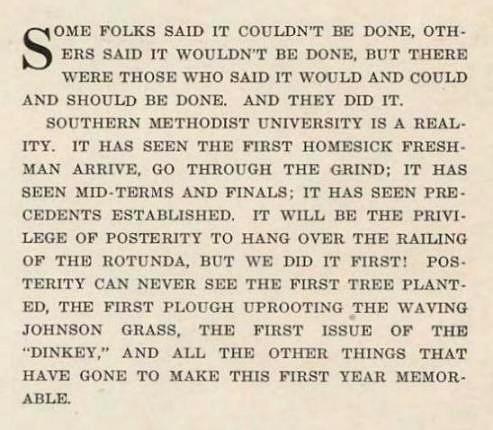
In 1916, the SMU campus consisted of Dallas Hall and four dormitories — five lonely buildings set in a vast empty expanse of some 600-plus acres (a good chunk of which would be sold during the hard times of the Great Depression). There are as many jokes throughout the first yearbook about this prairie outpost’s resemblance to a “farm” as there are about the university’s ongoing construction — there are numerous photos of high-spirited students standing on or next to piles of bricks and constantly churning cement mixers. Even though there were fewer than two dozen members of the senior class, the entire student body of that first year numbered an impressive 701. This first year was, of course, a milestone in the history of SMU, but it was also a significant step forward in the history of Dallas.

2smu-rotunda-1916-aDallas Hall — Administration Building

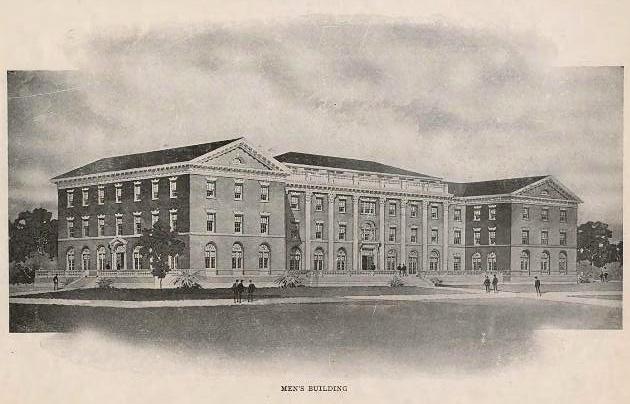
3smu-rotunda-1916-bMen’s Building

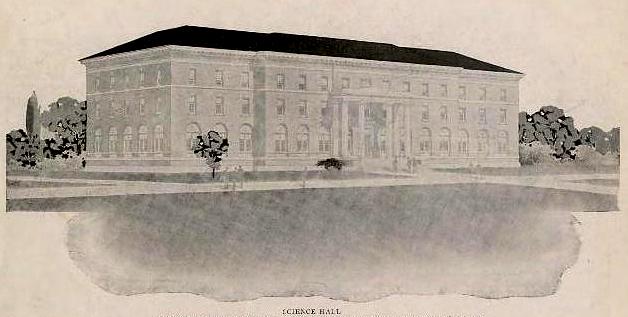
4smu-rotunda-1916-b1Science Hall

5smu-rotunda-1916-cRankin Hall — Men’s Dormitory

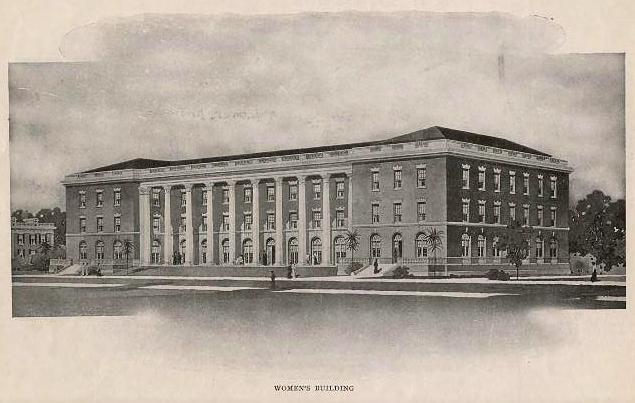
6smu-rotunda-1916-c1Women’s Building

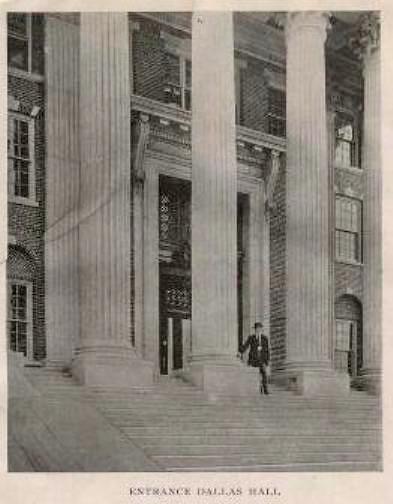
8smu-rotunda-1916-dallas-hall-entranceEntrance Dallas Hall

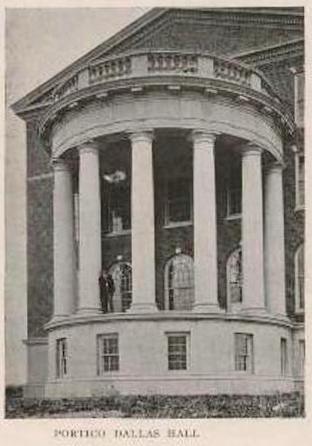
9smu-rotunda-1916-dallas-hall-porticoPortico Dallas Hall

10smu-rotunda-1916_bishop-blvd-fr-admin-bldgBishop Boulevard from Administration Building

11smu-rotunda-1916_viewNewest view in town

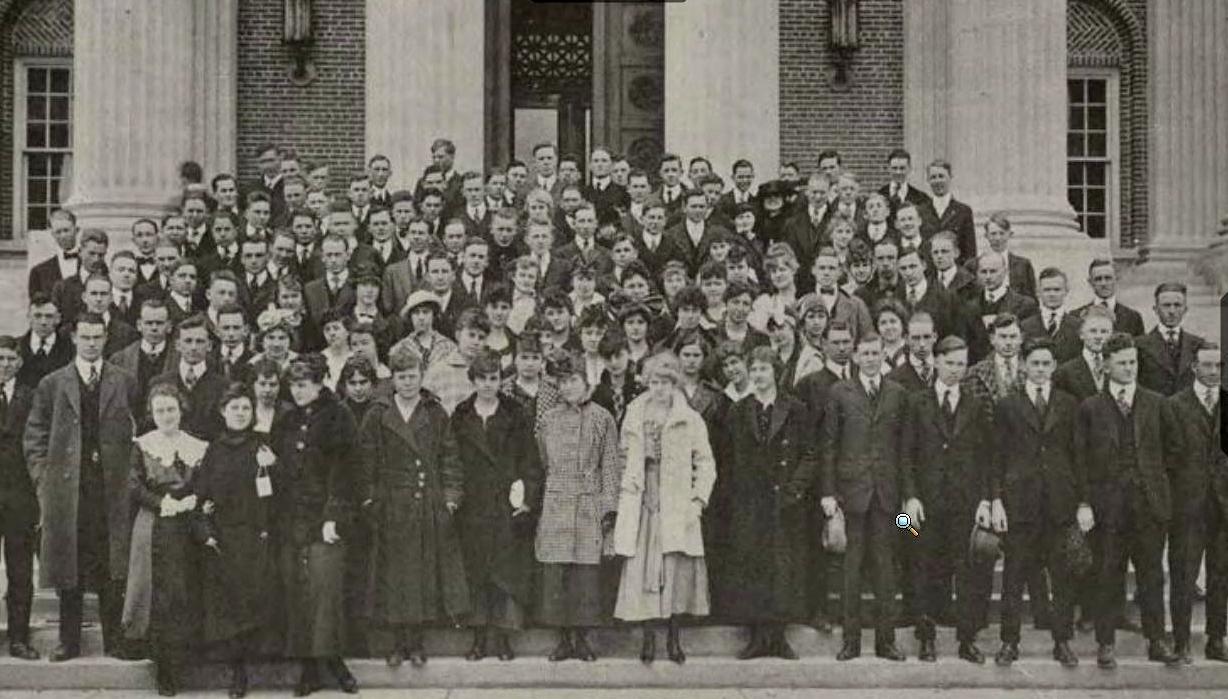
12smu-rotunda-1916_freshman-class1915-16 Freshman Class

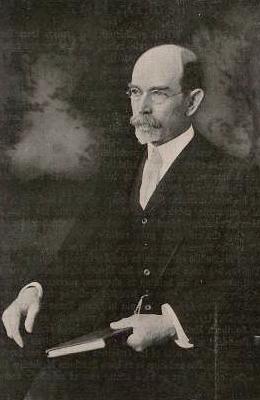
13smu-rotunda-1916_hyerSMU President Robert Stewart Hyer

smu-rotunda-1916_smu-farm_photo

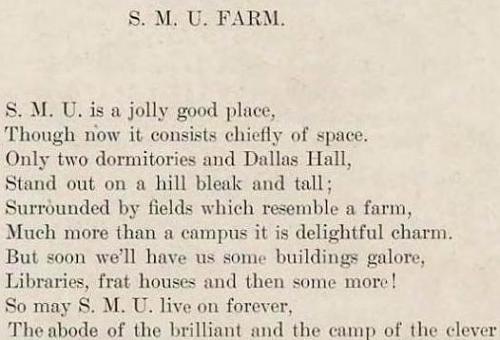
smu-rotunda-1916_smu-farm_verseDallas Hall, bales of hay, and stilted-yet-charming student versification

15smu-rotunda-1916_first-class

16smu-rotunda-1916_cover

SOUTHERN METHODIST UNIVERSITY
Dallas, Texas

For Men and Women
School of Liberal Arts
School of Theology
School of Fine Arts

Student Body:
The first year closes with a matriculation of 701, exclusive of the Summer School, which may bring the total enrollment to more than 1000. This is a record without parallel.

Location:
The campus is located north of the city, and four miles from the center of business activity. It is situated on an eminence above the level of many of the city’s highest buildings. In addition to the many natural trees, there have been several hundred trees and shrubs transplanted, making it a park of unusual beauty.

Buildings:
Dallas Hall, the gift of the citizens of Dallas, and costing $300,000.00, is acknowledged to be one of the best school buildings in the South. It is fireproof throughout and so arranged that it will accommodate the maximum number of students. Four dormitories with accommodations for about 300 students have already been built. They are all equipped with modern conveniences for comfort and study.

All the buildings are provided with electric lights, natural gas, artesian water, and steam heat. No effort has been spared to provide the best in every department.

S.M.U., “THE SCHOOL OF THE FUTURE”

***

Sources & Notes

All images from the “Rotunda” yearbook, issued by Southern Methodist University in 1916.

A very good, brief history of SMU’s beginnings is “From High on the Hilltop…” by Marshall Terry, and it can be read in its entirety here (PDF).

More photos from this yearbook in a later post, “SMU’s First Year: The Dinkey, Campus Hijinx, and The Basket Ball,” here.

*

Copyright © 2014 Paula Bosse. All Rights Reserved.

Chas. Ott: One-Stop Shopping for Bicycles and Dynamite

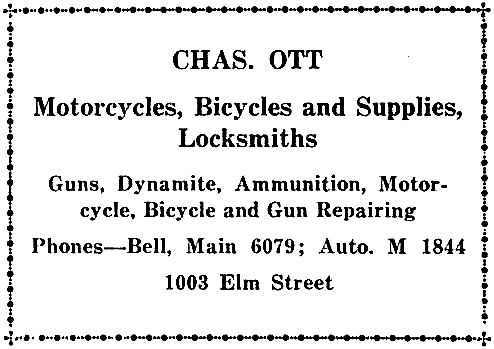
ad-charles-ott-dynamite_smu-19161916 ad

by Paula Bosse

Aside from maybe an ad for a popular off-campus soda shop or one of those bland, dutiful business card ads for an insurance company, I’m not sure that there’s necessarily a specific type of advertisement I expect to see in the pages of a college yearbook. But if I were quizzed on types of ads I wouldn’t expect to see in the pages of a college yearbook, it would probably include an ad for dynamite and ammo. But in 1916, SMU’s inaugural yearbook committee was proudly testing the limits of advertising propriety!

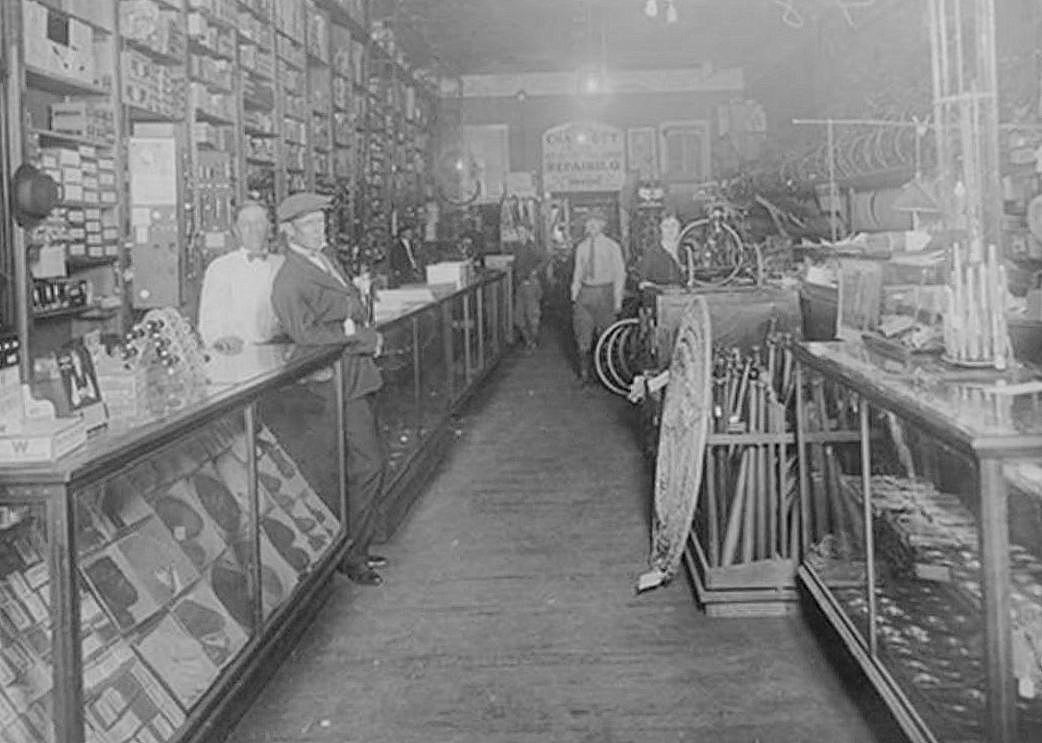
Charles Ott was kind of a big deal in the world of, first, gunsmithing, and second, locksmithing. Born in Germany, he came to Dallas in 1873 and opened a gun shop on Elm Street in 1876. According to The Encyclopedia of Texas, at the time of his death (c. 1921?), he was “the oldest gunsmith in the State of Texas.” That’s an impressive accomplishment. As seen from the ad above, a successful businessman not only knows his craft, but he knows how to diversify. (A nice bio of Mr. Ott can be found here.) Below, a photo of the interior of his shop, sometime in the early 20th century:

chas-ott_interior_cook-coll_degolyer_smu

*

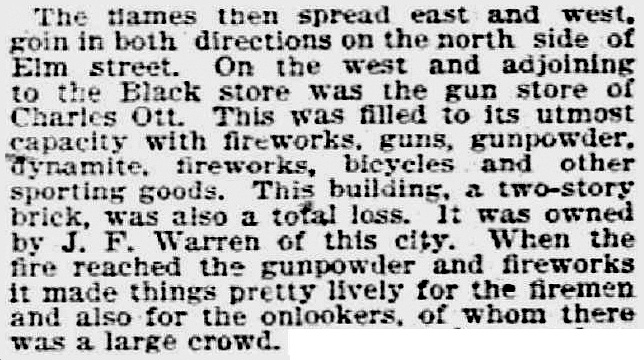
If you’re in business selling ammunition and gunpowder and fireworks and dynamite, you probably need to secure them in a place safe from the reach of the fires that seemed to hit Dallas constantly in the 19th century. ‘Cause if you don’t, you run the risk of something like this happening (north side of Elm, between Griffin and Akard):

ott-fire_dmn_052696Dallas Morning News, May 26, 1896

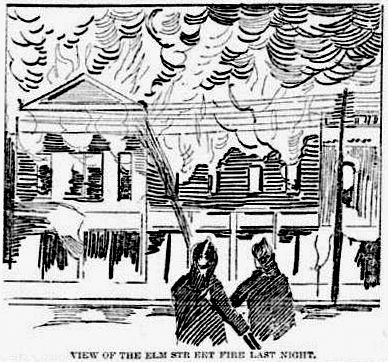
My favorite part of the story, though, was this on-the-spot artist’s depiction of the “conflagration.” You can practically feel the smoke burning your eyes.

ott-fire_pic_dmn_052696

***

Sources & Notes

Top ad from, yes, the 1915-16 SMU Rotunda.

Bio of Charles Ott linked above from Davis & Grobe’s Encyclopedia of Texas (Dallas: Texas Development Bureau, 1922). If you sped-read past it above, you can find it here.

Excerpt and drawing of the explosive Elm St. fire from The Dallas Morning News, May 26, 1896.

Photo of the interior of the Ott store from the George W. Cook Dallas/Texas Image Collection, DeGolyer Libraries, SMU Libraries, Southern Methodist University; more info on this photo is here.

*

Copyright © 2014 Paula Bosse. All Rights Reserved.


Jordan Moore

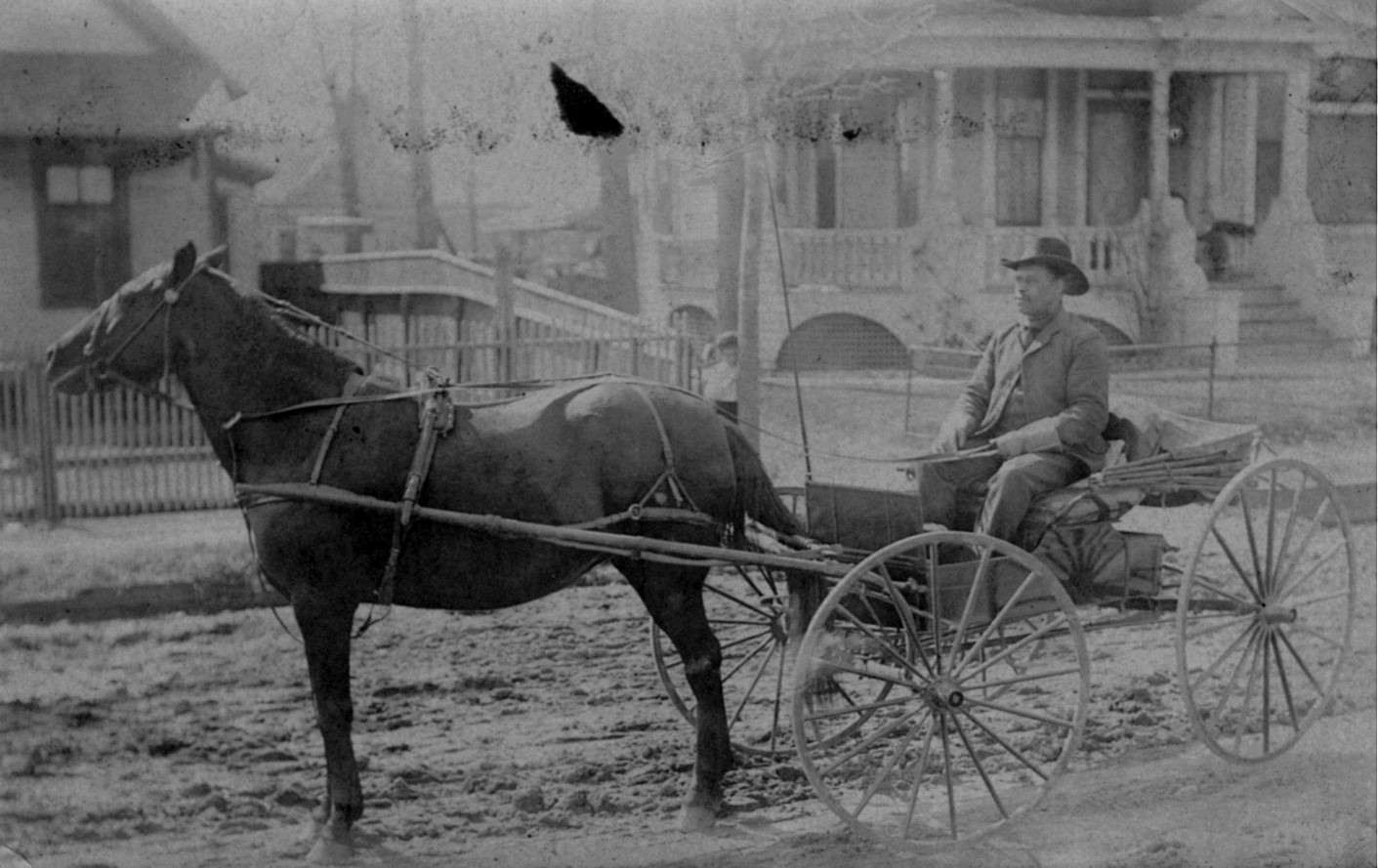
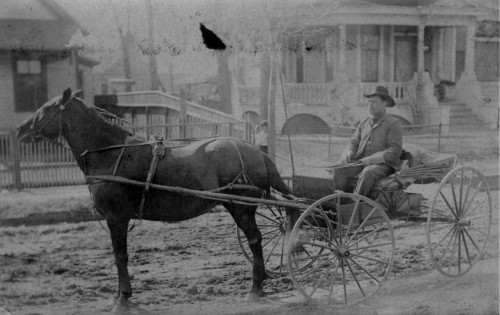
jordan-moore-buggy_c1905Jordan Moore, about 1905 (click for larger image)

by Paula Bosse

When wandering around the internet, one often encounters arresting images. Like the one above. There’s something about that photograph that grabs your attention. The stoic man in the buggy, the stiff, straight-standing horse, the child hiding behind the pole, the partial view of the porch of a fancy house, and the horrible, horrible condition of that street. The description reads simply: “Photograph of Jordan Moore seated in a horse-drawn carriage. Houses are visible in the background.” I wondered if I should know who Jordan Moore was, because the name wasn’t familiar. The photograph was in the collection that had been donated to the Dallas Historical Society by J. L. Patton, a prominent African-American educator. I found a few more photos of Mr. Moore in Patton’s collection, but I still had no idea who Jordan Moore was. So I did a little research.

Jordan Moore was born in Virginia in 1863. At some point he made it to Texas, perhaps in the early 1880s, and then to Dallas a few years later. By 1893 he was working for Mrs. Miranda Morrill, who had moved to Dallas in 1886, following the death of her husband, Judge Amos Morrill. Though born in Tennessee, Mrs. Morrill had moved to Texas as a child in 1834 and had strong ties to the state (one of her uncles was a signer of the Texas Declaration of Independence). When she arrived in Dallas, she built an imposing mansion at Ross and Harwood and, as she had no children, she and her servants (as they were listed on census forms) had that huge house to themselves to ramble around in. Mrs. Morrill was a prominent mover-and-shaker in town, devoting her time and money to a host of worthy social causes. In her employ was Jordan Moore, who is listed variously as her coachman and yardman, and who resided on the property. He worked for her until she died in 1906 at the age of 80.

(Mrs. Morrill’s obituary is interesting for many reasons, but particularly because amongst her surviving family members were her half-brothers R. L. Moore and S. J. Moore, sons of Mrs. Morrill’s stepfather. I don’t know if Jordan Moore was born into slavery and was owned by members of Mrs. Morrill’s family, but it’s interesting that he shared a surname with his employer’s family.)

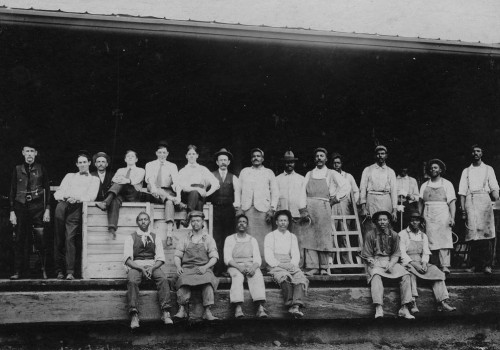
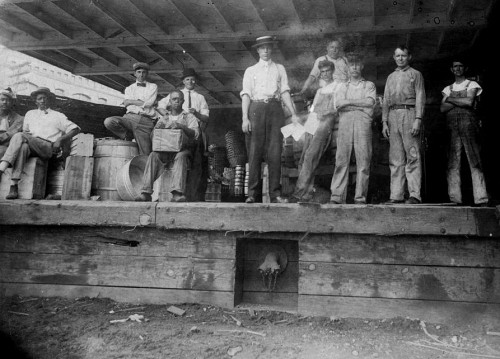
In 1907, after Mrs. Morrill’s death, Mr. Moore had moved to rooms elsewhere and went to work as a porter for the very large, very successful Huey & Philp Hardware Company at Griffin and Elm. Below are a couple of photographs of Moore and co-workers on the loading docks. He does not look very happy. He stayed at the job for 11 years but moved around from rooming house to rooming house — from Ross to Cochran to N. Harwood to Masten. (One of the captions on these photos states that Mr. Moore purchased a house on Cochran St. in 1900. I don’t think that’s correct. If he did buy a house, he doesn’t appear to have ever lived in it.)

Jordan Moore died on January 22, 1918, from complications of  diabetes. He was 54. He never married and had no children, and the friend he had been staying with when he died offered scant and approximate guesses as to dates and places when asked to supply them for the official death certificate.

I wondered why all these photos of a man who apparently left no family and had lived a fairly commonplace life had made their way into the personal collection of J. L. Patton, a principal at Booker T. Washington High School and a pioneer in education for African-American students in Dallas. And then I noticed that the name of the “informant” on the death certificate was Samuel Stanton, a long-time friend with whom Moore had been staying in his last days. Moore was the godfather of Mr. Stanton’s daughter, and Mr. Stanton’s daughter was Mr. Patton’s mother. Patton would have been 12 when Moore died, and he would certainly have remembered him — and one hopes he had fond memories of him.

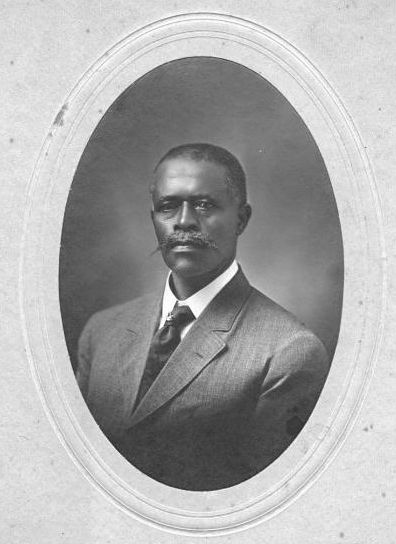
Jordan Moore was buried in Alpha Cemetery, one of the few “negro” cemeteries of the time, near the old freedmen’s town of Alpha, near present-day Preston and Alpha Road. Below are more photographs of Mr. Moore, now in the collection of the Dallas Historical Society.
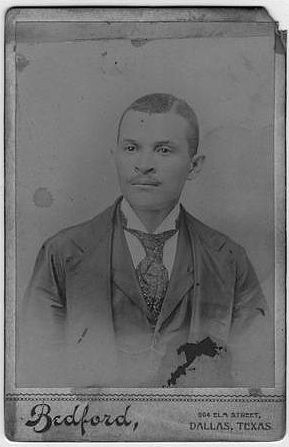
jordan-moore-portrait_18901890

moore-loading-dock_c1905Mr. Moore (seated, second from left), Huey & Philp loading dock, ca. 1907
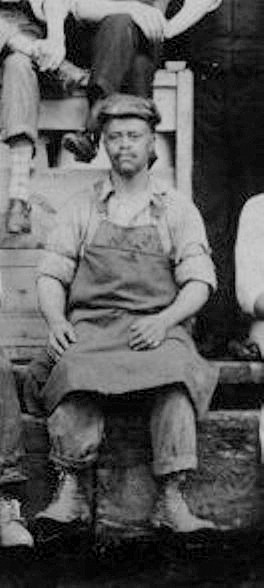
moore-det

moore-with-box_loading-dock_c1910Mr. Moore (seated, with box), Huey & Philp loading dock, ca. 1910-15
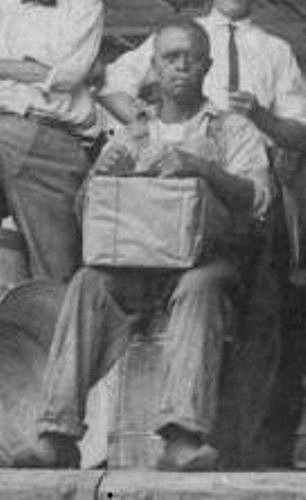
moore-box-det

jordan-moore-photo_c1910sca. 1910-15

morrill-house_1898Mrs. Morrill’s house at Ross & Harwood, 1894
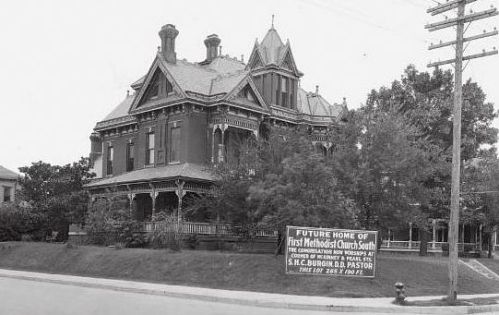
morrill-house_lost-dallas_doty_dmnThe Morrill house — next stop: demolition, 1920
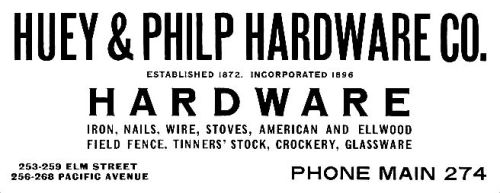
huey-philp_19091909 ad

huey-philp_1913_dmn_080212Huey & Philp Hardware Co., at Griffin and Elm — ca. 1913

***

Sources & Notes

Photos of Jordan Moore from the Dallas Historical Society’s J. L. Patton Collection, once viewable at UNT’s Portal to Texas History website. Top photo, c. 1905.

The first photo of Mrs. Morrill’s house at Ross and Harwood is from Clifton Church’s book Dallas, Texas Through a Camera (Dallas, 1894). (As an interesting aside, Church was married to Morrill’s niece.) In the book Dallas Rediscovered, the house is described thusly: “Mrs. Miranda Morrill’s dark, brooding residence, completed in 1886 by A. B. Bristol at the southwest corner of Harwood, was leveled in 1920 for construction of the First United Methodist Church.”

The second photo of the Morrill house is from Mark Doty’s book Lost Dallas (Charleston: Arcadia Publishing, 2012).

Huey & Philp Hardware Co. ad from Worley’s 1909 Dallas directory.

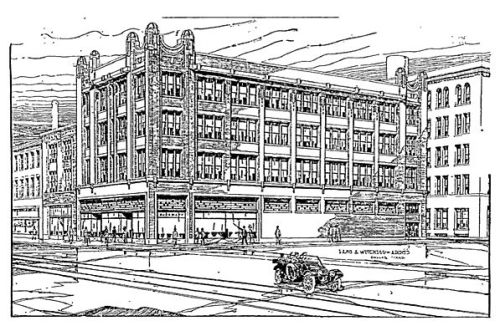
Lang & Witchell drawing of the Huey & Philp building is from a Dallas Morning News blog post by Steve Brown, here.

More on the accomplishments of J. L. Patton from the Handbook of Texas, here.

*

Copyright © 2014 Paula Bosse. All Rights Reserved.


Swell Hats for Swell People — 1911

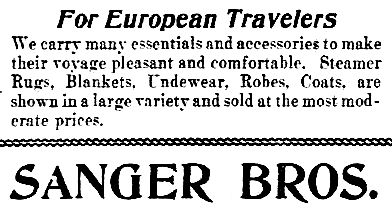
sangers-hats_dmn_030711asangers-hats_dmn_030711b

For the ladies: “For every lady desirous of owning a Swell Hat for the Horse Show or any of the other Spring functions…. There are daring creations in the large and small shapes; there are conservative styles for the demure maiden.”

e-m-kahn_hats_dmn_030711

And for the gentlemen, The Ryton:“The most popular style of the season; a wide-brimmed telescope, in all proportions, with the very correct pencil curl edge. Ask for this Hat; you’ll like it.”

(You don’t see a lot of semi-colons in ads anymore, do you?)

***

Sanger Bros. ad and E.M. Kahn ad from The Dallas Morning News, March 7, 1911.

*

Copyright © 2014 Paula Bosse. All Rights Reserved.