Flashback : Dallas

A Miscellany: History, Ads, Pop Culture

Category: 1920s

Dallas Gets Vertical: 1887-1925

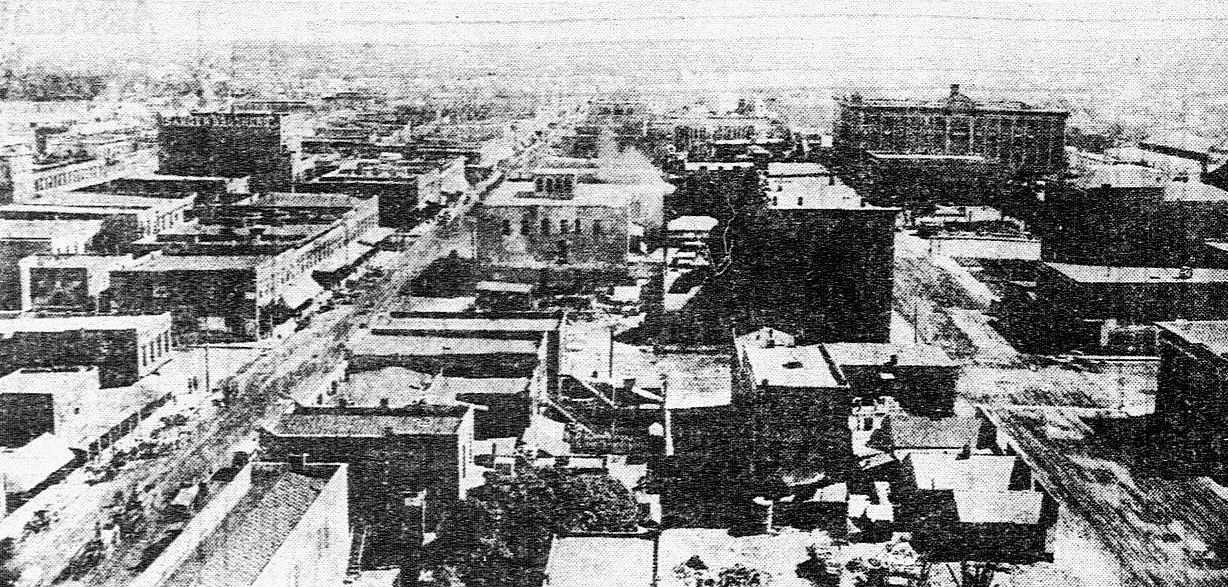
east-from-courthouse_1887Looking east from the courthouse, ca. 1887 (click for larger image)

by Paula Bosse

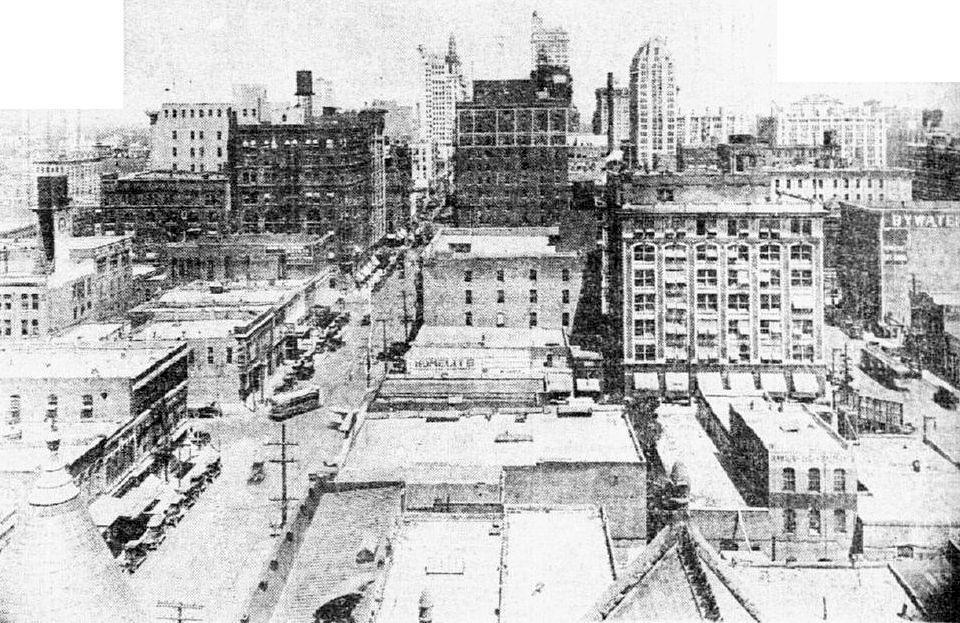
Above and below, the view of downtown Dallas looking east from the courthouse, with Main Street on the left and Commerce on the right. The top photo was taken about 1887 (the Grand Windsor hotel is the mammoth building in the top right corner), and the bottom one was taken about 1925. What a difference 38 years makes — the horizon has disappeared!

east-from-courthouse_1920s

***

Sources & Notes

Both photos appeared in The Dallas Morning News on Oct. 1, 1925. The caption reads: “[First photo]: View of Dallas looking east between Main and Commerce streets from the courthouse. It was taken about 1887. So far as known it is the only picture in existence which shows the Dallas Opera House at the southwest corner of Commerce and Austin streets. It also shows the old Grand Windsor Hotel. Note the vacant lots, and the unpaved condition of the streets and the horsedrawn vehicles on Main. [Second photo] This picture was made by H. B. Hillyer & Son.”

*

Copyright © 2014 Paula Bosse. All Rights Reserved.

Highland Park Methodist Church — 1927

hp-methodist-church_1927-degolyerHighland Park Methodist Church, 1927 (click for larger image)

by Paula Bosse

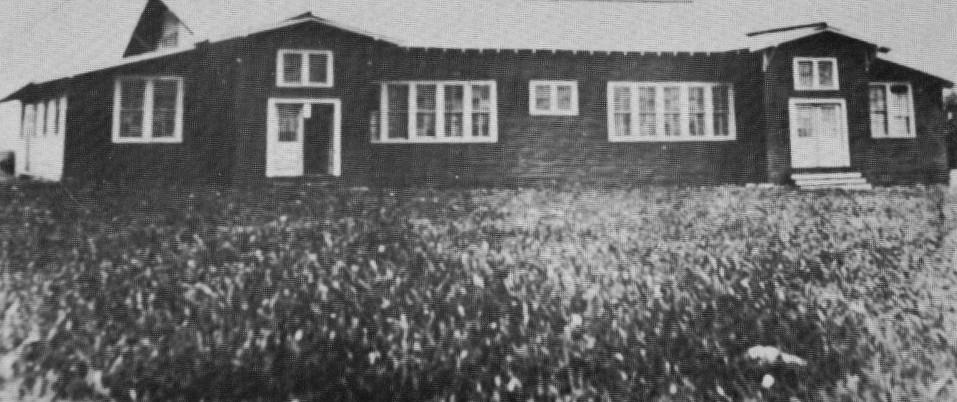
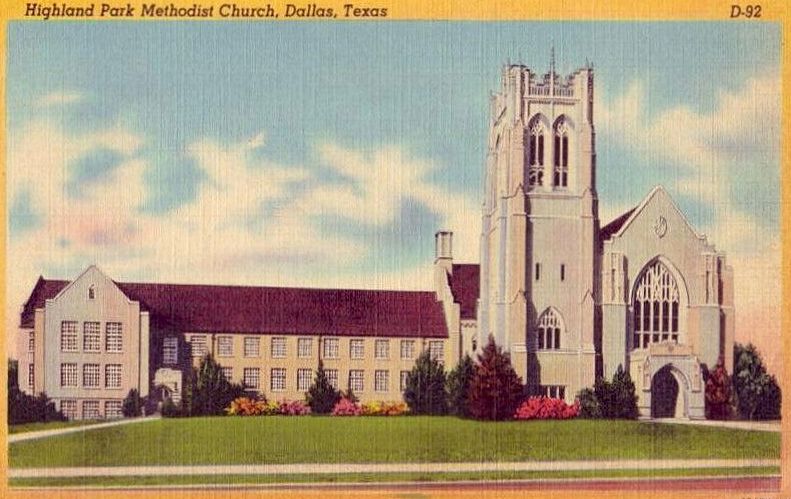
The beautiful Highland Park Methodist Church (now Highland Park United Methodist Church) was designed by architects Mark Lemmon and Roscoe DeWitt (who also designed several of the buildings on the adjacent SMU campus, as well as Woodrow Wilson and Sunset high schools, to name only a few of their projects). According to the HPUMC website, the first church — a temporary building which was referred to as “The Little Brown Church” — was built at Mockingbird and Hillcrest in 1917. It wasn’t until 1927 that the beautiful French Gothic-inspired building we know today was built on that same site. (At one time, Highland Park Methodist Church was the largest Methodist church in the world.)

(Incidentally, Mark Lemmon built his lovely cottage-like home on Mockingbird, across the street from both the church and the SMU campus, where at any time of the day or night, he could look out his front window and gaze with satisfaction upon his beautiful church and the ever-growing university campus dotted with buildings he had designed.)

hp_methodist-church_post-card-series“The Little Brown Church” — built 1917

hpmc_postcard_color

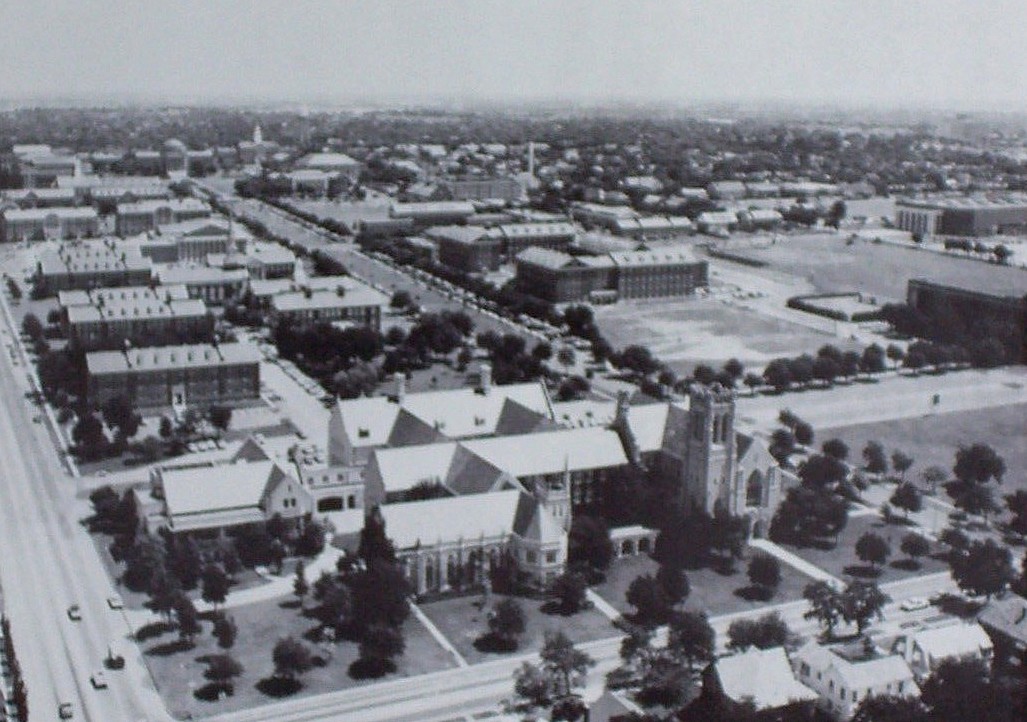
hpmc_golden-prologue-backChurch and SMU campus, Hillcrest and Mockingbird, 1960s

Highland Park Methodist Church Dallas, TX

***

Top photo by Joseph Neland Hester, taken in 1927. From the DeGolyer Library, Central University Libraries, Southern Methodist University; photo can be seen here. (UPDATE: I erroneously labeled the direction of this photo previously. It actually shows the back of the church, looking toward Mockingbird. It would have been taken from about where the Meadows Museum is now. If this is incorrect, please let me know!)

Photo of “The Little Brown Church” from the Park Cities Bank Heritage Series, used courtesy Lone Star Library Annex Facebook Group.

Aerial view from the back cover of Golden Prologue to the Future: A History of Highland Park Methodist Church by Doris Miller Johnson (Parthenon Press, 1966).

Other images from postcards.

For more on the history of Highland Park United Methodist Church check out the Wikipedia page here; check out the church’s history page here.

All photos larger when clicked.

*

Copyright © 2014 Paula Bosse. All Rights Reserved.

Up North in Denton: “Famous School and College County”

denton-co-courthouse-1928Denton County Courthouse, 1928 (click for larger image)

by Paula Bosse

Okay, so it’s not Dallas, but who in Big D doesn’t love Little D? Besides, this is just too great a photo to keep to myself.

And in case you need to bone up on your 1928 Denton County stats for “Jeopardy” or something, look no further (click for larger image):

denton-co-courthouse_1928b

“Kindergarten to College Degree —
Board at home and be educated free.”

Free!

*

Might as well see where the photo of the courthouse was taken from: the Wright Opera House (now Recycled Books). Here it is, about 1900:

denton-opera-house_1900_tx-historian_1982The Wright Opera House, built in 1899, shown here in 1900 (click for much larger image)

***

The photo of the courthouse and the ad are both from, where else, the program for the 52nd Annual Convention of the State Firemen’s Association of Texas, held in Denton in June of 1928. If you’re into firefighting ephemera or old Denton photos, you might want to peruse it yourself: click here. (From the collection of the Denton Public Library.)

Photo of the Opera House from the article “Faded Echoes: A History of the Wright Opera House in Denton” by Clare Adkins, featured in the September, 1982 issue of Texas Historian, accessible through the Portal to Texas History, here.

Click pictures for larger images.

*

Copyright © 2014 Paula Bosse. All Rights Reserved.

A Decade of Spectacular Growth for the Dallas Skyline: 1929-1939

downtown_night_lloyd-long_smu_foscueA stunning view of the city at night… (click for larger image)

by Paula Bosse

Two photographs showing the same view: the top from about 1939, the bottom from 1928. This city has always been a show-stopper at night, but Dallas went from looking like a typical big, prosperous city to a glamorous and elegant, fantastically illuminated metropolis in the span of only ten years. The 1930s was a good time to be an architect in Dallas.

rotarian-magazine_jan-1929

***

Sources & Notes

Top photo by Lloyd M. Long, from the Edwin J. Foscue Map Library, Central University Libraries, Southern Methodist University; it is accessible here. To see this photo with major buildings identified, the labeled version is here. The view is from the Medical Arts Building. Elm and Ervay is the intersection at the lower left, and Pacific runs along the right.

Bottom photo from the January, 1929 issue of The Rotarian, showing its readers what was in store for them at their annual convention to be held in Dallas in May. The night-time skywriting is a nice touch. (It’s weird seeing the Magnolia Building before Pegasus was installed on top of it in 1934.)

Click photos for larger images.

*

Copyright © 2014 Paula Bosse. All Rights Reserved.


“See Dallas Through Linz Glasses!” — 1929

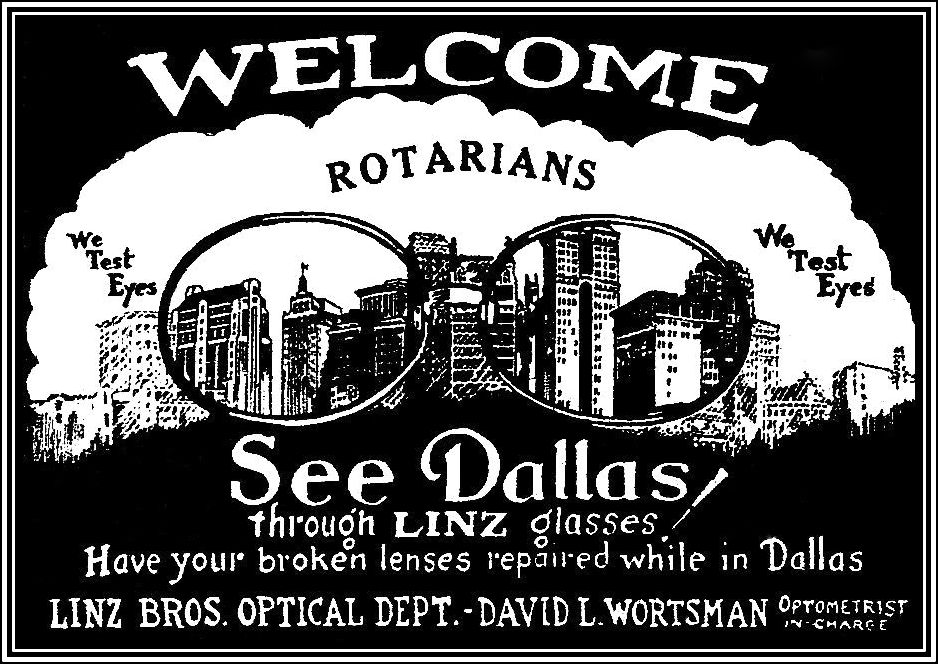
ad-linz_rotarians_dmn_052629

by Paula Bosse

What a great ad from 1929!

The huge annual convention of the Rotarians was underway in Dallas at this time — 10,000 people were flooding the city from around the world, and all the larger businesses had specially-branded advertisements aimed at the pool of potential new customers.

*

Copyright © 2014 Paula Bosse. All Rights Reserved

From Blacksmithing to Auto Body Repair: A Guy Who Knew How to Change With the Times

palace-shop_1920sThe Palace Shop — 2814 Main St., Deep Ellum…

by Paula Bosse

The building seen above in a photo from the 1920s is still standing on Main Street in Deep Ellum — and it still looks very much the same. It goes back to at least the 1910’s and has most recently been an art gallery/production studio; when I went to see a gallery show there several months ago, I was almost more interested in the building than in the art. It’s pretty cool.

The building has housed a lot of automotive-related endeavors over the years, including, the Palace Shop, a business which originally started out as a blacksmith shop in 1889 (in a different location — at what is now Commerce and Lane).

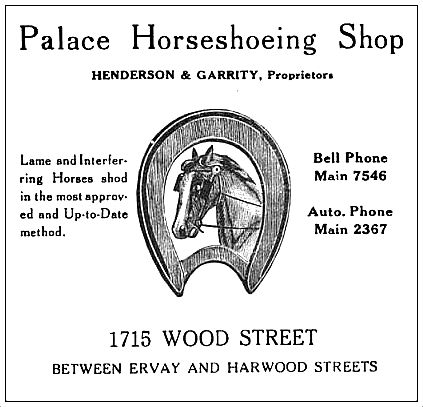
palace-horseshoeing_bldg-code_19141914 ad

As the horse-shoeing business began to slack off, the owner — an early automobile enthusiast named Gus Henderson, Sr. — shrewdly made the transition from blacksmith to auto body repair guy. His business expanded and he made the move to Main Street.

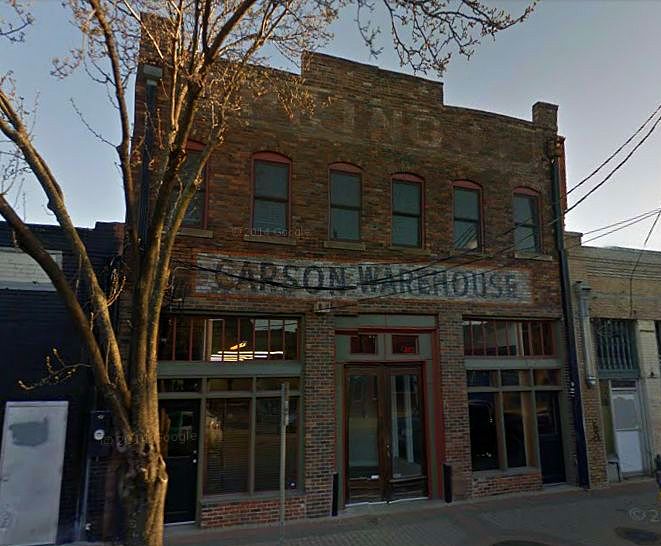
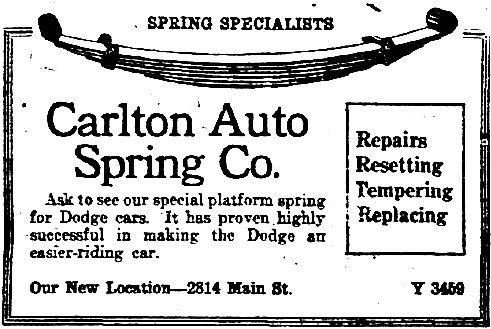
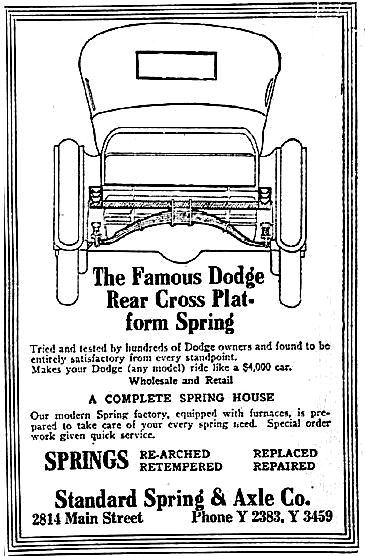
Below is what the building looks like today, still pretty much the same. The word at the top is “springs” which can be explained by there having been a “spring specialist” at that address for several years (the Carlton Auto Spring Co., later bought out by the Standard Spring & Axle Co.), but I’m not sure what the “Carson” refers to — anyone know? (Should it be “Carlton”?)

palace-shop_now_googleGoogle Street View

carlton-auto-spring_dmn_0219221922

standard-spring_dmn_1008221922

I’m always happy to see these old buildings still in use a hundred years after they were built — a sad rarity for Dallas. Thank you, Deep Ellum!

***

Sources & Notes

The often-unreliable Dallas Central Appraisal District info has the construction date of the building as 1913. The earliest business I can find at that address is something called Star Manufacturing Co. — in business there in 1915. (The city’s street numbers were changed in 1911, so it’s difficult to pinpoint what was in that location previously — the street numbers in that block of Main Street would have been between 744 and 774, per the 1909 Worley’s directory.)

*

Copyright © 2014 Paula Bosse. All Rights Reserved.


The Trinity River at the City’s Doorstep

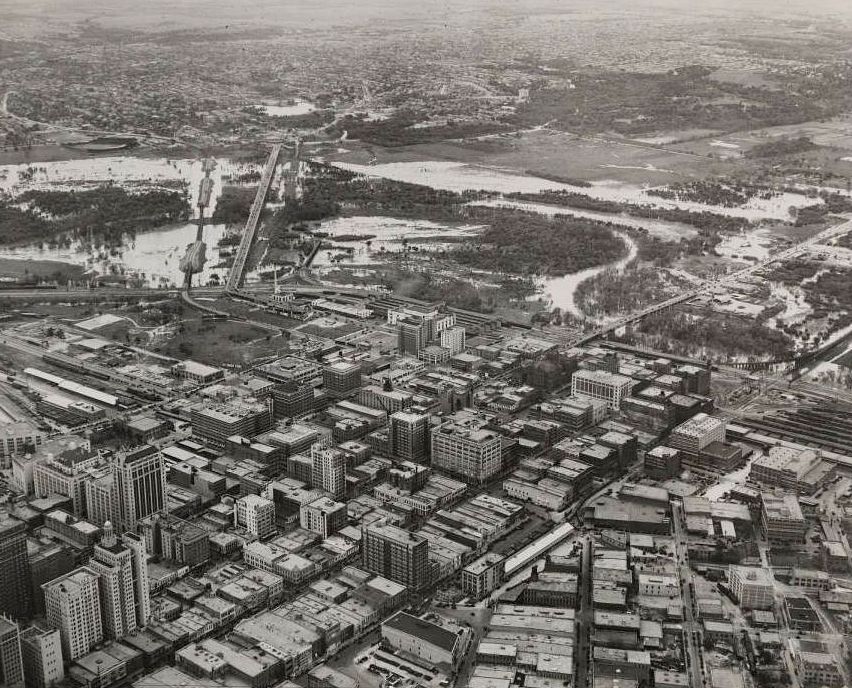
downtown_trinity_ca1920s_smu_foscueWhat? You didn’t know the Trinity River was straightened?

by Paula Bosse

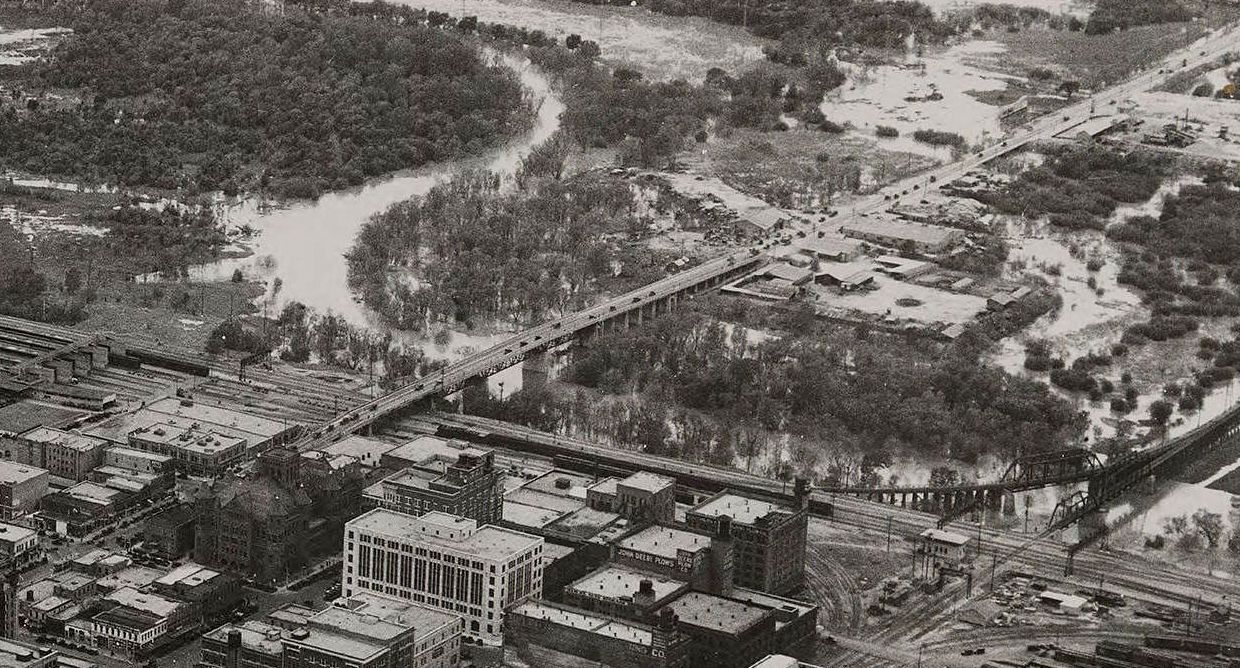
Back before Dallas decided to straighten out the Trinity River and move it a mile or two to the west (in an attempt to prevent future flooding), the river ran only about a block from the Old Red Courthouse. It’s so strange looking at this picture and seeing a river in a place where we’ve never seen it. It’s a shame they moved it (who knew you could “move a river”?), but flooding was a major issue, and, in fact, it looks like there was flooding the day this photo was taken. Below, you can see a magnified view — it looks so different from what we’re used to that it takes a second to get your bearings. Imagine how different Dallas would feel today if the Trinity had been allowed to run its natural course.

downtown_trinity_ca1920s_smu_foscue-det

***

Sources & Notes

Photograph by Lloyd M. Long, from the Edwin J. Foscue Map Library, Central University Libraries, Southern Methodist University; it can be seen here (with many of the buildings labeled) and here (without the labeling).

SMU has the photo dated “ca. 1930s or 1940s,” but I think it may be from the late ’20s. I’ve seen non-specific dates of the river’s realignment from the 1920s to the 1930s, but a couple of landmarks in the photo above place it sometime between 1925 (the year the Santa Fe buildings were constructed) and 1933 (the year the Hippodrome Theater — seen here, on Pacific — became the Joy Theater).

UPDATE: The river was straightened in 1928. See fascinating information about the when, where, why, and how of the Trinity River realignment, below in the comments — it was a true feat of modern engineering.

A few Trinity River-related links: the Trinity Commons Foundation site is here; the Trinity River Corridor Project site is here; and an interesting look at plans and proposals for the future of Dallas and the Trinity River can be read on the American Institute of Architects (Dallas) site here.

*

Copyright © 2014 Paula Bosse. All Rights Reserved.

Keep Oak Cliff Kinky — 1923

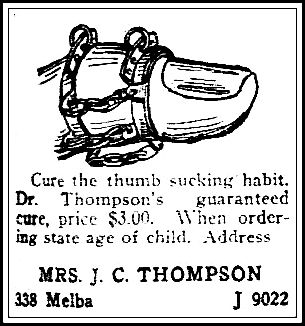
thumb-sucking_dmn_111823

by Paula Bosse

I’m not sure what more I can offer, except to say that in today’s money — with inflation taken into account — that little $3 bondage device for a child’s thumb would run you a cool 40 bucks in 2014. (Updated: in 2024, make that $55!)

I picture Mrs. J. C. Thompson assembling the inventory herself, at the kitchen table in her little frame house on Melba Street in Oak Cliff, the Victrola playing in the other room, having a chirpy one-sided conversation with the imaginary “Dr. Thompson.” I wonder if she sold any?

To quote the Messrs. Python: “Guaranteed to break the ice at parties!”

***

Sources & Notes

Ad from The Dallas Morning News, Nov. 18, 1923. I’m not sure there was a follow-up.

Whither Mrs. J. C. Thompson, OC entrepreneur?

*

Copyright © 2014 Paula Bosse. All Rights Reserved.

The Old Union Depot in East Dallas: 1897-1935

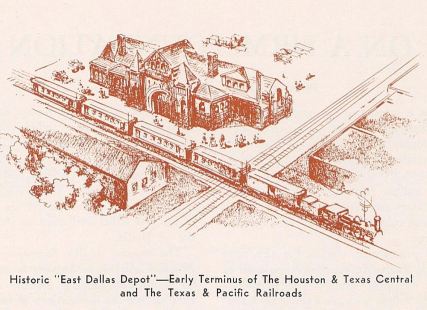
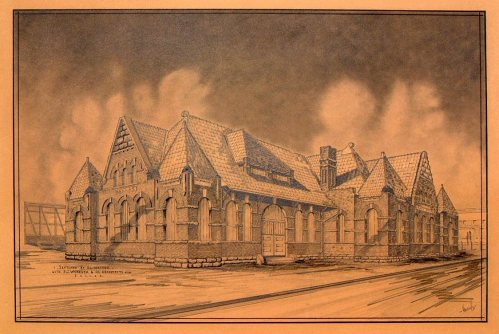
east-dallas-depot_rendering_art-hoffmanFrom the collection of Art Hoffman (click for larger image)

by Paula Bosse

I saw the above rendering of the old East Dallas rail depot posted recently in a Dallas history group. It was bought several years ago by Art Hoffman who was told it had belonged to a former employee of the Houston & Texas Central Railroad (which, along with the Texas & Pacific, served this station). It’s an odd thing for an architect to sketch — a boarded-up railroad depot. I couldn’t find anything on E. L. Watson, the architect who did the rendering (perhaps a member of the Watson family who were prominent Dallas contractors?), and I couldn’t find any connection between the depot and the F. J. Woerner & Co. architectural firm. The drawing might have been done in 1931, with what looks like “31” next to the artist’s signature. Could the drawing have been done merely as a study for E. L. Watson’s portfolio?

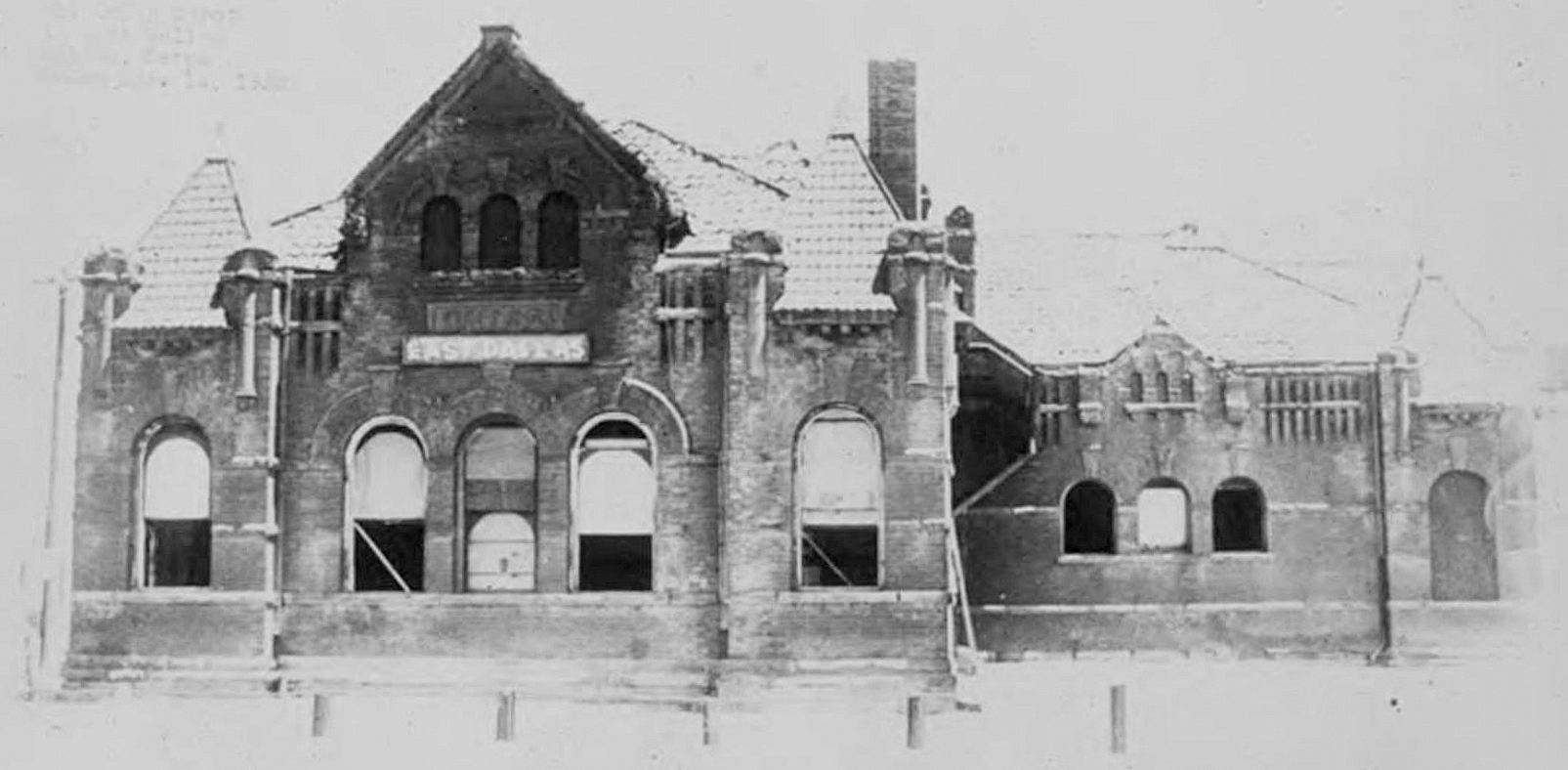
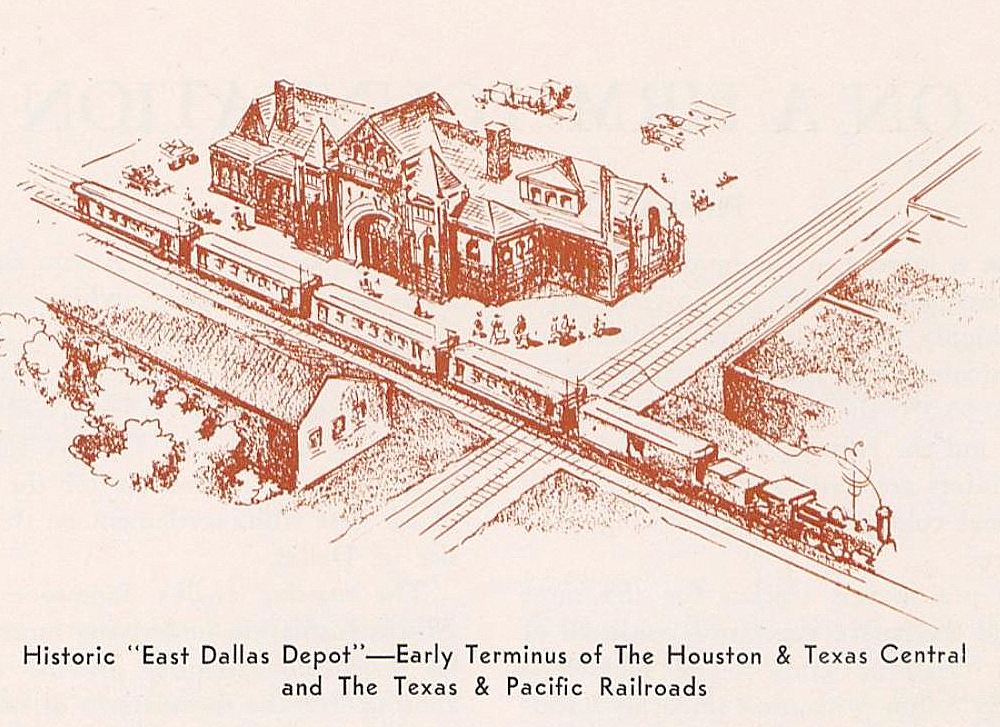
But back to the building itself. It was referred to by all sorts of names: Union Station, Union Depot, East Dallas Depot, Old Union Station, etc. With all these permutations, it took considerable digging to determine exactly when it had been built and when it had been demolished.

A couple of stations had previously occupied this site (about where Pacific Avenue and Central Expressway would cross), the first being built in 1872 at the behest of William H. Gaston who was developing the area, well east of the Dallas city limits. Due to the presence of the railroad, the area grew quickly, and in 1882, it was incorporated as the city of East Dallas. It thrived and continued to grow and on January 1, 1890 it was annexed and became part of the city of Dallas.
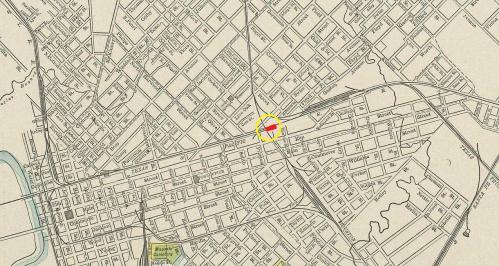
dallas-map-ca1900Location of depot in red — map circa 1890-1900 (click to enlarge)

The depot pictured in the drawing above was built in 1897. The previous station, a woefully inadequate and outdated “shanty,” was, by early 1897, being nudged toward demolition in order to remain competitive with the new Santa Fe depot then under construction. In the Feb. 10, 1897 edition of The Dallas Morning News, it was referred to as “the present eye-sore in East Dallas” which would be better off “abandoned and used for kindling wood.”

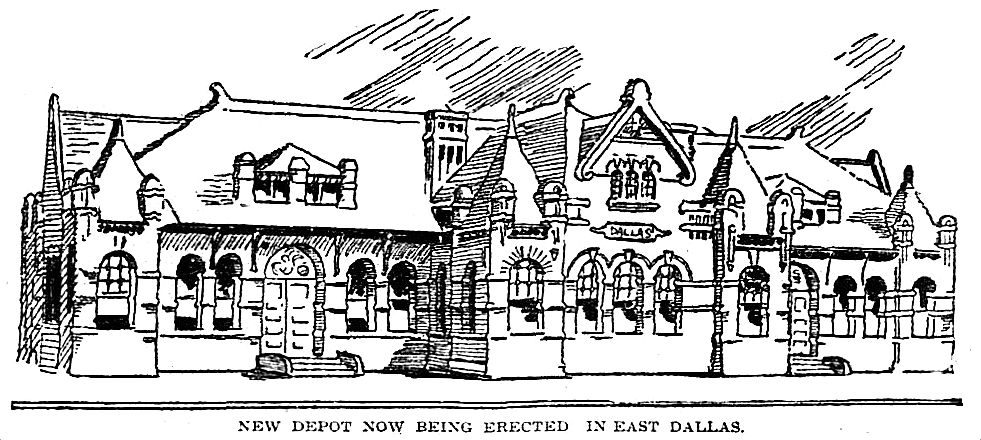
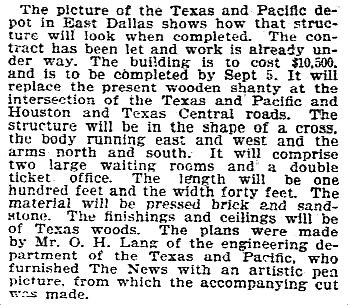
On April 4, 1897, it was reported that plans for a new Texas & Pacific passenger depot were nearly completed. By the beginning of June, the shanty had been torn down, and on June 6, 1897, the drawing below appeared in the pages of the Morning News, giving the people of Dallas a first look at what the much grander station would look like when completed. (It’s unfortunate that the actual architectural rendering was not used, but, instead, a more rudimentary staff artist’s version was printed.) The accompanying information revealed that the new depot had been designed by Mr. O. H. Lang, an architect who worked in the engineering department of the Texas & Pacific Railroad. This was an exciting tidbit to find, because I had wondered who had designed the structure but had been unable to find this elusive piece of information. And it was Otto Lang! Eight years after designing this railroad depot, Lang and fellow architect Frank Witchell would form the legendary firm of Lang & Witchell, and they would go on to design some of Dallas’ most impressive buildings.
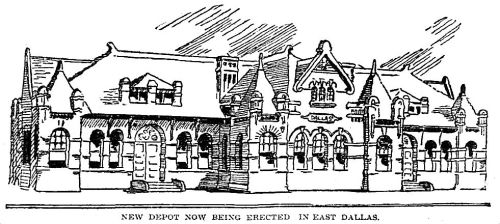
east-dallas-depot_dmn_060697-DRAWING

east-dallas-depot_dmn_060697-TEXTDallas Morning News, June 6, 1897

The building was completed fairly quickly, and its official opening was announced on Oct. 12, 1897.
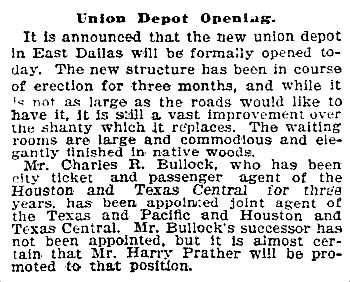
east-dallas-depot_GRAND-OPENING_dmn_101297DMN, Oct. 12, 1897

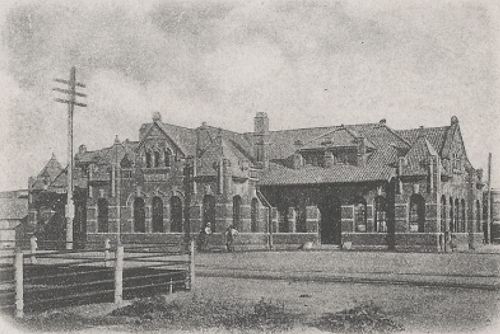
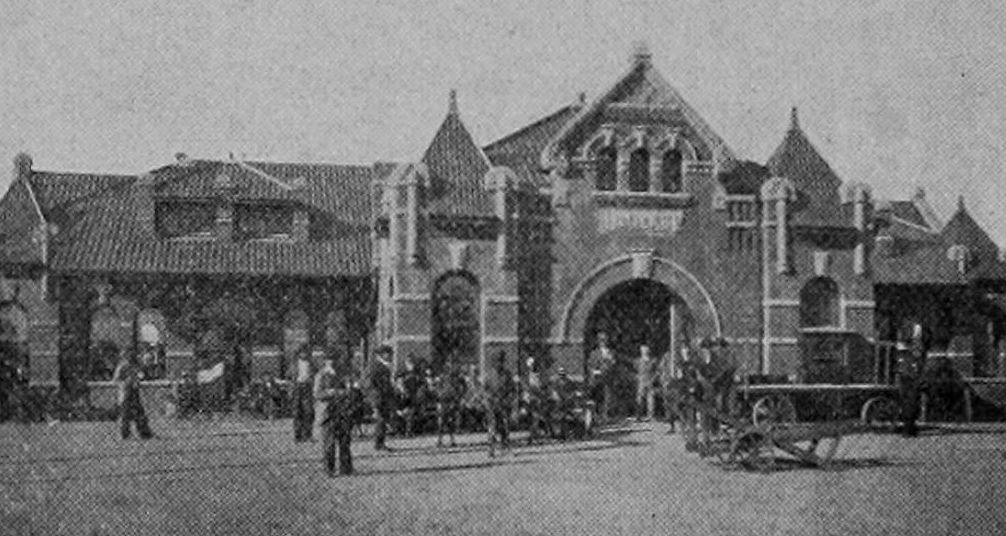
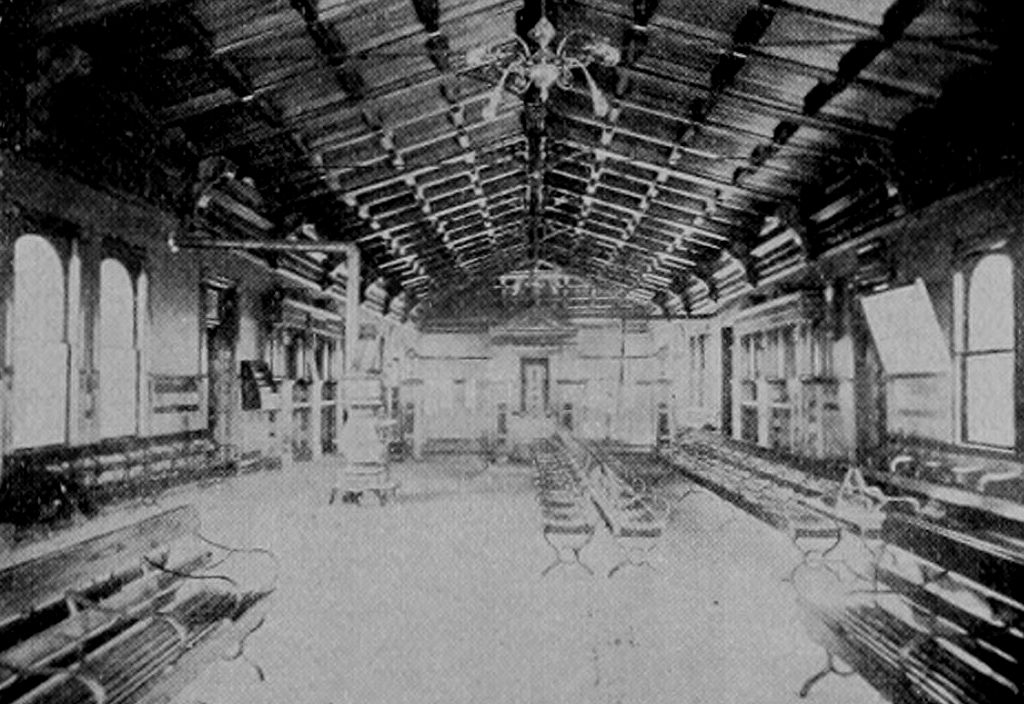
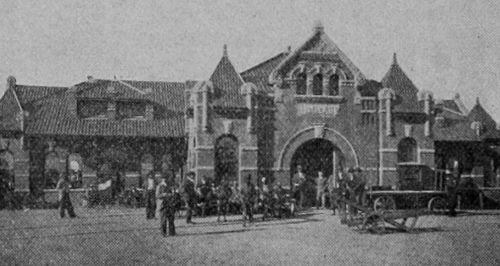
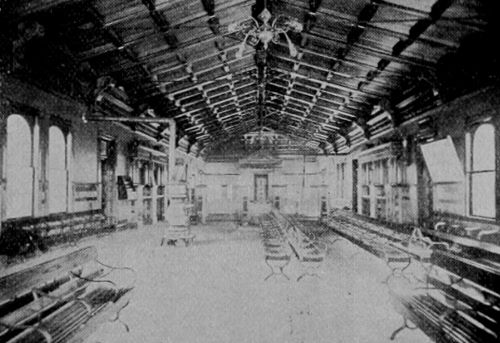
Here’s what the station looked like soon after it opened for business, from an 1898 Texas & Pacific publication (click for larger images):
east-dallas-depot_ext_tx-pac-rr_1898

east-dallas-depot_int_tx-pac-rr_1898

Much better than a shanty!

union-depot_flickr_coltera

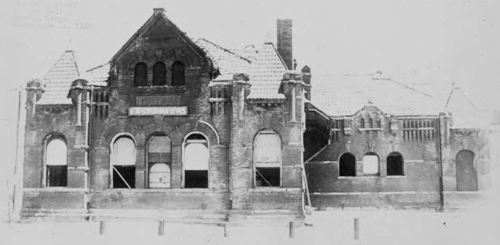
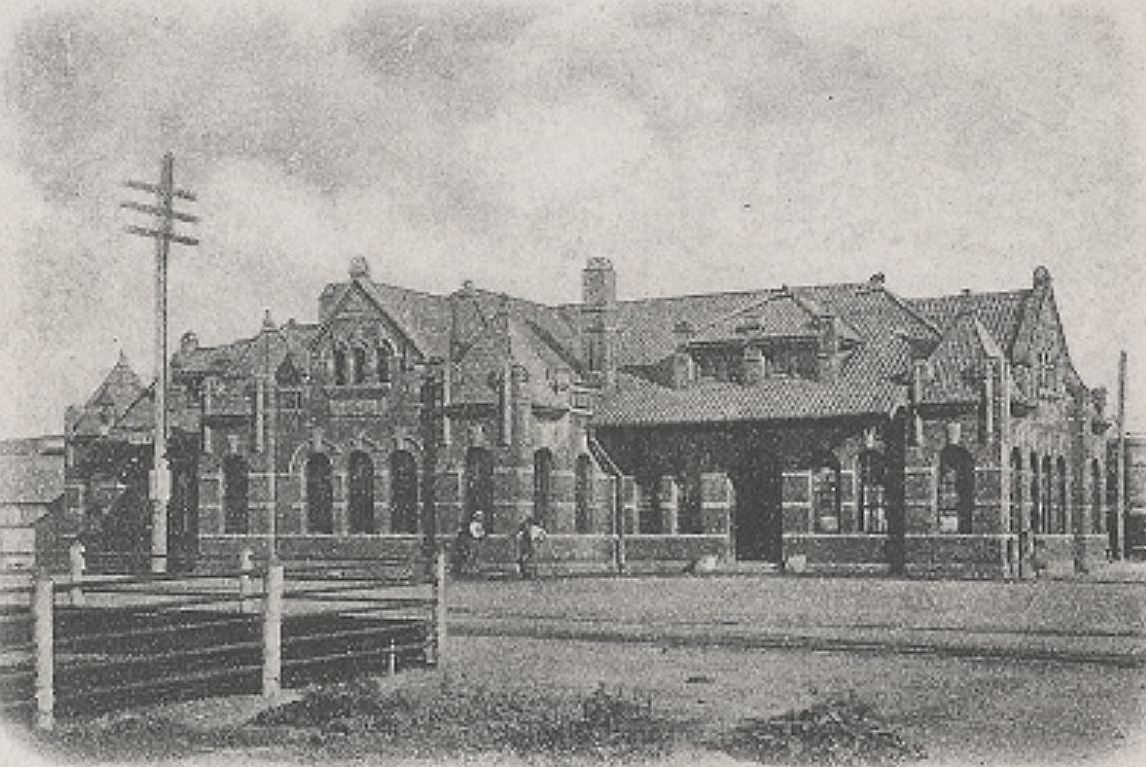
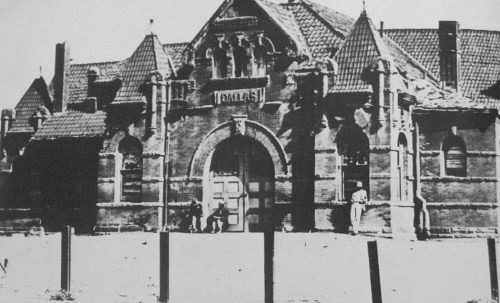
Below in another early photo of the depot:
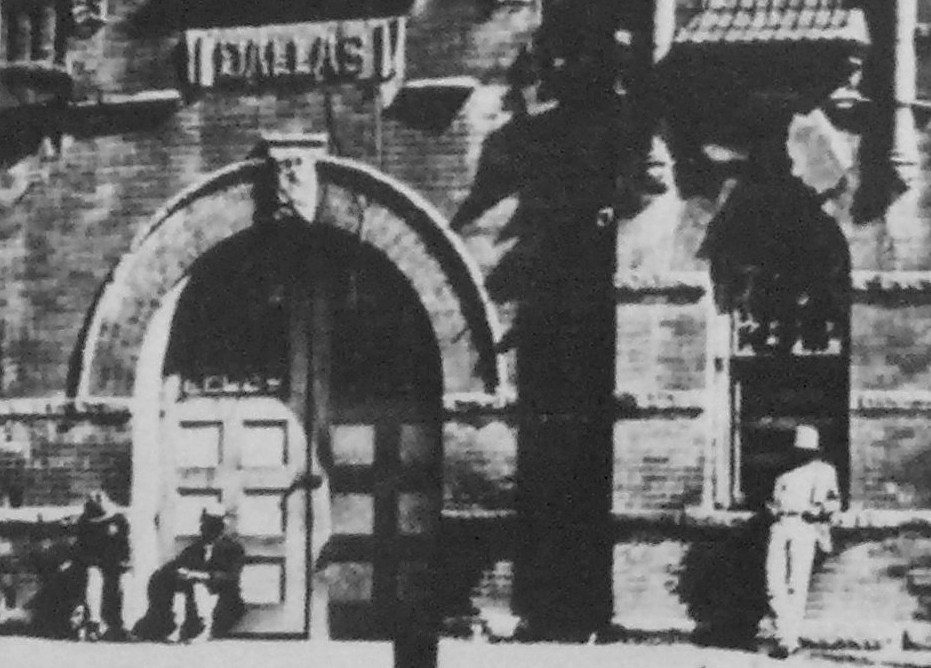
east-dallas-depot_c1890_dallas-redisc_DHS

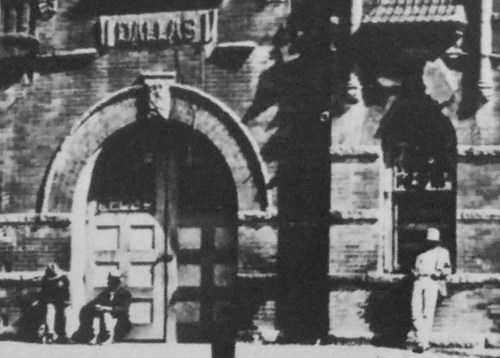
Can’t pass up an opportunity of zooming in on a detail:
east-dallas_c1890_dallas-redisc_DHS-det

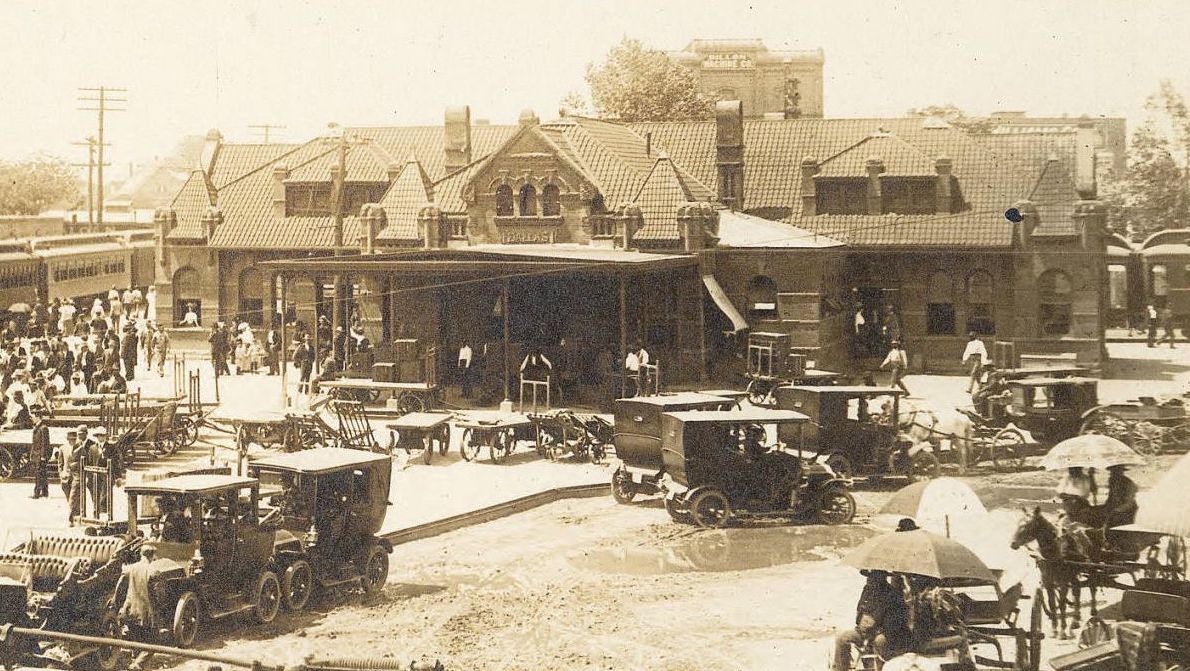
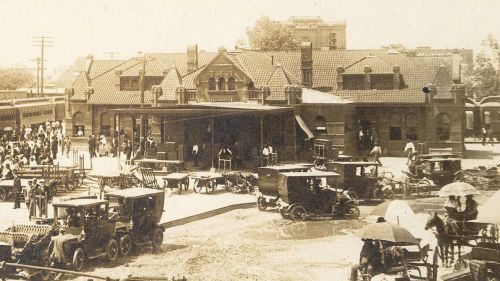
Here it is around 1910, a hotbed of activity, now with the addition of automobiles:
old-union-depot_degolyer_ca1910-det

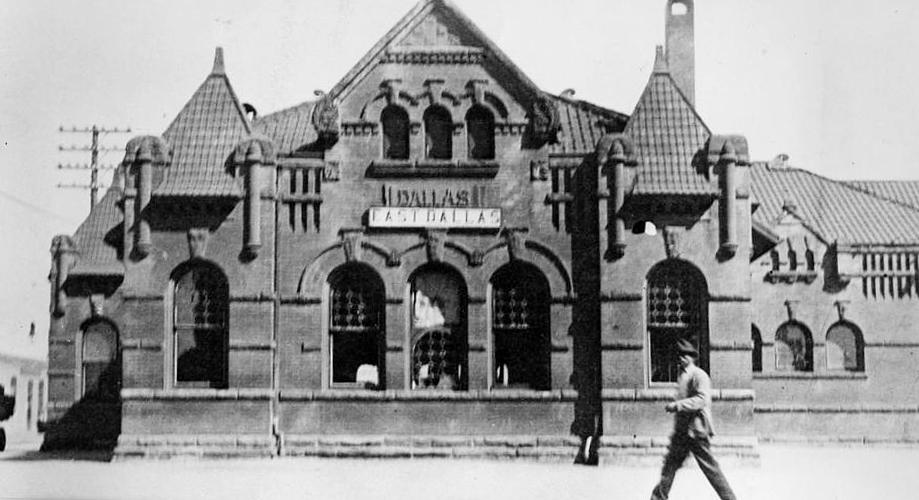
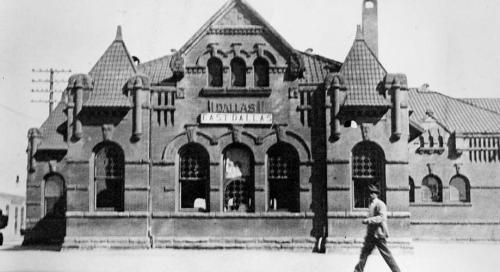
The station served an important role in the growth of (East) Dallas and in the everyday lives of its residents for almost twenty years, but in 1916 the many “independent” passenger and freight depots that had been spread out all over town were shuttered, per the Kessler Plan’s directive to consolidate and run all the rail lines in and out of the new Dallas Union Terminal. (This was when the word “old” began appearing ahead the East Dallas station whenever it was mentioned.)
east-dallas-depot_1916-portal(circa 1916)

So what became of the East Dallas depot? From “Relic of City of East Dallas Being Demolished,” a Dallas Morning News article from Jan. 20, 1935:

Last use of the depot for railroad purposes came in 1933 when it was abandoned as a freight station in August of that year. After that it was used as a station for interviewing destitute clients for the relief board but for several months has been boarded up.

So that original rendering may not have been done in 1931 after all (unless it was a high-concept architect’s vision of what the depot would look like one day all boarded up…).

At some point it was determined that the station would be torn down. It may have been one of those beautify-the-city projects done in preparation for the Texas Centennial Exposition the next year, but it was probably time for the building to come down. It was January of 1935, at the height of the Great Depression, and  not only did the city make it a point to hire laborers on relief to assist in the demolition, but it also approved the use of salvaged materials from the site to be used in building homes for “destitute families.”

Relief Administrator E. J. Stephany received approval Saturday of a project to get men to tear down the old structure and use the materials in building homes for destitute families and work is expected to start immediately. (“East Dallas Station To Be Torn Down and Converted Into Homes,” DMN, Jan. 13, 1935)

Demolition of the depot — which The News called “The Pride of the Gay Nineties” — began on January 18, 1935. The first solemn paragraph of an article reporting on the razing of the landmark is below.

Shorn of all the dignity it possessed for years as the East Dallas Union Depot, the old red structure near the intersection of Central and Pacific avenues began crumbling beneath the blows of wrecking tools wielded by laborers from the Dallas County relief board Friday.” (“Relic of City of East Dallas Being Demolished,” DMN, Jan. 20, 1935)

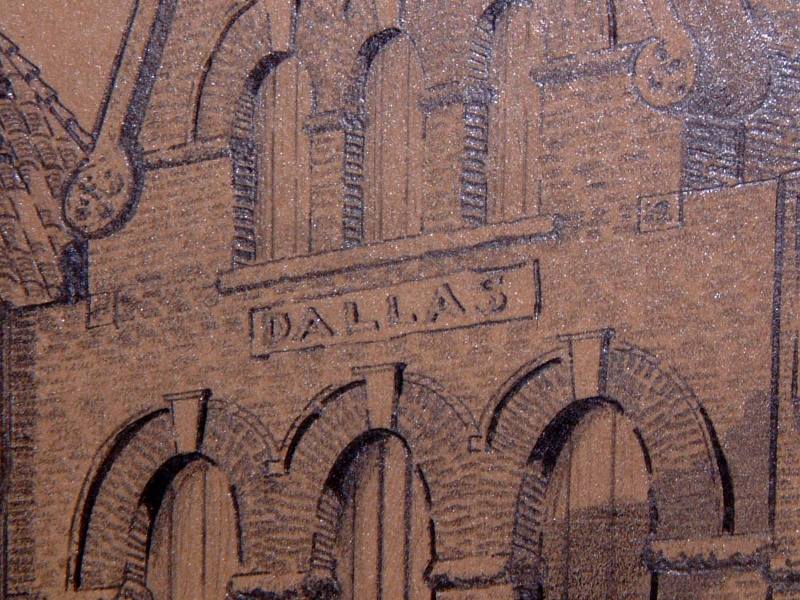
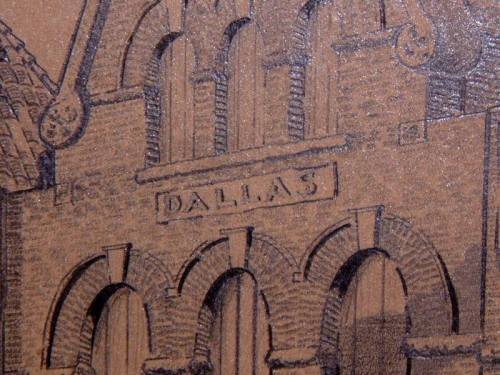
The red stone slabs bearing the word “Dallas” (3 feet long, 18 inches thick) were offered to the Dallas Historical Society “for safekeeping.”
east-dallas-depot_rendering_dallas_Art-Hoffman_sm

So did that relief housing get built? Sort of. All I could find was an article from June, 1935, which states that one little building was constructed with some of the brick and stone from the razed depot. It wasn’t a house for the needy but was, instead, headquarters for relief caseworkers in donated park land in Urbandale. Presumably there was housing built somewhere, but all that brick and stone salvaged from the old depot may not have been used for its intended purpose. BUT, there is this tantalizing little tidbit:

As a reminder of the historic antecedent, the new structure [in Urbandale Park] has as a headpiece for its fireplace the large carved stone bearing the name Dallas. (“Relief Structure Made of Materials From Razed Depot,” DMN, June 20, 1935)

Does this mean that the Dallas Historical Society might still have the second slab? If not, what happened to it?

I checked Google Maps and looked at tiny Urbandale Park at Military Parkway and Lomax Drive, just east of S. Buckner, but I didn’t see anything, so I assume the building came down at some point. (UPDATE, 3/20/16: Finally got around to driving to this attractive park. Sadly, the little building is no longer there.)

It would have been nice if that little bit of the old depot had survived — a souvenir of an important hub of activity which sprang to life when memories were still fresh of East Dallas being its own separate entity — the “David” Dallas to its neighboring “Goliath” Dallas. I would love to learn more about what might have happened to that “Dallas” sign which, for a while, hung over the fireplace of an odd little building in an obscure park in southeast Dallas where it lived out its days in retirement.

**

Since I keep adding photos of the depot to this post, I’m going to just start putting new additions (with captioned and linked sources) here:
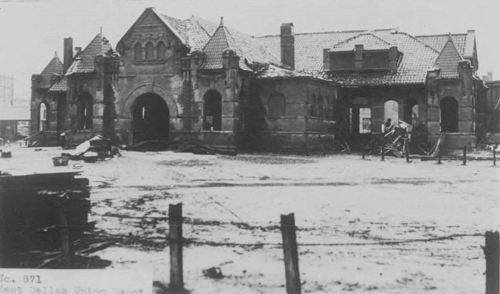
east-dallas-union-depot_degolyer-lib_SMUDeGolyer Library, SMU

union-depot_east-dallas_1933_degolyer-lib_SMUDeGolyer Library, SMU

union-depot_your-dallas-of-tomorrow_1943_portal
“Your Dallas of Tomorrow” (1943), Portal to Texas History

***

Sources &  Notes

Original rendering of the old Union Depot at East Dallas by E. L. Watson is from the collection of Art Hoffman, used with his permission.

More on architect Frank J. Woerner (who designed, among other things, the Stoneleigh Hotel), here (see p. 10 of  this PDF).

History of Old East Dallas (and the city of East Dallas), here and  here.

More on architects Lang & Witchell here, with an incredible list of some of the buildings designed by their firm here.

1898 photos of the depot’s exterior and interior from Texas, Along the Line of the Texas & Pacific Ry. (Dallas: Passenger Department of the Texas & Pacific Railway, [1898]).

Photo immediately following the photos from the T & P book is from a postcard, found on Flickr, here.

Photo (and accompanying detail) immediately following that is from Dallas Rediscovered by William L. McDonald (Dallas: Dallas Historical Society, 1978). (McDonald identifies the photo as being “c. 1890” — well before the station was built in 1897.) From the collection of the Dallas Historical Society.

Photo of the depot with automobiles is a detail of a larger photograph from the collection of George A. McAfee photographs in the DeGolyer Library, Central University Libraries, Southern Methodist University. The original can be seen here.

Photograph dated 1916 from The Museum of the American Railroad, via the Portal to Texas History site, here.

More information in these Dallas Morning News articles:

  • “East Dallas Station To Be Torn Down and Converted Into Homes” (DMN, Jan. 13, 1935)
  • “Relic of City of East Dallas Being Demolished” (DMN, Jan. 20, 1935) — very informative
  • “Historical Society Will Be Given Slabs of Former Station” (DMN, Jan. 31, 1935)
  • “County Gets Land To Install Relief Depot; Later Park” (DMN, Feb. 27, 1935
  • “Relief Structure Made of Materials From Razed Depot; Station Occupies Land in Urbandale Donated to County For Park” (DMN, June 20, 1935)
  • “Salvaged Materials Go Artistic” (DMN, June 20, 1935) — photo of “relief structure” which accompanied above article

More photos of this immediate area can be found in these posts:

  • “The Union Depot Hotel Building, Deep Ellum — 1898-1968,” here
  • “The Gypsy Tea Room, Central Avenue, and the Darensbourg Brothers,” here

Many of the pictures and articles can be clicked for larger images.

*

Copyright © 2014 Paula Bosse. All Rights Reserved.


The Ladies’ Reading Circle: An Influential Women’s Club Organized by Black Teachers in 1892

ladies-reading-circle_negro-leg-brewer_1935The Ladies (click for larger image)

by Paula Bosse

When one thinks of “ladies’ clubs” of the past, one probably tends to think of groups of largely well-to-do women in fashionable dresses, gloves, and smart hats who gathered for quaint meetings in one another’s homes to discuss vaguely literary or cultural topics, sip tea, chit-chat, and gossip. Often they would plan projects and events which would aid pet community or charitable causes. There were clubs of varying degrees of serious-mindedness, but, for the most part, club meetings were mostly an excuse for women to socialize. 100 years ago, these women rarely worked outside the home, and these groups offered an important social and cultural outlet for well-educated women of means. White women. Women of color were not part of that particular club world. They had to create clubs for themselves. And they did.

In 1892, eight African-American teachers in Dallas organized their own club, the Ladies’ Reading Circle, and while it, too, was an important social outlet for the women, the focus of the group tended to be more serious, with reading lists comprised primarily of political, historical, and critical texts.

The members of the Ladies’ Reading Circle (a group that lasted at least until the 1950s) were, for the most part, middle-class black women who set an agenda for the club of education, self-improvement, and social responsibility. Like most women’s clubs of the time, each meeting of the LRC was held in a different member’s home and usually ended with a “dainty” luncheon and light musical fare, courtesy of the Victrola or player piano; but what set the LRC apart from most of the other women’s clubs of the day was the choice of reading material — from books on world history and international politics, to texts on current affairs and social criticism. (Several surprising examples appear below.)

Not only did the women gather weekly to discuss current and cultural affairs, they also worked to improve their community by tackling important social issues and by inspiring and encouraging young women (and men) who looked to them as civic leaders. Noted black historian J. Mason Brewer dedicated his 1935 book Negro Legislators of Texas to the women of the Ladies’ Reading Circle. The photograph above is from Brewer’s book, as is the following dedication:

lrc_negro-leg-brewer_1935-dedication

Included were the names of the members, several of whom had organized the club in 1892:

lrc_members_brewer

One of the LRC’s concerns was establishing a home which, like the white community’s YWCA, offered housing and career training for young women. The charming frame house the club bought for this purpose in 1938 (and which is described in the Jan. 10, 1952 News article “Ladies Reading Circle Seeks $7,500 for Expanding Home”) still stands at 2616 Hibernia in the State-Thomas area

lrc-home_2616-hibernia_google2616 Hibernia (Google Street view, 2014)

But the group was organized primarily as a “reading circle,” and the minutes of three randomly chosen meetings show the sort of topics they were interested in exploring. The following three articles are from the post-WWI-era, and all appeared in The Dallas Express, a newspaper for the city’s black community.

lrc_dallas-express_040320April 3, 1920

lrc_dallas-express_041020April 10, 1920

lrc_dallas-express_102023October 20, 1923

My favorite juxtaposition of content on the pages of The Dallas Express was the article below which reported on a white politician’s promise that he would fight to keep “illiterate Negro women” from voting — just a column or two away was one of those eye-popping summaries of the latest meeting of the Ladies’ Reading Circle. My guess is that the black educators who comprised the Ladies’ Reading Circle were probably far more knowledgeable about world events than he was.

negro-womans-suffrage_dallas-express_052220May 22, 1920

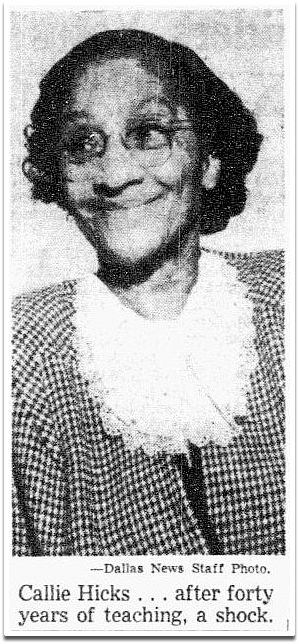
In reading the limited amount of information I could find on the LRC, I repeatedly came across the name of one of the earliest members, Callie Hicks (she is in the 1935 photo at the top, seated, second from the right). She was a dedicated teacher as well as a respected civic leader who worked for several causes and was an executive of the Dallas branch of the NAACP. A Dallas News article about Miss Hicks appeared in Feb., 1950 when she was named “Woman of the Year” by one of the largest African American women’s organizations in Dallas County (“Honor Caps 40 Years of Helpful Teaching,” DMN, Feb. 10, 1950). Miss Hicks died in May, 1965.

callie-hicks_dmn-021950-photo1950

It’s a shame that the Ladies’ Reading Circle is not better known in Dallas today. I have to admit that I had never heard of the group until I stumbled across that 1935 club photo. Their tireless work to improve the intellectual lives of themselves and others no doubt influenced the generations that followed.

***

Sources & Notes

Top photograph, dedication, and member list, from Negro Legislators of Texas and Their Descendants; A History of the Negro in Texas Politics from Reconstruction to Disenfranchisement by J. Mason Brewer (Dallas: Mathis Publishing Co., 1935).

Minutes from the Ladies’ Reading Circle meetings all printed in The Dallas Express.

Relevant material on the LRC and other historic African-American women’s clubs can be read in Women and the Creation of Urban Life, Dallas, Texas, 1843-1920 by Elizabeth York Enstam (College Station: Texas A & M University Press, 1998), here.

The Handbook of Texas entry for one of the founding members of the Ladies’ Reading Circle, Julia Caldwell Frazier, can be found here.

*

Copyright © 2014 Paula Bosse. All Rights Reserved