Flashback : Dallas

A Miscellany: History, Ads, Pop Culture

Category: 1950s

South Central Expressway Under Construction — 1955

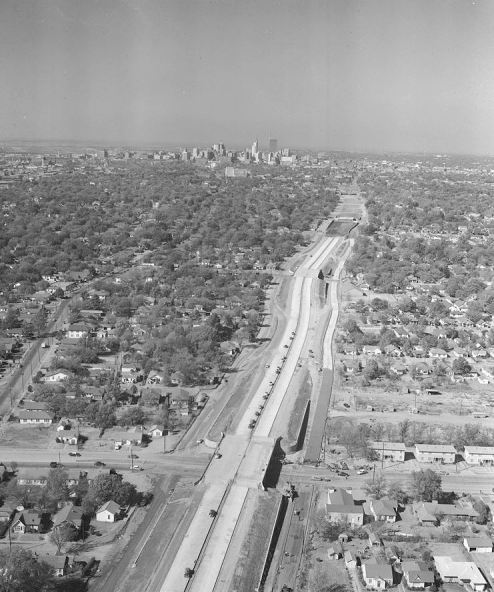
central-expwy_forest-ave_092955_squire-haskins_UTAComing soon to a neighborhood near you… (UTA Special Collections)

by Paula Bosse

Behold, a photo of South Dallas on Sept. 29, 1955, showing a lengthy stretch of bulldozed land cleared for the imminent construction of South Central Expressway. We’re looking south, with Forest Avenue (now Martin Luther King Blvd.) running horizontally in the foreground. To the right is the Forest Theater (now playing: “Lady and the Tramp”). And if you zoom in, you can just see the post-Ross Avenue location of the famed Jim Beck recording studio to the right of the theater.

This great swath of land cut through an established tree-filled residential area — it ran alongside the once-swanky Colonial Hill neighborhood. Zoom in and take a last look at some of those straggler houses that haven’t yet met their maker. …But they will. …And they did.

Below is another Squire Haskins aerial photo looking north, toward downtown, taken a few weeks later, on Nov. 11, 1955 (see a very large image of this photo on the UTA website here).

south-central-expwy_squire-haskins_nov-1955_UTASquire Haskins, Nov. 1955, UTA Special Collections

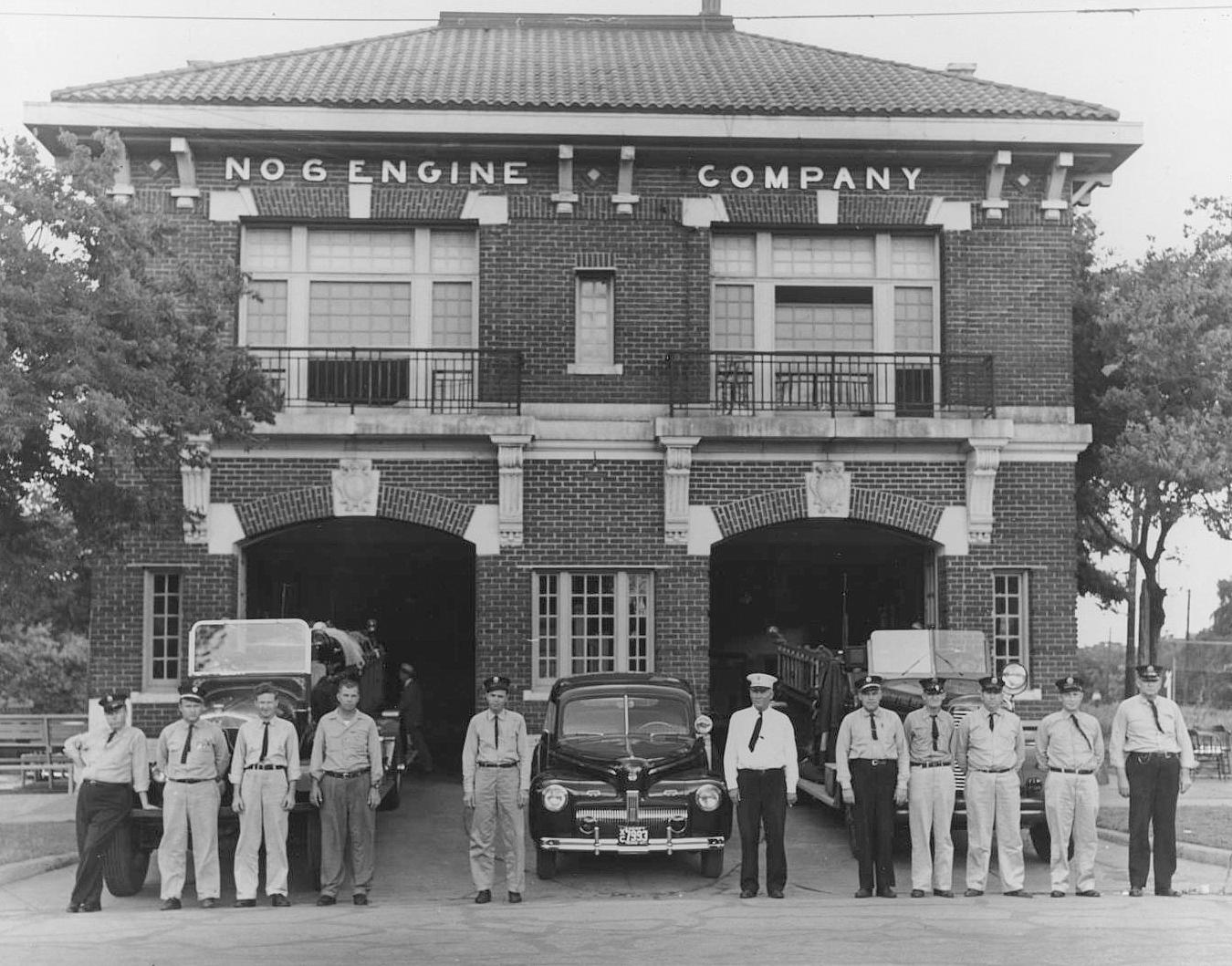
I wondered what had been demolished on Forest between the houses to the left and the theater to the right. It was Fire Station No. 6, at 2202 Forest Avenue. I looked in my bulging file of miscellaneous photos and was surprised to actually find a couple of photos of that No. 6 Engine Company, which was built in 1913.

fire-department_no. 6_forest-ave-mlk

The station was on the south side of Forest Avenue, alone in a very short block. As we look at the station in the photo above, the H&TC railroad runs just to the right of the station, and Kimble Street runs along the left. See a Sanborn map of this area in 1922, here.

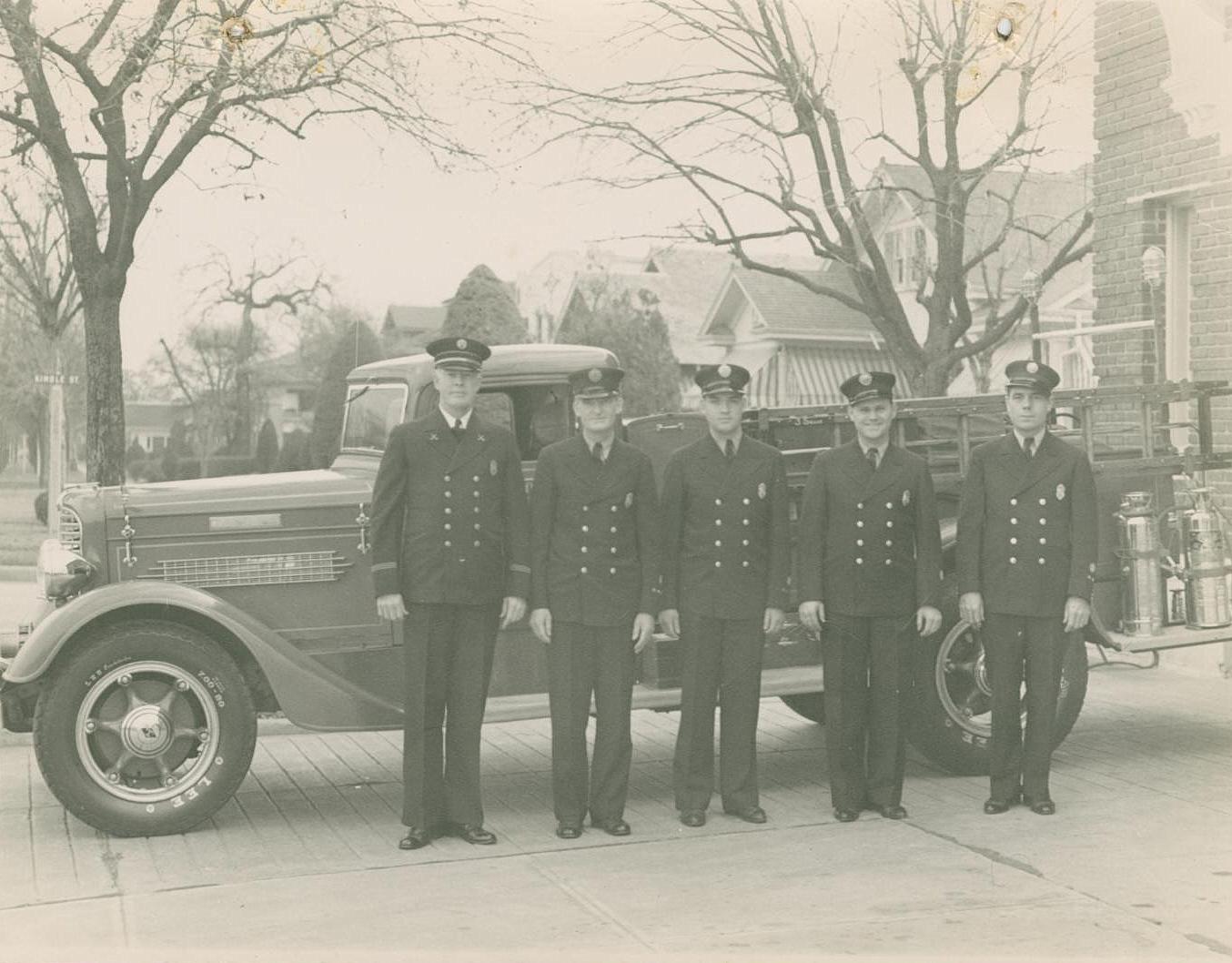
The photo  below shows what Forest Avenue once looked like, from the front of the firehouse looking east (the intersection with Kimble is on the other side of the firetruck — you can see the street sign). These houses are still standing in the 1955 photo at the top.

forest-central_fire-station_portal

When you know what this intersection looks like today (see this same view today, here), it’s hard to believe it ever looked like a cozy neighborhood. Progress is a helluva thing, man.

**

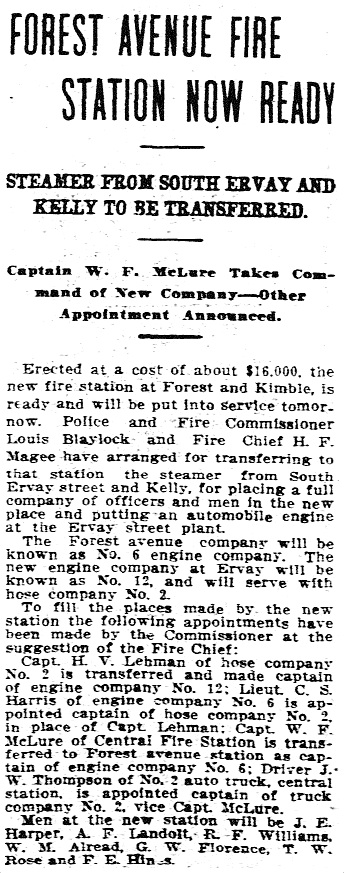
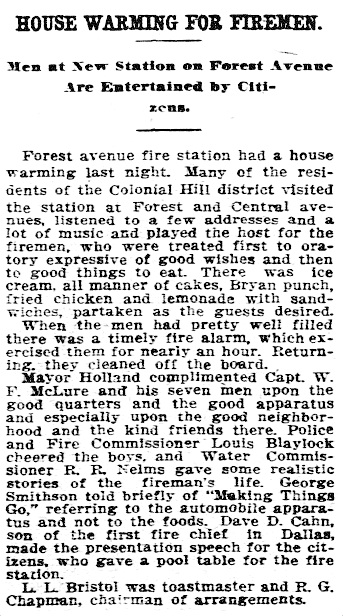
A couple of short articles for those who might want a little more info about the fire station, which was demolished sometime between April and September of 1955. (Click articles for larger images.)

forest-central_fire-station_dmn_070613
Dallas Morning News, July 6, 1913

forest-central_fire-station_dmn_072213
DMN, July 22, 1913

*

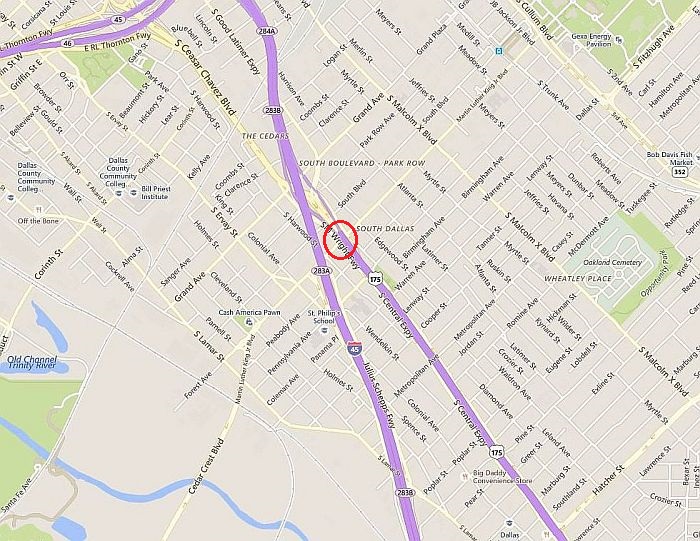
forest-ave-central_today_bing
Bing Maps

***

Sources & Notes

Top photo by Squire Haskins, from the Squire Haskins Photography, Inc. Collection, UTA Libraries, Special Collections, University of Texas at Arlington; it is accessible here.

Second photo by Squire Haskins, from the Squire Haskins Photography, Inc. Collection, UTA Libraries, Special Collections, University of Texas at Arlington; it is accessible here.

The two fire station photos are from the collection of the Dallas Firefighters Museum, via the Portal to Texas History, University of North Texas. The first photo can be viewed here, the second photo here.

*

Copyright © 2016 Paula Bosse. All Rights Reserved.

900 Block of Main, South Side — 1950s

900-block-main_squire-haskins_utaTake a stroll down Main… (click for larger image)

by Paula Bosse

I’m not terribly knowledgeable in photographic techniques, but this appears to be some sort of panoramic shot by noted Dallas photographer Squire Haskins — it looks as if several photos have been joined together. By magic!

UPDATE: No magic, afterall. Here’s the same block from a different view.

main-poydras_squire-haskins_uta

These photos show the south side of the 900 block of Main, between Poydras (on the left) and Lamar (on the right). I love this block. So of course it’s now a parking lot which faces the Bank of America behemoth. Times change.

The photos were taken 1952-ish.

900-block-main_1953-directory1953 city directory

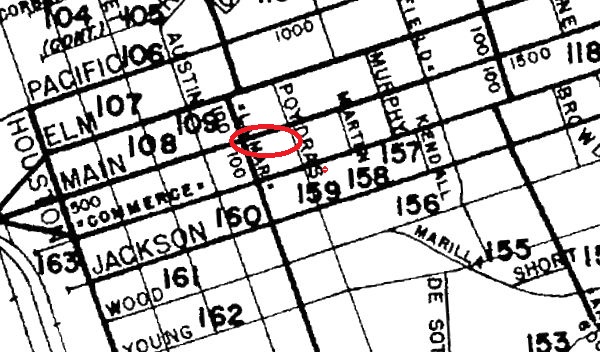
900-main_1952-mapsco
1952 Mapsco

***

Sources & Notes

Photos from the Squire Haskins Photography, Inc. Collection, University of Texas at Arlington; more info on the top photo is here; more info on the second photo is here. Click the thumbnails on the UTA pages to see even larger images. (Thanks to Peter K. for posting the second photo in the Dallas History Guild Facebook group — I recognized that Do-Nut Merchant sign right away! One more Do-Nut Merchant view is here.)

That top photo is really, really big. Click it and scroll!

UPDATE: See a photo of the north side of Main, taken by Squire Haskins at the same time as the photos above in the Flashback Dallas post “900 Block of Main, North Side — 1952.” here.

*

Copyright © 2016 Paula Bosse. All Rights Reserved.

Blackie Sherrod: “The Most Plagiarized Man in Texas” — 1919-2016

blackie-sherrod_dmn-video

by Paula Bosse

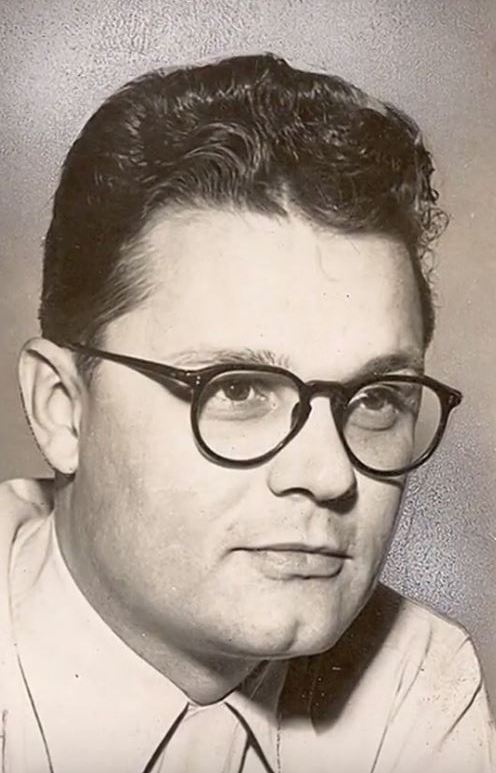
Legendary sportswriter Blackie Sherrod died yesterday at the age of 96. My father was not a follower of sports, but I remember he read Blackie Sherrod’s columns because, along with other great, larger-than-life, and exceptionally talented DFW sportswriters such as Bud Shrake, Dan Jenkins, and Gary Cartwright, Blackie was — for want of a better word — a “literary” journalist whose style transcended his subject matter. His writing appealed to everyone who enjoyed and appreciated well-written and caustically funny forays into, around, over, and under the world of sports. Sports fans — and other sportswriters — loved the guy. And so did everyone else.

In the December 1975 issue of Texas Monthly, Larry L. King (forever known as the man who made more money from the best little whorehouse in Texas than any of the girls who plied their trade there) wrote a fantastic profile of Blackie (“The Best Sportswriter in Texas”), in which he described Blackie Sherrod as being “the most plagiarized man in Texas.” Sportswriters around the state routinely stole all of Blackie’s best lines and inserted them, unattributed, into their own columns. King himself admits he was one of the worst offenders. The lengthy profile is great. Great. Read it here.

*

UPDATE: Also, this is a great 9-minute film produced by KERA in the 1970s in which Blackie talks about his career, past and present.

***

Sources & Notes

Video is from the KERA Collection, G. William Jones Film & Video Collection, Hamon Arts Library, Southern Methodist University; the permanent link on YouTube is here.

Watch a Dallas Morning News-produced video tribute to Blackie Sherrod from 2013.

The Dallas Morning News obituary — “Legendary News Sportswriter Blackie Sherrod Dies at 96” — written by Kevin Sherrington, is here.

Several of Blackie’s Sherrod’s books can be purchased online, here.

Moments after I posted yesterday’s photo of the Dallas Times Herald lobby, I read that Blackie had died. He must have walked through that lobby thousands of times. That was an odd bit of synchronicity.

See an early photo of Blackie with his famed co-workers in the post “Legendary Sports Writers of the Fort Worth Press — ca, 1948.”

Thanks, Blackie.

*

Copyright © 2016 Paula Bosse. All Rights Reserved.

“The Times Herald Stands For Dallas As a Whole”

dallas-times-herald-lobby_UTA_squire-haskinsCool and sleek (click for very large image)

by Paula Bosse

Above, the Dallas Times Herald lobby, in all its gleaming mid-century style.

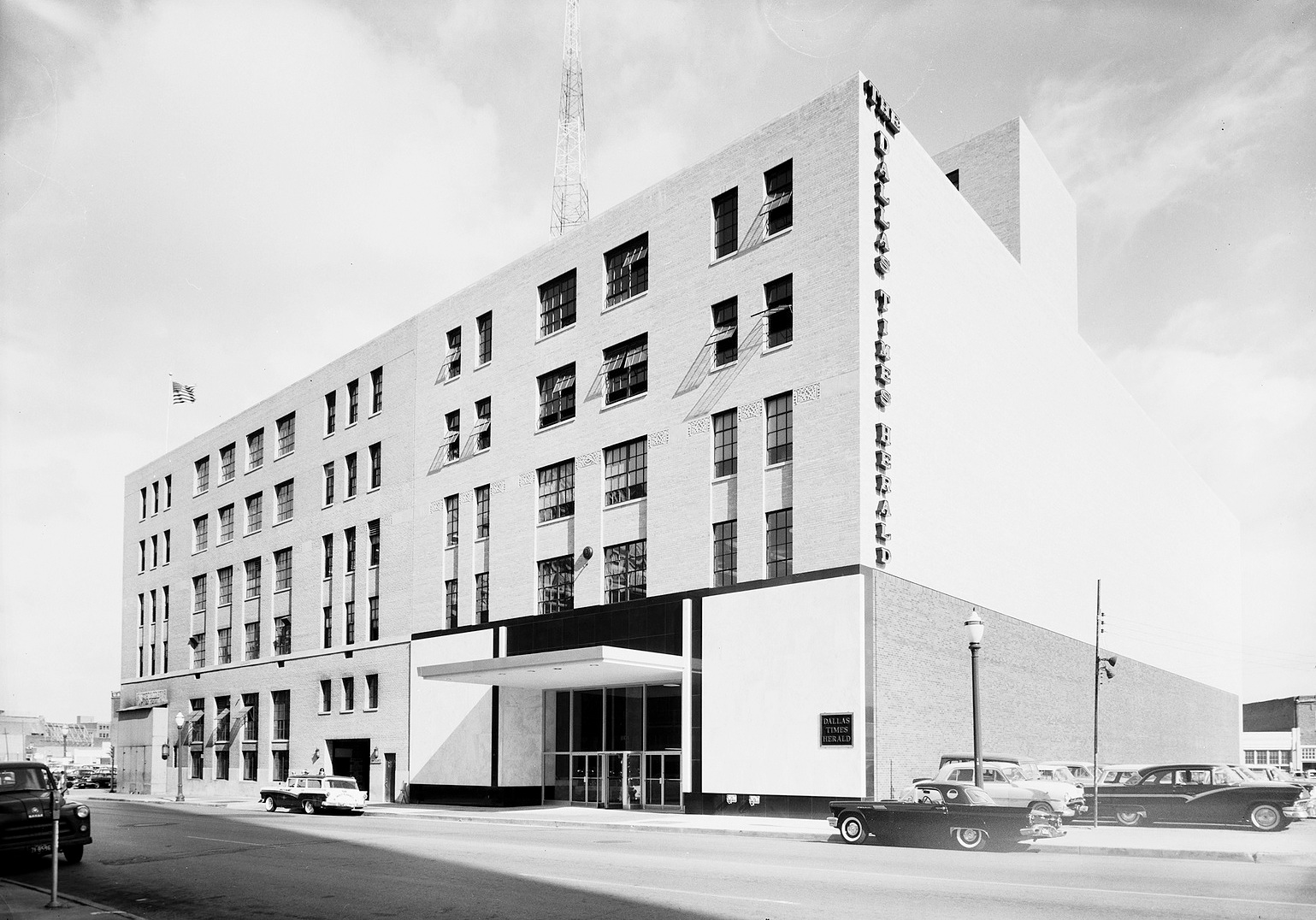
And, below, its smart, crisp exterior (taken on July 28, 1958).

dallas-times-herald-bldg_squire-haskins_uta

RIP, DTH. (And, yes, I’m still bitter.)

***

Sources & Notes

Photos by Squire Haskins, from the Squire Haskins Photography Inc. Collection, UTA Libraries, University of Texas at Arlington; more info on the interior photo is here; more on the exterior photo is here.

The Dallas Times Herald building was located at 1101 Pacific Ave., bounded by Pacific, Griffin, and Patterson. The building was demolished in 1993 and replaced by a parking lot.

*

Copyright © 2016 Paula Bosse. All Rights Reserved.

Tomatoes, Cokes, Dominoes: Cadiz Street — 1959

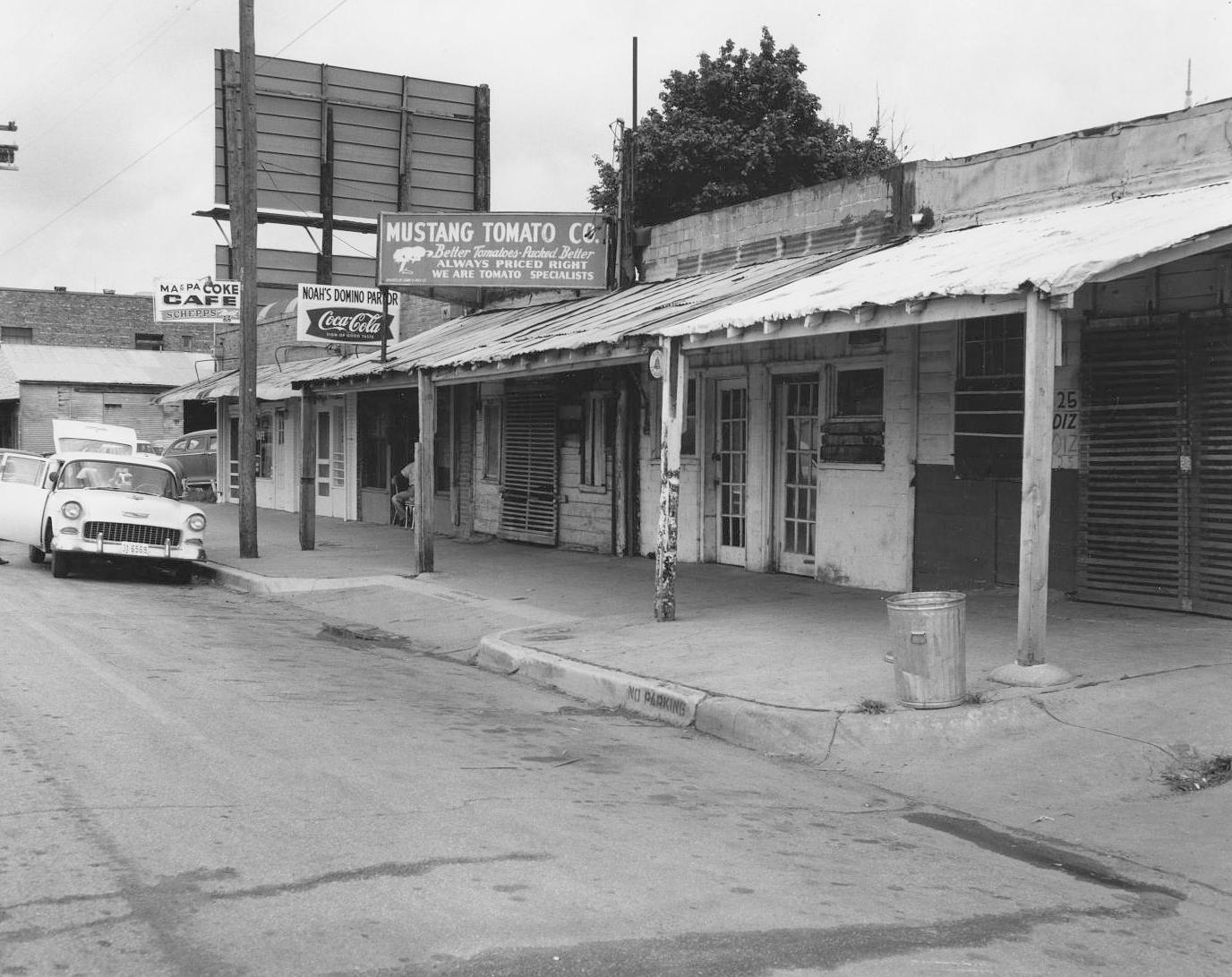
farmers-mkt-area_dominoes_portalThe farmers market area in 1959

by Paula Bosse

Above, a photo showing the block of Cadiz Street between what was then the S. Pearl Expressway and S. Central Expressway (now Cesar Chavez). The view is southwesterly, with the (oddly placed) billboards facing toward Pearl.

I’m sure most people considered such a view urban blight in 1959 when this photo was taken, but (I know I sound like a broken record…), I will always prefer this seedy and run-down version of the farmers market area to the current, relentlessly sterilized, pre-fab, insta-city which took its place. By 1961, this little stretch of businesses had been leveled for a parking lot, which, frankly, was probably more of an eyesore than a ramshackle domino parlor with peeling paint.

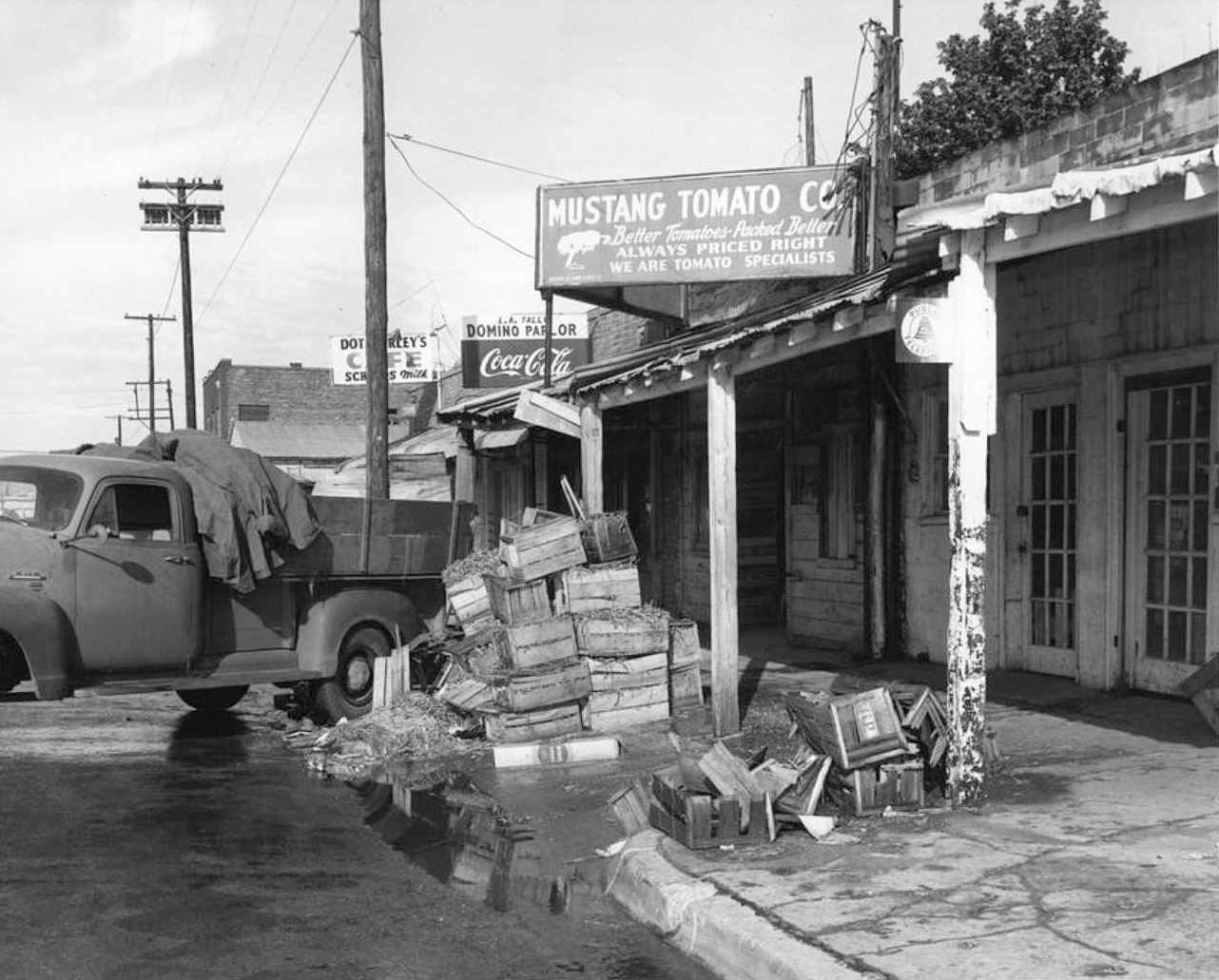
Below, a photo taken in the same block, about a year earlier. It’s not quite as interesting to look at as the top photo, but it does show that this was a working neighborhood, where vegetable crates frequently spilled into the streets as part of the day’s activities.

cadiz-businesses_1958_portal

*dot-curley-cafe_1958-directory1958 city directory

talley-domino_1957-directory
1957 directory

ma-and-pas-cafe_1960-directory
1960 directory

noahs-domino-parlor_1960-directory
1960 directory

This part of Cadiz doesn’t exist anymore. Here’s the view from S. Pearl these days, looking east (these businesses would have been on the left).

Here’s a map from 1962, when the area was a thriving wholesale and retail produce district.

cadiz_1962-map_det

***

Sources & Notes

Both photos are from the  Dallas Farmers Market/Henry Forschmidt Collection, Dallas Municipal Archives, via the Portal to Texas History; the top one can be found here, the bottom one, here.

See other Flashback Dallas posts about the Dallas Farmers Market here — every time I see these great old photos I just shake my head and wish I’d been around to see this part of the city when it was at its grittiest.

*

Copyright © 2016 Paula Bosse. All Rights Reserved.

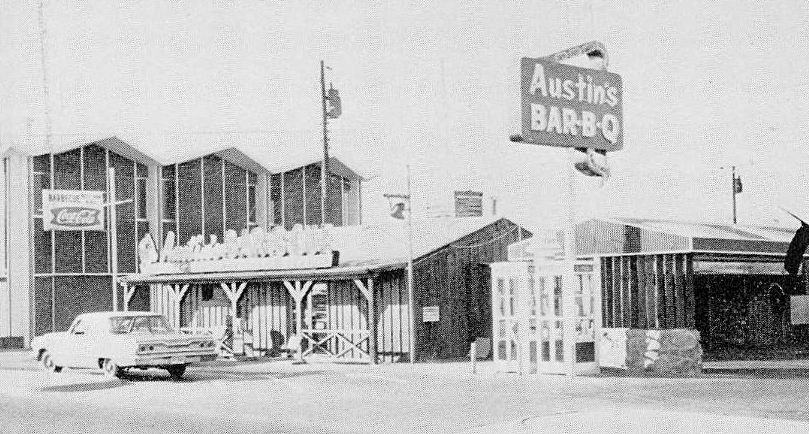
Bull Pen Barbecue/Austin’s Barbecue — 1949-2000

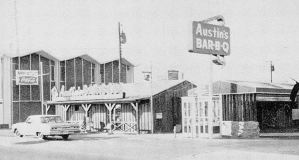
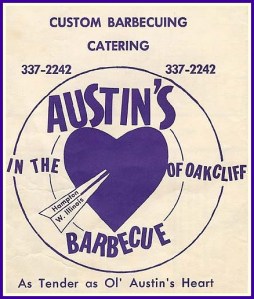
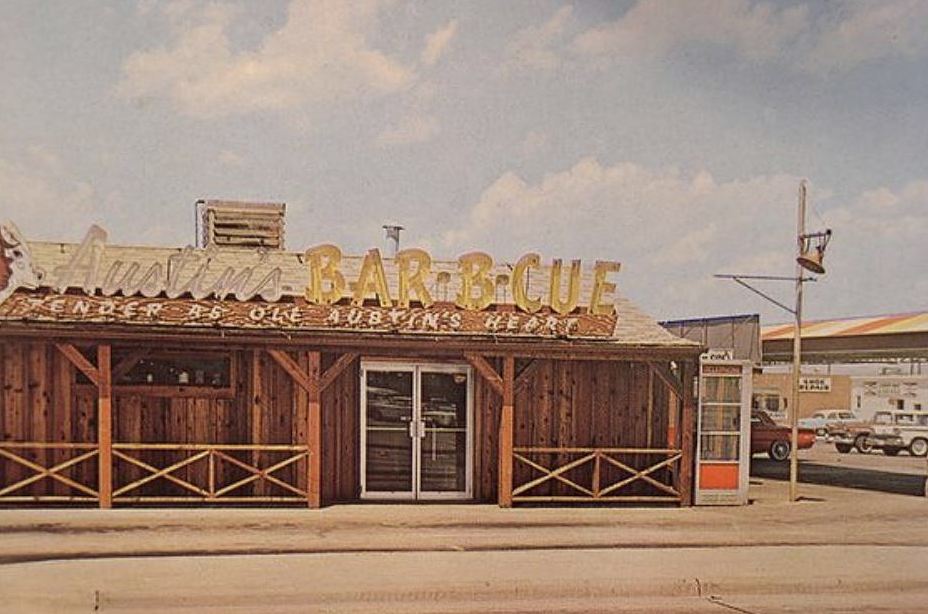
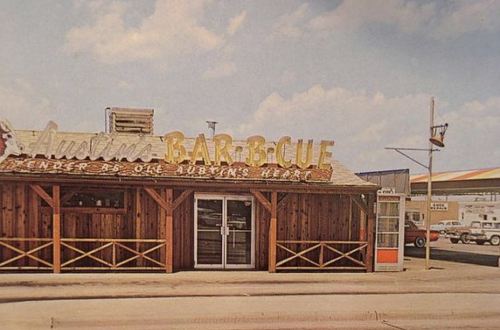
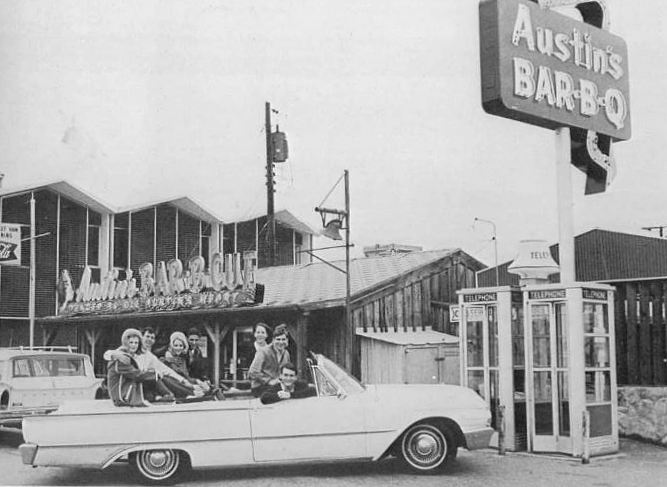
austins-barbecue_postcard_pinterest“As Tender as Ole Austin’s Heart…”

by Paula Bosse

One of my major failings as a Dallasite is that I don’t know Oak Cliff. Like at all. Every time I go over there, I get lost. I can’t remember my family ever going to Oak Cliff when I was a kid, except to visit the zoo. This explains why I had no idea how important a cultural landmark Austin’s Barbecue was when I posted a bunch of Oak Cliff ads the other day. That post has been shared hundreds and hundreds of times now and, inevitably, the only thing people mention — and rhapsodize about — is Austin’s Barbecue. …I had no idea!

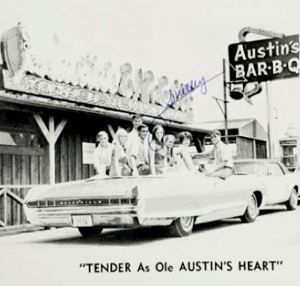
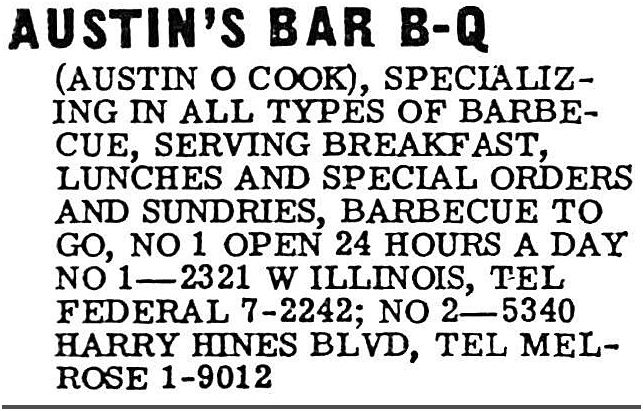
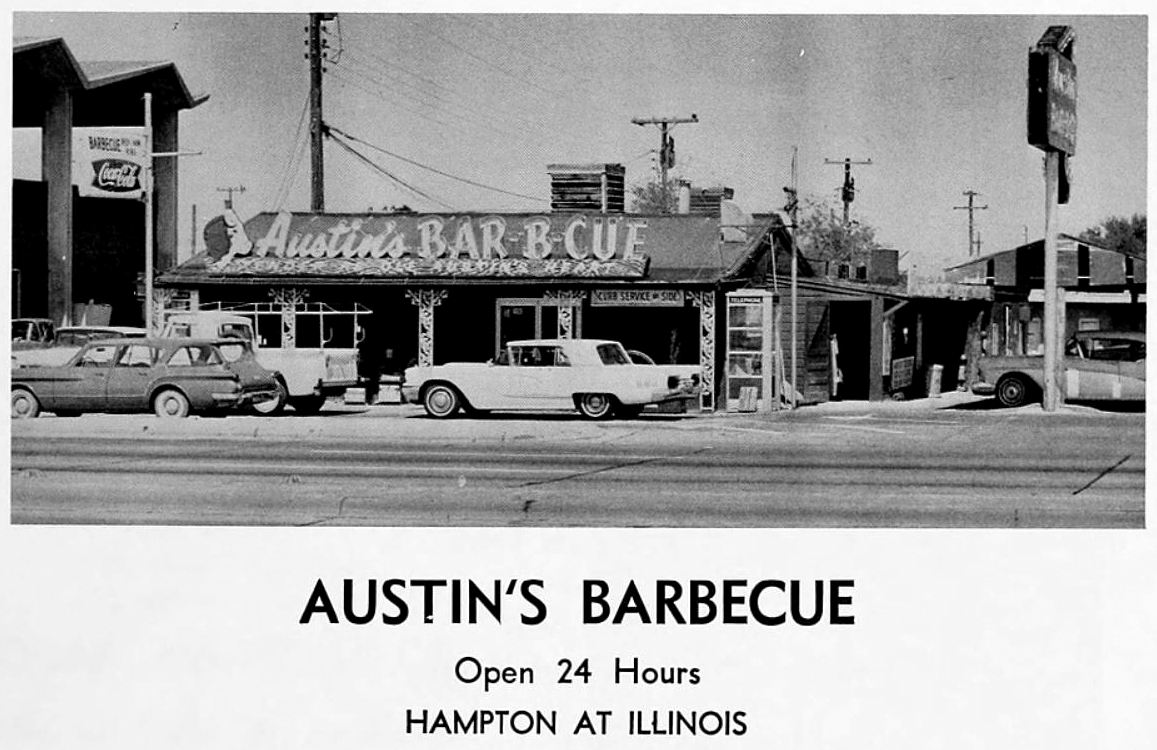
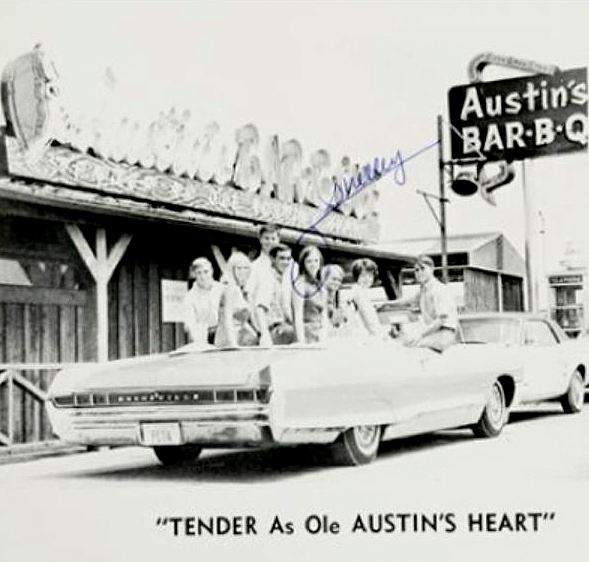
The famed BBQ joint at the northeast corner of Illinois Avenue and Hampton Road opened in 1949 as B & G Barbecue but soon became known as Bull Pen Barbecue, run jointly by owners Bert Bowman and Austin Cook. In 1956 or 1957, another Bull Pen opened in Arlington. After Oak Cliff went dry (a dark day for many Oak Cliffites), Bowman — who firmly believed that BBQ and beer were a match made in heaven — left for Arlington and Cook stayed in Oak Cliff and changed the restaurant’s name to Austin’s Barbecue. (“Bull Pen Barbecue” was still appearing in ads as late as Oct. 1957 — the official name changeover seems to have  happened in 1958.)
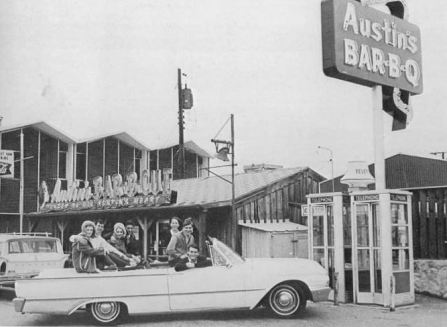
austins-bar-b-q_sunset-high-school_1967-yrbk1967 Sunset High School yearbook

*

The following memory of starting the business was apparently written by Austin Cook in 1990:

Dear Family & Friends,

I will try to tell you a little more about my being in the restaurant business. We borrowed $10,000 and bought out some one and it was B and G Barbecue. You see I always spell out Barbecue because when I went in business they hadn’t started abbreviating it like it is today.

After we had been there awhile we changed the name to The Bull Pen. Our slogan was “Come in and Shoot the Bull with Austin and Bert.” We used that name until they voted beer out of Oak Cliff. That really set us back, but maybe it was the best thing for us. We put another place in Arlington and that place was going pretty good. My partner wanted to get rid of the place in Oak Cliff. I traded him my part of the one in Arlington for his part in the one in Oak Cliff. Everyone said I was crazy.

When we bought that first place it was way out in the country, but they were building a bunch of houses not too far away. There was an airport across the street from the place. They kept talking about building a shopping center where the airport was. I remember the first day we ran a hundred dollars, and I thought we would never make it.

We started making money and we paid that ten thousand dollars back and we drew fifty dollars a week just like I was making in the grocery store. We started out with a barbecue sandwich and a hamburger. Then we started adding different things until we had a menu. We started getting those workers in the houses, and the business took off. We had beer also to go with the barbecue. My mother wasn’t too happy about that, but Dad said if that was the way I wanted to make my living it would be all right. In about a year or two we had a customer make us up a menu and we put in Barbecue plates for one dollar and twenty five cents. When I left they we were getting $4.99 for them. After I left I think they went to over seven dollars.

They always told me that you weren’t a success until you were in debt a hundred thousand dollars, and I went to the bank and borrowed all they would let me have. Then I went to my landlord and sold him the idea that I wanted to improve his property, and he loaned me the balance I needed to remodel, and I built a restaurant that held a hundred and twenty-five. Many times I was almost broke and didn’t know what I was going to do, but something always happened and I came out of it.

*

Both the Bull Pen in Arlington and Austin’s in Oak Cliff were successful and long-lived. Austin Cook retired at the end of 1993, and the business was taken over by his stepson, John Zito who had already been working at the restaurant for several years. Austin’s Barbecue closed in July, 2000, and the building was demolished soon after, replaced with an Eckerd drug store (now a CVS). Bert Bowman (born Glynbert Lee Bowman) died in 1989 at the age of 66; Austin O. Cook died at in 2006 at 86. And now I kind of feel like I know them, and I’m really sorry I never sampled their sandwiches.

*

Below, a Bowman and Cook timeline (most pictures and clippings are larger when clicked).
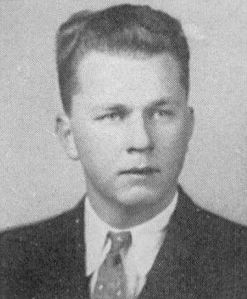
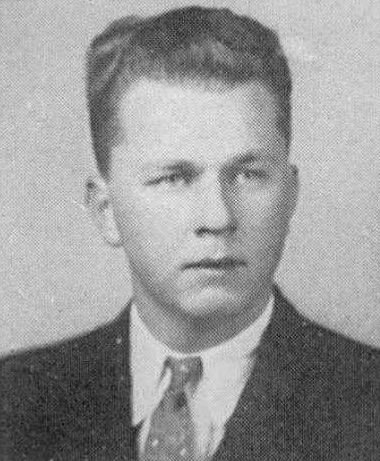
austin-cook_sunset-high-school_1937Austin Cook, Sunset High School, 1937

Before Cook and Bowmen met — probably around 1947 — each had been dabbling in different businesses. In early 1947, Cook leased a Clover Farm Store building at 203 N. Ewing and opened the Libby & Cook grocery with partner Lendal C. Libby.
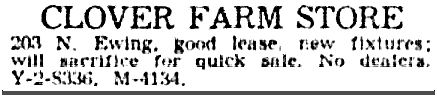
LIBBY-COOK_dmn_021047February, 1947

LIBBY-COOK_1947-directory1947 Dallas directory

Bert Bowman worked there as a meat-cutter.

bowman_1947-directory_GROCERY-w-AUSTIN1947 Dallas directory

The grocery store was in business at least into 1949, the year that Bowman and Cook decided to ditch the groceries and start their own business at 2321 W. Illinois, in a part of Oak Cliff which was just starting to be developed. Their BBQ place was originally called B & G Barbecue, which — according to Cook’s letter above — was the name of the restaurant he and Bowman bought out. I guess they felt it was easier to keep the name for awhile.

b-and-g-1951-directory1951 Dallas directory

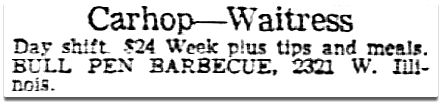
The name “Bull Pen Barbecue” didn’t come until later. In fact, the first appearance of the Bull Pen name associated with this address doesn’t show up in local newspaper archives until a want-ad placed in the summer of 1952.
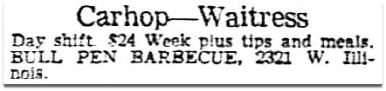
bull-pen_dmn_082652_FIRSTAugust, 1952

A probably related “Bull Pen No. 2” opened in South Dallas in 1953. It appears to have been very short-lived.

bull-pen-no-2_dmn_100853
October, 1953

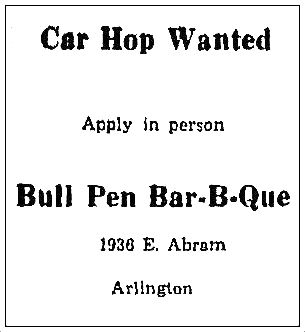
By the fall of 1957, Cook and Bowman had opened another Bull Pen — this one in Arlington, and this one a success.
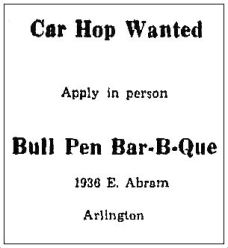
bull-pen_arlington_grand-prairie-daily-news_091557
September, 1957

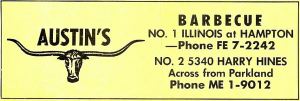
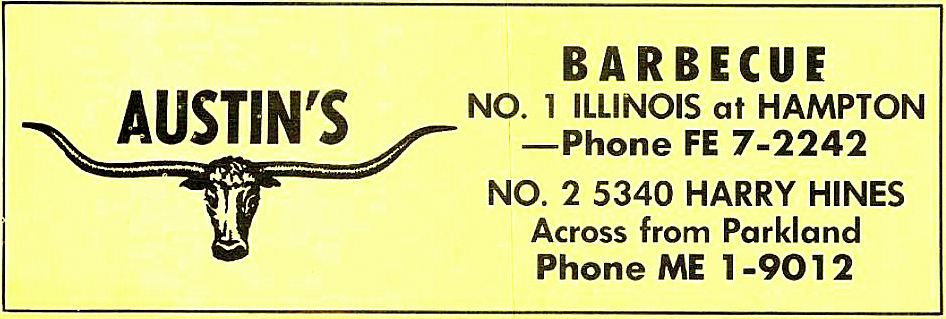
And then Oak Cliff went dry, the worst thing that could happen to a restaurant that sold a lot of beer. Similar businesses which relied heavily on beer sales began to desert Oak Cliff. Bowman did not think their original drive-in could survive, but Cook disagreed. Bowman sold his half-interest in the Oak Cliff location to Cook, and Cook sold his half-interest in the Arlington location to Bowman. Cook changed the name of his now solely-owned restaurant to Austin’s Barbecue, and his success continued, despite the fact that he could no longer sell beer. He was doing well enough that, in 1961, he opened a second location, on Harry Hines across from Parkland Hospital (a location which lasted through 1964).
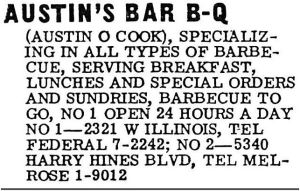
austins-barbecue_1962-directory_two-locations
1962 Dallas directory

austins-barbecue_1963-directory_two-locations_ad
1963 Dallas directory

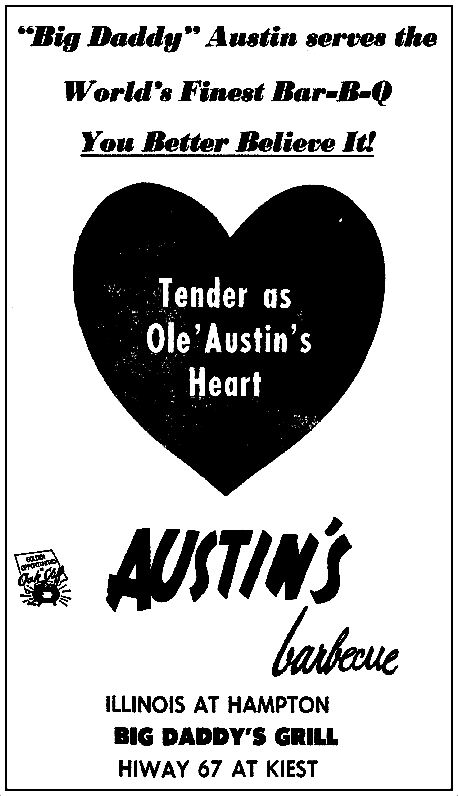
By 1963, Austin’s was a well-established teen hang-out and wisely placed ads in Oak Cliff high school annuals. Apparently everyone went there!
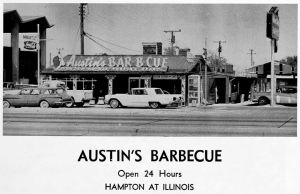
oak-cliff_austins_bar-b-cue_kimball-yrbk_19631963 Kimball High School yearbook

austins-bar-b-q_sunset-high-school_1964-yrbk.det1964 Sunset High School yearbook

austins_car-teens_flickr-coltera
Date and source unknown, via Flickr

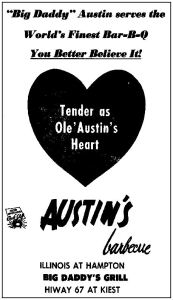
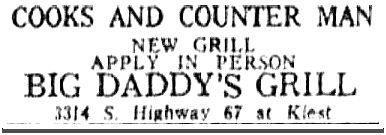
In 1964, Cook — known as “Big Daddy” — opened another restaurant, this one called Big Daddy’s Grill.
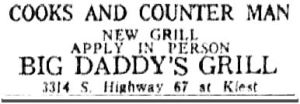
big-daddys_dmn_063064June, 1964

austins-barbecue_dmn_081466-adAugust, 1966

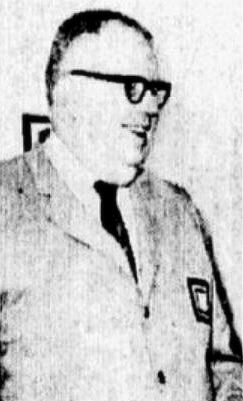
The restaurant was a bona fide Oak Cliff landmark, and Cook was an active participant in community business affairs. Below, a detail of a photo showing Cook as a member of the Oak Cliff Chamber of Commerce.
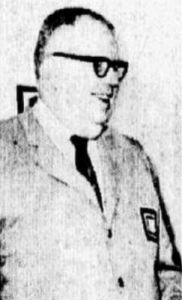
austin-cook_dmn_082568-photo-det
late 1960s

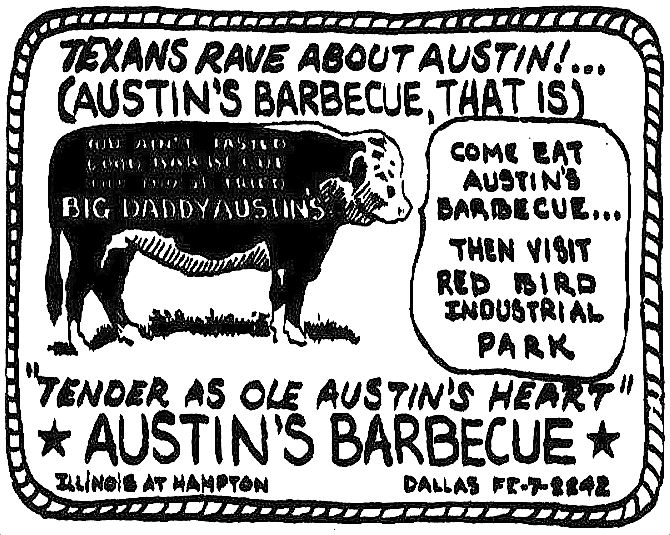
Cook participated in a series of Oak Cliff Chamber of Commerce campaigns and even included oddities like “Come eat Austin’s barbecue… and then visit Red Bird Industrial Park” in his ads. Make a day of it!

austins-barbecue_092968
September, 1968

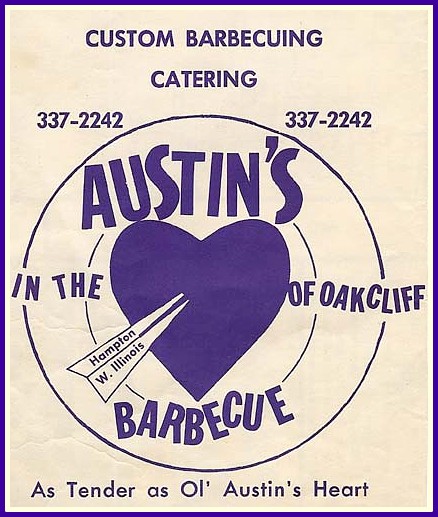
ad_austins-barbecue
via OakCliff.org

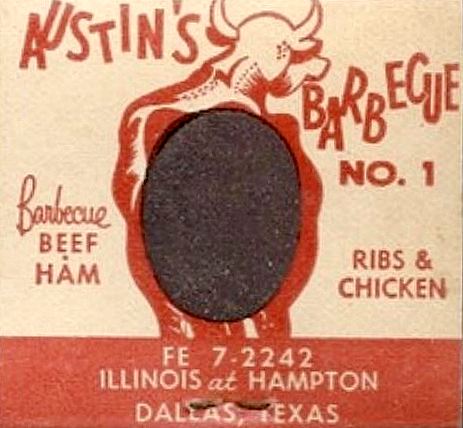
austins_matchbk_flickr_coltera
via Flickr

***

Sources & Notes

Color postcard at the top found on Pinterest, here.

The letter from Austin Cook was quoted on the DHS Phorum, here. More from the Phorum on The Bull Pen/Austin’s is here.

More can be found in the Dallas Morning News archives in the following stories:

  • “Austin’s Bar-B-Q Grows With Oak Cliff” (DMN, Aug. 14, 1966)
  • “Barbecue To Go — Staff, Customers Mourn Closing of Oak Cliff Institution” (DMN, July 13, 2000)
  • “Closed But Not Forgotten — Oak Cliff Eatery Marks Half-Century of Barbecue With Memorable Auction” (DMN, Aug. 27, 2000)
  • “John P. Zito — Operated Oak Cliff Landmark Austin’s Barbecue For 19 Years” by Joe Simnacher (DMN, Oct. 14, 2003)

Read the obituaries of Bert Bowman (1989) and Austin O. Cook (2006) here.

The Oak Cliff Advocate article “A Look Back at Austin’s Barbecue” by Gayla Brooks is here (with tons of memories from readers in the comments).

Not mentioned in this post is the connection of Officer J. D. Tippit (who moonlighted as a keeper of the peace at Austin’s) and other tangential/coincidental associations to the Kennedy assassination. It’s well documented elsewhere. Google is your friend.

*

Copyright © 2016 Paula Bosse. All Rights Reserved.

West Jefferson in the Truman Years

oak-cliff_w-jefferson_frontier-top-tierW. Jefferson & S. Bishop (click for very large image)

by Paula Bosse

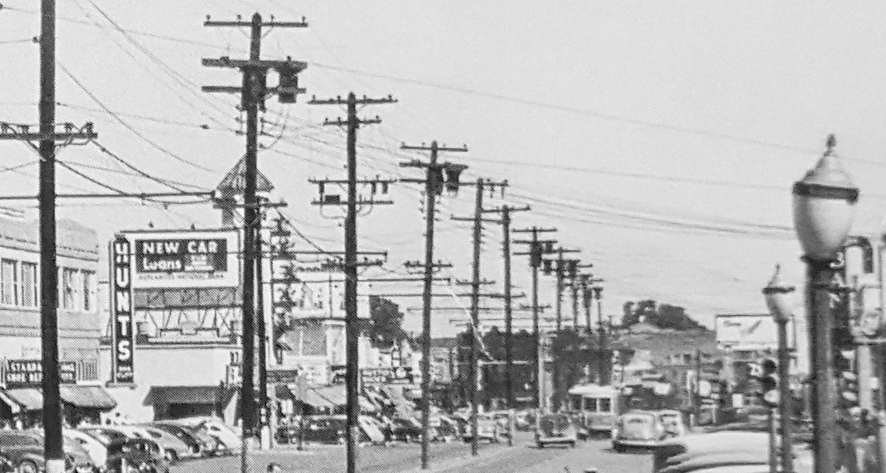
Here we see West Jefferson Blvd. in Oak Cliff, looking east from just west of the intersection with South Bishop. Not being proficient in dating automobiles, I’m unsure of the date, but the Hoffman Optical Co. (seen on the right) did not appear in the 1948 city directory, but was there by 1951. The current view from this intersection can be seen on Google Street View here. Even though the visual blight of those telephone poles is unappealing, I have to say, I prefer the livelier W. Jefferson of 60-something years ago.

If you squint, you can just see the Texas Theatre in the distance on the left — under the pointy roof, behind the “New Car” billboard. Here’s a magnified detail (click to see a larger image) — you can (barely) see “TEXAS” spelled out on the vertical sign.

oak-cliff_w-jefferson_tx-theatre_det

The first thing I noticed in this photo is this odd black vehicle driving away from the photographer — I keep seeing a bulky version of Harold’s customized hearse from the movie Harold and Maude. What is this?

oak-cliff_w-jefferson_vehicle

Here are the businesses that occupied the couple of blocks seen here (from S. Bishop to S. Zang) in 1951:

w-jefferson_1951a          w-jefferson_1951b
1951 city directory (click to read!)

*

Copyright © 2016 Paula Bosse. All Rights Reserved.
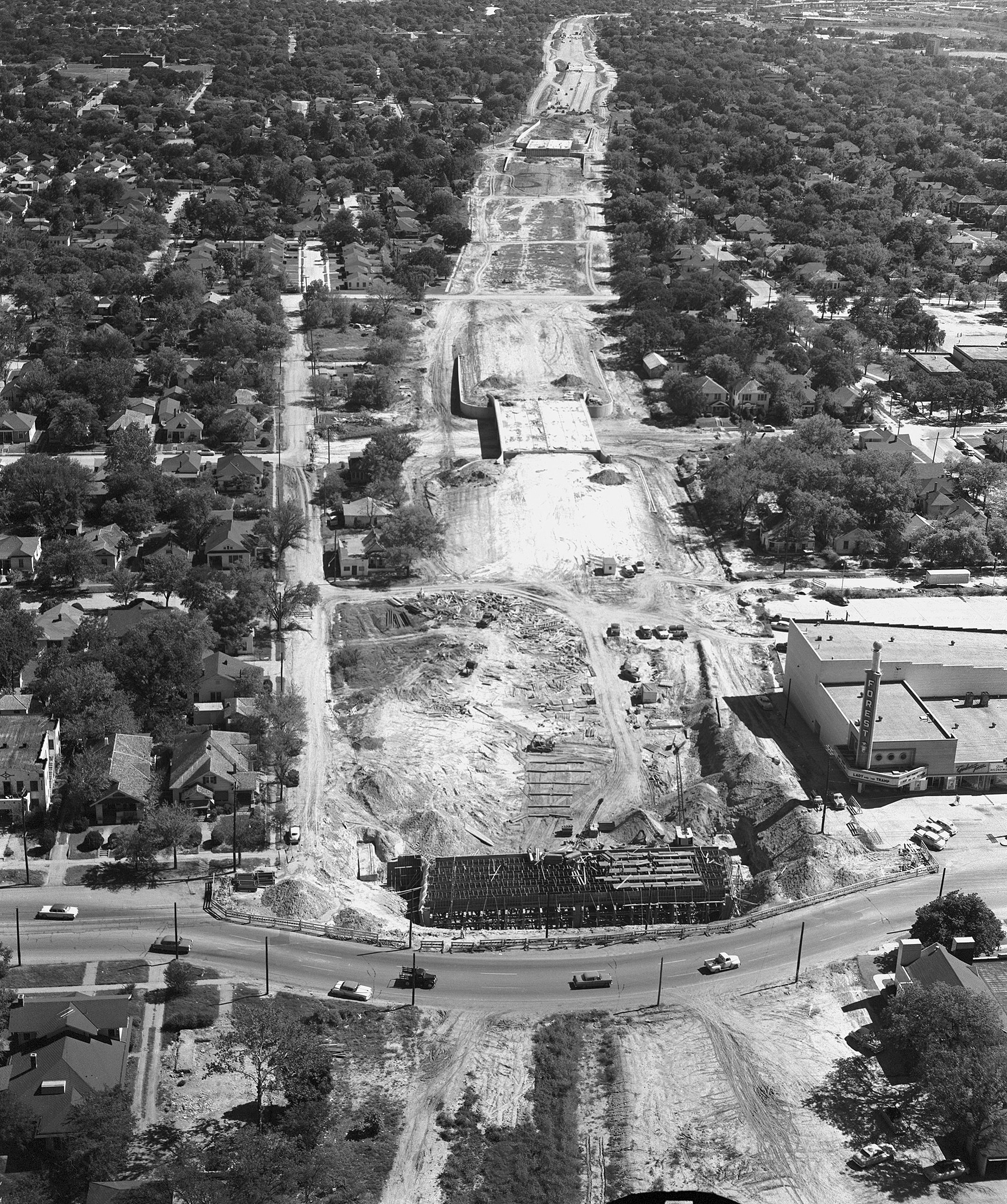
 

Photo-Pac: The First Disposable Camera — 1948

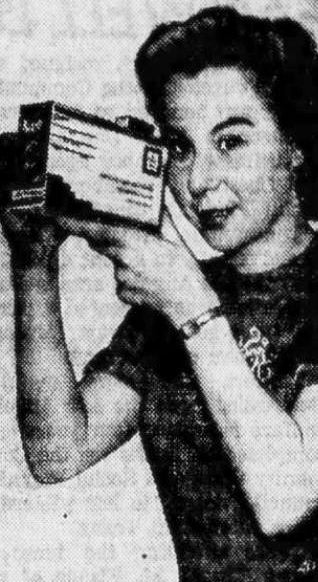
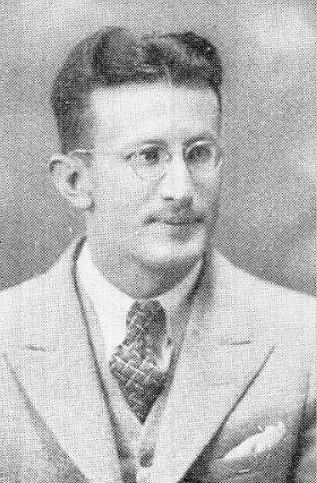
weir_mechanix-illus_1949_smA. D. Weir and his invention, 1949

by Paula Bosse

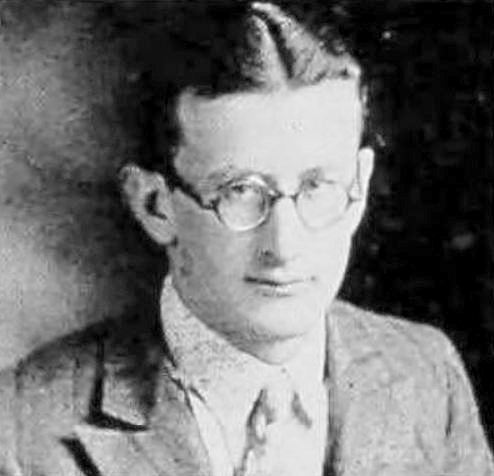
Alfred D. Weir (1909-1996) was the son of A. F. Weir, the successful retail furniture merchant who founded Weir Furniture in 1922. The younger Weir graduated from SMU in 1933 with a degree in mechanical engineering and started his career, fresh out of college, at Dallas’ Ford assembly plant. During World War II, he was the chief industrial engineer at North American Aviation and was later employed by Fairchild Engine and Aircraft, Ford’s aircraft division in Kansas City, Texas Instruments, and Bell Helicopter.

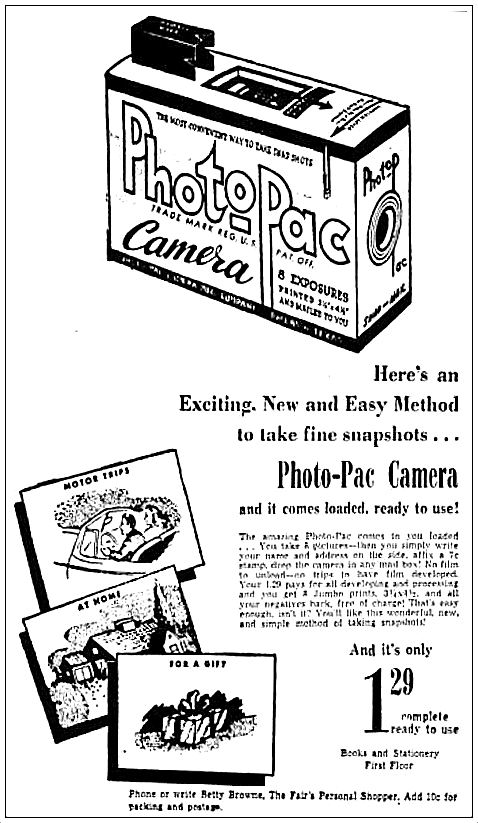
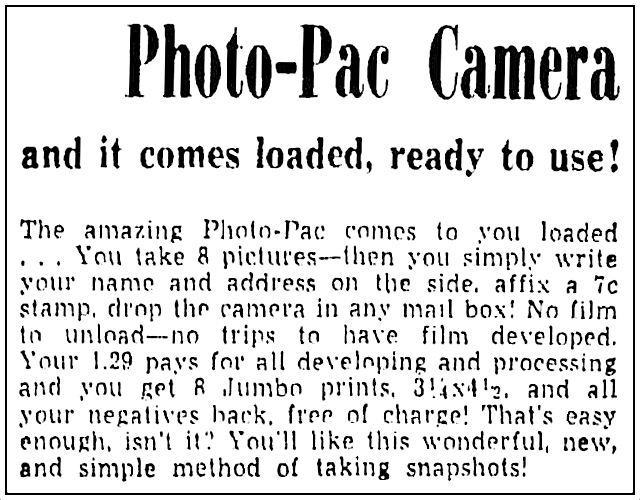
After the war and before his time in Kansas City, Weir took time out from his engineering career to try his hand as an entrepreneur: he invented, patented, and manufactured the Photo-Pac, a single-use camera made of inexpensive fiber board and pre-loaded with 35mm film (loaded by blind employees in total darkness). The user would buy one of these cameras at a drug store, department store, or gas station for $1.29, take eight photographs, and then write his or her name on the side of the camera and drop the whole thing — with the film still inside the camera — in a mail box. Photos would be processed in Dallas, and prints and negatives would be returned to the customer in a couple of days. The camera would not be returned.

photo-pac_san-bernardino-county-sun_040250-photoSan Bernardino County Sun, April 2, 1950

photo-pac_arlington-heights-illinois-herald_122349-photoArlington Heights (Illinois) Herald, Dec. 23, 1949

It appears to have made its debut at the 1948 State Fair of Texas at an introductory price of only 98¢ (click for larger image).

photo-pac_billboard_100948Billboard, Oct. 9, 1948

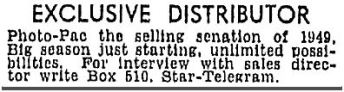
Manufacture and distribution of the camera began in earnest in May, 1949. And then … ads for the camera were everywhere! (The home-grown invention appeared in a hometown newspaper advertorial on May 1, here.) Weir and his small team managed to get the camera in retail locations all over the country. He was also worked hard to line up distributors. Ads such as this one were placed in several U.S. newspapers:

photo-pac_FWST_061649Fort Worth Star-Telegram, June 16, 1949

It seems to have been very popular — both as a novelty impulse buy and as a useful product for people who either did not own cameras or who did not want to take their family cameras on trips. Here’s a typical ad (see text below):

photo-pac_FWST_111649_fair-dept-store-ad

photo-pac_FWST_111649_fair-dept-store-ad_detFWST, Nov. 16, 1949 — from ad for Fort Worth’s Fair Department Store

The camera won a “prize gadget” award from Mechanix Illustrated (click to see very large image).

photo-pac_mechanix-illus_sept-1949Mechanix Illustrated, Sept. 1949

By the summer of 1950, the number of exposures went from eight to twelve, and the price increased to $1.49. It seemed that the business was growing, but by the fall of 1950, Photo-Pac seems to have reached the end of the road. Court dockets showed a couple of lawsuits filed against the company. Newspaper ads showed stock of the cameras being deep-discounted to as low as 50¢ apiece. The next year, 1951, saw Weir returning to his engineering career — he accepted a position with Ford in Kansas City and apparently left his business dreams behind. It was a great idea, but, for whatever reason, it never fully caught on.

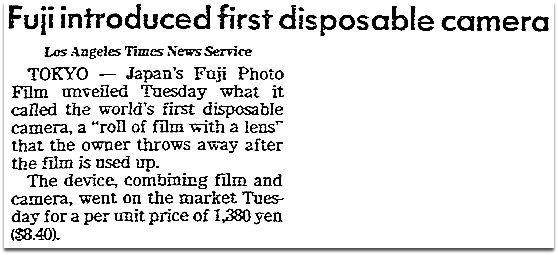
36 long years after A. D. Weir’s Dallas company folded, Fuji introduced their very popular disposable camera; Kodak followed with theirs in 1987. Those things were everywhere — everyone’s had one of them at one time or another. I bet A. D. Weir was miffed.

fuji_FWST_070286FWST, July 2, 1986

*

weir_smu_rotunda_1930A. D. Weir, SMU Rotunda, 1930

weir_smu_rotunda_1933Weir, SMU Rotunda, 1933

weir_dmn_032253-photo1953

***

Sources & Notes

Top photo is an inset from the Mechanix Illustrated “prize gadget” page, from the blog Modern Mechanix, here.

Weir’s patent can be found on Google here. To view Google Patent Image separately (and really big), click image below.

weir_patent

There seems to be some debate about whether Weir’s Photo-Pac was actually the first single-use disposable camera — if it isn’t strictly the first, it seems to have been the one that made the most headway into the American marketplace. A great article on the topic can be found on the Disposable America website here.

Wikipedia’s “disposable camera” page is here.

A. D. Weir’s father, Alfred Folsom (A. F.) Weir opened Weir Furniture at 2550 Elm Street in 1922; in 1934 the company was incorporated to include his wife and son. A. F. Weir sold the Dallas company to his brother Earl (who had owned furniture stores in Fort Worth and Arlington) in the 1940s — that business closed sometime between 1945 and 1948. In 1948, Earl’s son John Ray Weir opened Weir’s Furniture Village on Knox Street, a business still going strong today.

Most images are magically larger when clicked!

*

Copyright © 2016 Paula Bosse. All Rights Reserved.

Dallas Theater Center

dtc-downtown_dallas-park-dept_portalFLW’s DTC

by Paula Bosse

Frank Lloyd Wright’s Dallas Theater Center is seen here nestled amongst the woody landscape of Turtle Creek. There’s a lot of varied architecture going on in this photo!

***

Sources & Notes

Photograph is from the Dallas Park and Recreation Department Collection, Dallas Municipal Archives; it is accessible via the Portal to Texas History, here.

The text on the back:

Opened in 1959, this Center provides pleasure for thousands of Dallasites and visitors yearly through a repertory of plays presented in its Kalita Humphreys Theater. This $1,000,000 Center, the last completed building and only theater designed by Frank Lloyd Wright, also incorporates a children’s and teen theater and a private school of drama.

*

Copyright © 2016 Paula Bosse. All Rights Reserved.

The Digital Collections of SMU’s Central University Libraries: The Gold Standard

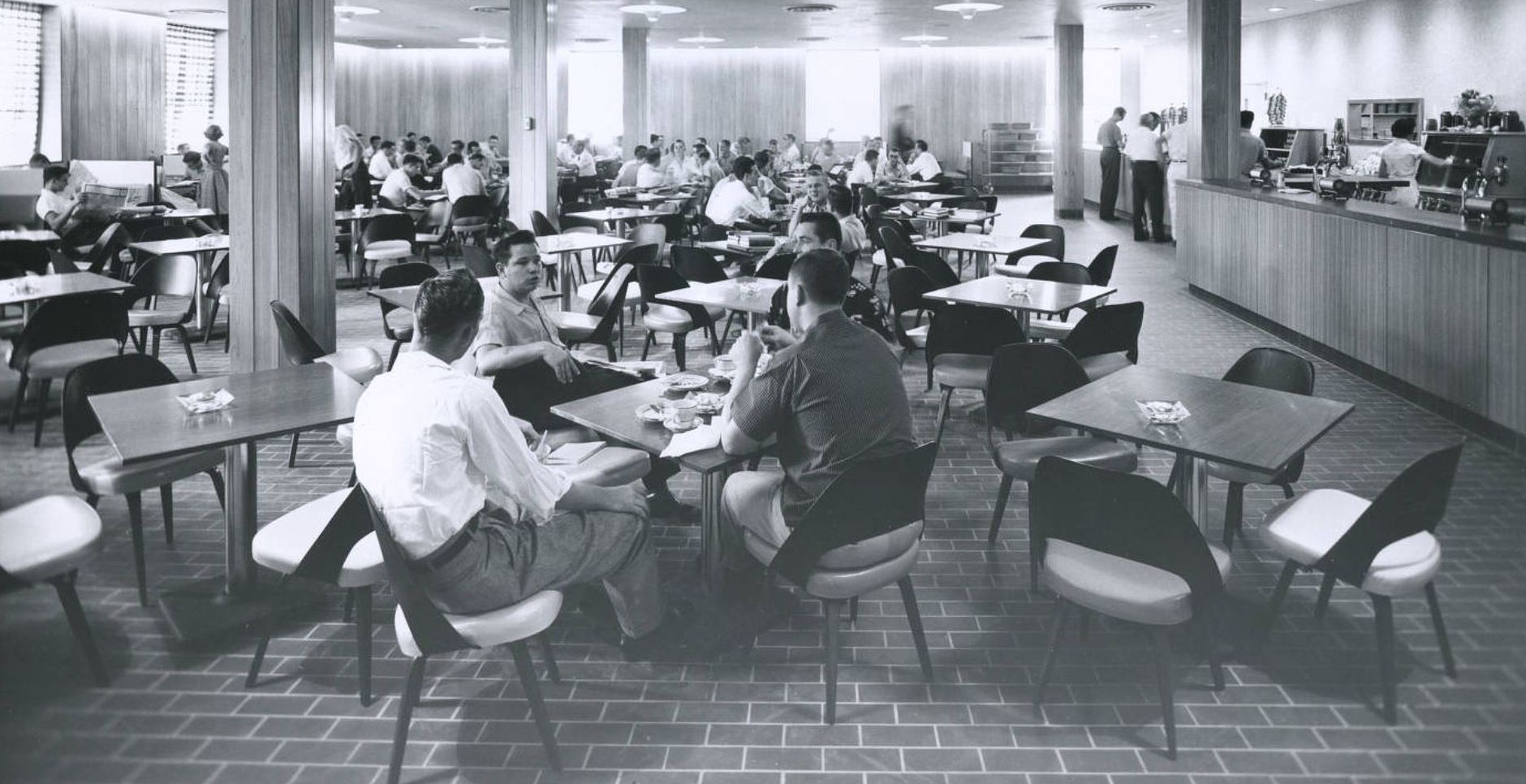
umphrey-lee-snack-bar_rotunda_1956My father in the Umphrey Lee snack bar?

by Paula Bosse

This past week I was invited by the Norwick Center for Digital Solutions at Southern Methodist University to tour several of SMU’s special collections libraries, which include the DeGolyer Library, the Hamon Arts Library (which includes the Bywaters Special Collections and the G. William Jones Film and Video Collection), the Edwin J. Foscue Map Library, and the SMU Archives. I had a behind-the-scenes look at the journey an item takes on its way to being digitized, beginning with the acquisition of the collection itself, the cataloging of the collection, and the research, annotation, and imaging of each item. Another important part of the process is the often mundane but necessary grant-writing which must be done to obtain funding to do much of the above. These collections at SMU are huge, but a remarkably efficient group of SMU library staff and students tackle the herculean task of getting everything cataloged and up online, accessible to everyone. At the end of February 2016, over 51,000 items have been published online. And there is a vast, exciting amount still to come!
For me, the online digitized database of SMU’s Central University Libraries is the absolute best for researching historical Dallas images. (I should note that Dallas history is only part of the wide-ranging collection of photographs, manuscripts, films, etc., concerning everything from Western Americana to the Mexican Revolution to trains and railroad history to artists’ sketchbooks, etc.) I’m most interested in Dallas photographs, and SMU really has no equal in what they provide online: large, high-resolution images without watermarks, accessible to anyone with a computer, tablet, or phone. It is an unbelievable treasure trove of historical images, and I’ve been lost in it for hours at a time.

I know this might come dangerously close to appearing to be some sort of paid promotion, but it’s not. We are very lucky here in Dallas to have these SMU collections available to us. I wish ALL institutions with historical holdings would also throw open the doors to their archives and share their collections online freely. (I would be remiss if I didn’t mention UNT’s wonderful Portal to Texas History site here, which, along with SMU, does just that.) We are living in a digital age, and to be unable to access some of Dallas’ other deep and varied collections of our own city’s history is incredibly frustrating, as I think it must also be for the institutions themselves — digitization of large collections takes time and money, both of which are often in short supply. SMU’s online presence is what all other libraries and institutions should model themselves after. Thank you, Norwick Center for Digital Services, for truly bringing SMU into the Digital Age.
**

On a more personal note, even though I use the online digital catalog of SMU’s collections all the time for this blog, it can also be a great source to use to explore your family’s history, if family members have attended SMU. My mother and my father both attended SMU, and thanks to the digitization of EVERY SINGLE ROTUNDA YEARBOOK (!), I was able to find photos of my parents I’d never seen before.
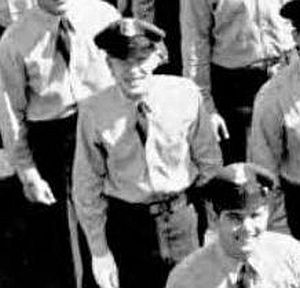
The photo at the top of this post shows the then-new Umphrey Lee Student Center snack bar and appeared in the 1956 Rotunda yearbook. I was browsing through the “Campus Memories” photos from the SMU Archives, and when I saw this photo, I immediately recognized the back of my father’s head! A KA fraternity brother of his doesn’t think it’s my father in this picture, but my mother, my brother, and I all think that that the student in the white shirt in the foreground with his back to the camera is almost certainly my father, who was a grad student in 1956. If it weren’t for the Campus Memories collection (which is FANTASTIC, by the way), I’d never have seen this photograph. And because the Rotunda database is searchable by names (see below for link), I was able to find a photo of my still-teenaged father in some sort of large, uniformed squadron (“Squadron A”) in 1953 — a zoomed-in detail of the photo is below:

PRB_squadron-A_rotunda-19531953

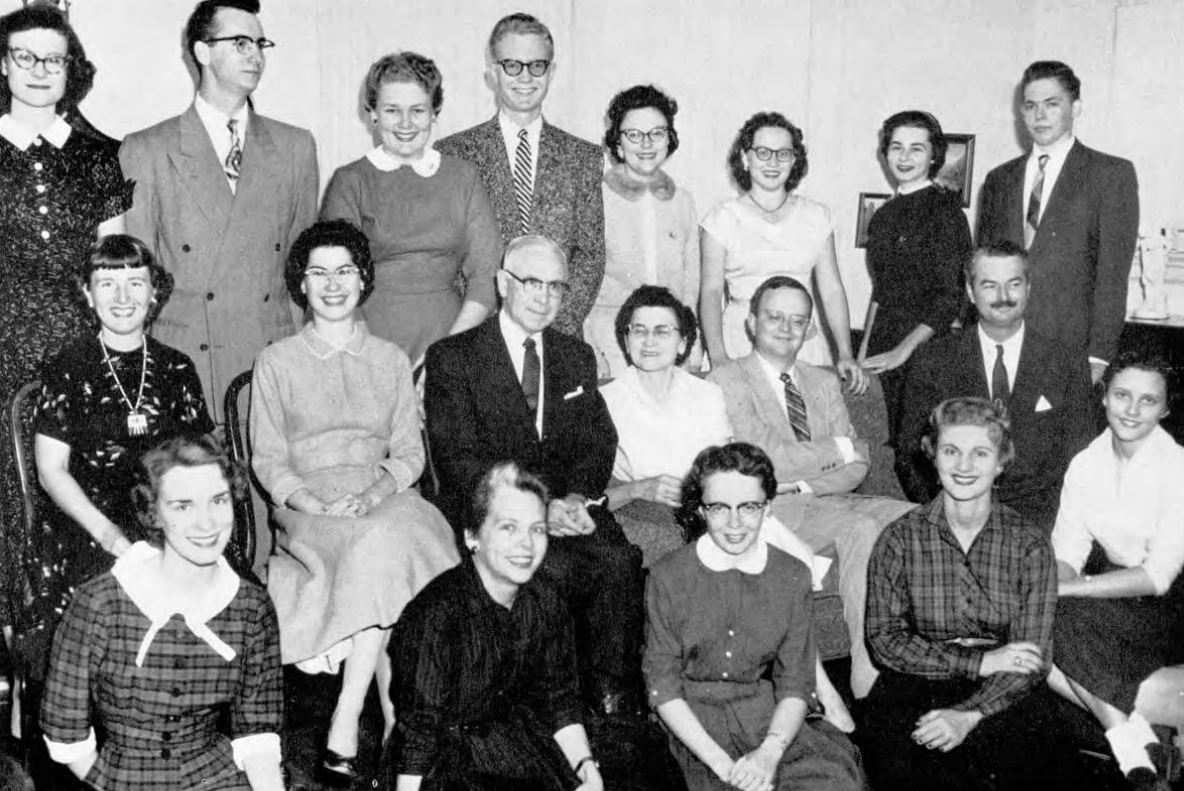
And I’m not sure I would have seen this photo of my mother taken a few years later, looking incredibly cute and perky as an officer of the honorary Comparative Literature fraternity, Beta Kappa Gamma. (My mother is on the back row, between the two tall men.)

beta-kappa-gamma_rotunda_19561956 (mustachioed professor Lon Tinkle is in middle row, far right)

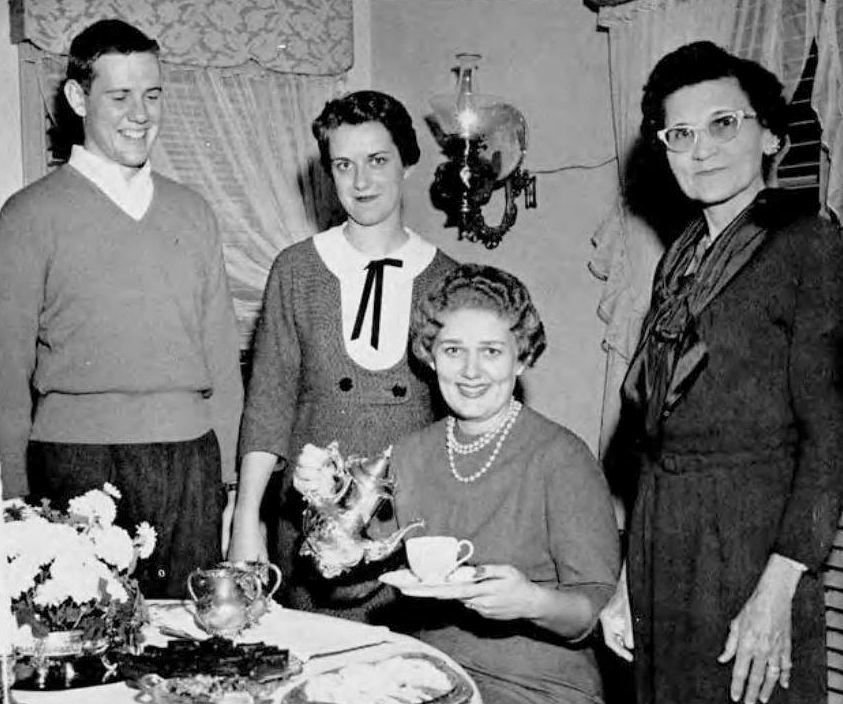
Or this photo a few years after that when she was the president of the group. She always laughs when she recalls how one of the rituals that came with the office was pouring tea from the group’s silver tea service.

mew_rotunda_19591959 (with sponsor Dr. Gusta Nance at right)

Again, thank you, SMU!

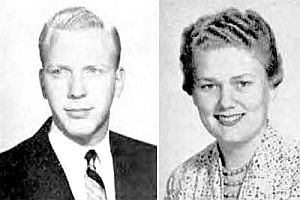
prb-mew-rotundaDick Bosse, Margaret Werry

***

Sources & Notes

Main search page for SMU Libraries’ digital collections is here. Pack a lunch. You might be here a while.
Norwick Center for Digital Solutions info is here.
Top photo is titled “Students in Umphrey Lee Student Center Snack Bar” — it was taken in 1955 and appeared in the 1956 Rotunda, SMU’s yearbook; it is from the SMU Archives, DeGolyer Library, Central University Libraries, Southern Methodist University, and it is accessible here. (I’ve cropped it a bit at the top and bottom.)

All other photos are from various editions of the Rotunda yearbook, all of which are online.

Every single edition of the Rotunda — from the very first yearbook for the inaugural 1915-1916 class — has been scanned in its entirety and is available online. This incredible resource is here. It takes a little while to figure how to navigate through the yearbooks, and it can be slow to load — but it’s worth the wait.

More from the SMU Archives (including the archived campus newspaper) is here.

Lastly, I would like to thank the Norwick Center for inviting me to visit. I’d also like to thank Anne Peterson of the DeGolyer Library; Jolene de Verges, Sam Ratcliffe, and Ellen Buie Niewyk of the Hamon Arts Library; SMU archivist Joan Gosnell; and all of the other students and Norwick staff members I met on my visit to the SMU campus. Keep up the great work!

*

Copyright © 2016 Paula Bosse. All Rights Reserved.