Bastille Day again already? It seems to come earlier every year. Last year I wrote about the 1957 Neiman-Marcus French Fortnight — the very first fortnight celebration. This year I thought I would present a few of the pages from the lavish advertising supplement Neiman’s placed in the October, 1957 issues of American and French Vogue. The mini-catalog was titled “Neiman-Marcus Brings France to Texas, Everything From A to Z.” (Link to the entire ad insert is below.) Here we have “C,” “R,” “V,” and “Z.” Enjoy a flashback to fabulous ’50s fashion photography. And Happy Bastille Day!
Click to read a list of events and exhibits happening around the store.
***
These pages are from a reprint of a 30-plus-page 1957 Neiman-Marcus advertising spread; from the collection of Stanley Marcus’ papers at the DeGolyer Library, Central University Libraries, Southern Methodist University. This is the very epitome of high-fashion advertising of the 1950s, and the sophisticated-but-fun-and-frothy art direction is wonderful. The entire mini-catalog has been scanned by SMU, and it can be viewed in a PDF, here.
My previous post “Neiman-Marcus Brings France to Big D — 1957” — which gives some background on this first N-M fortnight celebration and contains a great photo of the exterior of the downtown store elaborately decorated to resemble the Rue du Faubourg Saint-Honoré — can be found here.
Dali does Dallas (in a slanted doorway at Union Station)
by Paula Bosse
The artist and pop phenomenon Salvador Dali came to Dallas in 1952 to present a lecture at McFarlin Auditorium on the SMU campus as part of the popular Community Course series. This was during his “Nuclear Mysticism” period, during which his paintings were influenced by the atomic age, science, and religion. One of the examples of this direction in his art is his painting “Raphaelesque Head Exploding” from 1951.
“Raphaelesque Head Exploding”
This 1952 American lecture tour included at least three stops in Texas: Houston, Fort Worth, and Dallas. Dali and his wife, Gala, arrived in Dallas on the afternoon of Thursday, February 14, 1952, after the artist had spoken at a members-only event and luncheon at Fort Worth’s River Crest Country Club earlier in the day. The lecture at McFarlin Auditorium was on Saturday night, Feb. 16. One wonders what he did in Dallas on his free day Friday.
While in Dallas, Dali was interviewed at the Baker Hotel by Paul Crume of the Morning News, a bit of an odd choice, in that Crume — author of the very popular front-page “Big D” column — was generally the paper’s go-to humor writer, an indication, perhaps, that Dali was considered less of a serious artist than as a quirky and larger-than-life entertainer. Which… fair enough.
One of the interesting little morsels that Dali told Crume was that he was amazed that his dreams in Texas had all been in technicolor, a relative rarity for him.
“Astonishing! In New York, all black and white. In Texas, all in color. In Italy, everybody dreams in color. In France, not so much. It is very mysterious. But in Houston, I am dream in color twice. And then, last night here [in Dallas].” (DMN, Feb. 17, 1952)
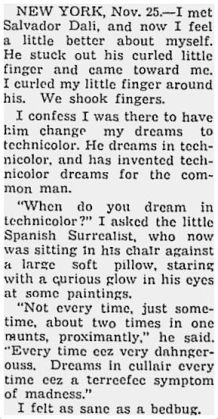
Dali loved dreaming in technicolor and mentioned it several times throughout his career. This little tidbit from Earl Wilson’s column in 1944 is amusing (if weighted down by Wilson’s unfortunate lapses into dialect).
New York Post, Nov. 26, 1944
To dream in technicolor every time “is very dangerous. Dreams in color every time is a terrific symptom of madness.” …I’m not sure what that says about Texas and/or Texans.
***
Sources & Notes
Top photo (dated Feb. 15, 1952) shows Salvador Dali standing in a slanted doorway at Union Station in Dallas (it seems likely that the photo was taken on Feb. 14th when he arrived in Dallas from Fort Worth, and was then published on Feb. 15th); it is from the Hayes Collection, Dallas History & Archives Division, Dallas Public Library (Call Number PA76-1/7171).
(Regarding this crooked door frame at Union Station: when Dali saw it he exclaimed, “A Dali-an door!”) (He would have lovedCasa Magneticaat Six Flags.)
Articles about Dali’s visit to Dallas can be found in the archives of The Dallas Morning News:
“Key to New Art Revealed by Dali” (It’s Mysticism)” — an unbylined review, probably written by Paul Crume (DMN, Feb. 17, 1952)
“Texas Tints Dreams of Artist Dali” — interview by Paul Crume, conducted in the Baker Hotel (DMN, Feb. 17, 1952)
“Big D” column by Paul Crume (DMN, Feb. 19, 1952)
An entertaining 1965 appearance by Dali on Merv Griffin’s talk show can be seen here. He talks about dreaming in “glorious technicolor” at about 4:55. And, I mean… it’s just a great example of Dali as entertainer.
That “X” is in the wrong spot, y’all…. (click for larger image)
by Paula Bosse
Before I begin, I offer apologies in advance to Oscar Hammerstein II (original lyricist of “The Last Time I Saw Paris”), Neiman–Marcus (with or without the hyphen), haters of Texas stereotypes, and, especially, Fort Worth.
In a Dallas item connected with “Independence Day” in only the most tangential way possible, I thought I’d share a little cabaret song I stumbled across today whilst rummaging through the internet. It’s a humorously re-written version of the Academy Award-winning hit song “The Last Time I Saw Paris,” (…um, the one in FRANCE….), written in 1940 by Oscar Hammerstein II (lyrics) and Jerome Kern (music).
Partial lyrics were reported by Earl Wilson in his syndicated gossip/entertainment column, “Broadway Last Night,” twice — first in 1953, after he’d seen Juliana Larson sing it at the Sherry Netherland Hotel, then later, in 1958, after he’d heard Connie Moore sing it at the St. Regis Maisonette. Both women had Texas ties (Constance Moore actually grew up in Dallas), so I’m sure both enjoyed singing the ditty (in what one hopes was in an ever-so-amusing sophisticated style, à la Noël Coward).
At the Neiman-Marcus store They sell the usual furs And the cutest children’s Cadillacs And yachts marked “His” and “Hers.”
The last time I saw Texas And the oil was in her hills, The kiddies bought their lunch at school With hundred-dollar bills.
The last time I saw Texas, All Dallas was so gay, We’d burned Fort Worth to the ground On Independence Day.
Happy Independence Day, Fort Worth!
***
Listen to Noël Coward sing “The Last Time I Saw Paris” (before FW was being burned to the ground), here.
Juliana Larson (aka Juliana Bernhardt) was a former John Powers model who married wealthy Houston oilman Walter Bedford Sharp, Jr. (whose father was a business partner with Howard Hughes’ father). She started in light opera in Texas and moved on to New York nightclubs. She seems to be known mostly as the wife of a Texas oilman and a permanent fixture on Best Dressed lists. She horrified everyone when she showed up to a Metropolitan Opera opening night wearing trousers — see her delighting in the publicity she received from that, in Life magazine (Nov. 24, 1952), here.
Constance Moore was born in Iowa but grew up and began her career in Dallas. More about her here and here; glamour photos here.
The “Texas” lyrics were reported by Earl Wilson to have been written by David Roger (for Juliana Larson, in 1953) and by Earl Brent (for Connie Moore, in 1958). The partial lyrics Wilson quoted in 1953 and 1958 were the same. …So there you go. (I changed the order of one line, because it seems that Wilson got the lines of the first verse in the wrong order.)
I’m not sure where I found that Neiman’s map, but it’s cool. (Why IS the “X “is the hinterlands, anyway?)
Enjoy your 4th of July weekend! And don’t burn anything down!
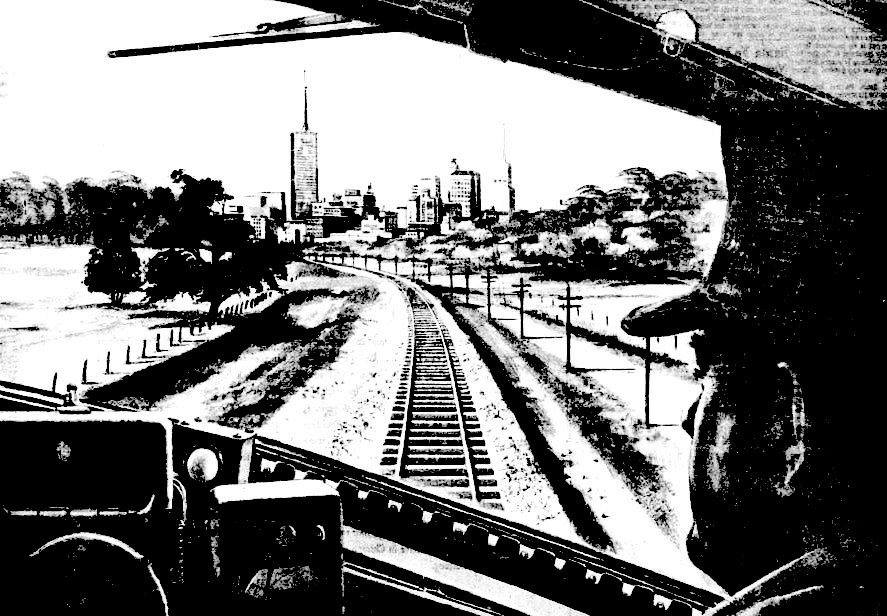
In the previous post, “White Rock Station,” I wrote about the opening of a new passenger depot that had been built to serve suburban travelers along the new stretch of Santa Fe track laid between Dallas and Denton in 1955, opening up direct through-travel to Chicago. This was big news, and as was the charming custom back then, when a new business endeavor opened or expanded, other businesses (often direct competitors) placed ads in the local papers to welcome them and wish them well.
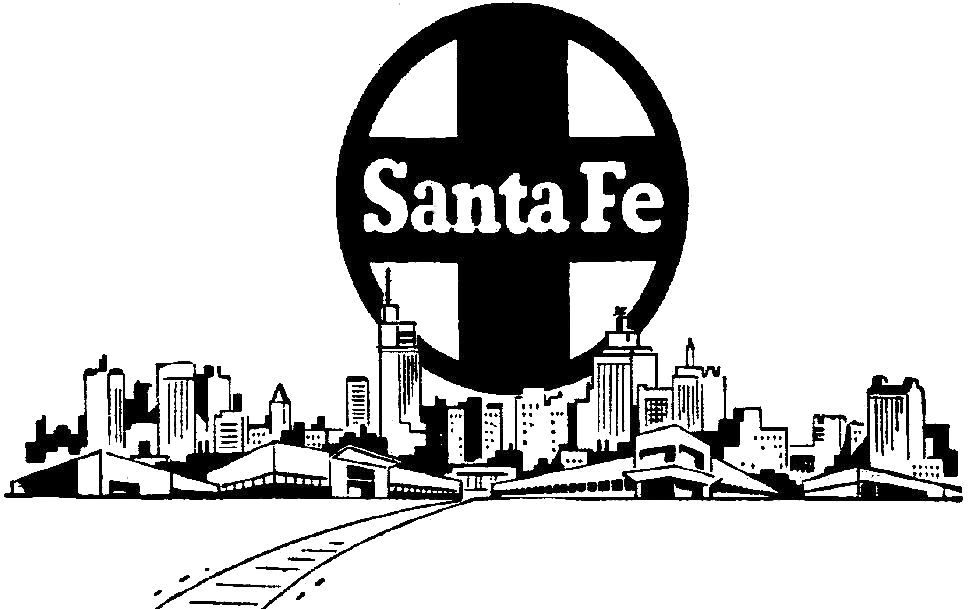
Here are a few of the ads that appeared in December, 1955 to promote/congratulate the new line. I’ve chosen these details of ads because they feature illustrations of the city’s skyline — I always love to see the Dallas skyline in ads, but I particularly like the style of commercial art from this period.
At the top is a detail from an ad placed by the Magnolia Petroleum Company, with the tag-line “Main Line to Progress.”
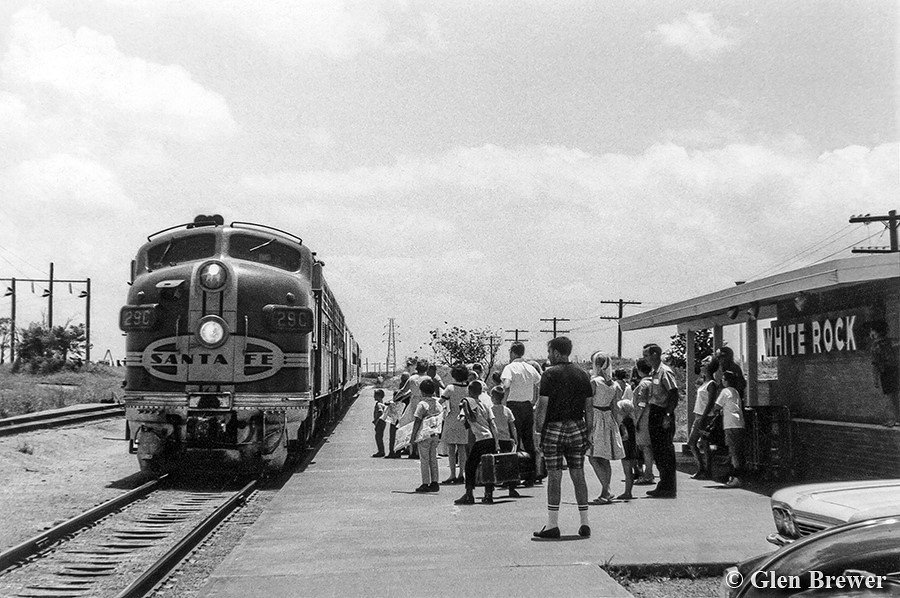
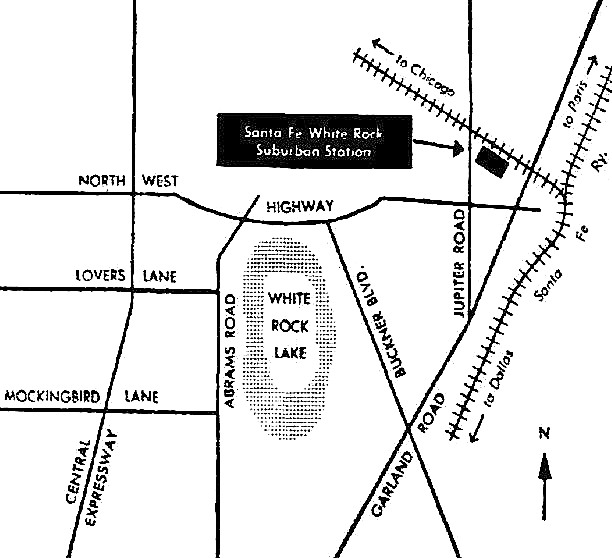
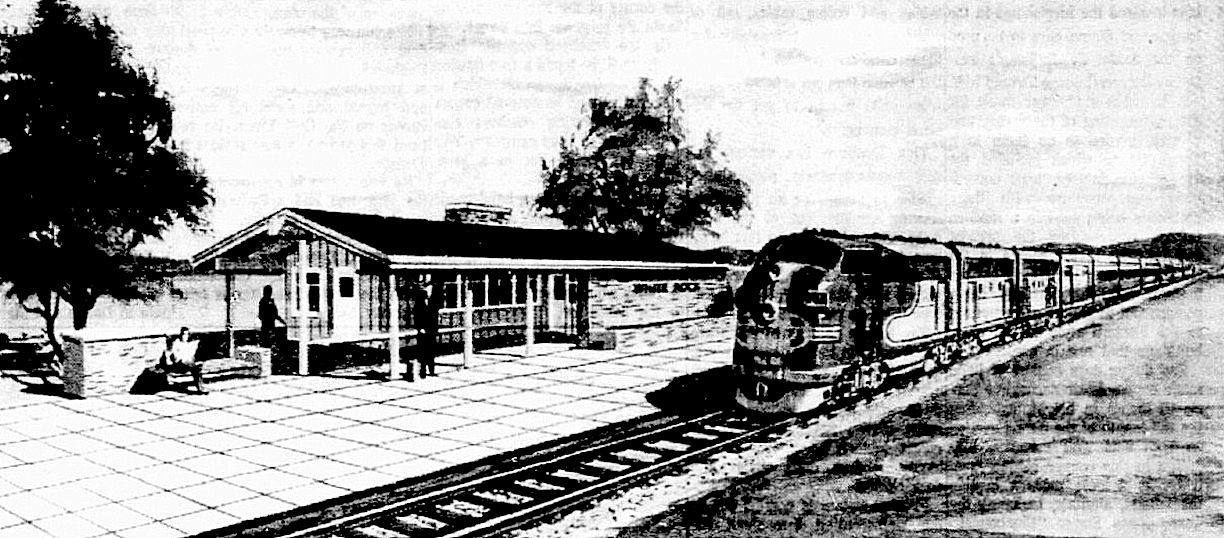
The White Rock passenger station — the Santa Fe railroad’s first suburban train depot built in the Southwest — opened on December 5, 1955 on Jupiter Road, about a quarter of a mile south of Kingsley (located mere steps across the Garland city line), a few miles northeast of White Rock Lake. It was the culmination of a $7,000,000 construction project in which two depots were built and 49.3 miles of new track was laid between Dallas and Denton (or, more specifically, between Zacha Junction — the area near Northwest Highway & Garland Road — and Dalton Junction, an area just northwest of Denton).
The new track — touted by a Santa Fe ad as being “the longest main line construction over new territory by any railroad in 25 years” — was important because it offered passengers from Dallas the ability to travel for the first time directly to Chicago without having to change trains. It also reduced freight line distances by 65 miles. The swanky streamlined Texas Chief shuttled passengers between Dallas’ Union Station and Chicago in about 19 hours — travel time between Union Station and the new White Rock Station was 25-30 minutes.
Santa Fe ad detail, Dec. 4, 1955
The breathless copy from the giant two-page advertising spread heralding the new line included the following description:
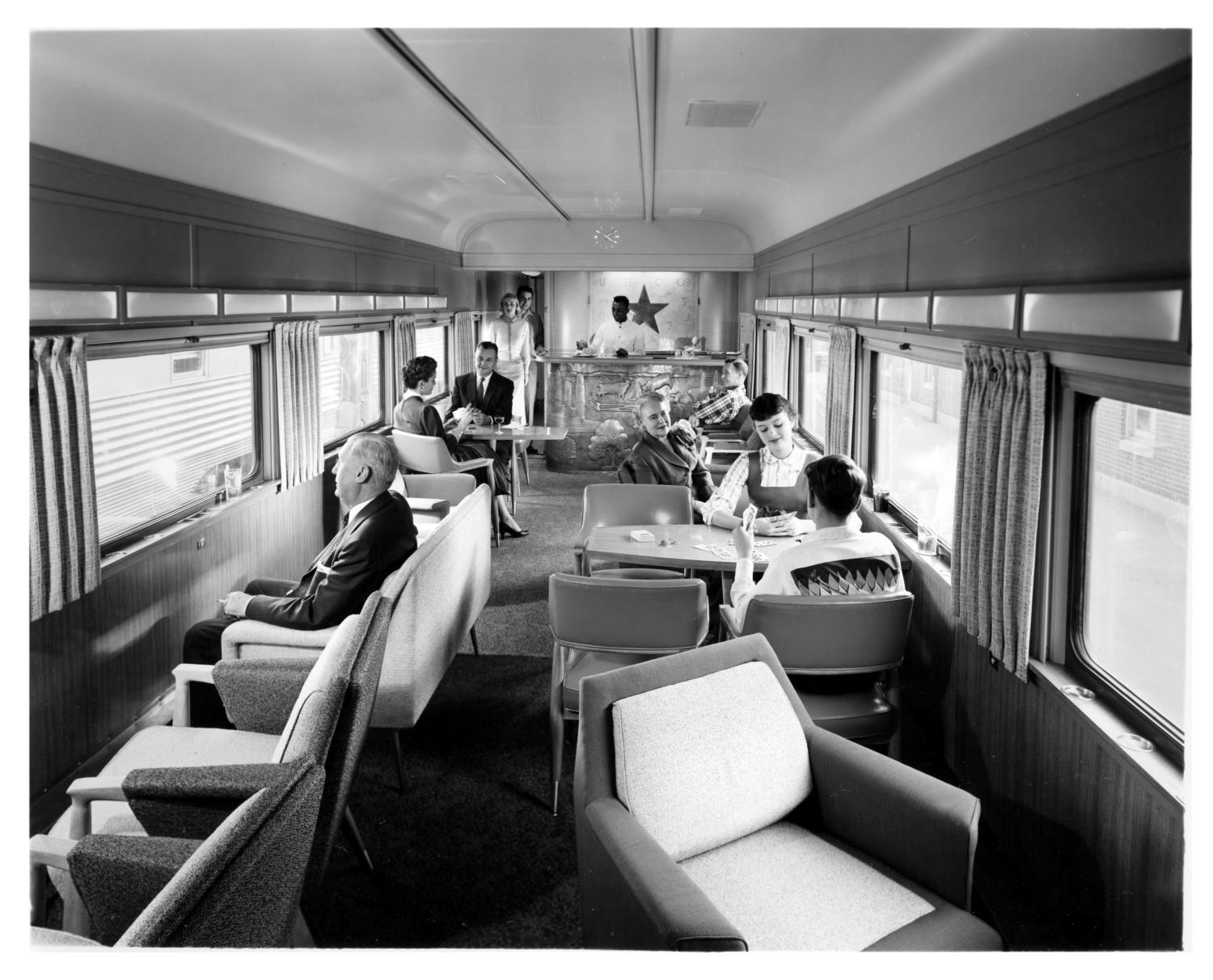
And just wait until you see the special lounge car and dining car on the Texas Chief — the last word in luxury in railroad equipment, decorated in the style and smartness indicative of Dallas…. A lounge decorated to please a Texan! Wide open and spacious feeling, with really comfortable modern sofas and chairs, casually grouped to make you want to relax. You’ll see the Star of Texas and famous cattle brands tooled into the rich leather back-bar — and Texas-inspired murals in hand-hammered copper. Even the walls are richly paneled — in smart, new frosted walnut. Just wait until you see it, you’ll say there’s nothing like it.
And here they are (click for larger images):
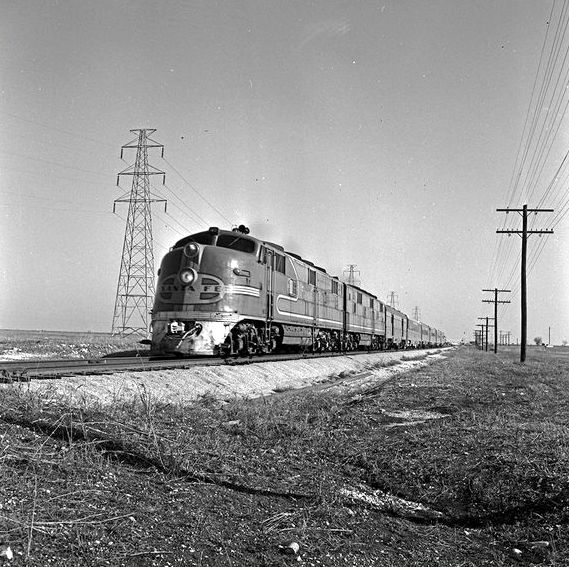
Below, the Texas Chief, pulling out of the station, heading north. (To see a grainy closeup of the station in the background, click here.)
Photo by Everette DeGolyer, Dec. 29, 1956, via SMU
UPDATE: Watch color home-movie film footage taken at the station in this clip from the Portal to Texas History (the pertinent footage begins at the 3:00 mark). More on this cool piece of film can be found in another Flashback Dallas post, here.
*
Interesting tidbit: the engine of the Texas Chief was christened at Union Station on Dec. 5, 1955 with a bottle of water from White Rock Lake! The caption of a photo of the christening in the Dallas Morning News read: “NEW STREAMLINER CHRISTENED — With a bottle of water from White Rock Lake, Mrs. Fred G. Gurley, wife of the Santa Fe Railway’s president, christens the new Dallas-Chicago Texas Chief in ceremonies Monday at the Union Terminal. At right is Miss Sandra Browning of Garland, who presented the local bottle of water,” (DMN, Dec. 6, 1955). Champagne? Pffft! We’ve got pure-dee White Rock Lake water!
And I found footage of that! Here is a screenshot of Mrs. Gurley wielding the bottle of East Dallas’ finest (as Miss Garland, Sandra Browning looks on).
And here is the short clip of the Texas Chief on Dec. 5, 1955, the day of its inaugural run from Dallas to Chicago — in color!. There are shots of the ceremonies at Union Station in Dallas, of the new White Rock Station, of the streamliner with the Dallas skyline behind it, and, possibly, footage from the other big ceremony in Denton.
The two photos showing the dining and lounge cars of the Texas Chief were taken around 1956; both are from the Museum of the American Railroad Collection, Portal to Texas History. Other photos of the Texas Chief from this collection can be seen here.
Photo of the Texas Chief pulling out of the White Rock Station was taken by Everette L. DeGolyer on Dec. 29, 1956; it is from the Everette L. DeGolyer Jr. Collection of United States Railroad Photographs, DeGolyer Library, Central University Libraries, Southern Methodist University. The photo (“Atchison, Topeka, and Santa Fe, Diesel Electric Passenger Locomotive No. 11, White Rock Station”) can be viewed here.
The two drawings, and a few quotes, are from large advertisements placed by the Santa Fe railroad to announce the opening of their new line.
The last photograph showing the station is dated “circa 1956” and credited to “Monaghan, M.D.”; it can be viewed on the Portal to Texas History site, here.
The YouTube video showing color footage of the Texas Chief’s inaugural festivities is titled “New railroad into Dallas. Archive film 93424,” from the Huntley Film Archives, here.
The photo of the commemorative railroad spike (“Spiked with Progress”) was sent to me by a man who had seen it for sale in an antique store in Ardmore, Oklahoma in 2020 (thanks, Joe!).
A 1962 map showing the location of the station is here. A present-day Bing map showing where the station was is here. A Google Street View image of the area today is (…if you must…) here.
An article on the construction of the Denton and Dallas (White Rock) depots — “Work on New Santa Fe Depot To Start Here” (Denton Record-Chronicle, July 13, 1955) — can be read here.
For anyone doing research into this specific new rail line, there was a 16-page section in The Dallas Morning News on Dec. 5, 1955 which was bursting with helpful info, civic pride, “welcome to the neighborhood” ads, and corporate puffery. There was an even larger (MUCH larger!) tribute to the sainted Santa Fe which consumed the entire Dec. 4, 1955 edition of The Denton Record-Chronicle (there was even a ghost image of a Santa Fe engine which covered page one).
As mentioned above, there is home-movie film footage taken at the station — more about this can be found in the Flashback Dallas post “White Rock Station (And a Helicopter Ride),” here.
And, lastly, check out a YouTube video of Henry Mancini’s version of Johnny Mercer’s “Atchison, Topeka & Santa Fe” — with loads of cool period film footage of train travel — here.
1956 modes of transport: automobiles, taxis, bikes, & feet
by Paula Bosse
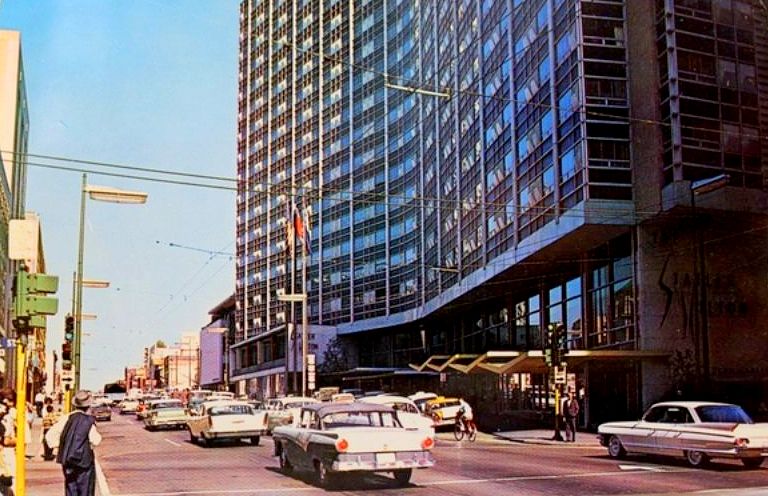
Great shot of the Statler Hilton, looking east down Commerce — looks both hot and cool.
The blurb on the back: “The beautiful facade of the Statler Hilton in busy downtown ‘Big D,’ business and convention center of the Southwest.”
The message on the reverse of this postcard contained the following message to the folks back in Cincinnati:
Hi, folks, we’re having a wonderful time. This is beautiful country. We’ve been to San Antonio for a couple of days. Saw the Alamo, also San Jose Mission and went to Mexico. The children are darling and we’re having fun spoiling them. Love to all — Helen and Walter.
Great news! After decades of that beautiful building sitting empty, it has been announced that it will finally be coming back to life — and the Hilton company is going to be part of it. More here.
See a current view of the same corner on Google, here.
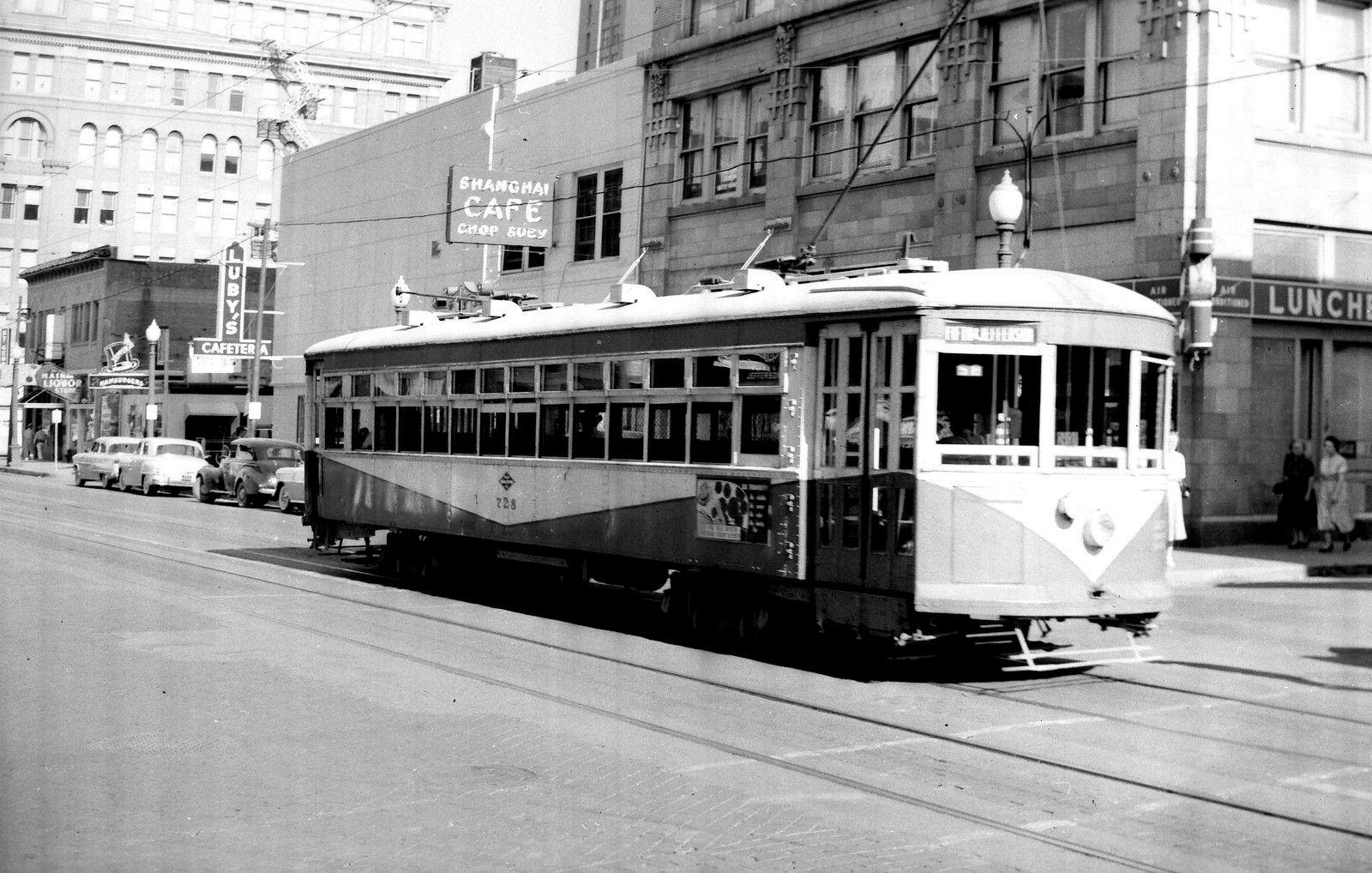
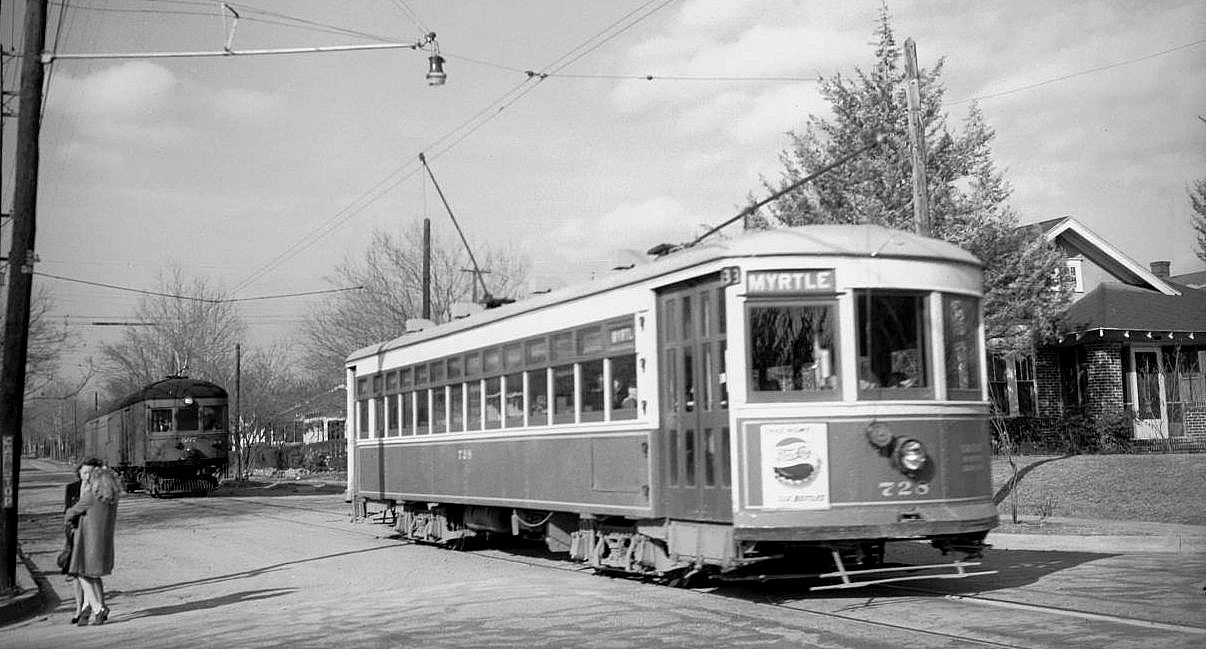
Oh, streetcars. In the photo above, we see car #728 heading east on Main Street on September 2, 1954, having come from, I believe, Oak Cliff (the placard reads “Jefferson”). This photo shows Main Street looking east from, I think, Poydras.
The Shanghai Cafe was at 1004 Main, Luby’s Cafeteria (the second one in Dallas) was at 1006 Main, the Topper restaurant was at 1012 Main, the Main & Martin Liquor Store was at 1016 Main (at Martin Street), and the St. George Hotel was at 1018 Main, all of which can be seen in this photo.
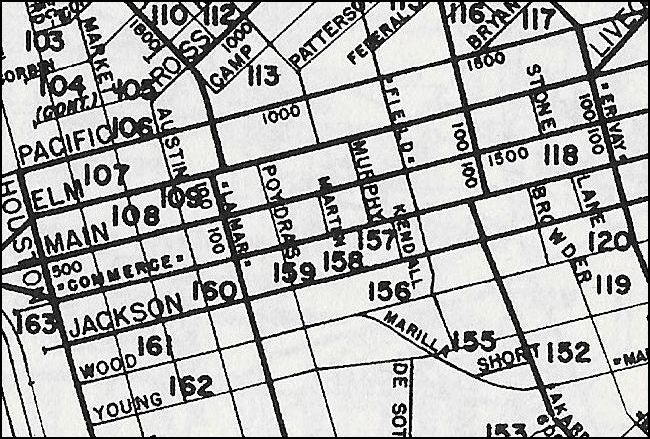
1952 Mapsco
Car 728 wasn’t always “Jefferson,” whiling away its days crossing back and forth across the Trinity. Back in 1945 it was “Myrtle” and was spending a large part of its time in South Dallas.
I’m not sure where Myrtle/Jefferson ended up, but, sadly, the Golden Age of streetcars ended in Dallas in 1956.
***
Sources & Notes
Top photo from an old eBay listing.
Bottom photo by Robert W. Richardson; from the Western History/Genealogy Dept., Denver Public Library.
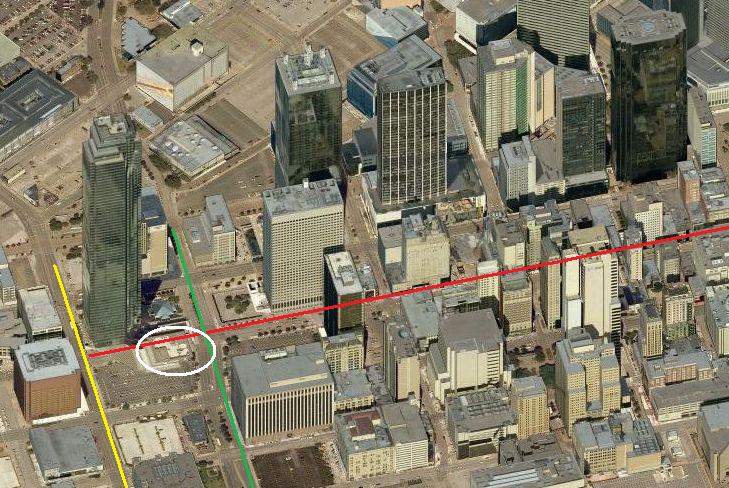
Today, the block seen in the top photo looks completely different. Across the street is where the Bank of America Plaza is now. In the map below, the red line is Main, the yellow is Lamar, and the green is Griffin. The 1000 block of Main Street is circled in white. (Click for larger image.)
Bing Maps
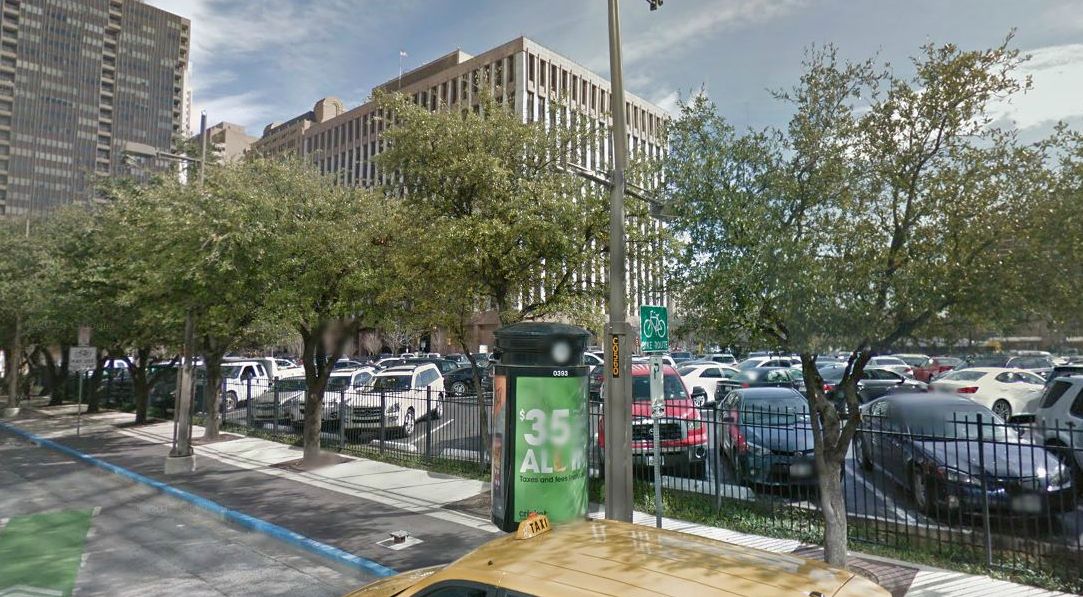
So what’s there now? A parking lot!
Google Street View
To read “The Last Day the Streetcars Ran in Oak Cliff” by Ron Cawthon, click here.
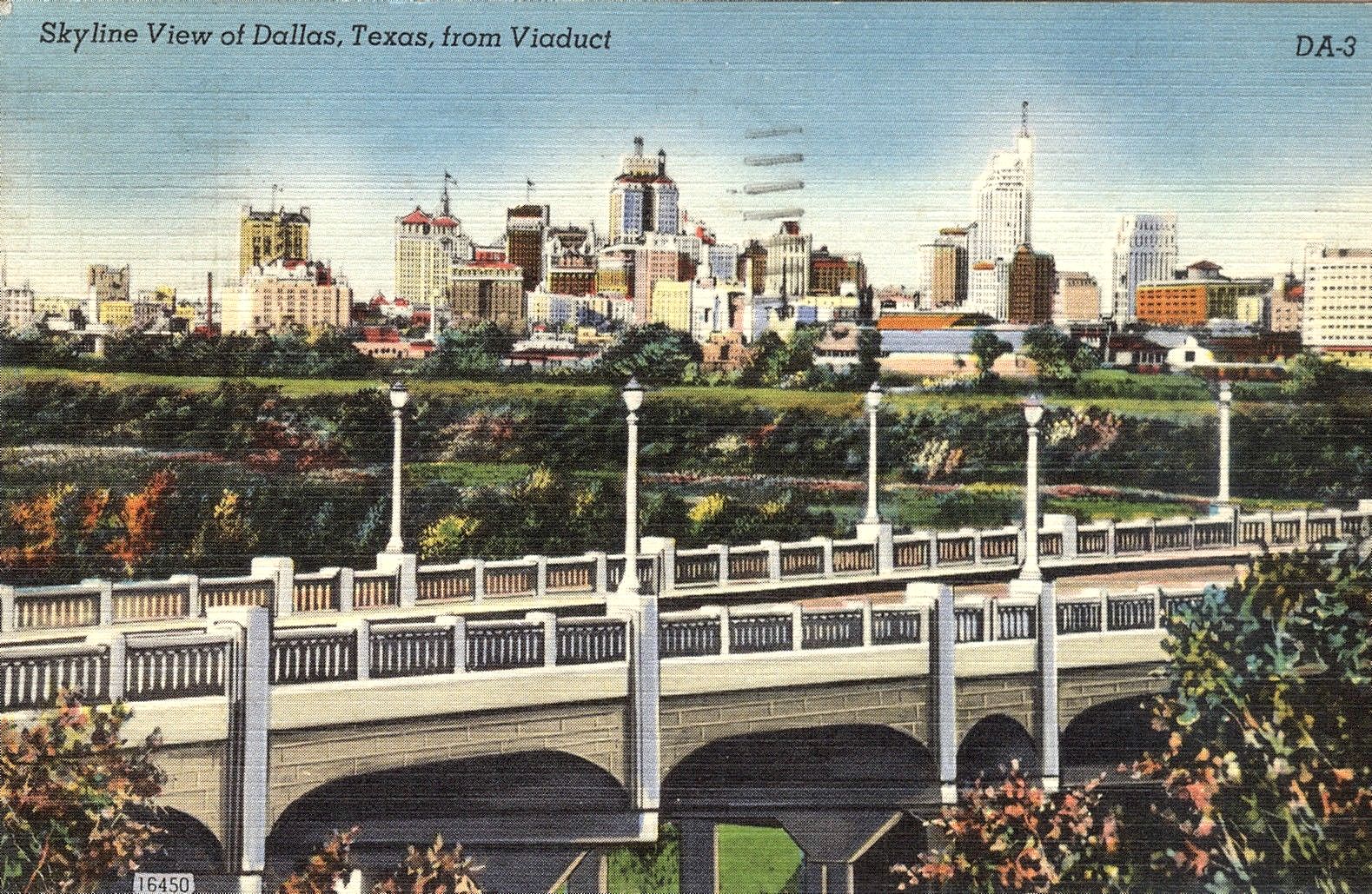
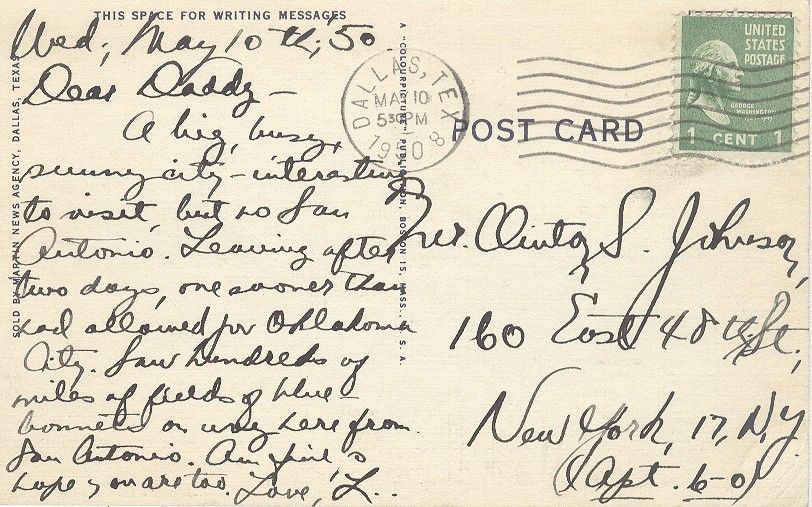
In May of 1950, Clinton S. Johnson of New York City received a postcard from his child who was traveling across Texas. The postcard, showing a “Skyline View of Dallas, Texas, from Viaduct,” said:
Wed. May 10, ’50
Dear Daddy — A big, busy, sunny city — interesting to visit, but no San Antonio. Leaving after two days, one sooner than had allowed for Oklahoma City. Saw hundreds of miles of fields of bluebonnets on way here from San Antonio. Am fine, hope you are too. Love, L.
“Big, busy, sunny, and interesting” — “but no San Antonio.” …I accept that. Who doesn’t love San Antonio? But San Antonio never had a skyline view like that.
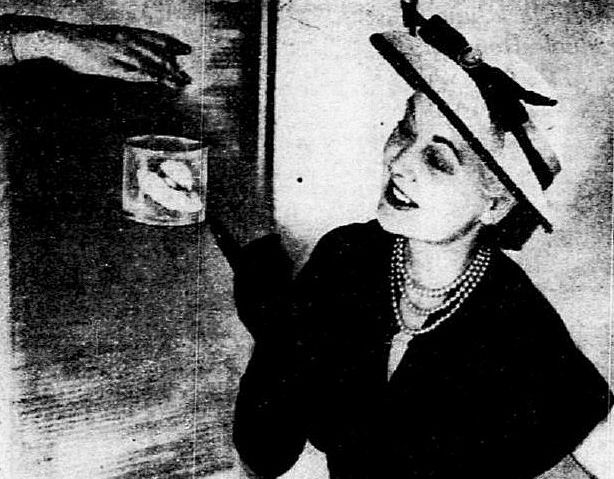
Mother’s Day —Sure to please everybody’s mother is this attractively packaged Mother’s Day hat certificate that she can use to purchase the hat that is most becoming. The certificate is enclosed with a miniature straw hat in a crystal-clear plastic hat box. W. A. Green Company.
Happy Mother’s Day!
***
Sources & Notes
From an advertorial appearing in The Dallas Morning News on May 3, 1951.

 Mais oui!


 Click to read a list of events and exhibits happening around the store.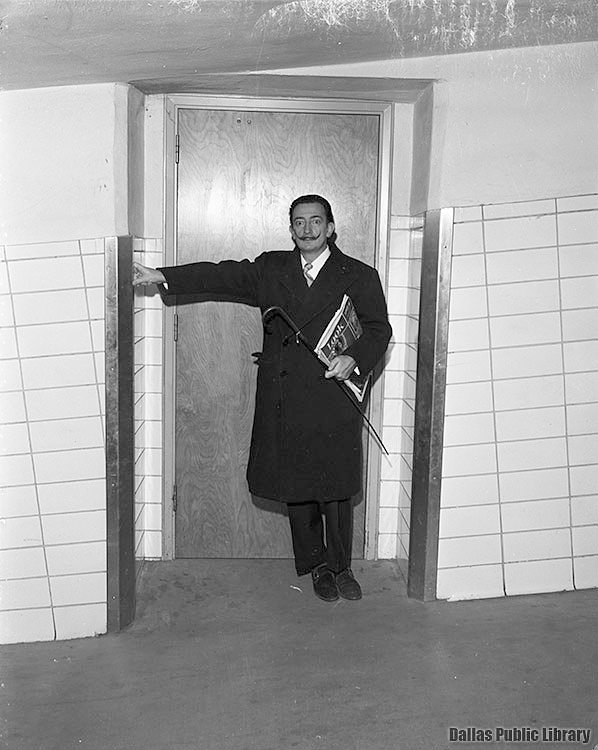

 New York Post, Nov. 26, 1944





 Flashback : Dallas