Flashback : Dallas

A Miscellany: History, Ads, Pop Culture

Category: 1950s

Sheraton Dallas, Original Version — 1959

Sheraton Hotel front

sheraton_hotel_back

by Paula Bosse

I love this somewhat fauvist depiction of Dallas in 1959 — it’s exactly what I wish the city actually looked like, yellow sky and all. All those clean, sharp lines and wide-open sidewalks! The foreshortening is completely out of whack here, with enormous cars and ant-size people — perhaps it’s a metaphor for the dismissive Texan view on pedestrian transport. (What are the two flags to right of the Texas flag?)

***

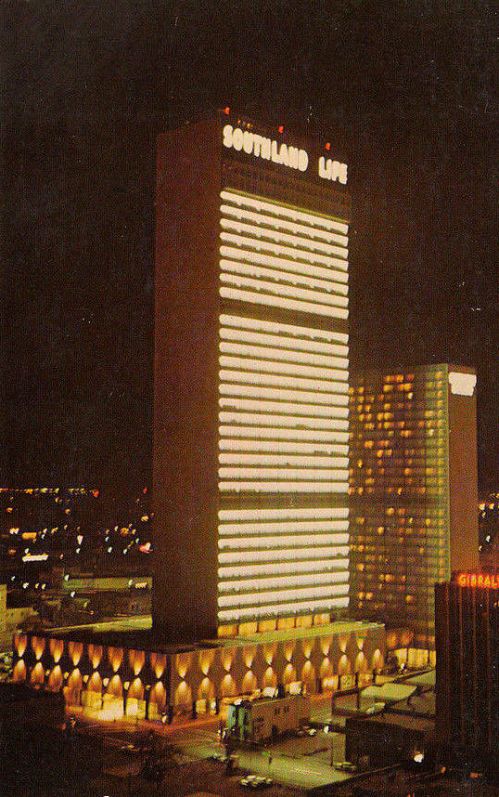
My knowledge of certain aspects of Dallas can be surprisingly spotty sometimes. I’ve seen the Sheraton building all my life, but I knew nothing of its history, or its connection to the Southland Life company (both were part of a complex of buildings, which, during construction, was being compared to Rockefeller Center). The inevitable Wikipedia page is here.

What the heck — here’s another angle: the mighty Southland Life building taking center stage this time, with the Sheraton standing in the wings, spear in hand, waiting to go back on.

southland-life_night

*

Copyright © 2014 Paula Bosse. All Rights Reserved.

George Dahl’s Sleek Downtown Library — 1955

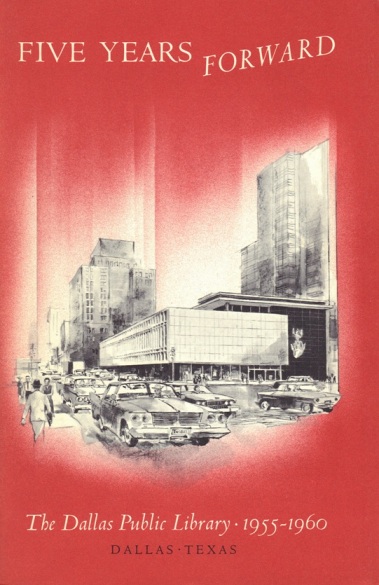
1DPL_cover-sm

by Paula Bosse

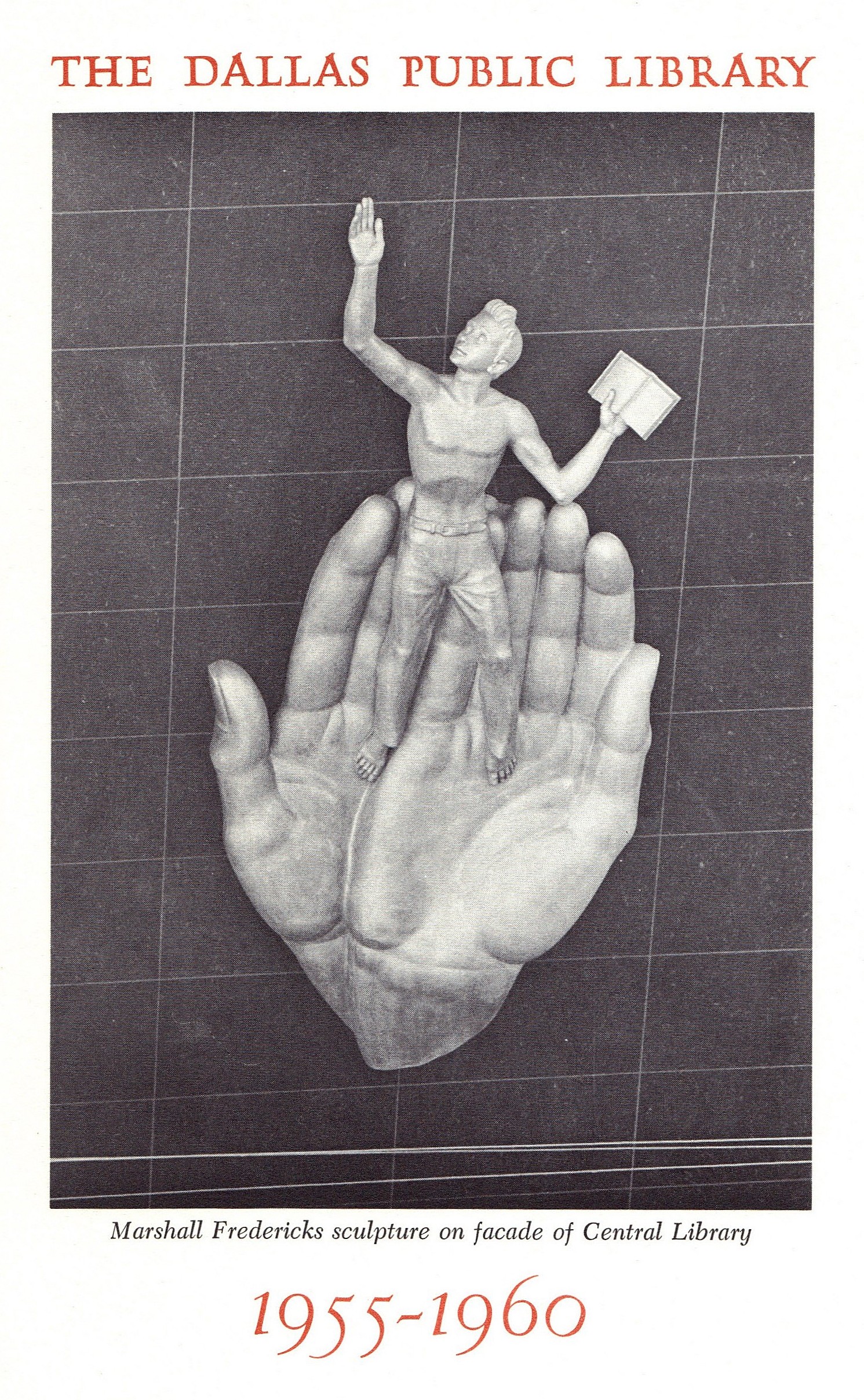
This little 31-page booklet was issued to commemorate the fifth anniversary of the Dallas Public Library. The library was built on the site of the old (beautiful!) Carnegie Library and was vacated when the current library (the J. Erik Jonssen Central Library) opened on Young St. in 1982. Unbelievably, the building has remained empty for over 30 years.

This is the only downtown building I have very distinct memories of from childhood. My mother took us to the library often, and I LOVED that place. I loved the building, the space, the books, the adventure of being downtown — I loved everything but that creepy sculpture of the kid standing in the hands that hung on the outside of the building!

This great library was designed by the legendary (and prolific!) Dallas architect, George Dahl. He moved easily from the streamlined grandeur of the Art Deco buildings of Fair Park to the sleek mid-century-modern-cool of this wonderful downtown library.

2DPL_hands-sculpture
I know there are fans of this sculpture (“Youth in the Hands of God” by Marshall Fredericks), but I’m afraid I am not one of them. I loved art as a child (in fact, I can remember checking out framed art reproductions from this very library), but, as I said, even as a kid, I strongly disliked that creepy sculpture. The kid was fine, it was those giant disembodied hands. When the library moved to its current location in 1982, this sculpture was left behind to languish for years inside the empty building. It was eventually sold, and the boy and the hands are now resting comfortably in retirement, somewhere in Michigan.

3DPL_lobbybertoiaThere was a huge controversy about the Harry Bertoia sculptural screen seen above, hanging over the circulation desk. (I LOVED this piece as a kid!) The mayor — R. L. Thornton — HATED it, and the brouhaha-loving newspapers launched themselves into the fray by running apoplectic editorials which, of course, only fanned the flames of outrage. After the “scandal” died down, the art was eventually given the okay to stay, but not before a lot of people made a lot of noise about how the city of Dallas had wasted the $8,500 it had spent on the commission. Unlike the discarded hands sculpture, the screen was moved to the new library, where it remains today.

4DPL_outdoorterrace

5DPL_familylivingThis is how I remember the library. Lots of space, cool furniture, and flooded with light.

6DPL_children

7DPL_av

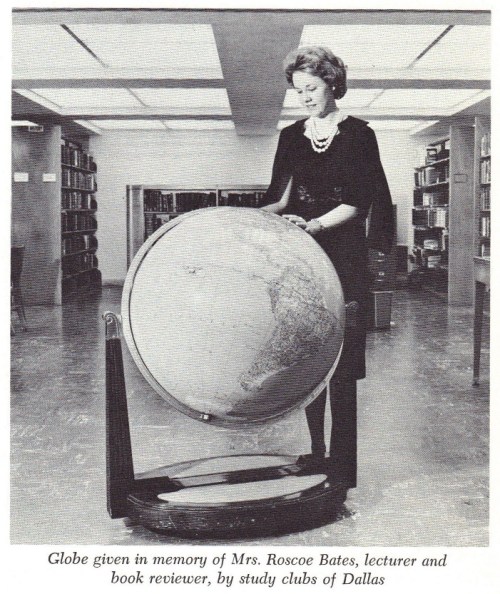
8DPL_globe

9DPL_planningcomm

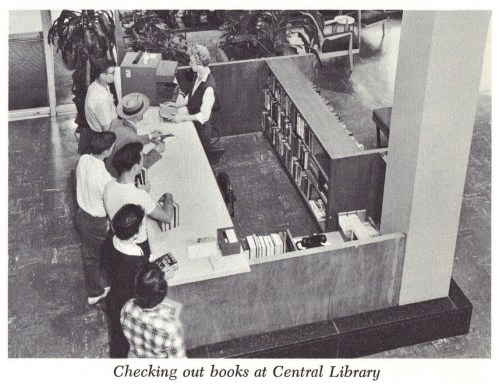
10DPL_checkingoutI LOVE this photo!

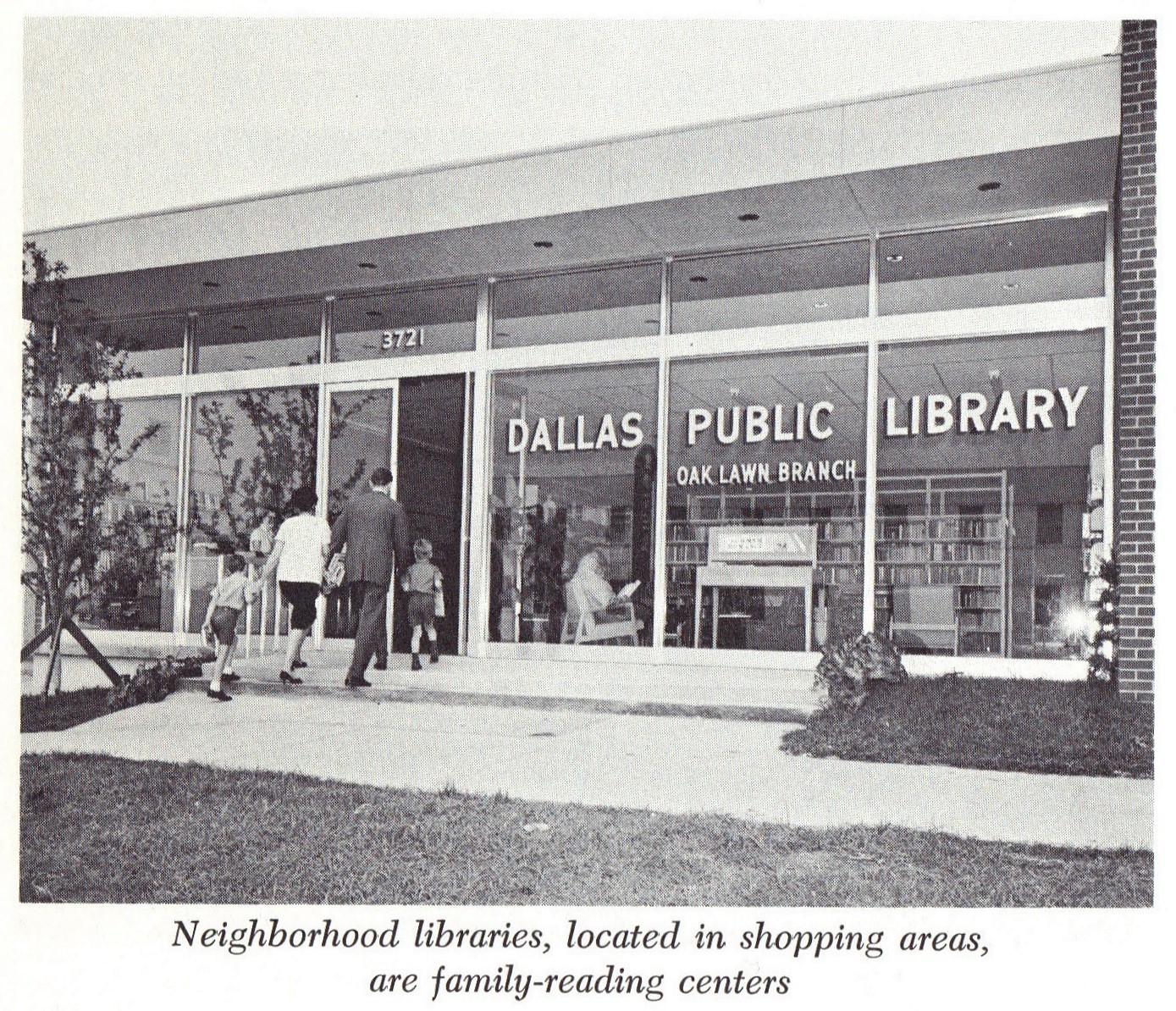
11DPL_oaklawnbranch

12DPL_teens

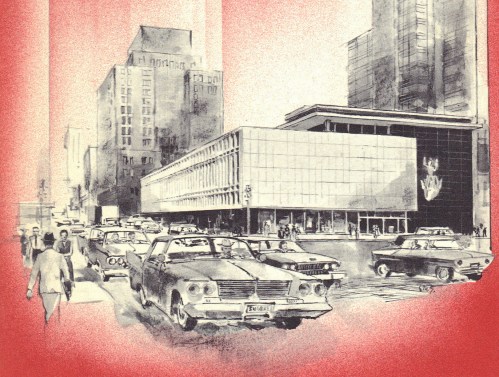
14DPL_schiwetzcropA detail of the front cover artwork, by Texas artist E. M. “Buck” Schiwetz. I love the driver in the cowboy hat (he must have been awfully small or that car must have been awfully big to accommodate that hat). The energetic frisson of downtown Dallas in the Mad Men era is dampened a bit by those damn hands on the building that seemed to follow you everywhere you went!

***

Sources & Notes

All images from the booklet Five Years Forward: The Dallas Public Library, 1955-1960, compiled and written by Lillian Moore Bradshaw and Marvin Stone. Drawings by E. M. (Buck) Schiwetz. Photographs by C. D. Bayne. (Dallas: Carl Hertzog for Friends of the Dallas Public Library, 1961). (Photos from the archives of the Dallas Public Library.)

More on the history and construction of the Old Dallas Central Library (as well as tidbits about the ridiculous controversy regarding the commissioned art) is here.

Even MORE on the artwork scandals (the hands, the hands, the HANDS!) as well as photos of the beautiful Carnegie Library that was razed to build the 1955 library can be found here.

And just because it’s weird, here’s a postcard showing an early, possibly even creepier depiction of the “hands” sculpture (if those are the “hands of God”…). I guess they wanted to get a postcard out before the sculpture was finished and installed.

dallas-public-library_dahl_postcard

I’ve posted one further image from this booklet — a drawing of the 1961 Dallas skyline by E. M. “Buck” Schiwetz  — here.

UPDATE — Dec., 2017: The Dallas Morning News has moved its operations to the long-vacant library, insuring this wonderful building’s continued existence for many more years! More here.

Click pictures for larger images (some are MUCH larger — click twice!).

*

Copyright © 2014 Paula Bosse. All Rights Reserved.


When Coco Chanel Came to Dallas — 1957

neiman-marcus_coco-chanelStanley Marcus and Coco Chanel

by Paula Bosse

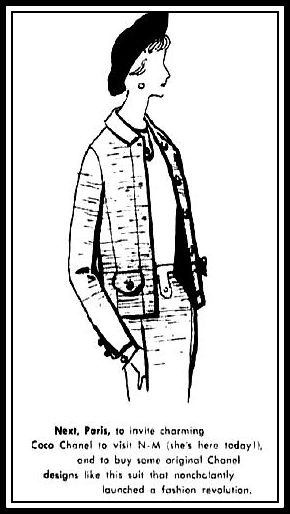
In September of 1957 — way back when that much-missed hyphen was still in “Neiman-Marcus” — Stanley Marcus invited Coco Chanel to Dallas to accept the Neiman Marcus Award for Distinguished Service in the Field of Fashion. Mlle. Chanel had never been to Texas, but her visit here was a meaningful one. Following a 15-year retirement, her re-emergence as a designer in the early 1950s was met with mostly derision by the French press. The American response, on the other hand, was very different. It was because of the enthusiastic reception that her work received from American retailers (such as the even-then legendary Neiman Marcus department store) that she had been able to bounce back and, once again, be considered a force in the fashion world. When she was invited to Dallas to receive the “Oscar” of the fashion industry, Mlle. Chanel was happy to accept.

In the photo above, Coco is seen trying on hats at the downtown Neiman’s store as Mr. Stanley stands by beaming. On her Dallas visit she was also treated to a ranch barbecue (!) where she was photographed watching both a square dance (!!) and a … oh god … Chanel-themed bovine fashion show (!!!). Mlle. Chanel seemed to love the cows-in-ropes-of-pearls runway show, but she was not a fan of the barbecue and beans — she (one hopes discreetly) dumped the contents of her plate onto the ground under the table … right onto the shoes of dining companion Elizabeth Arden (whose shoes may have been ruined, but who had a truly great story to tell for the rest of her life).

From all reports, everyone seemed to enjoy (and no doubt profit) from the successful visit. Karl Lagerfeld, the current creative director of Chanel, recently brought Chanel back to Dallas (both figuratively and literally) with the house’s important Métiers d’Art fashion show which was held at Fair Park in December, 2013. The following day, Lagerfeld was presented with the Neiman Marcus Award for Distinguished Service in the Field of Fashion — just as Coco Chanel had been, 56 years earlier. And the haute-couture circle-pin of life keeps on rolling.

n-m_chanel_ad_dmn_090957

n-m_chanel_telegram

***

Sources & Notes

Top photo by Shel Hershorn for the AP. From the Briscoe Center for American History, University of Texas at Austin.

N-M ad from 1957 (portion of a larger ad).

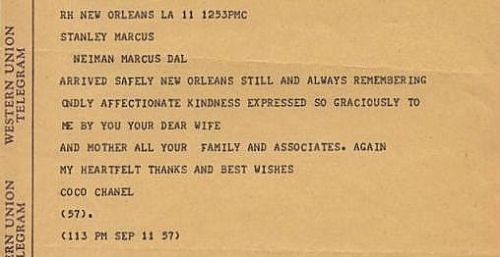
Chanel’s thank-you telegram to Marcus, from the collection of Stanley Marcus’ Papers at the DeGolyer Library, Central University Libraries, Southern Methodist University.

Entertaining AP article about Chanel and Dallas, then and now (with photos of Stanley Marcus duded-up in an outfit you’d never see an actual cowboy in), can be found here. (Are those butterflies?!)

More photos of Mlle. Chanel in Dallas (along with text of a DMN article on the visit) can be found here.

Even more photos (bovine fashion show…) and a really great post from SMU’s “Off the Shelf” blog is here.

Video of the 2013 Chanel runway extravaganza (Métiers d’Art), held in Fair Park’s hay-stewn Centennial Hall, can be watched here. A shorter video with a few cursory shots of the Dallas skyline and Fair Park can be seen here.

For more on the first French Fortnight, see my post “Neiman-Marcus Brings France to Big D — 1957,” here.

*

Copyright © 2014 Paula Bosse. All Rights Reserved.

Olsen-Stelzer Cowboy Boot Saleslady — 1939

Portrait with boots…

by Paula Bosse

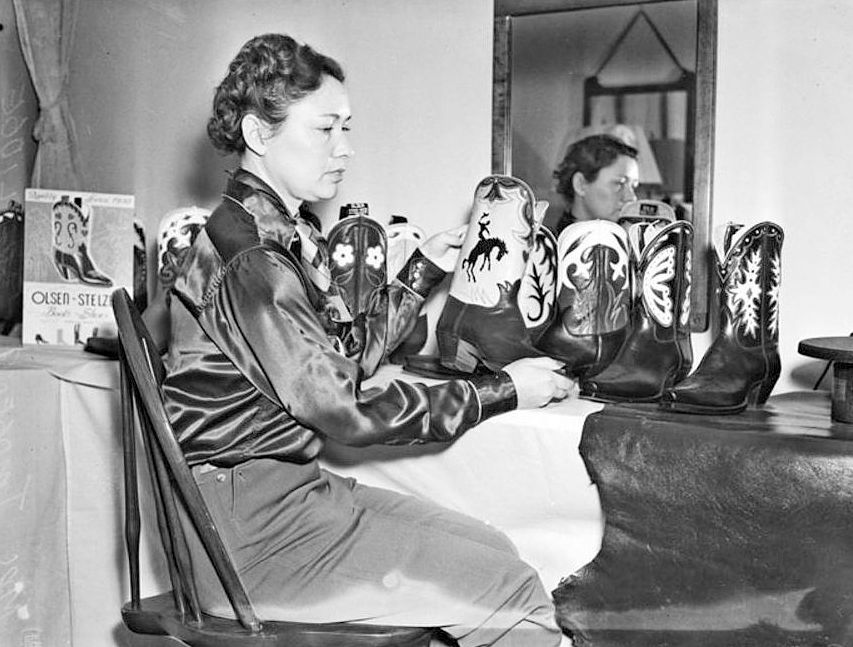
Above, Dallas resident Imogene Cartlidge is seen at a shoe retailers’ convention in San Antonio in 1939. Cartlidge was an employee of the Olsen-Stelzer boot company in Henrietta, Texas, and she was said to be “the only woman boot salesman on record.” I’m a big fan of cowboy boots of this period, and I have to say that I am ashamed that I was unaware of the famous Olsen-Stelzer company, which lasted from 1900 until the 1980s. The company is back in business again, led by Tom Cartlidge, whose parents began selling the boots in 1938 — Imogene is his mother. I wish them all the best of luck, because the world needs as many great-looking cowboy boots as it can get!

olsen-stelzer_dmn_120146

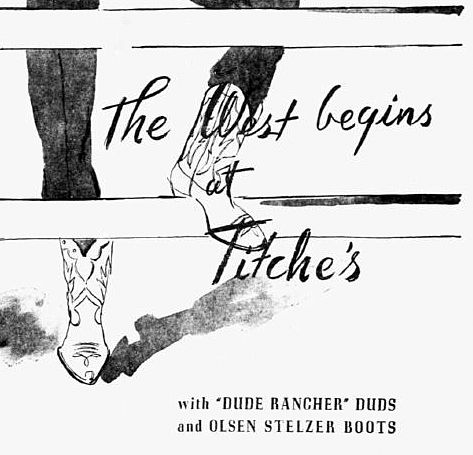
“The West begins at Titche’s”? First I’m hearing of this. Who knew? Nice ad, though.

olsen-stelzer_dmn_120146det

olsen-stelzer_dmn_103055

olsen-stelzer_1941

Best of all is this absolutely fantastic video from 1956 about the company:

olsen-stelzer-logo

olsen-stelzer-box

***

Sources & Notes

Photo of Imogene Cartlidge is from the San Antonio Light Photograph Collection, University of Texas San Antonio Libraries Special Collections, Institute of Texan Cultures.

Titche’s ad from 1946.

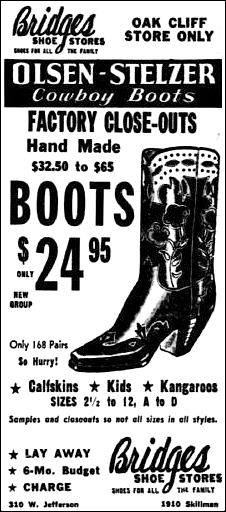
Bridges Shoe Store ad from 1955. (Bridges seems to have been the only place in Dallas where the boots were regularly sold — or at least regularly advertised. And you could get them ONLY IN OAK CLIFF!) (I hear the West begins at Oak Cliff….)

The video can be found on the home page of the Olsen-Stelzer website here.

The last image is the lid of an Olsen-Stelzer boot box, which belongs to my aunt — she keeps Christmas ornaments in it. (Sadly, no sign of the boots!)

The history of the company (and, again, that great video) can be found here.

*

Copyright © 2014 Paula Bosse. All Rights Reserved.

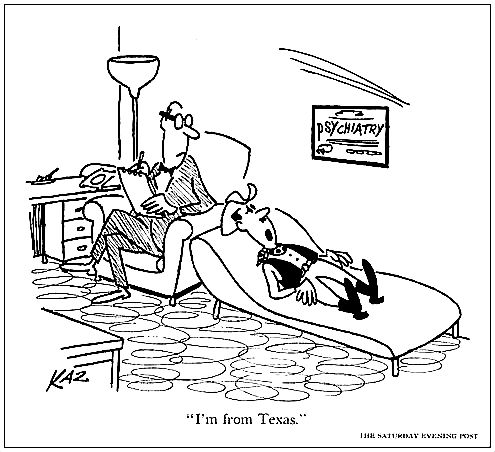
So This Cowboy Goes Into a Psychiatrist’s Office…

cowboy-therapy-cartoon_sat-evening-post_kaz

by Paula Bosse

Well, bless his heart.

***

Cartoon by Kaz from The Saturday Evening Post.

My Birthdays at Kirby’s: Filet Mignon for Everyone!

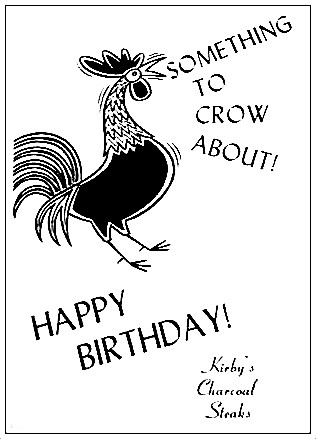
kirbys-birthday

by Paula Bosse

I grew up in the Lower Greenville area, and since we had a nice steakhouse just a couple of blocks away, that’s where we always went for family birthdays and special occasions: Kirby’s. I had forgotten about the birthday cards they sent out until my mother came across one in a recent move which was addressed to “Miss Paula Bosse.” Other than receiving actual mail, the thing that made these cards really exciting for a child was the inclusion of a dime. I always thought of it as a little birthday treat, but my mother suggested it was more of a subtle reminder to the parents to spend that dime on a call for reservations.

I loved that place. It was very dark. My brother and I always had the same thing: a non-alcoholic, super-sweet Shirley Temple from the bar, a salad with big chunks of roquefort in the salad dressing, a baked potato, and, oh my god, a filet mignon. I was mesmerized by the bacon wrapped around the steak. And the little wooden marker that showed how the meat was cooked. It was a nice, friendly neighborhood steakhouse. It was loud and happy. You could hear the steaks sizzling on the grill. It was always a treat to go to Kirby’s. And the place smelled GREAT! Even out on the sidewalk.

I was sad when they tore the building down, and even though there is now a chain of restaurants with the name “Kirby’s” — they even built a new one a couple of blocks down from the original location — there’s no way it could ever be the same.

Looking around for the history of the original “Kirby’s Charcoal Steaks,” I was surprised to discover that the man who owned Kirby’s — B. J. Kirby — was the son of the man who founded the Pig Stand chain of drive-ins. The Pig Stand started in Dallas, and it was the first drive-in restaurant EVER. They had the first carhops. The first onion rings. The first Texas toast. The Kirby’s steakhouse location — 3715 Greenville — had actually been a Pig Stand! B. J. Kirby had grown up working at his father’s restaurants, and when his father died, he sold all the Pig Stands except for the Greenville Avenue location (i.e. Pig Stand No. 4). In 1954 he turned the pig-sandwich-serving drive-in into a nice sit-down steakhouse which remained popular until the restaurant closed in 1987 when Mr. Kirby retired.

Watch Ch. 5 news footage of B. J. Kirby and the auction of the restaurant fixtures at UNT’s Portal to Texas History site, here.

kirbys_ch-5_closing_screencap_portal

I could really go for a bacon-wrapped filet mignon right about now. And one of those Shirley Temples would even hit the spot.

kirbys_1958

kirbys_color

kirbys_1951

***

Sources & Notes

“Something to Crow About!” card from the author’s collection.

Color photo of the Kirby’s sign is a screenshot from the Channel 5 news coverage of the auction of the Kirby’s fixtures, which aired April 14, 1987, viewable here; from the KXAS-NBC 5 News Collection, UNT Libraries, via the Portal to Texas History.

First ad from 1958; bottom ad from 1951.

Watch the 14-minute documentary “Carhops,” in which B. J. Kirby remembers life working as a kid for his father, here (also interviewed are other drive-in Dallas icons, J. D. Sivils and Jack Keller).

An entertaining history of the Pig Stand No. 4 and its transformation into Kirby’s Charcoal Steaks can be found here.

*

Copyright © 2014 Paula Bosse. All Rights Reserved.
The Store That Doak Built

doak-walker-sport-center

by Paula Bosse

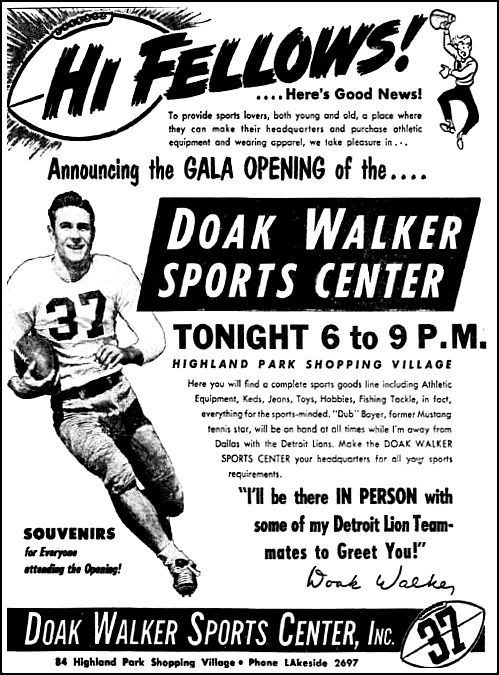
Doak Walker, the Heisman-winning superstar football player for SMU from 1945 to 1949, was, for a good forty-odd years, a partner in a successful sporting goods business that bore his name: the Doak Walker Sports Center. When it opened in Highland Park Village on August 23, 1951, the 24-year old — then playing pro ball with the Detroit Lions — was a bona fide celebrity, both locally and nationally. Predictably, the grand opening drew large crowds of sports fans eager to see their homegrown hero and check out the new place in town to get tennis balls and baseball bats (and, who knows, there might even have been some who showed up to see those unnamed Lions teammates the ads said he’d bring with him). The promise of “souvenirs for everyone!” was merely icing on the cake.

At the same time that the Sports Center was opening, Doak’s name was also on a Gulf station that he and former Mustangs teammate Raleigh Blakely owned on Hillcrest across from the SMU campus. And while both of those business concerns were chugging along, he was also appearing in local and national ads for everything from chewing gum to Vitalis (with a name like “Doak” you’re going to have instant name recognition). Oh, and he was also playing football. Doak Walker was a force to be reckoned with — on the field, on Madison Avenue, and in the dang Park Cities.

*

doak-walker_sports-ctr_opening_dmn_082351

***

Postcard of Doak Walker Sports Center from the Boston Public Library Tichnor Brothers Postcard Collection on Flickr, here.

Life magazine from Sept. 27, 1948. The cover story on Doak Walker and the SMU team can be accessed here.

Signed issued of Sport magazine is currently available for sale here.

Triangle Motors ad from a 1951 program for an SMU-Rice game at the Cotton Bowl.

Doak Walker bio on the Pro Football Hall of Fame website is here.

*

Copyright © 2014 Paula Bosse. All Rights Reserved.
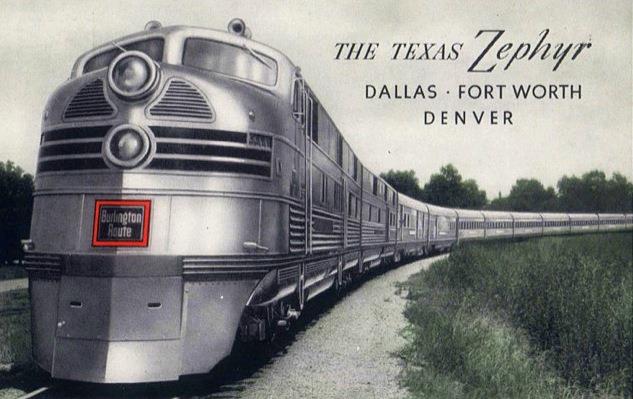
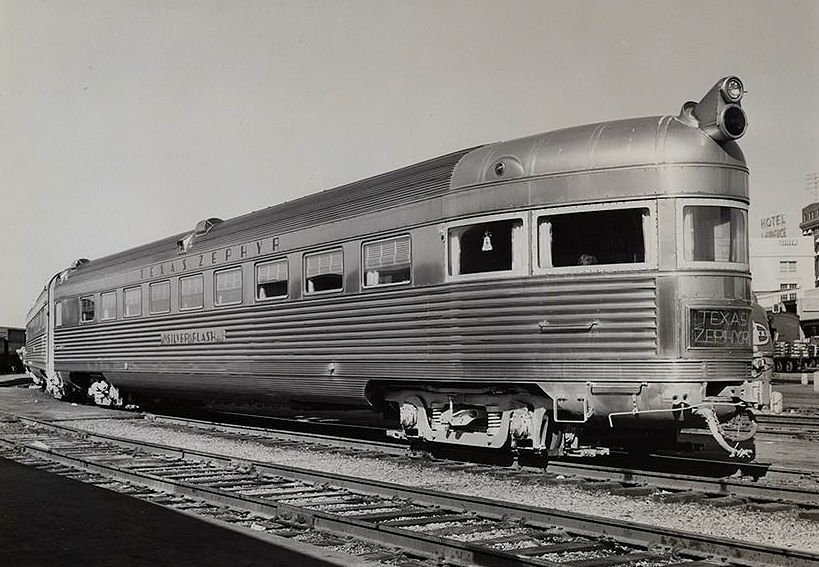
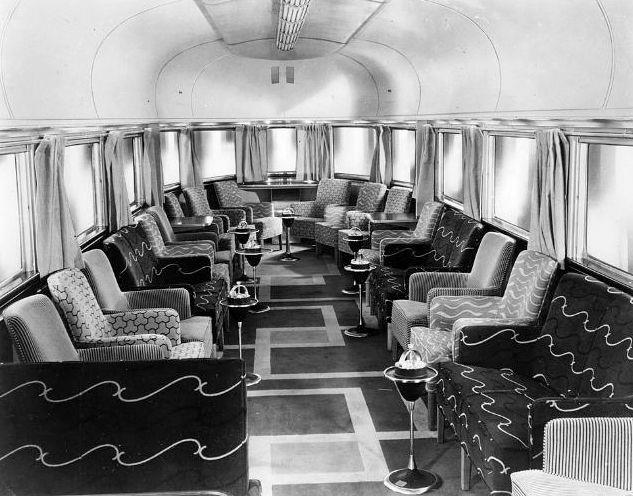
The Texas Zephyr — Streamlined Luxury Train Travel

Dallas — Fort Worth — Denver

by Paula Bosse

From the golden age of train travel. …I was born in the wrong era.

***

Sources & Notes

Second photo showing the exterior of the “Silver Flash” passenger car on the tracks at Union Station in Dallas is from the DeGolyer Library, Central University Libraries, Southern Methodist University; it was taken by Everett L. DeGolyer Jr. in 1960; more information on this photo is here.

Top and bottom images are from the wilds of the internet.

More on the Texas Zephyr here.

*

Copyright © 2014 Paula Bosse. All Rights Reserved.

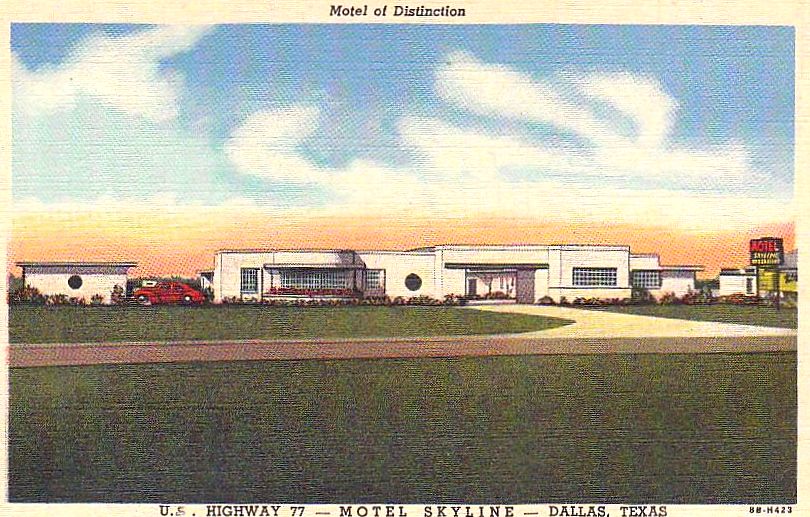
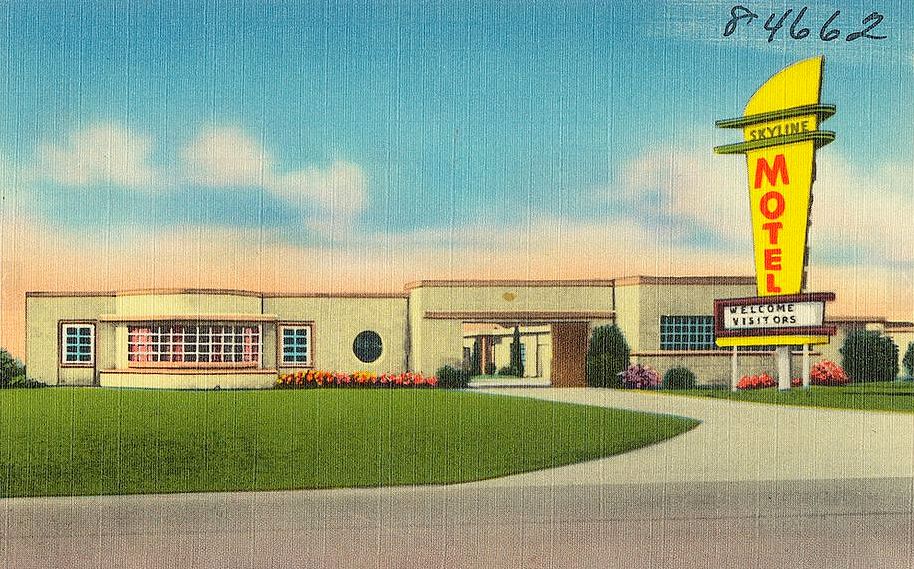
Motel Skyline / Skyline Motel — “The Motel of Distinction” (1947)

motel-skyline_postcard

by Paula Bosse

THIS is a great, great-looking motel. I only hope it looked half as sleek in real life. It was, rather surprisingly, designed in 1947 by the architect George Marble who was known for his large Tudor-revival homes in the pricier areas of Dallas (particularly Highland Park and Lakewood), so this is a major divergence in style. 1947 seems a little late for something this Deco-looking, but, no matter — this is just a fantastic building.

The “Motel Skyline” (or “Skyline Motel” as it was being referred to in ads not long after it opened in September, 1947) was located at 6833 Harry Hines, near West Mockingbird, just past Love Field. It’s not a great neighborhood these days, but perhaps it was better 60-some-odd years ago, when Harry Hines was the route that the old Hwy. 77 followed. The 30-unit “motor hotel” was built at a cost of $250,000 — it boasted year-round air conditioning and “mattresses of fiberglass.” 

I don’t know how long the place lasted — perhaps until the mid- or late-’60s, when advertising petered out and by which time the probably no-longer-so-sleek motel seems to have started catering to customers paying by the week and by the month. It might not have gotten as seedy as I fear it might have, as I saw only a couple of fairly run-of-the-mill appearances on the police blotter (cash stolen from a sleeping customer and a likely suicide in one of the rooms). Still, I shudder to think of that once-beautiful building ending its days cheek-by-jowl with modern-day Harry Hines.

It’s nice to know Dallas once had this wonderful building, if only for a little while. If anyone has photographs of the actual building, I’d love to see them, even though I know I would probably be disappointed.

*


1962 ad

***

Check out the kind of architectural design that George N. Marble is actually known for (residential, palatial), here.

Second postcard from the absolutely fantastic Boston Public Library Tichnor Brothers Postcard Collection on Flickr, here.

Matchbook from Flicker, here.

Click postcards for larger images. It’s worth it.

*

Copyright © 2014 Paula Bosse. All Rights Reserved.

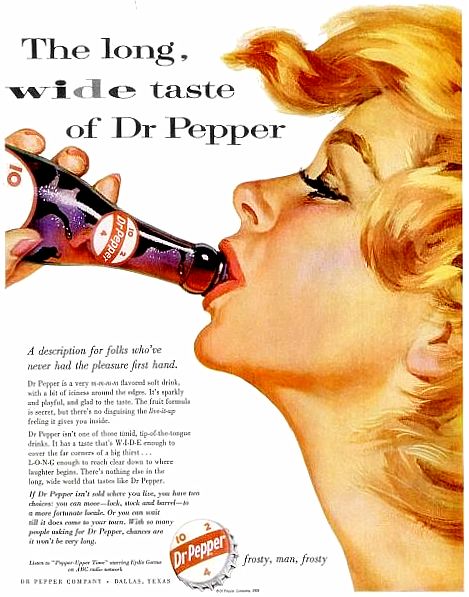
Dr Pepper: “Sparkly, Playful” — 1959

dr-pepper-1959

by Paula Bosse

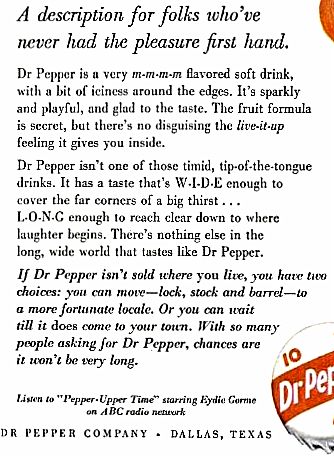
An early national advertisement for a product on its way to becoming more than just a regional soft drink. I grew up right down the street from the Dr Pepper plant. And, yes, I am still pissed.
And here, a bit larger, the wordy and intensely caffeinated copy that seems to have been written by a Madison Avenue flat-earther:

*

Copyright © 2014 Paula Bosse. All Rights Reserved.