Flashback : Dallas

A Miscellany: History, Ads, Pop Culture

Category: 1960s

When a Ten-Spot Could Get a Family of Four Into Six Flags — 1962

ad-six-flags_dmn_042362

by Paula Bosse

Six Flags Over Texas is about to open up again. In 1962 — the theme park’s second year — the admission price for one adult was $2.75 (approximately $22.00 in today’s money), and the price for children under 12 was $2.25 (approximately $18.00 in today’s money). A family of two adults and two children would pay $10.00 for admission — that would be a little under $80.00 in 2016 money, which was still a lot back then, until you compare it to today’s Six Flags ticket prices: $250 for a family of four (as long as both of those children are under 48″ tall). (Pink Things not included.) And you probably won’t even see a dad wearing a suit and tie and a porkpie hat. And you certainly won’t get to see ANY of this! I think you got a lot more bang for your buck 50 years ago.

***

Never leave home without the Inflation Calculator.

*

Copyright © 2016 Paula Bosse. All Rights Reserved.


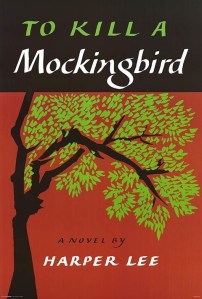
To Kill a Mockingbird

to-kill-a-mockingbird_jacket

by Paula Bosse

“…Remember, it’s a sin to kill a mockingbird.” That was the only time I ever heard Atticus say it was a sin to do something, and I asked Miss Maudie about it.

“Your father’s right,” she said. “Mockingbirds don’t do one thing but make music for us to enjoy. They don’t eat up people’s gardens, don’t nest in corncribs, they don’t do one thing but sing their hearts out for us. That’s why it’s a sin to kill a mockingbird.”

*

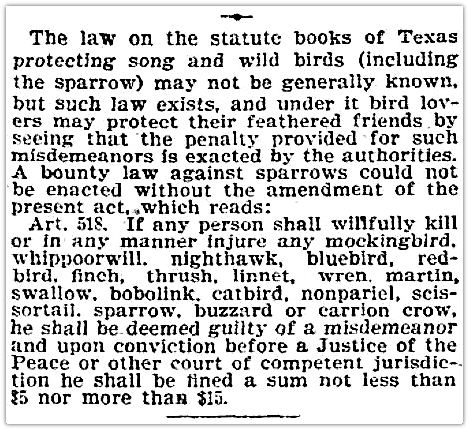
mockingbird_dmn_012900_pauline-periwinklePauline Periwinkle in The Dallas Morning News, Jan. 29, 1900

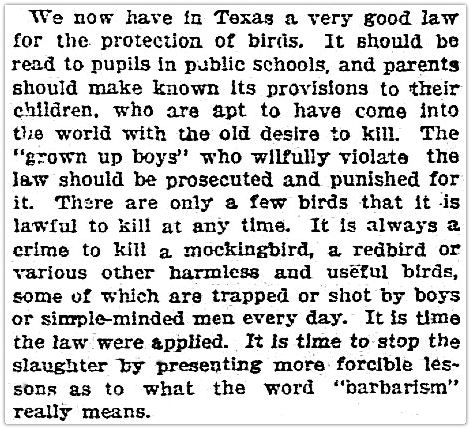
mockingbird_dmn_112905DMN, Nov. 29, 1905

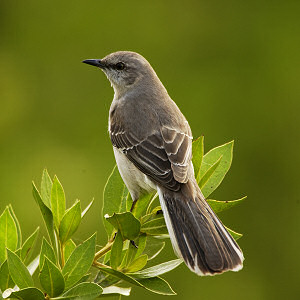
mockingbird

***

RIP, Harper Lee — and thank you.

*

Copyright © 2016 Paula Bosse. All Rights Reserved.

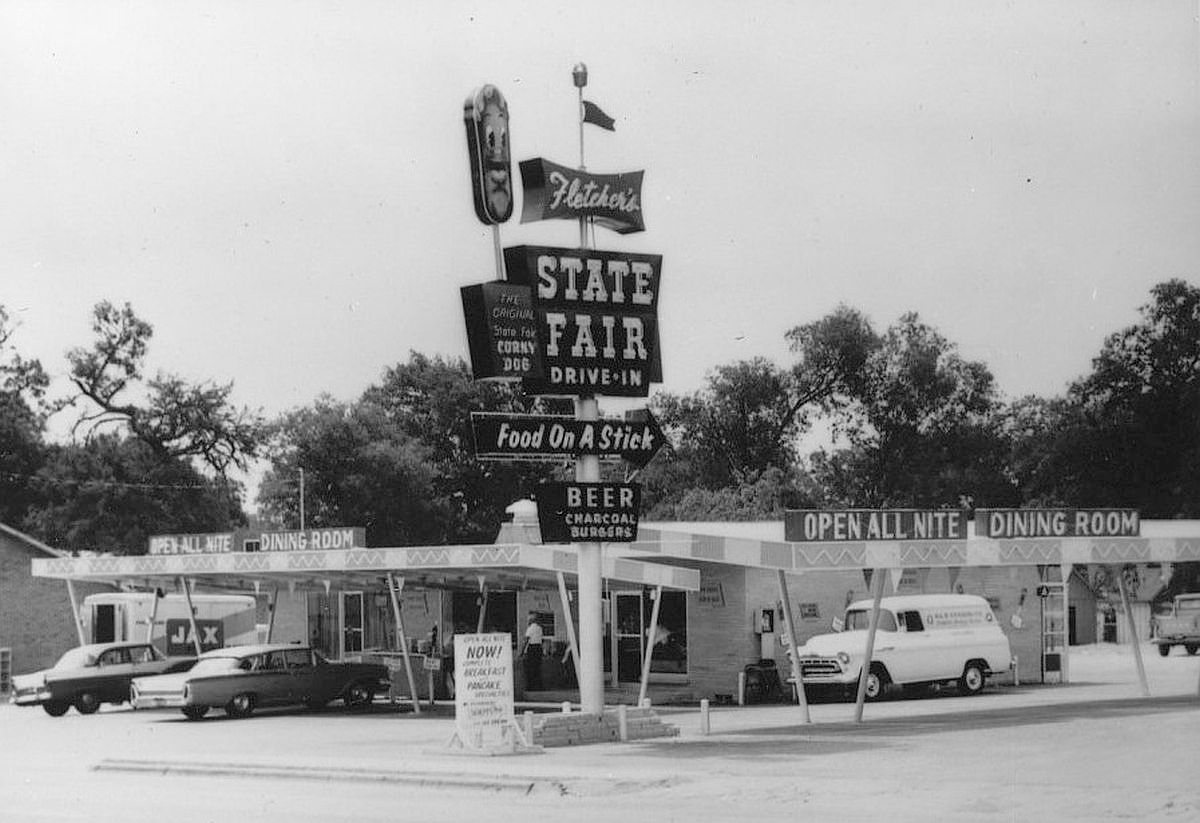
Fletcher’s State Fair Drive-In — 1960-1963

fletchers-state-fair-drive-in_DHSFood-on-a-stick, open all nite

by Paula Bosse

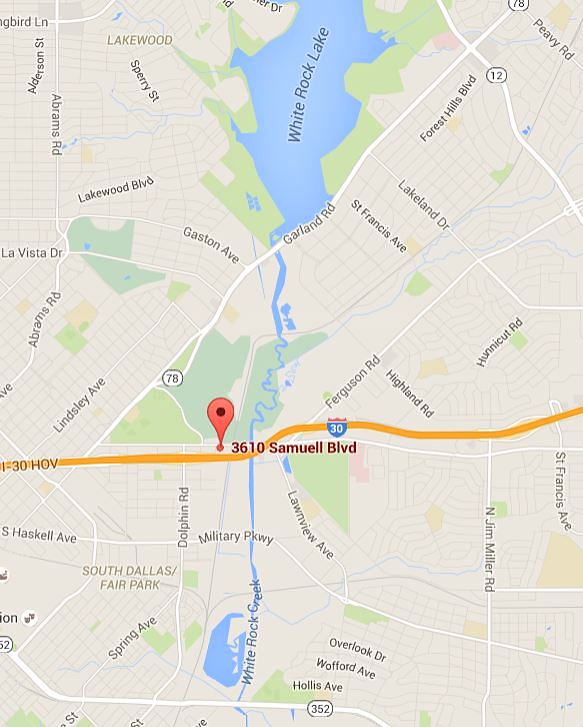
The legendary Fletcher’s Corny Dog once had its own drive-in! You didn’t have to wait until the State Fair of Texas rolled around to get your favorite “food on a stick” fix — you just needed to head to 3610 Samuell Boulevard, across from the Tenison Golf Course.

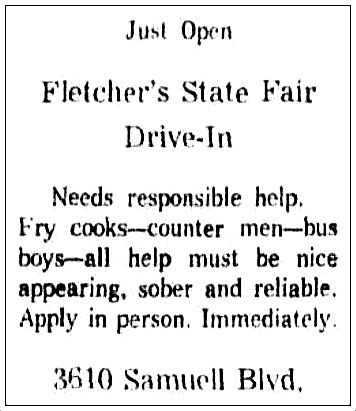
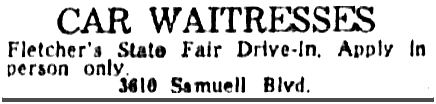
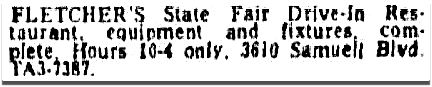
Sadly, there was a lot of drive-in and tavern competition along Samuell back then (Keller’s was practically next door!), and the State Fair Drive-In seems to have lasted only a little over three years, from the spring of 1960 to the fall of 1963.

I’d love to see this around NOW! Come on, Fletcher’s family: bring this back!

*

fletchers_dmn_051560May , 1960

fletchers_dmn_062960June, 1960

fletchers_dmn_102463_for-sale
Oct., 1963

***

Sources & Notes

Top photo from the Dallas Historical Society.

An article on Neil Fletcher’s new restaurant and a photo of the interior can be found in the archives of The Dallas Morning News: “State Fair Drive’In Fixtures Designed, Installed by Bab’s” (DMN, June 12, 1960).

After the Fletcher’s Drive-In closed, it was replaced by a Red Coleman liquor store, and was most recently a club, El Palmeras. Google Street View shows the shabby neighborhood these days, here.

3610-samuall_googleGoogle Maps

An entertaining interview with the late Neil Fletcher appeared in the Oct. 1982 issue of D Magazine, here.

A Travel Channel video focuses on the famed corny dog, here.

A previous Flashback Dallas post about that same stretch of Samuell Blvd. — “Red’s Turnpike Open-Air Dance: An East Pike/Samuell Blvd. Joint — 1946” — is here.

UPDATE: I’ve received many comments that Fletcher’s had several short-lived drive-thru restaurants which started popping up in the mid-’80s. More on the franchise plans can be read in the article “Fletcher and Firm Very Much Alive” by Donna Steph Hansard (DMN, Aug. 5, 1984).

*

Copyright © 2016 Paula Bosse. All Rights Reserved.

The 1952 Dallas Texans: Definitely NOT America’s Team

dallas-texans_pennant_ebay

by Paula Bosse

The “Dallas Texans” was the name of two different short-lived professional football teams representing doesn’t-like-to-lose Dallas, Texas. One played in the NFL (1952), the other played in the AFL (1960-1962). The ’60s team won the AFC championship. The ’50s team … oh dear.

That 1950s team already had a checkered past before it got to Dallas in 1952. In 1944, the team was founded as the Boston Yanks. It moved to New York in 1949, becoming the New York Bulldogs. In 1950 the name was changed to the New York Yanks. By 1951, the franchise was in financial trouble and was put up for sale.

Young Dallas “textile tycoon” Giles Miller — a native Dallasite who was “the great-grandson of a pioneer Texan who was wagon-master for Sam Houston at the Battle of San Jacinto” (Dallas Morning News, Jan. 21, 1952) — bought the franchise (and took on a heavy debt incurred by the original owner to repay the New York Yankees for rental of their stadium — see below) for $300,000 (three million dollars in today’s money).

giles-miller_connell-miller_dmn_012152Giles Miller, 1952

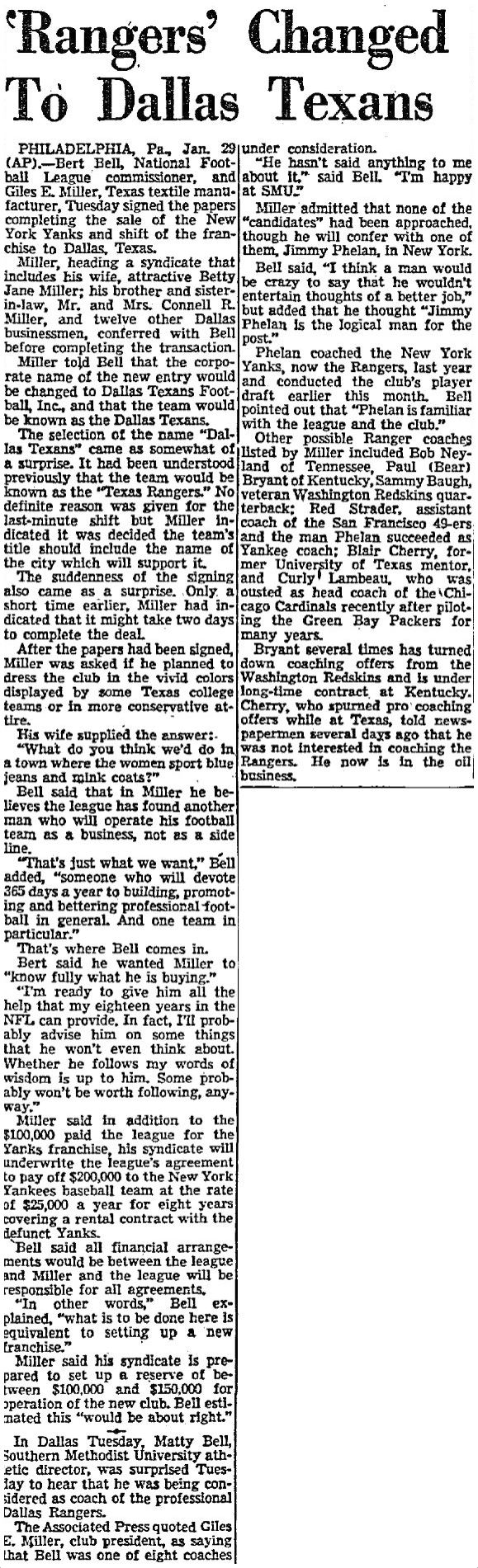
People went crazy. The team (which was initially going to be called the Texas Rangers) was the first professional football team in Texas. I think it was the first professional SPORTS team in Texas. There was much rejoicing.

dallas-texans_dmn_013052AP wire story, Jan. 30, 1952 (click for larger image)

The team would play in the Cotton Bowl. Their colors would  be royal blue, silver, and white (…hmm, sounds familiar…).

dallas-texans-uniforms

Their “traveling clothing” would be, for some reason, western wear. “When the team goes on the road, it will be decked out in typical western dress — cowboy boots, 10-gallon hats and other gear typical of the cow country. At least that’s the aim of the stockholders at this time” (DMN, Jan. 31, 1952). (See the shirts here.)

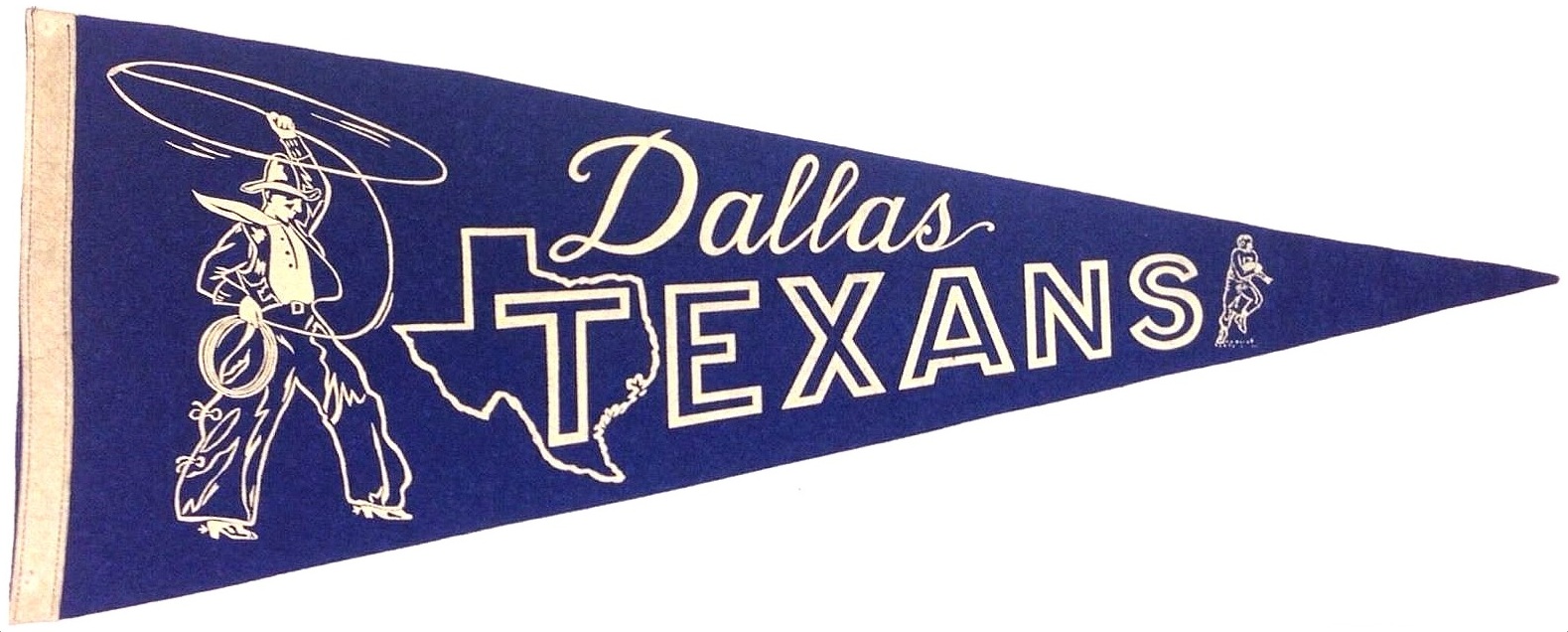
And they had a flashy logo.

dallas-texans_logo_ebay

Unfortunately, there doesn’t seem to have been as much attention directed to the players.  Even though there were a few new players brought in (including local boy Jack Adkisson, better known later by his wrestling name, Fritz von Erich), the team was basically the same one inherited from the failed New York team (including three black players, which caused a lot of questions about whether they would be retained by Dallas — they were).

So how’d that first season go? They played 12 games. They won one. Attendance started out sparse, and it only got sparser. The team quickly went bankrupt. Giles Miller tried to get financial help from the city and from fellow wealthy businessmen, but after the seventh game, Miller “returned” the team to the NFL. I didn’t know you could do that — like a dog owner who had happily adopted a German Shepherd without having researched how much it would cost for its upkeep, then after realizing he couldn’t afford it and being unable to find anyone else who would be able to take him in, he had to return him to the shelter. The remainder of the season had a homeless team (still called the “Dallas Texans”) traveling to various cities until the season mercifully ended. The Dallas Texans were, somewhat ignominiously, the last NFL team to fold.

The team eventually became the Baltimore Colts. Sort of. From the Wikipedia entry:

The NFL was unable to find a buyer for the Texans, and folded the team after the season. A few months later, the NFL granted a new franchise to a Baltimore-based group headed by Carroll Rosenbloom, and awarded it the remaining assets (including the players) of the failed Texans operation. Rosenbloom named his new team the Baltimore Colts. For all intents and purposes, Rosenbloom bought the Texans and moved them to Baltimore. However, the Colts (now based in Indianapolis) do not claim the history of the Yanks/Bulldogs/Yanks/Texans as their own, in spite of the fact that the Colts 1953 roster included many of the 1952 Texans. Likewise, the NFL reckons the Colts as a 1953 expansion team.

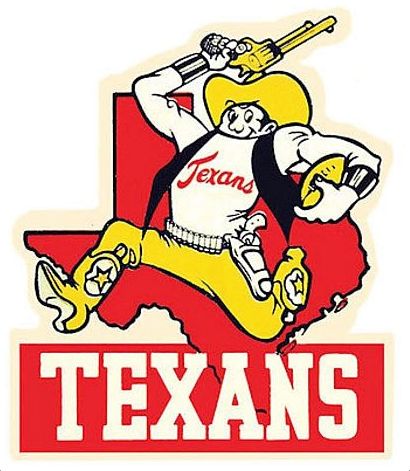
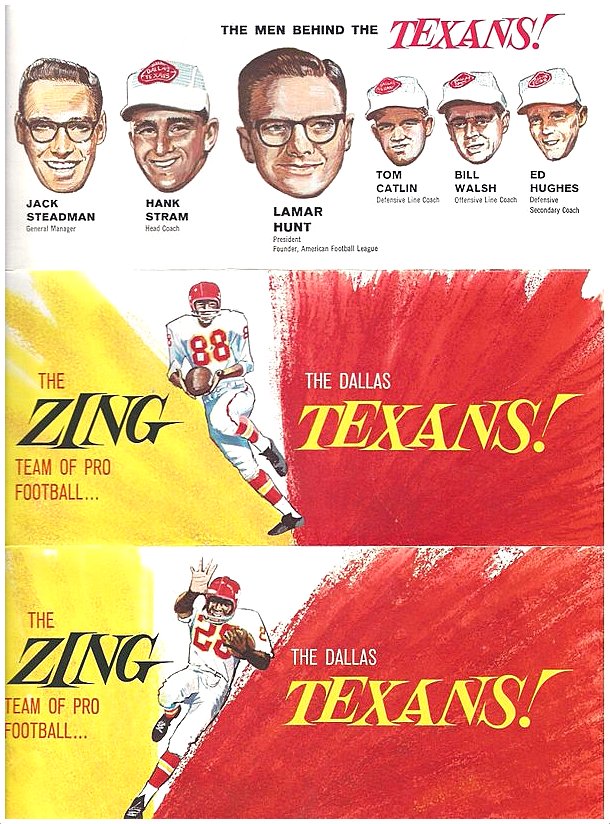
Dallas didn’t have a professional football team again until 1960. And then it got TWO. Clint Murchison gave us the Dallas Cowboys (my sports knowledge is obviously pretty paltry, because I’d never heard how Murchison got the NFL franchise until I read the story about his pretty amusing feud with the Washington Redskins owner), and Lamar Hunt created the AFL and gave us … the Dallas Texans. Mach Two. They wore red, white, and yellow and actually won a few games. Someone even created a weird little nickname for them: “The Zing Team of Pro Football.” The Zing Team lasted for three seasons before becoming the Kansas City Chiefs.

dallas-texans_1960s_ebay

dallas-texans_AFL_1962-uniform

dallas-texans_zing-team

***

Sources & Notes

1952 pennant and 1960s sticker from eBay.

Illustration of 1952 uniforms from AmericanFootballWikia.com, here. 1960s uniform from BlackReign.net, here.

“Zing” image from Twitter user @ToddRadom.

Stats? 1952 Texans (read ’em and weep), here; 1960s Texans, here.

A couple of interesting articles from The Dallas Morning News archives:

  • “The Sports Scene” by Bill Rives” (DMN, Jan. 31, 1952). Rives shared with his readers several instances of Texas stereotypes showing up in national stories about the city’s new acquisition.
  • “The Inside Story” by Charles Burton (DMN, Jan. 18, 1953). A bitter article on the 1952 team going to Baltimore. Columnist Charles Burton felt that Dallas was “railroaded” and that there were some suspicious backroom dealings going on having to do with the big Yankee Stadium debt Giles Miller took on when he bought the team.

Click pictures and clippings for larger images.

*

Copyright © 2016 Paula Bosse. All Rights Reserved.


Ramon Adams: Violinist, Candy Manufacturer, Old West Expert

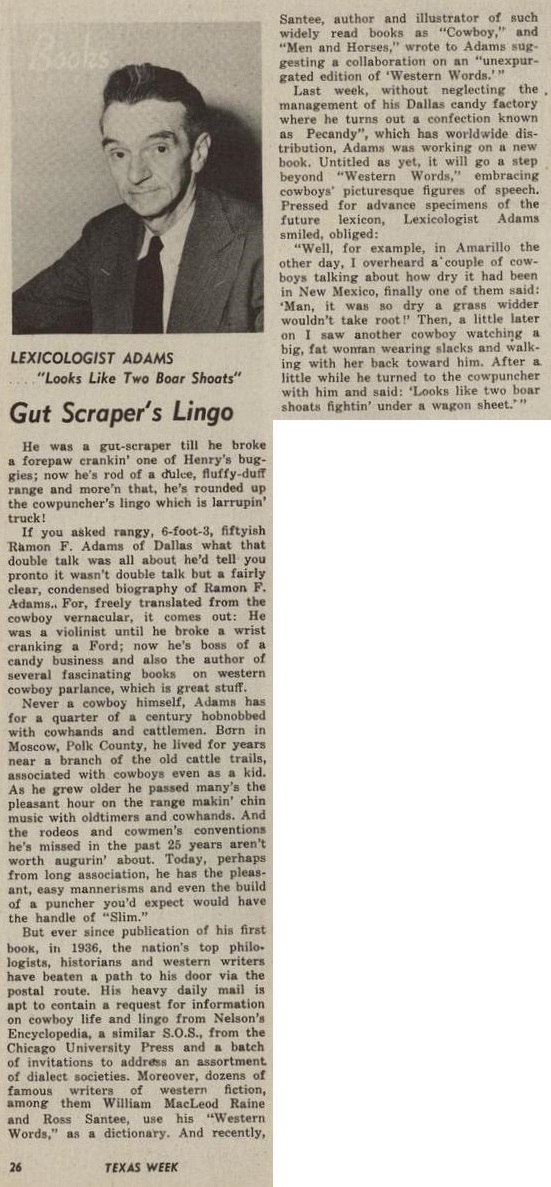
adams-ramon_texas-week-mag_090746_portal-photo_bwRamon F. Adams, 1946

by Paula Bosse

I’ve spent a fair amount of my adult life cataloging Texana books and ending descriptions with the bibliographic citations “Adams, HERD” or “Adams, SIX-GUNS.”* “Adams” was Ramon F. Adams, a respected and prolific writer and bibliographer specializing in the Old West and cowboy life. If you collect books on Texas and The West — or on cowboys and the cattle industry — you have Ramon Adams’ books on your shelves. And he lived in Dallas.

Ramon Adams was born in Moscow, Texas in 1889, near Houston, but left there as a young man to study and teach music. He was a professional violinist who played not only an occasional symphony gig, but after his years of teaching, he made a steady living playing in movie theater orchestras, accompanying silent films. While playing in the orchestra at the Rialto in Fort Worth, he even wore white tie and tails. When the Rialto musicians went on strike in 1923, he and his wife, Allie, moved to Dallas, and he played in the orchestras up and down theater row until the fateful day when he was cranking a stalled Model T Ford in an attempt to start it and broke his wrist. It never healed properly, and his days as a professional violinist came to an abrupt end.

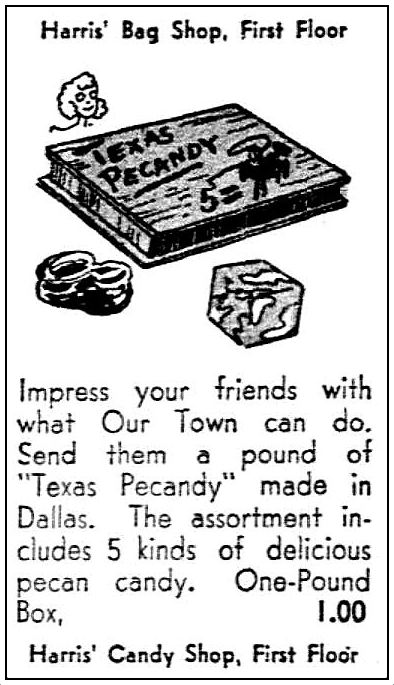
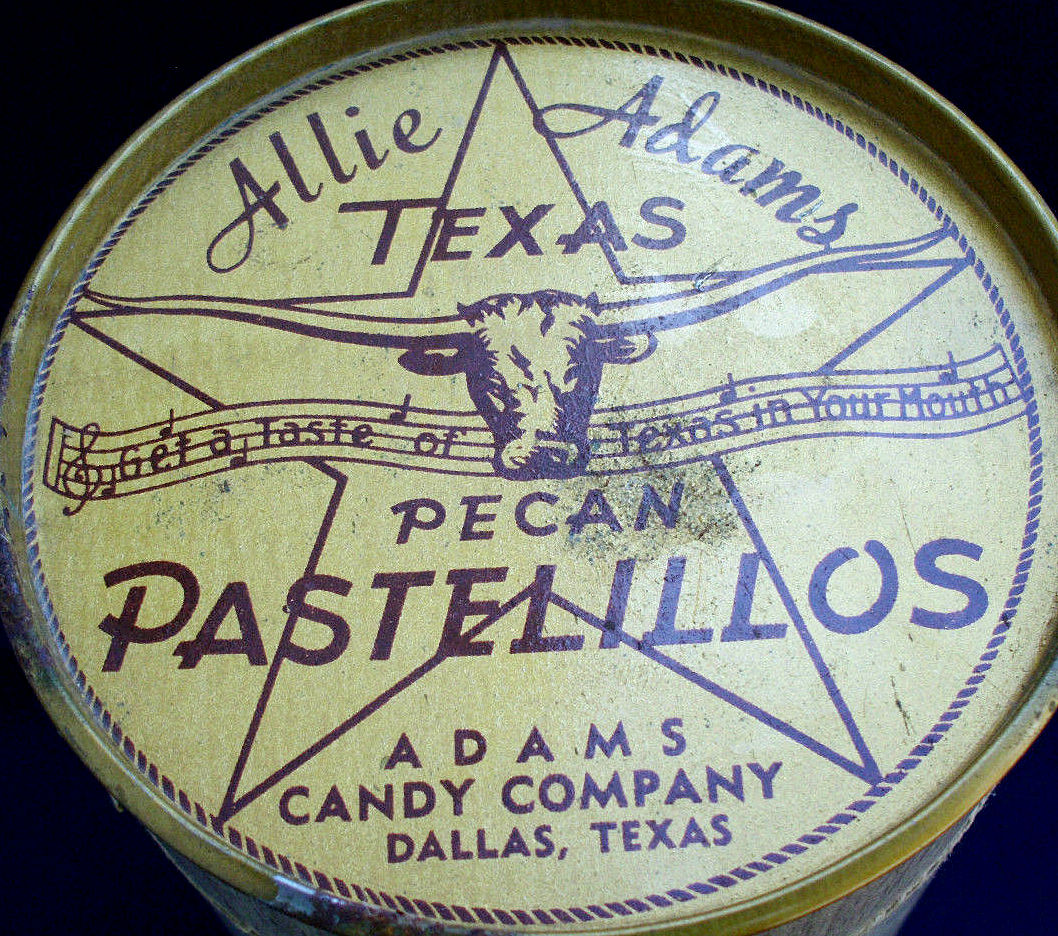
I never knew about his first career as a musician, and I never knew about his second career as a candy merchant! The Candy Years began when he and his wife bought a little candy store on Elm Street between the Melba and the Majestic, and it did such good business that, a few years later, he went into manufacturing and wholesaling candy. The Adams Candy Co. began its successful life in the 1930s, known for its widely available candies such as “Texas Pecandy” and for its “Burnt Offering” (“burnt almonds in chewy caramel and rich chocolate”), which was made specially for Neiman-Marcus.

pecandy_dmn_090940Sept. 1940

The runaway success of his candy business meant that when the Adamses sold the business in the mid-’50s (making, one assumes, a hefty profit) Ramon was able to devote his full attention to researching and writing about cowboy life and culture. He had been writing all along, in his spare time, but only in short bursts, usually at night, at the kitchen table. He had written several very long pieces for The Dallas Morning News in 1927 and 1928, but his first book, Cowboy Lingo, wasn’t published until 1936 — when he was 46 years old. And then the floodgates opened. When he died in 1976, his obituary noted that he had written 24 books — in addition to numerous articles for magazines and journals. He was the expert other experts consulted. And he lived in Dallas. And he made “Pecandy.”

**

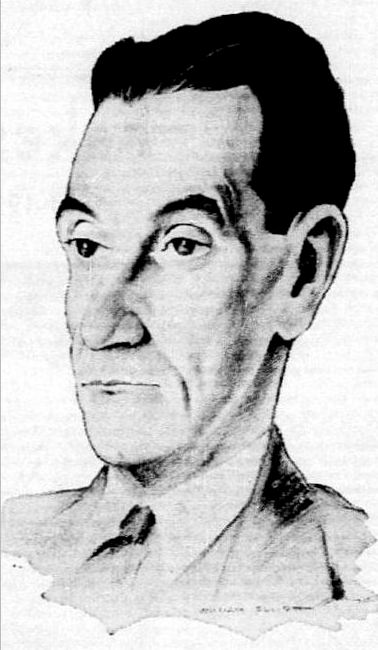
I love this 1936 caricature of Adams. (He looks an awful lot like Dr. Smith of Lost In Space here….)

adams-ramon_caricature_1936

A pleasant little article on Adams, no doubt written by one of his many journalist friends, from 1946 (click for larger image):

adams-ramon_texas-week-mag_090746_portalTexas Week magazine, Sept. 7, 1946

And…

ad-adams-candy-co“Get a taste of Texas in your mouth!”

***

Sources & Notes

The Handbook of Texas entry on Ramon F. Adams is here.

A more comprehensive Biographical Note is on the page devoted to the Ramon Adams Collection, Texas/Dallas History & Archives, Dallas Public Library, here.

* “Adams, HERD” and “Adams, SIX-GUNS” is short-hand used by catalogers of books on Western Americana when noting that the book being cataloged is referenced in Ramon F. Adams’ book The Rampaging Herd: A Bibliography of Books and Pamphlets on Men and Events in the Cattle Industry (Norman: Univ. Oklahoma, 1959) or his book Six-Guns and Saddle Leather, A Bibliography of Books and Pamphlets on Western Outlaws and Gunmen (Norman: Univ. of Oklahoma, 1954).

*

Copyright © 2016 Paula Bosse. All Rights Reserved.

Elm & N. Harwood — ca. 1960

elm-harwood_ca-1960_dmn-tumblrIt’s 4:50 — where’s all the traffic? (click for larger image)

by Paula Bosse

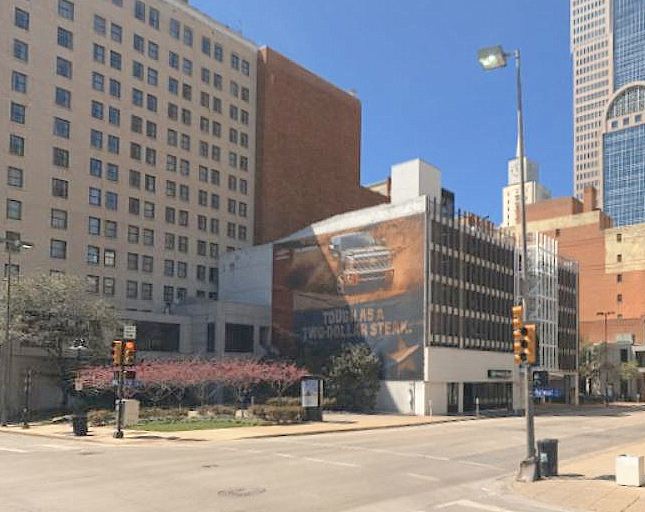
A nice shot of the 1900 block of Elm Street, looking vastly more interesting in 1960 than it does now.

elm-harwood_bingBing StreetSide

***

Sources & Notes

Top photo by Hank Tenny.

Google Street View of this corner is here.

*

Copyright © 2016 Paula Bosse. All Rights Reserved.


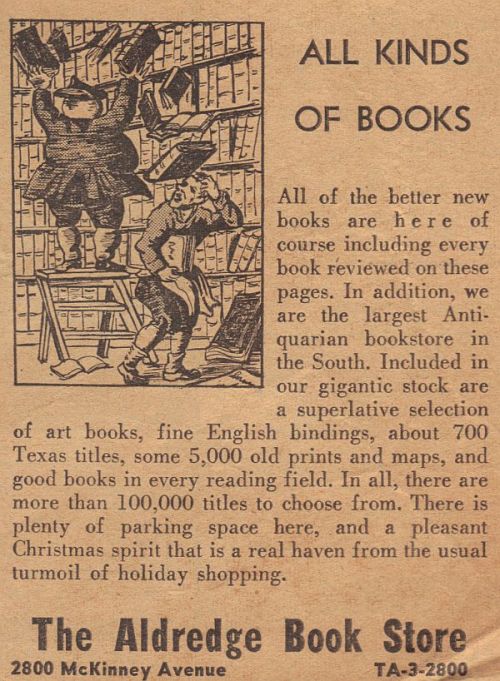
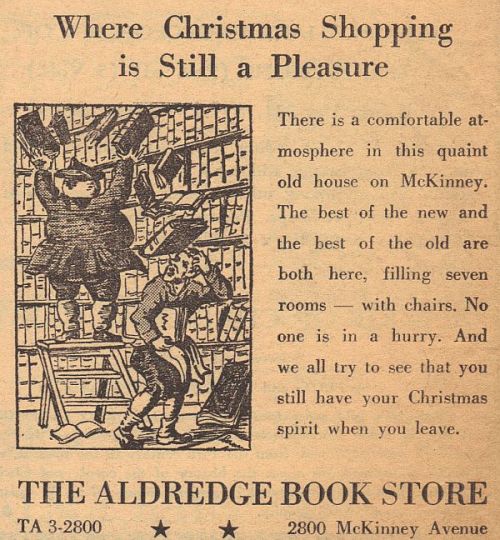
“A Haven From the Usual Turmoil of Holiday Shopping”

ABS_xmas_haven_nd“A superlative selection…”

by Paula Bosse

Remember the quiet joy of shopping in bookstores? Remember bookstores? In celebration of the completion of this year’s Christmas shopping, I give you two ads from The Aldredge Book Store, where there’s “plenty of parking  space […] and a pleasant Christmas spirit.”

ABS_xmas_19631963

No one is in a hurry. And we all try to see that you still have your Christmas spirit when you leave.

I practically grew up in this store, and I miss it.

***

Sources & Notes

Both ads from the early 1960s. They appeared in the Sunday book sections of The Dallas Morning News and The Dallas Times Herald. (Remember when we had two newspapers? Remember when we had Sunday book sections?)

Previous posts on The Aldredge Book Store can be found here.

*

Copyright © 2015 Paula Bosse. All Rights Reserved.


HR Meeting at the Carousel Club

ruby-girls_carousel-club“Where do you see yourself in five years?”

by Paula Bosse

Jack and the girls. …Before.

***

Sources & Notes

I think this is the Carousel Club. It might not be. The source of this photo is a bad, bad, bad, spammy site with loud commercials. They get no credit from me. “No soup for you!”

*

Copyright © 2015 Paula Bosse. All Rights Reserved.

Sivils Drive-In, An Oak Cliff Institution: 1940-1967

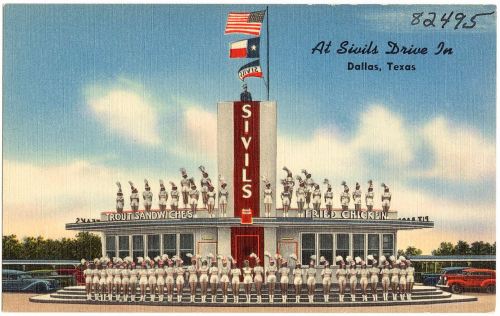
sivils_tichnorOak Cliff’s landmark hangout (click for larger image)

by Paula Bosse

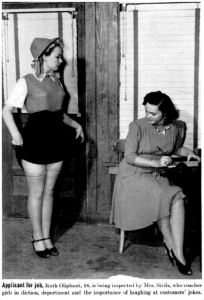
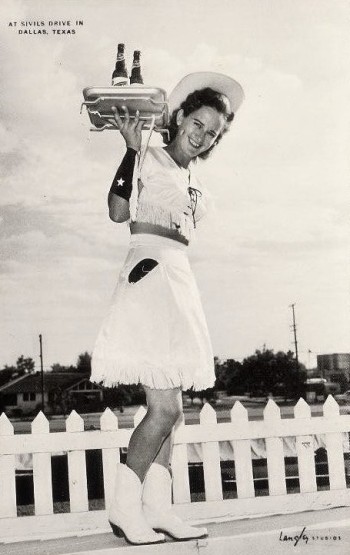
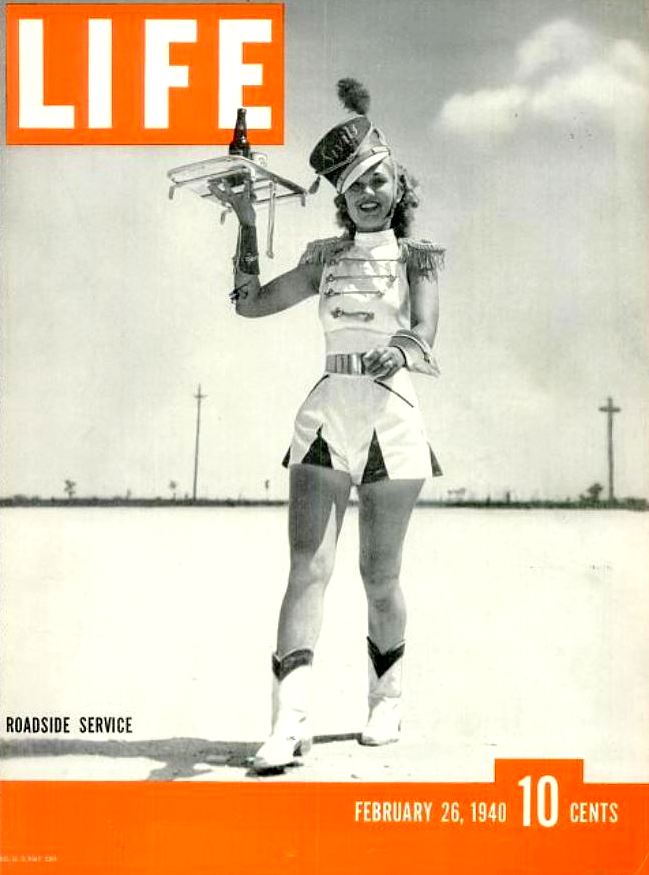
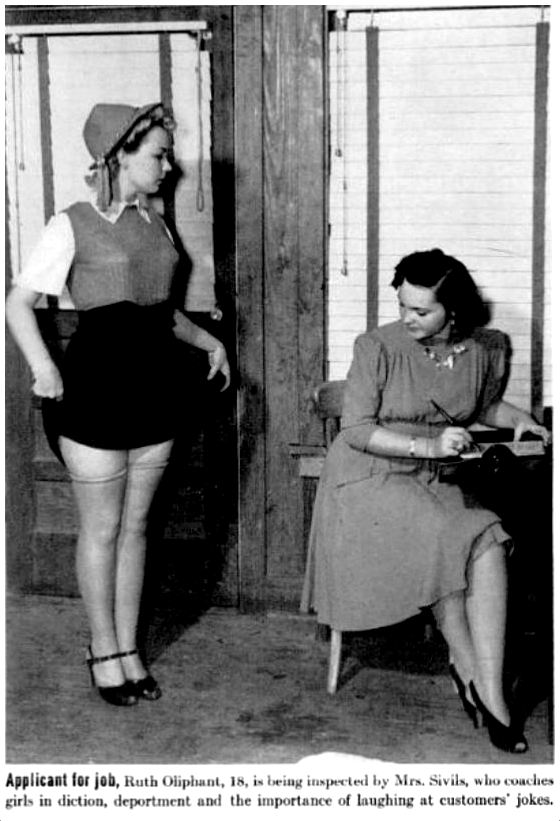
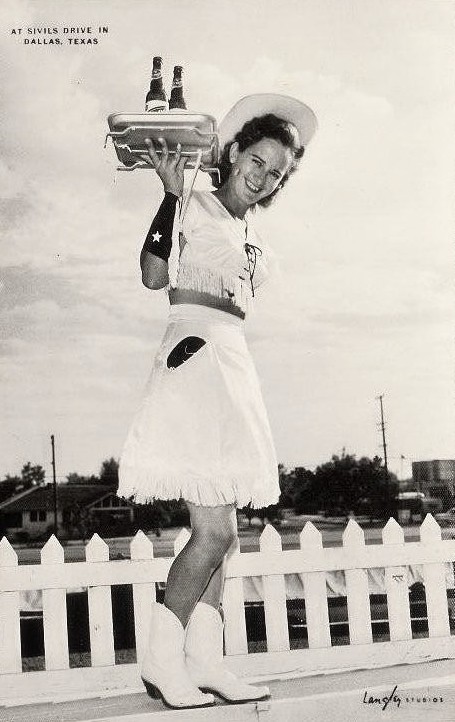
When J. D. Sivils (1907-1986) and his wife, Louise (1918-2006), brought their “Sivils” restaurant to Dallas in June 1940, their Houston drive-in of the same name had already been featured as a Life magazine cover story, garnering the kind of incredible national publicity that any business owner would have killed for! And all because of their carhops — “comely, uniformed lassies” whom Mrs. Sivils insisted on calling “curb girls” (which might have a slightly different connotation these days…). Life — never a magazine to overlook pretty young girls in sexy outfits — not only devoted a pictorial to the “curb girls,” they also put one of them (Josephine Powell of Houston) on the cover, wearing the Sivils’ uniform of (very, very short!) majorette’s outfit, plumed hat, and boots.
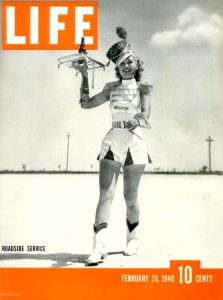
sivils_houston_life-mag_022640Feb. 26, 1940

louise-sivils_life-magazine_1940Louise Sivils and a prospective “curb girl” (Life)

Four months after the blitz of national attention the drive-in received from the Life story, Sivils came to Dallas. The drive-in was located in Oak Cliff at the intersection of West Davis and Fort Worth Avenue on “three acres of paved parking space.”
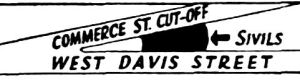
sivils-map

The day the drive-in opened, a photo of the not-yet-legendary Sivils appeared in The Dallas Morning News (see “Sivils to Open Dallas Place Thursday,” DMN, June 27, 1940). Other than this, there is surprisingly little in the pages of The News about this drive-in’s opening — surprising because it became such a huge part of the lives of Oak Cliff’s teens in the ’40s, ’50s, and ’60s. It’s one of those places that seems to have reached almost mythic proportions on the nostalgia scale.

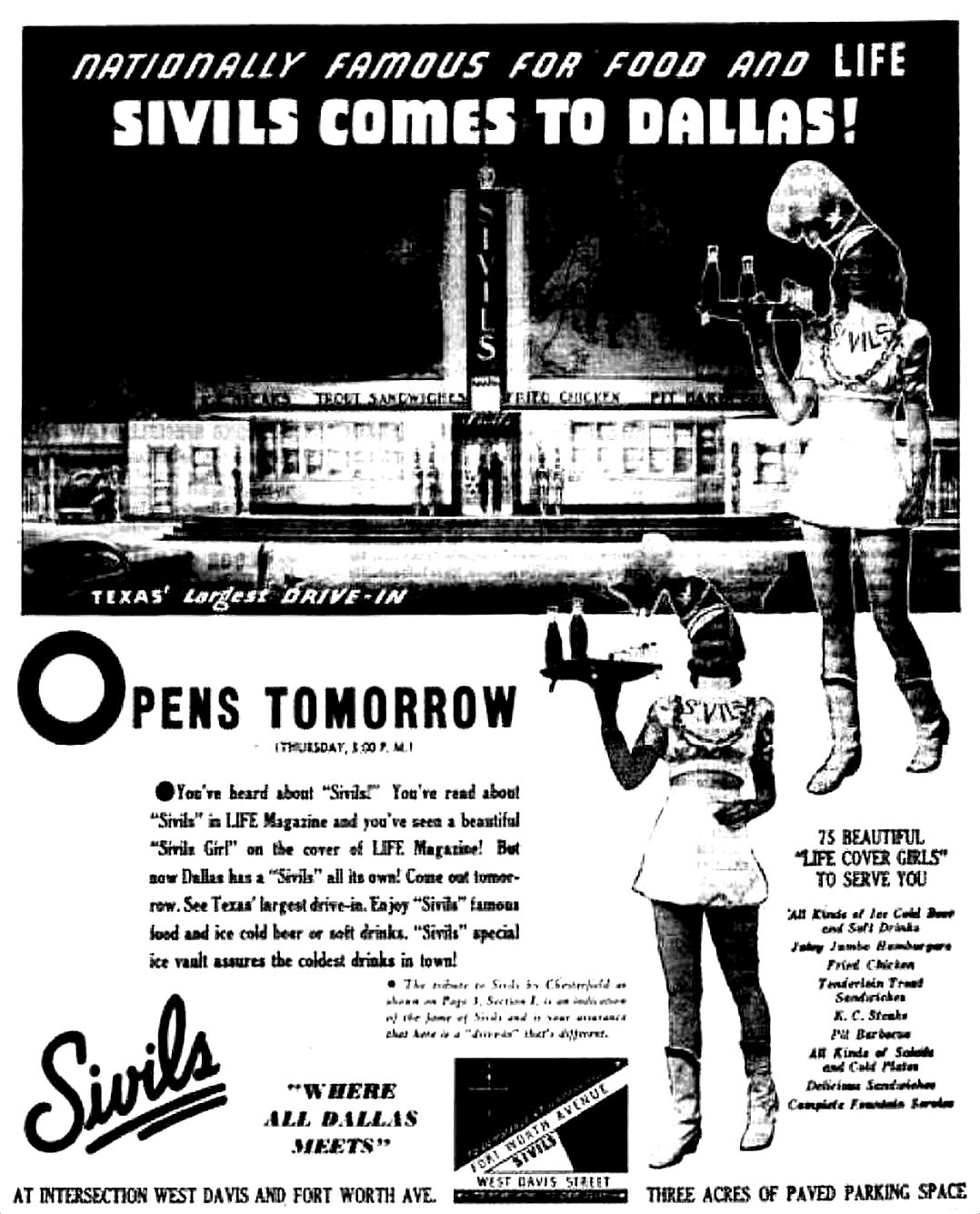
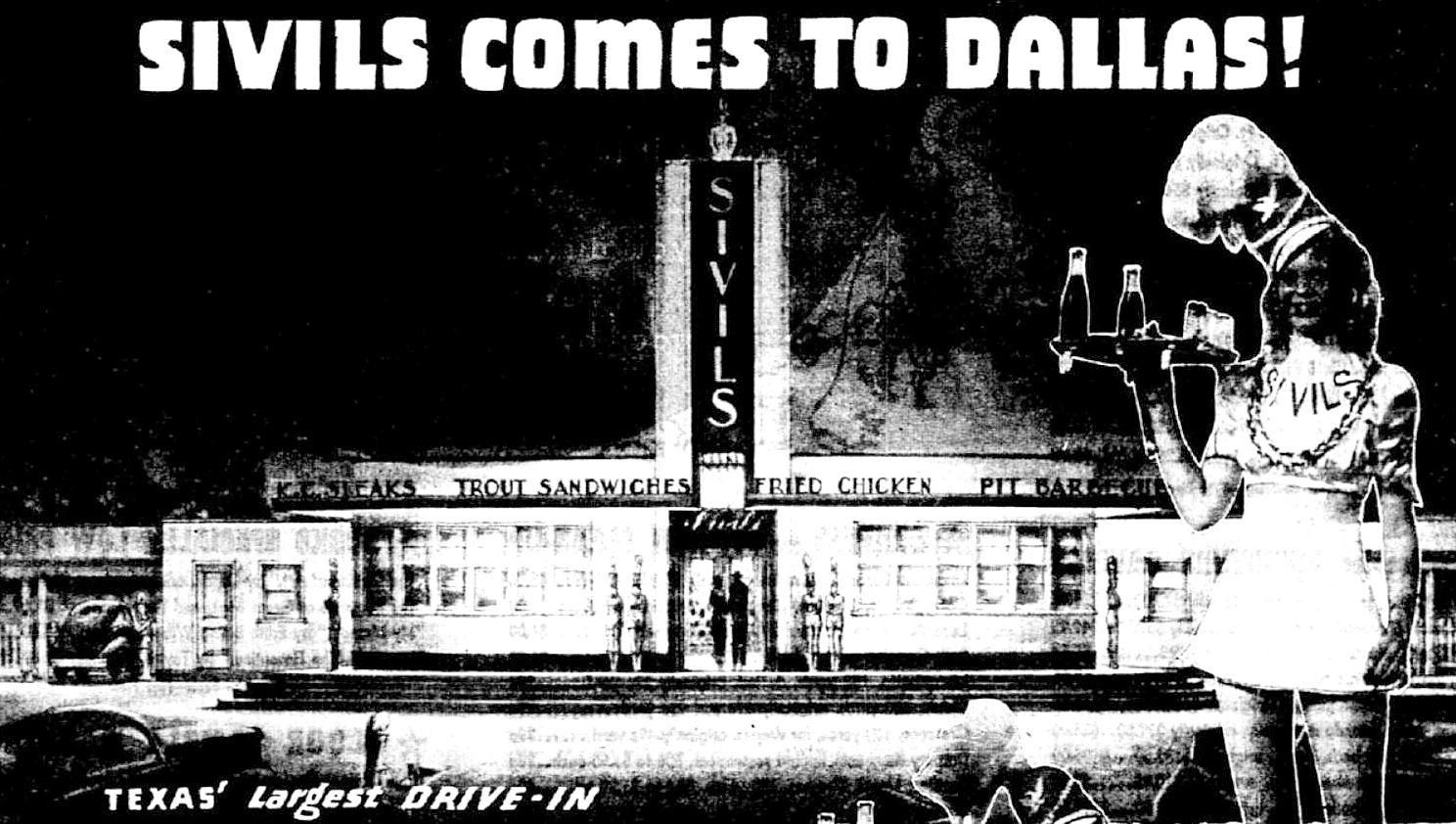
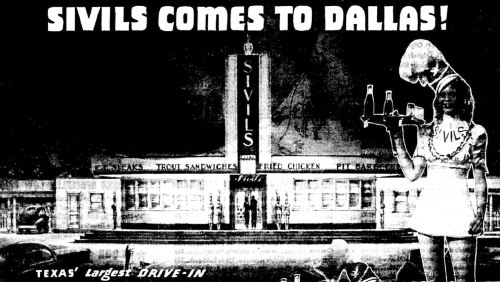
Sivils didn’t quietly sneak into town, though. Take a look at this very large, very expensive newspaper ad, which ran the day before OC’s soon-to-be favorite hang-out opened. (Click for larger image.)
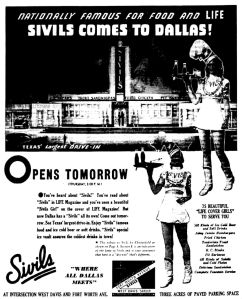
sivils_dmn_062640_lgJune 26, 1940

*

Nationally Famous for Food and LIFE
SIVILS COMES TO DALLAS!

Texas’ largest drive-in
Opens tomorrow

(Thursday 3:00 PM)

You’ve heard about “Sivils”! You’ve read about “Sivils” in LIFE Magazine and you’ve seen a beautiful “Sivils Girl” on the cover of LIFE Magazine! But now Dallas has a “Sivils” all its own! Come out tomorrow. See Texas’ largest drive-in. Enjoy “Sivils” famous food and ice cold beer or soft drinks. “Sivils” special ice vault assures the coldest drinks in town!

75 Beautiful “LIFE Cover Girls” to Serve You

All Kinds of Ice Cold Beer and Soft Drinks
Juicy Jumbo Hamburgers

Fried Chicken
Tenderloin Trout Sandwiches
K.C. Steaks
Pit Barbecue
All Kinds of Salads and Cold Plates
Delicious Sandwiches
Complete Fountain Service

Sivils – “Where All Dallas Meets”
At intersection West Davis and Fort Worth Ave.
Three Acres of Paved Parking Space

*

100-150 “curb girls” were employed by Sivils at any given time in those early days, and it was open 24 hours a day. The place was hopping. Sounds fantastic. Wish I’d seen it.
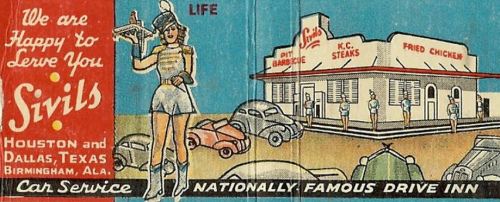
sivils_matchbook_coltera-flickrvia Flickr

sivils_carhop_postcard_ebay
eBay

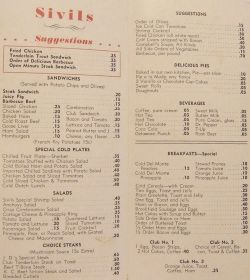
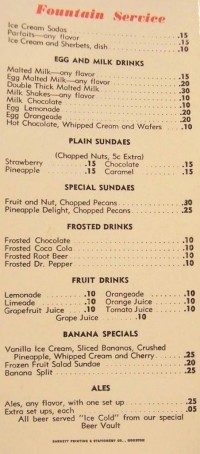
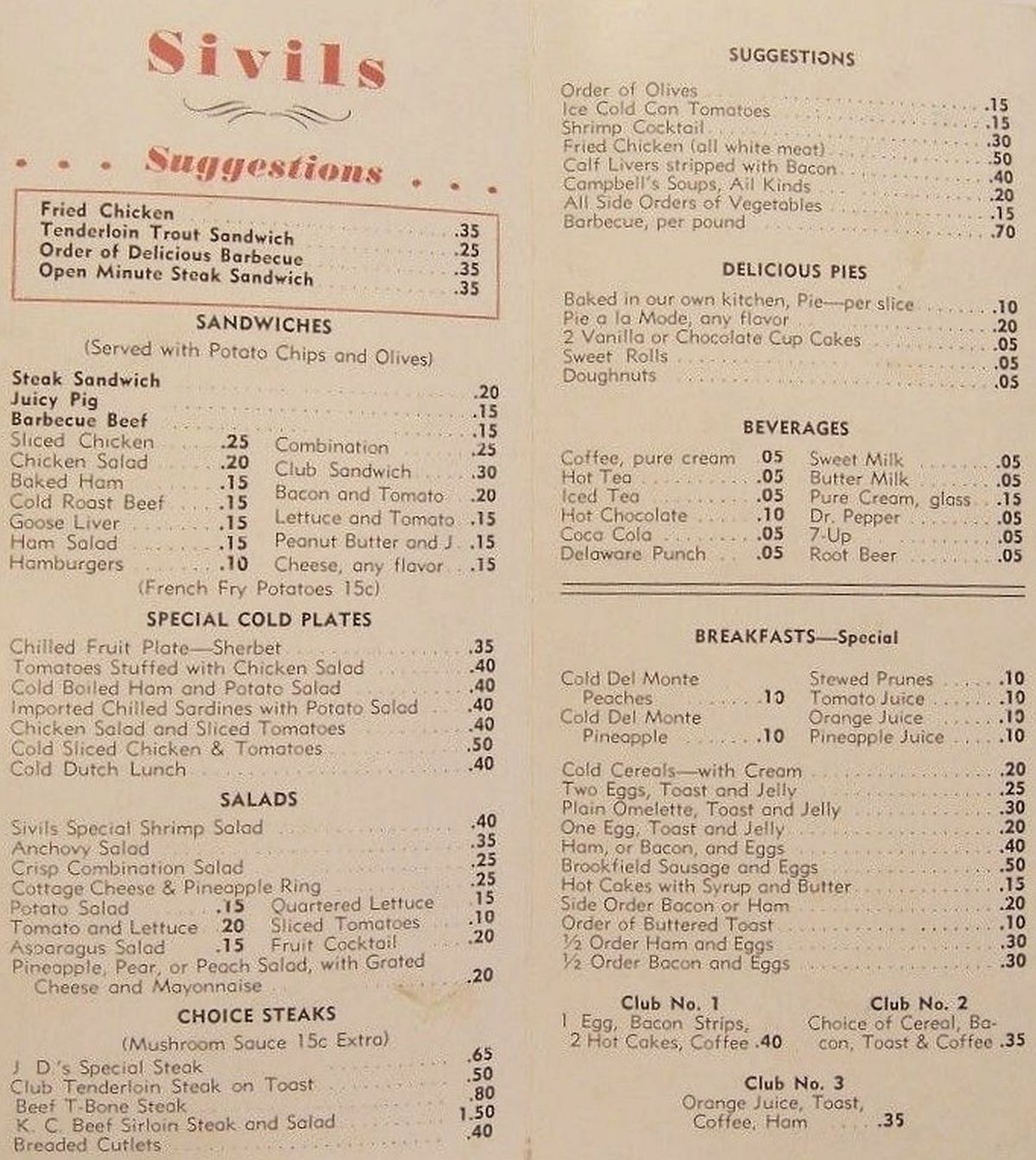
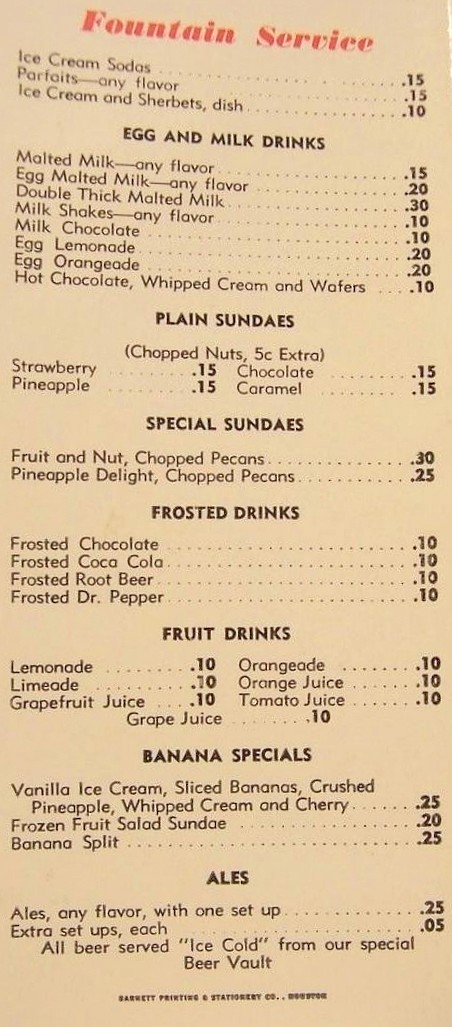
Below, a scanned menu (click to see larger images):
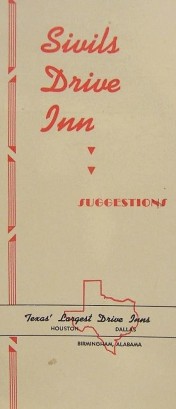
sivils-menu_1940s_ebay_cover

sivils-menu_1940s_ebay_b

sivils-menu_1940s_ebay_avia eBay

***

Sources & Notes

Top postcard from the Boston Public Library Tichnor Brothers Postcard Collection on Flickr, here.

Read the 4-page Life article (and see several photos of the Houston “curb girls”) here (use the magnifying glass icon at the top left to increase the size of the page).

Interesting quote from that article:“They work in 7½-hour shifts, six days a week, for which they get no pay but average $5 a day in tips.” Doesn’t sound legal…. (The Inflation Calculator tells us that $5 in 1940 money is equivalent to just over $83 in today’s money.)

Sivils closed in 1967, possibly because Mr. and Mrs. Sivils wanted to retire, but it seems more likely that Oak Cliff’s being a dry area of Dallas since the 1950s was killing its business. Check out the News article “Big Head Expected as Oak Cliff Beer Issue Foams” by Kent Biffle (DMN, Aug. 17, 1966) which appeared just months before another election in which the “drys” outvoted the “wets.” (More on Oak Cliff’s crazy wet-dry issues, here.)

J. D. Sivils was interviewed in a short documentary about Dallas carhops, filmed in the early 1970s. In it, he talks about the early days of Sivils and — best of all — there is film footage galore of the drive-in from his collection. Watch it in my previous post — “‘Carhops’ — A Short Documentary, ca. 1974” — here. (Below a screenshot of Sivils from the film.)
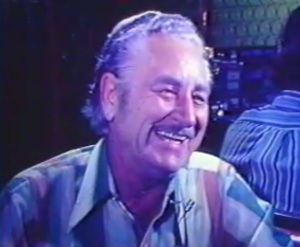
sivils-carhops-film

Read the article “Carhops, Curb Service, and the Pig Sandwich” by Michael Karl Witzel (Texas Highways, Oct. 2006) in a PDF, here (increase size of article with controls at top of page).

Another Flashback Dallas post on drive-in culture — “Carhops as Sex Symbols — 1940” — is here.
sivils_dmn_062640-det

Click pictures for larger images.

*

Copyright © 2015 Paula Bosse. All Rights Reserved.

Six Flags’ Historical Press Bookshop — 1965

six-flags-bookshop

by Paula Bosse

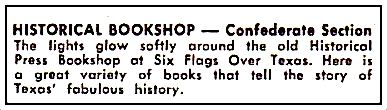
Six Flags Over Texas had a bookstore: the Historical Press Bookshop, located in the “Confederate Section.” Who knew? I was surprised when I ran across this postcard, but I figured it was a place to buy gum, film (remember film?), giant combs emblazoned with the Six Flags logo, and this very postcard. But no. It was a bookstore that sold rare Texana, including historic books, prints, and documents. At Six Flags. …Over Texas. …Land of Pink Things and Log Rides.

The description from the back of the postcard:

six-flags-bookshop_back

The store was ostensibly owned by Six Flags developer Angus Wynne, Jr., but the contents were owned by Ted W. Mayborn, wealthy petroleum trade journal publisher, writer, and Texas history aficionado. In a playful bow to having an antiquarian bookstore inside a theme park (!), he hired female family members to dress up in cowgirl outfits and brandish six-shooters in a bid to “protect” the (probably very expensive) merchandise.

I’m not really sure how this worked — or why anyone would think this was a good idea. Would one find oneself enjoying a day at Six Flags only to stumble across this unexpected cache of rare books and feel compelled to pick up a leather-bound first edition or a fragile broadside? Or would one go to Six Flags expressly to visit the bookstore and browse the stock — despite the fact that it was in an amusement park? Would one have one’s purchase shipped, or would one lug it around the park, through Casa Magnetica, past Skull Island, and into the Spelunker’s Cave?

There has to be a story behind this unusual business endeavor. Did Ted save Angus from choking one time? Did he win the franchise in a poker game?

I’m not sure how long the Historical Press Bookshop lasted. My guess? Longer than it should have.

Weirder than discovering that a bookshop was once part of the Six Flags experience was learning that Mr. Mayborn owned a real bookshop called the Red Barn Bookstore and that my father worked for him for a few months, a time my mother described as being brief but stressful. I think I can understand why.

Click pictures for larger images.

*

Copyright © 2015 Paula Bosse. All Rights Reserved.