Flashback : Dallas

A Miscellany: History, Ads, Pop Culture

Category: 1960s

The Texas Bookbindery, Arcadia Park
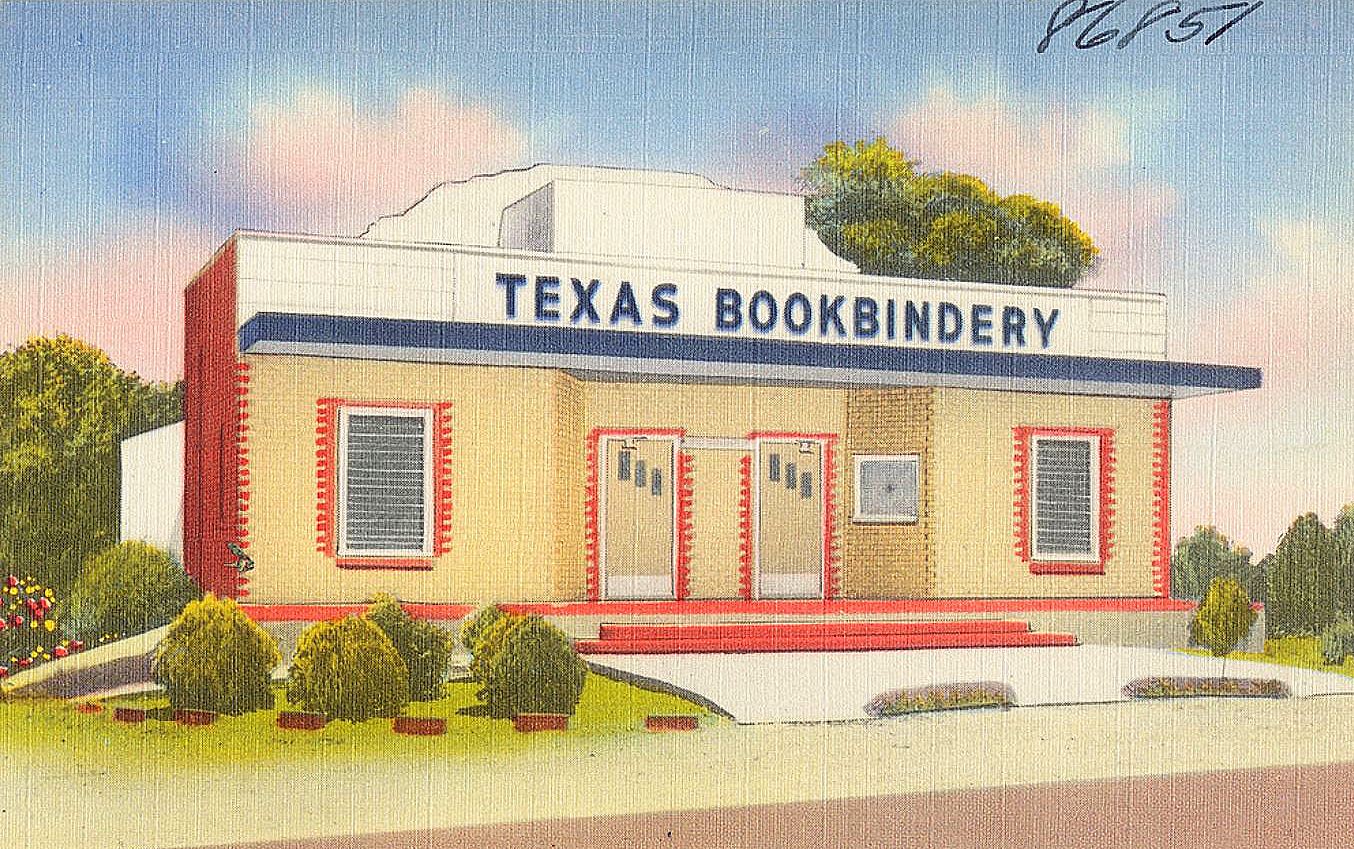
texas-bookbindery_oak-cliff_tichnorThe Texas Bookbindery, be-shrubbed and gleaming in Oak Cliff’s Arcadia Park

by Paula Bosse

Old postcards, such as the one above, are perfect little fictional jewels. One knows instinctively when looking at them that they show a highly idealized version of reality. I almost didn’t want to find out too much about the Texas Bookbindery, because I love this image so much, and I was pretty sure that if the simple-but-charming building still stood, it wouldn’t really look like a happy little place atop a slight hill, with lovely landscaping, where butterflies flitted among the flowers and bluebirds sang in the nearby trees.

I didn’t find out much about the Texas Bookbindery, except that it seems to have been in business from at least the late 1940s until the late ’60s or early ’70s. It was managed by a man named T. Bernard White, who was featured in a 1948 Dallas Morning News article about the horrible things people do to library books (the Dallas Public Library sent the bindery what sounds like an unending stream of not-quite-destroyed books which were still repairable).

Apparently bookbinderies keep a pretty low profile, because the only other mention I found in the newspaper about this one was in 1962 when a large number of the 37 employees (“mostly women”) were overcome by fumes from poorly-vented gas heaters in the “one-story sheet-metal plant” (yes, a large sheet-metal structure extends behind the deceptively cheery street view). That story listed the address as 714 N. Justin, in the Arcadia Park area of Oak Cliff. I was almost afraid to plug that address into Google. As well I should have been. Here’s what that sweet little building looks like now (but …the shrubs! …the flowers! …the BLUEBIRDS!!):
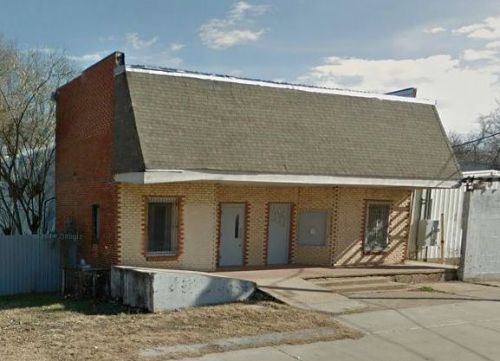
tx-bookbindery-nowToday, via Google Street View

Poor little bookbindery.

UPDATE: A month after I wrote this post in November, 2014 the Google car drove down N. Justin and snapped a new Google Street View of the poor little bindery — it looked even sadder: it had a big hole in its roof. In March of 2017, that hole-in-the-roof image from December, 2014 has yet to be updated. See it here.

***

Sources & Notes

Postcard from the fantastic Boston Public Library Tichnor Brothers Postcard Collection on Flickr, here.

Click top pictures for larger image.

*

Copyright © 2014 Paula Bosse. All Rights Reserved.


The Elm Street Cave — 1967

elm-st-cracks_flickr_red-oak-kid_smThe Elm St. Cave – tourist attraction…

by Paula Bosse

In the wee hours of the morning of Jan. 11, 1967, a giant hole opened up on the south side of Elm Street — 200 yards long, 20 feet wide, and 15 feet deep — running roughly the entire length of the block between Griffin and Field. It was assumed that there was some connection between the cave-in and the adjacent construction of One Main Place. During the ensuing investigation into a cause, the consultations with geologists, the lawsuits, the repairs, the backfilling, etc., this very busy stretch of Elm was closed for an incredible seven months (!). Most of that time it was a gaping hole.

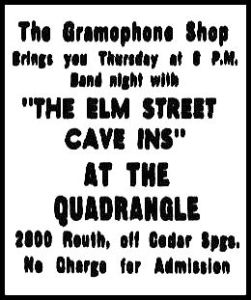
The hole was a major headache to city leaders and to downtown developers (…and to motorists), but it became an ongoing joke to everybody else. The “Elm Street Cave” and “Elm Street Cavern” were referenced everywhere for most of 1967. San Francisco had “The Summer of Love” that year, Dallas had “The Elm Street Cave-In.” It was the butt of endless jokes in local, out-of-town, and even out-of-state newspapers. A band sprang up calling themselves The Elm Street Cave-Ins.

cave-ins-band_dmn_062867June 28, 1967

A group of local lawyers known as The Skid Row Bar Association proclaimed to the press that it was “the last remaining scenic wonder in Dallas.” Curious tourists were drawn to the hole like camera-laden moths to a flame. “Talk about your ‘Deep Elm’!” became a punchline much bandied about by people who didn’t understand that something like that is moderately amusing once or twice, but that it tends to lose its sharpness after it’s repeated ten or fifteen times. And, bizarrely, it even found its way into an oddly defensive Sears ad (click to see a larger image).

ad_sears_dmn_070667-det_sm1967 Sears ad, detail

The hole was eventually filled in, and, in August — after months of jokes and inconvenience — the street was finally re-opened. Life returned to a pre-cave-in normalcy. The reason for the collapse was determined to be shifting rock formations below street level. One report said that workmen had “uncovered a huge crevice in the limestone beneath the street measuring 30 feet deep. They filled the crevice with concrete and tied together the broken sections of rock.” I’m not sure how comfortable I’d feel about a giant building sitting on shifting shale-covered limestone,* but apparently everything’s been fine ever since, and everyone — the engineers, the geologists, the One Main Place developers and tenants — lived happily ever after.

***

Sources & Notes

Associated Press photo of the lovely Judy Thedford and her fashionably large hair posing rather incongruously beside a car bumper appeared in newspapers across the country on Feb. 12, 1967. This scan is from the Red Oak Kid’s Flickr page, here.

The weird “Let’s quit apologizing! Dallas is worth seeing!” ad comes from a larger Sears advertisement that appeared in July 1967.

Related Dallas Morning News articles:

  • “Strip of Elm Collapses; Experts Remain Baffled” by Carolyn Barta (DMN, Jan. 12, 1967)
  • “Cracks on Elm Street Not Funny to City Hall” by Kent Biffle (DMN, Feb. 12, 1967)

*For people who (unlike myself) know something about geology, an article written in 1965 about the special problems regarding the One Main Place excavation and construction (“How to Support Skyscrapers” by Martin Casey — DMN, Nov. 28, 1965) might be interesting. There is much mention of Austin Chalk Limestone and Eagle Ford Shale, which made the One Main Place project quite troublesome to engineers. 

*

Copyright © 2014 Paula Bosse. All Rights Reserved.
The Pink Panther-Mr. Peppermint Connection

mr-peppermint_dmn_1961Mr. P. — 1961

by Paula Bosse

I had no idea that the “Mr. Peppermint” theme was by Henry Mancini! It’s from a 1960 movie called “High Time,” which, I have to say, I’ve never heard of. It starred Bing Crosby, Fabian, and Tuesday Weld (I kind of think Bing may have been in it solely for the paycheck). Check out the movie’s main theme music. Sound familiar?

Hearing this brings back a flood of happy memories — an aural version of Proust’s madeleines.

In a recent Los Angeles Times interview, Paul Reubens (aka Pee-wee Herman) had this to say:

“I never met Captain Kangaroo; I probably would have completely freaked out if I met Captain Kangaroo. In fact, when I meet people who are just beside themselves to meet me, I always think they’re reacting like I would react if I met Captain Kangaroo, I was so crazy about that television show as a child.” (LA Times, Oct. 21, 2014)

I ran into Jerry Haynes (aka Mr. Peppermint) several times around town over the years. The first time I saw him, I was in my 20s, and he was doing some sort of promotion (in character) at a store in, I think, Northpark. I was unaware that he would be there, but when I saw him at the top of the escalator, I was shocked. My childhood TV pal right in front of me! It’s a bit of a blur, but I think I giddily foisted myself on him and told him all the things other Dallas kids raised on his show probably told him. I might even have gushed an involuntary “I love you, Mr. Peppermint!” Yikes. I bet he got that ALL THE TIME. He was very sweet and didn’t treat me like a crazy person.

The last time I saw him, he was just Jerry Haynes, shopping for cheese at the Tom Thumb on Mockingbird and Abrams. I didn’t bother him, but I still got a little happy jolt of recognition when I saw him.

And now I find out that the composer who wrote so much of my favorite movie music wrote the music so tied to my childhood. Thanks, Mr. Mancini! Thanks, Mr. Peppermint! Thanks, Mr. Wiggly Worm!

***

Sources & Notes

Quote from Paul Reubens’ Los Angeles Times interview, here.

Wikipedia roundup: madeleines, here; “High Time” movie, here; Henry Mancini, here.

(Thank you, Steve S., for bringing this to my attention!)

*

Copyright © 2014 Paula Bosse. All Rights Reserved.


“Wonderful K-BOX” at 1480 On Your AM Dial

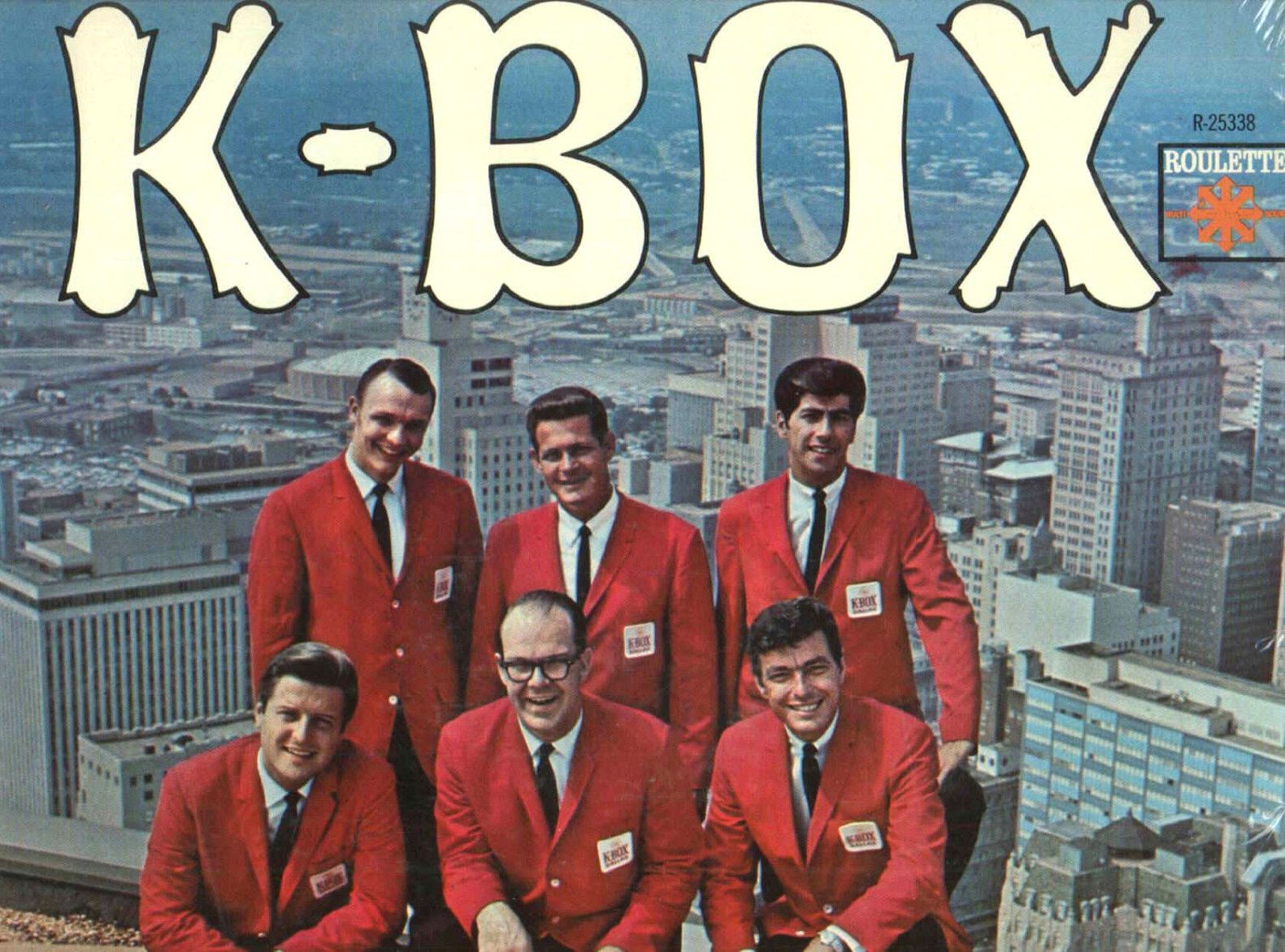
kbox-djs“Wonderful K-BOX” jocks atop the Southland Life Bldg.

by Paula Bosse

When I was a kid, it seems like KBOX was always on in the background. Always. My father was a huge country music fan, and it was one of the (if not THE) top country stations in town. This was in the ’70s. So it’s a bit of a shock to learn that KBOX had been a Top 40 station in the ’50s and ’60s — in fact, it was the major competitor of top-dog KLIF.

The photo above was shot atop the Southland Life Building in 1966 and appeared on an LP called “Dusty Discs.” On-air personalities shown are (top row) Terry Byrd, Ron Rice, Frank Jolle/Jolley, (bottom row) Dan Patrick, Bill Ward, and Bill Holley.

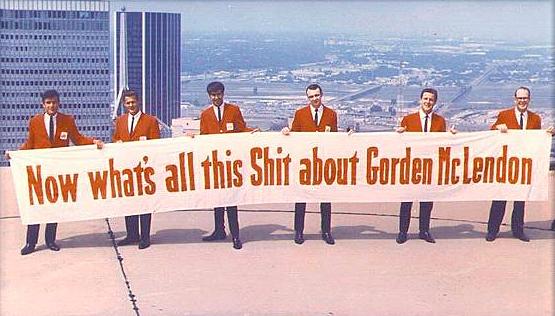
The competition between KBOX (owned by John Box — the “Box” in KBOX) and KLIF (owned by the legendary Gordon McLendon) was fierce. This explains the photo below in which John Box had his DJs hold a special banner during the same photo shoot. Box had this photo printed up and gleefully sent to McLendon as a Christmas card that year (during which KBOX had trounced KLIF in one of the crucial ratings periods). (I’m sure McLendon enjoyed seeing his name misspelled.) AM radio ain’t for the meek.

kbox-mclendon-banner

***

Sources & Notes

Top photo/album cover from eBay.

Second photo from a Frank Jolley site, here. (Jolley’s name is spelled “Jolley” and “Jolle” almost interchangeably all over the internet, so I’m not sure which is correct.)

Absolutely everything you’d ever want to know about KBOX can be found here (and this is just part two of the history!).

BEST OF ALL is this aircheck from 1959, featuring Dan Ingram. It’s crazy. The energy level is exhausting to listen to. They were really pulling out all the stops. (And, hey, you could go see Johnny Cash at the Sportatorium for ONE DOLLAR!) This is great:

 *

Copyright © 2014 Paula Bosse. All Rights Reserved.

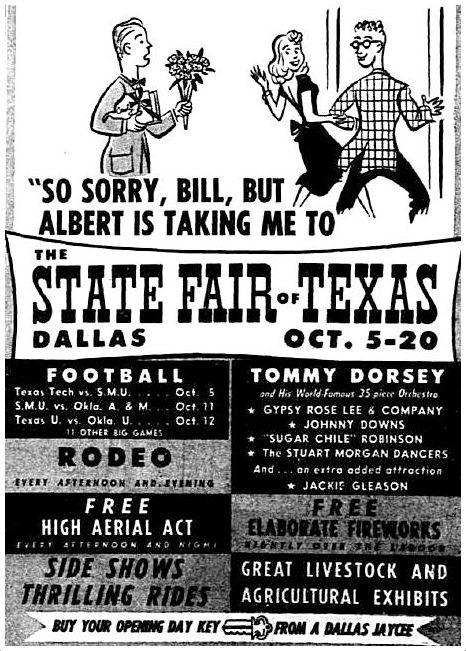
“So Sorry, Bill, But Albert is Taking Me to The State Fair of Texas”

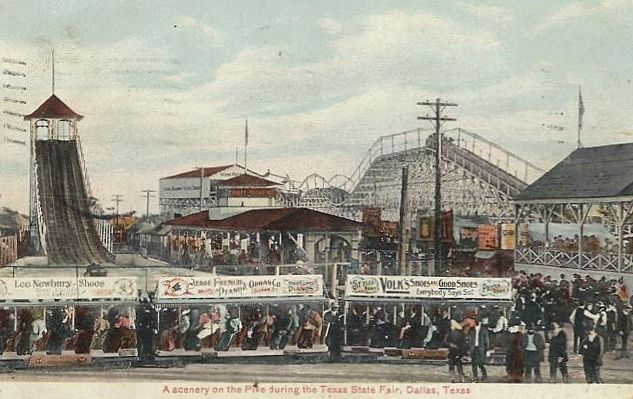
state-fair_1909_flickr“The Pike” — 1909

by Paula Bosse

Hey, y’all — guess what ends this weekend? Hurry!

One doesn’t really need an excuse to post a bunch of photos of the Great State Fair of Texas, but it IS the closing weekend, so why not enjoy a few images from the past few decades.

Above, a view of the Midway in 1909 (then called “The Pike”), with the Log Ride-like “Chute” and its ramp, a roller coaster, and a loaded tram festooned with shoe ads (including one for Volk’s).

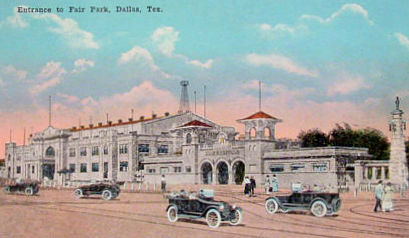
Below, the Fair Park entrance in 1919:

fair-park-entrance_1919

A nice little newspaper ad from 1924:

state-fair_092724

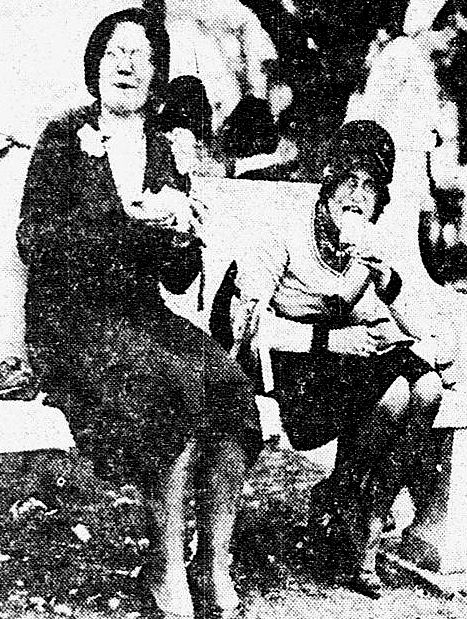
Two women enjoying ice cream in 1930 — State Fair food has always been one of the main joys of visiting the fair.

state-fair_dmn_101530

Ad from 1946: “So sorry, Bill, but Albert is taking me to the State Fair of Texas.” The grown-up entertainment that year was provided by Tommy Dorsey, Gypsy Rose Lee, and Jackie Gleason.

state-fair_dmn_092446

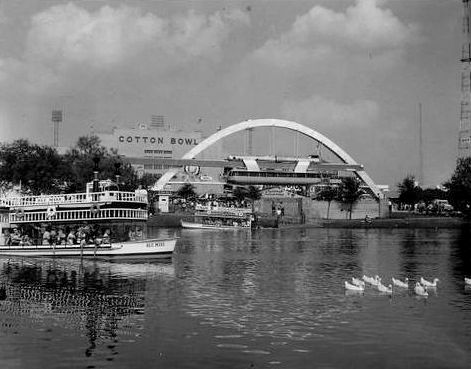
In 1958, Fair Park had a monorail (the only one then operating in the United States) and a paddle-wheeler in the lagoon:

state-fair_lagoon_squire-haskins_dmn-1958

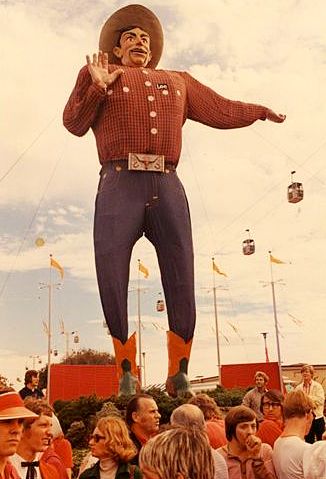
And then there’s this guy, who spans the decades:

big-tex_briscoe-center

***

Sources & Notes

1958 photo featuring the monorail by Squire Haskins, from a Dallas Morning News online article featuring TONS of cool photos of the fair over the years, here.

Big Tex photo (undated) from the Dolph Briscoe Center for American History.

Another post of random images of the SFOT through the decades — “The Fair Is In the Air — Let’s Go!” — is here.

*

Copyright © 2014 Paula Bosse. All Rights Reserved.


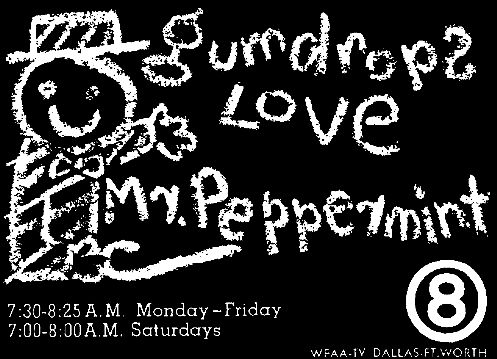
“Gumdrops Love Mr. Peppermint” — 1968

mr-peppermint_1968

by Paula Bosse

When the news is unsettling, remember your “happy place.”

***

1968 TV Guide ad, from eBay.

*

Copyright © 2014 Paula Bosse. All Rights Reserved.


The Fab Four in Big D — 1964

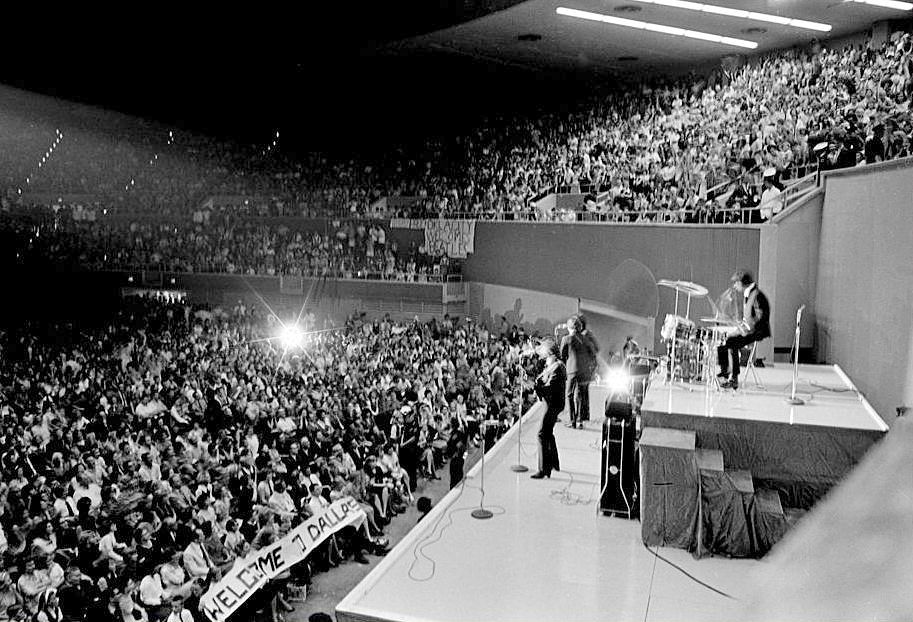
beatles_memorial-auditorium_091864_ferd-kaufmanThe Beatles at Memorial Auditorium, Sept. 18, 1964

by Paula Bosse

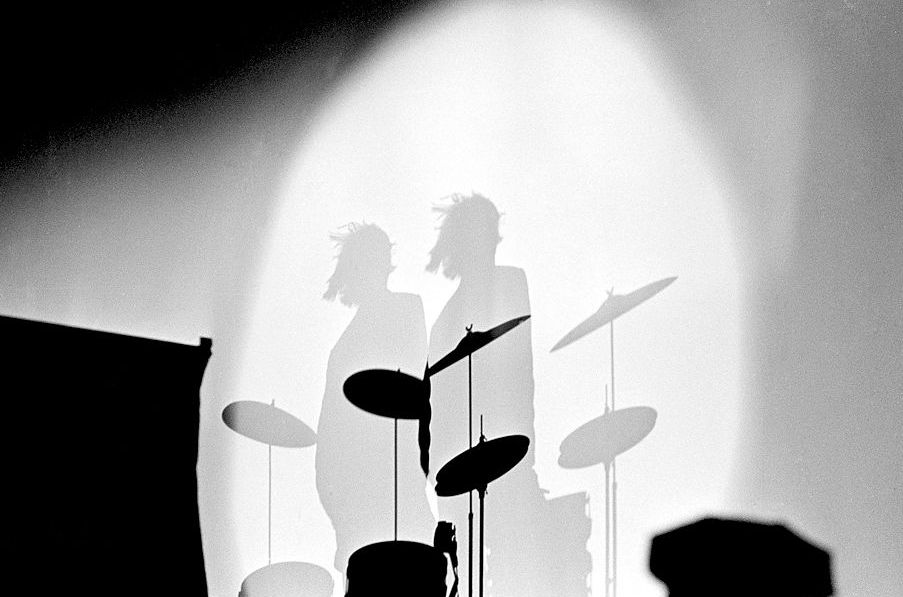
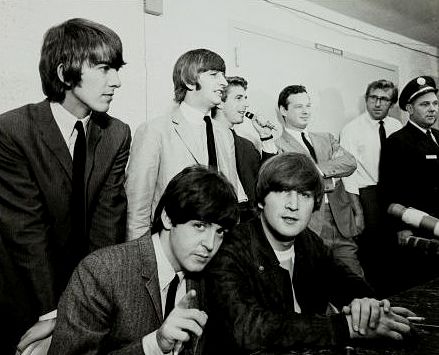
The Beatles came to Dallas fifty years ago this week. There was pandemonium at Love Field when they arrived. There was pandemonium at the Cabaña Hotel when they got there. There was pandemonium at the press conference. And there was pandemonium at the concert at Memorial Auditorium on September 18, 1964, the last date of their American tour. This event has been pretty well covered over the years, but here are a couple of cool photos of the Fabs’ time in Dallas, and a couple of droll columns from DFW entertainment reporters who seem to be vaguely amused, vaguely annoyed, and vaguely impressed — all at the same time.

beatles_memorial-aud_091964_ferd-kaufman

beatles_dallas_1964_john-mazziotta_dth

Above, the Dallas press conference, with Beatles press agent Derek Taylor (holding microphone), manager Brian Epstein (who, still in Dallas, would turn 30 the following day), and road manager Mal Evans (with glasses). And a Dallas cop (who, over the years, must have told a thousand people about this momentous day).

*

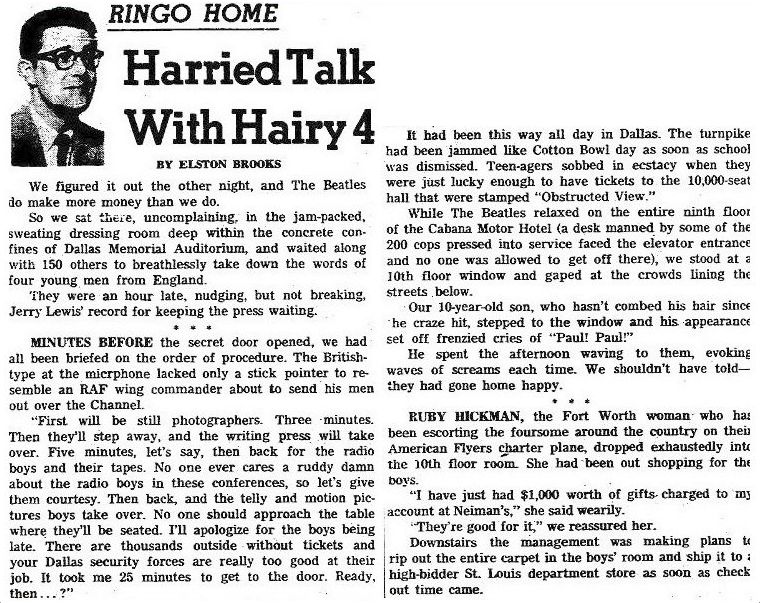
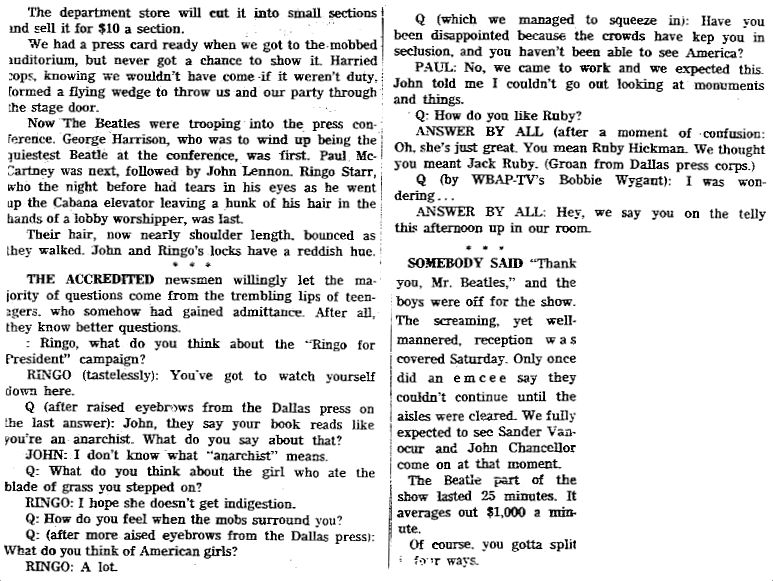
Below, the always-entertaining Elston Brooks of the Fort Worth Star-Telegram writes about his “Harried Talk With Hairy 4” (click article for larger image).

beatles_FWST_092064a

beatles_FWST_092064bFWST, Sept. 20, 1964

*

The Dallas Morning News’ man-about-town, Tony Zoppi, enlisted the aid of a teenager to explain to him the nuances of Beatlemania. His opening paragraph is pretty good:

It was Mardi Gras, V-E Day, the Texas-Oklahoma excitement and The Alamo all rolled into one — only louder. It was the Beatles, winding up their American tour deep in the heart of Texas. It was Dallas playing the role of uninhibited host to the hilt. (“The Beatles Do It, Yeah! Yeah! Yeah!” by Tony Zoppi, DMN, Sept. 19, 1964)

*

And lastly, the short scattershot interview by Bert Shipp of Channel 8:

*

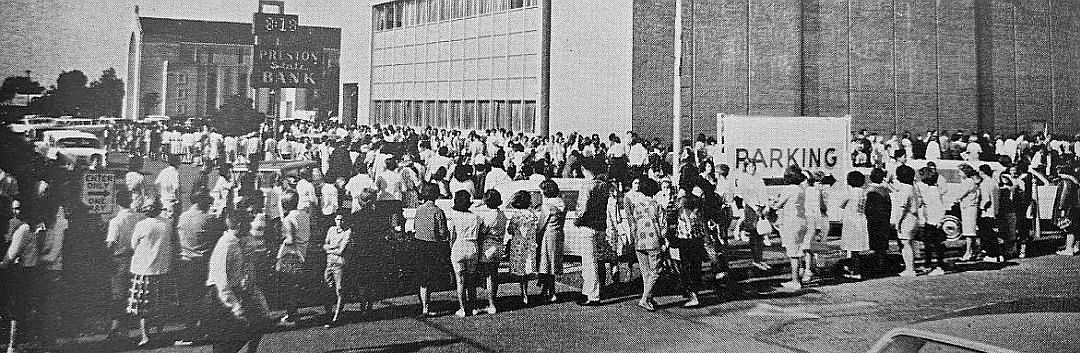
And here’s a photo I’ve never seen: kids lining up to buy tickets. The caption: “The Preston Ticket Agency, a service of the Preston State Bank of Dallas, recently attracted this crowd when the agency was named to handle the exclusive sale of tickets for a September performance in Dallas of the Beatles quartet. Some youngsters stood in line 24 hours before the ticket office opened for business. The Preston Ticket Agency has been in operation since 1963, and last year served over 40,000 customers with tickets to major Dallas entertainment attractions.” (“Dallas” magazine, July 1963)

beatles_preston-tickets_dallas-mag_july-1964-DPL

***

Sources & Notes

Top two performance photos of The Beatles at Memorial Auditorium by Ferd Kaufman (the one of Ringo is GREAT).

Photo of the press conference by John Mazziotta.

Photo of the ticket line is from Dallas magazine — a publication of the Dallas Chamber of Commerce — July 1963, Periodicals Collection, Dallas Public Library.

More photos of the Dallas visit can be seen here.

And a nostalgic look back at the Beatles’ visit can be read in Bonnie Lovell’s entertaining Dallas Morning News essay, “50 Years Ago the Beatles Played Their Only Dallas Concert” (DMN, Sept. 19, 2014) (no longer available online apparently) — Bonnie was there in the thick of it as a Beatle-crazed 13-year-old and was one of the lucky few who had a ticket to the show and got to see the boys shake their mop-tops in person.

*

Copyright © 2014 Paula Bosse. All Rights Reserved.

Dallas in Song: Chamber-of-Commerce-Approved vs. Hard Reality

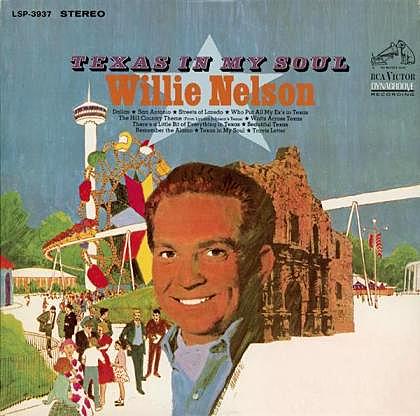
texas-in-my-soul_willie-nelson

by Paula Bosse

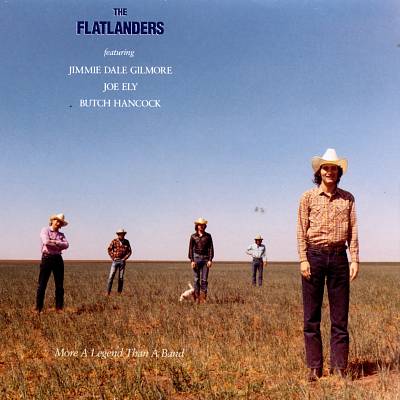
One of the best-known songs about Our Fair City is the dark and cynical “Dallas” by The Flatlanders (written by Panhandle-born Jimmie Dale Gilmore). It may be the best representation of the city ever written. I mean, how can you ever improve upon the immortal line, “Dallas is a rich man with a death wish in his eye”?

In August of 1967, right in the middle of The Summer of Love and several years before The Flatlanders recorded their song, Willie Nelson recorded a very different song which was also called “Dallas.” These two songs offer the yin and the yang of Dallas, a city people seem to love or hate.

flatlanders-cover

Willie’s song, written by Stovall and Groom (the Groom being Dewey Groom, the country musician who owned Dallas’ Longhorn Ballroom), appeared as the lead track on Willie’s “Texas In My Soul,” a concept album of covers (!) produced by Chet Atkins and released in 1968. I love Willie, but that song is pretty awful. I’m not sure if Willie picked it or Chet picked it, but … oh dear. I love songs from Willie’s early recording years — when he was trying to branch out from a successful songwriting career to being a performer — and he sounds great on the song, and the production is Nashville-studio-impeccable, but … those lyrics. If the Dallas Chamber of Commerce had a stamp of approval for songs about Dallas, I’m sure they would have stamped the bejabbers out of this one. It’s a very positive, damn near chirpy song about the city — and it’s got to be one of the only songs out there to name-check Central Expressway, LBJ, Love Field, Highland Park, Neiman’s, and the Cotton Bowl in lyrics like this:

Take a ride on her Central Expressway — breeze down the LBJ.
Look her over good, you’ll have to say: she’s the best-dressed city in the USA.

Uh-huh. It does have one absolutely great line which is (unintentionally) pure Dallas: “She swings like a blonde with a millionaire” — and, if you’re familiar with Jimmie Dale Gilmore’s song, you probably immediately think of these lines from his later 1972 song:

Well, Dallas is a woman who will walk on you when you’re down,
But when you are up, she’s the kind you want to take around,
But Dallas ain’t a woman to help you get your feet on the ground.
Yes Dallas is a woman who will walk on you when you’re down.

But as Jimmie Dale says, Dallas will always look great from a DC-9 at night.

*

To hear the mercifully very short song Willie recorded but did not write, check it out:

*

To listen to the sublime Jimmie Dale Gilmore-penned “Dallas” by The Flatlanders (sung by Gilmore, with Joe Ely and Butch Hancock, accompanied by a musical saw), listen to this:

*

Two very different perspectives of Dallas, one written by a conservative middle-aged local businessman in the go-getting 1960s (Dewey Groom), the other by a young, long-haired outsider in the cynical, post-hippie 1970s (Gilmore). People who actually live in Dallas are either much more tolerant of (or oblivious to) the city’s shortcomings — or we’re just born self-promoters. I’m thinking it’s mostly the latter. #worldclasscity

***

Thanks to my friend Steve Ray of the Texas Music Office for bringing the Willie Nelson song to my attention!

For more on the “Texas In My Soul” album (which has what must be one of the worst album covers ever), see the review at AllMusic.com, here.

Willie’s Nelson’s website is here. (If anyone knows of a Dallas song written by Willie, please let me know!)

The Flatlanders site is here. (Incidentally, there is a very cool, previously unreleased 1972 version of “Dallas” on the new “Odessa Tapes” album.)

For my previous post on Dewey Groom, see here.

*

Copyright © 2014 Paula Bosse. All Rights Reserved.

Candy Stripers Moonlighting as Six Flags Map Sellers — ca. 1961

six-flags_map-sellers_c1961

by Paula Bosse

“Yes, sir, you absolutely must have a map!”

When going to an amusement park meant going in a suit and tie. …And hat.

I see maybe a couple of teenagers. Otherwise … rather ominously … no children.

***

Six Flags Over Texas, probably in its opening year, 1961.

Click for larger image.

*

Copyright © 2014 Paula Bosse. All Rights Reserved.

I-35E Looking South: A Landscape Blissfully Free of Cars and Strip Malls — 1964

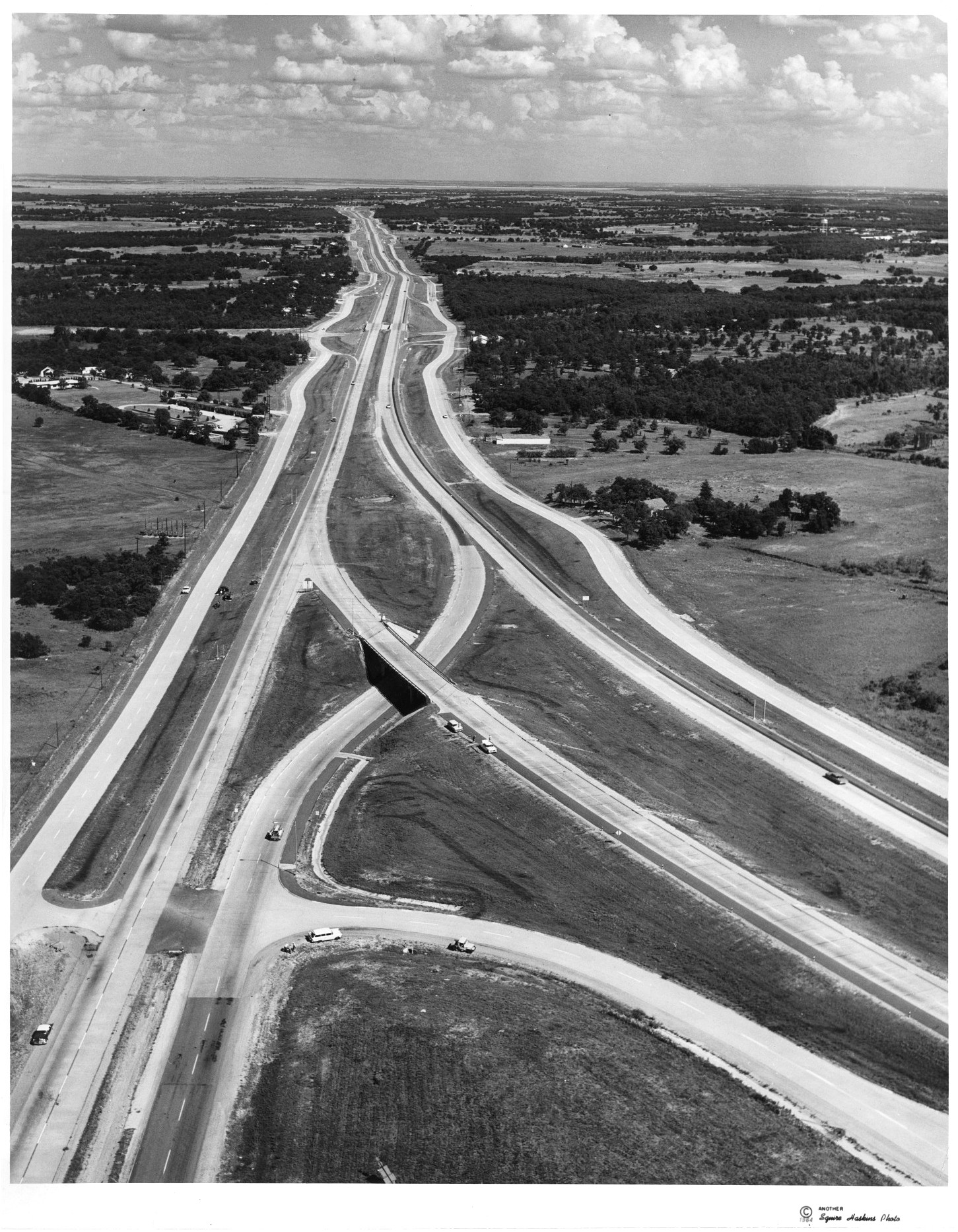
I35E-south-from-denton_haskinsI-35, pre-sprawl — photo by Squire Haskins (GIGANTIC when clicked)

by Paula Bosse

This is I-35. …I-35! I’m not sure what stretch of the interstate this is exactly, but I think we’re looking north toward Denton south from Denton. I might cry. No sprawl!

*

UPDATE: I’ve had several comments about this photo from all over El Internet, and it appears that this is I-35E in Denton, looking south(east) toward Lake Lewisville (then Lake Dallas). More specifically, this shows the I-35 / US-77 (Dallas Dr.) interchange, with part of the old Hwy. 77 visible at the bottom of the photo. It’s been pointed out that the water tower at the top right is at the Denton State School. I hope this is correct! If anyone else has any suggestions, please let me know! (To see a 1965 road map of this area, see here.)

Here’s how it looks these days (thanks, Bill P.).

i35e_google-earth

***

Another amazing aerial photograph by Squire Haskins, from the collection of the Denton Public Library (with an incorrect description!). Accessible on the Portal to Texas History, here.

Click picture for larger image. In fact, it’ll get so big that it might break whatever device you’re viewing this on; proceed with caution.

*

Copyright © 2014 Paula Bosse. All Rights Reserved.