Flashback : Dallas

A Miscellany: History, Ads, Pop Culture

Category: Historic Ads

Orphaned Factoids: Year-End Grab Bag, 2017

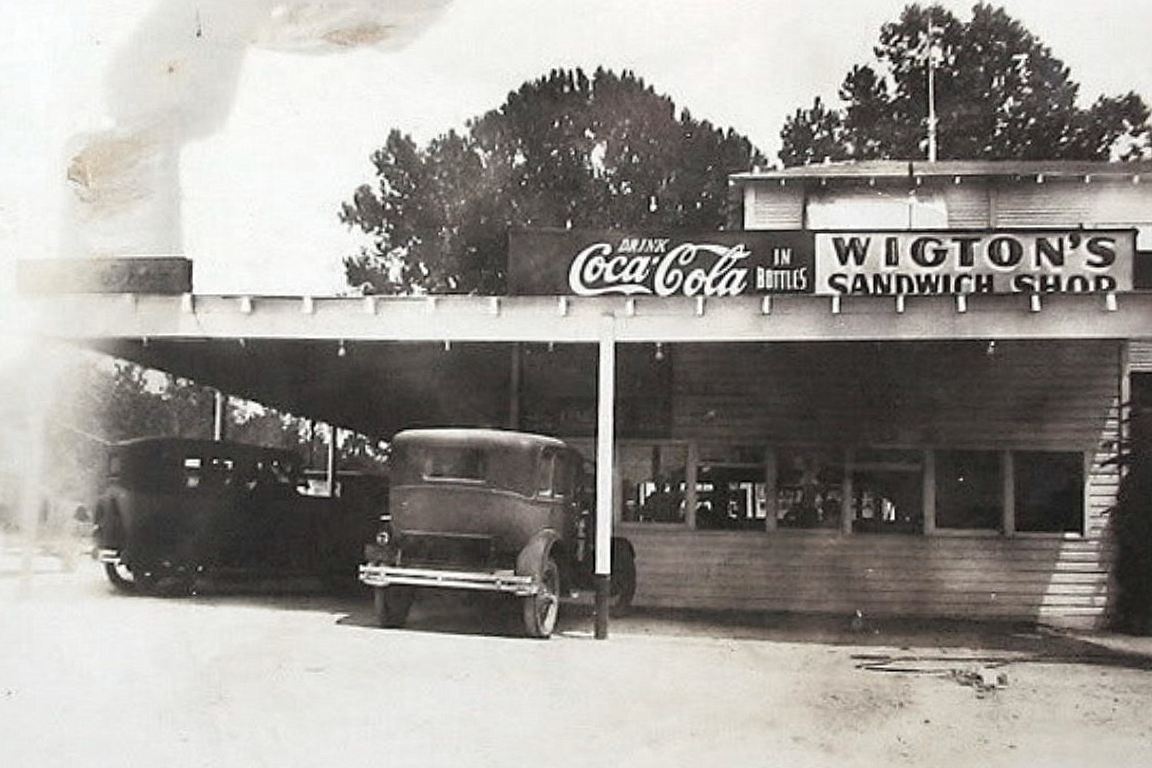
wigtons-sandwich-shop_flickr_colteraWith a name like “Wigton’s…”

by Paula Bosse

Time for another year-end collection of miscellaneous bits and pieces that don’t really belong anywhere, so I’m compiling them here in a weird collection of stuff. Enjoy! (Most clippings and photos are larger when clicked.)

*

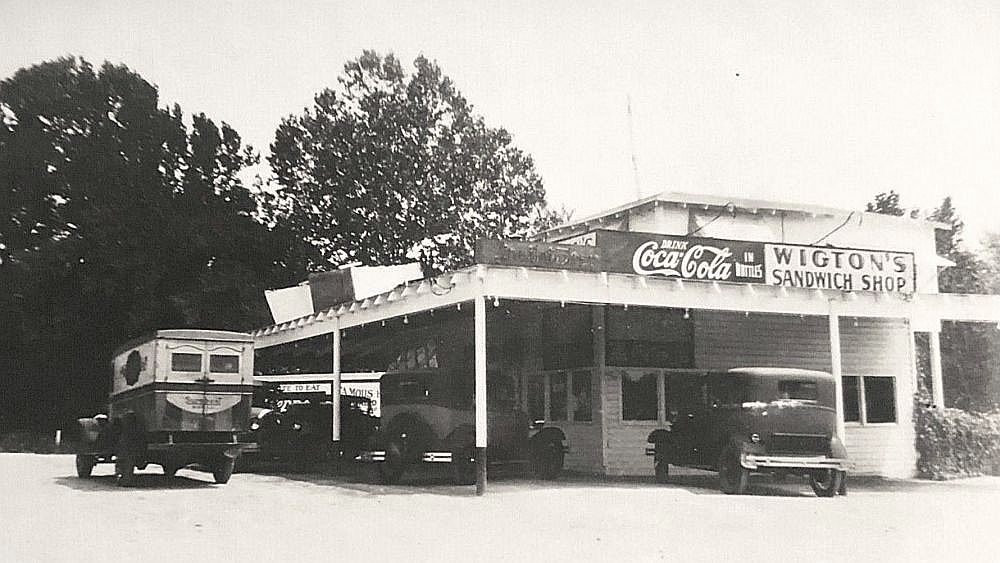
Above, Wigton’s Sandwich Shop, owned by Charles J. Wigton. It looks like it was located near the dreaded East Grand-Gaston-Garland Road intersection. I found one listing in the 1932 city directory for this little “soft drink stand” which also served as the residence of Mr. and Mrs. C. J. Wigton. The address was simply “south side of Gaston Ave., 3 lots east of East Grand Ave.” (Found on Flickr.) And somehow there’s a second photo of this place out there — the one below was found on eBay.

wigtons-sandwich-shop_white-e-grand-and-gaston_ca-1930_ebay

*

colors_ad_dallas-herald_112580Dallas Herald, 1880

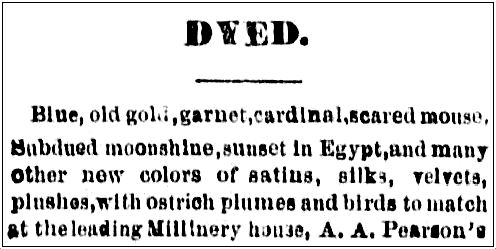
You know, you just don’t see colors like “scared mouse,” “subdued moonshine,” and “sunset in Egypt” anymore. Pity. (Ad for A. A. Pearson’s millinery house.)

*

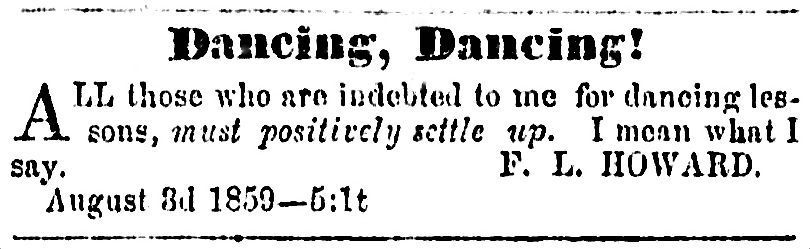
dancing_dallas-herald_1859Dallas Herald, 1859

“All those who are indebted to me for dancing lessons, MUST POSITIVELY SETTLE UP. I mean what I say.” Do not mess with dancemaster Howard. (I’m actually a little shocked someone was offering dancing lessons in Dallas, which, in 1859, was podunker than podunk.)

*

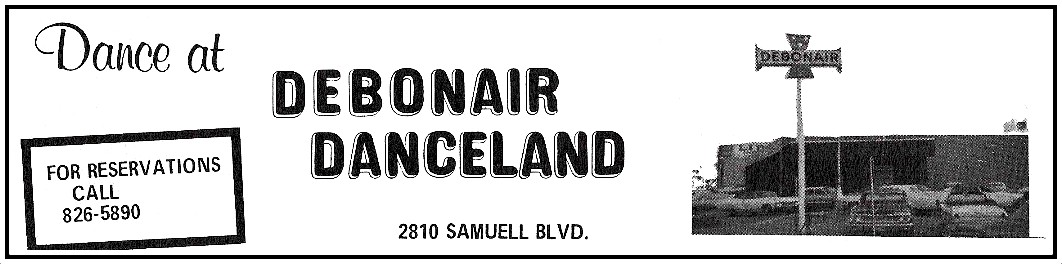
ad-debonair-danceland_ca19691969 Dallas directory

This is the only photo I’ve been able to find of Debonair Danceland (what a great, great name for a club). Depending on whether you were a regular, the adjectives generally used to describe the legendary dancehall are either “notorious” or “beloved.” It opened in 1967 and closed in 1995. As Bill Minutaglio wrote in The Dallas Morning News, it was “one of Dallas’ last rough-hewn links to the brawny honky-tonk highway” (DMN, July 25, 1995). It certainly had a colorful life. For starters there was a “suspicious” double bombing that ripped the place apart in 1968 (I don’t know if the photo in the ad above shows the place pre- or post-blast). There was a lot of … um … “activity” that went on at Debonair Danceland over the years which kept police-beat reporters busy. It was also apparently quite popular with bored housewives who tippled away their afternoons. (See a not-very-clear-but-at-least-larger grainy image of the photo in the ad here.)

*

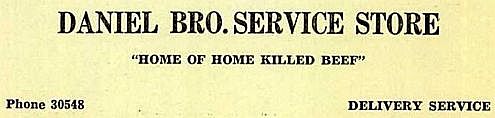
ad-home-killed-beef_hillcrest-yrbk_19401940 Hillcrest High School yearbook

“Home-killed beef” is the best-killed beef.

*

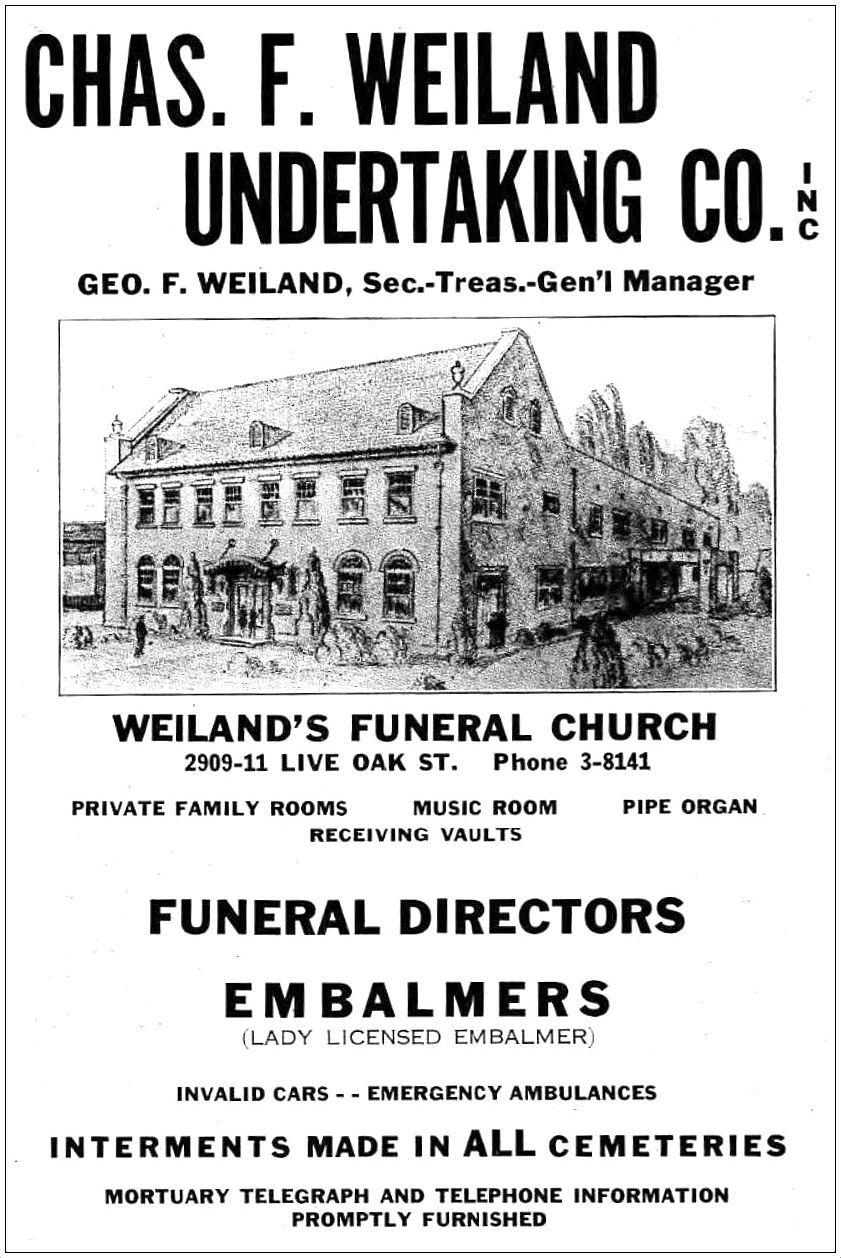
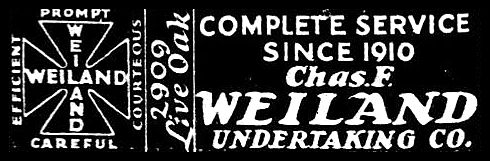
weiland-funeral_1930-directory1930 Dallas directory

weiland_19291929

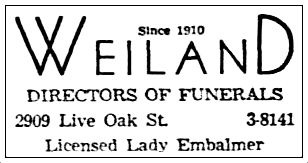
weiland_lady-embalmer_19411941

The Chas. F. Weiland Undertaking Co. was one of the city’s top funeral homes. They really promoted the fact that they had a “licensed lady embalmer” — I suppose some people preferred to have their mothers and other dearly beloveds tended to by a woman.

*

headcheese-poisoning_galveston-news_011994Galveston News, 1894

Beware the head cheese. …Always.

*

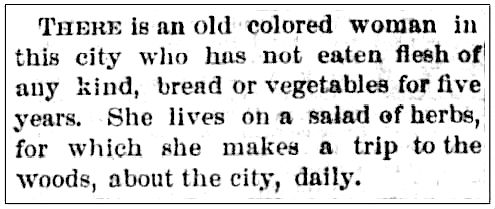
vegetarian_dallas-herald_050274Dallas Herald, 1874

Maybe even go cold turkey and completely ditch the head cheese for a diet consisting solely of “a salad of herbs.”

*

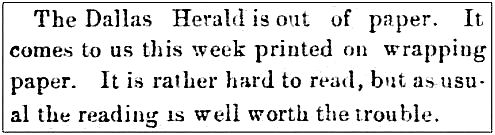
paper_houston-telegraph_121056Houston Telegraph, 1856

“The Dallas Herald is out of paper. It comes to us this week printed on wrapping paper. It is rather hard to read….”

*

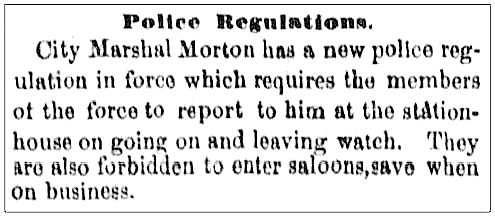
police_dallas-herald_dallas-herald_050980Dallas Herald, 1880

I’m sure there is an interesting and most likely embarrassing story behind the implementation of this new police regulation.

*

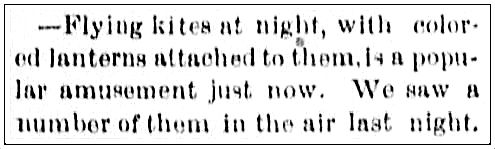
kites-at-night_dallas-herald_072577Dallas Herald, 1877

This sounds wonderful.

*

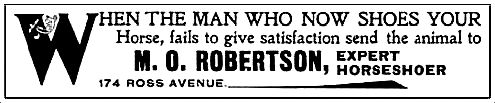
ad-robertson-horseshoer_1900-directory1900 Dallas directory

Go to the M. O. Robertson, the expert horseshoer who will not fail to give satisfaction. Because all those others? They’re gonna fail. Not “if” but “when.”

*

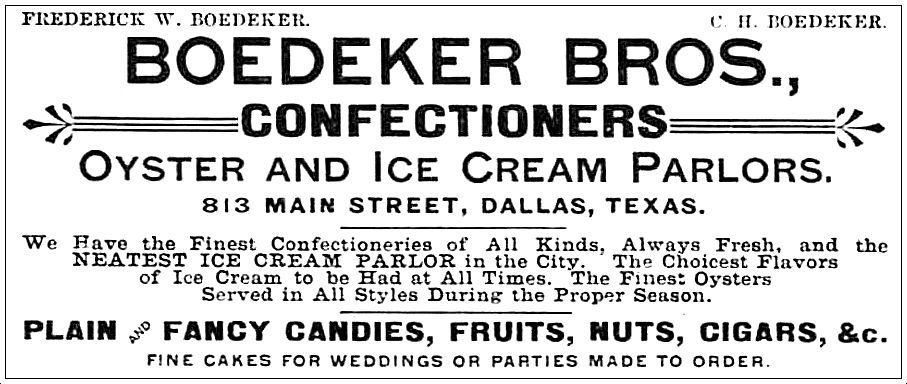
ad-boedecker-bros_oysters-ice-cream_city-directory_18901890 Dallas directory

The sensation generated by seeing an ad with the words “oyster” and “ice cream” next to each other — cheek-by-jowl, as it were — is not a pleasant one.

*

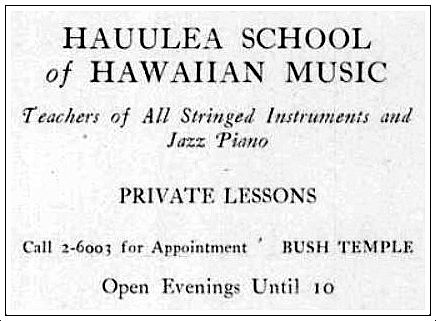
ad-hawaiian-music_bryan-street-high-school_1927-yrbk1927

Who knew? Ukulele-mania was alive and well in Big D in the ’20s.

*

sanger-bros_first-fashion-illus-in-ads-1881_centennial-ad-det_19721972 ad (detail)

A little tidbit on the history of commercial fashion illustration in Dallas, from a Sanger’s ad celebrating the company’s Centennial.

*

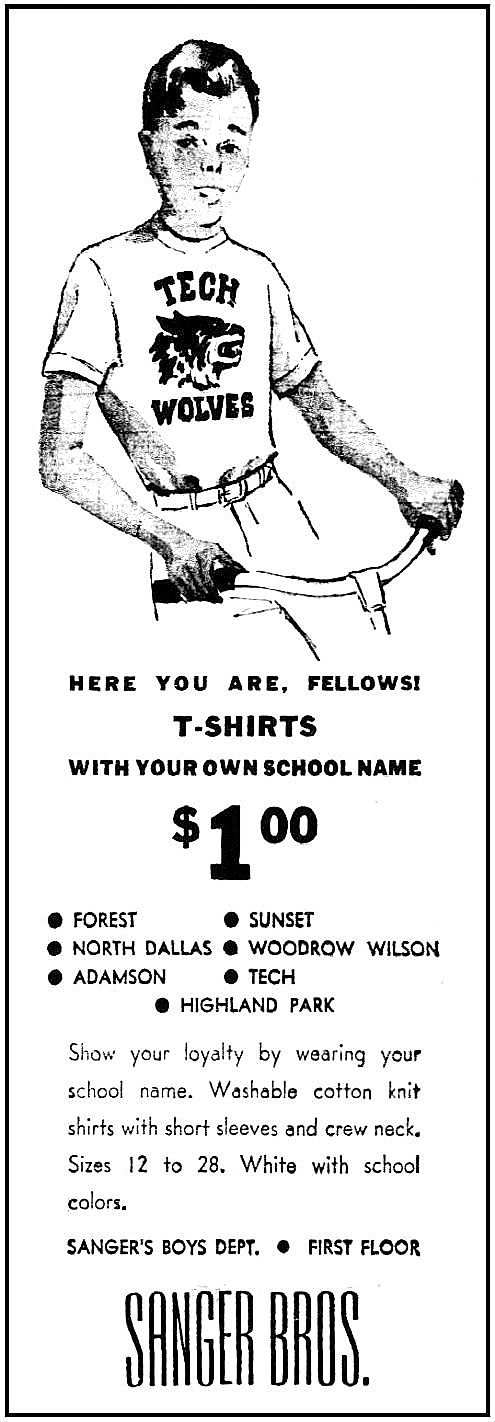
ad-sangers_high-schools_dmn_1008481948

Another Sanger’s ad. This one with a, let’s say “more populist” example of the store’s fashion-illustration chops.

*

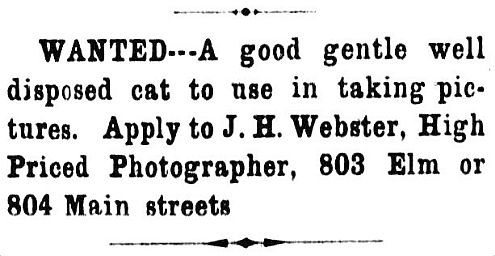
cat-wanted_dallas-herald_112387Dallas Herald, 1887

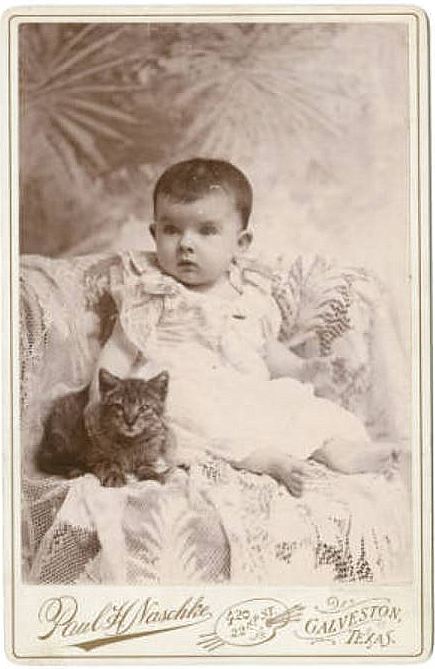
“WANTED—A good gentle well disposed cat to use in taking pictures. Apply to J. H. Webster, High Priced Photographer, 803 Elm or 804 Main streets.”

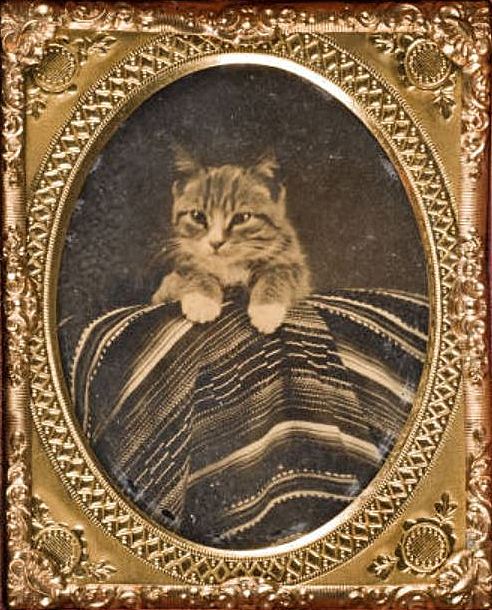
Okay, I’m a sucker. I love cats, and I love self-proclaimed “high-priced photographers.” Ergo, I must love this ad. I do. Seems like a good time to share a couple of 19th-century photographs of cats. 

cat_jones-coll_degolyer1860s, via SMU

cat_baby_degolyer1890s, via SMU

***

Sources & Notes

Dallas Herald clippings are from the Texas Digital Newspaper collection provided by UNT to the Portal to Texas History; you can peruse many scanned issues of The Dallas Herald (not to be confused with the later Dallas Times Herald) here.

“Cat Posed with Mexican Serape” is a cased ambrotype from the Lawrence T. Jones III Texas Photographs collection, DeGolyer Library, Central University Libraries, Southern Methodist University; more details on this photo can be found here. The article “Everyone Loves the Cat!” can be read on the SMU CUL blog “Off the Shelf,” here.

“Baby Seated with Cat” is also from the Lawrence T. Jones III Texas Photographs collection, DeGolyer Library, SMU; more info on the photo is here.

Want more? See other “Orphaned Factoid” lists here.

Most images are larger when clicked. Click away!

*

Copyright © 2017 Paula Bosse. All Rights Reserved.

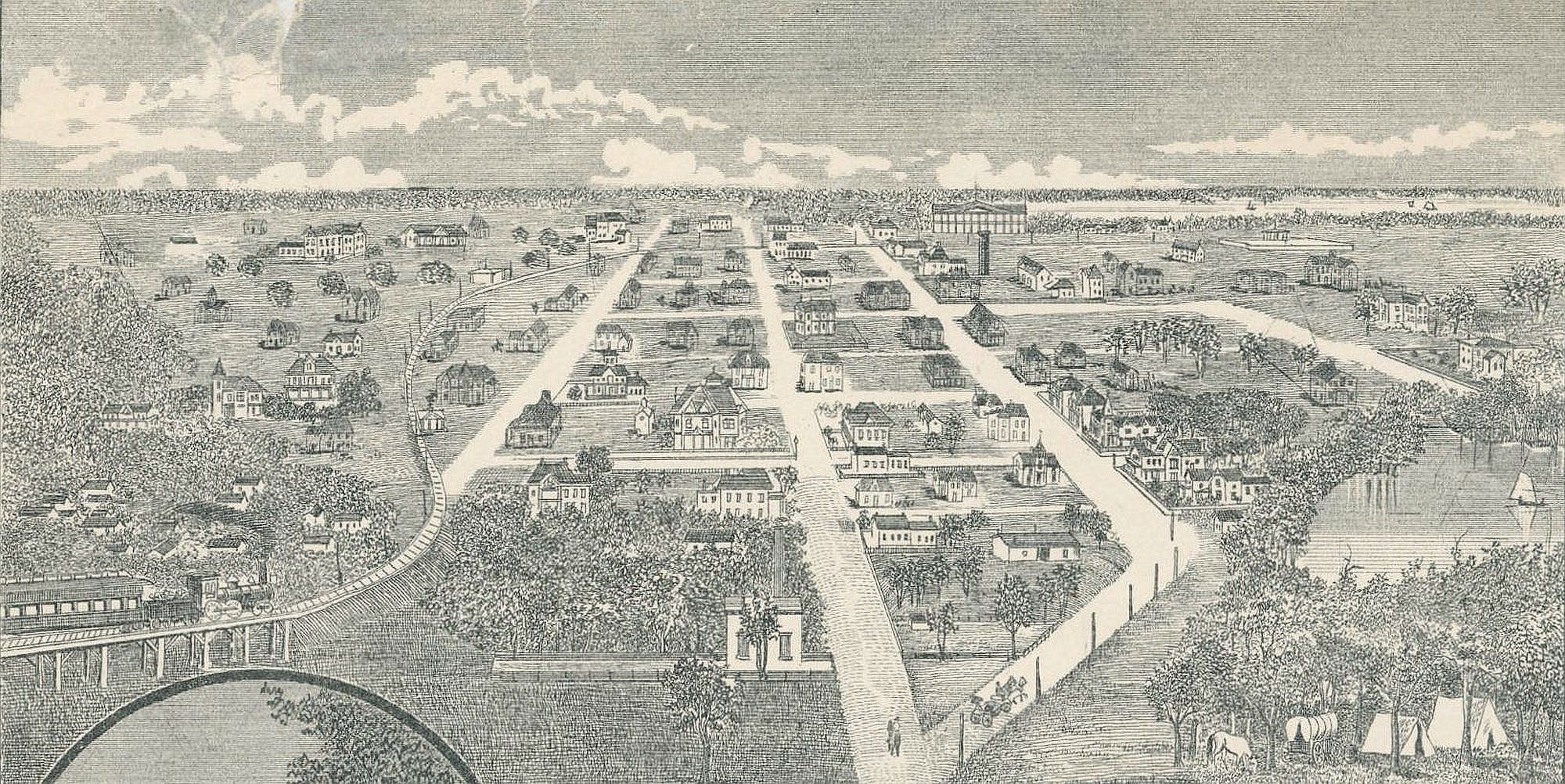
Oak Cliff, The Beautiful Suburb — 1888

oak-cliff_1888_degolyer_SMU_illus_lgOak Cliff, early days… (click for larger image)

by Paula Bosse

The above view of Oak Cliff is taken from an 1888 broadside advertising land opportunities in Dallas’ most beautiful, healthful, and picturesque suburb. The text:

OAK CLIFF

This beautiful suburb of Dallas is situated on the south side of the river, on a chain of hills from 200 to 250 feet above and overlooking the city, and about three-fourths of a mile from the MERCHANTS’ EXCHANGE, being from any part of it within ten to twenty minutes’ walk from the business center, or eight to fifteen minutes’ drive, or five to ten minutes’ ride by the suburban cars, which run all the time from the court house, from 6 o’clock in the morning to 11 o’clock at night. Fare, five cents.

Oak Cliff has a first-class water works system, furnishing clear, pure spring water; good schools; broad, macadamized avenues and streets; lovely lakes and parks (from the pavilion, surrounding towns can be seen). Owing to its great altitude and topographical formation, perfect drainage is insured, and it is unexcelled in the Southwest as a healthful and picturesque residence site and educational center. 

Its superior accessibility to business, makes it the most desirable portion of the city to live in for the citizen of Dallas, whether he be poor, rich or of moderate means.

Within the past seven months, residences approximating in value one million dollars, costing from $1,000 to $45,000 each, have been built and contracted for in this popular suburb. A few choice lots remain unsold, and persons desiring a site for a home on easy terms will please call on or address

DALLAS LAND & LOAN COMPANY
Knepfly Building
Dallas, Texas, October 1, 1888

oak-cliff_1888_degolyer_SMU_typog

***

Sources & Notes

Images taken from a promotional broadside, which may be seen in full in a downloadable PDF here, from the collection of Texas Promotional Materials held by the DeGolyer Library, Central University Libraries, Southern Methodist University.

This drawing is similar to another Oak Cliff promotional piece (also from SMU’s vast collections) which I wrote about in the post “Thomas Marsalis’ Spectacular Oak Cliff Hotel: 1890-1945,” here.

Top image is much larger when clicked.

*

Copyright © 2017 Paula Bosse. All Rights Reserved.


The Buell Planing Mill — 1901

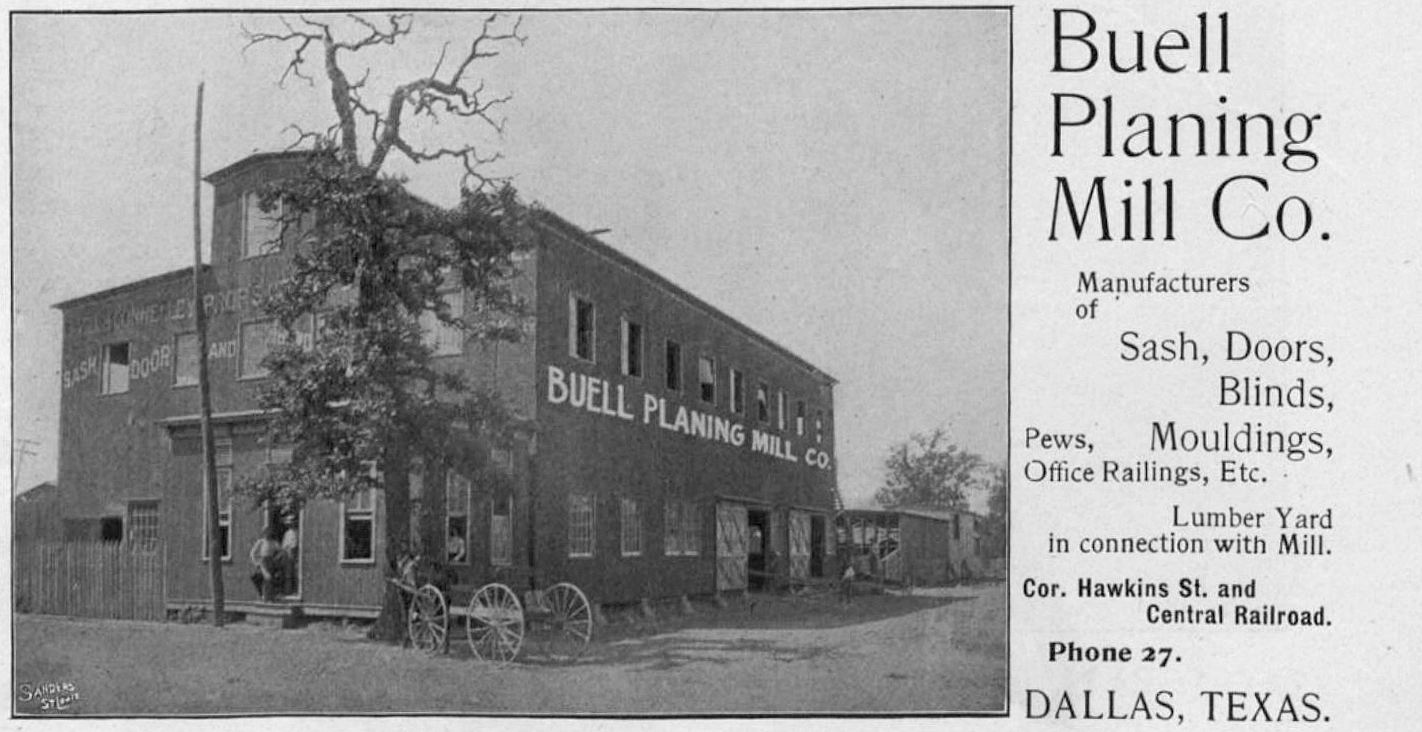
buell-planing-mill_dallas-fire-dept-annual_1901_portalPews a specialty…

by Paula Bosse

The Buell Planing Mill — originally the Buell & Connelly Planing Mill — was established in 1886 by F. T. Buell, a Canadian who came to Dallas as a teenager in 1877. The factory (seen above in an ad from 1901) was built in 1890 just west of the H&TC Railway tracks, at the southwest corner of Hawkins and Montezuma (a street which no longer exists but which ran between Bryan and Live Oak). The mill can also be seen in this ad from 1896:

buell_dallas-directory_18961896 Dallas city directory

The wood frame building burned down in a massive fire in November 1910, and a larger (concrete) factory was built on the same site (an approximate view of the mill’s location as seen today — just to the east of and slightly behind Crozier Tech — can be seen here). The company later became the Buell Lumber & Manufacturing Company in 1918, moved a few times (it left its Hawkins and Montezuma location for Hawkins and Swiss in the late 1940s), eventually became Buell & Co., and was still in business at least into the 1980s.

buell_buell-planing-lumber
Franklin Thomas Buell (1859-1938)

***

Sources & Notes

Ad from the Dallas Fire Department Annual, 1901, from the collection of the Dallas Firefighters Museum; it can be viewed on UNT’s Portal to Texas History site here.

To get an idea of what the surrounding neighborhood looked around the time that photo was taken, see the 1899 Sanborn map here; the 1921 Sanborn map shows the larger post-fire operation, here. Note the neighboring “Central High School”/Bryan Street High School (known more familiarly as Crozier Tech High School); over the years, thousands of high school students walked past (or might even have lived across from) this mill and lumber yard.

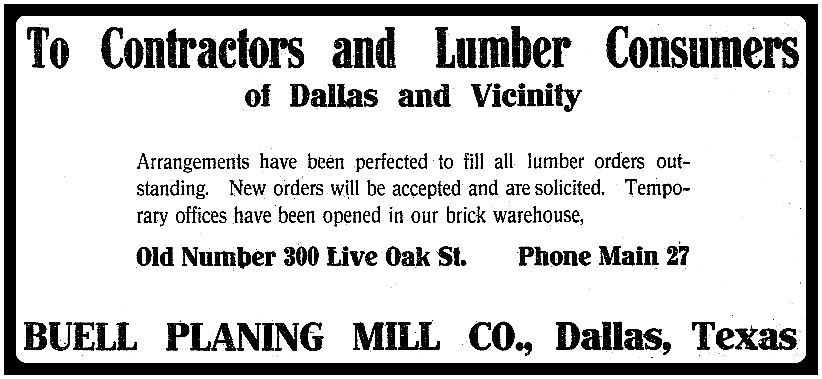
Read about the massive fire of Nov. 30, 1910 that destroyed many of the businesses and houses that surrounded the Buell mill in the Dallas Morning News account “East Dallas Fire Damage $75,000; Near Conflagration at Live Oak and Central Destroys Parts of Four Blocks” (DMN, Dec. 1, 1910) here. The Buell mill was deemed a “total loss” with damages amounting to more than $20,000 (equivalent to over half a million dollars in today’s money). Ads from several of the businesses affected were placed on the page this story appeared on. Below, the Buell ad.

buell-planing-mill_fire_dmn_120110

*

Copyright © 2017 Paula Bosse. All Rights Reserved.

The Gill Well

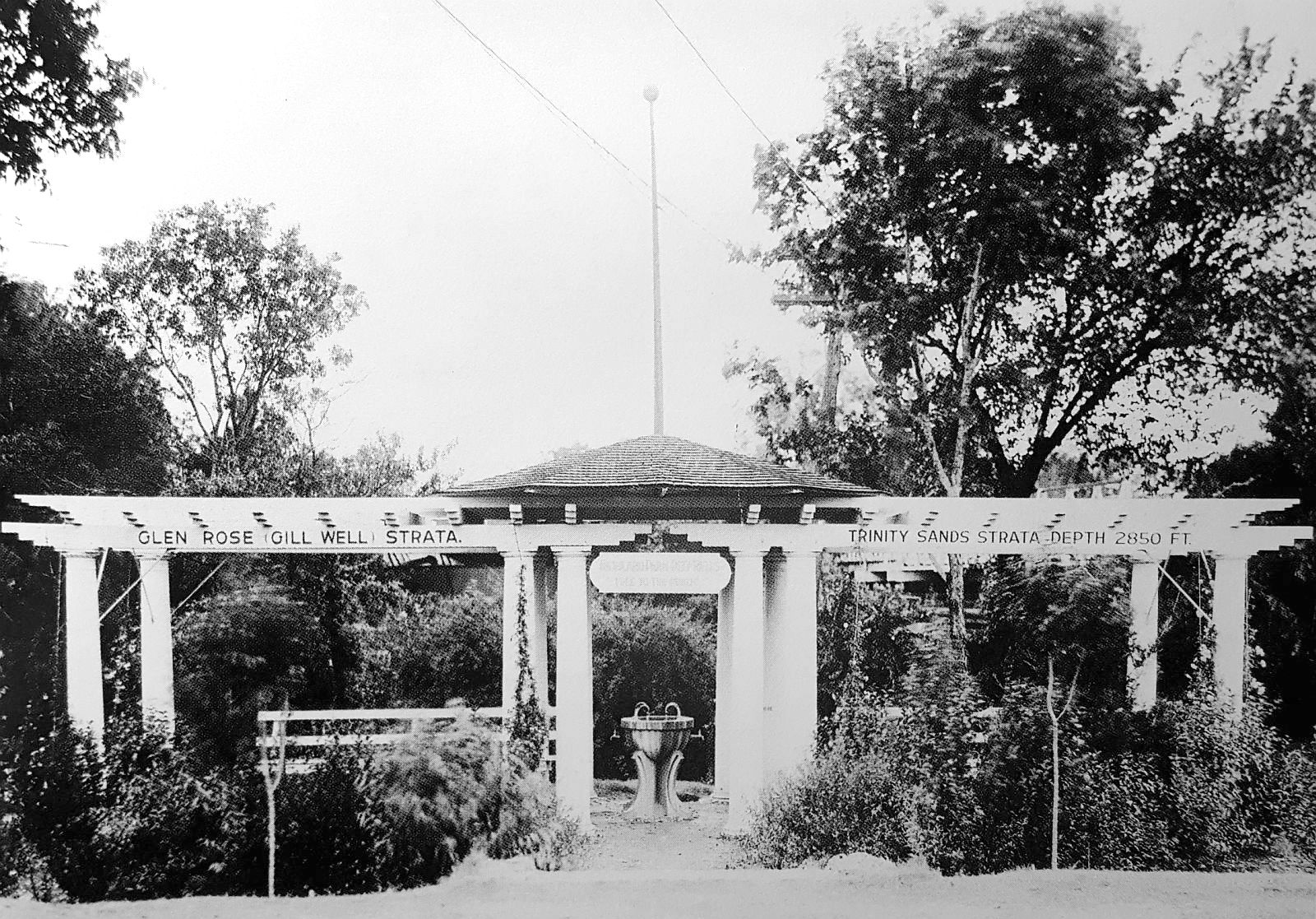
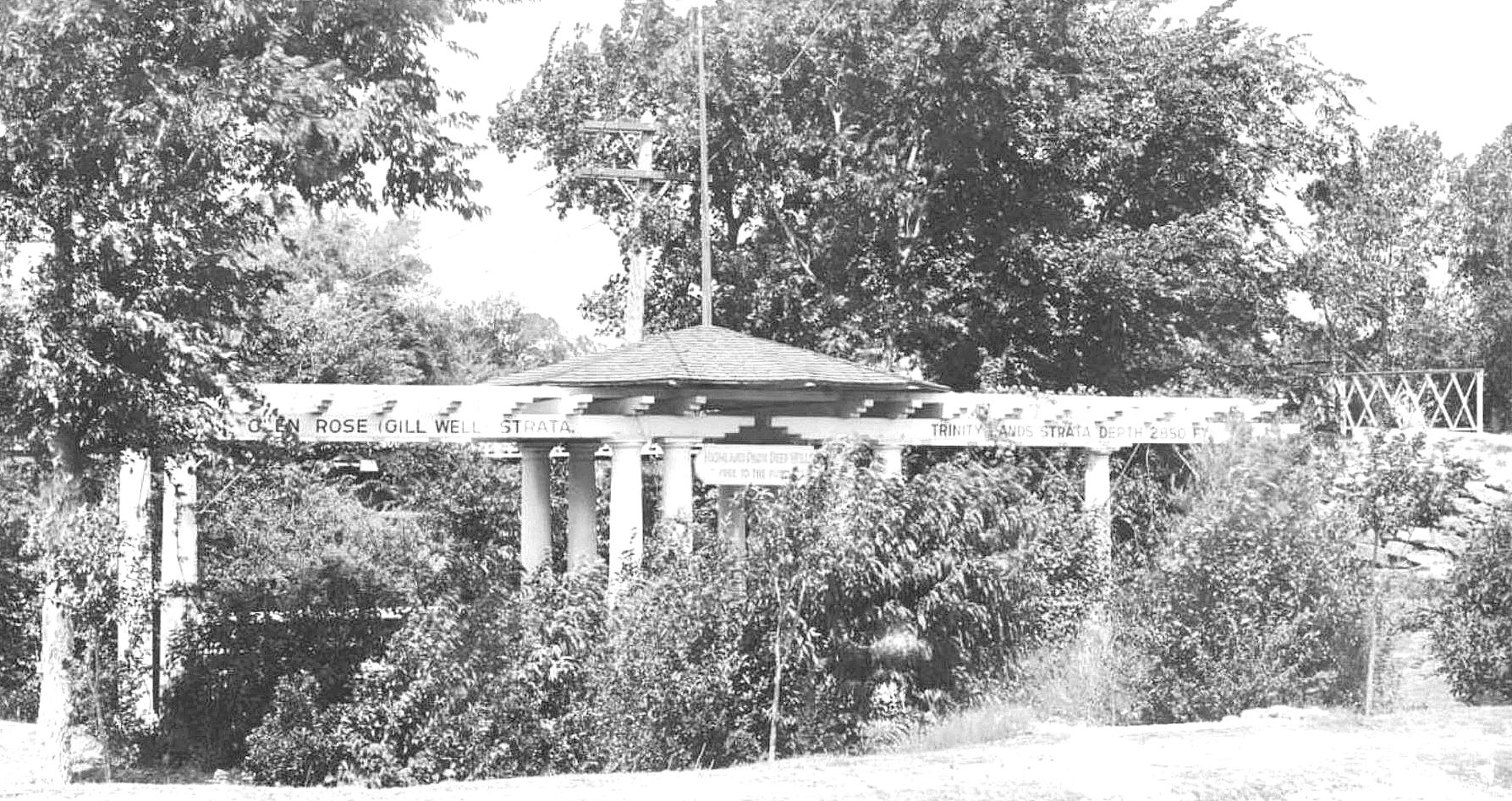
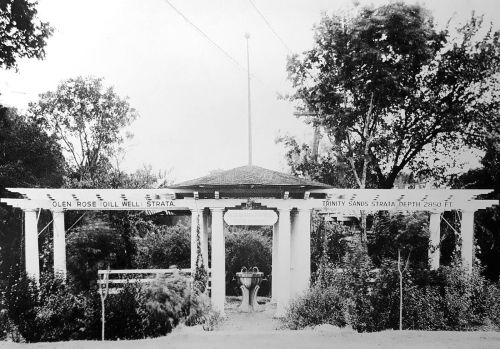
gill-well_highland-park_dallas-rediscoveredThe Highland Park pagoda… (click for larger image)

by Paula Bosse

I never heard of the Gill Well growing up — in fact, it wasn’t until around the time I started this blog — about three or four years ago — that I first became aware of it. Though largely forgotten today, the Gill Well used to be a pretty big deal in Dallas: for years, early-20th-century entrepreneurs tried valiantly and persistently to capitalize on the mineral-heavy artesian water from this well — the plan was to use this hot spring water in order to turn Dallas (or at least Oak Lawn) into, well, “the Hot Springs of Texas.” We came so close!

So — Gill Well? Who, what, when, where, why, and how?

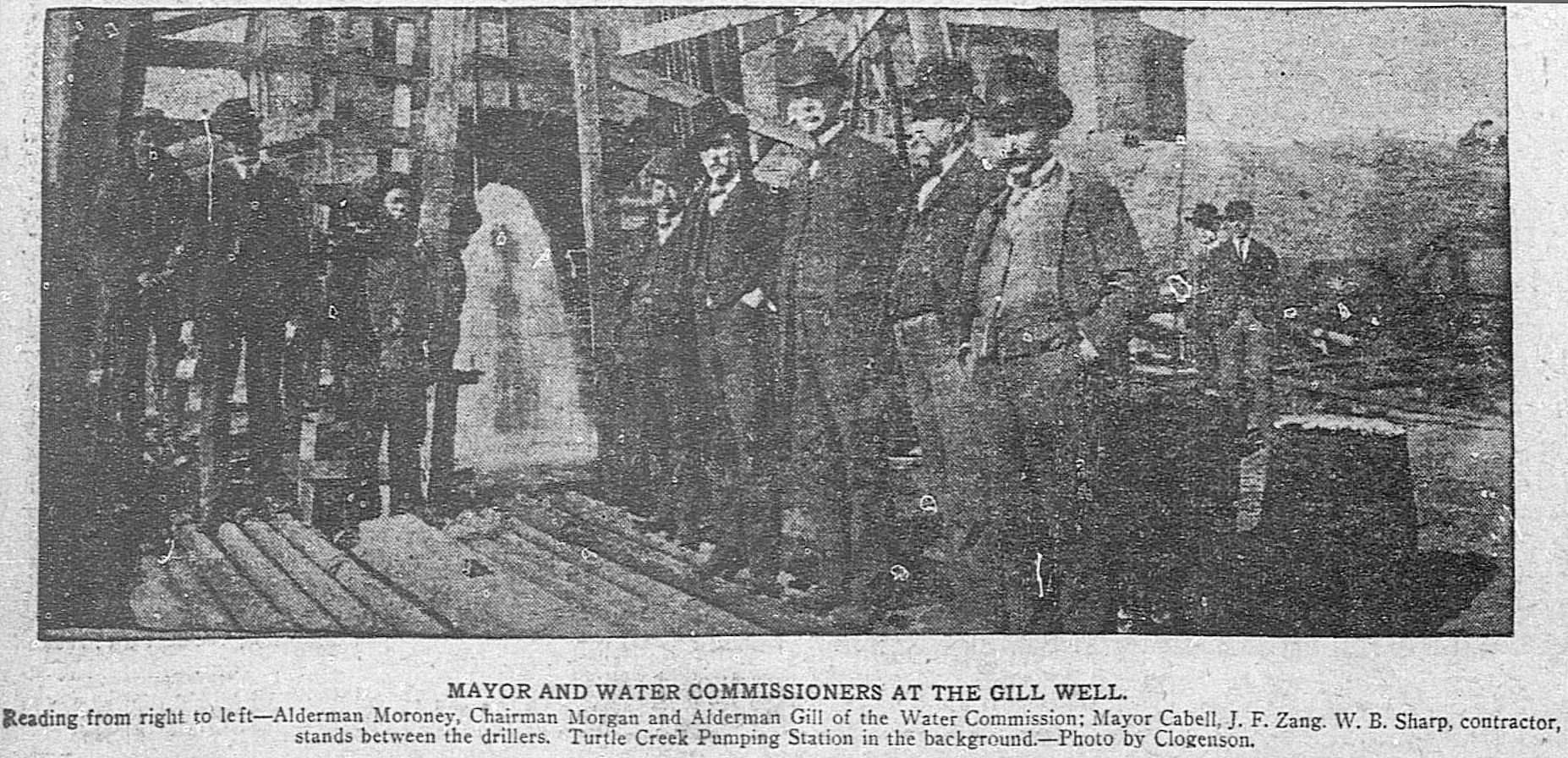
In 1902 city alderman and water commissioner C. A. Gill proposed sinking an artesian well near the Turtle Creek pumping station in order to determine if the flow of water in underground springs was sufficient to augment Dallas’ water supply (there was, at the time, another such test well being drilled in West Dallas). The City Council was on board and wanted this test well to be a deep well, “the deepest in the state — in order to settle once and for all the question as to whether or not there lies beneath the earth in this section a body of water, or ‘an underground sea,’ as some call it, of sufficient size to supply the needs of all the people” (Dallas Morning News, Aug. 6, 1902).

Fellow alderman Charles Morgan explained Gill’s proposition to the people of Dallas in a prepared statement to the Morning News:

By sinking artesian wells it is not intended to abandon the plans proposed to secure an adequate storage supply from surface drainage, but that the artesian wells shall augment the supply. We can not get too much water, but if we secure an ample artesian supply our storage basins will be reserve. There will be no conflict. We simply make success double sure. (Alderman Charles Morgan, DMN, Aug. 24, 1902)

The well was sunk in September or October of 1902 near the Turtle Creek pumphouse (which was adjacent to where a later station was built in 1913, the station which has been renovated and is now known as the Sammons Center for the Arts — more on the construction of that 1913 station and a photo of the older pumphouse can be found here); the drilling was slow-going and went on until at least 1904, reaching a depth of more than 2,500 feet. It’s a bit out of my area of expertise, but, basically, good, palatable artesian water from the Paluxy sands — water “free from mineral taint” — was found, but, deeper, a larger reservoir of highly mineralized “Gill water” — from the Glen Rose stratum — was found. That was good news and bad news.
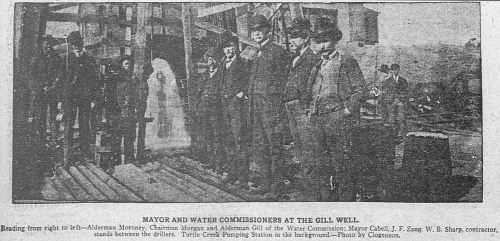
gill-well_dmn_120103Dallas Morning News, Dec. 1, 1903

The “bad news” came from the fact that a part of a pipe casing became lodged in the well, causing an obstruction in the flow of the “good” water from the Paluxy formation. Again, it’s a bit confusing, but the heavy flow of 99-degree-fahrenheit mineral water (which was corrosive to pipes) threatened to contaminate the “good” Paluxy water … as well as the water from the Woodbine formation from which most (all?) of the private wells in Dallas secured their water. (Read detailed geological reports on the well in a PDF containing contemporaneous newspaper reports here — particular notice should be paid to the comprehensive overview of the well and its problems which was prepared for the Dallas Water Commission by Engineer Jay E. Bacon and published in the city’s newspapers on May 10, 1905).

So what the City of Dallas ended up with as a result of this Gill Well was a highly dependable source of hot mineral water. But what to do with it? Monetize it!

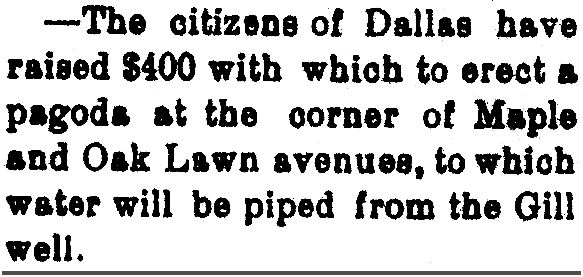
As part of the city’s water supply, the mineral water was made available to Dallas citizens free of charge: just show up at one of the handful of pagoda-covered dispensing stations with a jar, a bucket, or a flask, and fill up with as much of the rather unpleasant-smelling (and apparently quite powerful!) purgative as you could cart home with you. (For those who didn’t want to mingle with the hoi polloi, home delivery was available for a small fee.) One such “pagoda” was erected a short distance away, in front of the city hospital (Old Parkland) at Maple and Oak Lawn (the healthful water was also piped directly into the hospital for patient use).
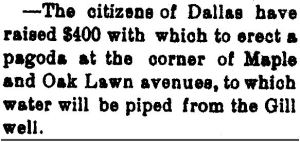
gill-well-parkland-pagoda_brenham-weekly-banner_040605
Brenham Weekly Banner, April 6, 1905

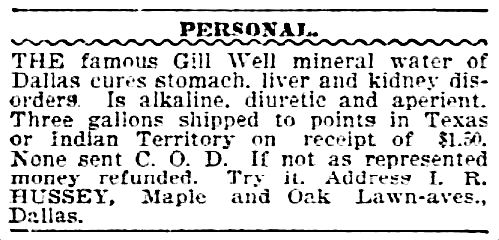
One man, however, began offering the water for sale beyond Dallas, hoping to cash in on the free-flowing tonic (see the mineral-content breakdown here), but the city clamped down on him pretty quickly as he was not an authorized agent. From his 1906 ad, one can see that the reputation of Gill water and its healing and restorative powers was already widely known.
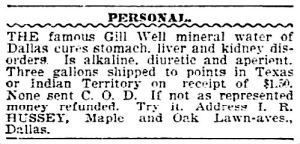
gill-well-water_dmn_080206
DMN, Aug. 2, 1906

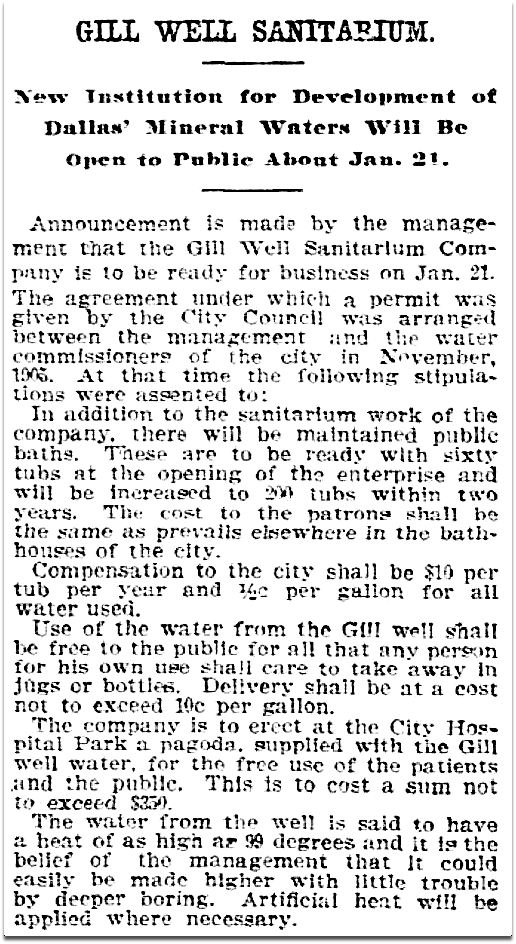
If the water was not to be sold, what was the City of Dallas going to do with it? It was decided to pipe the the water a short distance from the test well to nearby property adjacent to the land now occupied by Reverchon Park, then lease the access to the water to a capitalist who would build a sanitarium/spa where people could come to “take the waters” — to bathe in the naturally warm, mineral-heavy artesian water with mystical recuperative properties. The sanitarium would make money by charging its patrons for its services, and the city would collect a small annual income based on the number of the sanitarium’s bathing tubs and the amount of water used:

Compensation to the city shall be $10 per tub per year and one-half-cent per gallon for all water used. (DMN, Jan. 4, 1907)

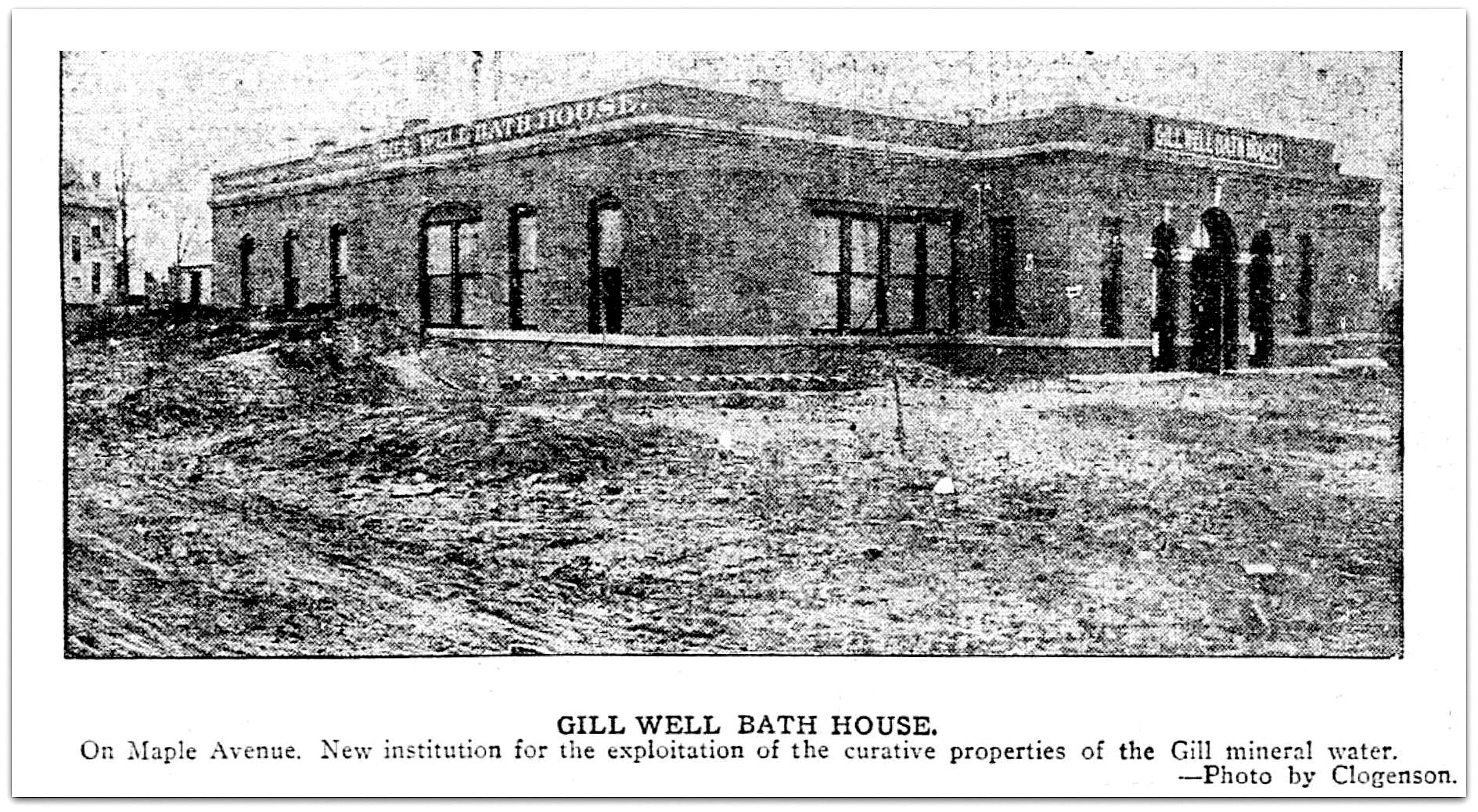
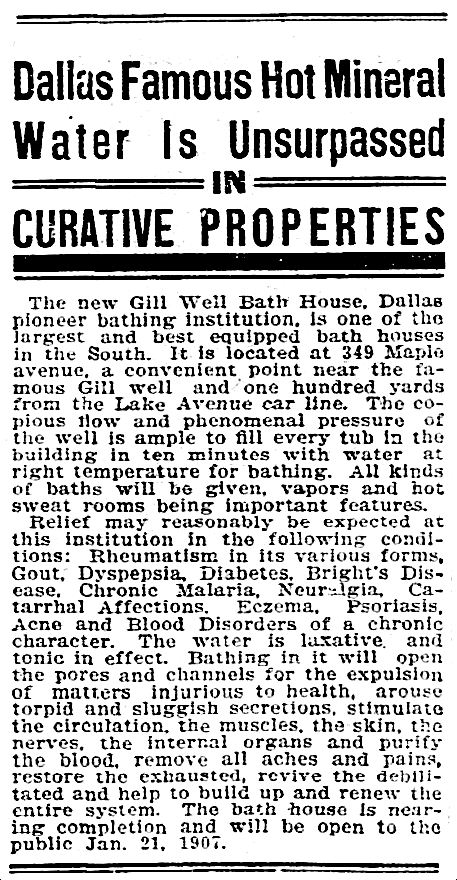
The Gill Well Sanitarium and bath house opened in January 1907, on Maple Avenue just north of the MKT Railroad (now the Katy Trail). (Most clippings and pictures in this post are larger when clicked.)
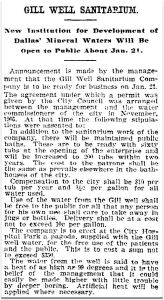
gill-well-sanitarium_dmn_010407DMN, Jan. 4, 1907

I searched and searched and searched for a picture of the building and, hallelujah, I finally found one, in the pages of The Dallas Morning News, taken by photographer Henry Clogenson. (This is the only picture I’ve been able to find of it, and, I have to say, it’s not at all what I expected the building to look like. It actually looks like something you’d see in a present-day strip mall.)
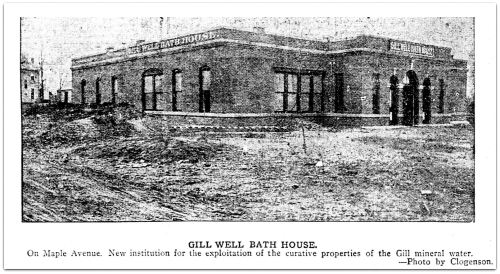
gill-well-sanitarium_dmn_011307_photoDMN, Jan. 13, 1907

gill-well-sanitarium_dmn_010607_ad
Advertisement, DMN, Jan. 6, 1907

Business at the new sanitarium was very good, and the public fountains/spigots at both the sanitarium property and a block or so away at the city hospital continued to be popular with residents who needed a boost or a “cure” and stopped by regularly for a sip or a pail of the free mineral water.
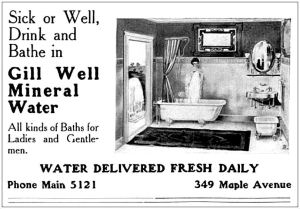
gill-well_ad_dallas-police-dept-bk_1910_portal1910 ad

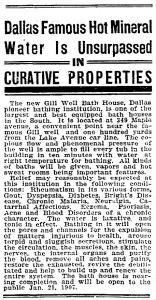
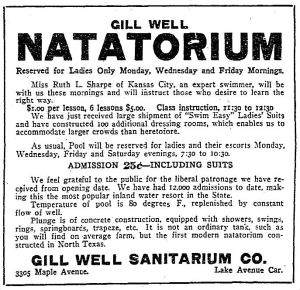
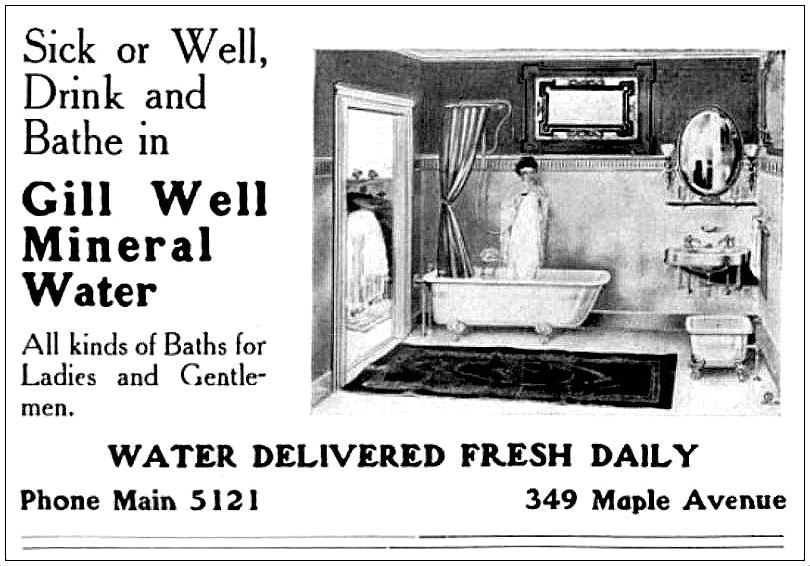
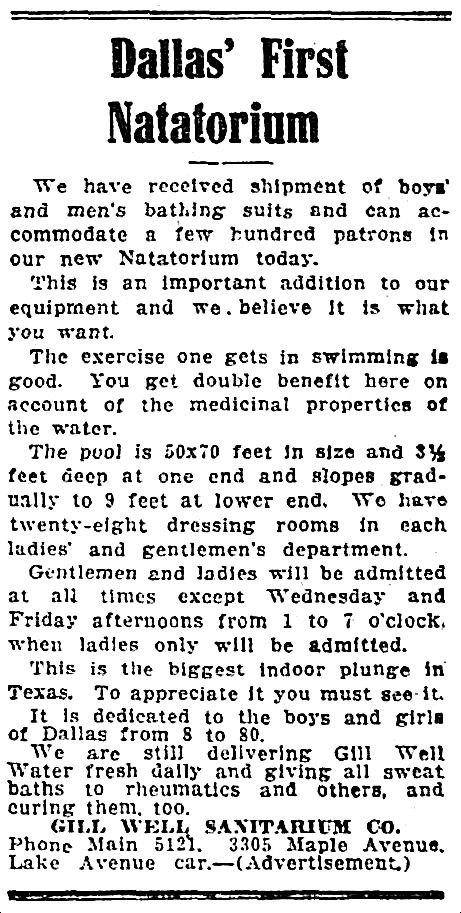
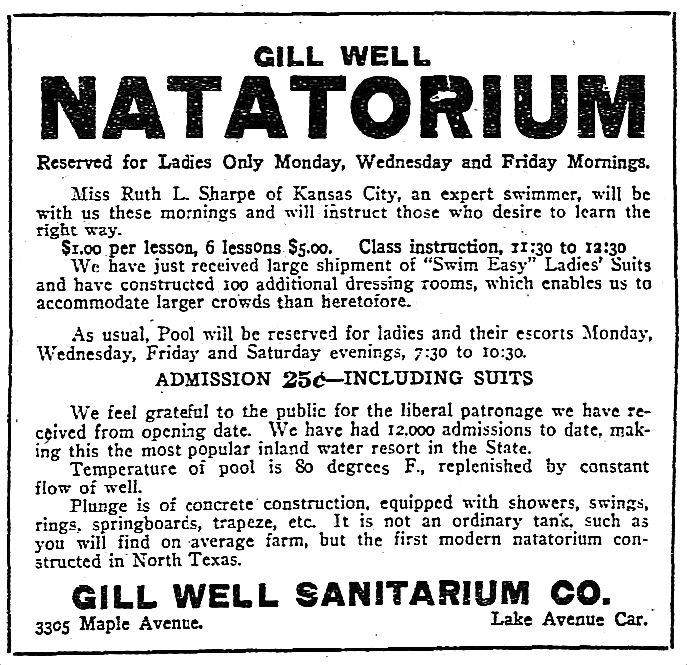
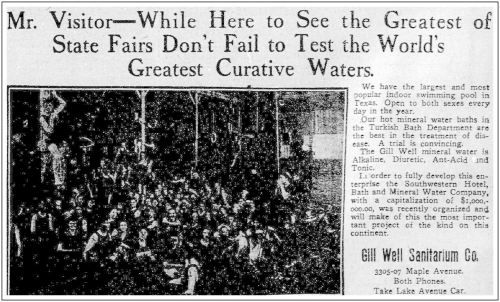
In 1912 a natatorium (an indoor swimming pool) was added and proved even more popular. It was open to men, women, and children; admittance and bathing suit rental was 25¢ (about $6.50 in today’s money). (Contrary to the headline of the ad below, it was not Dallas’ first natatorium — there was one near City Park on South Ervay by at least 1890 — but it was probably the first pool in the city filled with warm mineral water.)
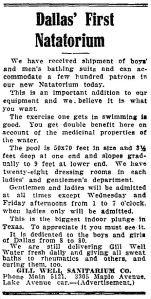
gill-well_natatorium_dmn_041412
DMN, April 14, 1912

gill-well-natatorium_dmn_070712
DMN, July 7, 1912

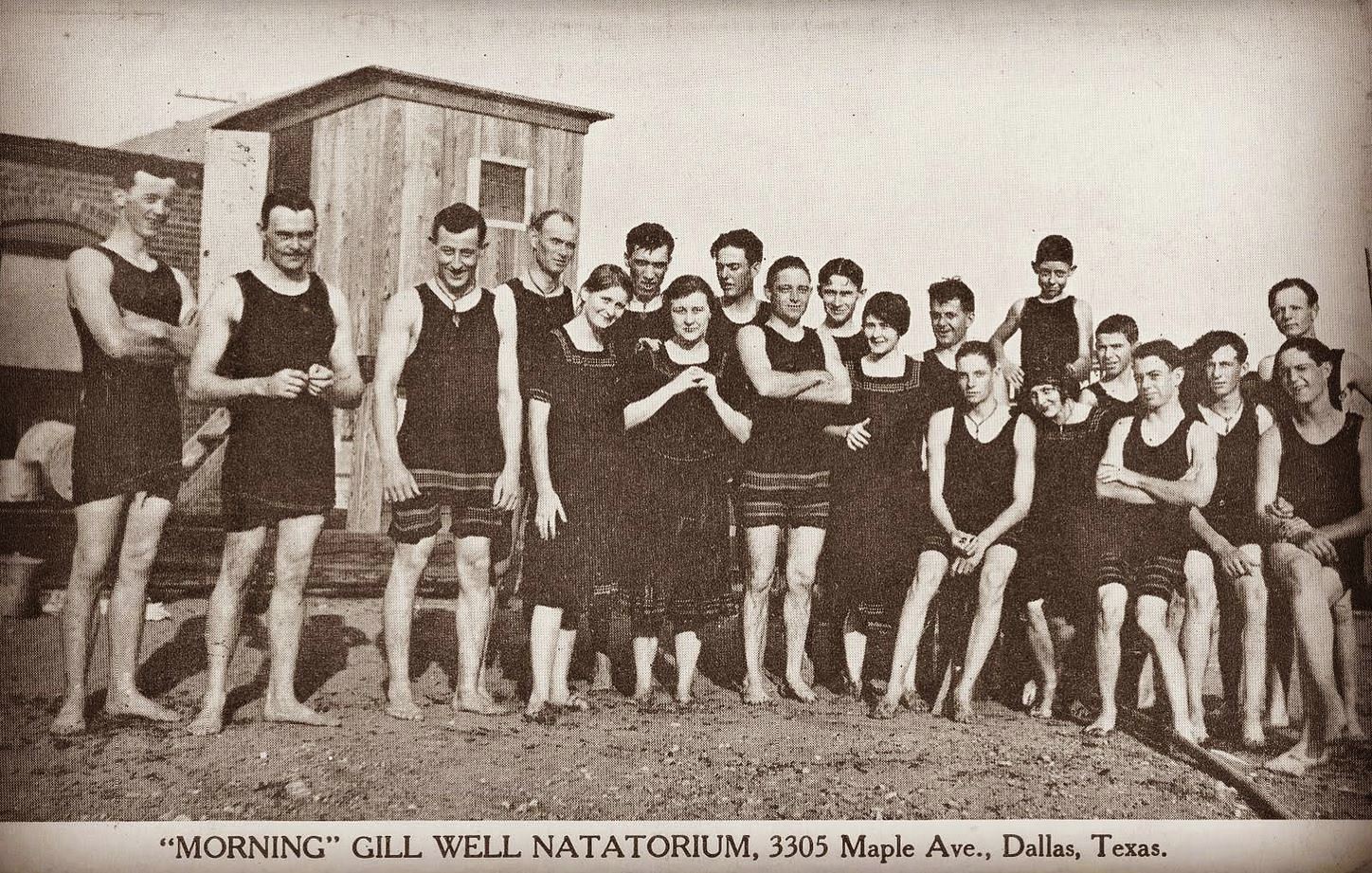
gill-well-natatorium_texas-swimming-and-diving-hall-of-fameCourtesy of the Texas Swimming and Diving Hall of Fame
gill-well-natatorium_dmn_100612DMN, Oct. 6, 1912

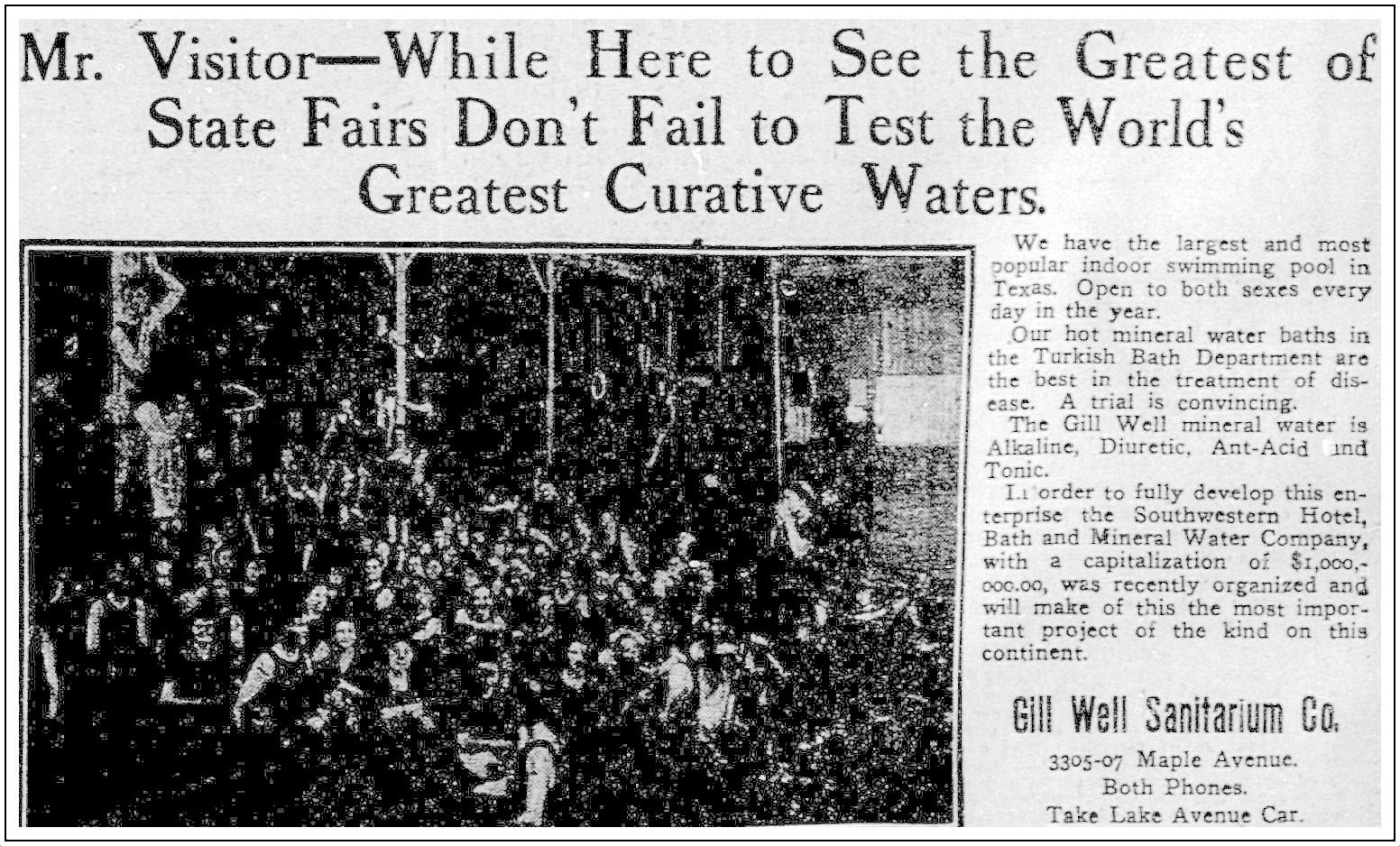
The last paragraph of the ad above mentions a plan to pipe Gill water to a hotel downtown — not only would the Gill Well Sanitarium Company’s services be offered in the heart of the city amidst lavish hotel surroundings (instead of in Oak Lawn, way on the edge of town), but the company would also be able to compete with Dallas’ other (non mineral-water) Turkish baths — then they’d really be rolling in the cash. As far as I can tell, nothing came of the plan, but the men behind it were pretty gung ho, as can be seen in this rather aggressive advertorial from the same year:

ad-sanitorium-baths_blue-bk_1912The Standard Blue Book of Texas, 1912

All seemed to be going well with the sanitarium until the city and the Missouri, Kansas & Texas Railroad (the MKT, or the Katy) decided to remove the railroad’s grade crossings through the Oak Lawn area (all work which was to be paid for by the railroad). Double tracks were to be added and crossings were either raised or the streets were lowered. The crossings affected were Lemmon, Cedar Springs and Fairmount (where street levels were cut down to go under the tracks) and Hall, Blackburn, and Bowen (where tracks would be elevated). Also affected: Maple Avenue. (Read more about the MKT plan in the Dallas Morning News article from Aug. 23, 1918 — “Dallas Is Eliminating Four Grade Crossings” — here.)

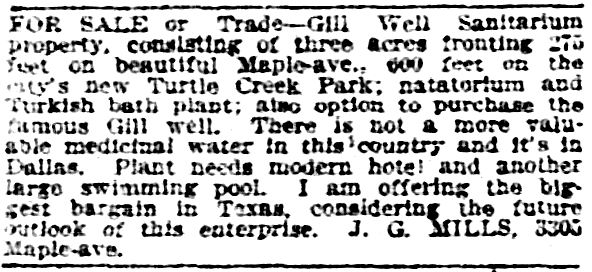
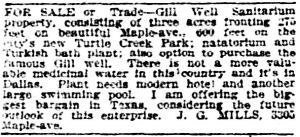
The Maple Avenue-Katy Railroad crossing had long been a dangerous area for wagons, buggies, and, later, automobiles. Not only was it at the top of a very steep hill (see what that general area north of that crossing looked like around 1900 here), but it also had two sharp curves. The decision was made to straighten Maple Avenue between the approach to the railroad crossing and Oak Lawn Avenue at the same time Maple was being lowered and the Katy track was being raised. (Read the announcement of this plan — “Straighten Maple Avenue Is Plan” — from the Nov. 29, 1917 edition of The Dallas Morning News, here.) The only problem — as far as the Gill Well Sanitarium was concerned — was that the straightened road would go directly through the sanitarium property. I don’t know if the long-time owner of the sanitarium, J. G. Mills, knew about this approaching dire situation, but in 1915 — just a few short months after boasting in advertisements that more than 50,000 patients had availed themselves of the sanitarium’s amenities in 1914 — he placed an ad seeking a buyer of the business (although, to be fair, he’d been trying to sell the company for years):
gill-well_dmn_080815_for-saleDMN, Aug. 8, 1915

(In the ad he states that the buyer had an option to purchase the actual well, but the city had never expressed any desire to sell either the well or the full rights to the water.)

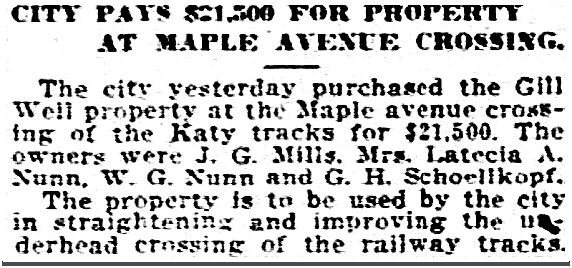
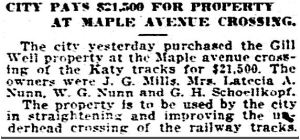
The Gill Well Sanitarium Co. appears to have been dissolved in 1916, but there was still hope that a sanitarium/hot springs resort could continue on the property. In 1917, interested parties petitioned the city to change its plans to straighten Maple, arguing that it would destroy any ability to do business on the site, but the city went forward with its plans, and in November 1919, the City of Dallas purchased the land from the group of partners for $21,500 (about $305,000 in today’s money).
gill-well_dmn_111319
DMN, Nov. 13, 1919

The monetization of water from Dallas’ fabled Gill Well ended after ten years.

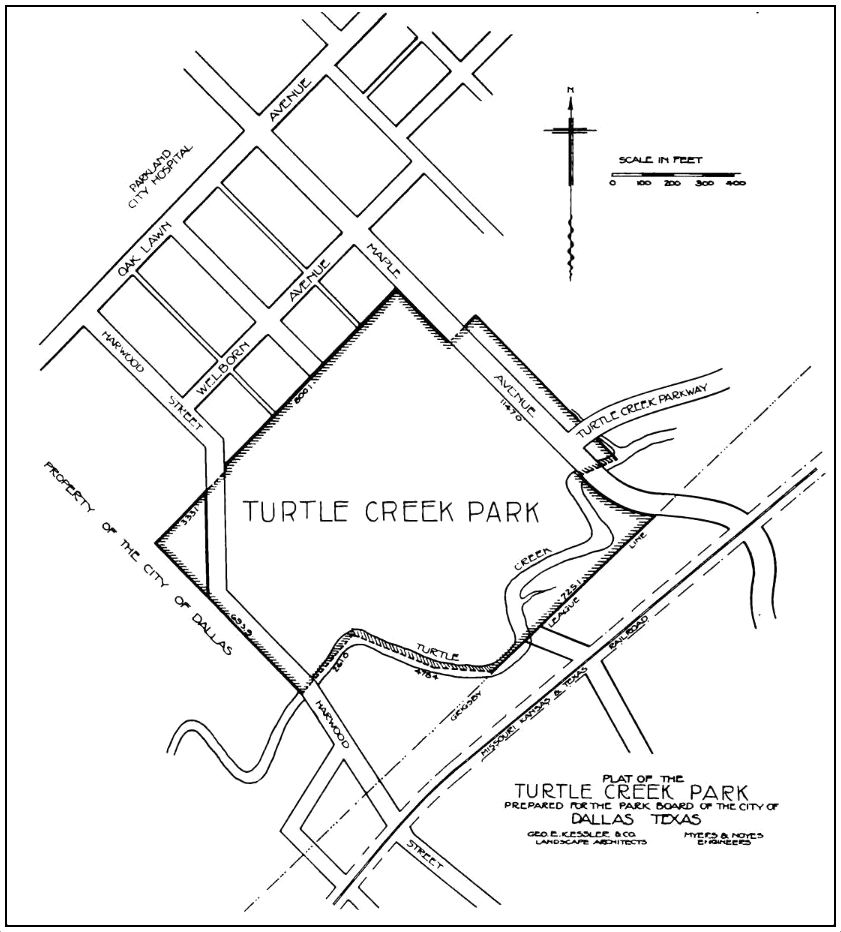
I had never heard of Maple Avenue being straightened. Below is a map of Turtle Creek Park (which became Reverchon Park in 1915), showing Maple’s route, pre-straightening — the main buildings of the sanitarium were in the bulge just west of Maple, between the Katy tracks and the boundary of the park.

reverchon-park_turtle-creek-park_map_1914-15
1915 map, via Portal to Texas History

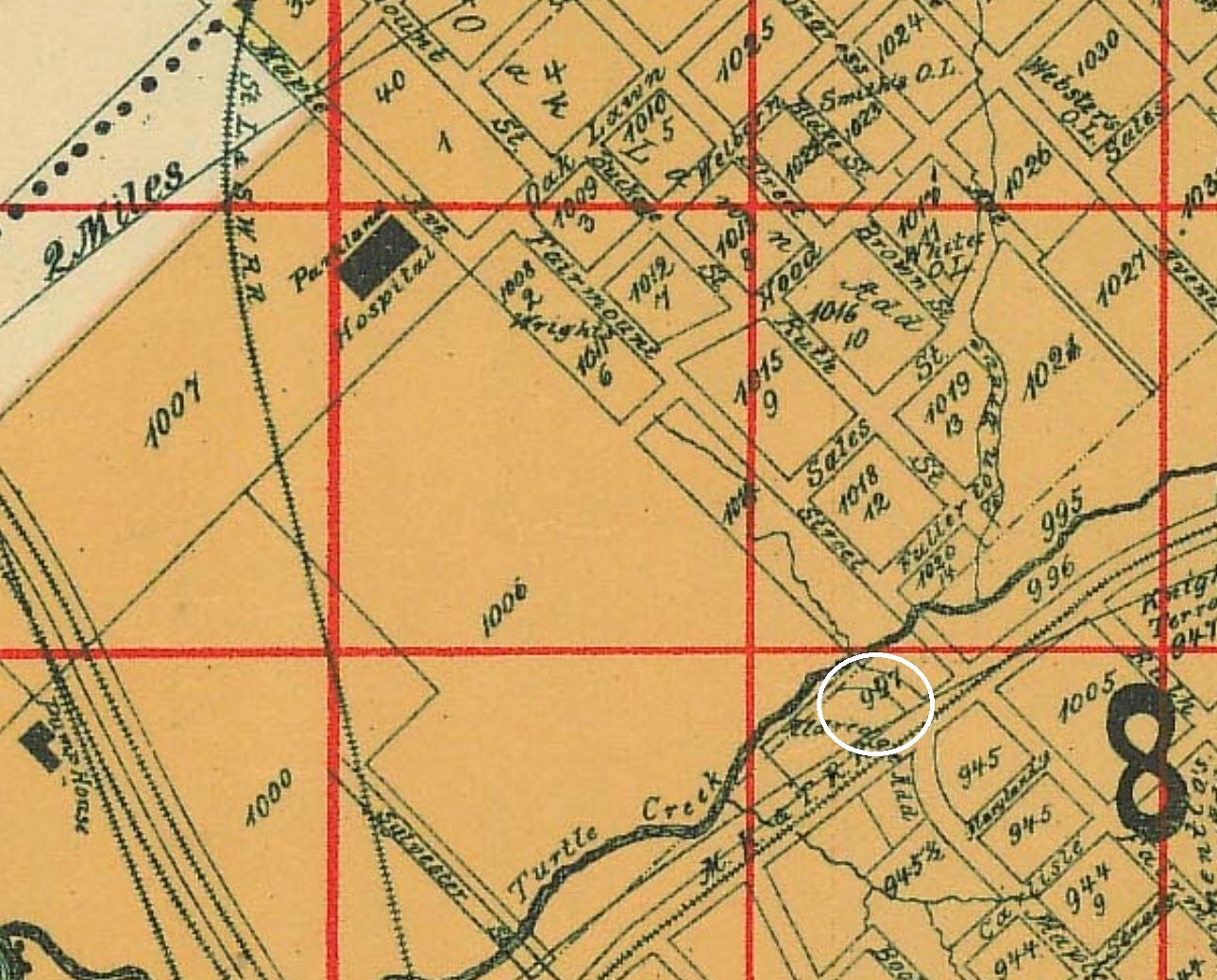
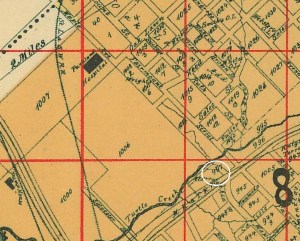
Another view can be seen in a detail from a (fantastic) 1905 map, with the approximate location of the Gill Well Sanitarium circled in white:
maple-ave_1905-map_portal_det_gill-wellWorley’s Map of Greater Dallas, 1905

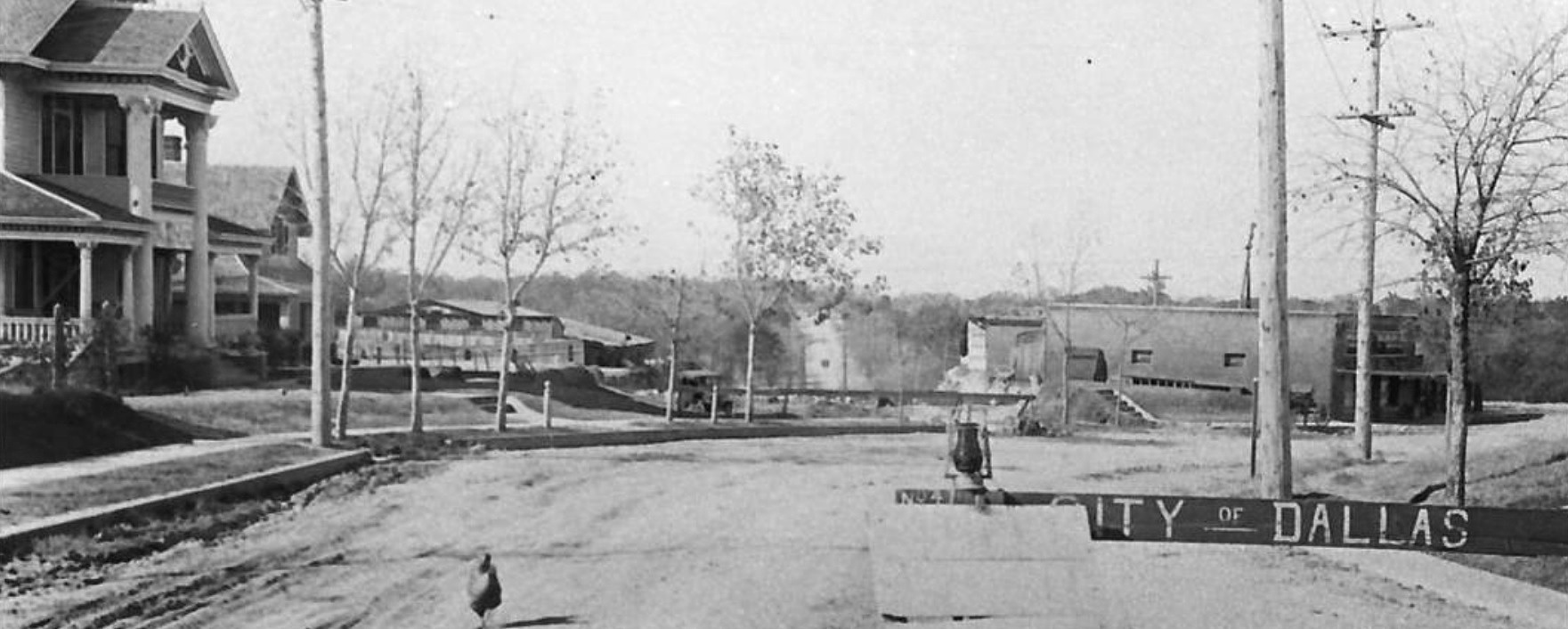
A year or more ago I saw the photo below on the Big D History Facebook page but had no idea at the time what I was looking at: it apparently shows Maple Avenue in 1918, taken from about Wolf Street (probably more like Kittrell Street), which was then near the city limits, looking north. You can see the curve Maple makes and the steep hill — that large building at the right must be the sanitarium and/or the later-built natatorium.

maple-ave_road-construction_from-wolf_1918_big-d-history-FB

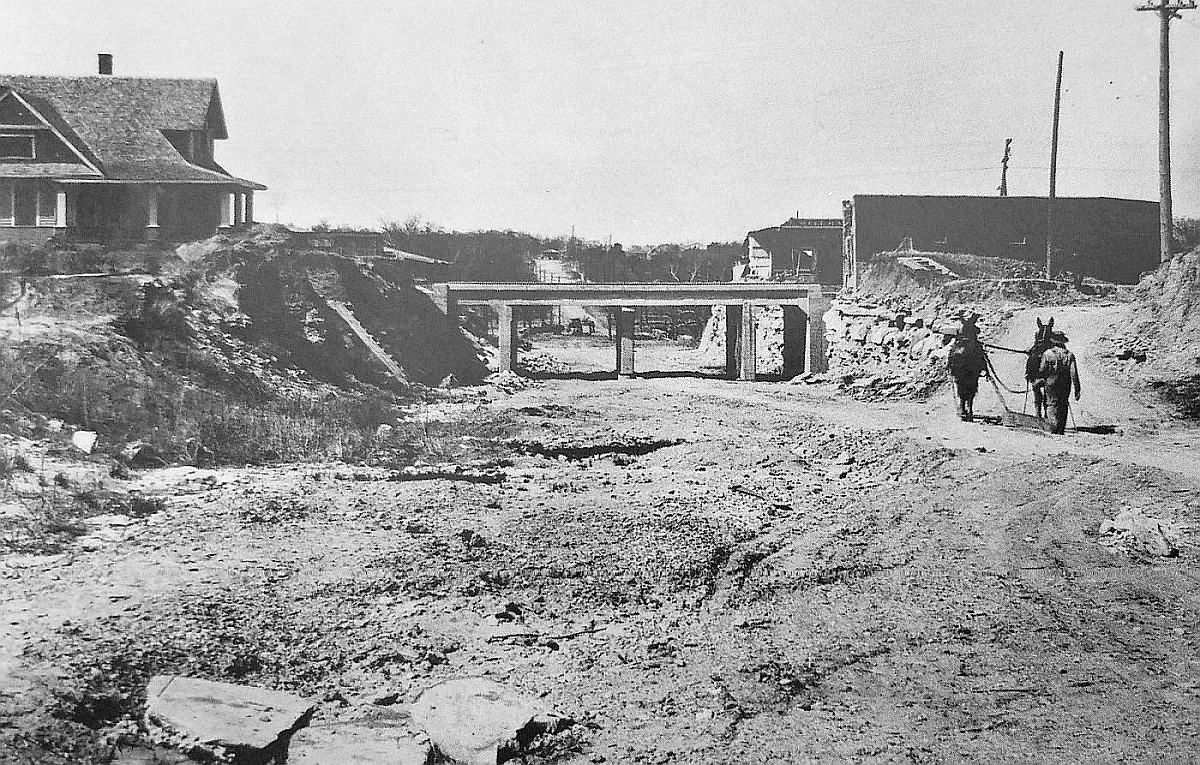
The photo below shows the road-straightening in progress, with the MKT bridge now spanning Maple Avenue.

maple-MKT_ca-1920_DPLDallas Public Library

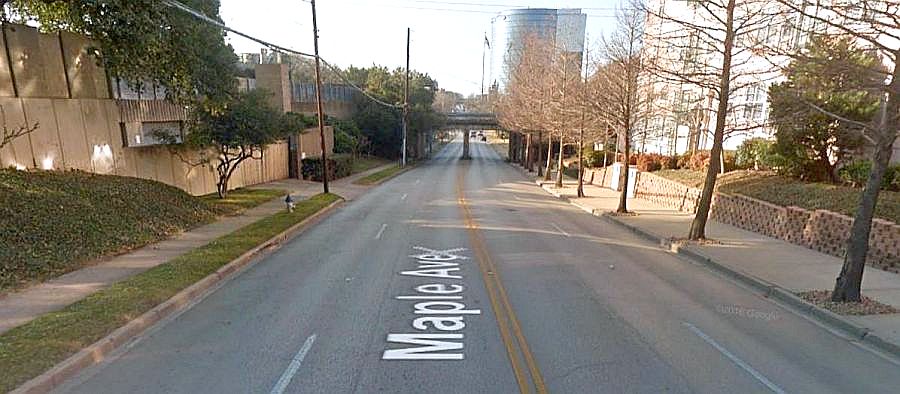
And here it is almost a hundred years later:
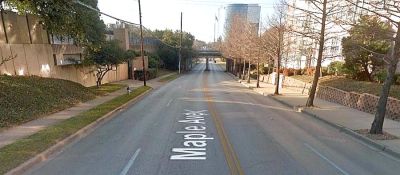
maple-MKT_google-street-view_2014Google Street View, 2014

So the Gill Well Sanitarium and Bath House was closed, the land was purchased by the City of Dallas, Maple Avenue was straightened, and, in the summer of 1923, the remaining abandoned buildings on the property were demolished. But that didn’t spell the end of the famous Gill Well water.

Highland Park’s “Gill Water” Pagoda

Around 1924, “Gill water” tapped from the Glen Rose Strata was made available to Highland Park, via a small “watering house” and drinking fountain on Lakeside Drive (at Lexington), a location which proved to be quite popular. The mineral water was a byproduct of Highland Park’s “deep well” which was drilled in 1924 to tap the pure artesian springs of the Trinity Sands Strata in order to augment the water supply of the City of Highland Park: in order to get down to the Trinity Sands, one had to pass through the Glen Rose Strata — I guess the HP powers-that-be figured they might as well tap the hot mineral water and offer their citizens access to it by building a small fountain and dispensing station. In 1928, the little “watering station” structure was spiffed up with the addition of a tile roof, attractive walkways, and drainage. The photo seen at the top of this post has frequently been misidentified as the Reverchon Park well, but it is actually the Highland Park “pagoda.” Here it is again:

gill-well_highland-park_dallas-rediscoveredfrom the book Dallas Rediscovered

It can be identified as the Highland Park location because of the photo below from the George W. Cook collection of historic Dallas photos from SMU’s DeGolyer Library — it shows what appears to be a later view of the same pagoda, now slightly overgrown. The steps to the bridge across Exall Lake and the bridge’s railing can be seen at the far right (the bridge led to the Highland Park pumping station, which can be seen on a pre-watering-station 1921 Sanborn map here).

gill-well_highland-park_cook-collection_degolyer_smuGeorge W. Cook Collection, SMU

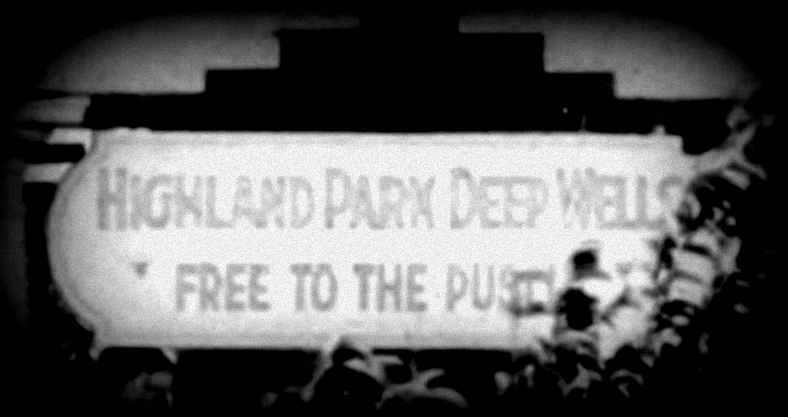
And, well, there’s the sign that reads “Highland Park Deep Wells — Free to the Public” — here’s a close-up:
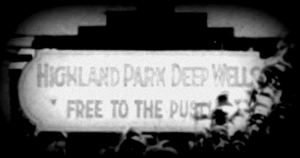
gill-well_highland-park_cook-collection_degolyer_smu_det

(The same sign from the top photo can be seen in a high-contrast close-up here.)

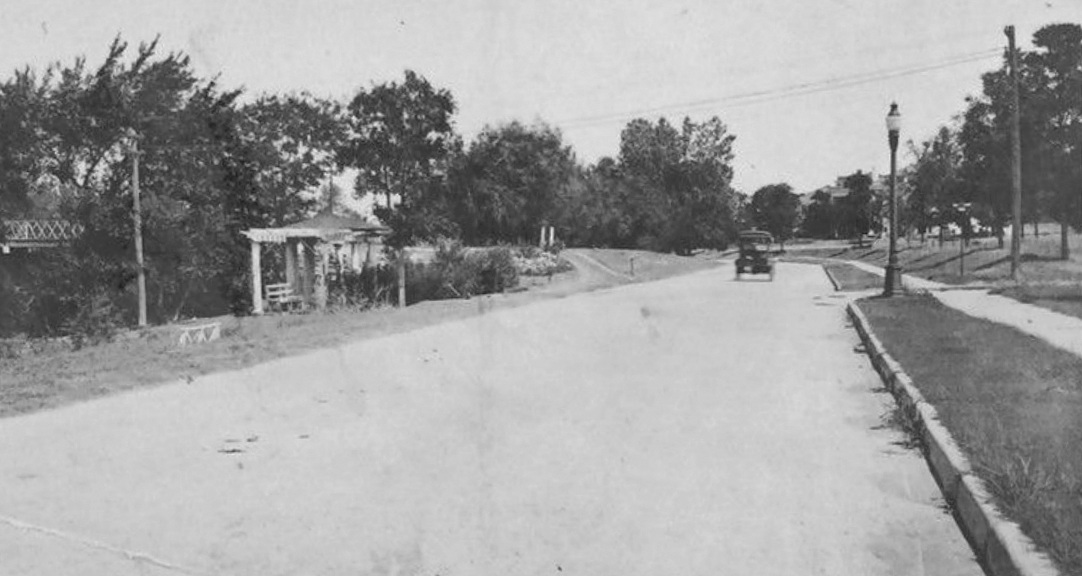
After seeing this photo, I realized that a photo I featured in a post from last year showed the pagoda in what looks like its earliest days, at Lakeside Drive and Lexington Avenue (the bridge can be seen at the left):
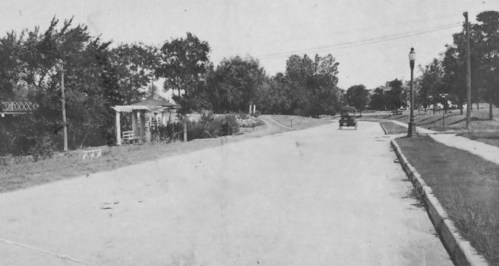
hp_lakeside-drive_rppc_ebayeBay

I was unable to find out when this HP pagoda bit the dust, but the location as seen today on Google Street View is here. (It’s pretty strange to think that a steady stream of people from all over Dallas drove to the Park Cities to fill up jugs with free mineral water; my guess is that the wealthy Lakeside Avenue residents weren’t completely enamored of the situation.)

Reverchon Park Pavilion

Even though the Gill Well Sanitarium Co. had dissolved in 1916, and the last traces of its buildings had been torn down in 1923, the famed well’s water didn’t disappear from the immediate Oak Lawn area. In February of 1925, the City of Dallas opened a $5,000 pavilion, “making up for twenty years indifference to what is said to be the finest medicinal water in the South” (DMN, Feb. 11, 1925). This pet project of Mayor Louis Blaylock seems to have continued to be a place for Dallasites to get their mineral water at least through the 1950s, according to online reminiscences. This 1925 “pavilion” is described thusly in the WPA Dallas Guide and History:

The water, which resembles in many respects the mineral waters of European resorts and is used in several county and city institutions, is carried to the surface in pipes and can be drawn from taps arranged around a semicircle of masonry near the entrance to the park. Here cars stop at all hours of the day and people alight to drink the water or to fill bottles and pails.

I have not been able to find a photograph of that post-sanitarium dispensing site. A 1956-ish aerial photo of Reverchon Park can be found here. I don’t see a “semicircle of masonry” in an area I assume would be located near Maple Avenue and the Katy tracks.

According to a comment on the DHS Archives Phorum discussion group, there was also a public spigot nearer to the original well, along Oak Lawn Avenue, across the street from Dal-Hi/P. C. Cobb stadium.

There is surprisingly little accurate information on the Gill Well online. I hope this overview helps correct some of the misinformation out there. If anyone knows of additional photos of the sanitarium and/or natatorium, please send them my way and I’ll add them to this post. If there are any photos of the Reverchon Park pavilion, I’d love to see those as well. There is a 1926 photo of the Highland Park location which shows two women and two girls filling receptacles — I am unable to post that here, but check the Dallas Morning News archives for the short article “Free Mineral Well Waters Popular” (DMN, May 29, 1926).

**

Incidentally, even though the wells have been capped, that hot mineral water is still there underground and could be tapped at any time. Dallas could still be the “Hot Springs of Texas”!

***

Sources & Notes

Top photo is from p. 199 of Dallas Rediscovered by William L. McDonald. The photo is incorrectly captioned as showing the location of the “Gill Well Bath House and Natatorium, c. 1904” — it is actually the Highland Park dispensing station at Lakeside Drive and Lexington Avenue in about 1928.

“Morning” postcard featuring healthy bathing patrons of the natatorium is from the collection of the Texas Swimming and Diving Hall of Fame and is used with permission.

Photo showing Maple Avenue, pre-straightening, is from the Big D History Facebook page; original source of photo is unknown.

Second photo of the Highland Park Gill Well location (with the vegetation looking a bit more overgrown) is from a postcard captioned “Drinking Bogoda [sic], deep mineral well in Highland Park, Dallas, Texas” — it is from the George W. Cook Dallas/Texas Image Collection, DeGolyer Library, Central University Libraries, Southern Methodist University; more information on this image is here.

Photo showing Lakeside Drive with the pagoda at the left is a real photo postcard captioned “Lake Side Drive in Highland Park” — it was offered last year on eBay.

Sources of all other clippings, ads, and maps as noted.

*

Copyright © 2017 Paula Bosse. All Rights Reserved.

The Mosquito Bar

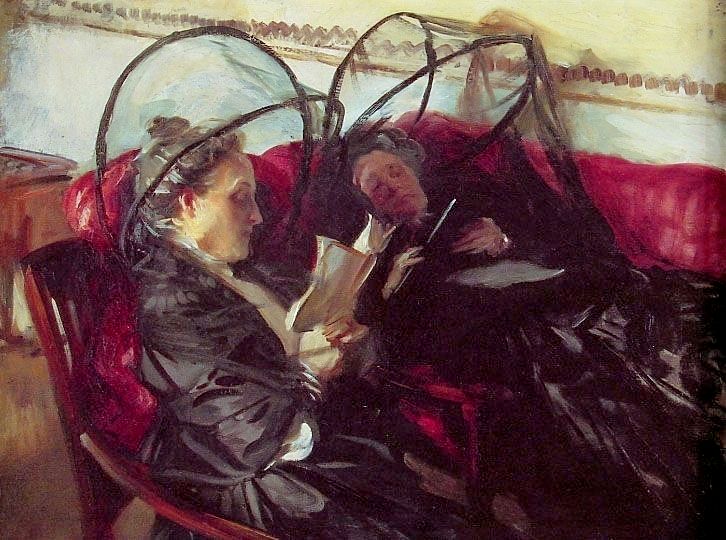
sargent_mosquito-nets_1908Relax without fear of being bitten by mosquitoes…

by Paula Bosse

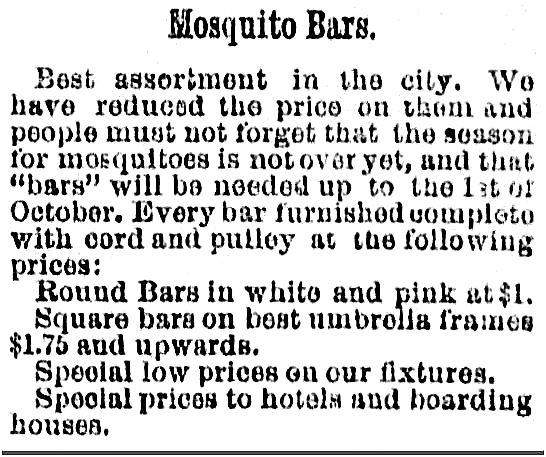
The “mosquito bar” — the human’s defense against blood-thirsty mosquitoes (and other annoying pests) — had its heyday in the US in the second half of the 19th century and the first couple of decades of the 20th century, before screens for windows and doors were commonplace in American homes. They were particularly necessary in the hot and sweaty Southern US states which were routinely plagued with mosquitoes. A typical mosquito bar ad looked like this one from Dallas merchants Sanger Bros. (click ads and clippings to see larger images):

mosquito-bar_dallas-herald_080285_sanger-bros-ad-det
Dallas Herald, Aug. 2, 1885

(According to the Inflation Calculator, $1.00 in 1885 money would be worth about $27.00 in today’s money, adjusted for inflation.)

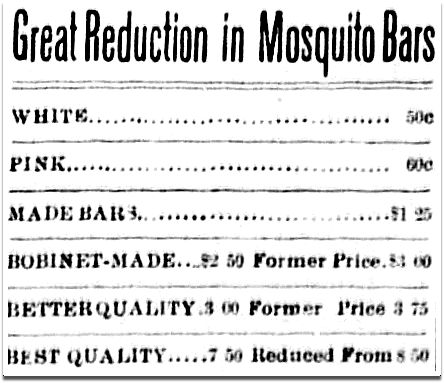
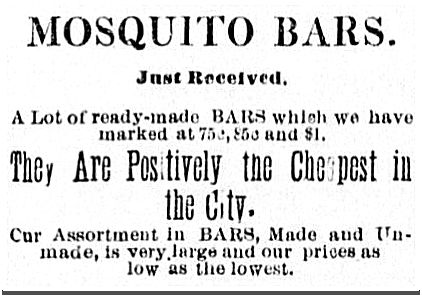
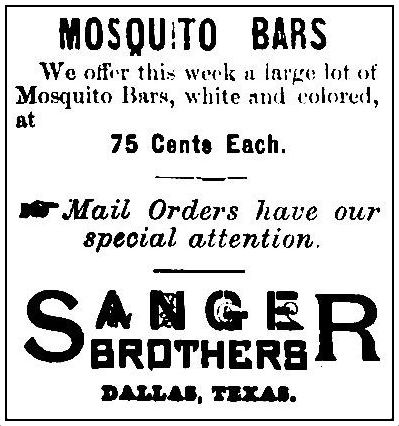
The first Dallas ad I found for mosquito bars was from 1877 — like the clipping above, it is also from a Sanger Bros. ad (in fact, Sanger’s seemed to be mosquito-bar-central for 19th-century Dallas).

mosquito-bar_sanger-bros-ad-det_dallas-herald_073177
Dallas Herald, July 31, 1877

mosquito-bar_sanger-bros-ad-det_dallas-herald_051478
Dallas Herald, May 14, 1878

mosquito-bar_screens_dallas-herald_052482_sanger-bros-ad-det
Dallas Herald, May 24, 1882

mosquito-bars_southern-mercury_070390Southern Mercury, July 3, 1890

screens_dallas-screen-co_1894
1894

Mosquito bars were usually draped over beds, canopy-style, but the painting above (“Mosquito Nets” by John Singer Sargent, 1908) shows “personal” net-covered armatures, perfect for genteel ladies to relax inside of and read (while trying to keep cool despite being weighed down by what must have been uncomfortably heavy clothing).

The mesh netting or fine muslin used to drape beds (and cover windows and doors) was generally white or pink, sometimes green. Once inside the canopied beds, the netting was tucked under the mattress in order to seal all potential entry points in the mesh-walled fortress and allow the thankful occupants inside to sleep unmolested by mosquitoes (or other biting and stinging insects).

mosquito-netting

These bars became fairly standard in hotels and in many homes of the time, but if one could not afford the luxury of sleeping inside one of these things, the sleeper would often resort to rubbing him- or herself with kerosene if they wished to avoid being bitten throughout the night.

mosquito-bar_dmn_100110_kerosene
Dallas Morning News, Oct. 1, 1910

As much of a godsend as the bars were, they had their problems. The fine material was easily torn, and sometimes the mesh was so tightly knit that ventilation (and breathing!) was not optimal. Also, it was not unusual for them to catch fire — there are numerous newspaper reports of the bars being ignited by candles or gas-burning lamps or by careless or sleepy smokers smoking inside the canopy.

mosquito-bar_dallas-herald_052481_fire
Dallas Herald, May 24, 1881

It was apparently a common precaution against midnight thievery for men who stayed in hotels to keep their money in the pockets of their pants and then fold the pants and place them beneath their pillows. The second line of defense was the mosquito netting tucked resolutely under the mattress of their canopied beds. The feeling was that a burglar would have to be pretty stealthy to breech a man’s mosquito bar and steal his pants from under his pillow without waking him. But never underestimate the Big City burglar (click article to see a larger image):

mosquito-bar_dmn_091088_theft
DMN, Sept. 10, 1888

After doors and windows began to be routinely covered with wire screens, the use of mosquito bars in homes and hotels waned, but their use continued in military encampments and hospitals, in recreational camping, and in swampy or tropical areas where the transmission of diseases like malaria and Dengue fever (transmitted by mosquitoes) posed health risks. Wire screens must have been a godsend.

ad-acme-screen-co_terrill-yrbk_1924Acme Screen Co., 1924

And if you don’t think that the prospect of a night without a mosquito bar (especially in the bayous of Louisiana…) wouldn’t inflame usually calmer heads, here’s a news story from 1910 about a man who shot a co-worker three times at close range because of a heated argument over which of them owned a mosquito bar. And this was in February! Lordy. Talk about your crime of passion. The moral of this story: do not mess with another man’s mosquito bar.

mosquito-bar_town-talk_alexandria-LA_022210_deadly-dispute
Town Talk (Alexandria, LA), Feb. 22, 1910

*

mosquito-bar_dmn_052812_couplet
DMN, May 28, 1912

***

Sources & Notes

The top painting by John Singer Sargent — titled “Mosquito Nets” (1908) — is from the Detroit Institute of Arts; more on the painting can be found here.

Photo of draped bed is from the “Mosquito Net” Wikipedia page, here.

Other clippings and ads as noted. Dallas Herald and Southern Mercury newspaper scans are part of the huge database of scanned historical Texas newspapers found at the Portal to Texas History (to see newspapers, click this link and filter by “Counties,” “Decades,” “Years,” etc. on the left side of the page, or search by keywords at the top).

This post was adapted from a post I wrote for my other (non-Dallas) blog, High Shrink — that post, “The Mosquito Bar,” can be found here (it includes some great additional photographs and illustrations).

*

Copyright © 2017 Paula Bosse. All Rights Reserved.
How To Access Historical Dallas City Directories Online

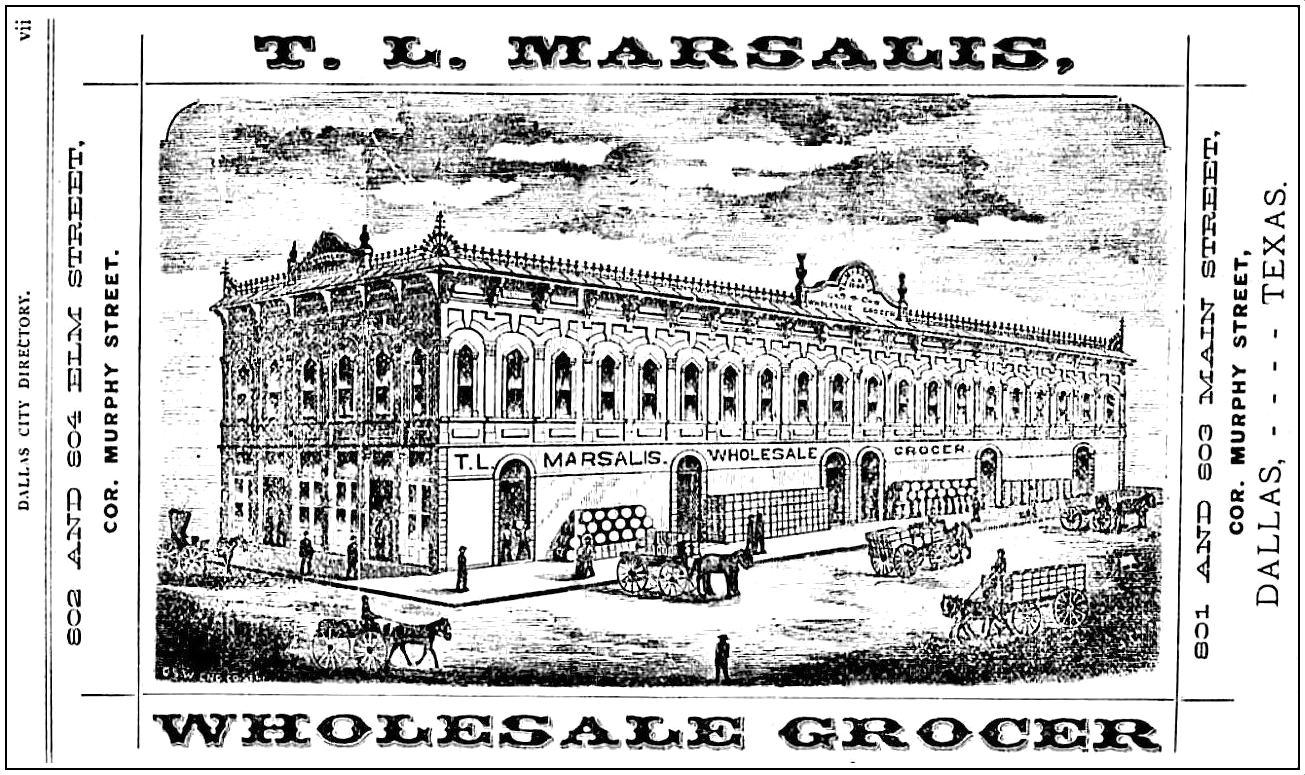
ad-marsalis-grocer_1883-directoryAd from the 1883 Dallas directory… (click for larger image)

by Paula Bosse

Two of the most important resources I use in delving into Dallas history are newspaper archives and city directories. A couple of years ago I wrote about how to access the indispensable online historical archive of The Dallas Morning News, beginning in 1885 (that post is here), but I haven’t written about how to use the equally important database(s) containing scans of Dallas city directories, beginning with the 1875 directory. 

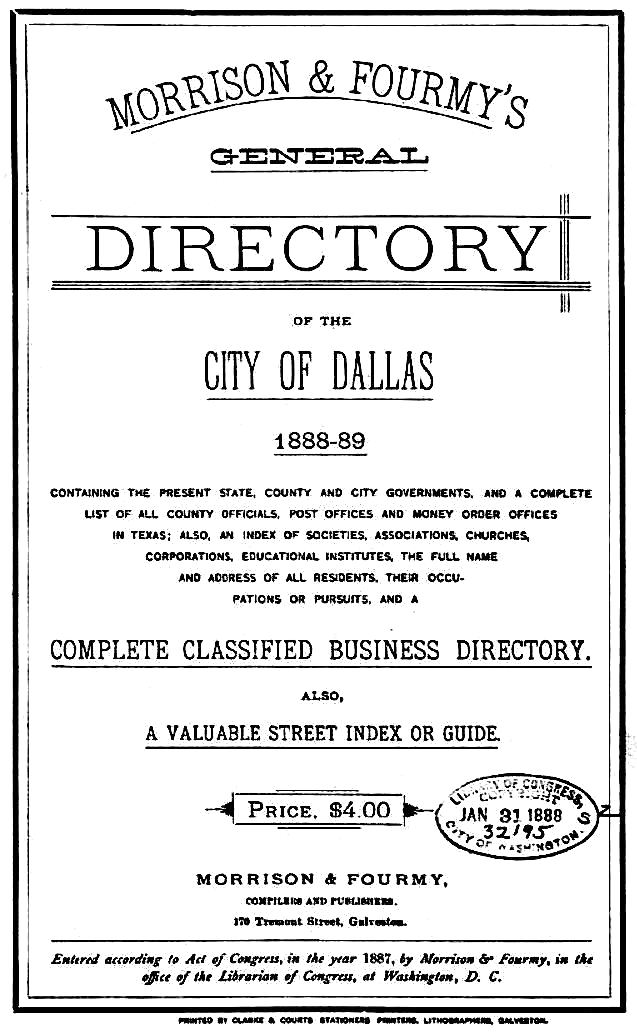
morrison-and-fourmys_1888-1889-dallas-directory_title-page1888-1889 Morrison & Fourmy’s Dallas directory

There are two ways to do this online: for free, and as part of a subscription (pay) service. I started out by accessing the directories through the Ancestry website, which you have to pay for/subscribe to. It was only recently that I discovered that (as far as I can tell) the exact same directories available on Ancestry are accessible through the Dallas Public Library website — for FREE. All you need is a library card. (You must be a resident of the City of Dallas in order to qualify for a library card. There is more about who can get a library and how one must do this — it requires physically going to a branch with proof of residency — I’ve included this information in that earlier post, here.) (There are a few free online sources which require no library card and no subscription — see those at the bottom of this post.)

Once you have your card and have registered for an account at the Dallas Public Library website, here’s what you do next:

  • Log into your account, here
  • Click on “DATABASES” at the top
  • Scroll down, click on “GENEALOGY”
  • Scroll down, click on “HERITAGEQUEST”
  • Click on “CITY DIRECTORIES” at the top (you will be able to search through many city directories from around the country, not just the ones from Dallas — and, as you can see, there are all sorts of other interesting databases here, too, such as census records, etc.)
  • Enter the name you’re looking for and, voilà.

*

So why are these directories so useful?

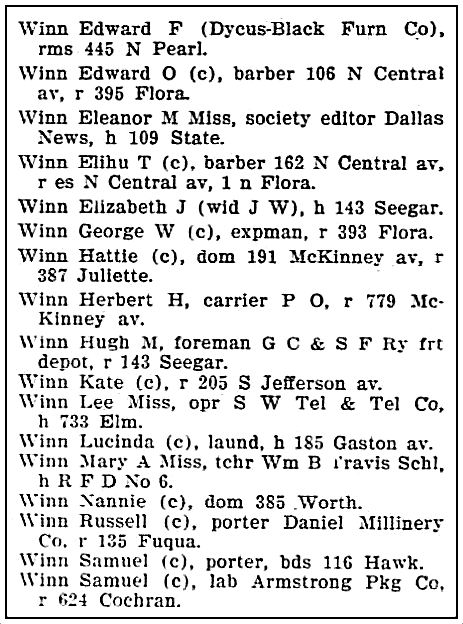
Not only can you determine when someone was living in the city, you can see where they lived, what their occupation was, the name of their spouse, and, in some cases, the race of the person (which, while somewhat disconcerting, can sometimes be quite helpful, especially if the person you are looking for has a common name — up until the ’20s or so, African-American residents and black-owned businesses were followed by “(c)”). (All images shown here are larger when clicked.)

worleys_1907-directory
1907 Worley’s directory

There are also ads, like the one at the top taken from the 1883 directory showing Thomas Marsalis’ wholesale grocery business. Ads are not only interesting, they can contain a lot of information, and, in some cases, a drawing or photograph of the business or proprietor.

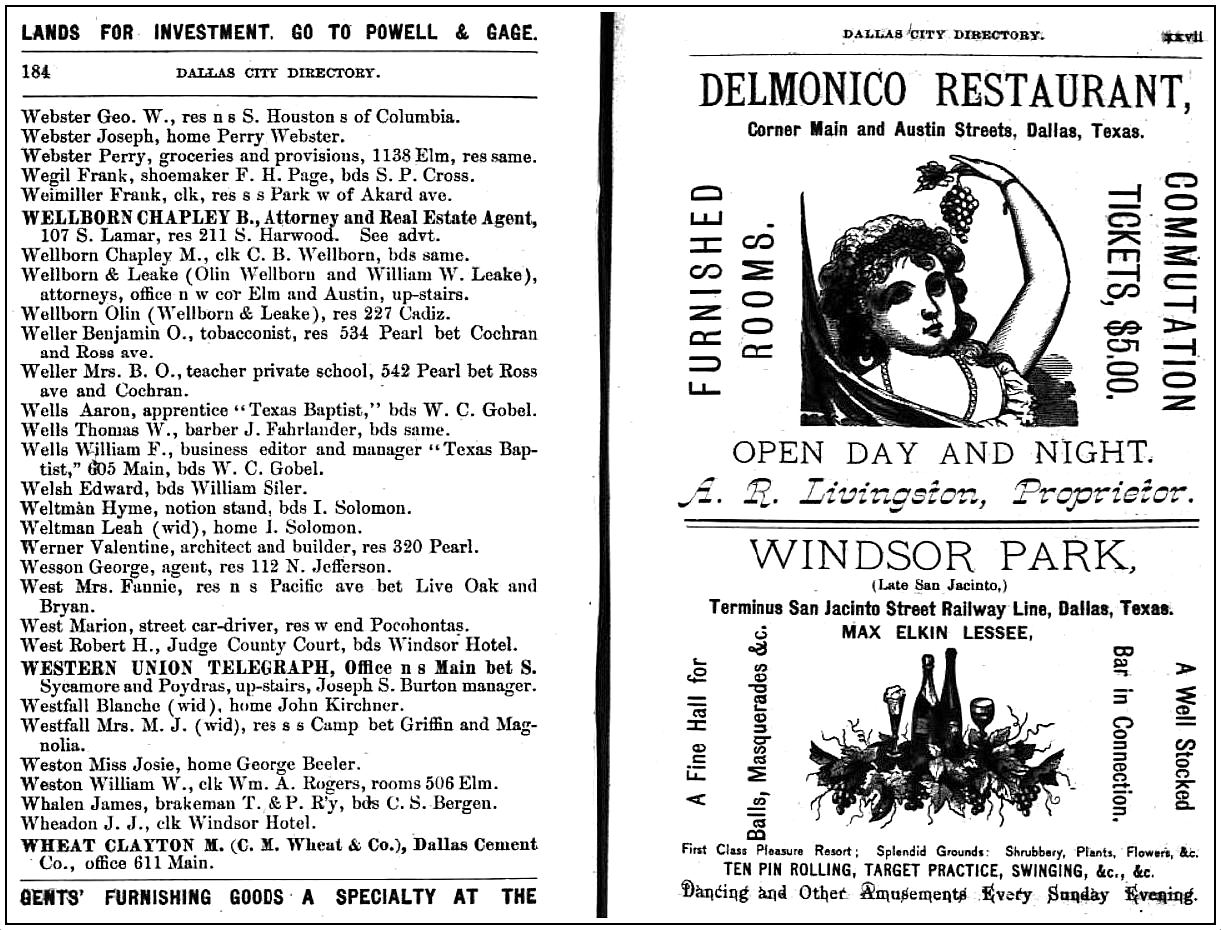
c-d-morrison-and-co_1878-dallas-directory
1878 C. D. Morrison & Co. directory

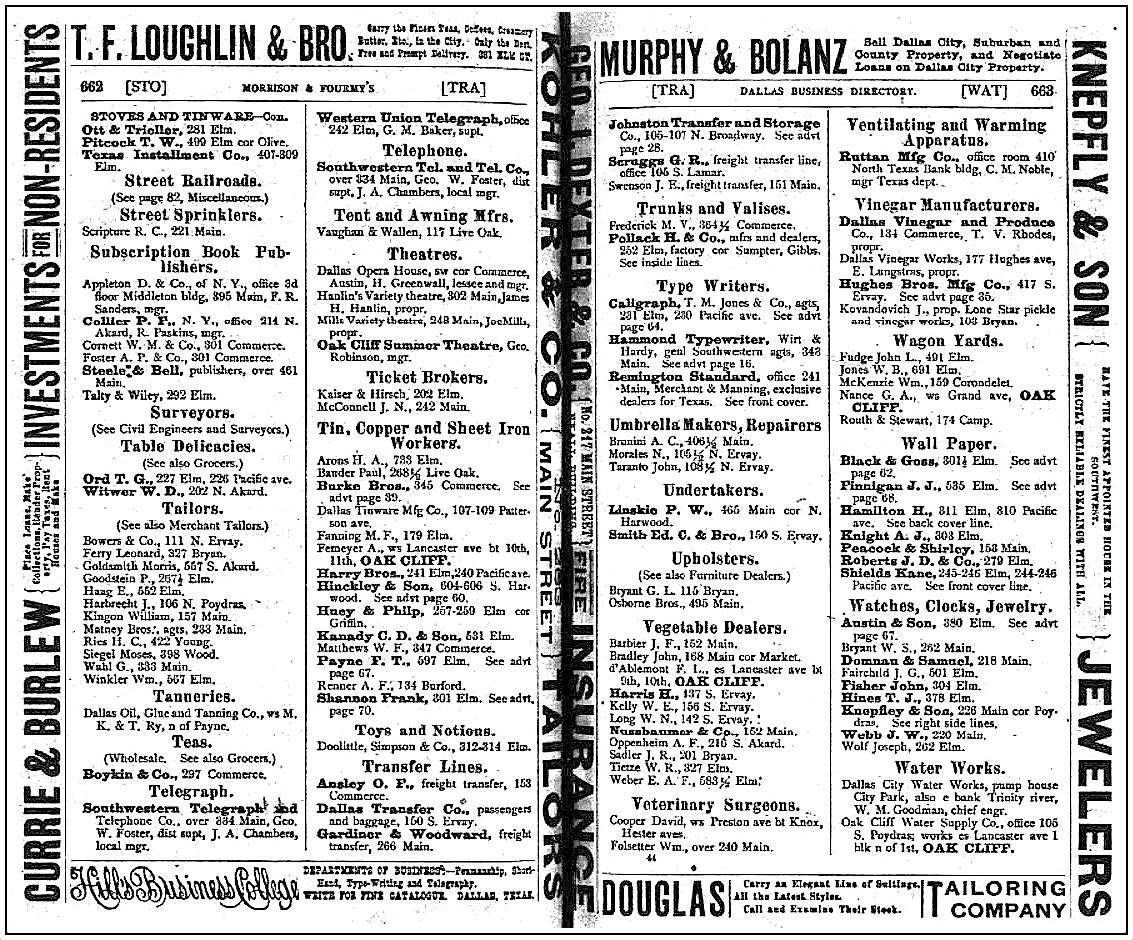
Typical business listings look like this:

morrison-and-fourmys_1891-dallas-directory
1891 Morrison & Fourmy’s directory

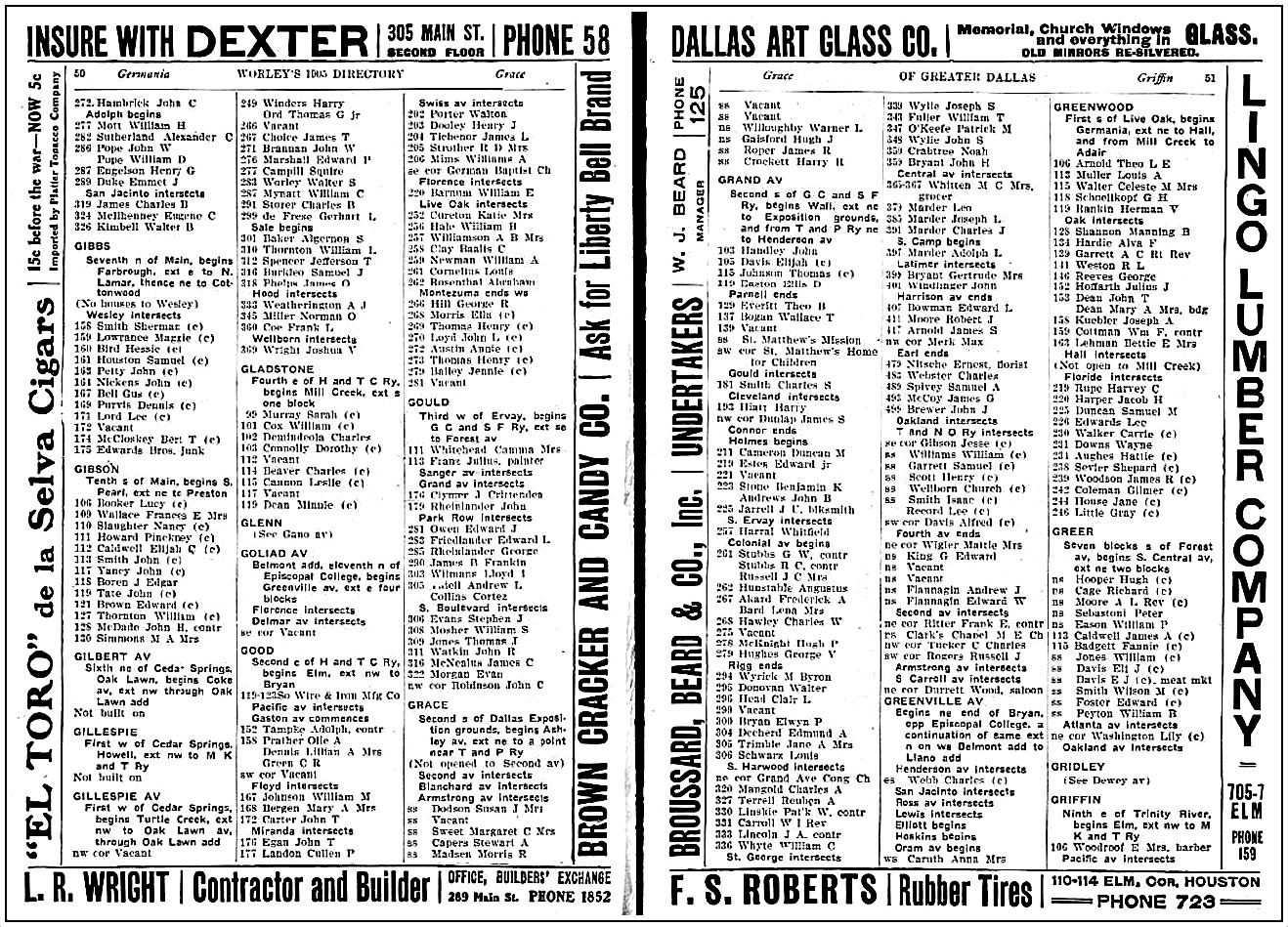
For me, one of the most useful things I find about these directories is the section containing the street directory. There are city directories covering more than 140 years of Dallas history, and there are a lot of street names you come across in researching a person or a place that no longer exist, have changed names, have the same name as a street in a different part of town (there used to be a lot of street names duplicated in Oak Cliff before it became part of Dallas), etc. These street guides tell you the names of everyone who lived/had businesses on the street (or at least the name of the head of the household or owner of the business), and it gives the names of all cross-streets. An address of 400 Main Street was not in the same location in 1950 as it was in 1900. (See this post on when and why Dallas street numbers changed.) One of the resources I use most is Jim Wheat’s easy-to-navigate list of street names from the 1911 directory (it’s faster and easier to use than one of the actual directories!), with links to the pertinent scanned page — these pages show you not only the 1911 address (which is often the same address used today) but they also show you what the address was BEFORE the number changed. I can’t tell you helpful this has been for me. (See an example here, which shows that before the number changed, 1400 Commerce was 324 Commerce.)

Pages from the 1905 street guide:

worleys_1905-directory_street-guide
1905 Worley’s directory

One bit of warning: many of the scanned directories that are online are only partial directories — and some years are missing altogether. The directories from the early 1940s, for instance, are a big headache: some have only 20 pages scanned — one wonders why they even bothered. Inevitably, the pages you need (and need badly) are ones that are not available to you, and you will, verily, let fly words your mother would not approve of. Sometimes you can get around the missing data by jumping to the street guide section or the business listings to see if useful info can be found there, but sometimes you are just going to be completely out of luck. This is when a trip to the Dallas Public Library (or possibly just a polite email to an ever-helpful librarian) will help you fill in the blanks, connect the dots, and get that swearing under control. I think they have a complete — or near-complete — set of city directories, either in hard-copy form or on microfilm. (UPDATE: Many of the incomplete directories mentioned above — issued  between 1936 and 1943 — are available fully-scanned, for FREE, at the Portal to Texas History. See link at bottom of post.)

You will find so much useful information in these directories that your head will spin. Right off  your neck. In a good way. But it’s also just enormous fun to browse them and imagine what the city used to be like in, say, 1889 when that year’s list of the city’s almost 150 saloons looked like this.

***

Sources & Notes

HeritageQuest is the service that provides access to scanned U.S. city directories to libraries across the country (it appears to be the same content the genealogy site Ancestry offers its members). This service is available free to holders of library cards. If you do not live in the City of Dallas, check to see if your local library system subscribes to this HeritageQuest database.

Here are a few other free online sources offering Dallas directory info — and these are available to everyone:

  • I’m updating this post on April 5, 2017 to include an INCREDIBLE selection of (from what I can tell) fully-scanned directories — twenty of them! This includes various years between 1902 and 1961 — including most issued between 1936 and 1941 (only partial scans of these editions are available through HeritageQuest/Ancestry, but here we can see complete directories). Thanks to the Dallas Public Library, everyone can access these Dallas city directories at the Portal to Texas History, here.
  • Another fully-scanned Dallas directory available online free for everyone can be found on Archive.org: the 1909 Worley’s directory is here.
  • Jim Wheat’s Dallas County, Texas Archives has all sorts of incredible stuff on his fantastic site, including links to directory information. Scroll down quite a ways on his main page here, and near the bottom in the left column you’ll see several listings under “Dallas City Directories.” Wheat manually transcribed a lot of these things himself, and those of us who research Dallas history owe the late Mr. Wheat a debt of gratitude. (UPDATE: The entire Roots Web website — not just Jim Wheat’s pages — has been down for several months. One can only hope his hundreds — if not thousands — of hours of work will someday be back online and once again accessible to researchers of Dallas history.)

*

Copyright © 2017 Paula Bosse. All Rights Reserved.


When the Circus Came to Town — 1886

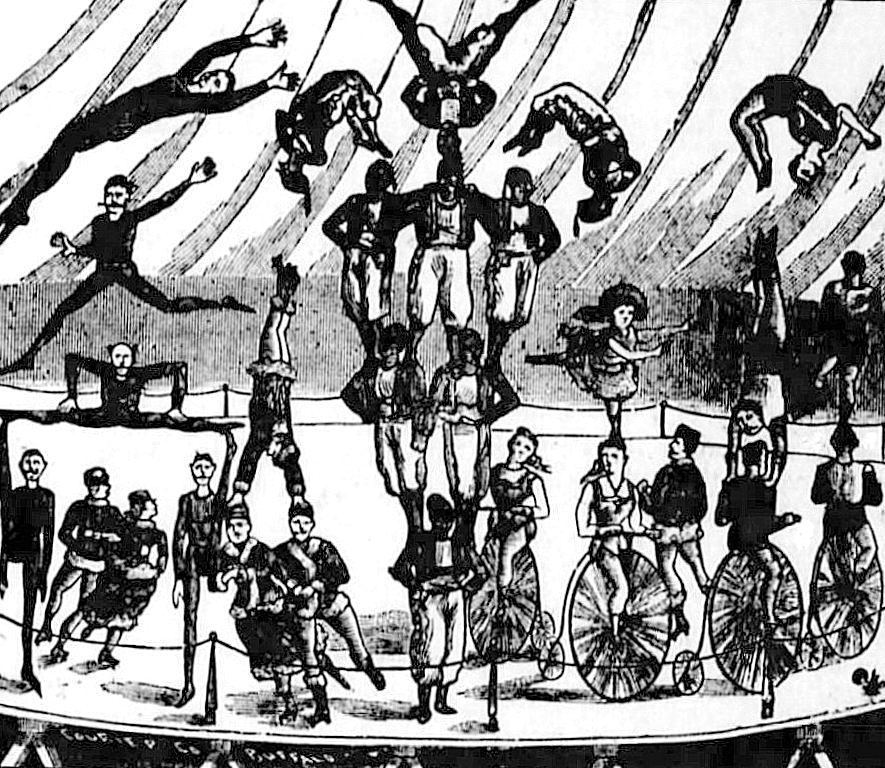
cole-circus_dallas-herald_101586-detI’m exhausted just looking at this…. (click for larger image)

by Paula Bosse

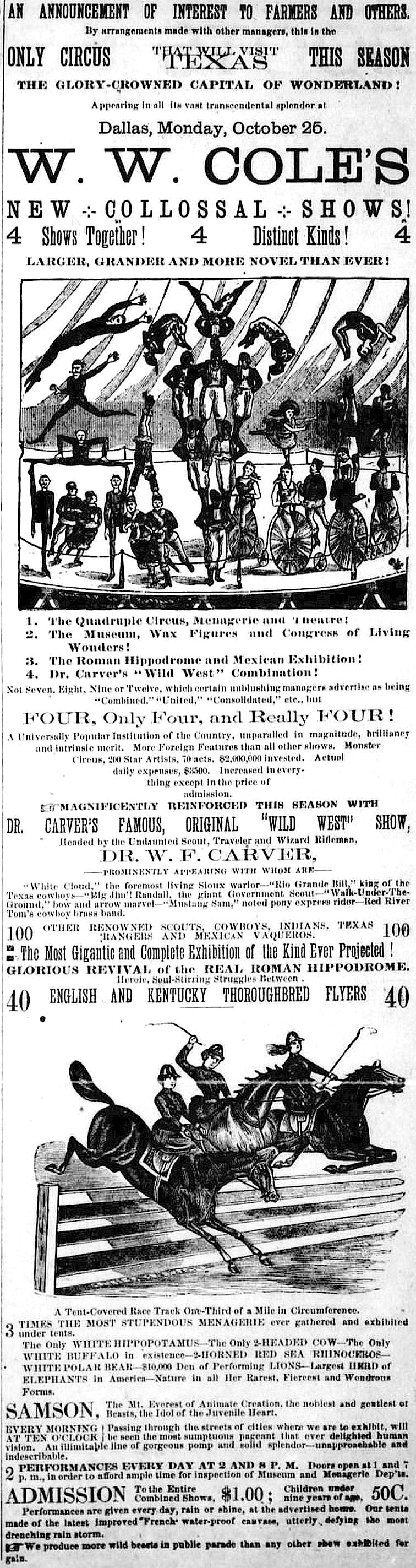
W. W. Cole brought his unbelievably jam-packed circus to Dallas at the end of October, 1886. That would have been big news all on its own, but also going on at the exact same time were two fairs. TWO! (This was when Dallas had competing state fairs battling each other across town.) I’m not sure how people handled all that entertainment. Circus attendance alone was reported at more than 16,000 for the Dallas engagement. That’s a lot.

One thing the Cole organization knew about was the power of adjectives. I can’t even begin to take apart this ad, so run your eyeballs over the intense, pop-eyed text and imagine what frontier Dallasites thought. Sit back and enjoy the “vast transcendental splendor” that was W. W. Cole’s extravaganza. (Click to see a larger image.)

ad_cole-circus_dallas-herald_101586Dallas Herald, Oct. 15, 1886

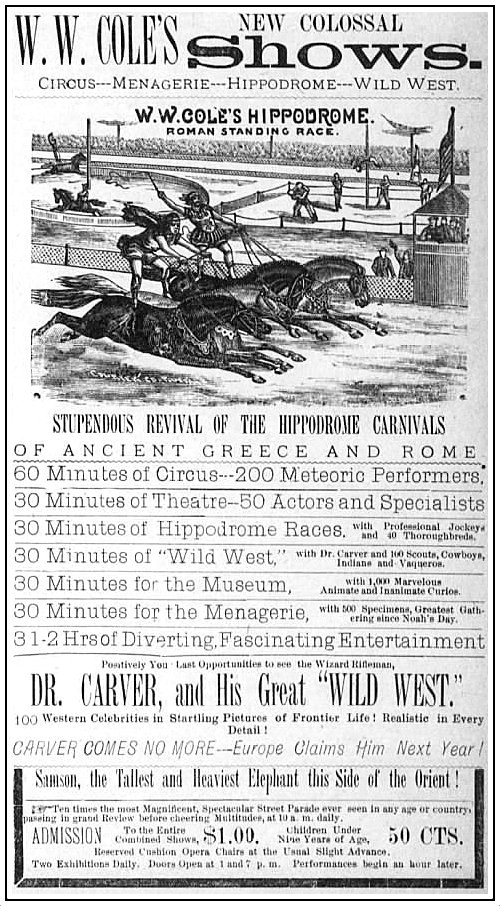
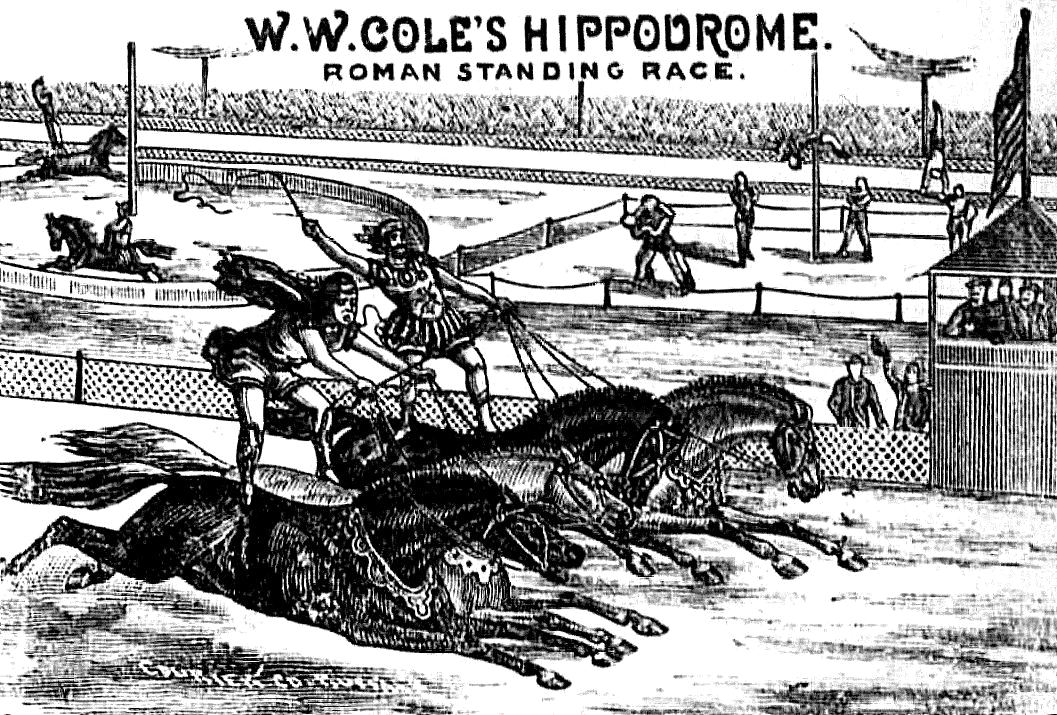
The circus appeared in Austin a few days later. This ad is also great.

cole-circus_austin-weekly-statesman_101486
Austin Weekly Statesman, Oct. 14, 1886

coles-circus_dmn_102486
Dallas Morning News, Oct. 24, 1886

circus_fairs_dallas-herald_102586
Dallas Herald, Oct. 25, 1886

The review:

coles-circus_dmn_102686
DMN, Oct. 26, 1886

Not everyone was impressed:

circus_dallas-herald_102686
Dallas Herald, Oct. 26, 1886

And then there was this weird little story. (I think the ending was tacked on by the writer as a joke. …I think.)

circus_somnambulist_dallas-herald_102686
Dallas Herald, Oct. 26, 1886

After all that excitement, it was probably a relief when the circus left town!

coles-circus-in-austin_dmn_110186DMN, Nov. 1, 1886

cole-circus_austin-weekly-statesman_101486_det

***

Sources & Notes

W. W. Cole’s Circus lasted forever — up until, apparently, last year! More here.

I’m never sure how much weight to give to the estimates of the Inflation Calculator, but when you plug the numbers into it, a dollar ticket for adults and a fifty-cent ticket for children would today equal somewhere in the neighborhood of twenty-five and thirteen bucks, respectively. That can’t be right, can it? You can’t argue that there was a lot going on in those French waterproof tents, but I can’t imagine people forking over that much when penny-candy was considered extravagant! But apparently 16,000 people happily forked! (W. W. Cole died a very, very, very wealthy man: when he shuffled off his moral coil in 1915, he left an estate of more than five million dollars — or, per the Inflation Calculator, more than 120 million dollars in today’s money.)

Click clippings to see larger images.

*

Copyright © 2017 Paula Bosse. All Rights Reserved.


The Haskell Exchange — ca. 1910

telephone_haskell-exchange_postmarked-1910_ebayThe switchboard hub in Old East Dallas… (click for larger image)

by Paula Bosse

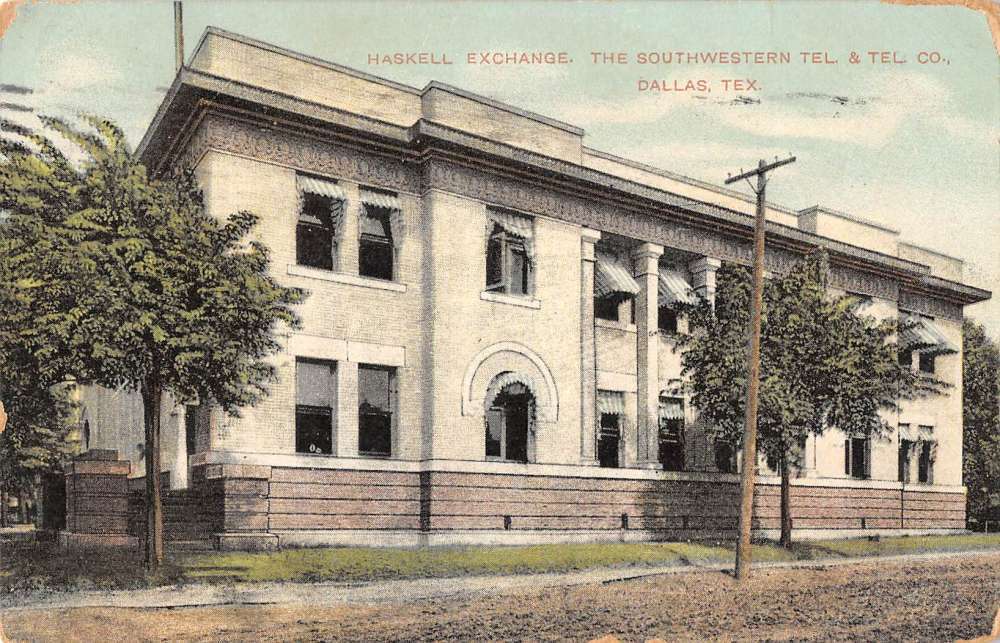
Above, the building that housed the Haskell Exchange of Southwestern Telegraph and Telephone (the company which later became Southwestern Bell Telephone and, eventually, part of AT&T), located at the southeast corner of Bryan and Haskell in Old East Dallas. It was so cute and quaint back in 1910 (the year this postcard was mailed). AT&T still has a building on this very same corner — over a century later. Unfortunately, the building stopped being quaint a long time ago. See the same location today, here. Some awnings might help….

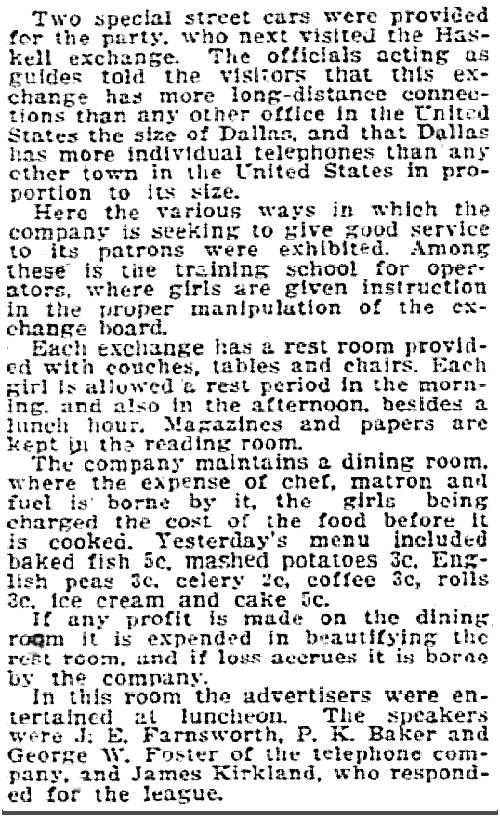
Below is part of an article describing a tour of the Exchange taken by the Dallas Advertising League in 1911 (click for larger image):

haskell-exchange_dmn_021111
Dallas Morning News, Feb. 11, 1911

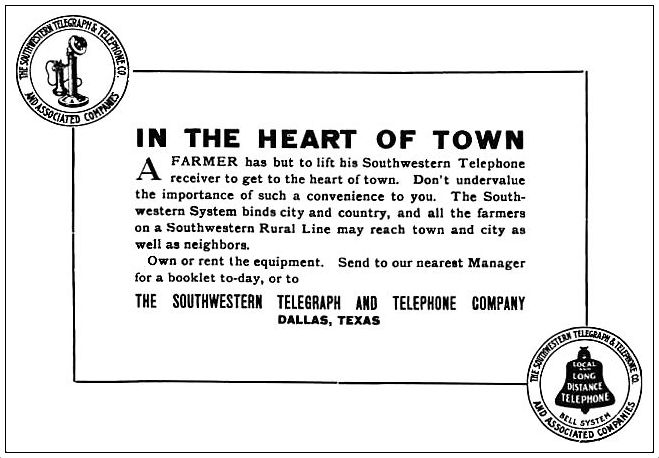
ad-southwestern-telephone-telegraph_1912
Cattle Raisers’ Association of Texas, 1912

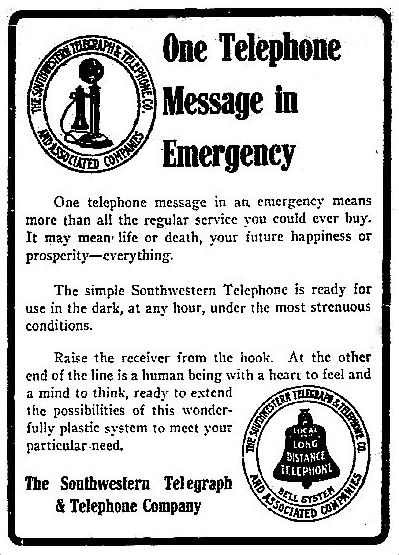
ad-southwestern-telephone-telegraph_dmn_050212
DMN, May 2, 1912

haskell-exchange_ca-1915_DHSDallas Historical Society

***

Sources &  Notes

More about the operators of Southwestern Tel. & Tel. (with photos of their “rest room”) can be found in the Flashback Dallas post “Work and Play in Telephone Land,” here.

In this case “exchange” did not mean the same thing as telephone exchanges such as “Taylor,” “Emerson,” “Lakeside,” “Fleetwood,” “Riverside,” etc. Read more at Wikipedia here and here for the distinctions.

*

Copyright © 2016 Paula Bosse. All Rights Reserved.

Thanksgiving, 1891: The First Turkey-Day Football Game in Dallas

thanksgiving-card_pinterest_sm

by Paula Bosse

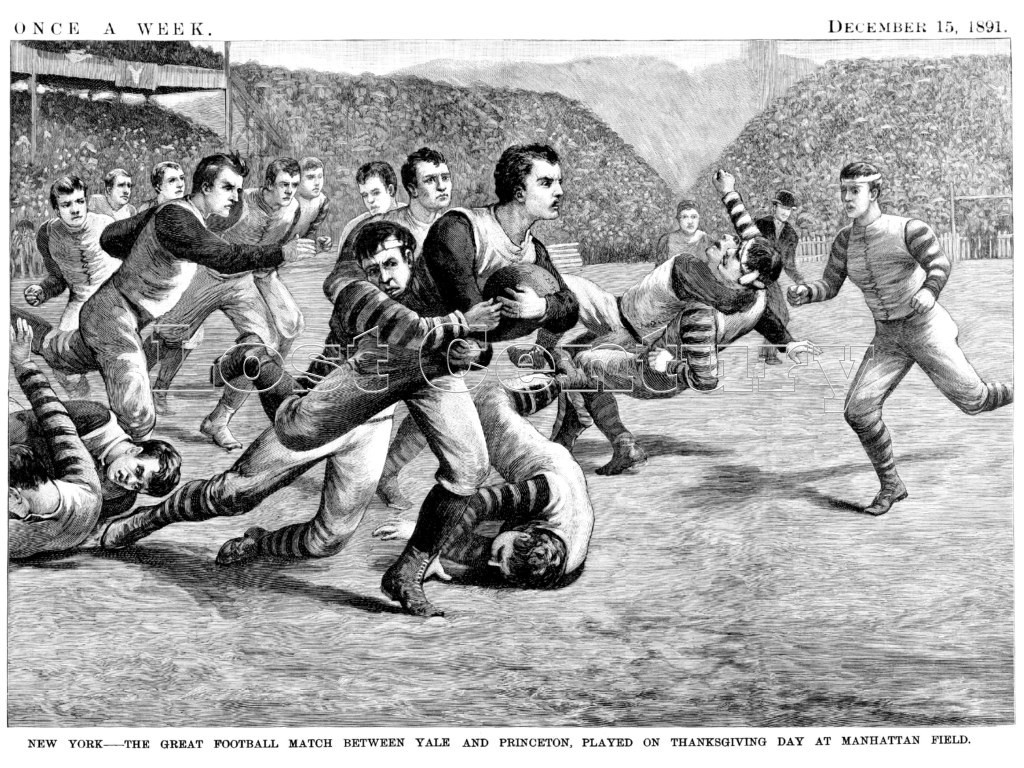
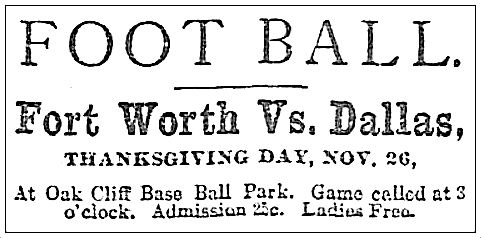
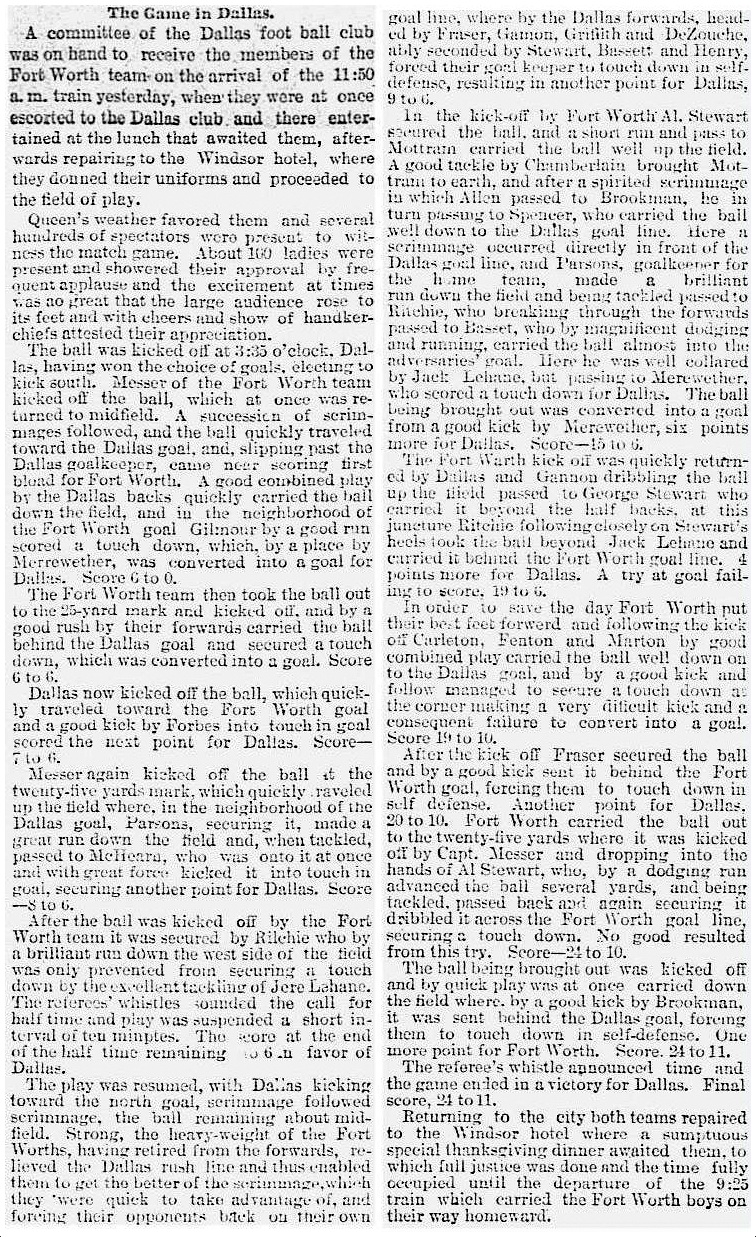
Thanksgiving is a holiday known for eating until you’re full as a tick and football — the highlight for many is the traditional Dallas Cowboys game. But when was the very first Thanksgiving Day football game played in Dallas? 125 years ago — in 1891. It was played on November 26, 1891 in Oak Cliff (…which wasn’t strictly part of Dallas at the time, but… yeah, 1891). The game was between teams from Dallas and Fort Worth, teams which had been organized only a few months previously. The sport of “rugby football” had been gaining popularity around the United States, particularly as a college sport. One of the biggest games of the young sport was the university game played on Thanksgiving Day. In 1891, the Yale-Princeton Thanksgiving game was played in New York before thousands and thousands of spectators. Yale won that year, 19-0 (see the exciting illustration below in which helmets for players are non-existent, but a man who appears to be the referee is wearing a stylish bowler hat). (Click for larger image.)

thanksgiving__football_yale-princeton_1891_lost-century

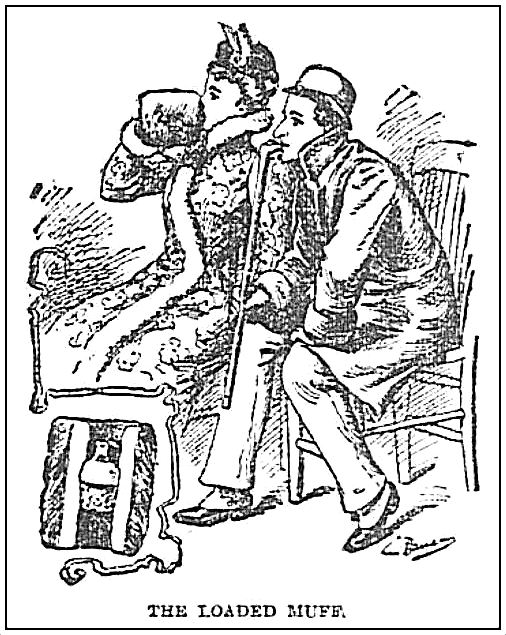
This Ivy League game was almost more of a society event than a sporting event. To get a feel for the atmosphere of these university games, read this really great contemporary article — “The Man of Fashion, We Observe Thanksgiving Day with Great Eclat” by Albert Edward Tyrrell — on the fashions and behavior of these generally well-heeled crowds (it also contains an interesting look at how Thanksgiving was celebrated in 1891, by the swells as well as the non-swells). My favorite piece of minutiae was that young ladies were not above sneaking flasks of liquor into games, hidden in their fashionable hand-warmers. I give you “the loaded muff”:

football_thanksgiving_loaded-muff_dmn112291

But I digress. However much those early Texas football enthusiasts might have hoped for similar large, flask-sipping crowds, the first Thanksgiving football game held in Dallas (and possibly in Texas) attracted a smaller crowd of hundreds rather than thousands (including “about 100 ladies”). Though the crowd was miniscule compared to the one up in New York that day, it did not lack in boisterousness and excited appreciation.

thanksgiving_football_dmn_112591_ad
Dallas Morning News, Nov. 25, 1891

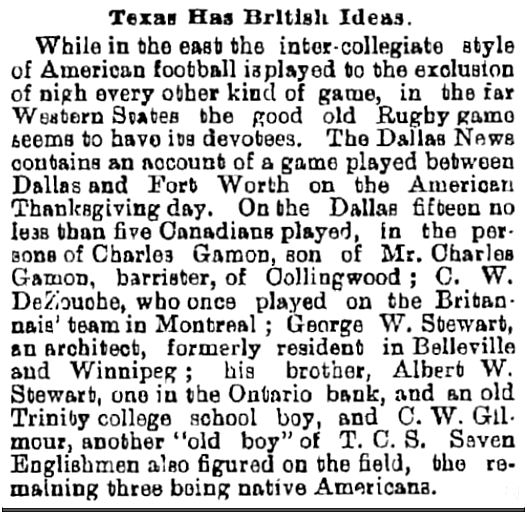
Dallas and Fort Worth had met twice before their matchup in Oak Cliff — both times with Dallas emerging victorious, and … not to be too anti-climactic, but the big inaugural Thanksgiving Day game on November 26, 1891 resulted in another Dallas win (24-11). (This shouldn’t be too surprising, seeing as the overwhelming majority of the players on the Dallas team of 15 grew up playing rugby in rugby-playing countries: 7 were British and 5 were Canadian —  only 3 were native-born Americans. Still. Whatever it takes.) (The dullish play-by-play of the game can be read  below.)

So what else was going on in Dallas in the Thanksgiving season of 1891? Here are a few morsels.

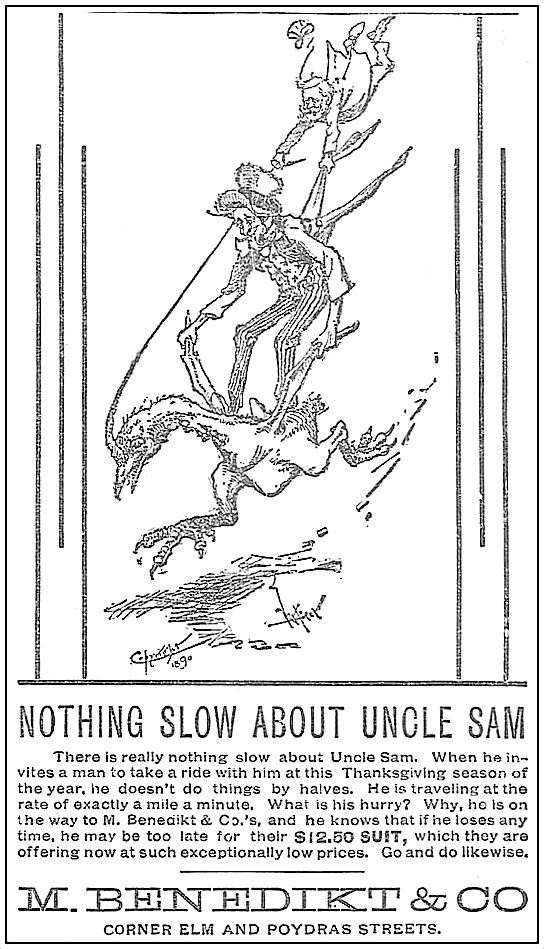
Men might have contemplated getting a new $12.50 suit from M. Benedikt & Co. (a suit which would cost about $335.00 today) — especially after seeing this eye-catching Uncle-Sam-riding-a-(scrawny)-turkey ad. (Click pictures to see larger images.)

ad-thanksgiving_benedikt_dmn_112191
DMN, Nov. 21, 1891

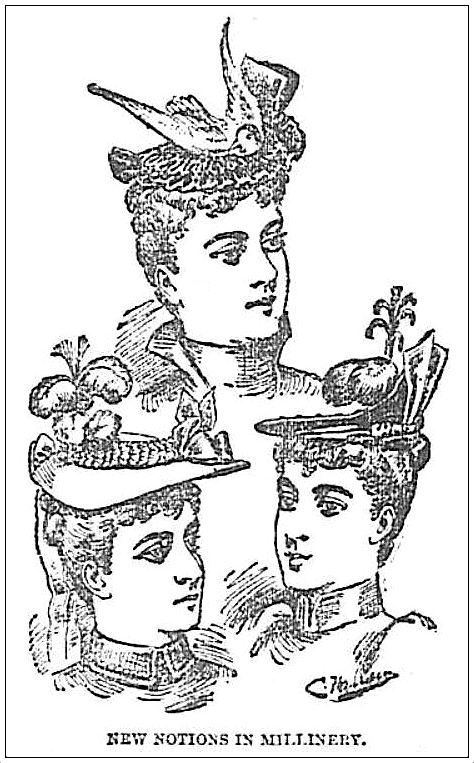
Ladies were kept up-to-date on the millinery, dress, and hairstyle fashions of the season by reading newspaper articles such as “What Is Really Worn, The Fashions That Find Favor at Thanksgiving” (which can be read here).

thanksgiving_milinery_dmn_112291
DMN, Nov. 22, 1891

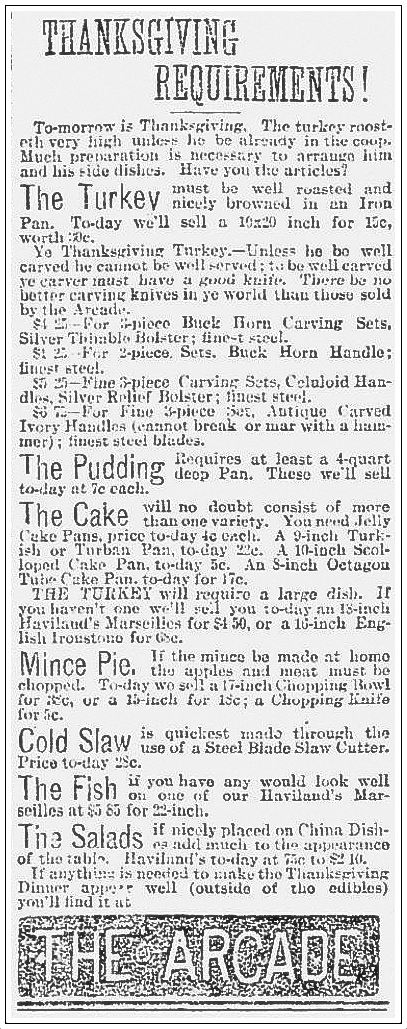
And stores that sold cookware, bakeware, and china took out ads to inform Dallasites that they really needed some new items in order to properly prepare for the big day — one’s guests shouldn’t be forced to be served a feast from tacky serving dishes or eat from chipped plates.

ad-thanksgiving_dmn_112591
DMN, Nov. 25, 1891

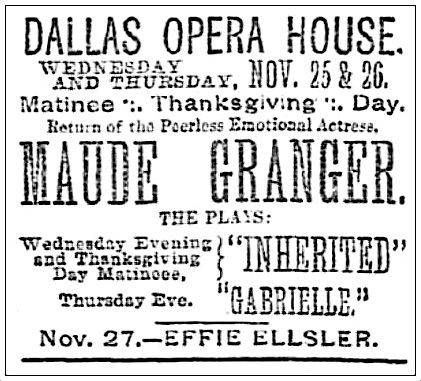
If one wasn’t spending Thanksgiving Day attending one of the city’s many church services, feeding the children at the Buckner Orphans Home, feeding one’s guests and one’s family, visiting friends, or trekking over to Oak Cliff to see that football game, he or she might have considered attending a matinee at the Dallas Opera House — Maude Granger (“The Peerless Emotional Actress”) was back in town and raring to emote.

thanksgiving_theater_dmn_112491
DMN, Nov. 24, 1891

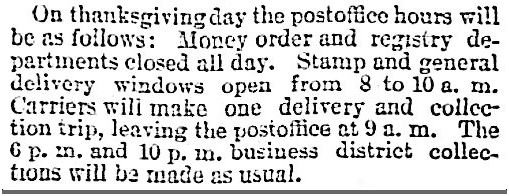
Almost everyone had the day off from work, but, oddly enough, most postal workers had to work at least part of the day. Neither rain nor sleet nor tender turkey breasts and cranberry sauce stayed those couriers from the swift completion of their appointed rounds, I guess.

thanksgiving_post-office_dmn_112591
DMN, Nov. 25, 1891

At least no one was dreading/eagerly anticipating Black Friday back in ’91.

**

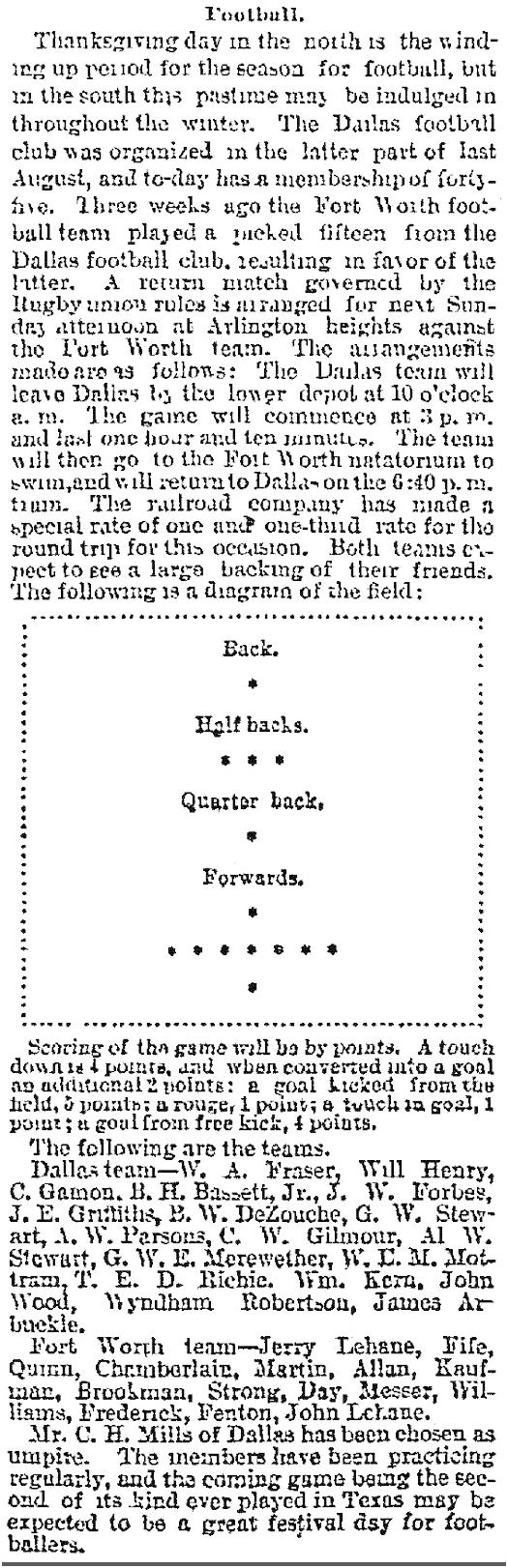
Back to football. First, a friendly D-FW practice run before the Big Game.

thanksgiving_football_dmn_111491
DMN, Nov. 14, 1891

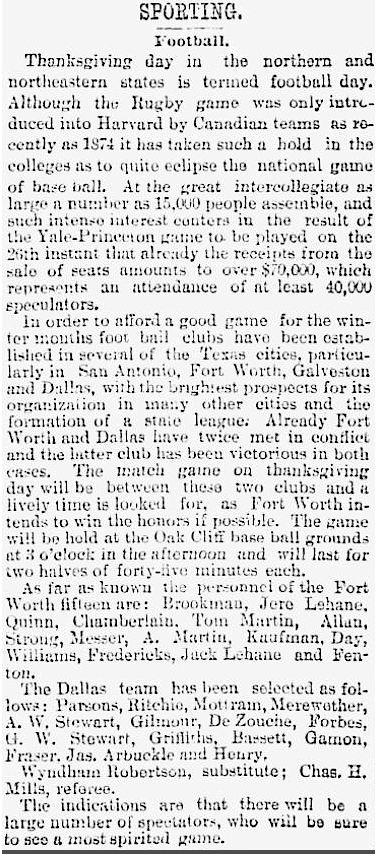
The pre-game article.

thanksgiving_football_dmn_112591
DMN, Nov. 25, 1891

The post-game article.

thanksgiving_football_dallas-fw_dmn_112791_highlights
DMN, Nov. 27, 1891

And an article from a proud Canadian newspaper, boasting of the number of Queen Victoria’s faithful subjects playing for the Dallas team.

thanksgiving__football_manitoba-free-press_121191
The Manitoba Free Press, Dec. 11, 1891

***

Sources & Notes

Thanksgiving card found on Pinterest.

Illustration of the 1891 Yale-Princeton game is from the Lost Century of Sports website, here. (I’m not really a sports fan, but if I were, this website of 19th-century sports might be one of my favorites!)

For more on how Thanksgiving finally came to be celebrated in Texas in 1874 (it took a long time for the Southern states to agree to celebrate what many thought was a “Yankee abolitionist holiday”), see my post “Encouraging Dallasites to Observe Thanksgiving — 1874,” here.

Happy Thanksgiving!

Most pictures and clippings larger when clicked.

*

Copyright © 2016 Paula Bosse. All Rights Reserved.

Dallas Rapid Transit, Est. 1888

dallas-rapid-transit_cyclone_cook-coll_degolyer_smu-detRide the Cyclone to Fair Park… (click for larger image) 

by Paula Bosse

The Dallas Rapid Transit Railway chugged into town in 1888, going from charter to operation in seven months. And that included laying their own track. The “dummy” steam engine (a locomotive designed to appear more like a friendly little streetcar and less like a hulking locomotive) seen above, carried passengers from the Windsor Hotel at Commerce and Austin through South Dallas (via S. Lamar and Forest Ave., now MLK Blvd.) to Fair Park. It started business just in time to ferry crowds to the State Fair. The fare was 20 cents, which seems pricey, but this might have been “surge” pricing charged only during the “Greatest Fair and Exposition in the World.” (According to the Inflation Calculator, 20¢ in 1888 would be the equivalent to more than $5 in today’s money.)

ad_dallas-rapid_dmn_101488
Dallas Morning News, Oct. 14, 1888

The new street railway was particularly appreciated by developers looking to sell land in southern Dallas, still considered a “suburb” in the 1880s. Residential streetcar service was essential to prospective builders and buyers, and as soon as the Rapid Transit line was up and running, its name was popping up in South Dallas real estate ads for additions with names like Chestnut Hill, Edgewood, and South Park.

chestnut-hill_edgewood_dmn_031689
DMN, March 16, 1889

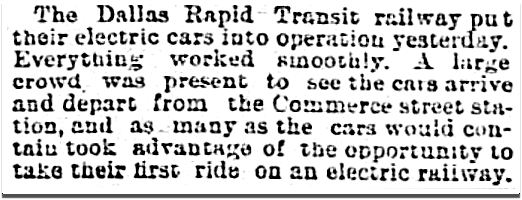
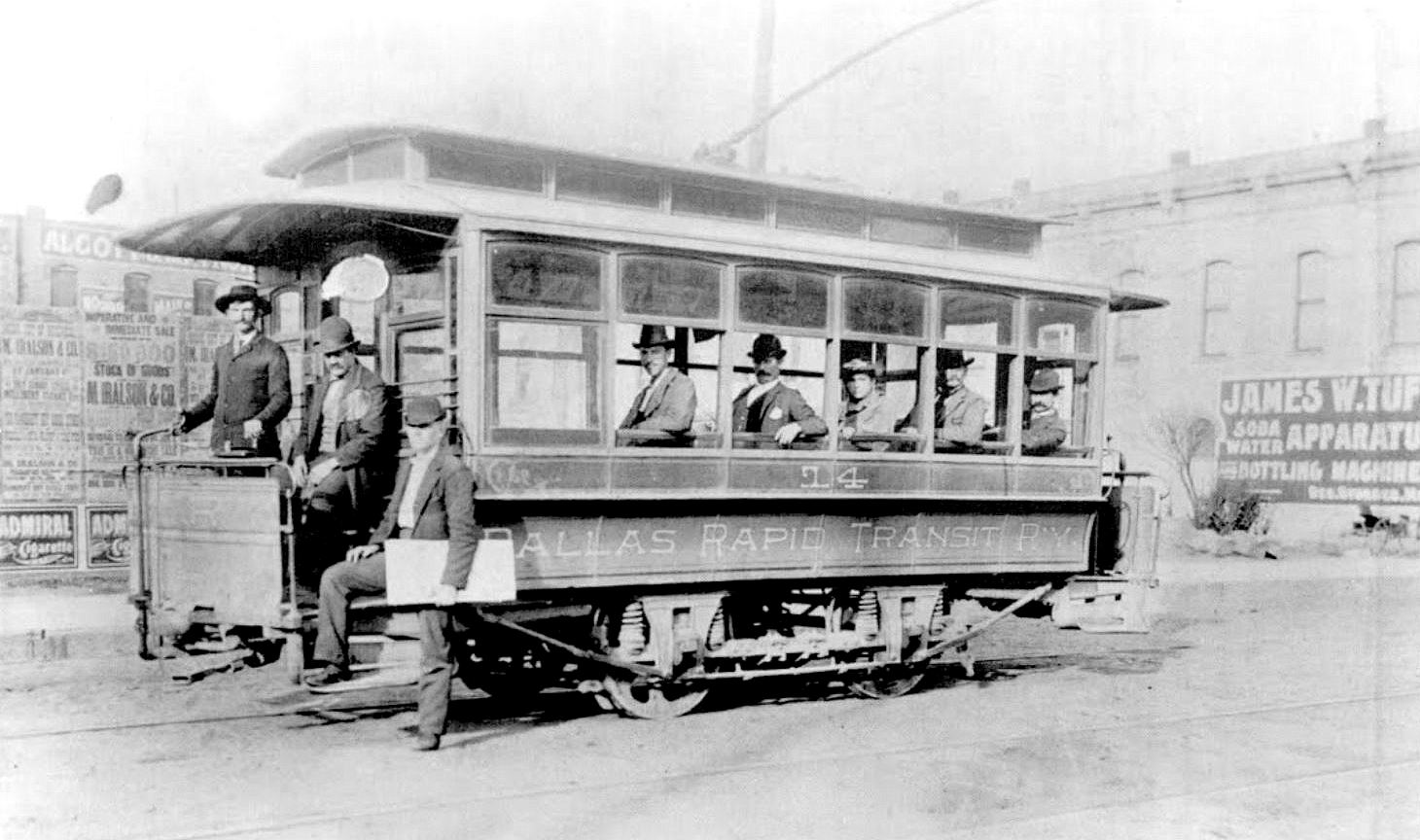
In March of 1890 — after a year and a half of steady growth — the Dallas Rapid Transit Railway went electric, tossing out their old steam-powered cars (not even 18 months old!) for brand new, ultra-modern cars powered by electricity. (For a bit of perspective, parts of the country were still relying on the really old-fashioned mule-drawn streetcars.) Dallas’ first electric-powered streetcar hit the rails on March 9, 1890.

dallas-rapid_dmn_031090_electric
DMN, March 10, 1890

Understandably, the sight of these newfangled streetcars was quite the topic of fascinated conversation. How exactly did they work, anyway? The Dallas Morning News published an article with helpful information for the Dallasites of 1890 (and 2016!). (Click to see larger image.)

dallas-rapid_dmn_032390_electric
DMN, March 23, 1890

The photo below (which appears in the great book McKinney Avenue Trolleys) is a staged publicity photo with a woman at the helm, showing that the new electric streetcar was so easy to operate that “even a woman” could do it. In tow behind the sparkling new electric streetcar was the old, past-it steam car, with its engineer racing to try to catch up with the new technology. Get with it, man, it’s 1890!

dallas-rapid-transit-railway_mckinney-ave-trolleys-bk_towing-dummySouthern Traction, April 10, 1973 (via McKinney Avenue Trolleys)

dallas-rapid-transit-railway_mckinney-ave-trolleys-bk_dplDallas Public Library photo (via McKinney Avenue Trolleys)

Initially, the track was only 4 miles long, but that had more than doubled soon after the switch to electric cars.

dallas-rapid-transit_dmn_100190
DMN, Oct. 1, 1890

Things seemed to be going well. The company was expanding, speeds were increasing, and … “No dust” !

dallas-rapid_dmn_102791
DMN, Oct. 27, 1891

But … in 1894 the company went into receivership and was sold in December of that year for $35,000.

dallas-rapid_dmn_120594
DMN, Dec. 5, 1894

It appears that the company struggled on under different owners and slightly different names through at least 1909, but instead of those twilight years being filled with reflective contemplation and bass fishing, they were spent mired in endless lawsuits.

But let’s not dwell on the sputtering end of a business — let’s look back to the beginning, when the H. K. Porter Co. of Pittsburgh, Pennsylvania was proud to show off its new light locomotive with the noiseless steam motor which was headed, full of hope and enthusiasm, for the little city that could, Dallas, Texas.

dallas-rapid-transit_cyclone_cook-coll_degolyer_smu

dallas-rapid_dmn_032288
DMN, March 22, 1888

dallas-rapid_dmn_091088
DMN, Sept. 10, 1888

**

The steam-powered Cyclone — seen at the top — went on an adventure through the streets of downtown in 1889 when, under a full head of steam, it jumped the tracks and kept on going down paved streets until it crashed into a curb on Main!

cyclone_dmn_043089
DMN, April 30, 1889

***

Sources & Notes

Image at the top (and bottom), “Dallas Rapid Transit, ‘Cyclone’ Locomotive No. 1,” from the George W. Cook Dallas/Texas Image Collection, DeGolyer Library, Southern Methodist University; more information here.

Read an interview with J. E. Henderson, president of the Dallas Transit Railway company, commenting on his new street railway (“The New Rapid Transit,” DMN, Oct. 14, 1884) here (yes, it IS difficult to read!).

The two photos of Dallas Rapid Transit electric streetcars are from the book McKinney Avenue Trolleys by Jim Cumbie, Judy Smith Hearst, and Phillip E. Cobb (Charleston: Arcadia Publishing, 2011). If you’re interested in this topic, this book seems pretty essential!

The history of early streetcars in Dallas can be read in the  pages of the WPA Dallas Guide and History here (scroll to the bottom of the page and continue to the following page).

Photos and clippings are larger when clicked.

*

Copyright © 2016 Paula Bosse. All Rights Reserved.