Flashback : Dallas

A Miscellany: History, Ads, Pop Culture

Category: Advertisements

Neon Refreshment: The Giant Dr Pepper Sign
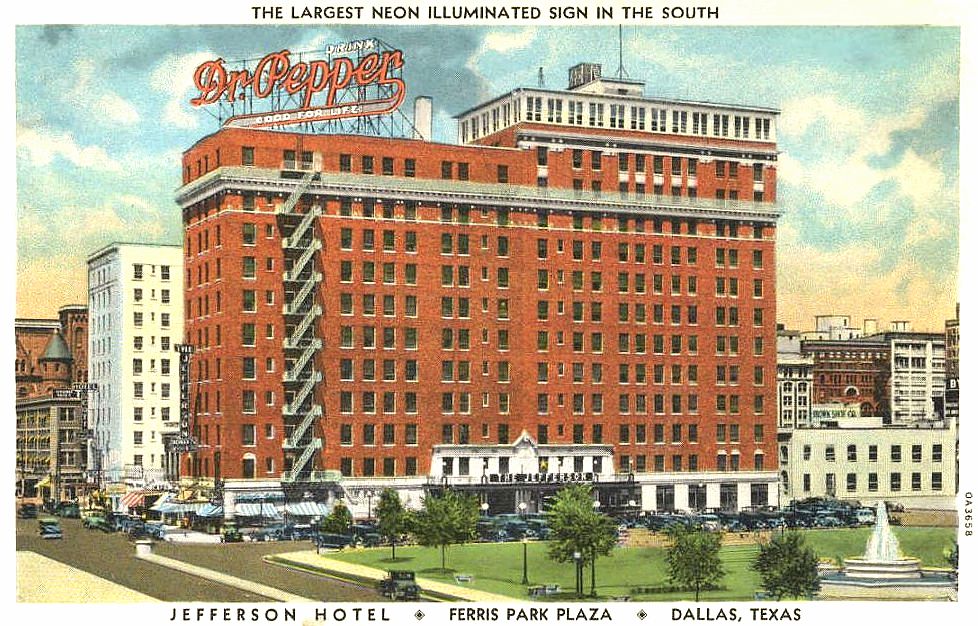
hotel-jefferson_neon-dr-pepper_cook_degolyer_SMU_ca1945

by Paula Bosse

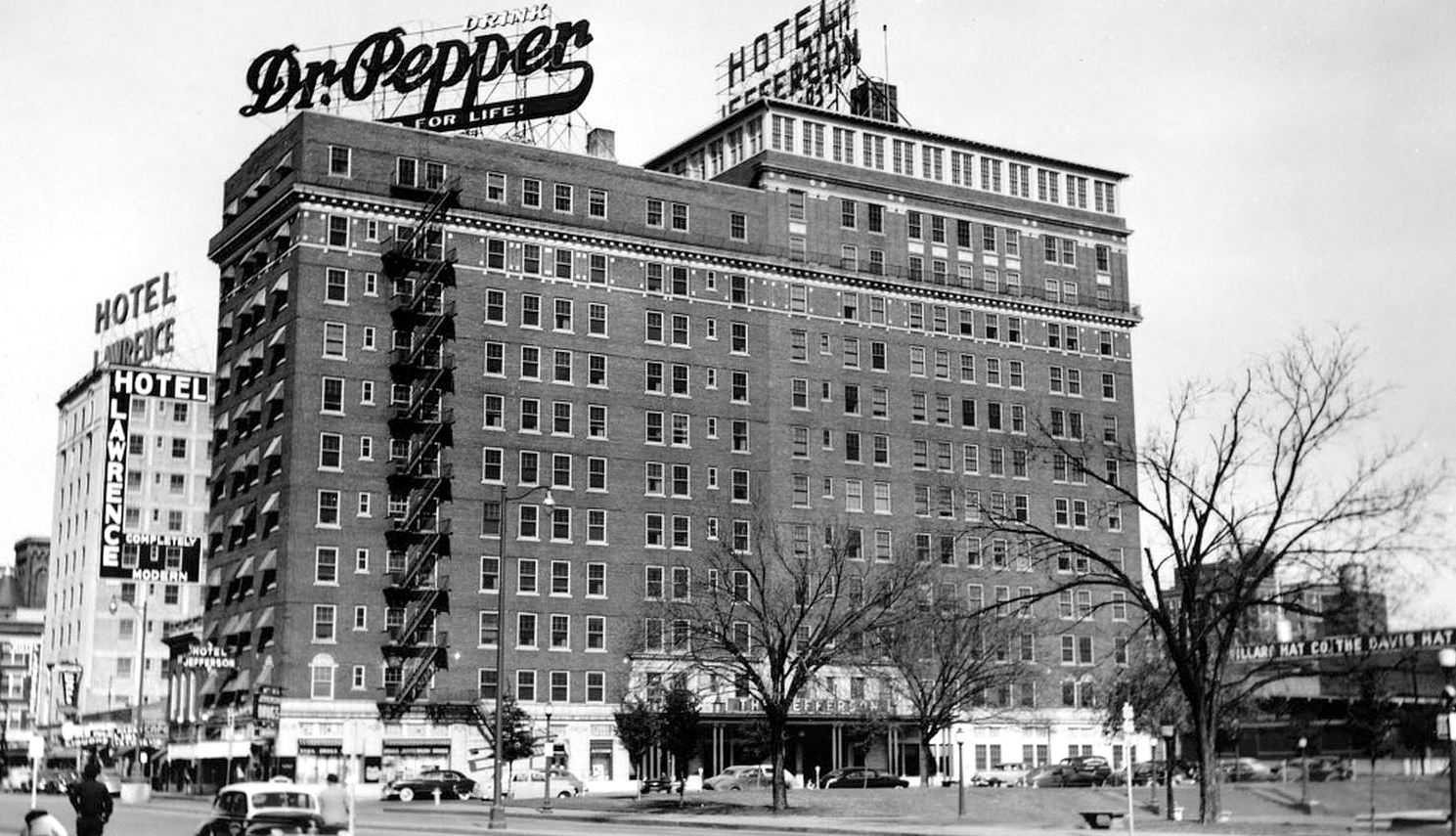
The Jefferson Hotel probably made some serious money leasing out rooftop acreage to the Dr Pepper people who erected a huge neon sign there. The hotel was located across from Union Station and a couple of blocks from the Old Red Courthouse. For people approaching the city from the southwest, there was absolutely nothing between them and that refreshing beacon rising tantalizingly above S. Houston and Wood streets.
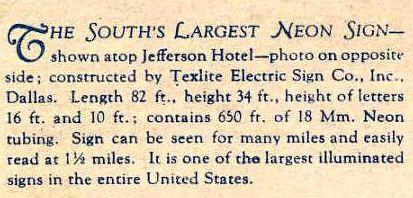
hotel-jefferson_neon-dr-pepper_cook_degolyer_ca1945-verso

jefferson-hotel_hotel-lawrence_dr-pepper-sign_dmn-tumblr

Texlite — the Dallas company that made the sign — was the first company in the Southwest to build and sell neon signs. Their first neon in Dallas advertised a shoe store in 1926 or 1927. (Texlite is best known as the company that built the red neon Pegasus and installed him on top of the Magnolia Petroleum Building in 1934.) My guess is that this Dr Pepper sign went up sometime between 1927 and 1934. It was up there for quite some time. Below is a detail from a photo taken sometime after 1943, and that DP sign was still there, continuing to make people subliminally thirsty
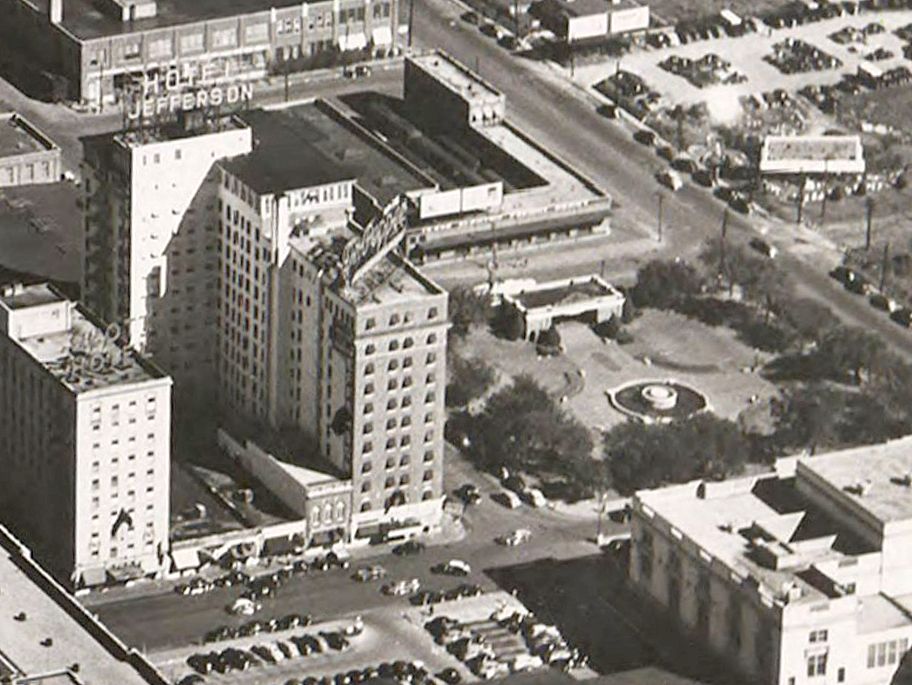
hotel-jefferson_dp_foscue-det(click for larger image)

It’s surprising Dallas didn’t have more neon back then. With a pioneering hometown neon company, the Dallas skyline should have been lit up like a Christmas tree 24 hours a day!

***

Sources & Notes

Postcard is from the George W. Cook Dallas/Texas Image Collection, Central University Libraries, Southern Methodist University; it can be viewed here.

First black-and-white photo was purchased at an antique mall or flea market, origin unknown; found here.

The 1940s-era aerial photo is a detail of a larger photo, “Downtown Dallas looking east (unlabeled)” by Lloyd M. Long, from the Edwin J. Foscue Map Library, Central University Libraries, SMU; the full photo can be viewed here.

A great photo of the hotel and sign can be seen in Sam Childers’ Historic Dallas Hotels, here. Childers writes that the Dr Pepper sign came down when the Jefferson was sold and became the Hotel Dallas in 1953. 20-some-odd years for a sign like that to remain in one place is a pretty good run.

The Jefferson Hotel (or as it’s sometimes identified, “Hotel Jefferson”) was at 312 S. Houston St. The building was demolished in 1975. It is now a hotel-shaped parking lot.

See what other clever thing once occupied the roof of the Jefferson Hotel in the Flashback Dallas post “The Jefferson Hotel and Its ‘Wireless Telegraph’ Rooftop Tower — 1921.”

*

Copyright © 2015 Paula Bosse. All Rights Reserved.
 

Santa Fe Railroad Ads: “Main Line to Progress” — 1955

ad-magnolia-petroleum-welcoming-new-santa-fe-line_dmn_120455-det_smMagnolia Petroleum Co. ad (detail), 1955

by Paula Bosse

In the previous post, “White Rock Station,” I wrote about the opening of a new passenger depot that had been built to serve suburban travelers along the new stretch of Santa Fe track laid between Dallas and Denton in 1955, opening up direct through-travel to Chicago. This was big news, and as was the charming custom back then, when a new business endeavor opened or expanded, other businesses (often direct competitors) placed ads in the local papers to welcome them and wish them well.

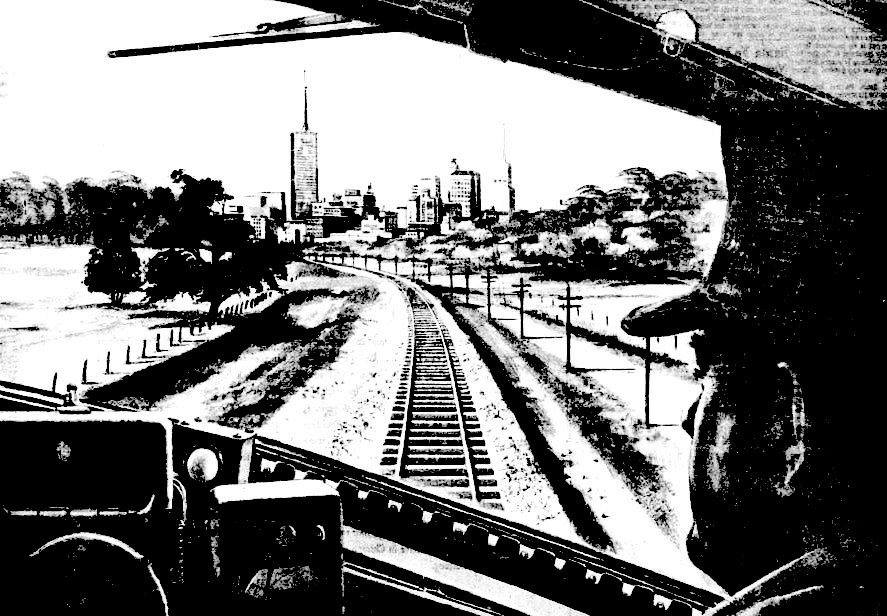
Here are a few of the ads that appeared in December, 1955 to promote/congratulate the new line. I’ve chosen these details of ads because they feature illustrations of the city’s skyline — I always love to see the Dallas skyline in ads, but I particularly like the style of commercial art from this period.

At the top is a detail from an ad placed by the Magnolia Petroleum Company, with the tag-line “Main Line to Progress.”

Next, a cool detail from a Hutchings-Sealy National Bank of Galveston advertisement.

ad-hutchings-sealy_santa-fe_dmn_120455-det

And, lastly, a detail from a large double-page Santa Fe Railroad ad.

ad-santa-fe_dmn_120455_det-skyline

***

Sources & Notes

The previous Flashback Dallas post on this new Santa Fe line and its two new depots in Dallas and Denton can be found here.

*

Copyright © 2015 Paula Bosse. All Rights Reserved.

“They Shall Not Pass” — Acme Screen Co. Ad (1924)

ad-acme-screen-co_terrill-yrbk_1924“Its in Dallas” (click for larger image)

by Paula Bosse

“Ding it!”

Send those pests packing!

***

Ad from the 1924 Terrill School yearbook, The Terrillian.

*

Copyright © 2015 Paula Bosse. All Rights Reserved.
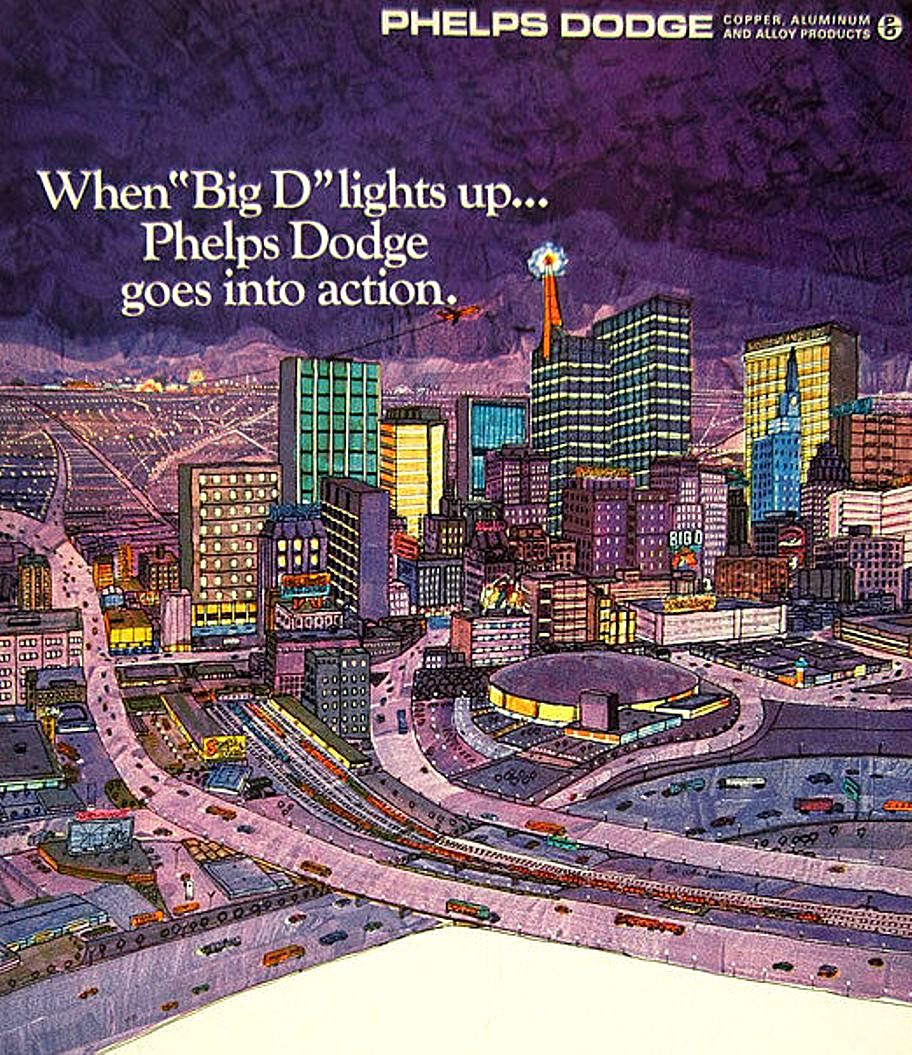
“When ‘Big D’ Lights Up” — Phelps Dodge Ad (1969)

ad-phelps-dodge_1969_ebayCopper, aluminum, and alloys … EVERYWHERE!

by Paula Bosse

One doesn’t expect a cute, quirky drawing of Dallas to appear in an advertisement for an international mining company that excavates and manufactures “copper, aluminum, and alloy products.” But here you are, a 1969 Phelps Dodge ad featuring the Dallas skyline. It’s a bit reminiscent of both the delightful telephone book cover art of Karl Hoefle and the distinctive naive “matchstick men” art of L. S. Lowry. The ad copy is a lot less whimsical:

Dallas … a busy, prospering commercial center and Showplace of the Southwest. A bright, shining ever-changing city where the new is commonplace.

Look behind the splendor and the bright lights and you’ll see that Dallas is also a Phelps Dodge city. Our condenser tubes are used at the generating plants of the Dallas Power and Light Company. Our 135-kv transmission cables and other high-voltage power cables distribute power throughout the city … and the transformers, coils and motors wound with our magnet wire make things happen … from the flashing signs downtown, to factories along the river … to homes, stores, and offices everywhere.

Go north on Stemmons Freeway or west to Fort Worth on the Turnpike, or south on I-45 and Phelps Dodge buried lighting cables, telephone or coaxial CATV cables are following alongside. You’ll also find our building wire and aluminum conduit … our plumbing, gas and refrigeration copper tubing at work everywhere. Many new buildings, like the Statler Hilton Hotel, use PD building wire and copper tubing exclusively.

We specialize in conductors of electricity, liquids, gases and heat made of copper, aluminum and alloys. Look closely, and you’ll find Phelps Dodge products at work everywhere.

***

Sources & Notes

Ad found on eBay.

See the artwork from this same ad — only in black and white — here. Zoom in and look at the details. No Karl Hoefle, but still pretty cool.

ad-phelps-dodge_1969_bw_small

Interested in knowing more about Phelps Dodge? Wikipedia to the rescue, here.

The drawing is by commercial artist Lee Albertson, who, apparently, did a whole series of these ads, each featuring a different “copper, aluminum and alloy product”-enriched city, a few of which can be seen here.


*

Copyright © 2015 Paula Bosse. All Rights Reserved.

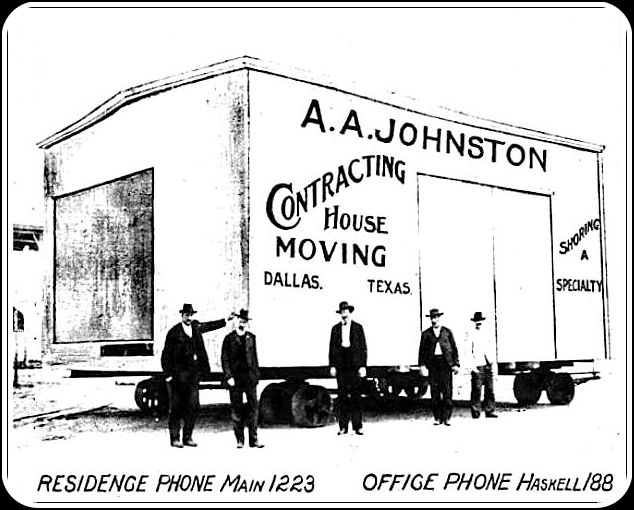
A. A. Johnston House Moving Co. — 1908

ad-johnston-house-moving_city-directory_1908_sm“Shoring a Specialty”

by Paula Bosse

Imagine what moving entailed before the advent of large motorized moving trucks.

I, myself, will be moving soon, and this will be my last new post for a while. I will probably link to old posts on Twitter and Facebook (see the tab at the top of the page to follow me and “like” me). I’ll be back sometime next week. Maybe by then the rain will have finally stopped!

***

Ad from the 1908 city directory.

*

Copyright © 2015 Paula Bosse. All Rights Reserved.
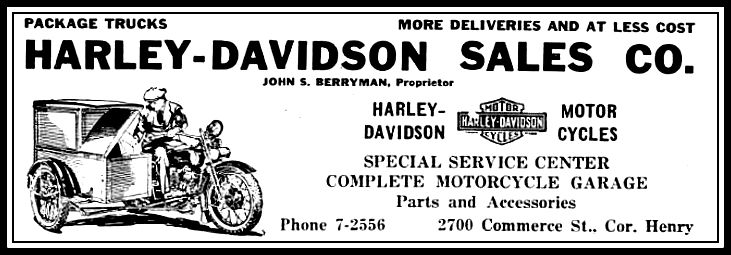
Harley-Davidson Sales Co. Ad — 1929

ad-harley-davidson_directory_1929-smBeyond sidecars…

by Paula Bosse

I have to say, I love this delivery vehicle!

***

Advertisement from the 1929 city directory. Harley-Davidson — 2700 Commerce Street, at Henry — was in Deep Ellum, in the same block currently occupied by Angry Dog.

Click picture for larger image.

*

Copyright © 2015 Paula Bosse. All Rights Reserved.

(Obscure) Country Music Radio Stations — 1969

KYAL-1600“Home of the Tall Texans” (click for larger image)

by Paula Bosse

Okay, maybe they’re not obscure to people who listened to country stations in Dallas in the 1960s, but to someone who grew up in the ’70s in a household in which country stalwarts KBOX and WBAP were always on, these three stations are unknown to me.

Of these, my favorite call letters are KYAL, as seen in the ad above — that’s right, “K-y’all.” Disc jockey “Johnny Dallas” was none other than local rockabilly fave, Groovey Joe Poovey.

KYAL_johnny-dallas_groovey-joe-poovey_ca1969

KBUY was out of Fort Worth and had quite the daytime signal.

KBUY-1540

There was also KCWM (for “Country & Western Music”). This one was an FM station. Legendary DJ Bill Mack was hired by the station to get its country format going, and he even suggested the call letters.

KCWM-99.5

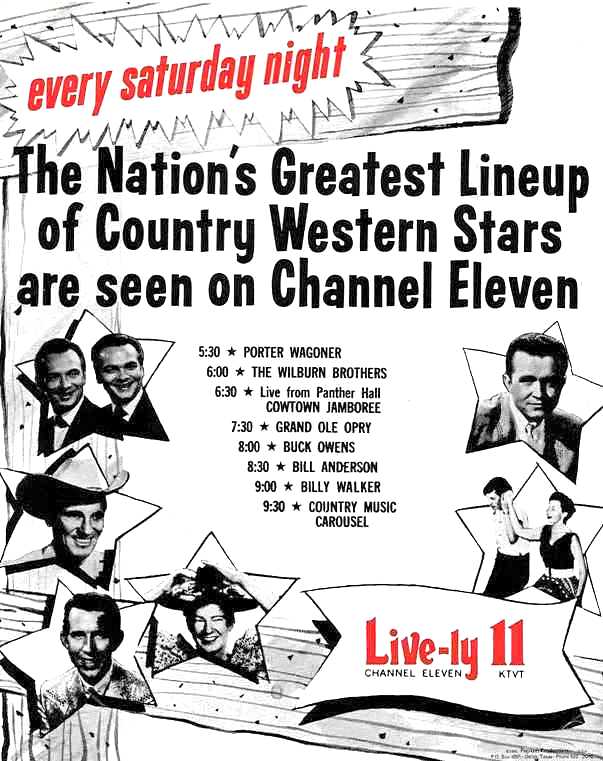
I came across these ads in some sort of local country music publication called “Country and Western — The Sound That Goes Around the World” (1969). Sprinkled amongst bios and photos of country stars are lots of local ads. One of the (non-radio) ads that caught my attention was one for the Saturday night lineup of country music television shows on KTVT Channel 11. Some of these shows were still on in the ’70s when I used to watch them with my father. (I’m not sure I knew there was ever a live television broadcast from Panther Hall in Fort Worth — “Cowtown Jamboree” — that would have been cool to see.)

country-music-saturday-night_ch-11-1969(click for larger image)

***

The best source for the history of Dallas-Fort Worth radio is, without question, Mike Shannon’s DFWRetroplex.com site.

KBOX was the station that really started it all for country music radio in Dallas; read about its history here.

Info on KYAL 1600 AM is on this page.

Info on KBUY 1540 AM and KCWM 99.5 FM is on this page.

Read about Groovey Joe Poovey here and here and here. See a slideshow of photos of him while listening to his GREAT version of “Deep Ellum Blues,” here.

Click pictures for larger images.

*

Copyright © 2015 Paula Bosse. All Rights Reserved.
 

DP&L’s Twin Smokestacks

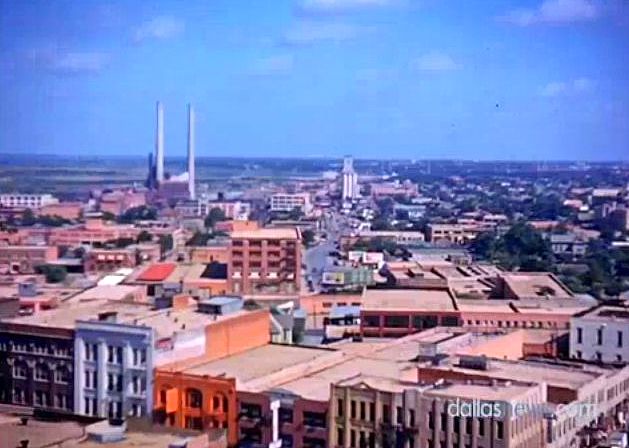
downtown_color_1939
An unusual view of the smokestacks from 1939 — in color!

by Paula Bosse

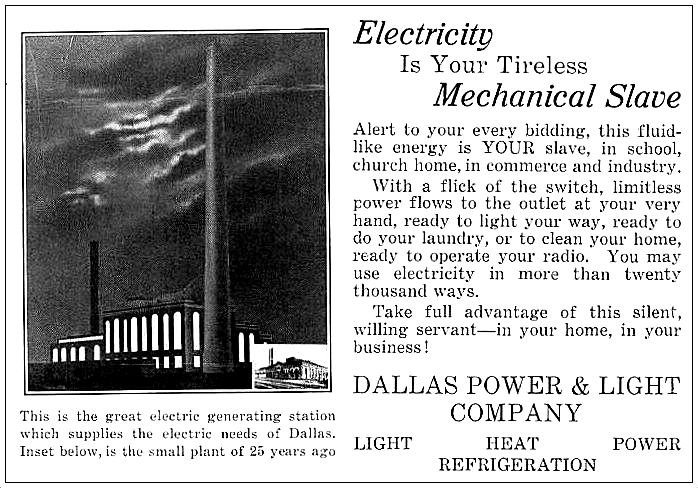
I got to thinking about those two smokestacks that used to be such an important part of the Dallas skyline when I came across this rather forceful 1928 Dallas Power & Light Company ad:

ad-dpl_terrill-yrbk-1928
(click for larger image)

“More than twenty thousand ways” to use electricity, “your tireless mechanical slave”! (To see a larger image of the ad’s illustrated inset, click here.)

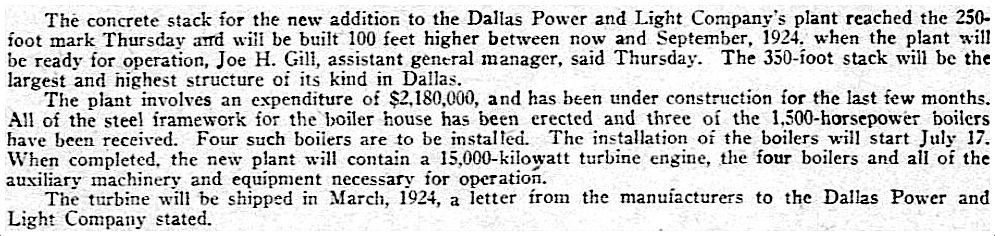
According to The Dallas Morning News, the Dallas Power & Light Company power plant had been in use at the location at “at the foot of Griffin Street … since 1890, with additions in 1905, in 1912 and in 1914. In 1922 work started on the most recent addition, which when completed will cost over $2,000,000, and will provide additional generating capacity of furnishing 20,000 kilowatts” (DMN, Oct. 14, 1923).

Construction on the new addition — including the first of the two new smokestacks — began in the summer of 1922.

dpl_dmn_FWST_072822Fort Worth Star-Telegram, July 28, 1922

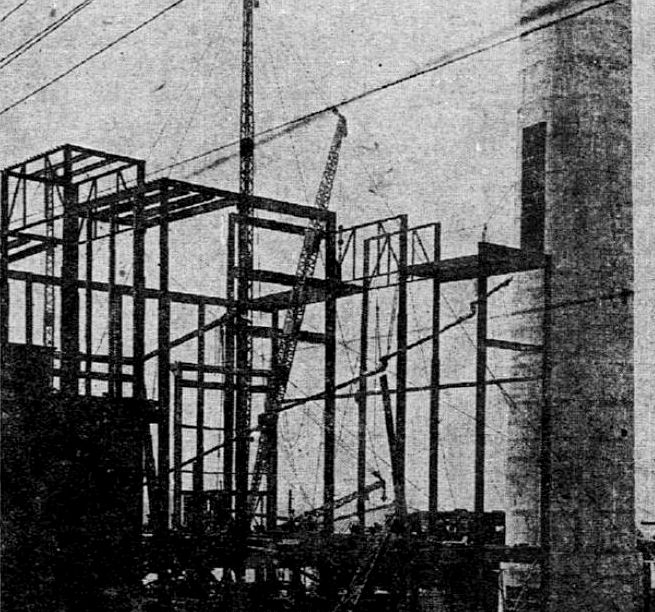
By the summer of 1923 the first smokestack was partially built.

smokestack_dmn_071323smokestack_dmn_071323-captionDMN, July 13, 1923 (click for larger images)

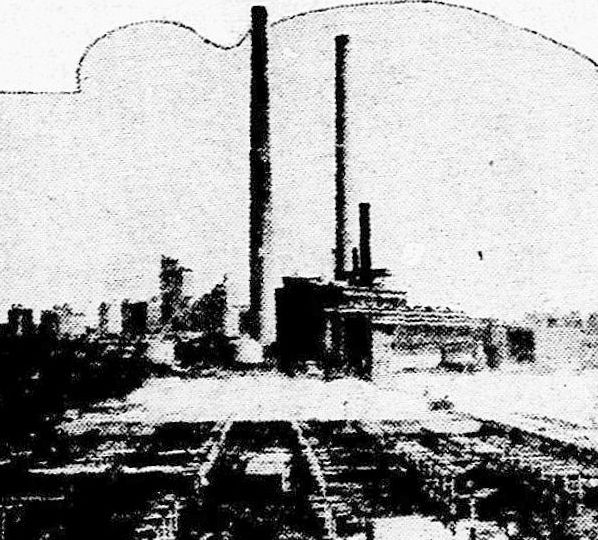
The new addition was completed in 1924 (although improvements and construction were constantly ongoing). The new giant smokestack can be seen in this photo, alongside the old and new parts of the generating plant:

dpl_dmn_101224_photo2DMN, Oct. 12, 1924

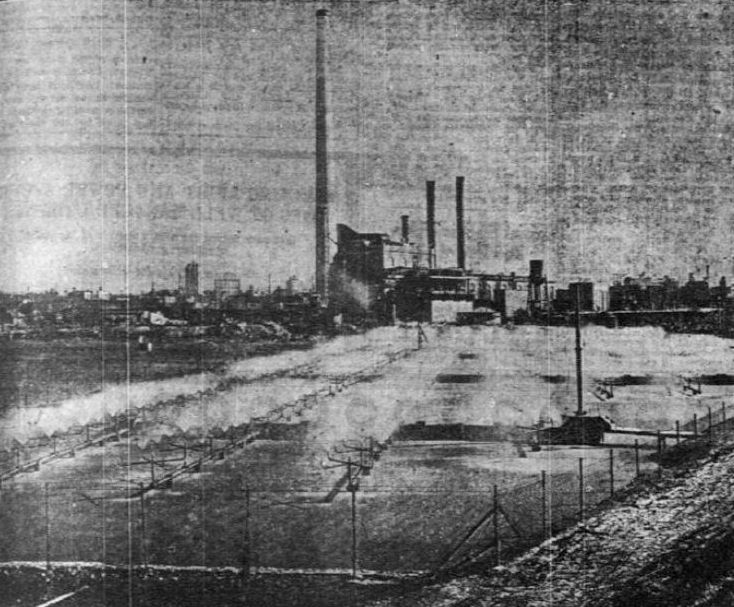
And, another view, this one with the 8-acre “spray pond” in the foreground:

dpl_dmn_101224_photoDMN, Oct. 12, 1924

In 1928 DP&L announced that it needed a further addition:

Another large chimney or smokestack, a new boiler room and other plant enlargements will be required in the North Dallas generation plant to house the new addition. (DMN, Oct. 20, 1928)

And in 1929 … voilà — the second smokestack!

dpl_steamstacks_1929
1929

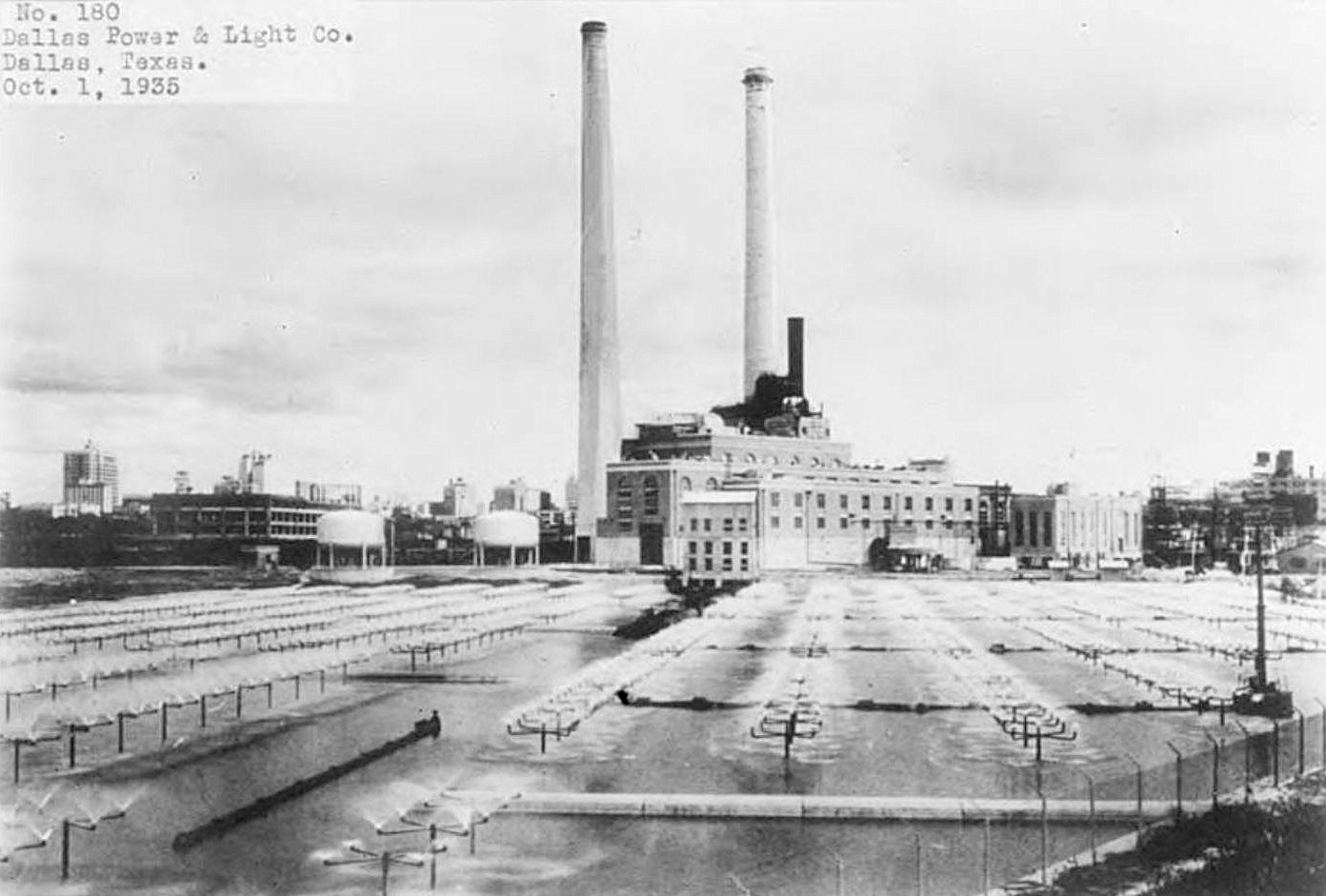
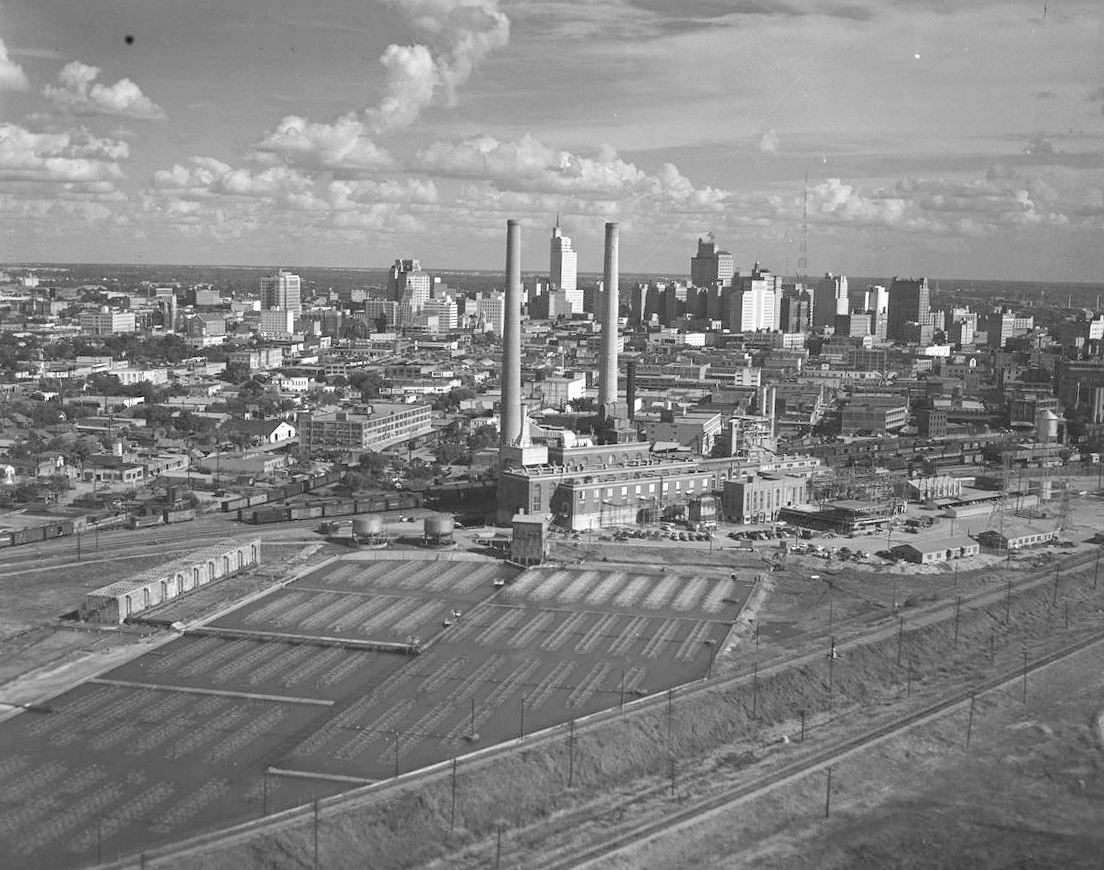
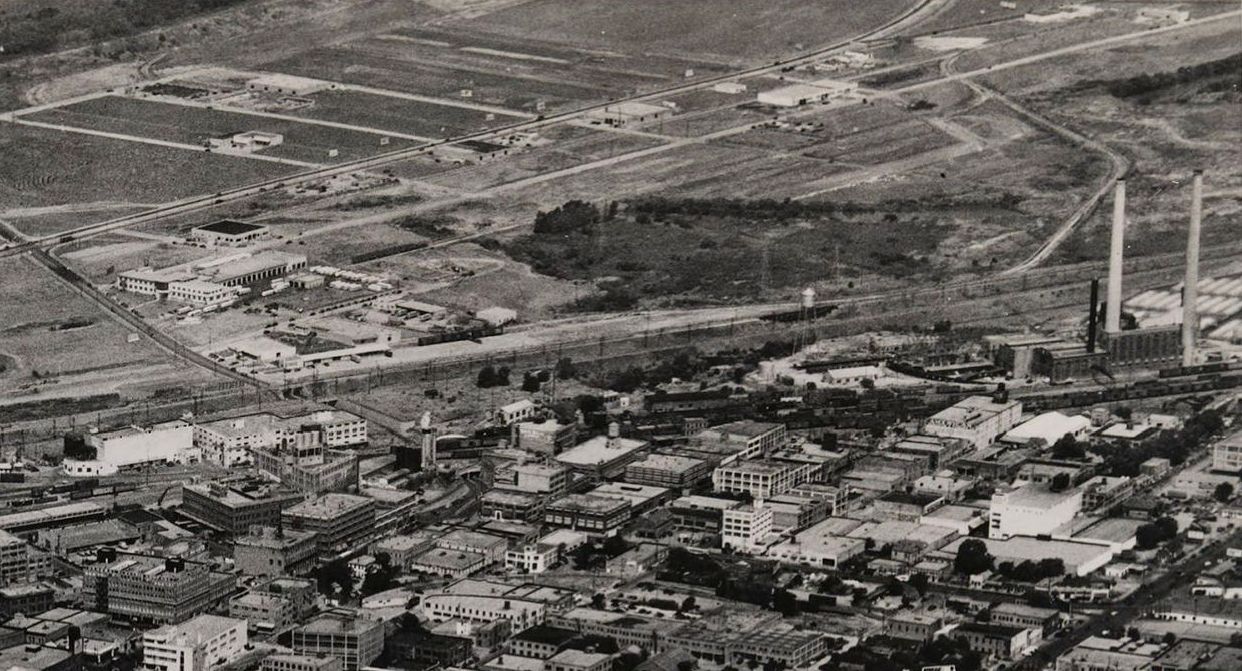
Those two smokestacks (which actually emitted steam rather than smoke) were almost as much a part of the iconic Dallas skyline as Pegasus. You’ll see them in any wide shot of the skyline taken between 1929 and the late 1990s, when the plant was demolished to make way for the American Airlines Center (the design of which actually is reminiscent of the building it replaced). You could see those smokestacks from miles away, and, even though they’ve been gone for more than 15 years, I still expect to see them standing there. RIP, smokestacks!

*

dallas-power-and-light_degolyer-lib_SMU1930s, via DeGolyer Library, Southern Methodist University

langley_skyline-horseback_c1945_LOCPhoto by William Langley, 1945 (with the twin stacks AND Pegasus)

dpl-plant_towers_squire-haskins_UTAvia Squire Haskins Collection, University of Texas at Arlington

smokestacks_long_foscue_ca1948-detAerial photo by Lloyd M. Long, 1948 (detail)

dpl_steamstacks

***

Sources & Notes

Color image is a screengrab from the short 1939 color film of Dallas which you can watch in full, here.

Ad is from the 1928 Terrillian, the Terrill School yearbook.

William Langley photo of the cowboy on horseback is from the Library of Congress, used previously here.

Lloyd M. Long aerial photo is a detail of a photo cataloged as “Downtown Dallas — looking west,” from the Edwin J. Foscue Map Library, Central University Libraries, Southern Methodist University; the full photo and its details are accessible here.

For an unexpectedly enthusiastic essay about the design and cultural/aesthetic significance of the plant and its smokestacks, architecture critic David Dillon’s “Getting Up a Head of Steam: DP&L’s Power Station, Recalling an Urban Past, Is a Function of Triumph” (Dallas Morning News, Sept. 7, 1983) is well worth searching for in the Dallas Morning News archives. This is the first paragraph:

The Dallas Steam Electric Station on Stemmons is nearly a century old and for most of that time it has been a commanding presence on the downtown skyline, its soaring white smokestacks rivaling anything that modern skyscraper designers have come up with. In Pittsburgh or Detroit such a structure might pass unnoticed but in Dallas, never a factory town, it stands out as a romantic symbol of our earliest industrial aspirations.

(My favorite piece of trivia from Dillon’s article is the revelation that the “tapering white shafts and gold caps [were] touched up every few years by daredevil painters lowered from a helicopter…” (!)).

More about this plant (and how it lives on in the design of the American Airlines Center which now stands on the same land) can be found in the Flashback Dallas post “A New Turbine Power Station for Big D — 1907,” here.

As always, most images are larger when clicked. When in doubt … CLICK!

*

Copyright © 2015 Paula Bosse. All Rights Reserved.
 

Dr Pepper Ad: “I’ll Have Another Myself” — 1929

dr-pepper_dmn_052729

by Paula Bosse

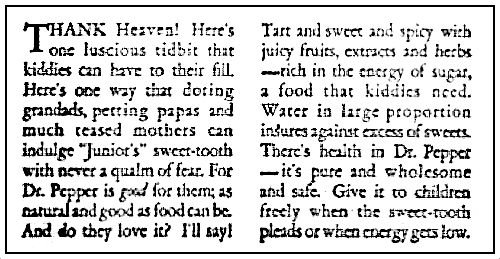
Drink up, kids — Gramps is buying! “It’s pure and wholesome and safe.”

ad-dr-pepper_dmn_052729-text

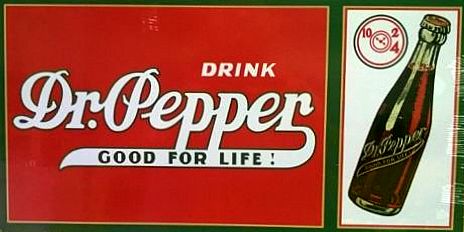
And the tag line: “It’s A Good Habit To Get — It’s One That Won’t Get You.”

dp-sign

***

Ad from 1929.

Reproduction of period sign found on eBay.

*

Copyright © 2015 Paula Bosse. All Rights Reserved.


MORE Random Still-Standing Buildings Featured in Ads From 1929

ad-southern-fountain-fixture_directory_1929-detSoda fountains came from here…

by Paula Bosse

A few more photos of buildings that are still standing, from the ad-pages of the 1929 city directory.

First up is the Southern Fountain & Fixture Mfg. Co. at 1900 Cedar Springs.

ad-southern-fountain-fixture_directory_1929

The Southern Fountain & Fixture plant was built in 1925 at the corner of Cedar Springs and N. Akard. They manufactured and sold soda fountains, showcases, and fixtures.

A major new residential high-rise is going up in the 1900 block of Cedar Springs (or has gone up — it’s been a while since I’ve been over there), but I think it’s going up at the other end of the block. (But somehow its address is 1900 Cedar Springs….) So, I’m not absolutely sure this building IS still there. Here’s a 2014 image from Google Street View. It’s a cool building — hope you’re still there, cool building!

southern-fountain-fixture-now_googleGoogle Street View

*

Next, the Loudermilk-Sparkman Funeral Home at 2115 Ross Avenue.

ad-loudermilk-sparkman_belo_directory_1929(click for larger image of house)

The “home-like” Loudermilk-Sparkman funeral home moved into the former home of Col. A. H. Belo in June 1926 and settled in for a 50-year lease. (An article titled “Morticians In New Quarters” appeared on June 27, 1926 in The Dallas Morning News, complete with descriptions of interior decoration and architectural details.)

That place was a funeral home for 50 years — longer than it’s been anything else. That’s a lot of dearly departeds. (Clyde Barrow is probably the most famous cadaver to be wheeled through its portals.) In the ’70s, the granddaughter of Col. A. H. Belo sold the house — which was built in 1899/1900 — to the Dallas Bar Association, and today it is a swanky place to get married or eat canapés. And, thankfully, it’s still beautiful.

belo-today_googleGoogle Street View

*

 The Evangelical Theological College, 3909 Swiss Avenue, in Old East Dallas.

ad-evangelical-theological-college_directory_1929sm(click for larger image)

This “denominationally unrelated” seminary — where tuition and rooms were free, and board was at cost — was built in 1927 for $65,000. When the three-story-plus-basement building was finished, the college was in its fourth year, having moved from its previous location in The Cedars. “The college now has forty-five students representing fifteen states of the United States, three Canadian provinces and Ireland…. The faculty is composed of thirteen men…” (DMN, Dec. 25, 1927).

ad-evangelical-theological-college_directory_1929-det

The college has grown by leaps and bounds and is now the Dallas Theological Seminary, and the original building is still there.

dallas-theological-seminary_now_googleGoogle Street View

*

Lastly, the Melrose Court Apartments and Hotel, 3015 Oak Lawn.

ad-melrose_directory_1929

The Melrose, designed by architect C. D. Hill, was built in 1924, and as it was about to throw open the doors of its bachelor apartments to eager Dallas bachelors (and whomever), it advertised itself thusly: “Of palatial splendor, rivaling in dimensions the best appointed apartment hotel buildings of this modern day, it is equal to the best of any of America’s cities of a million.” (DMN, Aug. 31, 1924) Well, of course it is!

ad-melrose_directory_1929-det

It’s been a landmark in Oak Lawn for over 90 years. I know it’s officially now the Warwick Melrose Hotel, but I’ve never heard anyone call it anything but The Melrose.

melrose-today

***

Sources & Notes

All ads from the 1929 city directory.

My previous post “Random Still-Standing Buildings Featured in Ads From 1927” is here.

*

Copyright © 2015 Paula Bosse. All Rights Reserved.