Flashback : Dallas

A Miscellany: History, Ads, Pop Culture

Category: Animals

Some-Context Channel 8 Screenshots: 1971

lady mailman june 1971 WFAAWFAA Collection/Jones Film Collection/SMU

by Paula Bosse

I have been working as part of a 3-person team (led by Jeremy Spracklen and Scott Martin) on the WFAA archive of news film, housed in the G. William Jones Film and Video Collection at the Hamon Arts Library at SMU. I have been working on 1970 and 1971, going through daily footage shot for Channel 8 News. I get a bit bogged down by all the sports and car crashes, but at this point, I am so all-consumed by these two specific years that I feel I would do well on Jeopardy if the categories were things like “Minor League DFW Hockey Teams of the Early ’70s,” “Internecine Squabbles of the Dallas City Council, the Dallas School Board, and the Dallas County Commissioners Court,” and “So What’s the Deal with the Sharpstown Scandal?” My 2023 has been spent immersed in 1971, where the chaos of the implementation of court-ordered school busing, the huge securities fraud scandal that involved some very powerful Texas politicians (Sharpstown), and the battle between Craig Morton and Roger Staubach to become the Cowboys’ #1 quarterback were some of the stories that dominated the headlines. And, lordy, there were some pretty exotic hairstyles, fashions, and interior design trends hammering away relentlessly throughout this post-hippie (it might really still have been current-hippie), pre-disco period.

Here are a few of my favorite moments from this 1971 DFW-centric news footage from the WFAA archives. Links to the pertinent clips on YouTube are included at the end of the descriptions. These clips are rarely the full reports that would have been seen on the nightly news — they are often just silent footage or B-roll, without any identification of people or clues as to where they were filmed or even why they were newsworthy. It’s (mostly) a lot of fun to dig through and watch the unfolding of history from more than 50 years in the future.

**

Above, from JUNE 1971

One of my favorite human-interest stories from the past year (meaning 1971!) was the profile of one of the few “lady mailmen” in Dallas at the time. She’s utterly, utterly charming, has a supportive and interesting husband and family, and loves her job. The Channel 8 cameraman shows her as she sorts her mail in the Beverly Hills Station post office in Oak Cliff and follows her as she walks along her route on West Davis. The only problem with this 7 minutes of interesting footage is that the woman is never identified. I dove in, really wanting to identify her. I thought I had cracked the mystery of her identity, only to find myself at a dead end again. If only her children could see this wonderful profile of their mother. If you know who this woman is, please let me know, and we’ll add her name to the YouTube description and try to track down any family members. I would LOVE her children to be able to see this.

The “lady mailman” is interviewed here (this first bit is in three short segments, totaling 4 minutes); a later clip shows her on her route, here (about 3 minutes). The old post office building still stands at 509 N. Barnett.
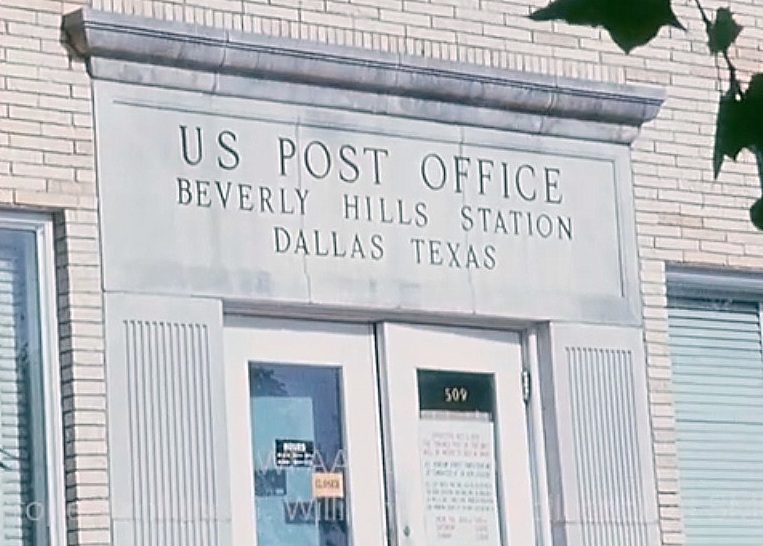
lady mailman june 1971 WFAA_beverly hills post office

*

JANUARY 1971

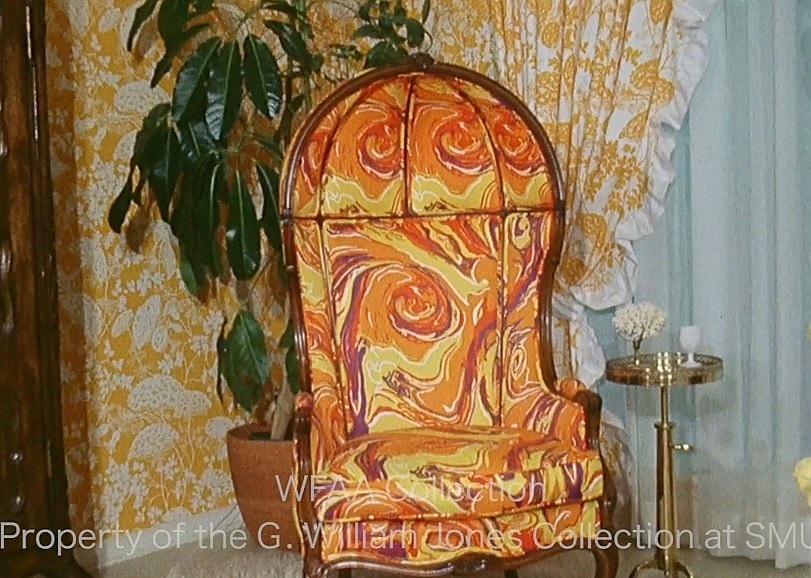
So, yeah, fashion and interior design trends were pretty… in-your-face in 1971. In the three screenshots below, you’ll see some retina-abusing images of with-it decor. The first features the always beautiful Phyllis George, the Denton native who was in the midst of her Miss America reign. In this clip, she has come back home to DFW for an appearance at an event in which a room designed with her in mind is unveiled (by decorators C. John Megna and William Farrington). She is wearing a dress designed by Carlo Bitetto specifically for her to wear IN THAT ROOM (!). You don’t often see sparkles and plaid cheek-by-jowl.

The clip with the super-color-saturated room and its battling patterns is here.

phyllis-george-room_jan-1971_c

phyllis-george-room_jan-1971_b

phyllis-george-room_jan-1971_a

*

FEBRUARY 25, 1971

Before Lion Country Safari, Mesquite had World of Animals, a drive-thru safari park. World of Animals had a wild-animal veterinarian who visited regularly from California: Dr. Martin Dinnes. Below, Dinnes is seen providing dental care to popular attraction Harold the Chimp. This is not really something I expected to see, but there you are. (Dinnes was later engaged to actress and wildlife preservation activist Tippi Hedren for several years.)

The clips of Dinnes being interviewed and preparing Harold for a tooth extraction (and I grimaced a bit, because the camera keeps rolling during the procedure, so be warned!) are here and here. (The last clip has a shot of Harold’s hand, which, understandably, appears to be gripping the chair.) That is one well-behaved, chill chimp!
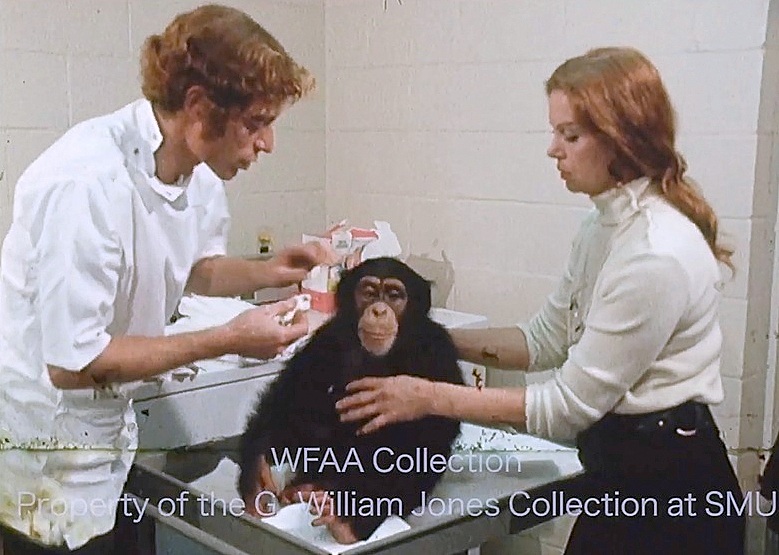
dinnes-martin_harold-chimp_022571_WFAA

*

MAY 18, 1971

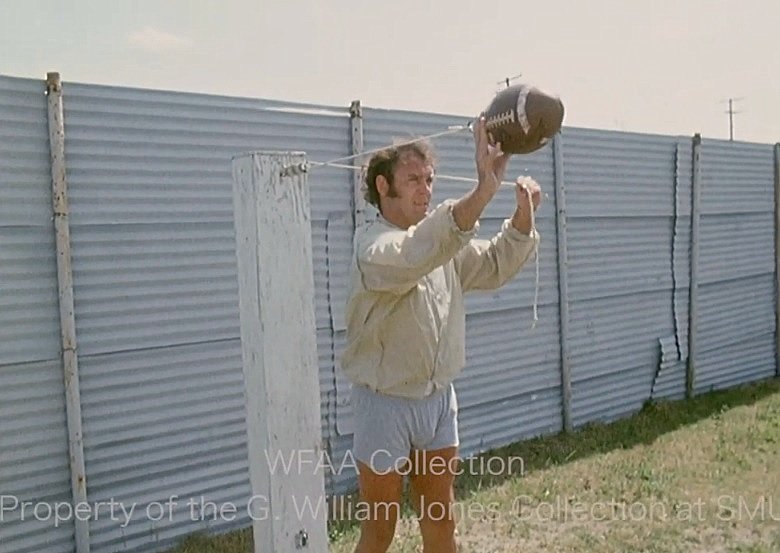
In 1971, there was an ongoing battle between old quarterback Craig Morton and NKOTB Roger Staubach over who would be named the team’s official starting QB. Coach Tom Landry worked for months with a two-quarterback system, alternating them from game to game — he was fine with this, but everyone else hated it. Below are screenshots of Morton and Staubach at the Cowboys practice field. I know virtually nothing about sports training, but this, um, extremely low-tech gadget struck me as weird. And funny. I mean, okay, it was 1971, but surely there was something more technologically advanced than this? It’s a football on a string, tied to a post. And maybe there’s a spring or something in there. This must have been effective. Rog looks like he’s straining. I don’t know. But I love it.

See Craig in an interview with Verne Lundquist from May 18, 1971 about his elbow and shoulder injuries here, and then using the football-on-a-string thing (and then training with Staubach) here; and see Roger interviewed on the same day about really, really wanting to be the starting QB here, and then he hits the string thing here before working out with Morton in what must have been a fairly tense period of both of their careers.
morton-string_WFAA_may-18-1971

staubach-string_WFAA_may-1971

*

JUNE 1971

Medical examiners used to be on the news a lot. One who popped up frequently was Tarrant County M.E. Dr. Feliks Gwozdz. I was amused more than I should have been when I saw the skull-and-crossbones coffee mug on his desk. I hope it said “World’s Greatest Coroner!” on the back.

The silent footage of Dr. Gwozdz at his desk is here.

skull-crossbones_feliks-gwozdz_june-1971

*

JULY 14, 1971

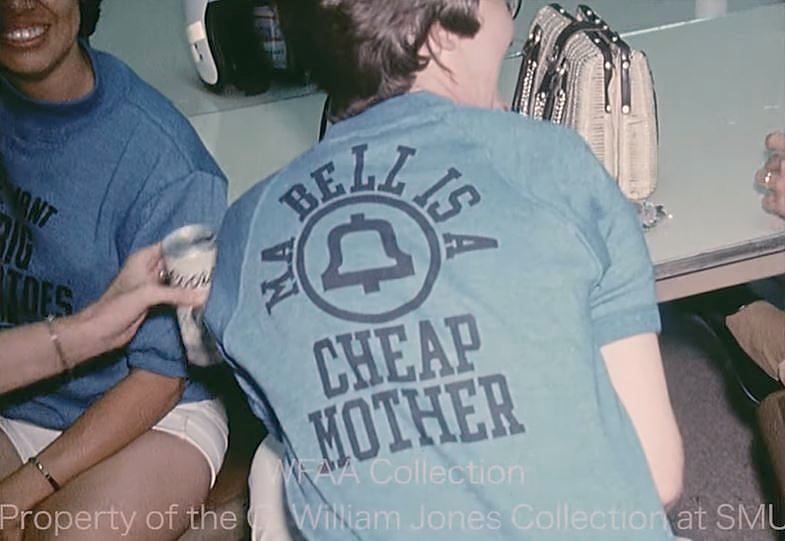
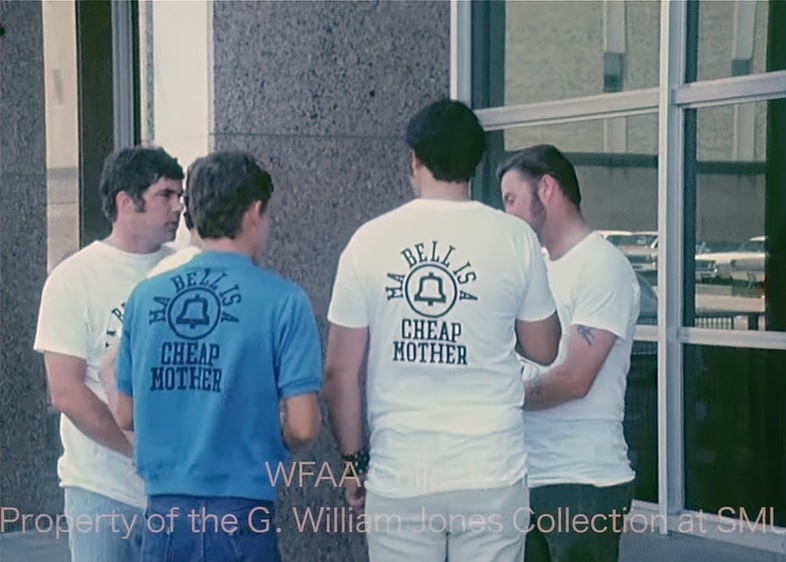
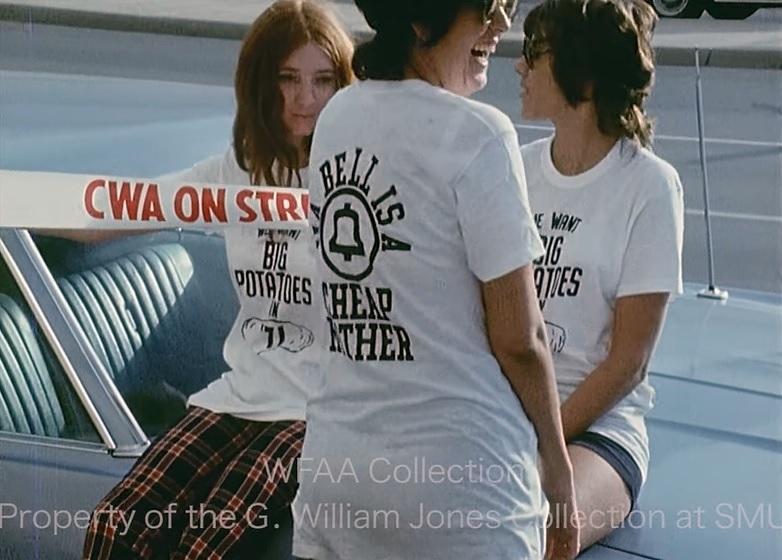
Back in 1971 there was what seemed like the threat of a union strike every 10 minutes. I enjoyed the footage of a bunch of Southwestern Bell employees who look like they were probably a lot of fun to hang out with. Their t-shirts read “Ma Bell Is a Cheap Mother,” which is just great.

Strike footage is here (about 2½ minutes) and here.
SWB-strike_july-14-1971_big potatoes

SWB-strike_july-14-1971_ma bell is a cheap mother

SWB-strike_july-14-1971_WFAA

*

JULY 1971

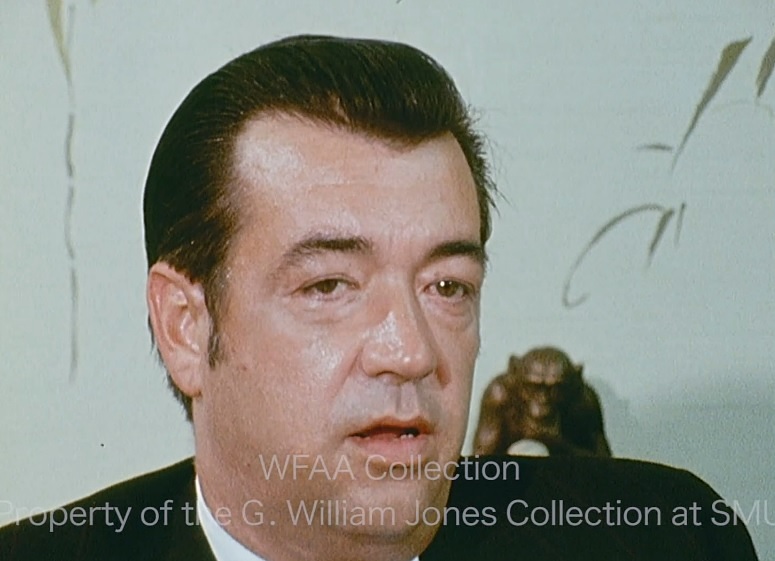
One of the top stories of 1971 was the endless furor set off by court-mandated school busing in attempts to desegregate schools. It was a mess. The man seen below is attorney Bill Brice, a leader of one of the many anti-busing groups. …Surely the cameraman noticed the monkey.

Man with monkey can be seen here.
anti-busing_bill-brice_monkey_WFAA_july-8-9-1971

*

AUGUST 29, 1971

When the Dallas School Board and Supt. Nolan Estes weren’t pulling their hair out over desegregation, they tackled other issues. One of which was so overshadowed by anti-busing demonstrations that it barely got any play, but I find it really interesting. It concerned Crozier Tech High School downtown. At the end of the 1970-71 school year, the landmark school was closed, and there was lots of discussion on what the DISD should do with the building/land, which they owned (2218 Bryan). This press conference was supposed to be about Estes’ vision of a 40-story school-office complex, which he suggested be built on the land — the first 10 floors would be for school use, and the top 30 floors would be leased to businesses as office space, with leases, theoretically, paying for construction and maintenance of the building. The building was never built (and thankfully, old Tech still stands). School board president John Plath Green and Supt. Estes sit in front of an architectural drawing of the envisioned DISD skyscraper. Too bad no one wanted to talk about it.

Footage from the press conference where reporters only want to ask about busing, is here.

super-school_DISD_crozier-tech_DMN_082971_WFAA_SMU

*

SEPTEMBER 23, 1971

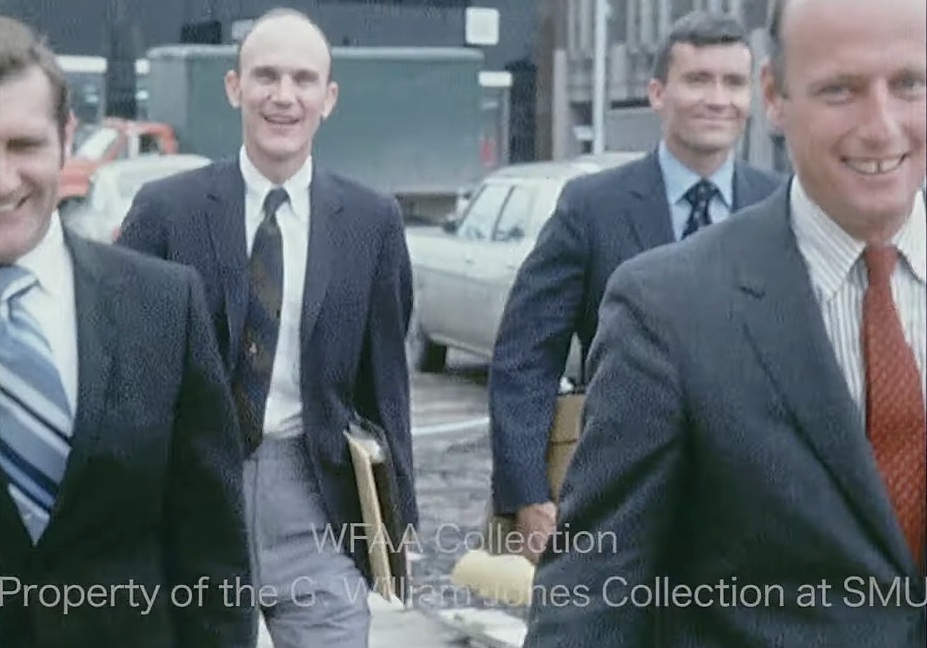
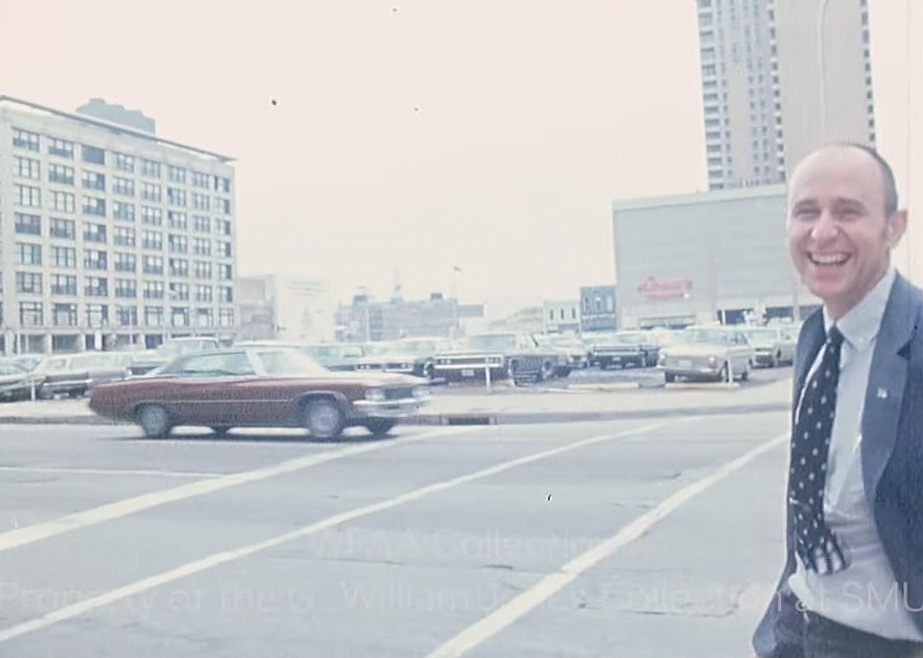
The Sharpstown Scandal was a bigger story than busing, but, even though political scandals are juicy, it just didn’t get everyday people mobilizing, marching in the streets, and shouting each other down in public forums the way busing did. But it was a massive story, and several political careers bit the dust because of it. The sprawling and confusing securities-fraud scandal mostly involved drab politicians and business executives. But one part of it involved, bizarrely, six celebrated — if not beloved — NASA astronauts and an insurance company pension fund.

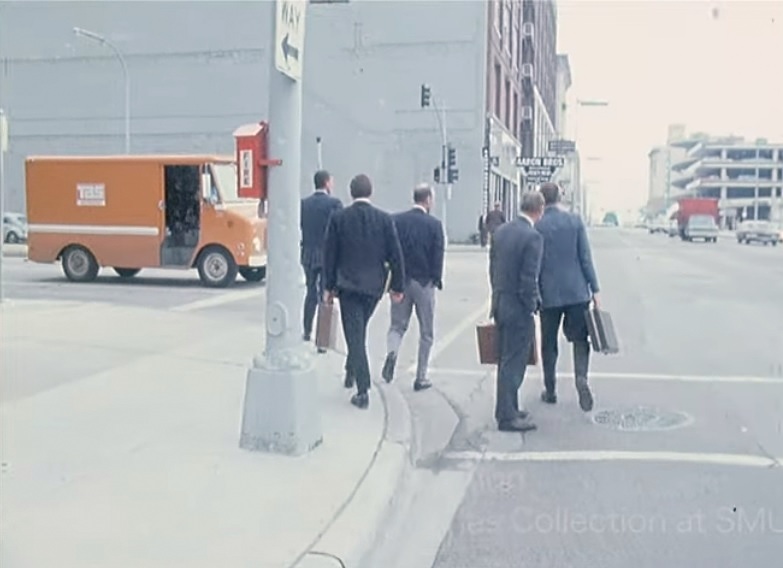
In this Channel 8 footage, you can see something you don’t see every day: five NASA astronauts walking together down the street (a sixth one was nearby, on his own). James Lovell, Pete Conrad, Fred Haise, Ken Mattingly, Richard Gordon, and Alan Bean were in Dallas on Sept. 23, 1971 to testify as witnesses before a federal grand jury that was investigating the activities surrounding the Sharpstown Scandal. These are screenshots of the five (minus Lovell), carrying briefcases through grubby downtown Dallas, and of Lovell on his own, exiting the Federal Court House. When I first watched this footage, it just seemed really odd: five internationally (galactically!) famous astronauts — heroes! — walking together down the street, without any kind of security or entourage. If you were a NASA freak (and there were a lot back then, at the height of the Apollo-Gemini programs) and you just happened to have walked past this group, your head would have exploded.

See Lovell exiting the sterile- and dystopian-looking courthouse on his own (that woman he holds the door open for has no idea who he is), and the others walking somewhat playfully down the street here (I love this footage!); a confusing wrap-up of the day’s events is here.
astronauts_WFAA_SMU_sept-23-1971

astronauts_WFAA_SMU_sept-23-1971_1

astronauts_WFAA_SMU_sept-23-1971_2

astronauts_WFAA_SMU_sept-23-1971_c

*

OCTOBER 14, 1971

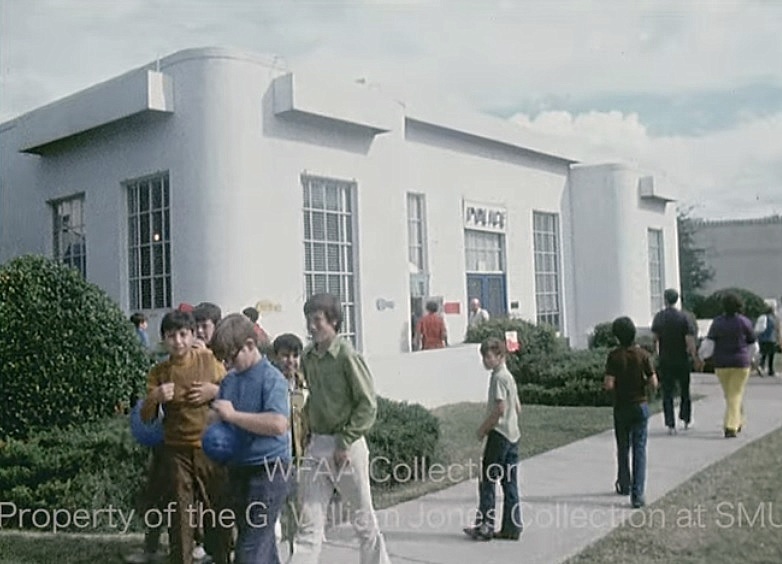
In footage from the State Fair of Texas, I was really taken by this building, which I swore I had never seen. It was the home of the “lost children” center during the fair, in the Dallas police HQ in Fair Park. It looks different to me now, but it’s still there, near the Aquarium. It looked better in 1971!

Lots of footage of crying children and harried parents, here and here.
fair-park_sfot_lost-kids_101471_WFAA_SMU

*

OCTOBER 1971

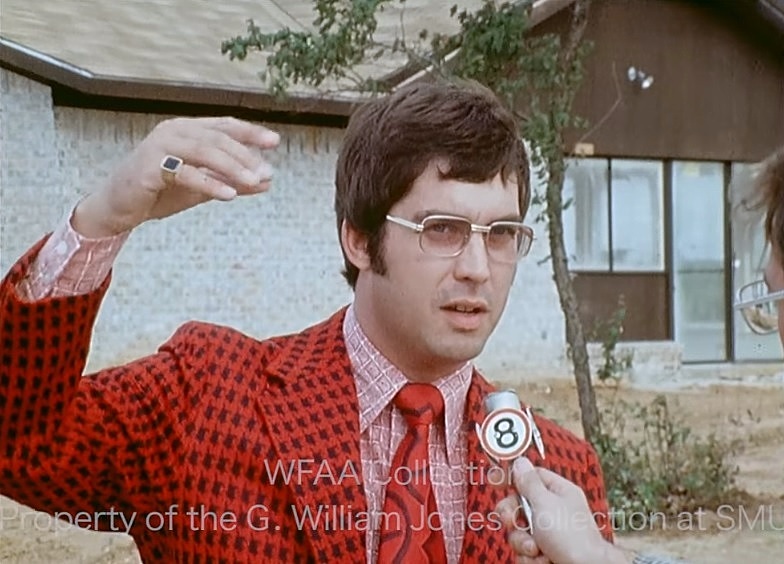
This young dandy is named John Ott (I’m not 100% sure about the spelling). He was a real estate developer in Euless. He couldn’t have been more on top of the 1971 fashion wave. Represent, Euless!

It’s a story about replanting trees (with, admittedly, interesting footage of trees being uprooted and replanted). Here and here.
developer_john-ott_euless_oct-29-30-1971_WFAA_SMU

*

OCTOBER 31, 1971

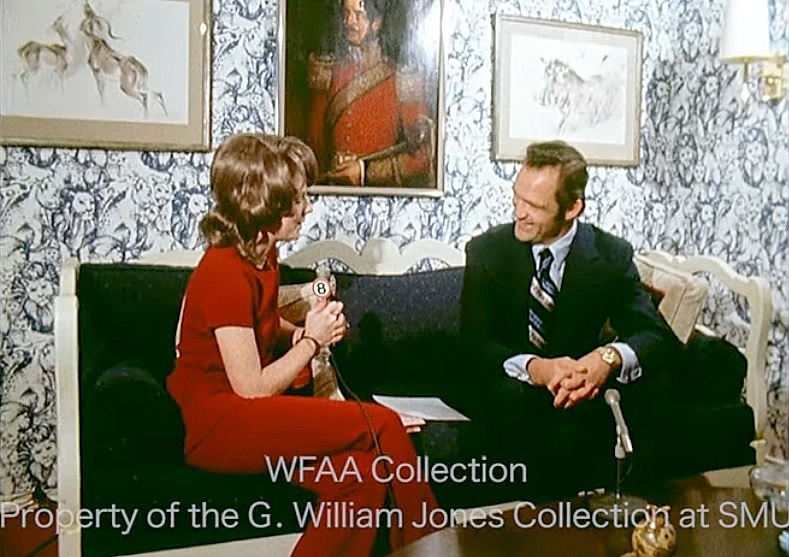
In the screenshots below, Channel 8 reporter Judi Hanna (who had recently debuted an unfortunate hairdo) interviews Dallas City Councilman Garry Weber about City Council things. I don’t know where this was filmed, but I only hope it wasn’t his home. It’s hard to focus on what anyone is saying, because of the tidal wave of stuff coming at you. (Ironically, he was being interviewed about sponsoring a change to the city charter in order to crack down on the “visual pollution” of unenforced sign ordinances.) I was so overwhelmed by this vista, that I somehow assumed I was seeing cupid-studded wallpaper. But no. Check out the second screenshot, which also includes a peek at the room’s drapes. I can’t tell where the wallpaper ends and the drapes begin.

Appropriately shown on Halloween night, clips from this report are here (followed by footage of signs-galore along Lemmon Avenue) and here.
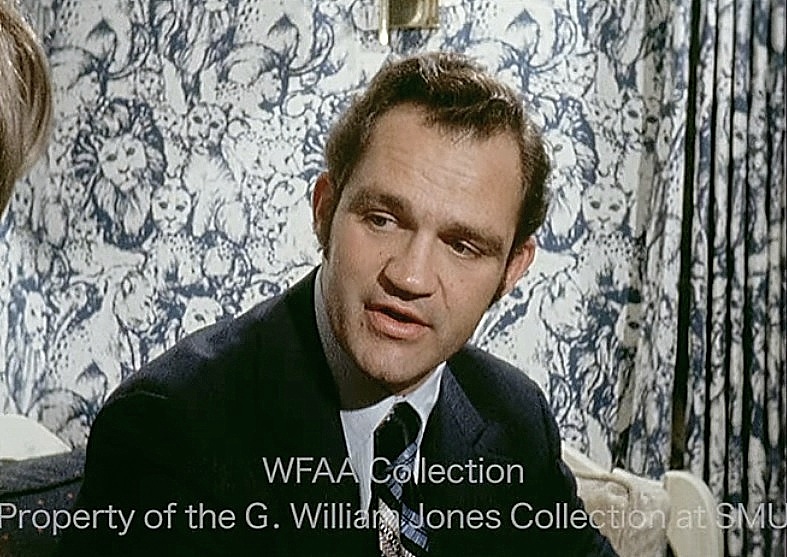
weber-garry_WFAA_SMU_oct-31-1971_wide

weber-garry_WFAA_SMU_oct-31-1971_drapes

*

OCTOBER 1971

Lastly, a shot of Mingus, Texas, a small West Texas town near Thurber. I just love this image. I think I found the location — here’s what it looks like now.

Why was the tiny town of MIngus being featured on a Dallas news report? The Greater Mingus-Thurber Metropolitan Area was in the news because it was the location of a commune of the controversial Children of God (i.e. “cult”). Actually, the “Children” were in the process of being evicted by the landowner, who, interestingly, was a TV preacher in Los Angeles (I guess even TV evangelists have a breaking point). Members of this group splintered, and a few moved to Big D for a while, where they continued to be newsworthy until they moved elsewhere.

The shot of Mingus is from one of the many clips contained in this Oct. 7 package, here (it is specifically at the 1:08 mark). Below that is a shot from a week later, after some of the self-described “Jesus Freaks” had landed in Dallas — a group member is seen walking through Exposition Park to their new HQ, at 639½ Exposition — it and other CoG footage from Oct. 14, 1971 is here (this specific shot is seen at the 17:18 mark). (If you are considering a documentary on the Children of God, there’s lots of footage for you in the WFAA archives at SMU.)
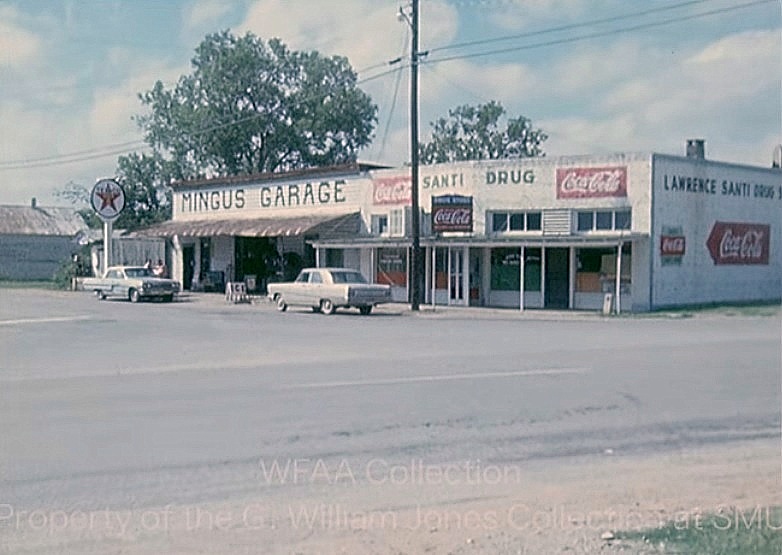
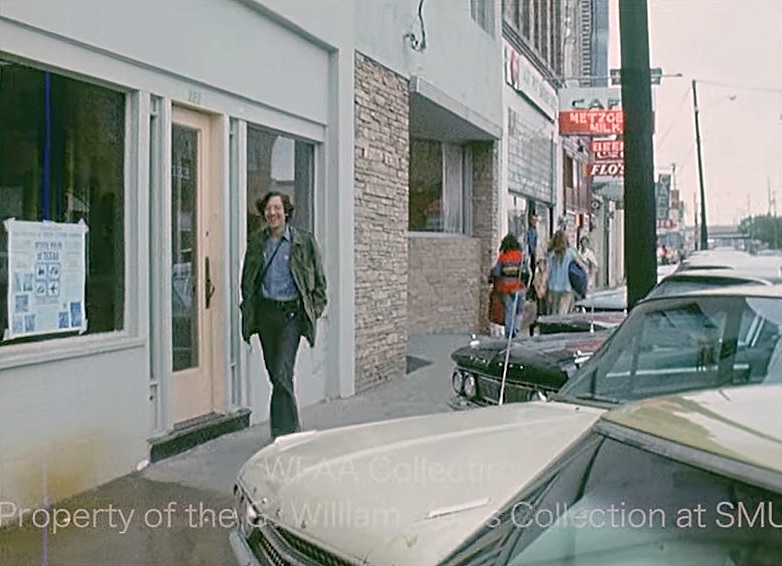
mingus_WFAA_SMU_100771

children-of-god_expo-park_WFAA_SMU_oct-14-1971

*

AUGUST 1971

This is a bonus.

As I worked my way through 1971, there was one truly amazing story. It involved the kidnapping of a toddler in Fort Worth. On Aug. 25, 1971, 21-month-old Melissa Suzanne Highsmith disappeared. Her 22-year-old mother, Alta, had hired a new babysitter, who was supposed to watch her for the day while Alta was at work. The babysitter picked Melissa up in the morning as planned, but she never returned the child. The babysitter and Melissa disappeared without a trace. There were no leads in the case for years. …And YEARS.

In 2022, the Highsmith family learned of an online DNA match, which would indicate they had found Melissa. Eventually, it was determined that a 50-something-year-old woman named “Melanie” was actually the long-missing Melissa. The woman who kidnapped her raised her as her own daughter, and Melissa never suspected she wasn’t the woman’s child (although she says she never felt really “connected” to her).

Melissa (she now uses “Melissa” again) was reunited with her family at the end of 2022. One report I read said that she grew up only 10 minutes from the Fort Worth apartment her mother lived in. Despite the Highsmith family’s 51 years of loss, grief, worry, and suffering, there has ultimately been a happy ending!

In the screenshot below from an Aug. 26, 1971 Channel 8 story, Alta Highsmith shows a photo of her missing daughter to the camera. The report is here.
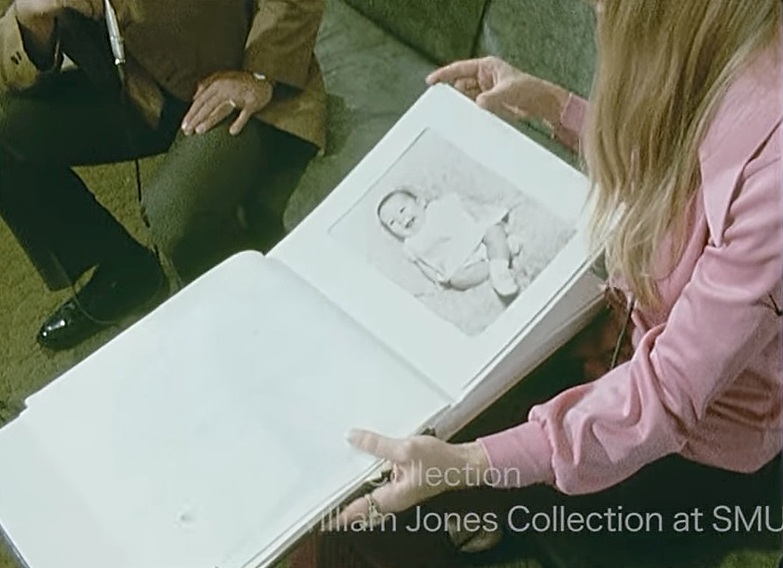
kidnapping_highsmith_WFAA_SMU_aug-26-1971

**

If you managed to get all the way through this, you deserve an award! This might be the longest thing I’ve written all year! I’m more than ready for my 1971 Jeopardy challenge (Dallas edition)!

***

Sources & Notes

All screenshots are from news film in the WFAA Collection, held by the G. William Jones Film & Video Collection, Hamon Arts Library, SMU. Clips are posted regularly from this Channel 8 collection on YouTube, here.

My previous collection of WFAA screenshots can be found in the post “No-Context Channel 8 Screenshots: 1970-1971.”

lady mailman june 1971 WFAA_sm

*

Copyright © 2023 Paula Bosse. All Rights Reserved.
Uncle Scooter Reads the Funnies: 1940-41

radio_uncle-scooter_wfaa-wbap-kgko-combined-family-album_1941Little Man and Uncle Scooter…

by Paula Bosse

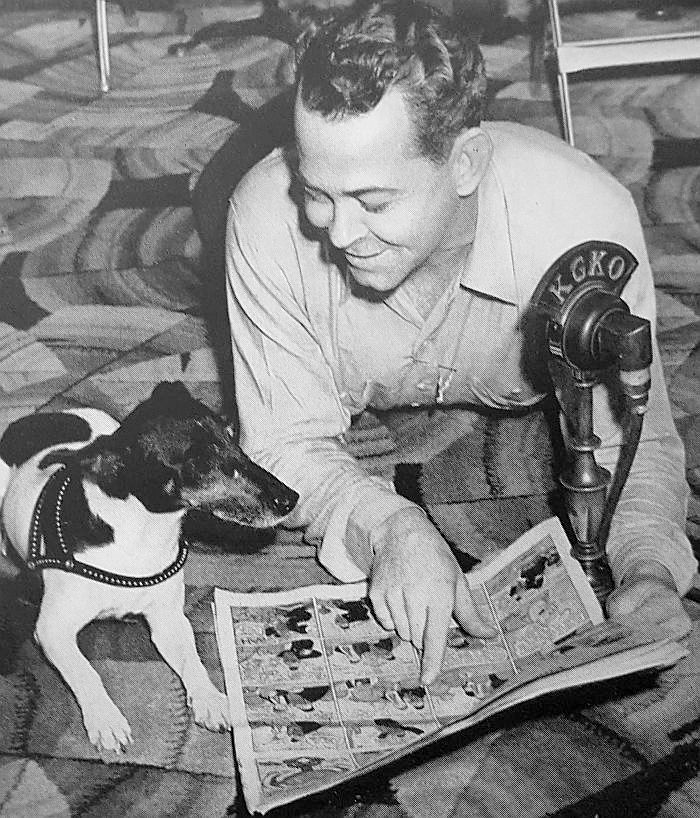
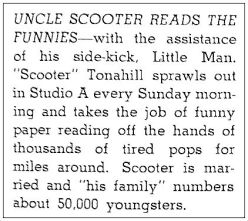
Several years ago, I was flipping through a promotional booklet for radio stations WFAA, WBAP, and KGKO, and I came across the photo above. I think about this photo a lot. It shows radio personality “Uncle Scooter” lying on the floor next to a KGKO microphone, reading the comics over the air to a vast audience of children and pointing out something pertinent to his trusty companion, a fox terrier named Little Man. I love this photograph. It makes me smile every time I see it. Wouldn’t it be great if this was how he actually conducted his broadcasts — on the floor with his doggie next to him? Here’s the caption:

uncle-scooter_dog_wfaa-wbap-kgko-combined-family-album_1941_caption

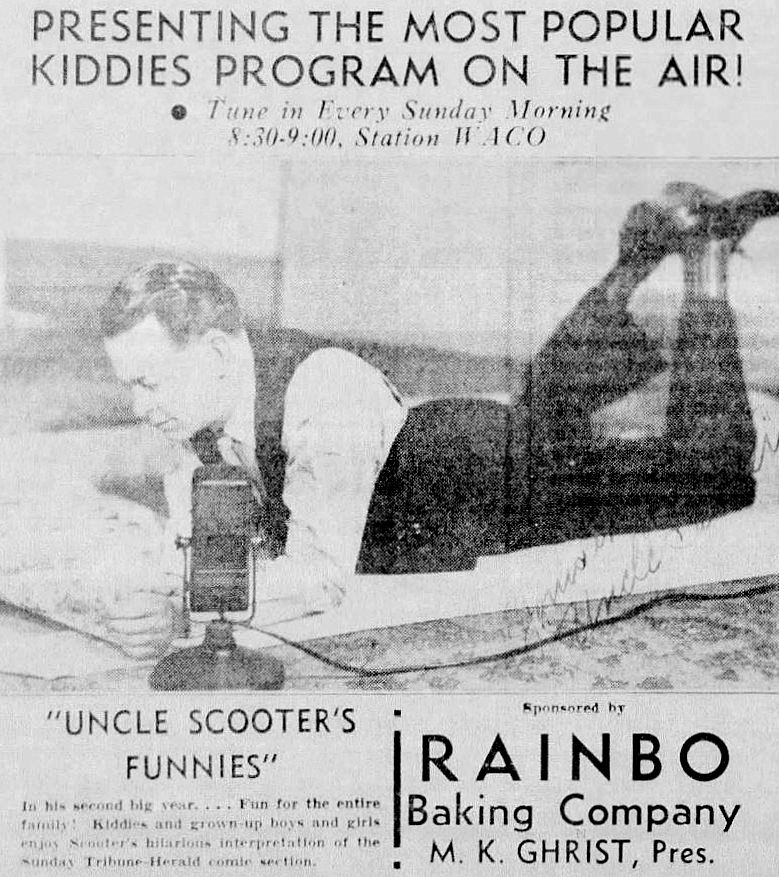
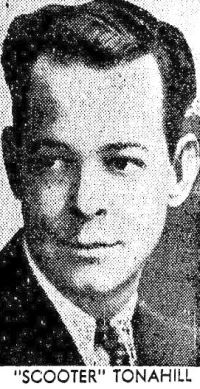
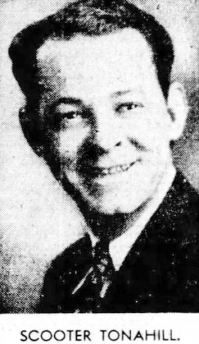
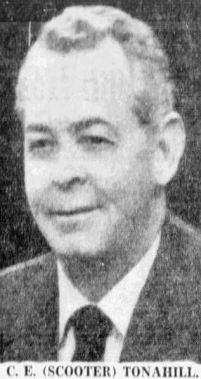
Clarence E. Tonahill (1904-1954) — known to everyone as “Scooter” — appears to have begun his radio career in Waco at the appropriately named station WACO. He then worked at KGKB in Tyler, then returned for a few years to WACO, and then to KTSA in San Antonio. Like most people in broadcasting in those days, he did a little bit of everything: he was an announcer, a newsreader, a sportscaster, and an entertainer. One of his most popular shows was just him reading the Sunday comics over the air for children. Below, a WACO ad from 1937 showing Uncle Scooter, again, lying on the studio floor (no dog, though).

uncle-scooter_waco-tribune-herald_010337Waco Tribune-Herald, Jan. 3, 1937

Around September 1939, he moved to Fort Worth to begin a busy stint at KGKO, a DFW station co-owned by The Dallas Morning News and The Fort Worth Star-Telegram (this was part of the very unusual WFAA-WBAP radio broadcasting partnership). He started as an “announcer” (which might well have included cleaning up the studio!), but he quickly graduated to doing a lot of sports-announcing and color commentary (football and boxing), man-on-the-street interviews, and personal appearances. He also hosted several shows, including a weekday morning show called “Sunrise Frolic.” But Sundays… Sunday mornings were set aside for his funnies-reading.

1940_radio_uncle-scooter_FWST_090840Fort Worth Star-Telegram, Sept. 1940

1940_radio_uncle-scooter_FWST_091540FWST, Sept. 1940

1941_radio_uncle-scooter_FWST_031641FWST, March 1941

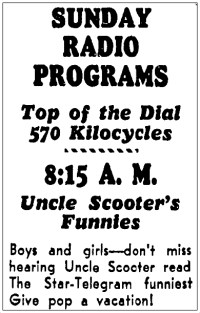
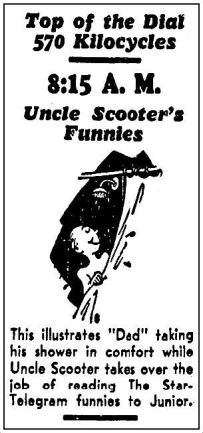
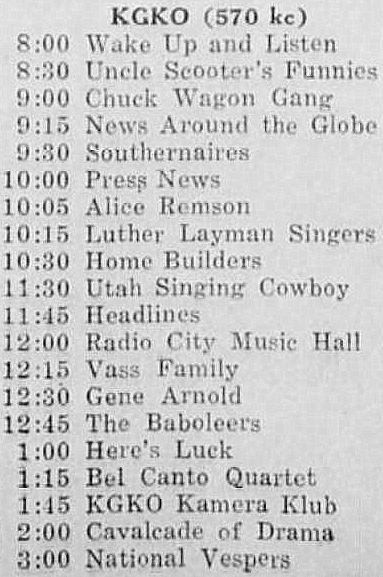
The Sunday lineup on KGKO, before and after the funnies:

1940_radio_uncle-scooter_bryan-tx-eagle_121440Bryan Eagle, Dec. 1940

I see listings for the show in 1940 and 1941 — and then, briefly, in 1947. His obituary says that Tonahill retired from his career as a broadcasting personality in 1946 and opened his own business in Fort Worth, Scooter’s Radio Supply (a supplier of broadcasting equipment to stations around the country).

He must have been a bright, friendly voice on the radio. I’d love to know the role Little Man played (Little Man was Scooter’s real-life pet and was described in a magazine profile as Scooter’s “favorite hobby”). I have fond (if somewhat vague) memories from my childhood of Bill Kelley reading the comics on The Children’s Hour on Channel 5 — but I can say without hesitation that things on The Children’s Hour would have been a whole lot more interesting if he’d just had a cute little dog with him!

1940_scooter-tonahill_FWST_042040_kgko-ad_det_photo1940_scooter-tonahill_FWST_100940_kgko-ad_det_photo1940

1954_tonahill-clarence-e_FWST_072654_obit_photo1954

kgko_19391939

***

Sources & Notes

Top photo from “WFAA, WBAP, KGKO Combined Family Album” (Dallas-Fort Worth, 1941).

radio_uncle-scooter_wfaa-wbap-kgko-combined-family-album_1941_sm

*

Copyright © 2023 Paula Bosse. All Rights Reserved.
Orphaned Factoids: Year-End Grab Bag, 2017

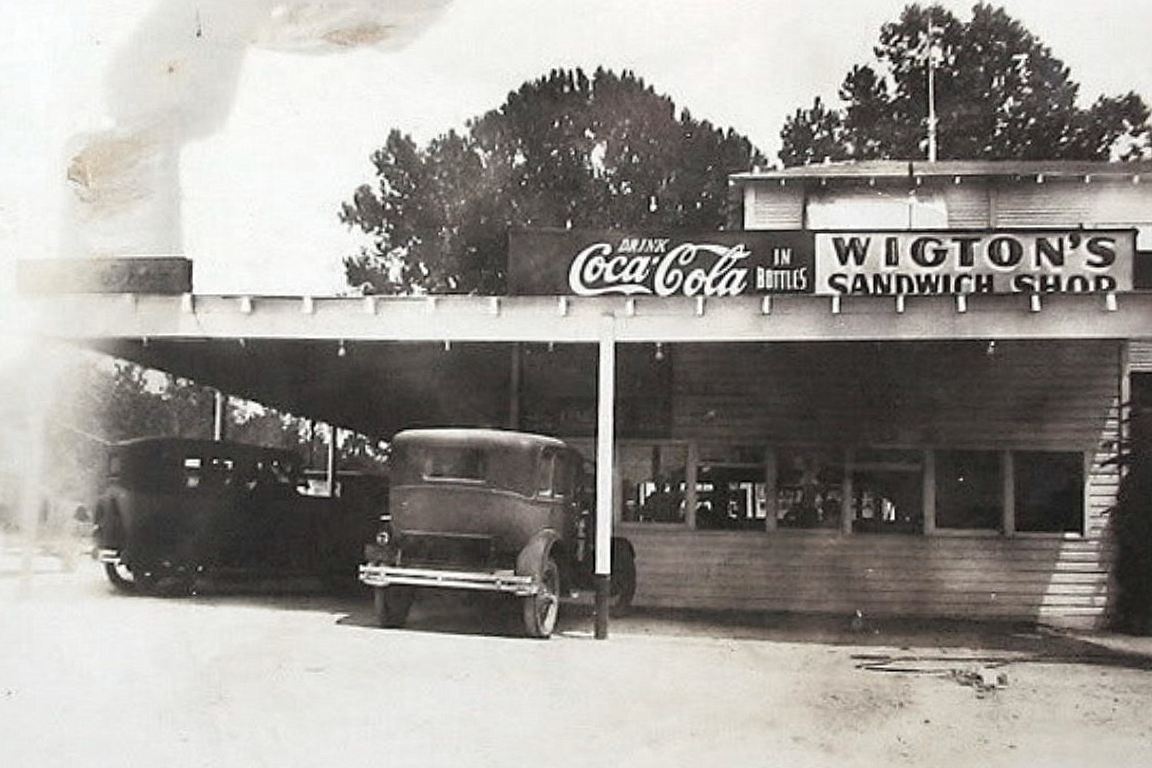
wigtons-sandwich-shop_flickr_colteraWith a name like “Wigton’s…”

by Paula Bosse

Time for another year-end collection of miscellaneous bits and pieces that don’t really belong anywhere, so I’m compiling them here in a weird collection of stuff. Enjoy! (Most clippings and photos are larger when clicked.)

*

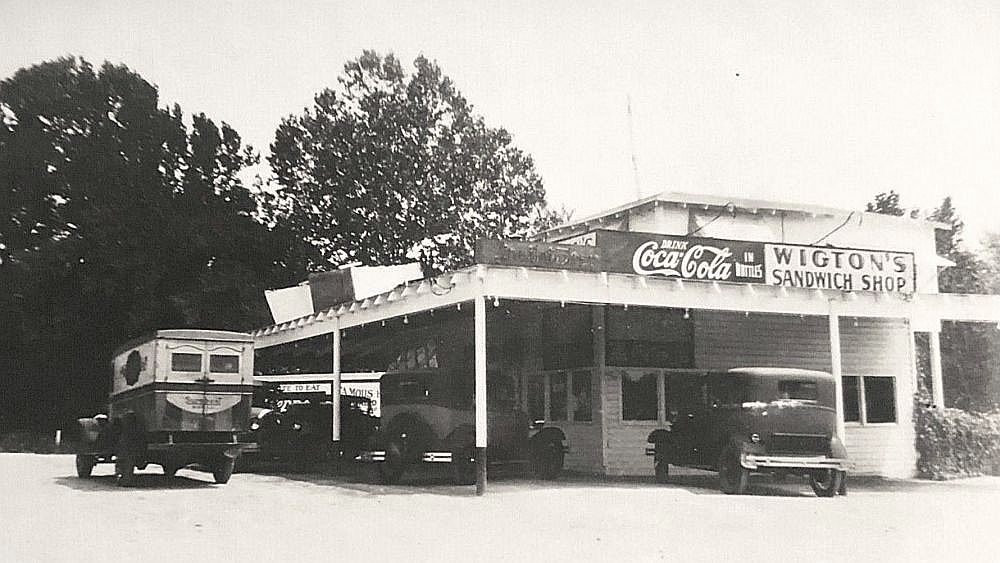
Above, Wigton’s Sandwich Shop, owned by Charles J. Wigton. It looks like it was located near the dreaded East Grand-Gaston-Garland Road intersection. I found one listing in the 1932 city directory for this little “soft drink stand” which also served as the residence of Mr. and Mrs. C. J. Wigton. The address was simply “south side of Gaston Ave., 3 lots east of East Grand Ave.” (Found on Flickr.) And somehow there’s a second photo of this place out there — the one below was found on eBay.

wigtons-sandwich-shop_white-e-grand-and-gaston_ca-1930_ebay

*

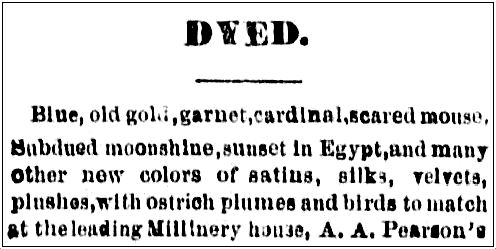
colors_ad_dallas-herald_112580Dallas Herald, 1880

You know, you just don’t see colors like “scared mouse,” “subdued moonshine,” and “sunset in Egypt” anymore. Pity. (Ad for A. A. Pearson’s millinery house.)

*

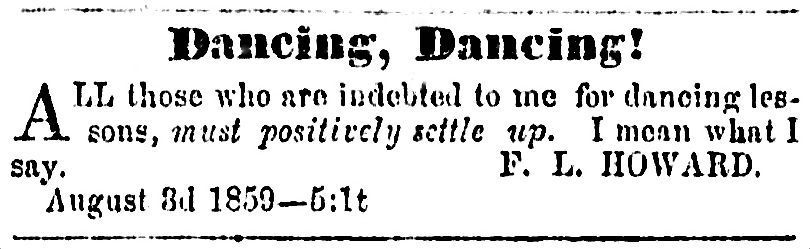
dancing_dallas-herald_1859Dallas Herald, 1859

“All those who are indebted to me for dancing lessons, MUST POSITIVELY SETTLE UP. I mean what I say.” Do not mess with dancemaster Howard. (I’m actually a little shocked someone was offering dancing lessons in Dallas, which, in 1859, was podunker than podunk.)

*

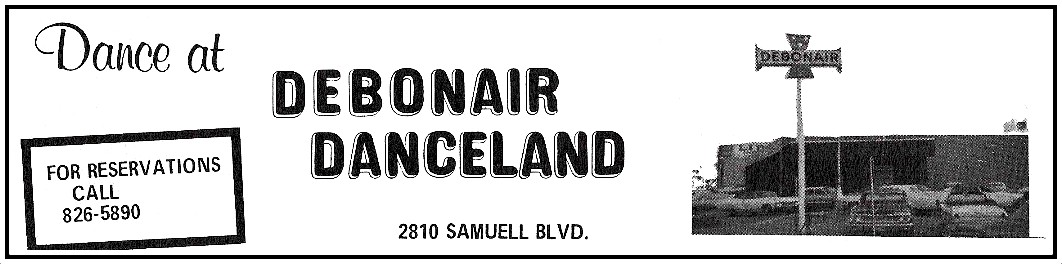
ad-debonair-danceland_ca19691969 Dallas directory

This is the only photo I’ve been able to find of Debonair Danceland (what a great, great name for a club). Depending on whether you were a regular, the adjectives generally used to describe the legendary dancehall are either “notorious” or “beloved.” It opened in 1967 and closed in 1995. As Bill Minutaglio wrote in The Dallas Morning News, it was “one of Dallas’ last rough-hewn links to the brawny honky-tonk highway” (DMN, July 25, 1995). It certainly had a colorful life. For starters there was a “suspicious” double bombing that ripped the place apart in 1968 (I don’t know if the photo in the ad above shows the place pre- or post-blast). There was a lot of … um … “activity” that went on at Debonair Danceland over the years which kept police-beat reporters busy. It was also apparently quite popular with bored housewives who tippled away their afternoons. (See a not-very-clear-but-at-least-larger grainy image of the photo in the ad here.)

*

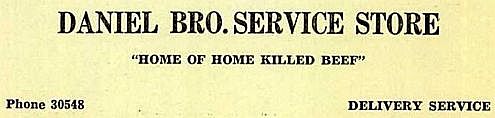
ad-home-killed-beef_hillcrest-yrbk_19401940 Hillcrest High School yearbook

“Home-killed beef” is the best-killed beef.

*

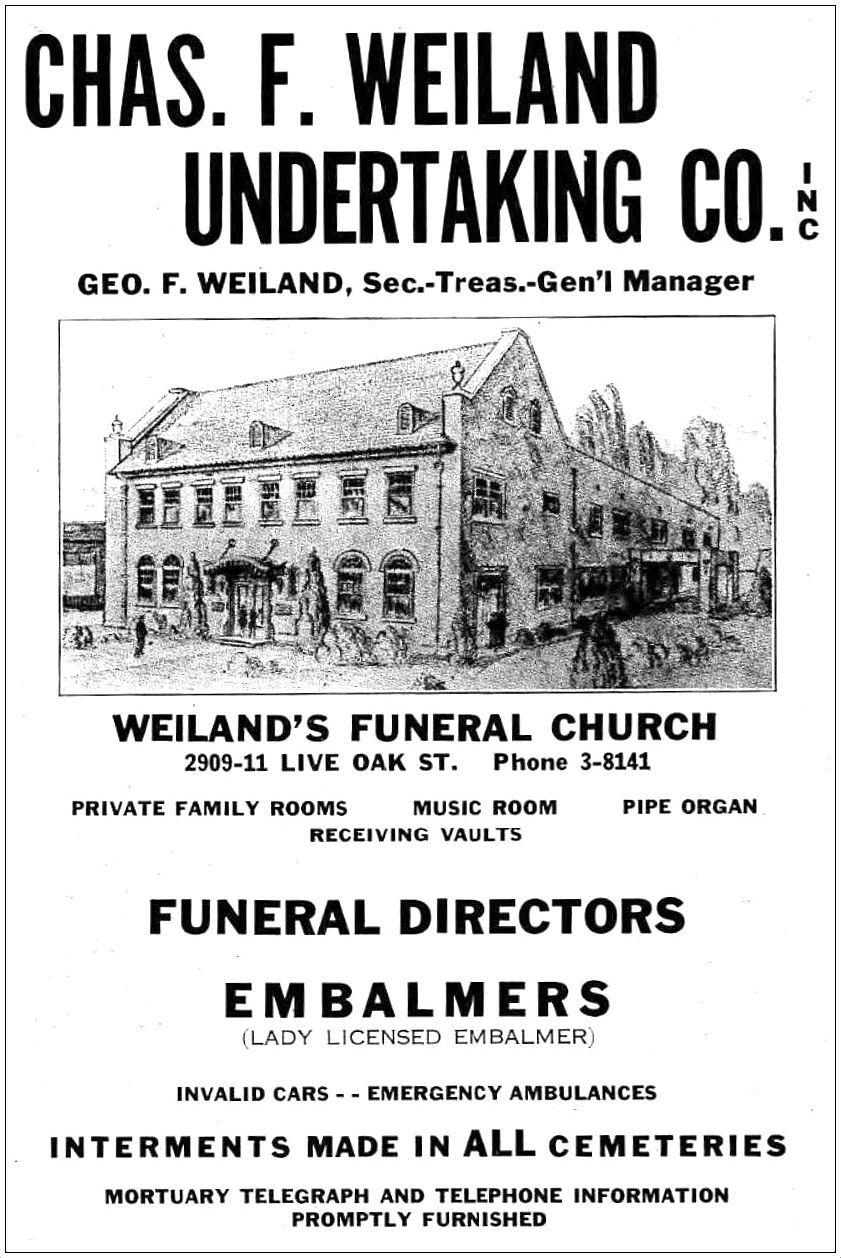
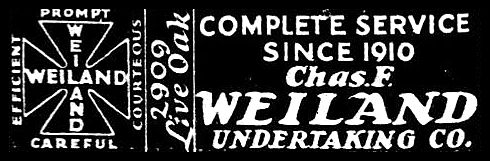
weiland-funeral_1930-directory1930 Dallas directory

weiland_19291929

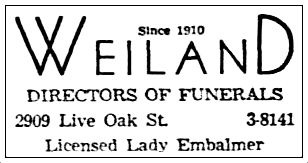
weiland_lady-embalmer_19411941

The Chas. F. Weiland Undertaking Co. was one of the city’s top funeral homes. They really promoted the fact that they had a “licensed lady embalmer” — I suppose some people preferred to have their mothers and other dearly beloveds tended to by a woman.

*

headcheese-poisoning_galveston-news_011994Galveston News, 1894

Beware the head cheese. …Always.

*

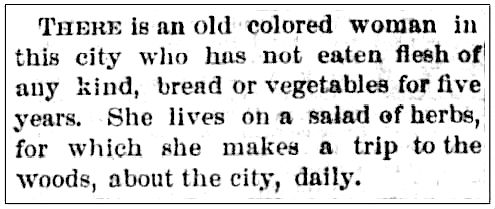
vegetarian_dallas-herald_050274Dallas Herald, 1874

Maybe even go cold turkey and completely ditch the head cheese for a diet consisting solely of “a salad of herbs.”

*

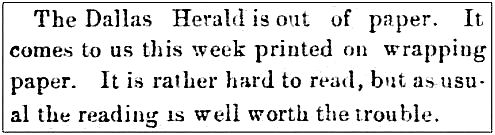
paper_houston-telegraph_121056Houston Telegraph, 1856

“The Dallas Herald is out of paper. It comes to us this week printed on wrapping paper. It is rather hard to read….”

*

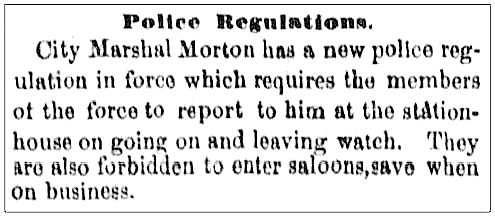
police_dallas-herald_dallas-herald_050980Dallas Herald, 1880

I’m sure there is an interesting and most likely embarrassing story behind the implementation of this new police regulation.

*

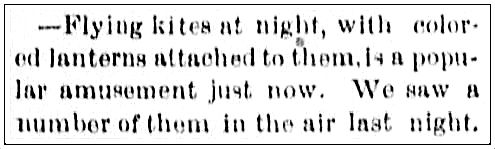
kites-at-night_dallas-herald_072577Dallas Herald, 1877

This sounds wonderful.

*

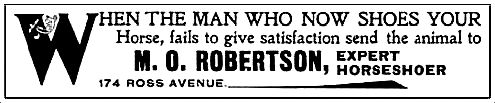
ad-robertson-horseshoer_1900-directory1900 Dallas directory

Go to the M. O. Robertson, the expert horseshoer who will not fail to give satisfaction. Because all those others? They’re gonna fail. Not “if” but “when.”

*

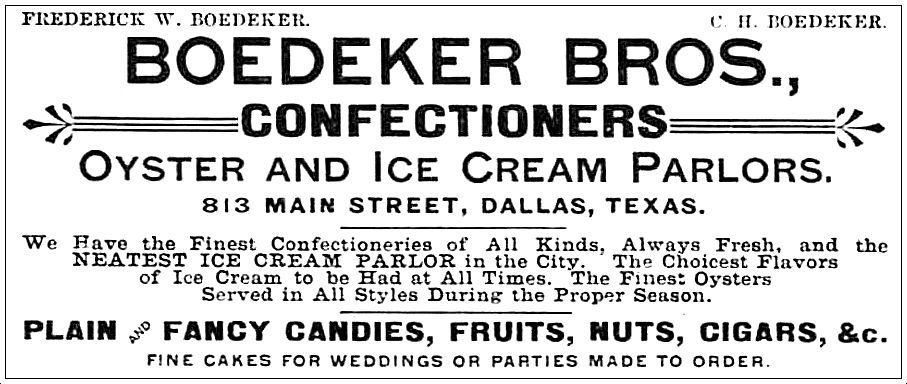
ad-boedecker-bros_oysters-ice-cream_city-directory_18901890 Dallas directory

The sensation generated by seeing an ad with the words “oyster” and “ice cream” next to each other — cheek-by-jowl, as it were — is not a pleasant one.

*

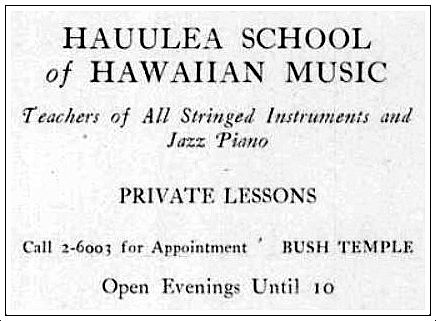
ad-hawaiian-music_bryan-street-high-school_1927-yrbk1927

Who knew? Ukulele-mania was alive and well in Big D in the ’20s.

*

sanger-bros_first-fashion-illus-in-ads-1881_centennial-ad-det_19721972 ad (detail)

A little tidbit on the history of commercial fashion illustration in Dallas, from a Sanger’s ad celebrating the company’s Centennial.

*

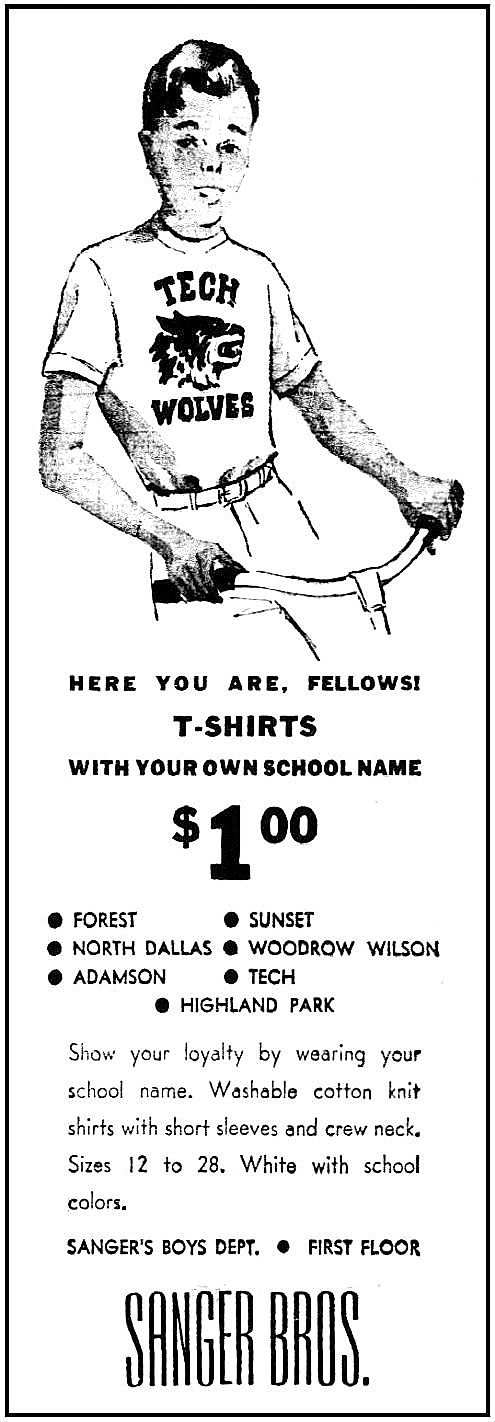
ad-sangers_high-schools_dmn_1008481948

Another Sanger’s ad. This one with a, let’s say “more populist” example of the store’s fashion-illustration chops.

*

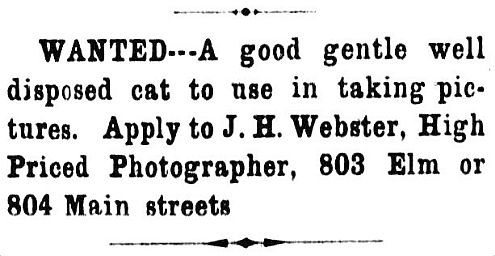
cat-wanted_dallas-herald_112387Dallas Herald, 1887

“WANTED—A good gentle well disposed cat to use in taking pictures. Apply to J. H. Webster, High Priced Photographer, 803 Elm or 804 Main streets.”

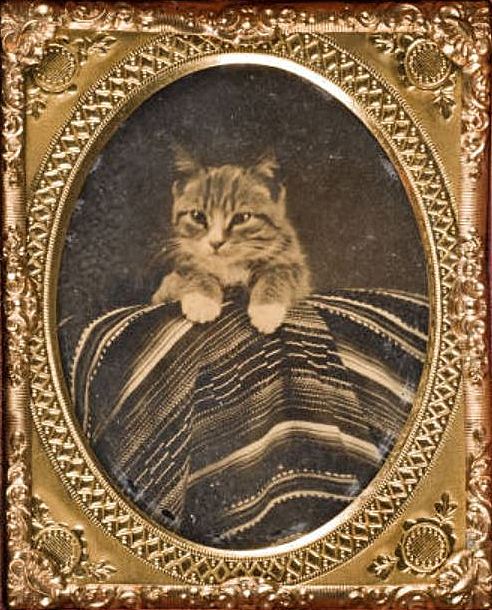
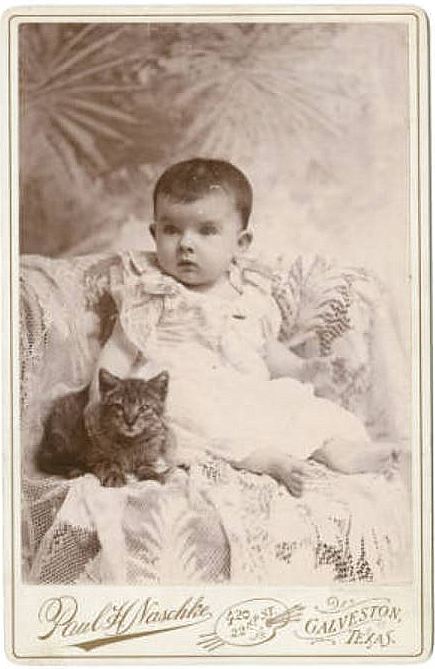
Okay, I’m a sucker. I love cats, and I love self-proclaimed “high-priced photographers.” Ergo, I must love this ad. I do. Seems like a good time to share a couple of 19th-century photographs of cats. 

cat_jones-coll_degolyer1860s, via SMU

cat_baby_degolyer1890s, via SMU

***

Sources & Notes

Dallas Herald clippings are from the Texas Digital Newspaper collection provided by UNT to the Portal to Texas History; you can peruse many scanned issues of The Dallas Herald (not to be confused with the later Dallas Times Herald) here.

“Cat Posed with Mexican Serape” is a cased ambrotype from the Lawrence T. Jones III Texas Photographs collection, DeGolyer Library, Central University Libraries, Southern Methodist University; more details on this photo can be found here. The article “Everyone Loves the Cat!” can be read on the SMU CUL blog “Off the Shelf,” here.

“Baby Seated with Cat” is also from the Lawrence T. Jones III Texas Photographs collection, DeGolyer Library, SMU; more info on the photo is here.

Want more? See other “Orphaned Factoid” lists here.

Most images are larger when clicked. Click away!

*

Copyright © 2017 Paula Bosse. All Rights Reserved.

Cowtown Extra: Fort Worth Zookeeper Ham Hittson and His Forest Park Friends

FW-zoo_hamilton-hittson_fawn_062937_UTAZookeeper Hittson and tiny friend…

by Paula Bosse

Today, Fort Worth. I was looking for photos of the old Forest Park in Oak Cliff (which was renamed Marsalis Park in 1925) and came across photos of the Forest Park Zoo. A search on the internet showed me that there was also a Forest Park Zoo in Fort Worth. I’ve never actually been a big fan of zoos, but I saw the photo above and was won over by its sheer cuteness. So let’s just take a little trip westward and enjoy some photos of cute animals, most of which feature zookeeper Henry Hamilton (“Ham”) Hittson.

Ham Hittson (1912-1966) began working as a zookeeper at the Forest Park Zoo in the early 1930s — if his obituary is correct, he became the zoo’s director in 1933 — at the age of only 21! During World War II he served for two years in the Coast Guard, assigned to work with sentry and attack dogs and with patrol horses. After the war he returned to the zoo (he was the director of the zoo for 21 years) and eventually became the director of the Fort Worth Park Department. His 1966 obituary (he was only 54 when he died) noted that he was instrumental in forming the Fort Worth Zoological Association. And, well, these photos are very sweet.

(All photos are from the University of Texas at Arlington Libraries. Click pictures to see larger images; click the link below each photo for more information.)

*

The photo at the top is my favorite — it shows Hittson with a tiny fawn born the previous day. The photo above and the one below were taken on June 29, 1937.

FW-zoo_hamilton-hittson_fawn_062937-b_UTAMore info here

Below, Hittson with a new baby lion cub named Will (June 29, 1939).

FW-zoo_hamilton-hittson_lion-cub_062939_UTAMore info here

Actor Jimmy Stewart stopped by the zoo on May 22, 1953 to check out the zoo’s new rhinoceros, Marilyn Monroe. F. Kirk Johnson, zoological board president, is at the left and Hittson, then park department director, is at the right.

FW-zoo_jimmy-stewart_052253_UTAMore info here

Back to Ham’s zookeeper days: in the photo below (taken on August 2, 1940), he’s standing with one of the zoo’s top attractions, an elephant named Queen Tut. He’s bidding her farewell as he is about to leave for New York where he will pick up a baby elephant to be her companion. (Hittson and the zoo’s veterinarian brought the one-year-old elephant back with them in a trailer — they must have attracted a lot of stunned looks along the highway as they drove back from New York.)

FW-zoo_hamilton-hittson_elephant_080240_UTAMore info here

The arrival of this new elephant was big news — there were almost daily updates in the pages of the Fort Worth Star-Telegram. In order to buy the elephant, the zoo had had to take out a loan from the bank, and in what was both a speedy way to pay off the debt and a clever way to garner publicity, there followed a successful drive to raise money to pay off the “mortgage”: countless school children happily did their parts by contributing pennies, nickels, and dimes in the fundraising effort and then flocked to the zoo to see the newest member of the zoo family and welcome her to Fort Worth.

And here’s Queen Tut with her new little pal, Penny, on September 10, 1940.

FW-zoo_queen-tut-and-penny_091040_UTAMore info here

Awww.

***

Sources & Notes

There are tons of photos of the Forest Park Zoo in the UTA Libraries Special Collections, here (20 pages’ worth!).

*

Copyright © 2017 Paula Bosse. All Rights Reserved.

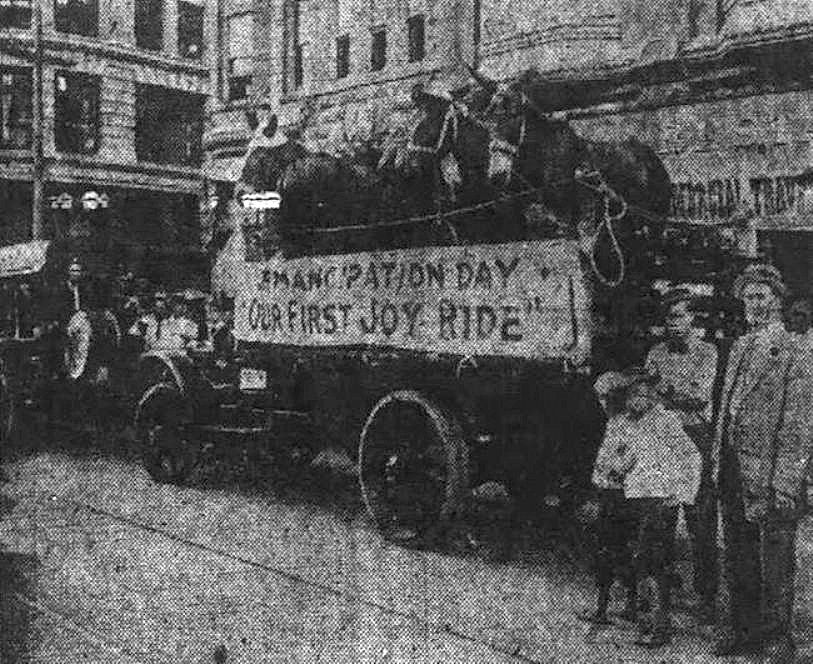
“Our First Joy Ride” — 1911

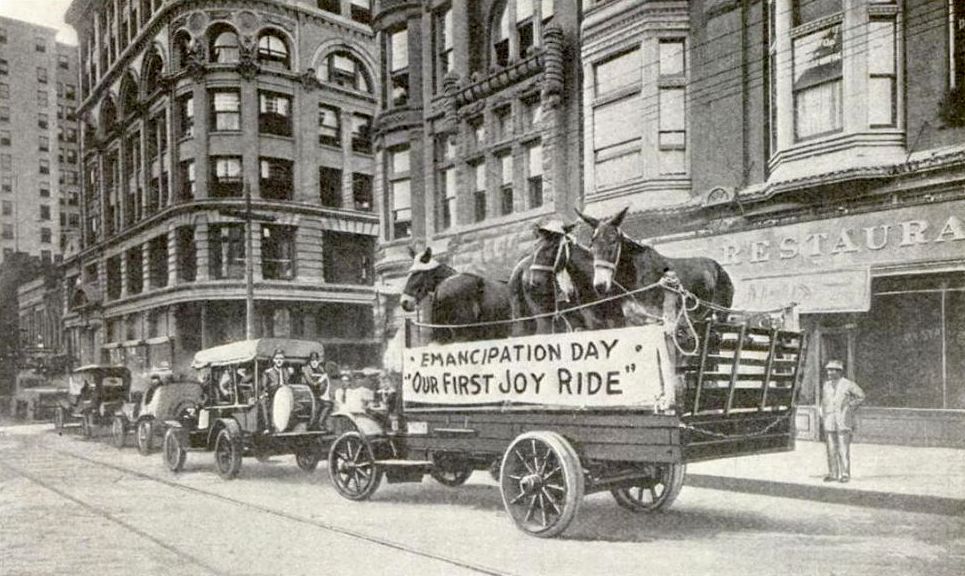
mule-joyride_pop-mechanics_jan-1912Mules taking a load off, Main & Ervay, 1911

by Paula Bosse

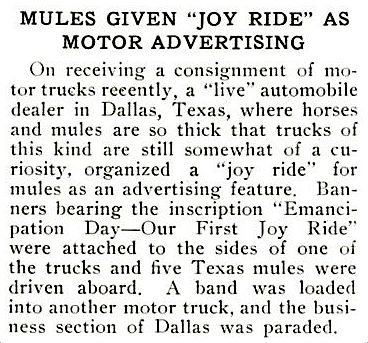
Flipping through the pages of a Jan. 1912 issue of Popular Mechanics — as one does — I came across a photo of a truckload of joyriding mules which was accompanied by this explanatory text:

mule-joyride_pop-mechanics_jan-1912-text

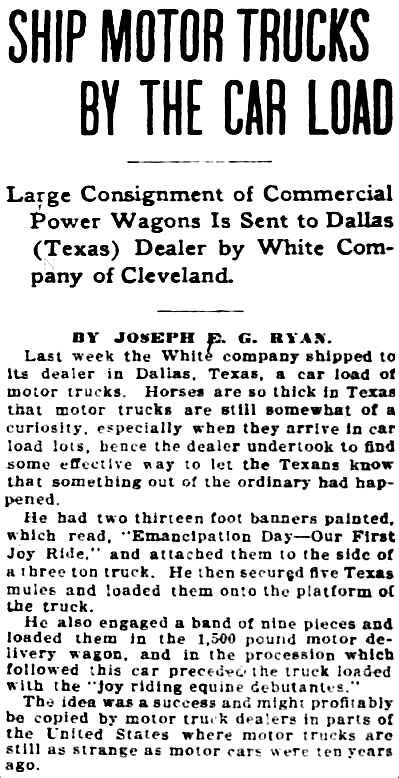
Ah, a publicity stunt. A Chicago newspaper offered a bit more background, and gave us the delightful phrase “joy-riding equine debutantes.”

mules_chicago-inter-ocean_102311Chicago Inter Ocean, Oct. 23, 1911

Another report added that the mules were “adorned with a collection of discarded women’s hats and bonnets elaborated with all the old ribbons, feathers and similar gee-gaws […] securely tied on with pink and red mosquito netting…. The procession was headed by Dallas’ most prominent business men in a brand new White 1912 ’30.'” (Automobile Topics magazine, Oct. 28, 1911)

Despite the fact that this, let’s face it, pretty unusual “parade” happened on Main St., with apparent participation by “prominent businessmen,” I can find no mention of it in local newspapers. Maybe because it was a publicity stunt and there was no advertising fee collected by the papers. The story ran in a handful of newspapers (Chicago, San Francisco, Washington, DC), and the Washington Post ran the photo below under the headline “New Way to Advertise Motor Trucks.”

mules_washington-post_102211Washington Post, Oct. 22, 1911

The White Motor Company (makers of the mule-laden truck) must have been quite taken with the unnamed entrepreneur’s banner, because they used the exact same wording on a banner draped on one of their trucks which was a featured attraction on Transportation Day at the 1915 Panama-Pacific International Exposition in San Francisco.

Let’s hope the original Dallas guy got a little something out of all this.

*

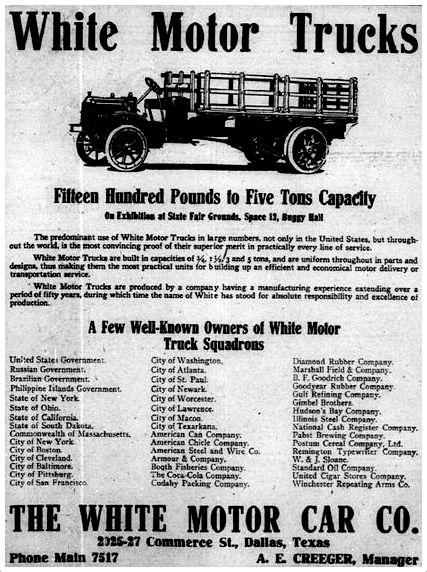
On further investigation into The Case of the Joyriding Mules, it appears that this was the brainchild of the General Manager of the White Motor Co., A. E. Creeger (or perhaps that of one of his gung-ho underlings). In a 1912 article in The Dallas Morning News, Creeger talks about the relatively soft truck market in Texas (!), and it’s easy to see why he was doing all he could to draw attention to his company’s line of trucks — even if it meant loading them up with “emancipated” livestock.

And here’s one of his ads from almost exactly one year after the mule stunt:

white-motor-co_dmn_101312Oct. 13, 1912

***

Sources & Notes

Top photo appeared in the January, 1912 issue of Popular Mechanics.

The “parade” (which took place sometime in the middle of October, 1911) is seen heading west on Main Street, just about to pass Ervay. The inescapable Wilson Building dominates the photo, with the tall, white Praetorian Building in the background. The restaurant at the right — at 1705 Main — was the California Restaurant, a Dallas eatery specializing in Chinese food since at least the 1890s.

*

Copyright © 2015 Paula Bosse. All Rights Reserved.