Flashback : Dallas

A Miscellany: History, Ads, Pop Culture

Category: Architecture/Significant Bldgs.

So You’re Considering a Move To Dallas … What’s That Tax Situation Like? — 1943

taxation_so-this-is-dallas_ca-1943_detYou and your gardener will *love* Dallas! (click for larger image)

by Paula Bosse

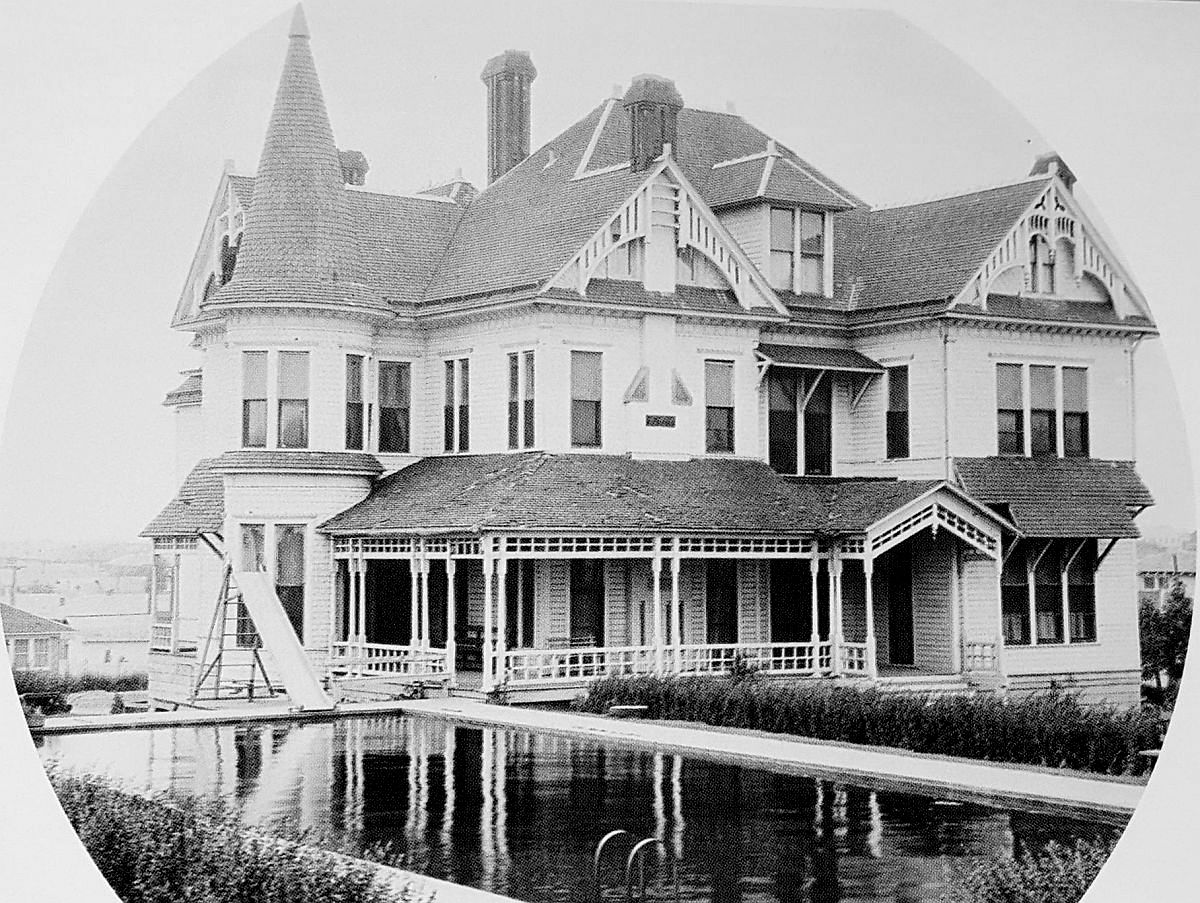
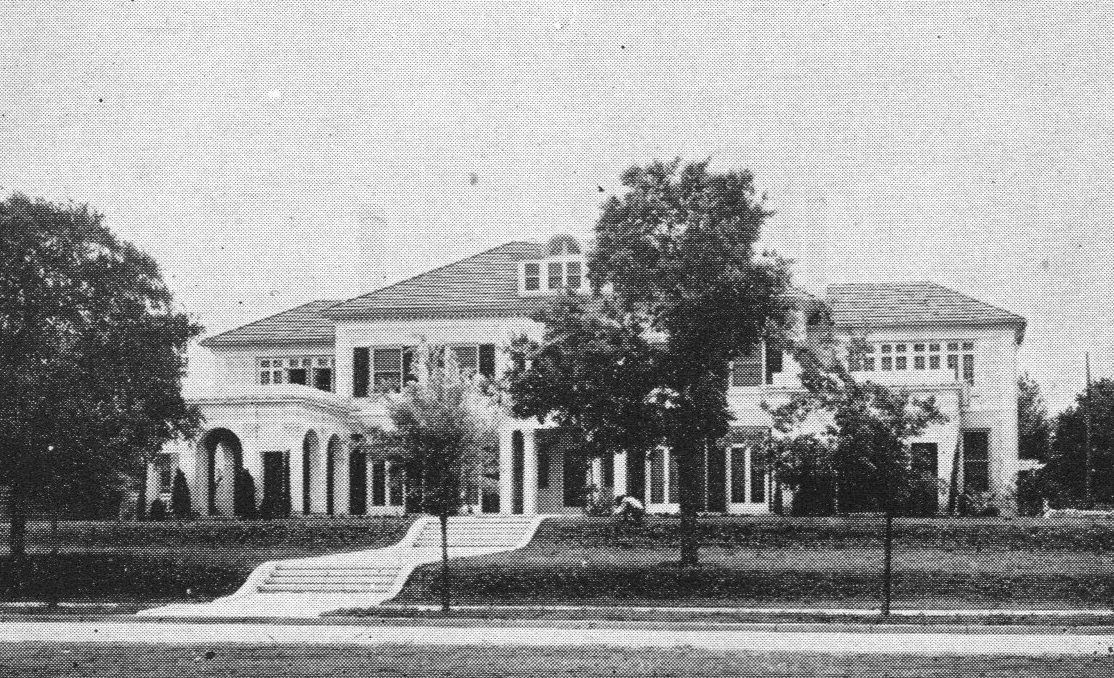
It’s 1943. You’re  considering relocating your business and your family to Dallas. You’ll probably be owning a mansion like the one pictured above. Should you and your large bank account settle in Dallas? I mean, is it really the best place … tax-wise?

Below is a page from a pamphlet called So This Is Dallas, a publication which was intended to sway decisions such as this. It was issued for several years by a group called “The Welcome Wagon,” and this edition came out sometime during World War II. Here’s what Big D had to offer in those days. (Click to see much larger image.)

taxation_so-this-is-dallas_ca-1943

*

Taxation…

Dallas offers a favorable tax situation that can be found in but few communities. There is no State income tax in Texas and no general sales tax.

Corporations operating in the State are subject to three forms of taxation. If they are foreign corporations, they must qualify legally in the State and pay a permit fee, an annual franchise tax and ad valorem taxes. If they are domestic corporations, they pay a fee to secure a Texas charter, an annual franchise tax and ad valoreum [sic?] taxes.

Texas laws do not discriminate against foreign corporations. The permit fee for a foreign corporation and the charter fee of a Texas corporation are arrived at in the same way, the proportionate amount of capital used in Texas by the foreign corporation and the capital stock of the domestic corporation. Franchise taxes for both foreign and domestic corporations are also assessed on the same basis.

Ad Valorem Taxes

All corporations, whether domestic or foreign, and all others owning property within the State of Texas, must render their property as of January 1 each year for city, State and county taxes. The property is rendered at its inventory value. The basis of assessment varies in different counties.

Current ad valorem taxes in Dallas are: City of Dallas, $2.45 per $100 valuation, basis of assessment 53 per cent of value; Dallas County, 74 cents per $100 valuation, basis of assessment 50 per cent of value; State, 69 cents per $100 valuation, basis of assessment 50 per cent of value.

Dallas has the lowest tax rate of any large city in the Southwest. Each city has a different basis of assessment. Reducing their rates to a basis of assessment on 100 per cent of value, net tax rates for the four leading cities in Texas are:

Dallas ….. $20.56 net per $1,000
Houston ….. $22.03 net per $1,000
San Antonio ….. $26.89 net per $1,000
Fort Worth ….. $29.25 net per $1,000

*

I don’t know what ANY of that means, but it looks like Dallas wins. Welcome to your new mansion!

***

Page from So This Is Dallas, published around 1943 by The Welcome Wagon; courtesy of the Lone Star Library Annex Facebook page.

If you recognize any of these homes, let me know and I’ll add the info here. I’m seeing what looks like Lakewood and Swiss Avenue, and maybe Highland Park and Oak Cliff.

Click pictures for larger images.

*

Copyright © 2016 Paula Bosse. All Rights Reserved.

Thomas Marsalis’ Spectacular Oak Cliff Hotel: 1890-1945

oak-cliff_cook-coll_degolyer_smu_front“Visit the Oak Cliff…” (click for much larger image) Photo: SMU

by Paula Bosse

I saw this image yesterday while browsing through the George W. Cook Collection (DeGolyer Library, SMU). It’s from about 1890. It’s great. BUT, the other side of this card is even better:

oak-cliff_cook-coll_degolyer_smu_back

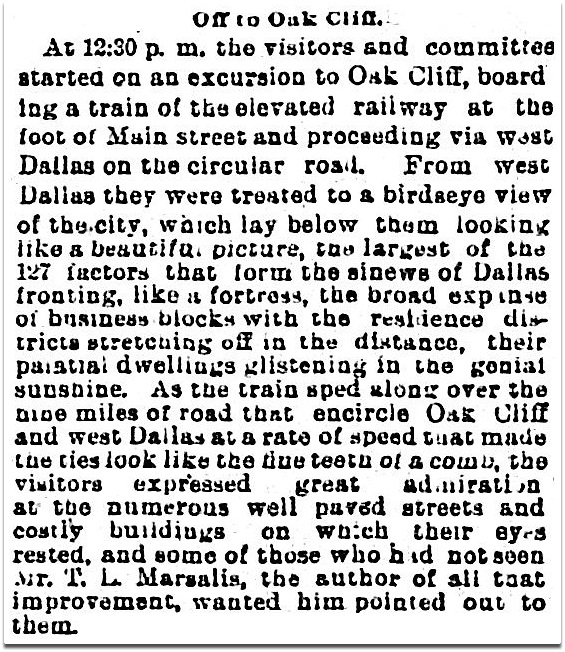
I’m not sure how realistic this drawing is, but it’s great! Oak Cliff never looked so … quaint. The best part is the depiction of the little commuter railway that Oak Cliff developer Thomas L. Marsalis built in the 1880s to handle commuter traffic between Oak Cliff and Dallas — a necessity if his development west of the Trinity was to grow. There were two little steam trains which made a complete circle and offered spectacular views of  Dallas as they headed toward the river. Here’s an account of visitors from Kansas City who enjoyed their scenic ride (click to see a larger image):

oak-cliff-train_dmn_112490
Dallas Morning News, Nov. 24, 1890

Marsalis had made his fortune in the grocery business, and much of that fortune was funneled into making his vision a reality: Oak Cliff would become a large, beautiful, prosperous community. He spent huge amounts of money developing the then-separate town of Oak Cliff. A wheeler-dealer and an obsessive whirlwind, money was no object to Marsalis as he charged at full speed to make Oak Cliff a booming North Texas garden spot.

marsalis_legacies_fall-2007
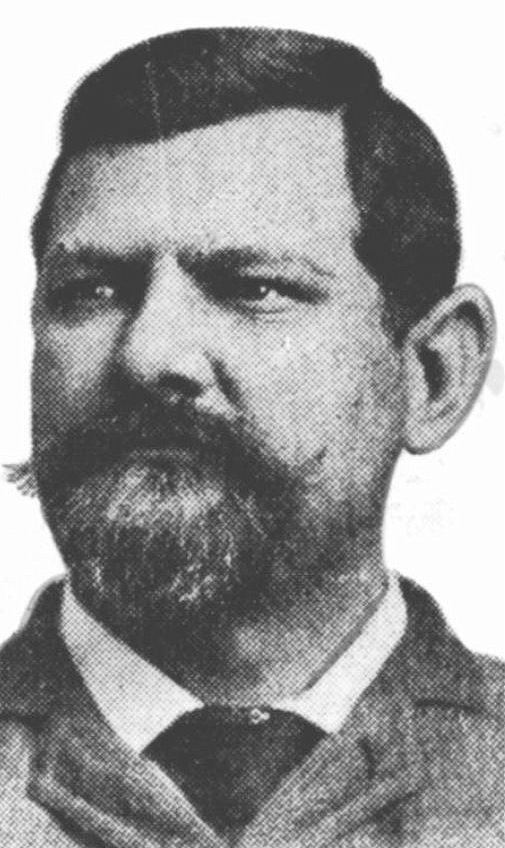
Thomas L. Marsalis — the “Father of Oak Cliff”

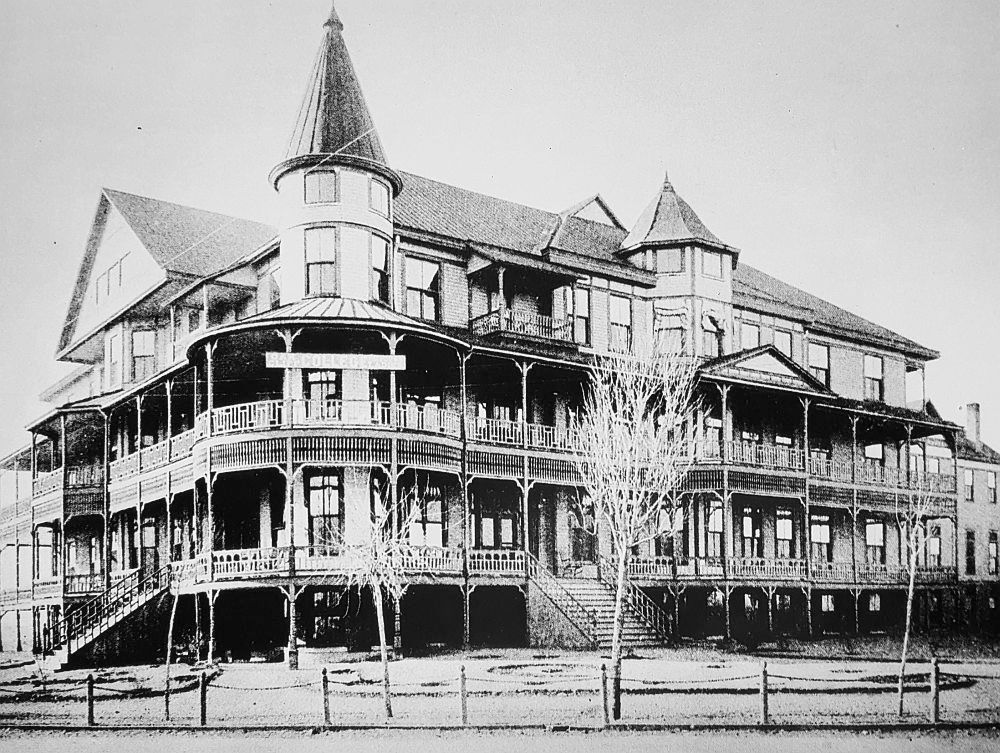
The jewel in T. L.’s O.C. crown was the 100-room resort, the Oak Cliff Hotel (which in its early planning had been called the Park Hotel). Ground was broken on Dec. 21, 1889. Projected to cost $75,000, it is said to have cost over $100,000 when construction was completed, or, over $2.6 million in today’s money.

oak-cliff-hotel_dmn_122289_groundbreaking
DMN, Dec. 22,1889

A thorough description of the spectacular $100,000 showplace can be read in a Dallas Morning News article from May 25, 1890, here. When it opened on July 10, 1890, the News’ coverage of the opening included the following lyrical passage:

When darkness had settled down over the cliff the large hotel showed off to its best advantage, as at a short distance away it looked like some living monster with hundreds of fiery eyes. The lights showing from every window made a startling sight to those who coming upon it had previously seen a dark pile looming up in the night.

oak-cliff-hotel_minutaglio

It was, by all accounts, a popular hotel and social gathering place. But, in November of 1891 — having been open only a little over a year — a notice appeared in the papers that the hotel would be closing for the winter for “renovations.” It never reopened. Marsalis had over-extended himself. His dreams for Oak Cliff began to dim as the stacks of unpaid bills mounted, and he found himself mired in lawsuits for the next several years. He eventually had to admit defeat, and he and his family moved to New York.

Six months after that notice of “renovations” appeared, the huge building was leased to Prof. Thomas Edgerton, who planned to open a “female seminary.”

oak-cliff-college_flickr

The Oak Cliff College For Young Ladies opened  in the fall of 1892. And it was a spectacular-looking schoolhouse.

oak-cliff-college_dallas-rediscoverd_dpl

The college lasted until the beginning of 1899 when it changed hands and became Eminence College for a brief year and a half.

eminence-college_southern-mercury_062299
Southern Mercury, June 22, 1899

After Eminence College appears to have gone bust, the building was vacant by 1901. There was talk that Oak Cliff should purchase the property and reinstall a school, but, eventually, the building went up for auction in September, 1903.

oak-cliff-hotel_dmn_082603_for-sale
DMN, Aug. 26, 1903

The building sold to T. S. Miller, Jr. and L. A. Stemmons for $6,850, a fraction of what Marsalis had spent building it. That’s a pretty steep depreciation.

oak-cliff-hotel_dmn_090203_sold
DMN, Sept. 2, 1903

But, no fear, Hotel Cliff opened on April 18, 1904. Still looking good.

hotel-cliff_degolyer

hotel-cliff_dmn_071104
DMN, July 11, 1904

Hotel Cliff was in business through about 1915. There were some “lost” years in there when it seemed to be in limbo (during some of this time it was undergoing extensive renovation), but in 1921 it re-opened as the Forest Inn.

forest-inn_dmn_042421
DMN, April 24, 1921

forest-inn_bartlett-tribune-and-news_070424
Bartlett News, July 4, 1924

The Forest Inn had a long run — 24 years. In 1945 the property was sold, and T. L. Marsalis’ spectacular resort hotel was demolished. It was estimated that it would take ten weeks to finish the demo job — Marsalis had spared no expense building his hotel, and it had been built to last.

The destruction is a tough job, Jack Haake, wrecking contractor, said. Despite its age, the building is so well built that much time is being required to take it apart. The lumber is of the best grade and much of it still is in good condition, Haake said. Scores of huge 2×6 planks, thirty-two feet long, were used in the building, and that timber is in excellent condition. (“Historic Oak Cliff Hotel Being Razed For New Structure,” DMN, Sept. 10, 1945)

The land apparently remained vacant until Southwestern Bell Telephone announced plans to build a three-story office building on the property in 1954; the building opened the following year. In 1986, the building was renovated and became the Oak Cliff Municipal Center, which still occupies the site.

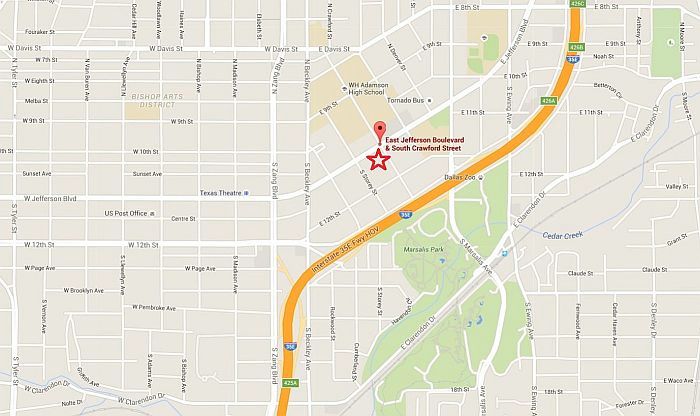
Where exactly was that huge, wonderful hotel that Thomas Marsalis built? It was located at what is now the southwest corner of East Jefferson Blvd. and South Crawford Street. A view of that corner today can be seen here. To get an idea  of how much land the hotel/college once occupied, check out the 1905 Sanborn map, here (and this is after 15 years of explosive growth of Oak Cliff, so it obviously originally had much more open land around it); by 1922, encroachment was well underway, and the property was already being chopped into smaller parcels.

oak-cliff-hotel_map_google
Google Maps

I wonder what Thomas Marsalis would think of Oak Cliff today? And I wonder what Oak Cliff would have become had Marsalis never put his money and energy into its early development?

**

There is a lot of misinformation on various online sources about the timeline of this building. As best I can determine, here is the correct chronology:

  • 1889: groundbreaking for hotel, in December
  • 1890-1891: Oak Cliff Hotel
  • 1892-1899: Oak Cliff College For Young Ladies
  • 1899-1901: Eminence College (also for young women)
  • 1902-1903: vacant
  • 1903: building sold at public auction, in September
  • 1904-1914: Hotel Cliff
  • 1914-1915: Oak Cliff College (reorganized, back for one last gasp)
  • 1915-1920: basically empty, with a couple of token tenants
  • 1921-1945: Forest Inn
  • 1945: demolished

***

Sources & Notes

First two images show both of sides of an advertising card; “Visit Oak Cliff” is from the George W. Cook Dallas/Texas Image Collection, DeGolyer Library, Central University Libraries, Southern Methodist University — more information is here.

Photo of Thomas Marsalis from Legacies, Fall, 2007.

Colorized image of hotel from the front cover of The Hidden City: Oak Cliff, Texas by Bill Minutaglio and Holly Williams. The sign is hard to read, but this may show the building during the Hotel Cliff days.

The detail of an Oak Cliff College envelope comes from the Flickr page for the Texas Collection, Baylor University, here. (Sure hope Mr. Edgerton was able to get a refund on that printing job — having “Oak Cliff” misspelled on official college correspondence probably caused a grimace or two!)

Large black and white photograph of Oak Cliff College appeared in William L. McDonald’s Dallas Rediscovered; photo from the collection of the Dallas Public Library.

Hotel Cliff postcard from the Cook Collection, SMU; information is here.

See the beautiful house Marsalis built for himself (but which he might never actually have lived in) in my post “The Marsalis House: One of Oak Cliff’s ‘Most Conspicuous Architectural Landmarks,'” here.

Thomas L. Marsalis is a fascinating character and an important figure in the development of Oak Cliff, but his post-Dallas life has always been something of a mystery. I never really thought of myself as a “research nerd” until I started this blog, but reading how a few people in an online history group pieced together what did happen to him was surprisingly thrilling. This round-robin investigation began in the online Dallas History Phorum message board, here, and finished as the Legacies article “Where Did Thomas L. Marsalis Go?” by James Barnes and Sharon Marsalis (Fall 2007 issue). If you have some time, I highly recommend reading through the Phorum comments and then reading the article. It’s very satisfying!

All images and clippings larger when clicked. 

*

Copyright © 2016 Paula Bosse. All Rights Reserved.

Dallas Fire Stations — 1901

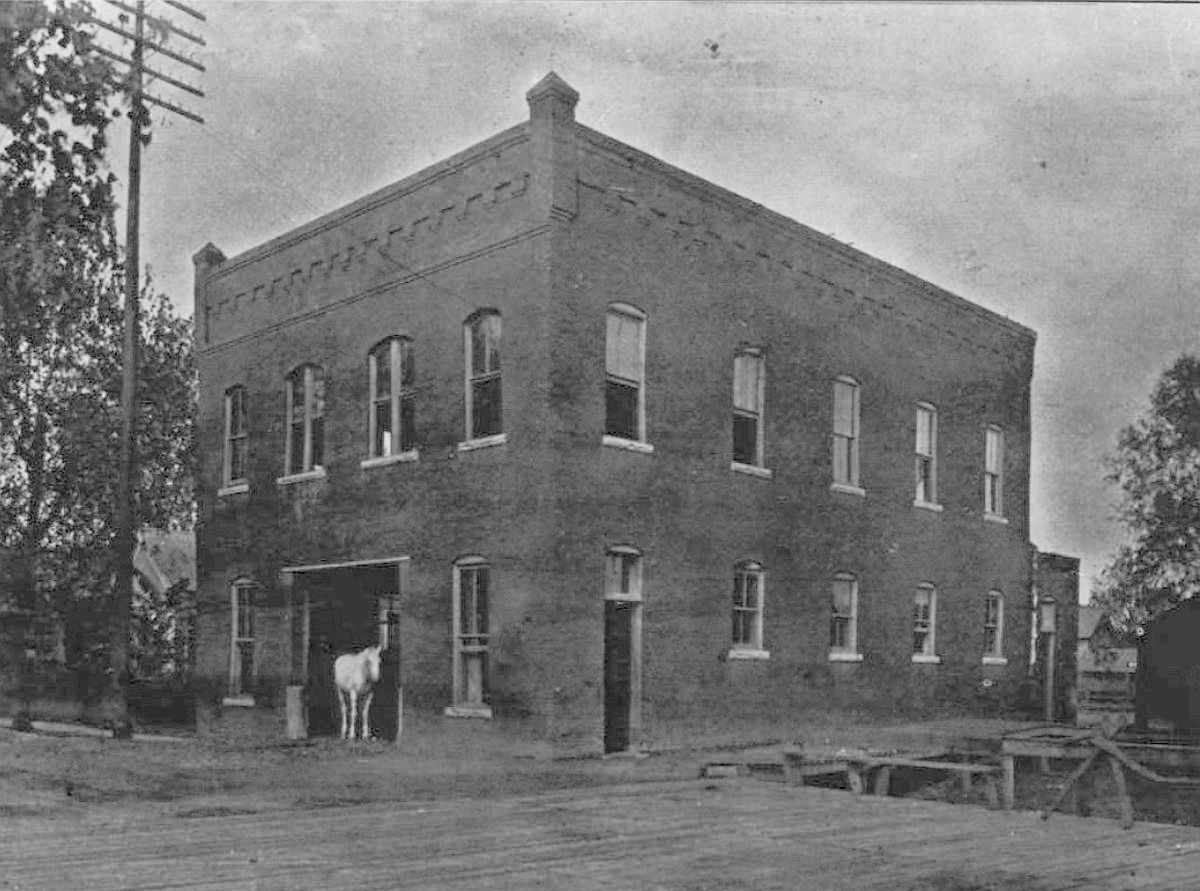
fire-dept_engine-co-3_gaston-and-college_1901Fire horse in Old East Dallas relaxing between calls (click for larger image)

by Paula Bosse

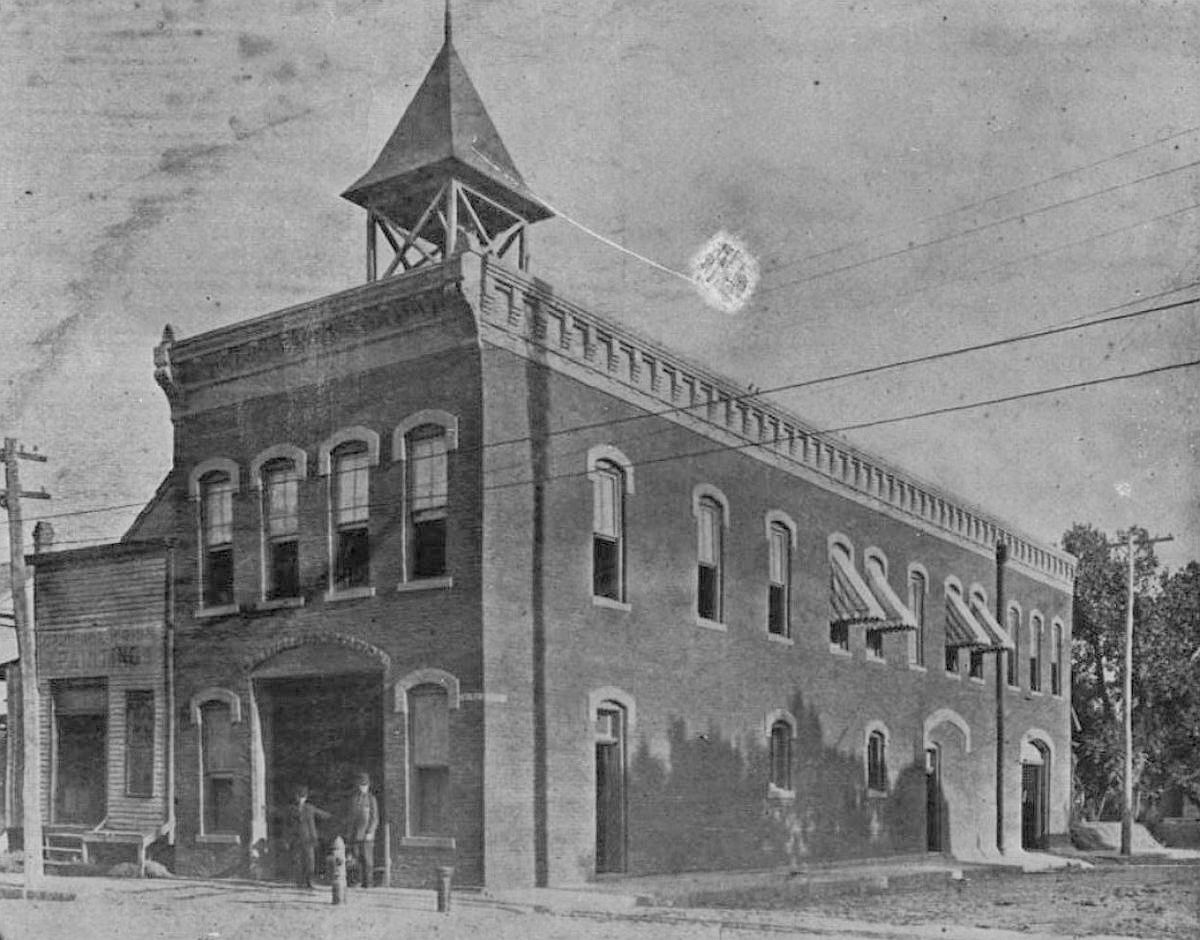
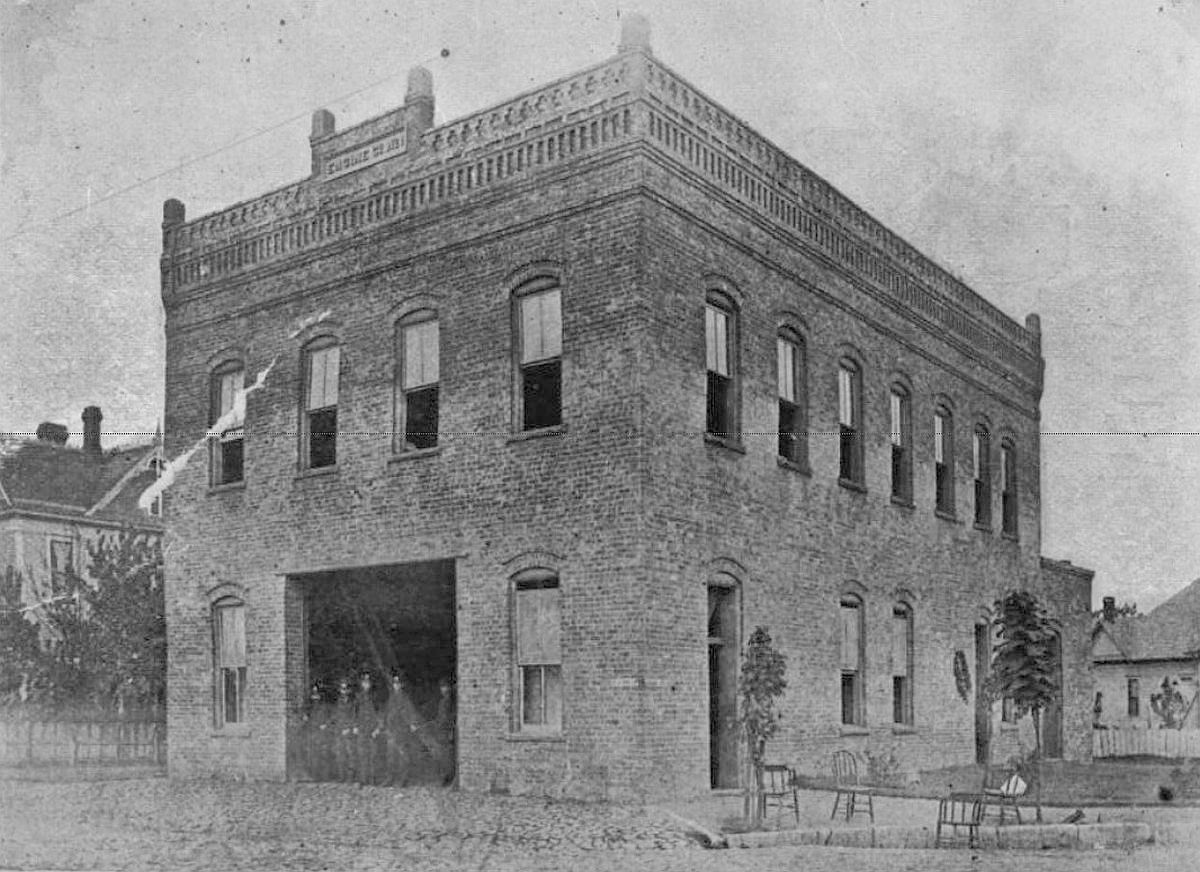
A few turn-of-the-century photos of Dallas’ fire stations, from a 1901 photographic annual. These seven firehouses were built between 1882 and 1894. One of these buildings is, miraculously, still standing on McKinney Avenue, in the heart of Uptown.

*

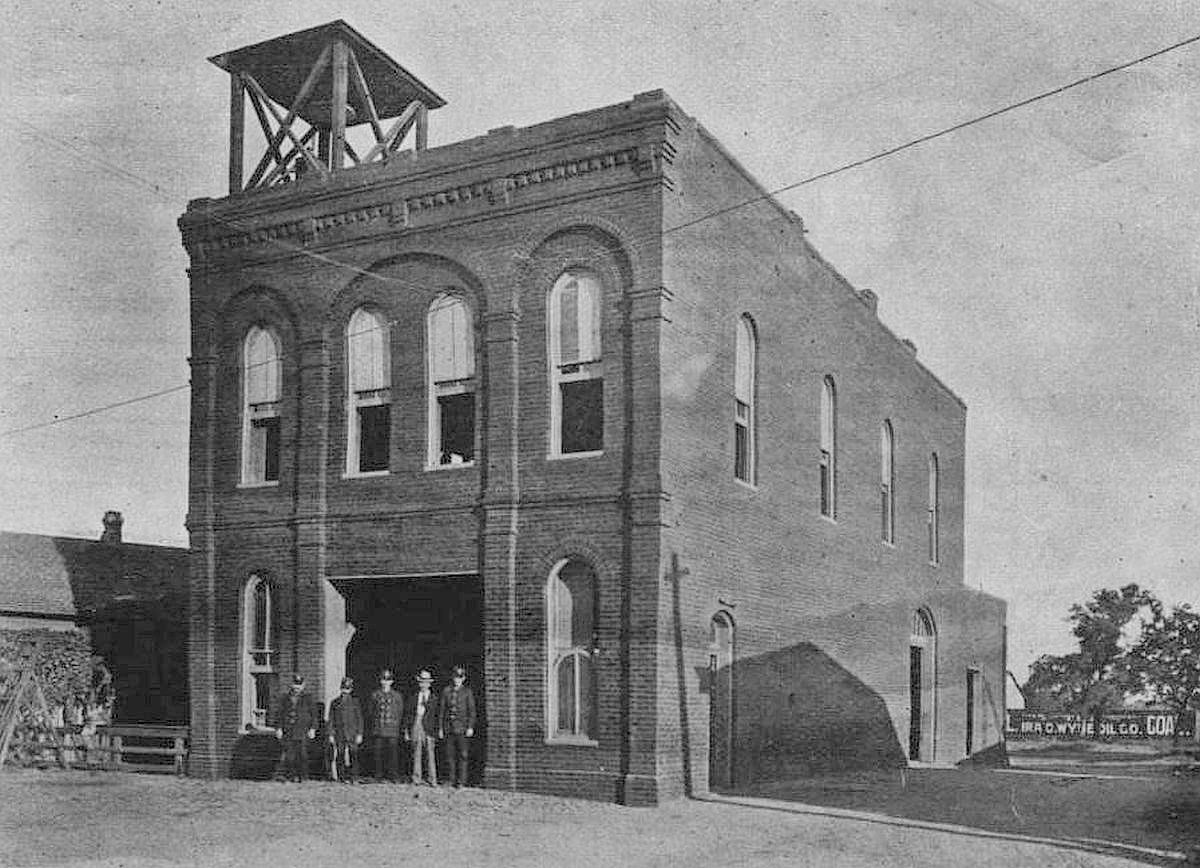
At the top, Engine Co. No. 3, at Gaston and College Avenues. In service: January, 1892. Equipment: an Ahrens Steamer, capacity 750 gallons per minute, and a Cooney Hose Carriage. See it on a 1905 Sanborn map here; see the present location (Gaston and Hall) here. (And since I just used it a few days ago, here’s a 1921 Sanborn map, showing Mill Creek running right through the property.)

*

fire-dept_central-station_main-harwood_1901

Above, Central Fire Station, Main and Harwood Streets. In service: October, 1887. Equipment: a double-sixty-gallon Champion Chemical Engine and a City Hook and Ladder Truck. See it on a 1905 Sanborn map here; see the present location here (the site of the old City Hall/Municipal Building).

*

fire-dept_mckinney-leonard_engine-co-1_1901

Engine Co. No. 1, McKinney Avenue and Leonard. Equipment: an Ahrens Steamer, 750 gallons per minute, and a Cooney Hose Carriage. In service: August, 1894. See it on a 1905 Sanborn map here; see the present location here. NOTE: This is the only one of these firehouses still standing. I wrote about it here.

UPDATE: Well, sort of. Thanks to a comment on Facebook, I researched this station a bit more and found that it was rebuilt and modernized at the end of 1909 — using materials from the original building seen above, built on the same plot of land. So instead of being 122 years old, the building on McKinney today is a mere 106 years old.

*

fire-dept_commerce-hawkins_engine-co-2_1901

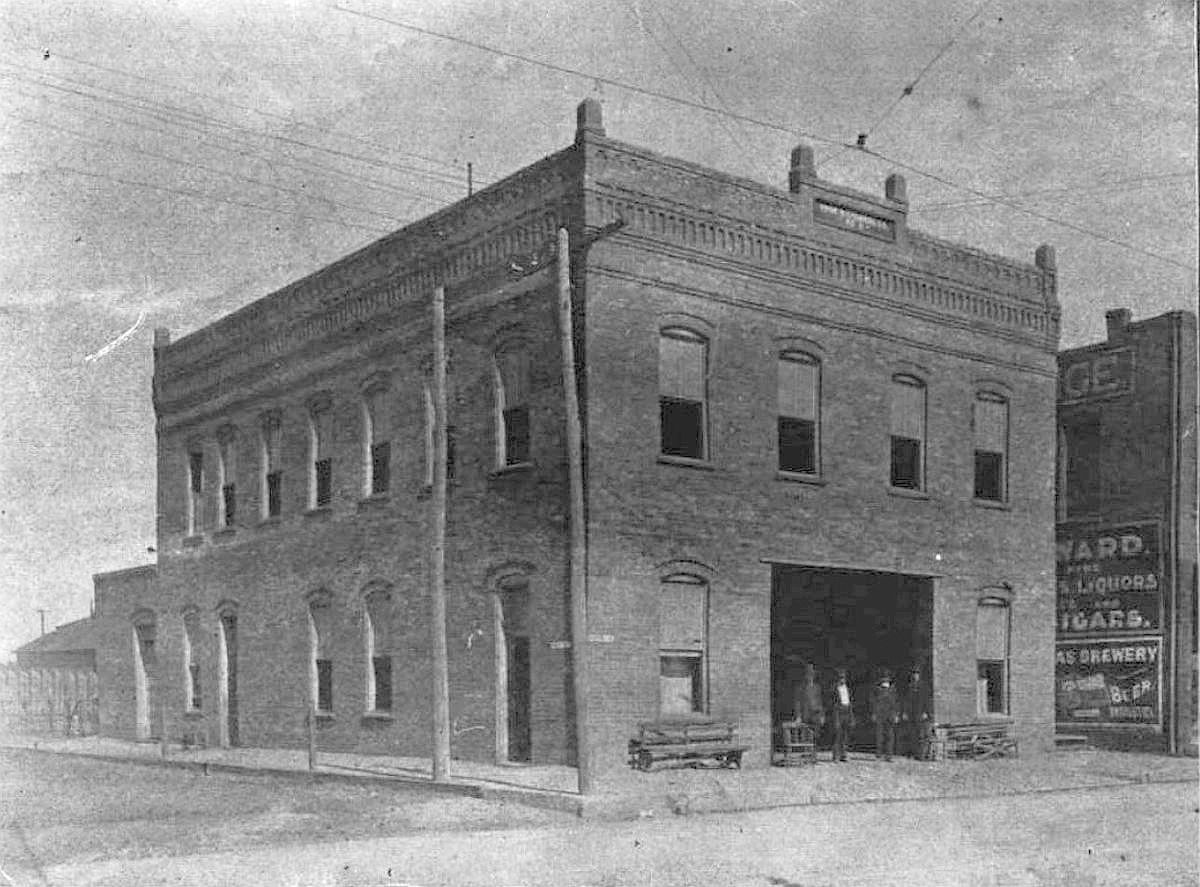
Engine Co. No. 2, Commerce and Hawkins Streets. In service: January, 1882. Equipment: an Ahrens Steamer, capacity 750 gallons per minute, and a Cooney Hose Carriage. See it on a 1905 Sanborn map here; see a shot-in-the-dark guess at a present location here.

*

fire-dept_ervay-kelly_hose-co-2_1901

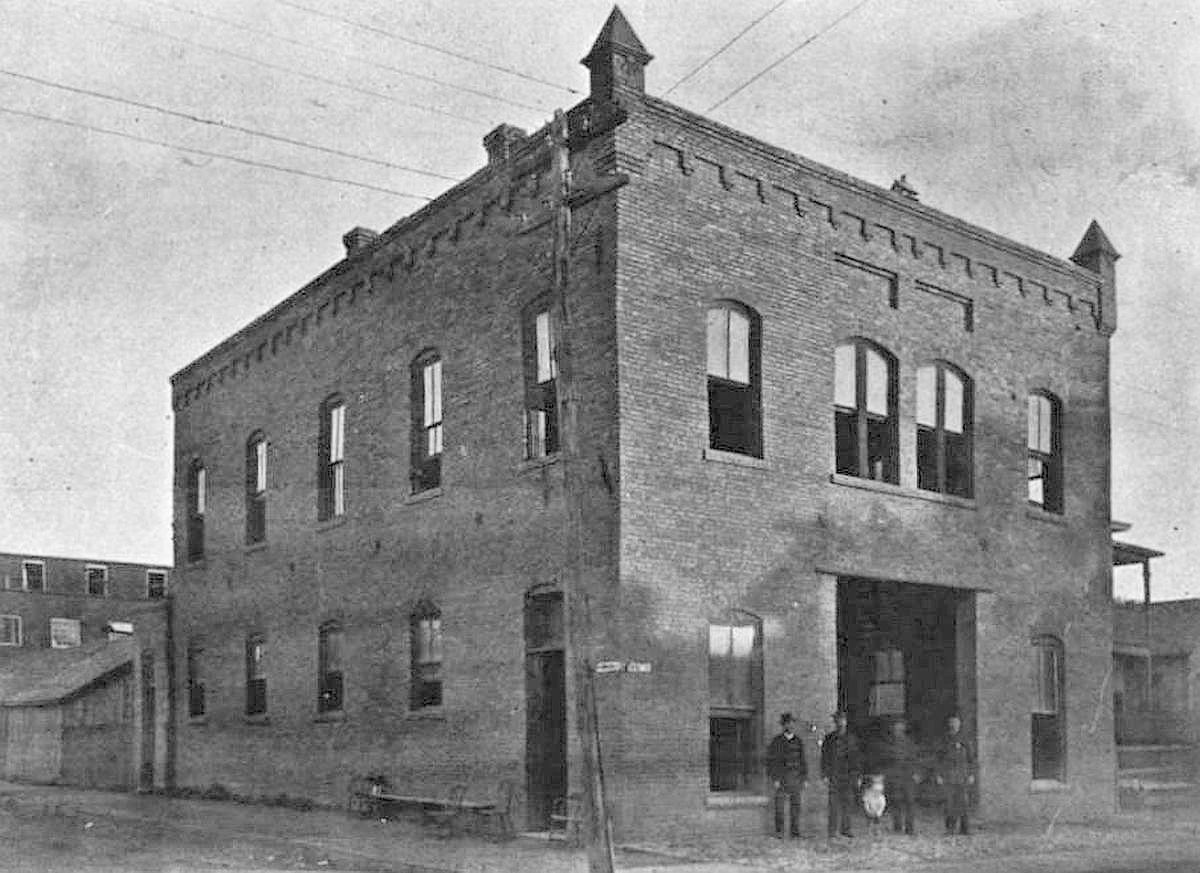
Hose Co. No. 2 and Chemical Co. No. 2, Ervay Street and Kelly Avenue. In service: September, 1894. Equipment: a Cooney Hose Carriage and double-sixty-gallon Champion Chemical Engine. See it on a 1905 Sanborn map here; see the present location here (right behind where the word “Cedars” is).

fire-dept_bryan-hawkins_hook-and-ladder-1_1901

Hose Co. No. 1 and Hook and Ladder Co. No. 1, Bryan and Hawkins Streets. In service: January, 1893. Equipment: Preston Aerial Truck with 75-foot extension ladder, and a Cooney Hose Carriage. See it on a 1905 Sanborn map here; see the approximate present location here.

*

fire-dept_commerce-akard_engine-co-4_1901

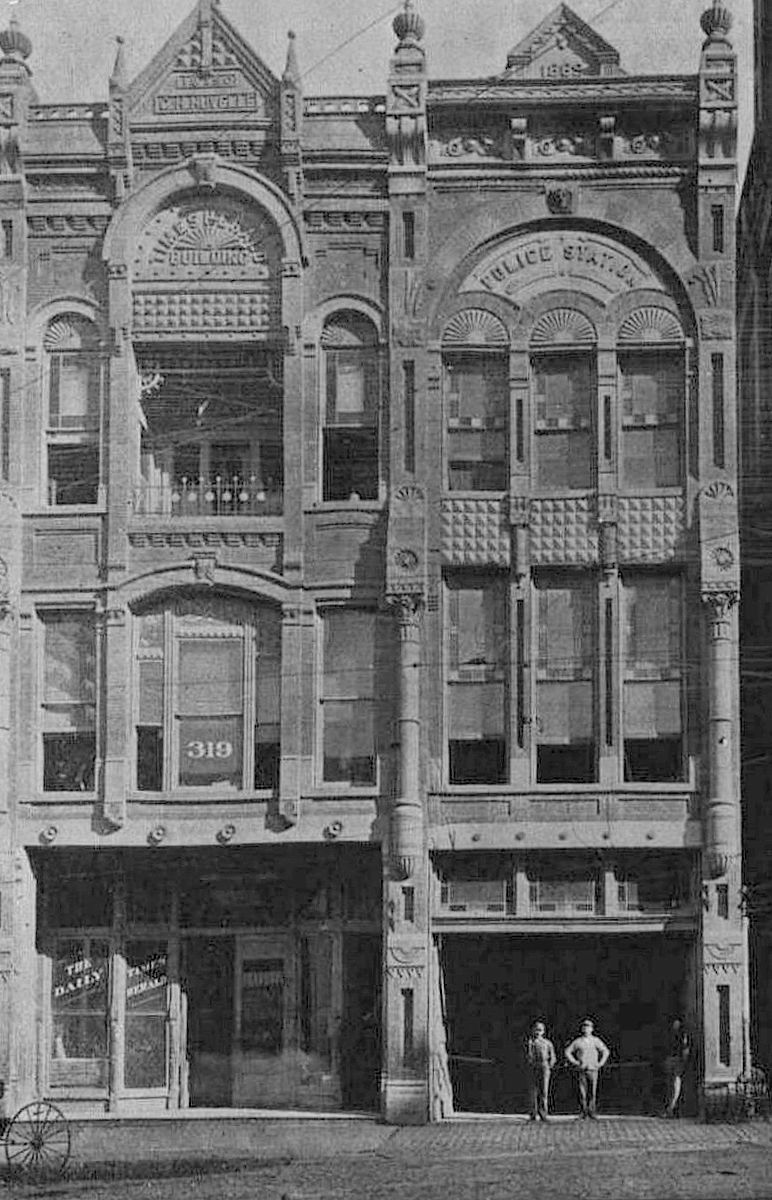
Engine Co. No. 4, Commerce and Akard Streets, next door to the City Hall. In service: August, 1894. Equipment: an Ahrens Steamer, capacity 1,100 gallons per minute, and a Cooney Hose Carriage. See it on a 1905 Sanborn map here; see the present location here (just out of frame at the right was the City Hall; the block is now the site of the Adolphus Hotel).

*

city-hall_1901_fire-dept-annual_portal

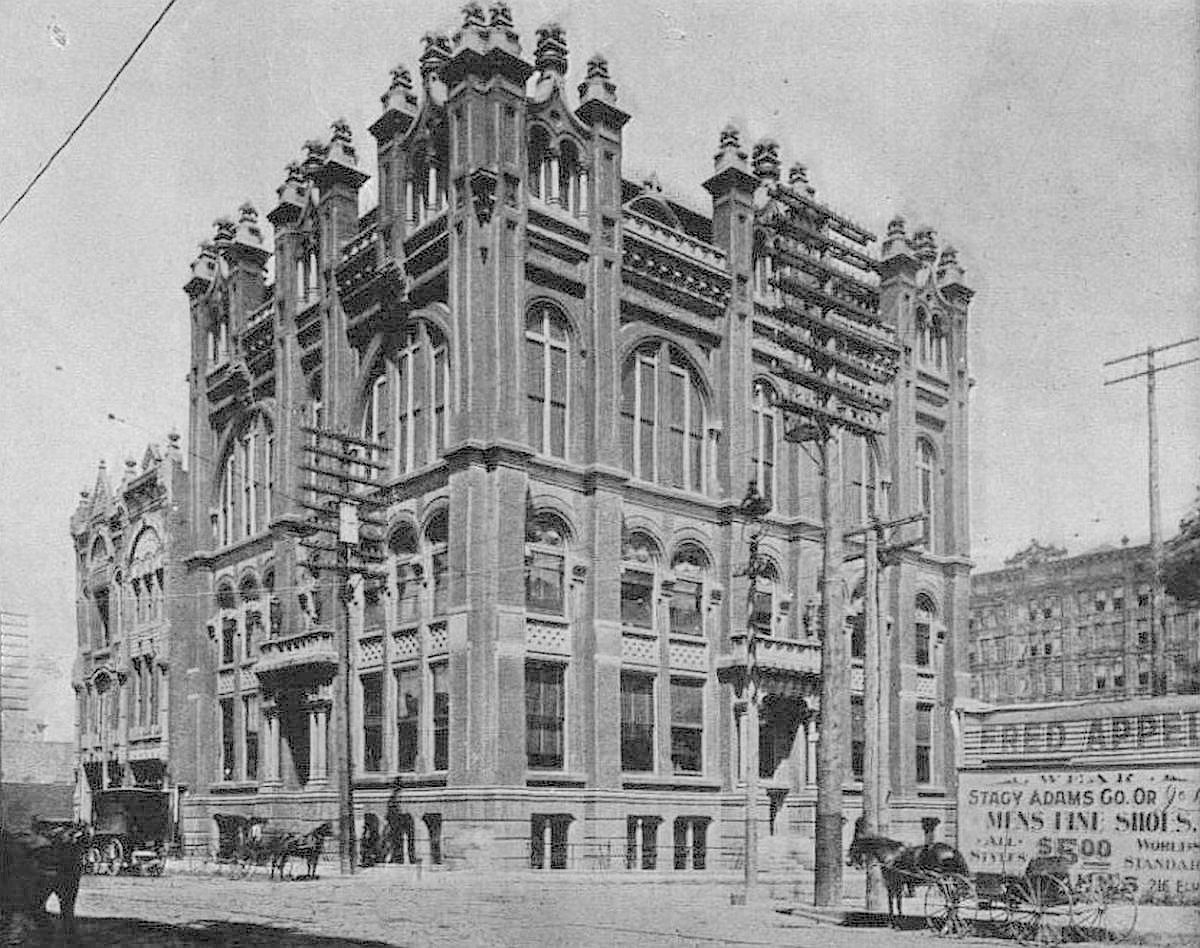
City Hall, Commerce and Akard Streets, now the location of the Adolphus Hotel. Half of the shorter building to the left housed the police department and Engine Co. No. 4.

*

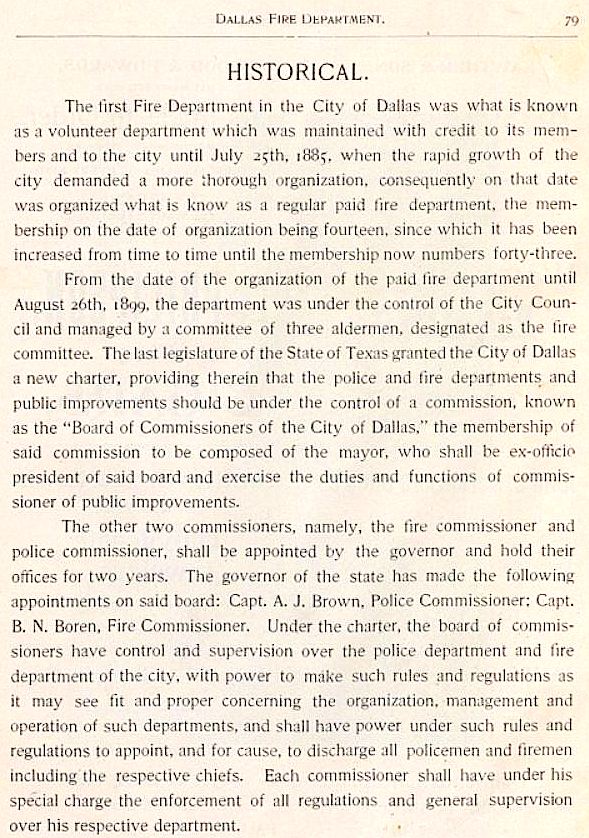
The “Historical” page from the book (click to read).

fire-dept-hist_dallas-fire-dept-annual_1901_portal

**

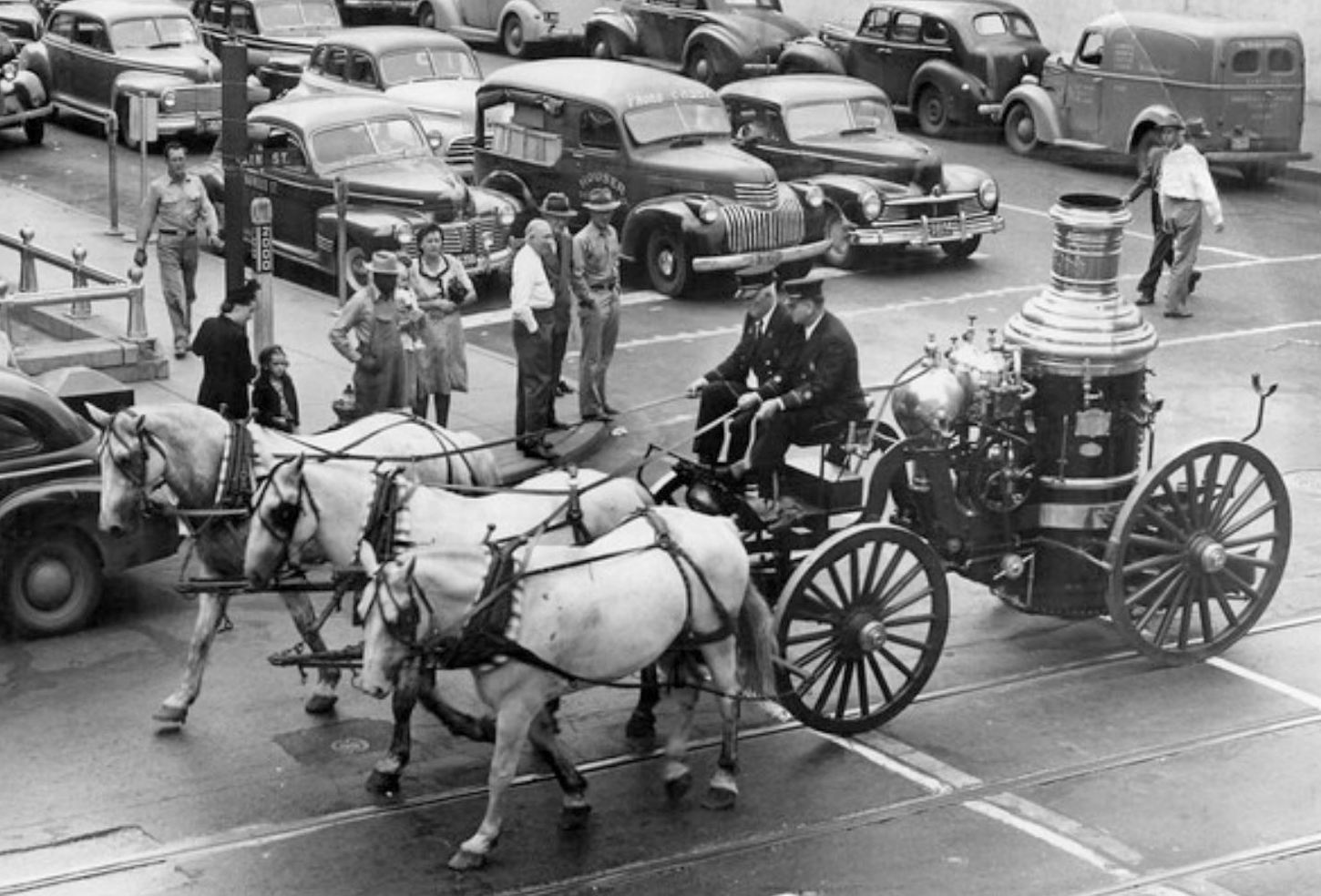
Since there is no sign of the actual equipment in these photos, here’s what horse-drawn steam engines (Ahrens steamers) looked like at this time. (Photo from the Wisconsin Historical Society).

fire-steam-engine_wisconsin-hist-soc

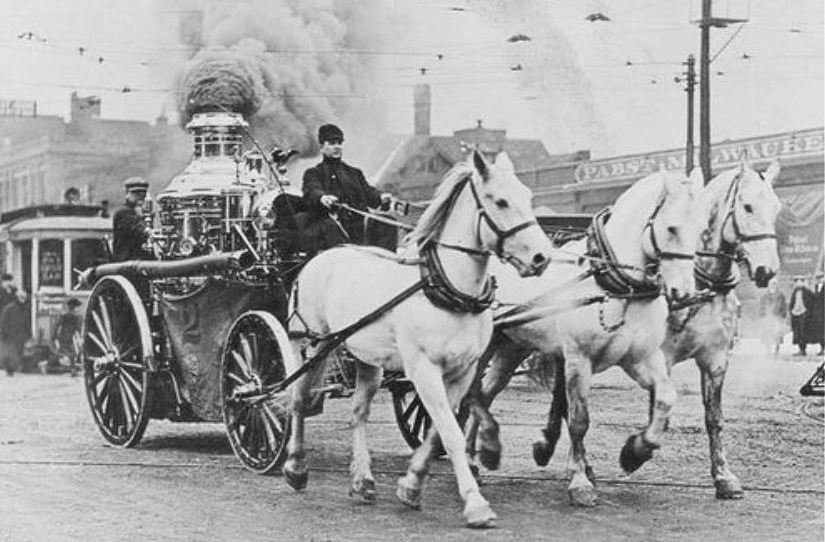
UPDATE: I found this photo on Flickr, showing equipment from those early days being driven through the streets of Dallas during a fire prevention parade.

fire-department_pumper_flickr_coltera

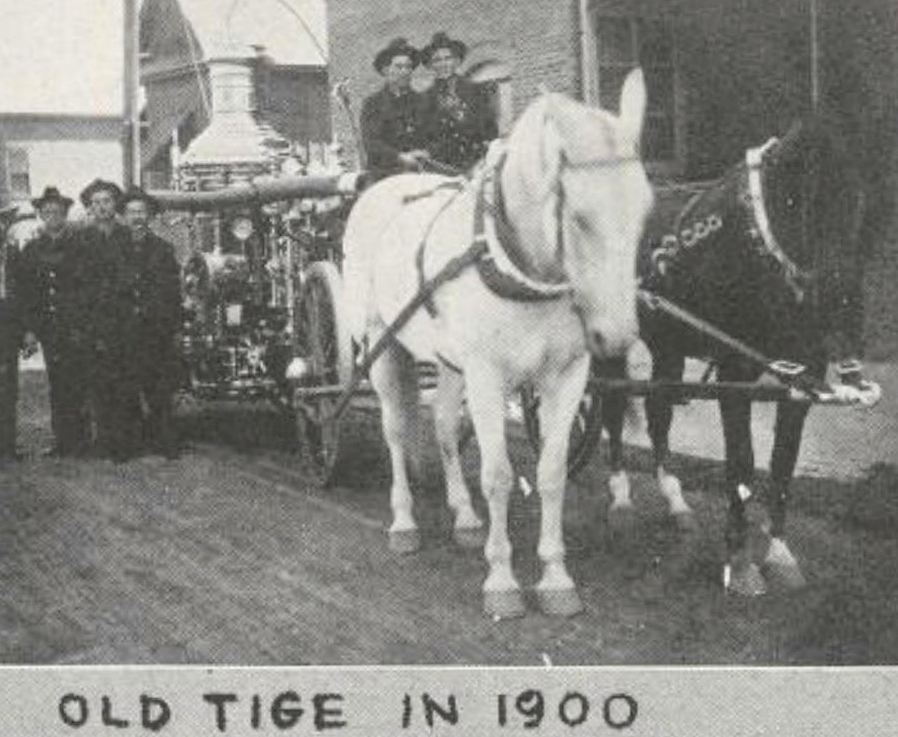
UPDATE: Lo and behold, a photo from 1900 of Old Tige, the 600 gallons-per-minute steam pumper, built in 1884, which was in service with the Dallas Fire Department until 1921. (Old Tige can be seen in the Firefighters Museum across from Fair Park.) Found at the Portal to Texas History.

old-tige_1900_fire-dept-bk_1931_portal

***

Sources & Notes

Photos by Clifton Church, from the Dallas Fire Department Annual, 1901, which can be viewed in its entirety on the Portal to Texas History, here.

A contemporary map of Dallas (ca. 1898) can be viewed on the Portal to Texas History site, here.

More Flashback Dallas posts on historic Dallas firehouses can be found here.

All photos larger when clicked.

*

Copyright © 2016 Paula Bosse. All Rights Reserved.

The Jefferson Hotel and Its “Wireless Telegraph” Rooftop Tower — 1921

jefferson-hotel_1921_UTAThe view from Union Station… (click for larger image)

by Paula Bosse

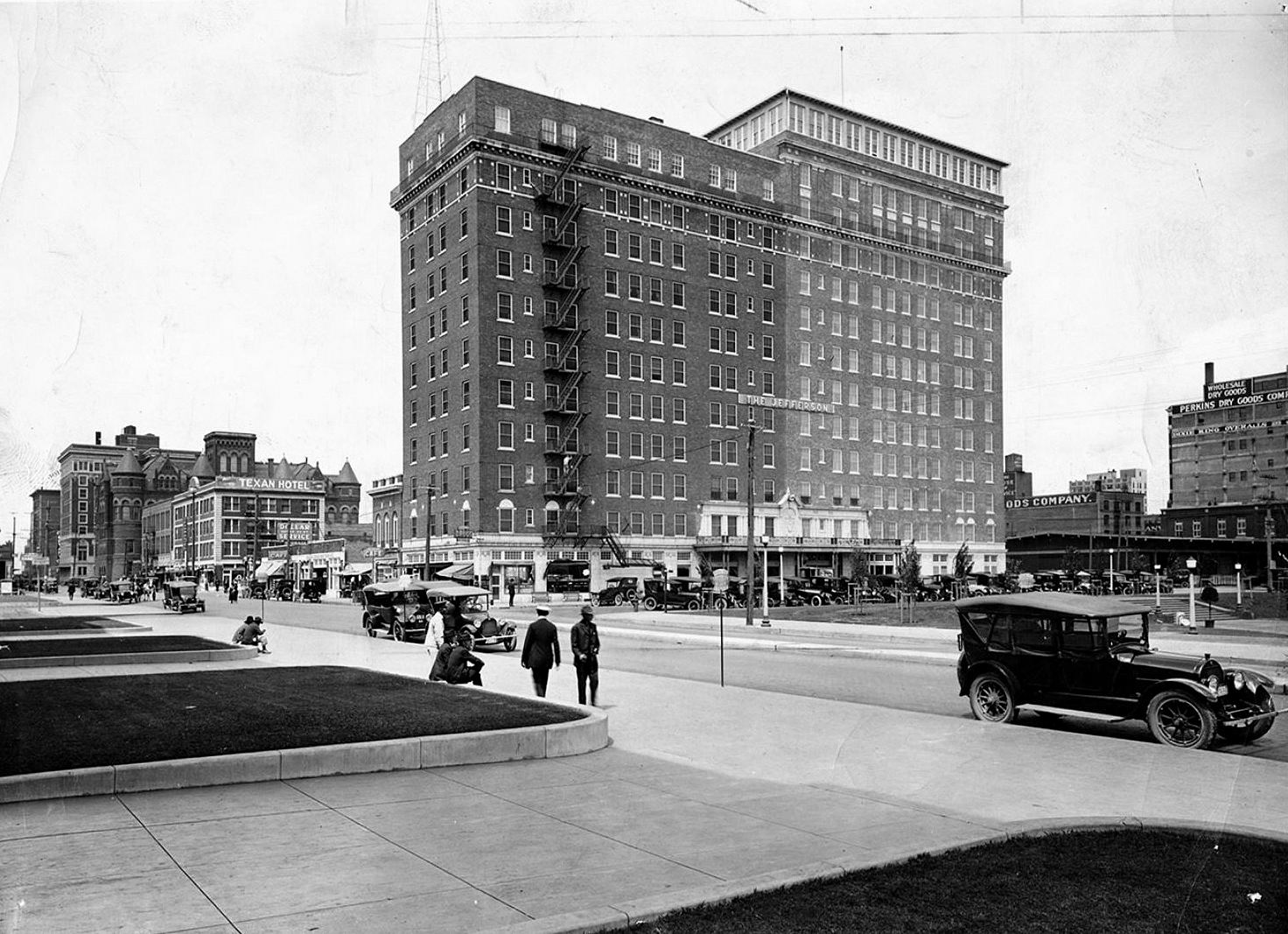
I haven’t seen many photographs showing this striking view of Dallas along Houston Street. This is what visitors saw when they emerged from Union Station after having arrived in the city by train: in the distance, the John Deere Plow Co. Building on Elm, the Dallas Jail and Criminal Courts Building, the Dallas County Courthouse, the Texan Hotel, the Jefferson Hotel, and (mostly out of frame at the right) the very pretty Ferris Plaza.

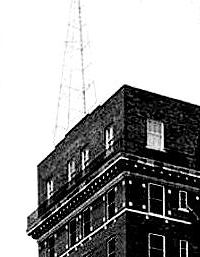
This photo was taken as one of several coinciding with the formal opening of the Jefferson Hotel’s major new addition (the addition is the taller, lighter-colored half of the hotel) — it was published in the May 8, 1921 edition of The Dallas Morning News in a special Jefferson Hotel section of the paper. I guessed that the the date of the photo was later because of what looks like a radio broadcast tower on the roof. Commercial radio broadcasts were not available in Dallas until June of 1922 when WFAA went on the air (their rooftop towers looked like this). WRR — the municipal broadcasting station — was a little older, but in those early days it was used exclusively for police communication (they appear to have had an aerial on top of the City Hall by at least September of 1921, if not earlier). So what was that tower on the roof?

jefferson-hotel_UTA_tower

It took a while to find out what it was, but … turns out it was, in fact, an antenna. It was part of the “wireless telegraph” equipment owned by the Continental Radio Telegraph Co., which had a Western Union-like office in the hotel’s lobby (the company had to relocate their tower and office from the Southland Hotel, their home for a little over a year before moving to the Jefferson’s roof).

The Continental Radio Telegraph and Telephone Co. began in about 1919. It was one of the first companies in the Southwest to attempt to commercialize the nascent “wireless” technology which allowed the sending and receiving of messages via radio waves. The initial motivation for establishing this new-fangled business appears to have been the inability of those with interests in the remote Texas oilfields to communicate with their workers in areas not served by telephone and telegraph wires. The plan was to build radio towers in these areas to broadcast and receive messages. When a “radiogram” was received and transcribed, a “polite, intelligent boy” would be dispatched to deliver the message to its recipient — all for about the same price as sending a regular telegram. Not only did the company envision the ability to one day communicate with ships, trains, and airplanes that were in transit, they also hoped to develop “wireless telephone” communication.

The Continental Radio Telegraph Company was based in Dallas from at least January of 1920, but they were gone by the time the 1922 city directory was printed — gone just a few short months after planting that aerial on top of the Jefferson Hotel. They seem to have erected only four towers: in Dallas, Fort Worth, Wichita Falls, and (possibly) Breckenridge. Then, as now, technology has a way of racing ahead of somewhat limited business plans.

But at least we have a nice photograph of their rooftop tower as proof that they existed.

**

(Click articles to see larger images.)

continental-radio_dmn_022720
Dallas Morning News, Feb. 27, 1920

continental-radio_jefferson-hotel_dmn-042921
April 29, 1921

continental-radio_jefferson-hotel_dmn_073121
“Wirless”! — DMN, July 31, 1921

*

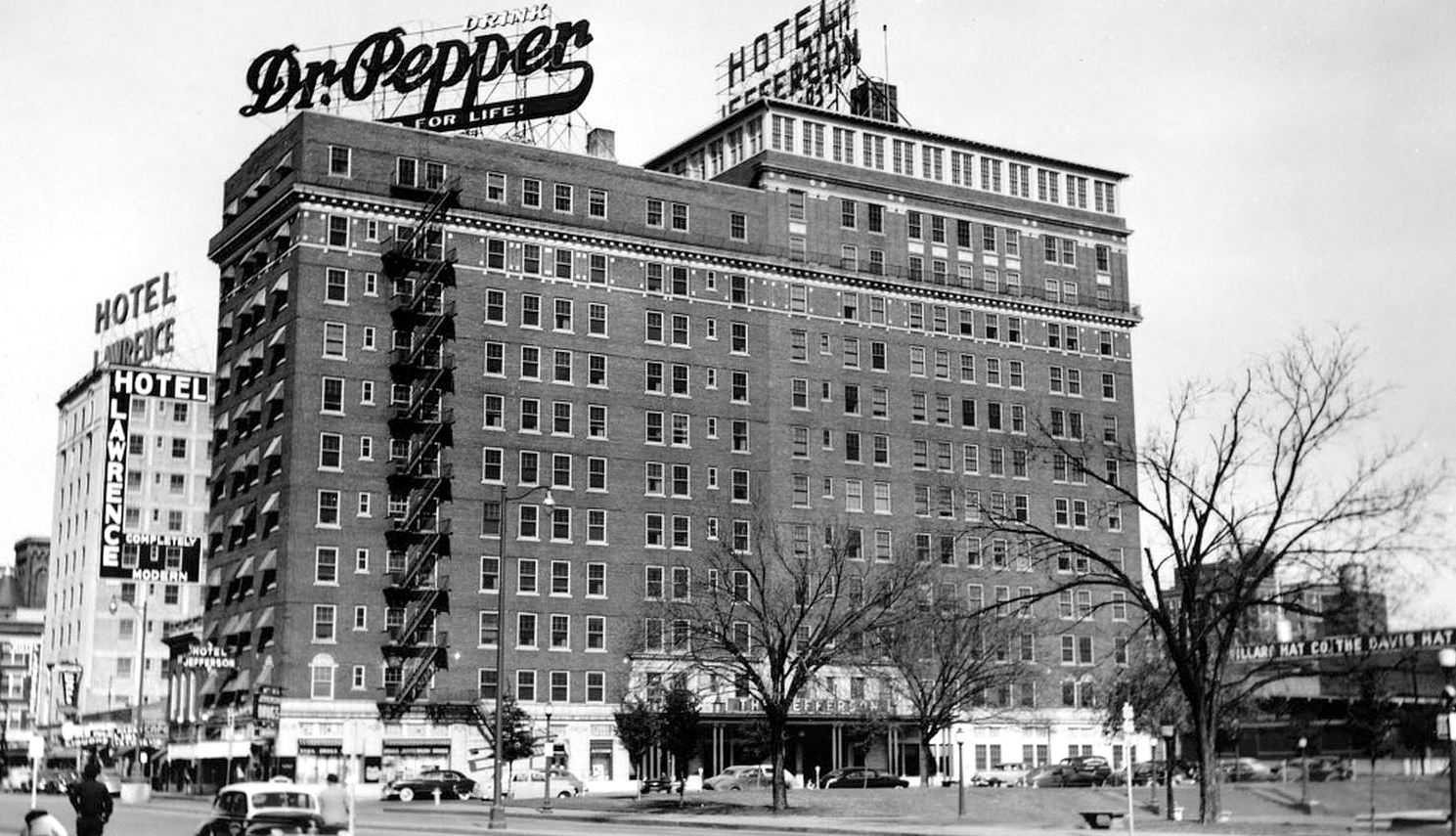
Here’s a shot from the same location a few years later; the tower has been replaced by the huge Dr Pepper sign which became something of a city landmark, and the Hotel Lawrence has popped up and is open for business next door. (More on this sign can be found in the Flashback Dallas post “Neon Refreshment: The Giant Dr Pepper Sign.”)

jefferson-hotel_hotel-lawrence_dr-pepper-sign_dmn-tumblr

***

Sources & Notes

Top photo is from the Fort Worth Star-Telegram Collection, UTA Libraries; more information is here. When the picture ran in the May 8, 1921 edition of The Dallas Morning News, the credit line read “Photo by Raymond.”

Photo with the Dr Pepper sign was purchased at an antique mall/flea market and was uploaded to Tumblr, here.

The Jefferson Hotel — which opened in October, 1917 — was demolished in 1975.

All images larger when clicked.

*

Copyright © 2016 Paula Bosse. All Rights Reserved.


Mrs. Hartgraves’ Cafe, and Bonnie & Clyde Earning Paychecks on Swiss Avenue

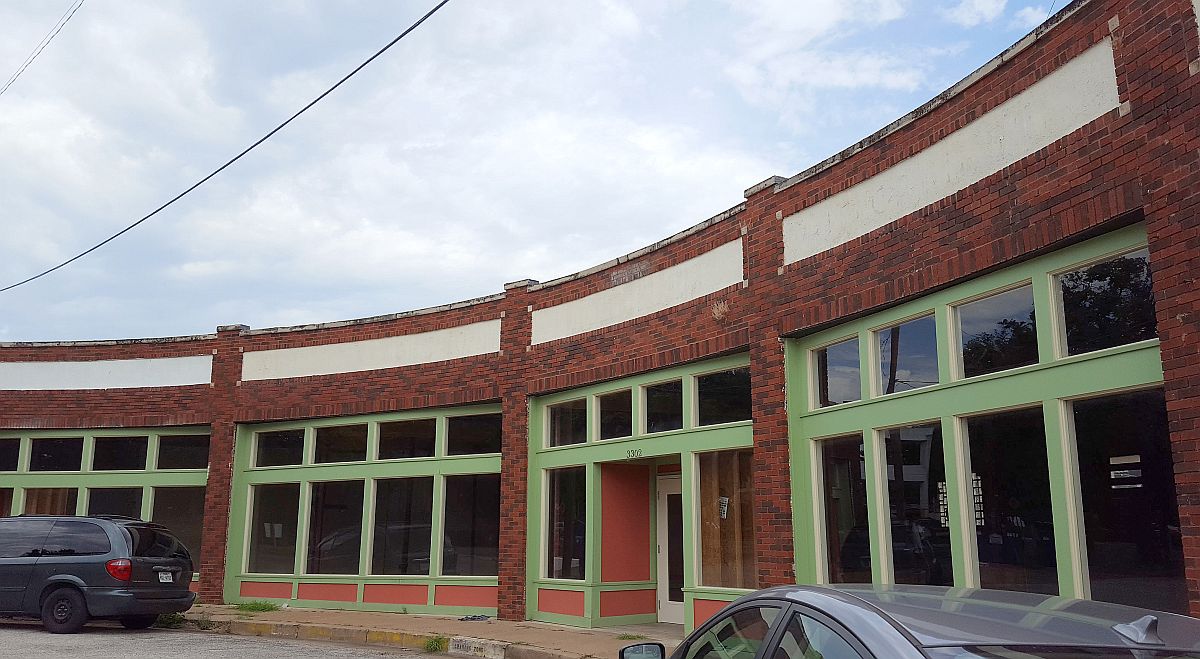
swiss-circle-front_070516The Swiss Circle building, 2016 (click for larger image) / Photo: Paula Bosse

by Paula Bosse

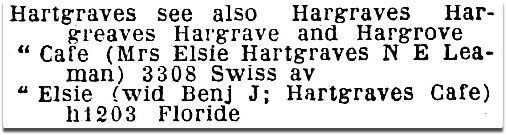
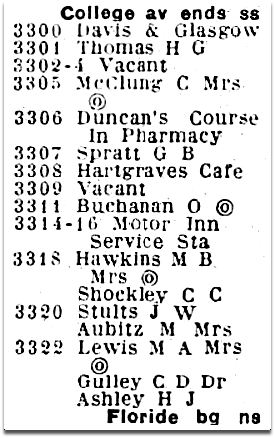
Bonne and Clyde were famous for being from West Dallas, but each actually spent a good amount of time in East Dallas. Working. Earning an honest living. Bonnie worked as a waitress, and Clyde worked in a mirror and glass company. Both worked in establishments on Swiss Avenue, though probably at different times. They hadn’t met yet, but it’s interesting to know they worked at businesses only a few blocks apart: Hartgraves Cafe was at 3308 Swiss, and United Mirror and Glass was at 2614 Swiss. Both buildings are still standing.

The Hartgraves Cafe (the name of which is always misspelled in historical accounts as Hargrave’s Cafe — even by Bonnie and Clyde enthusiasts) was in a curved building at the corner of Swiss and College (it is now at the corner of Swiss and Hall). 50-something-year-old Mrs. Alcie Hartgraves (her first name usually appeared in directories as “Elsie,” sometimes as “Alice”) opened the restaurant a few months after her husband, Ben, had died in 1923. It lasted until late 1930 or early 1931. (All clippings and photos are larger when clicked.)

1928-directory_hartgraves1928 Dallas directory

1929-directorySwiss Avenue between College Avenue and Floride, 1928 directory

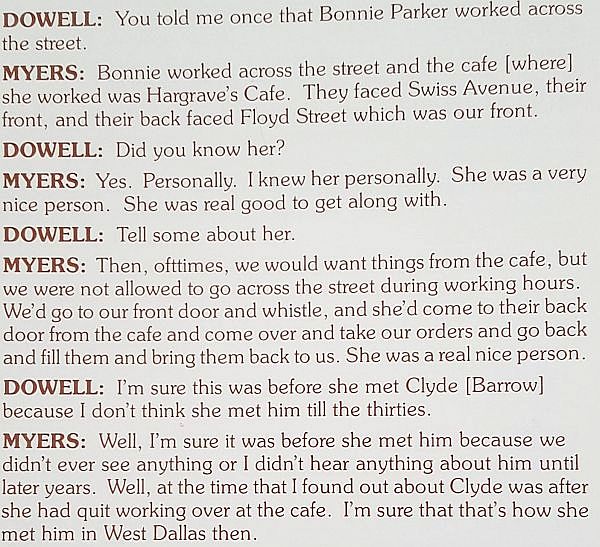
According to Bonnie and Clyde histories, Bonnie worked there as a teenaged waitress with an absent husband, from 1928 to early 1929. According to one woman who worked at the Yates Laundry, just across from the cafe’s back door, Bonnie was a very nice person. Here, in a 1972 oral history, Rose Myers — who worked at the Yates Laundry for 25 years — remembers Bonnie from those days at Mrs. Hartgraves’ cafe:

hartgraves-yates_reminiscences
From the book Reminiscences

The laundry is long gone, but here’s what the back side of the building Bonnie worked in looks like today.

swiss-circle_back_070516Photo: Paula Bosse

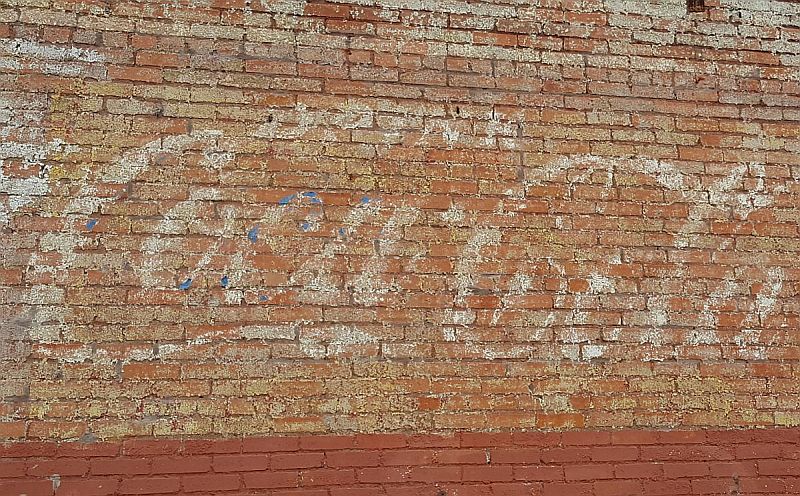
And here’s a Coca-Cola ghost sign, painted on the end of the building that faces Hall.

swiss-circle_coke-ghost-sign_070516Photo: Paula Bosse

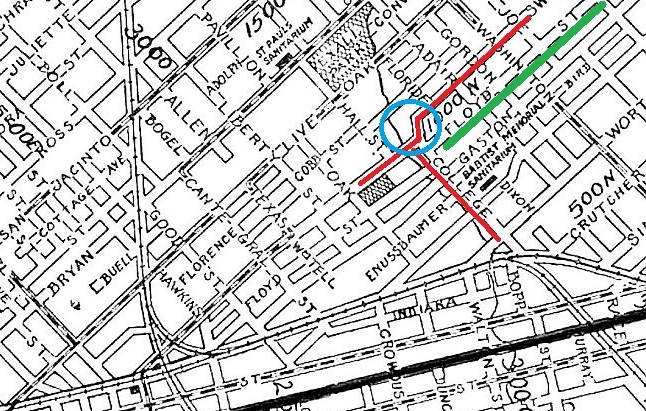
The Bonnie Parker connection is about the only reason people know about this odd little building in Old East Dallas. From looking through Dallas street directories, it appears that this building was built in 1915 or 1916 as a retail strip which, until Mrs. Hartgraves left, usually contained three or four businesses. The question is: why was it shaped like that? Many people think it was a streetcar stop, the cars using the circle as a place to turn around, but old maps showing streetcar routes from this period don’t show cars going down this part of Swiss. Below, a detail from a 1919 map, with Swiss and College streets in red. Streetcar tracks on Swiss turn left at Texas and then right on Live Oak, completely bypassing the circle area. (Another handy map of old streetcar routes laid over a present-day Google map can be found here.)

swiss-circle_1919-map
1919 map detail, via UNT

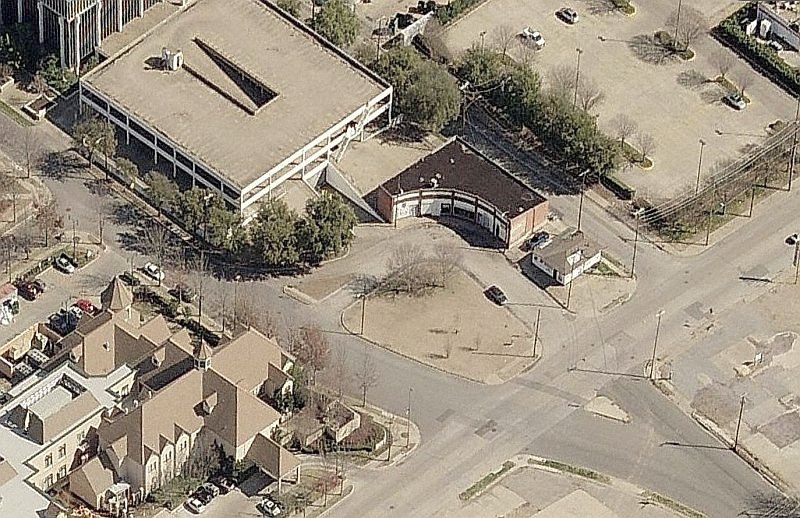
There’s a great view of the area in the 1921 Sanborn map here (with a different angle here). It may just be that the building was built to take advantage of/conform to the odd jog that Swiss Avenue takes in front of it. Here’s an aerial view from the recent past.

swiss-circle_bing-birdseye
Bing Maps

Our own teensy and unspectacular Royal Crescent! (You know what they say — “Everything’s bigger in Bath….”)

**

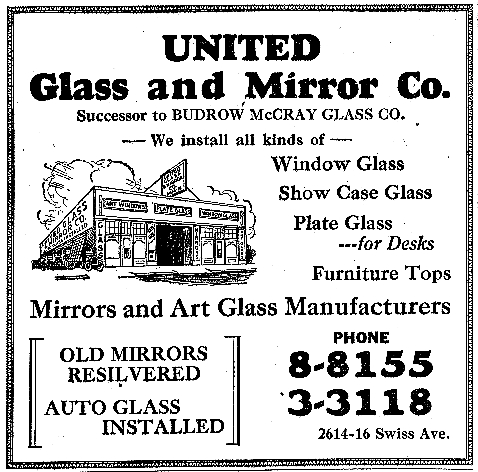
But what about Clyde? Clyde worked at a mirror and glass company four-tenths of a mile west. Here’s an ad from 1928 (the same year Bonnie was working at Hartgraves).

united-mirror-glass_1928-diectory-ad_texashideout
via Bonnie & Clyde’s Hideout

Charles “Chili” Blatney worked with Clyde at United Glass and Mirror. In the Dallas Morning News article “He Helps Dallas to See Itself” by David Hawkins (DMN, March 17, 1970), Hawkins wrote: “Blatney remembers him as the friend he was: The little guy who always wore a hat and who would jerk it off and beat the floor with it in merriment when a good joke was told. […] ‘I guess I was surprised to see him turn real bad,’ [said Blatney].”

The building still stands, almost unrecognizable.

So, yeah, East Dallas was the stomping grounds of Bonnie and Clyde, back when they were living paycheck-to-paycheck and before they had begun their short-lived life of crime.

***

Sources & Notes

Photos of the Swiss Circle building taken by me when I stumbled across it yesterday. I knew what it was when I saw it, but I didn’t really know much about it, other than the Bonnie connection. The building is currently vacant, currently for lease, and currently a weird shade of green. It’s a great space and a cool building. The back side is FANTASTIC!

The surname of the property owner (or property manager) is rather unbelievably … Dunaway.

The passage quoting Rose Myers, who worked at the Yates Laundry, is from the book Reminiscences: A Glimpse of Old East Dallas.

A discussion of this building can be found on the Phorum discussion board, here.

Other Flashback Dallas  posts on Bonnie and Clyde can be found here.

Click everything. See bigger images!

*

Copyright © 2016 Paula Bosse. All Rights Reserved.


“Melons on Ice” — 1890s

wiley-grocery_1890s_haskins-coll_utaA sleepy little town…

by Paula Bosse

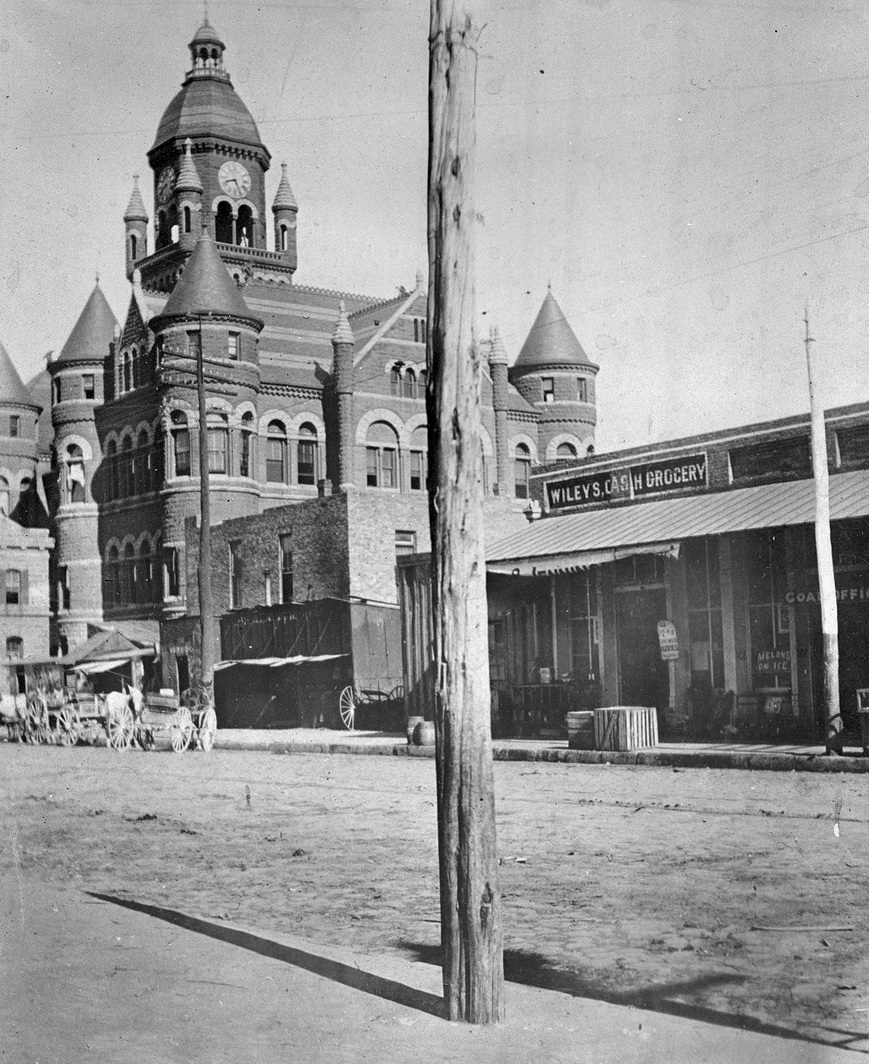
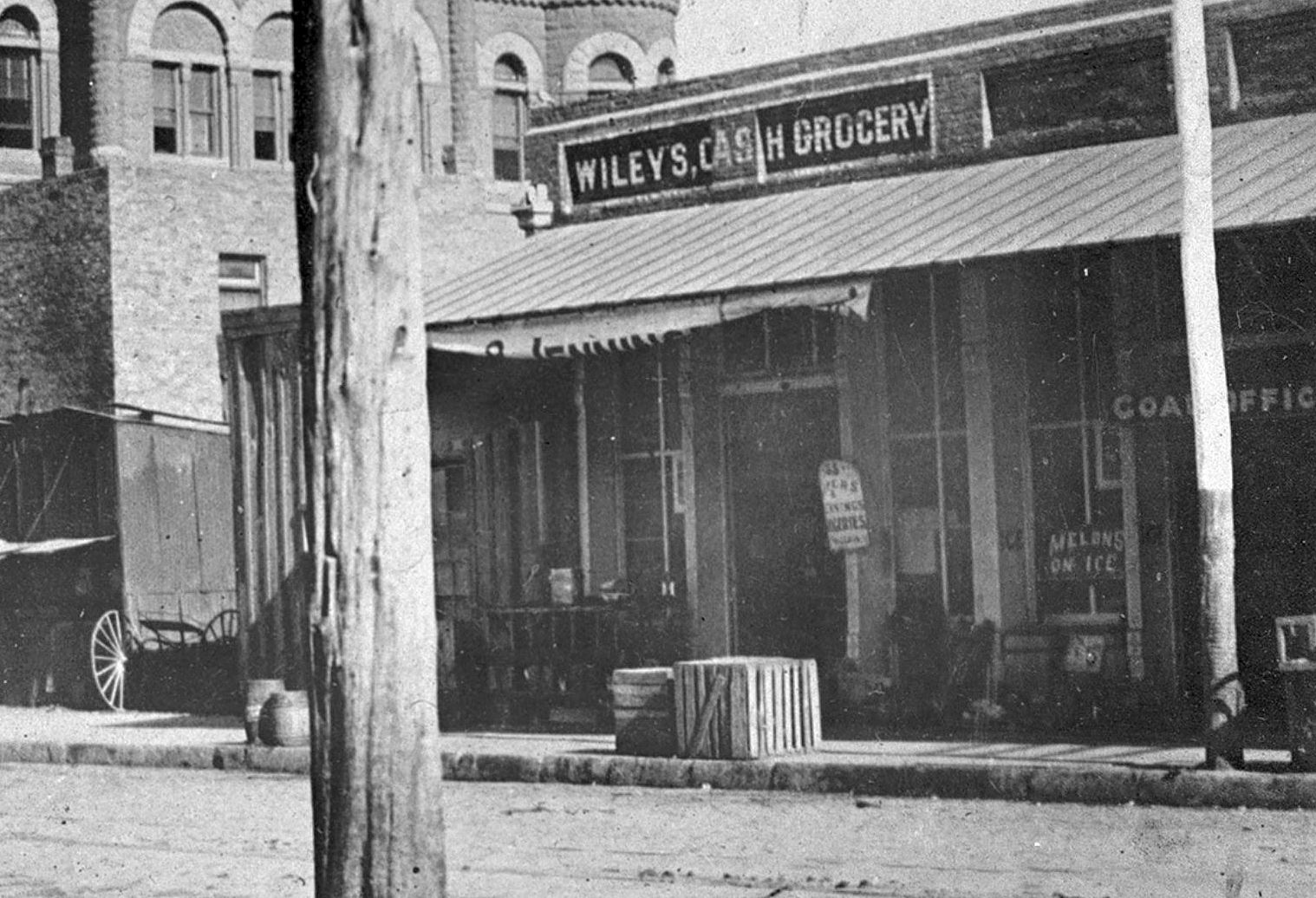
It looks hot in this photo from the 1890s. I bet those “Melons On Ice” in front of Wiley’s grocery store really hit the spot.

wiley-grocery_melons_det-1

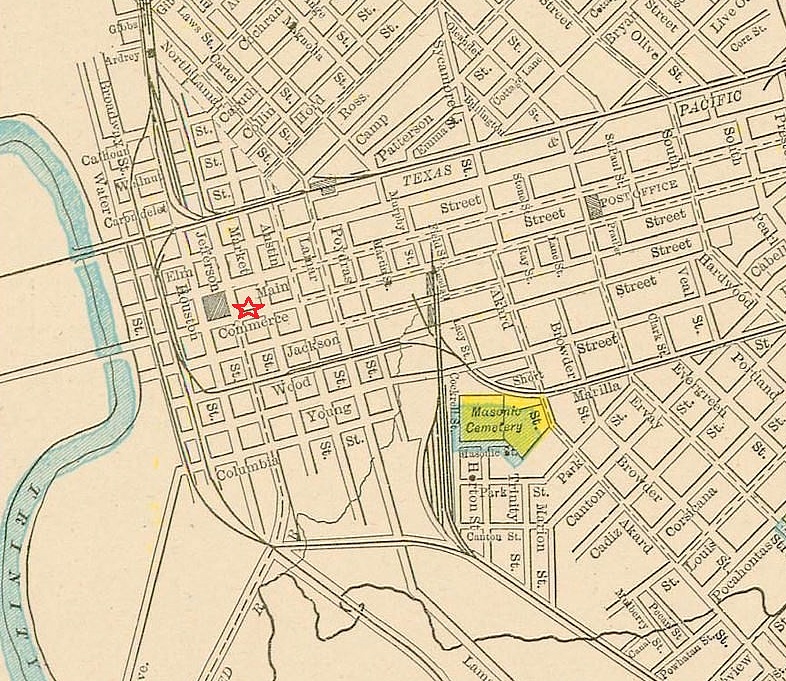
I love this photo. The Wiley Cash Grocery was in business for only a few years — from about 1892 to 1896. It was located at 153 Commerce, one block east of the brand-new county courthouse.

wiley-grocery_1893-directory1893 Dallas directory

wiley-grocery-1893-map
1893 map of Dallas, det.

The business was owned by Anna E. Wiley (~1862-1930) and her husband Jesse P. Wiley (~1863-1942). When they arrived in Dallas around 1887 their address in the city directory was simply “¾ mile w of river.”

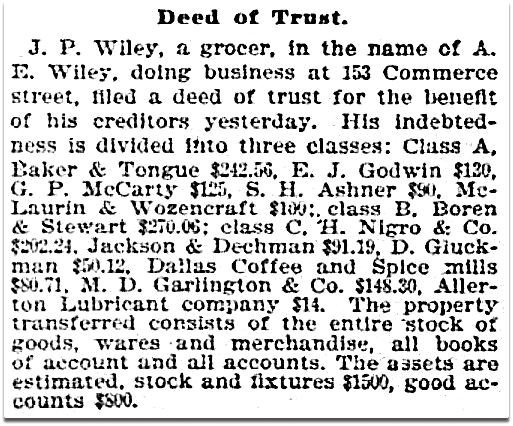
Even though the store seems to have been in Anna’s name, Jesse was forced to file a deed of trust in 1896 when the store was faced with crippling debt. The Wileys owed approximately $1,545 to creditors (about $45,000 in today’s money), but their assets were only about $1,500, plus $800 of “good accounts.” Unsurprisingly, the store was gone by 1897. (Click article below to see a larger image.)

1896-wiley-grocery_dmn_021596
Dallas Morning News, Feb. 15, 1896

This photo captures such an odd view of downtown Dallas — it’s hard to believe that the site once occupied by the Wiley store is now the site of the John F. Kennedy Memorial. A present-day view can be seen here.

***

Sources & Notes

This photo is from the Squire Haskins Photography, Inc. Collection, University of Texas at Arlington Libraries; additional info is here. See this great photo REALLY big here.

The map is a detail from an 1893 map of Dallas from the collection of the Texas State Library and Archives Commission.

*

Copyright © 2016 Paula Bosse. All Rights Reserved.

Belmont & Greenville: From Caruth Farmland to Hub of Lower Greenville

hockaday_aerial_squire-haskins_022750_UTA
Hockaday campus, 1950 (UTA Libraries)

by Paula Bosse

If you’ve driven down lower Greenville Avenue lately, you’re probably aware that the buildings that most recently housed a retirement home at the northwest corner of Belmont and Greenville were scheduled to be been torn down. When I drove past that intersection a few weeks ago and saw the entire block leveled, I was shocked. It’s weird suddenly not seeing buildings you’ve seen your entire life. It got me to wondering what had been on that block before. I’d heard that Hockaday had occupied that block for several years, but even though I’d grown up not too far away, I’d only learned of that within the past few years. When I looked into this block’s history, the most surprising thing about it is that it has passed through so few owners’ hands over the past 140 or so years.

As far as I can tell, the first owner or this land was Walter Caruth (1826-1897), a pioneer merchant and farmer who arrived in this area in the 1840s (some sources say the 1850s), along with his brother, William. Over the years the brothers amassed an absolutely staggering amount of land — thousands and thousands of acres which stretched from about Inwood Road to White Rock Lake, and Ross Avenue up to Forest Lane. One of Walter Caruth’s tracts of land consisted of about 900 acres along the eastern edge of the city — this parcel of land included the 8 or 9 acres which is now the block bounded by Greenville, Belmont, Summit, and Richard, and it was where he built his country home (he also had a residence downtown). The magnificent Caruth house was called Bosque Bonita. Here is a picture of it, several years after the Caruths had moved out (the swimming pool was added later).
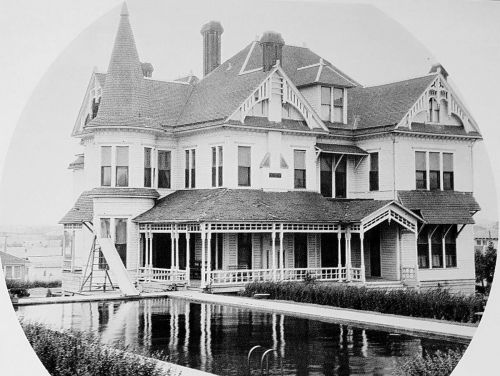
caruth_bosque-bonita_dallas-rediscovered

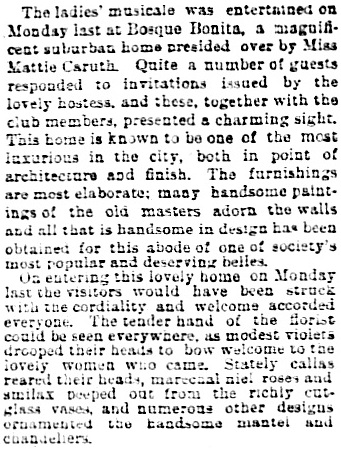
Most sources estimate that the house was built around 1885 (although a 1939 newspaper article stated that one of Walter’s children was born in this house in 1876…), but it wasn’t until 1890 that it began to be mentioned in the society pages, most often as the site of lavish parties. (Click pictures and  articles to see larger images.)
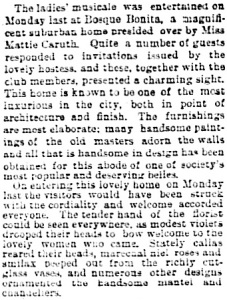
bosque-bonita_dmn_020390Dallas  Morning News, Feb. 3, 1890

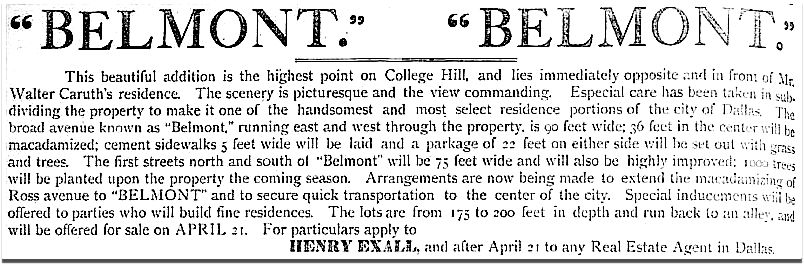
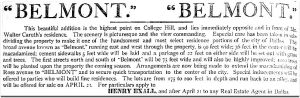
At the time, the Caruth house was one of the few buildings in this area — and it was surrounded by endless acres of corn and cotton crops. It wasn’t long, though, before Dallas development was on the march eastward and northward. This ad, for the new Belmont Addition, appeared in April of 1890, and it mentioned the Caruth place as a distinguished neighboring landmark.
belmont-addition_dmn_041690
DMN, April 16, 1890

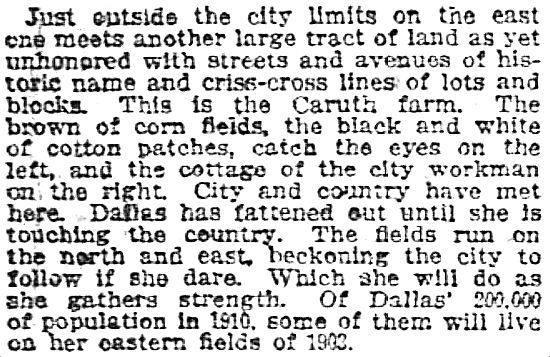
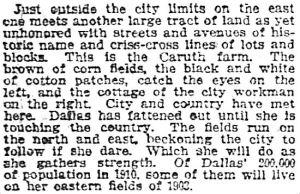
By the turn of the century — after Caruth’s death in 1897 — it was inevitable that this part of town (which was not yet fully incorporated into the City of Dallas) would soon be dotted with homes and businesses.
caruth-farm_dmn_092703
DMN, Sept. 27, 1903

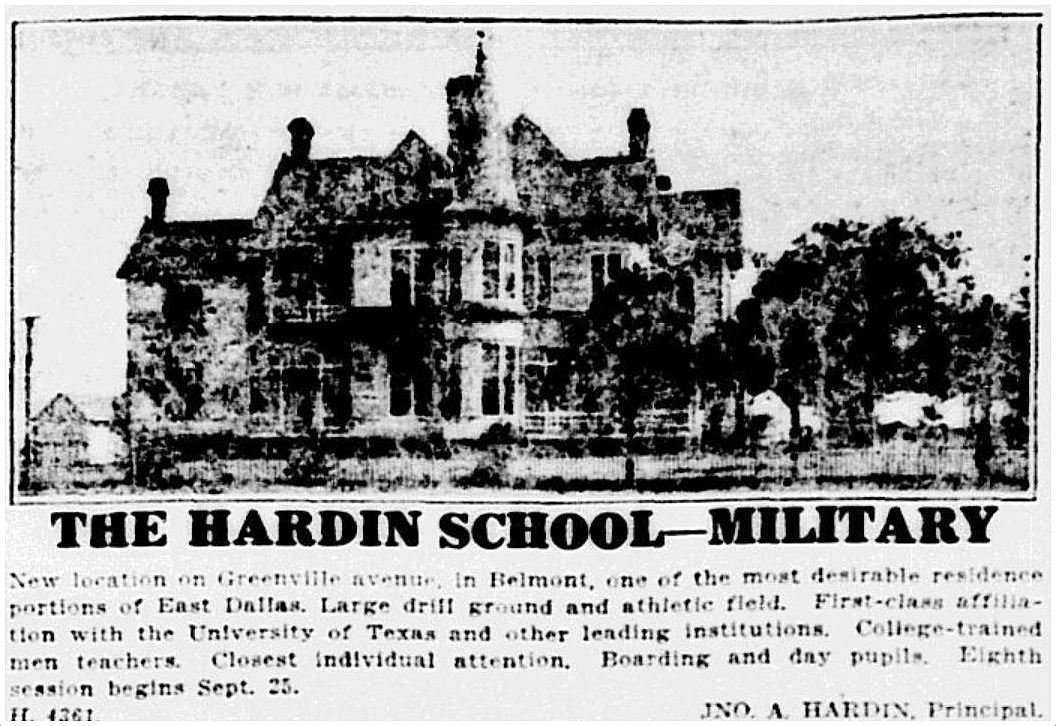
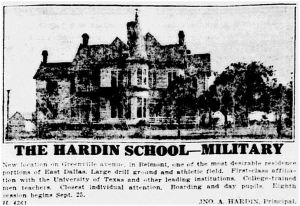
At one time the Caruth family owned land in and around Dallas which would be worth the equivalent of billions of dollars in today’s money. After Walter Caruth’s death, the Caruth family became embroiled in years of litigation, arguing over what land belonged to which part of the family. I‘m not sure when Walter Caruth’s land around his “farmhouse” began to be sold off, but by 1917, the Hardin School for Boys (established in 1910) moved into Bosque Bonita and set up shop. It operated at this location for two years. The Caruth house even appears in an ad.
hardin-school_dmn_071517_bosque-bonita_ad
DMN, July 15, 1917

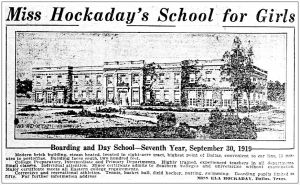
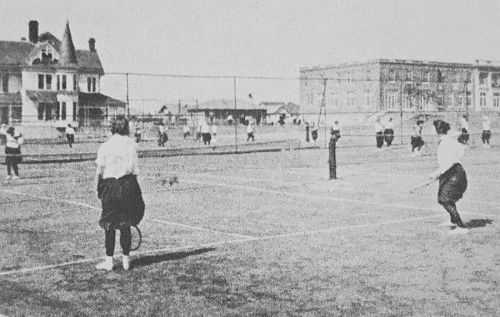
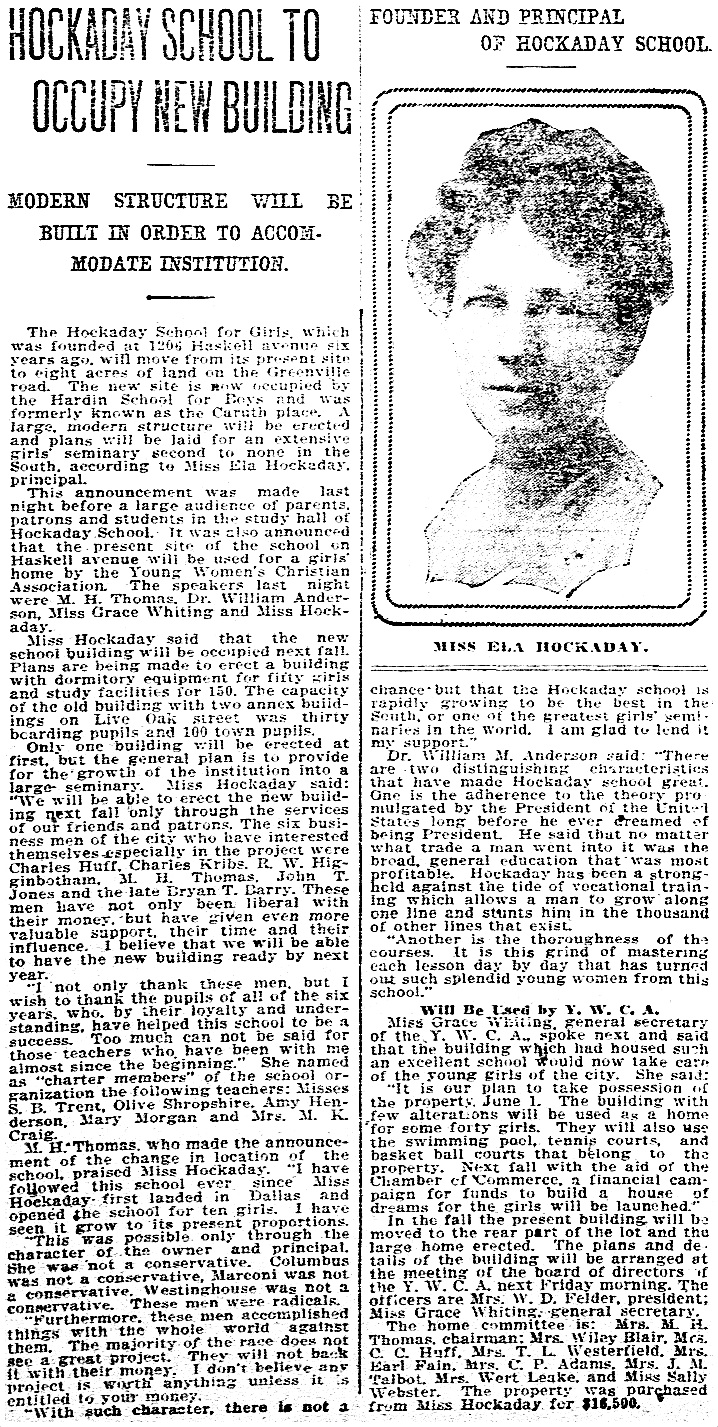
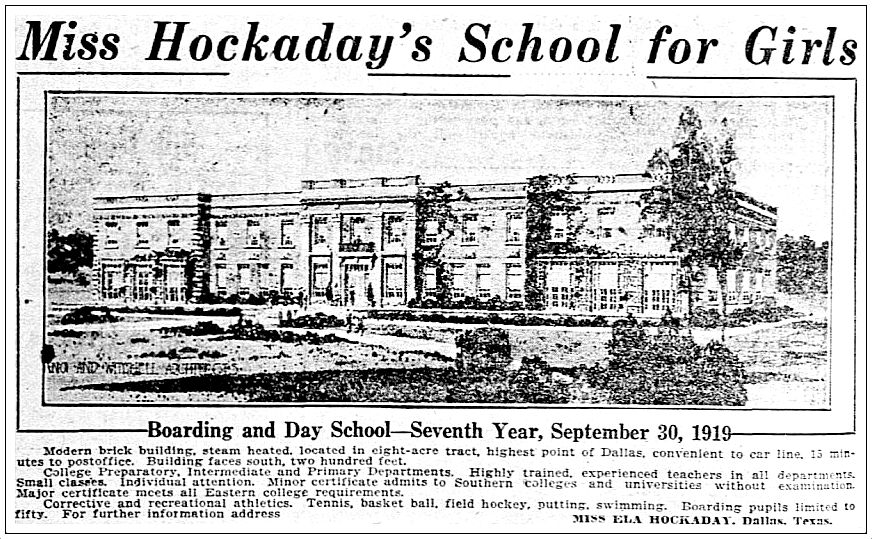
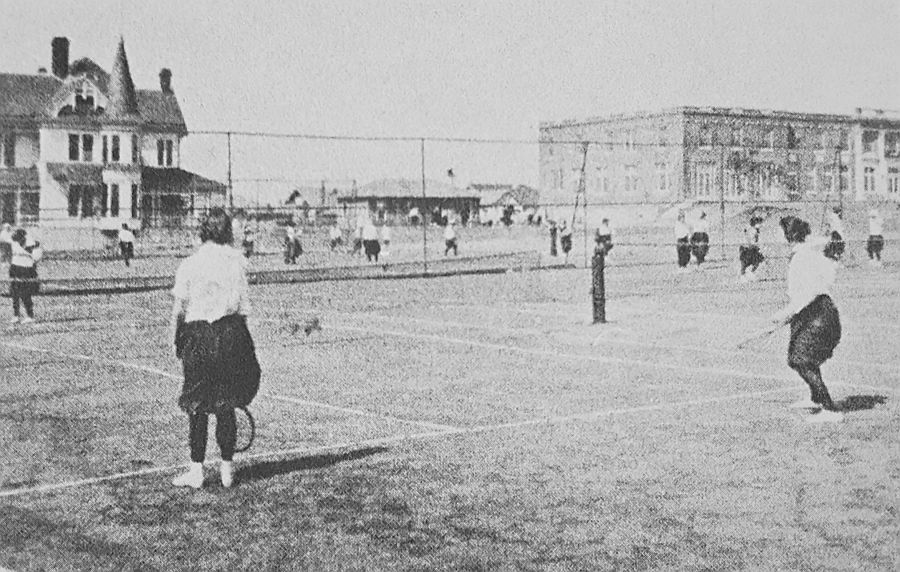
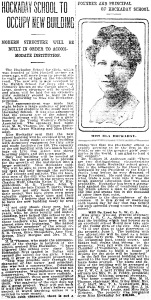
I’m not sure if the Hardin School owned the land or was merely leasing it and the house, but in 1919, Ela Hockaday announced that she had purchased the land and planned to move her school — Miss Hockaday’s School for Girls (est. 1913) — to this block and build on it a two-story brick school building, a swimming pool (seen in the photo above), tennis courts, basketball courts, hockey fields, and quarters for staff and girls from out of town who boarded.
hockaday_dmn_051119DMN, May 11, 1919

hockaday_dmn_070619
DMN, July 6, 1919

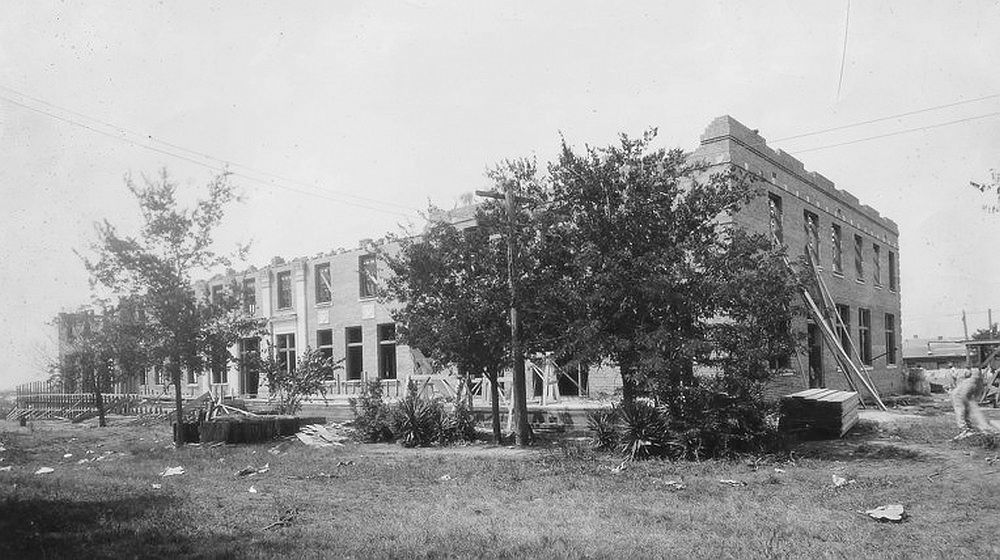
Ground was broken in July of 1919, and the first session at the new campus began on schedule in September. Below, the building under construction. Greenville Avenue is just out of frame to the right.
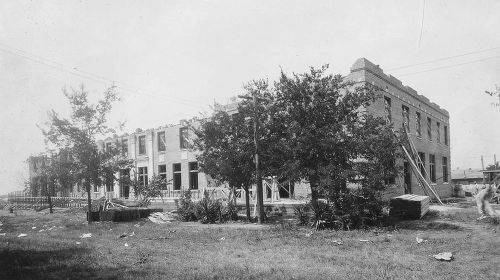
hockaday_greenville_construction_hockaday100Photo: Hockaday 100

hockaday_greenville-ave_1919_reminiscences

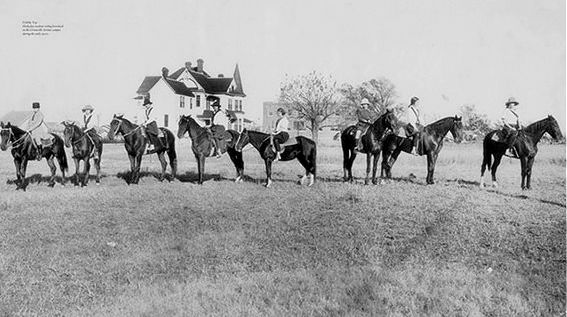
hockaday_greenville-belmont_1920s_horses

The most interesting thing I read about the Hockaday school occupying this block is that very soon after opening, the beautiful Caruth house was moved from its original location at the northwest corner of Belmont and Greenville. It was rolled on logs to the middle and back of the property. “Bosque Bonita” became “Trent House.” Former student (and later teacher) Genevieve Hudson remembered the moving of the house in an oral history contained in the book Reminiscences: A Glimpse of Old East Dallas:
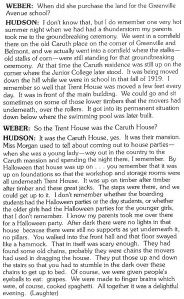
caruth-house_hockaday_reminiscences-bk

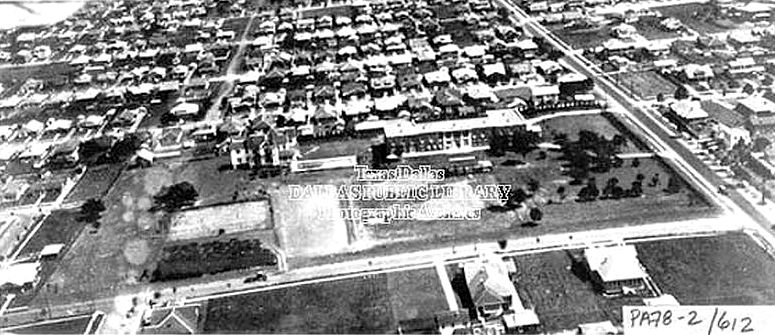
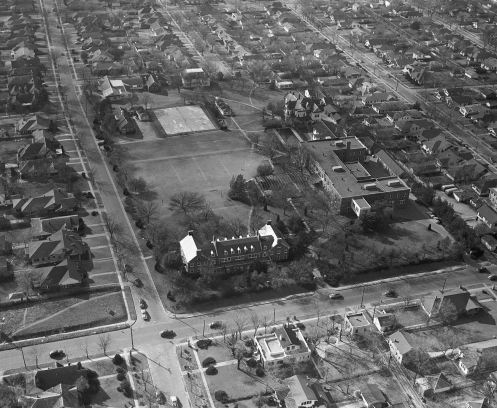
You can see the new location of the house in the top aerial photo, and in this one:
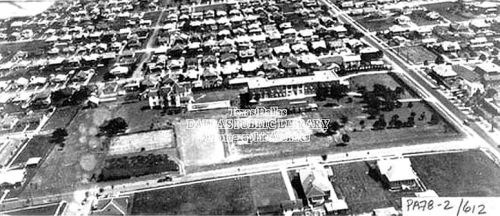
hockaday_aerial_dpl
Dallas Public Library

Another interesting little tidbit was mentioned in a 1947 Dallas Morning News article: Caruth’s old hitching post was still on the property — “on Greenville Avenue 100 feet north of the Belmont corner” (DMN, May 2, 1947). I’d love to have seen that.

After 42 years of sustained growth at the Greenville Avenue location (and five years after the passing of Miss Hockaday), the prestigious Hockaday School moved to its current location in North Dallas just after Thanksgiving, 1961. Suddenly, a large and very desirable tract of land between Vickery Place and the M Streets was available to be developed. Neighbors feared the worst: high-rise apartments.

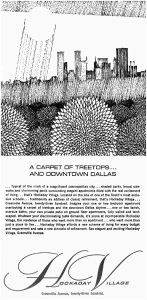
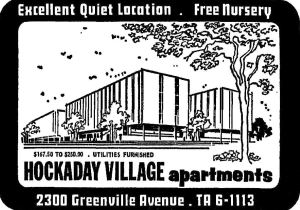
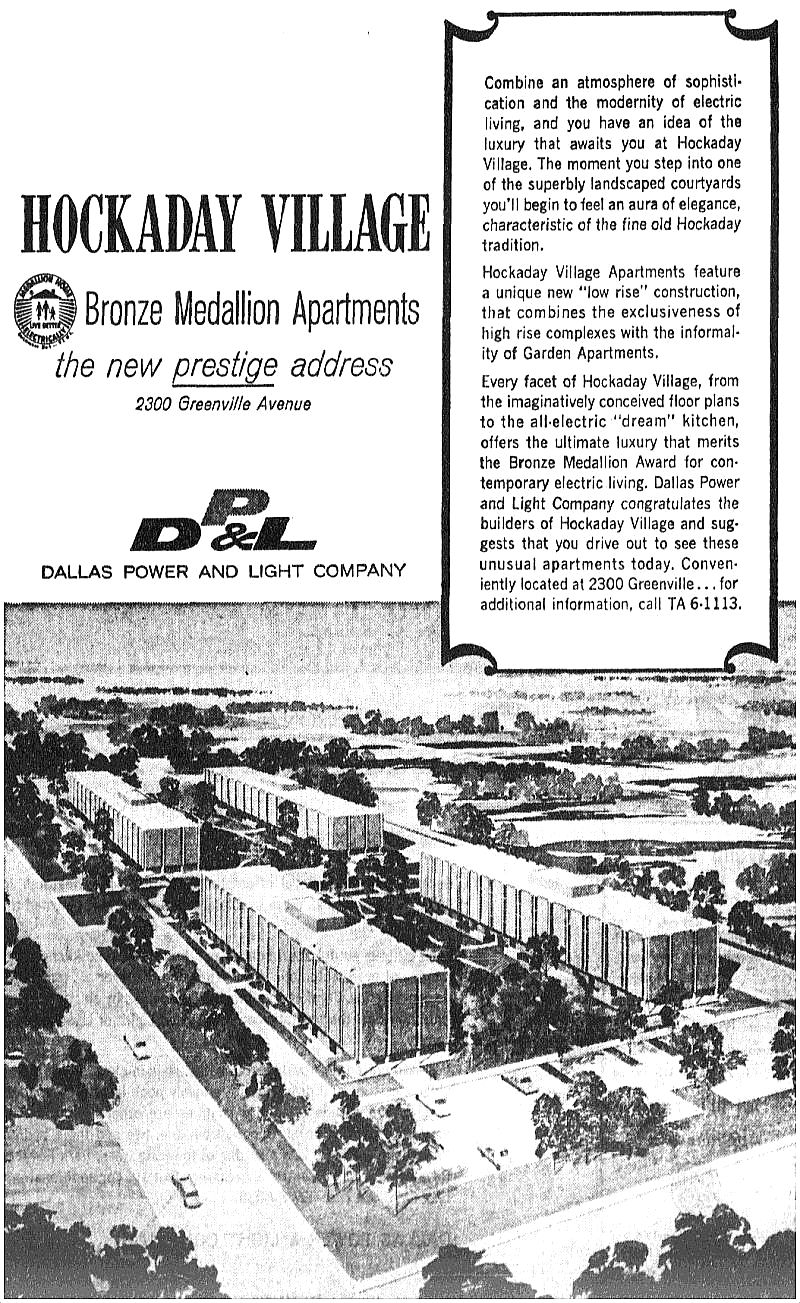
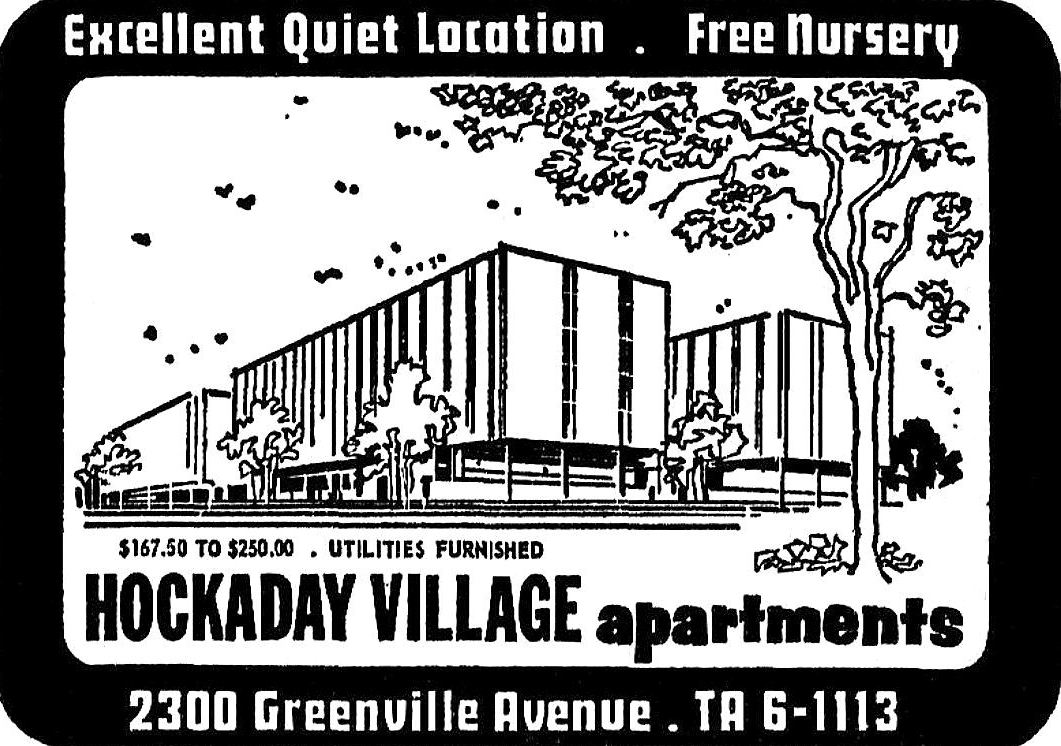
The developer proposed a “low-rise,” “semi-luxury” (?) group of four 5-story apartment buildings, each designed to accommodate specific tenants: one for swinging singles (“where the Patricia Stevens models live”), one for single or married adults, one for families with children, and one for “sedate and reserved adults.” It was to be called … “Hockaday Village.” The architect was A. Warren Morey, the man who went on to design the cool Holiday Inn on Central and, surprisingly, Texas Stadium.

Bosque Bonita — and all of the other school buildings — bit the dust in preparation for the apartment’s construction. Hockaday Village (…what would Miss Hockaday have thought of that name?) opened at the end of 1964.
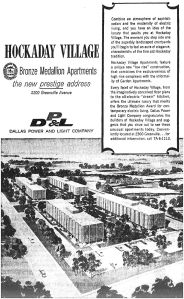
hockaday-village_dmn_101864
Oct. 1964

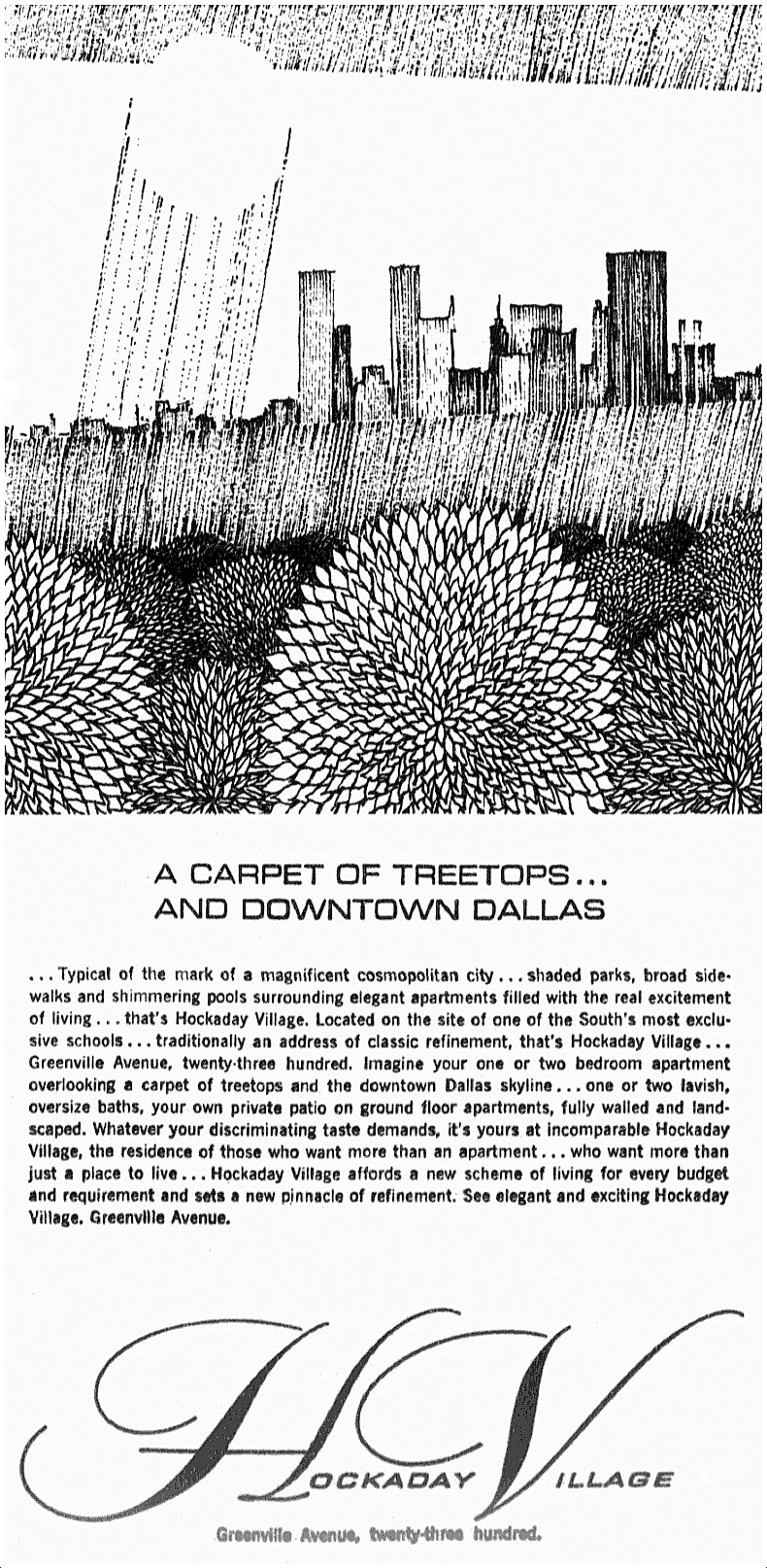
hockaday-village_dmn_101864_carpet-of-treetops
Oct. 1964

hockaday-village_dmn_031365
March 1965

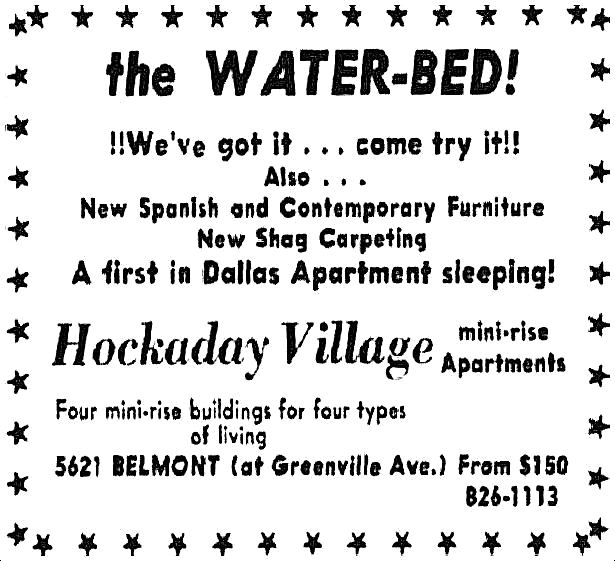
And then before you knew it, it was the ’70s, the era of waterbeds and shag carpeting. (Miss Hockaday would not have tolerated such tackiness, and I seriously doubt that Mr. Caruth would have ever understood why shag carpeting was something anyone would actually want.)
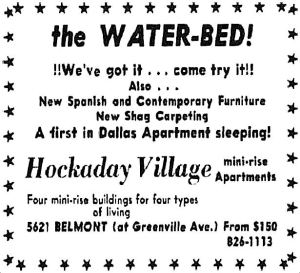
hockaday-village_dmn_052271_waterbeds
1971

Then, in 1973, the insistently hip ads stopped. In April, 1974 this appeared:
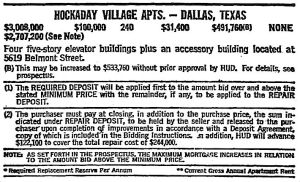
hockaday-village_FWST_042874
Fort Worth Star-Telegram, April 28, 1974

The apartments were being offered for public auction by the “Office of Property Disposition” of the Federal Housing Authority and HUD. Doesn’t sound good. So who bit and took the plunge? The First Baptist Church of Dallas, that’s who. The plan was to redevelop the existing apartments into a retirement community called The Criswell Towers, to be named after Dr. W. A. Criswell. But a mere three months later, the Baptists realized they had bitten off more than they could chew — the price to convert the property into a “home for the aged” would be “astronomical.” They let the building go and took a loss of $135,000. It went back on the auction block.

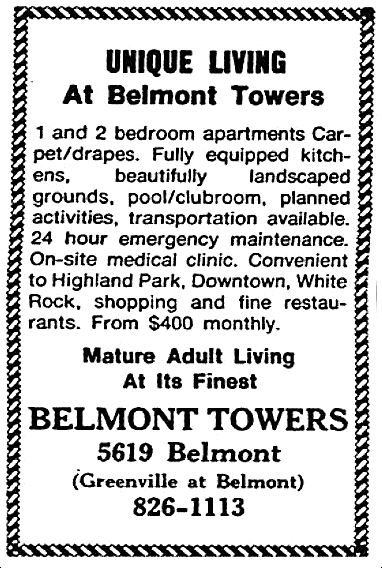
Two years later, in the summer of 1976 … the old Hockaday Village became Belmont Towers — and the new owners must have thought the Baptists’ idea was a good one, because Belmont Towers advertised itself as “mature adult living at its finest” — “perfect for retired or semi-retired individuals.”
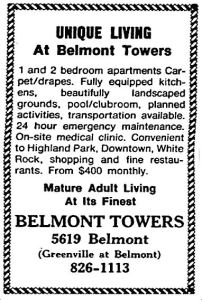
hockaday-village_dmn_043083_belmont-towers
April 1983

It was Belmont Towers for 20-or-so years. In 1998, the buildings were renovated and updated, and it re-opened as Vickery Towers, still a retirement home and assisted living facility. A couple of years ago it was announced that the buildings would be demolished and a new development would be constructed in its place. It took forever for the 52-year-old complex to finally be put out of its misery since that announcement. Those buildings had been there my entire life and, like I said, it was a shock to see nothing at all in that block a few weeks ago.
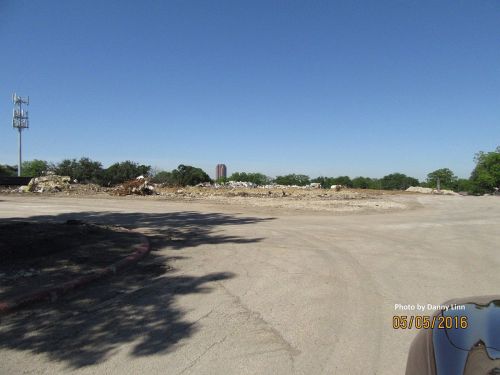
vickery-towers_050516_danny-linn-photoPhoto: Danny Linn

In the 140-or-so years since Walter Caruth acquired this land in the 1870s or 1880s, it has been occupied by Caruth’s grand house, a boys school, the Hockaday School, and four buildings which have been apartments and a retirement community. And that’s it. That’s pretty unusual for development-crazy Dallas. I’ll miss those familiar old buildings. I hope that whatever is coming to replace them won’t be too bad.
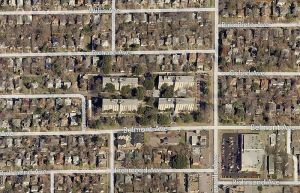
greenville-belmont_bing_aerial
Bing Maps

***

Sources & Notes

The top aerial photograph is by Squire Haskins, taken on Feb. 27, 1950 — from the Squire Haskins Photography Inc. Collection, University of Texas at Arlington Libraries, Special Collections, accessible in a massive photo here (click the thumbnail). Greenville Avenue is the street running horizontally at the bottom. The Hockaday Junior College can be seen at the northwest corner of Belmont and Greenville — the original location of Bosque Bonita before it was rolled across the campus.

That fabulous photo of Bosque Bonita is from the book Dallas Rediscovered by William L. McDonald.

Photo of Hockaday girls playing tennis is from the book Reminiscences: A Glimpse of Old East Dallas.

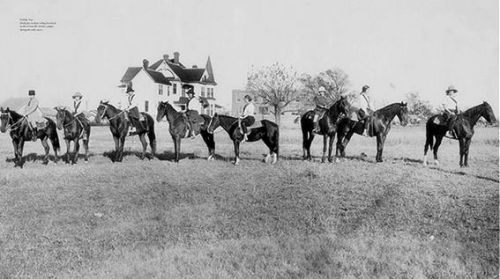
Photo of girls on horseback … I’m not sure what the source of this photo is.

Photo of the block, post-razing is by Danny Linn who grew up in Vickery Place; used with permission. (Thanks, Danny!)

All other sources as noted.

In case you were confused, the Caruth Homeplace that most of us might know (which is just south of Northwest Highway and west of Central Expressway) was the home of Walter Caruth’s brother William — more on that Caruth house can be found here.

The Hockaday School can be seen on the 1922 Sanborn map here (that block is a trapezoid!).

More on the history of the Hockaday School can be found at the Hockaday 100 site; a page with many more photos is here. Read about the history of the school in the article “Miss Ela Builds a Home” by Patricia Conner Coggan in the Spring, 2002 issue of Legacies, here.

Additional information can be found in these Dallas Morning News articles:

  • “Proposal to Change Hockaday Site to Apartment Zoning Opposed” (DMN, Oct. 29, 1961)
  • “Retirement Home Plans Going Ahead” (regarding the purchase by the First Baptist Church of Dallas) (DMN, June 15, 1974)
  • “Church Takes $135,000 Loss on Property” (DMN, Sept. 10, 1974)

*

If you made it all the way through this, thank you! I owe you a W. C. Fields “hearty handclasp.”

*

Copyright © 2016 Paula Bosse. All Rights Reserved.

Dallas Skyline at Night — ca. 1965

downtown_chamber-of-commerce_ca1965Goodnight, Pegasus…

by Paula Bosse

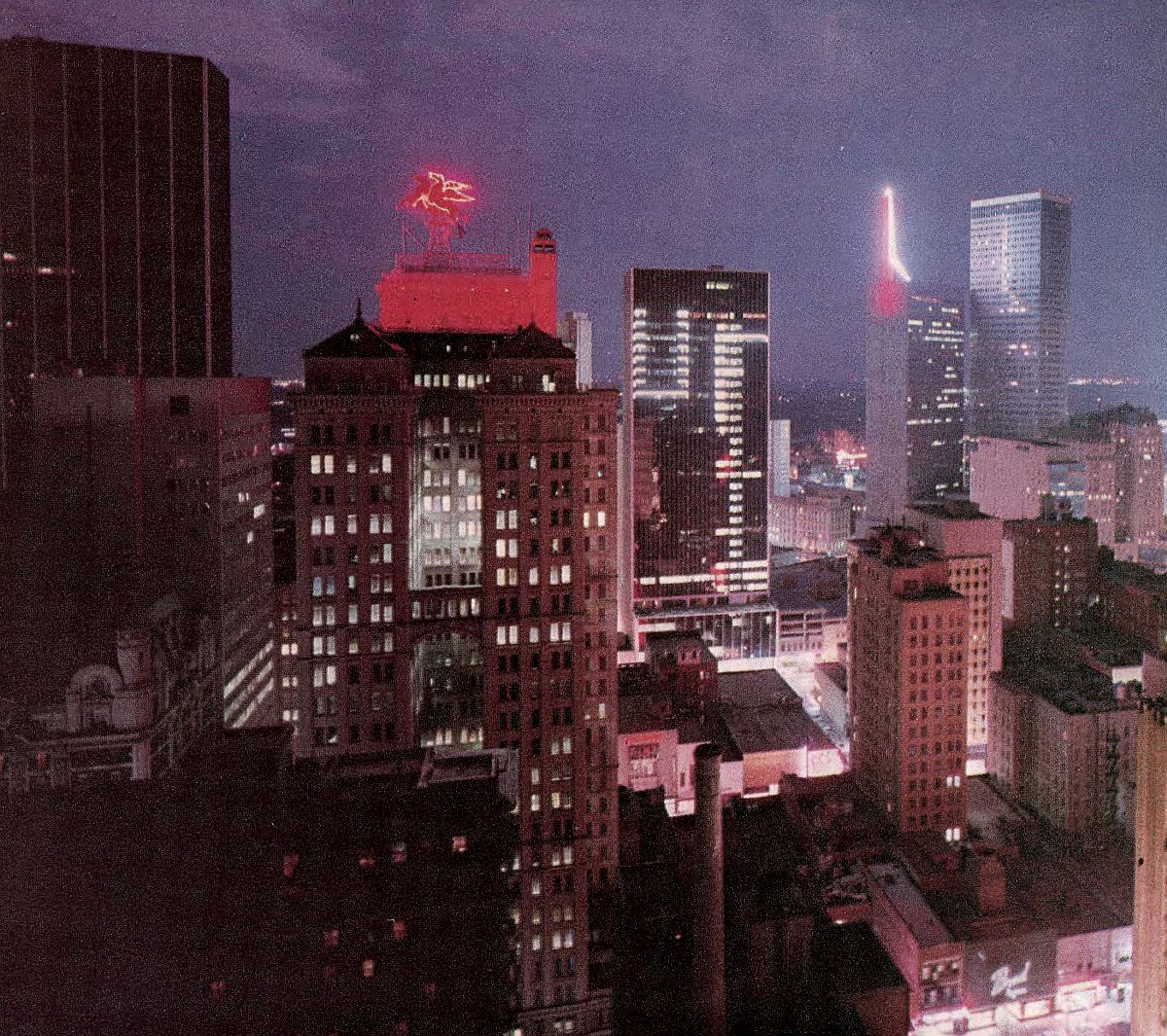
It might just be because this photo is so grainy, but it’s very dreamy-looking — a sort of soft-focus view of Dallas’ sophisticated nighttime skyline.

***

Sources & Notes

The photo is credited to the Dallas Chamber of Commerce. I’m pretty sure this came from a high school yearbook, but I’m afraid I neglected to note which one.

See another great photo from the same period in the Flashback Dallas post “Nighttime Skyline — 1965.”

*

Copyright © 2016 Paula Bosse. All Rights Reserved.
On Top of the World: The Southland Center

skyline_construction_squire-haskins_UTA_1Executive privilege…

by Paula Bosse

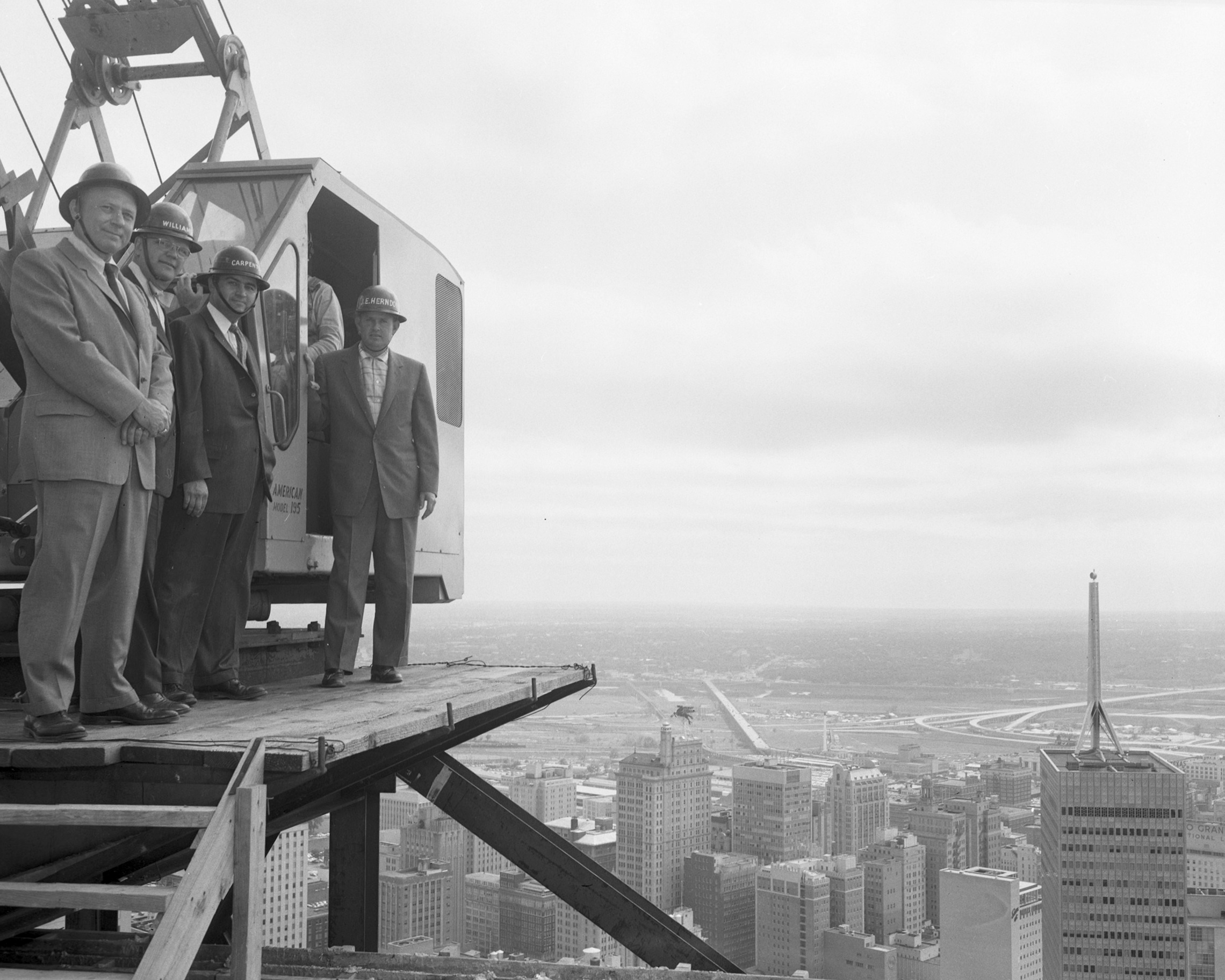
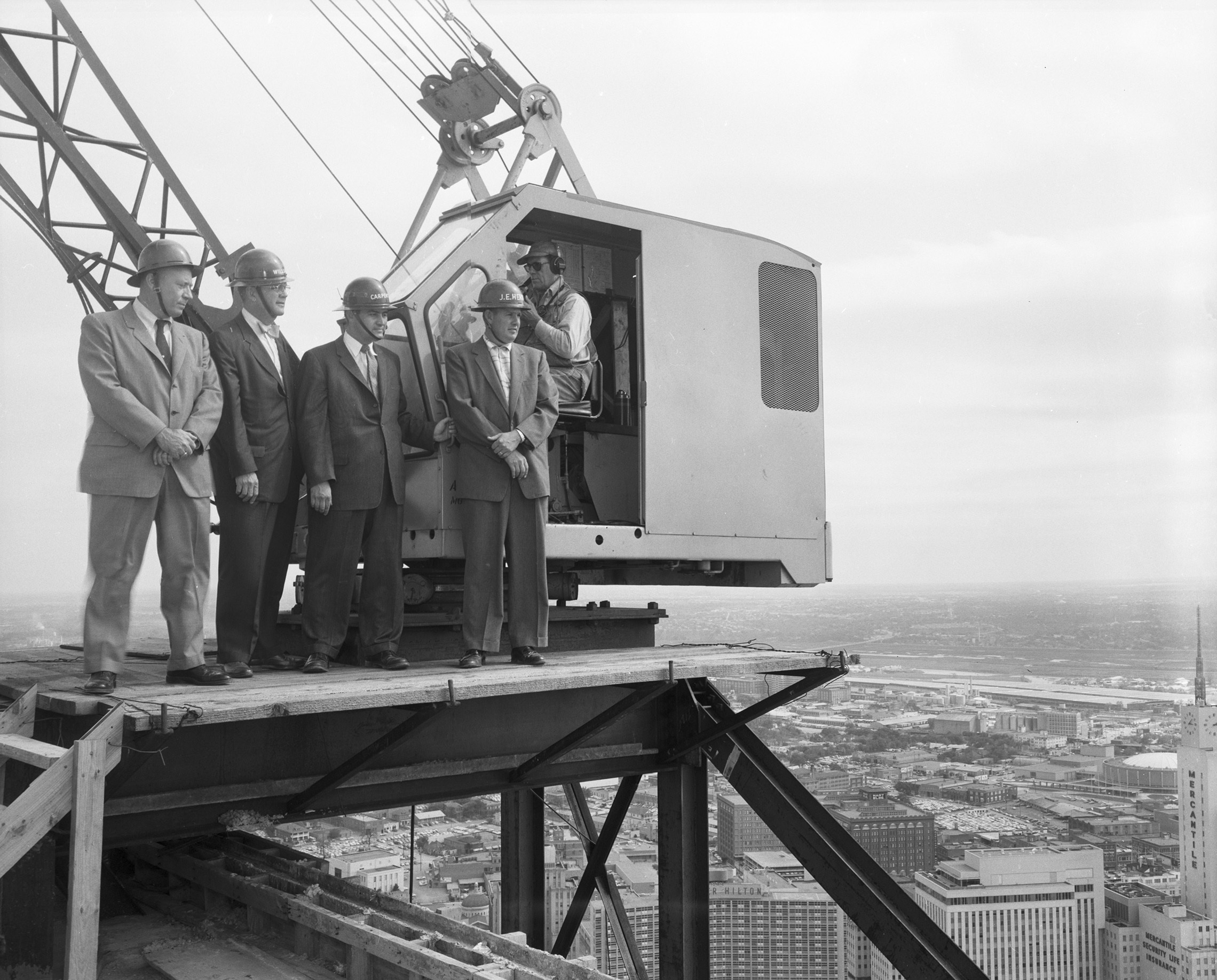
Here are a couple of cool, vertigo-inducing photos taken by Squire Haskins in 1958 or very early 1959 showing Southland Life Insurance executives and a crane operator perched atop the under-construction Southland Center, which included the Southland Life building (which was the tallest building in Dallas for a while) and the Sheraton Hotel. Once completed and opened in April, 1959, there was an observation deck at the top of the Southland Life building, offering an unequaled, unobstructed view of the city.
skyline_construction_crane_squire-haskins_UTA

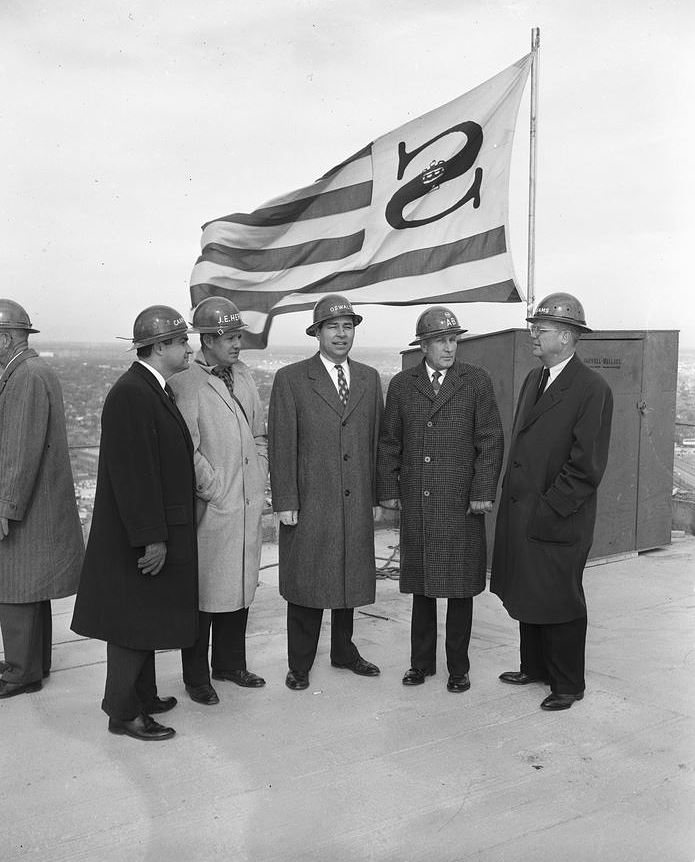
The building under construction in these photos is unidentified, but the familiar Sheraton logo seen elsewhere with the same men is a tip-off.

sheraton_construction_squire-haskins_UTA

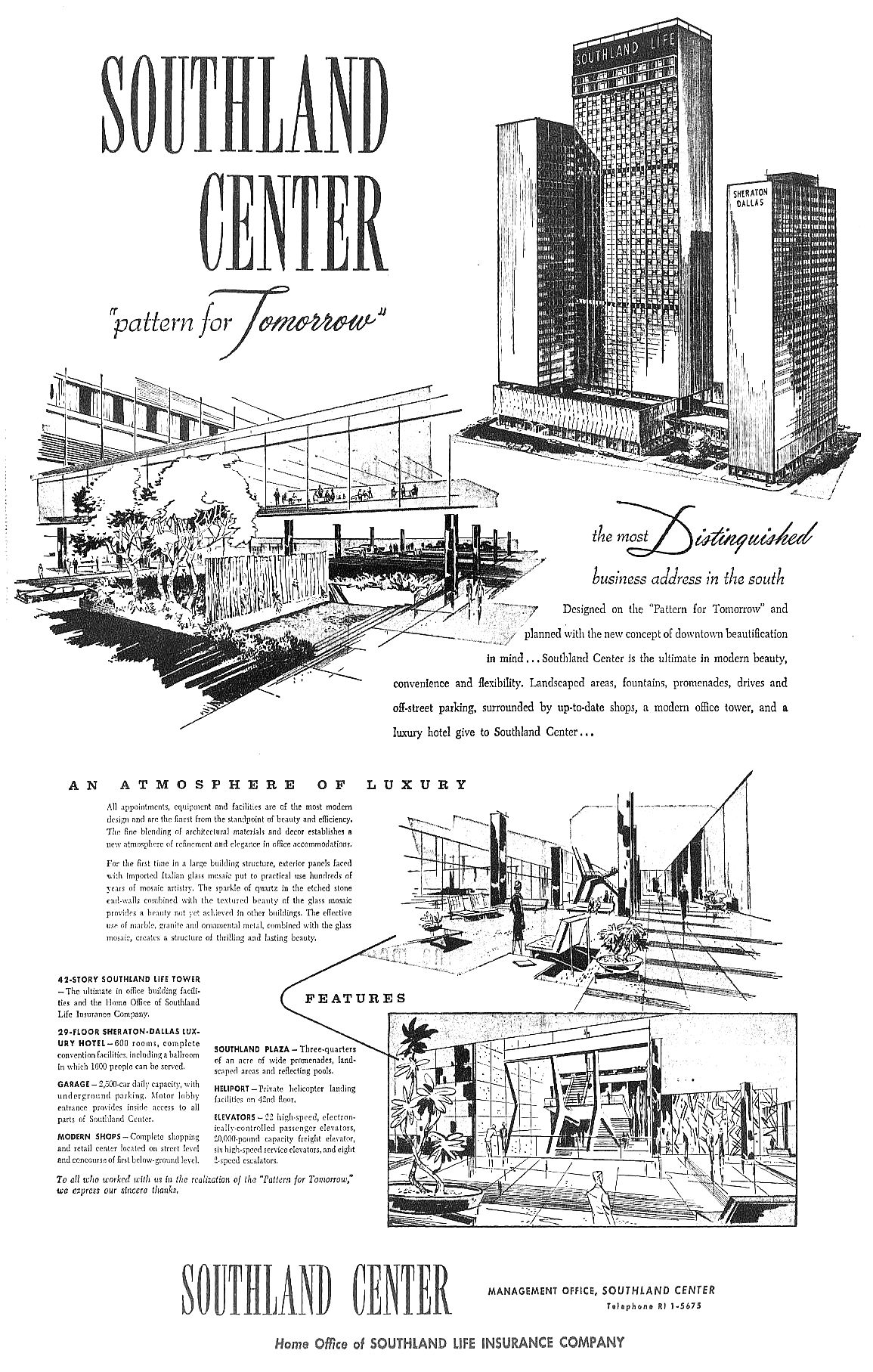
Here’s what it all looked like when it opened. Click to see a larger image.

ad-southland_sheraton_april-1959
April, 1959

***

Sources & Notes

Photos are by Squire Haskins, from the Squire Haskins Photography, Inc. Collection, Special Collections, University of Texas at Arlington Libraries. Info on the top photo can be found here.

Some of the men in the photos are Dan C. Williams (President, Southland Life), Ben H. Carpenter (Executive Vice-President), William H. Oswalt, III (Vice-President, Director of Project Development for Southland Center), J. E. Herndon, and “A. B.”

A related Flashback Dallas post — “Sheraton Dallas, Original Version — 1959” — is here.

*

Copyright © 2016 Paula Bosse. All Rights Reserved.

The Gateway to Junius Heights

junius-streetcar_junius-gates_DPL_sm
Welcome to Junius Heights!

by Paula Bosse

If you’ve driven along Abrams Road, between, say, Beacon and the Lakewood Country Club, you’ve probably passed two tall stone pillars which stand across Abrams from one another, and you’ve probably asked yourself, “What are those things?”

These things:

junius-heights-pillars_google-street-viewGoogle Street View here

They were built as gateway markers to the Junius Heights neighborhood in about 1909 — they’re just not in their original location anymore. They were originally on either side of Tremont Street, half a block east of Ridgeway. They’ve been moved, but they’re only a stone’s throw from their original site.

In 1973, when the city was in the midst of widening and connecting Abrams with Columbia, the 30-foot pillars were situated on a roadway which was going to be demolished. The pillars would have been destroyed were it not for the efforts of a small group of preservation-minded neighborhood residents who managed to raise enough money to have the historic East Dallas structures dismantled and moved. It took a while for the money to be fully raised, but the pillars were placed on their new sites in 1975.

The thing that is most interesting about the saving of these columns is that this took place at a time when this part of East Dallas — Swiss Avenue included — was on something of a downslide. Many of the houses were in disrepair and many residents had moved out, seeking newer homes and better (i.e. newer) neighborhoods. Thankfully, in the early 1970s people began to focus on historic preservation, and the area began to make a slow comeback. Thanks to the preservation efforts of these people, their persistence in gaining “historic district” status for Junius Heights and Munger Place, and their successful fights on zoning issues, the areas surrounding these stone pillars are once again highly desirable neighborhoods, full of homeowners who are good caretakers and thoughtful preservationists.

**

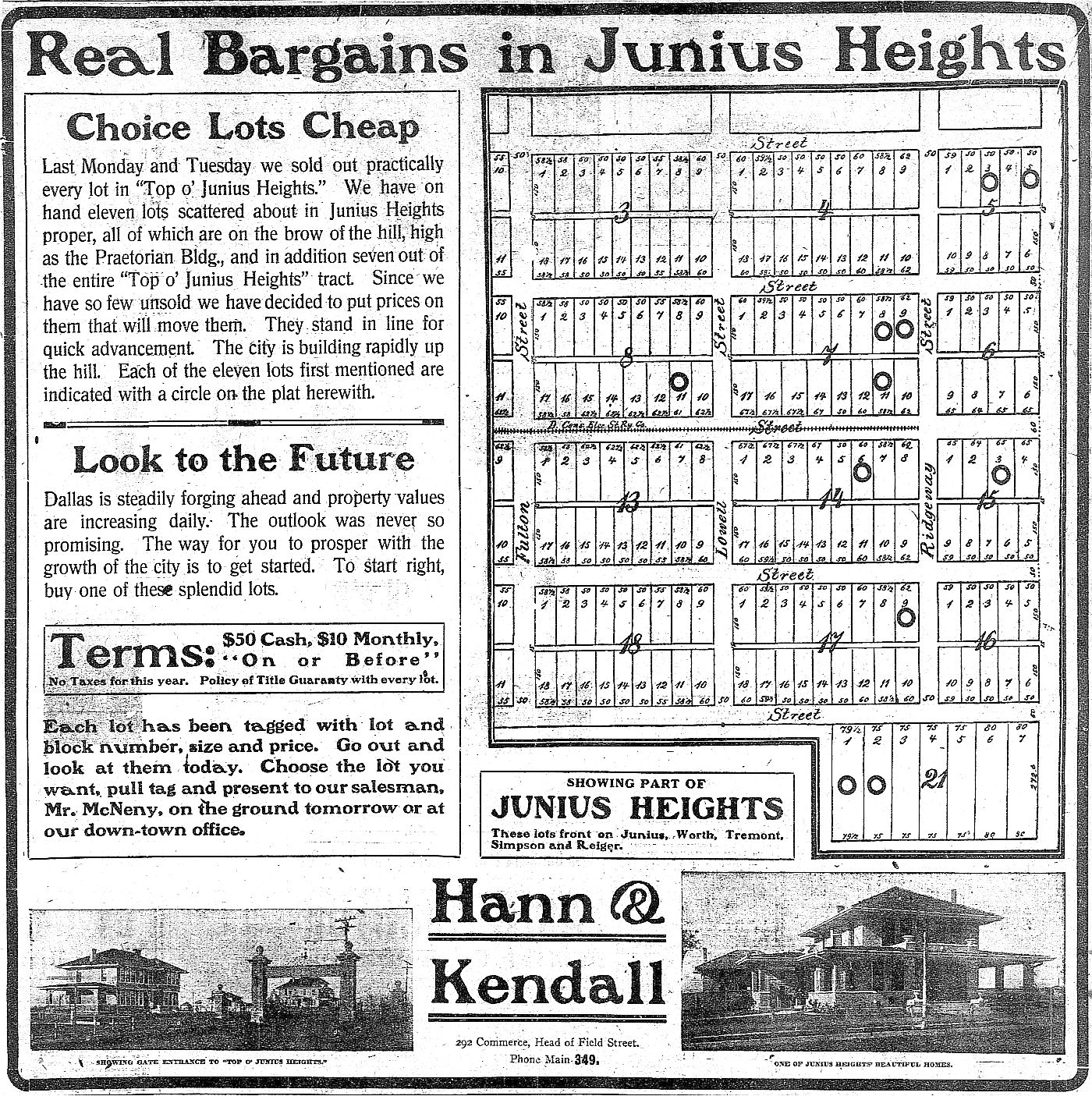
When researching this post, it was very difficult to determine when the pillars had been built. For some reason 1917 seemed to be a popular guess, and it was repeated in several articles I came across. But it was actually earlier. The earliest photo I’ve found (and I was pretty excited to have stumbled across it!) was one that first appeared in a November, 25, 1909 ad for a new development called “Top o’ Junius Heights.” (All photos and clippings are larger when clicked.)

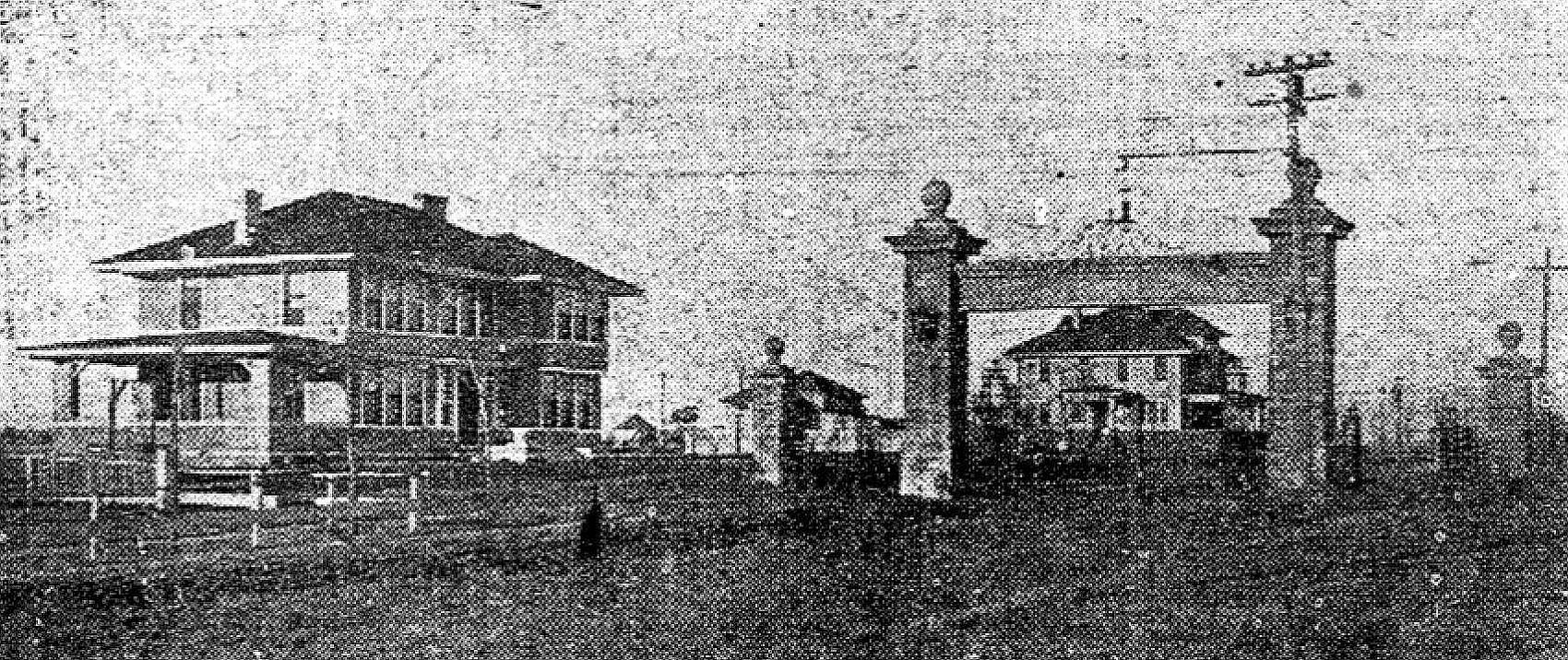
ad-junius-heights_dmn_112509-det

Here’s the full ad:

junius-heights_dmn_112509Dallas Morning News, Nov. 25, 1909

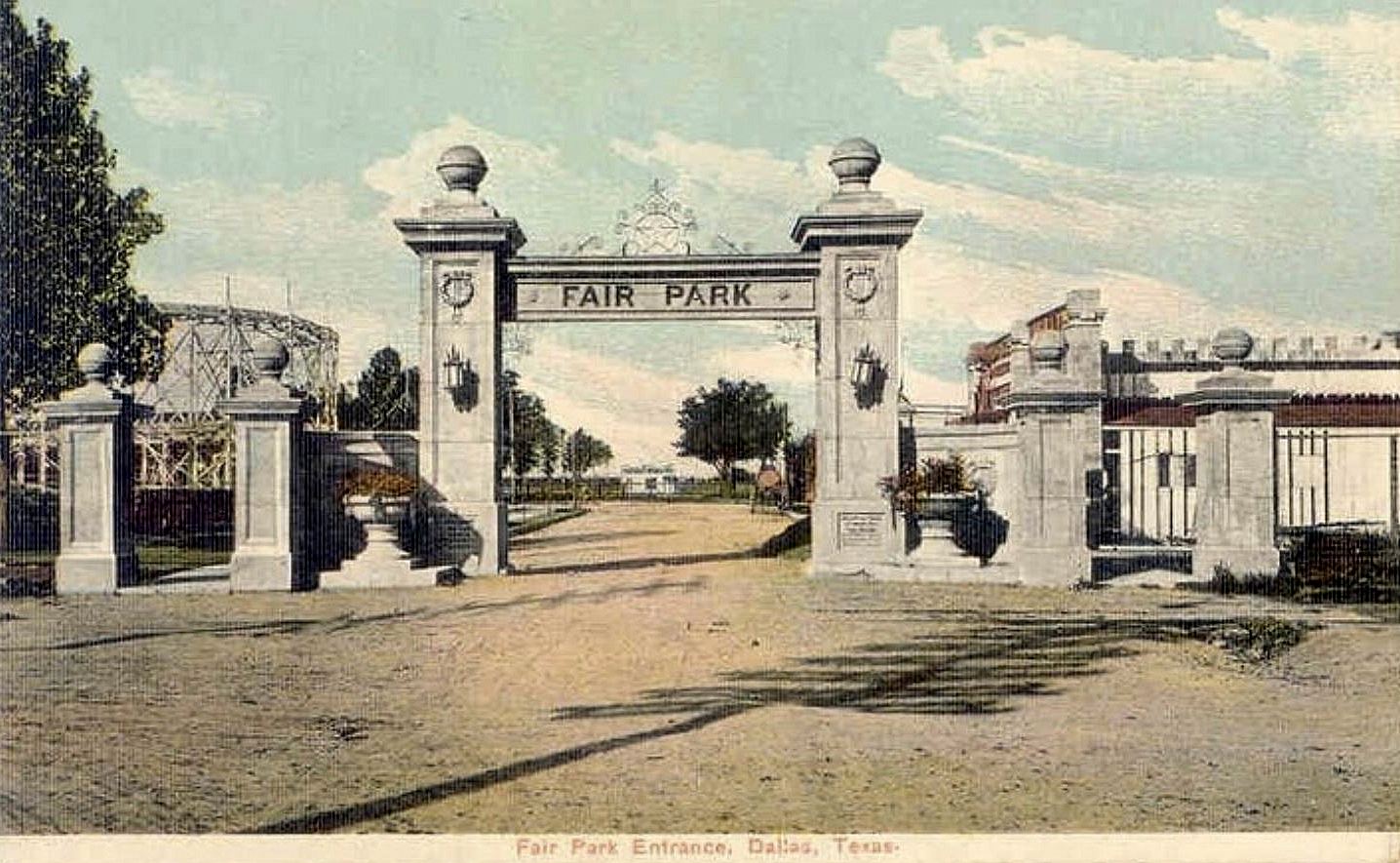
Note how similar this entrance looks to the entrance to Fair Park from the same time:

fair-park-entrance_1910_flickr_coltera

The same photo was used in another ad a few months later. If you live in Junius Heights, perhaps you can find your house in the diagram:

ad-junius-heights_dmn_050810DMN, May 8, 1910

The pillars were actually built as a gateway — the columns connected at the top, spanning Tremont. Lots in Junius Heights first began to be sold in 1906; in 1909, the second addition — called “Top o’ Junius Heights” — began to be offered for sale. The opening of the second addition appears to be when the gateway might have been built. Not only did this gate serve as an entrance to Junius Heights, it actually separated the two additions (see clippings below). It was also a handy landmark, and for many years it stood at the end of the Junius Heights streetcar line (which ended at Tremont and Ridgeway).

Below, part of an ad for Top o’ Junius Heights that appeared in The Dallas Morning News on Nov. 28, 1909, in which the “big stone gate entrance” is mentioned:

junius-heights-ad_dmn_112809_det

Part of another ad for Top o’ Junius Heights:

junius-heights-gates_dmn_050110_ad-det
DMN, May 1, 1910

And part of an ad for just plain ol’ Junius Heights, mentioning that the gate can be seen as a boundary:

junius-heights-gates_dmn_090410_ad-detDMN, Sept. 4, 1910

Here’s a detail from a 1922 Sanborn map which might make the location of the gate a little easier to visualize (and, again, these streets no longer look like this): the blue line represents the streetcar line (which ran all the way to Oak Cliff — the photo at the top of this post shows the Hampton streetcar), and the red circles are about where the pillars were originally planted. (The full map is here.)

junius-heights-gate_1922-sanborn_sheet-394

It was pretty exciting finding that photograph from 1909, but it was also pretty exciting seeing a photograph posted in the Dallas History Facebook group by Jerry Guyer which shows a dreamy-looking view of the gate as seen from the yard of the home owned by his great-uncle, A. P. Davis, who lived at 5831 Tremont between 1911/12 and 1921/22 (see what the house looked like back then, here).  The house was on the northwest corner lot of Tremont and Ridgeway (it is still standing), only half a block away from the gate. This detail of that photo is fantastic!

junius-gates_ca-1920s_guyer_dallas-history-fb

*

Another very early photo of the pillars/columns/gateway can be seen in this photo. (I’m afraid it’s a little odd-looking as I took a photo of it on the wall of The Heights restaurant in Lakewood and lights are reflecting off the picture. Please check this large photo out in person. Not only are there other great historical photos on the walls, but the coffee is great.)

junius-heights-gateway_the-heights-restaurant

Here is the same photo as the one at the top. Note that this “gateway” has actual iron gates and that there are smaller secondary pillars on the opposite side of the sidewalks. Also note that the pillar on the right actually extends into the narrow street.

junius-streetcar_junius-gates_DPL

And here’s another view I just came across (I’ve added so much since I originally wrote this post!), from a DVD called Dallas Railway & Terminal — this from 1951 or 1952, showing the Junius streetcar coming through the “gates” (sorry for the low-res):

junius-gates__early-1950s_streetcar-video

***

Sources & Notes

Top photo is from the Texas/Dallas History & Archives Division, Dallas Public Library (with special thanks to M C Toyer); DPL’s call number for this photograph is PA87-1/19-59-193.

Photo of the view of the gate from the home of Andrew P. Davis is from the collection of Jerry Guyer, used with permission.

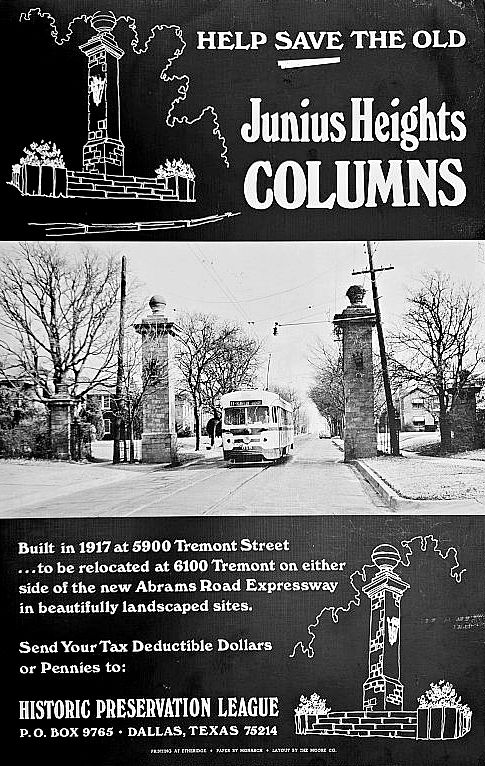
More info on Junius Heights and the saving of the pillars can be found on the Preservation Dallas site, here. Here is a poster from the Dallas Public Library Poster Collection (with an incorrect date on it….).

junius-heights-columns_1973_DPL_poster

A few Dallas Morning News articles on the fight to save the pillars:

  • “Residents Try Saving Pillars From the Past” by Lyke Thompson (DMN, May 30, 1973, with photo of pillar)
  • “Columns Come Down” (DMN, June 2, 1973, with photo)
  • “Cash Raised for Pillars” (DMN, June 7, 1973)
  • “Cornerstone Placed In East Dallas Area” by Michael Fresques (DMN, July 29, 1973, no photo, but description of pillars lying in pieces, awaiting funds to reconstruct them)
  • “Junius Dedicates Columns” by Doug Domeier (DMN, June 16, 1975, pillars finally relocated, with photo of preservationist Dorothy Savage standing beneath one of the pillars)

East Dallas and Old East Dallas are fiercely proud of their history and fight for preservation issues.

old-east-dallas_dmn_072775
July, 1975

*

It’s a bit difficult for me to visualize where these pillars were originally. Here’s a 1952 map showing Tremont with the approximate location of the columns before they were moved.

junius-heights-columns_1952-mapsco
1952 Mapsco

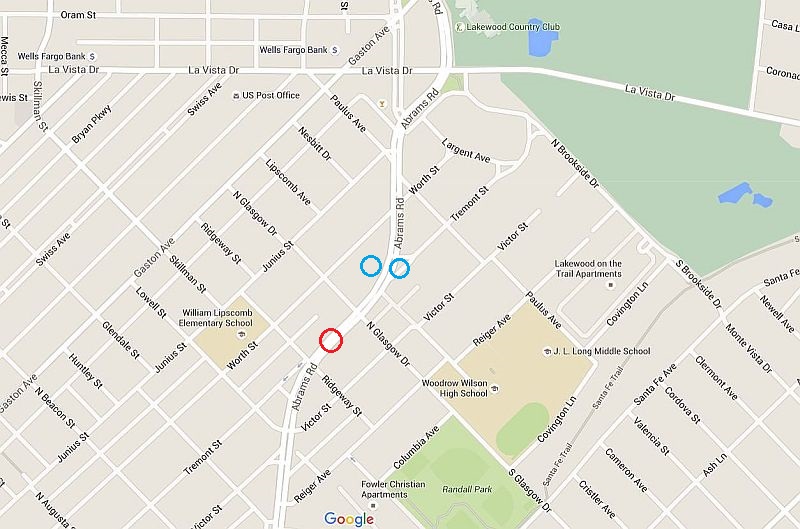
And here’s a present-day map, showing the post-Abrams extension. I’m not sure exactly where those pillars originally stood, but it was near the intersection of Tremont and Slaughter seems to have been between Ridgeway and Glasgow (location edited, thanks to Terri Raith’s helpful comments below) — this location is circled in red on the map below; the locations of the pillars today are in blue.

junius-heights-columns_google

*

Copyright © 2016 Paula Bosse. All Rights Reserved.