Flashback : Dallas

A Miscellany: History, Ads, Pop Culture

Category: Architecture/Significant Bldgs.

When Every Skyscraper Was a Distinctive Landmark

skyline_akard-royalSoak it in…

by Paula Bosse

I love this photo, taken from the southern edge of downtown, at S. Akard (running from left to right in the photo) and Royal, a street which once ran one block north of Canton (map below). Today, the convention center would be behind the photographer, and the I. M. Pei-designed City Hall would be pretty much straight ahead. I’m always going to prefer the grittier-looking downtown Dallas of days gone by to today’s shinier, glitzier version. I couldn’t get the exact angle, but today’s view from more or less the same vantage point looks like this, and it just isn’t as interesting. (I’ve never actually heard anyone broach the topic, but am I the only one who thinks that Pei’s City Hall now looks weirdly and hopelessly dated? Kind of tired and stuck in the ’70s? If nothing else, those yucky white flagpoles out front need to go!)

When this photo was taken, you could actually still see all those famous buildings — before they were dwarfed and engulfed by all those over-eager underclassmen!

***

Sources & Notes

Photo from a site managed by Andrew K. Dart, full of photos from negatives he rescued when they were thrown out by KDFW-TV, many from the archives of KRLD. This photo is from a page of Dallas skyline photos, here.

Here’s a map that shows S. Akard and Royal streets, which Mr. Dart identified as being the intersection seen in this photo by zooming in on the street sign (click for larger image):

map_akard-royal_1952-mapsco1952 Mapsco

*

Copyright © 2016 Paula Bosse. All Rights Reserved.

Lakewood Post Office — 1946-1976

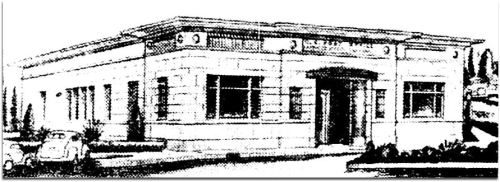
lakewood_post-office_dmn-123045Lakewood Post Office, 6324 Prospect

by Paula Bosse

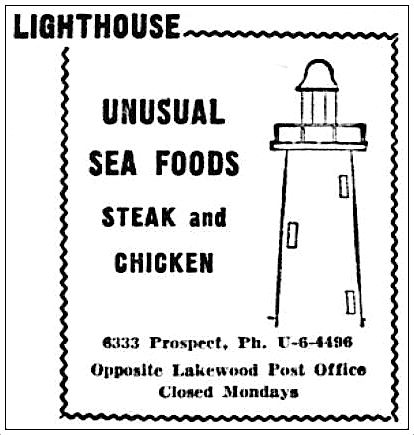
I’m often surprised to discover things about the part of Dallas I grew up in which I somehow never knew — in this case: Lakewood’s first post office, which was apparently in operation when I was a living, breathing, sentient human being but which I’d never known about until today. (I actually grew up in the nearby Lower Greenville neighborhood, but even though I went to Long and Woodrow, I don’t remember being all that aware of Lakewood proper until I was able to drive myself around it as a teenager.) Somehow I had never known that there was a post office in Lakewood before the one at Swiss and La Vista. Or, rather, I’d never even thought about it. Until I saw this ad earlier today:

lakewood_lighthouse_dmn_0425471947

“The Lighthouse — Unusual Sea Foods, Steak and Chicken — Opposite Lakewood Post Office.”

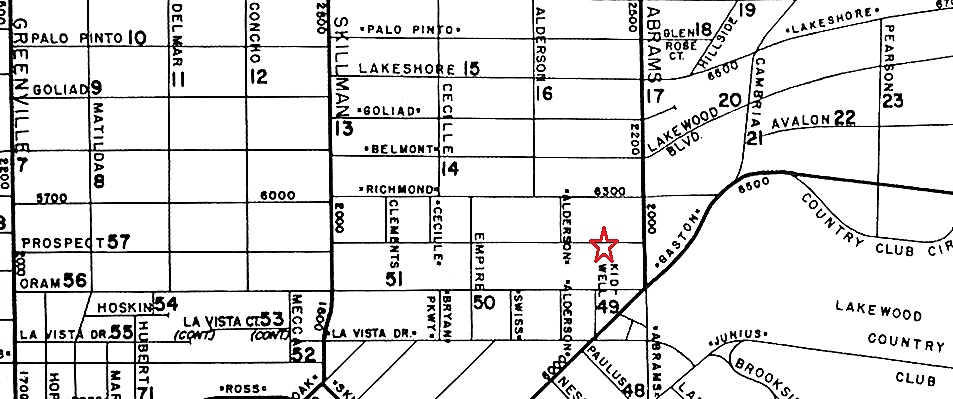
Post office? New to me. I looked it up. It was just west of Abrams, on Prospect at Kidwell, positioned diagonally across the lot. It was the 13th post office substation in Dallas, and it opened on December 2, 1946, over two years after its approval had been announced, during the war, in August, 1944.

A 1945 Dallas Morning News article had this interesting bit of information:

The contractor is Bascomb E. McClesky [sic]. The building will have 4,000 square feet of floor space. Parking space will be provided on the lot. [McCleskey] will retain title to the property and will lease it to the government, Payne said. (“Lakewood To Get Branch Post Office,” DMN, Nov. 18, 1945)

(I’m not sure I was aware developers leased property to the federal government. B. E.  McCleskey lived in the Pasadena area of Lakewood and seems to have spent his 30-year career as a general contractor who also bought, sold, and developed both commercial and residential properties in and around this part of East Dallas. When he began his career, he had an office on Gaston in the new Lakewood Shopping Center; at the time of his death in 1956, his office was right next door to the post office on land which, presumably, he still owned.)

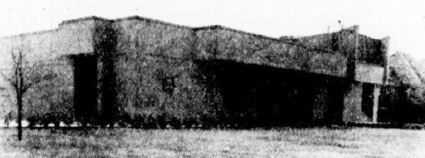
This post office lasted for 30 years until the newer, hulkier, and far less aesthetically appealing station opened at Swiss and La Vista on May 10, 1976.

lakewood-post-office_dmn_112576_swiss.-photo
1976

Some factoids which will come in handy should you ever find yourself in a U.S. Post Office Trivial Pursuit (Lakewood Edition) competition:

  • When the first Lakewood post office opened in 1946, it employed 3 clerks, 1 supervisor, and 16 carriers.
  • When the second post office opened 30 years later, it employed 13 clerks, 2 supervisors, and 47 carriers.

*

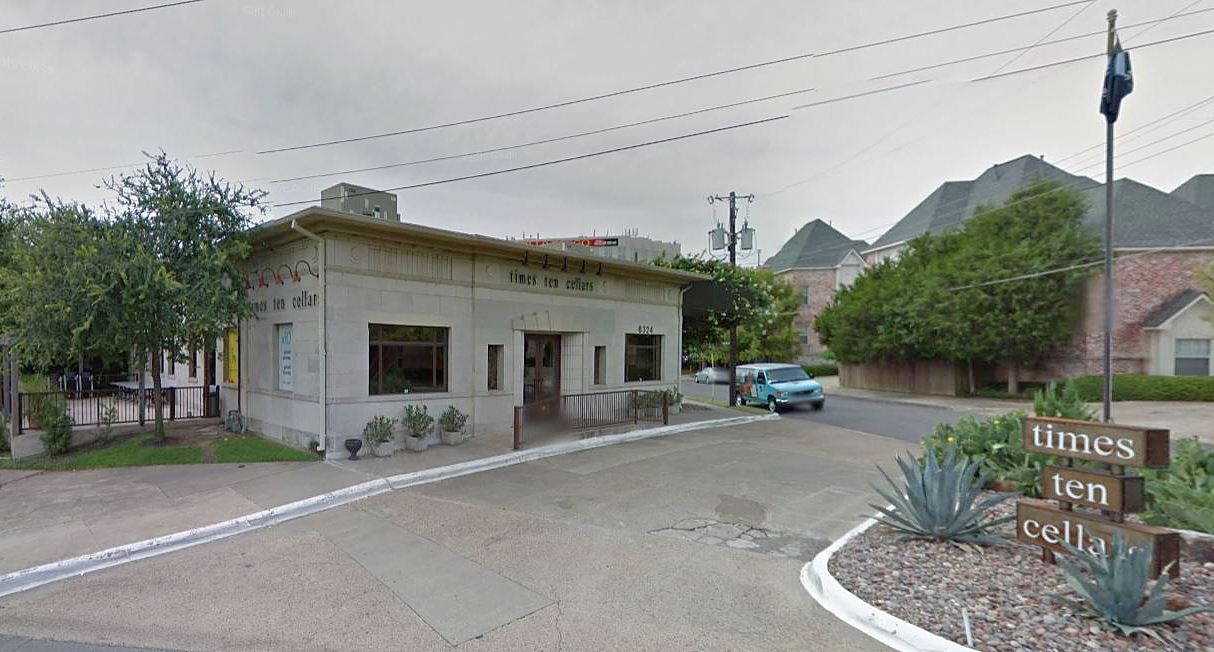
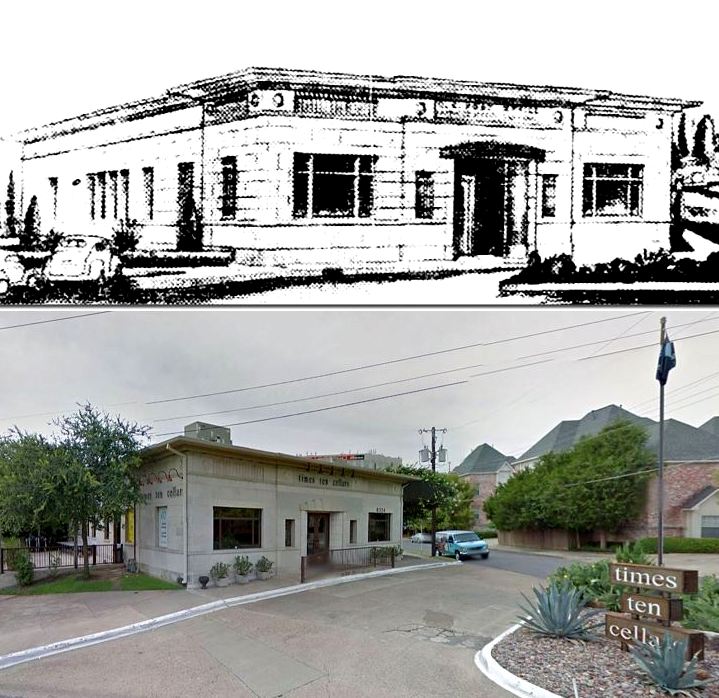
But back to the first post office — the building is still standing and houses the Times Ten Cellars wine bar! I’ve passed that building a lot over the years, but I guess I never paid much attention to it. I don’t know why, because it’s a great little  building. It would never occur to me that it might ever have been a post office. I wish more businesses in Dallas would consider repurposing older buildings rather than building characterless boxes that look like every other characterless box. Thank you, Times Ten Cellars!

times-ten-cellar_google_2015Google Street View (2015)

*

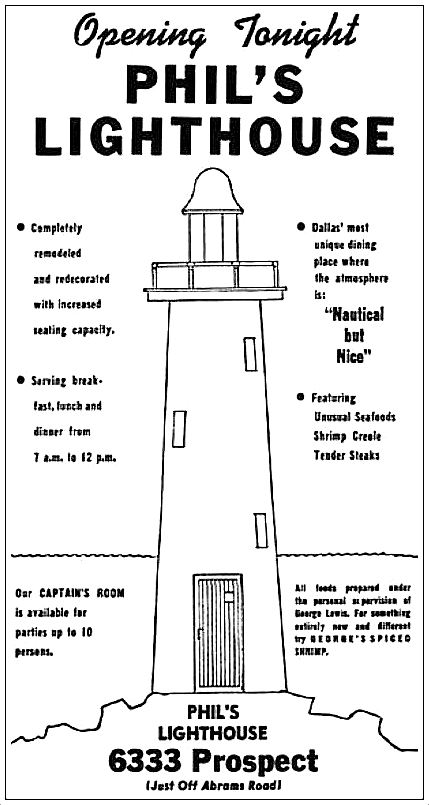
That Lighthouse “unusual sea foods” restaurant? It doesn’t seem to have lasted very long. It changed hands a few times before closing as the Lighthouse Cafe at the end of 1950. At one point it was known as Phil’s Lighthouse — “Dallas’ most unique dining place where the atmosphere is: ‘Nautical But Nice.'”

phils-lighthouse_dmn_121649DMN, Dec. 16, 1949

That’s right … “NAUTICAL BUT NICE”!

***

Sources & Notes

If anyone remembers the Lighthouse restaurant: was it actually shaped like a lighthouse?

Detail of a page from the 1952 Mapsco showing the location of the old post office (click for larger image):

lakewood-post office_1952-mapsco

lakewood-post-office_then-now

Click pictures for larger images.

*

Copyright © 2016 Paula Bosse. All Rights Reserved.


Dallas’ Mid-Century Skyline

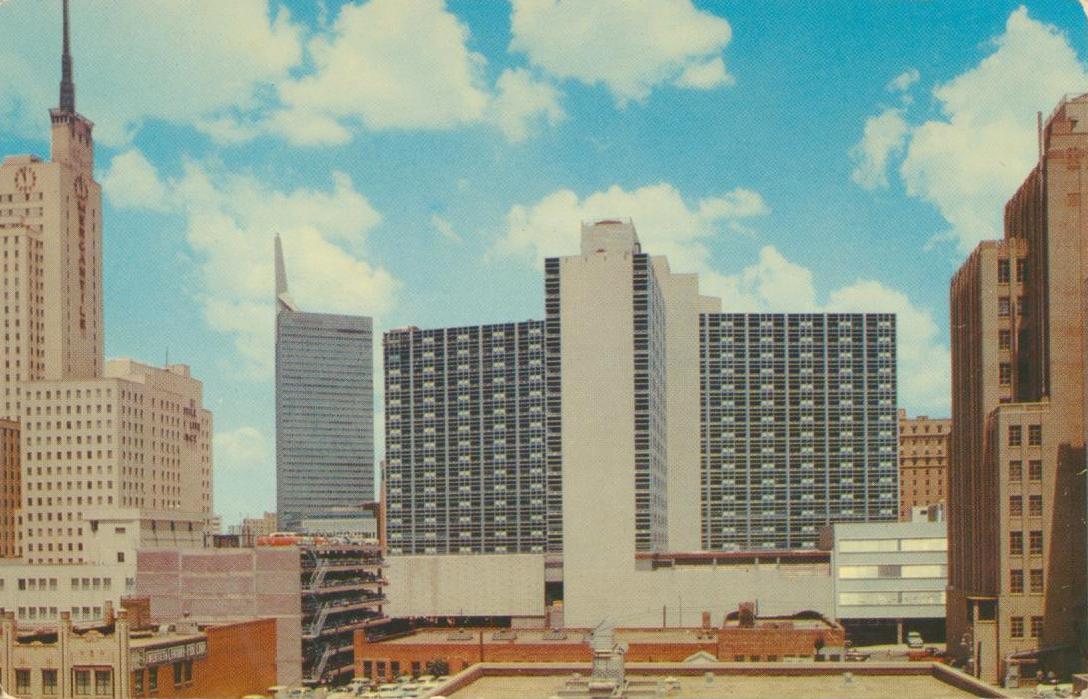
skyline_statler_mercantile_republic_ebayBack then: more sky, fewer parking lots (click for larger image)

by Paula Bosse

Dallas architecture at mid-century: the Mercantile Bank Building, the Republic Bank Building, the Statler-Hilton (from behind!), and … a multi-level parking garage. Dallas is nothing if not a city full of banks, banks (and more banks), flashy hotels, and parking lots. Then and now.

***

Slightly fuzzy postcard from eBay. The Statler-Hilton (which this postcard identifies as the “Hilton-Statler”) isn’t often seen from behind like this in photos (not really its best side). Other than the three main buildings (and the old library, which is as architecturally cool as the other three), I think that just about everything else in this photo is gone. There are now parking lots (…yay…) where the buildings at the right and at the bottom left are seen — there’s even a parking lot where the parking garage once stood! (Dallas really loves its parking lots.) At least we managed not to tear down the most architecturally significant buildings seen here. (Even though the number of downtown parking spaces could be exponentially increased if we pulled those suckers down and replaced them with multi-multi-story garages!)

*

Copyright © 2016 Paula Bosse. All Rights Reserved.

Main & Murphy — ca. 1907

city-national-bank_postcard_bwMain St. looking east

by Paula Bosse

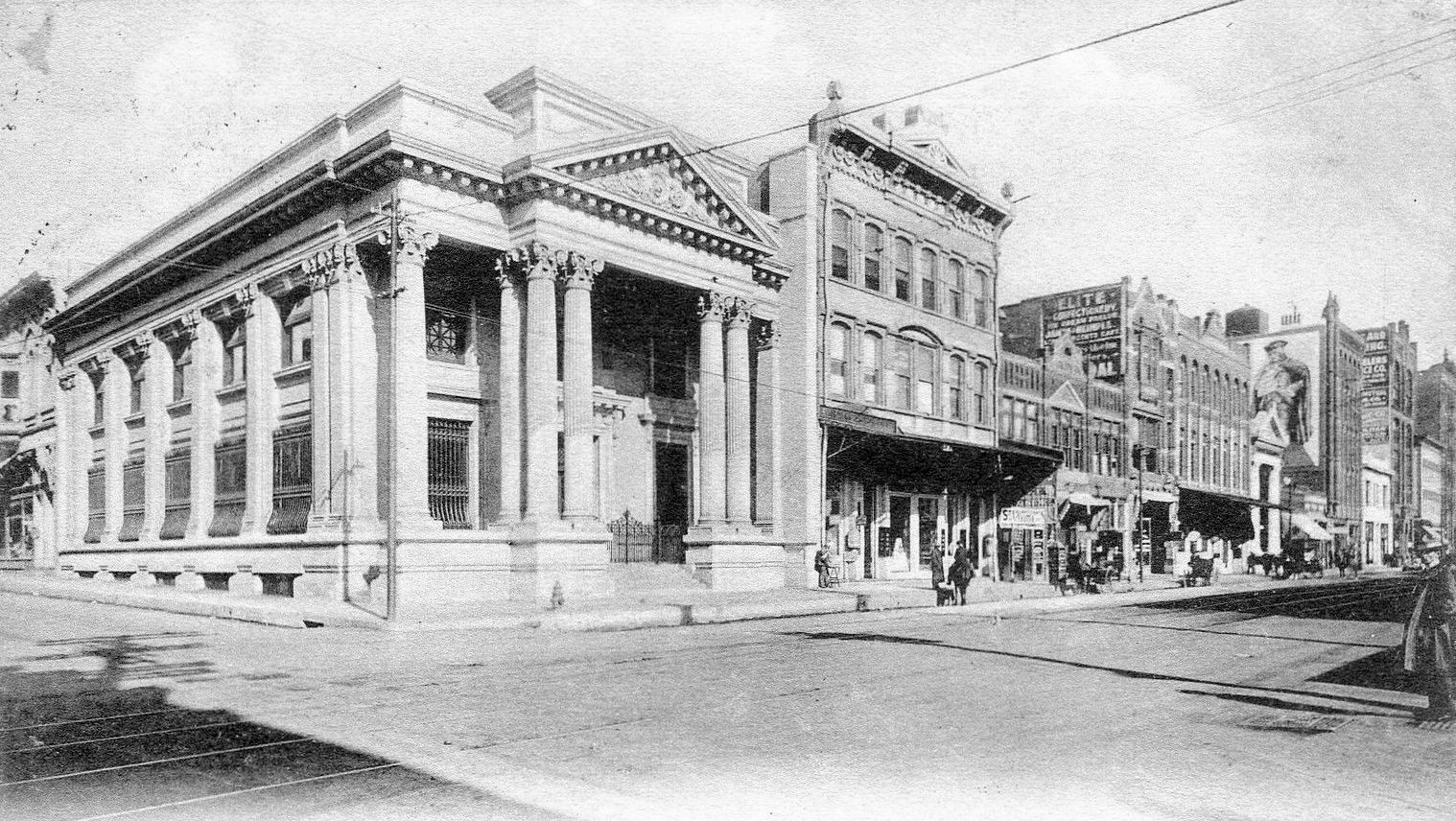
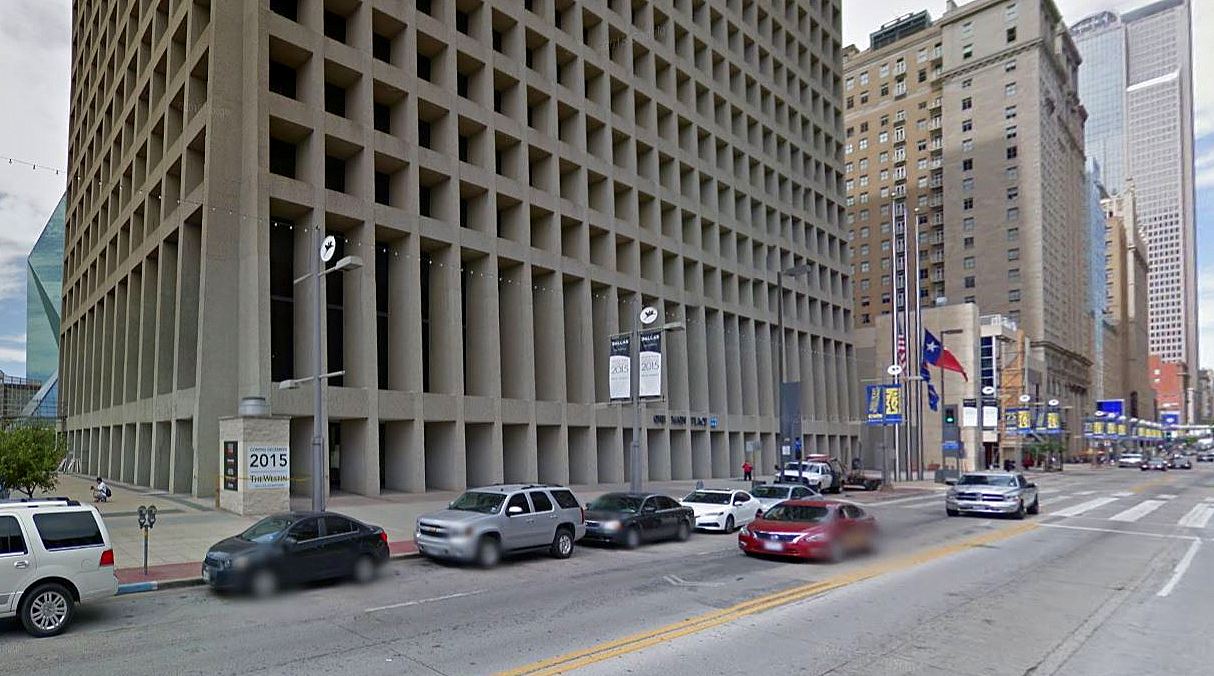
Above, Main Street looking east, taken from Murphy, anchored by the beautiful City National Bank, built in 1903. This block today? One Main Place.  Whatever old buildings were left in this block in 1965 (including the old City National Bank) were bulldozed into oblivion to make way for the skyscraper.

The same view today:

one-main-place_google_2015Google Street View, 2015

***

Sources & Notes

Top image from a postcard found on eBay.

Imagine looking up to the sky from the photographer’s vantage point in the top photo and seeing what things would look like a century later.

Murphy no longer exists — it was between what is now Griffin and Field. A map from 1898 showing the location:

main-murphy_1898-map

See another photo of the same view taken at about the same time, only with horse-and-buggy traffic, here.

*

Copyright © 2016 Paula Bosse. All Rights Reserved.

The Washington Theater — Dallas’ First Movie Palace

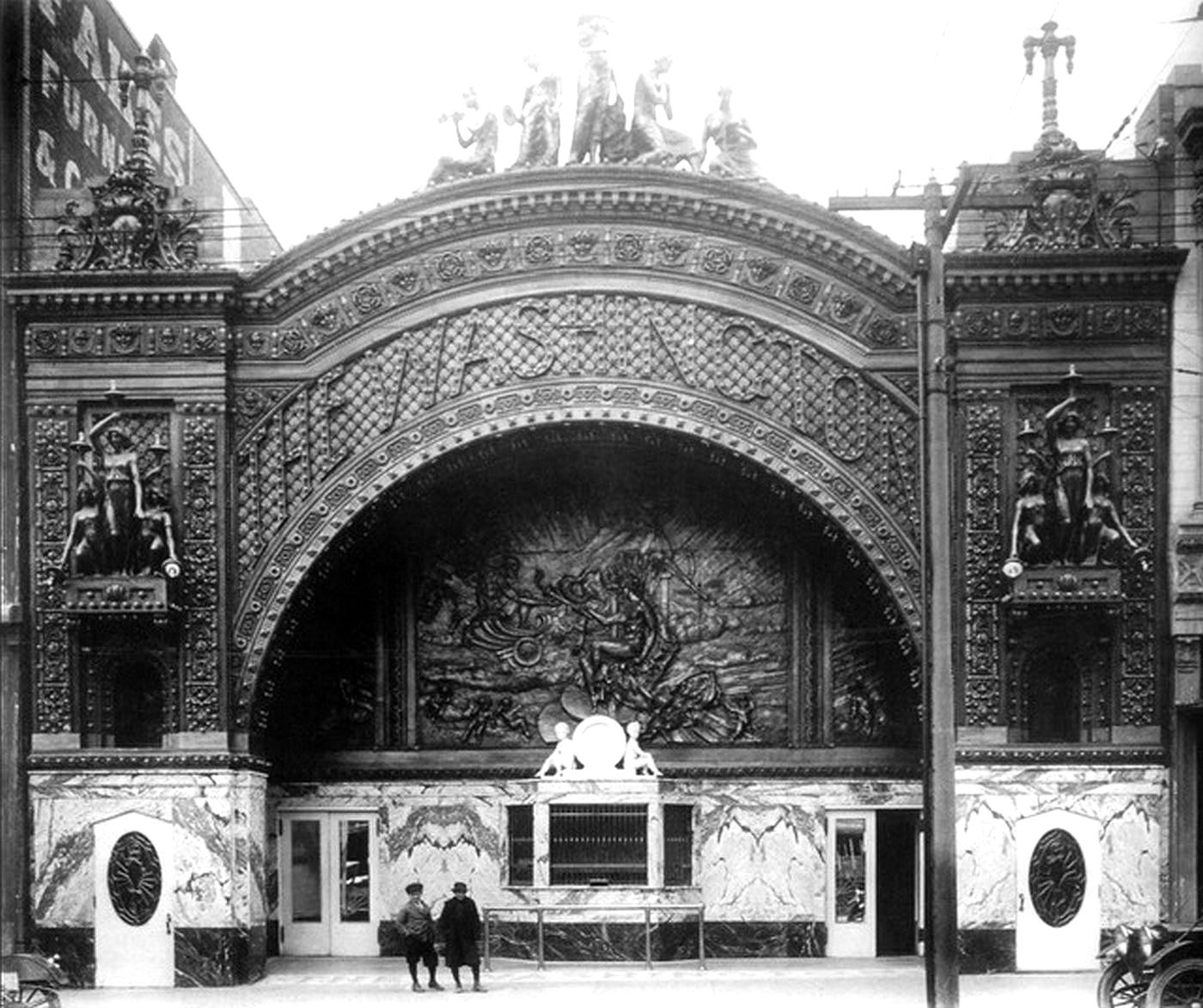
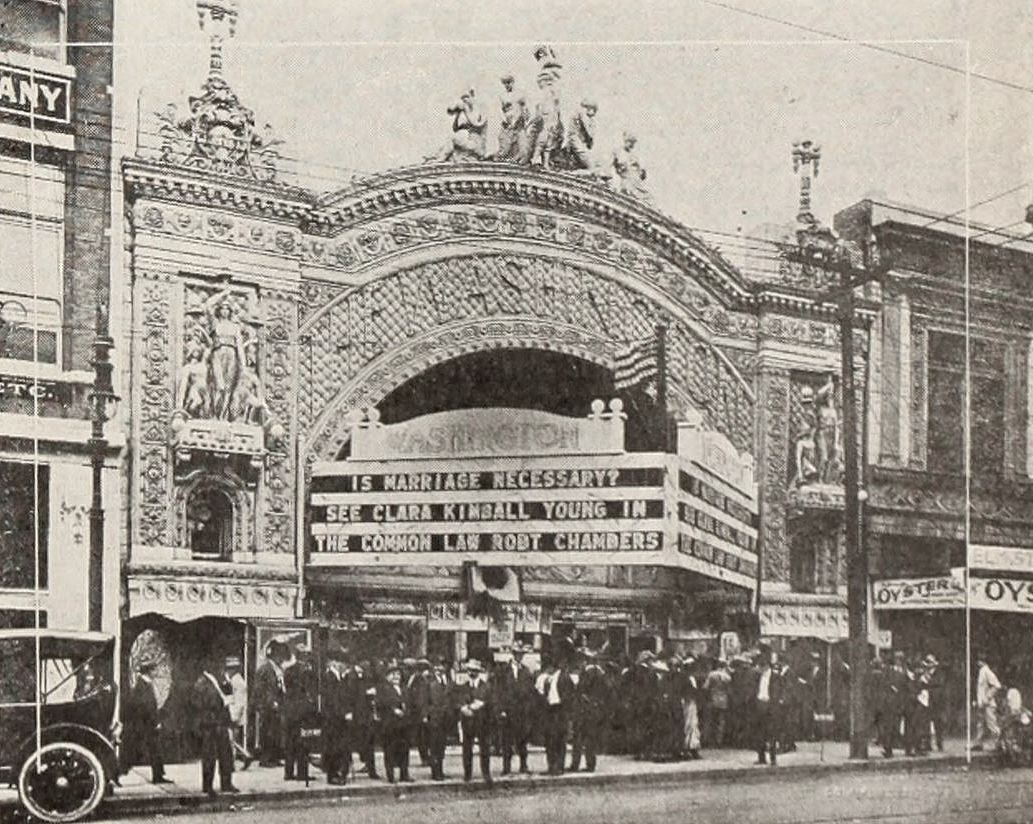
washington-theatre_cinema-treasures_lgThe Washington, 1615 Elm

by Paula Bosse

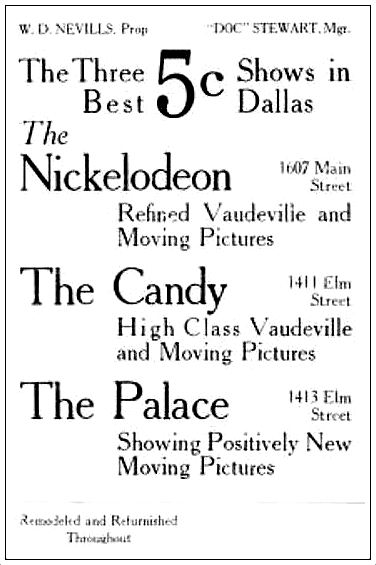
The outrageously ornate Washington Theater was built in 1912 by W. D. Nevills (1872-1945), a man who had been running cheap little store-front nickelodeons in Dallas for several years. Three of his most popular were The Nickelodeon, The Candy, and The Palace (not to be confused with any later theaters in Dallas called the “Palace”).

nevills_standard-blue-book-of-tx_1912-14Standard Blue Book of Texas, 1912-1914

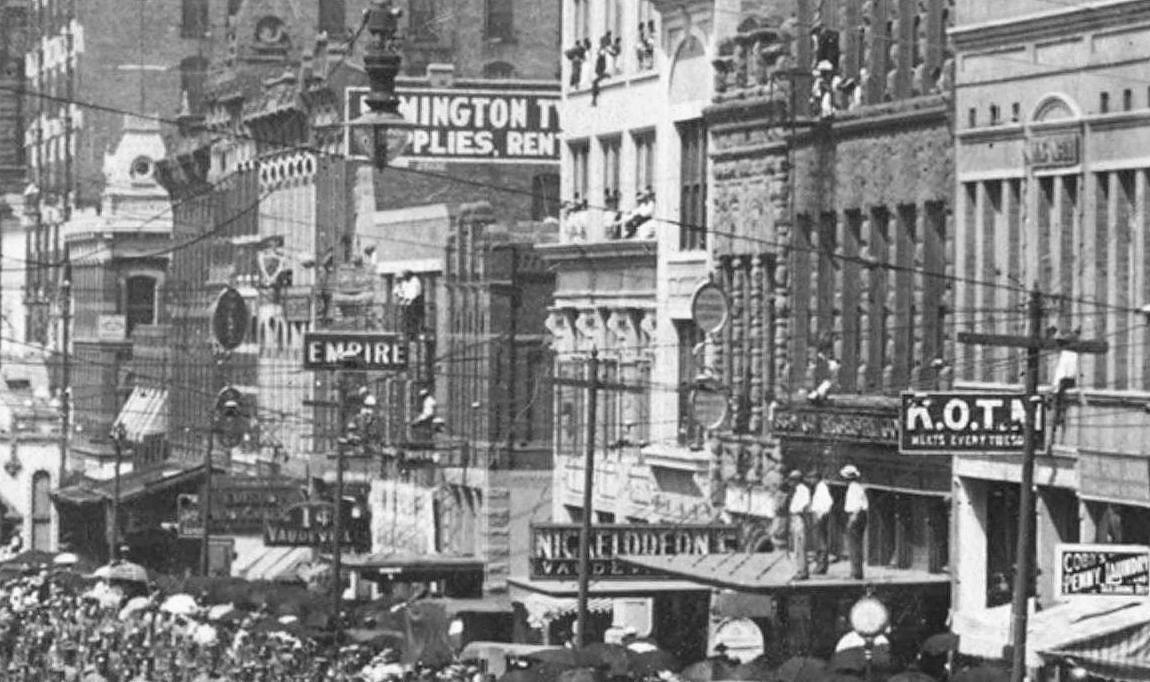
His Nickelodeon on Main Street can be seen in the lower center of this detail from a larger 1909 parade photo.

parade-day_1909_det41

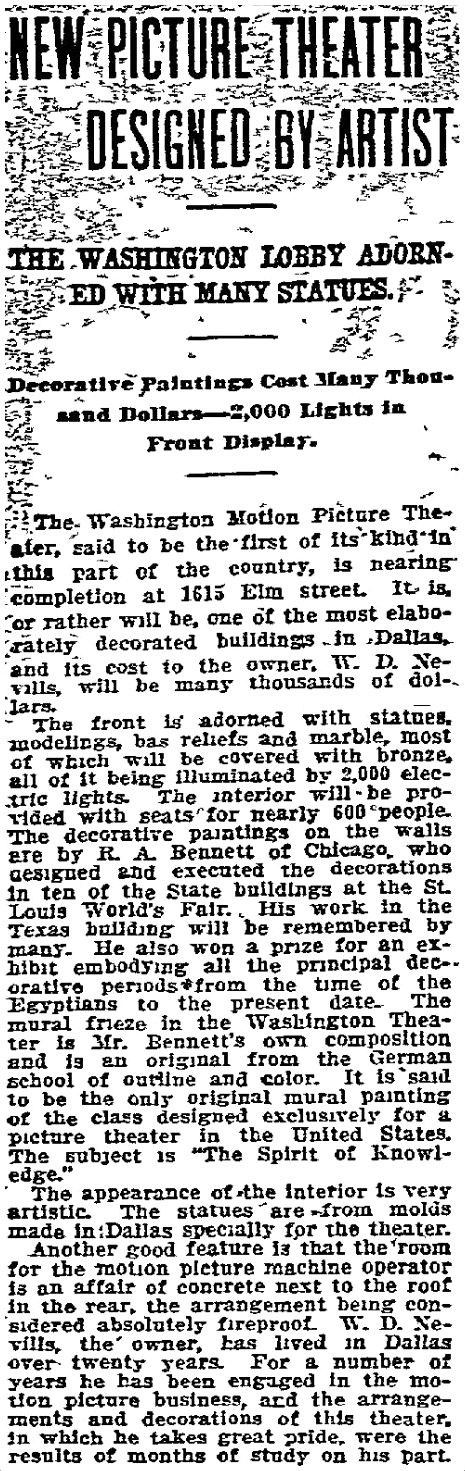
Nevills must have raked in a lot of nickels, because when his Washington Theater opened at 1615 Elm Street, it was the most spectacular motion picture “photoplay house” in Dallas. Nevills spared no expense for the theater’s furnishings and facade.

washington-theater_dmn_111712Dallas Morning News, Nov. 17, 1912 (click to read)

What might seem a little gaudy now, was probably still gaudy back then, but it was a fresh, NEW gaudy! And 600 Dallasites could all watch a movie at the same time. 600! Unheard of!

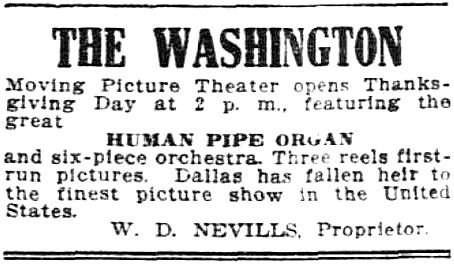
The Washington opened on Thanksgiving Day, 1912. Complete with “Human Pipe Organ.”

washington-theater_dmn_112712DMN, Nov. 27, 1912

The Washington was the king of the roost for only a short while, though — until young whippersnappers like the Queen began to steal its thunder. 600 seats? Pfft! It was a thousand or nothing now. The theater began to lose its luster and look more old and hulking than young and exciting, and after riding out its very long lease, the Washington Theater closed on July 1, 1927.

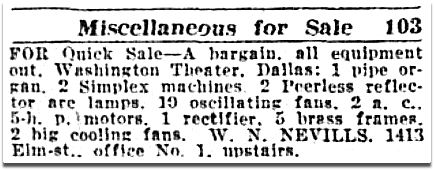
This little classified showed up a couple of weeks later, and it must have been a melancholy Nevills who had to write it up.

washington-theater_dmn_071327DMN, July 13, 1927

The theater continued to be used for a while — mostly for evangelical meetings or events. I’m not sure exactly when the building was demolished, but a report of the building’s being sold and plans for its razing appeared in The Dallas Morning News in October, 1927.

*

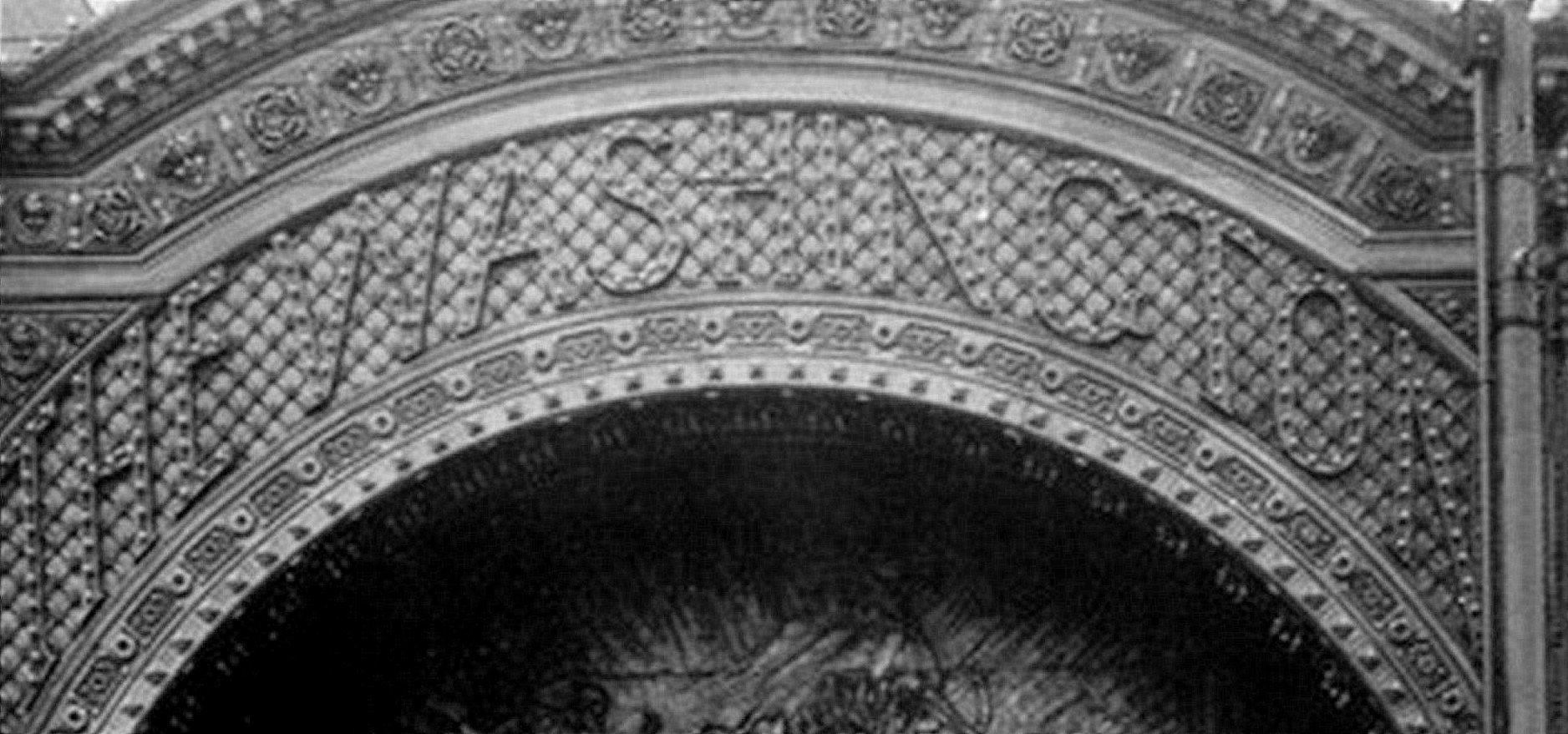
Let’s look at a couple of details from that top photo. The Washington was built without a marquee, but the outside of the building was studded with an eyeball-popping TWO THOUSAND LIGHTS! Imagine what that must have looked like — in 1912! Here’s an extreme close-up of the theater’s facade — look at all those bulbs!

washington-theatre_cinema-treasures_det1

And, below (was one of these men W. D. Nevills?):

washington-theatre_cinema-treasures_det2

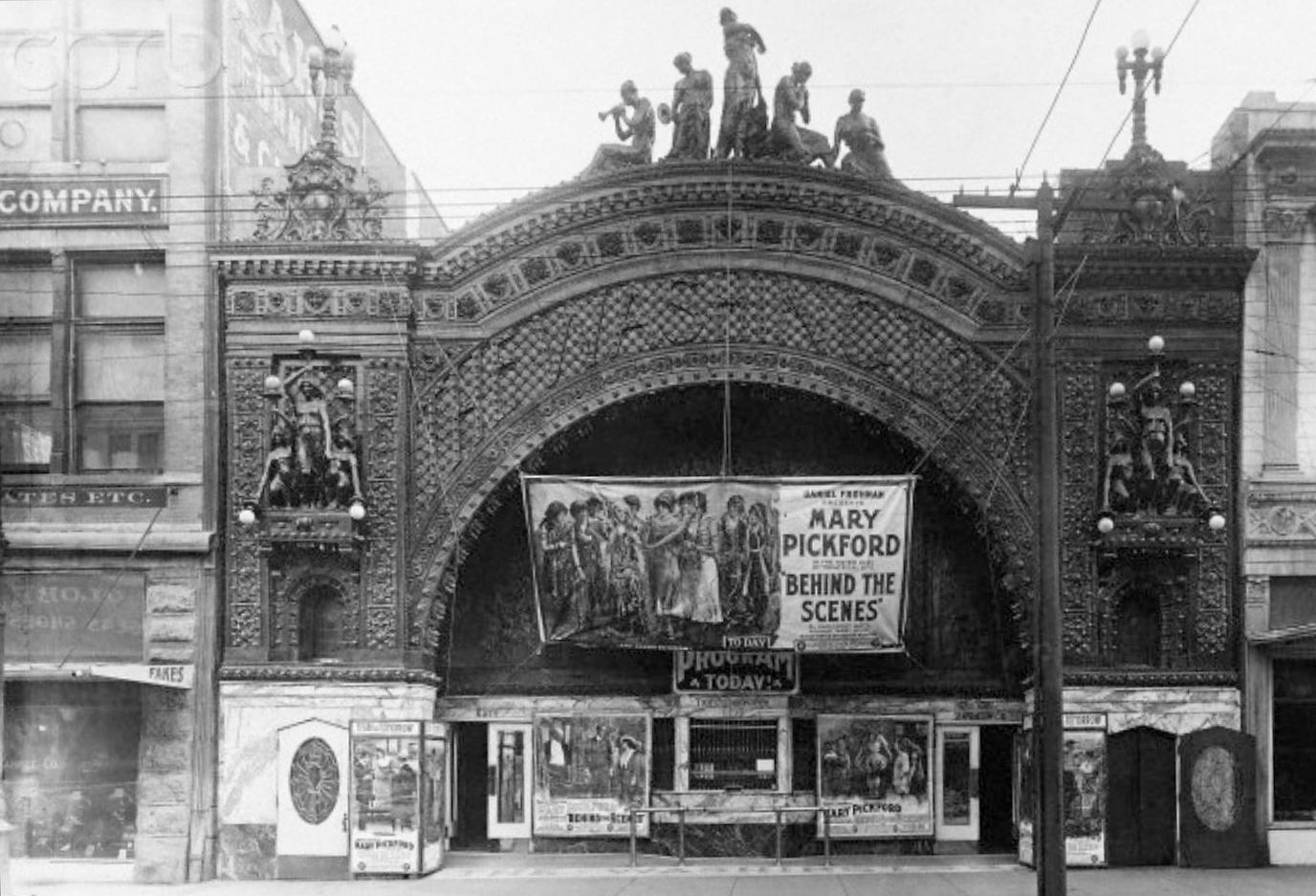
Another shot, this one showing how one worked without a typical illuminated marquee — you just string a banner up (the needle is hitting a solid “8.5” on the visual clutter scale here):

washington-theatre_corbis_19141914 via CorbisImages

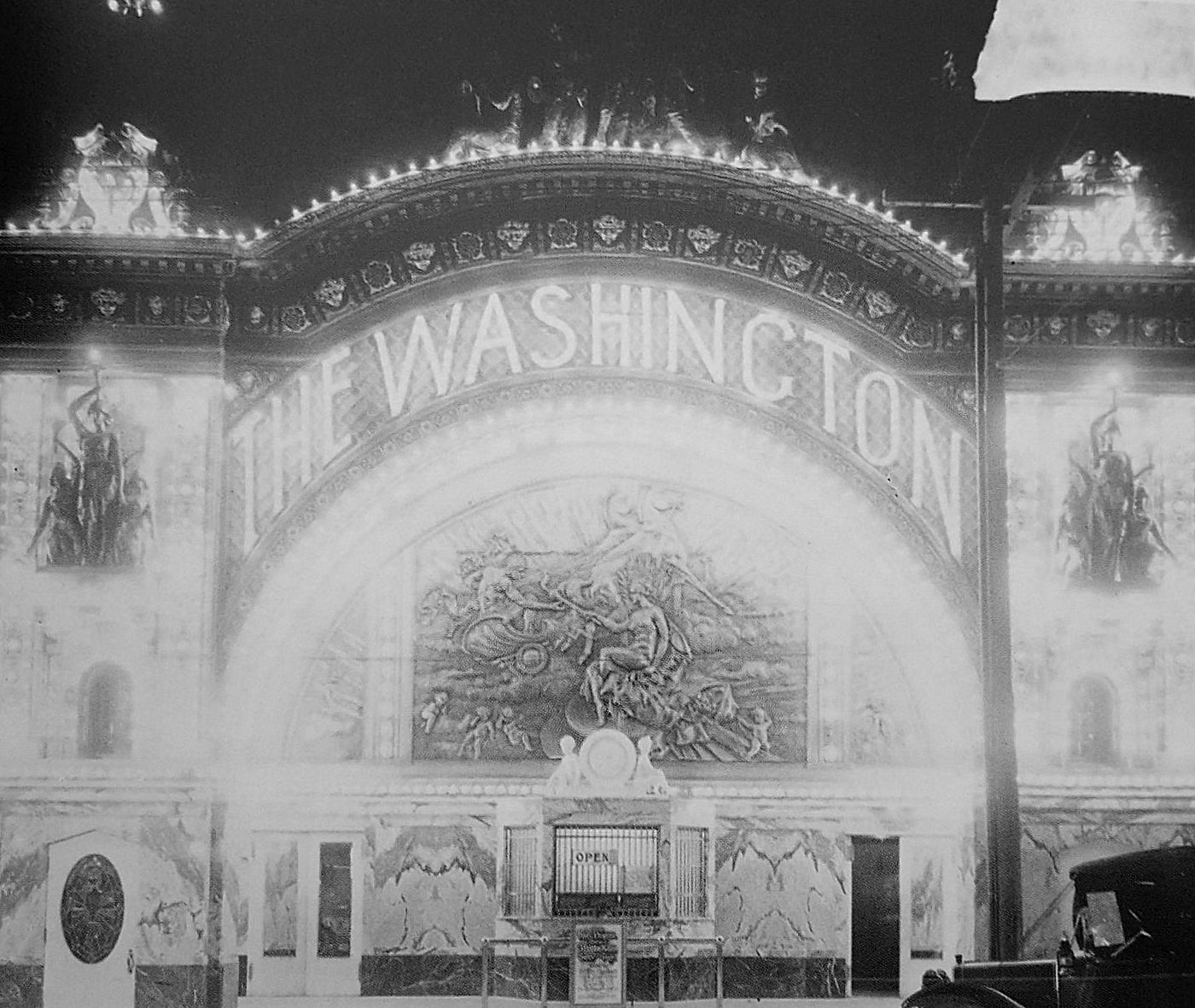
Here it is, ablaze at night:

washington-theater_night_dallas-rediscovered_DHS

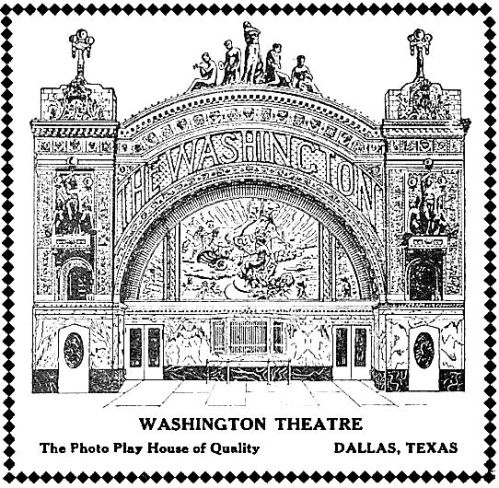
In an ad from 1914:

theater_washington_bldg-code_1914

Photo from October 1916:

theaters_washington-theatre_exhibitors-herald-and-motography_june-1919_photo-from-oct-1916

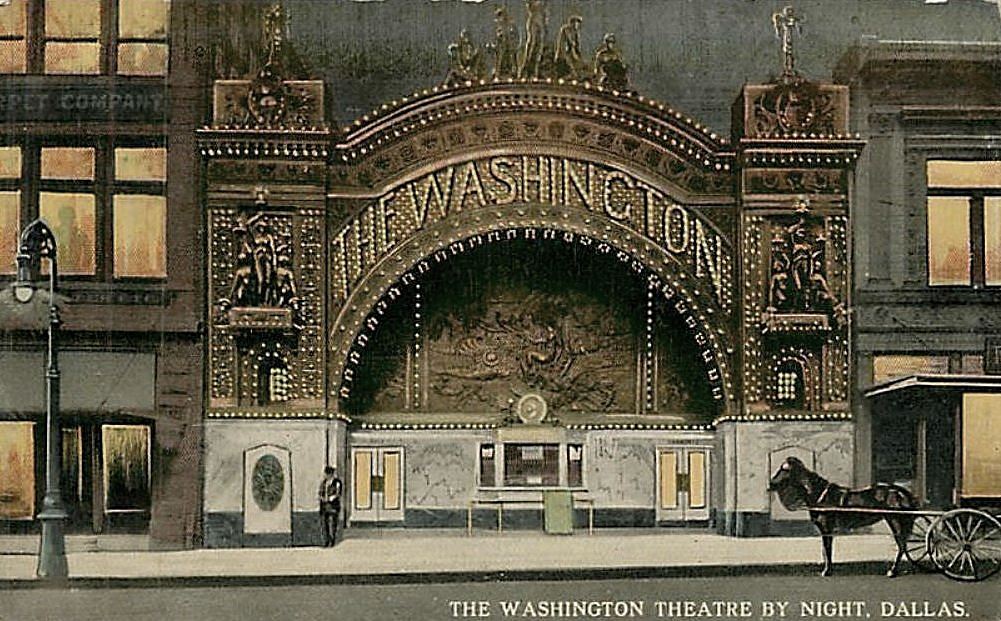
And in “color” from a picture postcard:

washington-theatre_ebay

***

Sources & Notes

Top photo from Cinema Treasures; to read a history of the Washington Theater from Cinema Treasures (and to see another photo), see here. (Photo’s original source appears to be the Dallas Historical Society.)

The photo of the theater with the Mary Pickford banner is ©Schenectady Museum; Hall of Electrical History Foundation/CORBIS; more info is here. (The movie “Behind the Scenes” was released in 1914.)

Photo of the theater at night is from Dallas Rediscovered by William L. McDonald — source: Dallas Historical Society archives.

The ad is from the 1914 Dallas Building Code.

Photo with the marquee showing “The Common Law” is from Oct. 1916, but the photo didn’t appear in the trade magazine Theatre Exhibitors Herald and Motography until June 1919.

The color postcard is from eBay.

Read about the closing of the Washington in an article available in the Dallas Morning News archives: “Washington Theater, Earliest Dallas ‘Movie Palace,’ Shows Last Close-Up After 15 Years” (DMN, July 4, 1927).

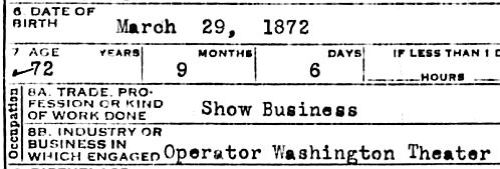
The Washington Theater must have been W. D. Nevills greatest achievement. It’s interesting to note that “Operator Washington Theater” appears on his death certificate. Nevills died in 1945, eighteen years after the theater closed.

nevills_death-certificate_010545_det

For other Flashback Dallas posts on this era of movie theaters, see the following:

  • “Three of Dallas’ Earliest ‘Photoplay Houses’ — 1906-1913,” here
  • “Movie Houses Serving Black Dallas — 1919-1922,” here

*

Copyright © 2016 Paula Bosse. All Rights Reserved.

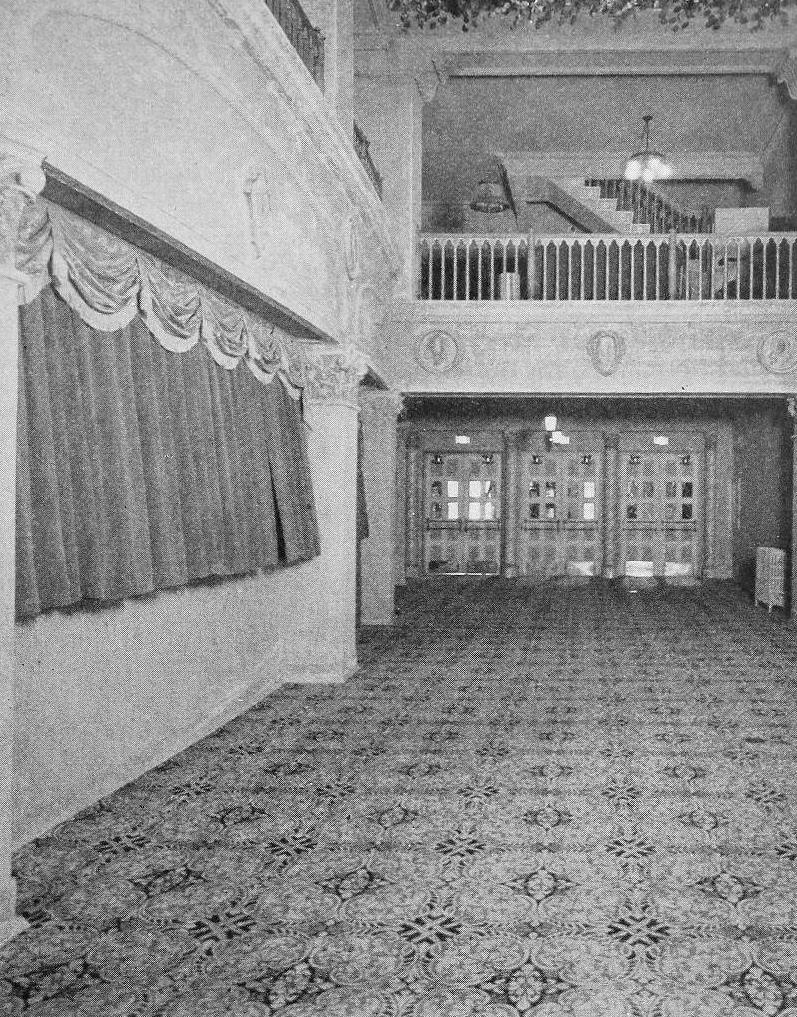
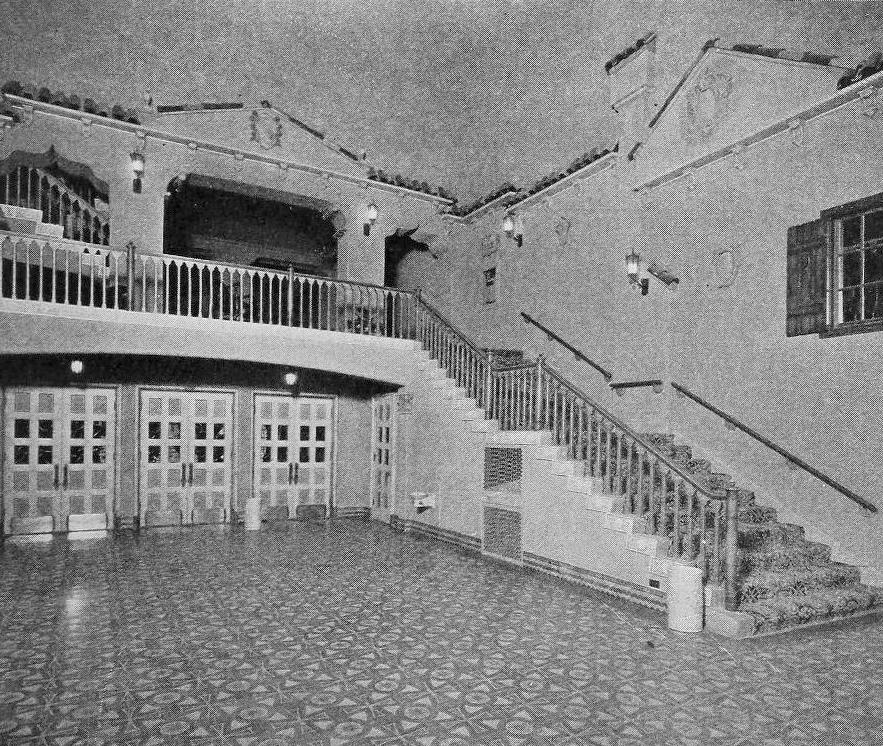
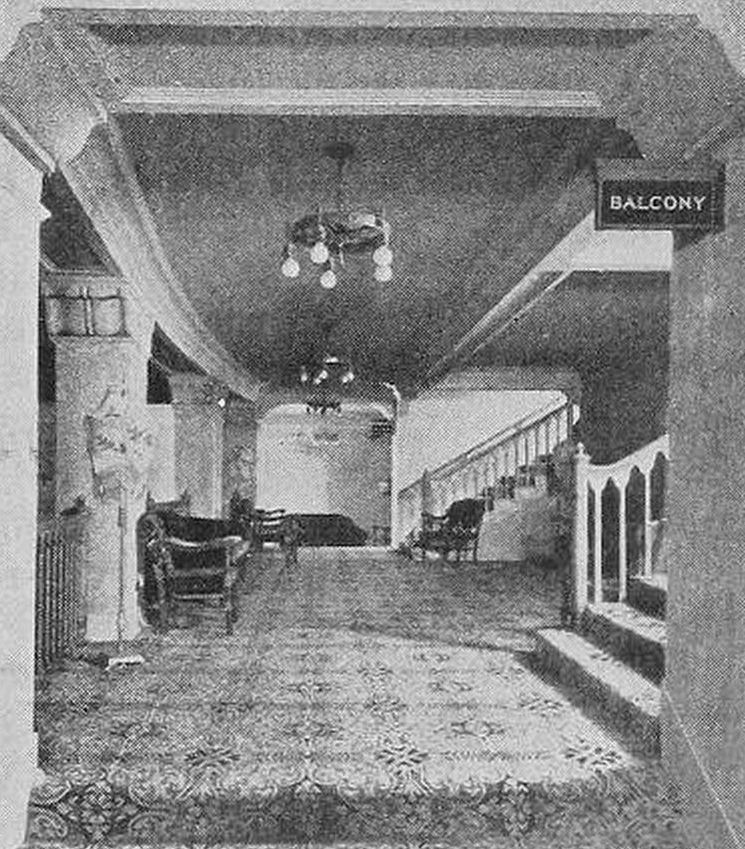
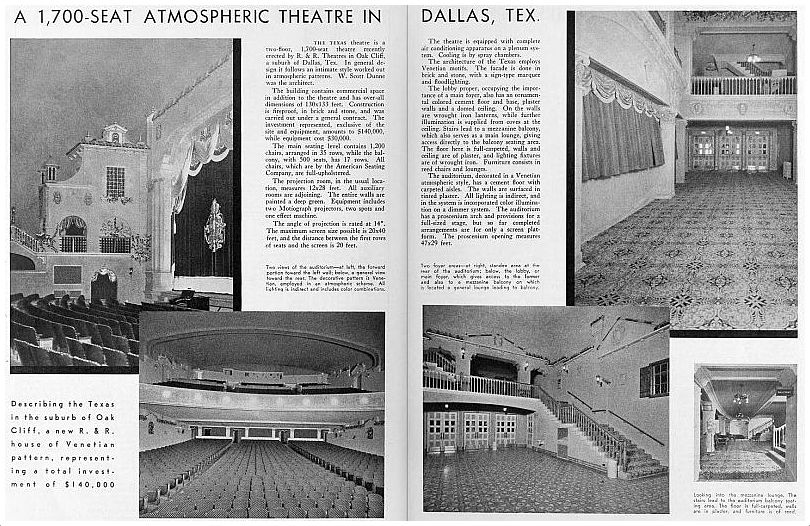
The Texas Theatre and Its Venetian-Inspired Decor

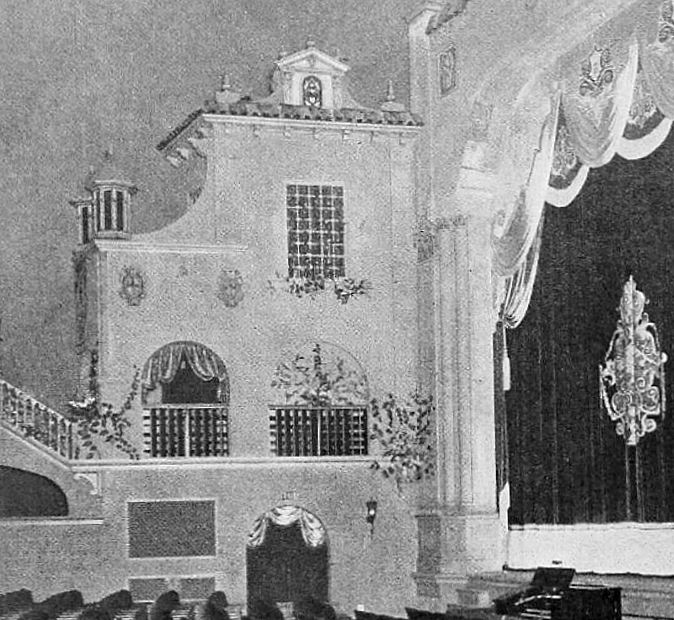
texas-theatre_motion-picture-herald_070232_det1A little bit of Venice in the O.C. (note organ at edge of stage)

by Paula Bosse

The Texas Theatre in Oak Cliff  — which opened in April, 1931 — was the first movie theater in Dallas built expressly to show movies with sound. It was also the largest “suburban” theater in the Dallas area — only downtown’s first-run Majestic and Palace theaters were larger. Below are photos of the theater’s “Venetian-style” interior, from the trade journal Motion Picture Herald.

texas-theatre_motion-picture-herald_070232_det2

texas-theatre_motion-picture-herald_070232_det3

texas-theatre_motion-picture-herald_070232_det4

texas-theatre_motion-picture-herald_070232_det5

***

Sources & Notes

Photos from Motion Picture Herald, July 2, 1932. For the full article, see the very large scan of page 1 here, and page 2 here.

texas-theatre_motion-picture-herald_070232

The Texas Theatre is still alive — its website’s history page is here.

My previous post, “The Texas Theatre — 1932” (which shows the theater’s exterior at the time this article was published), is here.

*

Copyright © 2016 Paula Bosse. All Rights Reserved.

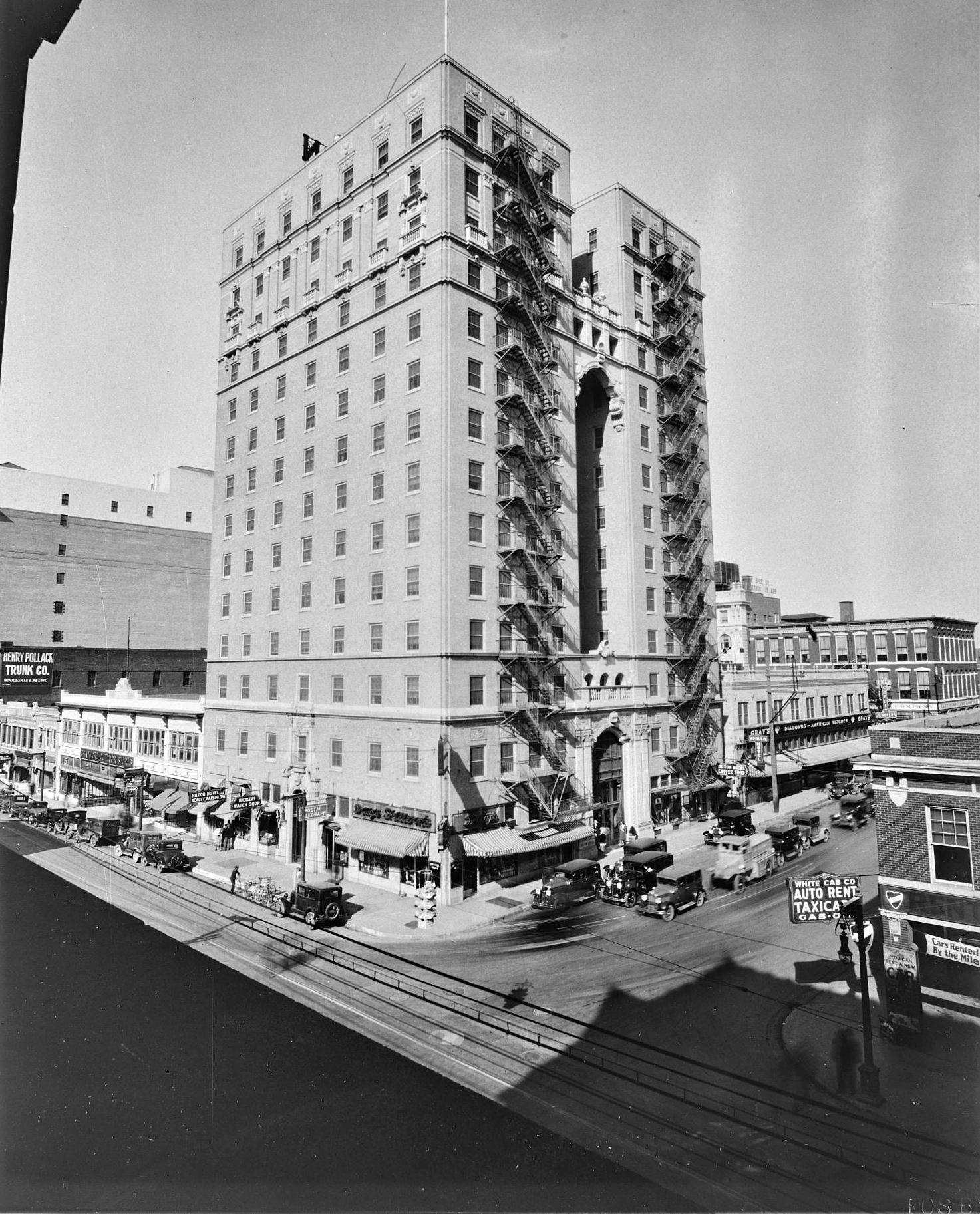
The Hilton Hotel, Main & Harwood

hilton-hotel_1930_portal_smThe Hilton, Main & Harwood, 1930 (click for much larger image)

by Paula Bosse

When Conrad Hilton built the Lang and Witchell-designed Hilton Hotel in Dallas in 1925, it was the first hotel he had built from the ground up. It’s been through several name changes over the years (its White Plaza Hotel incarnation was its longest), and, remarkably (for Dallas), the building still stands — it is now Hotel Indigo

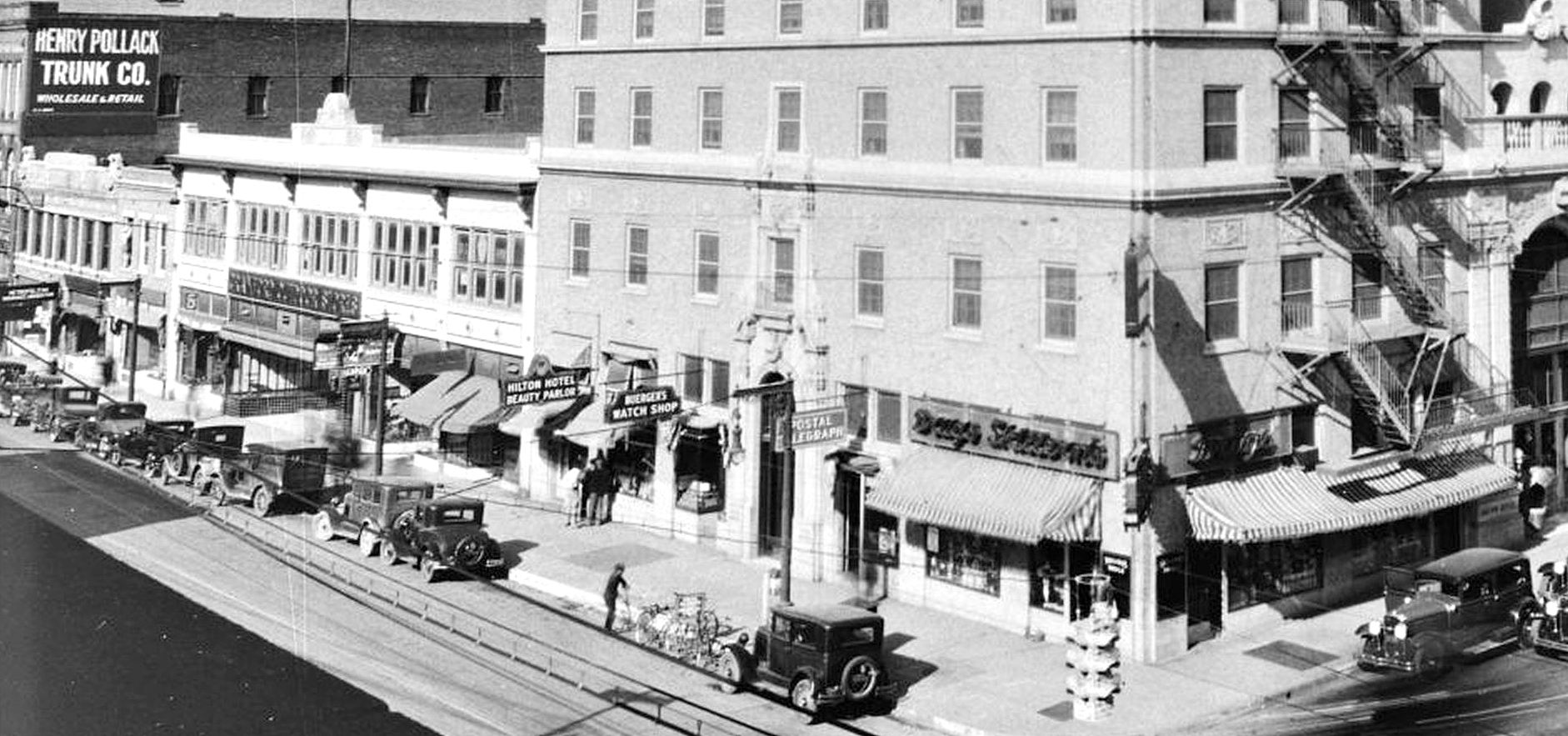
Above, a photo from 1930, with so much going on, it’s worth zooming in to see some of the details. All images are pretty big when clicked.

The left side of the photo shows Main Street looking west.

hilton_1930_det-1

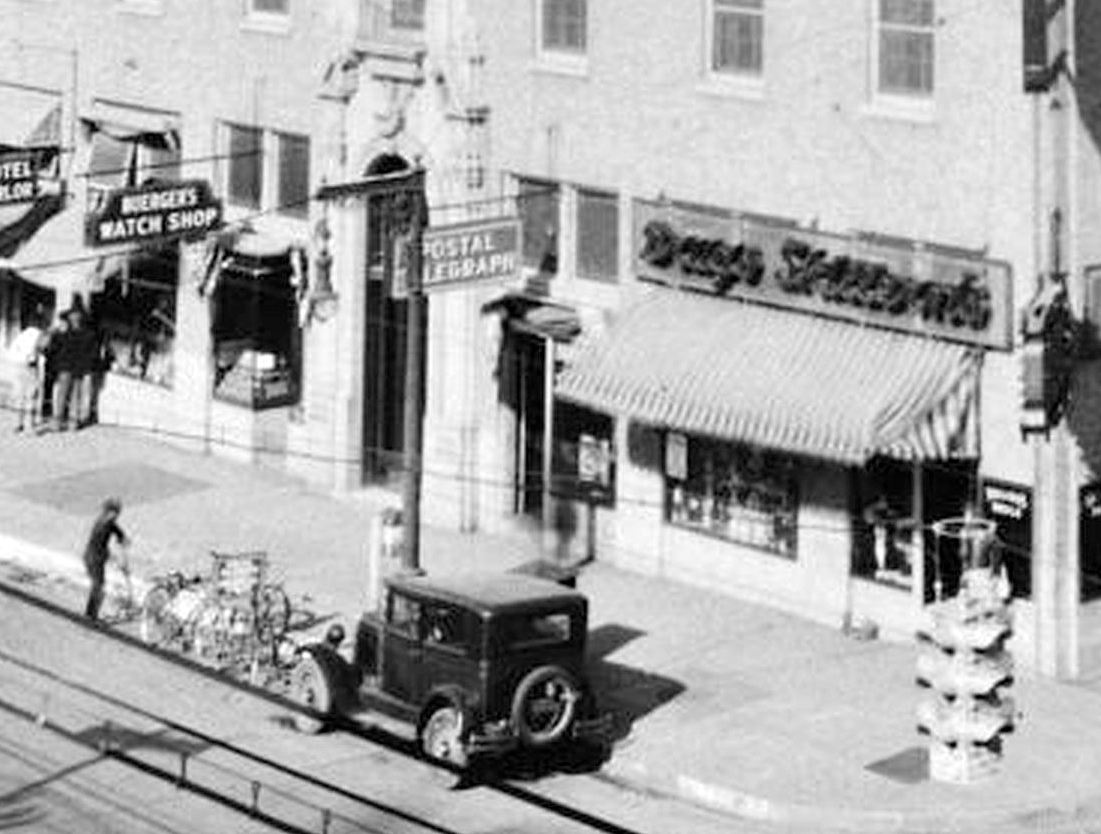
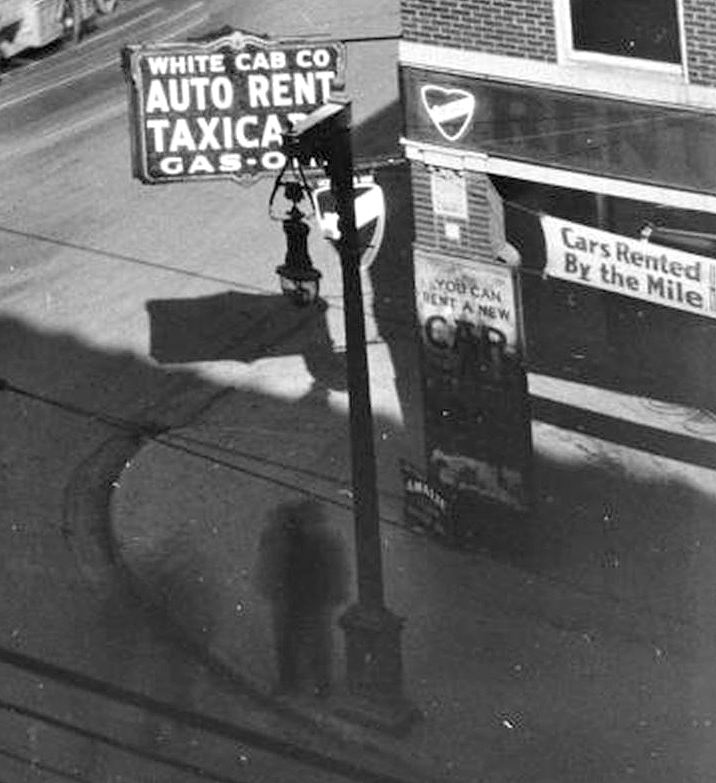
I’m not sure what’s going on with the man at the curb — construction? Street cleaning? And I’ve looked and looked at that small tower-like thing on the corner but can’t figure out what it is. (UPDATE: Ha! Thanks to a helpful comment below, I now see that this “tower” which was confusing me so much is, not, in fact, an odd structure set on the sidewalk but is — of course! — a traffic light suspended above the street!) (UPDATE #2: I think another commenter was right when he said it is a uniformed telegram boy at a bicycle stand. I’ve never considered that telegram offices would have had bike stands — but of course they would!)

hilton_1930_det1a

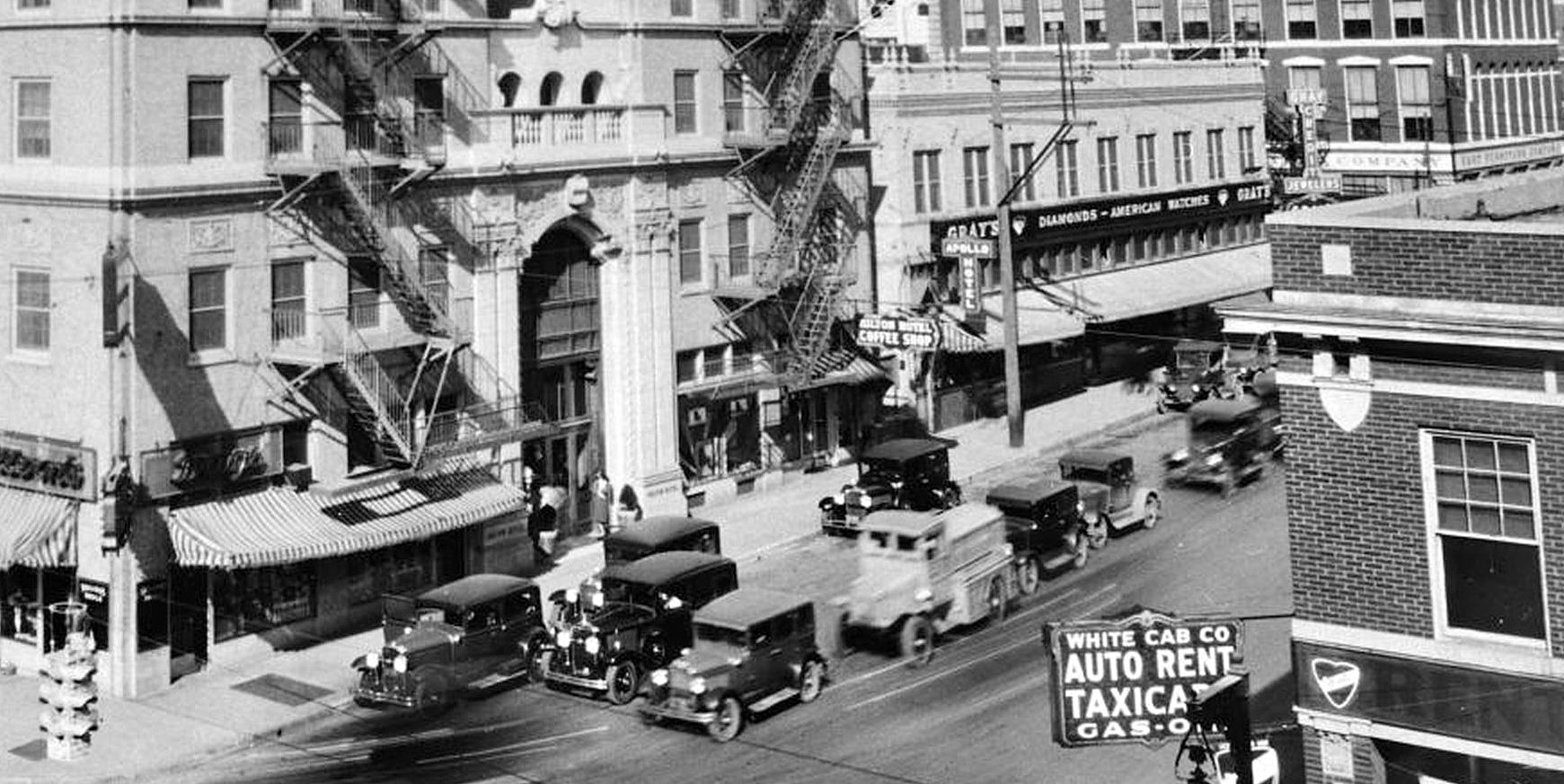
The right side shows Harwood looking north.

hilton_1930_det-2

hilton_1930_det3

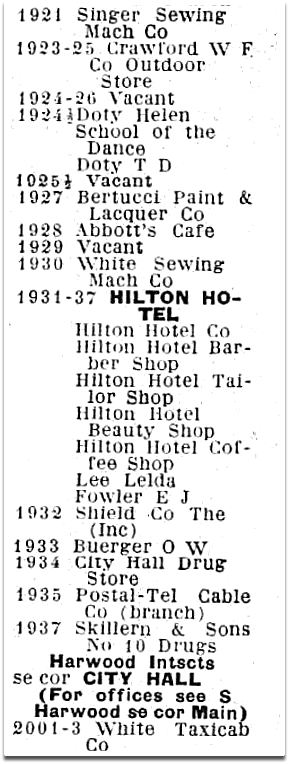
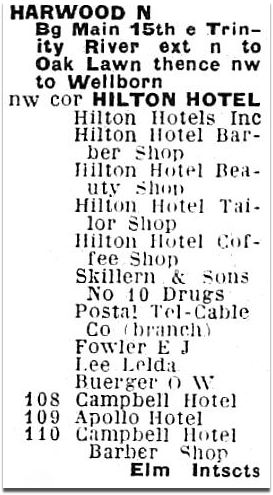
Here are the businesses listed in these blocks in 1930:

hilton_main_1930-directory1930 Dallas directory

hilton_harwood_1930-directory1930 Dallas directory

As a bonus, here’s a detail of another photo, showing the same intersection, around the same time, taken from the steps of the Municipal Building (then the city hall). The Drake’s Drug Store would be replaced by a Skillern’s in later years.

hilton_from-municipal_1927_det

***

Sources & Notes

Top photo from the Texas Historical Commission Historic Resources Survey Collection, via the Portal to Texas History, here.

The Wikipedia entry for Dallas’ first Hilton Hotel (not to be confused with the Statler-Hilton of the ’50s) is here.

The Hotel Indigo website is here.

All images larger when clicked.

*

Copyright © 2016 Paula Bosse. All Rights Reserved.

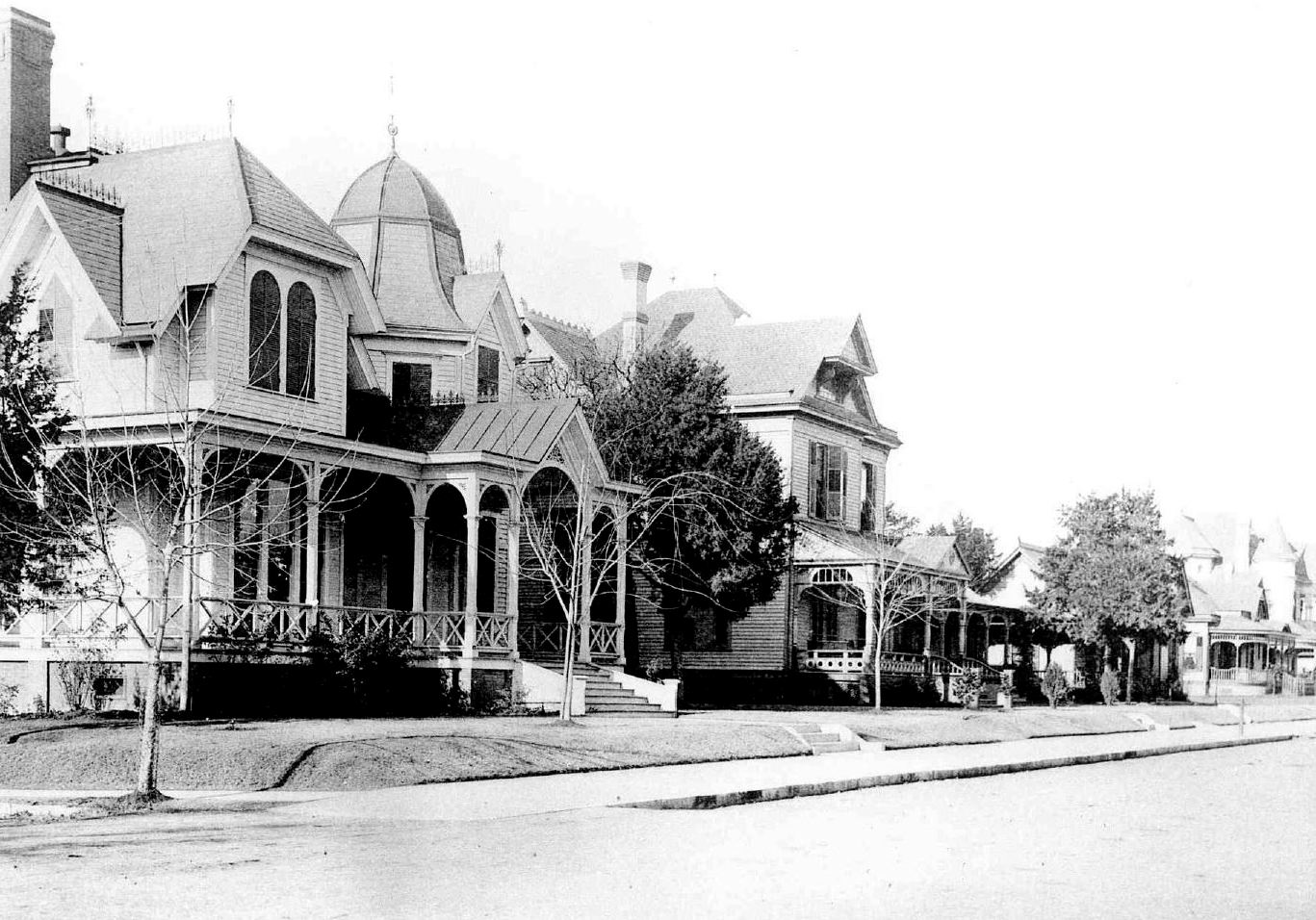
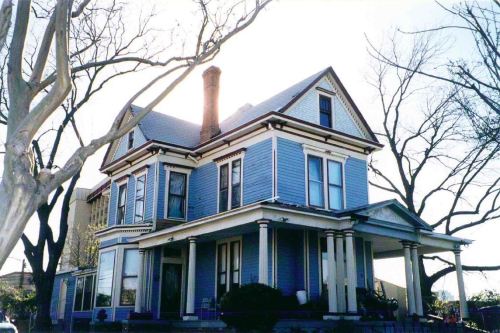
The Blue House on Browder

blue-house_homewardboundinc_2000
The Rosenfield house, in about 2000 (photo courtesy Homeward Bound, Inc.)

by Paula Bosse

Perhaps you’ve been following the recent brouhaha over the plans to demolish one of the last remaining 19th-century residences in the Cedars area, south of downtown — Robert Wilonsky of The Dallas Morning News has been covering the story here and here and here. The house is in terrible disrepair, but it has the beautiful details of the period, and it’s obvious that it was once a lovely house in a well-to-do neighborhood. Preservation Dallas posted this in-better-days photo on their Facebook page:
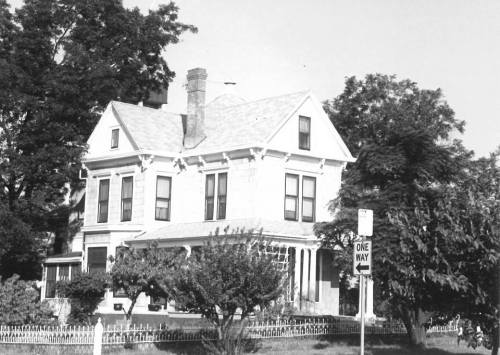
browder-house_preservation-dallas-FB-page

I thought I’d see what I could find about the history of the house — mainly I wanted to see if I could find who built it and when.

The house currently has the address 1423 Griffin, but before highways were built and streets were moved around, its address was 1015 Browder. Dallas changed almost every address in 1911, so I checked Jim Wheat’s very helpful scan of that year’s directory which tells us both the new and the old addresses of houses and businesses and also shows what cross-streets those addresses are between.
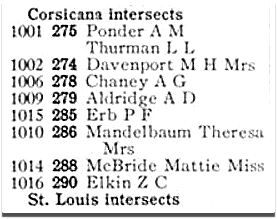
browder-house_1911-directory1911 directory, Browder Street

The original address of the Blue House was 285 Browder Street, between Corsicana and St. Louis. In 1911, P. F. Erb was living there.

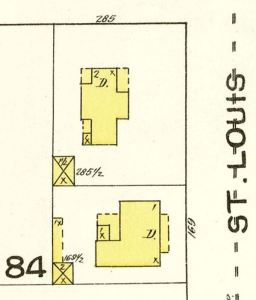
Next, I checked the Sanborn maps. The earliest Sanborn map I could find which actually showed this part of Browder was the one from 1892. Here’s a detail showing the two-story frame house on the northwest corer of Browder and St. Louis, with Browder running horizontally along the top. The address is 285 Browder. (The house next to it is 169 St. Louis — more on that house later.)
sanborn_1892_285-browder_nw-corner-st-louis_sanborn-1892_sheet-21

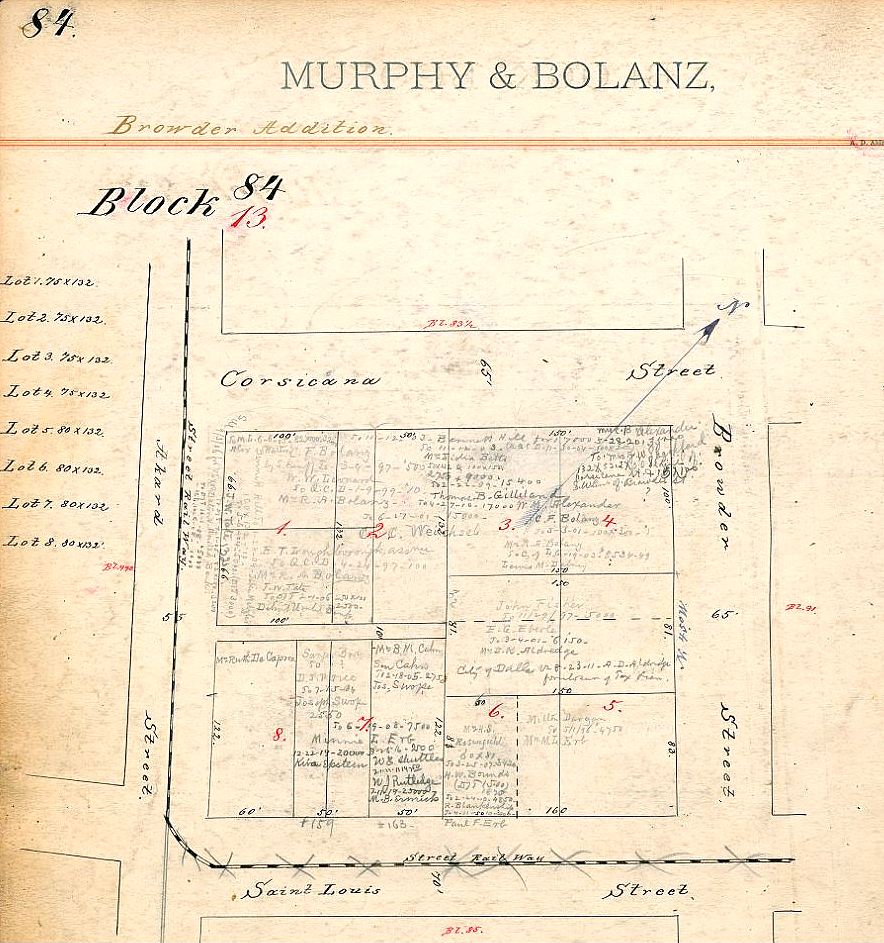
When you look at the full-page map this detail comes from (here), you’ll see larger numbers in the middle of the blocks. The block I’m interested in is block 84. Then I hopped over to the Murphy & Bolanz block book to see what I could find there. (I haven’t actually used this block book much, mostly because my old computer would not work with the plug-in required to view the pages, and it takes a while to figure out what you’re looking at.) When I clicked on “Block 84” in the index, I found this (click for larger image):
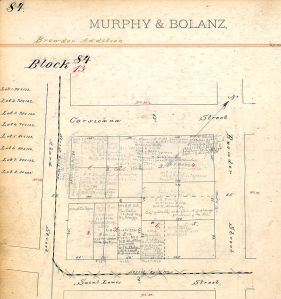
murphy-bolanz_block-13_block-84

Here’s the detail of the pertinent block:
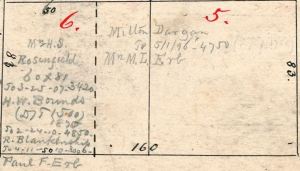
murphy-bolanz_det

The names and other assorted scrawls indicate title change (I think). This page was very helpful, because it told me that this block was originally part of Browder/Browder’s Addition, and it was originally classified as Block 13. The lot in question is Lot 5 (and probably Lot 6, because Erb’s name shows up under both. So now I had terms to search on.

And then it was just a tedious slog through the Dallas Herald archives (not to be confused with the Dallas Times Herald archives), the Dallas Morning News archives, and old city directories. Here’s what I found.

First mention of this particular parcel of land was in The Galveston News on March 24, 1883. P. S. Browder, a Browder family executor, transferred a lot of property — including the two lots I was interested in — to Mr. & Mrs. Nathan Godbold as part of a quitclaim deed (I’m probably not using the correct terminology here…). For one dollar.
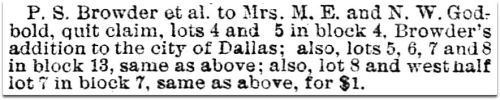
1883-march_browder_galveston-news_032483_QUIT-CLAIMGalveston News, Mar. 24, 1883

A few inches of print over, the record shows that Godbold immediately sold Lots 5 and 6 to Dallas real estate czar Charles Bolanz (misspelled below). For $1,000.

1883-march_browder_galveston-news_032483_to-bolanzGalveston News, Mar. 24, 1883

A few months later, in July, it was reported that Bolanz had sold the adjoining two lots to T. S. Holden, a young man who worked as a salesman for a wholesale grocery firm but seemed to be engaged in land speculation on the side. (It’s a little odd that Bolanz sold it so quickly for a $200 loss, but I’m sure there was probably more to the story.)

1883-july_browder_galveston-news_070283_HOLDENGalveston News, July 2, 1883

At some point, these two lots were sold to Max Rosenfield, another young man who was buying up land in the hopes that its value would increase. From Dallas Rediscovered by William L. McDonald:

“The year 1884 also saw the opening of a new housing subdivision by two Jewish real estate speculators, Gerson Meyer and Max Rosenfield. Their development, bounded by Akard, Corsicana, Browder, and St. Louis streets, was sold primarily to Jewish families who had begun to arrive as early as 1872 as part of the ‘Corsicana crowd’ — the terminal merchants who followed the construction of the H&TC.”

[I couldn’t find anything else about this block being a “sub-division,” but there definitely was a “Rosenfield & Meyer’s Addition” in East Dallas as early as 1886 — see the bottom of this post for more information on Gerson Meyer and the Murphy & Bolanz map of their East Dallas addition.]

In the 1886 city directory, Max Rosenfield is listed as residing at 1118 Browder, which may well have been an address that lasted for a very, very short time — Browder is a very short street, and I wonder if Rosenfield was renumbering addresses in his new development. It does appear to be Lot 5 of the block he and Meyer were developing, though. (Henrietta Rosenfield, widow of Jonas Rosenfield, was Max’s mother, and she lived with or near Max for several years.)

1886_rosenfield_1886-directory_1118-browder1886 Dallas directory

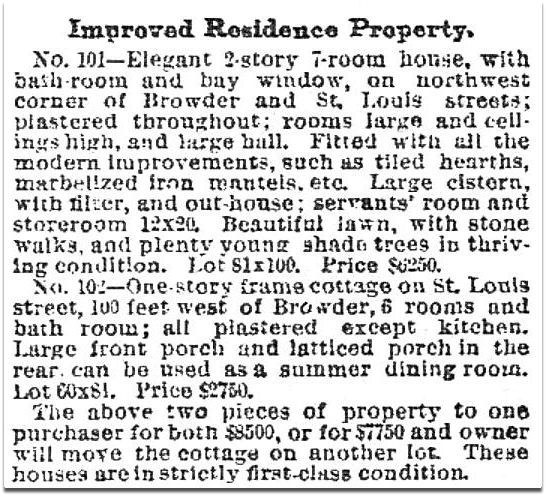
In early 1887, a For Sale ad appeared in the Herald — real estate agents Ducker  & Dudleigh were offering what appears to be Lots 5 and 6. By this time, houses had been built on both lots. (The  numbers 101 and 102 are confusing here, but the property being offered is the lot at the northwest corner of Browder and St. Louis and the lot adjoining it.) The price for the two-story house on Lot 5 was $6,250, which the Inflation Calculator adjusts to being about $166,000 in today’s money, taking into account inflation (but not taking into account Dallas’ outrageous real estate prices!).
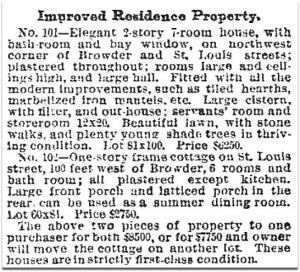
1887_browder_dmn_050887-FOR-SALEDMN, May 8, 1887 (click for larger image)

It doesn’t look like either property sold, because a few months later, the 1888 directory showed Max still living in the Lot 5 house facing Browder and mother Henrietta living in the Lot 6 house at 169 St. Louis.

1888_rosenfield_1888-directory1888 Dallas directory

Rosenfield placed a For Rent ad in the paper in Feb. of 1889, offering his corner house on Browder.
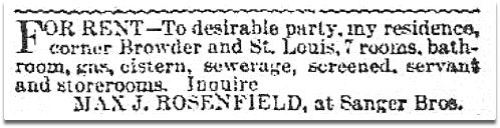
1889_rosenfield_dmn_021389DMN, Feb. 13, 1889

This appears to have been when businessman Milton Dargan moved in. He is listed as moving into the house at about this time in the addenda section of late changes for the 1889 directory (directories were usually compiled in the year before they were actually published).

1889_dargan_1889-addenda-listing1889 Dallas directory

In that same directory, Rosenfield had moved in with his mother in the adjoining property.

1889_rosenfield_1889-directory1889 Dallas directory

At some point Dargan bought the corner house. Henrietta continued to live in the St. Louis-facing house until about 1892, when she moved in with Max at his new home on Akard.

And, finally, the “285” address shows up in a directory, in 1891.

1891_dargan_1891-directory1891 Dallas directory

Paul F. Erb bought the Browder house from Dargan in 1896 (he also bought the adjoining Lot 6 house facing St. Louis in 1910).

1897_erb_1897-directory1897 Dallas directory

And we’re back to Paul Erb, seen in the 1911 directory listing old and new addresses at 1015/285 Browder.

browder-house_1911-directory1911 Dallas directory

Yay!

**

That was a long way to go to establish a chain of ownership. (I’m sure it would have been faster and easier to have consulted city records.)

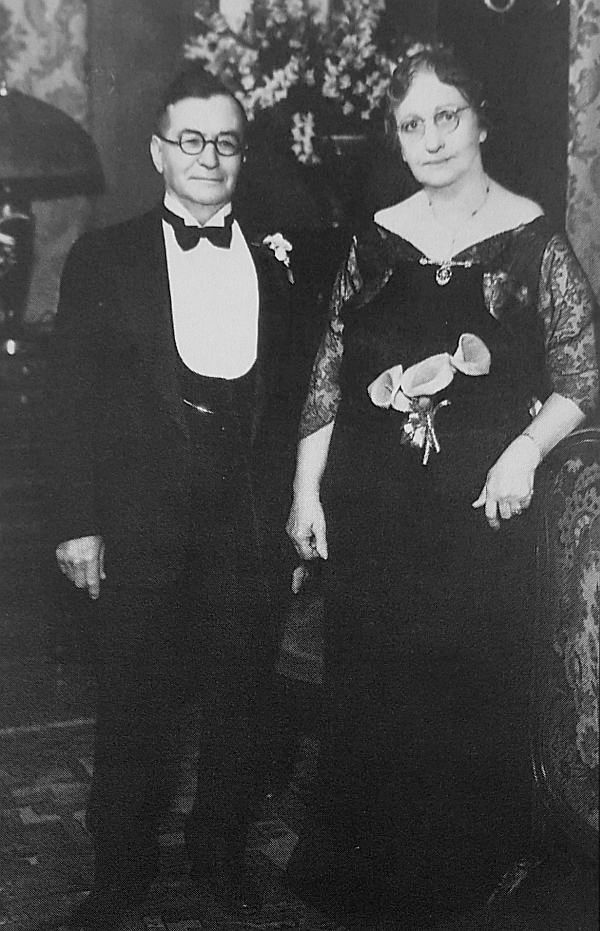
So. Without access to building permits, it looks as if Max Rosenfield (who, by the way, was the father of John Rosenfield — born Max John Rosenfield, Jr. — legendary arts critic for The Dallas Morning News) was the person who built the 130-year-old house now going through the process of probably being torn down soon. It appears to have been built in 1884 or 1885. In a 1935 Dallas Morning News article celebrating the 50th wedding anniversary of Mr. and Mrs. Max Rosenfield, the house is mentioned: “…their first home, a house built by Mr. Rosenfield and still standing on the northwest corner of Browder and St. Louis streets…” (see the article “Mr. and Mrs. M. J. Rosenfield To Observe 50th Anniversary,” DMN, Jan. 6, 1935).

Below is a photo of Max Rosenfield and his new bride, Jenny, probably taken the same year the house was built, 1885-ish, when Max was 26 years old.
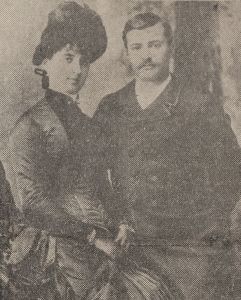
rosenfields_ca-1885_ancestry

Thank you for building such a pretty  house, Mr. Rosenfield. Maybe some magnanimous person with deep pockets can have it moved to a new location and restore it to its former loveliness.
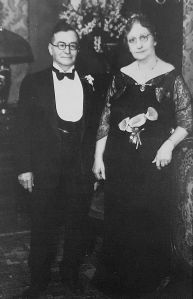
rosenfield-max_1935Mr. and Mrs. M. J. Rosenfield, on their 50th anniversary

**

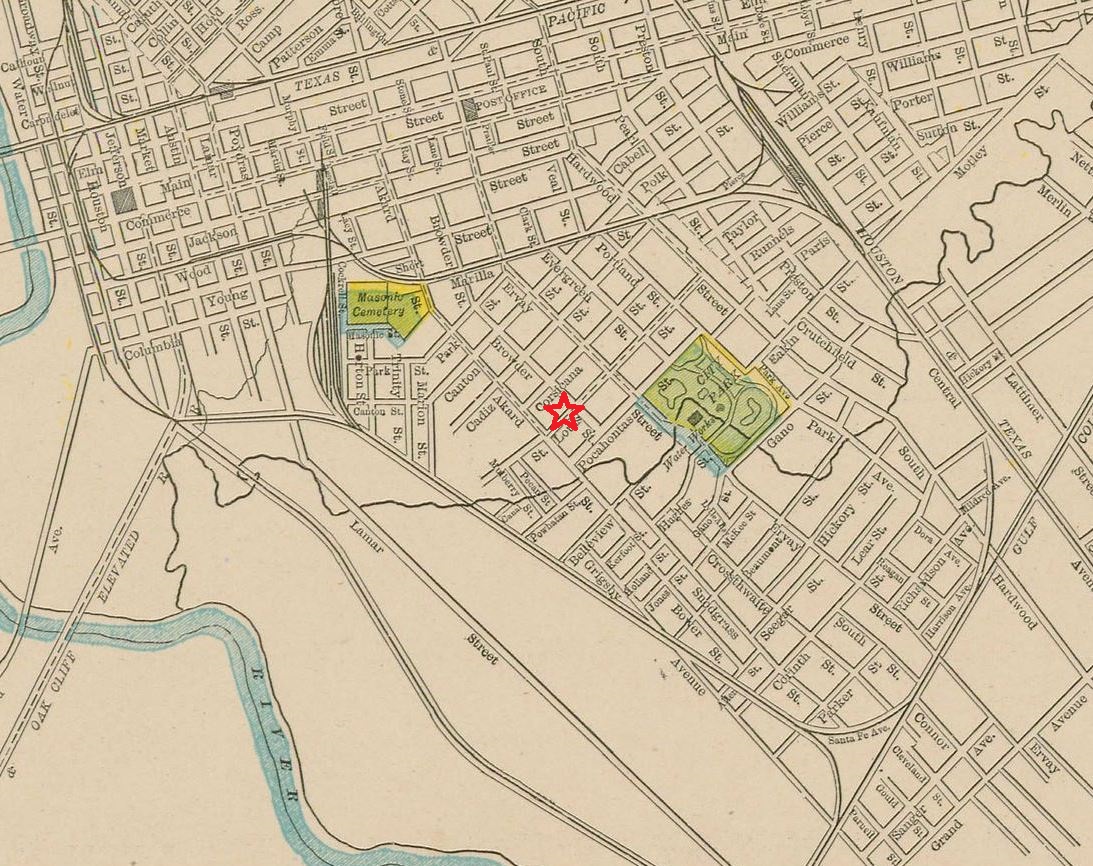
Here’s a detail of an 1893 map of the area, with the house in question marked.
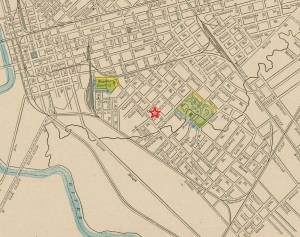
browder-house_1893-map

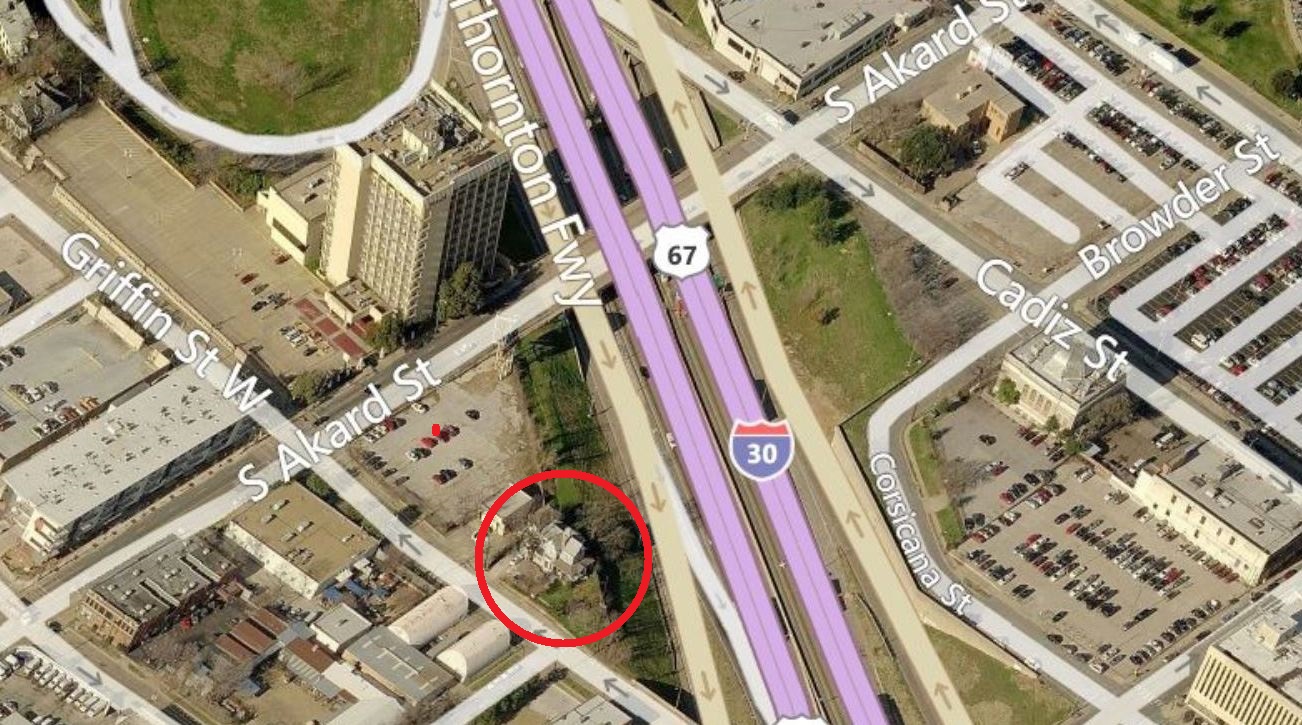
And here’s the lonely little house in its present hemmed-in location.
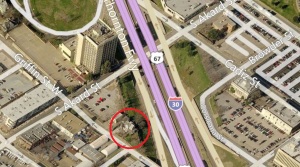
browder-house_bingBing Maps

***

Sources & Notes

Top photo, taken around 2000, from Homeward Bound, Inc., used with permission. Homeward Bound, Inc. took over the house in 1986 (and owned it until October, 2015) for use as Trinity Recovery Center, a substance abuse treatment center. The organization tried hard to save the house, but, according to Homeward Bound, Inc. Executive Director Douglas Denton, when they approached Dallas’ Landmark Commission in the 1990s, “they were not interested in the building.” Thanks to Mr. Denton for allowing me to use this photo, which shows the beauty of the old house better than any other photo of it that I’ve seen. He points to the photo below as an example of what this Cedars neighborhood once looked like. The caption for the photo in McDonald’s Dallas Rediscovered (p. 125): “Looking north toward downtown along Browder Street near the corner of Cadiz, 1895. These homes, built in the early 1890s, began to be razed in the late 1930s and early 1940s for parking space in the expanding business district.” (Photo: Dallas Public Libary)
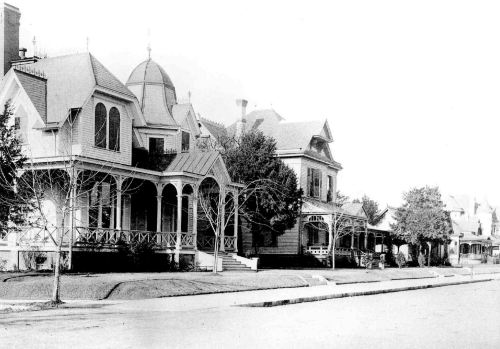
browder-near-cadiz_ca1895

This would have been about two blocks from the Rosenfield house. Imagine what that neighborhood once looked like!

Watch a news report on the outcry over the possible demolition of this house on the WFAA website, here.

The Dallas Morning News article on the 50th wedding anniversary of Mr. and Mrs. Max Rosenfield in which it is mentioned that Max built the house (“…their first home, a house built by Mr. Rosenfield and still standing on the northwest corner of Browder and St. Louis streets…”) is “Mr. and Mrs. M. J. Rosenfield To Observe 50th Anniversary” (DMN, Jan. 6, 1935).

Photo of the Rosenfields as a newly married couple found on Ancestry.com.

50th anniversary photo of Mr. and Mrs. Rosenfield is from the book John Rosenfield’s Dallas by Ronald L. Davis (Dallas: Three Forks Press, 2002).

All other sources as cited.

Max J. Rosenfield died in 1935 at the age of 76. His very interesting obituary (probably written by his son, John Rosenfield, amusements editor of The Dallas Morning News), can be found in the Dec. 2, 1935 edition of The News: “M. J. Rosenfield, Business Leader Many Years, Dies.”

It’s worth trying to figure out how to use the Murphy & Bolanz block books, courtesy of the Texas/Dallas History and Archives Division of the Dallas Public Library. Background on these very useful books can be found here.

If I’ve made any mistakes or have drawn any incorrect assumptions, please let me know!
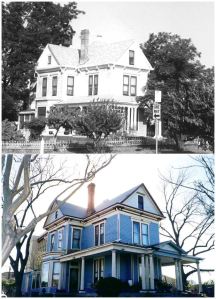
browder-house_then-now

*

UPDATE: Max Rosenfield developed a real estate partnership with Gerson Meyer, both of whom worked for Sanger Bros. department store. They bought and sold real estate (often to fellow Sanger’s employees), apparently as a lucrative side-business (Rosenfield even conducted his real estate transactions from his Sanger Bros. office). They apparently had acquired enough land by 1886 to have their own “addition” — “Rosenfield and Meyer’s Addition” in East Dallas. The earliest mention I found of it was this ad from May, 1886.

rosenfield-and-meyer-addition_dmn_052786DMN, May 27, 1886

Their addition was in East Dallas. Below, the map from the Murphy & Bolanz block book (click for larger image):
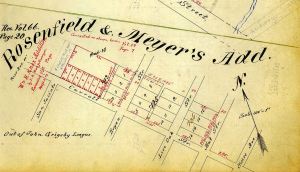
rosenfield-and-meyers-addition_murphy-bolanz

Gerson Meyer (a Jewish German immigrant, just a couple of years older than Rosenfield), moved to St. Paul, Minnesota in 1897 and continued working for several years in men’s clothing.

If something looks too small, click it!

*

Copyright © 2016 Paula Bosse. All Rights Reserved.


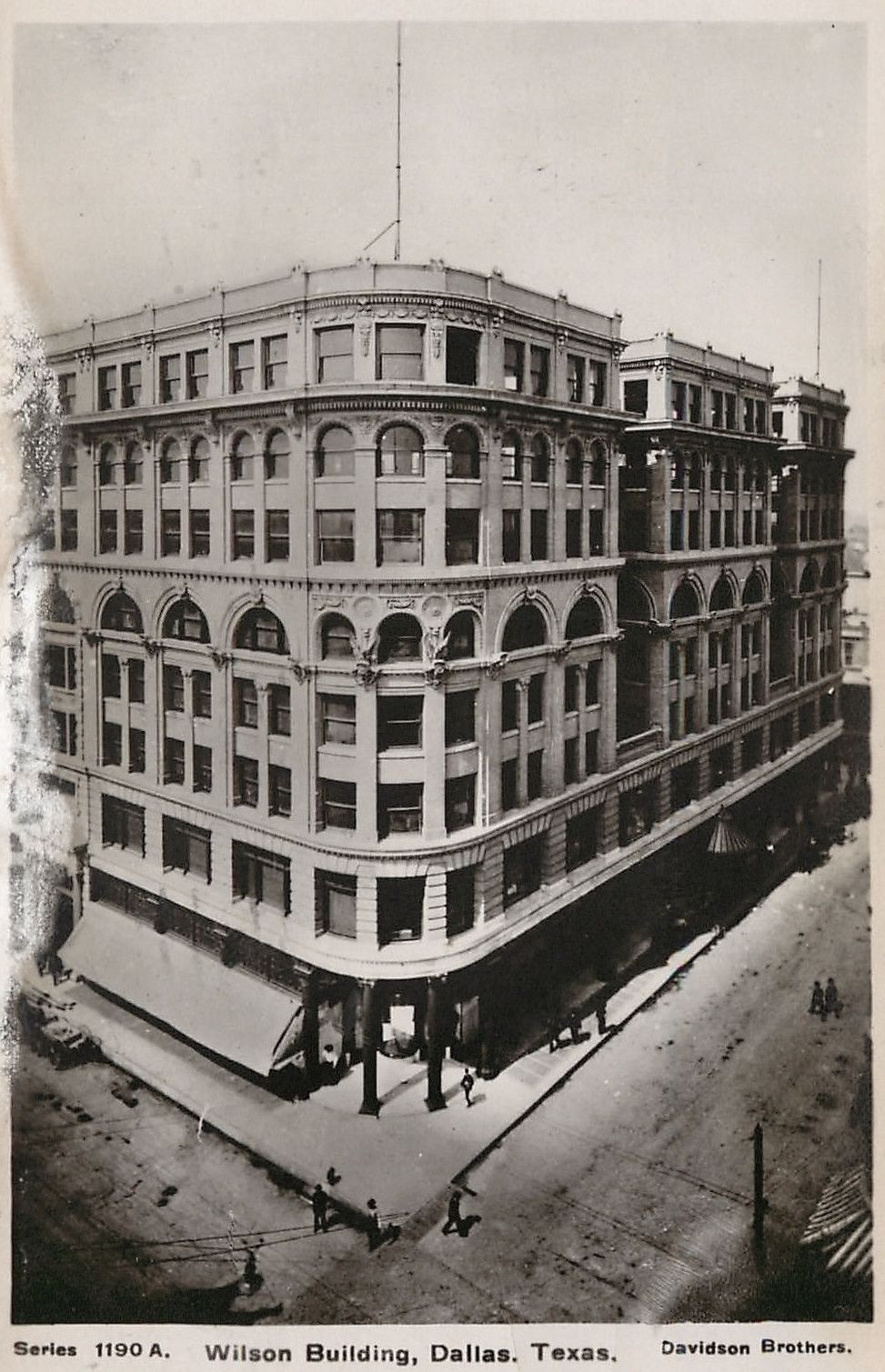
The Wilson Building, Early Days

wilson-bldg_RPPC_ebay_pm1908_smallMain & Ervay (click for larger image)

by Paula Bosse

Yet another view of one of Dallas’ most beautiful buildings!

***

Postcard from eBay, postmarked 1908.

For meatier Wilson Building posts, see the previously posted “The Wilson Building Under Construction — 1902,” here, and “The Wilson Building & Its Tenants — 1908/1909,” here.

Click for larger image.

*

Copyright © 2015 Paula Bosse. All Rights Reserved.

Main Street — ca. 1942

main-street-canyon_ebay_smallThe Merc, Titche’s, the White Plaza (click for much larger image)

by Paula Bosse

I love postcards like this. All signs of people, automobiles, and streetcars have been magically erased. Poof! This lunchtime scene of empty streets and sidewalks — looking west down Main from Harwood at 12:30 PM — was definitely a view never seen by a human being!

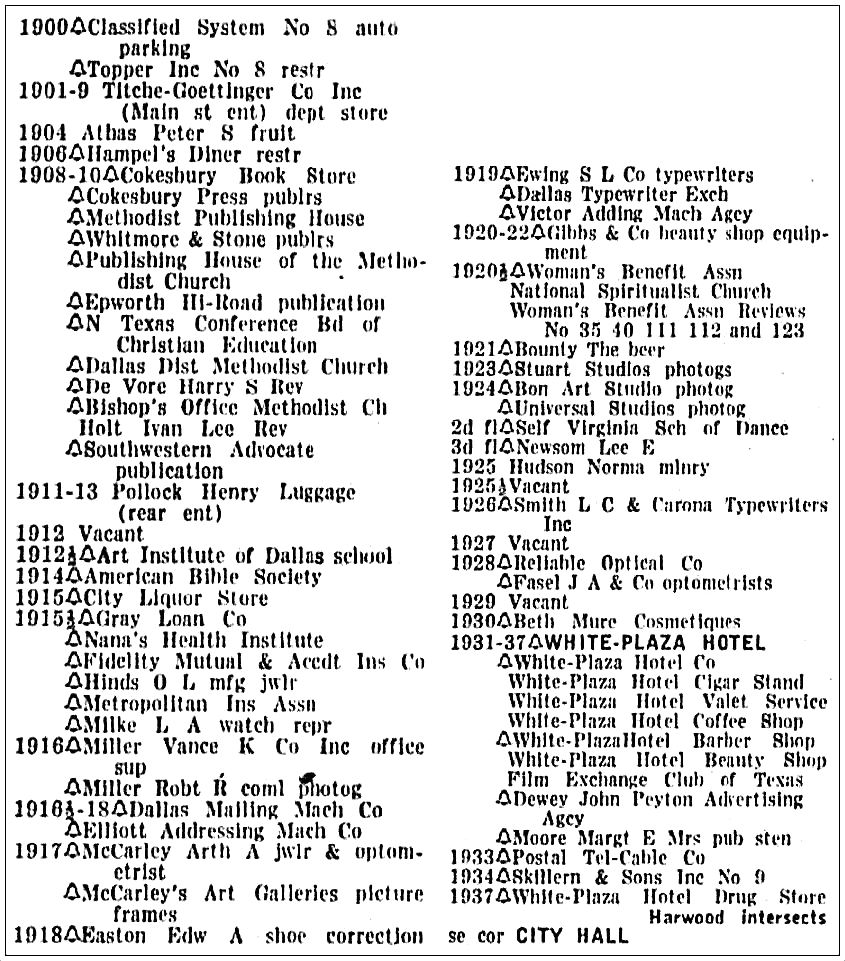
In trying to figure out the year of this image, I narrowed it down to about 1942 — that was the year the Mercantile Building was completed, and that was also about the time that Henry Pollock’s luggage store packed up (…as it were…) and vacated 1911-13 Main (the store was no longer listed at this address by the time the 1943 directory was issued). That’s not to say that the sign painted on the side of the building didn’t remain after Pollock had left, but later occupants would most likely have painted over it as soon as they moved in.

Speaking of directories, here’s a look at the businesses in the 1900 block of Main — between St. Paul and Harwood — in 1941. (Click for larger image.)

main-st_19411941 Dallas directory

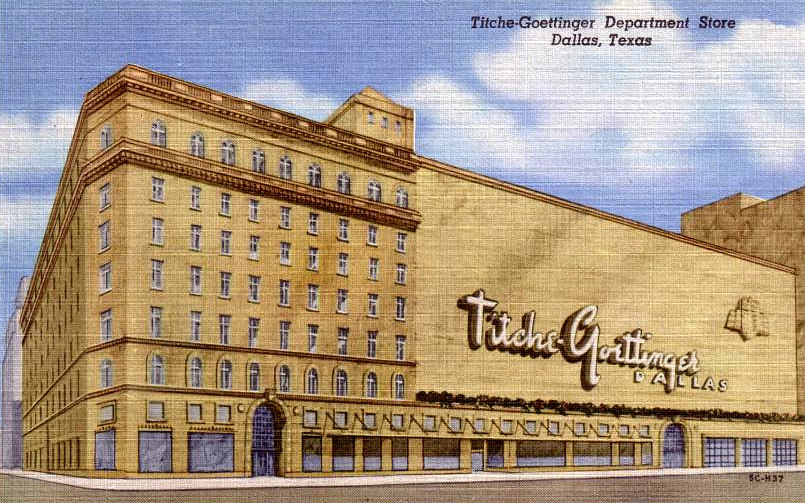
For me, the interesting thing about this postcard is seeing the Titche’s building (at the corner of St. Paul) before it was expanded. The small buildings between Titche’s and the White Plaza Hotel (a hotel which was originally Dallas’ first Hilton — Conrad’s first-ever hotel to bear his name) were demolished sometime around 1952, and the expansion began that year, its 50th in business in Dallas.

The original building was built in 1929, designed by George Dahl (whose office was, a few years later, right across the street); the architectural firm responsible for the expansion was Thomas, Jameson & Merrill.

Here’s what the building looked like before the expansion (with another magic erasure — this time, the hotel at the end of the block has been removed to make way for an unobstructed view of the moon):

titches_night.jpg

And here’s the building after its expansion:

titches

***

Sources & Notes

More on the Titche’s expansion in the Dallas Morning News article “Titche’s Reports Plans to Double Present Size” by Edd Routt (Sept. 7, 1952).

Present-day photo of the Titche’s building, from Wikipedia, is here.

Present-day street view showing roughly the same vantage point as the postcard at top, can be seen on Google Street View, here.

A previous Flashback Dallas post — “George Dahl’s Titche-Goettinger Building” — is here.

All images larger when clicked.

*

Copyright © 2015 Paula Bosse. All Rights Reserved.