Flashback : Dallas

A Miscellany: History, Ads, Pop Culture

Category: Crime/Law Enforcement

The South End “Reservation” Red-Light District — ca. 1907

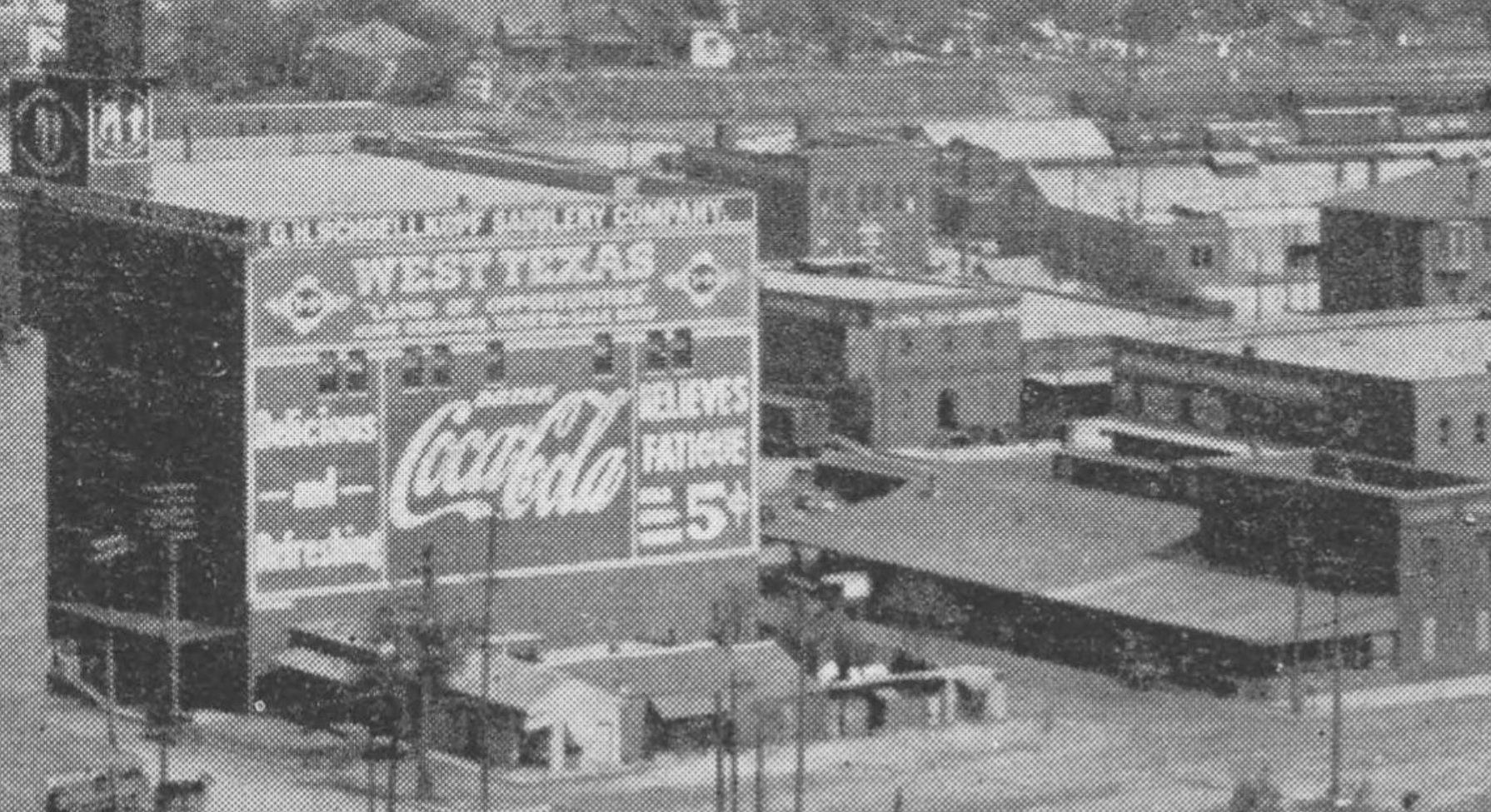
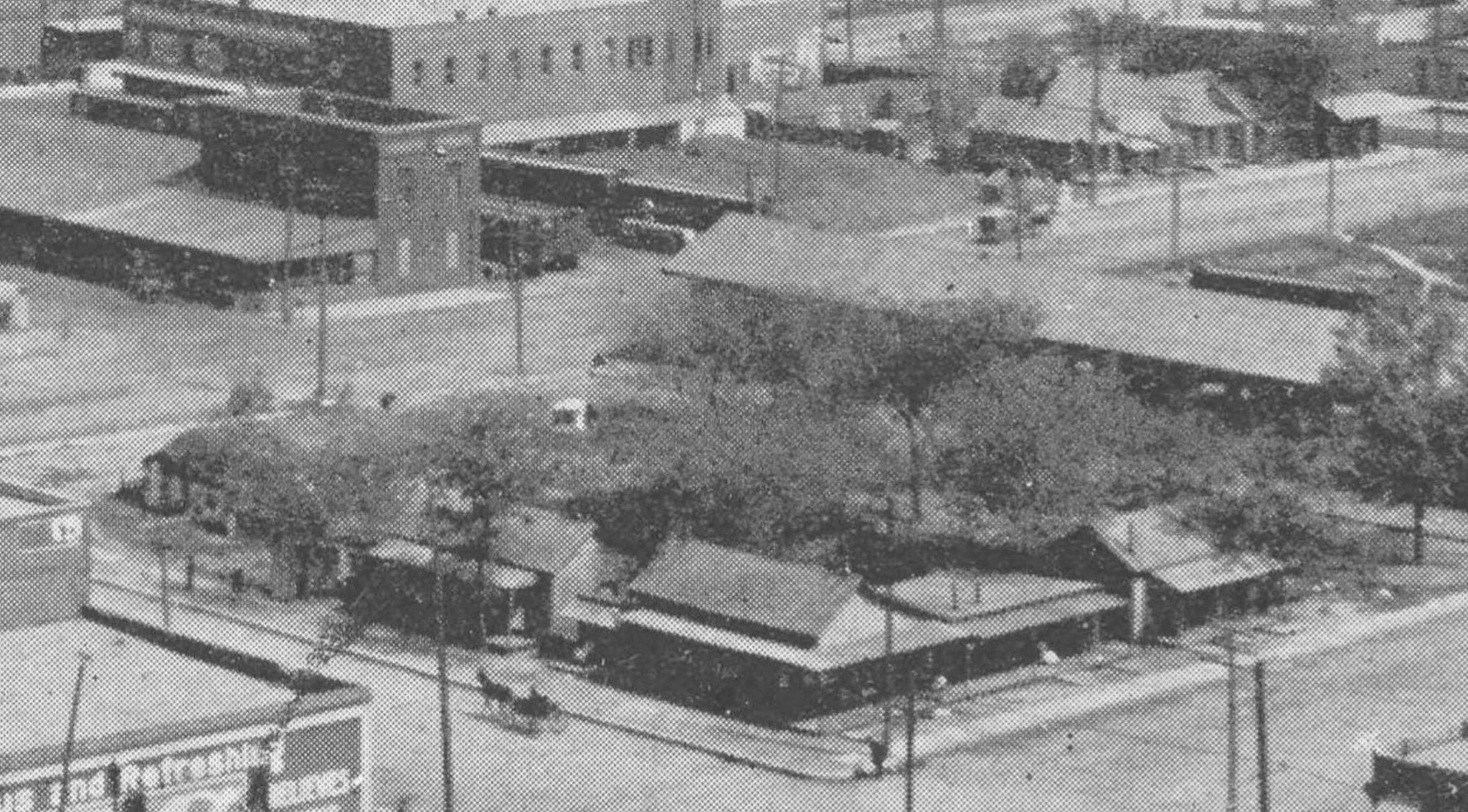
south-end_hobson-electric_southeast-from-courthouse_ca-1907_cook-collection_degolyer_SMUThere’s a lot going on here that you can’t see… (DeGolyer Library, SMU)

by Paula Bosse

I am reminded how much fun it is to just dive into something with no idea where you’re heading and end up learning interesting things you might have been unaware of had you not wondered, “What am I looking at?”

Yesterday I was working on a future post that involves the Hobson Electric Co., and I was looking for photos. The one above popped up in one of my favorite collections of historical Dallas photos, the George W. Cook Collection at SMU’s DeGolyer Library. I was looking for a post-1910 West End photo — this photo is identified as just that [the title has now been updated by the SMU Libraries], but the presence of the Schoellkopf Saddlery Co. building (center left, with the Coca-Cola ad on it) puts this location on the other side of the central business district — Schoellkopf was at S. Lamar and Jackson. Even knowing that, this scene didn’t look familiar at all.

I checked a 1907 city directory to find out the address of the Hobson Electric Co. before it moved to the West End in 1910 — it was located at 172-74 Commerce Street (in what is now the 700 block), between S. Market and S. Austin. The view here is to the southeast, probably taken from the courthouse.

I don’t think I’ve seen this particular view before — it shows hardly any of the downtown area but shows instead the area to the south. I was really intrigued by the block of houses facing Jackson (between Market and Austin) — the block the horse-and-buggy is moving past, at the center right. The trees. The low buildings. That block really stood out. It was kind of quaint. Did people live there? While I had the 1907 directory open, I checked to see who the occupants were. (I just picked 1907 because the Hobson Co. changed its name from “Duncan-Hobson” around 1906, and it had moved away from Commerce by mid 1910.) Here were the occupants of those houses in 1907:
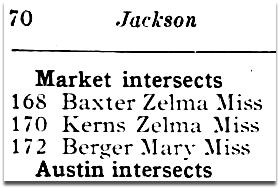
jackson-between-market-and-austin_1907-directory1907 Dallas directory

That seemed odd. Three single women occupying three separate houses, all next door to one other. There weren’t a lot of single women living in houses alone in 1907. Hmm. I checked all the directories between 1905 and 1910 to see who was living in that block. Every year, each of those houses showed a new occupant, and, with one exception, all were single woman (the exception was a man who owned a saloon across the street and who had faced charges at one point for “keeping a disorderly house”). …Okay. I got the picture.

I checked the Sanborn map from 1905 for this block and saw something I’d never seen before: the designation of a building with the letters “F.B.” What did that mean? Turns out, it means “Female Boarding House.” Or, less euphemistically… a brothel. Look at the map here (more maps are linked at the bottom of this post) to see the frankly ASTRONOMICAL number of “F.B.” buildings in this one small area. (There weren’t as many saloons — designated with “Sal.” — as I expected, but I’m pretty sure a lot of saloons in this area were operating illegally.)

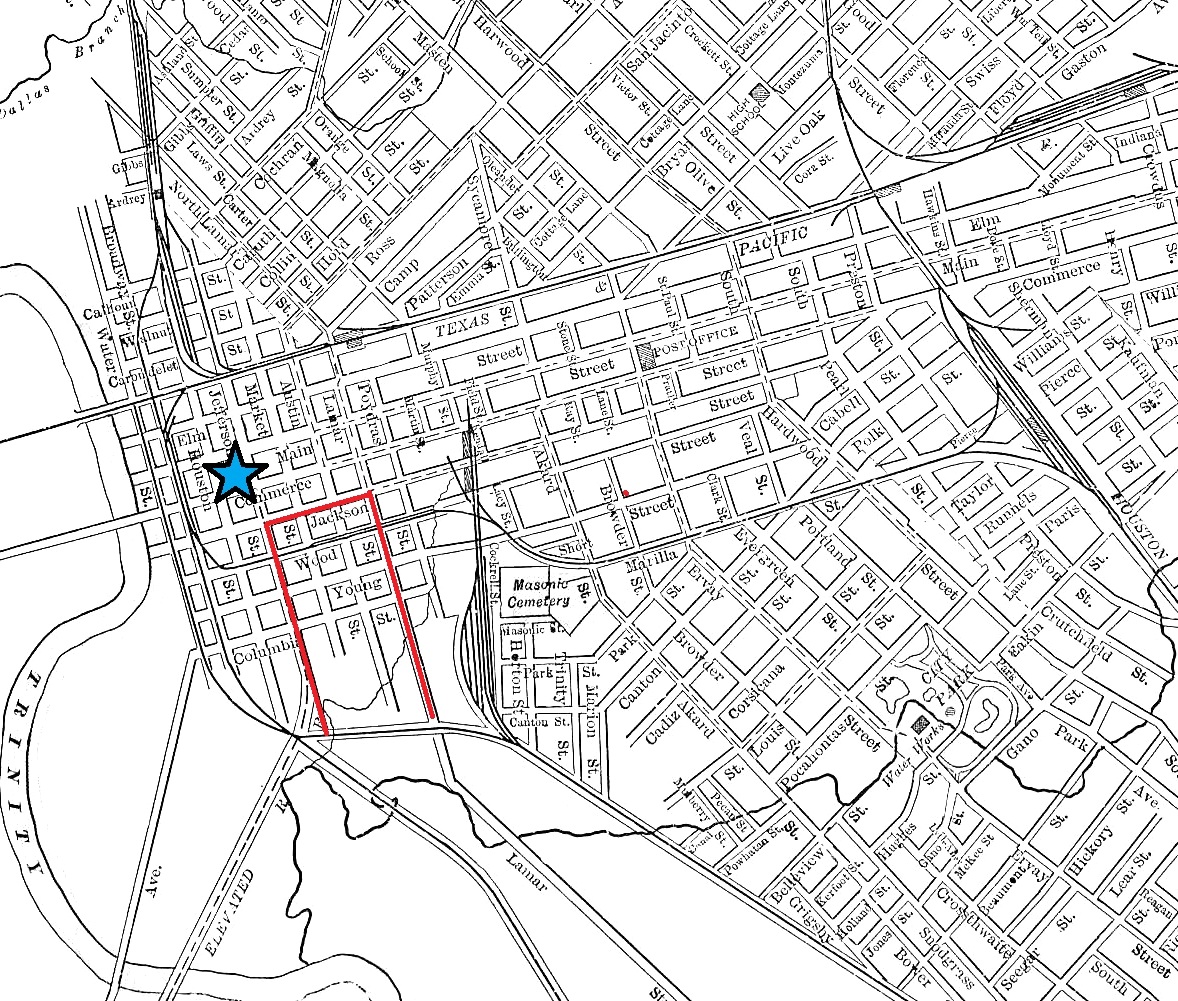
You might have noticed that all of those F.B.s are south of Jackson. Not one of them is north of Jackson. This area — the southwestern part of downtown — was referred to at the time as the “South End” or “The Reservation” (some called this general area “Boggy Bayou,” but I think that was technically farther south). Its boundaries were, basically, S. Jefferson Street (now Record Street) on the west, Jackson on the north, S. Lamar(-ish) on the east, and beyond Young Street on the south. If you wanted to avail yourself of illicit things and engage in naughty behavior, this was the place for you: Ground Zero for a sort of wide-open, lawless Wild West. There were other red-light districts in Dallas (most notably “Frogtown,” which was north of downtown in the general area formerly known as Little Mexico) (does anyone still call this now-over-developed area “Little Mexico”?), but if you wanted the primo experience of one-stop-shopping for drinking, gambling, drugging, and “consorting with fallen women,” you were probably familiar with the South End, where all of these activities were tolerated and, for the most part, ignored by the police (they might mosey by if there were an especially egregious shooting or stabbing or robbery). In fact, this vice-filled area had been created by a helpful city ordinance in the 1890s. So, enjoy!

Prostitutes were allowed to ply their trade in this specified chunk of blocks because the city fathers felt that it would be best to keep all that sort of thing in one somewhat controllable area, away from the more reputable neighborhoods. But once a prostitute stepped outside the Reservation to sell something she shouldn’t have been selling… laws suddenly applied, and she’d be thrown in jail and/or fined. Do not step north of Jackson, Zelma!

So, at one time, Dallas had legal brothels. Depending on whose account you read, these houses of ill repute ranged from godawful “White Slavery” operations and bubbling cauldrons of sin and sleaze to, as Ted Dealey remembers in his book Diaper Days of Dallas (p. 74), “ultra-fashionable houses of prostitution” which attracted Big D’s moneyed movers and shakers. Something for everyone.

Eventually, people started to get really bent out of shape about this, and there was a big push to get these houses shut down — or at least moved out of the area. The Chief of Police reported to the City Council in 1906 that, among the many Reservation-related problems, the area was getting cramped because the railroads were buying up real estate in the area and kicking people out. The city-sanctioned no-man’s land was getting too small, so city officials needed to find a bigger place to move the red-light district to. The Chief thought that North Dallas (i.e. Frogtown) was “the most logical place” — except that residents of nearby swanky neighborhoods there were not at all keen on this. But that idea seemed to stick. It took several years to actually happen, but a relocation of sorts occurred, and the South End brothel-hotspot was pretty much scrubbed of all offending “disorderly houses” by 1910. (Frogtown bit the dust around 1913, after those unhappy well-to-do North Dallas neighbors complained bitterly, loudly, and effectively.)

So, anyway, I never expected to find such an exciting photograph! I wonder if the photographer took this photo as a way of documenting the very controversial, in-the-news, not-long-for-this-world Reservation, or whether it was just a nice scenic view. I have to think it was the former, because the Reservation was well-known to everyone, near and far, and this shot would have been an unusual vista to, say, reproduce for postcards (or at least postcards sold to the general public!). Whatever the case, I’ve never seen this view, and it’s really great — and it comes with an interesting slice of Dallas history. I had heard of the Frogtown reservation to the north, but I’d never heard of the South End reservation. And now I have. And here’s a photo of it!

Let’s bring back the neighborhood designation of “South End.” It was good enough for 1900, it’s good enough for today.

*

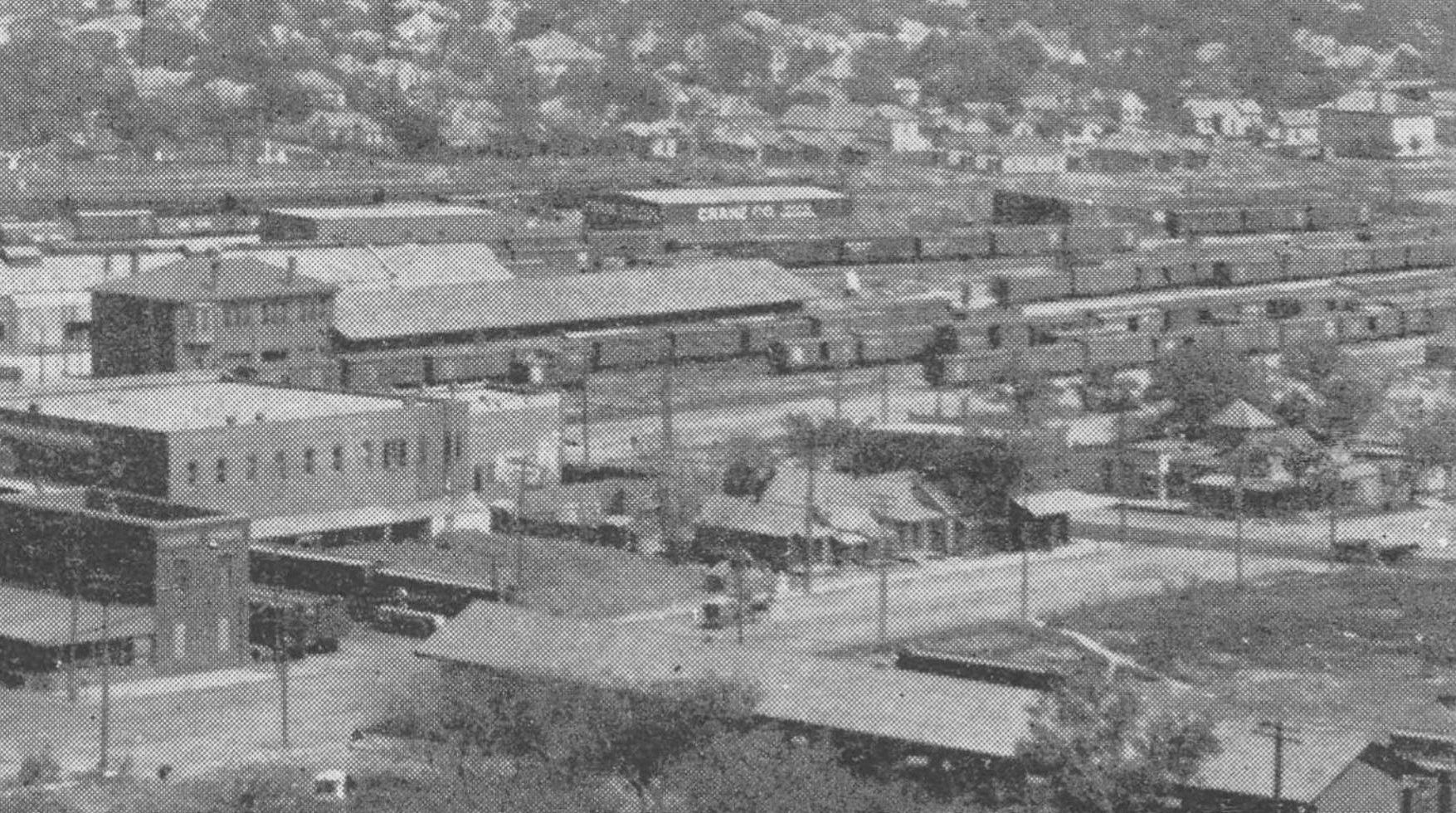
Here are a few zoomed-in details of the photo. Unless I’m imagining things, I think I can see women sitting on their porches, advertising their wares, as was the custom. (All images are larger when clicked.)
south-end_cook-collection_degolyer_SMU_det-1

*

south-end_cook-collection_degolyer_SMU_det-2

*

south-end_cook-collection_degolyer_SMU_det-3

*

Below is an excerpt from a blistering directive to city lawmakers by W. W. Nelms, Judge of the Criminal District Court (from an article with the endless headline “Calls For Action; Judge Nelms Charges Police Chief, Sheriff and Grand Jurors; Warfare on Crime; Says Lawbreakers Shall Not Construe Statutes of State to Suit Themselves; Stop Murder and Robbery; Declares Harboring Places for Thugs, Thieves and the Like Must Be Destroyed,” Dallas Morning News, Oct. 15, 1907).
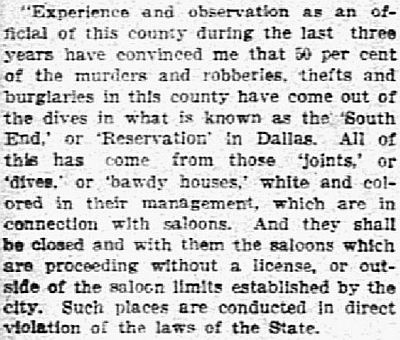
reservation_judge-w-w-nelms_DMN_101507DMN, Oct. 15, 1907

*

Below, the general area of the South End Reservation around 1907 (this map is from about 1898). The blue star is the Old Red Courthouse; the Reservation is bordered in red. In 1893, the original area was loosely designated as the area bounded by Jackson Street, Mill Creek, the Trinity River, and the Santa Fe railroad tracks, in which “women of doubtful character […] were not to be molested by police” (from “Passing of Reservation,” DMN, Dec. 11, 1904). As noted above, the area shrank over time, and the red lines show the general Reservation area about 1907, the time of the photo at the top.
south-end_reservation_1898-map_portalDallas map, ca. 1898 (det), via Portal to Texas History

***

Sources & Notes

Top photo — “[Jackson Street, Looking Southeast from the Courthouse, Including a Partial View of the South End ‘Reservation’]” (previously incorrectly titled “[Dallas West End District with View of Railroad Yards]”) — is from the George W. Cook Dallas/Texas Collection, DeGolyer Library, SMU Libraries and can be accessed here. (I appreciate SMU for responding to my request to re-title and re-date this photograph — it’s always worth notifying archival collections with corrections!) (And, as always, I WELCOME corrections. I make mistakes all the time!)

The 1905 Sanborn map I linked to above (Sheet 104) is here and seems to be the epicenter of the booming brothel trade; more evidence of this can be seen just south of that in Sheet 102; and it continues just east of that in Sheet 105 (it’s interesting to note the specially designated “Negro F.B.” bawdy houses). (Sanborn maps do not open well on cell phones — or at least on my cell phone. You may have to access these from a desktop to see the full maps. …It’s worth it.)

Read more about this whole “Reservation” thing in the lengthy and informative article “Not in My Backyard: ‘Legalizing’ Prostitution in Dallas from 1910-1913” by Gwinnetta Malone Crowell (Legacies, Fall 2010).

Also, there’s a good section on this (“Fallen Women”) in the essential book Big D by Darwin Payne (pp. 48-56 in the revised edition).

If you enjoy these posts, perhaps you would be interested in supporting me on Patreon for as little as $5 a month — in return, you have access to (mostly!) exclusive daily Dallas history posts. More info is here.

south-end_hobson-electric_southeast-from-courthouse_ca-1907_cook-collection_degolyer_SMU_sm

*

Copyright © 2024 Paula Bosse. All Rights Reserved.
Walking on the Wild Side at Commerce & Akard (Crowdsourcing)

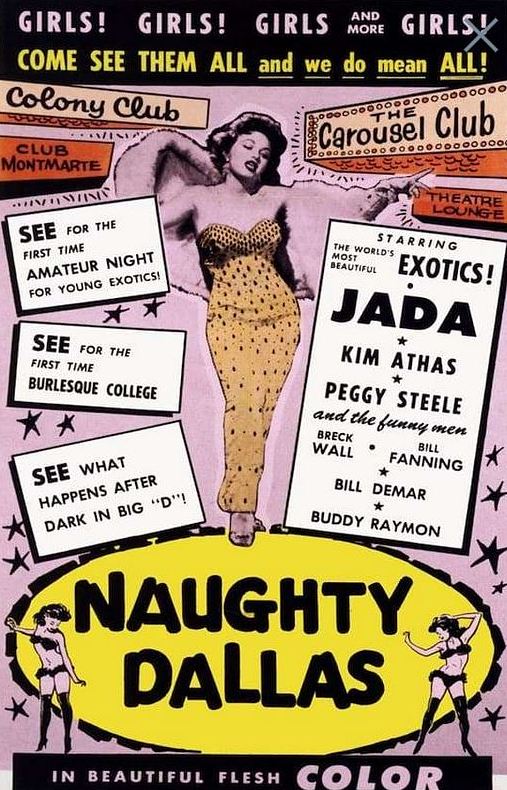
naughty-dallas_poster

by Paula Bosse

Occasionally on the Flashback Dallas Facebook page I ask questions, hoping to crowdsource answers — and people on that page know a lot of obscure stuff! I attempted to post the question(s) below on F*cebook, but I apparently crossed some sort of line. I think I used too many “forbidden” words. When I tried to post, the screen froze and ultimately ate my (lengthy) question. *Poof*! So I shall bypass F*cebook and just post it here.

I am looking for anyone who might have first-hand knowledge about the illicit side of downtown Dallas nightlife in the early 1960s. I am particularly interested in the seedier activities which might have been going on in the Baker Hotel. Namely, gambling and prostitution. Please contact me if you worked at the Baker (or the Adolphus) between, say, 1960 and 1964.

I know these activities were going on all around Dallas, but was it common to find illegal card games and prostitution going on inside the swanky hotels? If so, managers – and cops – must have known. Would they have turned a blind eye? Would they have been aware and on the take? Would they have just accepted it as part of the hotel business? I mean, Dallas was/is a huge convention city – this sort of thing must have been everywhere!

Would dancers who performed at the Colony Club have stayed at the Baker or Adolphus? They seem kind of ritzy for people in that line of work. Would management have cared if strippers stayed in their hotels? Would there have been a higher tolerance for more discreet “call girls” than your average run-of-the-mill prostitute? (I don’t mean to suggest that dancers were prostitutes, but, since I’m typing this, was it known that prostitution connected with the Colony Club or Carousel Club was going on?)

There is an amusing Dallas Morning News article titled “Officer Says Syndicated Crime Doubtful in Dallas” (DMN, Oct. 8, 1963) in which a vice cop proudly proclaims organized crime just doesn’t really exist in Big D. That seems highly unlikely, but I’m not even talking about big-time crime – more like high-stakes poker games with local high-rollers and pimping done by small-time operators. How common would it have been for this sort of thing to be going on in Dallas’ two most upscale hotels?

If you worked at the Baker Hotel in the early ’60s — or if you were employed by the Dallas Police Department at that time – or if you, yourself, were a participant in the seedier side of Dallas nightlife and spent significant time hanging around Commerce & Akard doing naughty things! – please comment below or send me an email at FlashbackDallas214@gmail.com.

This has nothing to do with the assassination, even though it’s the same time-period and there is undoubtedly a lot of overlap. But, seriously: NOTHING TO DO WITH YOU-KNOW-WHAT.

Thanks!

–Paula

***

Sources & Notes

Poster of “Naughty Dallas” (directed by cult Dallas director Larry Buchanan) found somewhere on the internet.

naughty-dallas_poster_sm

*

Copyright © 2023 Paula Bosse. All Rights Reserved.

Response to “Leak” from the Dallas Attorney Who Took Roe v. Wade to the Supreme Court

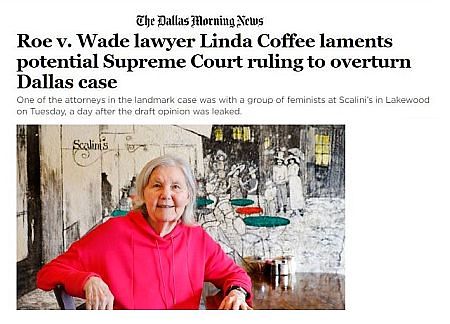
coffee-linda_dmn-headline_050422Dallas Morning News headline, May 4, 2022/photo: Tom Fox
by Paula Bosse

Great work by BeLynn Hollers of The Dallas Morning News for getting comments from Linda Coffee — the Dallas attorney who took her case, Roe v. Wade, to the U.S. Supreme Court (along with her co-counsel, Sarah Weddington) — on the leaked Supreme Court draft decision which appears to signal the overturning of her landmark court case. The story, “Roe v. Wade Lawyer Linda Coffee Laments Potential Supreme Court Ruling to Overturn Dallas Case” (Dallas Morning News, May 4, 2022) can be found here (paywall). Below is the video interview with Coffee, posted on YouTube, here.

The previous DMN interview of Linda Coffee by BeLynn Hollers — “Dallas Lawyer Linda Coffee Launched Landmark Roe vs. Wade Abortion Rights Case with a $15 Filing Fee” (Dallas Morning News, Dec. 16, 2021) — can be found here (paywall). The video interview from that article is posted on YouTube here.

And, from 1970, what may be Linda Coffee’s first-ever television interview about the Dallas case (which was just beginning its long trek to the Supreme Court) has recently been found in the WFAA Newsfilm Collection at SMU (G. William Jones Film & Video Collection, Hamon Arts Library, Southern Methodist University). She was, incredibly, only 27 years old. It is posted on YouTube here. (Read the YouTube notes for background info on this interview.)

*

I wrote about Linda Coffee’s Dallas days in the Flashback Dallas post “Linda Coffee, The Dallas Attorney Who Took Roe v. Wade to the U.S. Supreme Court.”

And, again, thank you, Linda.

*

Copyright © 2022 Paula Bosse. All Rights Reserved.

Dallas’ Aerial Police Reserve — 1921

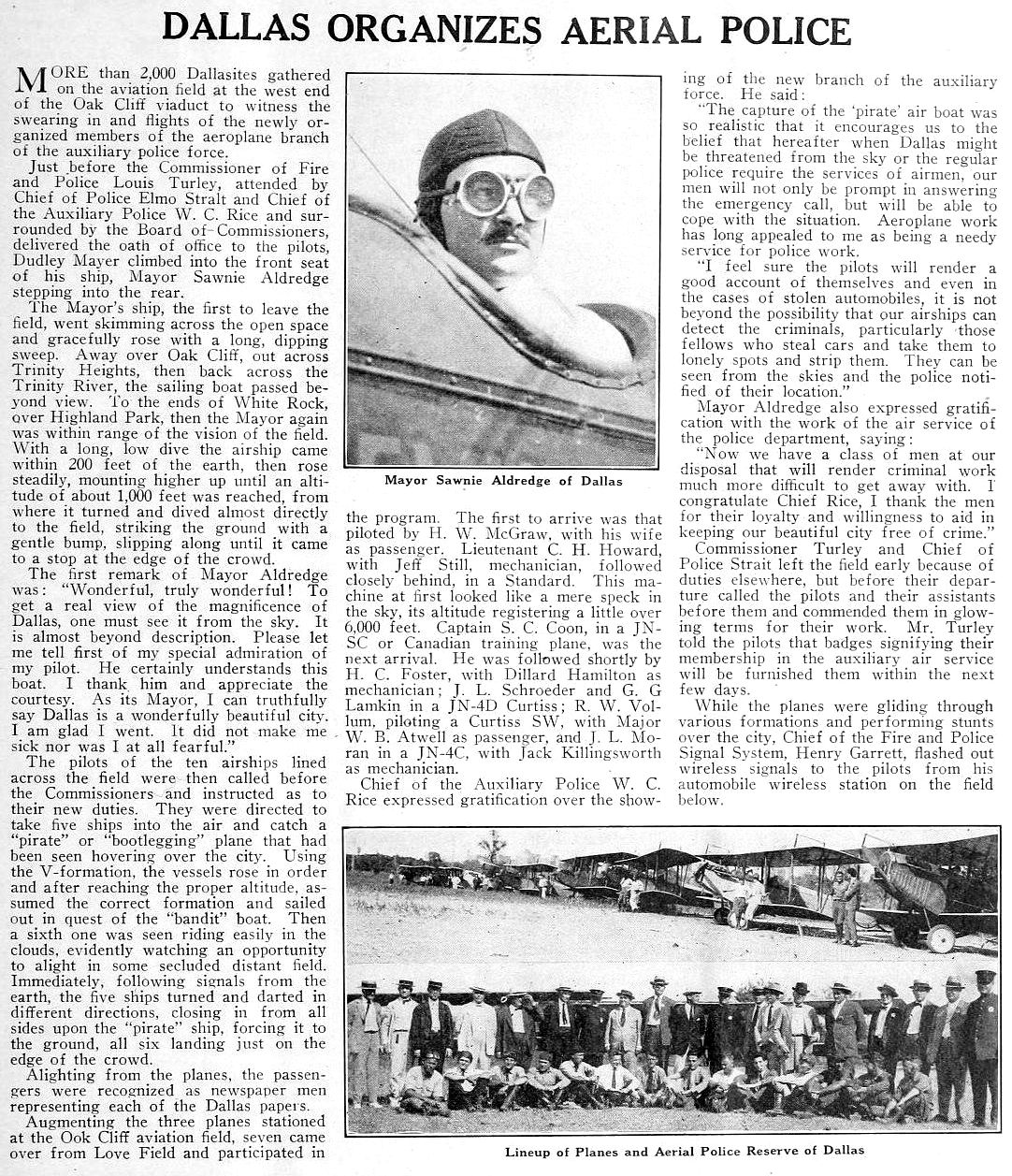
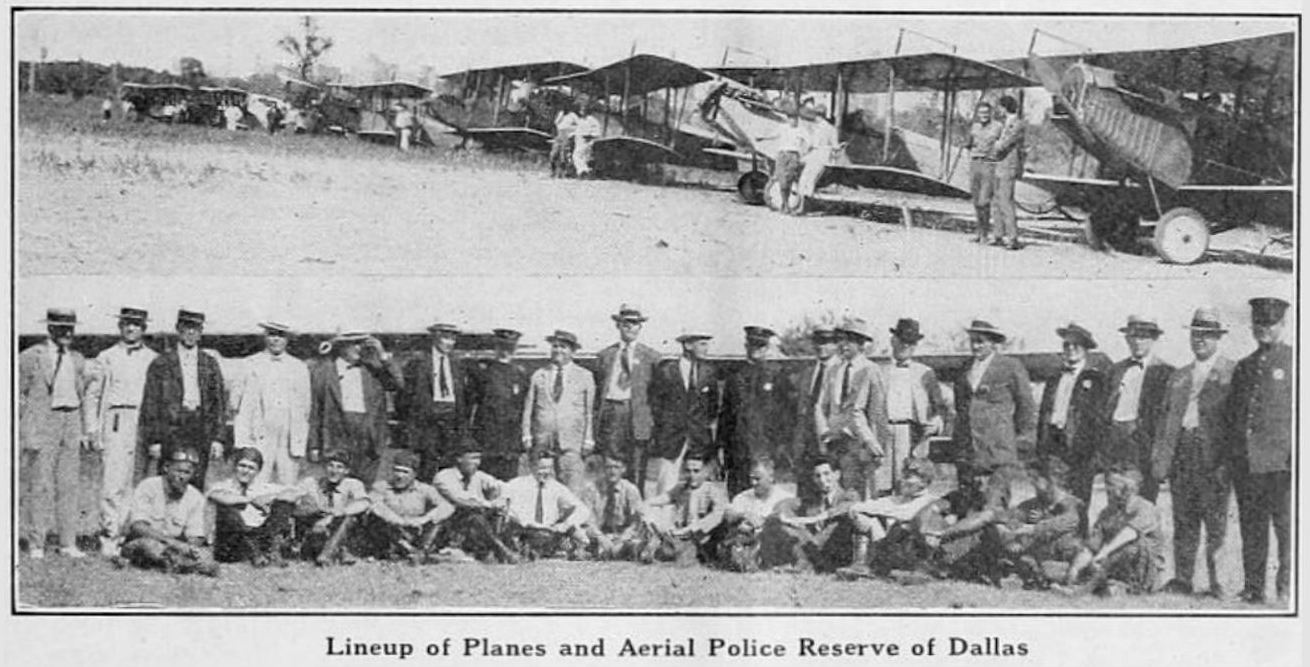
aldredge-sawnie_aerial-age-weekly_103121_aerial-police-reserve_lineup

by Paula Bosse

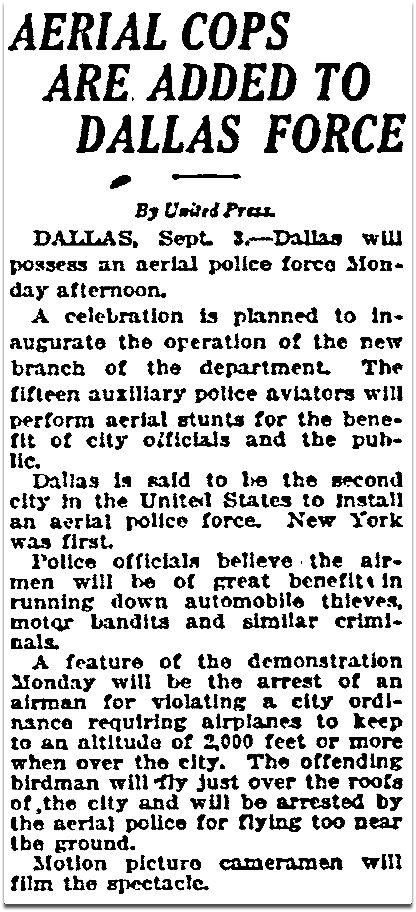
On September 5, 1921 — Labor Day — Dallas inaugurated its Aerial Police Reserve, comprised of 15 auxiliary policemen-pilots who patrolled from the skies, led by Chief W. C. Rice. Newspaper stories said that it was only the second city in the United States (after New York City) to have a force of “fly cops.” (Oklahoma was probably a little miffed at this braggadocio, since they had at least a dozen such “air police” squads around the state.) 

aerial-police_dmn_090421Dallas Morning News, Sept. 4, 1921

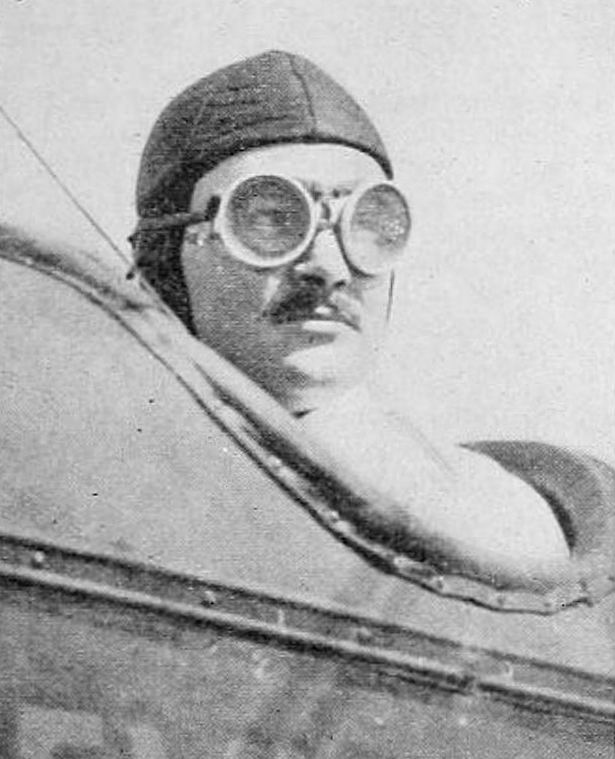
Mayor Sawnie Aldredge was a passenger in one of the “aeroplanes” which flew him around the city on that Labor Day 100 years ago, giving the relatively new mayor a birds-eye view of Dallas. Other planes performed a display of the type of aerial crime-fighting they would now be able to assist the terrestrial police with, using the wireless police communication system devised by Henry Garrett (read how that led to the origin of radio station WRR here). This was a huge step for the Dallas Police Department.

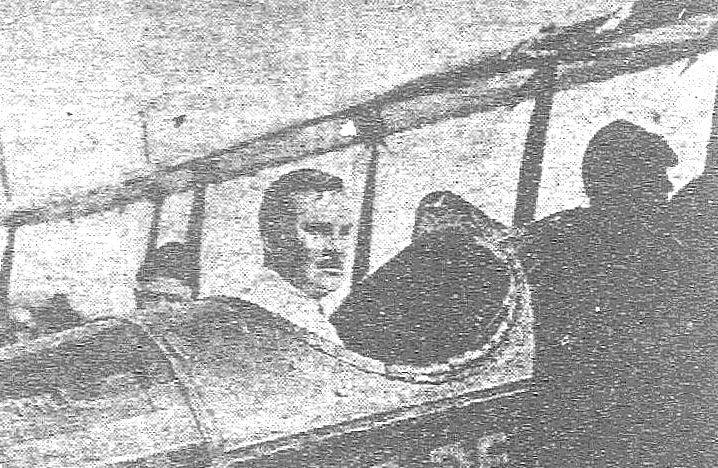
aldredge-sawnie_aerial-age-weekly_103121_detMayor Sawnie Aldredge, in mayoral goggles

Read the coverage of the day’s events in the article below (click to see a larger image).

aldredge-sawnie_aerial-age-weekly_103121_pageAerial Age Weekly, Oct. 31, 1921

Another photo of Mayor Aldredge (sadly, sans goggles) seated in his chauffeured airship at the Labor Day air-cop exhibition at the Oak Cliff Aviation Field.

aldredge-sawnie_police-auxiliary_dmn_090721_photoDMN, Sept. 7, 1921

***

Sources & Notes

Photos and articles from Aerial Age Weekly (Oct. 31, 1921), and from The Dallas Morning News.

aldredge-sawnie_aerial-age-weekly_103121_det_sm

*

Copyright © 2021 Paula Bosse. All Rights Reserved.

Linda Coffee, The Dallas Attorney Who Took Roe v. Wade to the U.S. Supreme Court

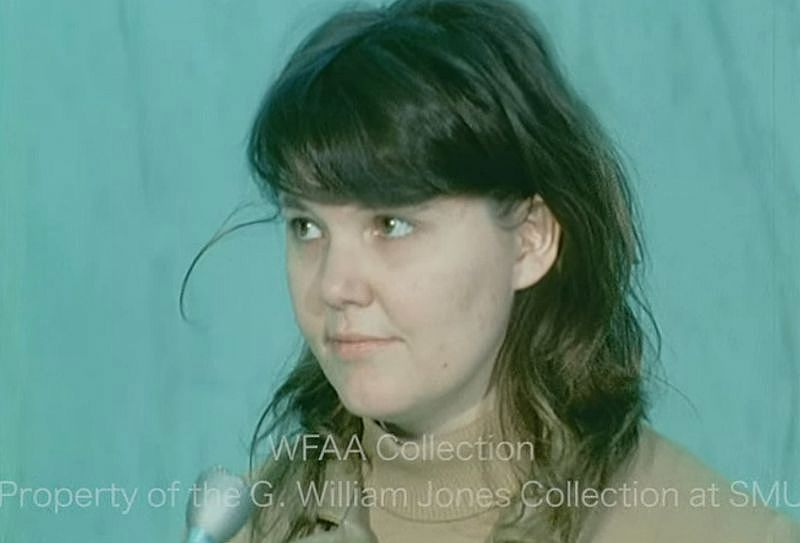
coffee-linda_WFAA_SMU_june-1970Linda Coffee, 27 years old, on her way to the Supreme Court to make history

by Paula Bosse

UPDATE 5/4/22: See a brand-new video interview with Linda Coffee — recorded yesterday in Lakewood — in which she responds to the leaked Supreme Court draft, here. Also, the companion Dallas Morning News article (paywall) is here.

**

The most important woman in the abortion rights fight is someone you’ve never heard of: LINDA COFFEE, the Dallas attorney who took the local case of Roe v. Wade from Dallas all the way to the U.S. Supreme Court in a successful battle to have the ban on abortion in Texas declared unconstitutional. She began the case when she was only 26 years old and less than two years out of UT Law School.

Coffee was the driving force of this landmark legal case from the very beginning but preferred to leave the limelight to her co-counsel, Sarah Weddington, who joined the team a short time after the case was underway. (Weddington, an Austin lawyer, was *also* only in her 20s!)

The image above is a screenshot of a 1970 television interview with Coffee in news footage from the WFAA archive, a treasure trove of historical film clips housed at SMU as part of the Hamon Arts Library’s G. William Jones Film & Video Collection (the WFAA archive is viewable on YouTube here, with additions being made all the time).

This rare, recently unearthed Channel 8 interview from June, 1970 has Coffee discussing the ramifications of her first win in the long legal journey which would ultimately end in victory in the U.S. Supreme Court. It is almost certainly her first TV interview. (Read the notes of the YouTube clip for the full description.)

*

My mother was involved in all sorts of women’s political groups in Dallas in the 1970s (and beyond). Meetings of various progressive political organizations and committees were often held at the First Unitarian Church on Preston Road in University Park (yes, University Park was an unlikely hotbed of activism!), and my mother knew Linda Coffee through these women’s groups. I had heard Linda’s name over the years but didn’t really know much about her until I came across this short Channel 8 interview. I’ve been working in these archives for SMU and wasn’t able to identify this unidentified woman but felt sure my mother would know who she was. I was talking to my mother on the phone trying to describe her: “I’m not sure who she is. She appears to be a lawyer, but she just looks too young and too… disheveled to be a lawyer. A little scroungy.” “Oh!” my mother said instantly, “Linda Coffee.” And she was right! She hadn’t even seen the footage.

I immediately loved Linda from my introduction to her in this footage. She’s earnest, confident, smart, pixie-ish, and she looks a little like a “real-person” version of Linda Ronstadt. I wonder if she ever imagined she would be responsible for one of the most famous legal cases of the 20th century?

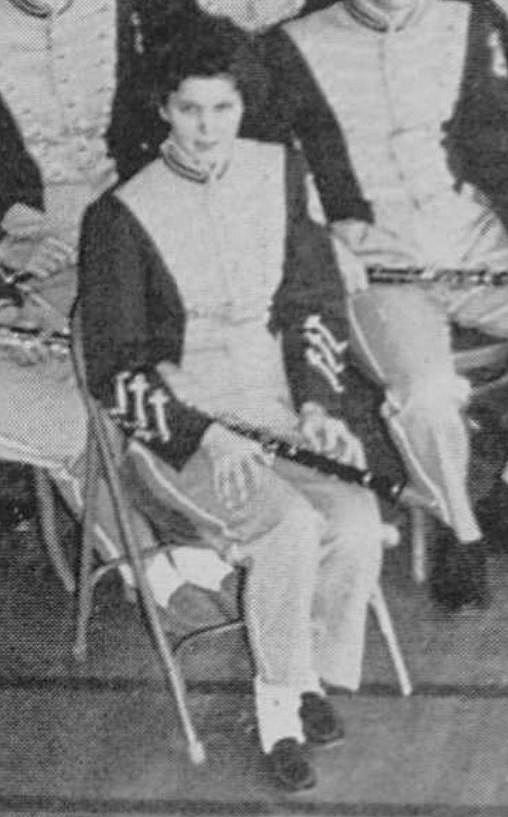
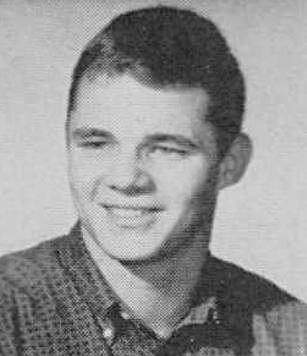
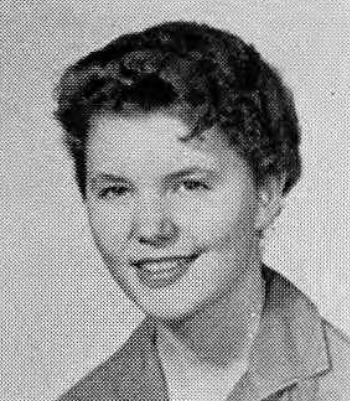
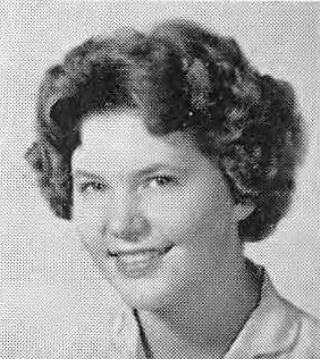
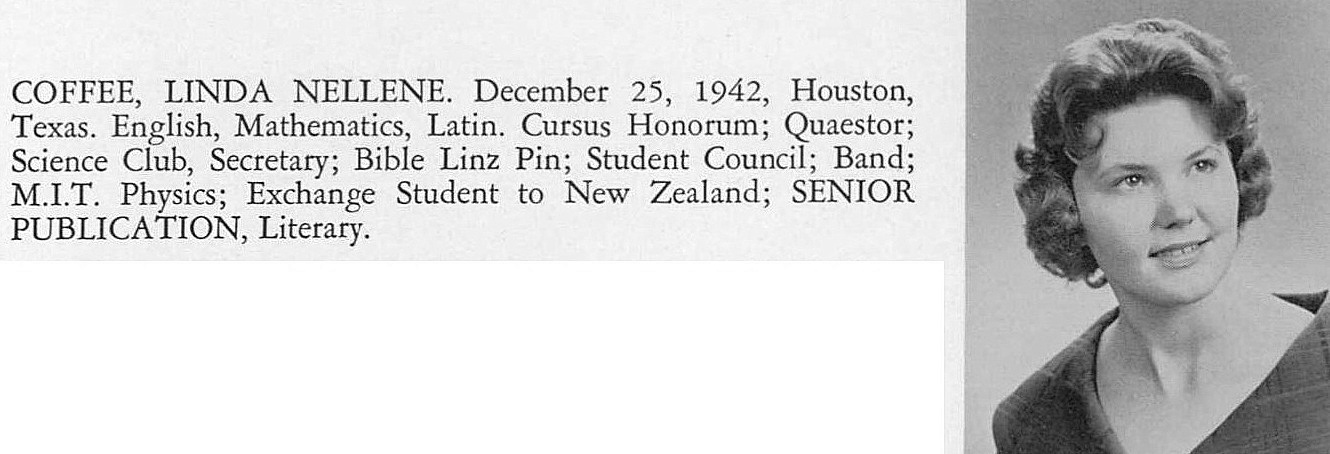
I decided to look into her background in Dallas, and I was pretty surprised to see that she grew up one street over from where I grew up (she lived in the 5700  block of Anita) and went to my East Dallas alma mater, Woodrow Wilson High School (she and musician Steve Miller were there at the same time, Class of 1961 — she was in the band, he was on the football team — wonder if they ever met?).

linda_1961_band-detLinda Coffee, Woodrow band, 1961

miller-steve_WWHS_1961_srSteve Miller, senior photo, 1961

While we’re at it, here a few more photos of Linda Coffee in high school.

coffee_1959_high-school_WWHS-1959-yrbk_p92_sophLinda Coffee, Woodrow sophomore, 1959

coffee_1960_high-school_WWHS-1960-yrbk_p85_jrLinda Coffee, Woodrow junior, 1960

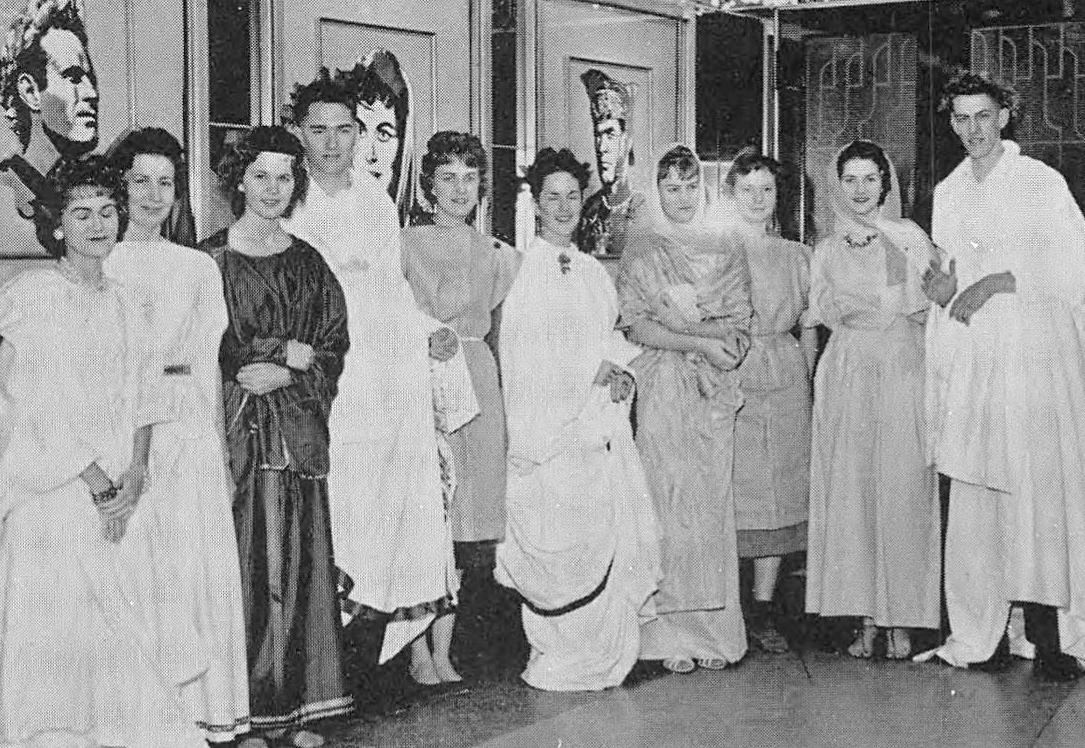
coffee_1960_high-school_latin-club_WWHS-1960-yrbk_jrLinda (dark robe) with the Latin club, attending “Ben Hur” screening downtown, 1960

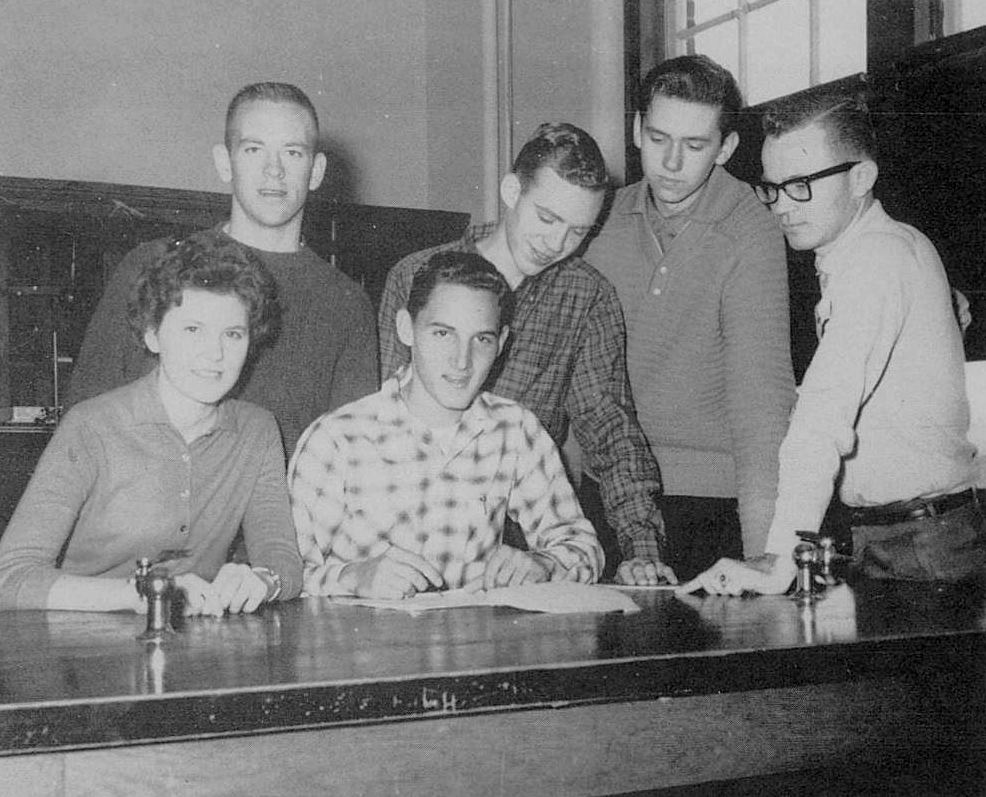
coffee_1961_high-school_science-club_WWHS-1961-yrbk_srLinda and other officers of the Woodrow Science Club, 1961

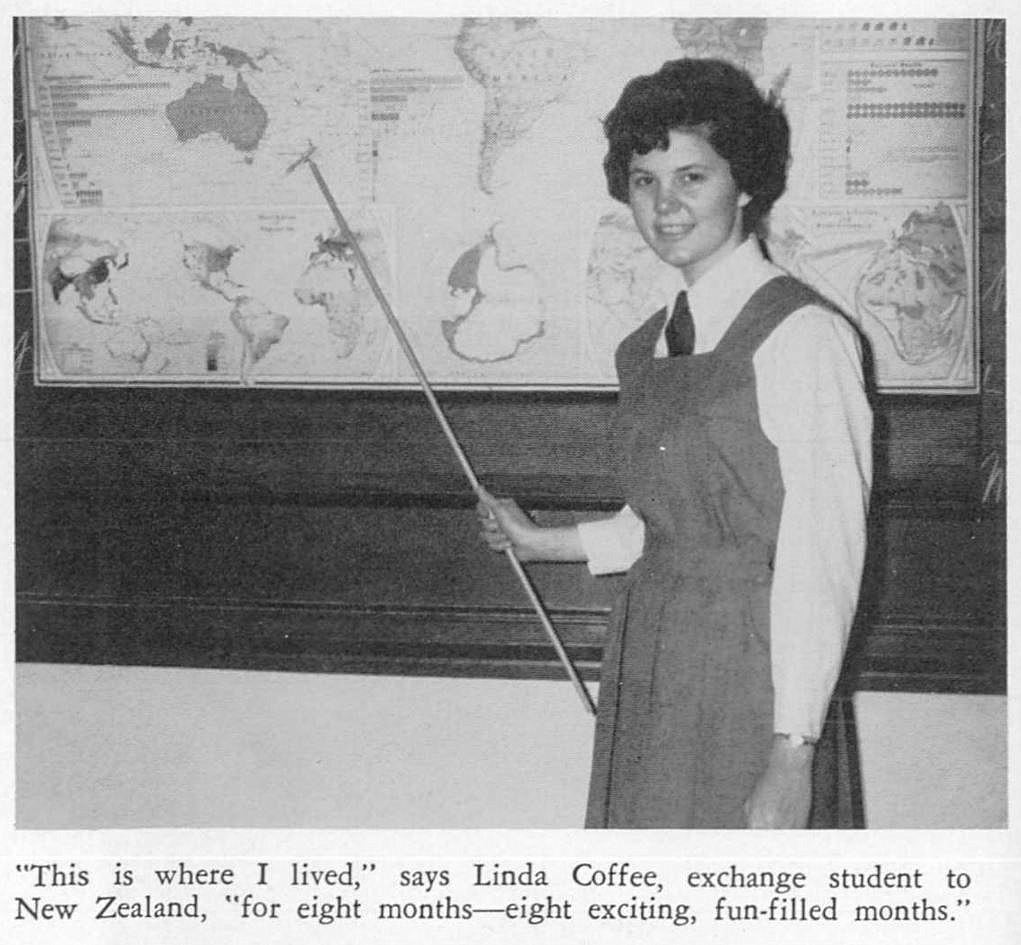
coffee_1961_high-school_new-zealand_WWHS-1961-yrbk_p268-det_srLinda pointing to New Zealand, 1961

coffee_1961_high-school_sr-photo-bio_WWHS-1961-yrbk_p57_srLinda Coffee, Woodrow Wilson High School, senior photo, 1961

She apparently excelled at everything and had a wide range of interests.

After graduating from Woodrow, she went to RIce University where she majored in German, then went on to law school at the University of Texas where she passed the Texas bar exam with the second highest score in the class. After becoming a lawyer, she was a law clerk in Dallas for District Judge Sarah T. Hughes (she and another female clerk were profiled in a 1968 Dallas Morning News article which carried the unfortunate headline, “The Law Clerks Are Girls”). It wasn’t long after this that she began working on a case to challenge the constitutionality of a vague Texas law which banned abortions. In January, 1973, Linda Coffee and co-counsel Sarah Weddington won their case in the U.S. Supreme Court. Linda had just turned 30.

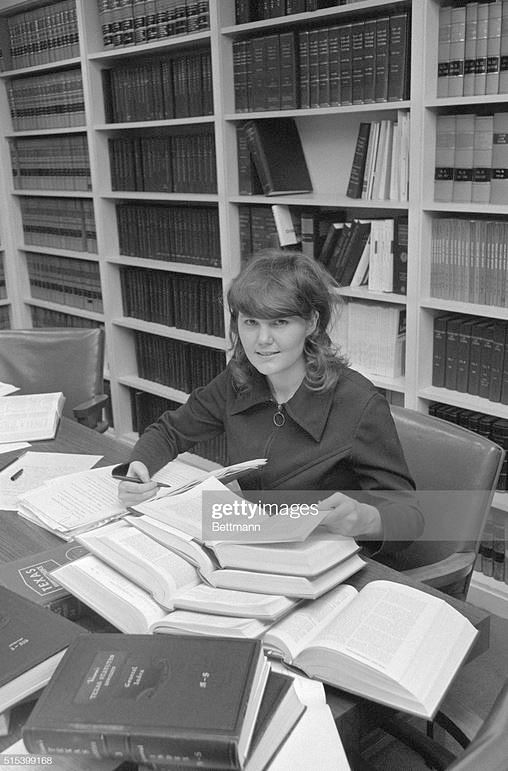
linda-coffee_getty-images
Linda Coffee, 1972, via Getty Images

weddington-sarah_1972Sarah Weddington, 1972, via Glamour magazine

*

I would highly recommend (and I mean HIGHLY RECOMMEND) the Vanity Fair profile of Linda Coffee written by Joshua Prager titled “Roe v. Wade’s Secret Heroine Tells Her Story.” Reading this when I knew virtually nothing about Linda made me want to know more about her and made me want to share her story with as many people as possible. How is it that this lawyer who has had such a massively important impact on modern life (especially women’s lives) isn’t a household name? Prager’s article tells you why. Joshua Prager has expanded this article to a full book concerning the Roe case which will be published in a couple of weeks: The Family Roe, An American Story. With the current news of the newly implemented controversial legislation by the State of Texas, this book could not possibly be more timely.

*

Thank you, Linda. Thank you, Sarah.

**

UPDATE, Dec. 16, 2021: Watch the interview with Linda Coffee by The Dallas Morning News, conducted on Dec. 9, 2021 at Linda’s home in Mineola. Read the companion DMN article here (article may require a subscription to view).

**

Update, Dec. 17, 2021: Watch another newly unearthed WFAA-Channel 8 clip of Linda Coffee being interviewed during the initial Supreme Court appearance of Roe v. Wade in December, 1971 (begins at the 13:44 mark):


coffee-linda_supreme-court_WFAA_SMU_dec-1971

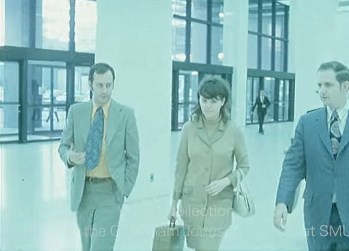
Update, June 25, 2022: Another short snippet (silent) of Linda Coffee has popped up in the WFAA archives. She is seen walking through the Dallas County Courthouse on Jan. 20, 1972, talking to WFAA reporter Phil Reynolds (she was working as an attorney on a case unrelated to Roe v. Wade). A screenshot is below — the pertinent footage begins at 21:21 here.

coffee-linda_jan-20-1972_WFAA_jones-film_SMUJan. 20, 1972
***

Sources & Notes

Top image is a screenshot of a June, 1970 interview of Linda Coffee conducted by Channel 8 reporter Phil Reynolds; this interview can be seen on YouTube here (from the WFAA archive, G. William Jones Film & Video Collection, Hamon Arts Library, Southern Methodist University). Bottom image is from a WFAA clip from December, 1971 here.

All high school-era photos of Linda Coffee are from various editions of The Crusader, the yearbook of Woodrow Wilson High School.

coffee-linda_WFAA_SMU_june-1970_sm

*

Copyright © 2021 Paula Bosse. All Rights Reserved.

Lone Wolf Gonzaullas: Texas Ranger, Dallas Resident

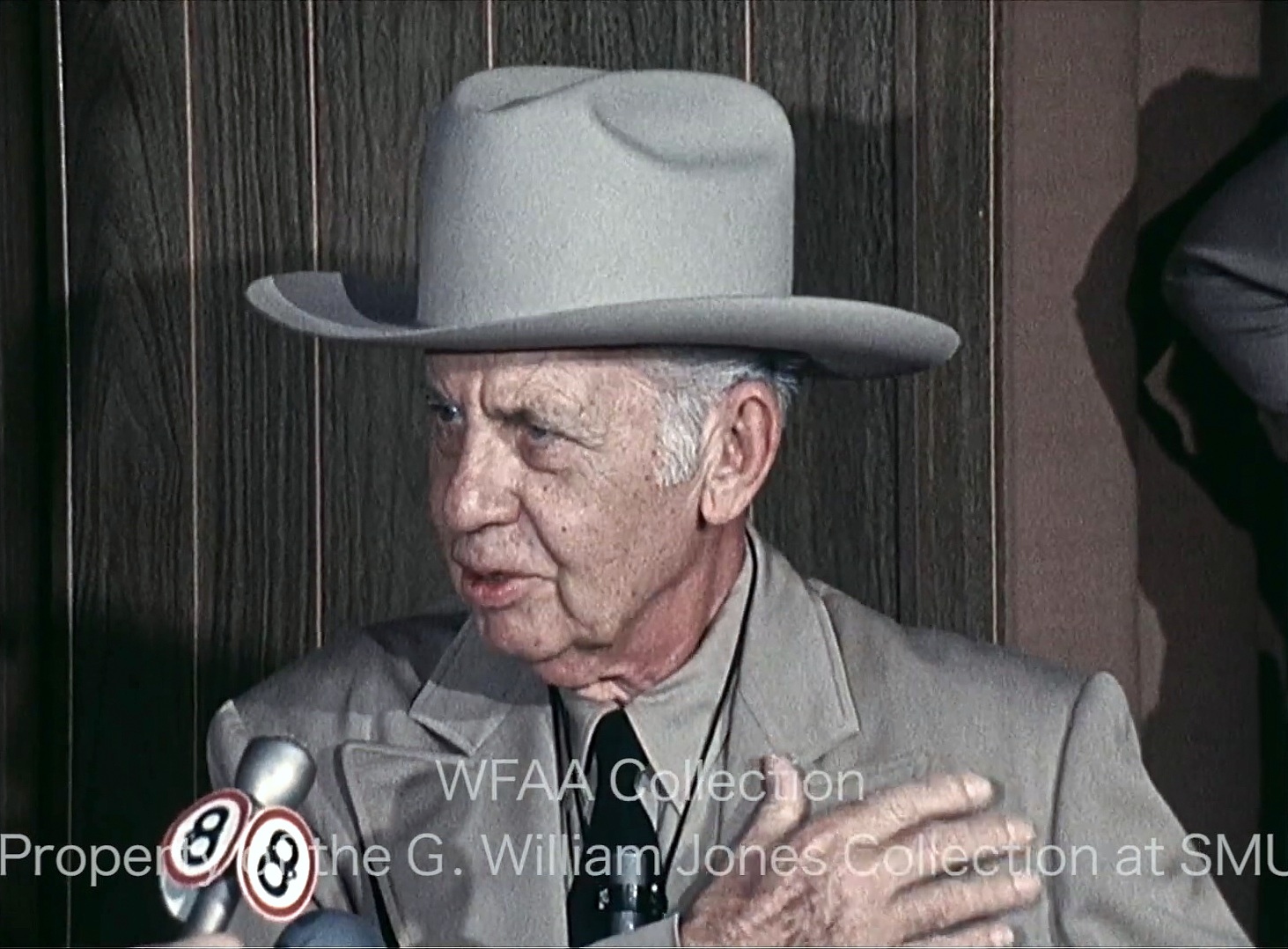
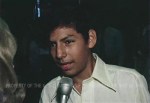
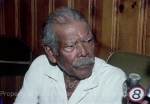
gonzaullas_march-1970_WFAA_jones-collection_SMU-aWhere the bullet grazed him… (1970)

by Paula Bosse

I had never seen footage of legendary Texas Ranger Manuel T. “Lone Wolf” Gonzaullas (1891-1977) until now. There is a short clip of him recounting a run-in with a man who shot him in WFAA-Channel 8 footage from March, 1970 (filmed at the Southwest Historical Wax Museum in Fair Park). Gonzaullas was a long-time resident of Dallas, from 1923 until his death in 1977, living for much of that time in Lakewood, in the 6900 block of Westlake.

*

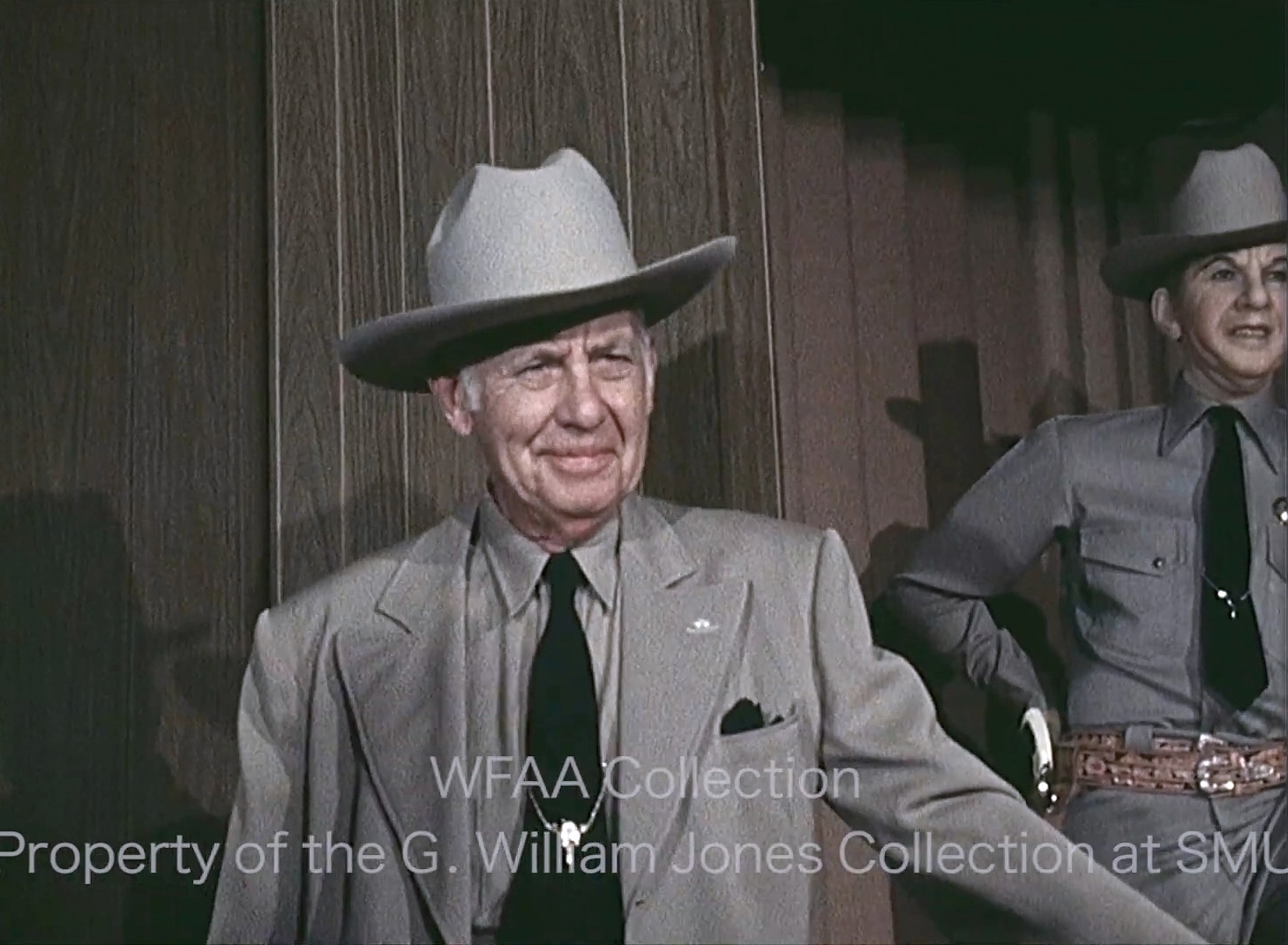
Here are a couple of screenshots from the news footage. In the first he is seen standing in front of his wax figure.

gonzaullas_march-1970_WFAA_jones-collection_SMU-b

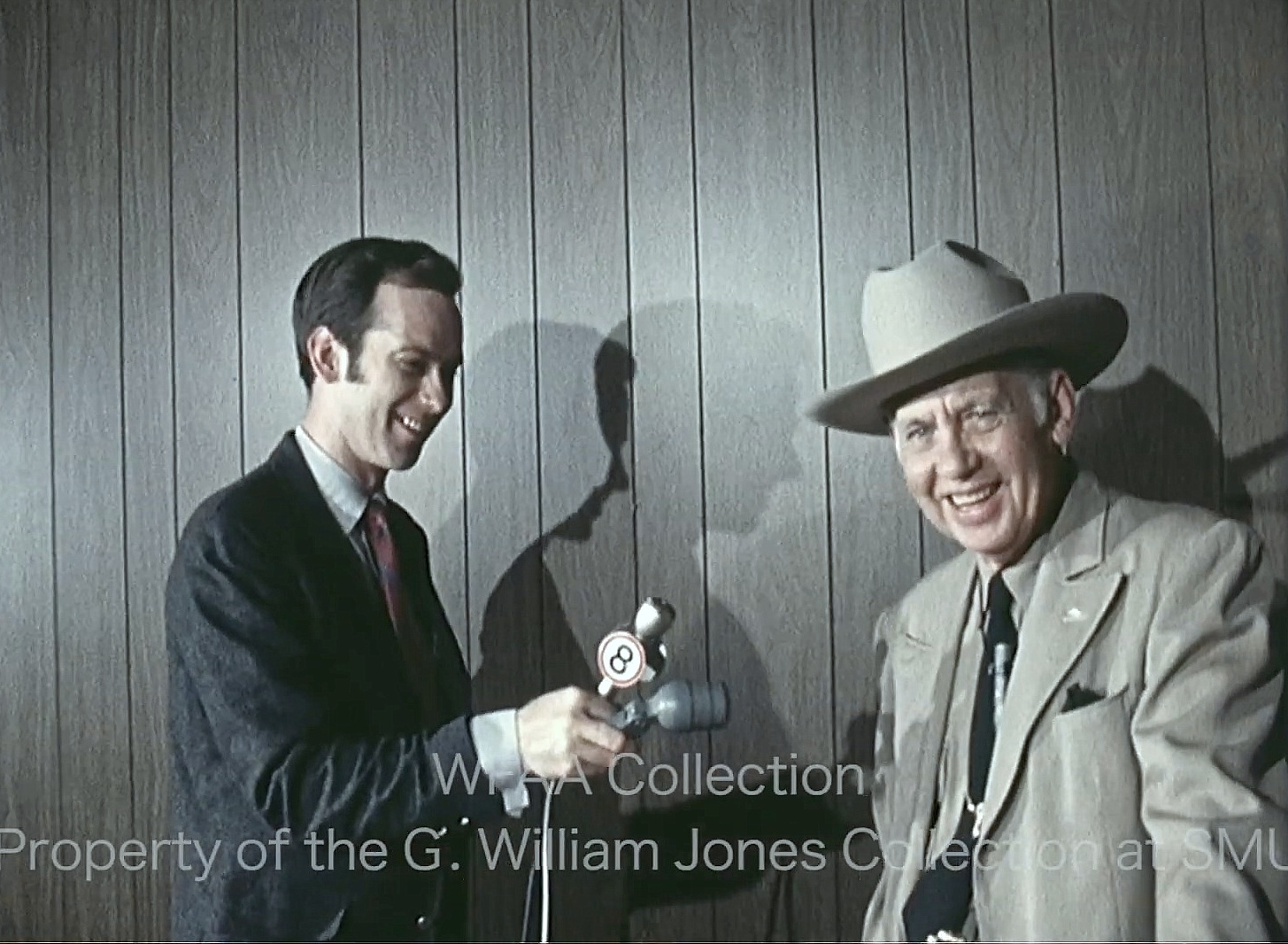
And in the second, he’s joking with WFAA-Channel 8 News reporter Phil Reynolds, who seems a little star-struck.

gonzaullas_march-1970_WFAA_jones-collection_SMU-c

*

Below are a few random Lone Wolf-related photos and articles. (There are tons of histories of Gonzaullas and the Texas Rangers out there — please hunt them down for specifics on his long and respected career in law enforcement. These are just a few things that I found interesting, some of which are of no historical importance!)

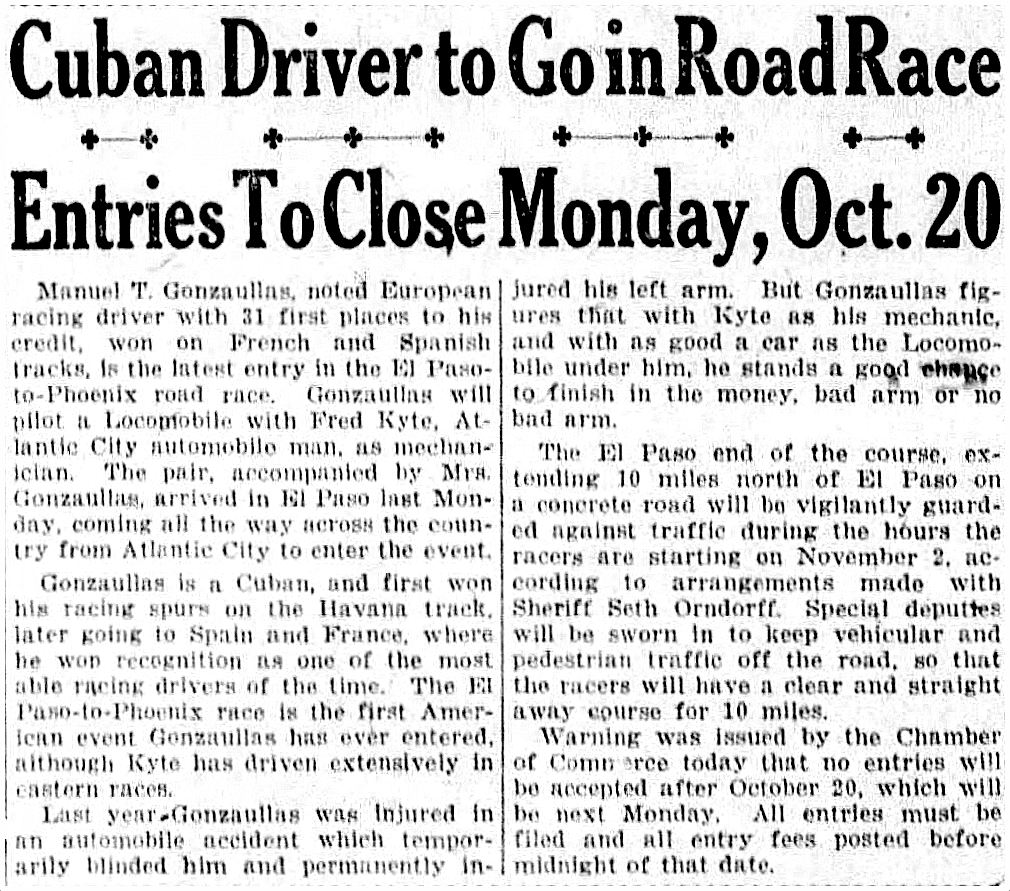
The earliest newspaper mention of Gonzaullas I could find was about his participation in an El Paso-to-Phoenix automobile road race in 1919. Biographers have noted that the colorful Gonzaullas sometimes embellished the truth, especially about his early days, and it’s interesting to note that in coverage of this race, Gonzaullas was described as being a “noted European racing driver” who had previously won 32 first-place finishes and 92 second-place finishes (!). The car he had entered in the race was a Locomobile, which he was reported to have driven to El Paso from Atlantic City. He was also identified as being “a Cuban […] who first won his spurs on the Havana track” (his birthplace is usually said to be Spain, where he was born to naturalized American citizens who were visiting that country at the time). He told the papers he had been left with temporary blindness and a permanently injured left arm in a previous auto accident — and another injury was about to come: he didn’t finish the El Paso-to-Phoenix race because his car suffered two debilitating mishaps, including one in which he was thrown from the car “and a blood vessel in his stomach was broken.” He was also said to be accompanied by “Mrs. Gonzaullas,” despite the fact that he did not marry Laura Scherer until April, 1920.

gonzaullas_road-race_el-paso-times_101619_cubanEl Paso Times, Oct. 16, 1919 (click for larger image)

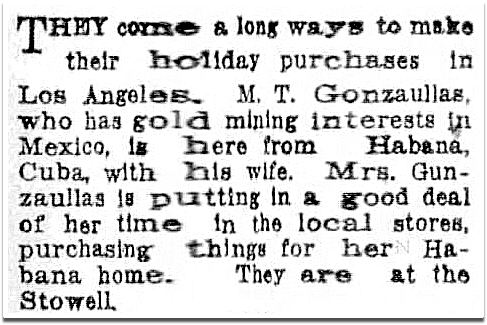
In December, 1919, Los Angeles newspapers reported that Mr. Gonzaullas, “who has gold mining interests in Mexico,” was in town, visiting from Havana. Accompanying him was “Mrs. Gonzaullas,” who was indulging in a shopping excursion. They were staying at the Hotel Stowell.

gonzaullas_los-angeles-evening-express_120319_cuba_mrs-gonzaullasLos Angeles Evening Express, Dec. 3, 1919

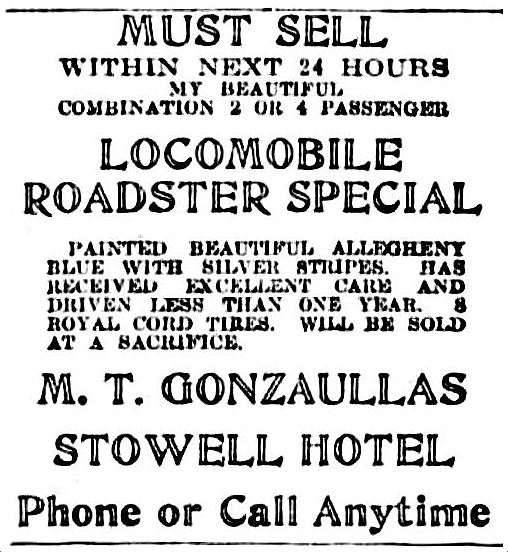
While at the Stowell (and about to return to Texas), Gonzaullas put a for-sale classified in the Los Angeles paper, saying that he “must sell within next 24 hours my beautiful combination 2 or 4 passenger Locomobile Roadster Special.” The Cuban’s racing days would seem to be ending.

gonzaullas_locomobile_los-angeles-evening-express_050820Los Angeles Evening Express, May 8, 1920

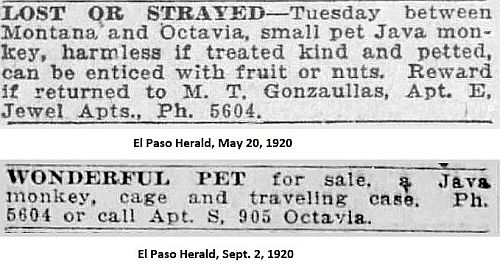
Less than two weeks later — and a month after finally marrying Laura in California — the newly wed Gonzaullas was back in El Paso, looking for a “lost or strayed” pet monkey. It appears the monkey was found (…or replaced…), but in September the Gonzaullases were selling their little “Java monkey,” along with its cage and traveling case. M. T. became “Lone Wolf” after he joined the Texas Rangers in 1920. Perhaps a monkey was not considered an appropriate pet for a lawman. (This is my favorite weird and obscure “Lone Wolf” tidbit.)

gonzaullas_el-paso-herald_1920-ads_monkey

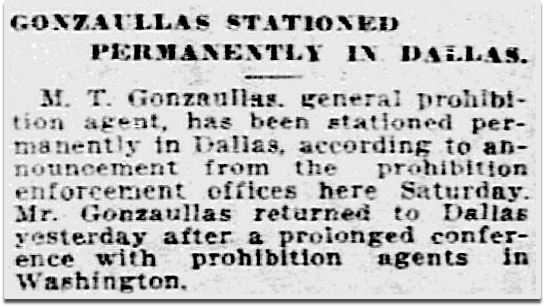
Gonzaullas was in and out of the Rangers throughout his career. In 1923, he moved to Dallas where he was stationed as a permanent prohibition agent (he busted a lot of booze-loving Dallasites).

gonzaullas_dmn_022523Dallas Morning News, Feb. 25, 1923

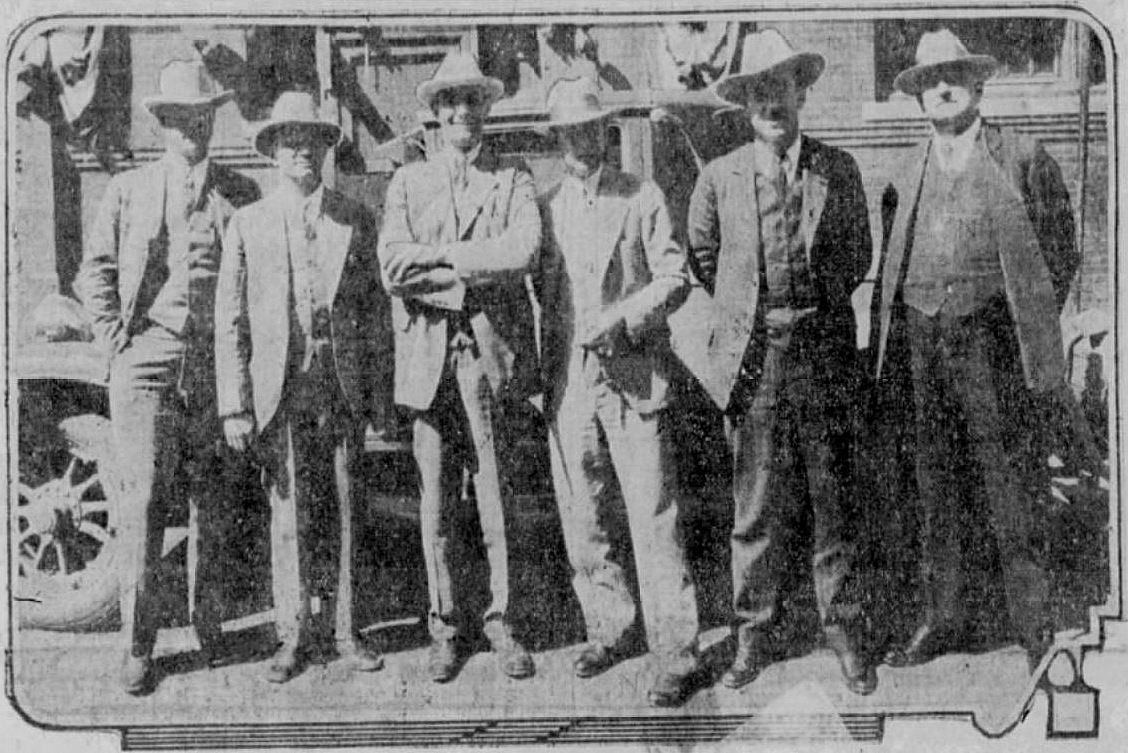
In 1929, Gonzaullas was a sergeant in the Texas Rangers, and the photo below captured the first time that the men of Company B had all been together at the same time in the same place — in Fort Worth. The caption for this photo: “Texas’ Guardians, United After 10 Years. Capt. Tom R. Hickman, Gainesville, brought Ranger Company B together Friday for the first time in more than 10 years. Here they are just before visiting the Southwestern Exposition and Fat Stock Show. Left to right, W. H. Kirby, Abilene; H. B. Purvis, Lufkin; Captain Hickman; Sergt. M. T. Gonzaullas, Dallas; Dott E. Smith, Abilene; and James P. Huddleston, Dallas.” (Fort Worth Record-Telegram, March 16, 1929) (Read the full story, “Ranger Company B Rides In to Stock Show” here.)

company-b_fw-record-telegram_031629Company B in Fort Worth, FW Record-Telegram, Mar. 16, 1929

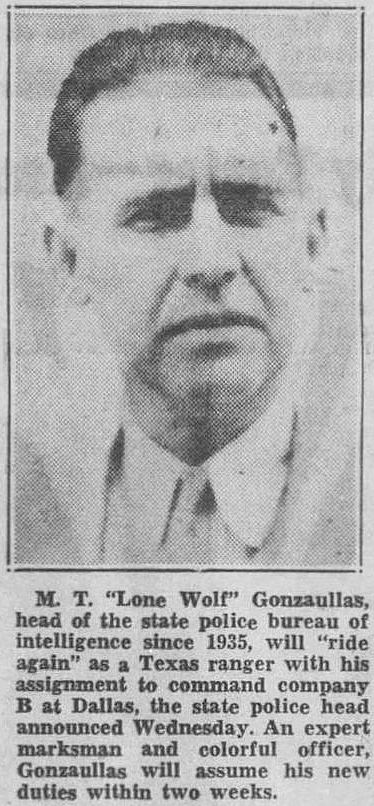
In 1933, the Texas Rangers were dissolved, later to re-emerge as part of the newly formed Department of Public Safety in 1935. Gonzaullas served for several years as the head of the DPS’s Bureau of Intelligence in Austin, a Texas version of the FBI. In 1940, he stepped down from that position to rejoin the Rangers. He took over command of his old Company B, which was stationed in Fair Park, and remained in that position for 11 years until his retirement.

gonzaullas_austin-statesman_021440_company-b_photoAustin Statesman, Feb. 14, 1940

gonzaullas_austin-american_021540_company-bAustin American, Feb. 15, 1940

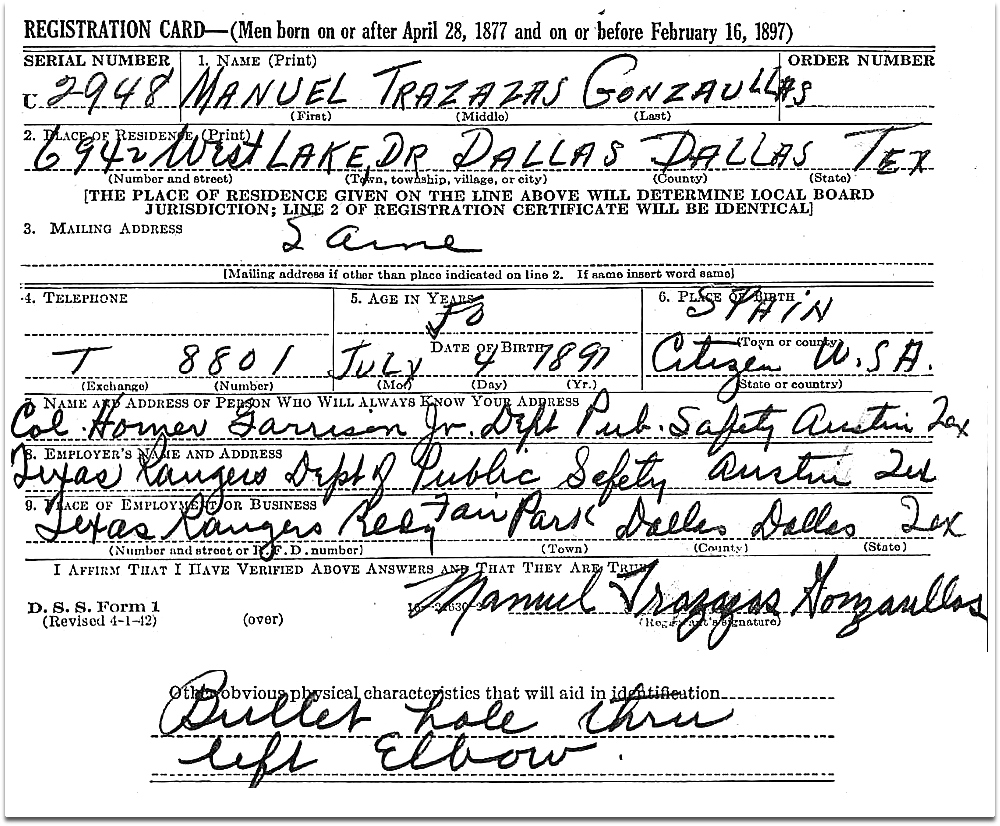
In 1942, at the age of 50, Gonzaullas filled out a registration card during World War II, as all men were required to do. (A distinguishing physical characteristic of a “bullet hole thru left elbow” was noted.) 

gonzaullas_ww2-registration-card-1942

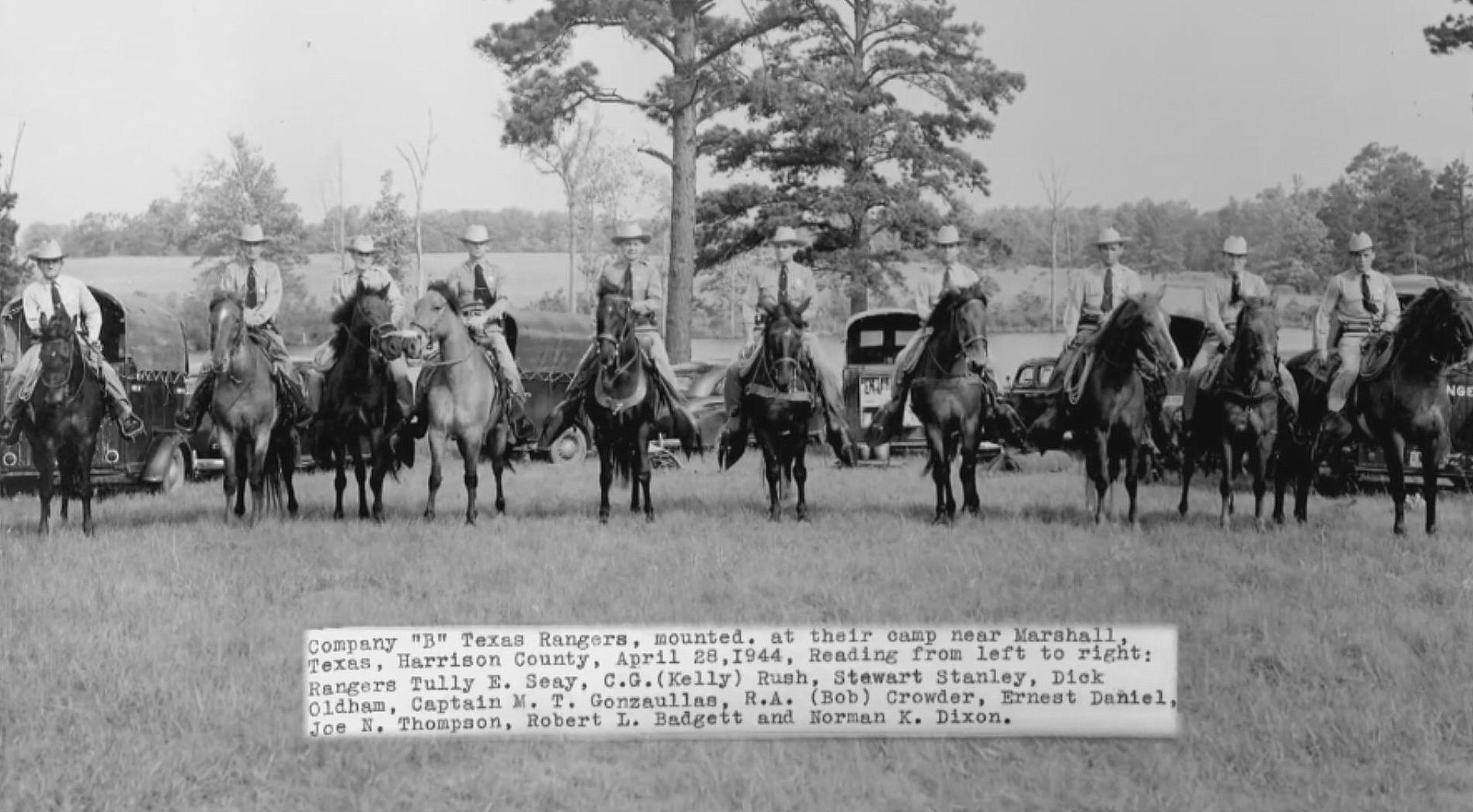
Below, a photo from 1944 showing mounted Texas Rangers of Company B in Marshall, Texas: (left to right) Tulley E. Seay, C. G. (Kelly) Rush, Stewart Stanley, Dick Oldham, Capt. M. T. Gonzaullas, R. A. (Bob) Crowder, Ernest Daniel, Joe N. Thompson, Robert L. Badgett, and Norman K. Dixon.

gonzaullas_texas-rangers_company-Bvia findagrave.com (same photo without text is at Portal to Texas History)

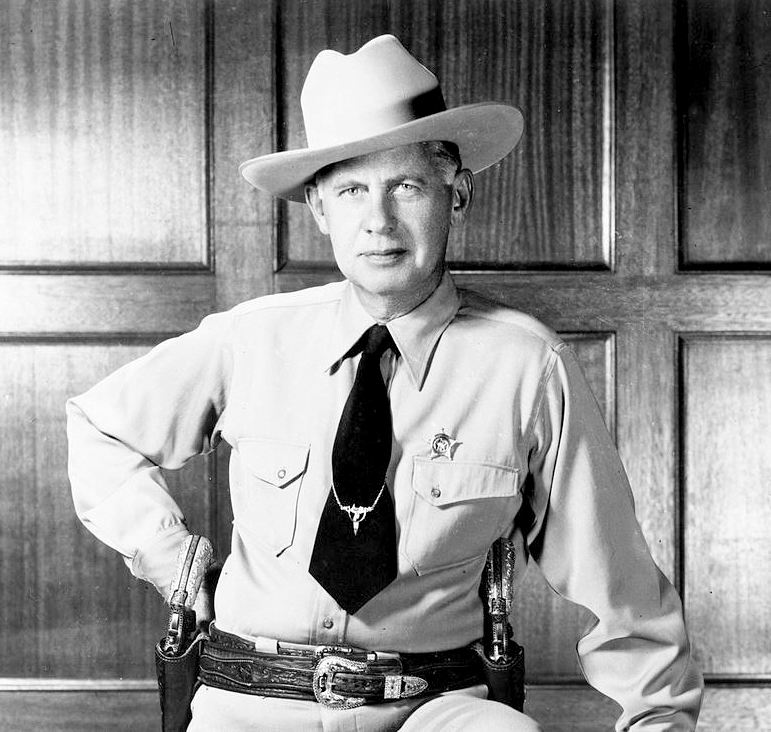
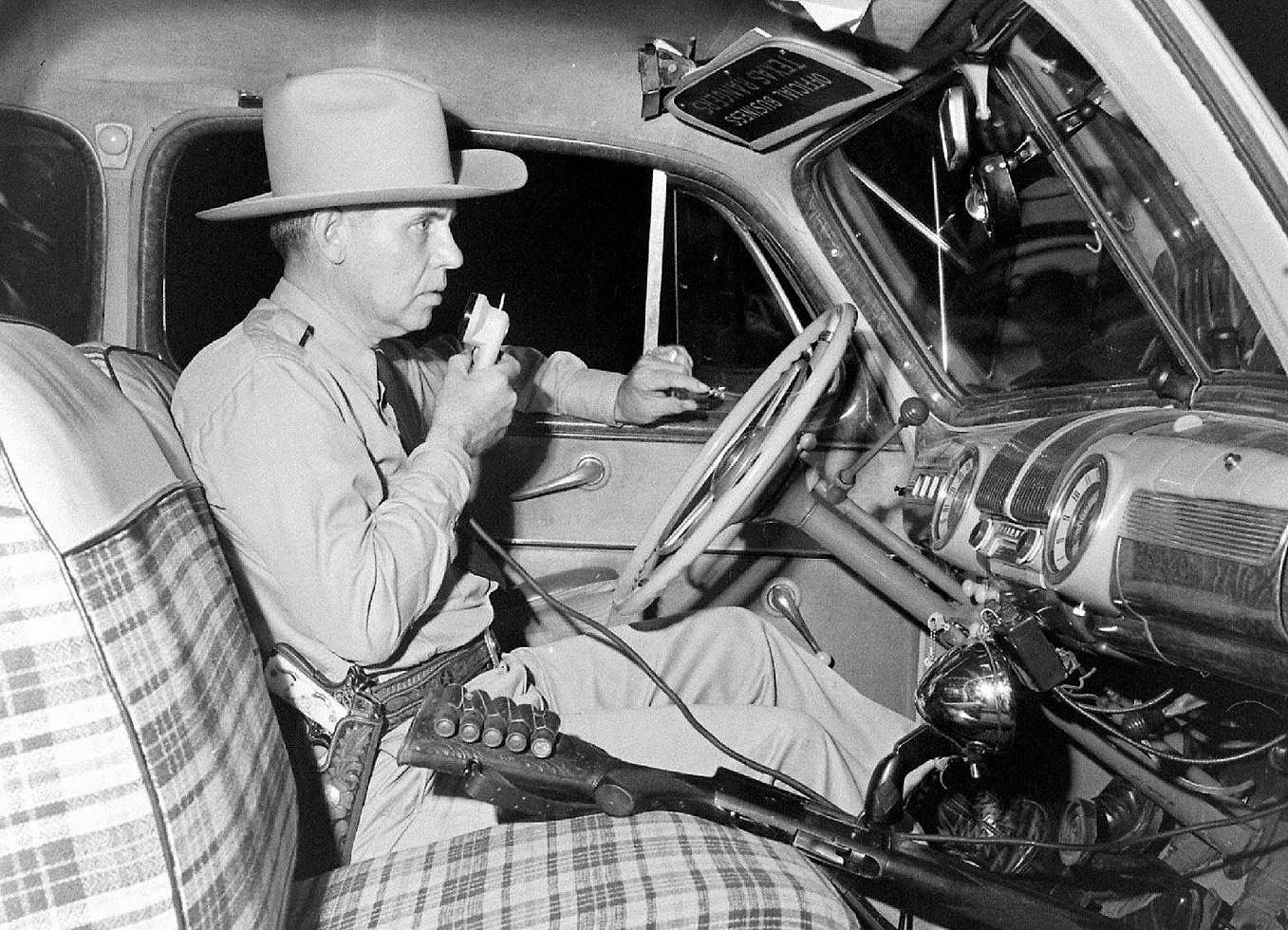
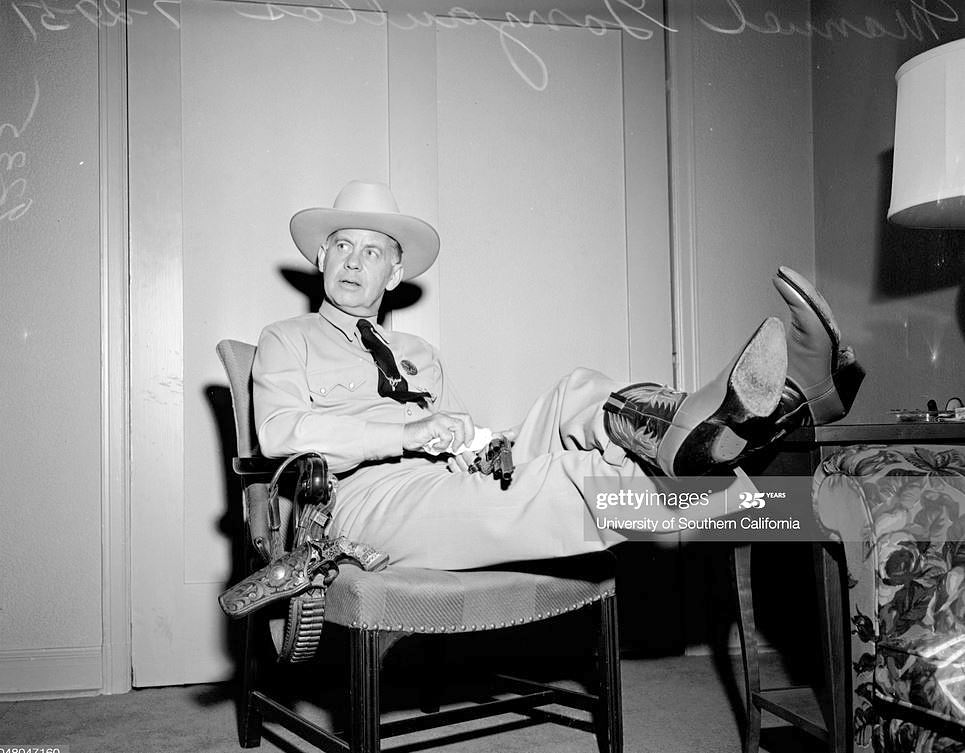
Capt. Manuel Trazazas Gonzaullas retired in July, 1951 and traveled between Dallas and Hollywood where he worked as a consultant on Western TV shows and films. He died in Dallas on Feb. 13, 1977 at the age of 85.

gonzaullas_manuel-t-lone-wolf

gonzaullas_find-a-gravevia findagrave.com

gonzaullas_getty-images_july-1951via Getty Images

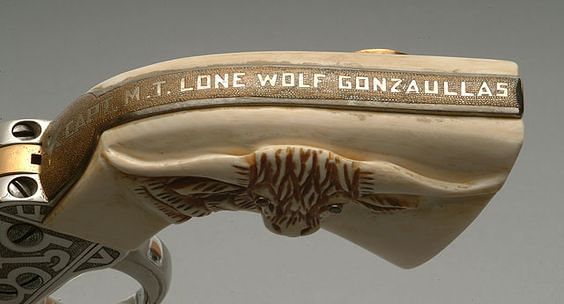
gonazaullas_pistol-grip

***

Sources & Notes

The first three images are screenshots of WFAA-Channel 8 news film shot in March, 1970, from the WFAA Collection, G. William Jones Collection, Hamon Arts Library, Southern Methodist University; the footage can be viewed on YouTube here

A brief biography of M. T. Gonzaullas can be found at the Handbook of Texas, here.

There were several comprehensive and entertaining articles and interviews which appeared around the country about Gonezaullas’ career when he retired. If you have access to newspaper archives, I would recommend the article “The ‘Lone Wolf’ Lays Down His Guns” by Don Hinga which appeared in The St. Louis Post-Dispatch on July 22, 1951.

gonzaullas_march-1970_WFAA_jones-collection_SMU-a_sm

*

Copyright © 2020 Paula Bosse. All Rights Reserved.

The Ambush of Bonnie and Clyde — 85th Anniversary

la-pistolera-de-texas_DHS-instagram

by Paula Bosse

Today is the 85th anniversary of the 1934 killing of Depression-era outlaws Bonnie Parker and Clyde Barrow, two of Dallas’ most notorious former residents. I’ve written several Bonnie and Clyde-related posts over the years, including the following:

As other Bonnie and Clyde posts are added, they can all be found here.

***

Sources & Notes

Top image is the lurid front cover of a rare 1935 Mexican publication about Bonnie Parker and Clyde Barrow titled “La Pistolera de Texas” — it is from the collection of the Dallas Historical Society and was featured on their Instagram feed (more info is here).

*

Copyright © 2019 Paula Bosse. All Rights Reserved.

The JFK Assassination and Television Firsts — 1963

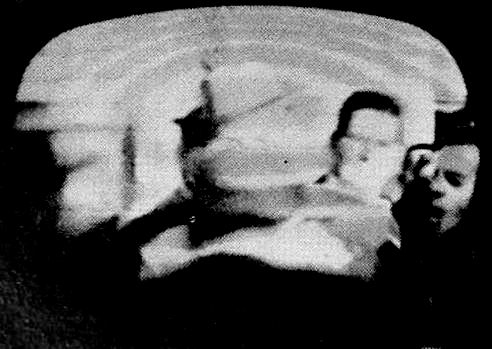
JFK_ruby-oswald_broadcasting-mag_120263_nbc-screenshot
Ruby shooting Oswald on live TV

by Paula Bosse

The assassination of President John F. Kennedy was not only one of the most sobering moments in American history, it was also a turning point for broadcast journalism, particularly in the way television covers breaking news.

The Kennedy assassination and the later captured-live-on-television shooting of Lee Harvey Oswald by Jack Ruby put broadcast journalists to the test as never before. News coverage was a solid days-long block — with NBC devoting almost 72 straight hours to the assassination and its aftermath. The immediacy of live television and the ability to learn of breaking-at-this-minute news was something that had never been experienced by Americans before — and something which pushed radio and television news reporting to new heights. It was reported that CBS alone used 80 newsmen to cover the story. The Nielsen ratings estimated that an unbelievable 93% of American households with televisions were tuned in to watch live coverage of the President’s funeral procession.
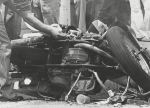
Perhaps the grisliest “first” of this new era of TV news was that millions of Americans watched a murder happen live as they watched from their living rooms: when Jack Ruby lunged from the phalanx of reporters gathered in the parking lot beneath the Municipal Building to shoot Lee Harvey Oswald as he was walking to an armored vehicle to be transported to the county jail, millions witnessed the shooting as it happened, stunned. NBC was the lone network to have broadcast live coverage of this unforgettable moment of 20th-century American history. The other networks followed soon after with recorded footage, but NBC got the scoop.

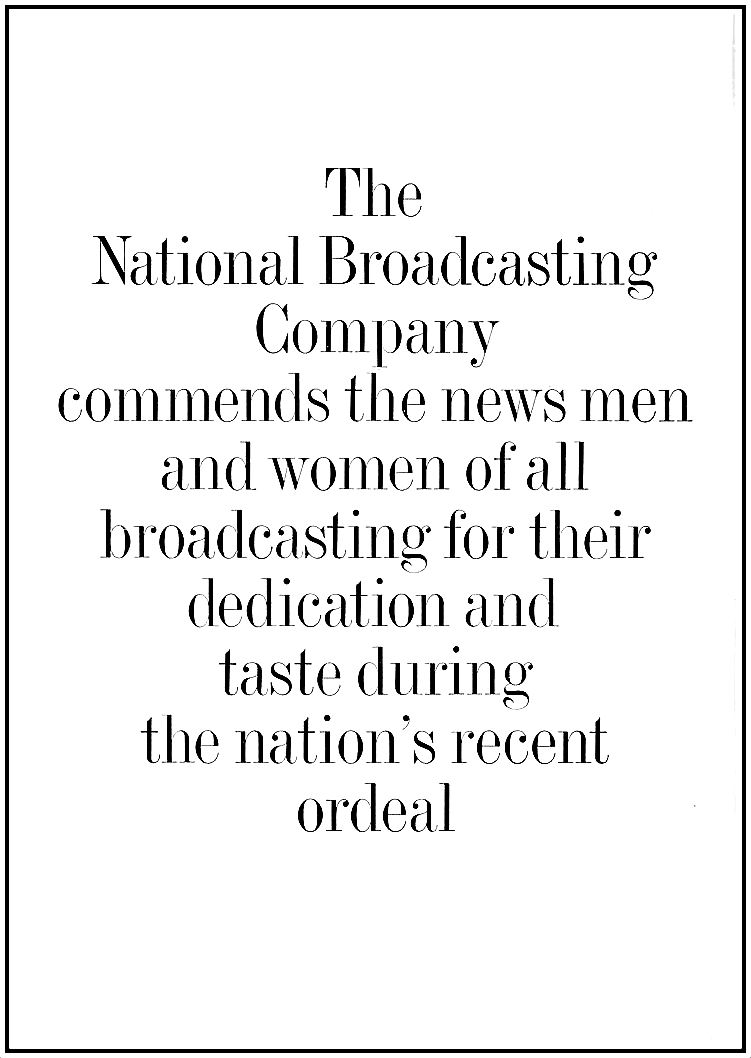
ad-jfk-assassination-NBC_broadcasting-mag_120263NBC ad in Broadcasting magazine, Dec. 2, 1963

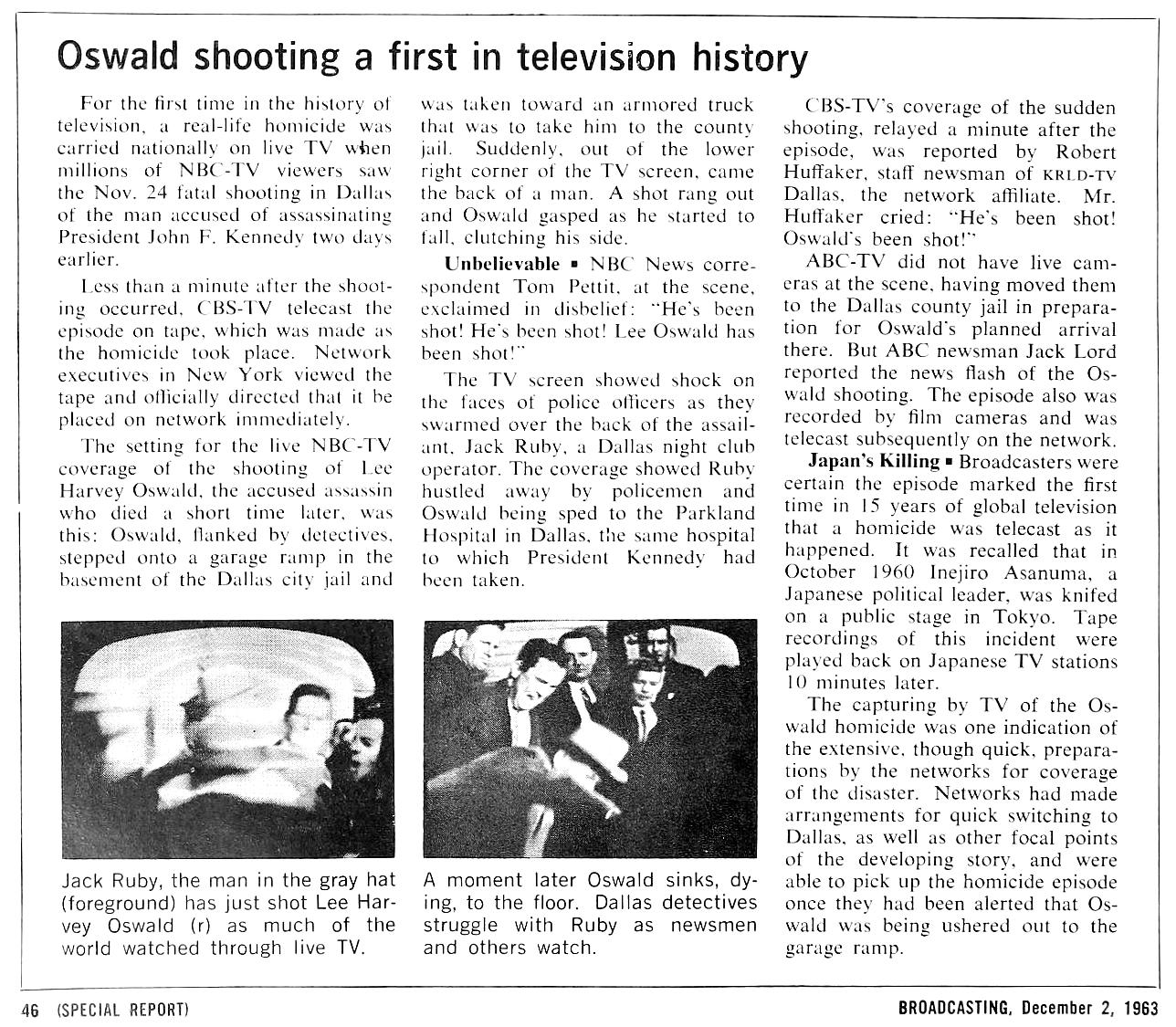
Broadcasting — an industry trade magazine — devoted an entire 25-page “Special Report” on how television had covered — and shaped — JFK’s presidency and his assassination. Below is the article which specifically focused on the wall-to-wall broadcast news coverage, post-Nov. 22.

OSWALD SHOOTING A FIRST IN TELEVISION HISTORY

For the first time in the history of television, a real-life homicide was carried nationally on live TV when millions of NBC-TV viewers saw the Nov. 24 fatal shooting in Dallas of the man accused of assassinating President John F. Kennedy two days earlier.

Less than a minute after the shooting occurred, CBS-TV telecast the episode on tape, which was made as the homicide took place. Network executives in New York viewed the tape and officially directed that it be placed on network immediately.

The setting for the live NBC-TV coverage of the shooting of Lee Harvey Oswald, the accused assassin who died a short time later, was this: Oswald, flanked by detectives, stepped onto a garage ramp in the basement of the Dallas city jail and was taken toward an armored truck that was to take him to the county jail. Suddenly, out of the lower right corner of the TV screen, came the back of a man. A shot rang out and Oswald gasped as he started to fall, clutching his side.

UNBELIEVABLE

NBC News correspondent Tom Pettit, at the scene, exclaimed in disbelief: “He’s been shot! He’s been shot! Lee Oswald has been shot!”

The TV screen showed shock on the faces of police officers as they swarmed over the back of the assailant, Jack Ruby, a Dallas night club operator. The coverage showed Ruby hustled away by policemen and Oswald being sped to the Parkland Hospital in Dallas, the same hospital to which President Kennedy had been taken.

CBS-TV’s coverage of the sudden shooting, relayed a minute after the episode, was reported by Robert Huffaker, staff newsman of KRLD-TV Dallas, the network affiliate. Mr. Huffaker cried: “He’s been shot! Oswald’s been shot!”

ABC-TV did not have live cameras at the scene, having moved them to the Dallas county jail in preparation for Oswald’s planned arrival there. But ABC newsman Jack Lord reported the news flash of the Oswald shooting. The episode also was recorded by film cameras and was telecast subsequently on the network.

JAPAN’S KILLING

Broadcasters were certain the episode marked the first time in 15 years of global television that a homicide was telecast as it happened. It was recalled that in October 1960 Inejiro Asanuma, a Japanese political leader, was knifed on a public stage in Tokyo. Tape recordings of this incident were played back on Japanese TV stations 10 minutes later.

The capturing by TV of the Oswald homicide was one indication of the extensive, though quick, preparations by the networks for coverage of the disaster. Networks had made arrangements for quick switching to Dallas, as well as other focal points of the developing story, and were able to pick up the homicide episode once they had been alerted that Oswald was being ushered out to the garage ramp. (Broadcasting magazine, Dec 2, 1963)


JFK_ruby-oswald_broadcasting-mag_120263
Broadcasting, Dec. 2, 1963 (click to see larger image)

*

NBC was the only network to carry Ruby’s shooting of Oswald on live TV. The footage — as it was aired — can be watched in the video below (the Dallas footage begins at about the 5:00 mark).


*

KRLD, the local CBS affiliate, captured the shooting live, but it was not broadcast live. Here is the KRLD footage, helmed by Bob Huffaker (the shooting takes place near the 13:00 mark).


*

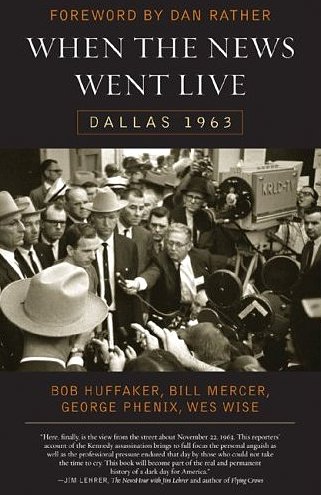
In 2007, Bob Huffaker, Bill Mercer, Wes Wise, and George Phenix — reporters for CBS-affiliate KRLD-TV news — recalled the blur of days on the beat following the assassination in their book When the News Went Live: Dallas 1963. Watch a panel discussion on those days, below, recorded at the Sixth Floor Museum in 2008. (I found Wise’s recollections, beginning at the 39:00 mark to be most interesting.) (RIP, Bob Huffaker, who died June 25, 2018.)

when-the-news-went-live_cover

*

ABC came in late, with reports from affiliate WFAA-Ch. 8 (about the 7:20 mark), but their coverage was certainly no less exciting — in fact, this might be my favorite reporting by local broadcast journalists that day.


*

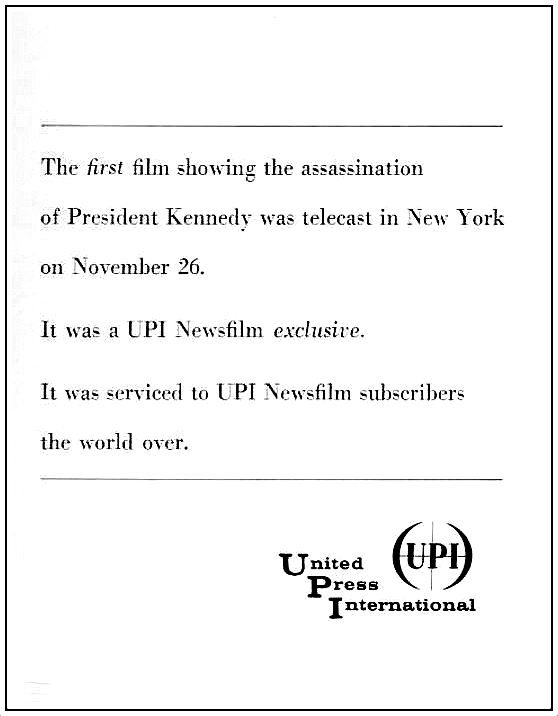
Another “first” in these days immediately following that awful day in Dallas was the very first showing of 8mm home-movie footage showing the assassination of the president. The film was shot by Dallasite Marie Muchmore, who reportedly sold the footage — sight unseen (it hadn’t even been developed) — to UPI for $1,000 (roughly about $8,000 in today’s money); the film was then shown on WNEW-TV in New York on Nov. 26. (The short footage, restored in recent years, can be watched on the Associated Press Archive site, here.)

ad-jfk-assassination-film_UPI_broadcasting-mag_120263
Broadcasting, Dec. 2, 1963

***

Sources & Notes

A “Special Report” on the broadcast coverage of the Kennedy assassination and the shooting of Oswald by Ruby appeared in the Dec. 2, 1963 trade magazine Broadcasting; the issue may be read in its entirety here (pp. 36-61); the photo at the top of this post (showing Jack Ruby shooting Lee Harvey Oswald) is from that issue.

More Flashback Dallas posts on the Kennedy assassination can be found here.

*

Copyright © 2018 Paula Bosse. All Rights Reserved.


Santos Rodriguez: The March of Justice — 1973

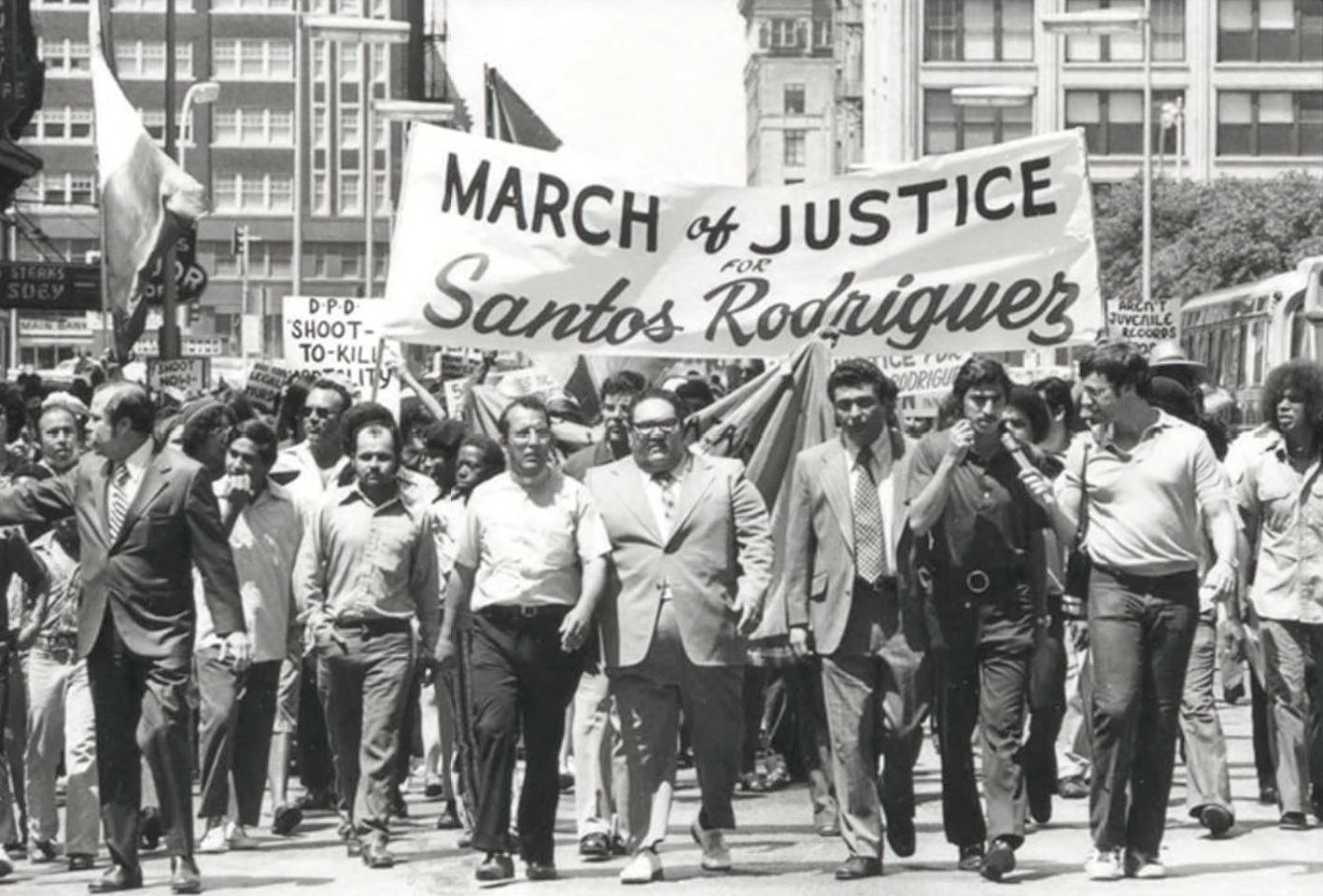
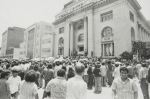
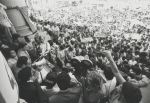
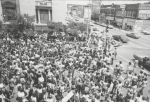
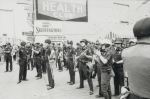
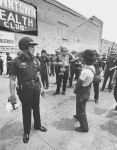
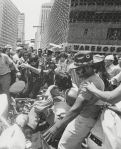
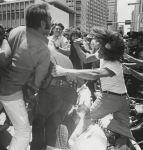
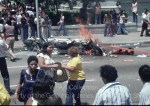
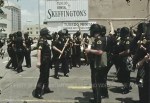
santos-rodriguez_march_contact-sheet-12_andy-hanson_degolyer_SMUThe March of Justice, July 28, 1973… (photo: Andy Hanson / SMU)

by Paula Bosse

In the wee hours of the morning of Saturday, July 24, 1973, 12-year-old Santos Rodriguez — who was handcuffed in the front seat of a police car — was shot in the head by a Dallas police officer attempting to coerce a confession in a deadly game of Russian roulette. Santos died instantly, as his 13-year-old brother — also handcuffed — watched in horror from the back seat. The shooting (which I wrote about here) set off an explosion of outrage in Dallas, with the bitterest and angriest coming from the Mexican American community.

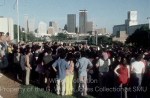
Four days after Santos was killed, a “March of Justice for Santos Rodriguez” was scheduled to be held in downtown Dallas, beginning at the Kennedy Memorial and ending at City Hall (the old Municipal Building, at Main and Harwood). The event was to be a peaceful march to show the solidarity of the Hispanic community and to protest what many felt was racial prejudice within the Dallas Police Department.

The march down Main Street to City Hall was earnest, and the speeches at City Hall by Dallas activists and concerned civic leaders were impassioned calls to action. After the speeches, many of the marchers headed back to the Kennedy Memorial. About halfway back, they encountered another group of marchers.

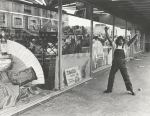
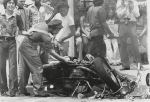
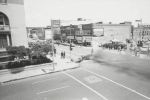
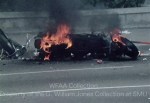
At some point, various groups described as “outside agitators” arrived. While the first crowd was listening to speeches at City Hall, a second (and perhaps later even a third) group of protestors assembled and began their own march to City Hall. These new arrivals (many said to be from Fort Worth and Waco) appear to have been the spark that set off what has been described as a “riot,” which erupted back at City Hall, with protesters attacking the police (who had been ordered to refrain from retaliation), breaking windows, and looting several downtown businesses. The image most emblematic of the day was a burning police motorcycle lying in the street just outside City Hall.

…[A]ll was havoc. A motorcycle was burning, a news vehicle was smashed, several officers injured and the sound of shattering glass filled the street… [T]he stench of burning rubber filled the air.” (“Police Taunted By Crowd” by Mitch Lobrovich, Dallas Morning News, July 29, 1973)

Luckily, there were few injuries, and the crowd dispersed after less than an hour.

A couple of days after the protest, the Rodriguez family issued this statement:

The Rodriguez family would only ask that when the people of Dallas hear the name Santos Rodriguez they think not of the unwanted violence that became associated with his name Saturday; but they think of the real Santos Rodriguez, a gentle and well-liked 12-year-old boy who had his life tragically taken from him.

*

Below (and above), photos taken that day by Dallas Times Herald photographer Andy Hanson which were recently unearthed by curator Anne Peterson, from the collection of his photographs at SMU’s DeGolyer Library:

**

The only footage I’ve found of the actual march is this video, uploaded recently to YouTube by Mountain View College. It was apparently shot by a Dallas police officer. There is no sound. This is great. Thank you, Mountain View, for preserving this important historical moment.


*
***

Sources & Notes

Photos taken by Andy Hanson on July 28, 1973; from the Collection of Photographs by Andy Hanson, DeGolyer Library, Southern Methodist University. See the rest of the photos from this day, here. (Note: this does not appear to be the entirety of Hanson’s photos taken that day.) Read about the full Andy Hanson Collection at SMU, here

Read “Honoring Santos Rodriguez” by Anne E. Peterson, Curator of Photographs at the DeGolyer Library (and the person who unearthed these Andy Hanson photos), here.

The YouTube video is titled “Santos Rodriguez 1973 News Footage,” with the description “Rare news footage taken during the 1973 protests in downtown Dallas following the tragic shooting death of 12 year old Santos Rodriguez by a Dallas Police officer. No audio.” I’d like to know more about the story behind this footage.
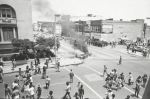
The coverage of the march(es) and ensuing riot is confusing. A couple of months after the march, Jose Antonio Gonzales wrote a fascinating and (seemingly) comprehensive report for The Fort Worth Star-Telegram on how the events developed and unfolded, with an almost moment-by-moment timeline and insight into the individuals involved. Read his fantastic job of reporting in the (awkwardly-titled) article “Chicano Leadership Unity Faulted in Study of Boy’s Death” (FWST, Sept. 16, 1973): part one is here; part two is here.

My previous post on Santos Rodriguez — “Santos Rodriguez, 1960-1973” — is here.

Click pictures to see larger images.

*

Copyright © 2018 Paula Bosse. All Rights Reserved.

Santos Rodriguez, 1960-1973

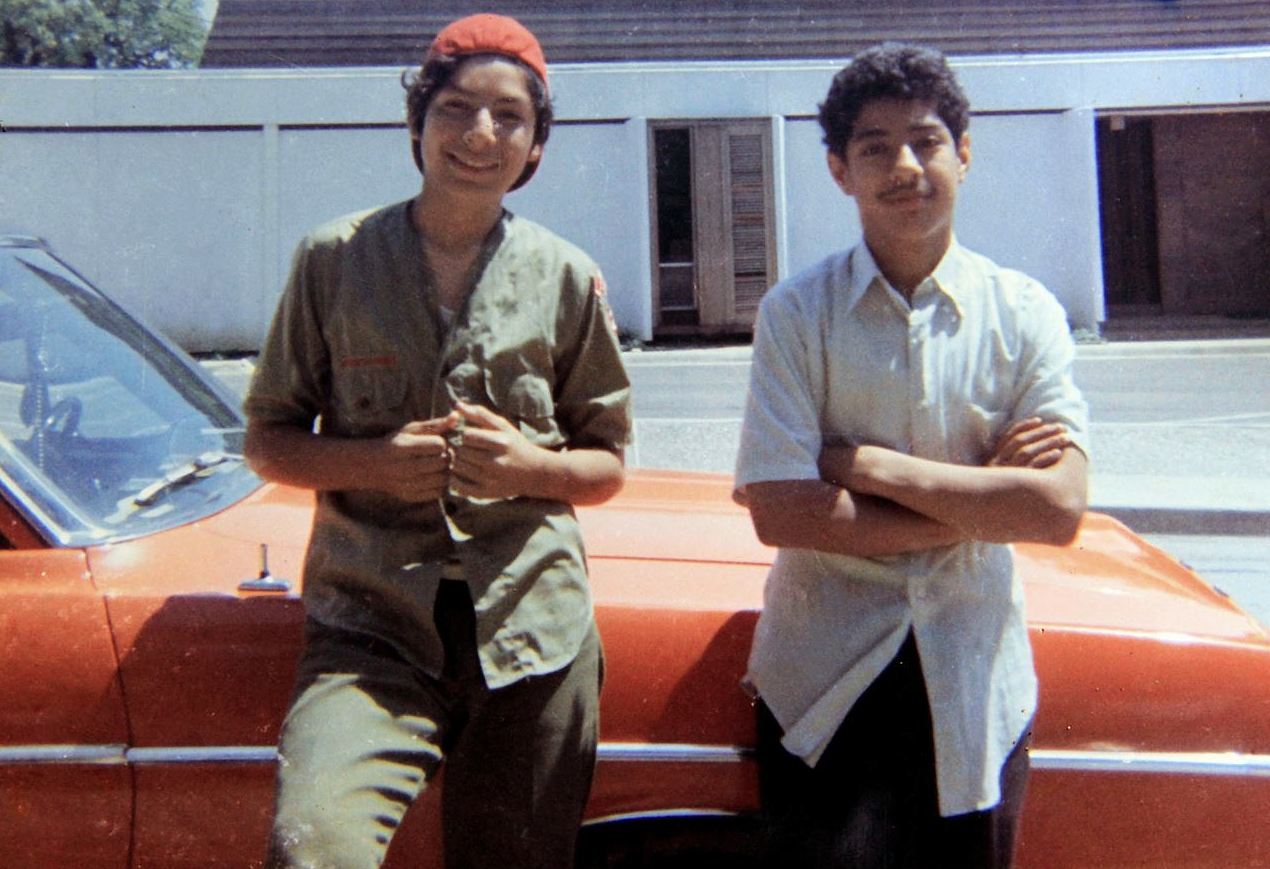
david-and-santos-rodriguez_austin-american-statesmanDavid and Santos Rodriguez (via Austin American-Statesman)

by Paula Bosse

Today is the anniversary of the tragic shooting of Santos Rodriguez, the 12-year-old boy who, on July 24, 1973, was shot in the head by a policeman as he and his 13-year-old brother David sat handcuffed in a police car. It shocked the city of Dallas in 1973, and it is still shocking today.

Santos and David had been awakened and rousted out of bed by Officers Darrell L. Cain and his partner Roy R. Arnold who were investigating a late-night burglary at a nearby gas station where money had been stolen from a cigarette machine — the boys matched a witness’ vague description. The boys said they had nothing to do with the burglary but were taken from their home as their foster-grandfather (an elderly man who spoke no English) watched, helpless, as they were handcuffed and placed in a squad car.

The boys were driven back to the scene of the burglary — a Fina station at Cedar Springs and Bookhout. Santos was in the front passenger seat, and Cain sat behind him in the backseat, next to David. Cain insisted the two boys were guilty and, in an attempt to coerce a confession, held his .357 magnum revolver to Santos’ head. He clicked the gun, as if playing Russian Roulette, telling Santos that the next time he might not be so lucky. The boys continued to insist they were innocent. And then, suddenly, Cain’s gun went off. Santos died instantly. Stunned, Cain said that it had been an accident. He and Arnold got out of the car, leaving 13-year-old David, still handcuffed, in the backseat of the police car — for anywhere from 10 minutes to half an hour — alone with his brother’s bloody body. (It was determined through fingerprint evidence that Santos and David did not break into the gas station that night.)

More in-depth articles about this horrible case can be found elsewhere, but, briefly, Cain (who had previously been involved in the fatal shooting of a teenaged African American young man named Michael Morehead) was charged with committing “murder with malice” and was found guilty. He was sentenced to 5 years in prison but ended up serving only two and a half years in Huntsville.

The killing of Santos Rodriguez sparked outrage from all corners of the city, but particularly in the Mexican American community. All sorts of people — from ordinary citizens to militant Brown Berets — organized and protested, persistently demanding civil rights, social justice, and police reform. If anything positive resulted from this tragic event, perhaps it was a newly energized Hispanic community.

**

I am ashamed to say that I was not aware of what had happened to Santos Rodriguez until I began to write about Dallas history a few years ago. This was an important turning point in the history of Dallas — for many reasons (namely in the Chicano movement, race relations, the fight for social justice, and an examination of Dallas Police Department procedure). Over the past week I’ve read a lot of the local coverage of the events of this case, and I’ve watched a lot of interviews of people who were involved, but perhaps the most immediate way I’ve experienced the events and emotions swirling about this case has been to watch television news footage shot as the story was unfolding. Thanks to the incredibly rich collection of TV news footage in the possession of the G. William Jones Film & Video Collection at SMU, I’ve been able to do that.

Below is footage shot by KDFW Channel 4, which has, most likely, not been seen since 1973. Some of it appeared in news reports, and some is just background B-roll footage shot to be edited into news pieces which would eventually air on the nightly news. The finished stories that aired do not (as far as I know) survive, but we have this footage. It’s choppy and chaotic and darts from one thing to the next, which is how a red-hot news story develops. Of particular interest is the short interview with 13-year-old David at 9:16 and the violent aftermath of what began as a peaceful march through downtown at 19:54.

A more comprehensive collection of the events — from just hours after the shooting to the conviction of Darrell Cain — can be found in this lengthy compilation of WFAA Channel 8 news footage. This and the Channel 4 footage are essential sources.

*

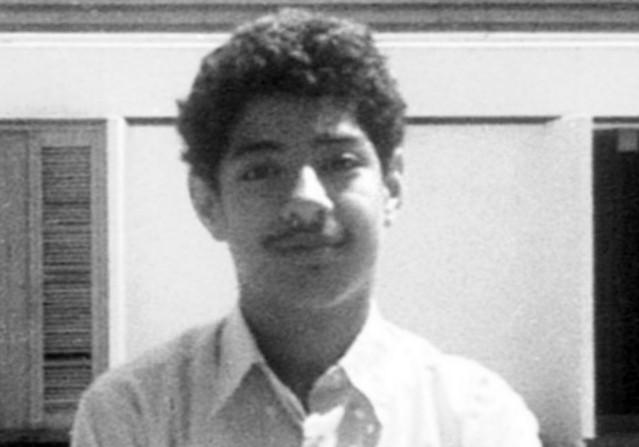
santos-rodriguez-cropped_smuSantos Rodriguez (Nov. 7, 1960 – July 24, 1973)

***

Sources & Notes

Top photo is a family photo, from the Austin American-Statesman article “Is It Time for Dallas to Honor Santos Rodriguez?” by Gissela Santacruz, here.

My sincerest thanks to Jeremy Spracklen at SMU for alerting me to these two collections of important historical news footage from KDFW-TV/Ch. 4 and WFAA-TV/Ch. 8, both of which are held by the G. William Jones Film & Video Collection, Hamon Library, Southern Methodist University. (All screenshots are from these two videos.)

An excerpt from the 1982 KERA-produced documentary “Pride and Anger: A Mexican American Perspective of Dallas and Fort Worth” (the Santos Rodriguez case is discussed) is on YouTube here.

“Civil Rights in Black & Brown” is a fantastic oral history project by TCU. I watched several of the interviews focusing on Santos Rodriguez, but I was particularly taken with the oral history of Frances Rizo — her 2015 interview is in two parts, here and here.

More on the events surrounding the killing of Santos Rodriguez can be found at the Handbook of Texas History site, here.

My continuation of this story can be found at the Flashback Dallas post “Santos Rodriguez: The March of Justice” — 1973,” here.

*

Copyright © 2018 Paula Bosse. All Rights Reserved.