Flashback : Dallas

A Miscellany: History, Ads, Pop Culture

Category: Crime/Law Enforcement

Bonnie Parker: “Buried In an Ice-Blue Negligee” — 1934

bonnie-parker_mortician-account_cook-colln_degolyer(George W. Cook Collection, DeGolyer Library, SMU)

by Paula Bosse

This amazing (and amazingly gruesome) first-hand account of an unnamed McKamy-Campbell Funeral Home undertaker details the incredible amount of work required to prepare the bullet-ridden body of celebrity outlaw Bonnie Parker for burial. This odd little historical document comes from the absolutely fantastic George W. Cook Dallas/Texas Image Collection housed in SMU’s DeGolyer Library. The four-page handwritten document can be viewed in its entirety on SMU’s Central University Libraries’ website here. Below is the full account, transcribed by SMU, with a few corrections/additions made by me.

*

Tear this up please? Tear this up please?

Heres [sic] first hand on Bonnie & Clyde as we had Bonnie. She was about the size of Rose Grace, weighing a 100 pounds. (a thousand pounds of dynamite though) She was very pretty of course her skin was somewhat tan. Her nails were beautiful. Likewise her toe nails. Her toes looked like fingers. The cuticles pushed back, the nails filed to a point, and a deep coral shade polish on them, the most beautiful toes I ever saw, just perfect. Her permanent just a month old we had it waved. Her face, right side was blown off. We fixed this and you could hardly tell it. Just one bullet went through her brain, however and number grazed her head as there were 3 big holes in her scalp, but not through skull. Her left eye terribly black, however I used eye shadow on other eye to match, so that was covered up. Now, her body was just mutilated and torn to pieces from shots. Her right hand nearly blown off (known as her trigger hand) her body besides being full of bullet holes was full of buckshot, pellets all over her

[Page 2] body. We received body ten minutes of nine. Joe and I sewed on her until three that afternoon. At that time they say 25,000 people were lined up outside. It took 2 hours picking dirt, rocks etc. from her hair then to wash it and have waved. A tattoo on right leg two hearts one read Roy, the other Bonnie. Roy you know was her Husband (Roy Thornton now in Pen) All fluid the undertaker in Arcadia La. used leaked out she was torn up so she was a a [sic] mass of blood, caked & dried. Several hours in bathing her. Had to scrape some of it off, and used gold dust to remove most of it. Had skin slip that night account Fluid leaking from it, began to smell the next morning, turning dark, smelling worse. The last day was rotten so to speak The odor was awful. Her Mother thought [sic] sat in room alone with her head over casket. How she stood it Lord knows. The other children couldn’t. Mother fainted 2:30 that night I asked if she wouldn’t like to go home, she went. By then the entire house smelt. We had to keep her so Sister Billy that was in jail in Ft Worth could get out & come to Funeral. She was buried in an all steel metal casket. Paper said $1000.00 wrong about $600 maybe less. Paper said $1000.00 vault Wrong there was no vault Page 2

[Page 3] Buried in an ice Blue Neglegee [sic] (is this spelled right) She was dressed in expensive clothes when killed. About 40,000 people came to view her. Paper said $1,500.00 damages done to Funeral Home. Wrong about the extent of $2.50. They did not tear windows etc as stated. The woman next door though turned Hose on Them to keep her flowers from being walked on. We had 38 officers stationed (3 shifts) all over house and front & back yard keeping crowd in order and all of us as well. 4 operators on the 4 phones. They rang every minute for two days & nights. More people came to see Bonnie then [sic] to see Clyde. Our new Porch Furniture was damaged. We had a Rubber mat about ½ inch in thickness all over Funeral House. Officers

[Page 4] stationed to keep people on it so as not to wear rug out (Big movie Star) my picture was shown in Movies. The paper stretched their stories. She was not to become a Mother as stated. She was diseased slightly though as stated. Now you have it first hand as I worked on her. Joes [sic] & My work was praised very highly in every other line in papers. And if I do say it, It was good. And she looked swell no trace of disfigures showing. The crowd did not steal anything to take home. All paper talk. Example crowd lined up as Far as Fair Park, now judge how it looked. They brought their Lunches. Such Fools.

*

Below, two photographs of the McKamy-Campbell Funeral Home, located at 1921 Forest Avenue in South Dallas, besieged by curious spectators.

mckamy-campbell

mckamy-campbell_dallas-municipal-archives

**

I’m unsure who the “Rose Grace” was who was mentioned on the first page.

The “gold dust” mentioned in the account as being used to remove caked blood from Bonnie’s body was actually Gold Dust Washing Powder or Gold Dust Scouring Soap, a popular, commercially-available “all-purpose cleaning agents” — Wikipedia article is here.

***

Sources & Notes

Top image of the handwritten account on Adolphus Hotel stationery is from the aforementioned George W. Cook Dallas/Texas Image Collection, DeGolyer Library, Central University Libraries, Southern Methodist University, viewable here.

First photo of the McKamy-Campbell Funeral Home is reproduced all over the internet; the second photo is from the files of the Dallas Police Dept., Dallas Municipal Archives, via the University of North Texas’ Portal to Texas History database, here.

Even though the identity of the person who wrote this account is not known, he (…it was probably a man) mentions that he was seen in newsreel footage of the funeral of Bonnie Parker. My wild guess is that he can be seen in this clip from a longer newsreel on the funerals and burials of Bonnie and Clyde at the 2:34 mark. I could never find who his co-worker “Joe” was.

*

Is this our man laying flowers on Bonnies casket?

bonnie-burial_newsreel-screengrab

If you really want to see the state of the bodies of Bonnie (and Clyde) — before and after their time with their undertakers — they’re easy to find via your favorite search engine.

More Flashback Dallas posts on Bonnie & Clyde here.

If you like what you’ve seen on Flashback Dallas, please consider supporting me on Patreon, where for as little as $5 a month, you can receive all-new updates several times a week (if not daily!). More information can be found at Patreon, here.

*

Copyright © 2016 Paula Bosse. All Rights Reserved.

The Official Government Reenactment of the Kennedy Assassination — Nov. 27, 1963

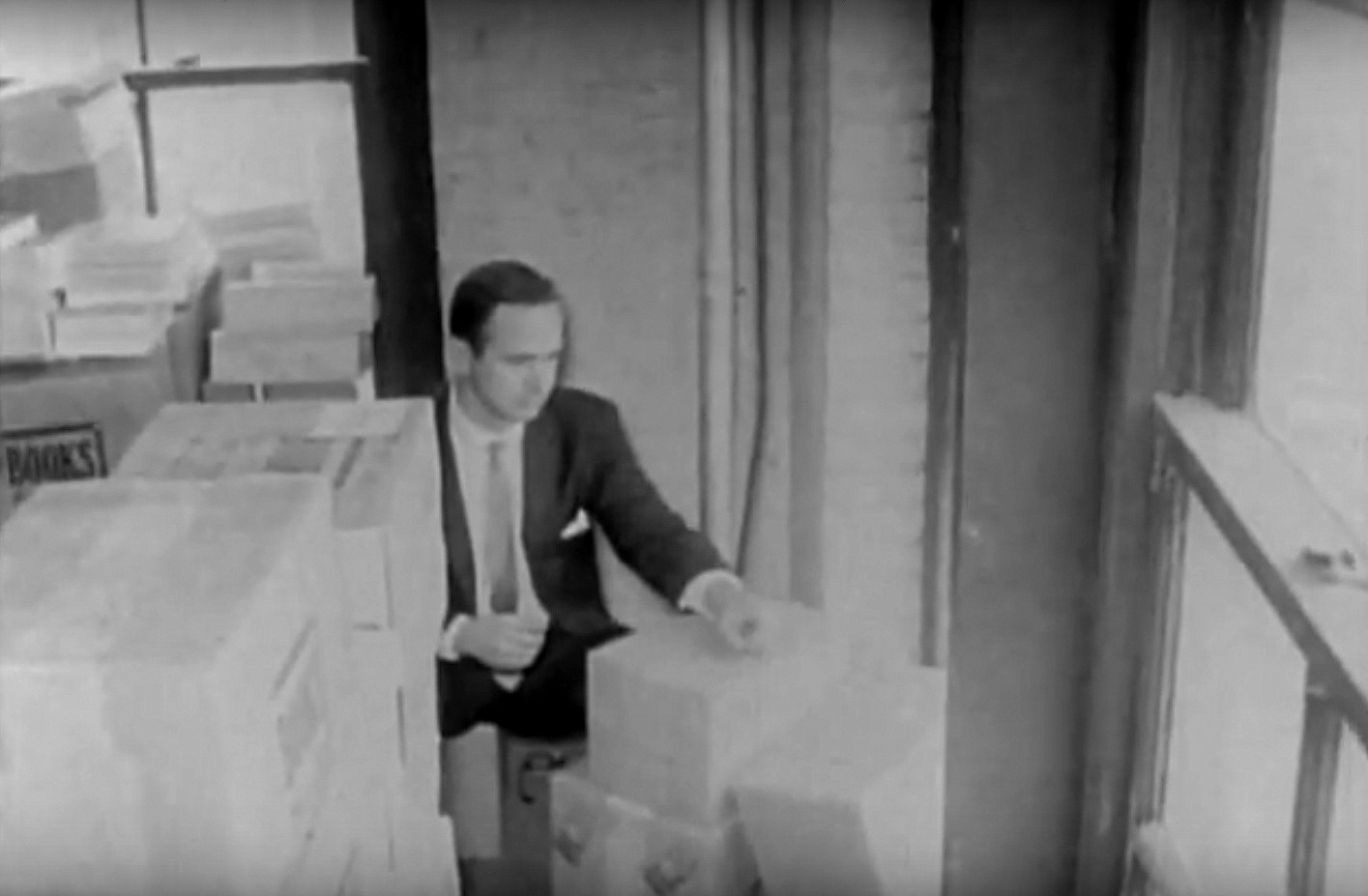
reenactment_agent-at-windowAgent Howlett at window with “rifle”

by Paula Bosse

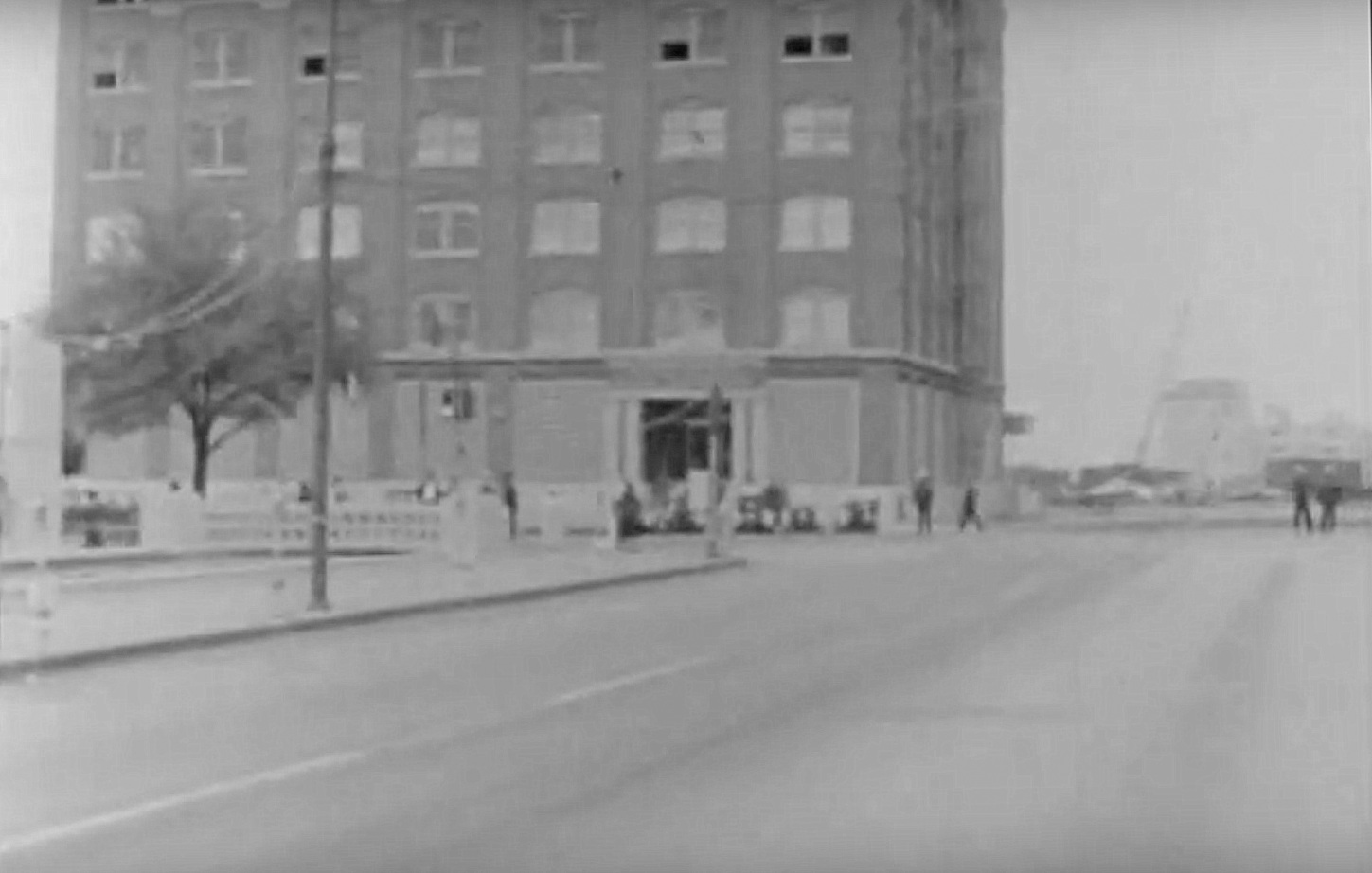
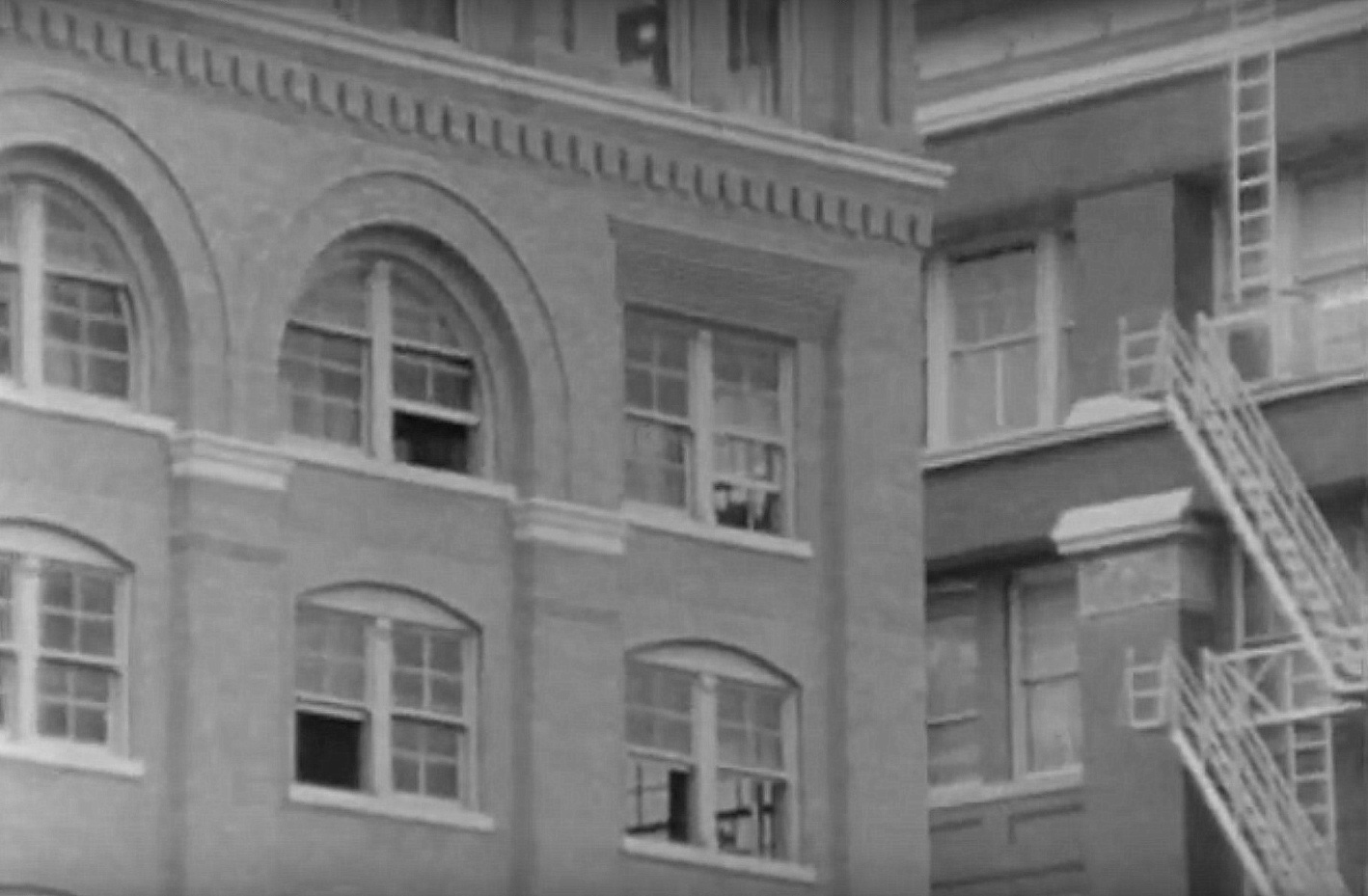
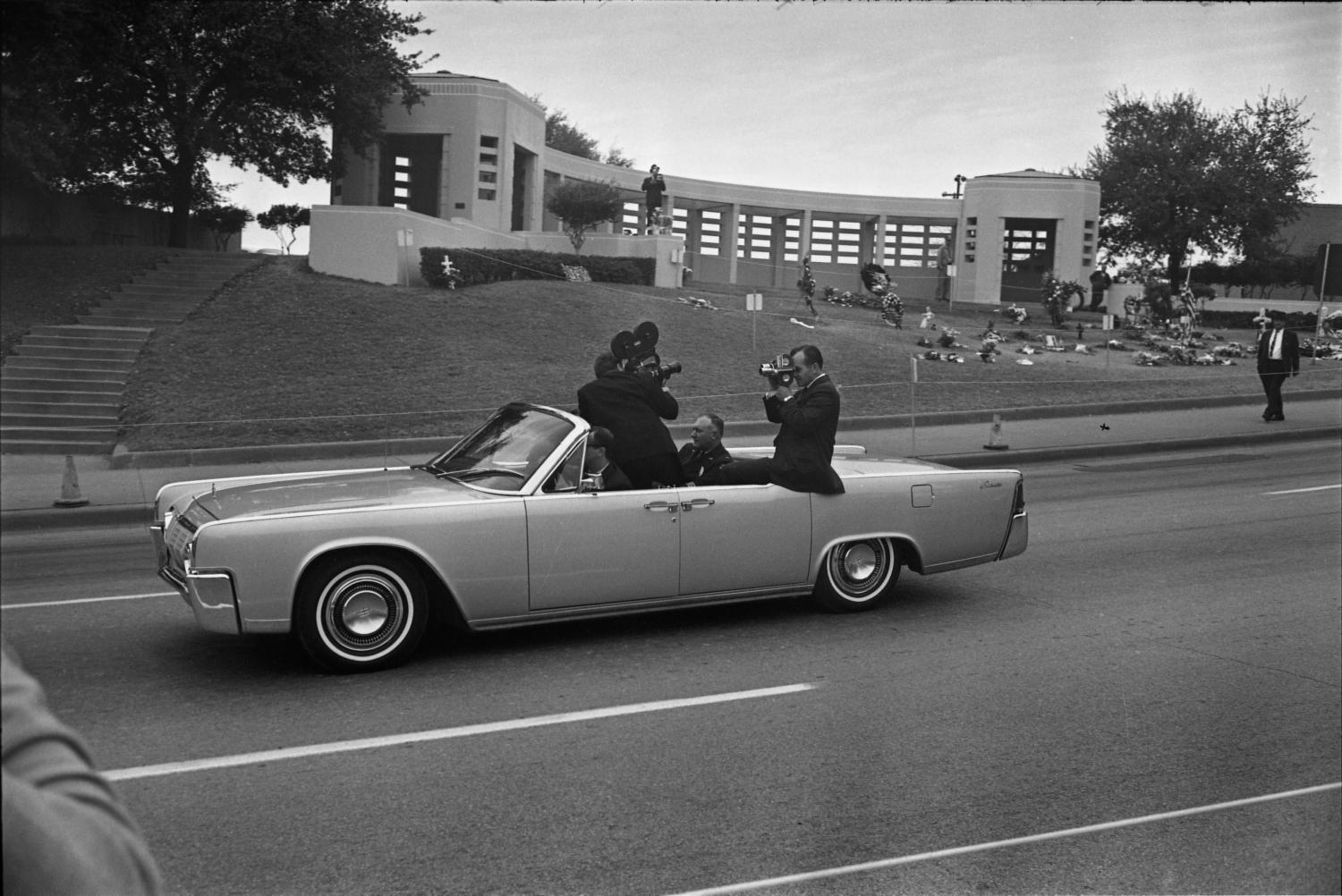
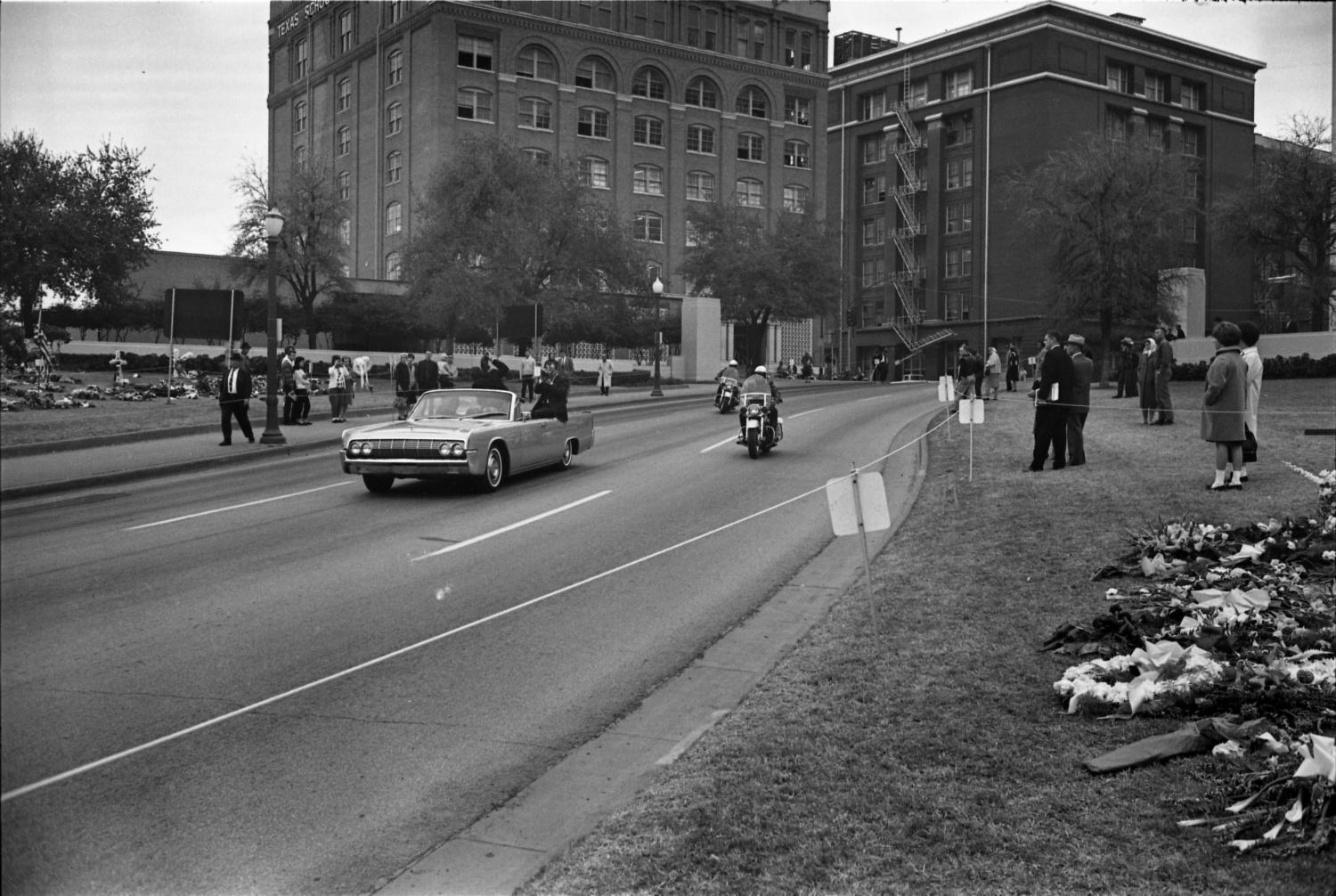
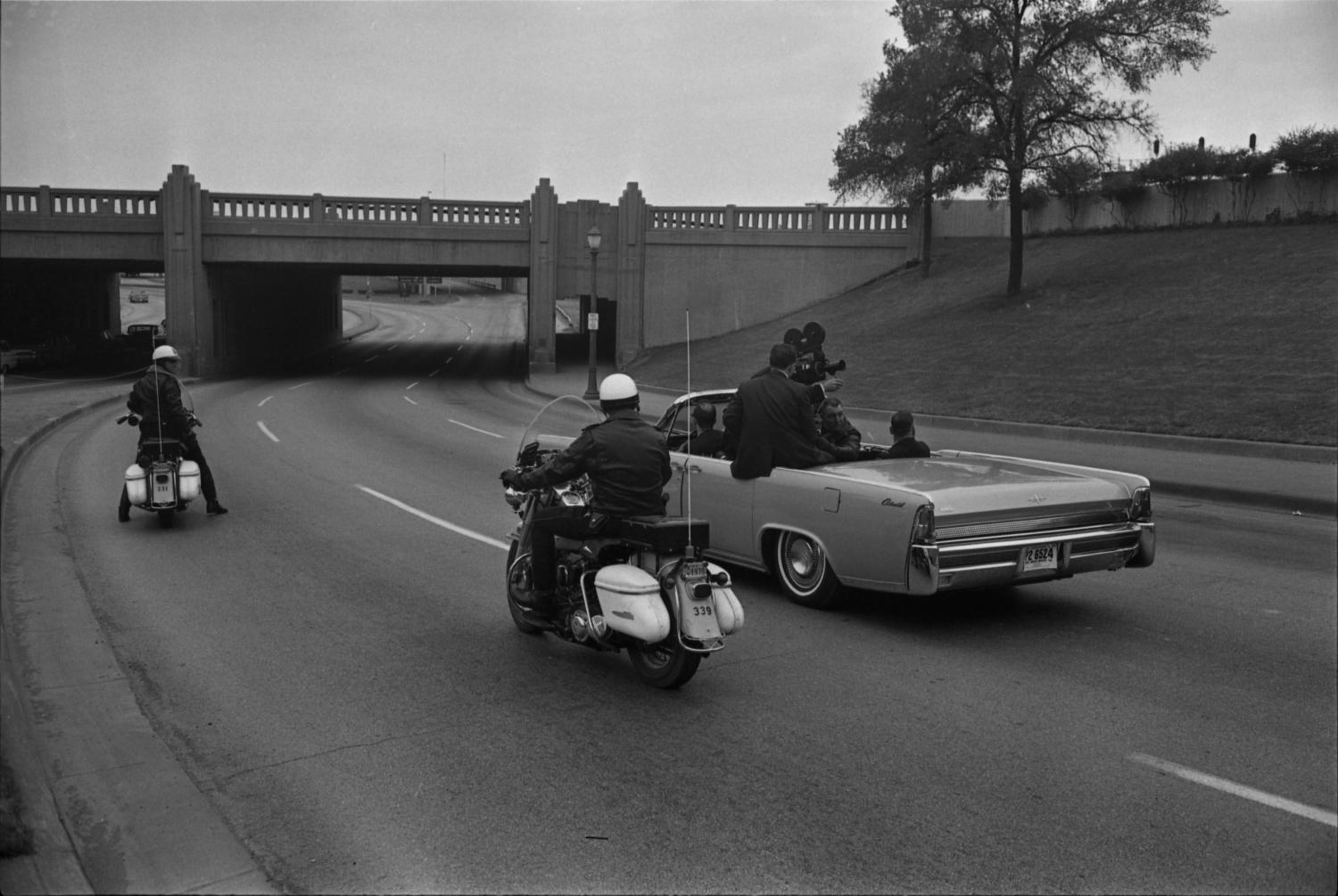
Yesterday I received a comment on a previous post I wrote about the first official reenactment of the Kennedy assassination, and that got me to wondering if that film was online anywhere. The film was made as part of the Secret Service investigation and was filmed in Dealey Plaza and in the Texas School Book Depository; the motorcade sequence was filmed on November 27, 1963, just five days after the assassination. Even though my knowledge of the events of November 22 is fairly limited (and what I do know is mostly due to osmosis), just growing up here you kind of feel you’ve seen everything connected with the assassination. But I’d never seen this film or the one made a few months later with the production assistance of local TV station KRLD, which included much of the same footage. Apparently, the original film had not been made public until fairly recently.

It’s very interesting to watch, and the fact that there is no sound makes it appropriately eerie. I have to admit that I was most interested in seeing the footage of downtown streets. And the interior of the Texas School Book Depository beyond just the “sniper’s nest” we always see. (I can now say I’ve sneaked a peek inside the depository’s employee lunchroom.)

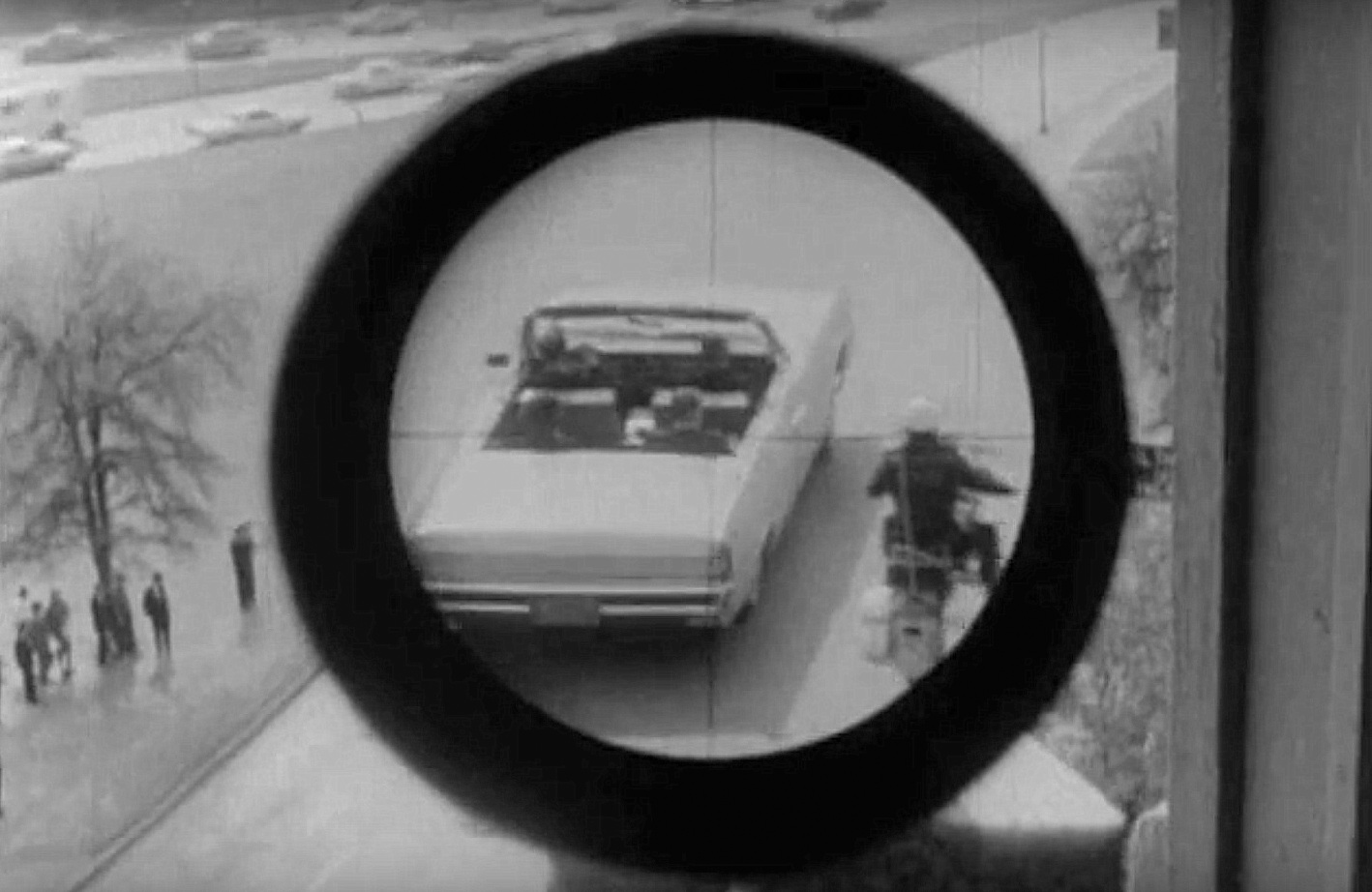
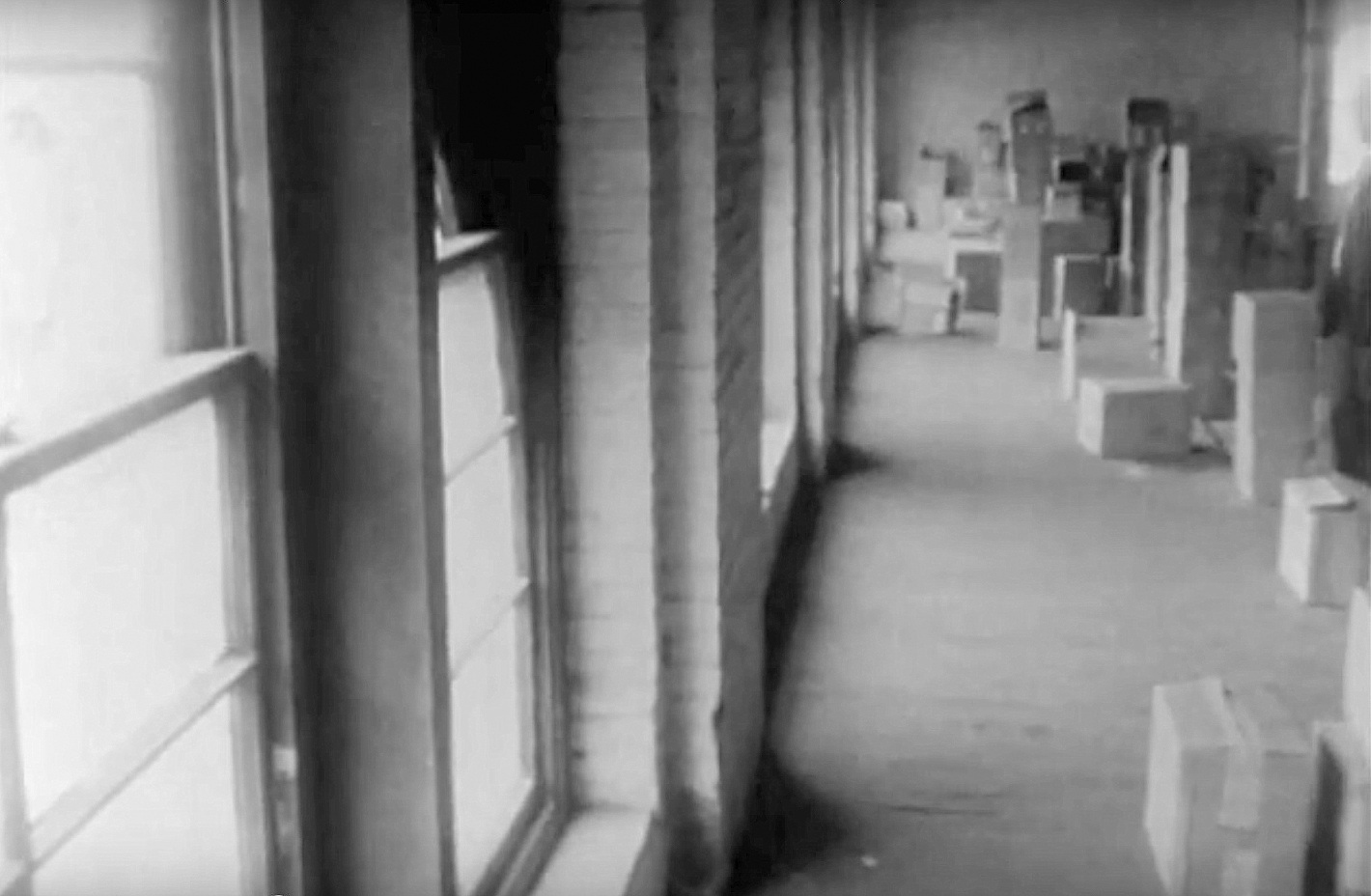
So here are the two films. The first one was made by the Secret Service, with the Dealey Plaza reenactment filmed on Nov. 27, 1963. It has no sound. I thought it was interesting, but a lot of people might find it a little dull and repetitive. Below this video is one which uses this footage to lay out the government’s findings, with lots of details and no-nonsense narration by KRLD’s Jim Underwood. (I’m not sure why — or for whom — this educational film was made. It doesn’t seem to have been screened for the public.) The silent film has more footage, but the narrated film is easier to follow. And below that are screenshots from the government’s “reconstruction.” (UPDATE, Jan. 2024: The two videos I had originally linked have been removed from YouTube. I’m linking a video I found recently below.)

*

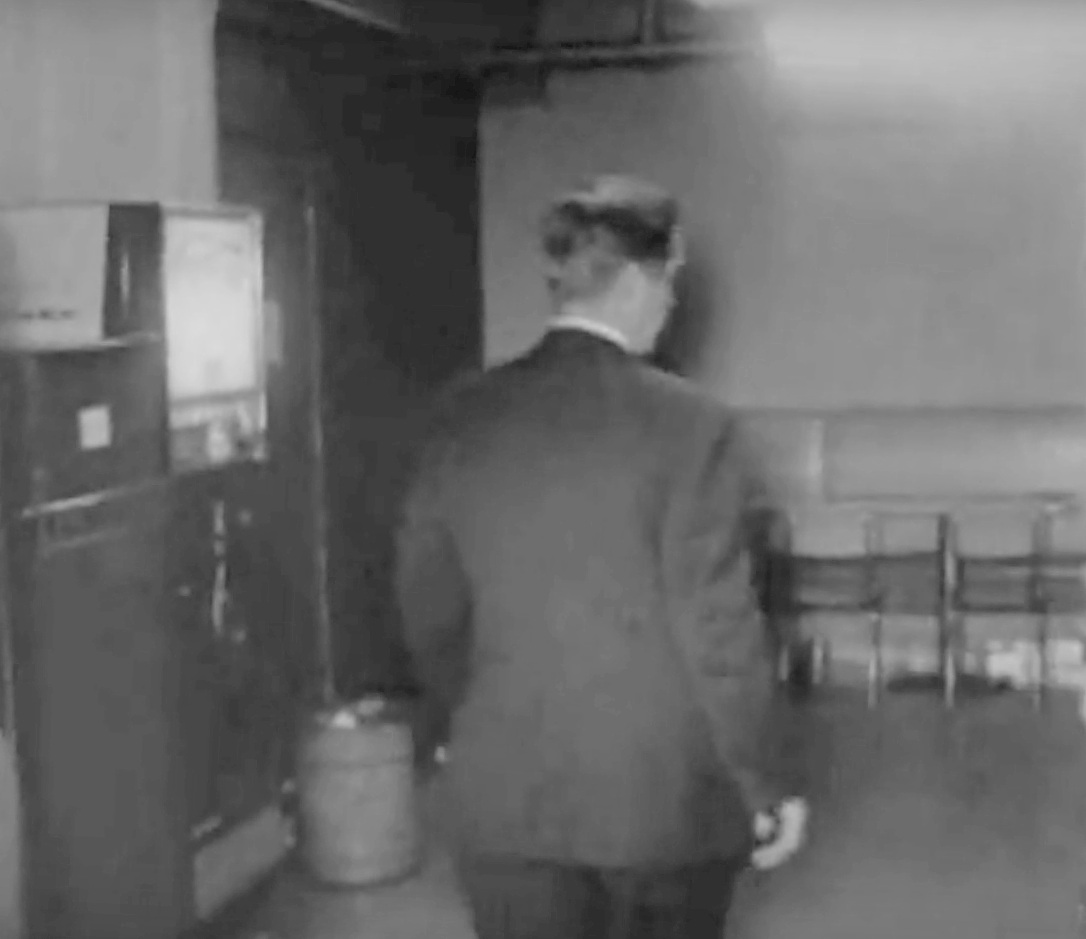
Below, a few screenshots from the government footage. The one at the top of this post shows Special Agent John Joe Howlett sitting at the sixth-floor window, as if holding a rifle.

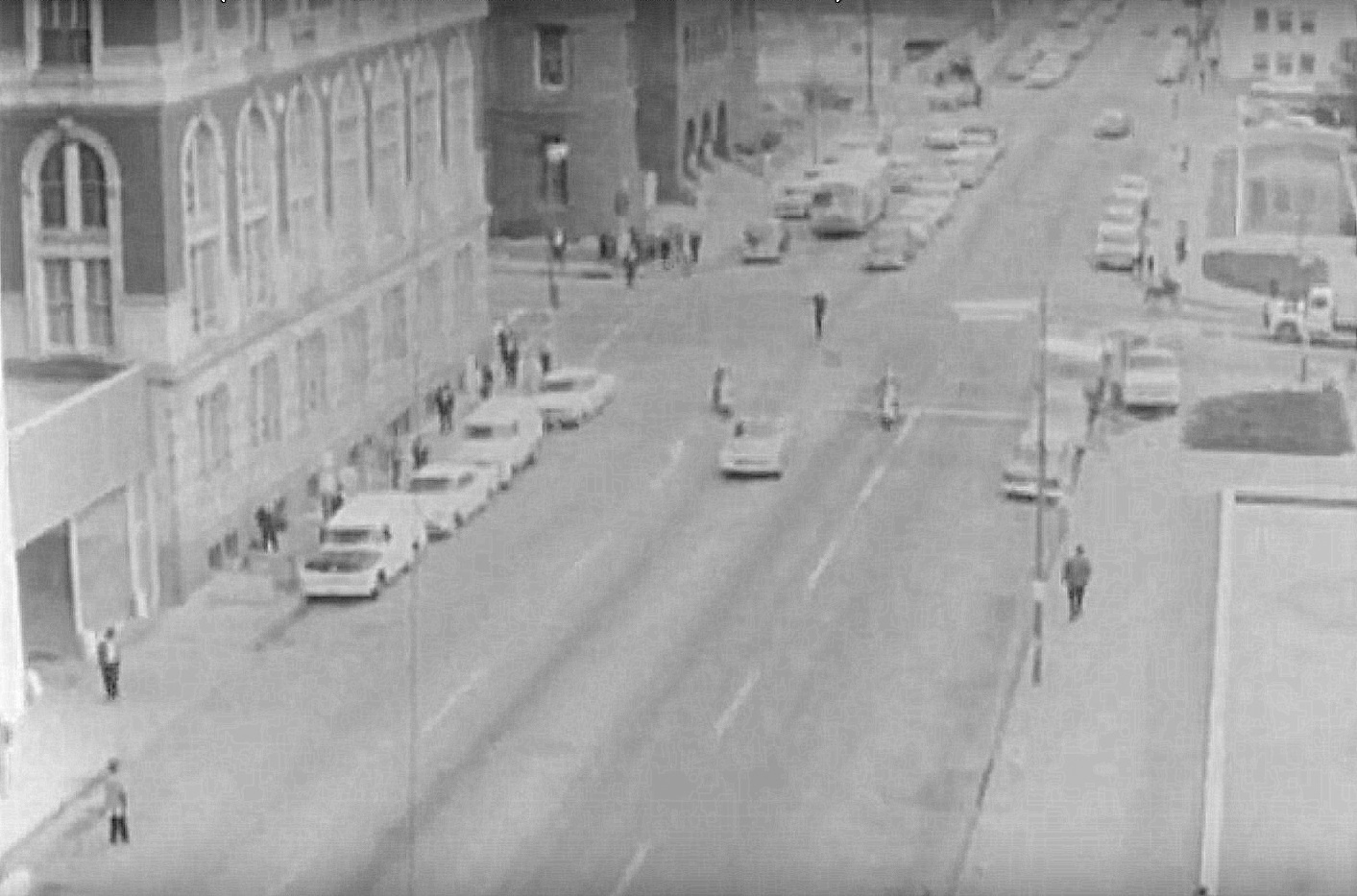
Below, Elm St. looking east from Dealey Plaza, with the white Records Building at center right.

reenactment_elm*

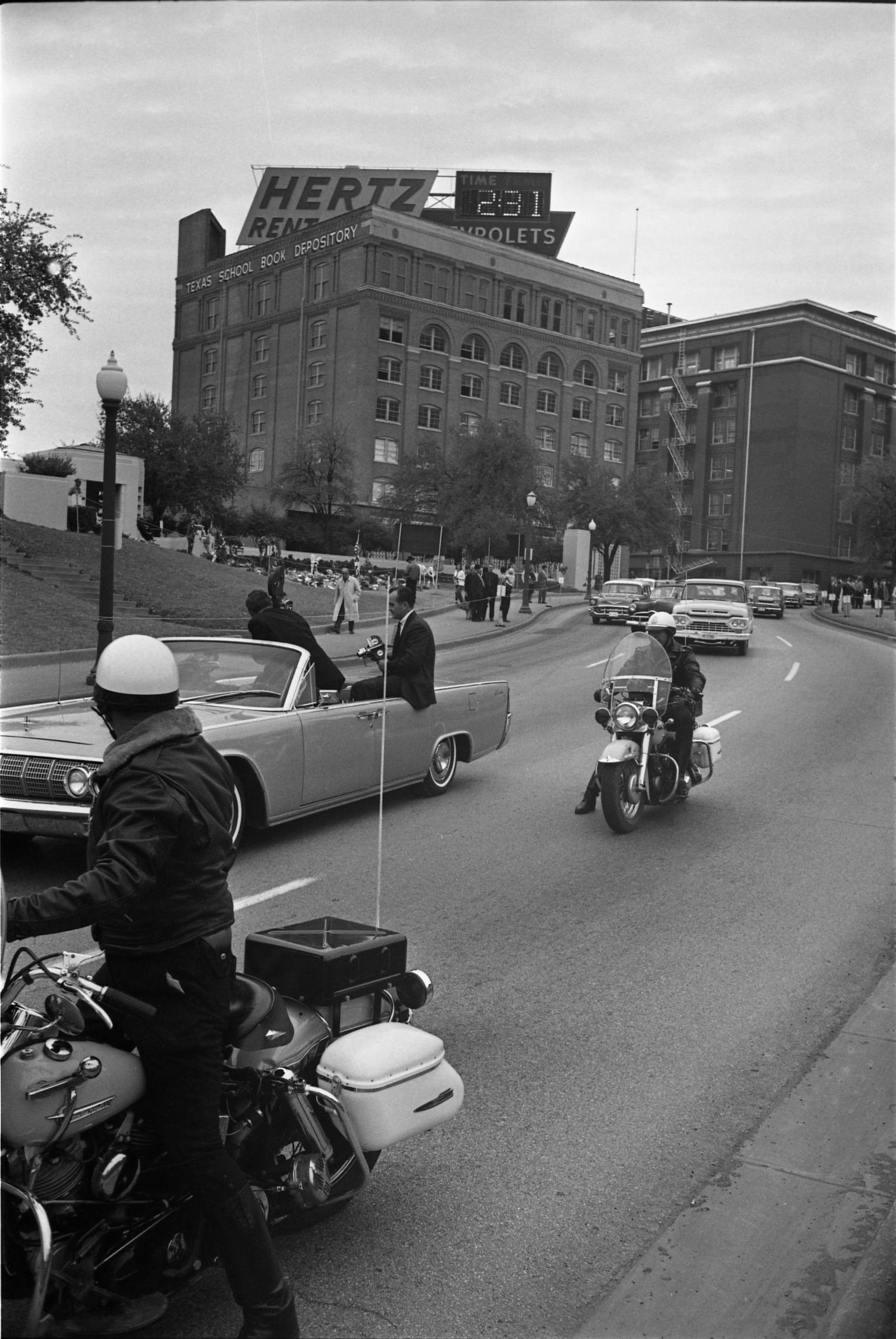
The one-car-two-motorcycle motorcade turning from Main onto Houston St. Looking south from … you know where.

reenactment_houston-st*

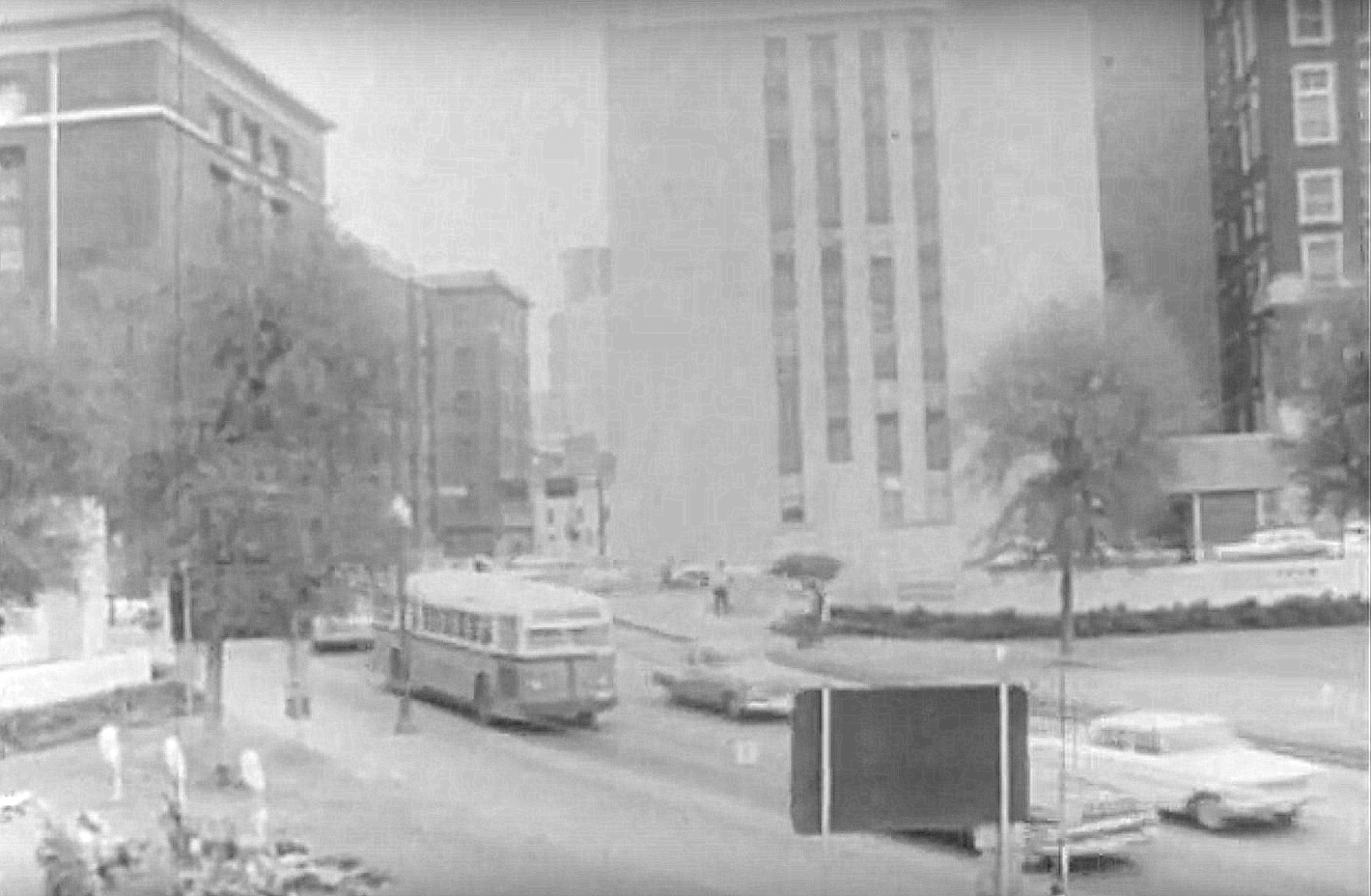
Houston St. looking north, with the School Book Depository on the left and a disconcertingly empty space straight ahead.

reenactment_houston-st-north*

A nice artsy shot of the book depository and the old John Deere Building.

reenactment_tsbd-ext*

Camera with “scope” attachment.

reenactment_scope*

Windows, boxes, looking toward the west end of the building from the “nest” end of the sixth floor.

reenactment_tsbd-int*

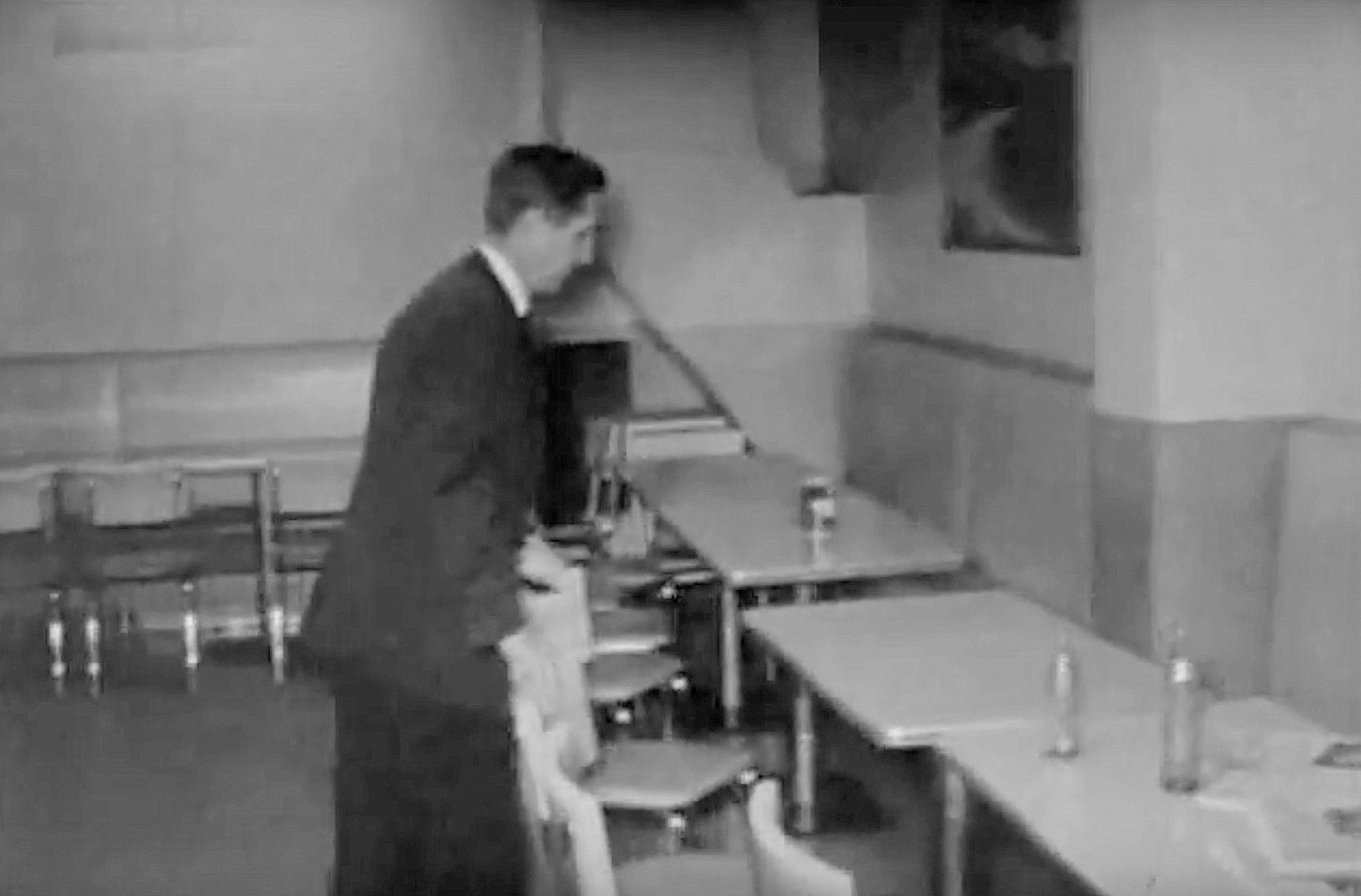
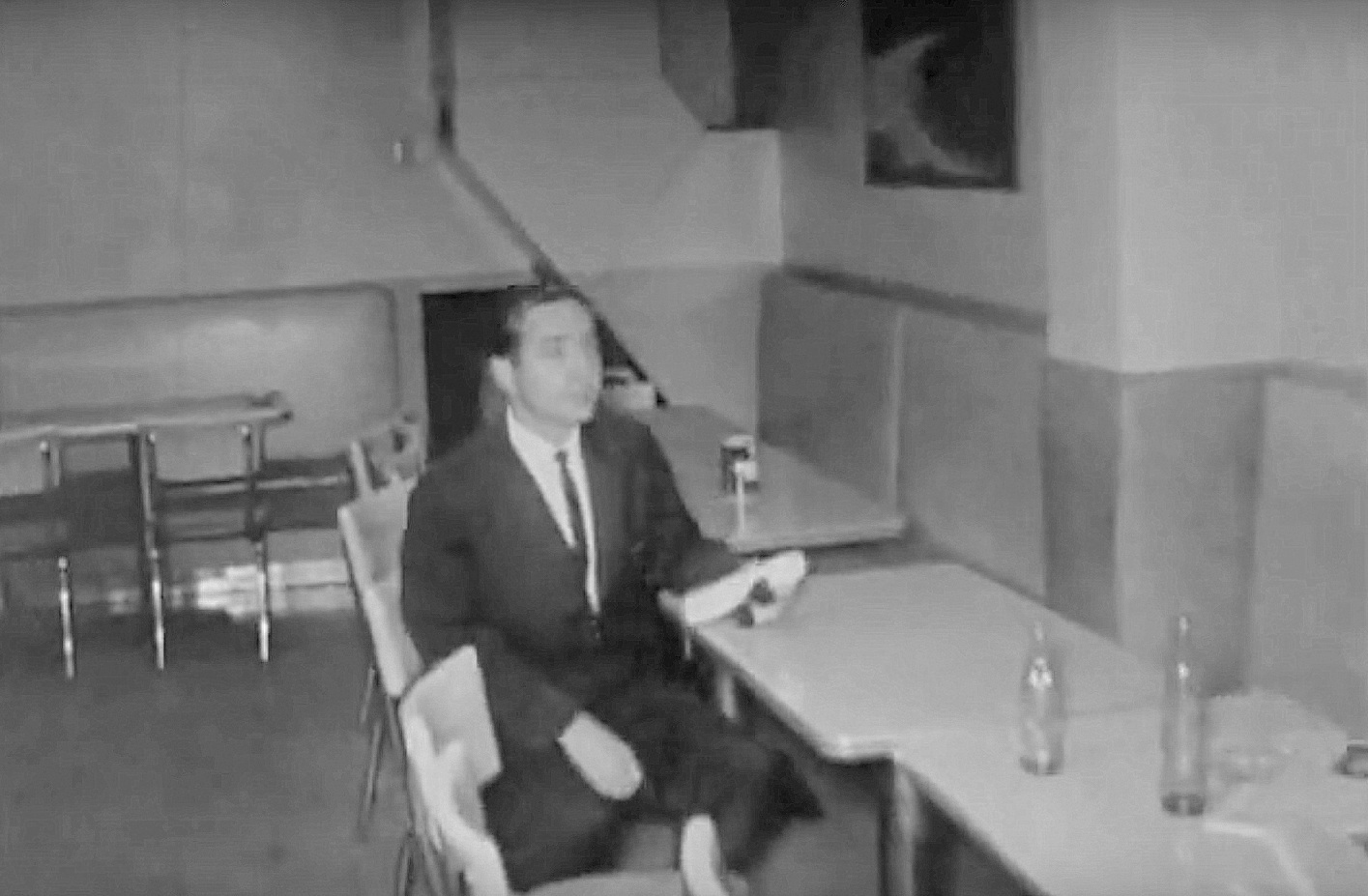
A trip to the second-floor lunchroom, with its vending machines which are, apparently, important in Lee Harvey Oswald’s alibi. These images show Special Agent Talmadge Bailey walking past the vending machines and sitting at a table.

reenactment_tsbd-bldg-lunchroom1

reenactment_tsbd-bldg-lunchroom2

reenactment_tsbd-bldg-lunchroom3

***

Sources & Notes

See Dallas Times Herald photographs that were shot while the Dealey Plaza “reenacting” was going on in my previous post, “The First JFK Assassination Reenactment — 1963,” here. (As for the comment that started me off on this, I’m still not sure whether the cameramen in the car are KRLD employees or not.)

*

Copyright © 2016 Paula Bosse. All Rights Reserved.

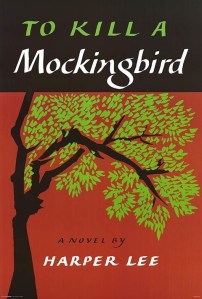
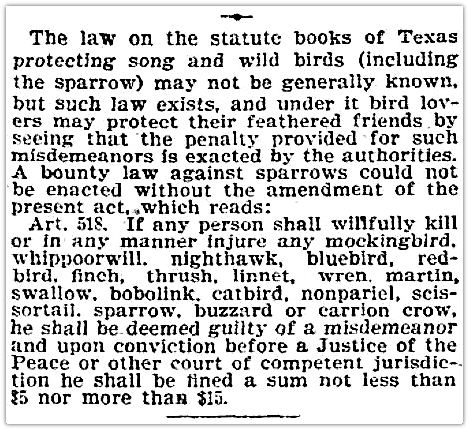
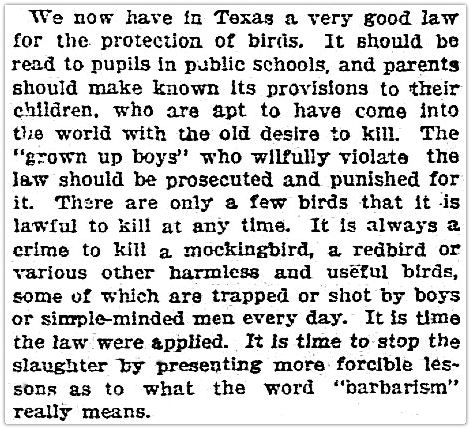
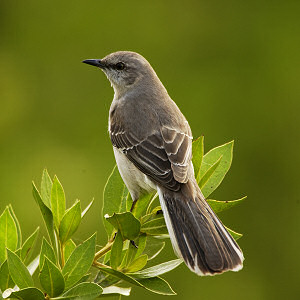
To Kill a Mockingbird

to-kill-a-mockingbird_jacket

by Paula Bosse

“…Remember, it’s a sin to kill a mockingbird.” That was the only time I ever heard Atticus say it was a sin to do something, and I asked Miss Maudie about it.

“Your father’s right,” she said. “Mockingbirds don’t do one thing but make music for us to enjoy. They don’t eat up people’s gardens, don’t nest in corncribs, they don’t do one thing but sing their hearts out for us. That’s why it’s a sin to kill a mockingbird.”

*

mockingbird_dmn_012900_pauline-periwinklePauline Periwinkle in The Dallas Morning News, Jan. 29, 1900

mockingbird_dmn_112905DMN, Nov. 29, 1905

mockingbird

***

RIP, Harper Lee — and thank you.

*

Copyright © 2016 Paula Bosse. All Rights Reserved.

Merry Christmas From the Dallas Police Department’s Parking Enforcement Squad

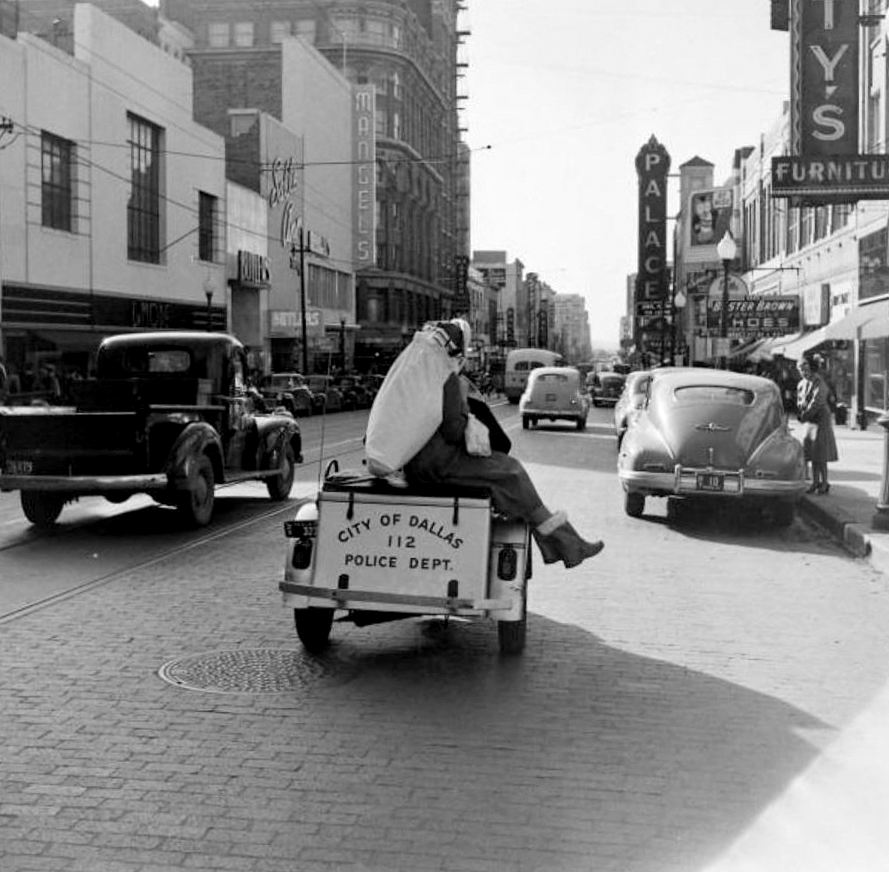
xmas_santa_DPDSanta on Elm Street (click for larger image)

by Paula Bosse

I don’t know what the story is behind this photograph of Santa Claus riding on the back of a three-wheeled motorcycle (they were used by the Dallas Police Department to patrol downtown streets for parking violations). Maybe Santa’s sleigh has broken down and he’s thumbed a ride to get to a scheduled event at a department store. Let’s hope it wasn’t the result of said sleigh being parked in a No Parking zone and a rather too strenuous ticket dispute by Mr. Claus necessitating a visit to the station to discuss the situation further. (Look at the brick-paved street!)

***

I’m not sure of the original source of this photo, but I want to thank reader Chris Walker for sending this to me. Thank you, Chris!

*

Copyright © 2015 Paula Bosse. All Rights Reserved.

The First JFK Assassination Reenactment — 1963

jfk_secret-service-reenactment_dth_112763Secret Service film crew, 11-27-63

by Paula Bosse

There is yet another JFK assassination-related film being shot in and around Dealey Plaza, causing all sorts of traffic woes, but spotlighting some great period cars, trucks, and fashions. The first reenactment? It took place on November 27, 1963 as part of the Secret Service investigation. A newspaper account suggested that Jack Ruby may have been watching from his jail cell, mere steps away. The photos below, showing some of that filming, were taken by a Dallas Times Herald staff photographer. (All photos from the Sixth Floor Museum at Dealey Plaza/UNT’s Portal to Texas History.)

jfk_secret-service-reenactment_dth_112763c

jfk_secret-service-reenactment_dth_112763b

jfk_secret-service-reenactment_dth_112763d-triple-underpass

Another photo — this one of somber onlookers — taken the same day. Ruby’s home-away-from-home — the jailhouse — is in the background at the left.

jfk_secret-service-reenactment_same-afternoon_dth_112763

***

Sources & Notes

Photos from the incredible Dallas Times Herald collection of Kennedy assassination photographs from the Sixth Floor Museum at Dealey Plaza, viewable online via UNT’s invaluable Portal to Texas History; the reenactment photos are here (the first photo is here).

The reenactment received only a few paragraphs in The Dallas Morning News the next day: “Crime Re-enacted by Secret Service” by Carl Freund (DMN, Nov. 28, 1963).

Currently filming in Dallas: the television adaptation of Stephen King’s novel “11-22-63.” Read the updates on the filming from Robert Wilonsky of The Dallas Morning News, here.

UPDATE: Watch the footage shot this day in my post “The Official Government Reenactment of the Kennedy Assassination — Nov. 27, 1963,” here.

*

Copyright © 2015 Paula Bosse. All Rights Reserved.

White Mule, Red Whisky, & “Wicked Liquid” — Moonshining In, Around, & Under Dallas In the 1920s

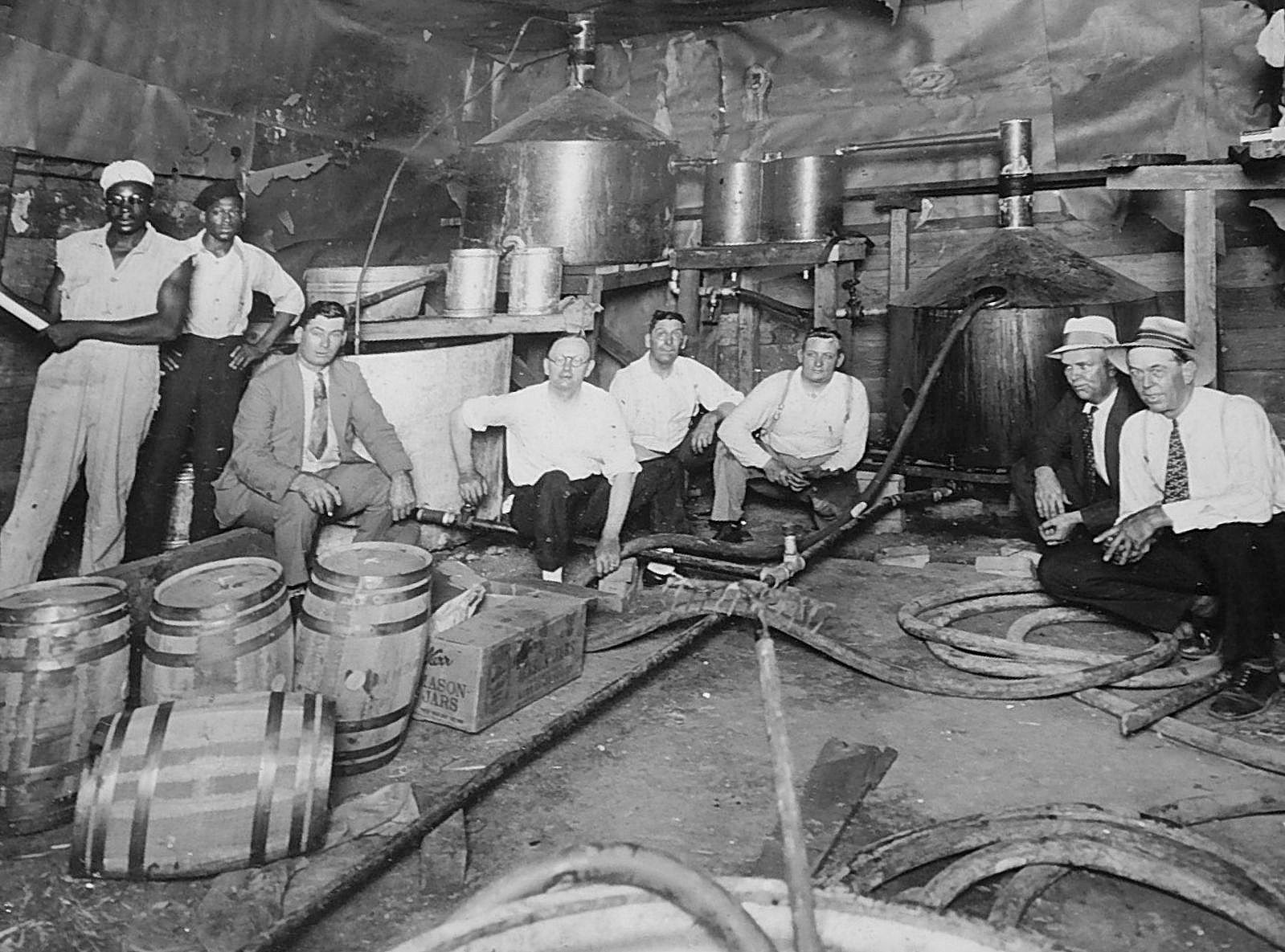
prohibition-stills_ebayBusted!

by Paula Bosse

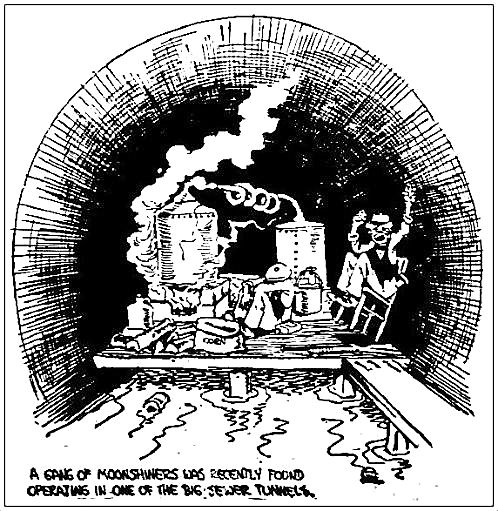
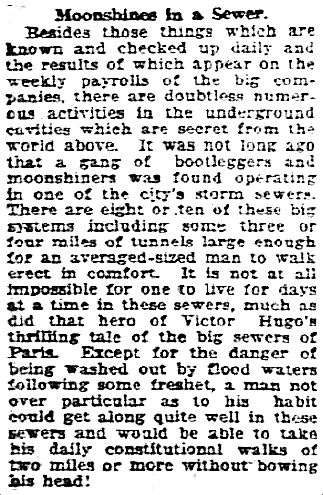
I recently came across an article from 1925 describing a whole world of hidden activity that went on beneath Dallas’ downtown streets. This cartoon and paragraph about moonshiners and bootleggers conducting business in underground storm sewers was particularly interesting:

moonshine_sewer_dmn_050325-cartoon

moonshine_sewer_dmn_050325-by-george-geeDallas Morning News, May 3, 1925

I searched and searched for news of this subterranean moonshining operation but was unable to find anything. I did, however, find some interesting stories from the ’20s, when it seems moonshining and bootlegging were going on absolutely everywhere.

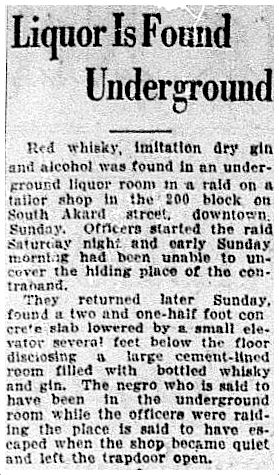
For example, one such operation was going on in a “large cement-lined room” underneath a tailor shop in the 200 block of South Akard, which was accessed by a small “elevator” through a trapdoor.

moonshine_akard_dmn_121425DMN, Dec. 14, 1925

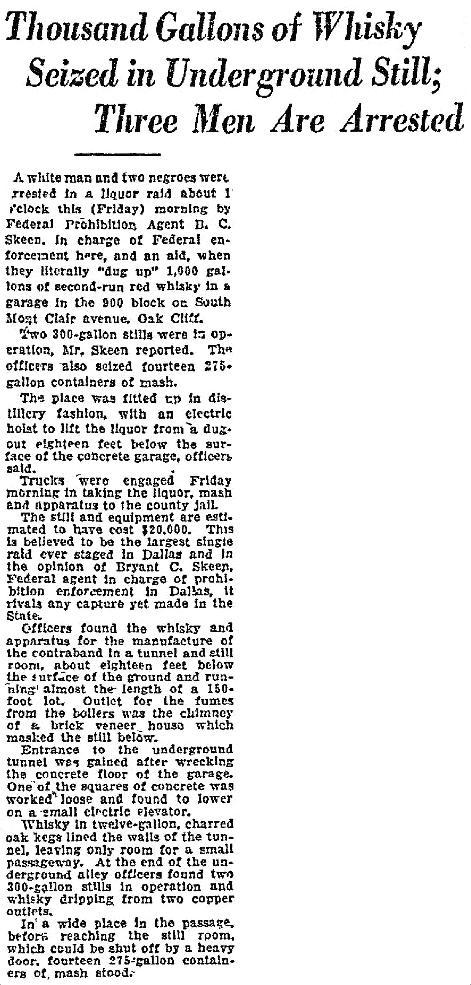
One was in operation underground in Oak Cliff in the 900 block of South Montclair (click to read).

moonshine_dmn_121125DMN, Dec. 11, 1924

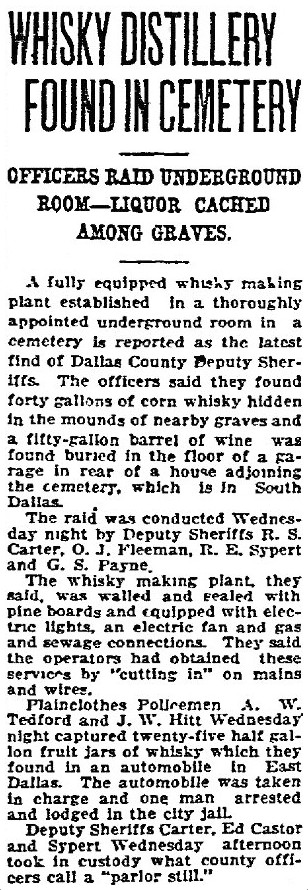
Then there was a still operating in a South Dallas cemetery.

moonshine_dmn_090424-cemeteryDMN, Sept. 4, 1924

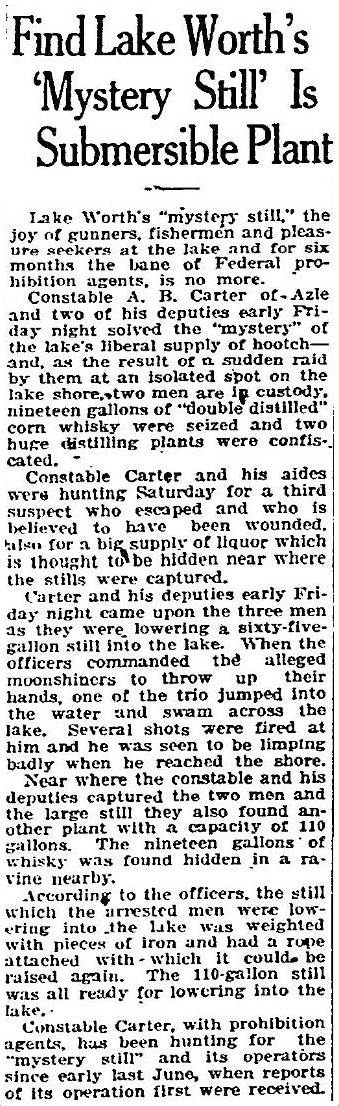
Over in Tarrant County — at Lake Worth — some outside-the-box-thinking moonshiners were hiding stills under the WATER.

moonshine_FWST_111921_lake-worthFort Worth Star-Telegram, Nov. 19, 1921

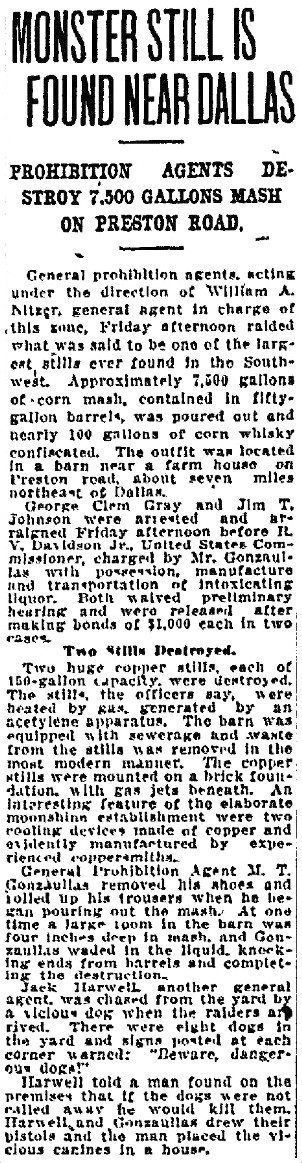
Up north on Preston Road, a massive still was discovered — one of the largest ever found in the Southwest. This operation was above ground, in a barn. 7,500 gallons of corn mash was emptied by legendary Texas Ranger M. T. “Lone Wolf” Gonzaullus, who “removed his shoes and rolled up his trousers when he began pouring out the mash. At one time a large room in the barn was four inches deep in mash, and Gonzaullus waded in the liquid” (DMN, Dec. 23, 1922).

moonshine_gonzaullas_dmn_122322DMN, Dec. 23, 1922

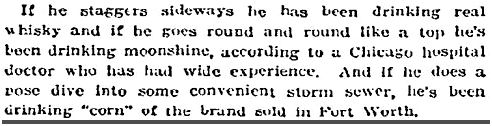
During this incredibly productive and creative period in DFW history, there were different levels of moonshining: there were people making small batches of so-called white lightning for “home use” (kind of like Mayberry’s Morrison sisters who provided small “medicinal quantities” of “elixir” to Otis Campbell), and then there were massive “distilleries” involving large networks of bootleggers and making big money. The former were usually “jest folks,” but the latter were generally professionals, often dangerous and armed-to-the-teeth. The quality of the product varied markedly. This was a handy primer:

moonshine_FWST_120420FWST, Dec. 4, 1920

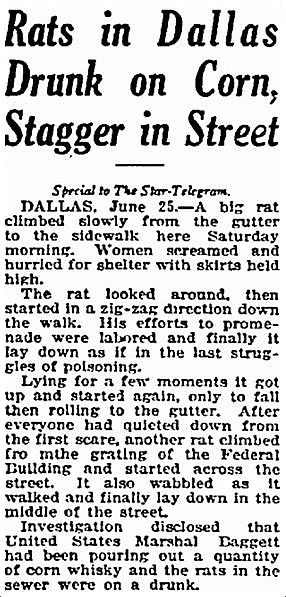
My favorite moonshine-related story appeared in The Fort Worth Star-Telegram. It was about drunken rats “staggering” in the streets of Dallas. Star-Telegram publisher (and famous Dallas-hater) Amon Carter must have cackled as he read this. I’m surprised the headline wasn’t bigger.

moonshine_rats_FWST_062621FWST, June 26, 1921

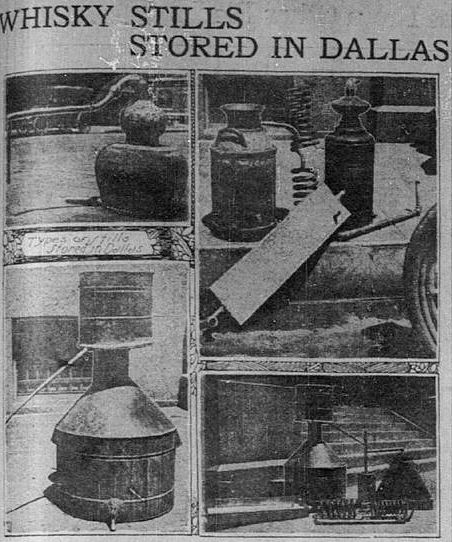
A whole passel of confiscated stills — having been emptied of their contents into nearby gutters (the cause of Big D’s apparent rampant rodental inebriation problem) — can be seen in the photos below, displayed for the media in 1921 by the sheriff’s office in a “perp walk” of inanimate objects. “Your tax dollars at wok.” It’s a good thing Prohibition would last only another … twelve long years.

stills_dmn_050821DMN, May 8, 1921

***

Sources & Notes

Top photo — taken by Frank Rogers — appeared on eBay a few months ago. It shows a moonshine operation somewhere in Dallas County, with Deputy Sheriff Ed Castor in there somewhere.

All other newspaper clippings as noted.

The initial Dallas Morning News story about the goings-on in the sewers and tunnels beneath downtown was “A Peep Into Dallas’ Real Underworld” by George Gee (a very entertaining writer who doesn’t seem to have been with the DMN long — I wonder if his name is a pseudonym?); it appeared on May 3, 1925 and can be read here.

A very informative article on local moonshining and bootlegging appeared in the DMN — “Now Bootleggers May Weep At Sight of Strange Display” (meaning those photos just above of confiscated stills); it was written by Ted Dealey and appeared on May 8, 1921 — it can be read here.

Prohibition wasn’t ever going to work. Read the Handbook of Texas entry about the movement in Texas, here.

Read an entertaining WFAA article about how openly Prohibition laws were flouted in Dallas, here.

You know what Wikipedia is good for? Reading about moonshine, more moonshine, and corn whiskey. If fails me, however, on Mason jars, so I went here and learned a few things about why moonshine was usually sold in these famous “fruit jars.”

Another photo of confiscated stills displayed on the steps of the old Municipal Building/City Hall can be found in my previous post “Prohibition Killjoys,” here.

Check out a photo of the booming business in a Dallas speakeasy in the post “Hoisting a Few in the Basement Speakeasy,” here.

Since you’re in the mood, why not settle back and watch a scene from the “Alcohol and Old Lace” episode of The Andy Griffith Show, here. Otis Campbell’s darkest day.

*

Copyright © 2015 Paula Bosse. All Rights Reserved.

Clyde Barrow In a Sailor Suit

clyde-barrow_sister_1925_utsa_smClyde Barrow & his sister Nell

by Paula Bosse

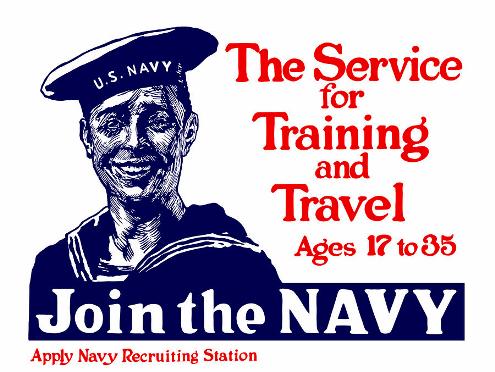
Behold, a teenage Clyde Barrow in a sailor suit. Bonnie & Clyde lore has it that Clyde attempted to join the United States Navy but was rejected because of lingering problems from a childhood illness, but on a quick sprint across the internet, I’ve been unable to find any specifics about Clyde’s having tried to enlist in the Navy. But he was certainly pro-navy: not only does he appear to have enjoyed wearing the sailor’s outfit, but he apparently also had a “USN” tattoo.

But what about this outfit? It certainly looks like a navy uniform. Is it an actual navy uniform? Maybe a relative’s? Is it a costume? Is it some sort of facsimile someone whipped up for him so he could slip into it whenever he felt like it? Is he play-acting? Dressing up for a party? And what about that “medal”?

clyde-barrow_sister_1925_utsa-det

The back of this photo reads “Nell Barrow and Clyde / 1925.” Could it have been 1926 instead? On his birthday in 1925, Clyde (who was born on March 24, 1909) would have turned 16 years old. The minimum age for enlistment in the U.S. Navy jumped back and forth between 17 and 18 years old, but by the time his birthday rolled around in March of 1926, the enlistment age was 17. By the end of that year Clyde had been arrested for stealing a car, and even though charges were eventually dropped, this police record may have been enough to prevent him from enlisting even if he hadn’t failed a physical. Whatever the case, if he DID want to join the navy, he had a very limited window in which to do it: from his 17th birthday on March 24, 1926 to his first arrest on December 3, 1926.

Imagine how different things would have been if Clyde Barrow had joined the navy and sailed the Seven Seas instead of hooking up with Bonnie Parker and terrorizing the Southwest?

navy-recruiting-poster

***

Sources & Notes

Photo, titled “Clyde Barrow and sister Nell Barrow, Dallas, Texas,” is from the University of Texas at San Antonio Libraries Special Collections, and is accessible here. Photo loaned to UTSA by Henry J. Williams (other photos from Mr. Williams’ collection are dated 1926, some of which I used in my previous post “Babyface Barrow — 1926” here).

If anyone has more information about Clyde’s uniform in this photo, I’d love to hear from you. Similar uniforms can be seen here.

Just to be ruthlessly detailed, if Clyde Barrow visited the United States Navy recruiting office in Dallas, it was on the second floor at 206 ½ Browder Street, at Commerce, its new headquarters as of June, 1925; station physician was Lieut. Jack Terry. (Wonder if Lieut. Terry was the one who gave Clyde his walking papers? If so, I wonder if he ever knew?)

A list of requirements to join the U.S. Navy — published in The Scranton Republican on Feb. 10, 1927 — can be found here.

For previous Flashback Dallas posts on Bonnie and Clyde, click here.

*

Copyright © 2015 Paula Bosse. All Rights Reserved.

Oak Downs: Dallas’ Brief Flirtation with Greyhound Racing

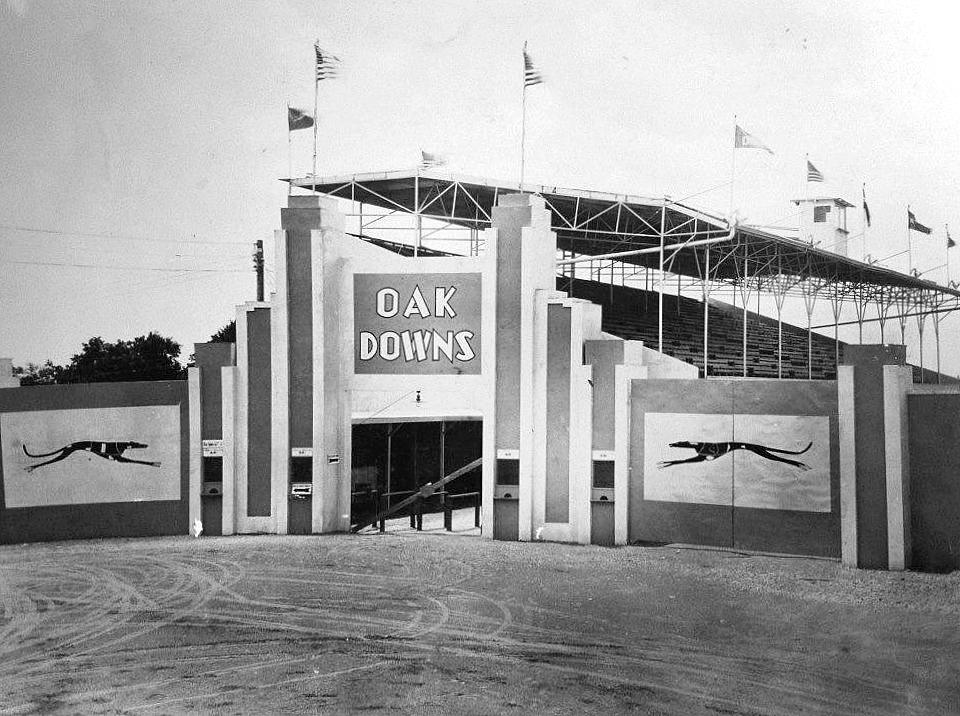
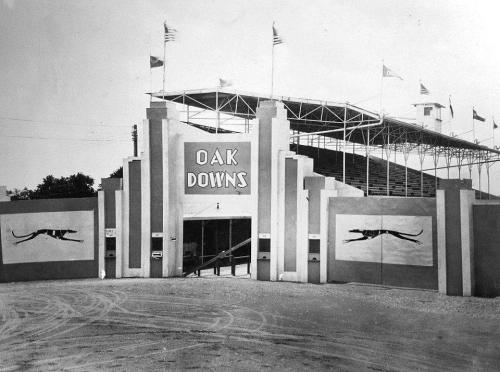
oak-downs_hurst_bwOak Downs greyhound track, ca. 1935 (photo courtesy Robert Hurst)

by Paula Bosse

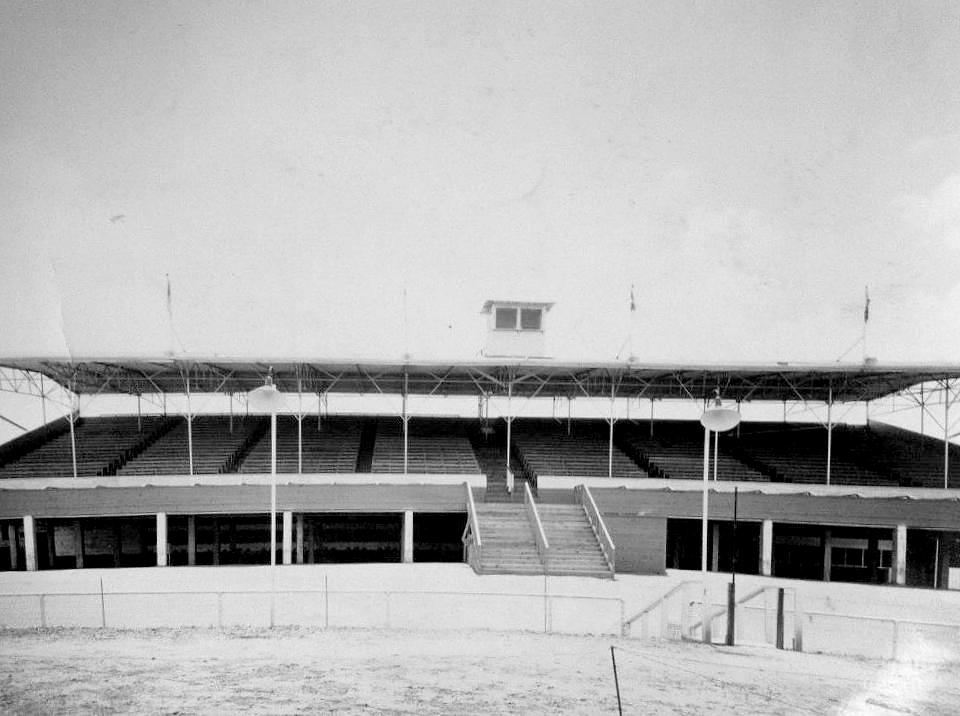
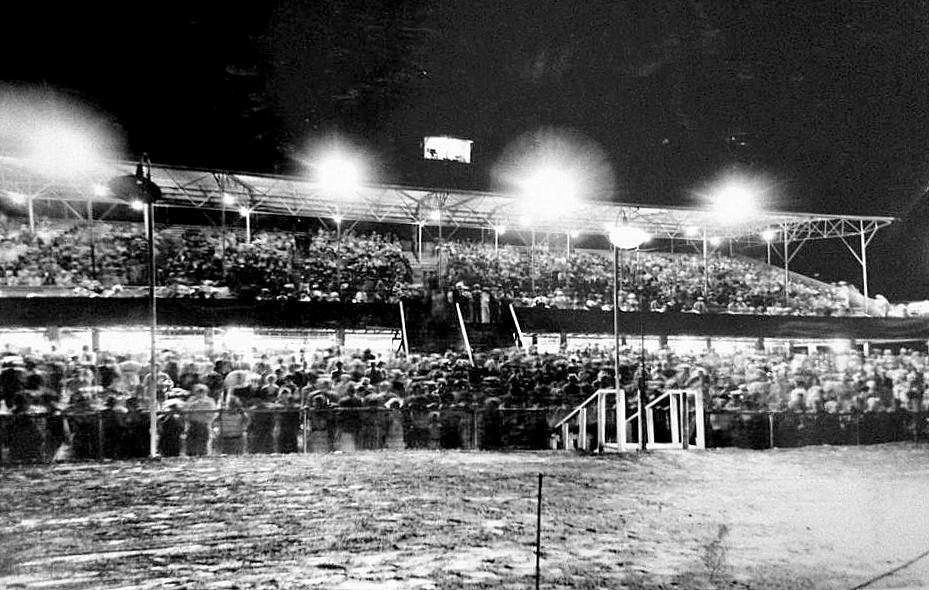
Robert Hurst has shared three great photos with me: the one above, and the two below. They show Oak Downs, a greyhound racing track that he thought might have been in Oak Cliff. A dog track? In Dallas? That was news to me. Mr. Hurst came across the photos a few years ago when going through the belongings of his grandparents, Lt. Col. and Mrs. C. W. Newman. As far as he knew, they had no particular interest in dog racing, and he wasn’t sure why they would have been in possession of photos of a greyhound track. I was a little hesitant to delve into anything having to do with dog racing, but these wonderful photographs piqued my interest. (For the faint of heart, this post focuses almost exclusively on the somewhat vague and constantly changing laws on parimutuel betting in Texas, with very little on the troubling aspects of greyhound racing.)
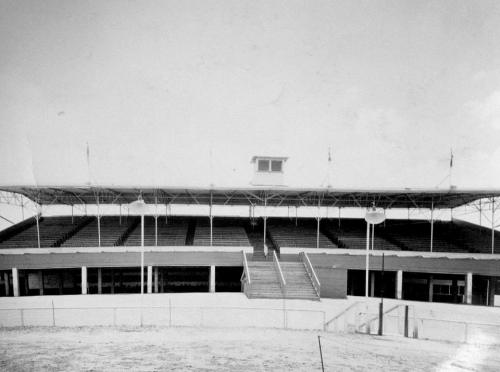
oak-downs_grandstand_day_hurst_bwGrandstand, daytime (click for larger image) (courtesy Robert Hurst)
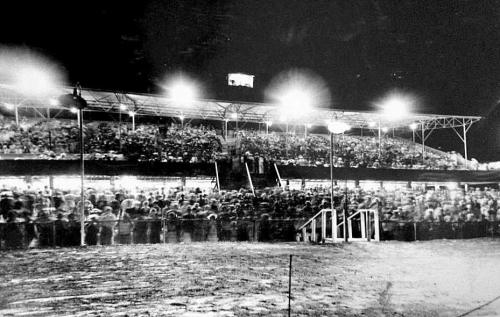
oak-downs_grandstand_night_hurst_bwGrandstand, nighttime (courtesy Robert Hurst)

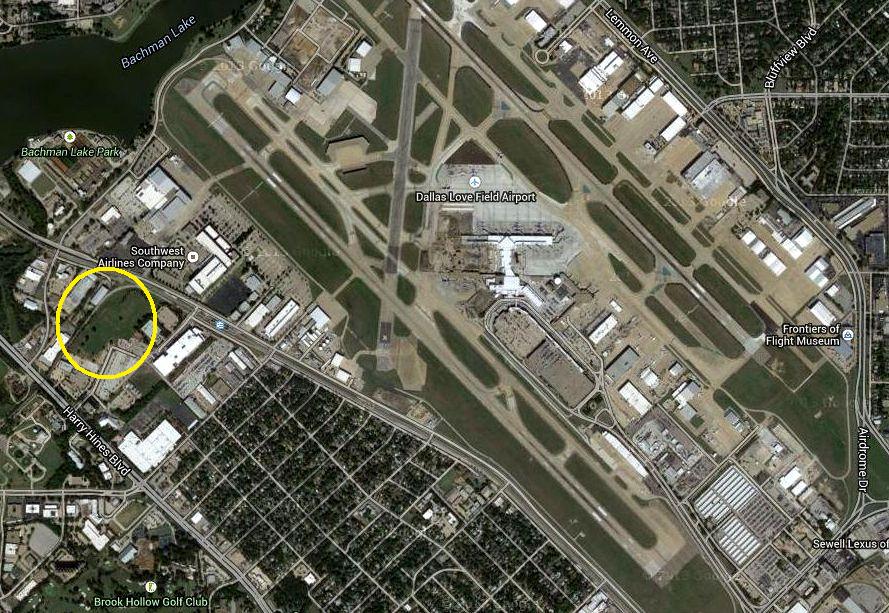
The track was located not in Oak Cliff, but right across the street from Love Field — an area that was “north of the city” in the 1930s. It was to the west of the airfield, with the address listed, popularly, as Maple Avenue, but officially as Denton Drive (just north of Burbank Road).
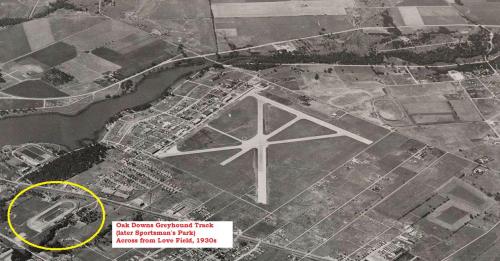
aerial_oak-downs_smu-foscue_1930s1930s (Edwin J. Foscue Map Library, SMU)
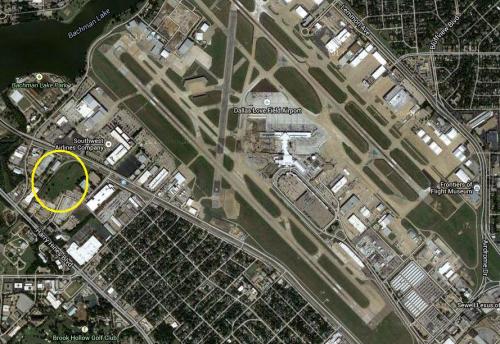
aerial_oak-downs_google2014 (Google Maps)

*

The first mention I can find of greyhound racing in Dallas was in 1898 at events held at the Fair Park horse racing track — the “sport” then was “coursing.” I don’t want to go into it, but live hares and jackrabbits were used, and it didn’t end well for them. (Competitive coursing is, I believe, now illegal in Texas, but open-field coursing is considered hunting and is legal.)

The first professional greyhound racing track to take the “blood” out of “blood sport” by utilizing an electric rabbit lure, was in California in 1919. The first track in the Dallas area to use an electric rabbit seems to have been one that opened near Grand Prairie in 1928; the news stories made sure to mention that there would be no wagering going on because, unlike other states where dog racing had been going on for some time and was quite popular as a gambling sport, parimutuel betting was not legal in Texas. Racing at that early track doesn’t seem to have lasted very long — probably because the spectators were not allowed to wager on the contests. Another track opened just outside Fort Worth at Deer Creek in 1934 (right after Texas had legalized betting on horse races in 1933), but, again, it doesn’t seem to have lasted long.

So, in the early ’30s, Texas was not really a hot-bed of dog racing enthusiasts. What was popular was horse racing — the two most popular tracks in the area were the Fair Park track in Dallas, and Arlington Downs in Arlington. The state legislature had voted in 1933 to allow parimutuel betting on horse races, hoping to raise revenue in the dark days of the Depression. People might not have been able to afford a new pair of shoes, but they managed to scrounge up money to bet with. Gambling on horse races was big business. But betting on dog races? Was it legal, too? It sounds like the law was surprisingly vague. Dog racing was not expressly written into law as being illegal — but people just seemed to understand it to be illegal. Proponents of greyhound racing — the so-called “Sport of Queens” — were adamant that they would force the state to address the issue and clarify the law — they would sue if they had to. A track in San Antonio had taken its case to a State Court of Appeals (after having been shut down by local authorities), and the court ruled that parimutuel wagering at dog tracks in Texas was not illegal. A precedent had bet set, and a few dog racing tracks began to open around the state, their owners and operators feeling they were relatively safe from prosecution.

In early 1935, 31-year old Winfield Morten, a “wealthy sportsman” who owned several businesses and a lot of Dallas real estate, decided he’d open a greyhound track on his 40 acres of land along Maple Ave./Denton Dr., just west of Love Field. He received his state business charter in May, 1935 (just days after the San Antonio ruling), and he made plans to open his dog racing “plant” — Oak Downs — in June. As they said back then, “pari-mutuel betting would be fully in vogue.”

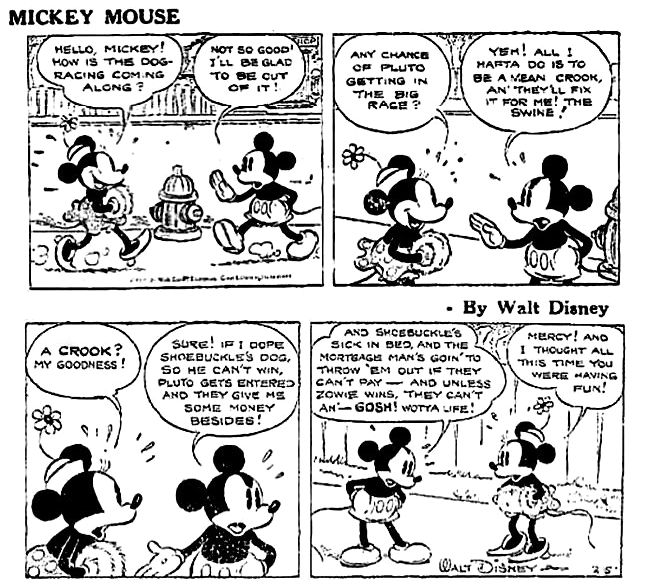
Many people did not want a dog racing track in Dallas (or anywhere in Texas, really). Owners of horse tracks (and the powerful people who were in bed with them) feared that they’d lose some of that sweet gambling moolah to the upstart “dogmen.” Outside the racing world, there was the fear/expectation that with dog tracks would come the inevitable gambling and sleazy criminal element. (Dog racing was generally seen as somehow more unsavory and déclassé than horse racing, which is odd, because the horse racing industry has never been known as a squeaky-clean one.) Also, apart from the gambling-related issues, many people were probably aware of (and disturbed by) persistent accusations of animal mistreatment. Interestingly, at this same time — during the first few months of 1935 — none other than Mickey Mouse was involved in a comic strip story arc that lasted several weeks in which he was hanging out at a dog track training his dog Pluto for a race. It wasn’t long before the comic strip (which was usually full of typical comic strip silliness and gentle humor) turned surprisingly dark, and Mickey found himself involved in a world of doping, gambling, extortion, and threatened violence (!). If Walt and Mickey were against the evils of dog racing, shouldn’t everybody be? I wonder if the strip was reflecting public opinion or shaping public opinion?
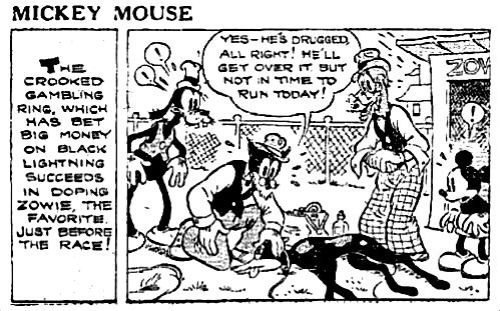
mickey_021935Poor Zowie! (Originally run Feb. 19, 1935)
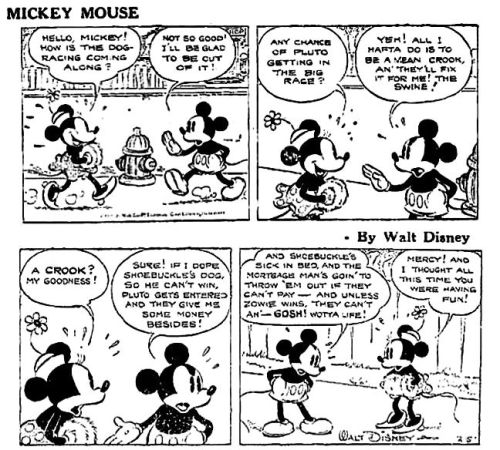
mickey_020535Mickey’s in a tough spot (click to enlarge) (Feb. 5, 1935)

Not only was the prospect of a “seedy” dog track unpalatable for many in an image-conscious city gearing up for its upcoming Centennial-Exposition-moment in the national spotlight, but there were those who were still convinced that gambling on anything but horse races in Texas was illegal — despite what the appeals court had ruled in the San Antonio case. Several interested district attorneys from around the state petitioned the State Supreme Court for a definite ruling. In the meantime, Dallas D.A. Robert L. Hurt and Dallas County Sheriff Smoot Schmid (greatest name in law enforcement EVER) threatened to shut down the not-yet-opened Oak Downs if it allowed wagering. Battle lines were drawn, and both sides believed they were in the right.

Track manager Jack Thurman said the city’s threats didn’t scare him. He’d open as scheduled, with plans for a full season of 48 days of racing (every day but Sunday), sleek hounds, an electric rabbit, and full-tilt betting. The day before Oak Downs was scheduled to open, its operators wisely obtained an injunction against Hurt (and, basically, the Sheriff’s Department and the Texas Rangers), which prevented the track from being shut down — they would open without fear of incident, under full legal protection of a court order. Not a happy guy, Hurt said he would file a motion to dissolve the injunction … immediately!

Oak Downs opened on June 18, 1935 to a large crowd of curious spectators, most of whom had never seen a dog race. The betting windows were open, but there was little betting. There were problems with the electricity in the stadium on opening day — the electric-powered rabbit that the greyhounds chased was not running on full power, and it moved so slowly that it was caught in two separate races by the probably confused dogs. (The second night there was too much juice, and the rabbit shot away from the pack so quickly that the dogs lost sight of it and just stopped running altogether. Hard to have a race if the dogs don’t actually run.) But the crowd seemed happy, and they weren’t overly concerned by the glitches happening there at the track or by the political and legal wranglings that were swirling downtown.

The crowds and the betting increased over the next few days, hinting at a rosy future for the track’s operators. But the races and the attendant wagering continued for only eleven days. The United States Fifth Circuit Court of Appeals refused to interfere with the wishes of State law enforcement — and State law enforcement wanted Oak Downs to cease with the gambling. So there was no more parimutuel betting at Oak Downs. After trying to struggle by without the sexy allure of betting — left with nothing but exhibition races and weird novelty events involving dog-riding monkeys — Oak Downs was forced to close its season prematurely on June 29.

Bye-bye, abbreviated inaugural season. No more betting on Doctor Snow, or Dixie Lad, or Rowdy Gloom, or Miss Cutlet, or Pampa Flash, or Billie Hobo, or Blond Hazard, or Mellow Man. Oh, Mellow Man, we hardly knew ye.

In February, 1936, Morten applied to the Texas Racing Commission for permission to race horses at his track, but the idea was quickly shot down by the Dallas City Council. The very profitable horse track at Fair Park was out of commission for 1936 as it was being used as part of the Centennial Exposition. Privately owned at the time, the track was leased to the Centennial Corporation, and the City Council — the members of which were no doubt on very friendly terms with the Fair Park track owner — felt it would be “unfair” to allow a competitor to horn in on the massive profits to be had. So … no dice (…as it were).

By September of 1936, Morten changed Oak Downs’ name to Sportsman’s Park and brought in new operators (including a former Texas Ranger). Oak Downs had joined other dog tracks in a new round of legal action which was slowly working its way through the courts. Without any ruling yet from the Supreme Court, they ignored an injunction that had been filed against them and defiantly opened up their betting windows again. Four of the men were fined and jailed briefly for contempt of court. But after months of mixed messages and conflicting rulings from various judges around the state, confused and fed-up lawmen were unsure of the actual legality of dog track betting, and, grudgingly, they allowed the wagering at Oak Downs to continue as they, too, awaited a high court decision.

As reported in Texas newspapers, on Oct. 28, 1936 the Texas Supreme Court finally ruled on the matter of whether or not dog racing could be wagered on legally in the state of Texas:

We do not find any provision in the penal code defining gaming which can be construed to include dog racing or betting on dog racing. It is not a game prohibited by law. […] This court is fully conscious of the pernicious and unwholesome effects upon society of betting on dog races and keeping premises for dog racing where betting is allowed, but the proper agency for the suppression of those wrongs is the Legislature, and until it sees proper to further legislate in the matter, the courts are without power to suppress these evils by injunction.

In other words, the Texas House and Senate were going to have to take up the issue if they really wanted to do away with legalized betting on dog races (which they did), because it was their fault that they hadn’t been specific enough when they wrote their original law.

So betting was back “in vogue” once again. And now with absolutely no threat of arrest. The remainder of the 1936 season continued without problems, and when the 1937 season opened in April, it was “the first greyhound meet in Dallas free of danger of being interfered with by law enforcement agencies” (DMN, April 22, 1937), but … as there were bills to outlaw betting on dog racing AND horse racing percolating through the current Texas legislature, it was thought that the 1937 season might also be the last season of racing in Texas.

In May, 1937, Governor James V. Allred addressed the Texas Congress, urging them to repeal the current law allowing parimutuel gambling on horse racing (with the knowledge that this would almost certainly also apply to the outlawing of dog racing, as that bill had just passed the House and was headed to the Senate). Here are a couple of passages from his speech, a transcription of which appeared in newspapers throughout the state on May 28, 1937:

I do not know how to state in words a stronger case for repeal of the race track gambling law than I have already given to this Legislature from time to time. I have quoted Washington, Franklin, Blackstone, Shakespeare, Brisbane, McIntyre and the Holy Bible. I have pointed out the living evidence of undesirables, of doping, of thuggery, of embezzlement, of bank failures, of suicides, and narcotic rings. Each month of the life of this law sees addition to the numbers of these human tragedies….

And, finally, a mention of the evils of racing with regard to the animals themselves:

There is no record of a horse ever being doped except to run a race. All the races ever run are not worth the agony and cruelty dealt even one of these poor, helpless beasts! I appeal to all who love good horses, I appeal to all who believe in preventing cruelty to animals to join with me in demanding that this law be repealed.

Allred’s lengthy and impassioned speech — which addressed every argument the pro-gambling forces were wont to … trot out … must have touched a few nerves (with both the public and the politicians), because in June, both bills passed with huge margins. (The bill outlawing the betting on dog racing passed in the Senate 22-1 and in the House 109-12. With passage of the new law, betting on dog races could now incur a fine of up to $500 and a jail term of up to ninety days; the penalty of “keeping a place of betting on dogs” was two to four years in the state penitentiary.)

So no more parimutuel betting in Texas. No more dog racing. No more horse racing.

And that was that for the state’s dog tracks. What was next for Oak Downs … er, Sportsman’s Park? Three words: “midget auto racing” (i.e. the racing of very small cars, not the racing of cars operated by very small drivers).

Besides the regular auto races, two added events give promise of furnishing fans with a few thrills as well as a laugh or two. Fast cowponies will be featured in a half-mile sprint with a race for roosters rounding out the show. Winner of the cowpony race will receive $15, while the winning rooster will be rewarded with $5. Entries are open to any and all owners of ponies or roosters. (Dallas Morning News, Aug. 27, 1937)

Somehow I don’t think five-buck-purse rooster races figured into Mr. Morten’s big dreams back at the beginning of 1935.
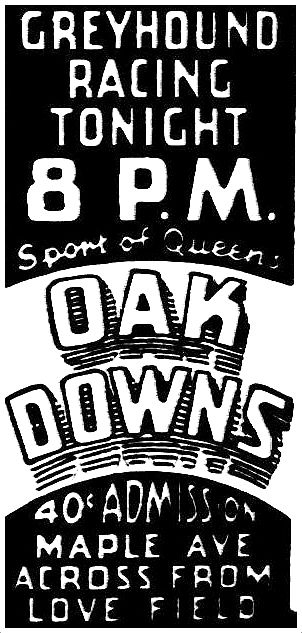
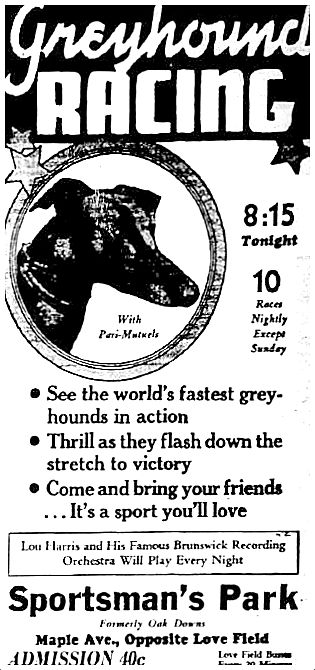
ad_oak-downs_0622351935

*

ad-dmn_0422371937

***

Sources & Notes

Top three photos of Oak Downs greyhound racing track used by kind permission of Robert Hurst. He came across them several years ago in the belongings of his grandparents, Lt. Col. Campbell Wallace (C. W. “Bub”) Newman and Martha Price Newman. Col. Newman was a cavalry officer who served in WWI, WWII, and Korea; between WWI and WWII, he worked in Dallas as a contractor and was employed for a time at Oak Downs where he worked in track operations. (That’s why he had these photos!) [And by no means do I mean to imply that this career military man was involved in any sort of shady goings-on. In fact, from what I can tell, Oak Downs seems to have been run by a fairly “clean” group of people. The perception/reputation of dog racing at the time wasn’t great, but nothing I’ve read about this track suggests that anything unscrupulous was going at the track, behind the scenes, or amongst the personnel who worked there.] He was also an avid polo player and was a good friend (and polo teammate) of Winfield Morten who owned the track. Many thanks, Mr. Hurst, for the use of these wonderful photos!

Black and white aerial view of the Love Field/Bachman Lake area was taken by Lloyd M. Long in the 1930s; photo is from the Edwin J. Foscue Map Library, Southern Methodist University. The unlabeled photo (a detail of which is used above) can be accessed here; a labeled version of this photo (with some streets and buildings identified) can be accessed here.

I highly encourage people to see out the transcript of Governor James V. Allred’s FANTASTIC impassioned speech before members of the Texas House and Senate, which appeared in newspapers around Texas on or around May 28, 1937. As far as politics is concerned, I’m the most cynical person in the world, but this is an incredible speech.

More on the history of parimutuel gambling in Texas from Wikipedia, here.

An explanation of just what parimutuel betting is, is here.

Parimutuel racing was legalized again in Texas in 1987. The current state of racing in Texas can be read about in the Dallas Morning News article “A Last Hurrah for Texas Horse Racing” (May 3, 2014) by Gary Jacobson, here.

I’m quite honestly shocked to learn that greyhound racing is legal in the state of Texas. There seems to be really only one active track with live racing in the state (in South Texas), and the only upside to this appalling fact is that attendance has been in steep decline for years.

*

Copyright © 2015 Paula Bosse. All Rights Reserved.

“Every Gypsy in the Nation Knows About This” — 1951

gypsy_lawrence-young_green-young_baylor_feb-1951
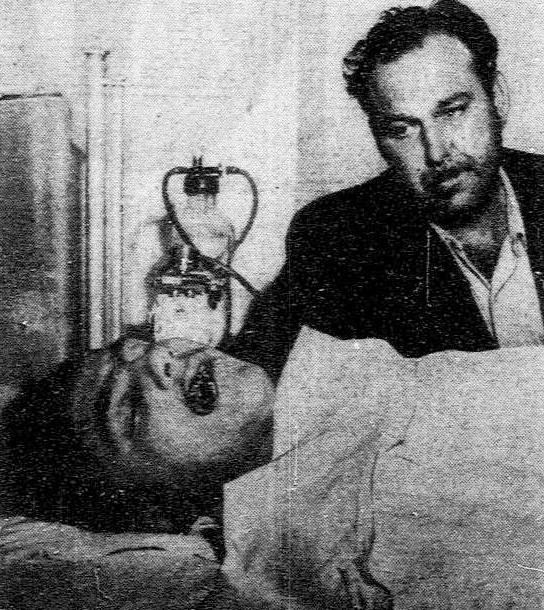
The “Gypsy youth” at the center of “tribal” unrest & his father, Baylor Hospital, 1951

by Paula Bosse

In the first few days of March, 1951, Dallas witnessed the influx of hundreds and hundreds of Gypsies into the city, all of whom had been summoned — from near and far — by a call put out over an effective and somewhat mysterious communications network. The reason? A teenage boy (referred to repeatedly as a “Gypsy youth”) had been shot in South Texas by a boy from another “tribe” (or clan, or family) — one family insisted the shooting was intentional, the other insisted it was an accident. This incident ballooned into a huge internecine feud. If the boy died, the “Green” tribe promised that there was “going to be a lot of shooting going on in Dallas” (Dallas Morning News, March 1, 1951). [Note: the word “Gypsy” is sometimes seen as a pejorative. I use it in this post purely in a historical context; it is not meant to be derogatory.]

In December of 1950, 14-year-old “Lawrence Young” (the anglicized name his family gave to authorities) had been walking along railroad tracks with other boys in Port Isabel, near Brownsville, when he was shot with a .22 caliber rifle by a 12-year-old, a Gypsy boy from another clan. The 12-year-old said the borrowed rifle had been malfunctioning and that, while hunting, the gun discharged unexpectedly, and a bullet hit Lawrence, whom the other boys thought was playing when he fell to the ground. Until they saw the blood. The bullet struck Lawrence in the back, near his left shoulder blade, and it lodged in his spine at the base of his skull. Police in Port Isabel determined that the shooting had been an accident. Lawrence’s family, however, said that the other boy had been jealous of Lawrence’s new car and had shot him on purpose. The boy was rushed to the hospital; his condition was not good.

After stays in hospitals in Galveston and Temple, Lawrence’s mother decided to move him to Dallas where she thought the medical care would be better. He was admitted to Baylor Hospital at the end of February. Relations had been tense between the two clans since the shooting, but the Evans clan (of which the 12-year-old boy was a member) had grudgingly agreed to pay for half of Lawrence’s medical bills. The decision by Lawrence’s family to move him to Dallas — where hospital care would be much more expensive — only made things worse between the two groups; the Green clan had heard that the Evans clan would not pay their share of what they felt would be an exorbitant bill. Tempers had been building and boiling for weeks, and by the time things moved to Dallas, things were about to explode.

Word of the increasingly volatile feud had spread, and Gypsies from several surrounding states began pouring into Dallas in a show of tribal support. The first reports estimated there might have been as many as 500 Gypsies in Dallas County, representing at least six different clans, each clan with strong loyalties to one of the two families. If the boy died, the Greens and their supporters promised that retaliation would be swift and deadly. The Evanses — and the clans friendly to them — were ready for whatever came their way. The threat of deadly violence in the streets of Dallas was a very real possibility (if a city could be an innocent bystander, that’s what Dallas was in this unusual situation).

The Dallas police were, understandably, worried. In an attempt to get the warring factions to leave town, homicide detective Captain Will Fritz was reduced to arresting several of the men on charges of vagrancy (“We can’t make them get out of Dallas, but we can keep arresting them for vagrancy until they move on,” Fritz said). Unfortunately, this was a pretty ineffective strategy.

Fifty or so “expensive automobiles” were parked outside Baylor as the time for Lawrence’s surgery approached. Men and women sat inside their cars waiting for a signal from a man they had placed inside the building who was to alert them from a window whether or not the boy had survived. If he died, things would get real bad, real fast. When police learned about the man inside the hospital, they arrested him. The boy was in critical condition prior to the surgery, and tensions among the factions continued to rise.

gypsy_lawrence-youngs-grandmother_baylor_feb-1951
Above, the boy’s grandmother, outside Baylor Hospital,
waiting for word on her grandson’s condition.

At some point, a man in Fort Worth who said he was a nephew of the King of the Gypsies in the United States intervened and worked as a sort of intermediary between the Gypsies and Fritz.

“I can’t promise there won’t be any shooting over there,” he told Fritz by telephone. “This thing has gone pretty far. But I will try to stop things where they are.”

“I don’t care how you settle this matter among yourselves,” Fritz replied, “Just do it out of Dallas County. We want no shooting here.”  (DMN, March 2, 1951)

Fritz agreed to release two men he had been holding (on non-vagrancy charges), hoping they would take word of the Fort Worth man’s “tribal council” involvement back to their people and calm the situation.

The surgery was, thankfully, successful. 

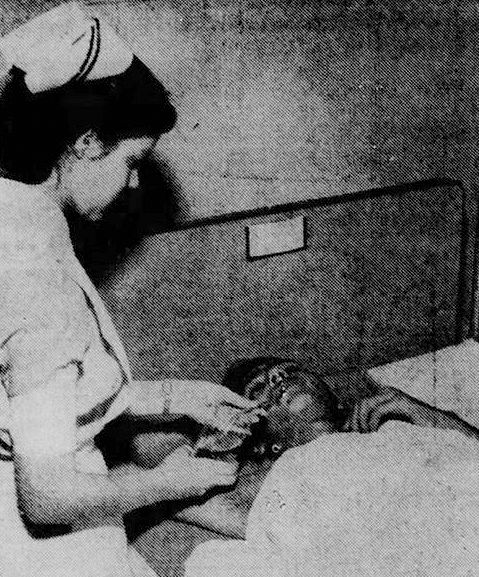
gypsy_mckinney-courier-gazette_030251Caption: “Gypsy Youth in Dallas Hospital — Lawrence Young, 14-year-old Gypsy youth gets a drink of water from a nurse at Dallas’ Baylor Hospital. Young was allegedly shot by another youthful Gypsy some two months ago near Brownsville, Texas. He was operated on at Baylor Hospital to have the bullet removed. Two Gypsy clans are reportedly watching with much interest to see that the youth recovers.” (NEA photo and wire report, from the McKinney Courier-Gazette, March 2, 1951)

*

To the relief of Dallas police, doctors said that Lawrence would recover — a major crisis had been averted, and the hundreds of Gypsies who had been camped around Dallas began to leave town. But just a few days later, a camp was discovered outside Garland, and twenty people were immediately arrested for vagrancy — they were photographed, fingerprinted, fined, and released, with the clear understanding that they needed to move on. ASAP. The next day, Sheriff Bill Decker announced they had packed up and left.:

“I don’t know where the road goes,” said Decker, “but it leads out of Dallas County.” (DMN, March 7, 1951)

*

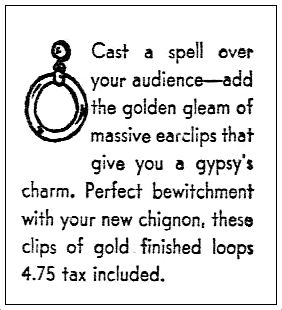
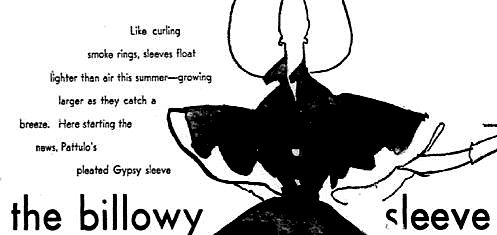
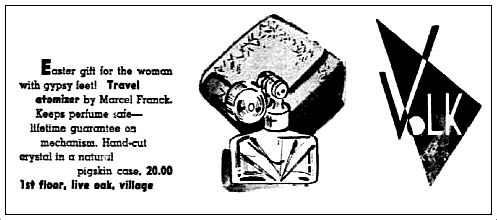
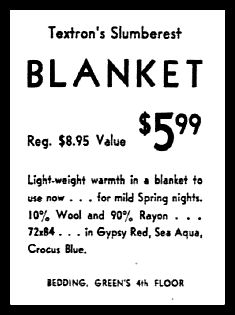
Gypsies were generally considered a menace by police departments around the country, as their arrival was usually accompanied by a rise in … questionable business practices. While these … business practices … were usually viewed negatively, it’s interesting to note that in 1950 and ’51 Gypsy “style” was everywhere. Ads for upscale department stores such as Neiman’s and A. Harris, for instance, were filled with Gypsy-inspired fashions — off-the-shoulder peasant blouses, scarves, gold bangles, dangly earrings, and exotic makeup. Cars and household items came in popular colors such as “Gypsy green,” “Gypsy red,” and even “Gypsy brown.” People might not have been excited by their … unorthodox business practices … but they sure loved the way they dressed and were attracted by the allure and romance of their rootless, “wandering” lifestyle.

gypsy_n-m_dmn_030551Neiman-Marcus ad — 1951

gypsy_n-m_dmn_041051Neiman-Marcus ad — 1951

gypsy_volk-ad_dmn_031051Volk ad — 1951

gypsy-green_w-a-green-ad_dmn_011851W. A. Green ad — 1951

***

For more on “Gypsy”/Romani/Romany/Roma culture and history, see the Wikipedia entry here; for issues concerning use of the word “Gypsy,” see here.

And for no other reason than to see how Gypsies were often stereotypically portrayed on pre-PC television, an episode of The Andy Griffith Show called “The Gypsies” can be watched on YouTube, here.

My favorite tidbit gleaned from this brief look into Gypsy culture was discovering that families and individuals with No Fixed Abode often communicated via the classifieds of, of all things, Billboard magazine.

*

Copyright © 2014 Paula Bosse. All Rights Reserved.


David Wade: Overcoming Childhood Trauma

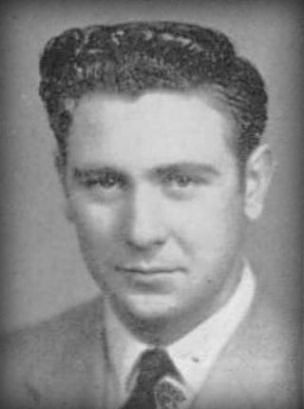
david-wade_waco-high-school-194117-year-old David Wade, Waco High School, 1941
by Paula Bosse

For many Texans, the name David Wade brings to mind a gentle and convivial, deep-voiced TV cooking show host who, for decades, shared his love of food with a legion of faithful fans. Dallas was Wade’s home base — it was where he lived, where he established his business empire, and, for the most part, where he recorded his television programs. He seemed like the kind of guy who had it all. But many of his fans would be shocked to learn that David Wade’s most searing childhood memory was the impossible-to-forget day his father killed his mother.

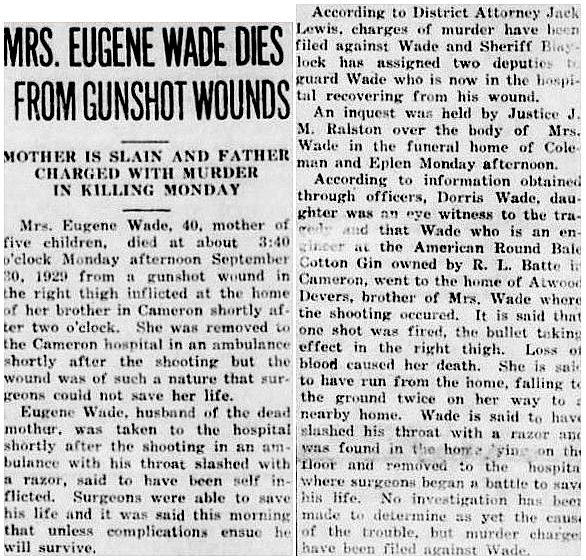
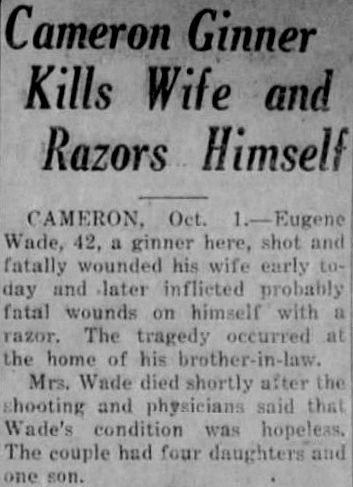
In 1929 Eugene and Ora Lee Wade lived in Cameron, Texas, about 50 miles south of Waco. They had four daughters, ranging in age from twelve to twenty-one, and one son, five-year old David. Eugene worked as an engineer at the local cotton gin, and Ora Lee raised the children and was a popular and active member of her church.

On the afternoon of Sept. 30, 1929, Eugene came home drunk. Very drunk. He began to argue with Ora Lee, and, as things escalated, she ran to the nearby house of her brother. An angry Eugene lurched after her. A gun was drawn, and Eugene drunkenly threatened his wife with it. In an ensuing physical altercation, the gun went off. Mrs. Wade had been shot in the thigh. She attempted to run away but collapsed after only a few steps. She died soon after being rushed to the hospital — her femoral artery had been severed, and she bled to death. Before the police arrived, Eugene Wade had slashed his throat with a razor, and though not initially expected to live, he survived and was charged with the murder of his wife. The horrible, violent, bloody scene had been witnessed by at least one daughter (and, in all likelihood, probably by five-year old David as well).

wade_bryan-eagle_100129The Bryan Eagle, Oct. 1, 1929

wade_cameron-herald-100329The Cameron Herald, Oct. 3, 1929 (click for slightly larger image)

A distraught Eugene Wade pleaded guilty, was sentenced to life in prison, and by the end of the year, he was on his way to Huntsville. Before he left Cameron, he gave a lengthy, sincere, and heartbreaking interview to The Cameron Herald. In it, he expressed his sorrow, his regret, and his love for his wife and children.

“Whiskey was the cause of it all. I am to blame for what has happened to my family and to myself. I can lay it all to drink. I loved my wife as well as any man ever loved his wife and I love my children. My home is destroyed and my wife is dead. My children will suffer the humiliation of this terrible thing. Time may heal their wounds but mine will bleed for all time. I can never escape the horror of it though I should live a thousand years. Nothing but sorrow is left for me, still I might come out of the trouble some day, maybe an old man and broken but maybe I can still do some good in the world.” (Cameron Herald, Dec. 19, 1929)

Five-year old David had been left, basically, an orphan. He spent some time at the Juliette Fowler home for orphans in Dallas and was later moved around between family members and foster families. He went to Waco High School where he was a popular student (the yearbook photo above was accompanied by the motto supplied by the Senior Band, of which he was a member: “And he is oft the wisest man”), and he received arts degrees from Baylor and the University of Texas (he studied music and had a short career as a singer). He seems to have done well in school, despite the terrible incident in his past.

But after college he spent time in California as a “test pilot,” a nerve-wracking job that apparently stressed him out so much that he sought medical treatment (an amateur psychologist might assume that his anxiety was triggered by post-traumatic stress). According to later newspaper profiles, instead of sedatives, the doctors suggested he focus on an enjoyable hobby to settle his nerves. A hobby like cooking. …And the rest is history.

As far as I’ve been able to determine, he rarely — if ever — talked about the tragedy he experienced in his youth. When one knows the details of his past, some of his quotes from interviews carry more weight:

“Any time you have a problem and you overcome it, you have a muscle. You never build a personality unless you have a lot of troubles.” (David Wade in the Fort Worth Star-Telegram, April 25, 1976)

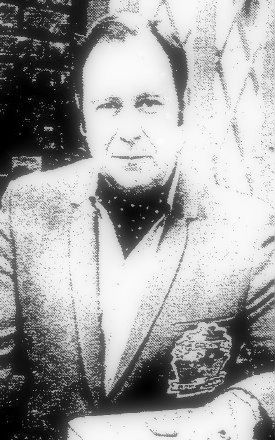
When I was growing up and would frequently come across one of David Wade’s shows on TV, I usually clicked on past it unless there was absolutely nothing else to watch. He and the show felt a little corny and were a little too laid back for my taste. Now, though, having learned about his past — and having always felt that Mr. Wade seemed to be a genuinely nice person — I definitely have a more positive and respectful opinion of the man. Ascot, crest-emblazoned blazer, and all.

david-wade_FWST_042576-photoBon Appétit!

***

Sources & Notes

Top photo of a 17-year-old David Lloyd Wade from the 1941 Waco High School yearbook.

The coverage of Ora Lee Wade’s funeral in the Cameron Herald (Oct. 3, 1929) — which includes quite a bit of genealogical information — can be found here (click for larger image).

The full “jailhouse interview” with Eugene Wade in the Cameron Herald (Dec. 19, 1929) is available in a PDF, here.

Incidentally, Eugene Wade’s “life sentence” lasted four years. He was the recipient of one of Governor Ma Ferguson’s notorious “conditional pardons.” He appears to have lived around the Cameron area until his death in 1967. I don’t know whether he ever re-established relationships with his children.

A nice overview of David Wade’s very successful career can be found in an article from the April 25, 1976 issue of the Fort Worth Star-Telegram, in a PDF, here.

My previous post, “David Wade, Gourmet: Have Ascot, Will Travel” — about his happier days as a successful TV personality — can be read here.

*

Copyright © 2014 Paula Bosse. All Rights Reserved.