Flashback : Dallas

A Miscellany: History, Ads, Pop Culture

Category: WFAA

“How the News Got Made” — SMU’s WFAA Newsfilm Collection Spotlighted at the Dallas VideoFest

wfaa-newsfilm_thumbnails_hamon_cul_smu(G. William Jones Film and Video Collection, SMU)

by Paula Bosse

The Dallas VideoFest is in full swing this weekend, and one of the events on the schedule is How the News Got Made: A Rare Look at SMU’s WFAA Newsfilm and a Conversation with the People who Created It.” This screening and panel discussion will include WFAA news clips and B-roll footage on 16mm film from the 1960s and ’70s, selected from the large WFAA Newsfilm Collection (part of the moving image holdings of the G. William Jones Film and Video Collection, Hamon Arts Library, Southern Methodist University).

A few months ago I saw a screening at SMU of some of these clips — which had been selected by the collection’s curator, Jeremy Spracklen, who has also, I believe, compiled the clips for the VideoFest presentation — and I really enjoyed it. Being able to watch 45- or 50-year-old news clips — of subjects both newsworthy and not-so-newsworthy — is an interesting way to study moments in the history of Dallas. It’s certainly more immediate and “flavorful” than reading old black and white newspaper clippings. I mean … you can listen to people actually talking. (With actual ACCENTS!) And see them move! SMU is in the process of identifying people and places seen in these clips and may soon request crowdsourced assistance from the public. It’s a large undertaking, further complicated by the fact that much of the footage was received by SMU randomly spliced together, some of it raw footage without sound. The hope is to identify subjects and subject matter in order to assist researchers, historians, and documentarians.

At present, almost two decades’ worth of these film reels are slowly being digitized; when the transfers are complete, they are uploaded to SMU’s Central University Libraries site and are free to be viewed by the public. Check what’s up now, here, and watch a few yourself.

There is a great Dallas Observer article by Jamie Laughlin on this collection. You must make sure to scroll down and watch the clip of fresh-faced Channel 8 newsboy Bill O’Reilly (yes, that Bill O’Reilly) interview the only slightly younger-looking future superstar ventriloquist (…two words I’ve never typed one right after the other before…) Jeff Dunham, who, at 14, seems really excited to be talking about his craft on TV.

And, if only a sliver of what I saw of the hilariously bizarre and wonderfully entertaining footage from about 1969 of mini-skirt-and-sideburn-hating Texas Land Commissioner Jerry Sadler — who was reported to have grabbed and choked a political critic in a dispute over Spanish galleon treasure recovered off the Texas coast (…yes, that’s what I said…) —  is shown at the VideoFest, it will be WELL worth your time!

***

Sources & Notes

The top image is a collection of thumbnail images of WFAA digital files which have been uploaded to the Central University Libraries’ site, here.

Read about this WFAA Newsfilm Collection in the Hamon Arts Library digital collection here.

For more information on the collection, contact filmarchive@smu.edu.

The Dallas VideoFest program, “How the News Got Made: A Rare Look at SMU’s WFAA Newsfilm and a Conversation with the People who Created It,” takes place this weekend, Saturday, Oct. 22, 2016, 5:15-6:45 PM at the Angelika Film Center. More information on the event and the panel participants is here.

*

Copyright © 2016 Paula Bosse. All Rights Reserved.


Radio Mobile Units — ca. 1940

kfaa_mobile-unit_wfaa-fam-albumWhat? You’ve never heard of KFAA? (click for larger image)

by Paula Bosse

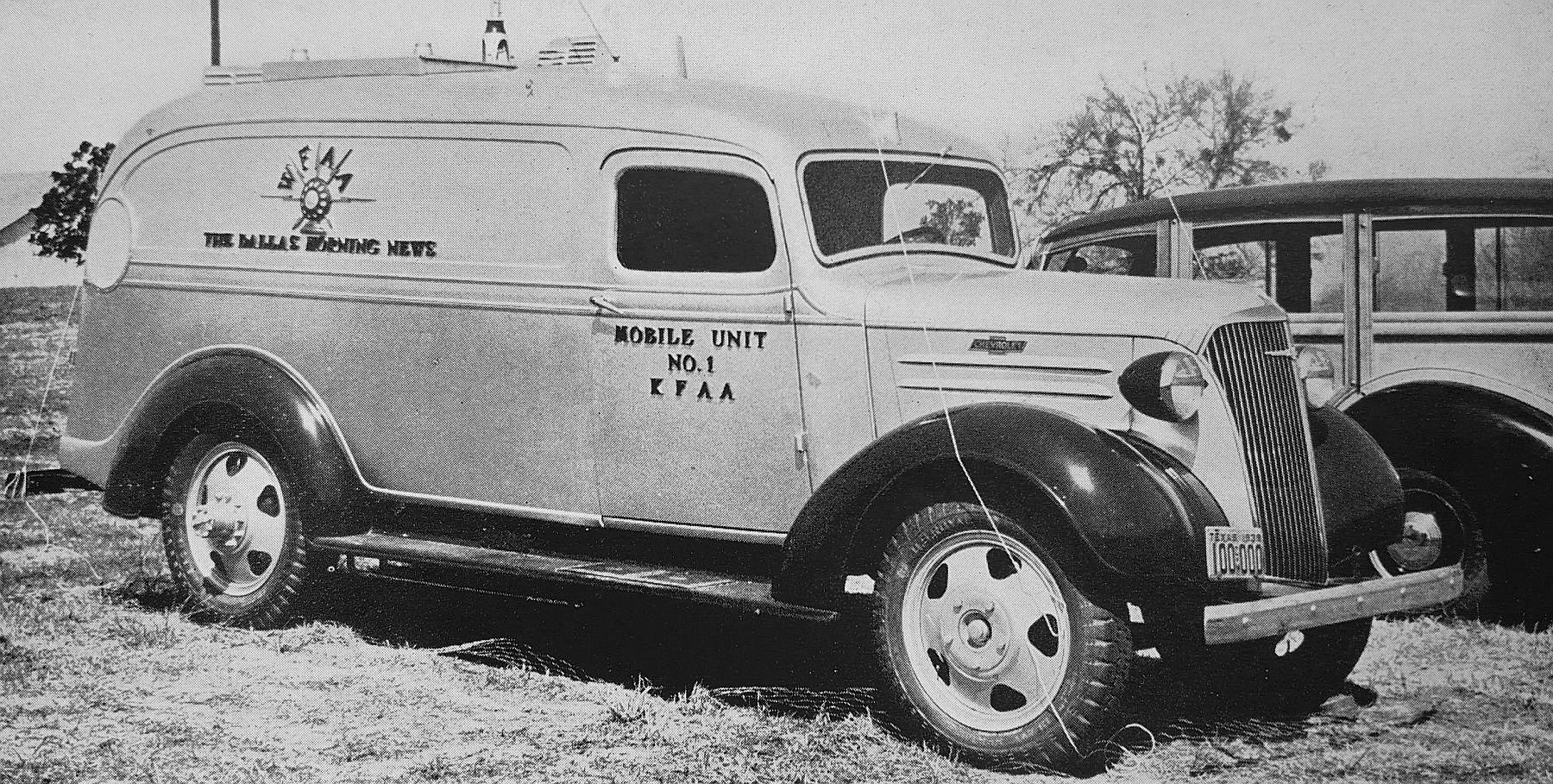
Check out these pre-war mobile units for radio stations WFAA and WBAP. The unit above actually had its own call letters — KFAA — and was licensed as a separate station. (That logo!) The caption, from a 1941 promotional booklet issued by stations WFAA (Dallas), WBAP (Fort Worth), and KGKO (Wichita Falls):

The WFAA Mobile Unit shown here is a complete short wave broadcasting station on wheels. The unit has its own call letters, KFAA, because it is a self-contained and separately licensed station. The amazing array of facilities contained in this one-and-one-half-ton truck includes a transmitter, generator, receiving equipment, public address system and pre–amplifiers. The transmitter tower on top of the truck can be raised to a height of 35 feet, making it possible to pick up the mobile unit’s signals for re-broadcast from a distance of 50 miles.

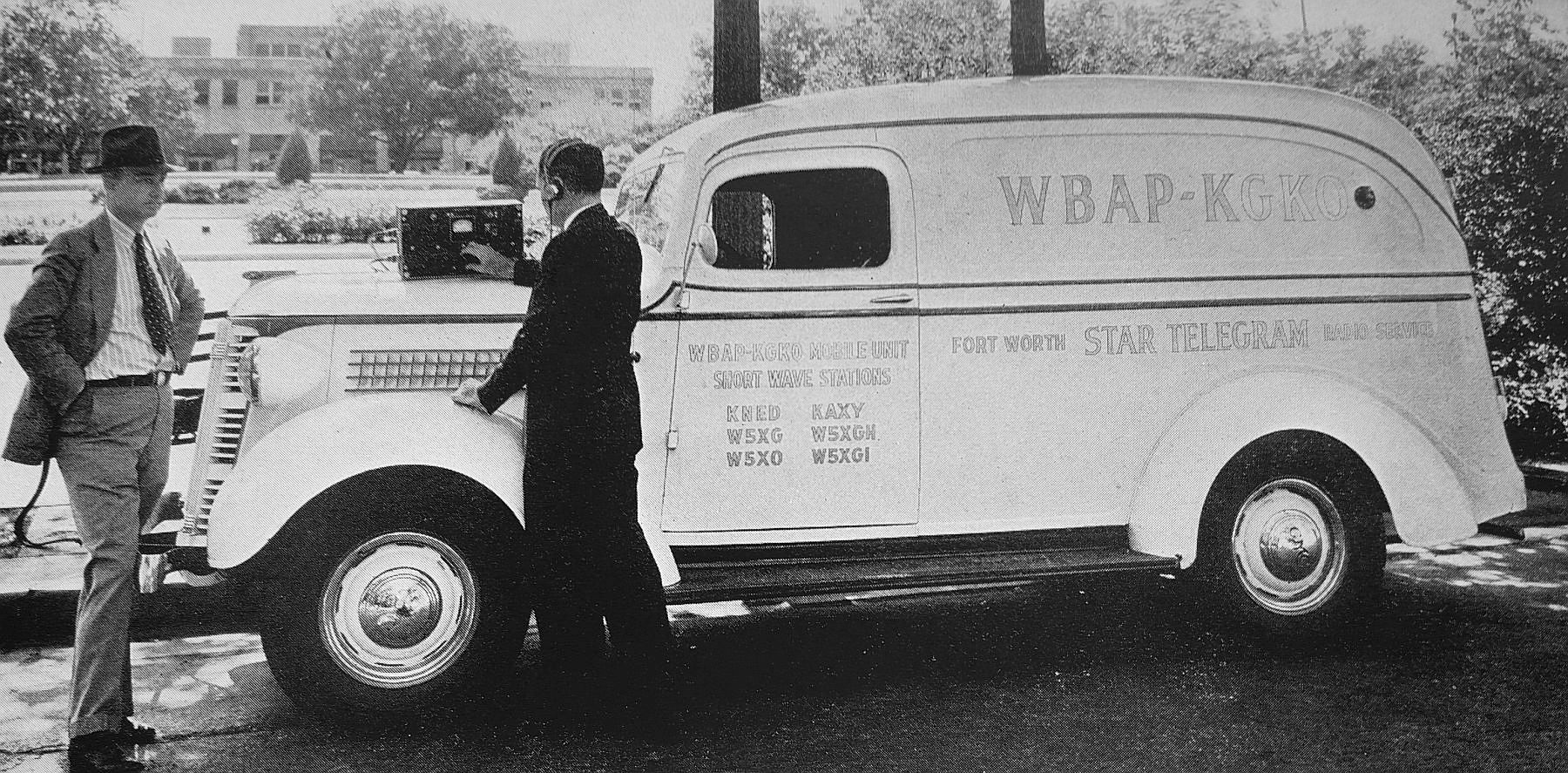
Here’s the WBAP/KGKO unit:

wbap-mobile-unit

Fort Worth Star-Telegram Mobile Radio Unit – with Chief Engineer R. C. “Super” Stinson, left, and A. M. Woodford, production man, handling a remote or “nemo” pickup from Burnett Park, Fort Worth. The WBAP-KGKO Mobile Unit carries six short wave transmitters and receivers besides a power plant capable of generating electricity for a small town of 500 people. This unit “swam” through a recent flood in Brady, Texas, established communication from the stricken area and received the congratulations of the Texas Highway Patrol. It also played a star role in the Amarillo storm.

***

Photos from the booklet WFAA, WBAP, KGKO Combined Family Album (Dallas-Fort Worth, 1941).

Why were arch-rivals WFAA (owned by The Dallas Morning News) and WBAP (owned by The Fort Worth Star-Telegram) co-publishing a promotional booklet? Because they shared the same transmitter and had an extremely odd broadcasting agreement. Read about it in my previous post “WFAA & WBAP’s Unusual Broadcasting Alliance,” here.

Click those photos!

*

Copyright © 2016 Paula Bosse. All Rights Reserved.

Sonny James: The “Shindig Heartbreaker”

shindig-cast_sonny-james-websiteSonny James, center, with fiddle (photo: SonnyJames.com)

by Paula Bosse

Sonny James — the much-loved Country Music Hall of Fame singer — died yesterday (Feb. 22, 2016). When I was a child, his version of “Runnin’ Bear” was my favorite song, and it was played endlessly throughout the ’70s on Dallas’ classic country stations like KBOX and WBAP. I was surprised to learn a few years ago, that the Alabama-born Sonny James lived in Dallas for several years, and that Dallas was where he was performing regularly when he exploded into the national consciousness with his first #1 hit, “Young Love.”

sonny-james_dmn_0609561952

Before he made his way to Dallas, Sonny James had been making a name for himself as a performer on Shreveport’s Louisiana Hayride. One of his first appearances in Dallas was during his Hayride Days: he was a guest on the Big D Jamboree in the summer of 1952.

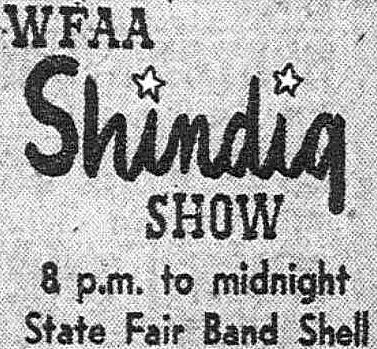
He must have made quite a splash, because only a month later, he had left the Hayride, moved to Dallas, and was signed to appear on the show “Saturday Nite Shindig,” the WFAA-sponsored answer to the Big D Jamboree, which debuted on October 11, 1952. (As “Saturday Night Shindig,” the radio show had been a WFAA staple since it began in 1944; Sonny James was hired to be part of a new “Shindig,” which was revamped from a folksy half-hour show to a 4-hour live music show and was broadcast from Fair Park.)

“Yeoow! More Zip than a Singed Cat!” (Click for larger image.)

sonny-james_dmn_100852Oct. 8, 1952

sonny-james_dmn_101052Oct. 10, 1952

It was an immediate hit, and Sonny became the main draw and something of a teen heart-throb. Less than a month after the announcement of his permanent gig as a “Shindigger,” he also got his own radio show on WFAA, Tuesday and Thursday mornings from 11:00 to 11:15.

Pretty soon, the Shindig revue was being simulcast on TV and radio, live from Fair Park (from the bandshell when it was warm, and from various other buildings during cold and inclement weather).

sonny-james_dmn_041153April 11, 1953

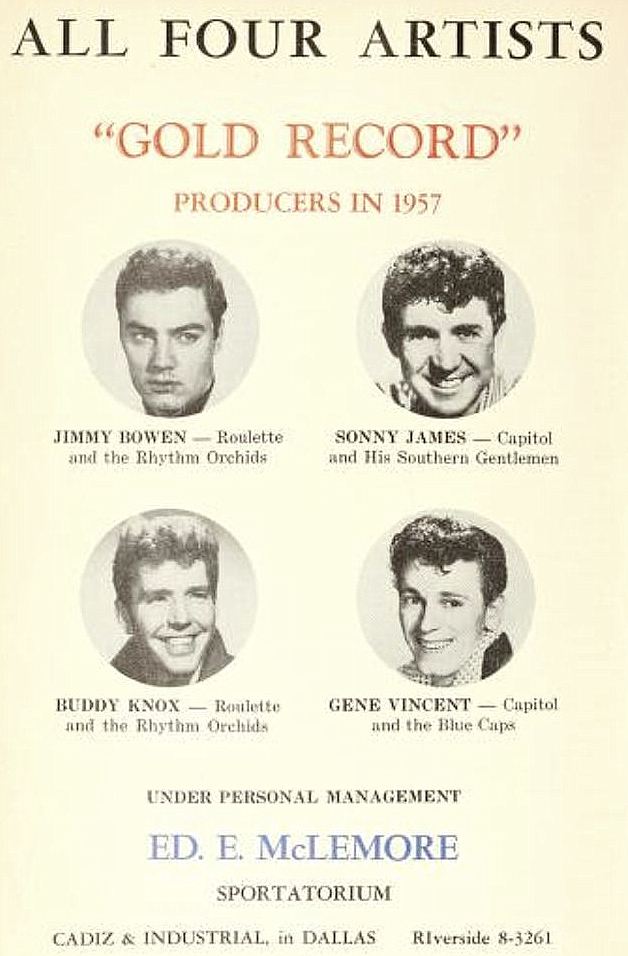
The Shindig show seems to have died away in 1954 or 1955. Sonny James headed back to the Sportatorium and the Big D Jamboree (which was run by his manager, Ed McLemore). One show of note was this one in 1955, with his old Louisiana Hayride pal Elvis Presley. (McLemore made sure that even though Elvis was the headliner, Sonny’s name was actually bigger!)

big-d-jamboree_FWST_041555-elvis_sonny-jamesApril 15, 1955

Sonny James had been recording for Capitol for several years, with some success, but it wasn’t until the end of 1956 that he had his mammoth #1 crossover hit, “Young Love,” which made him a national star. Apparently, he kept a residence in Dallas for a while (the last address I see for him in Dallas was in 1955 at 4718 Capitol, between N. Carroll and Fitzhugh). While living in Dallas, he was a steadfast member of the Church of Christ at East Side and Peak, and he frequently participated in area fishing contests (in fact, there might have been more mentions of his extracurricular fishing exploits in the local papers than there were mentions of his show-biz exploits — his fishing activities were often covered using his real name, Jimmie Loden). One person who lived in the same neighborhood Sonny did recalled on a Dallas-history message board that Sonny worked on Saturday mornings bagging groceries at a store on the corner of Capitol and Fitzhugh.

Sonny James went on to be a much-loved country performer who racked up a number of hits and was, apparently, one of the nicest guys around. He was most definitely a Southern Gentleman. Thanks, Sonny.

sonny-james_shindig_ebay

*

sonny-james_dmn_110852-shindig-ad
Nov. 8, 1952

sonny-james_promo-photo_1953
1953

shindig_dmn_091253
Sept. 12, 1953

shindig_billboard_100353
Billboard, Oct. 3, 1953

sonny-james_dmn_082154
Aug. 21, 1954

james-sonny_1957_promo-photoRadio Annual and Television Yearbook, 1957

james-sonny_mclemore_1958Radio Annual and Television Yearbook, 1958

***

Sources & Notes

Sonny James’ obituary form the Hollywood Reporter is here. His Wikipedia page is here.

The official Sonny James website is here.

To get an idea of the absolutely HOT hillbilly and rockabilly music that was being performed in Dallas in the years that Sonny James was here, check out this fantastic sampling of recordings from the Big D Jamboree:

*

See a few photos of Sonny James in Dallas at SonnyJames.com here (click thumbnails for larger images — the photo of Sonny sitting in the wings watching Elvis on stage at the Big D Jamboree is pretty great!).

A couple of good articles about Sonny James’ time in Dallas (written while he still considered himself a resident of the city) can be found in the Dallas Morning News archives:

  • “Success Won’t Spoil Mr. James” by Tony Zoppi in his “Dallas After Dark” column (DMN, Feb. 10, 1957)
  • “Sonny Snubs That Las Vegas ‘Loot'” by, of all people, Frank X. Tolbert in his “Tolbert’s Texas” column (May 13, 1957), in which Sonny — fresh off his 2.5-million-selling “Young Love” hit — talked about having a clause in contracts saying he would not perform in places with drinking, “clinch dancing,” and gambling, mostly because he did not want to exclude his teenage fans from being able to see him perform.

A good interview with Sonny James — packed with photos — appeared in the January, 1958 issue of TV Radio Mirror, a full scan of which you can find here. Even after he had hit the mega-big-time, Sonny said he continued to keep an apartment in Dallas. In the story there is a photo of his Dallas girlfriend, Doris Farmer (née Shrode) — she and Sonny took out a marriage license in July, 1957 (seen here) — I’m not sure when they married, but Sonny and Doris were happily married until Sonny’s death, almost 60 years.

Another performer who lived in the DFW area at the same time as Sonny James and who was also on the cusp of national stardom was Pat Boone, who had his own show on WBAP while attending college in Denton. Sonny and Pat were friends and even appeared on a few bills together. They were both also members of the Church of Christ, which both no doubt felt was an important bond. I wrote about Pat Boone’s time in DFW in the Flashback Dallas post “Pat Boone, Host of Channel 5’s ‘Teen Times’ — 1954,” here.

*

Copyright © 2016 Paula Bosse. All Rights Reserved.

Radio Broadcasting, 1922-Style

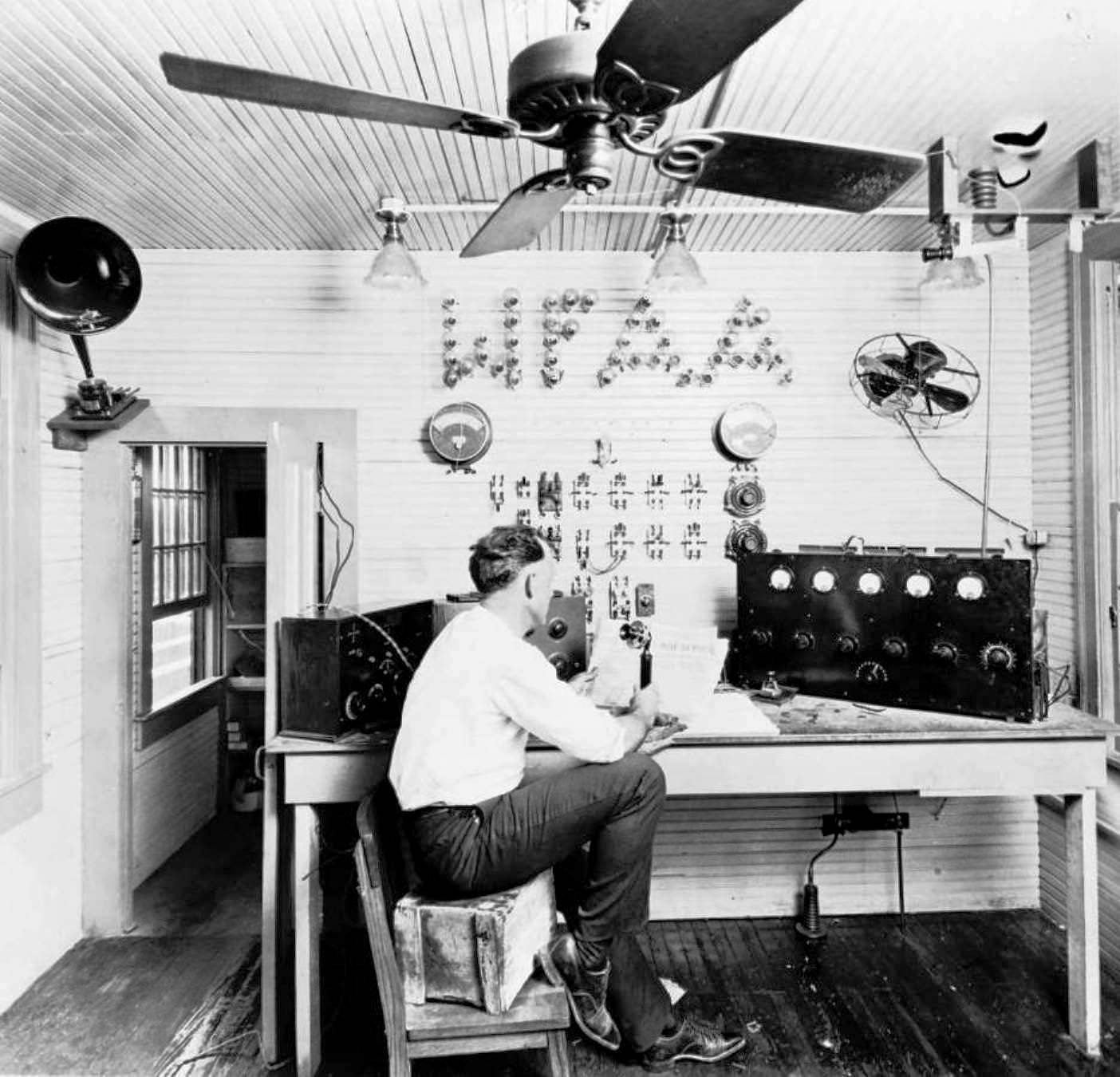
wfaa-control-room_belo_smu_1922WFAA “newsreader,” 1922 (click for larger image) Belo Collection, SMU

by Paula Bosse

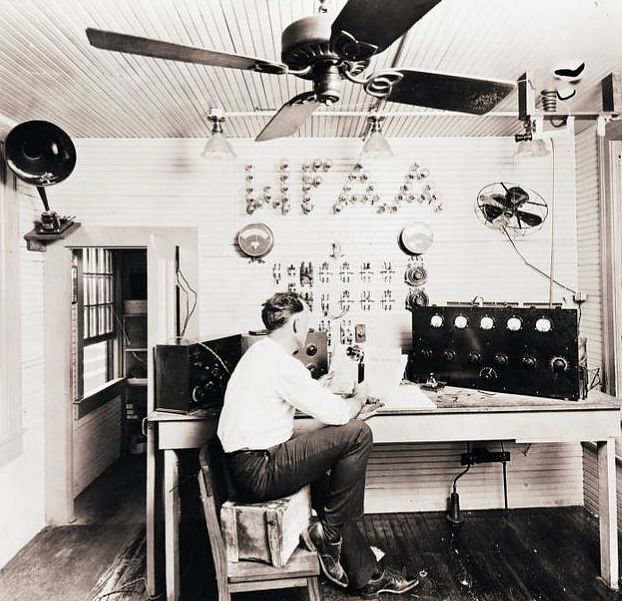
This fantastic photo shows the interior of a little shack-like building on top of the old Dallas Morning News building at Commerce & Lamar, soon after WFAA radio had begun broadcasting in the summer of 1922. There are so many things I love about this photo. Let’s explore the details. (All pictures are larger when clicked.)

*

The Magnavox speaker/monitor.

wfaa-control-room_belo_smu_det1

*

The booster seat and the shoes that need a shine.

wfaa-control-room_belo_smu_det2

*

The announcer at work. (I’m assuming this telephone was being used as an early microphone?) The newspaper is The Dallas Journal, sister publication of The Dallas Morning News which owned WFAA radio. The headlines appear to be about the nationwide railroad and coalminers’ strikes, both of which had been getting more and more violent throughout July of 1922 (violence surrounding the railroad strike led to Texas Governor Pat Neff declaring martial law in Denison that month).

wfaa-control-room_belo_smu_det3

*

The control panel (which has its own fan).

wfaa-control-room_belo_smu_det4

*

And an open window around the corner, in the supervisor’s office. Cross-ventilation and oscillating fans might not have been hugely effective in keeping operators and machinery cool in the summertime.

wfaa-control-room_belo_smu_det5

*

Here’s another view of the “Operating Room,” as published in the DMN on June 25, 1922, the day before WFAA began broadcasting.

wfaa_operating-room_dmn_062522DMN, June 25, 1922

***

Photo titled “WFAA Radio Original Control Panel” from the Belo Papers collection, DeGolyer Library, Central University Libraries, Southern Methodist University; it can be viewed here.

A companion post to this, “WFAA’s ‘Altitudinous Antenna System'” — which contains a background of WFAA’s debut and several photographs — is here.

Other Flashback Dallas posts on Dallas Radio and TV are here.

Click pictures for larger images.

*

Copyright © 2015 Paula Bosse. All Rights Reserved.

WFAA Radio’s “Altitudinous Antenna System”

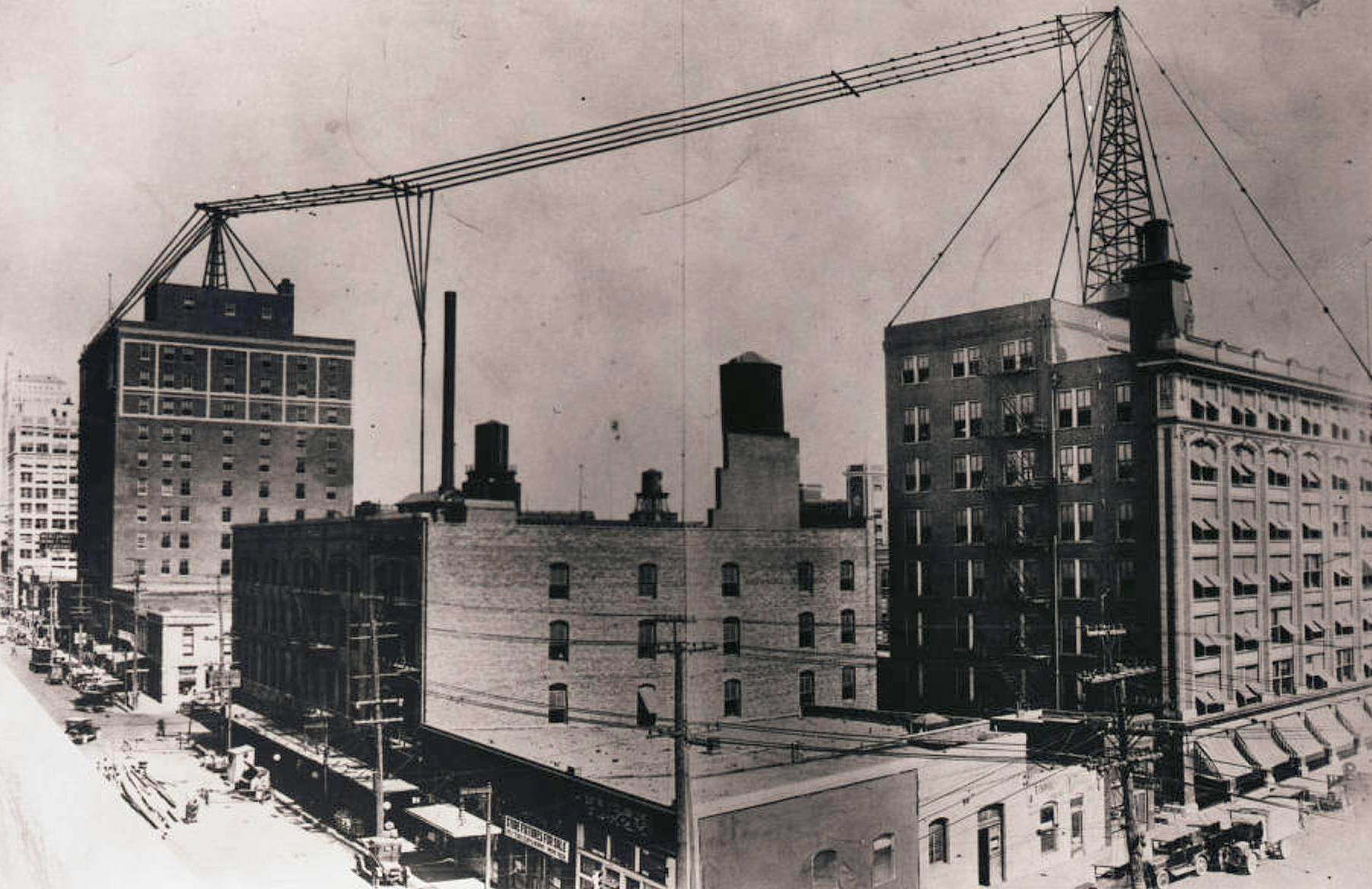
wfaa_towers_1920s_belo-coll_degolyerSeems … “busy” … (click for larger image) Belo Collection, SMU

by Paula Bosse

Broadcast radio was very, very, very new when WFAA radio went on the air in June, 1922; it was Dallas’ second radio station, but it was the city’s first commercial station, and its debut was a BIG deal. (WRR had preceded WFAA, but it was mainly used for city business.) Figuring out where to place towers and aerials and antennae (which may all be the same thing, for all I know) was a major problem, with not a lot of precedents. So why not just do what they did in the photo above?

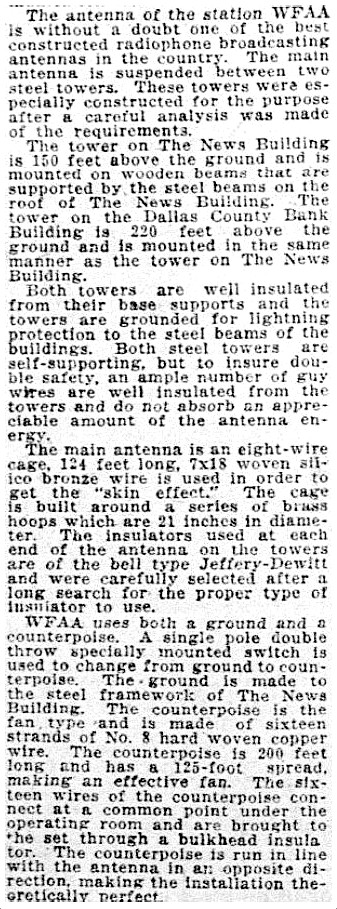
WFAA began broadcasting at 12:30 p.m. on June 26, 1922, and the day before that, a giddy and surprisingly technical article appeared in The Dallas Morning News (which owned WFAA). The full article is linked below, but this is the specific passage devoted to those towers/aerials/antennae:

wfaa-towers_dmn_062522DMN, June 25, 1922

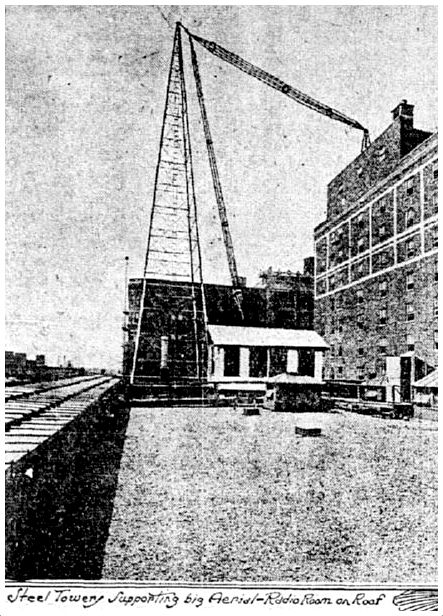
I’m not sure if the photo at the top was from these first days (it appeared, undated, in the DMN in 1927), but here is a photo that accompanied the above article from 1922:

wfaa_tower_dmn_062522

Is that a little building? Why, yes it is.

WFAA. It began as a 50-watt station. Its studios occupied all of a 9×9-foot shack on top of the old Dallas Morning News Building. Its antennae were strung from a water tank on the The New building to a 20-foot mast on top of the Texas Bank Building. (DMN, May 21, 1950)

When WFAA began, it broadcast from inside of and on top of the old Dallas Morning News building, which was located at Commerce and Lamar. By 1927, it had moved its studios to swankier digs in the Baker Hotel. Below, another description of how the rooftop aerial situation — the “altitudinous antenna system” seen at the photo at the top of this post — functioned at this time.

One of the big towers is on top of the lofty Dallas Mercantile Bank Building, while the other is atop the high Missouri-Kansas-Texas Railway Building. The wires are connected with the WFAA operating room on the roof of the Dallas Morning News Building between the two other structures. (DMN, Feb. 20, 1927)

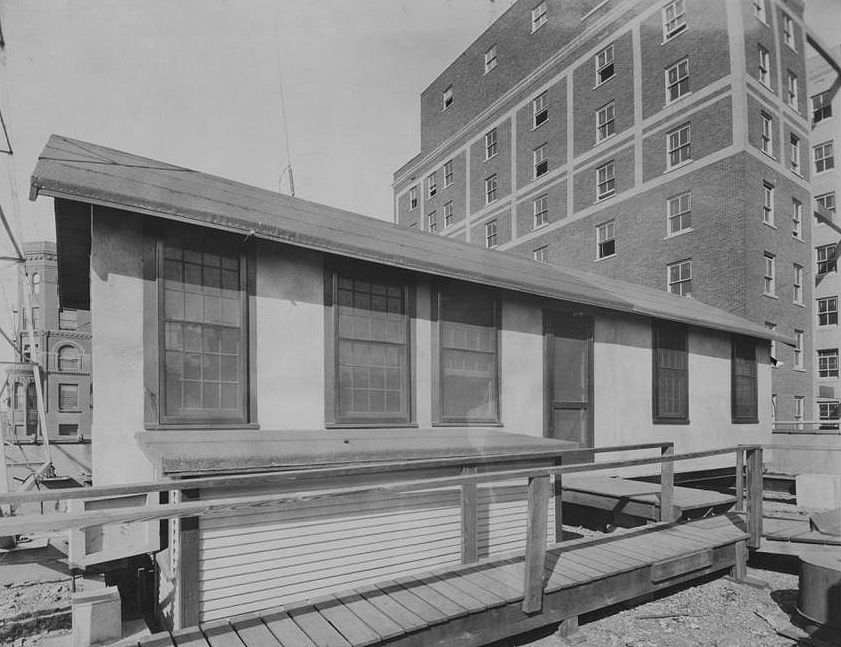
But back to that little shack. Let’s see it a bit closer. Here’s the exterior.

wfaa_rooftop-broadcasting-room_belo-degolyerBelo Collection, SMU

And here’s the interior.

wfaa-studio_ca1922_belo-degolyerBelo Collection, SMU

The generator and battery room.

wfaa_generator-battery_dmn_062522DMN, June 25, 1922

And the supervisor’s office.

wfaa_supervisors-office_dmn_062522DMN, June 25, 1922

And Dallas broadcasting never looked back from its humble beginnings.

*

ad-white-electric-co-detail_dmn_062522Advertising detail, June 25, 1922

*

wfaa-logo_dmn_062522

***

Sources & Notes

Photographs from the Belo Records Collection, DeGolyer Library, Central University Libraries, Southern Methodist University. Top photo can be accessed here; rooftop “broadcasting room” (exterior) is here; “broadcasting room” (interior) is here. More photos here. (The interior and exterior shots of the studio seem to be from 1922. The announcer is reading from the DMN’s sister publication, The Dallas Journal, which contains an article about a subject hot in the news in July, 1922 — a strike by Kentucky coal miners.)

A Belo photo identified as showing the room containing the “Transmitter on top of The Dallas Morning News building, 1924” is here.

To read the article describing how WFAA (which, by the way, at some point stood for “Working For All Alike”) was put together — how it was literally put together — see the Dallas Morning News article “Most Complete Radio Station in the Southwest to Begin Broadcasting” (June 25, 1922), written by R. M. Lane, here, and the accompanying photos here.

See the companion Flashback Dallas post, “Radio Broadcasting, 1922-Style,” here.

Other Flashback Dallas posts on WFAA radio can be found here.

Other Flashback Dallas posts on Dallas Radio & TV can be found here.

*

Copyright © 2015 Paula Bosse. All Rights Reserved.

Getting Married on the Radio — 1922

radio-wedding_corbis_062922Inez & John, exchanging vows on Dallas radio, 1922

by Paula Bosse

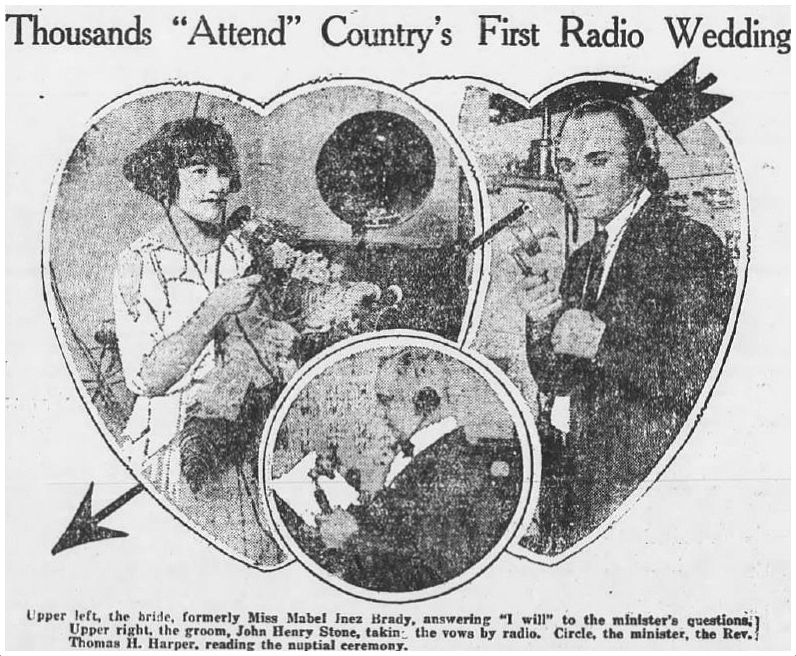
An early radio stunt happened in Dallas on the night of June 29, 1922 when a couple exchanged wedding vows over the air, with the bride, the groom, and the minister each broadcasting from the studios of different Dallas radio stations: WDAO, WRR, and WFAA. These were the very early days of radio, and when the wedding was broadcast, WDAO had been on the air for a little over a month, and WFAA for less than a week! (WRR, Dallas’ first radio station had been on the air for about a year, but most of that time it had been operating as a one-way radio dispatcher for the city’s fire and police departments). In June of 1922, these were the only three Dallas-based radio stations, and they all worked together in this “historic” broadcast. (This early media stunt was a full 47 years before Tiny Tim and Miss Vicki got hitched on the Tonight Show.)

DALLAS COUPLE TO WED BY RADIO THURSDAY NIGHT

DALLAS — The first wireless marriage ceremony ever performed in which neither the bride, the groom, nor the officiating minister will be at the same place is to be solemnized here Thursday night when Miss Inez Mabel Brady, Dallas society girl, becomes the bride of John H. Stone, operator at WRR, the municipal broadcasting station.

It is estimated that more than 25,000 radio fans will “witness” the tying of the radio nuptial knot.

Three Dallas broadcasting stations will be used in the ceremony. Rev. Thomas Harper, pastor of the Central Congregational Church, who has been asked to officiate, will repeat the marriage ritual into the transmitter of [WFAA,] the broadcasting station on the roof of [the Dallas Morning News] building. The bride and her attendants will be at the Automotive Electric Company’s radio station [WDAO, on South Ervay], while the groom will make his responses from WRR, the station of which he is in charge.

Operating staffs of the three stations are working out the details of the ceremony, which will include a broadcasted wedding march.

(– Fort Worth Star-Telegram, June 28, 1922)

Obviously new to the hustle of radio promotion, The Dallas Morning News (owner of WFAA) mentioned the event only a couple of times — fleetingly. They did note that “This probably will be audible to one of the largest audiences ever ‘hearing’ a wedding ceremony” (DMN, June 28, 1922). It’s not known just how many people tuned in to listen to the ceremony (probably a considerable number), but the story made news around the country, as can be seen in this article from The Durham Morning Herald in Durham, North Carolina:

radio-wedding_durham_071322a

radio-wedding_durham_071322-bDurham (NC) Morning Herald, July 13, 1922 (click for larger image)

The broadcast had only a tiny hiccup:

radio-wedding_winfield-daily-press_kansas_063022Winfield (Kansas) Daily Press, June 30, 1922

As successful as the radio wedding was, the marriage between Inez Brady and John H. Stone does not appear to have lasted very long. At the time of the wedding, Inez was just out of school and was only 16 or 17 years old (the descriptions of her as a “society girl” and “debutante” were, I think, a bit of an exaggeration). According to the news stories surrounding the wedding, she “fell in love” with Mr. Stone’s voice on the radio. None of that bodes well for a lasting marriage. The 1923 city directory had the newlyweds renting rooms on McMillan, off Lower Greenville, but the 1924 directory had John in Oak Cliff and Inez in Old East Dallas. She re-married in 1928 at the creaky old age of 22, and he seems to have left WRR to work in some capacity for RCA. The marriage might not have lasted, but they both had a “brush-with-celebrity” story to tell (and re-tell) for the rest of their lives.

***

Sources & Notes

Top photo from CorbisImages, ©Bettmann/CORBIS.

I’m not sure which ended first — Mr. and Mrs. Stone’s wedded bliss or the radio station WDAO, which ceased operation sometime in 1923. A good look at the history of early local radio can be found at DFW Radio Archives, here. (WRR and WFAA continue to march forward, just a few years shy of their 100th anniversaries!)

*

Copyright © 2014 Paula Bosse. All Rights Reserved.

Simulcasting the World Series In Dallas In the Days Before Radio, Via Telegraph

world-series_dmn_100422-smThe later version, for radio listeners, 1922…

by Paula Bosse

It’s 1912. You’re a huge baseball fan, and the World Series is about to begin — New York vs. Boston! But you live in Dallas, a million miles away from the action. You can’t wait for the results in the paper the next day because you’re an impatient S.O.B., and radio won’t be introduced for another ten years. Do you panic? No! Because you live in a big city with a taste for new technology, and the Dallas Opera House is going to present a sort of early simulcast of the games on a “mammoth automatic score board.” Your sports prayers have been answered!

1912_world-series_dmn_100612DMN, Oct. 6, 1912

You lean back in your comfy theater seat and smoke your smokes in plush and civilized surroundings as each play is sent by telegraph to Dallas from the ballpark back East where the game is being played RIGHT NOW, hundreds of miles away. The telegraph operator in Dallas will relay the play-by-play information to personnel in the theater who will somehow do something to some sort of “automatic electric board.” And, according to promoters of these “reproductions” of baseball games, you’ll feel like you’re right there in the thick of the action. You’ll “see” the game played before your eyes!

I’ve read several articles about these boards and these reproductions, but I can’t for the life of me figure out how it worked. I assume there was a large traditional scoreboard on stage that lit up, keeping track of the score, runs, outs, etc. But apparently there’s more, and I just can’t picture it. Here’s a somewhat confusing description of what happened during these productions:

WORLD SERIES WILL BE SHOWN AT THE OLD MILL

Manager Buddy Stewart of the Old Mill Theater announced that he secured the New Wonder Marvel Baseball Player Board to reproduce the World Series baseball games. This board is declared the greatest board ever invented for reproducing baseball games. It is not a mechanical board and no mechanical devices are used, and very little electrical appliances are necessary. The games are reproduced by a crew of six experienced baseball players who are carefully rehearsed and each has a part or position to play. No other board is so complete as this. The board does not require sign cards to denote players as in other boards. You see the ball going and do not have to look in any other direction to see what it means.

Spectators will see each play reproduced in less than two minutes after it is made on the playing fields of the World Series as the board is connected with a direct wire to the baseball field, and as fast as the telegraph operator receives the play it is reproduced with as much realism as on the field. The players are seen to run bases, the ball is seen bouncing or soaring to the infield or outfield, and anyone who is familiar with baseball will know just exactly what is happening on the field by the plays made on the board with very little left for imagination.

Every hit, run, error, strike or ball, the number of strikeouts, or balls made by pitchers, or the number of hits, runs or errors made by the players is always prominently shown on the board which makes it [un]necessary for individual scoring during the progress of the game. (DMN, Oct. 3, 1920)

Doesn’t really help much. It sounds as if people are on the stage acting out each play. That would be weird. These “reproductions” of World Series games were quite popular in Texas (and probably elsewhere) for at least 15 years. If anyone reading this has a photo or diagram of one of these vaunted Marvel scoreboards, I’d love to see it!

*

An earlier description of the 1912 Opera House reproduction sounds more like an audience watching a baseball game on a giant Lite-Brite “score board.”

1912_world-series_dmn_100812DMN, Oct. 8, 1912

The trick to keeping the telegraph operators calm and on-their-toes during a lengthy baseball game? Make sure they have no interest in the game.
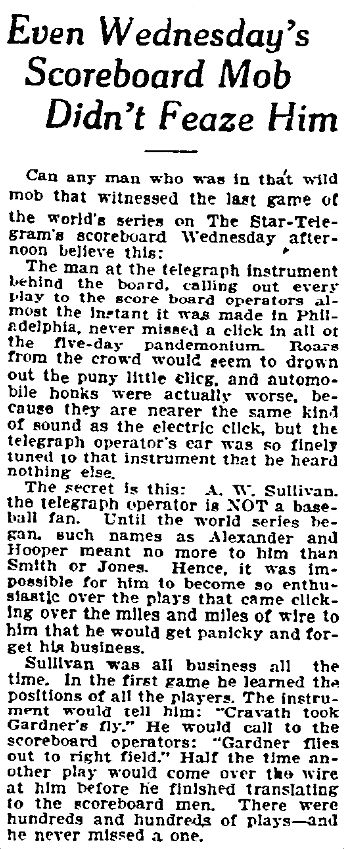
1915_world-series_FWST_101415Fort Worth Star-Telegram, Oct. 14, 1915

Fort Worth was also getting in on the action. And they had celebrities — people like Clarence (Big Boy) Kraft and Ziggy Sears (who I’m going to assume have something to do with baseball). I’m not sure what these celebrities were doing exactly, but whatever it was, they were there doing it.

1921_marvel-score-board_FWST_100221FWST, Oct. 2, 1921

These theater programs weren’t for everyone, though. If you couldn’t take the time out of a busy work day to swan over to a theater to leisurely witness one of the early “reproductions” (or if the admission price was too steep for your budget), you could always ring up the operator to have her tell you the current score:

automatic_dmn_101112-world-series
DMN, Oct. 11, 1912

These things seemed to be a popular annual event, but in 1922, something more technologically advanced than the Marvel board appeared on the scene: radio! WFAA and WBAP began broadcasting in 1922, and, suddenly, following sports became a whole lot easier. In something of a transitional technology, there was the outdoor board as described below. The games were not only broadcast live on WFAA, but The Dallas Morning News (WFAA’s parent company) also erected one of those old-fangled “electric boards” out on the street so that passersby could keep up with the scores. (Portable transistor radios were decades and decades away.)
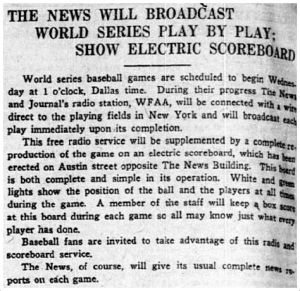
1923_world-series_dmn_101023DMN, Oct. 10, 1923

It was surprising to see that the “Marvel score boards” were still being used as late as 1926 (Yankees vs. Cardinals, at the Capitol Theater). Every baseball fan worth his salt should have had his own radio by then so he could listen to the World Series in the comfort of his own home and curse and cheer as loudly as the vicissitudes of the game demanded. Eat my dust, Marvel board! Radio changed everything, and radio was here to stay.

*

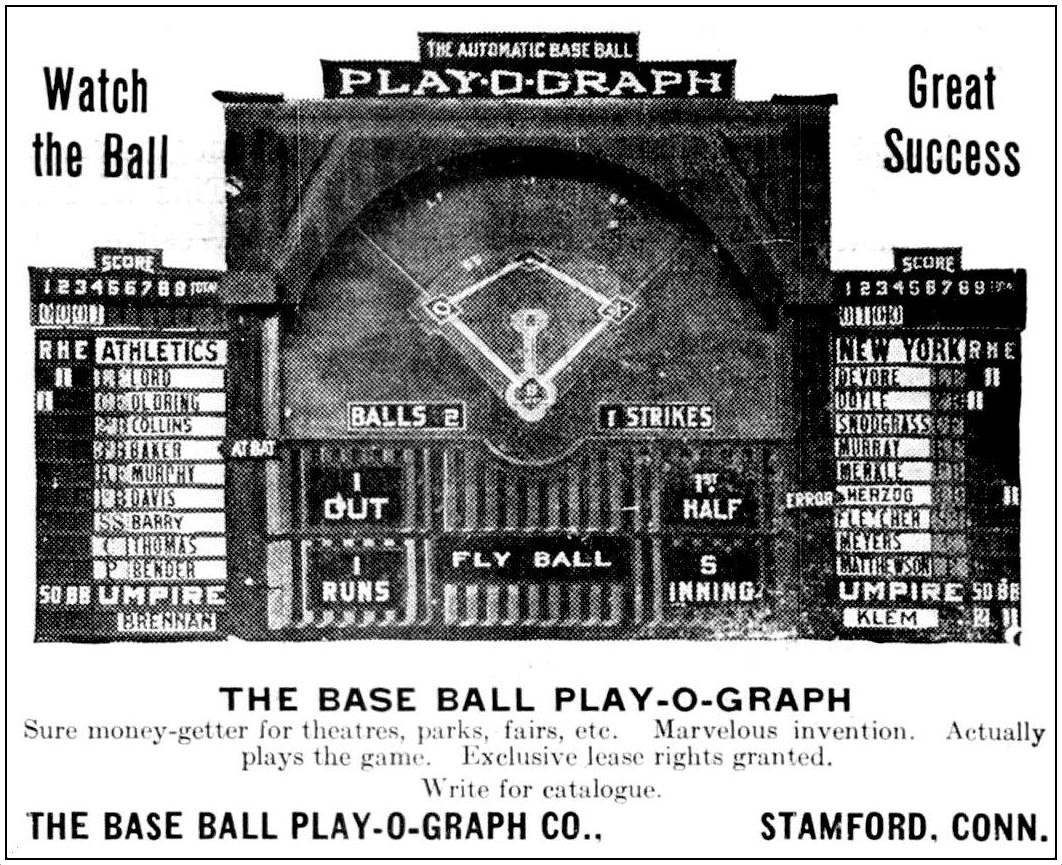
UPDATE: Thanks to Kevin’s link in the comments below, I can share this GREAT article from Uni-Watch.com about another of these boards called the Play-o-Graph: “Photography of Playography by Paul Lukas — it answers all my questions, and it even has photos (and links to photos) of crowds watching the boards. He also links to a 1912 article, “The Automatic Baseball Playograph”  by J. Hunt, in the Yale Scientific Monthly which describes how the board works and has this photo:

play-o-graph_yale-scientific-monthly_1912The “Play-o-Graph,” 1912 (click for larger image)

And, for completists, here’s an ad for the Play-O-Graph, from 1913:

baseball-simulation_play-o-graph_billboard_032213Billboard, Mar. 22, 1913

Makes a bit more sense now! Thanks, Kevin!

***

Sources & Notes

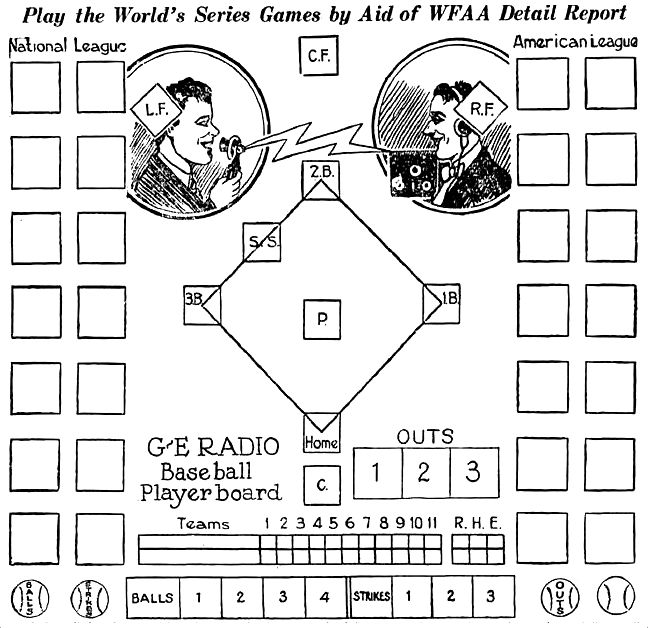
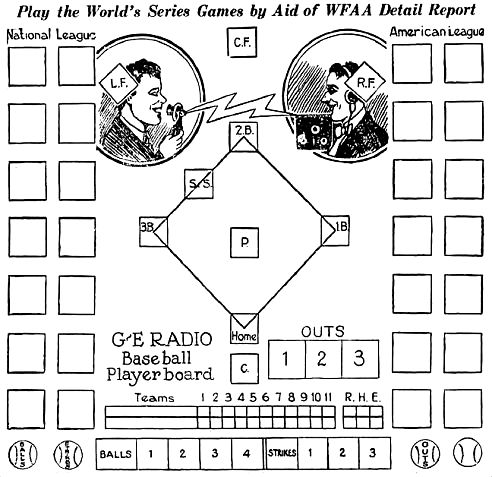
The top image is the “G.E. Radio Baseball Player Board” — a sort of home version of the big scoreboards used in theaters, printed for WFAA listeners in The Dallas Morning News on Oct. 4, 1922. The instructions are in a PDF, here. And feel free to print one out and use it while you watch the Series this year. Still works in the 21st century!

For an article on listener response to the successful first broadcast of the World Series by WFAA radio (listeners picked up the signal in England!), see the DMN article from Oct. 6, 1922 in a PDF, here.

And because they have such great names, you might want to know who Clarence “Big Boy” Kraft and Ziggy Sears were. If you’ve read this far, you owe it to yourself. “Big Boy,” here; Ziggy, here.

*

Copyright © 2014 Paula Bosse. All Rights Reserved.

The Pink Panther-Mr. Peppermint Connection

mr-peppermint_dmn_1961Mr. P. — 1961

by Paula Bosse

I had no idea that the “Mr. Peppermint” theme was by Henry Mancini! It’s from a 1960 movie called “High Time,” which, I have to say, I’ve never heard of. It starred Bing Crosby, Fabian, and Tuesday Weld (I kind of think Bing may have been in it solely for the paycheck). Check out the movie’s main theme music. Sound familiar?

Hearing this brings back a flood of happy memories — an aural version of Proust’s madeleines.

In a recent Los Angeles Times interview, Paul Reubens (aka Pee-wee Herman) had this to say:

“I never met Captain Kangaroo; I probably would have completely freaked out if I met Captain Kangaroo. In fact, when I meet people who are just beside themselves to meet me, I always think they’re reacting like I would react if I met Captain Kangaroo, I was so crazy about that television show as a child.” (LA Times, Oct. 21, 2014)

I ran into Jerry Haynes (aka Mr. Peppermint) several times around town over the years. The first time I saw him, I was in my 20s, and he was doing some sort of promotion (in character) at a store in, I think, Northpark. I was unaware that he would be there, but when I saw him at the top of the escalator, I was shocked. My childhood TV pal right in front of me! It’s a bit of a blur, but I think I giddily foisted myself on him and told him all the things other Dallas kids raised on his show probably told him. I might even have gushed an involuntary “I love you, Mr. Peppermint!” Yikes. I bet he got that ALL THE TIME. He was very sweet and didn’t treat me like a crazy person.

The last time I saw him, he was just Jerry Haynes, shopping for cheese at the Tom Thumb on Mockingbird and Abrams. I didn’t bother him, but I still got a little happy jolt of recognition when I saw him.

And now I find out that the composer who wrote so much of my favorite movie music wrote the music so tied to my childhood. Thanks, Mr. Mancini! Thanks, Mr. Peppermint! Thanks, Mr. Wiggly Worm!

***

Sources & Notes

Quote from Paul Reubens’ Los Angeles Times interview, here.

Wikipedia roundup: madeleines, here; “High Time” movie, here; Henry Mancini, here.

(Thank you, Steve S., for bringing this to my attention!)

*

Copyright © 2014 Paula Bosse. All Rights Reserved.


“Gumdrops Love Mr. Peppermint” — 1968

mr-peppermint_1968

by Paula Bosse

When the news is unsettling, remember your “happy place.”

***

1968 TV Guide ad, from eBay.

*

Copyright © 2014 Paula Bosse. All Rights Reserved.


“Go Away! Can’t You See I’m Listening to WFAA?” — 1947

wfaa-ad_dmn_090147

by Paula Bosse

Priorities.

*

Copyright © 2014 Paula Bosse. All Rights Reserved