Flashback : Dallas

A Miscellany: History, Ads, Pop Culture

Category: Disasters and Emergencies

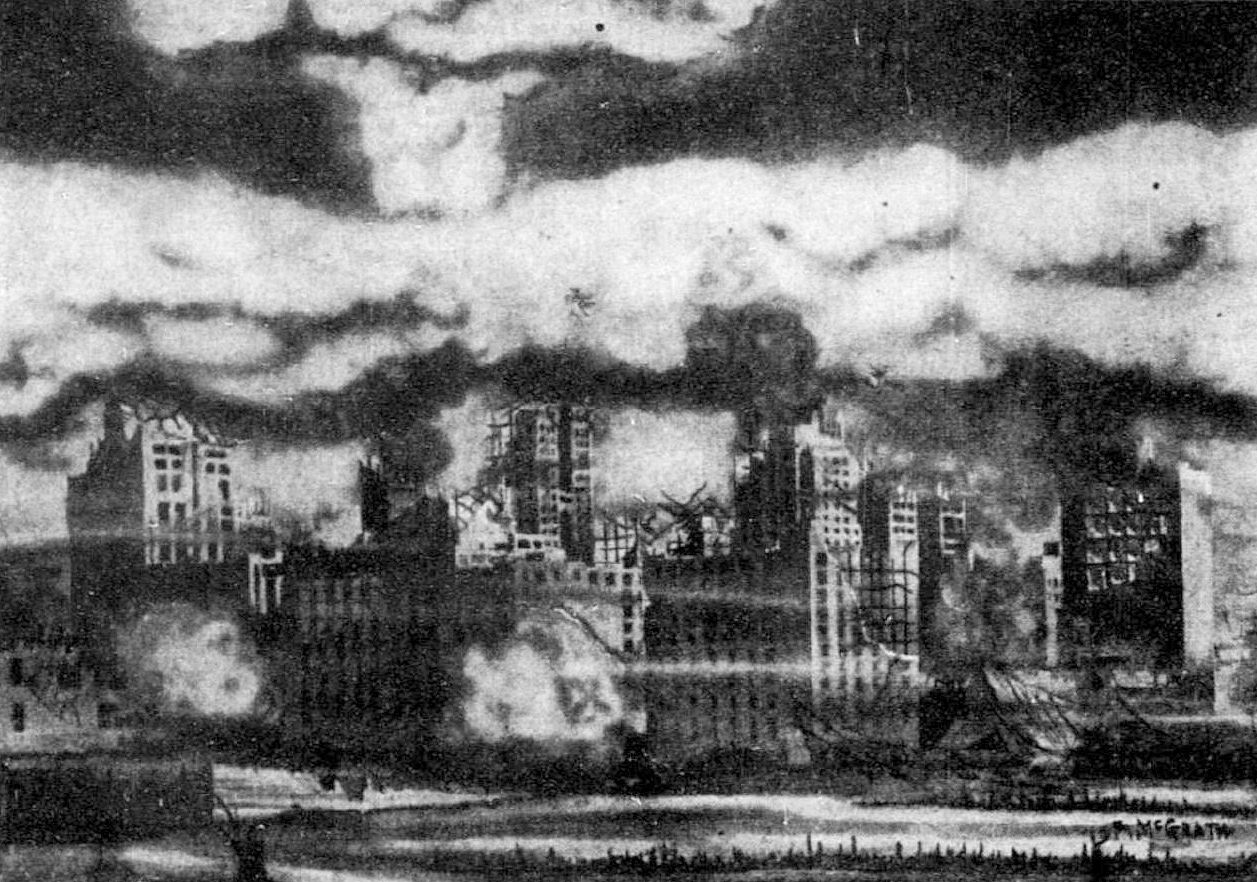
A-Bomb in Akard Street! — 1950

mcgrath-frank_atomic-aftermath-downtown-dallas_1950See Pegaus up there in the cloud of smoke and debris? (click for larger image)

by Paula Bosse

The image above, from 1950, is a depiction of what downtown Dallas might look like if an atomic bomb were dropped at the corner of Main and Akard (which is weirdly specific).

In 1950 Russia detonated a nuclear bomb during atomic tests and President Truman announced that the United States would increase and intensify research and production of thermonuclear weapons. It was a scary time for the world. The atomic bombings of Hiroshima and Nagasaki were still fresh in everyone’s minds, and news of the even more frightening hydrogen bomb was everywhere in 1950.

The drawing above is by Dallas artist Frank McGrath. It isn’t terribly realistic — Big D probably wouldn’t survive a nuclear blast —  but it’s nice that Frank spared Pegasus from annihilation.

***

Sources & Notes

There were bomb shelters all over the Dallas area. There was a (surprisingly) large shelter on the grounds of Fair Park. Watch a video tour here. And read the Flashback Dallas post “‘Dallas Is a Major Target Area!’ Know Where Your Nearest Fallout Shelter Is.”

Read about the tenor of the times in the article “Hydrogen Bomb — 1950,” here.

The title of this post is a direct reference to a great song by one of my favorite bands, The Jam. Listen to “A-Bomb in Wardour Street,” here. This time it’s nuclear apocalypse in London, but change the accent and, sure, it could be Dallas. (I knew I’d work The Jam in here one day!)

*

Copyright © 2016 Paula Bosse. All Rights Reserved.

Collision on the Streetcar Viaduct — 1929

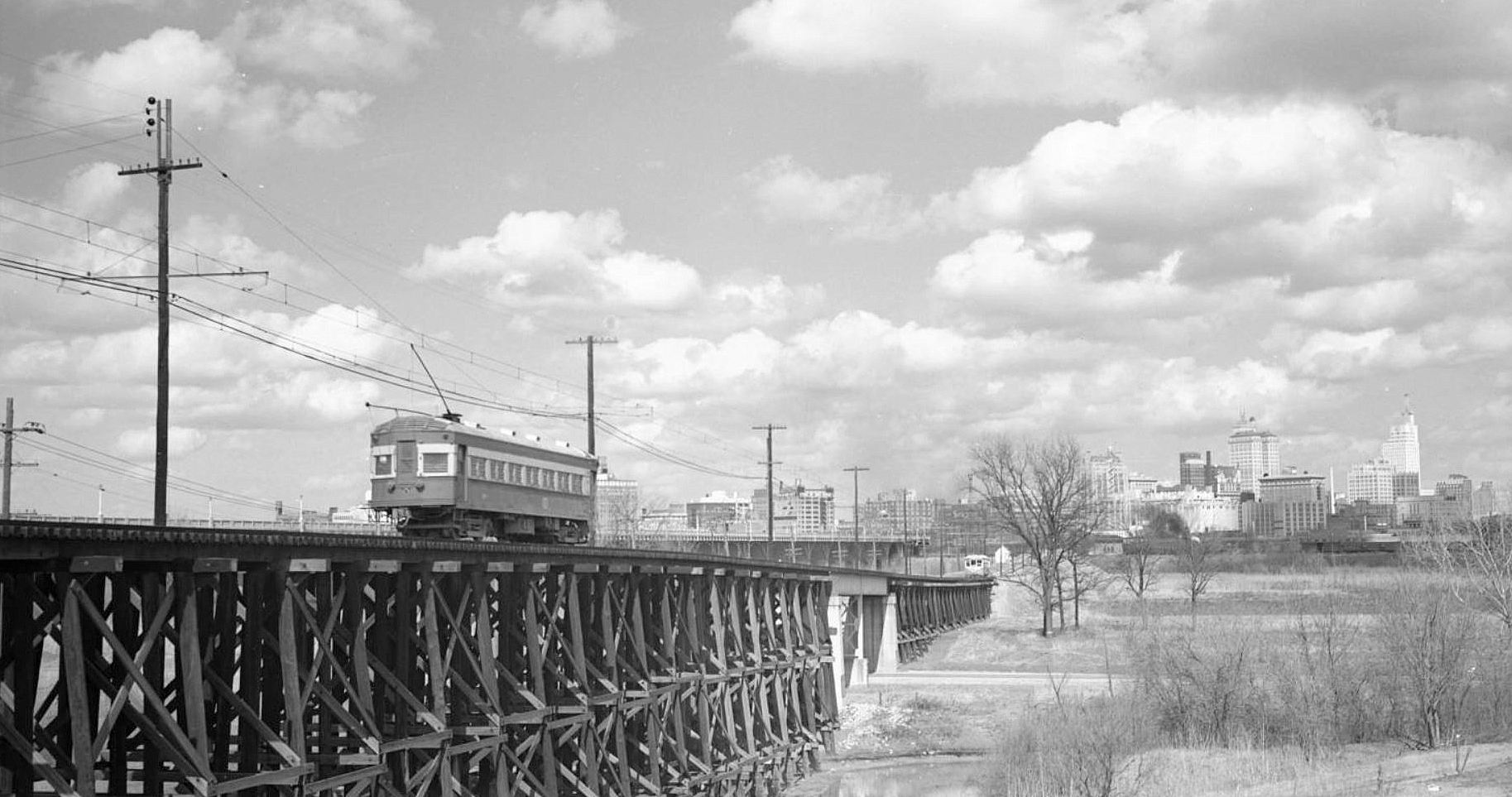
interurban_trestle_1946_denver-pub-lib_lgThe new streetcar viaduct, 1946

by Paula Bosse

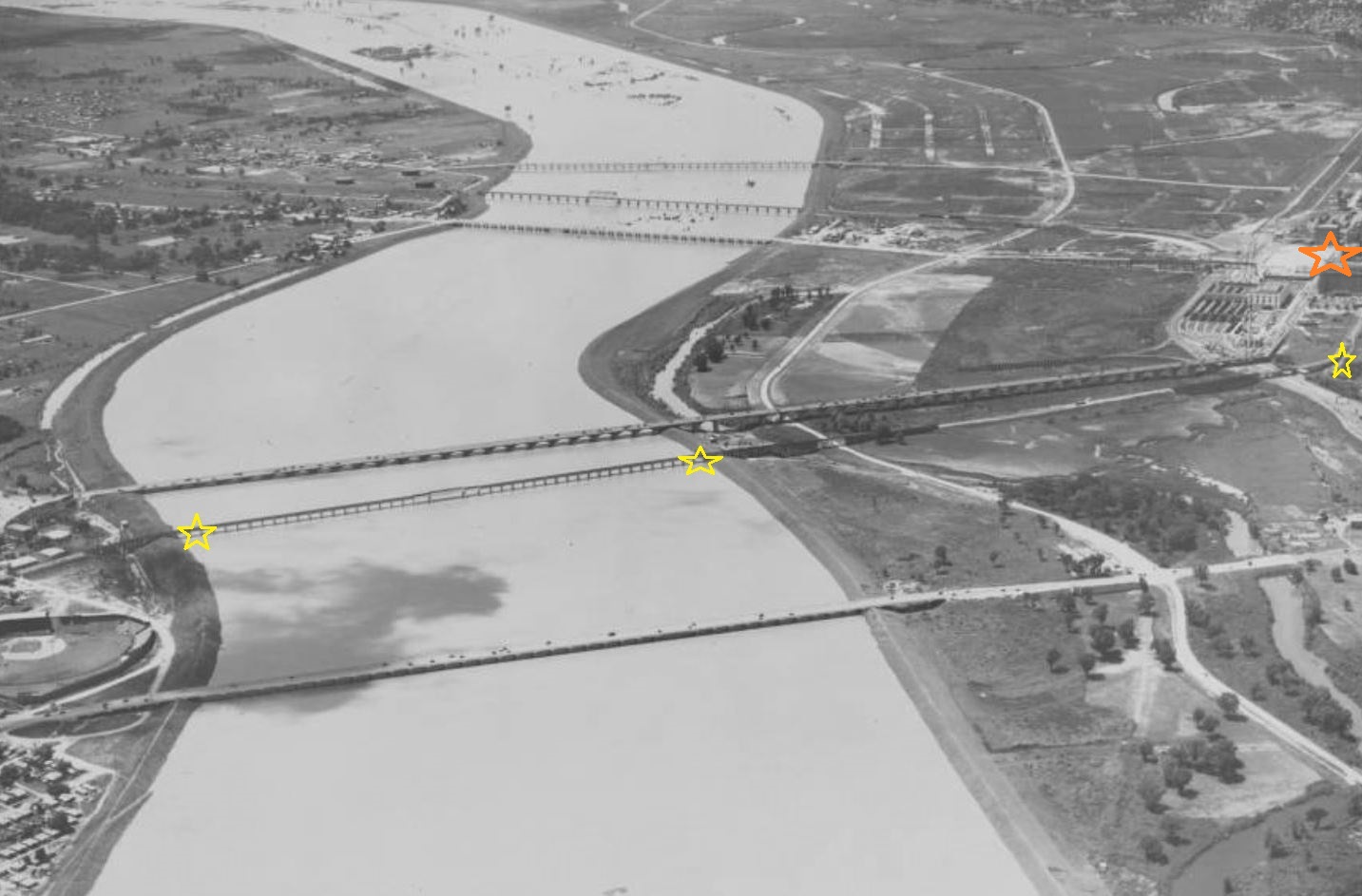
For many, many years there was a special trestle that spanned the Trinity River which was for the exclusive use of streetcars and Interurbans. There were also trestles and viaducts for the exclusive use of trains and automobiles. Below is a photo showing the  viaductal activity in 1935, with the streetcar trestle — sometimes called the “Street Car Viaduct” or the “Trinity River Viaduct” marked in yellow and the Old Red Courthouse and Dealey Plaza (then under construction) marked in orange.

viaducts_1935_foscue_smu

The viaduct immediately above it was the Houston Street viaduct, for automobiles.

For many, a streetcar ride across the viaduct seems to have been a little on the harrowing side. There were no guardrails to prevent a car from going over the side, and even when the original wooden trestle had been bolstered with stronger materials, it was still described by commuters as being rickety. I like this quote of a man remembering a typical ride in the 1950s:

I always enjoyed the slight tingle of fear I experienced on the trestle over the river, as one could not see the trestle itself from the car window. One had the feeling of being suspended with no support when looking out the window.

And these two memories:

The streetcar trestle ran parallel to the Houston St. Viaduct where the current newer bridge is to downtown. No railings and just depended on gravity to hold the cars on the rails. The cars would buck and sway as they crossed the river bottoms as the motormen made up time on their schedules. Seemed like they were really going fast to me at the time, but probably not in today’s terms.

*

The [newer streetcars] used to scare me to death rocketing across the Trinity River high in the air with no sidewalls except just over the river itself! You were able to look straight down from high above ground… those newer cars had softer springs and the faster they went, the more they rocked side to side over the less than flat tracks!

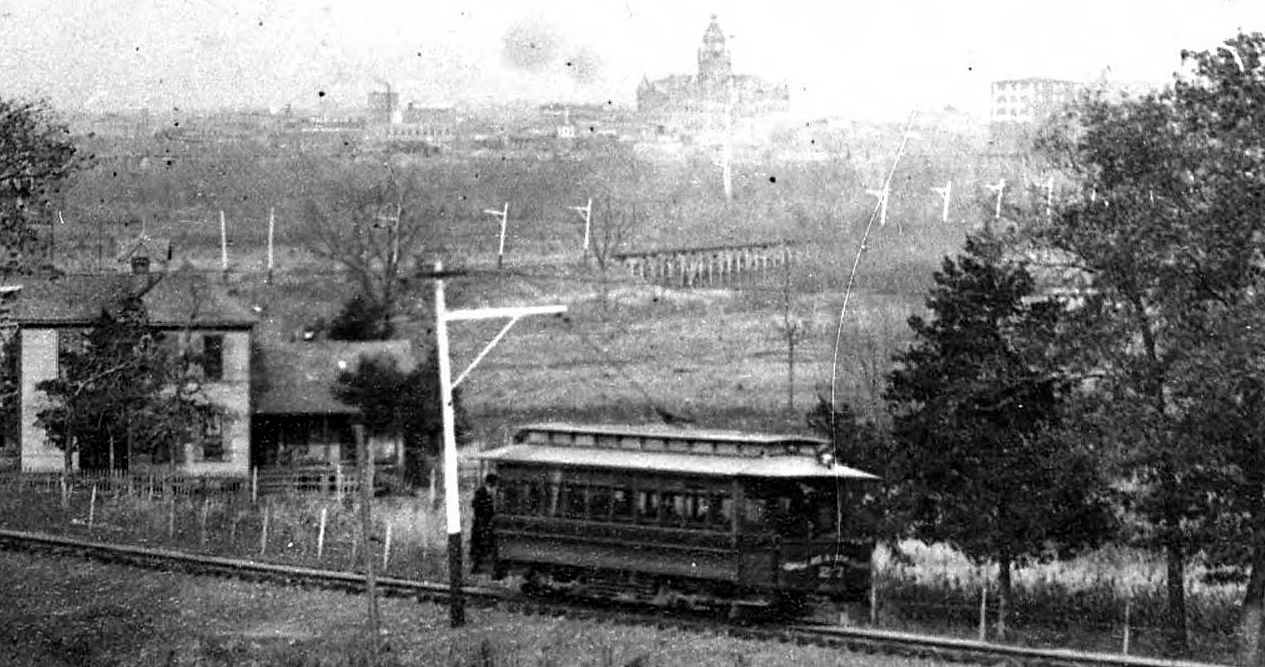
Here’s a photo when it was in its original rickety state, back in 1895 (this is a detail of a larger photo, taken on the Oak Cliff side of the river, with the trestle — and the not-yet-old Old Red Courthouse — visible in the background).

trolley_oak-cliff_det1

Here it is in 1914 at river-bottom level, with a happy little trolley chugging along with the Oak Cliff/Houston Street viaduct looming over and in front of it. (This is a detail of a larger photo in the George W. Cook Collection, DeGolyer Library, SMU — here).

streetcar-trestle-cook-coll_smu_det_1914

And here’s a sturdier version of the viaduct, in 1946.

streetcar-crossing-trinity_1946-denverpublib

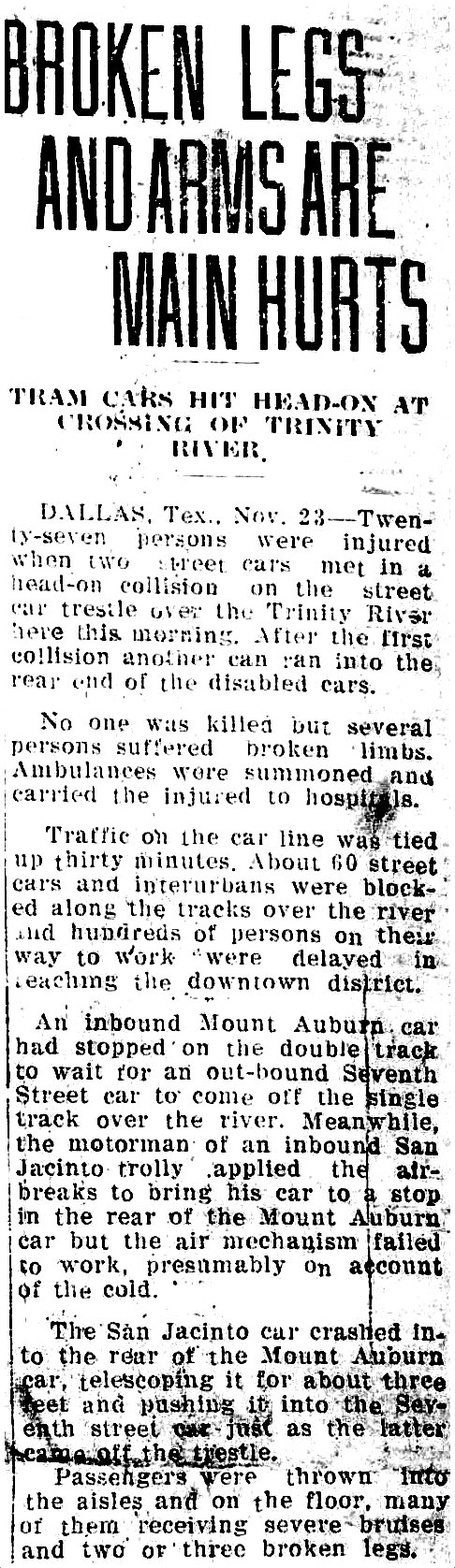
But now to the collision on the viaduct, which happened on the morning of November 23, 1929. Back then — at that iteration of the viaduct — the trestle had only a single track. While one streetcar or Interurban car crossed the bridge toward Oak Cliff, a car wanting to cross over from Oak Cliff had to wait until the westbound car had made its mile-long trip. That must have made for a lot of impatient riders. Even though the so-called “block signal” system worked well for the most part, there were the occasional accidents, including the one involving three cars on Nov. 23, 1929. Below, a front-page report of the collision(s) from The Waxahachie Daily Light (click for larger image).

streetcar-trestle-collision_waxahachie-daily-light_112329Waxahachie Daily Light, Nov. 23, 1929

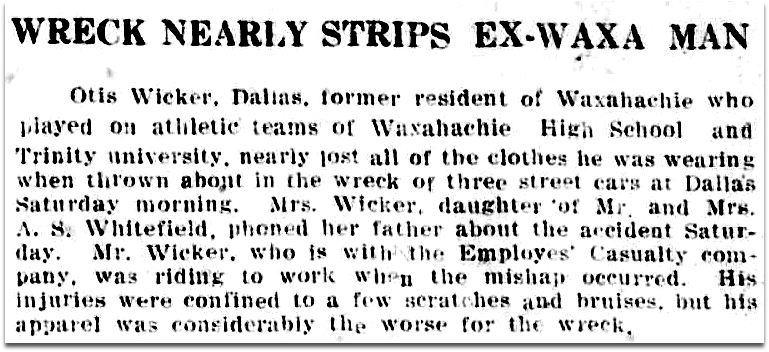
The Waxahachie paper even had a local angle (although it’s unclear just how this man “nearly lost all of the clothes he was wearing”).

streetcar-trestle-collision_waxahachie-daily-light_112329-sidebarWaxahachie Daily Light, Nov. 23, 1929

Since it happened during the morning rush hour, just about every other newspaper in Texas scooped The Dallas Morning News, which wasn’t able to run its story until the next day (and its report was surprisingly dull).

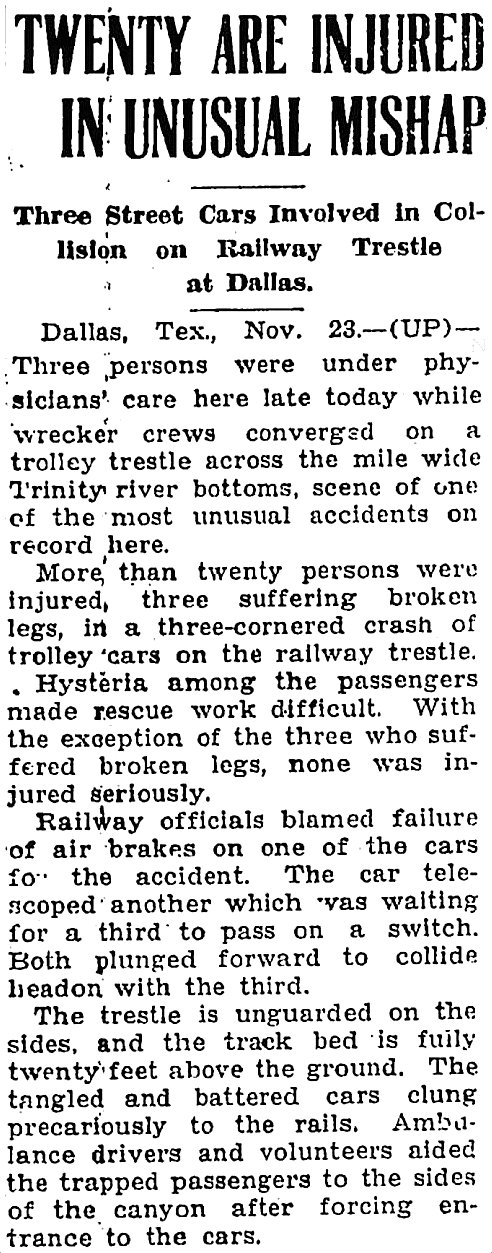
The UP wire story that ran in the Joplin, Missouri paper was far more exciting.

streetcar-trestle-collision_joplin-MO-globe_112429Joplin Globe, Nov. 24, 1929

Thankfully none of the streetcars fell off the trestle, but I’m sure that possibility was probably the daily fear/resigned expectation of generations of nervous travelers.

**

The most interesting thing in the DMN article is the last paragraph:

Plans in the making for the new street car crossing of the Trinity River call for a double track over the channel, eliminating the necessity of waiting on block signals.

In February 1931, that new double-track streetcar viaduct opened for business, and I’m sure there was a citywide sigh of relief.

 **

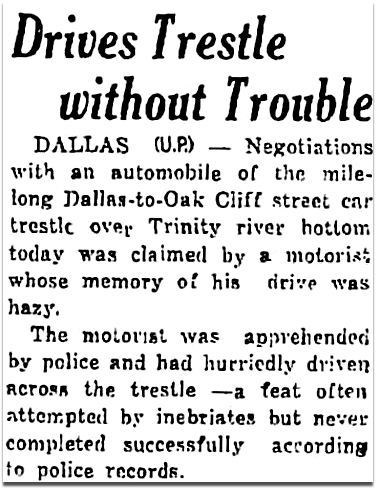
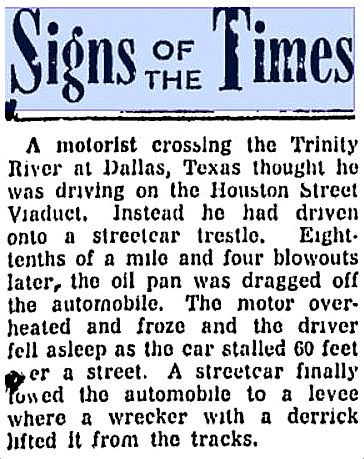
One last little amusing tidbit about this viaduct: it was not unheard of for those having indulged in excessive amounts of alcohol to try to drive their automobiles (either on purpose or by accident) over this already-kind-of-scary trestle intended for electric-powered railway use only.

streetcar-trestle-mexia-weekly-herald_011333_drunk-motoristMexia Weekly Herald, Jan. 13, 1933

trestle_beaver-valley-PA-times_120852
Beaver Valley (Pennsylvania) Times, Dec. 8, 1952

***

Sources & Notes

Top photo titled “T. E. clouds, sky, city, from east levee close to wooden trestle 320 just passed, at rear, car 320 on Trinity River Bridge, Dallas, Tex.,” taken on Feb. 16, 1946 by Robert W. Richardson, is from the Western History/Genealogy Dept., Denver Public Library.

Photo showing the viaducts across the Trinity is titled “Central Levee District,” taken on May 20, 1935 by Lloyd M. Long, from the Edwin J. Foscue Map Library, Southern Methodist University; the labeled photo is here, the unlabeled photo is here.

Don’t know what “block signaling” is? Wikipedia to the recue.

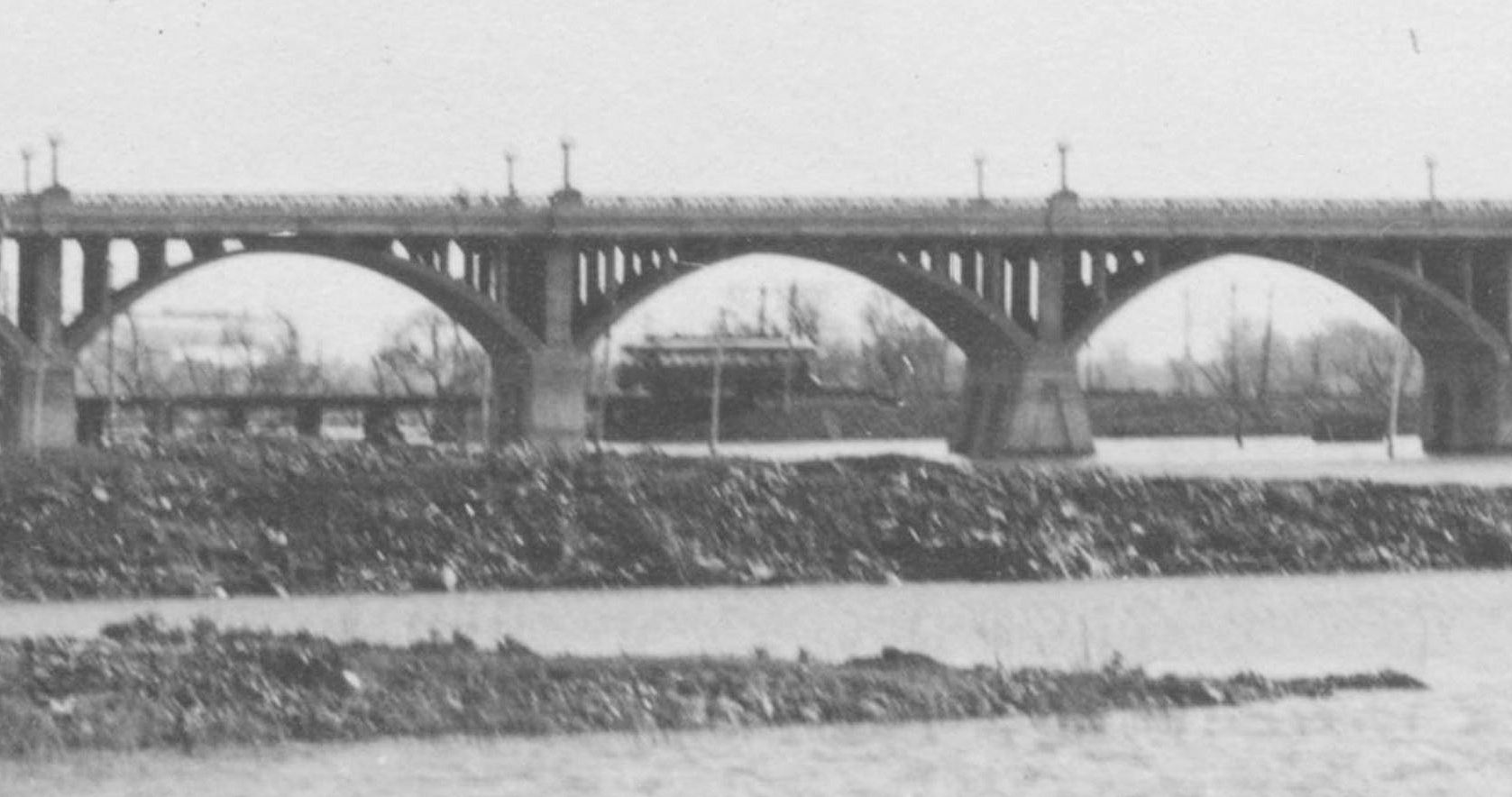
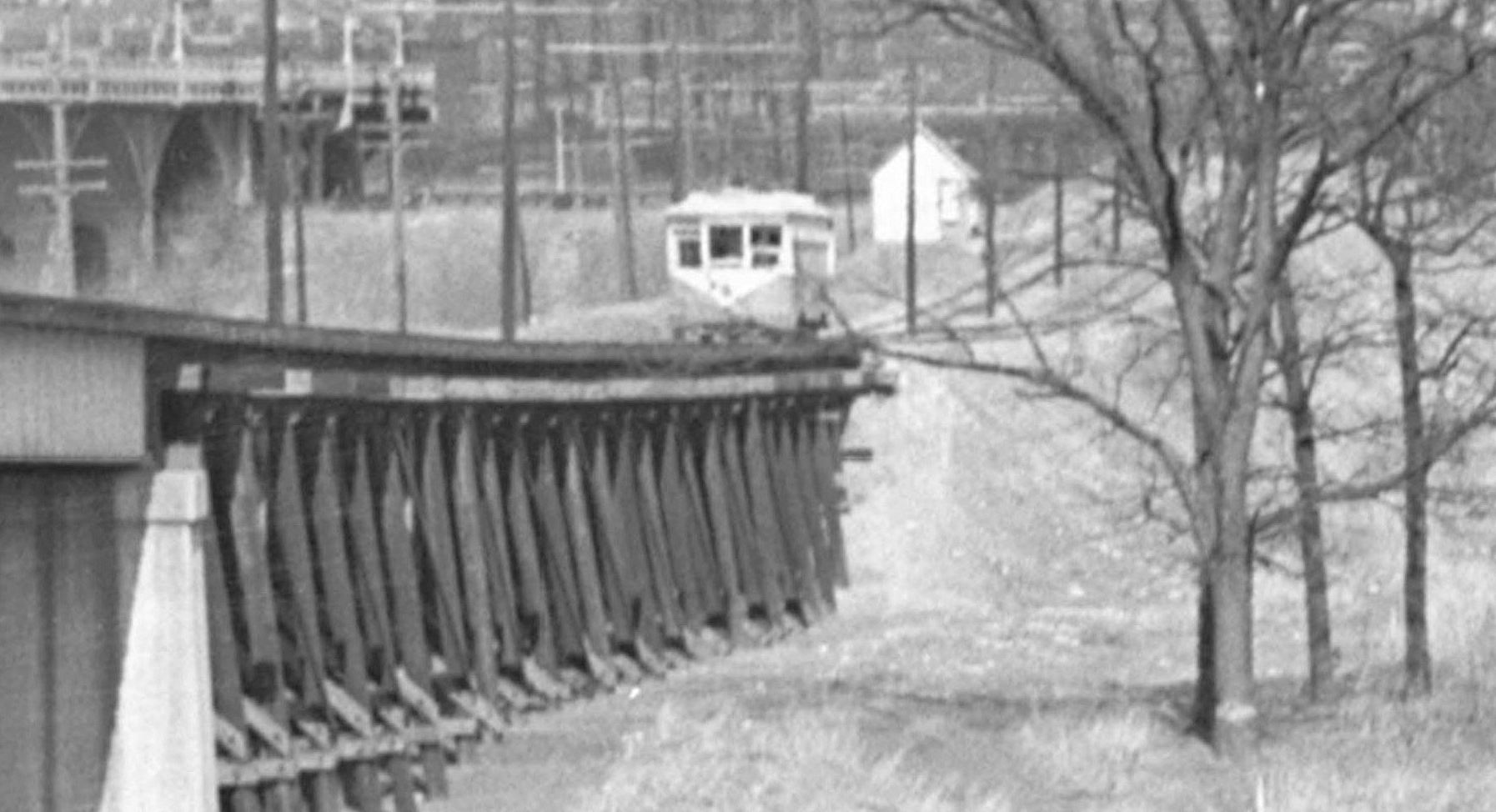
 Lastly, just because I like it, a magnified detail from the top 1946 photo, showing a streetcar at the downtown end of the viaduct.

interurban_trestle_1946_det-streetcar

*

Copyright © 2016 Paula Bosse. All Rights Reserved.

The Volunteer Fire Department’s Early Days

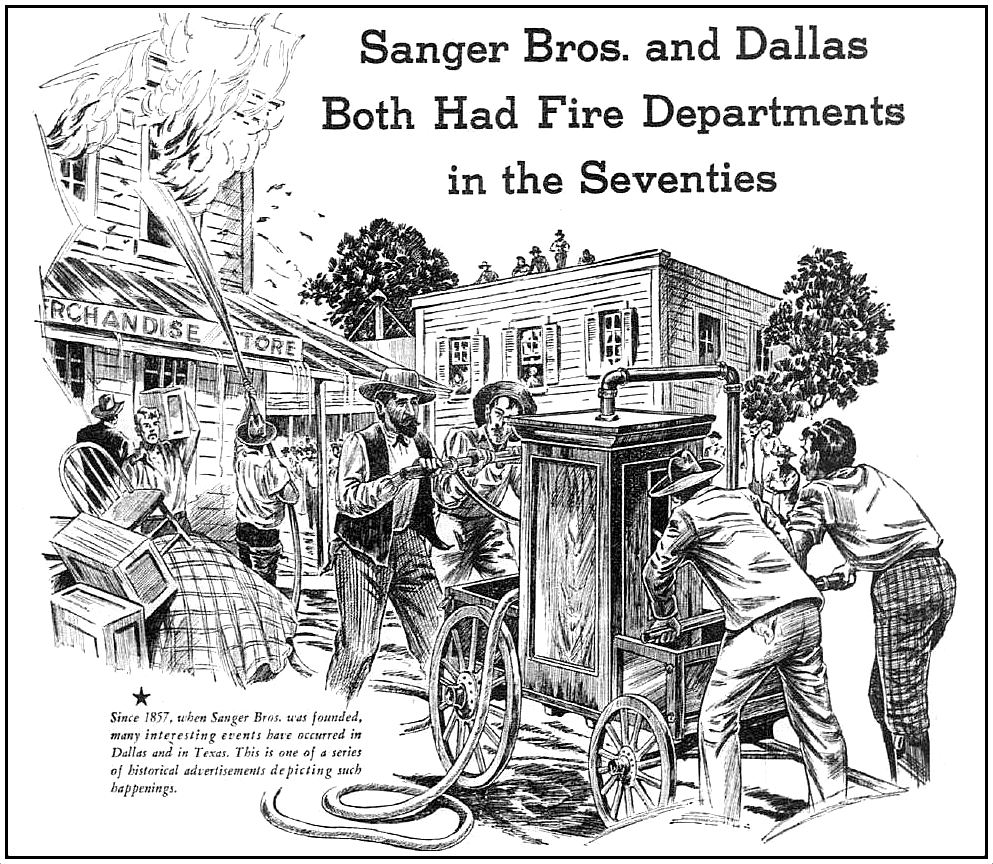
sanger-bros_fire-department_dmn_030836aPumping water from an underground cistern (click for larger image)

by Paula Bosse

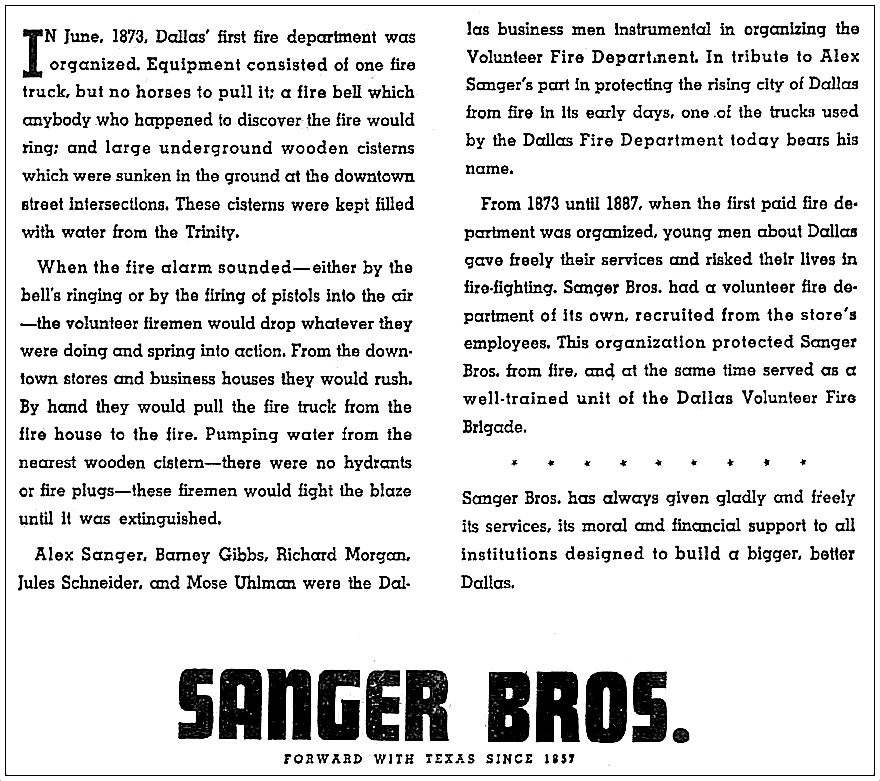
Dallas was constantly catching on fire in its early days. According to this very informative advertisement, Alex Sanger was one of the Dallas businessmen responsible for organizing the city’s first volunteer fire department. Interestingly, the Sanger Bros. department store also had a volunteer fire department which not only protected the store, but also served as a special unit of the Dallas Volunteer Fire Brigade.

The drawing above and the text below are from a 1936 Sanger Bros. advertisement. (Click to see larger images.)

sanger-bros_fire-department_dmn_030836b1936

*

Copyright © 2016 Paula Bosse. All Rights Reserved.


The First Woman to Swim the Channel Helped Search the Trinity for Drowned Victims — 1927

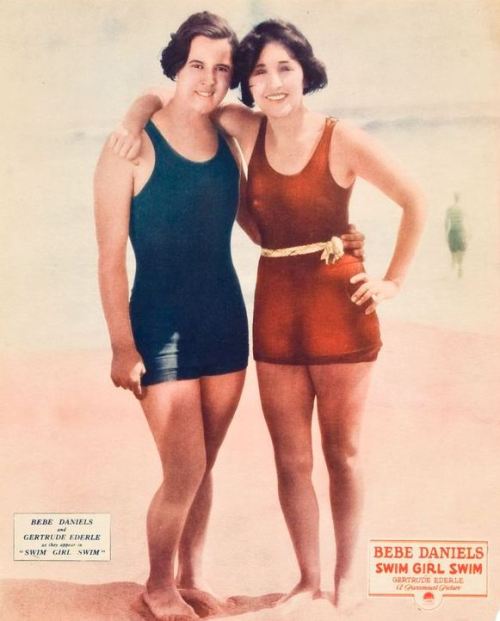
swim-girl-swim_haGertrude Ederle (l) with co-star, Dallas native Bebe Daniels / via HA.com

by Paula Bosse

In 1926, Gertrude Ederle, a 19-year-old American, became the first woman to swim the English Channel — her time of 14 hours and 39 minutes was the fastest time ever. She became an instant international celebrity. When she returned to New York, she was given the very first ticker-tape parade, and over two million people turned out to see her.

After this momentous achievement, Ederle turned for a while to entertainment. She made a cameo appearance in a (now lost) silent film called Swim, Girl, Swim (which, incidentally, starred two Dallas natives, Bebe Daniels and James Hall), and she also toured for a while with a vaudeville company.

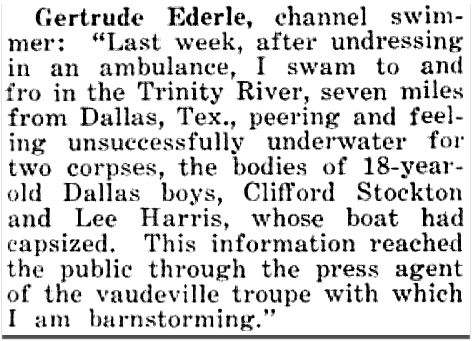
It was during one of these tours in April, 1927 that she arrived in Dallas, just as torrential rains began to fall. There was severe flooding along the West Fork of the Trinity, especially in the area of Record Crossing. The boat in which two young men were riding had capsized and they had been caught in the undertow and drowned. There had  been an unsuccessful search for their bodies, and I’m not sure who came up with the idea of contacting Miss Ederle, but someone did. Why NOT call in the world’s most famous swimmer to see if she could lend a hand while authorities dragged the river? Miss Ederle did, in fact, join in the underwater search, but the bodies were not found. I bet she never forgot that Dallas stop!

The news was reported in Time magazine:

trinity_bodies_time-mag_041827Time, April 18, 1927

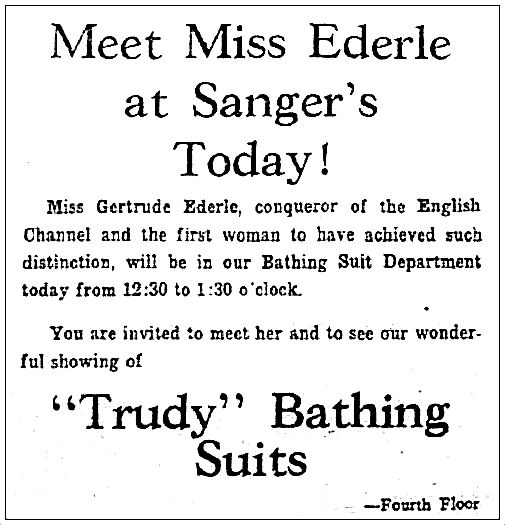
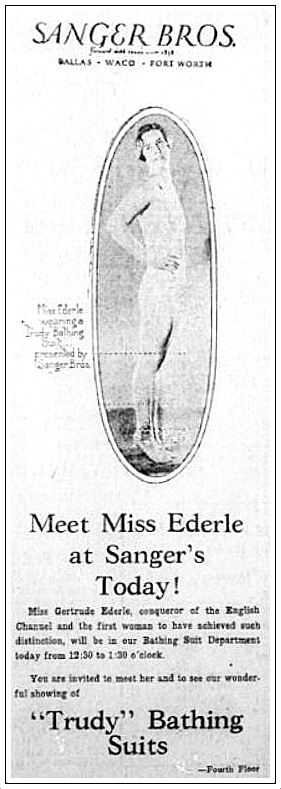
While in town, Trudy also squeezed in a personal appearance at Sanger Bros., hawking what looks to be her own line of swimsuits.

ederle_sangers_dmn_041427-det

ederle_sangers_dmn_041427Apr. 14, 1927

***

Sources & Notes

More on the Trinity River search can be found in The Dallas Morning News article “River Claims Two Victims; Gertrude Ederle Makes Vain Attempt to Recover Bodies” (DMN, April 5, 1927).

Newsreel footage of Gertrude Ederle can be seen here.

Photos of Ederle in action are here.

Ederle’s Wikipedia entry is here.

*

Copyright © 2016 Paula Bosse. All Rights Reserved.


The “Dallas” Theme Song You’ve Never Heard — En Français

paris-texas_eiffel-towerNo, not Paris, TEXAS…. (via anatravels.org)

by Paula Bosse

You know that theme music for the TV show Dallas? Actually, that should just be a statement of fact: you KNOW that theme music for the TV show Dallas. We all do. But you know what you DON’T know? You don’t know what the French did to “improve” the J.R.-watching experience. For reasons which I don’t exactly understand, they had someone (Jean Renard) write a theme song for the show. A song. Une chanson. With lyrics. To all-new music. Sounds crazy and unnecessary, but it was a big hit on the French pop charts. And it’s so gloriously awful and fabulously weird that it must be shared. This is not a joke. This is the actual music that accompanied Dallas when it was shown on French television.

I give you a rough approximation of the lyrics (the French lyrics are here).

Dallas, your ruthless world,
Dallas, where might is right,
Dallas, and under your relentless sun,
Dallas, only death is feared.

Dallas, home of the oil dollar,
Dallas, you do not know pity;
Dallas, the revolver is your idol,
Dallas, you cling to the past.

Dallas, woe to him who does not understand,
Dallas, one day he will lose his life.
Dallas, your ruthless world,
Dallas, where might is right.

And here it is. Sing along!

*

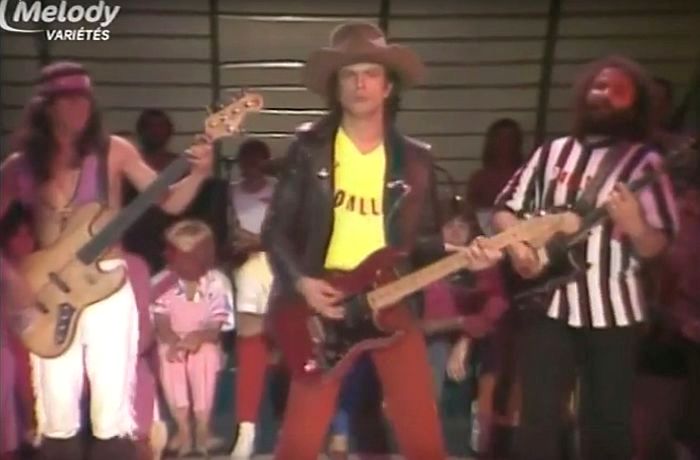
Catchy, huh? What could be better than hearing it sung? Watching it being sung! I’m not sure who the singer is, but he’s attacking this song with a rock attitude that totally isn’t warranted.

*

Nice hat!

This was a big, big hit in France. I’ve even seen the word “beloved” used to describe it. Remember this the next time you might feel a lack of confidence or a twinge of inadequacy in the presence of a chic and sophisticated Parisian. Stand tall, my fellow Texans, and remember OUR Dallas theme.

*

Silly Frenchmen.

 dallas-french_youtube

*

UPDATE: Julia Barton has hipped me to her segment about “Dallas” which aired on public radio’s “Studio 360” in 2011, focusing on the sometimes surprising global and sociopolitical impact of this pop-culture juggernaut. I went to college in the UK, and there wasn’t a day that passed without several people gleefully asking me about J.R. Ewing. It was weird. Had the TV show never existed, I’m sure I would have been queried endlessly (and possibly angrily) about JFK, and I might well have been shunned — yes, shunned! (I remember when people embarking on international trips pre-Southfork were advised to respond to the question “Where are you from?” with the somewhat vague answer “Texas” rather than the explosively specific “Dallas,” because, post-assassination, we were “the city of hate” around the planet.) I’d much rather have had people ask me about a soap opera character than blaming my hometown for killing an American president. So, um, thanks, Lorimar!

Listen to Julia Barton’s 15-minute “Studio 360” segment here (audio plays above J.R.’s silhouette).

***

Read about this odd practice the French have of concocting whole new TV theme songs for American television shows, here.

I can’t believe I’ve never heard of this. All thanks to my friend Carlos Guajardo for passing along this very entertaining nugget of Dallas kitsch! Thanks, Carlos!

*

Copyright © 2015 Paula Bosse. All Rights Reserved.

“How High’s the Water, Mama?” — 1908

trinity-river_flood_1908_LOC-lg

by Paula Bosse

A great panoramic photo by Clogenson, showing the old Commerce Street bridge partially submerged by the Trinity River (which is pretty dang high … and rising).

***

Photograph by Henry Clogenson, from the collection of the Library of Congress; accessible here.

Previous Flashback Dallas posts on the Great Flood of 1908 can be found here and here. And a fantastic photo of what the Trinity looked like before it was straightened and moved is here.

And, really, you MUST hear Johnny Cash sing the pertinent “Five Feet High & Rising,” here.

Click picture for a REALLY big image.

*

Copyright © 2015 Paula Bosse. All Rights Reserved.


The Nellie Maurine: When a Pleasure Boat Became a Rescue Craft During the Great Trinity River Flood of 1908

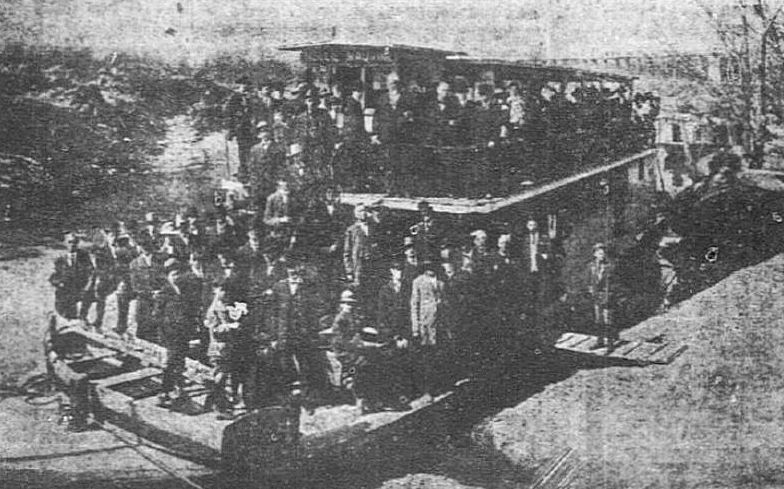
nellie-maurine_diaper-daysThe Nellie Maurine

by Paula Bosse

107 years ago today — after days and days of torrential rains — the Trinity River reached a crest of over 52 feet, and the resulting flooding caused loss of life and property and almost incalculable widespread damage on both sides of the suddenly surging river. Bridges and train trestles were washed out, cutting off any way for Dallasites or travelers heading west on trains and interurbans to get from Dallas to Oak Cliff, and vice versa. Ever the home of the entrepreneurial capitalist, the owner of one of the only large boats in the area, the Nellie Maurine, offered his water vehicle to be used as a ferry for those souls desperate to cross the river. For a price.

In September of 1906, E. L. Gale built a large boat in Dallas. It was designed to carry freight as well as passengers on pleasure trips between the “wharf” at the base of Commerce Street and the under-construction Lock and Dam No. 1 at McCommas Bluff. The boat was named after his daughters Vanelle and Maurine.

The Nelle Maurine is a model bow, flat-bottomed boat, seventy feet in length, sixteen-foot beam on the water line, and twenty feet including the guard rail. She is a propeller boat, draws twelve inches of water, and is driven by a 40-horsepower engine. In the event it be found that the engine is not of sufficient power to give the boat the required speed, it is so arranged that it can be changed to 80-horsepower with but very little trouble. With full cargo aboard, the vessel will require a depth of about thirty-three inches of water. (Dallas Morning News, Sept. 29, 1906)

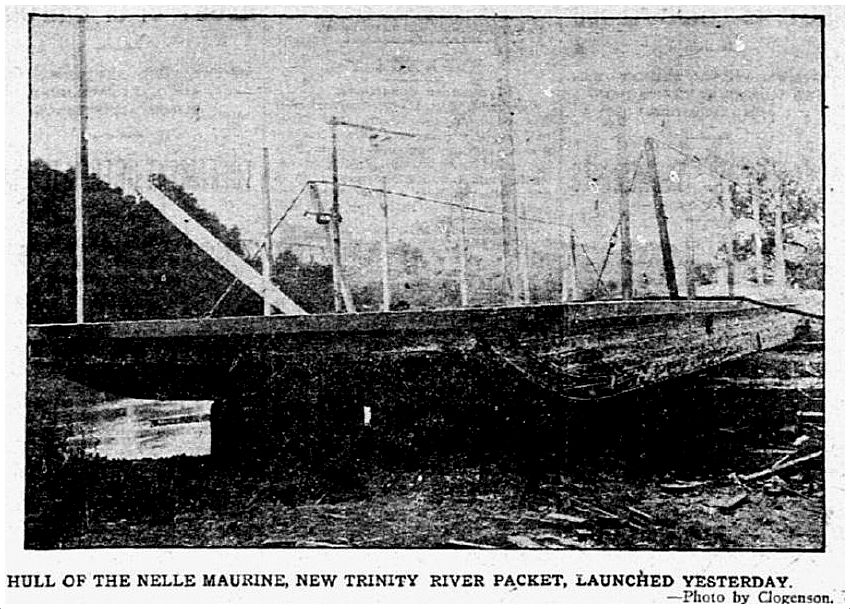
nellie-maurine_dmn_092906DMN, Sept. 29, 1906 (before upper deck/pilot house had been built)

Gale envisioned great success in establishing shipyards and a wharf in Dallas. Though the much hoped-for “navigable Trinity” was still not a reality, many believed a trade route waterway between Dallas and the Gulf of Mexico was inevitable. A person could make a great deal of money by being in on the ground floor of such an industry.

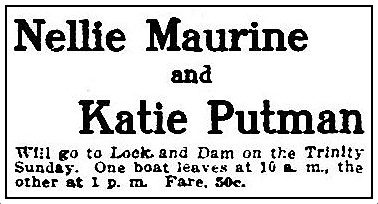
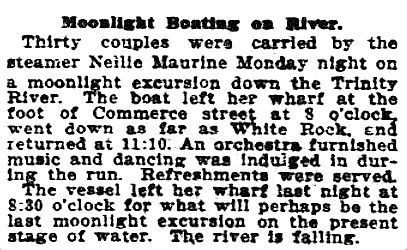
The boat, initially a propeller boat which was converted to a sternwheeler in the summer of 1907, had trouble in operating along the short stretch of river with any kind of regular service — the water level was either too low or too high (when the water was high, the boat could not pass beneath the “Zang boulevard bridge”). The Nellie Maurine was often moored near a large cottonwood tree waiting for the river to cooperate. When it did cooperate, the boat was in demand as a pleasure craft, often offering moonlight treks down the river, complete with onboard dance band. The fare for a daytime round-trip to McCommas Bluff was 50¢; the privately chartered night-time cruises were likely quite a bit higher.

nellie-maurine_dmn_070409-ADAd, DMN, July 4, 1909

nellie-maurine_dmn_051308May 13, 1908 (less than two weeks before the flood)

When the Great Flood of 1908 hit on May 25, there was absolute bedlam, beginning in the middle of the night when one man set off several “dynamite bombs” one after another in order to awaken his neighbors who were unaware of the sudden and unexpected rise of the swollen river and who were in imminent danger. When Dallasites went to bed on May 24, the river was at an already high 28 feet. By 3:00 in the morning, just a few short hours later, it had risen to an incredible — and incredibly dangerous — 41.5 feet. By that afternoon it was over 51 feet, and by nightfall, it had surpassed all records and was at more than 52 feet. West Dallas and downtown were underneath water. Homes and livestock were washed away. Electricity was out. Telephones were out. Roads and railways were impassable. There was absolute panic.

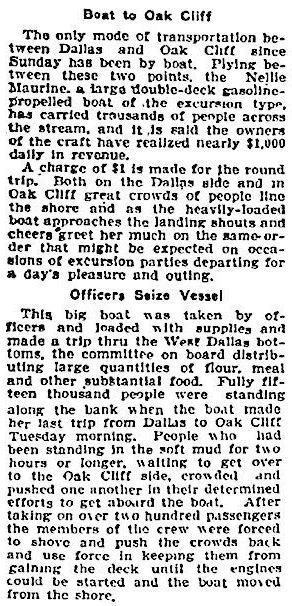
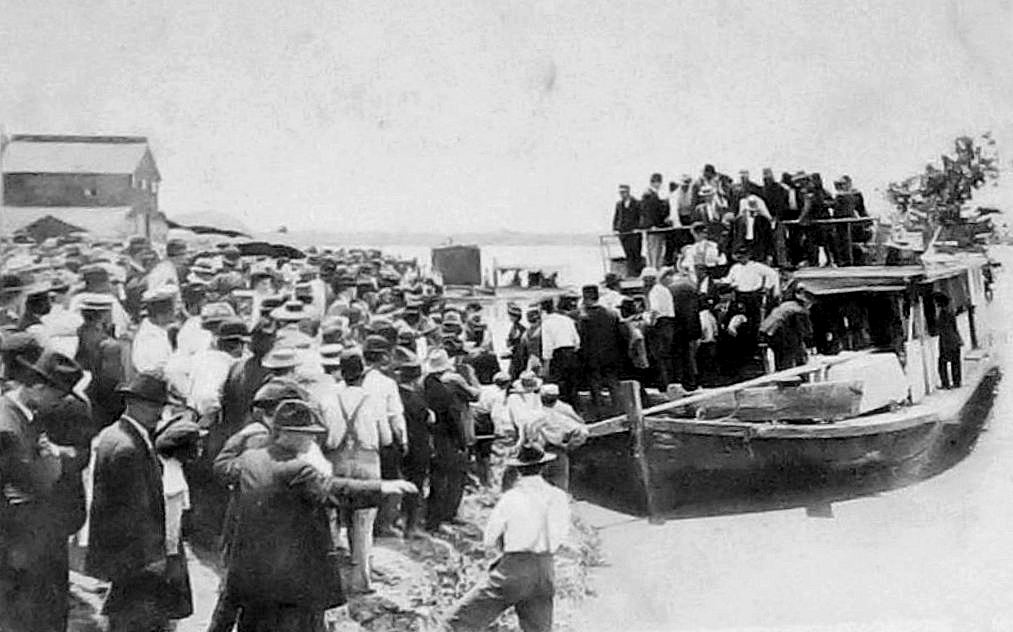
For numerous reasons, people were desperate to cross the river. As all roads and bridges across the Trinity were submerged or destroyed, the only way across was by boat. The Nellie Maurine’s owner saw an opportunity to make a lot of money — by charging people to ferry them back and forth across the Trinity, something that probably rubbed people the wrong way. When city authorities asked permission to use the Nellie Maurine to survey the damage, they were rebuffed when Gale (or his captain) insisted the city pay a fee and the city refused. Dallas County Sheriff Arthur L. Ledbetter and Criminal District Judge W. W. Nelms were having none of that and seized the boat, deputizing the crew and ordering them to set off for the west bank of the river. As it turned out, the damage was far worse than anyone could have expected, and the boat was used to rescue stranded people, some of whom were pulled from treetops. (The account of this survey, titled “West Dallas Trip Proves Thrilling,” is pretty gripping — see link below.)

When the city was done with its search-and-rescue mission, it UN-seized the boat, and the Nellie Maurine began operating as a ferry again, transporting frantic people back and forth across the river. If you wanted to cross the river, you’d have to cough up one dollar — maybe even two, a hefty price to reach safety. (According to the Inflation Calculator, $1 in 1908 would be the equivalent of about $26 in today’s money). It was rumored that this ferry service was generating $1,000 a day (almost $26,000 a day in today’s money!).

nellie-maurine_dmn_052808DMN, May 28, 1908

The Nellie Maurine provided a much-needed service during the Great Dallas Flood — and they also made a substantial profit, which — depending on your business philosophy — is either ingenious or appalling.

*

Below, a few images of the Nellie Maurine. I’m not sure what ultimately became of her, but I have found no mention of the boat past 1910, a year before E. L. Gale died.

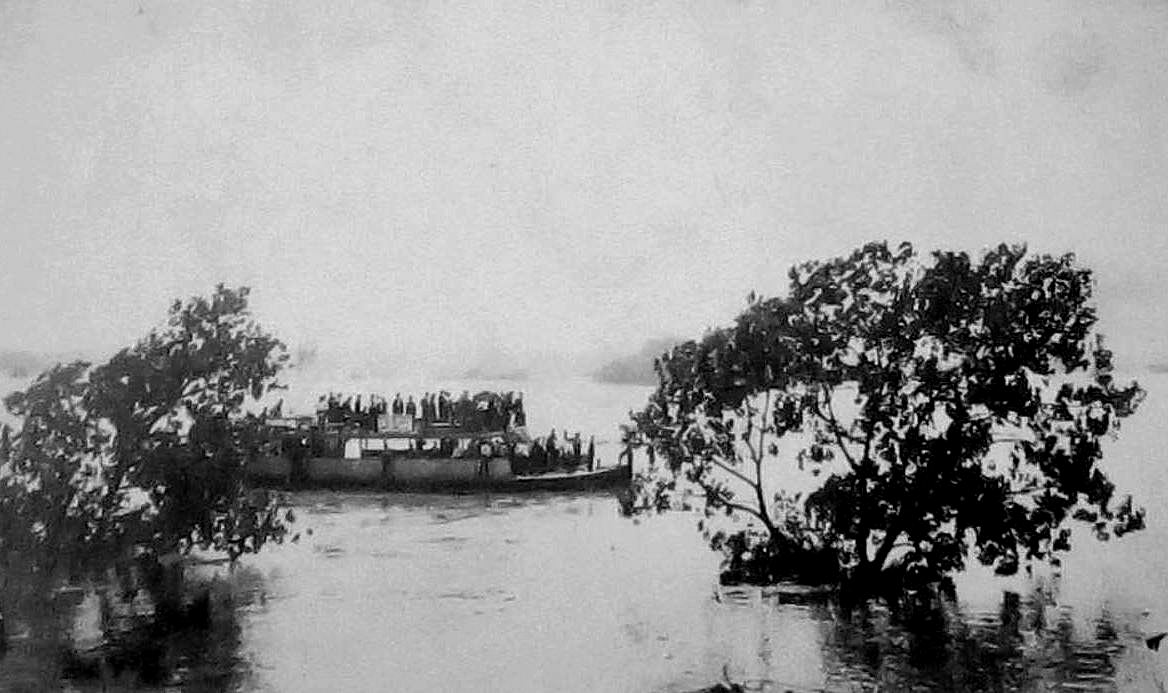
First, two photos of the boat taken during the flood (the boat had lost its pilot house when it was caught under the Commerce Street bridge earlier that day). (These two “real photo postcard” images found on eBay.)

flood_nellie-maurine_1908a

flood_nellie-maurine_1908b

Another photo from 1908 (from the John Miller Morris collection of Texas real photographic postcards and photographs, DeGolyer Library, SMU, here):

nellie-maurine_flood_1908_RPPC_john-miller-morris-collection_de-golyer-lib_SMU_front1908, DeGolyer Library, SMU

And, lastly, a post-flood photo from 1909, showing builders and contractors onboard, about to head to Lock and Dam No. 1 to check on its progress.

nellie-maurine_dmn_022309DMN, Feb. 23, 1909 (photo by Clogenson)

***

Sources & Notes

Top photo from the highly recommended book Diaper Days of Dallas by Ted Dealey.

Clippings and photos from The Dallas Morning News, as noted.

Read about the introduction of the Nellie Maurine (or the “Nelle Maurine”) to Dallas newspaper readers in an article published in The Dallas Morning News on Sept. 29, 1906, here. (The second photo above accompanied this article.)

Read the account of what was seen from the boat when it was commandeered by city officials in “West Dallas Trip Proves Thrilling,” published in the DMN on May 26, 1908, here.

Read more about the flood in these articles from The Dallas Morning News:

  • “The Trinity’s Swan Song Spree of 1908” by Gene Wallis (DMN, March 1, 1931), a hair-raising account of the havoc wreaked by the flood
  • “Riders Saw 1908 Flood from Ferry” (DMN, May 28, 1957), includes an account of S. S. Cumby, a farm boy who witnessed the flood

The Trinity River flood of 1908 was a story that made national headlines. The death-toll reports were all over the place, from 4 to “hundreds.” I think the official number of lives lost was only 4 or 5, which is pretty amazing, considering the massive destruction caused by the flood. An interesting first-day report can be found in the Wichita (Kansas) Beacon, in a late edition from May 25, 1908, here. “Trinity Is on a Rampage” — indeed.

An incredible photo of the washed-out T & P railroad trestle can be found in a previous post here.

Stay dry, y’all!

*

Copyright © 2015 Paula Bosse. All Rights Reserved.

Cole Park Storm Water Detention Vault

water-detention-vaultWhy, yes, this IS in Uptown…

by Paula Bosse

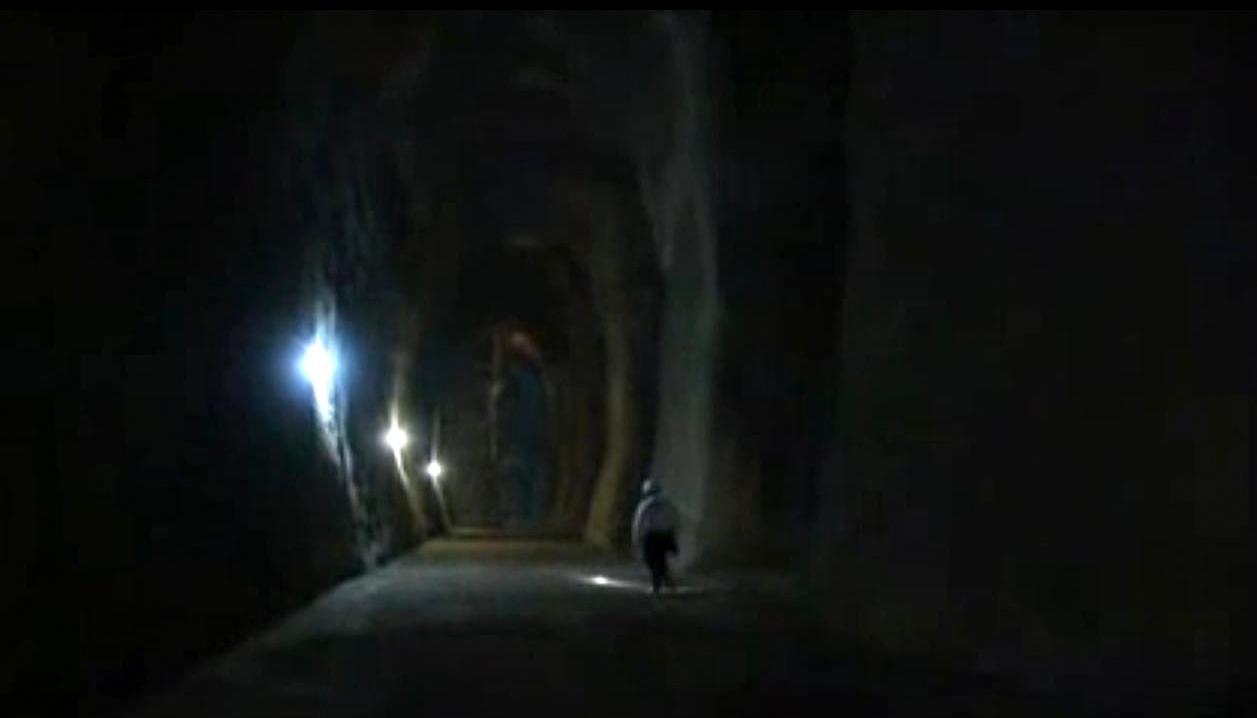
Underneath Cole Park (which is behind North Dallas High School and between Cole and McKinney), is a “storm water detention vault” — a cavernous space where storm water runoff goes when the capacity of the Mill Creek storm sewer system has been exceeded. It can hold 71 million gallons of storm water. …71 million gallons!

From a 2014 Facebook post from the Turtle Creek Association:

Completed in 1993, the vault’s 13 chambers, each of which rises five stories tall and runs the length of more than two football fields, are designed to fill with water during extreme rainfall. These massive vaults capture the storm water from Central Expressway and slowly release it into Turtle Creek via the Mill Creek Outfall by the footbridge in William B. Dean Park (next to the Kalita Humphrey Theater).

I had no idea that Dallas had anything like this until I saw the short film, below, in which Gilbert Aguilar, Assistant Director of the City of Dallas’ Department of Street Services, takes us on a tour of the “detention vault.” This is an absolutely mind-blowing look at something very, very few Dallasites know about. The City of Dallas probably wouldn’t be willing to grant access to moviemakers, but, seriously, this would make an INCREDIBLE movie set — perhaps less aesthetically appealing than the sewers of Vienna featured in The Third Man, but what it lacks in character it makes up for in sheer gigantic-ness.

***

Sources & Notes

The video, “Living With the Trinity: Cole Park Vault,” is on YouTube, here. Though not credited in the video itself, it is, presumably, a production of local filmmaker Mark Birnbaum, whose website is here.

Top image is a screengrab from the video.

*

Copyright © 2015 Paula Bosse. All Rights Reserved.

One of the Victims of the Great Trinity Flood: The T & P Railroad Trestle — 1908

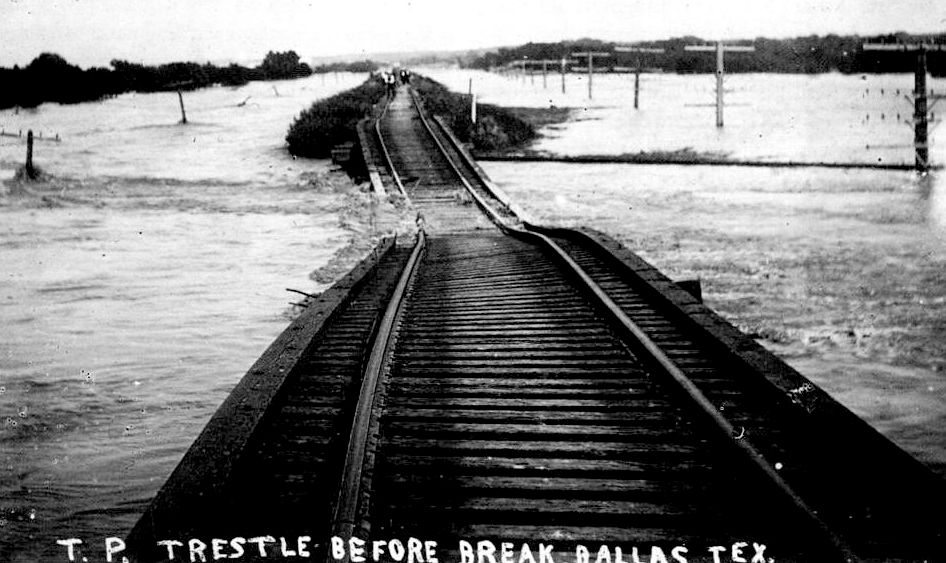
flood_t-p-trestle_1908_legacies“T. P. Trestle Before Break, Dallas, Tex.” (click for larger image)

by Paula Bosse

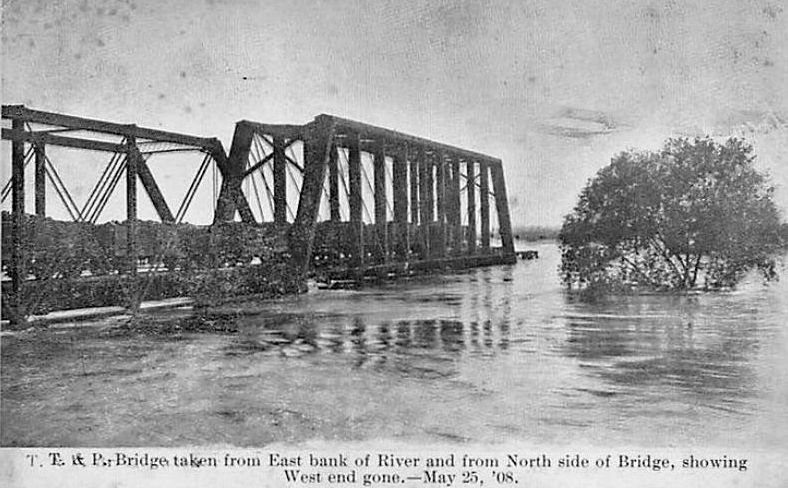
Above and below, photos of the Texas & Pacific railroad trestle spanning the Trinity River, destroyed during the great flood of May, 1908. Five people died in the flooding — in which the Trinity crested at an incredible 52.6 feet — and damage to property was unbelievable. The railroad trestle was just one of numerous victims of the worst flood Dallas has ever known.

flood_t-p-trestle_1908-postcard

***

Photo from the article “After the Deluge: The Impact of the Trinity River Flood of 1908” by Jackie McElhaney (Legacies, Fall, 1999), which you can read here.

Postcard from Flickr, here.

The May 25, 1908 Trinity River flood on Wikipedia, here.

Click pictures for larger images.

*

Copyright © 2015 Paula Bosse. All Rights Reserved.

2222 Ross Avenue: From Packard Dealership to “War School” to Landmark Skyscraper

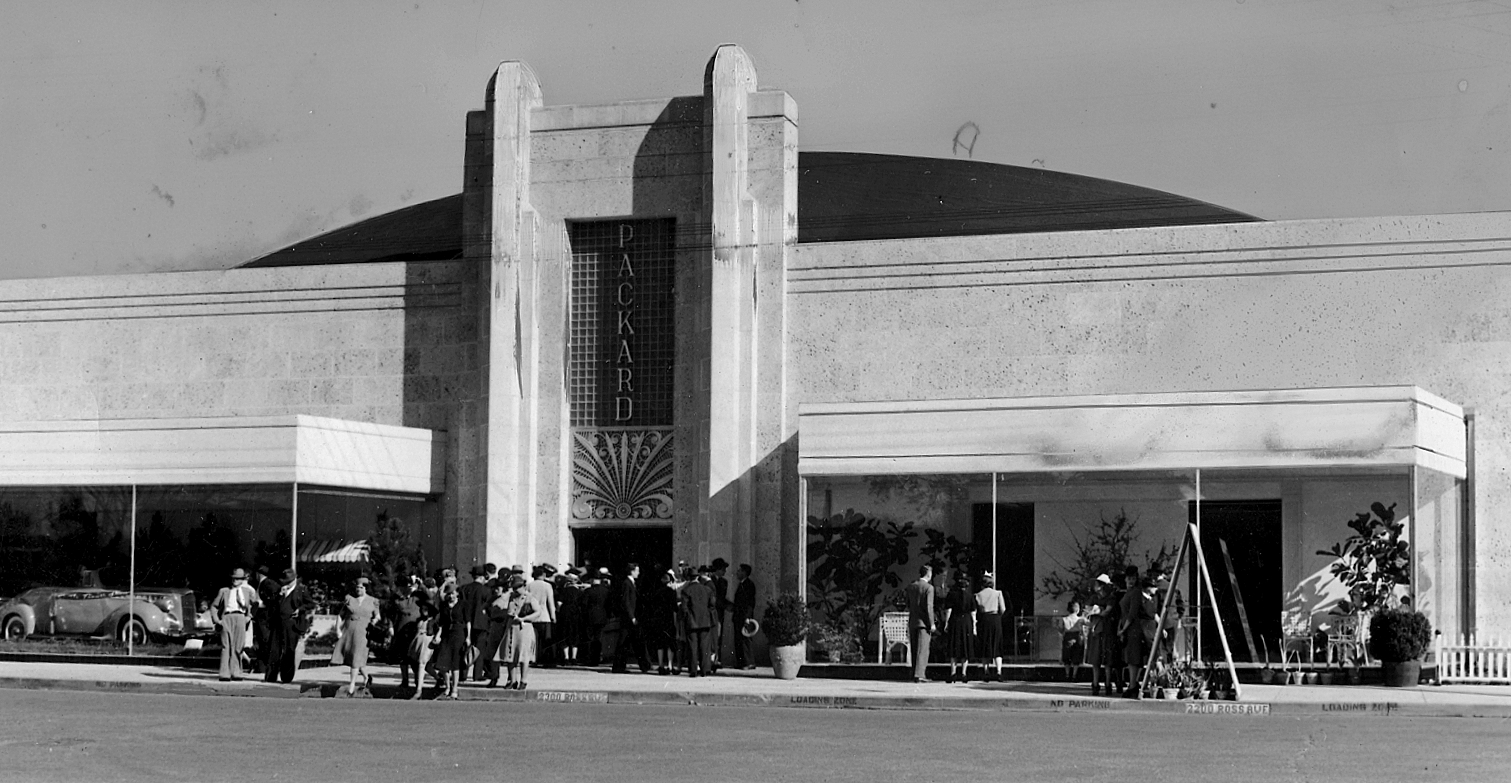
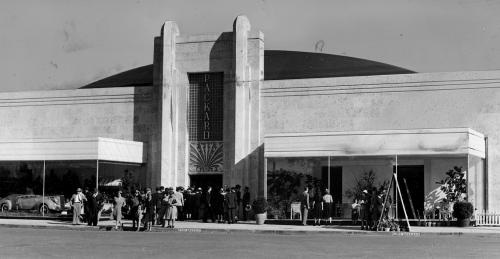
packard-dealership_2222-ross_detroit-pub-lib_1940Packard automobile showplace, 1940

by Paula Bosse

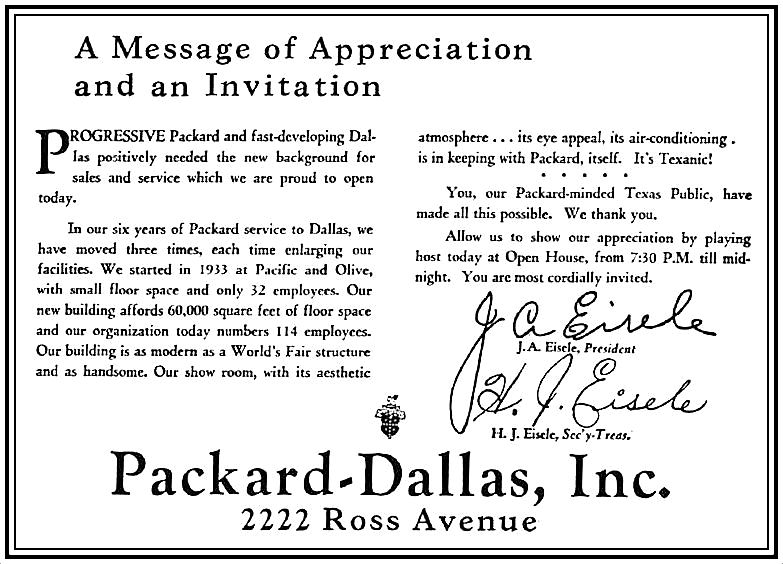
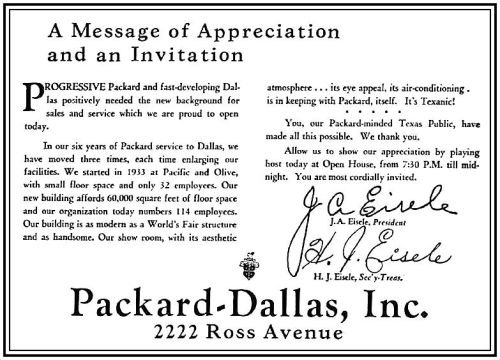
In late summer of 1939, a new 60,000-square-foot. $250,000 home for Packard-Dallas, Inc. featuring a “luxurious showroom” was announced. The first Packard automobile dealership had opened in 1933 at Pacific and Olive, and in the intervening six years, their growth had been tremendous, necessitating several moves and expansions.
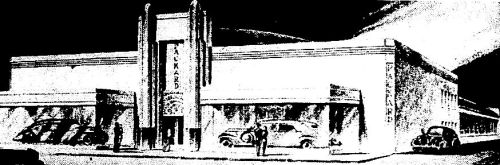
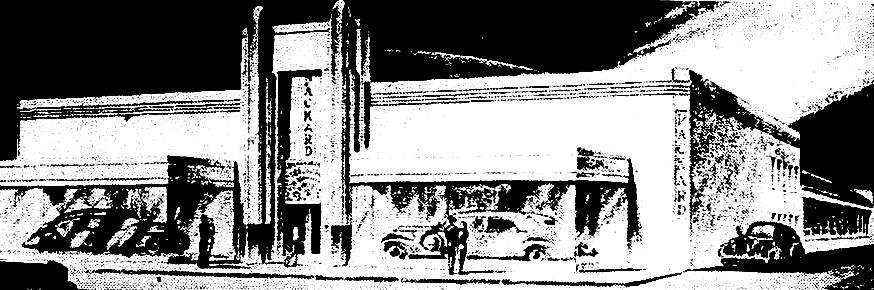
packard_ross_rendering_1939

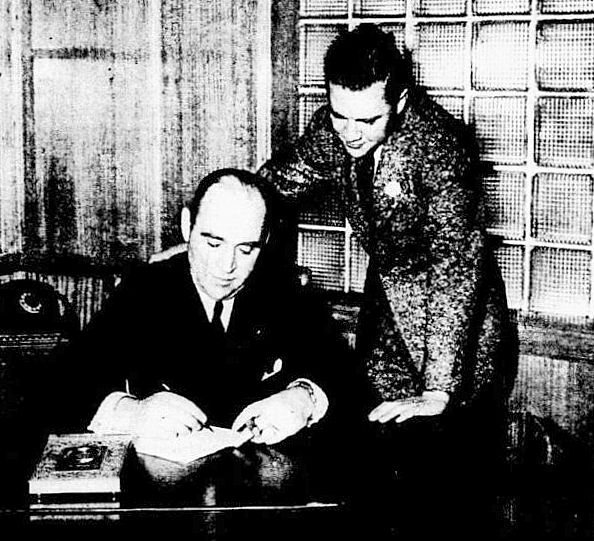
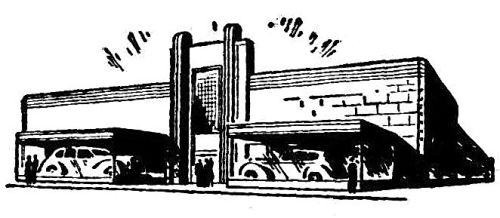
The attractive art deco building, faced with Cordova limestone and decorated with glass bricks, cast aluminum letters, and neon, was designed by J. A. Pitzinger and Roy E. Lane Associates, and was constructed at 2222 Ross Avenue in a mere three months. The large building was right across the street from the Cathedral of the Sacred Heart, in the block bounded by Ross, Crockett, San Jacinto, and N. Pearl. The president of Packard-Dallas was J. A. Eisele and the secretary-treasurer was his son, Horace. The grand opening on Dec. 16, 1939 was a big enough deal that the home-office Detroit honchos flew in, and there was even a 15-minute radio program devoted to it on KRLD.

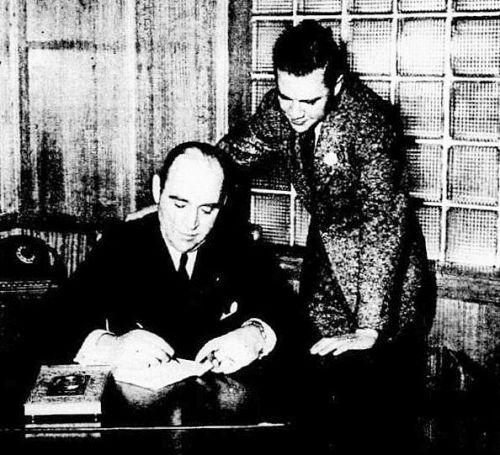
Under the headline “Growing With Dallas,” the opening-day ad featured a photograph of Joe and Horace Eisele and “A Message of Appreciation and an Invitation”:
packard_dmn_121639_ad1

packard_dmn_121639_ad2Ad, Dec. 16, 1939 (click for larger image)

“It’s Texanic!”

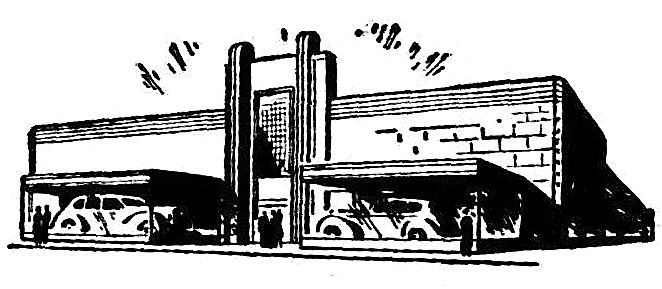
And another ad featured this nifty little line drawing of the cool building:
packard_dmn_121639-drawing-detDec. 16, 1939 (ad detail)

One of the stories about the opening of Dallas’ new auto showroom palace boasted that this big, beautiful, brash building was here to stay — Packard-Dallas had a 15-year lease on the place. …Which is why it was surprising to read that the building was sold less than two years later.

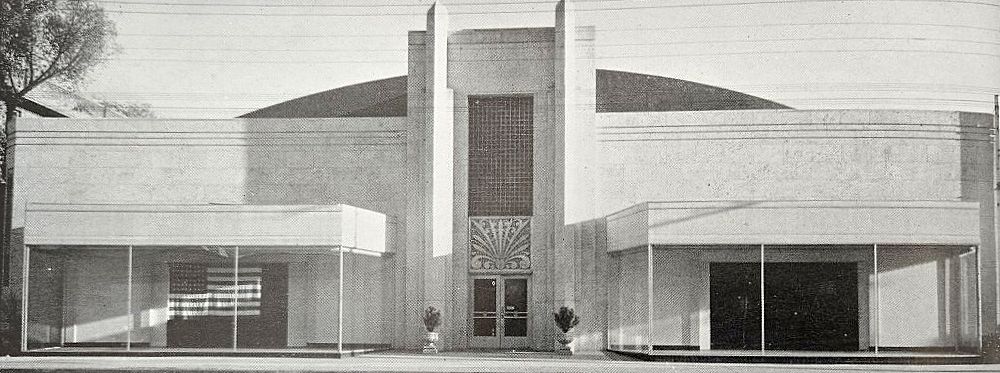
The U.S. was on the inevitable brink of involvement in the European war, and the National Defense School had begun operation in Dallas in July 1940. After a year of classes in which young men were taught “to do the technical and mechanical work necessary to warfare” (DMN, March 20, 1941), classrooms at the Technical high school and at Fair Park were bursting at the seams, and a larger facility was necessary. The Dallas Board of Education (which oversaw the program, often called “the War School”), was given the go-ahead to purchase the building (and, presumably, the property) for $125,000 in August 1941.

I’m not sure why J. A. Eisele sold the building (his name was listed as owner, rather than the Packard Company) — it wasn’t even two years old, and he got only half of what it cost to build. Patriotism? His son Horace had been drafted in April, so … maybe. Eisele seems to have left the auto sales business, which he had been in for decades, and had moved out of Texas by 1945.

After the U.S. officially entered the war and it became obvious that “defense schools” around the country would have to admit women in order to maintain manufacturing quotas, women began to work beside men at the Ross Avenue school in January 1942.

Eighty women Saturday pulled their fingers against the triggers of aircraft rivet guns as the Dallas National Defense School, 2222 Ross Avenue, started the state’s first major training course designed to place women side by side with men in Texas war materials plants. (DMN, Jan. 4, 1942)
packard_ross-avenue_war-school_young-america-in-dallas_1942_DPL
1942

This “War School” was a training school for war-time jobs at places like North American Aviation.
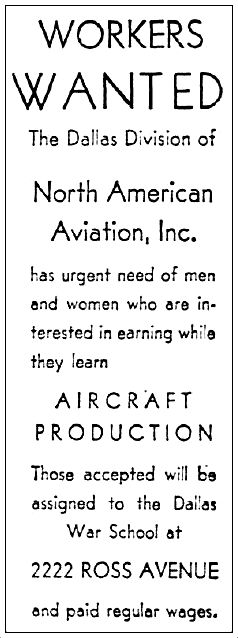
defense-school_dmn_090643Sept. 1943

Thousands of men and women trained at the Ross Avenue facility until the war ended in 1945. The school continued, but no longer as a Defense School — it became Dallas Vocational School, and its first students were veterans.

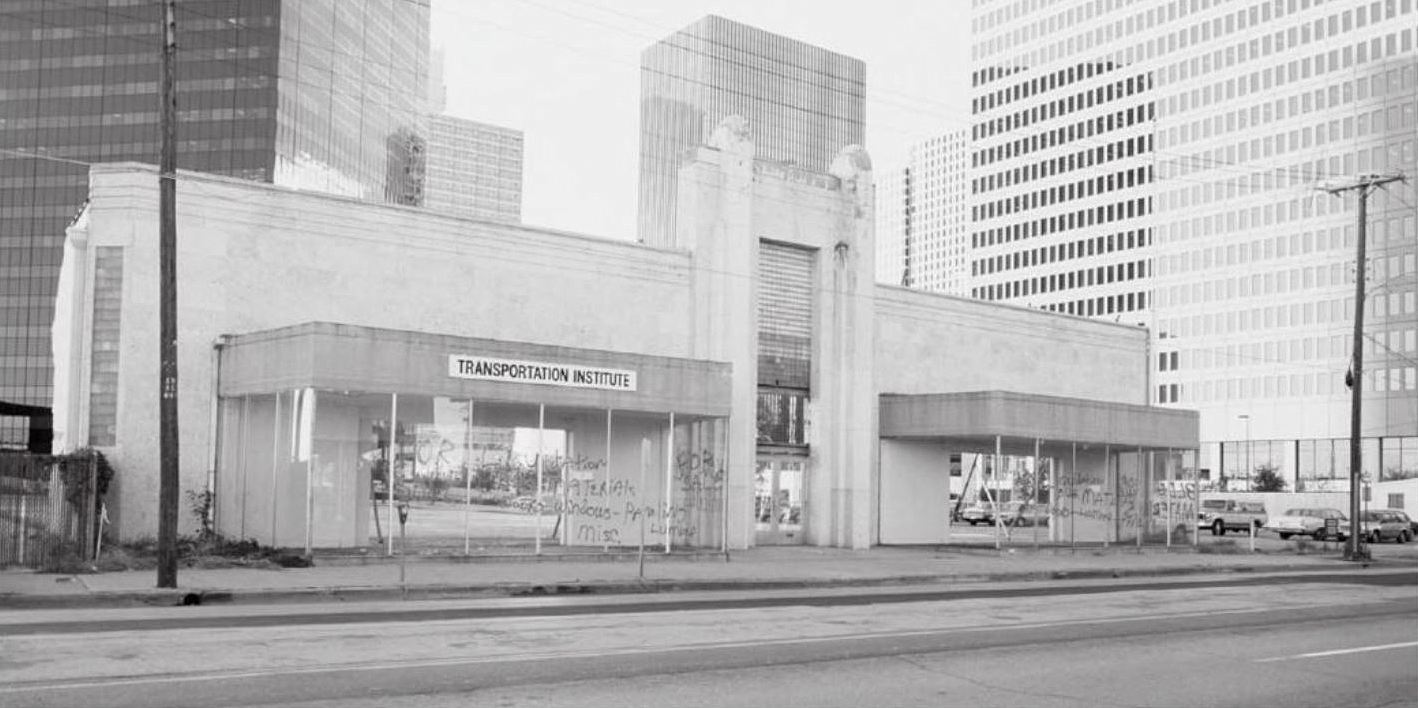
In 1976, the school was designated as one of the Dallas Independent School District’s magnet schools — it became the Transportation Institute, where “students interested in owning their own dealership, becoming a technician-mechanic or an auto body specialist will receive on the spot training in a laboratory consisting of a new car showroom, a modernly equipped repair center and a complete auto rebuilding facility” (DMN, Aug. 22, 1976). Back to its roots! And it only took 37 years.

The school continued for a while but, inevitably, the property became more and more attractive to developers. In 1981, as the developers were circling, a City Landmark Designation Eligibility List was issued. It contained buildings which had “particular architectural, historical, cultural and/or other significance to the City of Dallas,” and, if approved, were eligible to receive historic landmark designation. I’m guessing 2222 Ross Avenue didn’t make the cut, because Trammell Crow bought the building in 1983 and tore it down the next year.
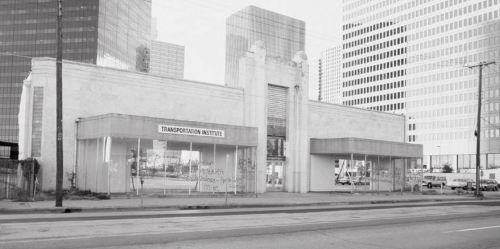
transportation-institute_lost-dallas_dotyvia Lost Dallas by Mark Doty

But … Crow sold the facade to real estate developer and investor Lou Reese, who said that he would reassemble the limestone facade and incorporate it into a restaurant he planned to build in Deep Ellum. That was an interesting plan. (Incidentally, in the same city council meeting in which the demolition/disassembling of the building’s facade was discussed, the council also considered “a request for more than $7 million in federal funds for a project to renovate the Adams Hat Co building into apartments” (DMN, Aug. 8, 1984). …Lou Reese owned the Adams Hat building. What a coincidence!)

The city council’s decision?

The council authorized developer Trammell Crow to disassemble the art deco facade of the former Transportation Institute Magnet High School on the condition that the facade be reconstructed in Deep Ellum…. The company [has] demolished all but the building’s limestone facade, which was determined to be eligible for designation as an historic landmark. (DMN, Aug. 9, 1984)

So? Where’s that facade? There was no mention of it for three years, until an article in the Morning News about another developer who had big plans for a major Deep Ellum complex called “Near Ellum,” which would be bounded by Commerce, Crowdus, Taylor, and Henry streets.

Highlighting Near Ellum will be a 40-foot art deco facade, formerly on the front of the Transportation Institute on Ross Avenue, in the main parking plaza. The plaza will also include an outdoor stage for concerts and special events. (“Developer Plans Deep Ellum Project,” DMN, June 25, 1987)

Aaaaaaaaaaaaaaaand … that never happened. I wonder if that 76-year-old disassembled limestone facade is still crated up somewhere around town. Somehow I doubt it.

So, 2222 Ross Avenue. What’s there now? None other than the 55-story skyscraper, Chase Tower, also known as “The Keyhole Building.”

You could get a lotta Packards in there.

***

Sources & Notes

Top photo from the Detroit Public Library’s Packard Collection in the National Automotive History Collection, viewable here; I’ve straightened and cropped it. The reverse has this notation: “Packard Motor Car Co., branches/dealerships/agencies, 2300 [sic] Ross Avenue Dallas, Texas, exterior, show windows left to right; 1940 Packard 110 or 120, eighteenth series, model 1800 or 1801, 6/8-cylinder, 100-120-horsepower, 122/127-inch wheelbase, convertible coupe (body type #1389/1399), special furniture display.”

1942 photo of the building is from a publication called “Young America in Dallas,” Dallas History and Archives, Dallas Public Library.

The developer who apparently came into possession of the facade after Lou Reese was Ed Sherrill. Perhaps someone associated with the Near Ellum project might know what became of the “saved” facade.

Chase Tower info on Wikipedia here; photo of it here. Imagine a teeny-tiny car dealership at its base.

Packard automobiles? Some of them were pretty cool. Check ’em out here.

A lengthy article on the notorious developer Lou Reese — “Hide and Seek” by Thomas Korosec (Dallas Observer, June 8, 2000) — is here.

*

Copyright © 2015 Paula Bosse. All Rights Reserved.