Flashback : Dallas

A Miscellany: History, Ads, Pop Culture

Category: Fashion

An Afternoon Outing with SMU Frat Boys & Their Dates — 1917
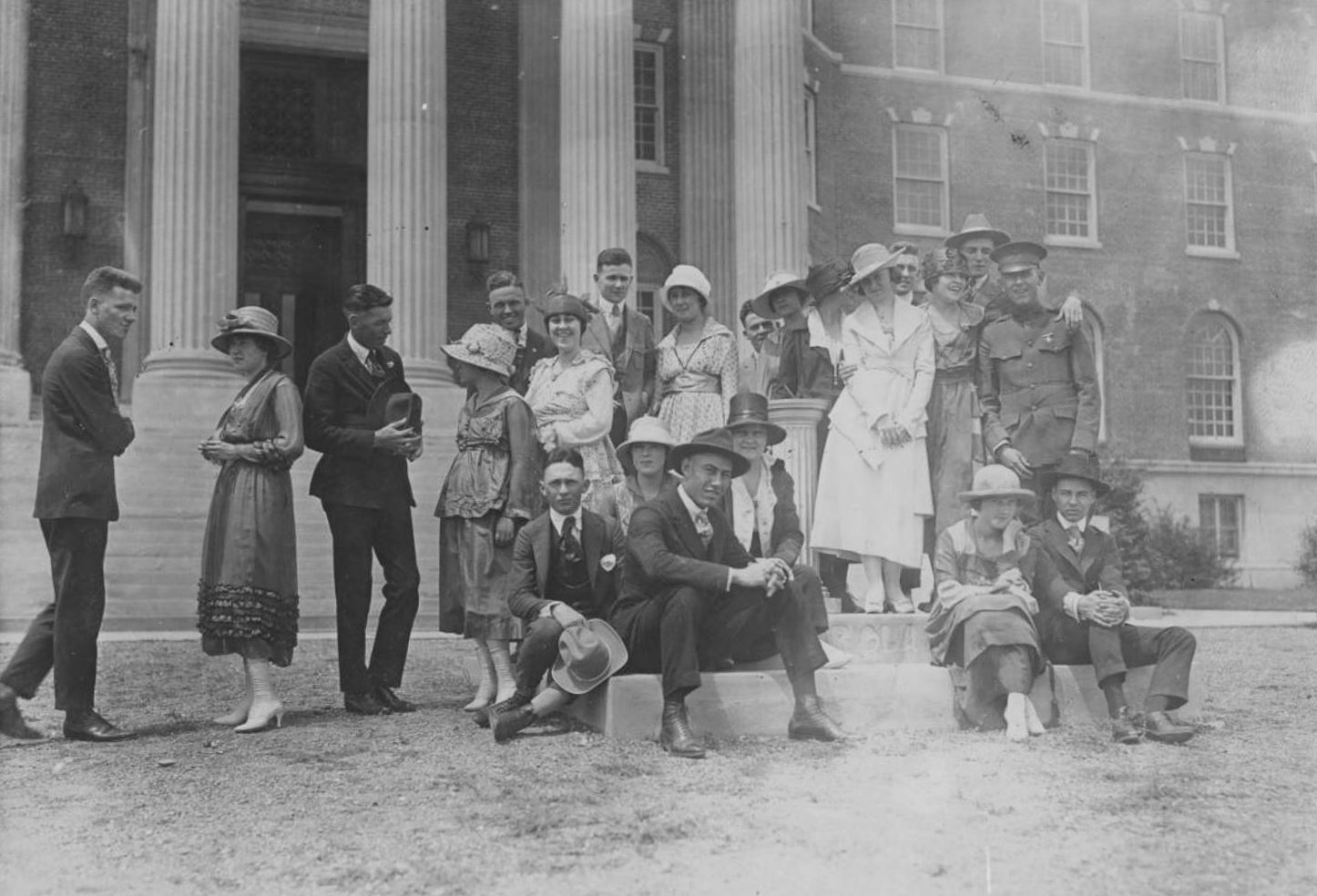
smu_omega-phi_dallas-hall_1917_degolyerCampus couples, 1917

by Paula Bosse

I came across three wonderful World War One-era photos in the SMU archives while I was looking for something else. You know how you can become enthralled by the charm of old photos and sit for long stretches of time staring at every little detail and wondering about the lives of the unidentified people who populate them? That happened to me with these. There is one particular young woman who stands out more than anyone else. Not only is she the best-dressed person in the photos, she also seems calm, collected, and serene. She looks friendly. She was probably very pleasant to have around.

These three photographs show a group of ten young couples and a pair of chaperones spending a beautiful sunny day together, with the highlight of the day being a trip to Highland Park’s Exall Lake. The men are SMU students, identified only as members of the Omega Phi fraternity. The women are identified merely as “dates,” but I’m sure that some of them were also SMU students. The photograph above shows the crowd gathered on campus in front of Dallas Hall. The woman in white looks like she’s on a pedestal, glowing in a spotlight. Below, a closer look at her stylish outfit (as well as a look at the young be-medaled WWI soldier next to her).
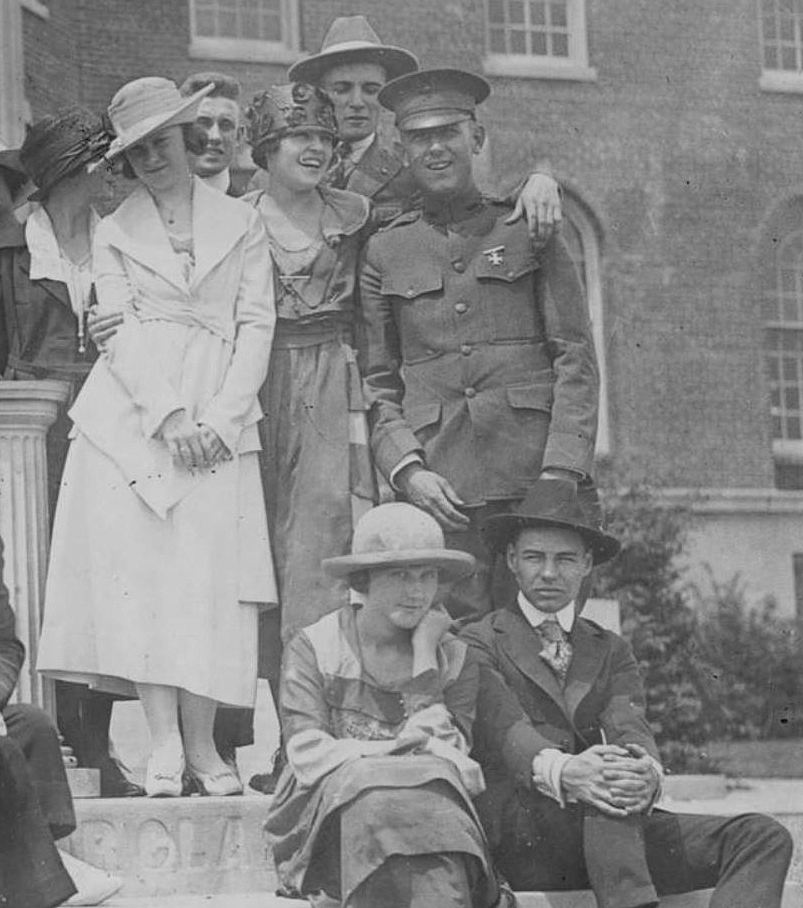
smu_omega-phi_dallas-hall_1917_degolyer-det1

And, below, a similar detail, but this one showing the daintily crossed ankles of another pretty girl, seated beside a sour-looking companion.
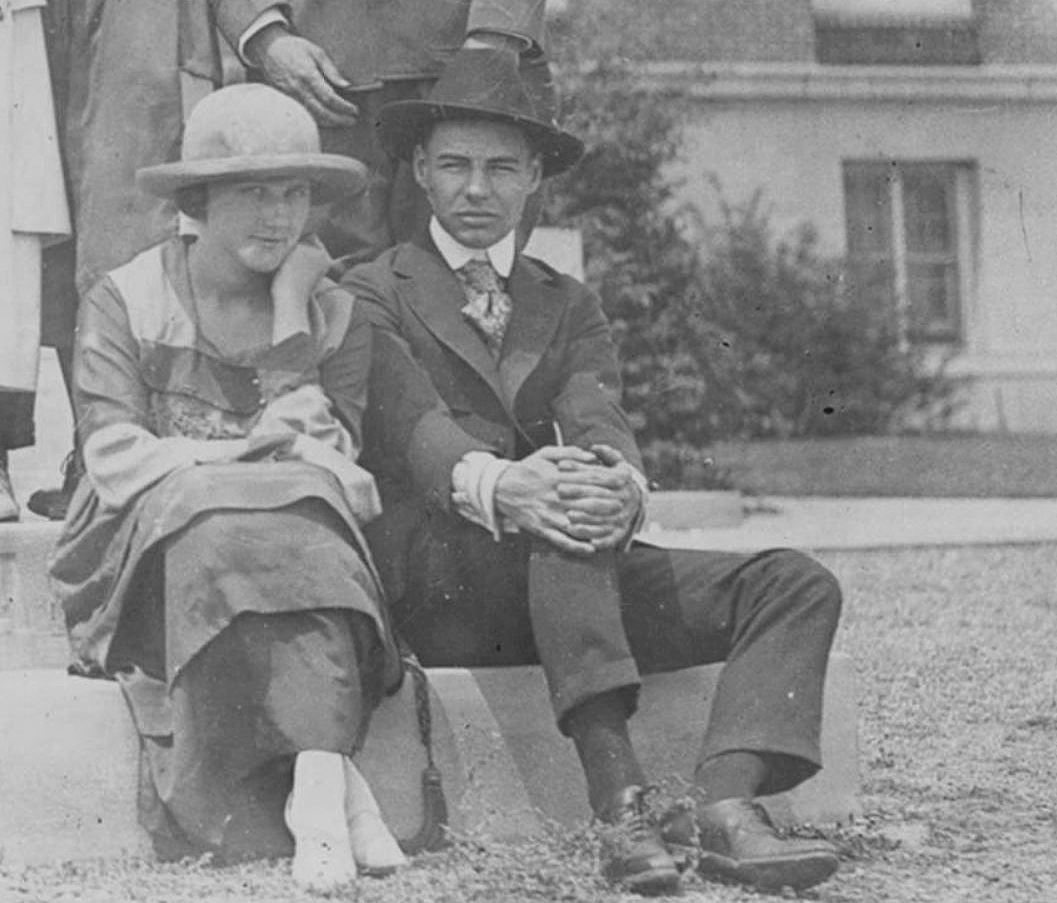
smu_omega-phi_dallas-hall_1917_degolyer-det2

And here’s the gang on the idyllic banks of Exall Lake. Diane Galloway included this photograph in her book The Park Cities, A Photohistory with this caption:

At one time a bridge crossed Exall Lake near the Cary house, shown in the distance. The photographer was standing on the bridge to capture this picture of well-dressed SMU students going boating on the lake. A trip to Lakeside Drive was one of the few off-campus excursions permitted in 1917.

I love this photo. If I didn’t know what the Turtle Creek area looked like, I’d be hard-pressed to identify this as Dallas!

smu_omega-phi_exall-lake_1917_degolyer

Here’s a close-up of the beatific, smiling woman in white. I like the kid lurking in the background.

smu_omega-phi_exall-lake_1917_degolyer-det1

And the boat.

smu_omega-phi_exall-lake_1917_degolyer-det2

And the sour-looking guy again, looking even more annoyed than before.
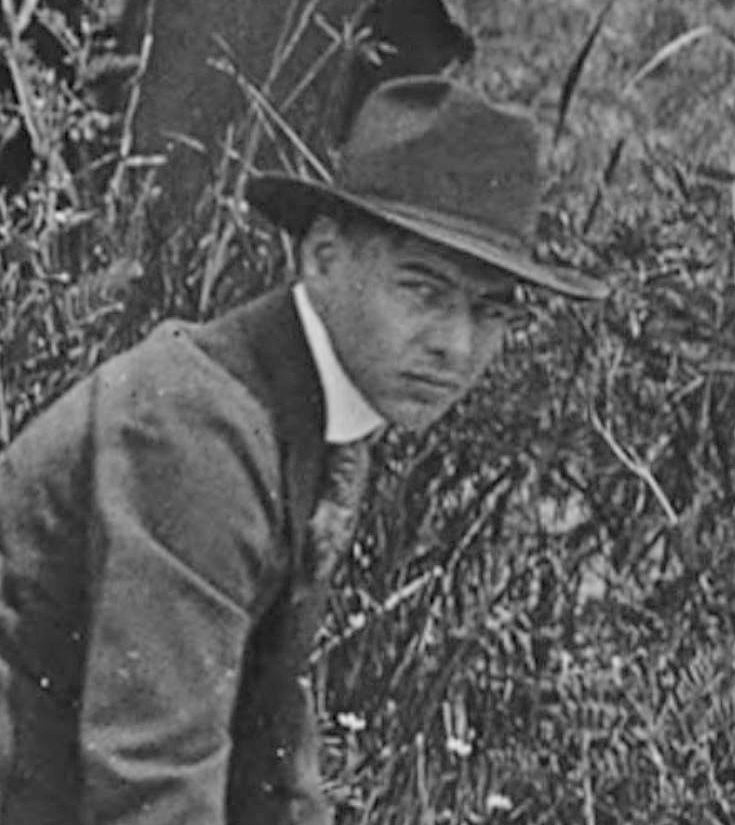
smu_omega-phi_exall-lake_1917_degolyer-det3

And here’s the crowd sitting on the steps of the frat house (which was located at Haynie and Hillcrest). The personnel has changed a little bit (they gained a woman and lost a man), but (almost) everyone seems pretty happy.
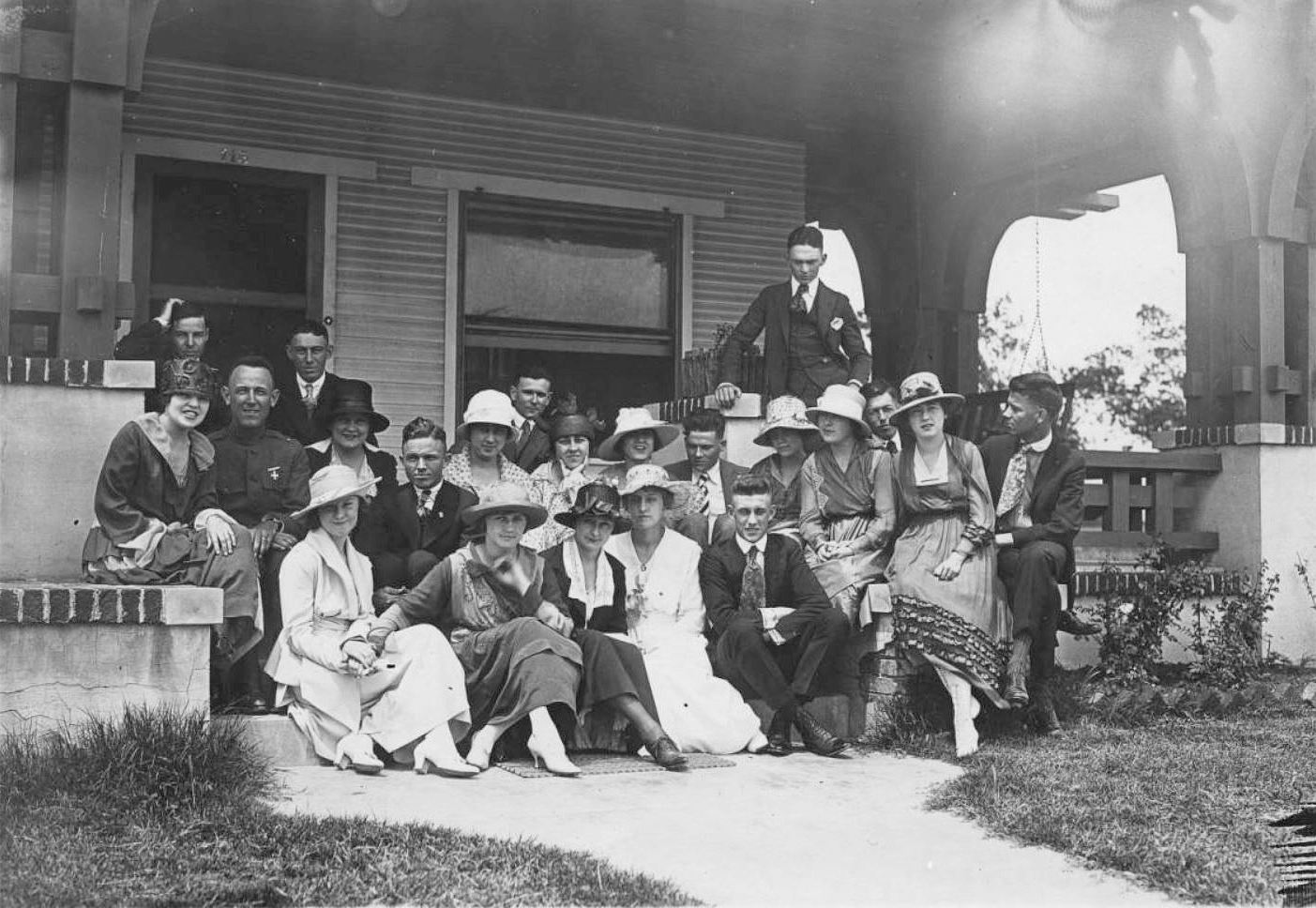
smu_omega-phi_porch_1917_degolyer

And, below, my very favorite detail from these three photos.
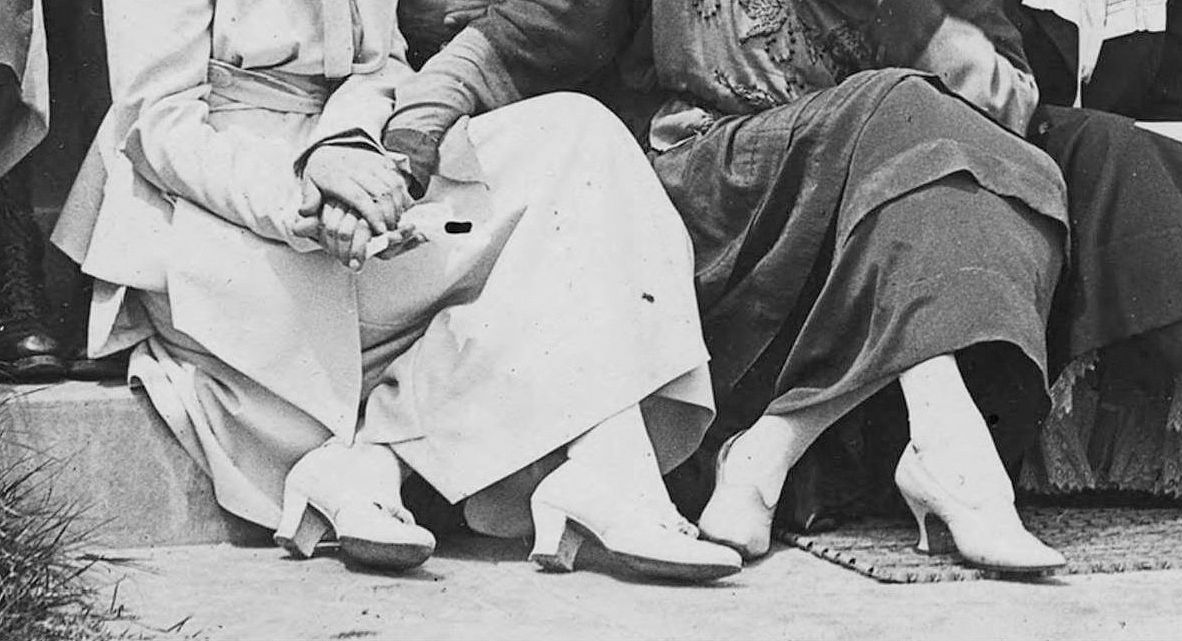
smu_omega-phi_porch_1917_degolyer-det1

After a bit of sleuthing, I found a picture of the house at the time these photos were taken. It was actually a residence which was, I think, being rented out to the small group of Omega Phis. They had a proper fraternity house built several years later.
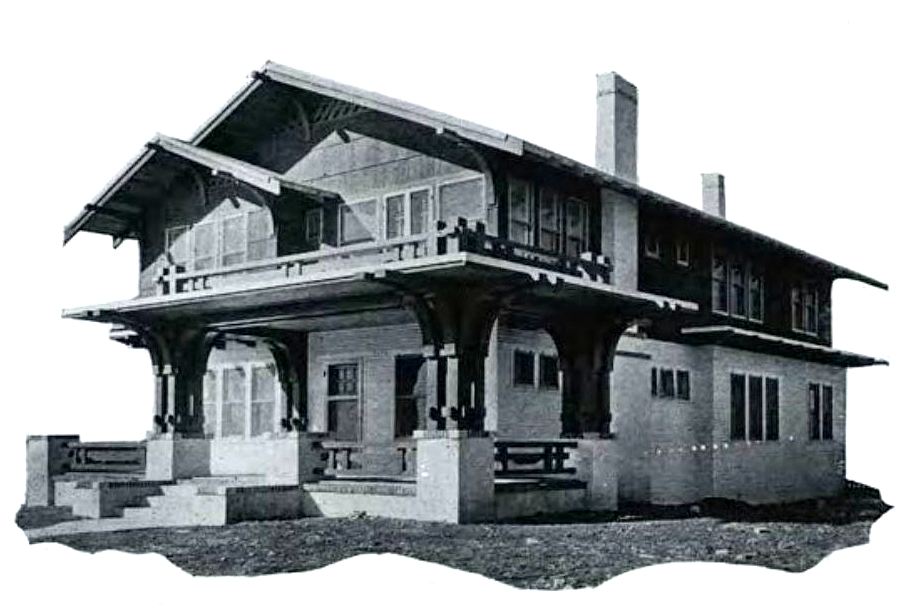
omega-phi-house_rotunda_1917

The top photo had “1917” written on the back, so I checked SMU’s Rotunda yearbooks from around that time. Here’s a look at the men who were members of Omega Phi in 1918. Several of these faces match the ones in the photos of the afternoon outing.
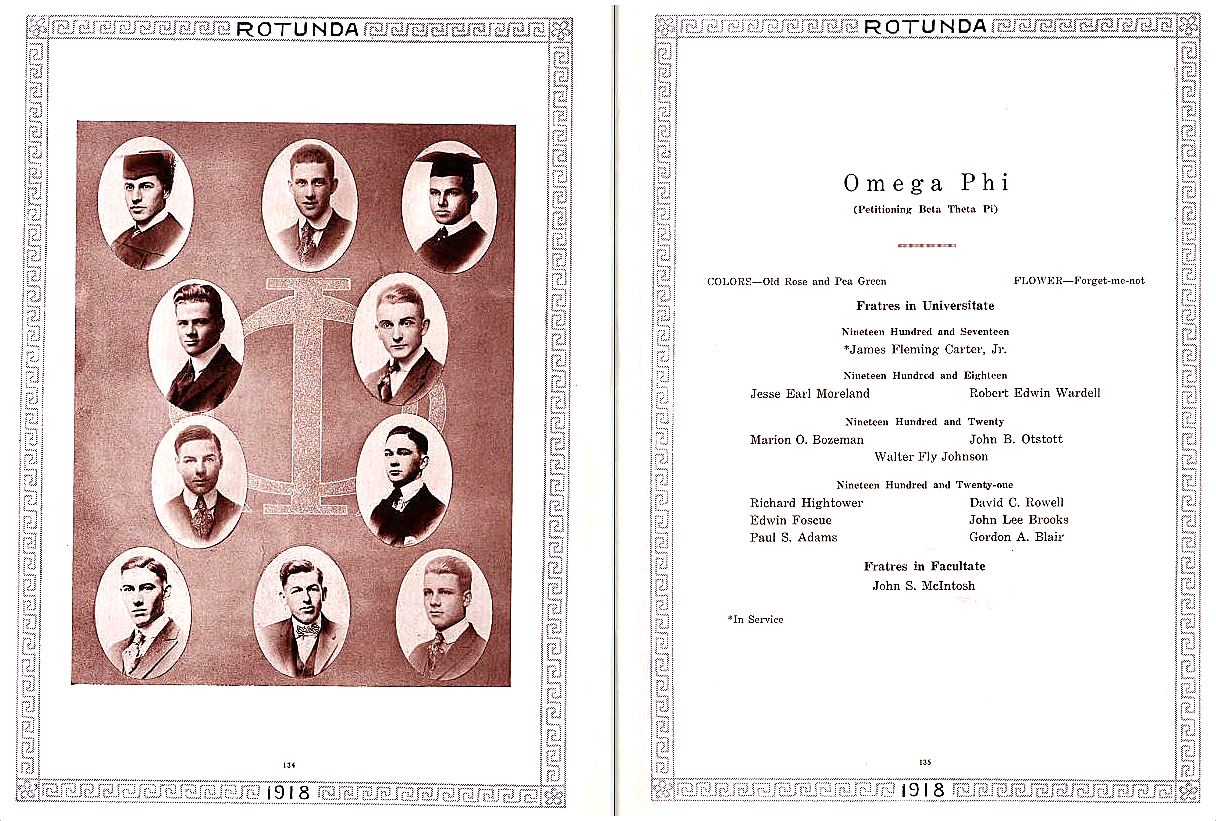
omega-phi_rotunda-1918

And, below, a photo collage from the Omega Phi page of the 1917 Rotunda. Several of the women look familiar. I see the Woman in White in at least one of these snapshots.
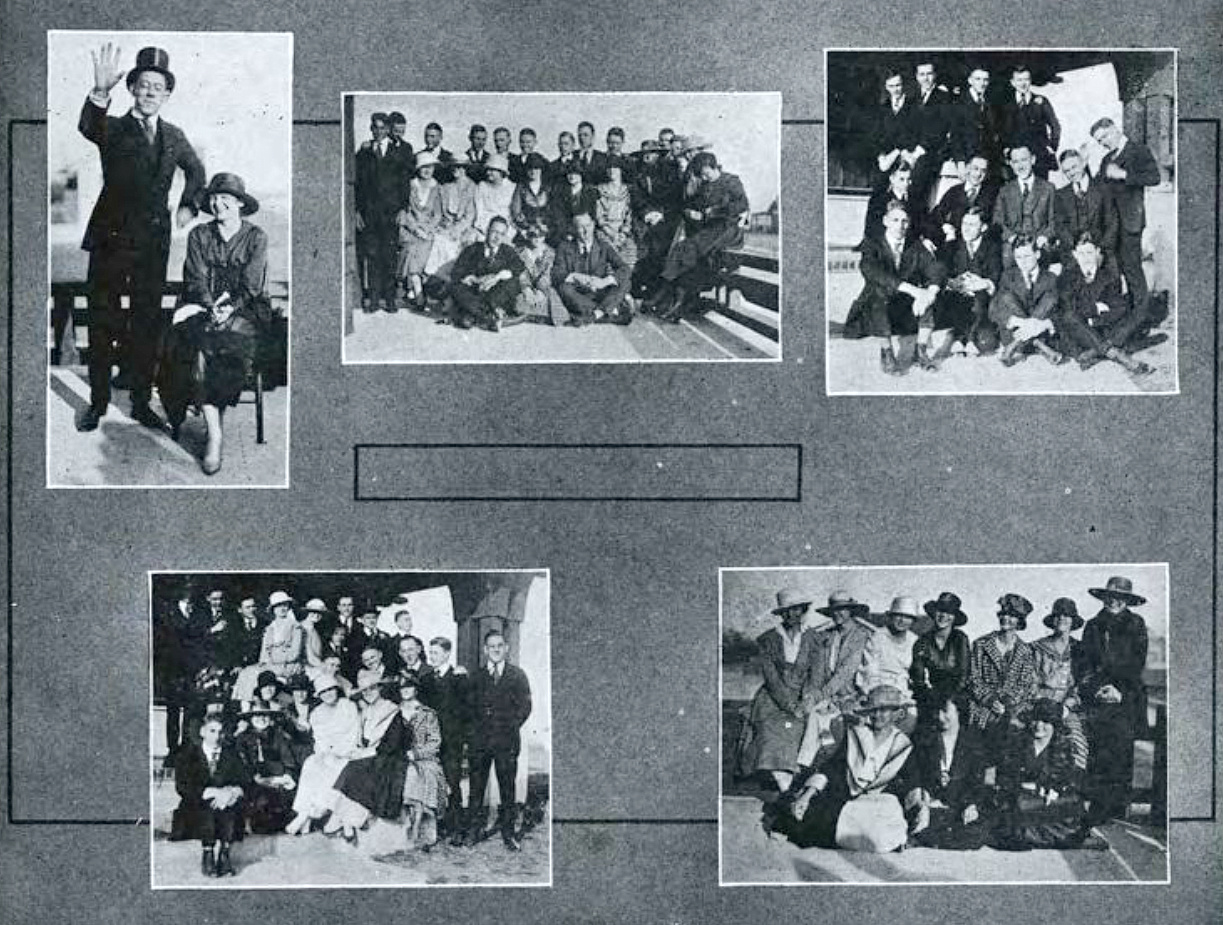
omega-phi_photos_rotunda_1917

And here she is, close up. I hope she was as happy, intelligent, and confident in her real life as she appears to be in these photos.
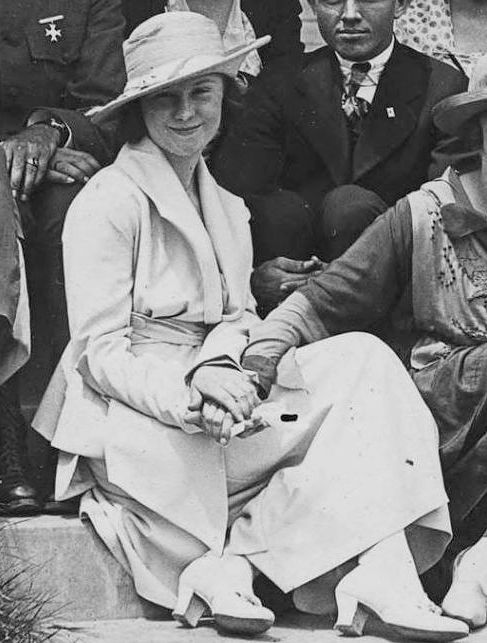
smu_omega-phi_porch_1917_degolyer-det2

***

Sources & Notes

The three photos of the afternoon outing all come from the collection of the DeGolyer Library, Central University Libraries, Southern Methodist University:

  • “Omega Phi Fraternity members and their dates in front of Dallas Hall” is here.
  • “Omega Phi Fraternity member outing to Exall Lake” is here.
  • “Omega Phi Fraternity members and their dates on porch” is here.

The quote from Diane Galloway comes from her FANTASTIC book, The Park Cities, A Photohistory (Dallas: Diane Galloway, 1989), p. 24.

The ersatz Omega Phi fraternity house was located at 115 Haynie Avenue, just west of Atkins (now Hillcrest). (The photo of the exterior of the house is from the 1917 SMU Rotunda yearbook.)
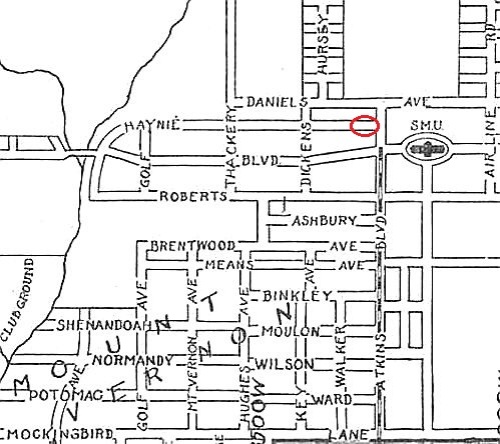
omega-phi_map_19191919 map (detail), Portal to Texas History

I have absolutely no idea how college fraternities work, but it seems that when they formed on the SMU campus in 1915, the Omega Phi group was not actually affiliated with a national fraternity. They “petitioned” to be chartered by national groups, but they finally stopped trying after 11 years of, I guess, being repeatedly turned down — in 1926 they declared themselves to be an “independent society.” But one year later, they were granted a charter by the national Kappa Sigma fraternity. In the Dallas Morning News article announcing the news, this sentence was included: “The local chapter will be known as Delta Pi chapter.” I have no idea what any of that means, but if you’re really into these things, read the DMN article “Kappa Sigmas Grant Charter” (Sept. 26, 1927), here.

As for the identities of the women in the photos, it’s a mystery. I would assume, though, that at least some of them were the women mentioned in this little article about a cozy winter get-together at the Haynie Ave. house:
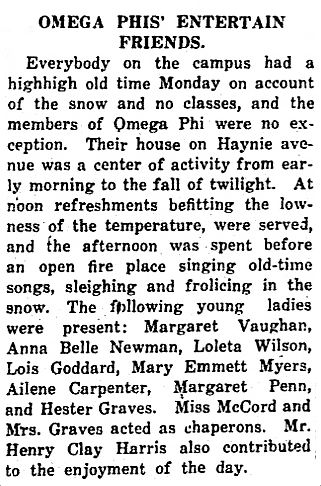
omega-phi_smu-campus_011917DMN, Jan. 19, 1917

If you’re not familiar with beautiful Exall Lake, you can watch a short, minute-long video of the lake’s history, produced to celebrate the 100th anniversary of Highland Park, here.

For other posts featuring photos I’ve zoomed in on to reveal interesting little vignettes, click here.

UPDATE: I stumbled across another photo of this group, from Diane Galloway’s book The Park Cities, A Photohistory:
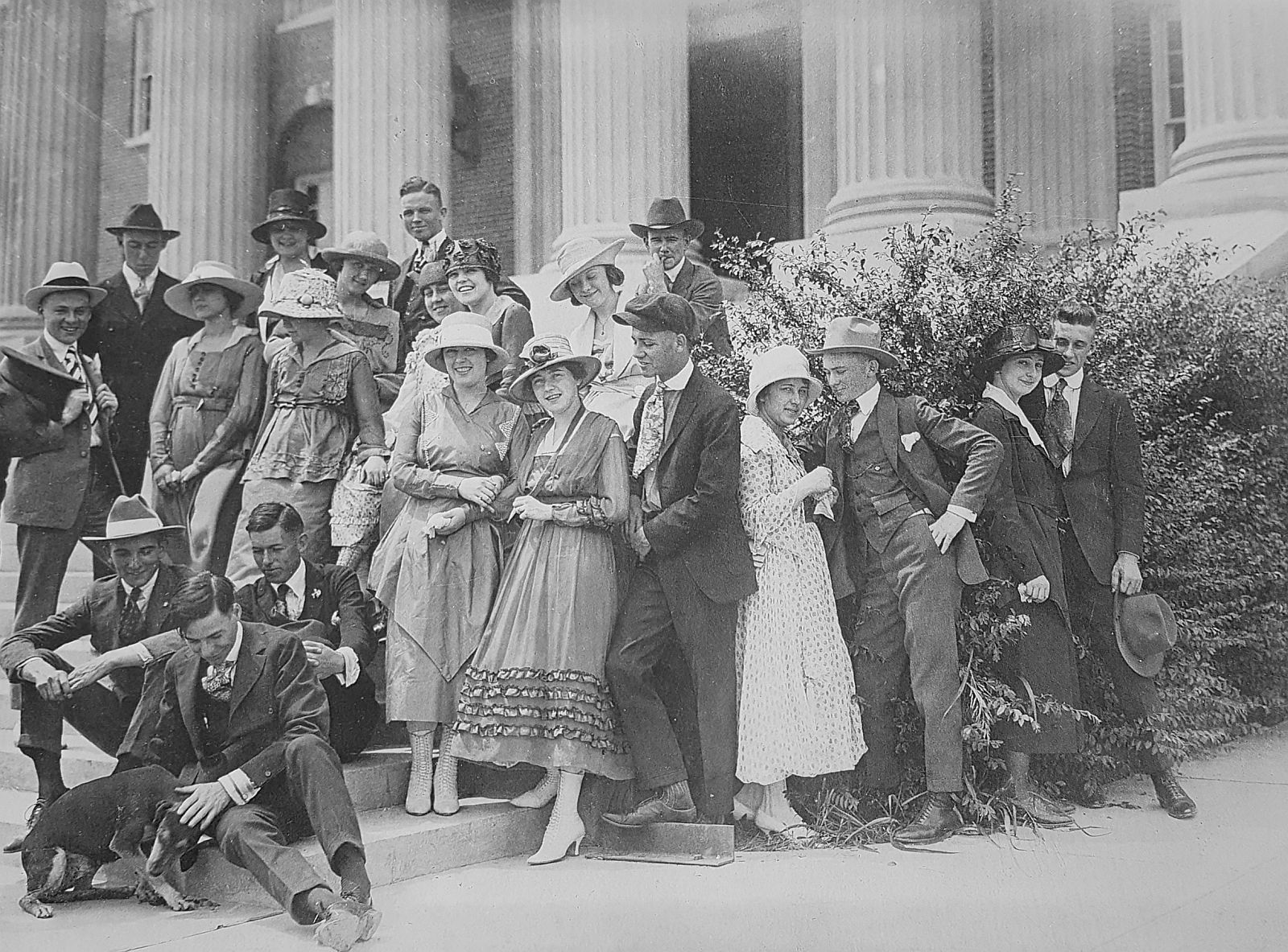
smu_group-date_park-cities-photohistory_galloway

*

Copyright © 2015 Paula Bosse. All Rights Reserved.

Cadillac + Neiman-Marcus = “Practical” — 1956

ad-cadillac_neiman-marcus_1956Gowns and storefront by N-M, bumpers by Cadillac

by Paula Bosse

One need not be “prominent” to own a Cadillac or to shop at Neiman’s (… but it certainly helps).

***

Sources & Notes

Thanks to reader Kevin Smith for sending this to me!

Click ad to read text and to see those N-M gowns practically life-size.

*

Copyright © 2015 Paula Bosse. All Rights Reserved.

Neiman-Marcus / France-Texas / A-Z — 1957

n-m_french_ad_cover-smMais oui!

by Paula Bosse

Bastille Day again already? It seems to come earlier every year. Last year I wrote about the 1957 Neiman-Marcus French Fortnight — the very first fortnight celebration. This year I thought I would present a few of the pages from the lavish advertising supplement Neiman’s placed in the October, 1957 issues of American and French Vogue. The mini-catalog was titled “Neiman-Marcus Brings France to Texas, Everything From A to Z.” (Link to the entire ad insert is below.) Here we have “C,” “R,” “V,” and “Z.” Enjoy a flashback to fabulous ’50s fashion photography. And Happy Bastille Day!

n-m_french-ad_cn-m_french_ad_rn-m_french_ad_vn-m_french-ad_zClick to read a list of events and exhibits happening around the store.

***

These pages are from a reprint of a 30-plus-page 1957 Neiman-Marcus advertising spread; from the collection of Stanley Marcus’ papers at the DeGolyer Library, Central University Libraries, Southern Methodist University. This is the very epitome of high-fashion advertising of the 1950s, and the sophisticated-but-fun-and-frothy art direction is wonderful. The entire mini-catalog has been scanned by SMU, and it can be viewed in a PDF, here.

My previous post “Neiman-Marcus Brings France to Big D — 1957” — which gives some background on this first N-M fortnight celebration and contains a great photo of the exterior of the downtown store elaborately decorated to resemble the Rue du Faubourg Saint-Honoré — can be found here.

All images larger when clicked.

*

Copyright © 2015 Paula Bosse. All Rights Reserved.

When In Doubt, Get Mom a Hat — 1951

mothers-day_dmn_050351

by Paula Bosse

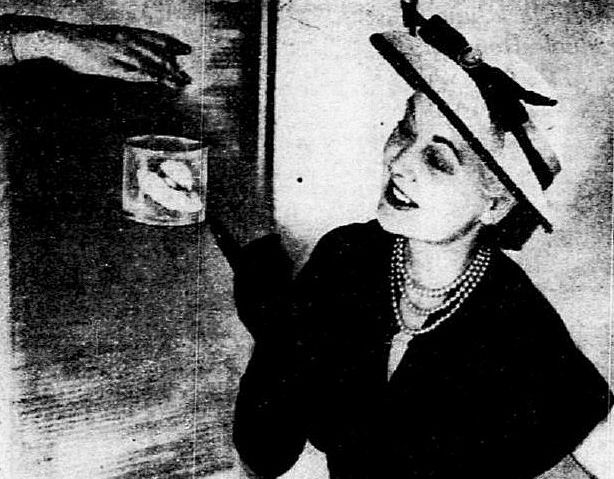
Give Mom a teeny-tiny hat!

Mother’s Day Sure to please everybody’s mother is this attractively packaged Mother’s Day hat certificate that she can use to purchase the hat that is most becoming. The certificate is enclosed with a miniature straw hat in a crystal-clear plastic hat box. W. A. Green Company.

Happy Mother’s Day!

***

Sources & Notes

From an advertorial appearing in The Dallas Morning News on May 3, 1951.

*

Copyright © 2015 Paula Bosse. All Rights Reserved.

Back at the Ranch with Yves Saint Laurent — 1958

YSL_longhorn_josey-ranch_1958_eric-sweckerYSL & friend… (photo: Eric Swecker)

by Paula Bosse

Even if you had no idea who the man with the glasses was, this would be an attention-grabber of a photo. But if you do happen to recognize the man as international fashion icon Yves Saint Laurent, then it’s even more of an attention-grabber. Yes, that is 22-year-old Yves Saint Laurent, head of the legendary House of Dior.

…In a pasture with a longhorn steer.

…Wearing a Stetson (or something Stetson-like).

..In Carrollton, Texas! What could be more unexpectedly perfect?

The UPI/Telephoto caption:

9/5/58-DALLAS: Yves-Mathieu Saint Laurent, 22-year-old master of the House of Dior, got a taste of Texas tradition on his first trip to the US. Saint Laurent, in Dallas to receive an award from Neiman-Marcus, stopped off at a cattle ranch near here before departing for France and was presented a Texas-style hat and introduced to a real “Texas Longhorn” steer.

YSL (who had not yet jettisoned the “Mathieu”) was the wunderkind fashion designer who — at the unbelievable age of 21 — had succeeded Christian Dior as Dior’s head designer. His first collection was a hit, and he was 1958’s fashion superstar.

That was the year that YSL was invited to Dallas by Stanley Marcus to receive the 21st Annual Neiman-Marcus Fashion Exposition Award — known throughout the industry as the “Fashion Oscar.”

He has had many offers to come to America to accept awards but the Dallas honor was the only one he accepted. He had a sentimental reason. His late master, Christian Dior, came to Dallas to accept the Neiman-Marcus award in 1947 after he had created the New Look in his second collection. (Dallas Morning News, Sept. 4, 1958)

While in Dallas, the young Saint Laurent — whom the fashion editor of The Dallas Morning News described as looking “like a serious young man who might be coming to enroll at SMU” — soaked up a little local color: he was taken to the Orleans Room downtown to see the Dixieland jazz band The Chain Gang, and — apparently at his request — he was taken to a Texas ranch.

Saint Laurent had been quite keen to see a real Texas ranch, so Stanley Marcus’ son Richard took him out to the nearby Josey Rancho — the large ranch owned by Dallas oilmen brothers Clint and Don Josey in then-rural Carrollton. The fashionably dressed, Cartier-watch-wearing dudes took a bumpy ride in a pickup truck across the large ranch, and there was much gawking of longhorn cattle and herds of buffalo. YSL seems to have enjoyed himself and must have found the whole thing very “Texan”: he got closer to a longhorn than I’d ever get (and he squatted like a real cowboy!), he watched some calf roping, and he ate some barbecue. And he was probably the most stylishly-dressed visitor the ranch ever had (there aren’t a lot of tailored suits and French cuffs out on the lone prairie).

He headed back to Paris later that afternoon with, I’m sure, plenty of exotic stories to share with those back at the atelier. He also had a new hat. And maybe some indigestion.

*

ysl_090458_stanley-marcus-papers_SMUvia Stanley Marcus Papers, SMU

josey-rancho-longhorns_lufkin-line-mag_1956Josey Rancho

josey-rancho-buffalo_1950sJosey Rancho

josey-rancho_aerial_pointer-bkJosey Rancho

***

Sources & Notes

Top photo by UPI/Telephoto. This wire photo is from the collection of my old friend Eric Swecker. Thank you for use of this fantastic photo, Eric!

Photo of longhorns at the Josey Rancho from a trade magazine called The Lufkin Line (Jan./Feb., 1956). Photo of Josey Rancho buffalo and the aerial photo are from the book Carrollton by Toyia Pointer, with photo credit given to Linda Sollinger; more on the book here. More information on the ranch from the book is here.

More on YSL’s visit can be found in the Dallas Morning News article “N-M Awardees Get Glimpse of Texas” by Gay Simpson (DMN, Sept. 6, 1958).

YSL wiki, here.

“When Coco Chanel Came To Dallas — 1957” — my post about Mlle. Chanel’s visit to Dallas to accept the previous year’s Neiman-Marcus award — is here. (Let’s hope Saint Laurent liked the BBQ more than Coco did.)

*

Copyright © 2015 Paula Bosse. All Rights Reserved.

Luncheon at The Zodiac Room, Darling

zodiac-room_smFood, fashion, & the unmistakable whiff of Old Money (click for larger image)

by Paula Bosse

Two cool and sophisticated postcards from the cool and sophisticated Neiman-Marcus (although it’s debatable whether the truly cool and sophisticated N-M shopper would, in fact, mail anyone something as bourgeois as a postcard of a department store, Neiman-Marcus or not). Perhaps these were done up for the sizable tourist trade. I love these cards. Commercial art of this period is wonderful.

The description on the back reads: “One of the great dining spots of the Southwest … N-M’s famed ZODIAC ROOM. The superlative food specialties of Director Helen Corbitt and her staff are enjoyed during modeling of fashions a la Neiman-Marcus at luncheon and dinner. Also, tea served daily.”

Below, the Carriage Entrance:

neimans_postcard_c1950s-carriage-entrance-sm(click for larger image)

The description: “‘The Carriage Entrance’ — famous passageway into one of the world’s great specialty stores.”

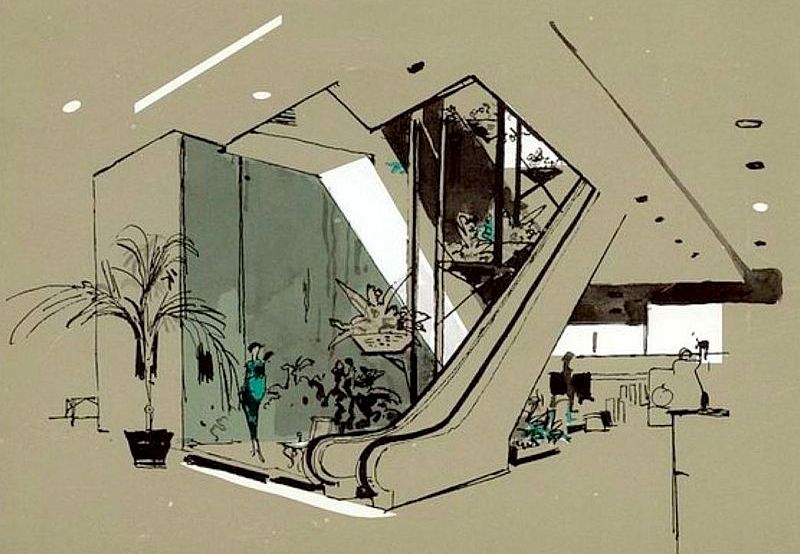
And another (I’d love to see the whole series of these postcards.) Sadly, no description on this one, featuring a fashionable escalator.

n-m_escalator_pinterest

I fear I shall never reach the level of swan-like sophistication needed to become an habitué of The Zodiac Room. Tant pis.

***

I have no idea where these postcards came from. I’m not sure of the date, either, but … “1950s”? Maybe very early 1960s? Let’s go with “Mid-Century” — everyone loves that! Whenever this was, this was a period when fashion was chic and fabulous. As was Neiman-Marcus. (I still miss that hypen!)

Need to make a reservation at The Zodiac? Info is here.

*

Copyright © 2015 Paula Bosse. All Rights Reserved.

“Every Gypsy in the Nation Knows About This” — 1951

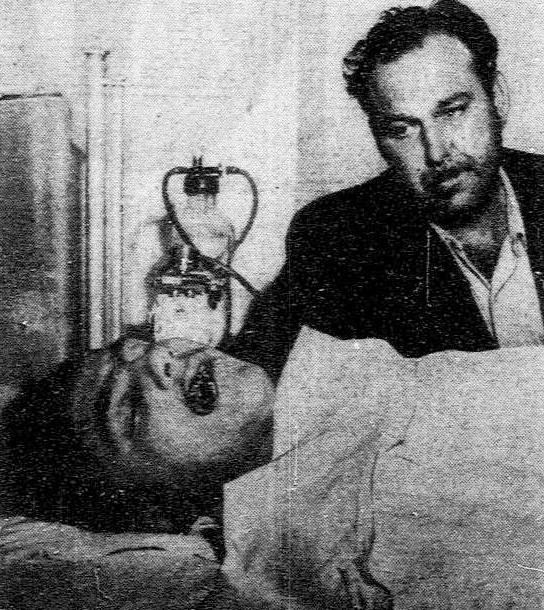
gypsy_lawrence-young_green-young_baylor_feb-1951
The “Gypsy youth” at the center of “tribal” unrest & his father, Baylor Hospital, 1951

by Paula Bosse

In the first few days of March, 1951, Dallas witnessed the influx of hundreds and hundreds of Gypsies into the city, all of whom had been summoned — from near and far — by a call put out over an effective and somewhat mysterious communications network. The reason? A teenage boy (referred to repeatedly as a “Gypsy youth”) had been shot in South Texas by a boy from another “tribe” (or clan, or family) — one family insisted the shooting was intentional, the other insisted it was an accident. This incident ballooned into a huge internecine feud. If the boy died, the “Green” tribe promised that there was “going to be a lot of shooting going on in Dallas” (Dallas Morning News, March 1, 1951). [Note: the word “Gypsy” is sometimes seen as a pejorative. I use it in this post purely in a historical context; it is not meant to be derogatory.]

In December of 1950, 14-year-old “Lawrence Young” (the anglicized name his family gave to authorities) had been walking along railroad tracks with other boys in Port Isabel, near Brownsville, when he was shot with a .22 caliber rifle by a 12-year-old, a Gypsy boy from another clan. The 12-year-old said the borrowed rifle had been malfunctioning and that, while hunting, the gun discharged unexpectedly, and a bullet hit Lawrence, whom the other boys thought was playing when he fell to the ground. Until they saw the blood. The bullet struck Lawrence in the back, near his left shoulder blade, and it lodged in his spine at the base of his skull. Police in Port Isabel determined that the shooting had been an accident. Lawrence’s family, however, said that the other boy had been jealous of Lawrence’s new car and had shot him on purpose. The boy was rushed to the hospital; his condition was not good.

After stays in hospitals in Galveston and Temple, Lawrence’s mother decided to move him to Dallas where she thought the medical care would be better. He was admitted to Baylor Hospital at the end of February. Relations had been tense between the two clans since the shooting, but the Evans clan (of which the 12-year-old boy was a member) had grudgingly agreed to pay for half of Lawrence’s medical bills. The decision by Lawrence’s family to move him to Dallas — where hospital care would be much more expensive — only made things worse between the two groups; the Green clan had heard that the Evans clan would not pay their share of what they felt would be an exorbitant bill. Tempers had been building and boiling for weeks, and by the time things moved to Dallas, things were about to explode.

Word of the increasingly volatile feud had spread, and Gypsies from several surrounding states began pouring into Dallas in a show of tribal support. The first reports estimated there might have been as many as 500 Gypsies in Dallas County, representing at least six different clans, each clan with strong loyalties to one of the two families. If the boy died, the Greens and their supporters promised that retaliation would be swift and deadly. The Evanses — and the clans friendly to them — were ready for whatever came their way. The threat of deadly violence in the streets of Dallas was a very real possibility (if a city could be an innocent bystander, that’s what Dallas was in this unusual situation).

The Dallas police were, understandably, worried. In an attempt to get the warring factions to leave town, homicide detective Captain Will Fritz was reduced to arresting several of the men on charges of vagrancy (“We can’t make them get out of Dallas, but we can keep arresting them for vagrancy until they move on,” Fritz said). Unfortunately, this was a pretty ineffective strategy.

Fifty or so “expensive automobiles” were parked outside Baylor as the time for Lawrence’s surgery approached. Men and women sat inside their cars waiting for a signal from a man they had placed inside the building who was to alert them from a window whether or not the boy had survived. If he died, things would get real bad, real fast. When police learned about the man inside the hospital, they arrested him. The boy was in critical condition prior to the surgery, and tensions among the factions continued to rise.

gypsy_lawrence-youngs-grandmother_baylor_feb-1951
Above, the boy’s grandmother, outside Baylor Hospital,
waiting for word on her grandson’s condition.

At some point, a man in Fort Worth who said he was a nephew of the King of the Gypsies in the United States intervened and worked as a sort of intermediary between the Gypsies and Fritz.

“I can’t promise there won’t be any shooting over there,” he told Fritz by telephone. “This thing has gone pretty far. But I will try to stop things where they are.”

“I don’t care how you settle this matter among yourselves,” Fritz replied, “Just do it out of Dallas County. We want no shooting here.”  (DMN, March 2, 1951)

Fritz agreed to release two men he had been holding (on non-vagrancy charges), hoping they would take word of the Fort Worth man’s “tribal council” involvement back to their people and calm the situation.

The surgery was, thankfully, successful. 

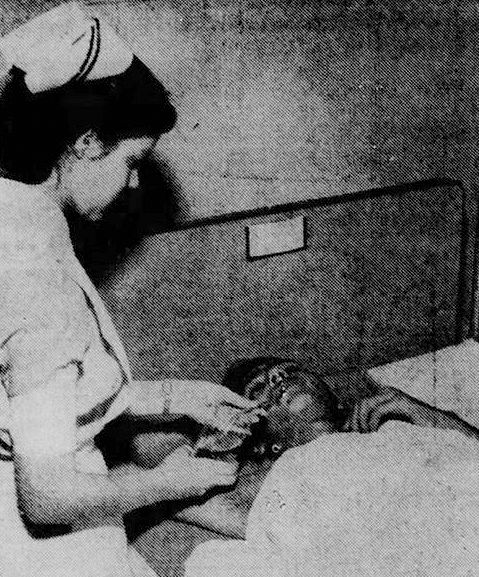
gypsy_mckinney-courier-gazette_030251Caption: “Gypsy Youth in Dallas Hospital — Lawrence Young, 14-year-old Gypsy youth gets a drink of water from a nurse at Dallas’ Baylor Hospital. Young was allegedly shot by another youthful Gypsy some two months ago near Brownsville, Texas. He was operated on at Baylor Hospital to have the bullet removed. Two Gypsy clans are reportedly watching with much interest to see that the youth recovers.” (NEA photo and wire report, from the McKinney Courier-Gazette, March 2, 1951)

*

To the relief of Dallas police, doctors said that Lawrence would recover — a major crisis had been averted, and the hundreds of Gypsies who had been camped around Dallas began to leave town. But just a few days later, a camp was discovered outside Garland, and twenty people were immediately arrested for vagrancy — they were photographed, fingerprinted, fined, and released, with the clear understanding that they needed to move on. ASAP. The next day, Sheriff Bill Decker announced they had packed up and left.:

“I don’t know where the road goes,” said Decker, “but it leads out of Dallas County.” (DMN, March 7, 1951)

*

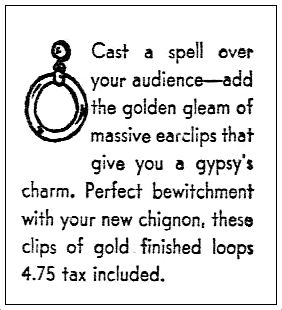
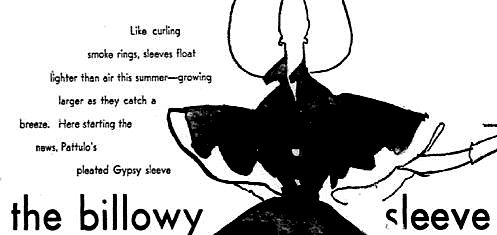
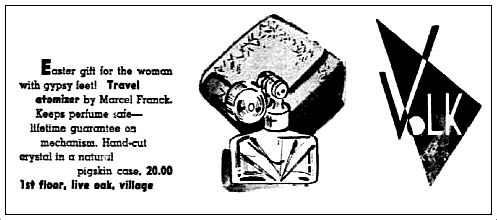
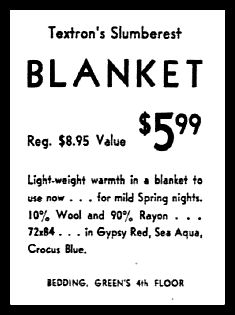
Gypsies were generally considered a menace by police departments around the country, as their arrival was usually accompanied by a rise in … questionable business practices. While these … business practices … were usually viewed negatively, it’s interesting to note that in 1950 and ’51 Gypsy “style” was everywhere. Ads for upscale department stores such as Neiman’s and A. Harris, for instance, were filled with Gypsy-inspired fashions — off-the-shoulder peasant blouses, scarves, gold bangles, dangly earrings, and exotic makeup. Cars and household items came in popular colors such as “Gypsy green,” “Gypsy red,” and even “Gypsy brown.” People might not have been excited by their … unorthodox business practices … but they sure loved the way they dressed and were attracted by the allure and romance of their rootless, “wandering” lifestyle.

gypsy_n-m_dmn_030551Neiman-Marcus ad — 1951

gypsy_n-m_dmn_041051Neiman-Marcus ad — 1951

gypsy_volk-ad_dmn_031051Volk ad — 1951

gypsy-green_w-a-green-ad_dmn_011851W. A. Green ad — 1951

***

For more on “Gypsy”/Romani/Romany/Roma culture and history, see the Wikipedia entry here; for issues concerning use of the word “Gypsy,” see here.

And for no other reason than to see how Gypsies were often stereotypically portrayed on pre-PC television, an episode of The Andy Griffith Show called “The Gypsies” can be watched on YouTube, here.

My favorite tidbit gleaned from this brief look into Gypsy culture was discovering that families and individuals with No Fixed Abode often communicated via the classifieds of, of all things, Billboard magazine.

*

Copyright © 2014 Paula Bosse. All Rights Reserved.
 

Halloween Isn’t Only About the Candy

halloween_e-m-kahn_dmn_102525E. M. Kahn ad, 1925

by Paula Bosse

A few Halloween ads from the 1920s. The top ad for a snazzy “Halloween suit” is something of a whimsical departure for the legendary men’s clothing store, E. M. Kahn (est. 1872): it was an advertisement for children’s Halloween costumes — “printed in orange and black, the proper colors.” (I’d snap it up, kid — for two bucks, it’s the cheapest thing you’re ever going to find at E. M. Kahn.) “Suit includes pointed hat.”

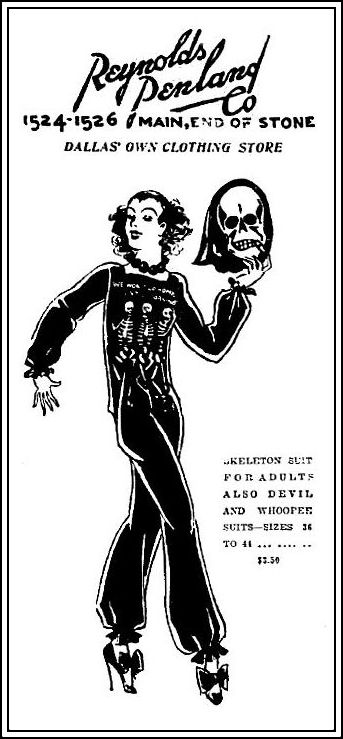
But Halloween isn’t just for kids. Below, a Reynolds Penland ad for adult costumes, which include skeleton, devil, and “whoopee” suits. No pointed hats, but there are accessories — just look at those shoes!

halloween_reynolds-penland_dmn_102729Reynolds Penland Co., 1929

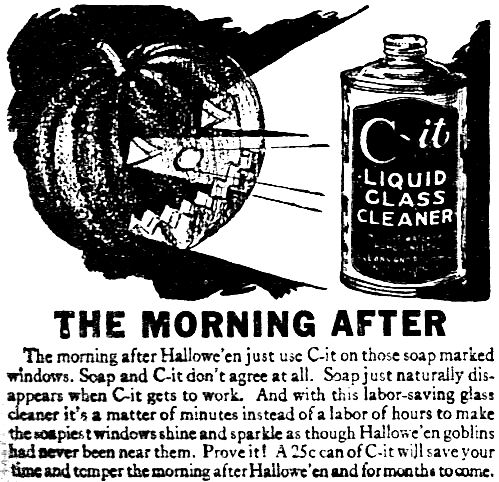
And lastly, an ad for glass cleaner. Dallas had a MAJOR problem with unruly “goblins” soaping windows — especially downtown — and this product probably came in pretty handy on “the morning after.” I bet this was the busiest time of the year for the C-It Liquid Glass Cleaner company — their make-it or break-it sales period. Halloween might well have been their Black Friday. …Or rather their Orange and Black Friday (because those are the “proper colors”).

halloween_glass-cleaner_dmn_1031251929

*

Copyright © 2014 Paula Bosse. All Rights Reserved.


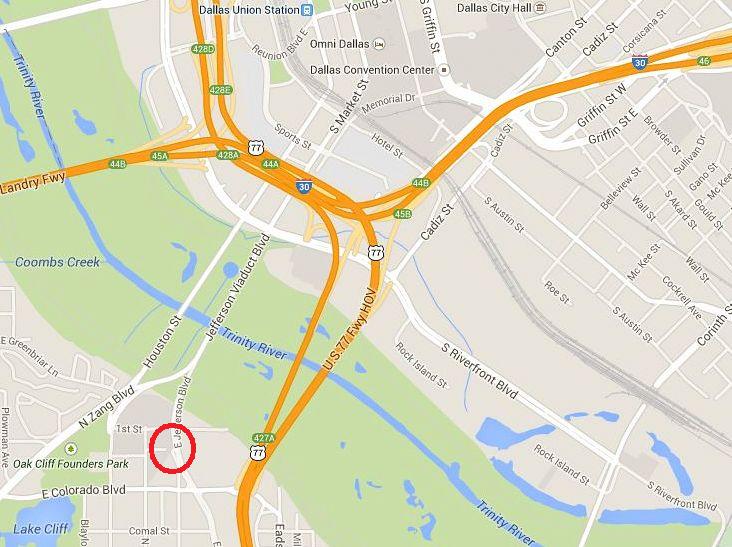
Waiting For a Streetcar on a Sunny Winter Day in Oak Cliff — 1946

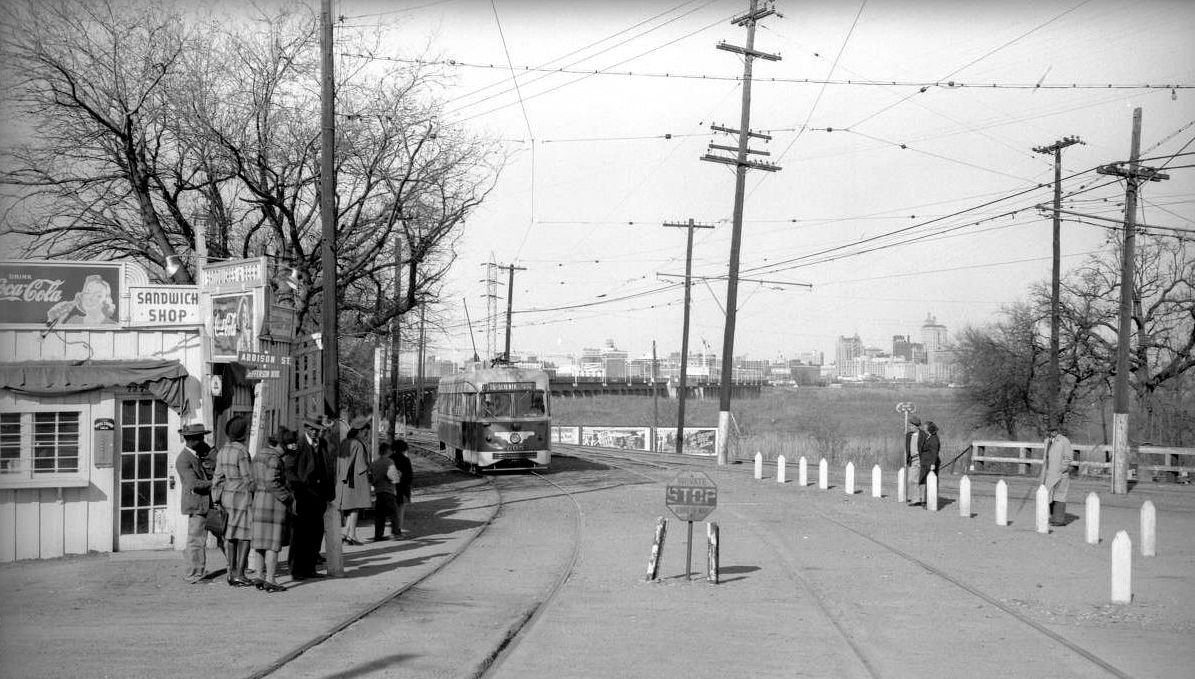
jefferson-addison_denver-pub-lib_1946Addison St. & Jefferson Blvd. in Oak Cliff — Feb., 1946 (click for larger image)

by Paula Bosse

I love streetcars, photos from the 1940s, fashions of the ’40s, and views of the Dallas skyline. And here are all of these things, in one great, GREAT photograph. We see people waiting for the streetcar on a sunny Saturday in February, 1946 — in Oak Cliff, at E. Jefferson Blvd. and Addison St. The people at the left (outside Helen’s Sandwich Shop) are about to catch the car that has just crossed the Trinity River and head into Oak Cliff; the people on the right are waiting to go to Dallas. The Oak Farms Dairy is just out of frame at the top left, and Burnett Field is just out of frame at the bottom right. The Dallas skyline looms across the Trinity.

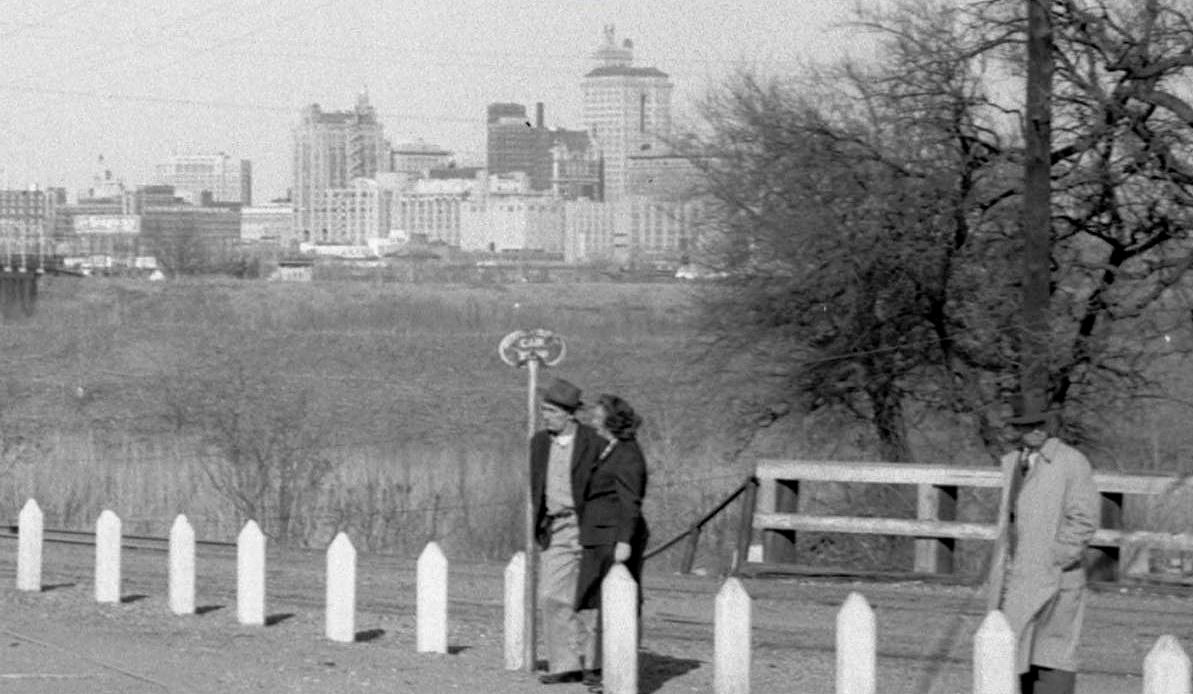
Below, I’ve zoomed-in a bit and cropped this fantastic photograph into two images to show, a bit more intimately, details of an ordinary moment in an ordinary day of ordinary people. What once was such a commonplace scene — people waiting for a streetcar or interurban — now seems completely out of the ordinary and quaintly nostalgic. (Nostalgic on its surface, anyway — not shown is the interior of the car which had specific black-only and white-only seating areas for passengers.) (As always, click for larger images.)

jefferson-addison-det1

jefferson-addison-det2

***

Photo by Robert W. Richardson, taken on February 2, 1946. From the Western History/Genealogy Dept., Denver Public Library, viewable here. More on rail enthusiast, writer, photographer, and preservationist Bob Richardson, here.

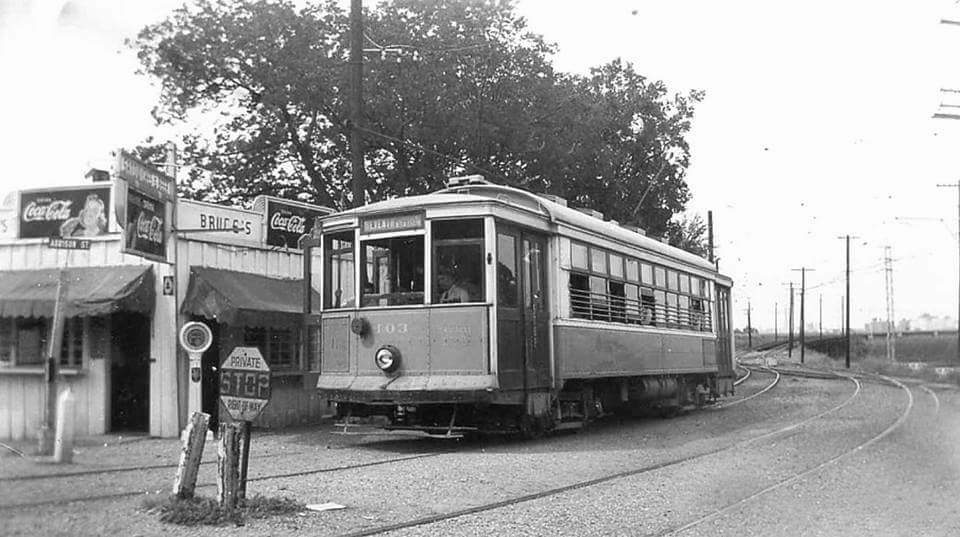
The same stop can be seen in this undated photo (source and photographer unknown):

oak-cliff-streetcar-stop_addison-jefferson

Streetcars ran back and forth across the Trinity River on a special trestle just south of the Oak Cliff Viaduct/Houston Street Viaduct. It had been in use since 1887 (through various renovations) and was demolished in the early 1970s to build the present-day Jefferson Street Viaduct.

To see a photo by the same photographer showing a streetcar actually on the trestle over the Trinity, see the post “Crossing the Trinity River Viaduct — 1946,” here.

Streetcar enthusiasts are incredibly, well, enthusiastic, and they keep precise track of where cars operated over their life spans. The car from the photo — Dallas Railway & Terminal Co. car #605 — was a PCC streetcar, built by the Pullman-Standard company in 1945; it was sold to the MTA in 1958 and was in operation in Boston for many years. See cool photos of the very same streetcar in operation over the years in both Dallas and Boston, here (scroll down to “605”). To see what the retired car looked like in 2002 — a bit worse for wear — click here.

A distinctly less-wonderful view from roughly the same location, seen today, is here.

map_jefferson-addison_googleGoogle

Click pictures for larger images.

*

 Copyright © 2014 Paula Bosse. All Rights Reserved.

Society Ladies and Their Great Big Hats

shakespeare-club_c1895The Dallas Shakespeare Club

by Paula Bosse

Had The Graduate been set near the beginning of the twentieth century rather than the middle of it, that famous scene out by the pool (er…near the horse trough) might have gone something like this:

Mr. McGuire: I just want to say one word to you. Just one word.

Benjamin: Yes, sir?

Mr. McGuire: Are you listening?

Benjamin: Yes, sir, I am.

Mr. McGuire: …”Millinery.”

Benjamin: …Exactly how do you mean?

Mr. McGuire: There’s a great future in millinery. Think about it. Will you think about it?

Benjamin: Yes, I will.

Mr. McGuire: Enough said. That’s a deal.

***

Sources & Notes

Photograph of the Dallas Shakespeare Club is from the Dallas Historical Society; it appears in the book Women and the Creation of Urban Life in Dallas, Texas, 1843-1920 by Elizabeth York Enstam (College Station: Texas A & M University Press, 1998). Enstam’s caption of this photograph identifies two women in the front row, on the right as Sallie Griffis Meyer (1863-1932), future president of the Dallas Art Association, and May Dickson Exall (1859-1936), president of the Dallas Shakespeare Club from 1886 until her death. Ms. Enstam has labeled this photo as “about 1895.” 

*

Dialogue (all but one word) from the film version of The Graduate, screenplay by Buck Henry, based on the novel by Charles Webb. “Millinery adaptation” by Paula Bosse, based on the screenplay by Buck Henry which was based on the novel by Charles Webb.

*

Copyright © 2014 Paula Bosse. All Rights Reserved.