Flashback : Dallas

A Miscellany: History, Ads, Pop Culture

Category: Dining and Drinking

Not Dead Yet at McKinney & Routh
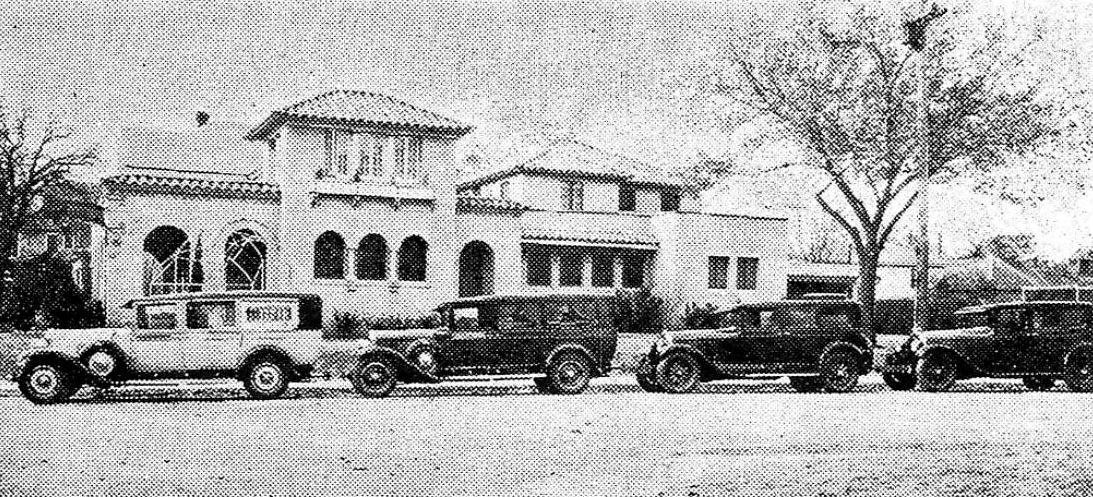
ad-funeral-home_mckinney-routh_directory-1929-detA fleet of Cadillacs in front of 2533 McKinney Ave.

by Paula Bosse

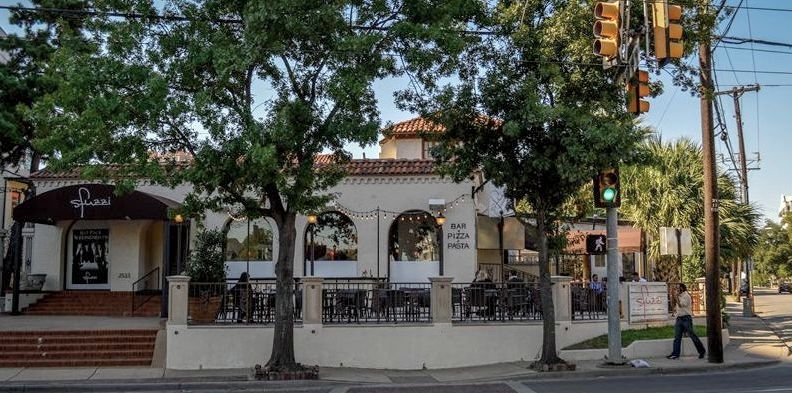
The photo above shows a truly beautiful, Spanish-style building that was built in 1927 at the northwest corner of McKinney Avenue and Routh Street. The view shows the Routh Street side. The person who took this photograph would have been standing across the street on the property of the dearly-departed McKinney Avenue Baptist Church (most recently transformed into the Hard Rock Cafe). You might be surprised to learn that the building in this photo still stands, and it’s mostly recognizable almost 90 years later.

The Community Chapel Funeral Home (yes, a funeral home!) was designed by noted architect Clarence C. Bulger (whose father, C. W. Bulger, designed, among other things, the Praetorian Building downtown AND the just-mentioned McKinney Avenue Baptist Church which was right across the street).
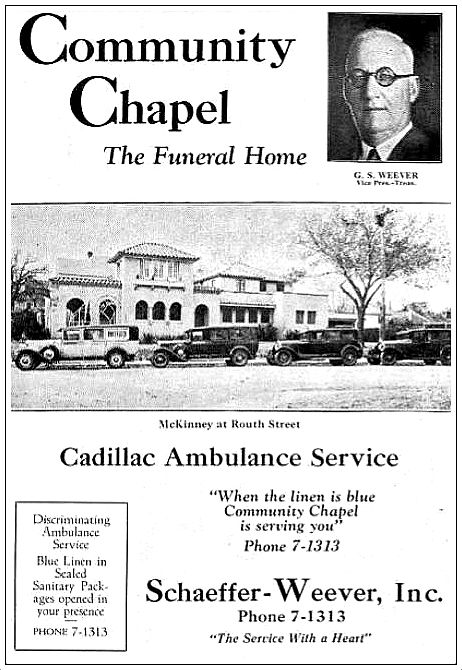
ad-funeral-home_mckinney-routh_directory-1929City directory, 1929

In addition to the funeral home portion (reception area, business office, show rooms, “operating room” (!), chapel with seating for 100, and the euphemistically named “slumber room”), the building also contained a residence for the chief mortician and his embalmer wife, an apartment for the ambulance/hearse drivers, and a “pavilion for recreation of employees.” The building and its beautifully-appointed interior cost in excess of $100,000 (which the Inflation Calculator estimates is the equivalent of more than $13 million today!).

Also, an “oxygen plant” was somewhere on the grounds. I’ve never heard of an oxygen plant, but they seem to be a mortuary thing. Let’s hope recently-bereaved smokers were kept at a safe distance from all that highly flammable oxygen, because the company had a bunch of promotional matchbooks printed up, and I can only imagine they were readily available in tastefully-arranged candy dishes of every room of the establishment. And in those days, one didn’t necessarily step outside to smoke one’s anxiety away.

weever-funeral-home_fkickr1

weever-funeral-home_fkickr2

weever-funeral-home_1937-city-directory_ad1937 Dallas directory

The funeral home at 2533 McKinney Avenue lasted almost thirty years. Sometime in the mid-’50s it was renovated into office and retail space (classified ads mentioned 2-, 3-, and 4-office suites). That lovely interior must have been hacked up pretty bad. An early tenant was the Bankers Securities Corporation, shown below in a newspaper ad from 1956 (someone made some poor choices on that renovation of the exterior). (This view shows an entrance from McKinney rather than Routh.)

bankers-securities_dmn_012256-photoAd detail, Jan., 1956

For the next 40-odd years, 2533 McKinney Avenue was home to a variety of insurance agents, a fur salon, several companies that advertised in the classifieds for vague “salesmen” positions (one company did specify that it was looking for encyclopedia salesmen in 1963), art galleries, architect/design businesses, offices of “El Sol de Texas” (“the only Spanish-language newspaper in North Texas”), and antique shops.

It all turned around, though, when the long-suffering building was re-renovated and became a restaurant space. Since at least 1999 when Uptown began to explode, it’s been home to bistros, cafes, and upscale eateries. The photos below show some of the restaurants that have set up shop there, and if you know what you’re looking at, the place really does look very similar to C. C. Bulger’s design from almost 90 years ago.

*
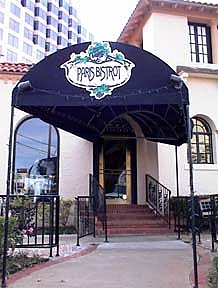
paris-bistrot_2001Le Paris Bistrot opened in 1999. The owner changed the name to Figaro Cafe in 2004 when the U.S. was going through an anti-French phase.
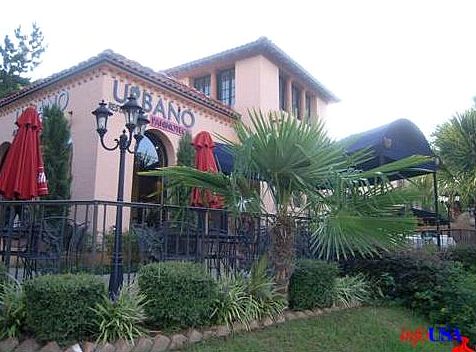
urbano_city-dataUrbano Paninoteca opened in 2007. Something called Split Peas Soup Cafe opened in 2009.

sfuzzi_scrumpliciousfood_sm

sfuzzi_yelpThen Sfuzzi opened with a big splash in 2010. (It had been a McKinney Avenue staple in the 1980s and ’90s, closed, and came back in 2010.) The first photo shows the Routh Street entrance, the second photo shows the McKinney entrance.
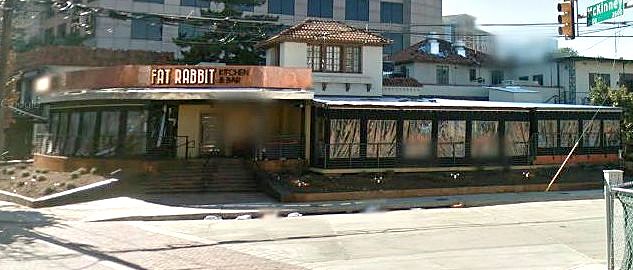
fat-rabbit_googleAnd now it’s the Fat Rabbit, which opened earlier this year. Let’s hope they get some landscaping in there STAT! (UPDATE: Fat Rabbit is now an ex-rabbit, and after spending some time of his own in the “slumber room,” he has joined the choir invisible. Next!)

And let’s hope that those tiled roofs and stuccoed walls remain a distinctive part of its future. I love the fact that it still looks a lot like it once did. And I actually like the fact that restaurants have been operating out of an old funeral home for over 15 years. Restaurateurs might be hesitant to publicize the building’s past (although I’m pretty sure most of them have been completely unaware of what the place used to be), but modern-day Harolds and Maudes might be giddy at the prospect of an unusual dining option and move this place right to the top of their date-night list. 

***

Sources & Notes

Top photo is a detail of the ad that appeared in the 1929 Dallas city directory. It shows four Cadillacs — a hearse, 5- and 7- passenger sedans, and an ambulance (“purchased from the Prather Cadillac Company”).

Matchbook artwork from Flickr, here.

The first Sfuzzi photo is from the food blog Scrumplicious Food, here. A GIGANTIC version of the photo can be seen here — you can look at all the details. Second photo of Sfuzzi from Yelp.

Fat Rabbit image from Google street view.

Sources of all other clippings and photos as noted.

Some images larger when clicked.

*

Copyright © 2015 Paula Bosse. All Rights Reserved.

Carhops as Sex Symbols — 1940

male-car-hops_AP_1940“At your service, ma’am…” / AP Photo

by Paula Bosse

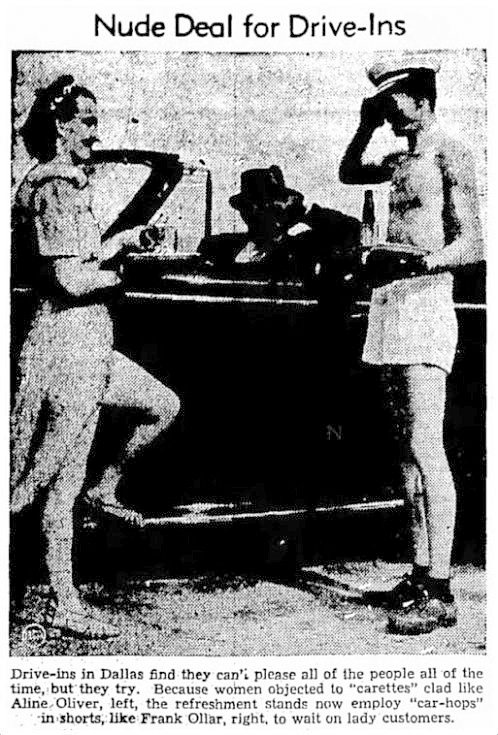
In 1940, Dallas was in a tizzy about the sudden fad of scantily-clad “girl carhops.” This scourge had made its way to Dallas from Houston (brought to Oak Cliff by the enterprising husband and wife team behind Sivils Drive-In), and in April of 1940, it was a newspaper story with, as it were … legs. For a good month or two, stories of sexy carhops were everywhere.

The girls started wearing uniforms with very short skirts — or midriff-baring costumes with cellophane hula skirts. Some of the women reported an increase in tips of $25 or more a week — a ton of money for the time.

The public’s reaction ranged from amusement to outrage. There were reports of community matrons who reported the “indecent” attire to the police department and demanded action. Other women were annoyed by the objectification of young womanhood. Lawmakers in Austin discussed whether the practice of waitresses exposing so much extra skin posed a health risk to consumers.

But it wasn’t until a woman from Oak Cliff piped up that something actually happened. She complained that she didn’t want to look at girls’ legs when she stopped in at her local drive-in — she wanted to look at men’s legs. Drive-in owners thought that was a GREAT idea, and the idea of the scantily-clad male carhop was born.

carhops_FWST_042840Fort Worth Star-Telegram, Apr. 28, 1940 

One might think that the woman behind this “equal ogling” campaign was sort of proto-feminist, until you get to the part where she said that the whole girl carhop thing was “wrong socially and economically and should not be tolerated” (DMN, Apr. 27, 1940) — not because of the skin flashed, but because men needed jobs, not girls. And that also raised hackles. Two married women who had been carhops wrote to the Dallas News to speak up for these girls and women who were “at least coming nearer to making a living wage than at any other time of their existence. […] The girl carhops are either supporting their family or sharing the expenses. […] Why all the storm about a leg? It is nothing more than you see at a movie and a vaudeville” (DMN, May 5, 1940).

The photo at the top ran in newspapers around the country with the headline: “Adonis and Apollo of Roadside Bring Trade to Daring Stand.”

First large roadside stand Friday to bow to the demand of Dallas women and feature husky young male carhops in shorts was the Log Lodge Tavern at Lemmon and Midway where four six-footers found jobs. Above, in blue shorts, white sweatshirt and cowboy boots, Joe Wilcox serves Pauline Taylor who smiles her approval of the idea. Bound for another car is James Smith, at right.

April, 1940 must have been a slow news month, because this story really got around (click to see a larger image).

sexy-carhops_corsicana-daily-sun_042740Corsicana Daily Sun, April 27, 1940

One intrepid reporter even tracked down a Texas Ranger (!) to ask his opinion, to which the Ranger replied, “…letting those roadside glamor boys wear boots is nothing more than a slam at the state. People think of booted Texans as men, not as fancy-panted carhops.” The whole article, below, is pretty amusing.

sexy-carhops_anniston-AL-star_042840Anniston (AL) Star, April 28, 1940

There were other male carhops around town, some not quite so hunky. This guy — game as he was — really needed to reconsider his outfit.

carhops_xenia-ohio-daily-gazette_050340Xenia (Ohio) Daily Gazette, May 3, 1940

But back to the female carhops and their siren-like hold over their male customers. This was, by far, the best story to hit the wires:

sexy-carhops_waxahachie-daily-light_071640
Waxahachie Daily Light,  July 16, 1940

***

Sources & Notes

Top image from the Associated Press, 1940. 

The Log Lodge Tavern was located at 7334 Lemmon Avenue, which was across from Love Field and adjacent to the Log Lodge Tourist Court. It was located approximately where the red circle is below, on a page from the 1952 Mapsco (click for larger image).

lemmon-ave_mapsco-1952

Check out these related articles from The Dallas Morning News:

  • “Skimpiest Costumes Bring Biggest Wages” (DMN, April 24, 1940)
  • “Women To Fight Girl Carhops; Slogan: Let Us See Men’s Legs” (DMN, April 26, 1940)
  • “Adonis and Apollo of Roadside Bring Trade to Daring Stand” (DMN, April 27, 1940)
  • “Word For Carhops Grass Skirts And All” (letter to the editor) (DMN, May 5, 1940)
  • “Went Crazy Over Car Hops, Wife Says of Fugitive” (DMN, July 16, 1940)

UPDATE: This has been a weirdly popular post — it’s gotten thousands and thousands of hits and even resulted in a short radio interview on Dallas’ public radio station, KERA. I don’t really add anything new to this story, but if you’d like to listen to the interview conducted by Justin Martin, it is here.

If you like what you’ve seen on Flashback Dallas, please consider supporting me on Patreon, where for as little as $5 a month, you can receive all-new updates several times a week (if not daily!). More information can be found at Patreon, here.

*

Copyright © 2015 Paula Bosse. All Rights Reserved.

“Everyday Life” on Elm Street — ca. 1905

elm-street_everyday-life_UCR-smallElm Street rush hour

by Paula Bosse

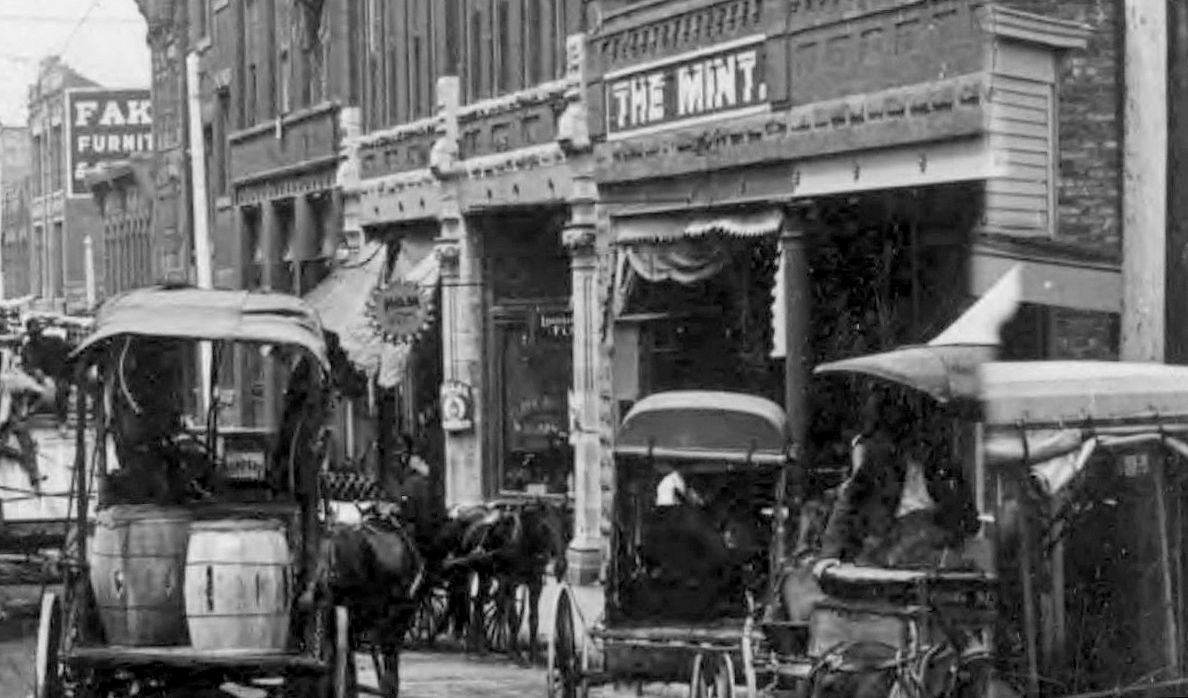
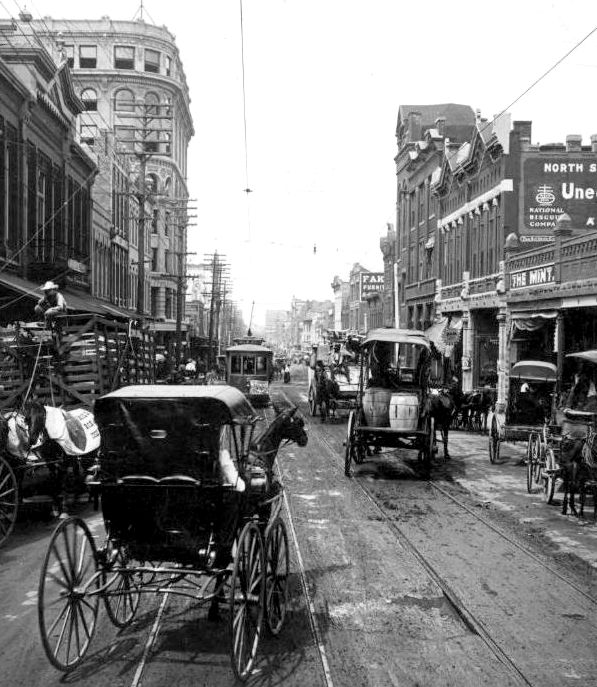
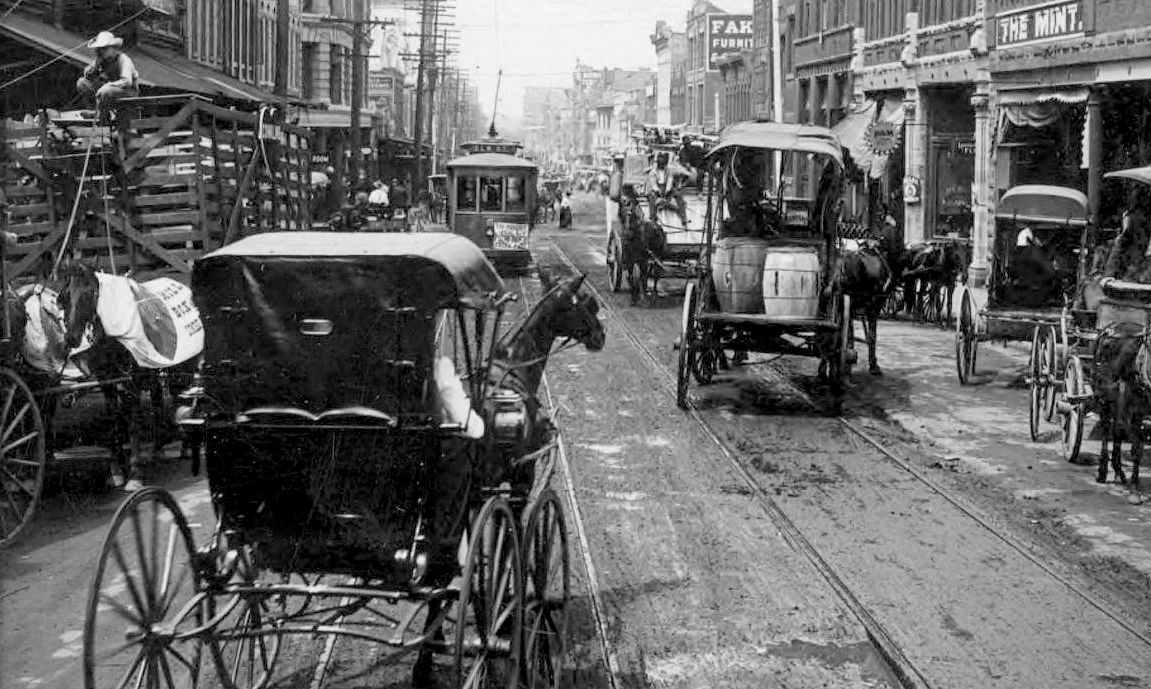
Automobiles would be rolling down Elm Street very soon, but even when the traffic was still mostly horse-related, there’s a lot going on here: horses, buggies, barrels, saloons, a bored kid on a wagon, a street car, and the Wilson Building.

elm-st_everyday-life_UCR-det

elm-st_everyday-life_UCR-zoom(click for larger images)

And what was The Mint? The Mint was a saloon. I’m not sure when it first set up shop in Dallas, but it was listed in an 1877 directory, one of the city’s earliest.

elm-st_everyday-life_mint_UCR

Speaking of 1877, read about a typical frontier day at The Mint in two accounts of a stabbing, from The Dallas Herald in April, 1877, here, and the follow-up, here.

***

Sources & Notes

Photo is from a stereograph titled “Everyday Life, Elm Street, Dallas, Tex.” from the Keystone-Mast Collection, UCR/California Museum of Photography, University of California at Riverside; it can be accessed here.

Images larger when clicked.

*

Copyright © 2015 Paula Bosse. All Rights Reserved.

Luncheon at The Zodiac Room, Darling

zodiac-room_smFood, fashion, & the unmistakable whiff of Old Money (click for larger image)

by Paula Bosse

Two cool and sophisticated postcards from the cool and sophisticated Neiman-Marcus (although it’s debatable whether the truly cool and sophisticated N-M shopper would, in fact, mail anyone something as bourgeois as a postcard of a department store, Neiman-Marcus or not). Perhaps these were done up for the sizable tourist trade. I love these cards. Commercial art of this period is wonderful.

The description on the back reads: “One of the great dining spots of the Southwest … N-M’s famed ZODIAC ROOM. The superlative food specialties of Director Helen Corbitt and her staff are enjoyed during modeling of fashions a la Neiman-Marcus at luncheon and dinner. Also, tea served daily.”

Below, the Carriage Entrance:

neimans_postcard_c1950s-carriage-entrance-sm(click for larger image)

The description: “‘The Carriage Entrance’ — famous passageway into one of the world’s great specialty stores.”

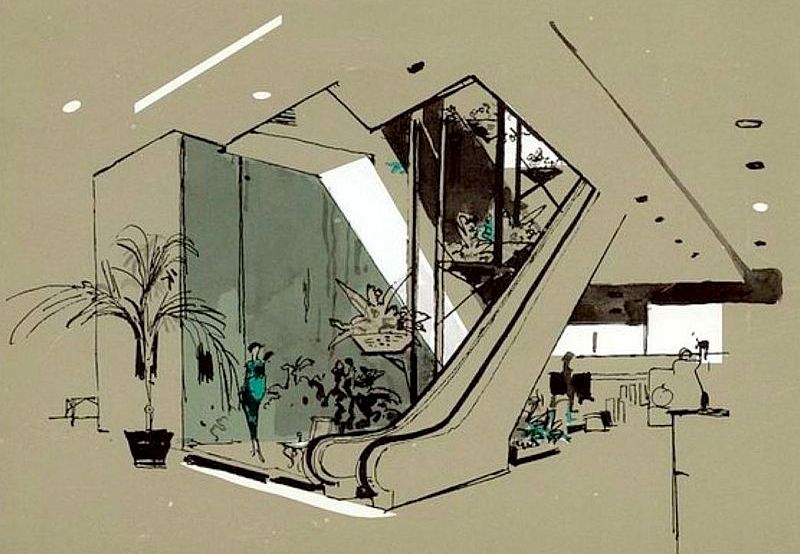
And another (I’d love to see the whole series of these postcards.) Sadly, no description on this one, featuring a fashionable escalator.

n-m_escalator_pinterest

I fear I shall never reach the level of swan-like sophistication needed to become an habitué of The Zodiac Room. Tant pis.

***

I have no idea where these postcards came from. I’m not sure of the date, either, but … “1950s”? Maybe very early 1960s? Let’s go with “Mid-Century” — everyone loves that! Whenever this was, this was a period when fashion was chic and fabulous. As was Neiman-Marcus. (I still miss that hypen!)

Need to make a reservation at The Zodiac? Info is here.

*

Copyright © 2015 Paula Bosse. All Rights Reserved.

David Wade, Gourmet: Have Ascot, Will Travel

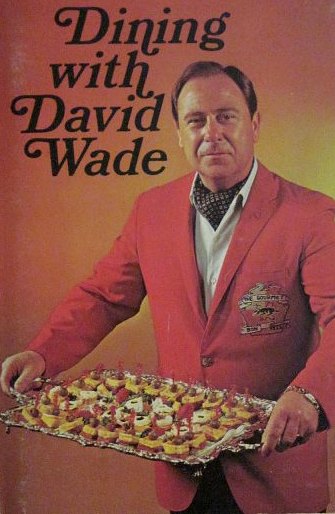
david-wade_dining-with_cover

by Paula Bosse

A few years ago, when I was a bookseller, I posted the following on a personal blog — it turned out to be the most commented-on and most clicked-on post I’d ever written. I wrote it a bit snarky, but I was amazed by the response it elicited: people (both in Texas and beyond) apparently have a strong affection for — and a seemingly deeply personal attachment to — local TV gourmand David Wade. Here’s what I wrote.

*

I just received an order for a David Wade cookbook I’ve had listed for four years:

DAVID WADE’S KITCHEN CLASSICS (Dallas: David Wade Industries, 1969). 300pp. Photographs, index. The ascot-clad TV gourmet presents recipes as well as photos of himself with celebrities such as Mickey Mantle (page 99, opposite the recipe for Crabmeat Tetrazzini). A couple of small splotches to fore-edge; one rubbed spot on cover. No dust jacket. Inscribed by Wade. $12.50

I don’t know if people outside of Texas (and maybe outside of Dallas) would be familiar with David Wade, described, tellingly, not as a “chef” but as a “food demonstrator.” He had a local TV show that must have started in the ’50s or ’60s, but I saw him in the ’70s and into the ’80s. And, yes, he DID wear an ascot, and a blazer, as seen above, from the front cover of another cookbook from the David Wade oeuvre.

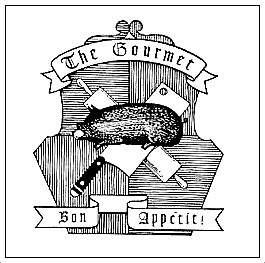
He had a catchy theme song (which compared him to Rembrandt and Edison) and he had his very own coat of arms, which I have vivid, rather frightening memories of from my childhood (I always imagined that poor pig being whacked over the head with the rolling pin and then hacked apart by the cleaver — Bon Appetit, little piggie!):

david-wade-show_logo

I was just a kid, but I remember cringing a bit at his deep-voiced cheesiness. I don’t actually remember much about the food or the actual program, but I can still hear that unnaturally calm, deep voice oozing around inside my head. But what did I know? He was an incredibly popular local TV personality. Yeah, he might have used an over-abundance of big words (…words like “over-abundance”), but, to be fair, he also had a folksy charm and was pleasantly inoffensive.

I’m not sure the same can be said for his food, however. Here are a few of the recipes which some lucky lady in South Carolina who bought the cookbook might be whipping up in a few days:

  • Squash Loaf
  • Citrus Surprise Steak
  • Liver Yucatan (featuring grated American cheese (can you actually grate American cheese?), macaroni, canned mushrooms, and sugar)
  • Baked Stuffed Fish with Pecan Grape Sauce
  • Deep Sea Loaf (made with canned tuna, gelatin, sweet pickle juice, avocado, and three tablespoons of sugar … among other equally distressing ingredients)
  • Salmon & Green Olive Casserole (with cream and “salmon liquid” straight from the can)
  • Apple & Banana Soup (these are the ingredients: chicken stock, apple, banana, potato, onion, cream, curry powder, chives)
  • Kidney Bean Tuna Salad
  • Meat Loaf Pizza
  • Pineapple Mint Cake
  • Quick Clove Jelly Cake
  • Sahib Eight Boy Chicken Curry (…I have no idea…)
  • Yam Peanut Puffs

Bon Appetit!

*

After I wrote that post, I was inundated by people looking for information on where to find all sorts of much-loved David Wade recipes (especially his famed “Turkey in a Sack”) and where they could find his apparently quite popular Worcestershire Powder. There were also many, many comments from people who just wanted to share personal memories of David Wade, invariably describing him as a warm and gracious, down-to-earth, gentle man. “Classy, but not pretentious.”

Wade began his TV career in Dallas at WFAA in 1949, hosting a 15-minute show about dogs (?!) called “Canine Comments” — it became so popular that it was syndicated around the country. He won awards for that show. It was VERY popular. In 1952, Wade was also appearing on WFAA radio as “The Hymn Singer,” singing religious songs and talking about each song’s history and composer. Along the line he made the switch to food.

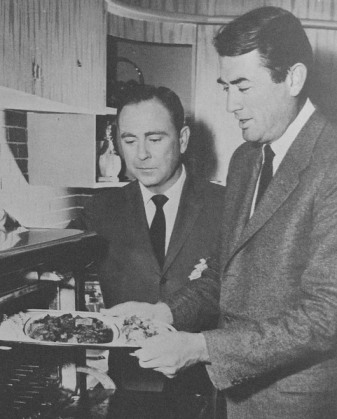
He was “demonstrating” food preparation at personal appearances and on local television by 1957, and in the early 1960s he became a nationally known figure when he commuted to New York from Dallas to tape regular spots for a show called “Flair” in which he frequently appeared with celebrities, guiding them through the preparation of a dish.

david-wade-gregory-peckWith Gregory Peck, 1960s

Eventually, his Dallas-based TV shows were syndicated all over the U.S., and he was so popular locally that he decided to run for mayor in 1971 (he lost to Wes Wise). He continued in his role as a cooking instructor and media figure until his retirement.

David Wade, a much-beloved man who lived and worked in Dallas for the bulk of his career — died in Tyler in March of 2001 at the age of 77. He had been a fixture on Texas television and had published numerous cookbooks. And in between rhapsodizing on good food and wine, he even taught untold thousands how to cook fish in the dishwasher and how to roast a turkey in a paper sack.

***

Sources & Notes

David Wade’s obituary is here.

A warm and fuzzy nostalgic look back at Wade can be read at CraveDFW, here; a super-snarky (and kind of amusing) LA Weekly post critiquing Wade’s recipes can be read here.

Regarding Wade’s run for Mayor of Dallas, check out the Dallas Morning News interview with him conducted by Carolyn Barta, in which he expounds on his vision for the future of Dallas, in the article “Wade Feels Need to Communicate” (March 21, 1971).

Next: The little-known devastating and traumatic childhood event that resulted in David Wade becoming an orphan at the age of 5. Read “David Wade: Overcoming Childhood Trauma” here.

*

Copyright © 2014 Paula Bosse. All Rights Reserved.

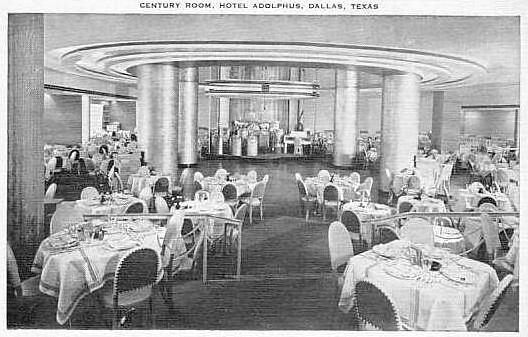
The Century Room’s Retractable Dance Floor

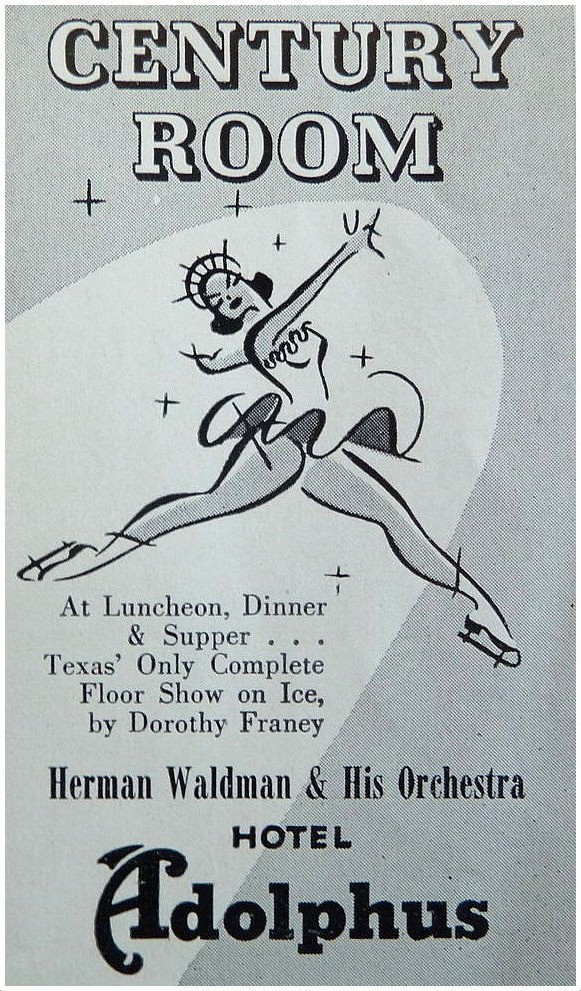
ad-adolphus-hotel_century-room_sm(click for larger image)

by Paula Bosse

If you’re getting all dressed up for a night on the town, you want to make sure you get your money’s worth, entertainment-wise. That’s why you head to the tony Century Room at the swank Hotel Adolphus. Not only is there dining and dancing, there’s also an ice show. Yep, an ice show. When “Texas’ Only Complete Floor Show on Ice” has wrapped up, a dance floor magically covers the ice, and you and your honey can trip the light fantastic to the fabulous strains of Herman Waldman & His Orchestra. Skates optional.

adolphus_hotel_century-room

adolphus_century-room

*

Copyright © 2014 Paula Bosse. All Rights Reserved.

The Britling Cafeteria Serves Those Who Serve Themselves

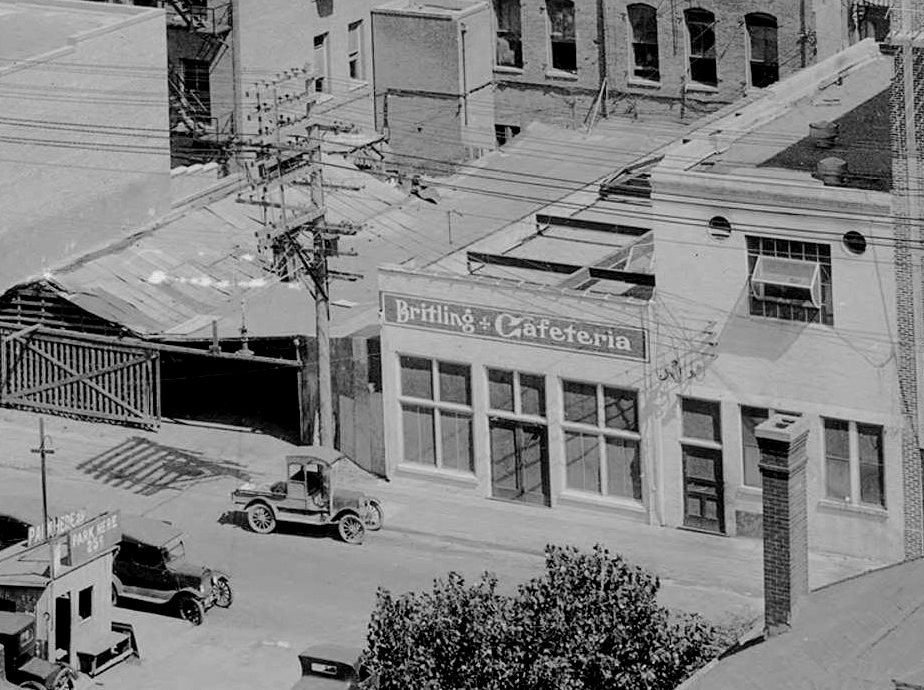
britling-cafeteria_rear-entrance_degolyerBritling Cafeteria’s rear entrance on Jackson St., 1920s

by Paula Bosse

A few weeks ago, I was zooming in on a view of the Dallas skyline when I saw an interesting restaurant sign: the Britling Cafeteria. After a little research, I learned that Britling Cafeterias are something of a cultural institution in Birmingham and Memphis (Elvis’ mother worked the coffee urn station in Memphis, and if that isn’t the sign of a Southern institution, I don’t know what is). Here in Texas, though … I’d never heard of it. It claimed to be the first cafeteria chain in the South, having begun in Birmingham in 1917 (and named for a character in, of all things, an H. G. Wells story). When the Dallas location opened at the end of 1922, it was only the sixth restaurant in the chain, joining others in Birmingham, Atlanta, and Memphis.

The Britling Cafeteria was at 1316 Commerce (“Right in the Heart of Things”), between Field and Akard. There were two entrances, one on Commerce and one on Jackson (seen in the photo above). It sounds pretty nice for a cafeteria — it was lavishly decorated in black and gold, lined with mirrors, filled with flowers, and it had a mezzanine and a raised platform for a live orchestra to provide background music. It had a seating capacity of 450, with an expected daily capacity of 3,000. We’re not talkin’ Luby’s here. Quick “Southern home-cooking” had arrived in Dallas, and it seems to have remained an active advertiser until the ads suddenly stopped in 1926. I hope Dallas enjoyed it while it had it.

Below is the interior of the Atlanta location, from about the same time as the Dallas location. Cafeterias were a whole lot nicer back then.

britling_atlanta

The first non-institutional cafeteria I can find mentioned in The Dallas Morning News was the one in the basement of the Praetorian Building (“Cleanliness, courteous, tipless”) in 1912, but the cafeteria “concept” must have still been fairly new to Dallas as the Britling advertisements that appeared in the week before the grand opening felt it necessary to explain how the system worked. “You’ll wait on yourself — and do it gladly.”

britling_dmn_112722abritling_dmn_112722b1922 (click to read)

But first, stop by for a “Day of Courtesy” preview — flowers for the ladies!

britling_open_dmn_1127221922

britling-cafeteria_forest-ave-high-school-yrbk_19231923

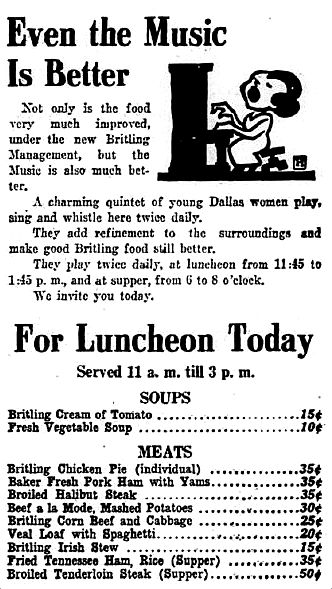
Below, a sample of some of the Southern home-cooking on the menu as well as the warning that there WILL be live music as “a charming quintet of young Dallas women play, sing and whistle (!) here twice daily.”

britling_dmn_030926abritling_dmn_030926b1926

britling_logo_dmn-112722

***

Sources & Notes

Photo is a detail from a larger view of the city from the DeGolyer Library, Southern Methodist University, seen in an earlier post here. The block in which the cafeteria was located is now 2 AT&T Plaza.

Postcard of the interior of the Atlanta Britling Cafeteria from somewhere on the internet.

More can be found in the DMN article “Britling Cafeteria Will Open” (Nov. 26, 1922), with details on the chain and specifics on the Dallas location, here.

Great short history on the cafeteria that every self-respecting citizen of Alabama and Tennessee is apparently familiar with can be found here.

An amusing first-hand account of a Texan (J. J. Taylor) visiting a newfangled cafeteria in San Francisco appeared in The Dallas Morning News on Aug. 25, 1912 and can be read here.

*

Copyright © 2014 Paula Bosse. All Rights Reserved.
Dewey Groom and The Longhorn Ballroom

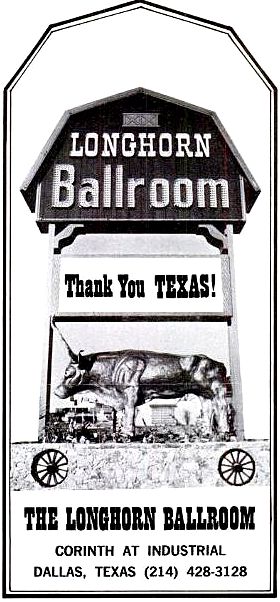
longhorn-ballroom-logo

by Paula Bosse

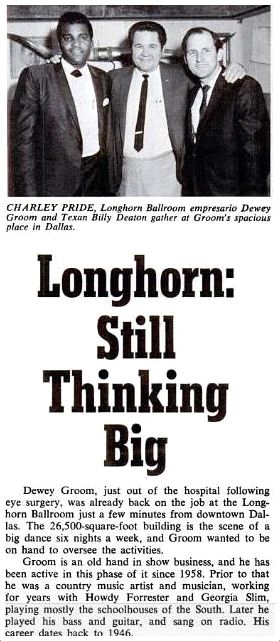
Growing up in Dallas with a father who was a classic country music fan, I’d always heard of The Longhorn Ballroom. And I’d always heard of Dewey Groom. You can’t have one without the other. The place is still around, but it keeps opening and closing and opening and closing. I don’t even know if it’s active at the moment, which is a real shame, because that place is COOL. I came too late to have seen the place at its glorious height as one of the country’s premiere country ballrooms. And I also came too late to witness the infamous Sex Pistols appearance there in the ’70s. I DID make it once or twice when it was going through its “alternative” period, booking bands that normally played in Deep Ellum. And I loved it. It was HUGE. Western kitsch everywhere. And a regular clientele comprised of people you’d either want to sit down and talk with for three hours or do your best to avoid completely — mostly the former. Below is a transcribed interview with Dewey Groom as it appeared (typos and all) in an old, obscure country music magazine that must have belonged to my father. At the end of this post are a few Dewey-factoids.

Even though his contributions are often overlooked, Dewey Groom was an important figure in the history of entertainment in Dallas. He died in 1997 at the age of 78. Thanks, Dewey!

*

longhorn-ballroom_billboard_112170

***

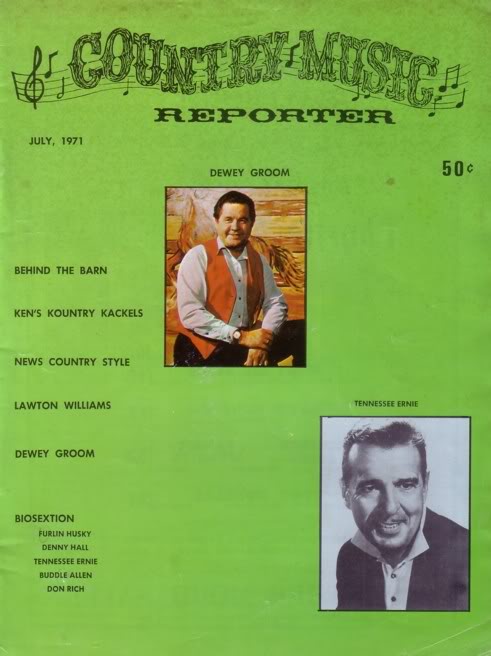
deweygroom_mag-cover-1971-sm*

COUNTRY MUSIC REPORTER (Grand Prairie, Texas) – July 1971
“Dewey Groom: From the Mabank Flash To Big Daddy of Country Music”
(writer uncredited — presumably Wayne Beckham, the magazine’s editor)

Back before he combined dancehall-keeping with his country singing, Dewey Groom was known on Dallas radio as the Mabank Flash – a reference to his Van Zandt County origins. He likes to talk of those origins, but he won’t complain nowadays if you call him the Lawrence Welk of country music.

I found him happy about his success as owner of the million-dollar Longhorn Ballroom on Corinth off Lamar [in Dallas, Texas]. But he was more inclined to talk of Angels Inc., the school for retarded children he helped found and hopes to see housed in a big new structure off Buckner, in East Dallas.

If he succeeds, it will be due to the middle-aged faithful who regularly go in thousands to the Longhorn to hear celebrities like Charley Pride or Jerry Lee Lewis, or simply to reassure themselves that the Mabank Flash of Dallas’ immediate postwar years is still in voice.

“I can’t yodel anymore,” Groom told me in the quiet-before-the-storm of a Friday afternoon, “but I still put in my 30 minutes singing and laughing up there with my band every working night – and I’m still hopeful that I don’t have an enemy in the world.”

Likely, he doesn’t; he’s climbed high in his 23 years of dancehall-keeping since he opened at 1925 1/2 Main in the old Bounty Ballroom. He’s on the phone steadily to Nashville picking the talent that makes the Longhorn one of the biggest sound chambers anywhere for the Nashville Sound.

Only big name he’s missed is Johnny Cash – and he, Groom avows, is the biggest: a real philosopher and humanist.

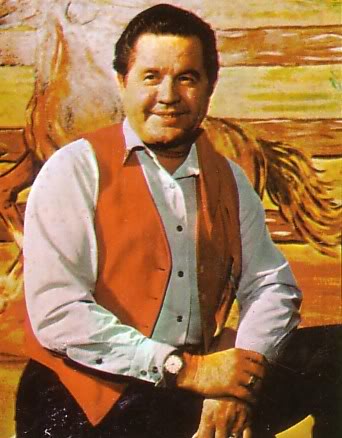
dewey-groom_color

Back in Groom’s youth the big name, he says, was Jimmie Rodgers, the old blues singer who started country music. But even before Rodgers became famous in the ’20s, the Groom family was a gospel singing crowd for certain.

“Daddy sang and my uncle was a singing schoolteacher,” he says. “In Deep East Texas, singing schools were everywhere. I joined. They taught you to read music and keep time. Gospel singing is pretty close to country music; so evenings we’d go across the fields to Uncle Bert Wise’s and listen to Jimmie Rodgers. Uncle Bert had the only phonograph around and got all the new records.”

Dewey imitated what he heard, but his friends said everything came out like Gene Autry. He believed them and went to look for a wider audience. He landed in Dallas at 10 with his guitar, but instead of instant fame, found work in a garage.

“I’d get up in the night and hang around a midnight radio show – I’d drop in on Bill Boyd’s old live 6 a.m. program on WRR,” he recalls. “Sometimes he’d let me sing on that show – the big time.”

But it wasn’t until he donned a uniform in 1941 that Groom had a real chance to stretch his lungs. He started singing in army rec halls and when he got overseas became the “Western part” of a divisional GI band which entertained for 42 months in the New Guinea area and Australia.

“I guess I became a professional then,” he reminisces, “but it was Hal ‘Pappy’ Horton that got me going in civilian life. I won $50 first prize on Pappy’s old Hillbilly Hit Parade in 1946. Then when he started his noon-time Cornbread Matinee, I was the singer. The show was a tremendous hit for 200 miles around Dallas. Pappy brought in Gene Autry and Roy Acuff. I was a hit, too. I played school shows and they used to tear the buttons off my clothes. Nobody knew it, but the Mabank Flash’s wife was making those pretty clothes I wore. I was the biggest thing in country singing around here, but she was the biggest thing in keeping me going.”

But Pappy died and the school shows Groom loved petered out. Too many bands were vying for a chance to put on shows in the schools. So Groom went to playing dances.

He ended up with Jack Ruby at the Silver Spur.

“I made Jack a lot of money,” he recalls, “at the time when he was deep in debt.”

“What kind of man was he?” I asked.

“A driver, and a talker – very emotional. Everybody liked him. He’d do anything in the world for you. But he didn’t understand country music. He wanted a sophisticated place, which you can’t have. He ran away my followers as fast as they turned up. Finally, the police that hung around the place told me I ought to get into business for myself. I borrowed $500 and opened up.”

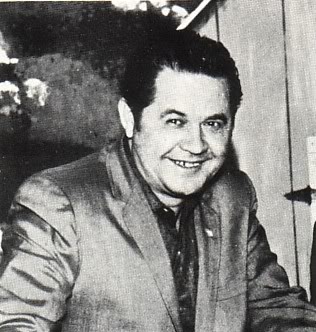
dewey-groom_bw

It’s been a rough haul, says Groom, and he’s made it through several locations only because he understands the business – and that takes years.

Too many men rise and fall. Bob Wills, for instance, was the biggest bandleader in the world at one time – he outdrew Tommy Dorsey. Now – well, Groom will have a “tribute” dance for Wills, a man whom, next to Pappy Horton (whom he reveres as a great and good man), Groom admires most.

He cut his professional teeth on Wills’ songs – especially San Antonio Rose which, he confides, is simply an earlier Wills hit, Spanish Two Step, played backwards. Groom also has a taped narrative of Wills’ life, which has been a big radio hit. He expects the Wills Tribute Night to be a success.

“You can squeeze 2,000 people into the Longhorn,” he says, “and I guarantee the top guest stars from $1,500 to more than $2,000. They always make more than the guarantee. This week, it’s Ray Price. Other big names are Charley Pride, the Negro country singer, who I rank next to Johnny Cash, and people like George Jones, Tammy Wynette, Harold Morrison and Conway Twitty.”

As a lifetime member of the Country Music Hall of Fame, Groom is certain that another gospel-singer-type – Jimmy Davis, former governor of Louisiana – will go in the Hall of Fame this year.

Groom is sentimental about the old times and old-timers, but he knows it’s harder to please people nowadays. Variety is demanded. Even a little pop gets mixed with country music.

“People think I’m rich and I guess sometimes I want them to think so,” he confides, “but I don’t want to be. I want friends and I want to finish that school for Angel Inc. If I can do these two things, I’ll be happier even than I was when I was the Mabank Flash.”

“Daddy Dewey,” as he is known by many artists and fans, knows practically all the stars. He has had many of them on his stage. Dewey has contributed much to many artists in helping to get them started. Through the years he has recorded many records and written many songs as well.

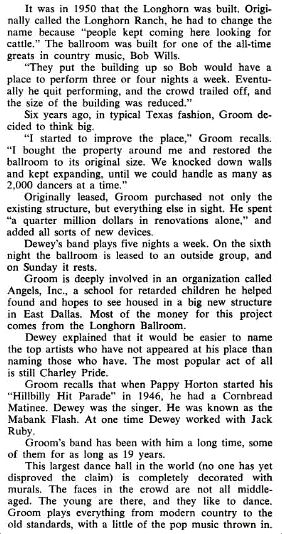
The Longhorn Ballroom came about in October, 1968. Since then he has also purchased the old Guthrie Club and torn out the wall to increase the seating capacity to over 2,000, on a 4 1/2 acre plot that cost nearly $500,000.

Dewey Groom has become an authority on country music. He is often called upon for informative opinions on new country clubs or organizations. Many fellow club owners are personal friends and often obtain information about artists and business – [there’s no] bitterness that often comes in competition.

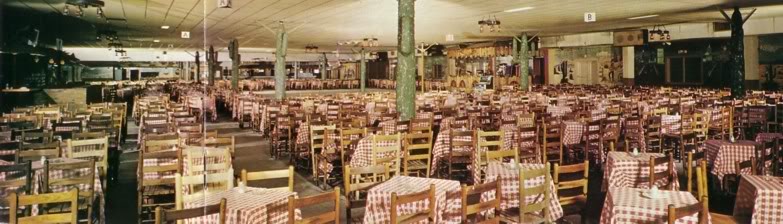
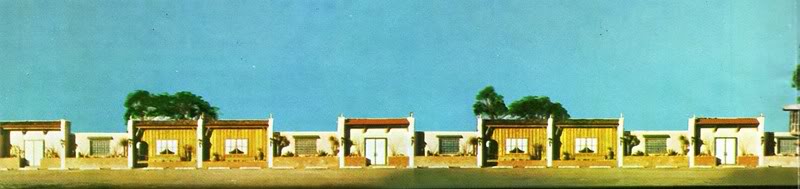
It’s been a long way since Dewey first traded a bull-calf for a guitar to the present-day Longhorn Ballroom. It is without doubt “America’s Most Unique Ballroom.” A landmark in Dallas, and one of the few western ballrooms in America. Hand-painted murals cover the walls and country decor prevails. Top country artists appear here weekly [and] Dewey’s own 12-piece band appear[s] nightly.

**

Below, photos from the article showing a partial view of the sprawling interior, complete with fantastic cactus pillars, as well as a couple of exterior shots showing Western street-scenes outside the club in a horseshoe around the parking lot. (Click to see larger images.)

dewey-groom_longhorn-ballroom_int

dewey-groom_longhorn-ballroom_ext1

dewey-groom_longhorn-ballroom_ext2

***

Sources & Notes

Incidentally, I have moved this post from another blog I had a long time ago. Without question, this got more hits and more comments (…more than 50!) than anything else I’d ever posted. People loved the Longhorn Ballroom, and a lot of them miss the days of dancing and drinking at the legendary dancehall (which just happened to be in a very seedy part of town, at Corinth and Industrial). Long live the Longhorn! (Also, I think it’s high time we bring “Dewey” back into the baby-name-pool. Along with “Roscoe.” … And maybe “Lon.” Pass it on.)

A short interview with Dewey on his retirement — “Adios, Longhorn Ballroom” by Mike Shropshire — was printed in Texas Monthly (March 1986) and can be found here.

Dewey Groom’s record label, Longhorn Records, was fairy active. He even put out some recordings of himself. I just listened to “Butane Blues” and I realized it was the first time I’d ever heard his voice (Dave Dudley meets Malcolm Yelvington). Listen to his recording on YouTube here.

Check out a cool photo of Dewey and his band in the early ’50s here.

A weird little detour into Dewey’s 8-page Jack Ruby-related file in the Kennedy assassination investigation (in which “barber” is listed as his profession) can be found here.

Below a short piece from Billboard (Nov. 21, 1970).

dewey-groom-billboard-112170adewey-groom-billboard-112170b

And, finally, a nice history of the Longhorn Ballroom by Jeff Liles (who booked bands there for a while in the post-Dewey era) can be read on the Dallas Observer website here.

*

Copyright © 2014 Paula Bosse. All Rights Reserved.
What Do You Get When You Convert an Old Oak Cliff Firehouse Into a Restaurant?

firehouse-15_glorias

by Paula Bosse

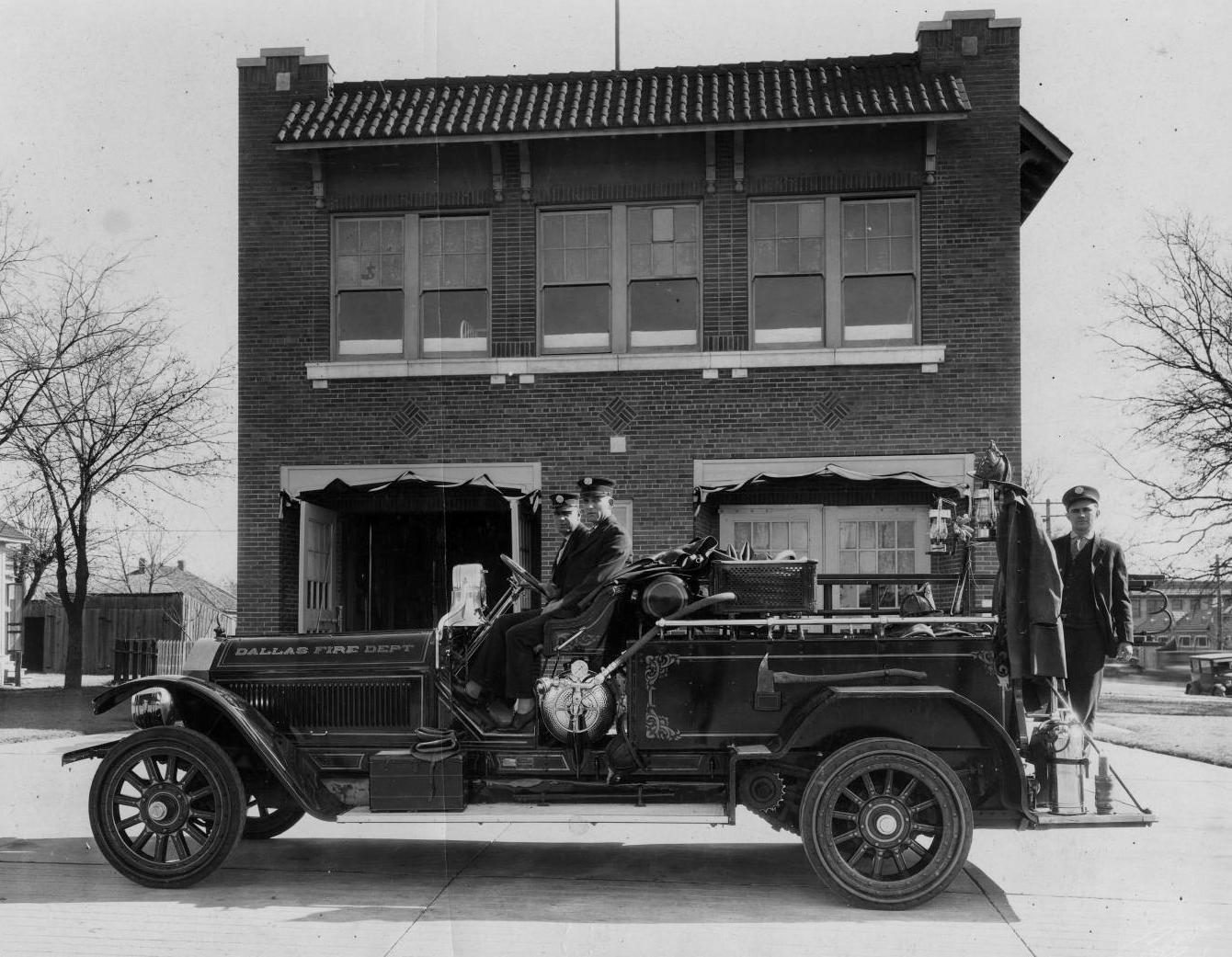
Station 15 — at Davis and Bishop — was a working firehouse decades before it was converted into Gloria’s restaurant in the Bishop Arts District. Here are the “before” photos.

station-15_oak-cliff

fire-station-15_oak-cliff

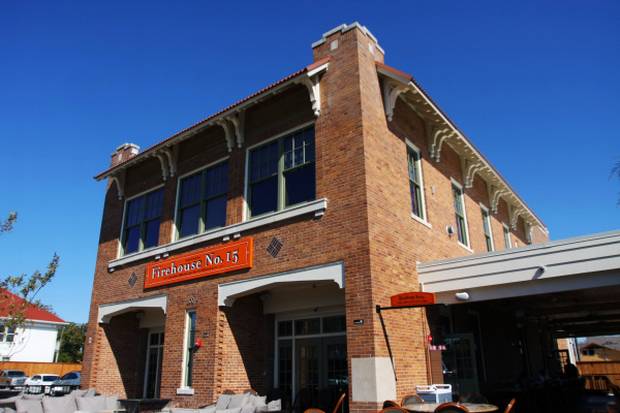
While you’re enjoying that incredible black rice (among other things…), take the time to enjoy your surroundings — it’s not every day you’re able to dine inside an old firehouse (don’t miss the brass fireman’s pole). Here’s the firehouse today:

firehouse-15_glorias_dmn

***

Sources & Notes

First and third photo from Dallas Firefighters Museum collection on the Portal to Texas History site here.

Second photo (circa 1931) is available for purchase here.

Photo of Gloria’s from The Dallas Morning News.

More info on Station 15 here.

Gloria’s website here.

*

Copyright © 2014 Paula Bosse. All Rights Reserved.
Liquor Doctors Prescribe “Beer by the Case — All You Want”

liquor-doctors_neon-sign_dmn-video_1939

by Paula Bosse

If you have an interest in the Dallas of yesterday, you’ve probably seen the great color film footage shot in downtown in 1939, presented to us by Robert Wilonsky of The Dallas Morning News (link below). One of my favorite things from that wonderful footage is a neon sign for a business called Liquor Doctors, with “Good & Bad Liquors” below it. That would be good enough on its own, but it’s even better as seen in the film, because the “Good” and the “Bad” flash back and forth. Great.

Liquor Doctors (what a great name) seems to have started in late 1937 and eventually had at least three locations: 509 Jackson St., Commerce & Houston, and Cedar Springs & Harwood. Info is limited on these stores — I found a classified ad looking for “salesladies” for the Jackson St. store (“must be over 21”) and a report of a hold-up at the Commerce St. location (the manager was forced, at gun point, to turn over $41.86 from the cash register). Not that interesting. Until I found this tidbit from the great-granddaughter of the owner, describing the utterly ridiculous (and thoroughly entertaining) operating procedure of the Cedar Springs location in the June 2010 issue of Texas Monthly (see link at bottom of post):

Later he opened another Liquor Doctors on Cedar Springs that offered curbside service. The employees, dressed as doctors and nurses, would stroll out to the cars and dispense “medicine” six days a week.

Depending on your threshold for silliness, this is either clever or hokey. (I vote “clever.”)

For some reason the owner changed the name of the business (but why?!), and the next incarnation was simply his name, “Bob Ablin” (where, thankfully, you could still get “good and bad liquors”). I think he might have sold the liquor businesses and opened a soda fountain on Cedar Springs, a venture that lasted until January of 1948.

Below is an ad placed during a WWII whiskey shortage. There was a strict limit of one bottle per person. But beer? Until the cows came home. Bob sounds like a fun guy.

liquor-doctors_dmn_011244

***

Sources & Notes

Screen capture of the Liquor Doctors flashing neon sign from the really wonderful 1939 film footage purchased from Ebay by Robert Wilonsky (of The Dallas Morning News) and several others who joined together to share a cool slice of the city’s history with us. Watch the video and read Wilonsky’s Dallas Morning News article from April 23, 2014, here.

Quote about the Cedar Springs costumed curb service from the essay “Old Testament” — about growing up Jewish in Dallas — by Megan Giller-Dupe, Bob’s great-granddaughter. You can find the essay in Texas Monthly (June 2010), here. It includes a nice photo of Bob.

*

Copyright © 2014 Paula Bosse. All Rights Reserved.