Flashback : Dallas

A Miscellany: History, Ads, Pop Culture

Category: Entertainment

Herbert A. Kline’s “Miniature Coney Island” at the State Fair of Texas — 1909

sfot_1909_entrance_ebay_a

by Paula Bosse

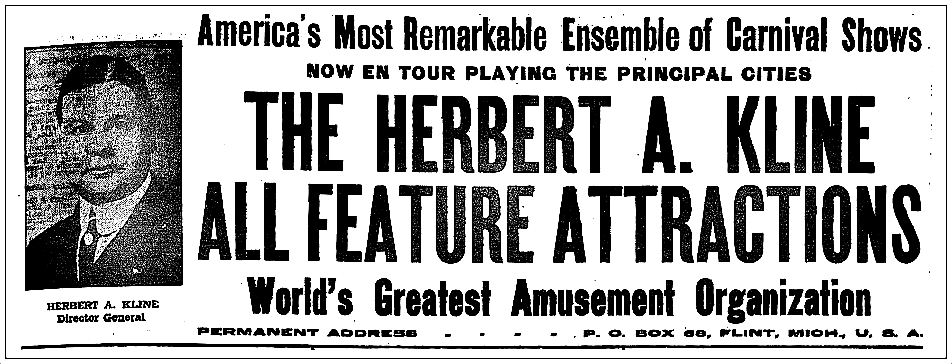
Herbert A. Kline (1873-1934) was a showman and promoter from Michigan who provided acts to several state fairs and large carnivals in the U.S. — his heyday appears to have been the 1910s. In 1909, he brought his troupe of performers and sideshow features to the State Fair of Texas. Most of the photos in this post are from promotional material for that 1909 season, with most of the photos showing Kline’s traveling “amusements.”

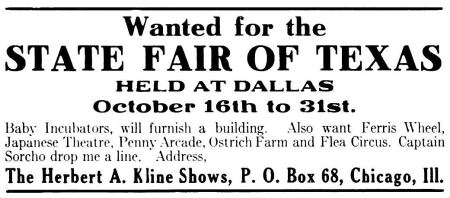
Two weeks before he got to Texas, he posted this ad in the entertainment trade magazine Billboard — I hope Capt. Sorcho (“the great deep-sea diver”) dropped him a line.

sfot_kline_billboard_100209 Billboard, Oct. 2, 1909

*

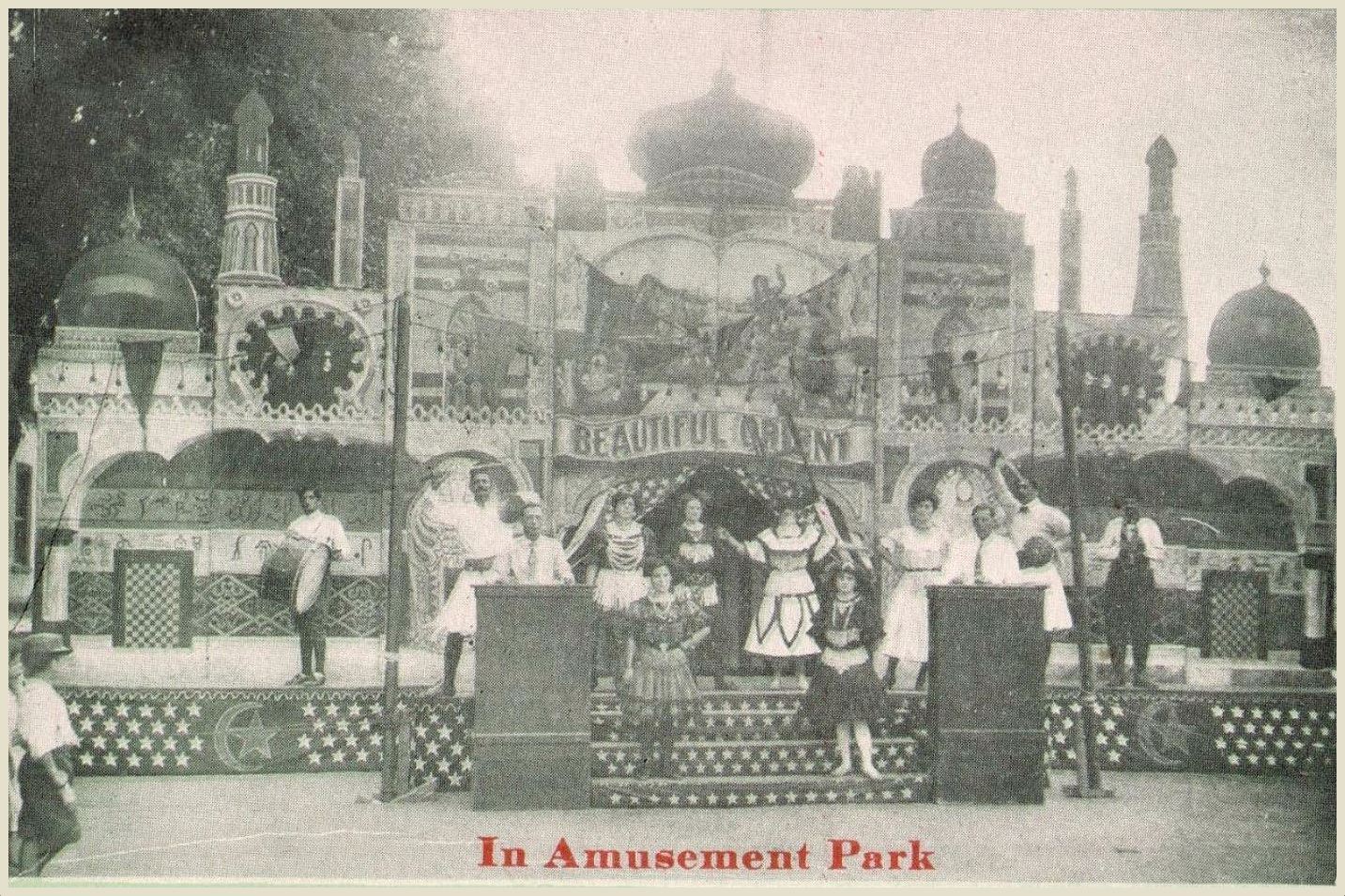
“THE BEAUTIFUL ORIENT” — included were dancers, gun-spinners, magicians, acrobats, and — somehow — wedding ceremonies. It also boasted “the cleanest and most refined dancing-girl show in America.”

sfot_1909_amusement-park_ebay_a

*

“SUPERBA, THE BEST” — a collection of vaudeville-type performers, including one woman whose “talent” appears to be that she was attractive.

sfot_1909_superba_ebay_a

*

“MRS. D. H. KINCHELOE, WARBLER” (a whistler/reader/vocalist/pianist from Kentucky — her name is misspelled below) and “THE GREAT McGARVEY, FEMALE IMPERSONATOR” (Bert McGarvey was known for a nicely turned-out ankle, charisma, magnetism, and a specialty number called “The Sacred Cobra Dance”). They — along with Galetti’s Musical Monkeys — would appear after the more high-brow operatic singers.

sfot_1909_warbler_female-impersonator_ebay_a

*

“THE IGORROTE VILLAGE” — native peoples of the Philippines gave a sort of presentation on how they lived, employing what might be seen as primitive customs in daily life. (A description of a “performance” in New York’s Central Park noted that there were demonstrations on how to shrink heads, which might have been too “exotic” for Dallas.)

sfot_1909_igorrote-village_ebay_a

*

John T. Backman’s Troupe of Glass Blowers — this was absolutely fascinating (the sign alone!). Check out this entertaining article about the sorts of things these people did.

sfot_1909_glass-blowers_ebay_a

*

Also in Kline’s family of traveling show-folk:

  • A creature half-reptile and half-human
  • Russian Prince Midget, who speaks three languages, weighs less than 16 pounds, and whose crib was a cigar box
  • Alice, The Wonder, “who is acknowledged by the press and the public to be the strangest girl in all the world”
  • Schlitzie, the Aztec Wild Girl, “whose head is no larger than an orange” (this is most likely the sideshow performer best known for appearing in Tod Browning’s cult movie “Freaks”)

*

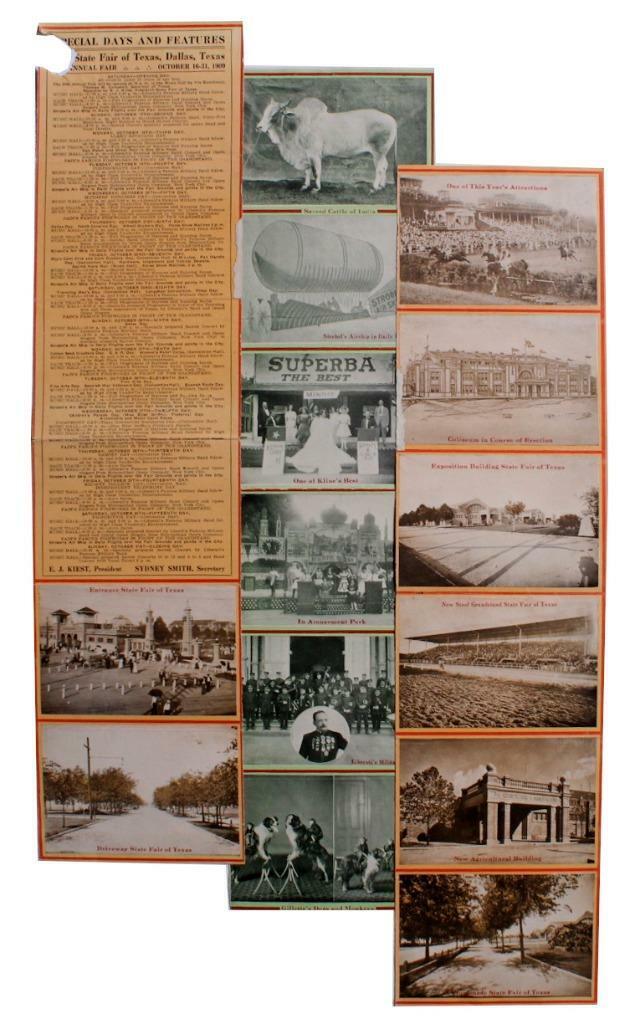
Here is an image from an eBay item, showing where these photos came from.

sfot_1909_collection_ebay

*

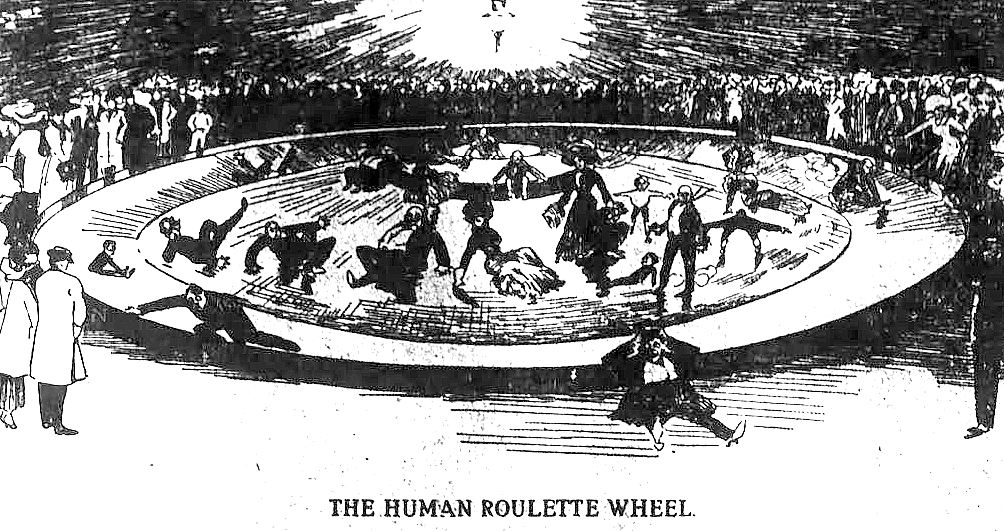
There was also a “ride” called “THE HUMAN ROULETTE WHEEL.” It was probably more fun for the spectators than for the participants.

sfot_1909_human-roulette-wheel_houston-post_110709Houston Post, Nov. 7, 1909

*

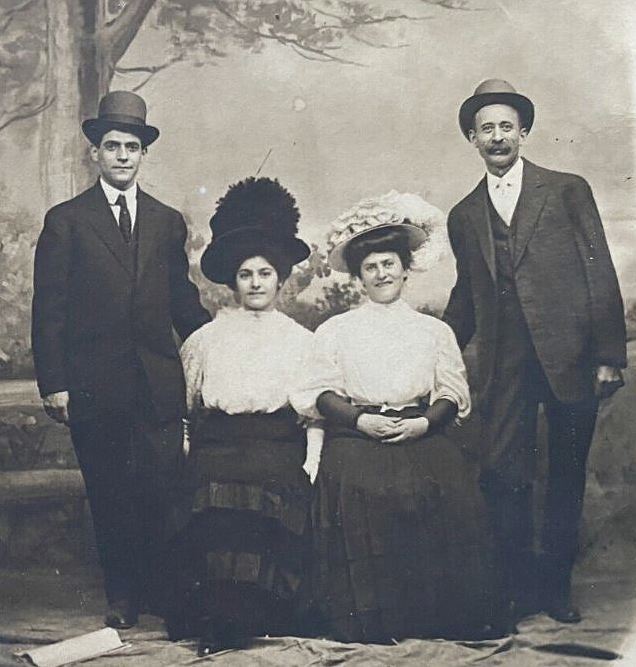
The prospect of being flung off a human roulette wheel might have been daunting to women of the period, who wore heels, corsets, long skirts, and big hats. Below are some typical fairgoers of the time, in a souvenir photo taken at the 1907 State Fair of Texas (Louis Block of Fort Worth, Miss Ray Goldsmith of Dallas, her sister Grace Goldsmith Rosenblatt, and Grace’s husband, David Rosenblatt). Imagine these people wandering around Fair Park and stopping in to see “the strangest girl in all the world” and watching people being hurled off a spinning disk.

sfot_RPPC_ebay_1907_photovia eBay

*

kline-herbert-a_new-york-clipper_oct-1912New York Clipper, Oct. 1912

*

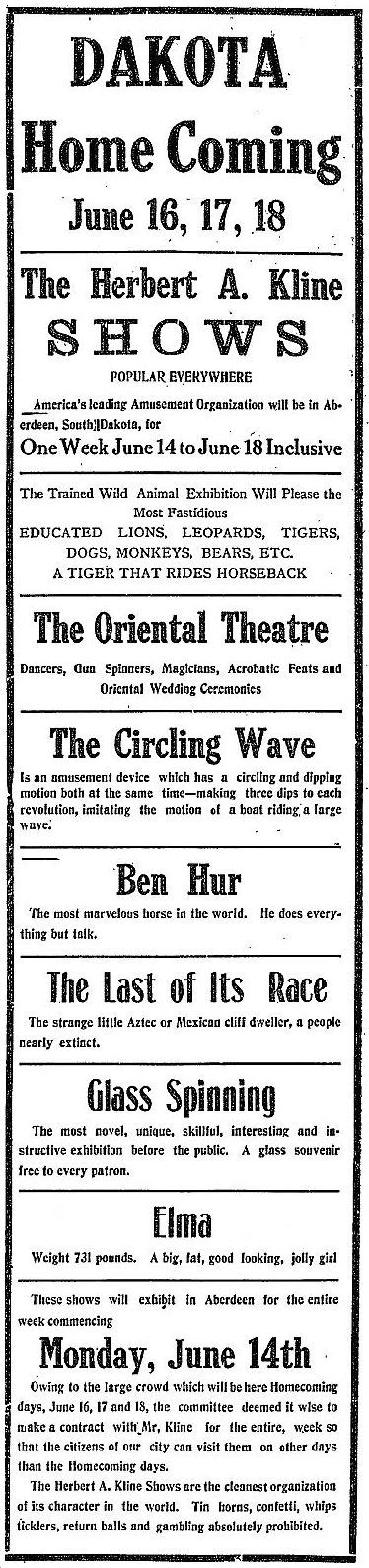
This ad for a South Dakota fair — a few months before Kline’s stop in Dallas — shows descriptions of several of the acts. (“A tiger that rides horseback.”)

kline-herbert-a_dakota-home-coming_aberdeen-american_SD_060909Aberdeen (South Dakota) American, June 9, 1909

*

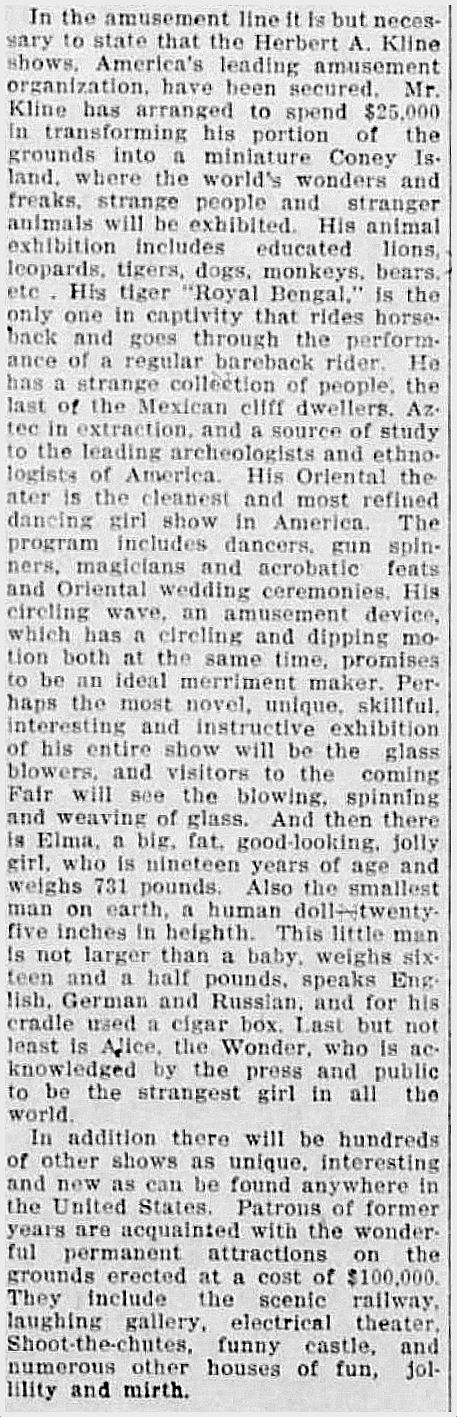
And a promotional article sent to local papers ahead of Kline’s arrival.

sfot_kline_mckinney-weekly-democrat-gazette_101409_detMcKinney (TX) Weekly Democrat Gazette, Oct. 14, 1909

***

Sources & Notes

All photos from a brochure/handbills listed earlier this year on eBay; sources of ads and other images as noted.

So many Flashback Dallas posts about the State Fair of Texas — here.

I’m on Patreon, where I post daily. Check it out!

sfot_1909_entrance_ebay_a_sm

*

Copyright © 2023 Paula Bosse. All Rights Reserved.
“Thrilling! Inspiring! Gorgeous!” — 1936

tx-centennial-brochure_ebay_4_patreon

by Paula Bosse

I don’t think the 1936 Texas Exposition at Fair Park could have oversold itself. It was everything it promised. The sensory overload must have been almost debilitating!

The night beauty of the Texas Centennial Exposition at Dallas is breath-taking! Rainbow-hued fountains, rippling flags, colorful buildings, thousands of constantly changing lights blending into a symphony of thrilling, inspiring, gorgeous effects… A glamorous fairyland of scintillating light, color and cool water that alone will repay your trip. SEE this marvel of beauty!

*

“Have the time of your life in Dallas! […] Joyous days and nights of holiday-making await you … in one of the most magnificent settings ever conceived! […] The Texas Centennial Exposition at Dallas is being enthusiastically applauded as the most magnificent spectacle ever attempted on the American continent.”

tx-centennial-brochure_ebay_5

*

“World’s Greatest Show for 50¢… Ample Tourist Accommodations… Come to Dallas!”

(According to the Inflation Calculator, 50¢ admission in 1936 would be equivalent to about $10 in today’s money. 10¢ hamburgers would be about $2, and 5¢ cold drinks would be about $1.)

tx-centennial-brochure_ebay_3

*

“Dallas: Night Spot of the World! / Dallas: Day Spot of the World!”

brochure

***

Sources & Notes

Images from a promotional brochure offered recently on eBay.

Check out many previous Flashback Dallas posts on the Texas Centennial here.

tx-centennial-brochure_ebay_4_patreon_sm

*

Copyright © 2023 Paula Bosse. All Rights Reserved.
The Stagecoach Ride at Six Flags: 1961-1967

six-flags_stagecoach_fort-worth-magazineWhat could possibly go wrong?

by Paula Bosse

Did you ride the stagecoach at Six Flags?

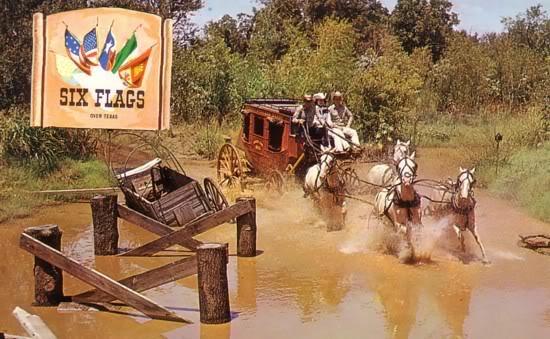
The stagecoach at Six Flags? What? This:

six-flags_stagecoach

And this (with grazing buffalo for added Old West atmosphere):

six-flags_stagecoach_buffalo_ebay_front

When I first saw Six Flags postcards touting stagecoach rides, my first thought was, “How did they ever manage to get insurance for that?”

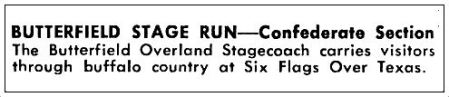
six-flags_stagecoach_buffalo_ebay_reverse

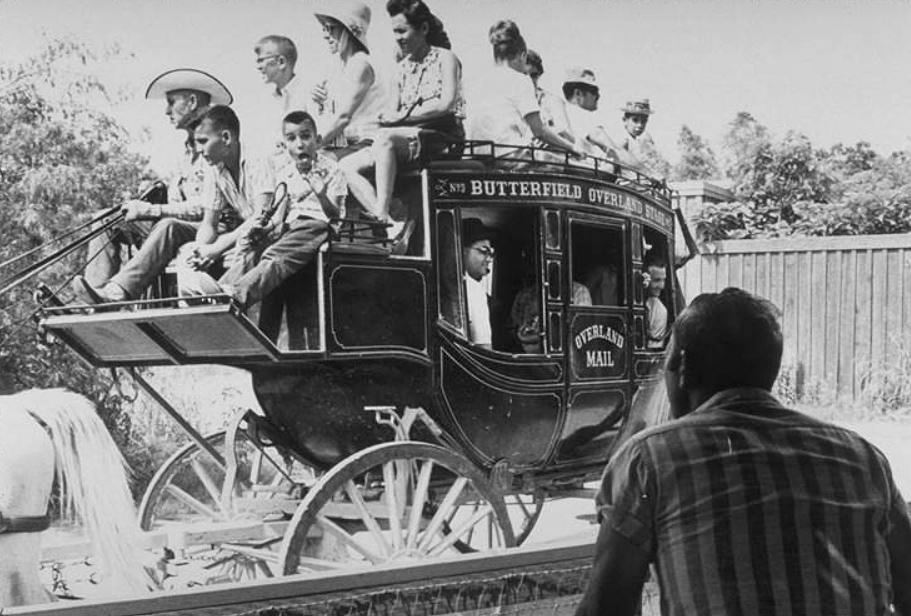
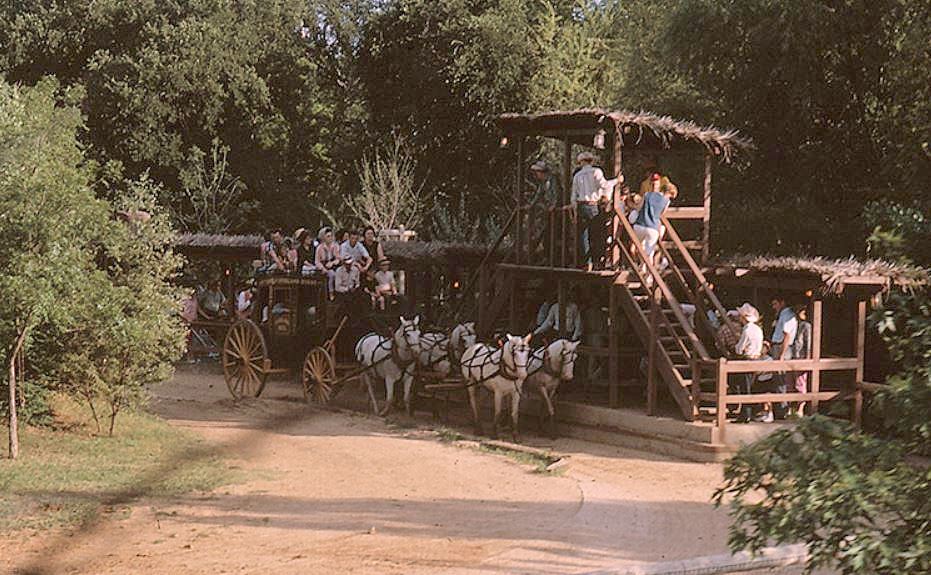
The “Butterfield Overland” ride debuted in the “Confederate” section when the park opened in 1961 and lasted until about 1967. It was very, very popular.

six-flags_stagecoach_1965_UTA_det1965, via UTA Libraries Special Collections (det)

Why did I never know about this when I was a kid? I never saw a stagecoach. I would have LOVED to ride a stagecoach. What happened? Well, here’s what happened: in May 1967, one of the stage’s wheels came off mid-ride, and the stage overturned, injuring 11 of the 14 people on board, most of them children. A 4-year-old Haltom City girl — who was riding on the top — was pinned beneath the overturned stagecoach. When she was freed, she was rushed to the hospital and underwent emergency surgery on both feet. One of the news stories about this unfortunate incident ended with, “Saturday’s accident was the first involving the stagecoach since the park opened in 1961,” adding that more than 4 million persons had ridden this ride between 1961 and 1967. (Four million!) (Granted, I think there were four stagecoaches and four teams of horses, but… four million!!)

One month after the accident, it was reported that the girl’s father had sued Six Flags for $531,000, contending that park officials were guilty of 30 counts of negligence. ($531,000 would be the equivalent in today’s money of about $5 million.) I can’t find anything about what happened with this lawsuit, but I assume there was probably a quiet settlement. Coincidentally or not, that spelled the end of the Butterfield Overland stagecoach ride at Six Flags Over Texas.

And that’s why I never heard of — or got to experience — a stagecoach ride at Six Flags.

(I don’t know what happened to the buffalo.)

***

Sources & Notes

Top photo of a Six Flags stagecoach jam-packed with kids from Fort Worth magazine.

The 1965 image is a detail of a larger photo from the Jack White Photograph Collection, UTA Libraries Special Collections — see the full photo and more details here.

Read more about this Butterfield Overland stagecoach ride at Parktimes.com.

The whole “Confederate” and “Texas” sections of SFOT were kind of weird, including a several-times-a-day lynching (!), as can be seen in one of the postcards in the 2014 Flashback Dallas post “Angus Wynne Jr.’s ‘Texas Disneyland’ — 1961.”

For real, non-amusement-park stagecoach tidbits, check out the post (also from 2014) “Dallas to Austin by Stagecoach: Only Three Days! (1854).”

A slightly different version of this post originally appeared on the Flashback Dallas Patreon page in August 2023. If you’d like to see daily Flashback Dallas posts, please consider supporting me on Patreon, for as little as $5 a month.

six-flags_stagecoach_fort-worth-magazine_sm

*

Copyright © 2023 Paula Bosse. All Rights Reserved.
Sinead O’Connor — 1990

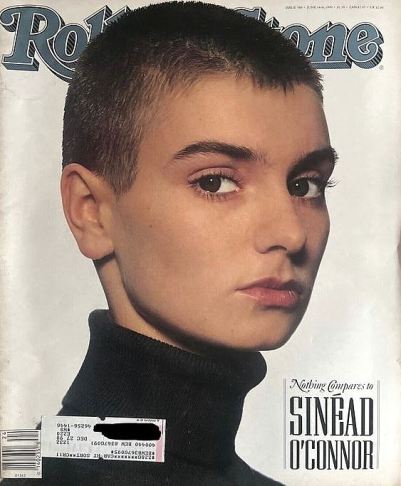
oconnor-sinead_rolling-stone_june-1990_ebay

by Paula Bosse

Sinead O’Connor died today. I loved her. When she came to Dallas to play the Bronco Bowl on May 25, 1990, I was there. She sang “Nothing Compares 2 U” a capella. The audience was so quiet while she sang you could hear a pin drop. It was one of the most memorable live music moments I’ve ever experienced.

In the early days of alternative radio station KDGE, I spent a lot of time at the Edge studios and provided a surprising amount of (uncredited, unheralded, and uncompensated) “comedy” writing for one of the on-air personalities. I even did a few on-air bits.

One night, out of the blue, I got a phone call at home, and was told to call the station’s answering machine and give ridiculous directions to a secret Sinead O’Connor party which was supposedly being given in her honor while she was in town for her show at the Bronco Bowl. So I did. The sound quality is atrocious, but I had to scramble to find a tape recorder before the bit aired a few minutes later. I’m still waiting for my Peabody.

So here’s one of the improvised stealth comedy bits I did on The Edge (and, yes, I really do give directions like this). It is followed by a commercial for Sinead’s appearance at the Bronco Bowl, produced by 462 (pure ’90s nostalgia). I’ve been told by a friend that he could access this link on his laptop but not his phone, but I’m going for it anyway.

Listen to it here.

I wish Sinead hadn’t had such a hard life. She made many of our lives better. She made my life better. RIP.

***

Sources & Notes

Rolling Stone cover, June 1990, from eBay.

Recording from collection of Paula Bosse.

oconnor-sinead_rolling-stone_june-1990_ebay_sm

*

Copyright © 2023 Paula Bosse. All Rights Reserved.
Gritty Dallas — 1969

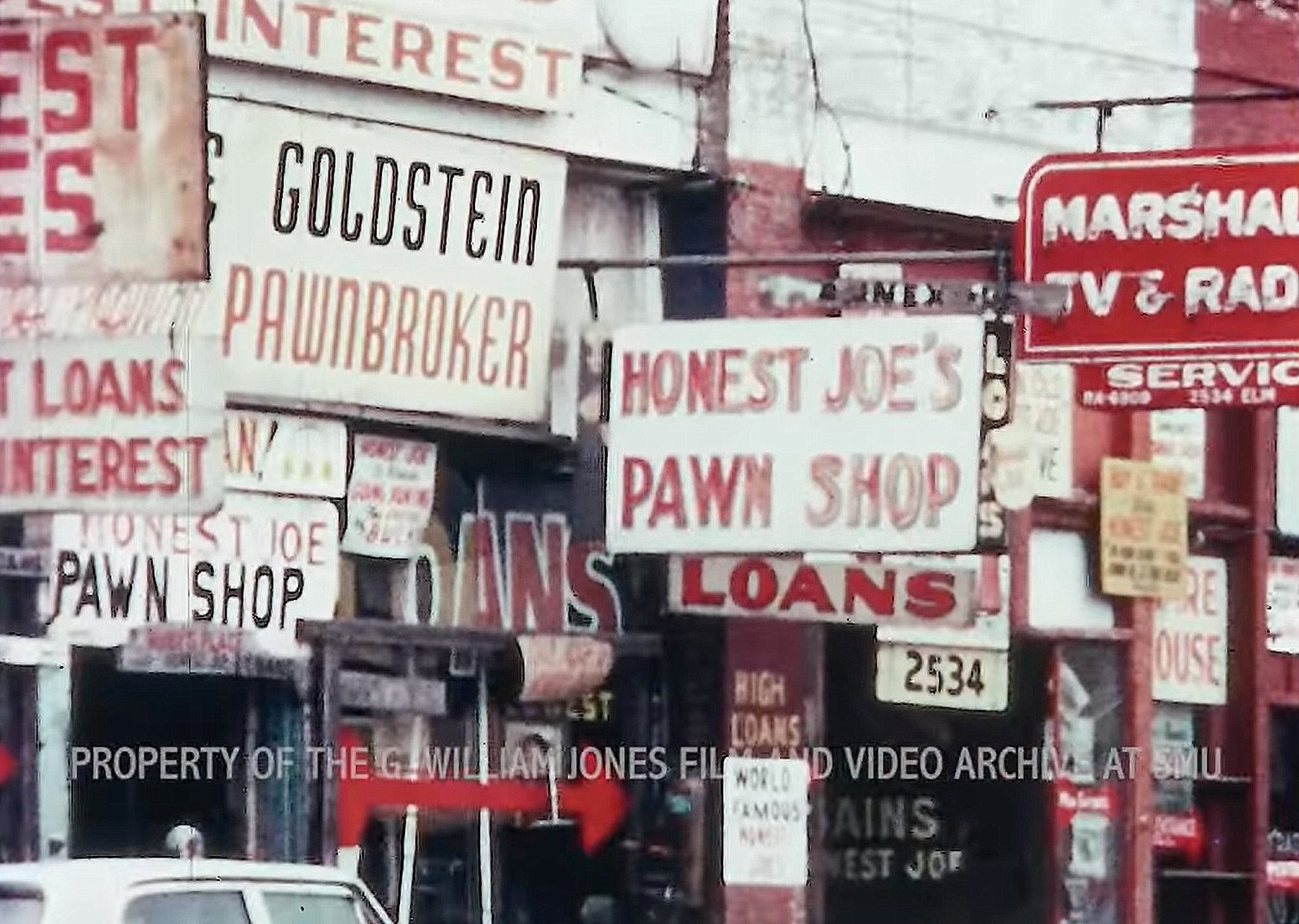
honest-joes-pawn-shop_deep-ellum_perkins-school-recruitment-film_1969_jones-film_SMU_5.13Honest Joe’s: sign overload in Deep Ellum

by Paula Bosse

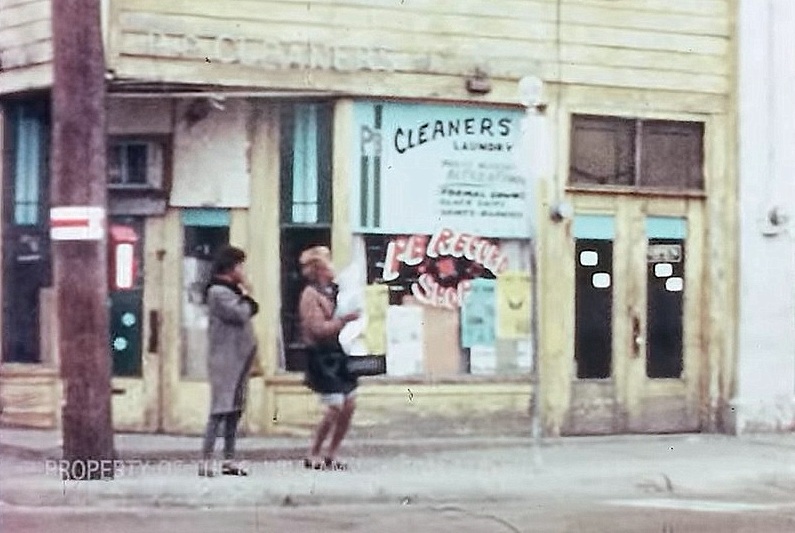
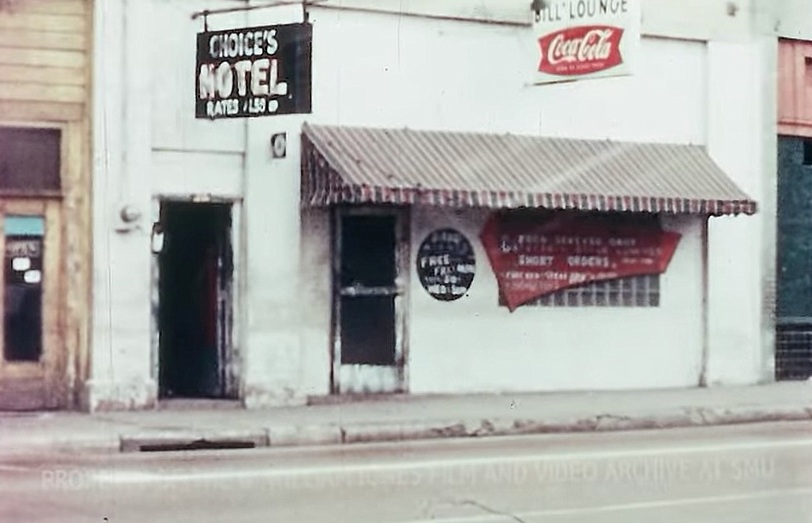
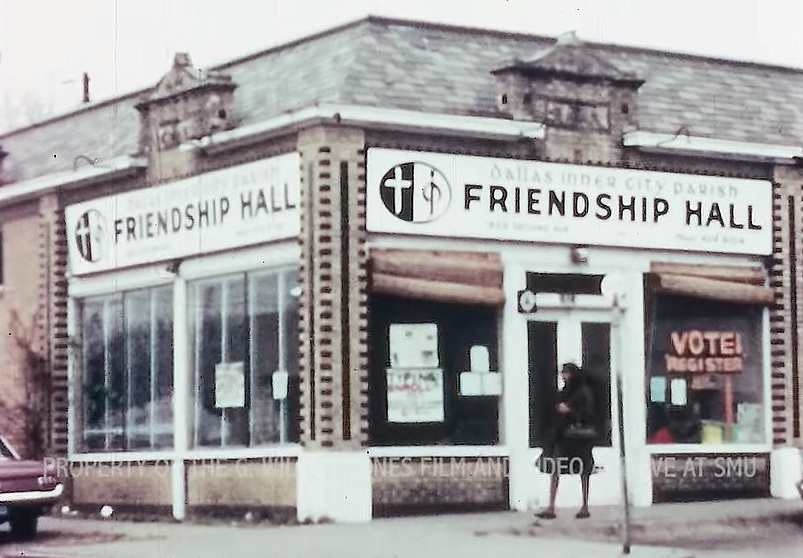
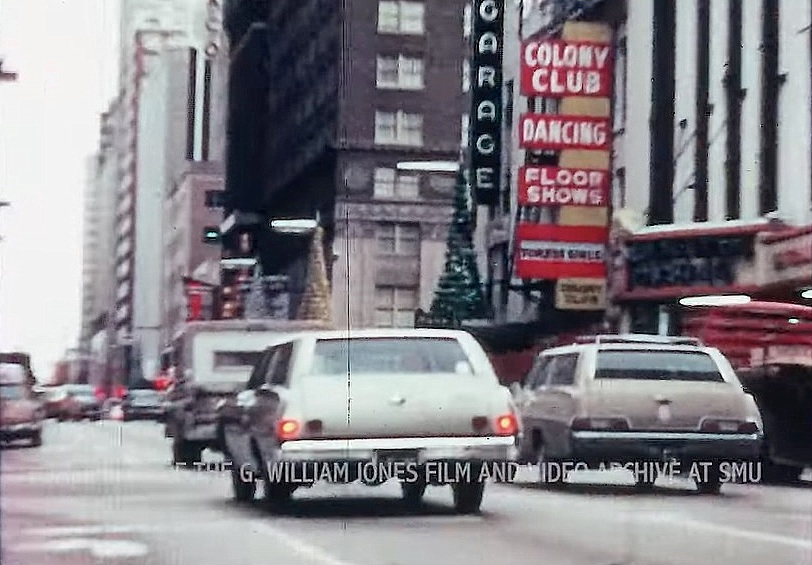
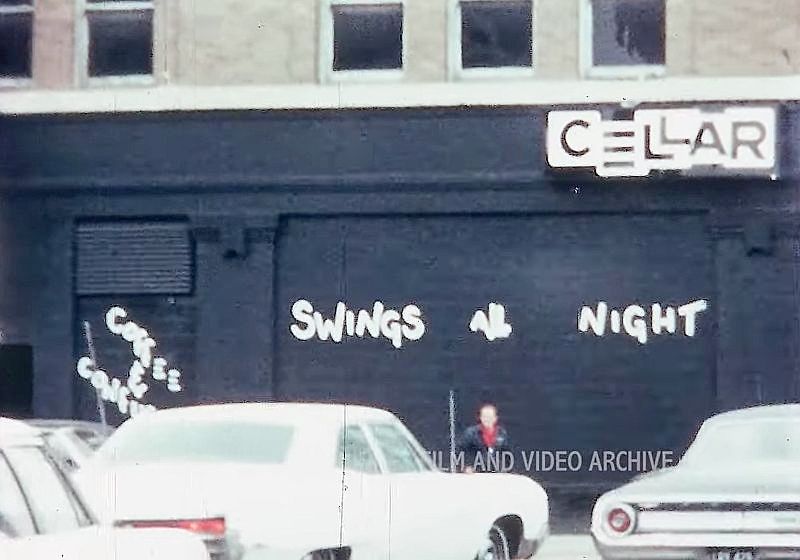
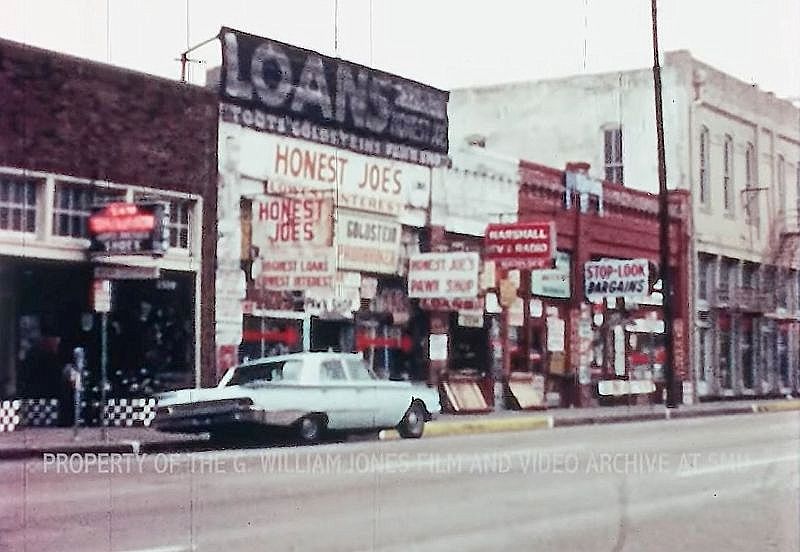
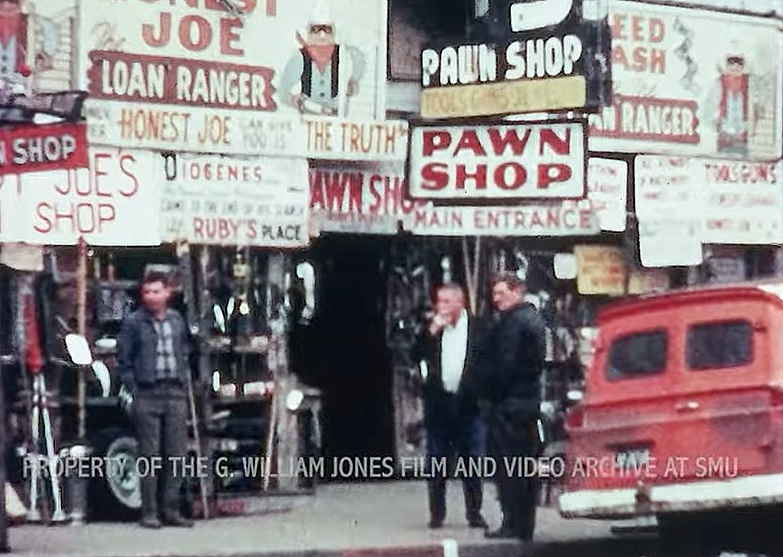
Here are a few things I found when I clicked on something I normally wouldn’t have, but I’m glad I did. These are screenshots from a 20-minute film made in 1969 by SMU’s Perkins School of Theology. (I certainly hope SMU has the original somewhere — or at least a crisper copy — because the quality of this 54-year-old film is, as you can see in these screenshots, pretty low-resolution.) The title of this offering on YouTube is the supremely un-sexy “Perkins School of Theology (SMU) Orientation and Recruiting Film — 1969.” Which is all well and good, but, let’s face it, how many of us would click on that? I wouldn’t! But it was the thumbnail that drew me in — a shot of the Colony Club, the famous burlesque club on Commerce Street. What did that have to do with theology school? I clicked and started fast-forwarding until I found the Colony Club — and it paid off, because I found a bunch of cool shots of places that, for the most part, don’t exist anymore.

The image above shows one of dozens of pawn shops in Deep Ellum, Honest Joe’s Pawn Shop, owned by Joe Goldstein. (Various Goldstein family members ran a dizzying number of pawn shops in Deep Ellum. I mean a LOT.) In 1969, Honest Joe’s and its adjacent office and warehouse spread from 2516 Elm to 2526 Elm — most of these buildings still stand (see them today, here), but others were torn down to make way for the highway-palooza. (Two more photos of Honest Joe’s are at the end of this post.)

*

The two shots below were in the same block — keep panning right from the P B Cleaners (2700 S. Ervay, at Grand Avenue — now Al Lipscomb Way), and you’ll see Choice’s Hotel and Bill’s Lounge next door. What’s there now? Nothing.

p-b-cleaners_choices-hotel_perkins-school-recruitment-film_1969_jones-film_SMU_8.38

bills-lounge_choices-hotel_perkins-school-recruitment-film_1969_jones-film_SMU_8.33

*

This is Friendship Hall (Dallas Inner City Parish), at 1823 Second Avenue. It was one of many businesses and homes condemned by the city and torn down to expand Fair Park and build new parking lots. See where this used to be, here.

friendshop-hall_perkins-school-recruitment-film_1969_jones-film_SMU_6.25

*

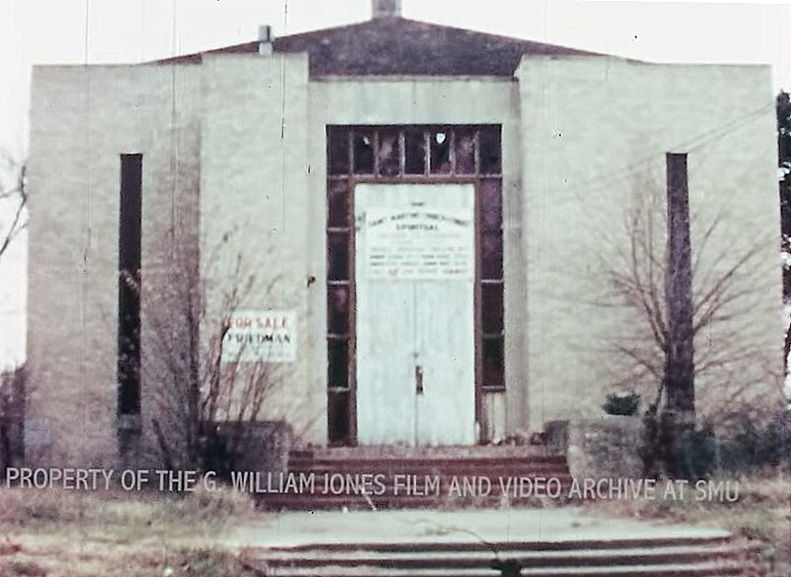
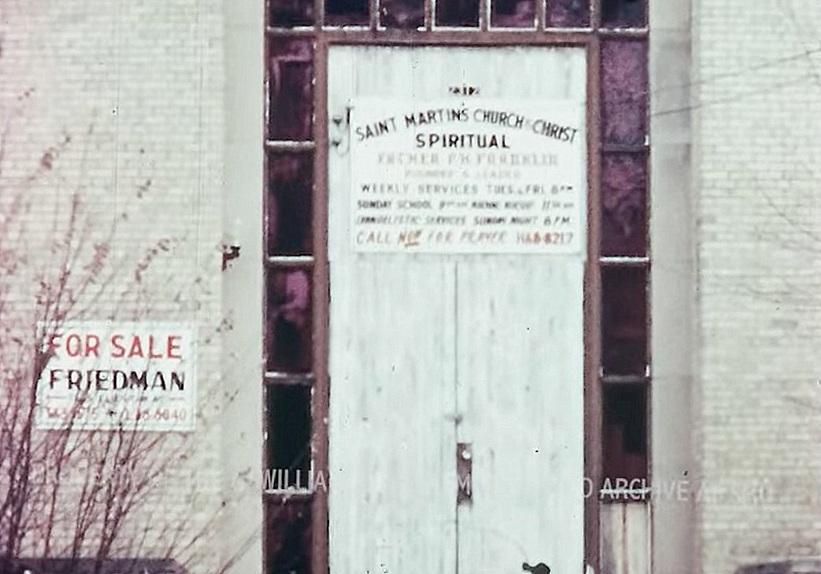
St. Martin’s Spiritual Church of Christ, 2828 Carpenter. This is such an unusual-looking building. It’s gone, but there’s a new church in its place, here.

st-martins-church-of-christ-spiritual_perkins-school-recruitment-film_1969_jones-film_SMU_8.03

st-martins-church-of-christ-spiritual_perkins-school-recruitment-film_1969_jones-film_SMU_8.08

*

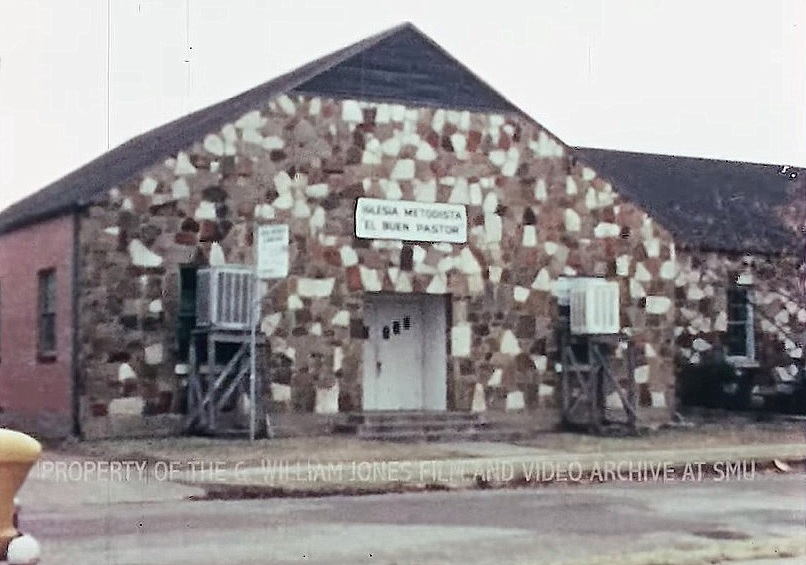
Iglesia Metodista, 1800 Park Avenue (at Beaumont), not too far from Old City Park. Wow, this area (a couple of blocks’ worth, anyway) has been developed way beyond what I would have guessed. The church once stood, I think, in this grassy area.

iglesia-methodista_perkins-school-recruitment-film_1969_jones-film_SMU_5.54

*

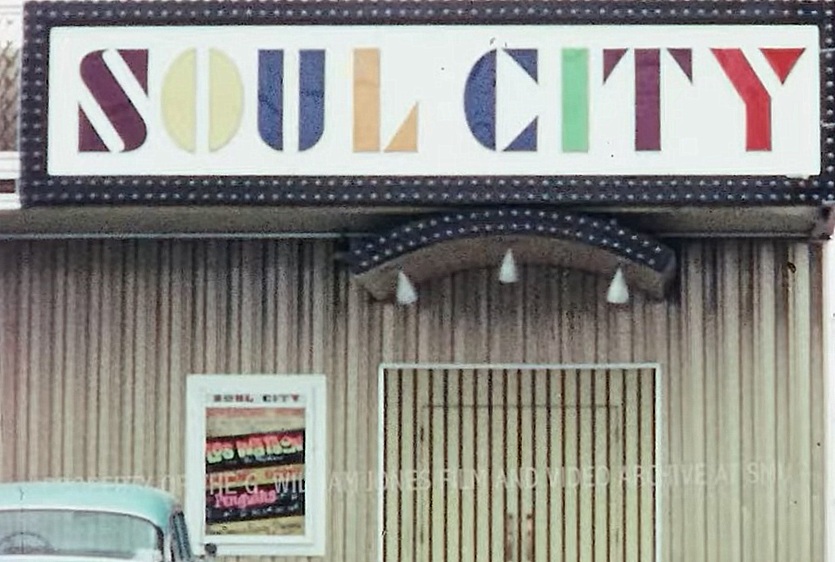
Soul City, 4714 Greenville Avenue, near University Blvd. (you might know it from its recent incarnation as a Vespa dealership). This wasn’t in a “gritty” neighborhood, but it was close to the filmmakers’ home, the SMU campus, and, surely, there were reprobates cavorting inside who could have benefited from a good Methodist sermon. From what I gather, this was a cool place for cool people to see cool bands. The building still stands, here. I don’t think it’s occupied at the moment.

soul-city_choices-hotel_perkins-school-recruitment-film_1969_jones-film_SMU_19.03

*

Speaking of reprobates, their Big D mecca for many years was Commerce and Akard, home to all sorts of places you probably wouldn’t book for a Mother’s Day brunch. Clogging up this area at various times were strip joints and dive bars, including the Colony Club, the Theatre Lounge, and the Carousel Club. The Colony Club was at 1322½ Commerce. That whole block (and the one just beyond it — across Akard — home to the Baker Hotel) went bye-bye a long time ago.

colony-club_perkins-school-recruitment-film_1969_jones-film_SMU_4.29

*

And, like Soul City, the legendary Cellar was cool, but I’ll bet there were more illicit substances in this downtown “coffeehouse” than in the Greenville Ave. club. “Swings all night.” It stood at 2125 Commerce (at what is now Cesar Chavez). This building appears to be gone.

cellar_perkins-school-recruitment-film_1969_jones-film_SMU_4.43

*

More shots of Honest Joe’s Pawn Shop, which took up a good chunk of the 2500 block of Elm. See what this view looks like today, here (I warn you: do not rotate 180 degrees). I assume the tall white building bit the dust for highway construction. I would have loved to have wandered around that place and chatted with Joe. I bet that guy saw some stuff. Deep Ellum has lost most of its grittiness. It used to be so cool. Thank you, seminary students from 1969, for preserving this for future generations, ’cause in a few years, the place won’t be recognizable.

honest-joes-pawn-shop_deep-ellum_perkins-school-recruitment-film_1969_jones-film_SMU_5.06

honest-joes-pawn-shop_deep-ellum_perkins-school-recruitment-film_1969_jones-film_SMU_17.41

***

Sources & Notes

All images are screenshots from the film “Perkins School of Theology (SMU) Orientation And Recruiting Film – 1969” — see it on YouTube here. It’s odd. It is from the keeps-on-giving G. William Jones Film and Video Archive, Hamon Arts Library, Southern Methodist University.

If you like this kind of thing, perhaps you will consider supporting me on Patreon. I post something there every day. More info is here.

honest-joes-pawn-shop_deep-ellum_perkins-school-recruitment-film_1969_jones-film_SMU_5.13_sm

*

Copyright © 2023 Paula Bosse. All Rights Reserved.
Uncle Scooter Reads the Funnies: 1940-41

radio_uncle-scooter_wfaa-wbap-kgko-combined-family-album_1941Little Man and Uncle Scooter…

by Paula Bosse

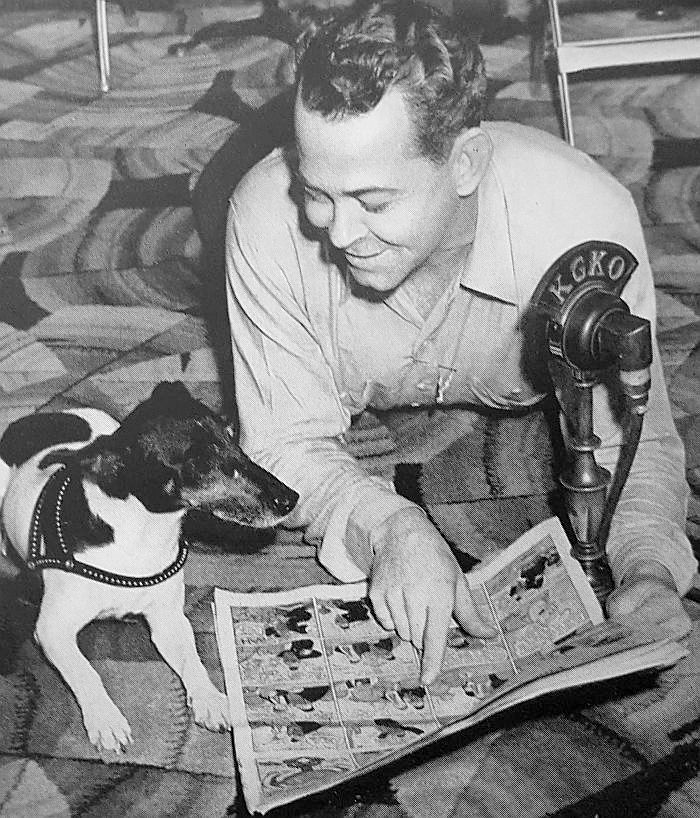
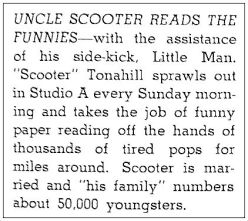
Several years ago, I was flipping through a promotional booklet for radio stations WFAA, WBAP, and KGKO, and I came across the photo above. I think about this photo a lot. It shows radio personality “Uncle Scooter” lying on the floor next to a KGKO microphone, reading the comics over the air to a vast audience of children and pointing out something pertinent to his trusty companion, a fox terrier named Little Man. I love this photograph. It makes me smile every time I see it. Wouldn’t it be great if this was how he actually conducted his broadcasts — on the floor with his doggie next to him? Here’s the caption:

uncle-scooter_dog_wfaa-wbap-kgko-combined-family-album_1941_caption

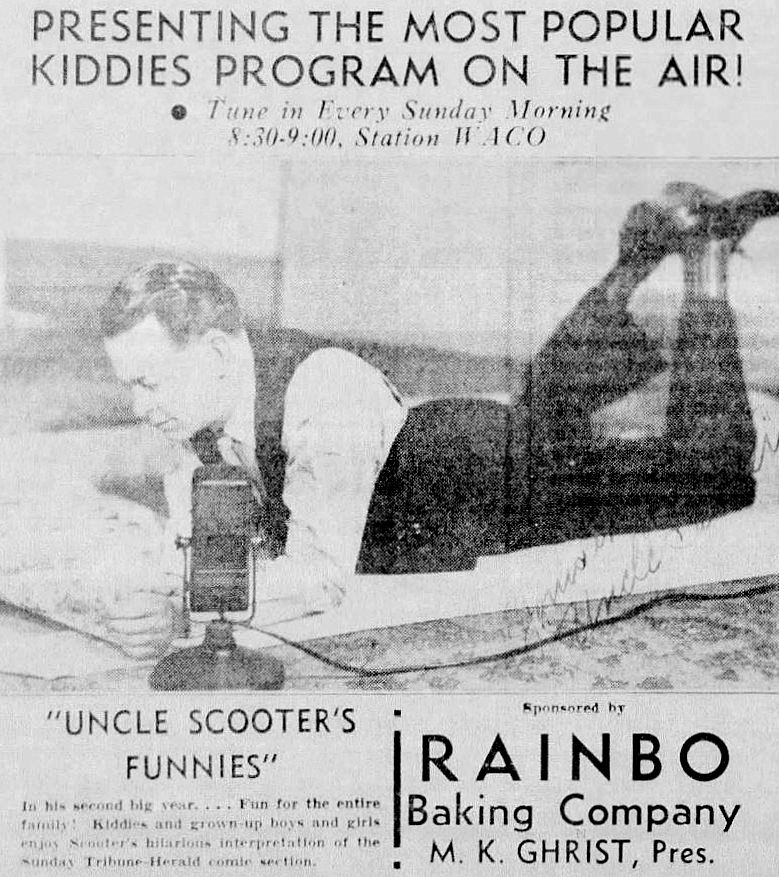
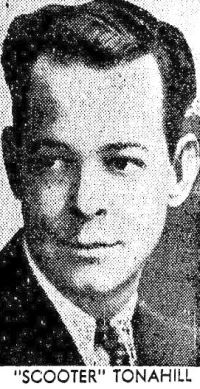
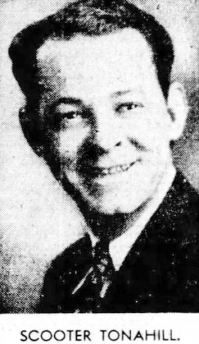
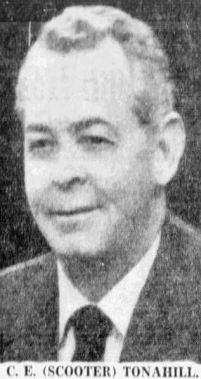
Clarence E. Tonahill (1904-1954) — known to everyone as “Scooter” — appears to have begun his radio career in Waco at the appropriately named station WACO. He then worked at KGKB in Tyler, then returned for a few years to WACO, and then to KTSA in San Antonio. Like most people in broadcasting in those days, he did a little bit of everything: he was an announcer, a newsreader, a sportscaster, and an entertainer. One of his most popular shows was just him reading the Sunday comics over the air for children. Below, a WACO ad from 1937 showing Uncle Scooter, again, lying on the studio floor (no dog, though).

uncle-scooter_waco-tribune-herald_010337Waco Tribune-Herald, Jan. 3, 1937

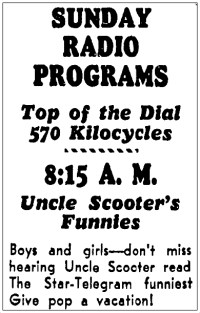
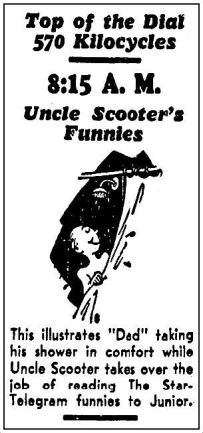
Around September 1939, he moved to Fort Worth to begin a busy stint at KGKO, a DFW station co-owned by The Dallas Morning News and The Fort Worth Star-Telegram (this was part of the very unusual WFAA-WBAP radio broadcasting partnership). He started as an “announcer” (which might well have included cleaning up the studio!), but he quickly graduated to doing a lot of sports-announcing and color commentary (football and boxing), man-on-the-street interviews, and personal appearances. He also hosted several shows, including a weekday morning show called “Sunrise Frolic.” But Sundays… Sunday mornings were set aside for his funnies-reading.

1940_radio_uncle-scooter_FWST_090840Fort Worth Star-Telegram, Sept. 1940

1940_radio_uncle-scooter_FWST_091540FWST, Sept. 1940

1941_radio_uncle-scooter_FWST_031641FWST, March 1941

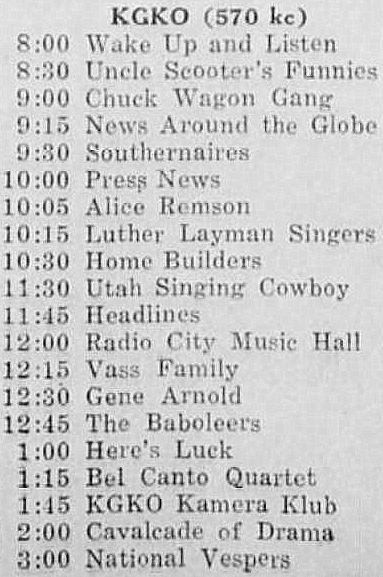
The Sunday lineup on KGKO, before and after the funnies:

1940_radio_uncle-scooter_bryan-tx-eagle_121440Bryan Eagle, Dec. 1940

I see listings for the show in 1940 and 1941 — and then, briefly, in 1947. His obituary says that Tonahill retired from his career as a broadcasting personality in 1946 and opened his own business in Fort Worth, Scooter’s Radio Supply (a supplier of broadcasting equipment to stations around the country).

He must have been a bright, friendly voice on the radio. I’d love to know the role Little Man played (Little Man was Scooter’s real-life pet and was described in a magazine profile as Scooter’s “favorite hobby”). I have fond (if somewhat vague) memories from my childhood of Bill Kelley reading the comics on The Children’s Hour on Channel 5 — but I can say without hesitation that things on The Children’s Hour would have been a whole lot more interesting if he’d just had a cute little dog with him!

1940_scooter-tonahill_FWST_042040_kgko-ad_det_photo1940_scooter-tonahill_FWST_100940_kgko-ad_det_photo1940

1954_tonahill-clarence-e_FWST_072654_obit_photo1954

kgko_19391939

***

Sources & Notes

Top photo from “WFAA, WBAP, KGKO Combined Family Album” (Dallas-Fort Worth, 1941).

radio_uncle-scooter_wfaa-wbap-kgko-combined-family-album_1941_sm

*

Copyright © 2023 Paula Bosse. All Rights Reserved.
Stuart Margolin, 1940-2022

margolin-stuart_hillcrest-high-school_1955Hillcrest High School, 1955

by Paula Bosse

Everyone’s favorite character actor, Stuart Margolin, has died. He grew up in Dallas (Preston Hollow) and went to Hillcrest High School — until he was sent to what sounds like a reform school in another state. A brief look through the Dallas Morning News archives shows that he appeared in local theater productions as a child — he trod the boards in a production of A Midsummer Night’s Dream when he was 10. As a teenager, he was active in the Courtyard Theater in Oak Lawn, a school and theater led by Robert Glenn, who had also mentored other young Dallas actors such as Jayne Mansfield, Brenda Vaccaro, Ann Wedgeworth, and… Candy Barr). When he wasn’t acting — and apparently causing enough mayhem to get sent to reform school — he was a very good, avid junior golfer who competed in many tournaments (he is shown in one very grainy photo as a 13-year-old member of the DAC Country Club team, wearing a jaunty golf cap). There is no further mention of the young Margolin after 1955, when, one assumes, the teenager was shipped off to someplace not as cushy as Preston Hollow. He starts popping up again in newspaper stories in 1967, in the early days of his long and successful career in Hollywood when he was making regular appearances on TV shows such as Love American Style

His most-remembered role is Angel, sidekick to James Garner, in The Rockford Files. People loved this character. HE loved this character. He has said, with great affection, that he based Angel on streetwise guys he grew up with in Dallas. 

In 1979, though an established working actor and director in Hollywood, he moved back to Dallas for a couple of years, working on writing projects and establishing the production company River Entertainment.

margolin-stuart_dmn_022481_river-entertainmentFeb. 1981 (Dallas Morning News)

He tried for several years to establish a theater in the city, saying, “I don’t think there’s a professional theater here that is of a quality that this city deserves, a city that likes to view itself as Dallas does” (“Margolin’s Life Has Many Stages” by Joe Leydon, DMN, Apr. 20, 1980). (He was not a huge fan of the Dallas Theater Center and was especially unhappy that, in 1980, the DTC hadn’t had an Actors Equity contract in 20 years.)

At this time he also recorded a country/blues album, And the Angel Sings, of which he said:

I’m from [Dallas], and my musical influences are from this area. When I grew up in Dallas, I listened to a lot of blues — Muddy Waters, B.B. King, This record was made for the kind of people I grew up with. (The Daily Oklahoman, Apr. 22, 1980)

I just watched him in an old episode of The Mary Tyler Moore Show a couple of days ago and said to myself, “I love this guy.” I was always a fan of Stuart Margolin. RIP.

margolin-stuart

***

Sources & Notes

Top photo from the 1955 Hillcrest High School yearbook, The Panther.

margolin-stuart_hillcrest-high-school_1955_sm

*

Copyright © 2022 Paula Bosse. All Rights Reserved.
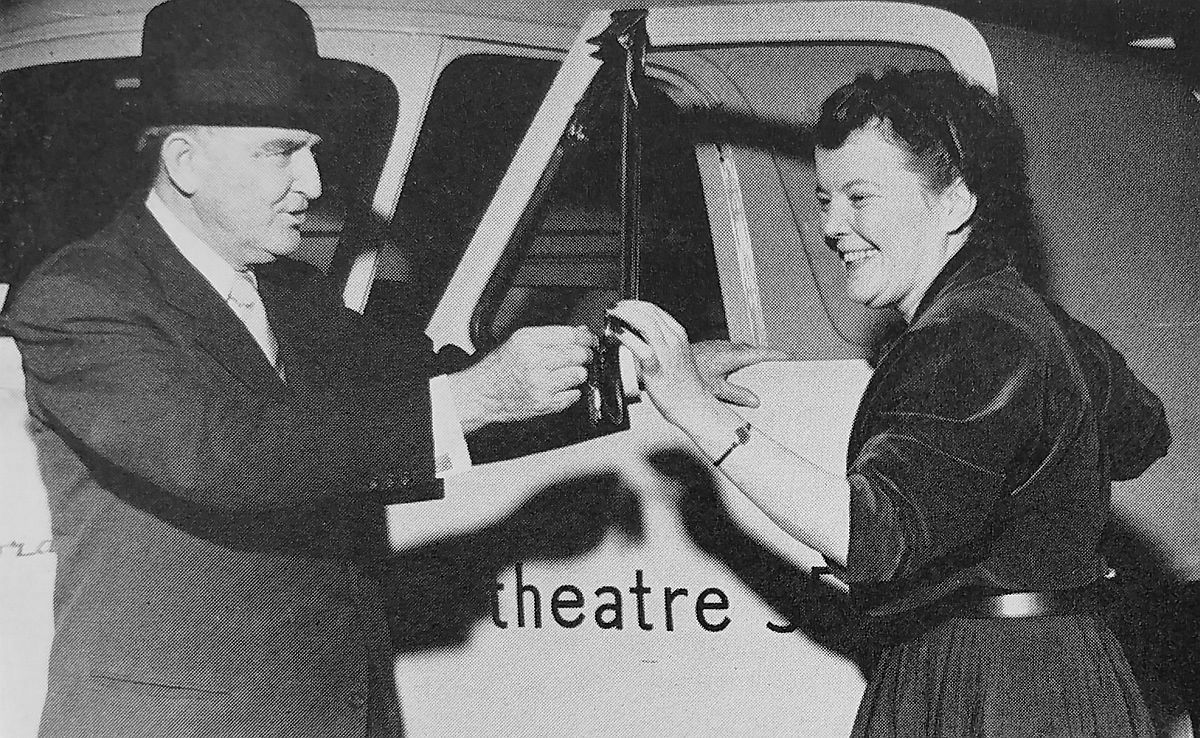
New Wheels for Margo Jones — 1955

jones-margo_theatre-55_dallas-magazine_apr-1955DeWitt Ray and Margo Jones

by Paula Bosse

The photo above shows Dallas theater legend Margo Jones accepting the keys to a new Ford truck in March 1955. Below, the caption that appeared in the April 1955 issue of Dallas magazine:

GIFT FOR THEATRE ’55: Margo Jones, director of Theatre ’55, is shown as she accepts the keys to a new 1955 panel truck from DeWitt T. Ray, Dallas banker and member of Dallas Theatre ’55 board of trustees. The truck, gift of a group of 18 Dallas businessmen and civic leaders, will be used for transporting set furniture, props and other necessities for the theatre’s productions.

She looks very, very happy!

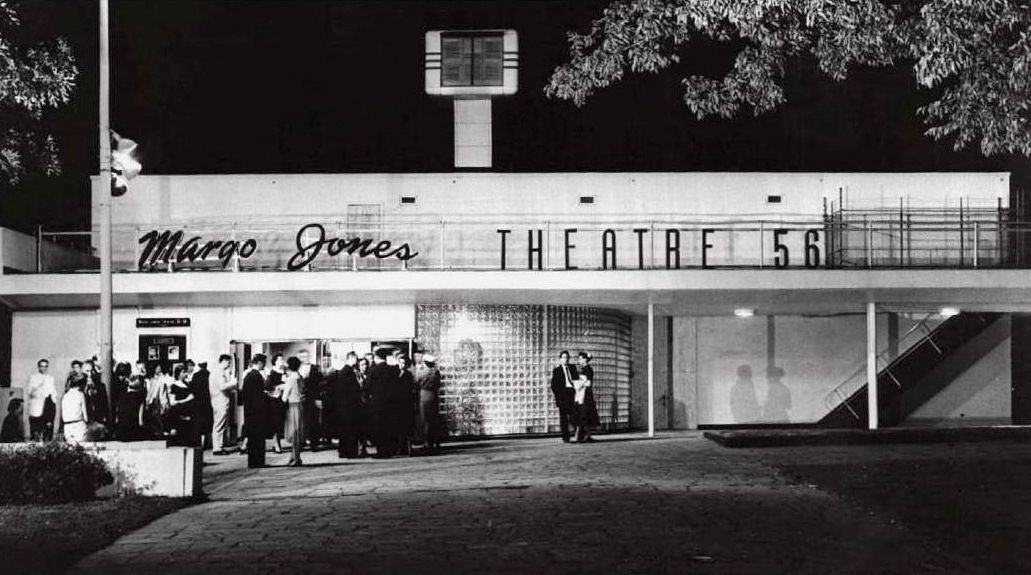
margo-jones_theatre-56_dpl

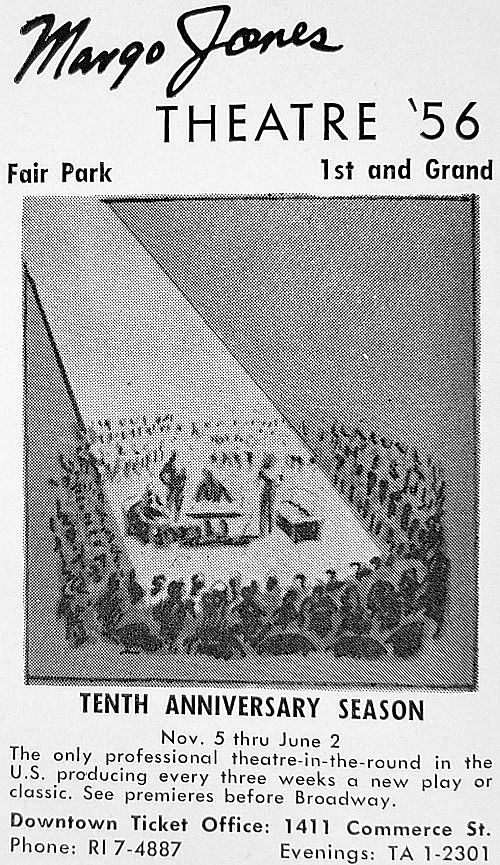
jones-margo_theatre-56_this-month-in-dallas_dec-1956_ad

***

Sources & Notes

Photo is from the April 1955 issue of Dallas, a periodical published by the Dallas Chamber of Commerce.

Photo of the exterior of the theater from the collection of the Dallas Public Library.

Ad from the Dec. 1956 issue of This Month in Dallas.

More on Margo Jones can be found in the following Flashback Dallas posts:

Watch “Sweet Tornado: Margo Jones and the American Theater,” the full documentary on Margo Jones produced by KERA-Channel 13, here.

jones-margo_theatre-55_dallas-magazine_apr-1955_sm

*

Copyright © 2022 Paula Bosse. All Rights Reserved.
The DALLASOUND — 1971

dallasound_1971_amazon
Staight outta Big D…

by Paula Bosse

The Boston Symphony Orchestra had Arthur Fiedler and its popular-music offshoot, The Boston Pops. The Dallas Symphony Orchestra had Anshel Brusilow and The Dallasound. 

Brusilow, a Philadelphia native, came to Dallas in 1970 as the resident conductor of the Dallas Symphony Orchestra. The DSO was in financial straits at the time, so in a bid to increase the orchestra’s demographic reach, Brusilow borrowed Fiedler’s idea and formed his own “pops” orchestra, which played jazzy arrangements of pop songs and light classical music. He named this sideline project “The Dallasound.” It was very popular, but it didn’t improve the financial problems of the DSO, and Brusilow was gone after only 3 years. He then went on to accept a teaching a position at North Texas State University (now the University of North Texas). After 9 years at UNT, he began teaching at SMU’s Meadow School of the Arts in 1983. Brusilow died in 2018 — he spent the last 48 years of his life in Dallas.

*

Here are the liner notes for the Dallasound album (1971):

THE DALLAS SYMPHONY ORCHESTRA

One of America’s oldest orchestras, the Dallas Symphony Orchestra was founded in 1900. Through the years, it has served its community and the entire North Texas area with the finest in music from the greatest composers the world has known. From a modest beginning — with 35 members giving a handful of concerts a season — the Dallas Symphony Orchestra currently has 85 members and performs more than 160 concerts each season. Its membership would comprise a “Who’s Who” of some of the finest artists in the world.

With its reputation for the classics well-established, the Dallas Symphony Orchestra now adds another brilliant facet to its already illustrious history — the DALLASOUND — a new sound and a new concept in music making. A big band sound incorporating the latest and most exciting modern-day pop sounds – special arrangements of tunes by the Beatles, Simon and Garfunkel, Jim Webb and many others.

Featured as special guest artists on the first recording on the DALLASOUND Label are three outstanding jazz musicians from the Dallas area — Paul Guerrero on drums, Jack Petersen on guitar and Al “Little Al” Wesar on Fender bass. Arrangements are by one of the most gifted arrangers in the business — Wilfred Holcombe of Trenton, New Jersey. Not just stock orchestral arrangements, but the swingingest, rockingest big band arrangements around! Settle back and listen to some of the most exciting music you will ever hear made by a symphony orchestra!

ANSHEL BRUSILOW

Like many of the world’s great violinist/conductors, Anshel Brusilow laid aside his Stradivarius several years ago and took baton in hand in earnest. His extensive performing and conducting experience with three of the world’s greatest conductors — Eugene Ormandy, George Szell and Pierre Monteux — placed him in good stead on the podium. He came to Dallas after two extremely busy years and more than 300 concerts with the Chamber Symphony of Philadelphia, including five recordings with RCA Victor.

With him he brought the DALLASOUND and a new era for Dallas’s symphony orchestra. Completely at home with the standard symphonic fare, he is equally proficient when ” swinging” with the DALLASOUND. Thousands of Dallasites have been converted to the new sound a symphony orchestra can make, a fact which substantiates Anshel Brusilow’s theory that the Dallas Symphony Orchestra belongs to all the people of a community and must therefore serve them in as many ways as it can. Thanks to Anshel Brusilow, the Dallas Symphony embarks on a new direction in music — the DALLASOUND!

The album’s musical offerings included arrangements of George Harrison’s “Something” and “My Sweet Lord,” The Carpenters’ “We’ve Only Just Begun,” The Doors’ “Light My Fire,” Tom Jones’ “It’s Not Unusual” and “Delilah,” and everyone’s favorite ubiquitous weird song from the late ’60s, “MacArthur Park.”

dallasound_back-cover_amazon_brusilowAnshel Brusilow

dallasound_back-cover_amazon_det

dallasound_back-cover_amazon_logo

dallasound_030771_adTitche’s ad, March, 1971

***

Sources & Notes

Images from the front and back cover of the DALLASOUND album were found on Amazon, here.

A really good interview with Anshel Brusilow can be found in the “High Profile” article by Marty Primeau (Dallas Morning News, July 17, 1983).

dallasound_1971_amazon_sm

*

Copyright © 2022 Paula Bosse. All Rights Reserved.
Betty and Benny Fox, Sky-Dancing in Dallas — ca. 1935

fox-betty-benny_princeton-univ_nd
Betty & Benny, without a care in the world… 

by Paula Bosse

I often just wander aimlessly around the internet, hoping I’ll find something Dallas-related that I haven’t seen before. Last night I found this unusual photo in the Western Americana Collection of Princeton University, described as “View of a Texas city, possibly Dallas.” Okay. It didn’t strike me immediately as a familiar view of Dallas, but you’ve got appearances by Dallas Art Glass Co., Texas Hosiery, and Texas Paper Co. So, yeah. Dallas! I definitely haven’t seen this before. (Scroll down for the specifics of the location.)

Once I determined this was, in fact, Dallas, I tried to figure out what was happening — who (and why?!) were those two people waving from a tiny platform on top of a tall pole? I first thought “flagpole-sitting,” the weird fad of the 1920s which makes me uncomfortably acrophobic just thinking about it. But it was two people on a pole. Standing. Waving. I just kept looking at it, wondering how they got up there. And how were they going to get down (without plummeting)? Why were they there? Were they a couple? Were there husband-and-wife pole-sitters/-standers/-dancers/-wavers? So many questions.

My first hint was in a December, 1931 story in The Dallas Morning News about a young woman who seemed to have some name-recognition named Betty Fox who was, at the time of the article, perched atop a pole in Greenville, Texas, attempting to test her endurance and remain there for 100 hours. As one does. (When in Greenville….) So I searched for newspaper articles about “Betty Fox.” She was, indeed, a star in the pole-sitting world, entertaining large crowds and making personal appearances all around the country. Then I noticed that there seemed to be more than one “Betty Fox” out there. Hmm. And I had noticed that there had been a pole-sitter named Ben Fox who was a fairly serious flagpole-sitting champ. That was kind of a weird coincidence. Or was it? And then I found the article “Sky Dancers Betty and Benny Fox,” which helpfully explained that Benny and Betty were daredevil aerial dancers. They were originally billed as brother and sister, but as the article says, “they were not related. And Betty was not always the same person, nor was she actually named Betty.”

They traveled from city to city where they drew large crowds who watched them perform high in the sky on a tiny circular disc 24 inches in diameter (it later shrank to 18 inches in diameter). Their acrobatic “sky dance” (AKA “The Dance of Death”) apparently lasted for several hours. (There was an article I read from 1931 about “Betty” and a heretofore unknown other “sibling” named “Babe” Fox who defied a judge’s injunction to prohibit the two from engaging in a 100-hour marathon-dance stunt on a 35-inch platform, 50 feet in the air in cold, wet, and windy Texarkana. Seems like a bad idea, but, apparently, they didn’t die. (…Or maybe they did and just got a new “Betty” and “Babe” and carried on to the next gig.)

Princeton University estimated the date of the photo to be around 1930. I think it might have been 1935. The two classified ads below in which Benny seeks Dallas promoters for their local event, were from the end of 1935. (The event was sponsored by a Dallas newspaper — it obviously wasn’t the DMN, because there was no story about the Foxes in their pages.) The newspaper photo below the ads shows the then-current version of Betty and Benny, and they look like the couple in the Princeton photo. 

fox-benny_dmn_112735Dallas Morning News, Nov. 27, 1935

fox-benny_dmn_120735DMN, Dec. 7, 1935

fox_atlanta-constitution_050335Atlanta Constitution, May 3, 1935

Yes, that caption says they performed for SIX HOURS.

I’m not sure how long “Betty and Benny” lasted, but they were back in Dallas in 1957 performing at a week-long carnival in Wynnewood Shopping Center. I bet there were more “Bettys” than “Perunas.”

Here’s some newsreel footage of one of the Betty and Benny incarnations, doing their thing in Chicago. (Seriously, if you’ve got even a hint of a fear of heights, look away!!!)

*

So where was that photo at the top taken? I’m estimating the camera was on the top of a building at, roughly, Griffin and Pacific, looking in a northerly direction. At the top right, the tall building farthest away is the First Methodist Episcopal Church (now First United Methodist) at Ross and Harwood. It’s hard to see any streets, but the two running diagonally are Camp and Patterson. A few addresses of businesses seen in the photo:

  • Dallas Art Glass Co.: 1408 Camp
  • Steger Transfer Co.: 1305 Camp
  • Texas Hosiery: 1200 Camp/1201 Patterson
  • Texas Paper Co.: 1200 Patterson, extending to Pacific

A 1921 Sanborn map is here. A detail from a 1952 Mapsco is below.

fox_mapsco_1952_camp-patterson-griffin1952 Mapsco (det)

*

I’m not sure why Princeton has this photo in their collection, but I really enjoyed reading about Benny and his “Bettys.”

***

Sources & Notes

Top photo — “View of a Texas city, possibly Dallas” — is from the Western Americana Collection, Princeton University Library Special Collections; more information on this photo can be found on the Princeton website here.

See several “action” photos of Benny and Betty from GettyImages here.

Read the very entertaining “Sky Dancers Betty and Benny Fox” by Alan E. Hunter, here.

Another story I wrote concerning an “endurance” stunt (which, like this one, also makes me feel a little panicky) is “Buried Alive at the Fair Park Midway — 1946.” 

fox-betty-benny_princeton-univ_nd_det

*

Copyright © 2022 Paula Bosse. All Rights Reserved.