Flashback : Dallas

A Miscellany: History, Ads, Pop Culture

Category: Leisure

Gritty Dallas — 1969

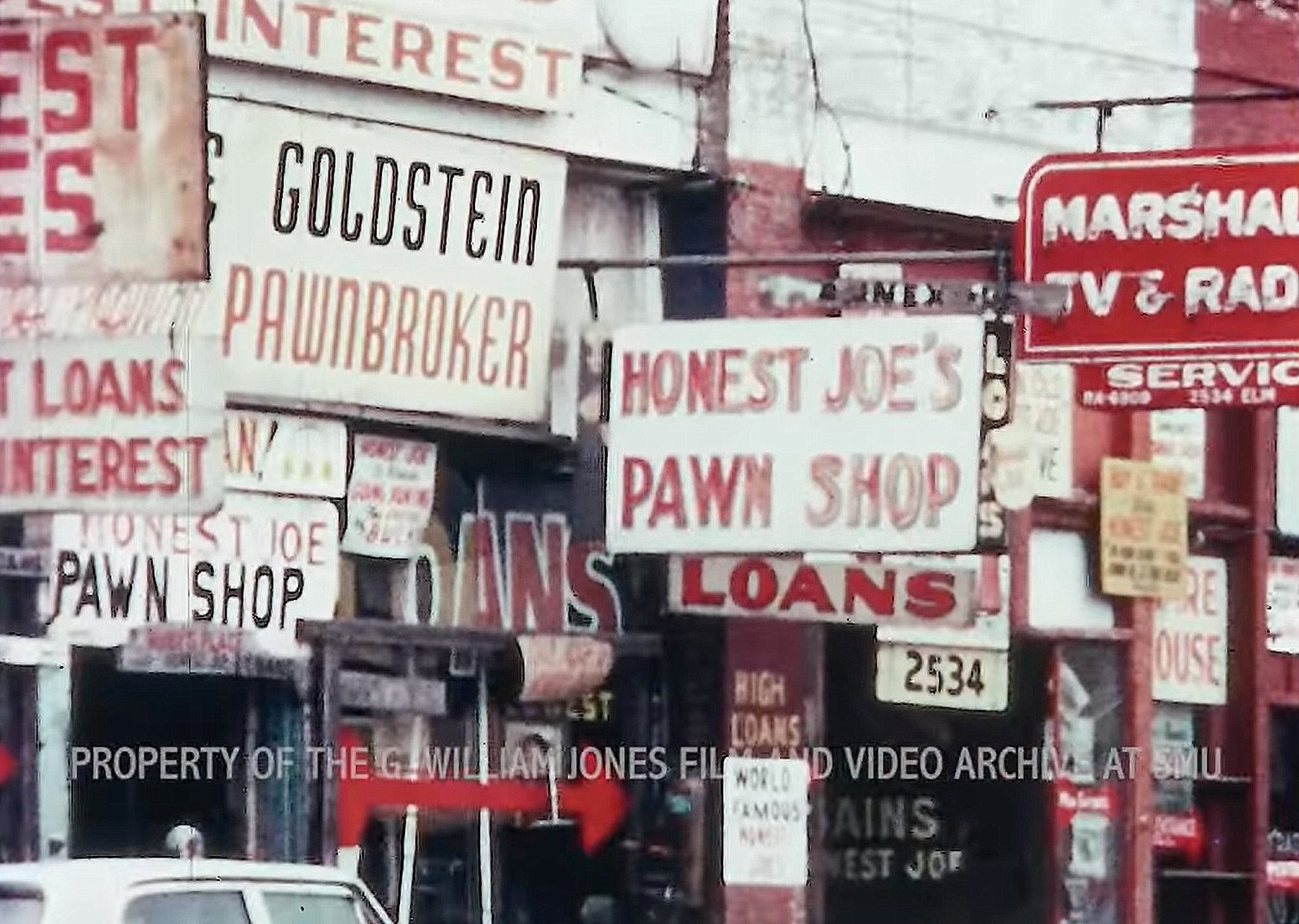
honest-joes-pawn-shop_deep-ellum_perkins-school-recruitment-film_1969_jones-film_SMU_5.13Honest Joe’s: sign overload in Deep Ellum

by Paula Bosse

Here are a few things I found when I clicked on something I normally wouldn’t have, but I’m glad I did. These are screenshots from a 20-minute film made in 1969 by SMU’s Perkins School of Theology. (I certainly hope SMU has the original somewhere — or at least a crisper copy — because the quality of this 54-year-old film is, as you can see in these screenshots, pretty low-resolution.) The title of this offering on YouTube is the supremely un-sexy “Perkins School of Theology (SMU) Orientation and Recruiting Film — 1969.” Which is all well and good, but, let’s face it, how many of us would click on that? I wouldn’t! But it was the thumbnail that drew me in — a shot of the Colony Club, the famous burlesque club on Commerce Street. What did that have to do with theology school? I clicked and started fast-forwarding until I found the Colony Club — and it paid off, because I found a bunch of cool shots of places that, for the most part, don’t exist anymore.

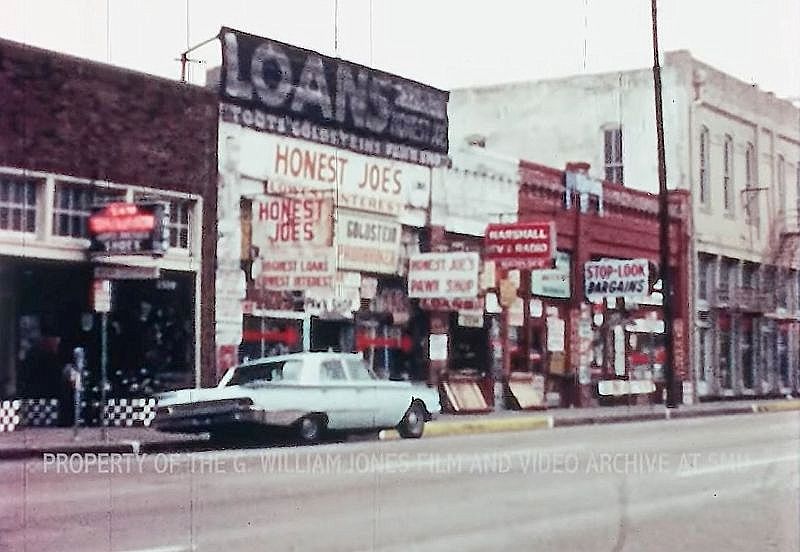
The image above shows one of dozens of pawn shops in Deep Ellum, Honest Joe’s Pawn Shop, owned by Joe Goldstein. (Various Goldstein family members ran a dizzying number of pawn shops in Deep Ellum. I mean a LOT.) In 1969, Honest Joe’s and its adjacent office and warehouse spread from 2516 Elm to 2526 Elm — most of these buildings still stand (see them today, here), but others were torn down to make way for the highway-palooza. (Two more photos of Honest Joe’s are at the end of this post.)

*

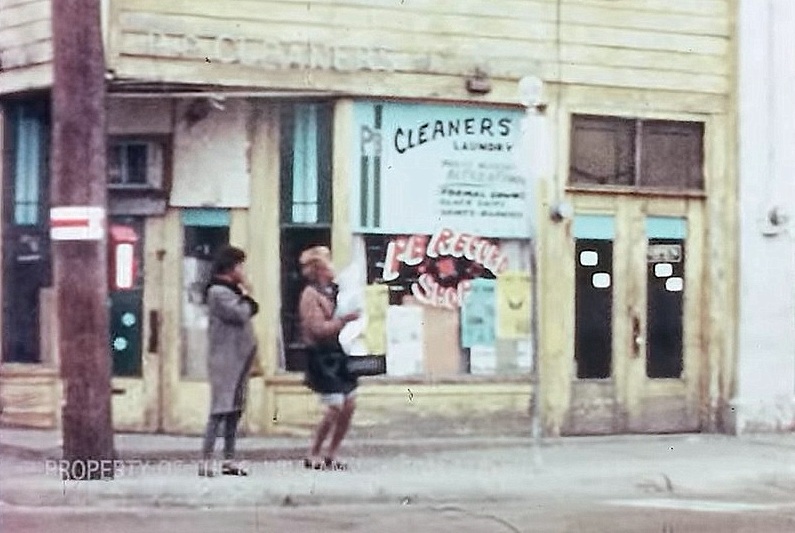
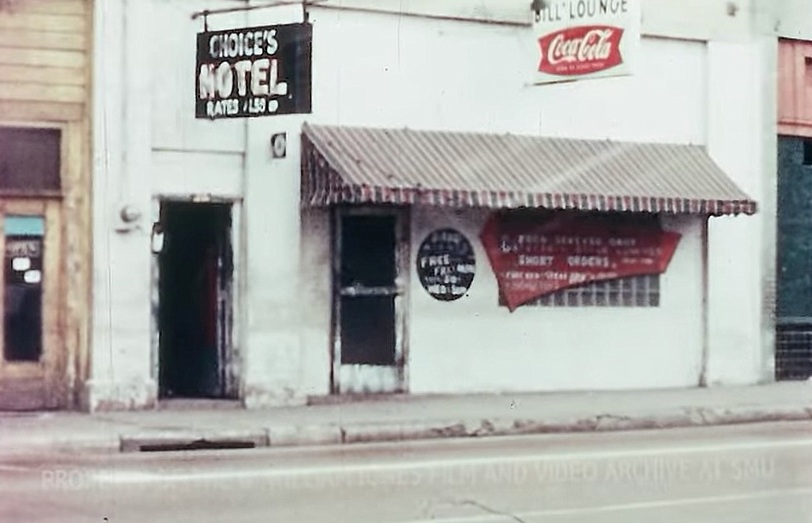
The two shots below were in the same block — keep panning right from the P B Cleaners (2700 S. Ervay, at Grand Avenue — now Al Lipscomb Way), and you’ll see Choice’s Hotel and Bill’s Lounge next door. What’s there now? Nothing.

p-b-cleaners_choices-hotel_perkins-school-recruitment-film_1969_jones-film_SMU_8.38

bills-lounge_choices-hotel_perkins-school-recruitment-film_1969_jones-film_SMU_8.33

*

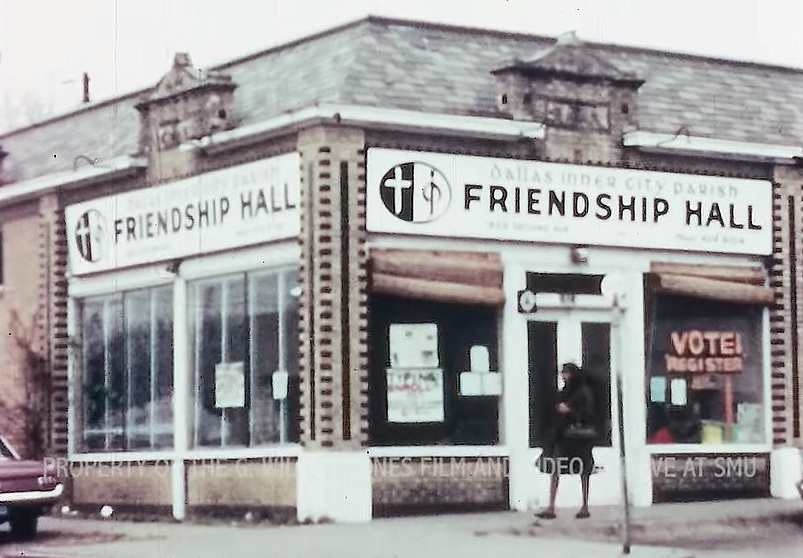
This is Friendship Hall (Dallas Inner City Parish), at 1823 Second Avenue. It was one of many businesses and homes condemned by the city and torn down to expand Fair Park and build new parking lots. See where this used to be, here.

friendshop-hall_perkins-school-recruitment-film_1969_jones-film_SMU_6.25

*

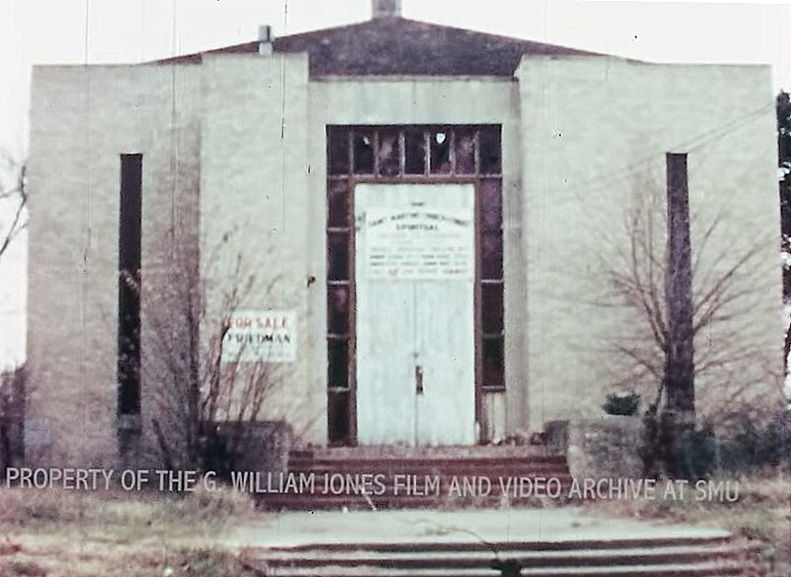
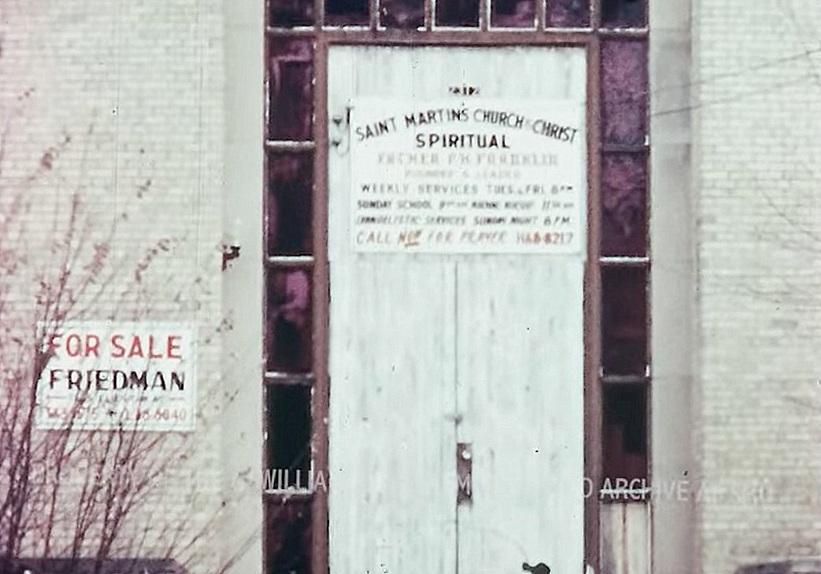
St. Martin’s Spiritual Church of Christ, 2828 Carpenter. This is such an unusual-looking building. It’s gone, but there’s a new church in its place, here.

st-martins-church-of-christ-spiritual_perkins-school-recruitment-film_1969_jones-film_SMU_8.03

st-martins-church-of-christ-spiritual_perkins-school-recruitment-film_1969_jones-film_SMU_8.08

*

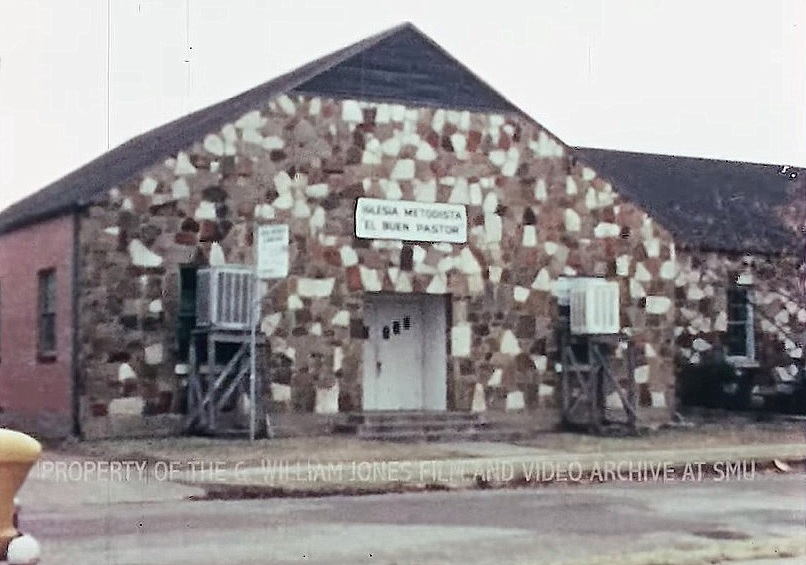
Iglesia Metodista, 1800 Park Avenue (at Beaumont), not too far from Old City Park. Wow, this area (a couple of blocks’ worth, anyway) has been developed way beyond what I would have guessed. The church once stood, I think, in this grassy area.

iglesia-methodista_perkins-school-recruitment-film_1969_jones-film_SMU_5.54

*

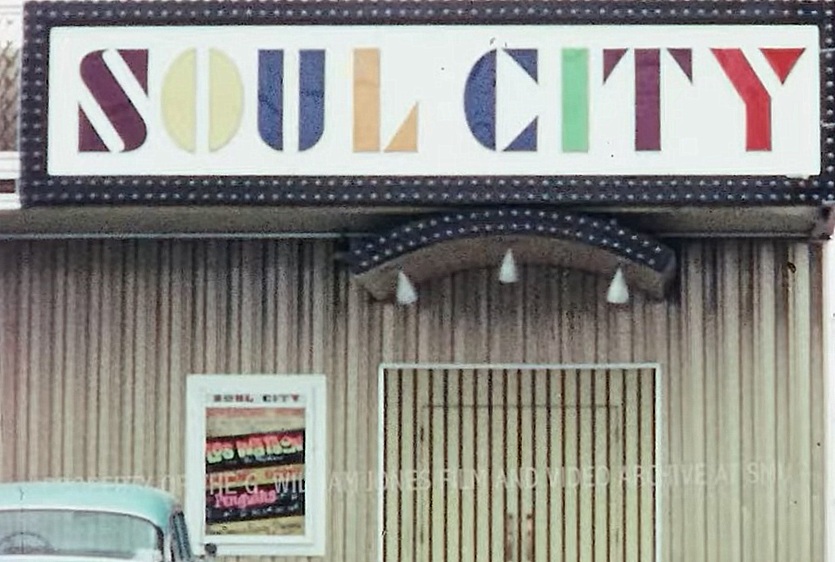
Soul City, 4714 Greenville Avenue, near University Blvd. (you might know it from its recent incarnation as a Vespa dealership). This wasn’t in a “gritty” neighborhood, but it was close to the filmmakers’ home, the SMU campus, and, surely, there were reprobates cavorting inside who could have benefited from a good Methodist sermon. From what I gather, this was a cool place for cool people to see cool bands. The building still stands, here. I don’t think it’s occupied at the moment.

soul-city_choices-hotel_perkins-school-recruitment-film_1969_jones-film_SMU_19.03

*

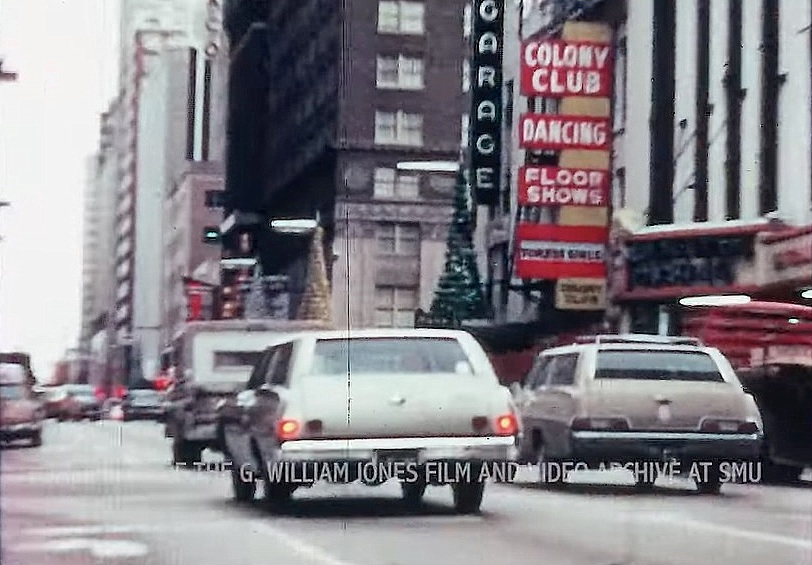
Speaking of reprobates, their Big D mecca for many years was Commerce and Akard, home to all sorts of places you probably wouldn’t book for a Mother’s Day brunch. Clogging up this area at various times were strip joints and dive bars, including the Colony Club, the Theatre Lounge, and the Carousel Club. The Colony Club was at 1322½ Commerce. That whole block (and the one just beyond it — across Akard — home to the Baker Hotel) went bye-bye a long time ago.

colony-club_perkins-school-recruitment-film_1969_jones-film_SMU_4.29

*

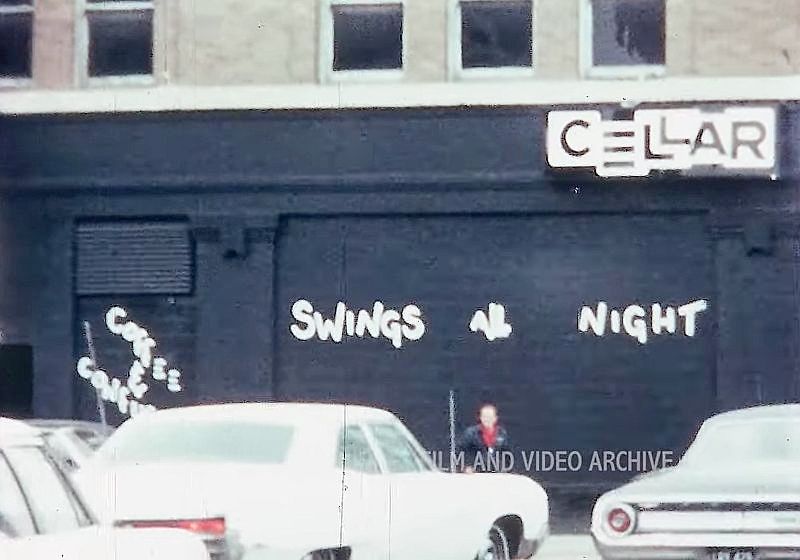
And, like Soul City, the legendary Cellar was cool, but I’ll bet there were more illicit substances in this downtown “coffeehouse” than in the Greenville Ave. club. “Swings all night.” It stood at 2125 Commerce (at what is now Cesar Chavez). This building appears to be gone.

cellar_perkins-school-recruitment-film_1969_jones-film_SMU_4.43

*

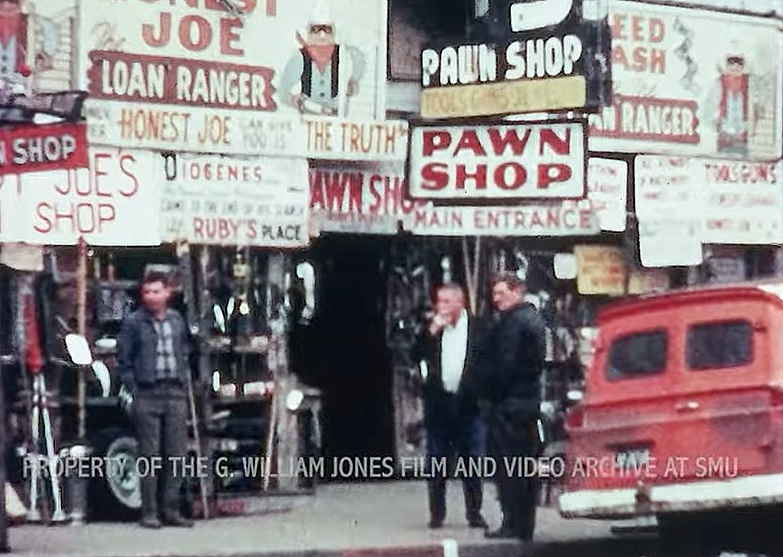
More shots of Honest Joe’s Pawn Shop, which took up a good chunk of the 2500 block of Elm. See what this view looks like today, here (I warn you: do not rotate 180 degrees). I assume the tall white building bit the dust for highway construction. I would have loved to have wandered around that place and chatted with Joe. I bet that guy saw some stuff. Deep Ellum has lost most of its grittiness. It used to be so cool. Thank you, seminary students from 1969, for preserving this for future generations, ’cause in a few years, the place won’t be recognizable.

honest-joes-pawn-shop_deep-ellum_perkins-school-recruitment-film_1969_jones-film_SMU_5.06

honest-joes-pawn-shop_deep-ellum_perkins-school-recruitment-film_1969_jones-film_SMU_17.41

***

Sources & Notes

All images are screenshots from the film “Perkins School of Theology (SMU) Orientation And Recruiting Film – 1969” — see it on YouTube here. It’s odd. It is from the keeps-on-giving G. William Jones Film and Video Archive, Hamon Arts Library, Southern Methodist University.

If you like this kind of thing, perhaps you will consider supporting me on Patreon. I post something there every day. More info is here.

honest-joes-pawn-shop_deep-ellum_perkins-school-recruitment-film_1969_jones-film_SMU_5.13_sm

*

Copyright © 2023 Paula Bosse. All Rights Reserved.

The Texettes, The Elite Corps of Texas Stadium Usherettes — 1971

1971_texettes_ad_072171Become a fabulous Texette… (July 1971)

by Paula Bosse

I will never be accused of knowing anything about sports — or even about things that are sports-adjacent — but I’m fairly literate in pop culture, and I am genuinely surprised that, until yesterday, I had never heard of the “Texettes.” I have no idea how long they lasted (for all I know, they’re still around!), but it was from 1971 until at least 1984 (I say 1984 only because there was a classified ad in the The Dallas Morning News announcing Texette auditions in June of that year — but Blackie Sherrod mentions them in what I think is the present tense in a 1989 column, so they might have been around into the ’90s). Seriously, how have I never heard of them? There’s almost nothing about them online, which is weird, because they were around for a significant amount of time.

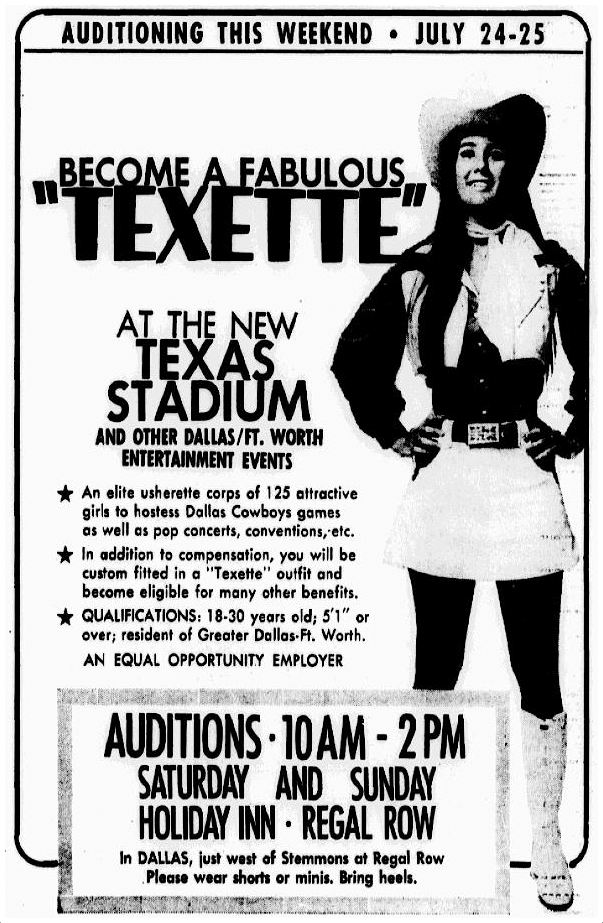
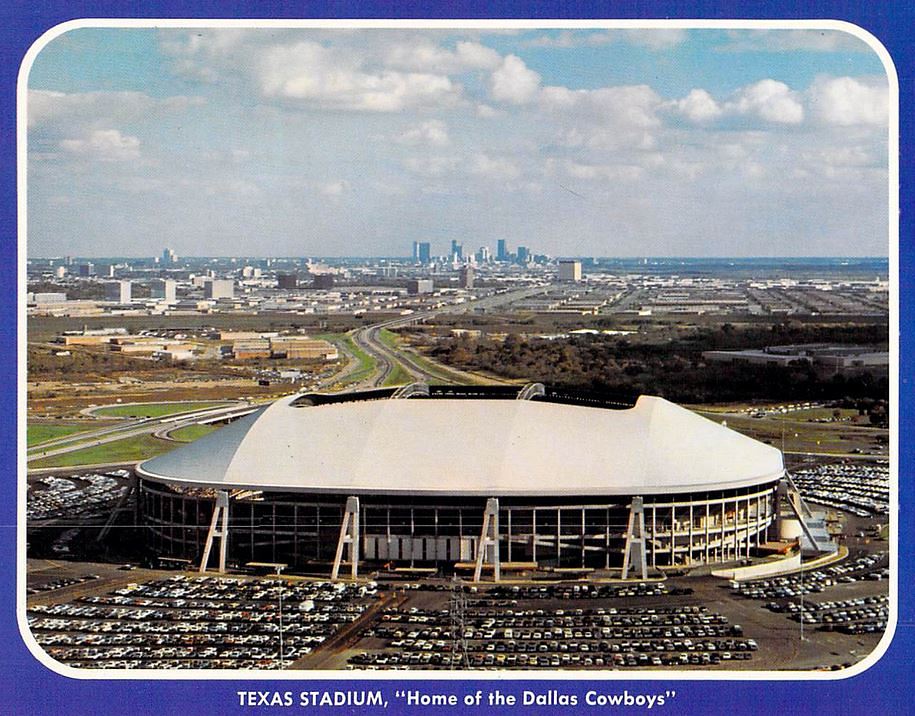
The ad above, announcing the first-ever Texette auditions, appeared in the Dallas and Fort Worth newspapers on July 21, 1971. The opening of the brand-new Texas Stadium was on the horizon (the first Dallas Cowboys game to be played there was on Oct. 24, 1971), and the huge stadium was going to be 100% unfamiliar to Cowboys fans — they were going to need people to help them find stuff. Here’s where the Texettes came in. They were described as “hostesses” and “usherettes” who wore mini-skirts and go-go boots. Open auditions were held to find 125 Texettes. Hopefuls were advised to wear hotpants or mini-skirts and heels. The only qualifications appear to have been that the “girls” be between the ages of 18 and 30, at least 5’1″, DFW residents, and attractive.

*

BECOME A FABULOUS ‘TEXETTE’ AT THE NEW TEXAS STADIUM
and other Dallas/Ft. Worth entertainment events.

  • An elite usherette corps of 125 attractive girls to hostess Dallas Cowboys games as well as pop concerts, conventions, etc.
  • In addition to compensation, you will be custom fitted in a “Texette” outfit and become eligible for many other benefits.

**

Texettes were “hostesses” who smiled and welcomed people to the stadium, helped fans find their seats, and gave tours. (They also seem to have functioned as something not far removed from cocktail waitresses in the press box.) The first year (1971) they were paid $8 a game (equivalent in today’s money of about $60). They also appeared at various DFW events as sort of all-purpose Chamber-of-Commerce-like greeters with toothy smiles and toned thighs.

Their outfits consisted of white knee-high go-go boots, blue mini-skirts, white blouses, vests, yellow neckerchiefs, and white cowboy hats. They pre-dated the “sexy”-era of Dallas Cowboys Cheerleaders (before the famous cheerleaders we know today, high school students cheered the team on at the Cotton Bowl), but the Texettes’ Western-inspired, drill-team-inspired costumes might have served as a kernel of the inspiration for those of the Dallas Cowboys Cheerleaders. It’s interesting (to me, anyway) that the Texettes and the Cheerleaders existed at the same time for a few years — for quite a while, in fact. Seems like they might cancel each other out. But I guess the Texettes were more cute-girl-next-door cowgirls in the stands, and the cheerleaders were sexy-girl-you’ll-never-be-able-to-talk-to-in-real-life cowgirls on the field.

As I said, I’d never heard of this “elite usherette corps” before yesterday. If anyone knows how long they were a thing, please comment below.

**

I’ve found two bits of film of Texette auditions (both are in the indispensable WFAA archives held by the Jones Film Collection at SMU). The first is from July 1971 (the same audition advertised in the top ad) — it can be seen in Channel 8 footage below (there are two separate clips — at the 19:44 mark and at the 24:26 mark). The report is delivered by a frightened man giving off “Tim Calhoun” vibes.

*

A later report — from 1975 — shows another try-out. The reporter notes that the job has unique perks, like maybe finding a football-player husband or catching the eye of a talent scout. By then, the pay had jumped to $10 an appearance, and there were a lot more applicants.

*

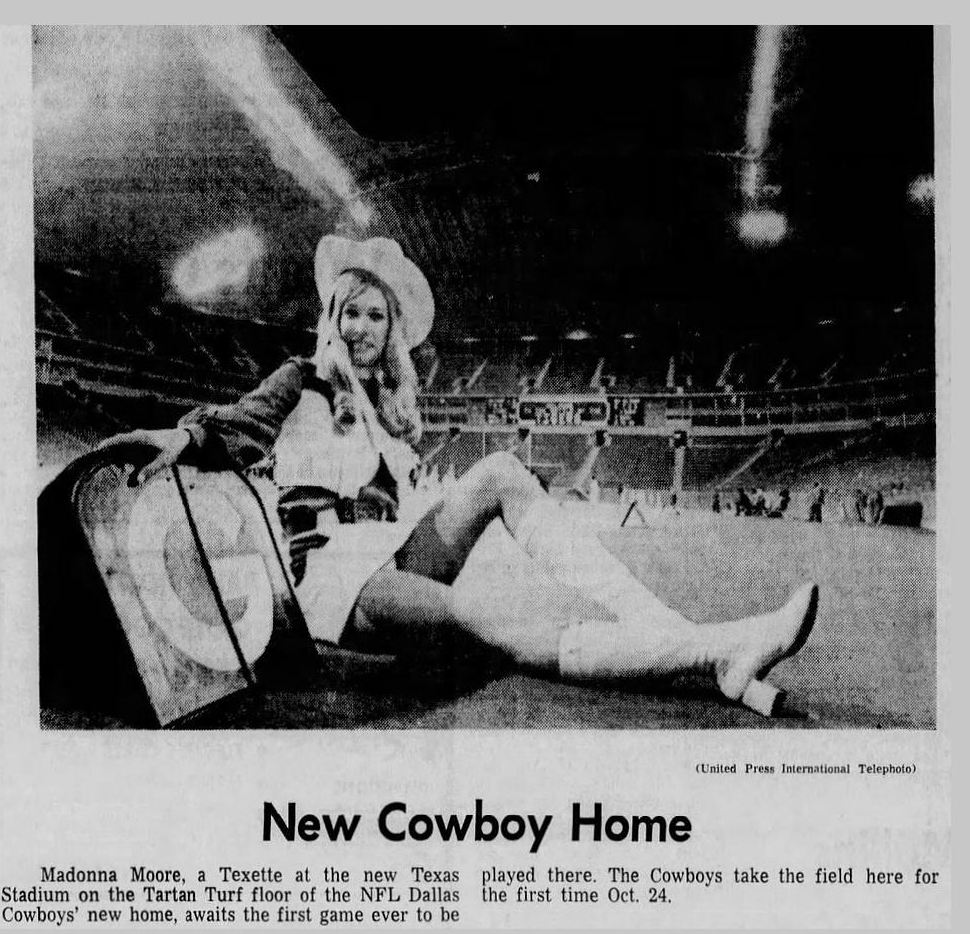
Below, a new Texette (Madonna Moore) on the field at Texas Stadium. This might have been taken on Oct. 15, 1971, the day the very first football game was played there (local team Bishop College lost to Texas Southern University, 34-21).

1971_texettes_bradenton-FL-herald_101671Bradenton (FL) Herald, Oct. 16, 1971

*

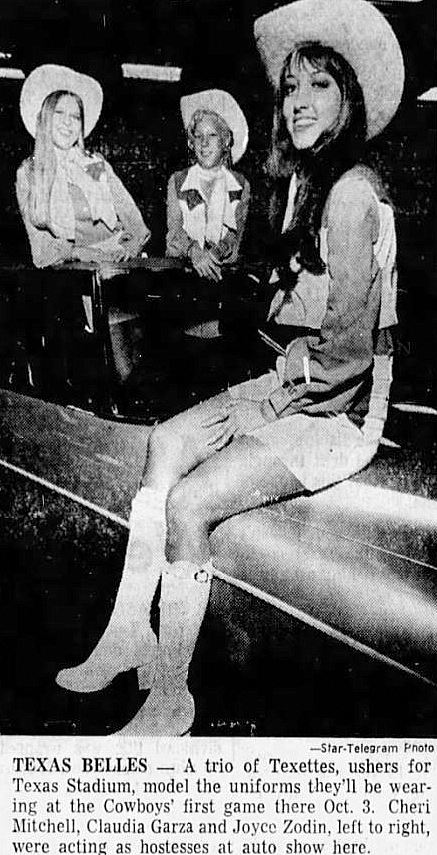
Showing off their new outfits are Texettes Cheri Mitchell, Claudia Garza, and Joyce Zodin. (The caption was incorrect about the date the Cowboys would take the field — that wasn’t until Oct. 24, 1971, in a game against the New England Patriots, which they won 44-21.)

1971_texettes_FWST_091671Fort Worth Star-Telegram, Sept. 16, 1971

*

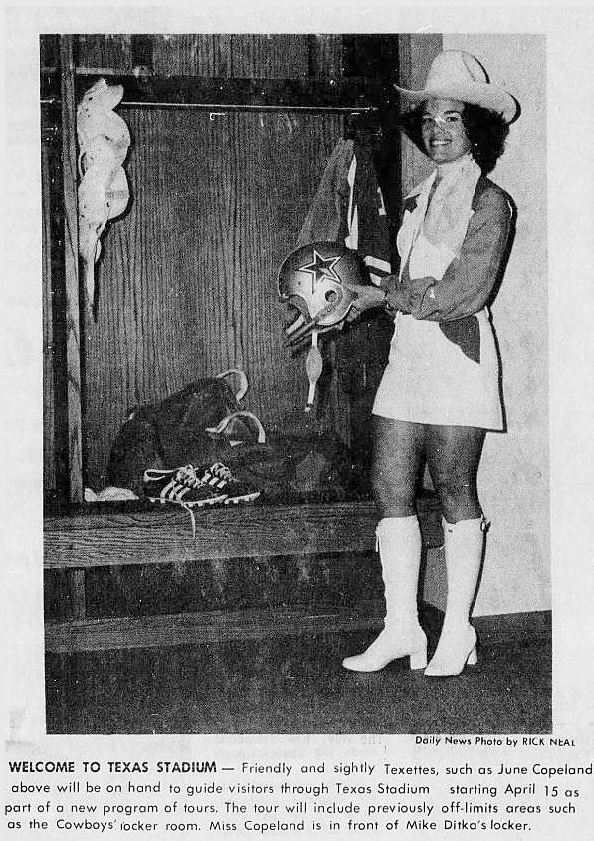
Texette June Copeland stands in front of Mike Ditka’s locker, which appears to have been rifled through.

1972_texettes_irving-daily-news_040572Irving Daily News, Apr. 5, 1972

*

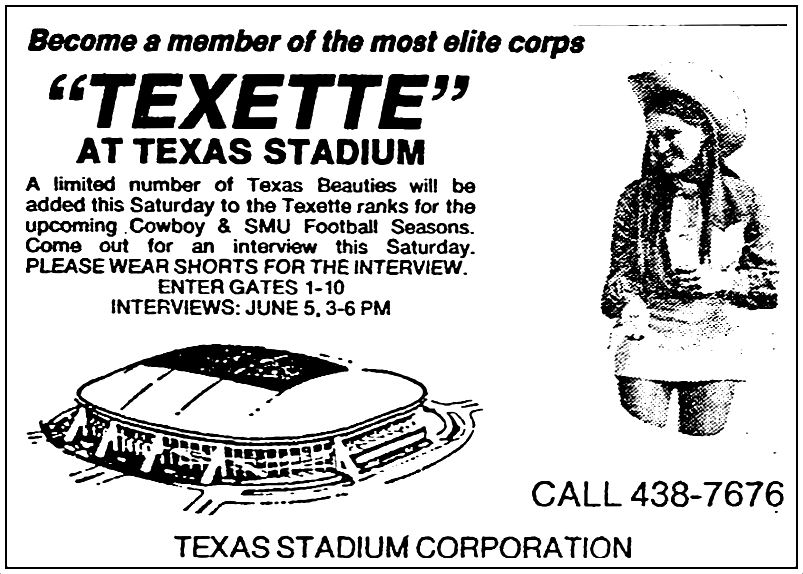
The Texettes were still going strong in 1982 as they entered their 11th year. I think the skirt has gotten shorter.

1982_texettes_ad_060382June 1982

*

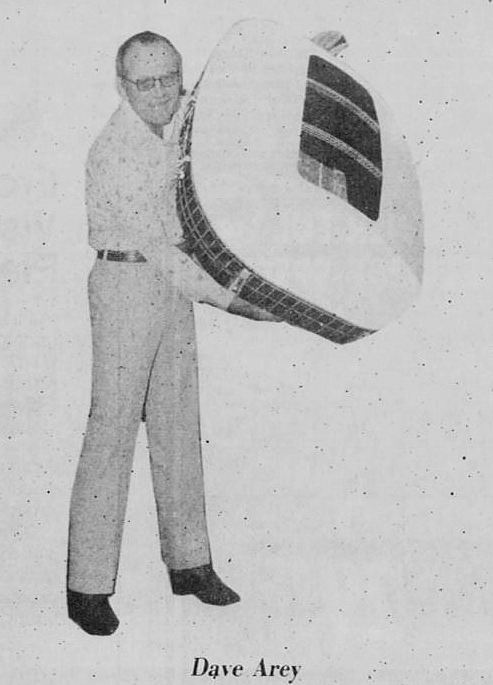
This has nothing to do with the Texettes, but I love this photo of Dave Arey, director of operations at Texas Stadium. He’s seen here holding a replica of the stadium, which seems like it would have been perfect as a doggie bed.

texas-stadium_dave-arey_irving-daily-news_082276Irving Daily News, Aug. 22, 1976

*

texas-stadium_postcard_ebay

***

Sources & Notes

This originally appeared in a slightly different form this morning as a post on my Patreon page (where I post daily Dallas-history tidbits for subscribers who are generously supporting me for as little as $5 a month).

1971_texettes_ad_072171_sm

*

Copyright © 2023 Paula Bosse. All Rights Reserved.

Tabletop Jukeboxes — 1940

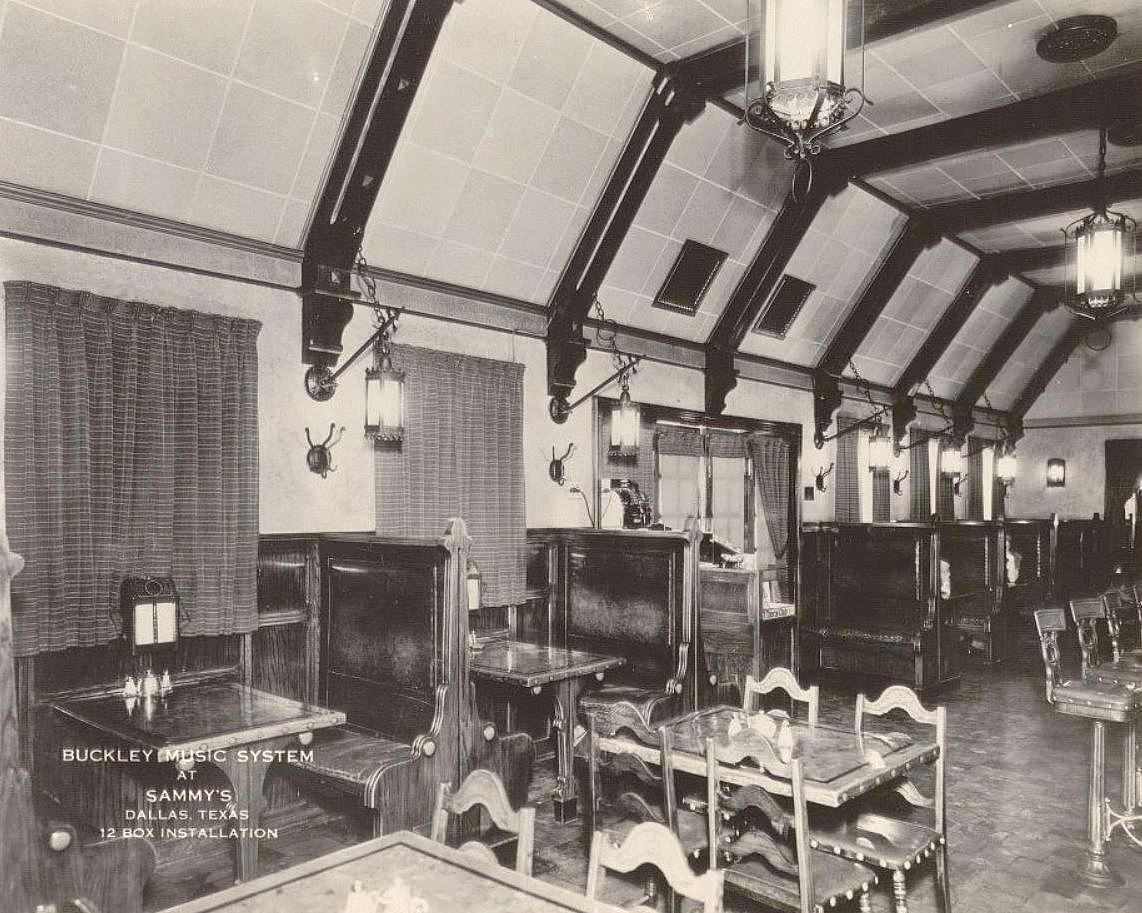
sammys_greenville-ave_juke-boxes_hagley-museum_1940Sammy’s, Greenville Ave., 1940

by Paula Bosse

Who isn’t thrilled to find yourself sitting in a booth at a restaurant with your own personal tabletop jukebox? You don’t see them much these days — the only place I can think of that still has them is Campisi’s. They were an absolute thrill to me as a child. I wonder how many of those little machines were broken by overly curious children who went crazy pushing all the buttons and twisting the knobs to flip the pages to see song selections by people they’d never heard of like Patti Page and Artie Shaw?

I just happened upon a collection of these coin-operated machines — called “wallboxes” — here. I had to look to see if Dallas was represented, and, yes, Dallas is represented. Thrice.

*

At the top, SAMMY’S — 1516 GREENVILLE AVENUE (below Lowest Greenville, one block south of Ross)

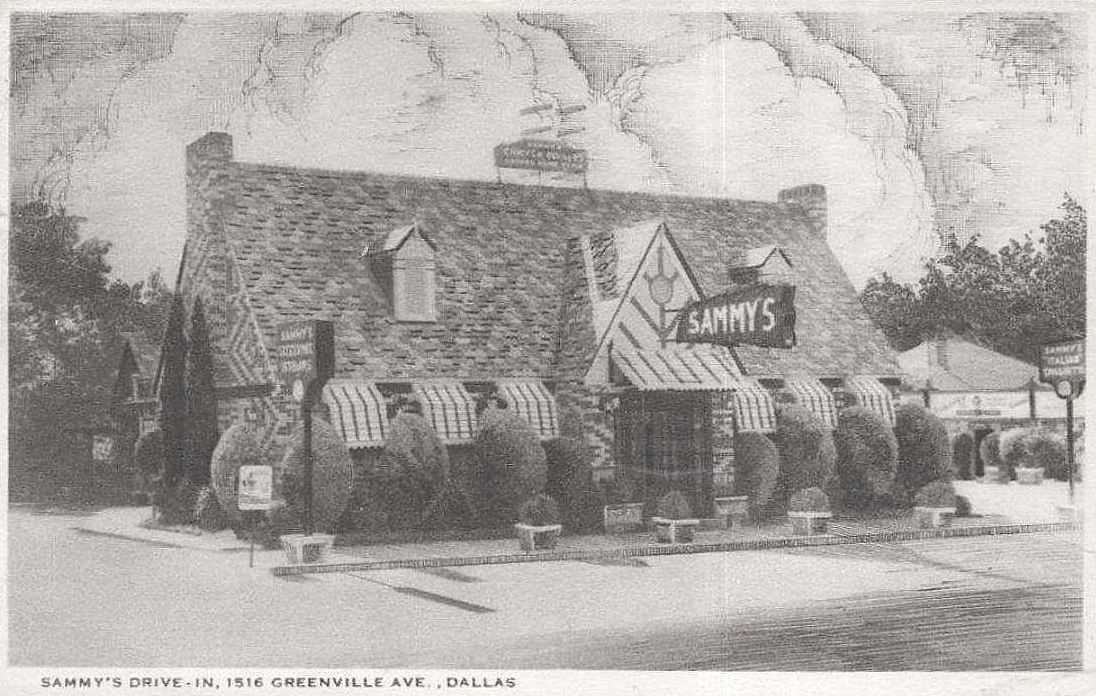
There were several locations of Sammy’s restaurants around town, but this was, I think, the first. (I’m pretty sure the building is still there — it just keeps getting renovated and turned into different restaurants/bars.) (UPDATE: Thanks to a comment on my Facebook page, I now realize that, according to Google Street View, the building that once housed Sammy’s bit the dust sometime between 2012 and 2013, when it became a parking lot. See it in 2007 on Google here.) This is the first time I’ve seen a photo of its interior. Below: what it looked like in its heyday.

sammys_postcard_1516-greenville-ave

*

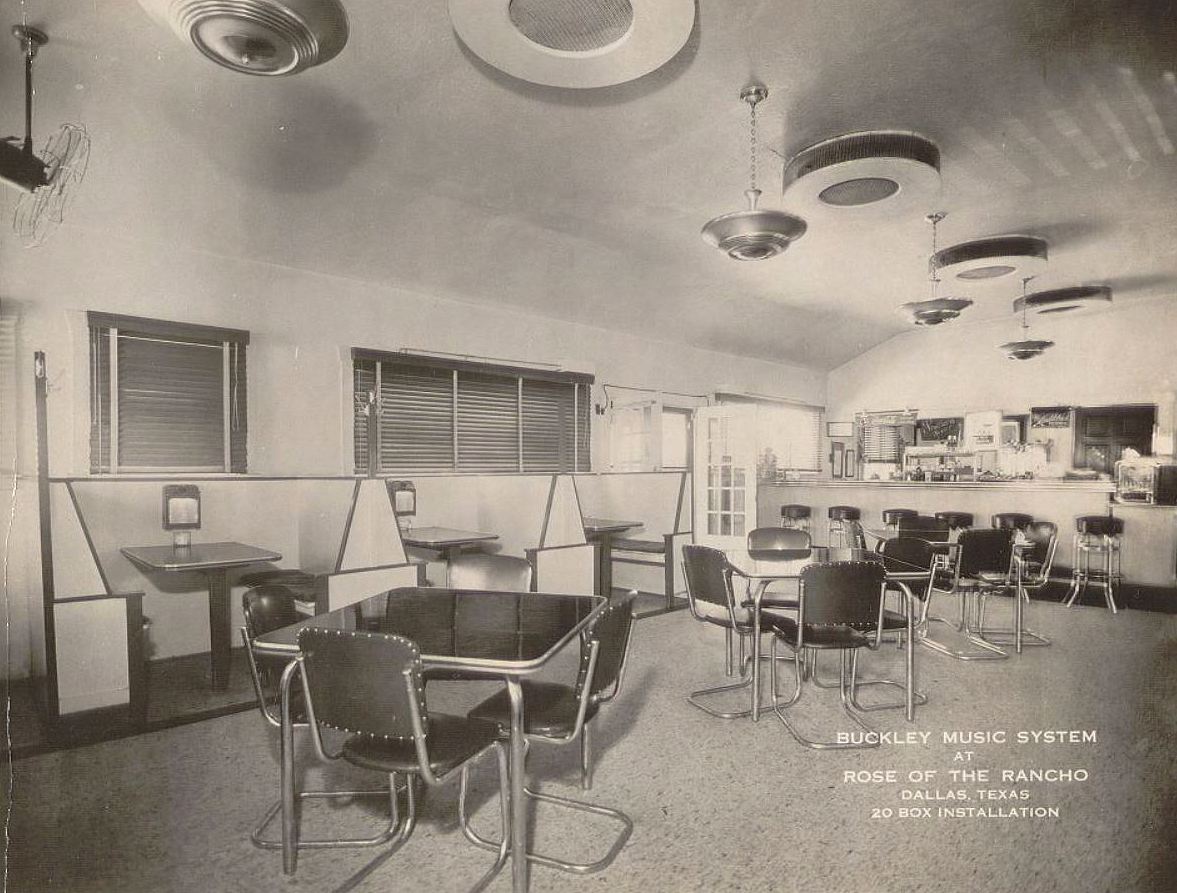
ROSE OF THE RANCHO (later just The Rancho) — 4401 BRYAN STREET (in Old East Dallas, at Burlew Street)

Named after a popular movie, this cafe (which was busted a few times for selling liquor without a license) was in business near the Mrs. Baird’s plant at Bryan and Carroll, from at least 1936 to 1978, which is a long time for a restaurant. A 1938 newspaper article about a sorority’s Rush Week noted that the Delta Theta Kappas were attending a “stagette” supper there in September 1936.

The photo below, from 1940, shows an interesting interior. Sort of Art Deco-in-a-goldfish-bowl. There’s a lot to like here — I’m feeling hints of “nautical” — except for those booths, which look like the most uncomfortable restaurant seating I’ve ever seen. Browsing the songs on one of those little jukeboxes would at least have offered a bit of respite and distraction from obsessing over how inhospitably uncomfortable that bench you were sitting on was.

rose-of-the-rancho_juke-boxes_hagley-museum_1940Rose of the Rancho, 1940

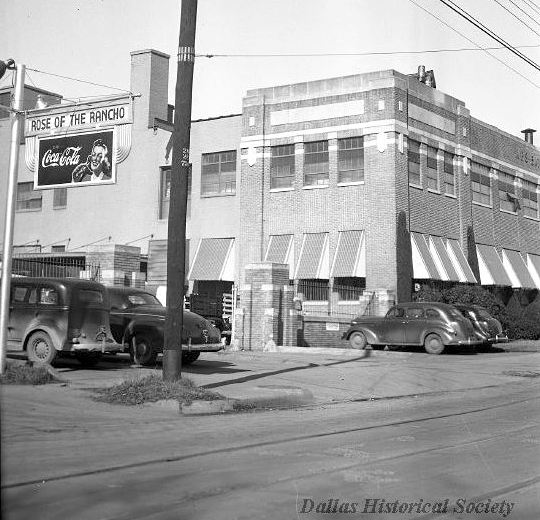
I came across the photo below when I was cataloging a collection of photos from the mid 1940s at the Dallas Historical Society — I remembered “Rose of the Rancho,” mainly because of its unusual name. Sadly, the photo shows only the sign (but, as a bonus, it does show the Mrs. Baird’s building, which I keep hearing is about to be renovated any day now). (It’s interesting to note, tangentially, that the guy who took this photo — and all in the collection I was working on — was obsessed with jukeboxes and other coin-operated machines. I feel confident that he stopped in at the Rancho for at least a cup of coffee, armed with a fistful of nickels in order to run through a few hits of the Mills Brothers or Andrews Sisters.)

rose-of-the-rancho_4401-bryan_mrs-bairds_DHS_bell-coll_1944Rose of the Rancho, 1944 (Dallas Historical Society)

*

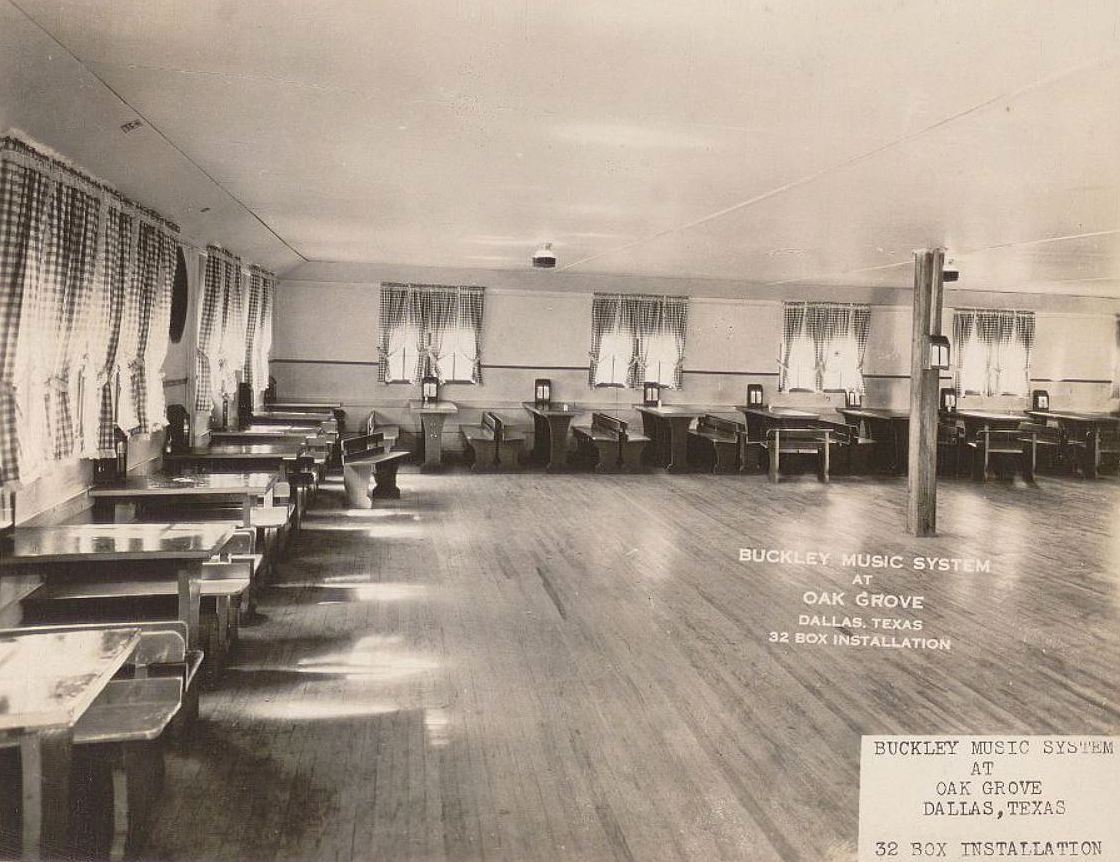
OAK GROVE CAFE — 2630 N. HASKELL (near Weldon Street)

I couldn’t find much about this place, but it had a lot more of the jukebox units installed in it than the other two places: 32 boxes! Imagine if each table had its own concert going on. …And then multiply that by 32. I think those speakers directionalized (is that a word?) the sound so that it kept pretty much to the immediate area. Otherwise, “spillover” music at varying volumes could have been one of many things that tried the patience of waitresses just trying to get through their shifts. …Or it could have been great: different musical offerings at different tables, all day long. Bing Crosby with eggs and toast at table 4, “Stardust” with corned beef at table 6, and Harry James, hold the onions, at the counter. (UPDATE: I’m obviously not well acquainted with this technology. Thanks to the comment below by Bill Parrish, I realize that all of these tabletop machines played the same thing, and each table could adjust the volume. I think I like my idea of 30 different machines chaotically playing 30 different songs simultaneously, but that would have been pretty obnoxious!)

oak-grove_hagley-museum_juke-boxes_1940Oak Grove Cafe, 1940

***

Sources & Notes

The three photos stamped with “Buckley Music System” are all from the Hagley Digital Archives, here (scroll to find the specific photos).

The 1944 photo (which I have cropped) showing the Rose of the Rancho sign and the Mrs. Baird’s building is from the James H. Bell Collection, Dallas Historical Society — more information is here.

More on the Buckley Music System can be found here.

See one of these machines in action (with French narration!) in a YouTube video here.

If you’d like to support the work I do, please check out my Patreon subscription page here, where every day I try to post something new which hasn’t been posted here on the blog.

sammys_greenville-ave_juke-boxes_hagley-museum_1940_sm

*

Copyright © 2023 Paula Bosse. All Rights Reserved.

Muhammad Ali Visits Graham’s Barber Shop — ca. 1967

ali-muhammad_grahams-barber-shop_lincoln-high-school-yrbk_1967_photoMuhammad Ali in a Dallas barber chair

by Paula Bosse

I often just browse through the ads of old Dallas high school yearbooks on Ancestry.com. The other day, I saw the photo above and stopped and said to myself, “Is that Muhammad Ali?” I then looked at the text and, yes, that was, in fact, Muhammad Ali. Sitting in a barber chair in Dallas, Texas. What was the story behind that?

In my less-than-extensive research, I found three instances of Ali being in Dallas in or before 1967 (the year of this Lincoln High School yearbook ad). The first was in November 1960, just one month after the 18-year-old Olympic champion had won his first professional fight. He was tagging along with Archie Moore (who was acting as something of a mentor) when Moore came to Dallas to fight local boxer Willie Morris. (Morris had lost to the then Cassius Clay in the Olympic trials, and, in a somewhat bitter interview with The Dallas Morning News said this about the young upstart: “He’s not near as good as all this talk about him.”)

The photo of Ali in the barber chair isn’t from this 1960 visit, but he was specifically mentioned in a Dallas Times Herald article as being in the crowd of a Nov. 1960 event I wrote about a few years ago. There’s film footage of this, and I’ve scanned the crowds, hoping to find him, with no luck. But if you want to look to see if you can find him, that footage is linked in the Flashback Dallas post “Newly Discovered Footage of Jack Ruby — 1960.”

It’s more likely that the barbershop photo was taken in March 1967 when Ali, a Muslim, made two appearances in Dallas: the first was to “preach” at a local mosque, and the second (two days later) was to speak to students at Bishop College.

The mosque appearance was on Easter Sunday — March 26, 1967 — at Muhammad’s Mosque of Islam, described by Dallas Morning News sportswriter Bob St. John as being housed in “an old, pinkish building which used to belong to an insurance company and heretofore rested in reasonable obscurity on the corner across from Booker T. Washington High School.”

St. John continued: “On Sunday afternoon, it was no longer obscure. The old building rocked from its foundation as people filled it and lined the sidewalk outside and even poured into the streets, some coming to see Cassius Clay and others Muhammad Ali….”

The article mentions that Ali was living in Houston at the time, so it’s certainly possible he visited Dallas more often, but he was so famous at this time that it seems likely that the mere hint of his charismatic presence in town would have shown up in the papers. As it was, a visit by him to a Dallas barbershop was memorialized in this ad, which someone like me can now write about in a vaguely historical way (on a day which just happens to be Easter Sunday, the anniversary of Muhammad Ali’s 1967 Islamic sermon delivered across from Booker T. Washington High School).

**

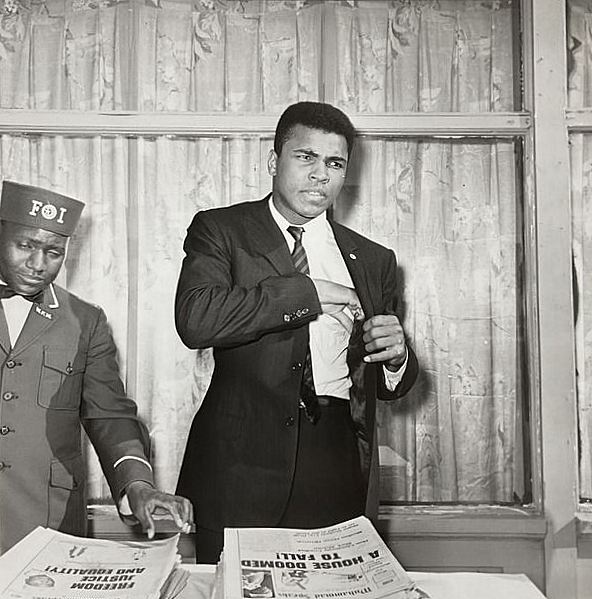
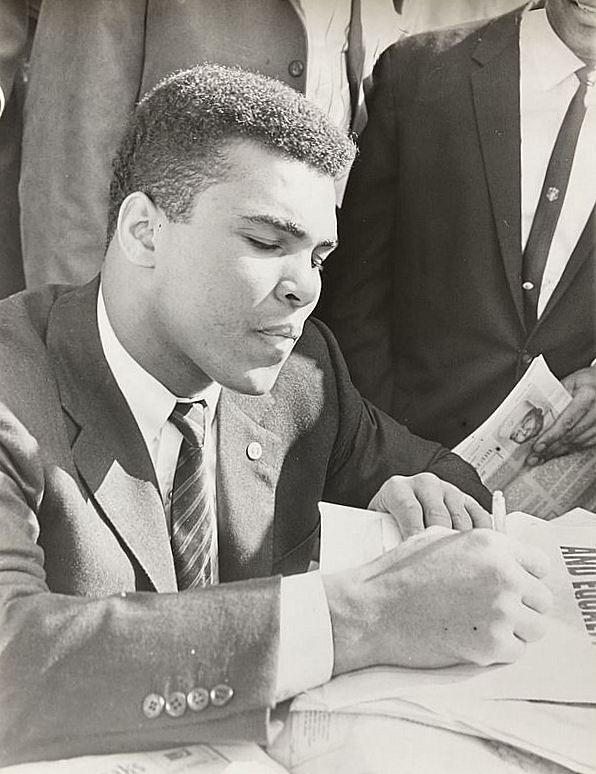
UPDATE: I was very excited to see the three photos below pop up recently on eBay — they show Ali at his mosque appearance (all three were taken on March 26, 1967 by Bob W. Smith, a Dallas news photographer). Ali is seen signing copies of a 20-cent Muslim paper called “Muhammad Speaks.” (A quote from Ali about why he was autographing these newspapers, from Bob St. John’s article: “A fish goes for bait. Then it’s hooked. I’m bait. Many would not buy if I didn’t autograph them. But once they’re bought… they’ll be sittin’ around some evening and pick up the paper. They’ll start reading. First thing you know, they’re hooked.”)

muhammad-ali_dallas_march-1967_a

muhammad-ali_dallas_march-1967_ebay_b

muhammad-ali_dallas_march-1967_ebay_c

**

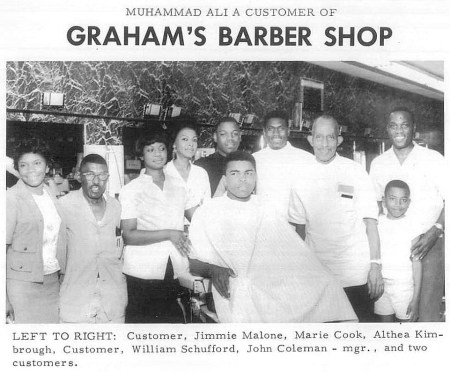
But back to the barbershop and Johnny Graham and a closer look at the two photos from the ad that originally caught my eye.

ali-muhammad_grahams-barber-shop_lincoln-high-school-yrbk_1967

“Muhammad Ali a Customer of Graham’s Barber Shop.” Ali is shown with an unidentified Graham’s customer, Jimmie Malone, Marie Cook, Althea Kimbrough, a customer, barber William Schufford, manager John Coleman, and two other customers.

*

ali-muhammad_grahams-barber-shop_lincoln-high-school-yrbk_1967_ford

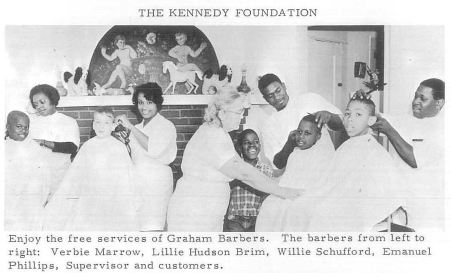
The photo above also appeared in the ad, showcasing Graham’s community service and his work with the Kennedy Foundation. “Enjoy the free services of Graham Barbers. The barbers from left to right: Verbie Marrow, Lillie Hudson Brim, Willie Schufford, Emanuel Phillips, Supervisor, and customers.”

*

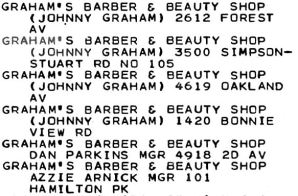
Johnny Graham was one of the most successful Black businessmen in Dallas at the time and was known for his philanthropic generosity. By the end of 1967, he owned eight barber shops and employed 135 barbers. Six of his shops are listed in the 1967 directory:

grahams-barber-shop_19671967 Dallas directory

***

Sources & Notes

Barbershop photos are from an ad in the 1967 Lincoln High School yearbook.

Photos of Muhammad Ali at Muhammad’s Mosque of Islam in Dallas were taken by news photographer Bob W. Smith on March 26, 1967, found on eBay.

The Dallas Morning News articles about Muhammad Ali in Dallas — and one about Johnny Graham:

  • “Morris Prefers Bout with Clay” (DMN, Nov. 26, 1960)
  • “Clay Makes Dallas Stop” by Bob St. John (DMN, Mar. 27, 1967)
  • “Clay Pleases Crowd With Speaking Form” by David Morgan (DMN, Mar. 29, 1967)
  • “Johnny Graham Offers Example” by Julia Scott Reed (DMN, Dec. 28, 1967)

Please consider supporting the work I do at Flashback Dallas by funding me on Patreon.

ali-muhammad_grahams-barber-shop_lincoln-high-school-yrbk_1967_photo_sm

*

Copyright © 2023 Paula Bosse. All Rights Reserved.

Uncle Scooter Reads the Funnies: 1940-41

radio_uncle-scooter_wfaa-wbap-kgko-combined-family-album_1941Little Man and Uncle Scooter…

by Paula Bosse

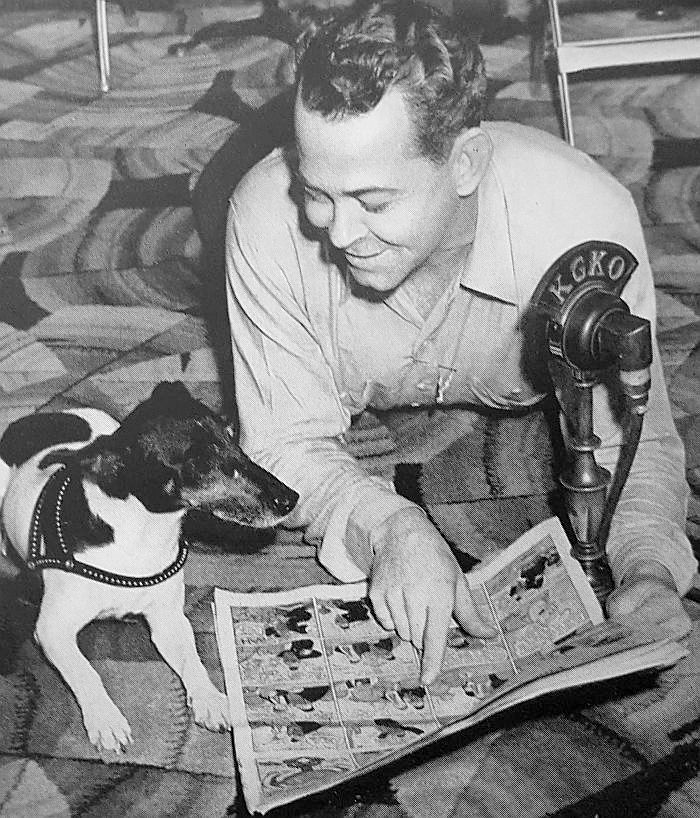
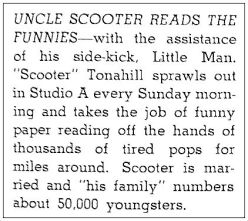
Several years ago, I was flipping through a promotional booklet for radio stations WFAA, WBAP, and KGKO, and I came across the photo above. I think about this photo a lot. It shows radio personality “Uncle Scooter” lying on the floor next to a KGKO microphone, reading the comics over the air to a vast audience of children and pointing out something pertinent to his trusty companion, a fox terrier named Little Man. I love this photograph. It makes me smile every time I see it. Wouldn’t it be great if this was how he actually conducted his broadcasts — on the floor with his doggie next to him? Here’s the caption:

uncle-scooter_dog_wfaa-wbap-kgko-combined-family-album_1941_caption

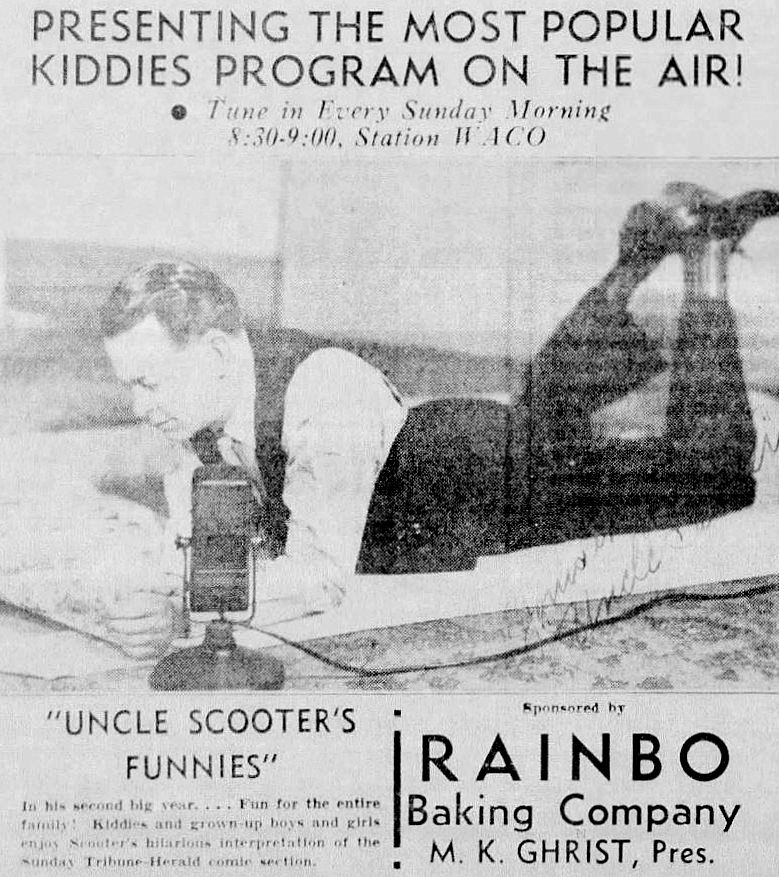
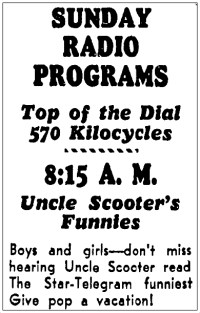
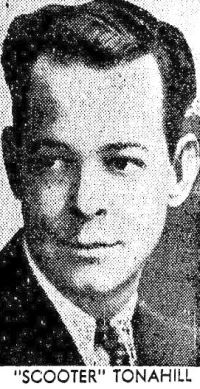
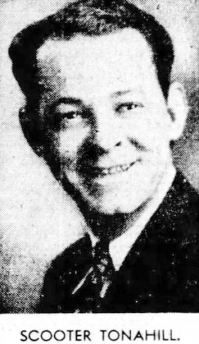
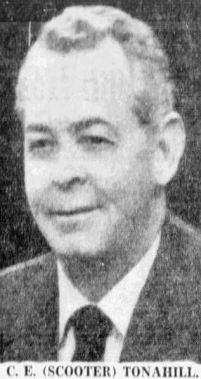
Clarence E. Tonahill (1904-1954) — known to everyone as “Scooter” — appears to have begun his radio career in Waco at the appropriately named station WACO. He then worked at KGKB in Tyler, then returned for a few years to WACO, and then to KTSA in San Antonio. Like most people in broadcasting in those days, he did a little bit of everything: he was an announcer, a newsreader, a sportscaster, and an entertainer. One of his most popular shows was just him reading the Sunday comics over the air for children. Below, a WACO ad from 1937 showing Uncle Scooter, again, lying on the studio floor (no dog, though).

uncle-scooter_waco-tribune-herald_010337Waco Tribune-Herald, Jan. 3, 1937

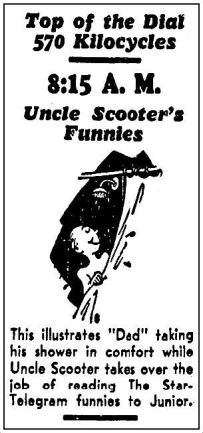
Around September 1939, he moved to Fort Worth to begin a busy stint at KGKO, a DFW station co-owned by The Dallas Morning News and The Fort Worth Star-Telegram (this was part of the very unusual WFAA-WBAP radio broadcasting partnership). He started as an “announcer” (which might well have included cleaning up the studio!), but he quickly graduated to doing a lot of sports-announcing and color commentary (football and boxing), man-on-the-street interviews, and personal appearances. He also hosted several shows, including a weekday morning show called “Sunrise Frolic.” But Sundays… Sunday mornings were set aside for his funnies-reading.

1940_radio_uncle-scooter_FWST_090840Fort Worth Star-Telegram, Sept. 1940

1940_radio_uncle-scooter_FWST_091540FWST, Sept. 1940

1941_radio_uncle-scooter_FWST_031641FWST, March 1941

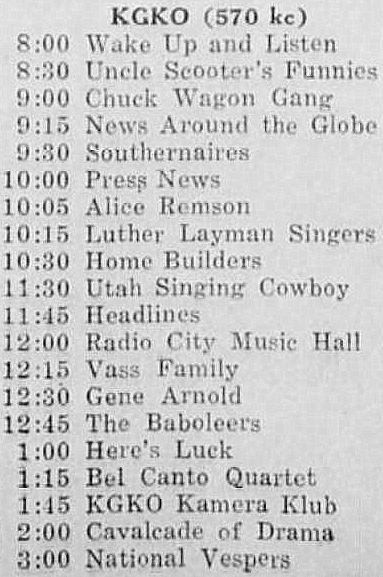
The Sunday lineup on KGKO, before and after the funnies:

1940_radio_uncle-scooter_bryan-tx-eagle_121440Bryan Eagle, Dec. 1940

I see listings for the show in 1940 and 1941 — and then, briefly, in 1947. His obituary says that Tonahill retired from his career as a broadcasting personality in 1946 and opened his own business in Fort Worth, Scooter’s Radio Supply (a supplier of broadcasting equipment to stations around the country).

He must have been a bright, friendly voice on the radio. I’d love to know the role Little Man played (Little Man was Scooter’s real-life pet and was described in a magazine profile as Scooter’s “favorite hobby”). I have fond (if somewhat vague) memories from my childhood of Bill Kelley reading the comics on The Children’s Hour on Channel 5 — but I can say without hesitation that things on The Children’s Hour would have been a whole lot more interesting if he’d just had a cute little dog with him!

1940_scooter-tonahill_FWST_042040_kgko-ad_det_photo1940_scooter-tonahill_FWST_100940_kgko-ad_det_photo1940

1954_tonahill-clarence-e_FWST_072654_obit_photo1954

kgko_19391939

***

Sources & Notes

Top photo from “WFAA, WBAP, KGKO Combined Family Album” (Dallas-Fort Worth, 1941).

radio_uncle-scooter_wfaa-wbap-kgko-combined-family-album_1941_sm

*

Copyright © 2023 Paula Bosse. All Rights Reserved.

Black Women’s Equestrian Company K (American Woodmen) — 1920s

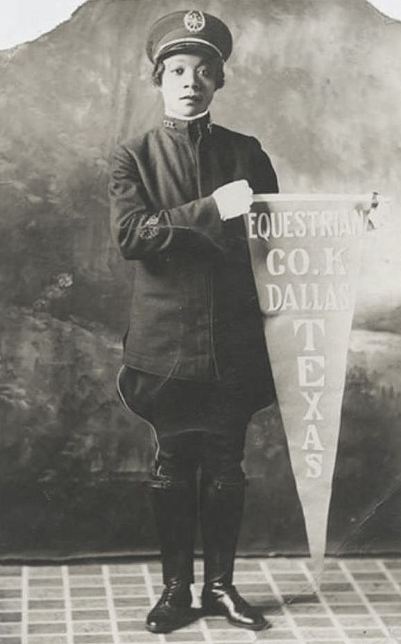
black-womens-equestrian-contingent_cook-coll_degolyer-lib_SMUGeorge W. Cook Collection, DeGolyer Library, SMU

by Paula Bosse

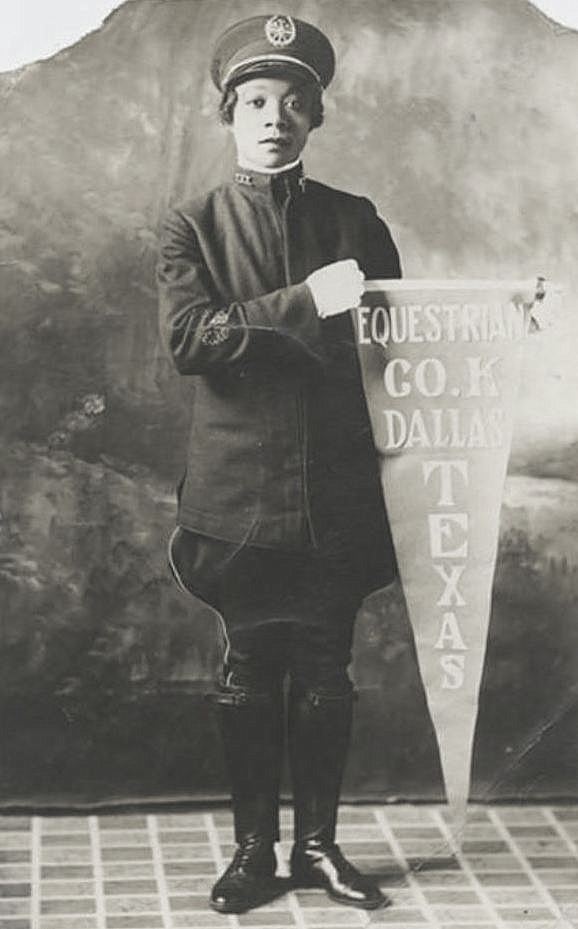
Above, a photograph of an African American woman holding a pennant which reads “Co. K — Dallas, Texas.” Company K was a women’s equestrian unit of Dallas Camp No. 86, consisting of at least 30 members — it was one of the various “uniformed ranks” of the American Woodmen, a Black fraternal organization. These groups competed in drills and marched in parades, and, from what I gather, they were meant to be seen as something of a symbol of strength, purpose, and resolve. Company K won many drilling contests and was active, from what I can tell, from at least 1922 to at least 1930.

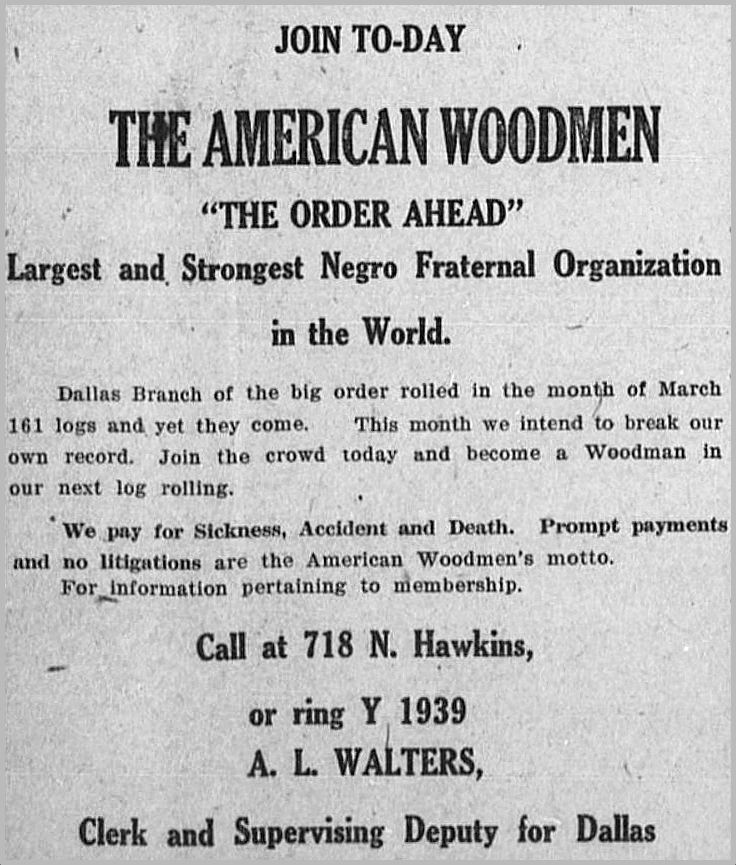
The American Woodmen (not to be confused with the Woodmen of the World, an exclusively white organization) was a national fraternal benefit association which provided loans and insurance coverage to members. It was open to Black men and women. During the 1920s, the Woodmen offices were located at 714 N. Hawkins, at Central (the address was originally 718 N. Hawkins, as seen in the ad below). Members could join various extracurricular “uniform ranks” if they so chose.
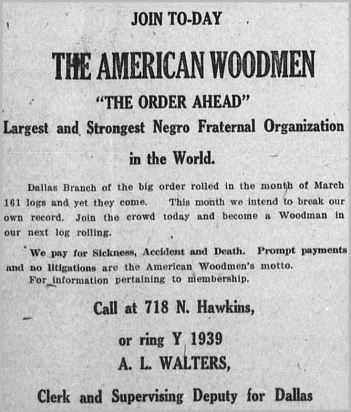
american-woodmen_dallas-express_041720Dallas Express, Apr. 17, 1920

The American Woodmen Uniform Ranks were overseen by the national “Commander,” Maj. Gen. John L. Jones (many fraternal organizations borrowed liberally from the military, as seen in their fondness for uniforms, “officer” ranks, precision drilling, etc.). While in Dallas for the Woodmen’s District Encampment in August 1922, Jones told a reporter:

“The American Woodmen in establishing their uniform rank department intended to instill in those who joined it a higher appreciation for the value of the Negro soldier and hero. No other fraternity has thus established that branch of their organization.” (Dallas Express, Aug. 12, 1922)

When uniformed members of these various divisions drilled and paraded — hundreds at a time — it was an impressive, powerful sight. It was good PR, not only for the group selling insurance, but also for Black Americans who rarely had the opportunity to participate in this type of uniformed display of earnest, pillar-of-the-community solidarity. (See a typical group of the “Uniform Ranks” — which also included marching bands and nurses — in a 1924 photo showing the Louisville, Kentucky Camp, here.)

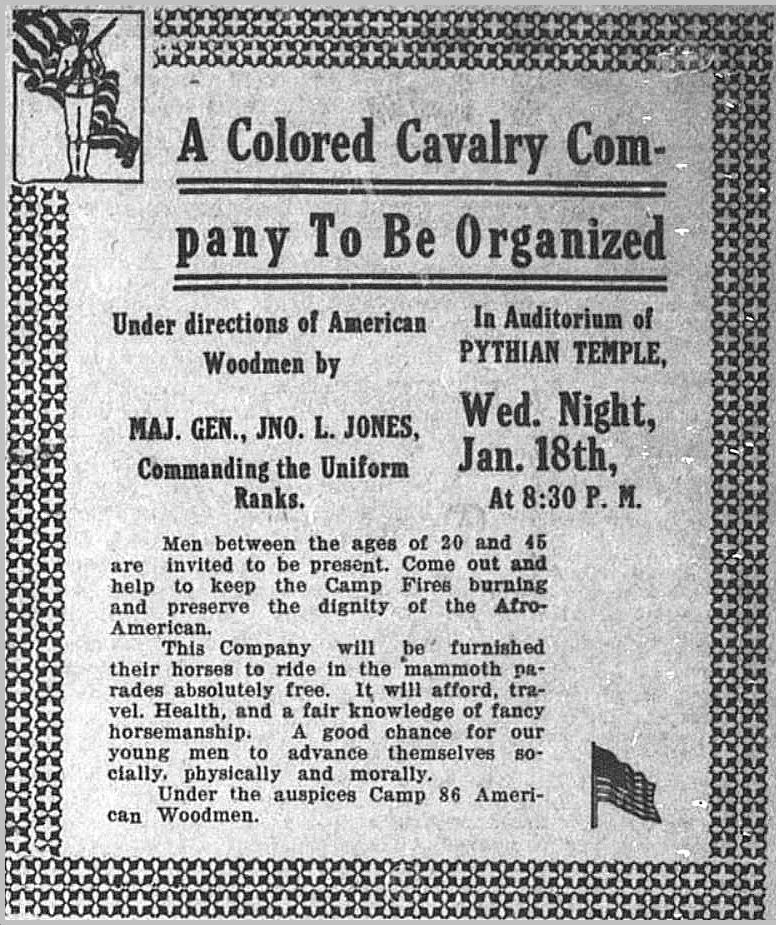
But back to Company K. I haven’t found any photos of them with horses, but I assume they really did ride horses. Below is an ad from January 1922, recruiting men for a Woodmen “cavalry.” I assume there was a similar version of this ad seeking female recruits.
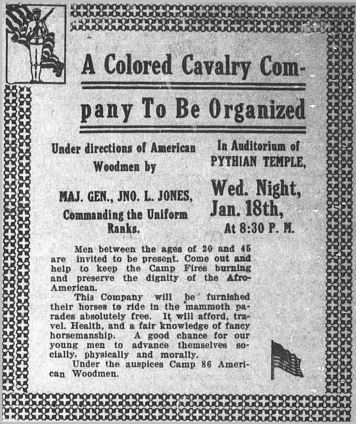
woodmen_american-woodmen_cavalry_dallas-express_011422Dallas Express, Jan. 14, 1922

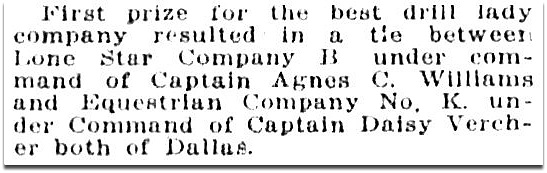
In an early competition at an “encampment” (a meeting of various American Woodmen companies, or “camps”), Company K tied for first place with another Dallas unit, Lone Star Company B. (Read coverage of this huge days-long encampment in the pages of the Black newspaper, The Dallas Express, hereThe Dallas Morning News did not mention the event.) The Dallas Encampment was at Riverside Park, a large open space where visitors set up military-style barracks/tents and competed in various military-like precision drills over the course of a few days. Riverside Park was the former Negro Play Park, at what is now Sabine and Denley in Oak Cliff, near the Trinity (it is now, I believe, Eloise Lundy Park). Not only was Riverside Park the site for several encampments and a place where Black families picnicked and gathered for special occasions, it was also the home of Negro League baseball games (these games were so popular among both Black and white Dallasites that a special section for white fans had to be installed during the Jim Crow era, when racial segregation was enforced by law). But back to Company K.
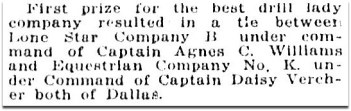
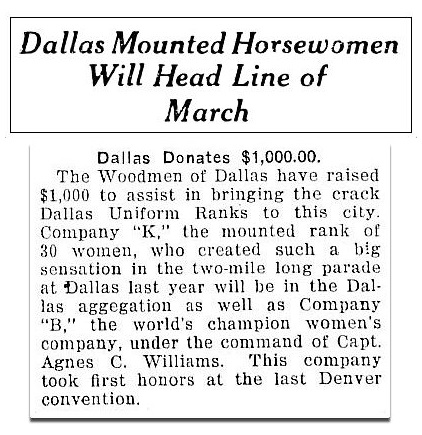
equestrian-co-k_dallas-express_081922_portal_detDallas Express, Aug. 19, 1922

The parade mentioned in the article below is described in the Express article “Woodmen Stage Big Parade” (Aug. 19, 1922). It sounds like it was a pretty big deal.
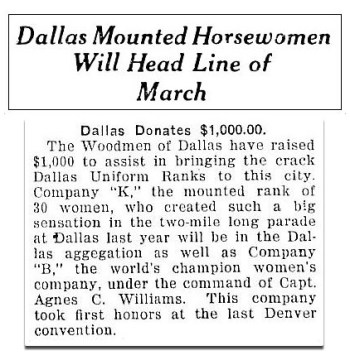
equestrian-co-k_black-dispatch_OKC_031523_headline_excerptBlack Dispatch (Oklahoma City, OK), Mar. 15, 1923

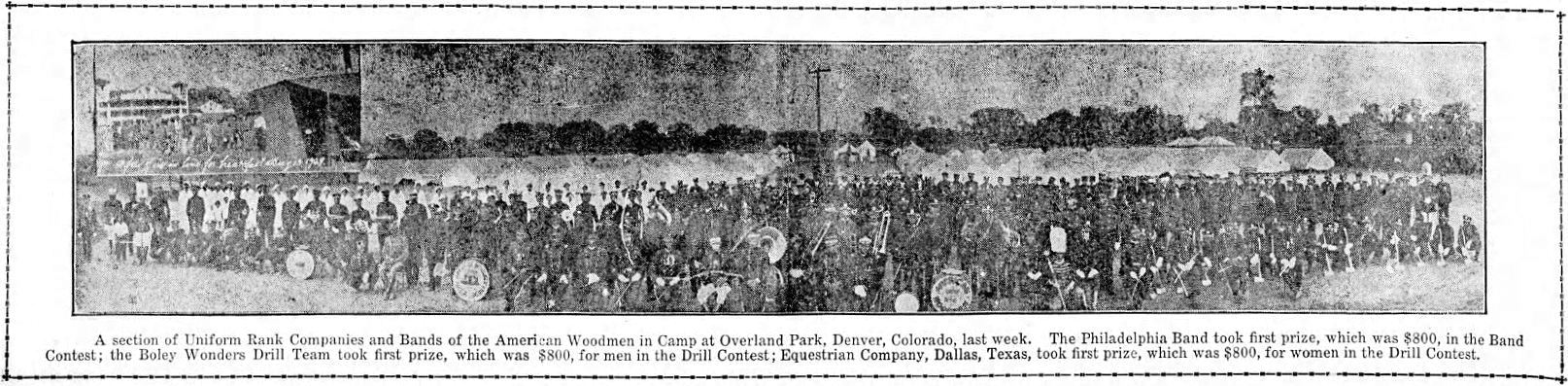
The incredibly low-resolution photo below was taken at the 1929 Encampment in Denver — it shows the scale of an encampment, with tents visible behind the posed participants. The caption says that Dallas’ Equestrian Co. K won the first prize for women in the drill contest — the prize (which, amazingly, was the same as the first prize for men) was $800, which, in today’s inflation-adjusted money would be about $15,000! 
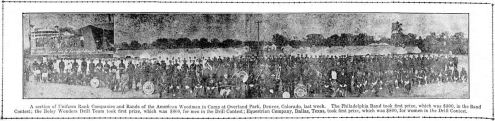
equestrian-co-k_black-dispatch_OKC_090529_photoBlack Dispatch (OKC), Sept. 5, 1929

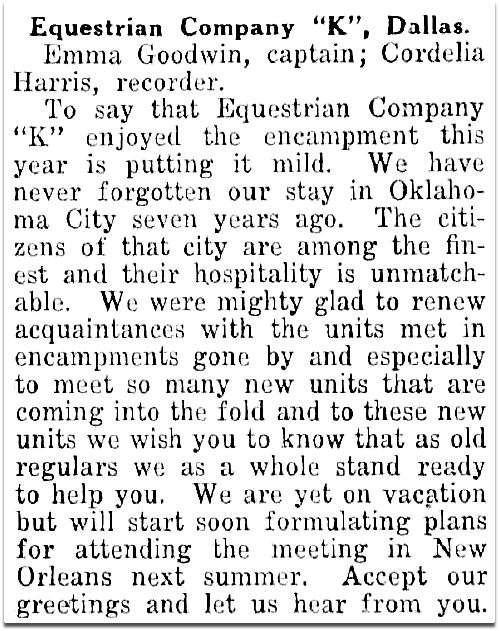
In an excerpt from a chatty overview of the women’s drilling groups, Company K spokeswomen say how happy they are to be back in Oklahoma City.
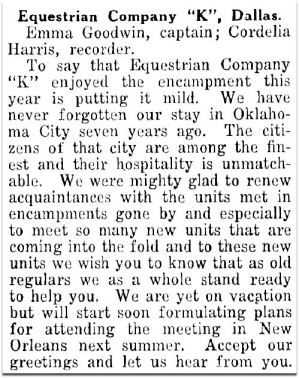
black-dispatch_OKC_071030_detBlack Dispatch (Oklahoma City), July 10, 1930

Most fraternal organizations are, as the name would imply, men-only. Yeah, they may have their female “auxiliary” organizations to give the women something to do, but the American Woodmen (Woodpeople?) included women in important roles. And it certainly paid off — the women of Equestrian Company K regularly won competitions and regularly brought the bacon home. 

*

100% of what is contained in this post is information I didn’t know until I set out to discover what “Equestrian Co. K, Dallas, Texas” referred to. As always, it’s exciting to learn about something I had never known about.

***

Sources & Notes

Top photo — “[Member of African American Women’s Equestrian Contingent, Company K, of Dallas, Texas]” — is from the George W. Cook Dallas/Texas Image Collection, DeGolyer Library, Southern Methodist University; more information on this photo can be found on the SMU Libraries site, here.

There is very little information on the internet about these American Woodmen women’s companies, so I’ve collected the article “Echoes from the Forest — Uniform Rank Department, American Woodmen” (The Black Dispatch, Oklahoma City, July 10, 1930), which lists female personnel for several Dallas companies, including the equestrian company, drill companies, a hospital company, and a nurse company — read the PDF here.

Read about the American Woodmen Benevolent Society (not to be confused with the (white) Woodmen of the World organization) in two very informative and interesting blog posts, here and here.

Read about Black soldiers during World War I in the sort-of related Flashback Dallas post “Black Troops from Dallas, Off to the Great War,” here.

black-womens-equestrian-contingent_cook-coll_degolyer-lib_SMU_sm

*

Copyright © 2023 Paula Bosse. All Rights Reserved.

Dallas, The City of Splendid Realities — 1905

dallas_city-of-splendid-realities_texas-and-pacific-quarterly_1905_det_b

by Paula Bosse

In 1905, a group of jaycees-like Dallas businessmen formed the Hundred and Fifty Thousand Club — their aim was to promote the city in hopes that it would achieve a population of 150,000 by 1910. Below is one of their impressive ads, which, of course, includes the favorite insistent claim of Dallas boosters that the Trinity River will ANY DAY NOW become a bustling “direct water route to the Gulf and the Panama Canal, that will put it in closest touch with the markets of the entire world.” The entire world! (Still waiting for that “navigable Trinity,” guys….) (Transcription is below the ad.)

dallas_city-of-splendid-realities_texas-and-pacific-quarterly_1905

*

DALLAS: The City of Splendid Realities

  • Probably no community in the world offers larger opportunities for the investment of capital and intelligent effort than does the city of Dallas, Texas.
  • Dallas is the commercial and industrial center of the most rapidly developing state in the Union.
  • The country surrounding the City is wonderfully rich and fertile — the famous black waxy belt that has never known a crop failure.
  • Its railroad shipping facilities are unexcelled, and now that the improvement of the Trinity River is assured it will stand at the head of navigation with a direct water route to the Gulf and the Panama Canal, that will put it in closest touch with the markets of the entire world.
  • There are dozens of opportunities for money making right now in the supplying of distinctly felt needs.
  • Conservative investors who have capital to place safely and profitably in industrial or public service enterprises, wide-awake men who are looking for a profitable employment of personal effort and limited capital in fruit raising, truck farming, chicken raising or small canning industries, are invited to write for information that will be of distinct interest to them.

Hundred and Fifty Thousand Club
Dallas, Texas
Write for Booklet, Dallas 1905

*

dallas_city-of-splendid-realities_texas-and-pacific-quarterly_1905_det-2

*

When the results of the 1910 Census were revealed, Dallas hadn’t reached its goal of a population of 150,000. But it had grown an impressive 116% in a decade, and, according to The Dallas Morning News, this meant that Dallas had the largest population in all of Texas and about the 50th largest in the United States. (Click article for larger image.)

population_1910-census_dmn_091710Dallas Morning News, Sept. 14, 1910

***

Sources & Notes

Ad found in the pages of Texas and Pacific Quarterly, 1905.

dallas_city-of-splendid-realities_texas-and-pacific-quarterly_1905_det_b_sm

*

Copyright © 2023 Paula Bosse. All Rights Reserved.
Crescent Cafe: Warehouse District — 1944-1952

crescent-cafe_mckinney-and-lamar_ebay904 McKinney Avenue, at N. Lamar

by Paula Bosse

The Crescent Cafe once stood at 904 McKinney Avenue, at the corner of N. Lamar. Also seen in this photo is the national headquarters of the Oil Well Supply Company (2001 N. Lamar), a sign for Western Union (2026 N. Lamar), and part of the Binswanger glass company (2019-21 N. Lamar).

See this corner now, on Google Streete View, here.

About all I can tell you about this place is that it was in operation from about 1944 to 1952 (in the 1950 city directory, Mrs. Olive West was listed as the owner — by 1952, Mrs. Josephine Cashlon had taken over).

Mrs. West ran the cafe (breakfast and lunch only, closed on Sundays) for several years, but on Sept. 23, 1950, an ad appeared in the classifieds which read:

CAFE — OWNER
Industrial.
Wonderful location.
Bargain.
904 McKinney

Olive was ready to move on.

A week and a half after the ad appeared, Olive died in a car accident on her way to a nephew’s funeral in Sherman (the nephew had also died in a car accident). No word on whether Mrs. Cashlon (a former waitress who had probably long dreamed of running her own restaurant) had purchased the Crescent Cafe before Mrs. West’s unfortunate demise. 

crescent-cafe_olive-westOlive West (1890-1950)
***

Sources & Notes

Photo found on eBay.

crescent-cafe_mckinney-and-lamar_ebay_sm

*

Copyright © 2023 Paula Bosse. All Rights Reserved.

Pig Stand No. 2, Oak Cliff

pig-stand-no-2_dallas_ebayWaiting in cars for pig sandwiches

by Paula Bosse

I’ve seen a cropped version of this photo, but not the full image. It’s great! I don’t mean to keep posting about restaurants, but seeing this photo was too good not to share. (As I type this, it’s available on eBay, here.)

It shows Pig Stand No. 2 at 1301 N. Zang in Oak Cliff, probably about 1928. It appears that this was the second “No. 2” — it was announced that this brand-new building had just begun construction in January 1928.

Work was started last week on the new Pig Stand, Zang’s Boulevard and Colorado Street, for the Pig Stands Company, a Dallas institution, now operating in 39 cities in 12 states. The ornamental building has been adopted as a standard design for the many future stands now contemplated over the country by this concern. In this building will be embodied modern sanitary features complying with all requirements and laws. It will be faced with brick and highly colored tile with ornamental stone trimmings and a clay tile sweeping roof in several shades. The exterior as well as the interior will be illuminated electrically with the cornice and ornaments decorated out in varied contrasting colors. The Pig Stands Co., starting less than five years ago with small capital, has developed into a national institution. Architects F. J. Woerner and Co. designed and will supervise this work, while M. W. McDade will have charge of the construction. (Dallas Morning News, Jan. 26, 1928)

At the right is the Oak Cliff/Tramway Auto Laundry at 1307 N. Zang.

pig-stand-no-2_dallas_ebay_det

I love the couple in the rumble seat!

***

Sources & Notes

Photo currently available for sale on eBay, here.

Read a history of Dallas’ Pig Stand empire — long considered to be the first-ever drive-in restaurants, a revolutionary contribution to American social culture — in the Texas Monthly article “The History of the Pig Stands” by Daniel Vaughn (Feb. 2015).

Architect Frank Woerner designed many notable commercial and residential buildings in Dallas, including the Stoneleigh Hotel, the Couch Building across from SMU, the old Union Depot in Deep Ellum, and the beautiful home of Max Rosenfield on South Boulevard.

pig-stand-no-2_dallas_ebay_det_sm

*

Copyright © 2023 Paula Bosse. All Rights Reserved.

Kimball High School, Off Campus — Ads, 1959-1961

priest-music_kimball-high-school_1959-yrbk
Browsing the Elvis releases, 1959

by Paula Bosse

A few years ago I posted several Oak Cliff-centric ads found in the 1963 and 1967 Kimball High School yearbooks (see those ads here). I’m back for another installment.

**

Above, a photo I really love, showing five Kimball girls checking out Elvis records at Priest Music (2447 W. Kiest Blvd). No, they don’t look like high school girls, and, yes, they are. The man at the right is, apparently, the owner, Frank M. Anderson (whom, I think, changed the name of the store to Music Hall the following year?). I posted this ad on my Facebook page last week, and one man wrote, about the owner: “Frank, the owner. His shop was known for its collection of Jazz and Classical albums. We became friends as I got into Jazz thanks to the Great Pete Fountain!” And because, why not, here’s a recent Google Street View of the Kiestwood Village sign which was probably there at that little shopping strip when Frank and the girls were photographed for this ad. 

kiestwood-village_2022

*

Dairy Mart (2739 S. Hampton):

kimball-high-school_1960-yrbk_dairy-mart1960

kimball-high-school_1959-yrbk_dairy-mart1959

*

Moreno’s Patio (245 Wynnewood Village):

kimball-high-school_1961-yrbk_morenos-patio_restaurant1961

*

Ketchum & Killum (334 W. Kiest) — a sporting goods store with perhaps the best name ever (UPDATE: or not — see the comments below):

kimball-high-school_1961-yrbk_ketchum-and-killum1961

*

If you’re in need of some bandages or Mercurochrome after being a little too curious at Ketchum & Killum, head over to Page’s Pharmacy (3220 Falls Dr.):

kimball-high-school_1959-yrbk_page-drugs1959

*

For all things “fun,” Playland (3900 W. Illinois):

kimball-high-school_1959-yrbk_playland1959

***

Sources & Notes

All ads from the 1959, 1960, and 1961 yearbooks of Justin Kimball High School in Oak Cliff.

More Kimball yearbook ads can be found in the Flashback Dallas postA Few Ads From the Pages of the 1963 and 1967 Kimball High School Yearbooks.”

priest-music_kimball-high-school_1959-yrbk_sm

*

Copyright © 2023 Paula Bosse. All Rights Reserved.