Flashback : Dallas

A Miscellany: History, Ads, Pop Culture

Category: Local Personalities

JFK’s “Last Hour In Dallas” — 1963

JFK_poster

by Paula Bosse

How is a city supposed to respond when it is suddenly plunged into the international spotlight? Does it grieve and try to forget, or does it grieve and capitalize? Dallas has had over 50 years to deal with/come to terms with the assassination of President Kennedy, but sometimes it seems as if the City of Dallas is still shell-shocked and isn’t quite sure how to acknowledge it on an official level. Let’s face it, Dallas is known to the rest of the world for one thing: the Kennedy assassination (and perhaps the TV show, and maybe the Cowboys). Yes, we have the justly-renowned Sixth Floor Museum, but it took 26 years to open it!

The cottage industry that sprang up in the wake of the Kennedy assassination has been big business for decades, some of it generated by people who live in Dallas, but most of it by people who have probably never even been to Texas. Since 1963, the “assassination literature” (…and, yes, it’s called that) has mushroomed, with local contributions coming from Dallasites whose brush with the President before, during, or after the events of November 22, 1963 have probably been pored over by numerous people either trying to understand why what happened happened or by people searching for hidden conspiracy clues to explain what really happened.

One local resident who added to the assassination literature was John E. Miller who took photos of the arrival of President and Mrs. Kennedy at Love Field and then apparently hot-footed it over to Parkland when the news of the shooting broke. These photos were issued as postcards in 1964 in a packet of 12. (Click pictures for larger images.)

JFK_envelope_frontAbove, the front of the envelope containing the cards; on the back: “A Real Picture Treat For Years To Come.”

JFK_card_01From the back of the card: “No. 1, Arrival of President’s Escort Plane at Love Field, Dallas, Texas.”

JFK_card_02“No. 2, Presidential and Escort Planes at Dallas’ Love Field landed shortly after this picture was taken.”
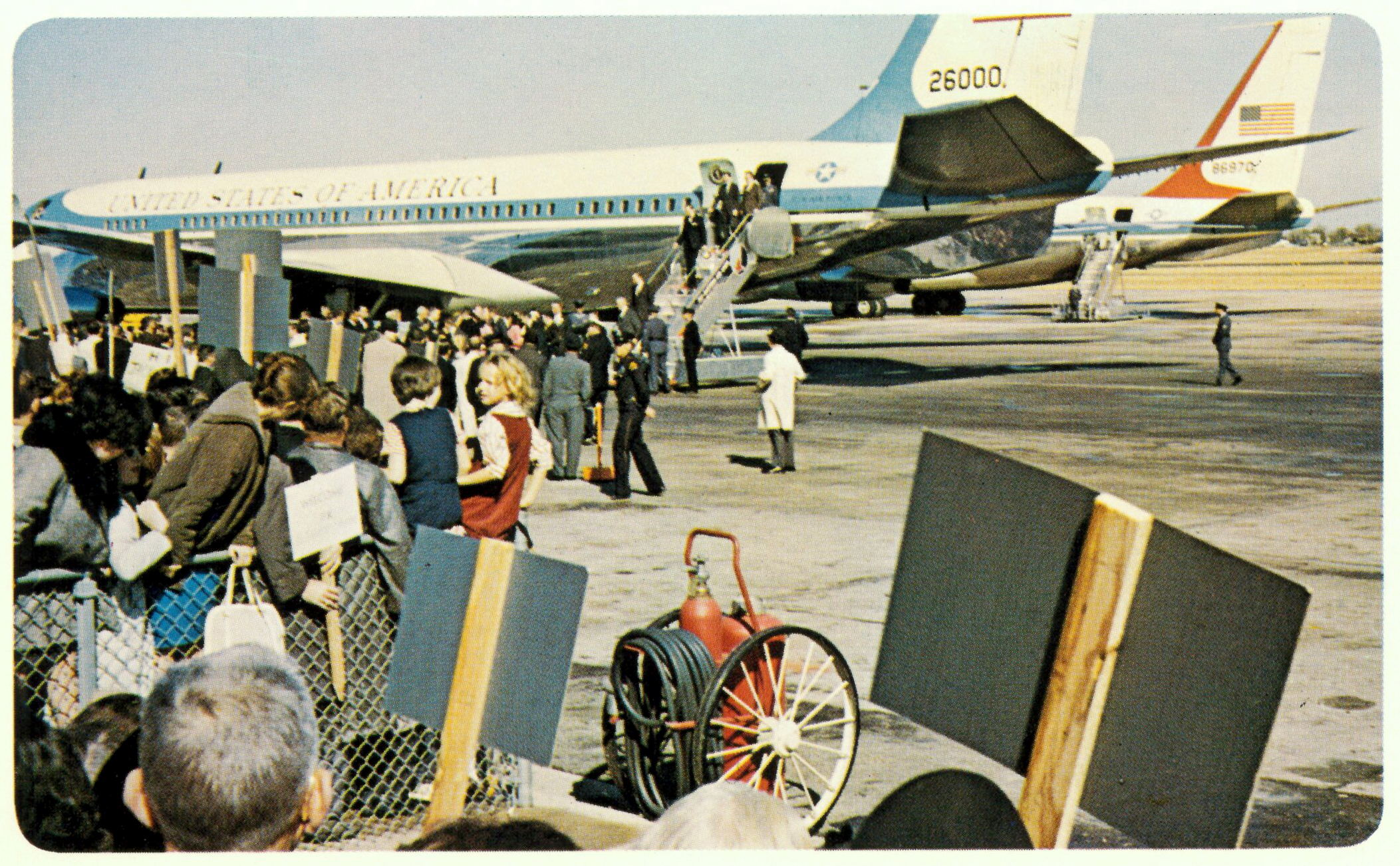
JFK_card_03“No. 3, President John F. Kennedy and party leaving airplane at Love Field. (Mrs. Kennedy — pink hat.)”

(UPDATE: The two little girls in the photos above and below are most likely Carolyn Jacquess, in blue, and Debby Massie, in red. Their little group arrived at the airport before the president’s plane arrived, walked through the terminal and out onto the tarmac, right to where the plane taxied up to the small crowd of about 100 people. Just like that. There was no special invitation, and, other than the chain-link fence, no real security.)

JFK_card_04“No. 4, President John F. Kennedy and Party in foreground at Dallas’ Love Field.”

JFK_card_05“No. 5, Vice-President Johnson, Governor Connally, Mrs. Kennedy (pink hat), other members of party at Dallas Love Field.”

JFK_card_06“No. 6, Vice-President Johnson, Governor Connally, Presidential Party and Newspaper Men, Love Field, Dallas.”

JFK_card_07“No. 7, Forming of Presidential Parade, Love Field, Dallas.”

JFK_card_08“No. 8, After Assassination, TV Unit arrives at Parkland Hospital in Dallas.”
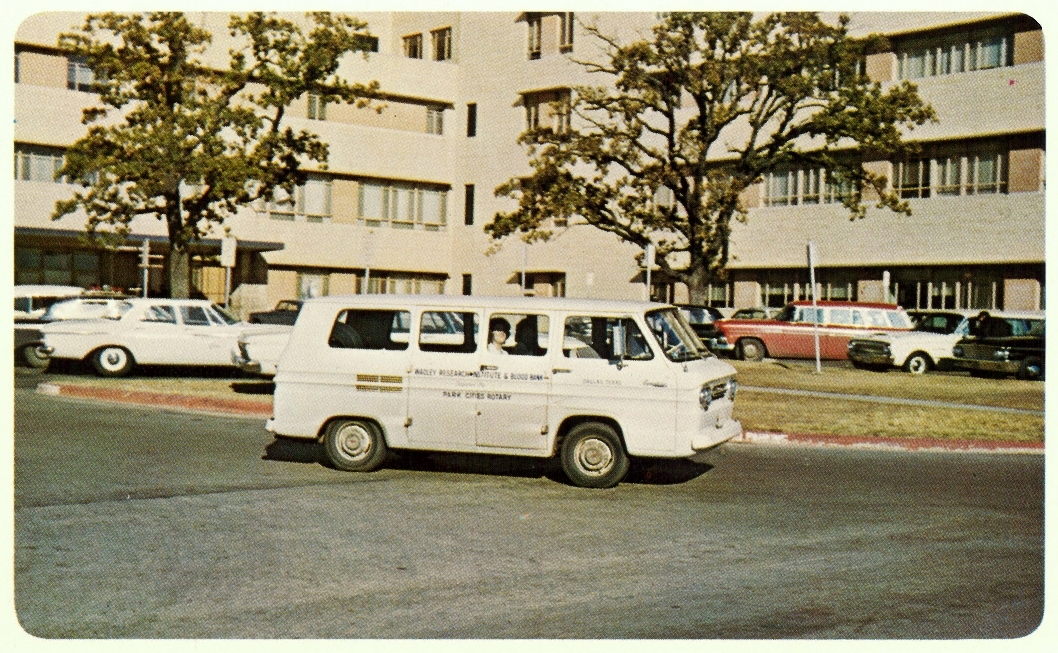
JFK_card_09“No. 9, Blood Bank Unit at Parkland Hospital on fatal day. Dallas, Texas.”

JFK_card_10“No. 10, Hearse carrying President John F. Kennedy’s body and Mrs. Kennedy from Parkland Hospital back to airplane at Love Field, Dallas.”

JFK_card_11“No. 11, Presidential plane awaiting President Kennedy’s body, Vice-President Johnson and Mrs. Kennedy, for return to Washington, D.C. (Note Presidential seal.)”

JFK_card_12“No. 12, Texas School Book Depository building from which authorities believe fatal shots were fired. (Note second window down on right corner of building.)”

***

Photos and captions © John E. Miller 1964, 3500 W. Davis, Dallas, Texas 75211. (Mr. Miller was a Dallas businessman who sold motor homes and trailers in Oak Cliff between 1945 and 1976. A photo of Mr. Miller is here).

Many thanks to “amyfromdallas” for scanning and contributing the images in this post. Thanks, Amy!

For other Flashback Dallas JFK-related posts, see here.

Click pictures for larger images.

*

Copyright © 2014 Paula Bosse. All Rights Reserved.
El Presidente y Su Sombrero — 1975

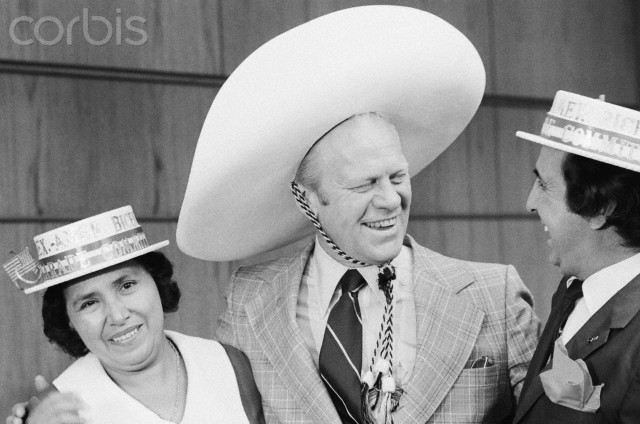
Pres. Ford In SombreroEl Prez at SMU, Sept. 13, 1975  /  ©Bettmann/CORBIS

by Paula Bosse

Politicians have to do a lot of silly things at public appearances, and some of them handle the baby-kissing and tedious chit-chat more gracefully than others. President Gerald R. Ford seems to have been pretty good-natured about this sort of thing, even in the wake of the Nixon impeachment and even while being incessantly lampooned by Chevy Chase on Saturday Night Live every week.

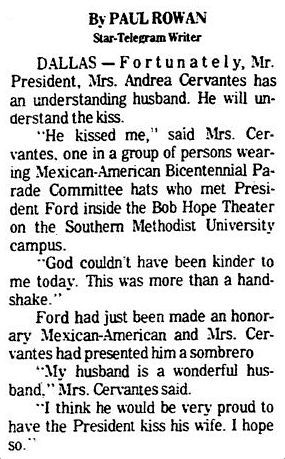
For reasons I’ve never understood, politicians and foreign dignitaries always seem to be presented with hats when they make an official visit somewhere, and when they come to Texas, they almost always get a cowboy hat. But on President Ford’s 1975 visit to Dallas and the SMU campus, he was made an “honorary Mexican-American” and was presented with a (very large) sombrero by Andrea Cervantes of the Mexican-American Bicentennial Parade Committee. He looks ridiculous, but it’s a fun ridiculous. I think he liked it — Mrs. Cervantes even got a kiss for her gift.

ford-sombrero_FWST_091475Fort Worth Star-Telegram, Sept. 14, 1975

The sombrero re-appeared a few months later, autographed and on display at Pike Park. It never left Dallas. What a shame. I would have liked to imagine the President and First Lady relaxing at Camp David, Jerry wearing his sombrero, smoking a pipe, and watching college football on TV, while Betty sat at the other end of the couch, chuckling to herself, and shaking her head.

***

Souces & Notes

Top photo from CorbisImages, here.

More on this in the Dallas Morning News article (with photo) “Ford Commends Group for ‘Feliz Cumpleanos'” (Dec. 15, 1975).

This sombrero-donning was just seven months before the now-legendary “Great Tamale Incident” in San Antonio. Read how NOT to eat a tamale here.

Ford took his gaffes in stride, even going so far as to appear on the show that made note of his every stumble, literal and figurative. Read a behind-the-scenes account of Ford’s 1976 Oval Office taping of one-liners for SNL — including his “Live from New York, it’s Saturday Night!” show opener (although I’m pretty sure he did it without the exclamation mark) — here.

*

Copyright © 2014 Paula Bosse. All Rights Reserved.
Dallas News Hustler — 1908

newsboy-horse_dmn_012608_lgErnest d’Ablemont, 13, newspaper carrier aboard his trusty steed, 1908

by Paula Bosse

The photo above appeared in the pages of The Dallas Morning News on Jan. 26, 1908 under the headline “One of the Dallas News Hustlers.” The caption:

Ernest A. d’Ablemont is one of the hustlers selling The Dallas News. He began selling the paper in March, 1905, on Sundays at the age of 11 years. He is now 14, or will reach that age on his birthday, March 16, 1908. Since he began, he has never missed a Sunday, rain or shine, hot or cold. Since his business career began he has clothed himself and has accumulated sufficient money to enable him to make a loan of $150 at 10 per cent.

Quite the business-minded newsboy — the Inflation Calculator estimates that $150 in 1908 would be equivalent to almost $4,000 today! In 1909 — just a year later — he had his own entry in the Worley’s city directory, but he had jumped ship from the News and was working for The Dallas Dispatch.

dablemont_worleys_1909

Ernest d’Ablemont was born in Dallas in 1894 to immigrant parents — his father, Felix, was French, and his mother, Inga, was Norwegian. One wonders what could possibly have enticed a Parisian to come to Dallas, but Felix had been in the city since about 1883, working first in a meat market, then spending most of his life as a produce man. Felix was a “truck farmer” (he grew vegetables to sell locally), and he had a small piece of land off 2nd Avenue in the old Lagow Settlement area, south of Fair Park, about where S. 2nd Ave. intersects with Hatcher. Felix placed this ad in 1903:

dablemont_dmn_110103

“German, Swede, Norwegian or French preferred.”

Ernest followed in the footsteps of his farmer father. After his early entrepreneurial foray into the world of newspaper delivery and a couple of years of service in World War I (which took him overseas where he was assigned to a field hospital and a “sanitary train”), he returned to Dallas and worked the family’s truck farm until he retired. He died in 1954 at the age of 60.

***

Sources & Notes

Top image of young Ernest on horseback from The Dallas Morning News, Jan. 26, 1908; photo by Clogenson.

Want-ad from the DMN, Nov. 1, 1903.

WWI “sanitary trains”? I’d never heard the term. Find out what they were and see what one looked like in this GREAT photo from Shorpy, here.

*

Copyright © 2014 Paula Bosse. All Rights Reserved.

Babe Didrikson, Oak Cliff Typist

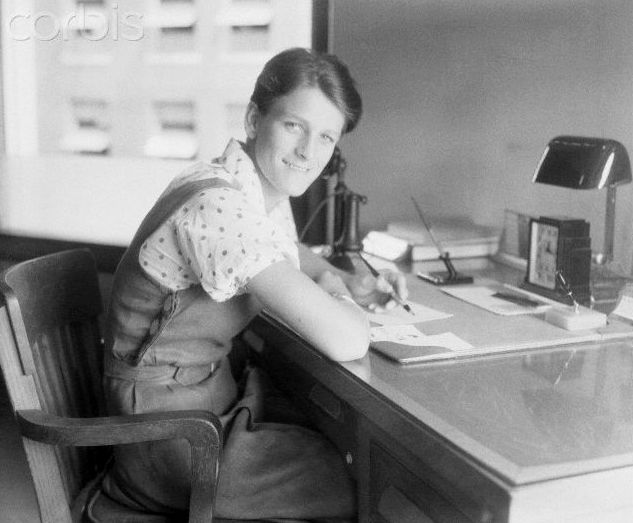
babe-corbis_102132Babe Didrikson at a desk she was probably pretty unfamiliar with, 1932

by Paula Bosse

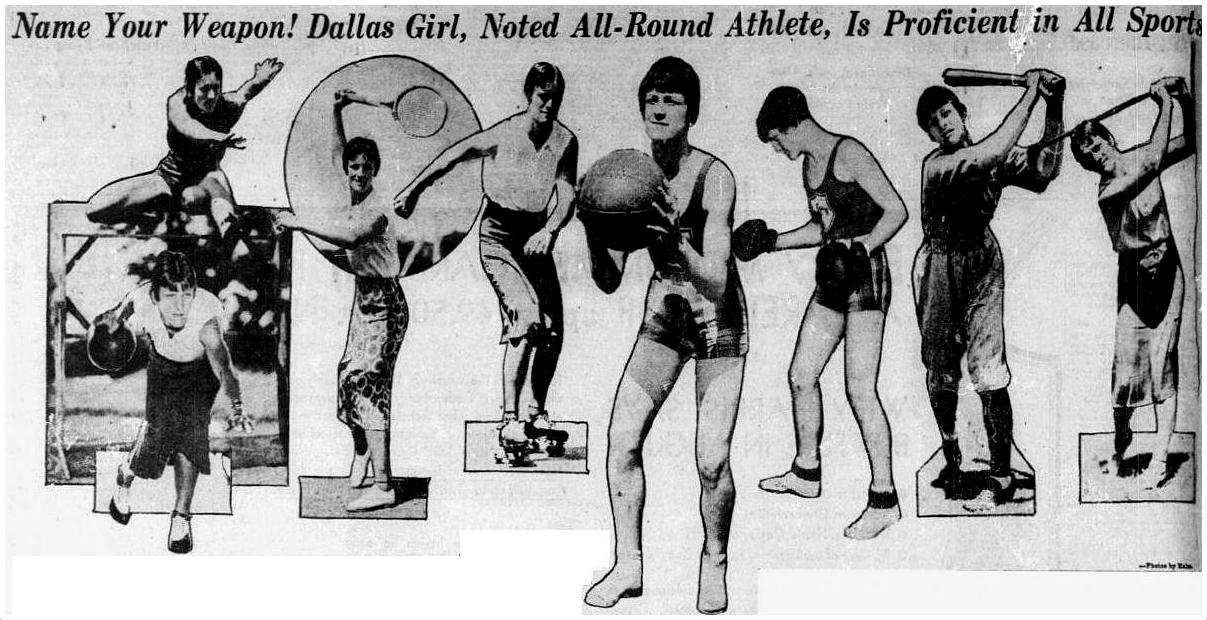
Mildred “Babe” Didrikson has been called the greatest athlete of the 20th century — male or female. She was an All-American basketball player, she set a number of world records in a wide variety of track and field events (she was so good at all of the individual sports that she was entered at least once as an entire TEAM — a team of one!), she won two gold medals and one silver (which should have been three gold medals…) at the 1932 Olympics, and she was, perhaps most famously, a champion golfer who was a founder of the LPGA. She was also highly proficient in softball, bowling, diving, swimming, roller skating, and tennis, and she dabbled in hockey, skeet-shooting, billiards, and even football. There was no sport she didn’t try — and even if she had never tried it before, she was probably pretty good at it. And she spent an important period of her life in Dallas.

babe_dmn_0802311931

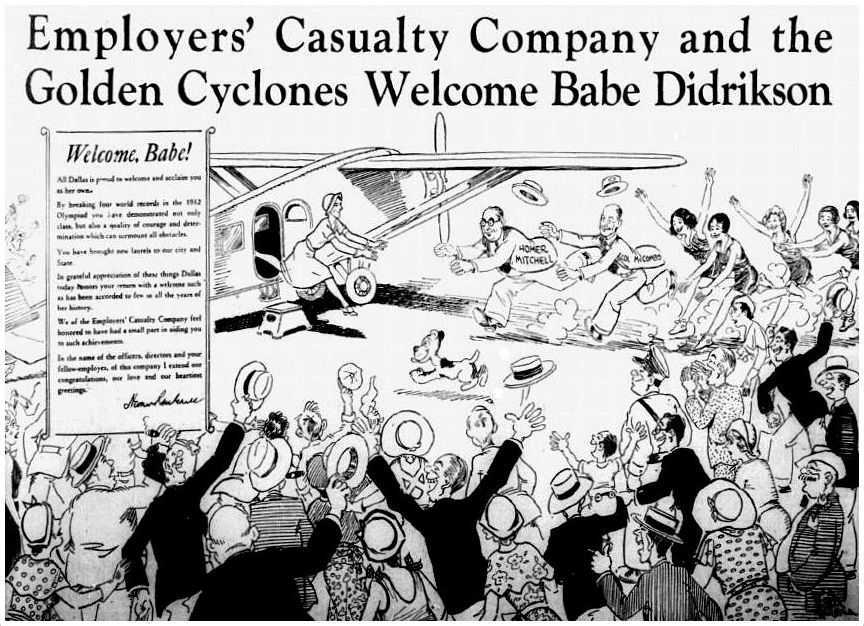
Babe Didrikson was born in Port Arthur, Texas in 1911 and grew up in nearby Beaumont. She excelled in sports in school, especially basketball. In the late-’20s, a man named Col. M. J. McCombs, who was the head of the women’s athletic program for an insurance company, saw Babe in action and recruited her to play for his company’s basketball team in Dallas. She was offered a job to do vague secretarial work for the Employers’ Casualty Company (which had offices in the old Interurban Building downtown), with the understanding that she was really being taken on in order to play on the company team. With the blessing of her Norwegian immigrant parents, she interrupted her high school education in Beaumont to accept the $75-a-month job and was moved into a Haines Avenue rooming house in Oak Cliff.

Babe soon became the star of the Golden Cyclones, her company’s championship-winning team which participated in an “industrial” league governed by the national Amateur Athletic Union (the AAU). In the off-season she was introduced to track and field events by McCombs, and she quickly mastered them all.

babe_emp-cas-coFlying the company colors

She soon began breaking world records. Watch her compete at an AAU meet at SMU in July 1930, where one of the records she broke was for the javelin throw, here.

didrikson-babe_070730_track-meet_SMU_javelin_critical-past_screenshot-cropJuly 1930, Dallas

Before she knew it, it was the summer of 1932, and the Olympics were being held in Los Angeles — the 21-year old won three medals, emerged as the star of the games (she was frequently referred to as “the wonder girl from Dallas”) and began her climb up the ladder of celebrity.

After the Olympics, the city of Dallas gave her a victory homecoming, with a parade, a luncheon, and various presentations, all covered widely in the local press. The Dallas Morning News described it as “a demonstration the magnitude of which has never before been accorded a son or daughter of this city” (DMN, Aug. 12, 1932), bigger even, they said, than the reception that had greeted Charles Lindbergh on his Dallas visit.

U625776INPBabe’s post-Olympics parade through downtown Dallas — Aug. 11, 1932

After the celebrations had settled down, Babe Didrikson, sports superstar, was back at “work” — at least long enough to have photographs of her taken at the most uncluttered desk imaginable. (Though to be fair, Babe did claim to have been a typing champion in high school. Even if that were true — and she was known to be something of an exaggerator — it’s still almost impossible to imagine this world champion athlete typing up an afternoon’s dictation on insurance matters.)

babe_insuranceEmployers’ Casualty Co.’s casual employee — Oct. 21, 1932

Babe eventually turned pro, left Dallas, married wrestler George Zaharias, and became an incredibly successful golfer. She died from cancer in 1956 at the early age of 45, but her legacy lives on as one of the greatest and most versatile athletes of all time (…who, for a few short years, also happened to do a bit of light secretarial work for an insurance company in Dallas).

**

Below are a few of my favorite random Babe-related tidbits.

babe_hat_dmn_0712321932

Babe was often ridiculed by male sportswriters for her bearing and physique, which they thought were not feminine enough for their tastes. This criticism — ridiculous though it was — must have stung, because she occasionally made efforts to placate them, some of which seemed very awkward, such as this. The caption of the above photo: “Mildred (Babe) Didrikson (left) and her chaperon, Mrs. Henry Wood, are pictured above as they appeared Monday afternoon just before boarding a train for Chicago, Ill. for the national AAU track and field championships in which Babe […] hopes to carry off high honors and win a berth on the American Olympic team. This is the first picture ever taken of Babe with a hat on. She has never worn one before.”

*

babe_insurance_ad_dmn_081132Aug. 11, 1932

babe_insurance_ad_dmn_081132-detAug. 11, 1932 — ad inset

Above, an ad taken out by the Dallas company Babe worked for, welcoming her back home from her Olympic triumph. Drawing by Jack Patton. (Even though Babe had buckled to pressure with the whole hat thing, I can’t quite picture her wearing gloves.)

*

babe-and-babe_081247

Babe and the other Babe, August 12, 1947. I love this photo.

*

babe_vanity-fair_1933

Fantastic photo of Babe in her prime by Lusha Nelson, from the January, 1933 issue of Vanity Fair.

*

babe

***

Sources & Notes

The two photos of Babe Didrikson at her desk, the photo of the parade in Dallas, and the photo with Babe Ruth are from the huge selection of photographs of Babe at CorbisImages. See a lot of photos of her throughout her career, here. The photos of her training and in action are exhilarating, but it’s nice seeing her looking so happy and relaxed in her later golfing days. She definitely smiled a lot more after she started making more than the measly $75 a month she was making in Dallas.

An interesting article from 1975 about Babe in which former co-workers and teammates from Employers Casualty remembered their time with her can be found in the Dallas News archives: “Friends Recall Babe’s Prowess” by Temple Pouncey (DMN, Oct. 26, 1975).

For more on Babe’s time in Dallas and Oak Cliff, she writes about it in her autobiography, This Life I’ve Led (1955), here. (The entire book can be read for free at the link.) Also, check out this article by Gayla Brooks that appeared in the Oak Cliff Advocate.

A really well done, comprehensive overview of Babe Didrikson Zaharias’ career (with lots of great photos), can be found at Pop History Dig, here.

One of my favorite weird Babe things is the record she made with her “golf protege” Betty Dodd. Betty sings (not very well) and is accompanied by Babe on harmonica, an instrument she loved all of her life and which she taught herself to play as a child. The song — and a bit of backstory on Babe and Betty’s relationship — is here (click the arrow at the left of the strip beneath the record label to hear the song “I Felt a Little Teardrop”). Babe’s solo starts at about the 1:06 mark.

And, lastly, newsreel footage of Babe over the years, from the early track meets and the Olympics, to her later career as a golf superstar can be watched here and here.

*

Copyright © 2014 Paula Bosse. All Rights Reserved.

The Pink Panther-Mr. Peppermint Connection

mr-peppermint_dmn_1961Mr. P. — 1961

by Paula Bosse

I had no idea that the “Mr. Peppermint” theme was by Henry Mancini! It’s from a 1960 movie called “High Time,” which, I have to say, I’ve never heard of. It starred Bing Crosby, Fabian, and Tuesday Weld (I kind of think Bing may have been in it solely for the paycheck). Check out the movie’s main theme music. Sound familiar?

Hearing this brings back a flood of happy memories — an aural version of Proust’s madeleines.

In a recent Los Angeles Times interview, Paul Reubens (aka Pee-wee Herman) had this to say:

“I never met Captain Kangaroo; I probably would have completely freaked out if I met Captain Kangaroo. In fact, when I meet people who are just beside themselves to meet me, I always think they’re reacting like I would react if I met Captain Kangaroo, I was so crazy about that television show as a child.” (LA Times, Oct. 21, 2014)

I ran into Jerry Haynes (aka Mr. Peppermint) several times around town over the years. The first time I saw him, I was in my 20s, and he was doing some sort of promotion (in character) at a store in, I think, Northpark. I was unaware that he would be there, but when I saw him at the top of the escalator, I was shocked. My childhood TV pal right in front of me! It’s a bit of a blur, but I think I giddily foisted myself on him and told him all the things other Dallas kids raised on his show probably told him. I might even have gushed an involuntary “I love you, Mr. Peppermint!” Yikes. I bet he got that ALL THE TIME. He was very sweet and didn’t treat me like a crazy person.

The last time I saw him, he was just Jerry Haynes, shopping for cheese at the Tom Thumb on Mockingbird and Abrams. I didn’t bother him, but I still got a little happy jolt of recognition when I saw him.

And now I find out that the composer who wrote so much of my favorite movie music wrote the music so tied to my childhood. Thanks, Mr. Mancini! Thanks, Mr. Peppermint! Thanks, Mr. Wiggly Worm!

***

Sources & Notes

Quote from Paul Reubens’ Los Angeles Times interview, here.

Wikipedia roundup: madeleines, here; “High Time” movie, here; Henry Mancini, here.

(Thank you, Steve S., for bringing this to my attention!)

*

Copyright © 2014 Paula Bosse. All Rights Reserved.


“Gumdrops Love Mr. Peppermint” — 1968

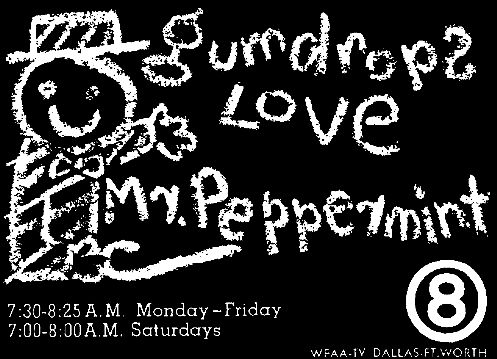
mr-peppermint_1968

by Paula Bosse

When the news is unsettling, remember your “happy place.”

***

1968 TV Guide ad, from eBay.

*

Copyright © 2014 Paula Bosse. All Rights Reserved.


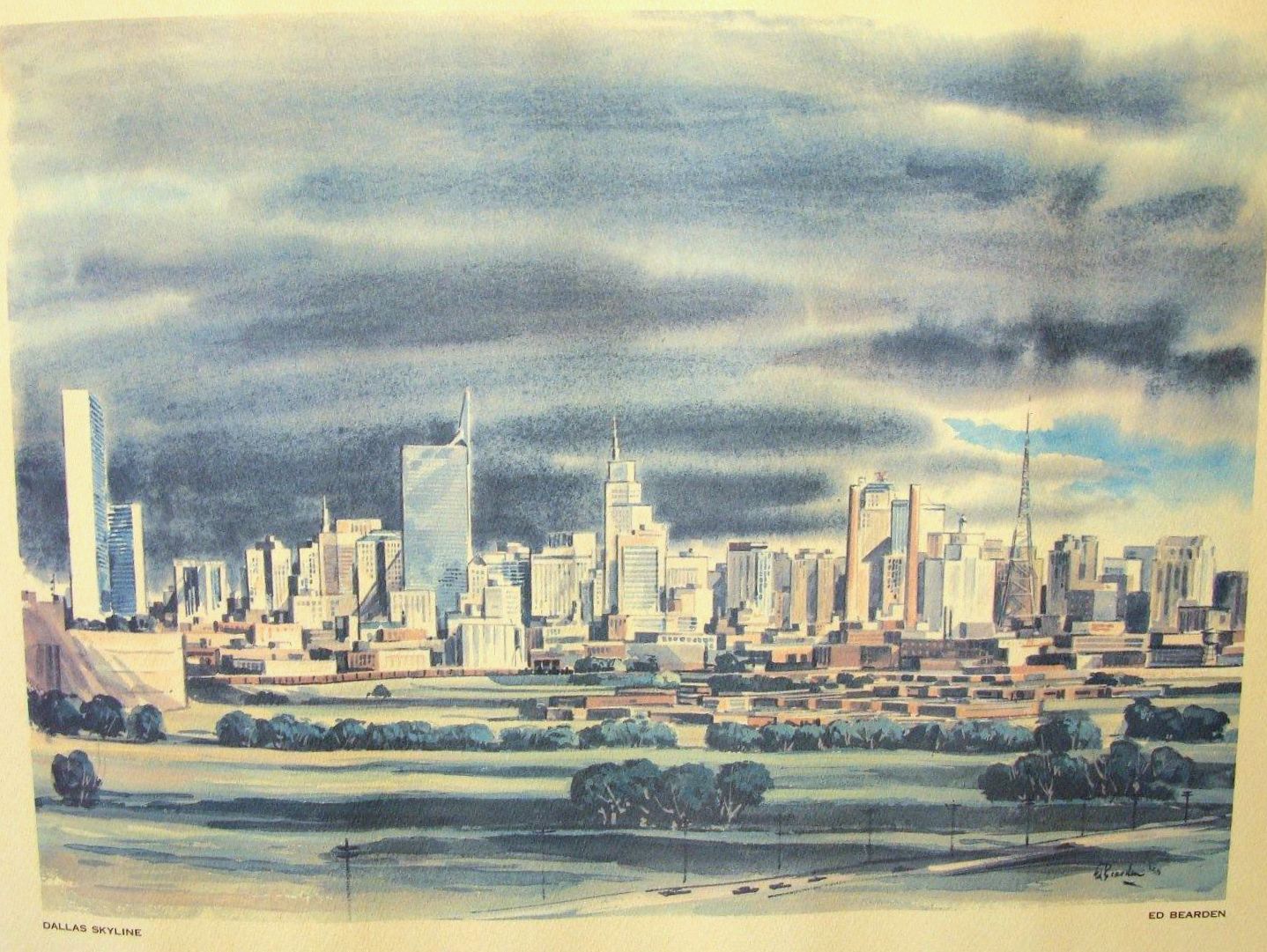
“Dallas Skyline” by Ed Bearden — 1958

dallas-skyline_ed-bearden“Dallas Skyline” by Ed Bearden (click for much larger image)

by Paula Bosse

Ed Bearden (1919-1980) was a Dallas painter who studied under Jerry Bywaters and Otis Dozier and was loosely affiliated with the Dallas Nine group of artists. He worked with Bywaters at the Dallas Museum of Fine Art as Assistant Director, and he helped found the Dallas Museum for Contemporary Arts. He also spent several years at SMU — both as a student and as a member of the faculty — until he decided to leave to focus on his own art career. In addition to working as a fine artist, he also owned a commercial art business.

The constantly changing Dallas skyline was a particular favorite subject of his, and he returned to it again and again. The one above is a personal favorite. I’m not sure why I feel so nostalgic when I look at it, except that I swear that I saw this print as a child at my father’s bookstore. It’s a Dallas I’ve never known, but one I wish I had.

***

Apologies for the wonky image, but I can’t find a better scan of it. I’m assuming this was first a watercolor, then issued as a lithograph, then maybe printed as a broadside or a loose plate in a book? The date in the lower right corner is very difficult to make out — it looks like either 1958 or 1959. I’m going with 1958. ‘Cause I’m like that.

A brief biography of Ed Bearden can be found here.

An unlikely gig came Bearden’s way when director George Stevens asked him to draw the storyboards for the film Giant, hoping that having a Texas artist do them would lend an air of authenticity to the look and feel of the movie (and, in fact, Bearden’s sketches were used as reference by makeup and wardrobe personnel). Read more about this interesting assignment on SMU’s Hamon Arts Library site, and see some of Bearden’s sketches from the set in Marfa, here.

*

Copyright © 2014 Paula Bosse. All Rights Reserved.

W. W. Orr: Buggies, Phaetons, Carriages — “Everything on Wheels!”

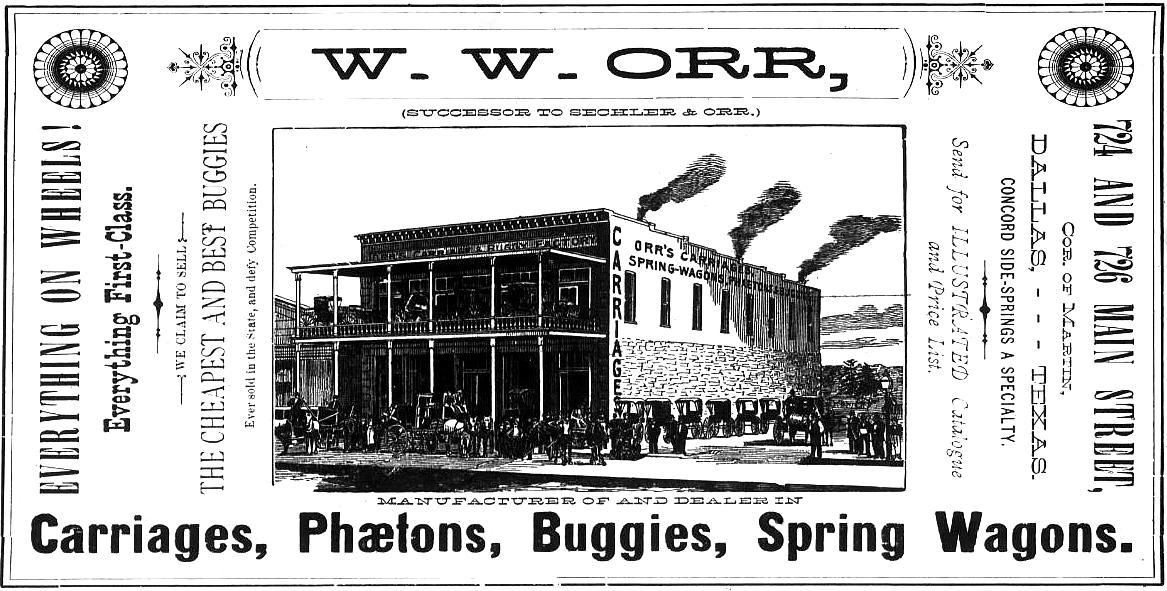
ad-orr-carriages_directory_1878-detW.W. Orr’s carriage business on Main St., 1878 (click for larger image)

by Paula Bosse

I came across the image above in the 1878 Dallas city directory, and my eye was immediately drawn to the novel open-air display of  buggies on the second floor of the building. I’ve never seen this before — the frontier version of the auto showroom!

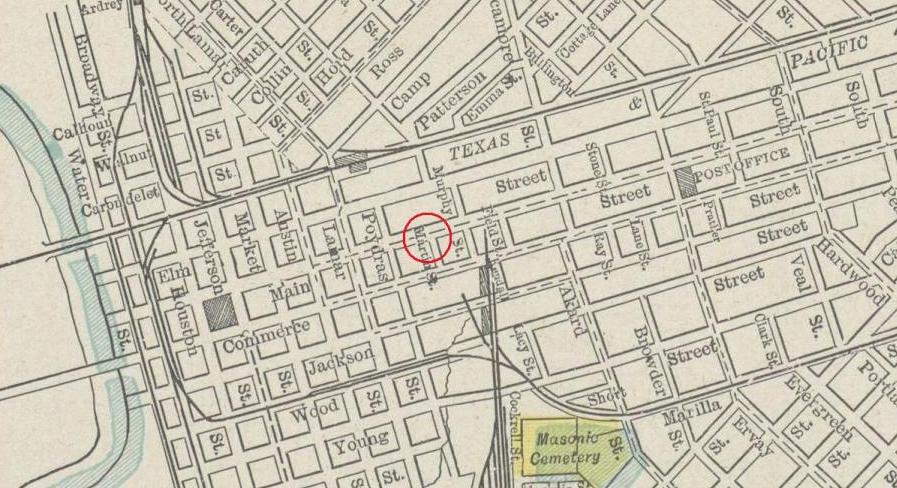
I hope this is a depiction of the actual shop owned by W. W. Orr at 724-726 Main Street (corner of Main and Martin — see map below) and not some sort of early augmented clip art. Orr ran a successful business selling buggies, phætons, and carriages, and he probably did have an imposing shop.

William Wallace Orr was born in Ohio, and after the Civil War he made his way to Texas, where he served for a short time as an East Texas postmaster before coming to Dallas where he and his wife, Amanda, operated a livery stable.

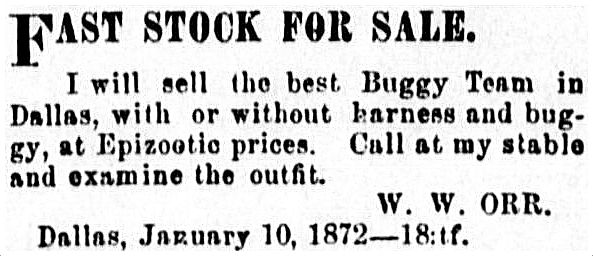
orr_dallas-herald_041973Dallas Herald, April 19, 1873

I’m not sure whether “epizootic” is used here as some sort of 19th-century tongue-in-cheek hard-sell advertising term (“His prices are INSANE!“) … or whether it means the horses have some sort of disease. I tend to think it’s the former.

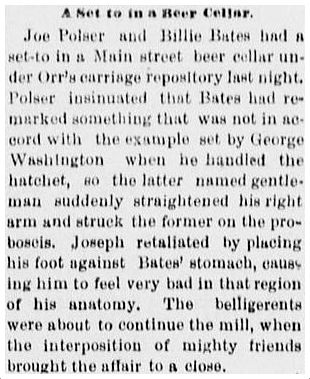
The carriage business, which had started by 1878, is notable (to me, anyway) because it was housed in a building with a basement — I wasn’t aware that basements really existed in Dallas at the time. Orr rented out the basement beneath his “carriage repository” as a beer cellar. If TV westerns are anything to go on, drunken brawls in most drinking establishments of the time were to be expected. What might not be expected is an account of a bar fight to be reported like this:

orr_cellar_dal-her_060278Dallas Herald, June 2, 1878

Regardless of what disreputable activities were going on in the cellar, it seems that Orr’s business of manufacturing and selling “everything on wheels” was a booming one.

orr_dal-her_060380Dallas Herald, June 3, 1880

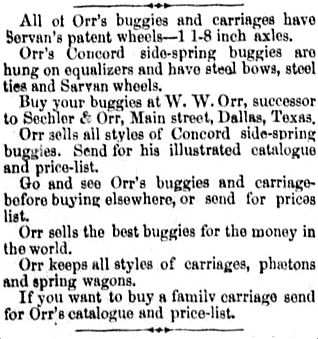
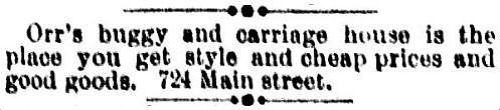
He had stylish conveyances, cheap prices, and good goods:

orr_dal-herald_081283Dallas Herald, Aug. 12, 1883

After the death of his wife in 1886 (she died of consumption at the early age of 42), Orr passed the business to his son. In poor health, he left Dallas for Mississippi, where he met a woman who nursed him back to health and whom he later married. After a few years of an apparently happy second marriage, W. W. Orr died in 1894. Cash savings, investments, and real estate holdings back in Dallas had left him a wealthy man, and, as might be expected, his family in Dallas was dismayed to learn that he had left his estate to his infant daughter in Mississippi. His three grown children from his first marriage were not happy, and they contested the will. (The case is covered exhaustively here. I think the baby daughter emerged victorious, but I’m not absolutely sure.)

It’s interesting that Orr and his first wife are buried side by side in Greenwood Cemetery. Amanda Melvine McQueen Orr has a large, ornate monument and headstone; W. W. has his name — and nothing else — carved into an unadorned marker. It would have been nice to have had a little a buggy in the corner. …Something.

orr-map_c1900

The location of Orr’s buggy and carriage house was at the corner of Main and Martin, shown above in a map from around 1900. (Click for larger image.)

And, below, is the full ad, with that incredible artwork! (Click it!)

ad-orr-carriages_directory_18781878

***

Sources & Notes

Illustrated ad from the 1878 Dallas city directory.

All other ads from The Dallas Herald, as noted.

Map is a detail from a map of Dallas, circa 1900, from the Portal to Texas History, here.

Amanda Orr’s headstone and memorial statuary can be seen in several photos here; W. W.’s sad unadorned slab can be seen here.

Phætons? They sound dangerous!

*

Copyright © 2014 Paula Bosse. All Rights Reserved.


The Fab Four in Big D — 1964

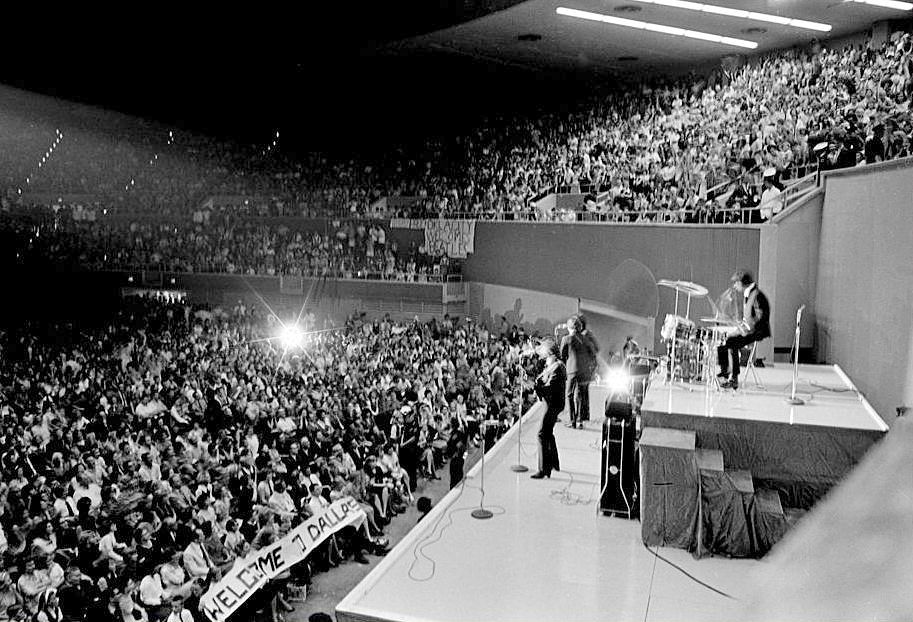
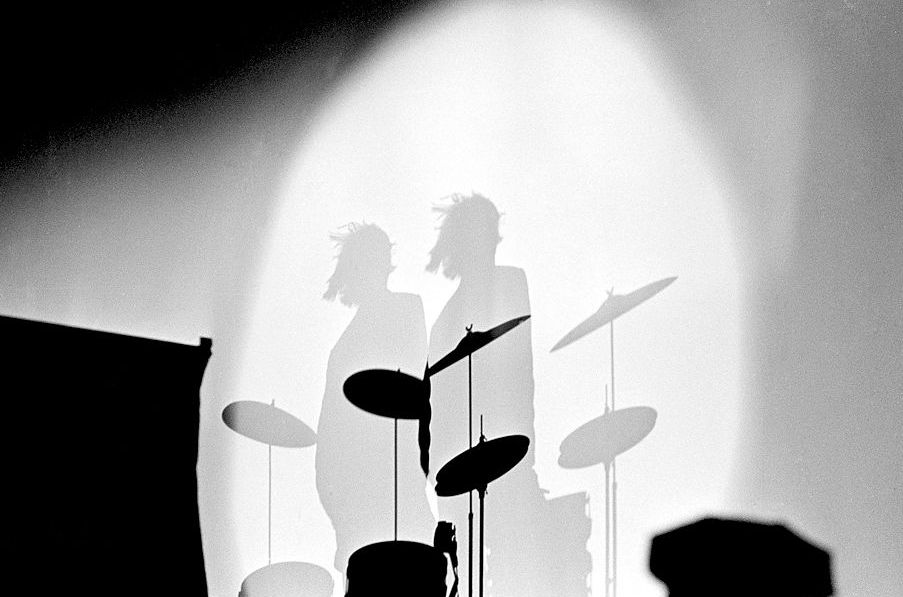
beatles_memorial-auditorium_091864_ferd-kaufmanThe Beatles at Memorial Auditorium, Sept. 18, 1964

by Paula Bosse

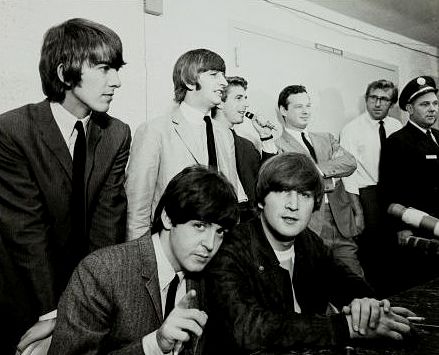
The Beatles came to Dallas fifty years ago this week. There was pandemonium at Love Field when they arrived. There was pandemonium at the Cabaña Hotel when they got there. There was pandemonium at the press conference. And there was pandemonium at the concert at Memorial Auditorium on September 18, 1964, the last date of their American tour. This event has been pretty well covered over the years, but here are a couple of cool photos of the Fabs’ time in Dallas, and a couple of droll columns from DFW entertainment reporters who seem to be vaguely amused, vaguely annoyed, and vaguely impressed — all at the same time.

beatles_memorial-aud_091964_ferd-kaufman

beatles_dallas_1964_john-mazziotta_dth

Above, the Dallas press conference, with Beatles press agent Derek Taylor (holding microphone), manager Brian Epstein (who, still in Dallas, would turn 30 the following day), and road manager Mal Evans (with glasses). And a Dallas cop (who, over the years, must have told a thousand people about this momentous day).

*

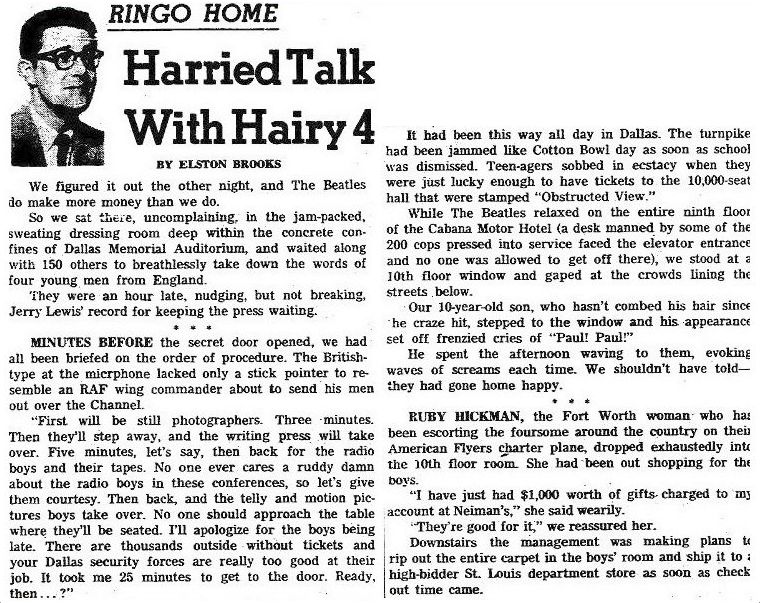
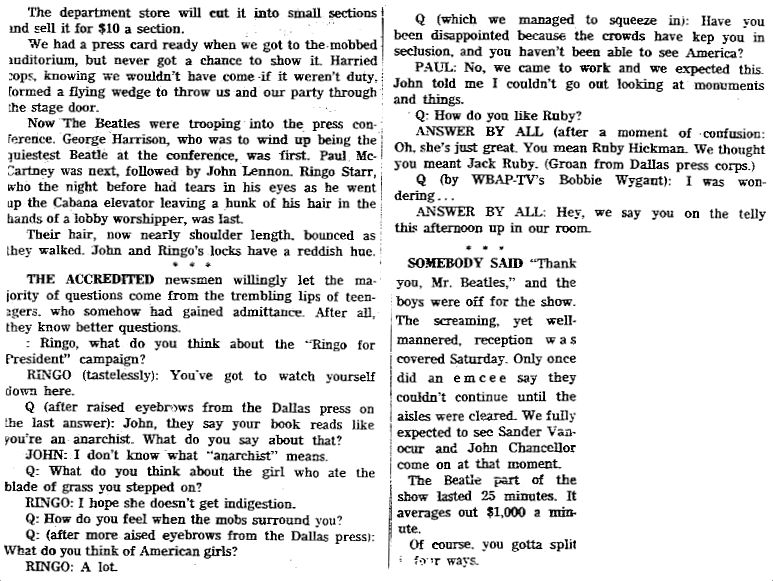
Below, the always-entertaining Elston Brooks of the Fort Worth Star-Telegram writes about his “Harried Talk With Hairy 4” (click article for larger image).

beatles_FWST_092064a

beatles_FWST_092064bFWST, Sept. 20, 1964

*

The Dallas Morning News’ man-about-town, Tony Zoppi, enlisted the aid of a teenager to explain to him the nuances of Beatlemania. His opening paragraph is pretty good:

It was Mardi Gras, V-E Day, the Texas-Oklahoma excitement and The Alamo all rolled into one — only louder. It was the Beatles, winding up their American tour deep in the heart of Texas. It was Dallas playing the role of uninhibited host to the hilt. (“The Beatles Do It, Yeah! Yeah! Yeah!” by Tony Zoppi, DMN, Sept. 19, 1964)

*

And lastly, the short scattershot interview by Bert Shipp of Channel 8:

*

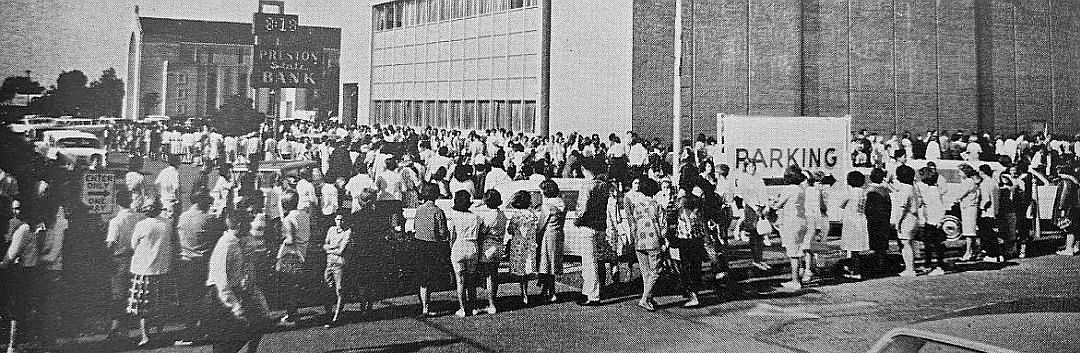
And here’s a photo I’ve never seen: kids lining up to buy tickets. The caption: “The Preston Ticket Agency, a service of the Preston State Bank of Dallas, recently attracted this crowd when the agency was named to handle the exclusive sale of tickets for a September performance in Dallas of the Beatles quartet. Some youngsters stood in line 24 hours before the ticket office opened for business. The Preston Ticket Agency has been in operation since 1963, and last year served over 40,000 customers with tickets to major Dallas entertainment attractions.” (“Dallas” magazine, July 1963)

beatles_preston-tickets_dallas-mag_july-1964-DPL

***

Sources & Notes

Top two performance photos of The Beatles at Memorial Auditorium by Ferd Kaufman (the one of Ringo is GREAT).

Photo of the press conference by John Mazziotta.

Photo of the ticket line is from Dallas magazine — a publication of the Dallas Chamber of Commerce — July 1963, Periodicals Collection, Dallas Public Library.

More photos of the Dallas visit can be seen here.

And a nostalgic look back at the Beatles’ visit can be read in Bonnie Lovell’s entertaining Dallas Morning News essay, “50 Years Ago the Beatles Played Their Only Dallas Concert” (DMN, Sept. 19, 2014) (no longer available online apparently) — Bonnie was there in the thick of it as a Beatle-crazed 13-year-old and was one of the lucky few who had a ticket to the show and got to see the boys shake their mop-tops in person.

*

Copyright © 2014 Paula Bosse. All Rights Reserved.

Dallas’ Frank Lloyd Wright Skyscraper — 1946

frank-lloyd-wright_rogers-lacy_1946-smThe Rogers Lacy Hotel, designed by Frank Lloyd Wright

by Paula Bosse

Feast your eyes on that fantastic skyscraper. That building was *this close* to being built in Dallas. And even though it was designed in 1946 (!), it looks modern enough to fit right in with the city’s celebrated 21st-century skyline.

Frank Lloyd Wright designed this 47-story hotel for millionaire East Texas wildcatter Rogers Lacy, to be built at the southwest corner of Commerce and Ervay, catty-corner from the also fabulous (if not quite so futuristic-looking) Mercantile National Bank Building.

Even though he had a firm distaste for the overly-populated, traffic-clogged, modern American city, Wright jumped at the chance to design a hotel smack dab in the middle of one of the country’s largest and fastest-paced cities. In fact, the Lacy Hotel was one of Wright’s pet projects, and he went all-out in his attempt to convince his wavering client of the merits (both aesthetic and utilitarian) of the multi-million-dollar skyscraper he had, apparently, been dreaming of for decades.

While Wright worked on swaying Lacy in his favor, John Rosenfield — the influential arts critic of The Dallas Morning News — worked on winning over the people of Dallas. Rosenfield really pulled out the stops when writing about the project; his promotion of the proposed hotel (in print as well as behind-the-scenes) was as tireless as it was passionate.

The startlingly new architectural design combined with Wright’s salesmanlike pronouncements on how he had transcended what he saw as the crushing gloom of hotel space caused quite a bit of excitement. Lacy, the Texas oil man with deep pockets, was eventually won over. But a client’s enthusiasm and an architect’s full-bore persuasion can sometimes go only so far. After an initial gung-ho response from the Lacy camp, communication with Wright began to get spotty (causing a freak-out at Taliesin), and plans never really got underway. When Lacy died unexpectedly at the end of 1947, the project was scrapped, and Frank Lloyd Wright’s dream of a soaring glass skyscraper was never realized.

If only we could go back and nudge Rogers Lacy to sign off on this building’s construction. It’s amazing how Wright’s concept here predicted the later glass-clad, atrium-centered architecture that has been a Dallas staple for decades. If Wright’s Lacy building were announced today — even without the weight of Frank Lloyd Wright’s name attached to it — I think news of its construction would, again, be met with excitement.

***

Sources & Notes

The Frank Lloyd Wright drawing of the proposed Rogers Lacy Hotel is from the cover of the Spring 2009 issue of Legacies: A History Journal for Dallas and North Central Texas. Charles T. Marshall’s extremely entertaining article, “Where Dallas Once Stood: Frank Lloyd Wright and the Rogers Lacy Hotel,” is in this issue, and it’s a great read, illustrated with photos of the key players and additional architectural drawings of the hotel; you can read the full article here.

Wright’s biggest champion in Dallas was legendary Dallas Morning News critic John Rosenfield (he and Wright were also personal friends). His articles on the proposed Rogers Lacy hotel appeared in the DMN, including the ones listed below:

  • “Famed Architect Confers on New Dallas Hotel Plans” (DMN, March 28, 1946)
  • “47-Story, Windowless Dallas Hotel Designed by Celebrated Architect” (DMN, July 28, 1946) — Rosenfield’s extensive, soaring description of the planned building
  • “Dallas’ Dream Hotel Soon Coming To Life” (DMN, Aug. 11, 1946)
  • “Wright Bares Lacy Hotel Plans” (DMN, June 22, 1947) — the unveiling to the Dallas public of the final plans (which was accompanied by the images contained in the Legacies article linked above)

*

Copyright © 2014 Paula Bosse. All Rights Reserved.