Flashback : Dallas

A Miscellany: History, Ads, Pop Culture

Category: Military

World War II “Victory Huts” at Parkland

parkland-victory-huts_c1945-utswPhoto: UT Southwestern Library

by Paula Bosse

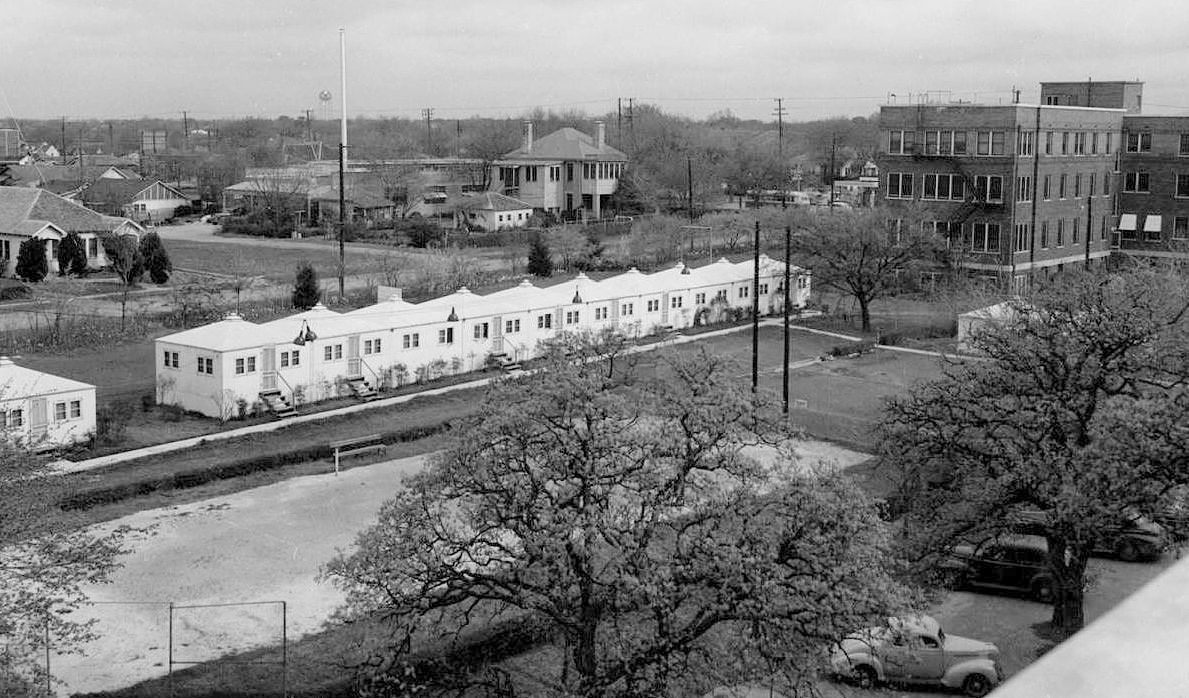
Above are a row of “Victory Huts,” behind the old Parkland Hospital at Maple & Oak Lawn, circa 1945. The description of the photo from the UTSW Library:

“Victory Huts” were prefabricated buildings developed during World War II as a method of providing quick housing for soldiers. The white “Victory Huts” behind the Parkland Nurses’ Home are believed to have been used first as housing for recovering servicemen during World War II, then after the war as housing for nursing students.

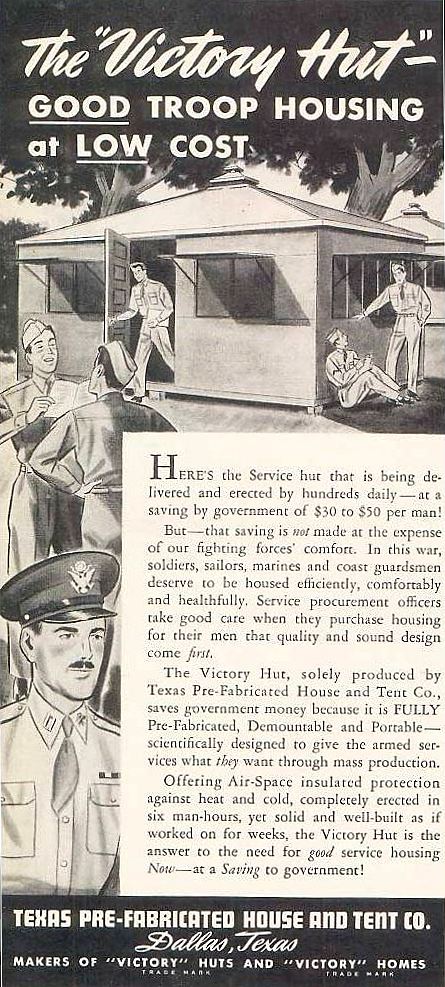
Victory Huts were the brainchild of builder H. F. Pettigrew and wealthy Dallas businessman Winfield Morten. Read about the beginnings of their wildly popular prefab buildings here.

Below, an ad from the Dallas company that manufactured them, Texas Pre-Fabricated House and Tent Co.:

victory-huts_texas-historical-commission_flickr

And, after the war, just add some curtains, a few plants, and a white picket fence.

texas-pre-fabricated-housing-co_southwestern-medical-college_1944-yrbk-ad

***

Sources & Notes

Top photo and quote are from the Parkland Hospital Collection at the UT Southwestern Library, accessible here.

First advertisement from the Flickr stream of the Texas Historical Commission, here. Second ad from the 1944 Southwestern Medical College yearbook.

Victory Huts were widely used during World War II, as cheap housing for military personnel, military families, and as housing in internment camps. See the huts as they were used for Japanese/enemy alien internment camps in Texas, at Camp Kenedy, at Crystal City, and at Dodd Field/Fort Sam Houston.

*

Copyright © 2014 Paula Bosse. All Rights Reserved.

The Margules Family’s Passover Seder

1-passover_djhsClick for larger image (Dallas Jewish Historical Society photo)

by Paula Bosse

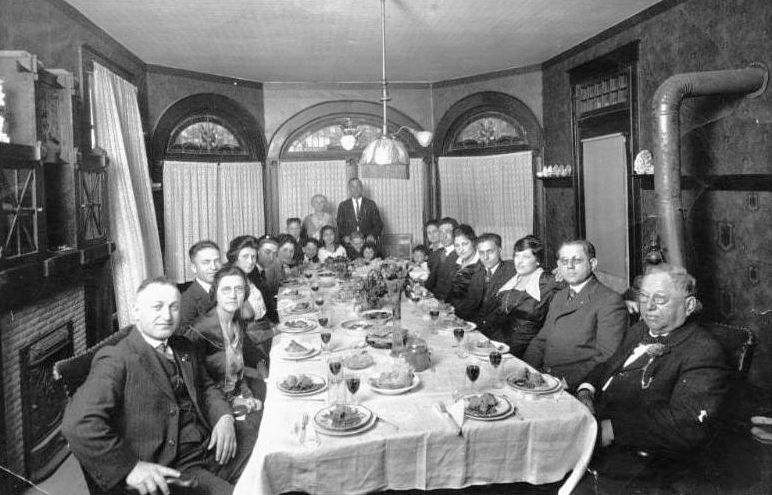
Above, a photograph of Passover seder, probably in the 1920s, taken at the South Dallas home of Sam and Dubbie Margules, with some (or all) of their nine children.

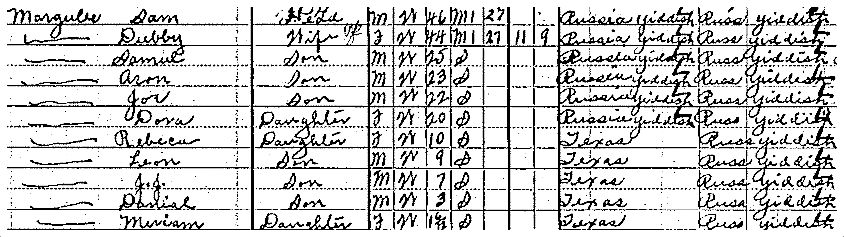
2-margules_census_1910(1910 Census — click for larger image)

Sam Margules immigrated to the United States from Russia in the late 1880s. By the early 1890s he had made his way to Dallas and had begun working in the wholesale produce business. Once settled and on secure financial footing, he sent for his wife and four children (five more would be born in Dallas). In 1915, Sam established his own business, the Independent Fruit Co.

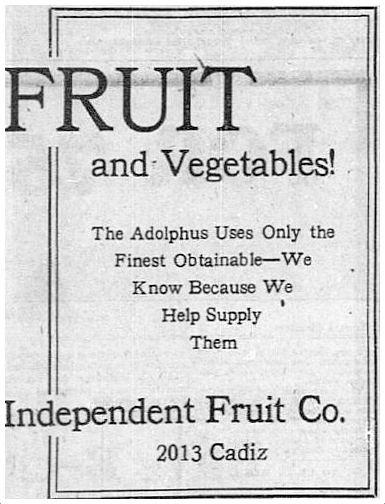
3-margule_ind-fruit-co_dmn_010116(1916)

4-margules_adolphus_dmn_101224(1924)

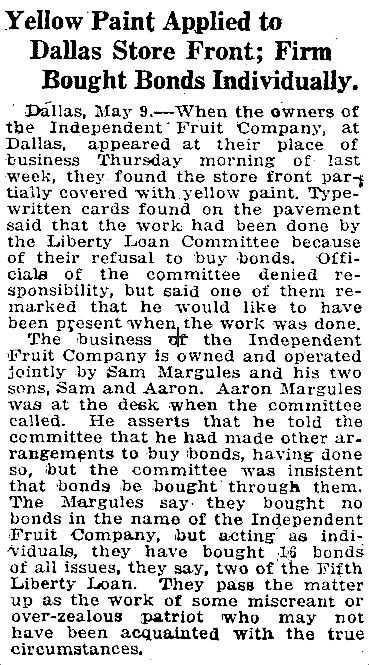
Even thought the Margules family seems to have had a happy and successful life in Dallas, there was one incident that must have been very unsettling for them. In the waning days of World War I, a Chicago trade publication reported an instance of vandalism against the Independent Fruit Co., perpetrated by a thuggish Liberty war bond committee. In what was clearly meant as intimidation, the shakedown “committee” had splashed yellow paint across the Margules storefront in the dead of night, as punishment for what they believed was the family’s refusal to purchase Liberty bonds. These attacks with yellow paint were a common occurrence around the country in those days (as was tarring and feathering!), and they were frequently directed at immigrants, as were nasty accusations that they were “slackers”  (a much-used pejorative at the time meaning “unpatriotic shirker” or even “coward”)

The family seems to have shrugged off the incident, but it must have been a frightening time for them. The Jewish community in Dallas was a large and thriving one, but there was always antisemitism to deal with, and the Ku Klux Klan’s rise to power in the 1920s was particularly difficult for Jews in Dallas. (Click article below to see larger image.)

5-margules_chicago-packer_051019(1919)

Sam Margules died in 1930 at the age of  67, a 40-year resident of Dallas. His wife, Dubbie, died in 1953 at the age of 90, survived by 18 grandchildren and 17 great-grandchildren.

***

Sources & Notes

Photo from the Dallas Jewish Historical Society — the full citation is here.

Ads from The Dallas Morning News.

Article on the yellow paint attack from The Chicago Packer, May 10, 1919.

A passage on other yellow paint attacks on America’s immigrants by Liberty Bond committees can be read here.

A lengthy article on “The Jews Who Built Dallas” by David Ritz  (D Magazine, Nov. 2008) can be read here.

Click top two pictures for larger images.

*

Copyright © 2014 Paula Bosse. All Rights Reserved.


From Deep in the Heart of Texas, I Give You Love Field — 1919

Love is in the air

by Paula Bosse

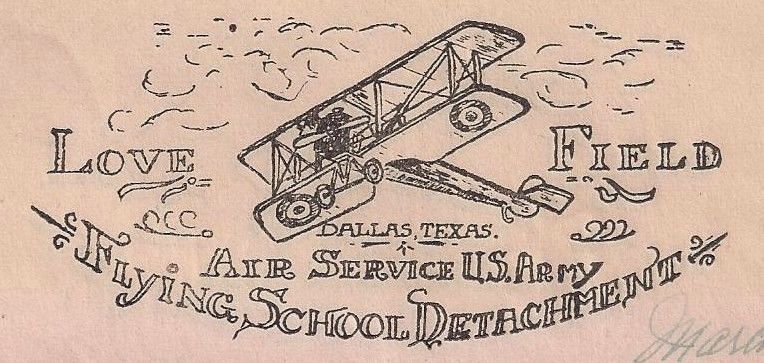
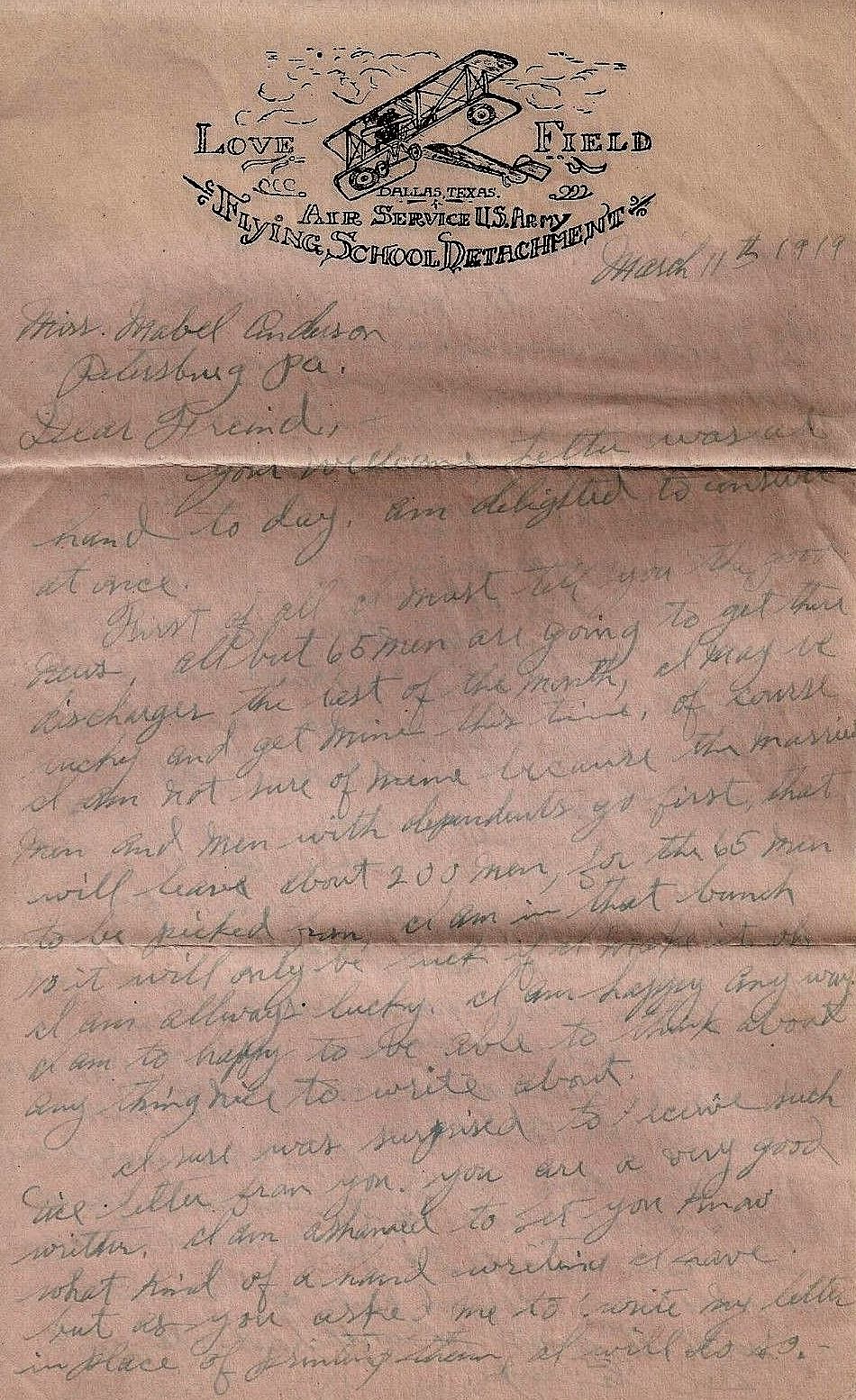
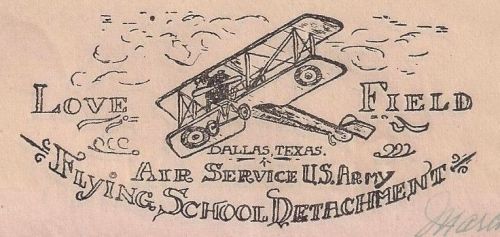
It’s Valentine’s Day — a perfect time to turn to Love Field (…which, like “Lovers Lane,” must sound a little cutesy to outsiders). The above image shows the letterhead of the U.S. Army Air Service Flying School Detachment, a consolidation of World War I squadrons based at Love Field from November 1918 to November 1919.

One of the young pilots stationed there wrote a four-page letter on this stationery. The letter, dated March 11, 1919, was addressed to Miss Mabel Anderson in Petersburg, Pennsylvania. They seem to have begun a sort of pen-pal correspondence, and he is certainly very happy to have received a letter from her. (“Your wellcome [sic] letter was at hand today. Am delighted to answer at once.”) He asks if she would send him a photograph and tells her he’d like to meet her. He says that he is hopeful that, the war finally over, he will be discharged at the end of the month — he thinks he will be because, “I am allways [sic] lucky.”

This is an item for sale on eBay, and only the first page is scanned, so the identity of the author of the letter will remain unknown to those of us merely browsing an auction listing, interested but unwilling to cough up the cash to buy it and read any further. I wonder what happened? If he wanted to meet her, then perhaps he, too, was from Pennsylvania — they might have met when he arrived back home. He certainly sounds excited and hopeful and flirtatious, and he should, because not only was he “allways lucky,” but the long war had finally ended and he was headed home with his whole life ahead of him. Where’s Paul Harvey to tell us the rest of the story?

Happy Valentine’s Day!

***

This four-page letter on Love Field letterhead was recently up for auction on eBay, with the following description: “Letter from airman to a young girl asking for her picture and wanting to meet her. Very early US Army Air Service stationery from Love Field in Dallas Texas. Just after the end of WWI. Scarce Item.”

Here is the first page, with a transcription (spelling corrected) below (click to see a larger image).
love-field_letter_1919

Miss Mabel Anderson
Petersburg, Pa.

Dear friend,

Your welcome letter was at hand today. Am delighted to answer at once.

First of all I must tell you the good news. All but 65 men are going to get their discharges the last of the month. I may be lucky and get mine this time. Of course I am not sure of mine because the married men and men with dependents go first. That will leave about 200 men, for the 65 men to be picked from. I am in that bunch, so it will only be luck if I make it ok. I am always lucky. I am happy anyway. I am too happy to be able to think about anything nice to write about.

I sure was surprised to receive such a nice letter from you. You are a very good writer. I am ashamed to let you know what kind of a handwriting I have, but as you asked me to write my letter in place of printing [it], I will do so.

*

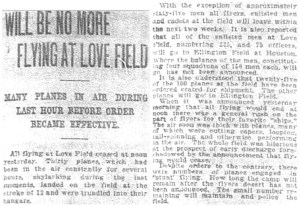
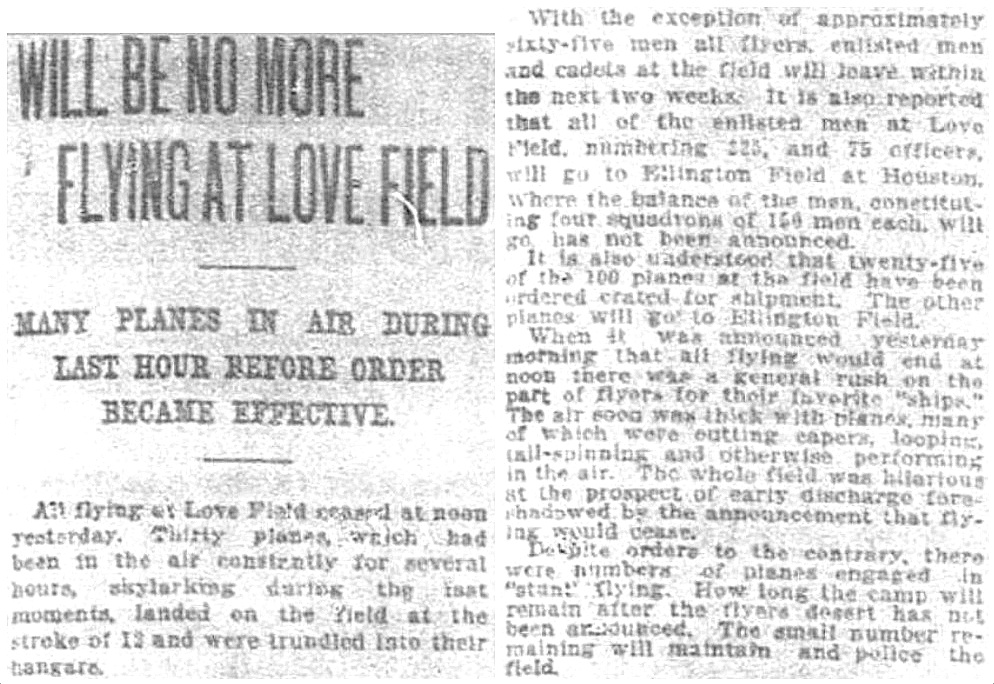
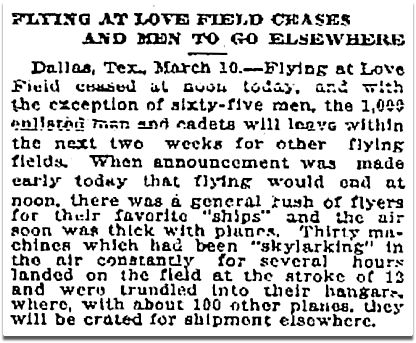
Here are two stories about how the airmen stationed at Love Field responded to the announcement that all flying would cease at noon on March 10, 1919 before demobilization began. It sounds like something from a movie: a sky full of something like 30 airplanes looping and “skylarking,” their pilots celebrating their fast-approaching military discharge by flying their favorite “machines” for the last time.
love-field_galveston-news_031119Galveston News, March 11, 1919

love-field_dmn_031119Dallas Morning News, March 11, 1919 (click for larger image)

*

Copyright © 2014 Paula Bosse. All Rights Reserved.