Flashback : Dallas

A Miscellany: History, Ads, Pop Culture

Category: Highland Park

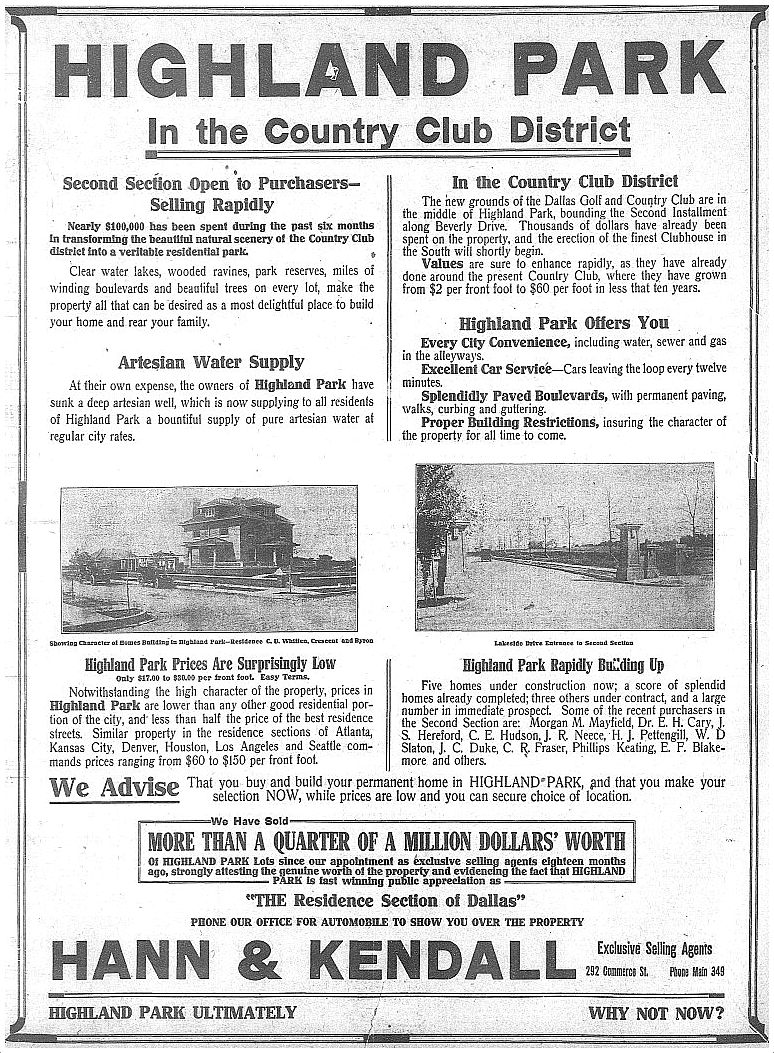
Highland Park: The Ideal Residence Subdivision — 1907

ad-highland-park_072107Ideal!

by Paula Bosse

HIGHLAND PARK
For natural charms it is in a class by itself.
Beautiful lakes, high altitudes, cool breezes.

And the fishing is great!

***

Sources & Notes

Ad from The Dallas Morning News, July 21, 1907.

*

Copyright © 2016 Paula Bosse. All Rights Reserved.

The House at Crescent & Byron, Highland Park

connor-home_cook-colln_degolyerWelcome…

by Paula Bosse

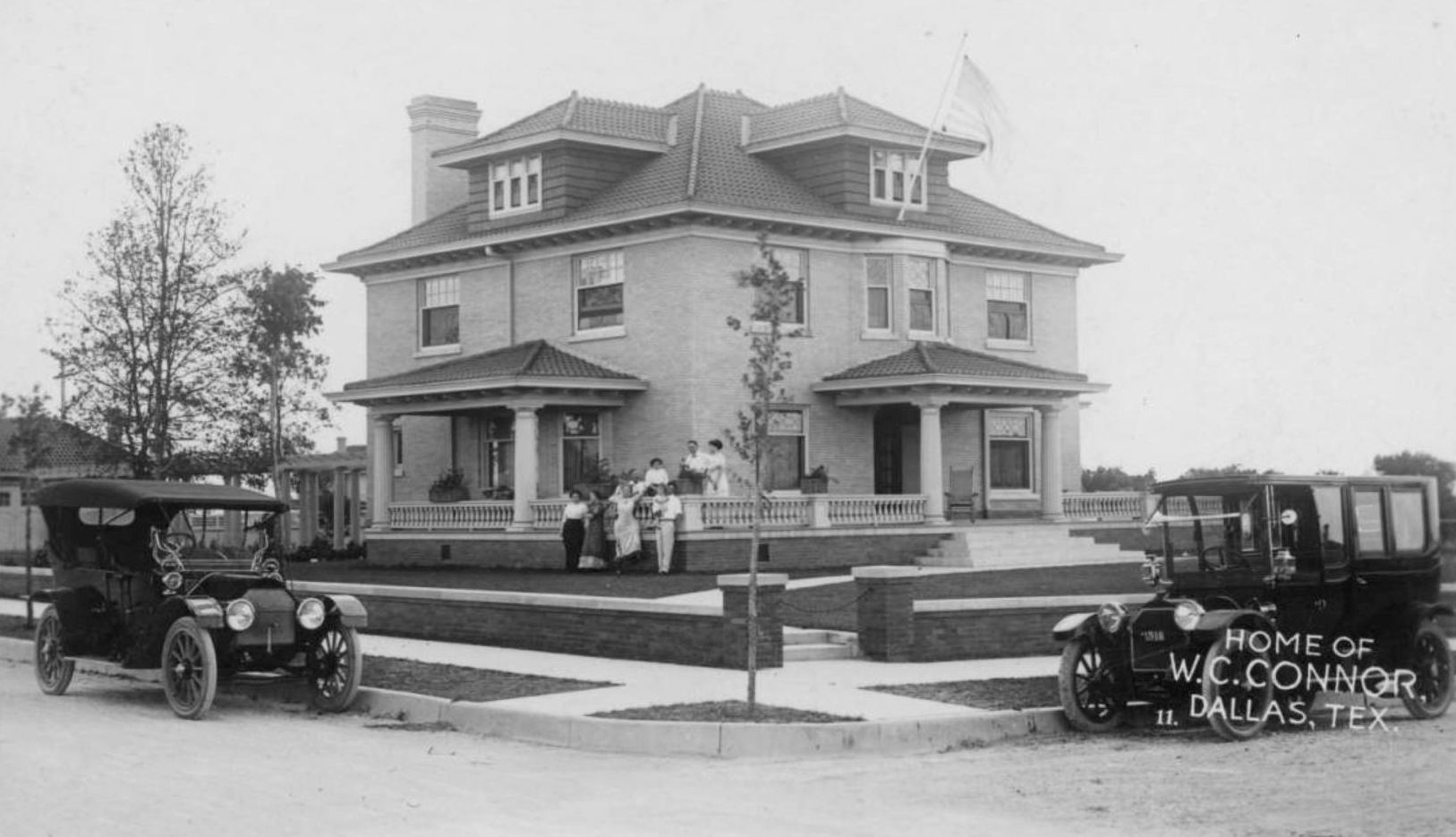
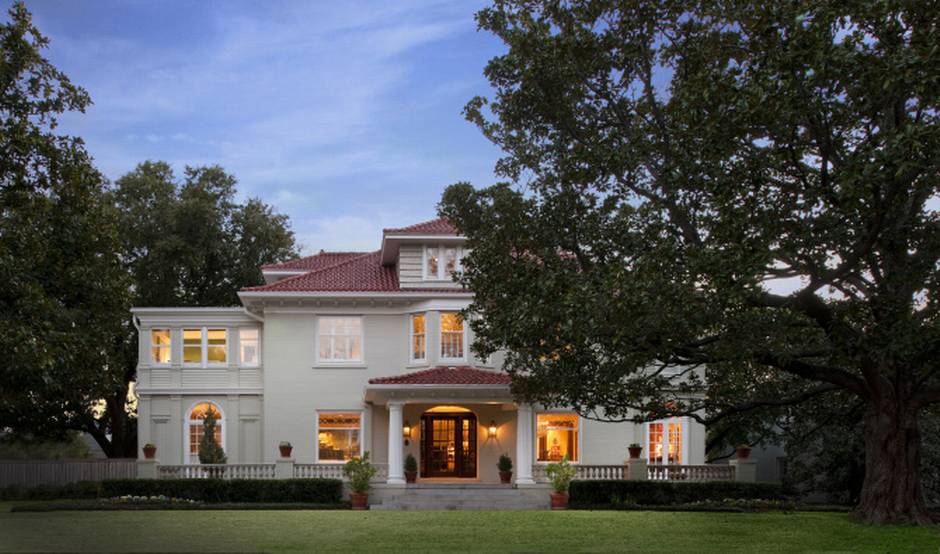
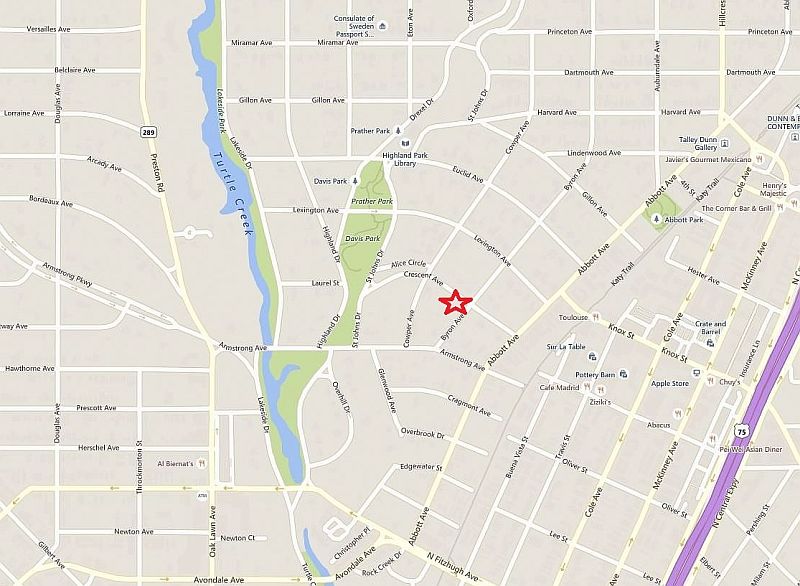
The photo of the house above caught my attention the other day. It’s exactly the sort of house I love, but I couldn’t get a good feel for the part of town it had been in. It took a while to track down, but when I did, I found that it was in Highland Park, at the southwest corner of Crescent and Byron, built about 1910. I had actually been leaning more in the direction of Old East Dallas, because when I think of Highland Park, I tend to imagine that it sprang fully landscaped and jam-packed with trees, even in its earliest days. But more surprising than learning that the house in this photograph was in Highland Park was discovering that it is STILL in Highland Park! It is still standing, and, more exciting, it is still recognizable and largely un-tampered-with! Take a look at it today, here.

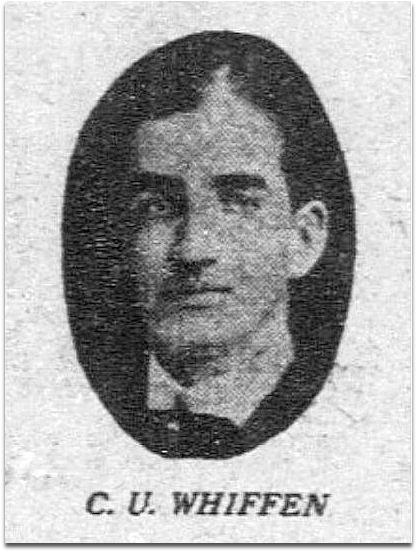
After rummaging around various online databases, I determined that this lovely house was built sometime in 1910 for its first occupants, the C. U. Whiffen family, whose name appeared under a picture of their photogenic house in ads placed by Hann & Kendall, the real estate agents in charge of selling lots for the developers of Highland Park. A photo of the house first showed up in an ad from September, 1910 and was used again in May, 1911. (See the full ads here.)

whiffen_dmn_051411-ad-det

The Whiffen family moved into the house in 1910 from their previous home on McKinney Avenue.

whiffen_dmn_010811-NCR-ad-detCalvin U. Whiffen, seen in an NCR ad, DMN, Jan. 8, 1911

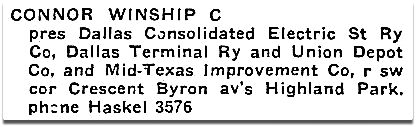
whiffen_1911-directory1911 city directory

Whiffen had interests in a couple of different businesses but was primarily associated with NCR, the National Cash Register company. When Whiffen was transferred to Los Angeles by NCR, he sold the house to former Dallas mayor W. C. Connor for $18,000 (a little under $500,000 in today’s  money).

connor_whiffen_dmn_122211DMN, Dec. 21, 1911

connor_1912-directory
1912 city directory

Winship C. Connor (also widely known as “Bud” Connor) was an interesting man whose contributions to the city were extremely important in its becoming a major metropolitan area. Not only did he serve multiple terms as mayor of Dallas (from 1887 to 1894), but, among other accomplishments, he also built the first waterworks system, the first streetcar line, and the first electric light plant. In later years, he presided over several companies, including the Consolidated Electric Street Railway Co.

connor_fuel-oil-journal_oct-1915Connor, pictured in the Fuel Oil journal, Oct. 1915

Connor moved from the house on Crescent Avenue to a house on Miramar in 1918 or 1919, and, in 1921, he died, at the age of 73. The top photo of the house was taken sometime between 1912 and 1919. He can be seen with his family, sitting on the porch, in this detail.

connor-home_cook-colln_degolyer-det1

The house has had very few owners throughout its 106 years. In one of those odd, happy coincidences, I’ve just discovered that one of those owners was Edward L. Wilson, Jr. (1920-2011). Ed Wilson was an engineer who had his office in a small building (now razed) on Maple Avenue, next door to the Stoneleigh Hotel. He leased out the ground floor to my father who ran The Aldredge Book Store there for over 20 years. Mr. Wilson was a man of few words, but very, very nice and an understanding landlord. I’m happy to learn that he and his family lived in this beautiful house for several years.

Here it is today.

crescent_dmn_032913DMN, Mar. 29, 2013

***

Sources & Notes

Top photo, titled “Home of W. C. Connor, Dallas, Tex.,” is from the George W. Cook Dallas/Texas Image Collection, DeGolyer Library, Central University Libraries, Southern Methodist University; it can be viewed here.

See inside this house in a Dallas Morning News video, here (for some reason, I am unable to view this video on my computer, but I can watch it on my phone). The house was a featured stop on a Highland Park Centennial celebration tour of homes in 2013. More photos of the house today can be seen on Douglas Newby’s Architecturally Significant Homes page, here.

Where is it?

crescent-byron_bing
Bing Maps

W. C. Connor was a man of great accomplishment — his Dallas Morning News obituary (Aug. 6, 1921) is here; his citation in A History of Greater Dallas and Vicinity is here; his Wikipedia page, here.

*

Copyright © 2016 Paula Bosse. All Rights Reserved.

“The Trend is Highland Parkward”– 1909-1911

lakeside_dmn_092510Lakeside Drive, 1910 (click for larger image)

by Paula Bosse

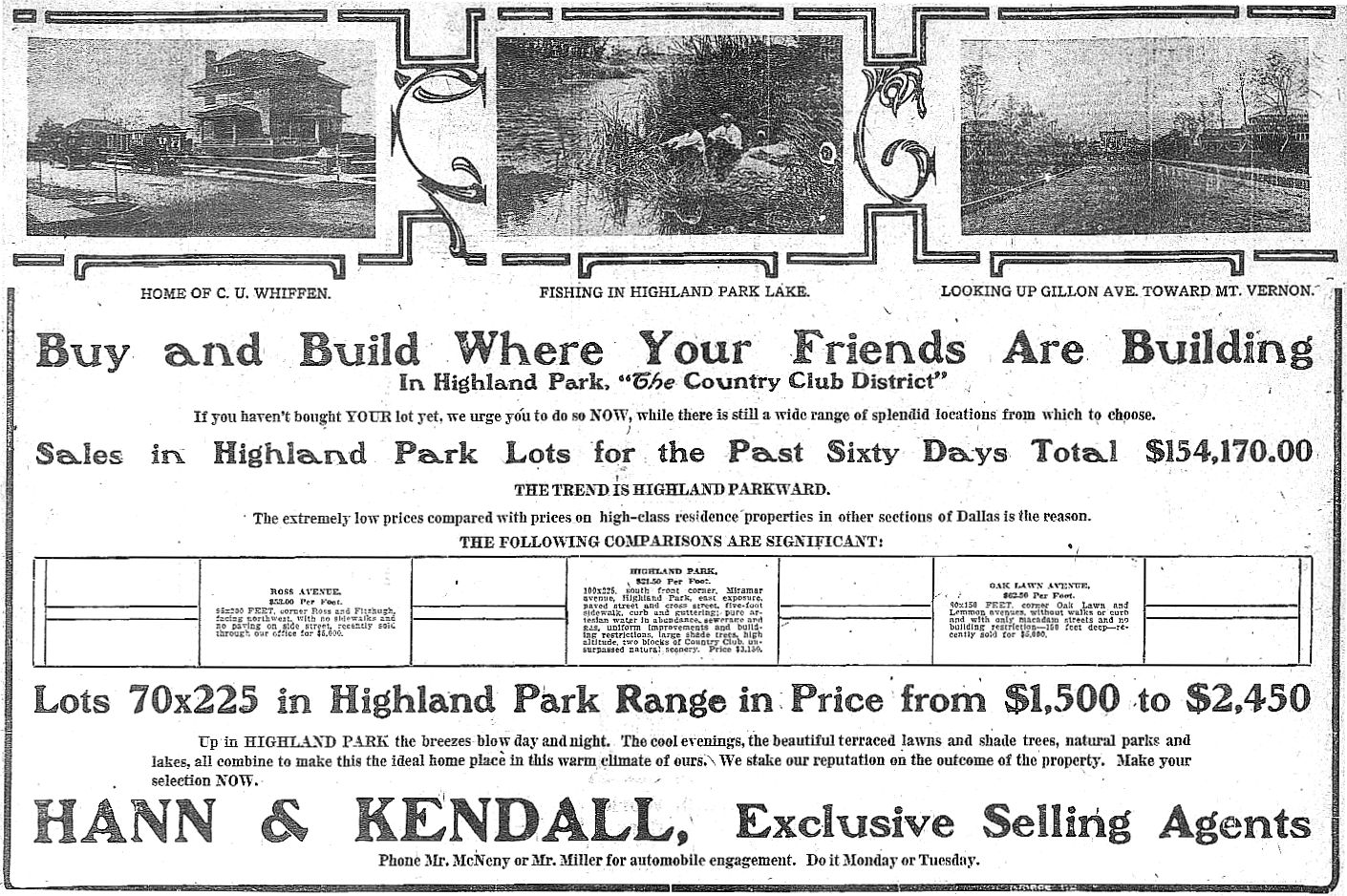
Three early Hann & Kimball Highland Park real estate ads urging people to “Buy and Build Where Your Friends Are Building, In Highland Park, ‘THE Country Club District’!” (Click to see larger images.)

highland-park_second-installment_dmn_070409Dallas Morning News, July 4, 1909

*

“Highland Park Ultimately. Why Not Now?”

ad-highland-park_dmn_092510
DMN, Sept. 25, 1910

*

“Up in Highland Park the breezes blow day and night. The cool evenings, the beautiful terraced lawns and shade trees, natural parks and lakes, all combine to make this the ideal home place in this warm climate of ours. We stake our reputation on the outcome of the property. Make your selection NOW.”

highland-park_dmn_051411_ad
DMN, May 14, 1911

The hard-to-read “significant comparison” text from the middle of the ad above:

ad-highland-park_dmn_051411-det1

ad-highland-park_dmn_051411-det

ad-highland-park_dmn_051411-det3

*

Is this the same view as seen in the top photo showing “Lakeside Drive Entrance to Second Section” (off Armstrong)?

lakeside_armstrong-google
Google Street View

Hope your forebears didn’t miss out! (Mine did!)

***

Sources & Notes

Read more about the C. U. Whiffen house featured in both the 1910 and 1911 ads here. I’m happy to report the lovely house at Crescent and Byron is still standing.

Click pictures for larger images!

*

Copyright © 2016 Paula Bosse. All Rights Reserved.


Highland Park Village — The Original Model

hp-village_model_gallowayDallas’ most exclusive shopping destination

by Paula Bosse

The model of the Highland Park Shopping Village (“9 Acres of Property”) was, for many years, on display in the sales office of the Flippen-Prather Realty Co., the company that developed Highland Park and this beautiful shopping “village.” (I’m not sure where this photo was taken — it looks like a Flippen-Prather promotional table set up in an exhibition space of some sort.) Construction began on the shopping area in early 1930 and took several years to complete. The architects were Dallas’ Fooshee & Cheek.

Below, a slightly closer look at this cool model, complete with little cars (but no little people…).

hp-village-model_galloway-det

***

Sources & Notes

The photo (credited to the collection of Hugh Prather, Jr.) is from the really wonderful book The Park Cities, A Photohistory by Diane Galloway (Dallas: Diane Galloway, 1989). (This is an essential book for anyone interested in historic photos of Dallas and the Park Cities. If you come across a copy priced under $30.00, snap it up!)

More on the Highland Park Village of today can be found here.

*

Copyright © 2016 Paula Bosse. All Rights Reserved.

Celebrate the Pecan Tree’s 150th Christmas!

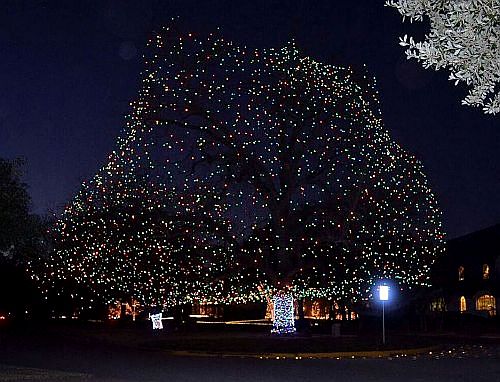
pecan-tree_bigOur beautiful Pecan Tree! (click for larger image)

by Paula Bosse

Ever since I realized that 2015 was the sesquicentennial for what may the world’s most famous pecan tree, I’d planned to do a nice post worthy of such an occasion. Except that, as usual, time seems to be slipping away from me, and I have time today to post only a few photos of one of my very favorite local landmarks.

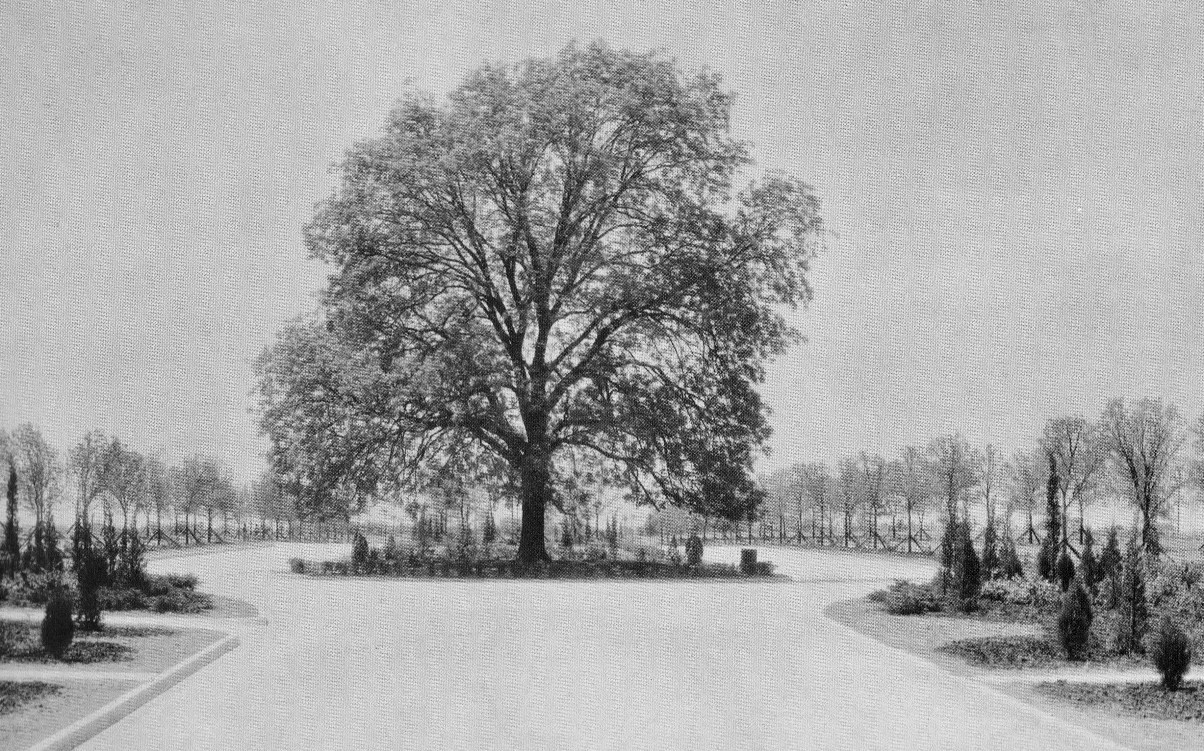
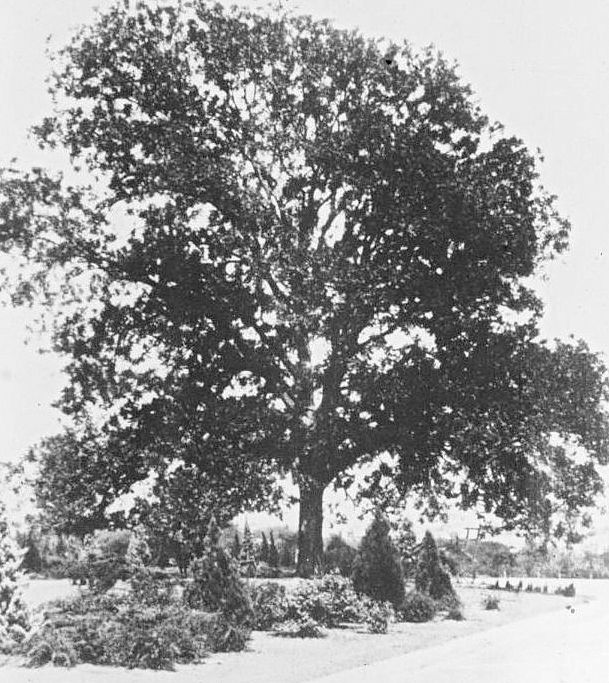
The pecan tree — or, the Pecan Tree (it deserves to be capitalized) — is in Highland Park on Armstrong Parkway at Preston Road, and if you grew up in the Dallas area, driving past the huge tree decorated with lights is an annual Christmas ritual. I remember when I was going through my sullen teen years how I always rolled my eyes when my parents said we were going to go see the Pecan Tree — but when we got to the tree and saw it … it was just wonderful.

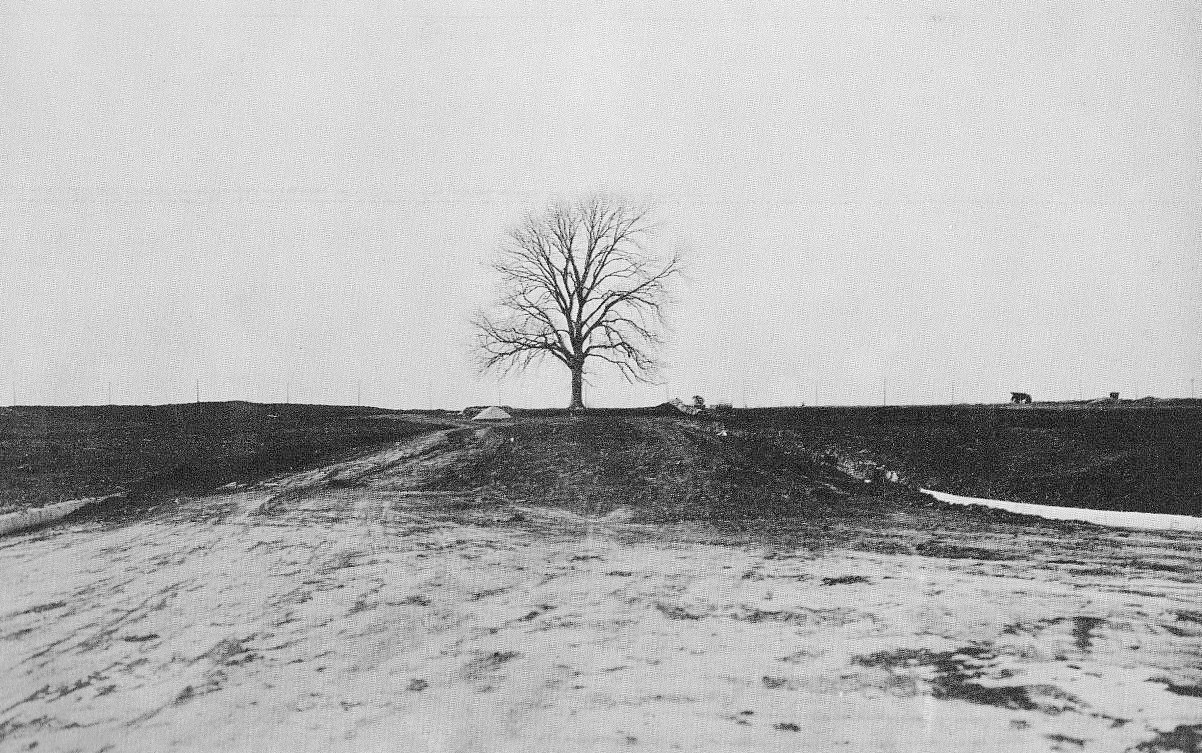
The tree began life in 1865 (!) as a sprout in the middle of a cornfield owned by the Coles, one of Dallas’ pioneer families. In October of that year, young Joe Cole, just returned from the Civil War, was working the field and discovered the little plant in a furrow, crushed under the wheels of his wagon. The story goes that Joe, still overwhelmed from the horrors of war, got out of his wagon and replanted the sprig, taking pains over the years to make sure it grew into a large healthy tree. And it did.

I discovered recently that the very first house I lived in was Joe’s old farmhouse, part of which, somehow, was still standing across from North Dallas High School into the 1980s. I’ve always felt a kinship with that tree, and it’s nice to know that my very first home was the home of the man responsible for the tree that has given so much pleasure to so many people. Thank you, Joe!

Below, a short, six-and-a-half-minute film about the history of the tree, produced by KERA: “Million Dollar Monarch,” directed by Rob Tranchin.

*
pecan-tree_small

pecan-tree_degolyer-lib_c1909
1909 (via DeGolyer Library, SMU)

pecan-tree_lee-hite
Photo by Lee Hite

**

UPDATE: Sadly, the Pecan Tree did not make it to its 154th Christmas. The Highland Park landmark was cut down in October, 2019, a victim of age and disease. The nearby “sister tree,” which was grafted from the older tree in the 1950s, has taken its place on center stage. Several articles on this sad development can be read on the Park Cities People website here.

***

Sources & Notes

First two photos were reproduced as promotional postcards by the Park Cities Bank in the 1970s; thanks to the Lone Star Library Annex for allowing me to use these images. Source of other photos as noted.

Read about the tree on the Highland Park website, here.

More about the history of the tree can be found in a 1933 article from The Dallas Morning News, with memories from the then-92-year-old Joseph Cole: “Million-Dollar Tree of Dallas, Big Pecan Centering Parkway, Set Up by Hand of Man Now 92” (DMN, March 5, 1933).

A 2012 report on the aging tree can be found in a Dallas Morning News article by Melissa Repko, here.

This famed Pecan Tree was planted in the fall of 1865, which would make this its 150th anniversary. I haven’t seen any mention of this. I know the tree has been in bad shape at times throughout the years, but I’m pretty sure it’s still standing. I haven’t seen the tree this year, but it was still looking pretty impressive last year. Happy 150th, Pecan Tree!

Click photos for larger images.

*

Copyright © 2015 Paula Bosse. All Rights Reserved.


An Afternoon Outing with SMU Frat Boys & Their Dates — 1917

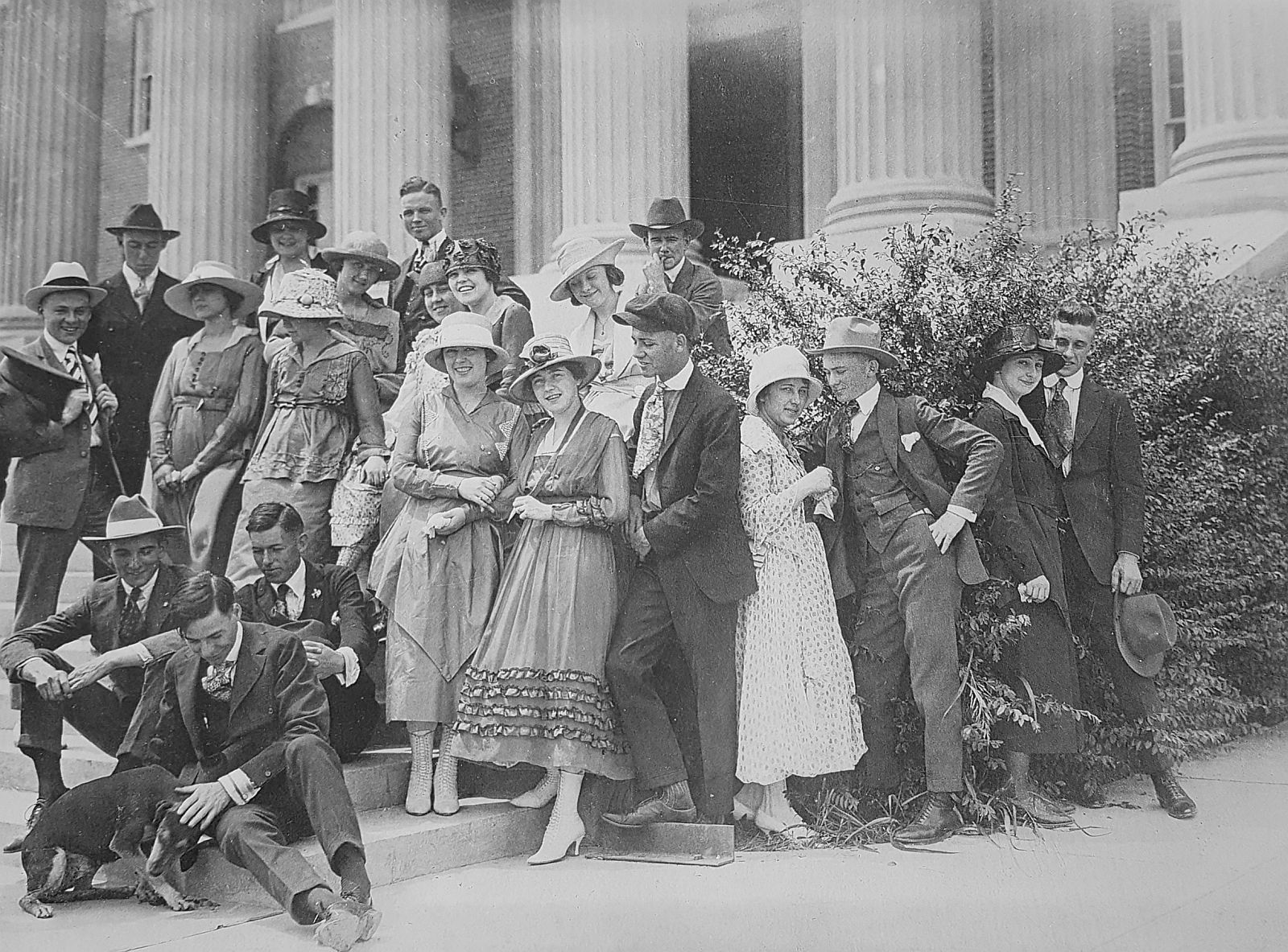
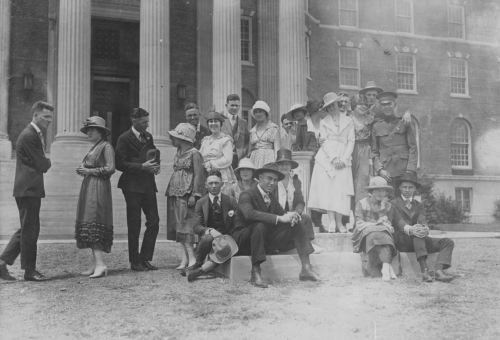
smu_omega-phi_dallas-hall_1917_degolyerCampus couples, 1917

by Paula Bosse

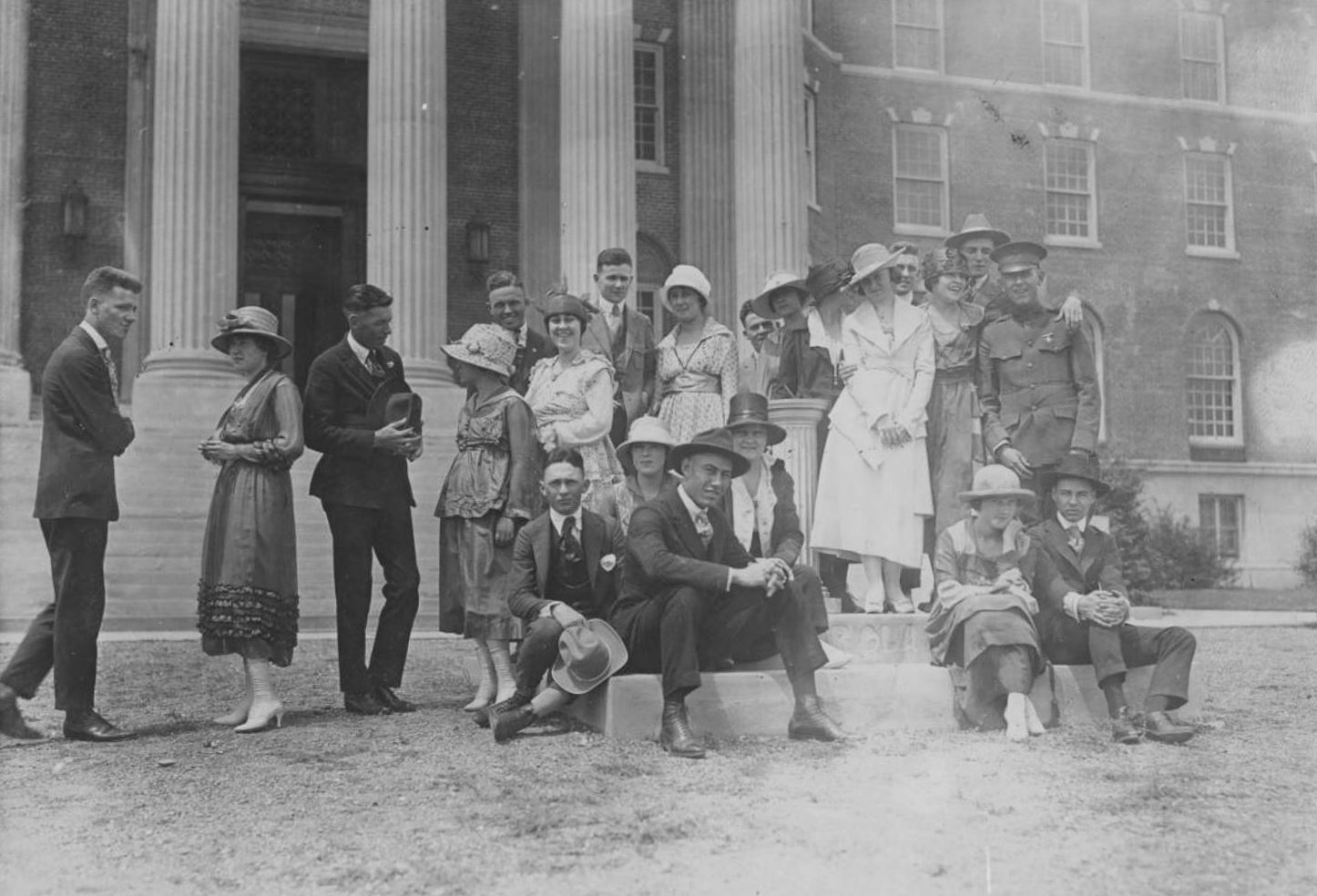
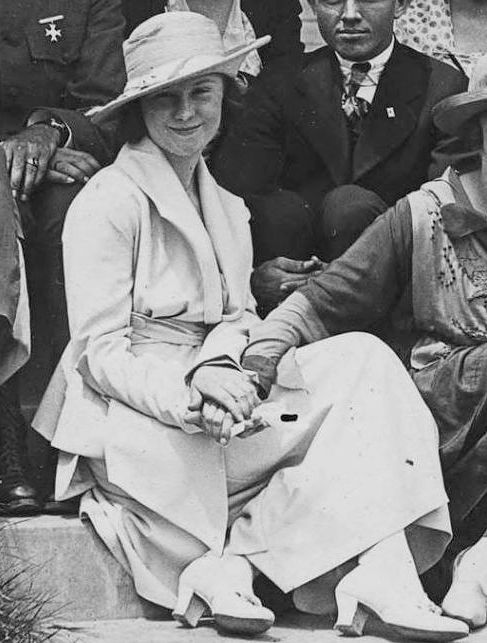
I came across three wonderful World War One-era photos in the SMU archives while I was looking for something else. You know how you can become enthralled by the charm of old photos and sit for long stretches of time staring at every little detail and wondering about the lives of the unidentified people who populate them? That happened to me with these. There is one particular young woman who stands out more than anyone else. Not only is she the best-dressed person in the photos, she also seems calm, collected, and serene. She looks friendly. She was probably very pleasant to have around.

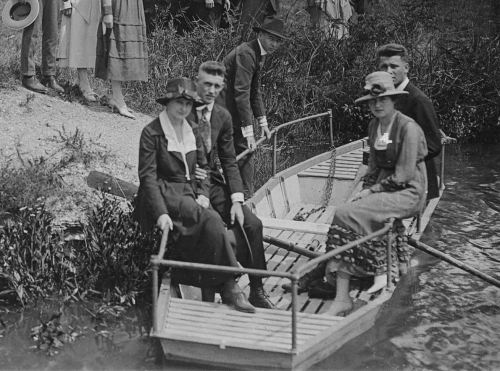
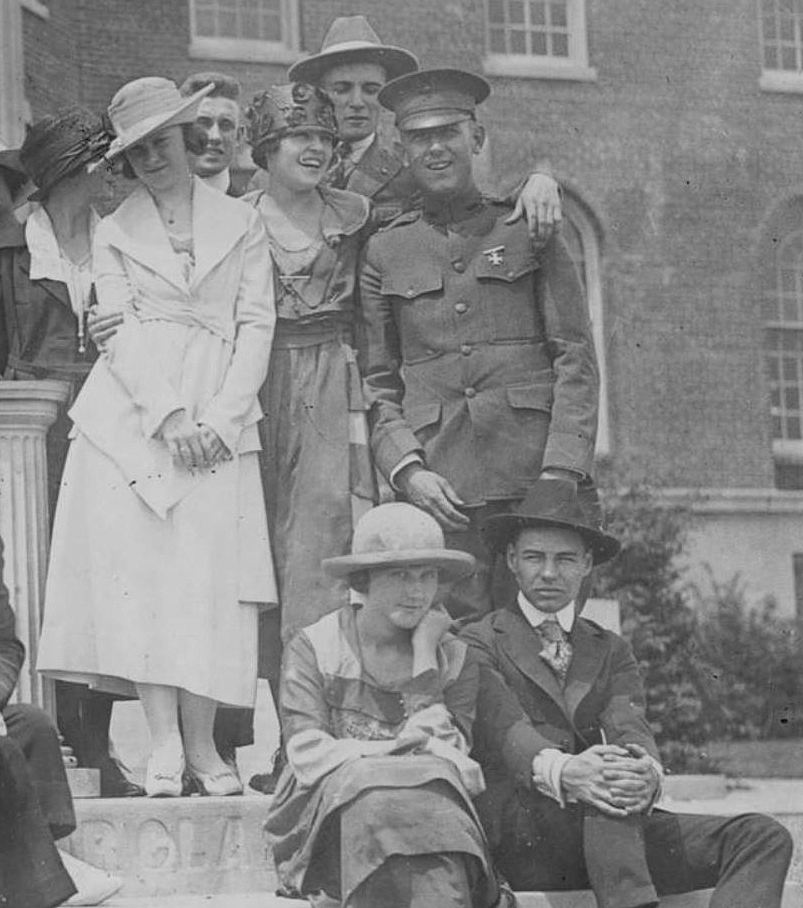
These three photographs show a group of ten young couples and a pair of chaperones spending a beautiful sunny day together, with the highlight of the day being a trip to Highland Park’s Exall Lake. The men are SMU students, identified only as members of the Omega Phi fraternity. The women are identified merely as “dates,” but I’m sure that some of them were also SMU students. The photograph above shows the crowd gathered on campus in front of Dallas Hall. The woman in white looks like she’s on a pedestal, glowing in a spotlight. Below, a closer look at her stylish outfit (as well as a look at the young be-medaled WWI soldier next to her).
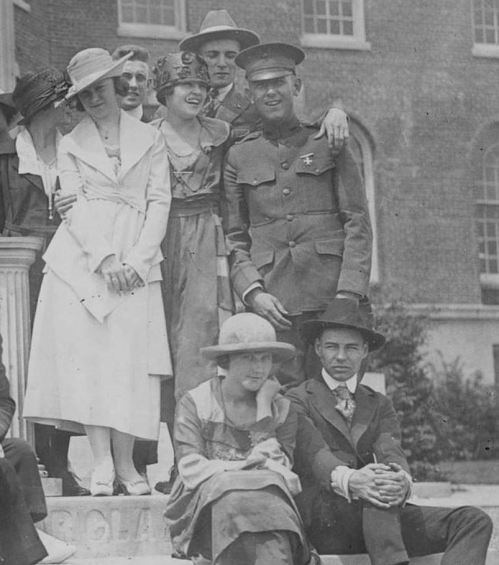
smu_omega-phi_dallas-hall_1917_degolyer-det1

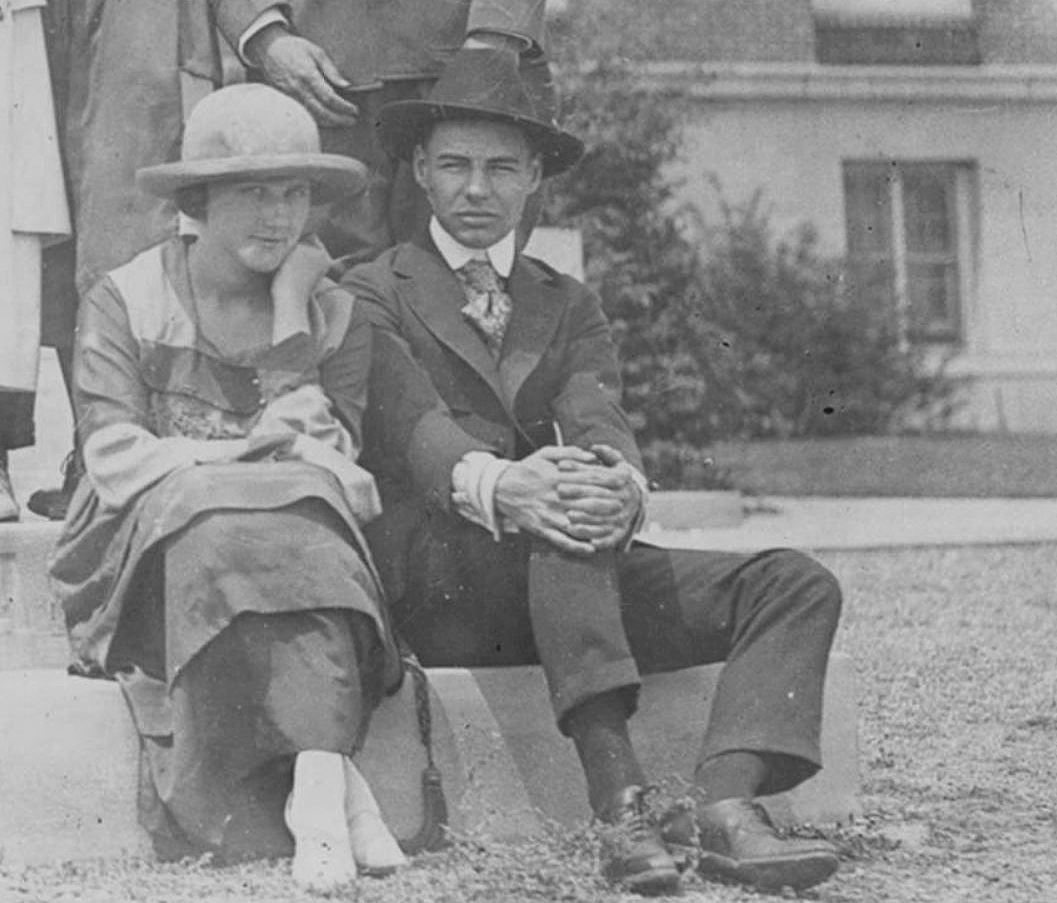
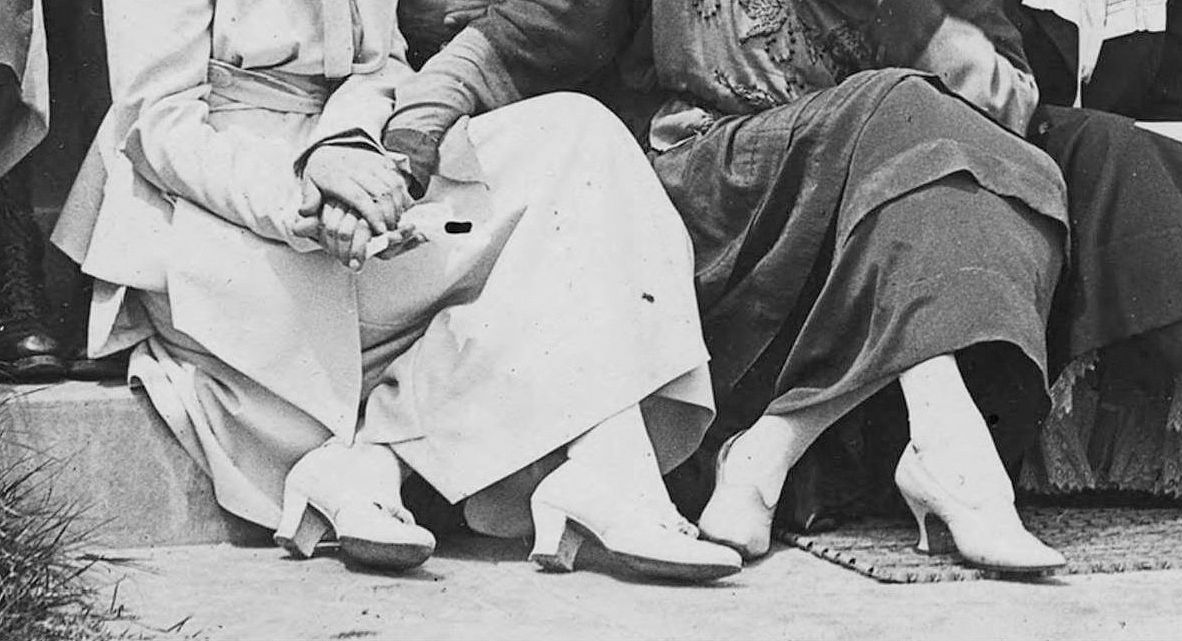
And, below, a similar detail, but this one showing the daintily crossed ankles of another pretty girl, seated beside a sour-looking companion.
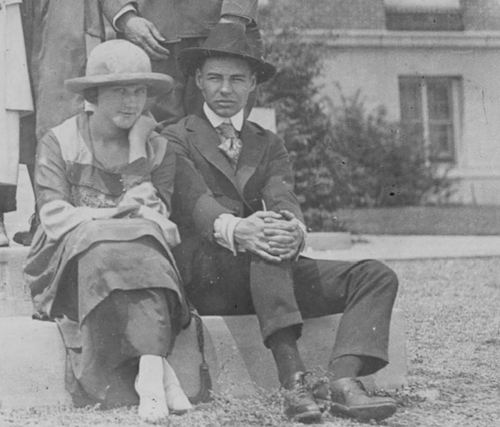
smu_omega-phi_dallas-hall_1917_degolyer-det2

And here’s the gang on the idyllic banks of Exall Lake. Diane Galloway included this photograph in her book The Park Cities, A Photohistory with this caption:

At one time a bridge crossed Exall Lake near the Cary house, shown in the distance. The photographer was standing on the bridge to capture this picture of well-dressed SMU students going boating on the lake. A trip to Lakeside Drive was one of the few off-campus excursions permitted in 1917.

I love this photo. If I didn’t know what the Turtle Creek area looked like, I’d be hard-pressed to identify this as Dallas!
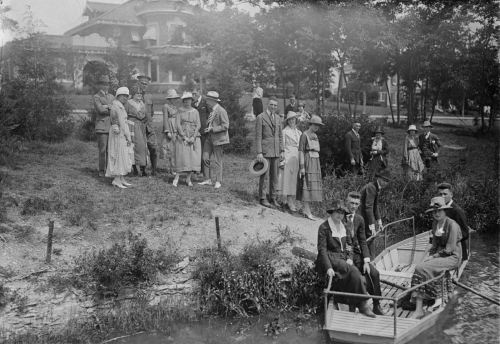
smu_omega-phi_exall-lake_1917_degolyer

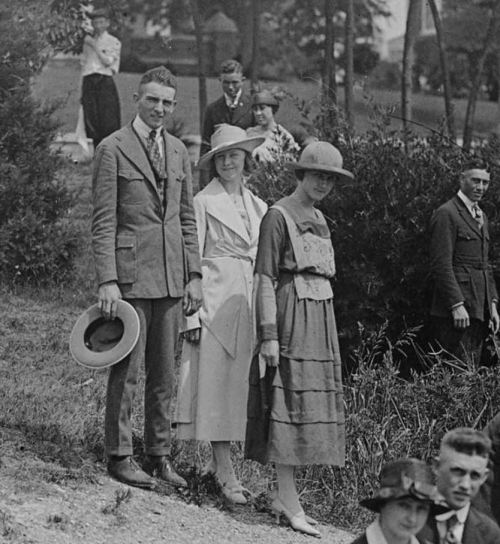
Here’s a close-up of the beatific, smiling woman in white. I like the kid lurking in the background.
smu_omega-phi_exall-lake_1917_degolyer-det1

And the boat.

smu_omega-phi_exall-lake_1917_degolyer-det2

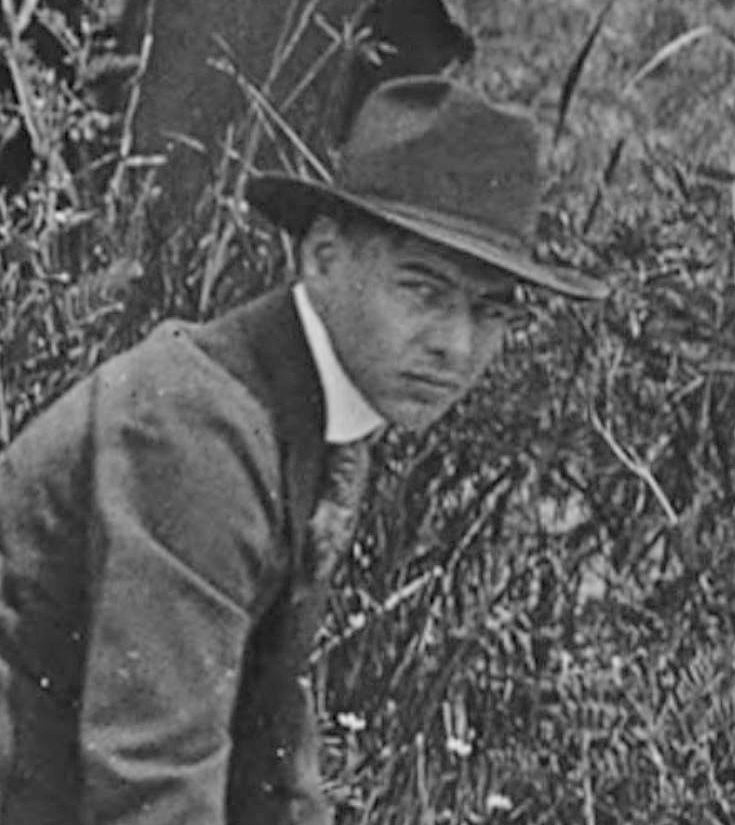
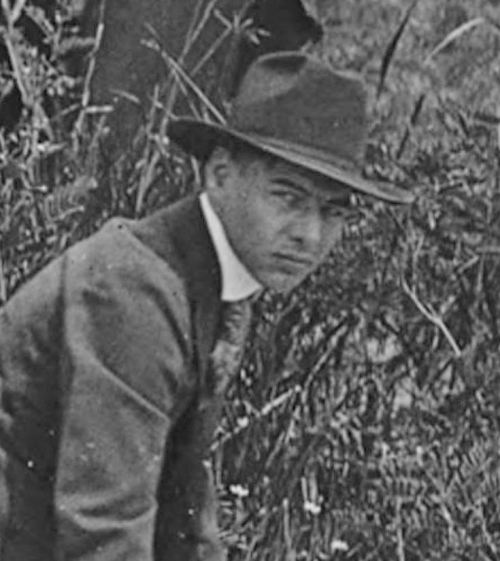
And the sour-looking guy again, looking even more annoyed than before.
smu_omega-phi_exall-lake_1917_degolyer-det3

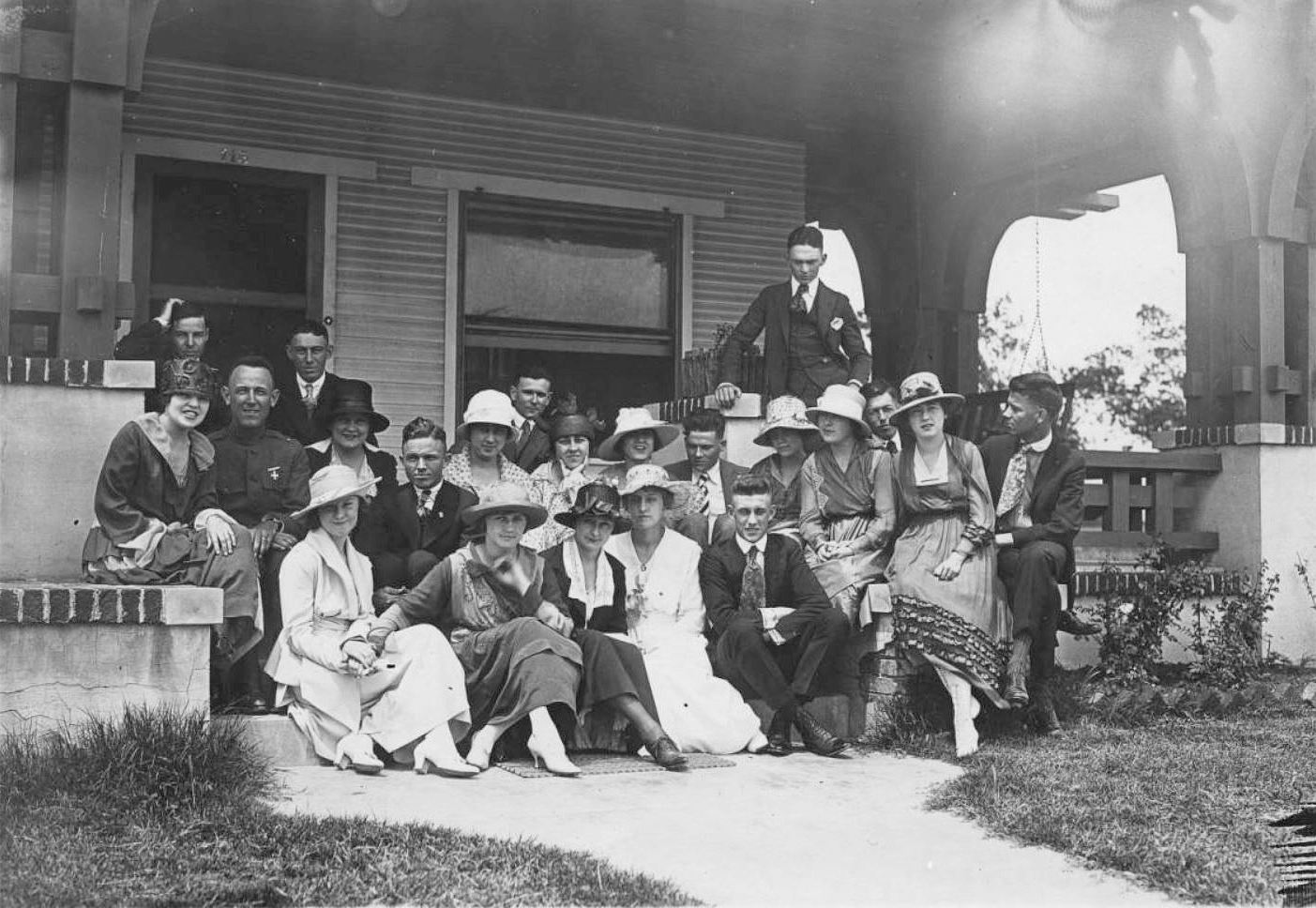
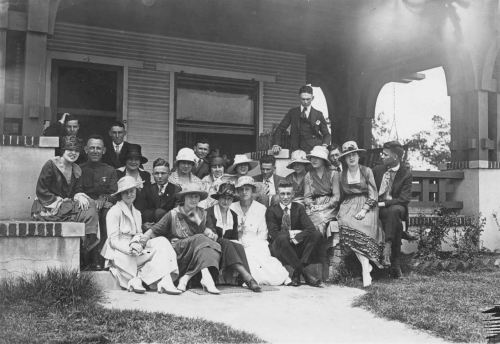
And here’s the crowd sitting on the steps of the frat house (which was located at Haynie and Hillcrest). The personnel has changed a little bit (they gained a woman and lost a man), but (almost) everyone seems pretty happy.
smu_omega-phi_porch_1917_degolyer

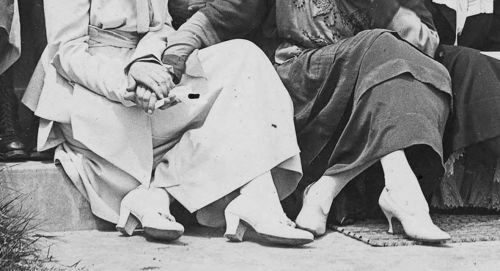
And, below, my very favorite detail from these three photos.
smu_omega-phi_porch_1917_degolyer-det1

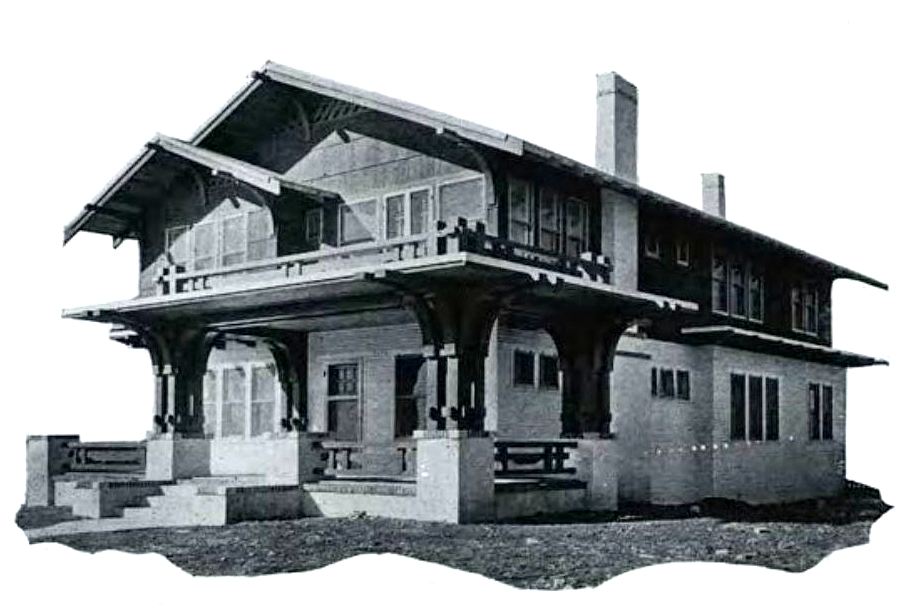
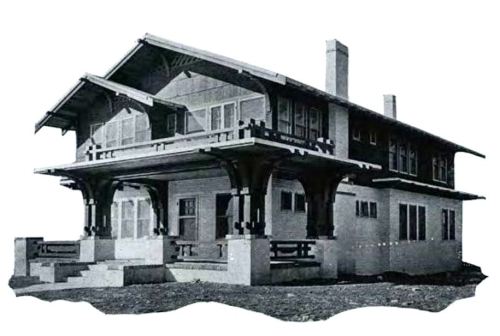
After a bit of sleuthing, I found a picture of the house at the time these photos were taken. It was actually a residence which was, I think, being rented out to the small group of Omega Phis. They had a proper fraternity house built several years later.
omega-phi-house_rotunda_1917

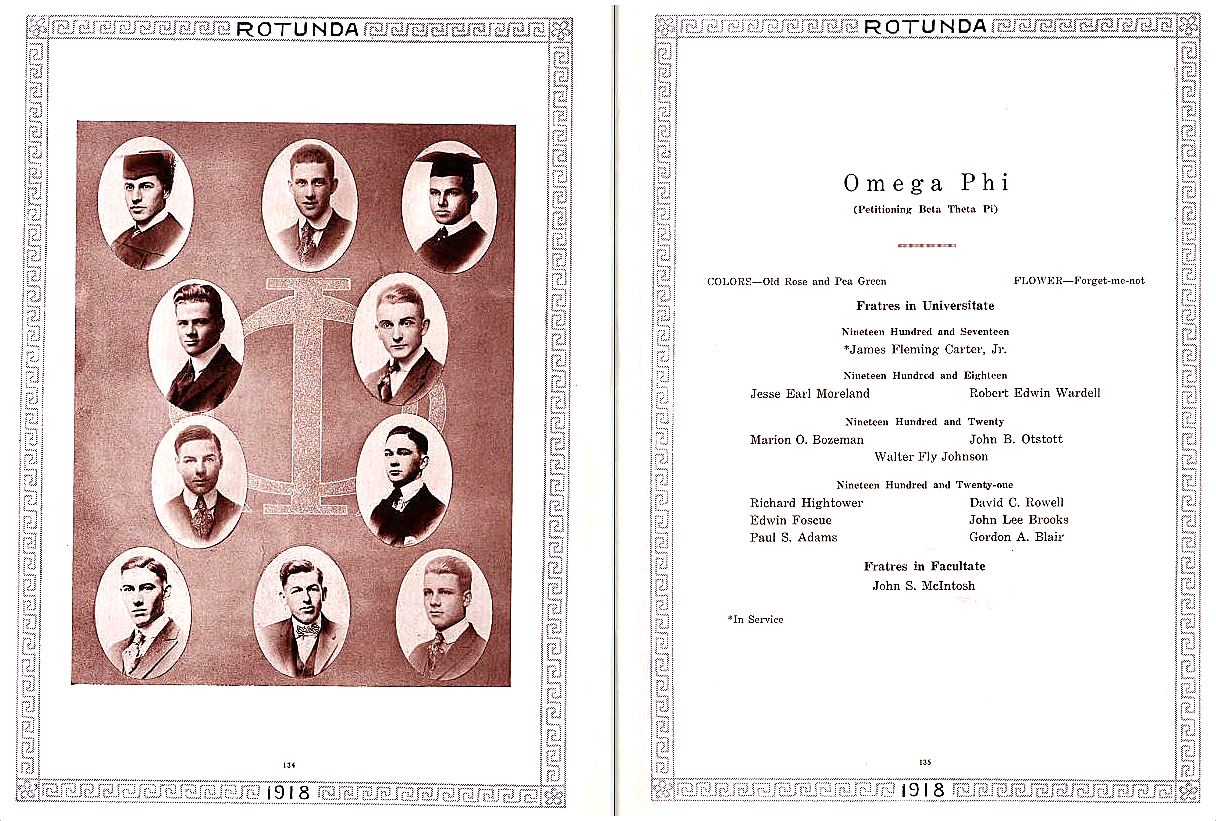
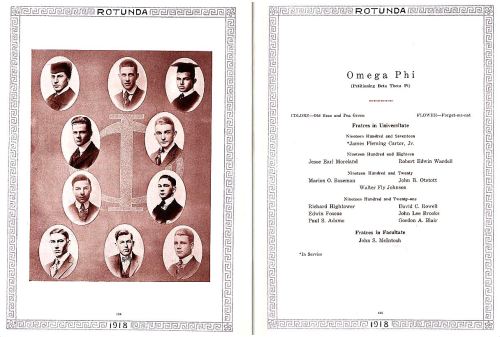
The top photo had “1917” written on the back, so I checked SMU’s Rotunda yearbooks from around that time. Here’s a look at the men who were members of Omega Phi in 1918. Several of these faces match the ones in the photos of the afternoon outing.
omega-phi_rotunda-1918

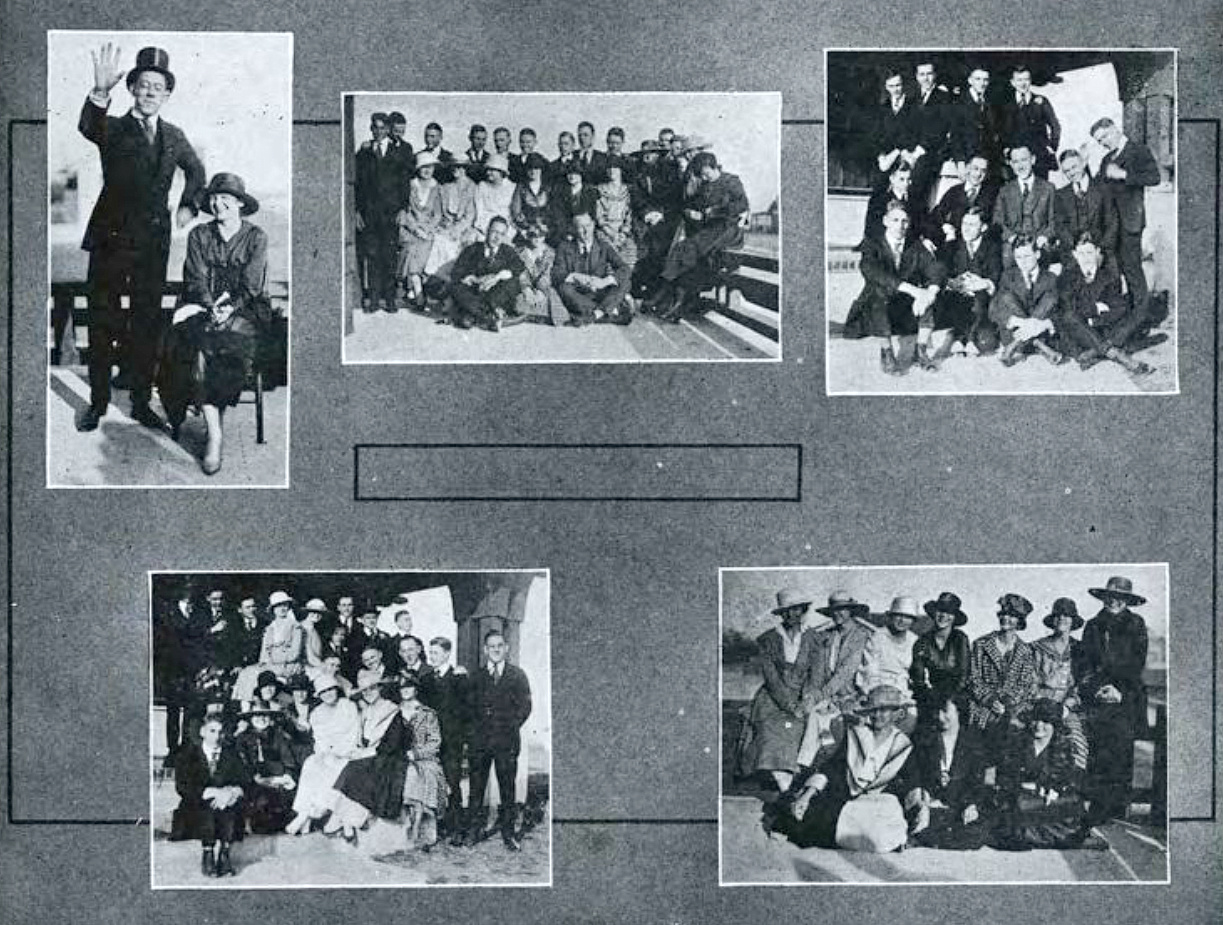
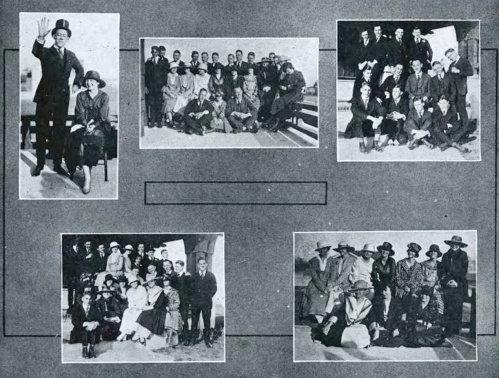
And, below, a photo collage from the Omega Phi page of the 1917 Rotunda. Several of the women look familiar. I see the Woman in White in at least one of these snapshots.
omega-phi_photos_rotunda_1917

And here she is, close up. I hope she was as happy, intelligent, and confident in her real life as she appears to be in these photos.
smu_omega-phi_porch_1917_degolyer-det2

***

Sources & Notes

The three photos of the afternoon outing all come from the collection of the DeGolyer Library, Central University Libraries, Southern Methodist University:

  • “Omega Phi Fraternity members and their dates in front of Dallas Hall” is here.
  • “Omega Phi Fraternity member outing to Exall Lake” is here.
  • “Omega Phi Fraternity members and their dates on porch” is here.

The quote from Diane Galloway comes from her FANTASTIC book, The Park Cities, A Photohistory (Dallas: Diane Galloway, 1989), p. 24.

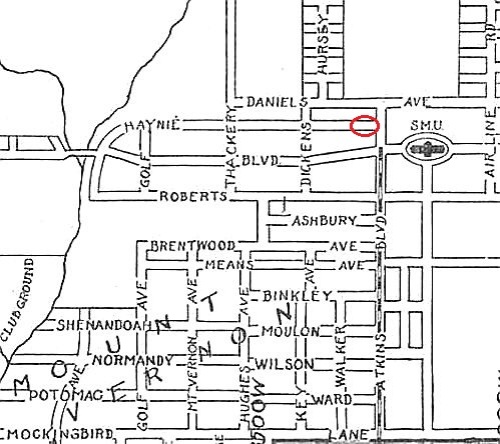
The ersatz Omega Phi fraternity house was located at 115 Haynie Avenue, just west of Atkins (now Hillcrest). (The photo of the exterior of the house is from the 1917 SMU Rotunda yearbook.)
omega-phi_map_19191919 map (detail), Portal to Texas History

I have absolutely no idea how college fraternities work, but it seems that when they formed on the SMU campus in 1915, the Omega Phi group was not actually affiliated with a national fraternity. They “petitioned” to be chartered by national groups, but they finally stopped trying after 11 years of, I guess, being repeatedly turned down — in 1926 they declared themselves to be an “independent society.” But one year later, they were granted a charter by the national Kappa Sigma fraternity. In the Dallas Morning News article announcing the news, this sentence was included: “The local chapter will be known as Delta Pi chapter.” I have no idea what any of that means, but if you’re really into these things, read the DMN article “Kappa Sigmas Grant Charter” (Sept. 26, 1927), here.

As for the identities of the women in the photos, it’s a mystery. I would assume, though, that at least some of them were the women mentioned in this little article about a cozy winter get-together at the Haynie Ave. house:
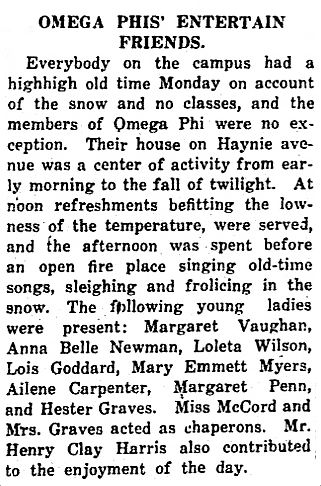
omega-phi_smu-campus_011917DMN, Jan. 19, 1917

If you’re not familiar with beautiful Exall Lake, you can watch a short, minute-long video of the lake’s history, produced to celebrate the 100th anniversary of Highland Park, here.

For other posts featuring photos I’ve zoomed in on to reveal interesting little vignettes, click here.

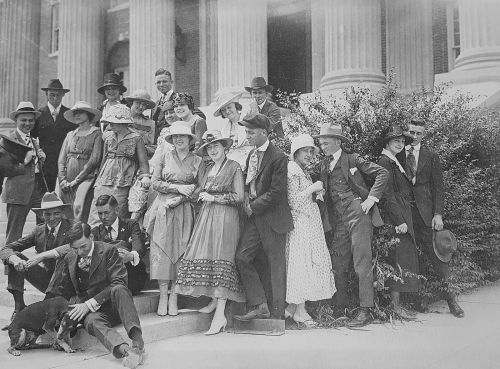
UPDATE: I stumbled across another photo of this group, from Diane Galloway’s book The Park Cities, A Photohistory:
smu_group-date_park-cities-photohistory_galloway

*

Copyright © 2015 Paula Bosse. All Rights Reserved.

Wading in Turtle Creek, 100 Years Ago

turtle_creek-smu-rotunda-1916_sm

by Paula Bosse

A photograph of children wading in a very different-looking Turtle Creek, taken about 1915, the year Highland Park (pop. 1,100) was incorporated.

***

Sources & Notes

Photo from the 1915-1916 SMU Rotunda yearbook.

Population factoid from Wikipedia.

Click picture for larger image.

*

Copyright © 2015 Paula Bosse. All Rights Reserved.


A Dip in the HP Pool — 1924

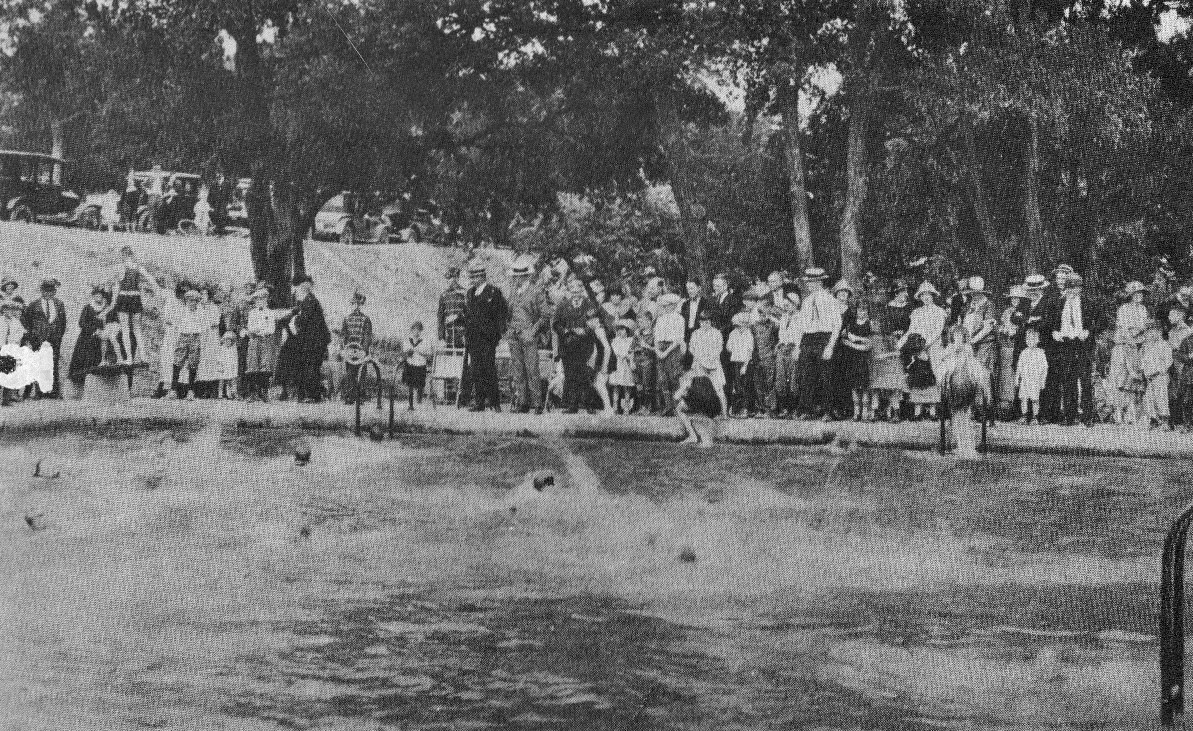
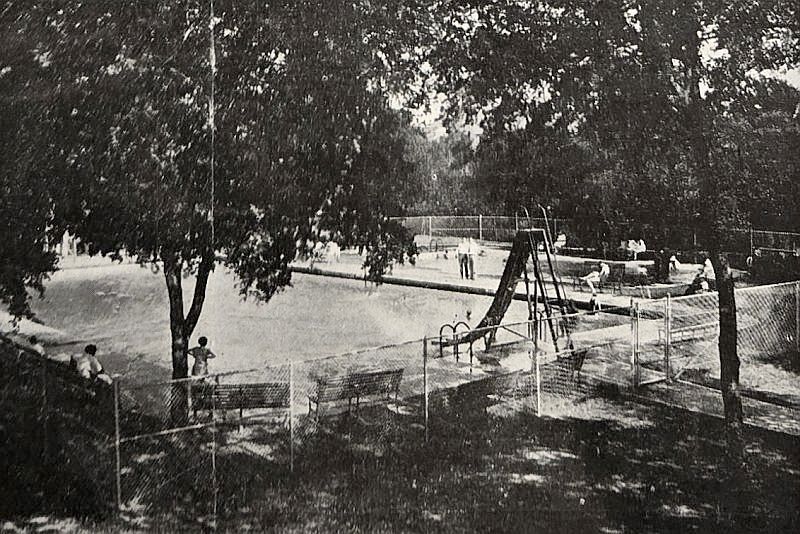
hp-pool_aDedication & formal opening of the HP pool, 1924

by Paula Bosse

Even though “municipal pool” and “Park Cities” don’t really seem to belong in a sentence together, the still-going-strong pool in Highland Park is over 90 years old. The photo above shows crowds gathered at the formal opening of the brand new Highland Park swimming pool, dedicated on May 17, 1924. The caption of this photo which ran in The Dallas Morning News on May 18, 1924 reads: “The above shows the group of Highland Park citizens gathered at the new municipal swimming pool Saturday afternoon for the formal opening exercises. Mayor Frank M. Smith is seen standing in the middle of the group. Seated by his side is former mayor Henry L. Davis in whose administration the movement for the installation of the pool was started.”

Oh, to have witnessed the fabulously wealthy (or near-fabulously wealthy) sashaying down the street toward the pool, dressed in their mandated bathrobes and swimsuits. Or their raincoats and swimsuits. (“[Regulations governing use of the pool require that] swimmers must dress at home in their bathing suits, but may come through the streets to the pool so clad if they wear a raincoat or a bathrobe over their swimming garb.” — Dallas Morning News, May 18, 1924)

The municipal pool is in Davis Park on the south side of Lexington Avenue, in the “natural amphitheater” between St. Johns and Drexel. The 50 x 100-foot pool (reduced somewhere along the way from the original plan of a 60 x 140-foot pool) cost about $10,000 when it was built with municipal funds in 1924. The pool was very popular amongst Highland Park residents, and, as can be seen in the photos, it was located in one of the prettiest settings in Dallas.

hp-pool_highland-park-paper_june-1927_DPL

***

Sources & Notes

Top photo is from a postcard issued as part of the Park Cities Bank “Heritage Series” in the 1970s; the credit line on the postcard reads “Donated by Mr. Burton Gilliland.” Thanks to the Lone Star Library Annex Facebook group for use of the image. (The printed description of the postcard has an incorrect date of 1923.)

Bottom photo is from Highland Park (an interesting newspaper published by developers Flippen-Prather), June 1927, Periodicals Collection, Dallas History and Archives, Dallas Public Library.

More on the pool’s opening can be found in the Dallas Morning News article “Highland Park Pool Dedicated Saturday” (May 18, 1924).

Official site of the HP pool? Here it is.

*

Copyright © 2015 Paula Bosse. All Rights Reserved.

Highland Park’s Snazzy New Fire Engine — 1914

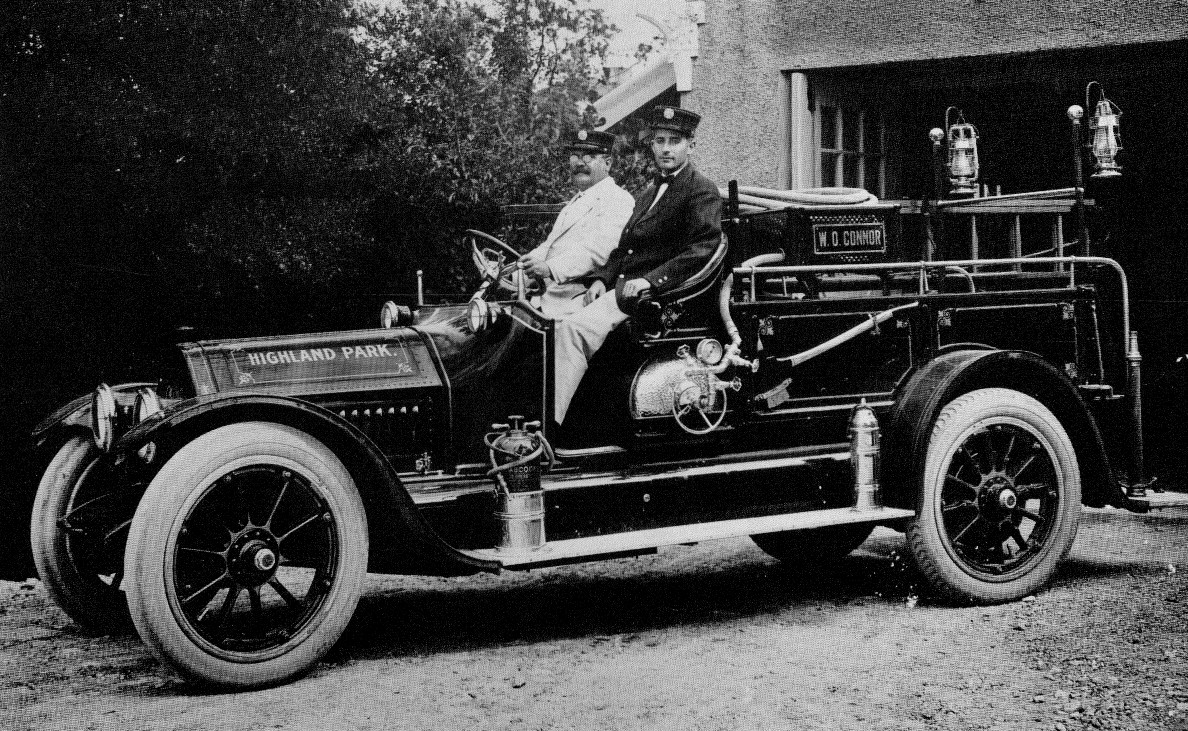
hp_fire-truck_1914Chief McGoldrick behind the wheel of HP’s new fire engine…

by Paula Bosse

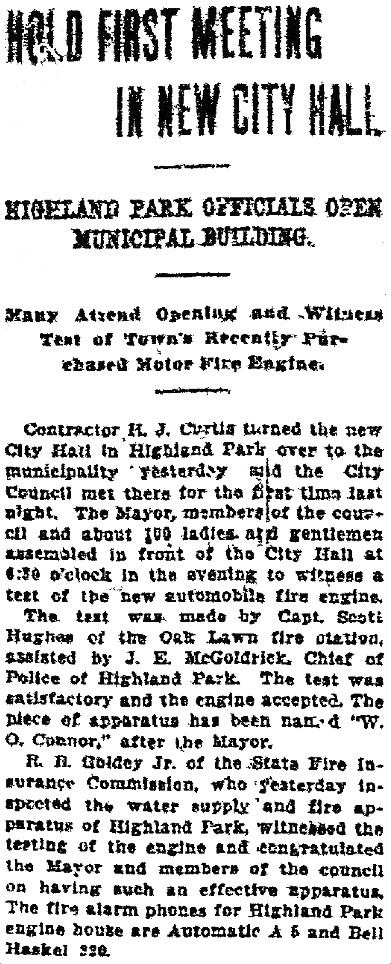
Above, Ed McGoldrick — who was both police chief and fire chief for Highland Park — sits behind the wheel of HP’s new fire engine. It even had a  name — “W. O. O’Connor,” after the mayor. Seated next to Chief McGoldrick is most likely Capt. Scott Hughes of the Oak Lawn fire station. The engine was tested, deemed satisfactory, and accepted into service on June 4, 1914 on the day the new Highland Park City Hall was officially opened. (Click article below to see larger image.)

hp_fire-engine_dmn_060514Dallas Morning News, June 5, 1914

J. E. McGoldrick was apparently something of a peace officer renaissance man. He was an officer on the Dallas Police force from about 1902 to 1912, and then became head police and fire honcho in Highland Park from 1912 to 1917 (where he was also the Street Superintendent). At the same time he was serving as HP Chief Peace Officer, he was also appointed to head the Game Commission of Dallas County. In 1917, he resigned his position in HP to accept a job at SMU where he “would have charge of buildings and grounds” (DMN, June 6, 1917). In 1924, he was appointed Chief Peace Officer of University Park.

That SMU move seems like a bit of a weird detour for a career policeman, but even weirder is the following sentence, which appeared in the blurb about his University Park appointment:

[McGoldrick served as the chief peace officer of Highland Park] until 1917 and then undertook confidential duties for the United States Government. During the past two years he has been connected with Sanger Bros. (DMN, Oct. 5, 1924)

James E. McGoldrick died in October 1927 when he suffered a heart attack while eating his lunch in a drugstore at Main and Lamar. He was 54. His obituary mentioned that he had been “connected with a meat market” in his post-public-service life.

But back to the photo. It’s great. There’s nothing quite like the smell of a new fire engine. And Chief McGoldrick looks very proud.

***

Sources & Notes

Photo from a postcard issued as part of the Park Cities Bank “Heritage Series” in the 1970s; the credit line on the postcard reads “Donated by the Town of Highland Park.” Thanks to the Lone Star Library Annex Facebook group for use of the image.

Newspaper clipping as noted.

*

Copyright © 2015 Paula Bosse. All Rights Reserved.

“A Cavalcade of Texas” — Dallas, Filmed in Technicolor, 1938

“A Cavalcade of Texas”

by Paula Bosse

(SCROLL DOWN TO WATCH THE FILM CLIPS.)

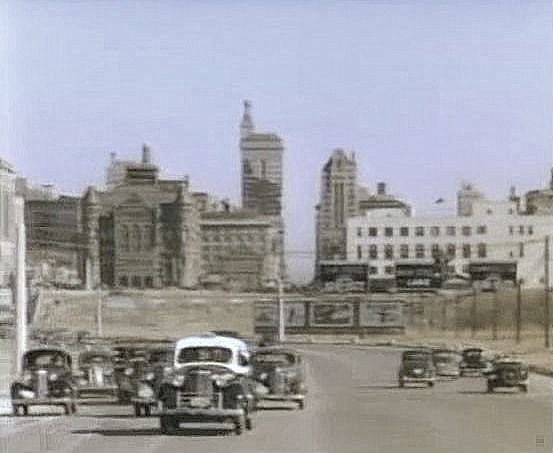
Brought to my attention last night in a Dallas history group was the heretofore unknown-to-me full-length, Hollywood-slick travelogue called “A Cavalcade of Texas,” shot around the state in 1938 under the auspices of Karl Hoblitzelle in his capacity as chairman of the Texas World’s Fair Commission. (Hoblitzelle also built the Majestic Theater and founded the Interstate Theatre chain.)

“A Cavalcade of Texas” — a 49-minute full-color travelogue touting the beauty, history, natural resources, and industries of the state — was made to be shown at the New York World’s Fair, but because of a variety of production and logistical problems, the film was, instead released theatrically. John Rosenfield, the legendary “amusements” critic for The Dallas Morning News, was suitably impressed. After an early preview of the film, he wrote:

The picture should be a revelation to the outlanders who still think of Texas as the backwoods with a hillbilly civilization. (DMN, June 27, 1939)

Ha.

The film opened in Dallas in October of 1939 at, unsurprisingly, The Majestic, second on a bill with a Ginger Rogers film (which was fitting, as Ginger had begun her professional career at The Majestic as a teenager). The pertinent paragraph from Rosenfield’s official review is amusingly snippy:

“Cavalcade” shoots the Houston skyline as a bristling metropolitan acreage but hides the Dallas buildings behind the towering Magnolia Building. Maybe we are sensitive about it but we don’t feel that architectural justice has been done. The Fort Worth aspect is glorified more than it deserves. (DMN, Oct. 15, 1939)

(Sorry, Fort Worth!)

The Dallas scenes are only about 4 minutes’ worth of the whole film, but to see Dallas at this time in color — and moving — is kind of thrilling. The entire film is on YouTube, but I’ve bookmarked the two Dallas bits. First, after an interminable sequence on how fantastic things will be when we finally make that darn Trinity navigable, is a Dealey Plaza-less Triple Underpass, shots of Main Street (including the now partially obliterated 1600 block at the 17:52 mark, on the right), Fair Park (including a description of the Hall of State as “the Westminster Abbey of the New World” (!)), and a neon-lit Elm Street at night. (If you let it keep going, you’ll see “the Fort Worth aspect.”)

(I am having problems embedding this clip to begin at the 17:30 mark. If the above does not begin at the Dallas sequence, see it at YouTube, here.)

*

Twenty minutes later, the viewer is, for some reason, shown the Dallas Country Club with what I’m guessing are Neiman-Marcus models pretending to play golf.

(If the above does not begin at the Dallas Country Club sequence at 40:09, see it at YouTube, here.)

*

Those are just the Dallas bits — the whole film is an impressive undertaking, and it’s great to see documentary footage of this period in rich color, presented with incredibly high production values, in full Hollywood style.

cavalcade_101439_ad
Ad, Oct. 14, 1939 (click to see larger image)

***

Sources & Notes

“A Cavalcade of Texas” was directed, edited, and narrated by James A. Fitzpatrick and can be seen in full on YouTube, here.

Background on Karl Hoblitzelle can be read in information provided by the Handbook of Texas, here, and by the Dallas Public Library, here.

The wonderful and vibrant 1939 footage of downtown Dallas that was discovered on eBay a few months ago and “saved” by a group of preservation-minded Dallasites, which included Robert Wilonsky and Mark Doty, is one of my favorite Dallas-history-related stories of 2014. Watch that footage here.

*

Copyright © 2014 Paula Bosse. All Rights Reserved.