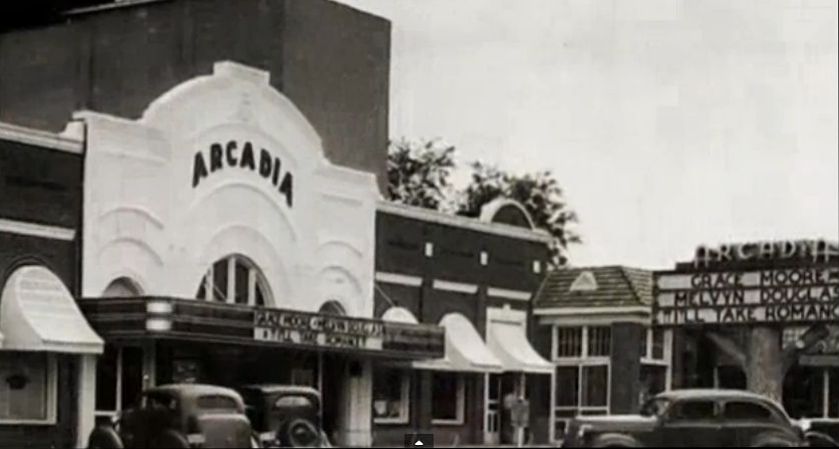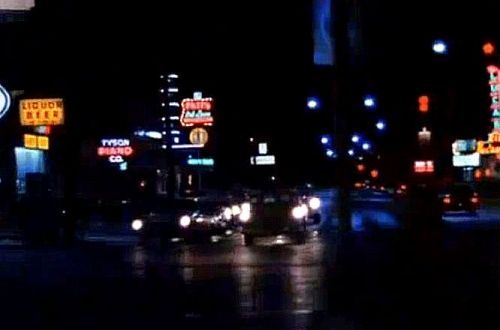
Flashback : Dallas

A Miscellany: History, Ads, Pop Culture

Category: Lower Greenville/M Streets

Happy 75th Anniversary, Stonewall!

1938-stonewall-jackson-elementary-school_renderingStonewall Jackson Elementary School, 1938 rendering (click for larger image)

by Paula Bosse

Classes begin today for students in DISD schools, one of which is Stonewall Jackson Elementary School, located at Mockingbird and Matilda. Stonewall turns 75 years old this year (2014), and I’m proud to say it’s where I spent many years as a happy student. When I learned recently that the school had originally been built as a single-story building (instead of the two stories we know today), I was pretty surprised, and this little unknown nugget prompted me to look into the early years of my alma mater.

In the 1920s and ’30s, Dallas was expanding very quickly northward from Vickery Place, the residential neighborhood around Belmont and Greenville. As the area we now know as Lower Greenville and the M Streets was developed, the two elementary schools (Vickery Place School, then at Miller and McMillan, and Robert E. Lee, at Matilda and Vanderbilt) were soon filled to capacity. Building a new school to serve burgeoning “Northeast Dallas” was an immediate necessity. So in 1938, the city purchased a 9-acre chunk of land along Mockingbird, one block east of Greenville Avenue and right alongside the Denison interurban tracks that ran on Matilda (when I was growing up a couple of blocks away, I used to see remains of those tracks but didn’t know what they had been used for — I wrote about those tracks here and here). The land had been part of the vast Caruth land holdings.

The building was designed by architect C. H. Griesenbeck. It had eleven classrooms, a cafeteria, and an auditorium with a seating capacity of 400. Although originally built as a one-story building, Griesenbeck was mindful that expansion would be necessary in the future, and his design took into account that a second story would be added in the years to come. Construction began in late 1938 and was scheduled to be completed for the opening of the 1939-40 school year.

The name of the new school was decided upon a few months later:

“Stonewall Jackson’s name was chosen for the new school, Dr. Norman R. Crozier, superintendent, said because of the high ideals of Thomas Jonathan Jackson, one of the unique and romantic figures of the War Between the States, and as a companion to its nearest school, Robert E. Lee.” (Dallas Morning News, Feb. 1, 1939)

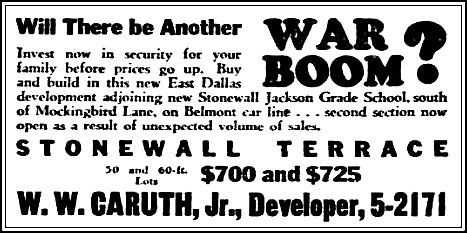
But if you’re going to sink a hundred thousand dollars into a school, you’ve got to have houses for families to live in to make sure your future student pool doesn’t run dry — and at that time very few houses had been built that far north. Cut to W. W. Caruth, Jr., son of the Caruth family patriarch who basically owned everything north of Mockingbird (Caruth owned a huge expanse of land once estimated at being over 30,000 acres). Not long after selling the land at Mockingbird and Greenville to Dr Pepper, Caruth fils began to develop the land around the then-under-construction school — he called the new neighborhood “Stonewall Terrace.”

The property went fast.

stonewall-terrace_dmn_092339September, 1939

As the neighborhood was taking shape and the construction of the school building was nearing completion, the school’s official boundaries were announced:

“Boundaries of the Stonewall Jackson School will be from the alley south of Morningside on the east side of Greenville Avenue and from the alley south of Mercedes on the west side of Greenville to the M-K-T Railroad on the north.” (DMN, Sept. 3, 1939)

Despite some problems with labor shortages, the school managed to open on time, on Sept. 13, 1939, the start of the new school year.

The school and the neighborhood grew quickly, and the number of students soon doubled. In 1950 the school board approved preliminary plans for an addition to the school. This addition (which would cost $369,000 and be handled by the architectural firm of Tatum & Quade) would include a first-floor wing with four classrooms, a gymnasium, and a lunchroom, and a second story containing eight classrooms, a library, and a music room. (The cost of construction would probably have been quite a bit more had the original architect not had the foresight to design the building with the expectation that a second story would be added in the future.)

The construction was substantial enough that it had to be done during the 1951-52 school year. Because the old lunchroom was being dismantled while the new wing was being built, students were required to bring their lunches the entire year. All they could get at school was milk. No fish sticks, no Salisbury steak, no chess pie. Just milk. Sorry, kids.

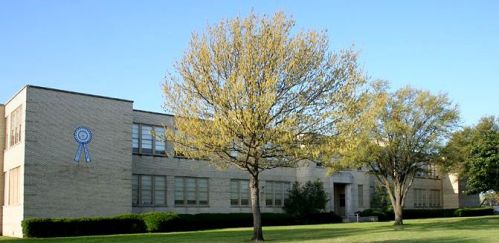
The new addition was completed in time for the beginning of the 1952 school year. And that’s the version of the building that stands today, looking pretty much unchanged.

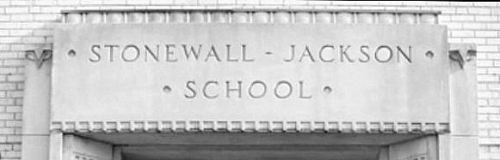
stonewall_front

It was a cool building then, and it’s a cool building now. It’s sad to see how much of the playing fields keep disappearing as ugly portable buildings take over, but the new garden is a great new addition — I wish they’d had that when I was there.

I really loved that school. When I was a student there, grades went from 1st to 7th, and I loved all seven years I spent there. Thanks for the great childhood memories, Stonewall. And Happy 75th Anniversary!

stonewall-nowPhoto: DISD

***

Sources & Notes

Top image is architect C. H. Griesenbeck’s architectural rendering of Stonewall Jackson Elementary School, originally a one-story building.

Here are a few articles to check out in the Dallas Morning News archives:

  • “$11,250 Offer Made for New School Site” (DMN, Oct. 26, 1938)
  • “Contracts for $104,150 Let on Northeast Dallas School” (DMN, Dec. 22, 1938)
  • “New Northeast Dallas School Named Jackson; Board Pays Tribute to Famous General” (DMN, Feb. 1, 1939)

And, yes, it probably sounds weird to outsiders, but students actually do call the school “Stonewall” — just like we call Woodrow Wilson High School (the high school Stonewall feeds into) “Woodrow.” It’s like a secret handshake.

Below, an undated photo from DISD’s Pinterest board (if you squint, you can see the Piggly Wiggly at the southwest corner of Mockingbird and Matilda).

stonewall_DISD-pinterest

UPDATE: After years of controversy, Stonewall Jackson Elementary School will be rechristened “Mockingbird Elementary” in 2018. Whatever its name, it’s still a great school!

*

Copyright © 2014 Paula Bosse. All Rights Reserved.

Tietze Park

tietze_1946_c

by Paula Bosse

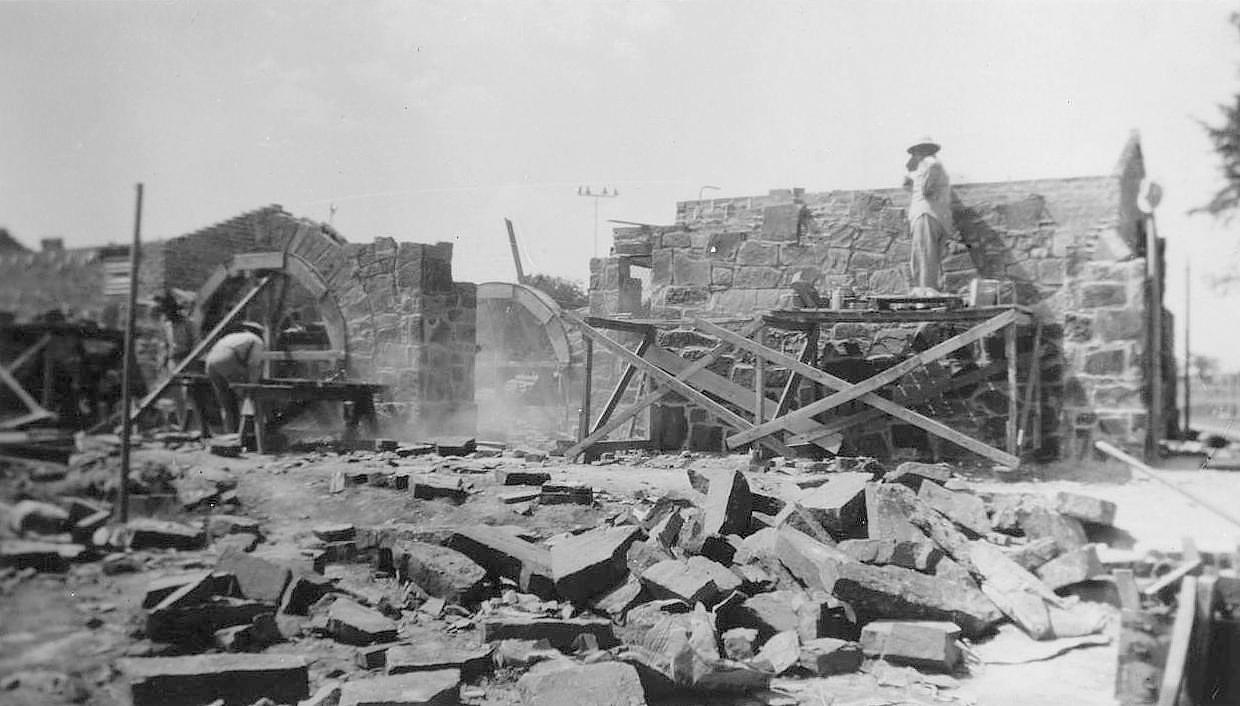
Tietze Park was my neighborhood park growing up — it’s where I learned to swim and got sunburned every summer because I stayed there so long. It straddles 75206 and 75214, in that area that’s not quite Lower Greenville, not quite M Streets, and not quite Lakewood. It’s on Skillman, bordered by Llano and Vanderbilt. You’ve probably seen the famous tree at the Vanderbilt corner. And you’ve probably jokingly referred to it as “Tsetse” Park while suppressing a power-of-suggestion sleeping-sickness-inspired yawn (like right now). It’s a cute little park, with wonderful WPA touches. Here are photos from 1946 of some repair work being done on the stone buildings and construction of a new pool. It looks pretty much the same today.

tietze_1946_b

tietze_1946_a

To see a photo of what the pavilion looks like today, check out a great photo by Sarah Whittaker from CultureMap, here.

***

Photos from the Dallas Municipal Archives, accessed through the Portal to Texas History site.

A history of the park — which started out as “Keith Park” in 1924 but was re-named in 1934 in honor of William R. Tietze, former Parks Department superintendent — can be found on the Friends of Tietze Park Foundation website here.

Here’s a nice drawing of the plan for the park (I came across this somewhere on Facebook, I think, but neglected to make note of the source):

tietze park_plan

A nostalgic look back at the park can be found in the Lakewood Advocate article “Memories of Tietze Park Pool” by Patti Vinson, here.

For a video that captures the laid-back feel of the neighborhood surrounding the park, check out the video of the catchy song “We’ll Go Walkin'” by local band The O’s. It’s great. The first line is “We’ll go walkin’ to Tietze Park.” And then they do. If you’re familiar with the neighborhood, you’ll recognize everything along their walk. And they end it in front of *that tree.* So it’s totally worth it. (The band’s website is here.)

*
Click photos for larger images.

*

Copyright © 2014 Paula Bosse. All Rights Reserved.

“Mars Needs Women” — The Dallas Locations

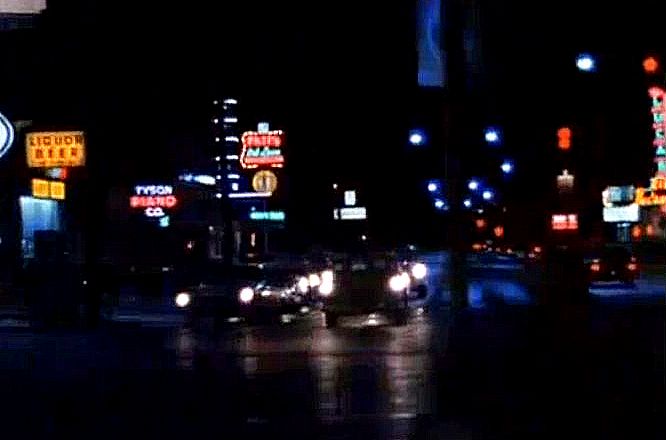
1-mars-oak-lawnOak Lawn & Lemmon, 1966

by Paula Bosse

Chances are, if you’re a native Dallasite and you’re a cult movie buff, you’ve heard of Dallas filmmaker Larry Buchanan (1923-2004), the self-described “schlockmeister” who made a ton of low-budget movies in Dallas, almost all of which are considered to fall in the “so-bad-they’re-good” category. I’ve made it through only three of them, and while they’re definitely not great (or even good, really), there were moments I enjoyed.

Buchanan’s most well-known movie — if only because the title has worked itself into the sci-fi vernacular — is Mars Needs Women, shot in Dallas in a couple of weeks in late 1966, starring former Disney child star Tommy Kirk and future star of “Batgirl,” Yvonne Craig. For me, the worst thing about the movie is its incredibly slow, molasses-like editing (courtesy of writer-director-editor Buchanan who was working on contract to churn out movies that had to be cut to a very specific running time, and he’s obviously padding here with interminably long scenes that drag and drag). And then there’s the dull stock footage and weird background music that I swear I’ve heard in every cheap Western ever made. Still … it has its charm.

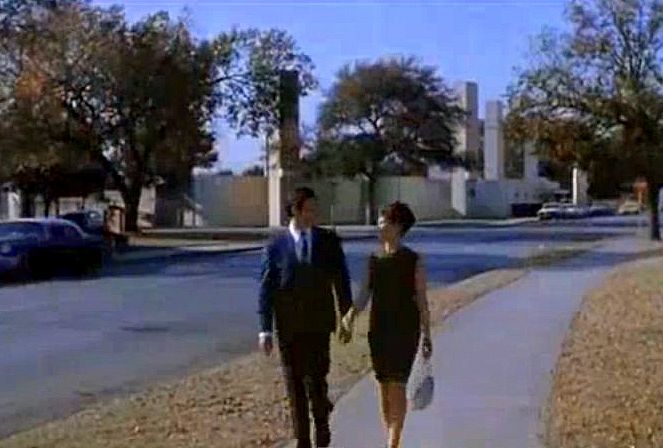
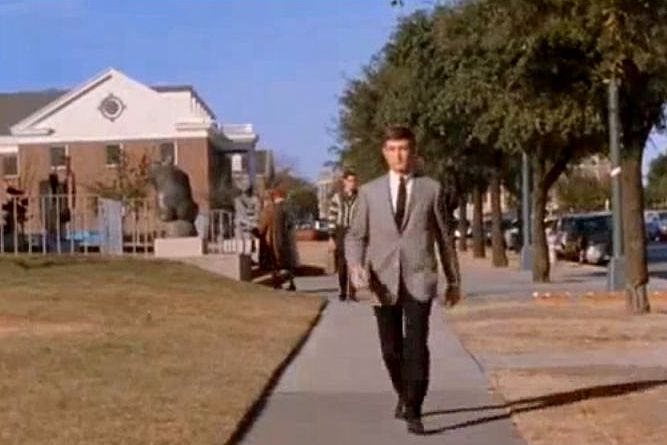
But the BEST thing about this movie (and, presumably, his others) is that it was shot entirely in Dallas, using a lot of instantly recognizable locations. (Every time I saw a place I knew, I perked up — it reminded me a bit of seeing Bottle Rocket for the first time — almost shocked to see common every-day places in an honest-to-god MOVIE!) So, if you don’t feel you can sit through the whole thing (available, by the way, in its entirety online — see link at bottom), I’ve watched it for you, with a whole bunch of screen shots. So feast your eyes on what Dallas looked like in November of 1966. (By the way, because the movie revolves around …. Mars needing women, the movie is actually set in Houston, home of the Johnson Space Center. Even though you see the very distinctive Dallas skyline — repeatedly. Houston! You wish, Houston!)

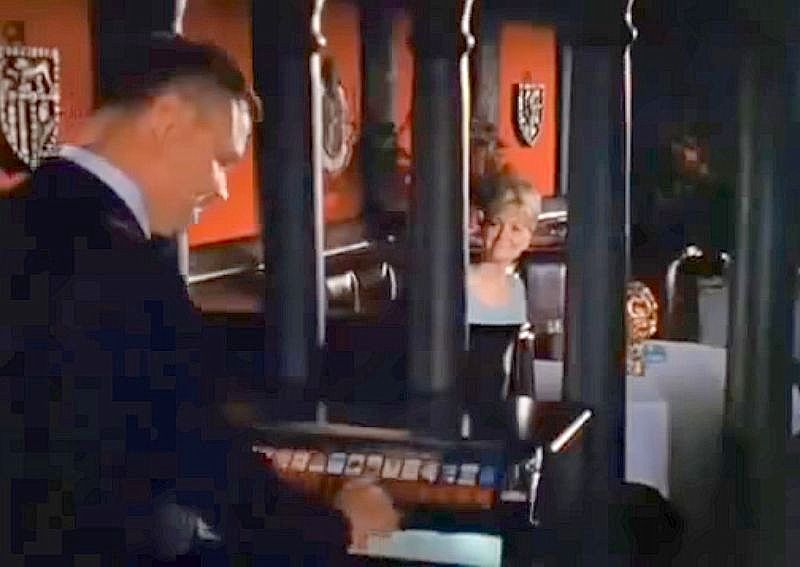
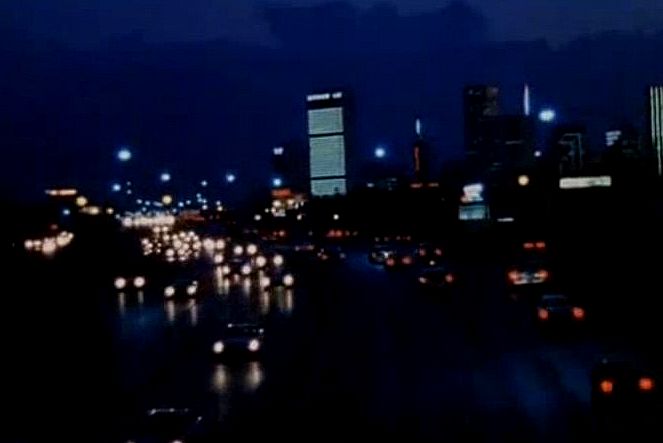
My favorite shot is the one at the top of this page and is seen in the first 90 seconds of the movie: Oak Lawn at Lemmon, with the familiar Lucas B & B sign at the right. This area was used a few more times. One character goes into the old Esquire theater, but, sadly, there was no establishing shot showing that great old neon sign. I think the first interior — showing a couple at a lounge — was shot in the swanky private club, Club Village, at 3211 Oak Lawn (at Hall), just a short hop from Oak Lawn and Lemmon.
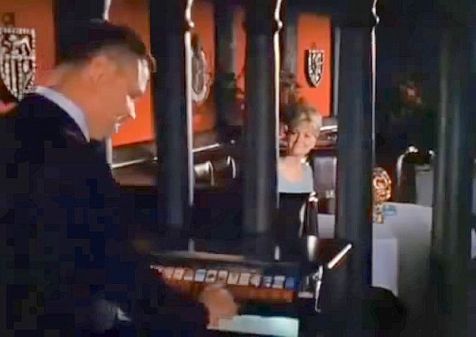
1966_club-village_mars-needs-women

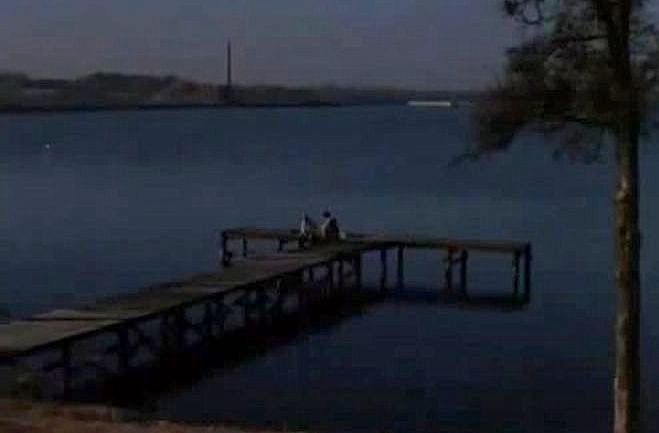
Next, we’re off to White Rock Lake.

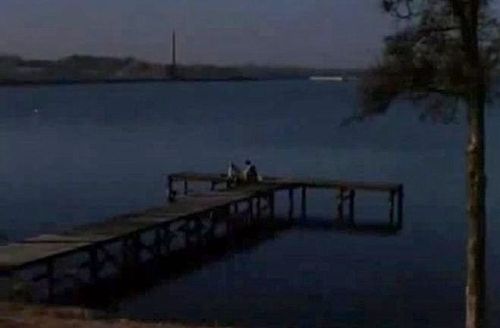
2-mars_pump1White Rock Lake. Shot day-for-night, with the pump station in the distance.
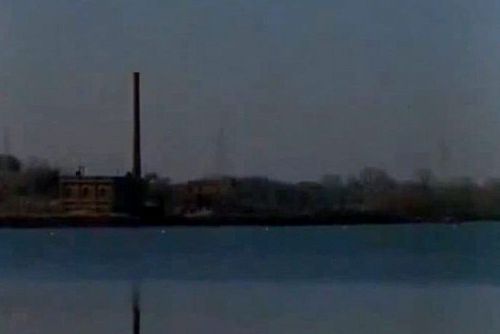
3-mars-pump2White Rock Lake pump station, where the Martians are headquartered as they search for healthy, single women to take back to Mars to help re-populate the planet.
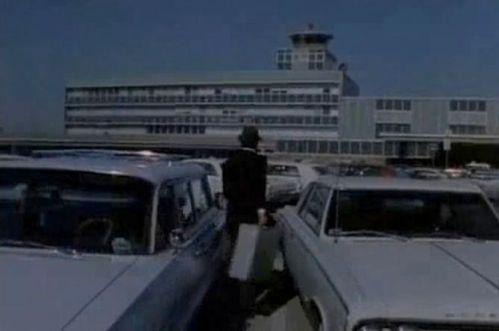
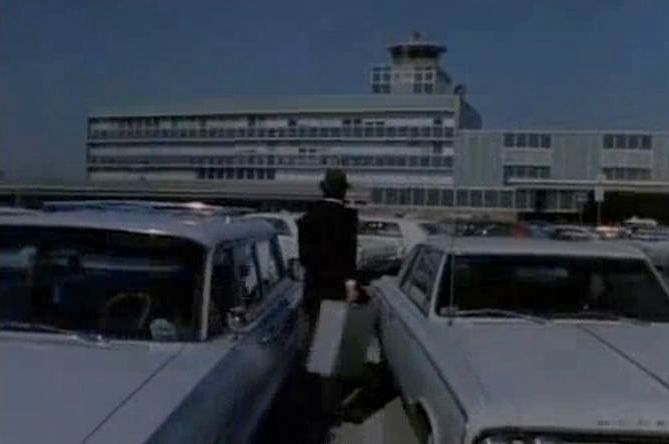
4-mars_love-field-extLove Field parking lot. Still shooting day-for-night. Badly.
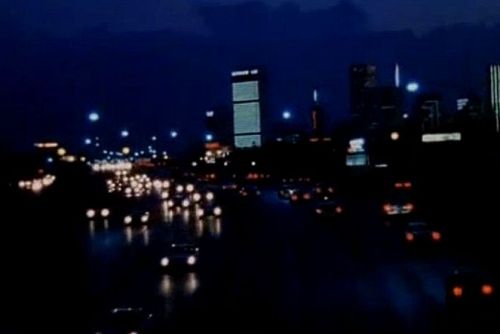
5- mars-southland-lifeThe Southland Life Building, etc., magically transported to Houston.
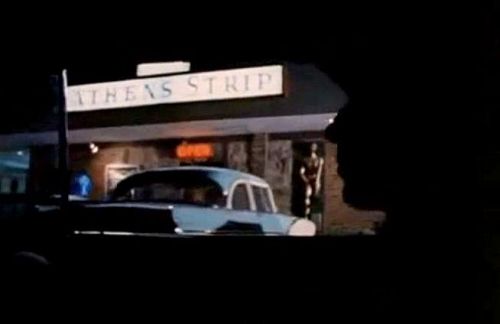
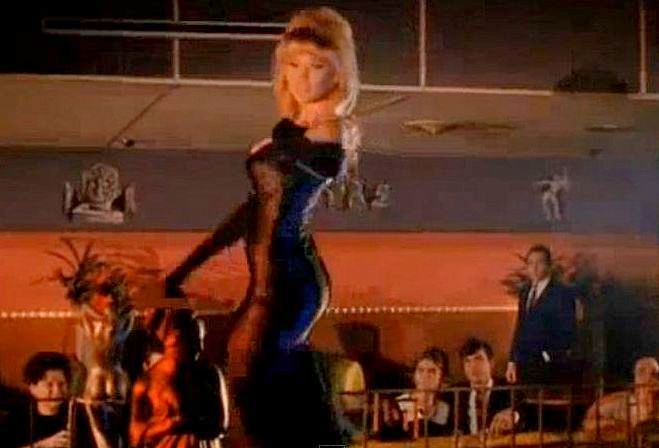
7-mars-athens-stripAthens Strip — a strip joint on Lower Greenville, one block north of the old Arcadia Theater. I’ve never heard of this place, but I came across the story of a guy who had visited the place back around this time and remembered one of the VERY unhappy dancers who hurled handfuls of the coins (!) that had been tossed onstage back into the audience, with such force that his face and chin sustained minor lacerations.
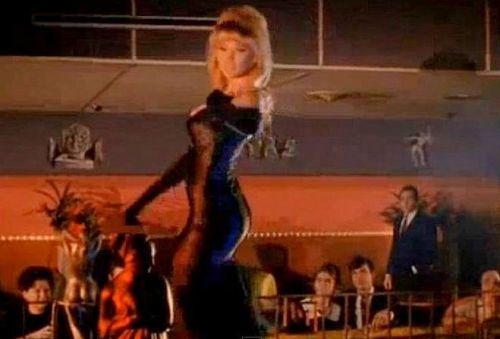
8-mars-needs-women_athens-strip_bubbles-cashLocal celebrity-stripper “Bubbles” Cash, inside Athens Strip. Plainclothes Martian (standing) ponders whether she has what it takes to birth a nation. (She does.)
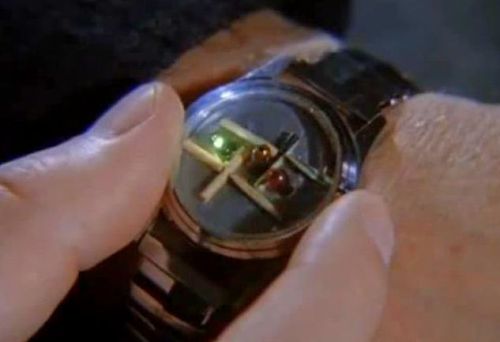
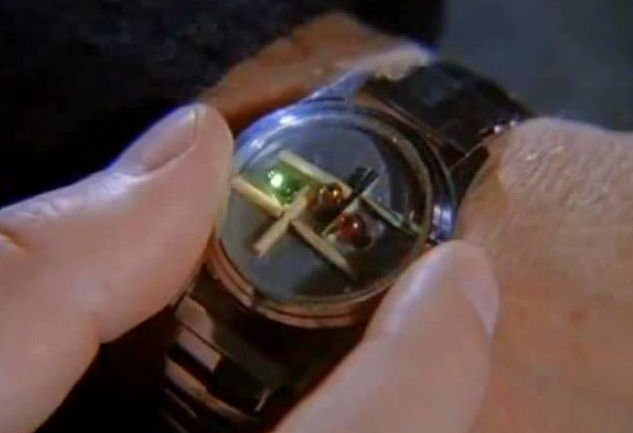
9-mars-watchMy favorite example of what a director is forced to resort to when there is no budget. This is some sort of sophisticated communication device. I think those are matchsticks.
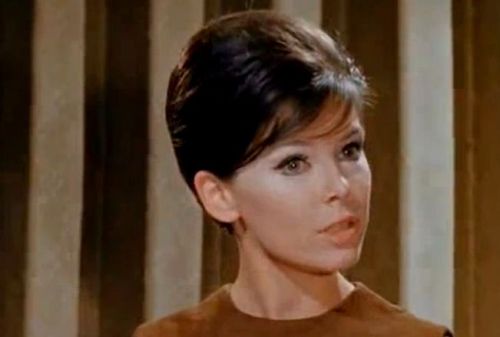
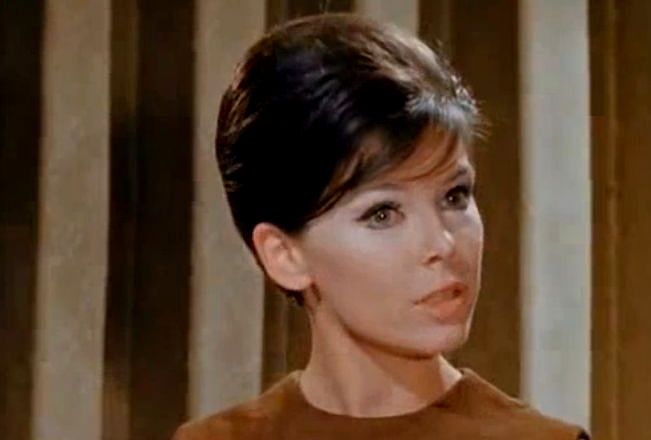
10-mars-yvonne-craigYvonne Craig, without a doubt the best actor in the movie. In fact, she’s really good. She had already made a few movies in Hollywood at this point, but the lure of a starring role brought her back to her hometown (where the newspapers reported she was happily staying with her parents during the two-week shoot).
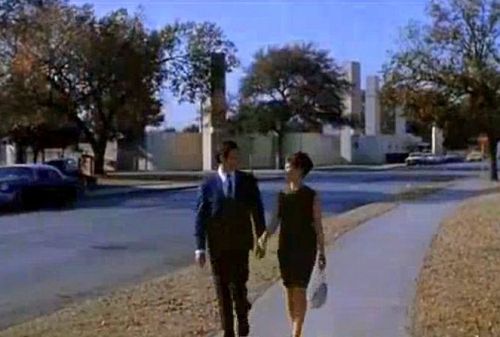
11- mars-band-shellMartian #1 and sexy space geneticist strolling through Fair Park — band shell behind them, to the left.
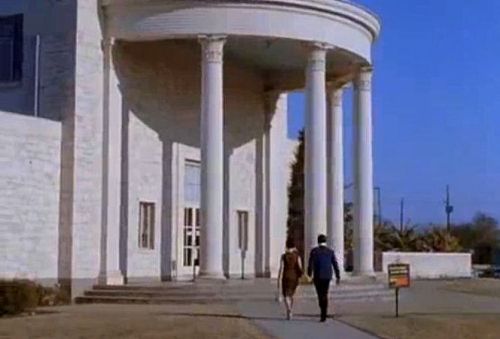
12-mars-planetariumThe Fair Park planetarium.

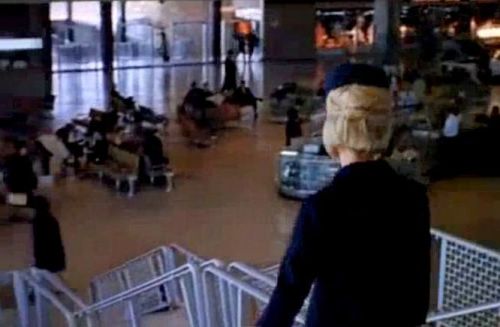
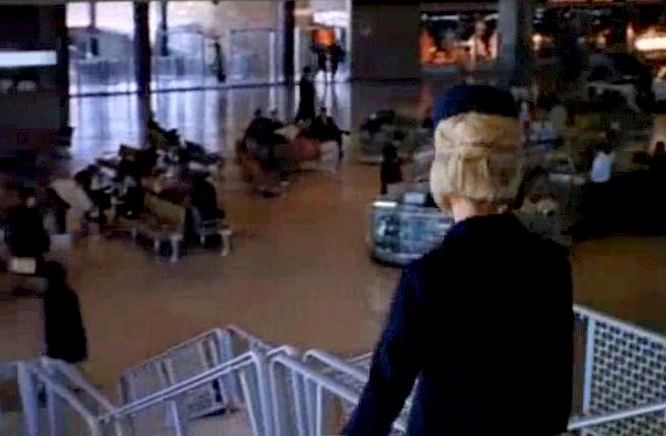
13-mars_love-fieldLove Field. I love the interior shots of the airport in this movie. (The stewardess walking down the stairs? Destined for Mars.)
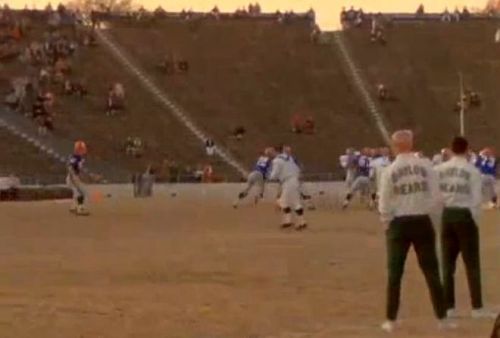
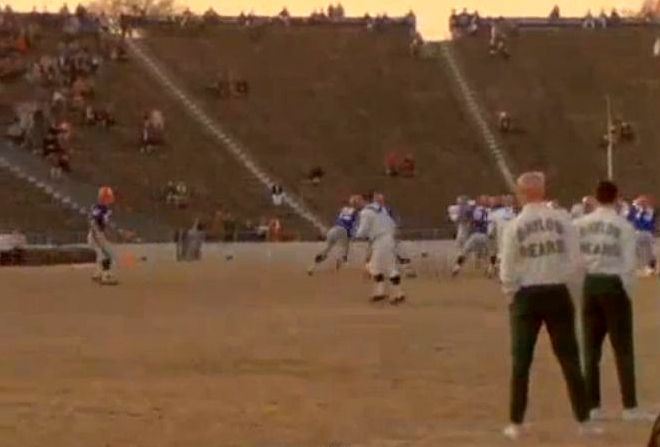
14-mars-cotton-bowlCotton Bowl, shot during a homecoming game between SMU and Baylor. Some shots show a packed stadium, some show this. Word of warning to the homecoming queen, Sherry Roberts: do NOT accept that flower delivery!
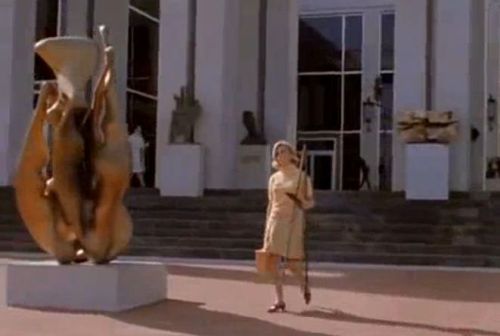
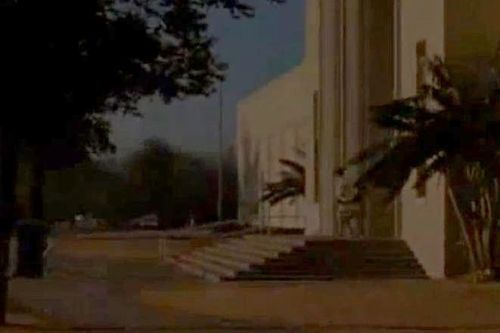
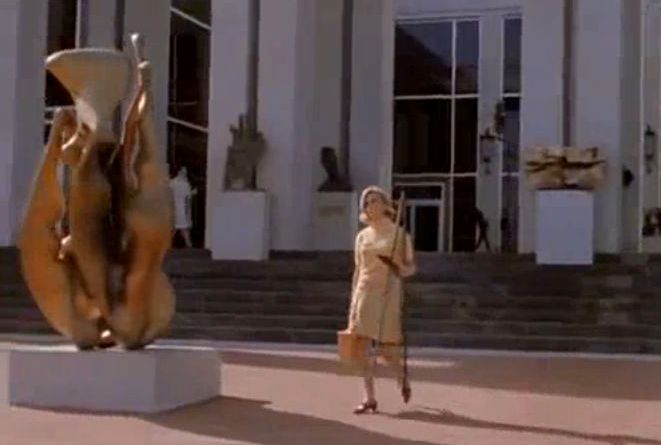
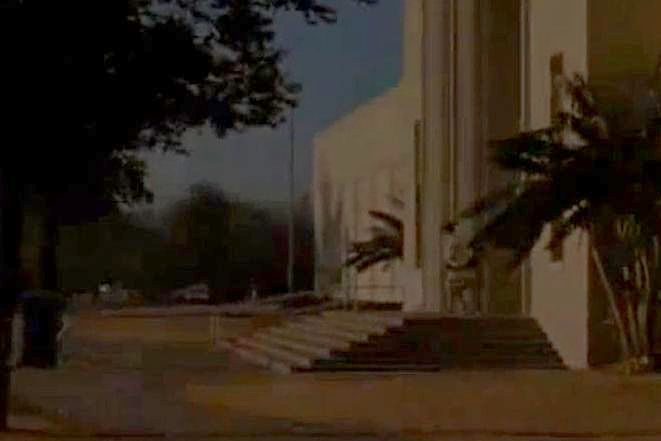
15-mars-meadowsSMU, Meadows School of the Arts. I love the pan across the front of the building. Mars Needs Co-Eds.
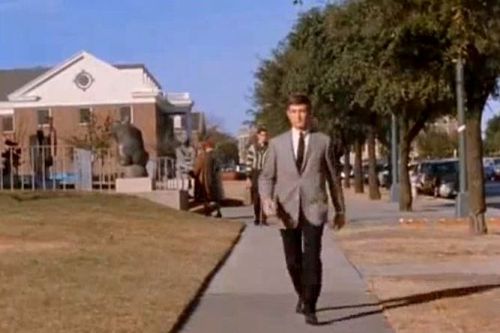
17-mars_BMOCSMU. BMOC (Big Martian On Campus).

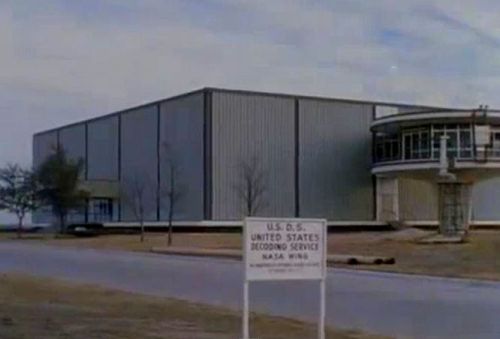
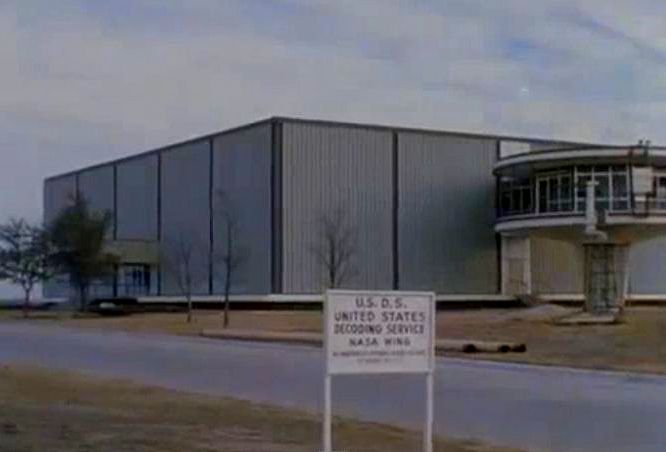
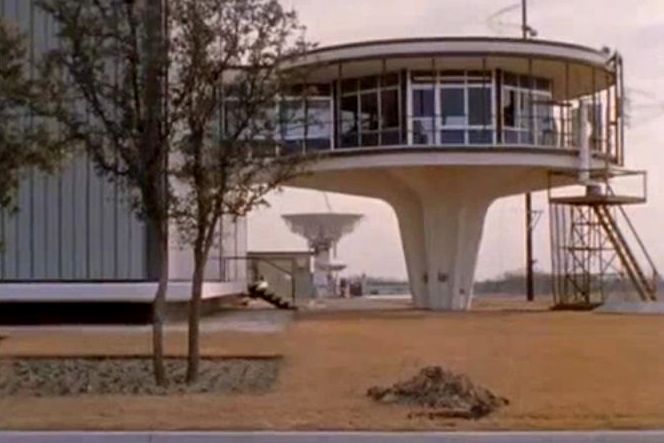
18-mars-collins-radioThe one location I couldn’t figure out. And it’s because it isn’t in Dallas. It’s the Collins Radio building in Richardson, a company that was absorbed by/bought out by/merged with Rockwell International. I think all the interior and exterior shots which are supposed to be NASA were shot here. How did a low-budget director like Larry Buchanan get into a place like that? According to a 1986 Texas Monthly article, Buchanan, in his day-job career as an ad-man, was hired by Collins Radio in 1961 to work in their “audio-visual” department” (the man who hired him was Harold Hoffman, whose later film work with Buchanan was done under the name Hal Dwain).
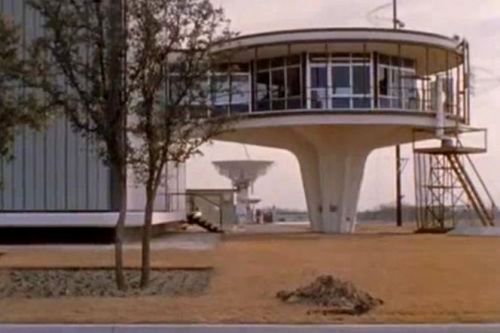
19-mars-collins-radioSo, yeah — COOL location.

20-mars_fair-parkMore Fair Park, more murky day-for-night.
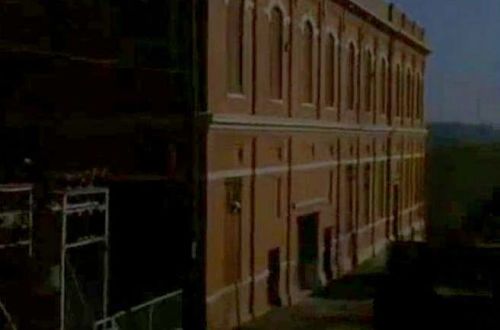
21-mars_pump3White Rock Lake pump station, aka the Martian lair.
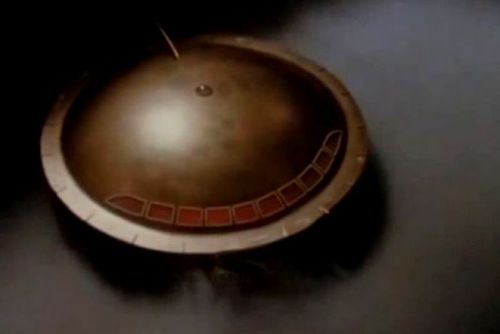
22-mars-saucerFANTASTIC flying saucer. Do the Martians get their five healthy, single women on board the ship and get them back home? You’ll have to watch it for yourself to find out.

23-mars-endYou tell ’em, Konnie.

mars-needs-women_VHS-box

Check back in a few days for more on Larry Buchanan (including a long-lost photo of him at work back in his advertising days in the 1950s).

UPDATE: Here it is — Larry Buchanan filming a Chrysler spot in the Katy railyard in 1955 for Dallas’ Jamieson Film Company, here.

***

Sources & Notes

The entire movie is on YouTube in a pretty good print. Watch it here.

Larry Buchanan Wikipedia page is here.

Mars Needs Women Wikipedia page is here.

Collins Radio/Rockwell Collins Wikipedia page is here.

Consult the Dallas Morning News archives to read a somewhat sarcastic Dallas Morning News article by Kent Biffle on the shooting of the Cotton Bowl sequence (I miss his Texana columns!): “That UFO Was a Field Goal” (Nov. 20, 1966).

*

Copyright © 2014 Paula Bosse. All Rights Reserved.

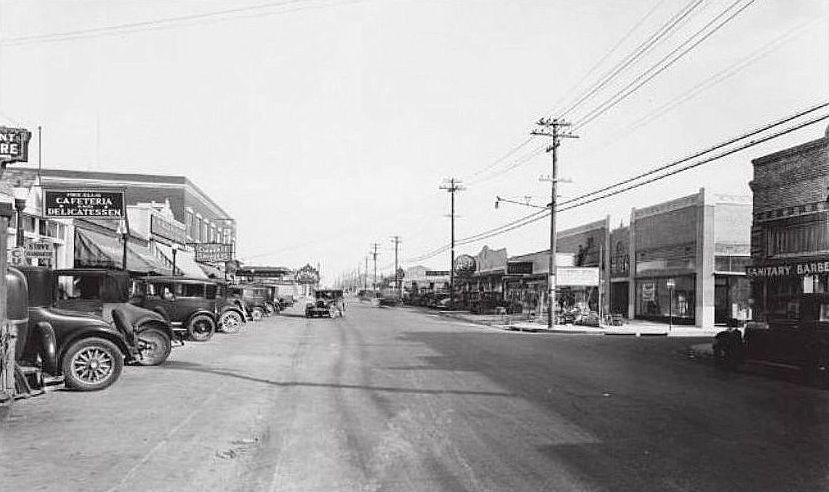
Lowest Greenville: “A Small Town of Our Own” — 1925

by Paula Bosse

Anyone who has ever lived in Lower or Lowest Greenville knows that it feels kind of like a small town. Below are the words of a man who thought the same way in 1925.

MOST WONDERFUL OF ALL
But I have witnessed nothing so marvelous as the growth of Dallas since I settled here, Dec. 5, 1921, and built a home at 5615 Sears street. People who stick close to business in the downtown district really do not know what is going on in this teeming city. Our suburban store district, just north of Ross and Greenville avenues, comprises three furniture stores, two hardware stores, four drug stores, six groceries, two dry goods stores, half a dozen filling stations, a Pig Stand or two, a plumbing shop, a fire station, an ice factory, a cleaning and pressing establishment, barber shops, shoemakers’ shops, two gents’ furnishing stores and a Masonic lodge. Practically all these and others, for I am sure I have overlooked some, have been established since I settled in the community four years ago. In fact, we have a small town of our own. But then the modern city of Dallas is made up of a number of such complete units, with one grand central business district, which is thought of and looked upon by outsiders as Dallas.
(Dallas Morning News, March 15, 1925)

These were the words of Dallas resident John T. Hyde. His Lowest Greenville neighborhood was, in 1925, a “suburban” outpost which had experienced unbelievable growth in the early 1920s. Mr. Hyde (who lived right off Greenville — behind where Trader Joe’s is now) would probably be shocked and dismayed by the wild over-indulgences associated with the annual St. Patrick’s Day festivities along his beloved Greenville Avenue. In fact, today’s the day. So, kids, think of Mr. Hyde — an early champion of one of Dallas’ greatest neighborhoods — and please pledge to refrain from puking (…etc.) all over it today. I’m sure he — and the rest of us — would appreciate it.

***

Sources & Notes

Top photo from Mark Doty’s wonderful book Lost Dallas (Charleston: Arcadia Publishing, 2012). Photo from the Texas/Dallas History and Archives Division, Dallas Public Library). Click for larger image.

John T. Hyde’s memories excerpted from the article “Southern Planters Trekked to Texas” by W. S. Adair (DMN, March 15, 1925).

See more photos of Lowest Greenville from this period in the Flashback Dallas post “Bel-Vick’s Anchor: The Angelus Arcade and The Arcadia Theatre — 1920s.”

More Flashback Dallas posts on Lower Greenville/M Streets can be found here.

*

Copyright © 2014 Paula Bosse. All Rights Reserved.

My Birthdays at Kirby’s: Filet Mignon for Everyone!

kirbys-birthday

by Paula Bosse

I grew up in the Lower Greenville area, and since we had a nice steakhouse just a couple of blocks away, that’s where we always went for family birthdays and special occasions: Kirby’s. I had forgotten about the birthday cards they sent out until my mother came across one in a recent move which was addressed to “Miss Paula Bosse.” Other than receiving actual mail, the thing that made these cards really exciting for a child was the inclusion of a dime. I always thought of it as a little birthday treat, but my mother suggested it was more of a subtle reminder to the parents to spend that dime on a call for reservations.

I loved that place. It was very dark. My brother and I always had the same thing: a non-alcoholic, super-sweet Shirley Temple from the bar, a salad with big chunks of roquefort in the salad dressing, a baked potato, and, oh my god, a filet mignon. I was mesmerized by the bacon wrapped around the steak. And the little wooden marker that showed how the meat was cooked. It was a nice, friendly neighborhood steakhouse. It was loud and happy. You could hear the steaks sizzling on the grill. It was always a treat to go to Kirby’s. And the place smelled GREAT! Even out on the sidewalk.

I was sad when they tore the building down, and even though there is now a chain of restaurants with the name “Kirby’s” — they even built a new one a couple of blocks down from the original location — there’s no way it could ever be the same.

Looking around for the history of the original “Kirby’s Charcoal Steaks,” I was surprised to discover that the man who owned Kirby’s — B. J. Kirby — was the son of the man who founded the Pig Stand chain of drive-ins. The Pig Stand started in Dallas, and it was the first drive-in restaurant EVER. They had the first carhops. The first onion rings. The first Texas toast. The Kirby’s steakhouse location — 3715 Greenville — had actually been a Pig Stand! B. J. Kirby had grown up working at his father’s restaurants, and when his father died, he sold all the Pig Stands except for the Greenville Avenue location (i.e. Pig Stand No. 4). In 1954 he turned the pig-sandwich-serving drive-in into a nice sit-down steakhouse which remained popular until the restaurant closed in 1987 when Mr. Kirby retired.

Watch Ch. 5 news footage of B. J. Kirby and the auction of the restaurant fixtures at UNT’s Portal to Texas History site, here.

kirbys_ch-5_closing_screencap_portal

I could really go for a bacon-wrapped filet mignon right about now. And one of those Shirley Temples would even hit the spot.

kirbys_1958

kirbys_color

kirbys_1951

***

Sources & Notes

“Something to Crow About!” card from the author’s collection.

Color photo of the Kirby’s sign is a screenshot from the Channel 5 news coverage of the auction of the Kirby’s fixtures, which aired April 14, 1987, viewable here; from the KXAS-NBC 5 News Collection, UNT Libraries, via the Portal to Texas History.

First ad from 1958; bottom ad from 1951.

Watch the 14-minute documentary “Carhops,” in which B. J. Kirby remembers life working as a kid for his father, here (also interviewed are other drive-in Dallas icons, J. D. Sivils and Jack Keller).

An entertaining history of the Pig Stand No. 4 and its transformation into Kirby’s Charcoal Steaks can be found here.

*

Copyright © 2014 Paula Bosse. All Rights Reserved.

Speaking of the Arcadia and Its “Rustic Simplicity”…

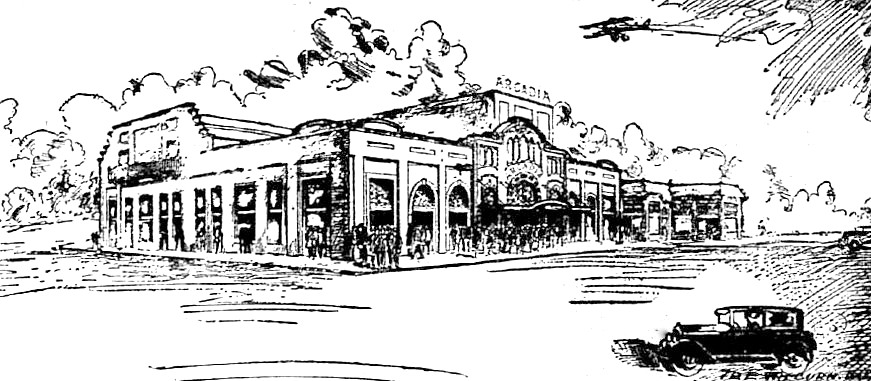
arcadia_architectural-renderingArcadia Theater, 1927…

by Paula Bosse

Above is a rendering of architect W. Scott  Dunne’s design for the Arcadia Theater on Greenville Avenue, at Sears Street, between Ross Avenue and Belmont. (The low-flying bi-plane is a nice touch.) Among the many Dallas theaters designed by Dunne were the Esquire in Oak Lawn and the Texas Theatre in Oak Cliff (as well as another entertainment mecca, the Fair Park Band Shell).

The Dallas Morning News had this to say about Dunne’s concept for the new “suburban theater” in 1927:

W. Scott Dunne, architect of Arcadia, is working out an interior design that should prove in harmony with the theater’s name — an atmospheric design of as near rustic simplicity as is possible in a theater.

“Rustic”!

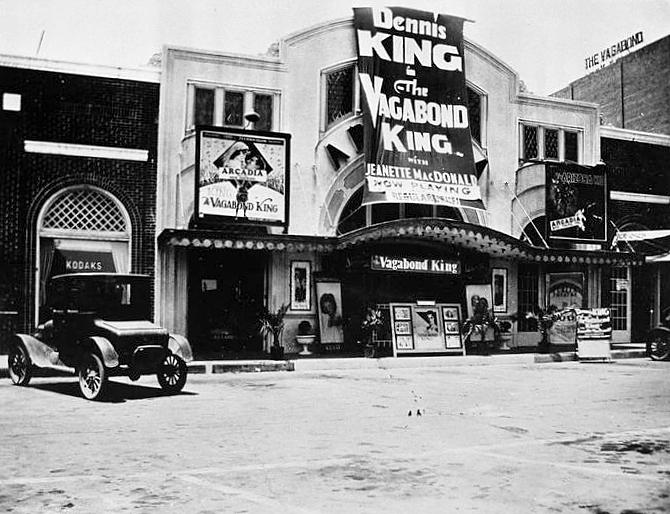
A photo of the not-particularly-rustic exterior in 1930:

arcadia-theater_1930_portal1930

The fabulous giant tree marquee, posted previously (link to post below), from about this time can be seen here.

All went well for many years until 1940 or ’41 when the original 1927 building was badly damaged in a fire; it had to be gutted and completely overhauled by architects Pettigrew & Worley. John A. Worley wrote an article for Box Office magazine about the rebuilding process (link below), including the hard-to-believe tidbit that the firm had been “vigorously instructed to studiously avoid any pretense of ‘super-colossal’ — or, more thoroughly defined, we were told to steer clear of that ‘regal’ air, which had been known to impel theater patrons to take off their shoes before daring to walk across the foyer.

The article even has a photo of the lopped-off, now-sadly diminished tree sign. (The author — in something of a reach — explains that the “stump” was there as a symbol of the “Arcadian” nature of the theater.) (You just know that both Pettigrew and Worley were praying for the go-ahead to just get rid of it already.)

1941

There was another bad fire in 1958, which led to further renovation. By then, that tree was loooooong gone and but a dim memory.

There sure were a lot of fires at the ol’ Arcadia. Including the final, fatal one, in 2006. R.I.P. And from the ashes sprang the present-day Trader Joe’s.

***

Sources & Notes

Photo showing “The Vagabond King” (1930), from the Hardin-Simmons University Library via the Portal to Texas History, here.

Photo showing “stump” is from the June 21, 1941 issue of Boxoffice.

An interesting article on the Arcadia — and life along Lowest Greenville — can be found in a Lakewood Advocate article “The Rise and Fall of the Arcadia,” here.

The original post that spurred a further look into the early days of the Arcadia — and the one with the crazy huge electric tree marquee — can be found in the Flashback Dallas post “The Arcadia Theater Sign You’ve Never Seen,” here.

*

Copyright © 2014 Paula Bosse. All Rights Reserved.


The Arcadia Theater Sign You’ve Never Seen

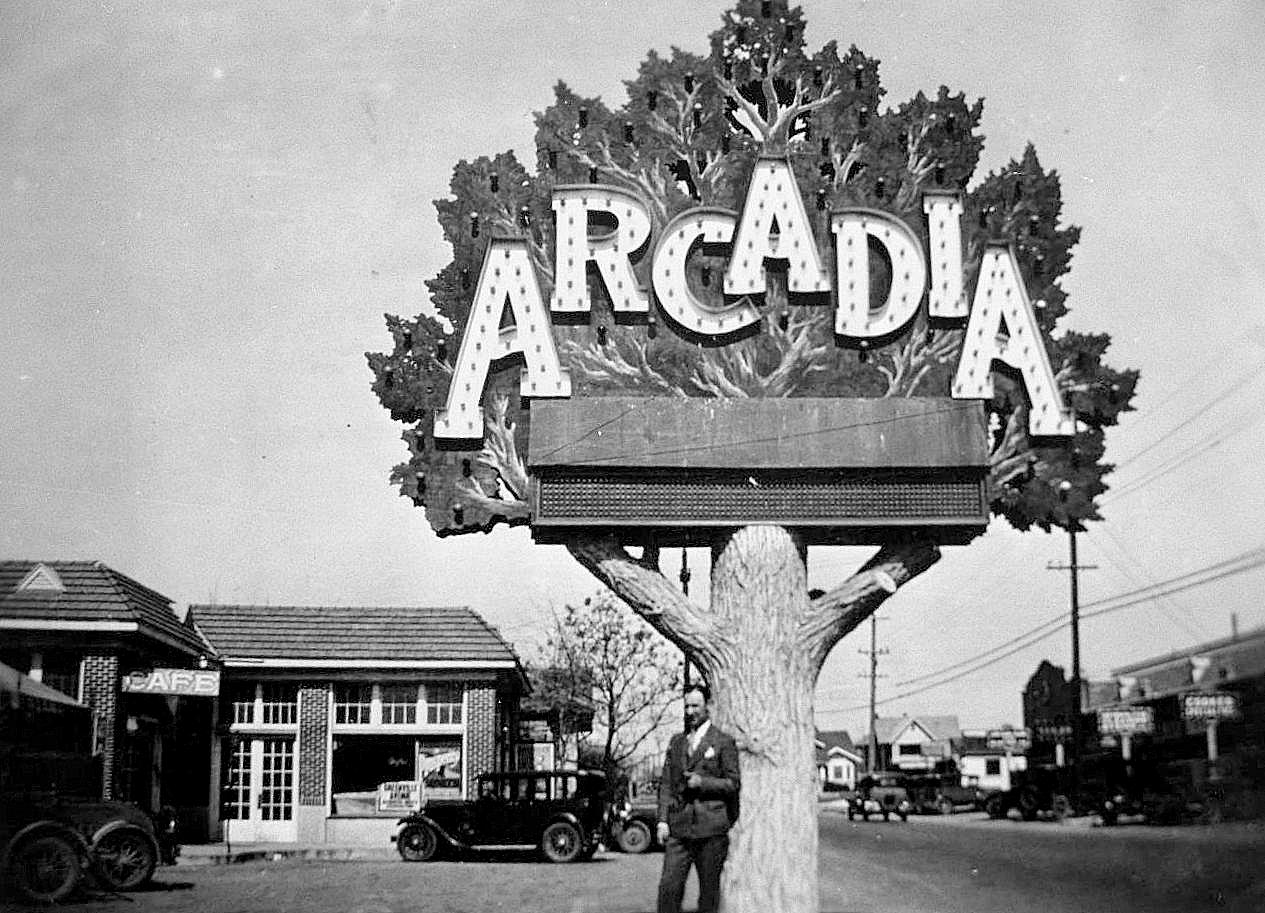
Best theater marquee EVER! Lower Greenville, late ’20s (click for larger image)

by Paula Bosse

I LOVE this photo! Forget the sign for a moment (difficult though that may be…) — take a look at Greenville Avenue in the late-1920s! That building at the top right, across the street from the (late, lamented) Arcadia, is still there. The car heading north is just about to pass where the 7-Eleven is now (at Richmond). As for that tree-shaped sign … wow. I’ve never seen anything like that. The photo was used in a promotional campaign for a new sort of electric marquee technology.


Here’s what Arcadia manager Wally Akin (pictured above) had to say about this new-fangled Vendope Changeable ‘Lectric Letter thing:


I’m not sure the Vendope Service System took off, but, damn, that sign is cool. Here’s a another view, from 1930, looking up Greenville from about Alta — you can see how close to the curb the sign was. Imagine driving up the street and seeing that lit up in front of you.

greenville-avenue_1930

It was a little less cool, though, by 1937 when the “tree” had been pruned and tampered with almost beyond recognition, but, still, that is one weird eye-catcher of a marquee.

*

UPDATE: The following information comes from a comment to me from the estimable Angus Wynne, who took over the Arcadia in the 1980s (and 1990s?) and booked some great live shows there (several of which I paid to see): “The tree sign evolved from a lesser marquee that was installed in a real tree which grew in the original parkway formerly located adjacent to the street. A very unusual attraction, it remained there for many years until the tree died, upon which the owner had it concreted over and had the electric branches added, pictured here. It was torn down when the theater’s facade and interior were renovated during the 1940’s.”

What a shame that something so wonderful didn’t survive. All those lights! I’d have loved to have seen it lit up at night, back when this lowest stretch of Greenville Avenue was called a “northern” and “remote” part of the city.

***

Sources & Notes

First three images, including top photo, from the Hardin-Simmons University Library, via the Portal to Texas History — these and other Arcadia Theatre images from this collection can be viewed here. The main photo (MUCH larger when clicked) is undated, but it’s sometime between the Arcadia’s opening in 1927 and the Publix theater chain’s plummet into receivership around 1931. UPDATE: When I posted this photo back in February, 2014, I was excited to think I had stumbled across something that had been unseen for years. At almost the exact time I posted this, Troy Sherrod’s great book Historic Dallas Theatres was published … and this photo was in it. Troy beat me to it!

If you’re into patent-perusing, just google “Vendope” and you’ll see oodles — an example of one them is here. I’m not sure if this is part of the same system described above, but this patent is dated 1931. The inventor (apparently of Fort Worth) had the unlikely name of Vendope L. Pistocco. Or maybe Van Lawrence Vendope. …There’s a Vendope in there somewhere.

1930 view of Lowest Greenville, looking north from Alta, is from the archives of the Dallas Public Library.

For further exploration of the Arcadia (and another photo of the barely recognizable tree), see my follow-up post here.

*

Copyright © 2014 Paula Bosse. All Rights Reserved.