Flashback : Dallas

A Miscellany: History, Ads, Pop Culture

Category: Oak Cliff/West Dallas

Dallas in the ’20s

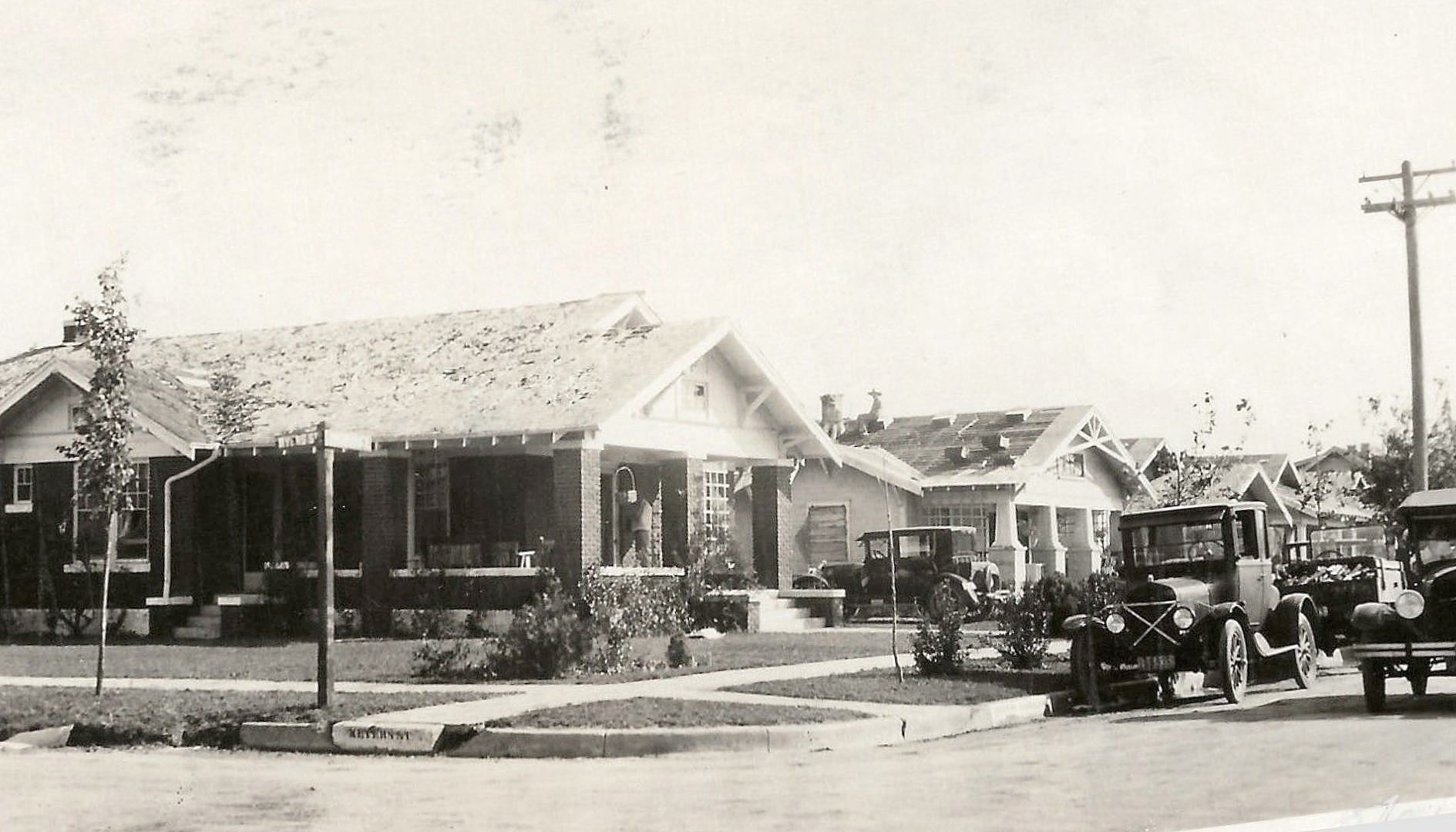
Pennsylvania Ave. & Meyers St.

by Paula Bosse

It’s taking so long for me to post these days!

Here is a collection of a few random places from Dallas in the 1920s.

*

Above, South Dallas, circa 1926. This photo shows the 2900 block of Pennsylvania Avenue at Meyers Street. I love houses of this period, and I love this photo. This may just be poor resolution of the photograph, but it looks like the roof of the house in the foreground is damaged — the roof next door is being repaired.

The house on the corner is no longer there, but the second house — the one with the guys on the roof — is still there, minus some of its aesthetically pleasing design elements. See what this corner looks like in a recent Google Street View, here.

*

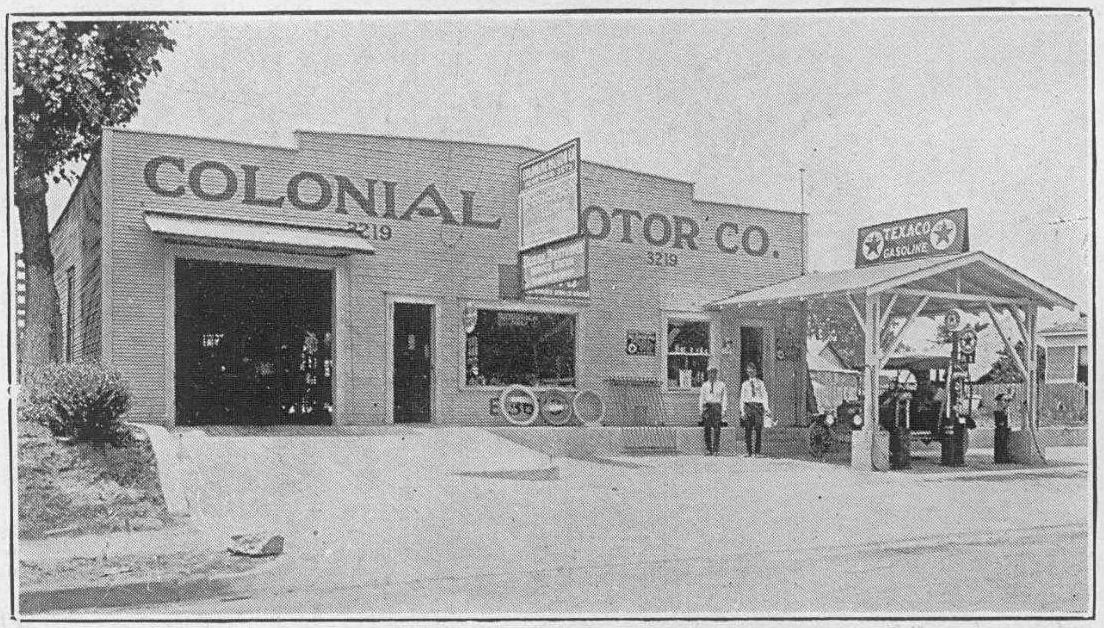
The Colonial Motor Co., 3219 Holmes Street, South Dallas.

I can’t explain it, but I really love photos of old service stations and garages. The Colonial Motor Co. was in business as early as 1914. Around 1920, it moved to South Dallas, where owner R. F. Mitchell opened a garage at 3219 Holmes Street, just off Pennsylvania in the area known as Colonial Hill. According to the obituary of Mitchell’s son, the business lasted until 1988. That’s quite a run.

An interesting side note about the owner is that he was a motorboat enthusiast and participated in and organized boat races at White Rock Lake. The garage you see above did all the things that service stations do, but it was also the official retailer of Evinrude outboard motors in North Texas.

*

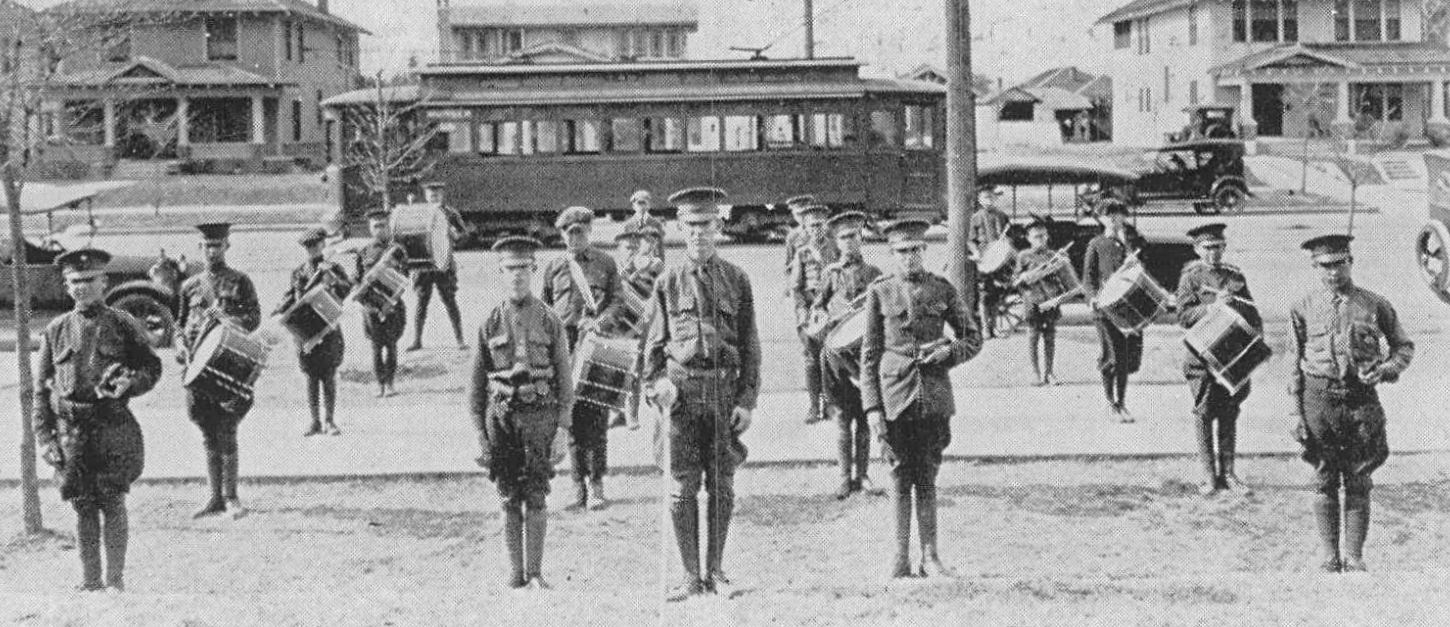
Still in South Dallas, this 1921 photo shows the Forest Avenue High School Drum & Bugle Corps. It’s not that exciting as a photo of a drum and bugle corps, but what is exciting is seeing the view of Forest Avenue behind them. This is now the 3000 block of Martin Luther King Jr. Boulevard, and nothing is this photo still exists. Not the houses, not the streetcar, not the people. It now, rather distressingly, looks like this.

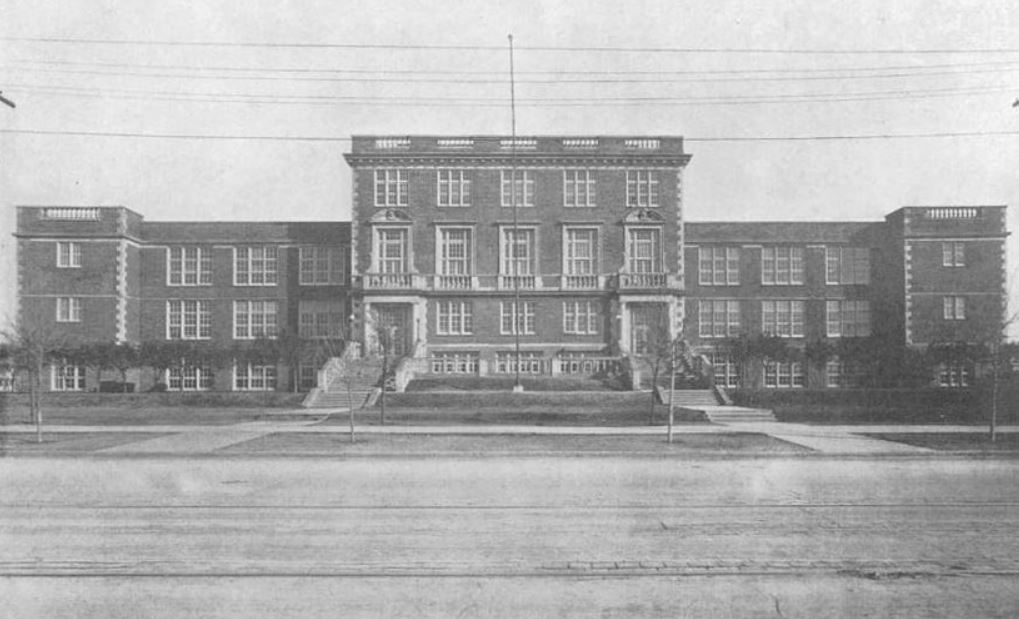
The drum and bugle corps is facing the school, seen here, in a photo from 1924:

The school still stands. It’s now James Madison High School — and it still looks pretty good!

*

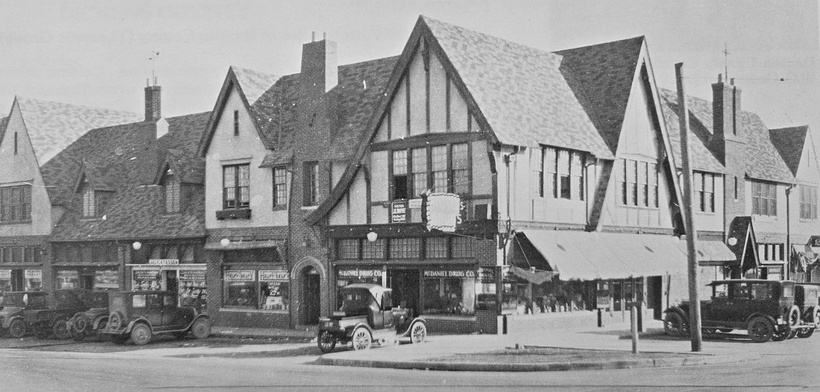
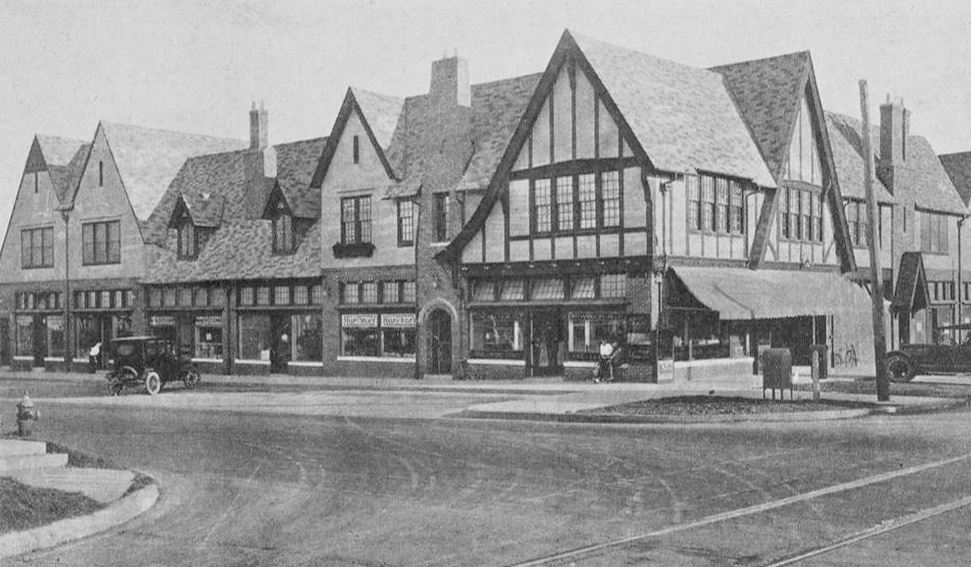
Over to Oak Cliff, to Cannon’s Village, West Davis & Edgefield, an Elizabethan-esque shopping strip built in 1922. Its history is in an Oak Cliff Advocate article here. See what it looks like today, on Google Street View, here. The photo above is from 1925. Another photo is below.

*

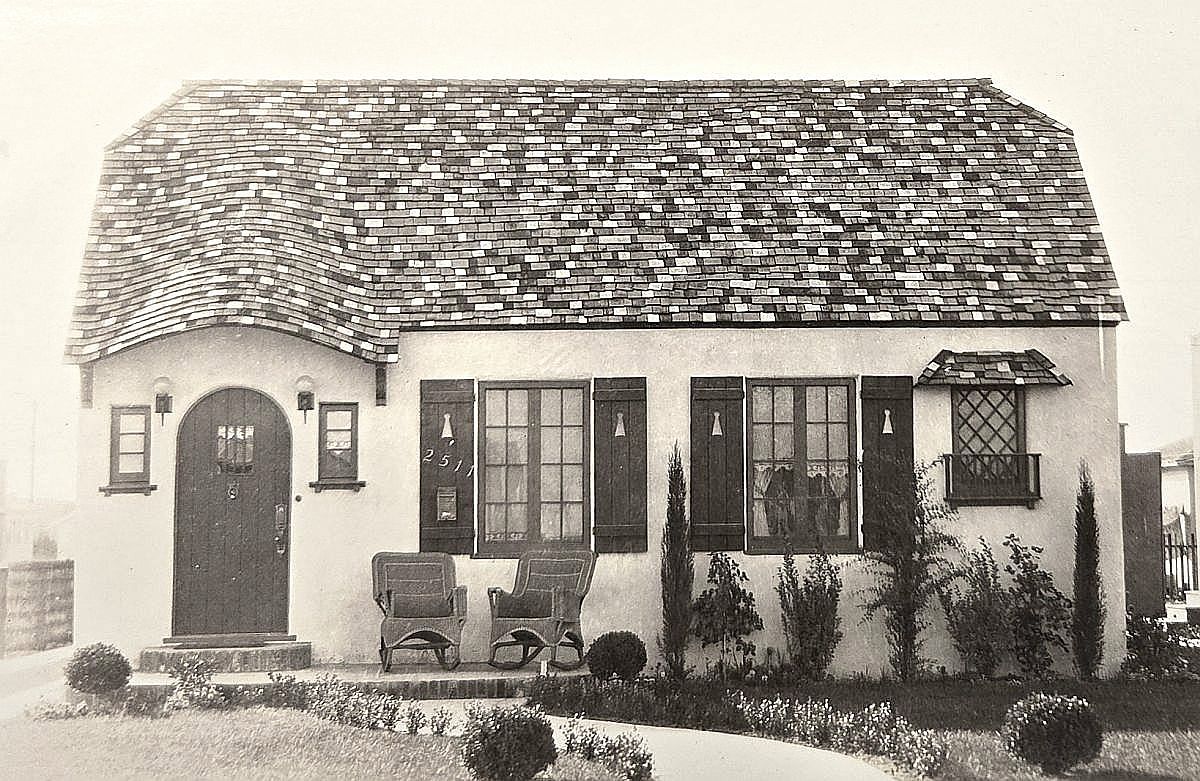
And finally, my dream house!

This house may (or may not) have been in Dallas. I choose to believe that it was here somewhere. All that’s known is the address: 2511. It’s almost too cute. Like something out of a fairy tale. That roof is incredible! And the little awning over the little window on the right! The chairs on the little porch. The weird, scrubby landscaping. Just everything! All it needs is some shade trees. I would live there in a heartbeat!

This is one of hundreds of photos of houses from the ‘teens-’30s which were used to sell house plans (and lumber). It is part of the R. M. Williamson Collection in the Dallas History and Archives. The locations of most of the houses are unknown — a lot are (were) probably in Dallas (East Dallas, Vickery Place, Belmont Addition, Oak Cliff, etc.), but a lot just don’t look Dallas-y to me at all (one is fully surrounded by a forest of very, very tall pine trees). But they’re all amazing. If the city of Dallas were filled with all the houses photographed in that collection, it would be a much more aesthetically pleasing city.

Read about this collection here — and read how these photos were used, here.

***

Sources & Notes

Top photo showing Pennsylvania and Meyers is from eBay.

Colonial Motor Co. photo is from the 1924 Forest Avenue High School yearbook; ad ran in newspapers in October 1920.

Drum and bugle corps photo and photo of Forest Avenue High School are from the 1921 and 1924 school yearbooks.

First Cannon Village photo is from a book I can’t remember the title of that I was browsing through in the Dallas History and Archives collection at the Dallas Public Library; second photo is from the Sidewalks of Dallas Instagram account.

Cute house photo is from the R. M. Williamson Collection, Dallas History and Archives, Dallas Public Library.

This post was drawn from several different posts which previously appeared on the Flashback Dallas Patreon page.

*

Copyright © 2025 Paula Bosse. All Rights Reserved.

Martinez Brothers, Eagle Ford — 1939

Eladio, Henry, and Feliberto

by Paula Bosse

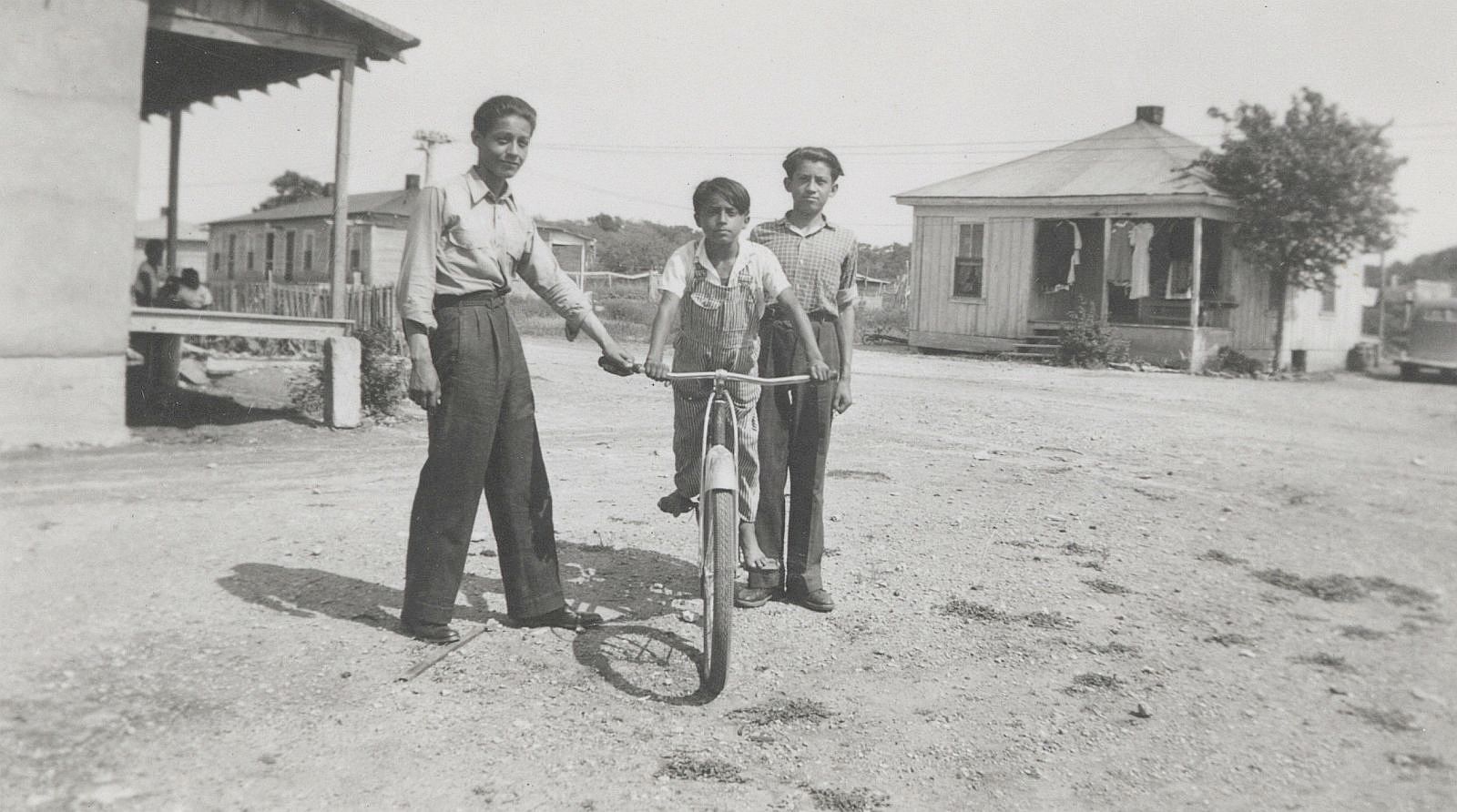
There are pictures I come across sometimes that affect me in a way I can’t really explain. Like this one. This shows three brothers posing for a photo in West Dallas in 1939. The boys are, left to right, Eladio Martinez, Henry Martinez, and Feliberto Martinez. Their father worked for the nearby Trinity Portland Cement Company. During the Depression, the boys helped support the family by cleaning railroad boxcars for a nickel each.

Eladio was killed in action during World War II — the Eladio R. Martinez Learning Center in West Dallas is named after him. His brothers Henry (Enrique) and Feliberto were active in the community and in preserving the history of Ledbetter/Eagle Ford.

Read more about Eladio Martinez here.

***

Sources & Notes

Photo — “Eladio Martinez, Henry Martinez on a bicycle, and Feliberto Martinez” — is from the Dallas Neighborhood Stories Grant Collection, Dallas History and Archives, Dallas Public Library; the accession number of this photograph is MA19.4/BDW-Martinez-H.6. More info on this is on the DPL Digital Collections page, here.

*

Copyright © 2025 Paula Bosse. All Rights Reserved.

Fisher’s Addition, West Dallas

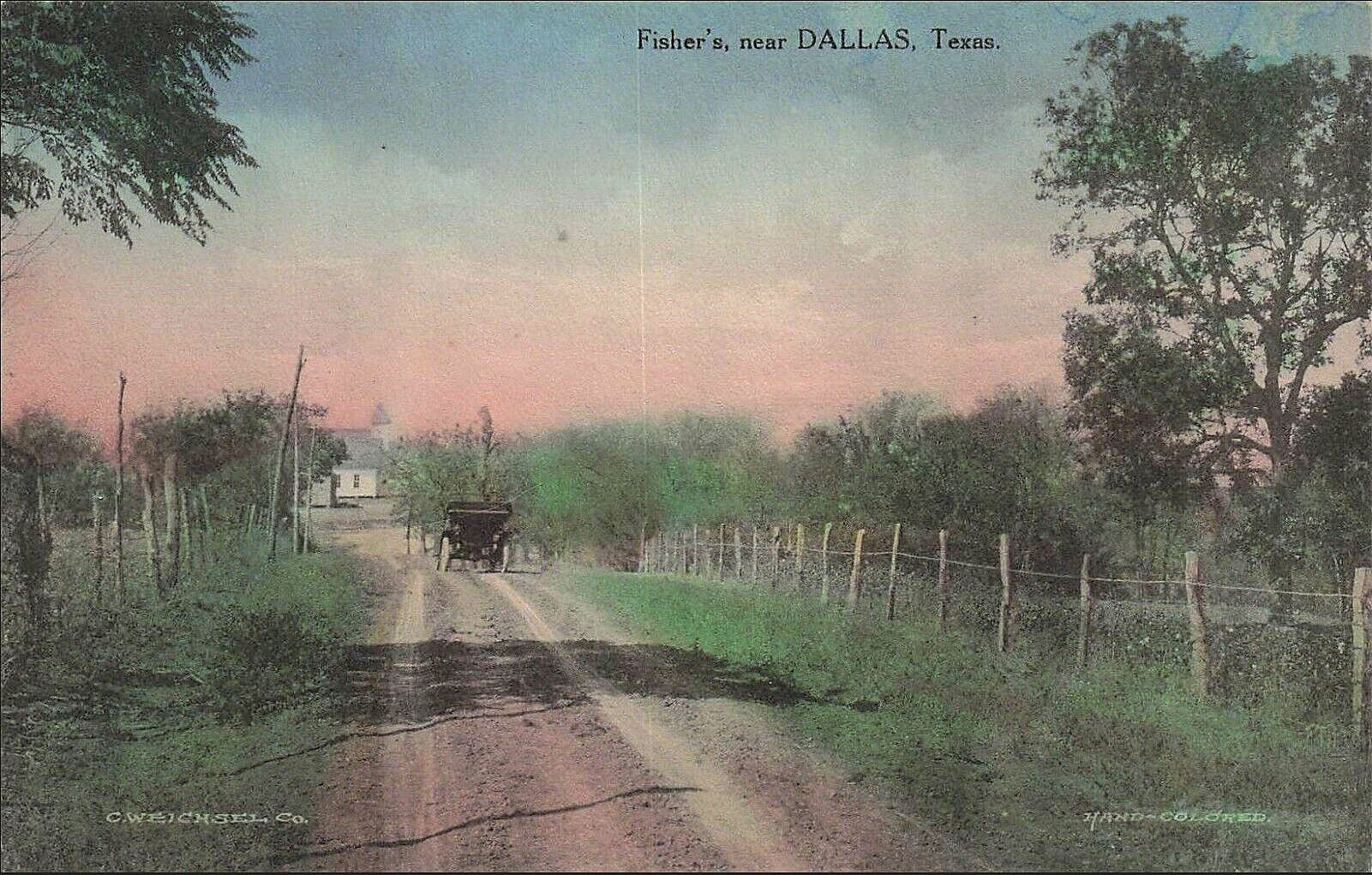
Fisher’s, Near Dallas, Texas

by Paula Bosse

I’ve never seen this postcard before, and I’d never heard of Fisher’s (“near Dallas”).

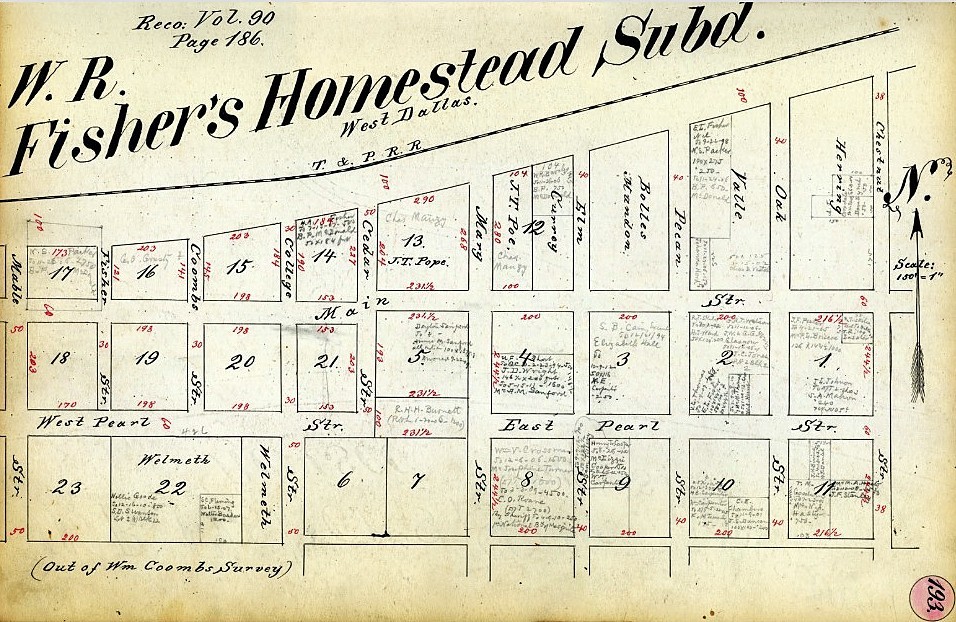
W. R. Fisher’s Addition was in West Dallas, possibly bordered by what is now N. Edgefield, Fort Worth Avenue, Sylvan, and West Commerce (just below the old T & P railroad tracks). …I think. Lots of real estate transactions were going on in “Fisher’s” in the 1880s and ’90s, when West Dallas was its own community and before the area became part of Dallas.

*

This is a very pretty postcard. I just picked a random intersection on Google to see what the general area looks like now. It’s mostly built-up, of course, but here’s a very attractive view, at Seale and Obenchain here (Jan. 2024).

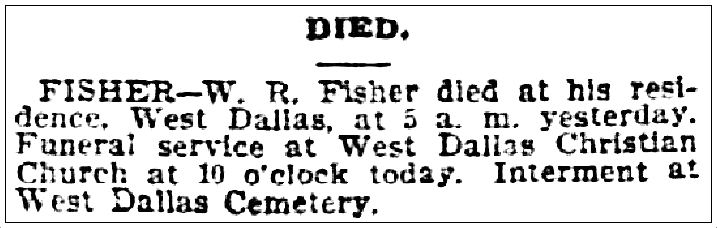
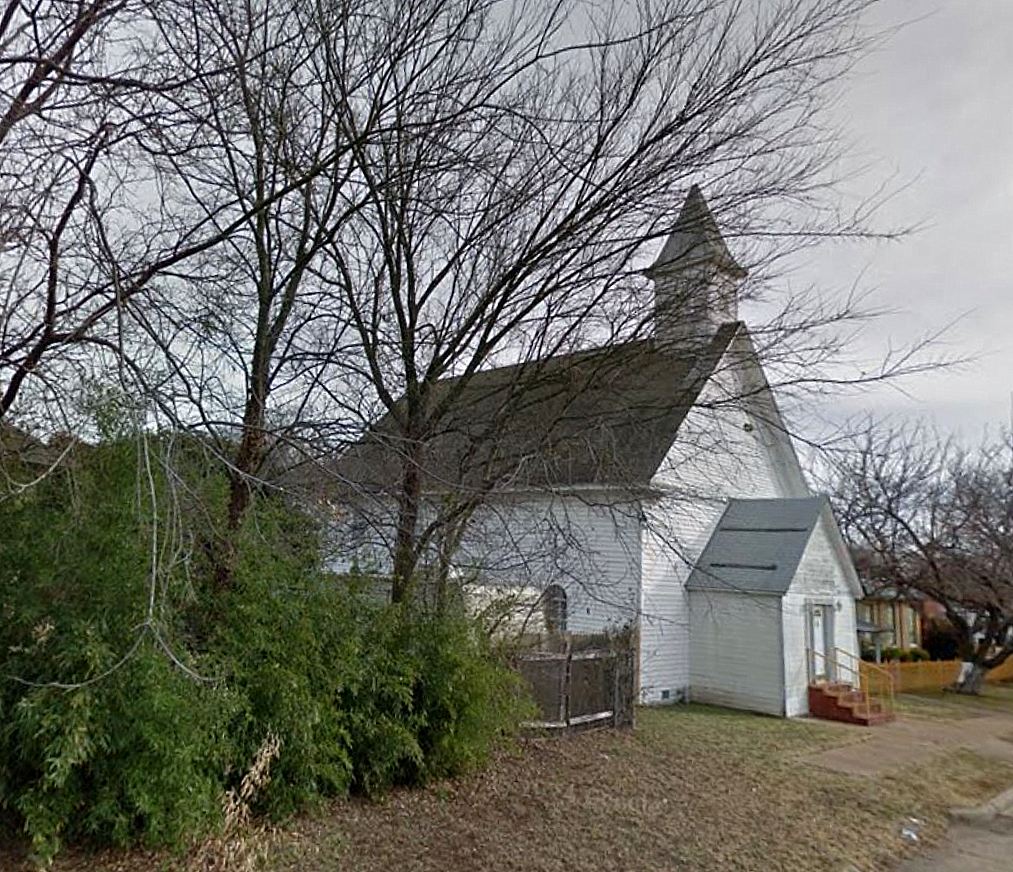
As far as what looks like a church in the distance — it might be the West Dallas Christian Church (later the Western Heights Church of Christ), which was affiliated with West Dallas Cemetery (later Western Heights Cemetery), where William R. Fisher is buried, along with many members of the family of his first wife, Mary Coombes/Coombs, a familiar name in the settlement of the area.

Dallas Morning News, Oct. 19, 1900

*

UPDATE: Thanks to reader Linda Donnelly for sending a link that shows this same view these days — with the same church in it! See the Google Street View here. Here’s the church up close (see it on Google Street View here). (1900 block of N. Winnetka, just off Stafford.)

The former West Dallas Christian Church was built around 1890 and has a historical marker, which was placed at the site in 1972, when it was the Western Heights Church of Christ.

***

Sources & Notes

Early-20th-century postcard by Weichsel found on eBay.

Image showing William R. Fisher’s Homestead Subd. (out of the Wm. Coombs’ Survey) is from the Murphy and Bolanz block book scanned by the Dallas Public Library and available online, here.

Read about W. R. Fisher in the History of Dallas County, here.

This post appeared in an earlier version on the Flashback Dallas Patreon page.

*

Copyright © 2025 Paula Bosse. All Rights Reserved.

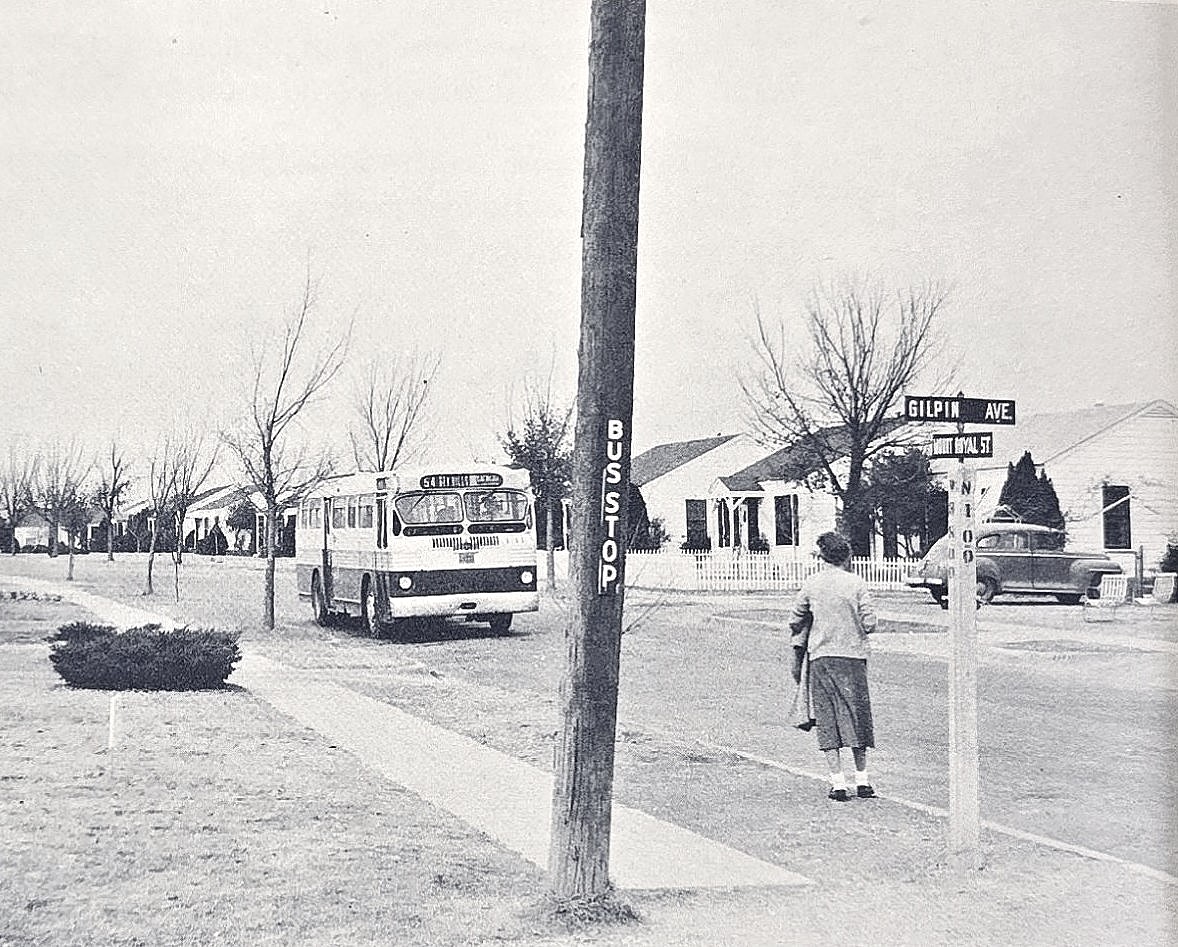
Waiting for the Bus at Gilpin and Mt. Royal — 1955

Waiting for the #54…

by Paula Bosse

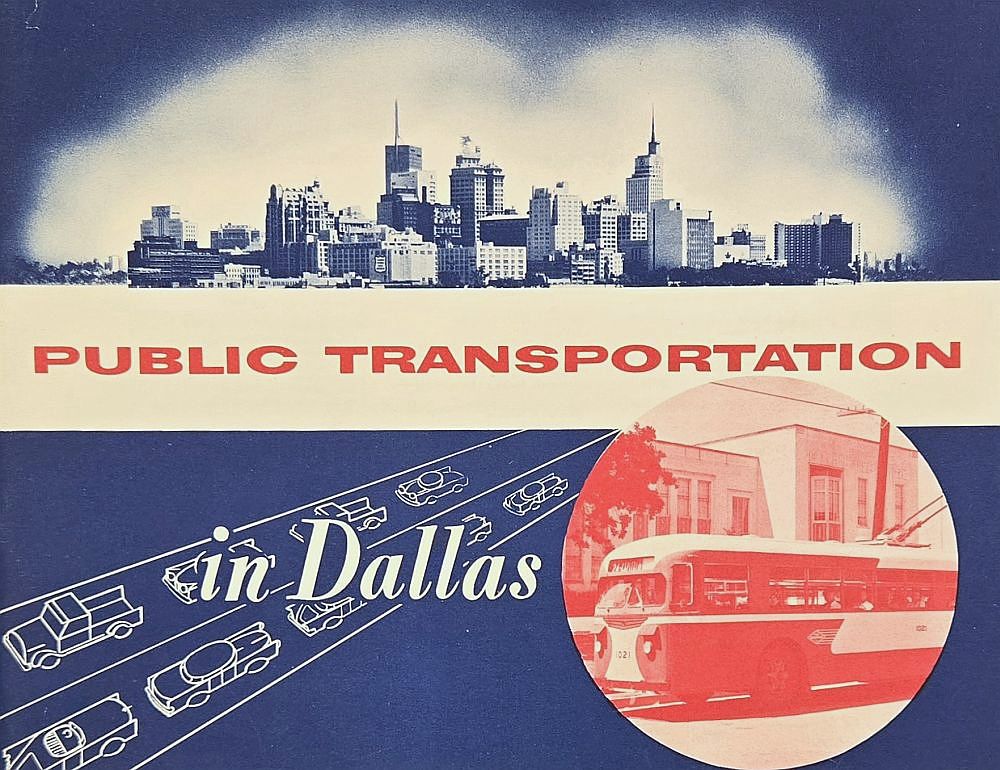
I saw this photo in a 1955 booklet called Public Transportation in Dallas and loved the neat-as-a-pin Oak Cliff street, its manicured, chilly starkness accentuated by the leafless trees. It’s also a needed reminder — as we’re dragged into August — that someday we’ll (probably) have autumn and winter again.

See what this view looks like today, on Google Street View, here.

***

Sources & Notes

Photo from and cover of the slim booklet Public Transportation in Dallas (1955), Dallas History and Archives, Dallas Public Library.

*

Copyright © 2025 Paula Bosse. All Rights Reserved.

Snow in Irwindell — 1940

Snow day in Irwindell…

by Paula Bosse

We have snow in Dallas! It’s always exciting for those of us who have grown up here and haven’t really experienced snow that many times in our lives. It’s pretty and magical and, unless you have to drive or walk in it, a welcome treat.

I came across this artwork back in 2018 and have been meaning to post it on a snow day. We’ve had snow since then, but I never got around to it until now. Better late than never.

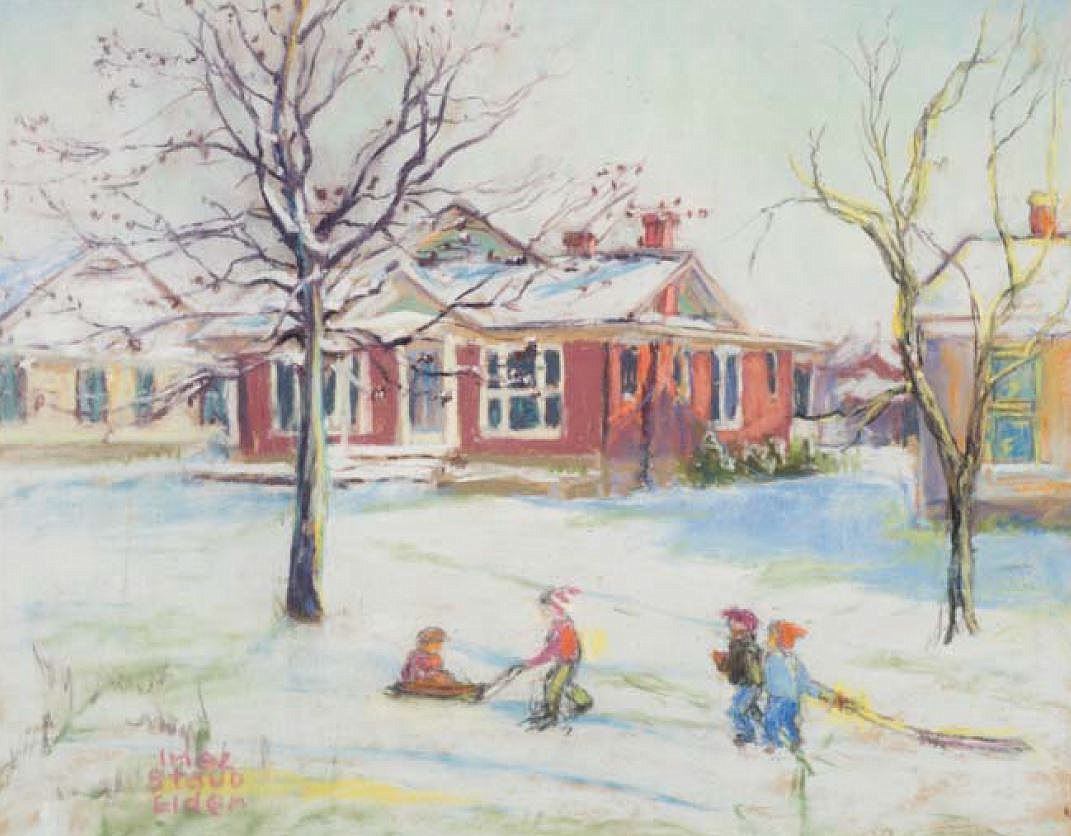
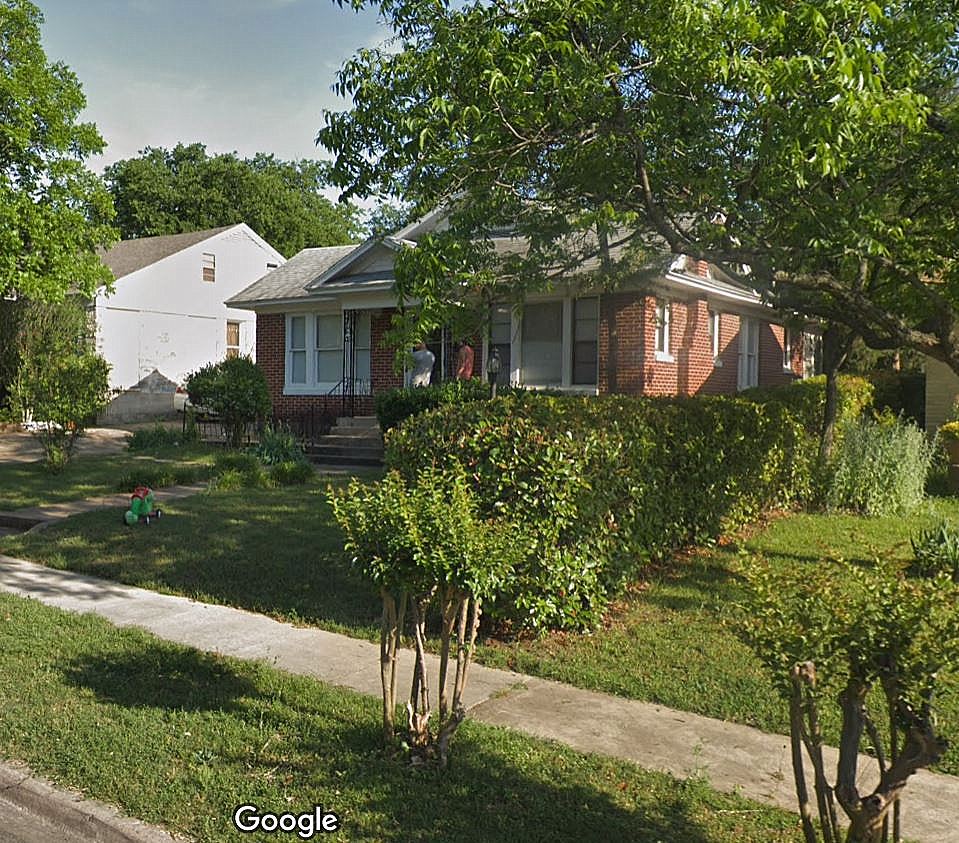
“My Dallas Home, 1940” (pastel on paper) is by Dallas artist Inez Staub Elder (1894-1991). It shows a snowy scene, with children playing, one of them on a sled. A house is in the background. One would assume from the title that the house was Inez’s house. Her address in 1940 — and for years before and after — was 3339 Gibsondell, in the Irwindell neighborhood of Oak Cliff. Looking at the house on Google Street View, it is apparent that 3339 is not the house seen in the drawing. I figured that if Inez was sketching a winter scene of her neighborhood, she might have done it inside, looking out a window. So I reversed the view from her home, and the house seen in the drawing is one across the street, at 3334 Gibsondell. The brick house has been painted gray, but the image below shows what it looked like when I was originally researching this, back in 2018 — still red brick.

The pictured house is here (Google Street View image from May 2018).

*

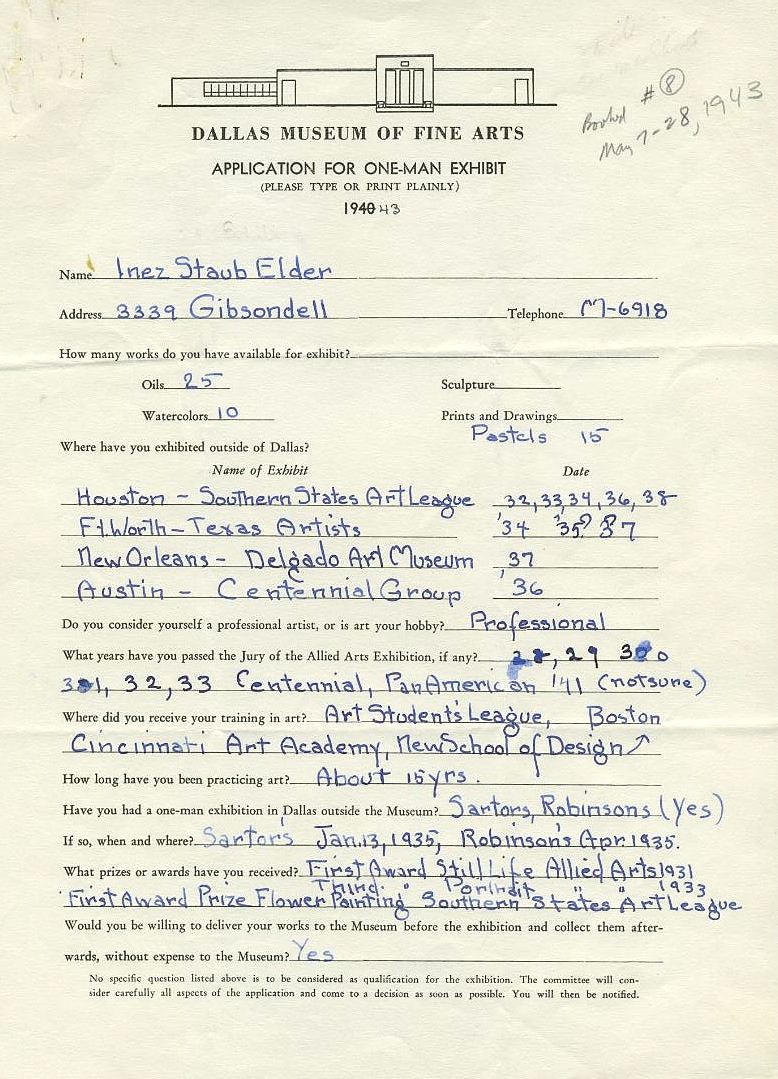
Inez Staub Elder, born in Ohio, lived in Dallas for decades. She regularly exhibited and also taught art. Below is an application she filled out for a show at the Dallas Museum of Fine Arts in 1943.

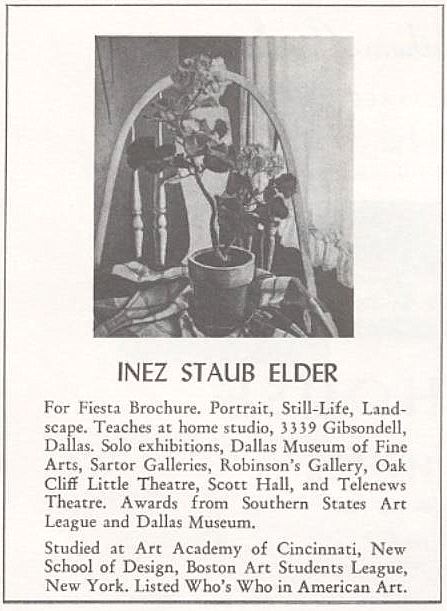
From a 1957 publication:

The geranium in color:

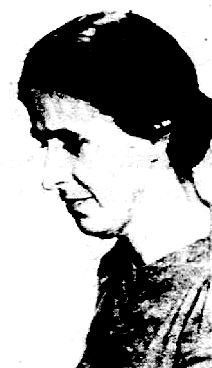
The only image I’ve been able to find of Inez Staub Elder, taken around the time of “My Dallas Home, 1940” is below.

***

Sources & Notes

Top image of painting by Inez Staub Elder titled “My Dallas Home, 1940” (pastel on paper) is from the David Dike Gallery catalog of the October 27, 2018 auction — this was lot 323.

The Dallas Museum of Fine Arts 1943 “Application for One-Man Exhibit” is from the Dallas Museum of Art Exhibition Records, Portal to Texas History, here.

The black-and-white image of the geranium is from the catalog “La Fiesta of Art, 1957,” Bill and Mary Cheek Collection, Portal to Texas History, here.

Color image of the geranium still life is from AskArt.

Read more about Irwindell/The Dells District at the Heritage Oak Cliff website.

*

Copyright © 2025 Paula Bosse. All Rights Reserved.

Oak Cliff: No Germs, No Mosquitoes, No Malaria — 1907

patreon_oak-cliff_dmn_111007_adNov. 1907

by Paula Bosse

It’s 1907. How is it you’re not scooping up real estate in Oak Cliff?!

Aside from that “no saloons EVER” thing, it sounds positively idyllic.

*

On the Hills of Oak Cliff
When Thinking of a Home for Your Wife and Children You Need

      • First — Altitude 
        Where the air is clear and free from mosquitoes and malaria. 
      • Second — Water 
        Clear and Pure and Free From Germs 

In Oak Cliff these things predominate, you are on the hills, higher than Dallas, south of the river, and where your breezes come direct from the country, and, as for water, the water running in the Oak Cliff mains is from the great Nelms Well, illustrated on this page, and is the purest and clearest water in Dallas County. 

Ask City Chemist Chisholm, or Water Commissioner Sullivan, or Water Superintendent Nelms, they are the three men most competent to pass on this question, and will verify these facts. 

The water does not come from Bachman’s Dam or any branch of the river, but deep down in the earth, hundreds of feet, from God’s reservoir, gushing out like a great spring and sparkling like diamonds. 

People living in Oak Cliff are healthy and live long. They cannot help it when breathing pure air and drinking clear water. 

In spite of the present financial stringency Oak Cliff is building on, and her citizens have great faith in the future of Dallas. 

As an evidence of this fact, Mr. J. F. Zang has this week let the contract for over $1,000.00 worth of cement walks to be laid on Zang’s Boulevard and other streets. 

Lake Cliff, the beautiful, with its thirty acres of park scenery, its lake and its many costly improvements, is situated in Oak Cliff, and is one of the popular attractions of Dallas.  

Oak Cliff has the combined advantages of city and country; it has gas, sewerage, water, electricity, streetcars, telephones, cement walks, and it is only ten minutes’ ride from its center to the center of Dallas; and it has the country scenery so much desired — hills and valleys, great oak and pecan trees, numerous springs and other rural scenes. 

Raise your children where there are no saloons. By special act of the Legislature saloons are forever debarred from the territory of Oak Cliff. 

Kidd Springs, one of the loveliest parks in Dallas, with the largest springs in the city, is in Oak Cliff, and is one of the leading resorts. 

**

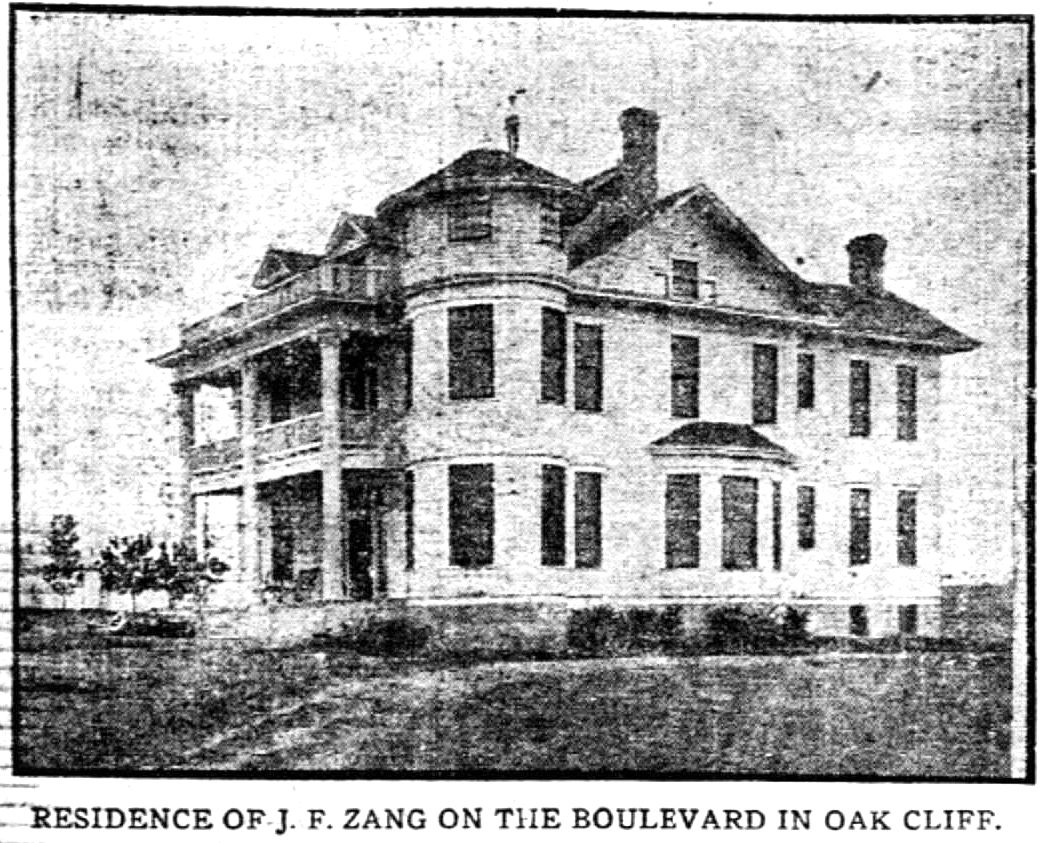
J. F. Zang’s home once stood at Zang and 6th and had what was probably the finest possible view of downtown Dallas, then or now.

oak-cliff_dmn_111007_zang-home-det

*

zangs-blvd_dmn_102600Dallas Morning News, Oct. 26, 1900

*

This might have been a house being built in Zang’s Crystal Hill Addition:

oak-cliff_dmn_111007_home-det

*

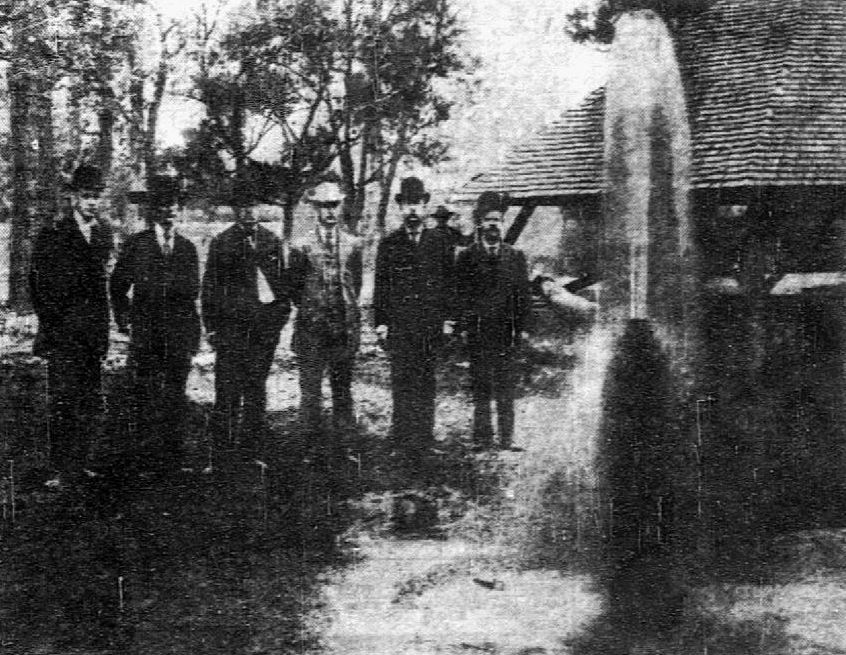
I have to admit, this just looks like a water sprinkler, but here’s the “Nelms Well” in action:

oak-cliff_dmn_111007_nelms-well_det

I had never heard of the “Nelms Well.” It was the first deep artesian well in Oak Cliff (1907), and it tapped into a million gallons of spring water, which was, at the time, enough to satisfy the needs of Oak Cliff residents and to slake their thirst for the pure, clear water that put all other Dallas County water to shame.

Richard Nelms, the City Water Superintendent, is seen at the far right in the photo below. The well was named in his honor. And, again, the water? Let me just repeat the rhapsodic ad copy: “the purest and clearest water in Dallas County… [from] deep down in the earth, hundreds of feet, from God’s reservoir, gushing out like a great spring and sparkling like diamonds.” In other words, Oak Cliff had some damn fine water.

nelms-well_photo

***

Sources & Notes

Ad printed in Dallas newspapers in November 1907.

A couple of water-related Flashback Dallas posts that might be of interest:

This post originally appeared in a different version in a Flashback Dallas post on Patreon.

patreon_oak-cliff_dmn_111007_ad

*

Copyright © 2024 Paula Bosse. All Rights Reserved.

Some-Context Channel 8 Screenshots: 1971

lady mailman june 1971 WFAAWFAA Collection/Jones Film Collection/SMU

by Paula Bosse

I have been working as part of a 3-person team (led by Jeremy Spracklen and Scott Martin) on the WFAA archive of news film, housed in the G. William Jones Film and Video Collection at the Hamon Arts Library at SMU. I have been working on 1970 and 1971, going through daily footage shot for Channel 8 News. I get a bit bogged down by all the sports and car crashes, but at this point, I am so all-consumed by these two specific years that I feel I would do well on Jeopardy if the categories were things like “Minor League DFW Hockey Teams of the Early ’70s,” “Internecine Squabbles of the Dallas City Council, the Dallas School Board, and the Dallas County Commissioners Court,” and “So What’s the Deal with the Sharpstown Scandal?” My 2023 has been spent immersed in 1971, where the chaos of the implementation of court-ordered school busing, the huge securities fraud scandal that involved some very powerful Texas politicians (Sharpstown), and the battle between Craig Morton and Roger Staubach to become the Cowboys’ #1 quarterback were some of the stories that dominated the headlines. And, lordy, there were some pretty exotic hairstyles, fashions, and interior design trends hammering away relentlessly throughout this post-hippie (it might really still have been current-hippie), pre-disco period.

Here are a few of my favorite moments from this 1971 DFW-centric news footage from the WFAA archives. Links to the pertinent clips on YouTube are included at the end of the descriptions. These clips are rarely the full reports that would have been seen on the nightly news — they are often just silent footage or B-roll, without any identification of people or clues as to where they were filmed or even why they were newsworthy. It’s (mostly) a lot of fun to dig through and watch the unfolding of history from more than 50 years in the future.

**

Above, from JUNE 1971

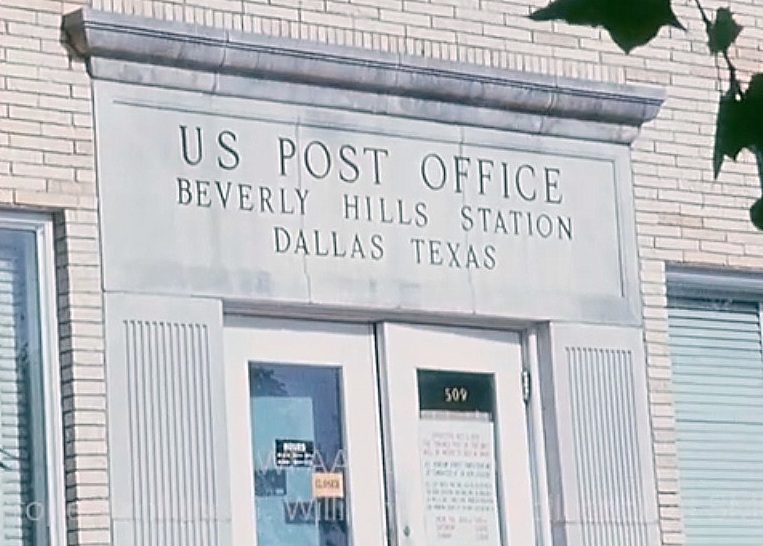
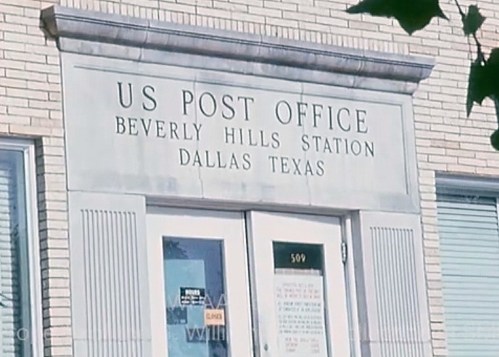
One of my favorite human-interest stories from the past year (meaning 1971!) was the profile of one of the few “lady mailmen” in Dallas at the time. She’s utterly, utterly charming, has a supportive and interesting husband and family, and loves her job. The Channel 8 cameraman shows her as she sorts her mail in the Beverly Hills Station post office in Oak Cliff and follows her as she walks along her route on West Davis. The only problem with this 7 minutes of interesting footage is that the woman is never identified. I dove in, really wanting to identify her. I thought I had cracked the mystery of her identity, only to find myself at a dead end again. If only her children could see this wonderful profile of their mother. If you know who this woman is, please let me know, and we’ll add her name to the YouTube description and try to track down any family members. I would LOVE her children to be able to see this.

The “lady mailman” is interviewed here (this first bit is in three short segments, totaling 4 minutes); a later clip shows her on her route, here (about 3 minutes). The old post office building still stands at 509 N. Barnett.
lady mailman june 1971 WFAA_beverly hills post office

*

JANUARY 1971

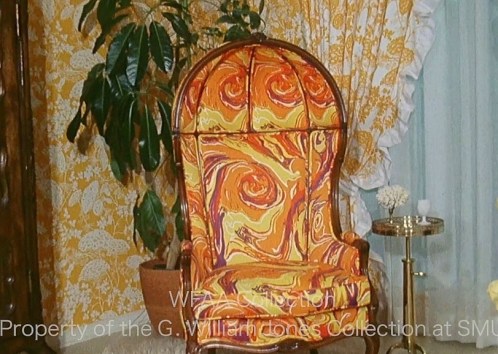
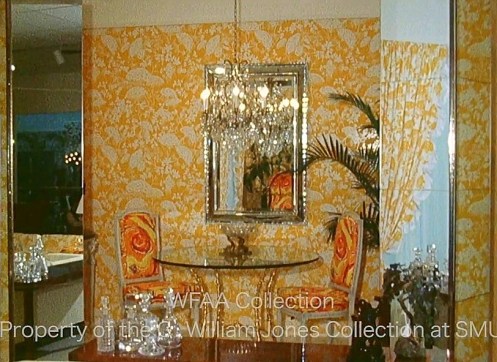
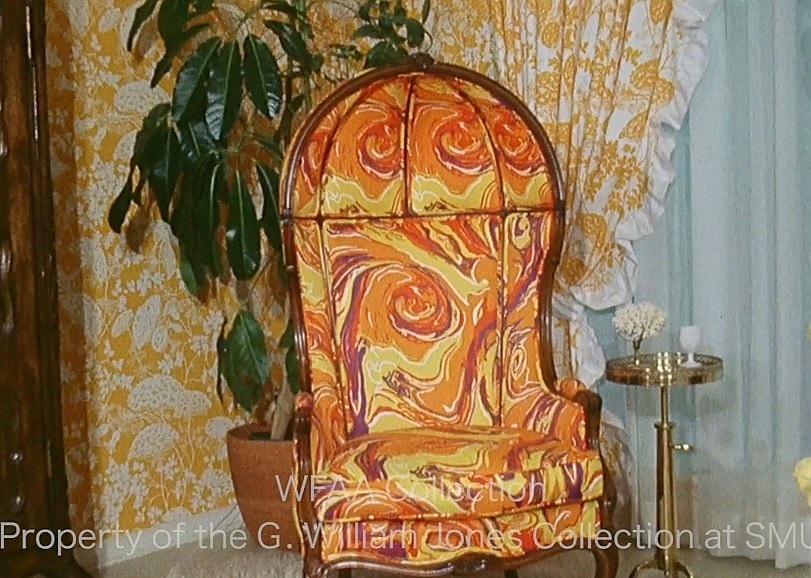
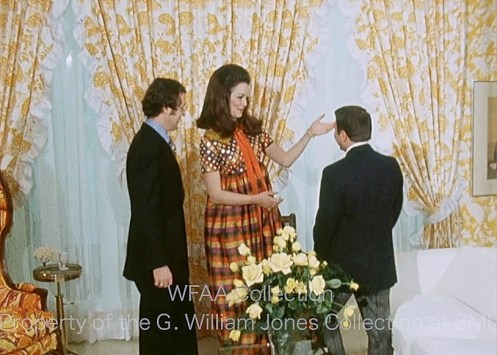
So, yeah, fashion and interior design trends were pretty… in-your-face in 1971. In the three screenshots below, you’ll see some retina-abusing images of with-it decor. The first features the always beautiful Phyllis George, the Denton native who was in the midst of her Miss America reign. In this clip, she has come back home to DFW for an appearance at an event in which a room designed with her in mind is unveiled (by decorators C. John Megna and William Farrington). She is wearing a dress designed by Carlo Bitetto specifically for her to wear IN THAT ROOM (!). You don’t often see sparkles and plaid cheek-by-jowl.

The clip with the super-color-saturated room and its battling patterns is here.
phyllis-george-room_jan-1971_c

phyllis-george-room_jan-1971_b

phyllis-george-room_jan-1971_a

*

FEBRUARY 25, 1971

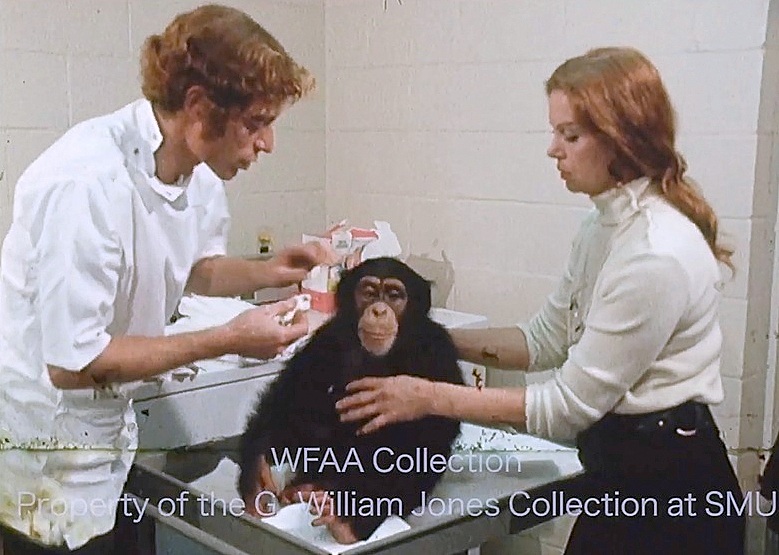
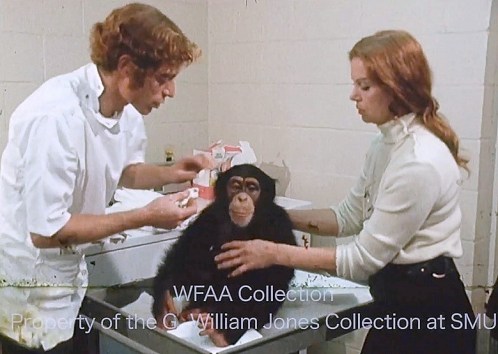
Before Lion Country Safari, Mesquite had World of Animals, a drive-thru safari park. World of Animals had a wild-animal veterinarian who visited regularly from California: Dr. Martin Dinnes. Below, Dinnes is seen providing dental care to popular attraction Harold the Chimp. This is not really something I expected to see, but there you are. (Dinnes was later engaged to actress and wildlife preservation activist Tippi Hedren for several years.)

The clips of Dinnes being interviewed and preparing Harold for a tooth extraction (and I grimaced a bit, because the camera keeps rolling during the procedure, so be warned!) are here and here. (The last clip has a shot of Harold’s hand, which, understandably, appears to be gripping the chair.) That is one well-behaved, chill chimp!
dinnes-martin_harold-chimp_022571_WFAA

*

MAY 18, 1971

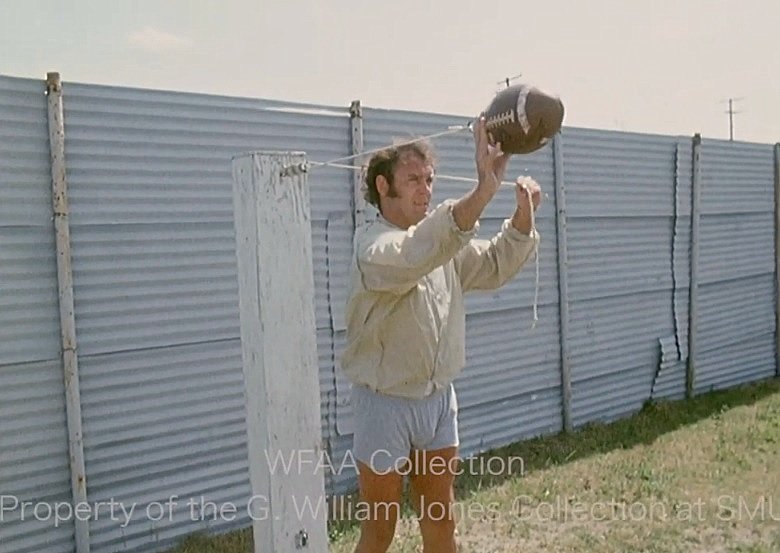
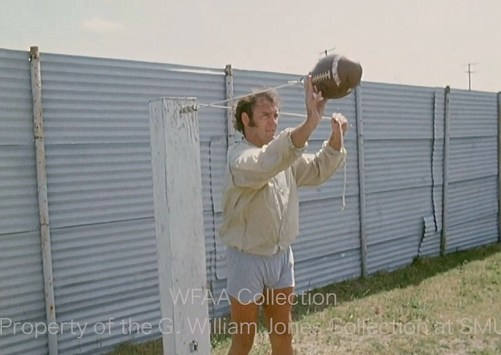
In 1971, there was an ongoing battle between old quarterback Craig Morton and NKOTB Roger Staubach over who would be named the team’s official starting QB. Coach Tom Landry worked for months with a two-quarterback system, alternating them from game to game — he was fine with this, but everyone else hated it. Below are screenshots of Morton and Staubach at the Cowboys practice field. I know virtually nothing about sports training, but this, um, extremely low-tech gadget struck me as weird. And funny. I mean, okay, it was 1971, but surely there was something more technologically advanced than this? It’s a football on a string, tied to a post. And maybe there’s a spring or something in there. This must have been effective. Rog looks like he’s straining. I don’t know. But I love it.

See Craig in an interview with Verne Lundquist from May 18, 1971 about his elbow and shoulder injuries here, and then using the football-on-a-string thing (and then training with Staubach) here; and see Roger interviewed on the same day about really, really wanting to be the starting QB here, and then he hits the string thing here before working out with Morton in what must have been a fairly tense period of both of their careers.
morton-string_WFAA_may-18-1971

staubach-string_WFAA_may-1971

*

JUNE 1971

Medical examiners used to be on the news a lot. One who popped up frequently was Tarrant County M.E. Dr. Feliks Gwozdz. I was amused more than I should have been when I saw the skull-and-crossbones coffee mug on his desk. I hope it said “World’s Greatest Coroner!” on the back.

The silent footage of Dr. Gwozdz at his desk is here.

skull-crossbones_feliks-gwozdz_june-1971

*

JULY 14, 1971

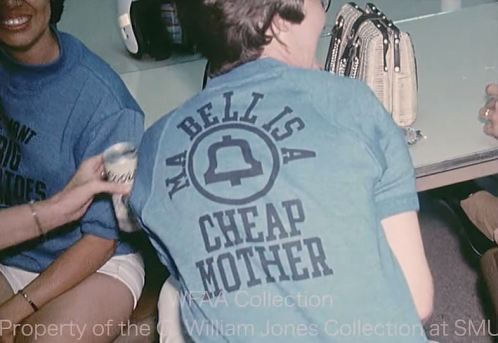
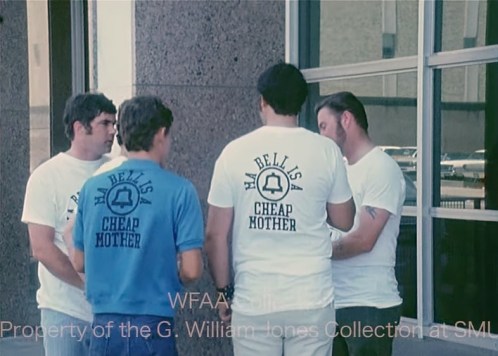
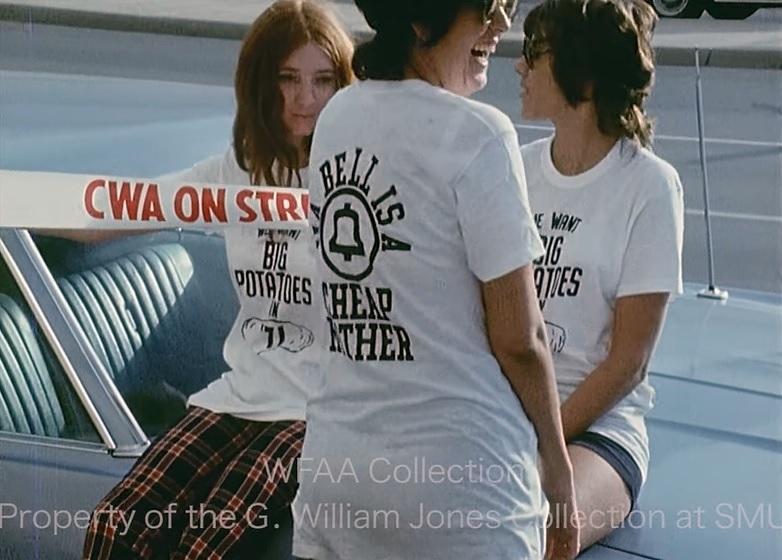
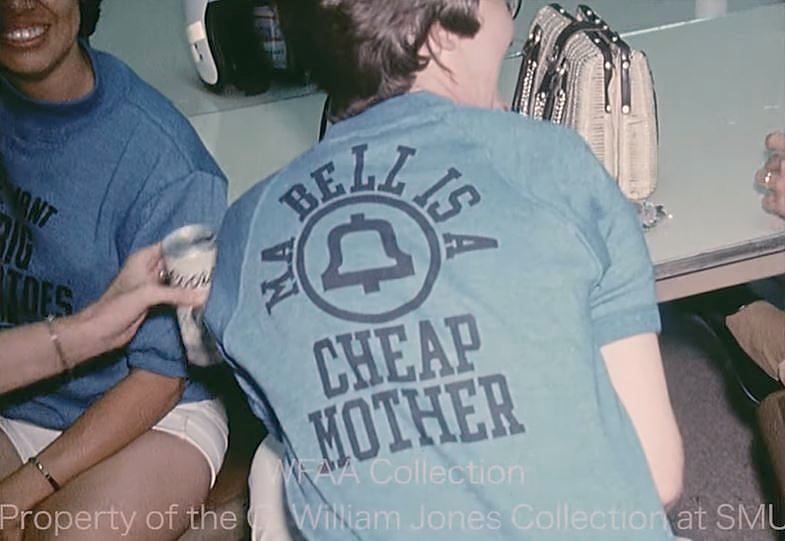
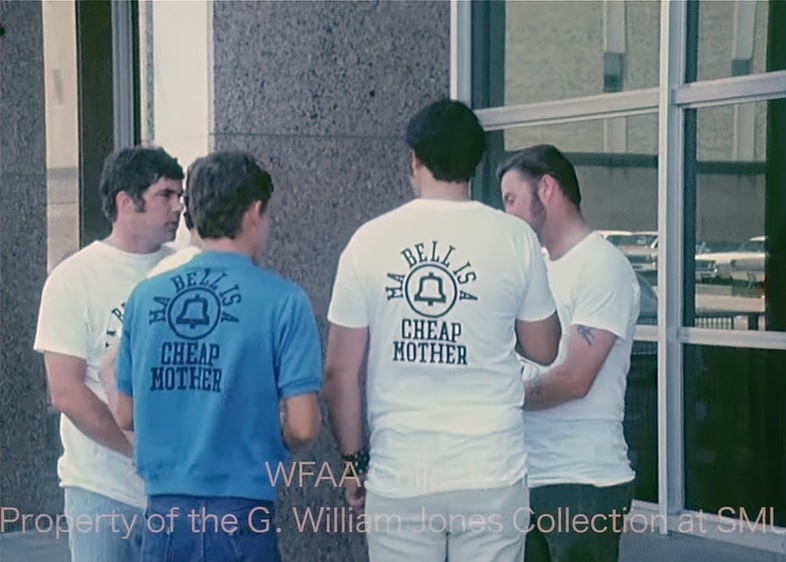
Back in 1971 there was what seemed like the threat of a union strike every 10 minutes. I enjoyed the footage of a bunch of Southwestern Bell employees who look like they were probably a lot of fun to hang out with. Their t-shirts read “Ma Bell Is a Cheap Mother,” which is just great.

Strike footage is here (about 2½ minutes) and here.

SWB-strike_july-14-1971_big potatoes

SWB-strike_july-14-1971_ma bell is a cheap mother

SWB-strike_july-14-1971_WFAA

*

JULY 1971

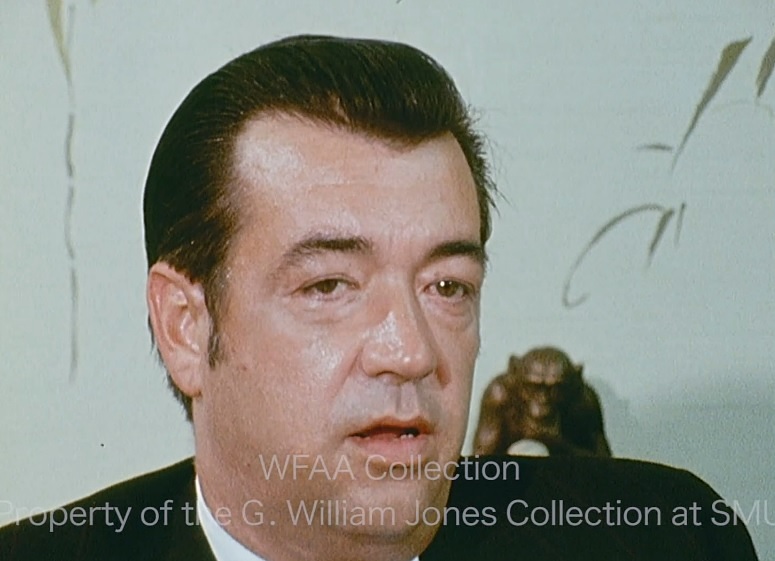
One of the top stories of 1971 was the endless furor set off by court-mandated school busing in attempts to desegregate schools. It was a mess. The man seen below is attorney Bill Brice, a leader of one of the many anti-busing groups. …Surely the cameraman noticed the monkey.

Man with monkey can be seen here.

anti-busing_bill-brice_monkey_WFAA_july-8-9-1971

*

AUGUST 29, 1971

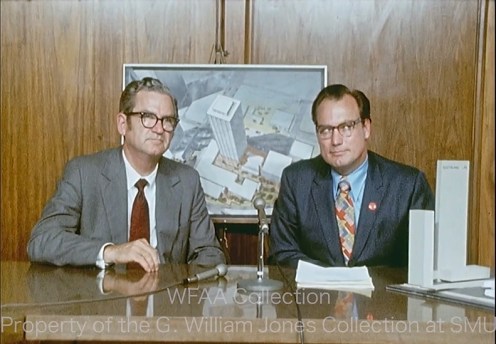
When the Dallas School Board and Supt. Nolan Estes weren’t pulling their hair out over desegregation, they tackled other issues. One of which was so overshadowed by anti-busing demonstrations that it barely got any play, but I find it really interesting. It concerned Crozier Tech High School downtown. At the end of the 1970-71 school year, the landmark school was closed, and there was lots of discussion on what the DISD should do with the building/land, which they owned (2218 Bryan). This press conference was supposed to be about Estes’ vision of a 40-story school-office complex, which he suggested be built on the land — the first 10 floors would be for school use, and the top 30 floors would be leased to businesses as office space, with leases, theoretically, paying for construction and maintenance of the building. The building was never built (and thankfully, old Tech still stands). School board president John Plath Green and Supt. Estes sit in front of an architectural drawing of the envisioned DISD skyscraper. Too bad no one wanted to talk about it.

Footage from the press conference where reporters only want to ask about busing, is here.
super-school_DISD_crozier-tech_DMN_082971_WFAA_SMU

*

SEPTEMBER 23, 1971

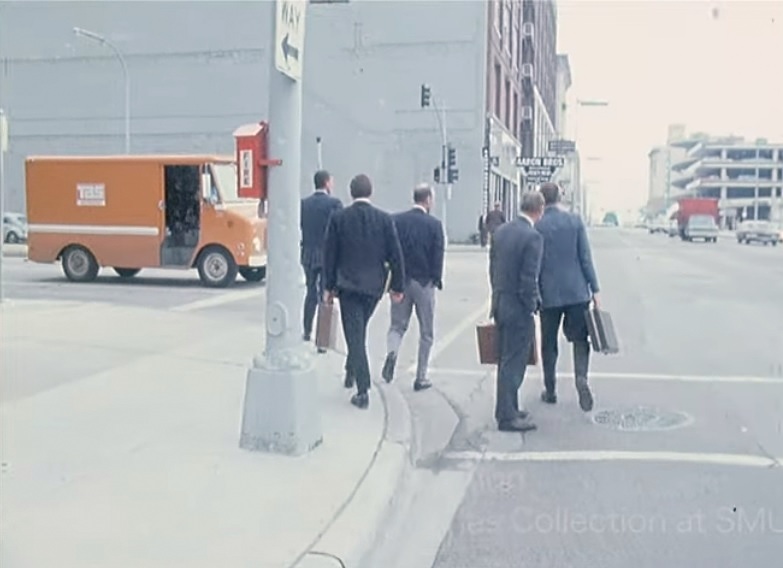
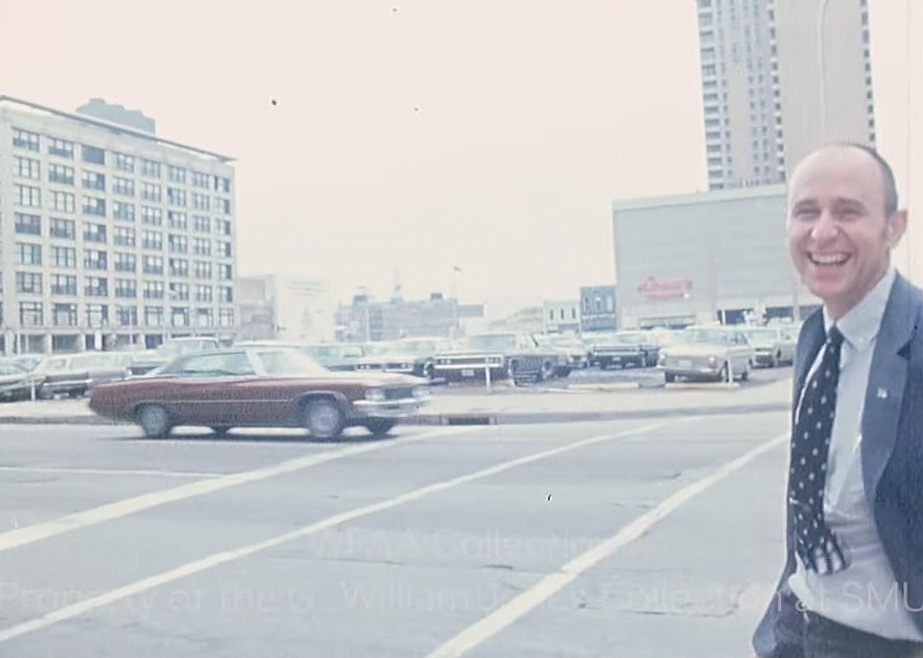
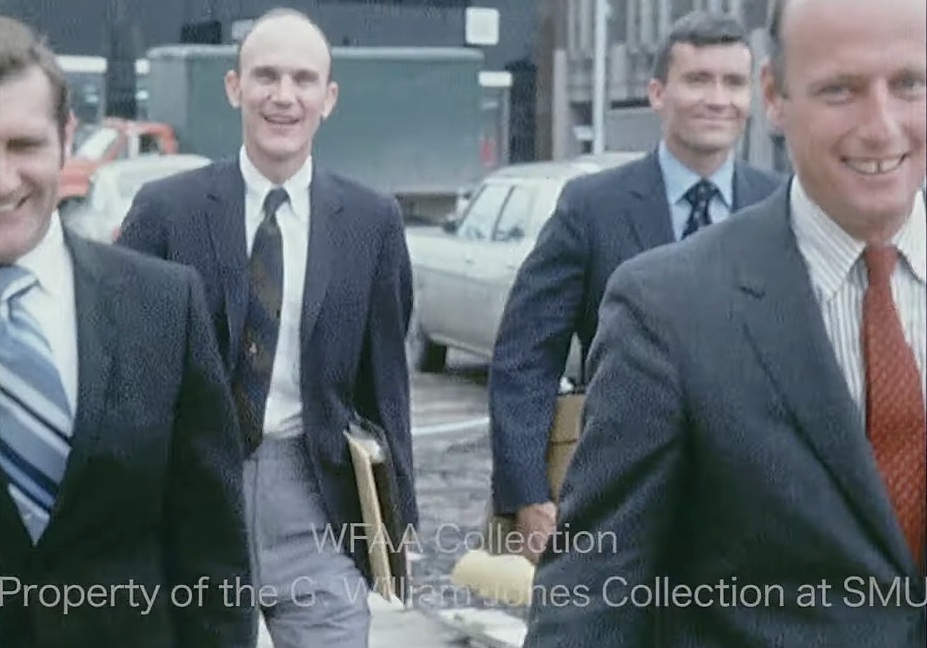
The Sharpstown Scandal was a bigger story than busing, but, even though political scandals are juicy, it just didn’t get everyday people mobilizing, marching in the streets, and shouting each other down in public forums the way busing did. But it was a massive story, and several political careers bit the dust because of it. The sprawling and confusing securities-fraud scandal mostly involved drab politicians and business executives. But one part of it involved, bizarrely, six celebrated — if not beloved — NASA astronauts and an insurance company pension fund.

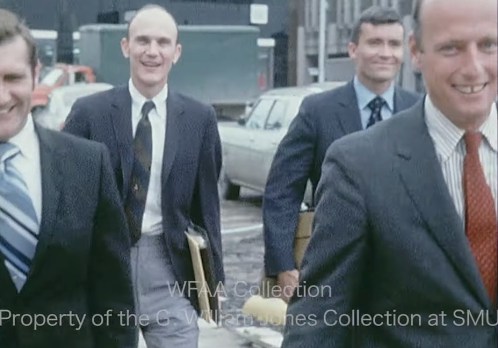
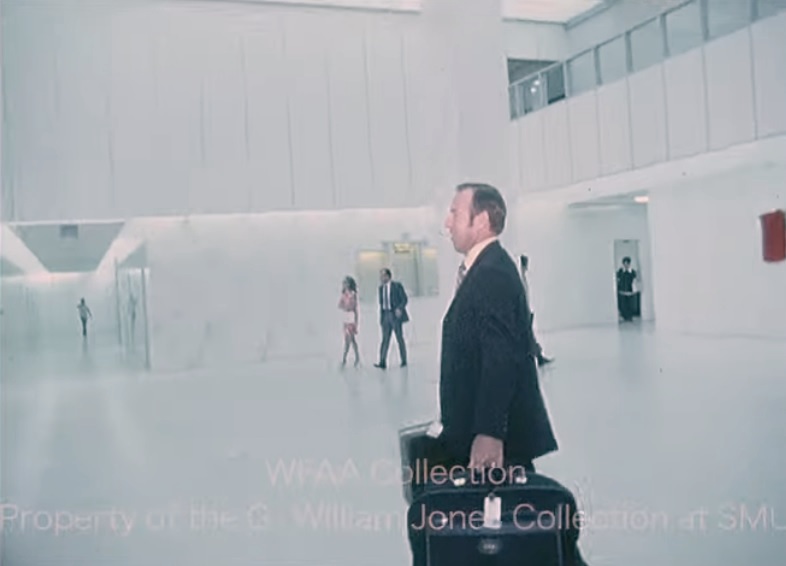
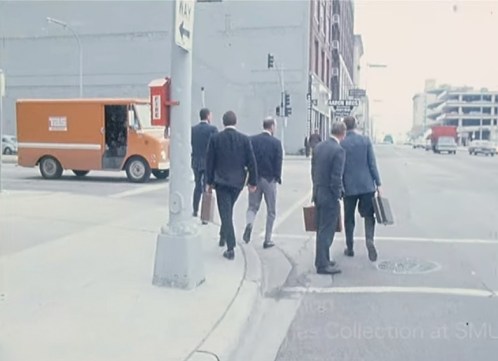
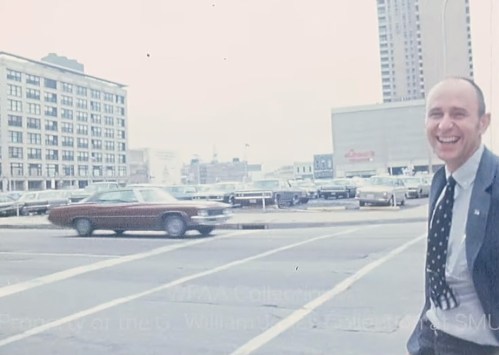
In this Channel 8 footage, you can see something you don’t see every day: five NASA astronauts walking together down the street (a sixth one was nearby, on his own). James Lovell, Pete Conrad, Fred Haise, Ken Mattingly, Richard Gordon, and Alan Bean were in Dallas on Sept. 23, 1971 to testify as witnesses before a federal grand jury that was investigating the activities surrounding the Sharpstown Scandal. These are screenshots of the five (minus Lovell), carrying briefcases through grubby downtown Dallas, and of Lovell on his own, exiting the Federal Court House. When I first watched this footage, it just seemed really odd: five internationally (galactically!) famous astronauts — heroes! — walking together down the street, without any kind of security or entourage. If you were a NASA freak (and there were a lot back then, at the height of the Apollo-Gemini programs) and you just happened to have walked past this group, your head would have exploded.

See Lovell exiting the sterile- and dystopian-looking courthouse on his own (that woman he holds the door open for has no idea who he is), and the others walking somewhat playfully down the street here (I love this footage!); a confusing wrap-up of the day’s events is here.
astronauts_WFAA_SMU_sept-23-1971

astronauts_WFAA_SMU_sept-23-1971_1

astronauts_WFAA_SMU_sept-23-1971_2

astronauts_WFAA_SMU_sept-23-1971_c

*

OCTOBER 14, 1971

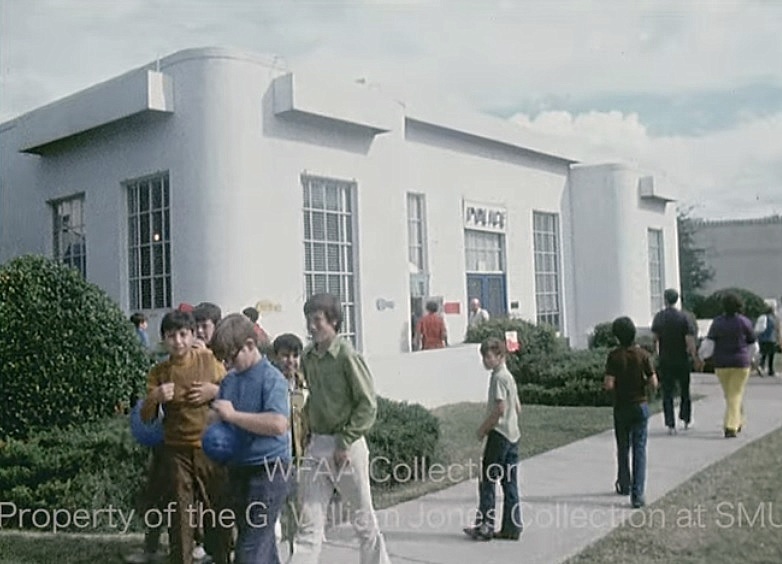
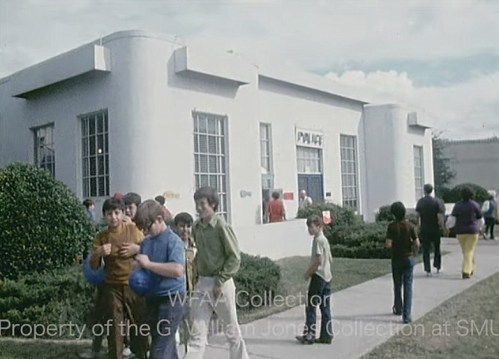
In footage from the State Fair of Texas, I was really taken by this building, which I swore I had never seen. It was the home of the “lost children” center during the fair, in the Dallas police HQ in Fair Park. It looks different to me now, but it’s still there, near the Aquarium. It looked better in 1971!

Lots of footage of crying children and harried parents, here and here.
fair-park_sfot_lost-kids_101471_WFAA_SMU

*

OCTOBER 1971

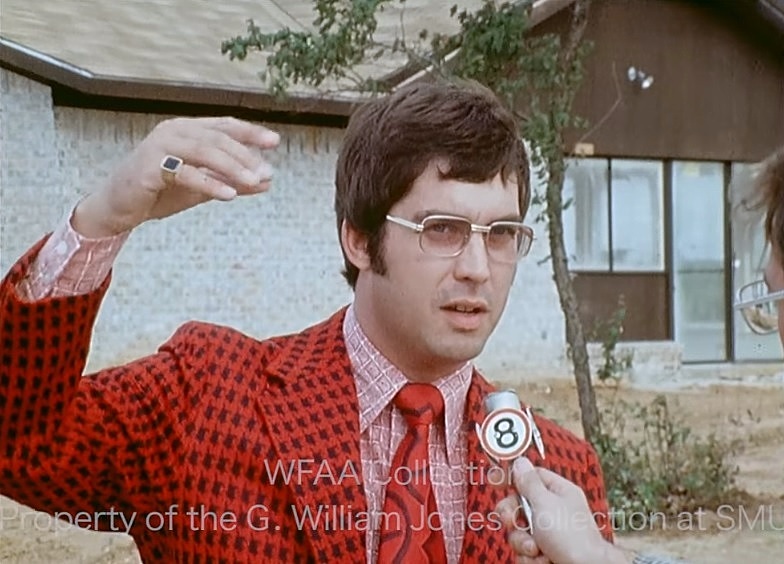
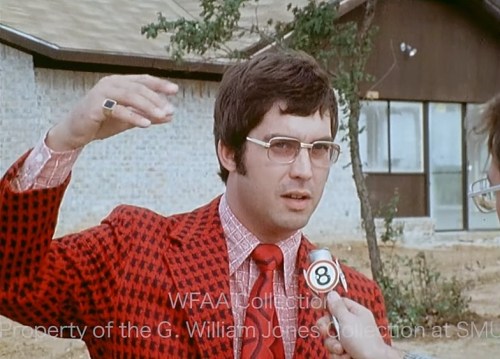
This young dandy is named John Ott (I’m not 100% sure about the spelling). He was a real estate developer in Euless. He couldn’t have been more on top of the 1971 fashion wave. Represent, Euless!

It’s a story about replanting trees (with, admittedly, interesting footage of trees being uprooted and replanted). Here and here.
developer_john-ott_euless_oct-29-30-1971_WFAA_SMU

*

OCTOBER 31, 1971

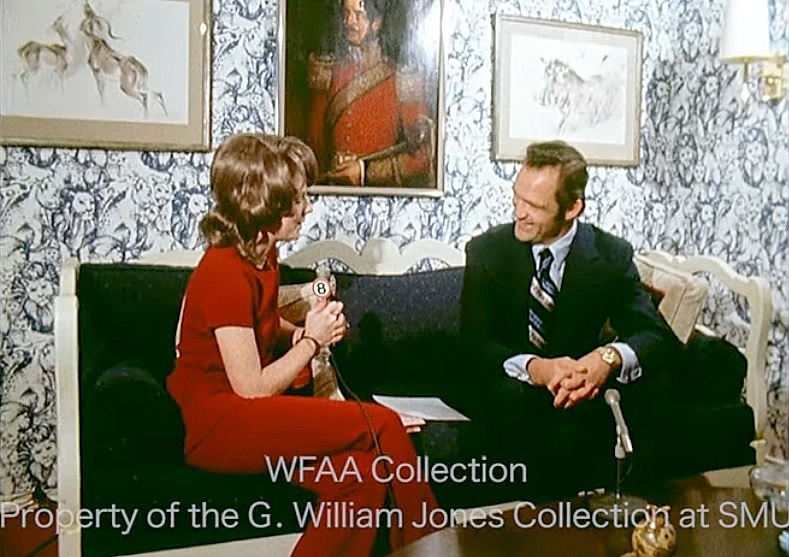
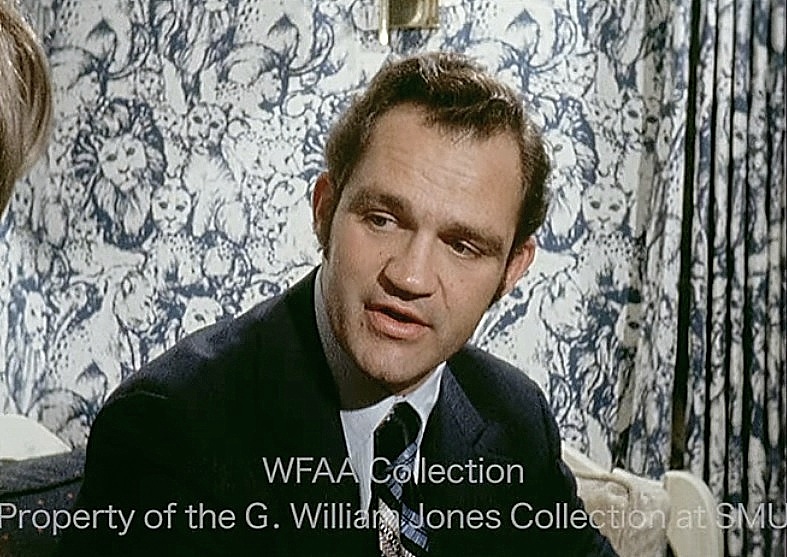
In the screenshots below, Channel 8 reporter Judi Hanna (who had recently debuted an unfortunate hairdo) interviews Dallas City Councilman Garry Weber about City Council things. I don’t know where this was filmed, but I only hope it wasn’t his home. It’s hard to focus on what anyone is saying, because of the tidal wave of stuff coming at you. (Ironically, he was being interviewed about sponsoring a change to the city charter in order to crack down on the “visual pollution” of unenforced sign ordinances.) I was so overwhelmed by this vista, that I somehow assumed I was seeing cupid-studded wallpaper. But no. Check out the second screenshot, which also includes a peek at the room’s drapes. I can’t tell where the wallpaper ends and the drapes begin.

Appropriately shown on Halloween night, clips from this report are here (followed by footage of signs-galore along Lemmon Avenue) and here.

weber-garry_WFAA_SMU_oct-31-1971_wide

weber-garry_WFAA_SMU_oct-31-1971_drapes

*

OCTOBER 1971

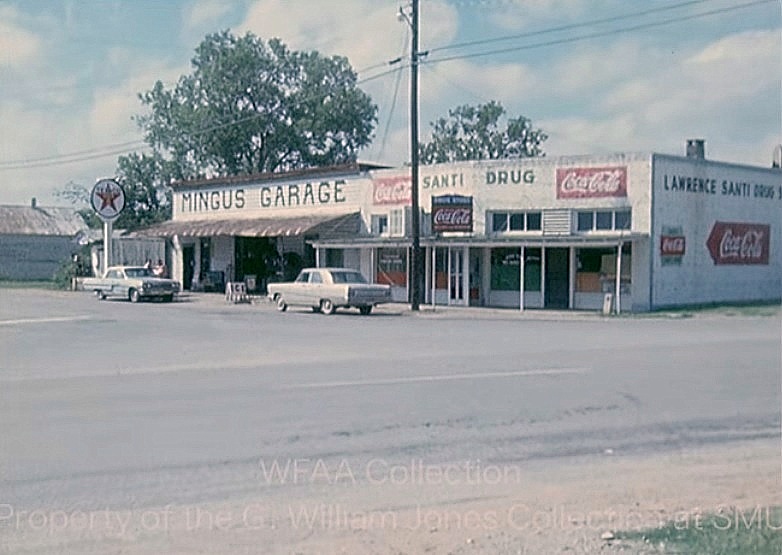
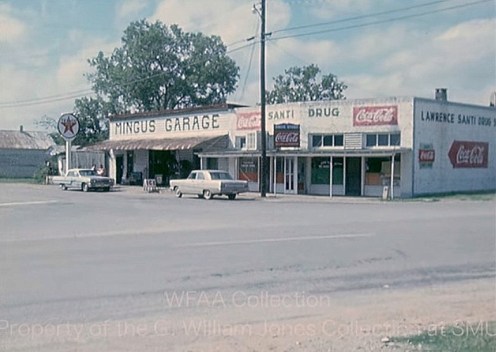
Lastly, a shot of Mingus, Texas, a small West Texas town near Thurber. I just love this image. I think I found the location — here’s what it looks like now.

Why was the tiny town of MIngus being featured on a Dallas news report? The Greater Mingus-Thurber Metropolitan Area was in the news because it was the location of a commune of the controversial Children of God (i.e. “cult”). Actually, the “Children” were in the process of being evicted by the landowner, who, interestingly, was a TV preacher in Los Angeles (I guess even TV evangelists have a breaking point). Members of this group splintered, and a few moved to Big D for a while, where they continued to be newsworthy until they moved elsewhere.

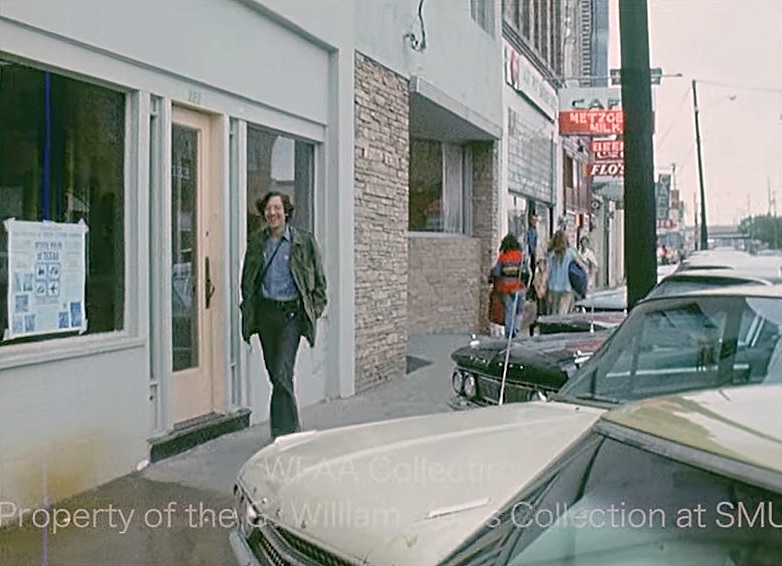
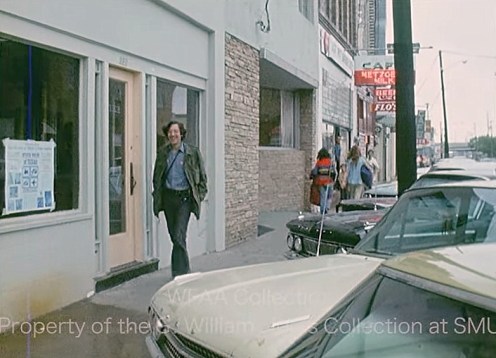
The shot of Mingus is from one of the many clips contained in this Oct. 7 package, here (it is specifically at the 1:08 mark). Below that is a shot from a week later, after some of the self-described “Jesus Freaks” had landed in Dallas — a group member is seen walking through Exposition Park to their new HQ, at 639½ Exposition — it and other CoG footage from Oct. 14, 1971 is here (this specific shot is seen at the 17:18 mark). (If you are considering a documentary on the Children of God, there’s lots of footage for you in the WFAA archives at SMU.)
mingus_WFAA_SMU_100771

children-of-god_expo-park_WFAA_SMU_oct-14-1971

*

AUGUST 1971

This is a bonus.

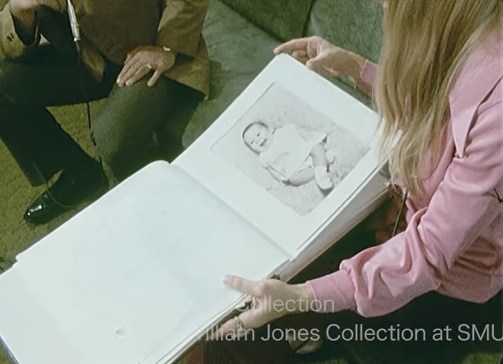
As I worked my way through 1971, there was one truly amazing story. It involved the kidnapping of a toddler in Fort Worth. On Aug. 25, 1971, 21-month-old Melissa Suzanne Highsmith disappeared. Her 22-year-old mother, Alta, had hired a new babysitter, who was supposed to watch her for the day while Alta was at work. The babysitter picked Melissa up in the morning as planned, but she never returned the child. The babysitter and Melissa disappeared without a trace. There were no leads in the case for years. …And YEARS.

In 2022, the Highsmith family learned of an online DNA match, which would indicate they had found Melissa. Eventually, it was determined that a 50-something-year-old woman named “Melanie” was actually the long-missing Melissa. The woman who kidnapped her raised her as her own daughter, and Melissa never suspected she wasn’t the woman’s child (although she says she never felt really “connected” to her).

Melissa (she now uses “Melissa” again) was reunited with her family at the end of 2022. One report I read said that she grew up only 10 minutes from the Fort Worth apartment her mother lived in. Despite the Highsmith family’s 51 years of loss, grief, worry, and suffering, there has ultimately been a happy ending!

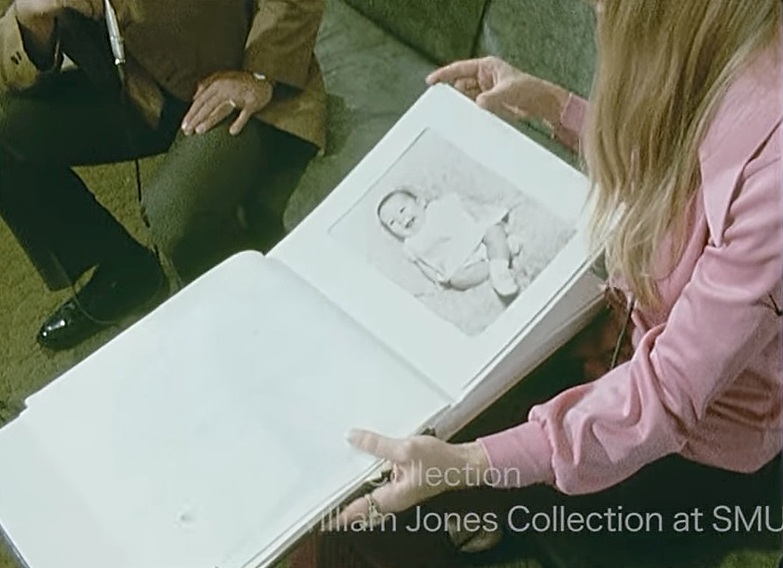
In the screenshot below from an Aug. 26, 1971 Channel 8 story, Alta Highsmith shows a photo of her missing daughter to the camera. The report is here.
kidnapping_highsmith_WFAA_SMU_aug-26-1971

**

If you managed to get all the way through this, you deserve an award! This might be the longest thing I’ve written all year! I’m more than ready for my 1971 Jeopardy challenge (Dallas edition)!

***

Sources & Notes

All screenshots are from news film in the WFAA Collection, held by the G. William Jones Film & Video Collection, Hamon Arts Library, SMU. Clips are posted regularly from this Channel 8 collection on YouTube, here.

My previous collection of WFAA screenshots can be found in the post “No-Context Channel 8 Screenshots: 1970-1971.”

lady mailman june 1971 WFAA_sm

*

Copyright © 2023 Paula Bosse. All Rights Reserved.

Oak Cliff Schools — 1916

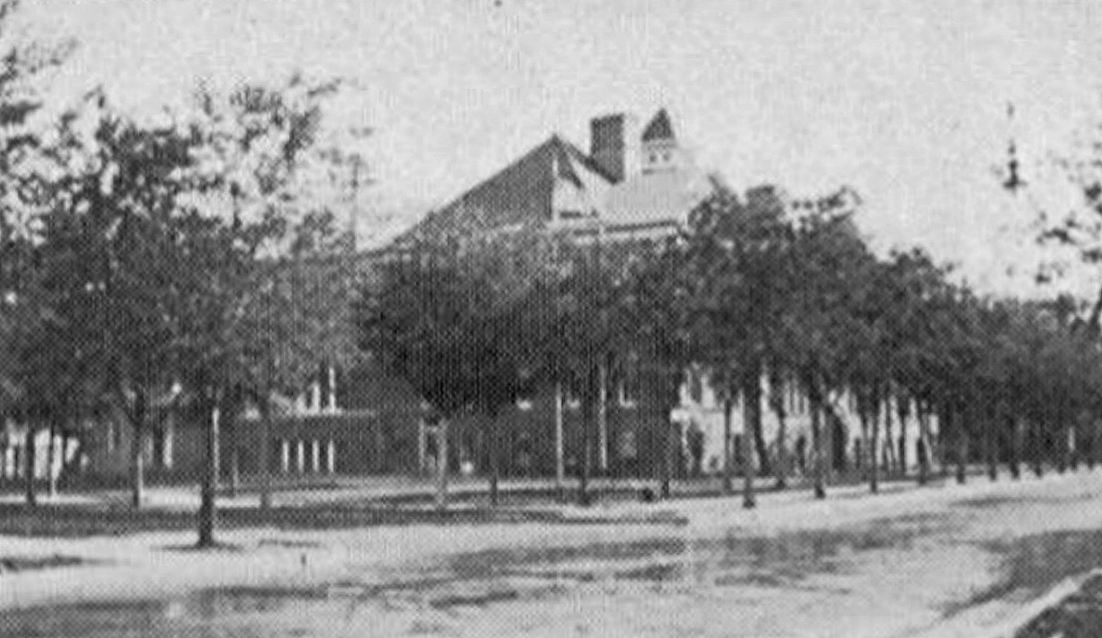
oak-cliff-high-school_1916_school_newOak Cliff High School

by Paula Bosse

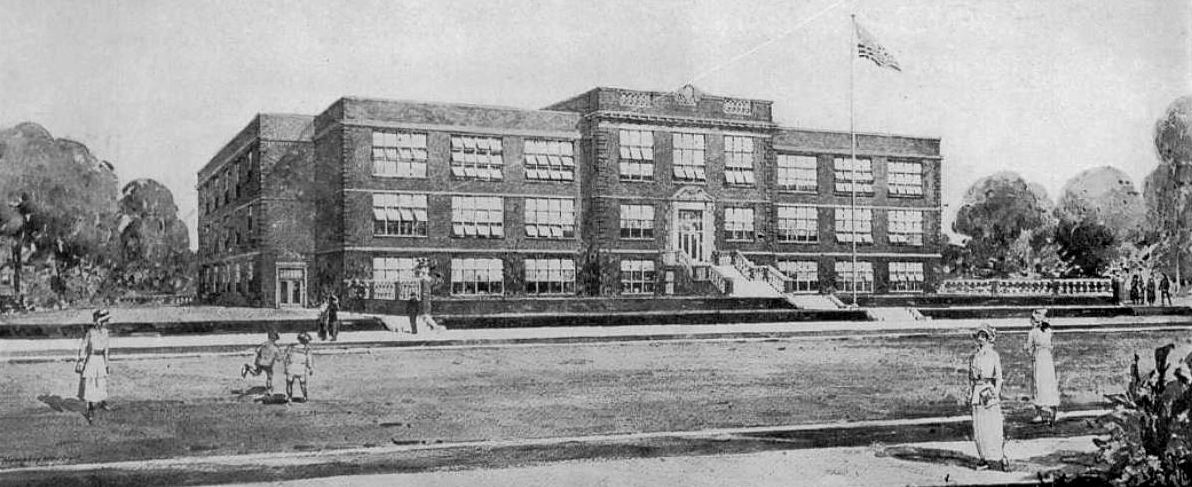
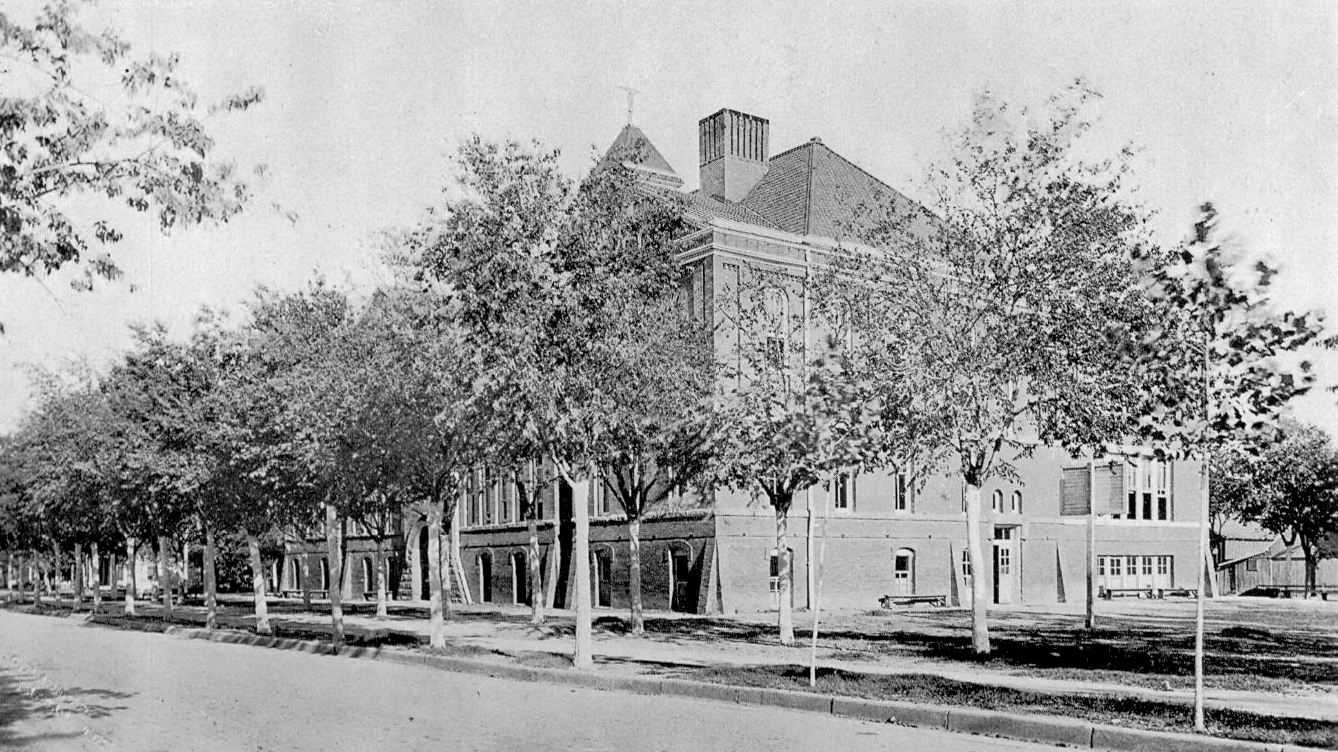
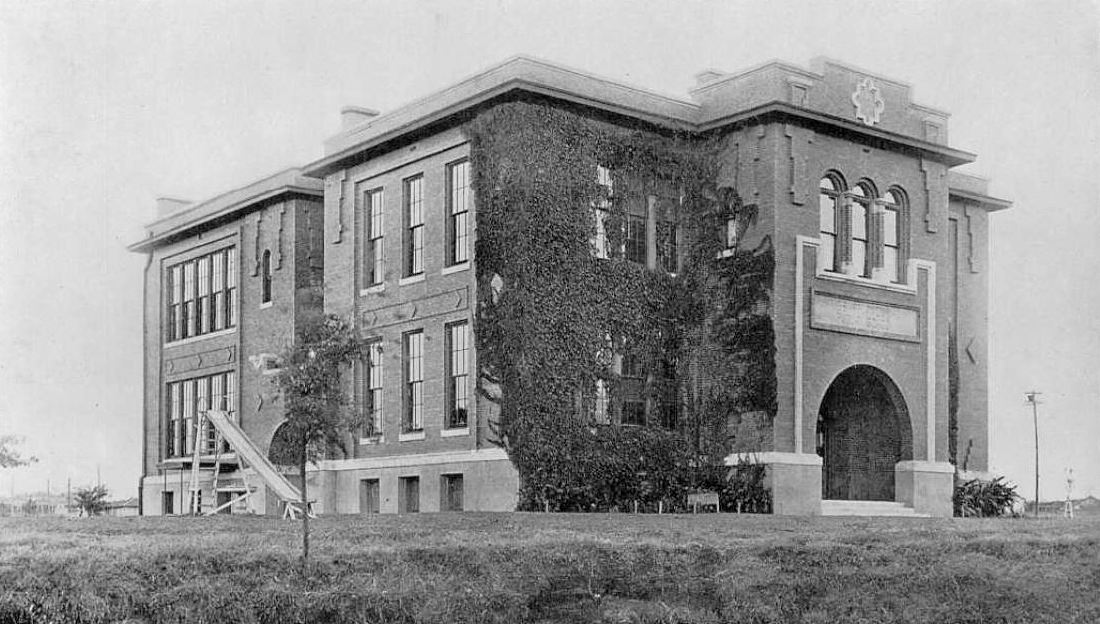
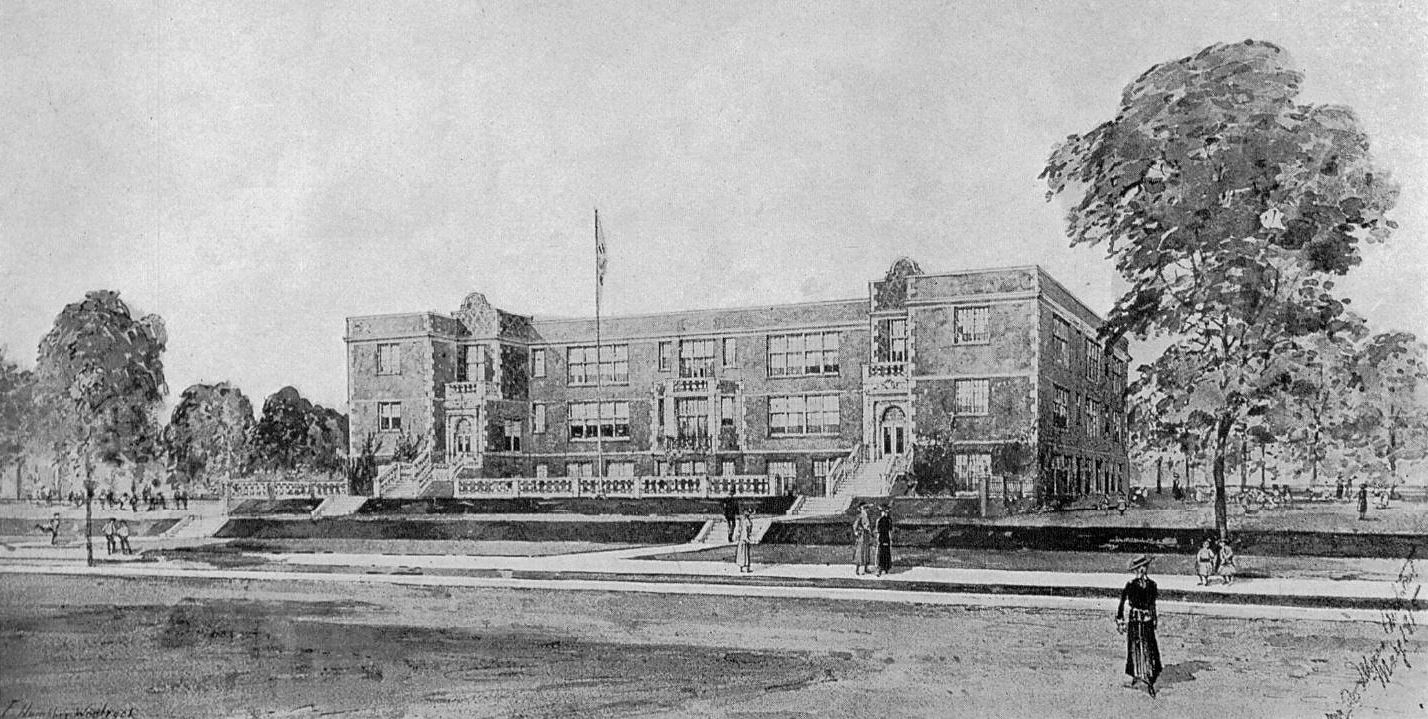
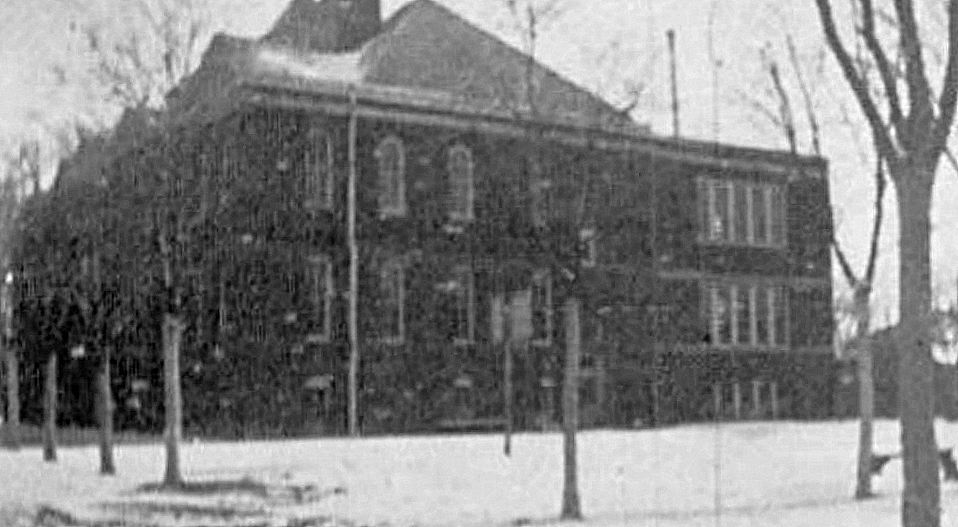
Here are a few photos and drawings of Oak Cliff schools from the 1916 inaugural yearbook of OAK CLIFF HIGH SCHOOL, seen above, which opened in 1915 at 9th & Beckley (it was later renamed Adamson High School). The previous school — the Oak Cliff Central School/Central High School (10th & St. George) — is seen below, obscured by trees. Most of the students in the new school would have also attended the old school.

old-oak-cliff-high-school_1916-OCHS-yrbk

*

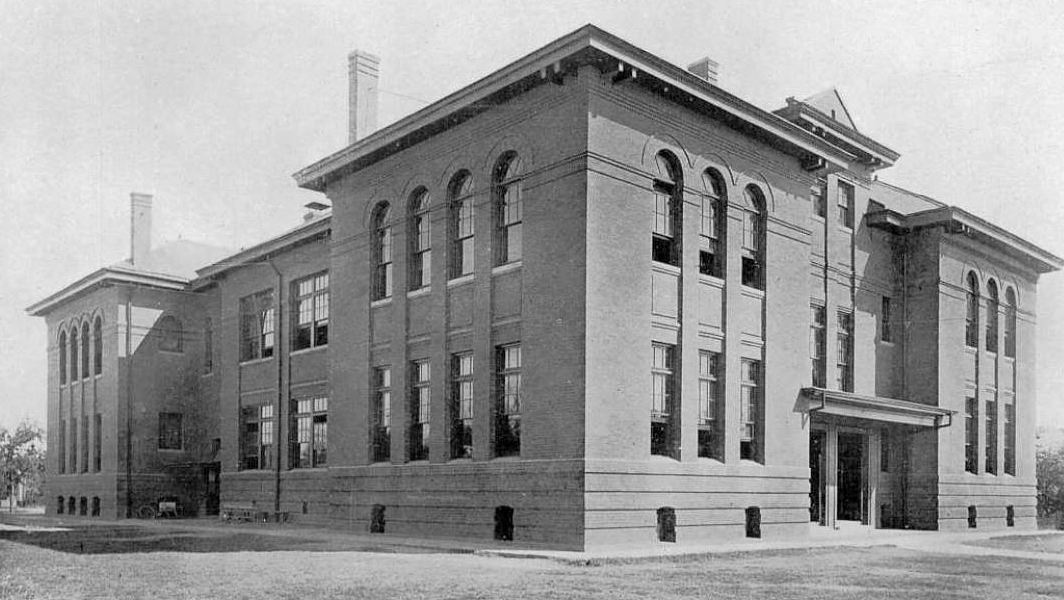
JOHN H. REAGAN SCHOOL, 9th & Llewellyn — built in 1905. The caption to this photo is: “Nine temporary rooms nestled behind this mother building.” (I wrote about this school previously in the post “John H. Reagan Elementary, Oak Cliff’s ‘West End School’ — 1905.”)

oak-cliff_reagan-school_oak-cliff-high-school_1916

*

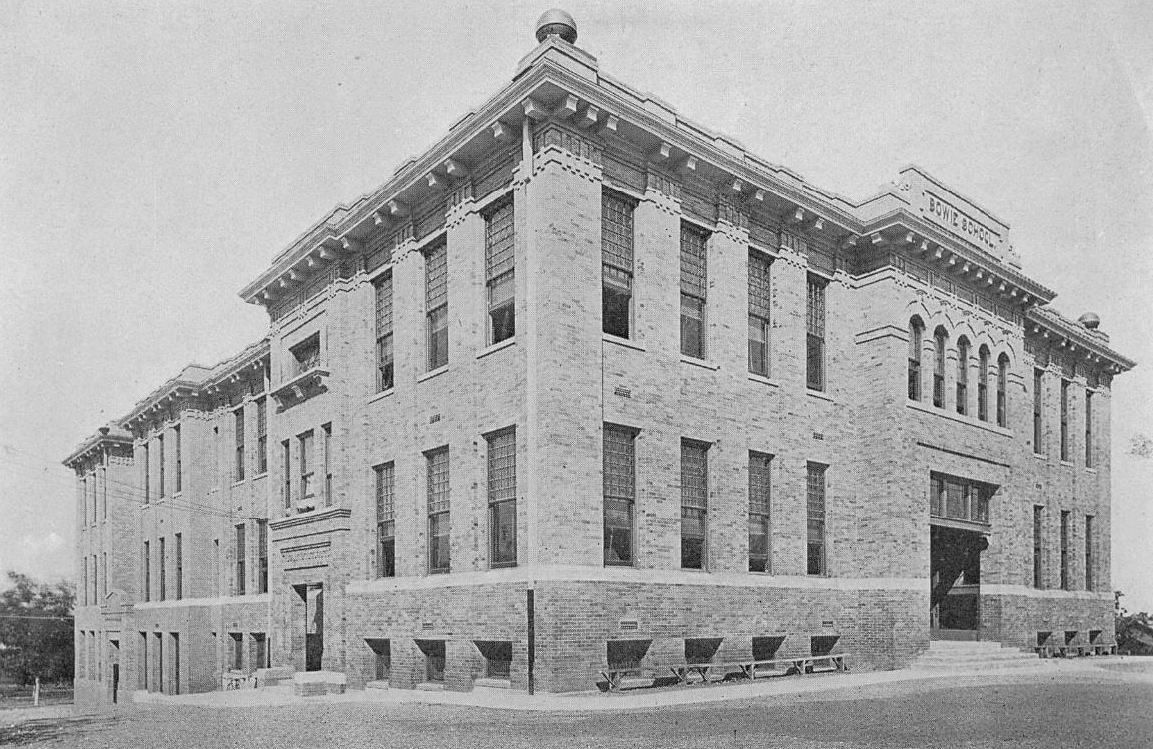
JAMES BOWIE SCHOOL, Lancaster & 7th — built in 1907.

bowie-school_oak-cliff-high-school_1916

The photo of Bowie below appeared in The Dallas Morning News in November 1915.

oak-cliff_bowie-school_DMN_111615

*

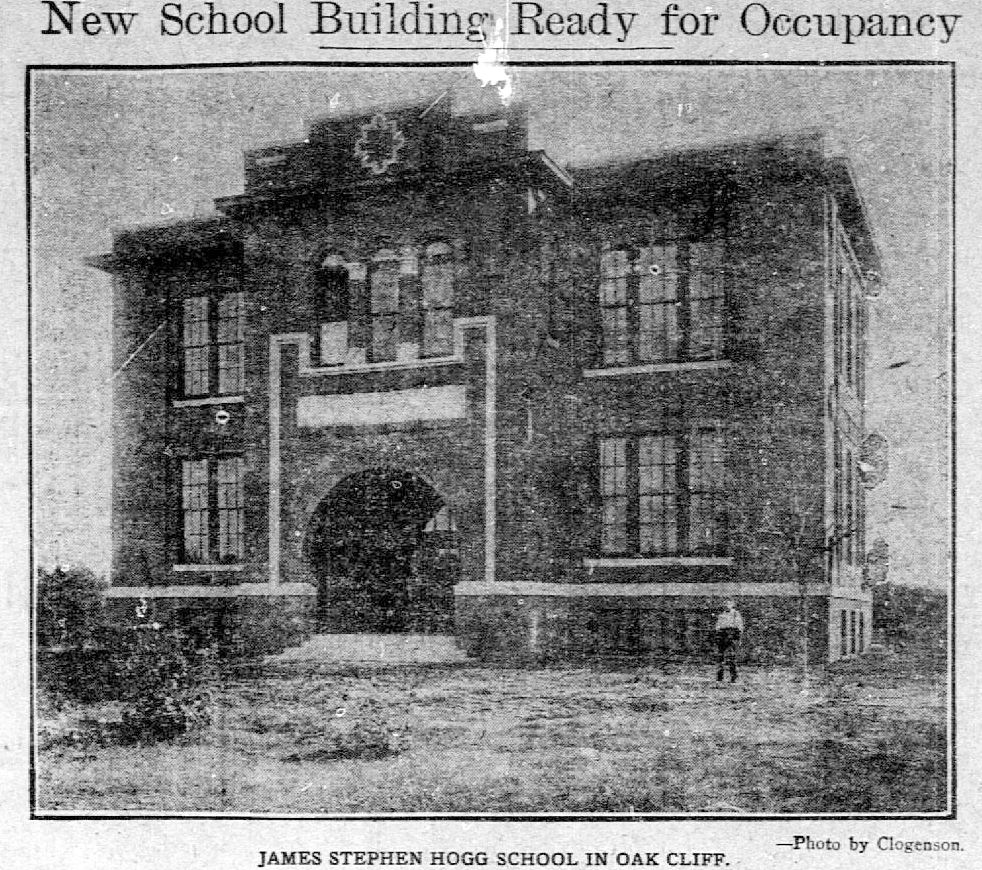
JAMES STEPHEN HOGG SCHOOL, 1135 Ballard — built in 1911.

hogg-school_oak-cliff-high-school_1916

Below, a photo of the new school, as it appeared in The Dallas Morning News in September 1911.

hogg-school_DMN_091911

*

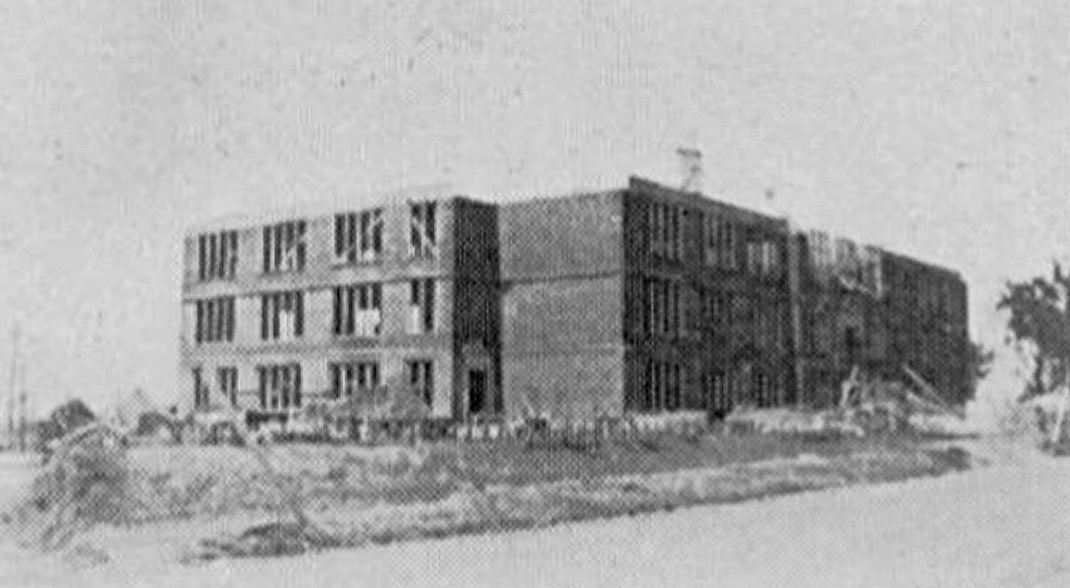
(NEW) WINNETKA SCHOOL, S. Edgefield & Ruxton (later Page) — built in 1916 (under construction when the 1916 OCHS yearbook was published).

winnetka-school_under-construction_oak-cliff-high-school_1916

*

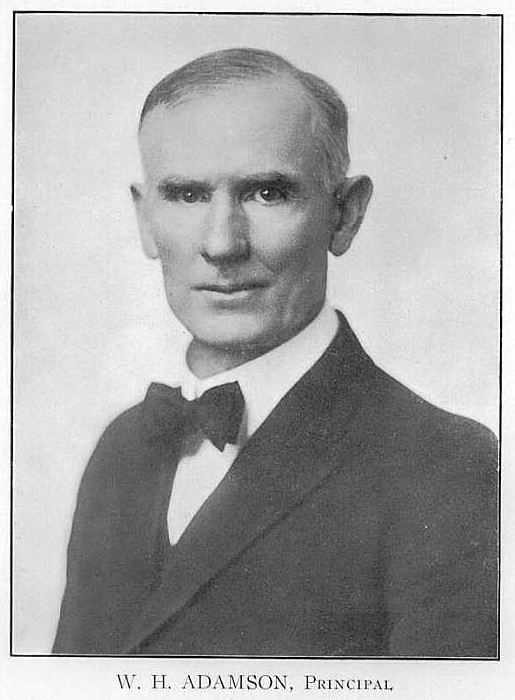
Back to Oak Cliff High School. When the school opened in 1915, its first principal was William Hardin Adamson. He was principal for 19 years. Soon after his death in 1935, the school was renamed in his honor. He had been an educator in the state of Texas for 50 years and was apparently very popular with students.

patreon_oak-cliff-high-school_1916_principal_adamason

**

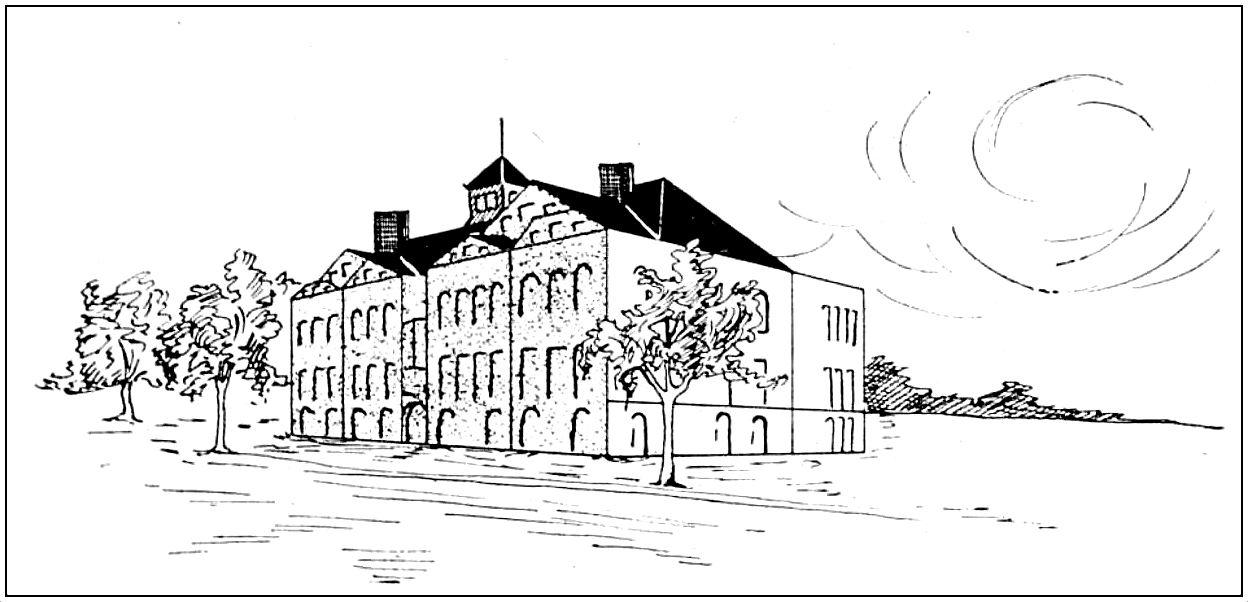
UPDATED: Thanks to the person who commented below to identify the old Oak Cliff High School. Here are a few “candid” photos from this 1916 yearbook which show the old school as well as the new one under construction.

old-OCHS_1916-yrbk_2

old-OCHS_1916-yrbk_1

old-OCHS_1916-yrbk_drawing

Goodbye, old school — hello, new school.

OCHS_construction_1916-yrbk

OCHS_1916-yrbk

***

Sources & Notes

All images (except the two Dallas Morning News photos) are from the 1915-1916 edition of The Oak, the yearbook of Oak Cliff High School. (Incidentally, if you are an Ancestry subscriber and are unable to find this yearbook, it’s because it is listed there as being “South Oak Cliff High School.” A lot of the OCHS yearbooks are mislabeled as SOC.)

More info on the history of this school can be found on p. 43 of Education in Dallas: Ninety-Two Years of History, 1874-1966 by Walter J. E. Schiebel.

oak-cliff-high-school_1916_school_yrbk-banner

*

Copyright © 2023 Paula Bosse. All Rights Reserved.
Aunt Stelle’s Sno Cone

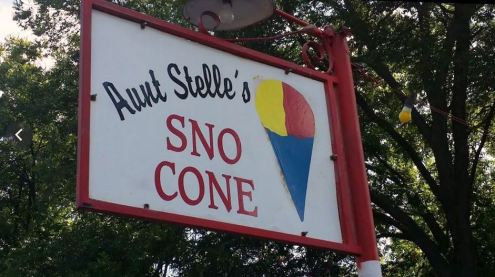
aunt-stelles_sign_googleAn Oak Cliff oasis…

by Paula Bosse

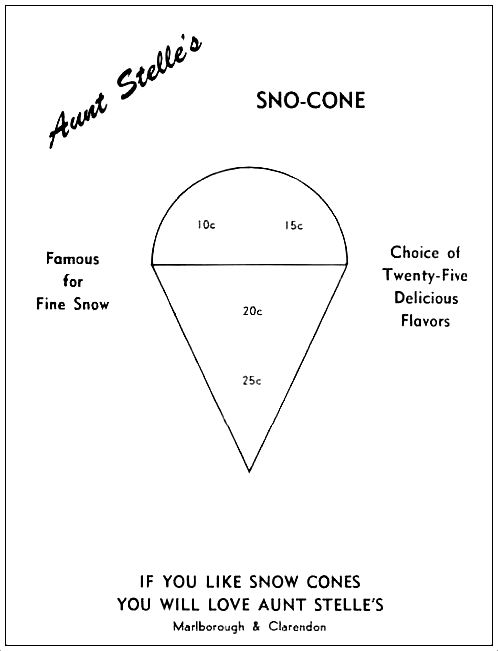
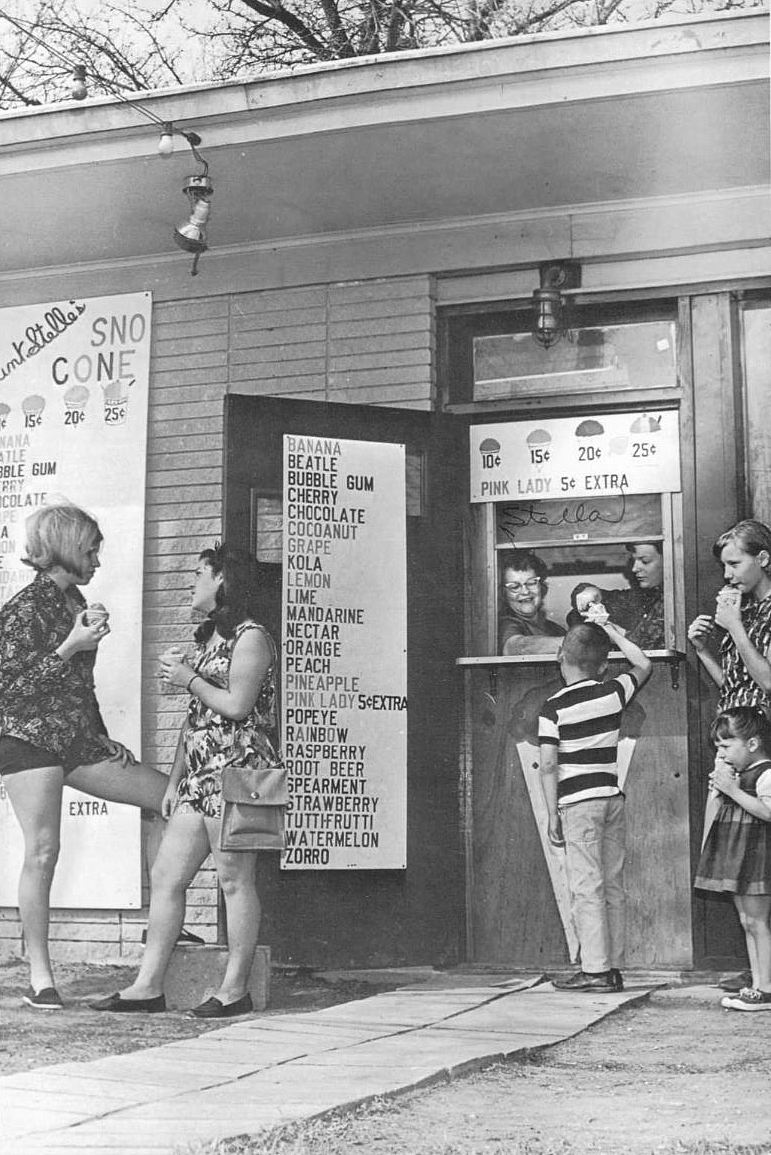
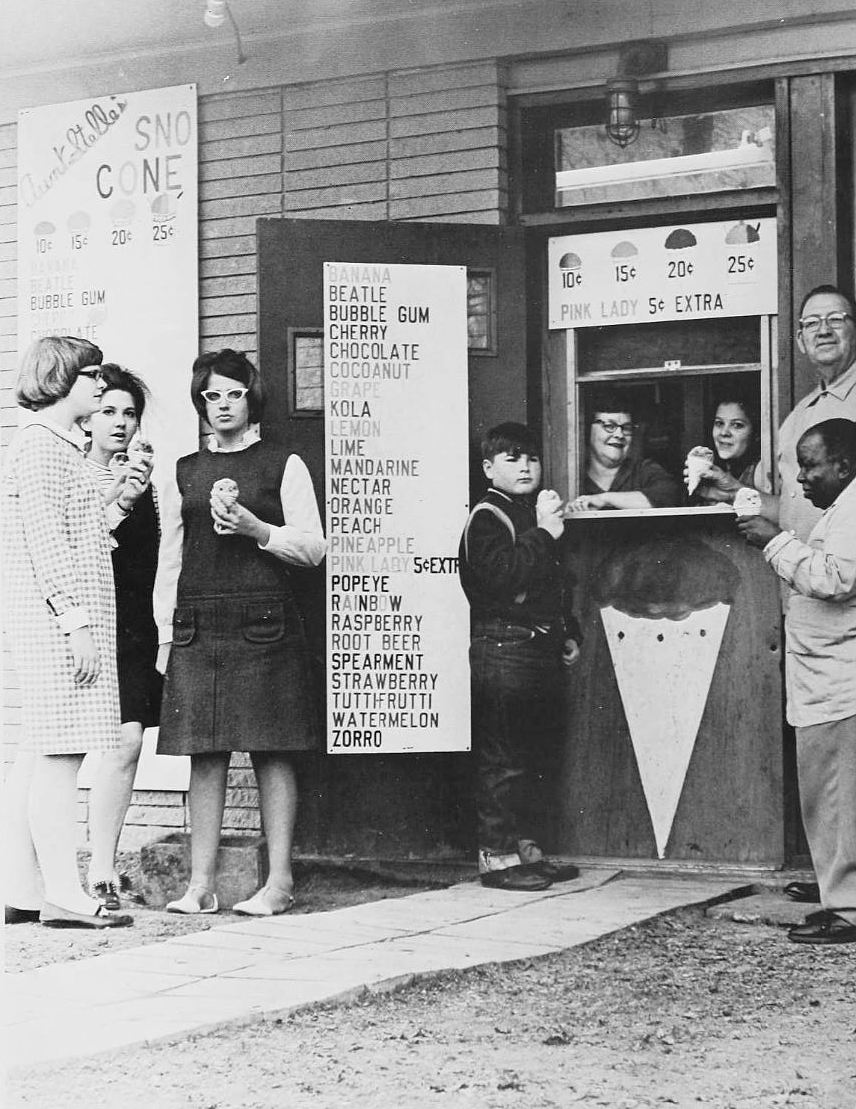
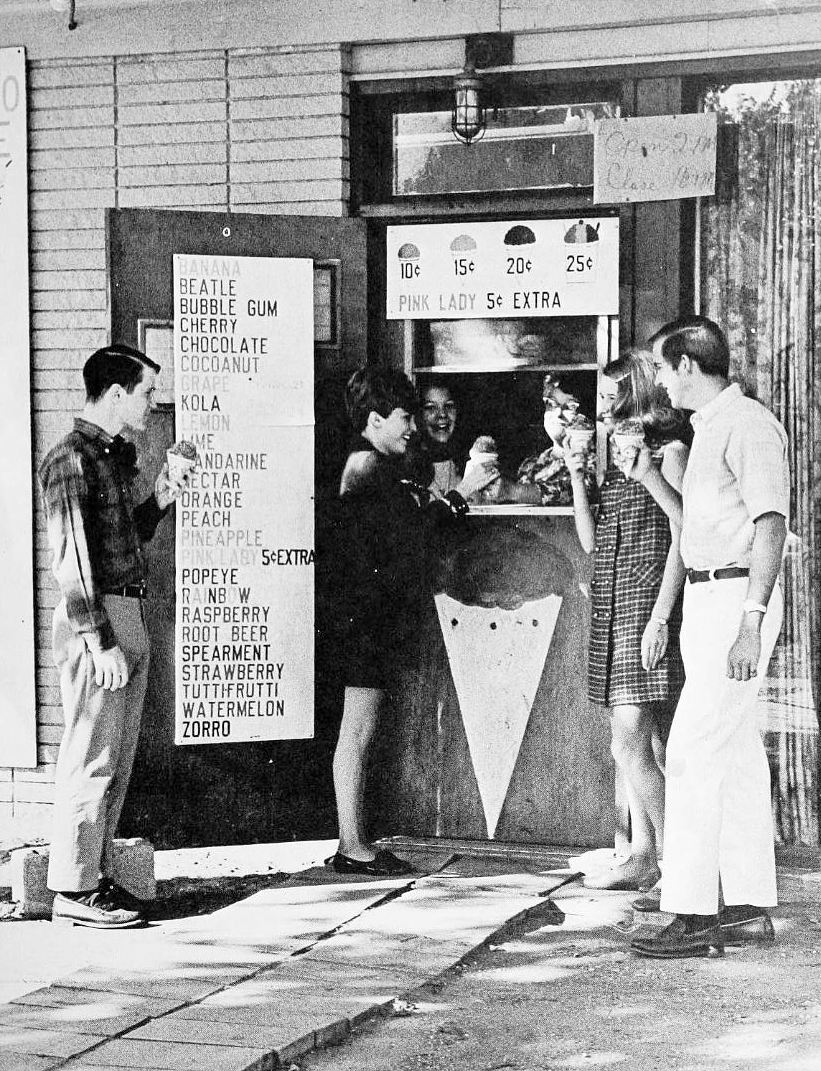
This has been a brutally hot summer. The kind of summer when a snow cone would really hit the spot at just about any sweltering hour of the day. One place that was famous for its snow cones (they were described as being like “fine snow”) was Aunt Stelle’s Sno Cone, at 2002 W. Clarendon (at Marlborough) in Oak Cliff. Established by Estelle Williams in 1962, the little stand was hugely popular until it officially closed in 2018. Her snow cones were flying out of there every summer season for more than 55 years! To generations of customers. Not many businesses can boast that kind of longevity and patron loyalty. (One of those loyal patrons was Oak Cliff homeboy Stevie Ray Vaughan.)

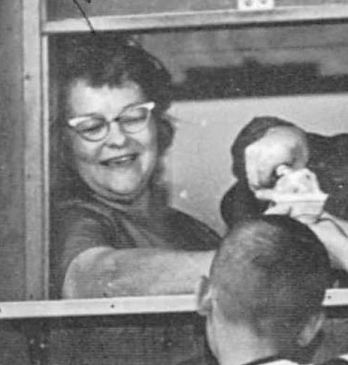
Having not grown up in Oak Cliff, I wasn’t familiar with Aunt Stelle’s until I saw the photos below which appeared as ads in editions of the Sunset High School yearbook. You can see Estelle in the window. She looks exactly like the kind of person I’d want serving me a delicious, refreshing, messy treat.

aunt-stelle_sunset-high-school-yrbk_1967-det

Speaking of the treats, check out that menu board! I understand the “Beatle” tasted like a grape SweeTart, the “Zorro” tasted like licorice (and it was black!), the “Pink Lady” tasted like vanilla ice cream, and the “Popeye”… I really wanted it to be green and taste like spinach, but apparently it tasted like gumballs (what a missed opportunity!).

*

summer_aunt-stelles-sno-cones_sunset-high-school_1967-yrbk._b1967 Sunset High School yearbook

summer_aunt-stelles-sno-cones_sunset-high-school_1967-yrbk1967 Sunset yearbook

summer_aunt-stelles-sno-cones_sunset-high-school_1968-yrbk1968 Sunset yearbook

summer_aunt-stelles-sno-cones_sunset-high-school_1969-yrbk1969 Sunset yearbook

***

Sources & Notes

Top image of the Aunt Stelle’s sign is from Google — the photographer is listed simply as “Scott.”

A great story about Aunt Stelle’s can be found in the Dallas Morning News archives in the story “Sno Days: Aunt Stelle’s Has Been Keeping Oak Cliff Cool for 40 Seasons” by Dave Tarrant (DMN, June 22, 2001).

Consider supporting me on Patreon! Five bucks a month gets you daily morsels of Dallas history!

aunt-stelles_sign_google

*

Copyright © 2023 Paula Bosse. All Rights Reserved.

Pig Stand No. 2, Oak Cliff

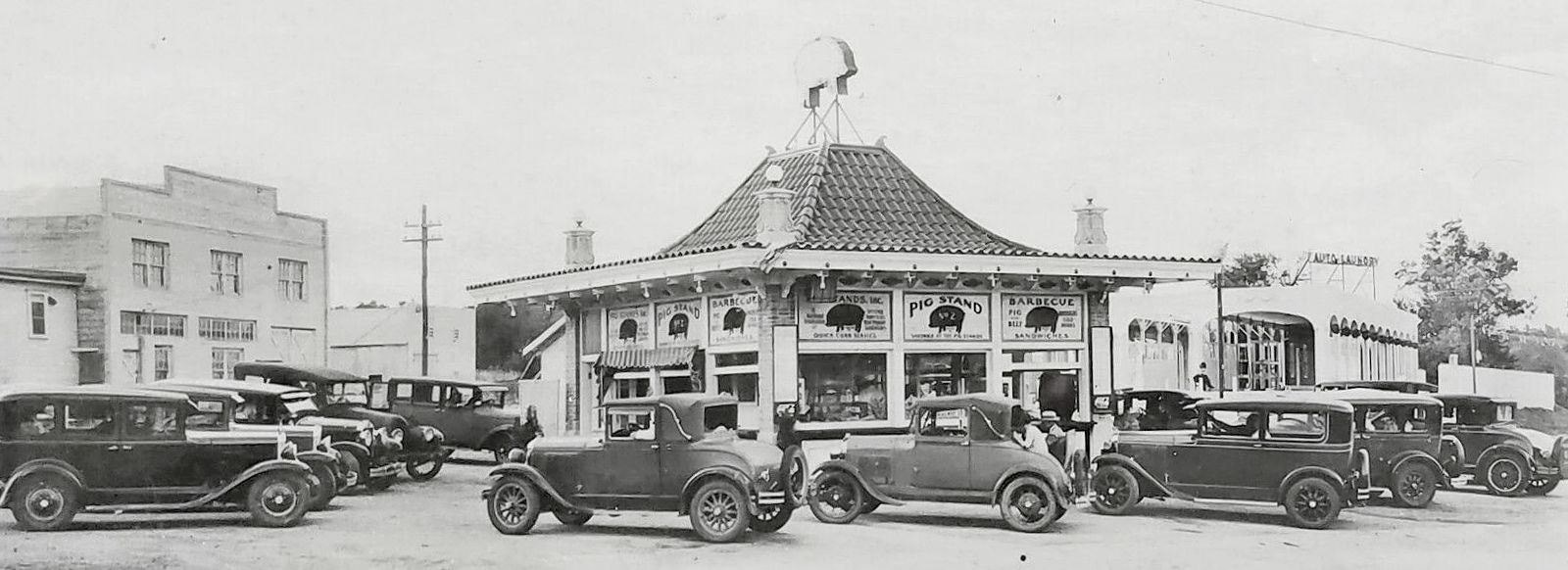
pig-stand-no-2_dallas_ebayWaiting in cars for pig sandwiches

by Paula Bosse

I’ve seen a cropped version of this photo, but not the full image. It’s great! I don’t mean to keep posting about restaurants, but seeing this photo was too good not to share. (As I type this, it’s available on eBay, here.)

It shows Pig Stand No. 2 at 1301 N. Zang in Oak Cliff, probably about 1928. It appears that this was the second “No. 2” — it was announced that this brand-new building had just begun construction in January 1928.

Work was started last week on the new Pig Stand, Zang’s Boulevard and Colorado Street, for the Pig Stands Company, a Dallas institution, now operating in 39 cities in 12 states. The ornamental building has been adopted as a standard design for the many future stands now contemplated over the country by this concern. In this building will be embodied modern sanitary features complying with all requirements and laws. It will be faced with brick and highly colored tile with ornamental stone trimmings and a clay tile sweeping roof in several shades. The exterior as well as the interior will be illuminated electrically with the cornice and ornaments decorated out in varied contrasting colors. The Pig Stands Co., starting less than five years ago with small capital, has developed into a national institution. Architects F. J. Woerner and Co. designed and will supervise this work, while M. W. McDade will have charge of the construction. (Dallas Morning News, Jan. 26, 1928)

At the right is the Oak Cliff/Tramway Auto Laundry at 1307 N. Zang.

pig-stand-no-2_dallas_ebay_det

I love the couple in the rumble seat!

***

Sources & Notes

Photo currently available for sale on eBay, here.

Read a history of Dallas’ Pig Stand empire — long considered to be the first-ever drive-in restaurants, a revolutionary contribution to American social culture — in the Texas Monthly article “The History of the Pig Stands” by Daniel Vaughn (Feb. 2015).

Architect Frank Woerner designed many notable commercial and residential buildings in Dallas, including the Stoneleigh Hotel, the Couch Building across from SMU, the old Union Depot in Deep Ellum, and the beautiful home of Max Rosenfield on South Boulevard.

pig-stand-no-2_dallas_ebay_det_sm

*

Copyright © 2023 Paula Bosse. All Rights Reserved.