Flashback : Dallas

A Miscellany: History, Ads, Pop Culture

Category: Old East Dallas

McKell Street’s Golden Age

Veranda-life, Old East Dallas

by Paula Bosse

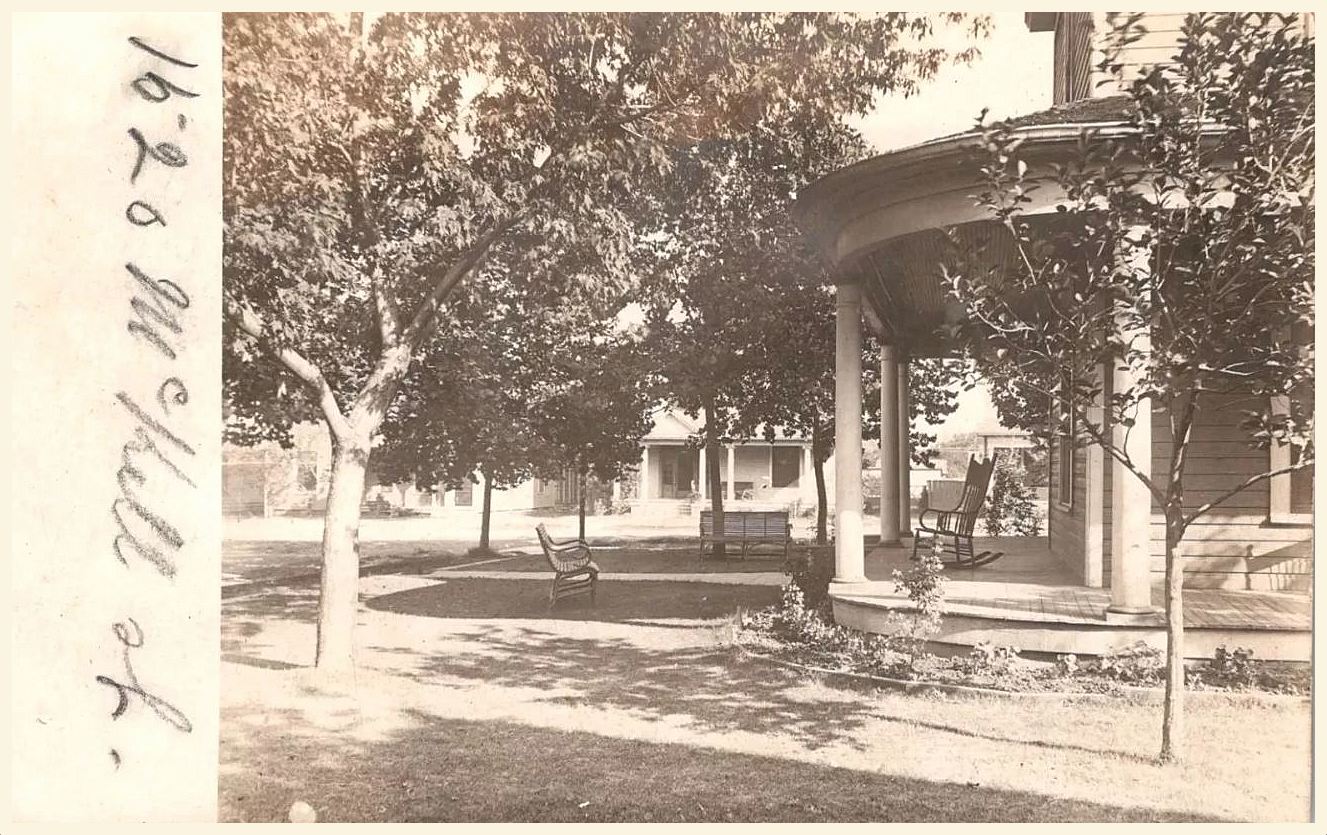
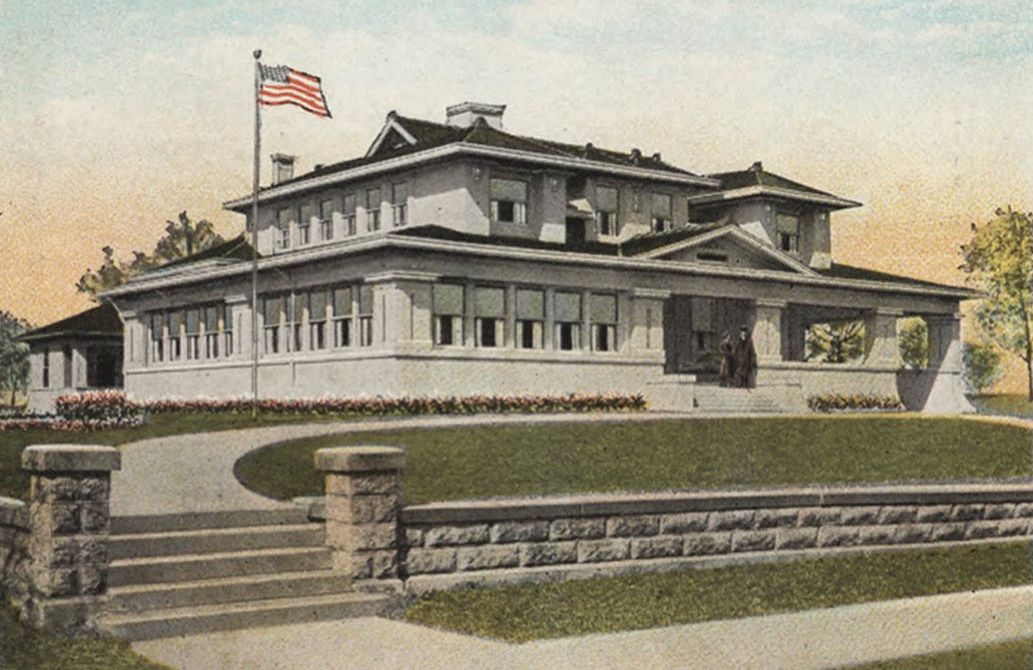
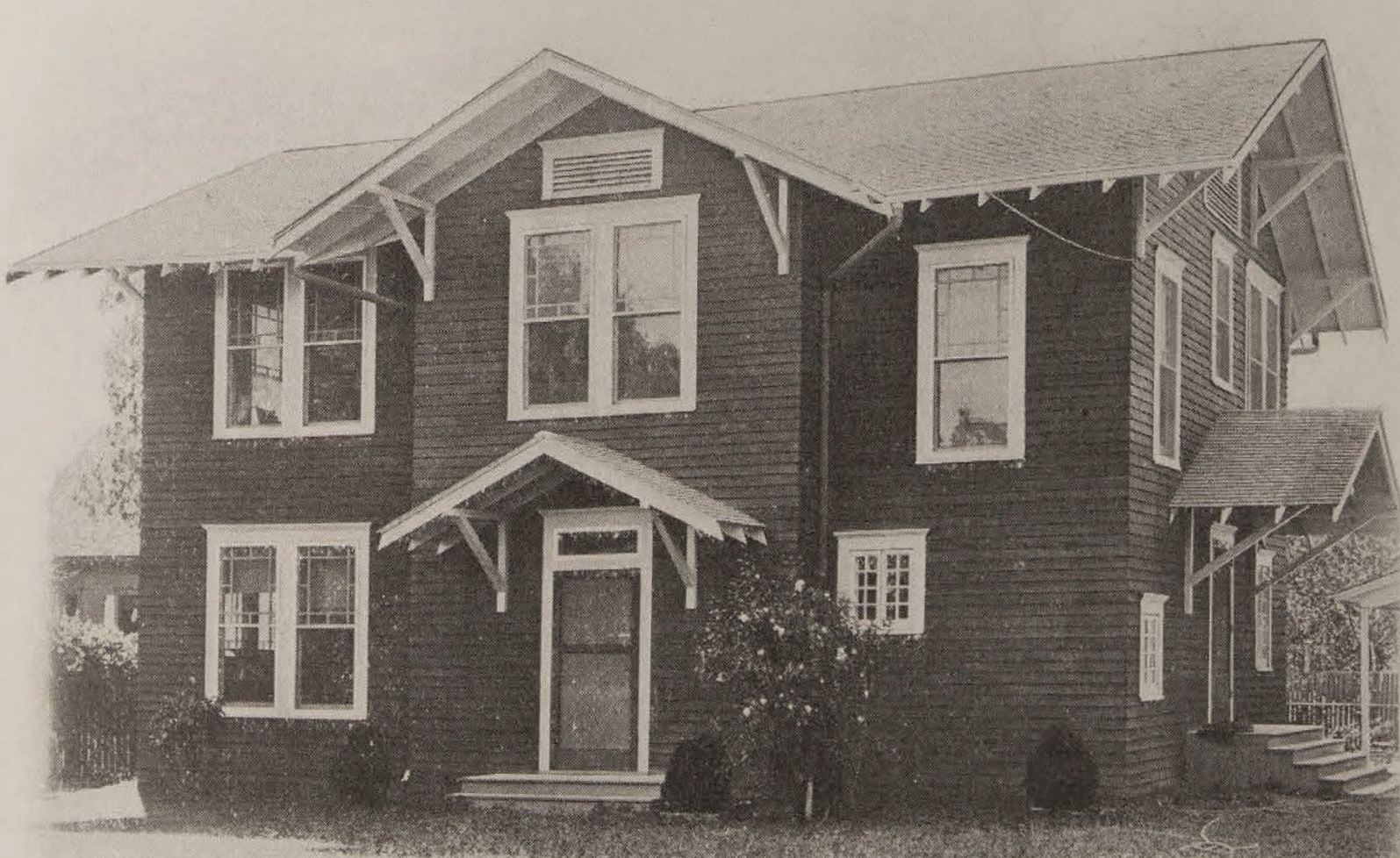
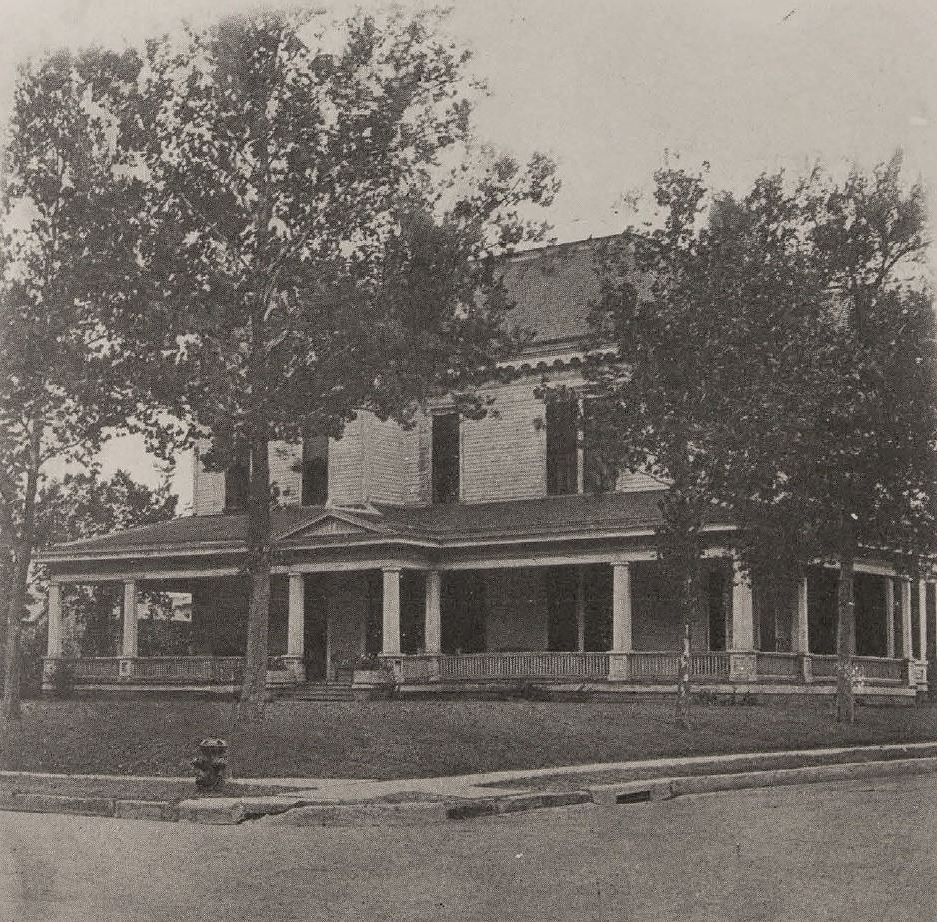
This does not look like Dallas. But it is. I had never heard of McKell Street, but it’s in Old East Dallas and is only two blocks long (it’s actually one long block), between Bryan and San Jacinto. This house stood until 2021 or 2022 at the corner of McKell and San Jacinto (see it in a 2021 Google Street View image here, when it was the very last remaining house on the street).

The address was 1520 McKell (the address written on the card looks like “1620,” but there was never a 1600 block of the street). When the house was built, sometime before 1903, its address was 136 McKell — you can see it and its curved wraparound porch on a 1905 Sanborn map here and on a 1922 Sanborn map here. And the sad empty lot in 2022 is here.

I love stumbling across unexpected photos like this. This was such a lovely little street. I can absolutely imagine Andy and Barney and Aunt Bee on that porch, rocking and chatting on a hot Sunday afternoon, enjoying a bowl of homemade peach ice cream and waving to neighbors as they walk by.

And now it’s nothing but an ugly stretch of parking lots and the powerfully unattractive AT&T building.

***

Sources and Notes

Real photo postcard found on eBay in 2024.

This post appeared in a slightly different version on the Flashback Dallas Patreon page (subscribe for as little as $5 a month!).

*

Copyright © 2025 Paula Bosse. All Rights Reserved.

Dome, No Dome, Dome

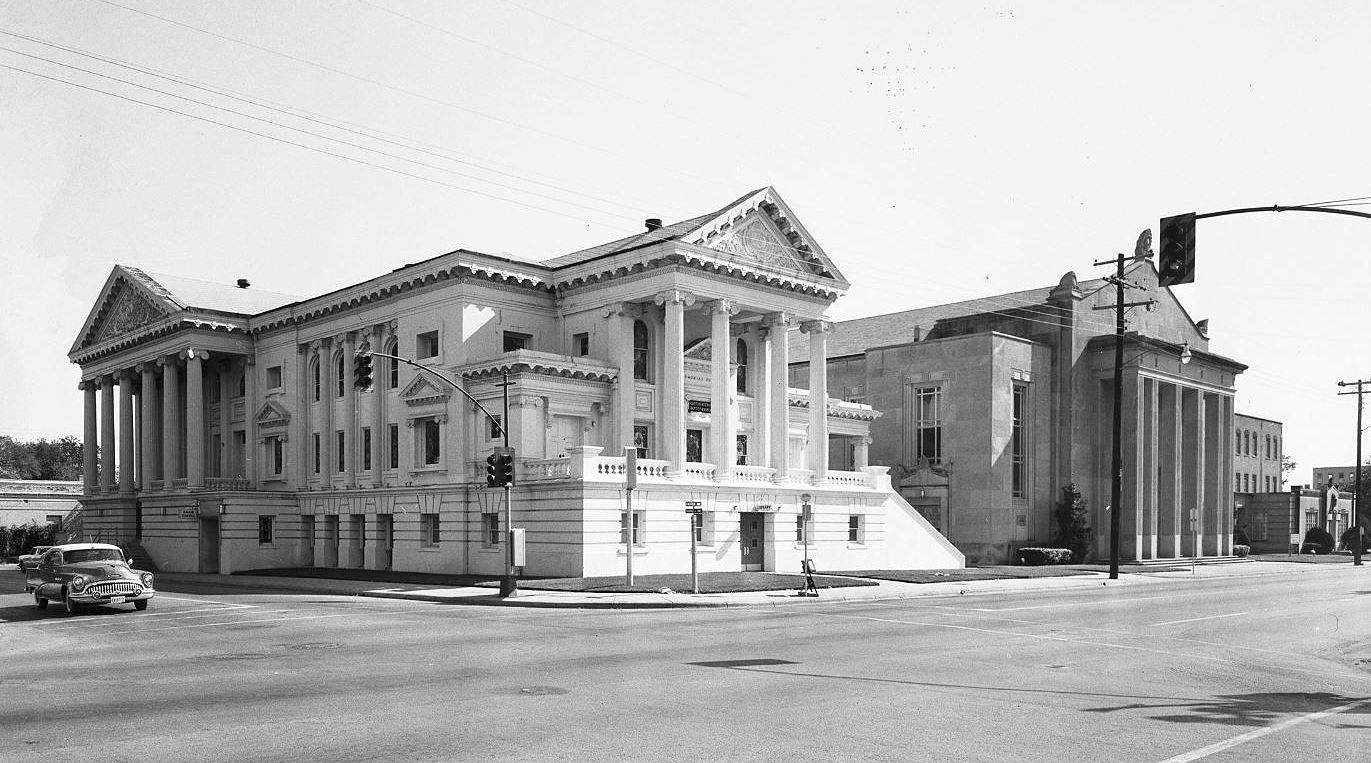
Gaston Ave. Baptist Church, ca. 1961, domeless

by Paula Bosse

Gaston Avenue Baptist Church, at Gaston and Haskell, opened to its congregation in 1904. (The photo above is from about 1961.) The church was designed by architect C. W. Bulger, whose most important Dallas building was almost certainly the Praetorian Building downtown. Bulger was a prominent architect and a prominent Baptist — he designed several Baptist churches, and, conveniently, he lived on Junius Street, not far from the Gaston Avenue church.

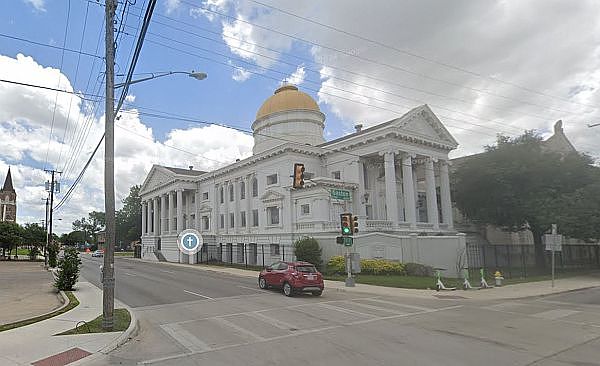
This building is imposing and impressive, but every time I drive past it, something just feels “off.” (See it on Google Street View here.) It’s that canary-yellow “gold” dome. Otherwise, it’s a beautiful building.

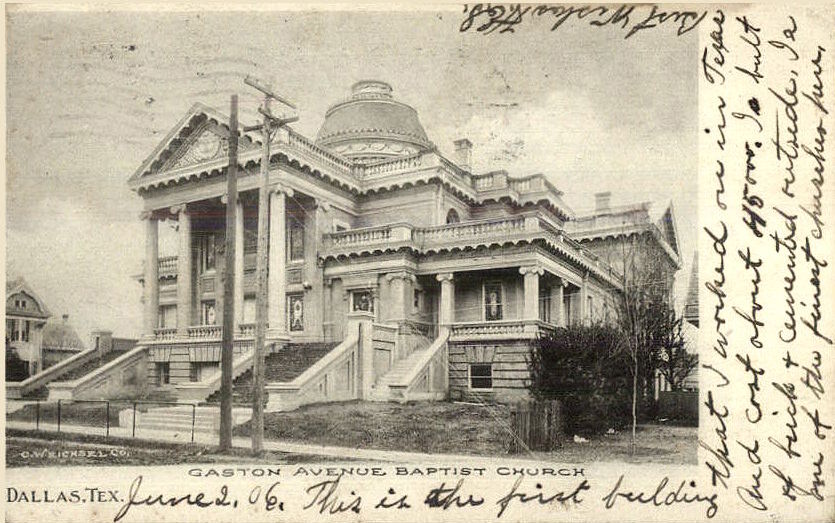
Here’s what it looked like in its earliest days:

This postcard was postmarked June 2, 1906 — the message reads:

June 2, 06. This is the first building that I worked on in Texas and cost about 45,000. Is built of brick and cemented outside. Is one of the finest churches here. Best wishes, H.E.S.

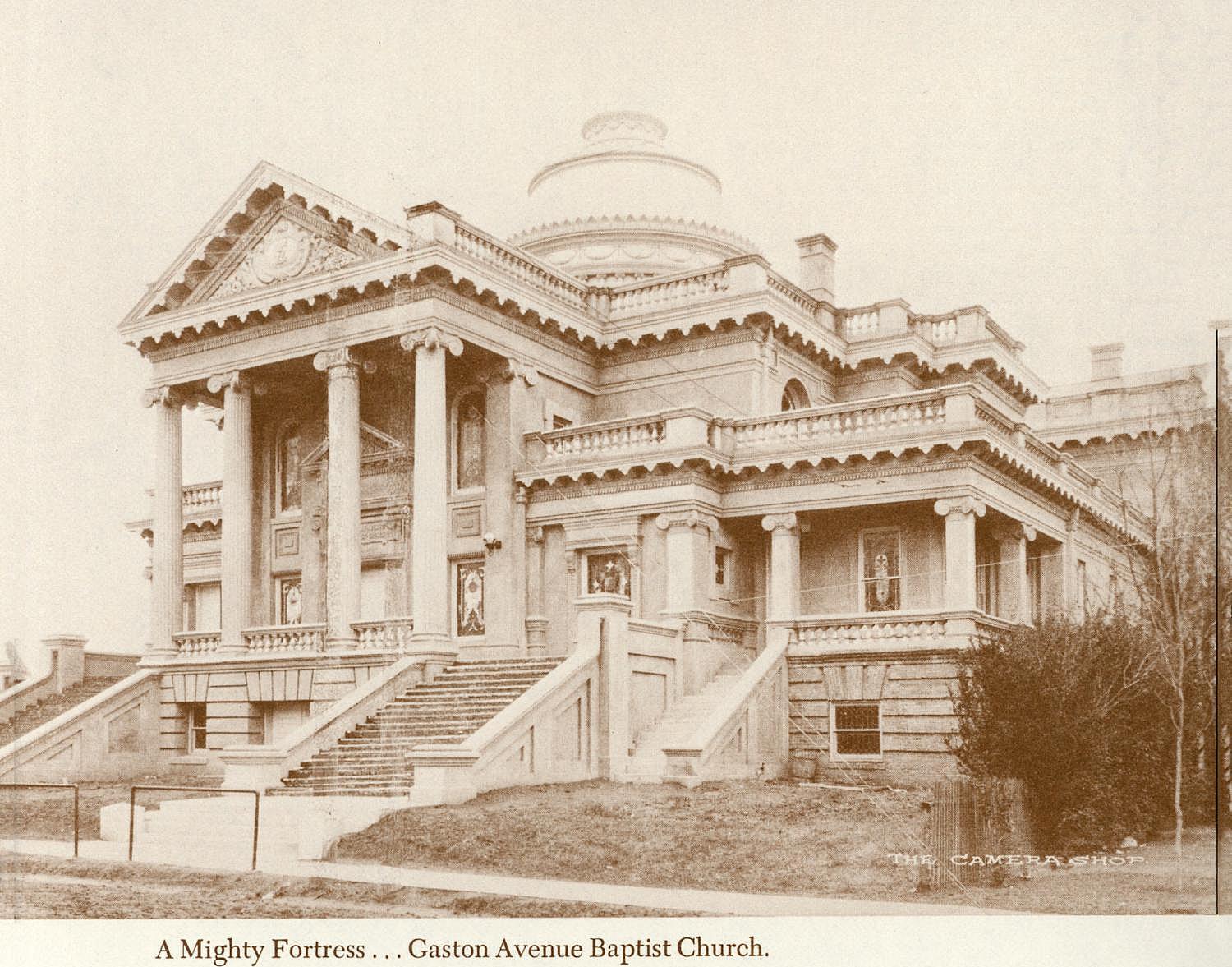
And another:

When you compare the early photos with the one from 1961, there are a few differences. Namely… the dome (…or lack thereof). It was built with a dome. But by 1961, the dome was gone. Why?

Here is what the building looks like these days (it is now the home of Criswell College):

Google Street View, June 2024

Dome.

What’s the deal here? I hate to be a negative Nellie, but every time I drive past that dome (which is often), I wince. It looks like sun-faded matte gold paint. It’s a beautiful building. It deserves a better dome!

After searching a bit, here’s what I found. In response to a reader’s question in 1991 asking what the “golden dome” was made of, The News responded:

MFG Molded Fiberglass in Union City, Pa. fabricated it of 1/2-inch molded fiberglass impregnated with gold-flecked paint… Both the dome and the bay section — the white collar that protrudes from the roof line — are composed of 12 separate pieces… The dome’s cap is composed of four pieces… and the spire that tops the structure is a single unit… [T]he structure stands approximately 35 feet above the roof of the library and weighs about 6,000 lbs. (Dallas Morning News, June 6, 1991)

Fiberglass, impregnated with gold-flecked paint. I don’t know when this happened, but more than 33 years ago. The gold-flecked paint has seen better days, beaten into submission by the relentless Texas sun. I’m sure it would probably cost a small fortune to spruce it up, but it would be nice to see it gold and shiny.

***

Sources & Notes

Top photo by Squire Haskins, from the Squire Haskins Photography, Inc. Collection, University of Texas at Arlington Libraries, Special Collections; more info on this photo is here (see interior photos taken by Haskins at the same time here and here).

Postcard was found on eBay.

The photo captioned “A Mighty Fortress” is from a TSHA Annual Meeting 1977 publication, via the Portal to Texas History.

*

Copyright © 2024 Paula Bosse. All Rights Reserved.

Second Presbyterian Church — 1905

Live Oak & Germania (Liberty)

by Paula Bosse

Hello! I’ve been gone for a while — the longest period of not posting here since I started 10 years ago! Life has been chaotic for the past month or two, but things have settled down a bit, and it’s good to be back.

I’m cheating a bit with this post, as it’s basically a reworking of something I put up on the Flashback Dallas Patreon page a few weeks ago, but I’m a big fan of this church building and thought I’d go ahead and share it here.

*

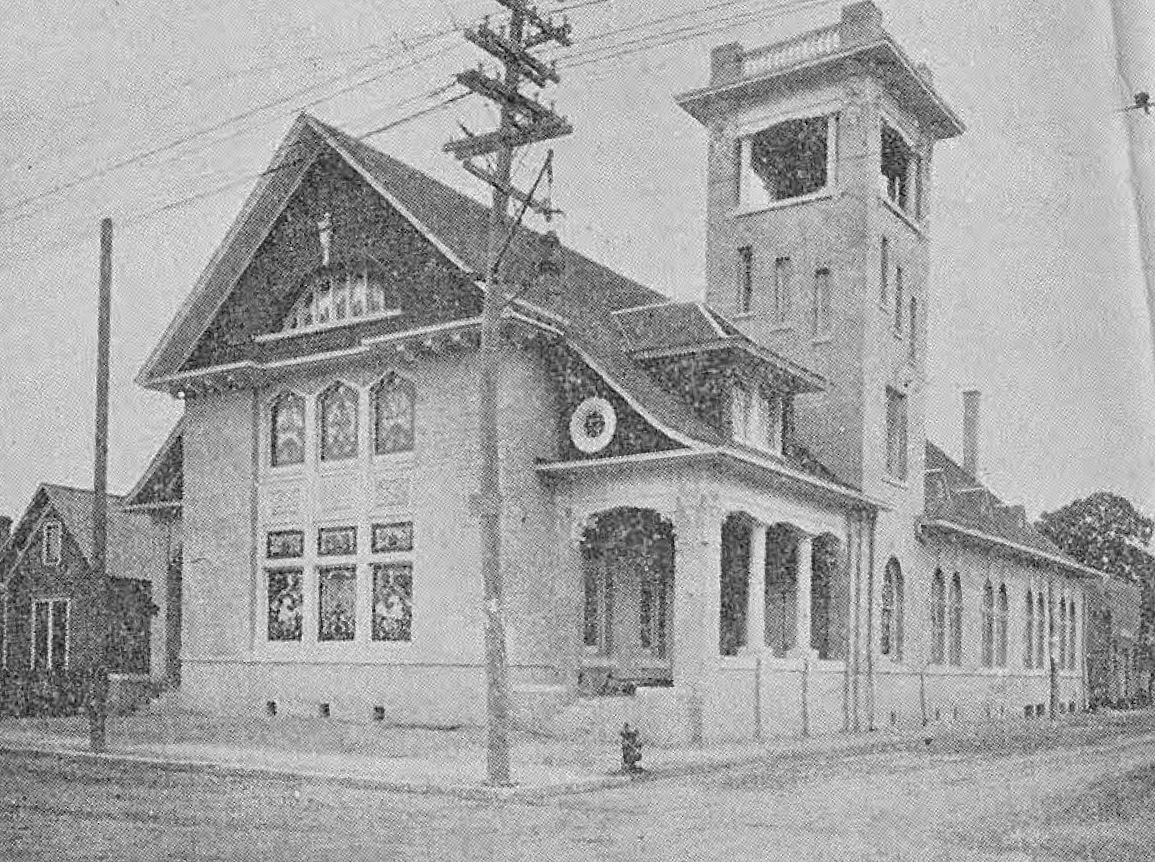
I love this building. The design is so interesting — I don’t think I’ve seen another church that looks quite like this one. It was built in 1904 (the first service was in March 1905), and the architects were Sanguinet & Staats of Fort Worth, who had designed the beautiful Wilson Building downtown a couple of years earlier.

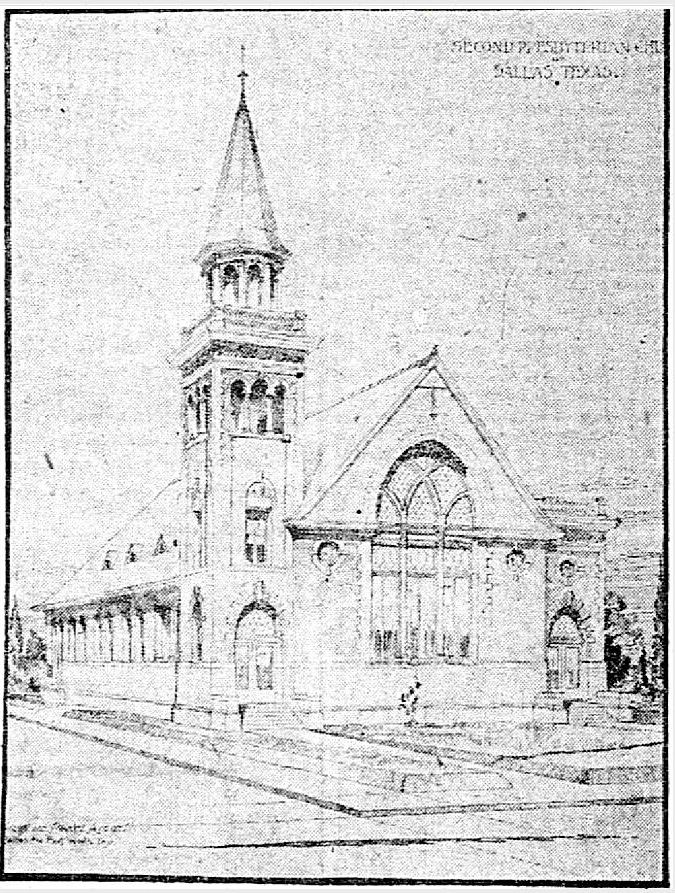
The Second Presbyterian Church sat on the southeast corner of Live Oak and Germania (the latter street name was changed to “Liberty” during WWI, for patriotic reasons). Below is the original design, when a new building was to have been built on the church’s then-current property at the northwest corner of Wood and South Harwood — the Presbyterians sold the corner property to the Methodists not long after this drawing was published in The Dallas Morning News on Feb. 16, 1904 and decided to relocate to Old East Dallas. It’s interesting to see what changes were made to the design for the Live Oak church. (I prefer it without a steeple.) See it brand-new on a 1905 Sanborn map, here (top left).

Feb. 16, 1904 (DMN)

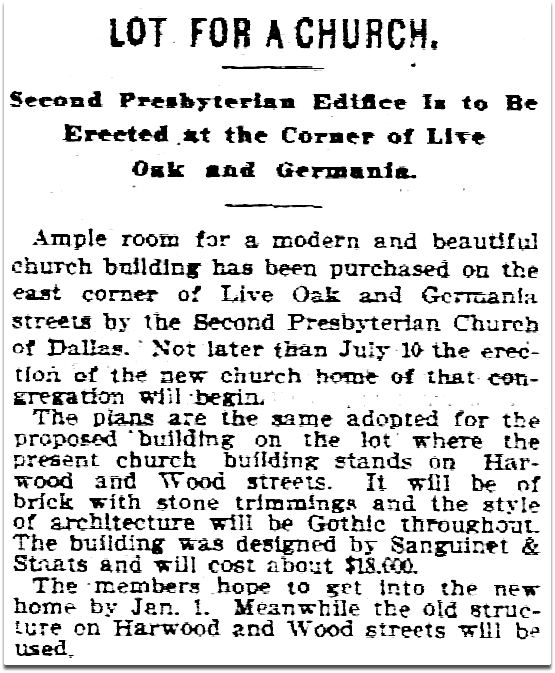
The article below is from June 21, 1904 (DMN):

June 21, 1904 (DMN)

See what this corner looks like now, on Google Street View, here. The building on the corner (at 2900 Live Oak) is a really, really strange-looking one. The Dallas Central Appraisal District (DCAD) says it was built in 1950. DCAD is almost always wrong with construction dates of older buildings. …But it’s so strange. Is it possible that the heart of the old Sanguinet & Staats church is still beating under all that weirdness? If so, it’s one of the oldest non-residential buildings in the neighborhood.

Google Street View, Jan. 2024

And to wrap this all up, this photo of the 1957 tornado was taken at this corner.

***

Sources & Notes

Top photo is from the booklet “Come to Dallas” (ca. 1905), DeGolyer Library, SMU Libraries — it is accessible here.

Drawing and article from The Dallas Morning News.

*

Copyright © 2024 Paula Bosse. All Rights Reserved.

The Grading of Junius — 1903

junius-street_wilson-home_1903_ebay_front_bwLet the scraping begin!

by Paula Bosse

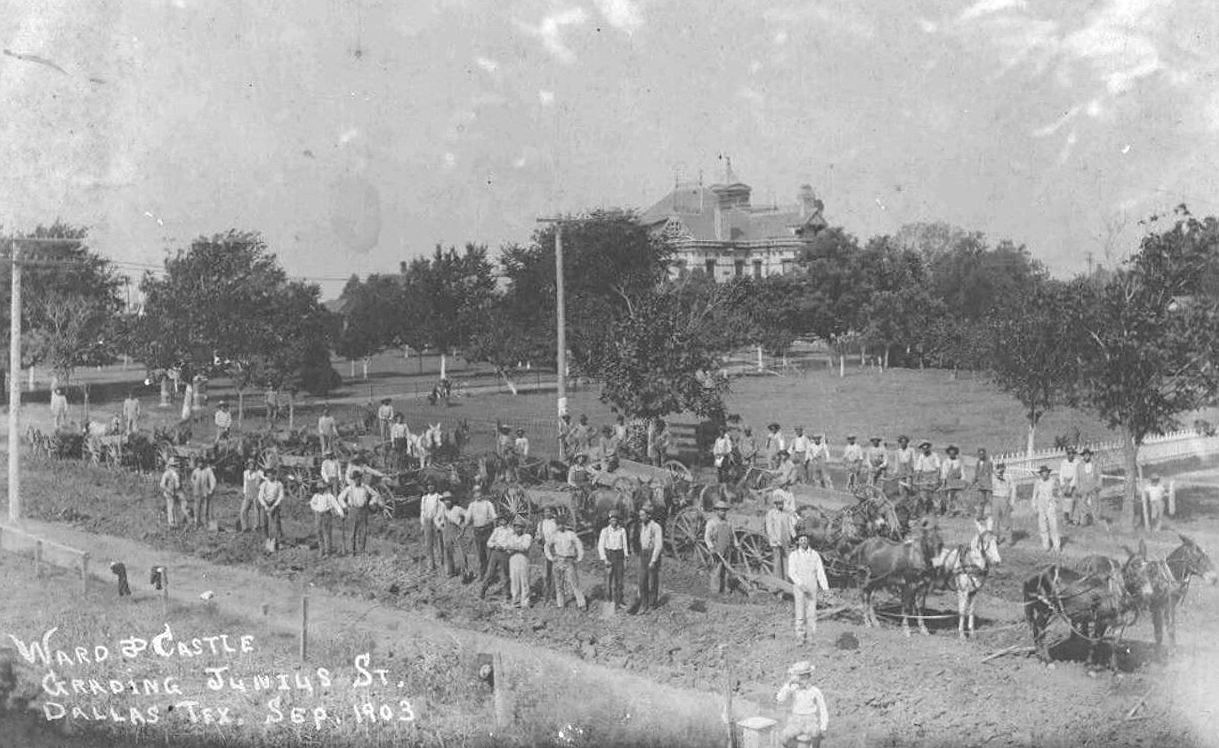
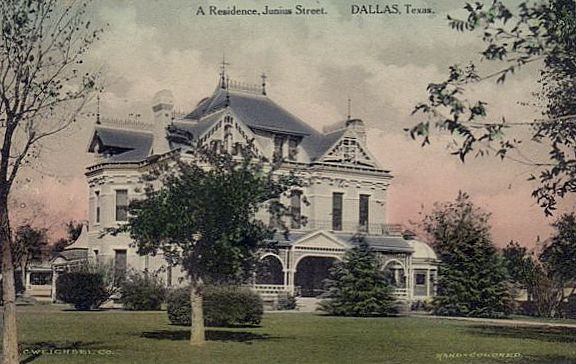
Here’s an interesting photograph I stumbled across on eBay. It shows Junius Street in East Dallas, between Peak and Carroll, taken in September 1903, as workers were grading the street as part of the paving process. The mammoth house seen on what looks like a hill, belonged to John B. Wilson (namesake of the Wilson Building downtown), who had purchased the grand home from Thomas Field in the 1890s. (This beautiful house — built in 1884 — was demolished in 1922 in order to free up land for apartments, etc. Read more about this in the 2014 post “Junius Heights … Adjacent!”) Here’s Wilson’s home, up close:

junius-st

The house was built in 1884 at the northeast corner of Junius and Peak — it sat on a lot of land. By 1903, after other houses had been built around it, it occupied almost half a block, bounded by Junius, Peak, and Gaston. (See this area on Sanborn maps from 1905 and 1922 — it’s pretty easy to spot the house!)

But back to the 1903 photo. It shows road work on Junius, which, up until that point, had been a dirt/gravel road.

In March 1903, residents of Junius Street asked the City Council to pave their street between Haskell and Fitzhugh. I’m sure their main goal was to live on a nice, paved street instead of one that became a nasty, muddy nightmare when it rained — but, perhaps to make it seem more egalitarian, they zhuzhed up their request by saying that Junius street is the principal outlet to Garland, Reinhardt and the country surrounding those towns.” They noted that the county had kept the continuation of the road outside the city in good condition and that this stretch of paved road would provide “a connecting link between the city and the country.” (I don’t know how important this “connecting link” was, but the stretch of road they wanted paved was only half a mile long. It seems pretty ballsy to request that the city pave this very short bit of road, which would have resumed being unpaved east of Fitzhugh…. and on to Garland and Reinhardt. I think there’s no question that Moneyed Resident Wilson — who, let’s not forget, was building the very large Wilson Building downtown at this time — had a lot of sway amongst the city leaders.)

The group approached the city with a proposition in which they, the homeowners, would pay for half the cost of the construction, with each of them paying 50¢ for every foot of their property which fronted the street. (Surprisingly, only two property owners had an issue with this — one of them was Dr. Buckner of the Buckner Orphans’ Home (before it relocated to the ‘burbs, it was at 4120 Junius), who said the home did not have the funds for this, but he personally ponied up a $50 contribution, the equivalent of about $1,700 in today’s money.) The city seemed happy with this and agreed to match the $2,500 collected by the group. (Mr. Wilson’s share must have been substantial.) I don’t know what the tax situation was back then, but it’s odd that people once had to do this. I would guess that very few streets were paved beyond the Central Business District in this era — who could afford that? I guess that’s why so many real estate ads from the past stressed that the streets of their new developments were all paved.

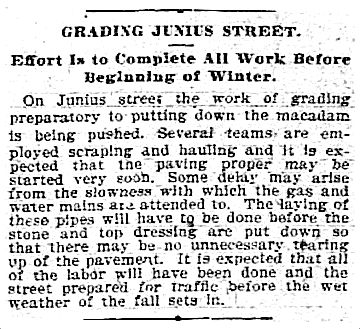
The Junius improvements included the laying/installing of cement sidewalks, a macadamized roadway, and bois-d’arc-block gutters. The grading work (shown in the photo at the top) began in August 1903.

junius_grading_DMN_082503Dallas Morning News, Aug. 25, 1903

There were, of course, delays, caused by a lack of materials, weather, the necessity of having to wait while gas and water mains were laid, and having to either rebuild a bridge over the road or build a culvert under the road (the city went with the cheaper culvert). Work was still going on in December, but I gather the job was completed early in 1904.

*

Leadership of the neighborhood group was comprised of two people from each block (one from each side of the street). The leaders for what is now the 4700 block of Junius were John C. Ward and C. J. Castle (their names are on the photo showing this work in progress). The notation below is written on the back of the photo: “J. B. Wilson home in background (built Wilson Building downtown). J. C. Ward my grandfather. Mary Musick.”

junius-street_wilson-home_1903_ebay_back_det

J. C. Ward (1851-1937) came to Dallas in 1874, traveling in a covered wagon, witnessing buffalo stampedes and white-knuckling it through Indian territories. He was pals with an elderly John Neely Bryan. He worked as a contractor and must have done well, as he owned houses on several lots in the 4700 block of Junius, most of which were occupied by family members (including his daughter, Ella Ward Arnold, and his granddaughter, Mary Arnold Musick) — his own home was in the 6100 block of Junius, which appears to be the current location of the Lakewood Library. At one point he owned 72 acres of farmland on the eastern edge of Dallas, but it was condemned by the city in order to build White Rock Lake. He didn’t seem to hold too much of a grudge, because his major pastime was fishing, and he frequently walked the 2 miles to the lake from his home to fish, well into his 80s.

He seems to have had a real affinity for Junius Street. I love the fact that he and his across-the-street neighbor, C. J. Castle, memorialized the paving of their street with a specially commissioned photograph and managed to get all the workers to pose for it. The paving of Junius must have been a particularly gratifying achievement.

***

Sources & Notes

Top photo is from eBay — it is currently for sale, here.

If you enjoy this sort of thing, check me out on Patreon, where, for a subscription costing mere pennies a day, you can receive daily, bite-size Dallas-history posts directly in your inbox.

junius-street_wilson-home_1903_ebay_front_bw

*

Copyright © 2024 Paula Bosse. All Rights Reserved.

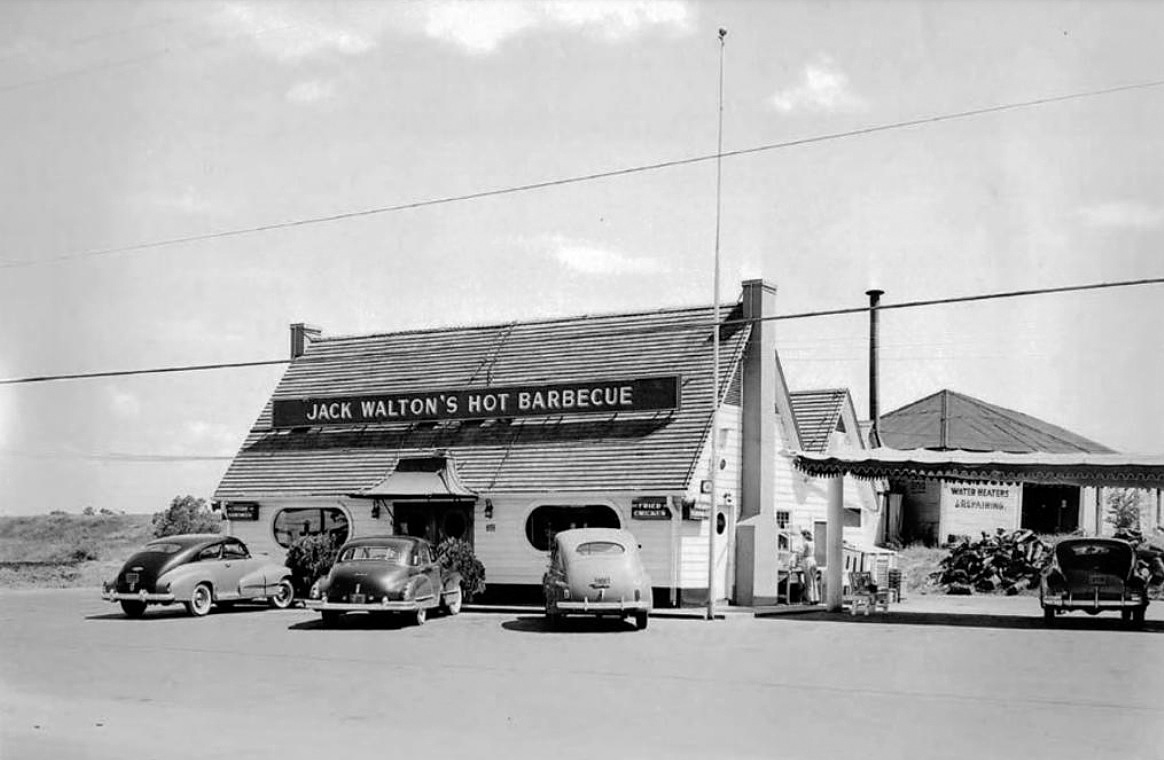
Jack Walton’s Hot Barbecue

jack-waltons-barbecue_bell-collection_DHS_ca-1946_3a
Restaurant No. 1, Haskell & San Jacinto…

by Paula Bosse

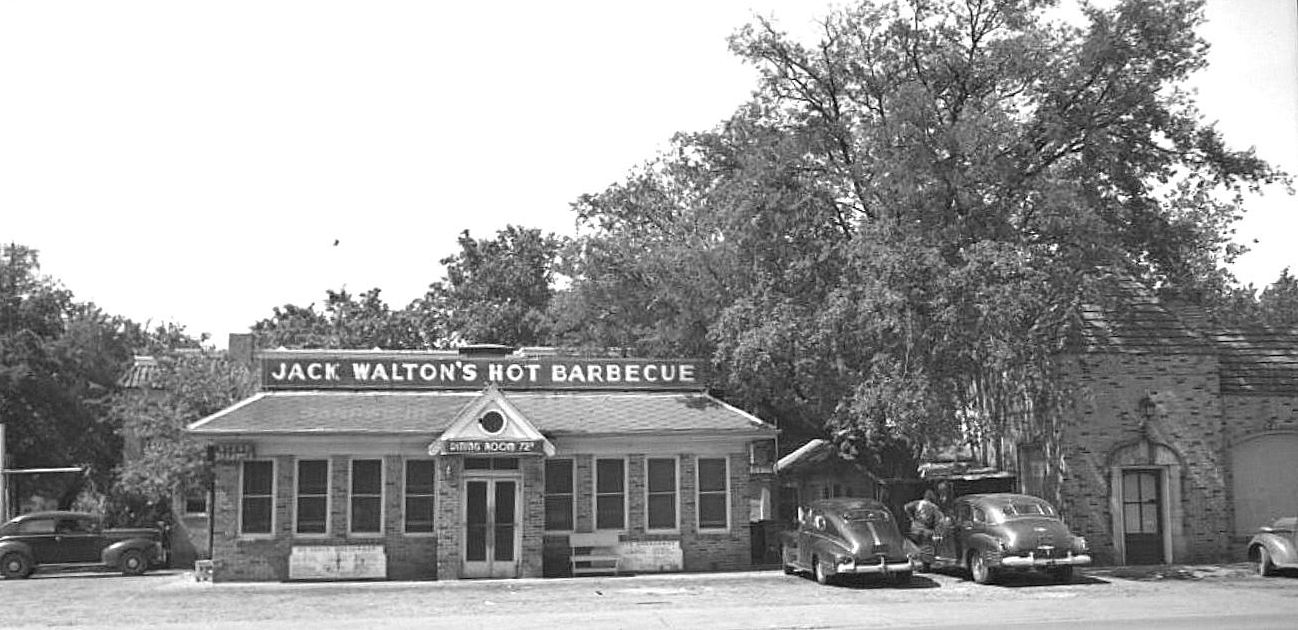
Arden Lee “Jack” Walton was born in Panola County (on his World War I registration card, he listed his home as Fairplay, Texas, which a town name I’m certainly glad to know exists). After the war, he moved to Dallas and opened his first restaurant — Walton’s Place — around 1925 or 1926. By the 1930s, he seems to have settled on barbecue as his primary specialty and had several of his self-named restaurants/drive-ins around town, branching out to Fort Worth in the early ’40s.

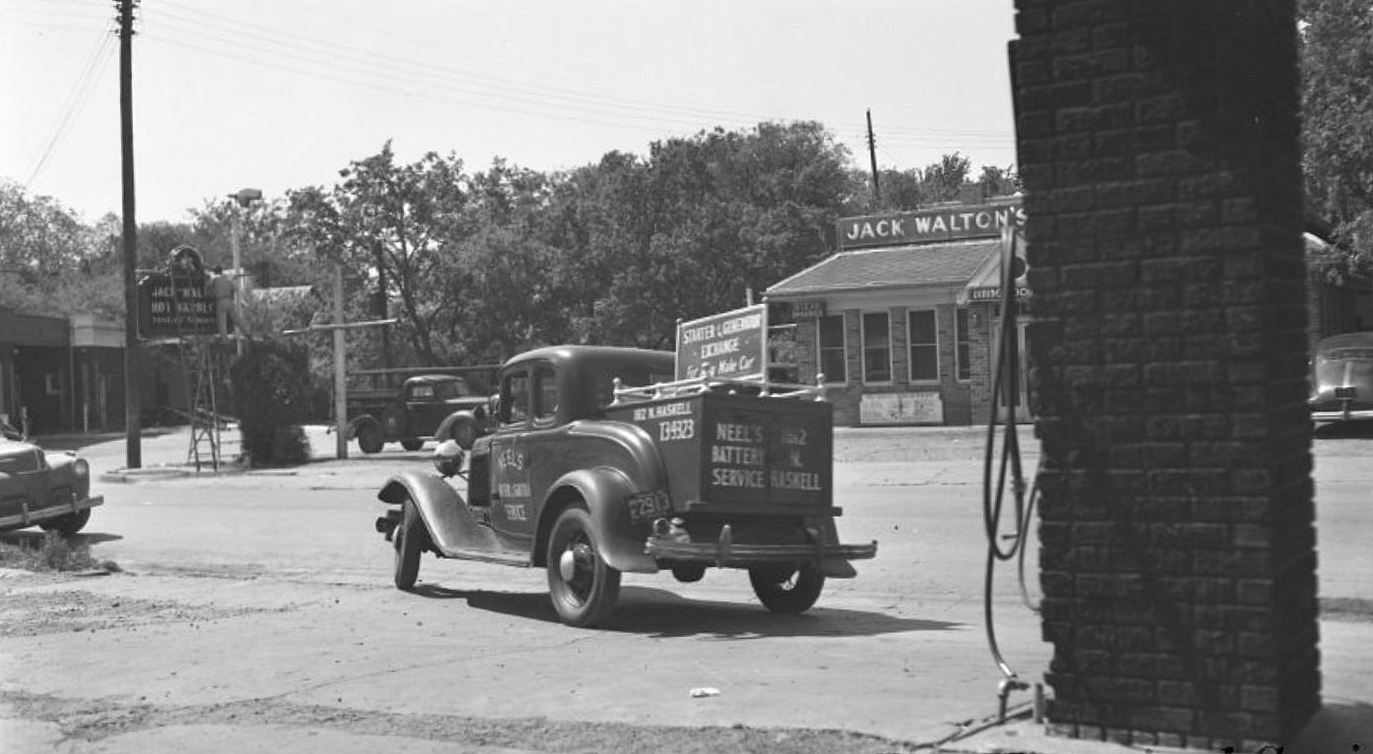
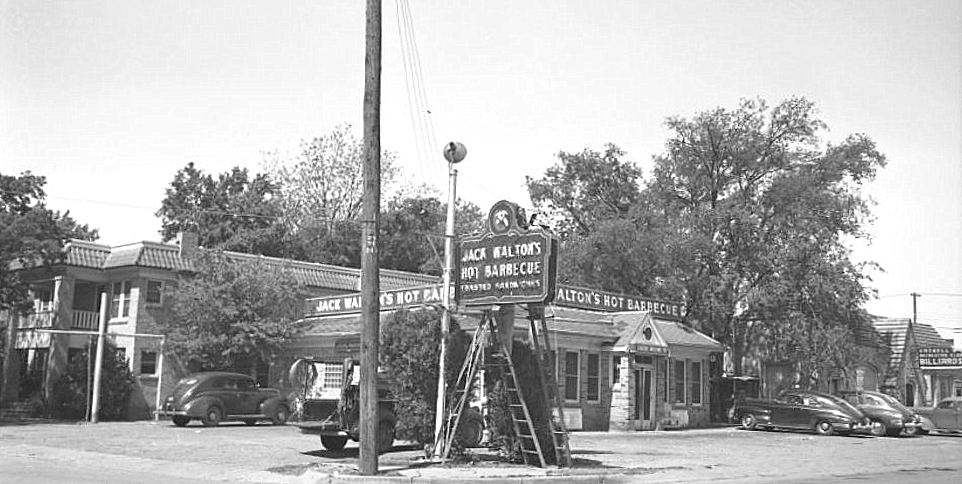
The photo above, from about 1946, is probably Walton’s first location, at Haskell and San Jacinto in Old East Dallas. The two photos below — showing a man working on the neon sign — were taken at the same time. (The photographer, James Bell, was a Dallas native back in town visiting — he took tons of unusual photos, often focusing on trucks, buses, cars, juke boxes, and various coin-operated machines. I’m sure he liked the look of the truck. They’re definitely amateur photos, but they’re great.)

jack-waltons-barbecue_bell-collection_DHS_ca-1946_2

jack-waltons-barbecue_bell-collection_DHS_ca-1946_1

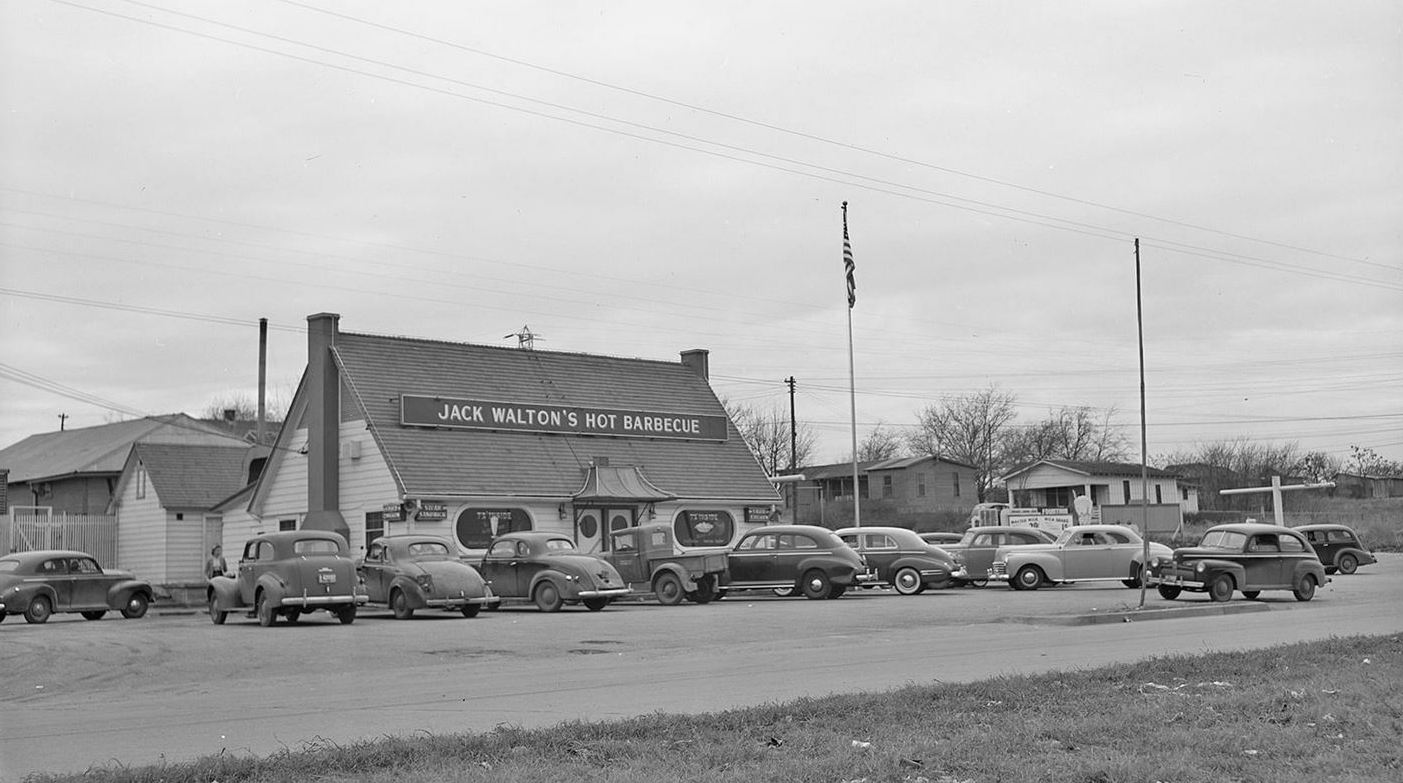
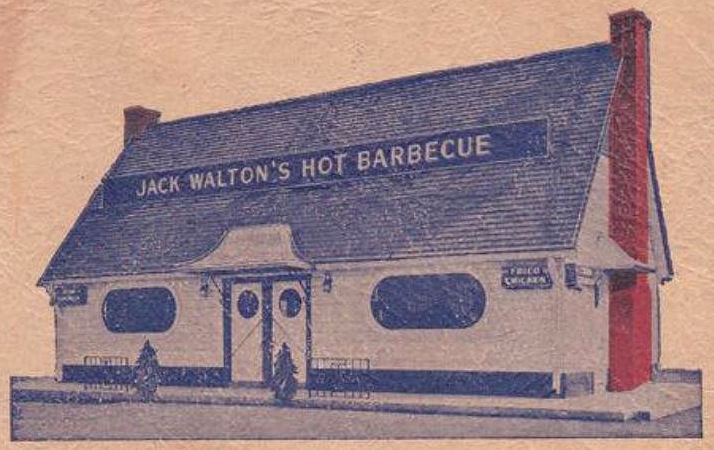
The photo that crops up on places all over El Internet (the photo below) is one which has a variety of conflicting information attached to it, including photographer, date, and location. As far as I can tell, I think the photo was taken by Arthur Rothstein in Fort Worth, in the very early ’40s (the FW location, at 1900 E. Lancaster, opened around 1940). I think most of the locations had a similar design. (See a typical menu here.)

jack-waltons-barbecue_traces-of-texas_arthur-rothenstein_ca-1943_cropped

Here’s another photo (location unknown):

jack-waltons-hot-barbecue_smokelore_bookfrom the book Smokelore

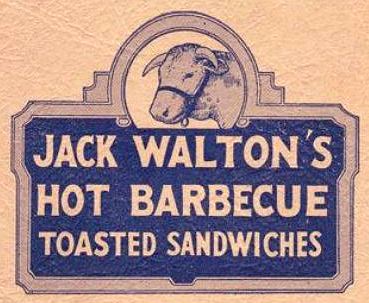
jack-waltons-barbecue_worthpoint_menu-back

jack-waltons-barbecue_worthpoint_menu-front

Walton was very successful in his toasted sandwich endeavors (he also made some savvy real estate deals). When he died, he was described as “the barbecue baron of Dallas.”

…When he died. Jack Walton died on Feb. 19, 1960, at the age of 62. He was visiting one of his restaurants, at Tom Field Circle and Hwy. 183. The manager — Jack’s brother-in-law — had been drinking on the job, and Jack fired him on the spot. So the brother-in-law shot him, telling the police later that Walton “started fussing at me and told me to get out.” He shot him at close range, so inebriated that only two of the shots hit their target. He was DOA at Baylor. (Read the AP wire story here.)

At least one of Walton’s restaurants was taken over by the Semos family — the Haskell location lasted under non-Walton management for quite a while.

*

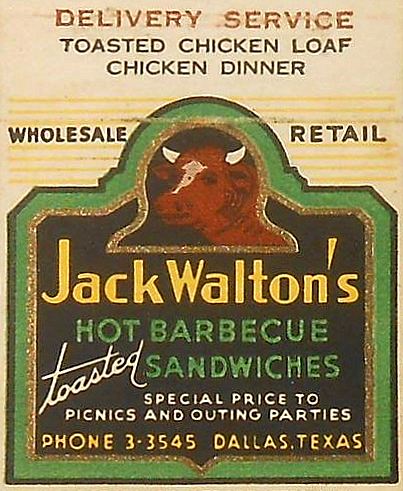
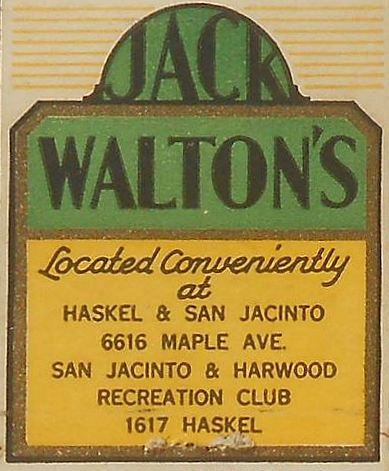
When I saw this matchbook cover several years ago, I was quite taken with the phrase “toasted chicken loaf.” What was a “chicken loaf”? I have to say, it didn’t sound that appetizing.

jack-waltons-BBQ_matchbk_1

jack-waltons-BBQ_matchbk_2

Chicken loaf was (apparently) a very popular food in days gone by, similar to meat loaf (it was made with chopped, shredded, or minced chicken, eggs, breadcrumbs/rice/some sort of cereal, etc., with the addition of hard-boiled eggs and/or pimentos and/or peas and/or whatever else was lying around). There are lots of ads in newspapers beginning around 1900 showing it as a “potted” meat, sold in cans alongside Underwood Deviled Ham and Vienna sausages, etc. I can understand this as a cost-saving meal during the Depression, but it was also very popular in restaurants (several local restaurants advertised that they sold entire take-out “loafs”), and it was a favorite of many as a Sunday dinner (or as a way to use leftover chicken in the pre- and post-casserole days). By the ’40s, recipes started adding the dreaded gelatin (“Jellied Chicken Loaf”). Um, yes. There was also … wait for it … MOCK chicken loaf! I’m not sure what that was, but it probably got people through WWII and food-rationing.

While searching for “chicken loaf” info in the Dallas Morning News archives, I saw a few delicacies listed in grocery ads which one might be hard pressed to find on the shelves of one’s local supermarket today: oyster loaf, liver loaf, and deviled tongue — all sold in cans. There was also a New Year’s Eve recipe in there for “Hot Sardine Canapes,” with toast “cut in fancy shapes.”

FYI.

***

Sources & Notes

First three photos were taken by James Bell in about 1946; they are from the James H. Bell Collection, Dallas Historical Society — they can be accessed here, here, and here. (I have straightened and cropped the photos.)

The photo which is probably by Arthur Rothstein is from the Traces of Texas Facebook page.

Menu detail art is from Worthpoint; matchbook scans from eBay.

jack-waltons-barbecue_bell-collection_DHS_ca-1946_1_sm

*

Copyright © 2023 Paula Bosse. All Rights Reserved.

John W. Smothers’ Tin Shop, Hall & Floyd

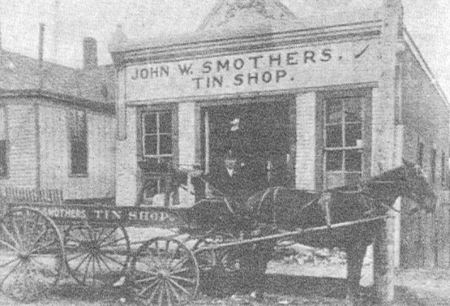
smothers-tin-shop_ebaySmothers (in car) and employees, ca. 1913

by Paula Bosse

John W. Smothers (1869-1925) came to Dallas from Huntsville, Missouri around 1890 to begin his career as a “tinner” working for a family friend/in-law, Frank T. Payne. By 1905, Smothers had married a girl from back home, had a child, and had apparently done well enough in the trade to buy a lot on College Ave. (now N. Hall St., in Old East Dallas) where he built his own tin-manufacturing shop, specializing in various sheet metal work. 

smothers_ad_1909-directory
1909 city directory ad

It looks like this business lasted until about 1918, when Smothers retired and sold the building to his old friend, F. T. Payne. It became a grocery store in 1919. Smothers died in 1925 at the age of 56 — his death certificate lists the cause of death, somewhat alarmingly, as “exhaustion and malnutrition” following a long illness — an extreme case of St. Vitus Dance

smothers_tin-shop_photo_ancestryvia Ancestry.com

Originally 212 N. College Ave., the address of Smothers’ tin shop became 912 N. College Ave. in 1911 when new addresses were assigned around the city. (See the location of the shop on a 1921 Sanborn map here.) It sat diagonally across the street from Engine Company No. 3, seen below in a photo from about 1901:

fire-dept_engine-co-3_gaston-and-college_1901Fire station, Gaston & College, ca. 1901

College Avenue was renamed and became Hall Street around 1946, and the address of the old tin shop building changed again, to 912 N. Hall Street, which is in the area now swallowed up by Baylor Hospital (see what 912 N. Hall looks like now on Google Street View, here).

***

Sources & Notes

Top photo found on eBay. A copy is also in the George W. Cook Dallas/Texas Image Collection, DeGolyer Library, Southern Methodist University — it can be accessed here. The SMU photo (apparently from the collection of Ralph Smothers, John’s son) has a notation on the back which reads “912 College Ave. <now Hall St.> about 1913 or 14? John Smothers [in car], [James E.] Curly Wilson left, Bob Critcher right.”

Photo of the fire station with the ghostly horse is by Clifton Church and is from the Dallas Fire Department Annual, 1901, which can be viewed in its entirety on the Portal to Texas History, here. (I used this image in my 2016 post “Dallas Fire Stations — 1901.”)

(“Tinner” was not an unusual word to have come across in the early part of the 20th century, but in the 1910 census, the enumerator was either confused or did not understand what was being said, because Smothers’ trade is listed as “tuner” — it looks like the enumerator then just made a weird leap to attempt to explain this and added “piano” under “General Nature of Business,” which Ancestry.com then repeats in its OCR-generated records. That “piano tuner” profession caused me a lot of confusion! To add insult to injury, OCR tells us that his occupation in 1900 was “turner,” and an illegible entry in the 1920 census transforms him into a “retired farmer”! Always approach census record information with a grain of salt — for many, many reasons!)

smothers-tin-shop_ebay_sm

*

Copyright © 2023 Paula Bosse. All Rights Reserved.

The Gaston-Carroll Pharmacy — ca. 1929

gaston-carroll-pharmacy_1929_joe-windrow_dallasFB_2
Curb service at Gaston and Carroll…

by Paula Bosse

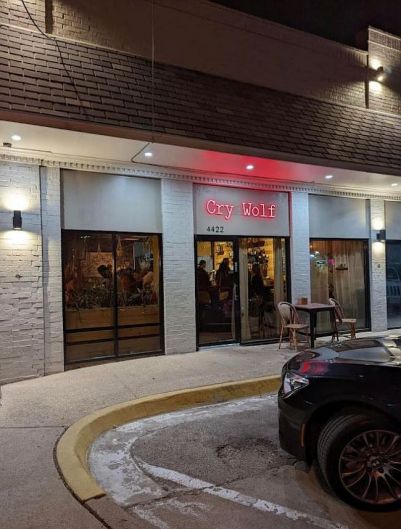
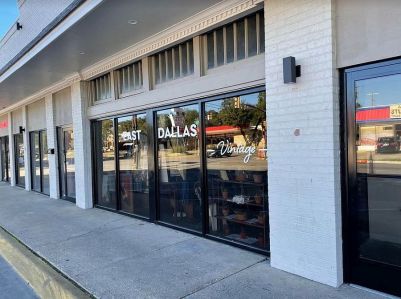
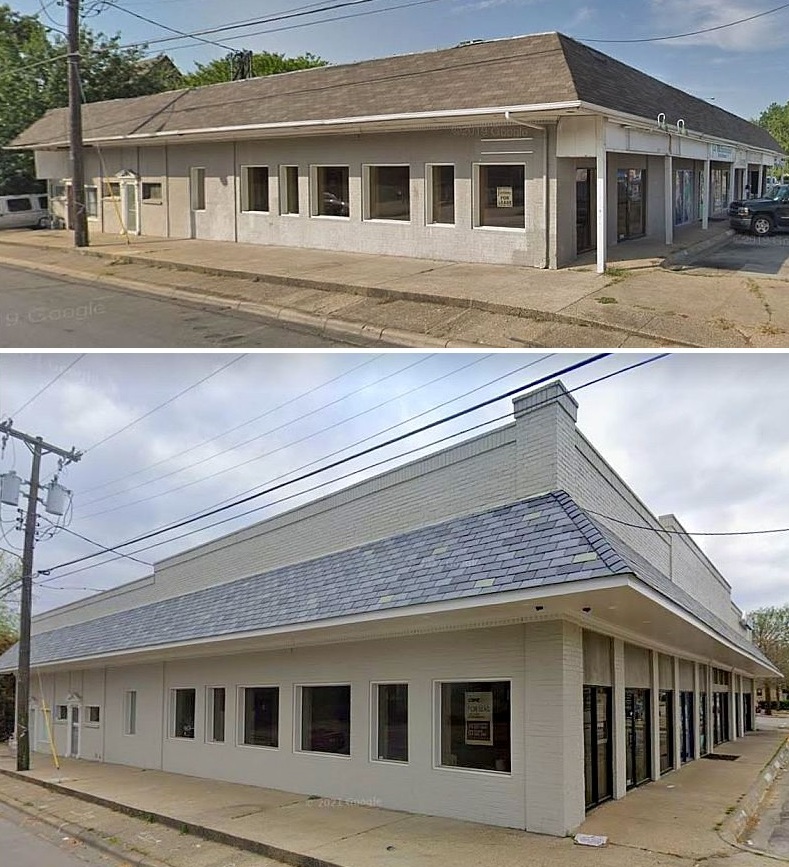
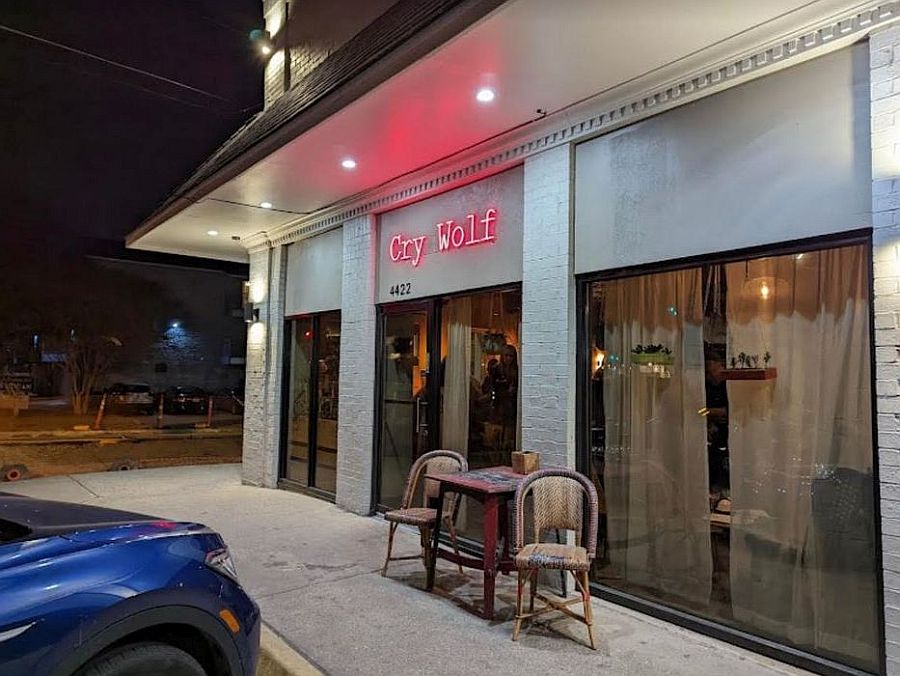
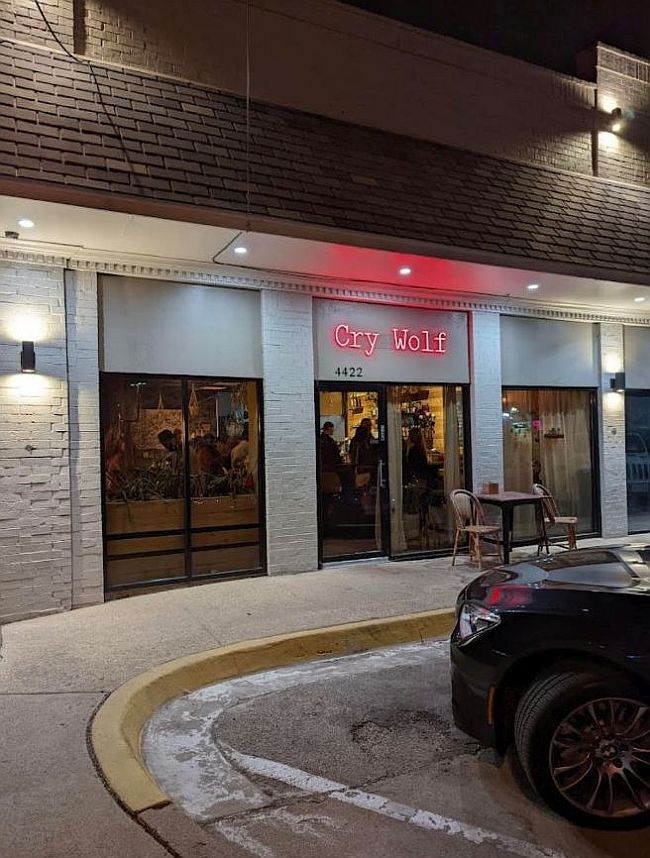
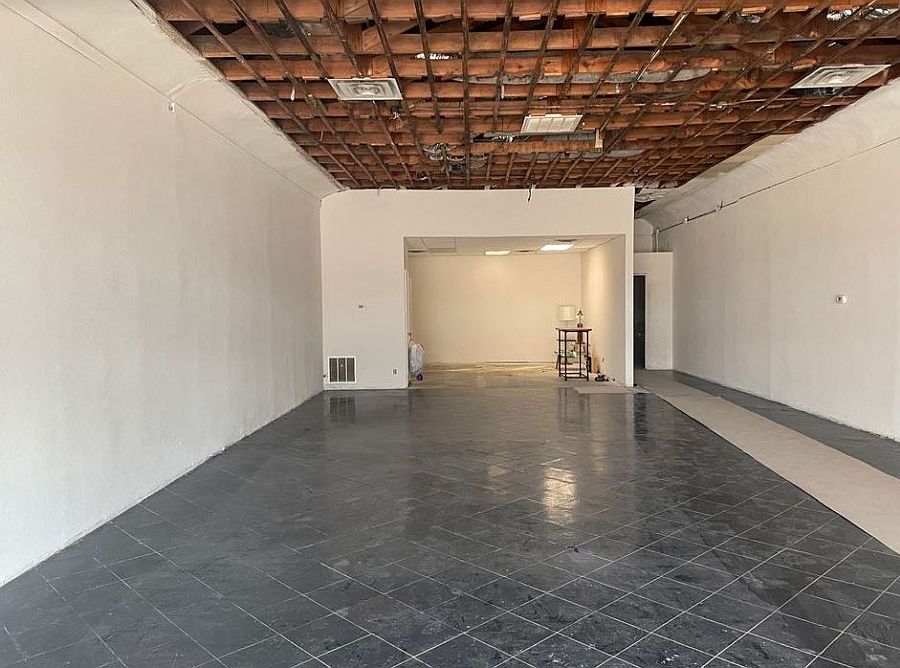
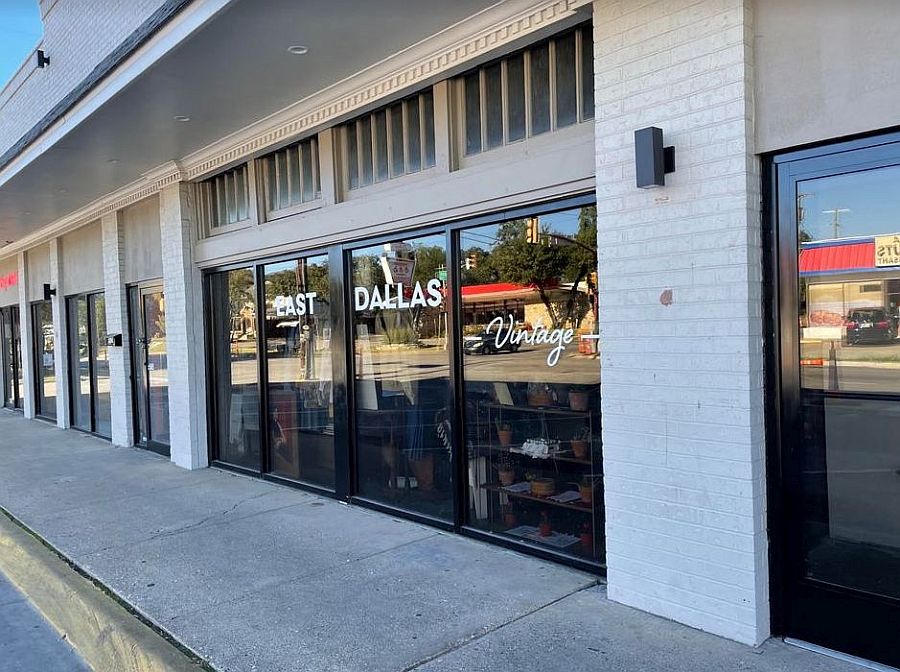
I received an email the other day from Melissa Maher asking about the building which houses the new shop she owns with her business partner, Chelsea Callahan-Haag: East Dallas Vintage, at 4418 Gaston Avenue. Next door, on the corner, is Ross Demers’ new restaurant, Cry Wolf (4422 Gaston). Surprisingly, I had two photos of the building from the 1920s!

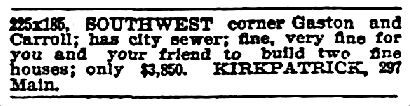
The building is on the southwest corner of Gaston and N. Carroll in Old East Dallas and was built in 1925. The first mention I found was from a classified ad in The Dallas Morning News in February, 1902 — a “for sale” ad for the lot boasted that it had “city sewer” and that it was “fine, very fine for you and your friend to build two fine houses” (which is an unusual sales tactic). The price was $3,850 — if you believe the accuracy of inflation calculators, that would be the equivalent of about $125,000 in today’s money.
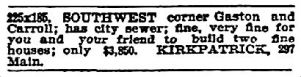
1902_gaston-carroll_dmn_081802Dallas Morning News, Aug. 18, 1902

In 1907 it was reported that attorney N. Lawrence Lindsley was building a house on the large lot, for the equivalent of about $250,000 (add that amount to the cost of the land…). Before 1911, the address was 668 Gaston Avenue — after 1911 the address became 4418 Gaston. Over the years, the house passed through several owners until the large, stately 3-story home had been broken up into apartments in the 1920s (see the house on a 1922 Sanborn map here). In 1925, the house went on the market.

A CORNER ON GASTON WITH A FUTURE
Southwest corner of Gaston and Carroll. Has three-story well-built house bringing $100 monthly rental or 8.5 per cent on price of $14,000. Lot 90x125x160. When Gaston is opened through to Pacific this will be one of the best corners in East Dallas for stores. Call H. K. Dunham, exclusive agent. […] Do not bother tenant. No trade. Seay-Cranfill Co. Realtors. (Feb. 8, 1925)

It was snapped up fast. A mere ten days later, a Texas charter notice appeared in newspapers for Gaston Avenue Investment Company, owners of the property. The 18-year-old house was promptly razed, and a building containing space for four shops opened in June. 

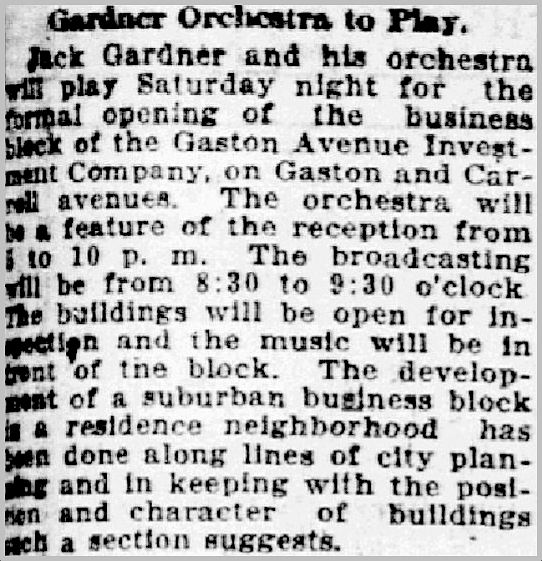
The grand opening was broadcast live on WFAA radio on June 27, 1925, with music performed by Jack Gardner and his orchestra. Quite a do.
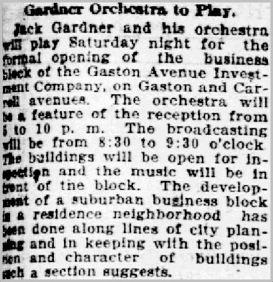
1925_gaston-carroll_dmn_062725DMN, June 27, 1925

The original businesses were:

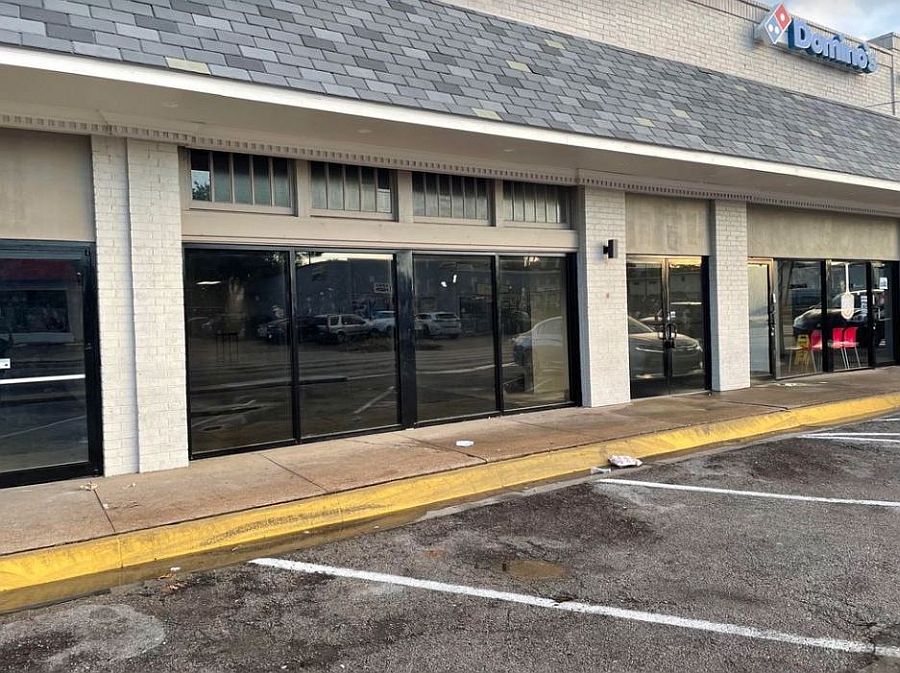
4414: Piggly Wiggly grocery store (now a Domino’s Pizza)
4418: Long’s Helpy-Selfy (a “serve-yourself” no-frills grocery)
4420: Johnson’s Superior Market, Otto S. Johnson, prop. (um, another grocery)
4422: Gaston-Carroll Pharmacy, C. L. Watts, prop. (with a soda fountain)

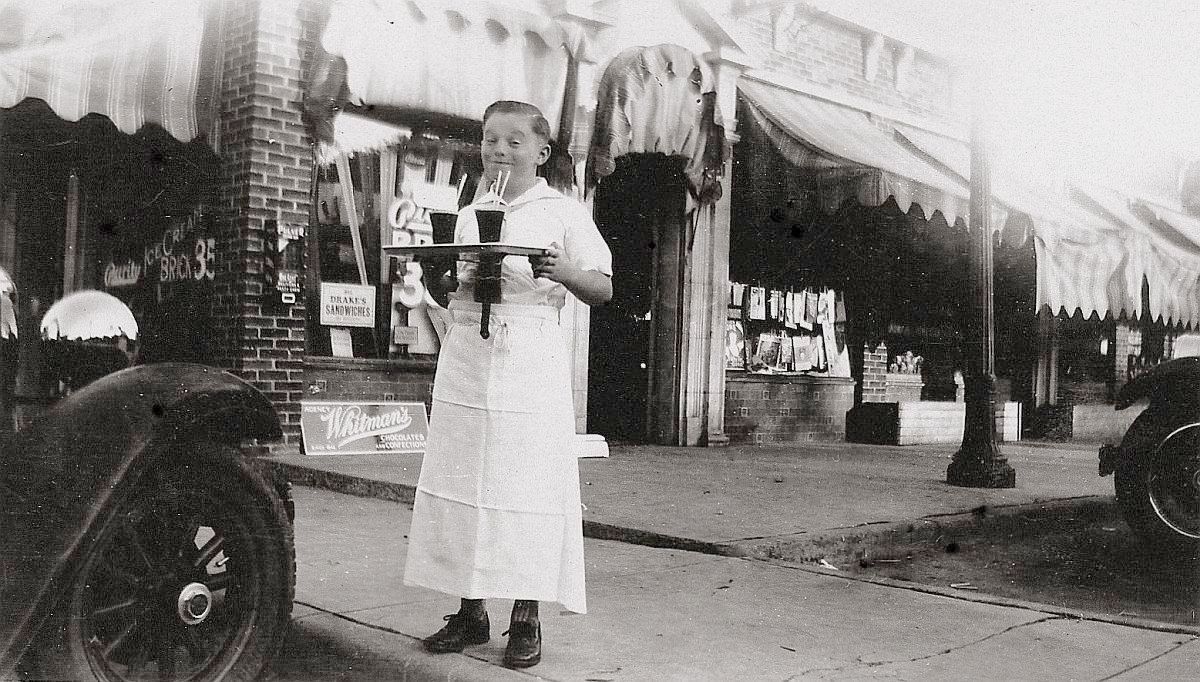
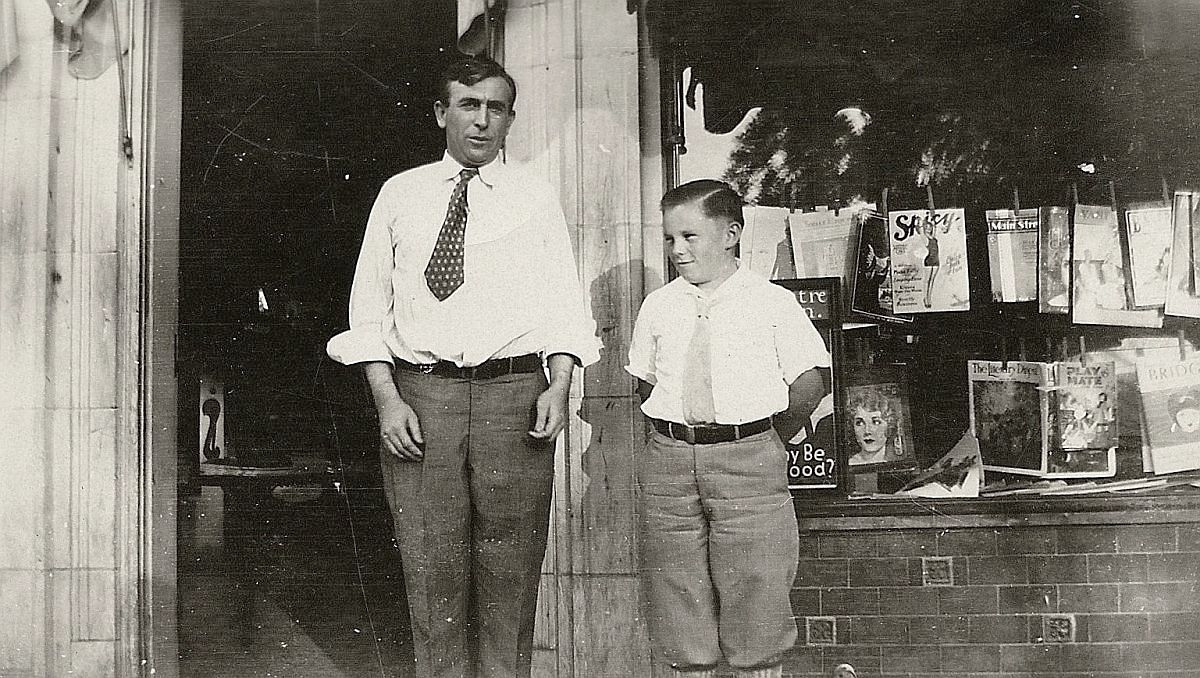
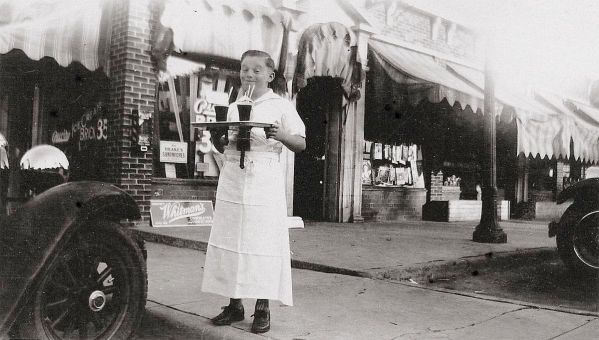
The Gaston-Carroll Pharmacy was on the corner, and that’s what we see in the photos above and below, taken about 1929 when Bill Windrow had taken over as president, manager, and druggist. An 11-year-old relative, Rollen Joseph “Joe” Windrow, worked as a carhop. Above, we see Joe “hopping”; below, Bill and Joe, stand on the sidewalk in front of the pharmacy.
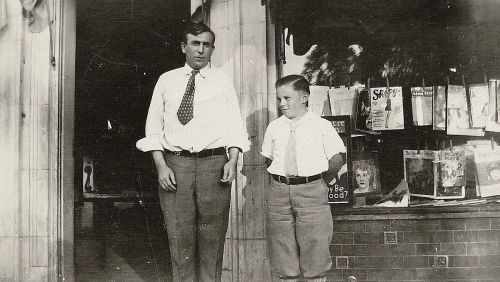
gaston-carroll-pharmacy_dallasFB_bill-and-joe-windrow_str

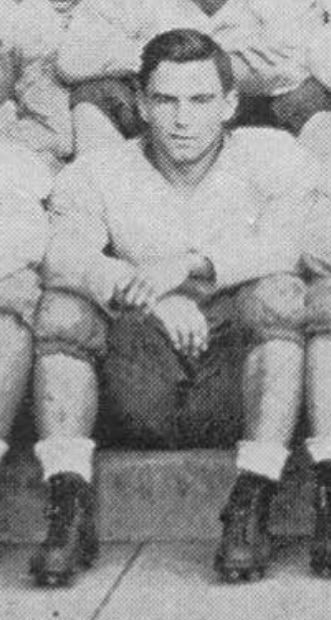
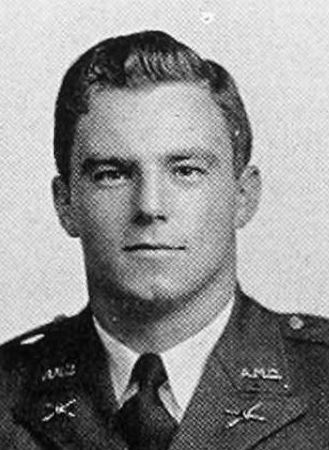
Joe lived nearby on Swiss Avenue and later went to Woodrow Wilson High School. He grew up to be a handsome young man.
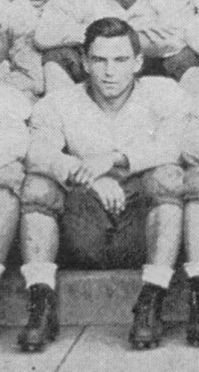
windrow-joe_woodrow_football_1936Joe Windrow, Woodrow Wilson High School, 1936
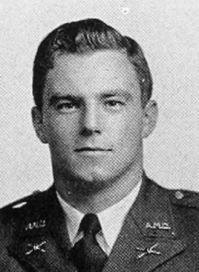
windrow-joe_tx-a-and-m_1941Joe Windrow, Texas A&M, 1941

*

Over the years, the space on the right (4414 Gaston) was most often a grocery store (Piggly Wiggly, Safeway, Tom Thumb), and the space on the corner was a pharmacy for at least 60 years (Gaston-Carroll, Marvin’s, Walgreens, Taylor’s, and Felty’s). The middle shops were a variety of businesses, with one of the spaces apparently being absorbed into another.

*

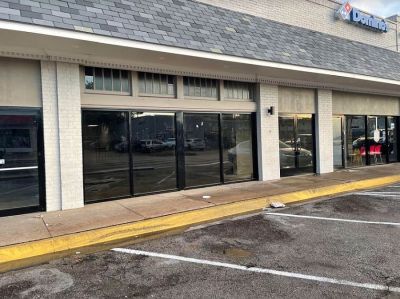
The building received a nice makeover recently. The Google Street Views below show July 2018 (before), and March 2019 (after).
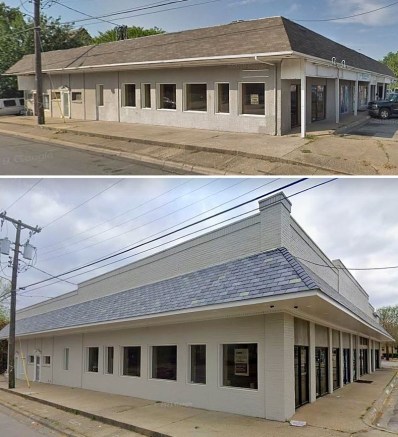
gaston-carroll_google-street-view_july-2018._march-2019Google Street View: 2018, 2019

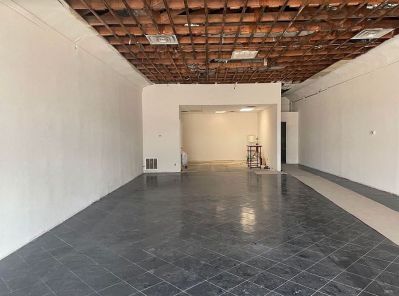
Melissa Maher, one of the proprietors of East Dallas Vintage (now occupying 4418 Gaston) sent me the following photos (from the end of 2021, I believe), showing her space and the space next door (Cry Wolf, 4422, in the old pharmacy location on the corner). She was wondering if there had been a basement in the building. It seems unlikely, but if anyone has any info, I’m sures she’d love to know.
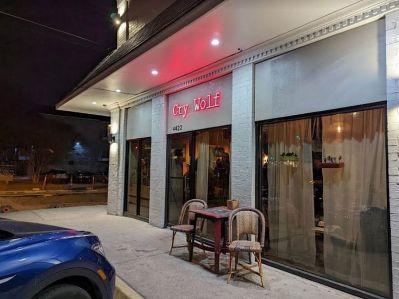
2021_gaston-carroll_melissa-maher_1photo: Melissa Maher

2021_gaston-carroll_melissa-maher_2photo: Melissa Maher

2021_gaston-carroll_melissa-maher_3photo: Melissa Maher

2021_gaston-carroll_melissa-maher_4photo: Melissa Maher

2021_gaston-carroll_melissa-maher_5photo: Melissa Maher

*

Thanks for asking about this, Melissa! I had always meant to write something about the Gaston-Carroll Pharmacy and post these 1929 photos — and this was a great opportunity to use them. I hope to visit your shop sometime!

***

Sources & Notes

The top two photos were found on a Dallas history Facebook group, but I’m not sure which one. They were posted in 2015, and I’m unable to find them now. I believe they were found by the original poster on Ancestry.com. Luckily, I had noted the names “Windrow,” “Joe,” and “Bill,” because I now know more about the Windrows than a non-Wiindrow needs to know — I can definitely verify that the circa-1920 photos are of the Gaston-Carroll Pharmacy. I’m still not sure of the relationship between Bill and Joe (there were a lot of Windrows…) — possibly uncle and nephew, or maybe cousins.

Thanks again to Melissa Maher for her photos. Go see her and Chelsea Callahan-Haag at East Dallas Vintage.

I couldn’t find any photos of the home of N. Lawrence Lindsley — I know they’re out there somewhere! I’d love to see one. If you know of any, please let me know!

Of related interest, the other half of that block in which this building is located was once home to a truly palatial home, built by Thomas Field. See it on a 1905 Sanborn map here. See the house in the Flashback Dallas post “Junius Heights … Adjacent!”

Also, catty-corner from this building is the former Brink’s restaurant. Way back, though, it was once the site of another grand residence — a home which became the Spann Sanitarium about the same time that the little strip of shops was built (I keep meaning to write about this sanitarium…):
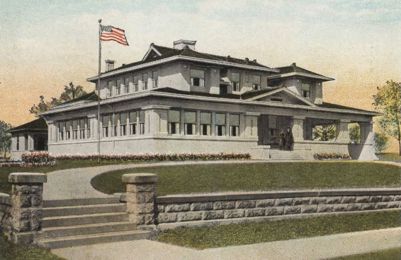
spann-sanitarium_postcard

gaston-carroll-pharmacy_1929_dallasFB_det_sm

*

Copyright © 2022 Paula Bosse. All Rights Reserved.

Ursuline Academy — 1921

ursuline_1921-yrbk_1-year-highVelma Rich and her classmates…

by Paula Bosse

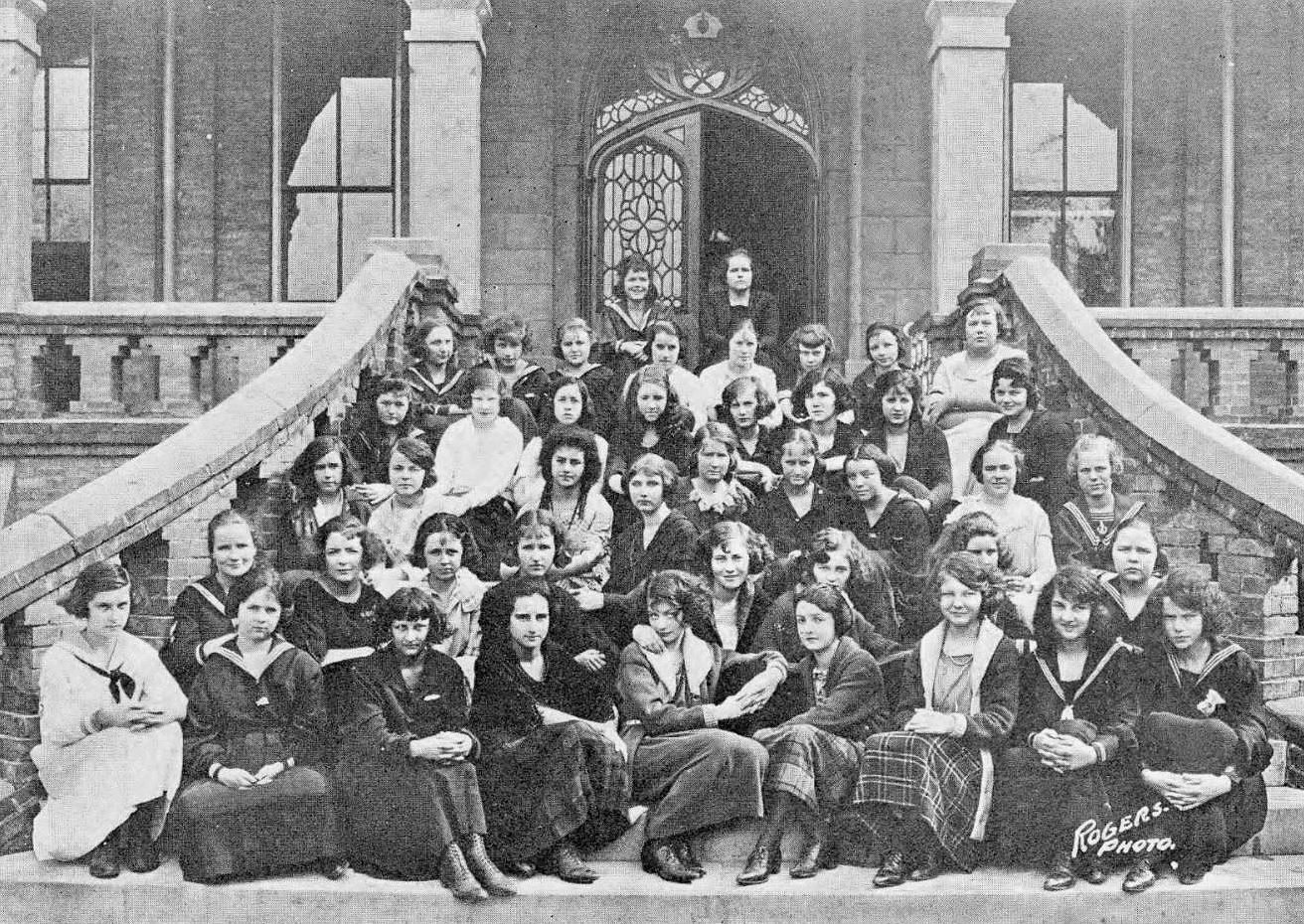
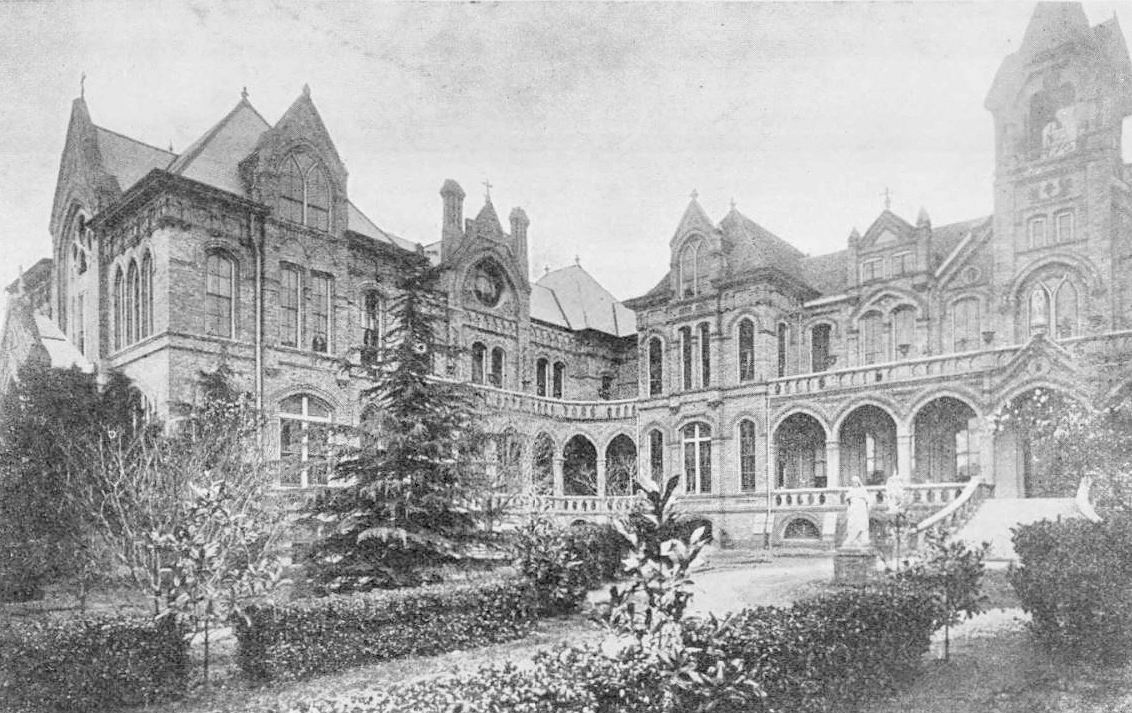
I never tire of looking through old high school yearbooks. Here are some photographs from the 1921 edition of The Ursulina, the yearbook of the Ursuline Academy, the all-girls school located in the block bounded by Live Oak, Haskell, Bryan, and St. Joseph in Old East Dallas.

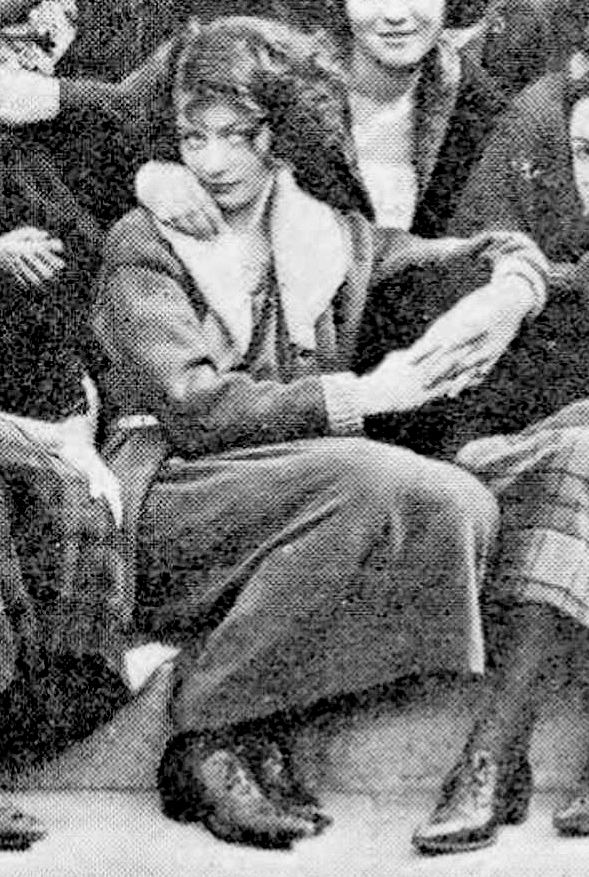
Above, the “I Year High,” which I gather would be the equivalent of the freshman class.  (I am transfixed by the girl in the center of the front row — I think she is Velma Rich — I bet she was a handful.) (Caption for this photo listing the girls can be seen here.)

*

Below, the East View of the Academy. The caption reads: “A Famous Battlefield (the study hall) and the Porch of Dreams, where school girls congregate to discuss the latest bulletin board news while enjoying some toothsome dainty.” (All photos larger when clicked.)

ursuline_1921-yrbk_east-view

*

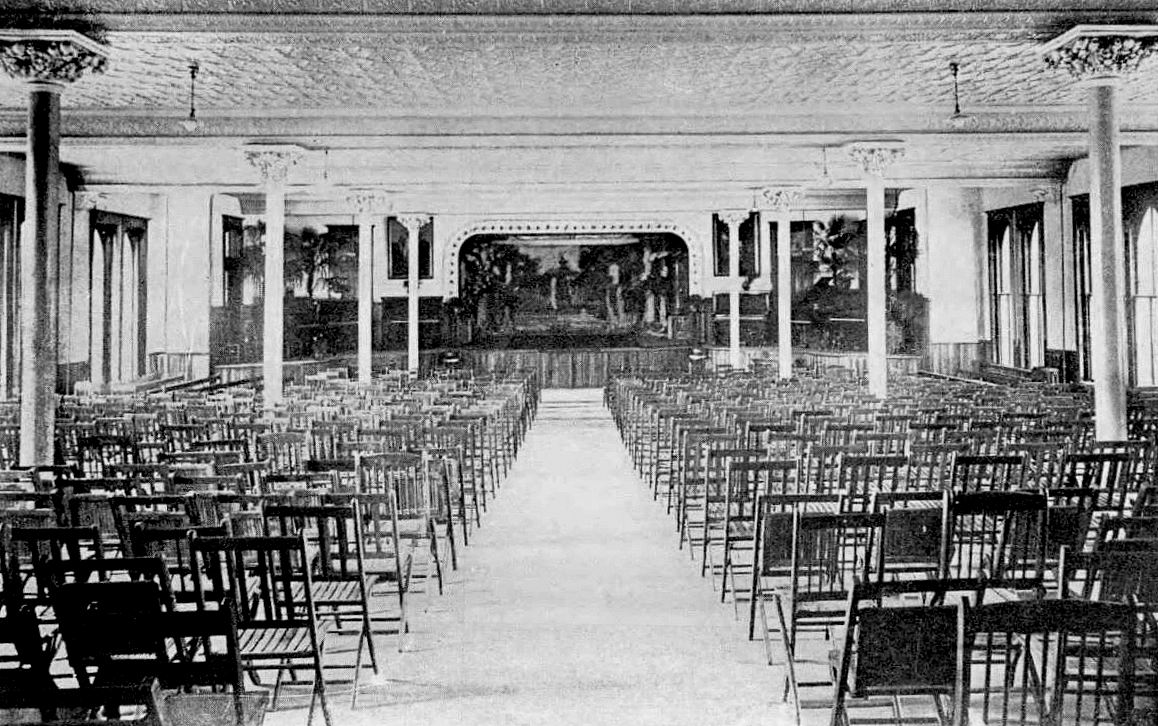
The auditorium. “And this is where we treat our friends to music, play and dance.”

ursuline_1921-yrbk_auditorium

*

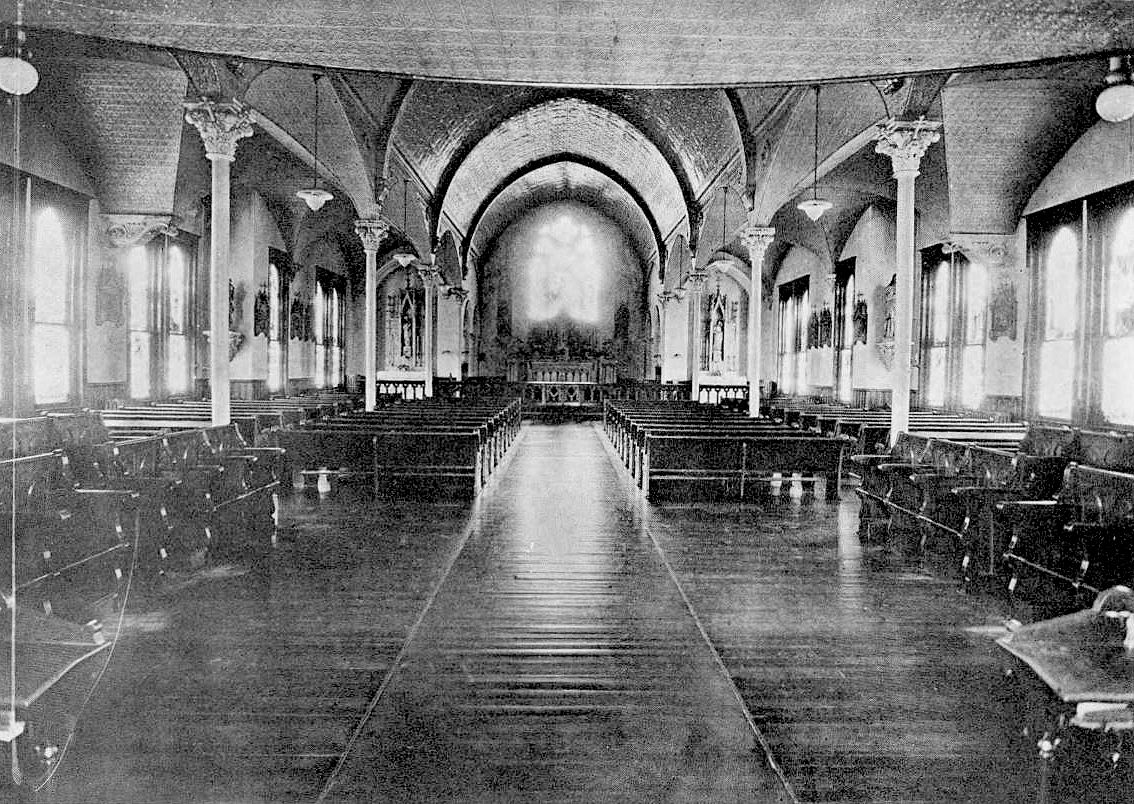
The chapel. “‘Tis just the place to go for help when things are ‘up and down.'”

ursuline_1921-yrbk_chapel

*

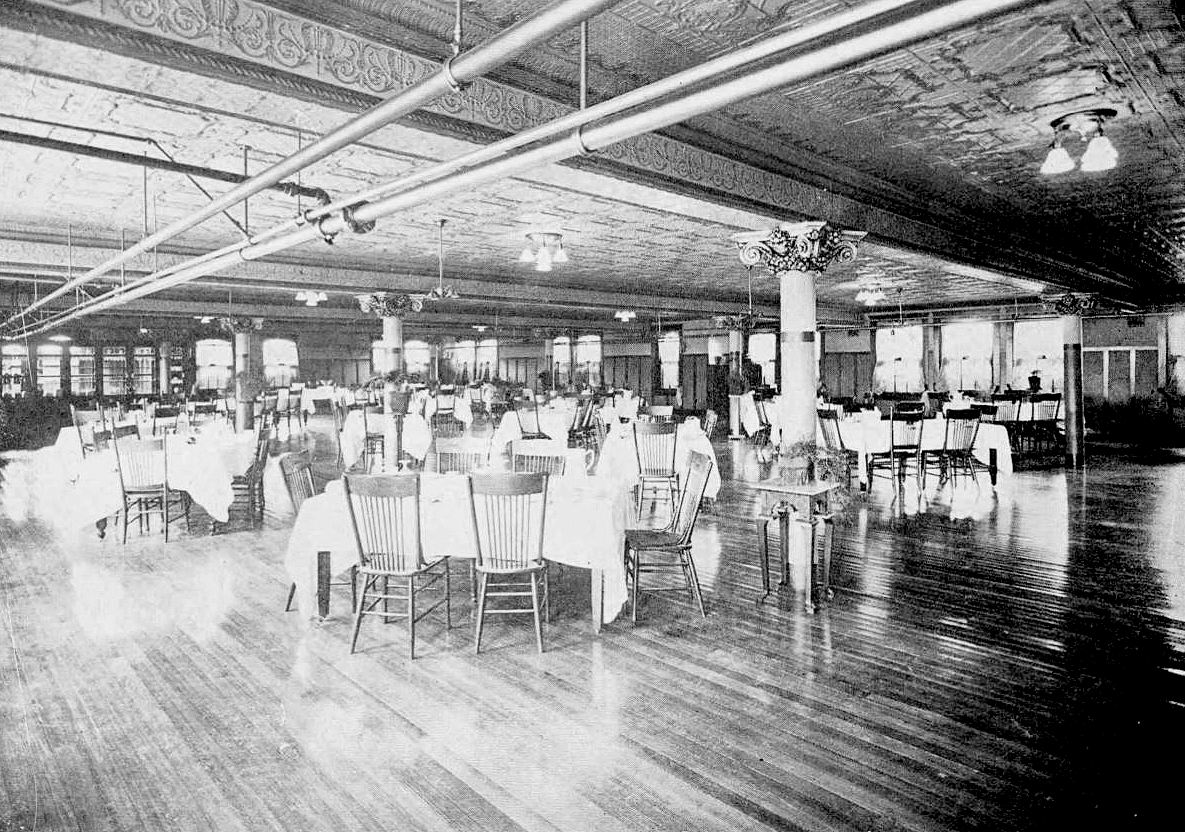
The dining hall. “You may live without learning/You may live without books/But show me the man/Who can live without cooks.”

ursuline_1921-yrbk_dining-hall

*

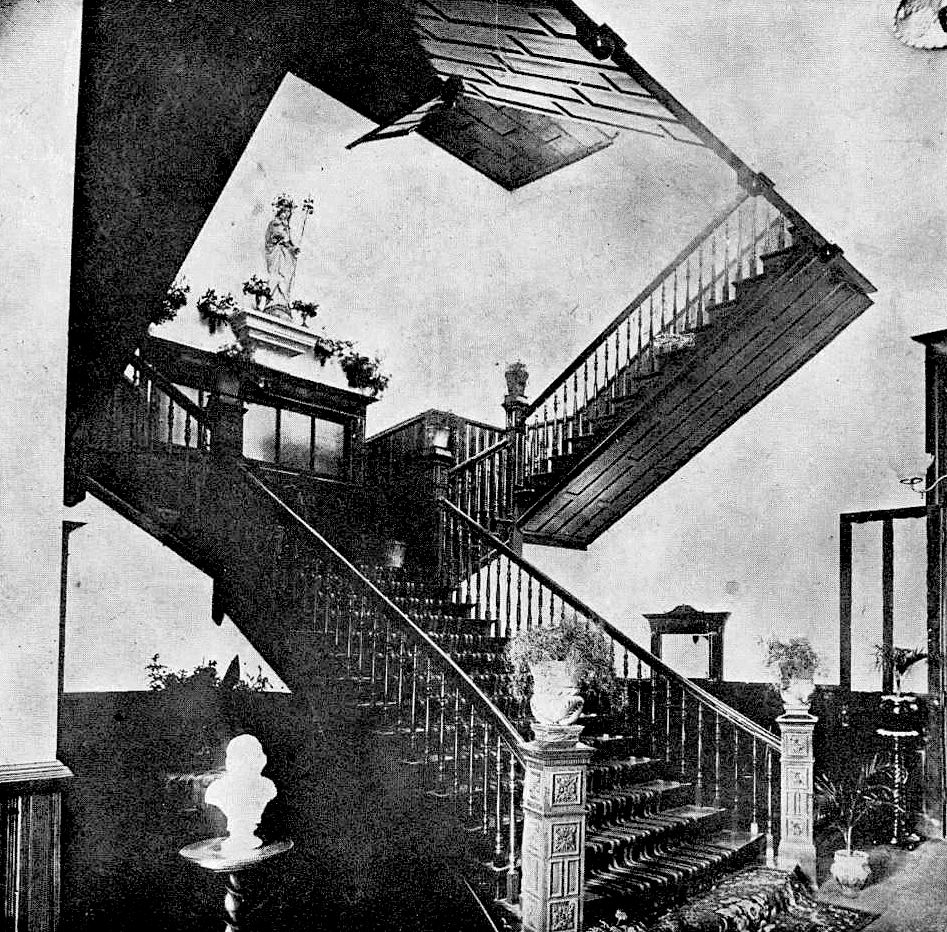
The hall and stairways. “If these old stairs had power of speech, what girlish secrets they could tell!”

ursuline_1921-yrbk_hall-and-stairways

*

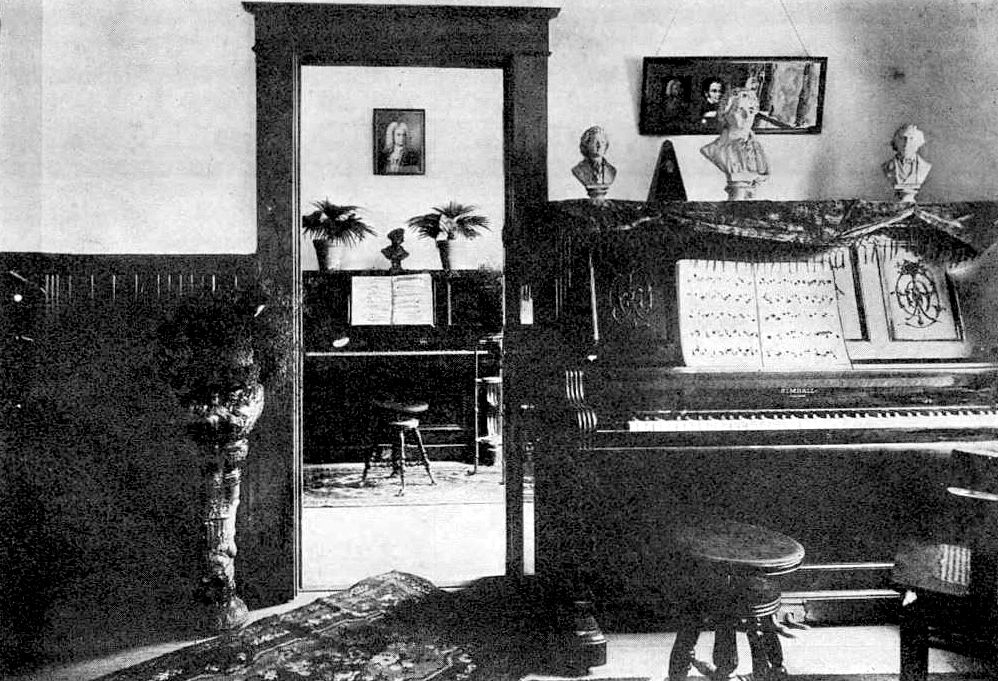
The music room. “A spot where many young ladies are kept very busy, ‘Untwisting all the chains that tie the hidden soul of harmony.'”

ursuline_1921-yrbk_music-room

*

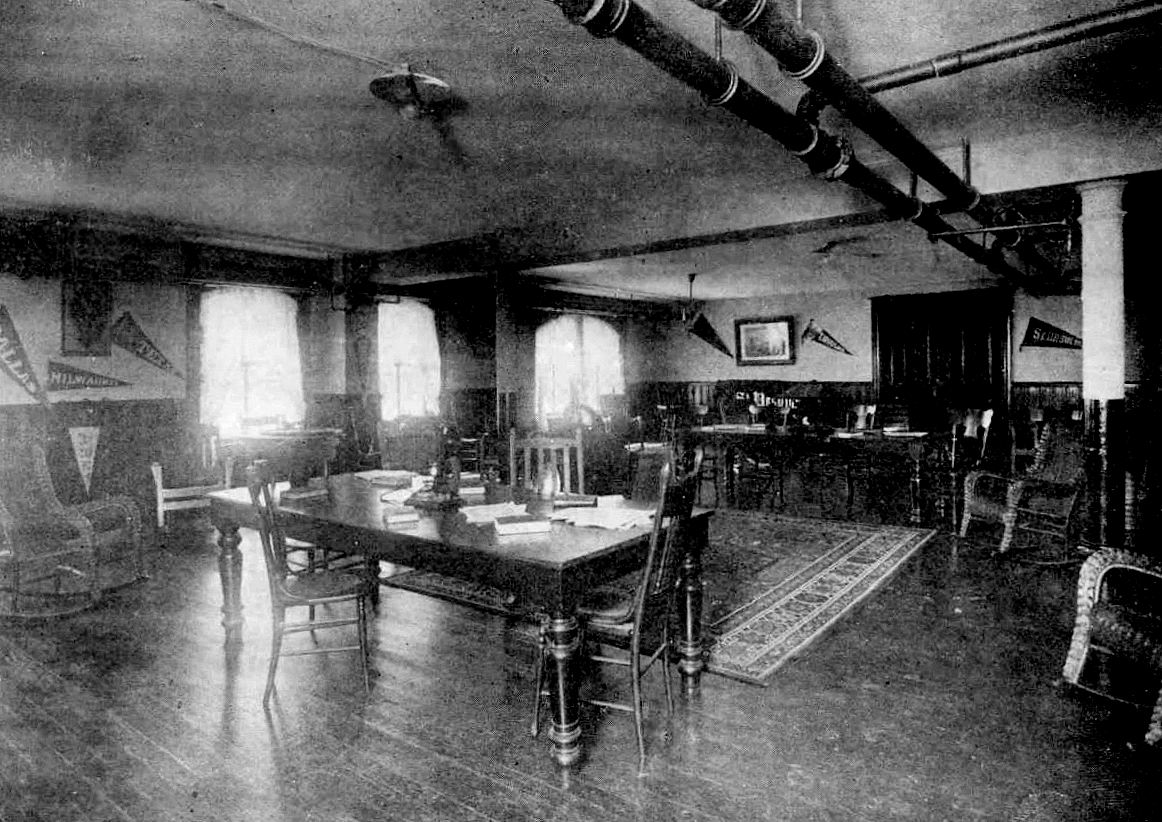
The recreation room. “Just the spot where, nine months out of the year, you can always find ‘Jest and youthful jollity/Quips and cranks and wanton wiles/Nods and becks and wreathed smiles.'”

ursuline_1921-yrbk_recreation-room

*

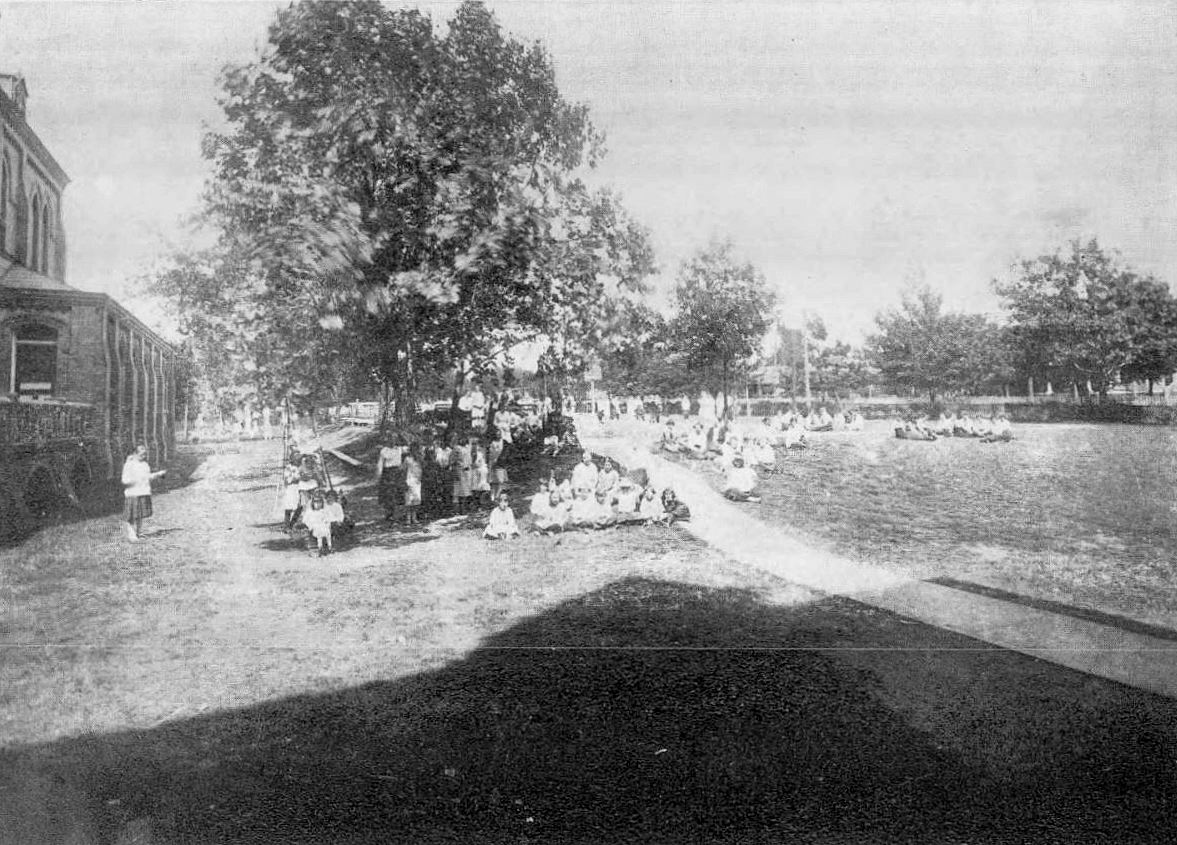
The campus. “What you and me/Were wont to ‘saw and see.'”

ursuline_1921-yrbk_campus_b

*

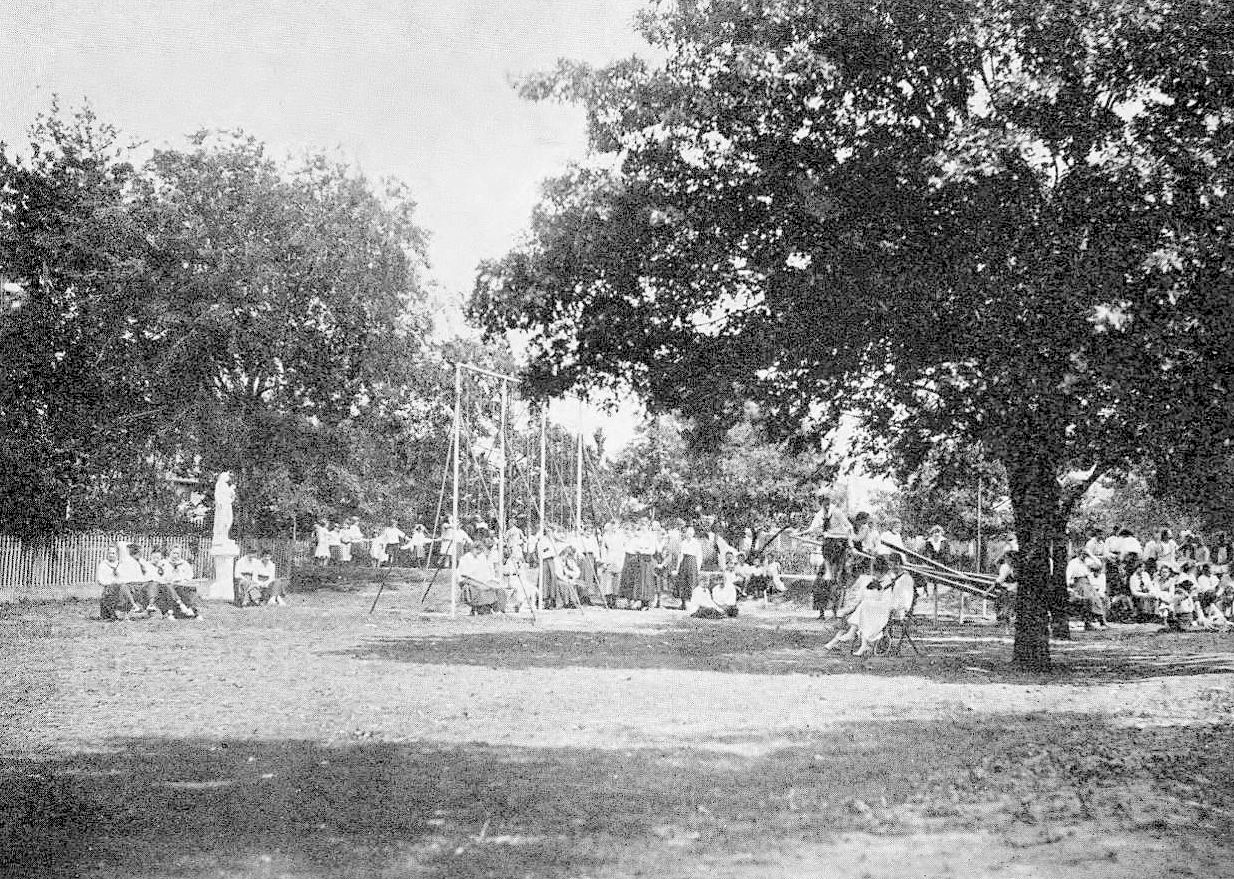
The campus. “This is a gay spot at all times. It is kept alive in summer by games of roller skating, croquet and tennis; in winter, by ‘hikes,’ basket ball, races and, on rare occasions, old fashioned snowballing.”

ursuline_1921-yrbk_campus

*

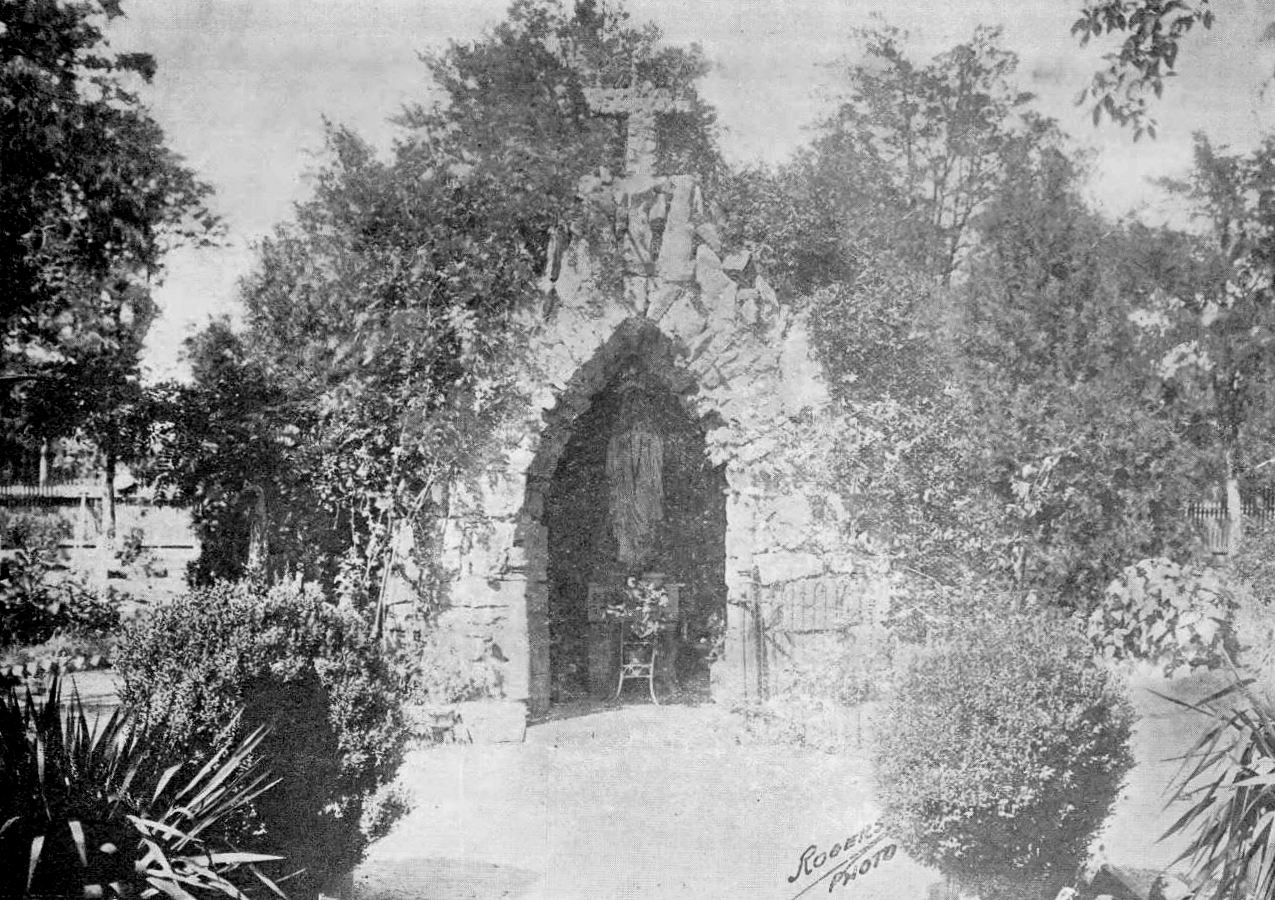
The grotto. “Somehow, all life seems much more sweet/When I take my old brown beads and kneel at Mary’s feet.”

ursuline_1921-yrbk_grotto

*

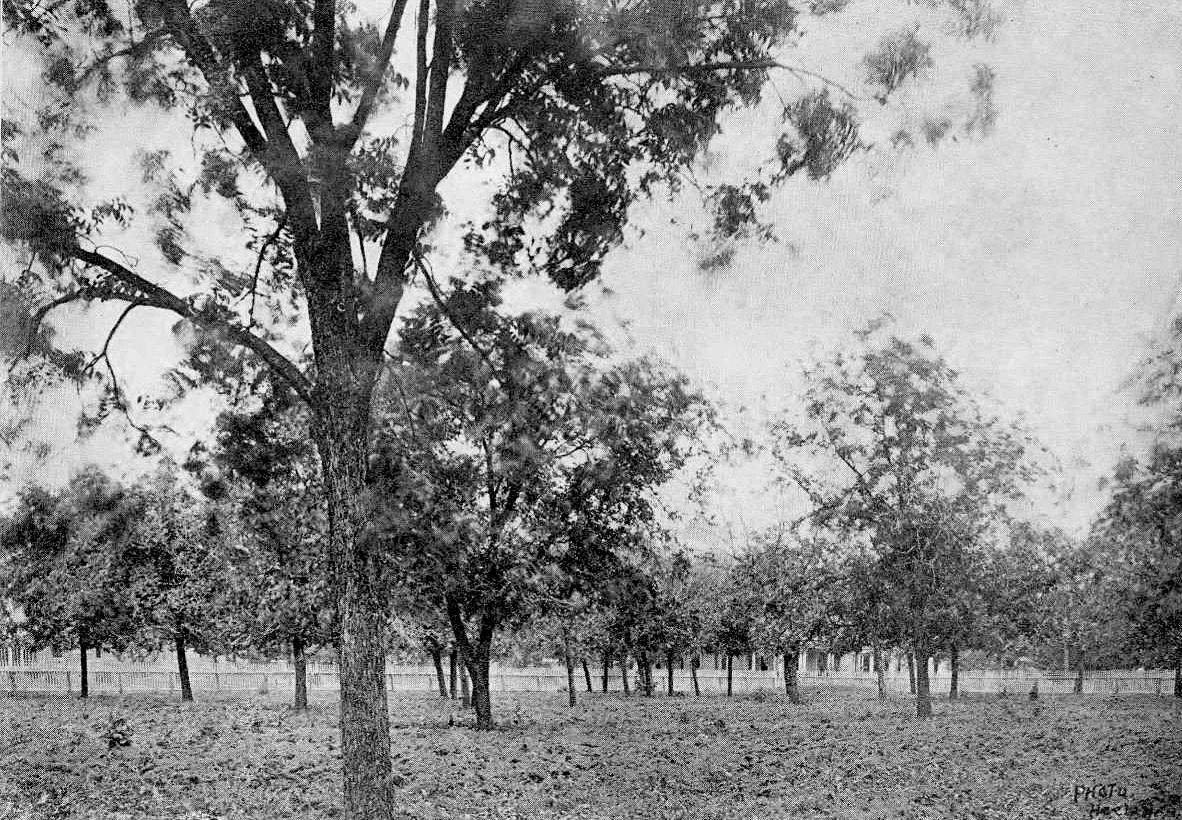
The pecan grove. “Where nuts grow, and school girls go to while away the time.”

ursuline_1921-yrbk_pecan-grove

*

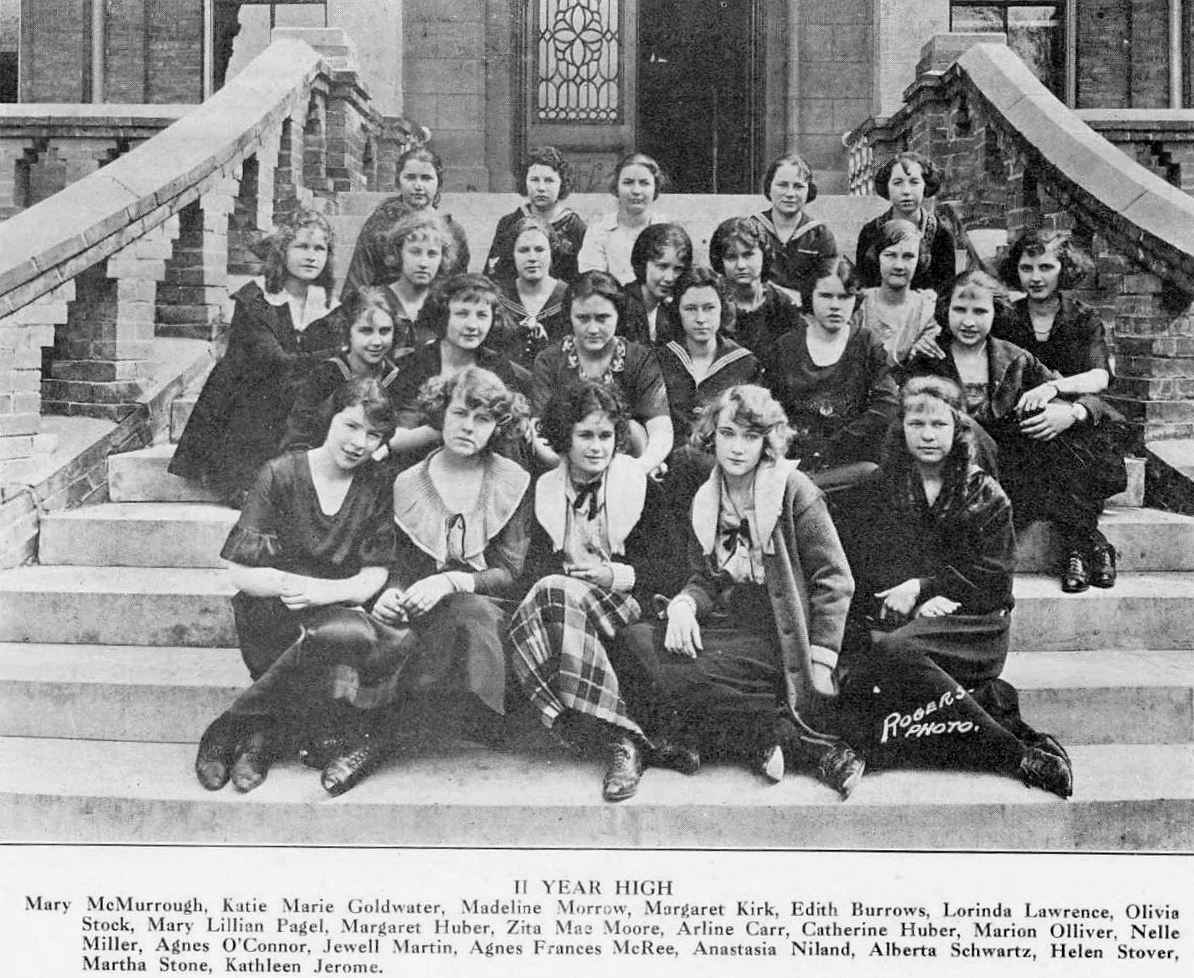
“II Year High” (sophomore class).

ursuline_1921-yrbk_2-year-high

*

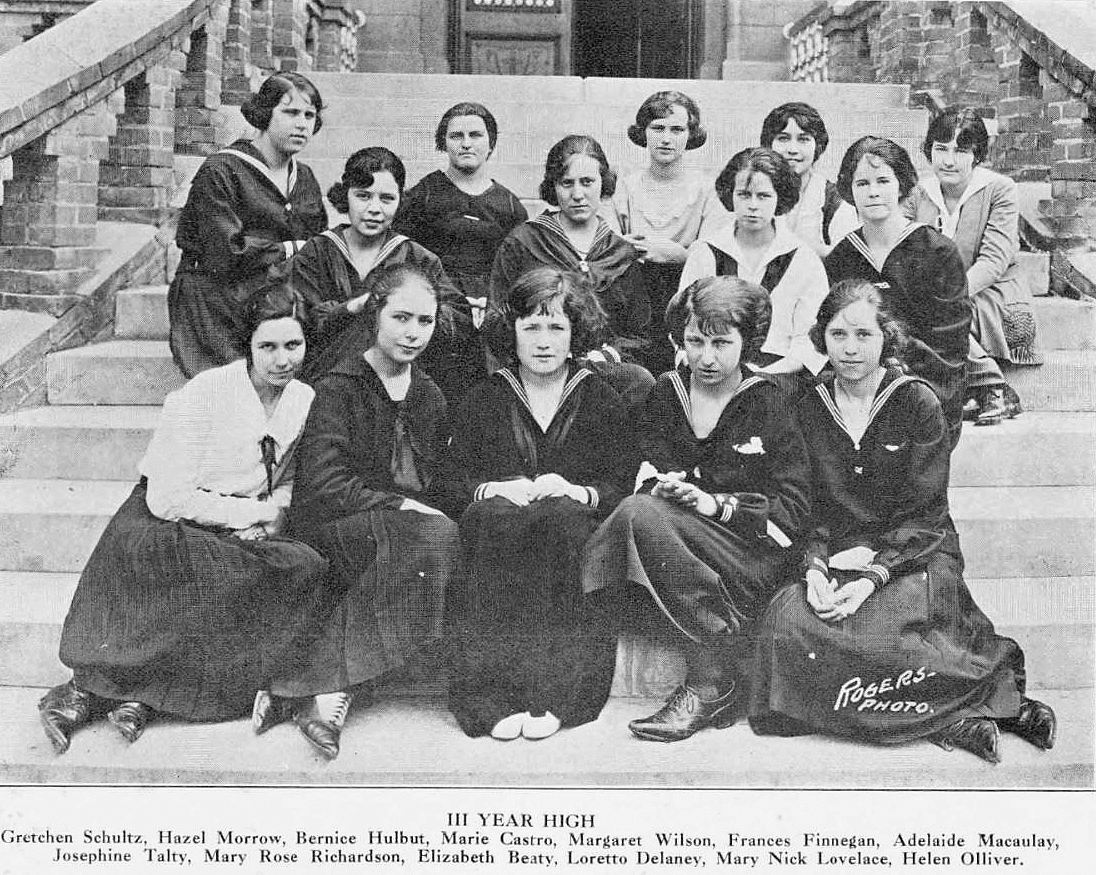
“III Year High” (junior class).

ursuline_1921-yrbk_3-year-high

*

The provincialate and novitiate. “Sweet secluded retreat where young Ursuline teachers are trained in the spirit of the Order to continue the work begun by St. Angela de Merici over three hundred years ago.” (Another, slightly more gothic image is here.)

ursuline_1921-yrbk_ext

*

And because I love her attitude, another look at 15-year-old Velma Rich.

rich-velma_ursuline_1921-yrbk

***

Sources & Notes

All photos from the 1921 edition of The Ursulina, the yearbook of the Ursuline Academy. Many (if not all) of the photos are by Dallas photographer Frank Rogers.

Other Flashback Dallas posts on Ursuline can be found below:

ursuline_1921-yrbk_1-year-high_sm

*

Copyright © 2021 Paula Bosse. All Rights Reserved.

Independence Day at Shady View Park — 1880s

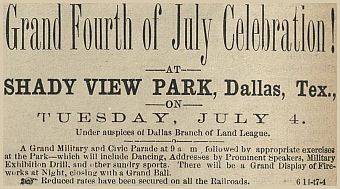
4th-of-july_shady-view-park_FW-daily-democrat_061482Grand Fourth of July Celebration! (1882)

by Paula Bosse

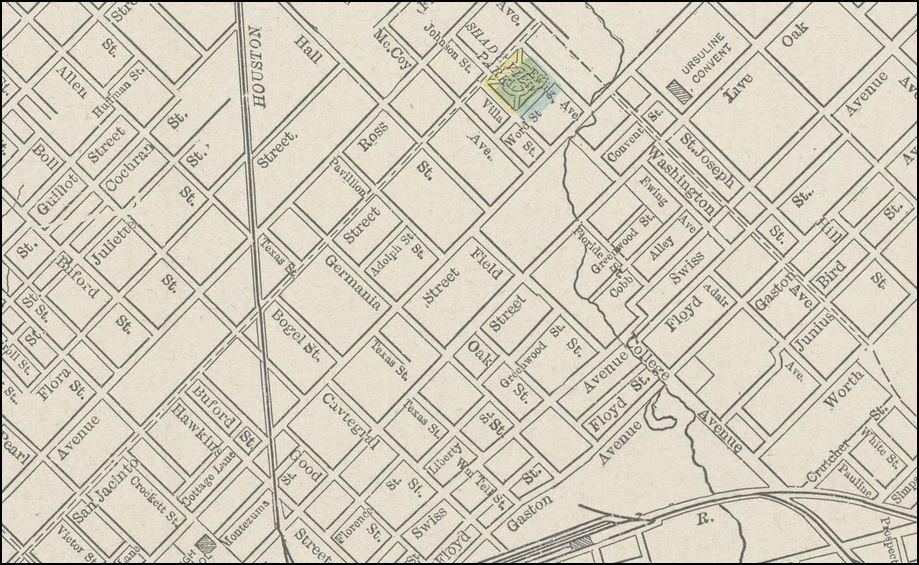
A popular gathering place in Dallas for picnics and celebrations in the last couple of decades of the nineteenth century was Shady View Park, a sort of “private park” in which beer could be sold. It was out in the hinterlands — at the end of the San Jacinto streetcar line, at San Jacinto St. and N. Washington Ave. in Old East Dallas.

4th of July celebrations were often held there. Below is a breathless and comma-laden recounting of the 1884 event which throbbed with patriotism ‘neath the umbrageous branches.

At the Park.

Every car that rolled out to the park was crowded with people and hacks, and vehicles of every description drove a lively business in carrying out passengers. A band discoursed patriotic music and added life and pleasure to the assemblage of two thousand people that thronged the beautiful grounds and lounged ‘neath the umbrageous branches of the trees where only a few years since the so-called noble child of the forest roamed, so to speak. It was a great gathering and a great day in the history of our country and if there was a bosom on the grounds that did not throb with patriotism it was not manifest, for had there been and had it been known such a recreant would have been jack-ketched upon the spot.  

At 3 p.m. Dr. Schuhl, in a clear, distinct voice, read that remarkable document, the Declaration of Independence, and when he concluded the crowd made the welkin ring with the shouts of liberty. Several Russian exiles who were on the grounds and to whom friends had interpreted the meaning of the meeting, rushed up to an American flag near by, and raising their hands heavenwards as though they would bless the colors, kissed them reverentially. The English, our kinsmen, were there, and were by no means lacking in patriotism. They blessed this country, shook hands all around, but never forgot the Queen, and never once did the true American. England of 1776 is not England of 1884. “By golly!” said old Swamp Fox, an eccentric character, “if old Gen. George Washington and them boys what signed artikle of agreement could be here and see this I would be willing to die this minute and go to the bad.” When the enthusiasm was at fever heat Dr. Arch Cochran was called for and responded in a stirring speech. He was followed by Mr. J. M. Hurt, jr., the orator of the day, a son of Judge Hurt of the Court of Appeals, who delivered an address, which was well received, as evidenced by the rounds of applause that followed it. 
 
The Dance. 
 
The grand pavilion was then cleared and the merry dancers glided over the waxed floor, keeping time with nimble feet to the sweet strains of music. It was resumed after supper and continued until far into the night. The park was illuminated with lanterns and presented a beautiful scene. Everything passed off pleasantly, and all left, carrying with them sweet memories of the festivities of the glorious Fourth of 1884 at Shady View park. 
 
The day was celebrated at Mayer’s garden and Meisterhans’ pavilion, and by private parties who went on excursions to the country to picnic. In the city there were pyrotechnic displays. (Dallas Daily Herald, July 5, 1884)

4th-of-july_dallas-herald_070584
Dallas Herald, July 5, 1884 (click for larger image)

Shady View Park/San Jacinto Park was around from at least 1881, possibly from the 1870s. Its main reason for existing seems to have been to attract people to the area to build homes (on land owned by Col. William J. Keller, who also, I believe, owned the streetcar). Here’s another breathless description of the park, possibly written by the same person who wrote the above article (or at least another person smitten with the word “umbrageous”).

shady-view_dal-herald_053181
Dallas Herald, May 31, 1881

The location of the park can be seen at the top of the circa-1898 map below.

shady-view-park_ca1898-map

*

Below, a photo taken at Shady View Park on May 12, 1896. A caption identifies the people as “La Reunion Colony settlers”: Mrs. Louie Maas, Annie Gramatky, Paul Hartman, and Elizabeth (Lizzie) Gramatky.

shady-view-park_dpl

***

Sources & Notes

Articles from the Dallas Daily Herald were found at the Portal to Texas History.

The ad at the top is from The Fort Worth Daily Democrat, June 14, 1882, which was also found at the Portal to Texas History.

Bottom photo from the collection of the Dallas Public Library.

4th-of-july_shady-view-park_FW-daily-democrat_061482_sm

*

Copyright © 2020 Paula Bosse. All Rights Reserved.

Private Education in Dallas — 1916

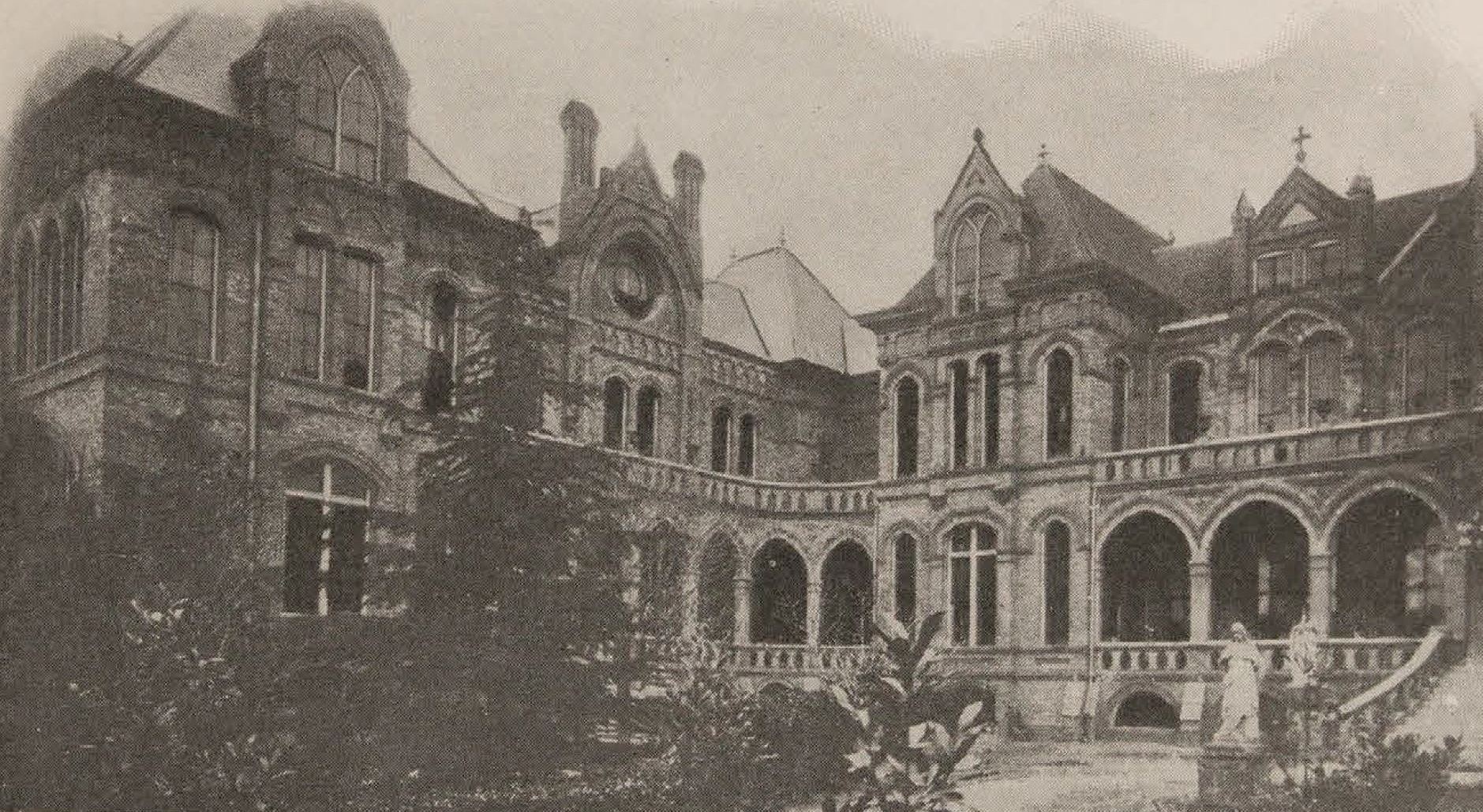
dallas-educational-center_ursuline_ca-1916_degolyer-library_smu_photoThe looming Ursuline Academy in Old East Dallas

by Paula Bosse

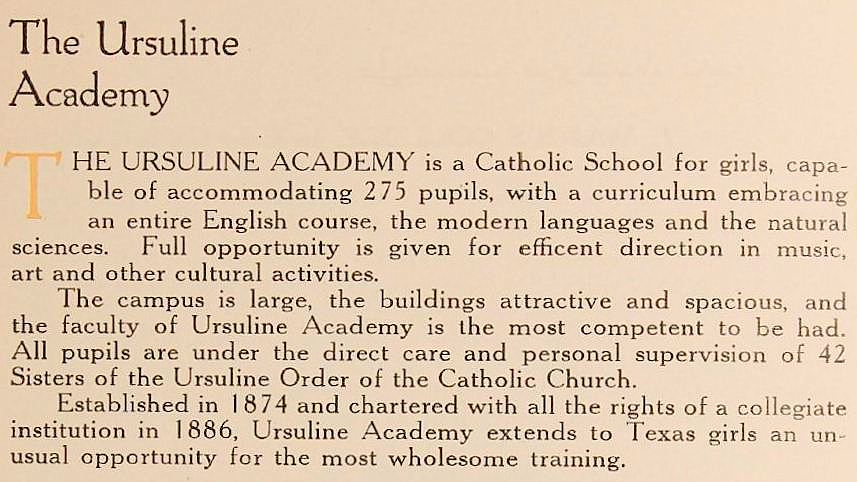
Here is a collection of photos and mini-histories of several of the top private schools that Dallas parents were ponying up their hard-earned cash for in 1916. Some were boarding schools, some were affiliated with churches, some were rooted in military discipline, some were medical schools, and some were places to go to receive instruction on the finer things in life, such as music and art. Sadly, only one of these buildings still stands. But two of the schools in this collection have been operating continuously for over 100 years (Ursuline and Hockaday), and two more are still around, having had a few name changes over the years (St. Mark’s and Jesuit). Here’s where the more well-to-do girls and boys of Dallas (…and Texas — and many other states) were sent to become young ladies and gentlemen. 

**

THE URSULINE ACADEMY (above) — Mother Mary Teresa, superioress — the block bounded by Live Oak, Haskell, Bryan, and St. Joseph. This school for girls and young women was established in Dallas by the Ursuline Sisters in about 1874 — and it continues today as one of the city’s finest institutions. The incredible gothic building was… incredible. So of course it was demolished (in 1949, when the school moved its campus to its present-day North Dallas location). See what it looked like at its Gothic, grandiose height in a previous Flashback Dallas post here.

dallas-educational-center_ursuline_ca-1916_degolyer-library_smu

*

MISS HOCKADAY’S SCHOOL FOR GIRLS — Miss Ela Hockaday, principal — 1206 N. Haskell. Hockaday was (and is) the premier girl’s school of Dallas society — like Ursuline, it is still going strong (and, like Ursuline, it moved away from East Dallas and is now located in North Dallas). In 1919, three years after these photos were taken, Miss Hockaday would buy the former home of Walter Caruth, Bosque Bonita, set in a full block at Belmont and Greenville in the Vickery Place neighborhood — there she built a large campus and cemented her place as one of the legendary educators in Dallas history. (In 1920, Hockaday’s annual tuition for boarding students eclipsed even the hefty tuition of The Terrill School for Boys: Miss Hockaday had parents lined up to pay her $1,000 a year — now the equivalent of about $13,000 — to educate and refine their daughters at her prestigious institution.)

dallas-educational-center_hockaday_ca-1916_degolyer-library_smu

dallas-educational-center_hockaday_tennis_ca-1916_degolyer-library_smu

dallas-educational-center_hockaday_ca-1916_degolyer-library_smu_text

*

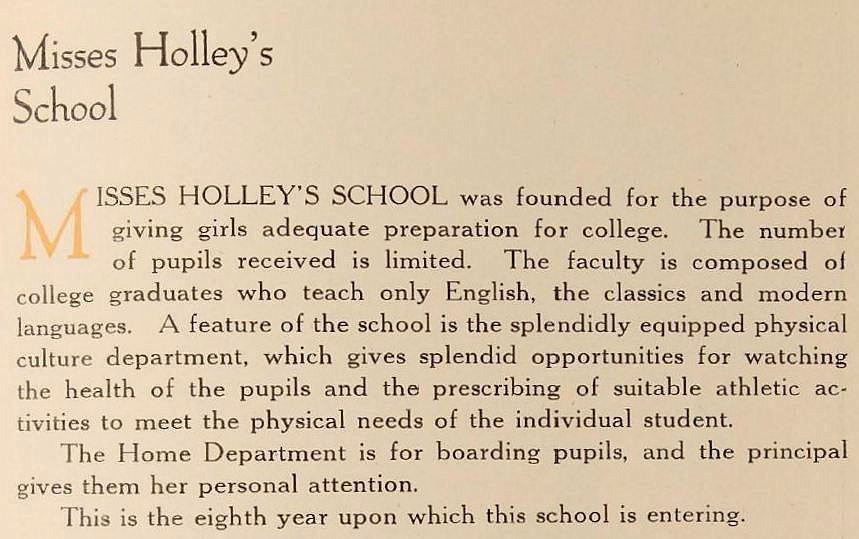
MISSES HOLLEY’S SCHOOL FOR GIRLS — Miss Frances Holley and Miss Josephine Holley, principals — 4528 Ross Avenue (at Annex). Another somewhat exclusive school that catered to young society ladies was the Holley school, established in 1908 by the two Holley sisters, who limited their student body to only 35 girls. The school (which is sometimes referred to as “Miss Holley’s School” and “Holley Hall” — and which was located behind the sisters’ residence) closed in 1926.

dallas-educational-center_holleys-school_ca-1916_degolyer-library_smu

dallas-educational-center_holleys-school_ca-1916_degolyer-library_smu_text

*

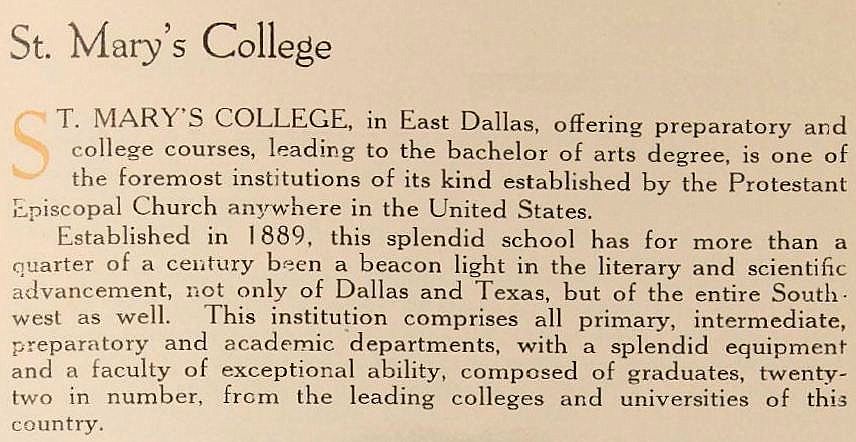
ST. MARY’S COLLEGE — Miss Ethel Middleton, principal — Garrett and Ross Avenue.  This Episcopal-Church-associated boarding and day school for girls and young ladies was one of the Southwest’s leading institutions of learning for young women. When established in 1889, it was built outside the city limits on a “hill” — back then the area around the school was often referred to as “College Hill.”

dallas-educational-center_st-marys_b_ca-1916_degolyer-library_smu

dallas-educational-center_st-marys_ca-1916_degolyer-library_smu

dallas-educational-center_st-marys_ca-1916_degolyer-library_smu_text

*

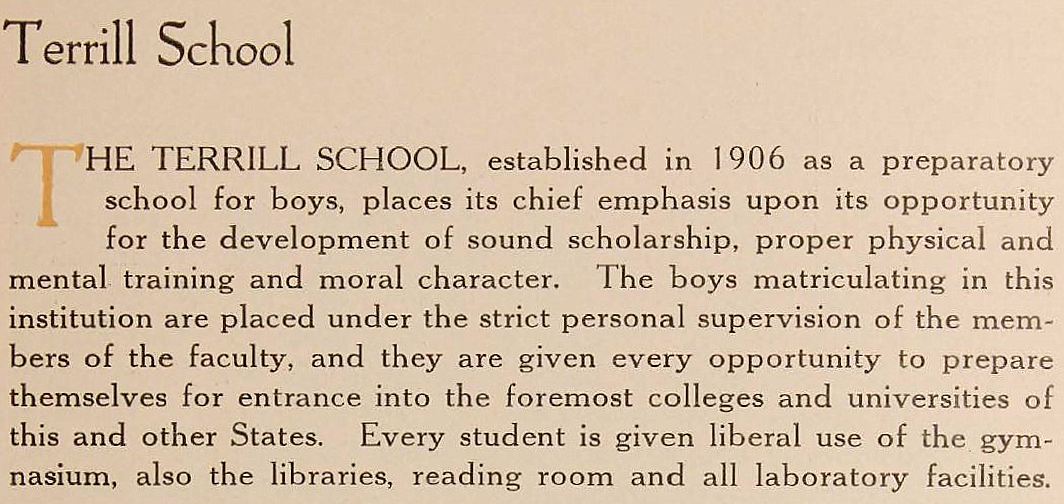
THE TERRILL SCHOOL FOR BOYS — M. B. Bogarte, head master — 4217 Swiss Avenue (at Peak). The exclusive boys school in Dallas (which, after several mergers, continues today as St. Mark’s); the cost of a year’s tuition for boarding students in 1920 was $850 — the equivalent of about $11,000 — a very pricey school back then. More on the Terrill School can be found in previous Flashback Dallas posts here and here.

dallas-educational-center_terrill-school_ca-1916_degolyer-library_smu

dallas-educational-center_terrill-school_ca-1916_degolyer-library_smu_info

*

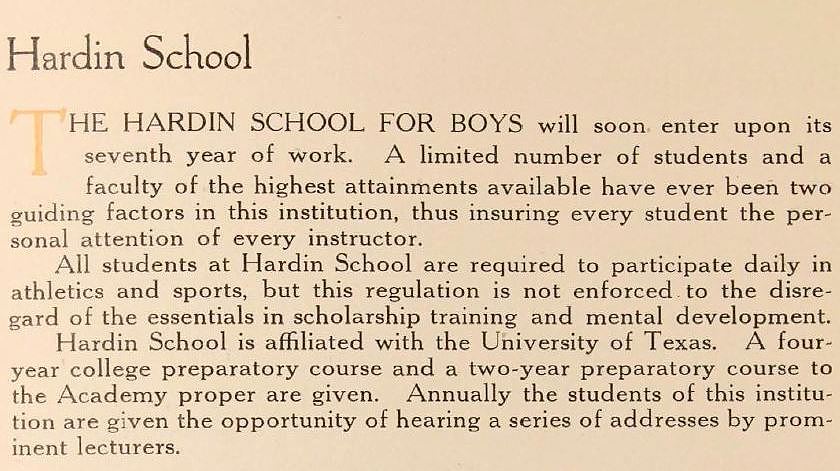
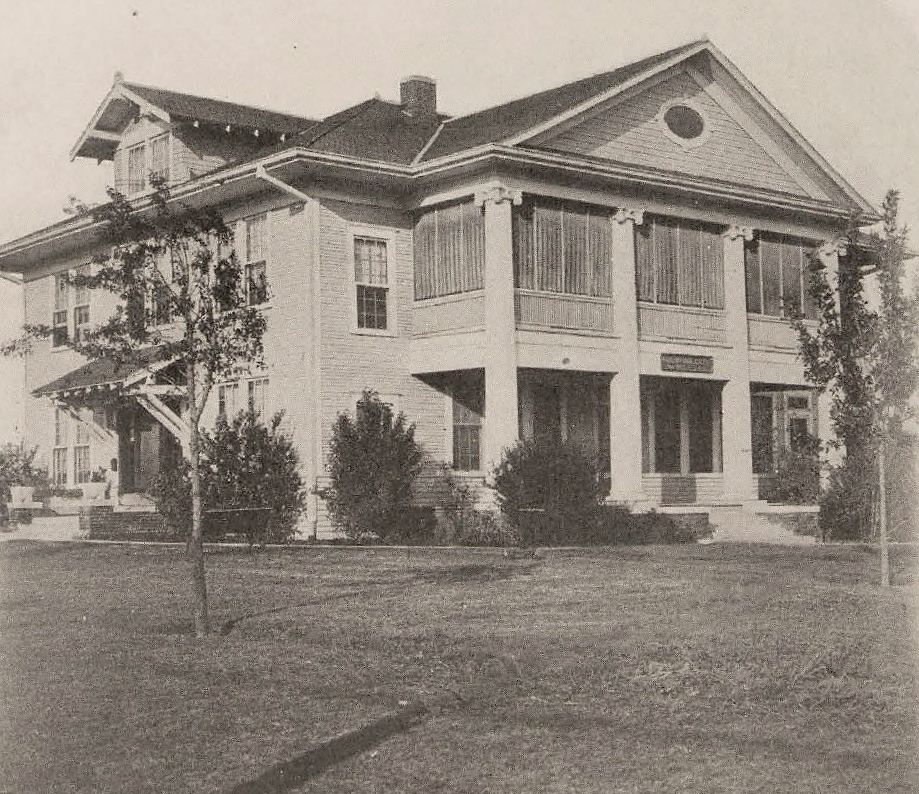
THE HARDIN SCHOOL FOR BOYS — J. A. Hardin, principal — 4021 Swiss Avenue. This prep school was affiliated with the University of Texas. It was located for a while in downtown Dallas and for a time at the location seen below in Old East Dallas, but in 1917 it either bought out and merged with the Dallas Military Academy or that school went out of business, because the Hardin School settled into the military academy’s location, which had been Walter Caruth’s old home, Bosque Bonita, at Belmont and Greenville, where boys were marching around doing drills until Miss Hockaday moved in two years later in 1919.
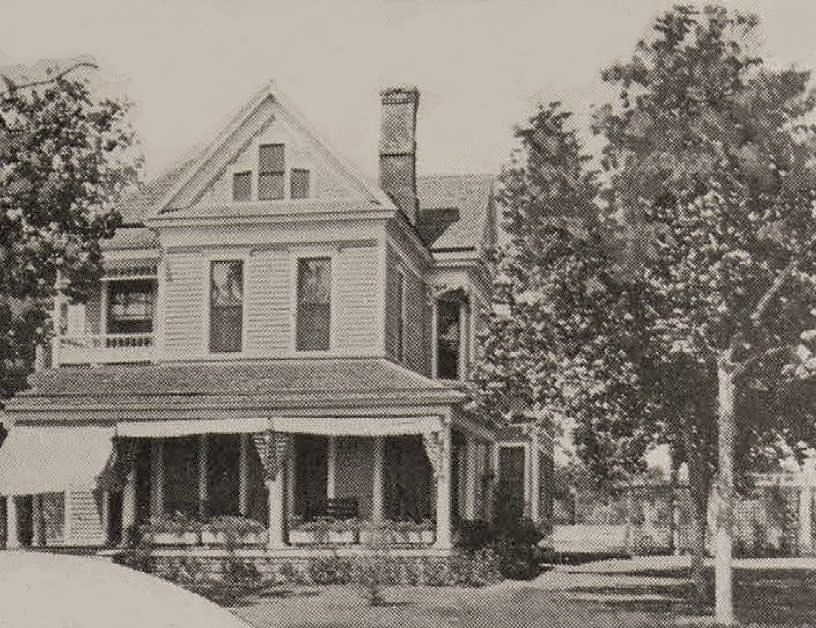
dallas-educational-center_hardin-school_ca-1916_degolyer-library_smu_photo

dallas-educational-center_hardin-school_ca-1916_degolyer-library_smu

*

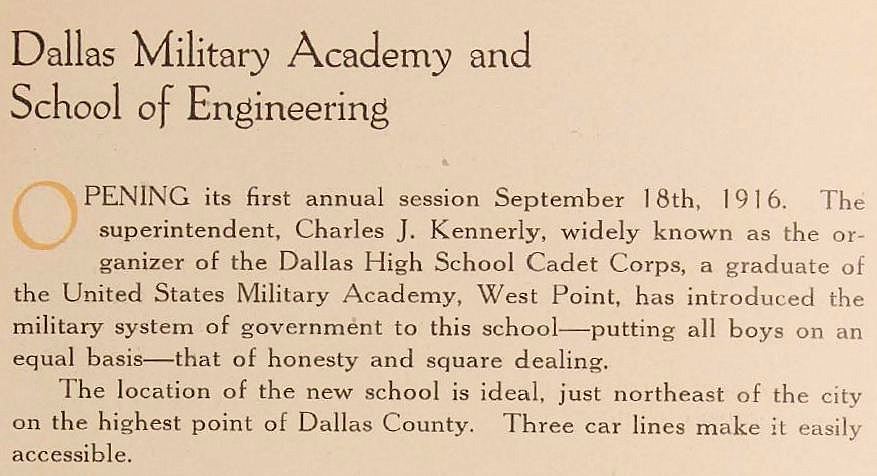
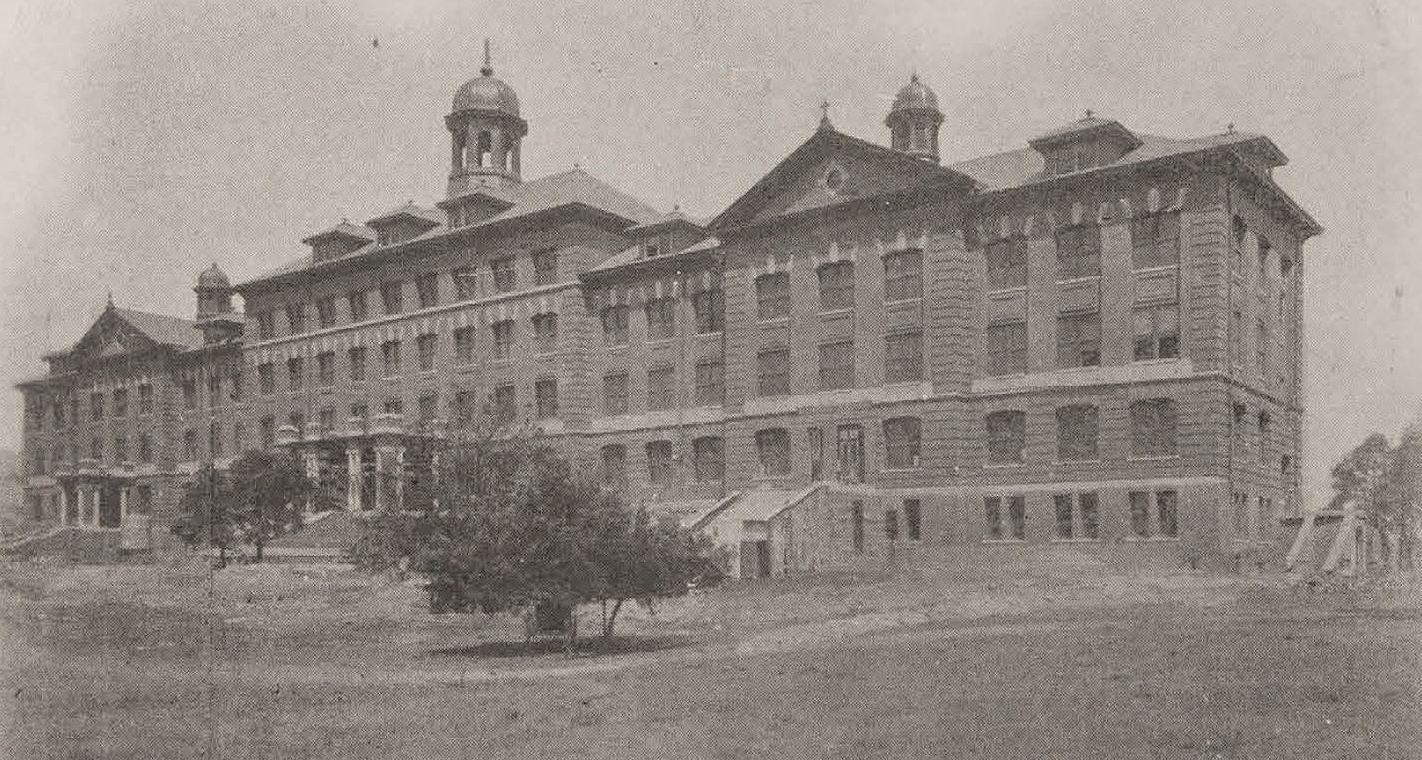
DALLAS MILITARY ACADEMY AND SCHOOL OF ENGINEERING — C. J. Kennerly, superintendent — Belmont & Greenville Ave. This “practical school for manly boys” opened up in 1916 in a large house which had been built by Walter Caruth in the area now known as Lower Greenville. The Dallas Military Academy lasted for only one year until the large house became home to the Hardin School for Boys in 1917 (and, two years later in 1919, it became the longtime home of the Hockaday School). If you didn’t click on the link for it above, now’s your chance to read more about the history of Caruth’s grand house, Bosque Bonita, here.

dallas-educational-center_pre-hockaday_dallas-military-academy_ca-1916_degolyer-library_smu

dallas-educational-center_pre-hockaday_dallas-military-academy_ca-1916_degolyer-library_smu_text

*

UNIVERSITY OF DALLAS — Very Rev. P. A. Finney, president — Oak Lawn Ave. & Gilbert. When it opened in 1906, this school was known as Holy Trinity College; its name was changed to the University of Dallas in 1910. The University of Dallas closed in 1928 because of lack of money; it was later known as Jesuit High School until Jesuit moved to North Dallas — the grand building was demolished in 1963. (See an aerial view of this huge building here.)

dallas-educational-center_univ-of-dallas_trinity_jesuit_ca-1916_degolyer-library_smu_photo

dallas-educational-center_univ-of-dallas_trinity_jesuit_ca-1916_degolyer-library_smu

*

THE MORGAN SCHOOL (formerly the Highland Park Academy) — Mrs. Joseph Morgan, principal — 4608 Abbott. A co-ed school.

dallas-educational-center_morgan-school_b_ca-1916_degolyer-library_smu

dallas-educational-center_morgan-school_ca-1916_degolyer-library_smu

dallas-educational-center_morgan-school_ca-1916_degolyer-library_smu_text

*

POWELL TRAINING SCHOOL — Nathan Powell, president — Binkley & Atkins (now Hillcrest) in University Park. I believe this is the only building in this post still standing — more can be read in the earlier post “Send Your Kids to Prep School ‘Under the Shadow of SMU’ — 1915,” here. (That is, in fact, a bit of the very, very young SMU campus seen in the distance at the bottom right.)

dallas-educational-center_powell-school_ca-1916

dallas-educational-center_powell-school_ca-1916_info

*

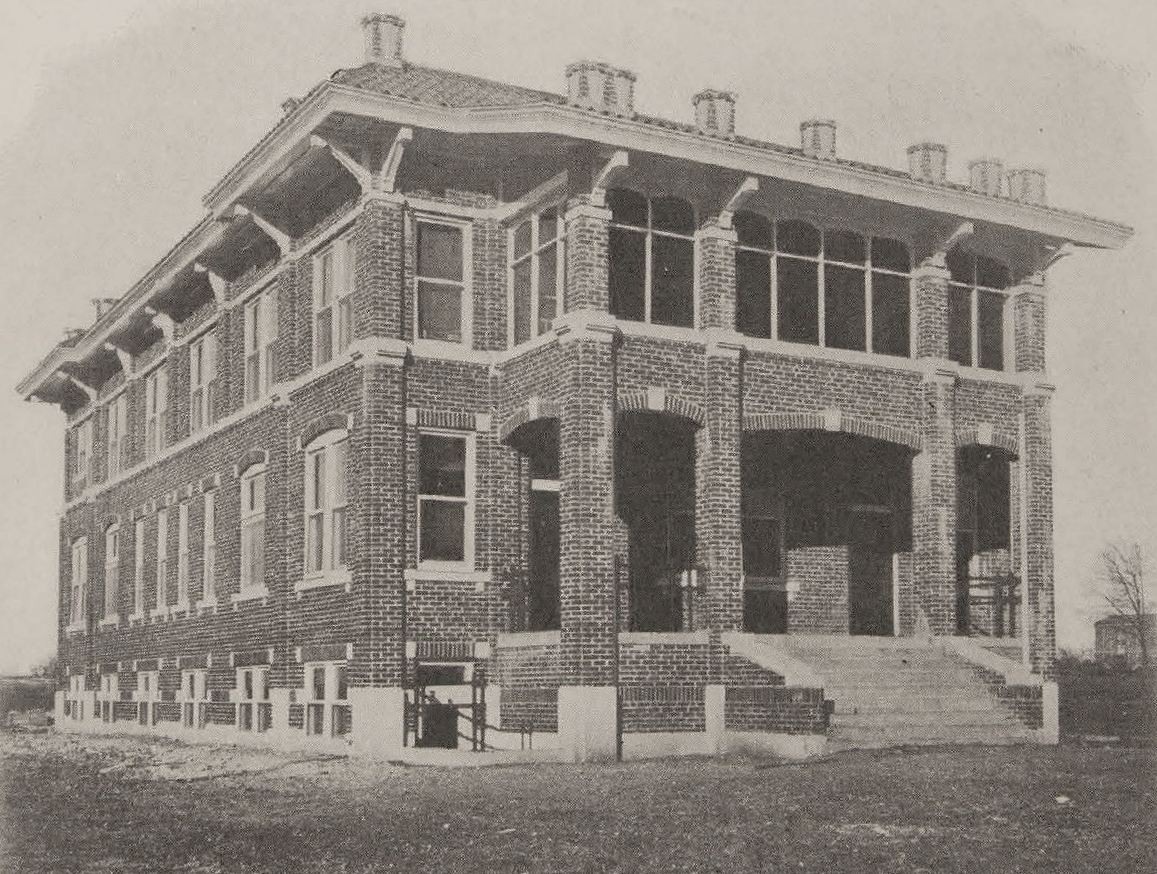
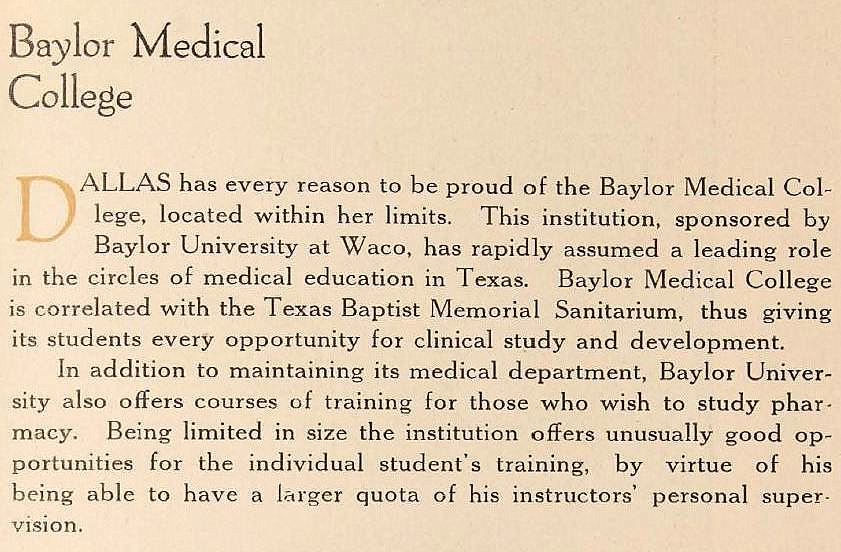
BAYLOR MEDICAL COLLEGE — E. H. Cary, dean — 720 College Ave. (now Hall Street).

dallas-educational-center_baylor-medical-college_ca-1916_degolyer-library_smu_photo

DALLAS POLYCLINIC/POST-GRADUATE MEDICAL SCHOOL — John S. Turner, president — S. Ervay & Marilla (affiliated with Baylor Medical College).

dallas-educational-center_dallas-polyclinic_ca-1916

dallas-educational-center_baylor-medical-college_ca-1916_degolyer-library_smu

*

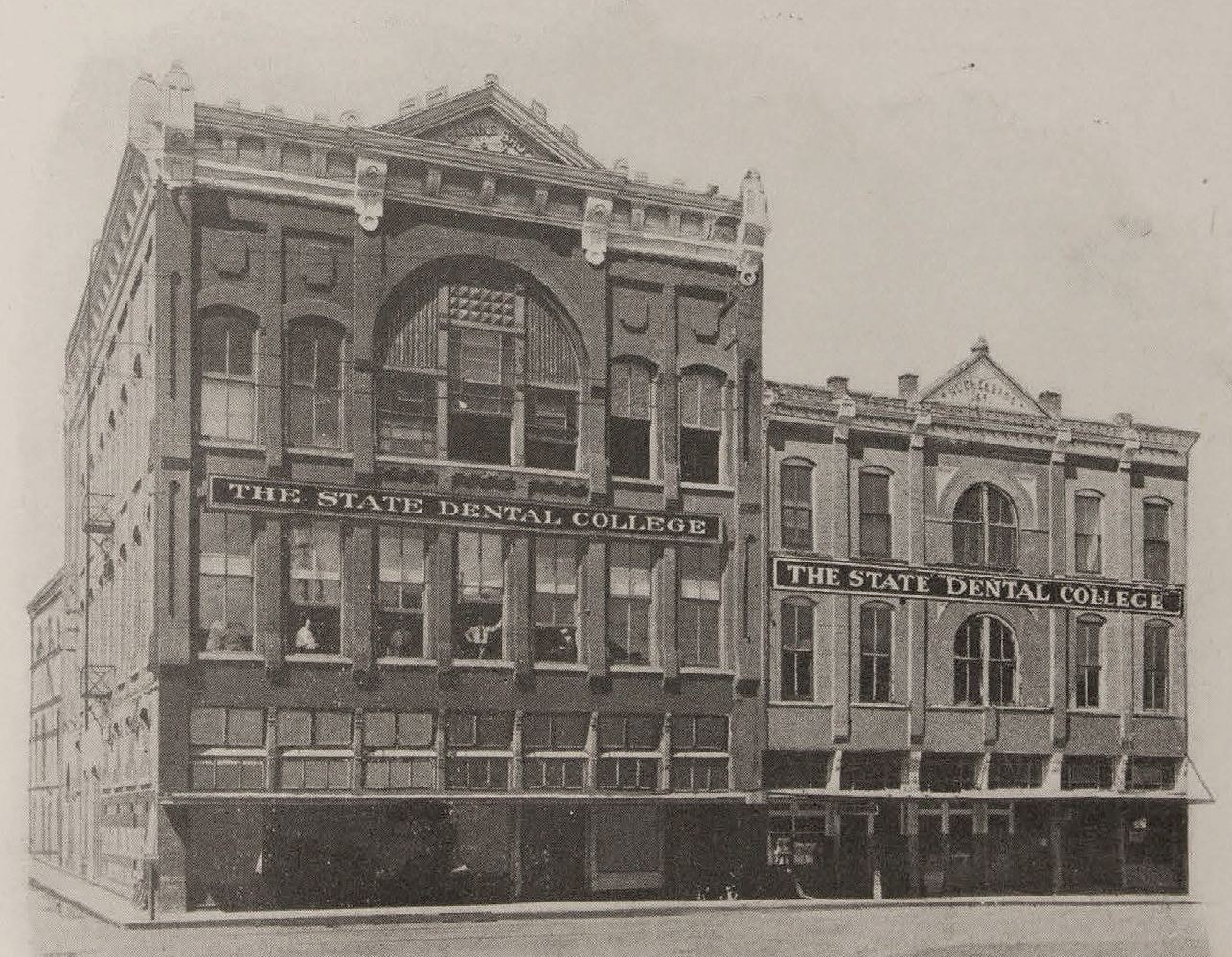
STATE DENTAL COLLEGE — 1409 ½ South Ervay, across from the Park Hotel (more recently known as the Ambassador Hotel).

dallas-educational-center_state-dental-college_ca-1916_degolyer-library_smu_photo

dallas-educational-center_state-dental-college_ca-1916_degolyer-library_smu

*

HAHN MUSIC SCHOOL — Charles D. Hahn, director — 3419 Junius. 

dallas-educational-center_hahn-music-school_ca-1916_photo

dallas-educational-center_hahn-music-school_ca-1916

*

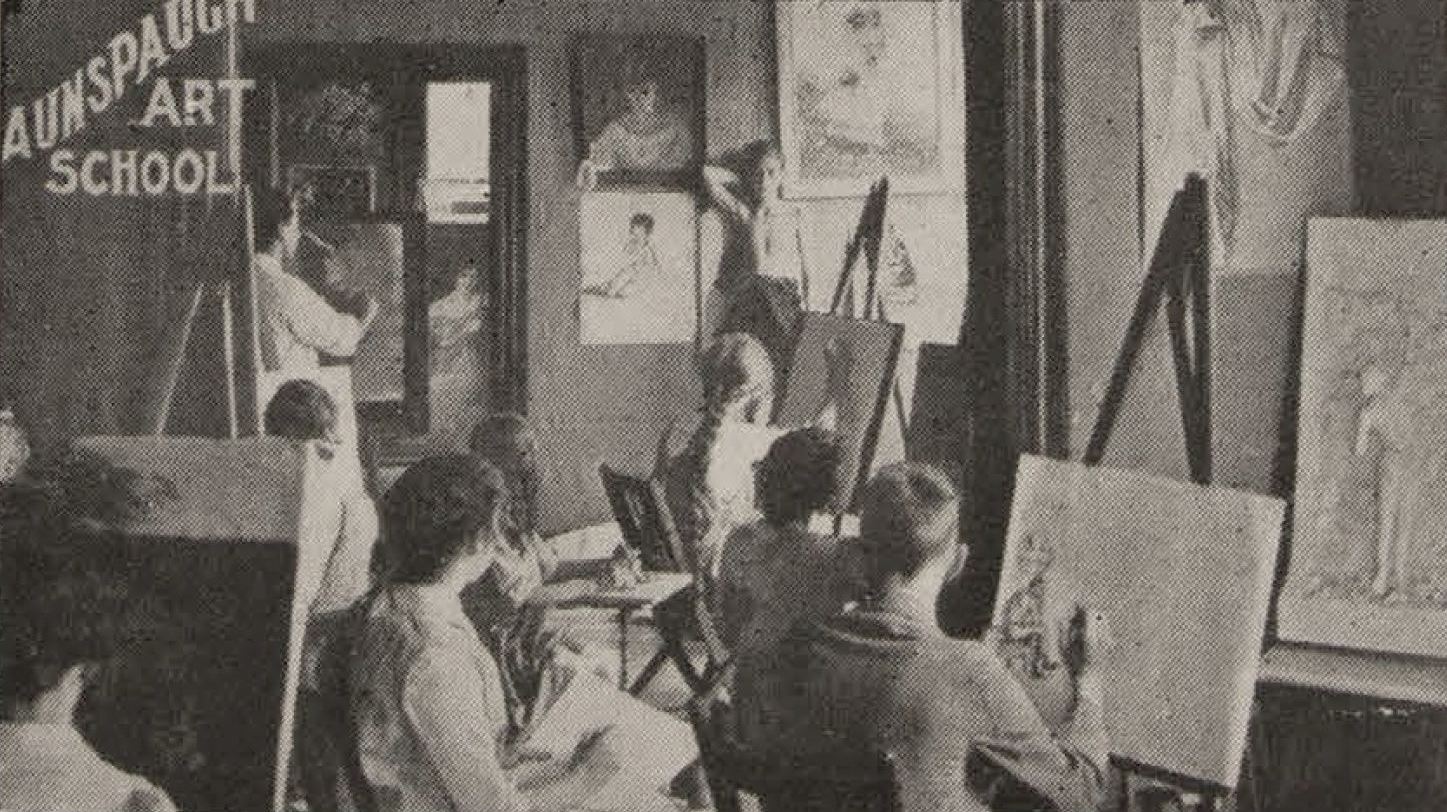
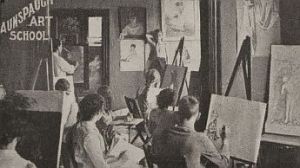
AUNSPAUGH ART SCHOOL — VIvian Aunspaugh, director — 3409 Bryan. A well-established Dallas art school for 60 years. Miss Aunspaugh died in 1960 at the age of 90 and was said to have been giving lessons until shortly before her death. (The photo below of the exterior is the only one here not from about 1916 — that photo is from 1944.)

dallas-educational-center_aunspaugh_interior_ca-1916_degolyer-library_smu

aunspaugh-art-school_james-bell_1944_DHSvia Dallas Historical Society

dallas-educational-center_aunspaugh_ca-1916_degolyer-library_smu

*

dallas-educational-center_ca-1916_degolyer-library_smu

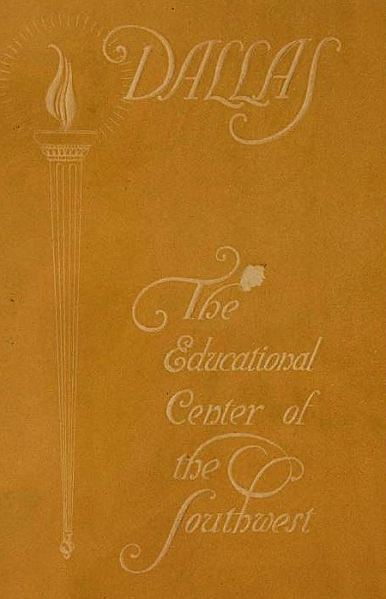
dallas-educational-center_front-cover_ca-1916_degolyer-library_smu

***

Sources & Notes

All images (but one) from the booklet “Dallas, The Educational Center of the Southwest” (published by the Educational Committee, Dallas Chamber of Commerce, and Manufacturers Association, Dallas, ca. 1916), from the collection of the DeGolyer Library, SMU Libraries, Southern Methodist University; more information on this publication — and a full digital scan of it — can be found at the SMU site, here.

The exterior photo of the Aunspaugh Art School is from the Dallas Historical Society, taken in 1944 by Dallas resident James H. Bell; more information on this photo is at the DHS site, here.

dallas-educational-center_aunspaugh_interior_ca-1916_degolyer-library_smu_sm

*

Copyright © 2019 Paula Bosse. All Rights Reserved.