Flashback : Dallas

A Miscellany: History, Ads, Pop Culture

Category: Old East Dallas

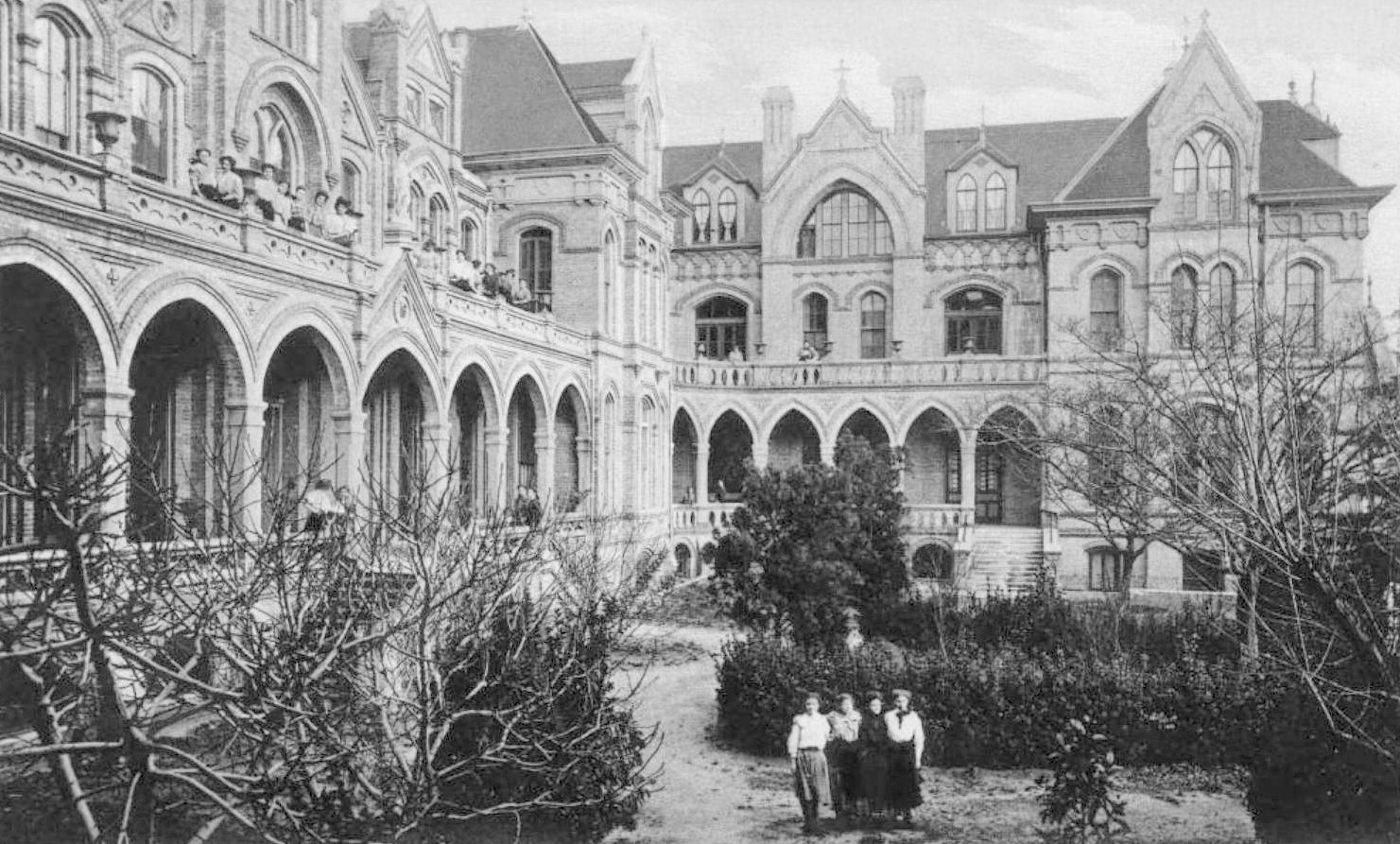
On the Grounds of the Ursuline Academy and Convent

ursuline-convent_cook-colln_degolyer_smuBetween classes… (click for much larger image)

by Paula Bosse

I love this photo of Ursuline girls at the fantastically ornate school and convent in Old East Dallas. See more photos of the school, convent, and grounds in my post “Nicholas J. Clayton’s Neo-Gothic Ursuline Academy,” here.

***

Sources & Notes

Photo by Clogenson, from a postcard in the George W. Cook Dallas/Texas Image Collection, DeGolyer Library, Central University Libraries, Southern Methodist University; it is accessible here. I have un-colorized it.

See the scale of the Ursuline property on a 1922 Sanborn map, here. It is now mostly a parking lot, across from the Dallas Theological Seminary; a sad 21st-century view of what the former campus property looks like is here.

*

Copyright © 2016 Paula Bosse. All Rights Reserved.


The Terrill School — 1914

terrill-school_tx-almanac_1914-detThe Terrill School, 4217 Swiss Avenue

by Paula Bosse

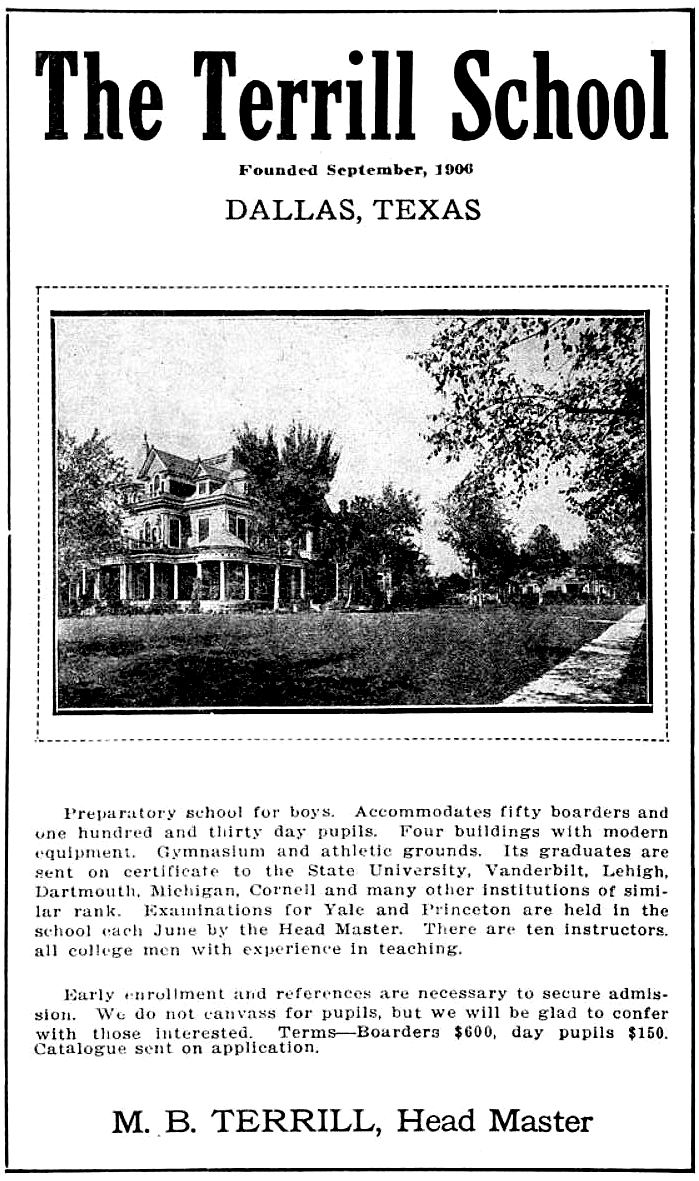
The Terrill School was for many years THE top prep school for boys in Dallas. Founded in 1906, it was located at the corner of Swiss and Peak in Old East Dallas until a move to Ross Avenue in the early ’30s. After a series of mergers over a span of years, it eventually became St. Mark’s School of Texas. Below, an ad that appeared in the 1914 edition of The Texas Almanac. (Click for larger image.)

terrill-school_tx-almanac_1914

I’m never sure how accurate The Inflation Calculator is, but when those numbers are run through it, in today’s money, parents would be forking over $14,000 a year if their sons lived on the campus, or $3,500 a year if they were students who lived at home.

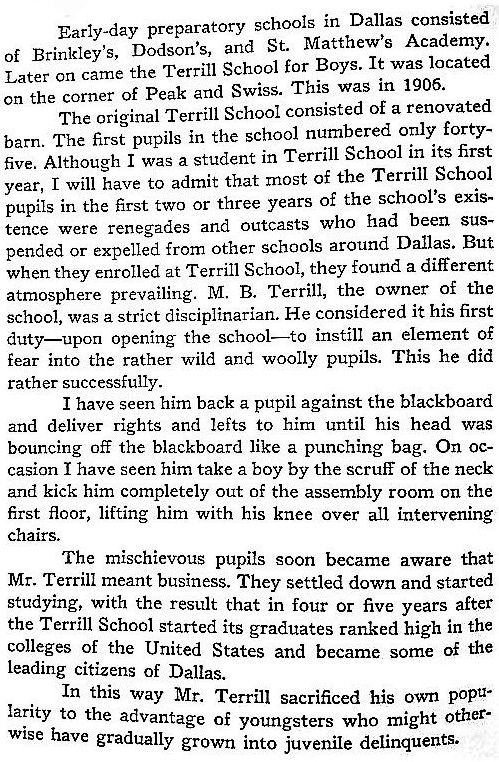
Hundreds, if not thousands, of successful businessmen and civic leaders spent time at the Terrill School. According to an eyebrow-raising account of life at Terrill — written by Dallas Morning News publisher Ted Dealey — those early days sounded more like a reform school than a prestigious prep school. One can only hope the practices he describes below did not last very long.

terrill_dealey_p28from “Diaper Days of Dallas” by Ted Dealey (1966)

Seems to have turned Ted Dealey around!

***

Sources & Notes

Ad from the 1914 edition of The Texas Almanac.

The passage by Ted Dealey is from his (highly recommended!) book, Diaper Days of Dallas (Nashville: Abingdon Press, 1966), p. 28.

More photos and background on The Terrill School can be found in the post “George Cacas, The Terrill School’s Ice Cream Man — 1916,” here.

*

Copyright © 2015 Paula Bosse. All Rights Reserved.

St. Paul’s Sanitarium — 1910

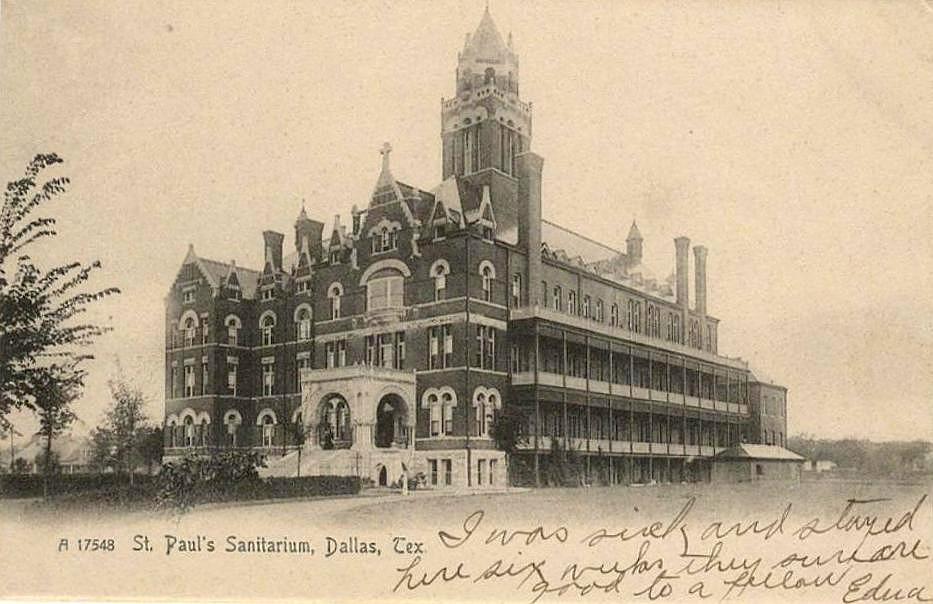
st-pauls_postcard_de-paul-univSt. Paul’s Sanitarium, located at Bryan & Hall (click for larger image)

by Paula Bosse

My posting has been infrequent as of late, due, in part, to obligations concerning a family member’s hospital stay. So, since I have a short time before I have to rush off to run errands and make visits, why not focus on a historic Dallas hospital?

St. Paul’s Sanitarium was opened in a small cottage on Hall Street in 1896 by the Daughters of Charity of St. Vincent de Paul, but it soon moved to the new large H. A. Overbeck-designed building on Bryan Street in 1898. In 1927 the name changed to St. Paul’s Hospital, and in 1958, the name changed again, this time to St. Paul Hospital. The imposing building and annex (and whatever other structures were contained in the complex) were demolished in 1968.

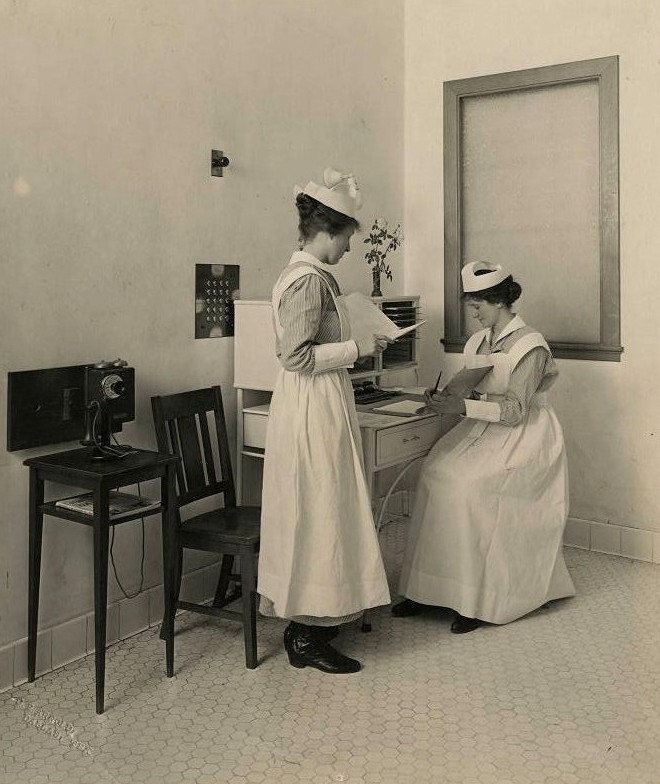
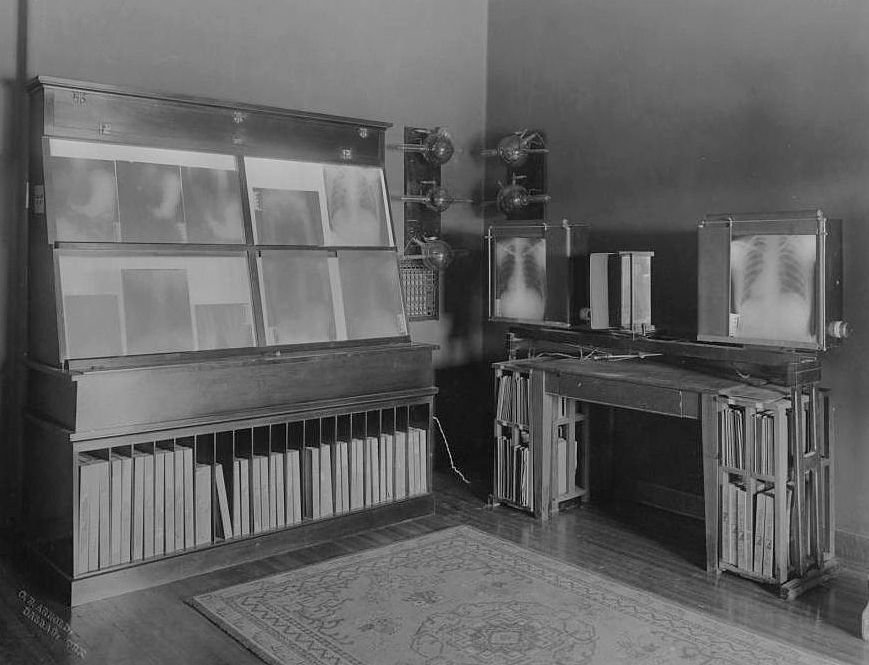
Below are several wonderful photographs taken inside the sanitarium around 1910 by one of Dallas’ best photographers, C. E. Arnold. They are from the St. Paul Hospital Collection in the UT Southwestern Library (click links below photos to see info about each picture).

*

st-pauls_nursing-stn_1910_utsw_smThe nursing station.

*

st-pauls_mexican-ward_1910_utswThe “Mexican Ward” (as noted on the back of the photograph).

*

st-pauls_sleeping-porch_1910_utswA patient ward on a screened-in sleeping porch.

*

st-pauls_waiting-room_1910_utswA waiting room.

*

st-pauls_xray-room_1910_utswThe x-ray room.

*

st-pauls_nurses-library_1910_utswThe nurses’ library. (I LOVE this photo! Check out the crazy typewriter stand attached to the desk — I’ve never seen anything like that before.)

*

st-pauls_student-nurses-dorm_1910_utswThe nurses’ dormitory on the top floor.

*

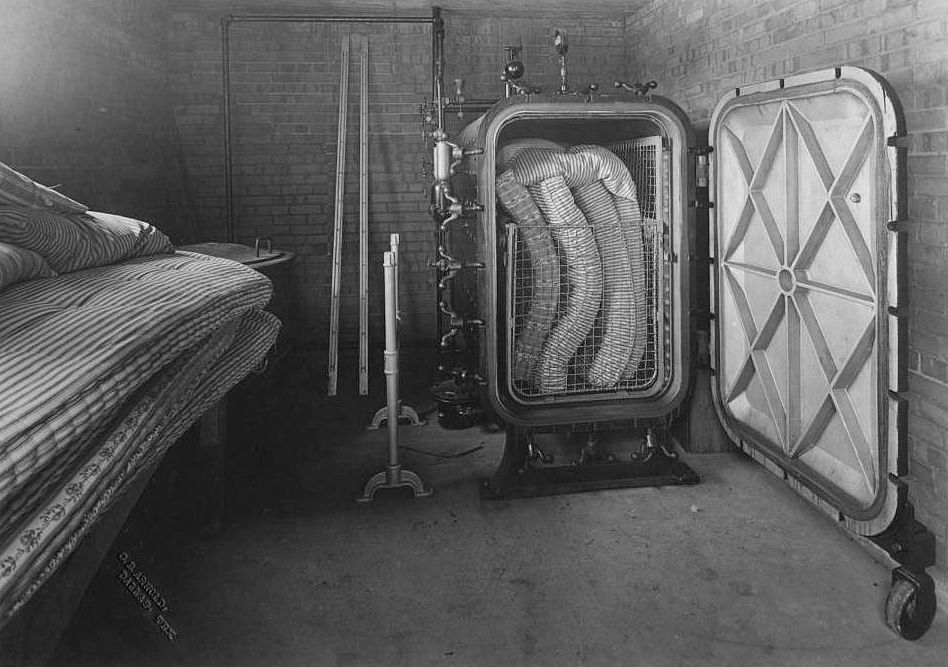
st-pauls_mattress-sterilization-room_1910_utswAnd, my favorite, the ominous-looking mattress sterilization room in what appears to be a dungeon.

*

st-pauls_flickr_coltera

**

UPDATE: Check out some fantastic historic photos of the hospital and its nurses contained in this UT Southwestern Medical Center publication, “St. Paul University Hospital, A Legacy of Caring,” here.

***

Top postcard is from the Vincentiana Postcard Collection, Special Collections and Archives, DePaul University Library, Chicago; it can be found here.

Bottom postcard, with the cheerful message from Edna, was found on Flickr, here.

All photographs are from the St. Paul Hospital Collection in the UT Southwestern Library. Other photos from this 1910 collection can be found here. (For fuller descriptions, click the linked text beneath the photos in this post.)

An interesting article on the photographer, Charles Erwin (C. E.) Arnold, and the technique used in capturing his interiors, can be found here.

A historical timeline of St. Paul’s can be found in a PDF here.

Wondering where St. Paul’s Sanitarium was located? It was at Bryan and Hall streets, across from Exall Park. Here is the location, from a 1919 map:

st-pauls_1919-map

All images larger when clicked.

*

Copyright © 2015 Paula Bosse. All Rights Reserved.

MORE Random Still-Standing Buildings Featured in Ads From 1929

ad-southern-fountain-fixture_directory_1929-detSoda fountains came from here…

by Paula Bosse

A few more photos of buildings that are still standing, from the ad-pages of the 1929 city directory.

First up is the Southern Fountain & Fixture Mfg. Co. at 1900 Cedar Springs.

ad-southern-fountain-fixture_directory_1929

The Southern Fountain & Fixture plant was built in 1925 at the corner of Cedar Springs and N. Akard. They manufactured and sold soda fountains, showcases, and fixtures.

A major new residential high-rise is going up in the 1900 block of Cedar Springs (or has gone up — it’s been a while since I’ve been over there), but I think it’s going up at the other end of the block. (But somehow its address is 1900 Cedar Springs….) So, I’m not absolutely sure this building IS still there. Here’s a 2014 image from Google Street View. It’s a cool building — hope you’re still there, cool building!

southern-fountain-fixture-now_googleGoogle Street View

*

Next, the Loudermilk-Sparkman Funeral Home at 2115 Ross Avenue.

ad-loudermilk-sparkman_belo_directory_1929(click for larger image of house)

The “home-like” Loudermilk-Sparkman funeral home moved into the former home of Col. A. H. Belo in June 1926 and settled in for a 50-year lease. (An article titled “Morticians In New Quarters” appeared on June 27, 1926 in The Dallas Morning News, complete with descriptions of interior decoration and architectural details.)

That place was a funeral home for 50 years — longer than it’s been anything else. That’s a lot of dearly departeds. (Clyde Barrow is probably the most famous cadaver to be wheeled through its portals.) In the ’70s, the granddaughter of Col. A. H. Belo sold the house — which was built in 1899/1900 — to the Dallas Bar Association, and today it is a swanky place to get married or eat canapés. And, thankfully, it’s still beautiful.

belo-today_googleGoogle Street View

*

 The Evangelical Theological College, 3909 Swiss Avenue, in Old East Dallas.

ad-evangelical-theological-college_directory_1929sm(click for larger image)

This “denominationally unrelated” seminary — where tuition and rooms were free, and board was at cost — was built in 1927 for $65,000. When the three-story-plus-basement building was finished, the college was in its fourth year, having moved from its previous location in The Cedars. “The college now has forty-five students representing fifteen states of the United States, three Canadian provinces and Ireland…. The faculty is composed of thirteen men…” (DMN, Dec. 25, 1927).

ad-evangelical-theological-college_directory_1929-det

The college has grown by leaps and bounds and is now the Dallas Theological Seminary, and the original building is still there.

dallas-theological-seminary_now_googleGoogle Street View

*

Lastly, the Melrose Court Apartments and Hotel, 3015 Oak Lawn.

ad-melrose_directory_1929

The Melrose, designed by architect C. D. Hill, was built in 1924, and as it was about to throw open the doors of its bachelor apartments to eager Dallas bachelors (and whomever), it advertised itself thusly: “Of palatial splendor, rivaling in dimensions the best appointed apartment hotel buildings of this modern day, it is equal to the best of any of America’s cities of a million.” (DMN, Aug. 31, 1924) Well, of course it is!

ad-melrose_directory_1929-det

It’s been a landmark in Oak Lawn for over 90 years. I know it’s officially now the Warwick Melrose Hotel, but I’ve never heard anyone call it anything but The Melrose.

melrose-today

***

Sources & Notes

All ads from the 1929 city directory.

My previous post “Random Still-Standing Buildings Featured in Ads From 1927” is here.

*

Copyright © 2015 Paula Bosse. All Rights Reserved.

Views From a Passing Train — 1902

edmunds_pacific-bryan_free-lib-phil_1902Pacific, looking west toward Bryan, 1902 (click for larger image)

by Paula Bosse

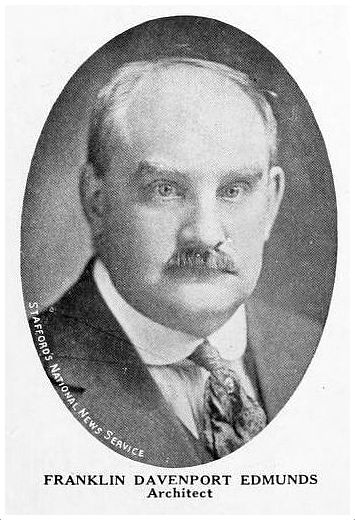
Franklin Davenport Edmunds (1874-1948) was a Philadelphia architect whose hobbies were travel and photography. A 1902 train trip to Mexico took him through Texas, during which there as a blink-and-you’ll-miss-it stop in Dallas.

edmunds_whos-who-philadelphia_1920Who’s Who in Philadelphia, 1920

On the way to Mexico, he stopped in St. Louis for a while (where he took several photos on Feb. 12), passed through Arkansas (on Feb. 13), apparently saw very little of Dallas as he rolled through, and then took a lot of photos when he reached San Antonio (by Feb. 14). He then continued on to a vacation of at least two or three weeks in Mexico, where his camera was never far from his side.

The two photos that were taken as he passed through Dallas (which I’m assuming were snapped from the train) were probably taken on Feb. 13 or 14, 1902.

The location of the photo above is not noted, but it appears to be Pacific Avenue looking west. Peter S. Borich’s sign-painting business was on the northeast “corner” of Bryan and Pacific (at the point of the diagonal intersection). The photo shows the back and side of his building. It’s hard to see them, but there is a wagon with a team of horses at the Bryan St. intersection. Behind Borich’s is a blacksmith shop, and across the street, there are several furniture stores. Straight ahead is an almost mirage-like smoke-spewing locomotive heading toward the camera. (Unless Edmunds was standing in the middle of Pacific, I’m guessing he was taking the photo from the rear of the train.)

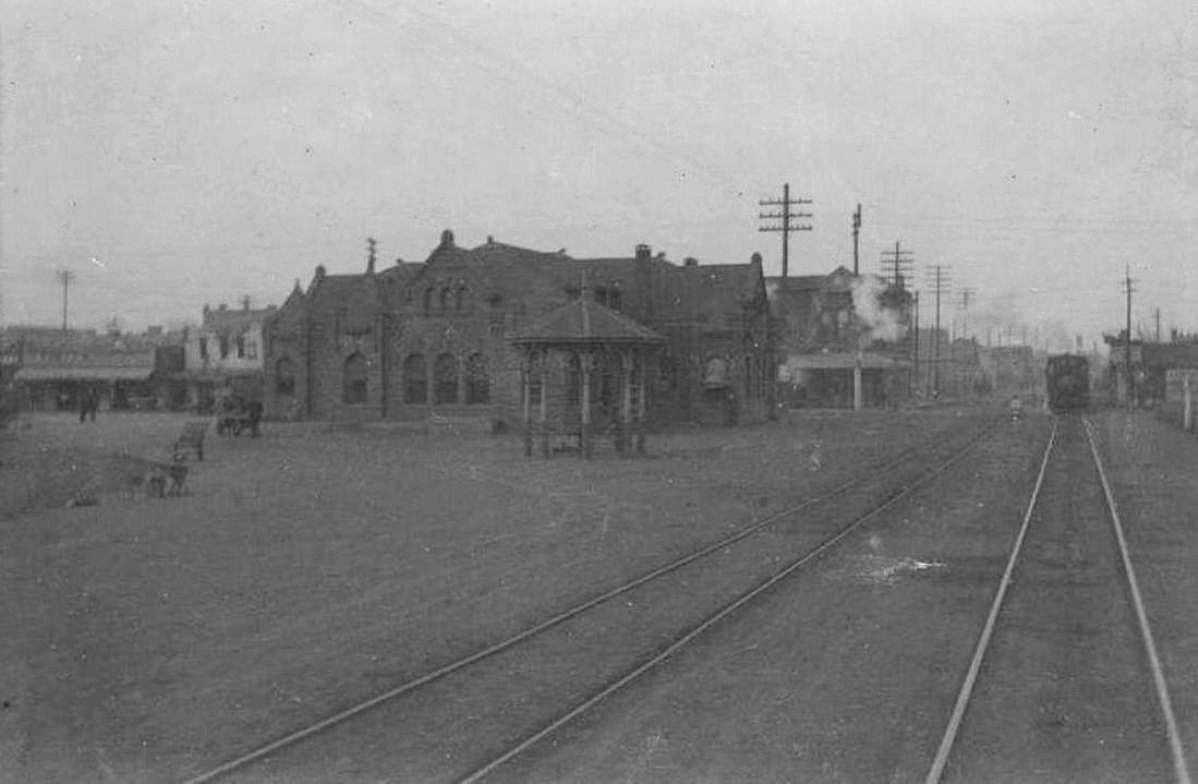
Seconds later, the train would have pulled into the old Union Depot (located about where Pacific would cross present-day Central Expressway).

edmunds_old-union-stn_free-lib-phil_1902(click for larger image)

Even though not identified in the photo description, the distinctive old Union Depot is instantly recognizable (an unrelated photo taken from about the same spot can be seen in this one from the George W. Cook collection at SMU’s DeGolyer Library). Again, the photo appears to have been taken from the train.

Edmunds took a ton of photos on this trip, but, sadly, he seems to have merely passed through Dallas without wandering around to explore its streets (which I would think would be interesting — if not downright exotic — to a Philadelphia architect) — I’m not sure he even got off the train to stretch his legs! But I’ve never seen these two photos, and they’re pretty cool. So, thanks, Frank — you should have hung around a little longer.

***

Both photos by Franklin Davenport Edmunds are from the Free Library of Philadelphia. The Pacific Avenue photo can be accessed here; the Union Depot photo, here. Other photos he took in Texas during the 1902 trip (and a few from a previous 1899 trip) can be viewed here.

A biography of Edmunds can be read at PhiladelphiaBuildings.org here.

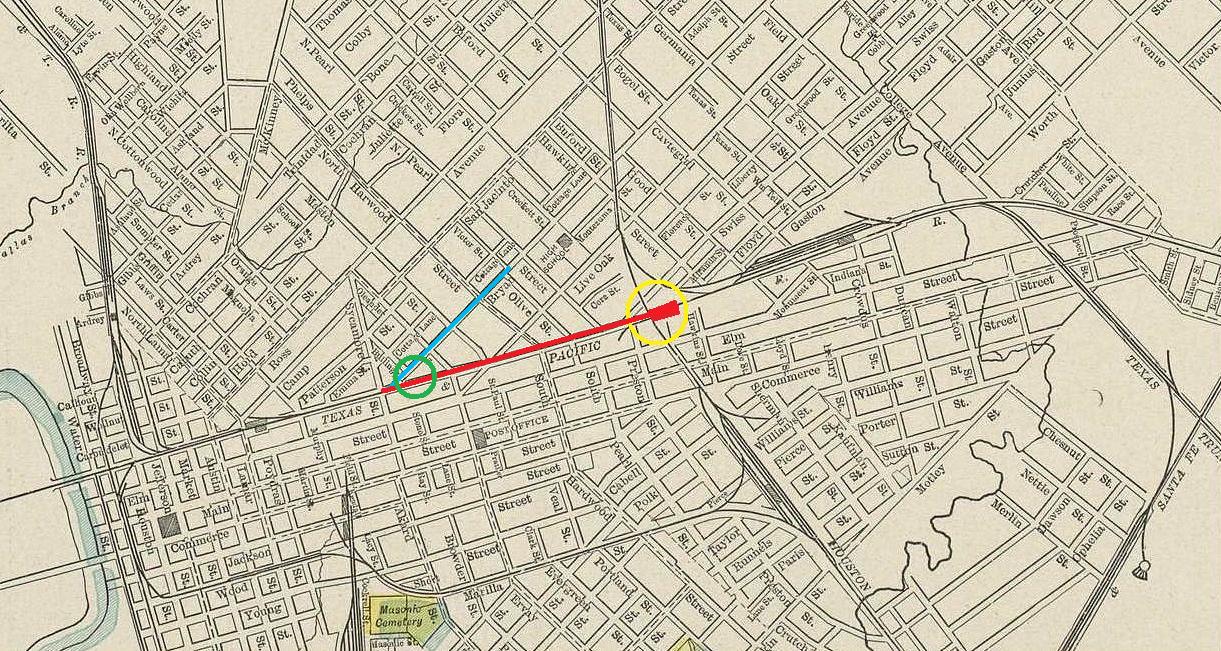
A detail from the 1905 Sanborn map showing the businesses located at Pacific and Bryan, with Borich’s business circled in red and the camera’s vantage point in blue, can be seen here.

Below, a detail from a map (circa 1890-1900), showing the locations of the two photos, with the Pacific Ave. location circled in green and the Union Depot location in yellow.

dallas-map_ca1900(click for larger image)

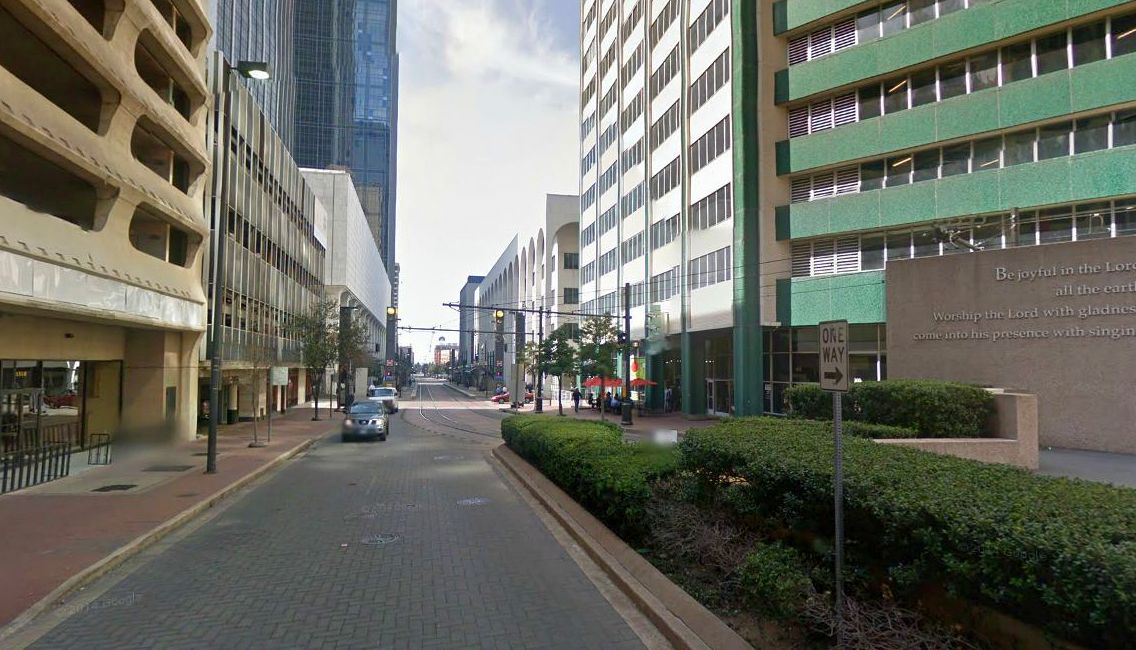
And, lastly, a present-day image showing the same view as the top photo (from Google Street View).

pacific-bryan_google

My previous post, “The Old Union Depot in East Dallas: 1897-1935” — a history of the station with several photos — can be found here.

Images larger when clicked.

*

Copyright © 2015 Paula Bosse. All Rights Reserved.
George Cacas, The Terrill School’s Greek Ice Cream Man — 1916

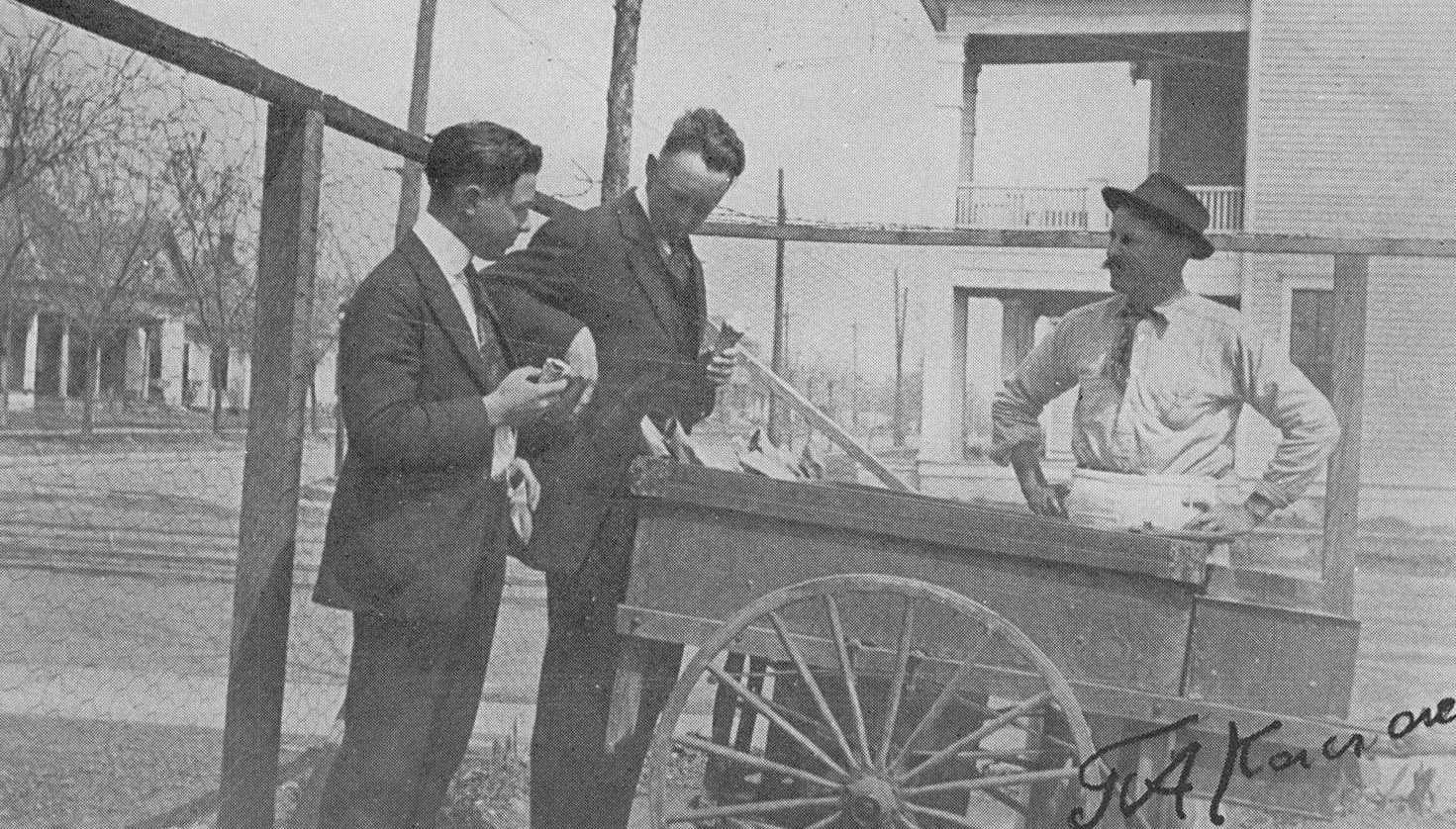
terrill_ice-cream_yrbk_1916-cacasPrep-school boys & the ice cream man, 1916

by Paula Bosse

I love this photo. It shows two students from the Terrill School for Boys, buying ice cream from George Cacas, a Greek immigrant. I’m not sure of the exact location of the photo, but I would assume it is either in front of, next to, or very nearby the Terrill School, which was located at Swiss and Peak. It appeared in the school’s 1916 yearbook accompanying an “interview” with Mr. Cacas, whom the boys apparently (and one hopes affectionately) called “Spaghetti” (click for larger image):
terrill_ice-cream_cacas_1916-yrbk_text

Another photo of Mr. Cacas, from the previous year’s yearbook (click for larger image):

spaghetti_terrillian_1915

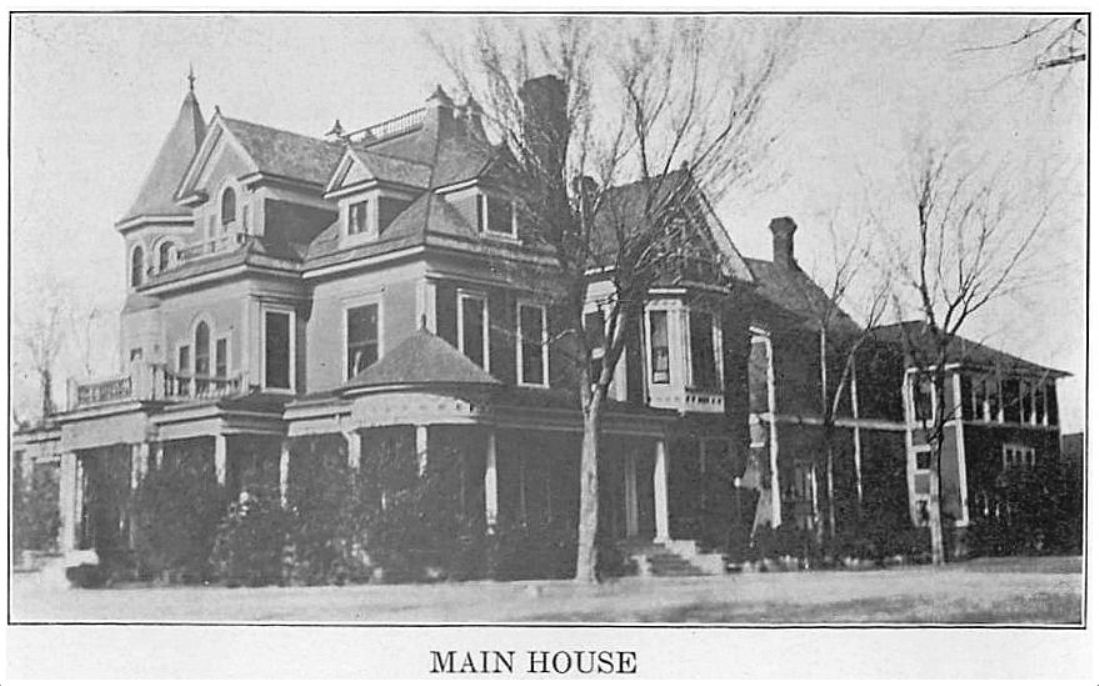
The Terrill School was established in 1906 and was one of the city’s early important prep schools for boys. (Incidentally, the Terrill School shared a fenceline with the prestigious Miss Hockaday’s School for Girls for many years — I’ll be writing more on this convenient arrangement in the future!) Below, two photos showing three of the campus’ many buildings, from about the same time as the one featuring Mr. Cacas.

terrill-school_main-house_yrbk_1919_lg

terrill-school_recitation-hall_phelps-hall_yrbk_1919Recitation Hall on the left; Phelps Hall, right — 1919

terrill-yrbk_19281928

***

Sources & Notes

Top photo and interview from the 1915-1916 Terrillian, the Terrill School yearbook; photos of the “Main House” and two campus buildings from the 1918-1919 Terrillian.

The Terrill School for Boys was located in Old East Dallas at 4217 Swiss Avenue, from 1906 to about 1930. It then moved to Ross Avenue for a few years and was eventually merged with a couple of other schools to form St. Mark’s School of Texas — more on that from the St. Mark’s website, here.

terrrill_school_bingLocation on present-day map (Bing)

The name “Cacas” didn’t seem right for a Greek surname — and the signature at the bottom of the photo looks like it might have been George’s, with his last name beginning with a “K.” But George’s family’s name was, in fact, spelled “Cacas,” as seen here in the city directory from 1915. I wonder if they spelled it “Cacas” back in Sparta?

cacas_directory_1915

*

Copyright © 2015 Paula Bosse. All Rights Reserved.

Baylor Hospital — 1909-1921

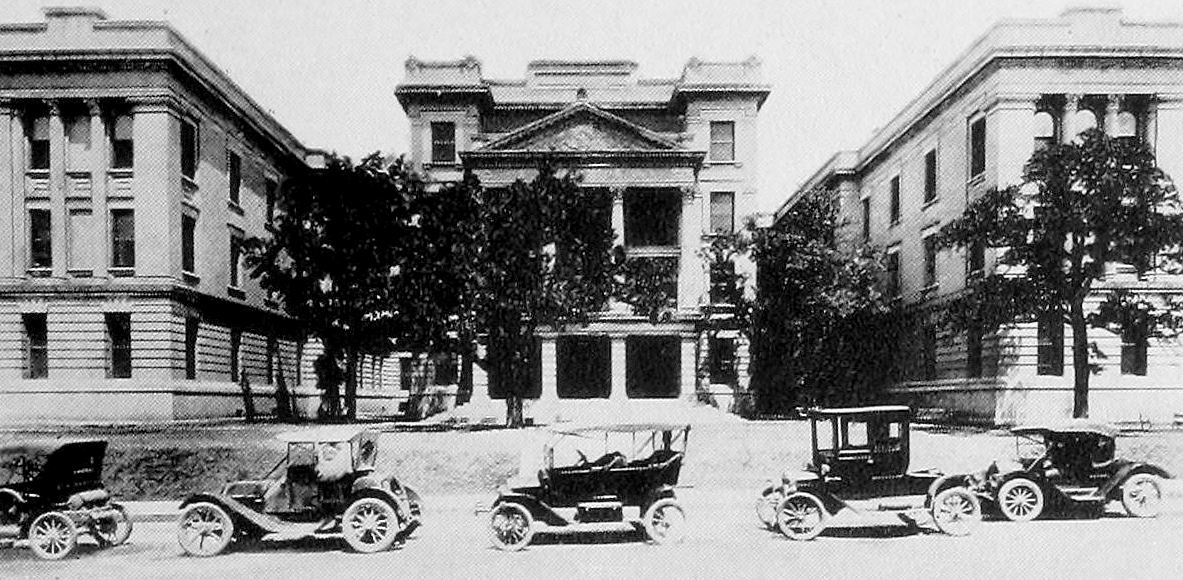
baylor_postcardClassic cars on Junius Street… (click for larger image)

by Paula Bosse

I originally thought the street in front of Baylor Hospital in this postcard was Gaston. But Baylor originally faced Junius Street (see it on a 1921 Sanborn map here), and, in fact, its address was 3315 Junius for many years. I had no idea.

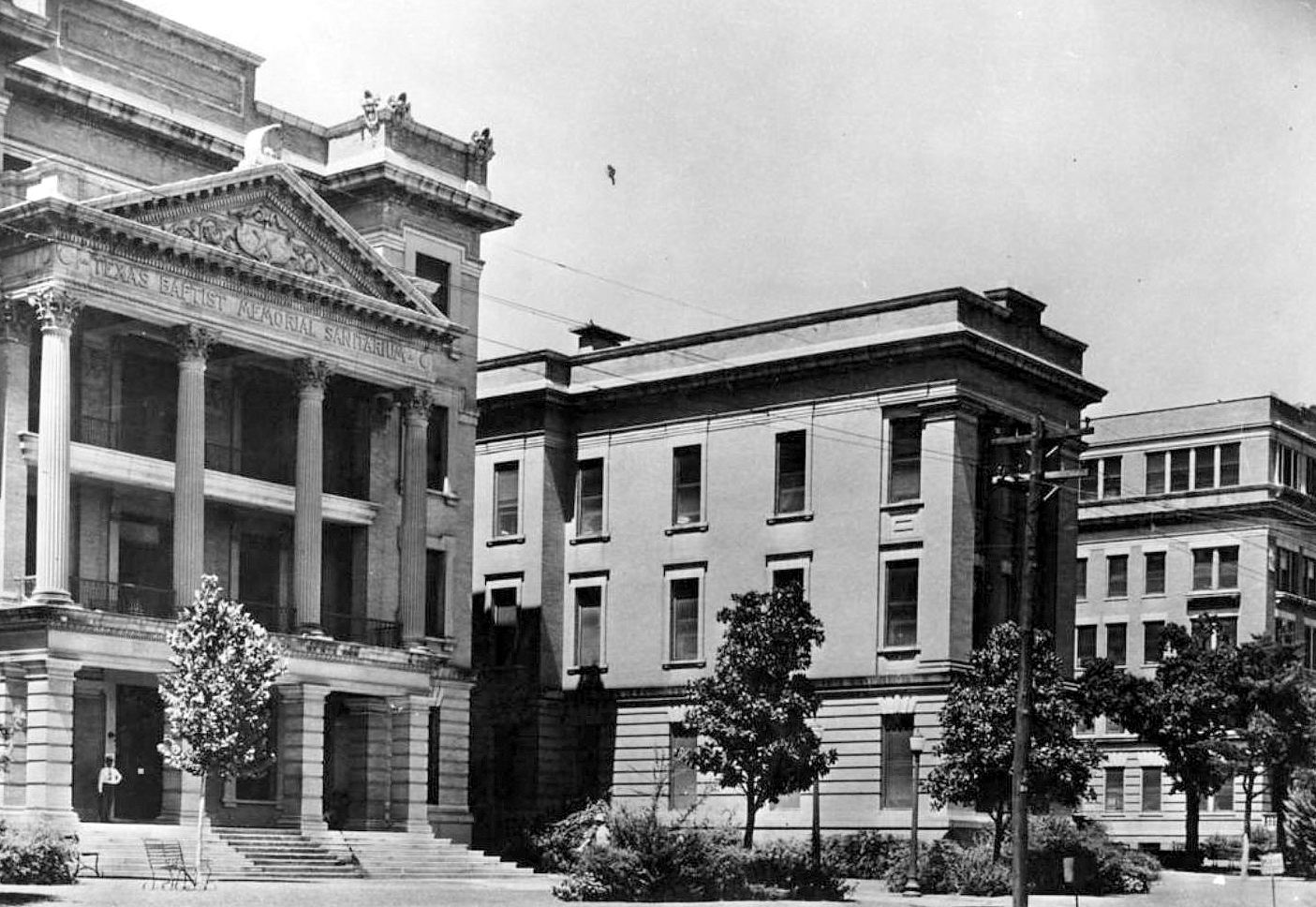
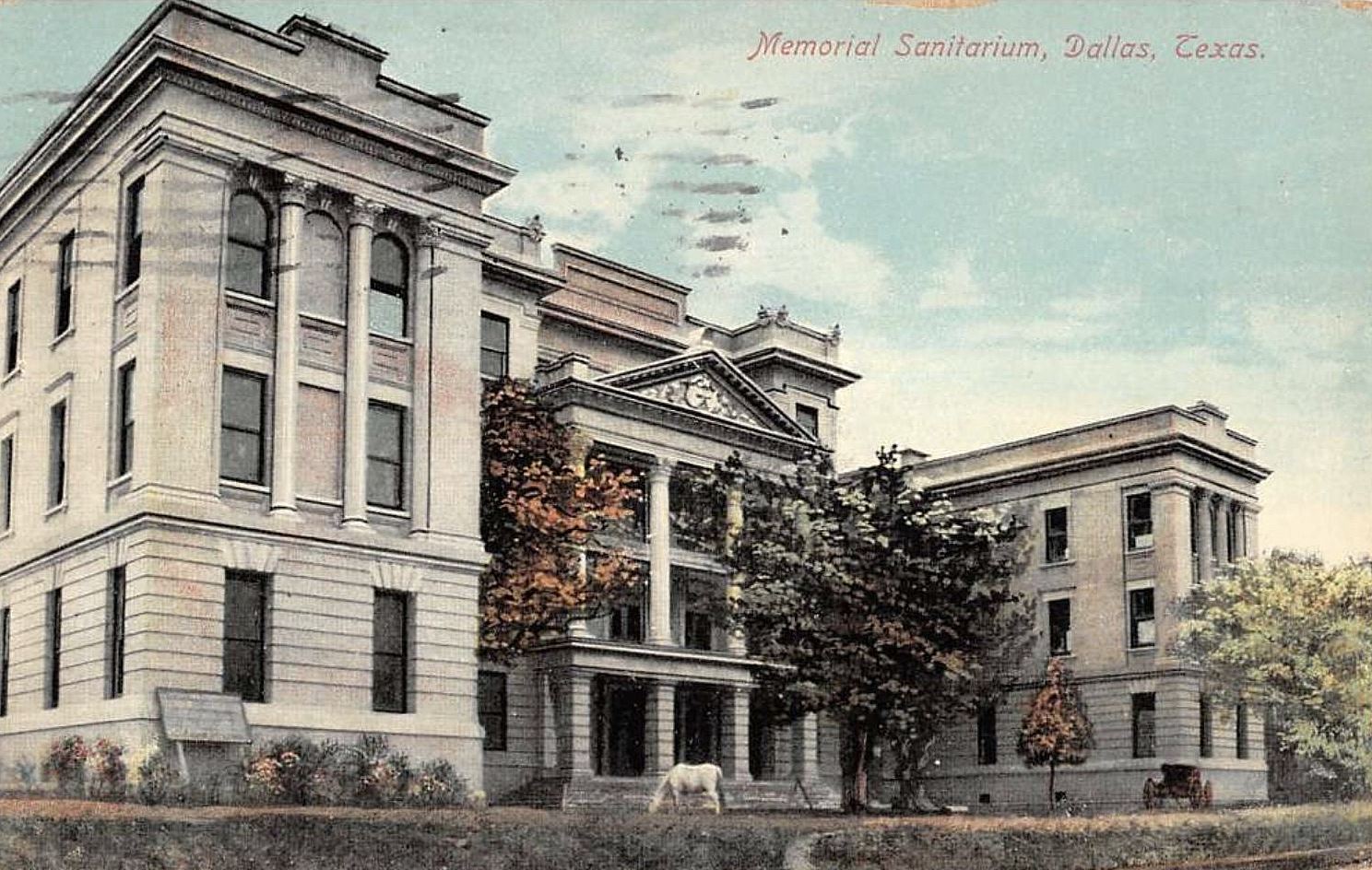
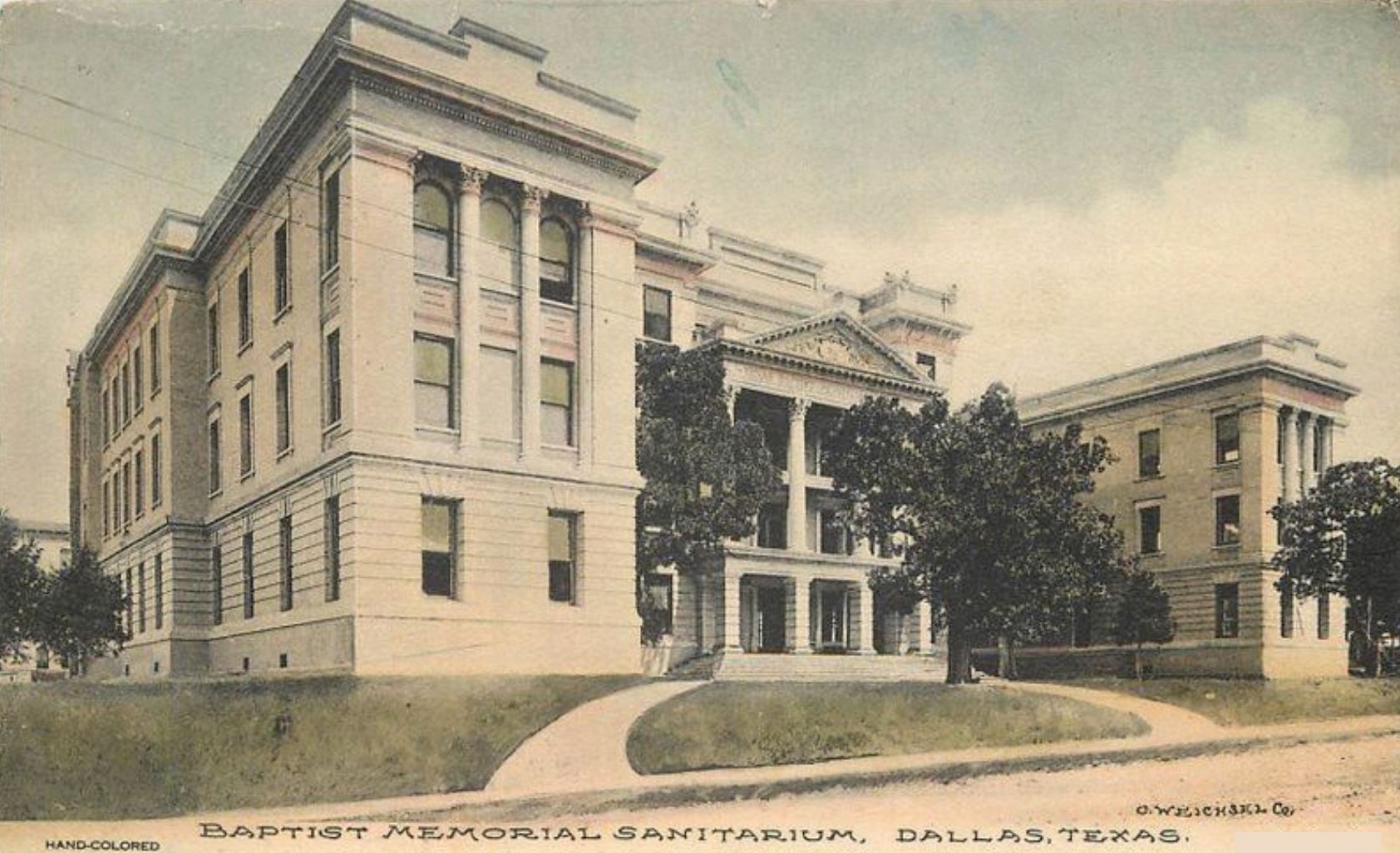
Below are a few more photos and postcards of the medical facility which eventually grew into Baylor Hospital (its Dallas roots go back to 1903, but the buildings seen in these images — buildings designed by noted Dallas architect C. W. Bulger & Co. — were built around 1909). Originally known as the “Texas Baptist Memorial Sanitarium,” it changed its name to the more familiar “Baylor Hospital” in 1920/1921 (and later became “Baylor University Hospital” in 1936). (More on the timeline of Baylor Hospital can be found here and here.)

baylor_postmarked-1919_ebaypostmarked 1919

Dig those cars.

baylor_baylor-univ-waco-yrbk_the-round-up_19171915

baylor-hospital_baptist-sanitarium_postcard

baylor_tx-baptist-memorial-sanitarium_ca-1912_UTSW-libraryca. 1912 (photo: UT Southwestern Library)

This is my favorite one: no cars, but there’s a horse grazing at the entrance!

baylor_horse_postmarked-1911_ebaypostmarked 1911

The postcard below was postmarked 1909, the year these new buildings opened. No cars, no horse, no people. 

baylor_postmarked-1909_ebay1909

And here is the brand new sanitarium, in a photograph that appeared in The Dallas Morning News less than a month after its official opening.

baylor-hospital_exterior_dmn_111009_clogensonDMN, Nov. 10, 1909

***

Sources & Notes

Postcards found on eBay.

The first black-and-white photo is from the 1917 Round-Up, the yearbook of Baylor University in Waco; the same image (uncolorized) appears in the digital archives of UT Southwestern, here, with the date 1915.

The second black-and-white photo is from the UT Southwestern Library archives, here.

The name-change of the Texas Baptist Memorial Sanitarium to Baylor Hospital was proposed in Nov. of 1920 and formally approved by the Board of Trustees of Baylor University in Waco on January 16, 1921. More about the major changes happening to the medical facility/facilities affected can be found in the article “Medical Center For Dallas Is Authorized by Texas Baptists” by Silliman Evans (Fort Worth Star-Telegram, Nov. 13, 1920), here.

Read a detailed description of the Texas Baptist Memorial Sanitarium in the Dallas Morning News article “Baptist Memorial Sanitarium, Just Completed at Dallas, Represents an Investment of More Than Four Hundred Thousand Dollars” (DMN, Nov. 10, 1909), here and here. There are several photographs taken inside and outside (and on top of) the brand new buildings.

*

Copyright © 2014 Paula Bosse. All Rights Reserved.

Junius Heights … Adjacent!

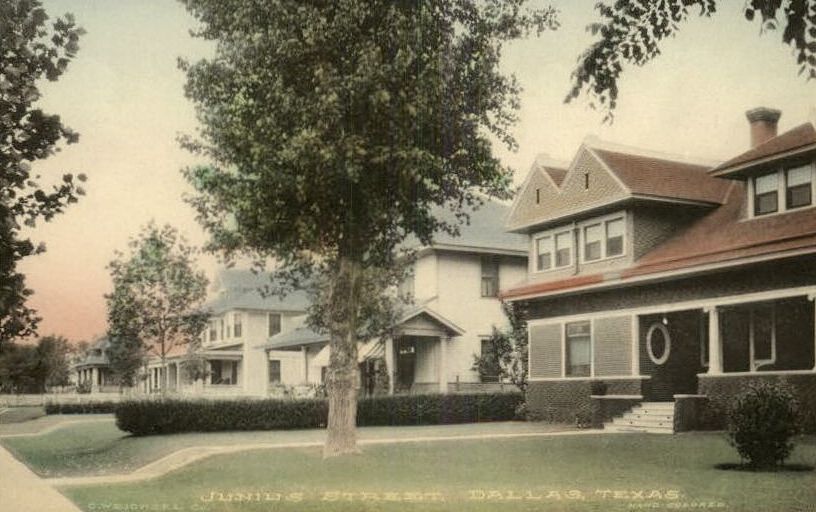
junius-stNot actually Junius Heights, but nearby! (see explanation below)

by Paula Bosse

One of the most popular neighborhoods in Old East Dallas is Junius Heights, which I’m a little surprised to learn is the largest historic district in Dallas. It came into being when streetcar service was extended into the eastern boondocks of the city, opening up tantalizing possibilities of new development. According to Preservation Dallas, when lots went on sale in the neighborhood-to-be in September of 1906, there was a buying frenzy:

“Prospective buyers were encouraged to take the streetcar to a newly platted neighborhood of the same name that afternoon to view the lots. Because it was Sunday, no lots were sold that day. But interested buyers remained in the neighborhood until midnight, when a pistol was fired to indicate the start of the sale. Within an hour, two hundred lots in Junius Heights had been sold and by Wednesday, every lot in the neighborhood had been sold.”

junius-housesUm, apparently not Junius Heights either….

And East Dallas has never looked back.

*

UPDATE: Having determined where the houses in these postcards were actually located — on Junius between Peak & Carroll — I now see this ISN’T Junius Heights! It’s a few blocks west of the Henderson Avenue boundary. So, not Junius Heights, but Junius Heights-adjacent!

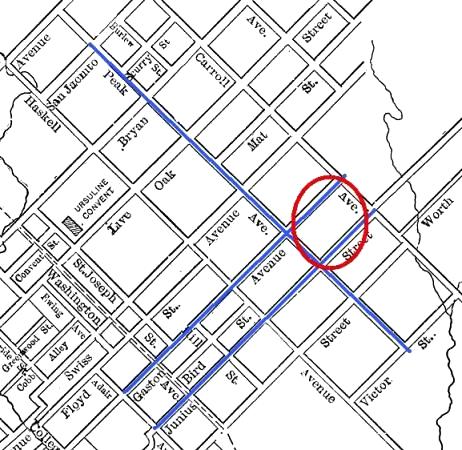
The postcard at top shows the Thomas Field house (built in 1884 and sold to John B. Wilson — of Wilson Building fame — in 1894); it was situated in a full city block bounded by Junius, Carroll, Gaston, and Peak. Before addresses changed throughout the city in 1911, the residence seems to have had no official address; in 1911 it was assigned the address of 4305 Junius. According to William L. McDonald’s book Dallas Rediscovered, the house was demolished in 1922 in order to subdivide and redevelop the property, Below is a map of the area from about 1898, showing the general location of the property.

field_wilson_house_ca-1898-map

The second postcard reproduces a photo seen in a real estate ad from 1906 which shows “portions of Junius Street between Peak and Carroll” — so, in the same block as the Field/Wilson house. Just not actually in Junius Heights!

junius-st_betw-peak-carroll_dmn_090206Dallas Morning News, Sept. 2, 1906 (click for larger image)

***

Quote is from a history of the Junius Heights neighborhood on the Preservation Dallas site, here.

Wikipedia entry is here.

Click pictures for larger images.

*

Copyright © 2014 Paula Bosse. All Rights Reserved.

The San Jacinto School — Frittering Away the Gay Nineties, Stuck in a Classroom

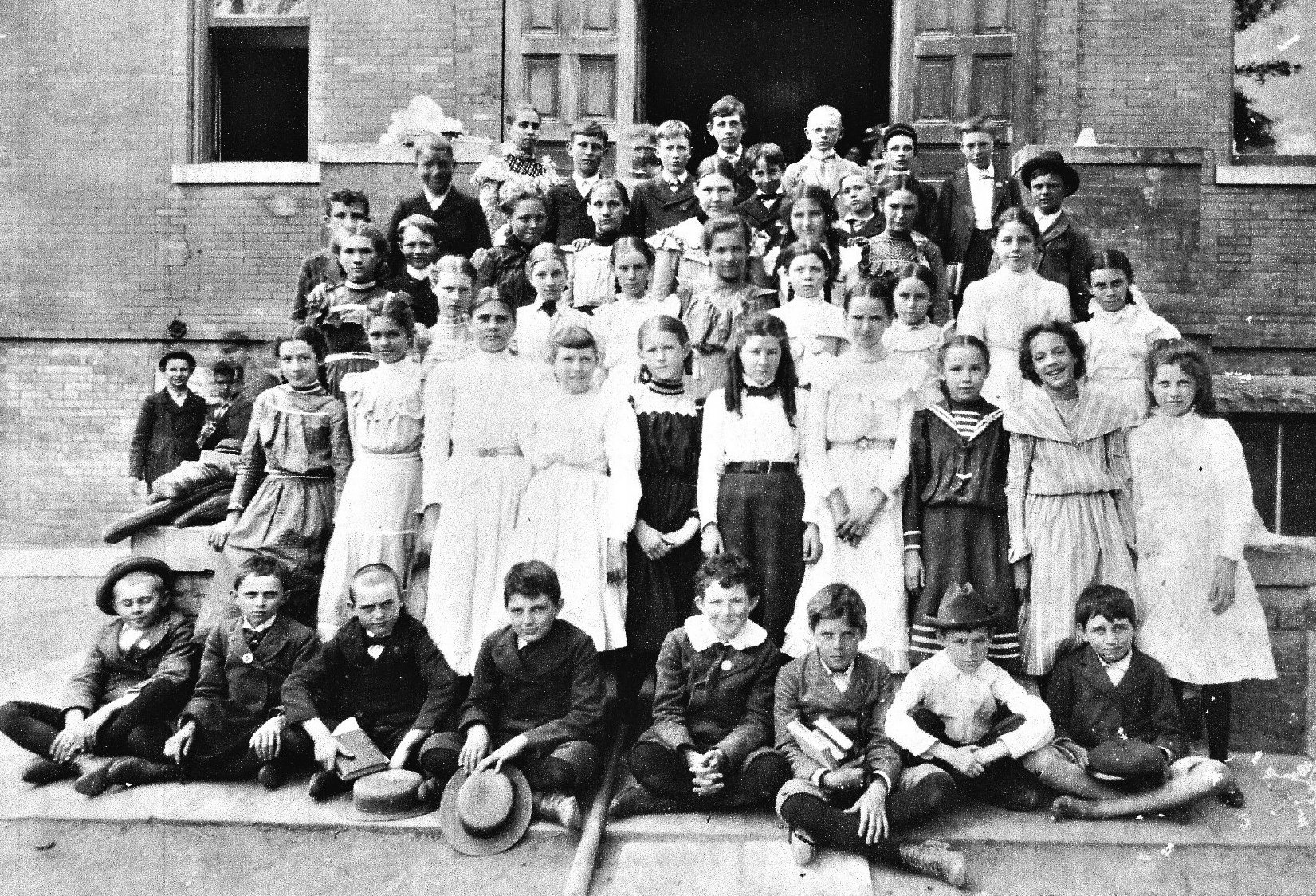
san-jacinto-school_1893_shorpy1893 class photo, Ross Avenue

by Paula Bosse

Above, fourth graders lined up in 1893 on the steps of the San Jacinto School, once located at Ross and Washington (now the site of the DISD Administration Building). All seem fairly glum. (At least they’re not toiling in factories like many other children of this period.)

Below, the sixth-grade class of 1899 seems slightly less bummed-out, perhaps because they’re on the brink of the much-anticipated 20th century. Those boys (and sadly probably only the boys) might well have been among the city’s business and political leaders during Dallas’ most explosive period of growth just a few short years later.

san-jacinto-school_6th-grade_1899-1900

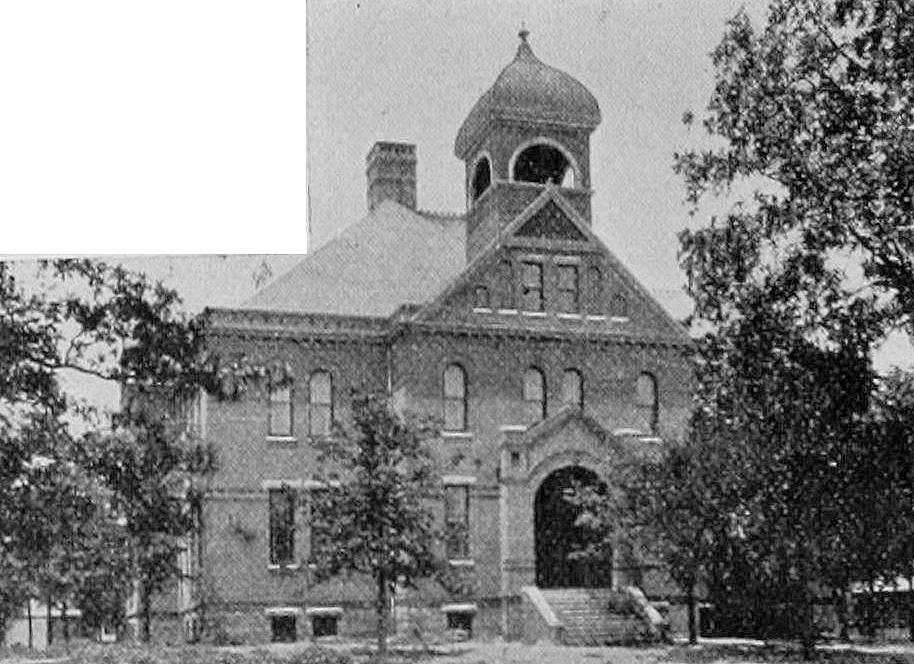
The San Jacinto School was designed by James E. Flanders and built in 1891 on two acres at the corner of Ross Avenue and Washington. It was demolished in 1948 to make way for the somewhat more severe (and perhaps a bit more interesting) DISD Administration Building.

san-jacinto-school_tx-and-pac-rr_1898

san-jacinto-school_dhs

***

Sources & Notes

Top photo is from the wonderful historical photo blog Shorpy, and can be found here.

First photo of the school building is from Texas: Along the Line of the Texas & Pacific Ry. (Dallas: Texas & Pacific Railway, n.d. [1898]).

Last photo is from a website devoted to “Dallas’ First Architect,” James Edward Flanders.

*

Copyright © 2014 Paula Bosse. All Rights Reserved.

Joe Yee Cafe: The Best Chop Suey in Town

joe-yee-cafe-extChop suey *and* famous chicken house…

by Paula Bosse

I came across the above image and was enthralled. I’ve never heard of the Joe Yee Cafe, but this (granted) idealized picture is wonderful. The postcards above and below were from the early 1950s, and if you are familiar with the generally run-down neighborhood around Columbia and Fitzhugh these days, you may well shed a tear that something this charming and picturesque has been gone for many, many years.

joe-yee-cafe-interior

I love the surprising color scheme of the restaurant’s interior — those fabulous purples and greens! (The colors are a bit unexpected because they so loudly clash with the bold tomato red of the exterior.)

I did a little research to see what I could find out about Joe Yee’s Chinese restaurant. Seems that Mr. Yee’s cafe was in business by the 1930s, downtown, on Main Street near Field. It advertised steadily over the years, and its ads proudly proclaimed that the restaurant served “the best Chinese food you ever tasted” and was “completely air-conditioned.” Several newspaper accounts (particularly the society columns) mentioned it as a popular place for young people to grab a bite before and after dances at nearby downtown hotels. Business must have been pretty good for the place to have lasted so long at such a primo location. The cafe moved to the Columbia Street location in 1950 where it remained in business until at least late 1956 when a major fire struck.

joe-yee-cafe_matchbk

1938-joe-yee_dmn_1125381938

1943-joe-yee_dmn_0812431943

1953-joe-yee_dmn_0830531953

***

Sources & Notes

Top two early-’50s postcards are from the great Boston Public Library Tichnor Brothers Postcard Collection on Flickr, here.

In old photos of downtown Dallas one often sees “Chop Suey” signs along the streets. I’d love to know more about these restaurants in general, and about Chinese and Chinese-Americans in Dallas in the first half of the 20th century, if anyone can point me to a good source.

If background on Chop Suey is needed, might I point you to to the Wikipedia entry here, or the Snopes entry here.

*

Copyright © 2014 Paula Bosse. All Rights Reserved.