Flashback : Dallas

A Miscellany: History, Ads, Pop Culture

Category: Neighborhoods

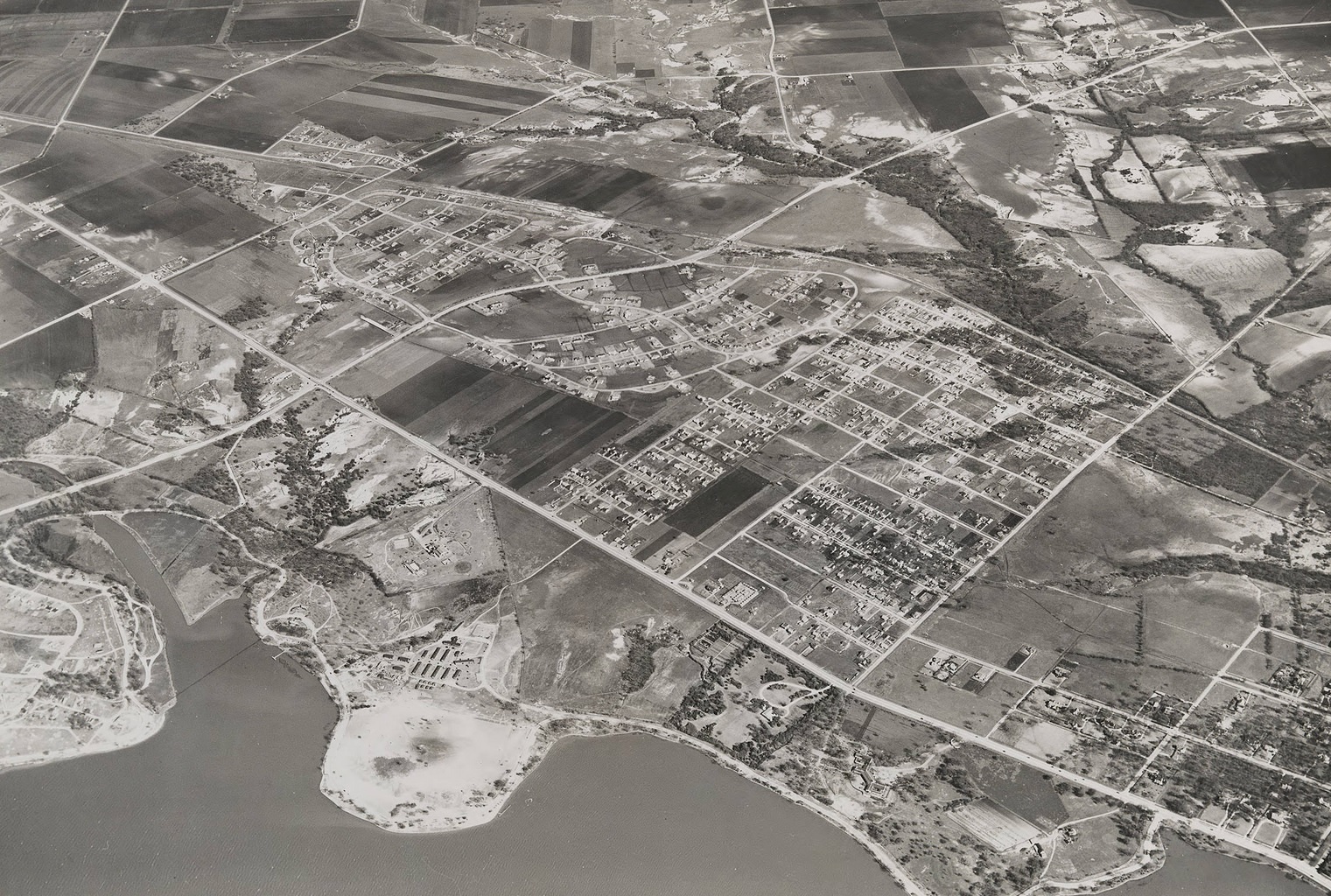
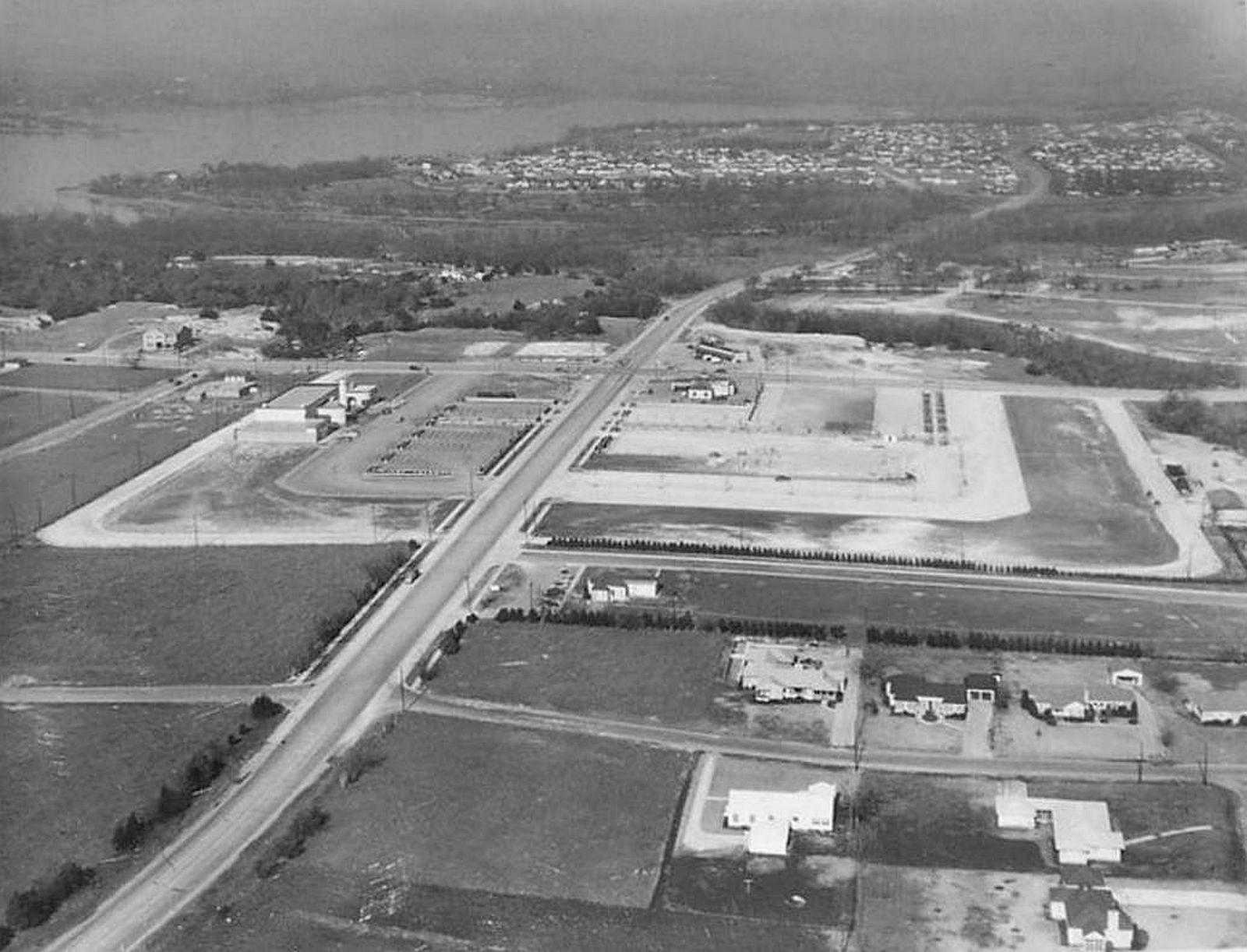
Casa Linda Aerials — 1940s

casa-linda_aerial_dallas-hist-FB-group_lgEnjoy that wide-open space while you can… (click for larger image)

by Paula Bosse

Here are two fantastic aerial photos showing the Casa Linda area east of White Rock Lake. The one above shows the very early days of development of the Casa Linda Plaza shopping district. The first building was the Casa Linda Theater, which opened on August 9, 1945 (the grand opening feature was “The Affairs of Susan” starring Joan Fontaine and George Brent). The theater (now Natural Grocers) can be seen at the middle left. Buckner Boulevard (Loop 12) runs diagonally in this photo, from the lower left to the top right; Garland Road runs horizontally just above the theater. The then-new Fire Station #31 (which opened in the summer of 1947 and is still in service) can be seen on Garland Road, above and to the left of the theater. (See this same view in a current aerial view from Google here.)

Also visible in the above photo is the sorely-missed Pegasus-topped service station at the corner of Garland Rd. and Buckner.

casa-linda_mobil-gas-station_BA-cougars_pinterest

Below, a view from the other direction — this time looking toward the southeast. This aerial photo was taken by Lloyd M. Long in 1941. Carl M. Brown, the developer of Casa Linda, had already begun turning farmland into a new residential neighborhood — the shopping center was still years away. The land which would eventually become Casa Linda Plaza can be seen just left of the center of this photo — Garland Road can be seen running from the lower right to the upper left (from East Dallas toward the city of Garland). (To get your bearings, see a “labeled” version of this photo from SMU’s Edwin J. Foscue Map Library, here.)

casa-linda_aerial-to-SE_lloyd-long_foscue-lib_SMUEdwin J. Foscue Map Library, SMU


casa-linda-estates_oct-1937
Opening of Casa Linda Estates, Oct. 1937 (click for larger image)

***

Sources & Notes

Top photo was posted in the “Dallas History (Before 1960)” Facebook group. The person who posted the photo gave the date as March, 1945, which seems incorrect, as the fire station was not built until 1947.

The second aerial photo, “Casa Linda and Vicinity, Dallas, Texas, Looking S.E. from 9,500′ (unlabeled),” was taken by Lloyd M. Long on March 1, 1941; it is from the Edwin J. Foscue Map Library, SMU Libraries, Southern Methodist University and can be accessed here. (The “labeled” version can be found here.)

Read an extremely enthusiastic profile of Carl M. Brown and his Casa Linda dreams in a 1953 “Story of Free Enterprise” article here.

The Casa Linda Shopping Center Wikipedia entry is here.

*

Copyright © 2019 Paula Bosse. All Rights Reserved.


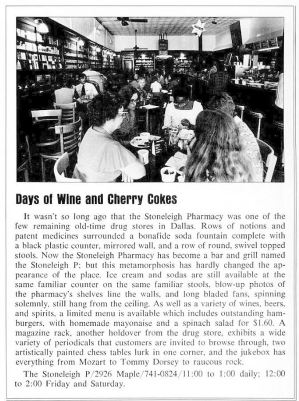
Stoneleigh Pharmacy / Stoneleigh P

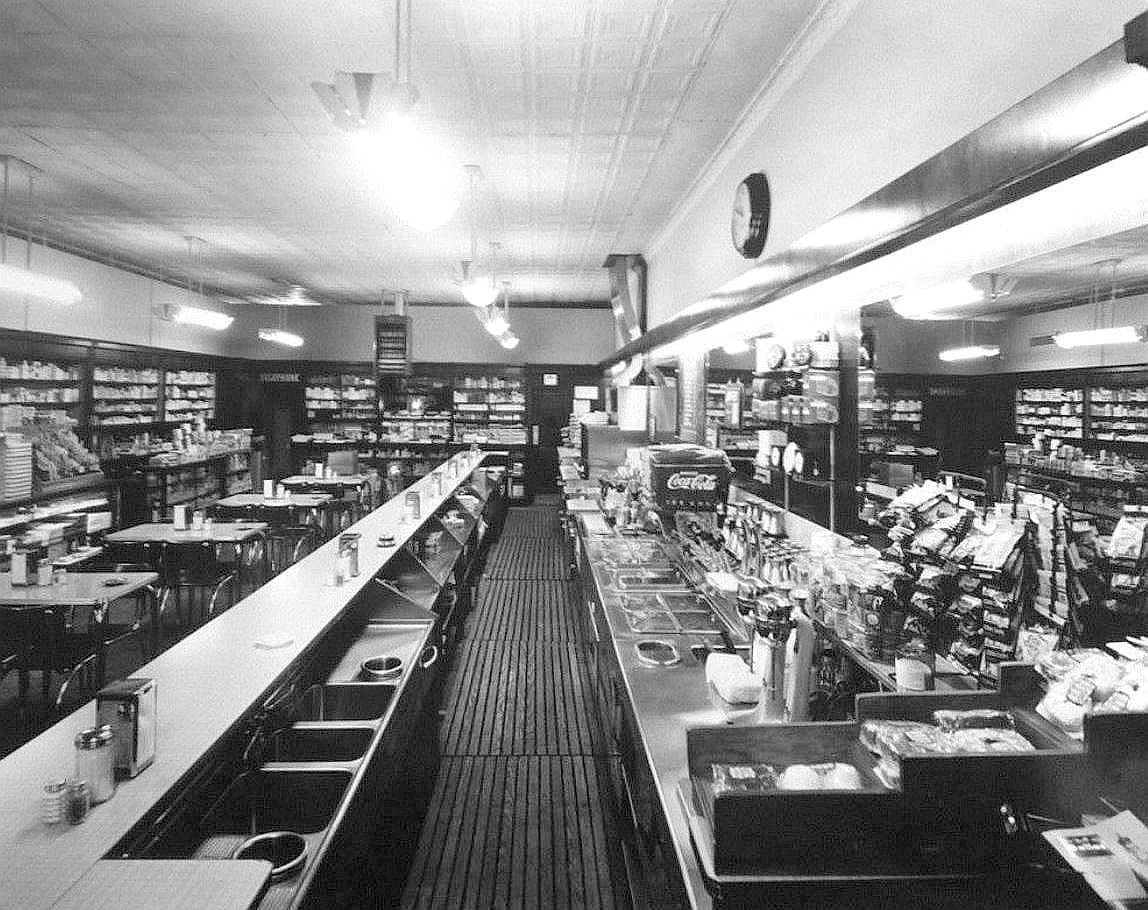
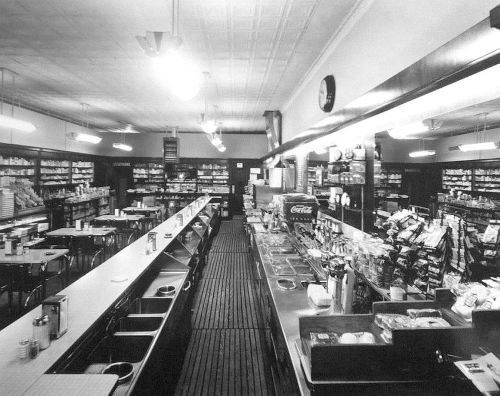
stoneleigh-pharmacy_fountain_ebay_2The pharmacy’s soda fountain…

by Paula Bosse

I’m pretty sure I was in the old Stoneleigh Pharmacy before it became the Stoneleigh P, but if so, I have no memory of it other than sitting at the fountain. I might have had a grilled cheese sandwich and a milkshake. I’ve definitely been in the “P” post-1980 — in fact, my father’s bookstore used to be across the street from it, and it was definitely a mainstay for great hamburgers.

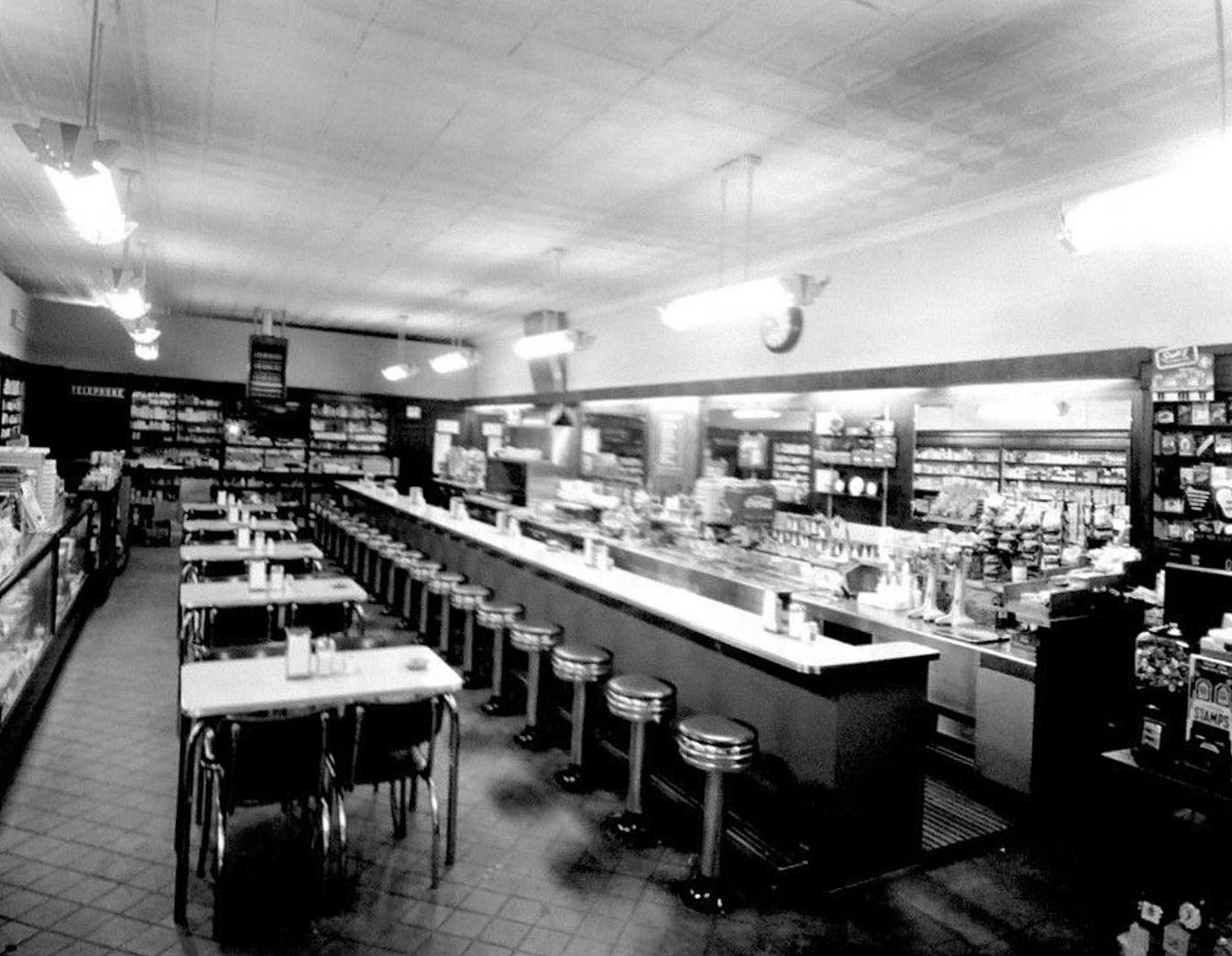
Despite the location being so familiar, I didn’t know about the history of the old Stoneleigh Pharmacy, so when I came across the (slightly blurry) photo above and the one immediately below, I thought I should look into what was happening at 2926 Maple Avenue before the arrival of the Stoneleigh P.

stoneleigh-pharmacy_fountain_ebay_1

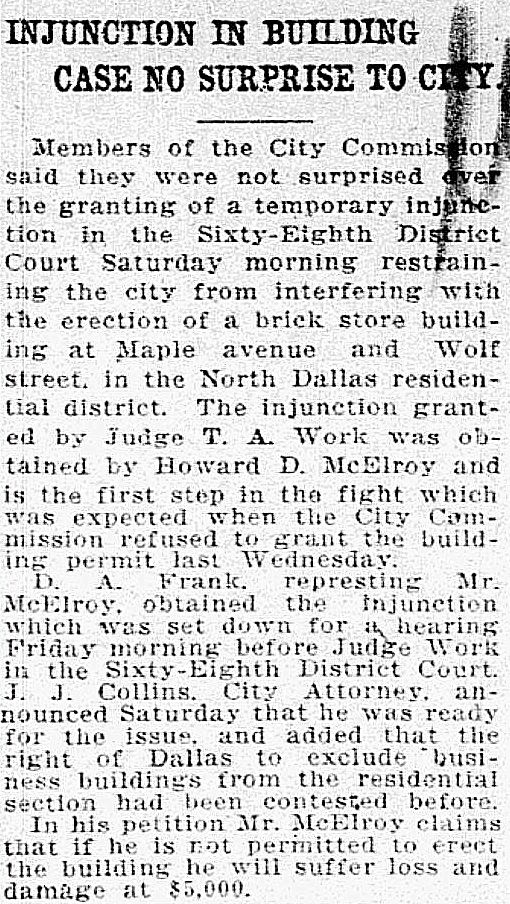
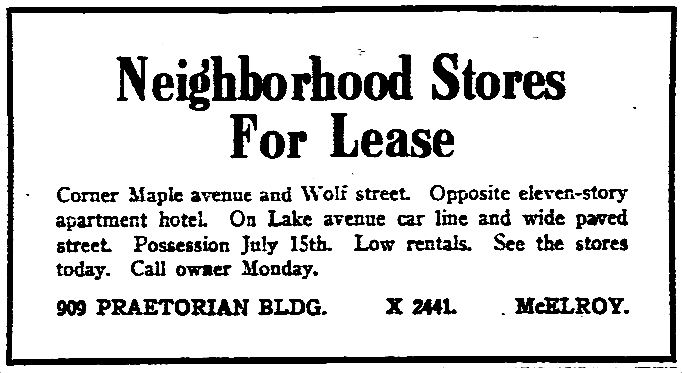
The Stoneleigh Pharmacy was the anchor of a small strip of shops which were built in 1923 at Maple and Wolf, directly across from the brand-new Stoneleigh Court, which, though now a hotel, began life as a very fashionable apartment-hotel (an apartment house with hotel amenities). There were concerns about a shopping strip in what was then a residential area, and the city tried to stop the construction. (Most images are larger when clicked.)
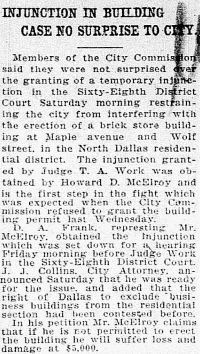
maple-and-wolf_dmn_022523_constructionDallas Morning News, Feb. 25, 1923

But the city lost and the building was completed.
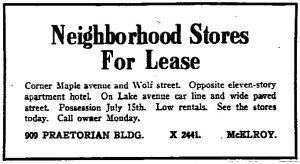
maple-and-wolf_dmn_070823_for-lease
DMN, July 8, 1923

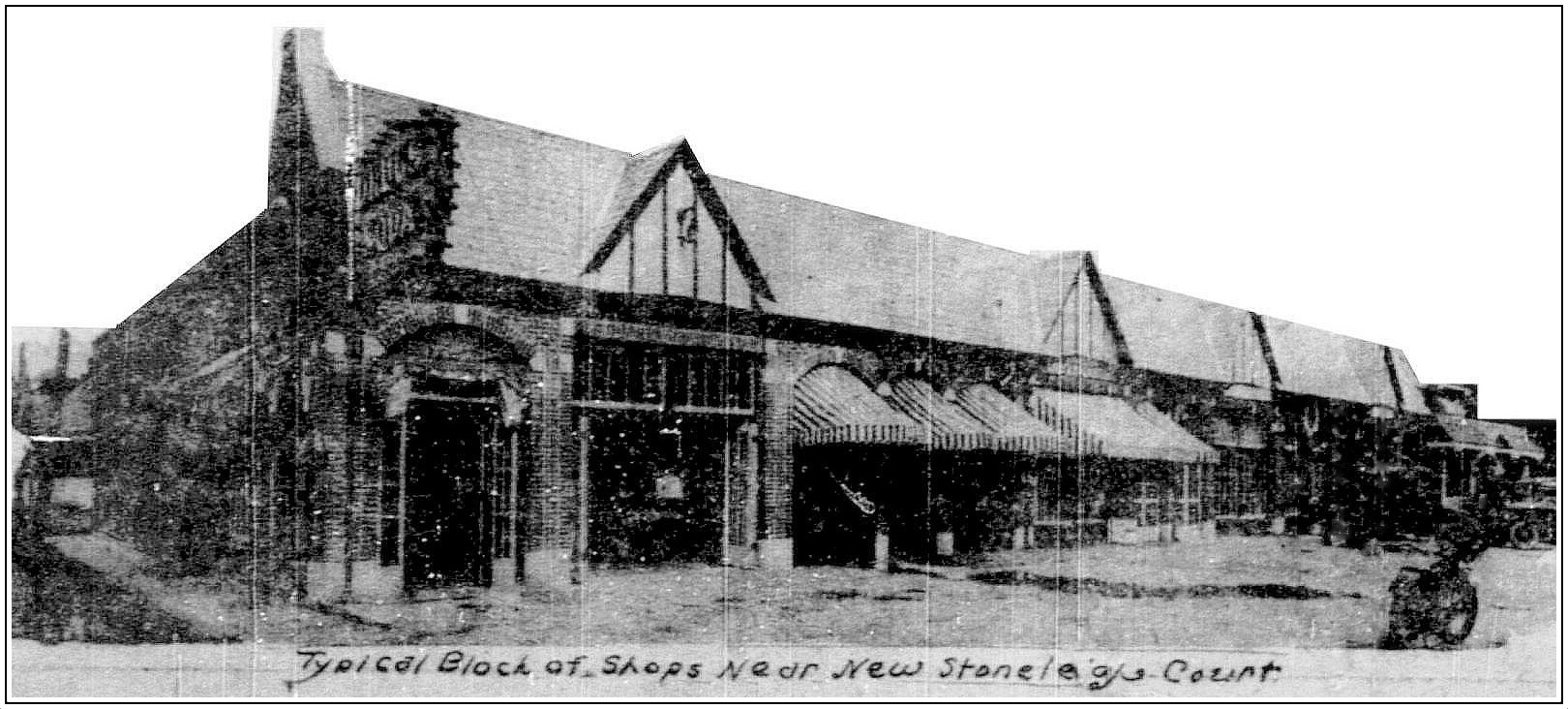
I looked everywhere to find a period photo, and this is the best I could do — it appeared in a special section of The Dallas Morning News which coincided with the opening week of the Stoneleigh Court.

stoneleigh-drug-store_stoneleigh-court-adv-supp_101423_croppedDMN, Oct. 14, 1923

Here’s a drawing:

stoneleigh-drug-store_101423_adv-supp-det
DMN, Oct. 14, 1923

The interior of what was originally called the Stoneleigh Drug Store, at 2926 Maple Avenue:

stoneleigh-drug-store_101423_det_drawing
DMN, Oct. 14, 1923

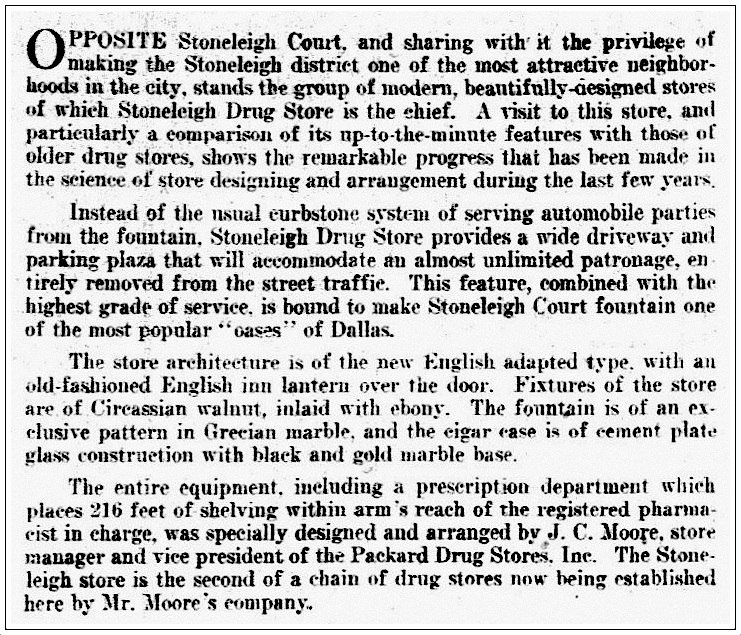
And a description of what sounds like a showplace of a drugstore, including Circassian-walnut fixtures inlaid with ebony:
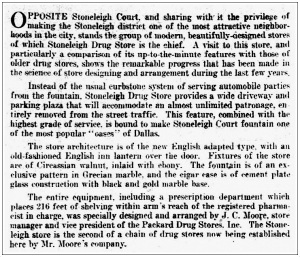
stoneleigh-drug-store_101423_pharmacy-det
DMN, Oct. 14, 1923

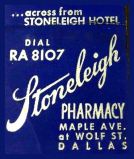
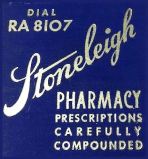
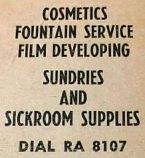
stoneleigh-pharmacy-label_jim-wheat

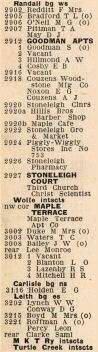
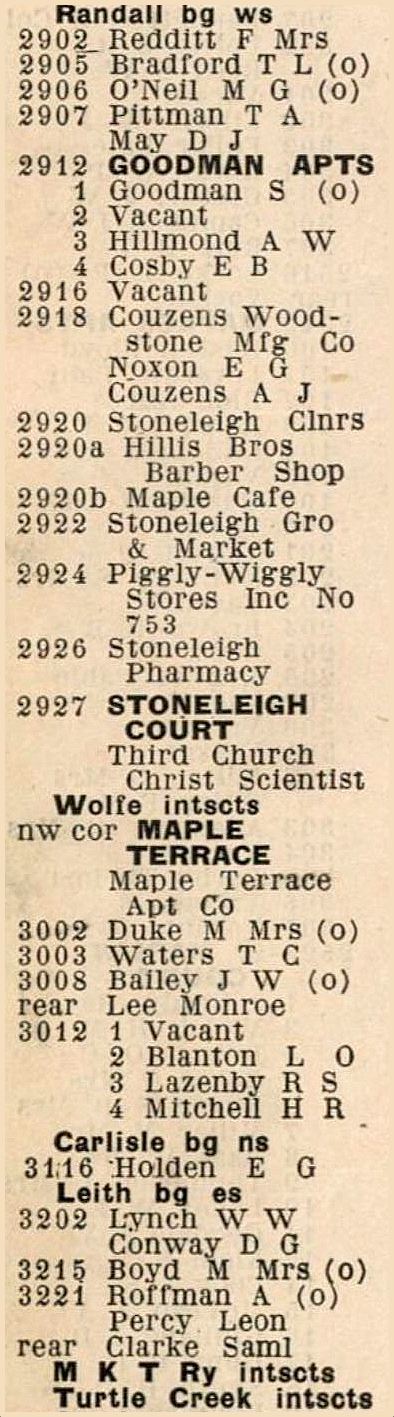
Its neighbors, in 1927:

stoneleigh-pharmacy_1927-directoryMaple Ave., 1927 Dallas directory

The drug store was owned by a company presided over by Royal A. Ferris, Jr., whose banker father had, until 1913, owned what many considered to be the most beautiful house in Dallas — Ivy Hall (which was situated at Maple and Wolf, diagonally across from the pharmacy, and which would become the site of the Maple Terrace Apartments in 1924).

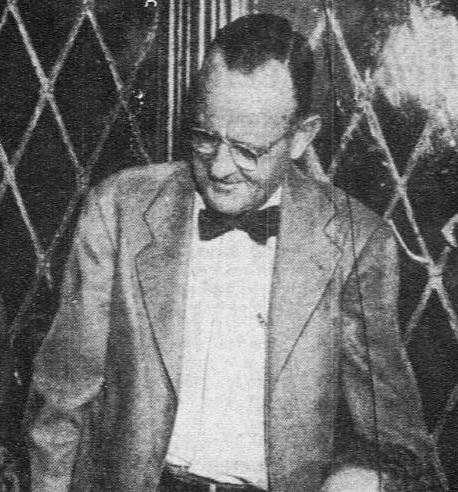
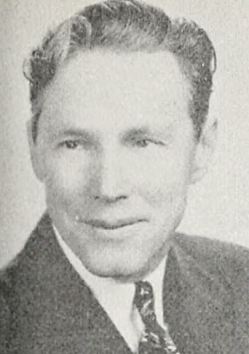
The drug store changed hands several times, until 1931 when pharmacist Henry C. Burroughs acquired it — and he was there for the long-haul, owning it until 1970. (H. C. Burroughs is also notable for having served on the very first Dallas City Council, having been elected in 1931 when the city of Dallas adopted the city council-city manager form of government.)
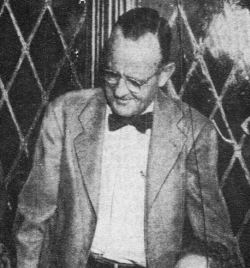
burroughs-h-c_1950sHenry C. Burroughs, 1950s

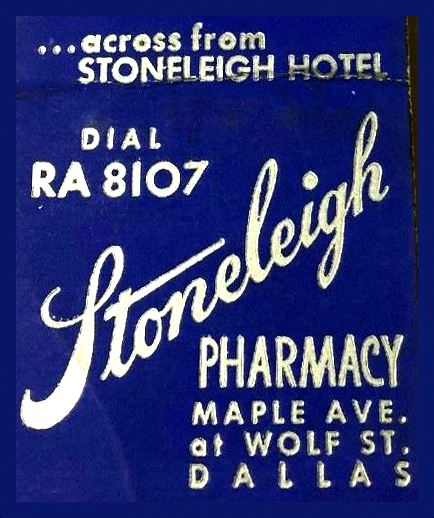
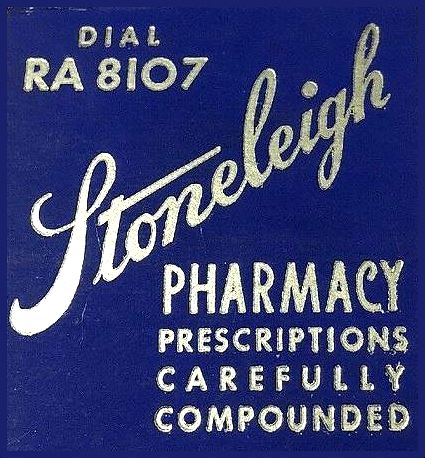
stoneleigh-pharmacy_fountain_matchbook_ebay_a        stoneleigh-pharmacy_fountain_matchbook_ebay_b

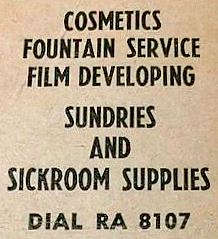
stoneleigh-pharmacy_fountain_matchbook_ebay_inside

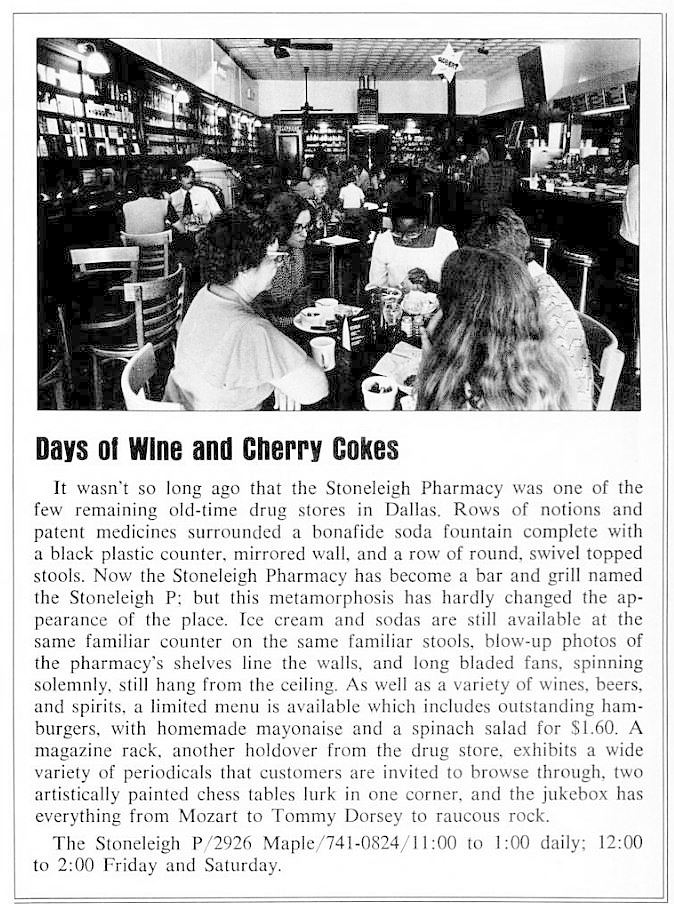
In 1973, the pharmacy stopped being a pharmacy when it was purchased by a group of investors including Tom Garrison, who renovated the old drugstore into a neighborhood bar/pub, while still retaining a drugstore “theme” and naming the new endeavor the Stoneleigh P. It was an immediate hit with the intellectual/artistic crowd, attracting denizens of the (then-funky) McKinney Avenue and Oak Lawn neighborhoods, Stoneleigh Hotel guests, Maple Terrace residents, and staffers from nearby KERA.
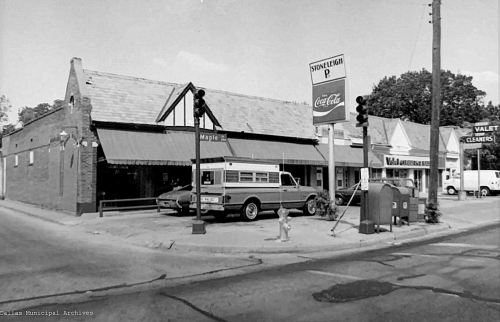
stoneleigh-p_dallas-municipal-archives_1970sDallas Municipal Archives

1973_stoneleigh-p_texas-monthly_july-1973Texas Monthly, July 1973

It was “happening” but not obnoxious — although the Lou Lattimore ad below — featuring a “glitter jeans” “knockoutfit” (yes, “knockoutfit”) which “can make you outsparkle the gang at the Stoneleigh P” — might have one thinking otherwise. (It was the ’70s, man.)

stoneleigh-p_lou-lattimore-ad_jan-1974
Lou Lattimore ad, January 1974

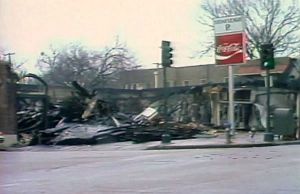
Everything seemed to be going along swimmingly when, in the early hours of January 26, 1980 a huge fire engulfed the group of buildings on the southeast corner of Maple and Wolf — according to newspaper reports, at least 15 “major pieces of equipment” and 75 firefighters responded to the multi-alarm fire. The 57-year-old building burned to the ground. Watch the WBAP-Ch. 5 News report here (with additional footage here).

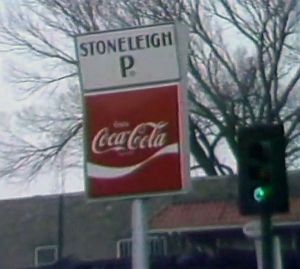
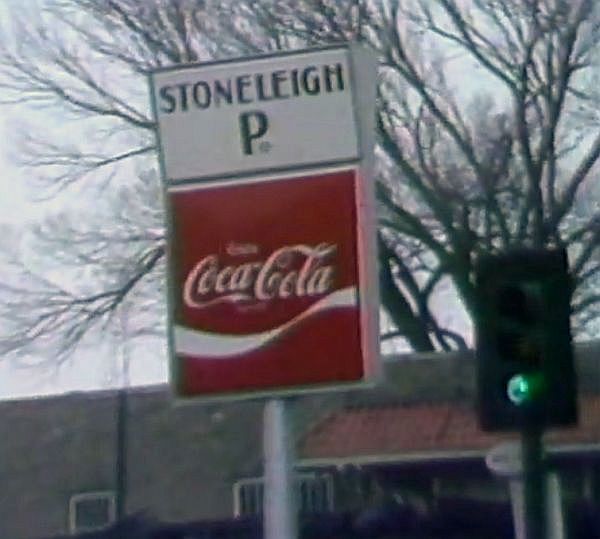
A few screenshots from the above-linked news report:

stoneleigh-p-fire_012680_ch-5-news_portal

stoneleigh-p-fire_012680_ch-5-news_portal_intersection

stoneleigh-p-fire_012680_ch-5-news_portal_sign

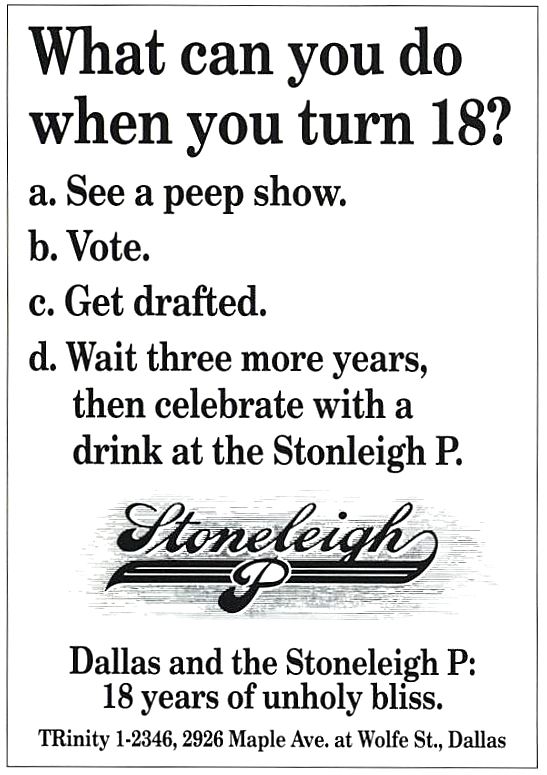
Garrison rebuilt, and the new Stoneleigh P opened in the summer of 1981. It still stands and is something of a Dallas institution. It’s now an unbelievable 46 years old. Here’s how it celebrated its 18th anniversary:
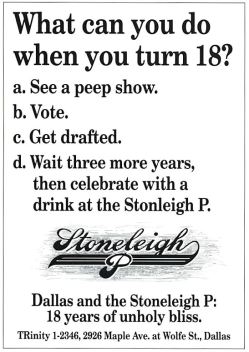
stoneleigh-p_ad_1991
1991 ad

I’m certainly glad it’s still around. I’ve got some great memories of the Stoneleigh P (except, maybe, for that one New Year’s Eve in the ’80s…).

stoneleigh-p_aug-2015_bosse-photoPhoto by Paula Bosse

*

2023 UPDATE: The P will be moving in 2024 — the location has not yet been announced. Keep an eye on their website!

***

Sources & Notes

Top two photos found on eBay. They appear to have been taken by the Liquid Carbonic Corporation, manufacturers of soda fountains — read all about the company here.

Stoneleigh Pharmacy label (with red letters) is from Jim Wheat’s Dallas County Texas Archives site. (J. T. Covington was associated with the pharmacy from about 1925 to 1927.)

1970s photo from the Dallas Municipal Archives Facebook page; from the Historic Preservation Office collection (photos made by the City of Dallas as part of a survey of historic buildings).

Videotape screenshots are from the WBAP-Ch. 5 News report on the 1980 fire; footage is from the KXAS-NBC 5 News Collection, UNT Libraries Special Collections, Portal to Texas History.

Photo showing the interior of the Stoneleigh P was taken in 2015 by Paula Bosse.

An entertaining interview with Stoneleigh P owner Tom Garrison can be found in the 2017 D Magazine article “History of Dallas Food: Tom Garrison’s Stoneleigh P” by Nancy Nichols, here.

Stoneleigh P website is here.

stoneleigh-p-fire_sign_012680_ch-5-news_portal

*

Copyright © 2019 Paula Bosse. All Rights Reserved.

Temple Emanu-El, At the “Northern Limits of Dallas” — 1957

temple-emanu-el_life-mag_1957-aerial_crop
Temple Emanu-El, 1957… (click for larger image)

by Paula Bosse

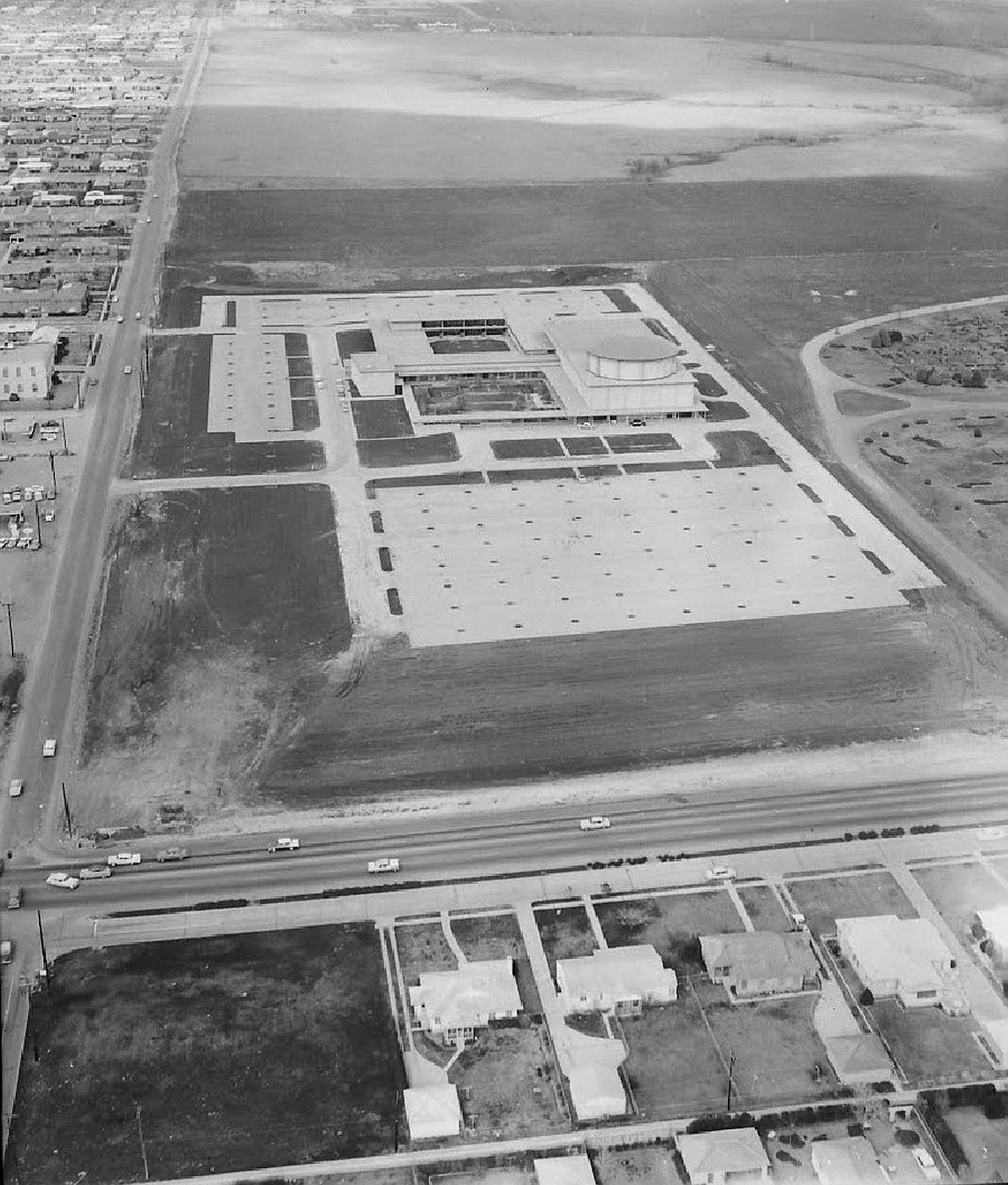
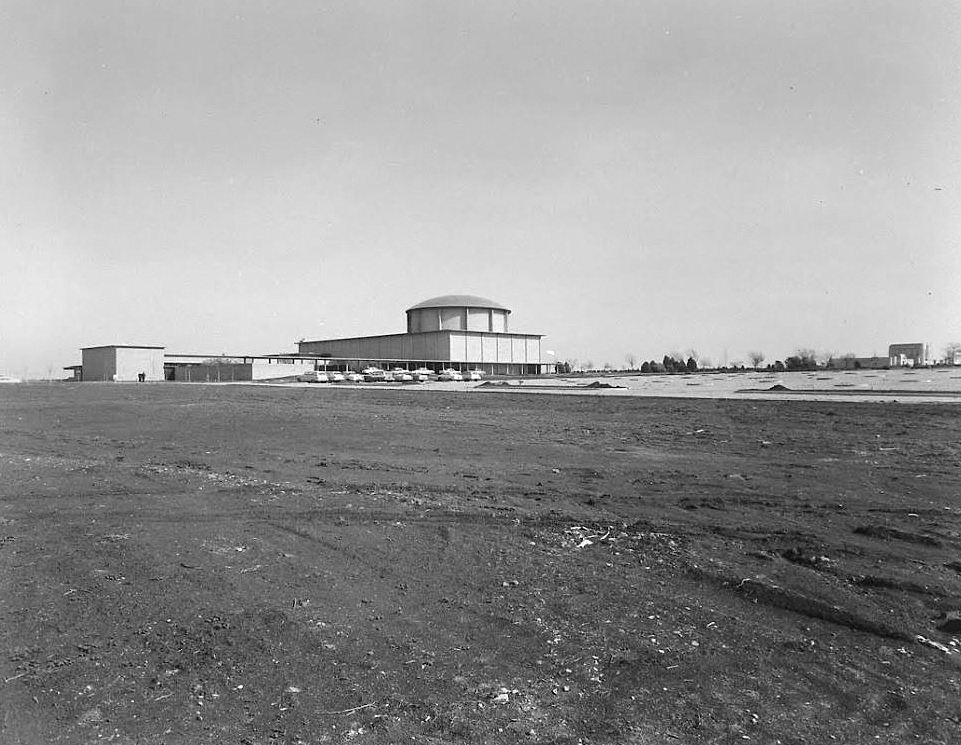
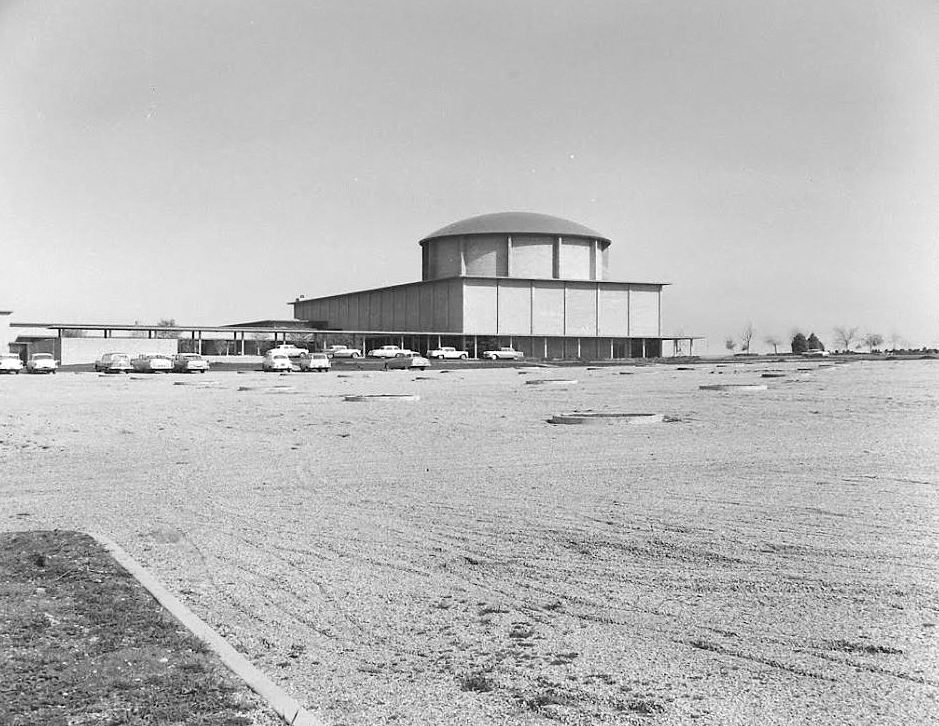
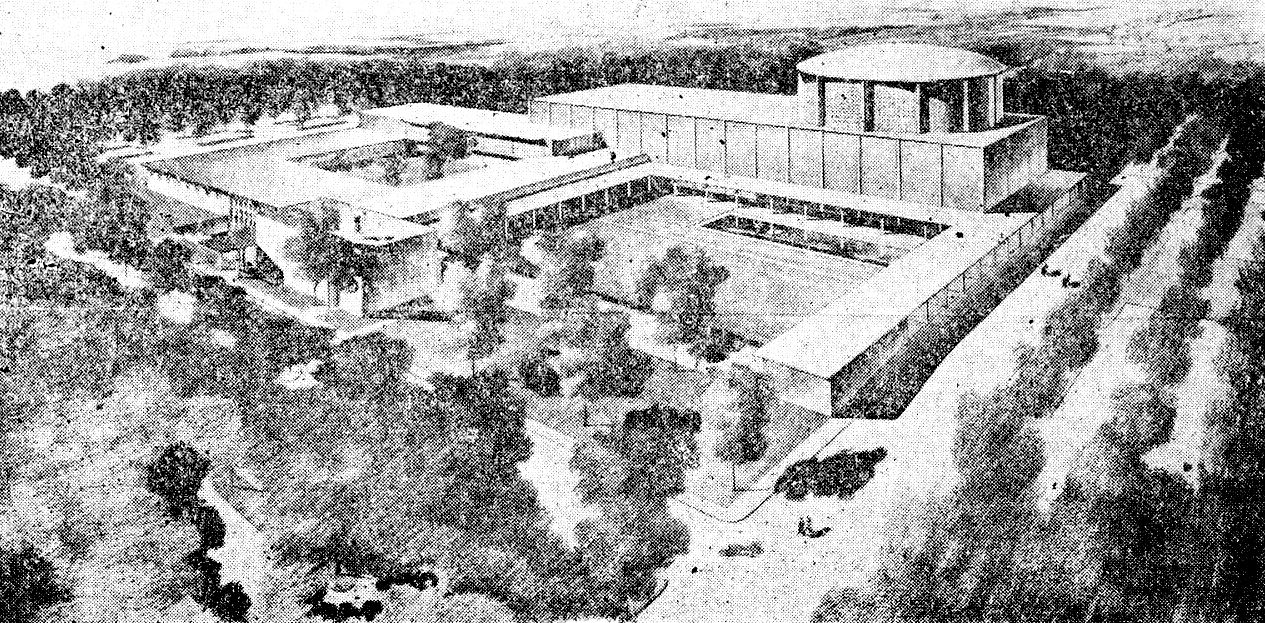
Above, the new, not-yet-landscaped Temple Emanu-El in 1957, at the northeast corner of Hillcrest and Northwest Highway; this aerial view is looking north from Northwest Highway. (The view today, via Google Earth, is here.)

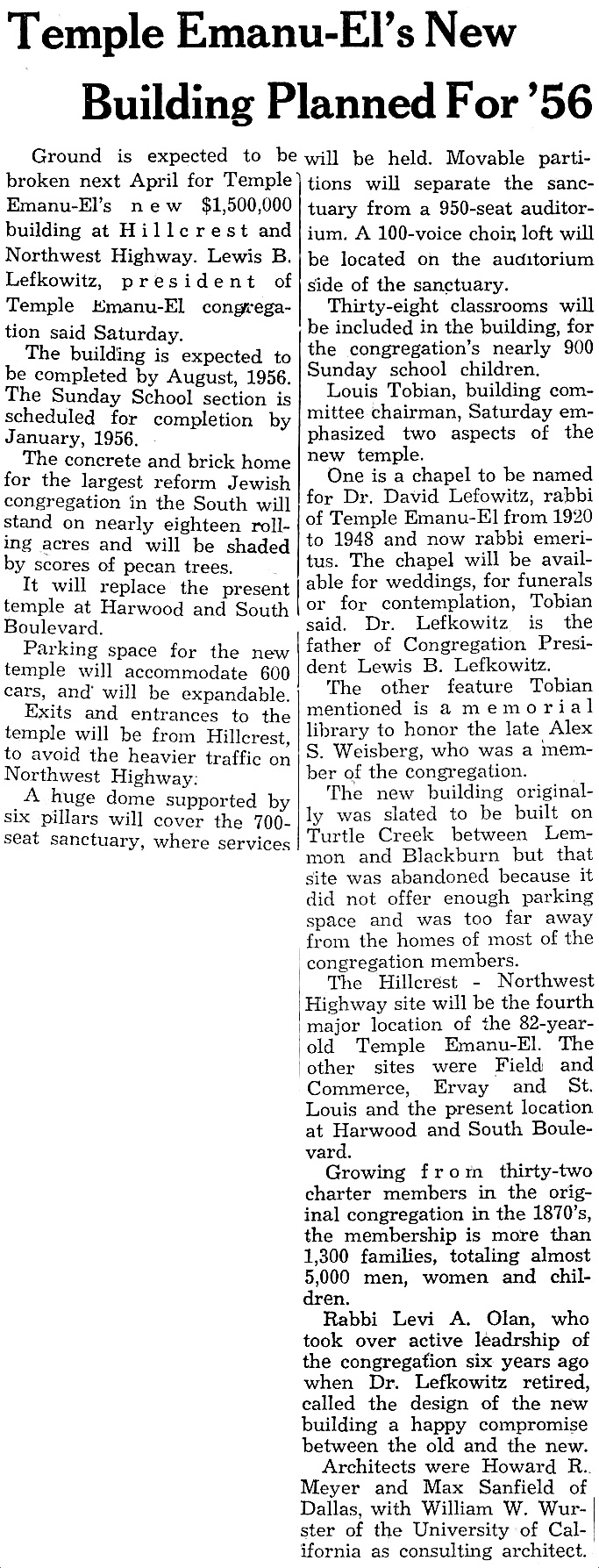
In 1952 Temple Emanu-El’s congregation purchased eighteen rolling acres of Caruth farmland from Earle Clark Caruth, at what was then described as “the northern limits of Dallas.” This was after a lengthy period of consideration by leaders of the congregation over whether they should accept the gift of developer and artist Sylvan T. Baer of eleven “wooded and rolling” acres in Oak Lawn along Turtle Creek which he had offered as the site of a new temple. Even though Baer’s attractive site was more centrally located than their long-time South Dallas location (a definite bonus, as the congregation wished to move closer to the North Dallas area where most of their members now lived), the Turtle Creek site was ultimately deemed to be too small, too far from the North Dallas area they preferred, and too restrictive as far as the ability to finance construction. (Though rejected as a religious site, Baer’s very pretty land eventually became the home of the Dallas Theater Center.)

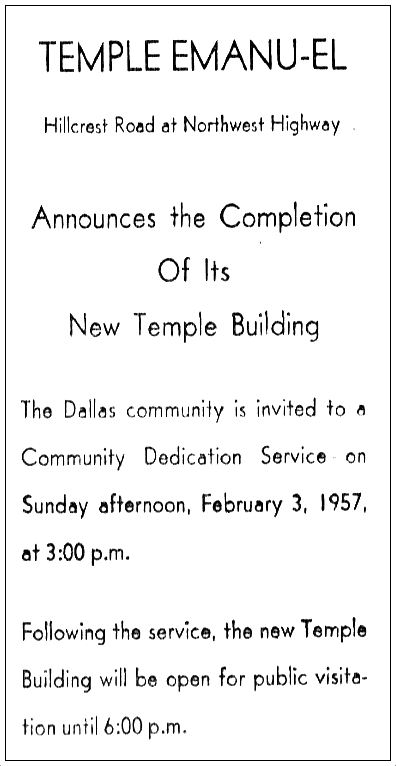
Temple Emanu-El — home to the largest reform Jewish congregation in the South — hired Dallas architects Howard R. Meyer and Max M. Sandfield to design their new home (with William W. Wurster of the University of California serving as consultant); the project was announced in 1954, and dedication ceremonies of the finished building(s) took place in February, 1957, probably around the time the photos below and above were taken.

temple-emanu-el_life-mag_1957

temple-emanu-el_life-mag_1957_b

temple-emanu-el_020257
Feb. 2, 1957

*

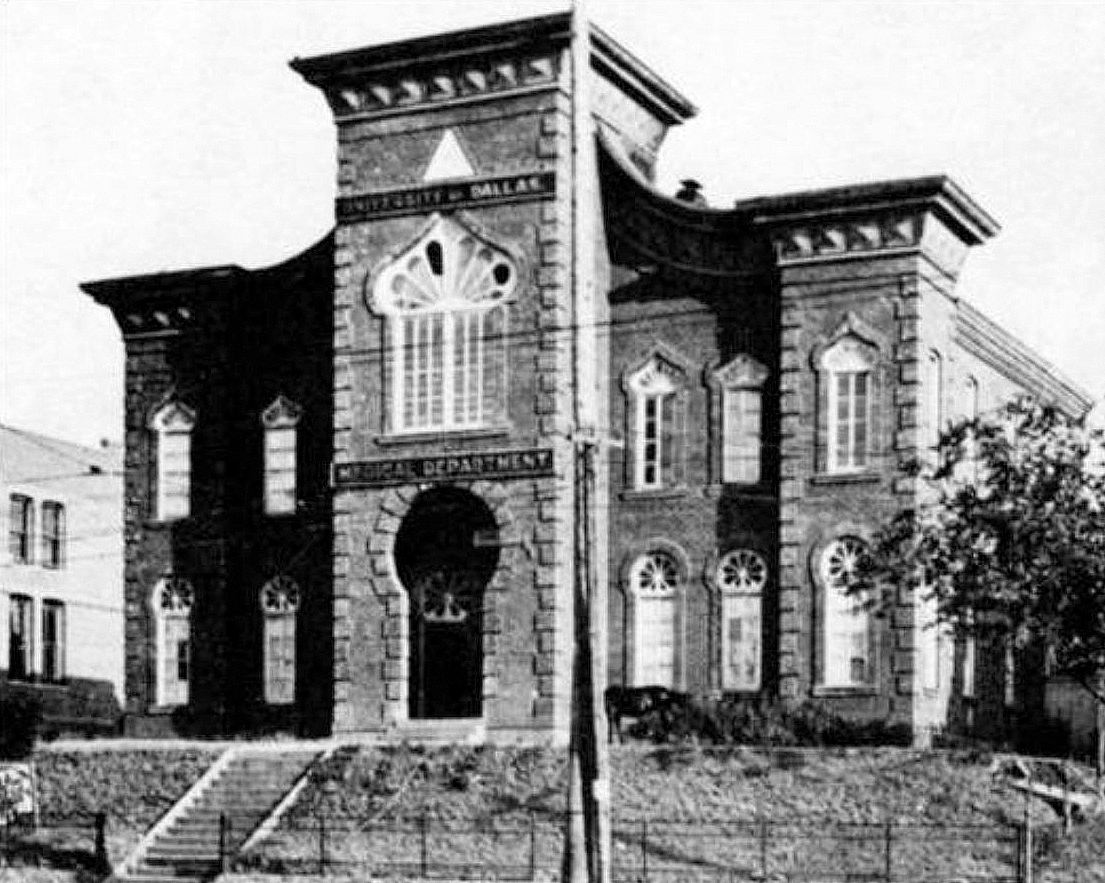
Below, the first Temple Emanu-El, built in 1876 at Commerce and Field, designed by architect Carl G. DeGrote. It was dedicated May 28, 1876 (read the extensive coverage of the ceremonies as printed in the Dallas Herald here — click “zoom” to read). After a move to their next location, the old temple became the University of Dallas Medical Department in 1900; it was demolished around 1906.

temple-emanue-el_first-synogogue
Temple Emanu-El, first location

temple-emanu-el_univ-dallas-med-dept_dhs-via-nih
Later, as a medical school (DHS photo via NIH)

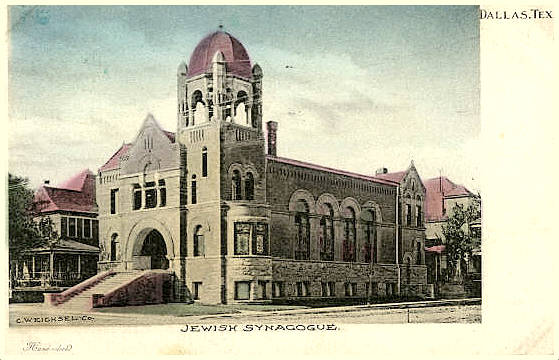
The second site was at the corner of S. Ervay and St. Louis, in The Cedars, built around 1898, designed by architects J. Reilly Gordon, H. A. Overbeck, and Roy Overbeck. Following another move in the ‘teens, the building was converted into a Unitarian Church; it was demolished in 1961 to make room for R. L. Thornton Freeway.

temple-emanu-el_second-location

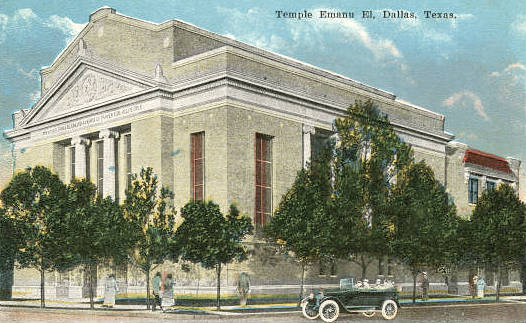
The congregation moved into its third location about 1917: a new Hubbell & Greene-designed building at South Boulevard and S. Harwood, where they remained until the move to the new Hillcrest location. This building was demolished in 1972.

temple-emanu-el_third-location_south-blvd-harwood

The congregation officially moved to their fourth (and current) location, in North Dallas, at the beginning of 1957, led by Rabbi Levi A. Olan.

temple-emanu-el_tx-jewish-post_093054_drawing_sm

temple-emanu-el_tx-jewish-post_093054_announcement
Texas Jewish Post, Sept. 30, 1954 (click to read)

***

Sources & Notes

First three photos by Life magazine photographer Joe Scherschel, © Time Inc. More than 150 photos from this assignment can be found here. Supposedly there was a cover-story on the new building, but all I’ve found is this one-page photo-with-caption from the Feb. 25, 1957 issue. If anyone has info on a lengthier Life story, please let me know.

Drawing and article announcing the new Temple Emanu-El are from the Texas Jewish Post (Sept. 30, 1954), here. (UNT’s Portal to Texas History has fully-scanned issues of the DFW-centric Texas Jewish Post — 1950-2011 — accessible here. All issues are searchable, and all have articles, photos, and ads — it is a fantastic resource.)

Read a description of the just-completed first Dallas synagogue from the Dallas Herald (May 28, 1876), here (column 4); read the surprisingly lengthy coverage of the official opening ceremonies, which includes a history of the events which led to the building’s construction, in the May 30, 1876 Herald, here (columns 1-4). (To read the articles, click the “zoom” tab above the scanned page.)

Read the Temple Emanu-El entry in the Handbook of Texas here.

The history page of the Temple Emanu–El website is here.

Head to the Dallas Morning News archives to read about the art and architecture of Temple Emanu-El in the article “A Temple of Art, Architecture — The Forms Merge In Well-Designed Emanu-El” by architecture critic David Dillon (DMN, Dec. 24, 1984).

A comprehensive history of Temple Emanu-El and Jewish life in Dallas (well-illustrated with photographs) can be found in the book A Light in the Prairie, Temple Emanu-El of Dallas, 1872-1997 by Gerry Cristol (Fort Worth: TCU Press, 1998).

All images are larger when clicked.

*

Copyright © 2019 Paula Bosse. All Rights Reserved.
 

Allen & Cochran: Allen Street Drugs, St. Peter’s Academy, St. John Baptist Church — ca. 1946

allen-street-drugs_1920-allen_ca-1946_dpl
Allen Street Drugs at Allen & Cochran… (photo: Dallas Public Library)

by Paula Bosse

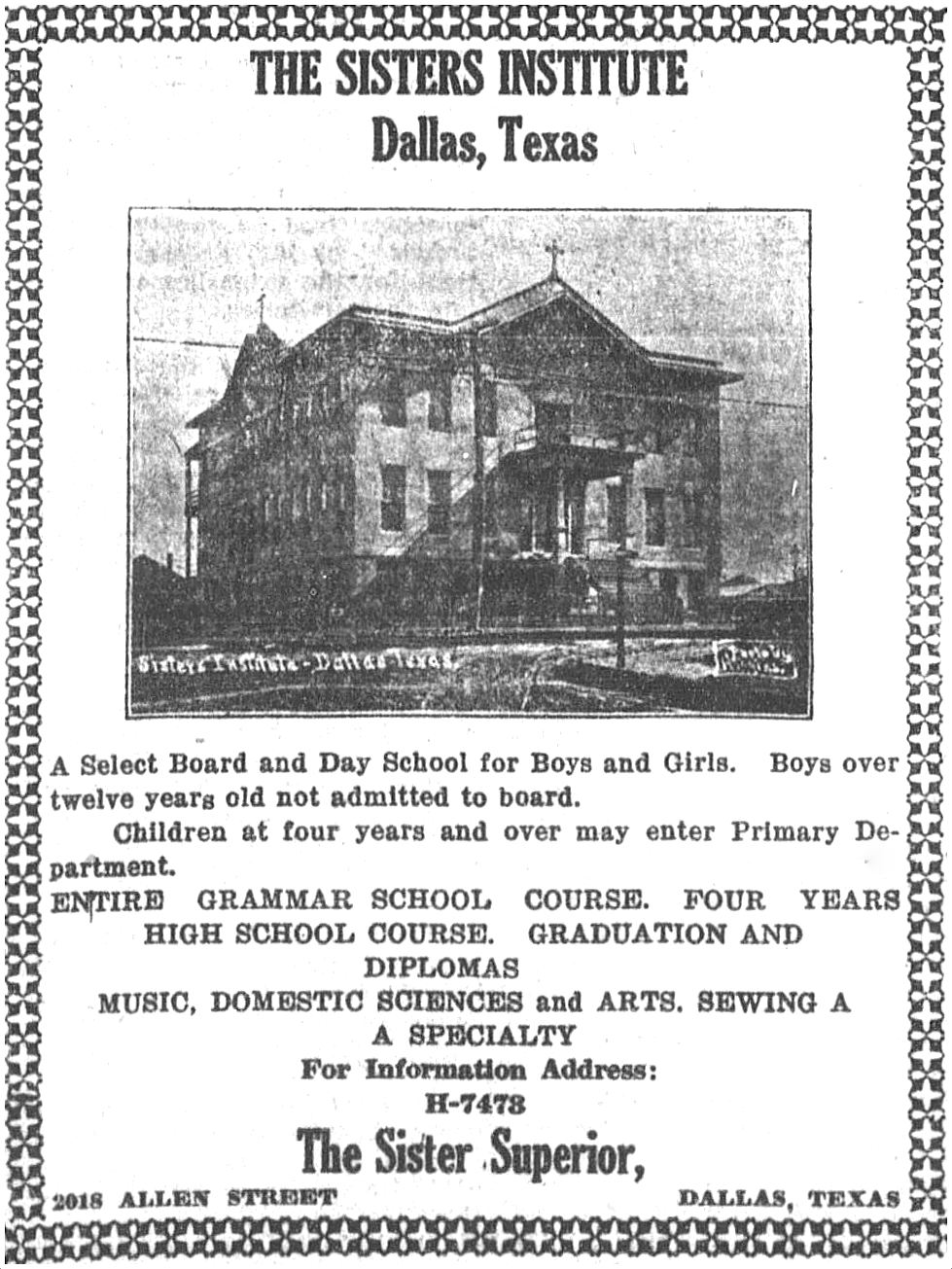
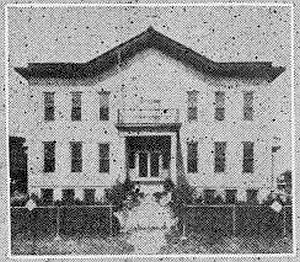
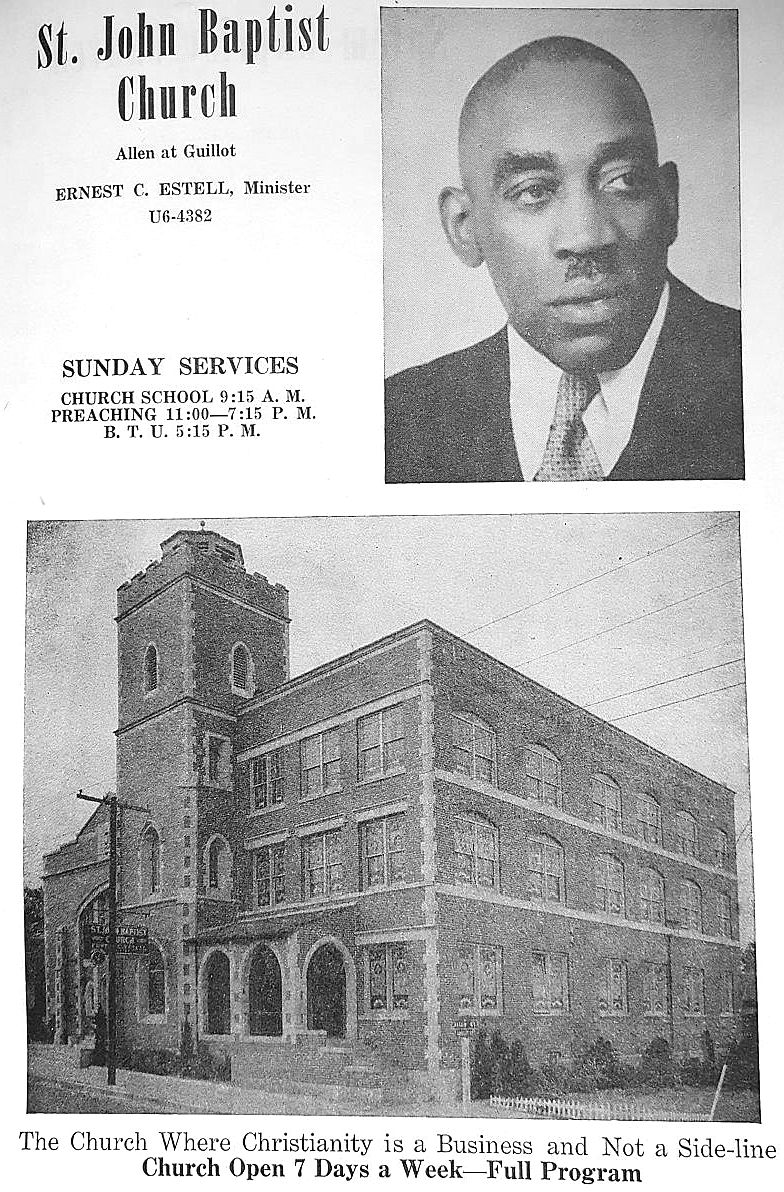
Above, a group of men and boys gathered outside Allen St. Drugs — 1920 Allen Street, at the corner of Cochran — posing for famed Dallas photographer Marion Butts. Behind the group is St. Peter’s Church and St. Peter’s Academy, a Catholic church and affiliated school for black children (at 2018 Allen); facing St. Peter’s (but out of frame) is St. John Baptist Church (2019 Allen). This was a busy and well-traveled intersection for the African American neighborhood of “North Dallas.”

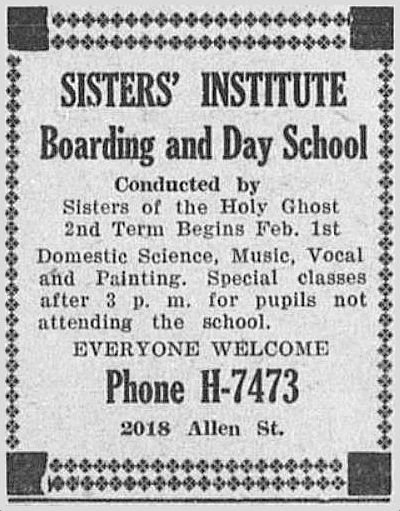
St. Peter’s Academy — which was still around into the late 1980s — was built in 1908, largely due to the urging of black entrepreneur Valentine Jordan and his wife Mary Jordan who were impressed with the education provided to the (white) students attending the Catholic Ursuline Academy; they requested that Bishop E. J. Dunne open a similar school for black children, and Bishop Dunne obliged. Before it was named “St. Peter’s Academy,” it was known as The Sisters’ Institute (named for the Sisters of the Holy Ghost). Elementary and high school classes were taught, and boarding options were offered to girls. In the mid 1960s the school had 600 (predominantly Protestant) students.

sisters-institure_dallas-express_090624
Dallas Express, Sept. 6, 1924

sisters-institure_dallas-express_082721
Dallas Express, Aug. 27, 1921

st-peters-church_dallas-express_010623
Dallas Express, Jan. 6, 1923

st-peters-church_dallas-express_011323
Dallas Express, Jan. 13, 1923

st-peters-acad_negro-in-tx_1935_lg
St. Peter’s Academy, circa 1935

The large St. John Baptist Church was a fixture of the community, led for many years by its pastor Ernest C. Estell.

church_st-john-baptist-church_negro-directory_1947-48
Dallas, Texas Negro City Directory, 1946-47

Sadly, these buildings are no longer standing. St. Peter the Apostle is located in a new building at Allen and what is now Woodall Rodgers Freeway, and much of their congregation is of Polish ancestry, with services conducted in both Polish and English. The drugstore seen at the top sat on land razed for construction of Woodall Rodgers. The view today can be seen here.

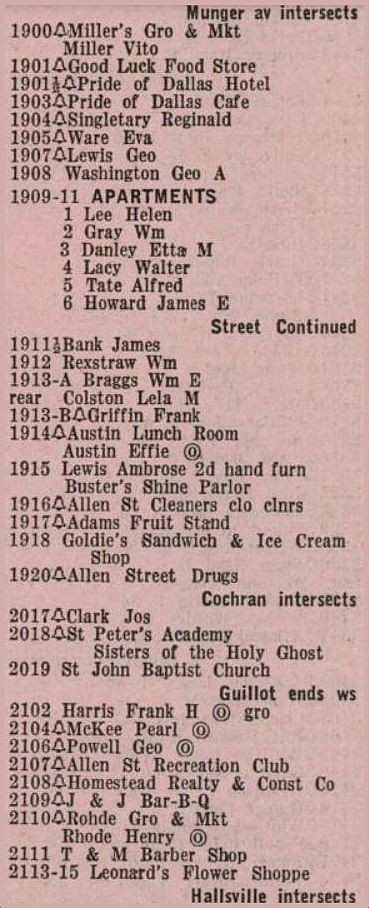
allen-cochran_1944-45-directory
Allen St., between Munger & Hallsville — 1944-45 Dallas directory

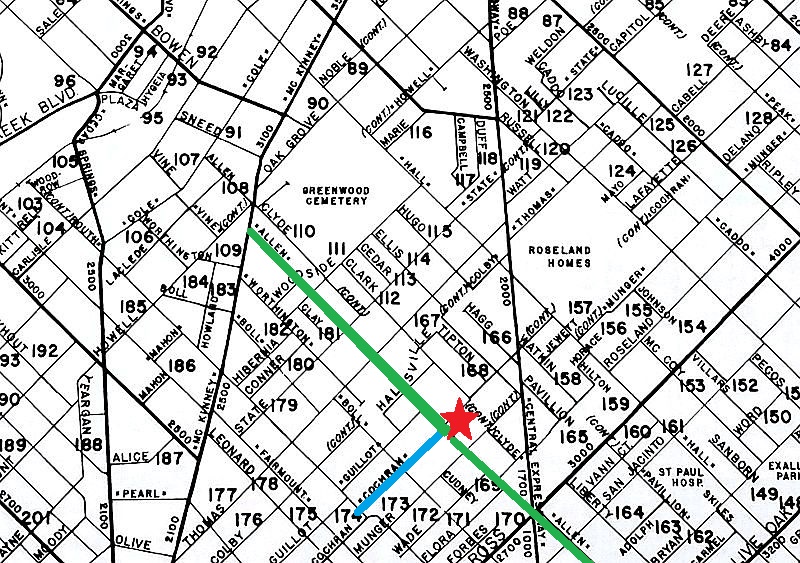
allen-cochran_1952-mapsco
1952 Mapsco (star indicates location of Allen St. Drugs)

***

Sources & Notes

Top photo by Marion Butts, from the Marion Butts: Lens on Dallas Collection, Dallas Public Library. More information on the work of Mr. Butts may be found here.

Most images are larger when clicked.

*

Copyright © 2019 Paula Bosse. All Rights Reserved.

Caterpillars On the Job at Ross and Market — 1922

caterpillar-ad_1922_photo
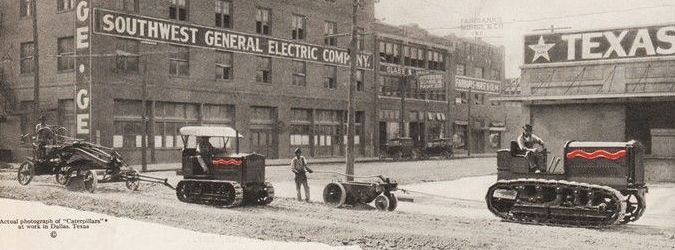
Roadwork in the warehouse district…

by Paula Bosse

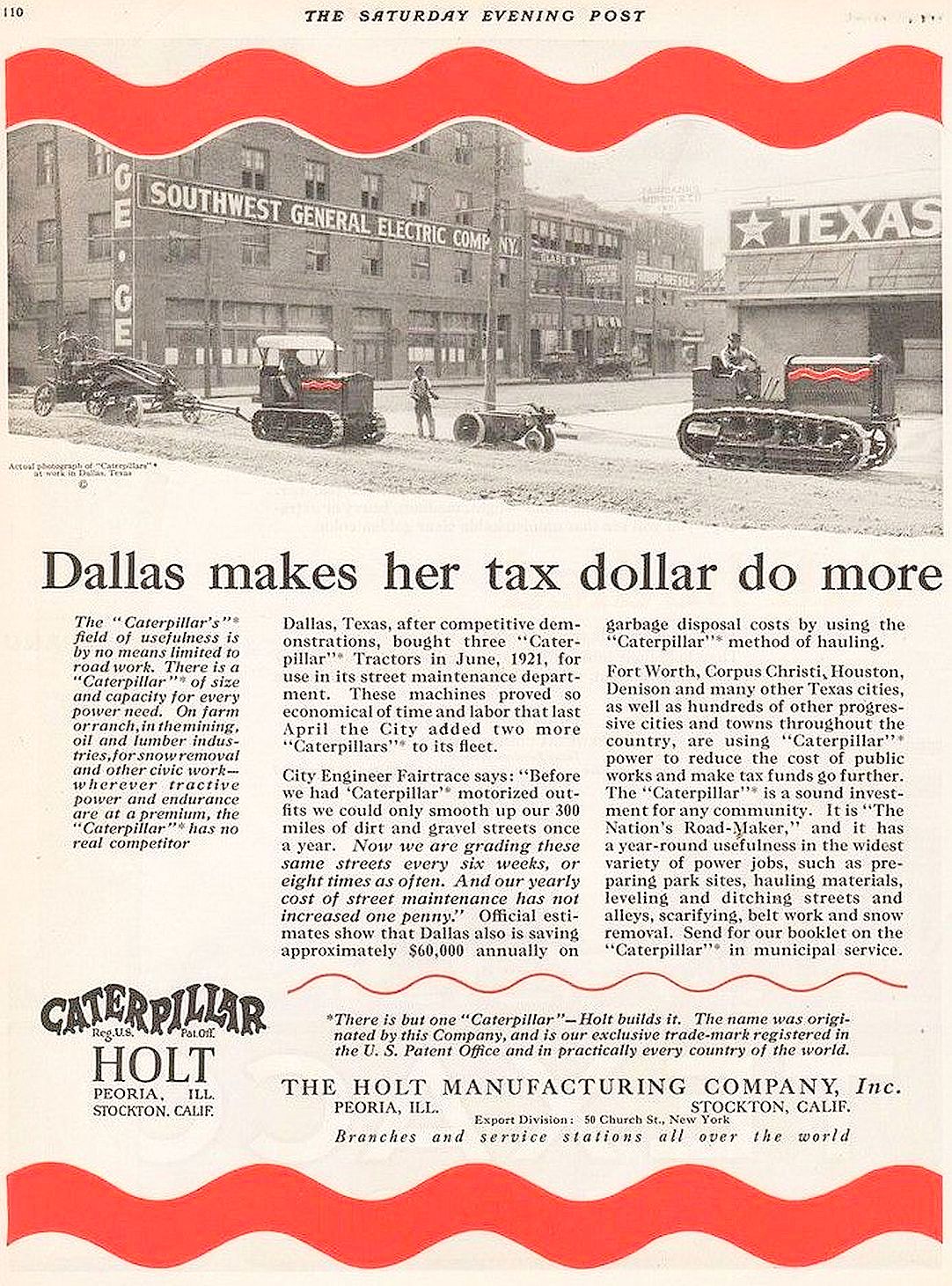
I’ve loved vintage and historical advertisements since I was a child. Since becoming more focused on Dallas history, I’m always excited to find old ads with photos of recognizable Dallas locations, like the one below for Caterpillar tractors, which was printed in the Saturday Evening Post in 1922. (Click to see a larger image and read the rousing tribute given to these “motorized outfits” by City Engineer George D. Fairtrace.)

caterpillar-ad_1922

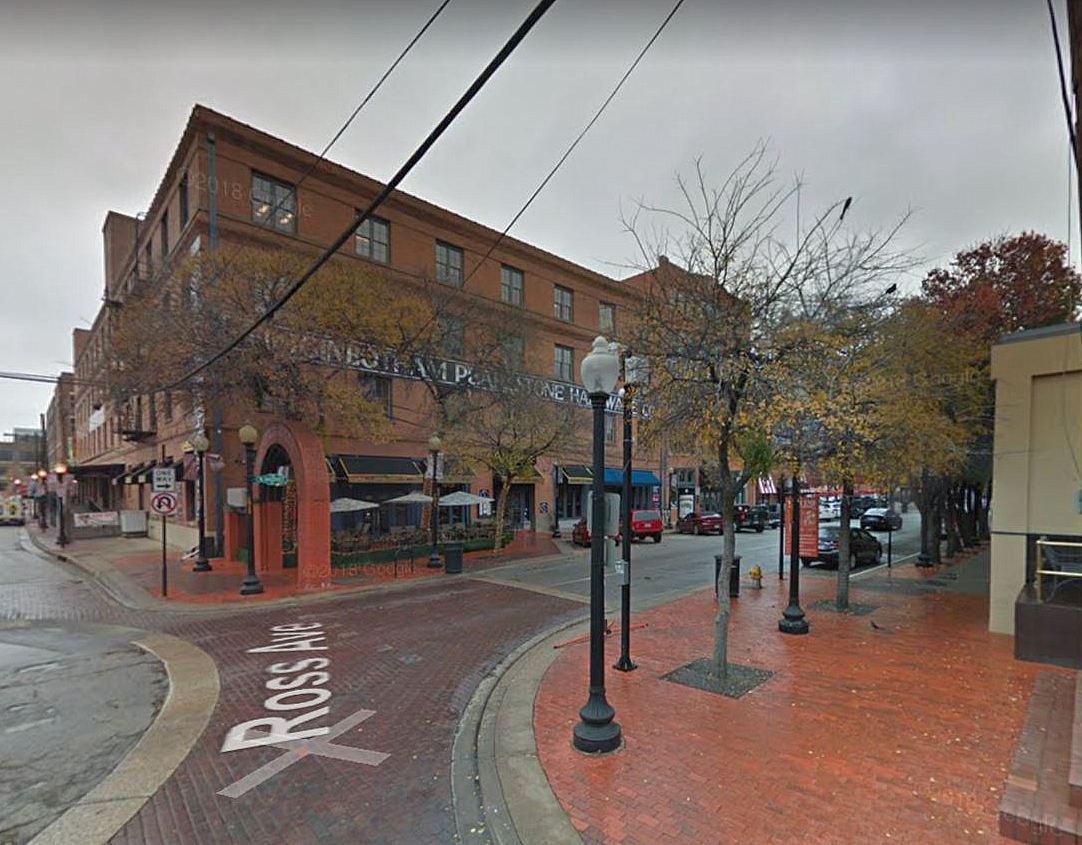
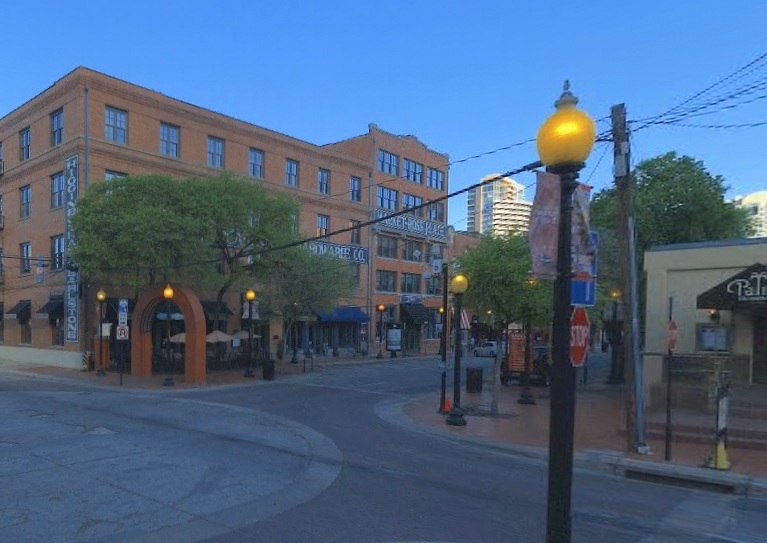
The photo shows a Dallas street maintenance crew grading Ross Avenue at the intersection of N. Market in 1922 (see this location on a 1921 Sanborn map here, and see the current Google Street View here). Every building seen in the photo is still standing in the Historic West End:

  • Southwest General Electric Co., 1701 N. Market (it was later occupied by the Higginbotham-Pearlstone Hardware Co.)
  • Federal Glass & Paint Co., 1709 N. Market
  • Fairbanks, Morse & Co., 1713 N. Market
  • Texas Ice & Cold Storage (partially visible at the right), 701 Ross (until recent years the long-time home of The Palm restaurant; in 1922 it was, I believe, a brand-new building)

dec-2016_googleGoogle Street View, 2016

ross-and-market_bing-streetside-view_2015Bing Streetside, 2015

Thank you, Caterpillar ad!

**

UPDATE (2/12/2024): I wrote about the history of the building seen in these photos in “The Higginbotham-Pearlstone Building.”

***

Sources & Notes

1922 Caterpillar ad found on eBay.

*

Copyright © 2019 Paula Bosse. All Rights Reserved.

Republic Bank Branding — 1955

republic-national-bank_employees-dresses_life-mag
When the uniforms match the exterior of the building…

by Paula Bosse

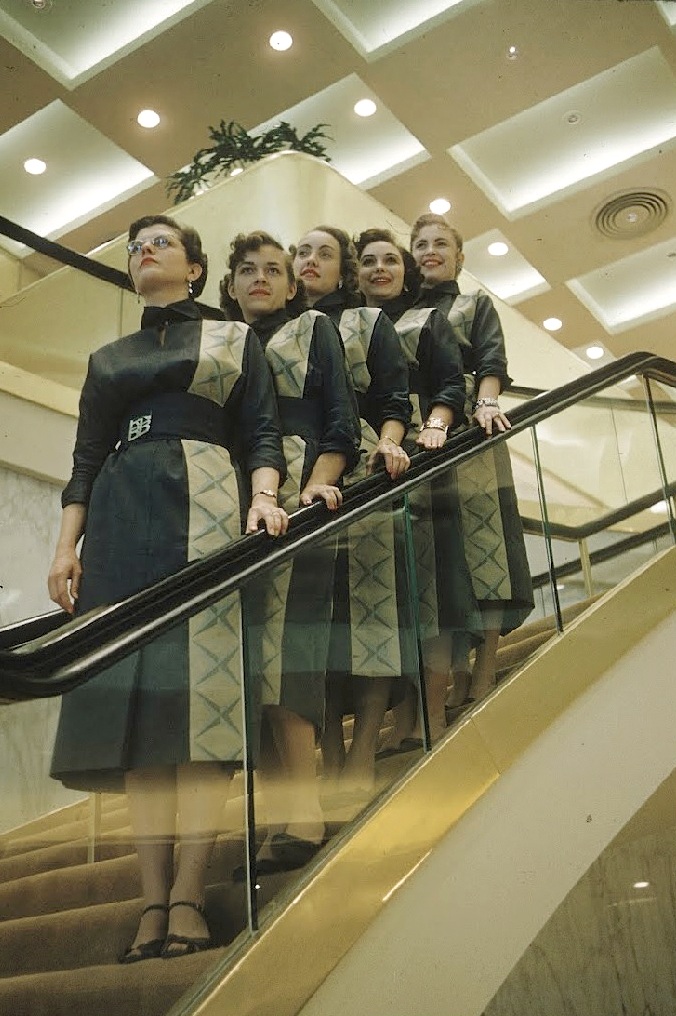
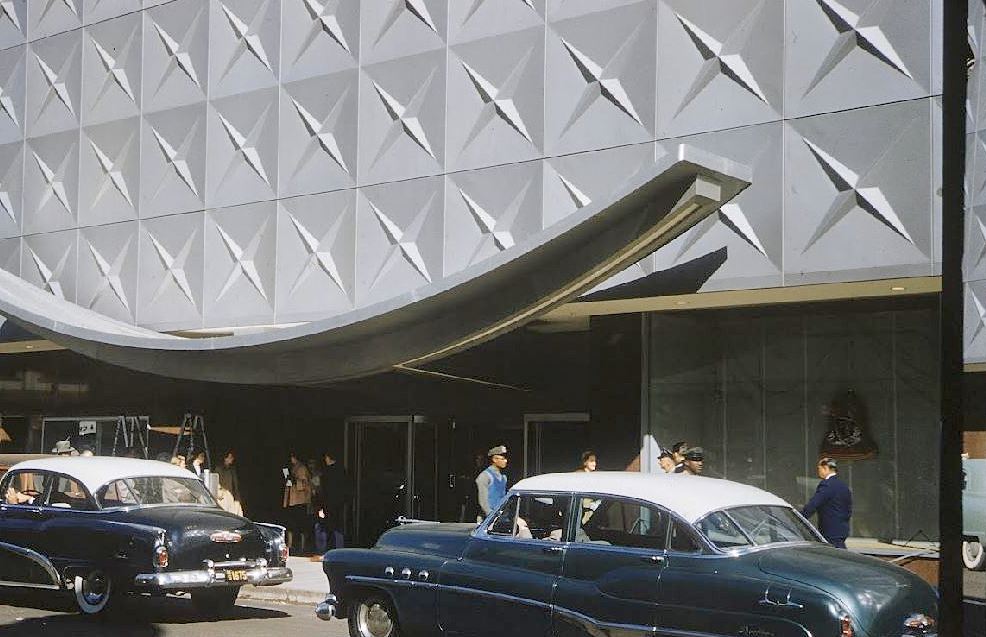
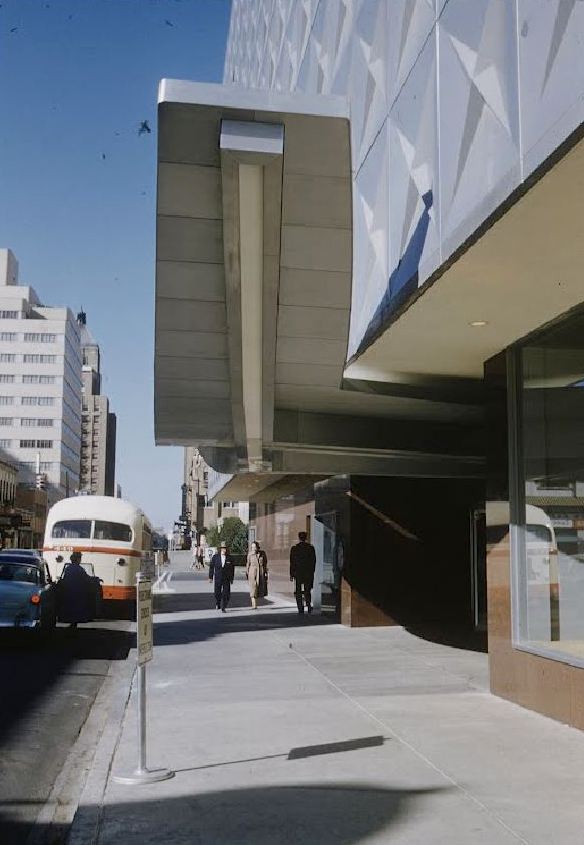
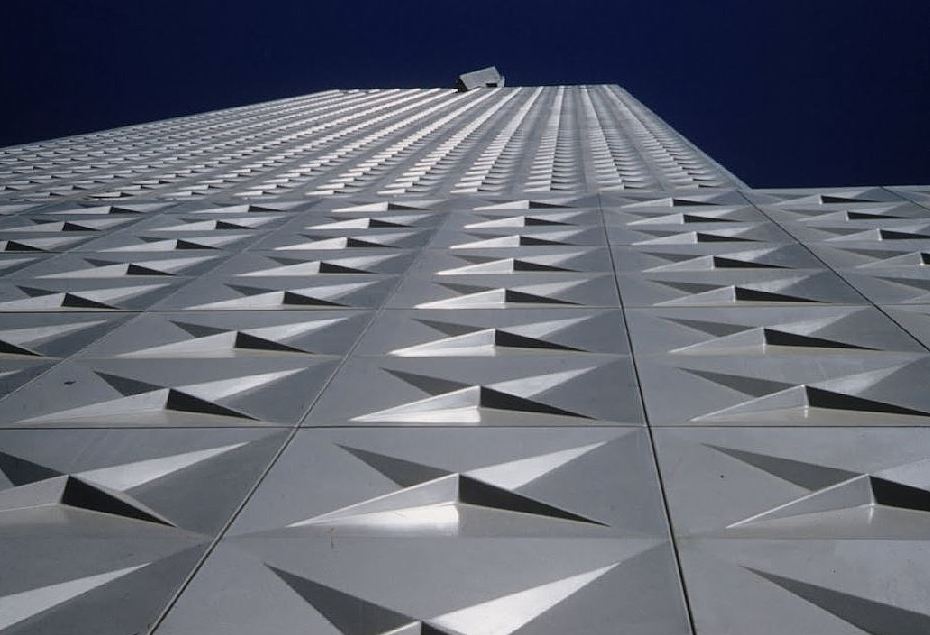
Republic National Bank opened its dazzling new building on N. Ervay in December, 1954. It was the tallest building in the city, the interior boasted gold leaf everywhere, and the exterior was covered with thousands of aluminum panels embossed with a distinctive four-pointed “star” shape.

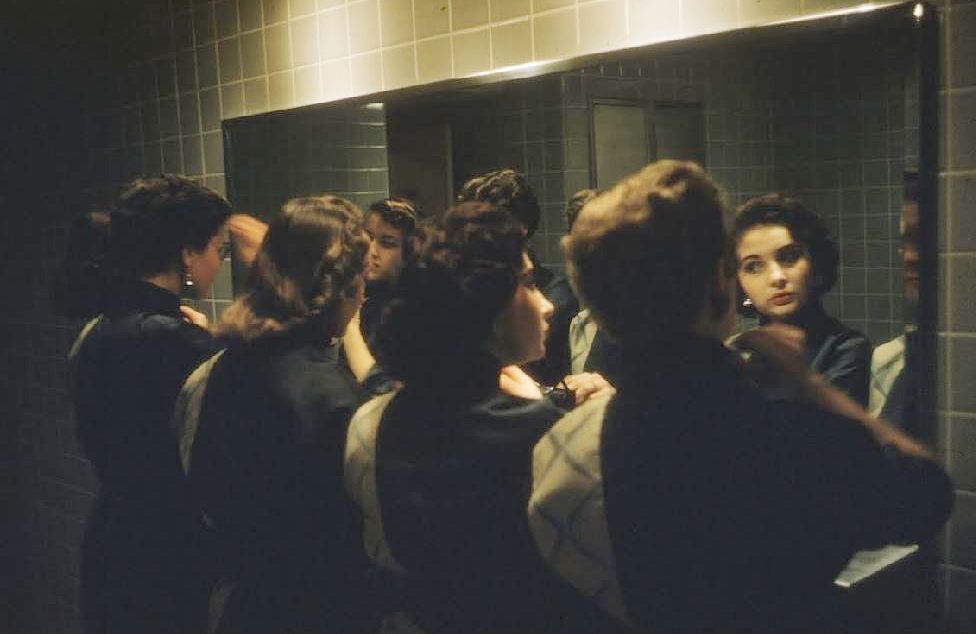
The building’s opening was quite the PR extravaganza — so much so that Life magazine sent photographer Joe Scherschel to take photos for the Feb. 28, 1955 article “Dazzler For Dallas.” Scherschel took a ton of photos, but only a handful made it into the article — one that didn’t make it is the one above which shows five young women on a staircase, all of whom are wearing dresses with those Republic Bank “stars” on them! I have to admit, I was a little more excited than I should have been to have noticed what I assume must have been a (fairly stylish) uniform (hostesses? elevator girls?). Kudos to whomever came up with that clever way to celebrate the bank’s home by incorporating one of the most distinctive elements of one of the city’s most distinctive buildings into something as easily overlooked as an employee’s uniform. That is attention to detail!

republic-national-bank_employees-uniforms_mirror_life-mag

republic-national-bank_entrance_life-mag_1955

republic-national-bank_sidewalk_1954_color_life-mag

republic-national-bank_aluminum-panels_life-mag

***

Sources & Notes

All photos were taken by Joe Scherschel for Life magazine, ©Time, Inc. A large collection of the photos Scherschel took while on assignment in Dallas for this article can be viewed here.

I wrote about those fantastic embossed aluminum panels in the Flashback Dallas post “The Republic Bank Building and Spain’s ‘Casa de Los Picos,'” here.

All photos are larger when clicked.

*

Copyright © 2019 Paula Bosse. All Rights Reserved.

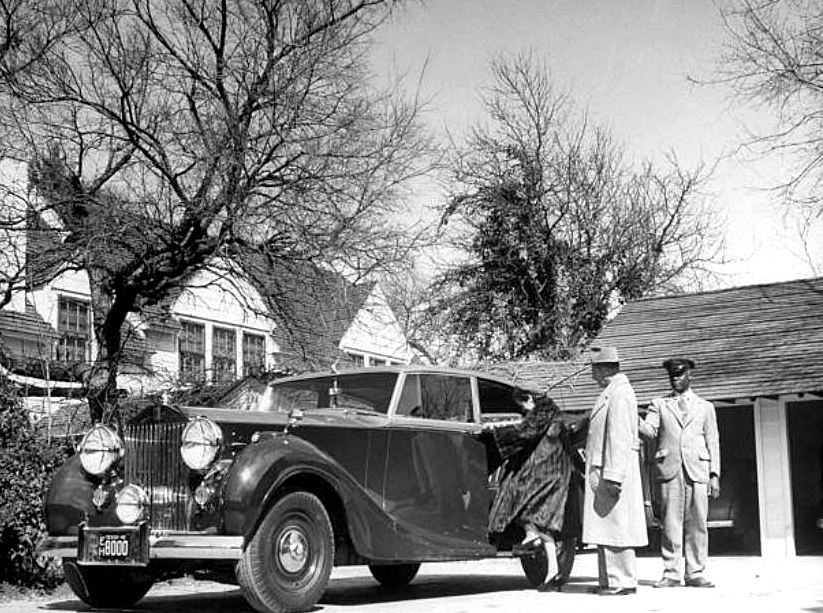
The Henry Russells Take Possession of Their Rolls Royce Silver Wraith — 1948

russell-henry_life-mag_alternate
The car, the couple, the driver … Preston Hollow, 1948

by Paula Bosse

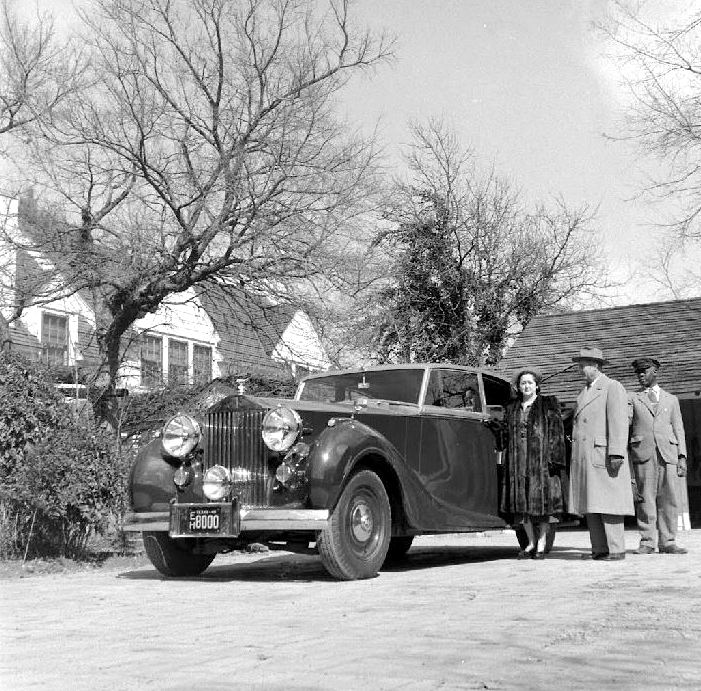
People seem to expect stories about painfully wealthy Texans to have larger-than-life outrageous elements. The April 5, 1948 issue of Life magazine devoted several pages to the Southwest’s “New Crop of Super Rich.” The photo showing Col. and Mrs. H. E. Russell at their Preston Hollow home appeared with the following caption:

New Rolls-Royce (price $19,500) was bought by Colonel Henry Russell of Dallas as a birthday present for his wife. She liked it because “it goes with my blue hat.” The Russells claim they are just “camping out” in their house, plan to turn it over to the servants and build a bigger one for themselves as soon as they get around to it.

One can only hope this was just gross exaggeration. Or a misinterpreted joke. Or just amusing fiction. Because if not … yikes. 

russell_rolls-royce_1948

Henry and Alla Russell had not been in Dallas very long when they took possession of their fabulous Rolls Royce — a Silver Wraith. When production of this model was announced in 1946, it was described as “the world’s most expensive automobile.” The Russell’s purchase made local news, with this blurb appearing in The Dallas Morning News on Feb. 12, 1948:

Col. and Mrs. H. E. Russell, 4606 Park Lane, have taken delivery on their new Rolls-Royce. Known as the Silver Wraith model, the silver and blue car features a bar, vanity and other luxuries. The price? $19,274. Dealers S. H. Lynch & Co. said the car was the first Rolls-Royce sold in the Southwest.

That postwar price would be the equivalent in today’s money of about $200,000. In a 1956 Dallas Morning News article, Frank X. Tolbert wrote that Col. Russell “is still driving his ’48 model, and it’s the only one we ever see around town although there may be one or two more” (DMN, “Rolls-Royce Hard To Find in State,” Nov. 15, 1956).

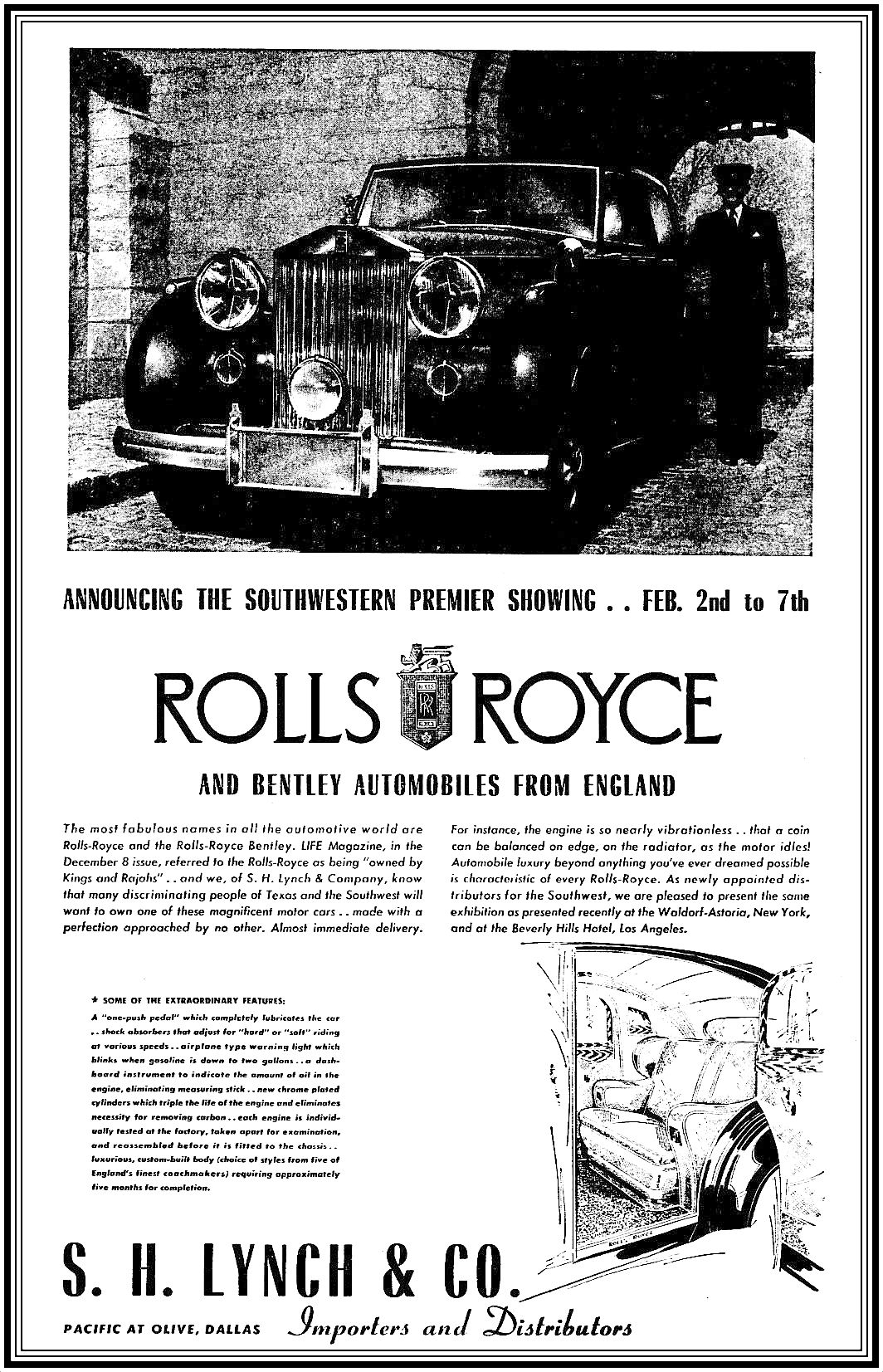
There had been Rolls Royces in Dallas before 1948, but according to S. H. Lynch — the Dallas dealer of imported British vehicles including Jaguars, Bentleys, MGs, Morris Minors, and James motorcycles (as well as other high-ticket British items such as English china) — he had sold only five or six of the prestigious automobiles while he had the dealership, and that only that first one bought by the Russells had stayed in Dallas.

rolls-royce_s-h-lynch_020148
S. H. Lynch & Co. ad, Feb. 1, 1948 (click for larger image)
rolls-royce_s-h-lynch_030748
March, 1948

In 1948, S. H. Lynch (located at 2106 Pacific, at Olive) was one of only three Rolls dealerships in the county, the others being in New York and Los Angeles. In postwar Britain, American dollars were in such demand that a Rolls spokesman said that at least 75% of his company’s production was earmarked for the U.S. — American orders would take priority over their U.K. counterparts.
s-h-lynch_postcard

Even though a Roller’s always going to wow the hoi polloi, it wasn’t always easy to find a trained mechanic, as Roy Lee discovered:

rolls-royce_abilene-reporter-news_072046
Abilene, TX Reporter News, July 20, 1946

We all have our bad days, I suppose.

***

Sources & Notes

The two photos of the Russells are from the Life magazine article “Southwest Has a New Crop of Super Rich” (the top photo was not published).

Col. Russell, an Army veteran of both world wars, appears to have been retired by the time he got to Dallas. The only clue to the source of what must have been fabulous wealth was the final line in the obituary of Mrs. Russell, which noted that he was the son (or possibly the grandson) of the founder of the Russwin Lock Co. Mrs. Russell died in a massive fire which destroyed the large Park Lane house in January, 1976; the colonel died about 15 years earlier, in New York.
*

Copyright © 2019 Paula Bosse. All Rights Reserved.

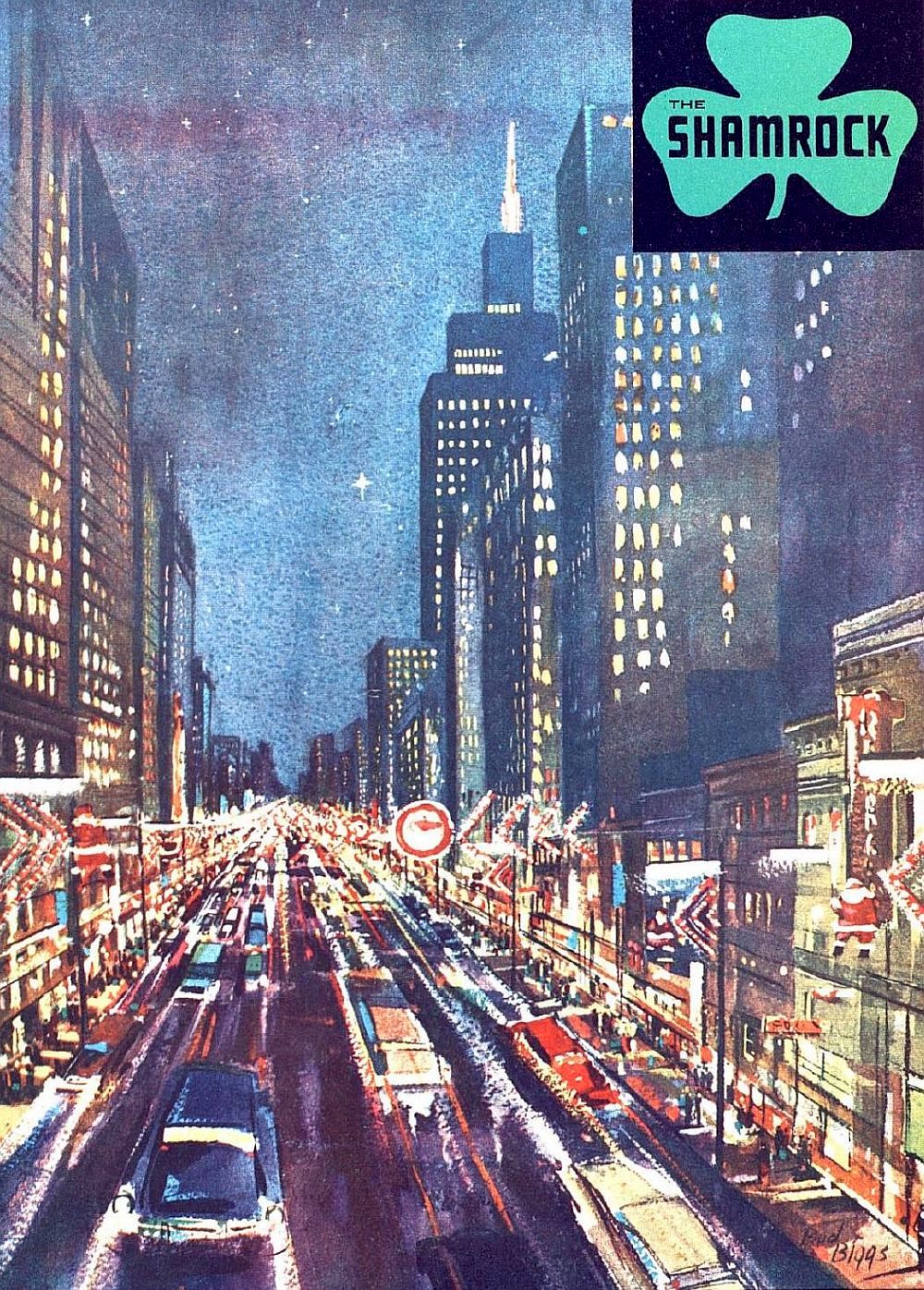
Merry Christmas from Dallas Artist Bud Biggs

xmas_bud-biggs_shamrock-mag_1959_texas-tech
The bright lights of Christmas in downtown Dallas…

by Paula Bosse

An evening in downtown Dallas at Christmastime — alive with traffic and lights and energy — by Dallas artist Bud Biggs.

The painting appeared on the cover of the Christmas, 1959 issue of The Shamrock, a magazine published by the Shamrock Oil and Gas Corporation. The magazine’s description:

On the sidewalks, shoppers dart to and fro. On the street, autos dash by, leaving streaks of light in their haste. Gay lights and laughing Santas swing gayly overhead, festooning the area in a holiday glow. Above all this man-made madness, stars twinkle in contrast, reflecting a serenity reminiscent of a night nineteen hundred years ago. This is what The Shamrock staff sees in this vivid water color of Downtown Dallas at Christmastime by Artist Bud Biggs.

Merry Christmas and Happy Holidays to all!

***

Sources & Notes

This work by artist Bud Biggs appeared on the cover of the Christmas, 1959 edition of The Shamrock; this magazine is part of the Southwest Collection, Special Collections Library, Texas Tech University — the entire issue has been scanned and may be viewed as a PDF here.

My guess is that the title of the original painting is “Main Street, Christmas Night” and that it was one of the 12 paintings produced by Biggs in the mid 1950s as cover art for Dallas Magazine, a Dallas Chamber of Commerce publication. These paintings of Dallas scenes appeared as cover art for the monthly issues of 1956, in honor of the city’s centennial. The series won the “Best Covers of 1956” award from the American Association of Commerce Publications, and in 1958 all 12 of the original watercolors were purchased by Southwest Airmotive Company to be displayed in their new Love Field terminal. The 12 covers featured Biggs’ depictions of the following Dallas scenes and landmarks:

  • “Aerial View of Downtown Dallas”
  • “Ervay Street”
  • “Ground-breaking, Dallas University”
  • “Midway, State Fair of Texas”
  • “Trinity Industrial District”
  • “Central Expressway”
  • “Commerce Street”
  • “City Auditorium”
  • “Looking Up Pacific”
  • “Main Street, Christmas Night”
  • “SMU Legal Center”
  • “The Katy Round House”

UPDATE: I’ve found the other 11 paintings. See them in the Flashback Dallas post “Bud Biggs: 12 Watercolors of Dallas — ca. 1955.”

More on this series of paintings can be found in the Dallas Morning News article “Art & Artists: Biggs Series Bought by Firm” by Rual Askew, Feb. 20, 1958.

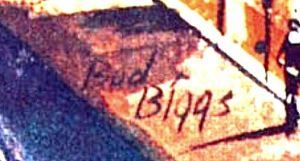
Dallas native Bancroft Putnam “Bud” Biggs (1906-1985) attended Forest Ave. High School, SMU, and the St. Louis School of Fine Arts. He was primarily a commercial artist, working first for Dallas artist Guy Cahoon before opening his own advertising studio. He produced fine art as well, specializing in watercolors, and was a respected art instructor.

xmas_bud-biggs_shamrock-mag_1959_texas-tech_sig-det

*

Copyright © 2018 Paula Bosse. All Rights Reserved.

Christmas Along the Esplanade

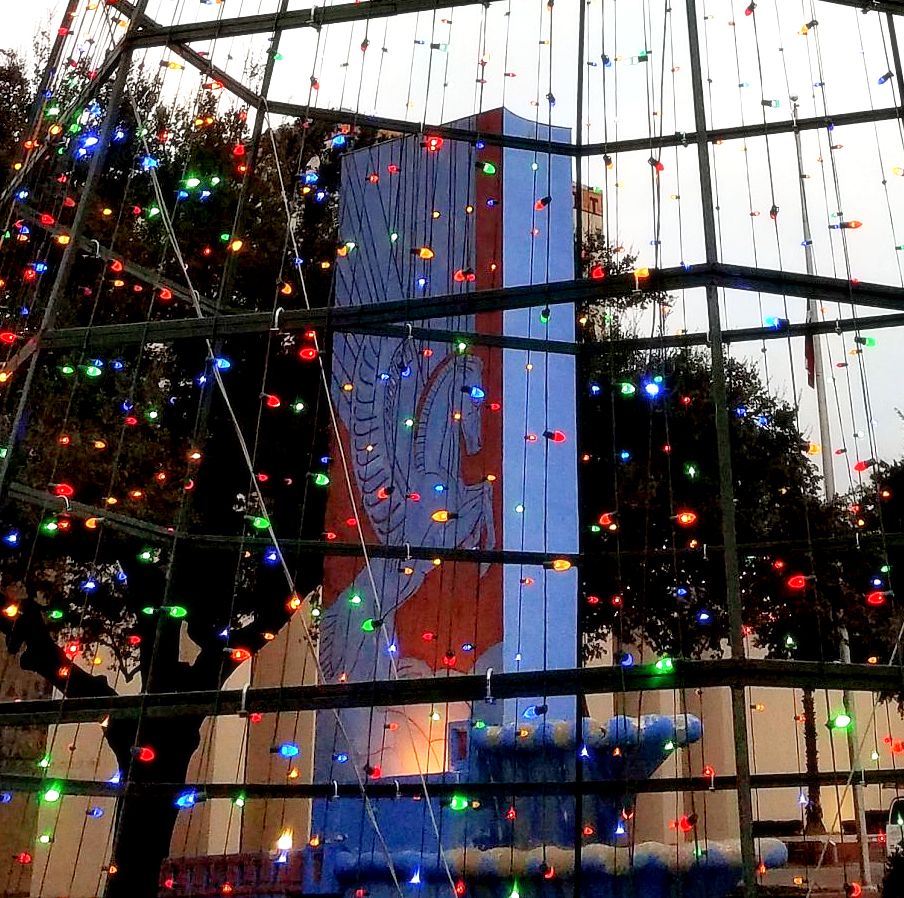
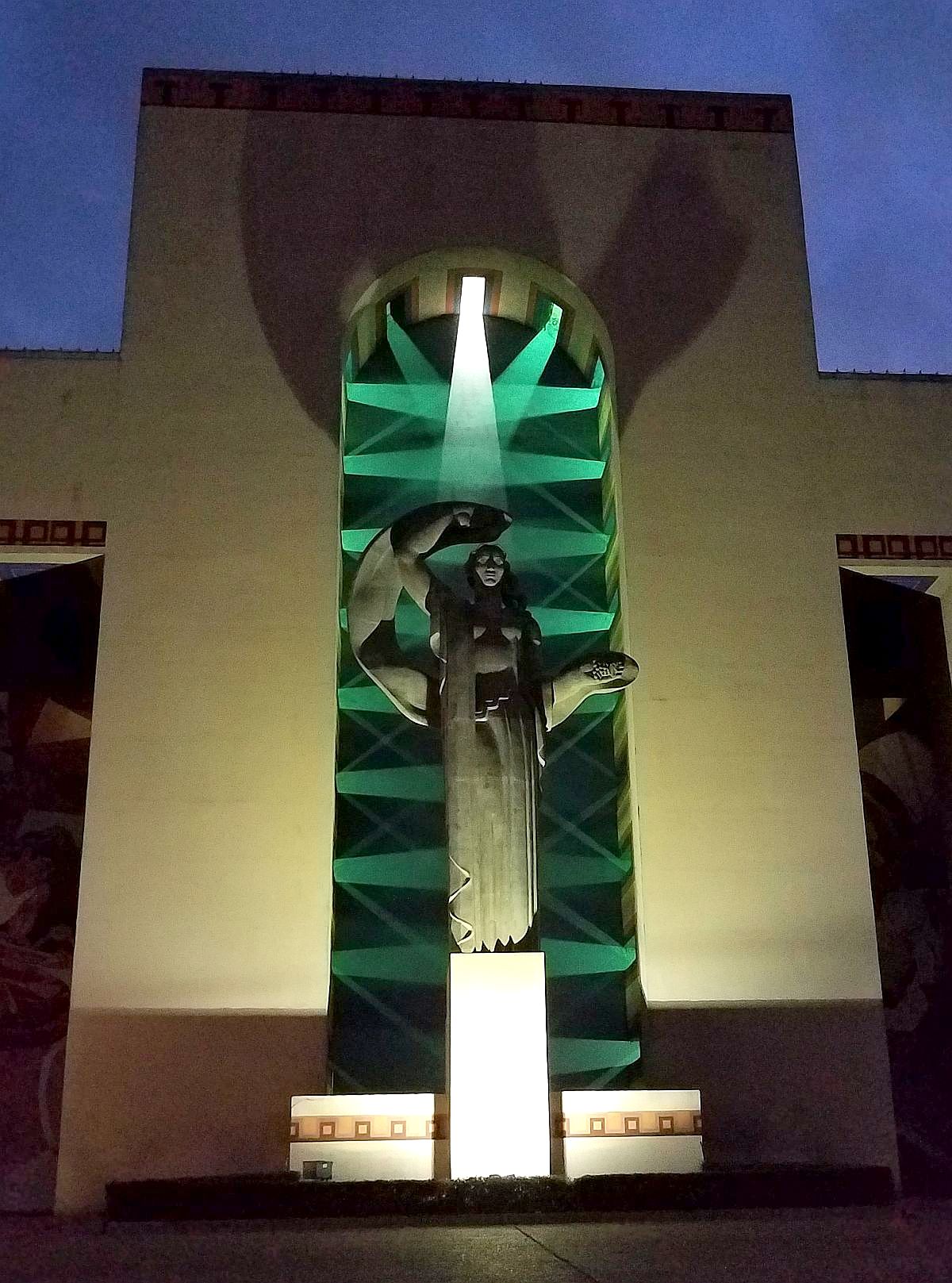
xmas_esplanade_dusk_pegasus_121918_paula-bosseA festive Pegasus…

by Paula Bosse

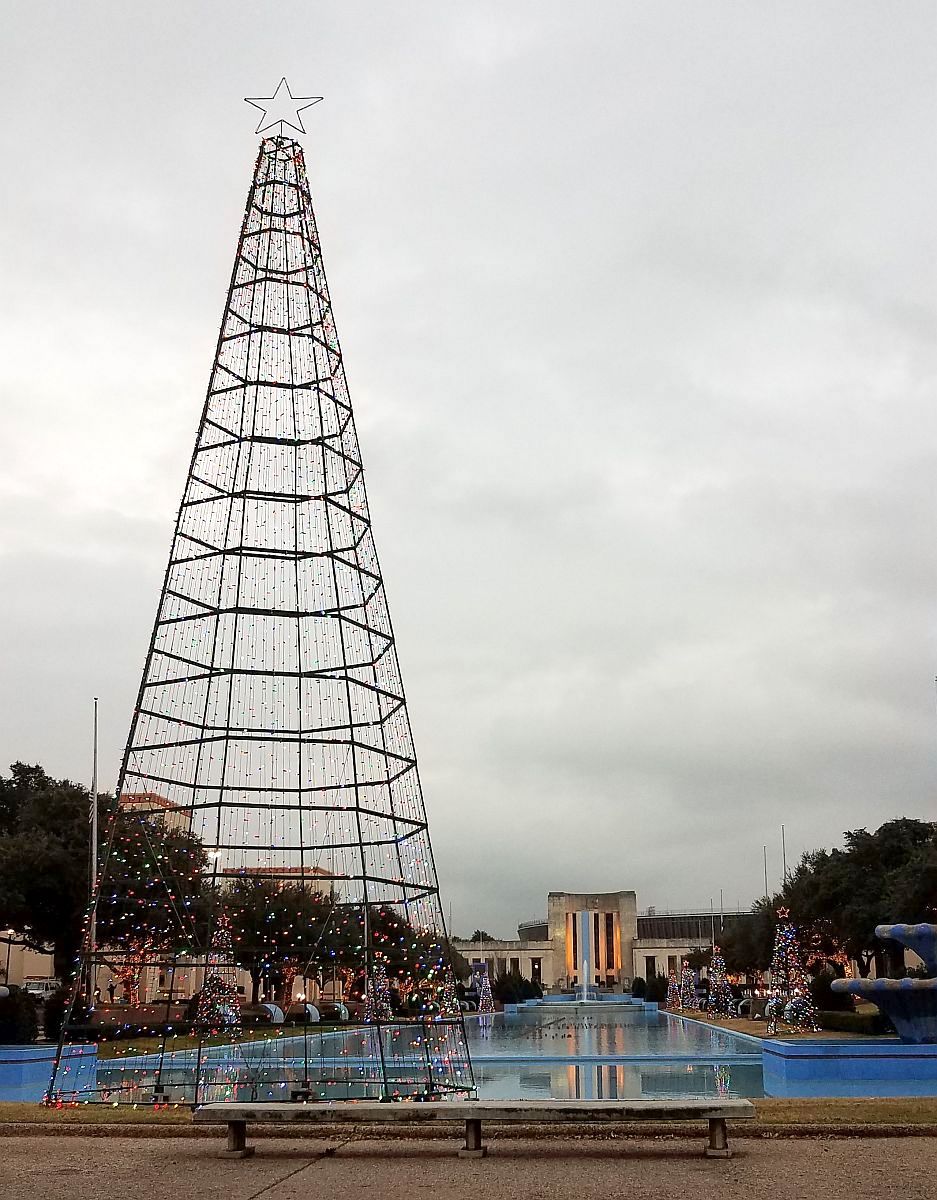
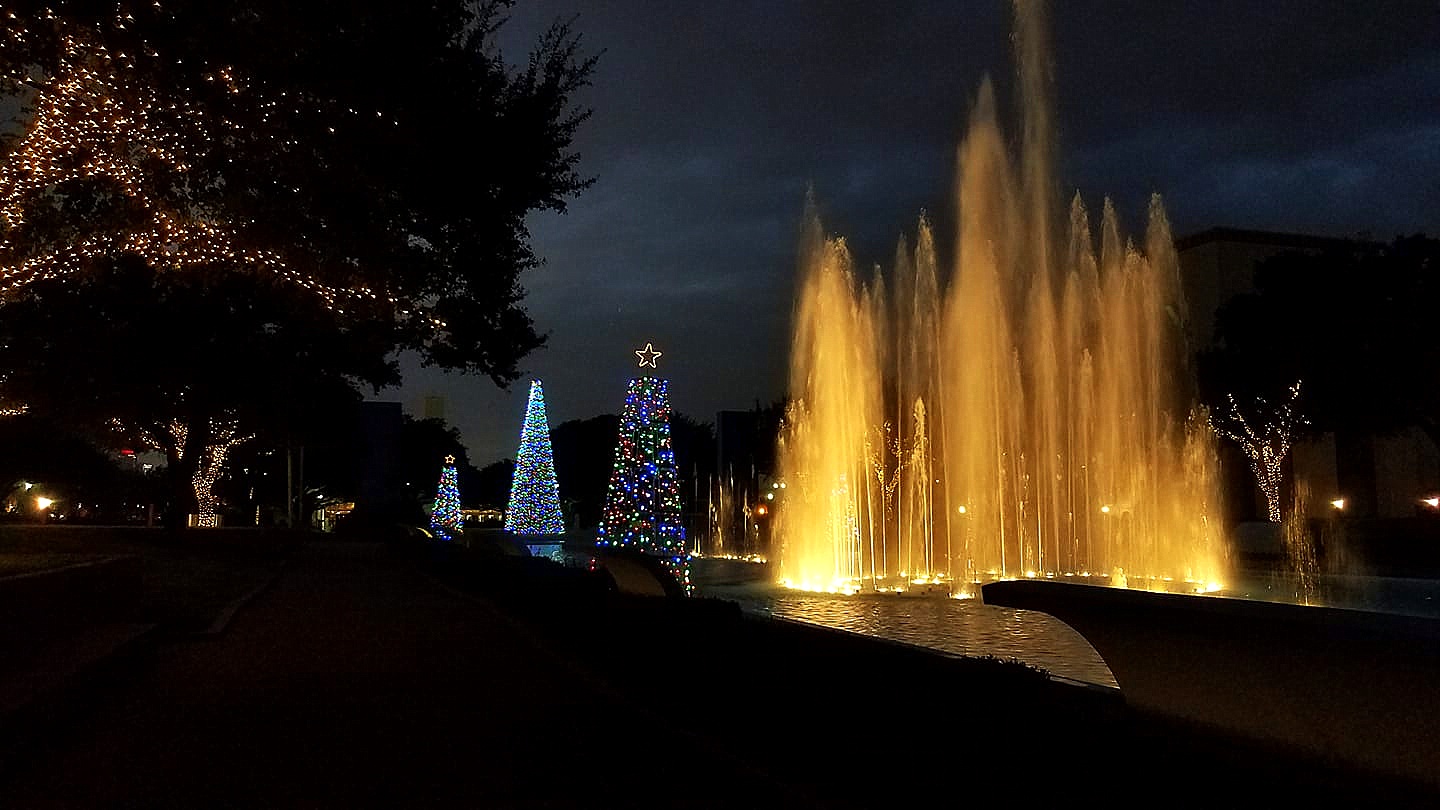
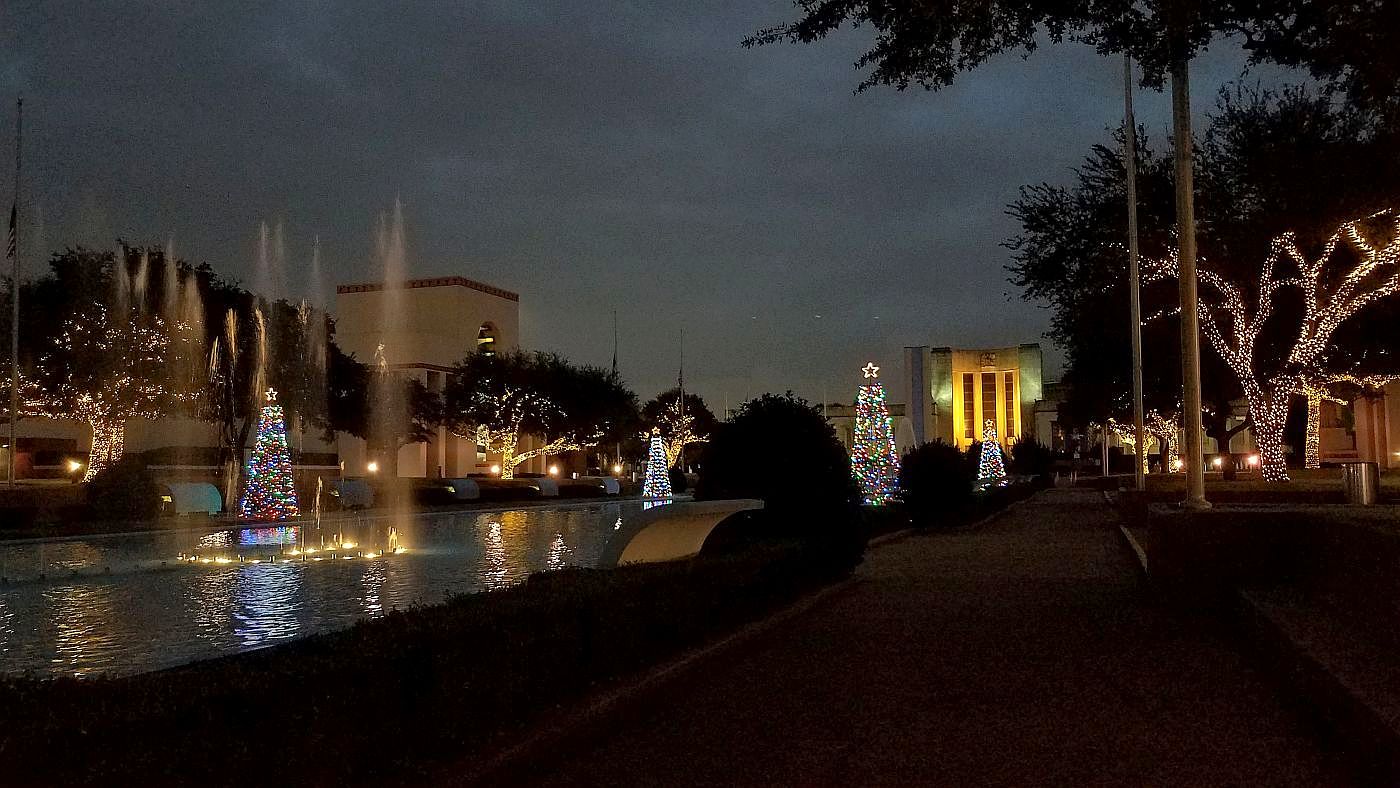
The holiday lights and “dancing waters” of the Esplanade in Fair Park are always worth a visit. I took these photos the other day after doing some volunteer research at the Dallas Historical Society, based in the beautiful Hall of State. I’m particularly fond of dusk, but nighttime is the really the time to see the lights and fountains at their best.

Above, the Pegasus pylon, by French artist Pierre Bourdelle, one of the many artists who worked on the Centennial Exposition in 1936, the year the Esplanade and many of the buildings in Fair Park were built. (All photos are larger when clicked.)

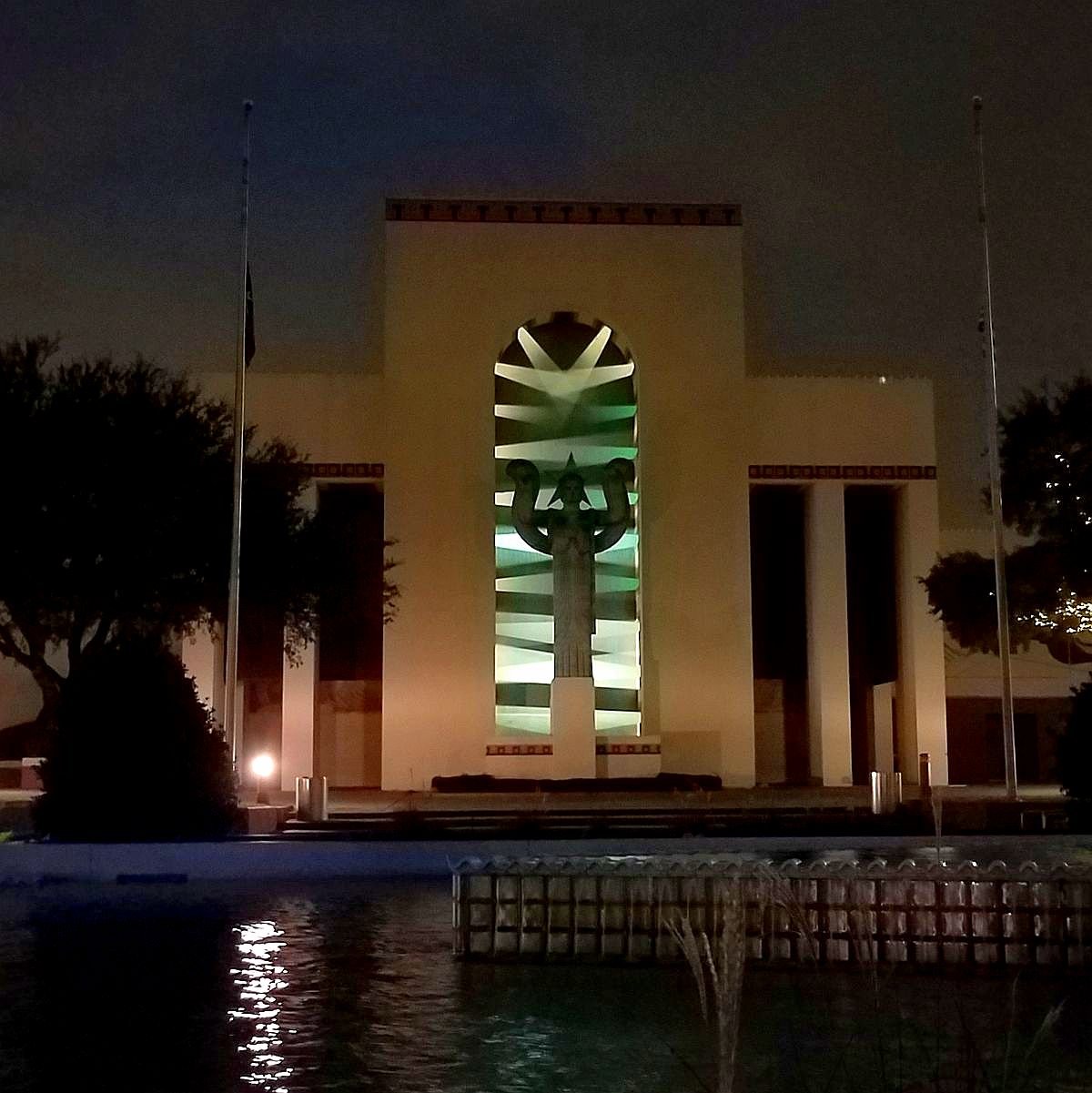
Below, a look toward the Hall of State from the end of the Esplanade.

xmas_esplanade_121918_dusk_toward-hos

One of the six sculptures along the Esplanade, this one represents Texas, by artist Lawrence Tenney Stevens:

xmas_explanade_dusk_texas-statue_121918_paula-bosse

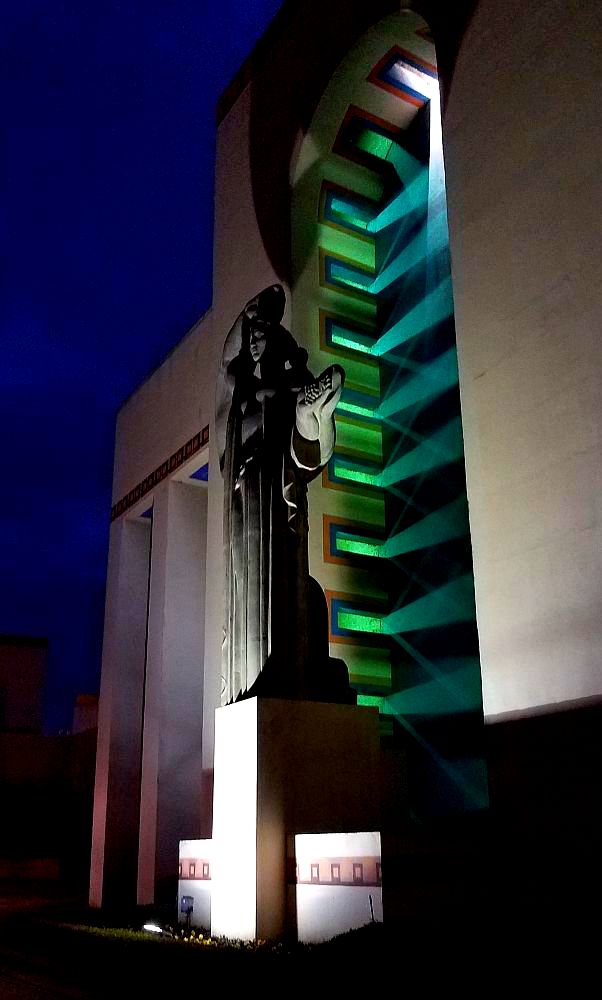
The Automobile Building with the statue representing France, by French sculptor Raoul Josset:

xmas_esplanade_dusk_france_121918_paula-bosse

A closer look, after the sun has gone down, showing the impressive lighting design:

xmas_esplanade_121918_statue-2

Impressive even from the side:

xmas-esplanade_121918_france_night_side_paula-bosse

“Texas” again, lit up and in silhouette:

xmas_explanade_121918_statue-1

The illuminated “dancing waters”:

xmas_esplanade_121918_fountains-night

Another view toward the Hall of State:

xmas_esplanade_121918_toward-hos_night

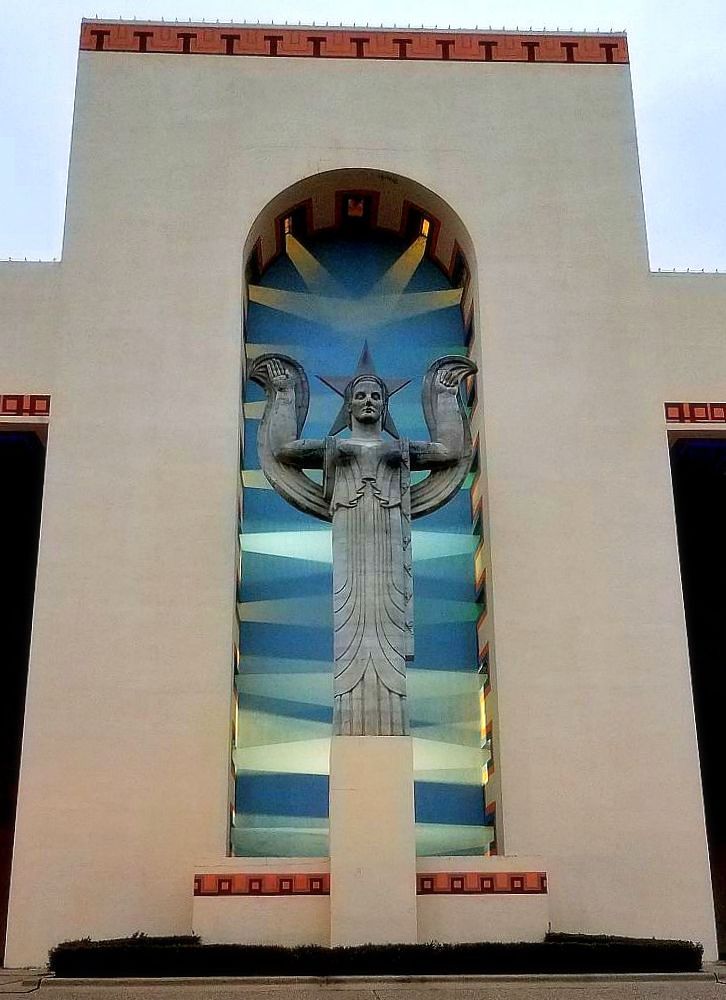
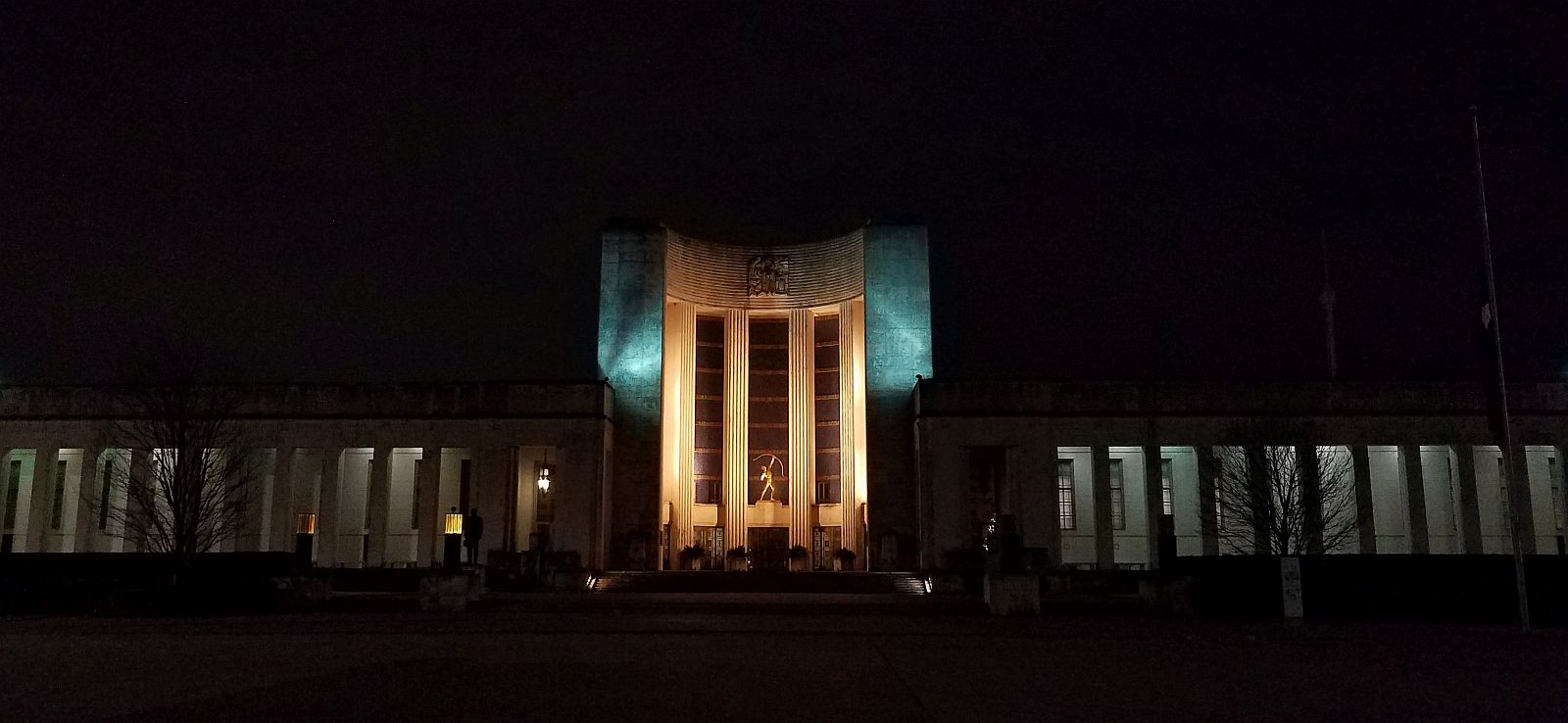
The jewel of Fair Park, the Hall of State:

hall-of-state_night_121918_paula-bosse

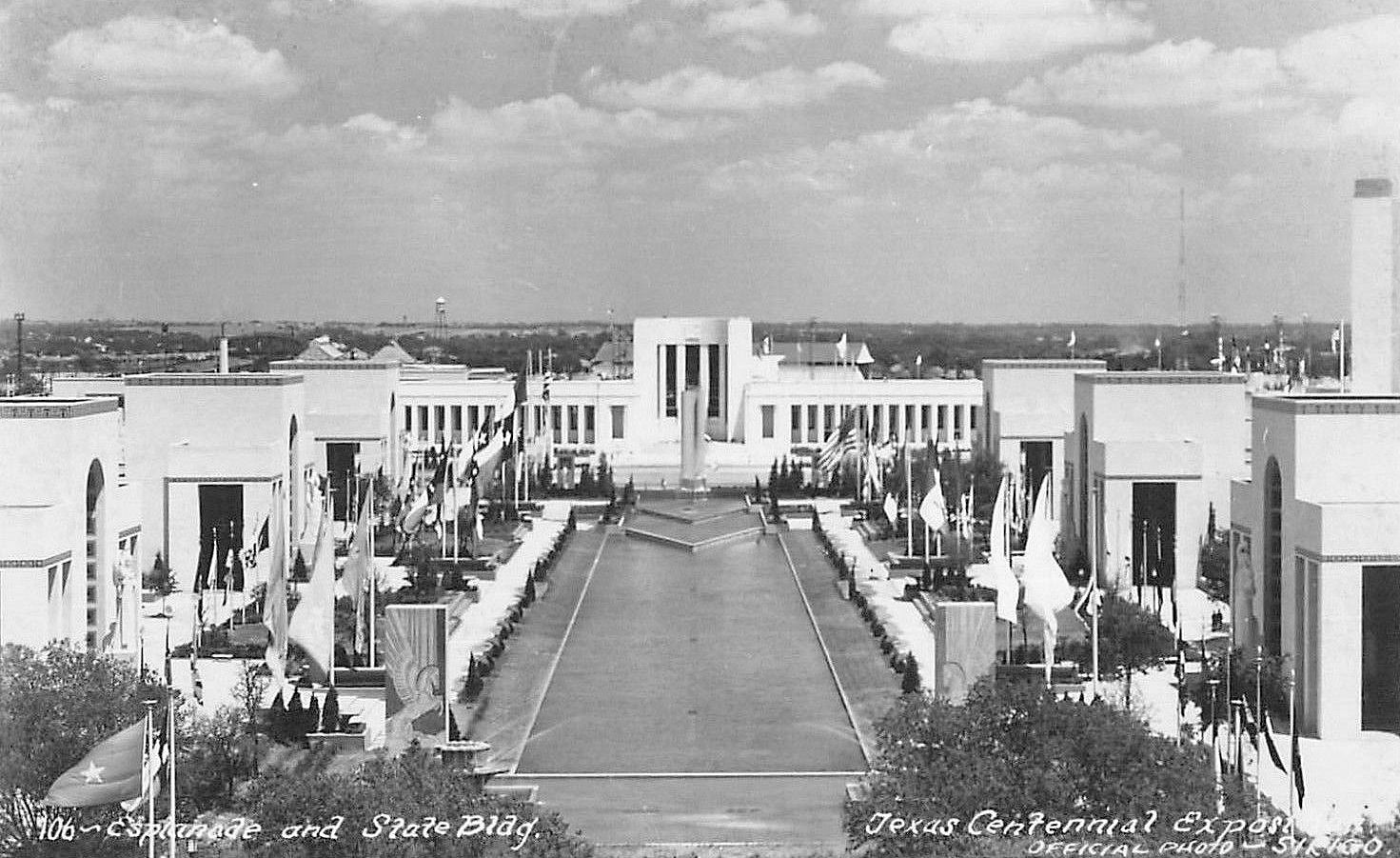
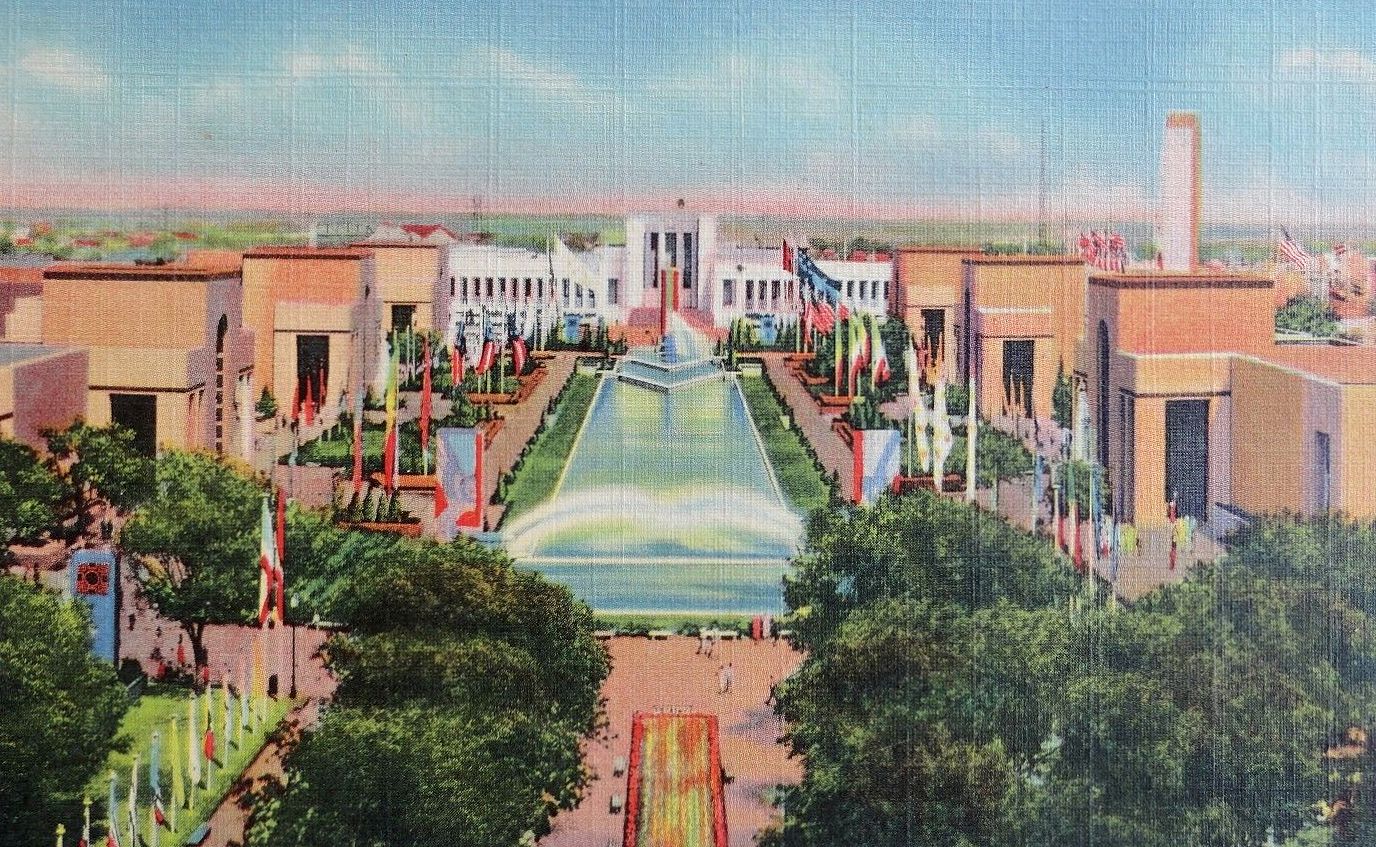
Below are two images of the Esplanade from 1936, when all of this was brand new:

tx-centennial_esplanade_hall-of-state_ebay

fair-park_esplanade_postcard_tx-centennial_1936_ebay

***

Sources & Notes

All photos by Paula Bosse.

More information on the statues along the Esplanade can be found at the French Sculpture Census page highlighting “Fair Park, 1936” here, and “The Six Ladies of Fair Park” page from the Texas Escapes site, here.

A very large aerial photo of Fair Park from 1936 can be seen here. Zoom in on the Esplanade.

More Flashback Dallas posts about Christmas can be found here.

*

Copyright © 2018 Paula Bosse. All Rights Reserved.

Crozier Technical High School — ca. 1946

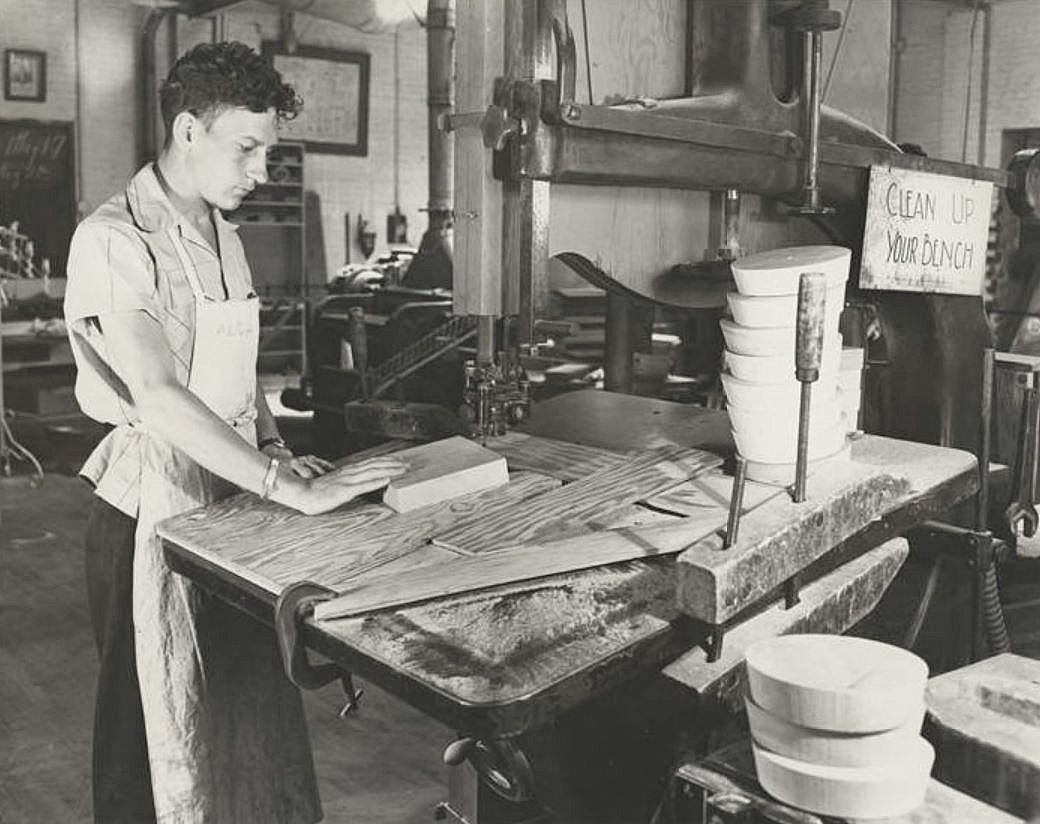
crozier-tech_woodworking_cook-coll_degolyer_SMUThe Tech woodworking shop…

by Paula Bosse

It’s always seemed strange to me that Dallas had a technical high school where students were able to learn all sorts of various trades: auto mechanics, metal-working, industrial machine operation, commercial art, introductory science and engineering courses, and much more. Students — while still in high school — could develop skills and acquire practical knowledge in areas they wanted to pursue as careers; they could also discover (while still in high school) that what they thought they wanted to do as a career was absolutely NOT something they wanted to pursue. I imagine that many graduates were ready to step to into jobs immediately after graduation. 

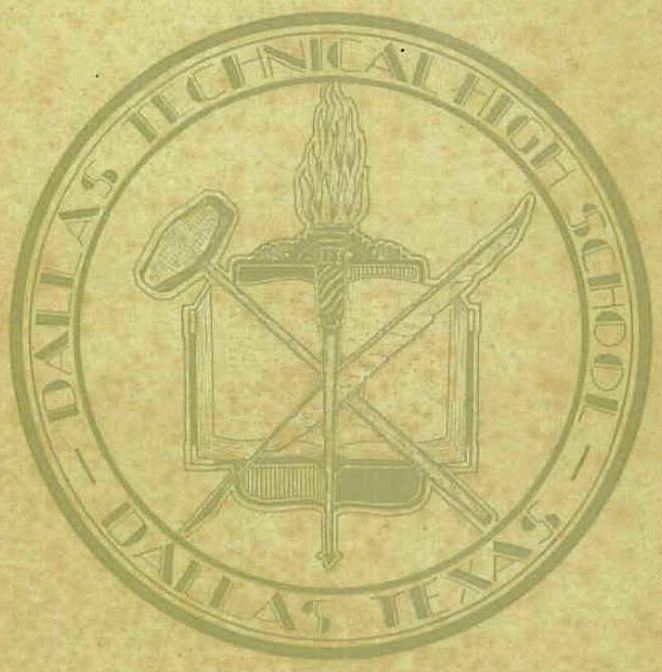
In 1929, Bryan High School (the old “Central High School”) became Dallas Technical High School. In Denman Kelley’s “Principal’s Message” in the 1929 yearbook, he noted that this new idea in education “offers a wonderful opportunity to build up a school for those pupils whose educational needs are not met in the traditional schools…. As the volume of students grows, as the offerings increase with increasing needs, this school must truly become ‘A Greater School for All Dallas.'”

dallas-technical-high-school_1929_seal
Dallas Technical High School, 1929 yearbook

It offered four “general divisions of study” (each arranged in four-year courses): an industrial course, a commercial course, a home-economics course, and the regular literary course. Among the specialized classes offered were automotive repair, woodworking, architectural drawing, stenography, painting, and elementary business training. These courses at Dallas Tech were available to all high school students in the city, and many students jumped at the opportunity to transfer to the downtown campus. (In 1942 the school’s name was changed to N. R. Crozier Technical High School in honor of the late Dallas school superintendent.)

I’m still amazed by this — shouldn’t we still be doing this? I guess this is what magnet schools do, but is magnet-school participation among DISD students anywhere near as widespread as it once was when vocational classes were concentrated at the huge campus of Tech?

*

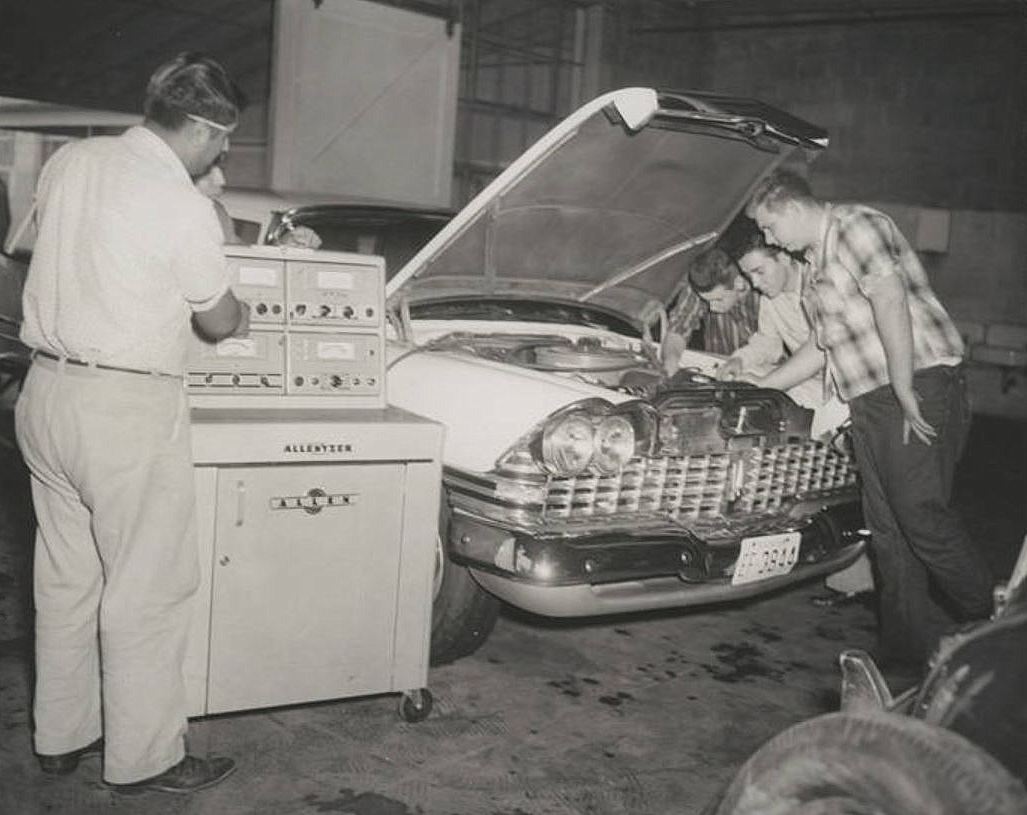
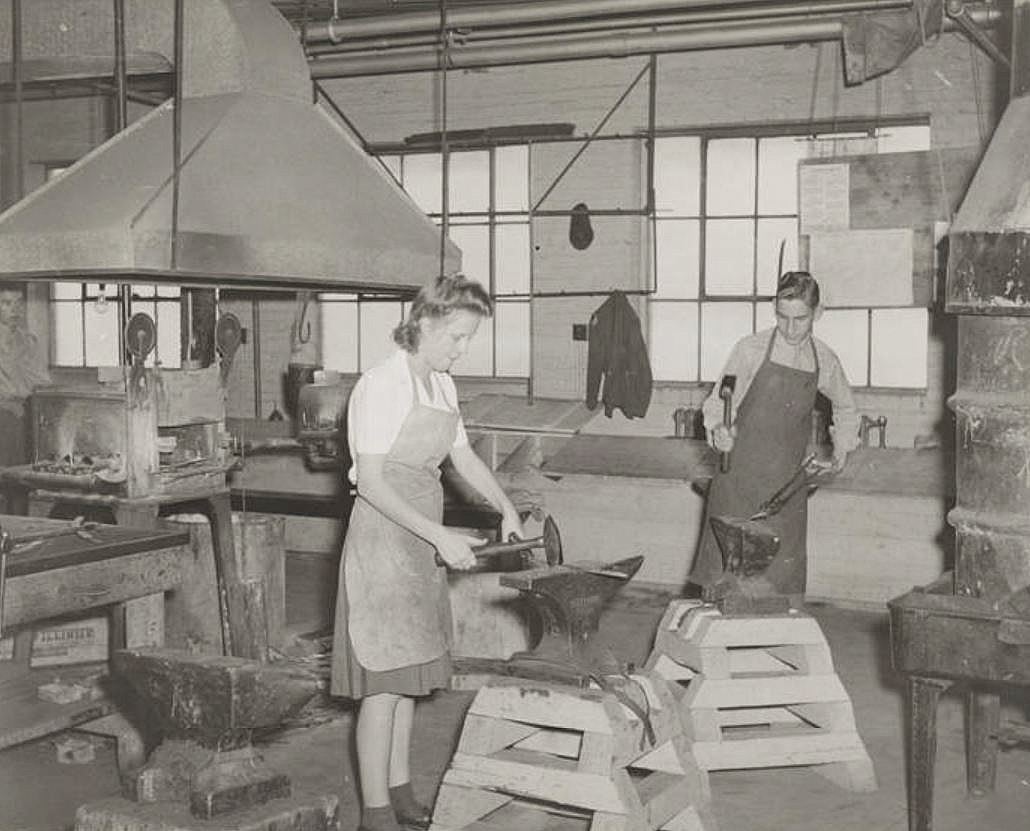
Below are photos showing students in some of the classes available at Crozier Tech in the 1940s. (All photos are larger when clicked.)

crozier-tech_auto_cook-coll_degolyer_SMUUnder the hood

crozier-tech_forge_metal-works_cook-coll_degolyer_SMUAt the forge

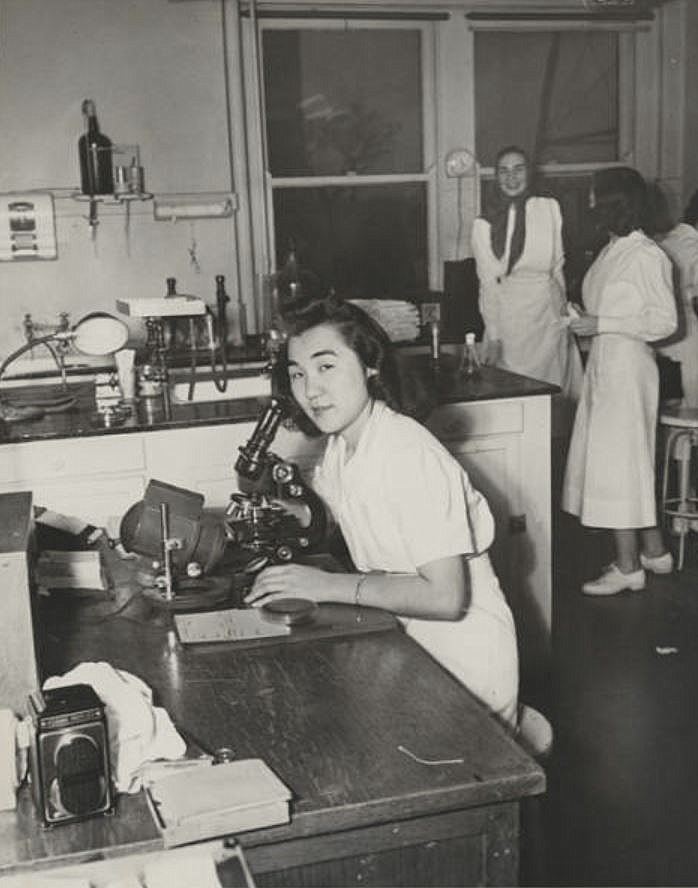
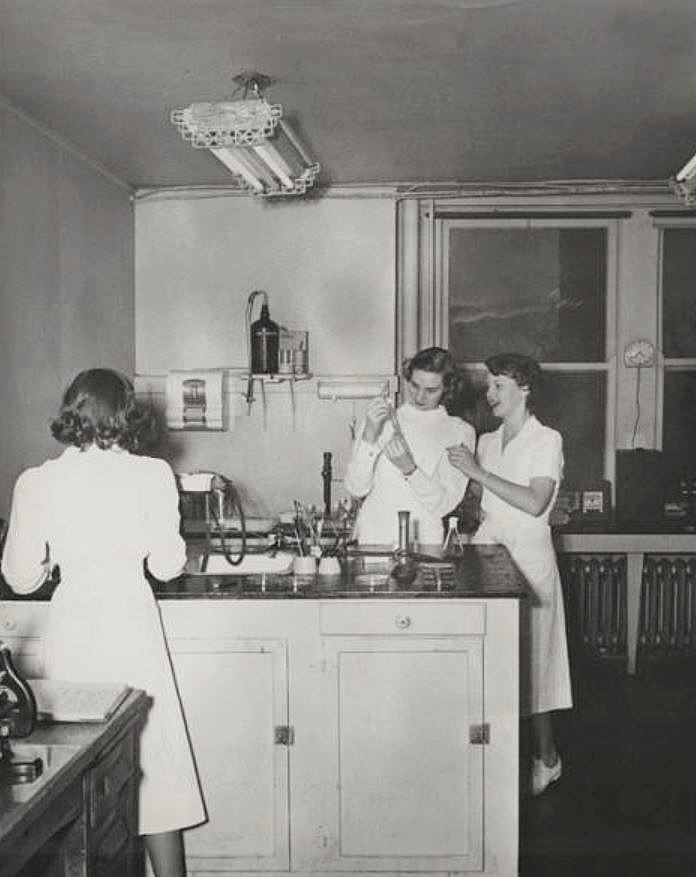
crozier-tech_clinical-laboratory_cook-coll_degolyer_SMUIn the laboratory

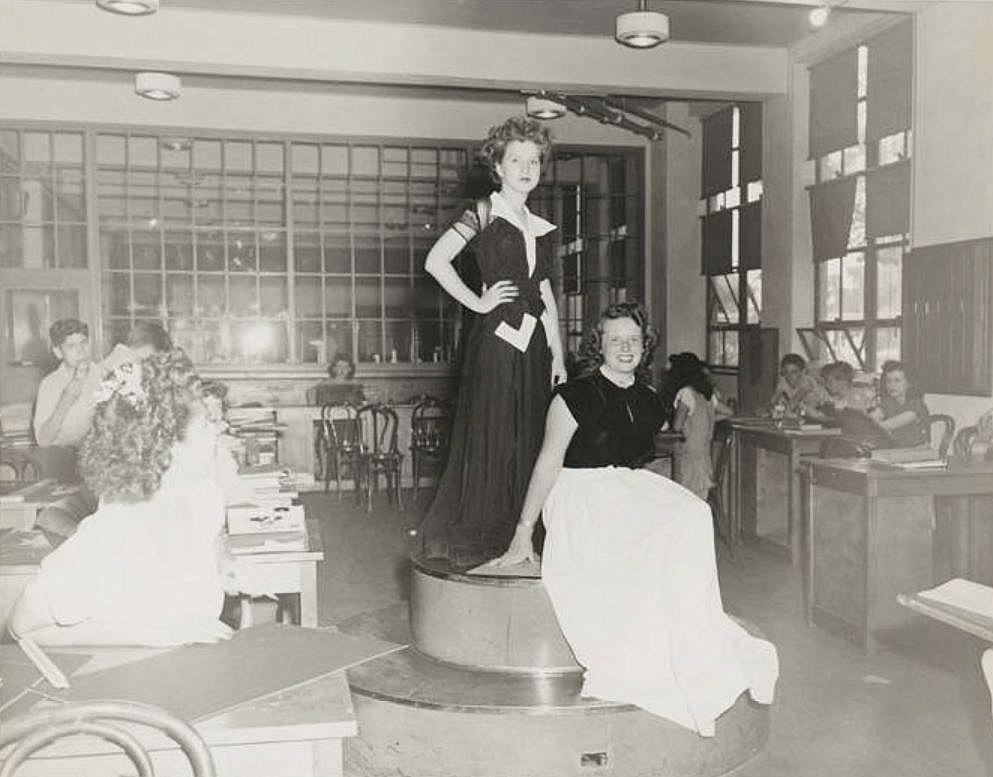
crozier-tech_sewing_cook-coll_degolyer_SMUModeling finished products in sewing class

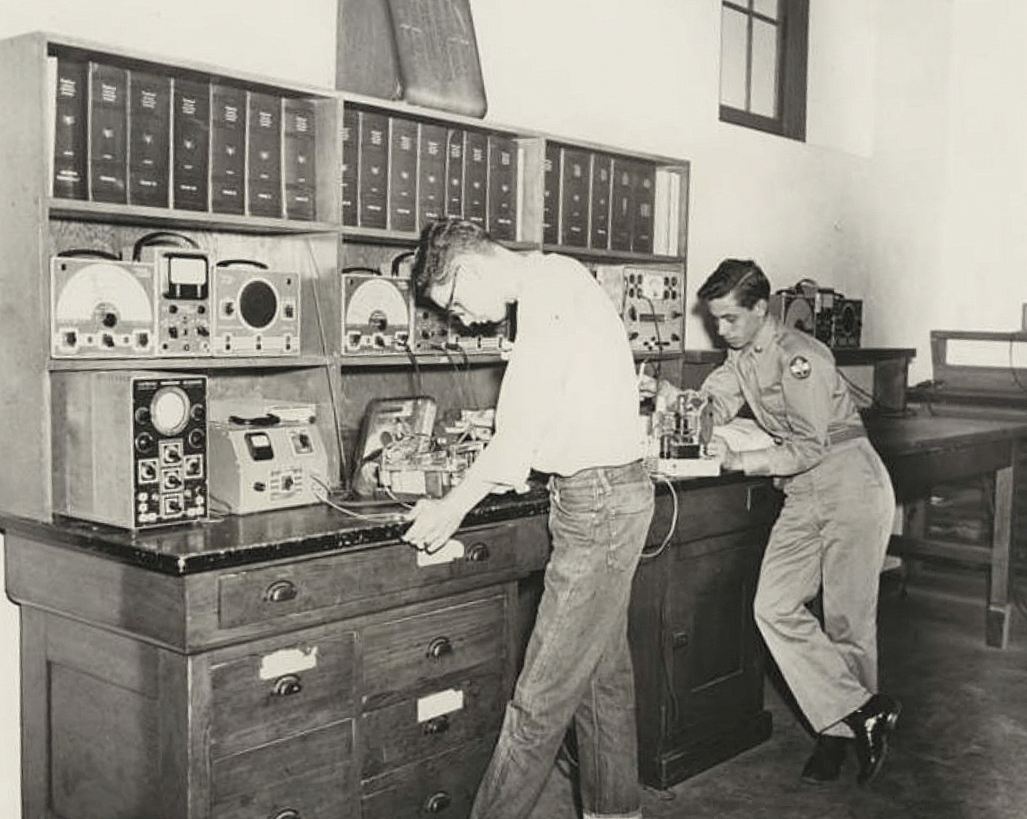
crozier-tech_radio_cook-coll_degolyer_SMUNoodling with radios?

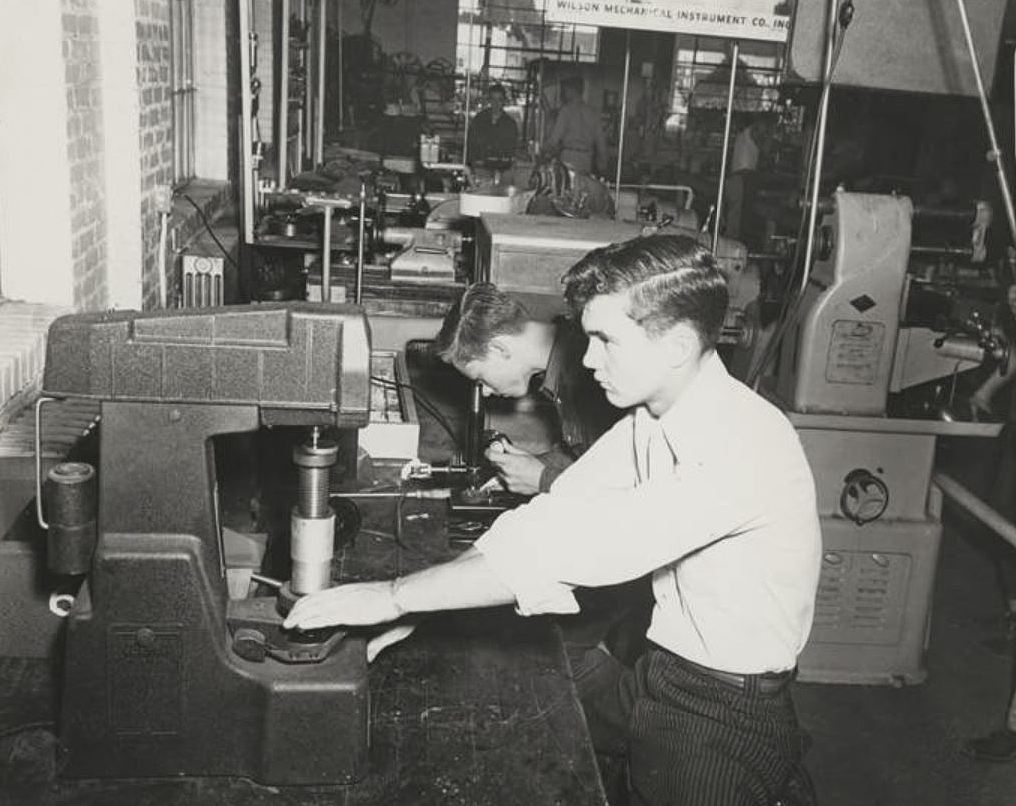
crozier-tech_machine-shop_cook-coll_degolyer_SMUIn the machine shop

crozier-tech_nursing_cook-coll_degolyer_SMUIn the nursing course

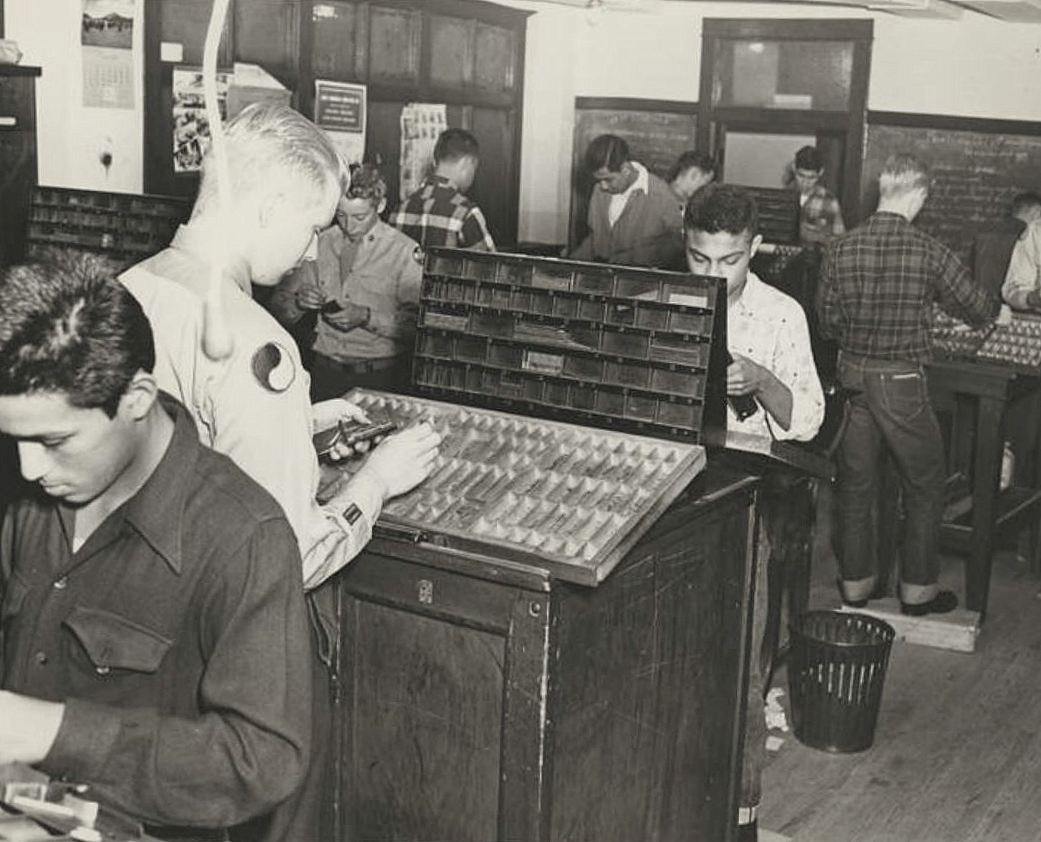
crozier-tech_printing_cook-coll_degolyer_SMUSetting type in the printshop

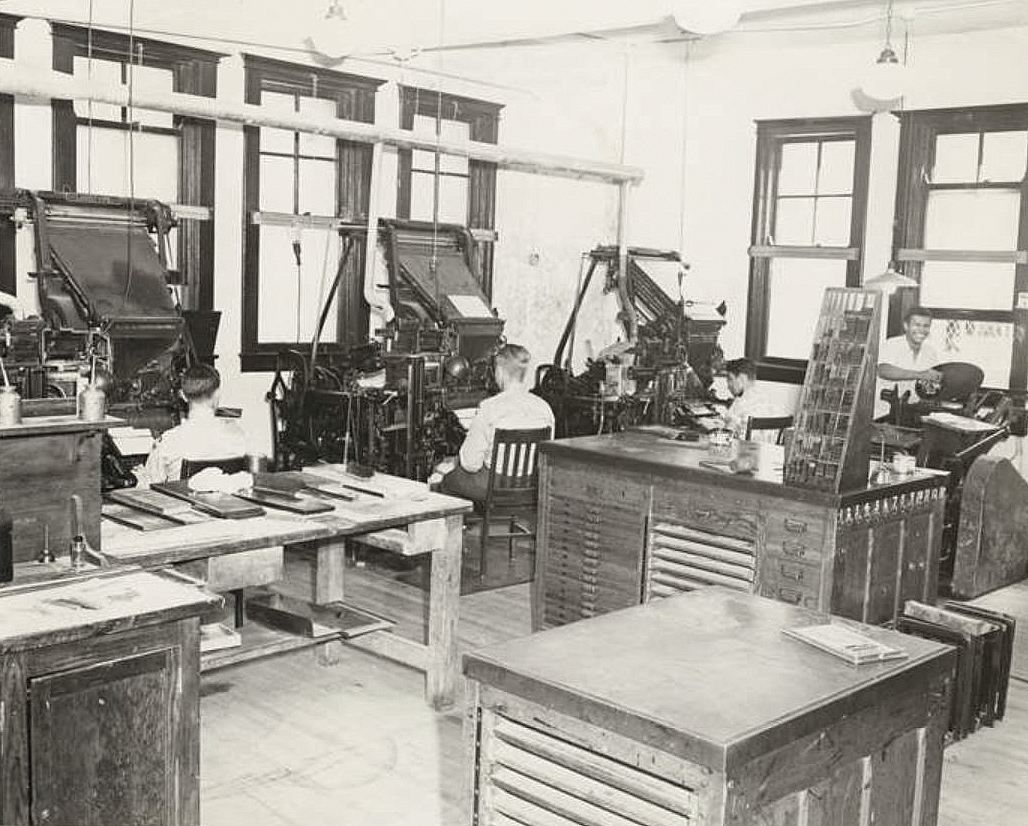
crozier-tech_printing_linotype_cook-coll_degolyer_SMUWorking a letterpress and linotype machines (!)

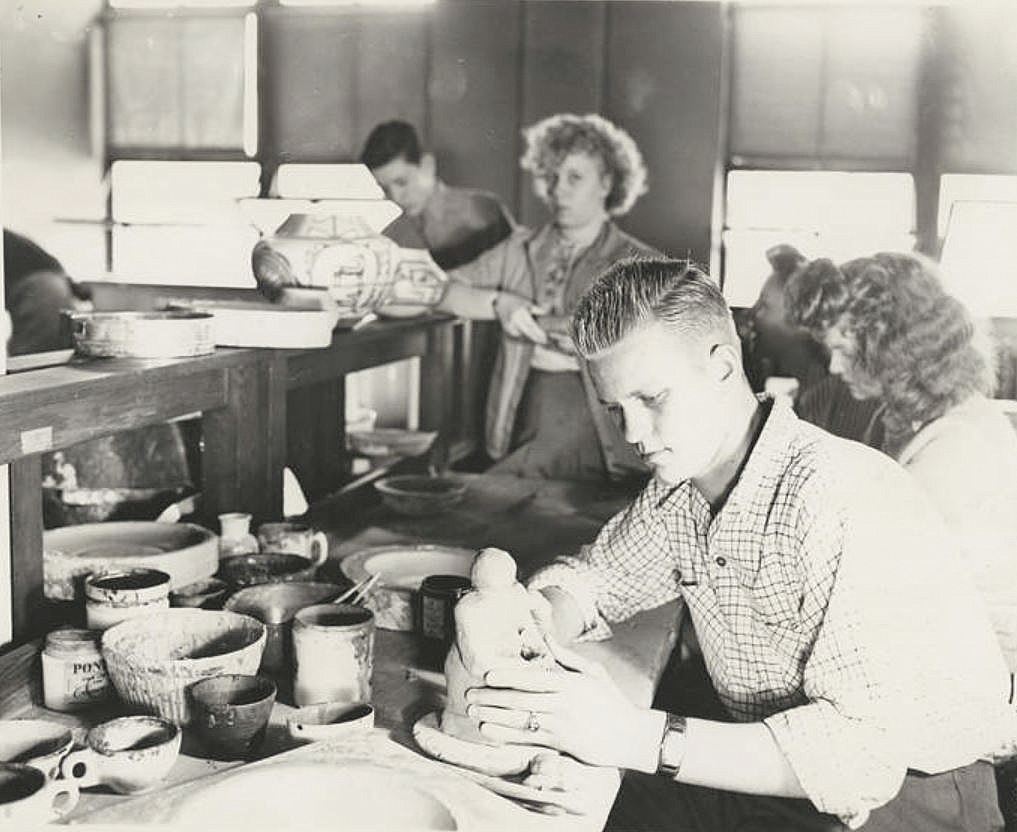
There were also studio and commercial art courses. (I have to add this one because I’m pretty sure I now have evidence that in a previous life I was in a Crozier Tech sculpture class in 1946 — my doppelganger is the blurry girl in the center of the photo, looking with suspicion at the camera.)

crozier-tech_sculpture-clay-modeling_cook-coll_degolyer_SMU

Lastly, a photo of the handsome photography teacher, Orbette A. Homer, who taught at Tech from 1937 until his retirement in 1962. He and his students were responsible for these photos, some of which appeared in the 1946 Crozier Tech yearbook, The Wolf Pack.

orbette-a-homer_crozier-tech-yearbook_1960O. A. Homer, 1960

***

Sources & Notes

All classroom photos are from the George W. Cook Dallas/Texas Image Collection, DeGolyer Library, SMU Libraries, Southern Methodist University; these images (and more from this Crozier Tech collection) can be found here.

The photo of Orbette Anderson Homer (1901-1968) is from the 1960 Crozier Tech yearbook.

*

Copyright © 2018 Paula Bosse. All Rights Reserved.