Flashback : Dallas

A Miscellany: History, Ads, Pop Culture

Category: Suburbs & Mid-Cities

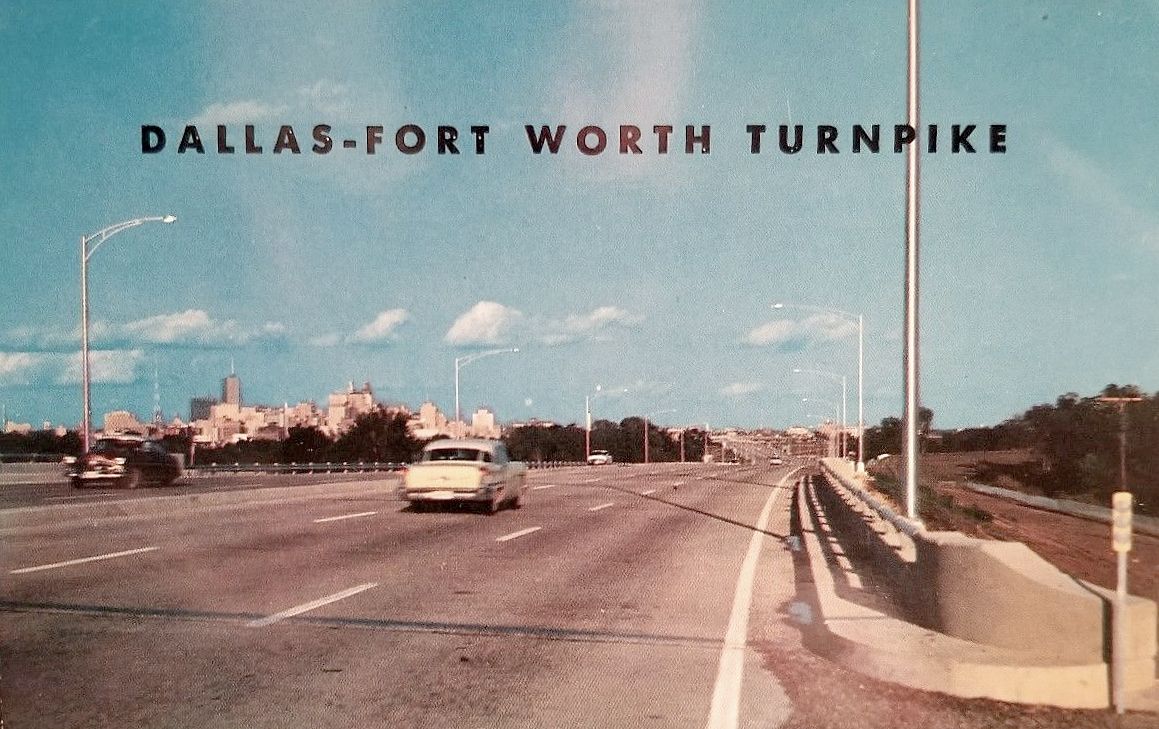
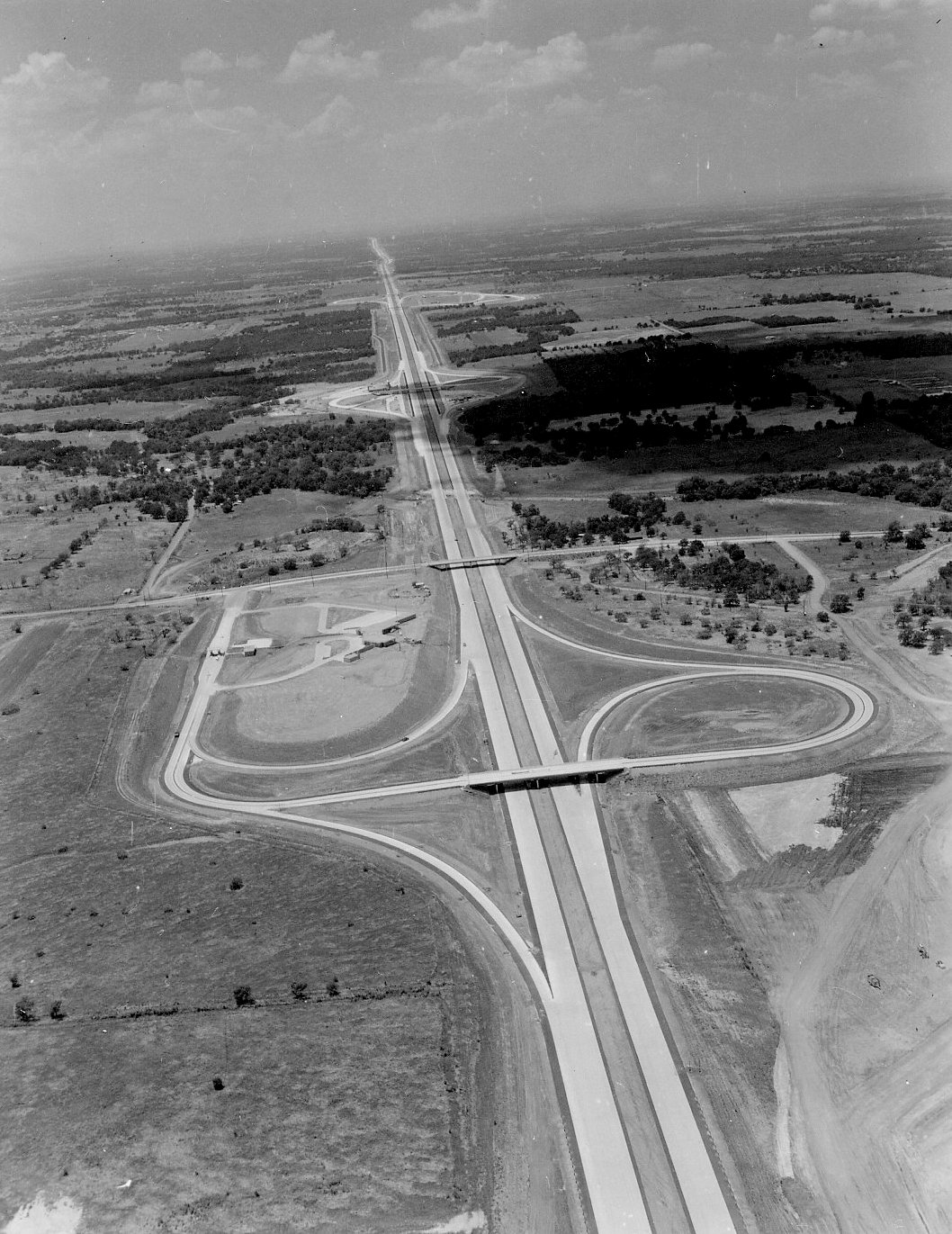
The DFW Turnpike, Unsullied by Traffic, Billboards, or Urban Sprawl — 1957

turnpike_west-from-360_1957The DFW Turnpike, 1957… (click for very large image!)

by Paula Bosse

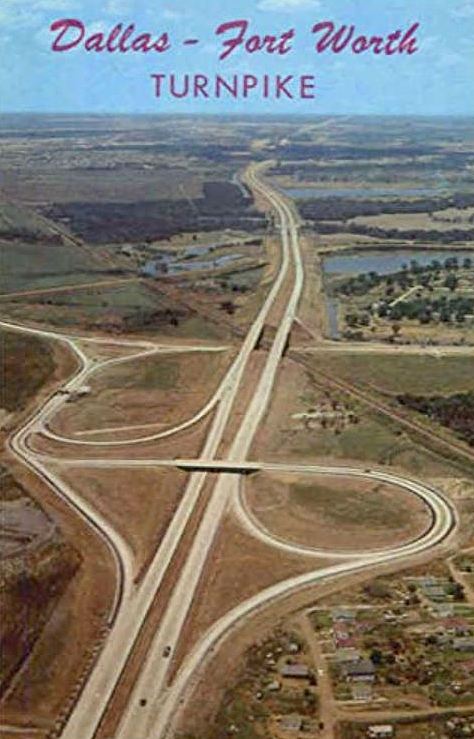
Above, the Dallas-Fort Worth turnpike in 1957, before it opened for business. When this toll road was paid off in 1977, the toll booths were removed and it became I-30, a “free” highway. (This “toll-road-becoming-a-free-road” thing has happened only once in the history of Texas; I can’t imagine it will ever happen again.) This photo shows the turnpike heading west through Arlington, with Hwy. 360 crossing over it in the middle. Six Flags over Texas would be built in this wide open expanse four years later. And then … an explosion of development.

A Texas Highways article described the 30-mile stretch (“30 miles — 30 minutes!”) as being a blissful drive through “a landscape devoid of advertising signboards and commercial establishments” (!). In fact, the only businesses along the turnpike were two restaurants and two service stations. All the way from Dallas to Fort Worth … that was IT! You know, I’d gladly pay an obscenely exorbitant toll today if it meant I could drive that stretch of highway the way it was in this photo. A world without urban sprawl would be heaven.

I love this photo. The road ahead just disappears into the ether. And, Arlington, you’ve never looked better.

dfw_turnpike

dfw-turnpike_postcard

dfw-turnpike_flickr_coltera

dfw-turnpike_postcard_skyline

dallas-fw-turnpike_postcard

***

Sources & Notes

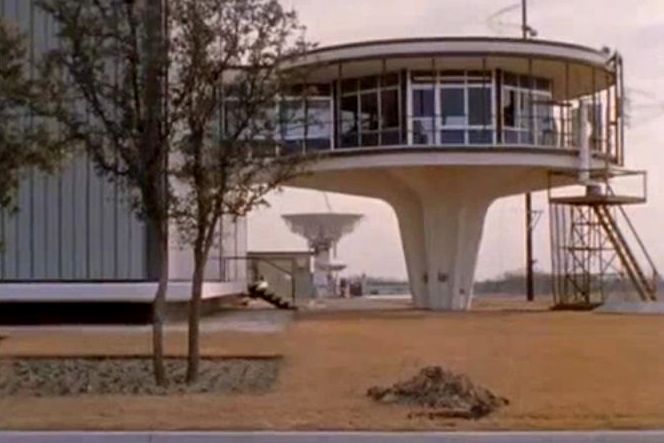
Top photo from Oscar Slotboom’s book Dallas-Fort Worth Freeways, credited to TxDOT Travel Information Division, 1957. His caption: “The view looks west along the turnpike just before it opened in  1957 with the  SH 360 intersection in the foreground…. Land on the left side of the turnpike just past SH 360 would soon be developed into Six Flags Over Texas…. The building alongside the turnpike was a Texas Turnpike Authority administrative office which was demolished in 2011.”

Postcards from around the internet.

For an informative read and LOTS of photos, I highly recommend Oscar Slotboom’s chapter on the DFW Turnpike, which you can access here (there are tons of historical photos). This chapter is from Slotboom’s exhaustive work Dallas-Fort Worth Freeways: Texas-Sized Ambition. The entire book has been made available online — for free (the home-page is here). You can read about Mr. Slotboom’s work in a Dallas Morning News interview by Robert Wilonsky here.

A fun read about the turnpike (yes, fun!) is an article from Texas Highways (Dec. 1957), here. (The article is spread over three web pages — don’t miss the links for all of the pages at the top of each page.)

By the way, when the turnpike opened, the toll was 50 cents. According to the Inflation Calculator, that would be equivalent in today’s money to just over $4.00. To drive from Dallas to Fort Worth quickly, through not-yet-developed green spaces and along a new highway uncluttered with billboards. A BARGAIN!

Click photo for larger image.

*

Copyright © 2014 Paula Bosse. All Rights Reserved.


Six Flags-Inspired Recipes for the (Gluten-Tolerant) Superfan — 1966

six-flags-ckbk_USA

by Paula Bosse

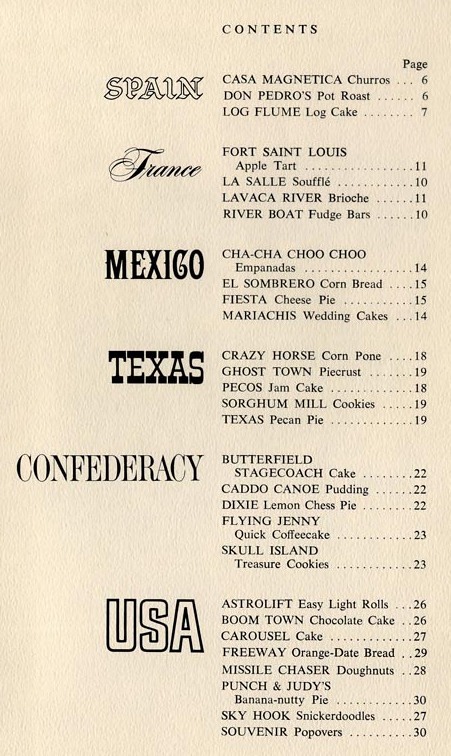
Did you know there was a Six Flages-themed cookbook? Well, there was! Issued in 1966 by the Gladiola Flour company (every recipe — rather unsurprisingly — contains flour), the Six Flags aficionado was presented with dishes such as “Casa Magnetica Churros,” “Log Flume Log Cake,” “Skull Island Treasure Cookies,” and “Sky Hook Snickerdoodles.” From the introduction:

“Names of the recipes have been inspired by attractions and rides at Six Flags Over Texas, the exciting adventureland located midway between Dallas and Fort Worth. Look to the Six Flags Over Texas Cookbook when you want something different — a dish your guests will remember.”

That “Log Flume Log Cake”? Mosey on over here and whip one up this weekend for your gluten-tolerant friends and family.

six-flags-ckbk_cover_1966-sm

six-flags-ckbk_contents

six-flags-ckbk_spain

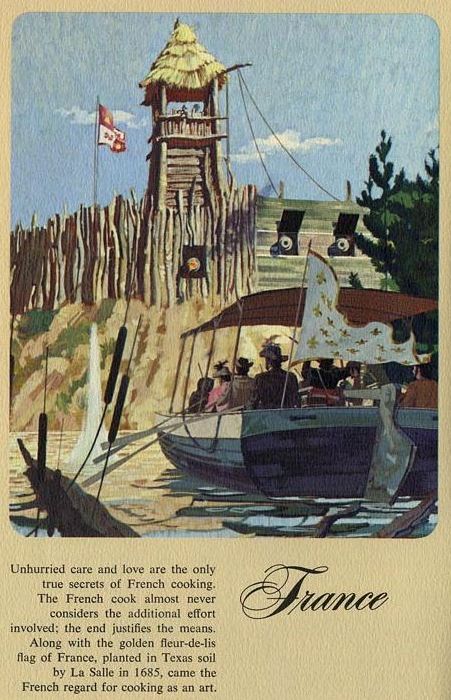
six-flags-ckbk_france

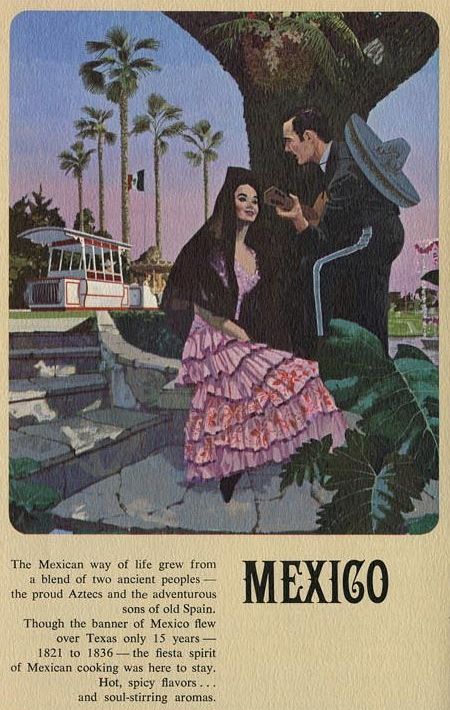
six-flags-ckbk_mexico

six-flags-ckbk_texas

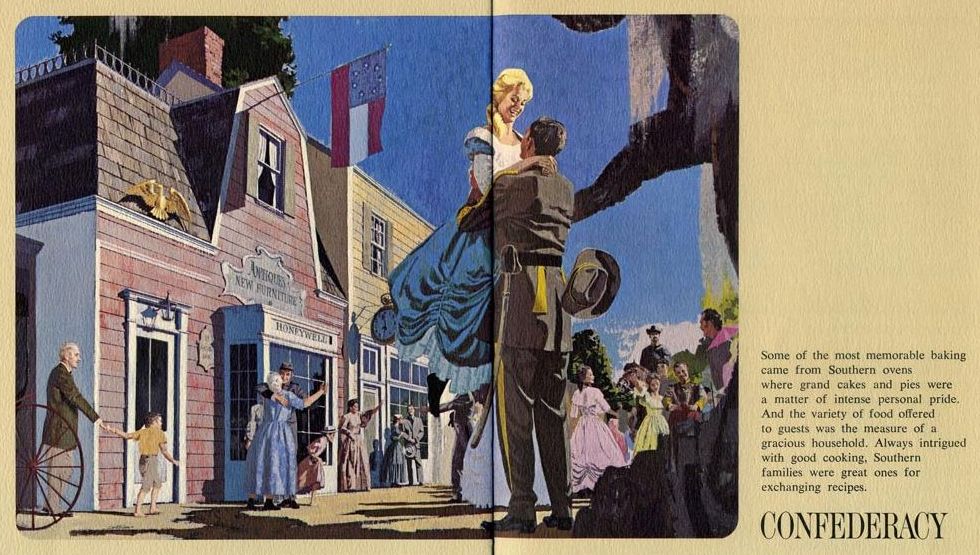
six-flags-ckbk_confederacy

***

All images from The Six Flags Over Texas Cookbook by Gladiola (Sherman: Fant Milling Co., 1966). These images (and the entire cookbook) from Ken Collier’s great Six Flags Over Texas collection. The cookbook can be viewed here; and check out his other Six Flags pages here.

For other Flashback Dallas posts on the early days of Six Flags Over Texas, see here.

Click oblong pictures for larger images.

*

Copyright © 2014 Paula Bosse. All Rights Reserved.

Angus Wynne, Jr.’s “Texas Disneyland” — 1961

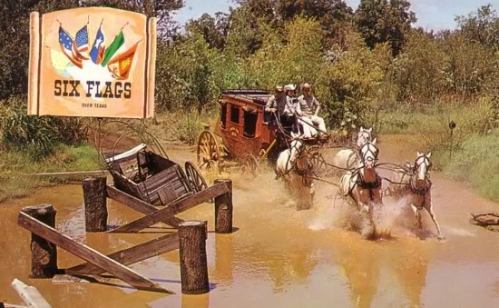
six-flags_stagecoach

by Paula Bosse

If you’re reading this, you’ve probably been to Six Flags Over Texas in Arlington. Depending on your age, you may pine for those glorious days of yesteryear when Six Flags was a truly unique theme park. Today it is not. Back then, there was only one Six Flags, and it was a great, weird place. A theme park based on Texas history! Who would come up with such a far-fetched idea? Angus Wynne, Jr. did. Some of it must have sunk in, because, to this day, the way I can remember the “six flags” that have flown over Texas is by remembering rides and attractions at Six Flags Over Texas.

I wasn’t going regularly to Six Flags until the ’70s, when it was still definitely all about Texas, but looking at old postcards that were issued to celebrate the opening of the park in 1961, I was shocked by some of the great stuff that was retired before my annual visits. Like … helicopter rides! Actual helicopter rides that took off from an area near (in?) the parking lot: five minutes for five dollars (this was back when admission was $2.25 for kids and $2.75 for adults — those days are long-gone…).

And … a stagecoach ride! I would have LOVED that! Looks kind of dangerous, though — which might be why it didn’t last. The description on the back of the postcard:

Bridge Out — Confederate Section: Butterfield Overland Stagecoach pulled by a team of four matched white horses cuts past washed out bridge on its way to deliver passengers and the U.S. mail back to the safety of the depot — always plenty of exciting action taking place at the multi-million dollar Six Flags Over Texas entertainment park.

*

six-flags_confederate

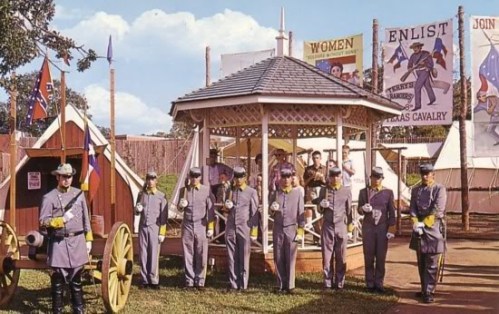
And, yes, the problematic “Confederate” section. The description on the back of this postcard reads:

Call To Arms — Confederate Section: Confederate Drill Team at Six Flags Over Texas. To these men in gray, the South is still ‘a-fightin’ them Yankees.’ Frequent enlistment rallies are held where youngsters join up and receive papers proving their military status in Terry’s Texas Rangers, 8th Texas Cavalry.

Don’t remember seeing that. It probably started to lose its luster somewhere back around the Vietnam War.

*

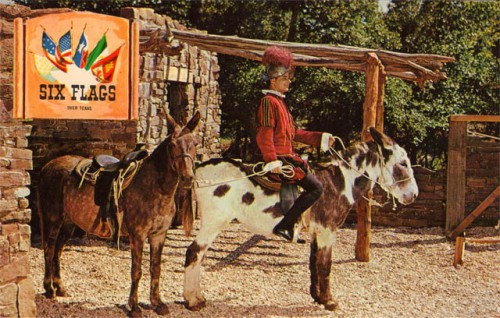
six-flags_spanish_mule

Jack Maguire, in his great Alcalde article (link below) describes this … um … “ride” thusly:

The Spanish section is next. Here guests board pack mules to venture forth with Francisco Vasquez de Coronado, greatest of the conquistadores, as he descends into Palo Duro Canyon searching for the Seven Cities of Cibola.

With the mules and the stagecoach team, Six Flags must have had a busy corral somewhere in the park.

*

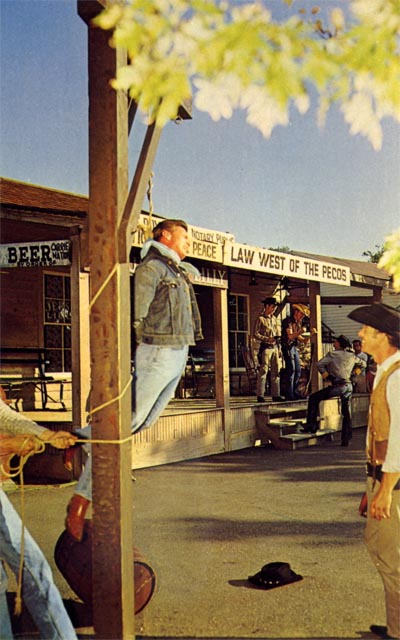
six-flags_hanging

And, well, this is my favorite: a hanging. …At an amusement park. Maybe they’re just a-funnin’. This took place in the “Texas Section,” where the bank was robbed every hour on the hour and there was the show-stopping gunfight in the middle of the street. I remember that. I don’t remember some guy getting strung up, though. I like the fact that this photo was used to promote an amusement park.

*

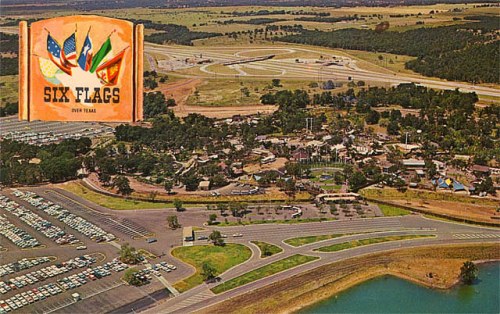
six-flags

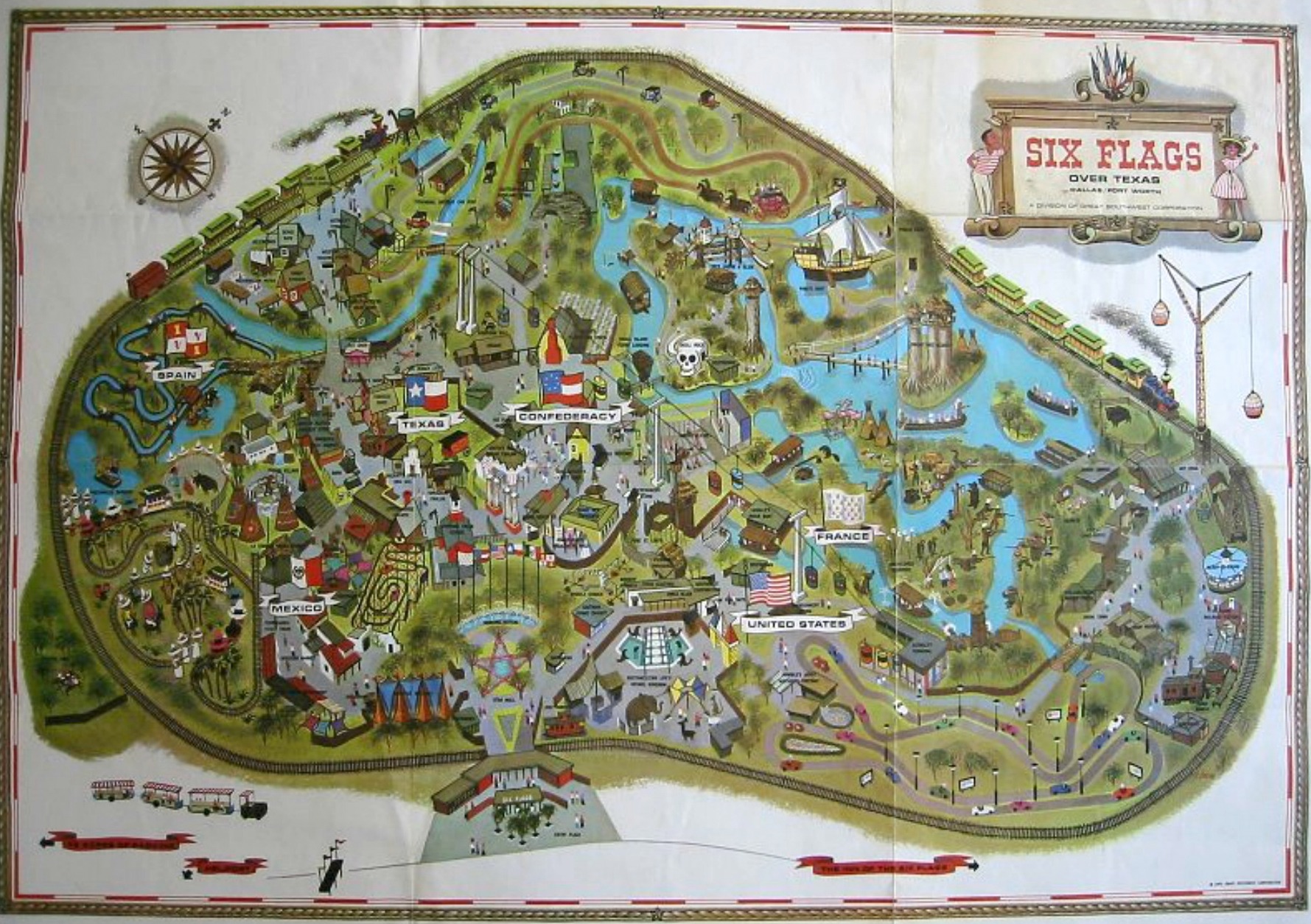
And here’s the whole of it, in 1961. I guess there must have been other things in Arlington back then. But it looks pretty empty once you’ve ventured past Skull Island and left the park.

six-flags_map_mid-1960s(Click for much larger image!)

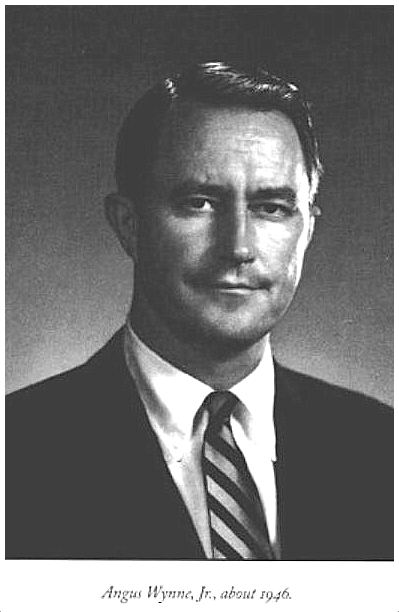
Thank you, Angus Wynne, Jr. — I had so much fun in your park — I wish I had seen it when it opened!

wynne_angus-jr_legacies_fall-2002

***

Sources & Notes

Top two postcards from the jumble of stuff I own.

All other postcards from the INCREDIBLE Six Flags Over Texas postcard collection of Ken Collier, which you can see — page after page after page — here.

I’m not sure where I found the map, but it gets pretty big when clicked.

Photo of Angus Wynne, Jr. from the Fall, 2002 issue of Legacies.

Memories of the helicopter ride by a former park employee (who says it lasted only until 1962 when it was discontinued due to a “hard landing” incident) can be read here.

And for a truly enjoyable look at the then-new theme park, I HIGHLY recommend Jack Maguire’s “The Wynne Who Waves Six Flags” in the November, 1961 issue of The Alcalde, the University of Texas alumni magazine — read it and look at the photos of a Six Flags *I* certainly never knew (but wish I had), here.

For my follow-up post on The Six Flags Over Texas Cookbook (1966) — with a link to the entire booklet and all the Six Flags-inspired recipes — see here.

*

Copyright © 2014 Paula Bosse. All Rights Reserved.

“Mars Needs Women” — The Dallas Locations

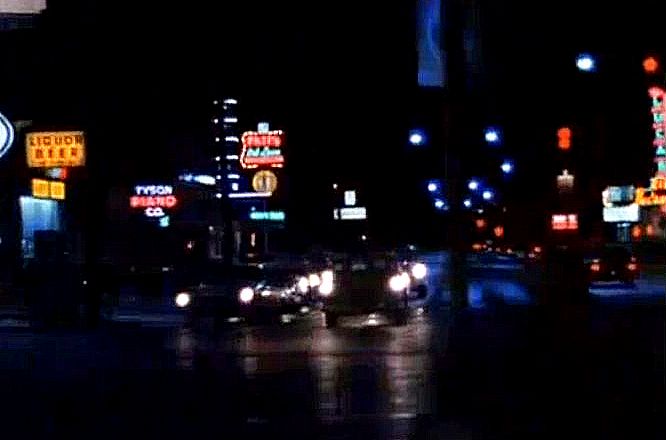
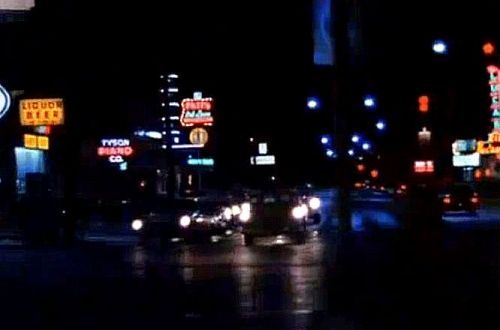
1-mars-oak-lawnOak Lawn & Lemmon, 1966

by Paula Bosse

Chances are, if you’re a native Dallasite and you’re a cult movie buff, you’ve heard of Dallas filmmaker Larry Buchanan (1923-2004), the self-described “schlockmeister” who made a ton of low-budget movies in Dallas, almost all of which are considered to fall in the “so-bad-they’re-good” category. I’ve made it through only three of them, and while they’re definitely not great (or even good, really), there were moments I enjoyed.

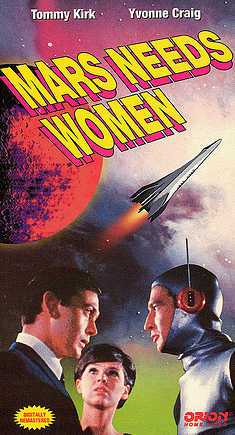
Buchanan’s most well-known movie — if only because the title has worked itself into the sci-fi vernacular — is Mars Needs Women, shot in Dallas in a couple of weeks in late 1966, starring former Disney child star Tommy Kirk and future star of “Batgirl,” Yvonne Craig. For me, the worst thing about the movie is its incredibly slow, molasses-like editing (courtesy of writer-director-editor Buchanan who was working on contract to churn out movies that had to be cut to a very specific running time, and he’s obviously padding here with interminably long scenes that drag and drag). And then there’s the dull stock footage and weird background music that I swear I’ve heard in every cheap Western ever made. Still … it has its charm.

But the BEST thing about this movie (and, presumably, his others) is that it was shot entirely in Dallas, using a lot of instantly recognizable locations. (Every time I saw a place I knew, I perked up — it reminded me a bit of seeing Bottle Rocket for the first time — almost shocked to see common every-day places in an honest-to-god MOVIE!) So, if you don’t feel you can sit through the whole thing (available, by the way, in its entirety online — see link at bottom), I’ve watched it for you, with a whole bunch of screen shots. So feast your eyes on what Dallas looked like in November of 1966. (By the way, because the movie revolves around …. Mars needing women, the movie is actually set in Houston, home of the Johnson Space Center. Even though you see the very distinctive Dallas skyline — repeatedly. Houston! You wish, Houston!)

My favorite shot is the one at the top of this page and is seen in the first 90 seconds of the movie: Oak Lawn at Lemmon, with the familiar Lucas B & B sign at the right. This area was used a few more times. One character goes into the old Esquire theater, but, sadly, there was no establishing shot showing that great old neon sign. I think the first interior — showing a couple at a lounge — was shot in the swanky private club, Club Village, at 3211 Oak Lawn (at Hall), just a short hop from Oak Lawn and Lemmon.
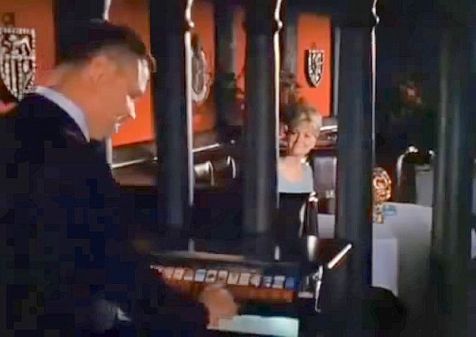
1966_club-village_mars-needs-women

Next, we’re off to White Rock Lake.

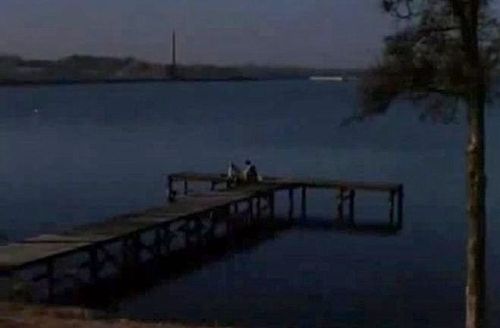
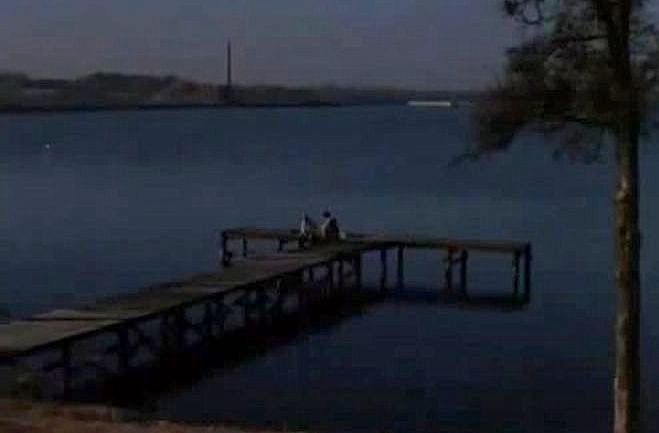
2-mars_pump1White Rock Lake. Shot day-for-night, with the pump station in the distance.
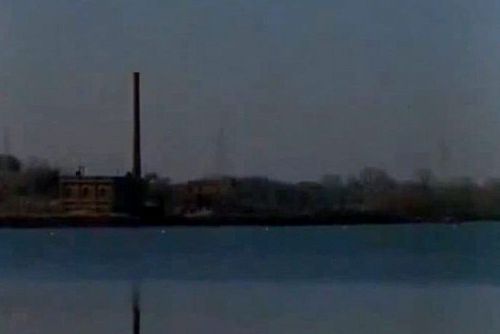
3-mars-pump2White Rock Lake pump station, where the Martians are headquartered as they search for healthy, single women to take back to Mars to help re-populate the planet.
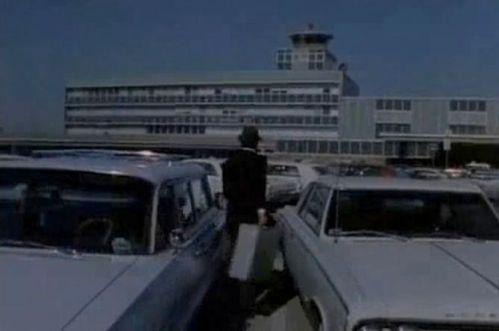
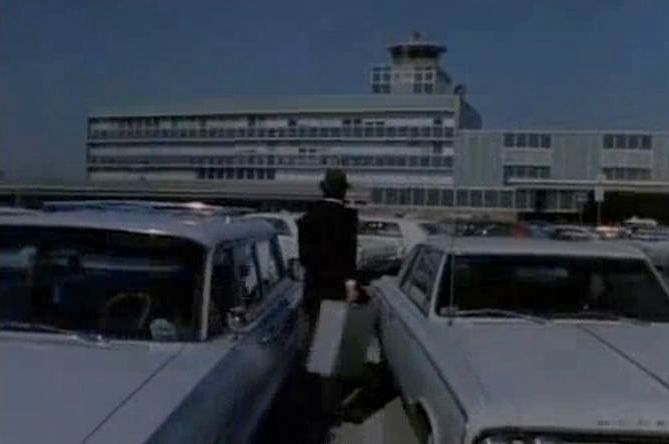
4-mars_love-field-extLove Field parking lot. Still shooting day-for-night. Badly.
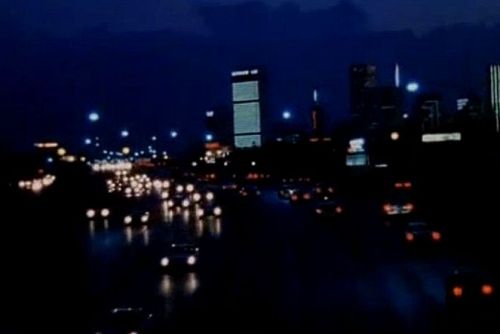
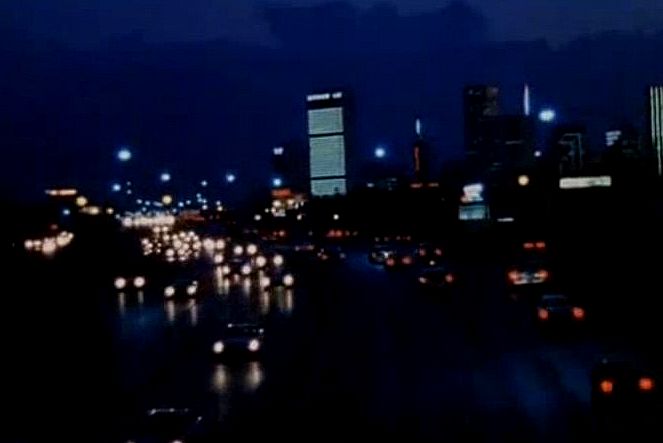
5- mars-southland-lifeThe Southland Life Building, etc., magically transported to Houston.
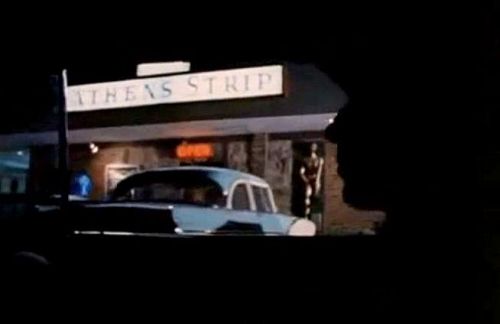
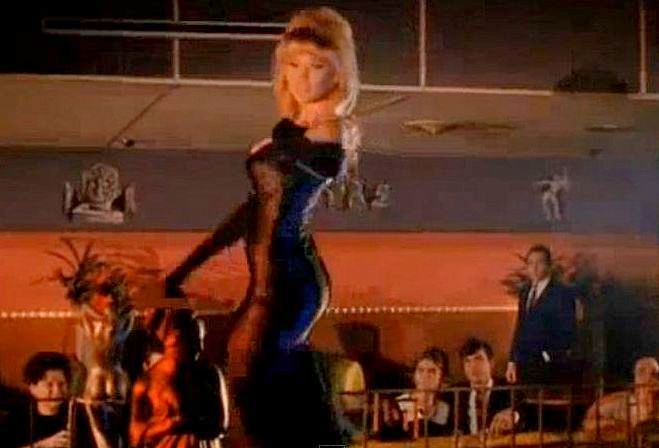
7-mars-athens-stripAthens Strip — a strip joint on Lower Greenville, one block north of the old Arcadia Theater. I’ve never heard of this place, but I came across the story of a guy who had visited the place back around this time and remembered one of the VERY unhappy dancers who hurled handfuls of the coins (!) that had been tossed onstage back into the audience, with such force that his face and chin sustained minor lacerations.
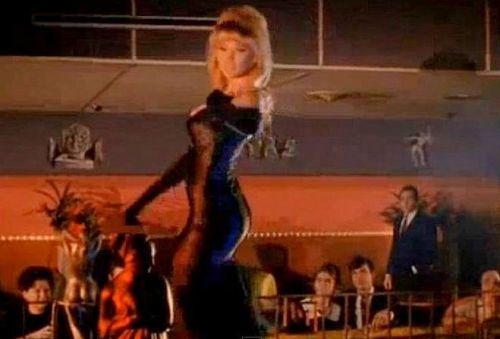
8-mars-needs-women_athens-strip_bubbles-cashLocal celebrity-stripper “Bubbles” Cash, inside Athens Strip. Plainclothes Martian (standing) ponders whether she has what it takes to birth a nation. (She does.)
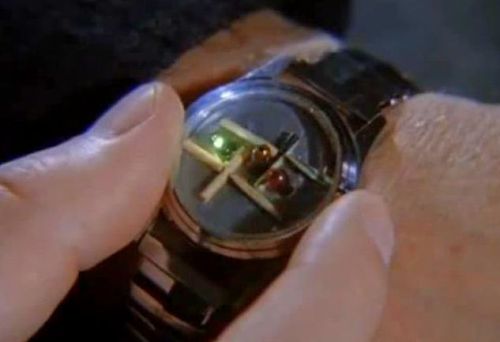
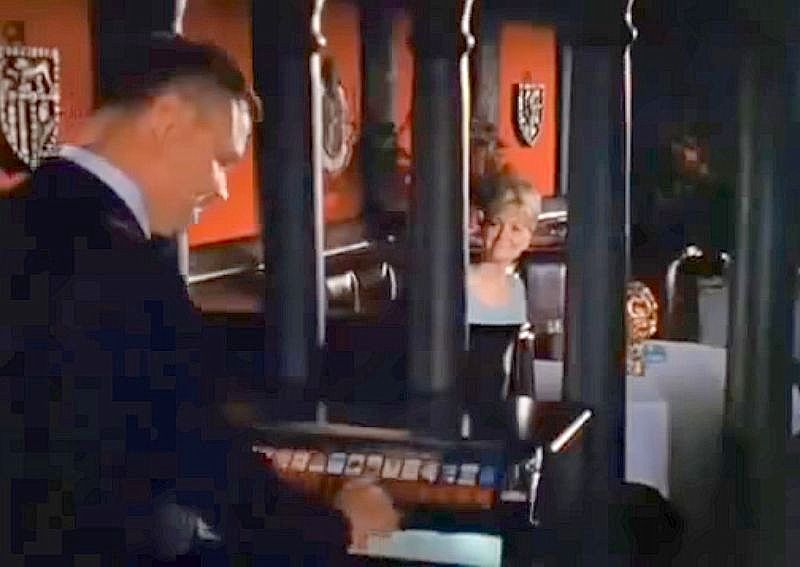
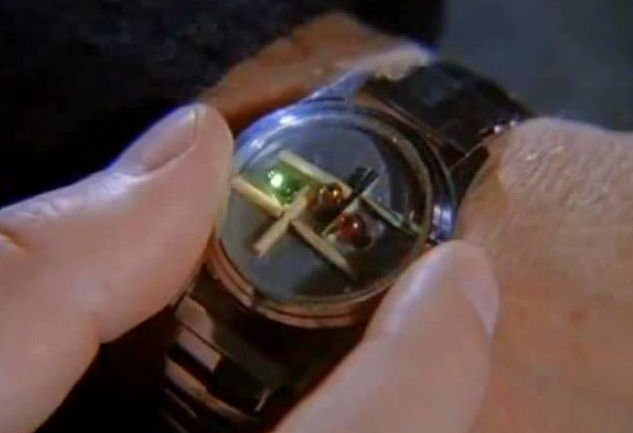
9-mars-watchMy favorite example of what a director is forced to resort to when there is no budget. This is some sort of sophisticated communication device. I think those are matchsticks.
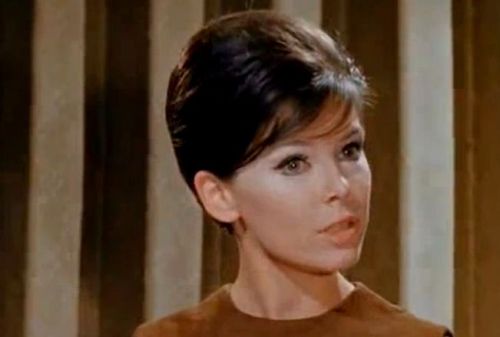
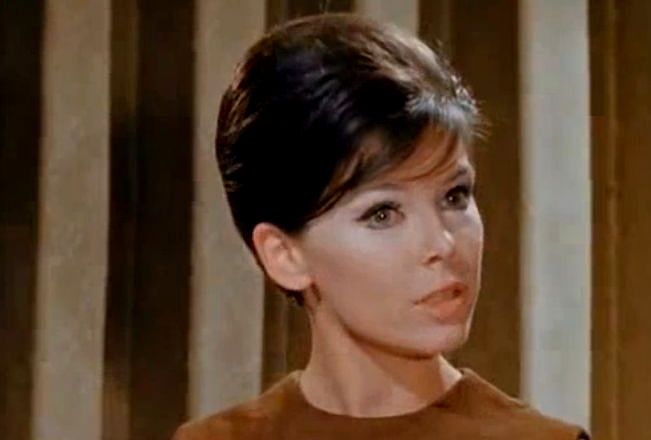
10-mars-yvonne-craigYvonne Craig, without a doubt the best actor in the movie. In fact, she’s really good. She had already made a few movies in Hollywood at this point, but the lure of a starring role brought her back to her hometown (where the newspapers reported she was happily staying with her parents during the two-week shoot).
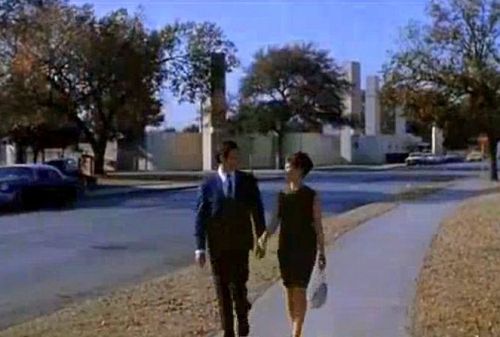
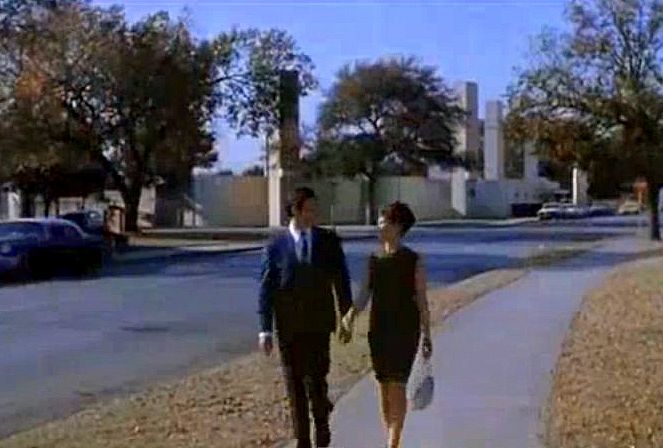
11- mars-band-shellMartian #1 and sexy space geneticist strolling through Fair Park — band shell behind them, to the left.
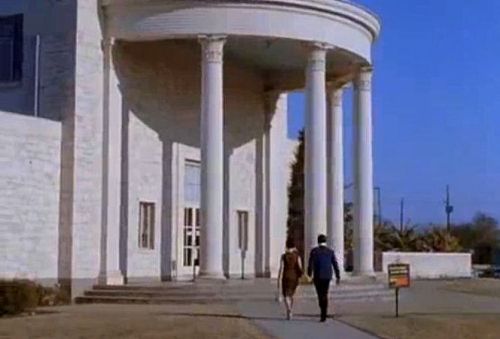
12-mars-planetariumThe Fair Park planetarium.

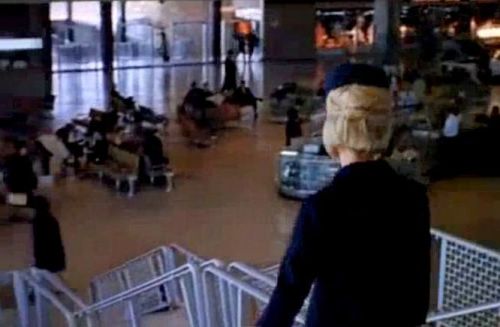
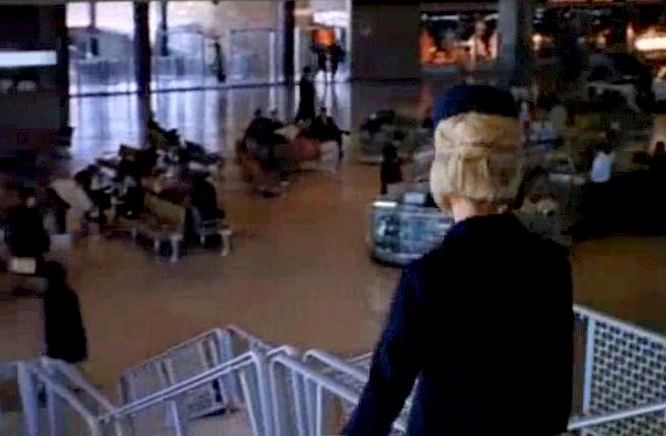
13-mars_love-fieldLove Field. I love the interior shots of the airport in this movie. (The stewardess walking down the stairs? Destined for Mars.)
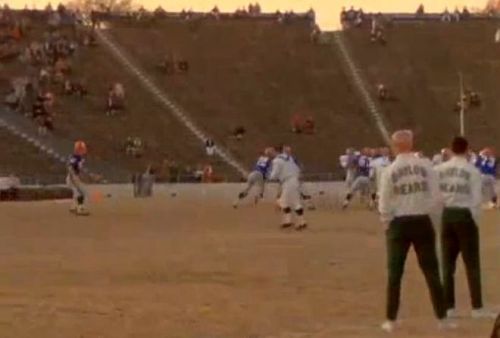
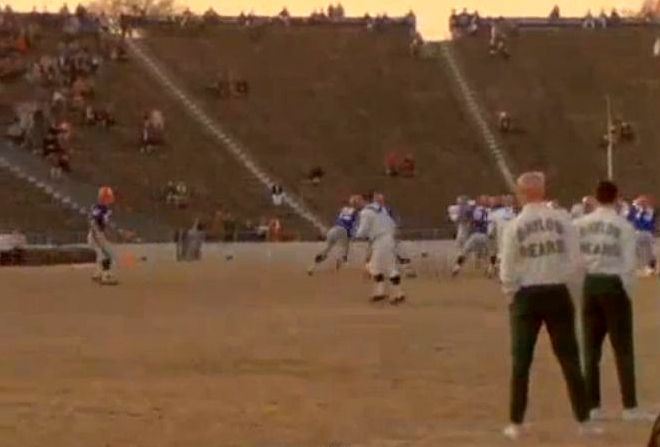
14-mars-cotton-bowlCotton Bowl, shot during a homecoming game between SMU and Baylor. Some shots show a packed stadium, some show this. Word of warning to the homecoming queen, Sherry Roberts: do NOT accept that flower delivery!
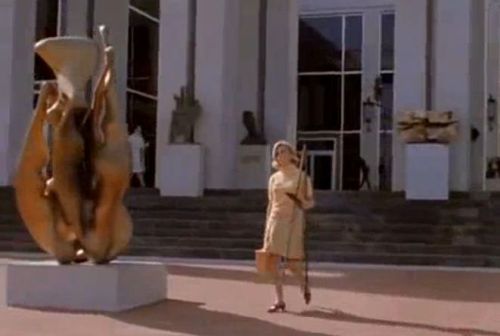
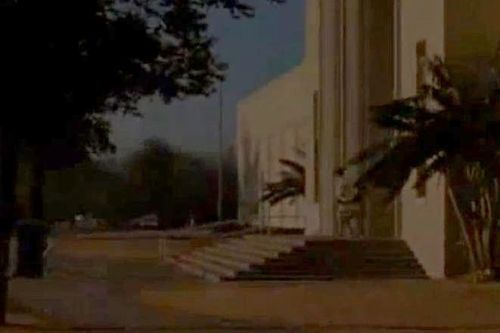
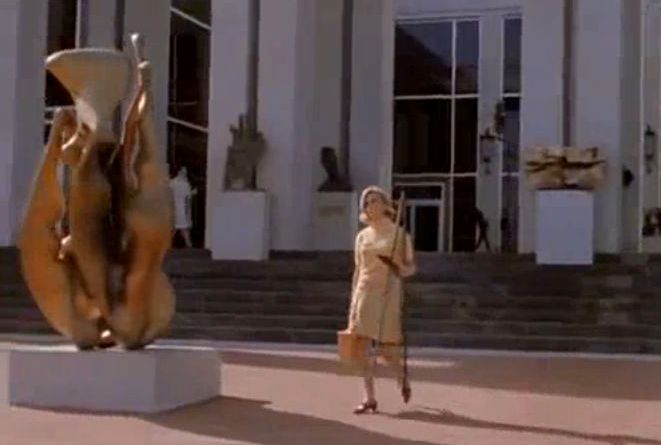
15-mars-meadowsSMU, Meadows School of the Arts. I love the pan across the front of the building. Mars Needs Co-Eds.
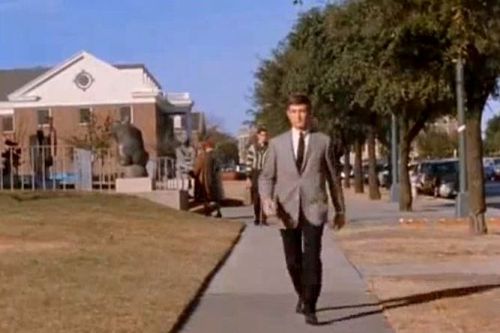
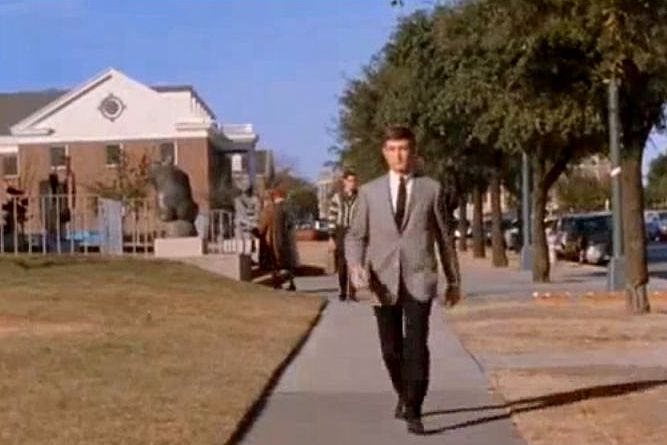
17-mars_BMOCSMU. BMOC (Big Martian On Campus).

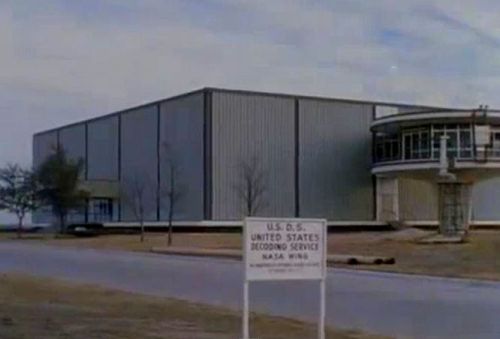
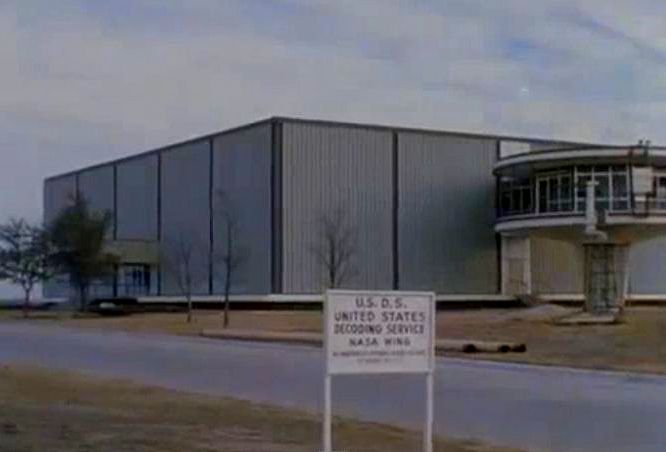
18-mars-collins-radioThe one location I couldn’t figure out. And it’s because it isn’t in Dallas. It’s the Collins Radio building in Richardson, a company that was absorbed by/bought out by/merged with Rockwell International. I think all the interior and exterior shots which are supposed to be NASA were shot here. How did a low-budget director like Larry Buchanan get into a place like that? According to a 1986 Texas Monthly article, Buchanan, in his day-job career as an ad-man, was hired by Collins Radio in 1961 to work in their “audio-visual” department” (the man who hired him was Harold Hoffman, whose later film work with Buchanan was done under the name Hal Dwain).
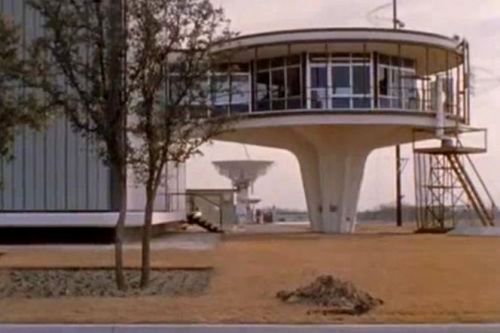
19-mars-collins-radioSo, yeah — COOL location.

20-mars_fair-parkMore Fair Park, more murky day-for-night.
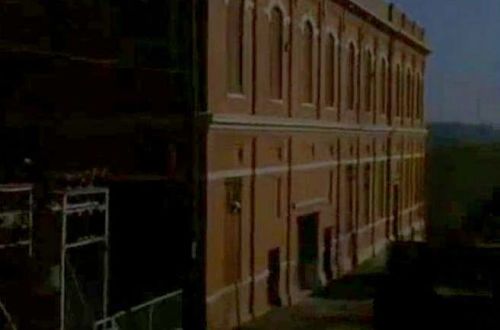
21-mars_pump3White Rock Lake pump station, aka the Martian lair.
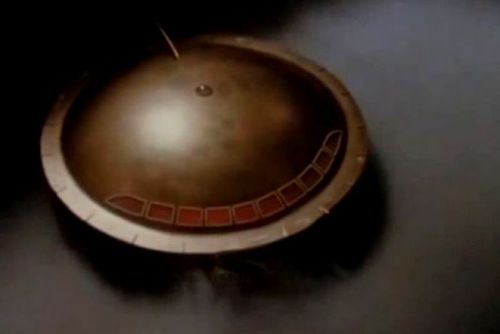
22-mars-saucerFANTASTIC flying saucer. Do the Martians get their five healthy, single women on board the ship and get them back home? You’ll have to watch it for yourself to find out.
23-mars-endYou tell ’em, Konnie.

mars-needs-women_VHS-box

Check back in a few days for more on Larry Buchanan (including a long-lost photo of him at work back in his advertising days in the 1950s).

UPDATE: Here it is — Larry Buchanan filming a Chrysler spot in the Katy railyard in 1955 for Dallas’ Jamieson Film Company, here.

***

Sources & Notes

The entire movie is on YouTube in a pretty good print. Watch it here.

Larry Buchanan Wikipedia page is here.

Mars Needs Women Wikipedia page is here.

Collins Radio/Rockwell Collins Wikipedia page is here.

Consult the Dallas Morning News archives to read a somewhat sarcastic Dallas Morning News article by Kent Biffle on the shooting of the Cotton Bowl sequence (I miss his Texana columns!): “That UFO Was a Field Goal” (Nov. 20, 1966).

*

Copyright © 2014 Paula Bosse. All Rights Reserved.

The Hyperbolic Paraboloids of the Prairie

hyperbolic_paraboloidThe future is NOW! (click for larger image)

by Paula Bosse

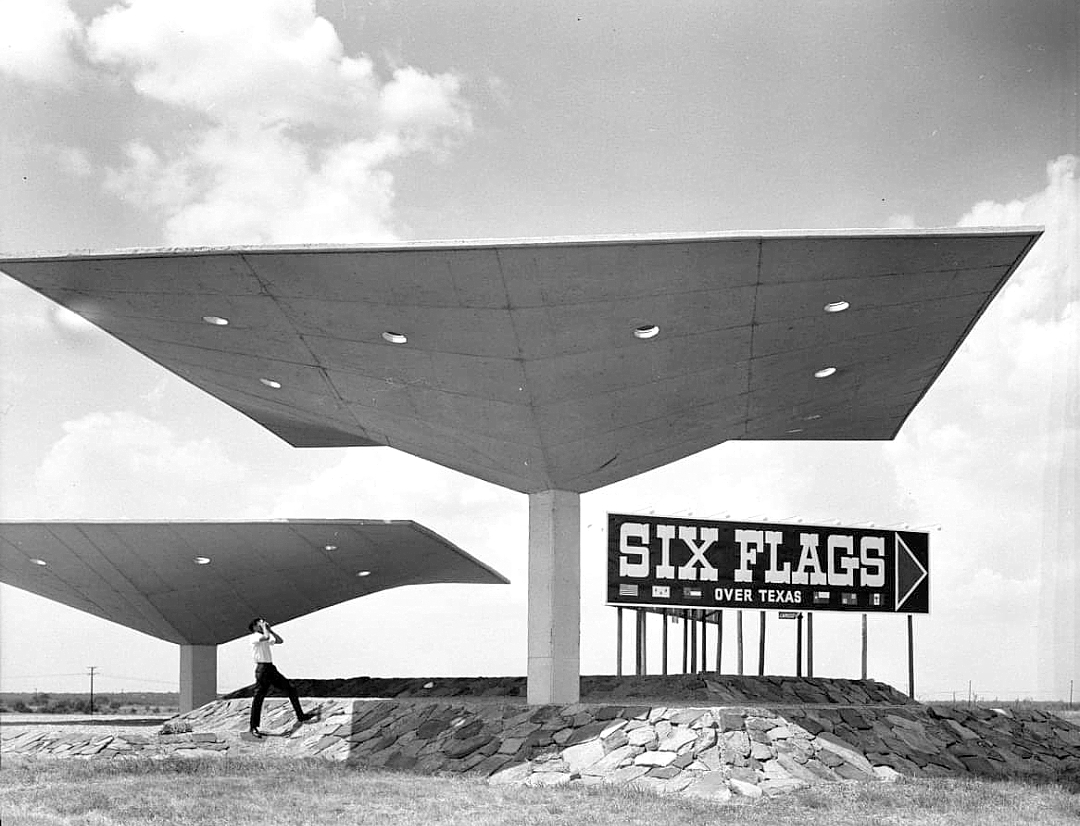
In amongst things the things I’ve haphazardly collected (and I use the term loosely) over the years is this postcard. The image looks familiar to me, as if I remember actually seeing it — but I think that might just be because I’ve looked at this postcard so long. The first thing that popped into my head when I saw it was “turnpike,” but until I read up on the history of local highways (my days are fun-filled!), I wasn’t entirely sure where the turnpike had been other than “the other side of downtown, toward Fort Worth.” Did I ever see this sign and attendant weird looming structures when I was a child? Unless it was still up in the ’70s, I probably didn’t. So what is it?

Here’s the text from the back:

  • Concrete wings
  • THREE HYPERBOLIC PARABOLOIDS
  • GREAT SOUTHWEST INDUSTRIAL DISTRICT
  • Midway between Dallas and Fort Worth
  • “Located on U.S. 80, these hyperbolic paraboloids stand as insignia of the vast Great Southwest Industrial District in the center of the Dallas-Fort Worth metropolitan area. This thin shell ‘concrete umbrella’ construction form was pioneered in the Untied States by Great Southwest Corporation, developer of a 5500-acre planned industrial district.”

It was somewhere around Arlington and Grand Prairie, back when it was still a vast, undeveloped area being planned in the mid-1950s by Angus Wynne who would, a few years later, bring us Six Flags Over Texas. (US Hwy 80 no longer runs west of Dallas — that stretch is now, I think, Hwy 180 — it was shoved off its Great American Interstate Highway pedestal by the DFW Turnpike and the arrival of what is now Interstate 30.)

hyperbolic-parabola_six-flags_1961_tx-highways-mag_FB
1961 (Texas Highways photo by Willis Albarado)

But … “hyperbolic paraboloids”? Those things are so cool. The “hyperbolic paraboloid” was developed by Mexico-based Spanish engineer-architect Felix Candela who worked in the Dallas area with the great architect O’Neil Ford (on, specifically, the Great Southwest Industrial District and the Texas Instruments Semiconductor Building). Candela is pretty interesting — look him up. Without Candela’s paraboloids and his contributions to engineering and architecture, Santiago Calatrava probably wouldn’t be doing the sort of thing that he’s doing.

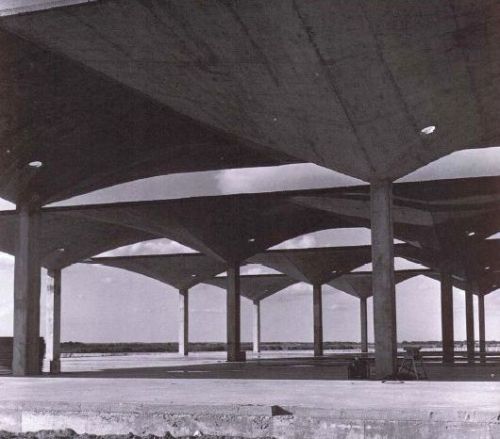
Here’s another view of (other) paraboloids out on the Texas prairie. They’re like elegant, curved, inverted parasols. Kind of. Made from thin shells of concrete. (One source identified these paraboloids as being part of the Great Southwestern Industrial District and another source as being from the Texas Instruments campus. (See 1958 TI ad below.) Either way, it’s Felix Candela, all the way.)

paraboloid_texas-instruments

I’m still trying to figure out if I ever saw that fantastic sign and those three silent, looming paraboloids. It’s all pretty cool-looking, and it must have been an unexpected sight in the middle of what was, then, basically nothing.

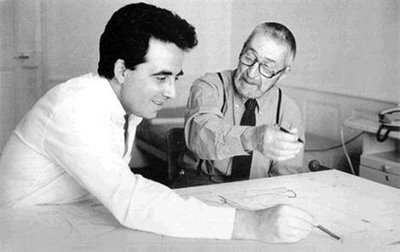
Speaking of Candela and Calatrava, here’s a photo of the two together:

calatrava-candela

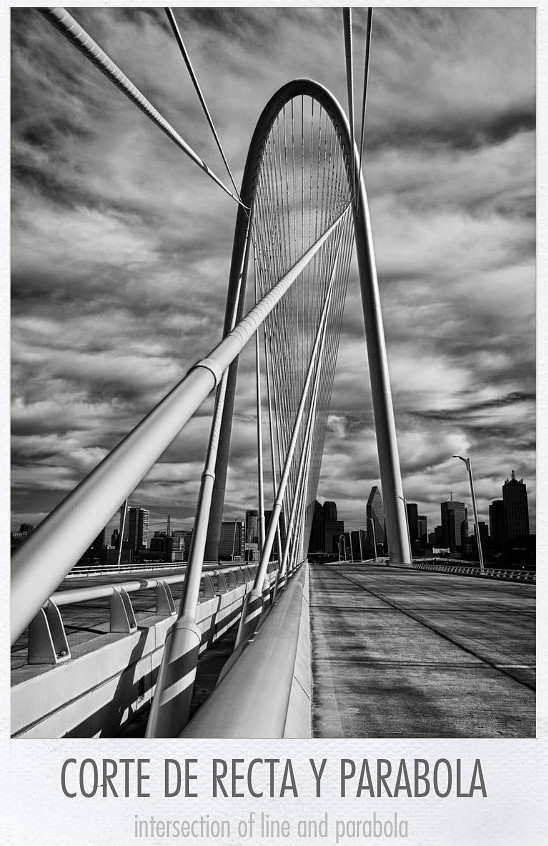
And here’s another paraboloid-y structure that stands out in the DFW area — you might have seen it:

calatrava_parabola

***

Sources & Notes

Photo of Calatrava and Candela from the blog An Engineer’s Aspect, here.

Photo of the Calatrava bridge from Pinterest, here.

A good overview of Felix Candela’s work, with photos and a video, is on the Columbia University website, here.

The Great Southwest Industrial District (Arlington and Grand Prairie) still exists, and their website has a history page which explains its creation and development by Angus Wynne, here.

Lastly, who could resist reading up on just what the heck a “hyperbolic paraboloid” is (warning: math) — Wikipedia’s on it, here.

A 1958 Texas Instruments ad wants you to know that “hyperbolic paraboloids form roof-ceiling” (click to see larger image):

texas-instruments_hyperbolic-paraboloid_1958_ebay1958

UPDATE: Thanks to comments below, I’m happy to present another photo of the paraboloids, this one from the cover of the 1960 Arlington High School yearbook, complete with Shetland pony! Click the image below to see a larger image of the photo inset. (Thanks to Brad McCorkle for alerting me to the photo — it was taken by his father, Lynn McCorkle, intrepid student photographer!)

paraboloid_arlington-high-school-yrbk_1960

ANOTHER UPDATE, from the comments: this still-standing building at 10830 Preston Road (Preston Royal Shopping Center) was one of many that utilized hyperbolic paraboloids in its design. The American Savings Association building (designed by Brock & Mabrey of Corpus Christi, with Braden & Jones of Dallas as associated architects) opened in March, 1966.

american-savings-association_hyperbolic-paraboloid_030166

*

Copyright © 2014 Paula Bosse. All Rights Reserved.
“Throw Me a Pink Thing, Mister!” — 1967

mardi-gras_1967_doubloon-a

mardi-gras_1967_doubloon-b1967 Mardi Gras doubloon (click for larger images)

by Paula Bosse

“THROW ME SOMETHING, MISTER.”

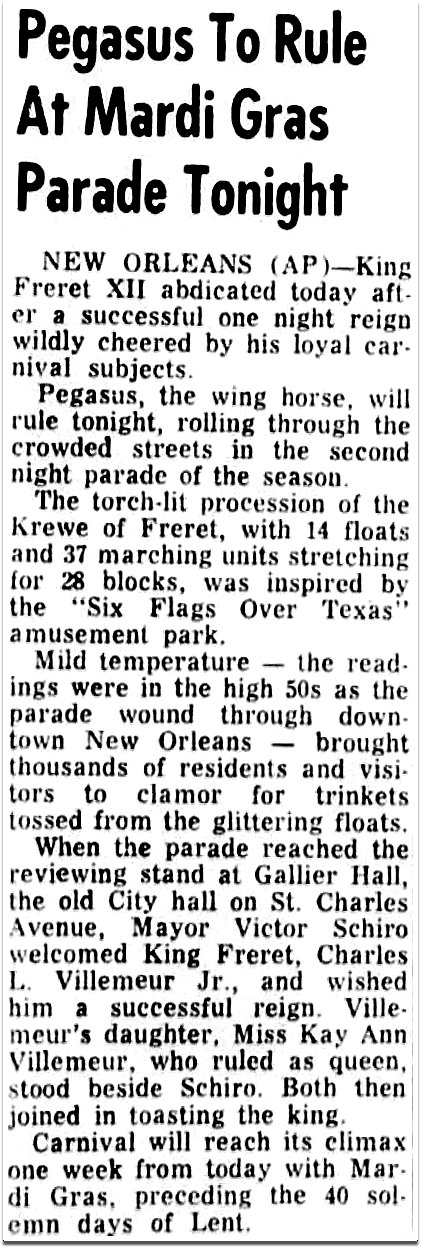
Pictures of these are all over the internet, but I found only ONE reference explaining why “Six Flags Over Texas” was on a Krewe of Freret Mardi Gras doubloon — and it was in this Jan. 31, 1967 AP article from the Monroe (Louisiana) News Star (transcription below):

mardi-gras_six-flags_monroe-louisiana-news-star_013167

NEW ORLEANS (AP)-King Freret XII abdicated today after a successful one night reign wildly cheered by his loyal carnival subjects. Pegasus, the winged horse, will rule tonight, rolling through the crowded streets in the second night parade of the season. The torch-lit procession of the Krewe of Freret, with 14 floats and 37 marching units stretching for 28 blocks, was inspired by the “Six Flags Over Texas” amusement park. Mild temperatures — the readings were in the high 50s as the parade wound through downtown New Orleans — brought thousands of residents and visitors to clamor for trinkets tossed from the glittering floats. When the parade reached the reviewing stand at Gallier Hall, the old city hall on St. Charles Avenue, Mayor Victor Schiro welcomed King Freret, Charles L. Villemeur Jr., and wished him a successful reign. Villemeur’s daughter, Miss Kay Ann Villemeur, who ruled as queen, stood beside Schiro. Both then joined in toasting the king. Carnival will reach its climax one week from today with Mardi Gras, preceding the 40 solemn days of Lent.

I wonder if there actually IS any connection to the amusement park? It might just be a friendly nod to neighboring Texas and not to the Arlington park we all know and love. But who am I to doubt the fine folks at the Biloxi Daily Herald?

Laissez les bons temps rouler!

***

Click the doubloons to get those suckers big. REAL big.

*

Copyright © 2014 Paula Bosse. All Rights Reserved.

Ted Hinton’s Motor Lodge — From Bonnie & Clyde to Motel Heliport

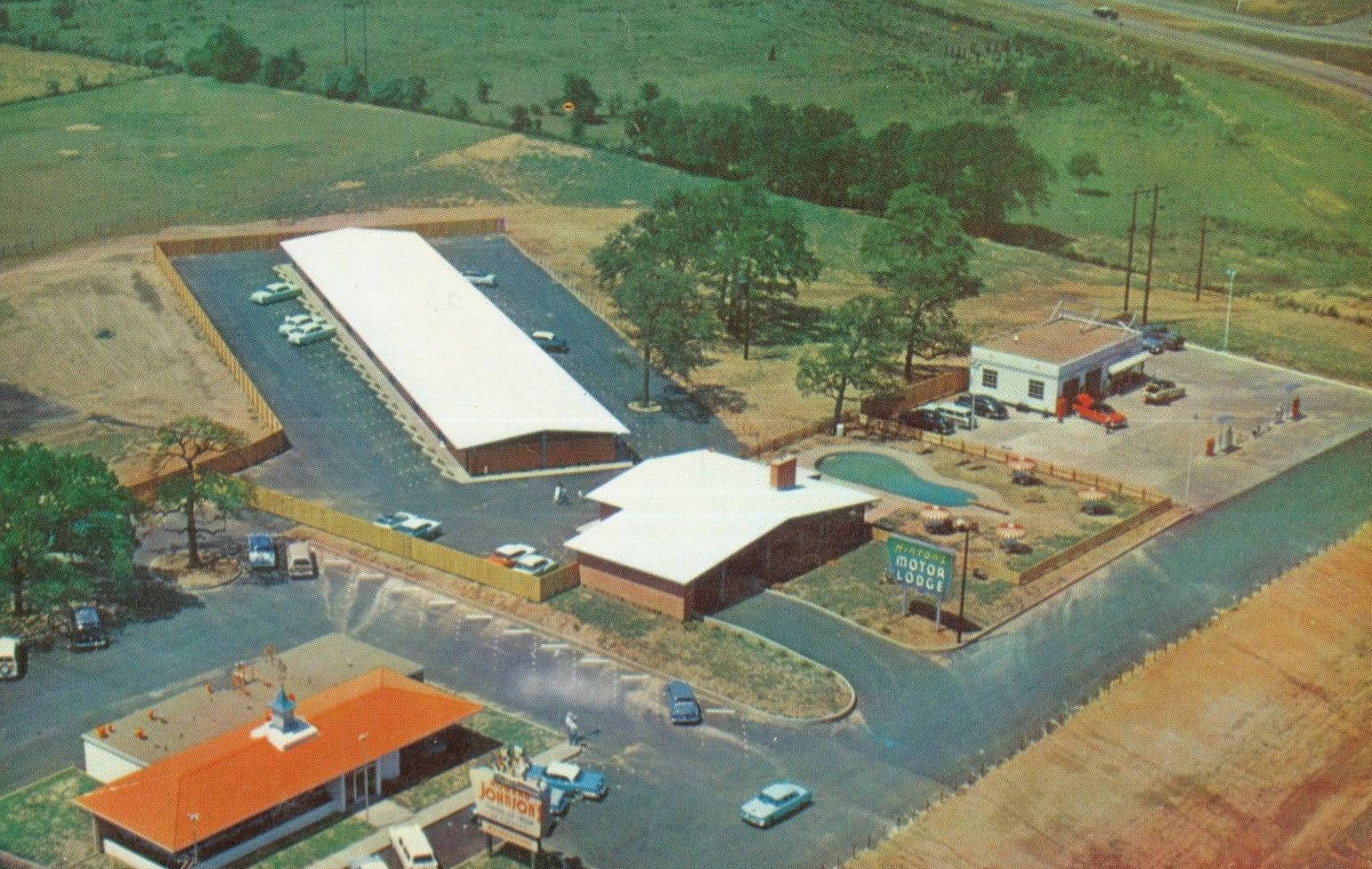
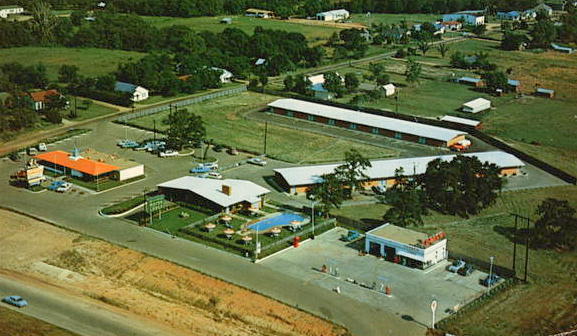
hintons-motor-lodge_front“7 miles from Downtown Dallas” — choppers welcome

by Paula Bosse

What does a man who ambushed and killed Bonnie and Clyde do once he’s retired from law enforcement? He opens a motor lodge, of course!

I was initially drawn to this image because of an unexplained lifelong fascination with Howard Johnson’s restaurants (I think I was only ever in one — the one on Mockingbird at Central, where my father introduced me to the inexplicable root beer float). But the interesting thing about this postcard is not the HoJo’s, it’s the motel next door, Hinton’s Motor Lodge, an establishment that was in business from 1955 to 1970, in Irving, very near to where Texas Stadium would be built in 1971 (Loop 12 at Hwy. 183). Why would a motor lodge be interesting? Because the owner was Ted Hinton (1904-1977), the former Dallas County Deputy Sheriff who was one of the six men who tracked down, ambushed, and killed Bonnie and Clyde in 1934. (Hinton was recruited for the posse because he would be able to identify both of them: he had known Clyde Barrow growing up, and he had apparently had a crush on Bonnie Parker in the days when she was working as a waitress and he was working for the post office.)

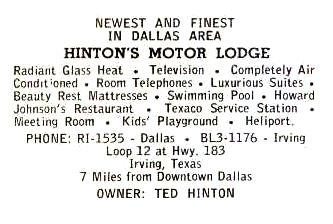
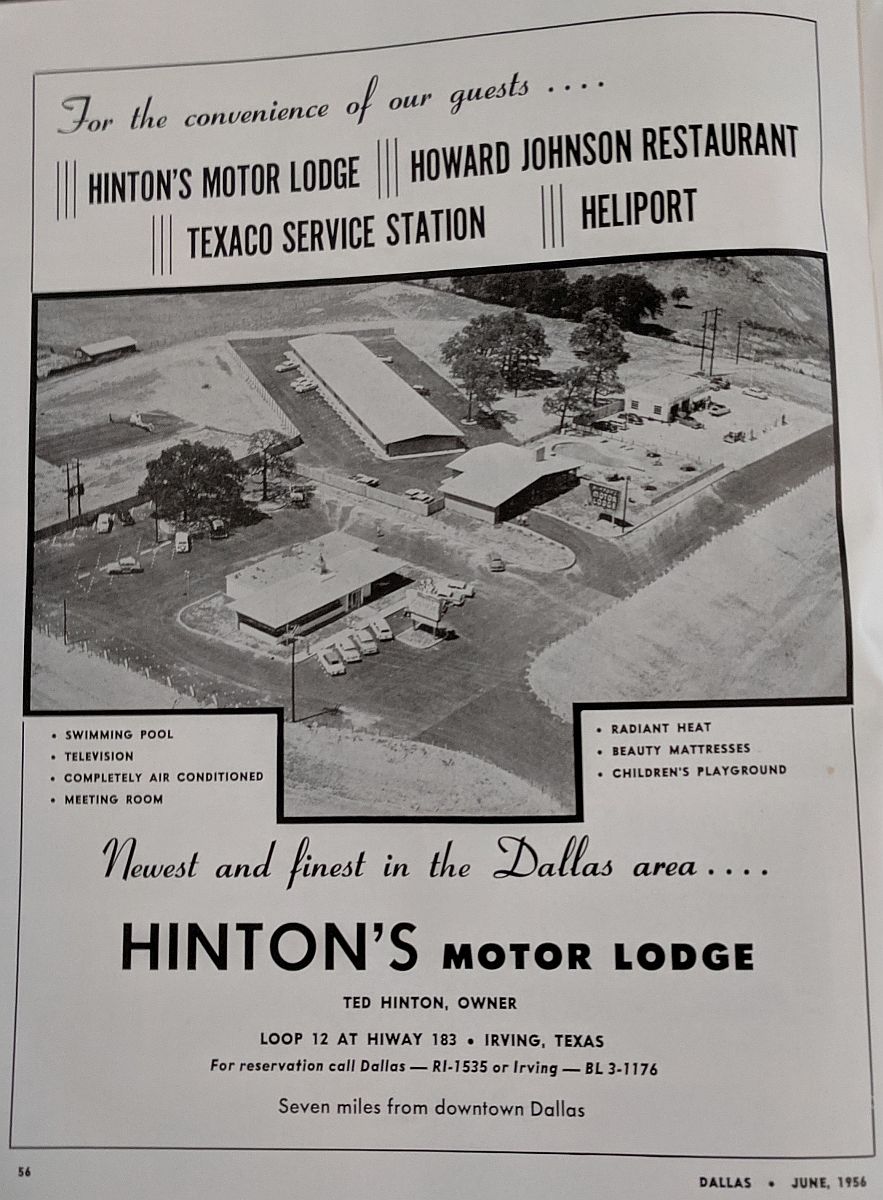
After killing two of the most notorious celebrity outlaws of all-time, it must have been hard to know where to turn next. He retired from the Dallas County Sheriff’s Department in 1941 and, as he was a pilot, he trained flyers for the US Army Air Corps during WWII. The fact that Hinton was a pilot MUST explain the inclusion of a “heliport” (!) in the list of motel amenities, alongside Beauty Rest mattresses, a swimming pool, and a playground for the kids.
I’m sure that, on occasion, Hinton ate next door at Howard Johnson’s. But I bet none of the other patrons had any idea that the guy sipping coffee in the next booth was one of the men who gunned down Bonnie and Clyde in a hail of gunfire that even Sam Peckinpah might have considered “a bit much.”

Aerial View of Hinton's Motor Lodge Dallas

hintons-motor-lodge_back

ad-hinton-motor-lodge_dallas-mag-june-1956_reddit“Dallas” magazine, June 1954 (via Reddit)

***

Sources & Notes

An interesting short video about Ted Hinton’s connections to Bonnie and Clyde in his youth is recounted here by Hinton’s son “Boots.”

And a newsreel featuring film footage of the aftermath of the ambush — and apparently shot by Hinton himself with a 16mm movie camera loaned to him by a Dallas Times Herald photographer — can be seen here.

*

Copyright © 2014 Paula Bosse. All Rights Reserved.