Flashback : Dallas

A Miscellany: History, Ads, Pop Culture

Category: University Park

“Happy Days,” SMU-Style — 1958

smu_gazing-adoringly_degolyer_1958Oh, the Fifties… (click for larger image) (DeGolyer Library, SMU)

by Paula Bosse

Ralph and Potsie are just out of frame.

smu_gazing_1I love these girls’ faces. And hair! (click for larger image)

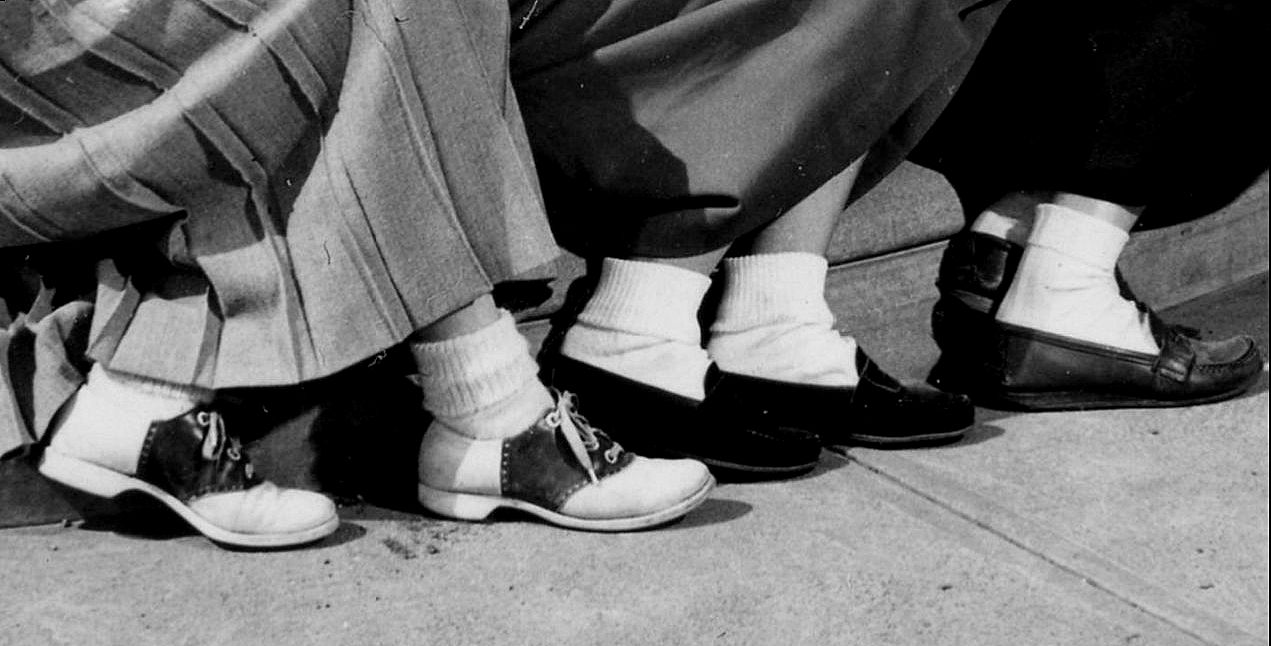
smu_gazing_2And their shoes!

smu_gazing_3The Big Men on Campus appear to  be enjoying the attention.

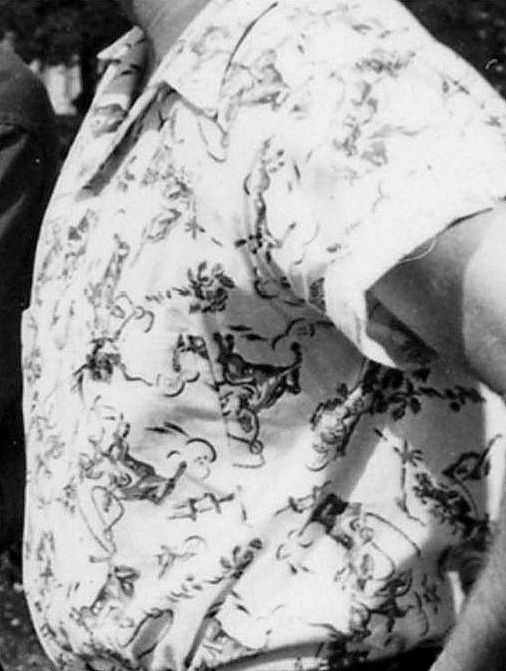
smu_gazing_4That print is kind of … busy. Is it a cowboy motif? Are those horses? Is that Peruna?!

***

Photo titled “Gazing Adoringly,” 1958, from the collection of the DeGolyer Library, Central University Libraries, Southern Methodist University; photo can be viewed here.

UPDATE: Yes, the photo does look odd, doesn’t it? Thanks to a commenter on the Flashback Dallas Facebook page, I now realize that this is a strange superimposition of separate images. The fountain is much closer to Dallas Hall, and the image of the students at the fountain has been superimposed over a long shot up Bishop Blvd., with Dallas Hall way in the distance. I’m pretty sure this photo originated at SMU — it might have appeared in a yearbook or promotional material for the university. Or maybe someone was just having fun in the darkroom. If anyone knows more about this photo — or who any of the students are — let me know!

All images larger when clicked.

*

Copyright © 2015 Paula Bosse. All Rights Reserved.

The Peruna Monument — 1937

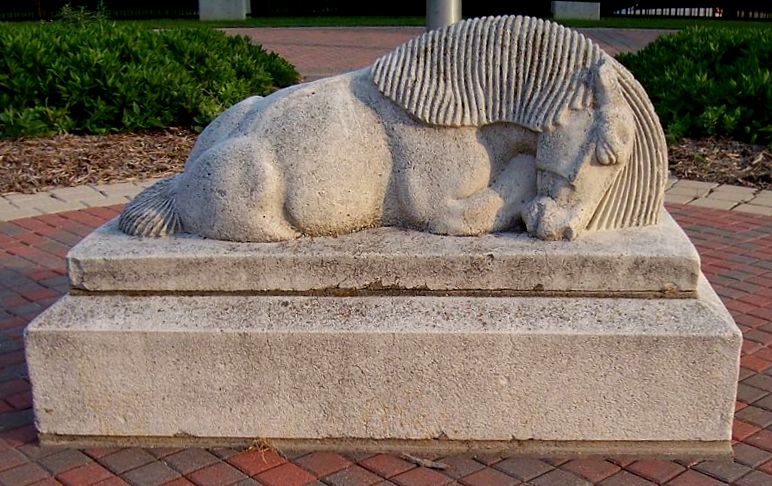
owen_peruna_monument_flickrMichael Owen’s Peruna monument today, SMU campus (photo by David Steele)

by Paula Bosse

When Peruna — SMU’s beloved Shetland pony that served as the Mustangs’ first live mascot — died in 1934, there was an immediate call to erect a memorial monument over the little horse’s grave, but it wasn’t until 1937 that a serious push for the erection began. Money was raised by the student council, which asked every student to contribute at least ten cents to the fund, and the search was on for the right sculptor.

The commission went to young Michael G. Owen, Jr., who, at only 21, was the same age as many of the students who were hiring him. (It has been erroneously reported that Owen attended SMU, but he did not.) Michael Owen was well-known within the Dallas art community and had made a mark for himself as something of an artistic prodigy — as a teenager, he had been on the periphery of the movement that spawned the Dallas Nine group of Regionalist artists, and he had  been mentored by many of the older artists, most notably Jerry Bywaters.

owen_peruna_smu-campus_050537
SMU Semi-Weekly Campus, May 5, 1937 (click for larger image)

Owen worked quickly and completed the memorial — which was six feet long and four feet high and carved from 2,800 pounds of hard limestone — in time for the unveiling just outside Ownby Stadium on May 19, 1937.

The result was a quietly emotional — and even a very sweet — monument depicting the small slumbering horse atop a stone slab, with an inscription reading “Peruna I.” Jerry Bywaters wrote a glowing review of the piece, even though he seems a bit taken aback to find what he called “a memorial to a midget horse” on a college campus to be “one of the best pieces of memorial sculpture in the State.”

“Accustomed to seeing rather bad sculptured monuments erected to Confederate soldiers, Texas Rangers, political dignitaries or such abstract ideas as justice, plenty, or  beauty, it is slightly confusing to find a very good piece of sculpture set up as a memorial to a midget horse. […] Whatever the paradox of the situation, this monument is surely one of the best pieces of memorial sculpture in the State.” (Jerry Bywaters  in The Dallas Morning News, May 23, 1937)

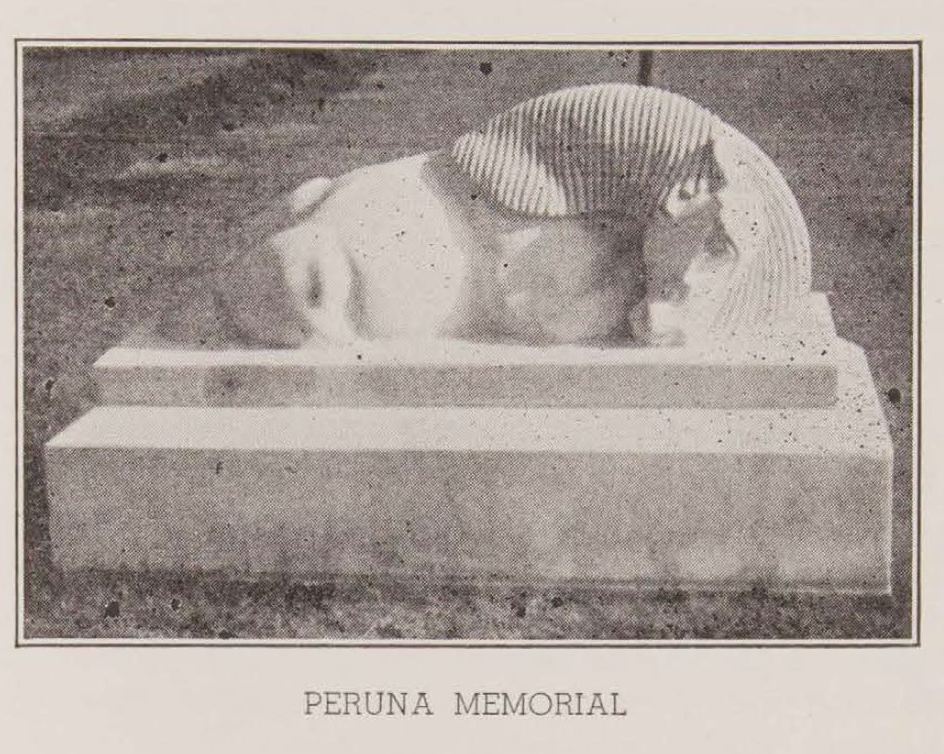
peruna-memorial_mike-owen_m-book_1937_SMU-archives1937 (SMU Archives)

When Ownby Stadium was demolished and the new Ford Stadium built, the Peruna I monument was moved to the new stadium where it has become a memorial to all the Perunas.

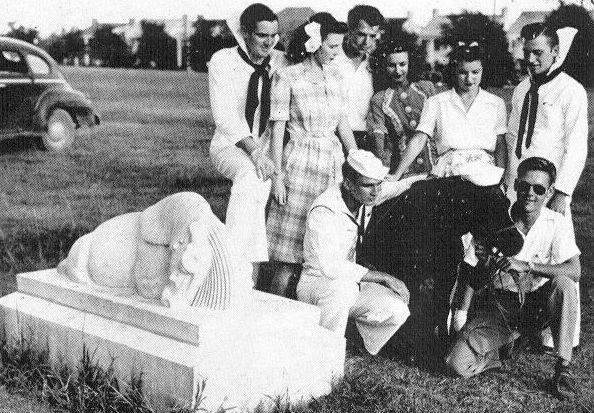
owen_peruna-memorial_wiki_1944With Peruna III, during WWII (Wikipedia)

owen_peruna-statue_1950-degolyer-DET1950 (DeGolyer Library, SMU)

***

Sources & Notes

Top photo by David Steele, from Flickr, here.

Article from SMU’s The Semi-Weekly Campus (May 5, 1937, p. 3), here.

Photo of Peruna III with sailors from the Peruna page on Wikipedia, here.

Bottom photo (cropped) of the Peruna monument from the DeGolyer Library, Central University Libraries, Southern Methodist University, here.

Previous Flashback Dallas posts on Mike Owen:

  • “Give a 15-Year Old 8,400 Pounds of Soap and He’ll Carve You a Radio Transmitter — 1930” is here.
  • “Michael G. Owen, Jr. — Dallas Sculptor of Lead Belly” — is here.

UPDATE: Read about a recently discovered large painting by Owen up for auction in Dallas in 2019 here.

The previous post on the untimely demise of Peruna is here.

owen_peruna_monument_flickr_sm

*

Copyright © 2014 Paula Bosse. All Rights Reserved.

Little Peruna: He Died With His Mustang Bridle On — 1934

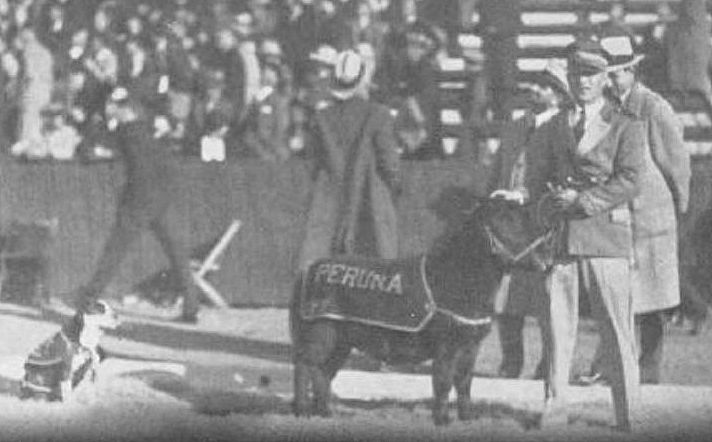
peruna-rotunda_1933Peruna, waiting for the Mustangs to score (photo: SMU)

by Paula Bosse

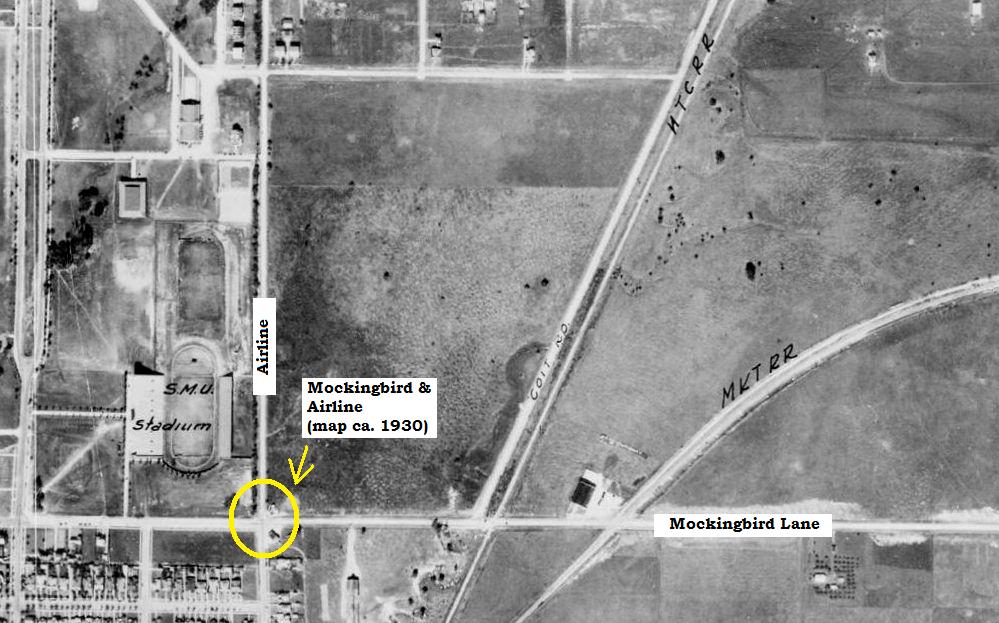
On October 30, 1934, shortly before midnight, Peruna, the 28-inch-tall little black Shetland pony mascot of the Southern Methodist University Mustangs, somehow liberated himself from his stable and wandered across campus and out into the intersection of Mockingbird and Airline where he was, sadly, struck by a hit-and-run driver and died soon after. As the newspaper account noted the next day, when the tragic accident occurred, “He was wearing a bridle of Red and Blue, the Mustang colors.”

Peruna had been the football team’s mascot for only two years, but he was an immensely popular attraction, and he was treated as something of a celebrity wherever he appeared, both at home and when traveling with the football team and the Mustang band. He did things most horses didn’t do, like ride in taxi cabs and sashay though hotel lobbies. Crowds at football games loved watching the little horse race across the field — even the ardent  supporters of the opposing teams were charmed by him. And he was, of course, much loved at SMU; his death was a hard blow to the student body.

When he was buried at Ownby Stadium, the band played the usually rousing fight song as a mournful dirge, and the flags on campus flew at half mast.

I’m an animal lover, and stories about the demise of animals are not things I normally find entertaining, especially when phrases like “the midget pony,” “the wee mascot,” “the stout-hearted little mascot,” and “the midget wonder horse” are constantly (and effectively) used by journalists to tug at the readers’ heart-strings. But the Peruna obituary/funeral coverage that was printed in The Dallas Morning News is so wonderfully and ridiculously over-the-top that that one yearns to know who wrote the uncredited story. I have created a little scenario in my head in which the writer had been (and I apologize…) “saddled” with writing a story about a horse’s funeral, but instead of handing it in the pedestrian short-and-vaguely-moving report that was expected, he decided — to hell with it — that he would just go full-throttle and produce the most outrageously grief-stricken story ever written about the untimely death of a college mascot. After what one assumes was the downing of much whiskey and much chuckling to himself (I suspect this was written by a sportswriter), a 500-word obit ran on Nov. 1, 1934:

CO-EDS AND GRID STARS SOB AS PERUNA IS BURIED
(The Dallas Morning News, Nov. 1, 1934)

In sight of the very gridiron on which he pranced to lasting fame, Peruna, stout-hearted little mascot of the Southern Methodist University Mustangs, was laid to rest Wednesday afternoon.

As co-eds sobbed openly and hardened football heroes found difficulty in brushing back the tears, the body of the diminutive pony was lowered into its grave in the shadow of Ownby Oval. His coffin was draped in red and blue, the school colors, and a huge M, the Mustang emblem, graced the top of the casket.

Across the way, on the campus of the big university itself, the flag fluttered at half mast. The school band, looking noticeably bare without Peruna prancing about, playing “Peruna,” the varsity song, in the tempo of a dirge. Hundreds of heads were bowed when the strains of the alma mater, “Varsity,” offered a final tribute to the wee mascot.

Peruna’s career was as colorful as that of the team he represented. Given to the school in November, 1932, by T. R. Jones, loyal Mustang supporter, the midget horse immediately became the constant companion of the team on its journeys from one side of the continent to the other.

Only last week Peruna was feted in New York, parading through the lobbies of the city’s swankiest hotels, whose clerks sniff haughtily at the thought of a dog or a cat entering the sacred portals of their hostelries….

In was in Shreveport where he slipped and cut his leg as he started to Centenary Stadium in a taxicab. His wound was stitched, and the faithful little animal pranced proudly with the band during the between-halves parade.

But Peruna prances no more. And if the music of Bob Goodrich and his Mustang band at Austin Saturday fails by a scant margin of being at its peppiest, it will be because the band has dedicated every tune on that day to the memory of its best friend.

That must have been fun to write.

The year following Peruna’s demise, the Rotunda — SMU’s yearbook — featured a two-page illustrated spread “Dedicated to the famous Mascot of the Mustangs … ‘Peruna.'”
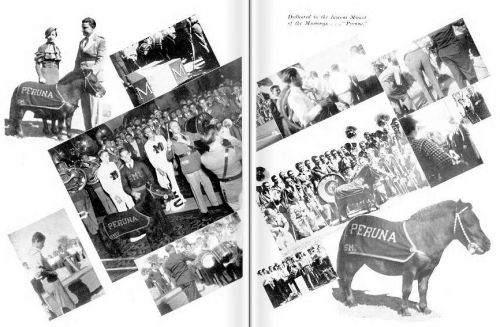
peruna_memorial_rotunda_1935

See Peruna’s very, very sweet memorial statue on the SMU campus here.

The loss of Peruna left the Mustangs without a mascot. Peruna’s son was proffered as a replacement, but even though “Little Peruna had been dressed in its father’s blanket and was prepared to give its all for SMU,” the school declined to bring Peruna fils on board. A successor — Peruna II — was eventually appointed, the first of many over the past eighty years. We’re now up to, I believe, Peruna IX, and the little stallion is still as popular as ever. May the “stout-hearted little mascot” continue to prance proudly for the SMU Mustangs.
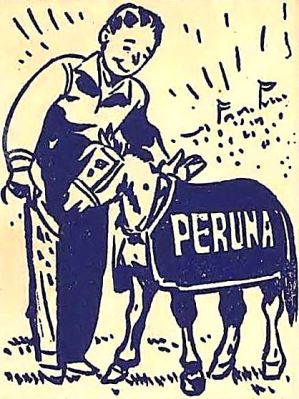
peruna_smu-rotunda_19391939 Peruna (SMU Rotunda)

peruna_varsity-shop_cully-culwell_culwell-ranch_1960-SMU-rotunda1960 Peruna (SMU Rotunda)

***

Sources & Notes

Top photo from the 1933 SMU yearbook, The Rotunda. The two-page spread is from the 1935 Rotunda.

For an idea of what the area looked like at the time of Peruna’s terrible midnight accident — large open fields to the north and east of the campus, and, to the south, a probably dimly-lit Mockingbird Lane — here is a detail from a 1930 aerial map from the Edwin J. Foscue Map Library at Southern Methodist University (the full map can be seen here):
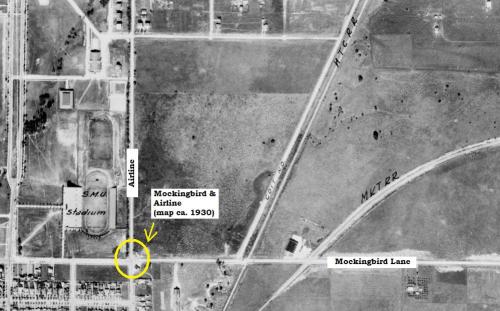
smu-aerial_1930(click for larger image)

Check out these articles in the Dallas Morning News archives:

  • “Car Kills Peruna Back From Victory Over New Yorkers; SMU Mascot Known To Over Half Nation, Dies With Bridle On” (DMN, Oct. 31, 1934)
  • “Co-Eds and Grid Stars Sob As Peruna Is Buried” (DMN, Nov. 1, 1934)
  • “Grieving Mustangs Won’t Take Son of Peruna for Mascot” (DMN, Nov. 11, 1934)

Peruna on Wikipedia, here.

If you really want to know about Peruna, though, you need to go to the horse’s mouth — his page on the SMU website, here.

Read about the Peruna monument by Dallas artist Michael G. Owen, Jr. which was dedicated on the SMU campus in 1937, here.

*

Copyright © 2014 Paula Bosse. All Rights Reserved.

McFarlin Auditorium, Following Morning Chapel — 1927

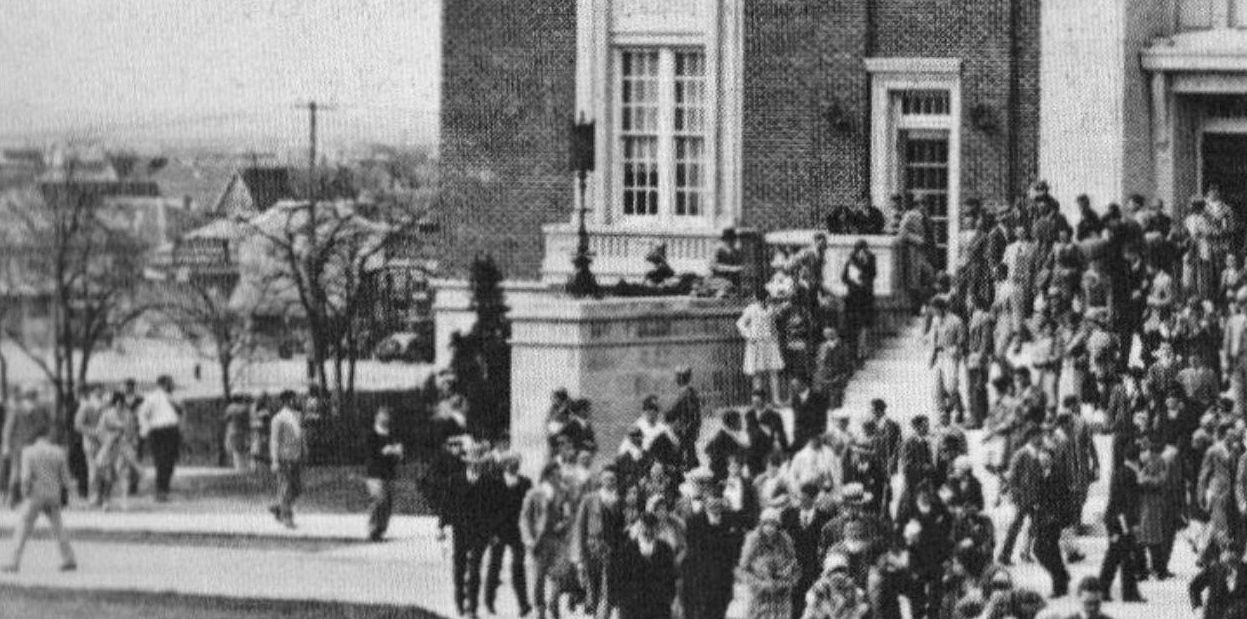
mcfarlin-auditorium_1927McFarlin Auditorium, post-Chapel, 1927 (click for larger image)

by Paula Bosse

Another in the series of wonderful postcards celebrating the history of the Park Cities, this one shows McFarlin Auditorium in 1927, then only two years old. From the back of the card:

This is a 1927 photograph taken following morning Chapel in McFarlin Auditorium. The building is located at McFarlin Blvd. and Hillcrest on the Southern Methodist University campus. At that time, Chapel attendance was mandatory for SMU students. Dr. R. E. Dickenson was Chaplain and conducted the daily chapel services, and Dr. Charles C. Selecman was the President of the University.

Below are a couple of details of the photo which show, in the background, interesting (if fuzzy) views of houses and other structures along (and beyond) Hillcrest.

mcfarlin_det1

mcfarlin_det2

***

Postcard is from the Park Cities Bank “Heritage Series” issued in the 1970s. Photo credit line on the postcard reads “Donated by Stanley Patterson.” Thanks to the Lone Star Library Annex Facebook group for use of the image.

Click pictures for larger images.

*

Copyright © 2014 Paula Bosse. All Rights Reserved.

Highland Park Methodist Church — 1927

hp-methodist-church_1927-degolyerHighland Park Methodist Church, 1927 (click for larger image)

by Paula Bosse

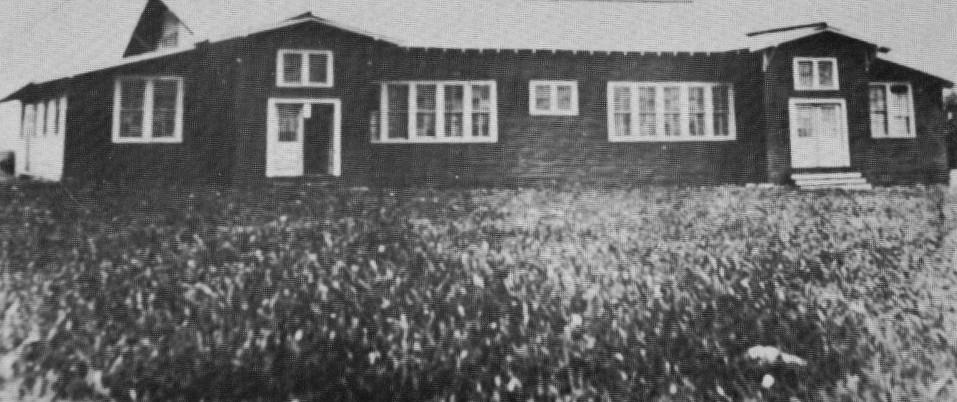
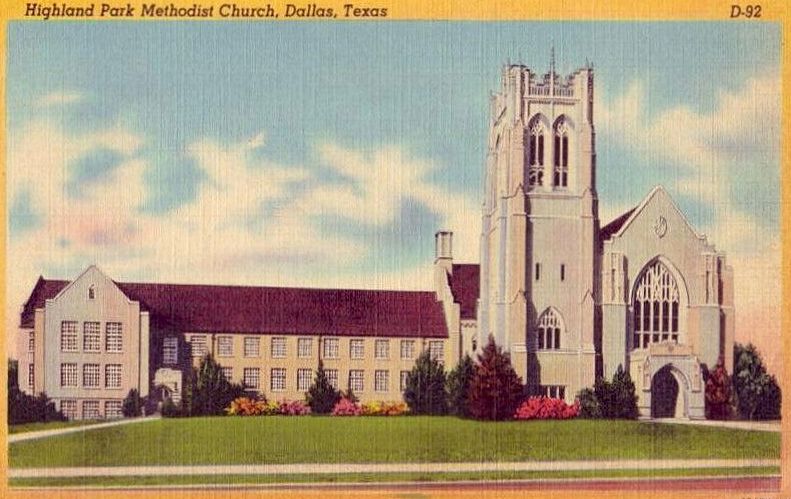
The beautiful Highland Park Methodist Church (now Highland Park United Methodist Church) was designed by architects Mark Lemmon and Roscoe DeWitt (who also designed several of the buildings on the adjacent SMU campus, as well as Woodrow Wilson and Sunset high schools, to name only a few of their projects). According to the HPUMC website, the first church — a temporary building which was referred to as “The Little Brown Church” — was built at Mockingbird and Hillcrest in 1917. It wasn’t until 1927 that the beautiful French Gothic-inspired building we know today was built on that same site. (At one time, Highland Park Methodist Church was the largest Methodist church in the world.)

(Incidentally, Mark Lemmon built his lovely cottage-like home on Mockingbird, across the street from both the church and the SMU campus, where at any time of the day or night, he could look out his front window and gaze with satisfaction upon his beautiful church and the ever-growing university campus dotted with buildings he had designed.)

hp_methodist-church_post-card-series“The Little Brown Church” — built 1917

hpmc_postcard_color

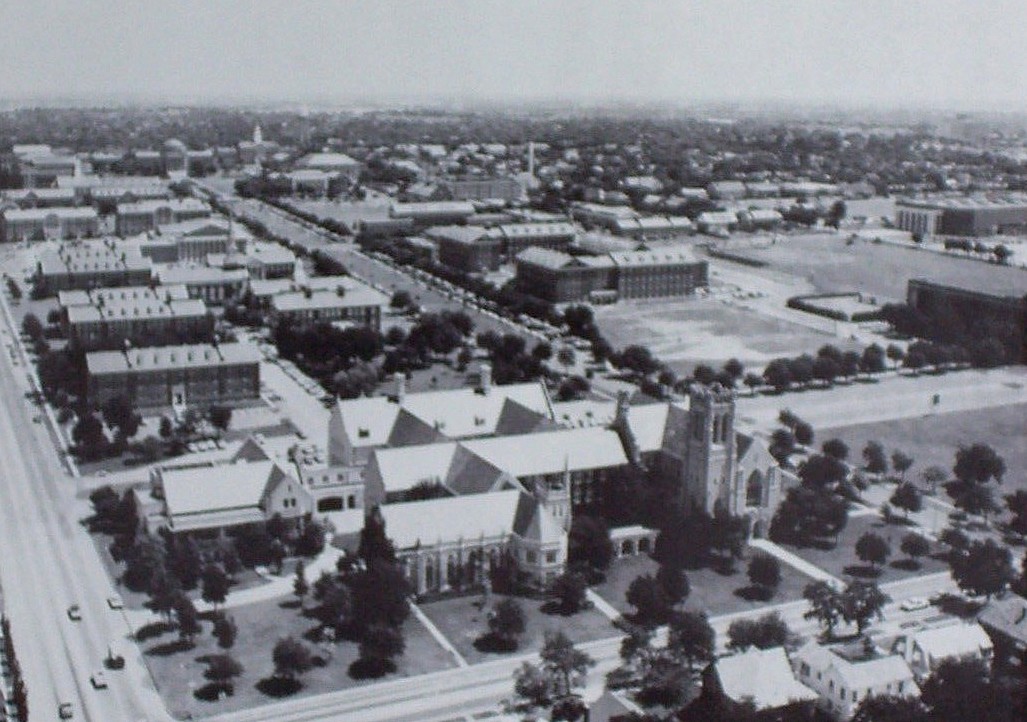
hpmc_golden-prologue-backChurch and SMU campus, Hillcrest and Mockingbird, 1960s

Highland Park Methodist Church Dallas, TX

***

Top photo by Joseph Neland Hester, taken in 1927. From the DeGolyer Library, Central University Libraries, Southern Methodist University; photo can be seen here. (UPDATE: I erroneously labeled the direction of this photo previously. It actually shows the back of the church, looking toward Mockingbird. It would have been taken from about where the Meadows Museum is now. If this is incorrect, please let me know!)

Photo of “The Little Brown Church” from the Park Cities Bank Heritage Series, used courtesy Lone Star Library Annex Facebook Group.

Aerial view from the back cover of Golden Prologue to the Future: A History of Highland Park Methodist Church by Doris Miller Johnson (Parthenon Press, 1966).

Other images from postcards.

For more on the history of Highland Park United Methodist Church check out the Wikipedia page here; check out the church’s history page here.

All photos larger when clicked.

*

Copyright © 2014 Paula Bosse. All Rights Reserved.

University Park, Academic Metropolis — ca. 1915

university-hillcrest_1915University Park, prime real estate (click for larger image; see below for HUGE image)

by Paula Bosse

In the 1970s, Park Cities residents received oversized postcards in the mail featuring historic photos of the area. This “Heritage Series” was presented by the Park Cities Bank and later by Fidelity Bank. I’ll be sharing these wonderful images in the weeks to come. First up is this hard-to-fathom view of the intersection of University and Hillcrest, seen around 1915 when SMU opened, taken from Dallas Hall on the university campus. The description:

“In 1915, University Park was a sparsely populated community north of Dallas. At the time, most Dallas residents thought of Highland Park as ‘country living.’ This photo was taken from SMU’s Dallas Hall looking west along University Boulevard with the cross street being Hillcrest. The two-story home seen on the northwest corner of University and Hillcrest has long been replaced with a series of commercial buildings.”

***

UPDATE: For a much, much larger image of this photo, click here.

“Heritage Series” postcards used courtesy of the Lone Star Library Annex Facebook page. Postcard credits image to Dallas Public Library.

There is a book all about the houses that were built in that first block of University: The Block Book by Bonnie Wheeler (a review of which can be read here). (You probably won’t be able to find a copy of it, but if you do, snap it up. I see only one copy for sale online, and it is rather outrageously priced at just under $500!)

*

Copyright © 2014 Paula Bosse. All Rights Reserved.

Send Your Kids to Prep School “Under the Shadow of SMU” — 1915

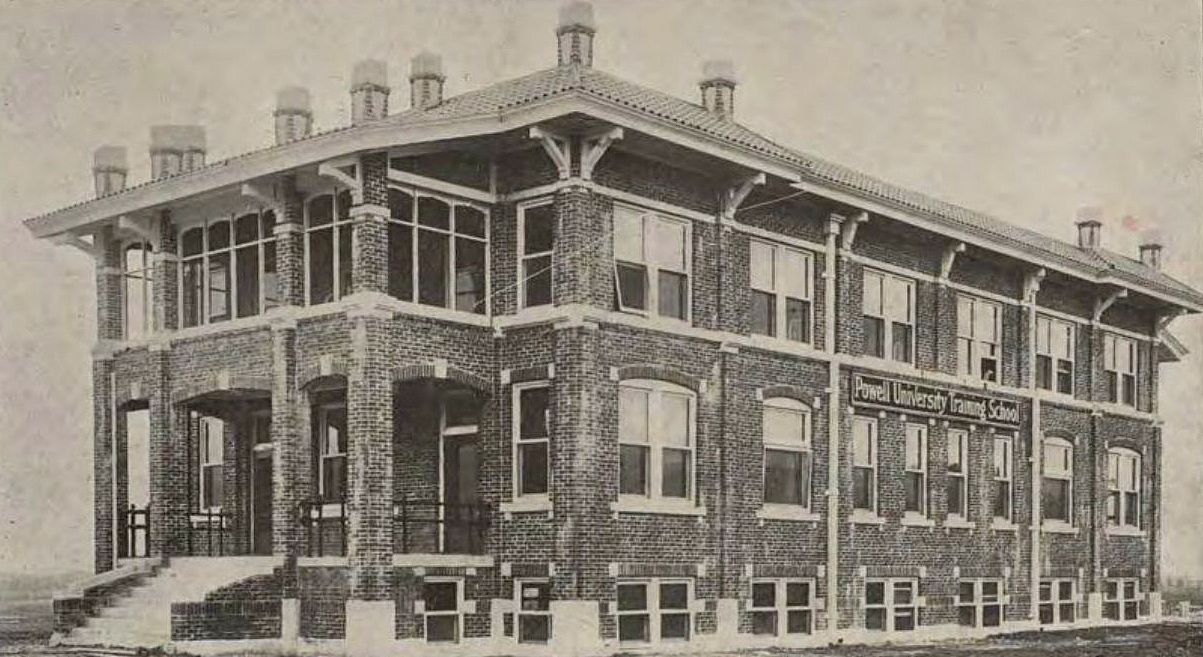
powell-prep_rotunda_1916Powell University Training School, 1915

by Paula Bosse

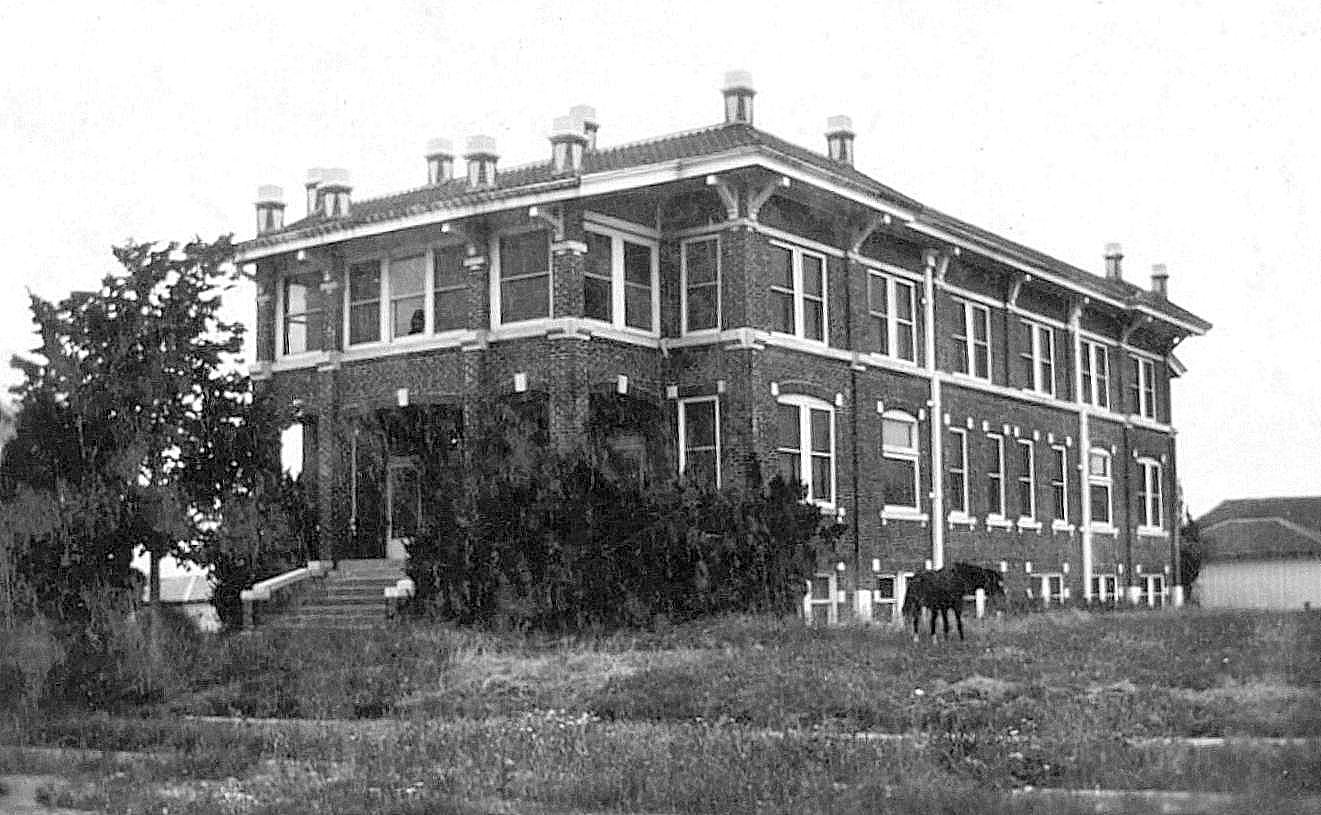
Nathan Powell (1869-1963) was a former Methodist minister who opened his prep school, Powell University Training School, on thirty acres of open land, just across an unpaved road from SMU (which was still in the very early days of its construction). SMU and the Powell school shared more than just adjacent addresses — which they both rather idealistically touted as being “situated on high ground overlooking the university campus and the city” — they also opened on the same day, September 15, 1915.

The location and the opening date were not a coincidence, as Dr. Powell was one of the Methodist movers and shakers who originally promoted the idea of Dallas as the site for a new Methodist university. The following (perhaps exaggerated) sentence can be found in the (perhaps overly laudatory) profile of Powell in one of those ubiquitous late-19th, early-20th century “mug books,” A History of  Texas and Texans (1916):

Beyond his activities as a minister and teacher, the most notable achievement in the life and career of Doctor Powell lies in the fact that he was the sole originator and promoter of the great Southern Methodist University at Dallas, which began its first year September 15, 1915.

Powell University Training School lasted for only about twelve years, until Powell’s rather sudden retirement in 1927 (the good reverend’s “retirement” might have been precipitated by numerous lawsuits and mounting debt). When the school closed, Dr. Powell and his family moved to Harlingen to — as his obituary states — “help organize the grapefruit growers of the Rio Grande Valley.” He operated a citrus nursery himself for a while until it was destroyed by a 1933 hurricane. Nathan Powell died in Harlingen in 1963 at the age of 94.

It’s always exciting to see old buildings still standing in Dallas, and, happily, this one is still around — and it still looks good. Fittingly, it’s currently home to an early-child development center. Next time you’re near the intersection of Binkley and Hillcrest, go take a look.

*

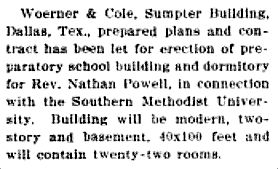
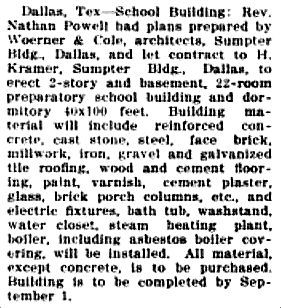
powell_tx-trade-rev-industrial-record_071515a*powell_tx-trade-rev-industrial-record_071515bBoth items from the Texas Trade Review & Industrial Record, July 15, 1915
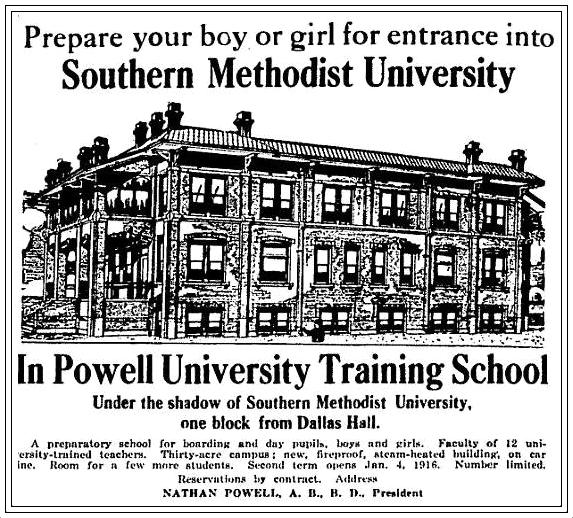
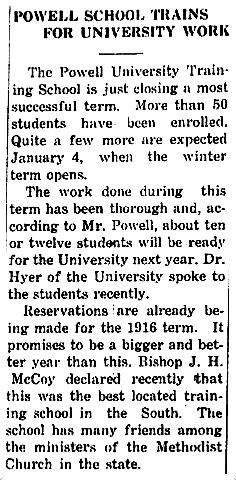
powell_school_ad_smu-times_121815SMU Times, Dec. 18, 1915 (click for larger image)

powell_school_smu-times_121815SMU Times, Dec. 18, 1915

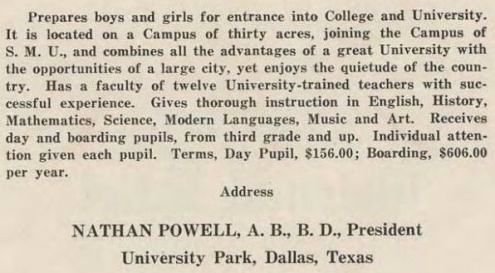
ad-powell-prep_smu-rotunda-19161915 (click to read text)

Below, after the school closed. Looking a little shaggy. I would have guessed the photo was from much earlier, but it’s dated 1931. Complete with horse.

powell-univ-training-school_brown-bk_university-park_19311931, Brown Book, University Park Public Library

***

Sources & Notes

Top image and bottom ad appeared in the very first edition of The Rotunda, SMU’s yearbook for their inaugural year, 1915-16.

More on Rev. Powell’s early life and involvement with the founding of Southern Methodist University can be read in A History of Texas and Texans by Frank W. Johnson (Chicago and New York: American Historical Society, 1916), here.

Information regarding Powell’s retirement in Harlingen is from “The Chronological History of Harlingen” by Norman Rozeff (circa 2009), in a PDF here.

Powell’s obituary can be found in The Dallas Morning News, Nov. 8, 1963: “Dr. Powell Dies; Helped Found SMU.”

Currently occupying 3412 Binkley is The Community School of the Park Cities. According to the history page of their website (here), the building has been operated as a school since at least the 1950s.

I’m not sure what the actual facts are concerning Nathan Powell’s role in the founding of SMU. There are very few results when searching the internet. Most newspaper articles connecting him with the university seem to have been generated by Powell himself. If Powell was as important in the history of SMU as he claimed to be, it’s surprising to see so little information on any connection. Was Powell’s assertion that he was the driving force behind the creation of SMU a blatant lie? Was it merely an exaggeration of the truth? Or was it accurate, but something happened to cause the university to distance itself from him? A collection of papers in the SMU archives (which I have not seen) seems to indicate that there were those in Methodist circles who disputed Powell’s claims, as Elijah L. Shettles took it upon himself to prove that Nathan Powell was the driving force behind the very existence of SMU. An overview of the collection — The Elijah L. Shettles Papers on the Founding of Southern Methodist University — can be found here.

(I’ve found an article from the Fort Worth Star-Telegram in 1910 that had Powell all but saying Fort Worth — not Dallas — would be the best choice for the university’s location. Read that article and see other photos of the school — and also read about the lawsuit against Powell (which had nothing to do with SMU) that took thirteen years to reach trial and ended in quite a hefty judgement, in a PDF here.)

See more of SMU’s first year in previous posts here and here.

*

Copyright © 2014 Paula Bosse. All Rights Reserved.

The Store That Doak Built

doak-walker-sport-center

by Paula Bosse

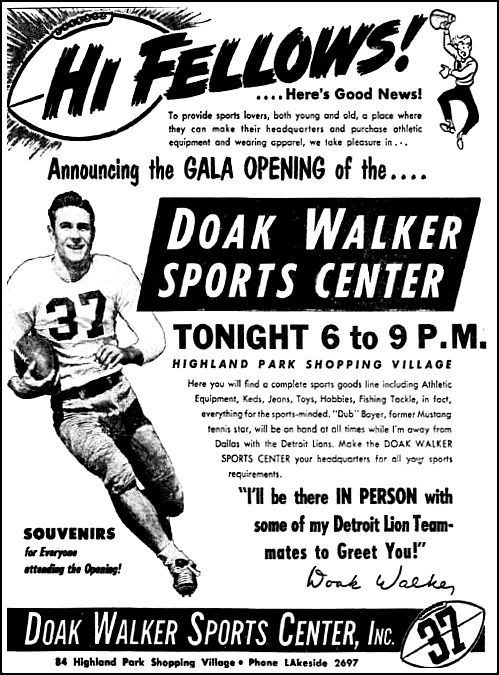
Doak Walker, the Heisman-winning superstar football player for SMU from 1945 to 1949, was, for a good forty-odd years, a partner in a successful sporting goods business that bore his name: the Doak Walker Sports Center. When it opened in Highland Park Village on August 23, 1951, the 24-year old — then playing pro ball with the Detroit Lions — was a bona fide celebrity, both locally and nationally. Predictably, the grand opening drew large crowds of sports fans eager to see their homegrown hero and check out the new place in town to get tennis balls and baseball bats (and, who knows, there might even have been some who showed up to see those unnamed Lions teammates the ads said he’d bring with him). The promise of “souvenirs for everyone!” was merely icing on the cake.

At the same time that the Sports Center was opening, Doak’s name was also on a Gulf station that he and former Mustangs teammate Raleigh Blakely owned on Hillcrest across from the SMU campus. And while both of those business concerns were chugging along, he was also appearing in local and national ads for everything from chewing gum to Vitalis (with a name like “Doak” you’re going to have instant name recognition). Oh, and he was also playing football. Doak Walker was a force to be reckoned with — on the field, on Madison Avenue, and in the dang Park Cities.

*

doak-walker_sports-ctr_opening_dmn_082351

***

Postcard of Doak Walker Sports Center from the Boston Public Library Tichnor Brothers Postcard Collection on Flickr, here.

Life magazine from Sept. 27, 1948. The cover story on Doak Walker and the SMU team can be accessed here.

Signed issued of Sport magazine is currently available for sale here.

Triangle Motors ad from a 1951 program for an SMU-Rice game at the Cotton Bowl.

Doak Walker bio on the Pro Football Hall of Fame website is here.

*

Copyright © 2014 Paula Bosse. All Rights Reserved.