Flashback : Dallas

A Miscellany: History, Ads, Pop Culture

Category: Night Scenes

“Sometimes I Run”: Dallas Noir — 1973

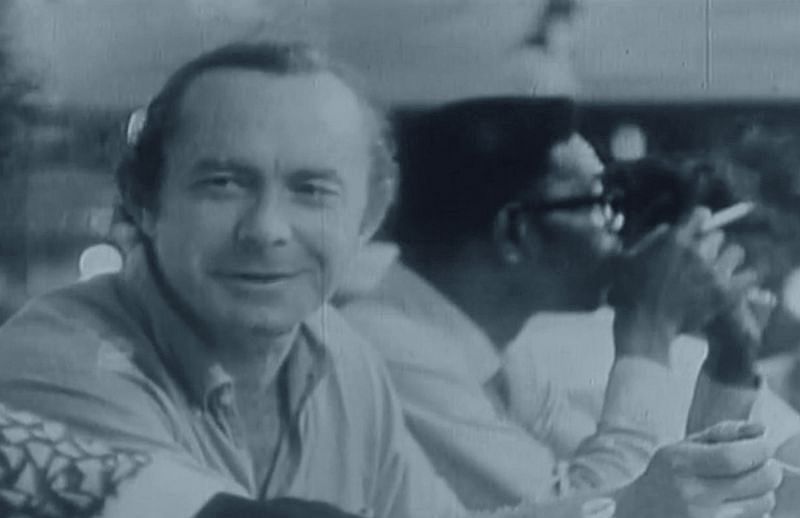
5-sometimes-I-run_stanley-maupin_hoseStanley Maupin at work…

by Paula Bosse

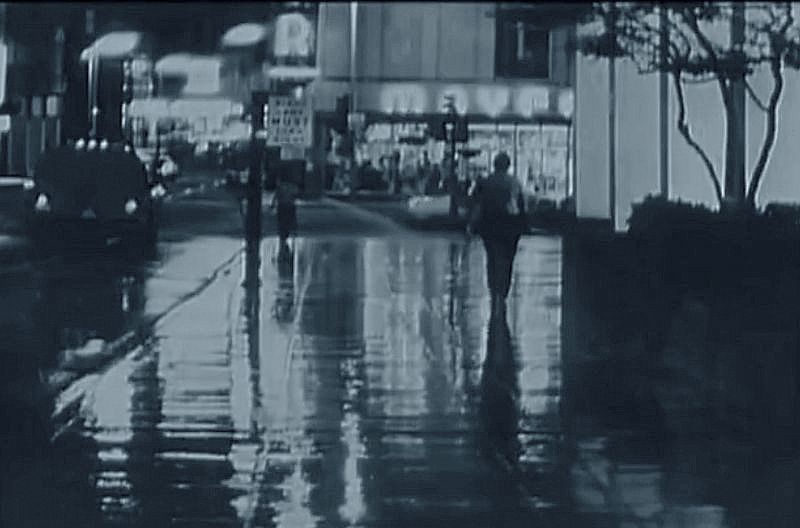
Several years ago, Robert Wilonsky wrote a Dallas Observer article about the short documentary “Sometimes I Run” — I watched it immediately afterward, and it’s stuck with me ever since. The 22-minute film, shot in 1973 by SMU film student Blaine Dunlap (who also made the fun 1970 Sunset High School film I wrote about earlier this year) shows Dallas Public Works Dept. street flusher Stanley Maupin at his job sweeping the downtown sidewalks late at night, accompanied by a soundtrack of jazz music and Maupin’s philosophical musings. It’s cool, gritty, seedy, nostalgic, and somehow life-affirming, all at the same time. Also, Dallas always looks best at night — the wet streets add a definite noir-ness to the overnight municipal goings-on which were happening when most Dallasites were home in bed. (See the bottom of this post for various sites on which you can watch the film in its entirety.)

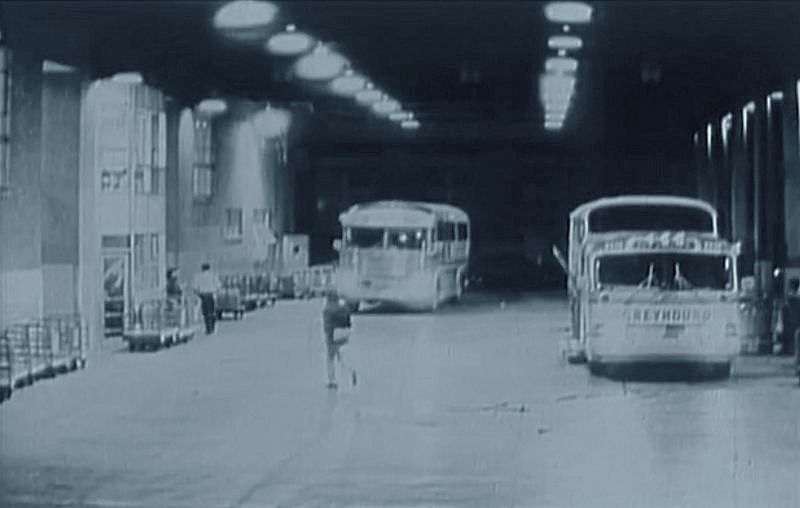
It took the opening moments of this film to remind me that, yes, I DO remember (if vaguely) seeing that revolving beam of light shot from the “rocket” on top of the Republic Bank Building. You can see it at about :35. Also included in the film are Franklin’s, the Greyhound Bus station, the Capri movie theater, a late-night-diner, the Mayfair department store, the Municipal Building, Sanger-Harris, and much more. And while Maupin’s philosophical pronouncements might be a bit heavy-handed at times, I have to admit that I could listen to him talk for hours, if only to hear his accent, a Dallas-area trapping of the past that one doesn’t come across nearly often enough these days.

Here are a few screen captures.

2-franklins_sometimes-when-i-run

3-greyhound_stometimes-when-i-run

6-keep-dallas-clean_sometimes-when-i-run

7-diner_sometimes-when-i-run

8-diner-2_sometimes-when-i-run

9-mayfair_sometimes-when-i-run

10-city-hall_sometimes-when-i-run

11-repub-bank-bldg

***

Sources & Notes

The 44-year-old award-winning student film, “Sometimes I Run,” directed by Blaine Dunlap, can be seen in its entirety in several places online: on Vimeo (good sound and video), on YouTube (via South Carolina Arts Commission), and at the Texas Archive of the Moving Image (from the collection of the Dallas Municipal Archives). Sound by Ron Judkins, music by Ken Watson.

More on filmmaker Blaine Dunlap can be found in “Spotlight on Dallas Filmmakers: Blaine Dunlap” by Laura Treat, here.

I have tried to find some history on Stanley Maupin, but I didn’t come up with much. He lived in Irving as a boy, but as a teenager, he attended North Dallas High School and, later, McMurry College in Abilene.

maupin-stanley_NDHS_1953
North Dallas High School yearbook, 1953

maupin-stanley_mcmurry-college_1956_freshman_portalMcMurry College yearbook, 1956

Born in 1935, he appears to have died in 1985, perhaps in a shocking way (which I have been unable to verify) — see comments from his grandchildren in the YouTube video here.

Some background on the film can be found in an article by Don Clinchy, here.

Read a 1986 interview with Blaine Dunlap (by Bo Emerson, Atlanta Journal-Constitution, Oct. 24, 1986) here.

*

Copyright © 2017 Paula Bosse. All Rights Reserved.


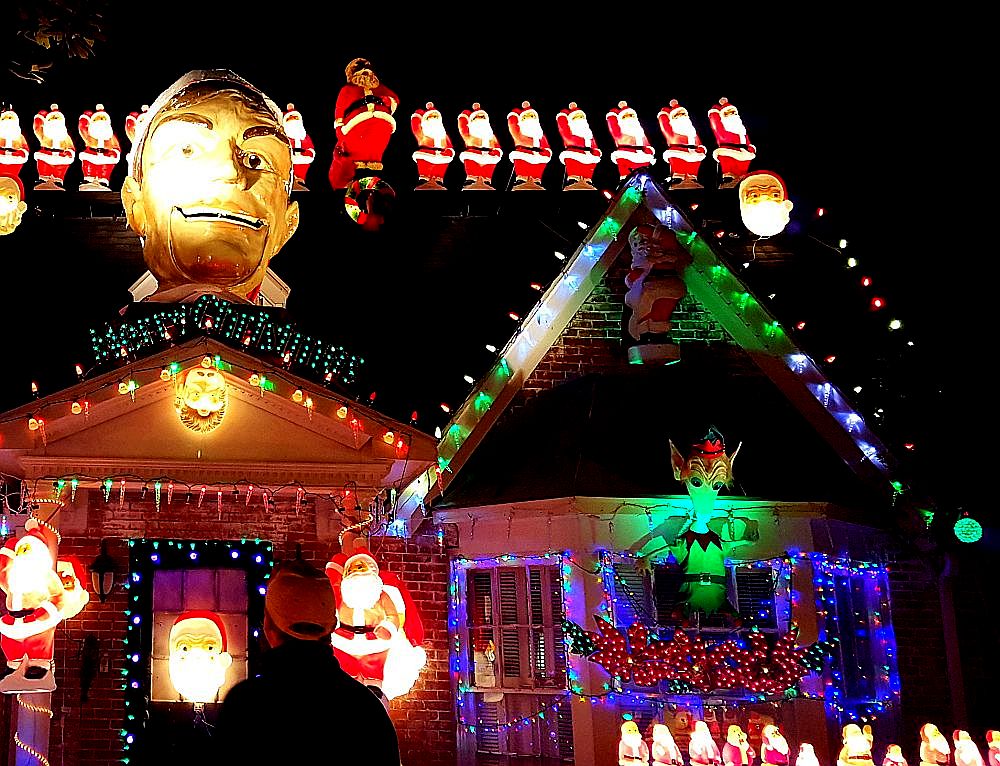
The Over-the-Top University Park Christmas Display Featuring Big Tex and a Six Flags Spee-lunker

xmas-wayne-smith_university-park_2015_big-tex_speelunkerBig Tex on the roof, a “Spee” to the right (click for larger image)

by Paula Bosse

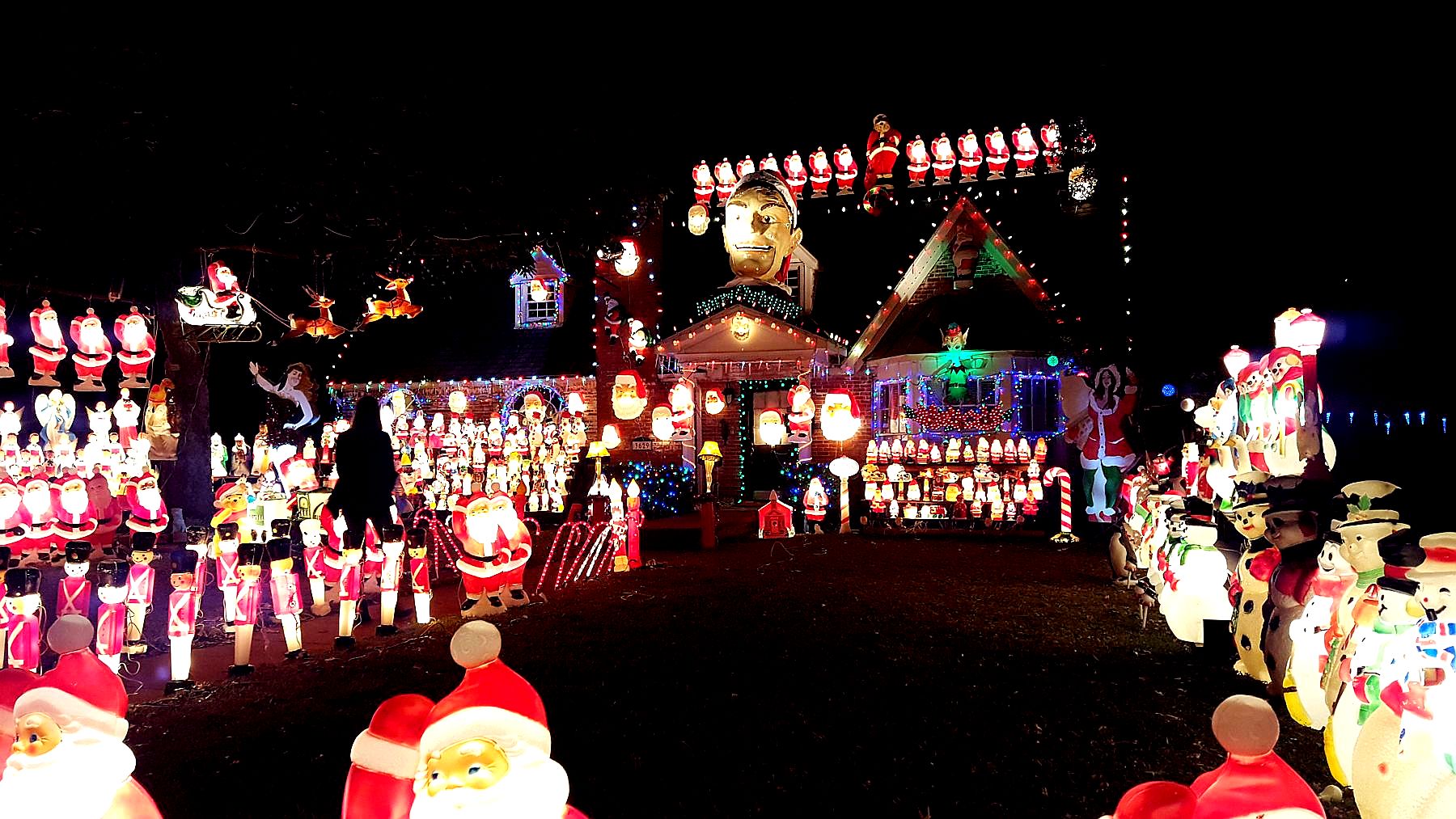
You may have heard about Wayne Smith’s annual spectacular Christmas display in the 3600 block of Southwestern in University Park — the one with a cast of thousands, including a previous head of Big Tex, what seems like hundreds of illuminated Santas, Dracula, Moe Howard, and a former denizen of Six Flags Over Texas’ “Cave”/Spee-lunker ride. Before I get back to the “Spees” (the name the creatures have been given by their surprisingly enthusiastic fan-following), here’s a wider shot of a photo I took during last year’s holiday season. (Click it!)

xmas_wayne-smith_university-park_2015_full

(And this gives you only an inkling of what’s actually there. I LOVED it! I waited until after Christmas — in fact, after New Year’s — to wander around — I can only imagine how backed up with looky-loos the street gets closer to Christmas.)

*

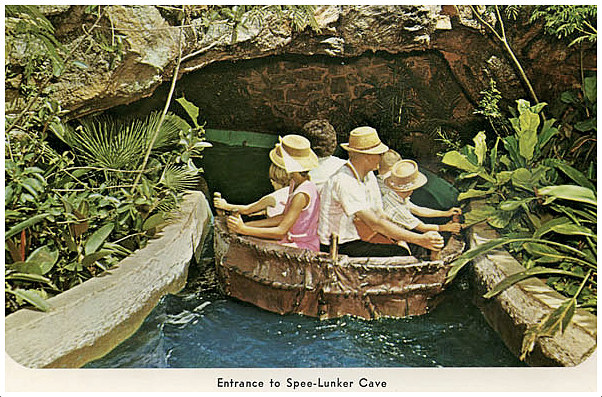
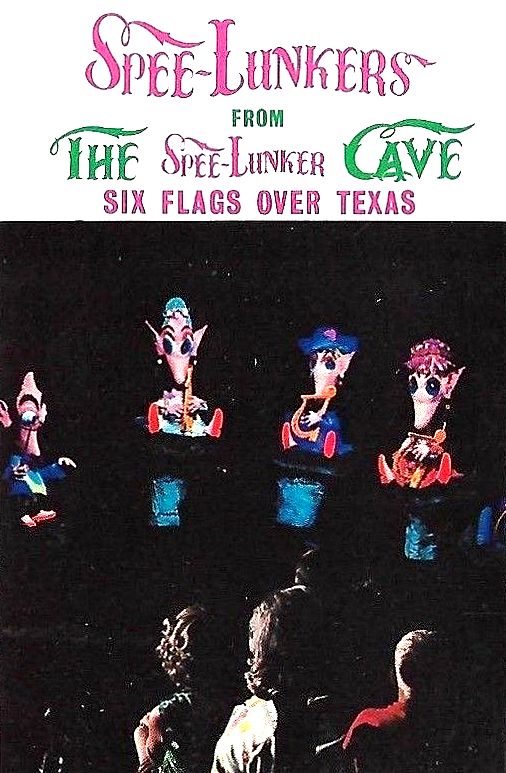
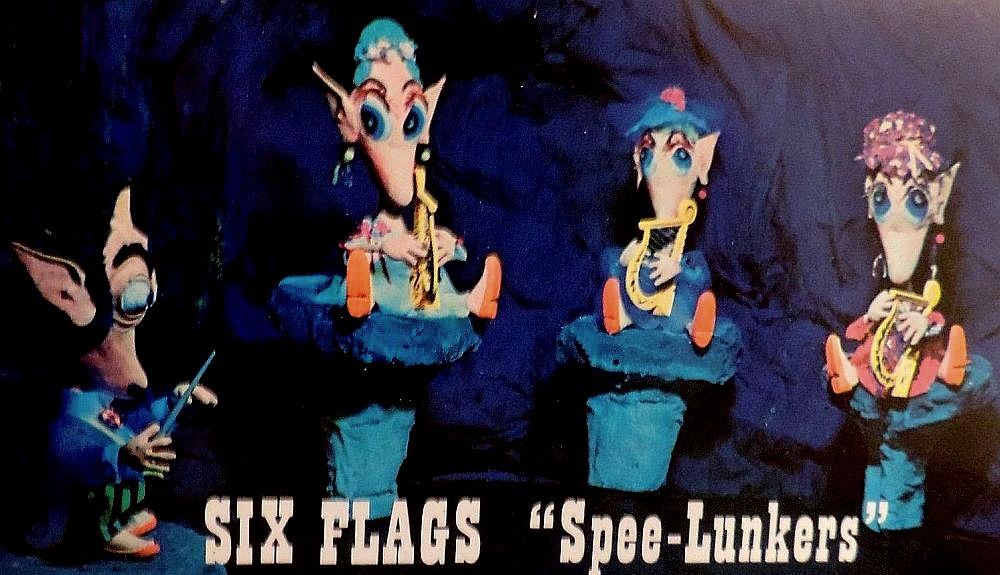
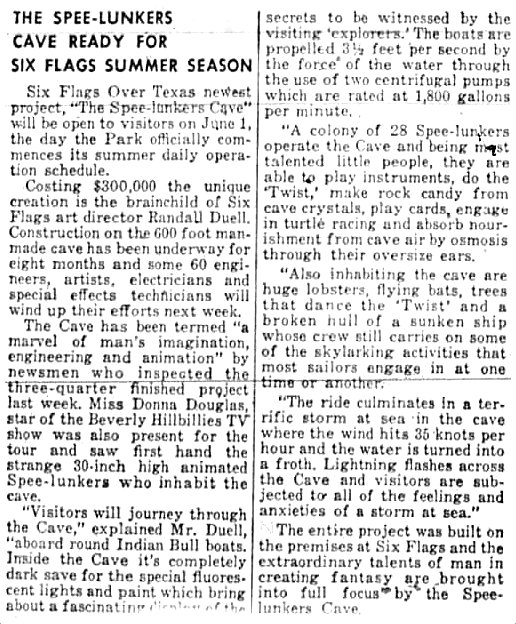
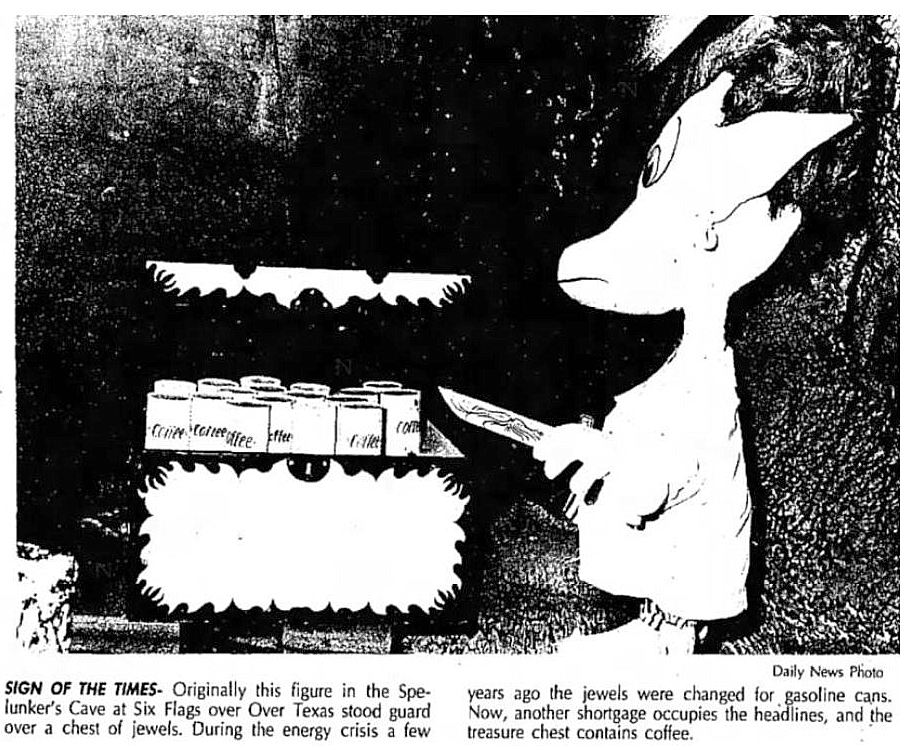
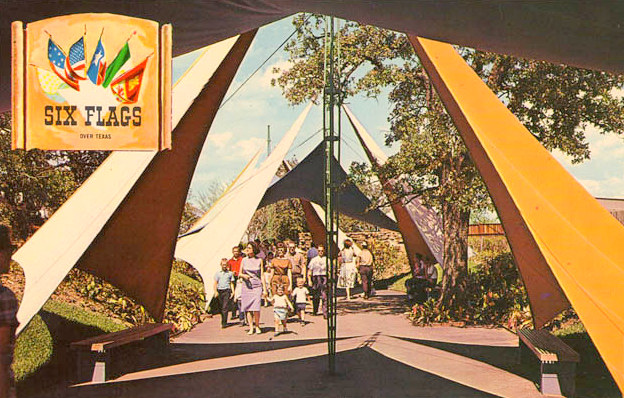
Back to the Spees. The Cave water ride debuted in 1964 and was an immediate hit. When it opened, there were 28 of these creatures who, according to the original marketing, “came from innerspace.”

They are 30 inches high and they play harps, do the Twist, play cards, hammer cave crystals into rock candy and engage in a shell game — turtle racing.

This ride was always one of my favorites (probably because it provided a brief, cool respite from the glaring sun and the blasting heat that plagued my annual summer visits to Six Flags).

The Spee-lunkers left Six Flags a long time ago, so it’s nice to see that one of them is still entertaining local crowds, right next to another beloved DFW icon, Big Tex … along with a phalanx of festive Santas!

spee-lunker-cave_postcar

six-flags_speelunkers_ebay

six-flags_speelunkers_postcard_ebay

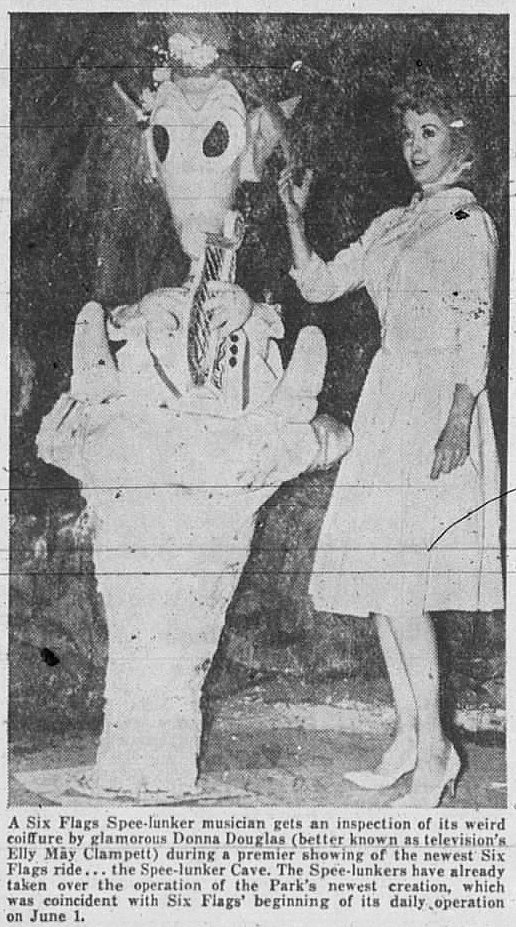
Lest you think the publicity mill wasn’t working all angles of this new attraction, we see below that one of the Spees got a visit from, of all people, TV-darling Donna Douglas who played Elly May Clampett on The Beverly Hillbillies.

cave_hood-county-news-tablet_060464

cave_hood-county-news-tablet_060464-text
photo and article, Hood County News Tablet, June 4, 1964

cave_fwst_082264
August, 1964

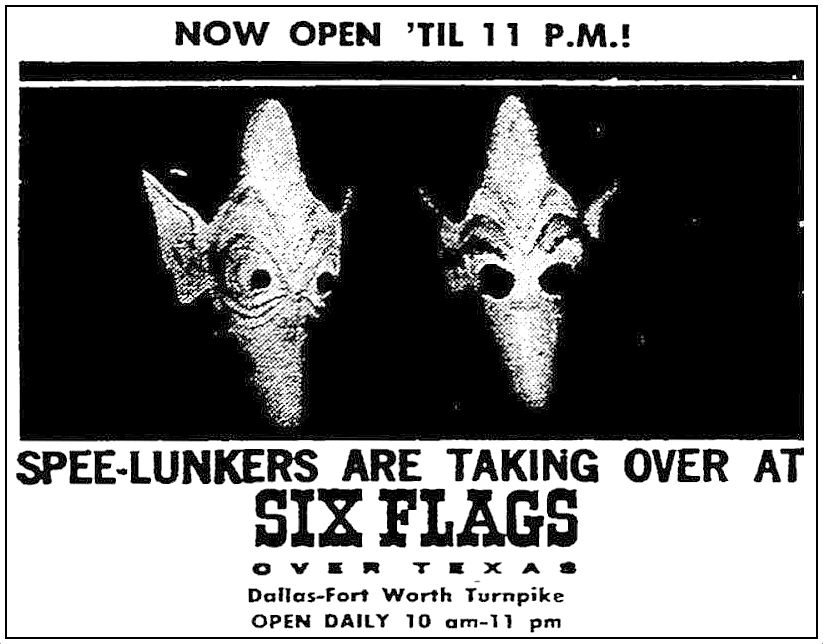
cave_grand-prairie-daily-news_052577
Grand Prairie Daily News, May 25, 1977

***

Sources & Notes

Photo of Wayne Smith’s Christmas display taken by me on January 2, 2016. The house is in the 3600 block of Southwestern, between Baltimore and Thackery. Since the display is probably visible from space, there’s no way you can miss it.

Postcards found on eBay and Google.

Every year TV crews descend on Smith’s house to do a story. Watch one from this year — from CW33 News — here.

For those who might like more info on the Spee-lunker attraction/ride (which, by the way, is classified as a “dark ride” in amusement park lingo) at Six Flags Over Texas, here’s a bunch of links:

  • Weird video and music (and history!) by a superfan, here
  • Article by the same guy who put the above video together, here
  • Spee-lunker vignettes described here
  • Google images aplenty, here

More on the new ride can be found in the Dallas Morning News archives in the article “$300,000 Hole: Six Flags To Open Cave Ride” (DMN, May 24, 1964) — accompanying the article is an amusing photo captioned “Gail Powers yelps in mock fear as lobster seizes her hand.”

A shout-out to Wendy Cook who, when I posted the top picture to the Flashback Dallas Instagram feed in January, pointed out to me that the Spee-lunker was even in there. She recognized him right away, but with so much visual overload, I hadn’t even noticed him! Thanks, Wendy!

See stuff bigger — when in doubt, click it!

*

Copyright © 2016 Paula Bosse. All Rights Reserved.


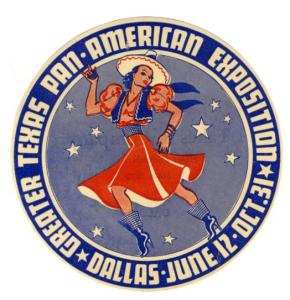
Albert Einstein “Threw the Switch” in New Jersey to Open the Pan-American Exposition in Dallas — 1937

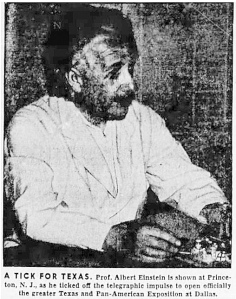
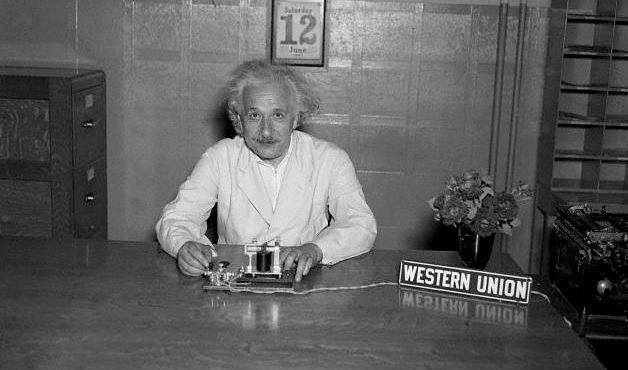
pan-american-expo_einstein_061237Einstein at the switch, June 12, 1937…

by Paula Bosse

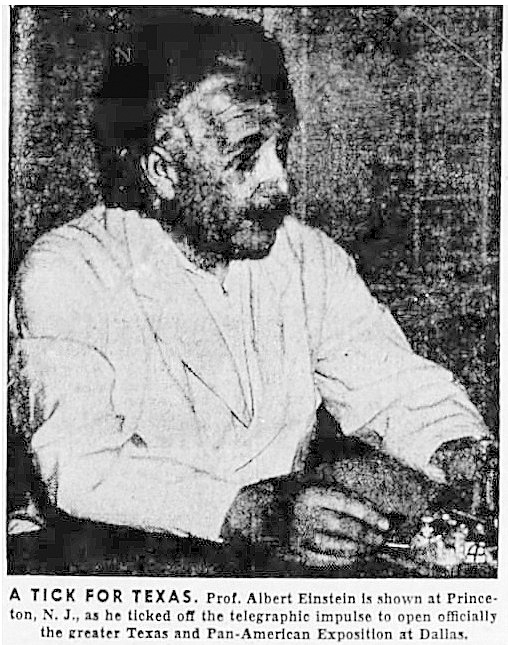
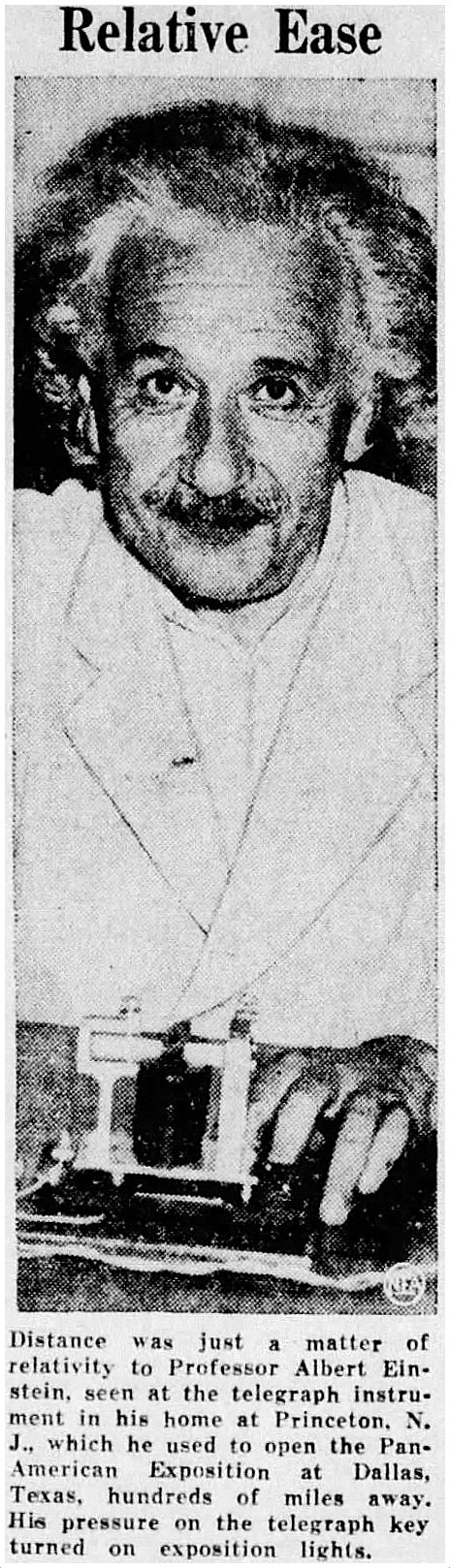
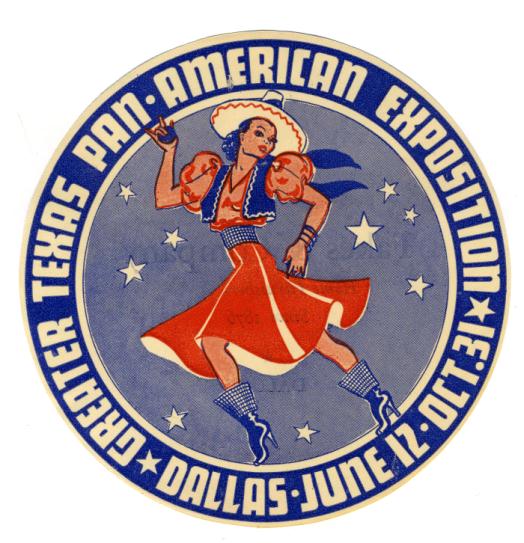
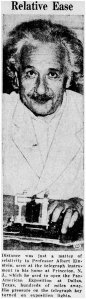
Who knew? Albert Einstein, the world’s most famous physicist, helped open the Greater Texas and Pan-American Exposition. The exposition was held at Fair Park for 20 weeks, from June 12, 1937 to October 31, 1937, as a follow-up of sorts to the Texas Centennial (the city had built all those new buildings — might as well get their money’s worth!). I’m not quite sure how Einstein got roped into this, but looking at the photo above, he seemed pretty happy about what was, basically, a long-distance ribbon-cutting. Via telegraph.

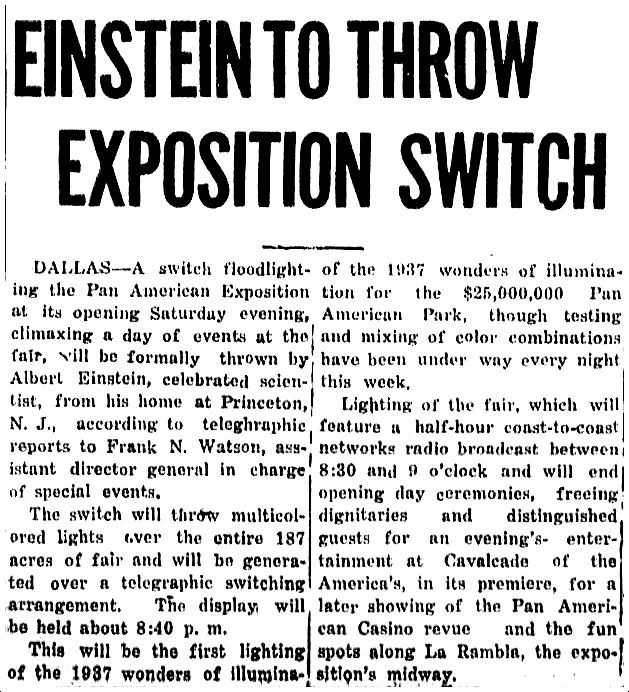
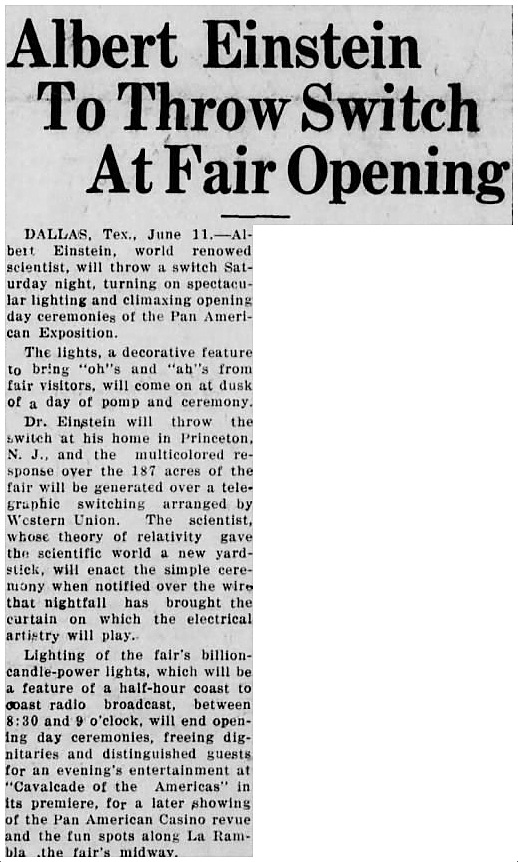
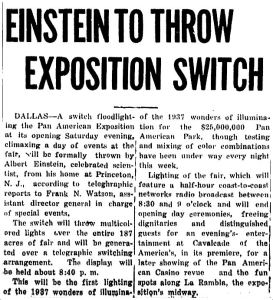
The plan was for Professor Einstein to officially open the Pan-American Exposition by “throwing the switch” which would turn on massive displays of lights around Fair Park. He would do this from Princeton, New Jersey, where he lived, by closing a telegraph circuit which would put the whole thing in motion. Newspaper reports varied on where exactly Herr Einstein was tapping his telegraph key — it was either the study in his home, in his office, in a Princeton University administration building, or in the Princeton offices of Western Union (the latter of which was mentioned in only one report I found, but it seems most likely).

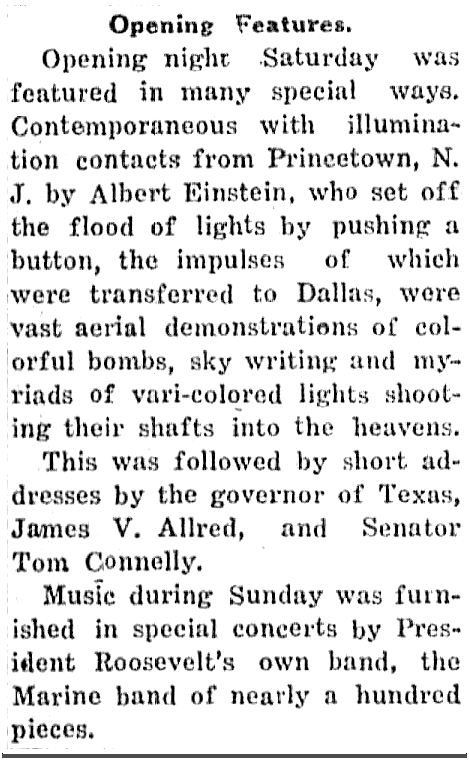
Einstein was a bona fide celebrity, and this was national news — newspapers around the country ran stories about it, and the ceremony was carried live on coast-to-coast radio. Almost every report suggested that Einstein’s pressing of the key in New Jersey would be the trigger that lit up the park in Texas, 1,500 miles away — which was partly correct. According to The Dallas Morning News:

Lights on the grounds will be turned on officially at 8:40 p.m. when Dr. Albert Einstein, exponent of the theory of relativity, presses a key in his Princeton home to fire an army field gun. With the detonation of the shell, switches will be thrown to release the flood of colored lights throughout the grounds. (DMN, June 10, 1937)

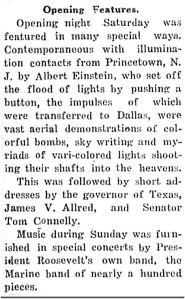
So on June 12, 1937 he pressed a telegraph key somewhere in Princeton, NJ, an alert was instantly wired to Dallas, an army field gun (in some reports a “cannon”) was fired, and that blast was the cue for electricians positioned around the park to throw switches to illuminate the spectacular displays of colored lights.

The Western Union tie-in gimmick was a success. Newspaper reports might have been a little purple in their descriptions, but from all accounts, those lights going on all at once was a pretty spectacular sight.

Dr. Albert Einstein, celebrated scientist, threw a switch that flashed a million lights over the 187-acre exposition park. The flash came at 8:40 o’clock and instantly the huge park became a city of a million wonders. Flags from a thousand staffs proclaimed their nationality [and] bands played the national airs of the nations of the Western Hemisphere as lusty cheers roared with thunderous approval. The Greater Texas and Pan-American Exposition was formally opened. It is on its way. (Abilene (TX) Reporter News, June 13, 1937)

The Dallas News describes the crowd as stunned into silence:

The waiting participants in the ceremonies at Dallas heard the results [of Einstein’s telegraph signal] when a cannon boomed. Electricians at switches around the grounds swung the blades into their niches and the flood of light awoke the colors of the rainbow to dance over the 187-acre park. Its breath taken by the spectacle, the crowd stood silent for a moment, and then broke into a cheer. (“Pan-American Fair Gets Off to Gay Start” by Robert Lunsford, DMN, June 13, 1937)

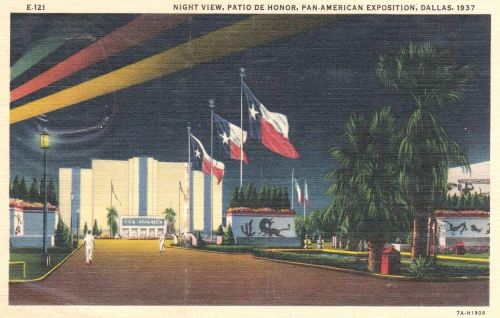
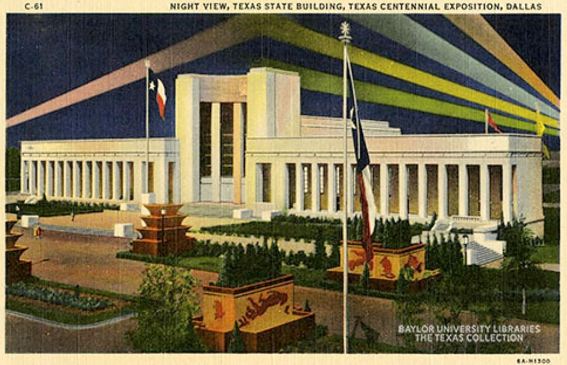
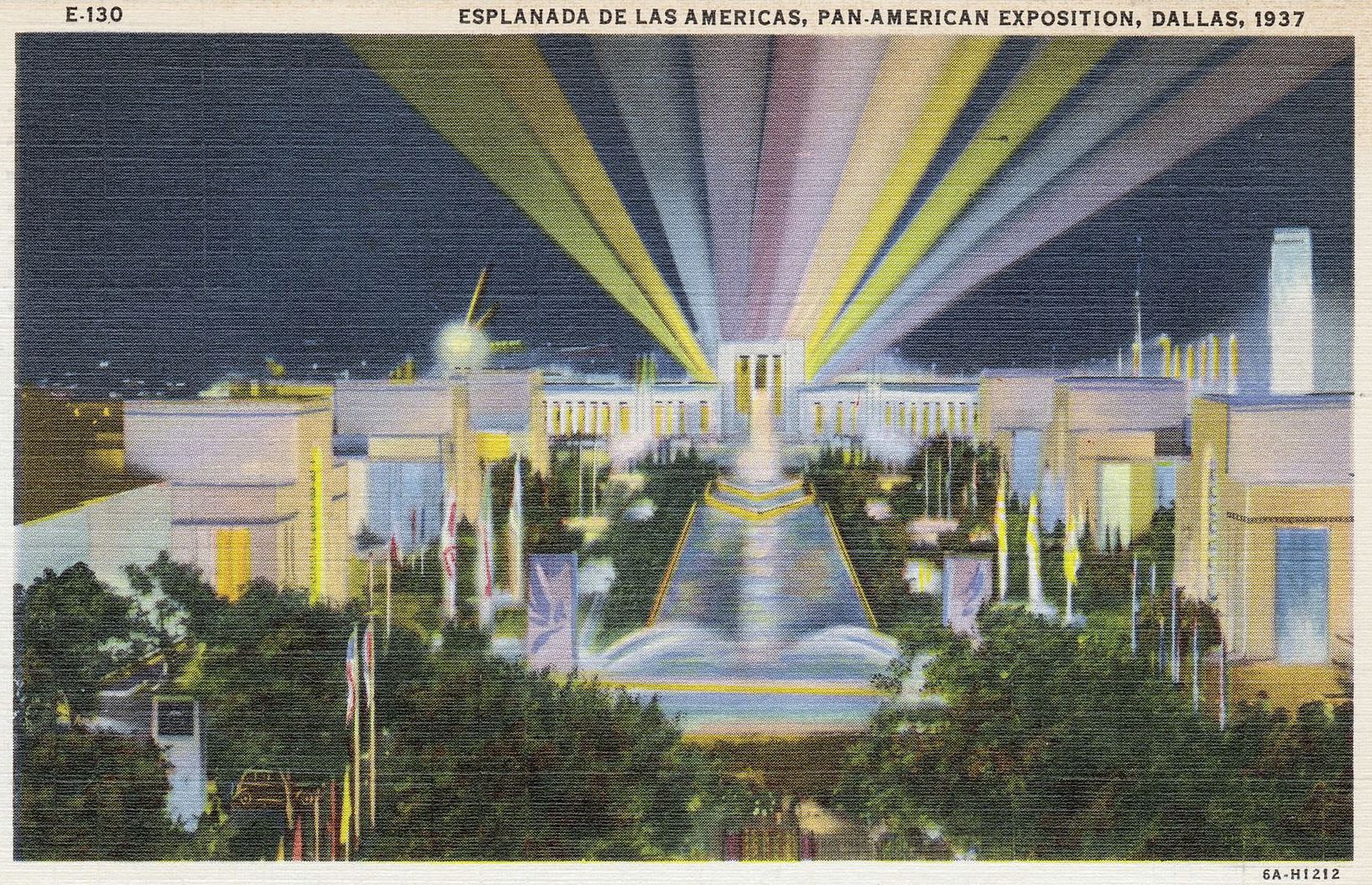
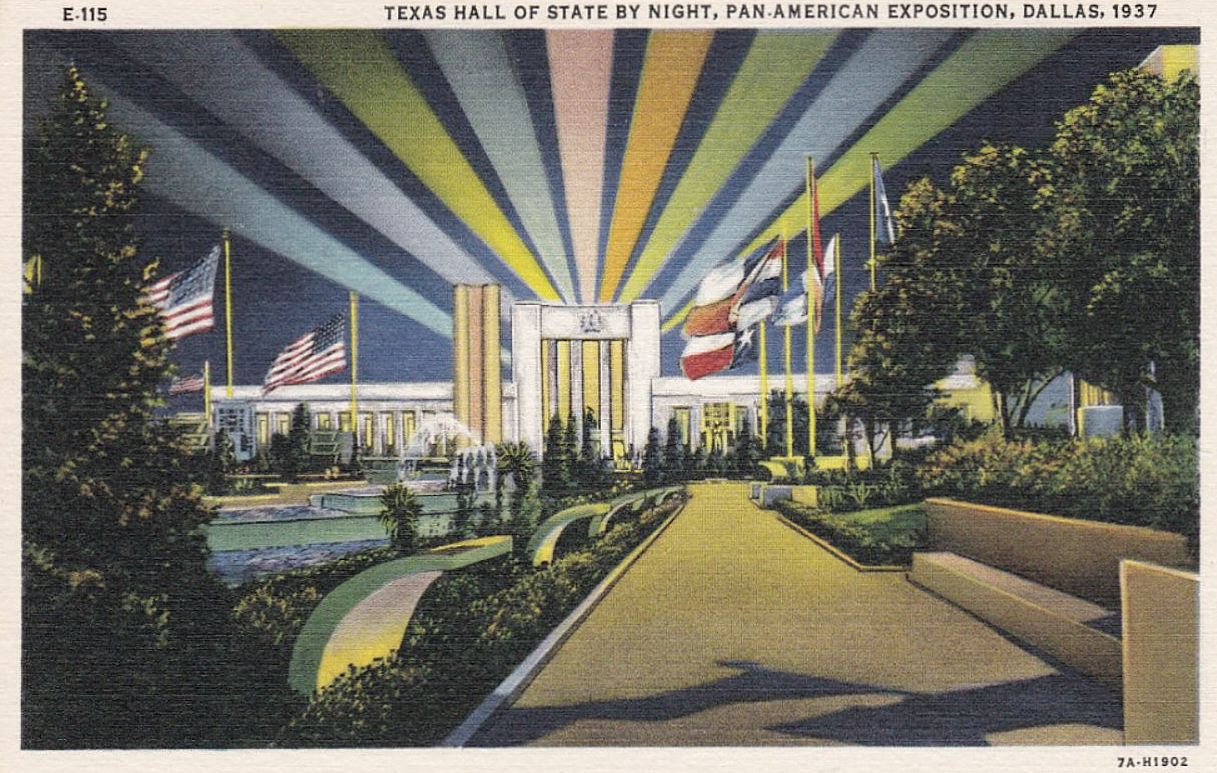
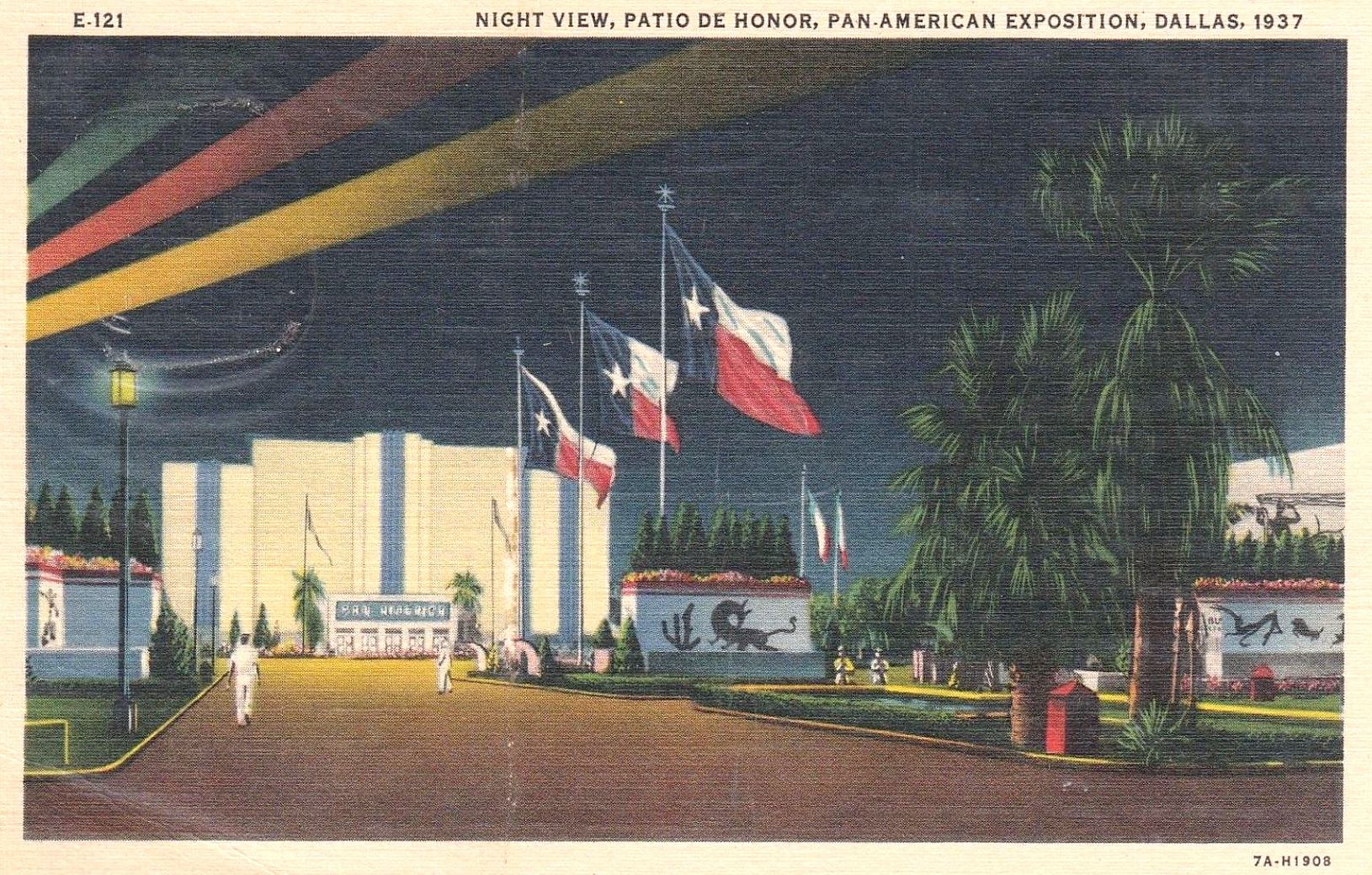
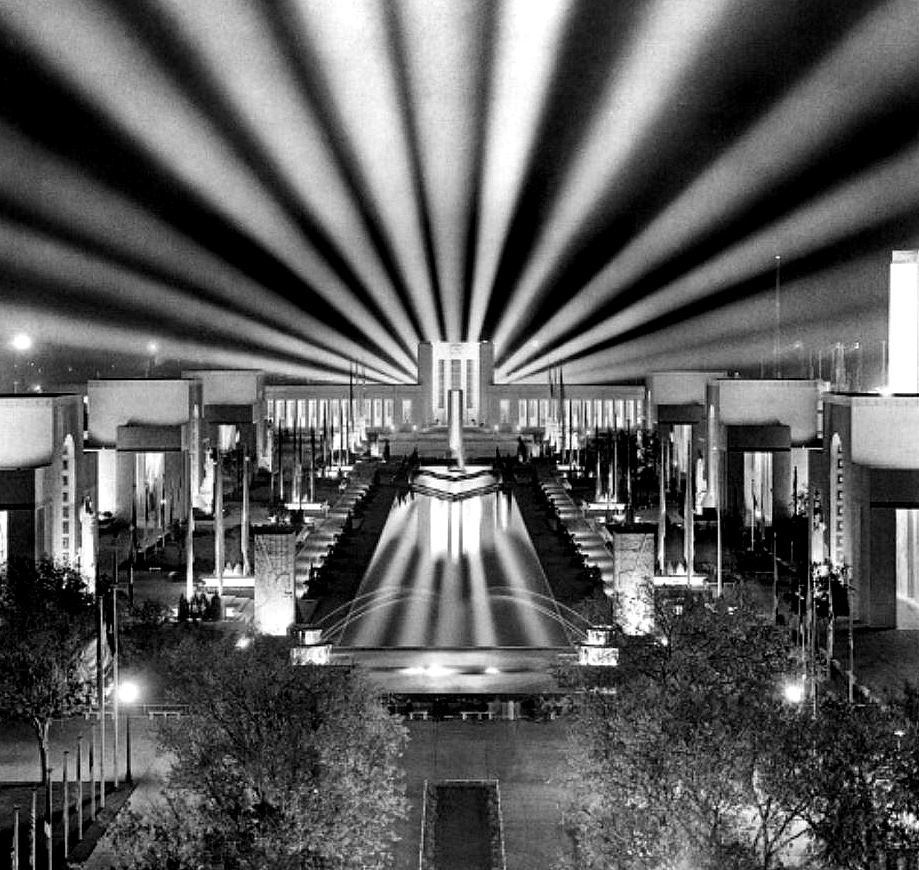
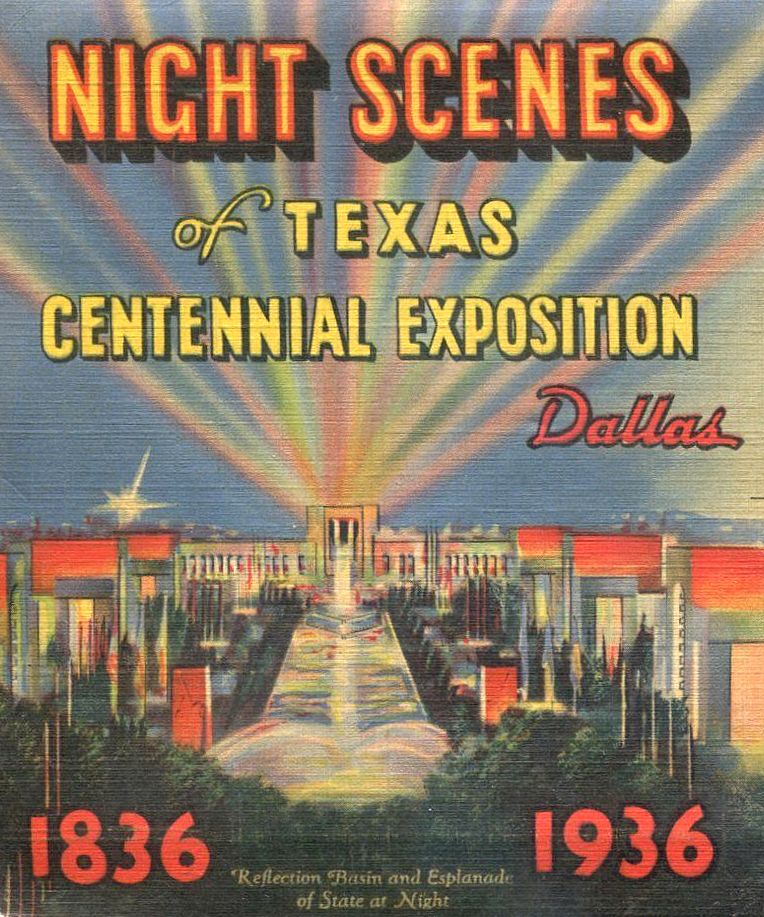
Many of the lighting designs and displays had been used the previous year during the Centennial, but, as with much of the attractions and appointments throughout the park, they were improved and spectacularized for the Pan-American Expo. And people loved what they saw.

Despite the multi-million dollar structures, air conditioning demos, works of art and other newfangled additions to the space, when people left the Centennial Exposition one thing was on everyone’s tongues, according to historical pollsters: the lights.

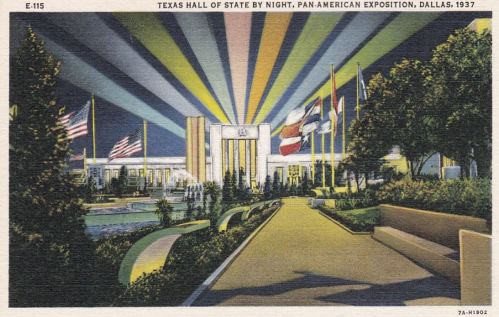
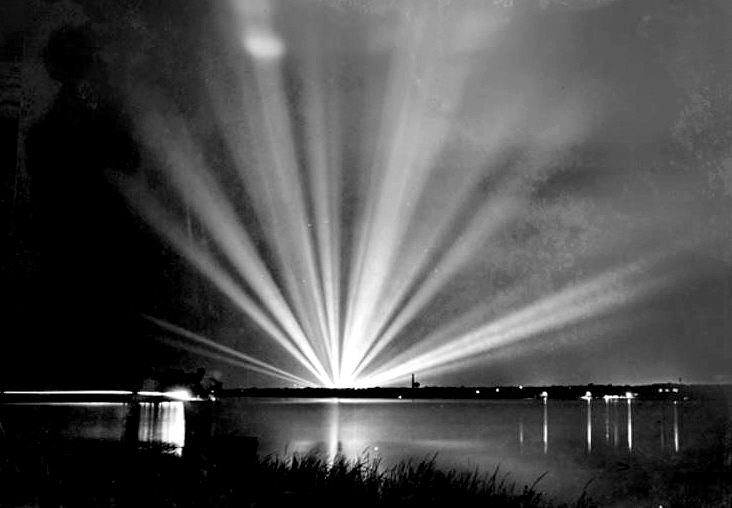
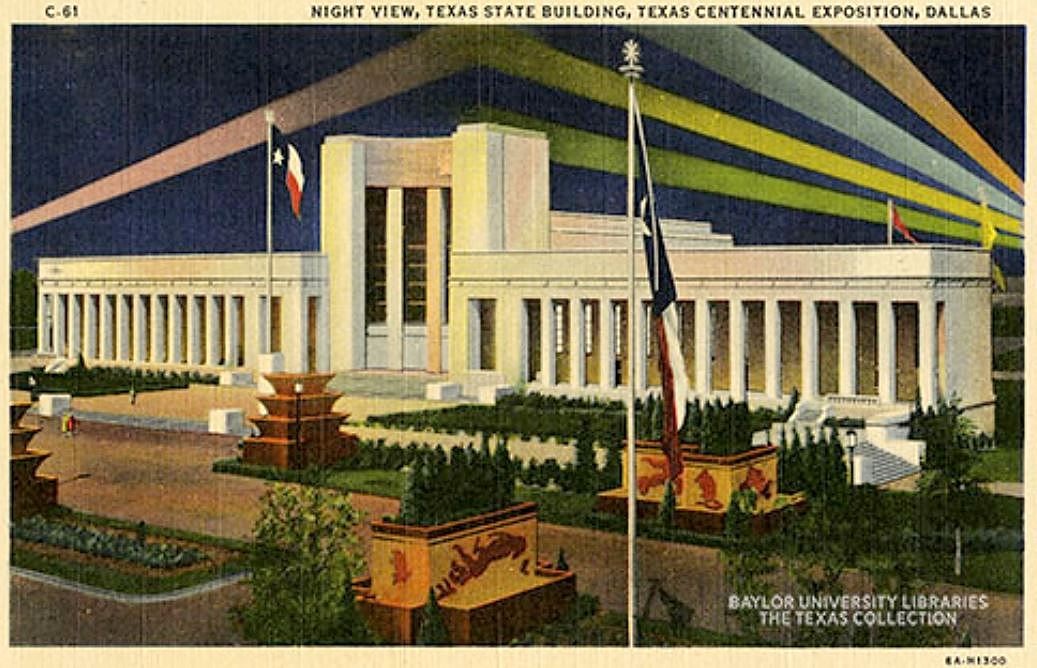
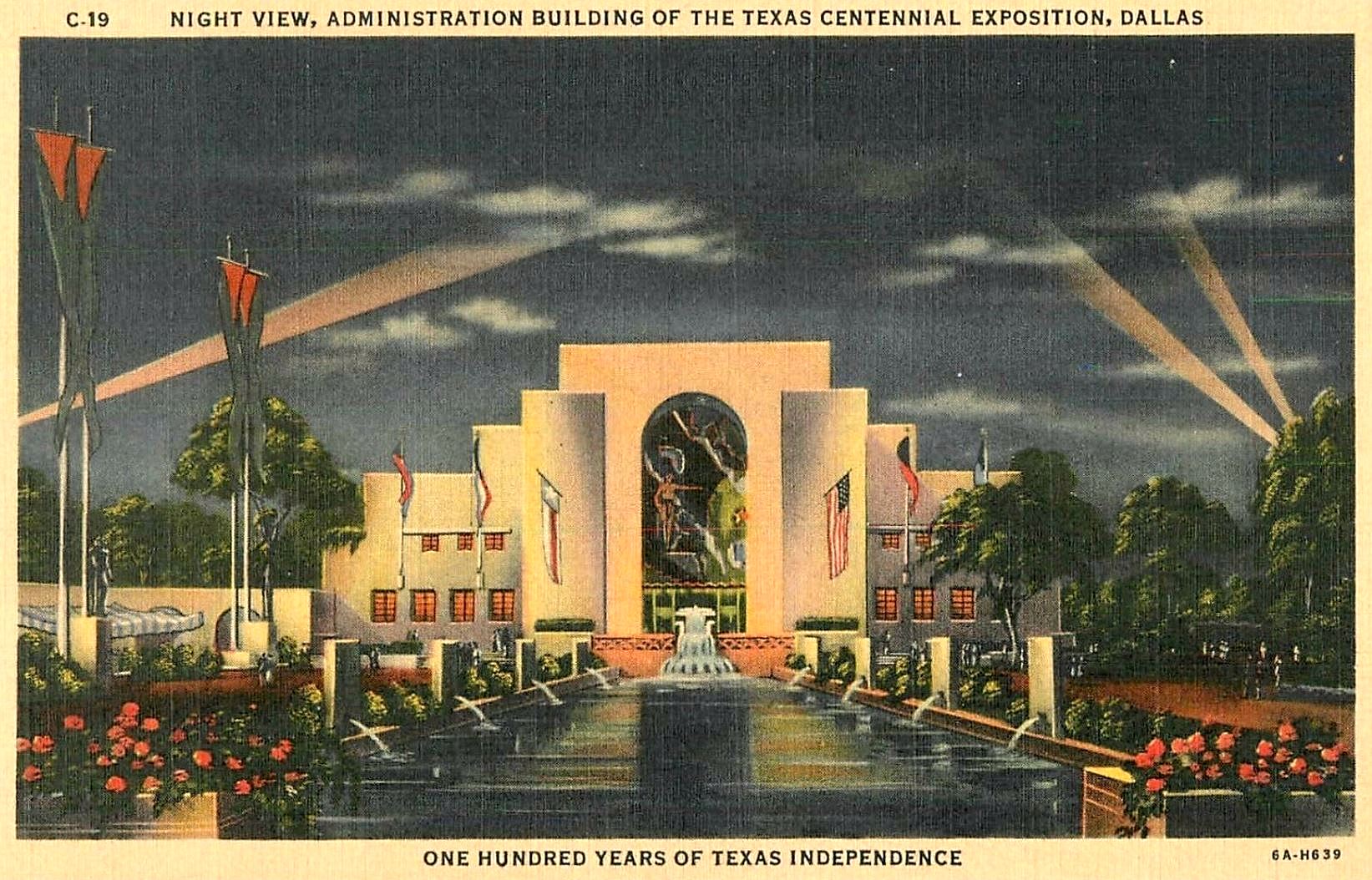
Positioned behind the Hall of State were 24 searchlights scaffolding into a crowned fan shape. “They all moved and were different colors,” says [Jim] Parsons [co-author of the book Fair Park Deco]. “It sounds gaudy, but people loved it.” The lights, he goes on to tell, were visible up to 20 miles away.

Considering most of the people who were visiting the fairgrounds were coming from rural farming communities with no electricity, the inspiring nature of those far-reaching beams makes a lot of sense. (Dallas Observer, Nov. 7, 2012)

Thanks for doing your part for Dallas history, Prof. Einstein!

pan-american-expo_esplanade_postcard

pan-american-expo_hall-of-state_postcard

pan-american-expo_patio-de-honor_ebay

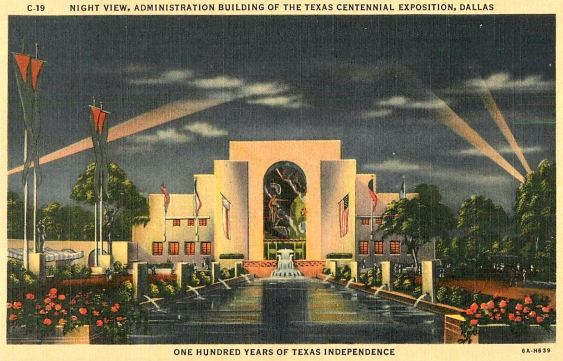
Below, photos from the Texas Centennial, 1936. The multicolored lights could be seen from miles away — here’s what they looked like from downtown and from White Rock Lake.
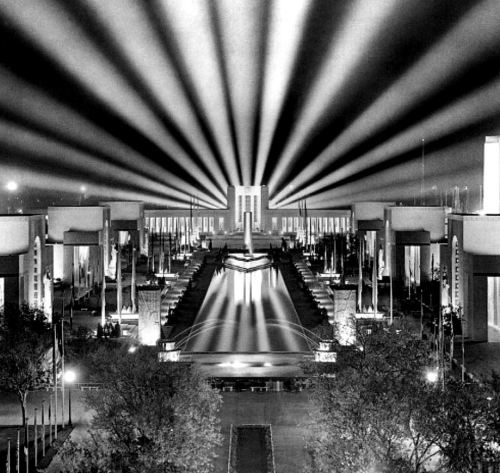
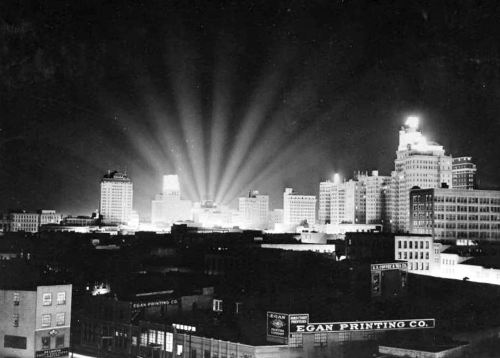
centennial_pan-american_lights

skyline_downtown-to-fair-park_1936_GE-colln_museum-of-innovation-and-science

fair-park-lights_white-rock-lake

tx-centennial_night-scene_espalanade_hall-of-state_lights_ebay

tx-centennial_night_hall-of-state_lights_flickr_baylorvia Baylor University Flickr stream

tx-centennial_night_administration-bldg_lights_ebay

*

A look behind the scenes: “The general lighting effect is a battery of twenty-four 36-inch searchlights as powerful as the giants that flash from the dreadnoughts of Uncle Sam’s navy. Each searchlight will produce 60 million candlepower. Combined, the battery has a total candlepower of 1.5 billion. A 350,000-watt power generator will produce this colossal quantity of ‘juice.’” And the accompanying photo of the searchlight battery crew manning the candlepower:
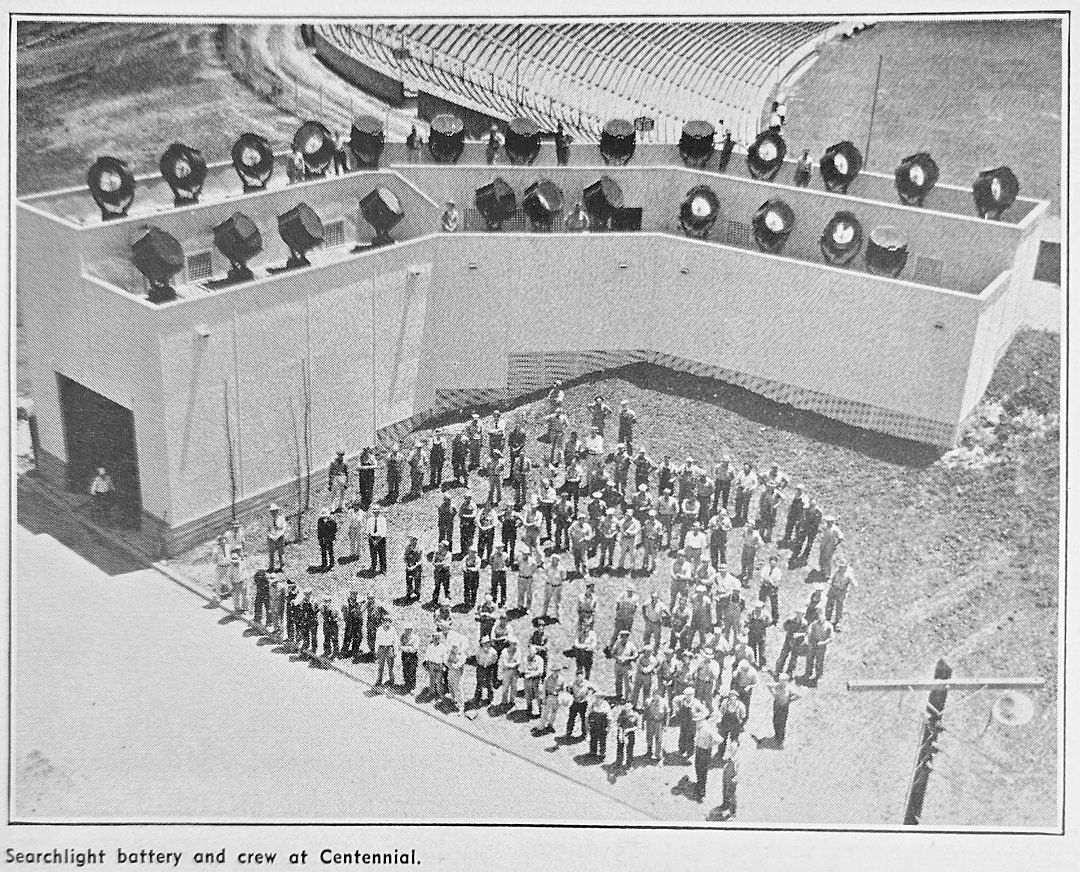
tx-centennial_lights_southwest-business-mag_june-1936_photoSouthwest Business, June 1936

**

(All pictures and clippings are larger when clicked.)
einstein_pan-am-expo_denison-press_060937
Denison Press, June 9, 1937

*

einstein_pan-am-expo_waxahachie-daily-light_061137
Waxahachie Daily Light, June 11, 1937

*
einstein_pan-am-expo_denison-press_061437
Denison Press, June 14, 1937

*

einstein_pan-am-expo_medford-oregon-mail-tribune_062337
Medford (Oregon) Mail Tribune, June 23, 1937

*
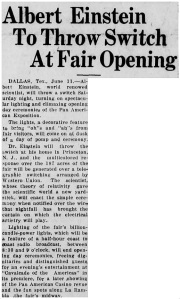
einstein_pan-am-expo_vernon-daily-record_062437
Vernon Daily Record, June 24, 1937

*

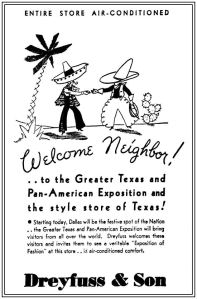
pan-american-expo_drefuss-ad_dmn_061237
1937

pan-american-expo_sticker_1937_cowgirl

***

Sources & Notes

Top photo from the old Corbis site.

Black-and-white photos from the Centennial seen from Fair Park and White Rock Lake are from the Texas/Dallas History and Archives Division of the Dallas Public Library; the photo of the lights seen from downtown Dallas (titled “New skyline at night from Dallas, Texas”) is from the GE Photo Collection, Museum of Innovation and Science (more info on that photo is here).

Sources of other images and clippings cited, if known.

More on the Pan-American Exposition from Wikipedia, here, and from the fantastic Watermelon Kid site of all-things-Fair-Park, here.

*

Copyright © 2016 Paula Bosse. All Rights Reserved.

What’s Playing at the Palace? — 1950s

elm-street_ten-commandments_1957_flickr_coltera.JPGFilm Row: Elm & Ervay, looking west… (click for large image)

by Paula Bosse

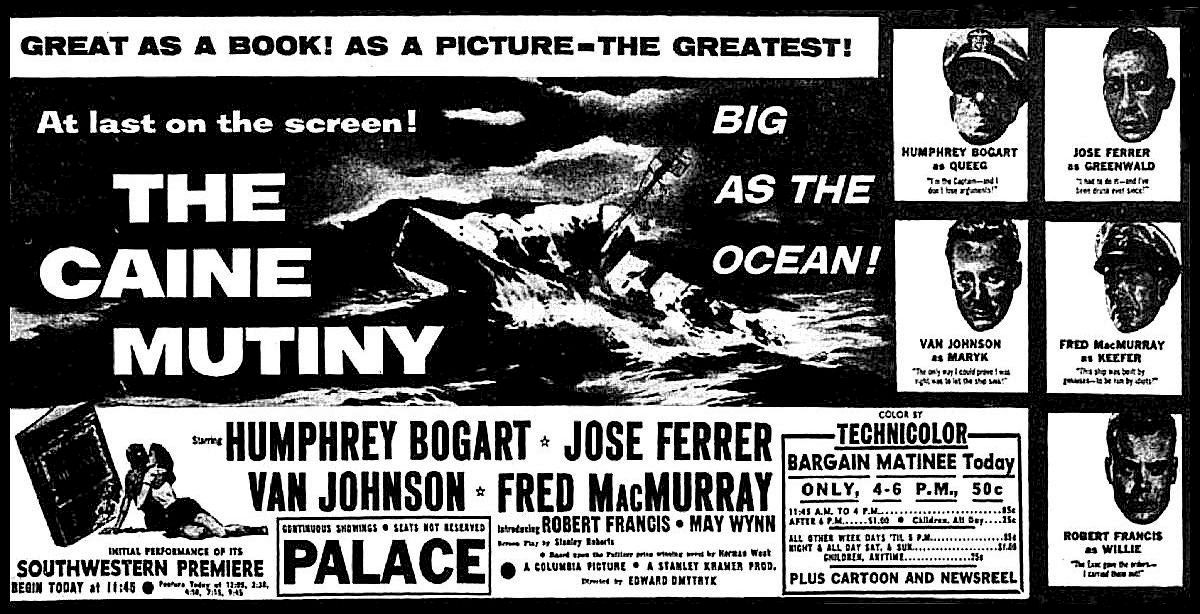
In the 1950s, the two prestige movie theaters in Dallas were the Majestic and the Palace, mainstays of “Theater Row” and just a few blocks apart on Elm Street. The Palace Theater (at Elm and Ervay, across from the Wilson Building) is seen in the two postcards featured here. The one above shows Elm Street looking west. “The Ten Commandments” is playing, placing the date that photo was taken sometime between February and May, 1957. The postcard below shows an eastward-looking view with “The Caine Mutiny” on the marquee, dating that photo to the latter half of July, 1954.

elm-street_looking_east_palace_night_flickr_coltera

“The Ten Commandments” was a huge, huge hit and ran for 11 weeks — no movie had ever run that long in the history of Dallas theaters (it had beat out the then-champ, “Sergeant York,” which had had a seven-week run at the Majestic in 1941).

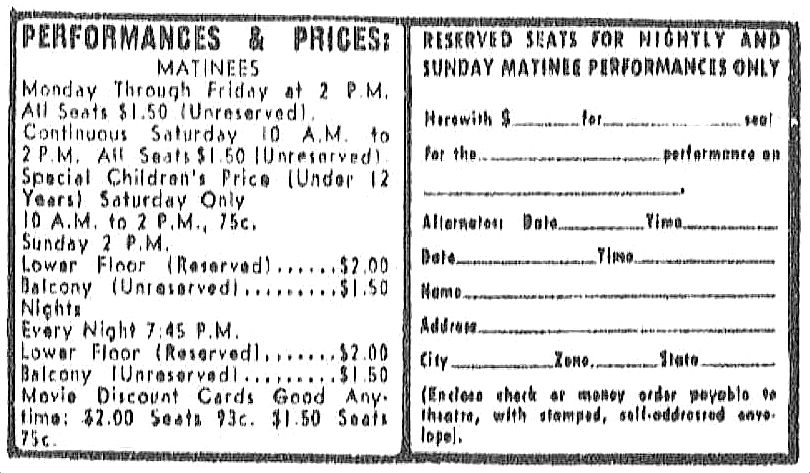
It was also one of the longest movies to ever play in Dallas. We’re talking a running time of almost 4 hours (with an intermission), something which not only tested the endurance of audiences but also severely limited the number of showings per day. It was an “event” picture, and, accordingly, prices were higher and reserved seats were offered.

ten-commandments_palace_dmn_021457_ad_det_reserved-seatsFeb., 1957

The number of people in Dallas who saw that movie at the Palace is staggering: over 100,000! Even after its run at the Palace ended, it continued to draw crowds when it moved down the street to the Tower.

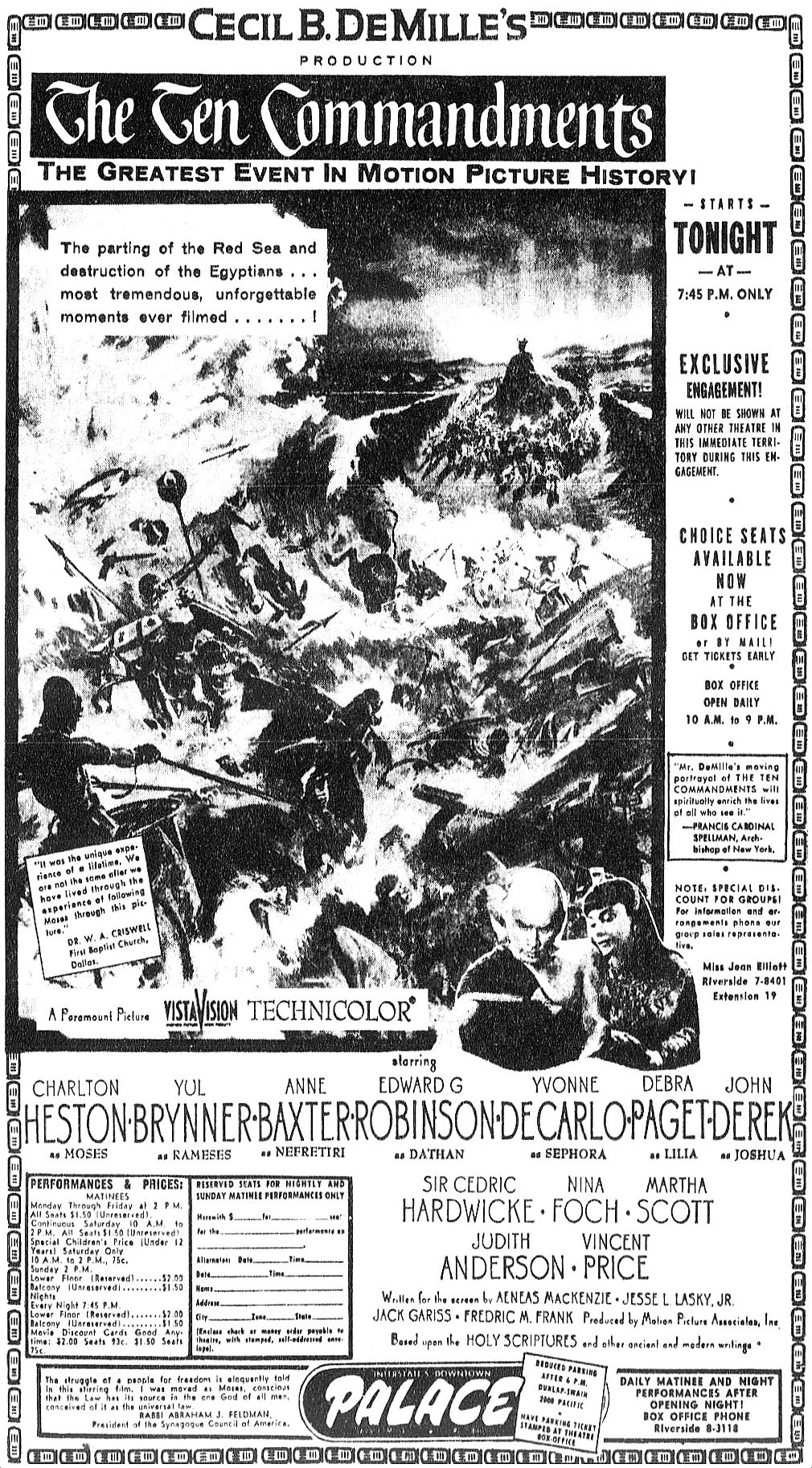
The opening-day ad for the movie:

ten-commandments_palace_dmn_021457_ad
Feb. 14, 1957

There were a couple of things I found interesting about this ad. One was that it had a blurb by First Baptist Church of Dallas’ chief Baptist,  W. A. Criswell.

ten-commandments_palace_dmn_021457_ad_det_criswell

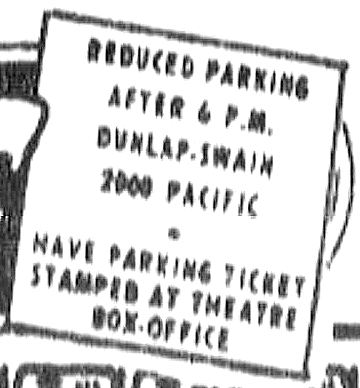
The second was that patrons could park behind the theater — on Pacific — at the Dunlap-Swain station. (Parking downtown for large crowds in those days must have been challenging —  not everyone took streetcars or, later, buses.)

ten-commandments_palace_dmn_021457_ad_det_parking

*

caine-mutiny_palace_dmn_071654_opening-nightJuly, 1954

***

Sources & Notes

Both postcards found on Flickr, posted by the unstoppable Coltera: the top one here, the bottom one here.

“The Ten Commandments” ran at the Palace Theater from Feb. 14, 1957 to May 2, 1957. The film that followed was “Boy On a Dolphin,” which featured the debut of super-sexy Sophia Loren in a U.S. movie. …Which is an interesting counterpoint.

“The Caine Mutiny” ran from July 16, 1954 to July 29, 1954.

A previous post about the Palace — “Next-Door Neighbors: The Palace Theater and Lone Star Seed & Floral — 1926” — can be found here.

Click pictures and clippings to see larger images.

*

Copyright © 2016 Paula Bosse. All Rights Reserved.


“Dallas Midway, Night Illumination” — 1936
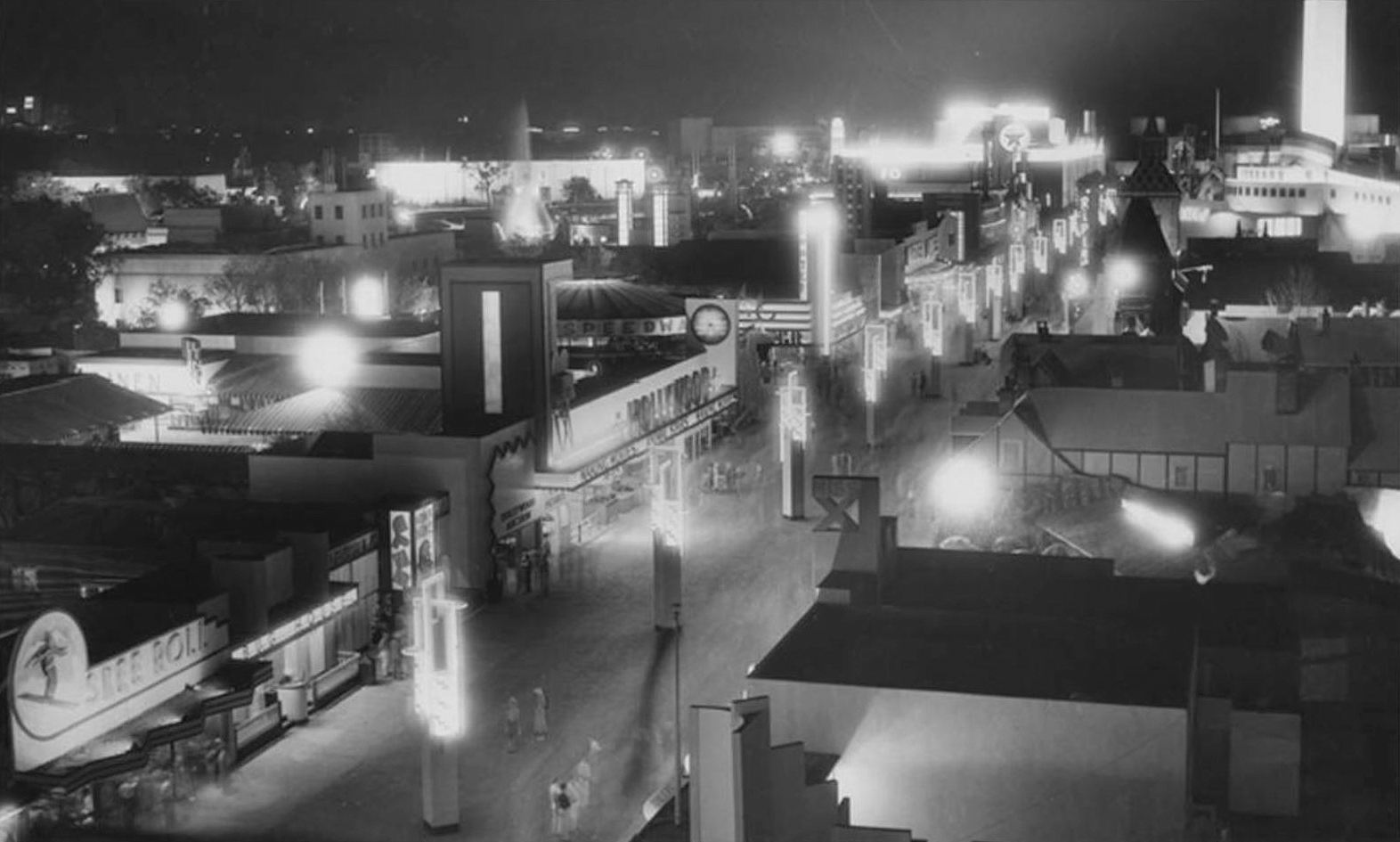
tx-centennial_midway_night_cook-coll_smuAll calm in Fair Park along the Centennial Midway (click for larger image)

by Paula Bosse

Above, a nighttime shot of an almost empty Midway during the Texas Centennial. All this scene needs in order to boost the moody atmosphere is a little fog. Go a little further and add some zither music, Joseph Cotten, and Orson Welles running past the Texaco Building and you’d have a pretty cool setting for a Texas version of The Third Man.

***

Photo titled “Dallas Midway, Night Illumination, Centennial Exposition, State Fair of Texas” (taken by an unknown photographer on Oct. 16, 1936) is from the George W. Cook Dallas/Texas Image Collection, DeGolyer Library, Central University Libraries, Southern Methodist University; more info here.

*

Copyright © 2016 Paula Bosse. All Rights Reserved.

The Business District at Night

skyline_night_flickr_coltera

by Paula Bosse

If you squint, the Mercantile Building looks a little Statue-of-Liberty here.

***

Postcard from Flickr.

Click for larger view.

*

Copyright © 2016 Paula Bosse. All Rights Reserved.

Dallas Skyline at Night — ca. 1965

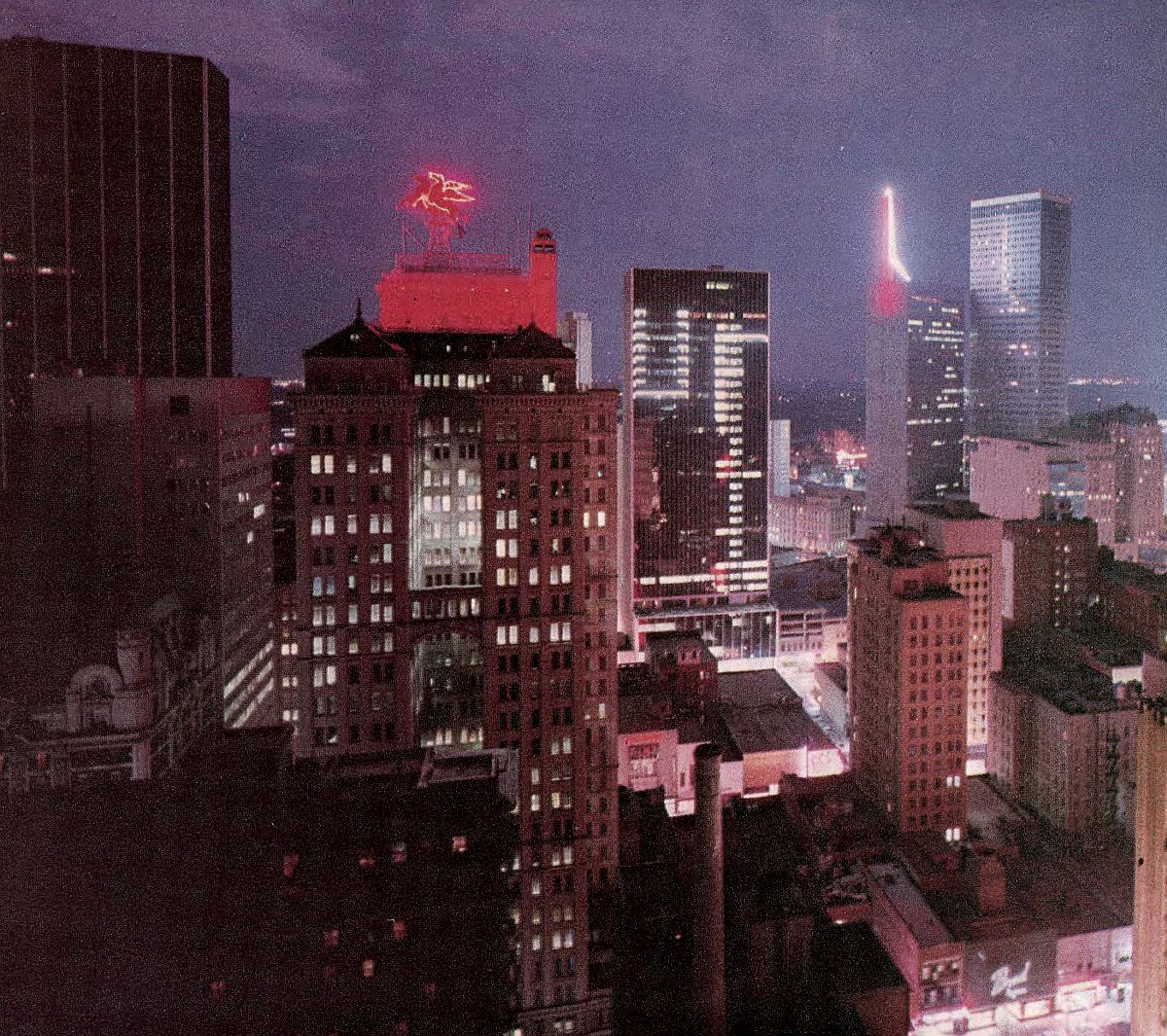
downtown_chamber-of-commerce_ca1965Goodnight, Pegasus…

by Paula Bosse

It might just be because this photo is so grainy, but it’s very dreamy-looking — a sort of soft-focus view of Dallas’ sophisticated nighttime skyline.

***

Sources & Notes

The photo is credited to the Dallas Chamber of Commerce. I’m pretty sure this came from a high school yearbook, but I’m afraid I neglected to note which one.

See another great photo from the same period in the Flashback Dallas post “Nighttime Skyline — 1965.”

*

Copyright © 2016 Paula Bosse. All Rights Reserved.

Six Flags: The Mexican Section — 1961

six-flags_mexican-section-lights_1962_ebayBienvenidos!

by Paula Bosse

The image above is from a Six Flags Over Texas postcard. The description on the back reads:

Geometric Patterns — Mexican Section
Multi-colored lighting effects reveal a fascinating and beautiful picture of the Canopied Garden Walkway leading into the Mexican Section at this new 105-acre $10,000,000 family entertainment center.

Here it is in the daytime, still kind of attention-grabbing, but nowhere near as cool-looking:

six-flags_canopied-entrance_colliervia Ken Collier

I just wanted to post this Six Flags picture I’d never seen and move along, but why not add a few more postcards showing attractions in this part of the theme park: the “Mexican Section.”

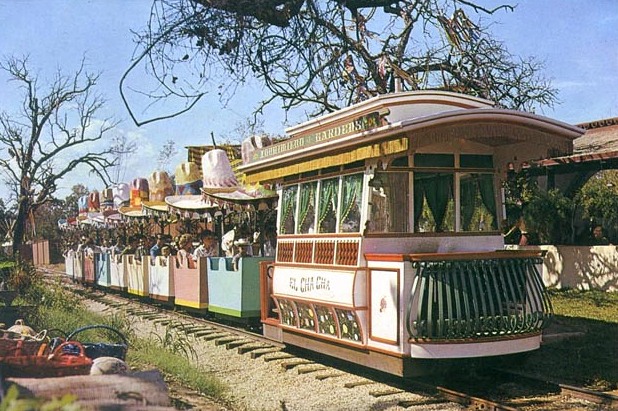
There was the Fiesta Train (which I was surprised to see was originally called Ferrocarril Fiesta), which was topped with colorful sombreros and chugged by all sorts of “festive” scenes which might seem a little culturally eyebrow-raising today.

six-flags_mexican-section-fiesta-train_colliervia Ken Collier

six-flags_mexican-section_burro-ridervia Ken Collier

There were animatronic bull fights. “Olé!”

six-flags_mexican-section_bull-fightvia Gorillas Don’t Blog

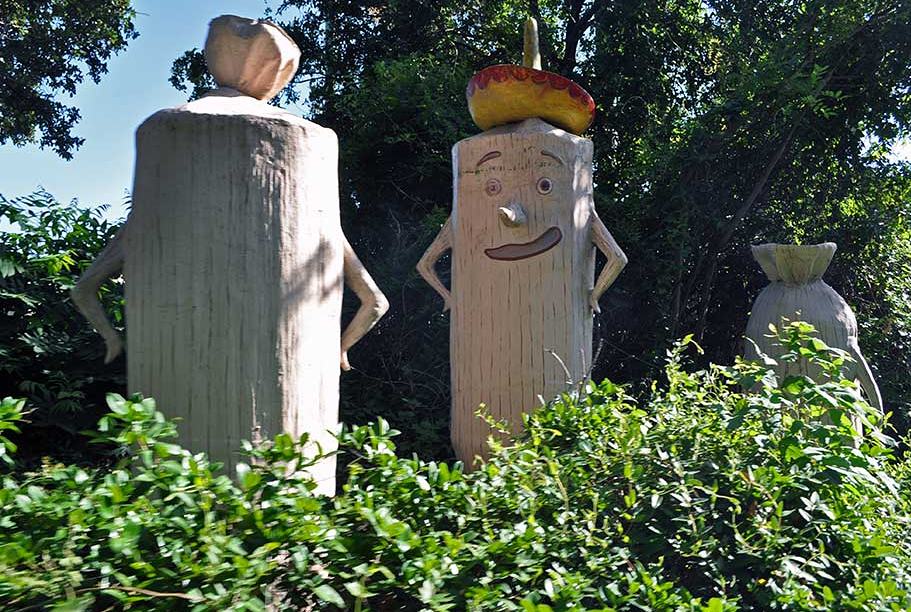
There were … dancing tamales. DANCING TAMALES! (Designed by Peter Wolf.)

Dancing Tamales — Mexican Section
One of the most popular of the many colorful and comical animations on the Fiesta Train ride, this group of Dancing Tamales perform to the gay strains of Mexican music that fills the air.

six-flags_dancing-tamales_flickrvia Flickr

And speaking of Mexican music, there were strolling mariachis.

six-flags_mexican-section_mariachis-flickrvia Flickr

And there was an even an El Chico restaurant.

el-chico_six-flags-gazette_091061Six Flags Gazette, Sept. 10, 1961

Here is an interesting article about what visitors to the brand new amusement park could expect to encounter on their visit to the Mexican Section, written by the Six Flags promotion department (click for larger image).

six-flags_mexican-section_six-flags-gazette_080661a   six-flags_mexican-section_six-flags-gazette_080661b
Six Flags Gazette, Aug. 6, 1961

And, no, I couldn’t find a 1961 photo of the sombrero ride!

UPDATE: Found one (from 1965)!

six-flags_el-sombrero_FWST-collection_1965_UTA

***

Sources & Notes

Sombrero ride photo is from the Fort Worth Star-Telegram Collection, University of Texas at Arlington Libraries, Special Collections — more on this photo is here.

Info about the Six Flags Railroad is here; more about the Ferrocarril Fiesta Train is here.

Apparently those tamales (with a face lift) are still around? I LOVE THESE GUYS!

six-flags_dancing-tamalesvia GuideToSFOT.com

Ken Collier is The Man for all things Six Flags. See his great site, here.

Other Flashback Dallas posts on Six Flags Over Texas can be found here.

*

Copyright © 2016 Paula Bosse. All Rights Reserved.

Tomorrow’s Weather at Live Oak & Elm — 1955-ish

weather-forecast_elm-live-oak_printed-feb-1956_ebayThe weather, brought to you by Coke…

by Paula Bosse

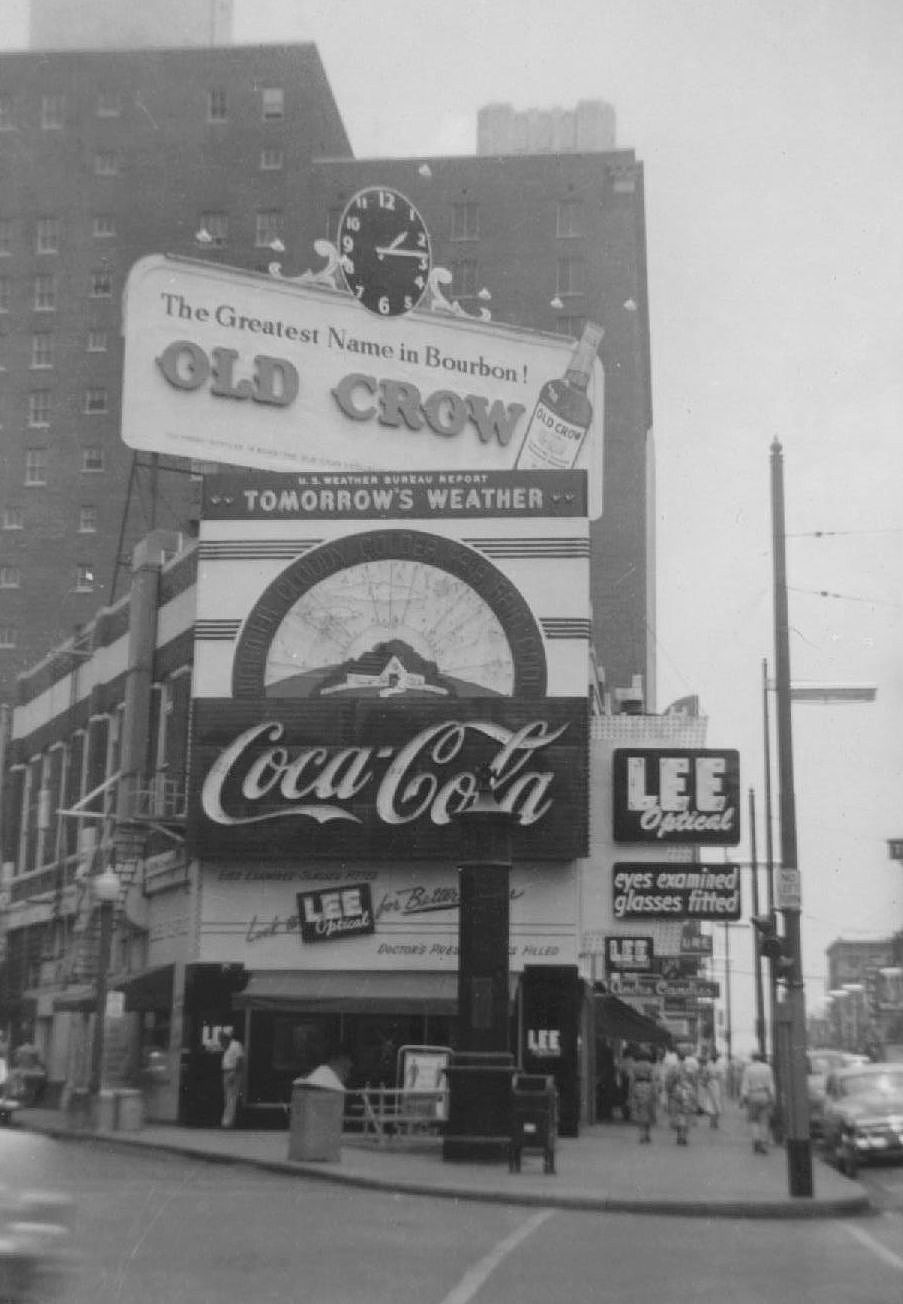
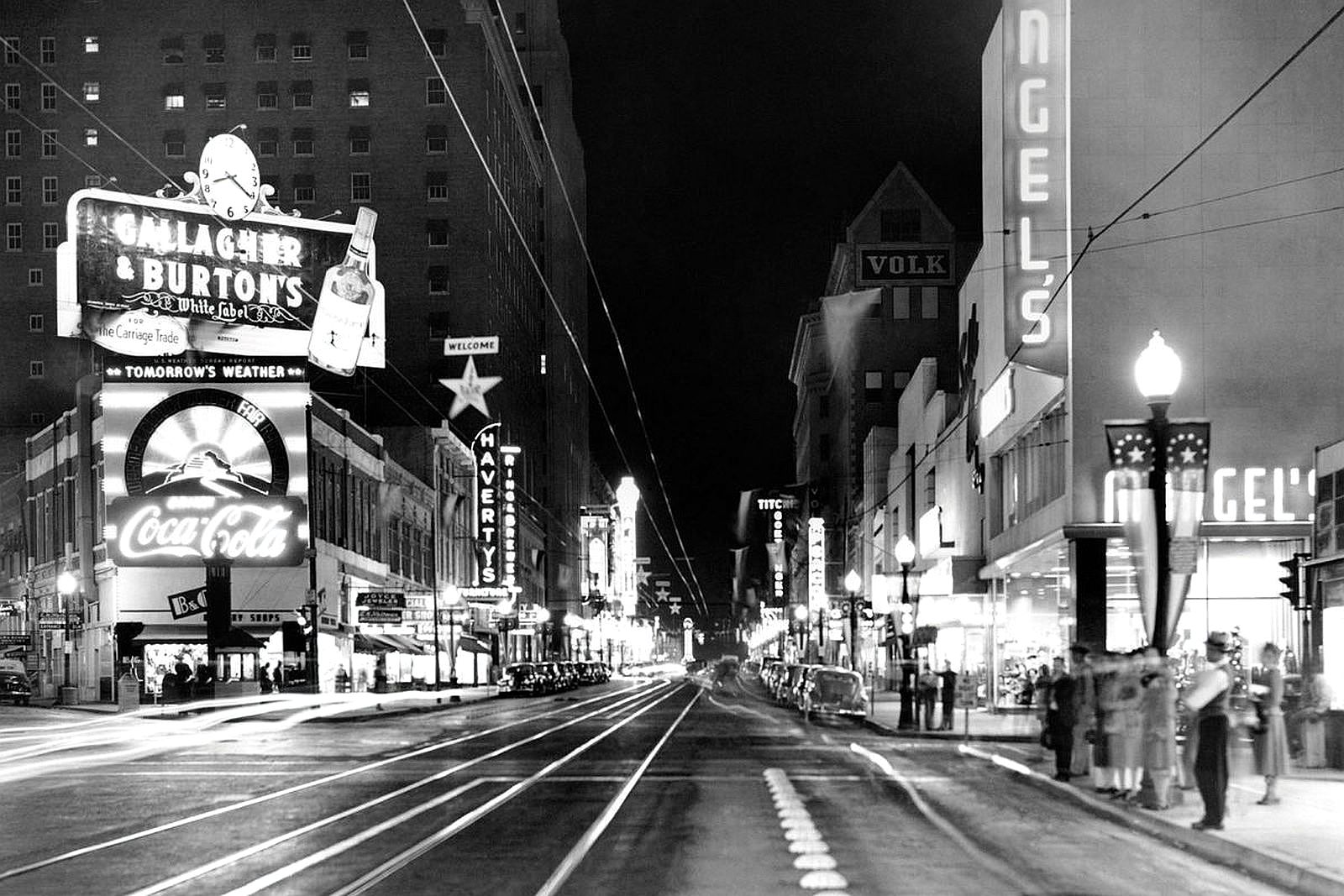
This photo (which is a little blurry, but the blurriness gives it a kind of dreamy softness) shows the one-time five-point intersection of Ervay, Live Oak (seen above at the left), and Elm (on the right, looking east). On the corner of this busy and confusing intersection, a large sign provided a public service by showing tomorrow’s weather forecast (…whilst subtly encouraging onlookers to hie themselves to the closest Coca-Cola-dispensary). During the day, the sign looked mildly interesting, but at NIGHT…! At night, this sign transformed downtown’s entertainment district into our very own mini Times Square. Here’s what it looked like at night (it’s a giant image — click it!).

ervay-live-oak-elm_haskins_uta_0107531953, Squire Haskins, UTA

And here it is from another angle, about 1948:

elm-ervay-live-oak_weather-sign_ca-1948

And, hold on to yourself: from 1939, in color! (Screenshot of a 1939 film, shot in Dallas, in color. Watch the sign’s flashing, dancing neon in action on YouTube here.)

coca-cola-sign_downtown_1939-film_youtube_screenshot
1939

***

Sources & Notes

I found the top photo on eBay a few months ago. The amateur photo was stamped “Feb. 1956” when the photo was developed, but looking at the clothes people are wearing, one would assume it was taken earlier — probably the previous year.

The first nighttime photo is by Squire Haskins, taken in January, 1953. See my original post — “Ervay, Live Oak, and Elm: Just Another Wednesday Night — 1953” — here. This post includes a map showing Live Oak when it used to intersect with Elm and Ervay.

The second nighttime photo is ca. 1948, probably from the Dallas Public Library. See the notes in this post.

All pictures larger when clicked.

*

Copyright © 2016 Paula Bosse. All Rights Reserved.

Ervay, Live Oak, and Elm: Just Another Wednesday Night — 1953

ervay-live-oak-elm_haskins_uta_010753“Tomorrow’s weather: warm & cloudy”

by Paula Bosse

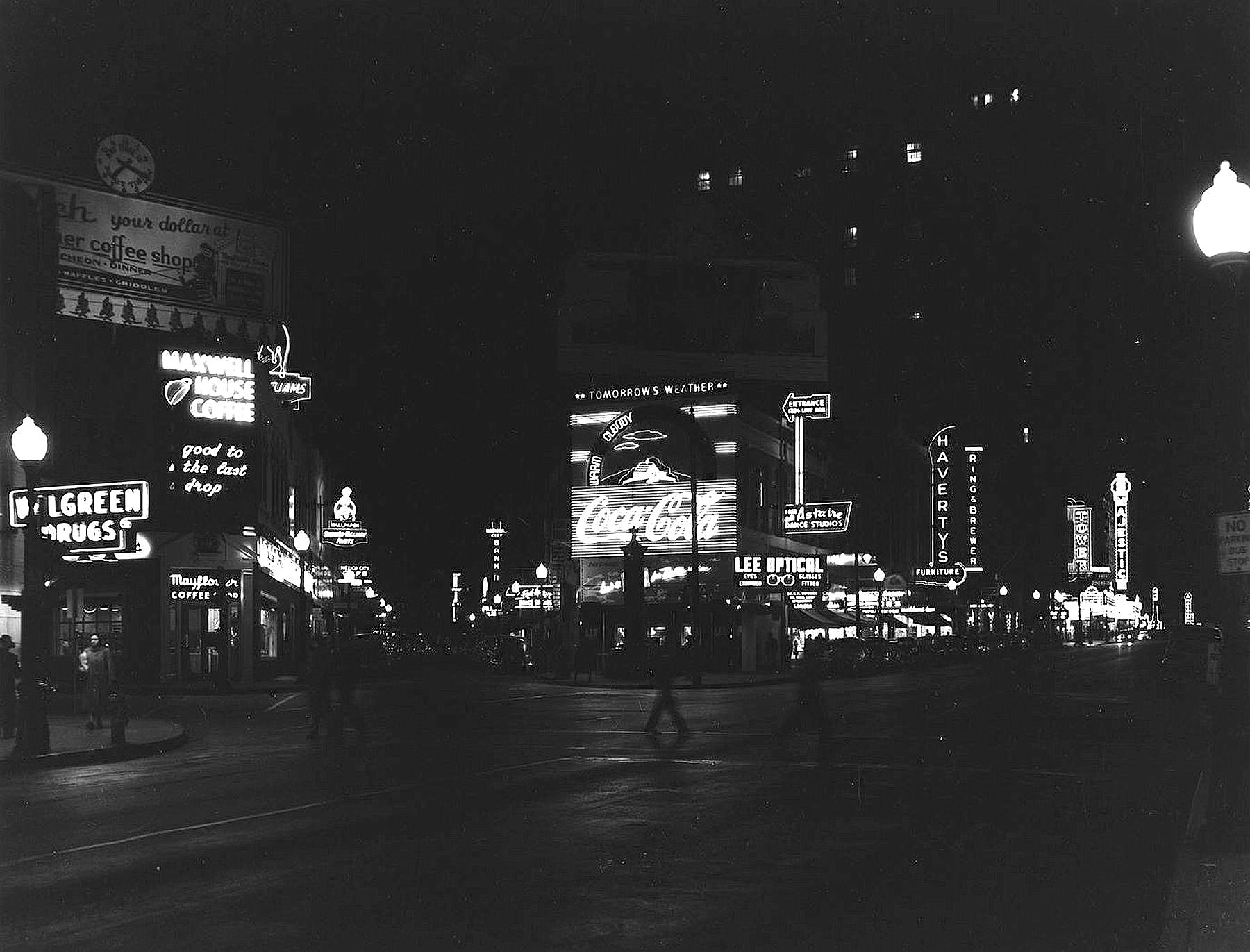
Here’s what 7:18 PM looked like at the old five-point intersection of Ervay, Live Oak, and Elm streets on January 7, 1953, a Wednesday night. All that neon — especially that Coca-Cola sign, which was probably flashing and strobing like crazy — gives this scene a sort of mini-Times Square feel. Imagine this intersection on a Friday or Saturday night when the streets and sidewalks would have been packed with people heading to theaters, restaurants, and night clubs!

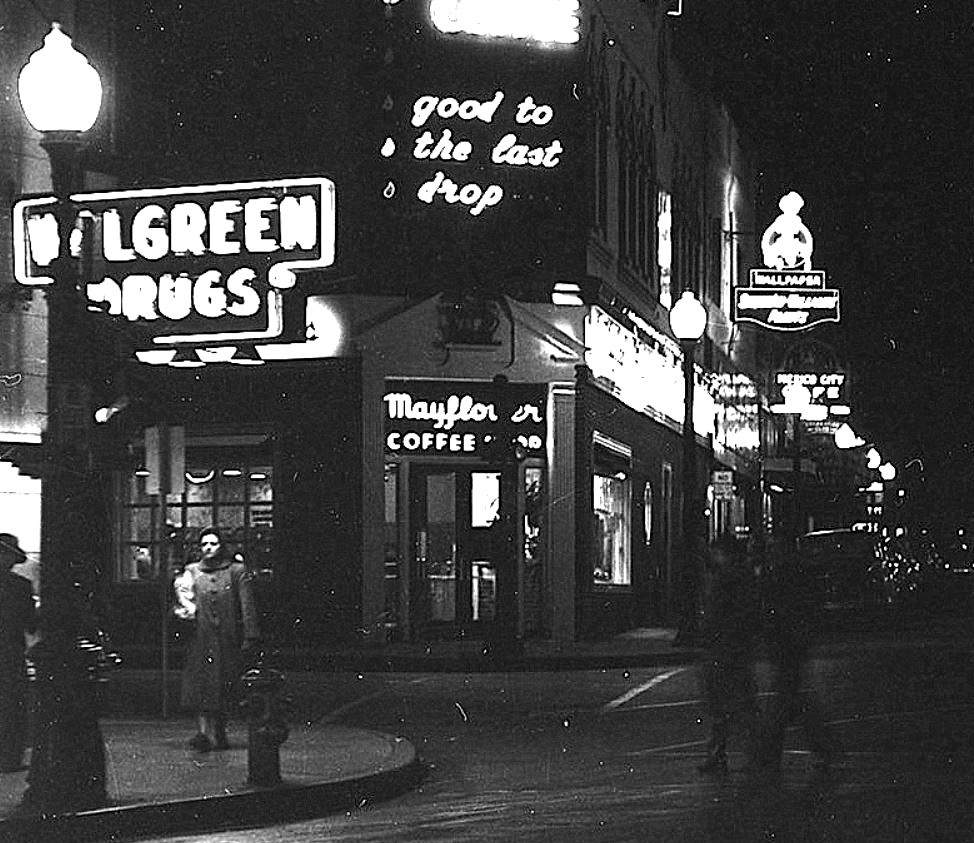
On the left, at the street light (I love those street lights!) and the Walgreen’s sign, is N. Ervay. To the left of the Coca-Cola sign is Live Oak, which used to come through to Elm. To the right, Elm Street, heading east.

So many interesting things here: the Mayflower Coffee Shop (with its “Anytime Is Donut Time” clock and its animated Maxwell House Coffee sign), that incredible neon sign above the Lee Optical store which gave the forecast, that Fred Astaire Dance Studios sign (with “Astaire” in a fantastic neon font), and the Tower and Majestic theater signs lit up for moviegoers who ventured to the movies on a school night. Unseen: the public restrooms (or “public comfort stations”) hidden beneath the street, with the entrance (I think) on the Lee Optical triangular “corner.”

I love all the neon, but this quiet little vignette of a woman carrying some sort of sack or parcel down a chilly downtown street is why I wish I had been around back then — it’s weird to feel nostalgia for a time and place you never actually experienced.

elm-ervay-live-oak_squire-haskins_uta_010753-det

*

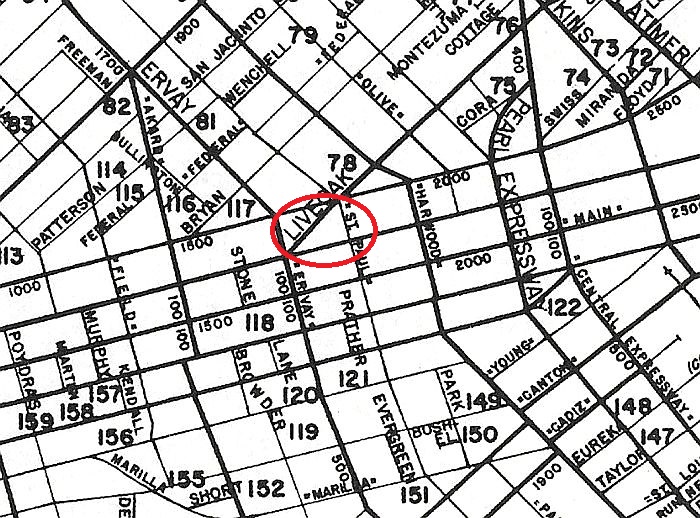
A map showing that this intersection once had five points.

ervay-elm-live-oak_1952-mapsco1952 Mapsco (click for larger image)

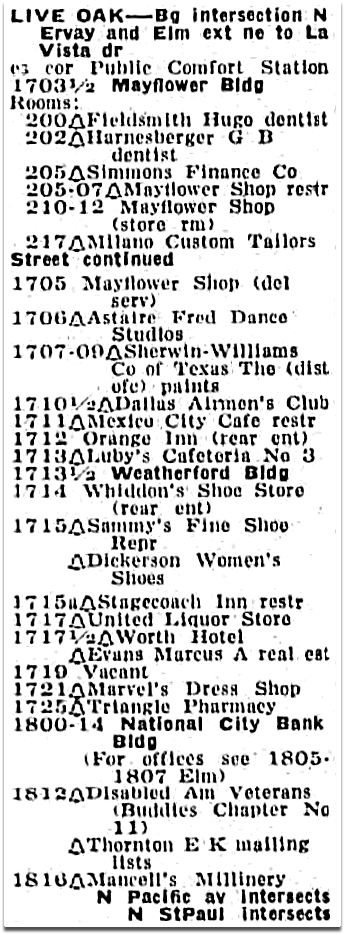
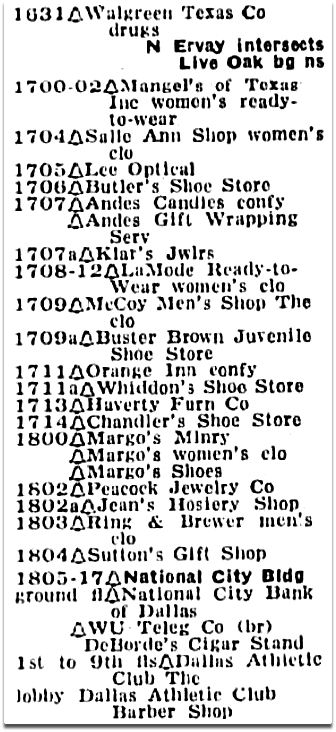
A listing of the businesses along Live Oak, between N. Ervay and N. St. Paul, from the 1953 city directory (click to read):

live-oak_1953-directory

And the businesses along Elm, between N. Ervay and the old Dallas Athletic Club:

elm-st_1953-directory-1

***

Sources & Notes

This photograph — an untitled night scene — was taken by Squire Haskins on Jan. 7, 1953; from the Squire Haskins Photography, Inc. Collection at the University of Texas at Arlington Libraries, Special Collections, accessible here.

See this same view during the DAY in the post “Tomorrow’s Weather at Live Oak & Elm — 1955-ish,” here.

*

Copyright © 2015 Paula Bosse. All Rights Reserved.